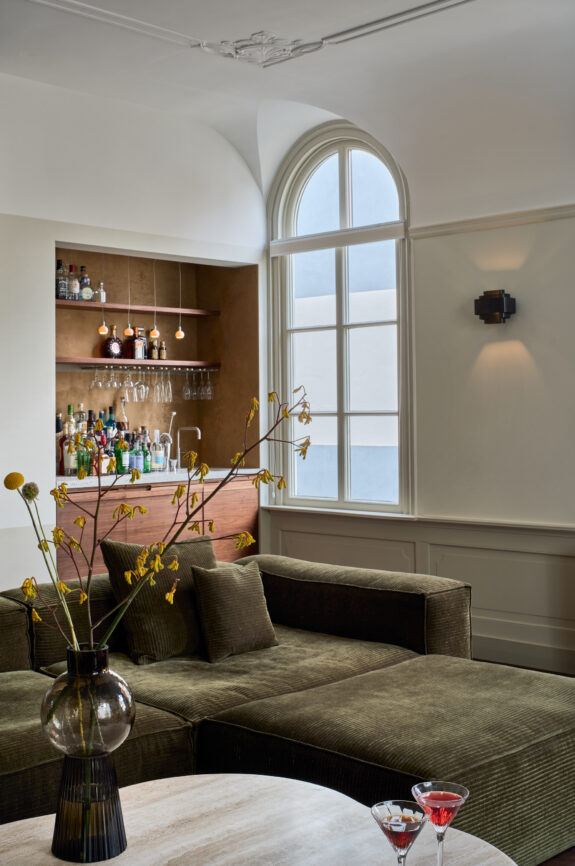
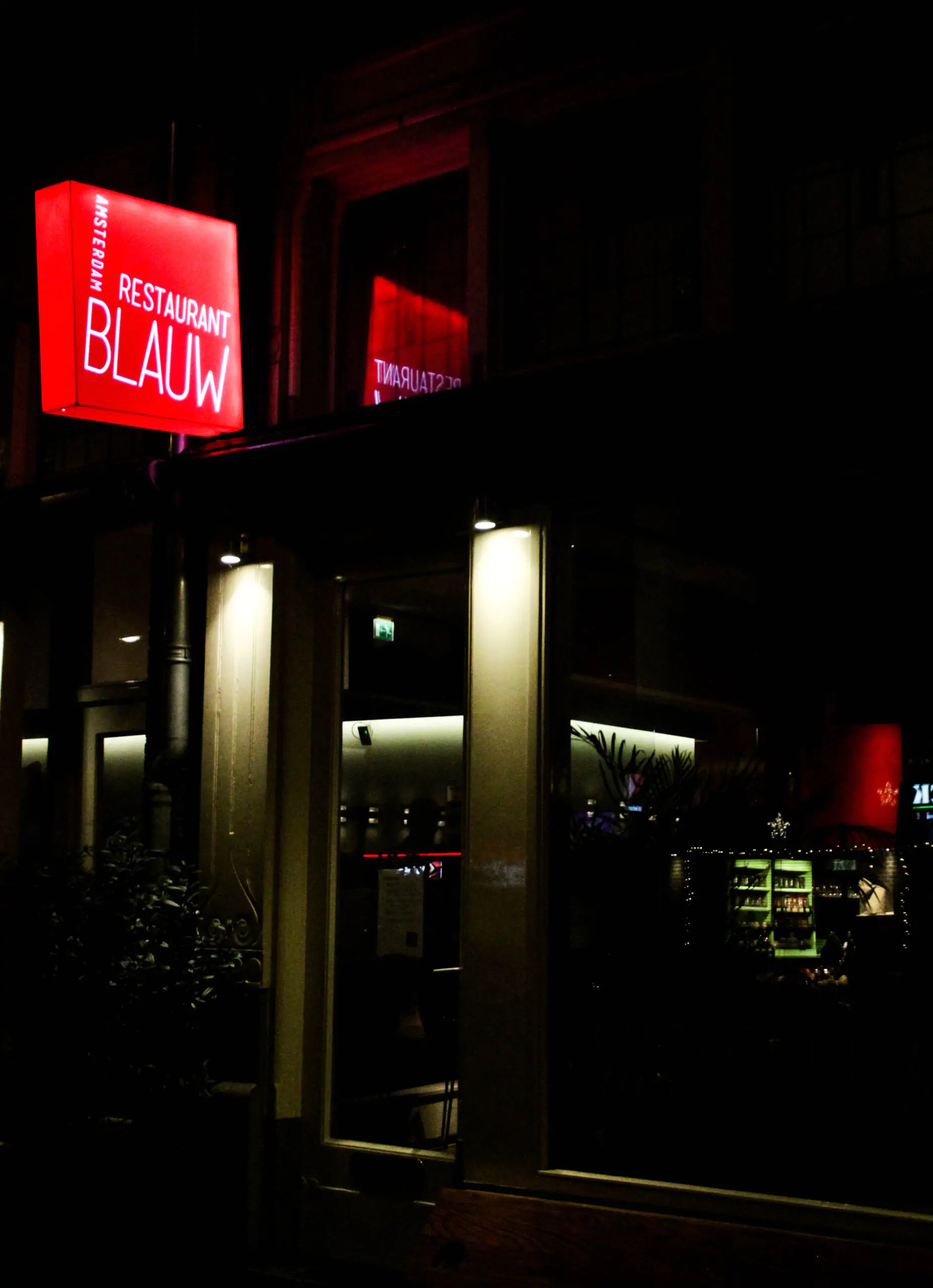
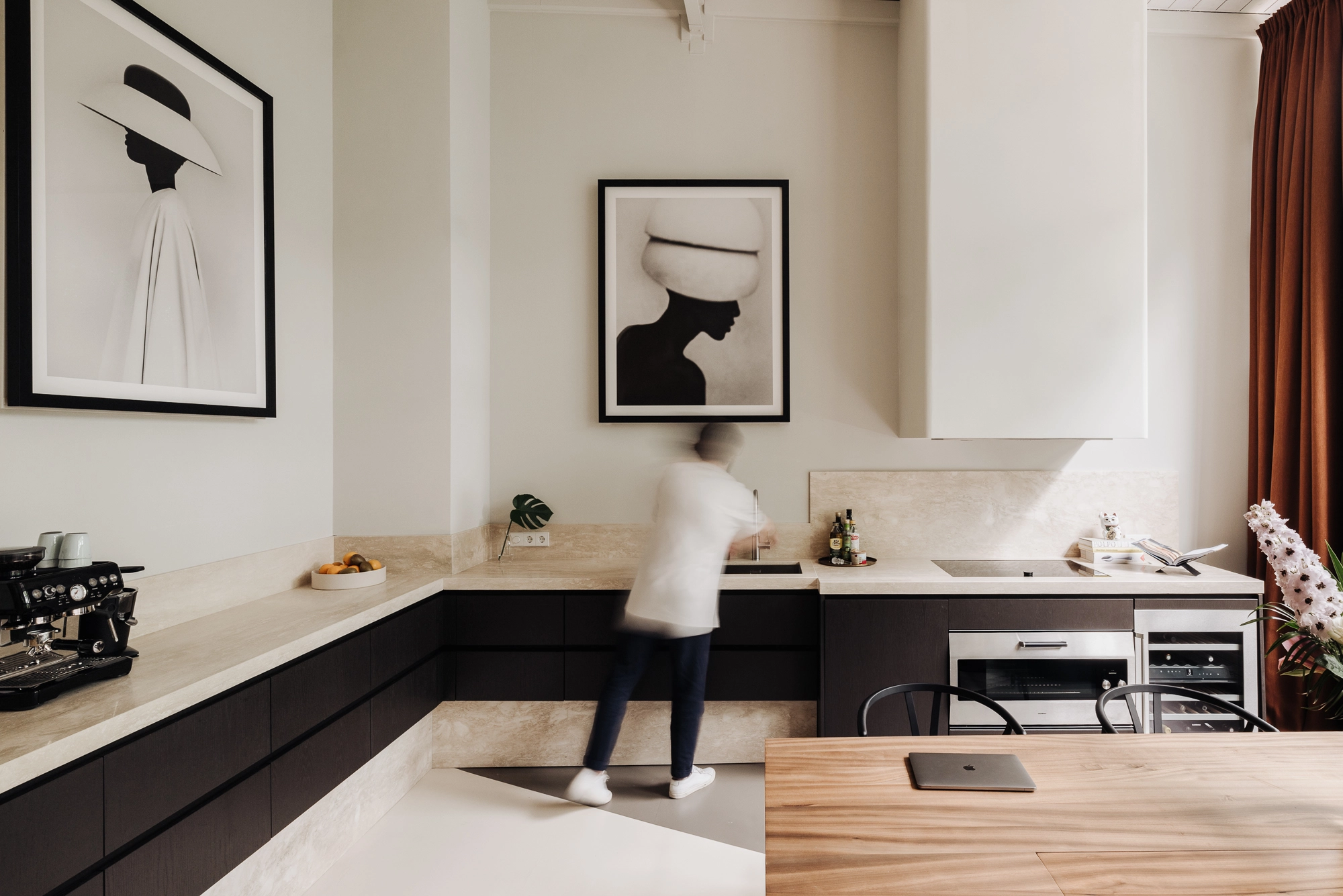
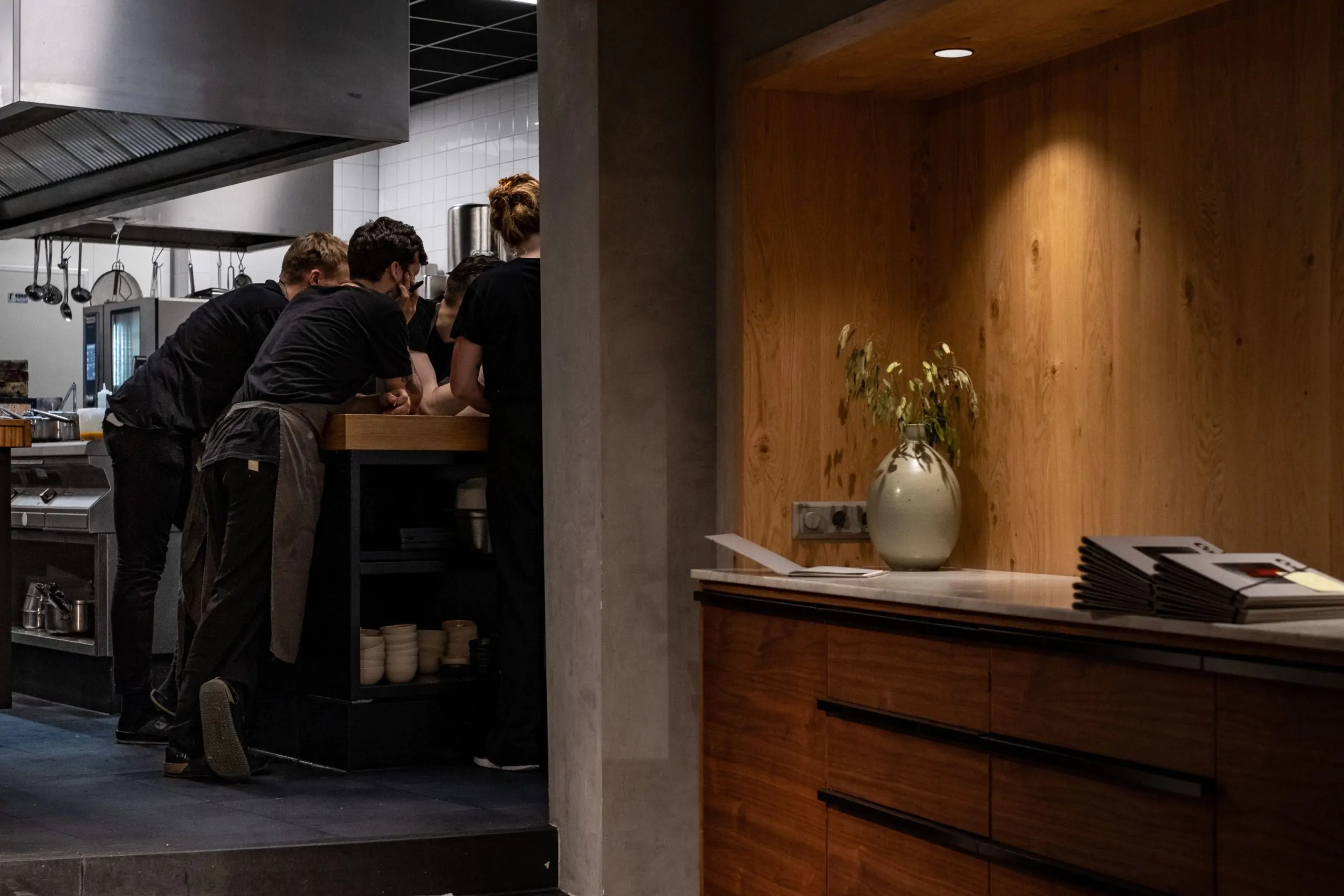
In the work of Esther Stam, founder of Studio Modijefsky, everything revolves around the experience. Interiors that do not reveal themselves all at once, but unfold gradually. From iconic Amsterdam restaurants to sophisticated residential projects like Ceci in the Zuidas, Studio Modijefsky explores how circulation, light, materials, and atmosphere work together to define a space. No fixed style, but an approach in which context, use, and materiality are in constant dialogue with one another. Time and again, an environment emerges that not only looks right but, above all, feels right in use. Read more here and be inspired
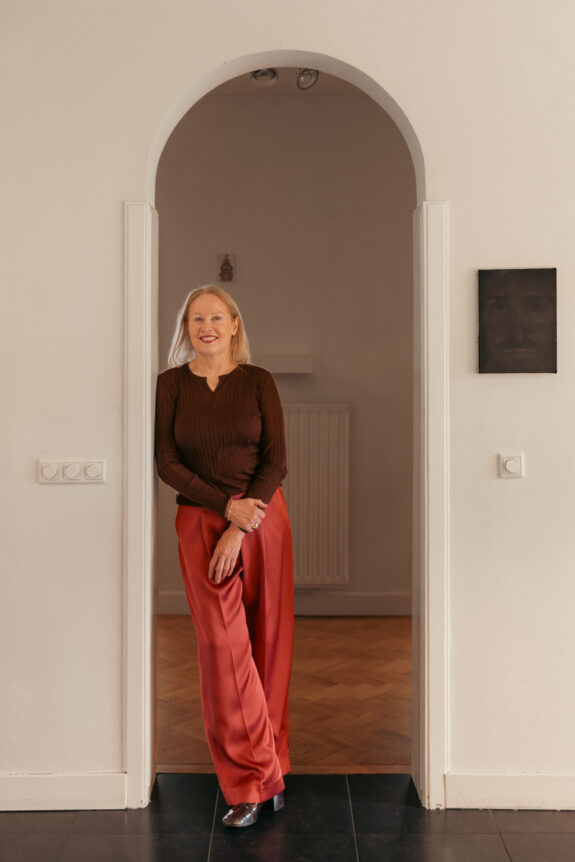
In her home in Amsterdam Oud-Zuid, Marian Cramer developed a gallery practice that deviates from the classical model. Here, working and living are not separate domains, but together form the framework within which art is displayed, discussed, and followed. The proximity of the home changes the way we look at art: less formally, more personally, and with room for time. For Marian, it's all about taking time, looking, and guiding artists over the long term. Read more here
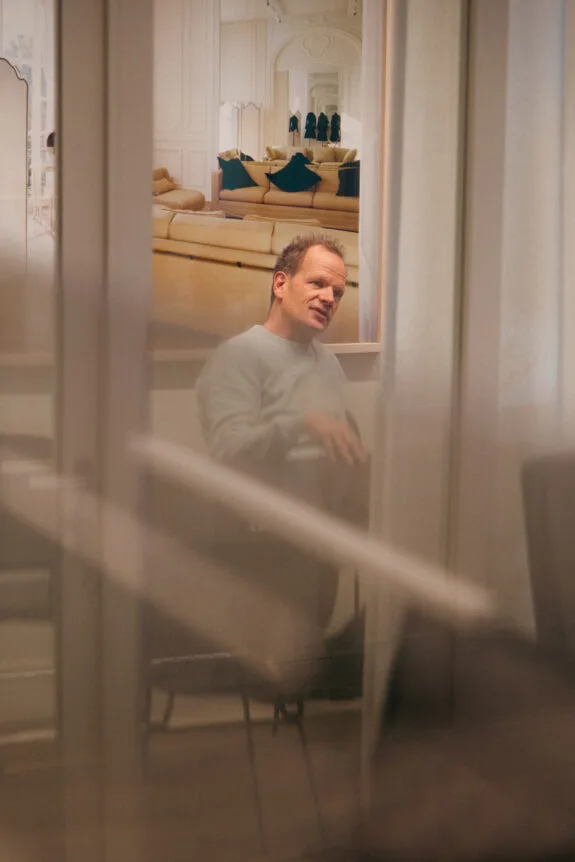
Aernoud Bourdrez operates in a world where art and law constantly intersect. As a lawyer, he represents artists, but as a collector, he allows himself to be shaped by them. His office is a studio full of stories, his practice a search for unexpected solutions. In this portrait, he explains how art sharpens his gaze and gives conflicts new directions. And why an X-ray from Jackass is more than just a curiosity to him.
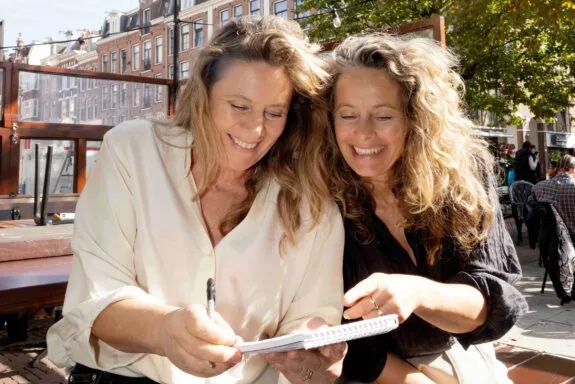
Ten years of Shortlist Amsterdam: an anniversary with simple recipes for success. Amsterdam has matured as a food city, and Shortlist Amsterdam has grown with it over the past ten years. Sisters Famke and Floor van Praag are celebrating the anniversary of their cookbook series about great restaurants with a brand-new edition full of simple recipes for success. Classics with character, recipes that any home cook can make, and restaurants that guard the soul of the city. Read more here.
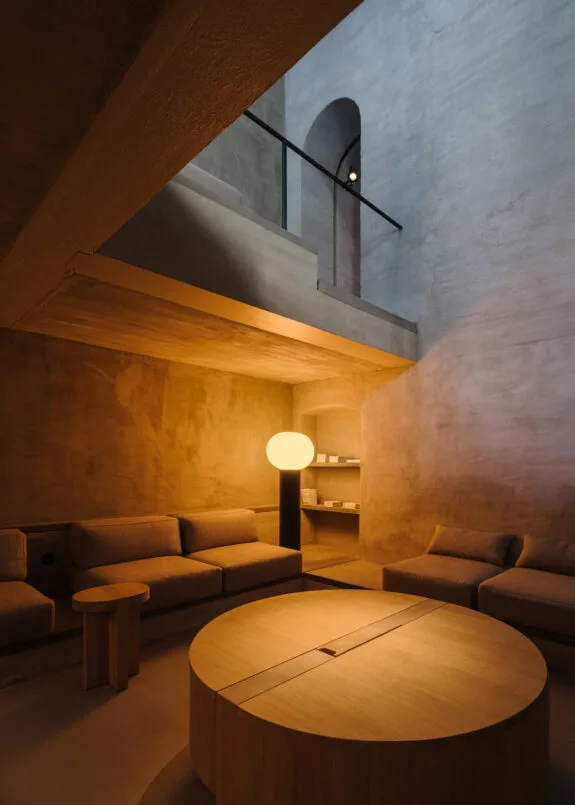
Light is never just light. For Dimitri Saddi, founder of PSLab, it is a language with which you tell stories. From their studios in Amsterdam, Antwerp, Paris, London, Bologna, Berlin, and their home base in Beirut, the team works on lighting plans that do not start with a lamp, but with people. "Everyone has their own relationship with light," says Dimitri. "It touches on habits, memories, and emotions." In this edition of The Edit, Dimitri, Taco (Amsterdam), and An (Antwerp) delve deeper into their way of working: how dialogue, technique, and reflection come together in a lighting plan that is never generic, but always a Immediately translation of someone's life. Be inspired
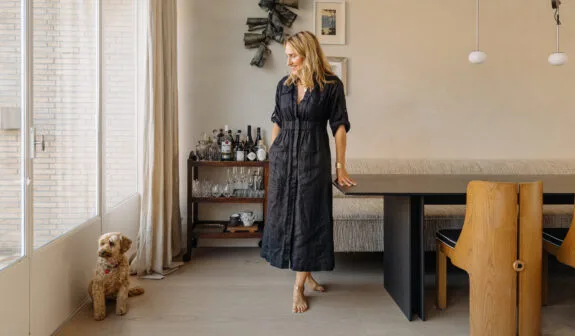
Meet the entrepreneur, in this series interior designer Anita Fraser. Anita has a passion for architecture, design and creating spaces that envelop its inhabitants with positive energy. In her work, she is constantly looking for the right balance between form, function and materiality. After a career as a process lawyer, she studied interior design at the University of Arts London. She now collaborates with other designers, architects and Project developers to refine both living and working spaces. Read and view more here
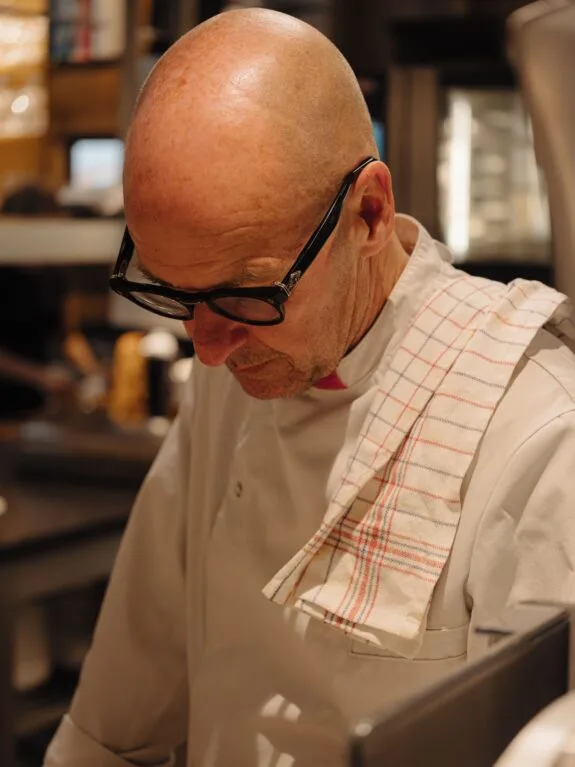
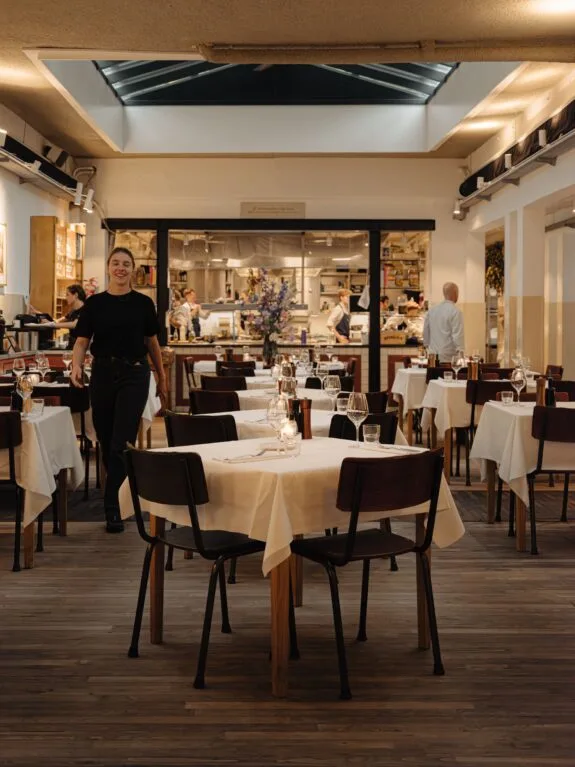
Meet the entrepreneur, in this series Maud Moody. Toscanini has been a household name in Amsterdam for forty years. Not only because of the tasteful, homely Italian cuisine, but also because of the people behind the business. Maud Moody, one of the founders, tells how it all started – and how a holiday in Rome led to one of the city's most beloved restaurants. Read the whole story

Looking inside, a stately mansion gets a new soul. Vivian Hartog, brand strategist and designer of Griffe Studio, was involved from the start in the transformation of Birkenstock's Benelux headquarters on Sarphatistraat. What was once a classic mansion is now a place where history and contemporary design meet - with great attention to detail, materials and atmosphere. Read and see more here
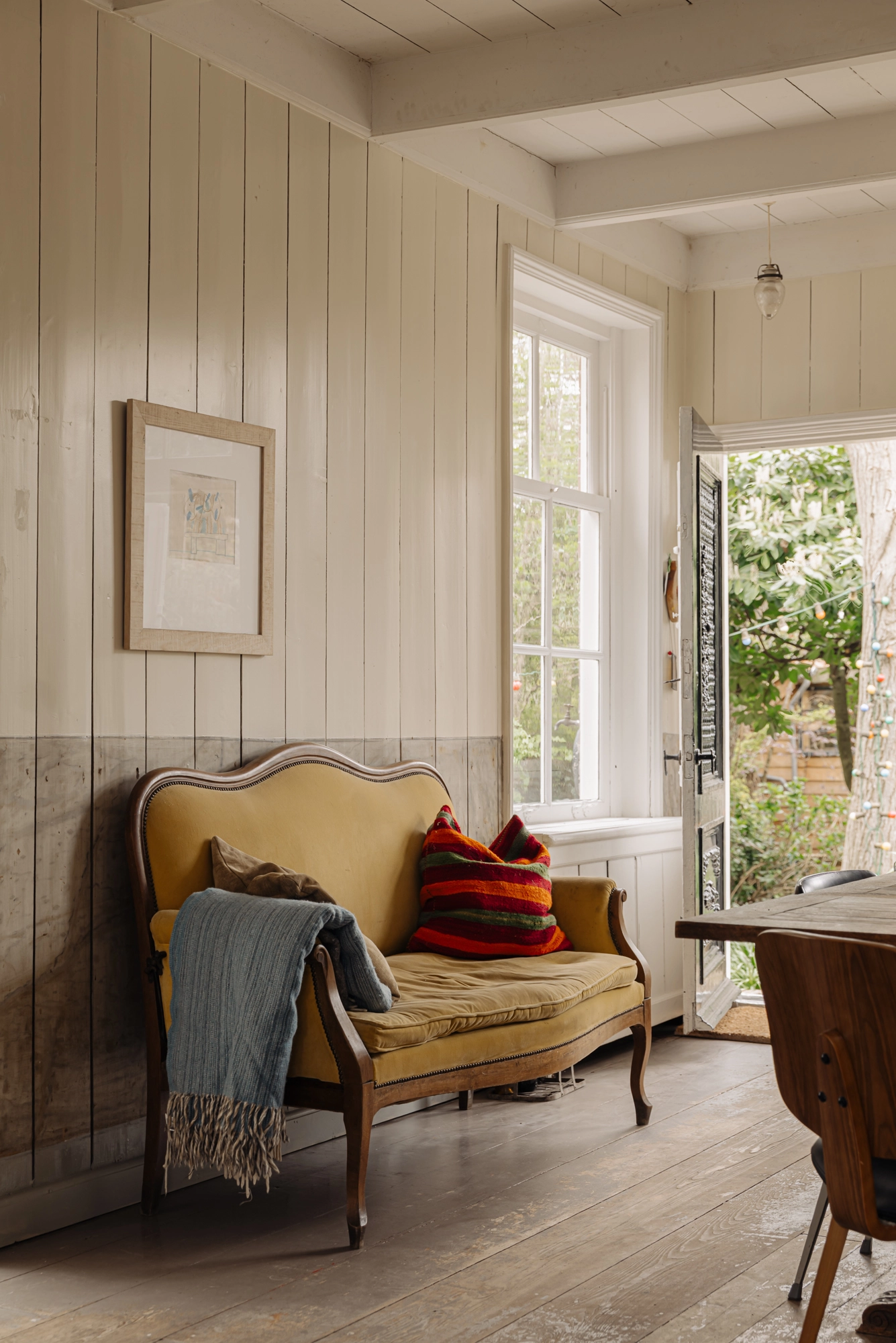
On the Nieuwendammerdijk stands a house that has testified to sustainable living for centuries. No major renovations, but preservation, restoration and reuse — step by step, with attention. What was once a captain's house grew with generations of residents and functions. From family life to cake baking and theater performances: the house remained the beating heart. A story about living with time, instead of against it. Read more and be inspired
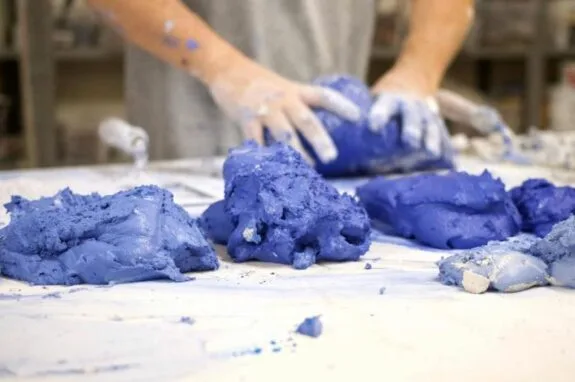
The art of craft. In The Edit – The art of craft, we highlight craftsmen who work to preserve and restore historical heritage. Their dedication to artisanal techniques, from marble stucco to gilding, shows that heritage is only truly future-proof when tradition and craftsmanship come together. One of those craftsmen is Barry Zardoni, a restoration plasterer pur sang. Read and view more here
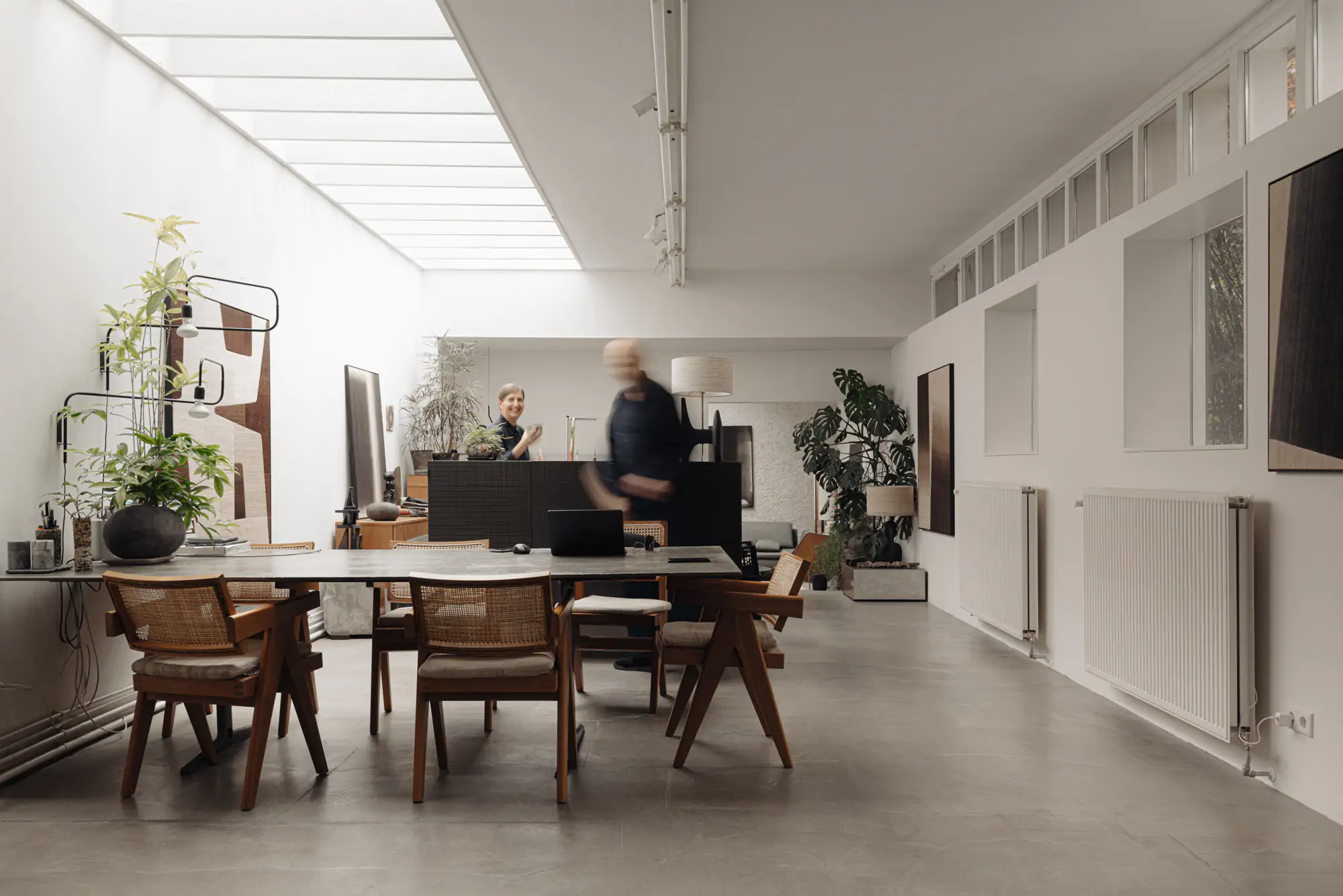
Meet the entrepreneur, in this series designers Xander Vervoort and Leon van Boxtel of x + l design. In their online store, they present handmade products that they have made themselves. Most are one of a kind. Loose objects and limited series that go together with handmade finds from their travels. Xander and Leo love the irregularity in the products: the human touch gives it an extra dimension.
Read and view more here
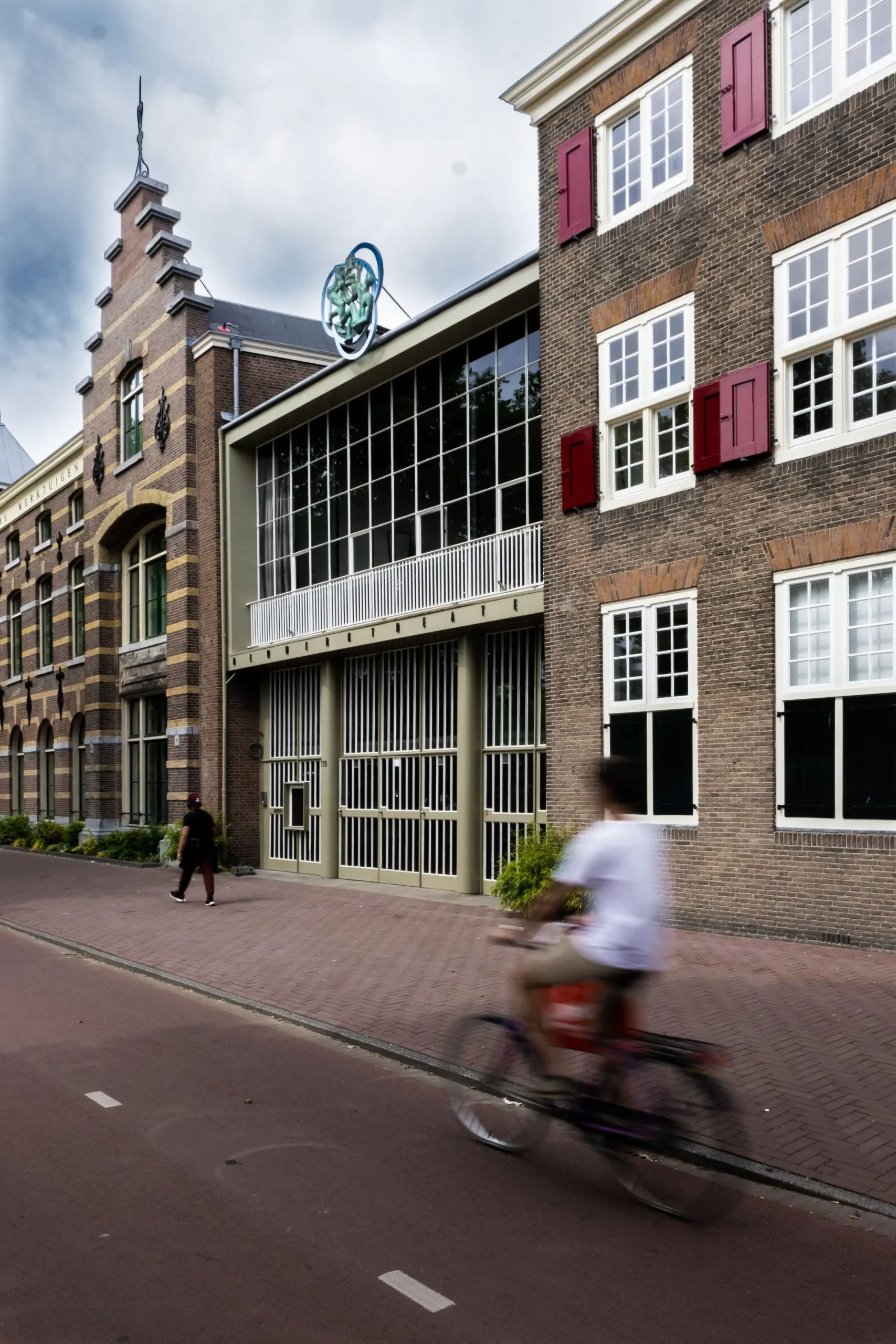
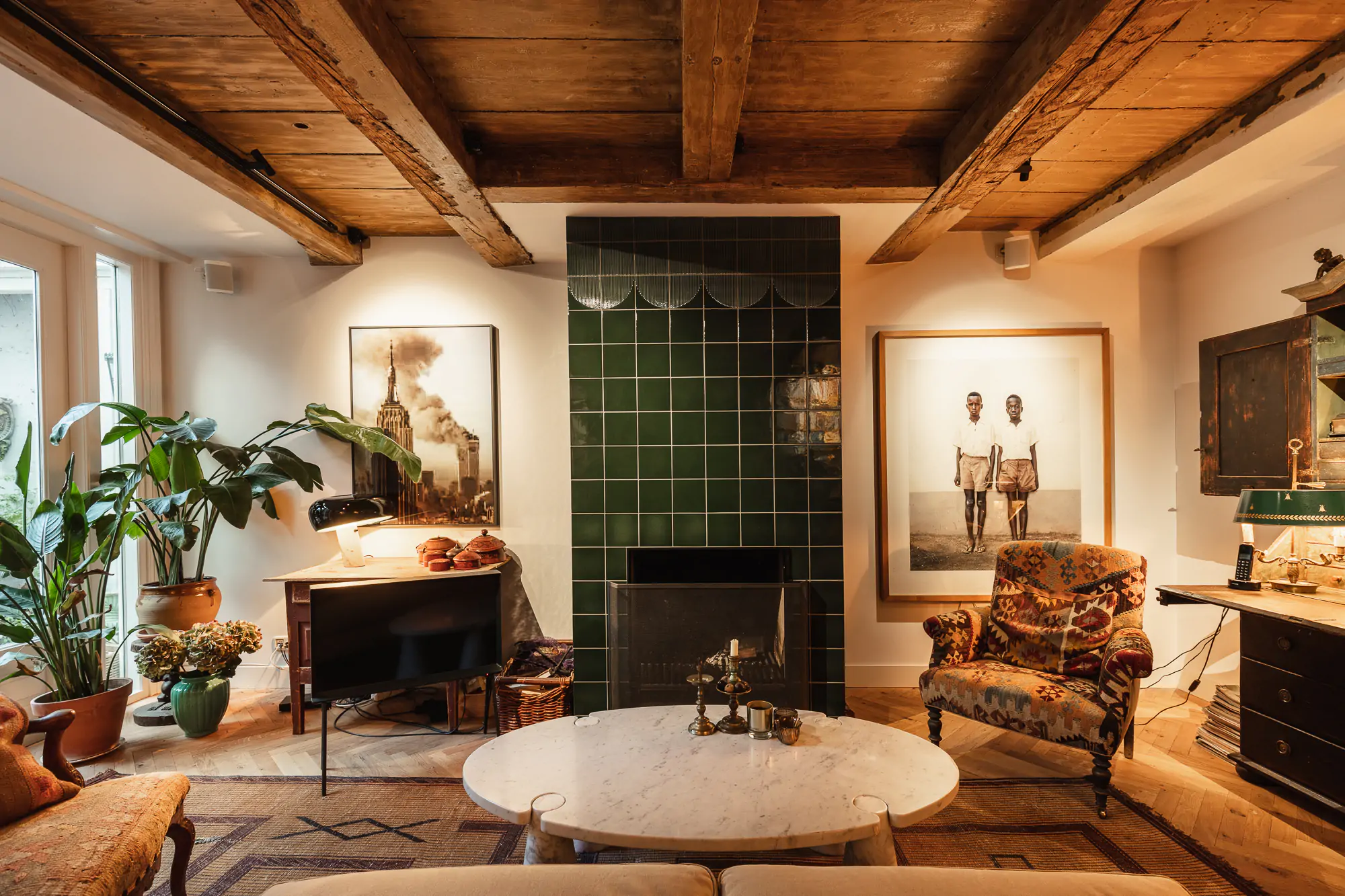
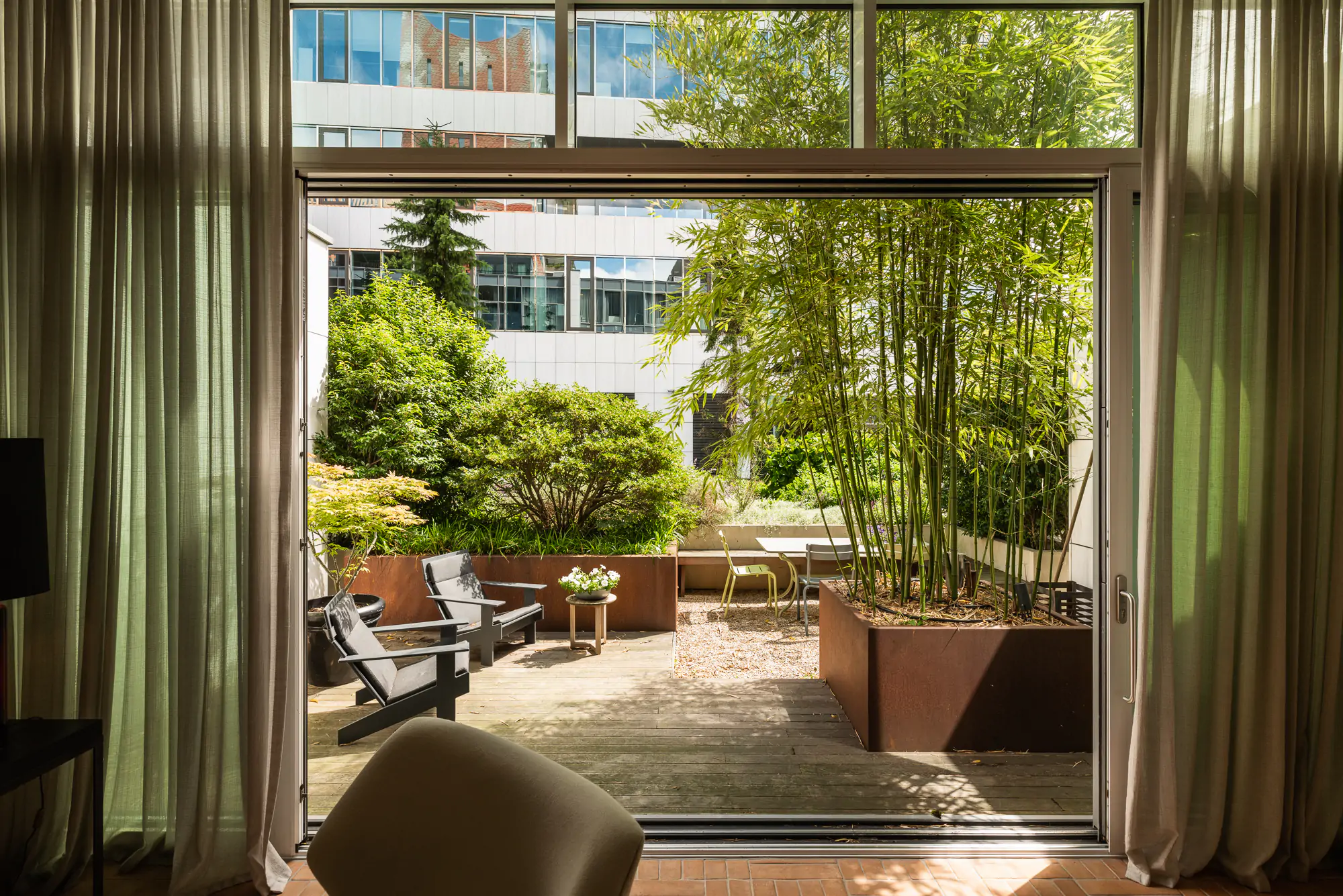
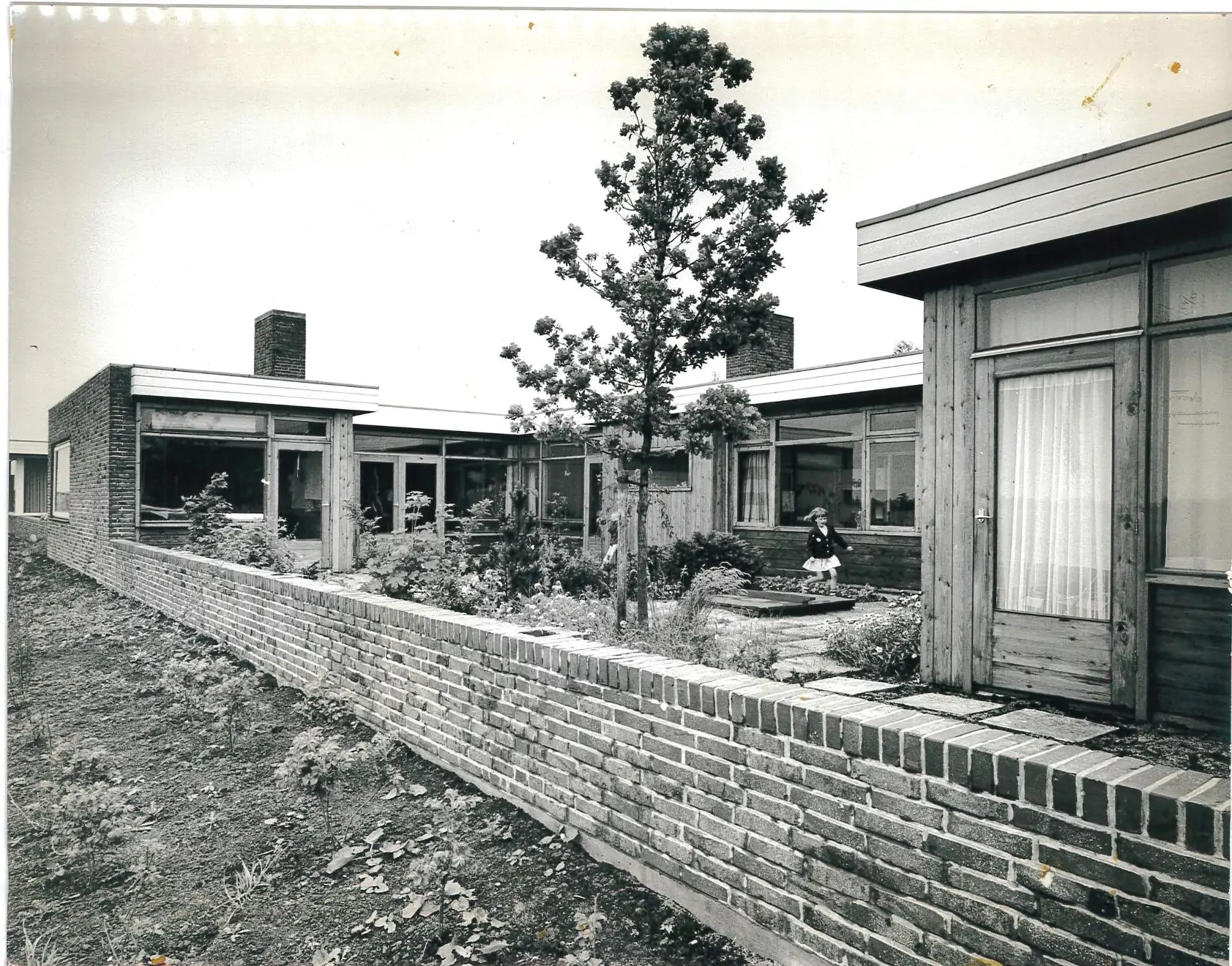
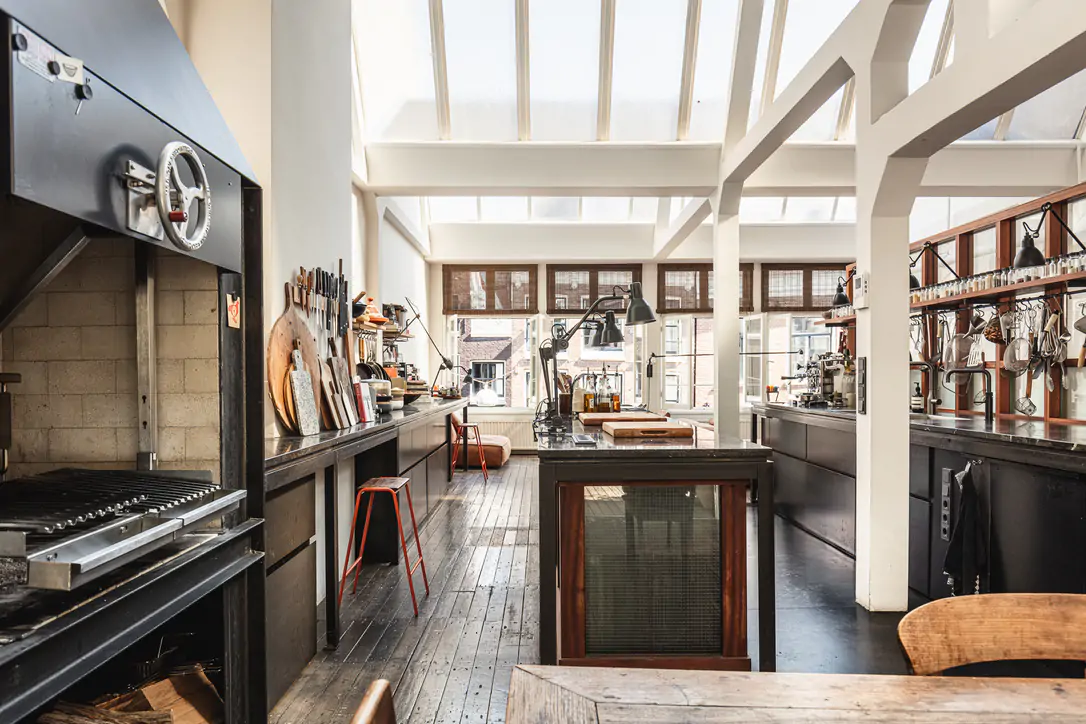
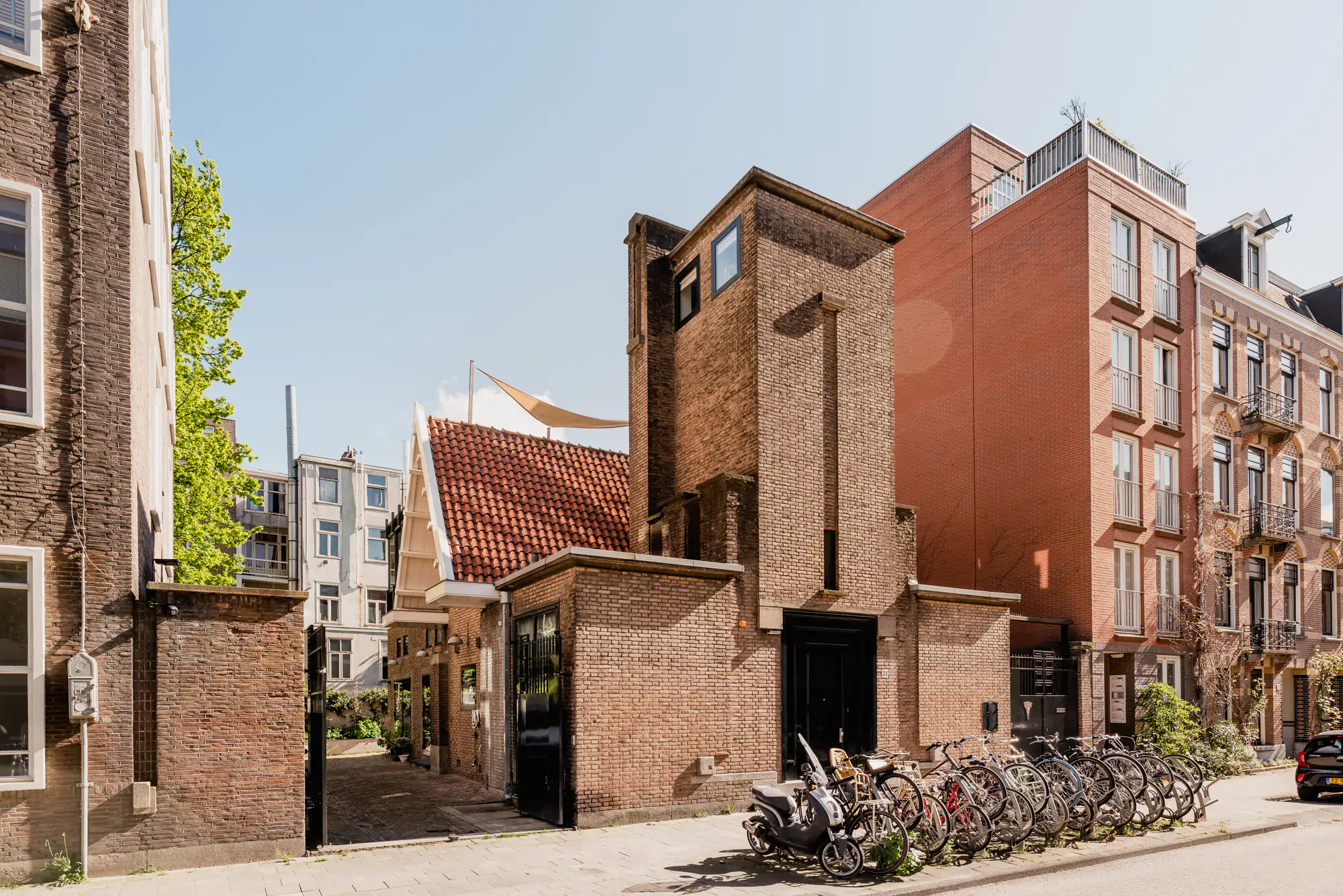
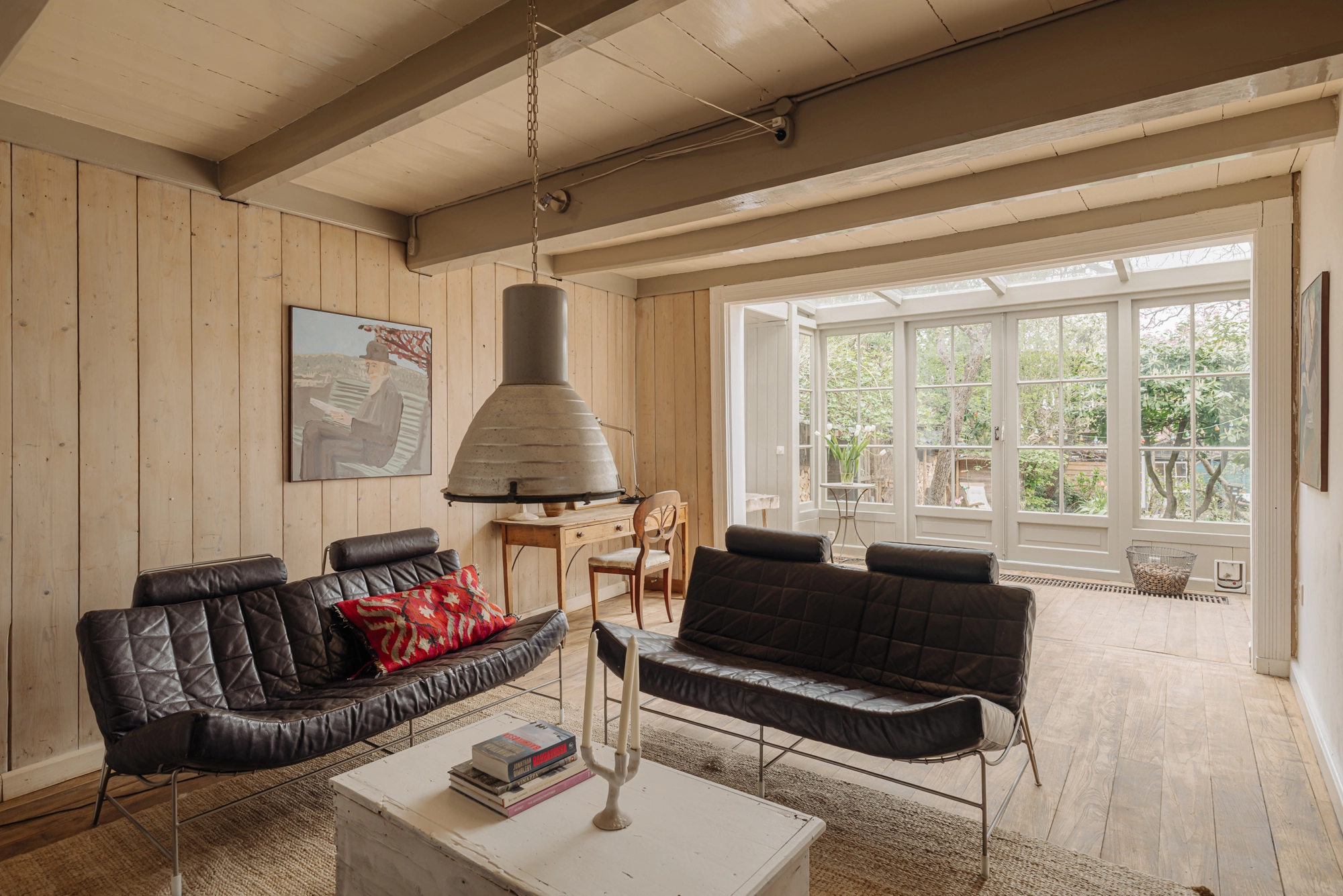
The house grew along with it
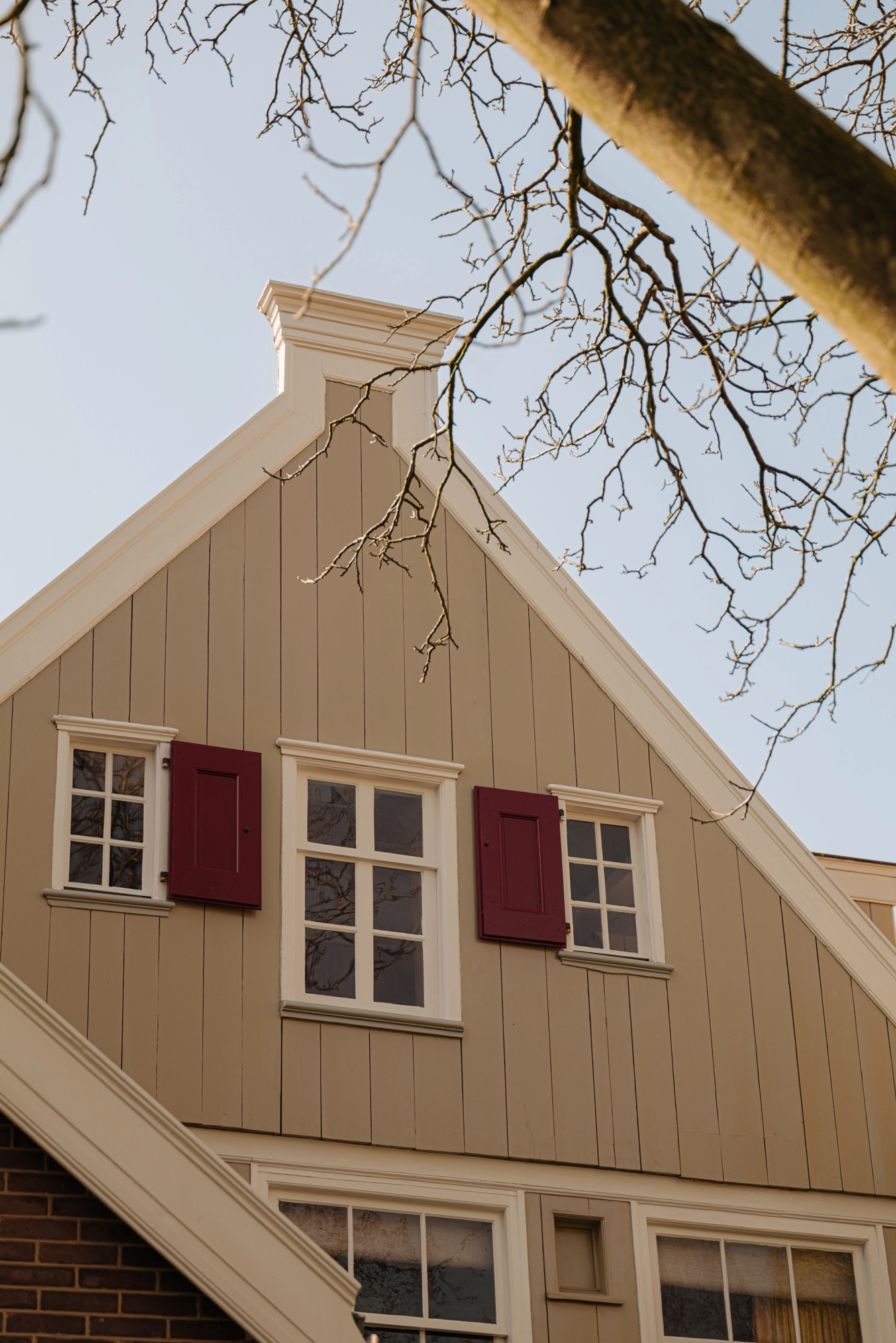
On Nieuwendammerdijk in Amsterdam-Noord stands a house that has been breathing for centuries. Originally built for retired captains of the Dutch East India Company who settled here so they could continue to follow the activities of the port from a distance. It grew into a place where generations lived, worked, and built. Where nothing was thrown away. And everything was given a new place.
What makes this house special is that it has grown with us. It changed along with our lives.
From captain's house to family place
The house was built around 1660 and has always served as a residence—something that is exceptional on a dike that was once lined with shops, workshops, and small businesses. In 1880, a stone extension was added. It now houses a second kitchenette and an old box bed. "Our children used to sleep there. Now our grandchildren sleep there. It has become their guest room." Where others renovated to modernize, the residents here chose the opposite: to preserve, restore, and reuse. Not a single piece of wood was thrown away. The existing floors remained in place, doors were rehung, and the structure even includes an old mast—presumably from a ship—that was integrated during an earlier restoration.
The resident moved here when she was expecting her third child. She couldn't find anywhere affordable in the city. Until she saw a small ad in De Telegraaf: "Detached captain's house For Sale Noord."
She was already somewhat familiar with the neighborhood, having occasionally cycled through it with her children. "During the viewing—it was autumn, the sun was shining—the house had everything: detached, old, space for yourself, a large garden." She immediately started keeping chickens. A rooster too. But that turned out to be unsuccessful. The rooster crowed too early and was quickly returned. The house began to feel more and more like home. A friend from the city came by regularly to tend the garden. "One day he said, 'The garden is so beautiful, everything is blooming.' The garden became a favorite place. "I lay in the back on a deck chair under the blossoms, looked at the house, and thought, 'How will I ever leave this behind?'"
What makes this house special is that it has grown with us. It changed along with our lives.
Built with care
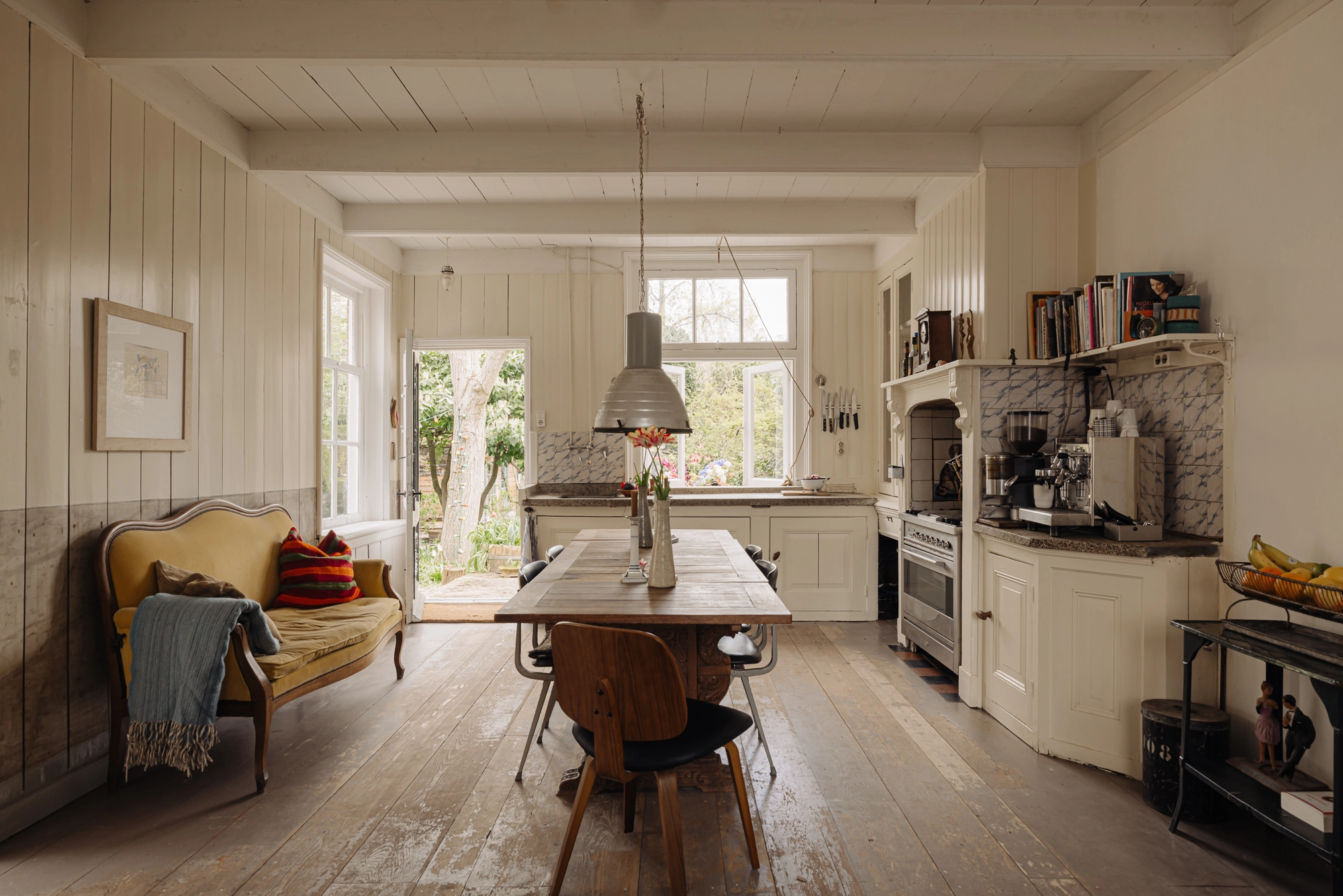
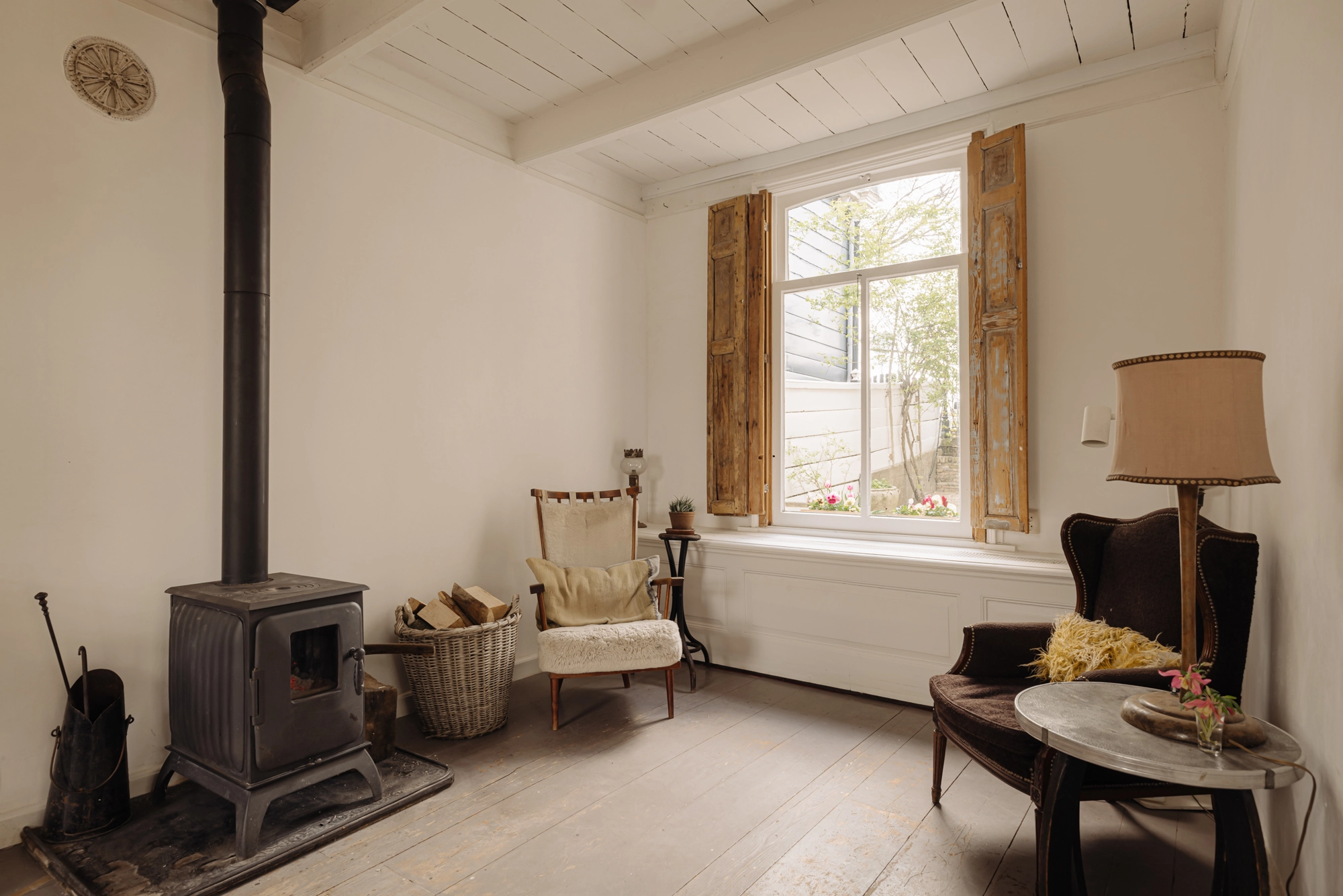
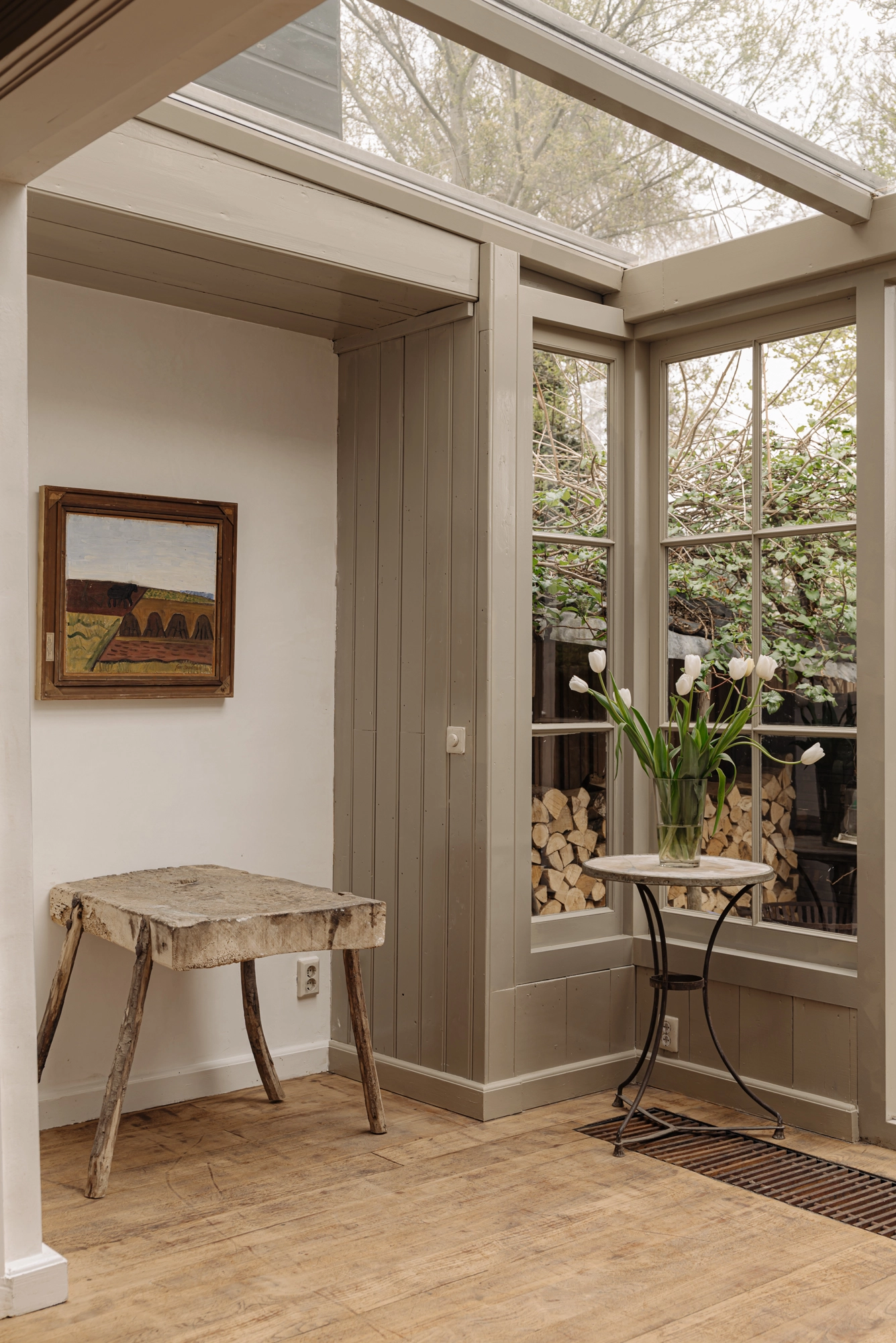
A small kitchen was opened up to the garden to create more light and space. A wood-burning stove was installed, a light-colored extension was added, and passageways were created upstairs to connect the living areas. Everything was done using materials that were already available or found through friends and acquaintances. Window frames, floor tiles, doors, and even zinc came from the neighborhood—or from a restaurant elsewhere in the city.
Much of the wood came from the house itself. The wagon board was found behind old paneling, cleaned, and reattached. The floor from the hallway was reused in the kitchen. Marble tiles were found outside in the garden and were put back in place. Other materials came from neighbors or friends: a row of old tiles at the entrance, a door from a demolished farmhouse, or an antique floor from a restaurant elsewhere in the city.
The paneling in the hallway, painted with a marble motif, is still original. Much of the material was still hidden in the house. Everything was cleaned and reattached by hand, just as it was originally intended.
The technical modifications were just as well thought out. For example, the sewerage system was brought into the house via the alleyway to make room for a bathroom. Originally, there was a staircase leading down from the front door. This was moved because the center of gravity of the house is further back. Where the shower is now, there used to be a safe, the door of which has been reused in the house.
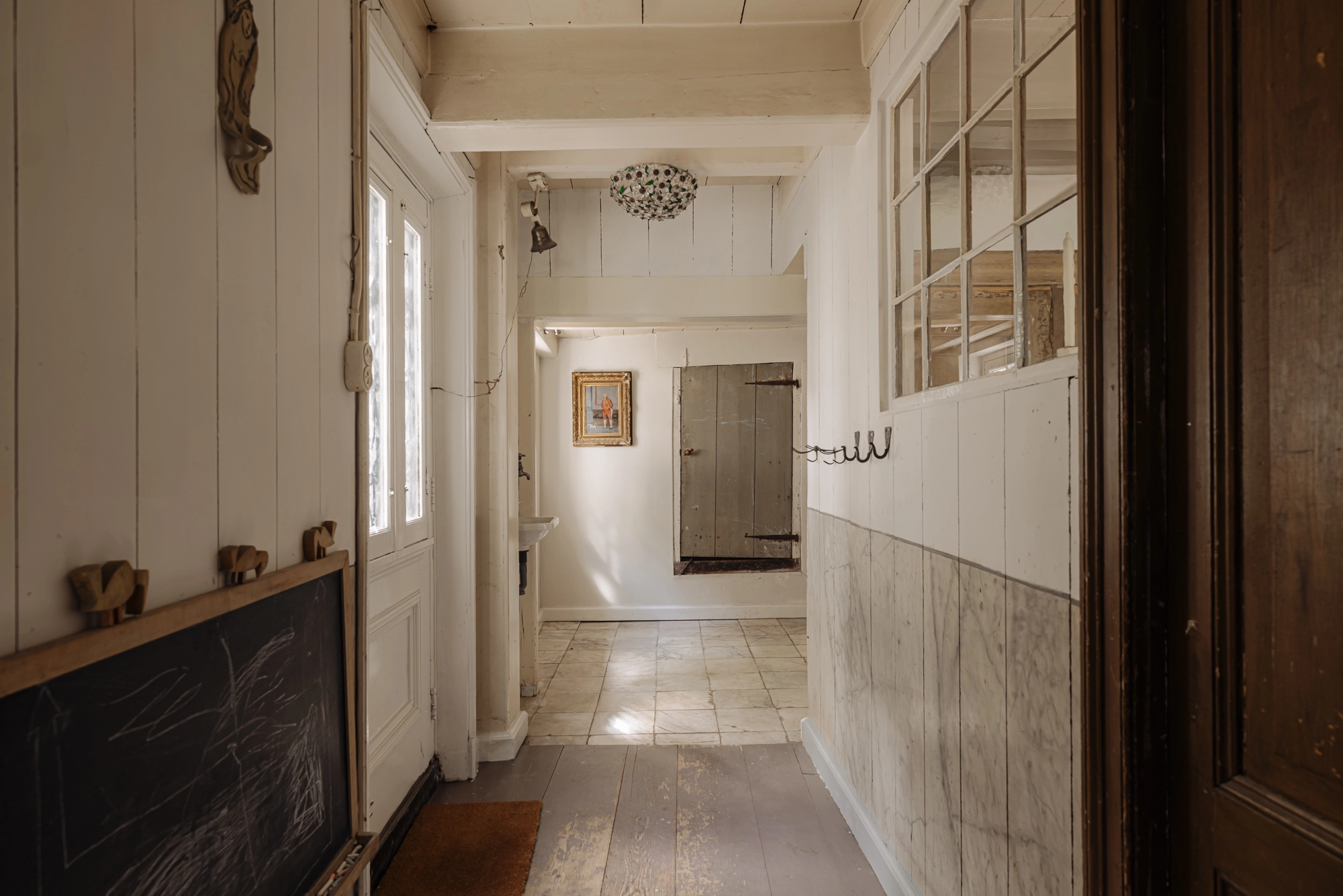
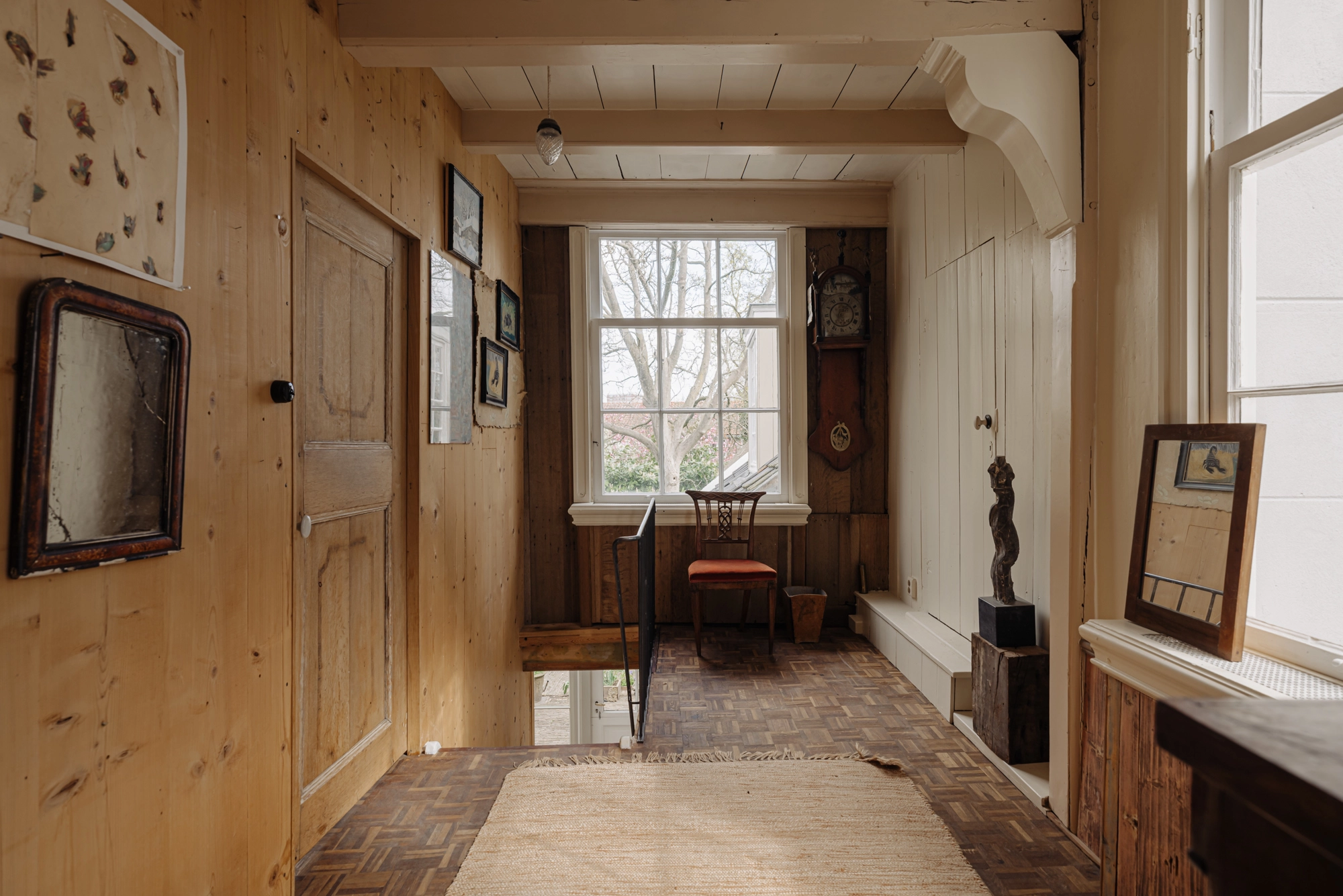
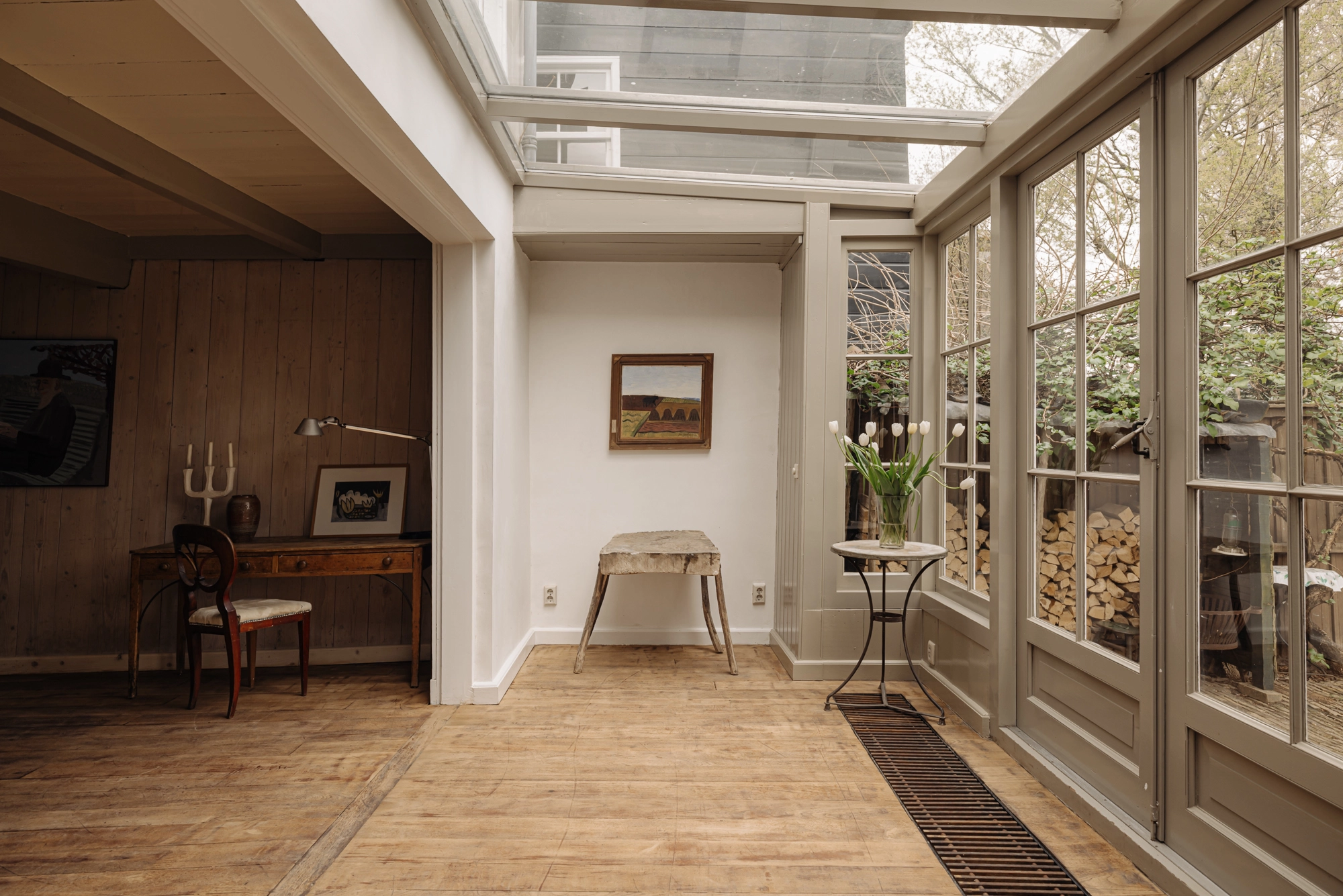
Over the years, the house took on new functions. First as a family home. Then as a place for a small cake business in the front room.
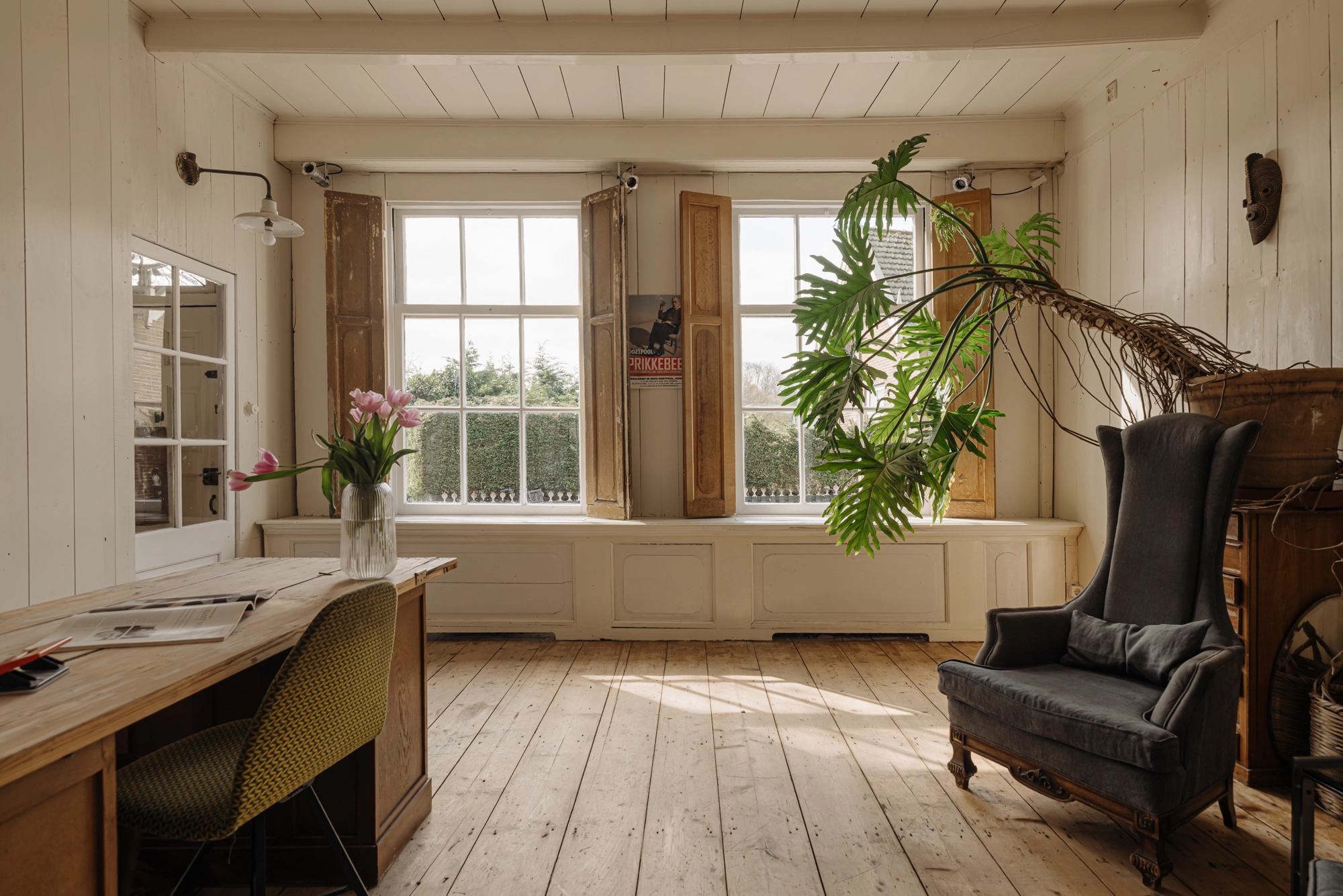
A house that moves with you
In 2002, Villa Zeezicht Sold, the catering business previously run by the current occupant, was Sold. But a year later, she was already itching to start something new. "I wasn't done with entrepreneurship yet." Together with a friend, she started a new business: the Taartenkamer (Cake Room) — from the front room of the house. Later, in an interview with Ottolenghi, he said that Villa Zeezicht's apple pie was his favorite cake. He even included a recipe in his latest cookbook. "The recipe is completely wrong — far too complicated — but the story behind it is beautiful. He wants a story with every recipe. And that's what it is, ultimately: a story."
It started small, with apple pie on the kitchen counter. But it grew quickly. "We delivered to cafes and restaurants. We got more and more requests: do you also make chocolate cake? Sticky toffee cake?" Within a year, they were baking hundreds of cakes a week. "Loetje added us to their menu. That sticky toffee cake became a bestseller." At their peak, they were producing around 900 cakes a week and the front room became too small, but by then the Taartenkamer had already moved elsewhere.
When the Taartenkamer moved, the front room was given a new function. They started the project op de Dijk' (Out on the Dike). This came about by chance, through a woman who organized theater performances with accompanying dinners. She asked if it would be possible to do this here too. Theater performances were held, followed by dinners—sometimes for 24 guests at a time.
“We started with three evenings. That immediately got out of hand: we sold 250 tickets.”
Everyone participated: the daughters served, friends helped cook or perform. After three evenings, they were exhausted, but it was magical. Helmert Woudenberg performed his Easter story here, in the front room. Afterwards, people sat down for dinner. "It was an evening that people still talk about."
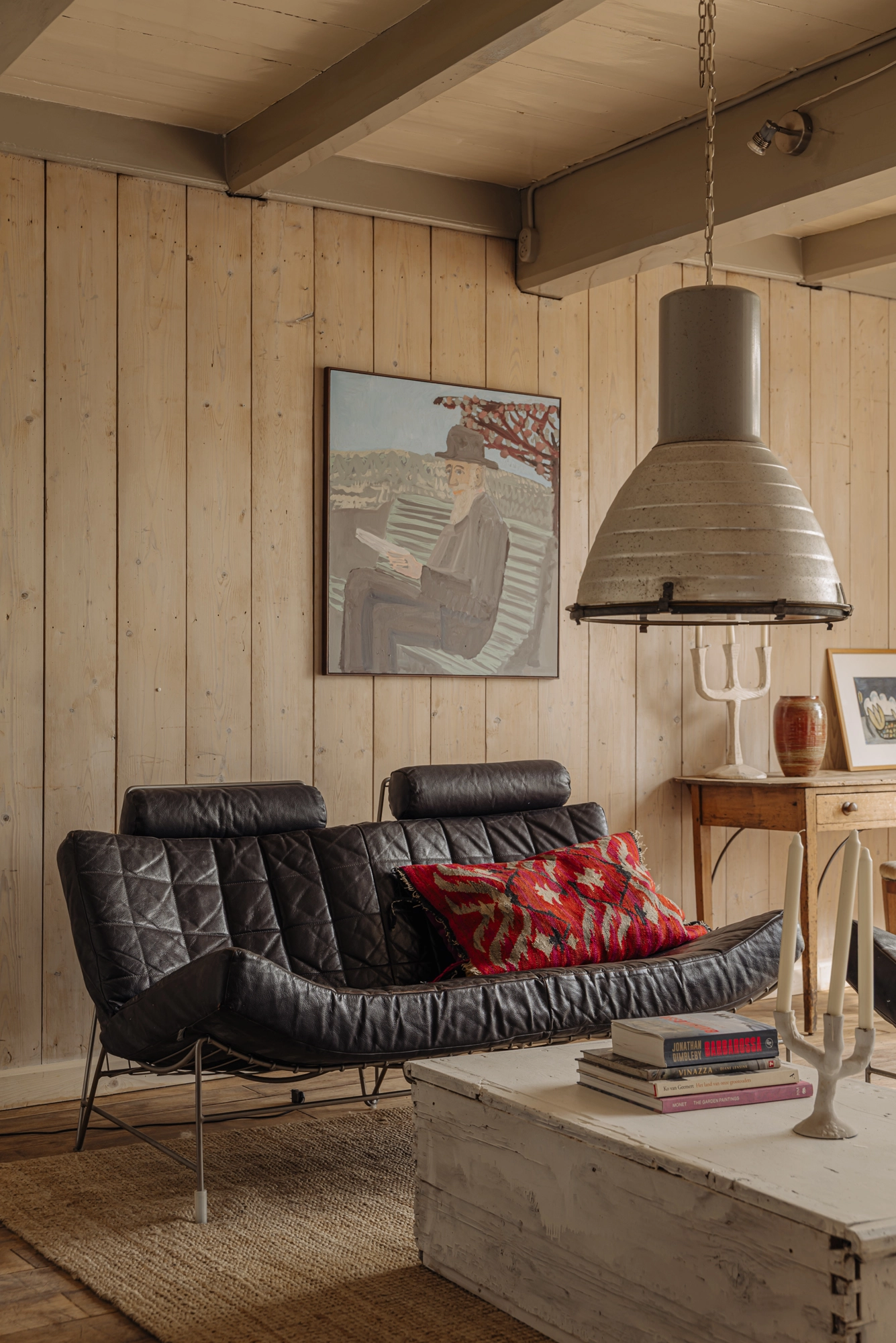
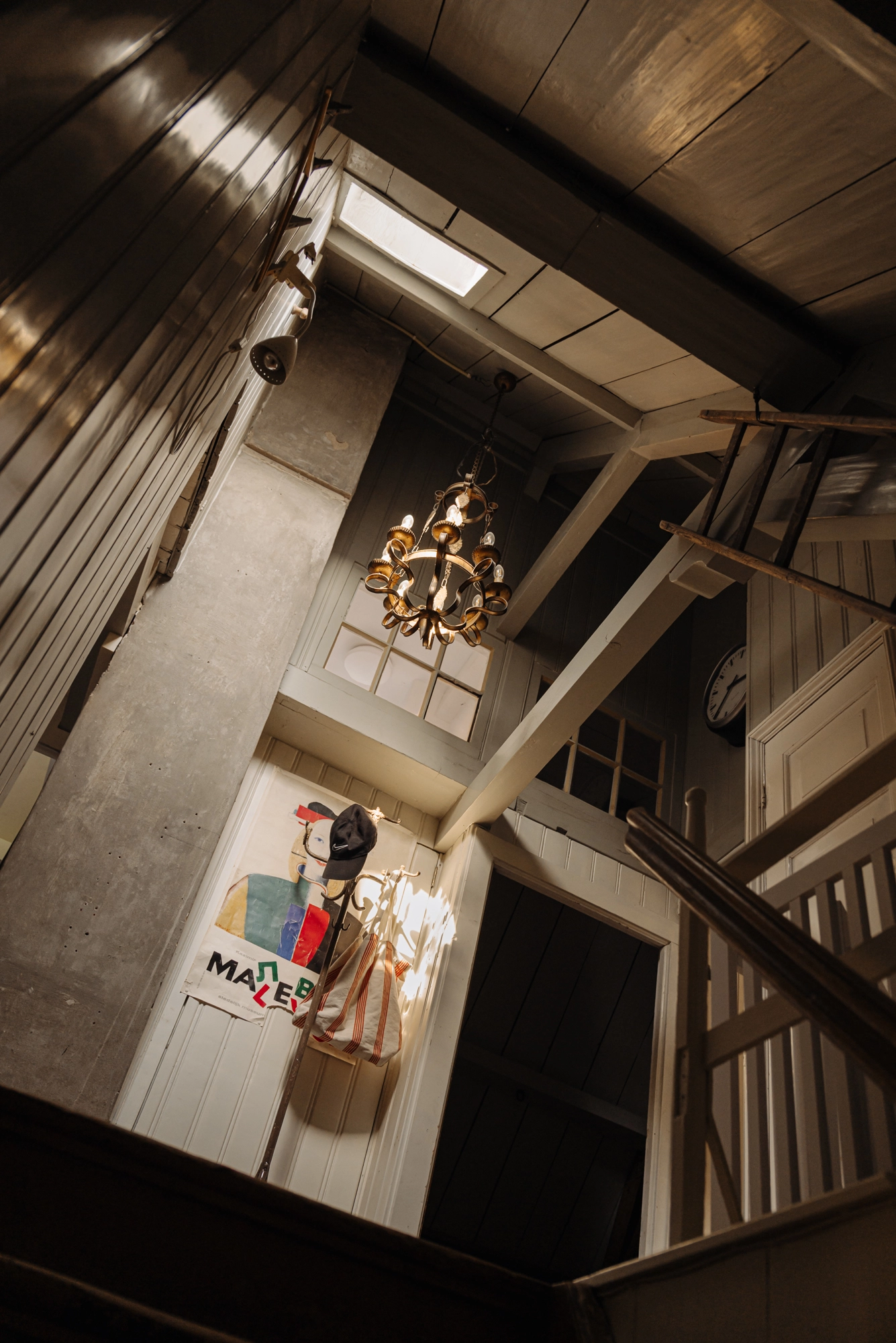
Later, the upper floor was converted into a bed and breakfast. Children and grandchildren lived there. The old workshop was given a new purpose.
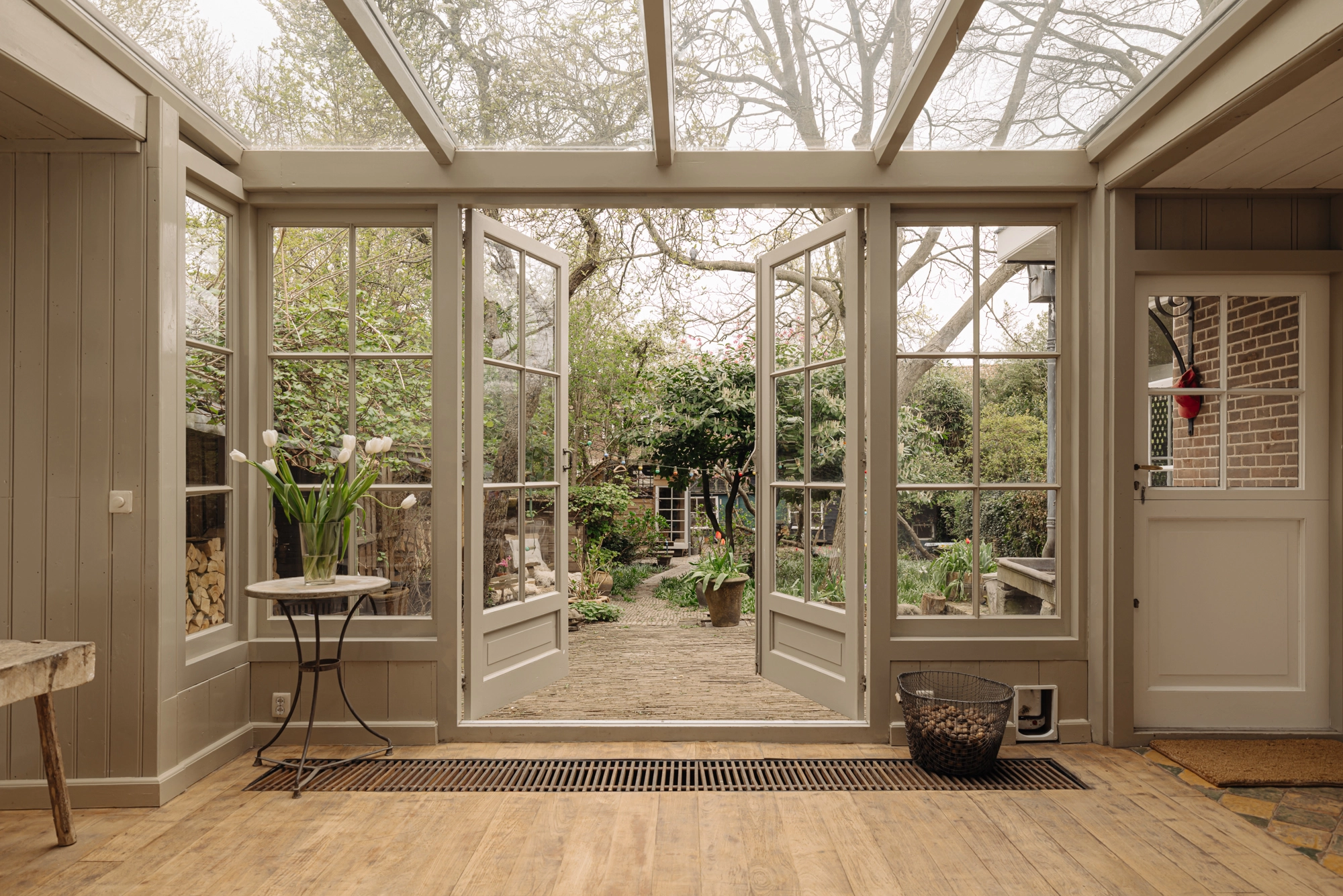
A garden shed built entirely from recycled materials
There is still a small wine cellar under the house. There is a stool there so you can sit down and choose your bottle — a simple detail, but typical of the way this house was designed: with peace, attention, and use in mind.
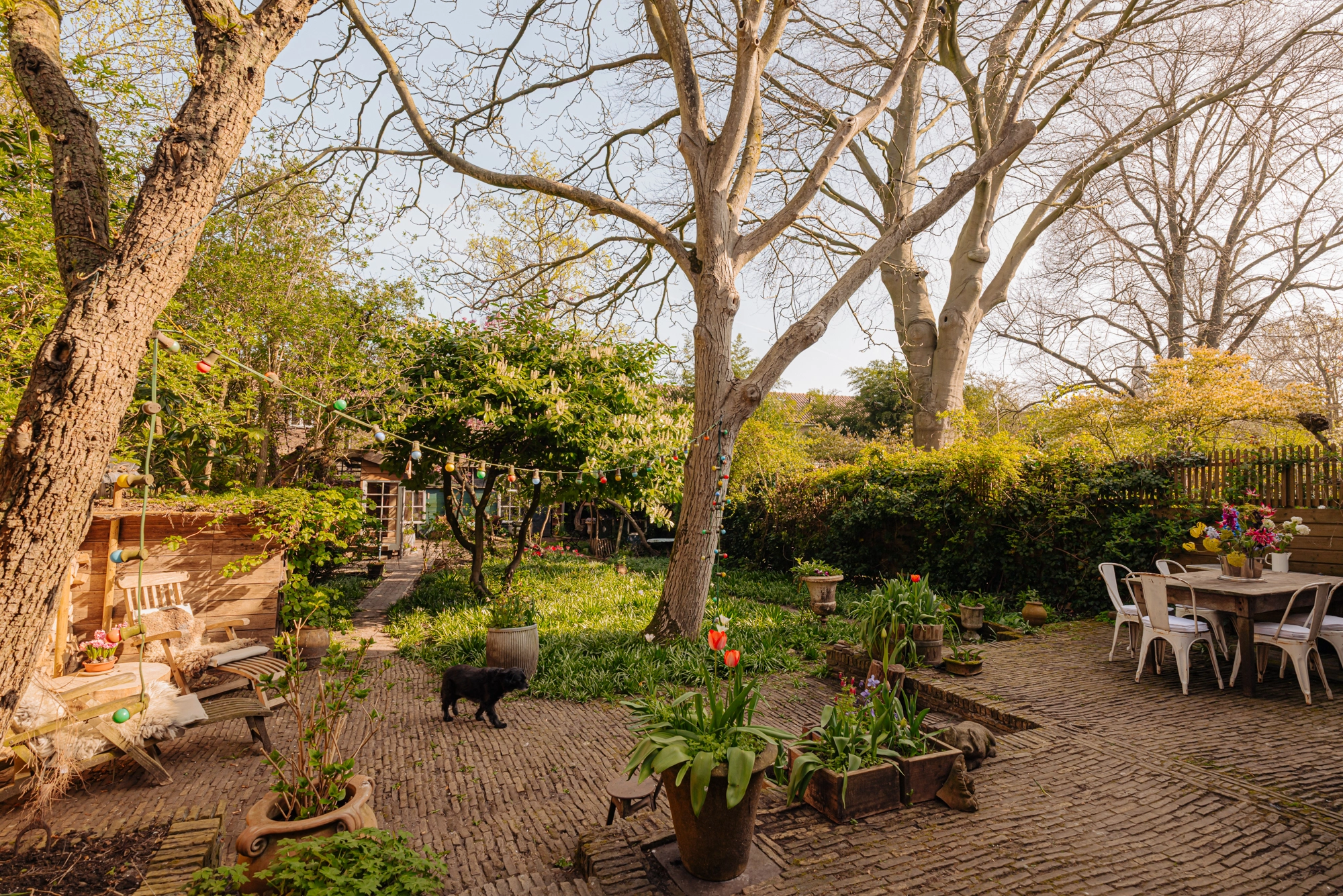
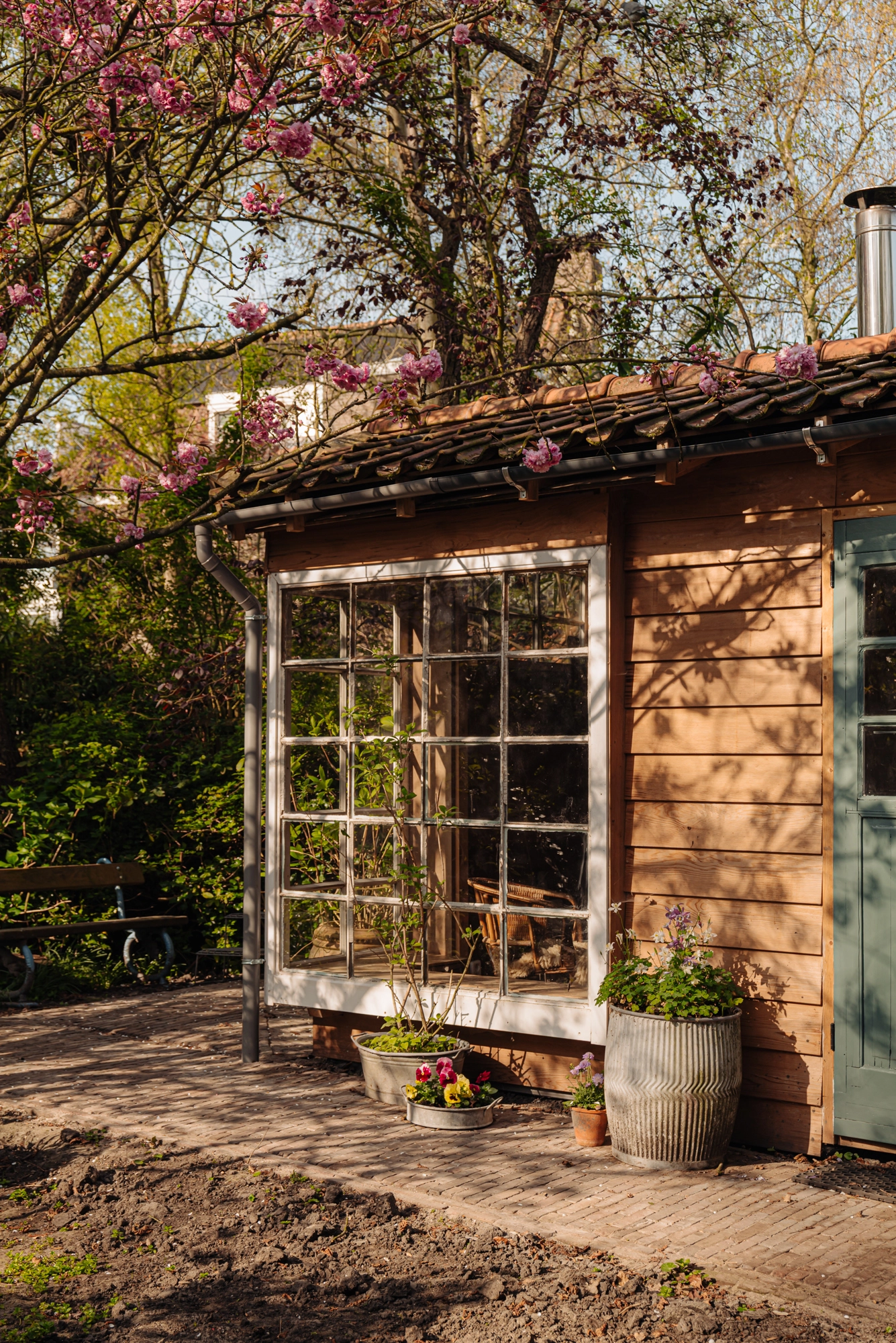
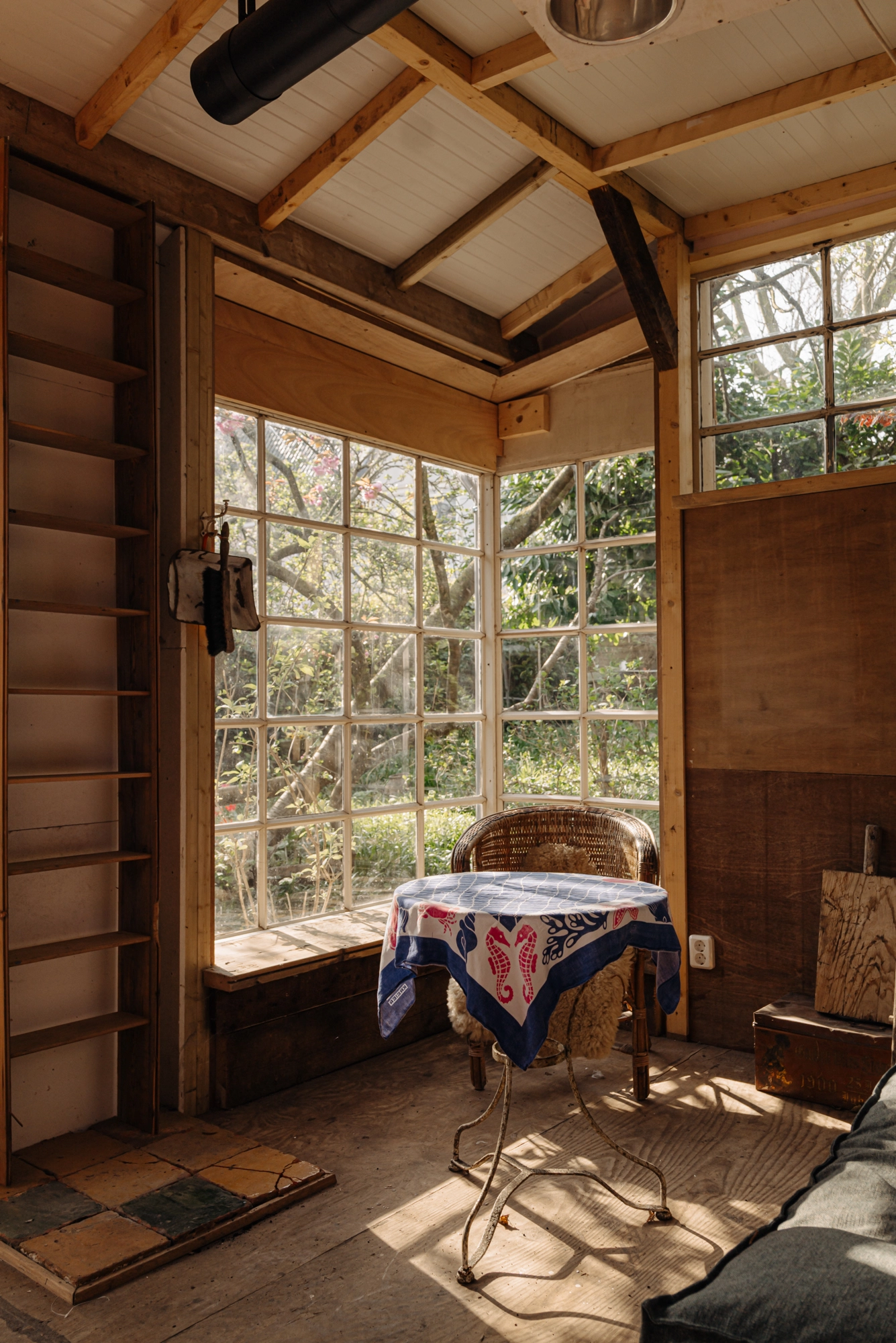
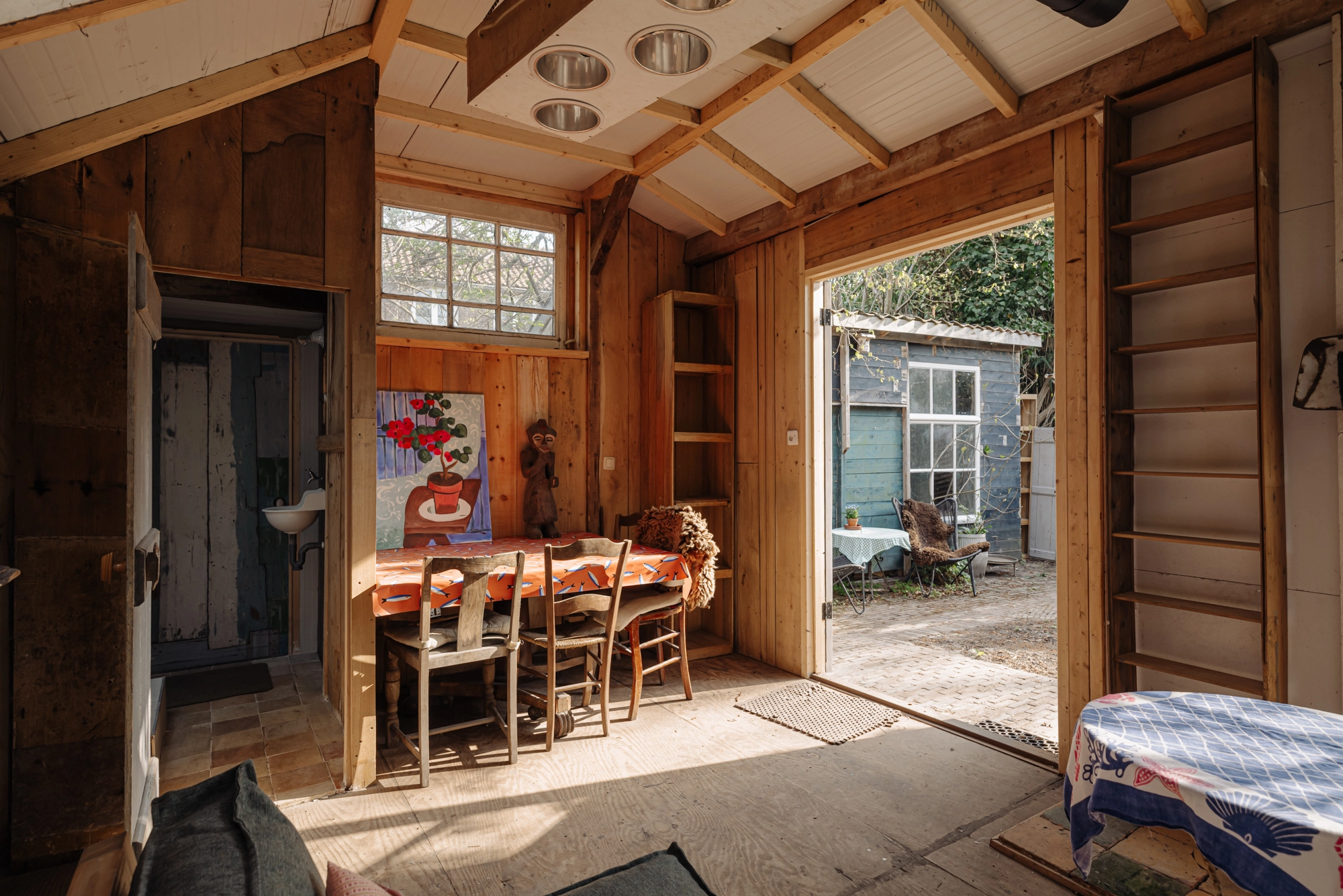
The garden also grew along with it. There are old trees, a walnut tree, and three pear trees, and a soft undergrowth of grass and native plants. A garden shed was built at the back—made entirely from reused materials. Window frames, doors, an antique toilet, and a wooden floor from 1606 from Villa Zeezicht. Everything was given a new function, in a place where life flows outdoors.
Care for the past
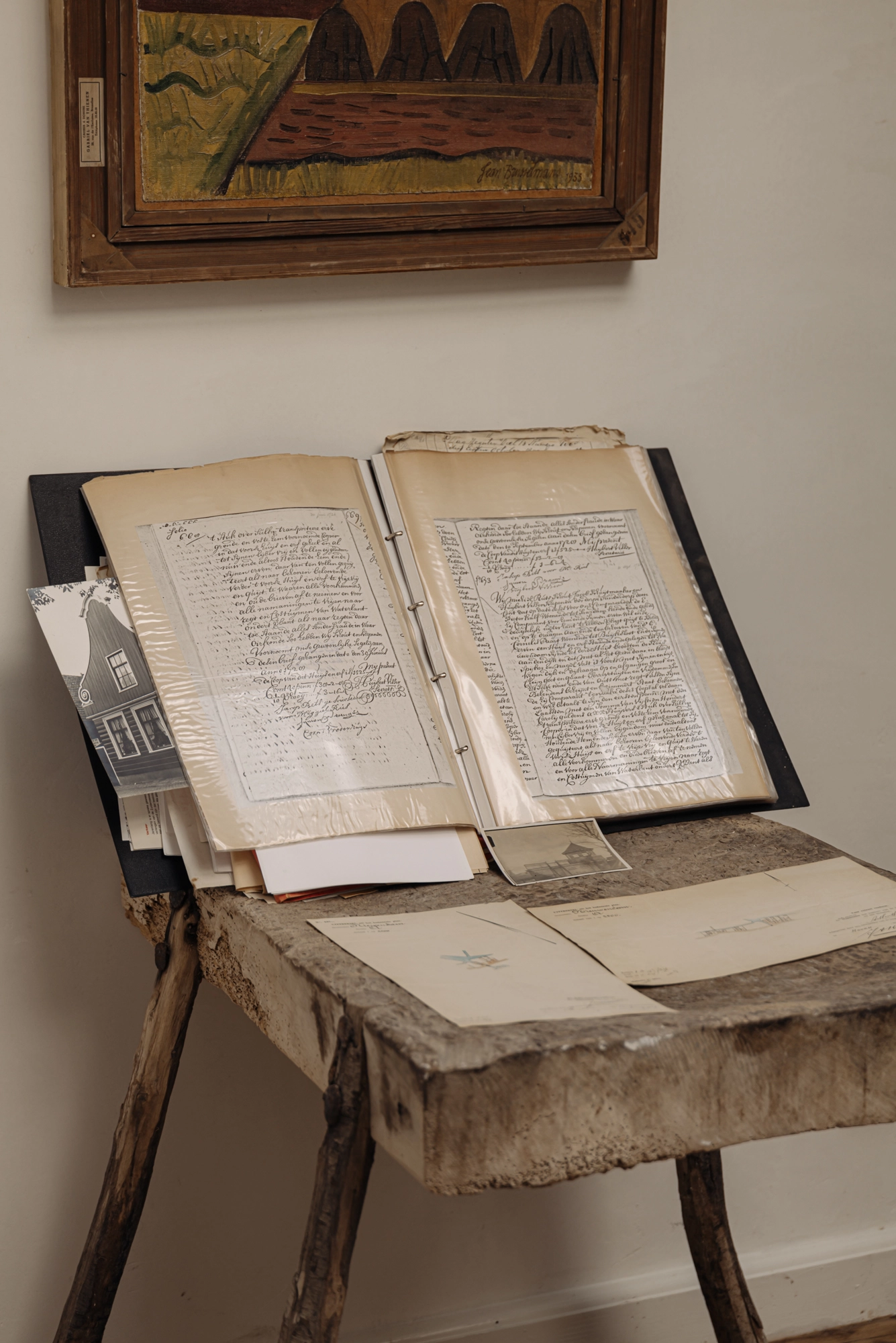
The cadastral maps lie on the table in the living room. Deeds of sale dating back to 1660, inventories listing "three tin barrels," old drawings of the house and garden. You can see that this house always had the largest garden. That there was once a tea house. A boathouse with steps leading down to the water. Every map, every drawing reminds us: this house was never just a place, but always part of something bigger.
A silent tribute
In an age where everything has to be done quickly, this house tells a different story. A story of slowing down, caring, reusing, and growing. Not renovating for the sake of renovating, but lovingly preserving what is good.
"The house is alive." Here, one is merely passing through time.
307 Nieuwendammerdijk, Amsterdam
View this residence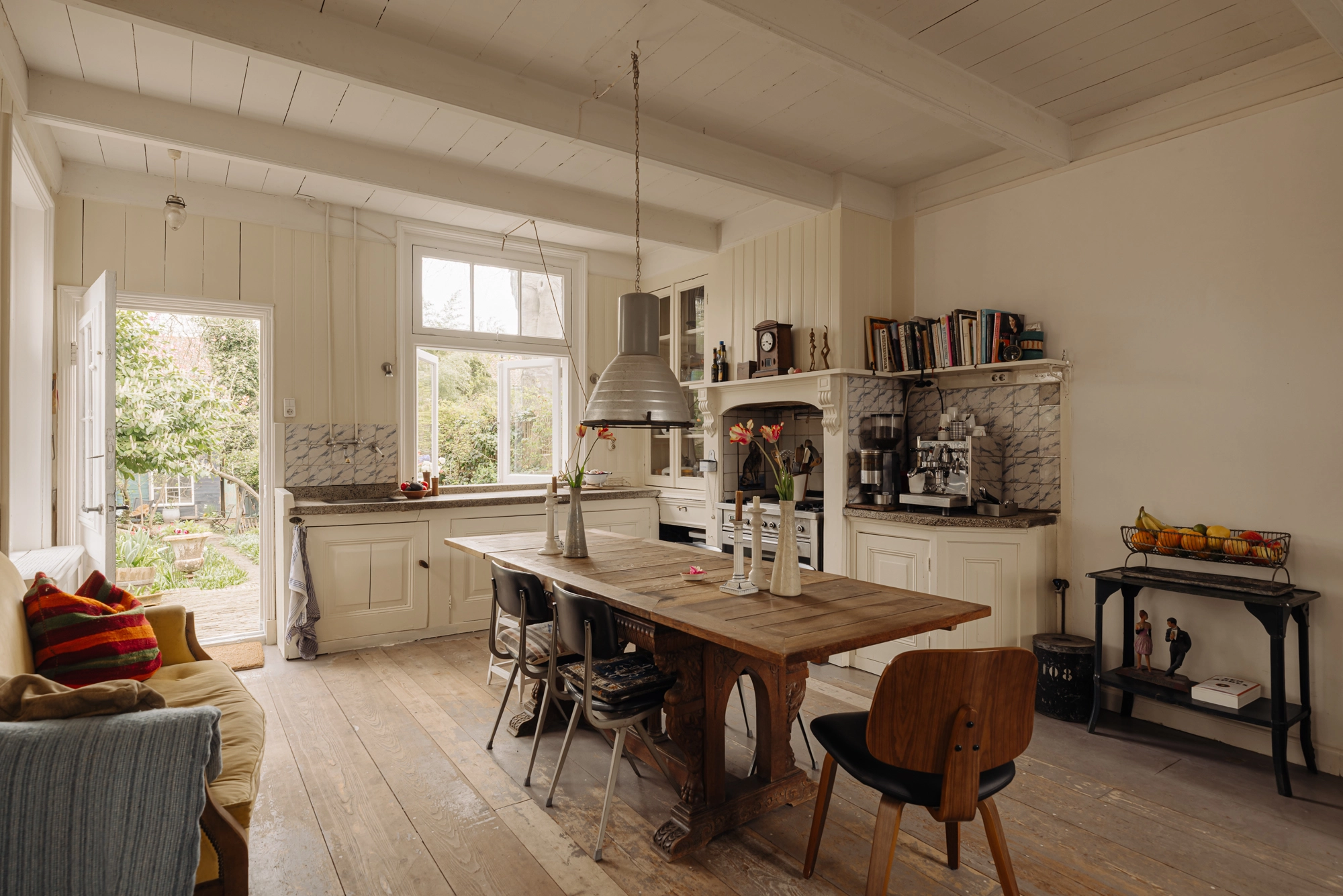
Neighborhood guide
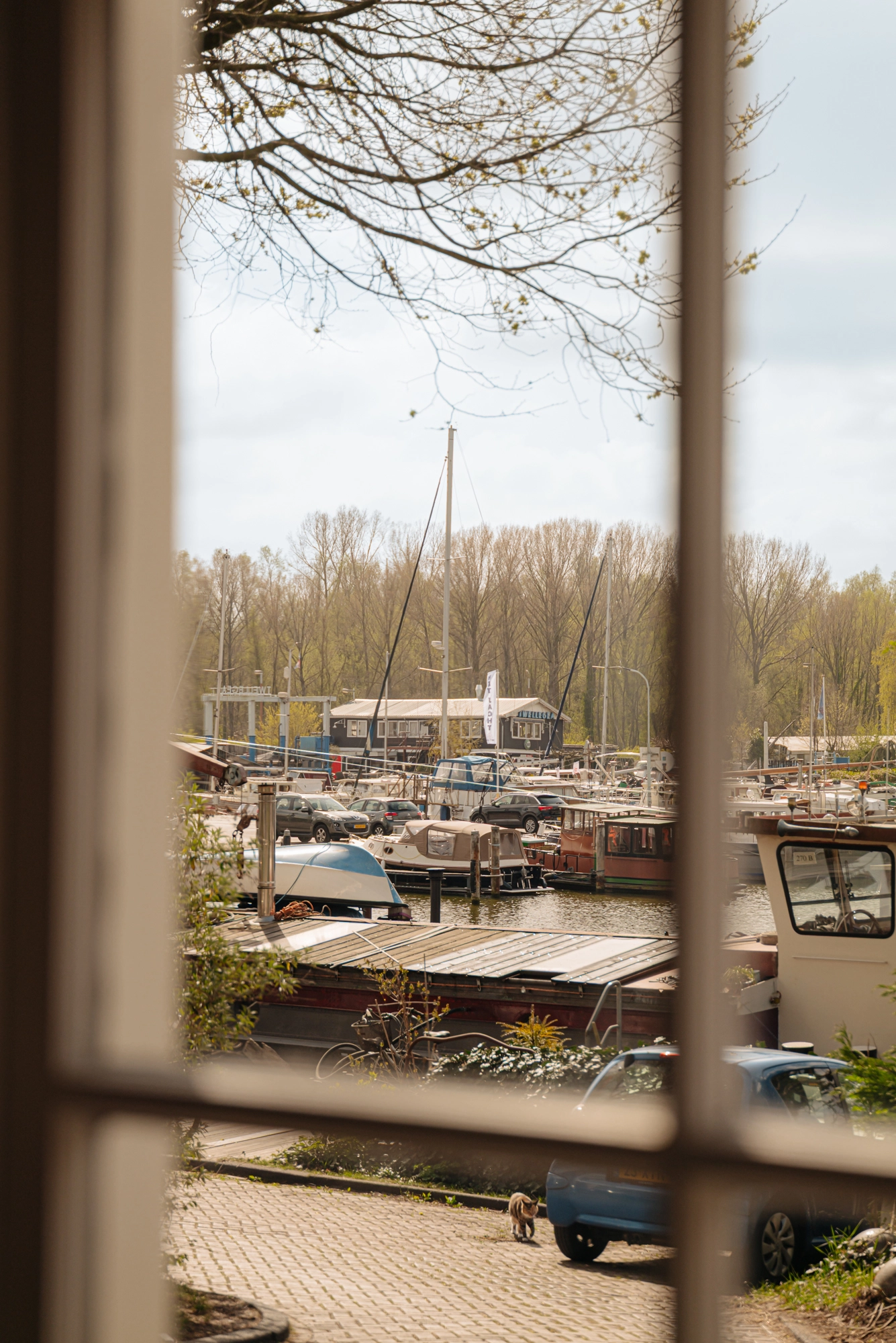
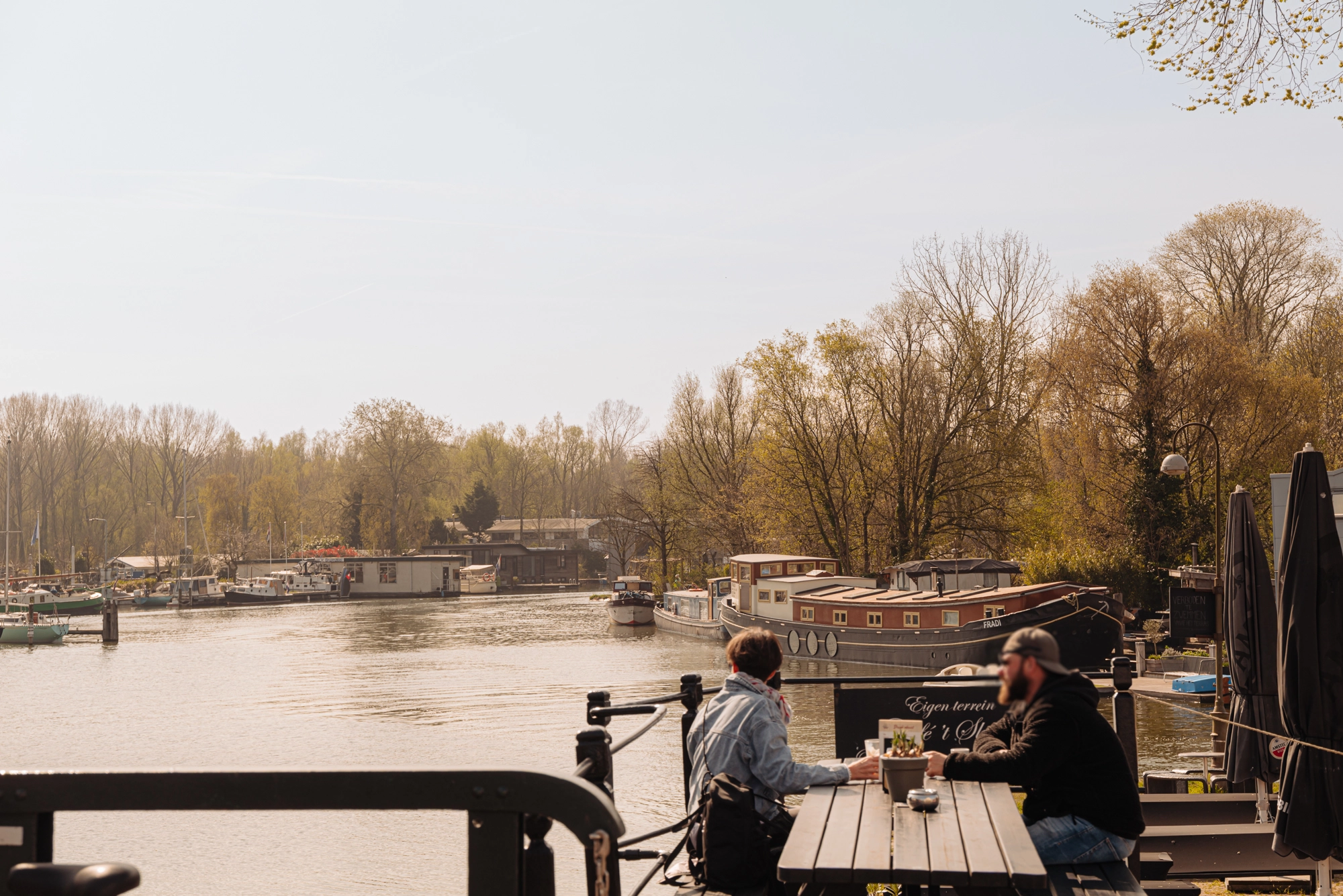
The Nieuwendammerdijk is surrounded by greenery, with the Vliegenbos, Speelbos Nieuwendammerdijk, and Schellingwouderbreekpark nearby. The De Jacht marina is right on your doorstep, and for sports enthusiasts, the Elzenhagen Tennis Club is just across the street. There is a diverse range of restaurants and cafés, such as Café 't Sluisje, Hotel de Goudfazant, Euro Pizza, Restaurant Barracuda, Coba, and other amenities such as Eye, Tolhuistuin, the A'DAM Tower, the Jumbo Food Market, and Landmarkt. This part of the quay is particularly sought after due to its location near the lock and the many beautiful, similar houses. The location is characterized as a residential and working area where various small-scale and representative offices are located. There is a wide choice of schools, such as Wespennest, De Biënkorf, Hyperion Lyceum, Damstede Lyceum, Clusius College, Bredero, and SVPO Meeuwenlaan.
1025 LM Amsterdam
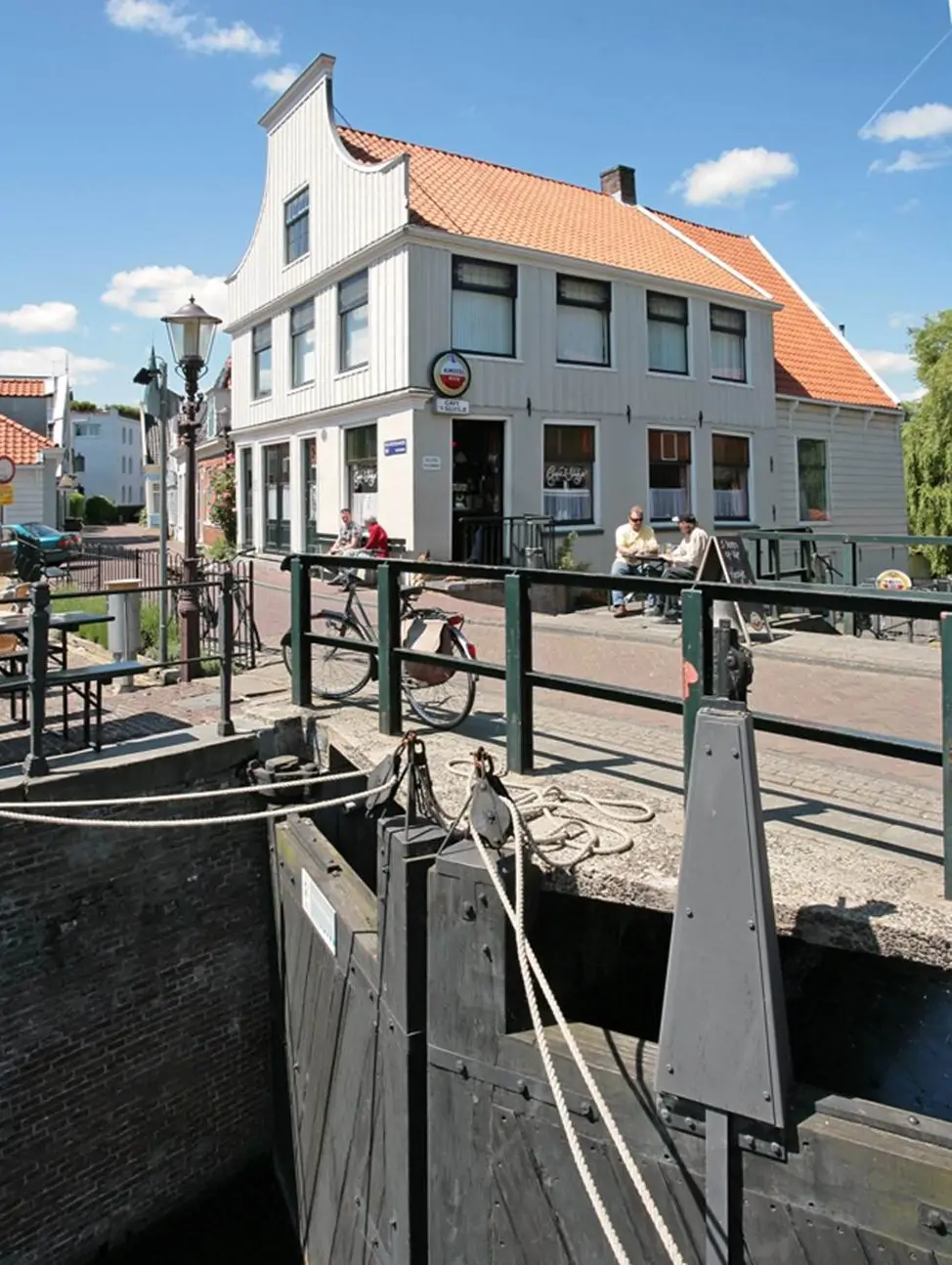
Café 't Sluisje
This old brown café has been around for over 100 years. For a moment, it looked like 't Sluisje was going to disappear, but it was bought by 85 local residents and a new manager was found. It is a really cozy neighborhood café where everyone knows each other and meets up. The terrace is located on a lock, and it's a wonderful place to sit in the summer. But even in winter, with a nice hot chocolate with whipped cream and a winter coat, you can enjoy the view of the beautiful Nieuwendammerdijk and the rest of rural northern Amsterdam.
1023 BD Amsterdam
Nuraghe
On Purmerplein, you will find Nuraghe, where the aroma of freshly baked pizza immediately transports you to Italy. The proud owner, Auri, a true Sardinian pizza maker, bakes his pizzas in a traditional wood-fired oven. His signature pizza dough recipe brings the authentic flavors of his homeland to life. It's not just the pizzas that are special; every week, Auri sources fresh produce—vegetables, meats, and more—directly from Italy. Together with his wife Petra, who warmly welcomes guests, he runs this beloved spot.
1023 BD Amsterdam
Glaze
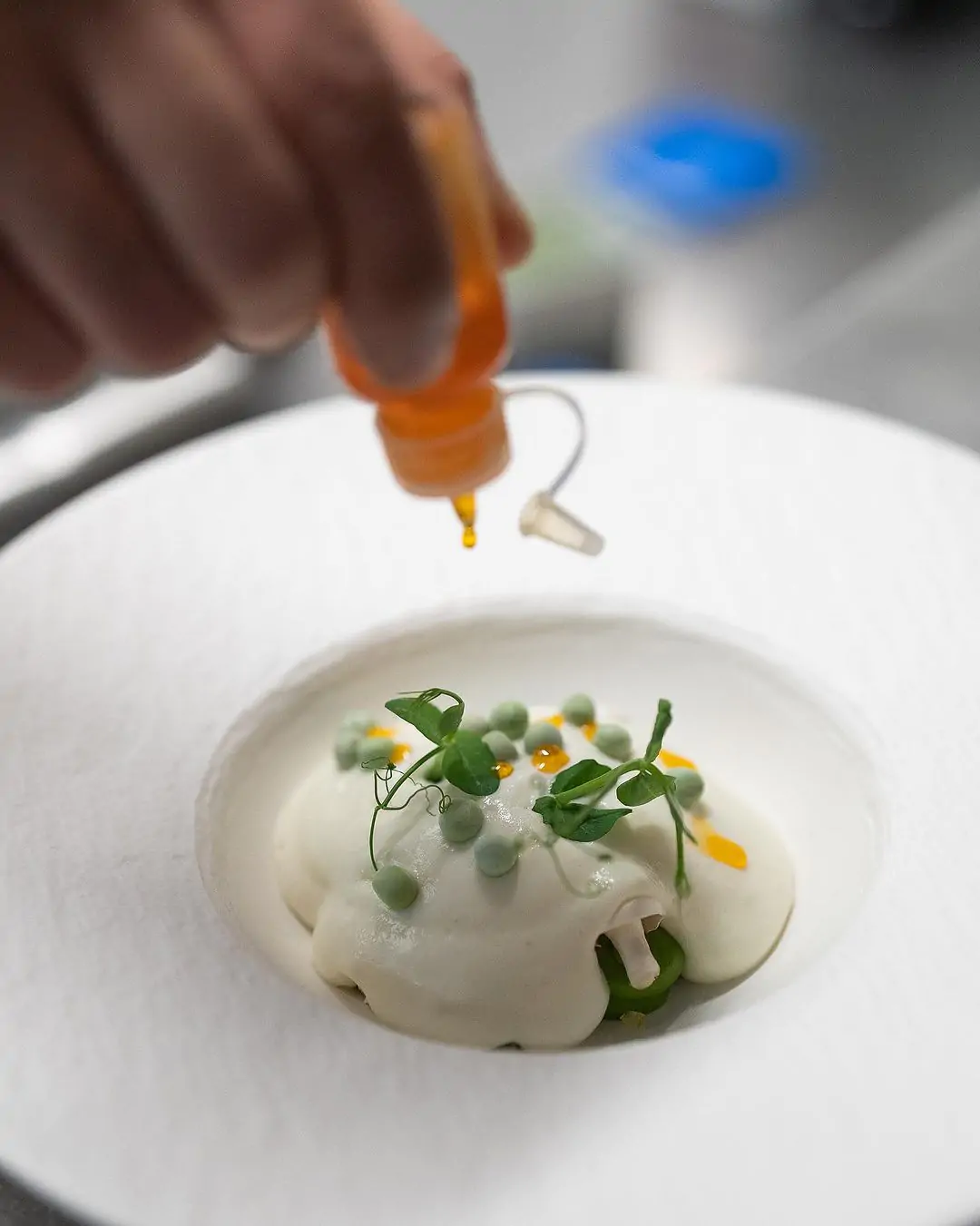
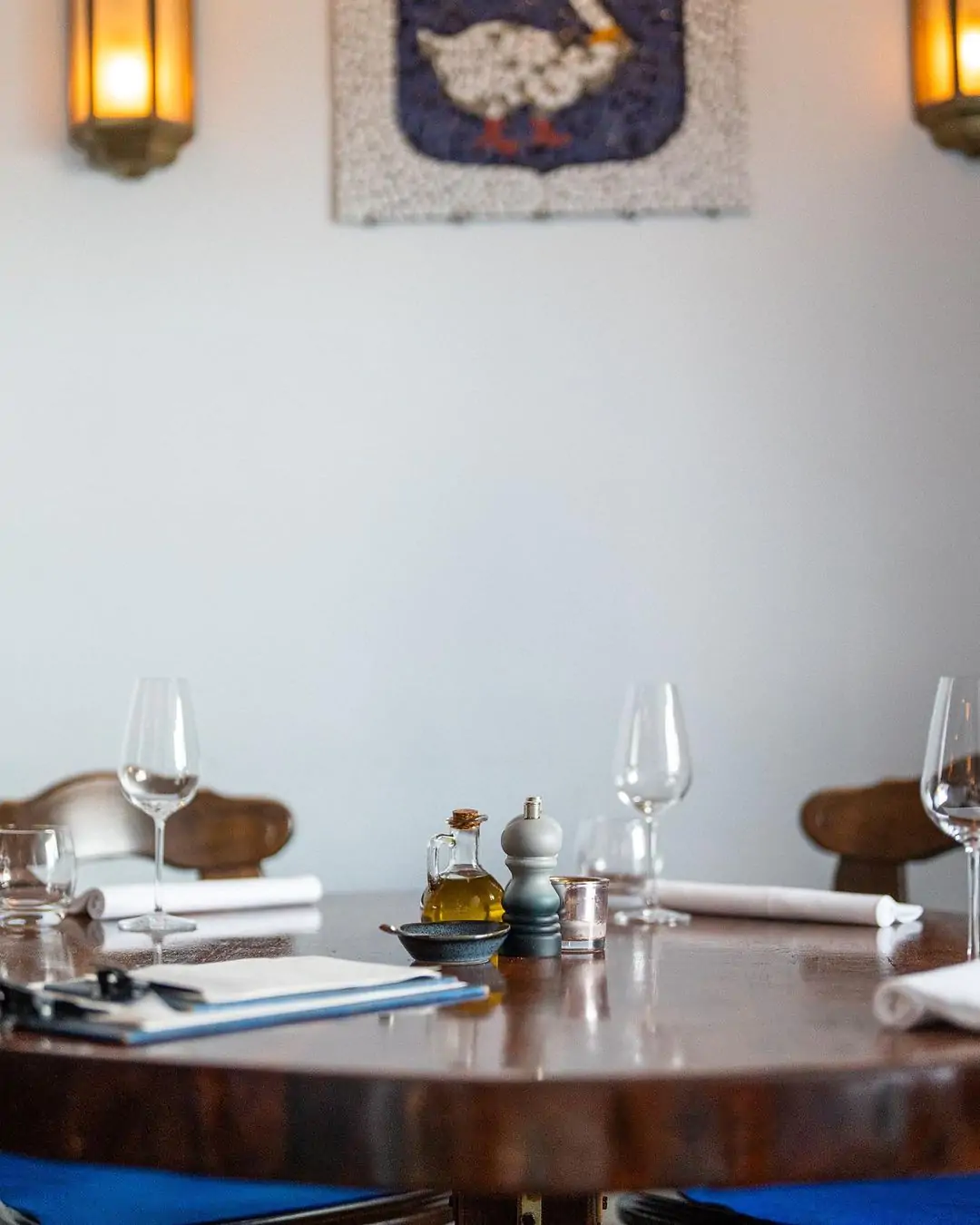
Lazuur is a joint project Rogier and Elise, owners of Lastage* in Amsterdam. With Sherif Khalil at the helm, they have the ideal chef who seamlessly blends French cuisine with his Portuguese background. The menu offers dishes to share. Every first Sunday of the month, they serve a Sunday Roast, three classic courses for brunch or lunch. Another plus is the wine list, which includes a wide selection of matching Madeira and port wines.
1021 KB Amsterdam
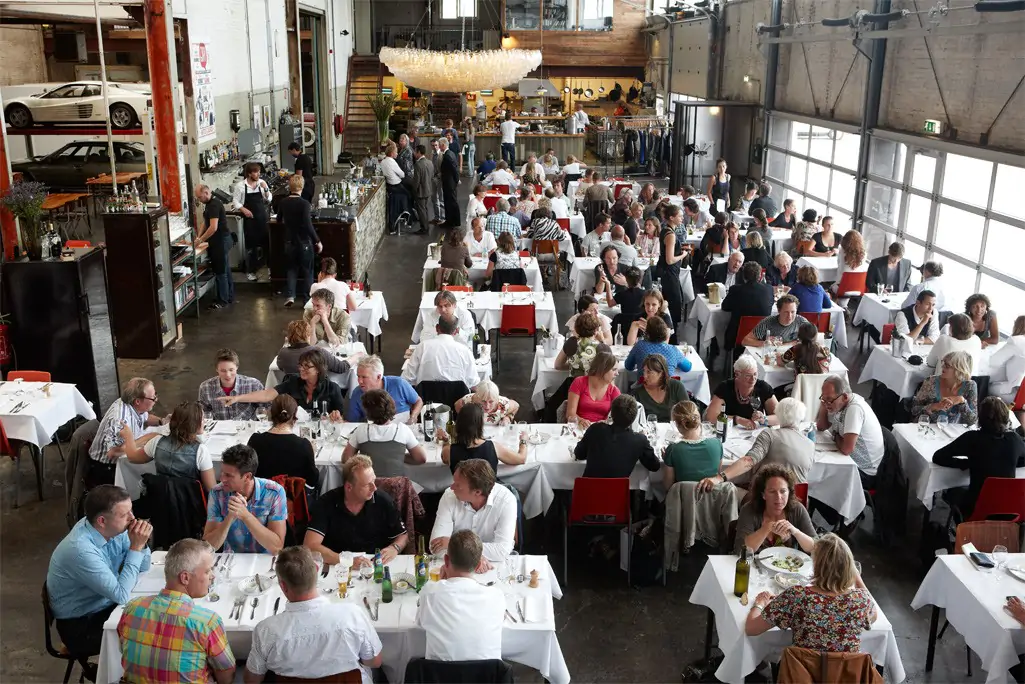
Hangar Amsterdam
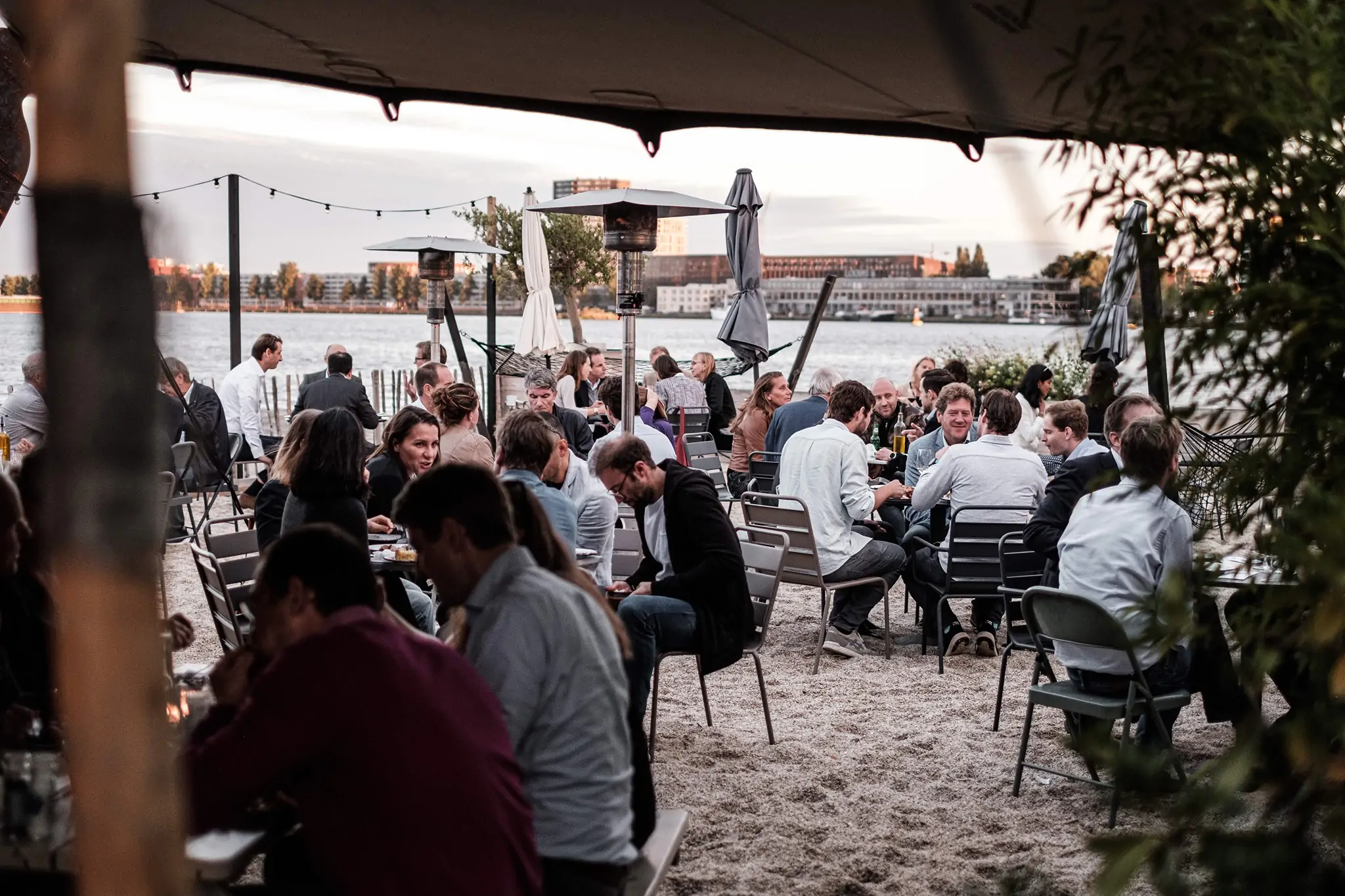
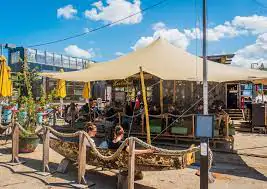
Hangar Amsterdam is located on the north side of the IJ. It is a raw harbor hut decorated with furniture that could have come Immediately French flea markets. You can come here for a birthday party, a dinner with Italian classics, or a drink. The terrace is almost always in the sun and is ideal for a beer, glass of wine, or delicious cocktail with a magnificent view of the IJ.
1021 KB Amsterdam
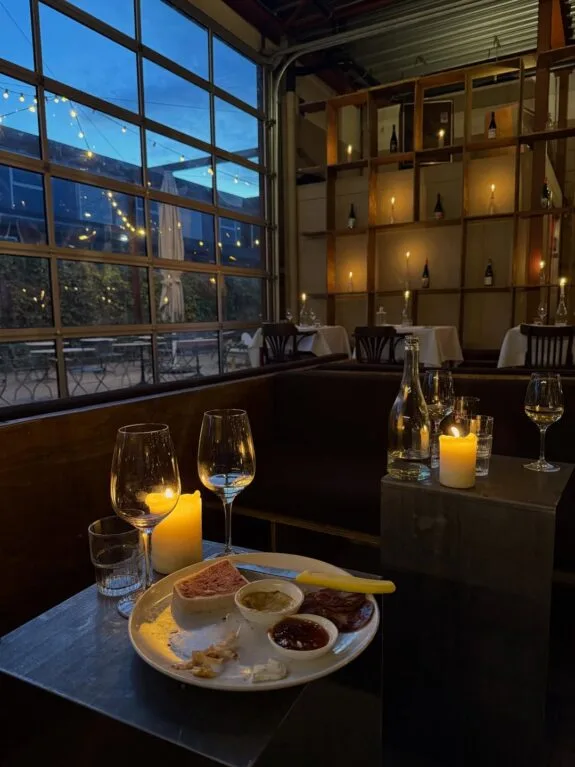
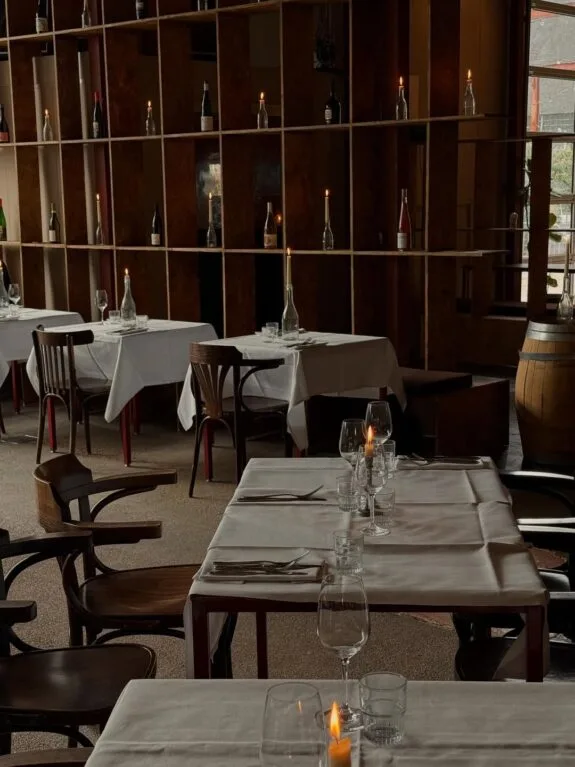
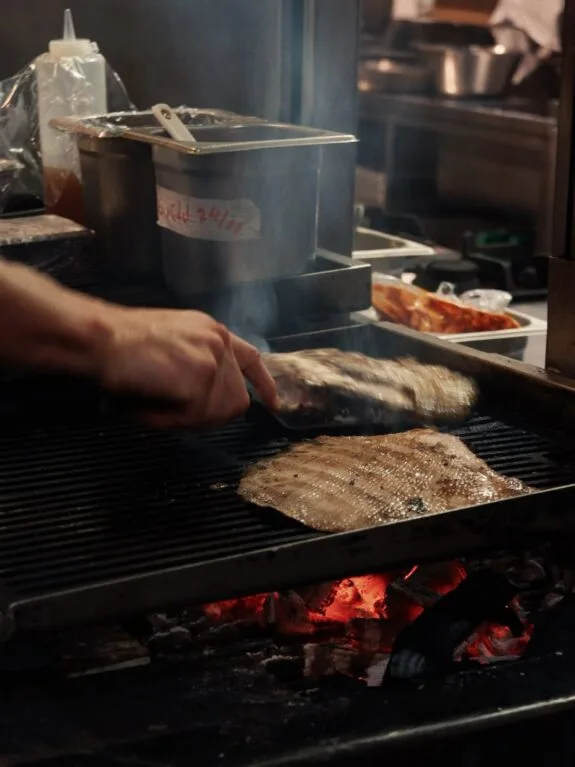
Hotel de Goudfazant
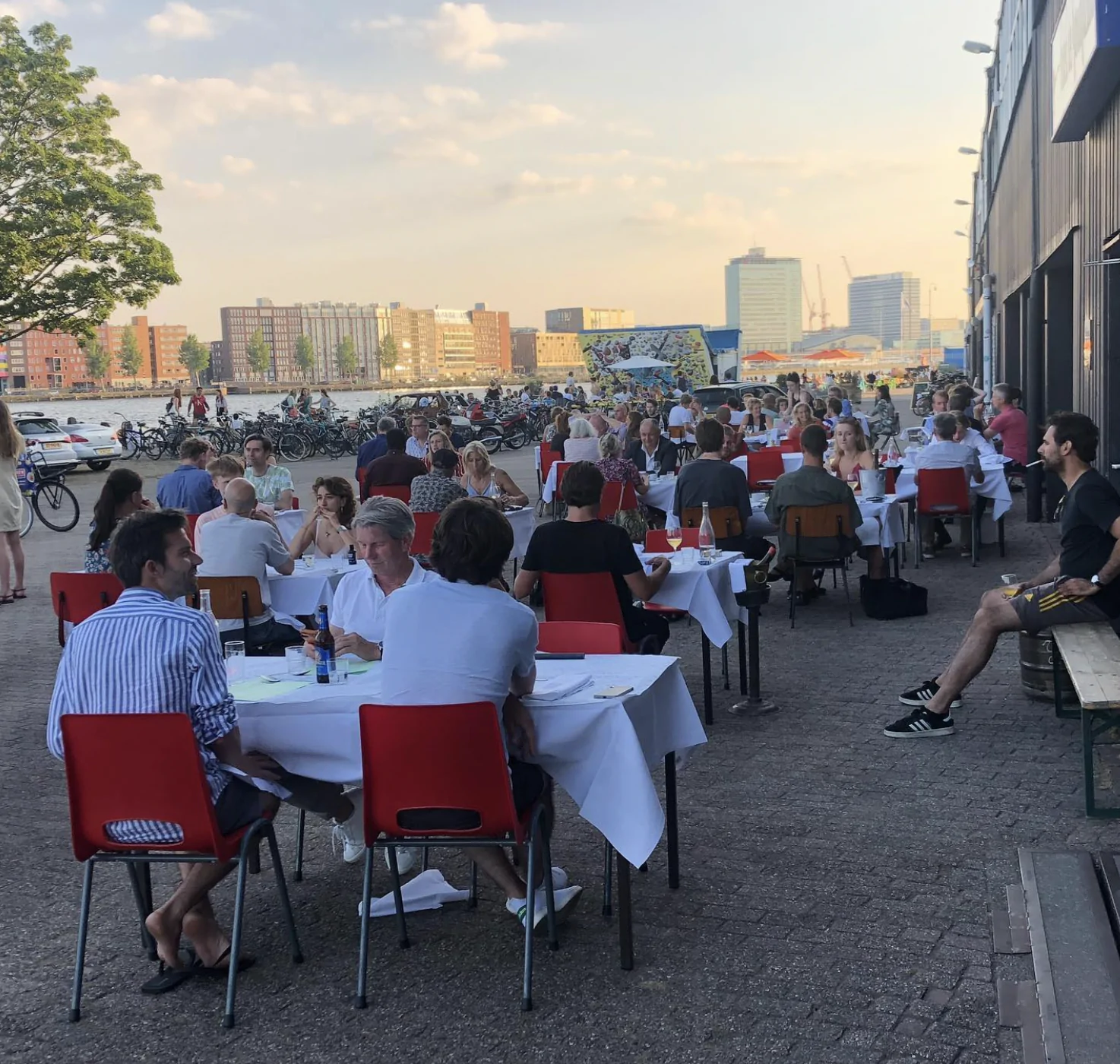
The restaurant is located in a huge industrial warehouse on the waterfront in Amsterdam North, which, despite its size, has excellent acoustics and is very well and stylishly decorated. Every evening, it is filled with regular customers who keep coming back for the (pickled) poussin and the dessert 'heavenly mud', among other things. In summer, you can sit on the terrace and enjoy the view of the IJ river. Goudfazant now also bakes its own bread! The 'group' now also includes other businesses such as Café Modern and (in collaboration with Sander Overeinder) restaurant VRR.
1021 KL Amsterdam
Camarat
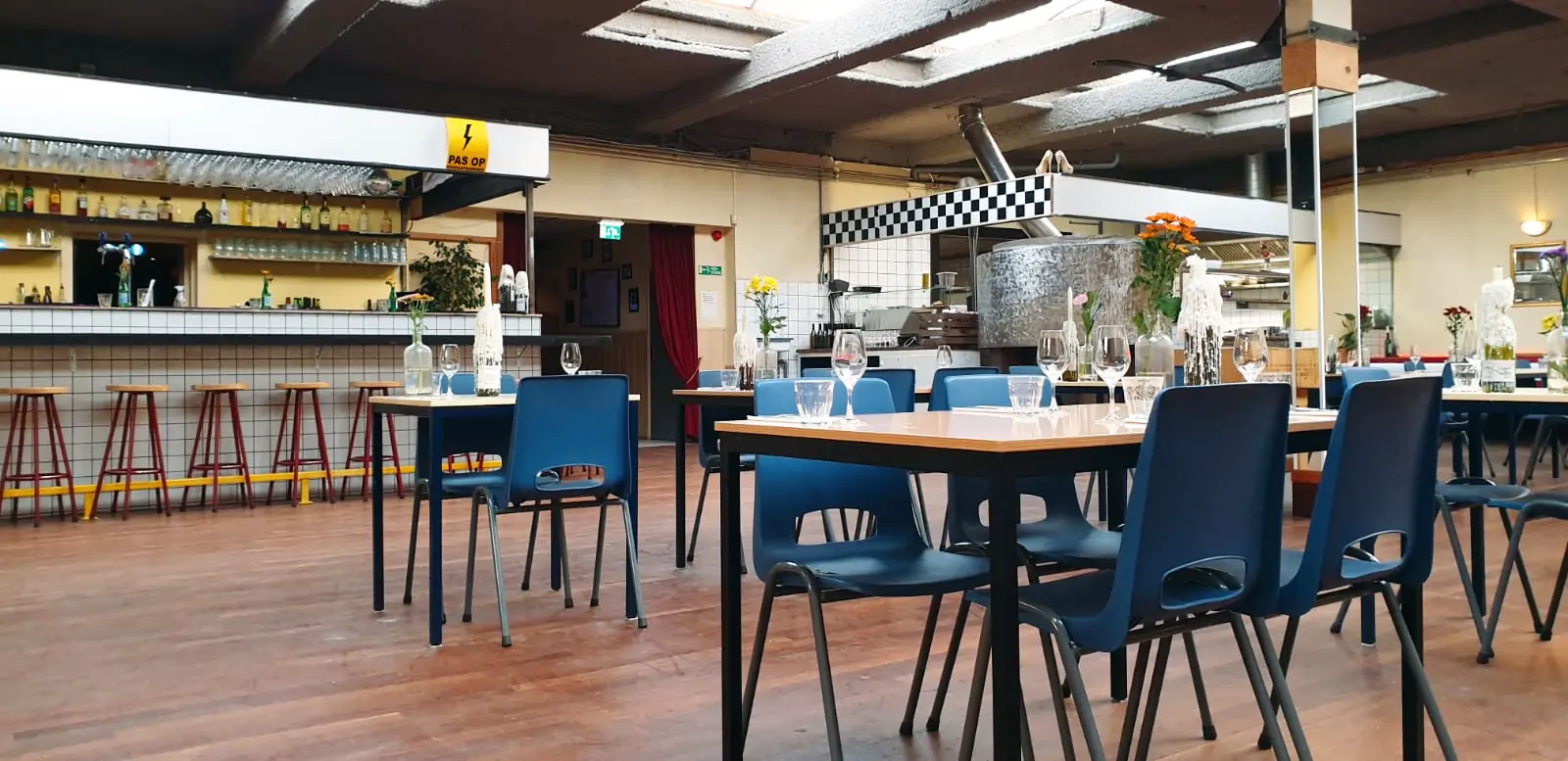
Camarat is a new restaurant-bar concept in Amsterdam-Noord that came about after friends Beau van Haren and Ruben Andriesse took over the catering location of the former Chateau Amsterdam to realize their own vision. Wout Langendijk is in charge of the kitchen. He learned his trade at In den Doofpot, did an internship at Noma in Copenhagen, and then worked at Cantine de Caron for several years. This background forms the basis for what he himself calls "Noord Cuisine," with French technique, Scandinavian influences, and a touch of Amsterdam stubbornness. The menu changes with the seasons and feels both refined and relaxed, with dishes that invite sharing. The atmosphere is raw and warm at the same time, matching the creative energy of Amsterdam-Noord.
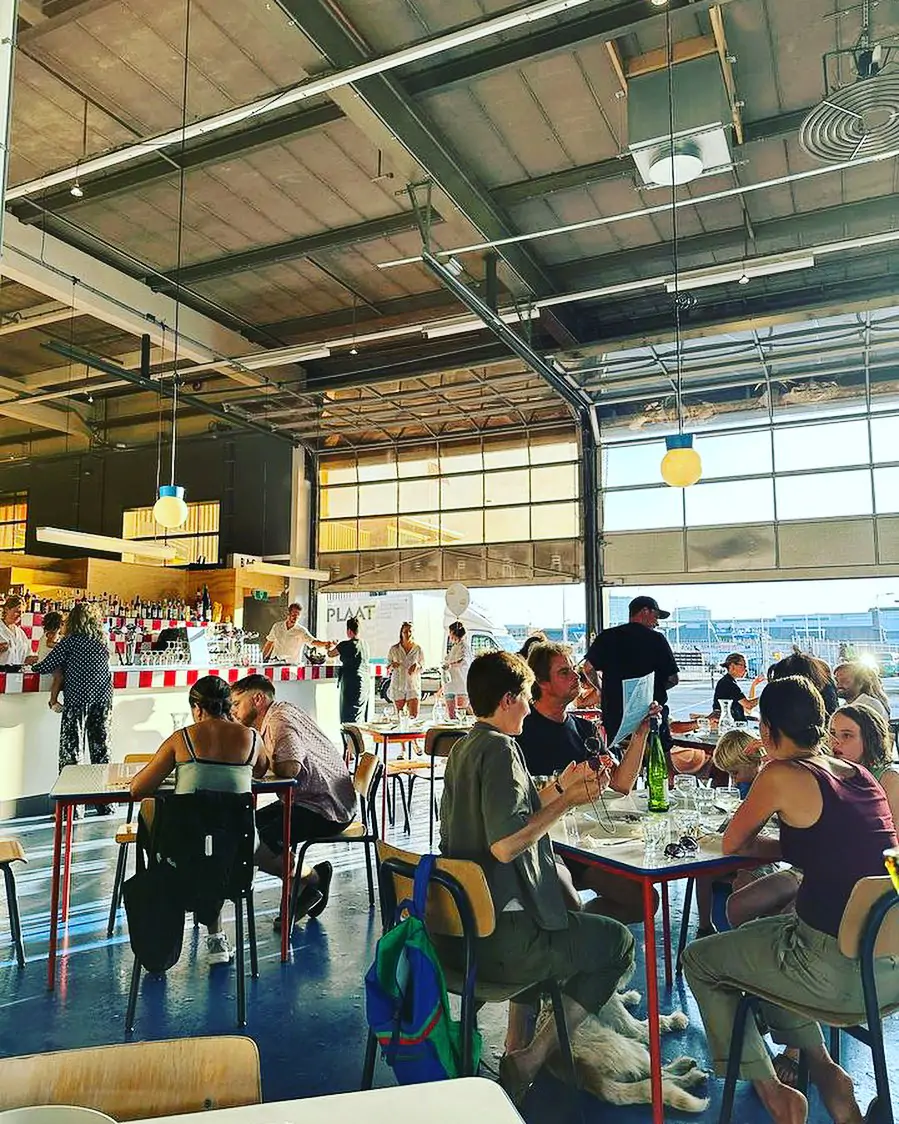
1021 KB Amsterdam
Barracuda
Barracuda is located in Amsterdam North, in a 600-square-meter warehouse with an interior built by the owner himself, where fish and wine play the leading role. You mark what you want to eat on a piece of paper with a pencil, and you order your drinks and pick them up at the bar. In the summer, you can eat outside on a terrace that is just as huge. The fresh fish and shellfish are served with French fries.
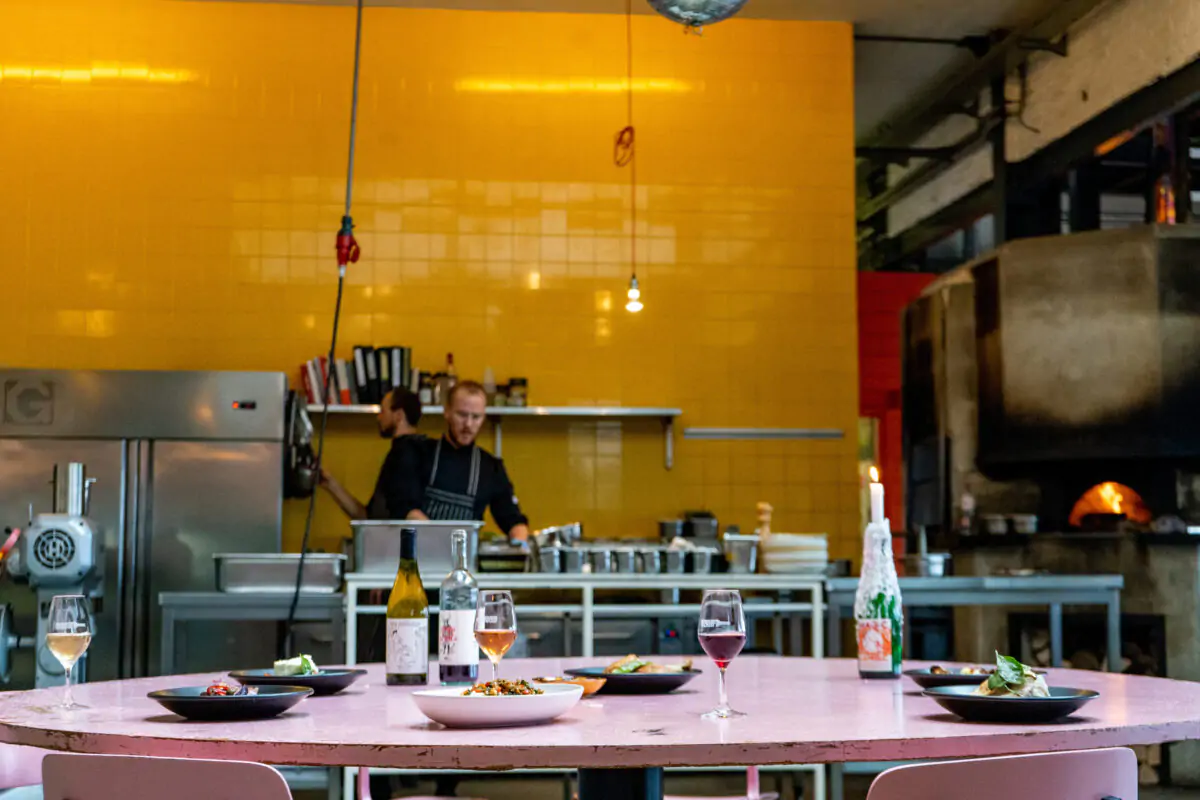
1021 KB Amsterdam
FC Hyena
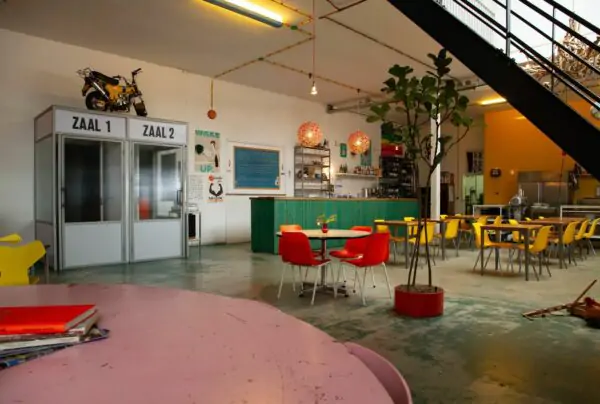
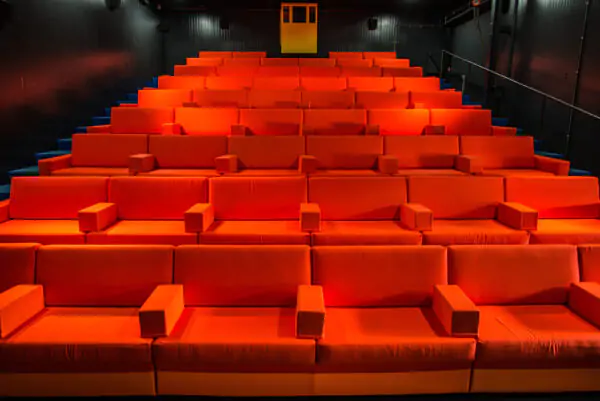
FC Hyena is a charming combination of cinema, bar, and restaurant. You can watch cult films here in the two cozy cinema theaters. The menu is compact and good, and most of the dishes are prepared in a large wood-fired oven. In the summer, you can also go to the outdoor cinema or sit at one of the large picnic tables overlooking the IJ. This is almost as entertaining as a film, as from the terrace you can see the entire Amsterdam skyline, including all the boats and large cargo and cruise ships passing by.
1021 KM Amsterdam
The Skate Café
The Skatecafé in Amsterdam Noord is unique in that it has a halfpipe for skaters at the back of the restaurant. They serve delicious food and drinks and often host live music nights or club nights. The atmosphere is usually very cozy, and it can get very crowded on such nights. The menu includes dishes such as shrimp and langoustine bisque with mussels and crème fraîche or cod fillet with parsnip purée, beets, mussels, and antibiose. Every Thursday, they have a guest chef who decides the menu. The interior is industrial and minimalist, and the furniture is often moved around to make room for different events.
1021 KE Amsterdam
Coba
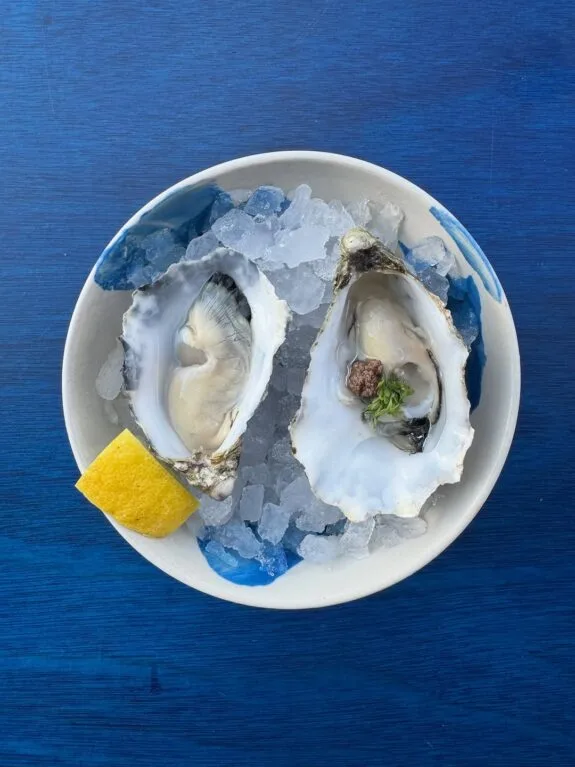
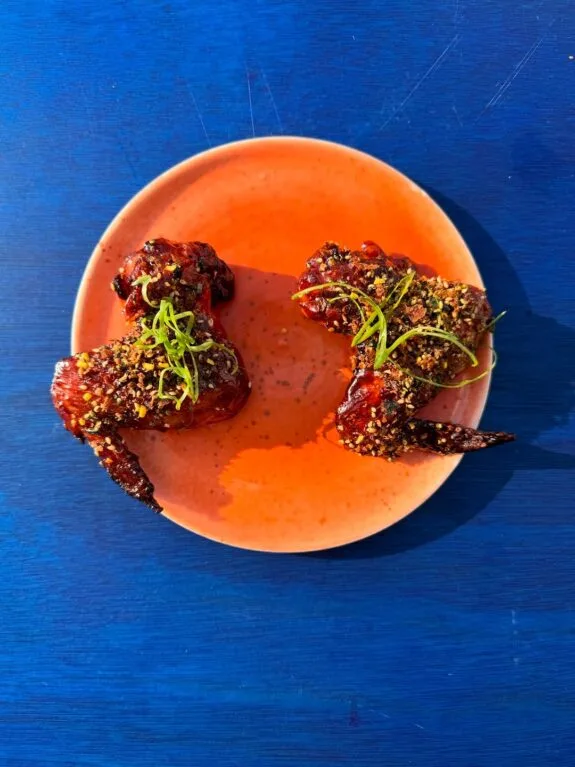
In Amsterdam-Noord, Coba Taqueria is located in a former garage. This restaurant with Mexican cuisine has a menu consisting of traditional handmade tacos, refined cocktails and a selection of special wines and beers. The interior of this place is also reminiscent of a real Mexican taqueria, with colorful decorations, plants and music in a deliberately unfinished space. If you would like to learn how to make tacos yourself after a visit to Coba, you can do so via the online cooking course that Coba offers.
1021 KP Amsterdam
Nikotin Restobar
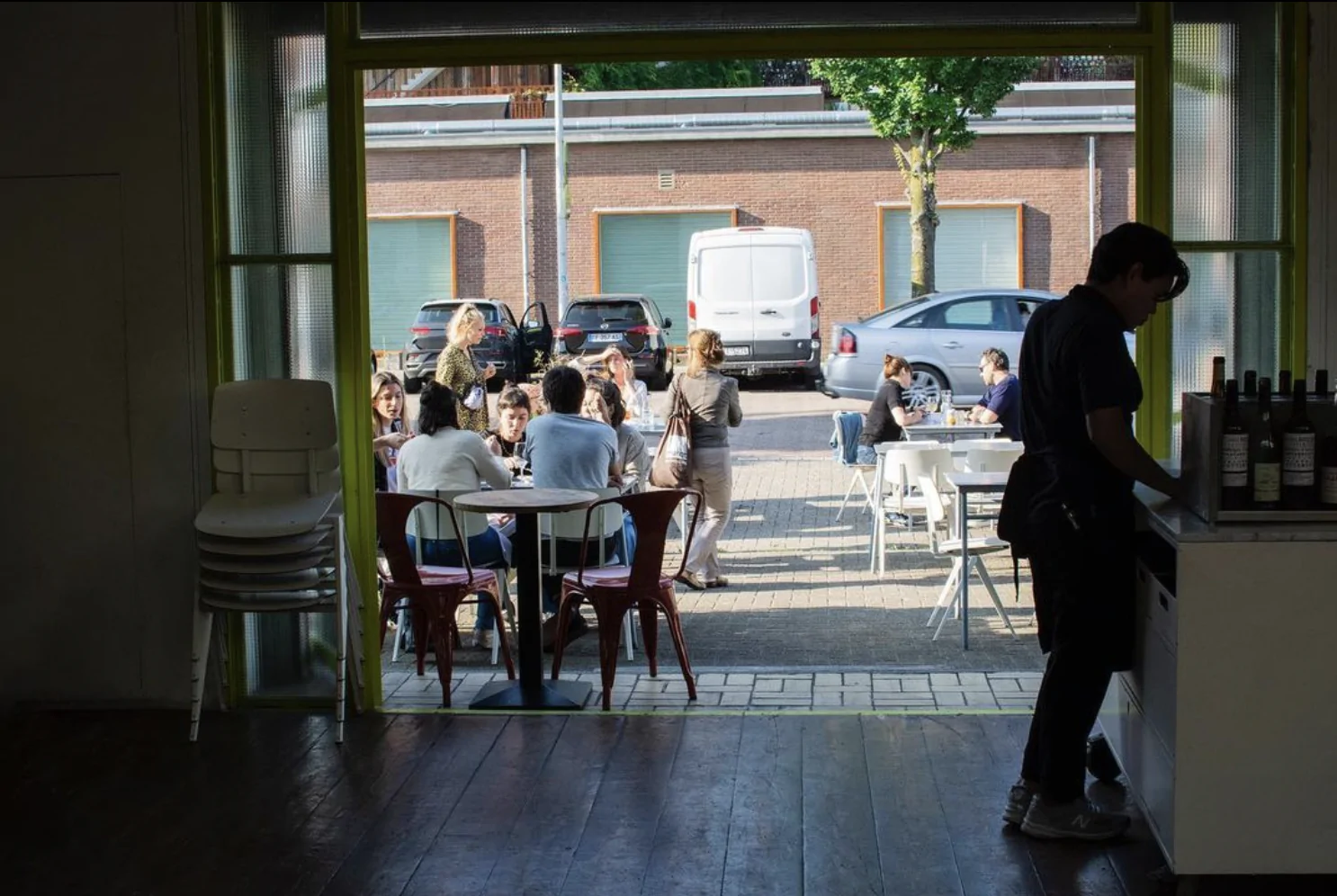
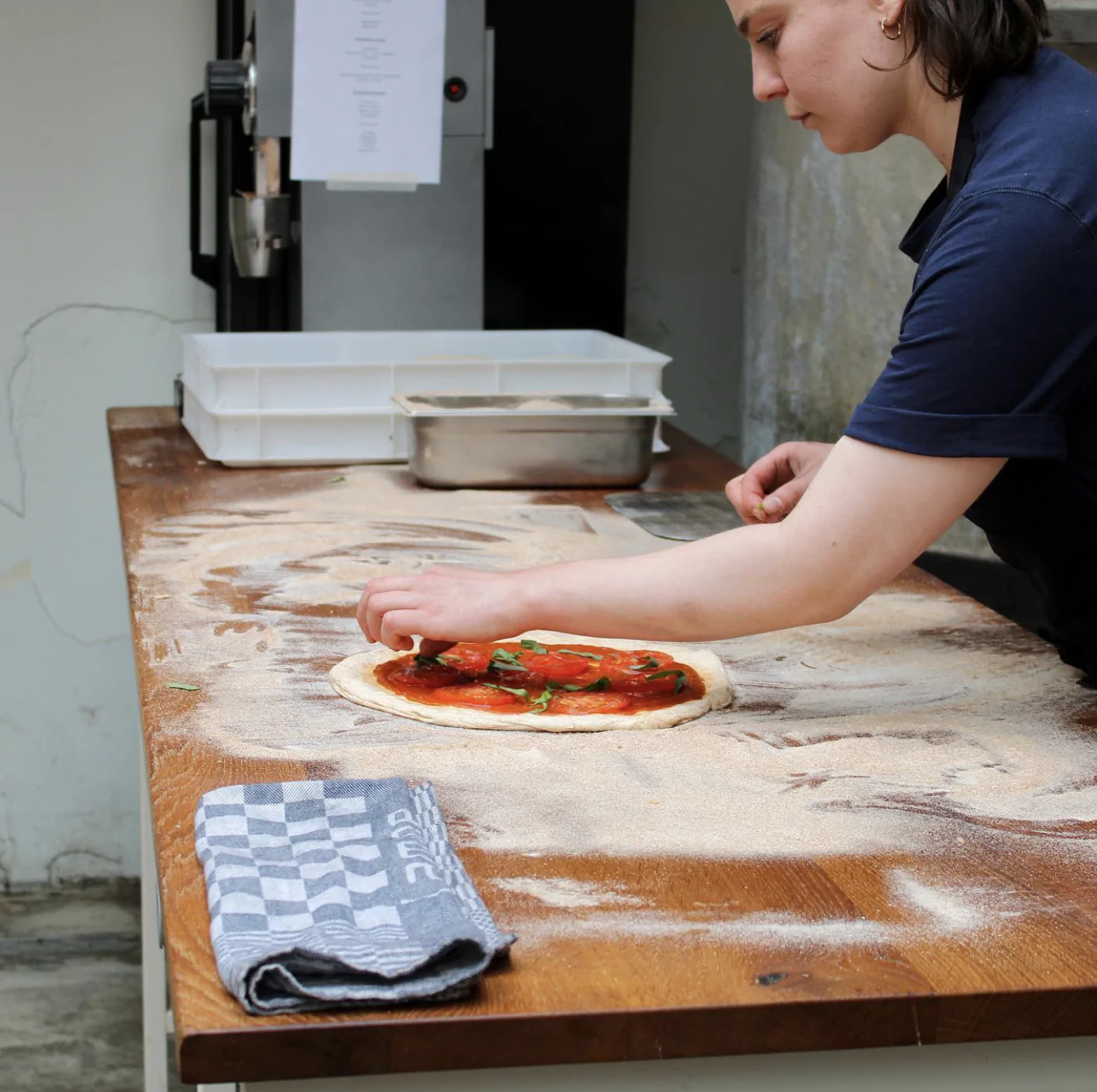
Chef and owner Tim van der Molen opened Nikotin after his Michelin-starred restaurant Coulisse gained international recognition under his leadership. With Nikotin, he deliberately chose a more informal setting in which his culinary background becomes more accessible. His cuisine combines French technique with influences from Japan and Korea, always with a keen focus on texture and fire. The dishes are made to share and invite long evenings at the table. The atmosphere is warm and energetic, where dinner and drinks flow effortlessly into one another.
1021 KP Amsterdam
Europizza
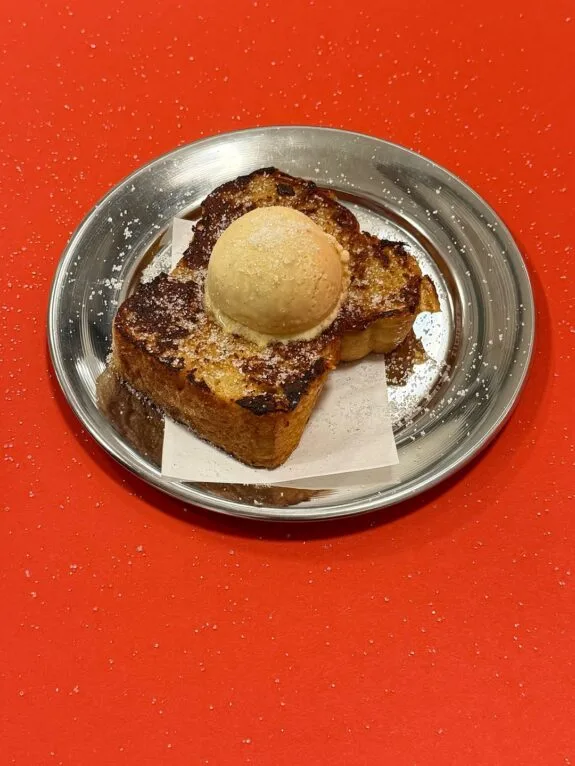
Don't be fooled by the name. In addition to excellent, surprising pizzas, they also offer a variety of snacks and dishes with a focus on local products. In addition to the excellent food, the friendly staff can also tell you everything you need to know about the fantastic (natural) wines they serve here. Under the creative leadership of Rein op 't Root (together with his partners), the 'Euro world' has now expanded to include Restaurant Europa, Benelux Bar, and Euro Pizza Bakery.
1021 KP Amsterdam
Eurosoft Café
Eurosoft Café was established by chef-entrepreneur Rein op 't Root, together with his partners, as a new bakery and lunch spot in Amsterdam-Noord. Drawing on his background at Euro Pizza and Restaurant Europa, he brings together his love of bread and comfort food here. The kitchen focuses on freshly baked focaccia, sandwiches, and sweet pastries that look simple but are technically sophisticated. The atmosphere is lively and relaxed, with a creative energy that suits the surroundings and the crowd.
1021 KP Amsterdam
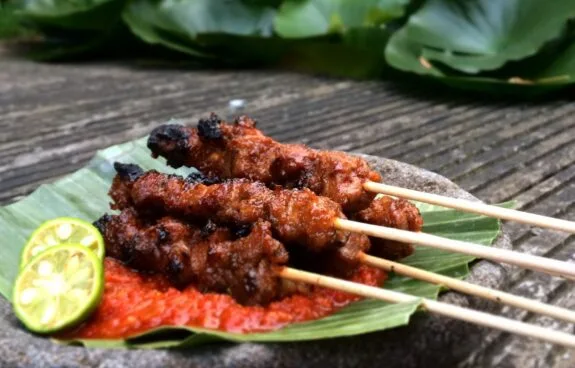
The Beef Chief
Well known among Amsterdam festival-goers is The Beef Chief food truck. It has now settled permanently at the Oepdipus brewery in Amsterdam-Noord. The ideal place for a solid combo, owner Simon Parrot regularly develops burgers that pair well with the brewery's beers. The Beef Chief is grilling weekly from Thursday onwards.
1019 MB Amsterdam
Paon Bali
Paon Bali Amsterdam (formerly Catering Enak Sekali) specializes in authentic Balinese cuisine. Bali has its own extensive cuisine. Compared to other Indonesian cuisines, it is spicier and less sweet. Pork is also used more often. According to a well-known chef and author of books on Indonesian food, you will find the best satay (grilled on charcoal) in the city here!
1032 HD Amsterdam
Pasoek
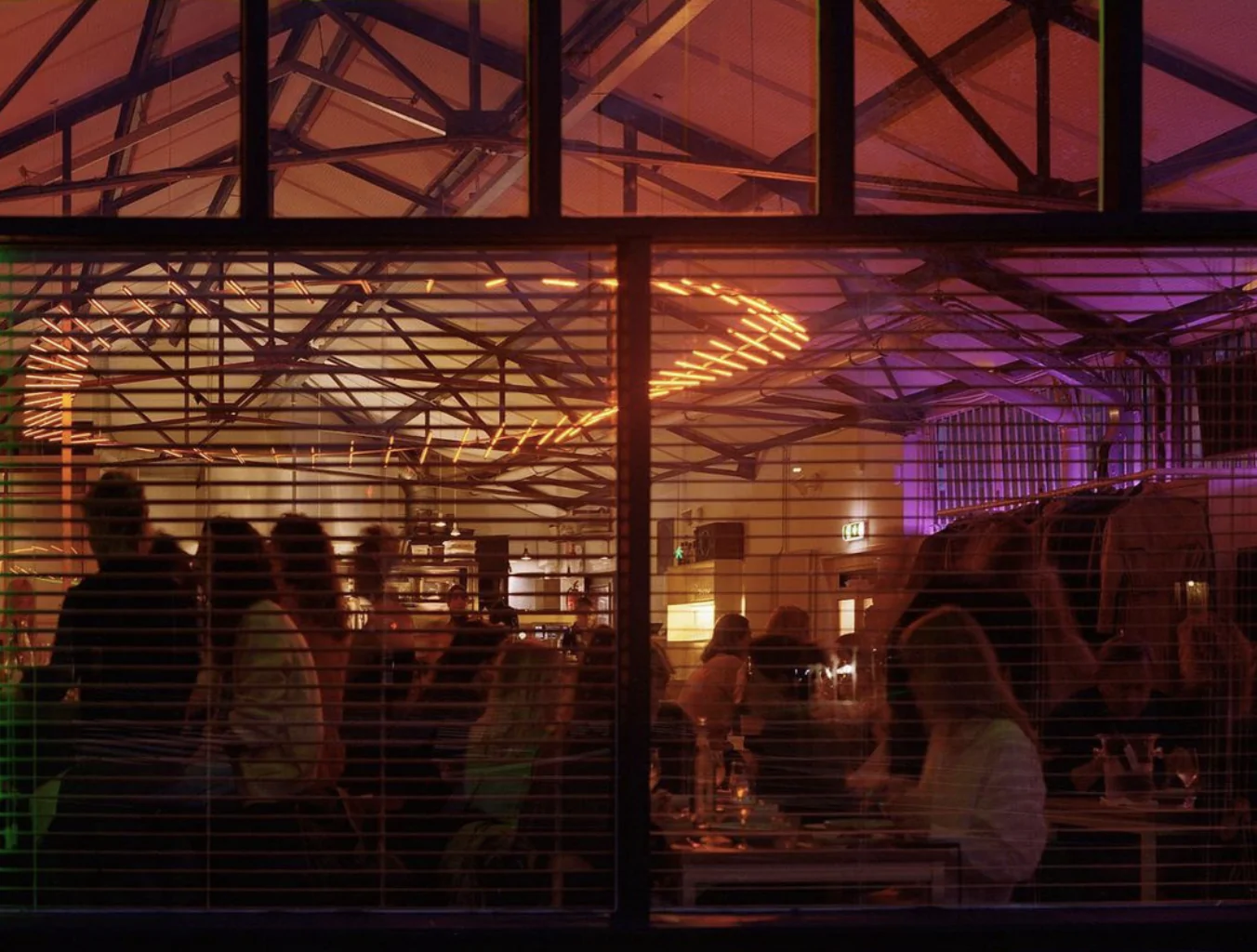
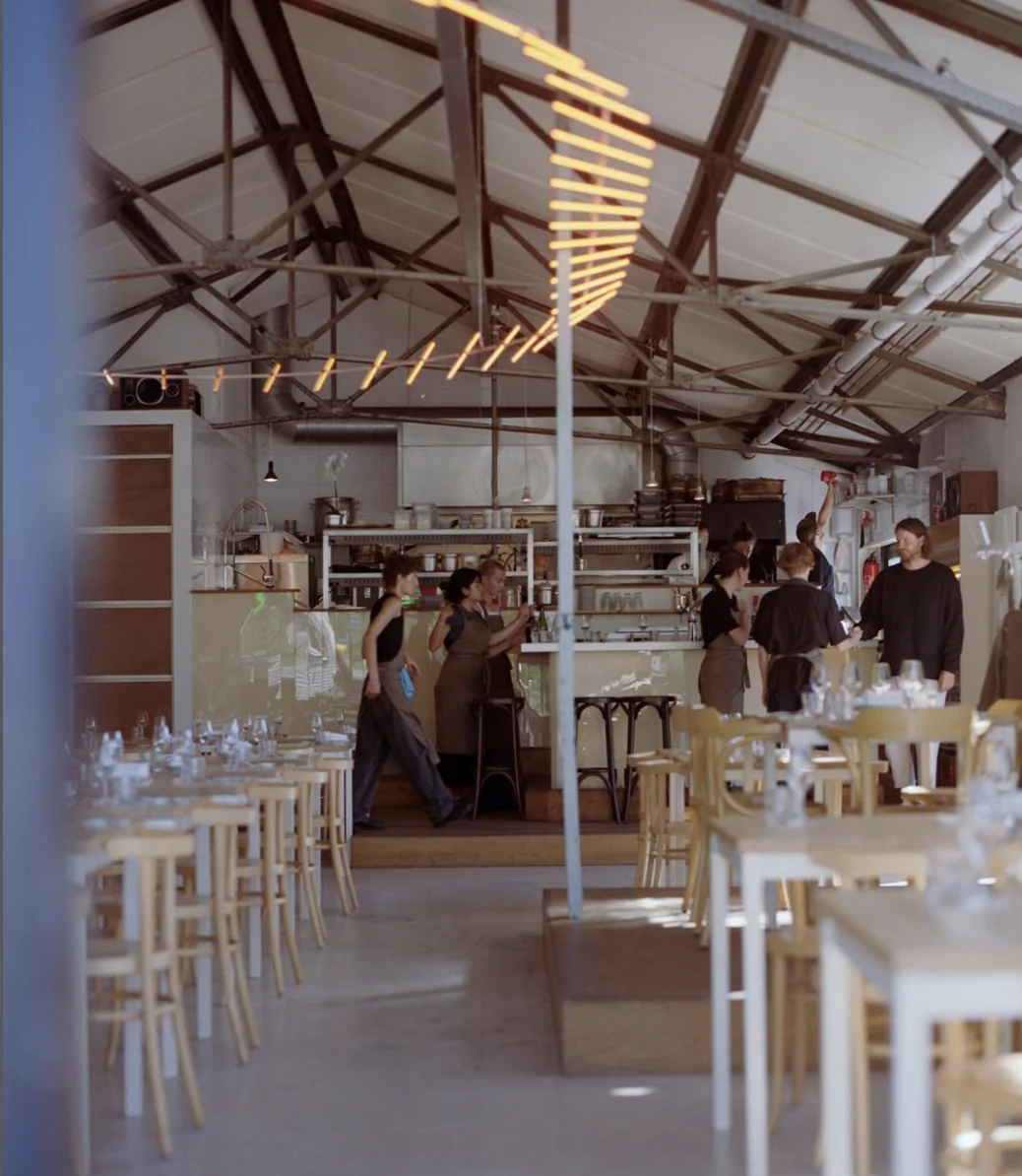
At the Thai restaurant Pasoek, you can now also enjoy Thai cuisine in Amsterdam-Noord in an authentic atmosphere with friendly service. You can have lunch or dinner here, but you can also order takeaway or have your food delivered. There is a different menu every week, but they also have the Pasoek Special: a changing selection of Thai delicacies. So there is something for everyone here: from spring rolls to curry and soup.
1032 KD Amsterdam
Corner store
The Corner Store, a new gem in Noord, is located on Papaverweg and is run by the team behind De Klaproos and De Binnenvisser, among others. Based on music bars like those you see in Japan, it has cabinets full of records. This gastrobar offers music, natural wines, and a menu based on local ingredients but prepared with Asian flavors. Be sure to try the house aperitif of yuzu and sake.
1032 KE Amsterdam
The Poppy
De Klaproos is a pop-up pizza and pasta restaurant in Amsterdam-Noord. In the large, industrial space, you can eat crispy pizzas from the stone oven and drink natural wines. In addition to pizza and pasta, the menu also features other classic Italian dishes such as delicious antipasti. De Klaproos also lends itself as an exhibition and party location, and you can also pick up pizzas there.
1032 KB Amsterdam
Café de Ceuvel
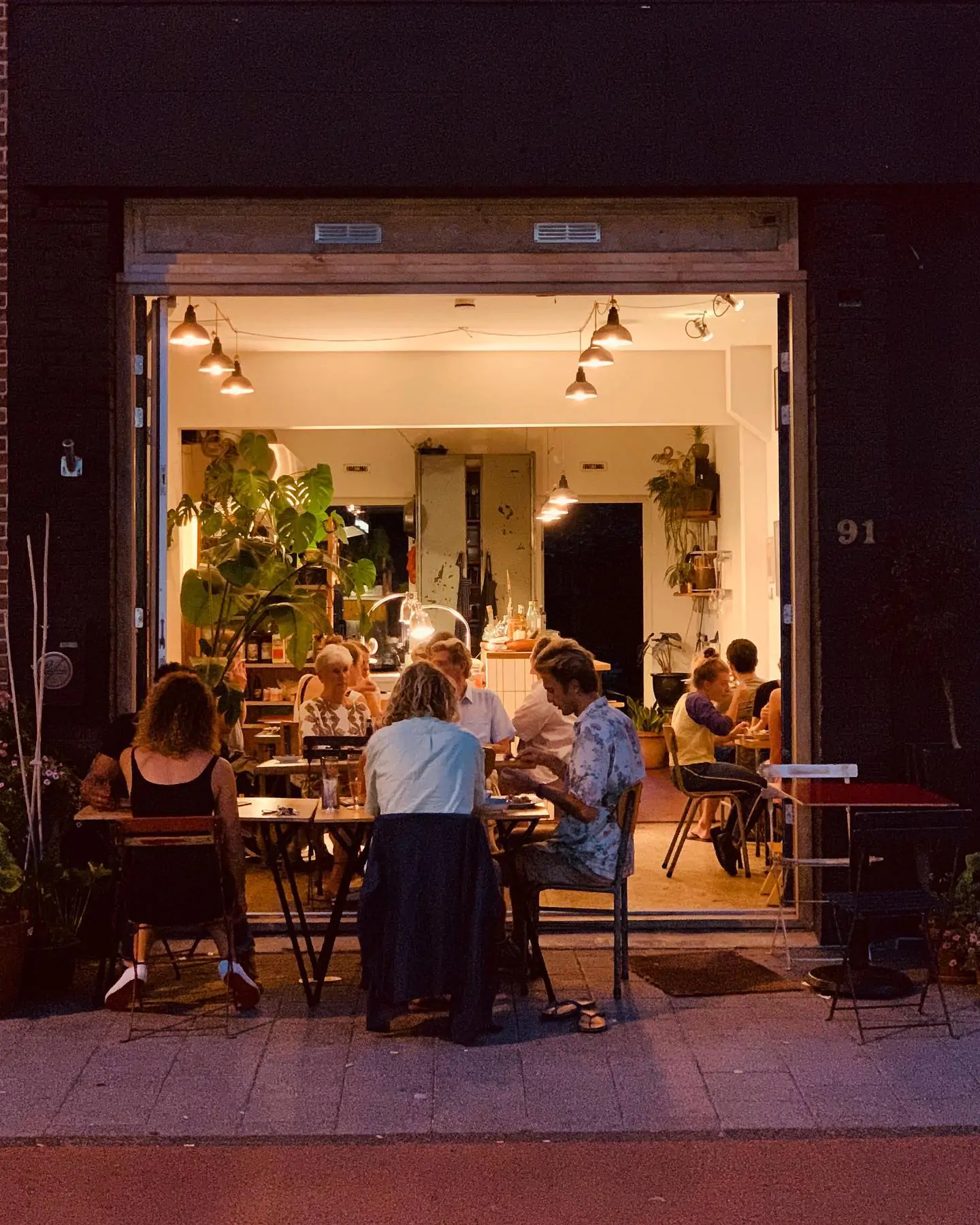
Escape the hustle and bustle of the city and discover De Ceuvel in Amsterdam-Noord. Here, they mainly offer a vegetarian menu with local delicacies. Everything is well thought out: lots of reuse and surrounded by companies that are making the world a better place. It's hard to find a better place to enjoy a sunny day than this bar in Noord. The whole ambiance has a bohemian feel and there is plenty of seating both inside and outside.
1031 CV Amsterdam
Cannibals and Birds of Paradise
Kannibalen en Paradijsvogels is an Indonesian neighborhood eatery where real cooking takes place. It's all about Indonesian and Moluccan food for both cannibals and birds of paradise. For the cannibals, there are delicious meat dishes, and for the birds of paradise, the most delicious vegetarian dishes. Although the cuisine is based on traditional Indonesian cooking, the menu also moves with the times. For example, there is super tasty vegan spekkoek and the meat is of good origin.
1025 XB Amsterdam
Re-circle Recycling
From jewelry, flippo's, rare posters to tin toys: you name it, this store has it. The owners of Re-circle started refurbishing items in 2015, which they initially Rear garden from their Rear garden . They now have a store and are happy to collect any surplus items from you.
1021 JN Amsterdam
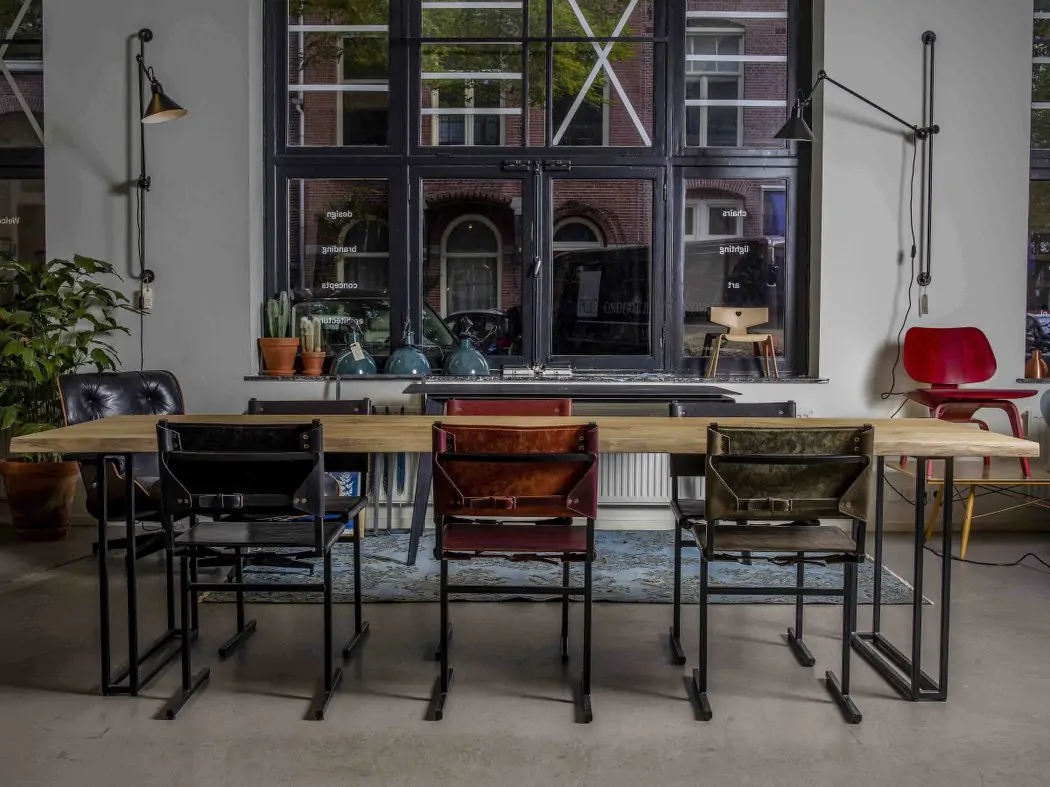
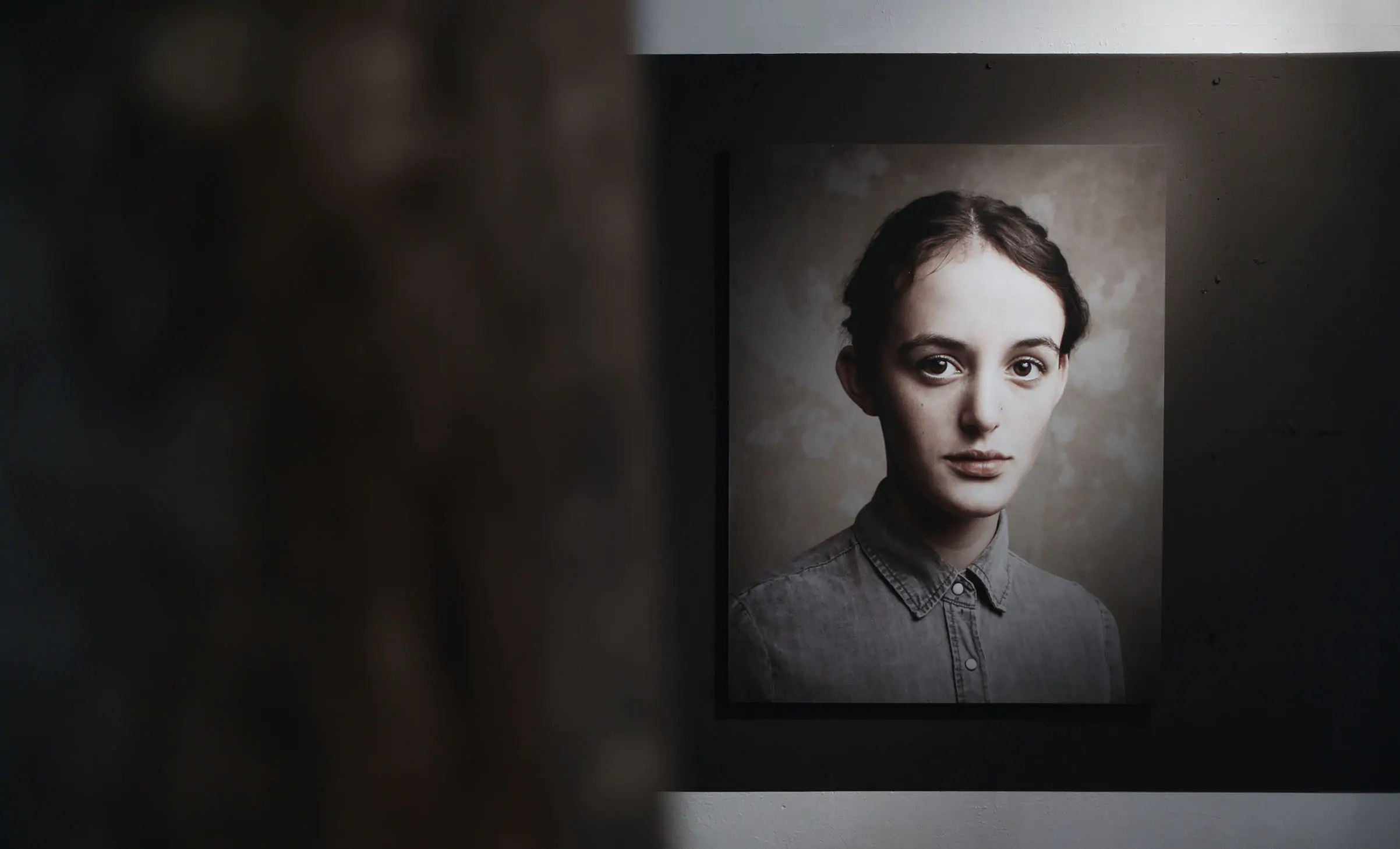
Vanmokum
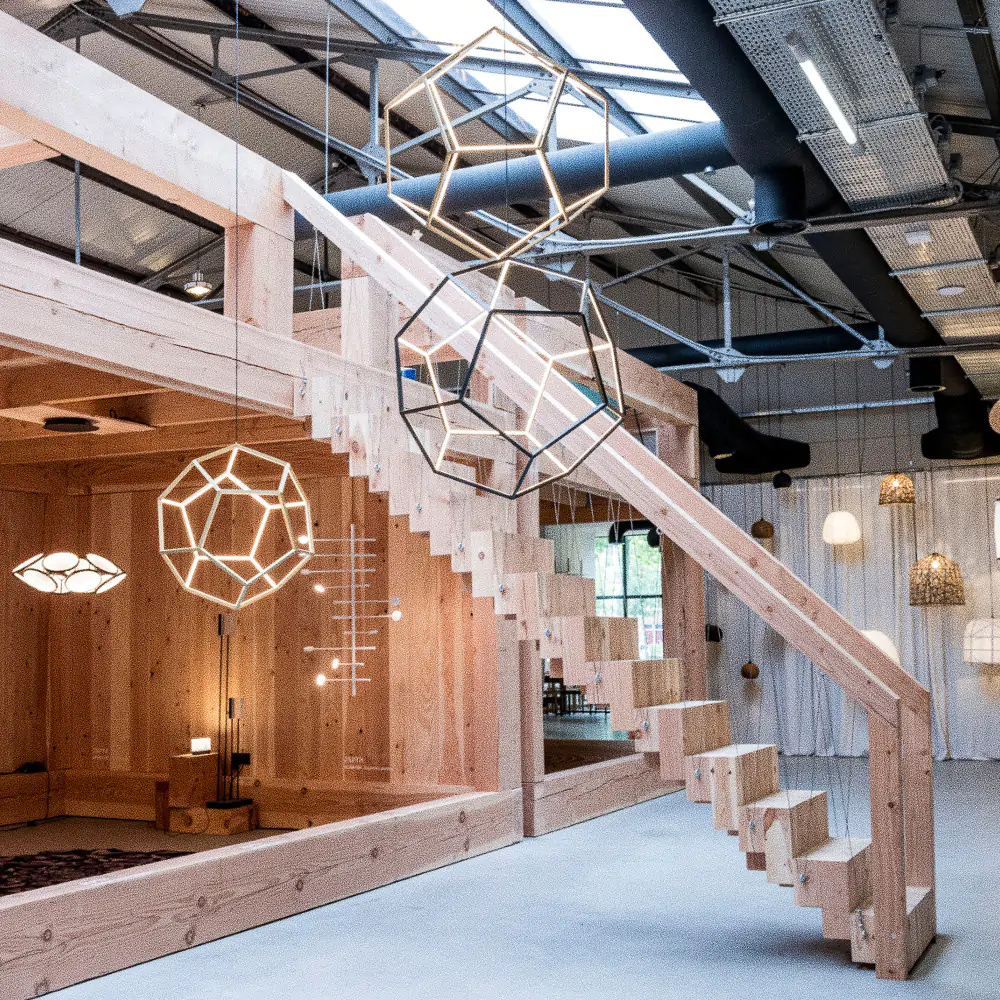
Vanmokum was founded in 2011 by Arno Ruijzenaars. Together with his brother Dennis, product engineer Erwin Termaat, and later addition Wouter Smit, they created various product lines with renowned designers. In addition to in-house brands such as Graypants and Frama, Vanmokum also distributes brands such as Ay Illuminate and Seletti. Their global influence extends to furniture and design stores, hotels, and offices such as Hilton and Google. Vanmokum embraces the entire process, from creative idea to global distribution, and proudly presents high-quality design from furniture to lighting.
1032 JZ Amsterdam
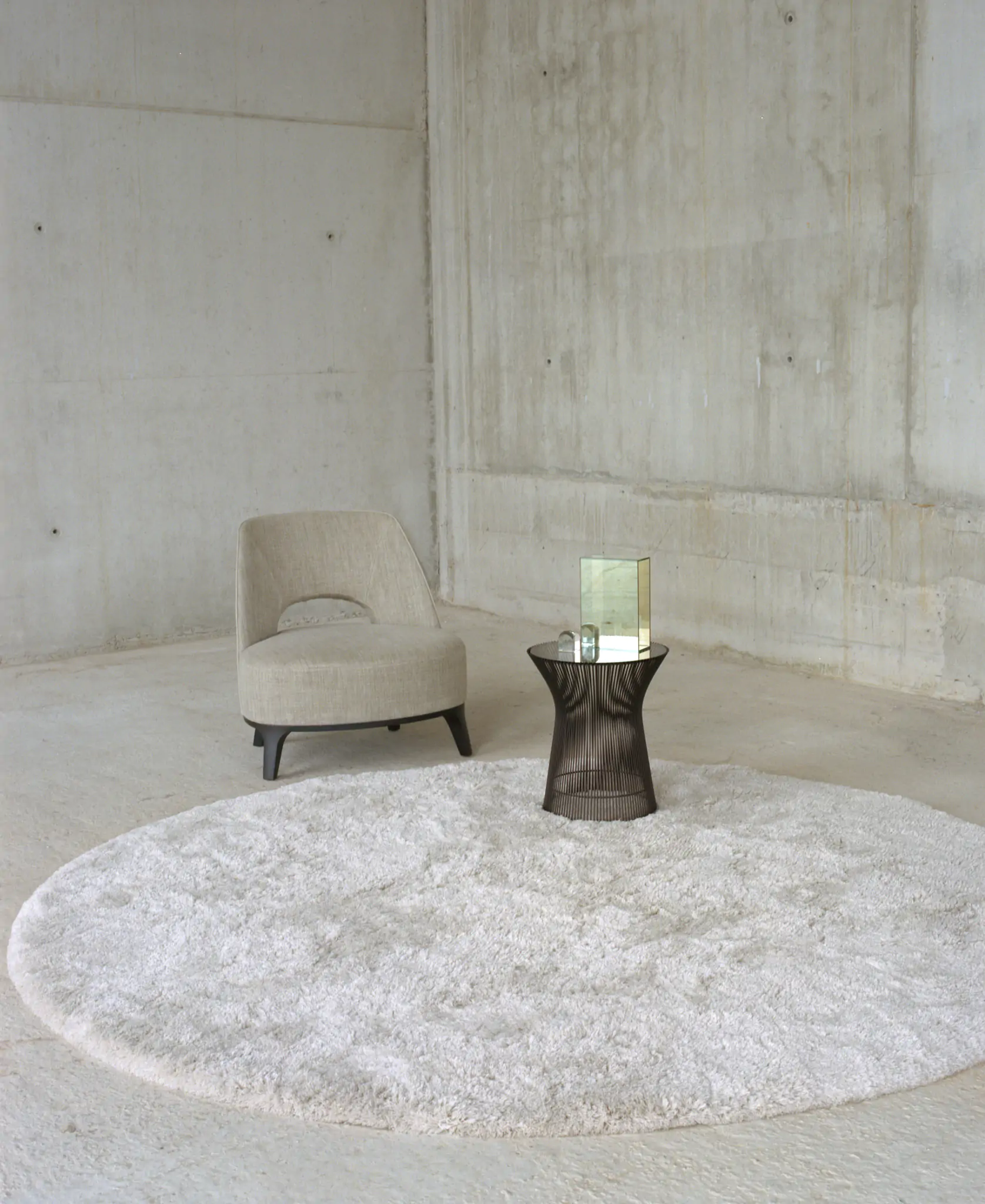
Wdstck Gallery
Wdstck is located in Amsterdam Noord and offers a range of multidisciplinary objects with a distinct aesthetic, each telling its own story. At Wdstck, they seek to strike a balance between art and design, bringing objects with soul into everyday life. They cherish the temperament of each material and craft objects by hand to emphasize the story that nature has to offer.
1019 BB Amsterdam
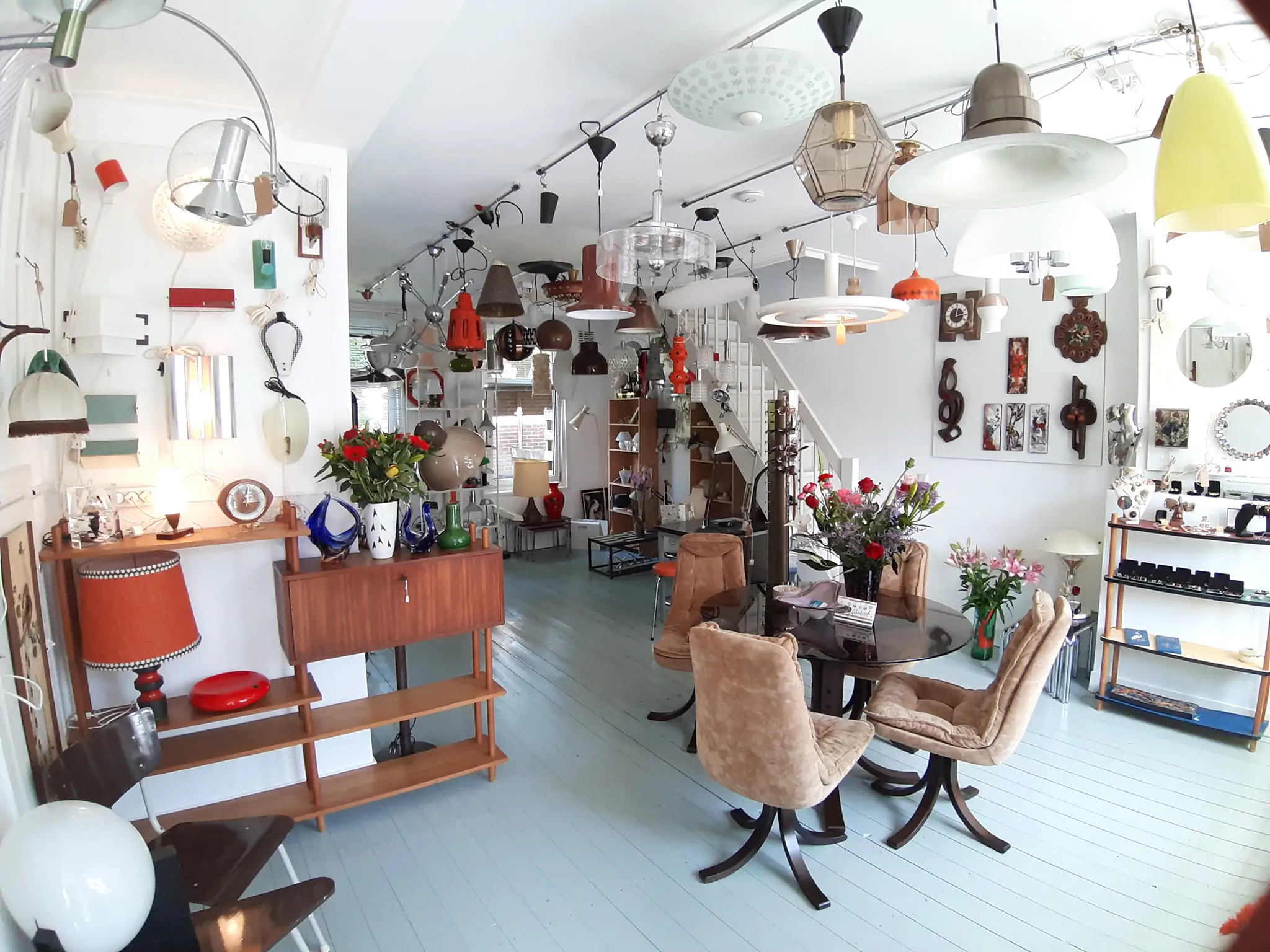
Frankly Amsterdam
The young Dutch company Frankly Amsterdam – with founder Femke Derks at the helm – designs, produces and sells rugs, bed linen, plaids and scarves. Products in soft natural tones that add warmth, comfort and tranquility to any interior. At Frankly Amsterdam they do things differently, their products have an honest origin where employees work in a good environment with pure, harmless materials and receive a fair wage.
1031 CW Amsterdam
Treasure Depot
Treasure Depot on Van der Pekstraat is the place to go for genuine secondhand treasures. After 15 years of selling at various markets, owners Emmanuelle and Frank decided it was time to open a real store. The ceiling is covered with the most beautiful retro lamps, but they have much more: jewelry, furniture, sunglasses, and other cool stuff. Feast your eyes and, if you're lucky, take home a new gadget or a beautiful lamp.
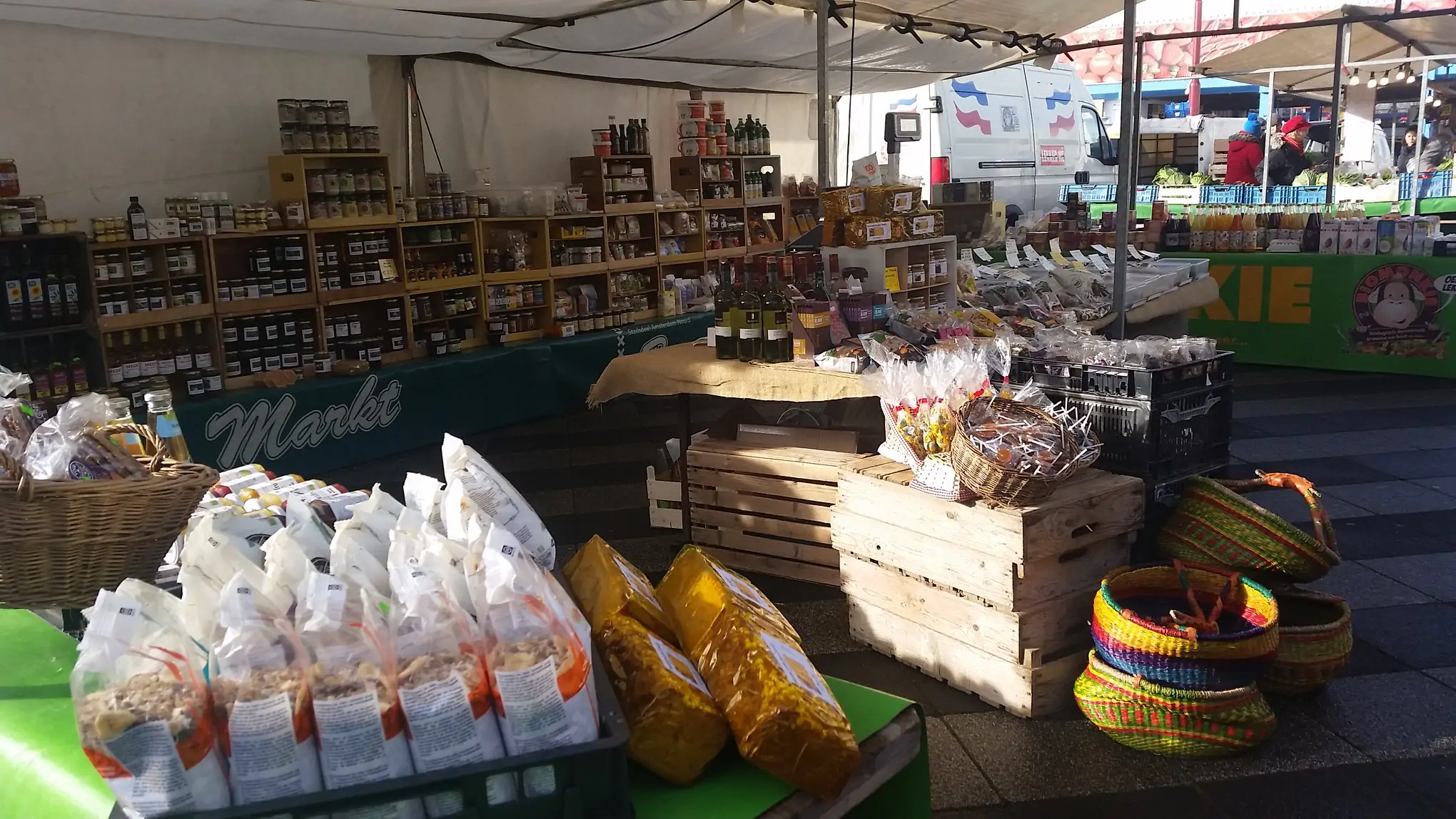
Organic Market North
Every Saturday, in addition to the regular market, the Farmers' Market can also be found on Buikslotermeerplein. The market originated from the need for nature-friendly, pure, and clean products, and here you will find organic, sustainable, fair, but above all delicious products. The honey comes Immediately the beekeeper and the cheese directly from the farmer. There are all kinds of professionals at this market who can talk about their products with great passion.
1021 KP Amsterdam
Chateau Amsterdam
Hidden away in a huge warehouse in Amsterdam-Noord is the urban winery Chateau Amsterdam. In 2017, father and son founded this place to bring the process of winemaking to the city. By importing grapes from various European vineyards, unique modern and classic wines are created. You can come here for a wine tasting where you can sample a variety of wines and see the process of winemaking in real life.
1031 AD Amsterdam
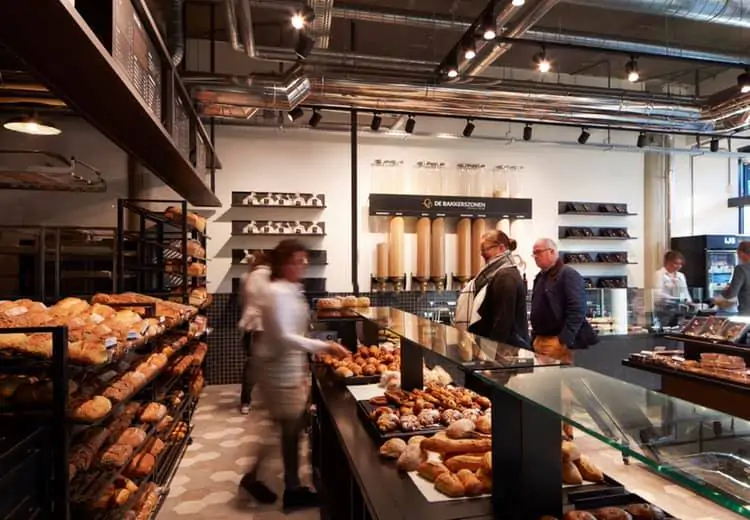
The Baker's Sons
At De Bakkerszonen, you can enjoy the most delicious breads, cakes, and croissants every day. This bakery has several locations in Amsterdam, including one in Noord and one near Roeterseiland. De Bakkerszonen was founded by two bakers' sons who wanted to breathe new life into their father's work. This bakery exudes craftsmanship and hard work. The quality of the bread is excellent and cannot be compared to bread from the supermarket. A visit to this bakery will remind you how delicious bread can taste.

1031 AE Amsterdam
Kaddour Butcher Shop
At Kaddour, they have a wide range of artisanal fresh meat and charcuterie. The range offers pure and honest quality meat, both local and worldwide, including Dutch meat, exclusive Halal Wagyu, refined John Dee beef from Australia and flavorful Maimoa lamb from New Zealand. Butcher Kaddour has been known for excellent quality for over 35 years, with recipes passed down through generations. Discover the healthy, animal-friendly approach and enjoy hand-knotted roasts, gourmet and barbecue packages, artisanal meats and the well-known chicken grill sausage sandwich.
1031 EE Amsterdam
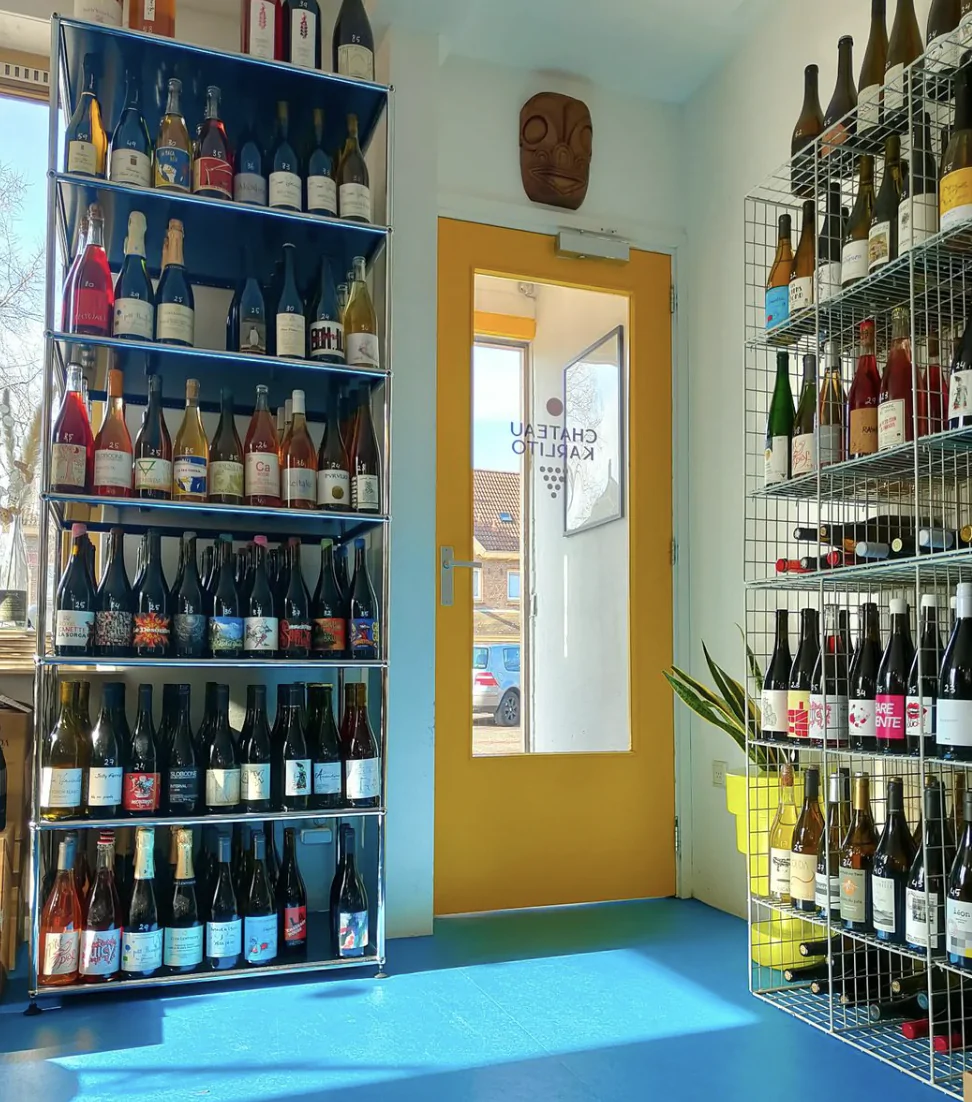
Chateau Karlito
The hidden little shop Chateau Karlito on Van der Pekstraat mainly sells natural wine, but also sake, carpets, ceramics, and much more. Named after its owner Karlijn, this is a place where you can taste, see, and listen to many beautiful and delicious things, including jazz, excellent sake, and coffee. However, the selection of natural wines, with wines from all corners of the world, is the highlight of the shop. Be sure to try the (authentic!) Brabant sausage roll and the almond croissant.
1024 BE Amsterdam
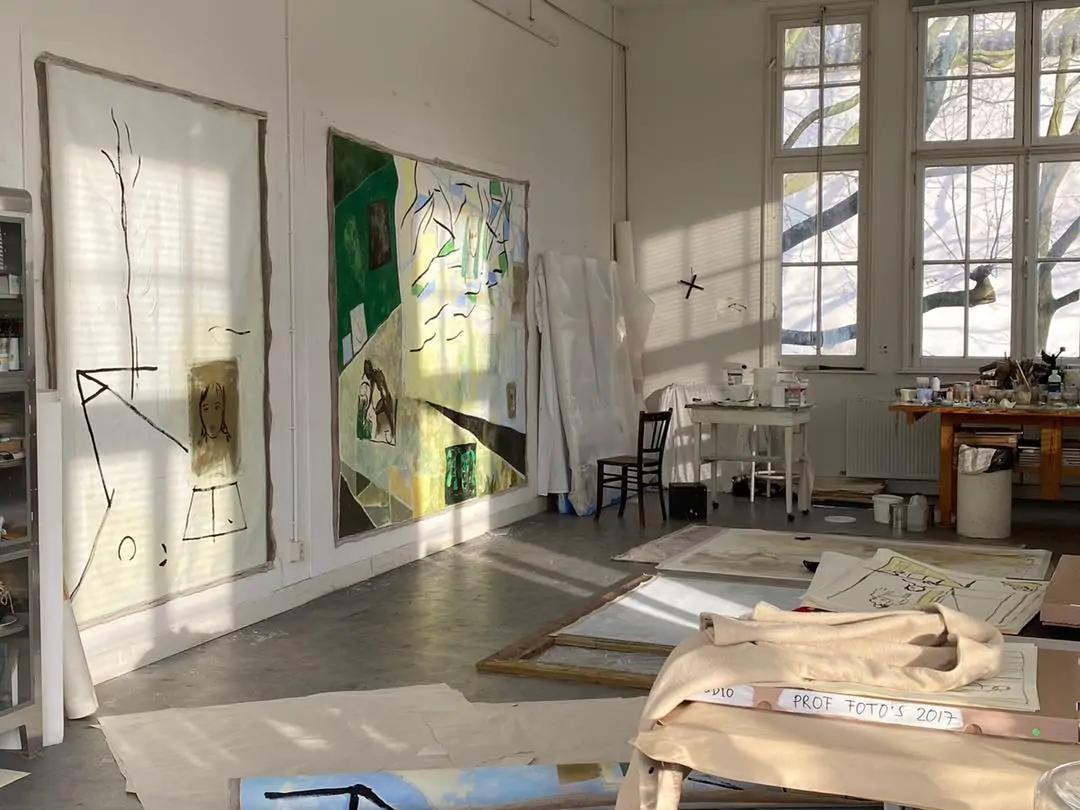
Francis Boeske Projects
Art gallery Francis Boeske Projects, founded by Francis Boeske, represents a select group of artists, which makes it possible to organize special projects in the gallery in addition to solo exhibitions. Digital resources play a major role in the exhibited works, for presentation, projections, and communication, among other things.
1019 LE Amsterdam
Rademakers Gallery
Rademakers Gallery is Pien Rademakers' gallery and offers exhibitions where art, fashion, and design meet. Pien Rademakers is an art historian and designs every exhibition for the gallery. In her exhibitions, she strives for programs that focus on interdisciplinarity, Sustainability female talent. Rademakers Gallery is not only a place to admire the works on display; art lovers can also receive advice on purchasing new works or putting together their own art collection. In short, Rademakers Gallery is an expert in all areas of art. The building is located in the new development area of KNSM Island.
1032 VS Amsterdam
Noorderpark Pool
You can swim all year round at Noorderparkbad. With both an indoor and outdoor pool, there is plenty of space to swim laps, take swimming lessons, or participate in an aquarobics class. Located in Noorderpark, the pool was designed with matching round and wavy shapes. This design has not gone unnoticed. In 2016, the pool won the jury and public prize of the Amsterdam Architecture Prize and was nominated for the BNA best building in 2016. To top it all off, it was named the most beautiful public swimming pool in the world at the Piscine Global swimming pool fair in Lyon. In short, the swimming pool is well worth a visit.
1019 MJ Amsterdam
Bisou Gallery
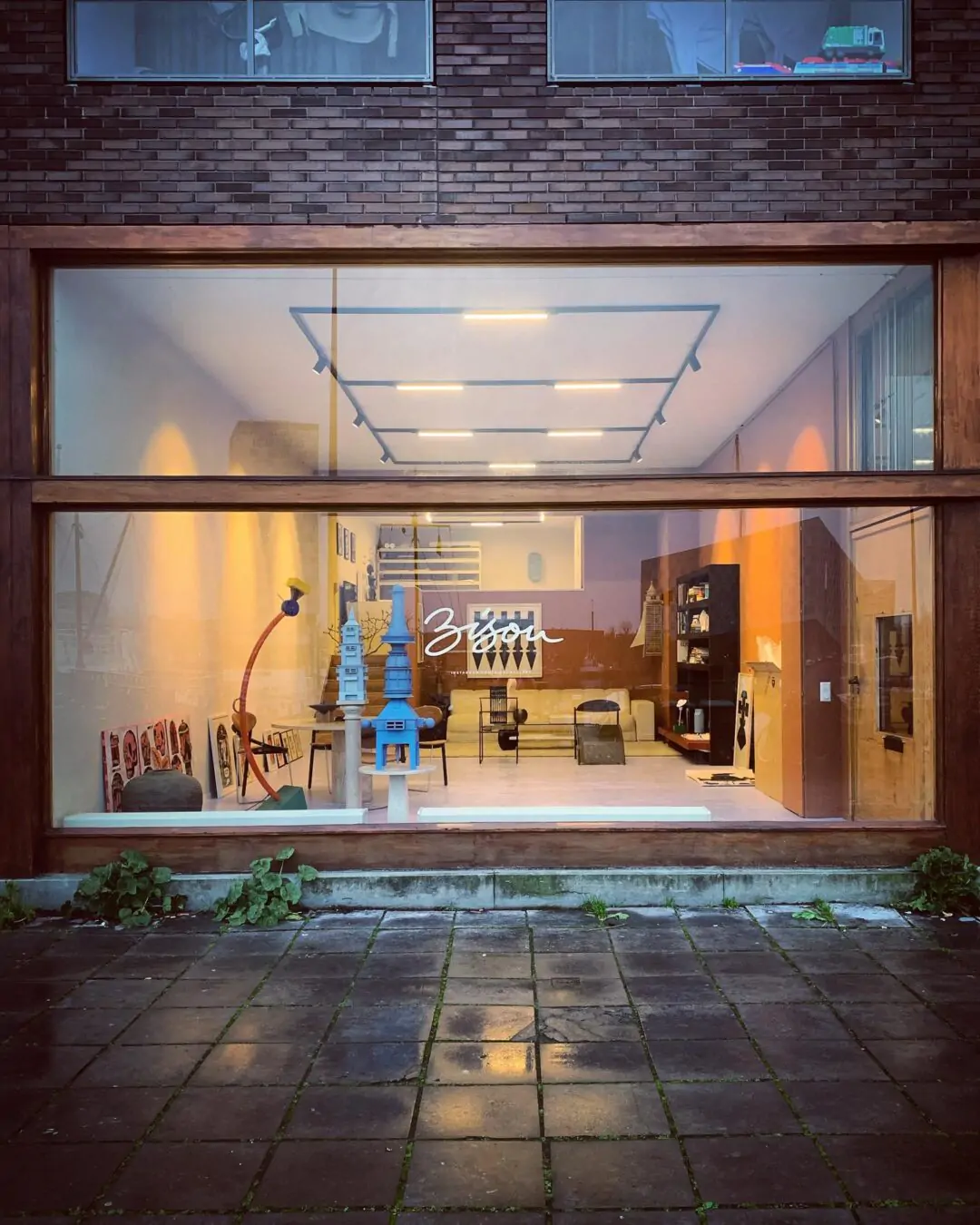
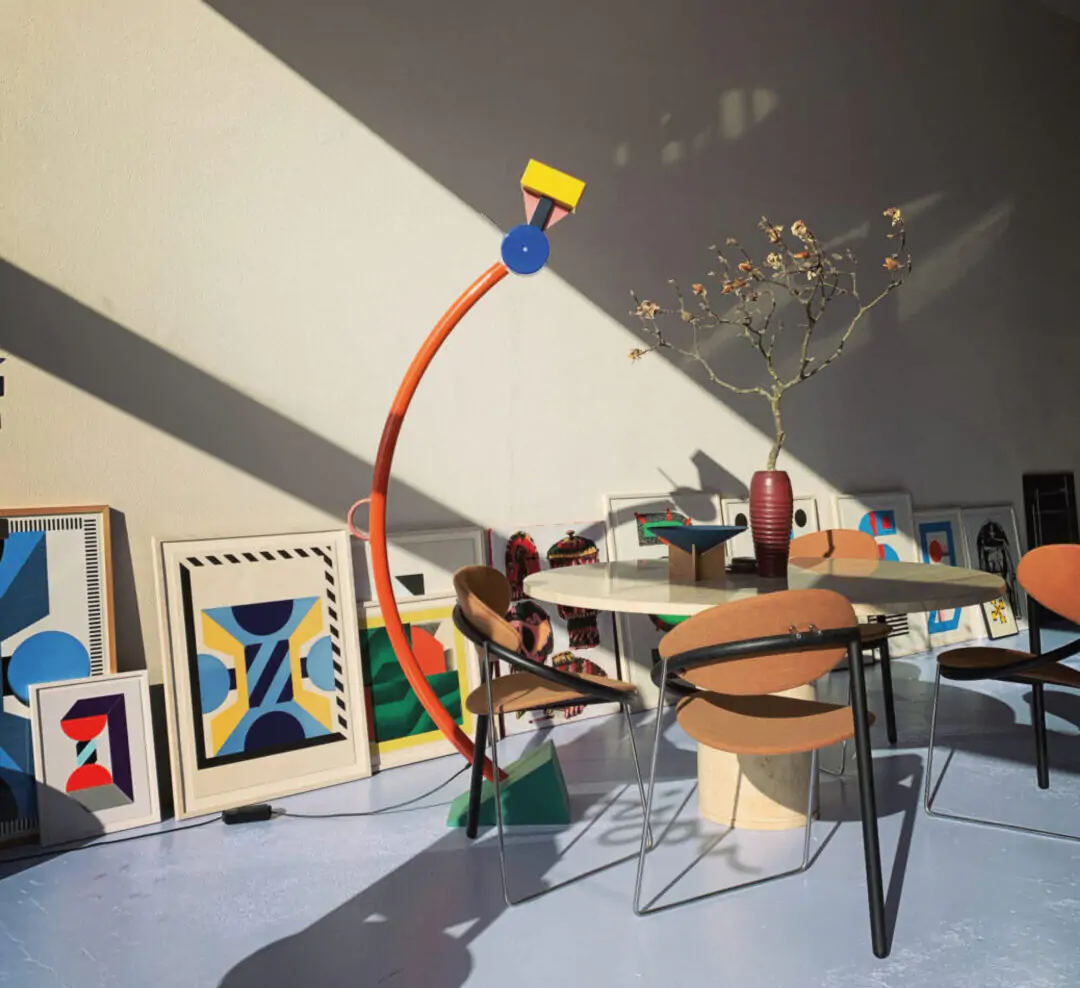
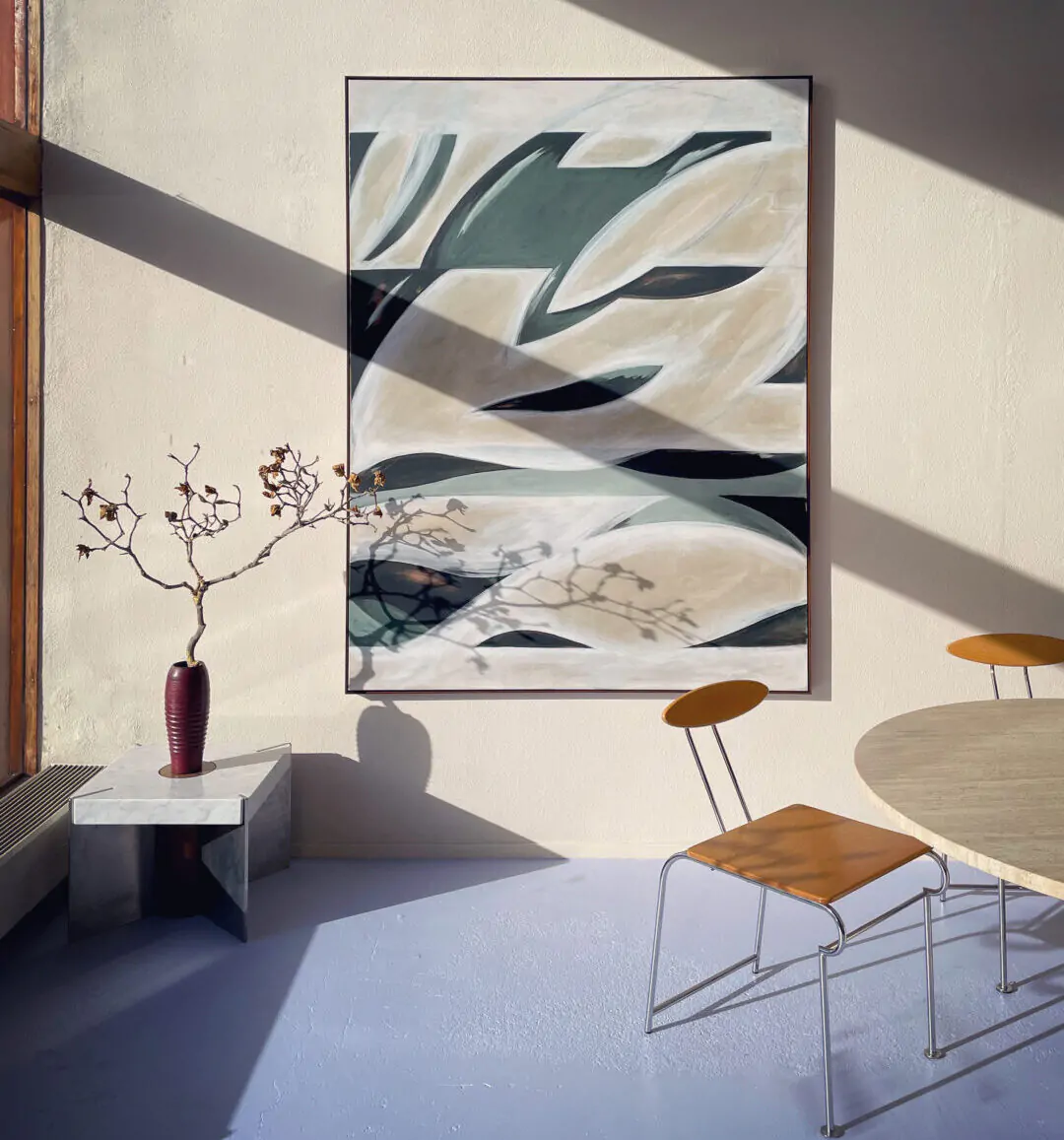
Bisou Gallery originated from Rademaker's love for art and interior design. He started in 2016 with an 'Instagram only gallery', but since 2020 there has been a physical location on the KNSM Island in Amsterdam East. Rademaker does not follow the big names for the art he exhibits, but only his own heart and taste. The homely atmosphere makes it a pleasant place to get acquainted with the outspoken works in an accessible way.