Meet the entrepreneur, in this series Jochem Leegstra of creative agency …,staat
History
In the 17th century, the ships of the Dutch East India Company were built on the Eastern Islands in Amsterdam. Here, Paul van Vlissingen laid the foundation for what would later become Werkspoor, which later stretched from Oostenburgergracht 73 to 79. In 1827, Van Vlissingen and Abraham Dudok van Heel started the 'Amsterdamsche Stoombootmaatschappij' (Amsterdam Steamboat Company) and a year later the 'Fabriek van Stoom -en Andere Werktuigen' (Factory for Steam and Other Machinery). From 1891 onwards, it continued with financial assistance from the Stork machine factory as the 'Nederlandsche Fabriek van Werktuigen en spoorwegmaterieel' (Dutch Factory for Machinery and Railway Equipment). At that time, the name on the front of the building was changed to 'Nederlandsche Fabriek van Werktuigen en Spoorwegmaterieel'. In 1929, the official name of the factory became 'Stork Werkspoor'.
Two buildings connected by a modern glass façade, which, both in form and color, forms a harmonious whole with the two adjacent long buildings. This façade has, at least for me, a remarkable mixture of seriousness and joie de vivre, which makes it a pleasure to look at.
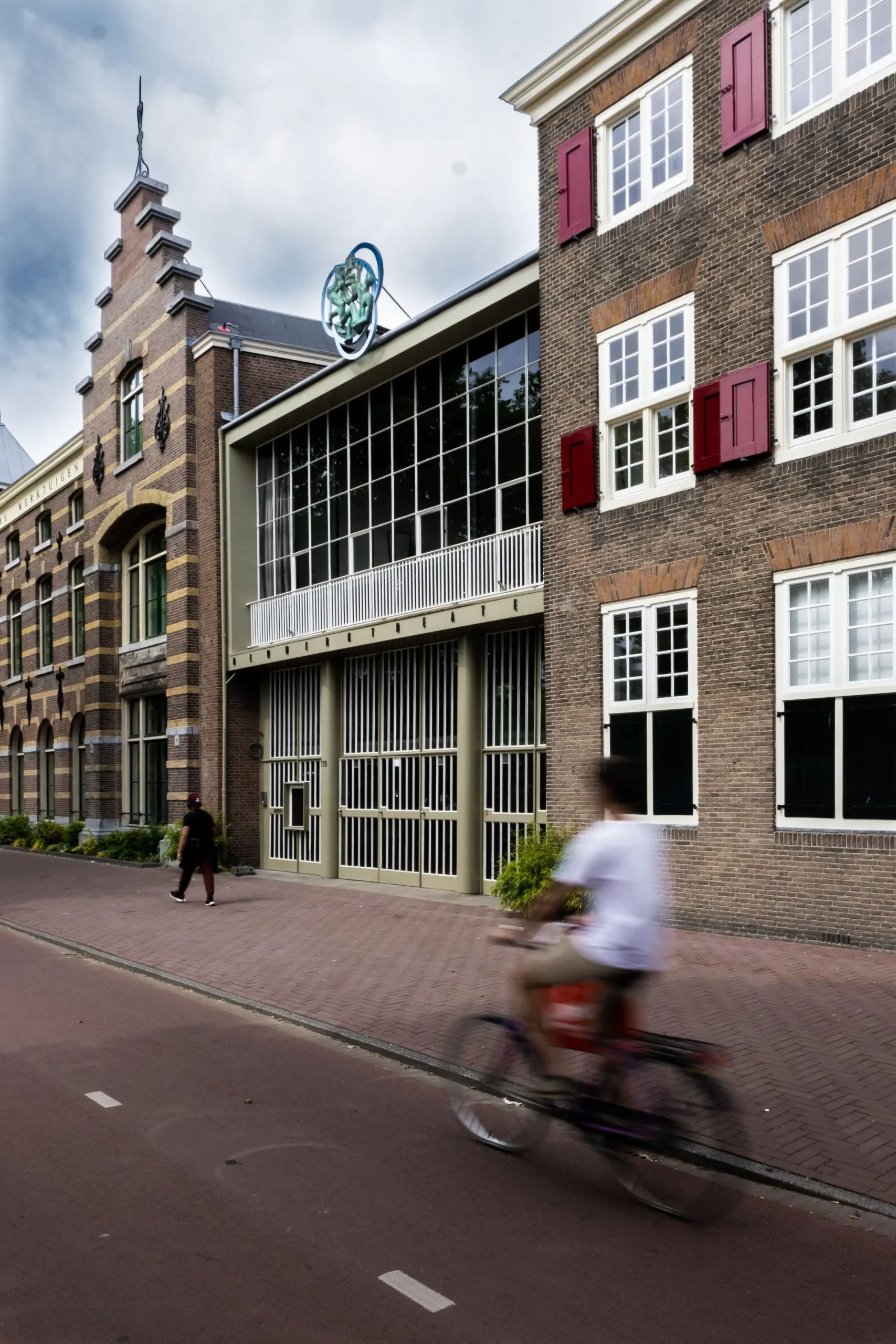
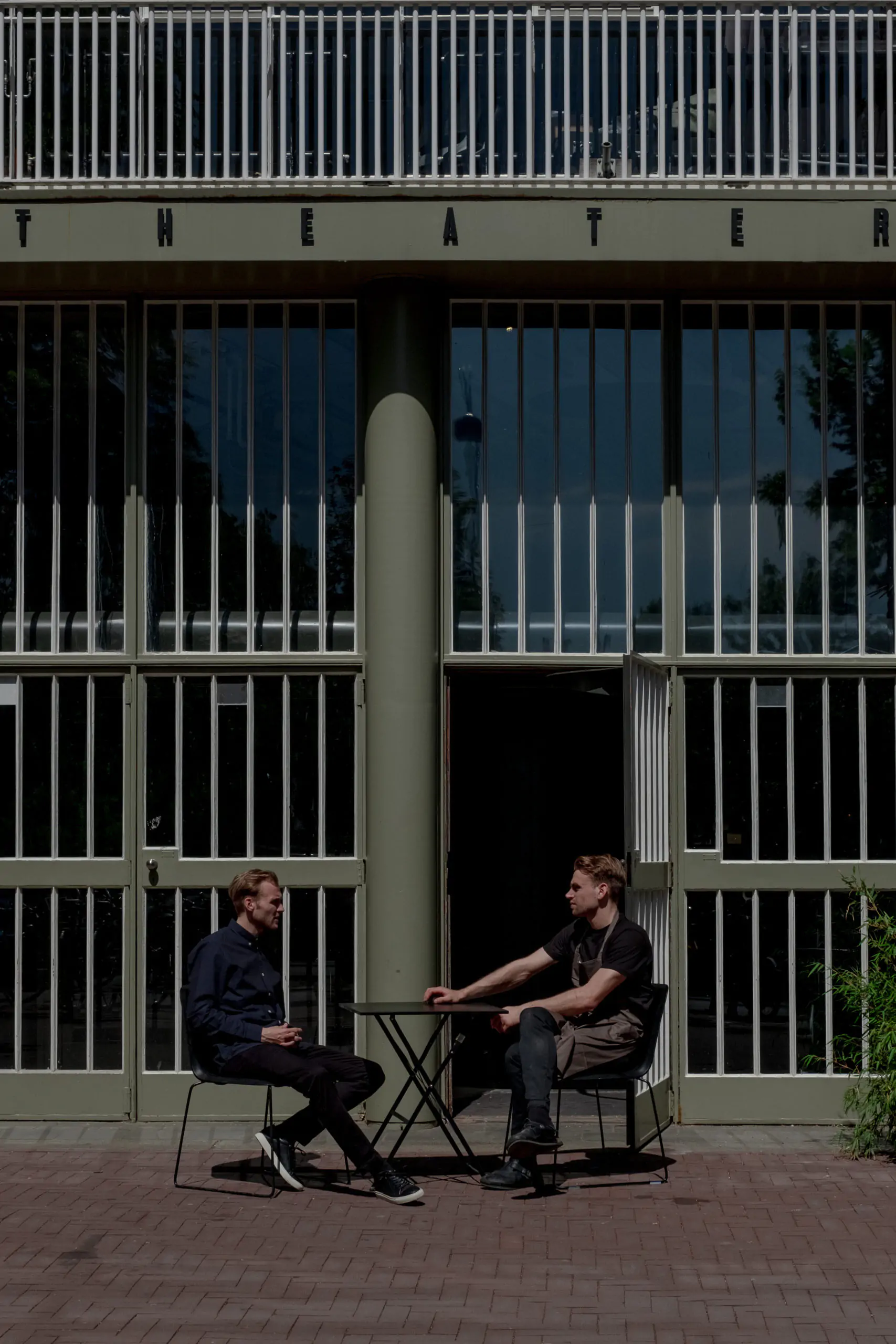
First Amsterdam Architecture Prize.
In 1952, architect Marius Duintjer (1908-1983) designed a 'recreation room' for Stork Werkspoor employees in building 77, to mark the company's 125th anniversary. Duintjer also designed an entrance/foyer building above the adjacent canal, connecting the main building with the adjoining theater. This foyer building, now known as Number , was awarded the Amsterdam Architecture Prize 1958 on December 19, 1959. It was the first time this prize had been awarded.
The building also served as a gateway to the Werkspoor factory complex behind it. Time clocks hung in the hall. The actual recreation room was in the old building to the right of this building.
In 1989, Het Werktheater moved into the "recreation room" on Oostenburgergracht.
New Work Theater.
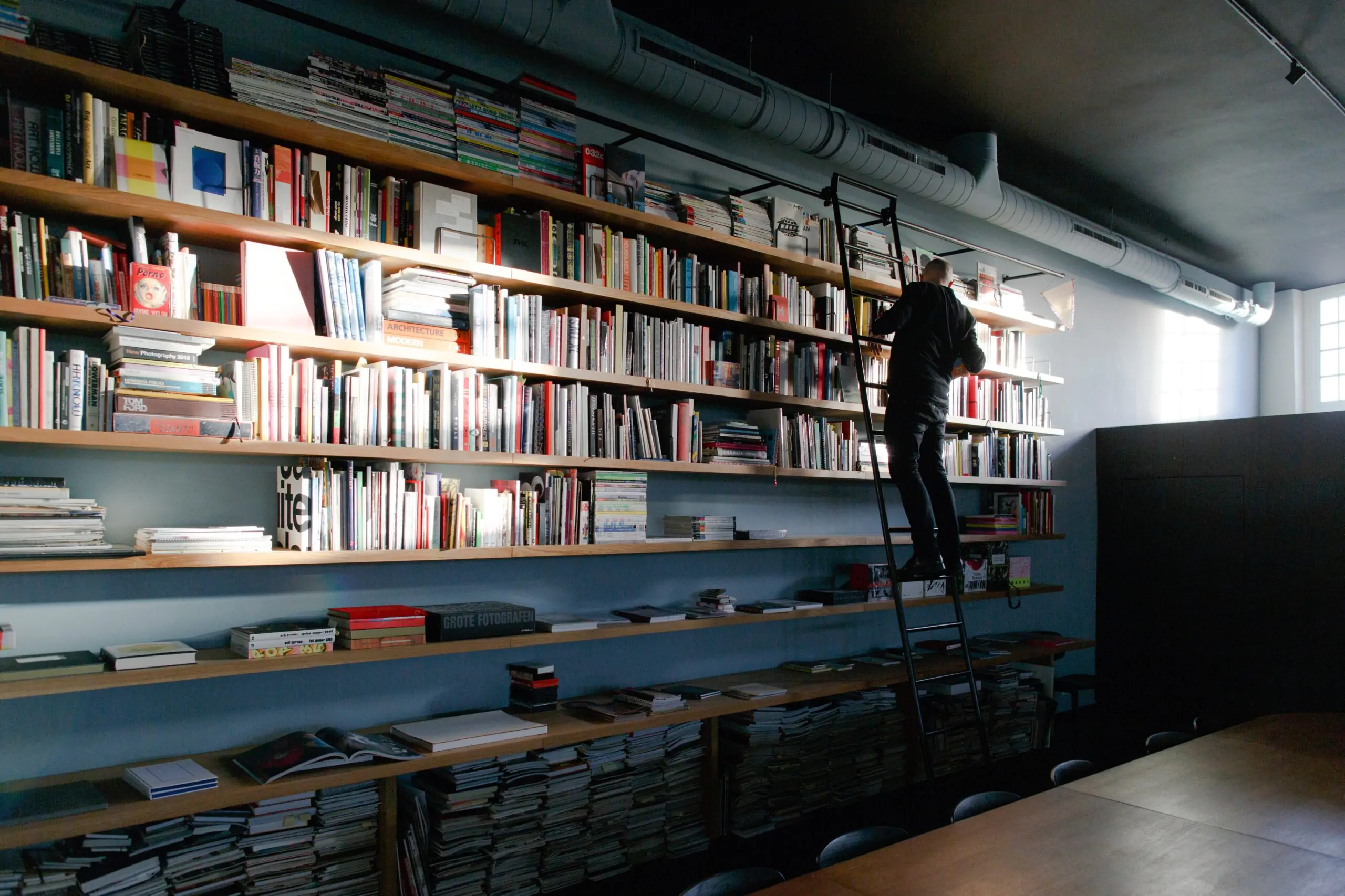
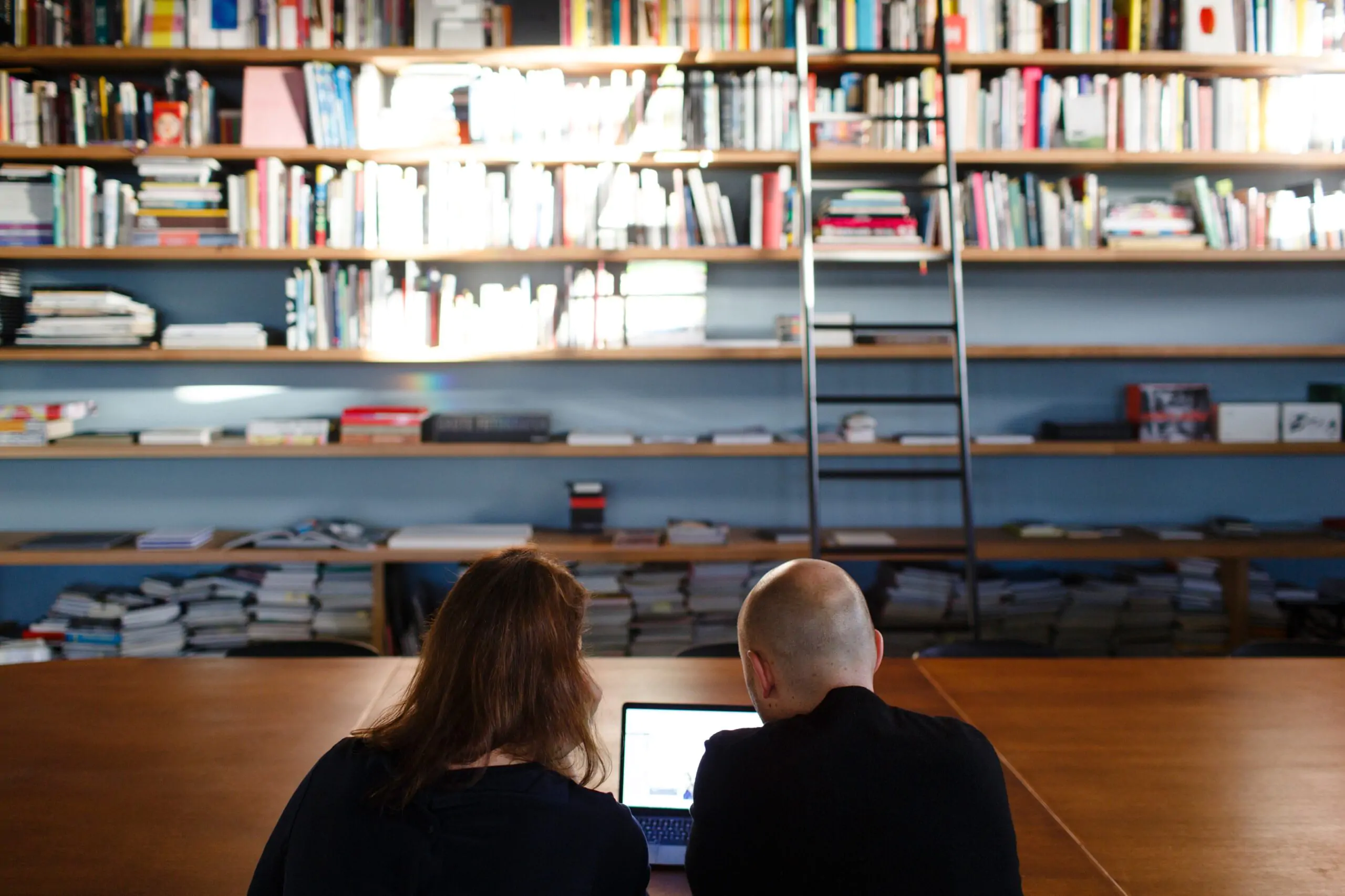
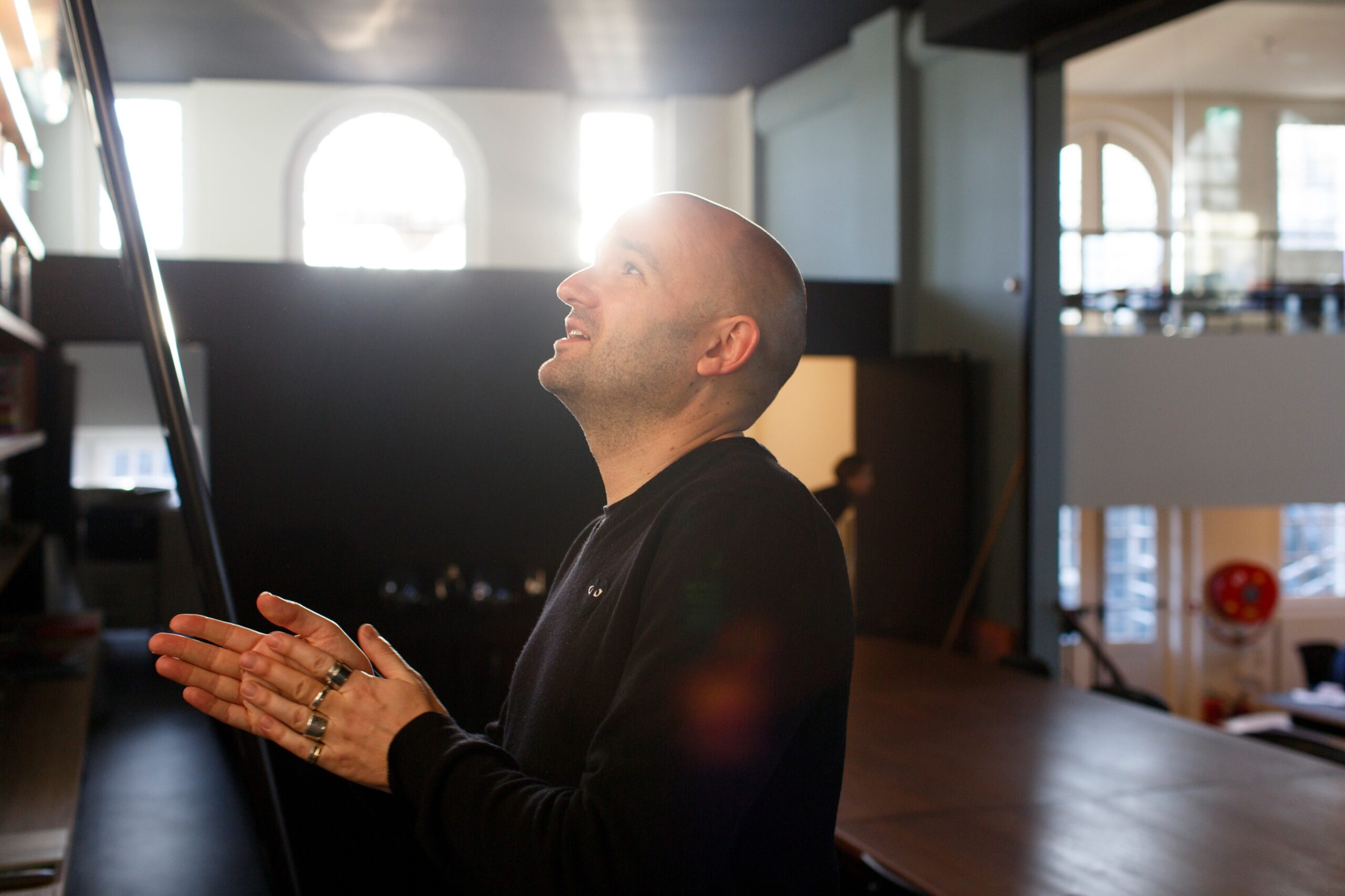
Jochem: "The building came our way through the owner, Millten, for whom Broersma Werken handled Broersma Werken rental assignment. We were located with ..., our creative agency, on the Ruyterkade, and we had outgrown the space. Julia and I had been in love with the façade of the theater for years. We lived behind it and cycled past it every day on our way to our daughter's school. It turned out to have a catering license, and we thought: imagine if we turned it into a nice daytime venue with a good breakfast and lunch menu and organized seminars, talks, lectures, presentations, and PR events. That's how the Newwerktheater came about. A photo studio, event space, restaurant, shop, and our advertising agency. A new way of working and a very enjoyable time. It also made us more visible as an agency. There was a very pleasant buzz and cross-pollination between different disciplines. But it was a completely new business. After a working day at the advertising agency, the working day at the Newwerktheater began. After a few years, the amount of work was taking its toll on our agency, and through Piet Boon, we came into contact with the entrepreneurs behind the Coulisse restaurant. That turned out to be a perfect match.
'A special feature of the construction are the pillars with mushroom-like tops. They made it possible to have a first-floor floor that is only 20 centimeters thick. Duintjer worked here together with G.J. Langhout, who was primarily responsible for the restoration of the old hall.'
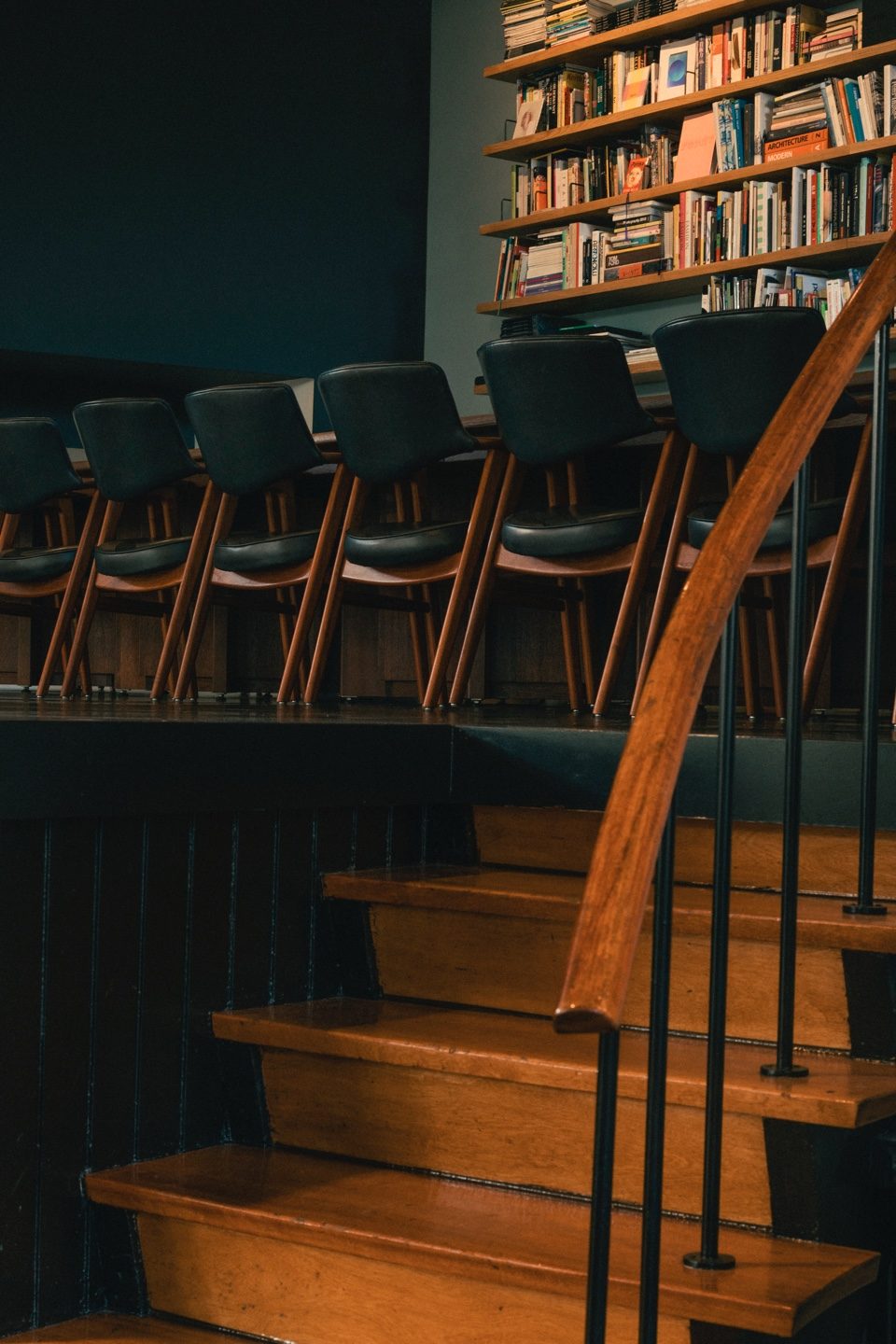
…,state
All attention could then return to ..., and there too, everything began to flourish again. Our work is diverse. For example, we are currently working on the retail concept for Ace&Tate. Together with publisher Mendo, we are creating a book, which will be quite substantial, about Dutch creativity. It is called'The New Style'.A beautiful visual document and a platform for talent. The big names are already well known, but there is so much young talent that deserves attention. It ranges from fashion to design, branding, communication to art & architecture. We are also working on a new store concept, 5,000 m2. Food, drink, living, gaming, etc. Design, styling, branding, etc. Also exciting, we will be doing the branding and communication for two clients of OMA (Rem Koolhaas) in Mumbai.
At ..., there are around 25 people working. Fifty/fifty male/female, local/international, young/and slightly older – a nice balance. A nice workplace attracts nice and good people. It's that simple. It's about quality of life. You just walk from your workplace into the city. All the nice things around you, what more could you want? You can feel the city breathe.
A workplace here is designed differently. More space for yourself. Spatial freedom gives mental freedom. Three days a week, we have a chef who makes lunch, and we have a professional coffee machine with very good beans. In other words, a pleasant, homely environment where you can work together. That is the new way of working.
Amsterdam.
The city has become more hardened in recent years. Before Covid, there was resentment due to overtourism. The general tone was that everything was geared exclusively towards tourism. But there are also many positive developments. Amsterdam has also made great strides in the culinary field. Noord is wonderful, of course, with its corner stores and public spaces. These are great additions to the city. The Goudfazant will also be allowed to remain at its current location for a while longer.
Jochem's hotspots:
Groceries: VRR for bread from Van As, of course, delicious butter, and cheese from Kef.
Food & drink: Scheepskameel. Within walking distance. Nice people—fantastic hospitality, good food. Delicious German wine list.
Art & culture: Grimm, Ravestijn gallery, Bisou gallery.
Interior: De vreugde design. Warehouse with vintage furniture just outside Amsterdam.
…, staat creative agency
Oostenburgergracht 75