Meet the entrepreneur, in this series designers Xander Vervoort and Leon van Boxtel of x + l design
The beauty of imperfection
‘We are not trained to put what we make into words. A lot of things are or become emotional for us. Nowadays, it sometimes seems that the story is more important than what you make. We are still from the generation that hopes that your work speaks for itself.
That's also nice with the online store we have. We make something and a customer makes the choice. Virtually without text and explanation. We are involved from start to finish. In fact, we do everything ourselves. We go to India to buy fabrics, we dye the fabrics ourselves, we make patterns and cut the fabric, and then we turn it into a product that we photograph, sell, package, and ship ourselves.
Our work has a lot to do with research, honest materials, and craftsmanship. We have been using sustainable materials for a long time. Reading a book about Wabi Sabi was actually a recognition for us. It has never been conscious. Things simply become more beautiful through use. The day after a product is put into use, it actually starts to deteriorate, so it's better to choose materials that age beautifully.
Designers Xander Vervoort and Leon van Boxtel from x + l design share their thoughts. In their online store, they present handmade products that they have created themselves, most of which are one-of-a-kind. Individual objects and limited series that go hand in hand with handmade finds from their travels. They love the irregularity in the products: the human touch gives it an extra dimension. They embrace imperfection.
Interior design
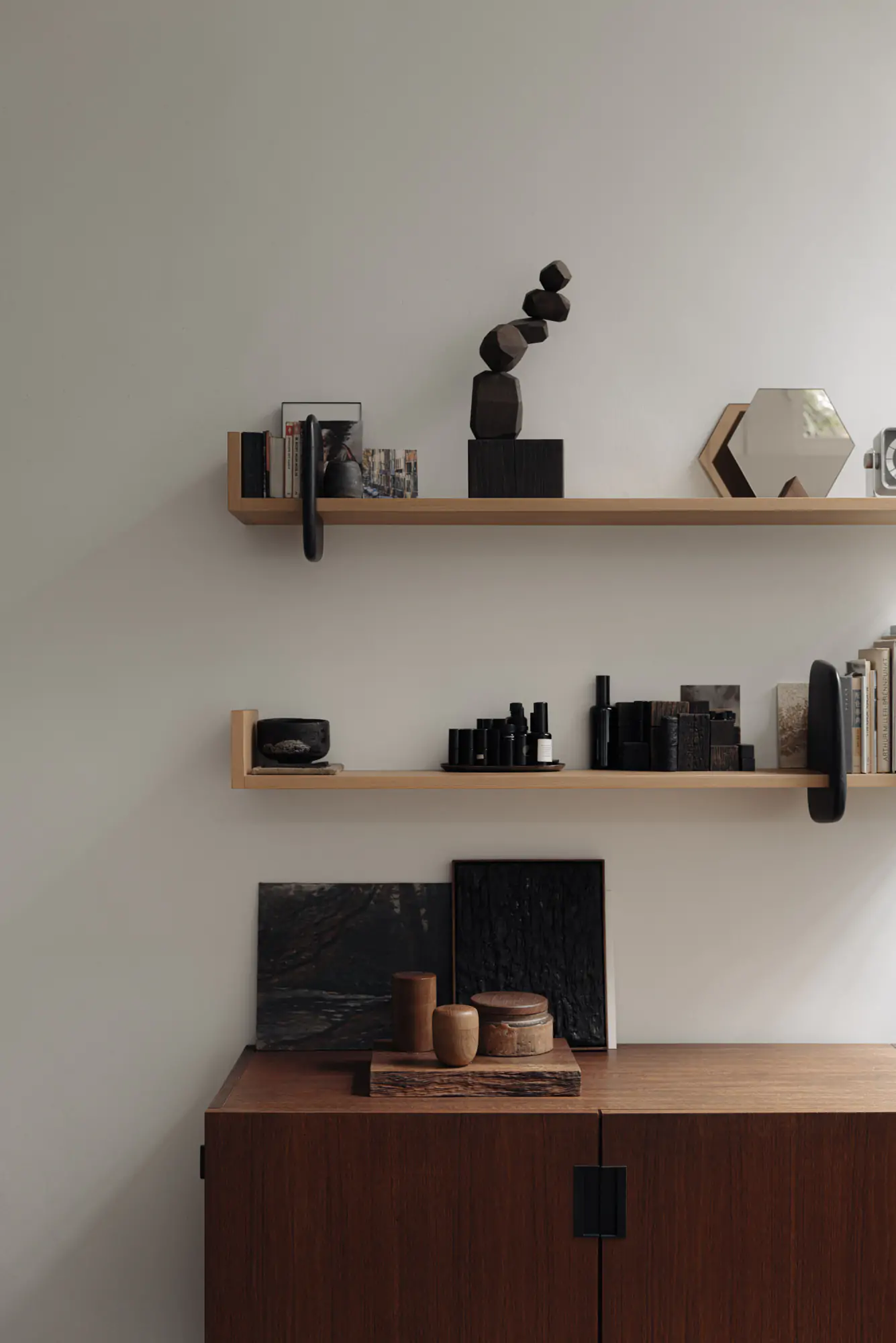
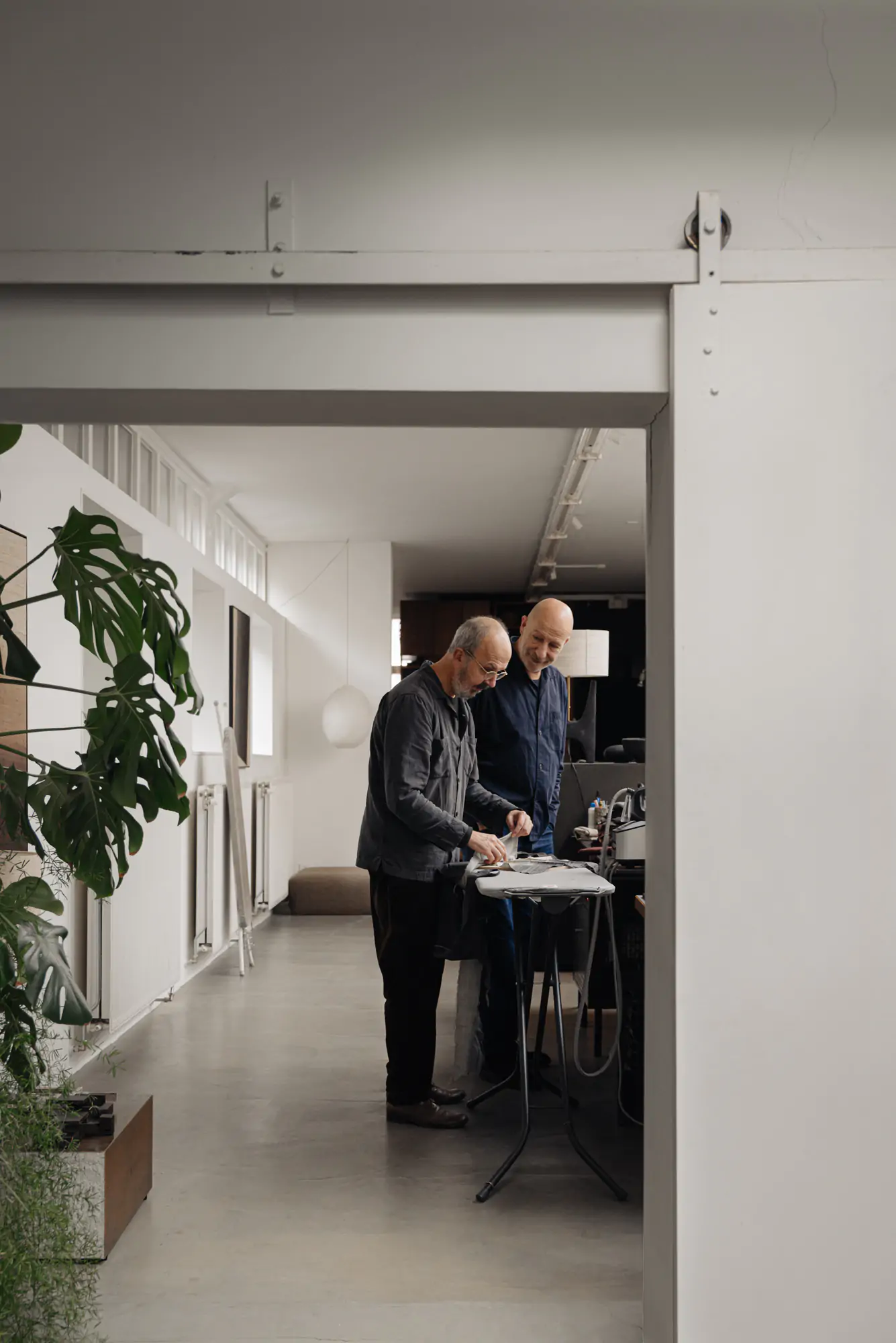
Our background is in dance and painting. Xander studied modern dance at the conservatory in Tilburg, and Leon specialized in painting at the art academy in Den Bosch. Xander then worked as a choreographer for 15 years, but it wasn't a lucrative career, so we spent our free time earning money as handymen. During that time, Leon designed the costumes and sets. We have been working together since 1987. When we were working as handymen, one thing led to another. In the beginning, people asked, "Can't you also make a cupboard or a door?" Then they involved us more and more in thinking about the entire interior. We then gathered furniture makers around us. Until we decided to focus entirely on this and make it our work/business. Our first real interior design project for a client in Italy whom we already knew. It started with color advice and ended with a total renovation and interior design. We then spent more than 25 years doing interior design. We have now stopped doing that. We have done a few odd jobs, such as designing the interior of Random Studio and, through them, some assignments for a Prada exhibition. But for now, we are focusing on our store with our own products.
Online store
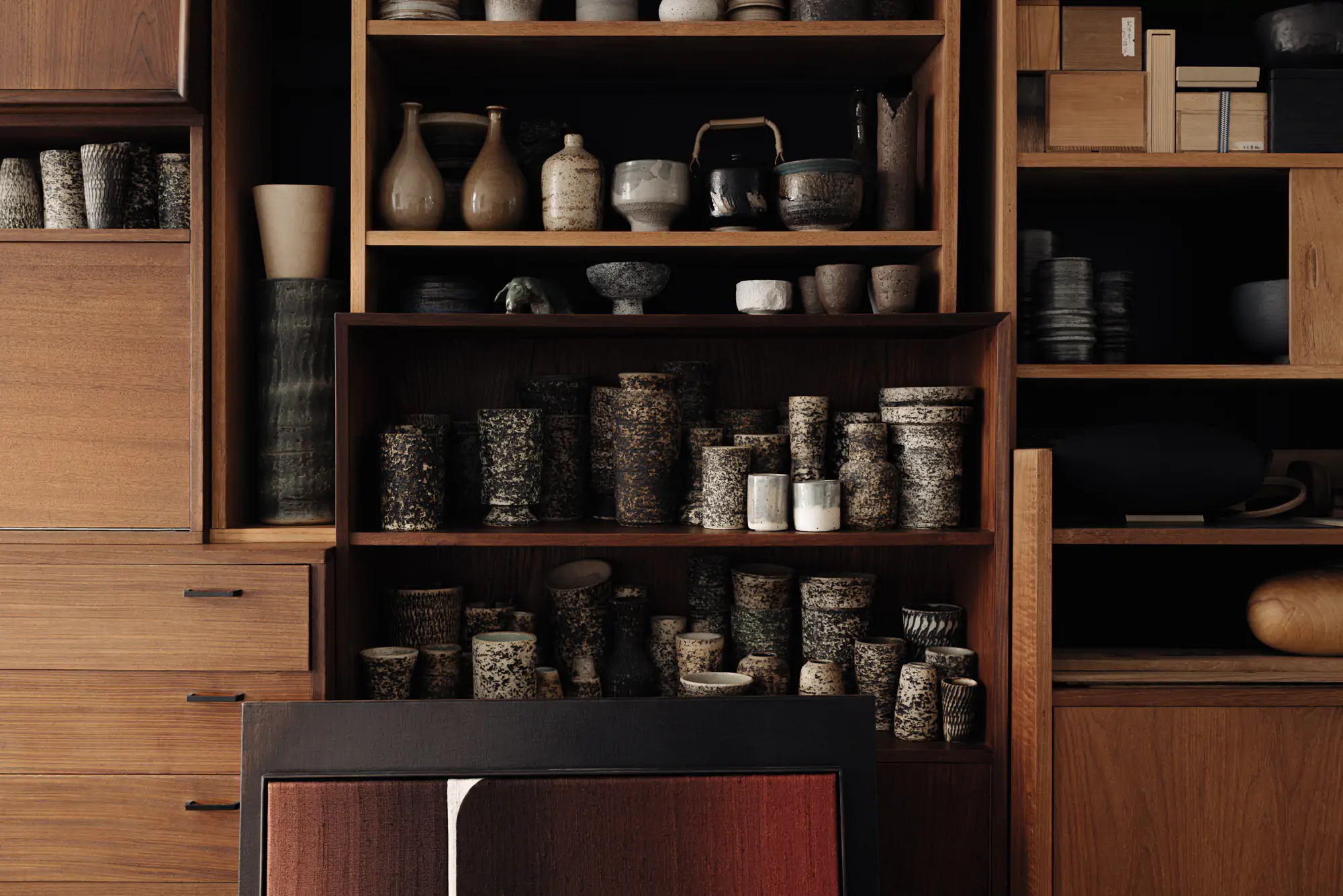
During the interior design projects, we already started designing and making our own products. This was because, when decorating, we tried to avoid products that were already on the market and particularly recognizable. Our customers now also consist largely of stylists and interior designers who are looking for something different. Products that are unique or produced on a small scale. As a result, our market has mainly become international. We always did the sketching, while the interior construction was carried out by others. Sketching became computer-based, and before we knew it, we were spending whole days behind a screen. At a certain point, we missed the making, the working with our hands. For our furniture line, we collaborate with Phantom Hands in India. We design and they make it. But we make the rest of the products ourselves or together with other furniture makers. These are therefore unique pieces.
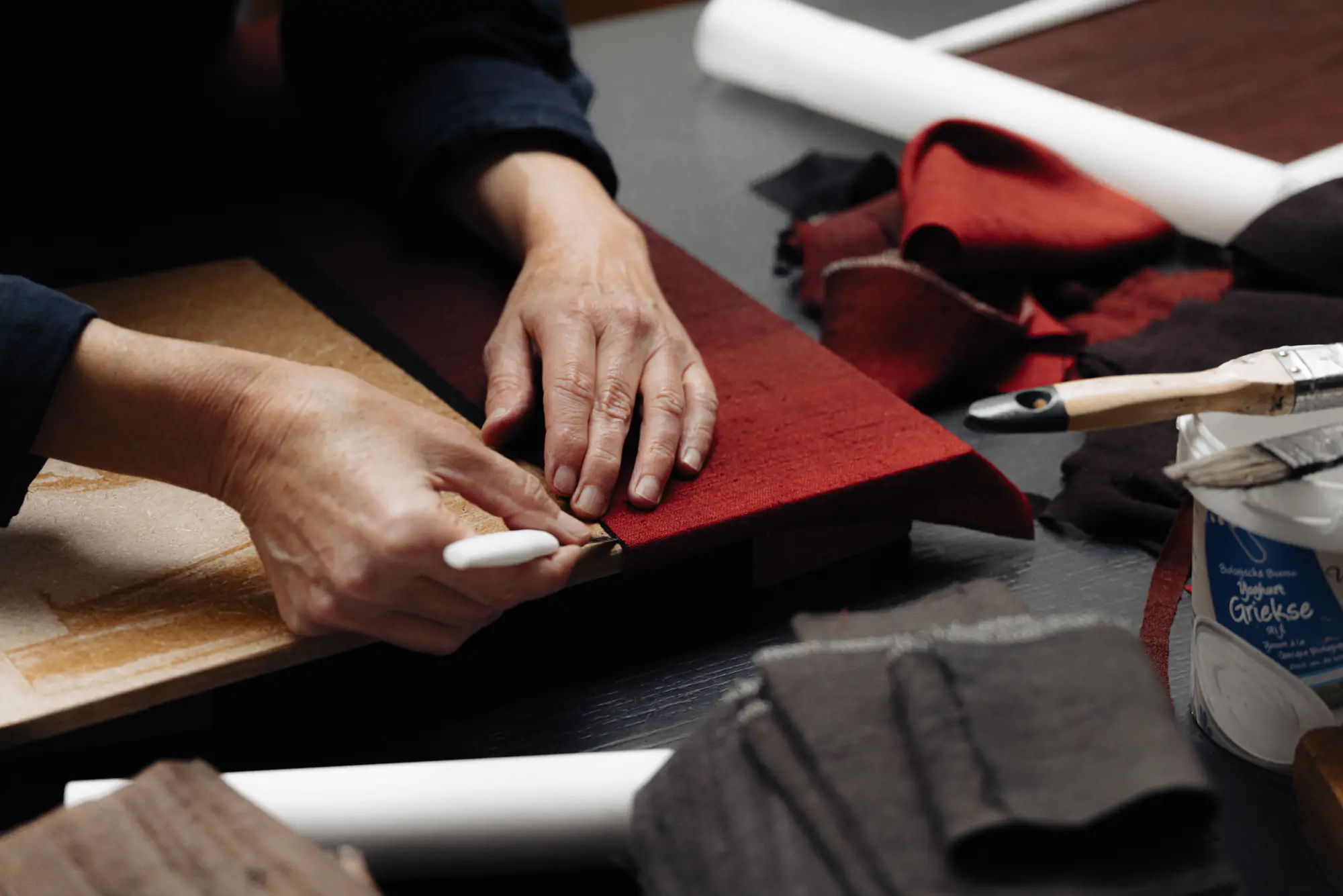
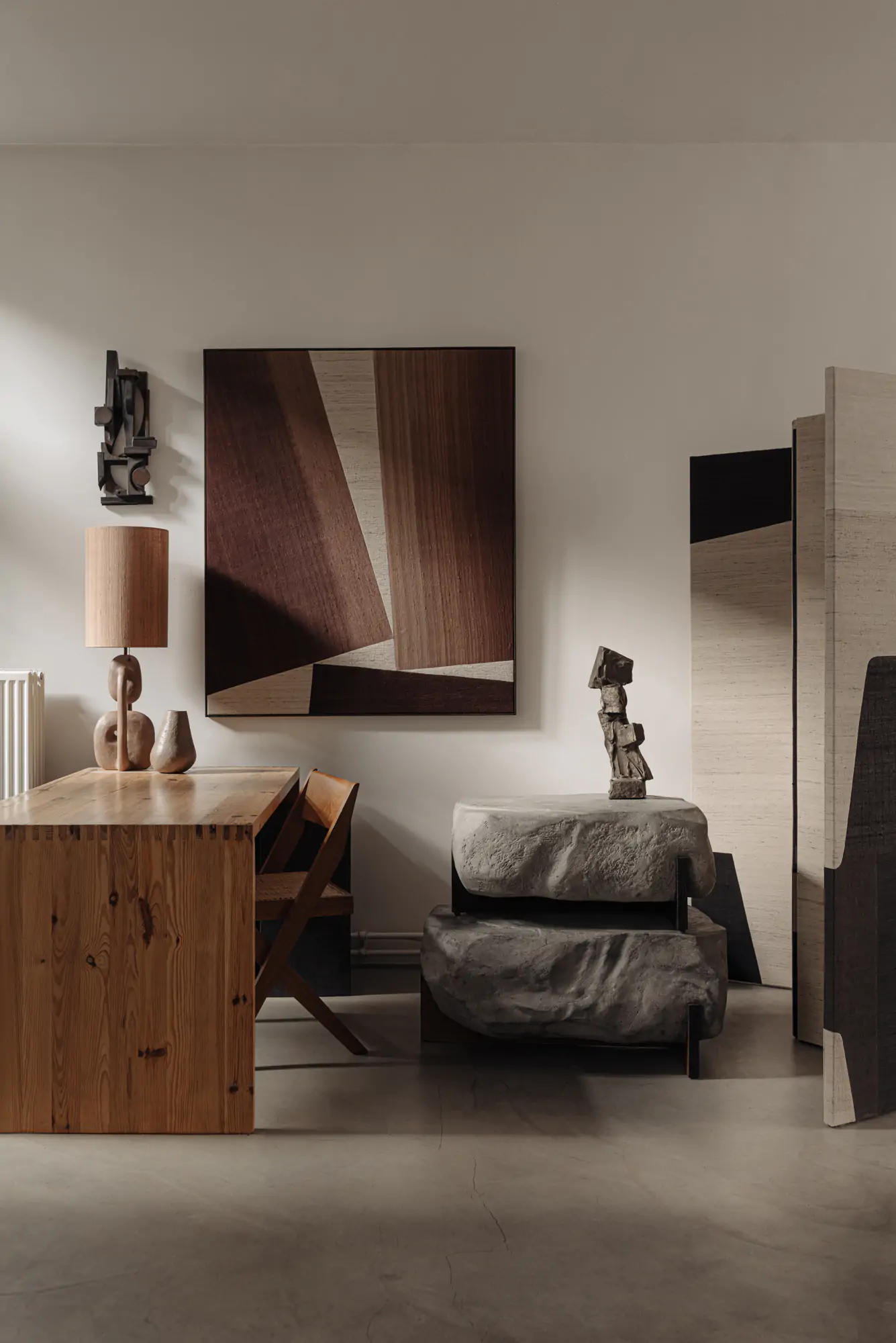
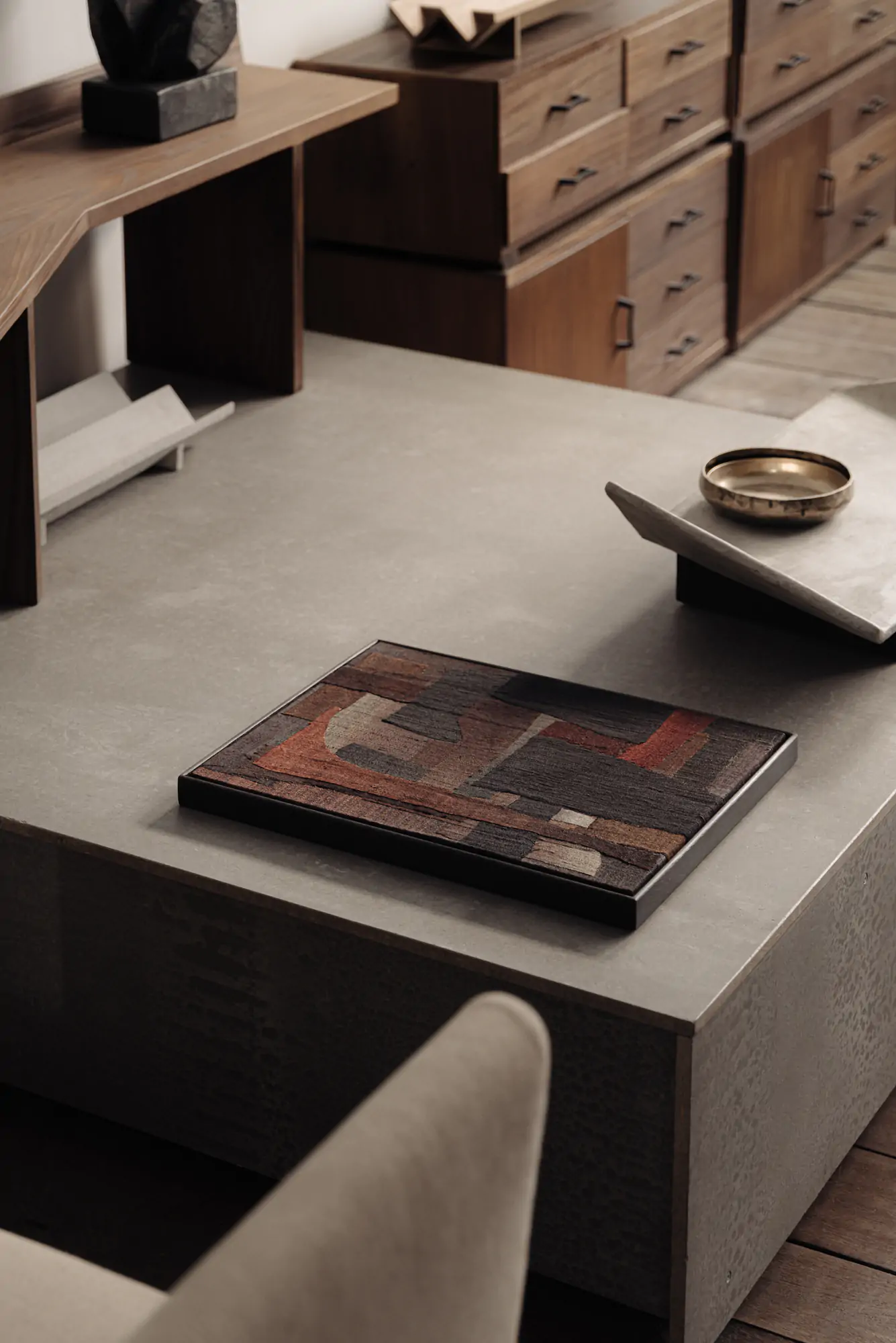
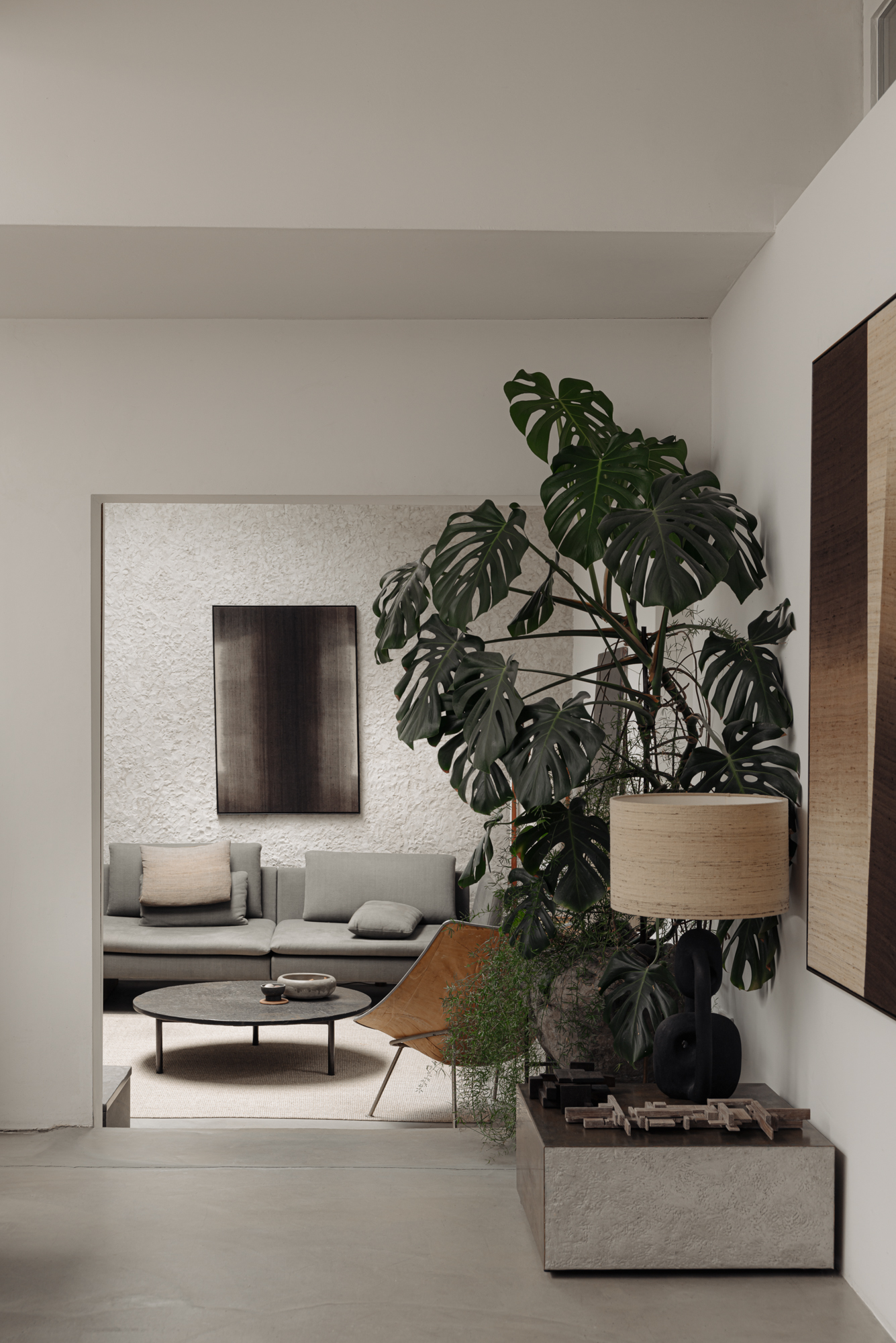
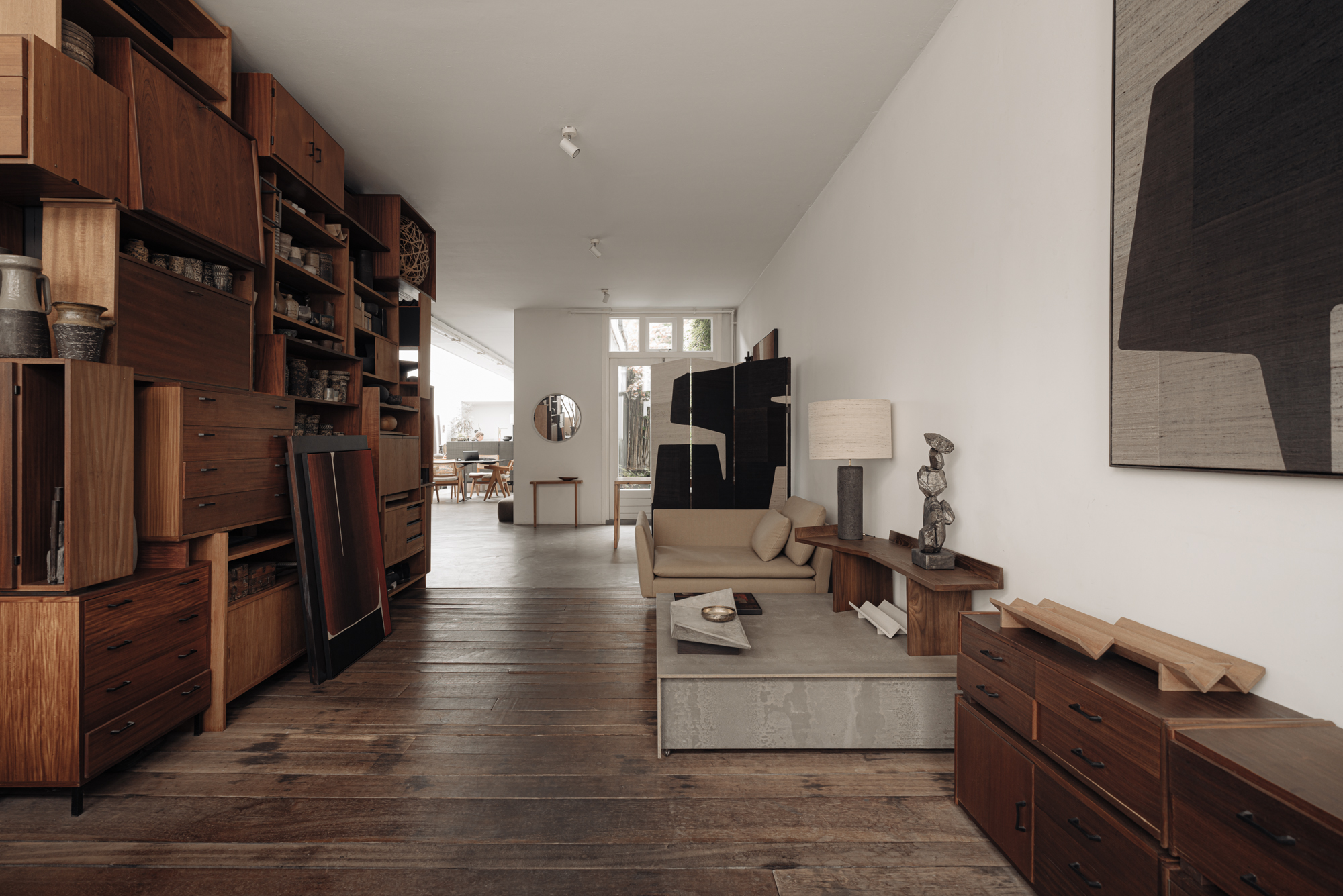
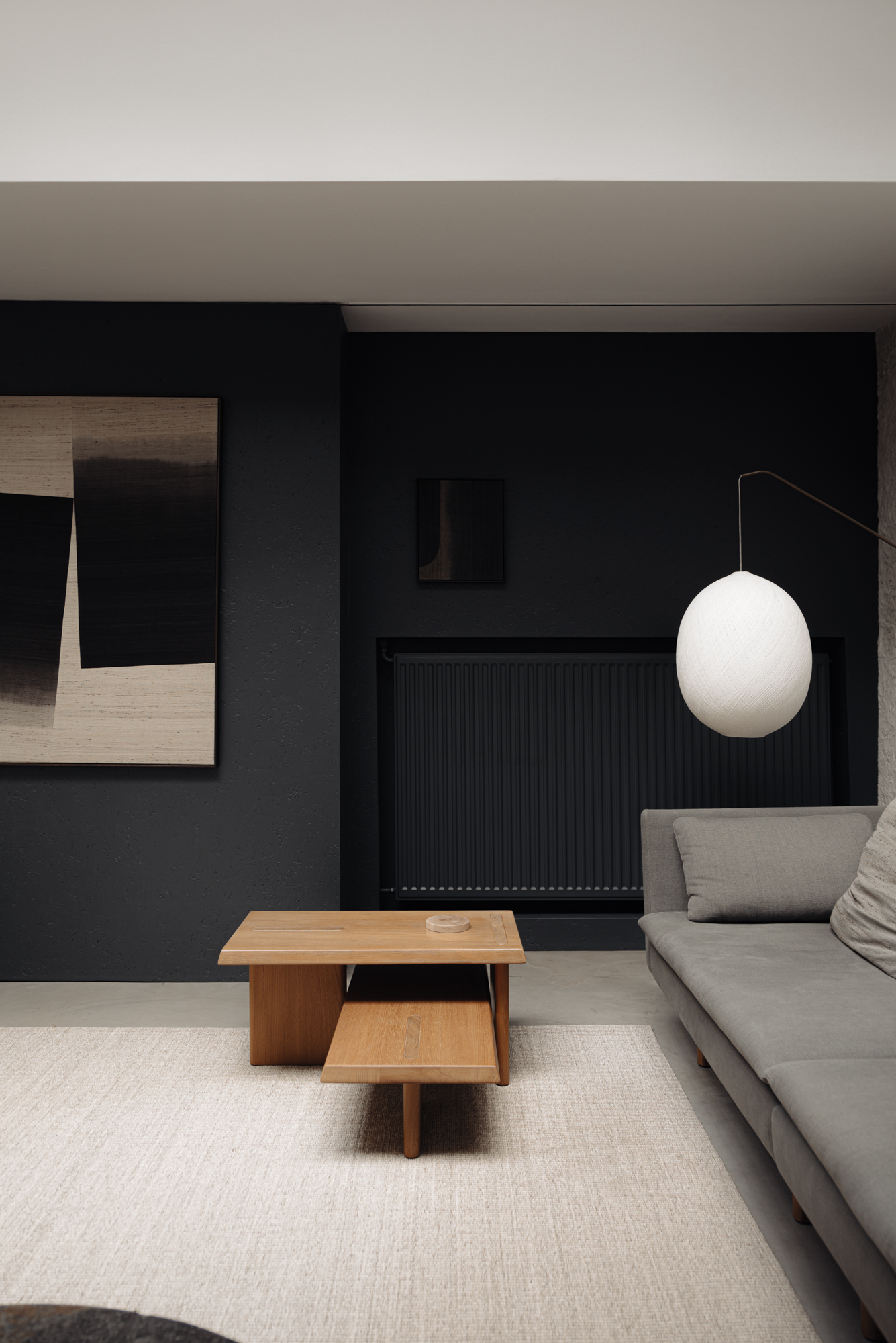
The disadvantage of an online store is that people cannot properly assess the quality. They are often pleasantly surprised when they receive the item at home. For example, the abstract wall compositions are made of silk. The fabric, called khadi, is hand-spun and hand-woven by people in India. Under Gandhi's leadership, spinning and weaving khadi textiles became a symbol of the Indian struggle for freedom and independence. Unfortunately, the craft is gradually disappearing, making the fabric increasingly difficult to find. We then dye the pieces of fabric ourselves in our Amsterdam studio (dip dye) and cut and stitch them into patterns. This is how this wall composition is created. When they see a photo, people often think it is a painting or a painting on fabric.
Handmade
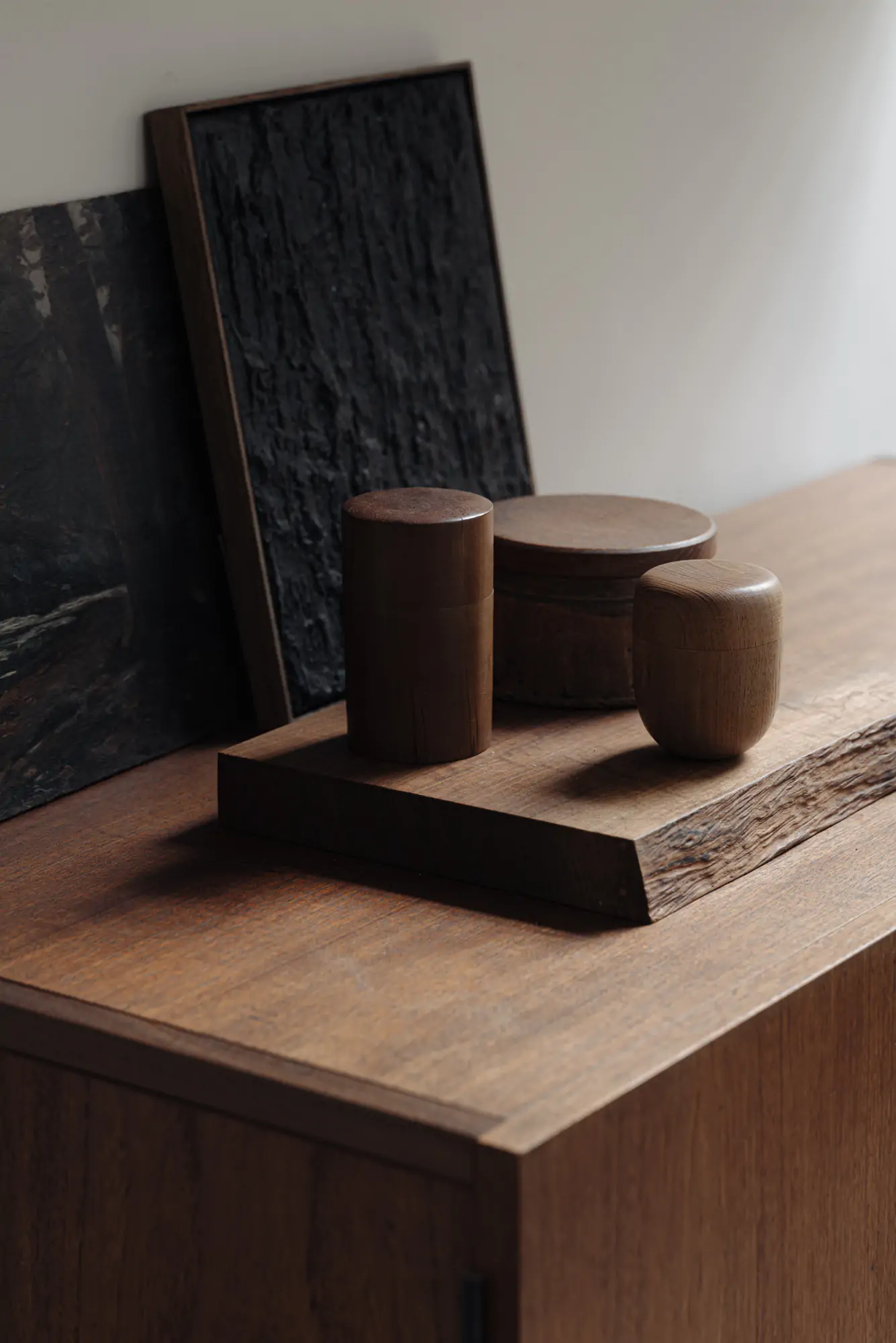
‘We also use a lot of cement, concrete, and wood. We use these materials for figurines, objects, lamps, and small furniture. Before collaborating with Phantom Hands, we mainly made objects, unique pieces. The furniture required a different approach in terms of production. Yet these products are also unique, as each piece is made by hand. The small deviations, interpretations, or imperfections give the designs a soul.'
Phantom Hands
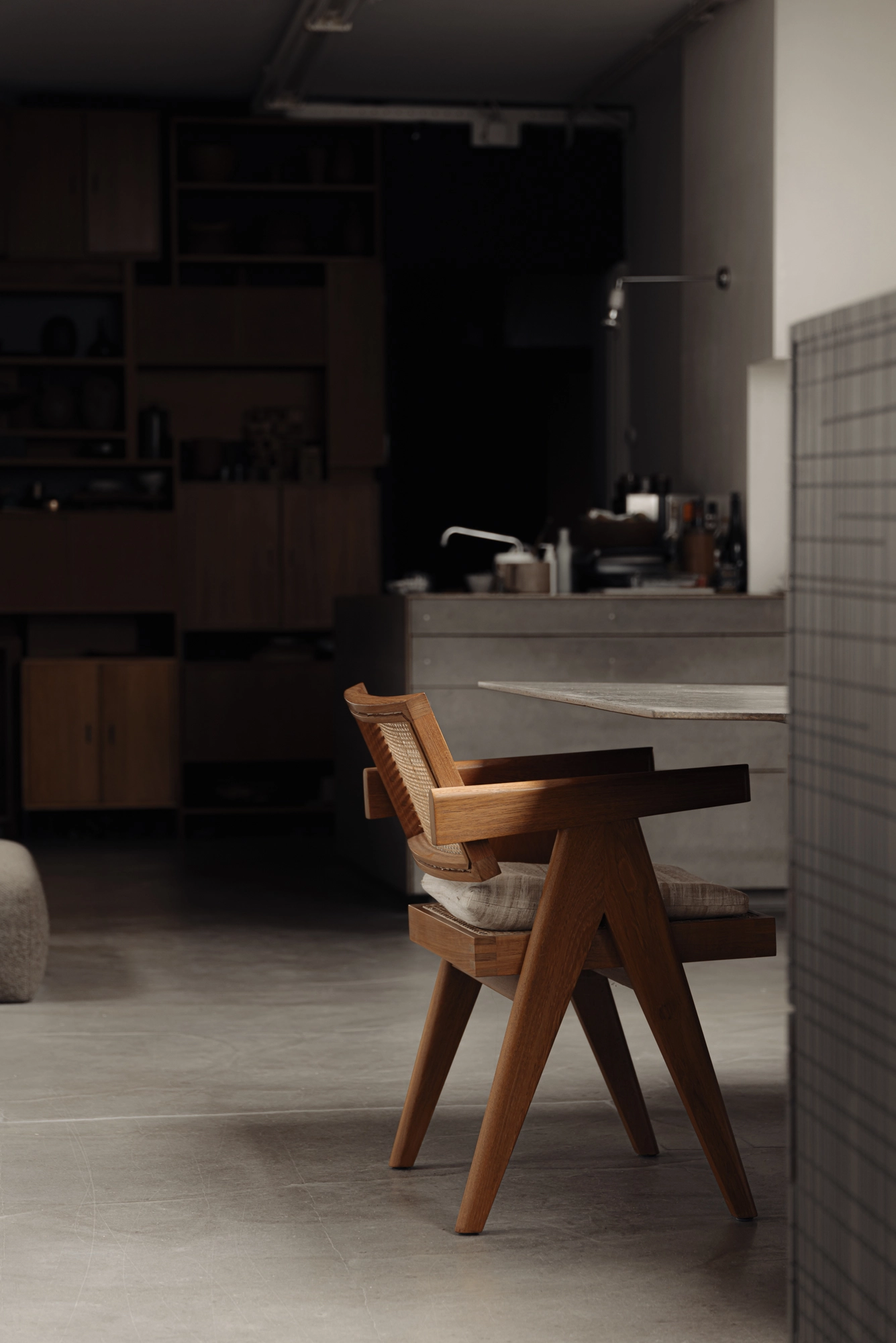
Our introduction to Phantom Hands came about because we fell in love with Chandigarh furniture. This furniture, made from wood and hand-woven rattan, was originally designed under the direction of Pierre Jeanneret for the first planned city of independent India in the 1950s. These pieces were intended to be freely reproduced and were never licensed to a single manufacturer. This was perhaps the first open source design project of such magnitude. We wanted to sell this furniture, and Phantom Hands turned out to be producing it, so we visited them on one of our trips to India. We hit it off, and then the owner asked if we would be interested in designing furniture for Phantom Hands. They had just started producing other furniture in addition to the Chandigarh line. We started with one piece of furniture: a coffee table. They were Immediately enthusiastic about it. After a while, we noticed that a lot of waste remained from the production process. It was teak wood that Sold simply Sold as firewood, incense, etc. We then started using those pieces in small products such as lamps, but that didn't really work out. We then designed a room divider that consists entirely of small pieces. This collaboration and reuse of materials naturally led to the creation of a furniture collection. The collaboration then took us to other places in the world. Since 2018, a selection of our designs has been represented by Objet d'art_galerie in Tokyo, Japan. And recently, we were invited to set up an exhibition in China in collaboration with Phantom Hands.
"We've actually built up a very nice niche."
Xander and Leon's favorite places:
We enjoy delicious food and drinks at the South Indian restaurant Saravanaa Bhawan for the most delicious dosas and Café Bern on Nieuwmarkt for cheese fondue. For ceramics and glass, we like to visit the Japanese interior design store Time & Style on Marnixstraat, and we go to the movies at the Filmhallen in Oud West. The clothing store Moise on Ceintuurbaan sells our perfume.
x + l
xandl.nl