A gallery that cares. In her home in Amsterdam Oud-Zuid, Marian Cramer developed a gallery practice that deviates from the classic model.
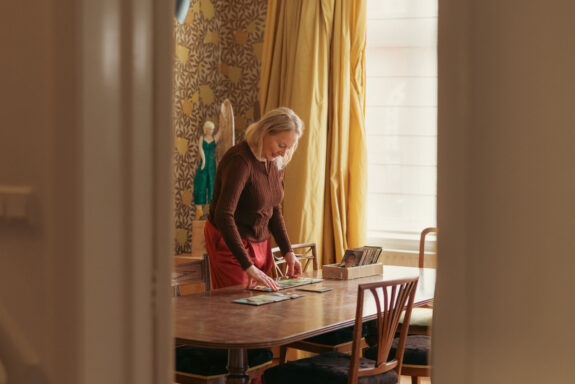
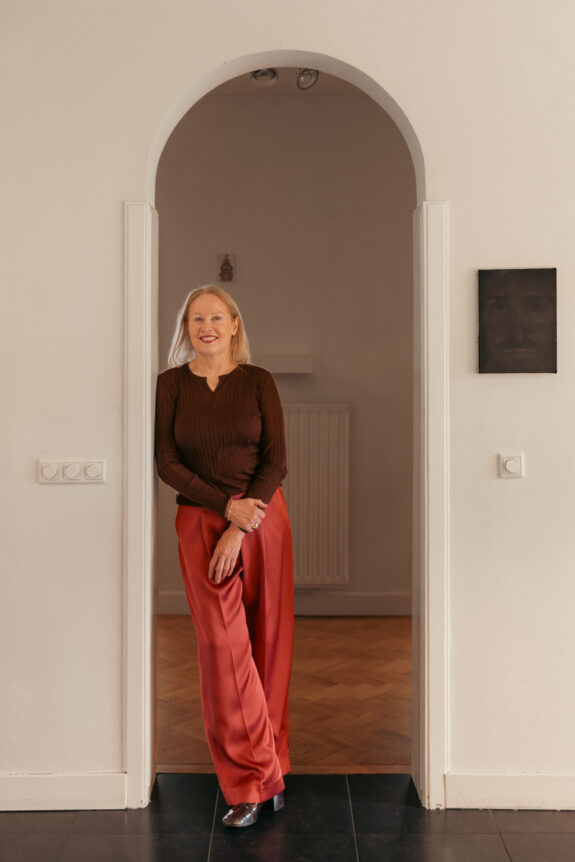
Marian Cramer
Marian Cramer's house in Amsterdam Oud-Zuid is not a neutral backdrop for art. It is an active part of her working practice. Since 2010, she has been running Marian Cramer Projects here: a gallery that is deliberately embedded in her living environment. Not as a conceptual statement, but as a method. Living and working are inextricably linked here.
The idea for a home gallery took shape for Marian in New York. During a stay there, she came across an article in The New York Times about galleries operating from private homes, small-scale, content-driven initiatives that emerged as an alternative to the classic gallery model. She immediately recognized that form of proximity and directness. Back in Amsterdam, she decided that this was the best way to develop her own practice.
Marian studied European Studies at the University of Amsterdam, majoring in English and Italian and specializing in marketing. She then worked for twelve years in the marketing department of the Stedelijk Museum Amsterdam. That period was formative: she learned how art functions within institutional frameworks, but also noticed that she was becoming increasingly distanced from working directly with artists and artworks. She wanted to be closer to the content, closer to the process.

© Swans: Tom Boogaard, Perspective Theory, 2003, oil on canvas on MDF board, 160 x 250 cm (private collection).
Art advisor
After leaving the museum, she worked as an art consultant and for various galleries. Ultimately, this led to a decision that was both personal and professional: to start her own gallery, from home. Not a white cube, but a place where art and everyday life intersect.
Marian Cramer Projects focuses on emerging and mid-career artists, both Dutch and international, who work with a variety of media such as painting, photography, sculpture, and installation. What connects them is not aesthetics, but an inquiring attitude and a clear inner necessity. Marian does not select artists based on trends or instant recognizability, but on long-term resonance. For her, representation means following, deepening, and giving space.
The house serves as an intimate exhibition space. Art is not presented separately here, but embedded in a living environment. Visitors move through spaces where people live and work. This changes the conversation. The distance between the work, the creator, and the viewer is smaller; viewing becomes more personal, less formal.
Artists in residence
Painting plays an important role within the program. Marian works with artists who take their time for their work and for viewing.


© Daan Koens, Untitled, 2026, oil on canvas, 100 x 140 cm.
© Daan Koens, Jaguar with Fireflies, 2025, oil on canvas, 60 x 60 cm.
© Daan Koens, The Beloved, 2025, oil on canvas, 30 x 24 cm.
© Hideki Iinuna, Untitled, 2024, 82 x 22 x 16 cm, Mangoria wood.
Daan Julius Koens
Daan Julius Koens is a self-taught painter who lives and works in Rotterdam. His work moves between realism and freer, more experimental forms. He is inspired by classical masters such as Van Gogh, Gauguin, Picasso, Velázquez, Goya, and Modigliani, but his paintings feel distinctly contemporary.
Koens' perspective was partly shaped by his childhood, which he spent partly in the tropical landscapes of the former Netherlands Antilles. Light, color, and a certain openness therefore play an important role in his work. He made a conscious decision to leave art school and follow his own path. His paintings are based on personal observations and experiences and together form an ongoing, open investigation.


© Bob Jonkers at work in his studio:Outrespection, 2025 Oil on canvas 180 x 120 cm.
© Bob Jonkers small works on the table:A Curated Being, 2026 Oilon board, 15 x 12 cm.
Bob Jonkers
Bob Jonkers was born in Amsterdam in 1996 and received a classical education in drawing and painting. After studying Illustration at the Willem de Kooning Academy, he continued his education at The Swedish Academy of Realist Art in Sweden, where he immersed himself in traditional painting techniques. He later completed a post-bachelor's degree in Art History, which provided him with a theoretical foundation for his work.
His paintings are modest and personal. Jonkers often works with self-portraits and scenes from his immediate surroundings. The figures in his work seem reluctant to commit themselves, but find themselves in an intermediate space: present, yet reserved. In 2023, he stayed in Kyoto for a residency, where he further explored ideas of transience and stillness. These elements have been clearly reflected in his work ever since.


© Hideki Iiinuma, Nuance, 2019, Cypress wood, 73 x 23 x 14 cm, Nineteen, Cypress Wood, 2018, 72 x 19 x 20 cm, Cambridge, 2025, Red Pine, 60 x 18 x 15 cm.
Hideki Iinuma
In addition to paintings, Marian also exhibits sculptures, including works by Japanese artist Hideki Iinuma. He works with wood and allows the material to play an active role in the creative process. Cracks, grains, and irregularities remain visible and help determine the shape.
Iinuma's work moves between tradition and contemporary life. He refers to transience, such as the short bloom of cherry blossoms, but also to the fast pace of fashion and change. His sculptures balance between refinement and roughness and invite slow viewing.


© Hideki IInuma, Untitled, 2024, Mangoria wood 77 x 17 x 17 cm.
© Jonny Niesche, Graellsia Isabellae (Medium Study), 2022, Acrylic mirror, voile, MDF, 101 x 9 cm (private collection).
© Anne Jaap de Rapper, Shelter of Architecture, no. 3. 2007, various materials, 118 x 60 x 25 cm (private collection).
Time as a starting point
For Marian, time is an essential part of her working practice. Art must be able to linger, shift, and be viewed again. By incorporating works into her own living environment for long periods of time, it becomes clear what endures and what changes. The house thus functions as a place where art can develop, without haste.
In addition to exhibitions, Marian Cramer Projects organizes lectures, artist talks, and masterclasses. The gallery participates in national and international art fairs and initiates pop-up exhibitions in cities such as Paris and Los Angeles. Works are included in private and corporate collections worldwide. These activities increase the gallery's reach, but always remain connected to the same core: attention, commitment, and content.
Annabel Emson – Memories Of My Shadow
On February 7, Annabel Emson's sixth solo exhibition, Memories Of My Shadow, will open at the gallery.
Annabel Emson is a London-based painter who works at the intersection of figuration and abstraction. Her paintings incorporate personal experiences, memories, and physical sensations. She considers her work an extension of herself: images arise intuitively and move between recognizable forms and areas of color that dissolve again. Emson studied at Chelsea College of Art and the Slade School of Fine Art and was a student of Peter Doig, Chris Ofili, and Bruce McLean, among others. Her work is exhibited internationally, in London, Europe, and the United States.
© Telepathy signals, oil on canvas, 60X50. Annabel Emson.


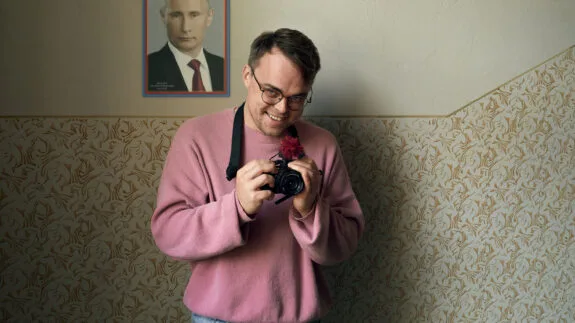
There is always something fun to do in Amsterdam, but what will we be doing in February 2026? Amsterdam will still be buzzing in 2026. From inspiring exhibitions to new plays and film screenings, the city will once again be full of cultural highlights. Step into a museum, dive into a theater, or discover a special event. Want to experience something new? Check out our latest cultural tips here!
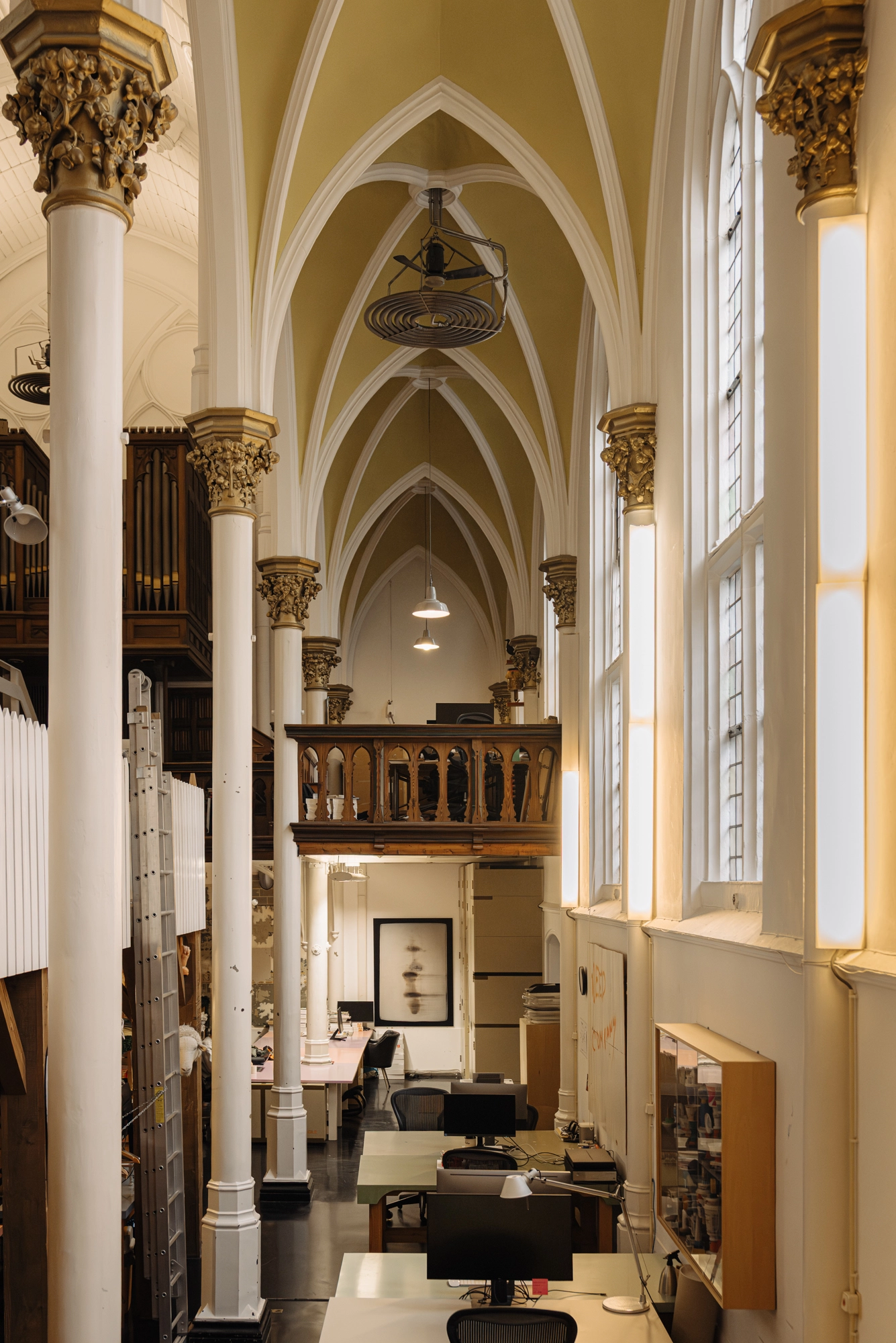
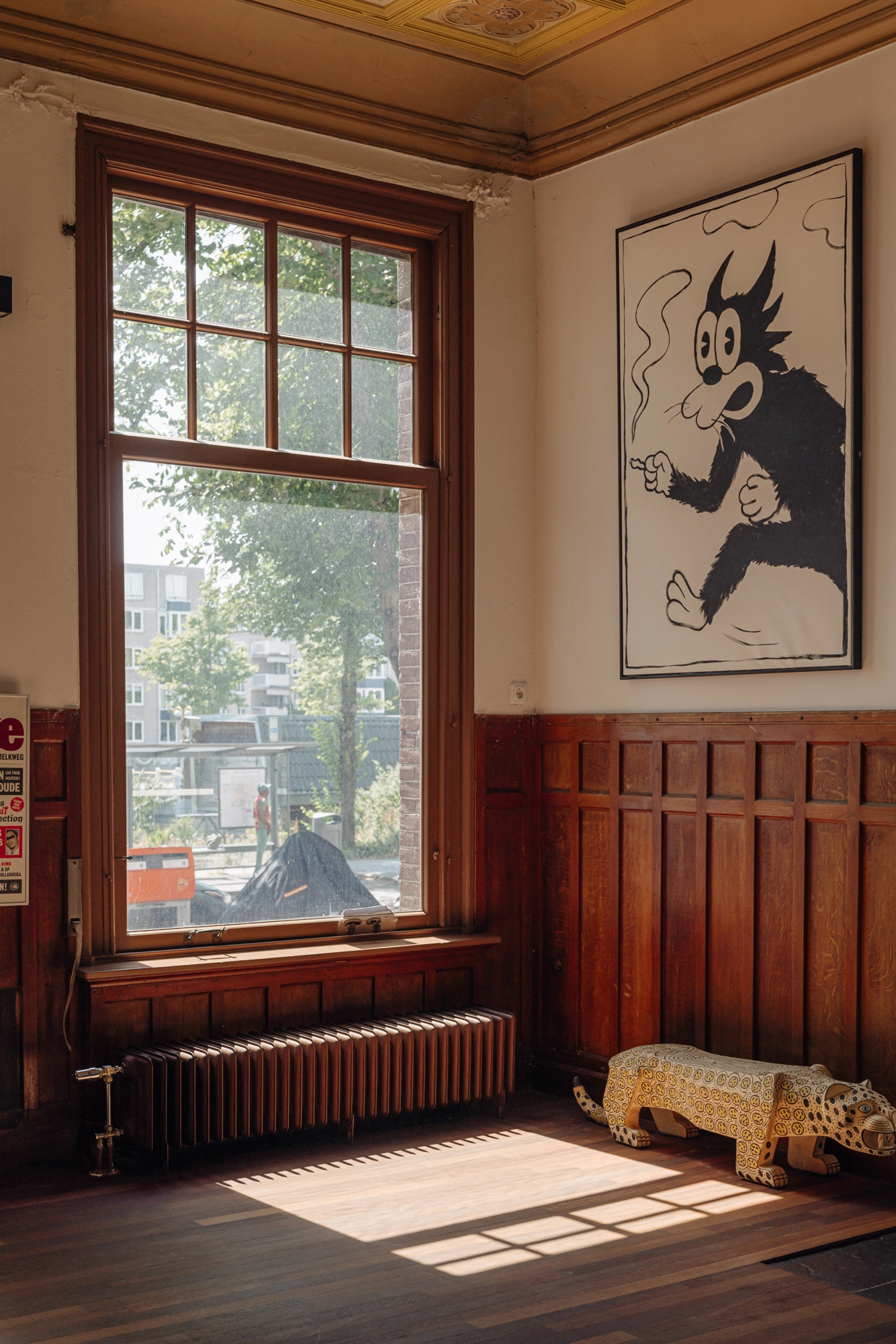
Spotlight; In 1882, the Poor Sisters of the Divine Child had a chapel built as part of their charitable foundation: De Voorzienigheid (Providence). More than a century later, advertising agency KesselsKramer saw something new within those same walls. What was once a place of faith, care, and order became a home for imagination, experimentation, and individuality. Two eras, one providence. Read more here and watch the film.
Spotlight: 'Aatje'. In the heart of Amsterdam's creative and lively Wittenburg district stands a building full of character. It is the former studio and home of renowned artist Aat Veldhoen, known as a pioneer of graphic art in the Netherlands and a leading figure in the Amsterdam art scene of the 1960s and 1970s. In recent years, Eilandenboulevard has developed into a sought-after place to live and work, with a mix of historical charm and creative activity. Take a look at this unique building and find inspiration in the neighborhood guide.