The lawyer who uses art to think differently. Aernoud Bourdrez on art, conflicts, and the space between the two.
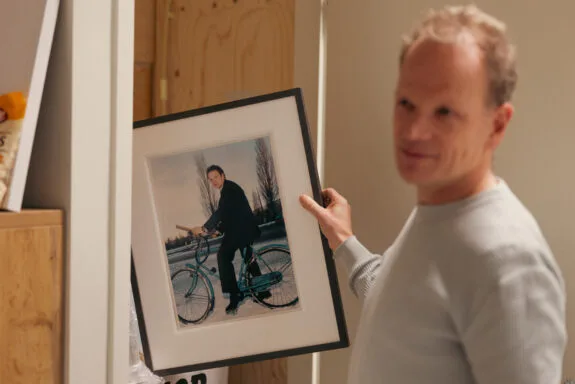
© Morad Bouchakour (1999). On the way to a job interview.
Aernoud Bourdrez.
When you walk into Aernoud Bourdrez's office, nothing seems to indicate that this is a law practice. It feels more like an artist's studio: walls covered with photographs, a light box with the infamous Jackass X-ray, still lifes, and objects, each suggesting a story. This is no coincidence. Bourdrez never ended up at the Rietveld Academy, where he was rejected as a young man, but the art world did eventually become his permanent domain. Not through creating art, but through the law that brought him into that very domain.
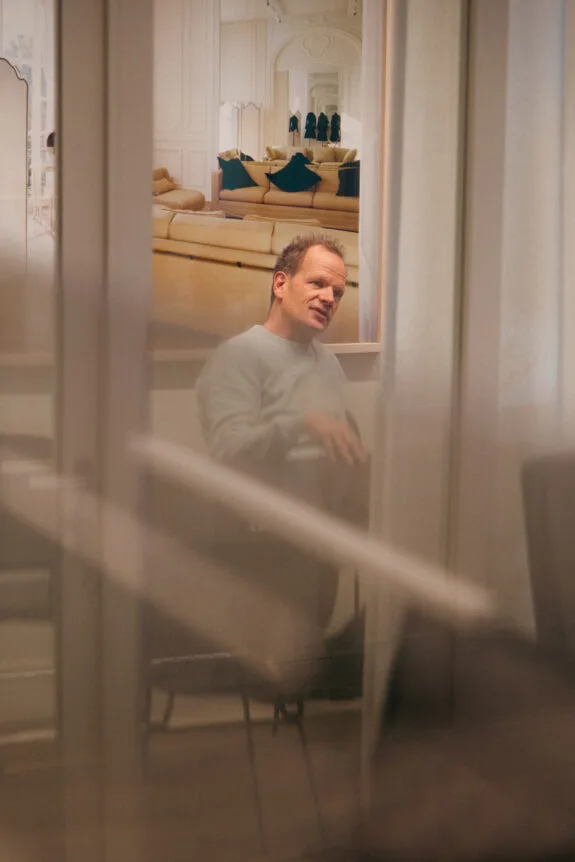
© Jacqueline Hassink (Fitting Rooms, Givenchy, 2011).
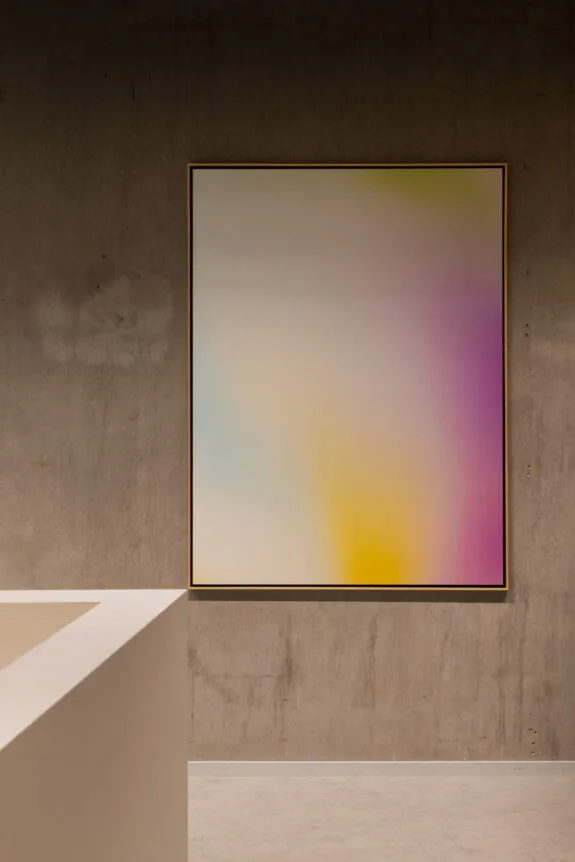
© Rafaël Rozendaal (Into Time 15 06 01, 2015).
An exhibition that showcased his development.
Anyone who wants to understand Bourdrez's collection must start with the exhibition he curated at Huize Frankendael. He decided not to organize the exhibition as a lawyer (too cliché), but as a way to show his own evolution as a collector. Eight Rooms, eight phases. Not of art history, but of personal development.
The first room contained work that appealed to him in his early years: images that are quickly readable. Photography that revolves around color, beauty, directness. The kind of work that triggers something in you without you knowing why. Bourdrez calls this his instinctive starting point: buying what you immediately understand. This was followed by images that mainly evoke associations (The associative phase). Works that draw you into the world because they refer to beauty, desire, elegance, or tension: close-ups of faces, the female body, animals, details that are almost cinematic. Not because they are superficial, but because they immediately capture your gaze.
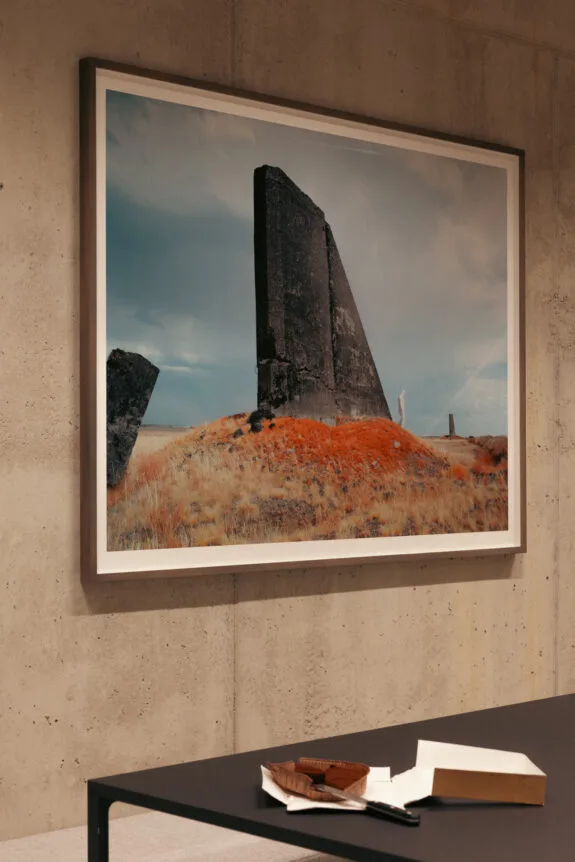
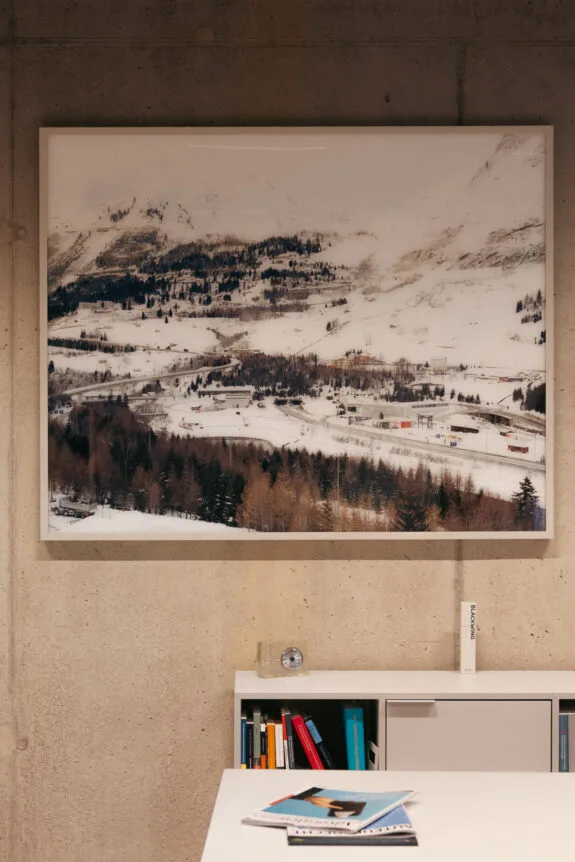
© Eddo Hartmann (Black Pylon, Semipalatinsk Test Site, Kazakhstan, 2022).
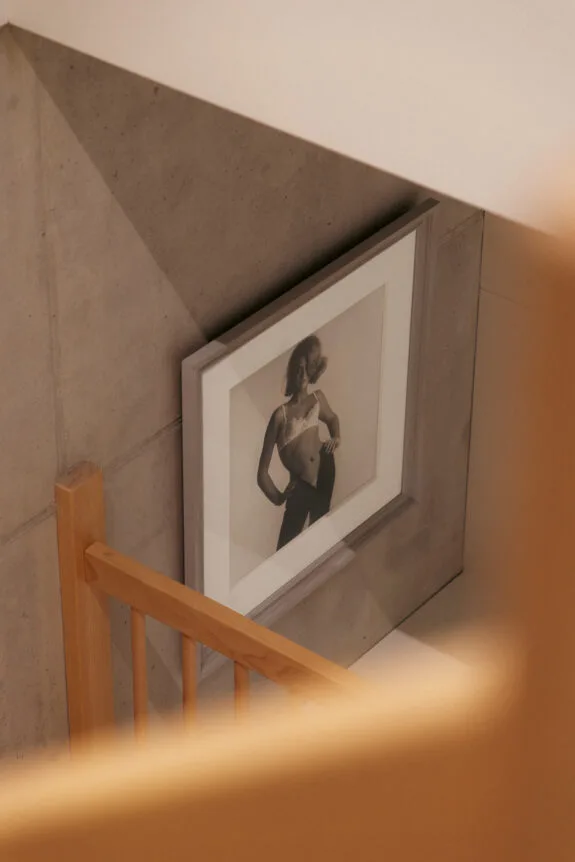
© Paul Huf (Bonny after the shoot, 1964).
In the next room, his attention shifted to photographers who develop a precise visual language: artists who work both autonomously and on commission, and for whom form, composition, and idea coincide. Here, it became clear how important the image as an object becomes when it is supported by a consistent visual logic. Next came the works in which the story behind the image took center stage. Photography that not only records, but follows, documents, or bears witness. Portraits taken over several years, or series in which a person's life visibly changes. Here, for Bourdrez, the narrative became more important than the appearance. The moment he began collecting art with his head in Location just with his eye.
Next came a room devoted to appropriation art. This room focused on artists who re-use, distort, or repurpose existing images in a new context. For Bourdrez, this marked a turning point: the moment he began to see art as a way of questioning systems. What is original? Who owns an image? What does authorship mean? This is where his legal world first began to connect with his art world.
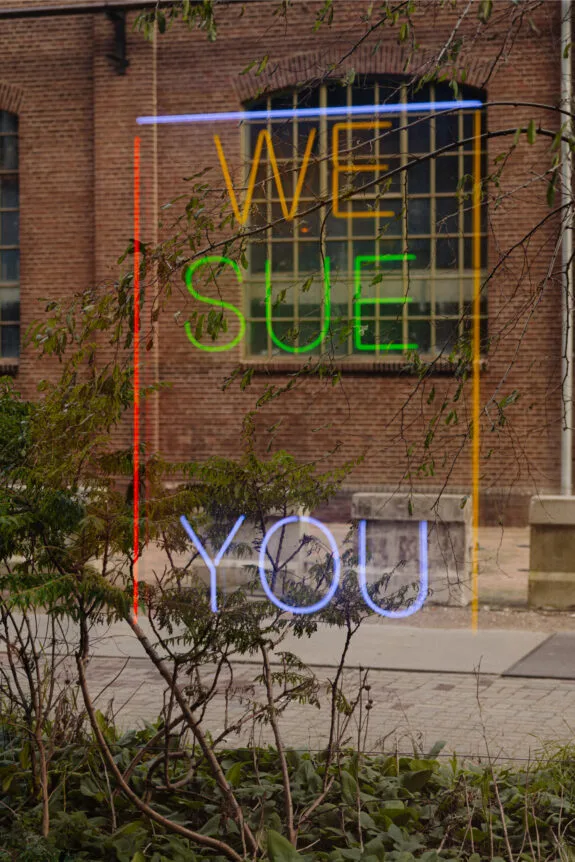
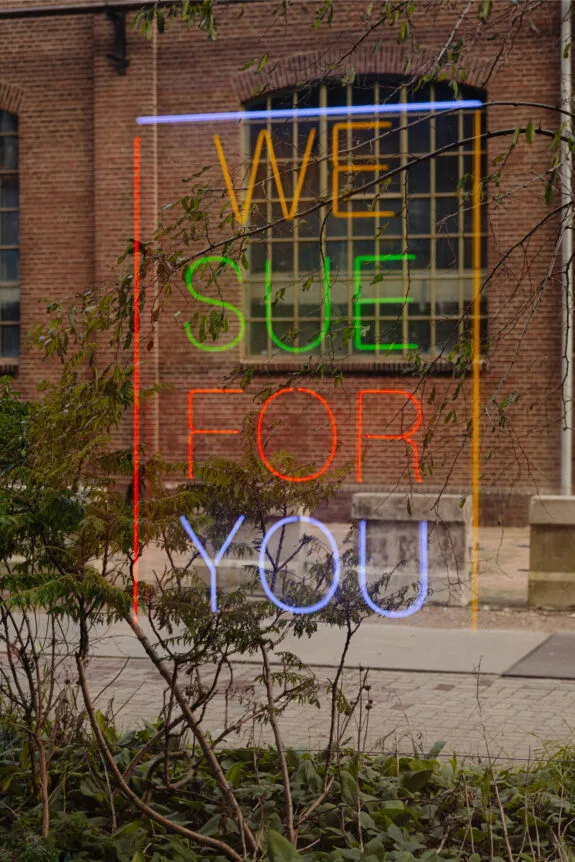
The last room brought everything together: works in which he himself became part of the process. Legal letters, negotiations, agreements, misunderstandings, and constructions suddenly became part of the artwork. Not because he had planned it that way, but because some works only come into being when someone challenges the system.
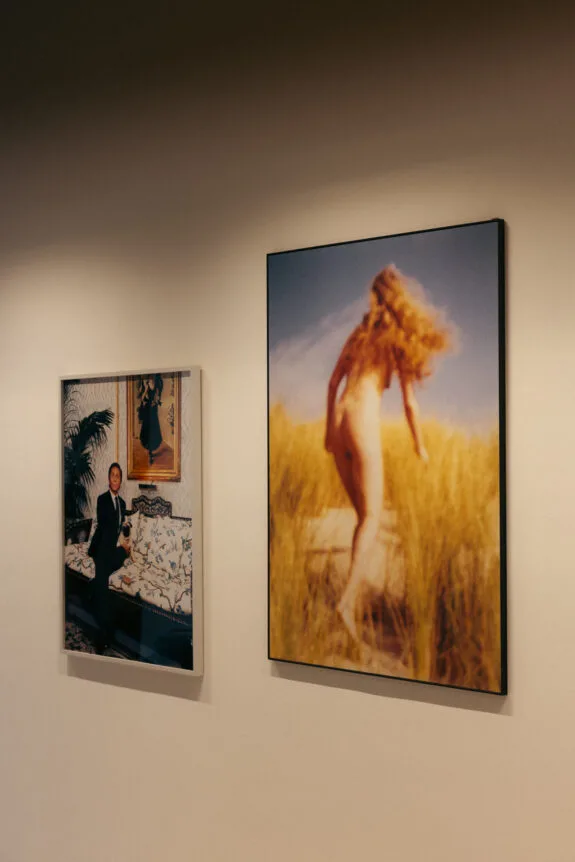
© Dana Lixenberg (Valentino, 1999).
© Paul Kooiker (Hunting and Fishing, 1999).
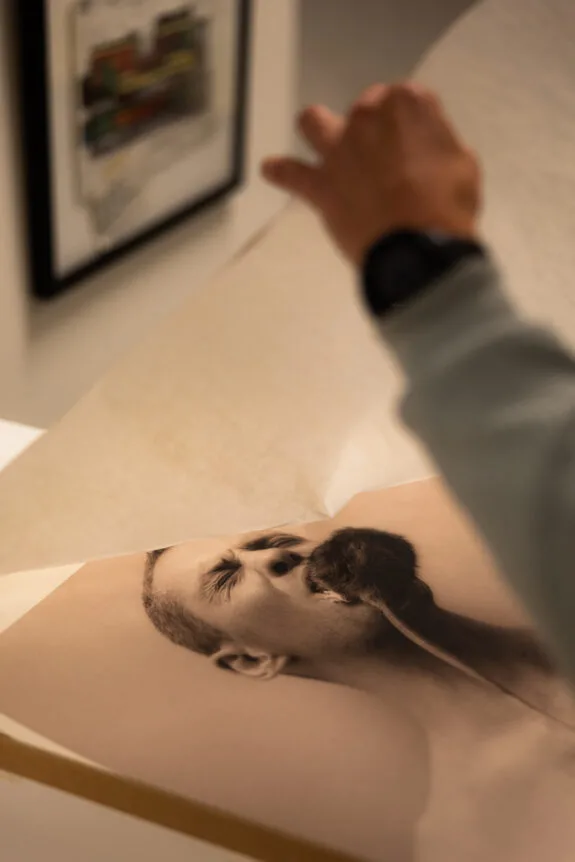
© Paul Blanca (Self-Portrait with Rat, 1993).
His criteria: the artist above the work.
Based on this conviction, Bourdrez developed eight criteria for purchasing art. Only three relate to the image itself; five relate to the artist. It starts with the question of whether a work truly moves him, but his attention quickly shifts to the artist: is there a powerful story behind the work? How scarce is the oeuvre and how transparent is the artist about it? Is he or she intelligent, capable of self-reflection, and able to reinvent themselves? Another criterion that became increasingly important to Bourdrez is stamina. Artists who continue to search, explore, and persevere—even when the going gets tough—get his attention more than artists who seek comfort. And finally, he looks at an artist's position in the field: who does someone work with, how is the oeuvre developing, and what steps are being taken to further the work? As a result, his collection is not a collection of objects, but a collection of ways of looking.
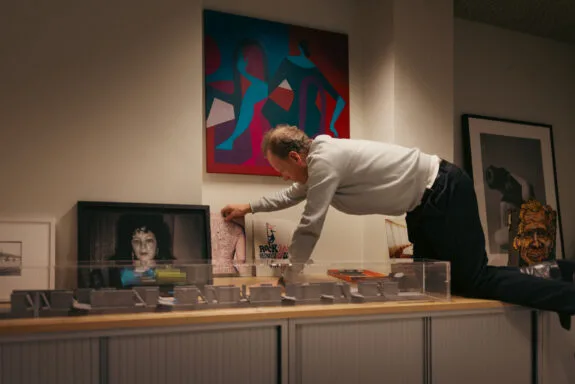
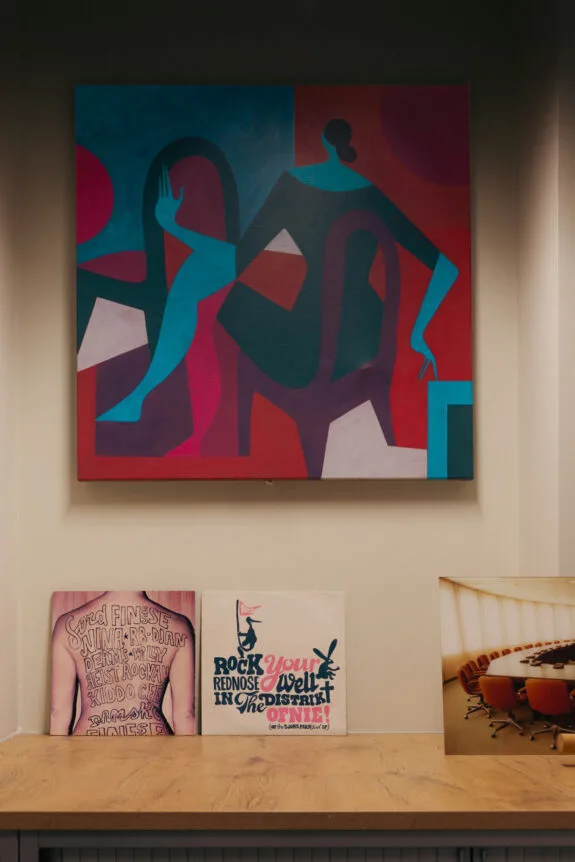
© Edited self-portrait Nan Goldin.
© RAAAF (Deltawerk //, 2019).
© Koen Hauser (Sculptural Nude, 2012).
© Piet Parra (This Seat is Taken, 2024).
© Jacqueline Hassink (Table of Power, Board Room BMW, 1995).
© Gert-Jan Kocken (Disaster Areas, 2004).
The artists who shaped him.
Bourdrez speaks with great precision about artists who have helped him sharpen his gaze. Paul Kooiker is one of them: an artist who surprises me every time with the steps he takes. Inspiring and inimitable. Scheltens & Abbenes combine Japanese-style precision with an attractive but understated visual language; photography that uses perfectionism not as a result, but as a subject. He admires Lixenberg for her perseverance and human approach. For him, Rafaël Rozendaal is an artist who develops so autonomously that he has to learn to look anew each time.
It is art that not only appeals to him aesthetically, but also influences his way of thinking. The artists are mirrors through which he sees his own profession and the position he occupies within it more clearly.
Law as a creative discipline.
In his practice, Bourdrez explores possibilities for connection in conflict, which is more in line with the language of the art world than the polarization that lawyers tend to fuel. The results he is most proud of were not the cases in which he was stronger or litigated better, but those in which a solution was found that no one had thought of before. His example is the case with his downstairs neighbors about noise pollution, in which a noise measurement came out exactly at the legal limit. In Location litigate, he pointed out to both legal aid insurers the costs of a lost year and expenses and suggested that they jointly pay for new flooring. No winner, no loser, but a solution.
© Jackass (Butt x-ray, 2006).
© Joep van der Made (Boxing poster for book launch, 2009).
© Saskia Noor van Imhoff (Untitled, 2013).
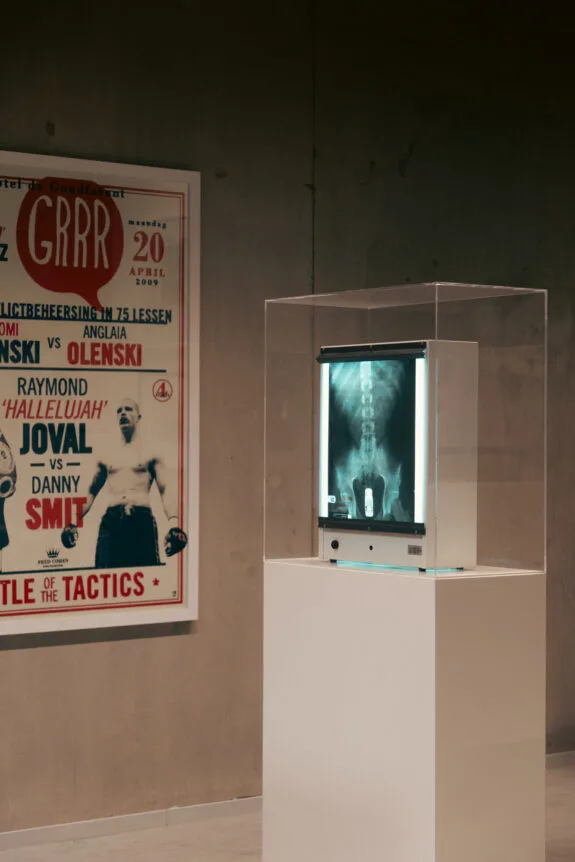
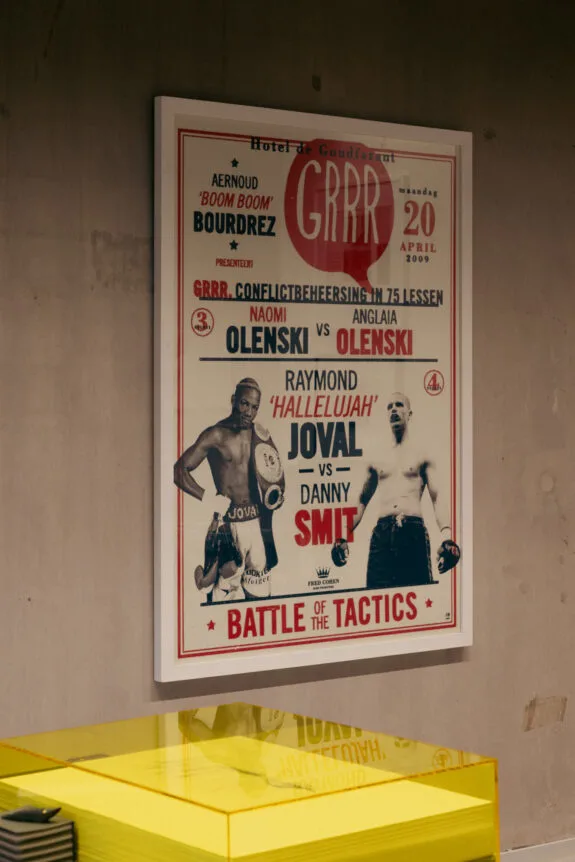
I was struck by the episode where Ryan Dunn placed the dinky toy in his behind.
©Ewoudt Boonstra
The Jackass case: an X-ray as a work of art.
Of all his stories, the Jackass case is the most well-known. He wanted the famous X-ray from the episode in which Ryan Dunn carries a toy car inside his body, not for the shock effect, but because it met all the conditions of art for him: authentic, disruptive, unique, with its own logic. The summons letter he sent was legal, but the tone betrayed admiration. The negotiations that followed—first a Mercedes that got stuck at customs, then a DAF that did pass through—had the structure of a performance. Years later, after Dunn's death, that DAF was found in his container, according to friends his favorite car. A story that could not possibly have been invented, but fits perfectly into Bourdrez's world: where law, coincidence, and art intertwine.
Contracts as performances.
Some artists create work that consists mainly or entirely of legal acts. Tino Sehgal, for example, from whom the Stedelijk purchased a work on the basis of a verbal contract that could not be recorded anywhere. Bourdrez supervised that transaction and calls it one of the rare moments when the law literally became art. Another example is Alberto de Michele, who stipulated in a contract that he would steal back the exhibited contract. The text is the work of art.
Art as mental infrastructure for conflicts.
Looking back, he sees how artists have shaped him. Art teaches him to look at systems differently, at people differently, and at conflicts differently. It makes his legal practice not only precise, but also empathetic, inquisitive, and sometimes playful.
It is precisely this combination that makes him such an exceptional figure within the legal profession. A lawyer who is guided by artists, a collector who helps shape art through legal structures, and someone who believes that the law should always take a step back to leave room for imagination.
© Raquel van Haver (Portrait of Aernoud Bourdrez, 2025).
© Scheltens & Abbenes (Arper Tables II, 2015).
© Bea Correa (Fakewear, 2005).
© Koos Breukel (Zea van der Elsken, 2016).
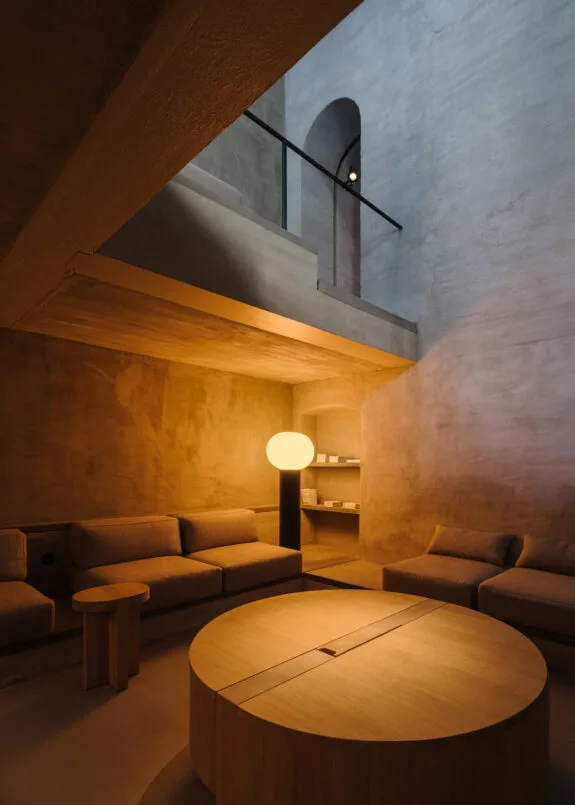
Light is never just light. For Dimitri Saddi, founder of PSLab, it is a language with which you tell stories. From their studios in Amsterdam, Antwerp, Paris, London, Bologna, Berlin, and their home base in Beirut, the team works on lighting plans that do not start with a lamp, but with people. "Everyone has their own relationship with light," says Dimitri. "It touches on habits, memories, and emotions." In this edition of The Edit, Dimitri, Taco (Amsterdam), and An (Antwerp) delve deeper into their way of working: how dialogue, technique, and reflection come together in a lighting plan that is never generic, but always a Immediately translation of someone's life. Be inspired

Ten years of Shortlist Amsterdam, all addresses. Sisters Famke and Floor van Praag celebrate the anniversary of their cookbook series about great restaurants with a brand-new edition full of simple, successful recipes. To complete the picture, we collected all the Shortlist addresses from the past ten years and divided them by neighborhood, creating a culinary guide to Amsterdam today. Text: Broersma, images: Petrovsky & Ramone, restaurant selection: Shortlist