Meet the entrepreneur: in this series, Hans Woerlee, from Project development to the kitchen
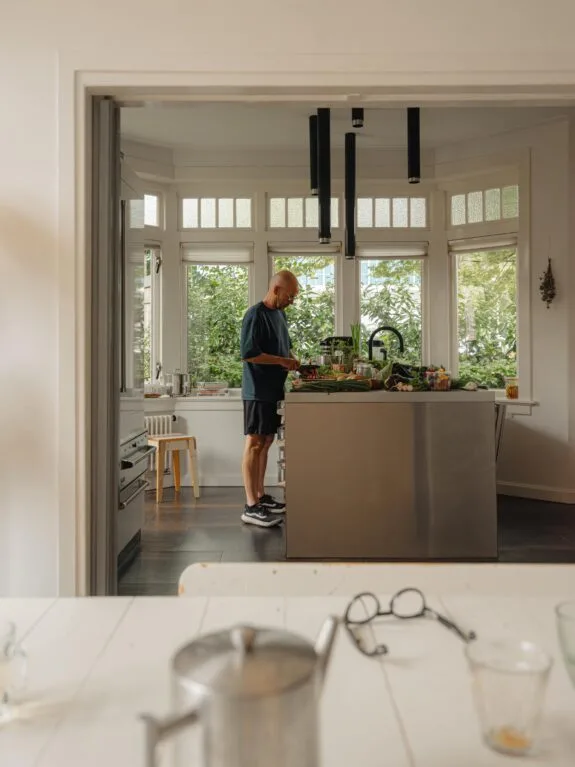
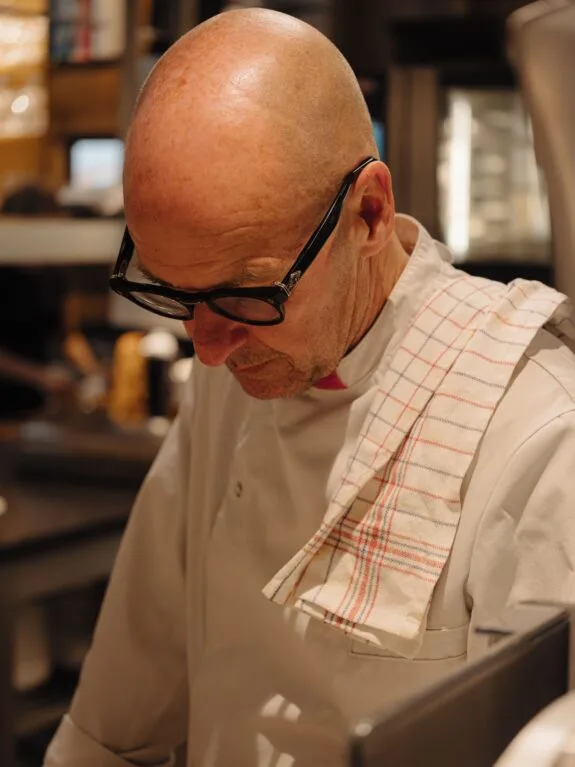
"I wanted to become a real estate agent."
When I was twenty, I moved to Amsterdam. That was the plan: to become a real estate agent. I completed a real estate course and started working for contractor IBC as a project developer. I worked on some great projects—inner city, redevelopment... Funenterrein, Wittenburgerkade, Piet Heinkade—buildings that are still standing today. Then I worked for the Amsterdam housing corporation and studied urban planning. But anyway, I've always been an entrepreneur. At one point, I started a business in those big advertising masts along the highway. It was a success. I bought Sold , with it, this house.
And then came IT. Data centers. No one was talking about 'the cloud' yet, but we developed Dutch Cloud. In hindsight, we were quite ahead of our time. Sold that too. But project development remained my world. Except that I always did it my way. No standard models, no spreadsheet fetish. I looked at ideas, at people. And I always did it together with Carolien, my wife. We were and are partners – in everything.
But he noticed that the work was becoming increasingly difficult, due to financial crises, wars, rising prices of building materials, and increased regulations. The sector was increasingly at a standstill. "After my biggest project —and that during perhaps the most difficult time ever—I was done. Completely done. I didn't want it anymore. No more responsibility, no more hassle, no more deadlines, no more politics. I wanted something else. Something creative. Something lighter."
"I always had everything under control, but now I'm consciously letting go a little. And that actually feels better than ever."
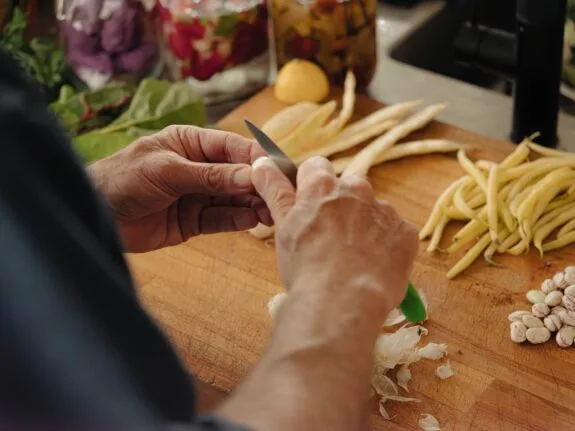
When we went out to eat, I always kept one eye on the kitchen.
Cooking had always fascinated me. But I never had time. Always busy, always on the go, always working. Until one day Carolien said, "It's pretty busy here at home besides work. "I said, "Let me do the cooking." I had never done that before; she always cooked. I was given "The Bible of Italian Cuisine" as a gift. And then I thought: you know what, I'm going to cook the whole book. From front to back. It turned out that not only did I enjoy it, but I also discovered mistakes in the recipes. I started to really pay attention. My curiosity only grew.
I had never eaten at Toscanini's before, but I just called.
Maud answered the phone—founder/co-owner. She said, "Come take a look." So I stood there, at the door, looked into the kitchen, and thought, "I don't see anything I don't understand. I want to do this." She referred me to the chef. I said, "I don't need money. I just want to learn." After a week, they asked if I wanted to stay longer. What set me apart? Simple: I was on time, I listened carefully, I didn't cut my fingers—and I brought a fresh perspective.
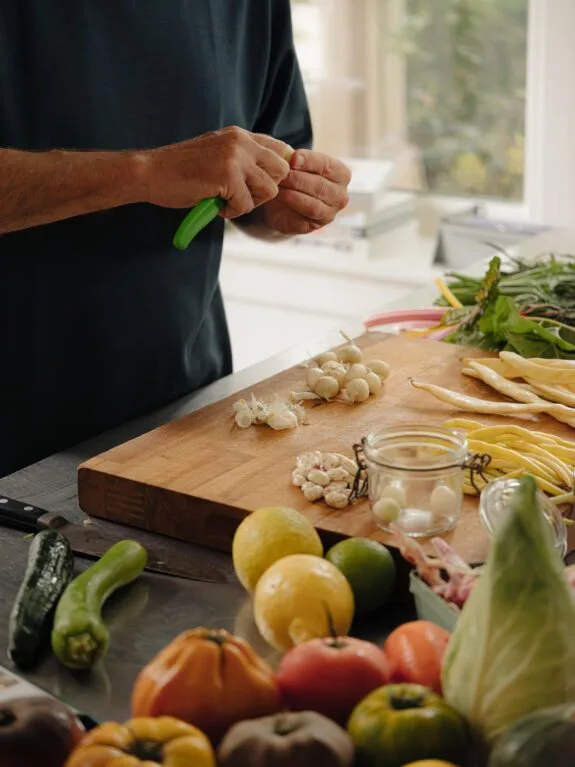
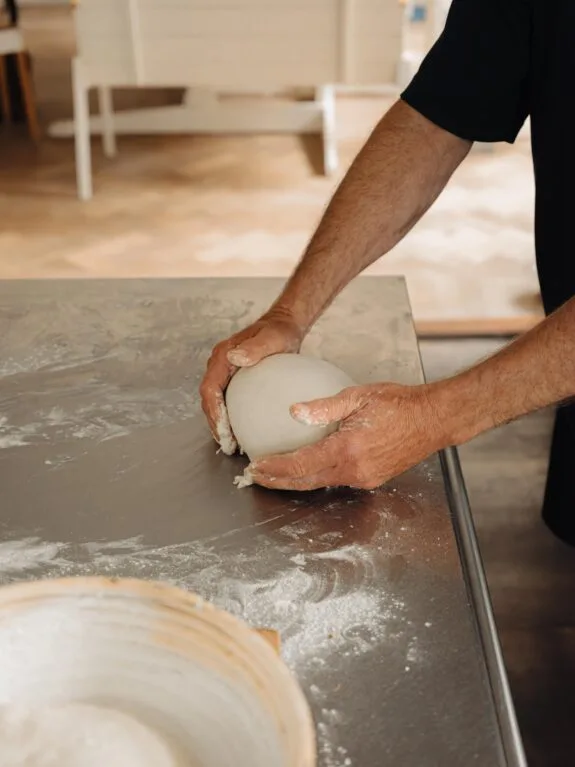
“A restaurant kitchen is like a pirate ship.”
A colorful mix of people. Lawyers, physical therapists, musicians. Everyone driven by a love of cooking. That team spirit—the music blaring before service, the tension, and then the relief afterward. Cleaning up together, having a beer, laughing. I loved it. I did everything: mise-en-place, service, cleaning. But it was tough. After a few weeks, I called Maud: "I've only just realized how intense working in the kitchen is."' She laughed: 'We were wondering when you would call.' From that moment on, I focused on mise-en-place. That's where I belong. That's where I find my peace, my rhythm. But if someone was sick, I stepped in. I did everything, as long as there was something to learn. Pastry, sausage making, pâtés. Catering, food trips, collaborations with Amsterdam's "big five." I'm not a youngster anymore, but I kept learning. I contributed ideas, techniques, dishes. And Maud loved it.
"I'm no spring chicken anymore, but I kept learning."
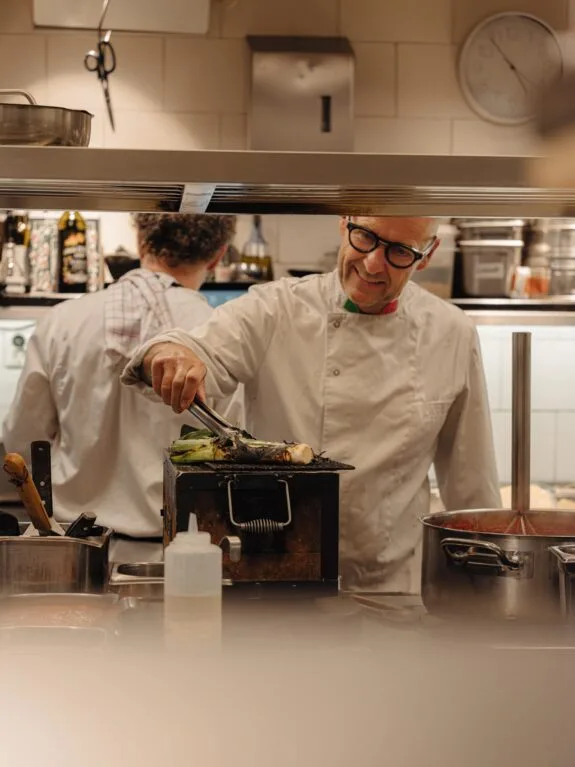
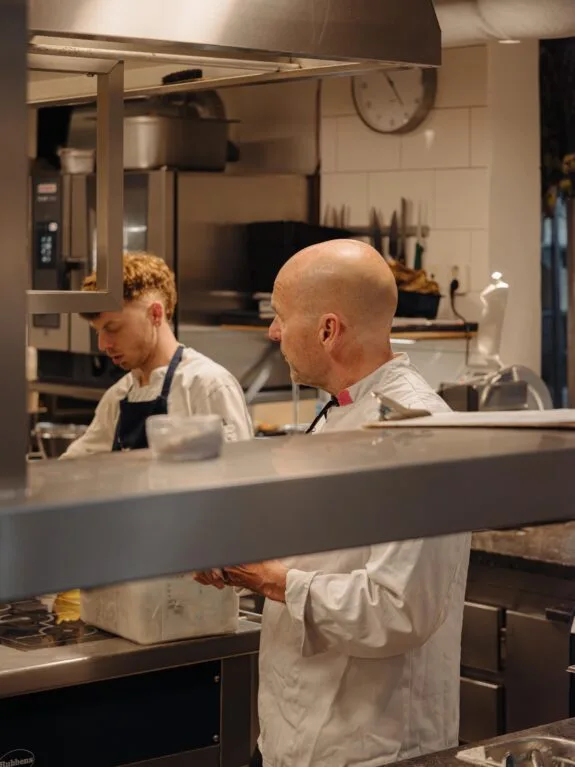
Then I saw it: pinsa.
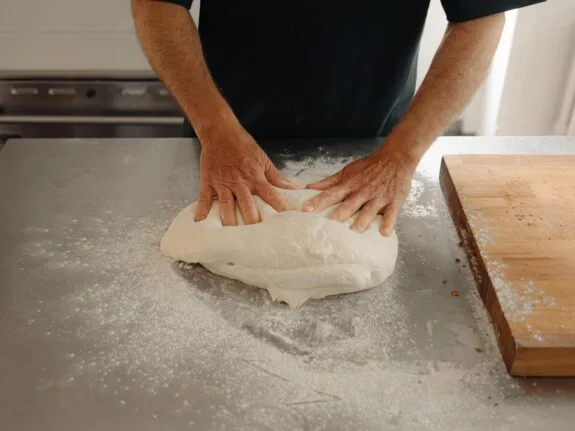
I visited the Horecava trade fair with Leonardo—chef and co-owner—at a flour manufacturer's stand. There it was: a flatbread called pinsa. Fascinating. Originally from Rome. At home, I started experimenting. Ratio: 1/3 rice flour, 1/3 soy flour, 1/3 wheat flour. Start with water at 2 degrees, then move to 23. Ferment for 72 hours. It had to be ventilated, puffed up, baked. Precise work. Sometimes it failed completely. But I didn't give up. After a course at the Pinsa Academy, I got the hang of it: airy, light, gluten-tolerant, with a third of the calories of a pizza base. Now I also make other types of bread. At home, at my own pace. Here I can experiment.
“The kitchen is a place of connection.”
What do I like most about cooking? The social aspect. Working together, eating together, chatting together. The kitchen is a place where people come together. At the sink, over coffee. Friends, colleagues, neighbors. At home, too, the kitchen is the heart of my house. Everything revolves around it. My current home has a wonderful kitchen that I have gradually discovered. It turns out it has a warming drawer. I now use it as a proving drawer for bread. I have a pizza oven in the garden. In my new home, I designed it myself: the kitchen triangle, everything within reach. Refrigerator, sink, and cutting area. Induction hob from Gaggenau, BioFresh refrigerator from Liebherr, a proofing cabinet, Rational oven. The freezer? Game and stock.
"Your own restaurant? No way."
I see how much hassle it is. Respect for Toscanini—they've been doing well for decades. But I no longer feel the need for that responsibility. In addition to my favorites such as Toscanini and Rijsel, I also draw inspiration from places with atmosphere. Small businesses, street food, places where you can taste something new. Rosario, Bak, Bacalar, VVR – those kinds of places. I keep that list on my phone. A pleasant atmosphere is more important than haute cuisine.
An internship at Rijsel or The River Café in London – that sounds like something I'd like to do.
Cooking is my meditation.
I used to be constantly solving problems. Always on. Now? Just cooking—and everything is gone. No stress, no deadlines. Just smell, taste, texture. I try to make as many things as possible myself. Vinegar, for example. For Sale vinegar from the supermarket, it contains so much sugar. Just save your leftover white and red wine. Make a vinegar mother (bacteria culture), it's a one-time job. After that, you can keep adding wine. I also bake my own bread these days. My friends often say, "What you've done... I'd like to do that too." But they don't dare to take the plunge.
I did it. And I feel better than ever.
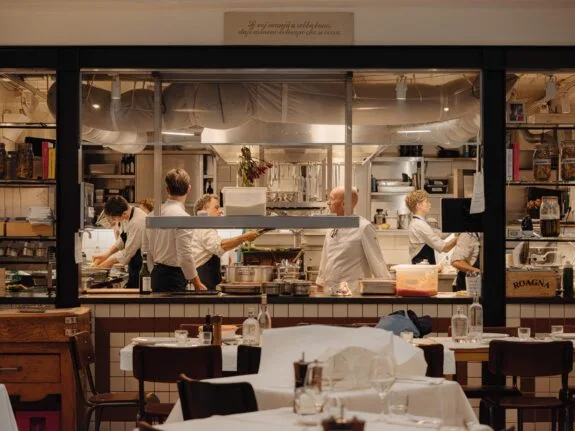
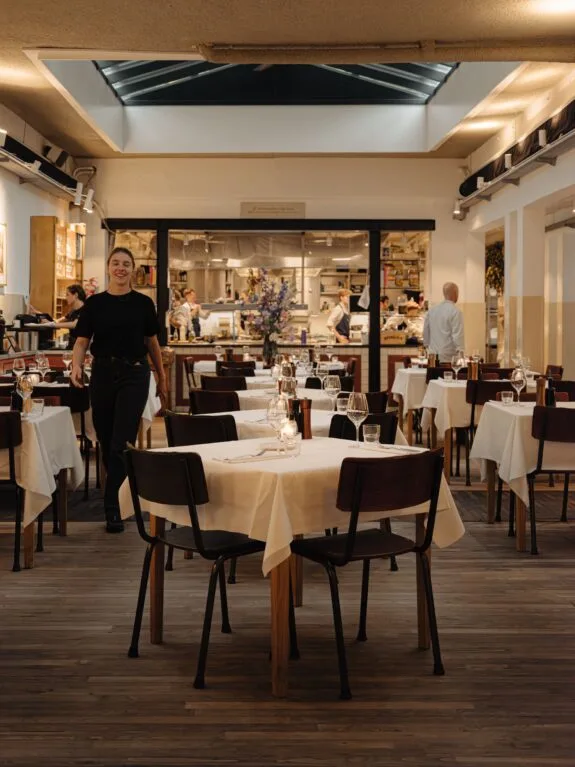
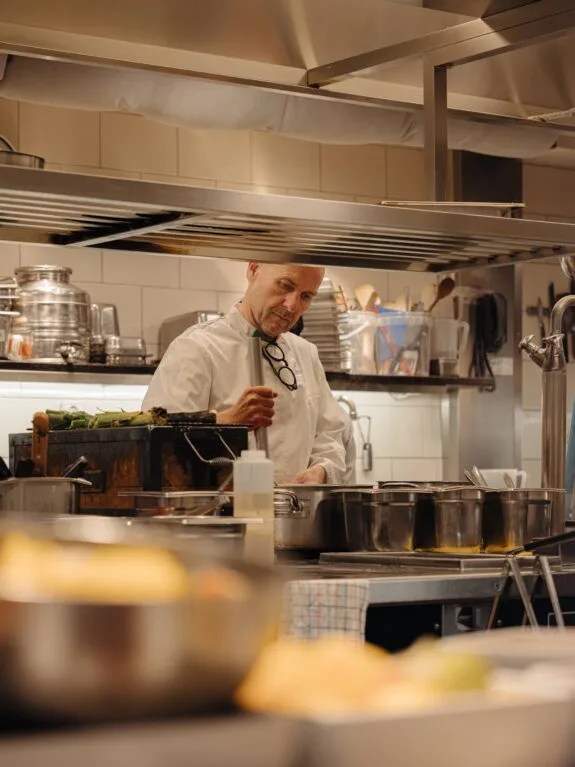
Meet the entrepreneur, in this series Maud Moody. Toscanini has been a household name in Amsterdam for forty years. Not only because of the tasteful, homely Italian cuisine, but also because of the people behind the business. Maud Moody, one of the founders, tells how it all started – and how a holiday in Rome led to one of the city's most beloved restaurants. Read the whole story
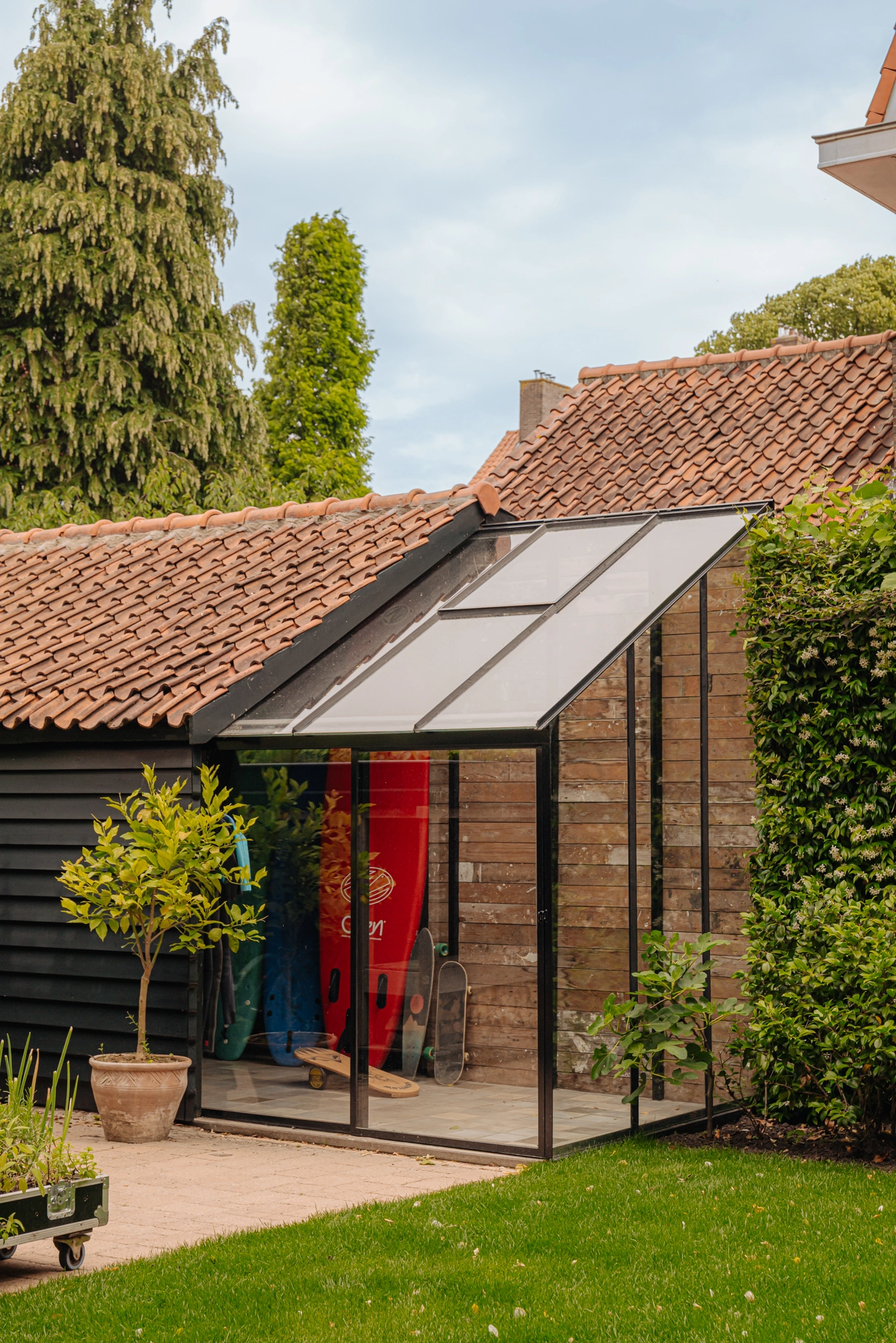
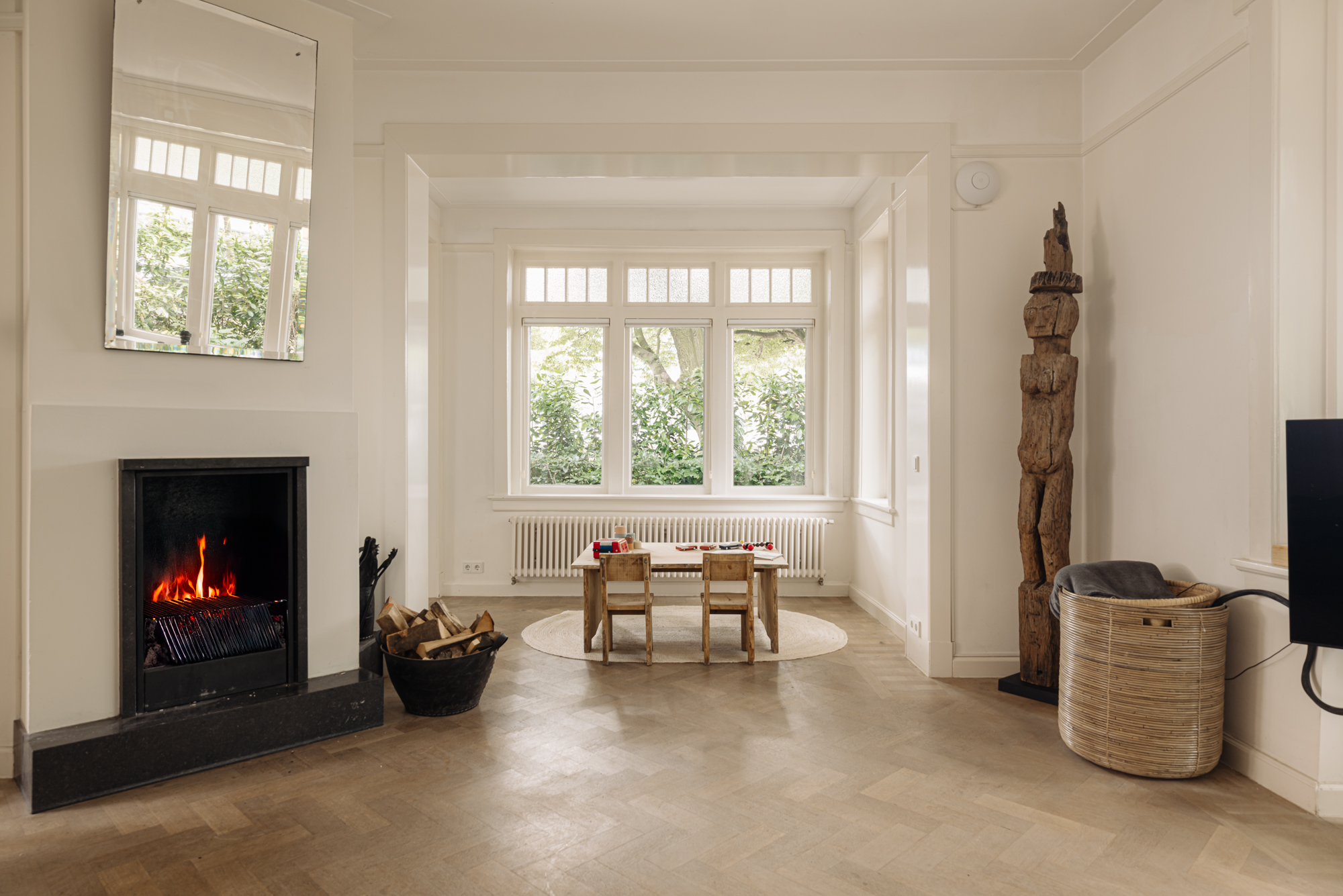
Spotlight: 'Het Hoekhuis aan de Laan' (The Corner House on the Avenue); When we moved into this house years ago, we were looking for a spacious family home—a place where our five children could grow up safely and freely. We found that place on the edge of Plan Mozart in Amsterdam-Zuid, on a unique corner with a spacious Garden surrounding property. Here, they could build endless huts, build fires, do crafts in the greenhouse, and play with friends in the garden. It felt like we had found a village in the city, surrounded by greenery. Read more about what the current residents have to say and be inspired.
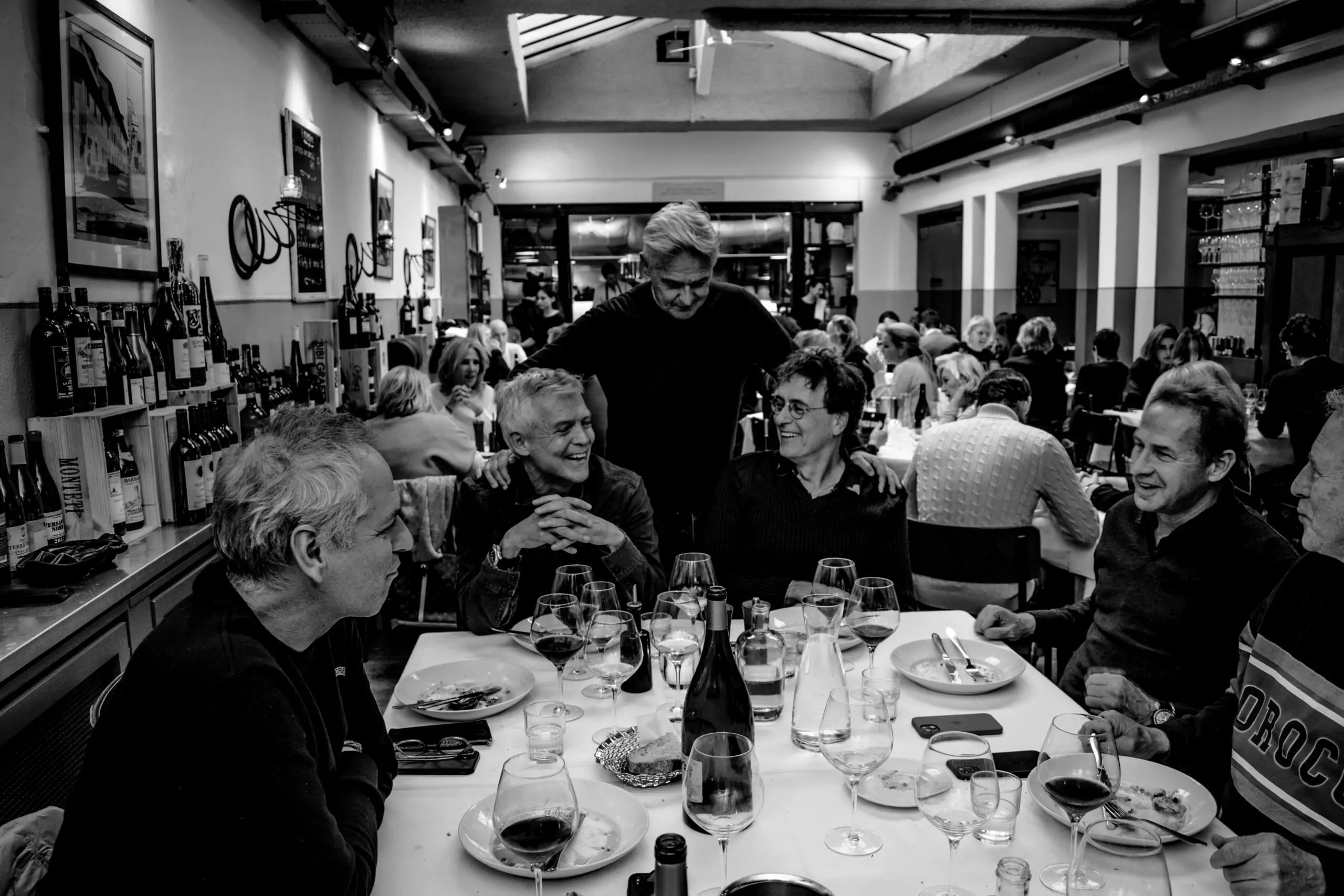
Italians came to the Netherlands centuries ago. They made ice cream, laid Italian granite terrazzo, were chimney sweeps, or worked in the mines in Limburg. These Italian migrant workers helped rebuild the Netherlands after the Second World War and also had a major influence on our food culture. Read here about the best places in Amsterdam to shop for Italian groceries and eat and drink Italian.