The Man Behind the Craft – Barry Zardoni, restoration plasterer
The Master Hand of Barry Zardoni: Heritage in Stucco Marble
In The Edit – The Art of Craftsmanship, we highlight professionals who work to preserve and restore historical heritage. Their dedication to traditional techniques, from marble stucco to gilding, shows that heritage can only be truly future-proof when tradition and craftsmanship go hand in hand. One of these professionals is Barry Zardoni, a restoration plasterer par excellence.
The Man Behind the Craft
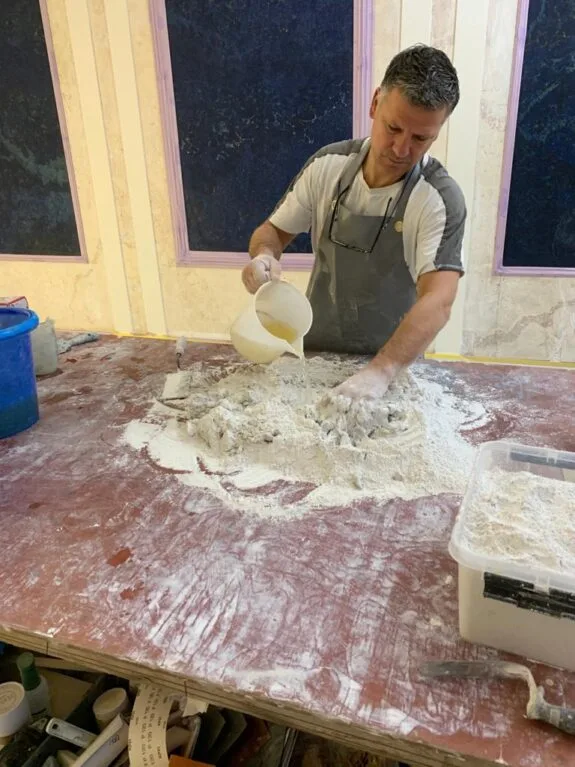
Barry Zardoni is a master of his craft. With over 32 years of experience, he specializes in the restoration and reconstruction of historic stucco work. His expertise ranges from scagliola, a technique used to imitate marble, to the restoration of moldings, ornamental ceilings, and decorative finishes. Zardoni's work can be seen in some of the most prestigious buildings in the Netherlands, including the Royal Concert Hall, Theater Tuschinski, and even the residence of King Willem-Alexander on Noordeinde.
In addition to his restoration work, he is also involved in knowledge transfer. He is active within the Neerlandsch Stucgilde (Dutch Stucco Guild) and works with other professionals to preserve centuries-old techniques. "Creating something new is always easier," he says, "but the soul of a historic building lies in its imperfections and the traces of time. Our work is not just about restoration, but about bringing the story of a place back to life."
Zardoni's dedication to his craft is clearly evident in his approach. For a special project a canal house in Amsterdam, he even traveled to Italy to further immerse himself in the techniques of stucco marble. In Rome, he underwent intensive training with Maurizio Feliciano, one of the most renowned masters of this technique. This trip not only emphasized his passion for the craft, but also his willingness to continue learning and developing himself.
Hidden Beauty: The Restoration of a Canal House
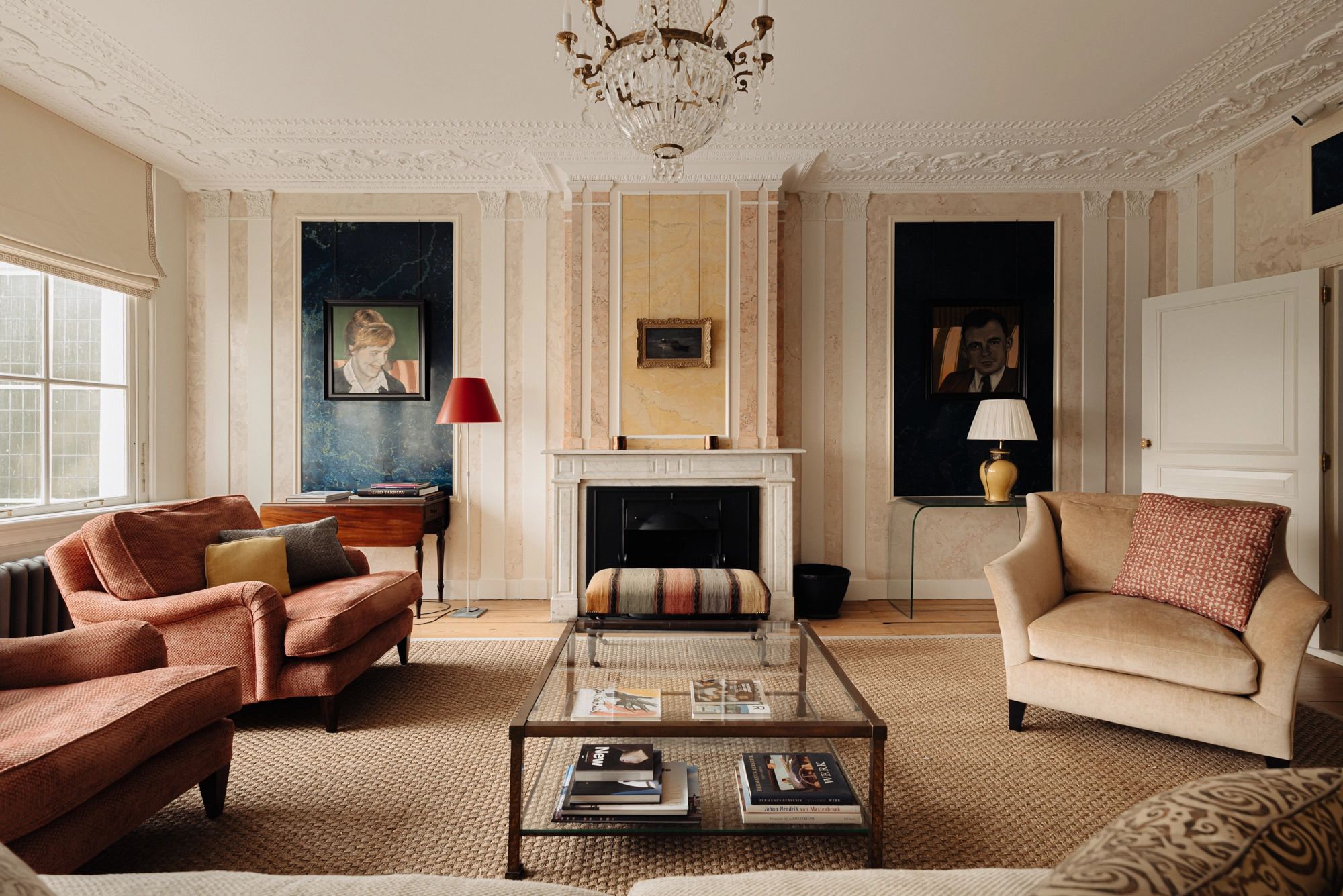
During the restoration of a late 17th-century canal house in Amsterdam, the central question was: should we restore it to its original state or leave later additions in place? The new owners and their architect, Wolbert Vroom, were not fond of the 1950s atmosphere and wanted to remove the paneling. However, the building was a national monument, which limited their options—until a discovery was made behind the paneling.
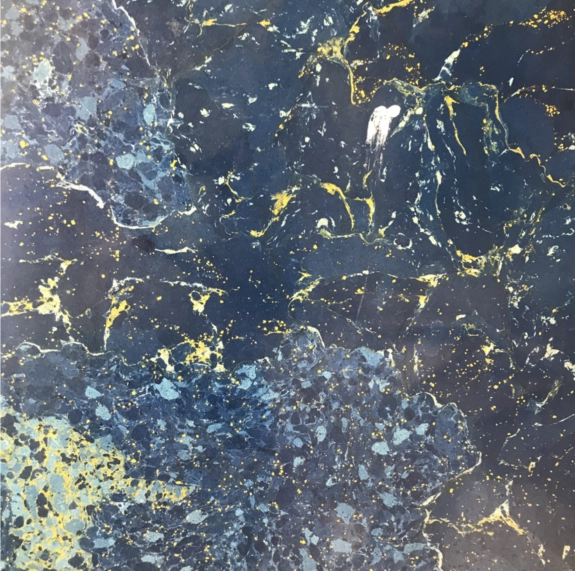
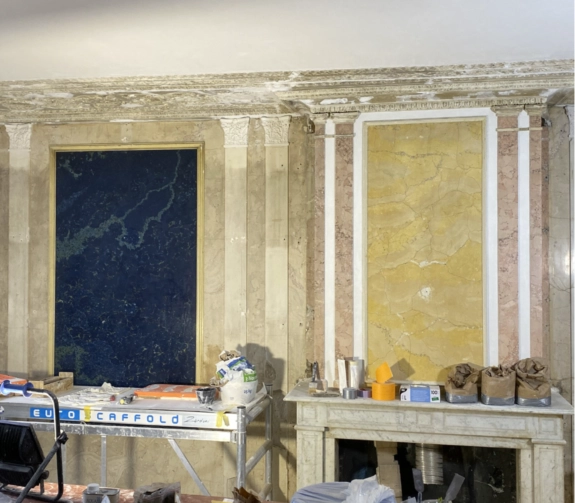
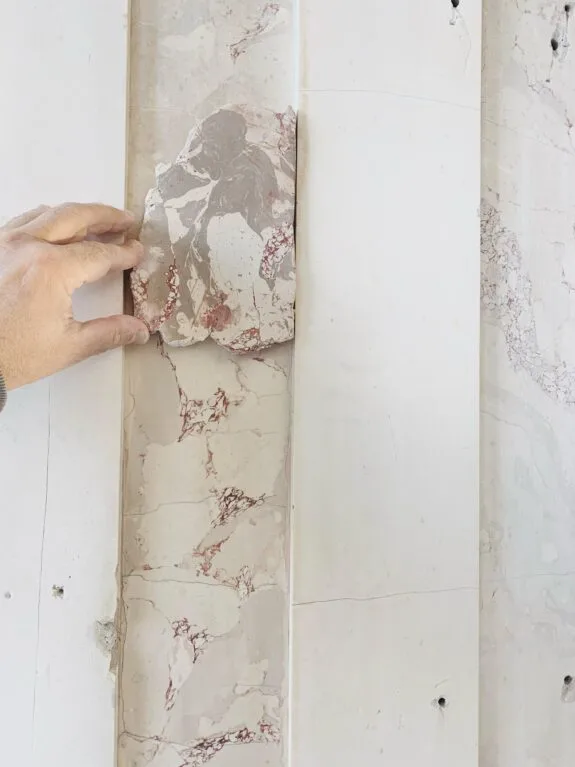
What initially appeared to be painted imitation marble turned out, upon closer inspection, to be unique stucco marble. Barry Zardoni immediately recognized the artisanal nature of the finish: the top layer was thick and colored throughout, leaving no room for doubt. This discovery led to renewed plans, with both the Cultural Heritage Agency and the residents enthusiastically agreeing to a restoration.
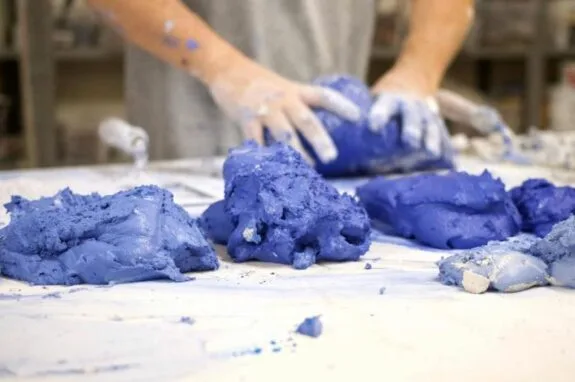
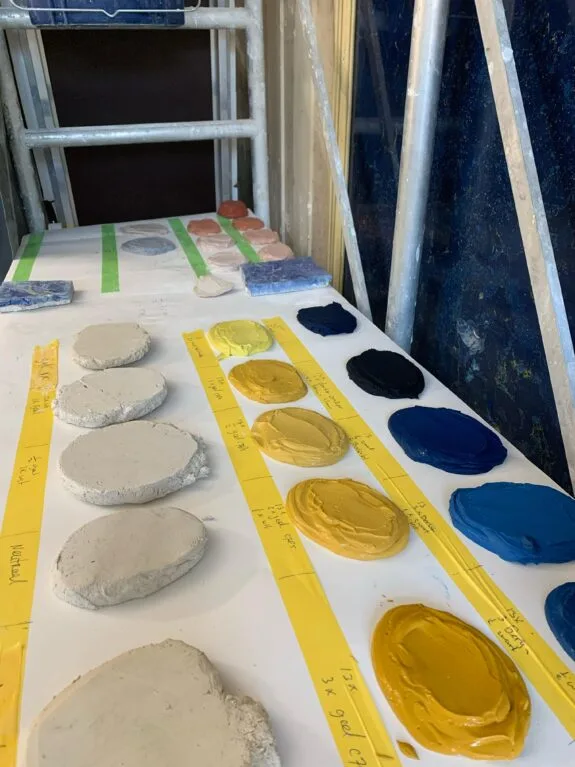
Restoring the stucco marble proved to be a specialized task. The different shades of deep blue lapis lazuli and the light veins, combined with the characteristic yellow speckles, made the work complex. How these speckles were originally applied was a mystery. To unravel the secret of this technique, Zardoni traveled to Italy with a group of colleagues, where he gained the necessary knowledge from stucco marble master Maurizio Feliciano in Rome. Even this renowned expert was impressed by the technique used in the Amsterdam canal house. The trip was not only an educational experience, but also underlined Zardoni's dedication to his craft: to achieve perfection, you must be willing to study and rediscover the origins of the techniques.
Restoring with Respect
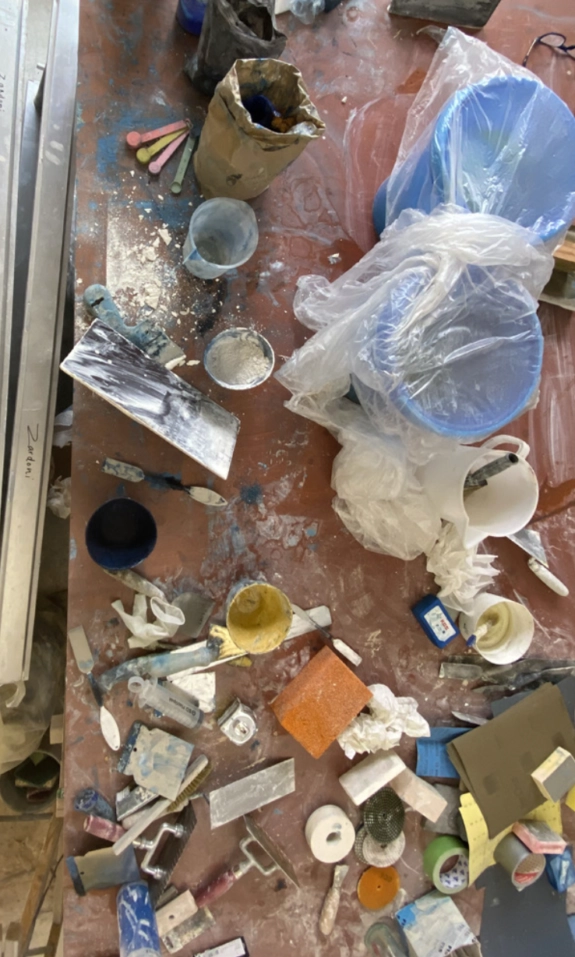
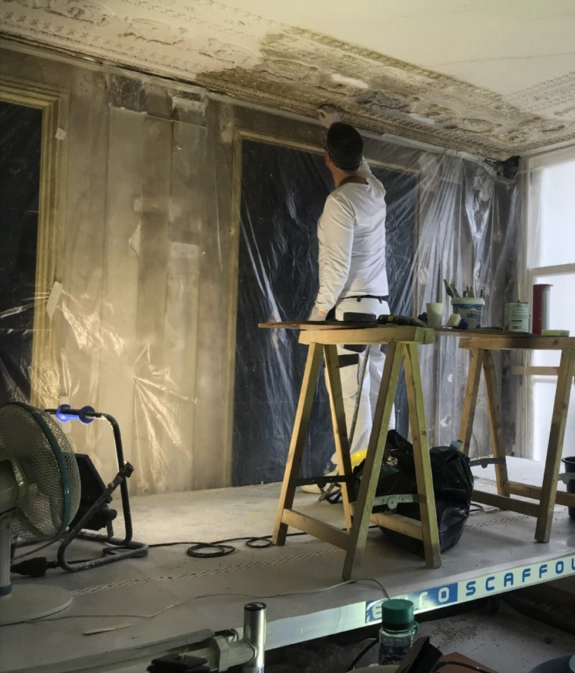
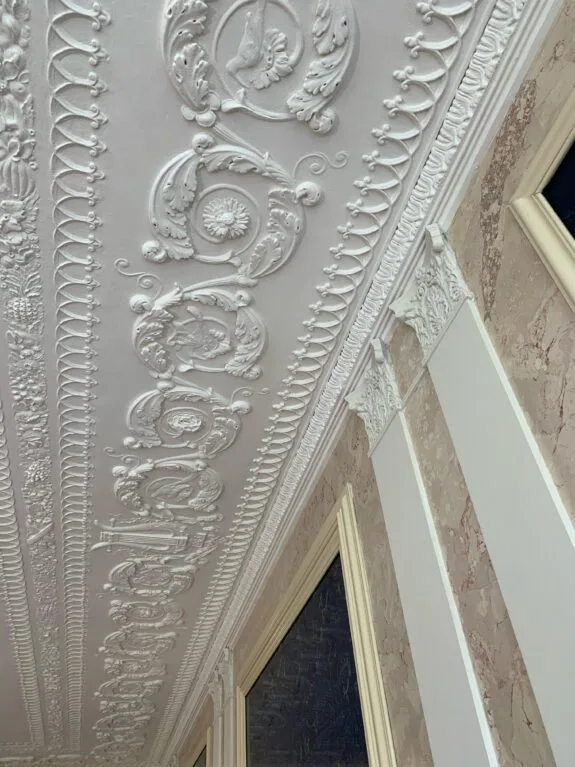
In addition to the wall panels, the ceiling also needed to be restored. The coving, ornaments, and moldings had been painted over several times over the centuries, concealing many of the original details. After various test cleanings, it became clear that ecological paint stripper and steam were the best methods for carefully exposing the original decorations. During cleaning, special details emerged, such as hand-sculpted flowers and birds, each of which was unique. This suggested that the ceiling was partly cast and partly modeled by hand, a combination that is rarely found.
The center section of the ceiling showed cracks. To prevent further damage, the plaster was removed and the ceiling reinforced with stainless steel screws and rings. A new layer of plaster was then applied, carefully matched to the existing structure. "This is purely preventive," says Zardoni. "You don't want cracks to reappear in twenty years." The original reed plaster base and rake layer were retained to preserve the historical character.
The pilasters in the room had also suffered from the alterations made in the previous century. In order to install the wall paneling as tightly as possible, the corner pieces of the capitals had simply been chopped off at the time. Zardoni and his team restored these details with extreme precision. The cleaning process revealed another interesting fact: some elements had been reinforced with embedded strips, a traditional technique used at the time to give stucco extra strength.
Tradition as Future
It is believed that this room served as a showroom for the craftsmanship of plasterer Johan Martens in the 19th century. Historical research shows that Martens, together with his cousin J.E. Martens, studied at the Royal Academy of Fine Arts in Amsterdam and worked on iconic buildings such as the Beurs van Zocher and Theater Frascati. The unique plaster decorations in the canal-side building may have been a calling card for potential customers.
In addition to restoration, Zardoni is also skilled in creating new stucco work inspired by historical styles. In collaboration with architects and interior designers, he crafts ornamental ceilings, moldings, and decorative stucco applications for both classic and modern interiors. Gilding and trompe-l'oeil techniques are also part of his expertise, which he uses to give interiors an authentic and exclusive look.
His studio in The Hague is open by appointment to anyone interested in learning more about the finer points of restoration stucco work. More information about his projects and working methods can be found at zardoni.nl.
Sweers House
The Man Behind the Craft - Barry Zardoni, restoration plasterer
View this restored home