Light is never just light. For Dimitri Saddi, founder of PSLab, it is a language with which you can tell stories.
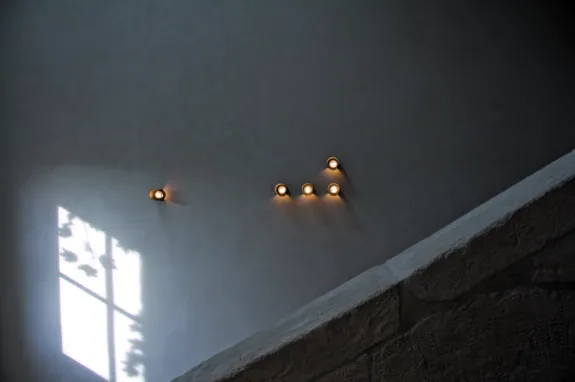
Light as dialogue.
Anyone entering a space lit by PSLab for the first time notices it immediately. Sometimes the light seems to come from nowhere: a flowing glow with no visible source. Sometimes it is the fixture itself that attracts attention, a hand-blown sphere that glows like a work of art. In both cases, it is not about the lamp as an object, but about the experience that the light evokes.
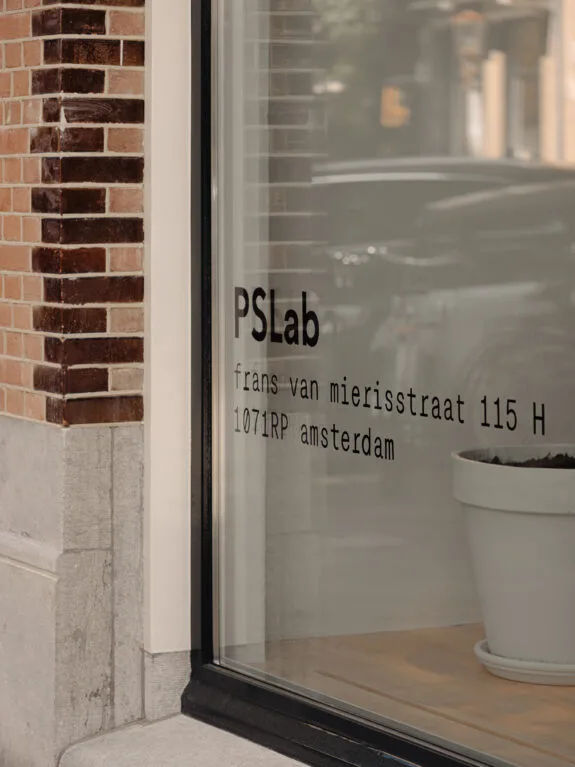
Not a product, but a process. This approach is a recurring theme in PSLab's work. The company develops fixtures and lighting systems, but you will rarely hear them refer to themselves as a lamp manufacturer. "We don't have a catalog," explains Taco, who welcomes us to the new studio in Amsterdam. "We never start with a product. Everything starts with the project, the context, and the people. The lighting plan grows out of a conversation. The product follows only after that."
That conversation is often surprisingly personal. For Dimitri, light is intimate. “Everyone has their own relationship with light,” he says. “Some people are insomniacs and need a soft light at night. Others are claustrophobic and feel uncomfortable in complete darkness. People of my generation, who lived through the war in Lebanon, often prefer not to sleep in total darkness. Light is never neutral: it touches on habits, memories, and emotions. That's why every design is always a translation of someone's life."
Drawing with light
In the Amsterdam studio, Taco demonstrates how it works. He shows a small black cylinder. Inside is the light source, hidden deep behind lenses and filters. "The source itself is always aggressive," he explains. "We hide it so you don't see it. What you do experience is the illuminated subject and its reflection in the space."
With filters and lenses, light becomes a paintbrush. A round spotlight with an elliptical lens transforms into a horizontal line that illuminates three paintings at once. A beam can be narrow and bright, or wide and soft. "It's actually drawing with light," says An. "Every space requires its own rhythm."
This rhythm can be very concrete. In a house on Vondelpark, residents did not want to be visible to passers-by in the park. Curtains were too heavy, so PSLab came up with a more subtle solution: a wall washer that illuminates the back wall, combined with an intimate beam above the dining table. Passers-by saw only shadow figures. Inside, the space felt warm and private.
At Restaurant Flore, everything revolves around the food. "We use two spotlights above the tables," explains Taco. "A narrow beam focused precisely on the plate, and a wider, softer beam for the face. This makes the dish sparkle without blinding your neighbor." An adds: "We always work with extremely high color rendering, so that ingredients look fresh and natural."
In the kitchen, a stretch ceiling provided even, diffused light for cooking. But to avoid a clinical look, PS Lab integrated additional accent spots into the custom design, creating targeted shadows, depth, and focus alongside the task lighting. The result: functional lighting for the team, and at the same time a warm, inviting atmosphere for guests.
For Dimitri, the bedroom is a good example of how intimate light can be. “We all spend hours there, but the mood is never the same. At five o'clock on a winter morning, you need different light than just before bedtime. If you come home late from dinner, your energy is completely different than when you come home from work. Sometimes you seek intimacy, sometimes clarity. One space, but four completely different scenarios. Light must follow that rhythm.”
He compares it to cooking. “You can't prepare a meal without knowing who's sitting at the table. Their preferences, their tastes, their rituals. It's the same with light. It's only right when it feels like it was made for you.”
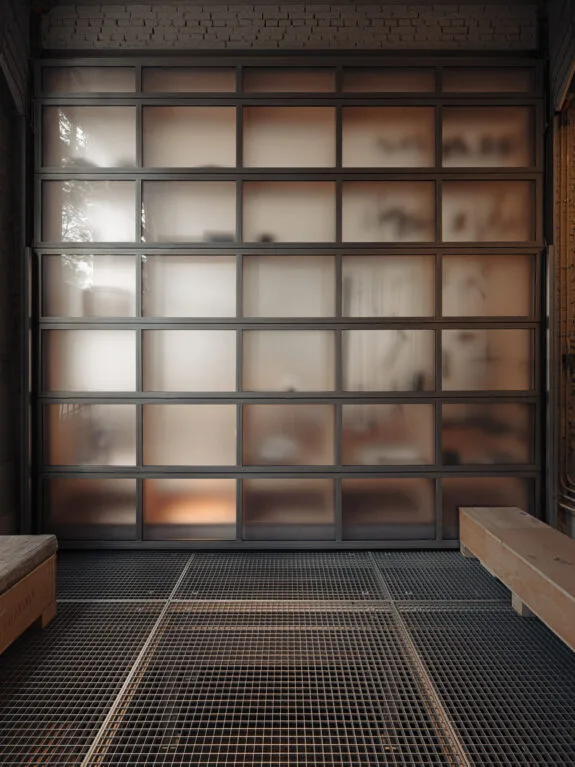
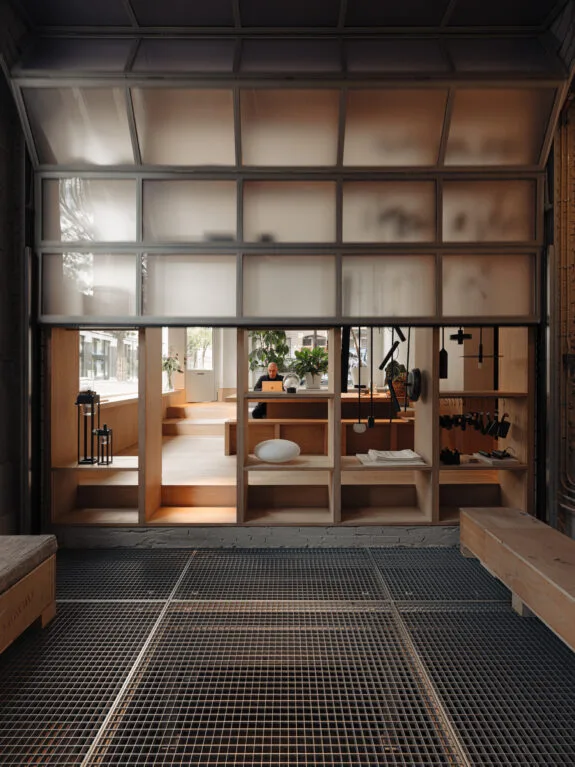
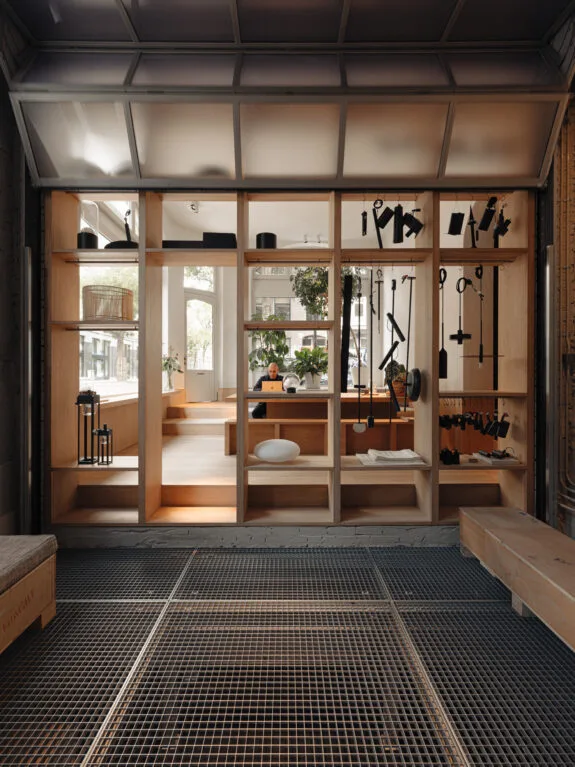
"It's actually drawing with light; every space requires its own rhythm."
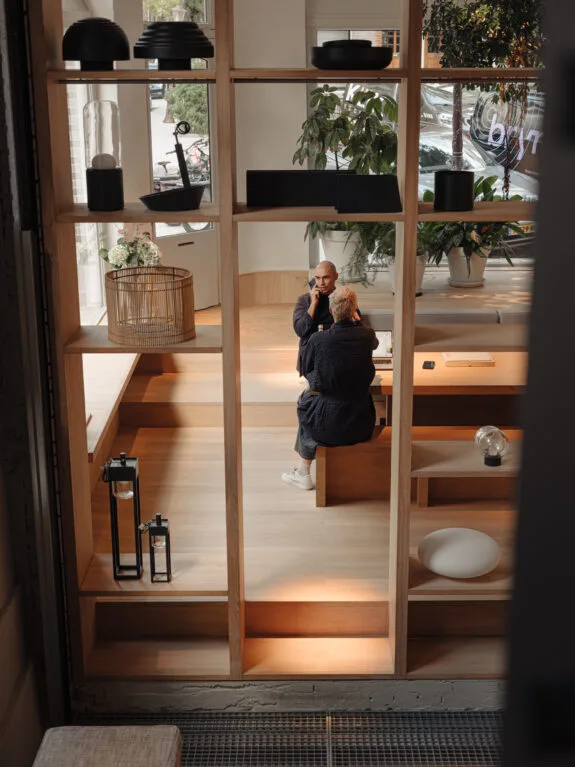
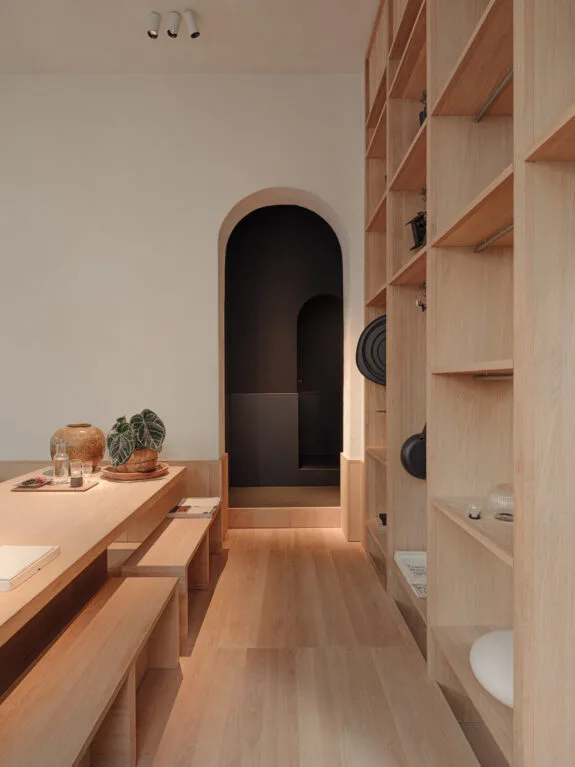
The three-way conversation
A good lighting plan is never created in isolation. Dimitri describes the process as a three-way conversation between the architect, the client, and PSLab. “The architect translates the wishes and habits of the residents into a space,” he explains. “We add the lighting layer to that. And the client themselves, with their own rhythm and sensitivities, is indispensable in that conversation.”
To make that conversation tangible, PSLab regularly builds models or test setups in their studios. For the London studio, designed in collaboration with British artist duo JamesPlumb, a scale model was built in which walls and furniture could be moved around to test the effects of light. And for the renovation of the Paris studio, a 1:1 scale model was even built in Beirut, because the actual location was still under construction. "That's not a luxury," says Dimitri. "You can't judge light on a floor plan. You have to feel it, see it, experience it together."
Today, PSLab has studios in Amsterdam, Antwerp, Paris, London, Bologna, and Berlin, with Beirut as its beating heart. Each location functions as a laboratory: a space where dialogue and experimentation take center stage, and where ideas are tested and refined before finding their way into projects around the world.
The result of that three-way conversation is always unique. “You can’t design light anonymously,” Dimitri concludes. “The more we talk and listen, the more specific and personal it becomes. And that’s exactly what we stand for: light that isn’t generic, but a direct translation of someone’s life.”
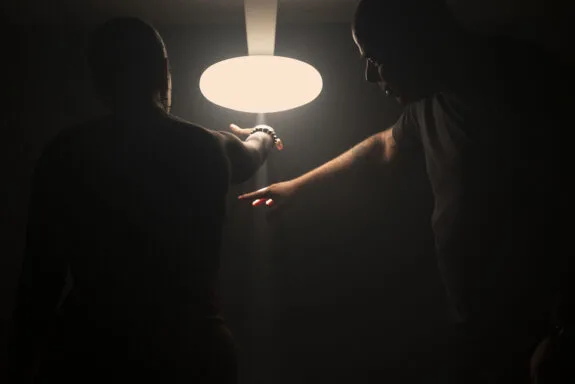
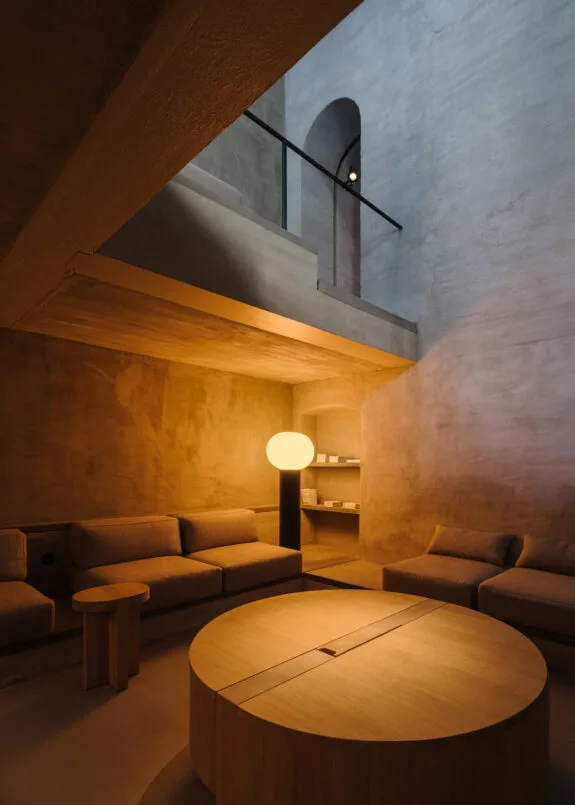
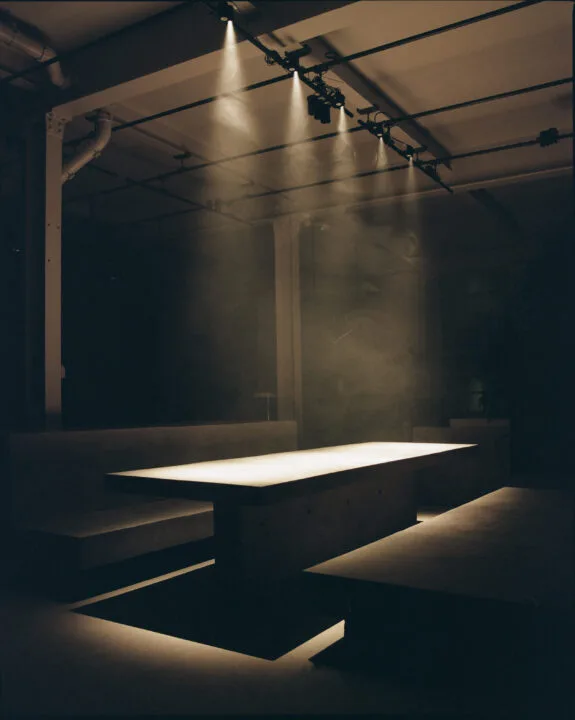
“We never show anything that is ready-made. The product is an ingredient, not a goal. The project the dialogue always come first.”
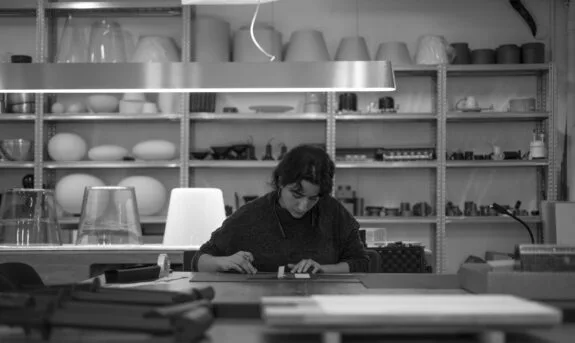
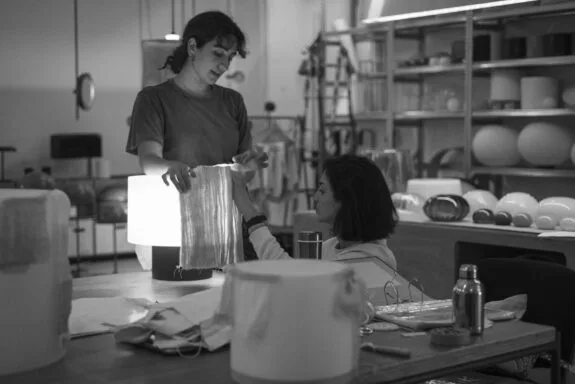
The triangle – optics, product, project
Dimitri: “We always work at the intersection of three disciplines: optical design, the product (the luminaire), and the project the space and the people). For the optical design, we work together with our partner Optical Design Unit in Austria. That is pure physics: the source, the lens, the filters — the ‘engine’ of the light. The product is the structure that carries the optics and connects to the architecture. And the project the space itself: how it is used, by whom, and at what rhythm.”
“You can think of it as macro and micro,” he continues. “The space is macro; that’s where the question comes from. The optics are micro; they determine exactly what the light needs to do. The product connects the two: it makes the optical principle buildable and appropriate in the context.”
“Sometimes a project starts with a spatial question—a kitchen, a hallway, a bedroom—and we go looking for the right optics. Sometimes it starts with an optical necessity—a narrow beam that still has to feel soft—and we develop the right product. Those three lines always run parallel.”
Reflection as essence
In addition to that triangle, Dimitri emphasizes something else that has increasingly shaped his work: light exists by virtue of reflection. "Light is actually the reflection of a Floor area," he says. "It became more interesting for me to look at the color of the walls, or how monochromatic the space is. You can't isolate light from its context—without reflection, it doesn't exist. It's like fish and water: you can't separate them."
That conviction—that light can never be viewed in isolation from its context—stems from Dimitri's personal history. “I was five when the civil war started in 1975,” he says. “We left, but in the 1990s we returned. It felt strange: you hardly knew the country, but the language and the smells immediately connected you to your origins. That return was incredible.”
In 1994, he and his family started a company that represented European brands in Lebanon. "We were distributors of high-end lighting. But I realized: that's finite. You're the voice of someone else's brand, not your own. As soon as the internet came along, that role lost its value. I wanted to be independent." In the early 2000s, he broke with all brands. "I wrote a letter to everyone: thank you, but I'm quitting. Because as long as I was connected, I couldn't fly. It was painful, but necessary."
From that moment on, he decided not to compete with products, but with creativity. "We never show anything ready-made. The product is an ingredient, not a goal. The project the dialogue always come first."
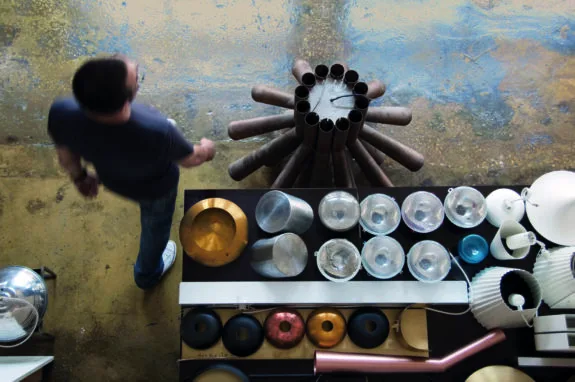
"You cannot isolate light from its context—without reflection, it does not exist. It's like fish and water: you cannot separate them."
Light as communication
For Dimitri, light is ultimately a form of communication. "We are not a product company, we are a communication company," he says. "Everything we do revolves around dialogue. With architects, residents, chefs. The design emerges through interaction. The more we talk and listen, the more specific and personal the solution."
He cites an early example: the showroom. “When a customer walked in, I followed him past the products. He determined the route, I responded. That didn’t work. You have to talk together about the project, about how someone lives. That’s why, in our own studios, we prefer to show what light can do, rather than line up products.” That conviction is reflected in their communication. You will hardly find any project photos on the website or Instagram. “Those are the architects’ projects, not ours,” says Dimitri. “We prefer to show the process: the models, the prototypes, the moments of dialogue. That’s where you recognize us.”
Resilience and the future
The beating heart of PSLab still lies in Beirut, where the company's headquarters are located today. PSLab employs around 230 people worldwide. Even in challenging circumstances, the factory continues to operate autonomously."We work every day, even when there are power outages," says Dimitri. "There is tremendous energy and resilience in the team."
What he particularly wants to emphasize is that PSLab has never been a product company. "The product is an ingredient, never the goal. The most important thing is the dialogue and the context. Sometimes the source disappears completely, sometimes it is allowed to shine. But it is always about what the light does to the space and the people in it."
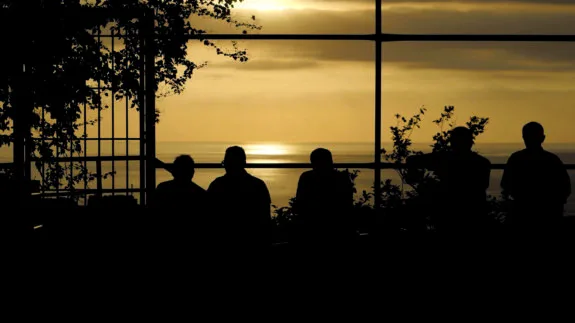
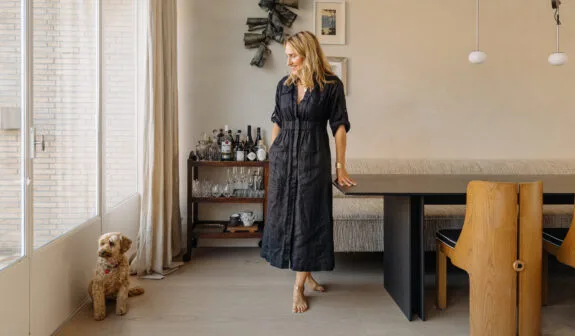
Meet the entrepreneur, in this series interior designer Anita Fraser. Anita has a passion for architecture, design and creating spaces that envelop its inhabitants with positive energy. In her work, she is constantly looking for the right balance between form, function and materiality. After a career as a process lawyer, she studied interior design at the University of Arts London. She now collaborates with other designers, architects and Project developers to refine both living and working spaces. Read and view more here
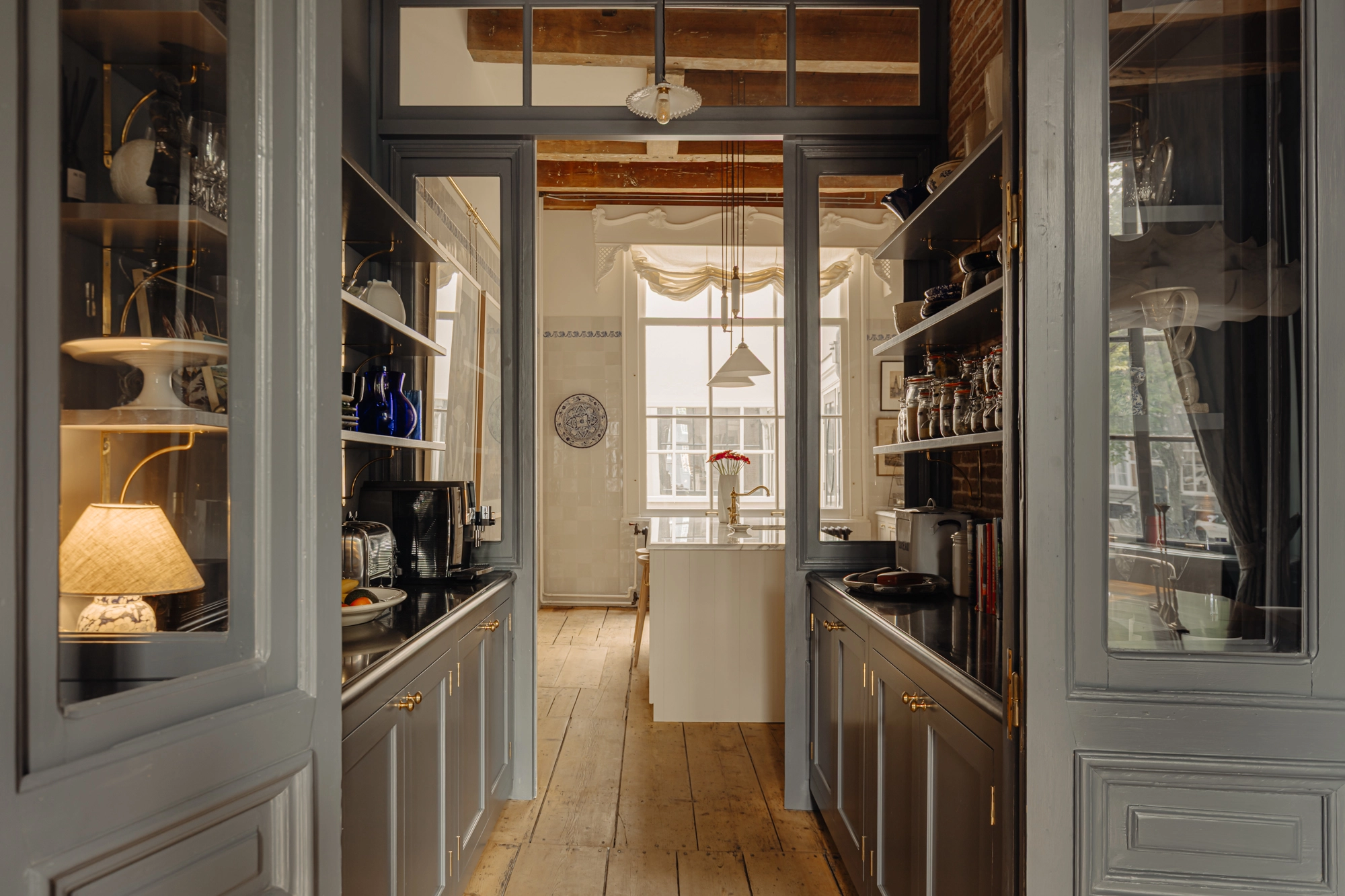
Spotlight; Sometimes everything falls into place. The location on Keizersgracht. The perfect size of the rooms. The way historical details and modern living quality come together. Behind the facade dating back to 1616 lies a house that breathes history, but is completely contemporary. The building was founded in 2004. The current owners have redesigned the interior in 2022 and 2023, preserving everything of value. Take a look at this Dutch gem on the Keizersgracht.
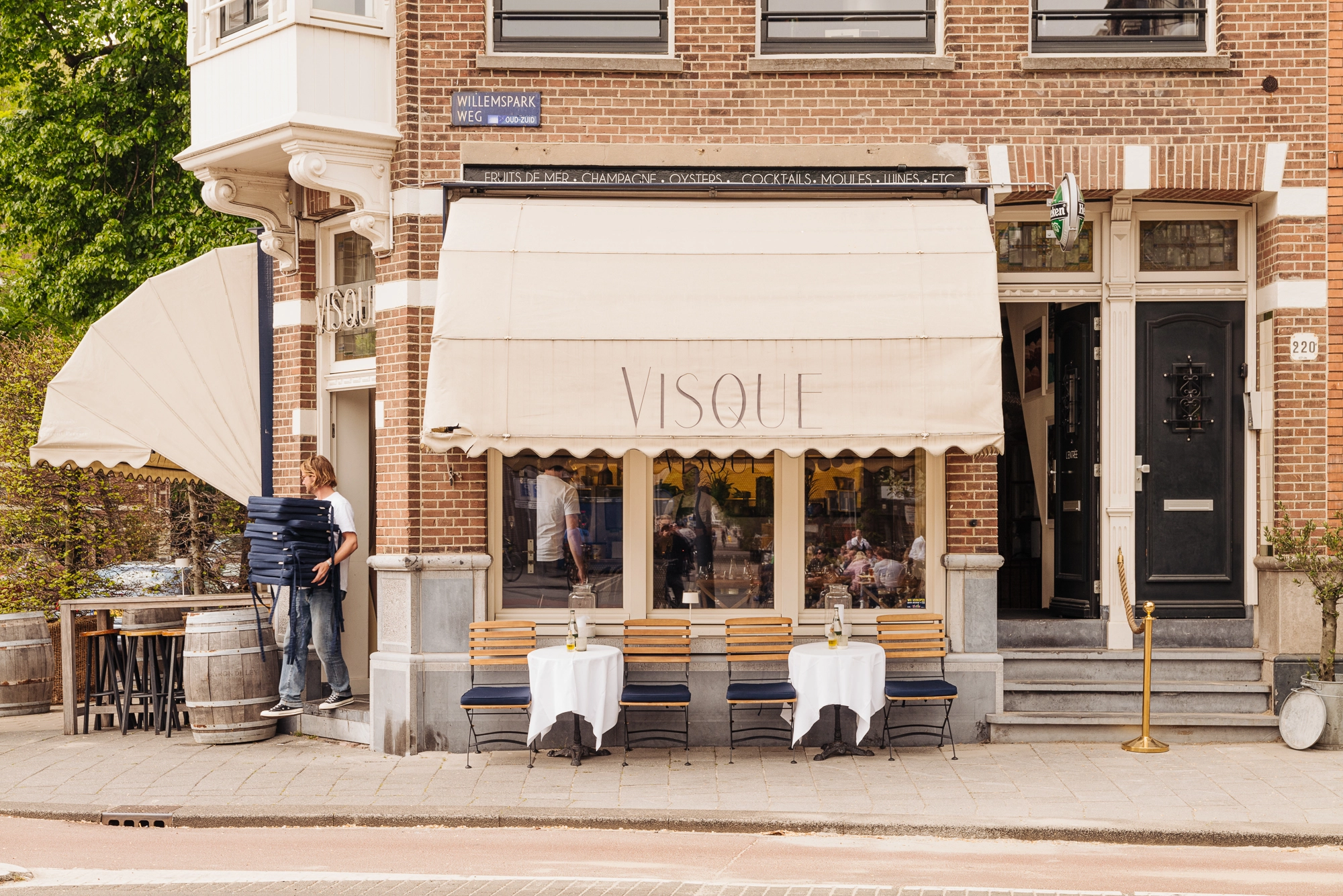
Neighborhood guide (around) the Willemspark: Anyone walking through the Willemspark immediately notices: there is space here, there is peace. But the charm of this neighborhood lies not only in the stately avenues and the Vondelpark around the corner. It is precisely that combination with everything that Amsterdam-South has to offer that makes living here so attractive. From Emmaplein, the streets fan out towards Museumplein, Concertgebouw, Cornelis Schuytstraat and the chic neighborhoods of Oud-Zuid. On the west side, the transition to the Schinkelkwartier, Hoofddorpplein and the Schinkelbuurt begins — lively, with good restaurants and fine specialty shops. And towards the south, the Willemspark connects almost seamlessly to the Olympic Quarter and the Stadionbuurt: wide streets, lots of light, fine terraces and hidden favorites. View our selection here