Sloter Dock
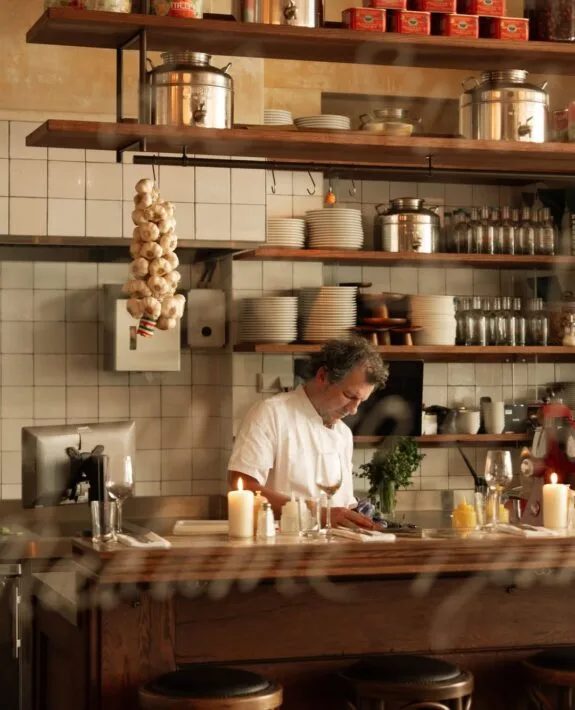
In 2006, the building was renovated on behalf of clothing company Imps&Elfs, based on a design by architect Jaap Dijkman. Dijkman is known for his repurposing and interventions in existing buildings and has worked on projects including the Toscanini restaurant, the NRC building, and De Waag in Amsterdam. Here, too, a classic office layout was not chosen, but rather an open, studio-like space where working and meeting come together. In the middle of the space is a central kitchen with a large dining table. This forms the heart of the building and emphasizes the collective character of the place. Above this central part, a skylight runs across the entire width of the building, allowing daylight to flood deep into the space. Under this skylight is a long table that is used for reading, cooking, and eating. As a result, the space functions not only as an office, but also as a studio and workshop where different activities naturally intermingle.
View this former garage
Providence
In 1997, KesselsKramer became the owner of the chapel. The internationally renowned advertising agency dares to work outside the conventional paths. For the redesign, the London-based architectural collective FAT — Fashion Architecture Taste — was chosen. The designers were challenged not to change the space architecturally, due to its monumental status. The chapel forms the heart, surrounded by corridors, former monastery rooms, a communion wafer bakery, and living quarters that have changed function over the years. The height of the chapel remains palpable, but the wooden fortress brings intimacy: open and private at the same time. Workspaces have been set up on the organ balcony above the entrance, with a view of the entire chapel.
View this former chapel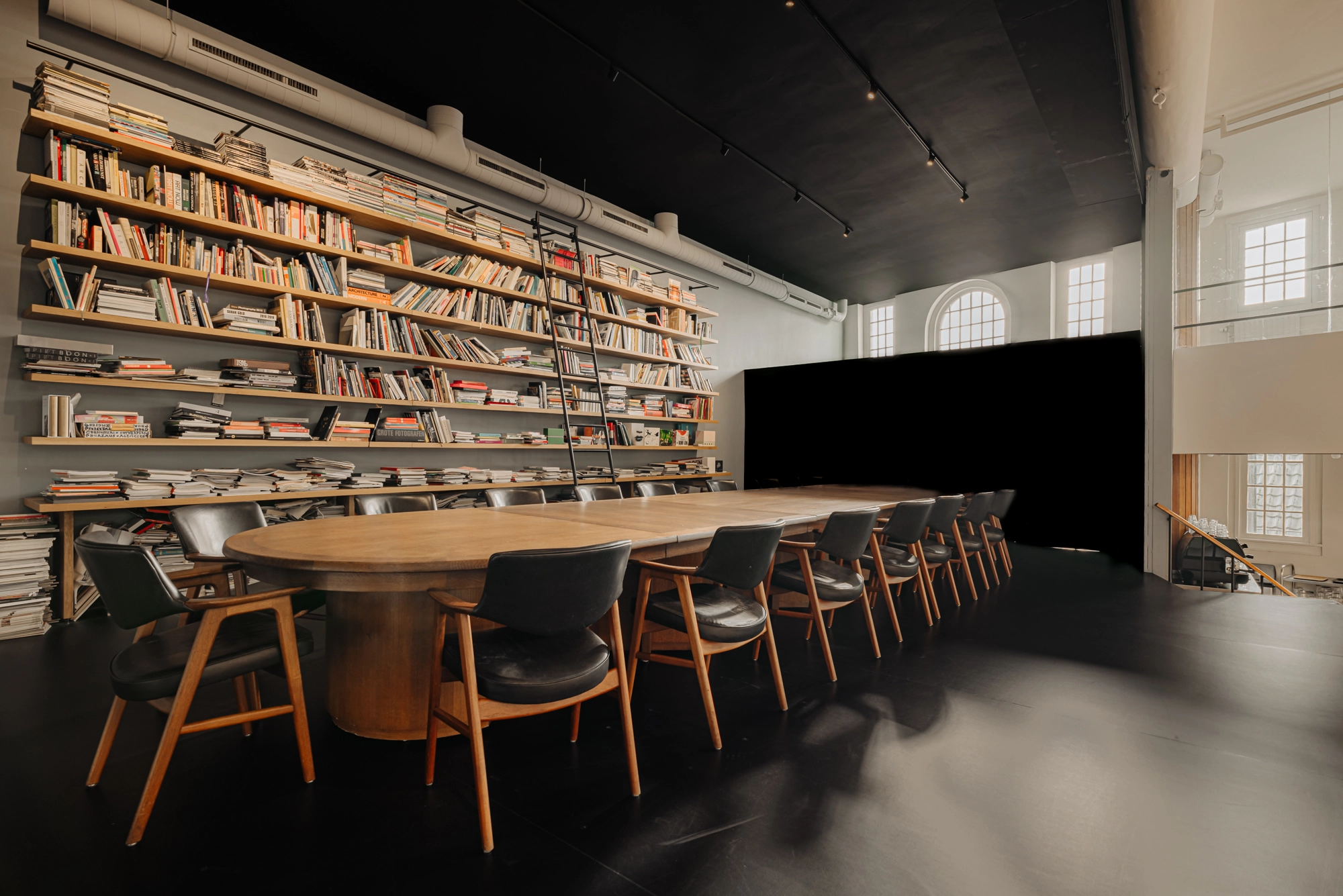
The Working Theater
The building at Oostenburgergracht 75 was designed in 1952 by architect Marius Duintjer. At the time, it was used as a recreation center for employees of the Werkspoor company. In 1989, the Werktheater moved in. The Werkteater was an experimental theater company. Until 2014, the Oostenburgergracht was their home base. In 2016, the building was completely renovated by Millten and put into use as a creative office building and independent restaurant. The ground floor has an office/studio space with high windows and lots of natural light. The independent catering space on the ground floor was used by Restaurant Coulisse (*) until May 16, 2025. This is the former foyer with beautiful stairs to the first floor, from where the theater hall can be accessed. A characteristic feature is the entirely glass front with impressive light incidence.
Check out this former theater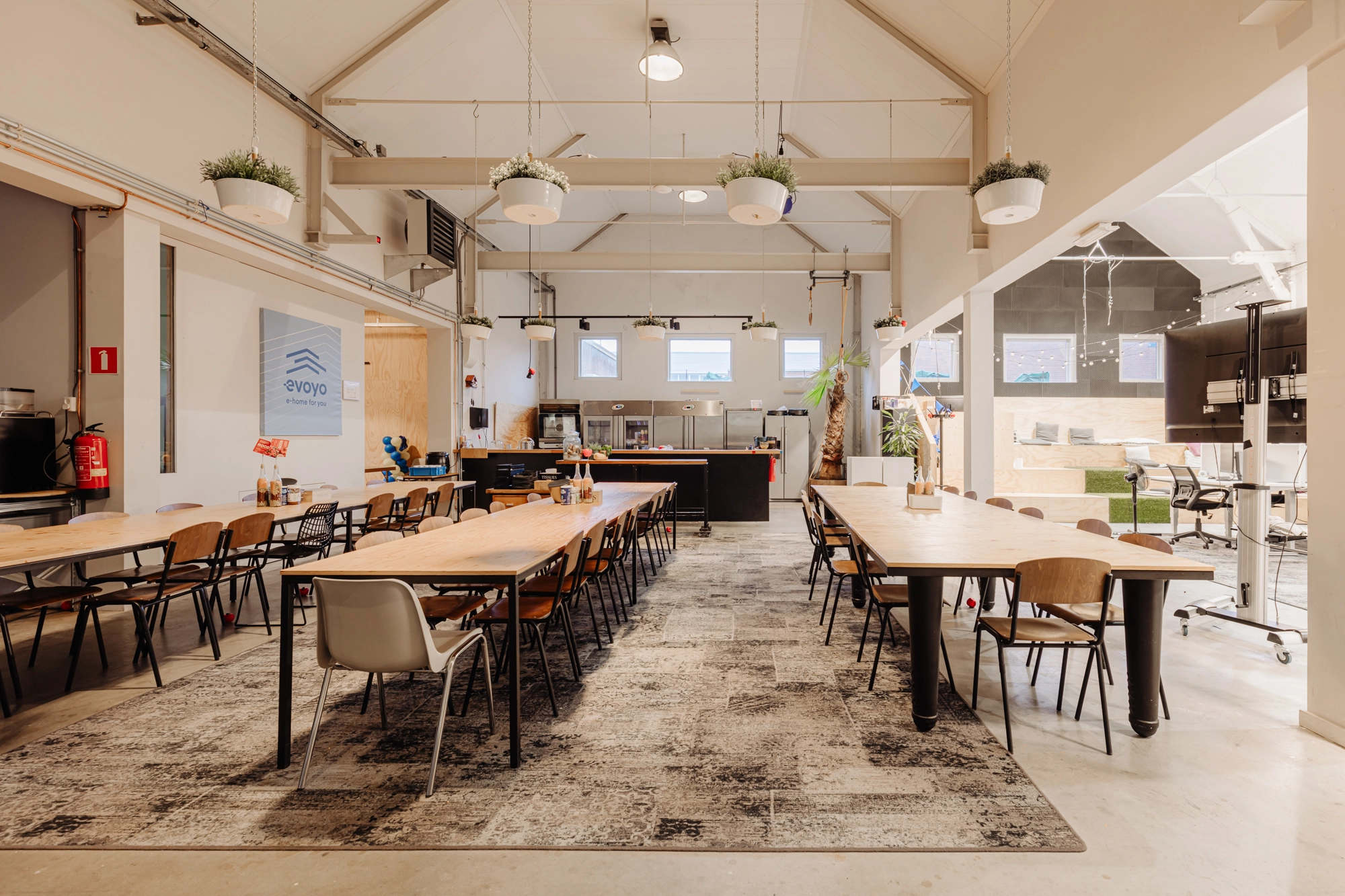
Coal-fired power station
The Noordergasfabriek began operations in 1913 and remained in use until 1924. The tall building, which resembles a basilica, served as a coal-fired boiler room. The building's architecture is eclectic in style. The factory has been completely renovated and transformed into modern office space. Its distinctive and authentic elements give it a creative and raw industrial look. Unique features include the high ceilings and open space, which offer ample opportunities for lunch, relaxation, meetings, and work.
Take a look at this former gasworks
The Deli
The building, designed by Adolf Daniël Nicolaas van Gendt, is a classicist building from Year of construction with Amsterdam School details, such as decorative brickwork and balustrades. Client The Deli-Batavia Maatschappij, founded in 1875, was a colonial trading company that established its Dutch office at Herengracht 286. The front has a spacious and open layout. The heart of the office space is illuminated by a large skylight, which creates an open and light atmosphere throughout the space. There is room to have lunch near the spacious kitchen and also space to relax. The large high windows at both the front and rear allow plenty of natural light to enter and create an inspiring environment that is ideal for creative and/or business activities.
Check out this former trading company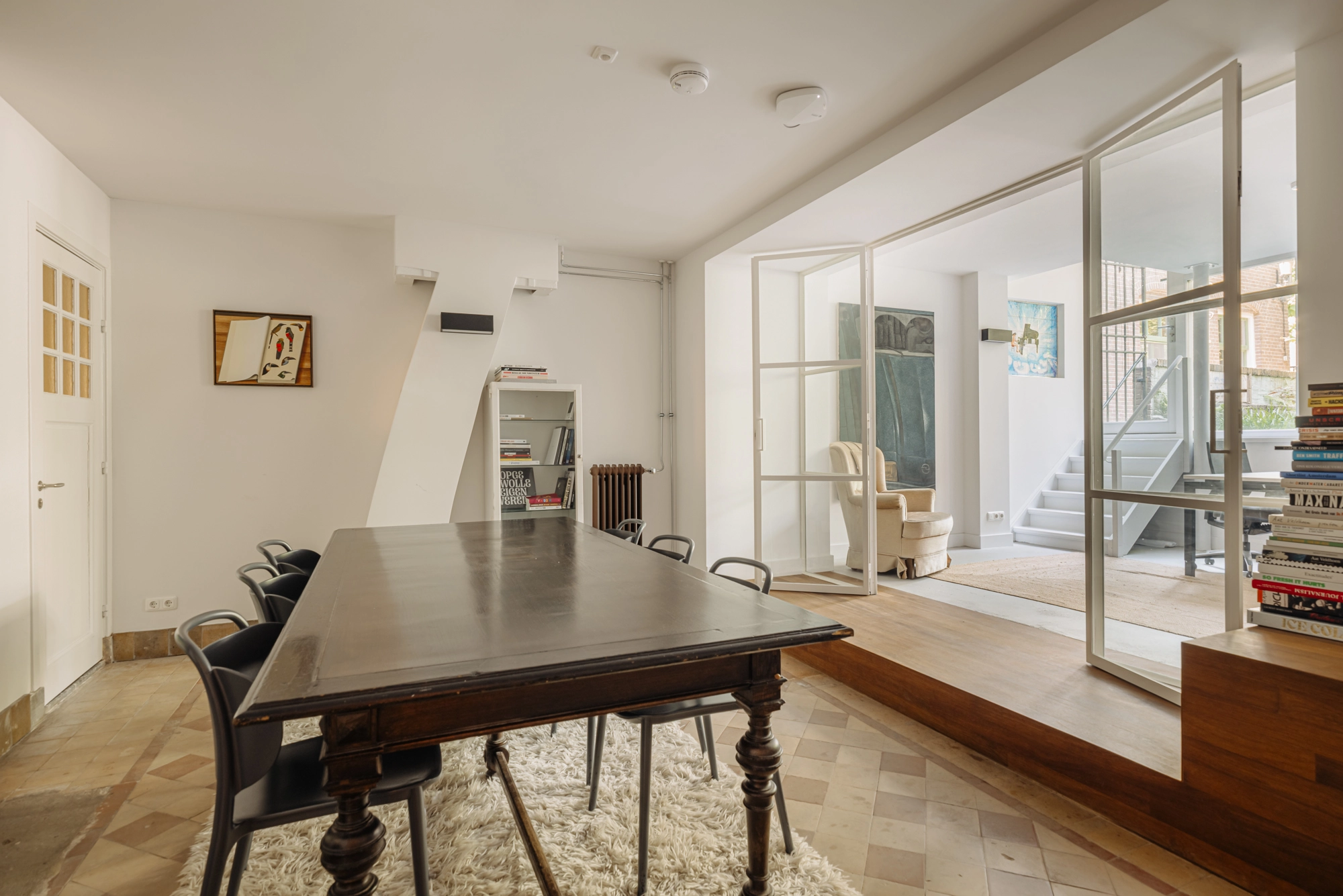
Aatje
For many years, this unique building served as the studio and home of renowned artist Aatje Veldhoen, known as a pioneer of graphic art in the Netherlands and a leading figure in the Amsterdam art scene of the 1960s and 1970s. It was built in 1847 in a 19th-century style characteristic of the development of Wittenburg during that period. The layout offers high ceilings, plenty of natural light, and a pleasant balance between open workspaces and closed meeting rooms. The city garden of approximately 76 m² can be accessed from the basement and via the Roof terrace the ground floor; in addition, the office space has a second Roof terrace the second floor and a balcony on the first floor.
View the former studio of Aatje Veldhoen
The Garage
The building at Overtoom 197 is a municipal monument and was built in 1925 to a design by architect Harmen van Jaarsveld Jr. Its original function was as a garage with a showroom, but later the space was also used as a workshop and warehouse. The car dealership and garage company v/h C.L. de Groot was originally located here. From 1988, the De Zon auction house moved into this building. Today, there is still a link to this history. The painted bricks of the De Zon auction house can still be seen on the facade. Currently, a car rental company is located on the ground floor, and the other floors are used as office space by various creative parties.
View this former garage
The Hammer
This former garage was built in 1953 and converted into a creative office space in 2003. Characteristic features include the high ceilings, the sawtooth roof, and the concrete floor. At the rear of the building is a beautifully landscaped courtyard garden. There is a beautifully landscaped courtyard garden which is accessible to all residents and users of the North Orleans building behind it. The garden has grass, paving, gravel, and various picnic tables and seating areas.
View this former garage