For forty years, Toscanini has been an Amsterdam institution. Maud Moody, one of the founders, shares how it all began.
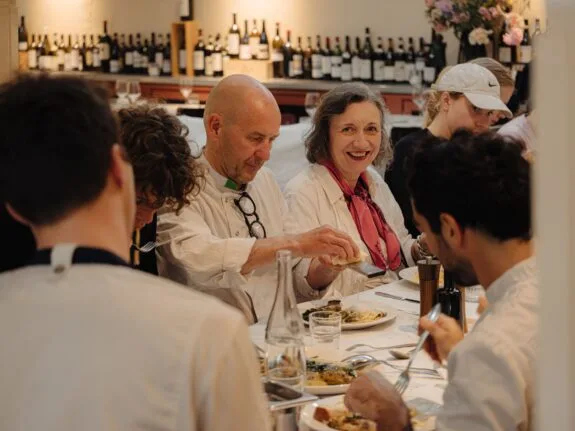
Forty Years of Toscanini – An Amsterdam Icon
For four decades, Toscanini has been an institution in Amsterdam – not only for its flavourful, homely Italian cuisine, but also for the people behind it. Maud Moody, one of the founders, shares how it all began – and how a holiday in Rome led to one of the city’s most beloved restaurants.
A Campsite in Rome as the Starting Point
Maud Moody still vividly remembers how it all began. In fact, she explains, the origins of Toscanini lie not in Amsterdam, but at a campsite in Rome – Campeggio Flaminio. It was the summer of 1982. Her sister Ellen was already there, and together with her friend Marianne, Maud hitchhiked from Amsterdam to Italy. Something unthinkable now, but back then still fairly common. Two young women with big thumbs and even bigger plans. “We had to get ourselves out of quite a few tricky situations,” she says, “so in that sense, I’m glad my daughter just takes the plane nowadays.”
Once they arrived at the campsite, it didn’t take long before three Italian holiday friends appeared. More importantly, though, it was there that a first, genuine love for Italian cuisine was born. When two of those Italian boys later came to Amsterdam, the idea emerged for a Tavola Calda – a kind of refined Italian snack bar, serving truly delicious food. Combined with a cultural meeting place: there would be exhibitions, live music, and reading tables.
“Her Italian friends told her: ‘You’ll just do the cooking, and we’ll let you know if it’s any good.’”
From Idea to Opening
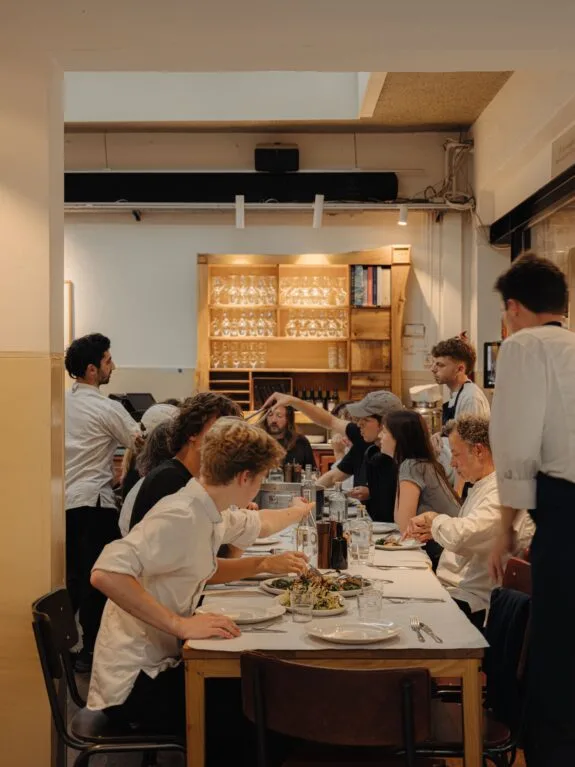
In a quiet street in the Jordaan – Goudsbloemstraat – they found a suitable building. It had once housed the women’s restaurant Zus, so the basics were already there. Together with friends, they set about renovating: painting, carpentry, sanding. Everything was done by hand, because money was scarce. On 21 May 1985 – Maud’s 25th birthday – Toscanini opened its doors.
But things turned out differently than expected. During the day, no one came. In the evenings, however, people arrived to eat. No reading tables or music nights – it became a restaurant. “Whether we wanted it or not.” Ellen had experience waiting tables in a pizzeria, Maud had worked as a kitchen assistant, and from her mother she had inherited a deep love of cooking. Of Italian cuisine, she knew little. But her Italian friends told her: “You’ll just do the cooking, and we’ll let you know if it’s any good.” And so it happened.
Simple, Honest, Beloved
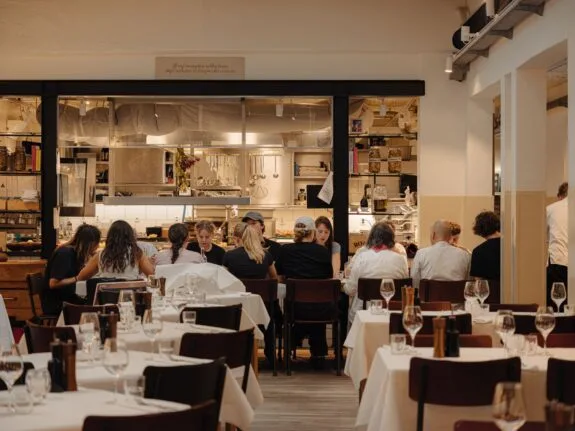
At first, things moved slowly. But on the Friday of the second weekend, the restaurant was suddenly packed. Word of the new Italian spot had spread through the city like wildfire. At the time, you either had pizzerias or fancy Italian restaurants. Tosca offered something different: honest dishes, freshly prepared, simple, affordable, and informal. Cucina casareccia – the homely kitchen.
The crowds brought new challenges. Extra staff were urgently needed. One evening, Karin and Jeannot walked in. They too had heard about Toscanini back at Camping Flaminio. They were hired on the spot. Karin – mother of Tamar, who has now worked in the patisserie for eight years – was studying at mime school. Not long after, the mime school became something of a pipeline for staff. Many Italian boys worked in the kitchen, while their Dutch girlfriends waited tables. And then there was Conceição, who joined Tosca through a Brazilian connection made at the same campsite.
Chaos, Strike, and Professionalism
It was a cheerful, multicultural chaos. Waiting for food could sometimes take an hour. One day, there was even a strike. A group of Italian boys and their girlfriends demanded higher pay. That evening, Ellen and Maud ran the entire restaurant together. The next day, Maud turned to Klaartje – the wife of Wil Demandt – who had just gone on maternity leave at Panini. Klaartje stepped in immediately and stayed for a few years. That was the moment Toscanini took its first major step towards professionalism.
“It all comes down to the team. And at Tosca, that’s always been in good hands.”
Moving to the Lindengracht
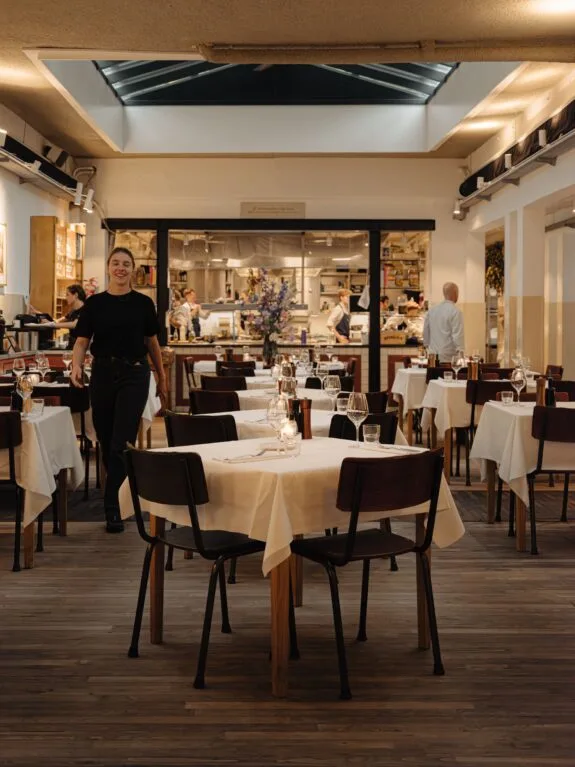
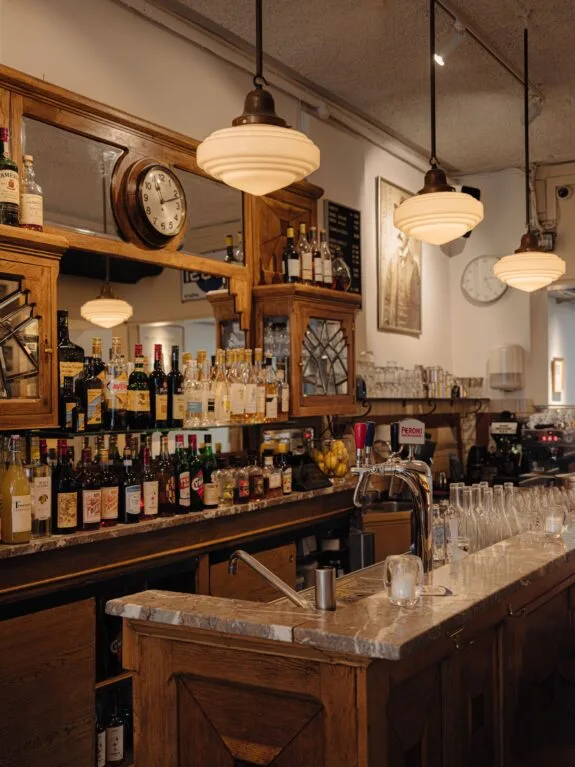
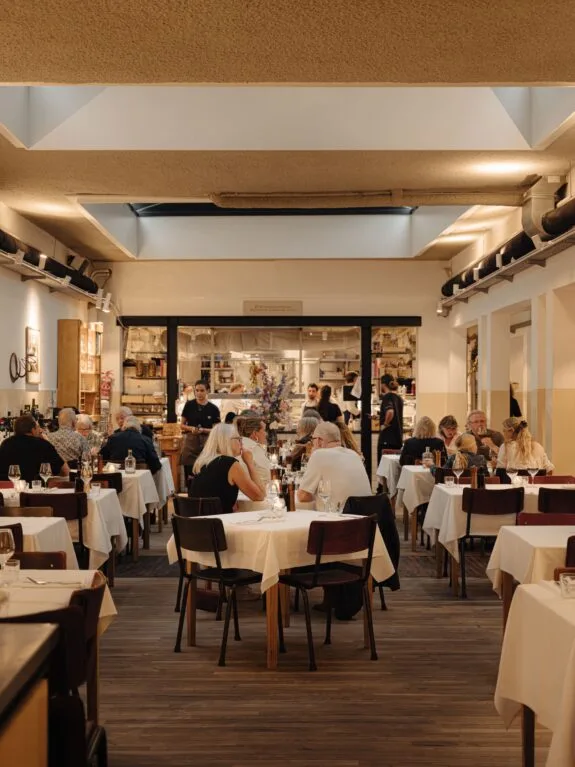
In time, the restaurant relocated to its current premises on Lindengracht. It was Kees Kemp – at the time the youngest clerk at Broersma – who suggested the location. The interior was designed by architect Jaap Dijkman. With that, Toscanini gained not only a new home, but also a new look – one that reflected the atmosphere the restaurant had by then come to embody.
It was there, one Saturday afternoon, that Leonardo walked in. He asked if they had a job for him, just one day a week. Later, it turned out that he too had once stayed at Camping Flaminio, around the same time. Leonardo is the son of a Dutch mother and an Italian father. Born in Rome, he spent his youth in Cape Town. Though he originally studied mechanical engineering, he eventually stayed on at Toscanini – full time. And he never left.
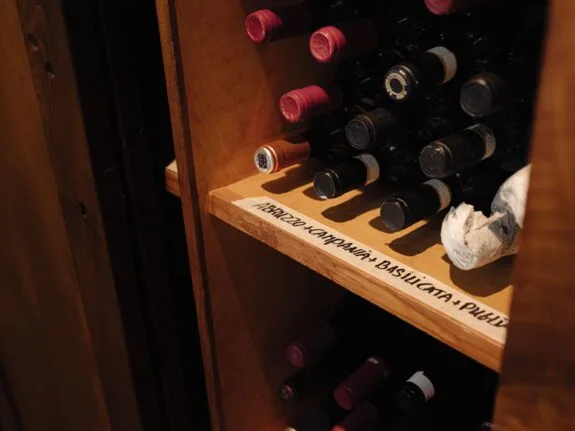
People Make Tosca
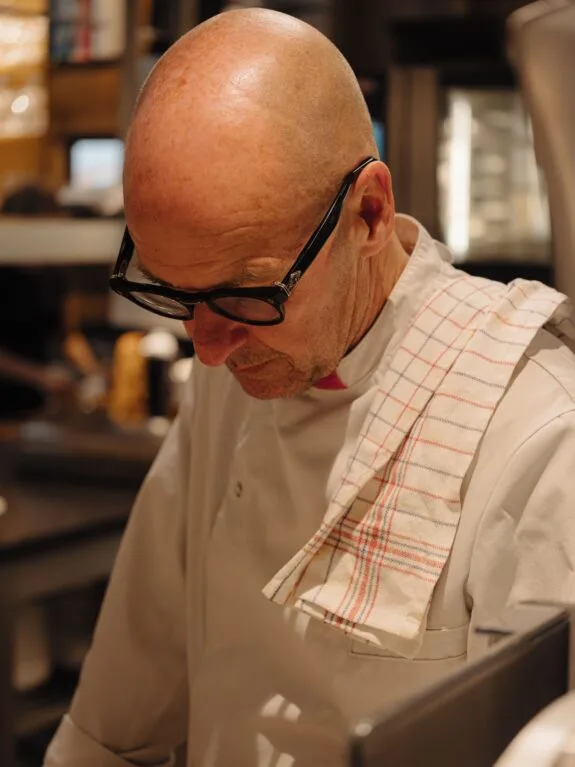
In 2000, Maud, Jeannot, and Leonardo continued together. In 2022, Jeannot said his goodbyes – he now lives happily on a mountain in Piedmont. His departure made room for Suus. “That has worked out really well,” says Maud. “For me personally, she’s been an enormous support.”
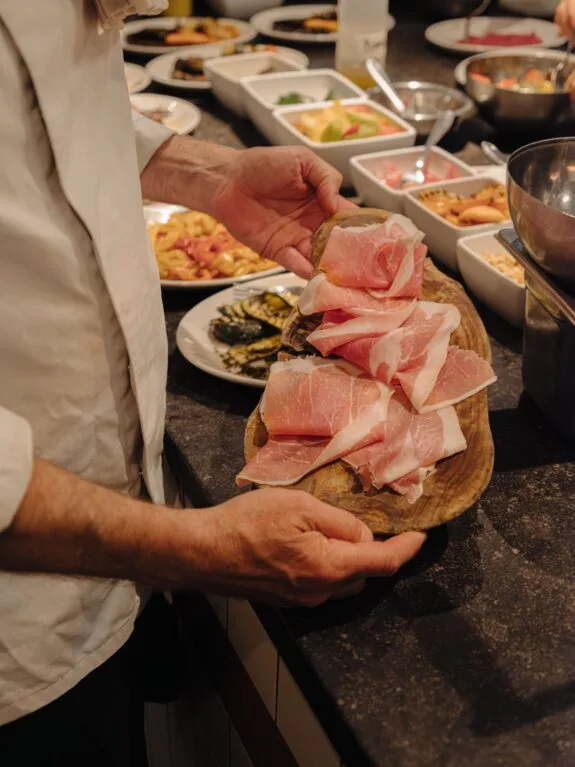
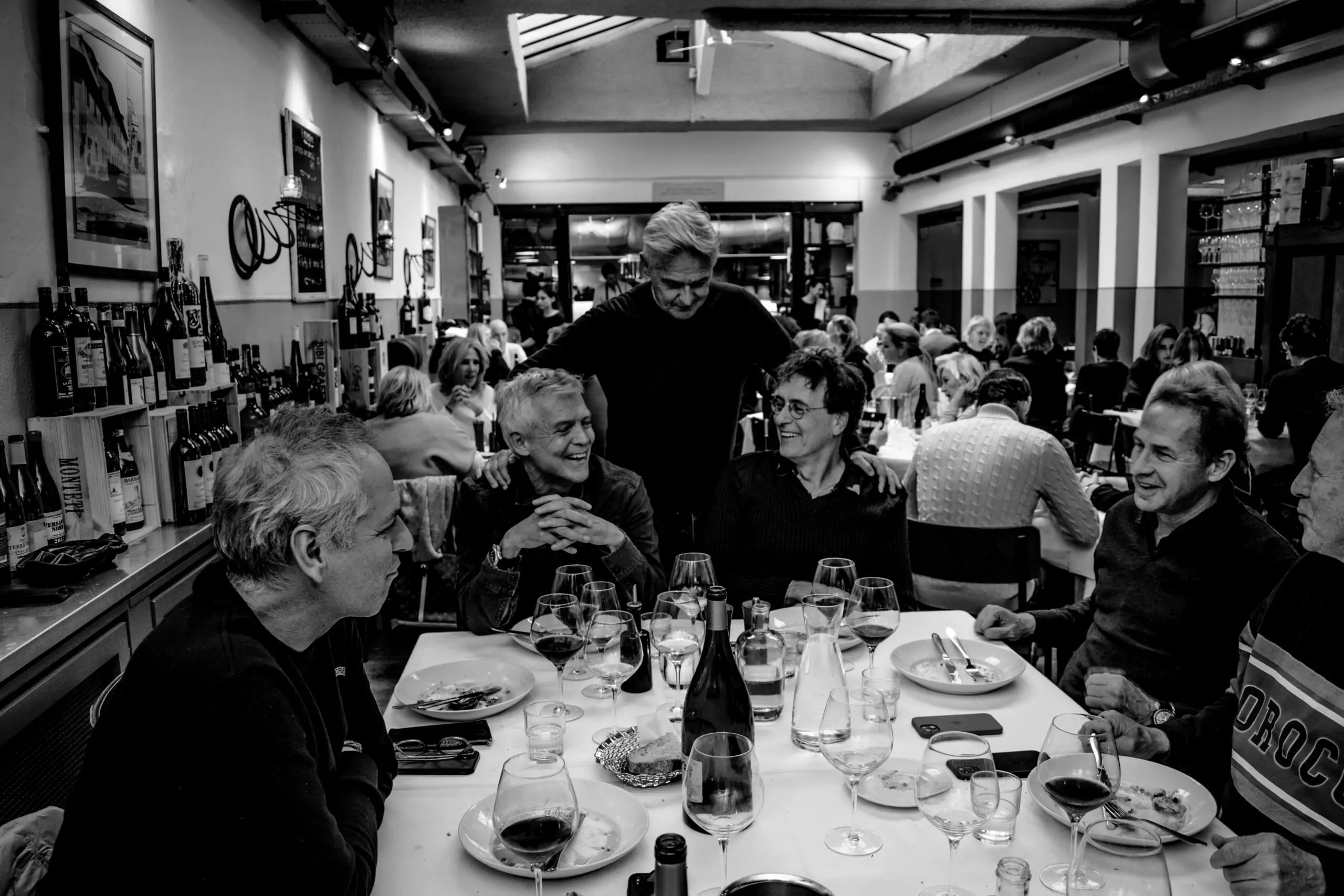
Toscanini has always been built on people. Without all those colleagues, past and present, forty years would never have been possible. “Just yesterday,” Maud reflects, “I was thinking about that while watching everyone preparing for the party. It all comes down to the team. And at Tosca, that’s always been in good hands.”
Al eeuwen geleden kwamen Italianen naar Nederland. Ze maakten ijs, legden het Italiaanse graniet terrazzo, waren schoorsteenveger of werkten in de mijnen in Limburg. Deze Italiaanse arbeidsmigranten hebben na de tweede wereldoorlog meegeholpen aan de wederopbouw van Nederland en hebben tevens een grote invloed gehad op onze eetcultuur. Lees hier over de beste adressen in Amsterdam om Italiaanse boodschappen te doen en Italiaans te eten en te drinken.
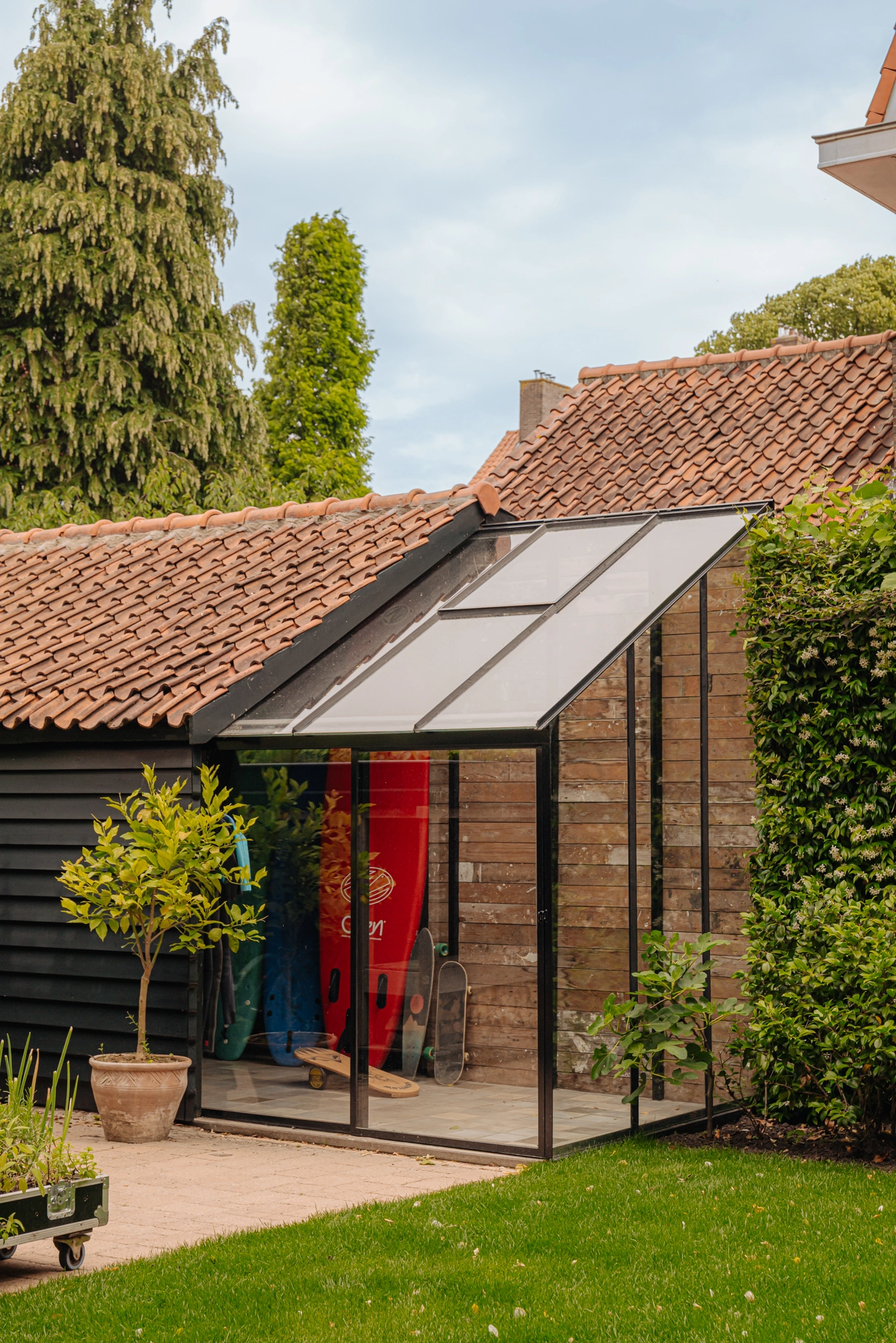
Uitgelicht; 'Het Hoekhuis aan de Laan'; Toen wij dit huis jaren geleden betrokken, waren we op zoek naar een ruim familiehuis — een plek waar onze vijf kinderen veilig en vrij konden opgroeien. Die plek vonden we aan de rand van Plan Mozart in Amsterdam-Zuid, op een unieke hoek met een royale tuin rondom. Hier konden ze eindeloos hutten bouwen, vuurtjes stoken, knutselen in de kas en spelen met vriendjes in de tuin. Het voelde alsof we een dorp in de stad hadden gevonden, omringd door groen. Lees hier meer wat de huidige bewoners vertellen en laat je inspireren