Meet interior designer, Anita Fraser, in this series. After a career as a litigation lawyer, she studied interior design at the University of the Arts London and now collaborates with other designers and architects to refine both living and working spaces.
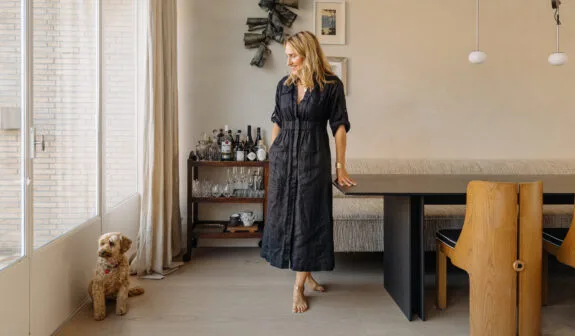
When architecture and design are created with care, balance is created.
Anita is passionate about architecture, design, and creating spaces that envelop their residents in positive energy. In her work, she constantly seeks the right balance between form, function, and materiality. After a career as a litigation lawyer, she changed course and studied interior design at the University of the Arts London. She now collaborates with other designers, architects, and project developers to refine both living and working spaces.
In Amsterdam’s Apollobuurt neighborhood, interior designer Anita Fraser created a home with a simple, yet powerful architecture of steel, glass, and concrete. Here, she explored the original layers of the house. The result is an interior of natural and honest materials, in complete harmony with the light, air, and space that make this home so special.
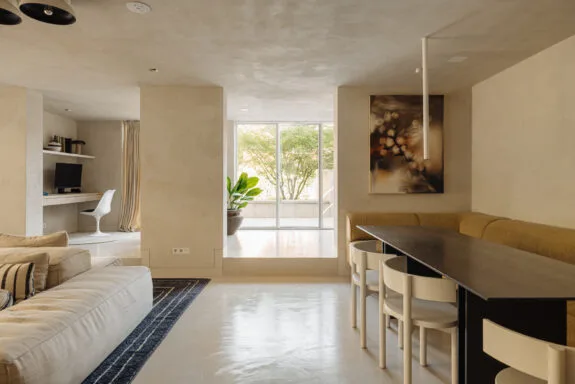
Silence as a way of life
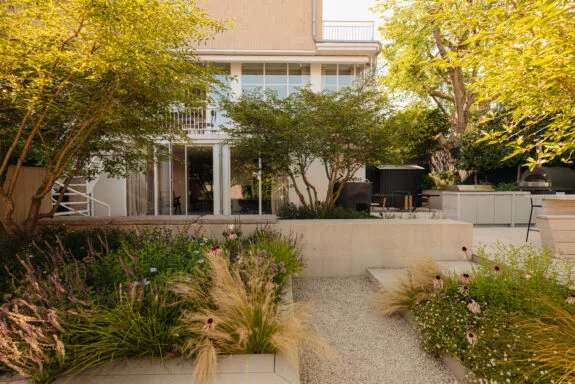
The sense of peace and serenity that fills this waterfront house stems from the pale tones that adorn its elegant modernist form. My aesthetic leans towards spaciousness – where curated emptiness adds elegance and impact says Anita Fraser. “That leaves room for silence, and with silence comes—for me—creativity.” Designed in the 1940s by Dirk Brouwer, a Dutch architect and resistance fighter during World War II, the building’s exterior is a national heritage site. The house comprises four stories of glass, steel, concrete, and brick, with open spaces and floor-to-ceiling windows that create a harmonious interaction with the outdoors.
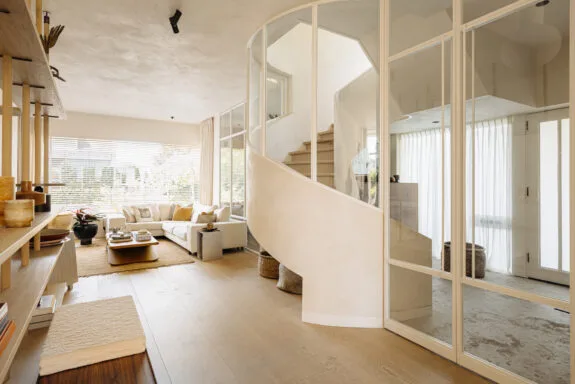
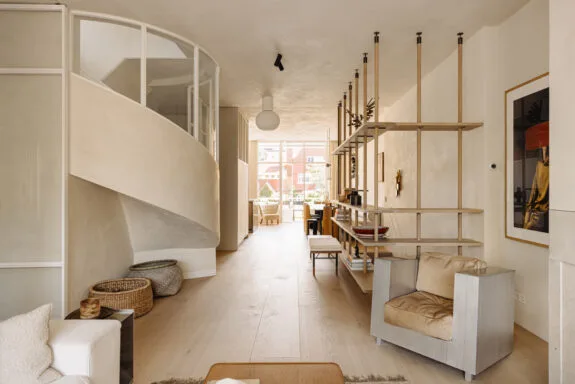
“When we started, none of the original interior features were intact,” recalls Anita. “It was colorful, eccentric, and had lost its connection to the austere architecture.” For this year-long renovation, Anita was inspired by Japanese and Belgian influences that blend seamlessly with the house’s modernist character. “It felt important to respect the simple, clean lines while adding warmth and tactility,” she says. No major structural changes were made, but she chose to open up the circular staircase and add steel and glass partitions—mirroring the windows and doors on the exterior—to create distinct zones and greater functionality. Floating wooden planks now serve as a room divider on the ground floor.
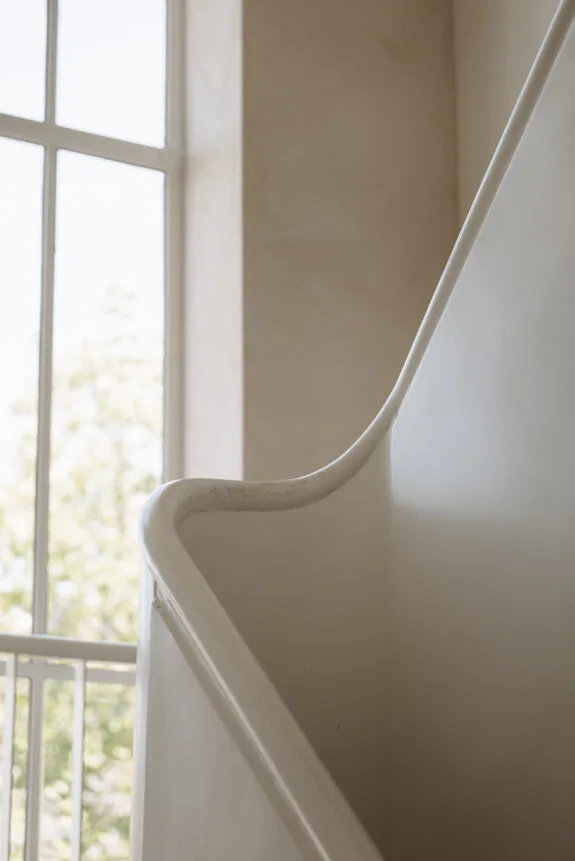
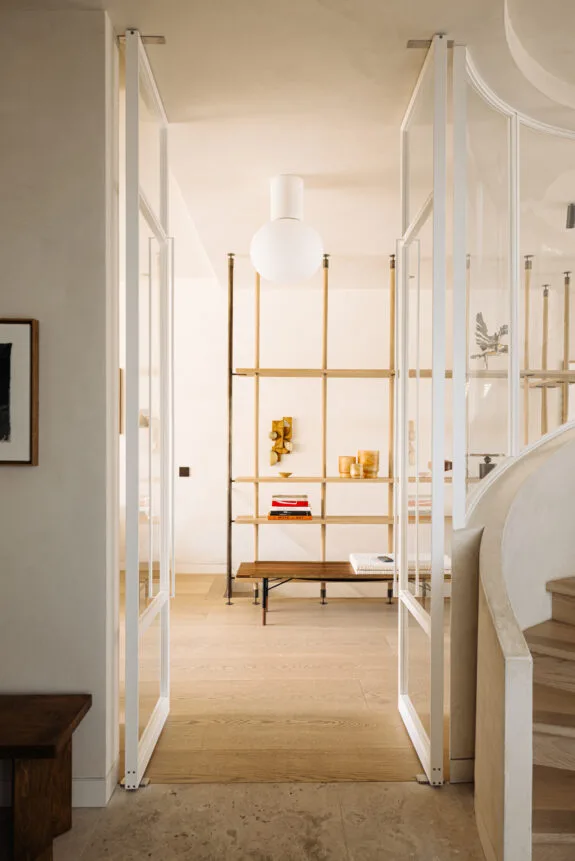
No major structural changes were made, but she chose to open up the circular staircase and add steel and glass partitions – mirroring the windows and doors on the outside – to create clear zones and greater functionality.
Form follows function
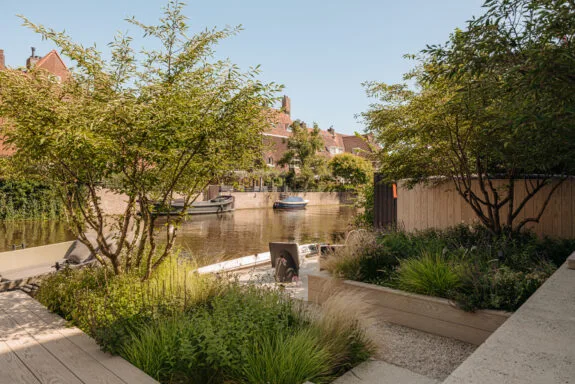
While function should always guide form, Anita strongly believes that creating a beautiful atmosphere that engages all the senses is essential. She quotes architect Peter Zumthor, who once said: “Experiencing architecture concretely means seeing it, hearing it, and smelling it.” Her subdued palette, she believes, is essential to the tranquility this house exudes. It forms a soft backdrop that allows for the light reflecting off the canal, the vibrant colors, and the rustling leaves of the greenery outside.
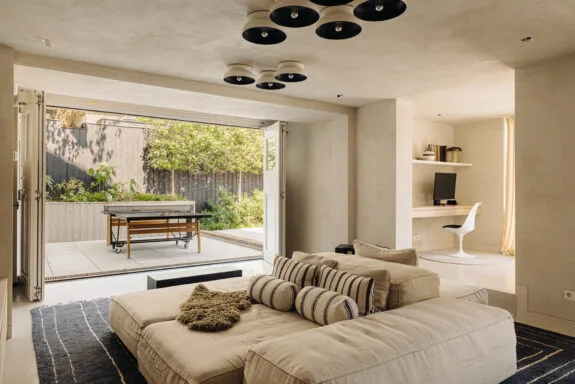
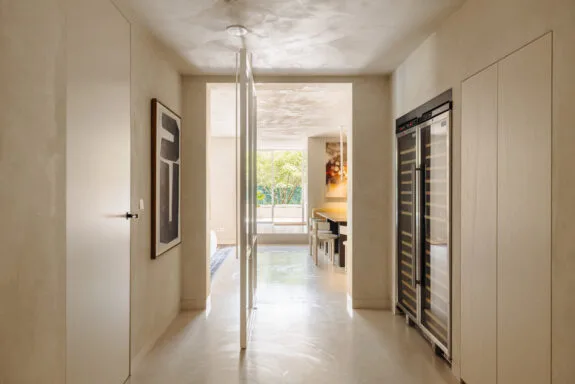
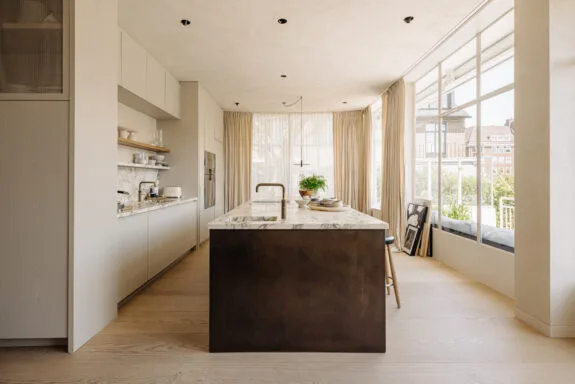
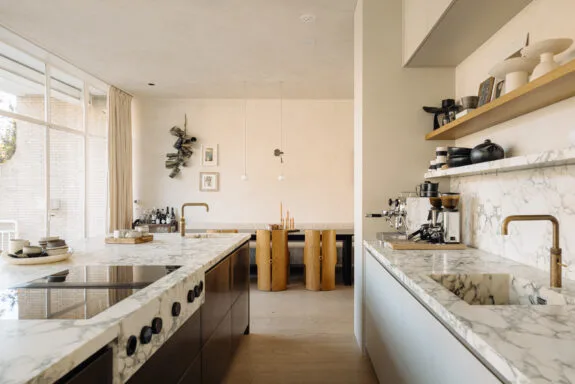
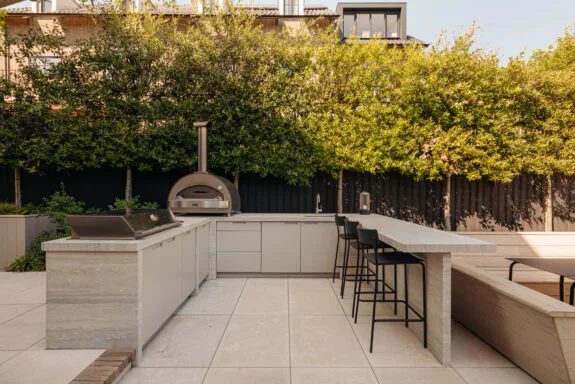
Far from cold or austere, this family home now feels pearlescent, with a soft glow of texture and soul. This is largely due to the handcrafted finishing, which Anita considers crucial for giving character to a space, especially one with a neutral palette. “Many artisans have contributed with their own hands,” she explains. “Walls with clay plaster, wood, natural stone, metal, and raw yet soft linen add layers of tactility.” She loves how these materials age with use and time, telling the story of a life lived. “The metal of the kitchen island develops its own patina; the scratches on the marble are souvenirs of conversations and drinks with friends and family. Air bubbles in the clay plaster are a reminder that it, too, breathes,” she says with a smile.
Lighting is fundamental to any space. “It adds depth and evokes emotions,” she says. She collaborated with the Antwerp studio of PSLab (a design and build lighting company) to develop a lighting plan based on a study of the Van Doesburg House—a house once owned by the Dutch painter Theo van Doesburg, founder of the De Stijl movement, who strove for purity in design through the absence of ornamentation—an approach that seamlessly aligns with Anita’s own values. In a world she describes as “often fast-paced and intense,” this serene refuge is a shelter for her family. It is, she says, “where we feel free to be ourselves, where we celebrate the good times and get through the difficult times together.” For her, less is clearly more.
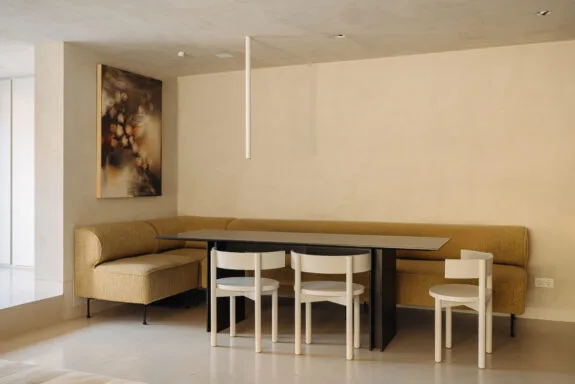
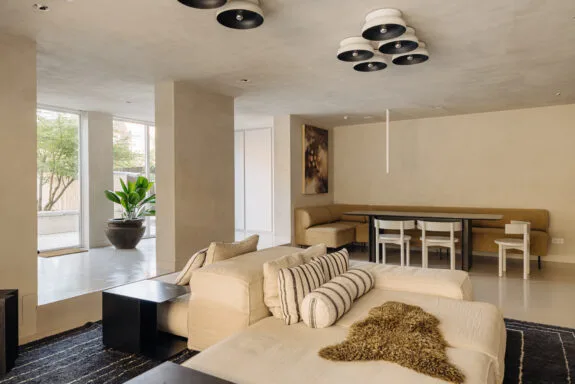
The kitchen is Anita's favorite space because of its view of the canal. "There's always something beautiful about the surface of flowing water and how it reflects light and shadow," she says.
Credits
Architects: Kodde Architecten
Contractor: GF Deko
Lighting design: PSLab