‘Sustainable reuse while preserving history’.

The Sweershuis – a hidden treasure revealed
On the Keizersgracht, in the heart of Amsterdam's canal belt, lies a building with a deep-rooted history. Keizersgracht 443 is not just a canal house; it is part of a special ensemble, built in the disastrous year of 1672 by order of Pieter Janszoon Sweelingh and Admiral Isaac Sweers. Originally, three wide houses were planned, but to save costs, four narrower buildings were eventually realized. This ‘quadruplet’ had a unity in style, with neck gables, wing pieces and a richly decorated attic window.
Keizersgracht 443 has undergone numerous transformations over the centuries. From merchant's house to notary's office, from lawyer's residence to a monument frozen in time. In 2017, a new phase began: a private owner decided to restore the building and put it back into use as a residence, with a focus on Sustainability and the preservation of historical elements. Architectural firm Vroom, specialized in the restoration of monumental buildings, was commissioned to redevelop the building with respect for its past.


Numbers 443 and 445 were owned by the Sweers family until 1770.
A masterpiece rediscovered
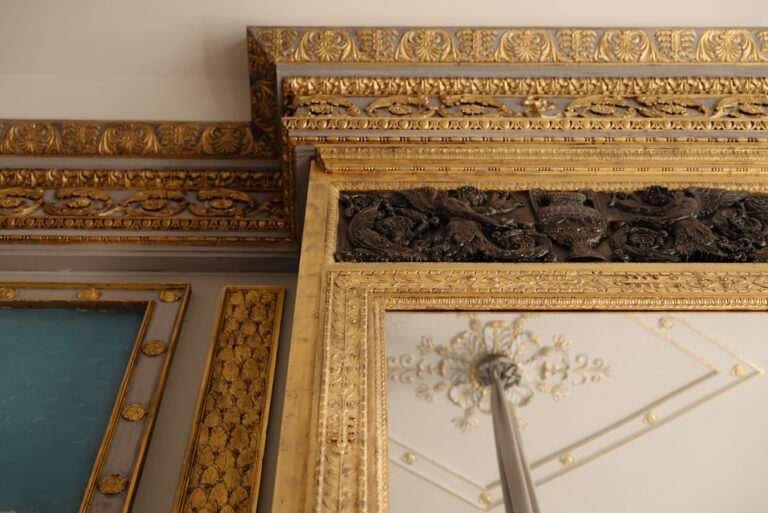
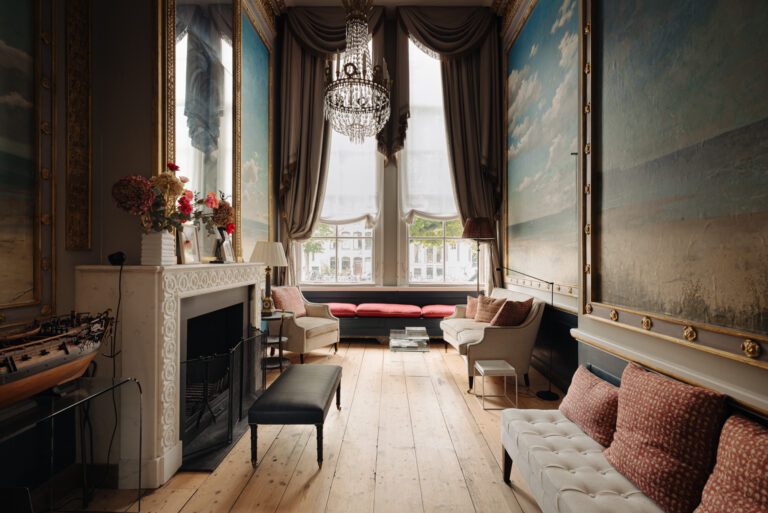
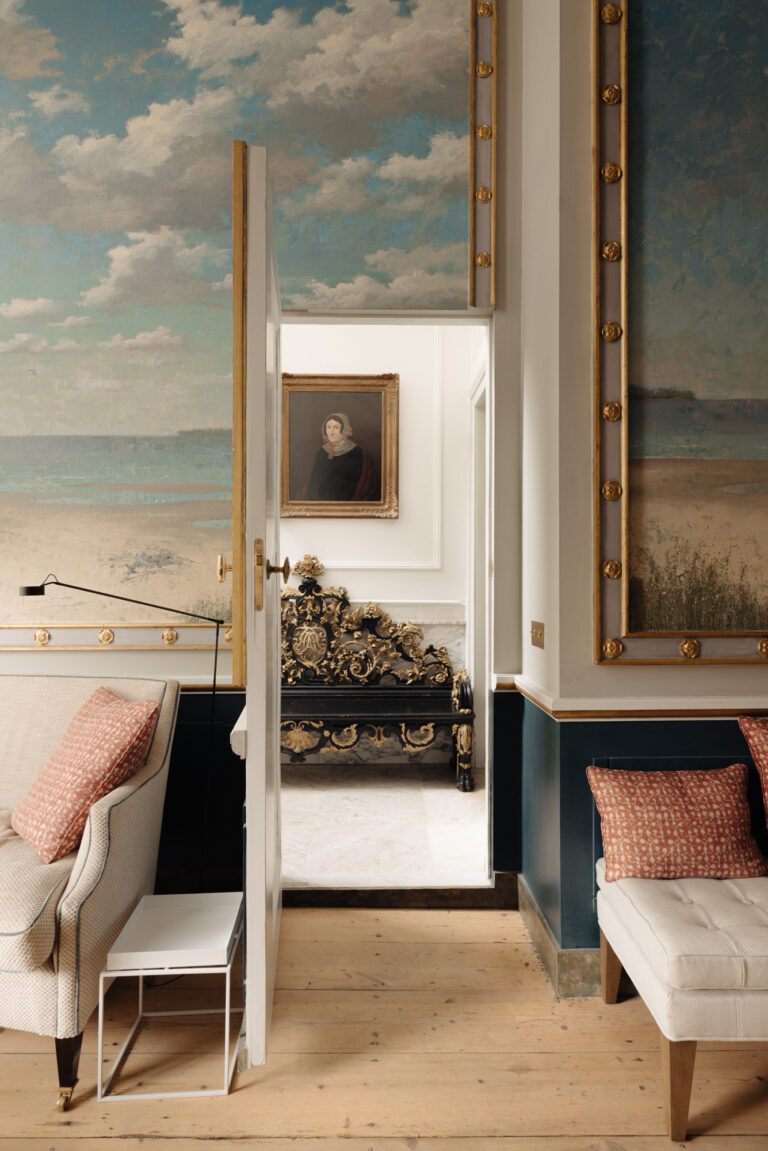
Unexpected treasures are sometimes revealed during historical restorations. That also happened here. Behind the paneling of a mezzanine room, a completely intact 19th-century scagliola-style room was discovered – a true time capsule.
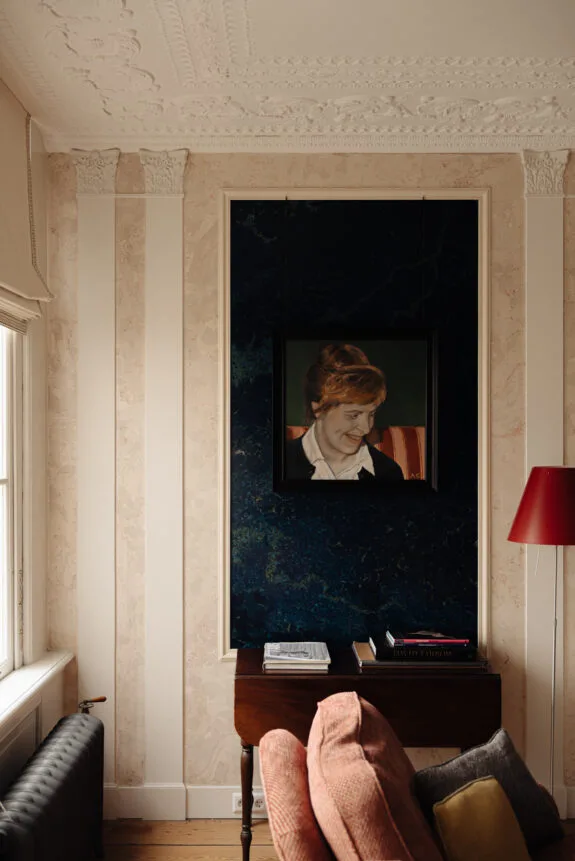
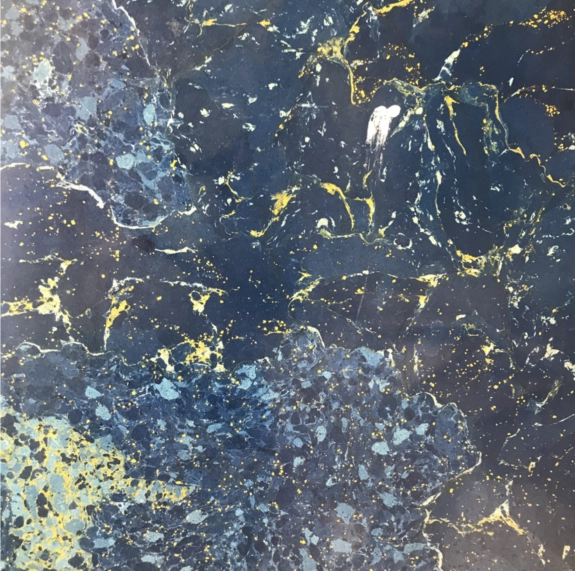
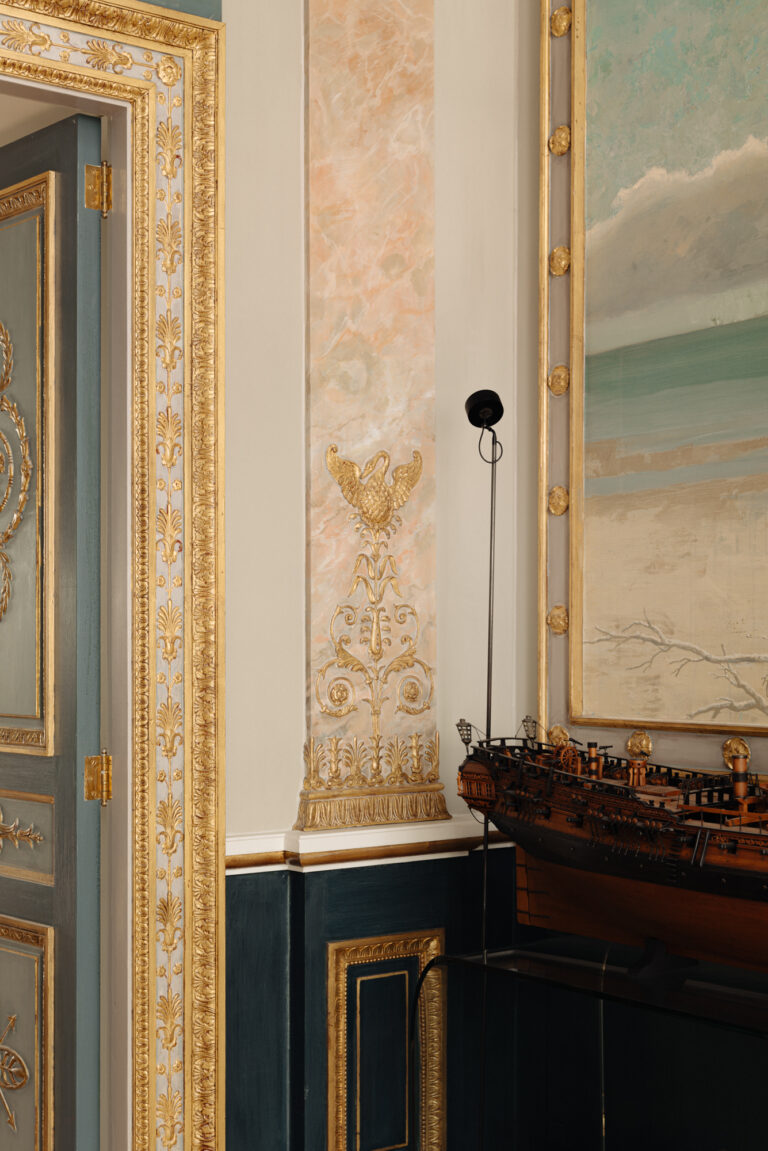
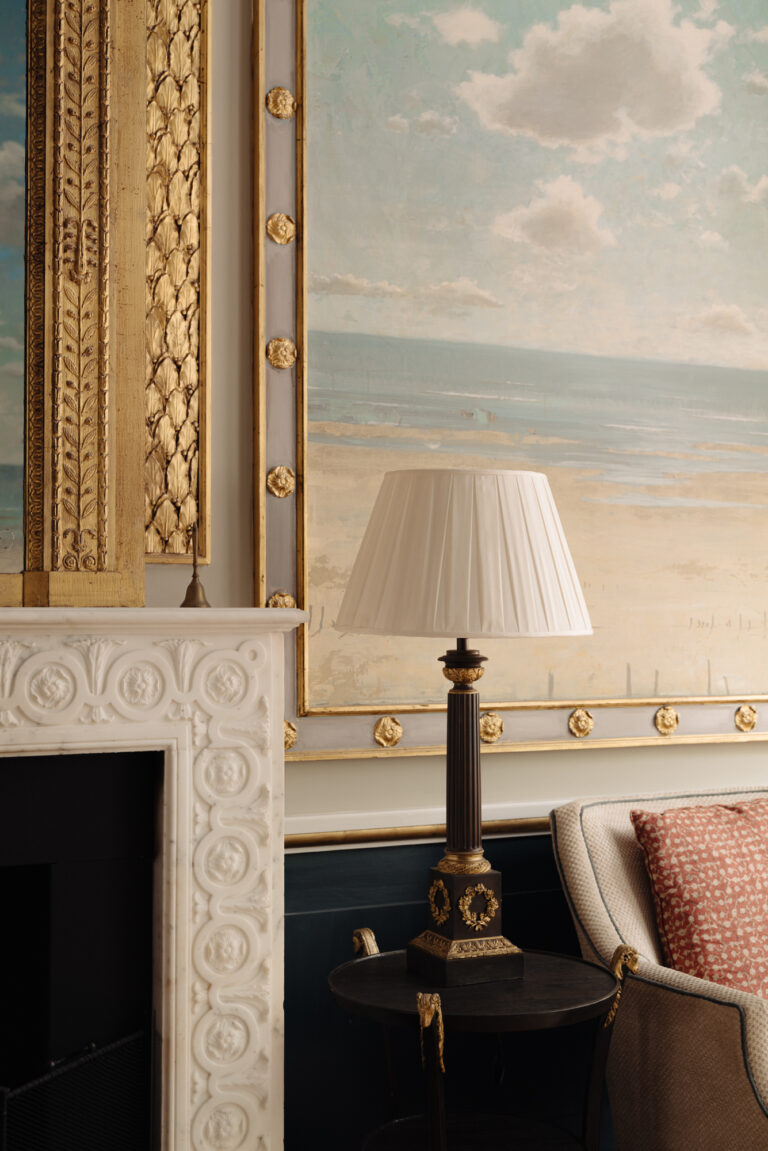
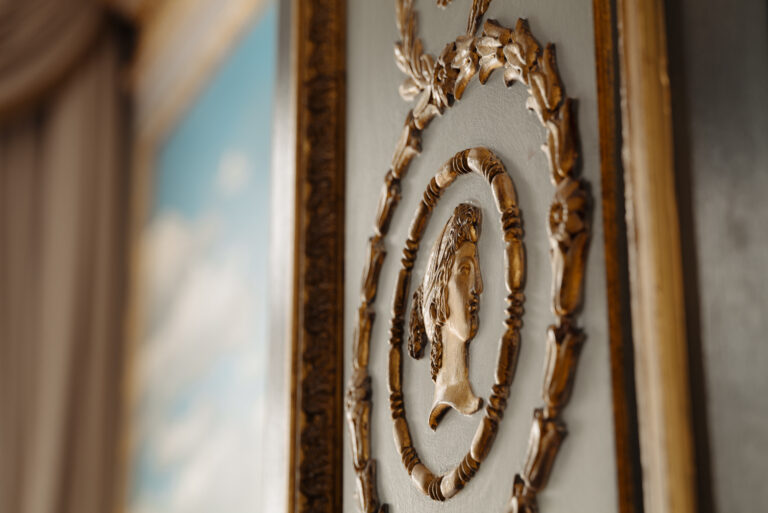
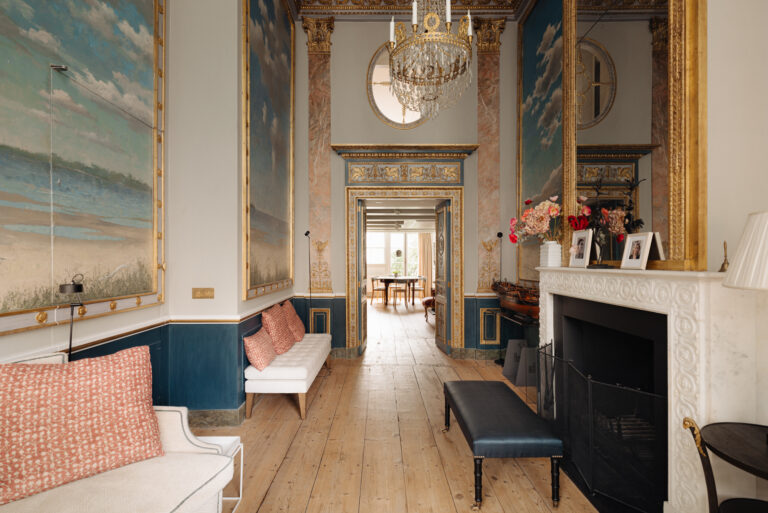
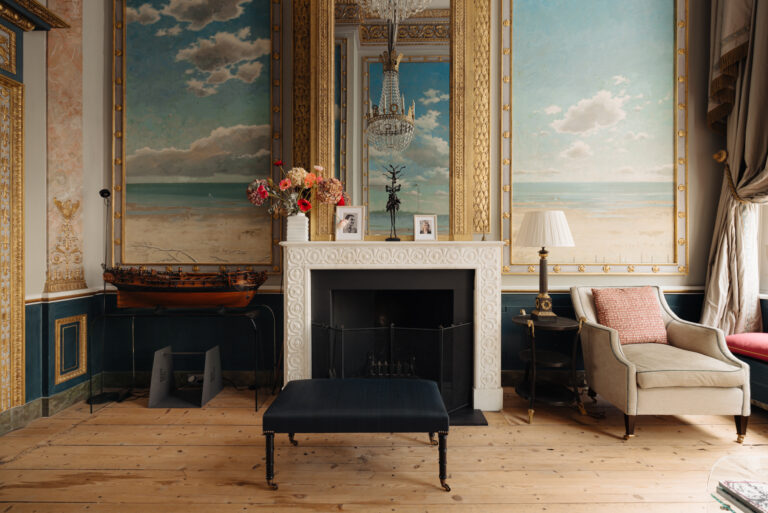
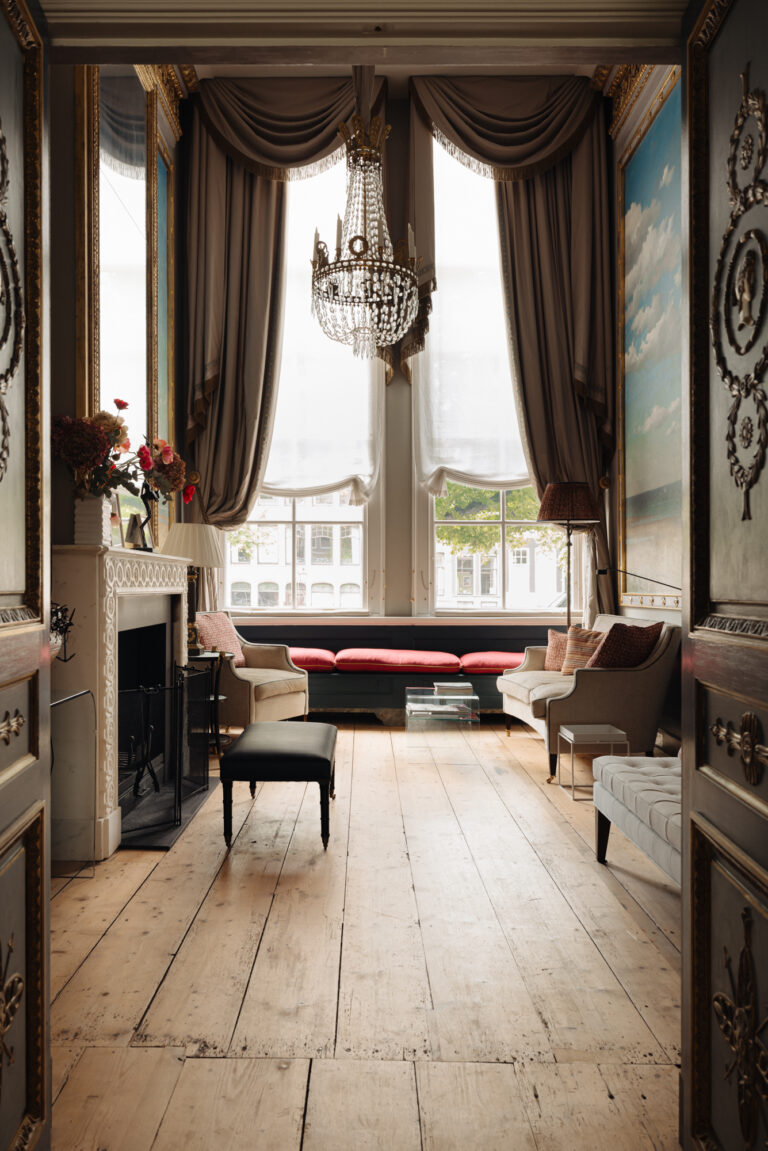
Scagliola, a stucco technique that imitates marble, was mainly used in town halls and palaces in the Netherlands. It is extremely rare in residential houses. The room turned out to be a masterpiece, probably made by the Frisian plasterer J.E. Martens, known for his work in the town hall of Leeuwarden. Hidden behind partition walls for decades, the space reappeared after more than sixty years. Zardoni, a specialist in classical finishing techniques, was called in to restore the scagliola walls. His work brought the original colors and details back to life: deep blue and sand-colored panels framed by white marbled pilasters. The artisanal process – from mixing pigments to polishing the surface – required unprecedented precision and dedication.
In The Edit – The Art of Craftsmanship we highlight Zardoni and other professionals who work to preserve and restore historical heritage. Their dedication to traditional techniques, from marble stucco to gilding, shows that heritage can only be truly future-proof when tradition and craftsmanship go hand in hand.


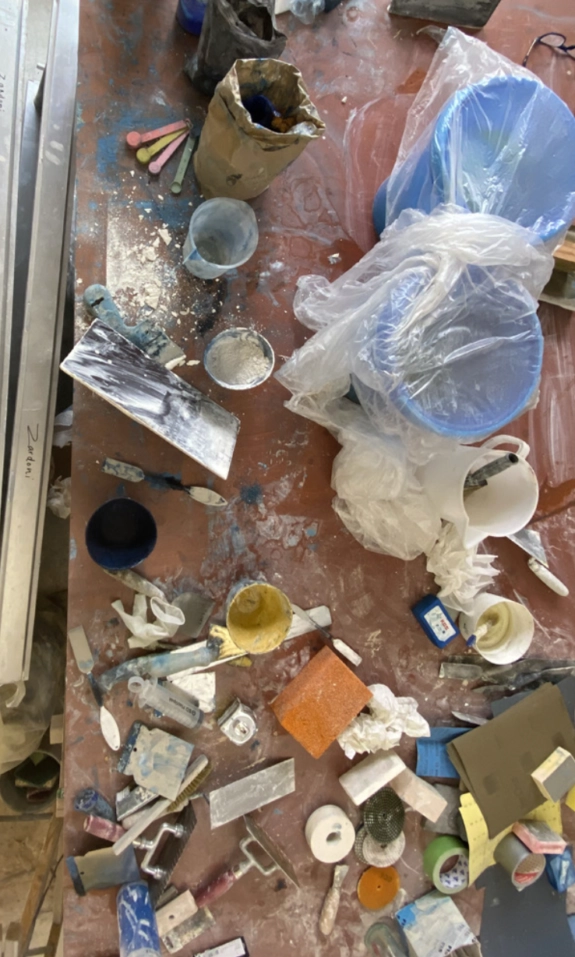
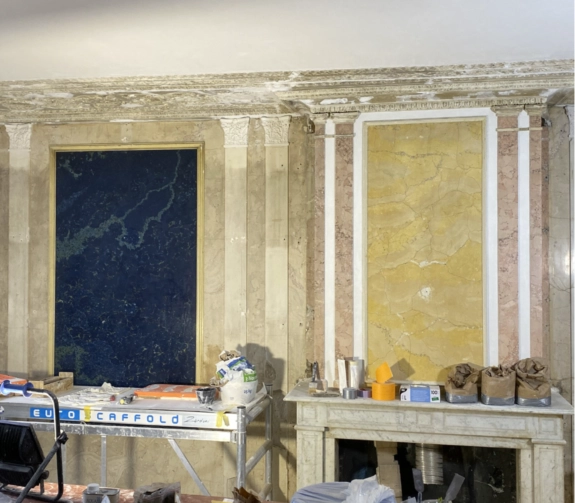
The recently rediscovered stucco marble in the back room of the front house is very rare in the Netherlands. Apart from some damage, the wall finishes are well preserved. This gives the interior a significant art-historical value that should not be underestimated.

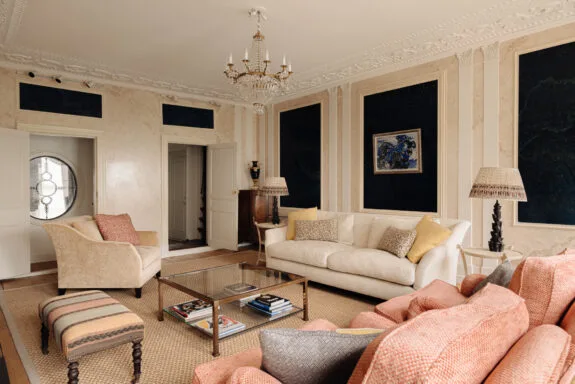
Light and space: a sustainable vision
During the renovation, not only was the preservation of historical elements important, but also the spatial quality and Sustainability of the building. In 2000, an extra floor with a Roof terrace had been added to the existing extension, which meant that the Rooms behind – including the scagliola style room – received hardly any daylight.
Architectenbureau Vroom decided to remove this structure and restore the original light. The internal structure was also optimized: previous renovations had created a maze of passages and staircases, which had caused the spatial logic to be lost. The redevelopment brought back a clear routing, with a central staircase as the backbone of the building.
Sustainable preservation of historical details
Sustainable renovation in a monumental building requires thoughtful choices. New interventions had to not only improve comfort and energy efficiency but also respect the heritage. The approach consisted of three pillars:
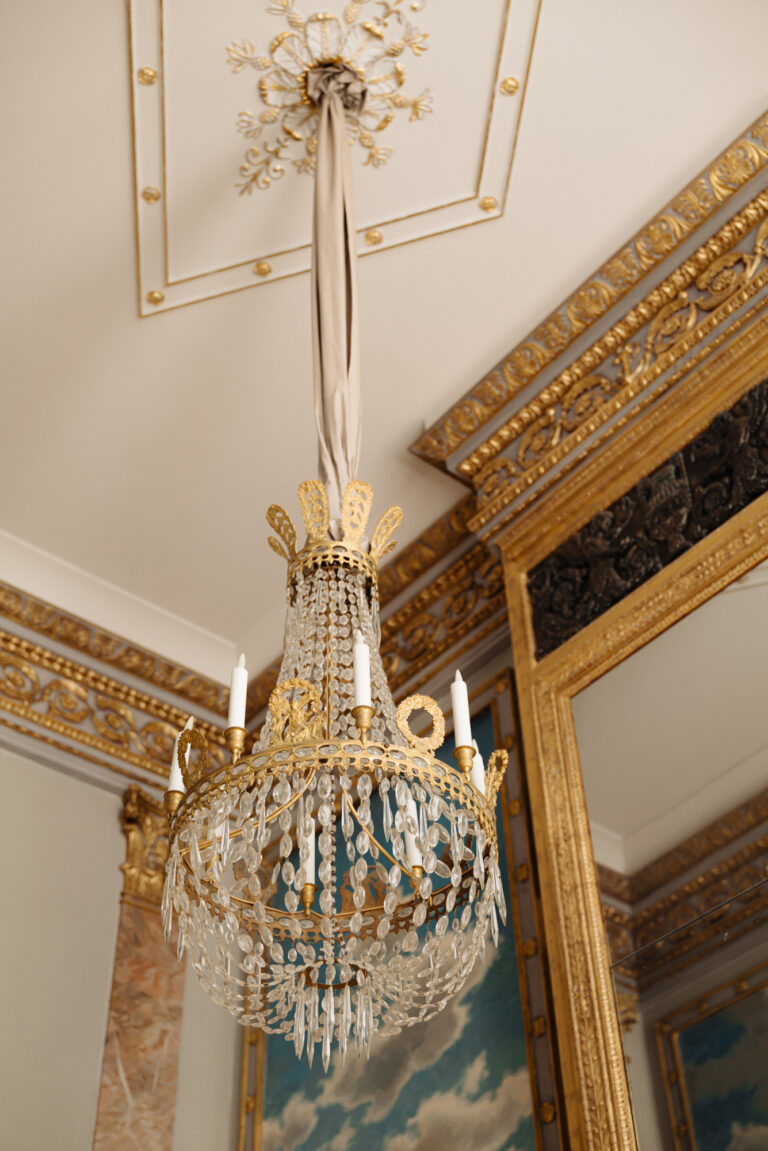
Preservation and restoration: Original materials, such as the scagliola walls, natural stone fireplaces, and historic window frames, were carefully restored.
Sustainable energy supply: Smart insulation solutions and energy-efficient services and installations contribute to lower energy consumption without compromising aesthetics.
Circular materials: Where possible, materials were chosen for reuse. Historic beams, doors, and floors were preserved or reapplied in the interior.


A home for generations
The new layout of the house reflects the owner's contemporary living requirements and is designed for two generations: parents on the ground floor and children studying upstairs. The basement houses a home office and a guest room. The main floor serves as the living area with a spacious kitchen/dining room, while the mezzanine houses a study, with the scagliola style room as a striking element. The master bedroom, a walk-in closet, and the bathroom are located on the first floor. The second floor offers space for a sitting room, a kitchen/dining room, and a toilet. The attic floor has several bedrooms Bathrooms, while the loft is an open space in which the original hoist wheel has been preserved. Thanks to this well-thought-out layout, the house can easily adapt to changing living needs without major alterations.
The garden house – a timeless retreat
At the rear of the garden stands a monumental garden house from 1832, which underwent a subtle transformation during the redevelopment. The facade, which was largely renovated in the 20th century during an earlier restoration, has been preserved. Inside, a modest, contemporary office has been created, with the historical elements integrated into the design. The wooden frames in the facade served as inspiration for the custom interior, which seamlessly adapts to the original architecture.


"The facade, which was largely renovated during an earlier restoration in the 20th century, has been preserved."

Keizersgracht 443 – a vision of timeless living
This redevelopment proves that heritage and modern living comfort can go hand in hand. The scagliola room, the restored staircase and the well-thought-out incidence of light show the respect for history, while sustainable improvements make the house ready for the future.
With the commitment of Architectenbureau Vroom and the masterful restoration by Zardoni, Keizersgracht 443 is not only a prime example of Amsterdam canal architecture, but also living proof that historical craftsmanship and contemporary Sustainability can reinforce each other.
Thanks to Architectenbureau Vroom.
Vroomarch.nl
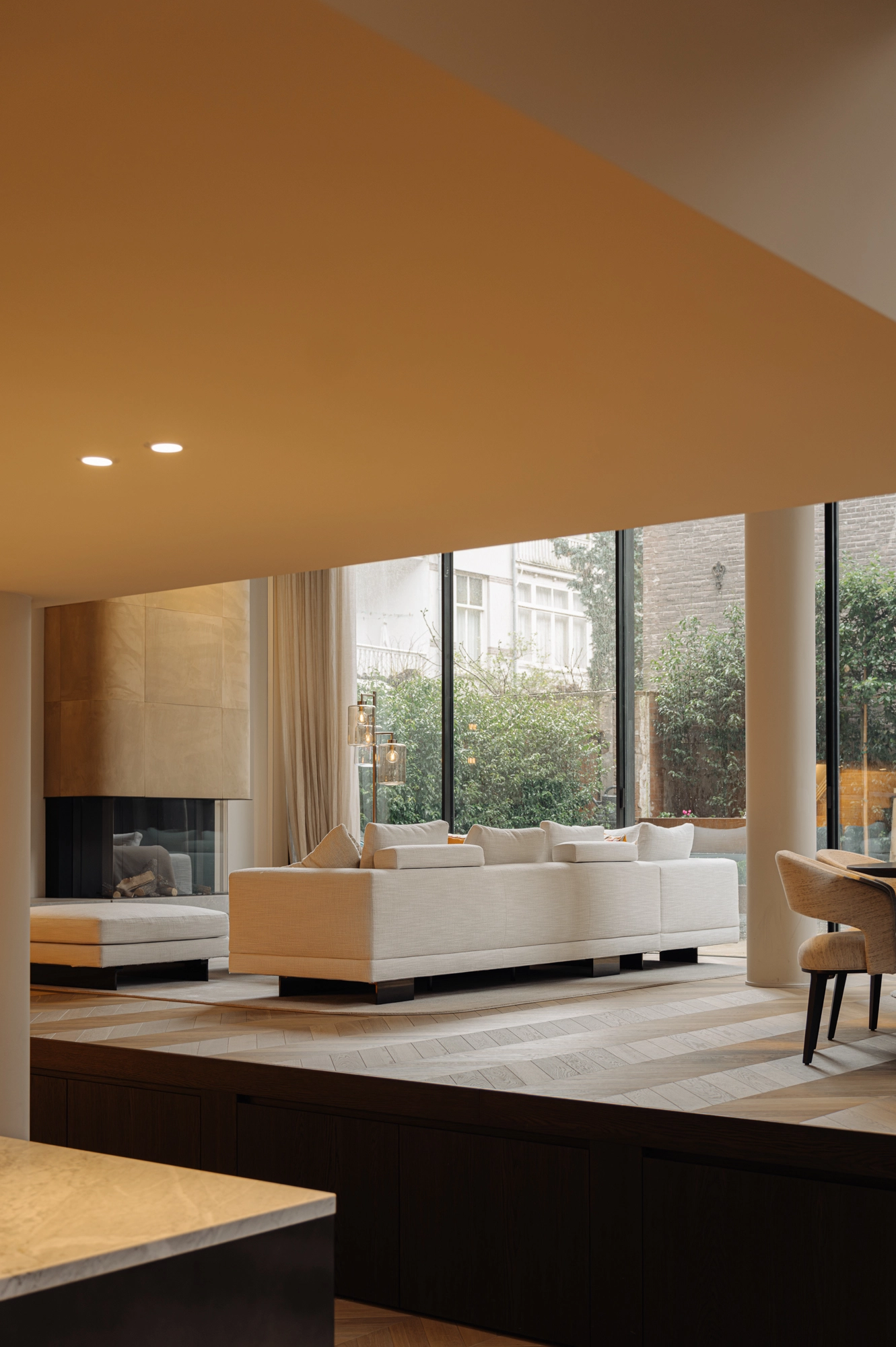
Spotlight: 'Rijks Loft' This unique loft of approximately 398 m², built in 2021, offers unparalleled heights and an abundance of natural light, located in the heart of Oud-Zuid, close to Museumplein and Vondelpark. The absolute highlight of this loft is the living area, with a ceiling height of 4.5 meters and an impressive facade facing the southwest-facing garden. Dépôt Zuid, a former monumental warehouse, was completely redeveloped in 2021 into eighteen exclusive apartments that meet the highest standards. Discover more about this unique loft here.
The Creative Advantages of Working in Amsterdam; Amsterdam is much more than a city of canals, bicycles, and tulips. It is a vibrant hub for creativity, innovation, and collaboration. For companies, startups, and independent creatives, this city offers a unique breeding ground for ideas to flourish. But what makes working in Amsterdam so special? Read more

There's always something fun to do in Amsterdam, but what about April 2025? In the new year, we can visit museums, theaters, and cinemas again, and enjoy all the cultural activities that Amsterdam has to offer. The city's offerings are diverse and interesting once more! Read our latest cultural tips here.