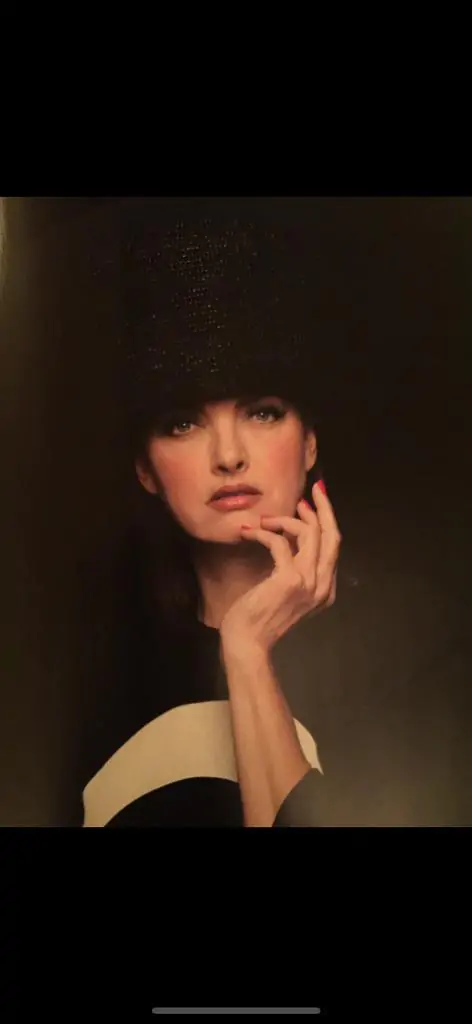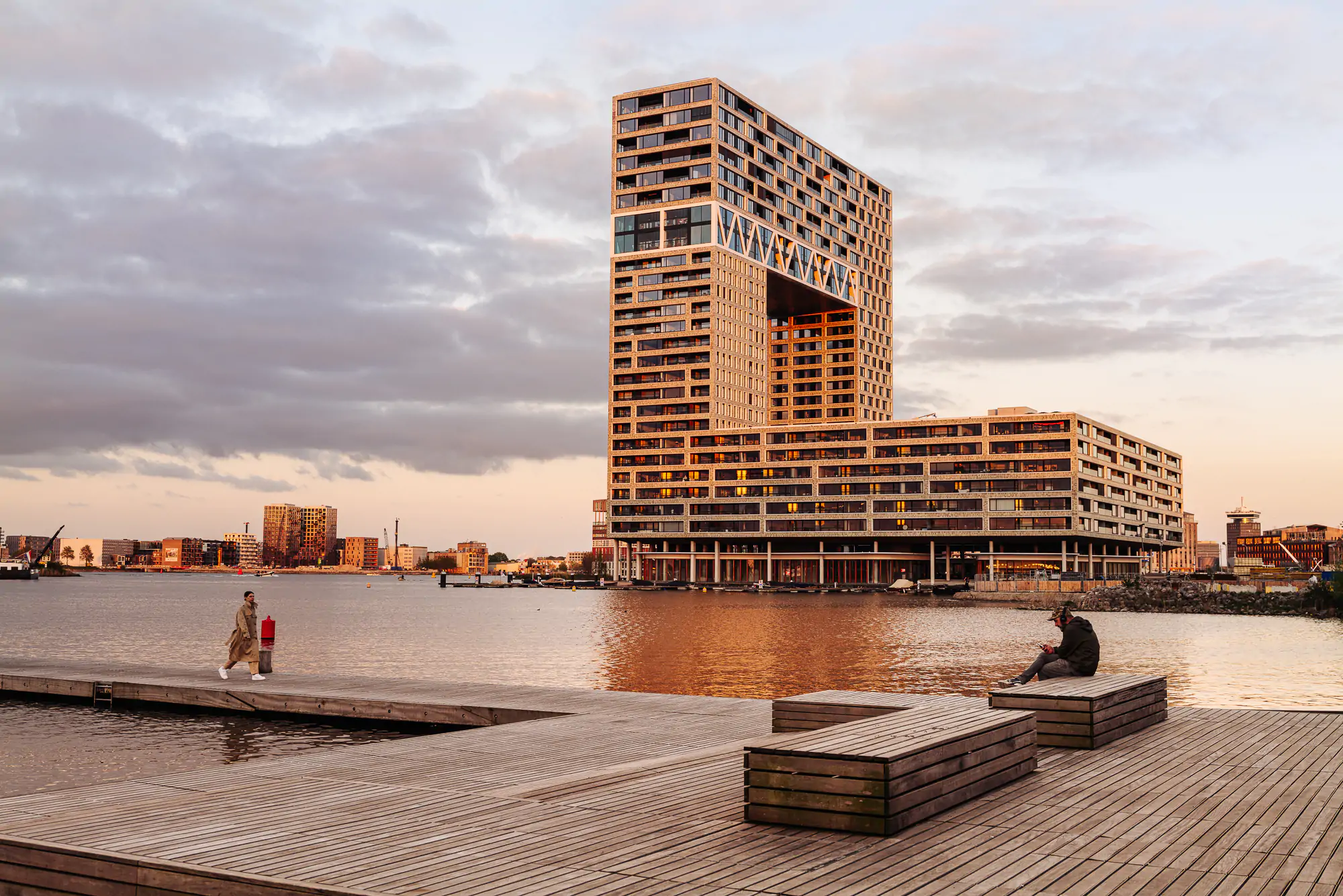
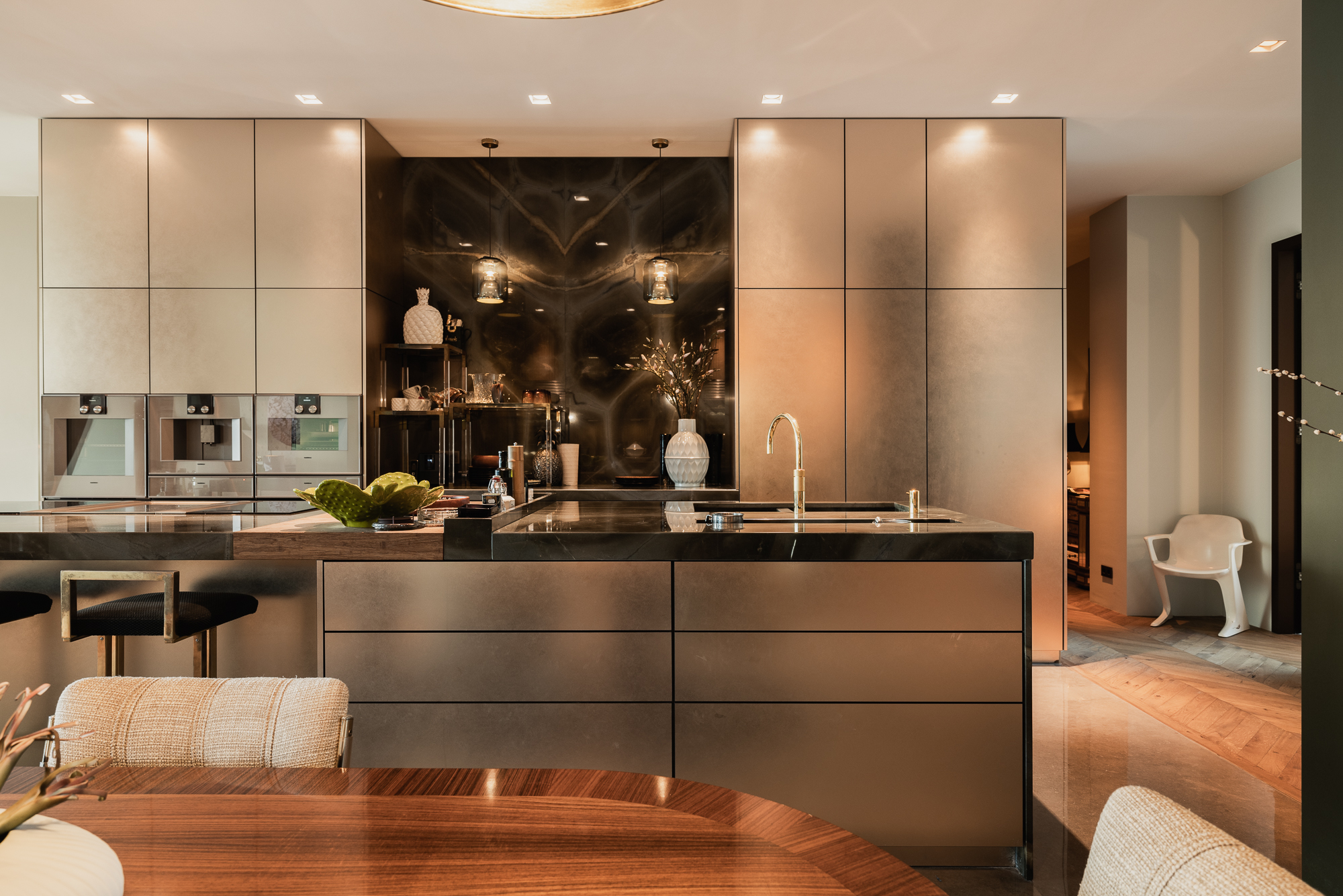
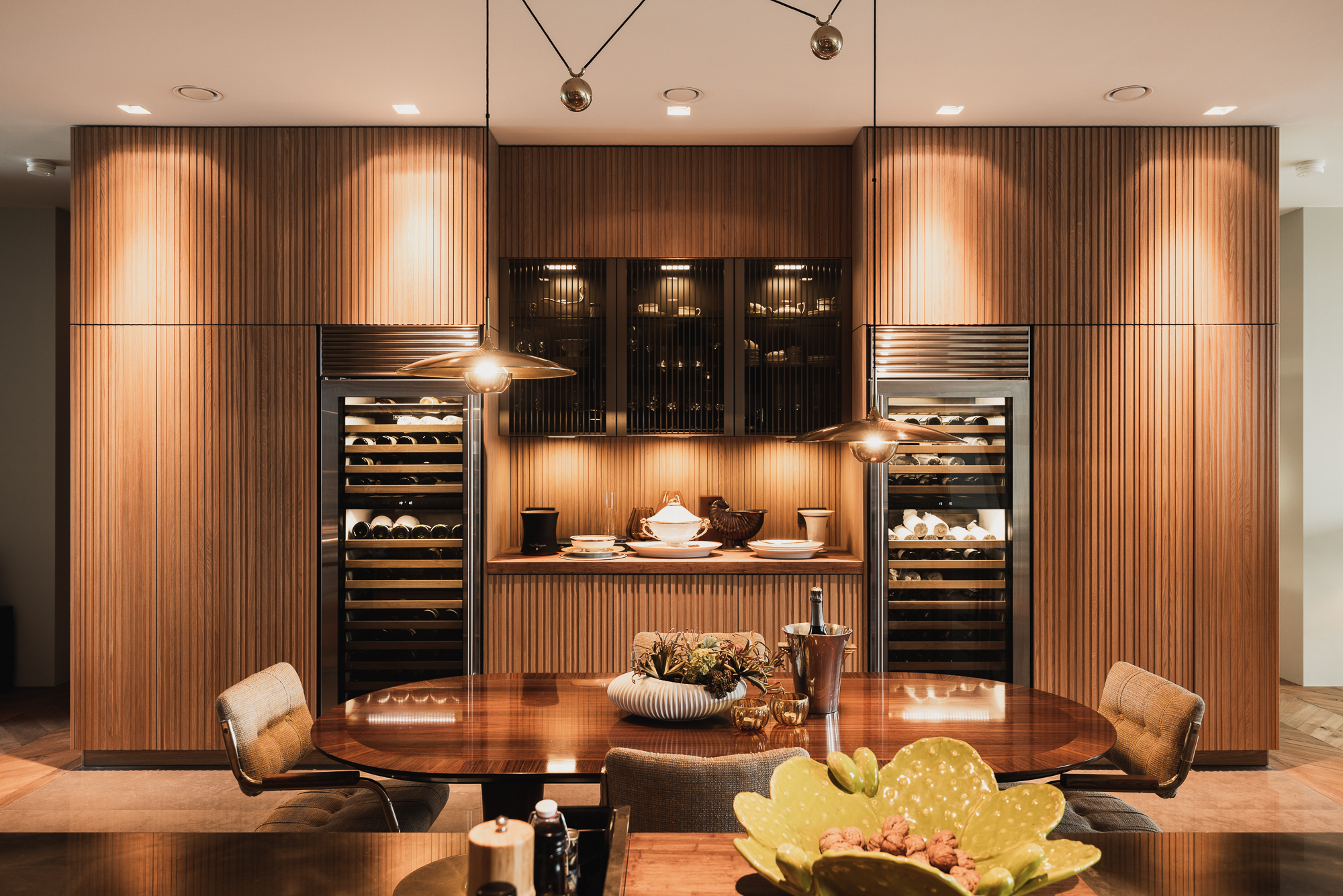
Eclectic living in over 300 square meters on the nineteenth floor of the Pontsteiger building on the IJ. Anja Henneman, former top model, designed the interior and furnished it with unique vintage furniture from all over the world.
“As a model, I have traveled all over the world and have become interested in different styles. But actually, interior design has interested me since I was young. My grandfather was also a furniture maker. I started out as a seamstress and moved to Paris when I was 21. I became a model there, but the sewing machine was always my backup.”
Jean Paul Gaultier, Christian Dior, and Frans Molenaar
Walking in shows for designers such as Jean Paul Gaultier, Christian Dior, and basically all the major designers of that era (the 1980s and 1990s) was my job, but it was also a great source of inspiration. I was already collecting vintage furniture at that time. I was particularly interested in furniture from the 1950s and 1960s, but art deco also caught my eye. Initially, Ionly did interior design for myself, but later I also did it for restaurants and bars and a few private clients. My first project in the 1990s. I was still working as a model at the time, and what I had seen and experienced on my travels helped me develop an international style with allure. Nowadays, you could call it eclectic. For five years,Ihad a small shop (Antonia no 1) at the Noordermarkt, where I Sold the Frans Molenaar collection from the 1980s until his death. At that time, I also had small furniture, mainly from the 1950s, 1960s, and 1970s.
Vintage
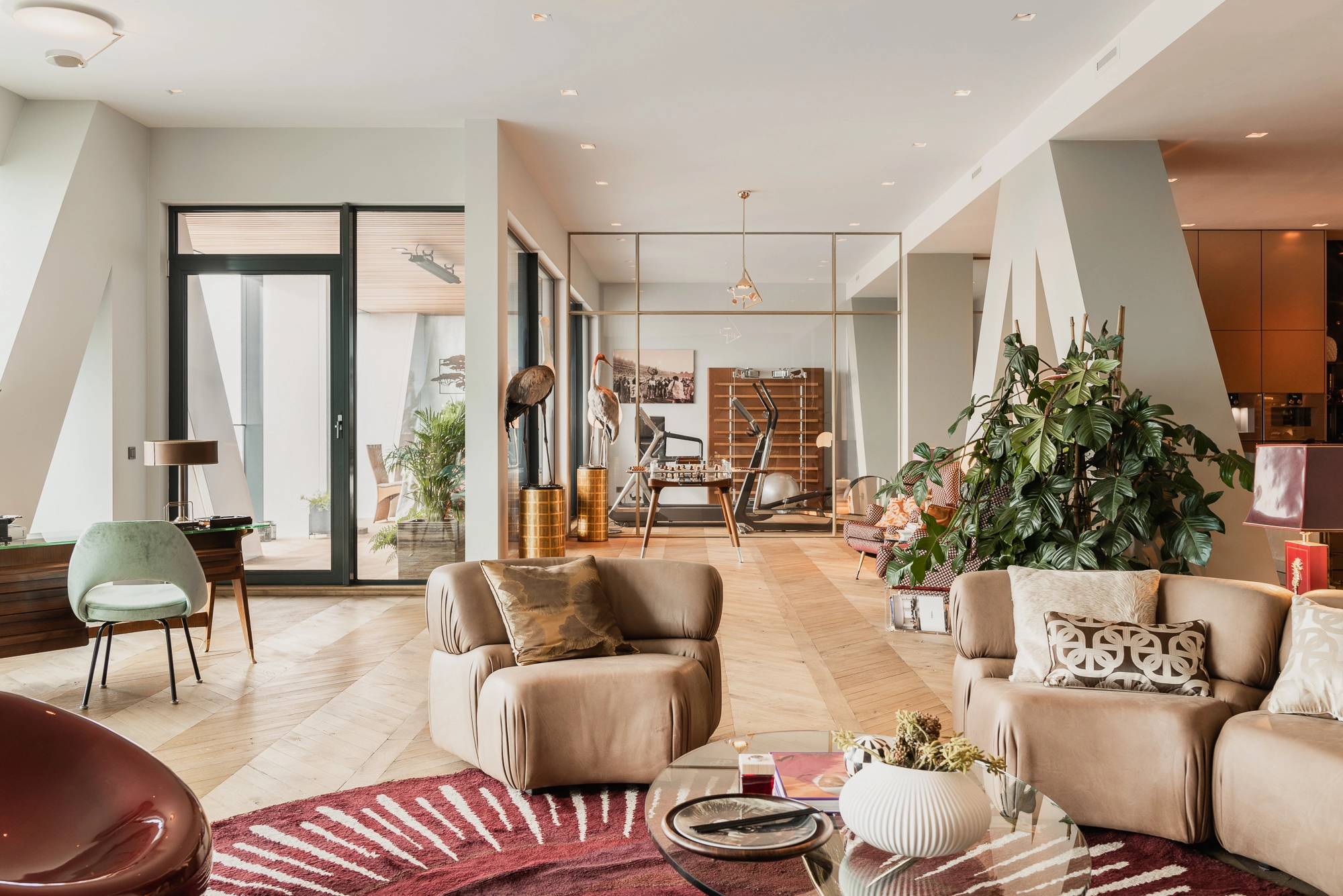
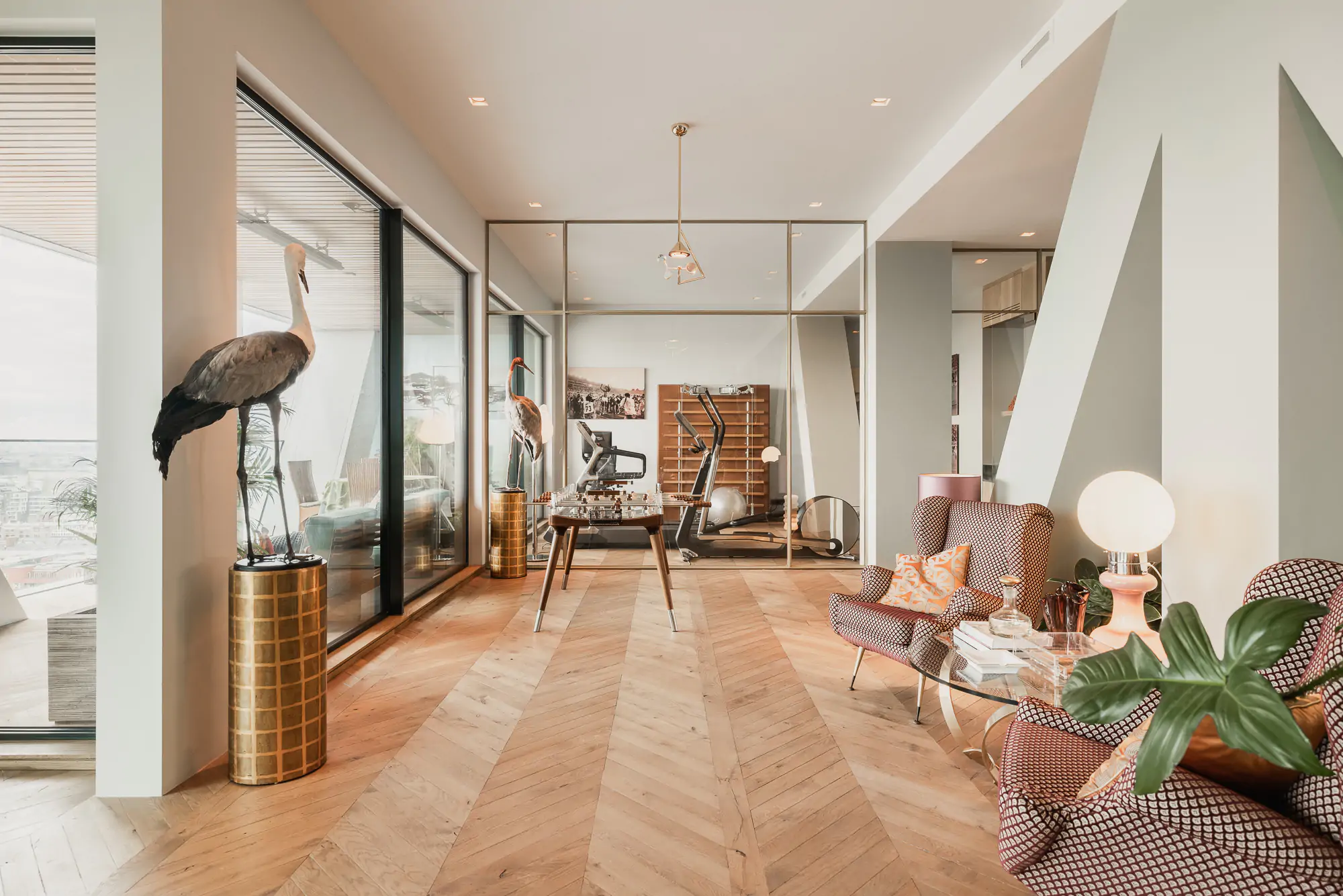
“I love the originality and history of vintage fabrics and furniture. It's alive. That's how I approached this house. Take the floor, for example. I wanted something homely, something warm, but also something that would suit any interior. The floor should literally be secondary. I opted for an oak floor in a Hungarian point pattern, but not in the traditional way. The inspiration comes from apartments in Paris. When renovations began there with the demolition of walls, a vertical slat was laid in that spot to hold the floor together. I applied the same technique here, which gives the floor less of a single direction but adds life. The floor in the loggia is teak and laid in the same herringbone pattern. By oiling the floor, it takes on the same color as the floor inside, creating a visual transition between the inside and outside. The apartment on the nineteenth floor was originally designed with corridors and walls. I wanted to make use of both the light at the front and at the back, so I changed the layout. I started by placing the kitchen centrally in the middle.
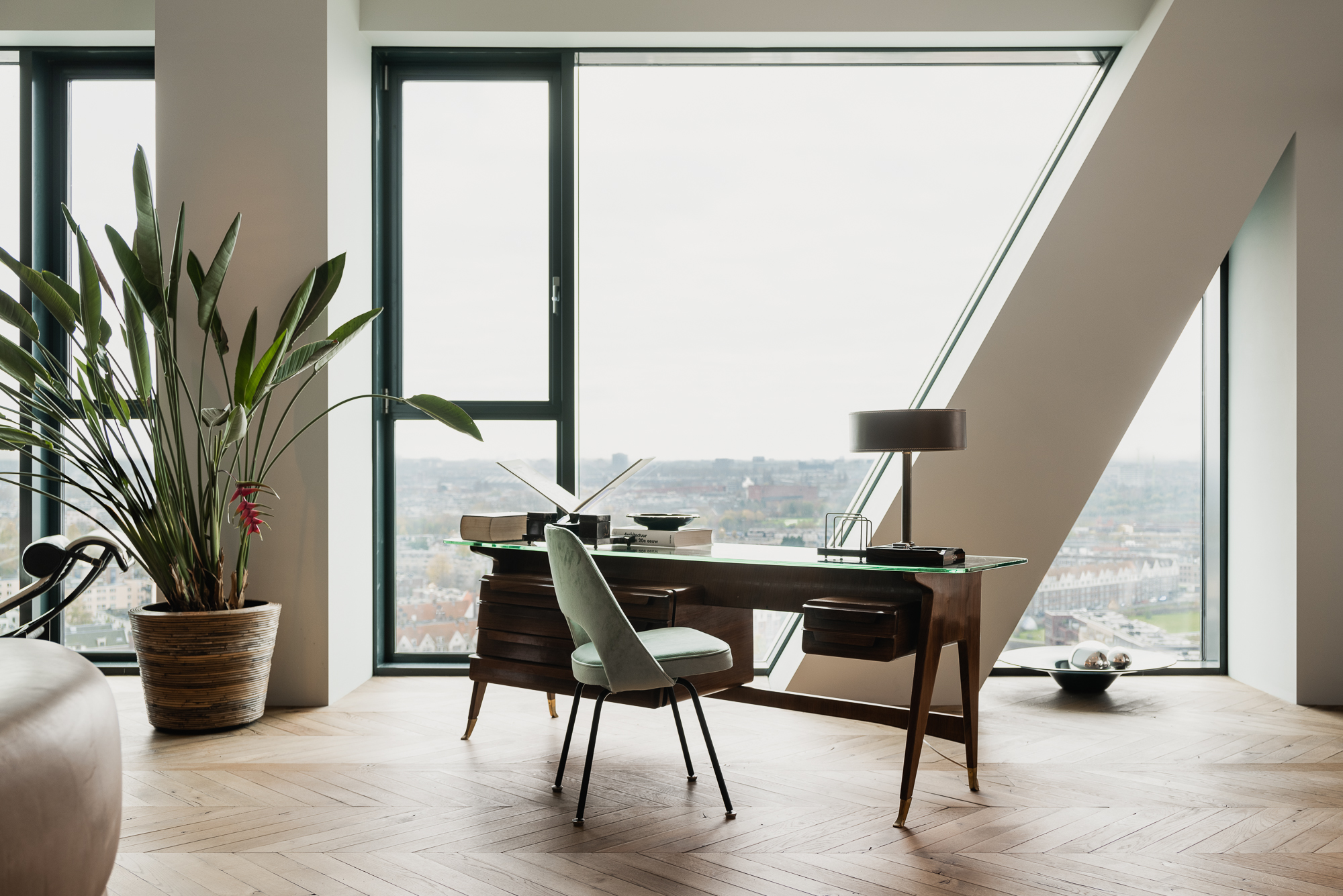
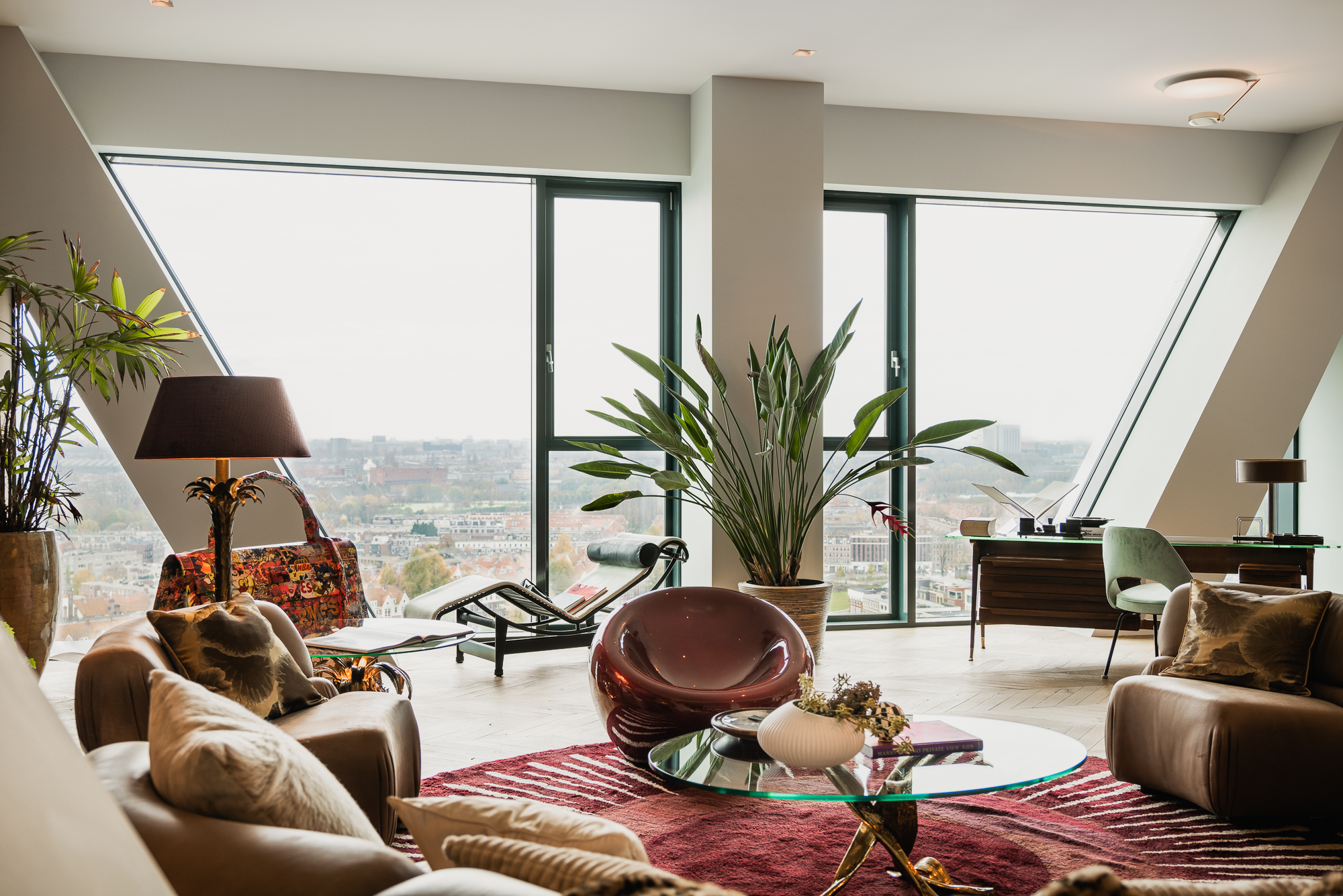
The style here may appear to be a hodgepodge, but if you look closely, you will see that various details are consistently repeated. For example, the legs of the chairs in the sitting area match the legs of the desk and the sideboard. I wanted to design an apartment that exudes international allure. In fact, it should be able to fit into any city. The apartment is 95% furnished with vintage items. It was a challenge to mix furniture from different designers. In the end, I opted for designs from several designers from the same period. Thanks to the same use of color (fashion) from that era, it combines surprisingly well."
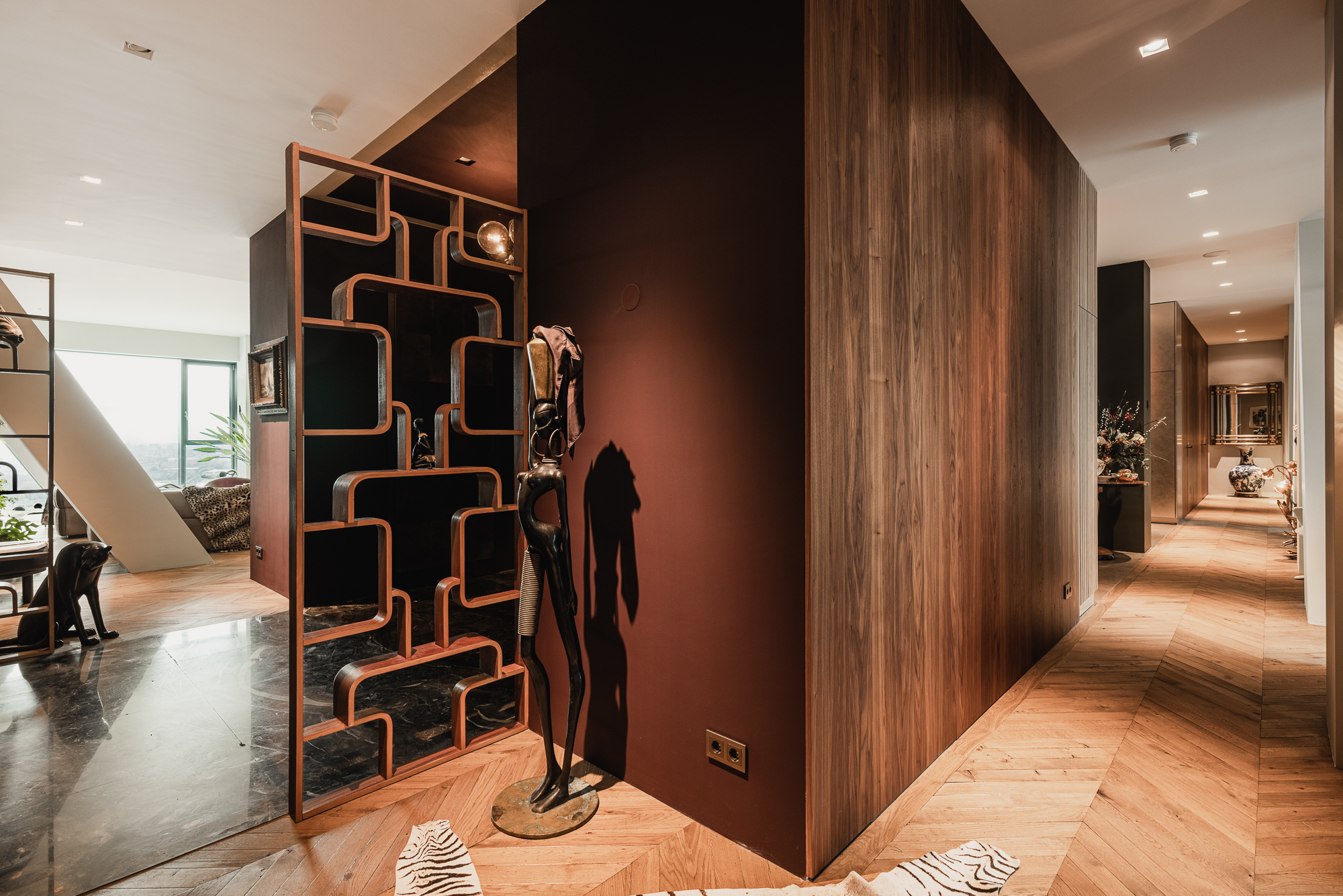
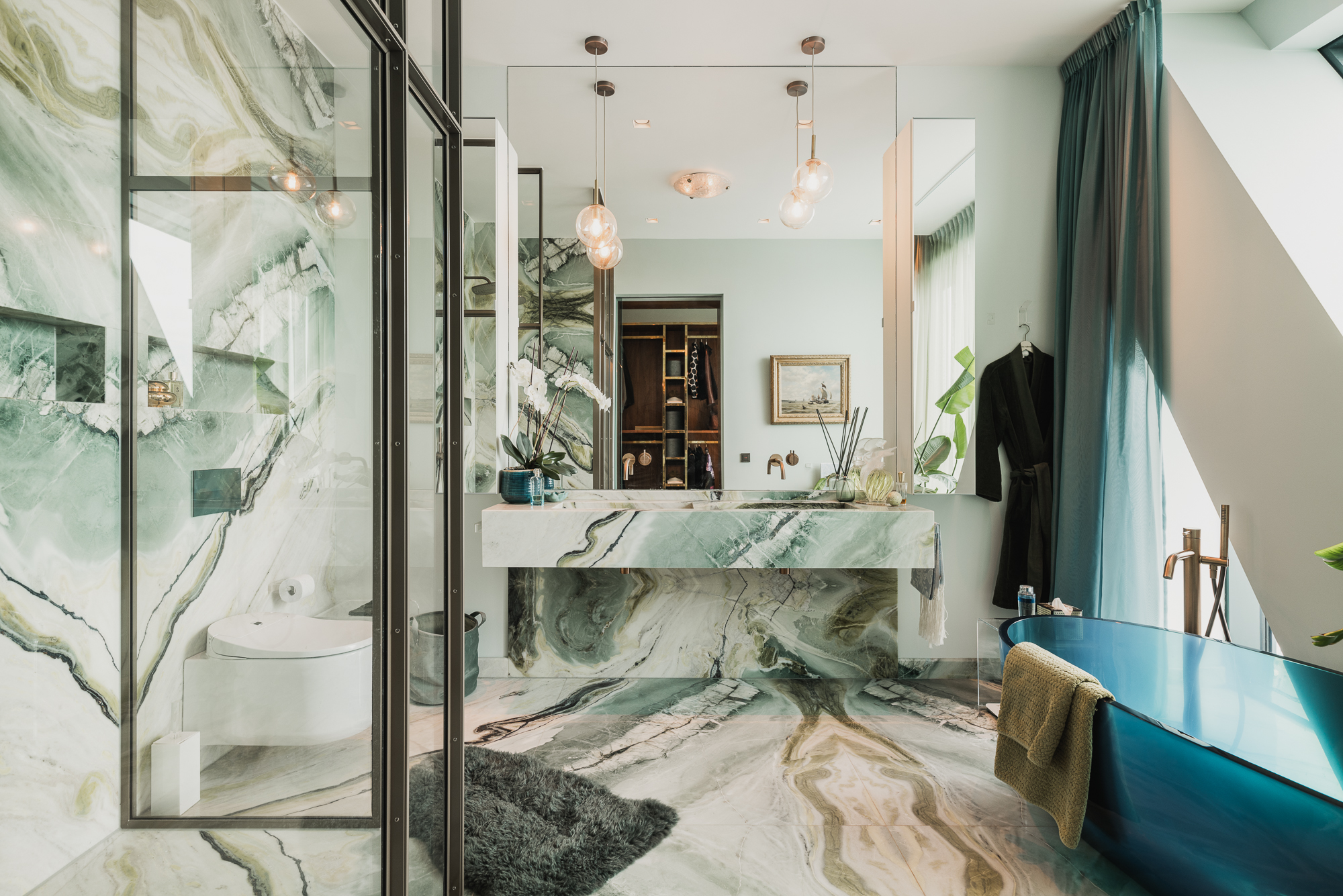
The sideboard and desk were designed by Orsvaldo Borsani for his own company, Tecno, in the late 1950s. The enormous round rug from the 1940s was designed by an architect. The sofa is one of the first examples of a sofa consisting of separate elements. The silver-plated giant dollar bill on the wall is by artist John Breed from Egmond aan Zee. The room dividers come from the former Eastern Bloc. Lamps are by Maison Bagues and Hans Kögl, among others. The marble in the Bathrooms from Brazil and is unfolded like a book, creating symmetrical flames. The colors of the walls in the bedroom and bathroom, as well as the various curtains, are all slightly different shades. The benches and chairs in the cinema are from Casina and are all adjustable in shape. I have always loved the glamour of the 1950s. So many elegant and practical products were made just after the war. I love useful and elegant things, especially products that are beautifully made. I really enjoy traditional craftsmanship. I also like to combine these with slightly crazy, unusual objects, such as the metal Kelly bag that once stood in the Hermès window on Rue de Faubourg.
“It has ultimately become a pleasant, livable apartment where you can enjoy the beautiful view.”