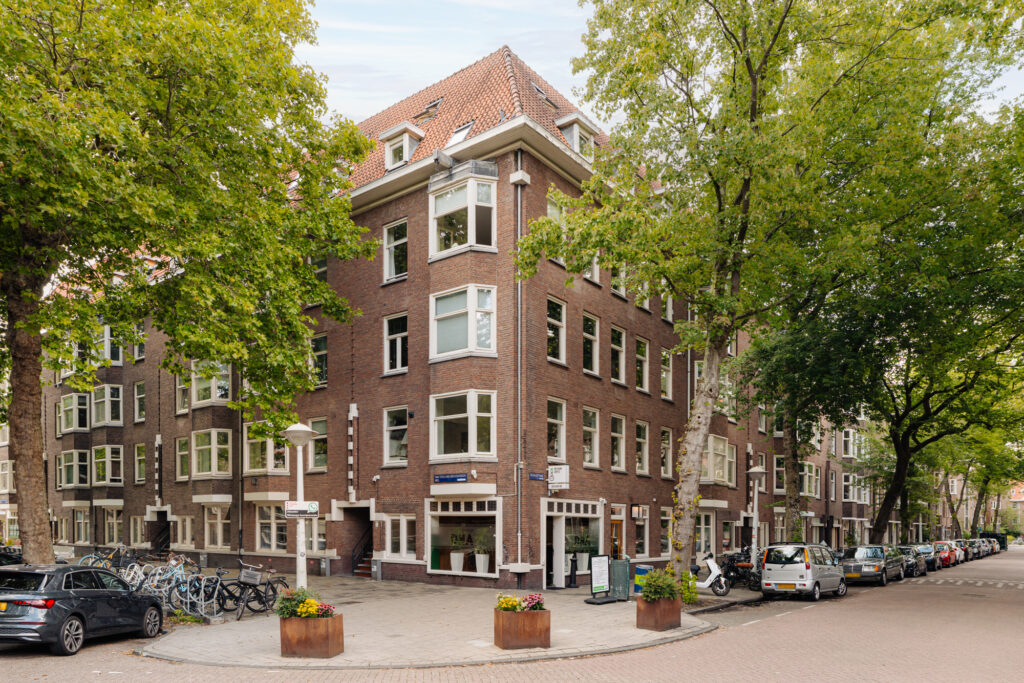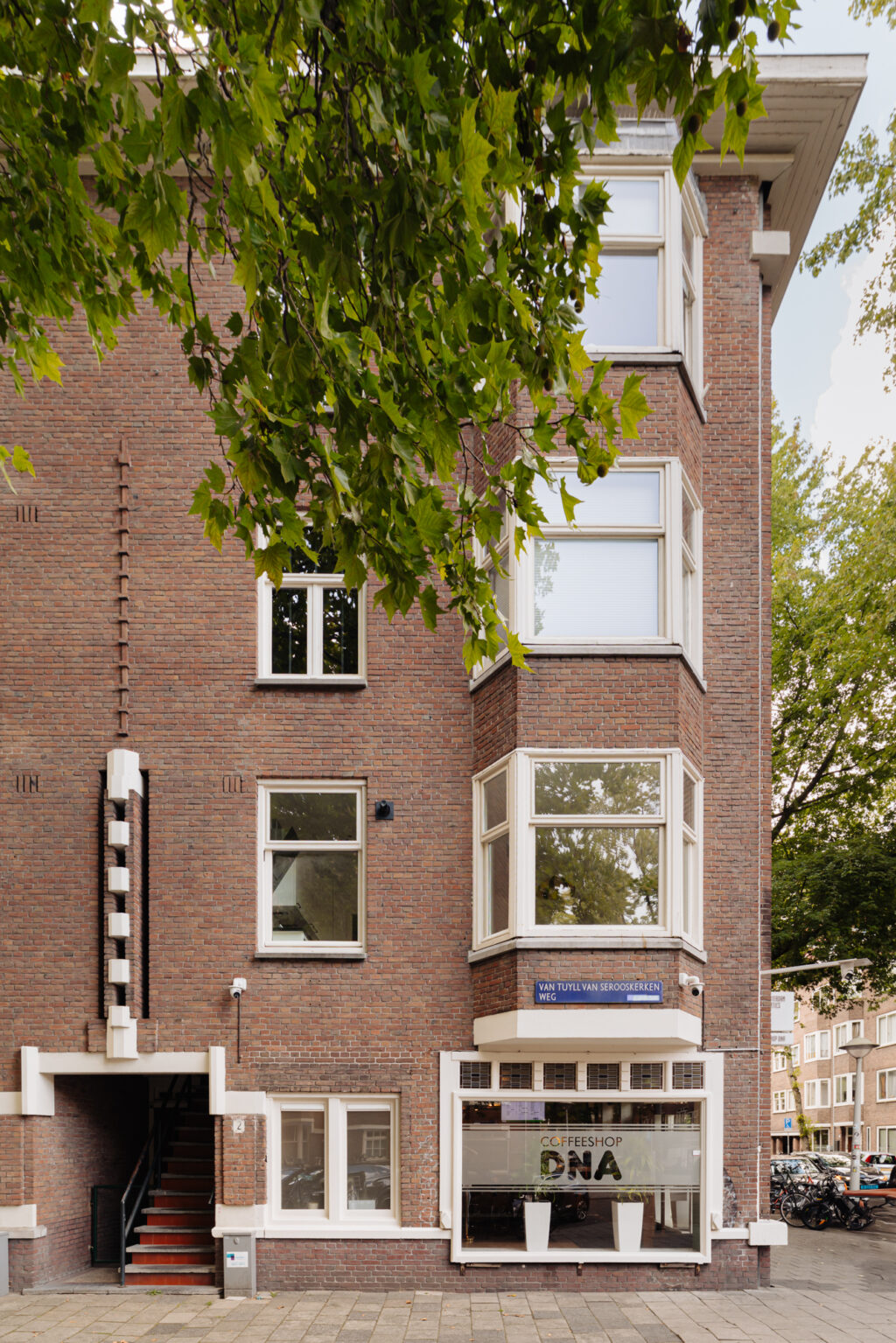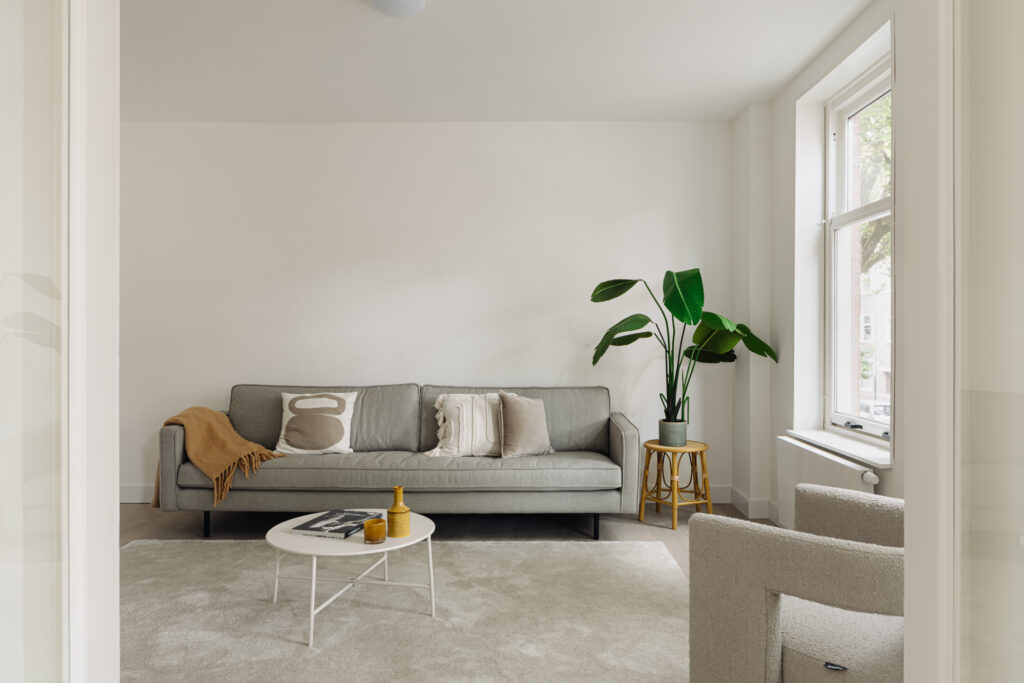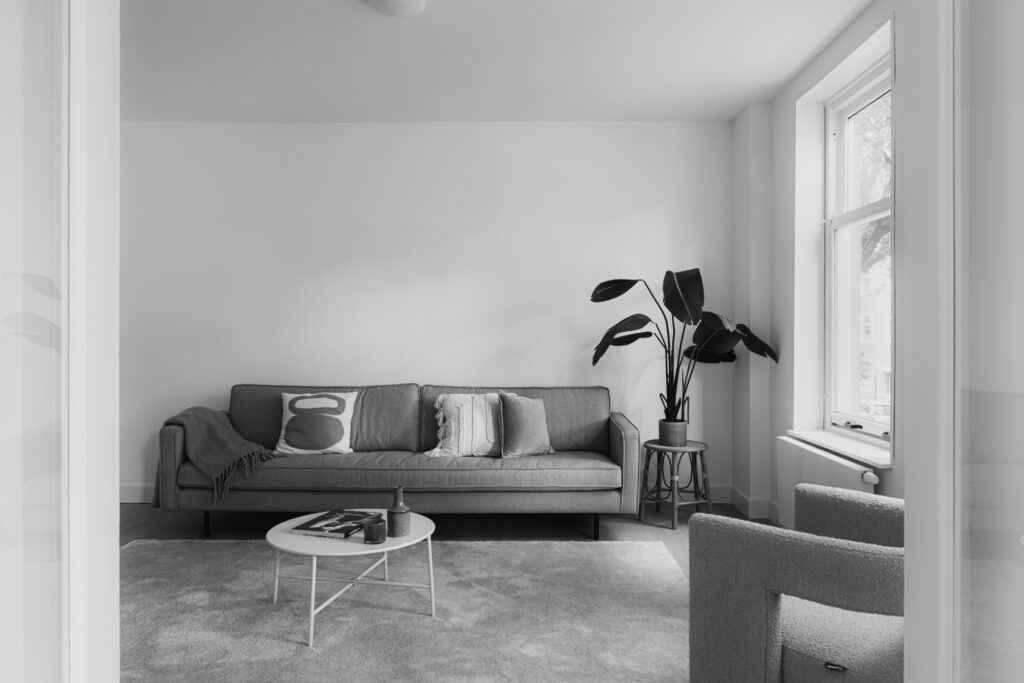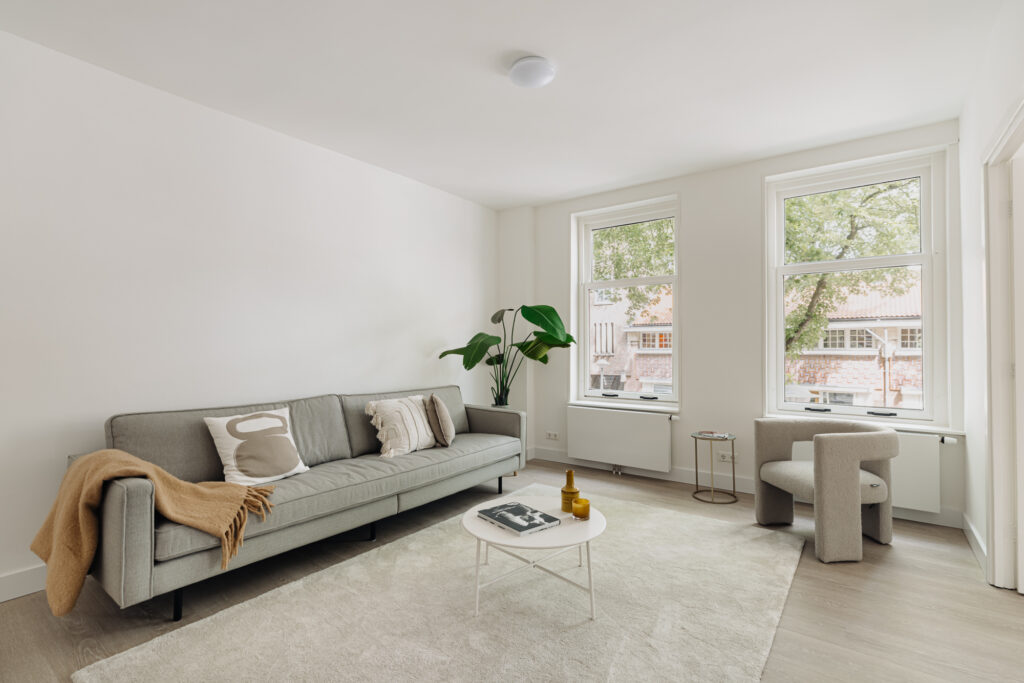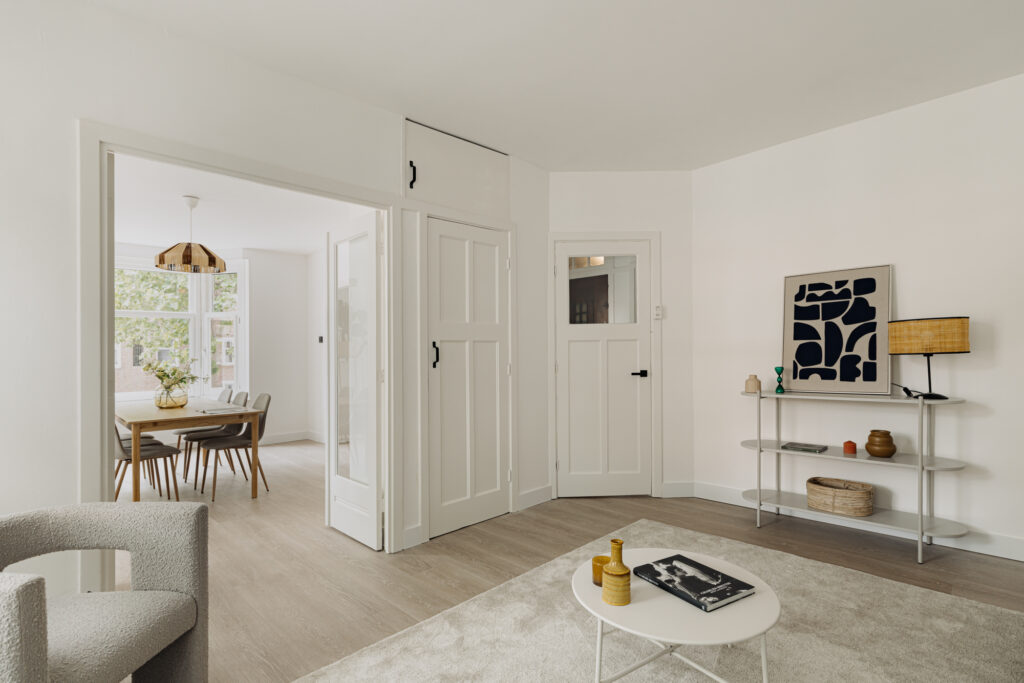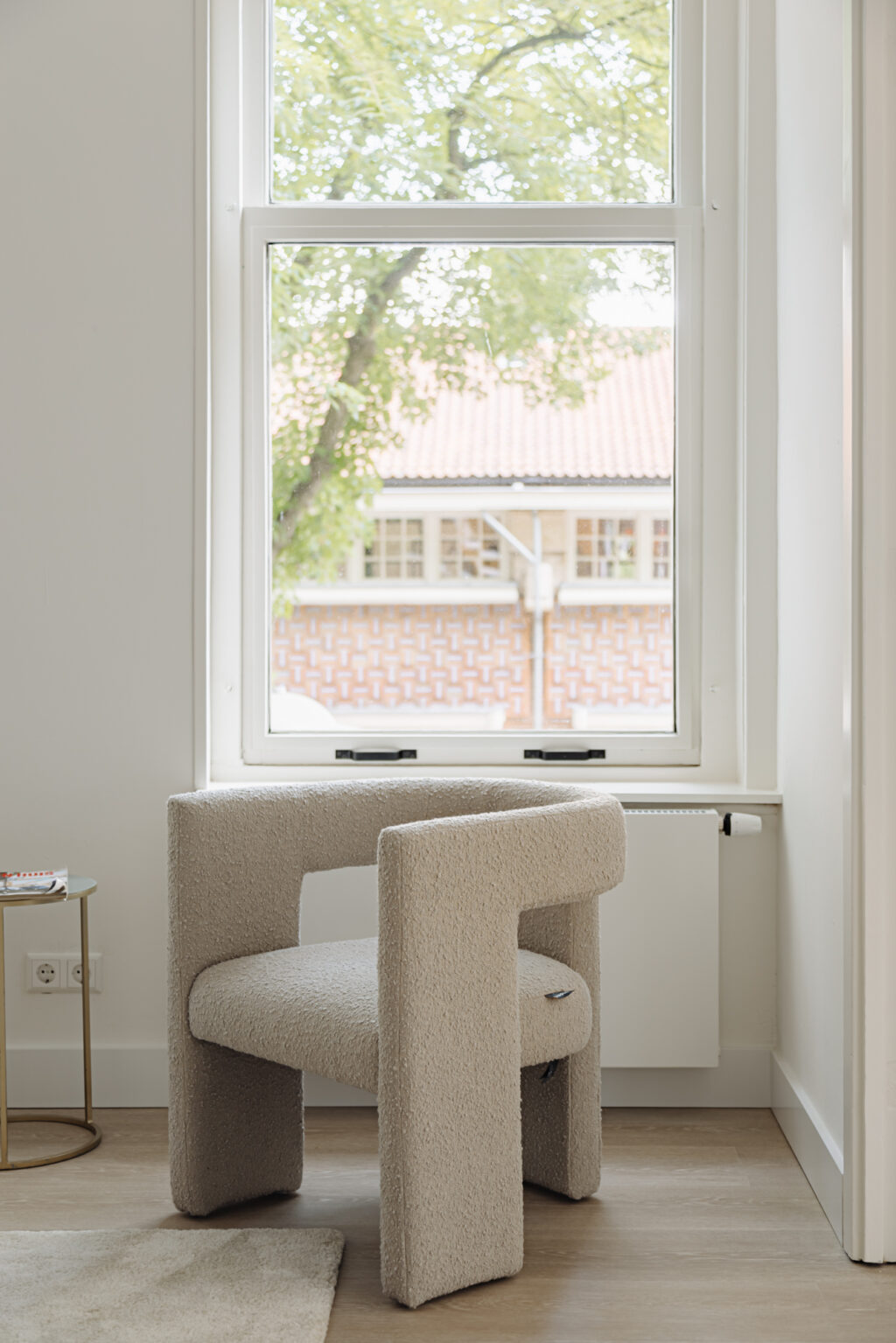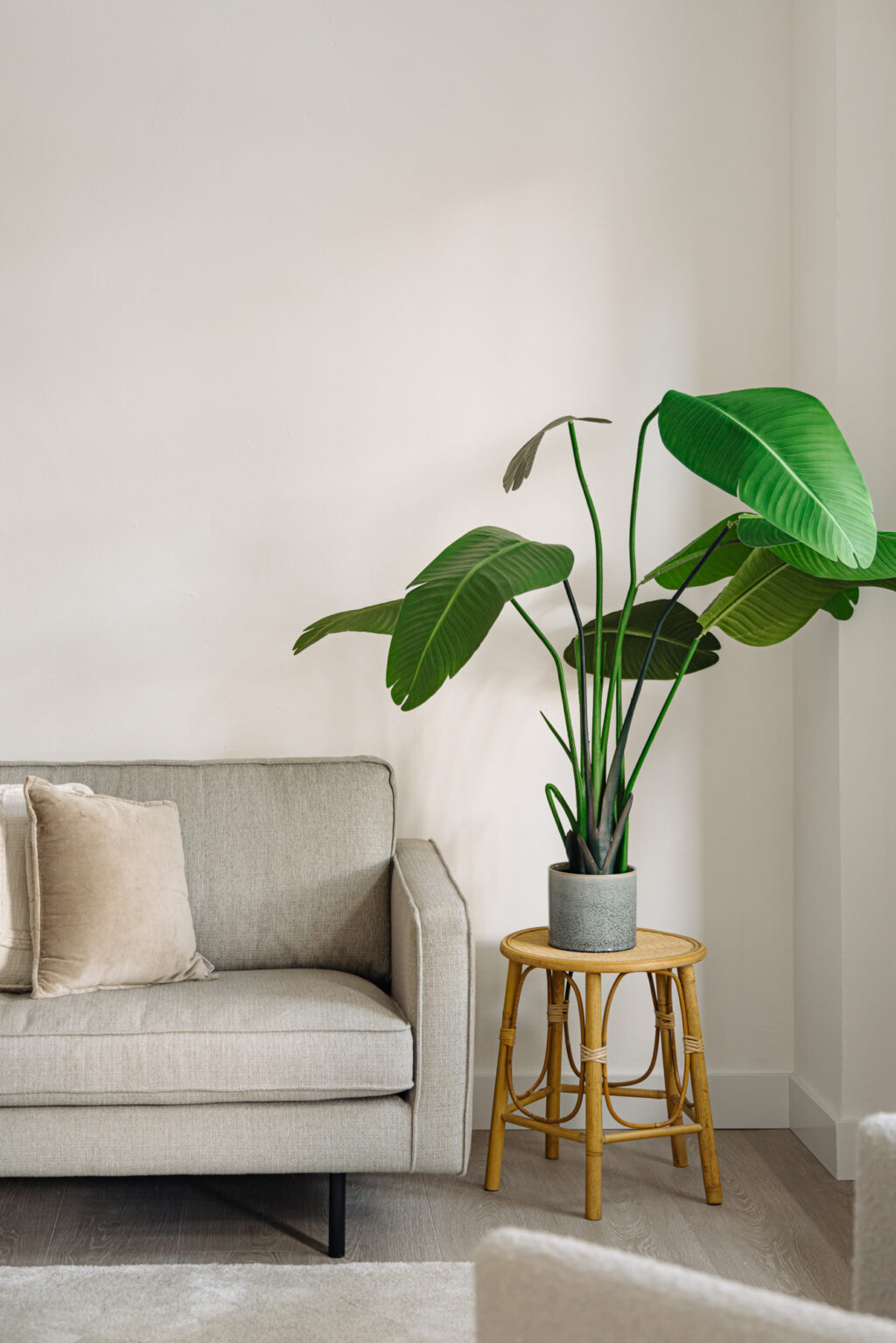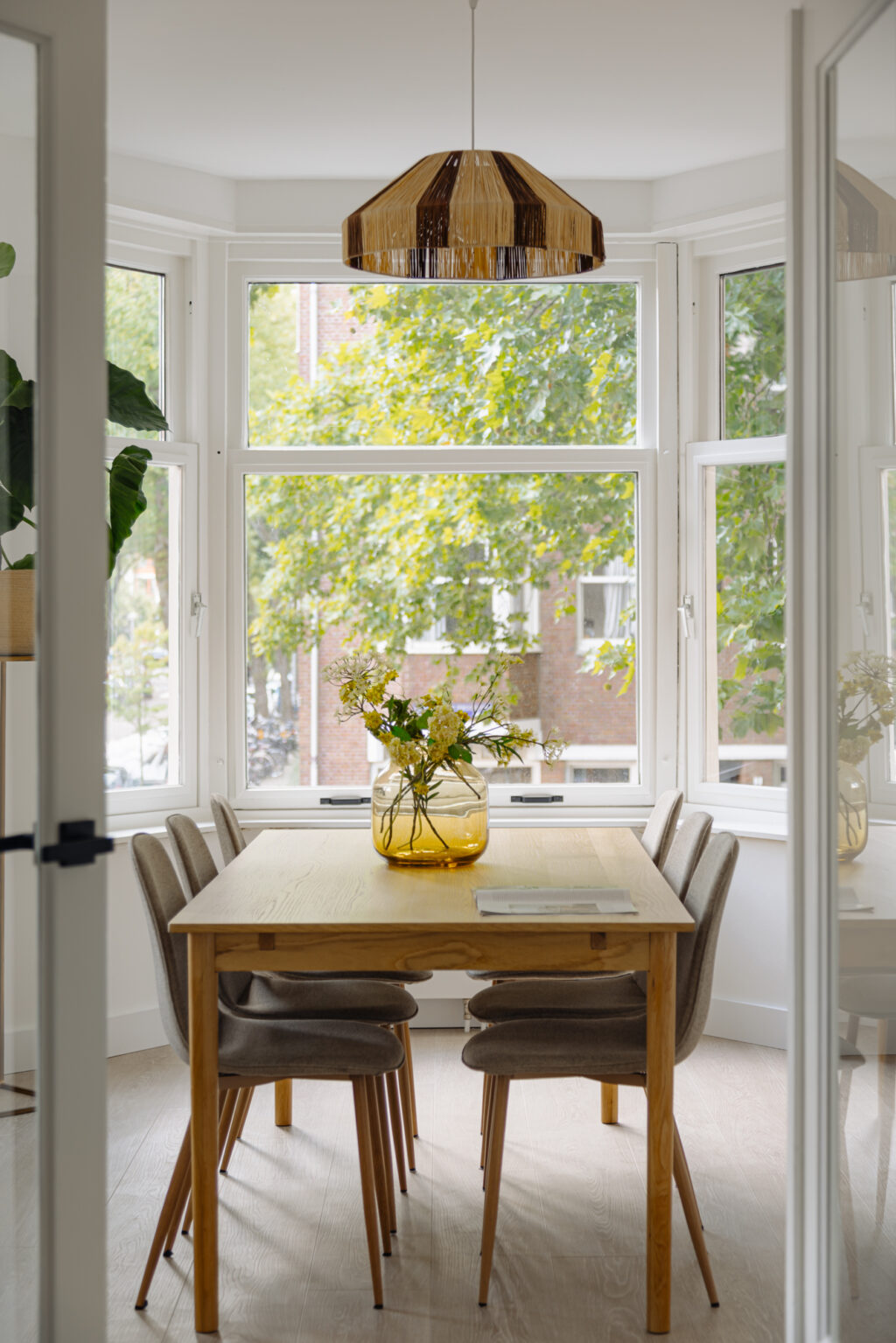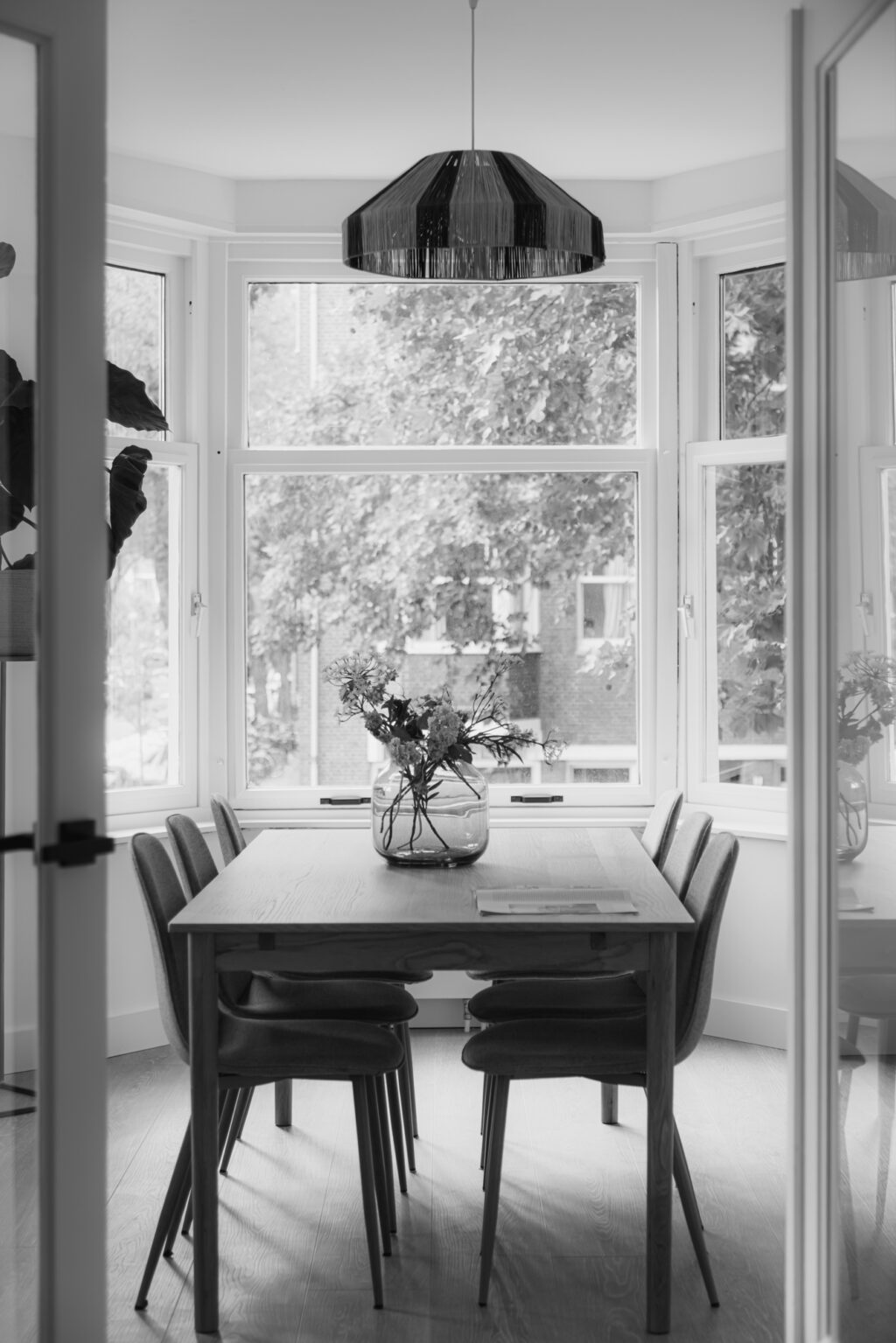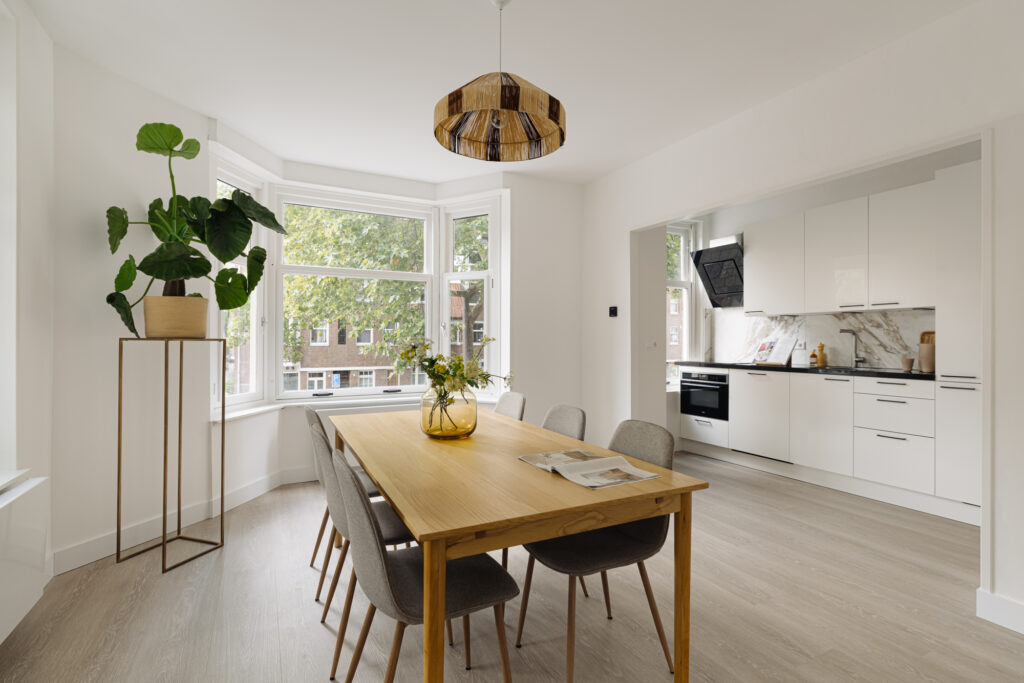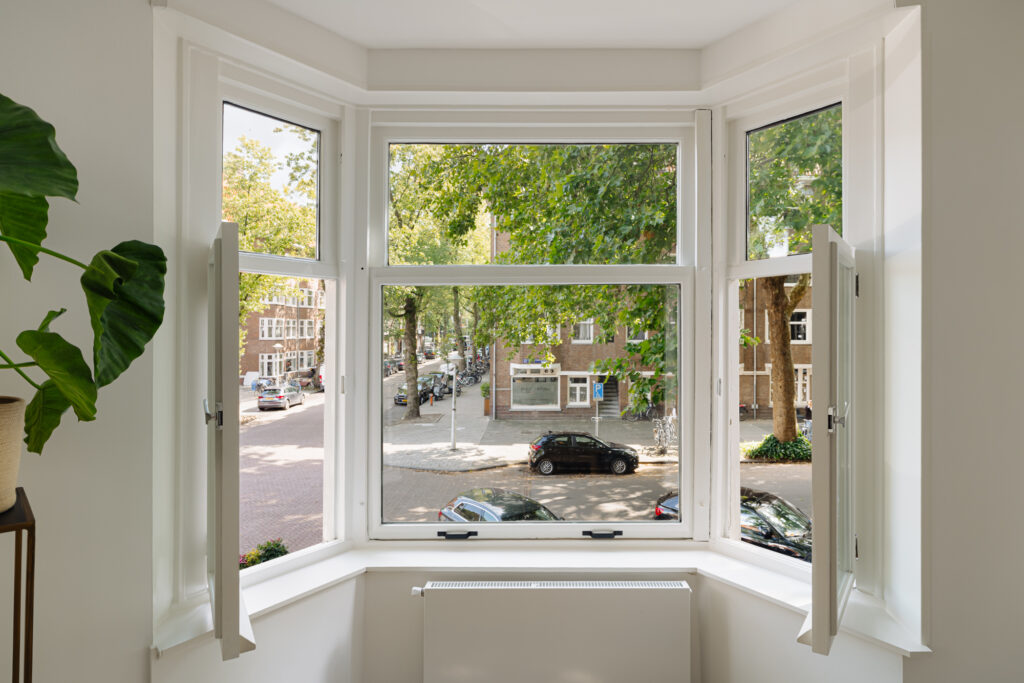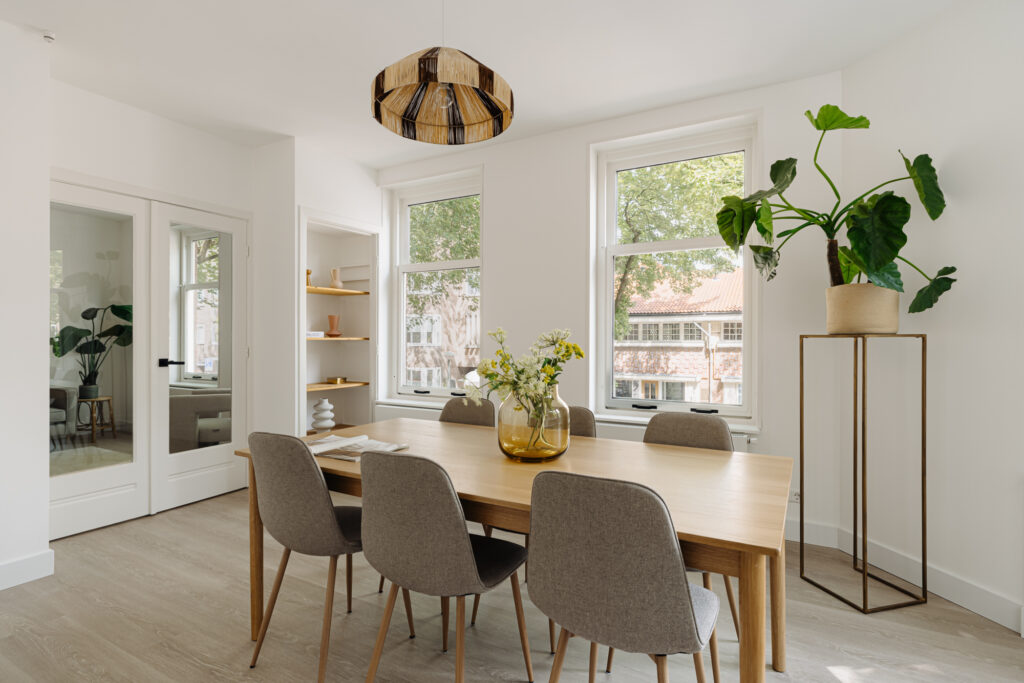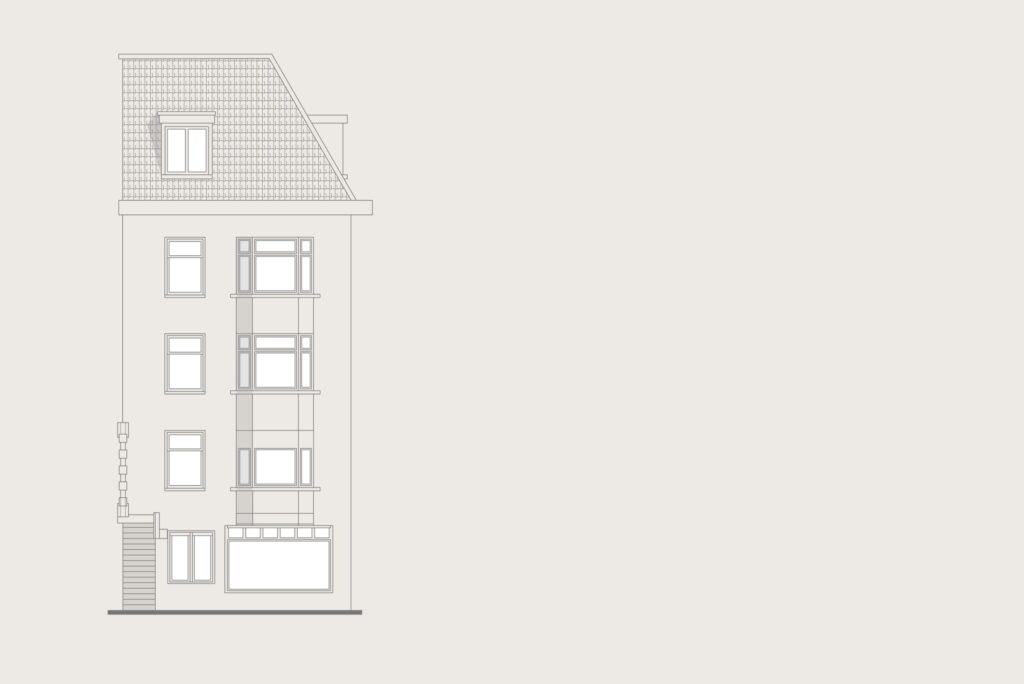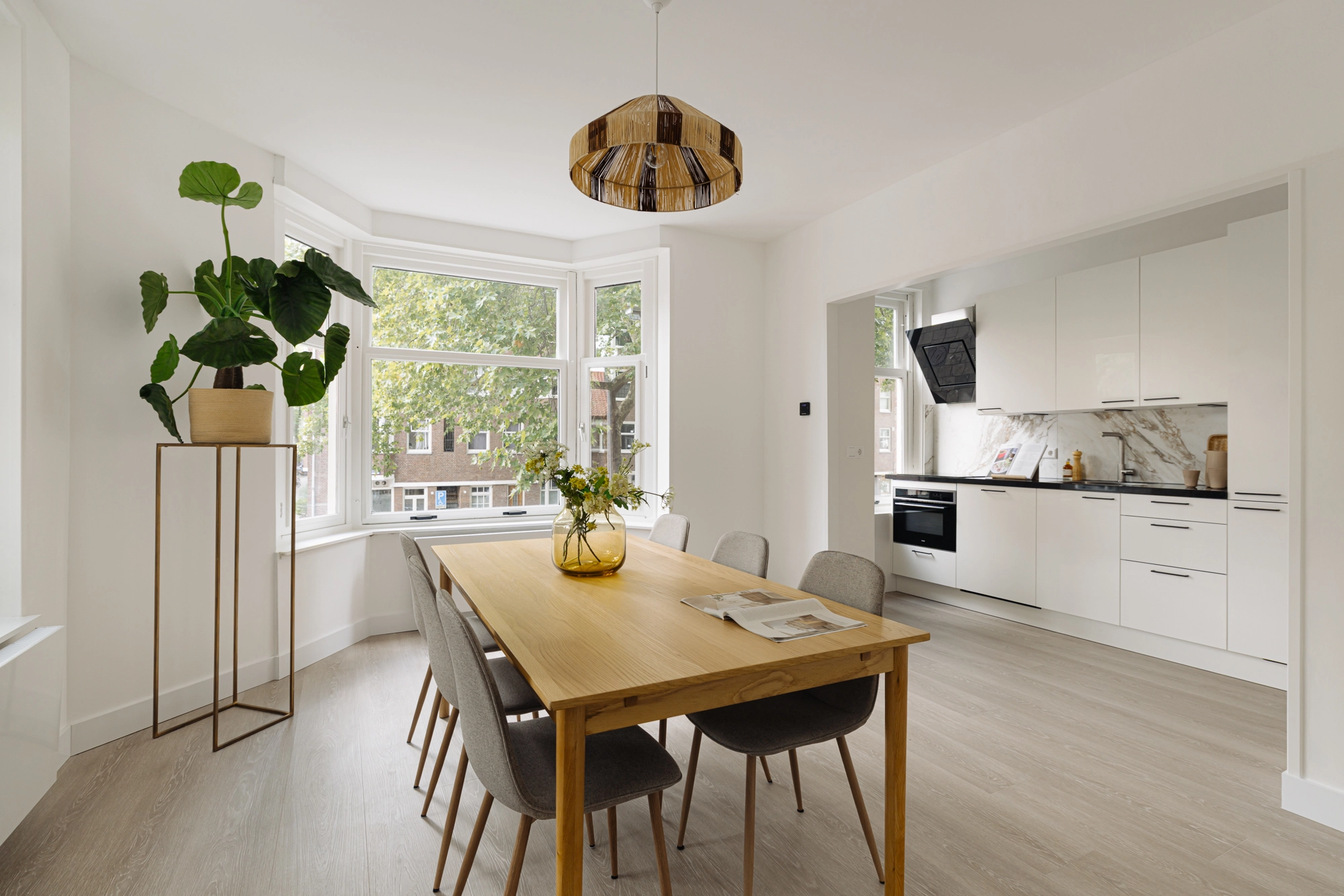
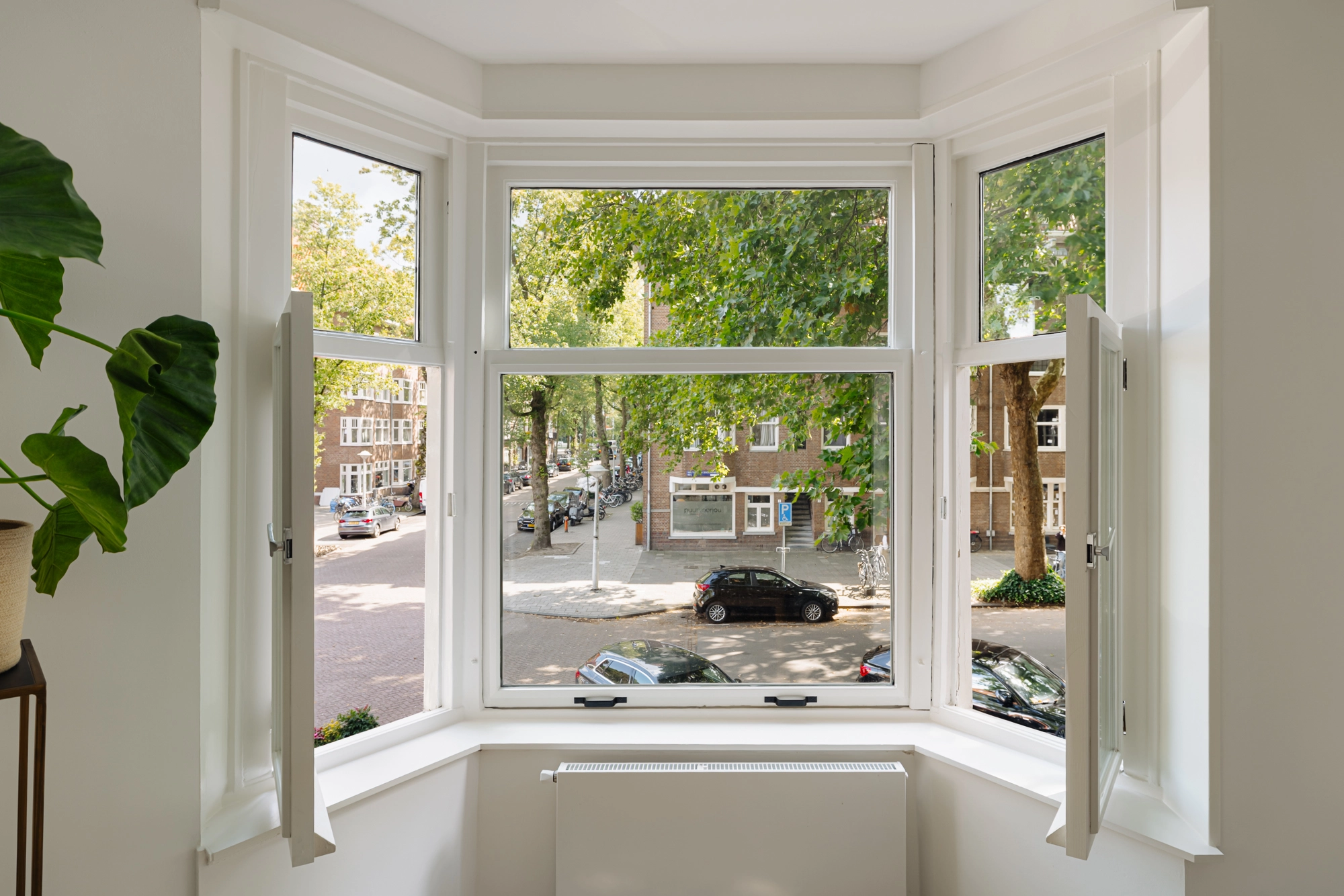
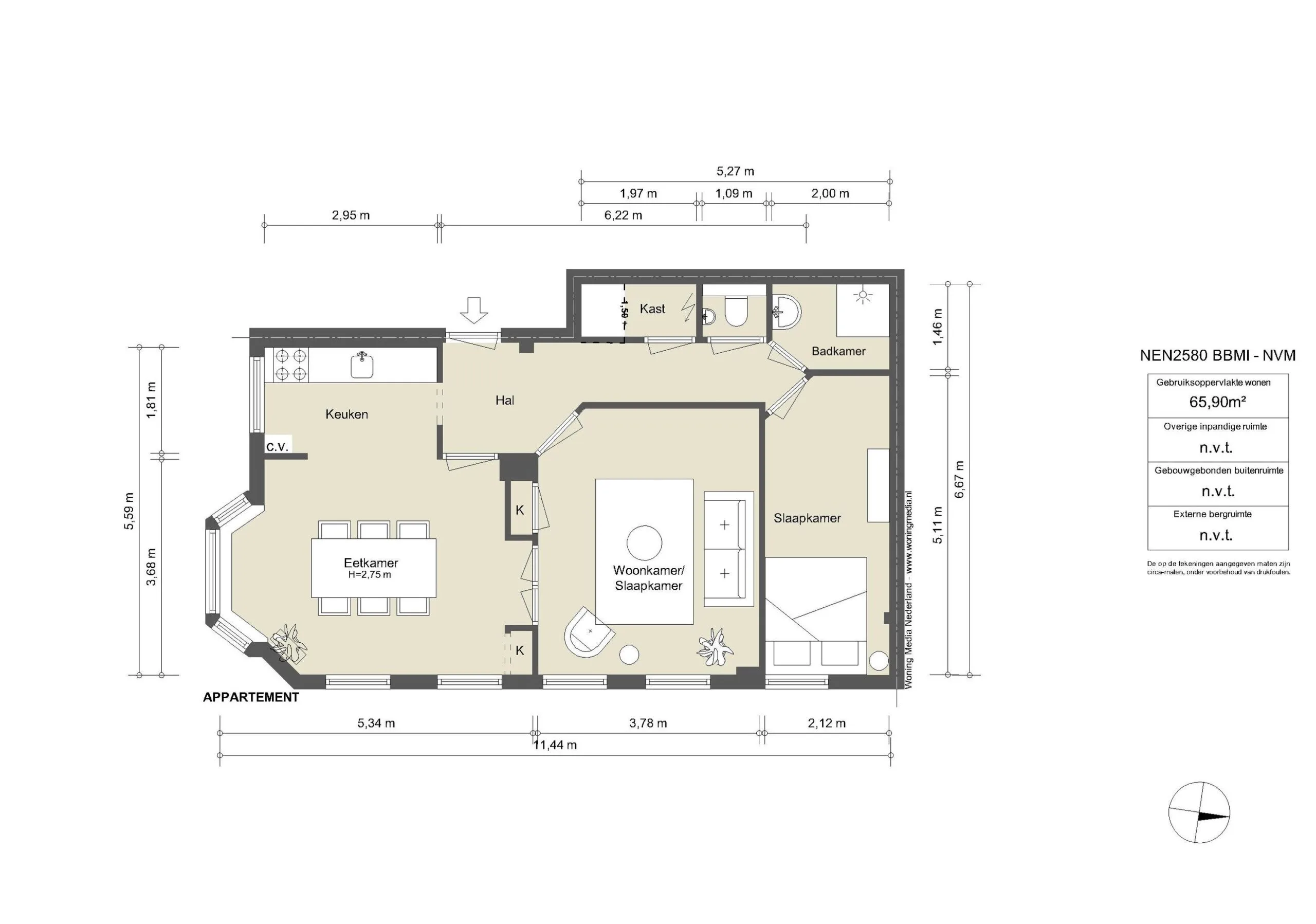
This charming apartment of approximately 66 m² is located on the first floor. The living area is divided into the kitchen, dining area, and living room. The large windows give the apartment a bright character and a spacious feel. The cozy living room, which features a classic 1930s-style bay window, adjoins the dining area.
The complete living experience can be explored on our website or by downloading our magazine. You can also easily schedule your own viewing using our online calendar.
Tour
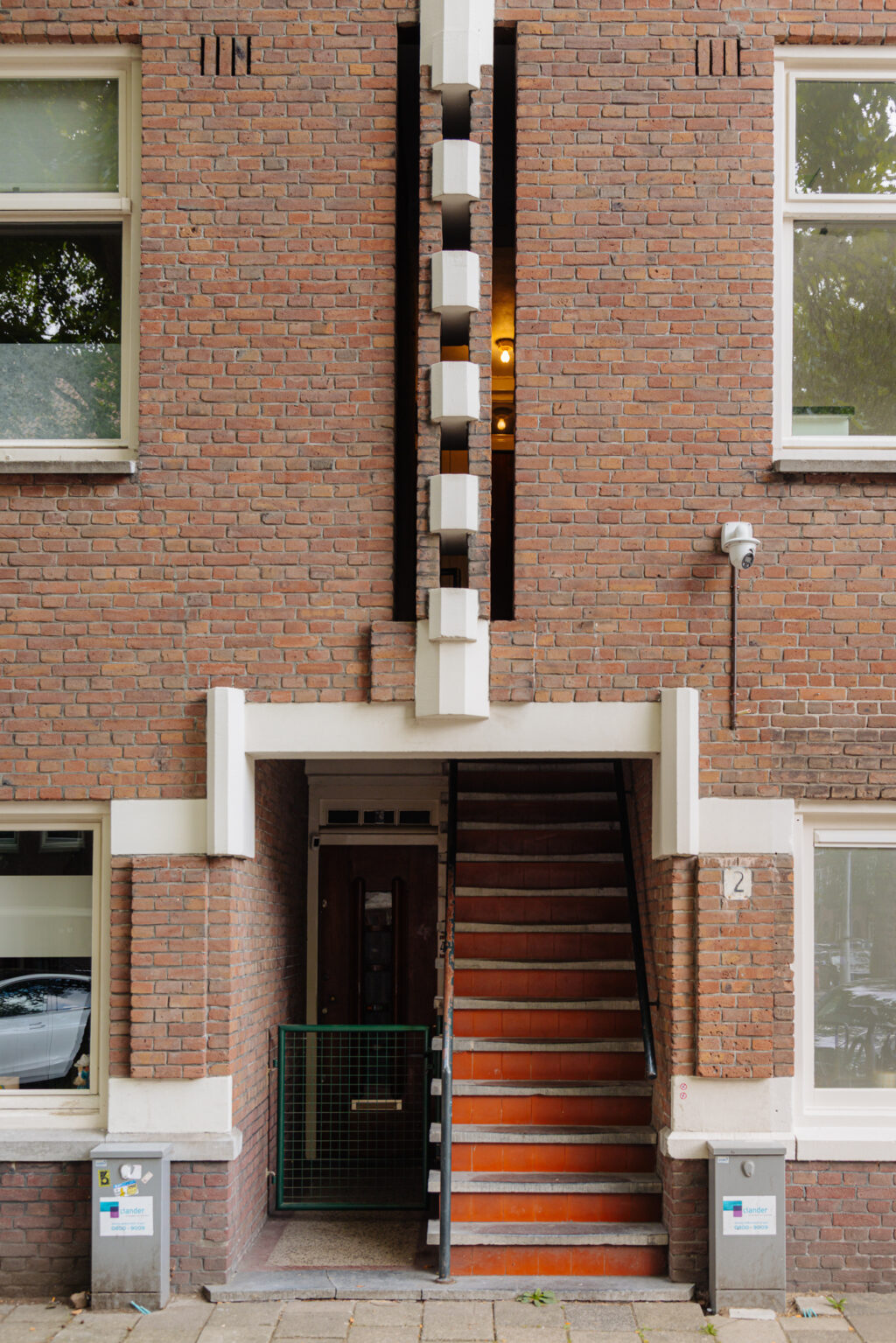
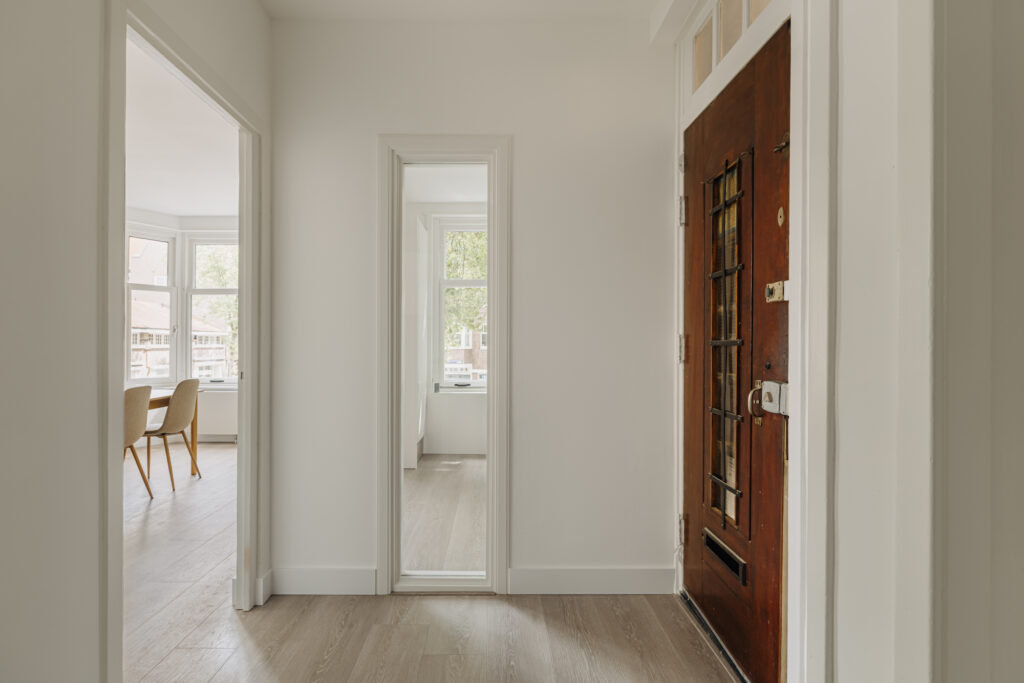
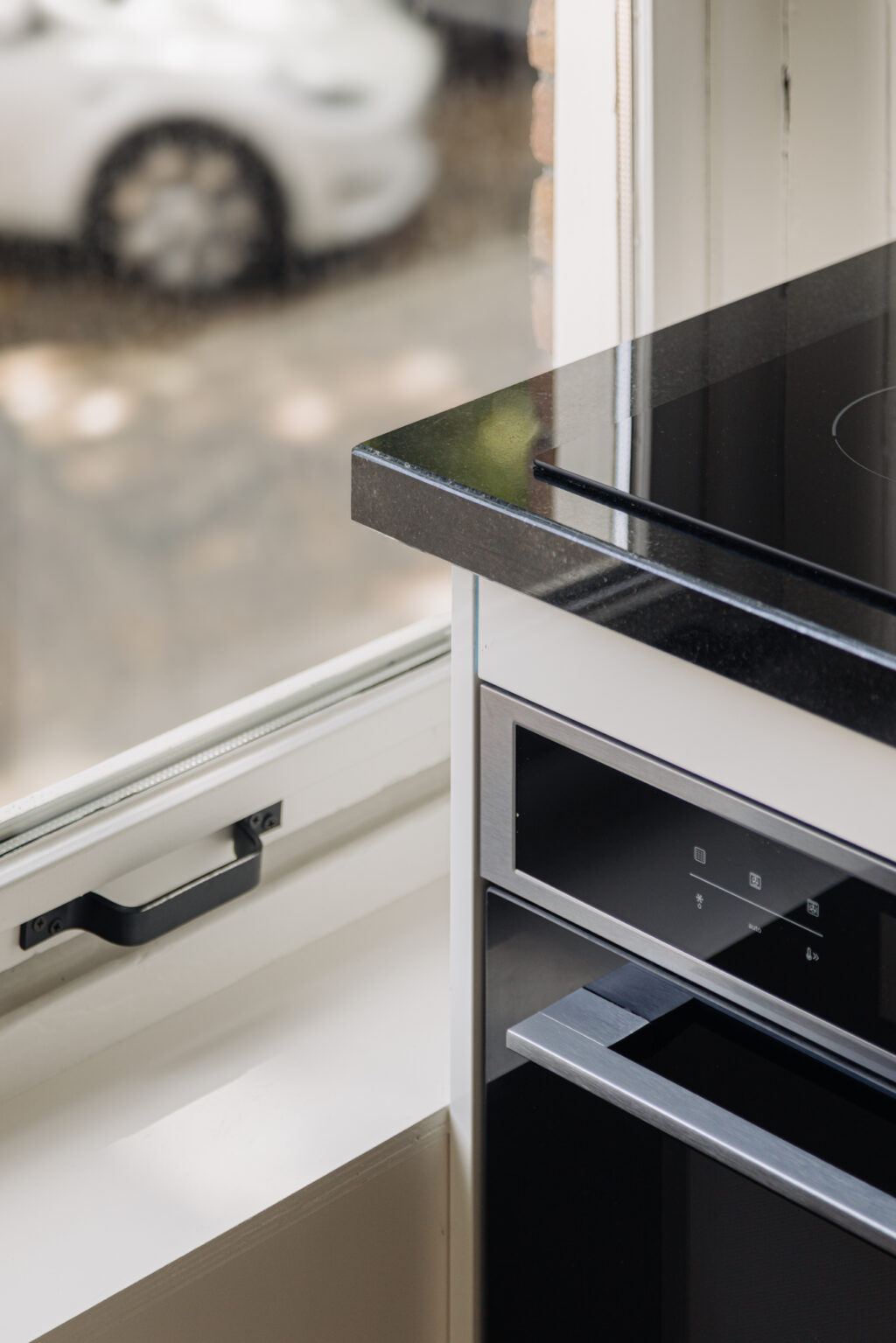
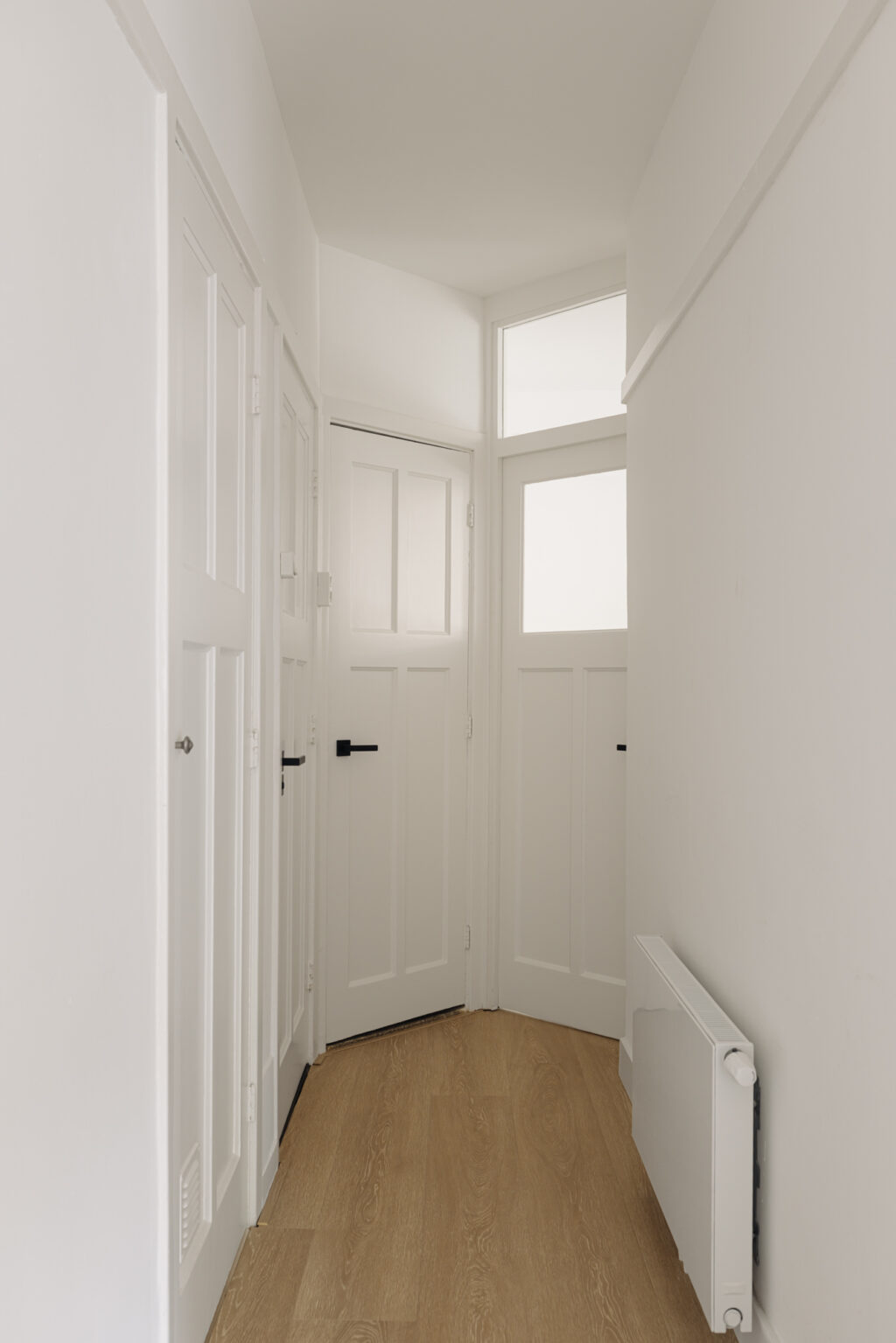
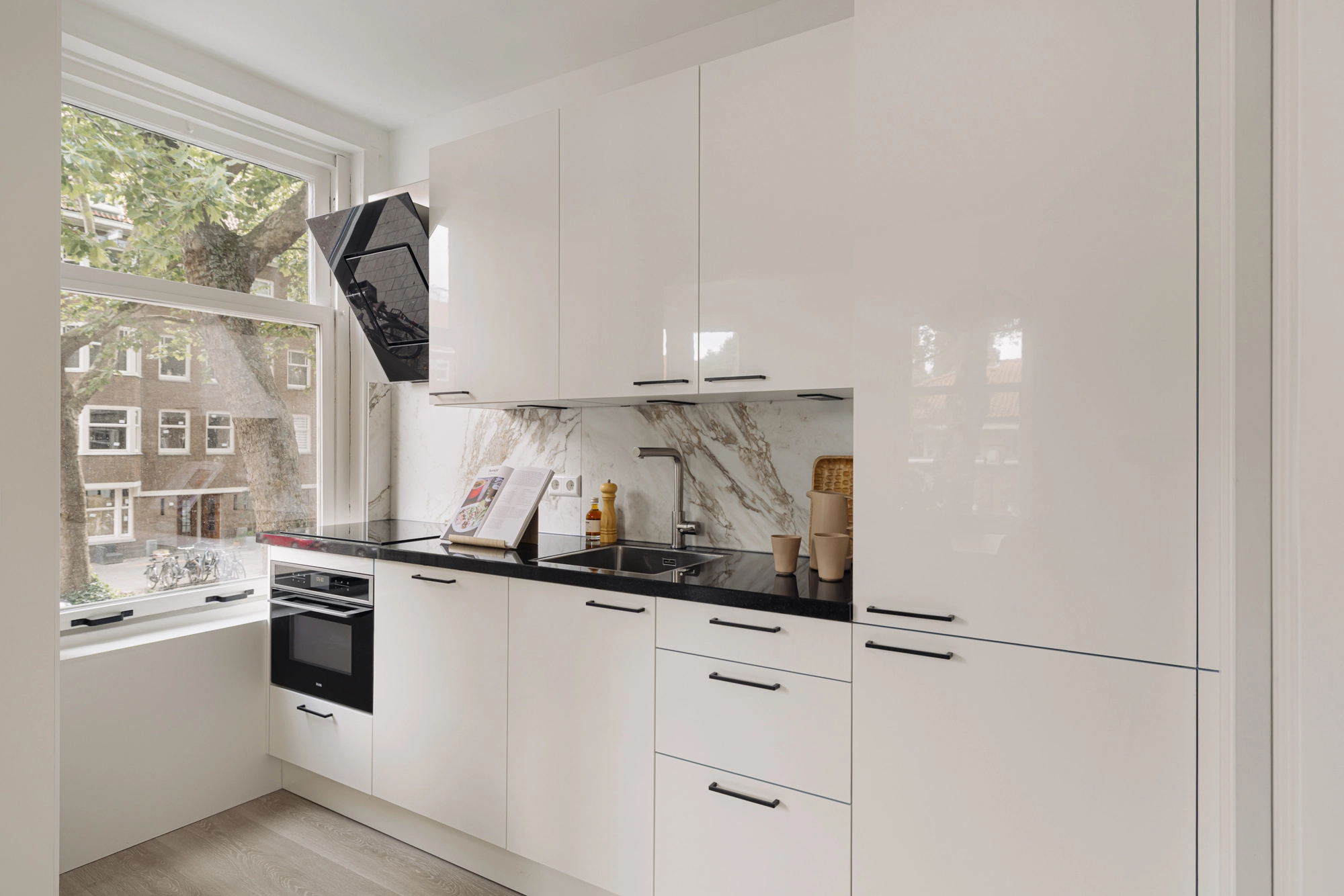
The communal entrance to the apartment on the second floor is accessible from the entrance. The spacious hallway features an internal storage room and a toilet. The living area is bright and well-laid-out, with a half-open kitchen equipped with modern appliances and a central dining area.
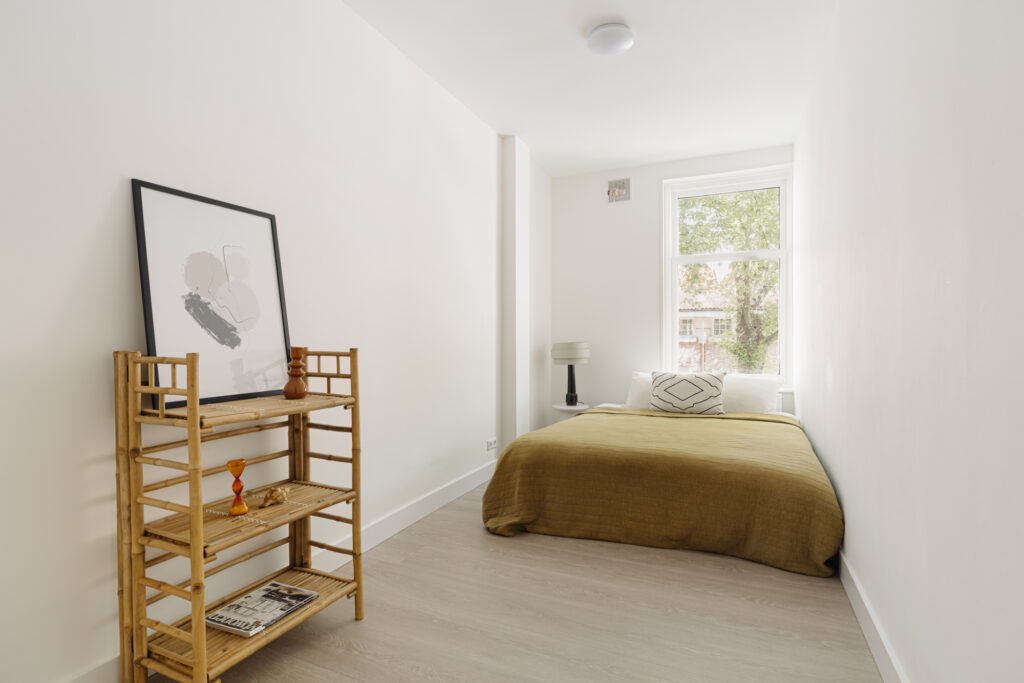
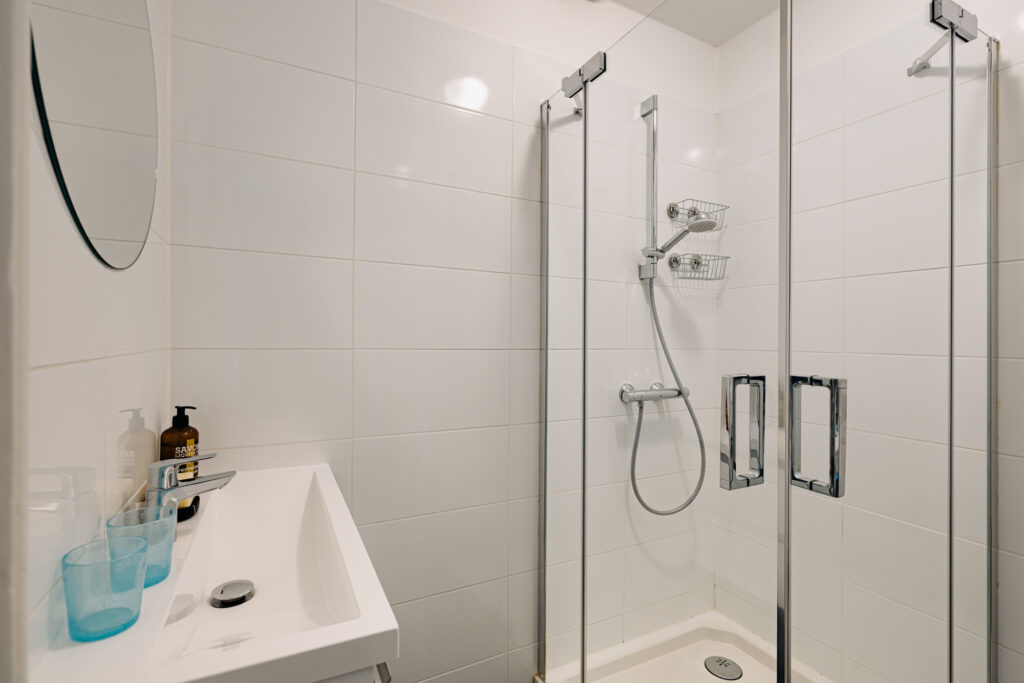
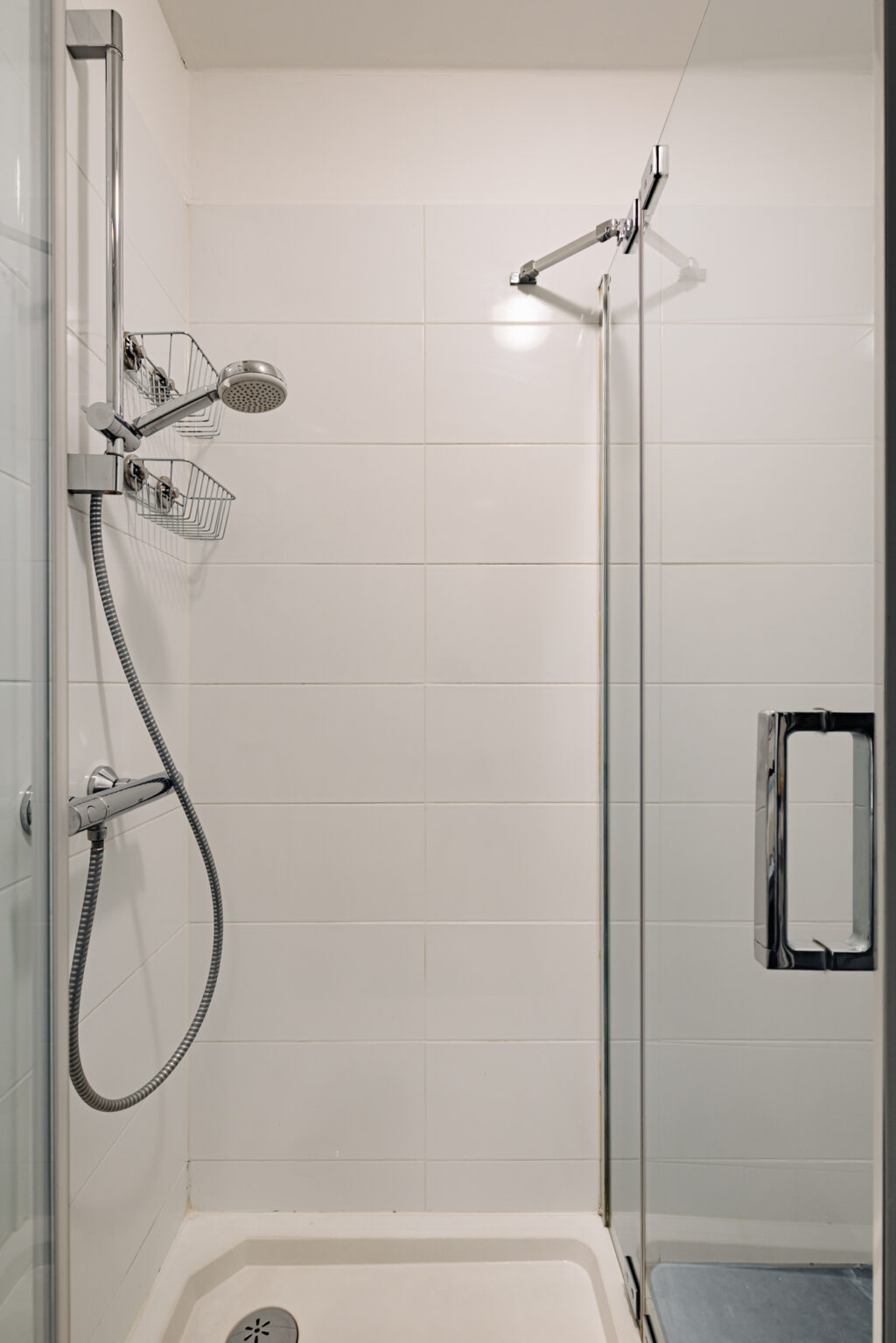
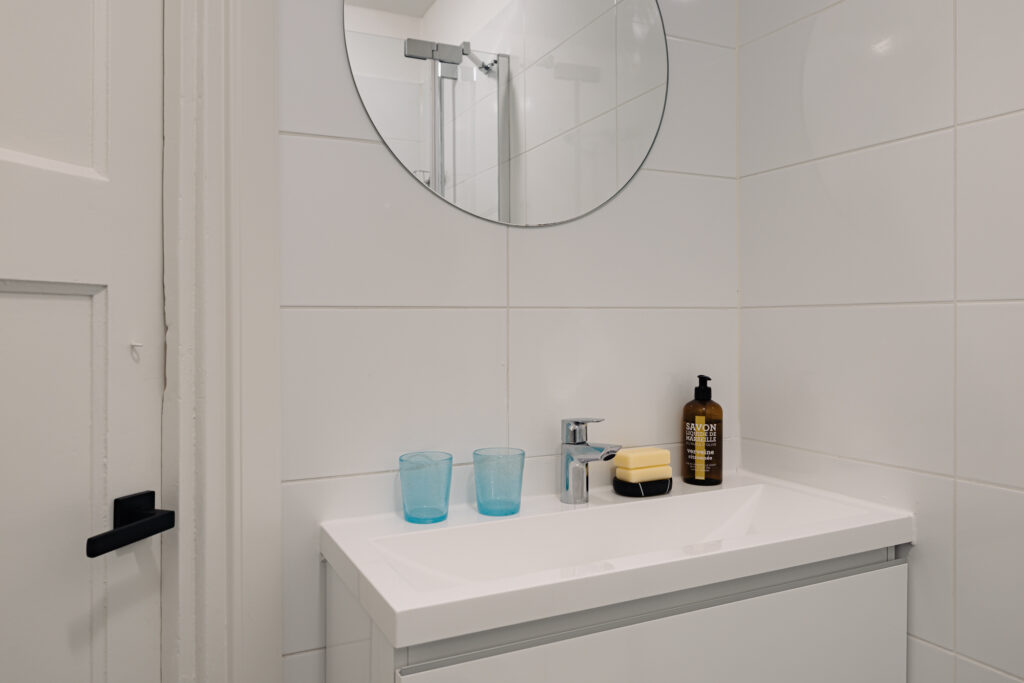
At the front of the apartment is a spacious bedroom with a built-in closet and views of the greenery and street. A second bedroom can easily be created in the living area. Next to the bedroom is a well-maintained bathroom with a walk-in shower, sink, and designer radiator.
Neighborhood Guide
The Stadionbuurt, located in Amsterdam South, is named after the former National Stadium designed by Harry Elte, not to be confused with the Olympic Stadium designed by Jan Wils. The original stadium was situated where the current Jason- and Argonautenstraat are, until it was demolished in 1929 for residential development after the 1928 Olympic Games.
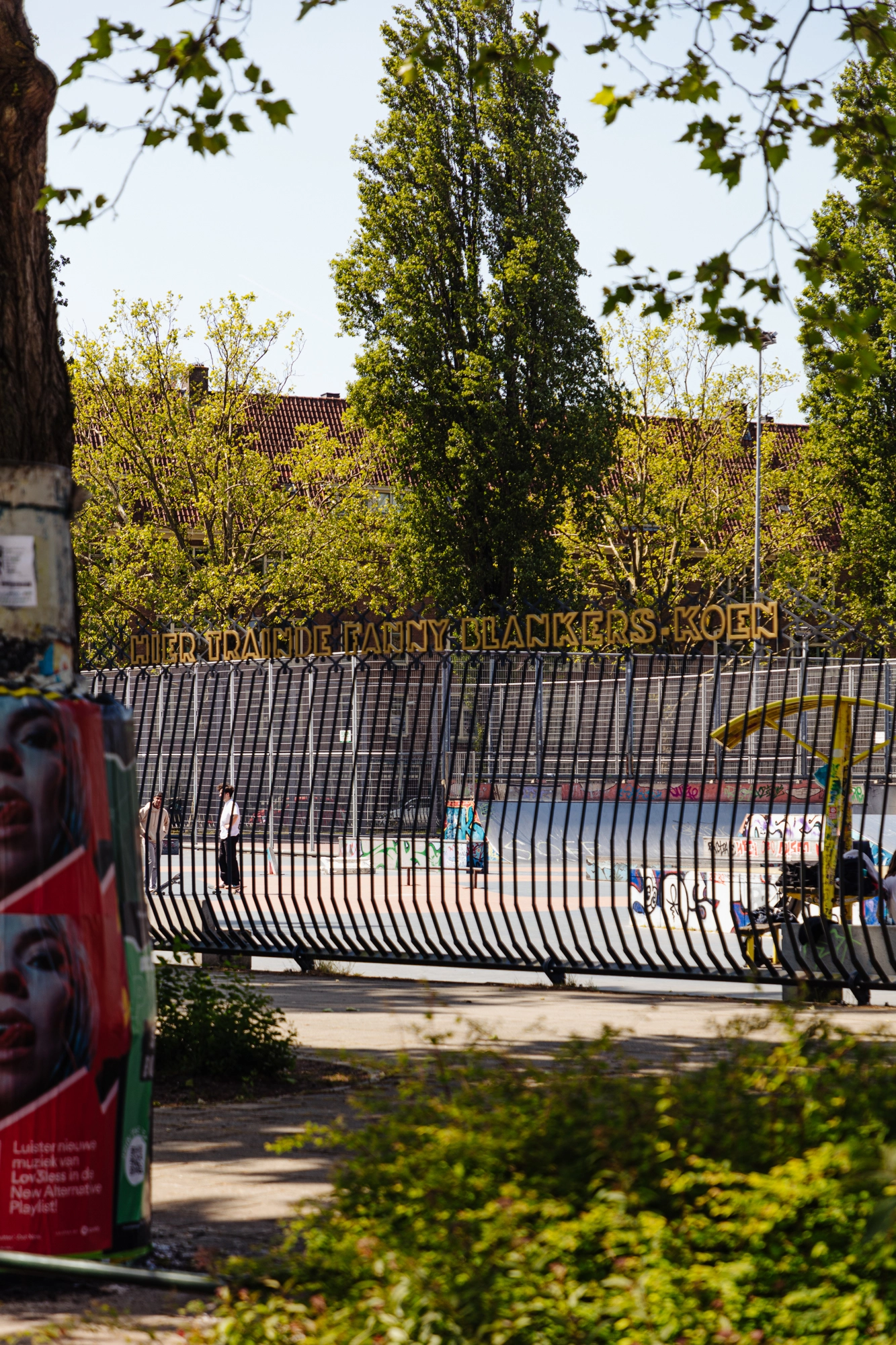
The most prominent building in the Stadionbuurt is the Olympic Stadium, designed by architect Jan Wils for the 1928 Olympics. Along the axis from the Olympic Stadium to Parnassusweg, you’ll find green spaces and small parks with play areas, contributing to the neighborhood’s diversity and appeal.
The revamped Stadionplein has become a vibrant hub with various dining options and a weekly market, making it a hotspot for both residents and visitors. The Stadionbuurt offers a pleasant living environment with its mix of buildings and amenities in the heart of Amsterdam.
We’ve gathered the best hotspots in the neighborhood on our website for this property presentation.
Key features
• Living area approximately 66 m²
• Recently renovated
• Possibility to create a second bedroom
• Current ground lease €759.00 per year (annual indexation), lease term ending December 15, 2054
• Energy label C
• Monthly homeowners’ association fee € 140.19 per month
• National protected city view
Olympic Village
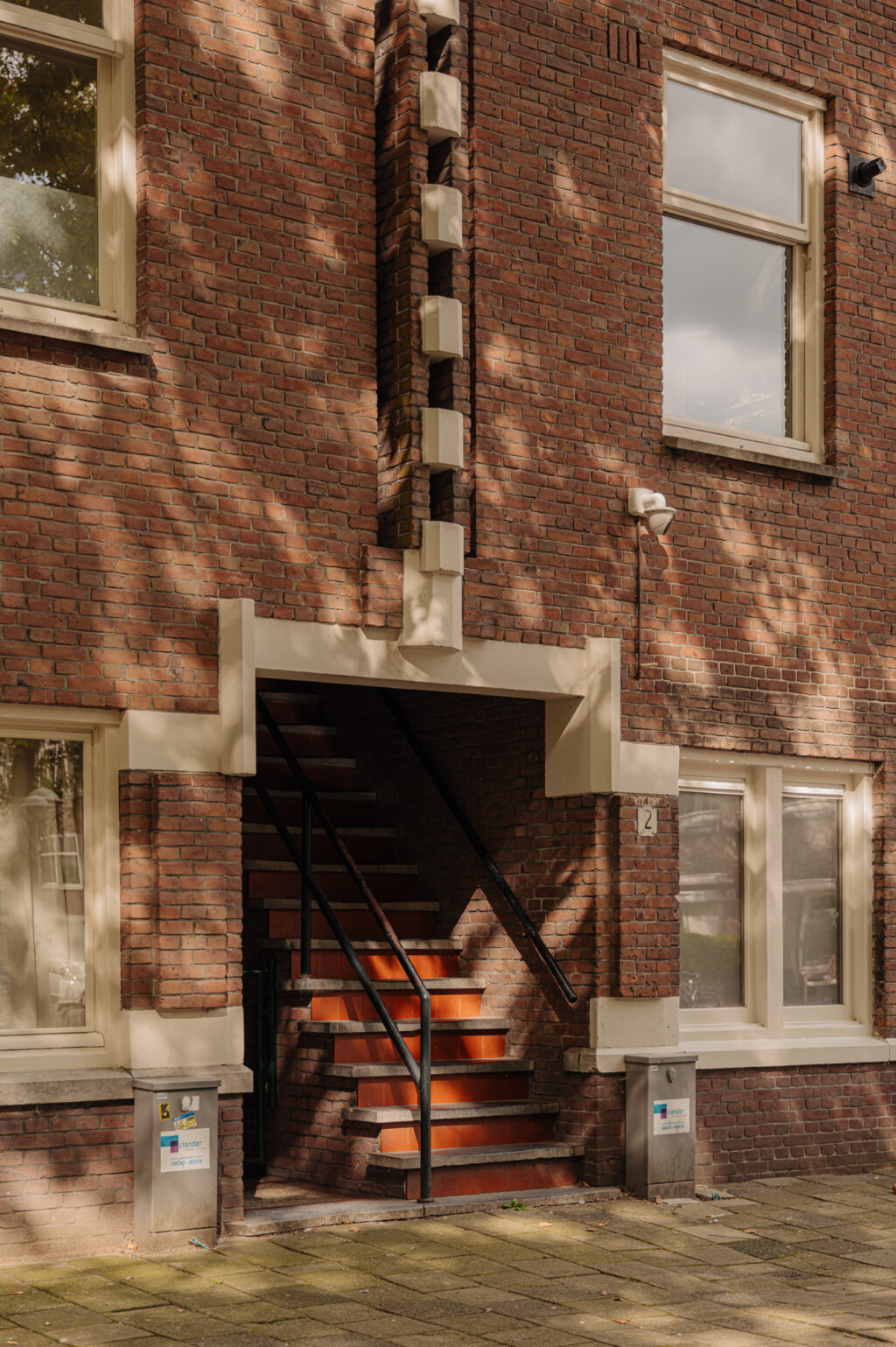
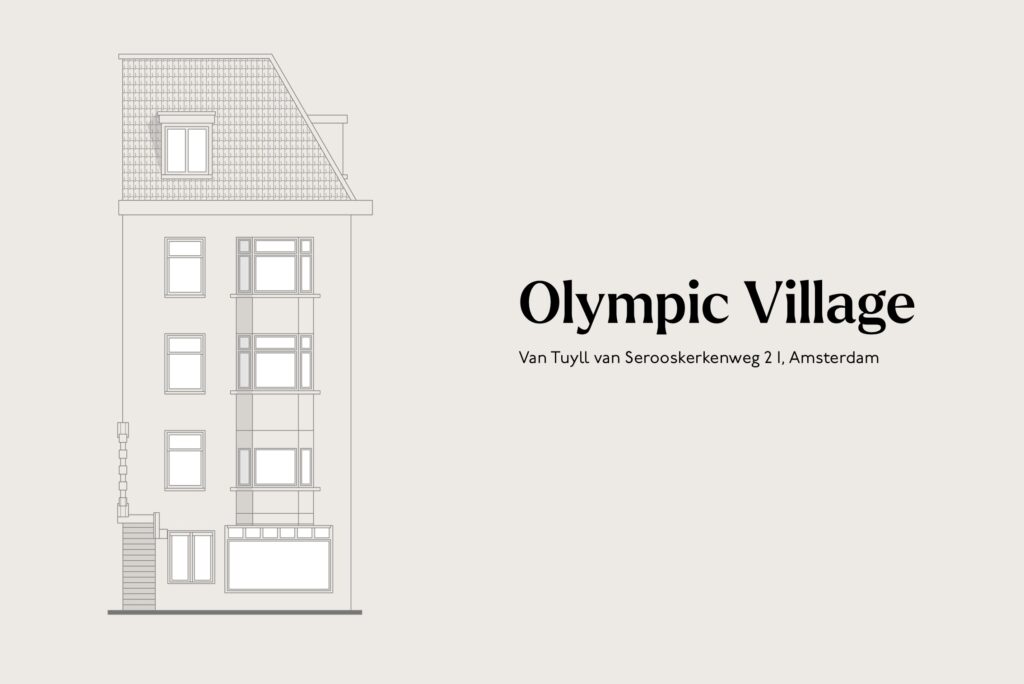
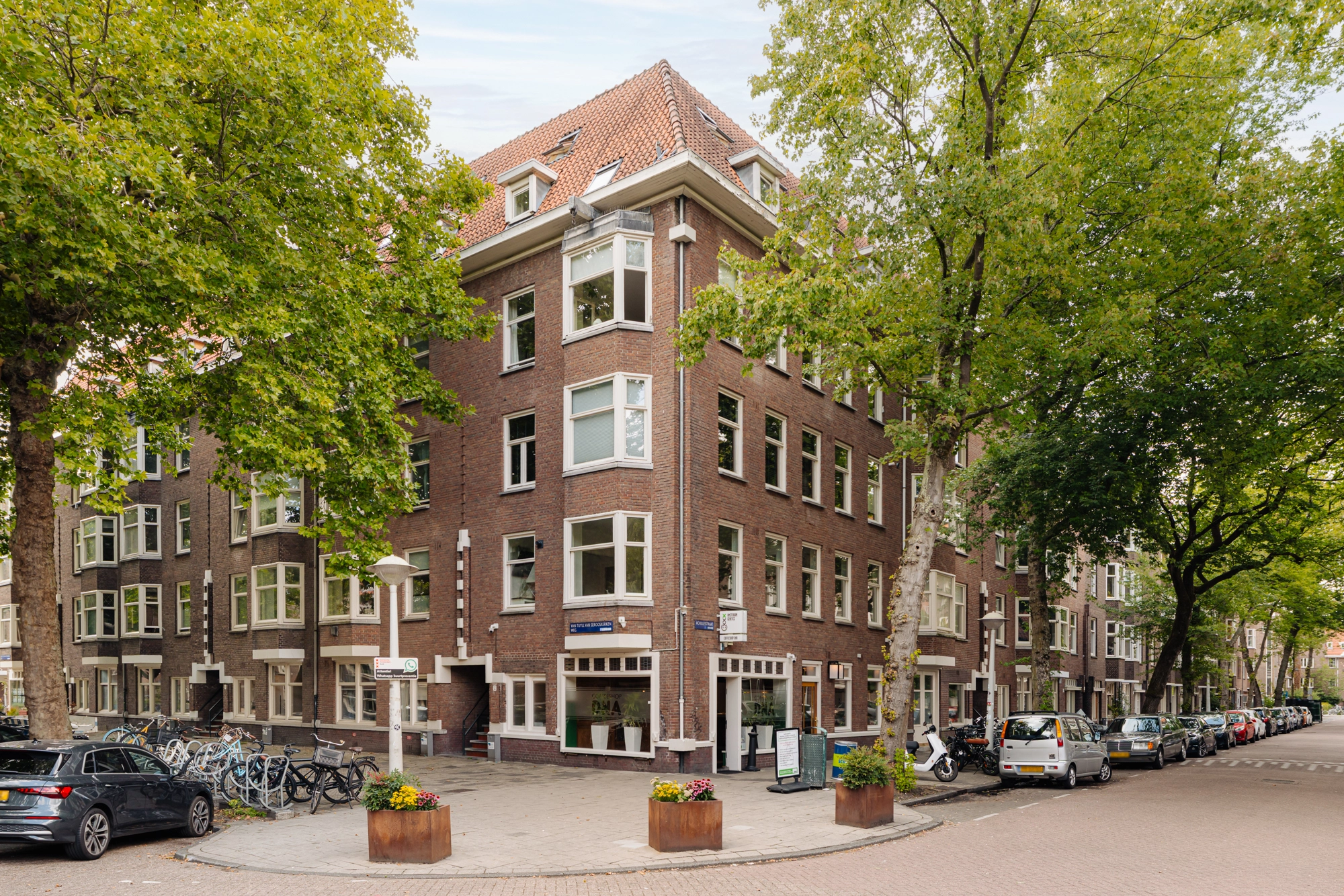
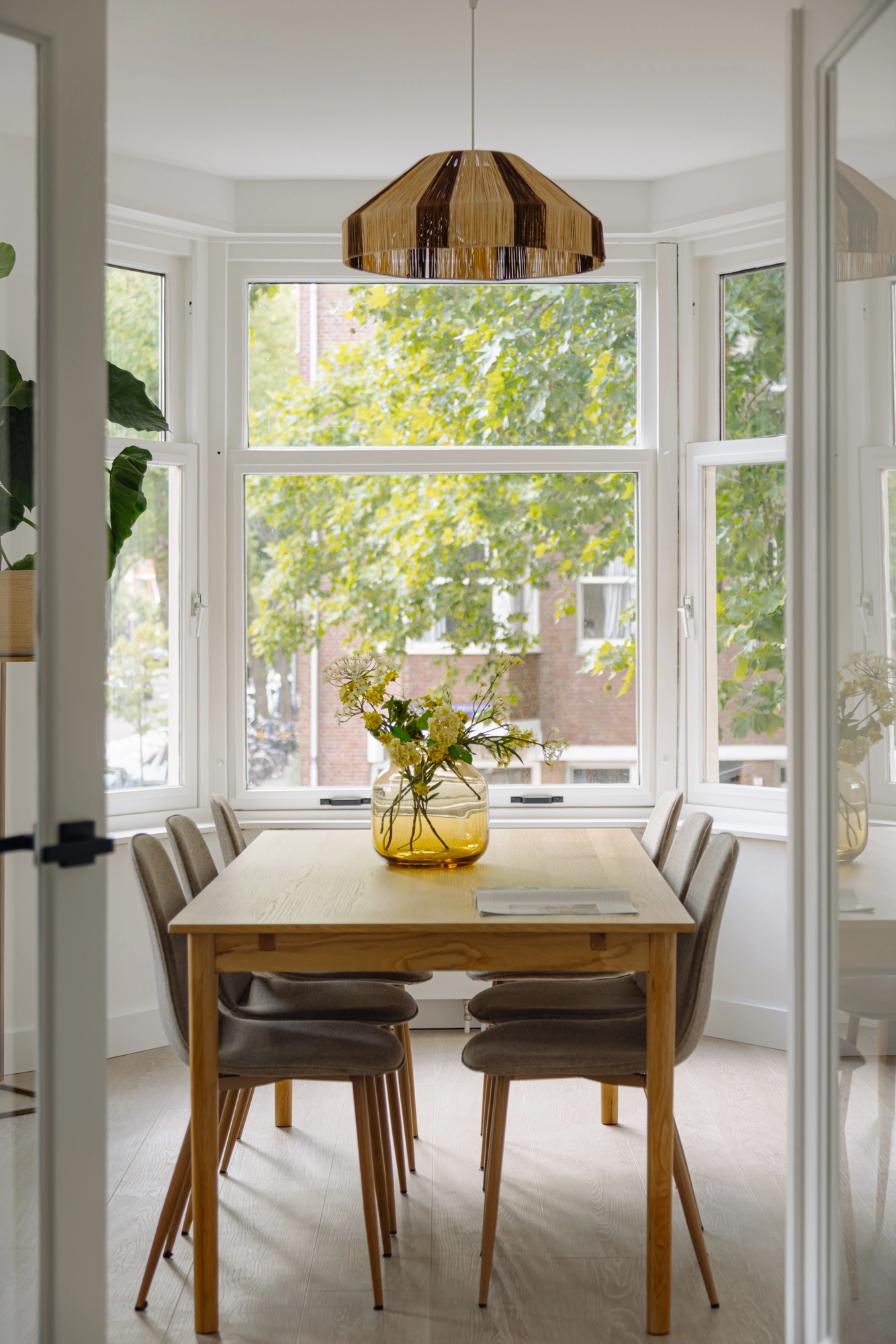
On Van Tuyll van Serooskerkenweg 2-2, you’ll find this charming 1930s apartment, perfectly in keeping with the distinctive architecture of Berlage’s Plan Zuid. Step inside, and you’re immediately greeted by beautiful natural light. The inviting living room, complete with a characteristic bay window, creates a warm and welcoming atmosphere.
The apartment is located on a quiet, leafy street, offering a sense of calm right in the heart of the city. Yet the vibrancy is never far away: bustling Stadionplein is within walking distance, with its lively restaurants, cosy cafés, and weekly market.
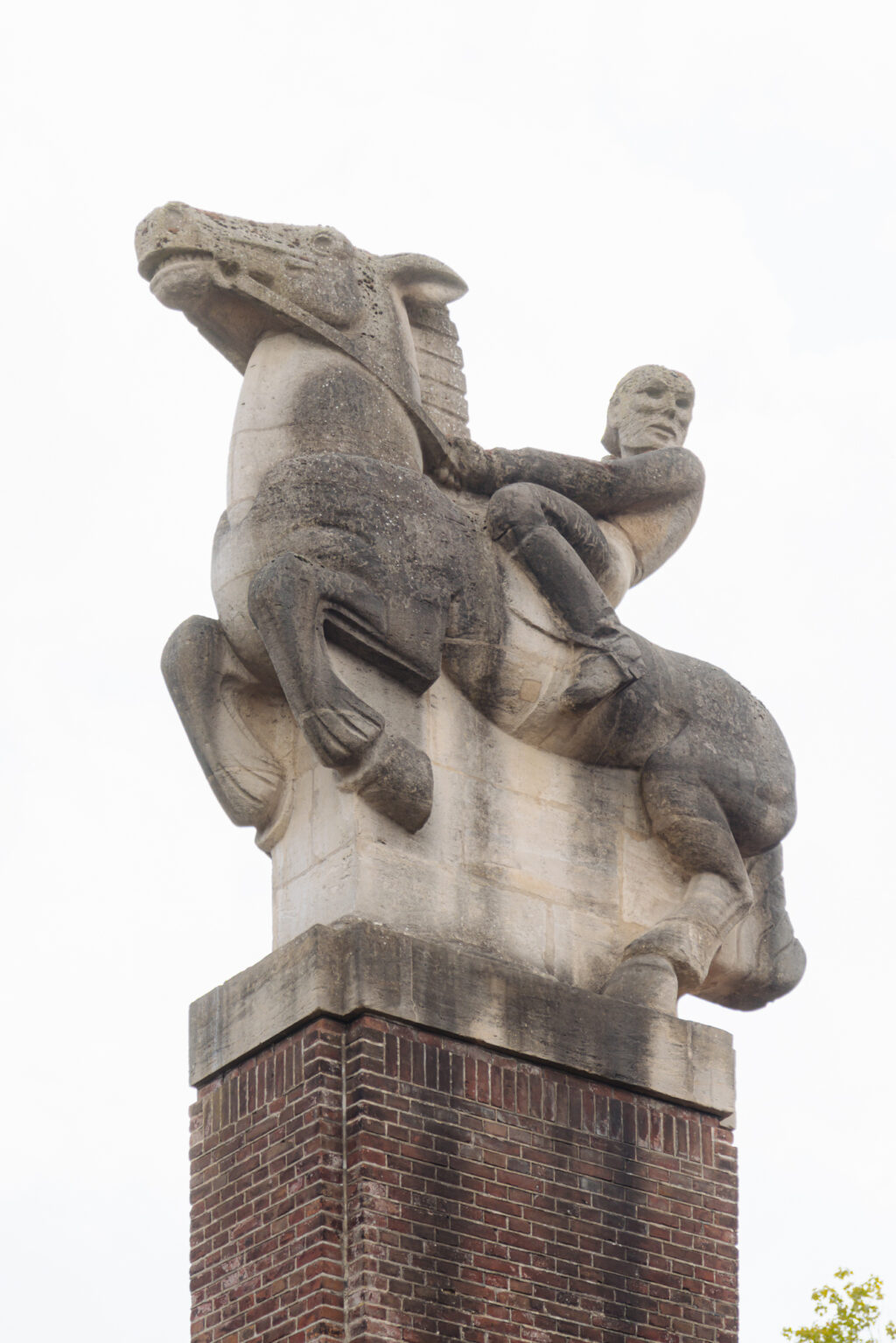
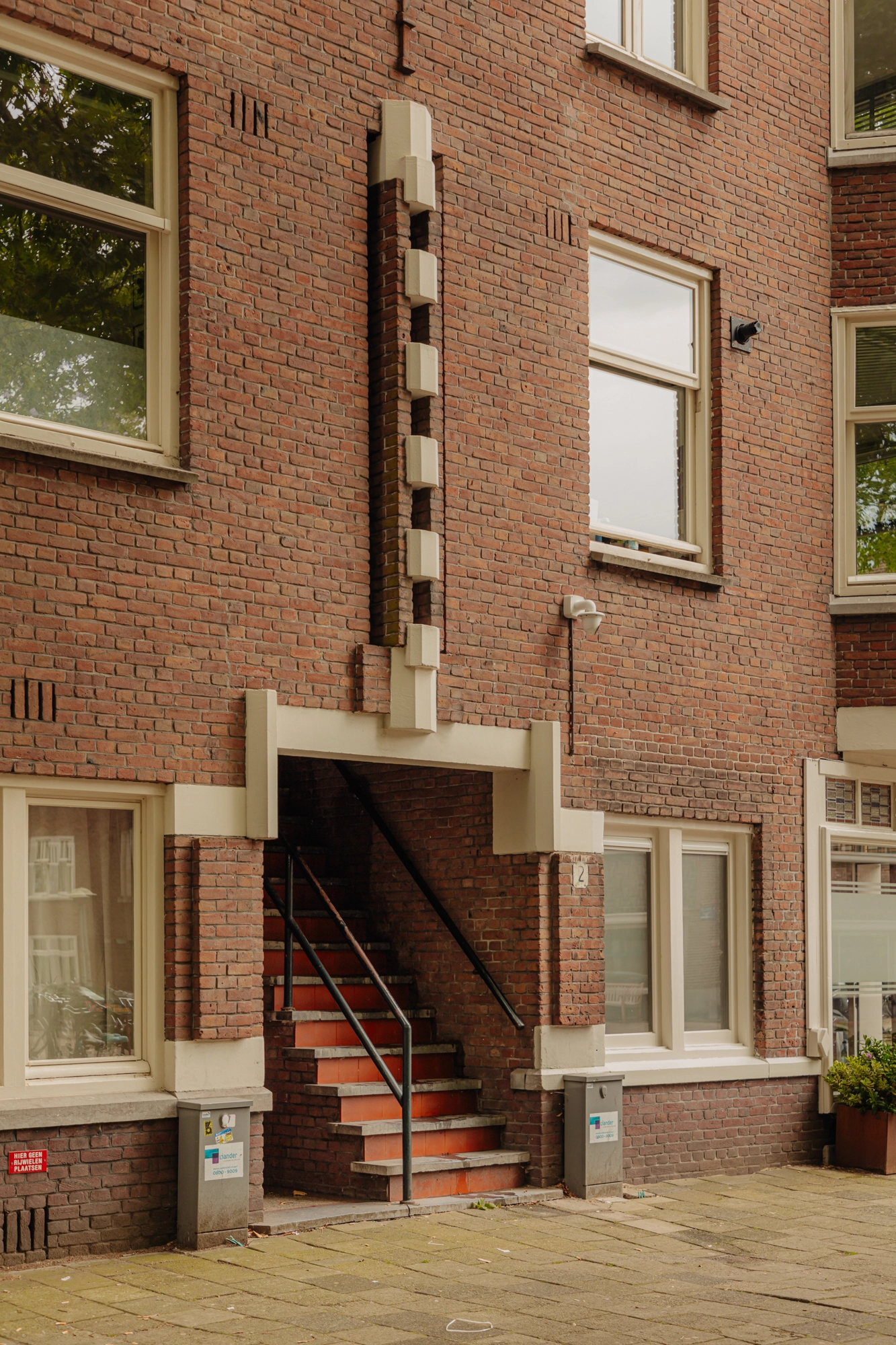
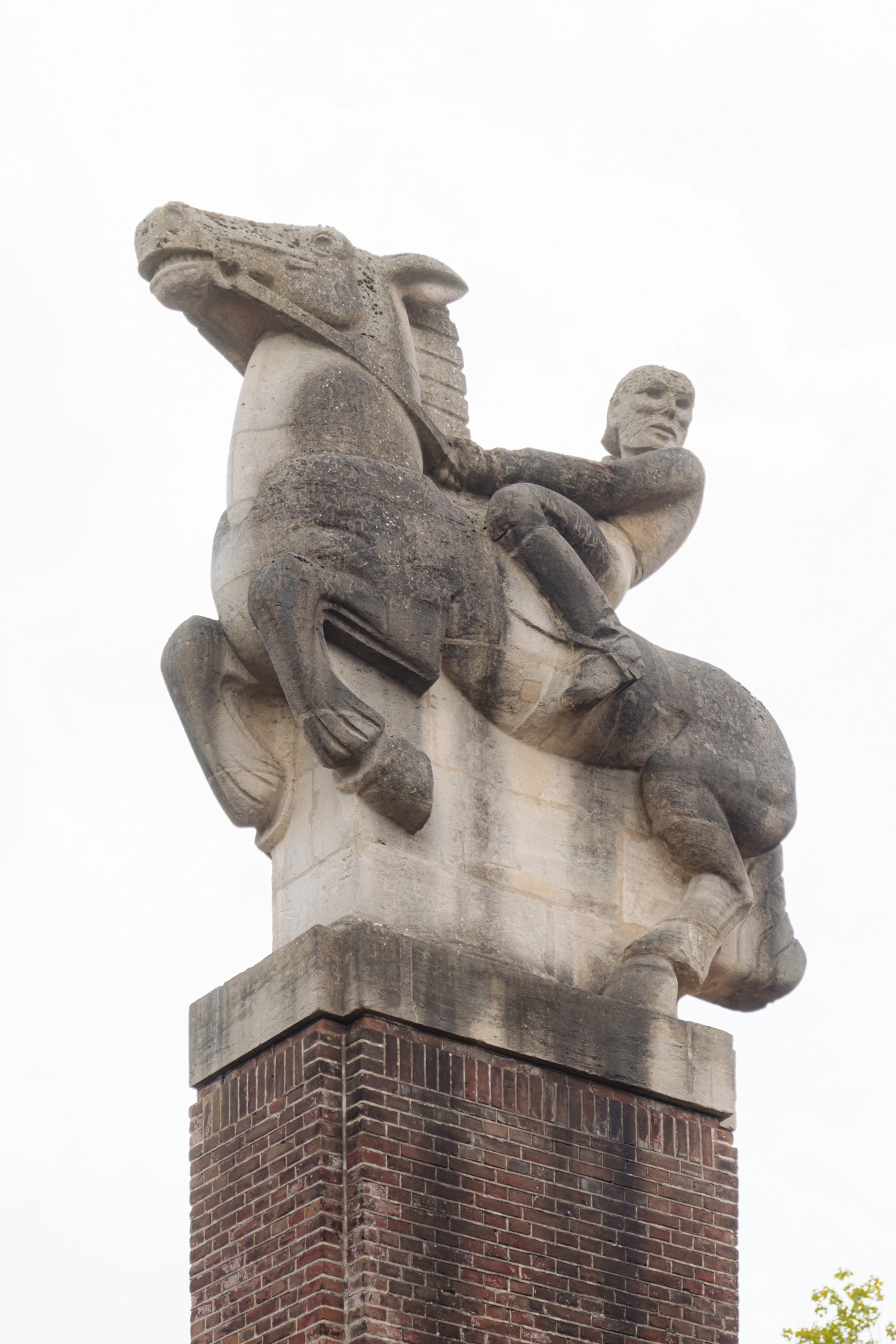
What makes this location truly special is its history. The street runs along the central axis of the Olympic Stadium, built in 1928. The imposing brick pillars with stylised sculptures still mark the start of this axis, subtly pointing towards the stadium beyond – a fine piece of heritage in a neighbourhood full of character.
Merel Schrijver | Makelaar Broersma Wonen
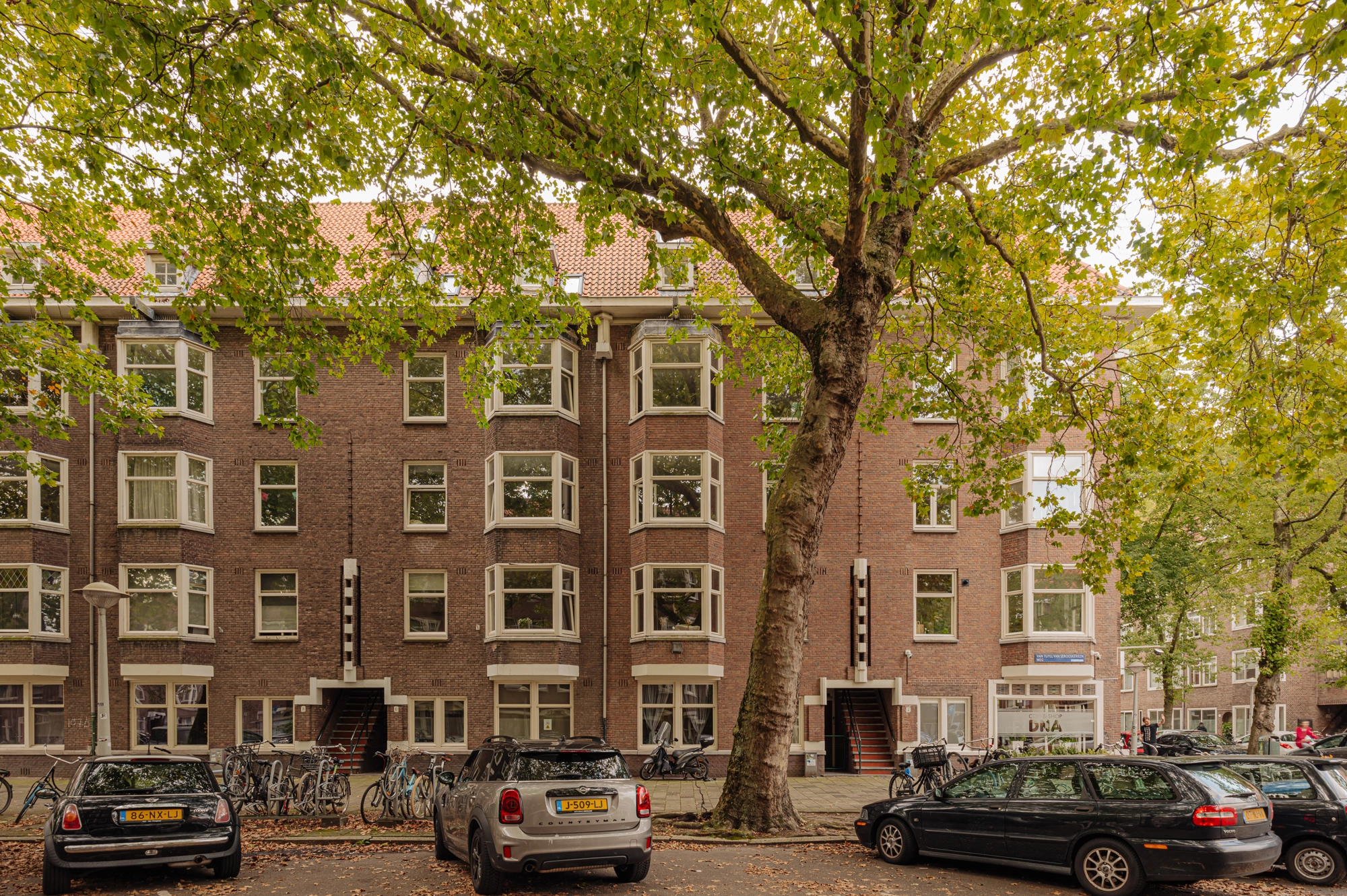
Van Tuyll van Serooskerkenweg is part of the famous Plan Zuid, an urban design by H.P. Berlage dating from 1917. In 1929, the street plan — which included this street — was officially adopted. At the time, Plan Zuid represented a radical break from traditional housing: Berlage envisioned a city expansion with wide avenues, abundant greenery, and residential blocks of monumental quality.
Most of the buildings were constructed in the style of the Amsterdam School. Architects turned façades into true brick artworks, featuring creative masonry patterns, expressive shapes, distinctive wrought ironwork, and striking window details. The deep colours and rich ornamentation gave the homes an almost stately appearance. Because of this grandeur, the residential blocks were often referred to as workers’ palaces.
Van Tuyll van Serooskerkenweg lies in direct alignment with the Olympic Stadium, built for the 1928 Olympic Games. Together, the street and the square form a sightline toward the stadium — something still clearly visible on vintage postcards. Architect G.J. Rutgers was responsible for the clean, symmetrical buildings, while sculptor Antoon Rädecker was commissioned to embellish the design. Among his works are the two iconic equestrian statues atop tall pillars at the street’s entrance — a well-known landmark in the neighbourhood.
The street and the square are named after Baron Frederik Willem Christiaan Hendrik Van Tuyll van Serooskerken (1851–1924), the first chairman of the Dutch Olympic Committee. Van Tuyll was an early advocate for bringing the Games to the Netherlands. He joined the International Olympic Committee in 1899 and founded the Dutch Olympic Committee in 1912. That same year, he began lobbying for a future edition of the Games in the Netherlands. In 1921, when the 1924 Games were awarded to Paris, it was agreed that the Netherlands would host in 1928. Sadly, Van Tuyll van Serooskerken did not live to see it; he died of pneumonia in 1924. His name endures in this remarkable corner of Amsterdam.
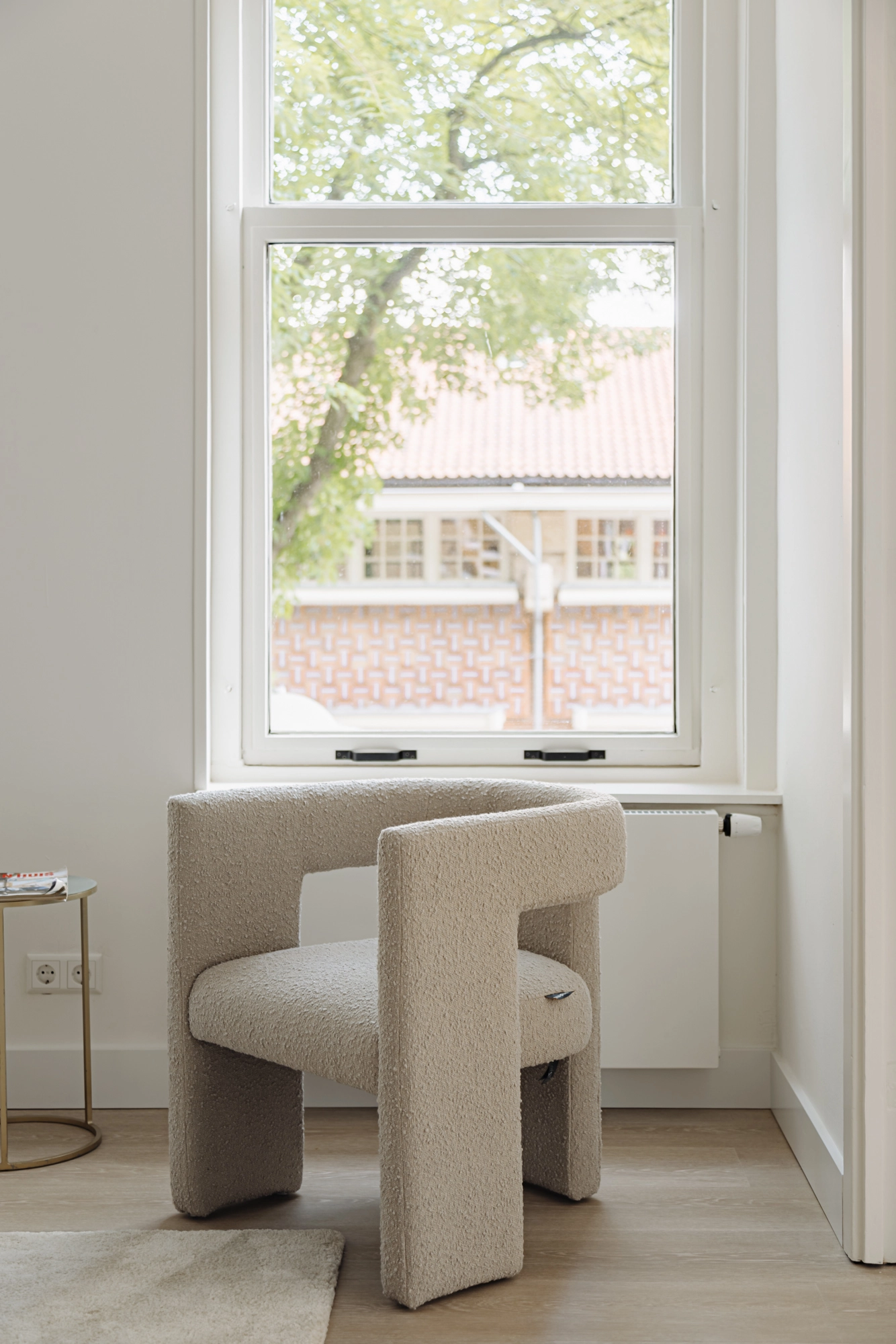
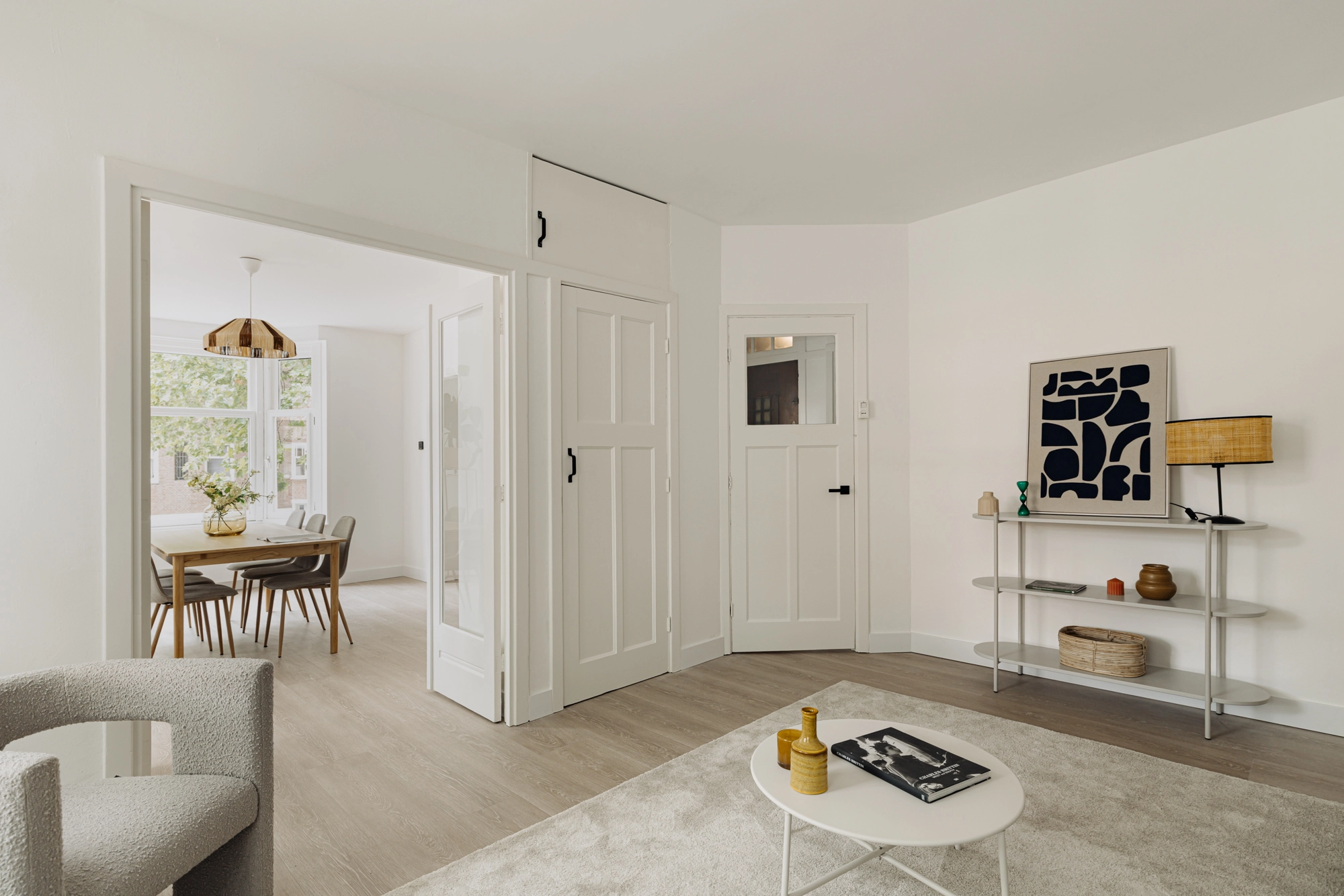
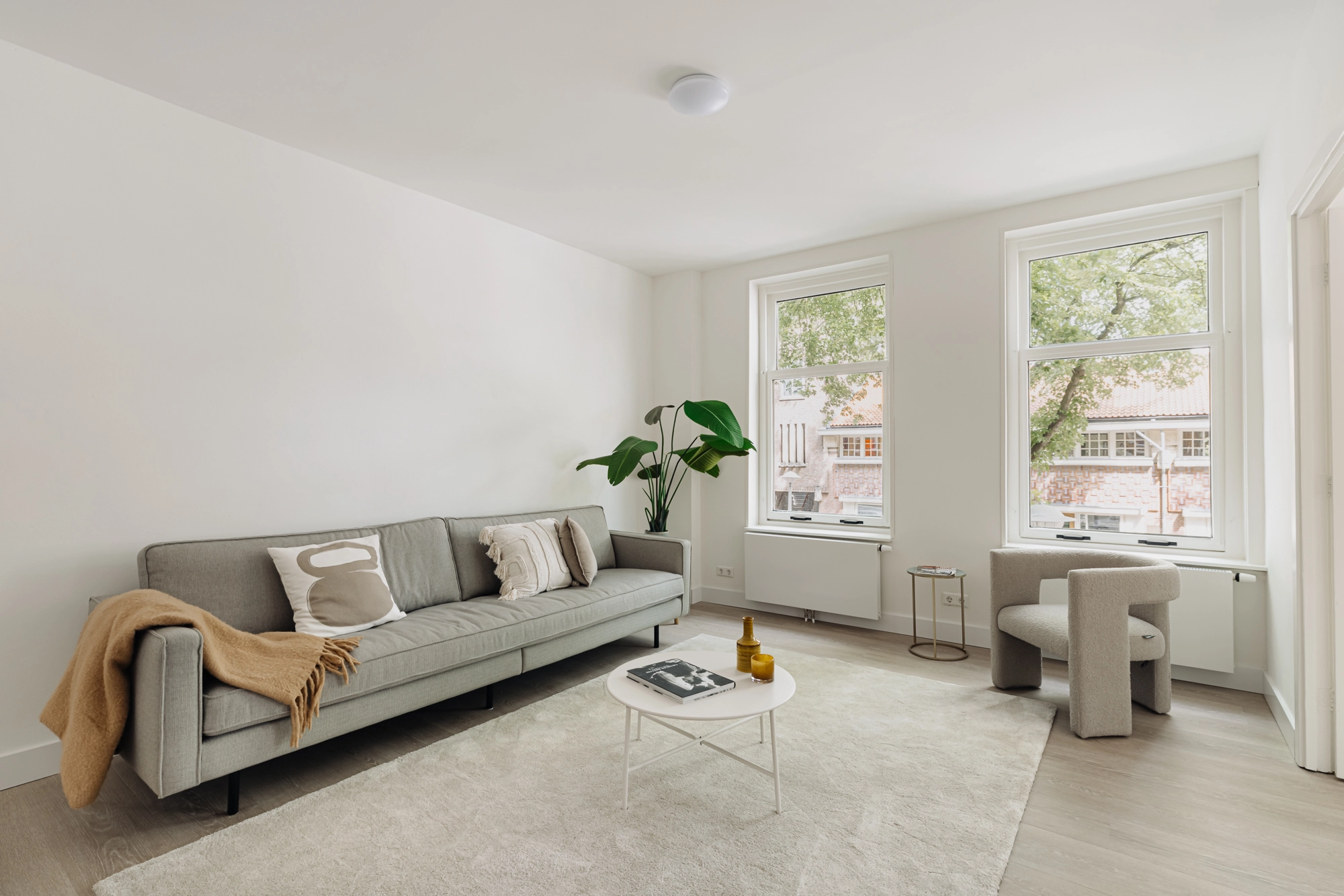
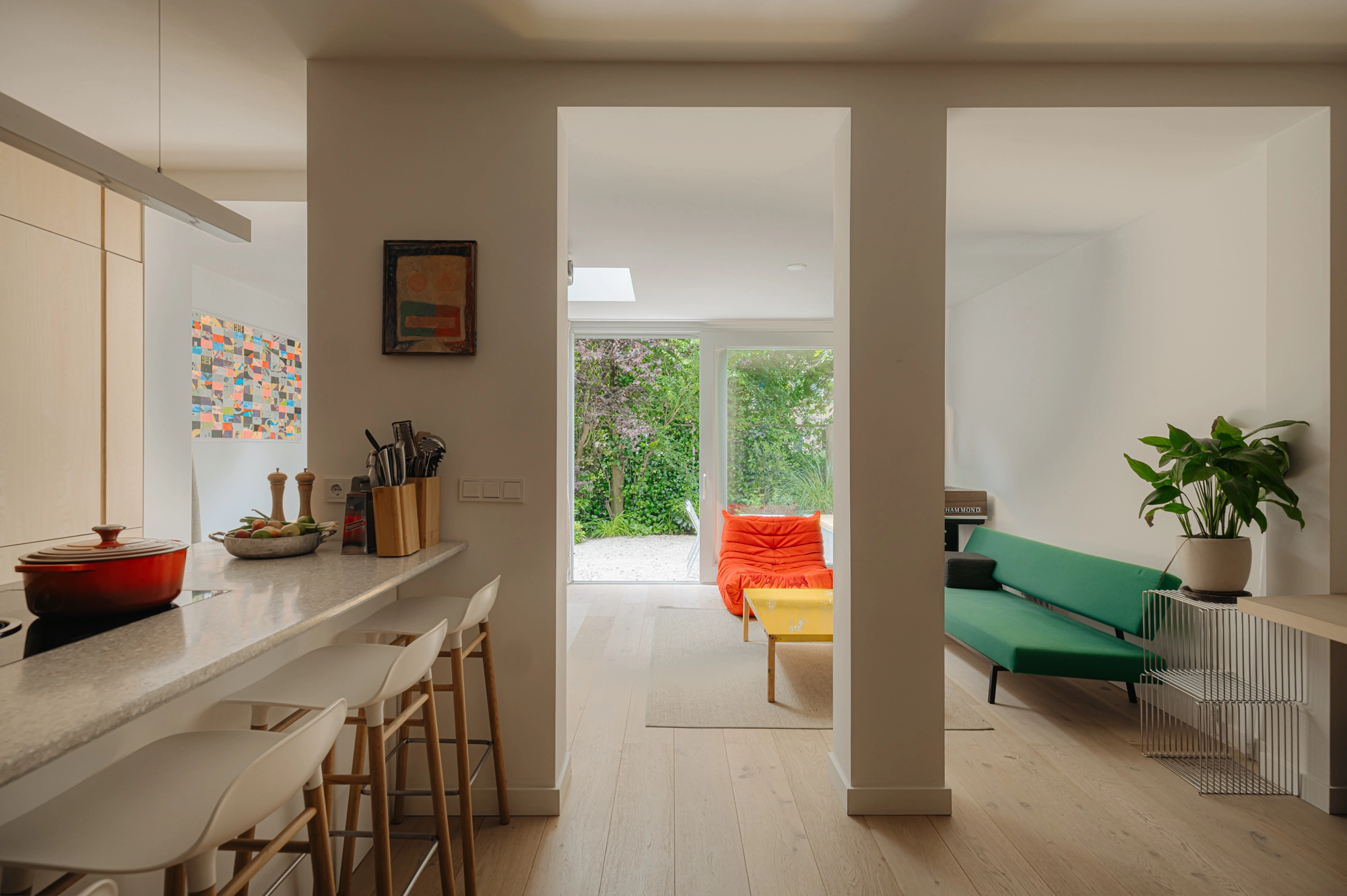
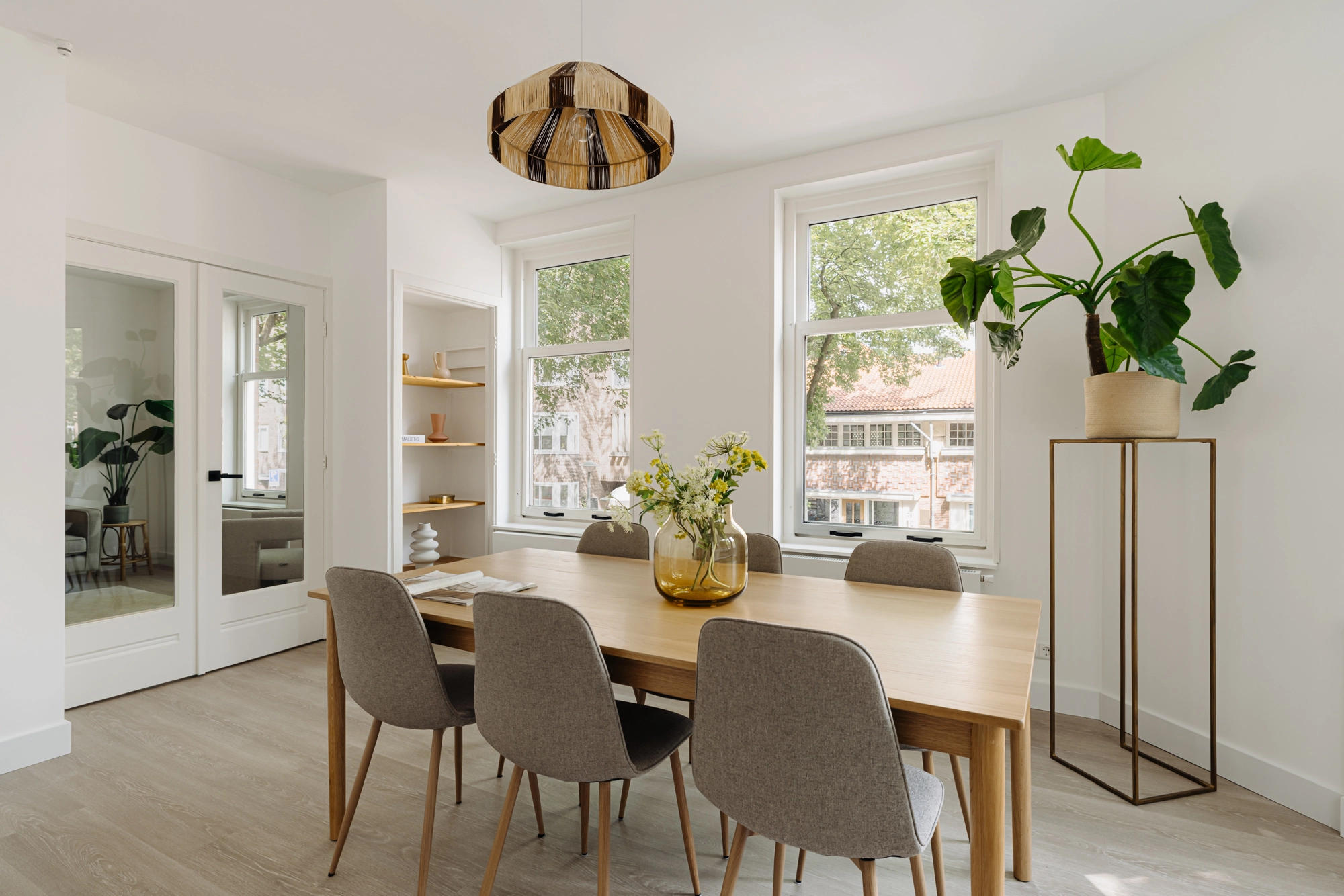
At the front of the apartment, the kitchen and dining room are seamlessly connected. The space is bright, well-proportioned, and pleasantly laid out. The bay window not only offers an open view over the street but also adds a sense of depth to the dining area.
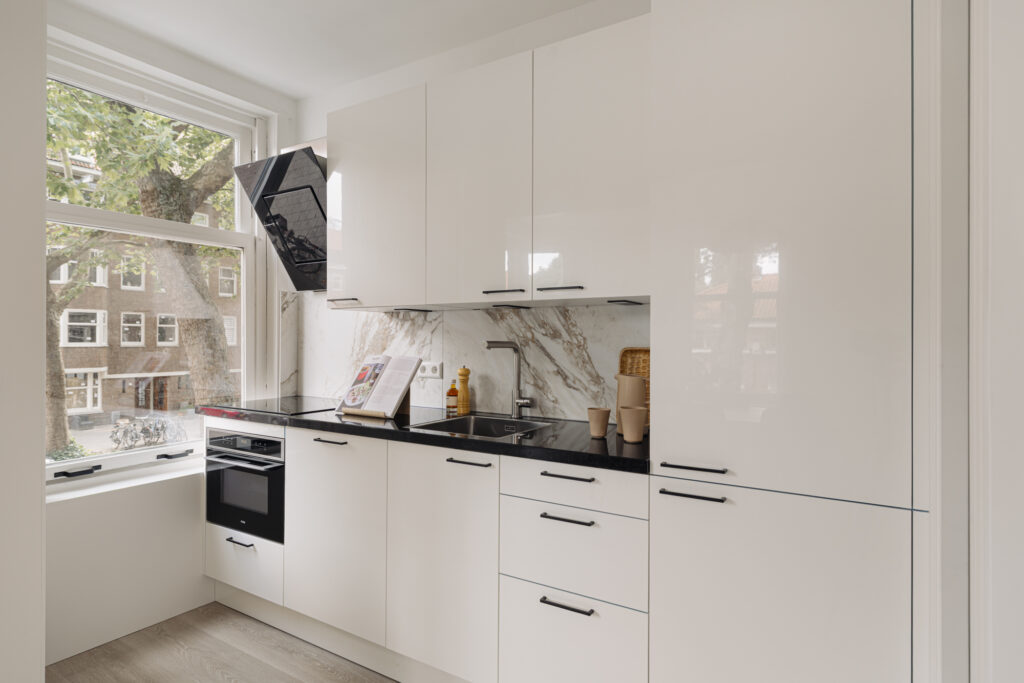
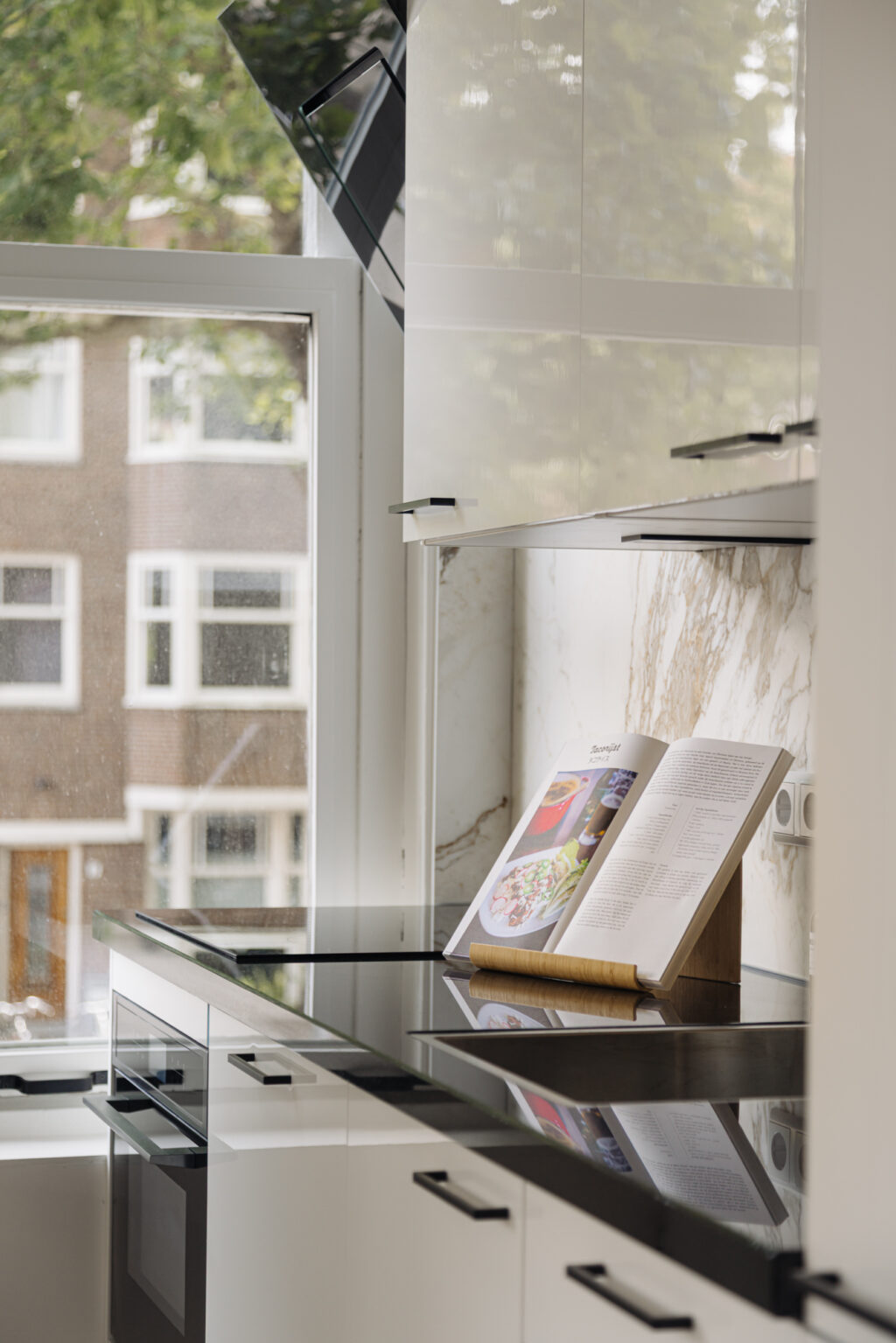
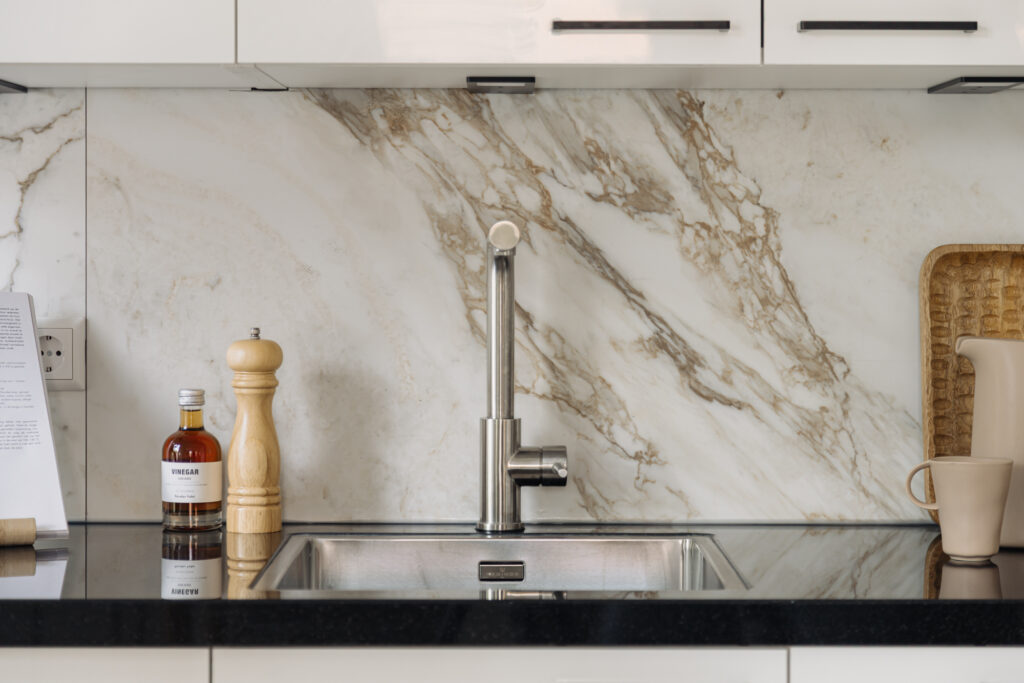
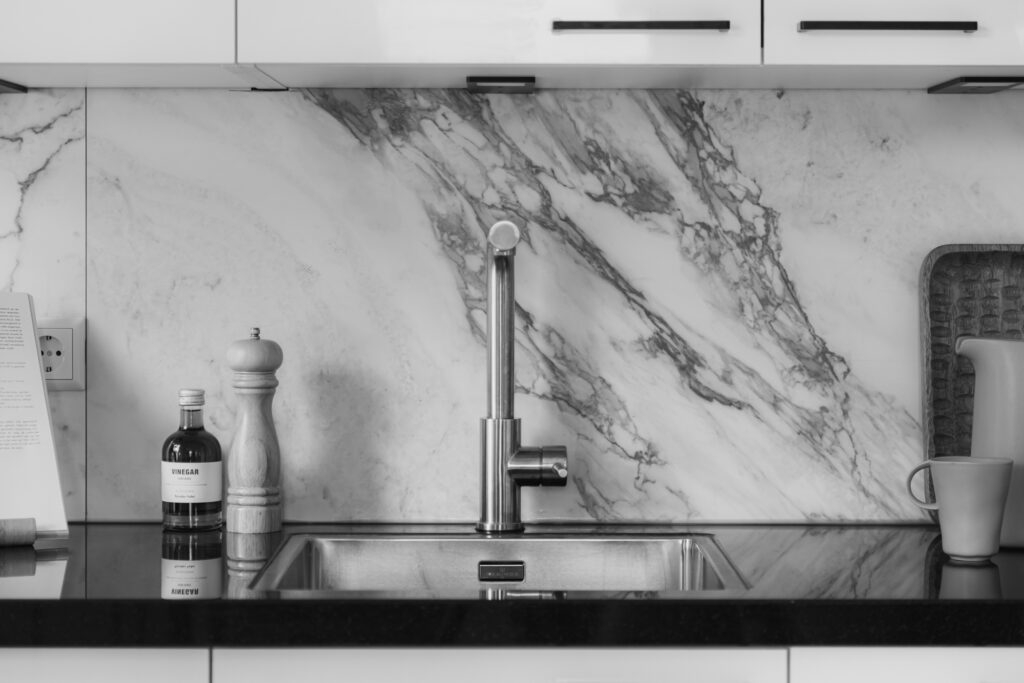
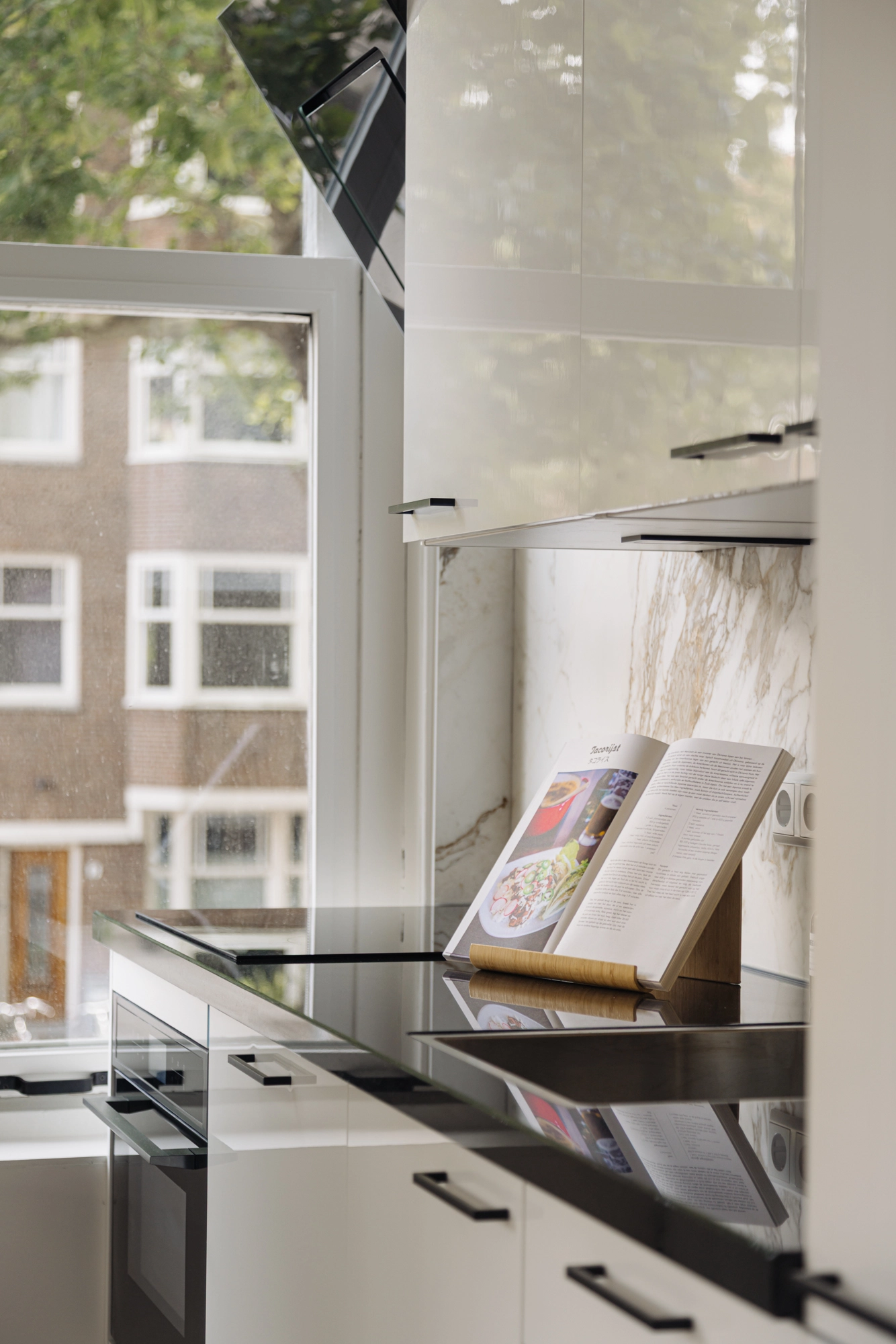
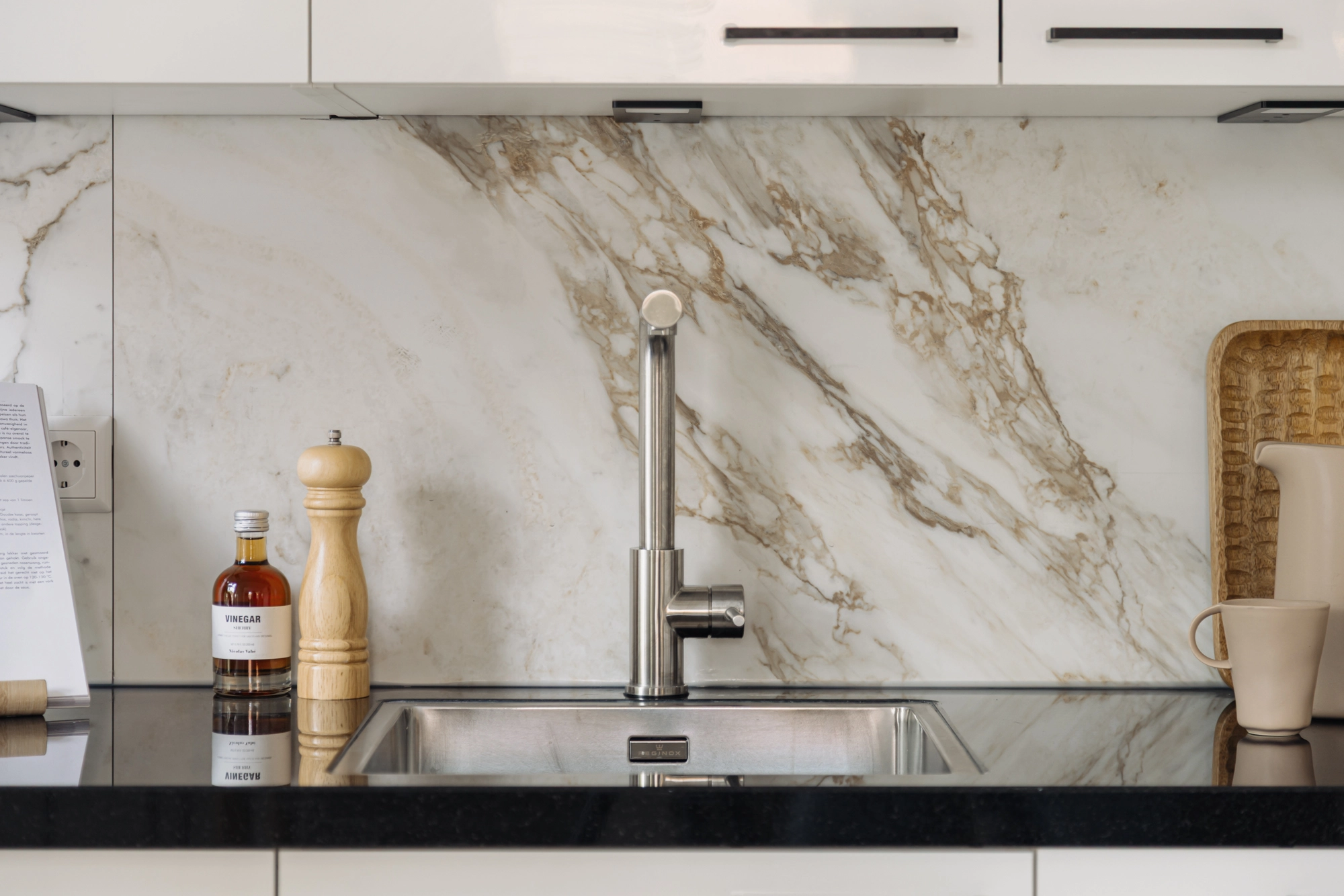
The kitchen is compact and cleanly designed, featuring white cabinetry, a dark worktop, and a marble-look backsplash. A window beside the counter overlooks the tree-lined street and brings in additional daylight onto the work surface. The layout is practical and fully equipped.
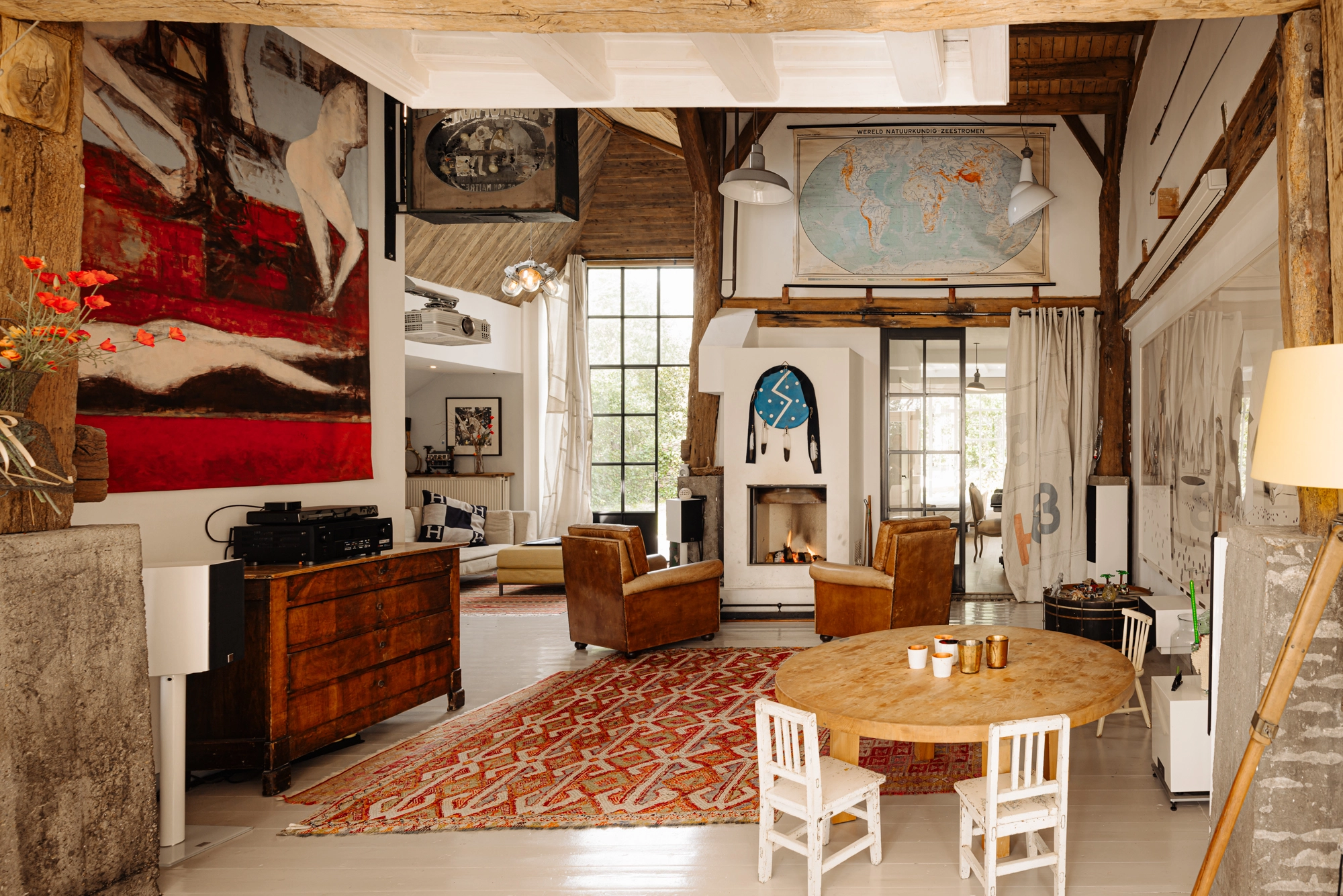
Adjacent to the dining room is the living room, accessible through double doors and also connected to the hallway. This space is calm and light-filled, with side windows and ample room for a seating arrangement. Thanks to the continuous flooring and uniform finishes, the kitchen, dining room, and living room feel like one cohesive whole. The layout is logical, the atmosphere serene. The living room could also be configured as a second bedroom if desired.
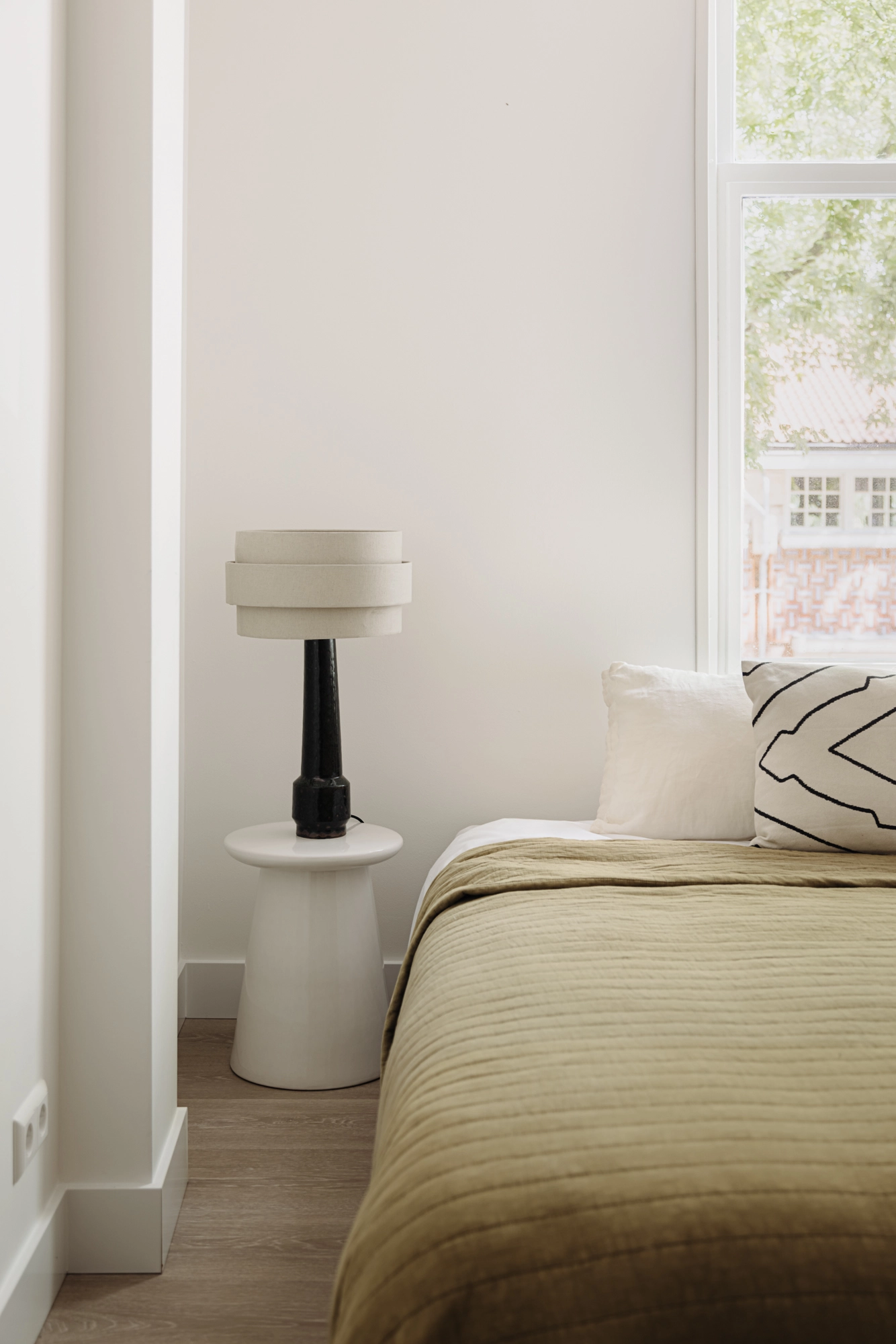
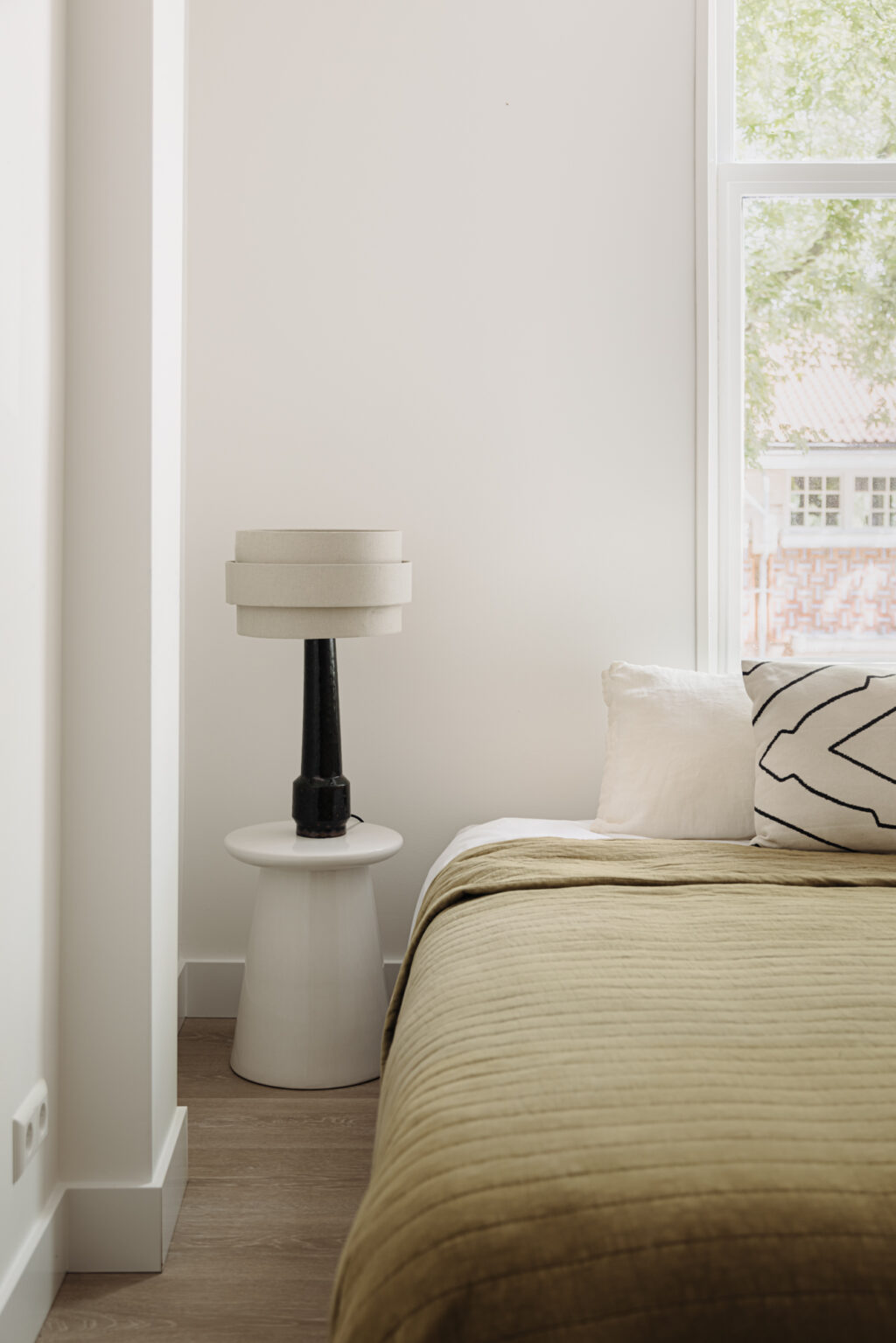
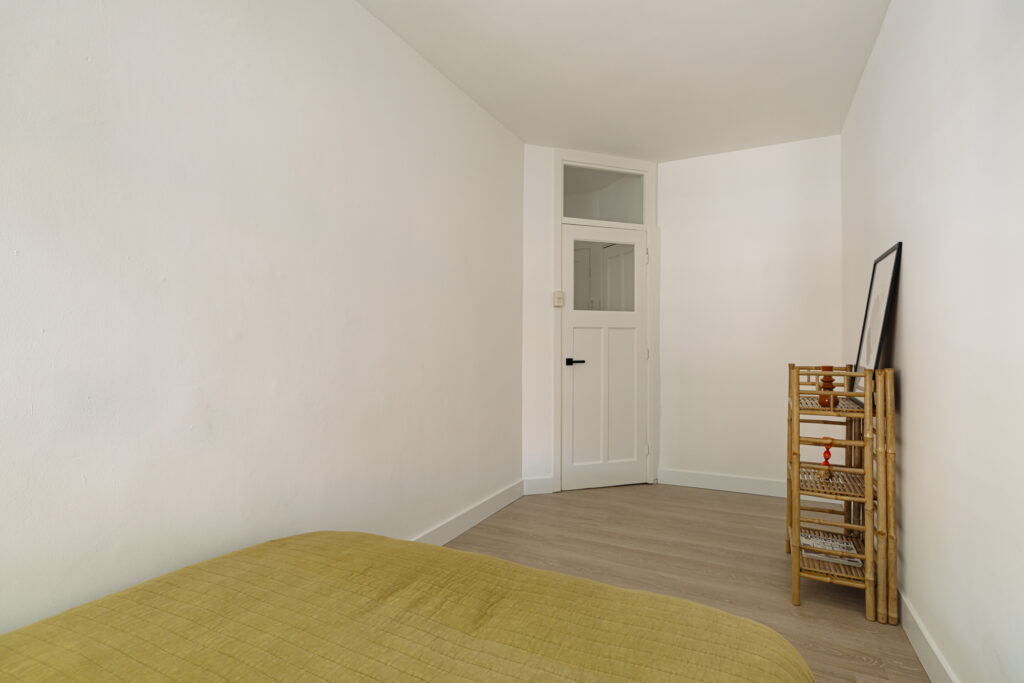
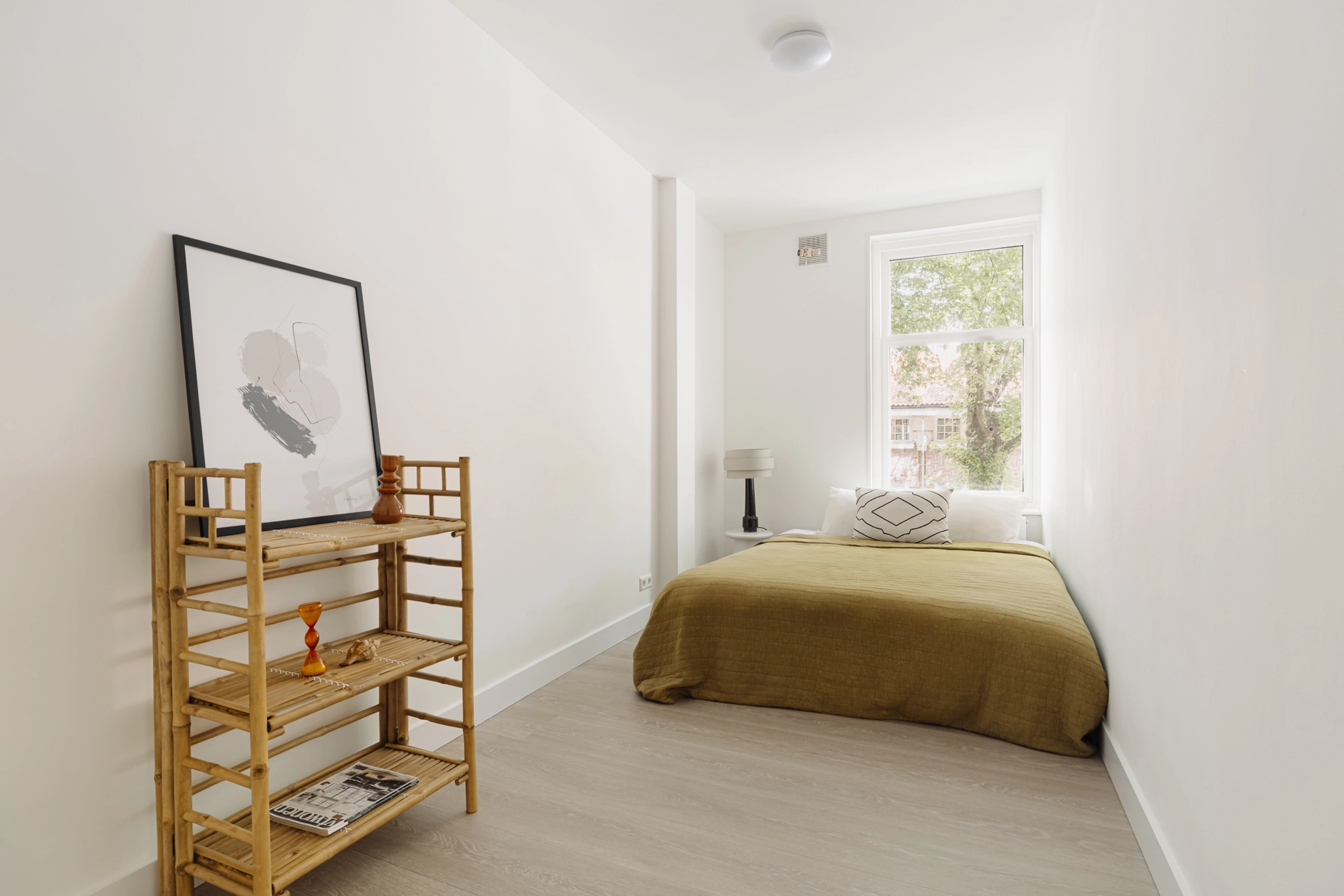
The bedroom is located at the side of the apartment and is elongated in shape. The room feels calm and bright, with ample space for a double bed and a wardrobe or chest of drawers. A window provides fresh air and a view of the greenery along the street. The finish is neutral, with light-coloured walls and continuous flooring.
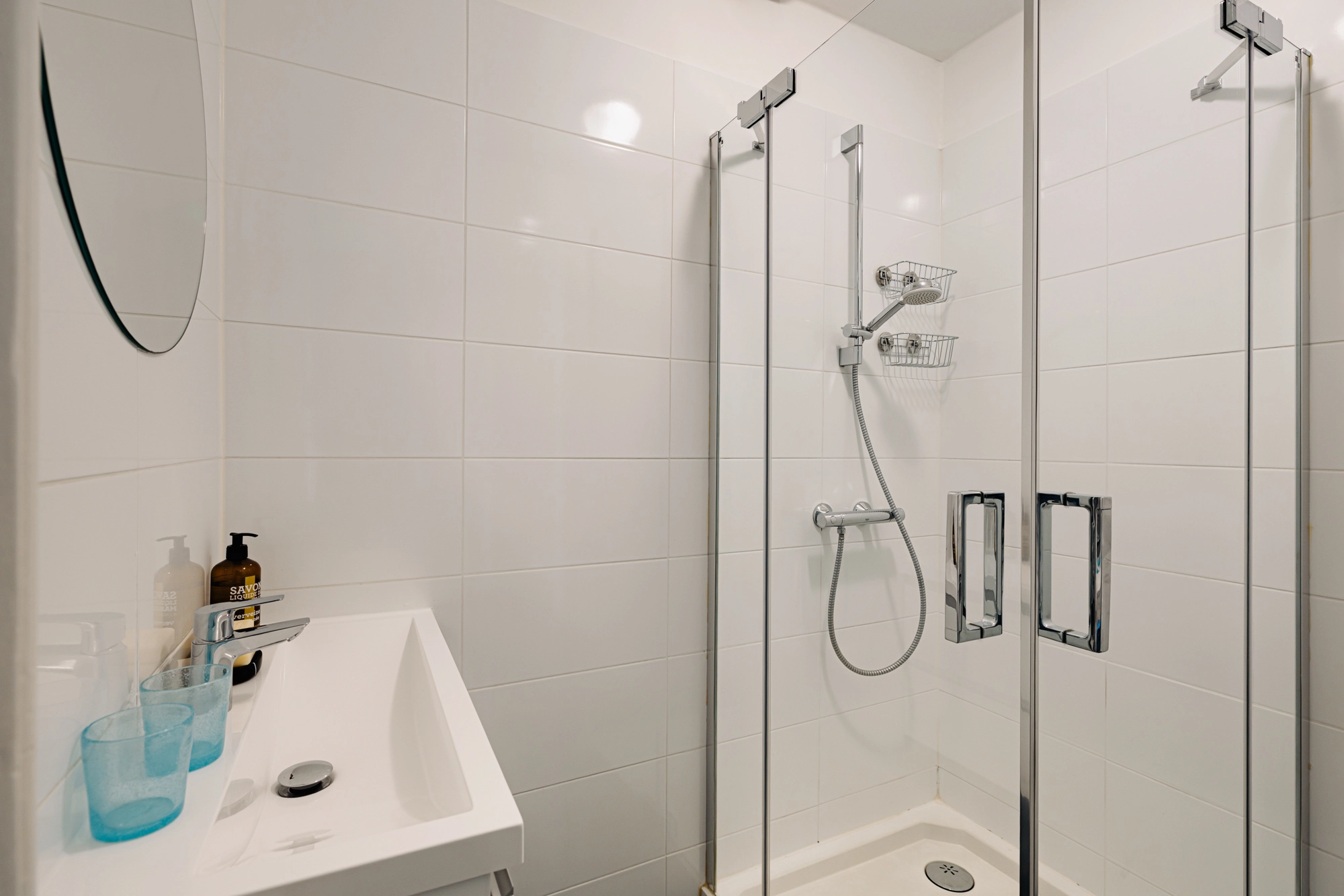
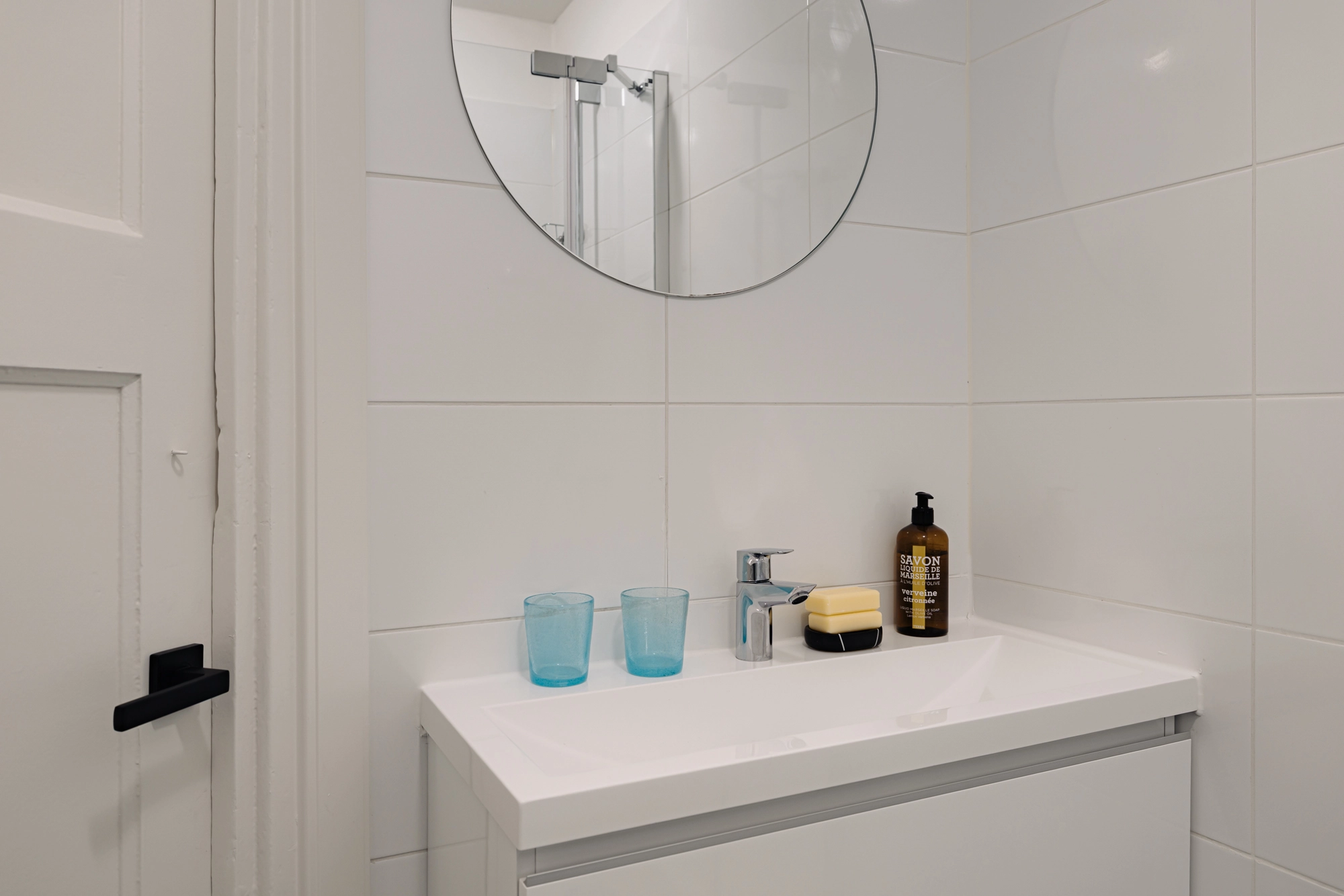
The bathroom is accessed from the hallway. The layout is efficient, featuring a glass-enclosed shower, a washbasin with mirror, and light wall tiles reaching up to the ceiling. Everything is fresh and functional.
The toilet is separate and also accessible from the hallway — convenient for guests and practical in everyday use.
Located in Amsterdam Zuid, the Stadionbuurt owes its name to the former National Stadium by Harry Elte — not to be confused with the Olympic Stadium by Jan Wils. The original stadium stood on the site of the current Jasonstraat and Argonautenstraat until 1929, when it was demolished to make way for housing after the 1928 Olympic Games.
The most striking building in the Stadionbuurt is, of course, the Olympic Stadium, designed by architect Jan Wils for the 1928 Games. Running along the axis from the Olympic Stadium to the Parnassusweg are green strips and small parks with play areas, adding to the variety and appeal of the neighbourhood.
The redeveloped Stadionplein has become a lively hub with a range of cafés, restaurants, and a weekly market, making it a hotspot for both residents and visitors. With its blend of architecture and amenities, the Stadionbuurt offers a pleasant and vibrant living environment in the heart of Amsterdam.
Accessibility
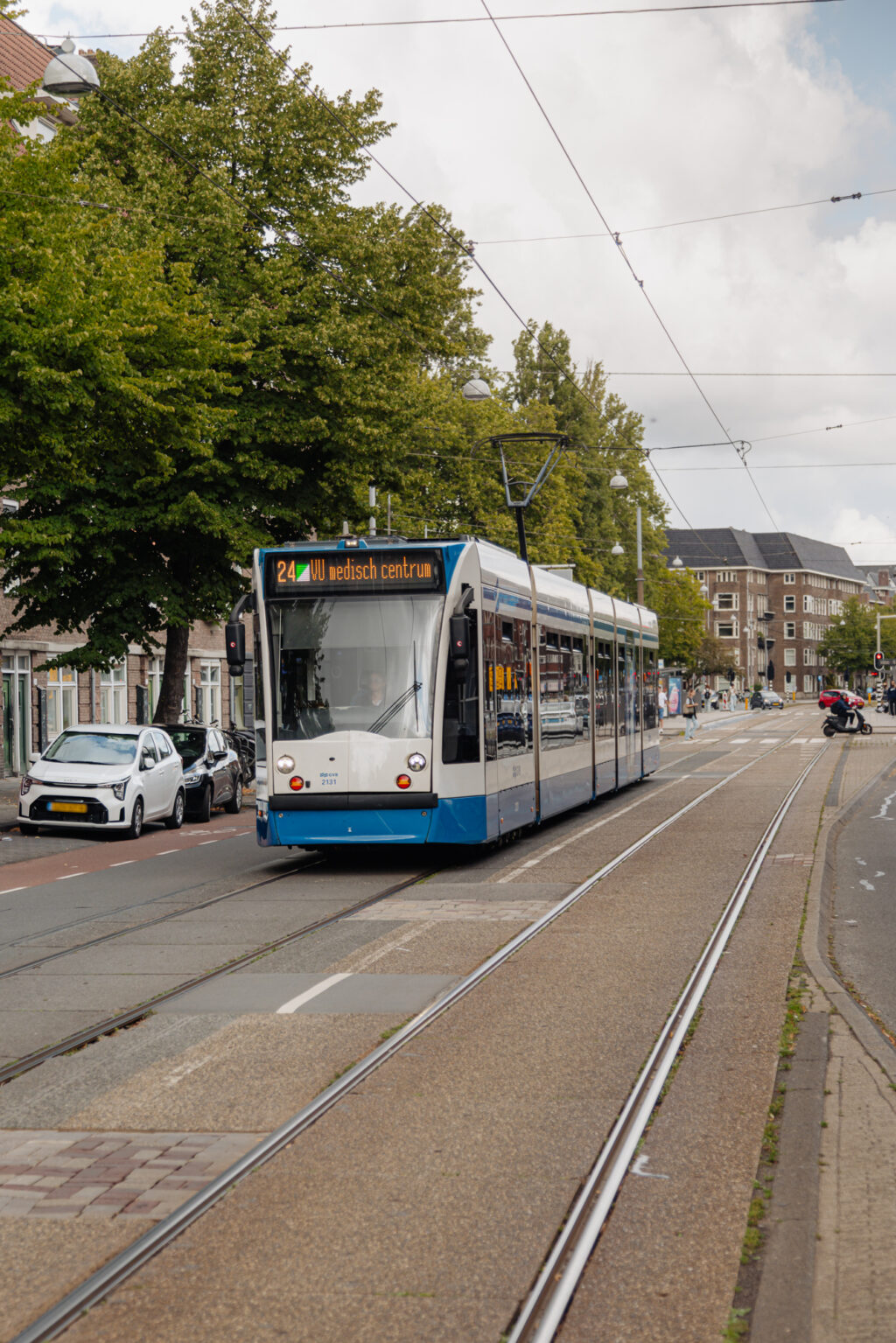
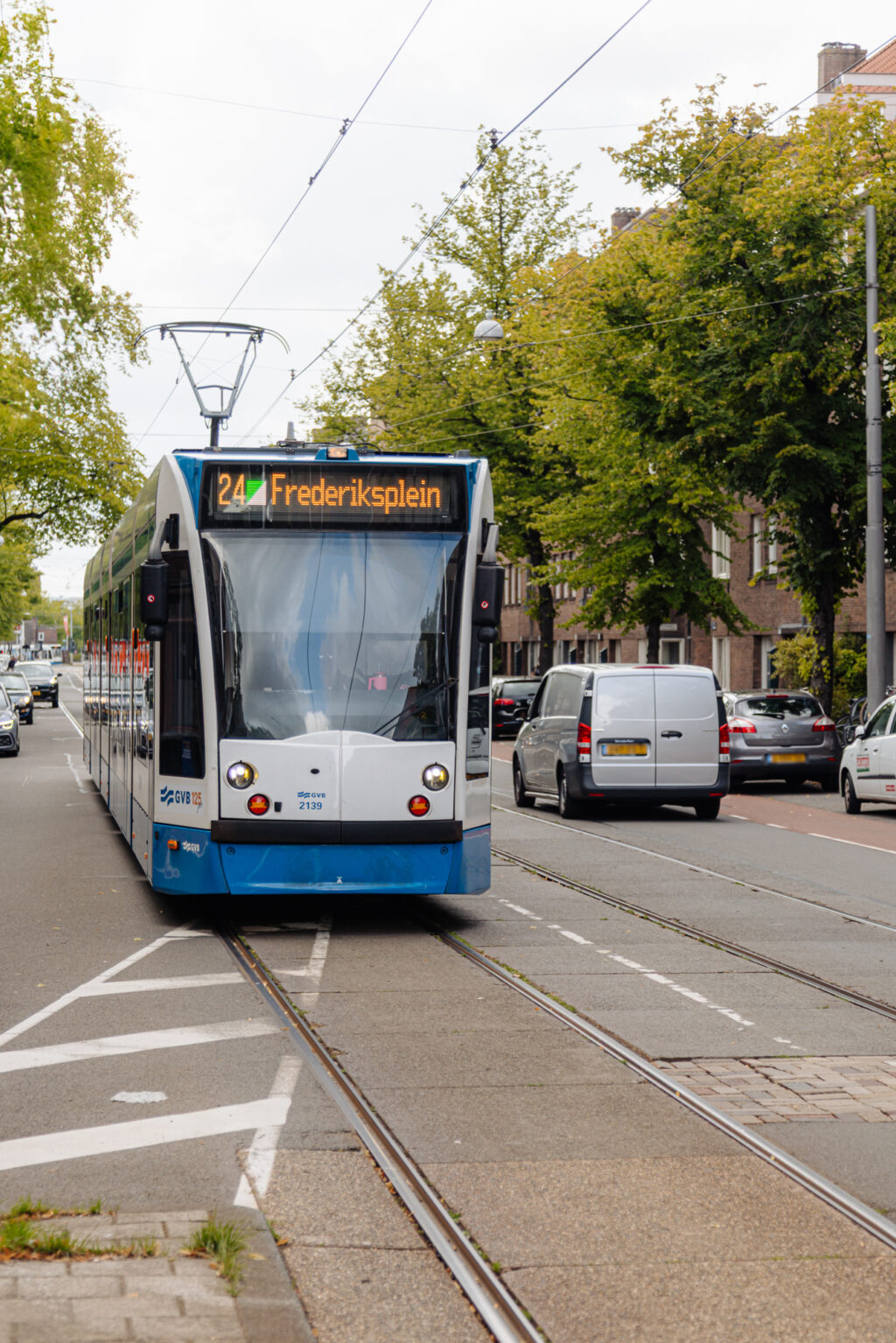
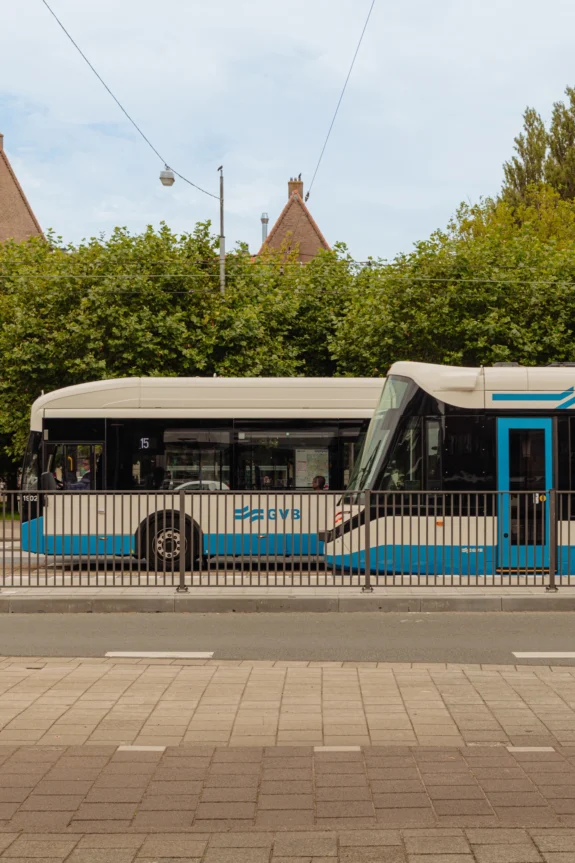
The apartment is easily accessible by bicycle, car, and public transport. The A10 Ring Road is just a 5-minute drive away via exit S108 (Oud-Zuid). From both Olympiaplein and Haarlemmermeerstation, several tram and bus lines depart — including tram 24 to Frederiksplein and VUmc, and buses to Sloterdijk Station and Stadion Zuid. From the Olympic Stadium stop, regional buses offer direct connections to Schiphol Airport. By bike, Amsterdam Zuid station is just 5 minutes away.
Parking
Parking is available via a permit system for on-street parking (permit area Zuid 2.2). With a Zuid 2.2 permit, you are allowed to park in Zuid-1, Zuid-2, and Zuid-8.
A resident parking permit costs €192.81 for six months. At present, there is no waiting list for this permit area. A second resident permit costs €482.03 for six months. (Source: Municipality of Amsterdam, August 2025.)
1076 LP Amsterdam
Umeno
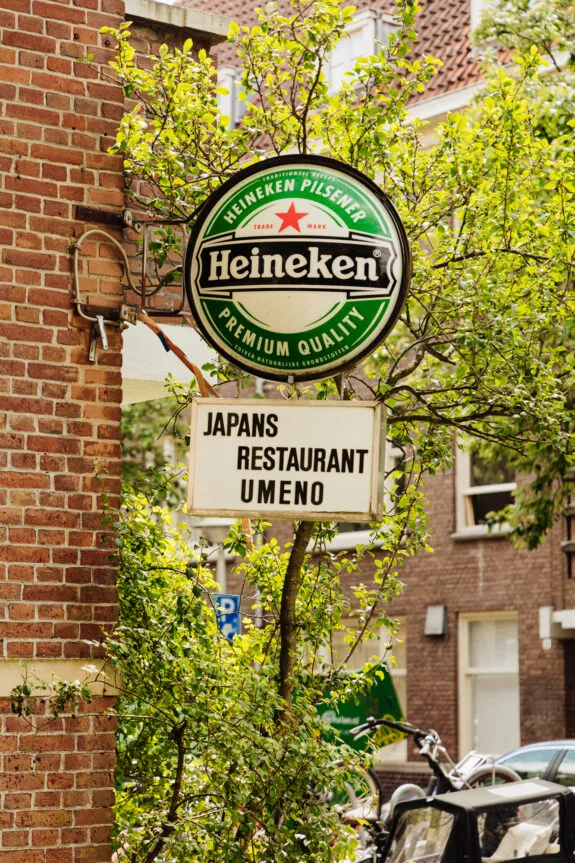
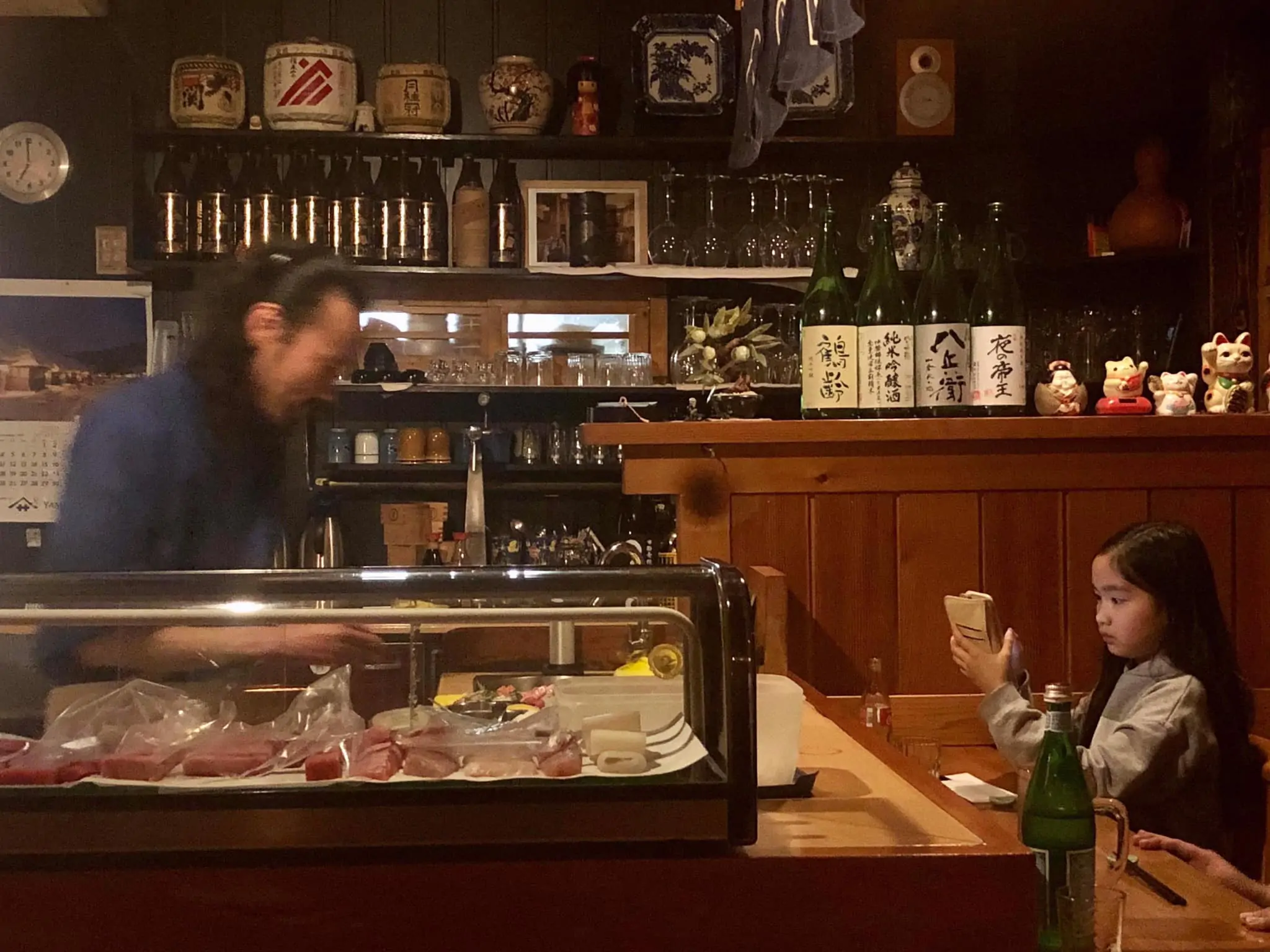
Umeno is een van de oudste Japanse restaurants in Amsterdam dat geliefd is bij haar vaste lokale gasten. Zodra je binnenstapt zie je een intieme ruimte met traditionele Japanse authenticiteit gevormd door het handgemaakte houten interieur, de shamisen en shakuhachi muziek en de enorme gastvrijheid van Ayumi en Atsuhito Hosono. De nigiri sushi is een aanrader, want de kwaliteit van de vis is uitstekend.
1076 BJ Amsterdam
De Frietsteeg
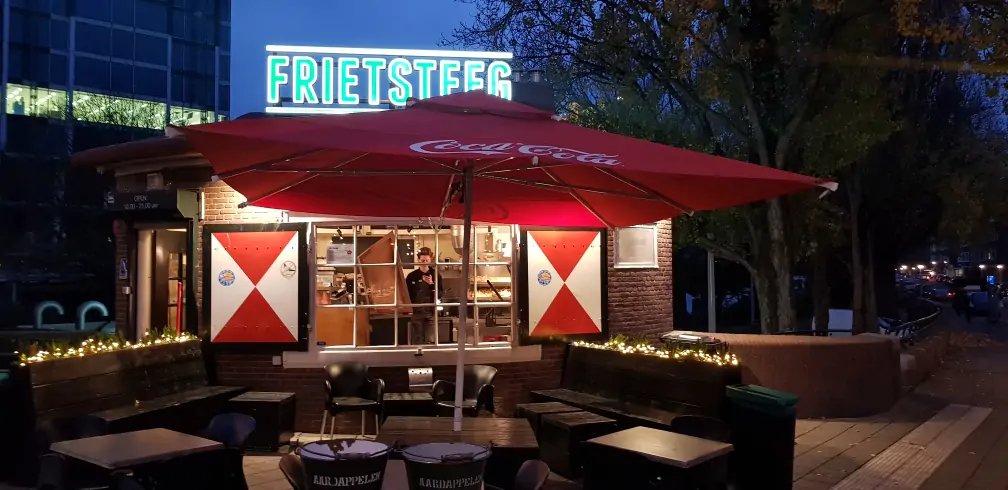
De Frietsteeg is een snackbar aan de gracht in de Stadionbuurt. Ze serveren hier heerlijke krokante frietjes en vele andere snacks. De frieten worden met de hand gesneden en je hebt keus uit meer dan 20 sauzen. Ook bijzonder: de Frietsteeg is gevestigd in een historisch huisje en er is een groot zonnig terras aan het water
1077 CV Amsterdam
The Coffee District
Eigenaren Adil Loukane en Rosa Loukane begonnen met een hole-in-the-wall coffeeshop in een modewinkel in Zuid. Toen de winkel de deuren sloot, grepen Adil en Rosa hun kans en besloten om hun eigen koffiebar te openen. Inmiddels hebben ze meerdere locaties. De koffie wordt gemaakt met een eigen melange gebrand door Lot Sixty One. Daarnaast worden er zoetigheden aangeboden zoals de inmiddelsal bekende kaneelbroodjes en bananenbrood.
1076 NZ Amsterdam
Cucina casalinga
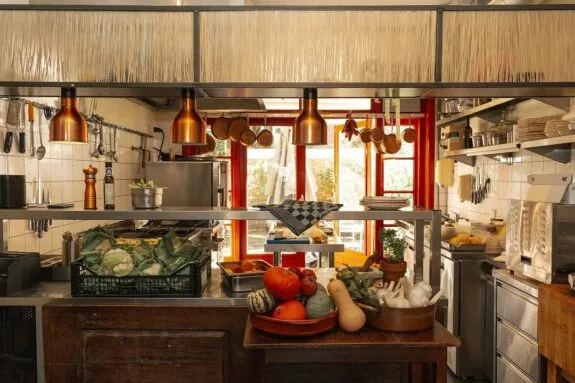
Giovanni Carmelitano is de eigenaar van Cucina Casalinga, een Italiaans restaurant gevestigd aan de Stadionweg 271 in Amsterdam-Zuid. Geboren in Rome, met een moeder uit Puglia, brengt Giovanni zijn Zuid-Italiaanse roots tot leven in zijn restaurant. Al meer dan twintig jaar is hij een toegewijde vertolker van de Italiaanse keuken, waarbij hij traditionele smaken combineert met een moderne benadering. De intieme sfeer en het beperkte aantal zitplaatsen zorgen voor een persoonlijke eetervaring die doet denken aan dineren bij een Italiaanse ‘nonna’ thuis.
1076 CK Amsterdam
Vascobelo
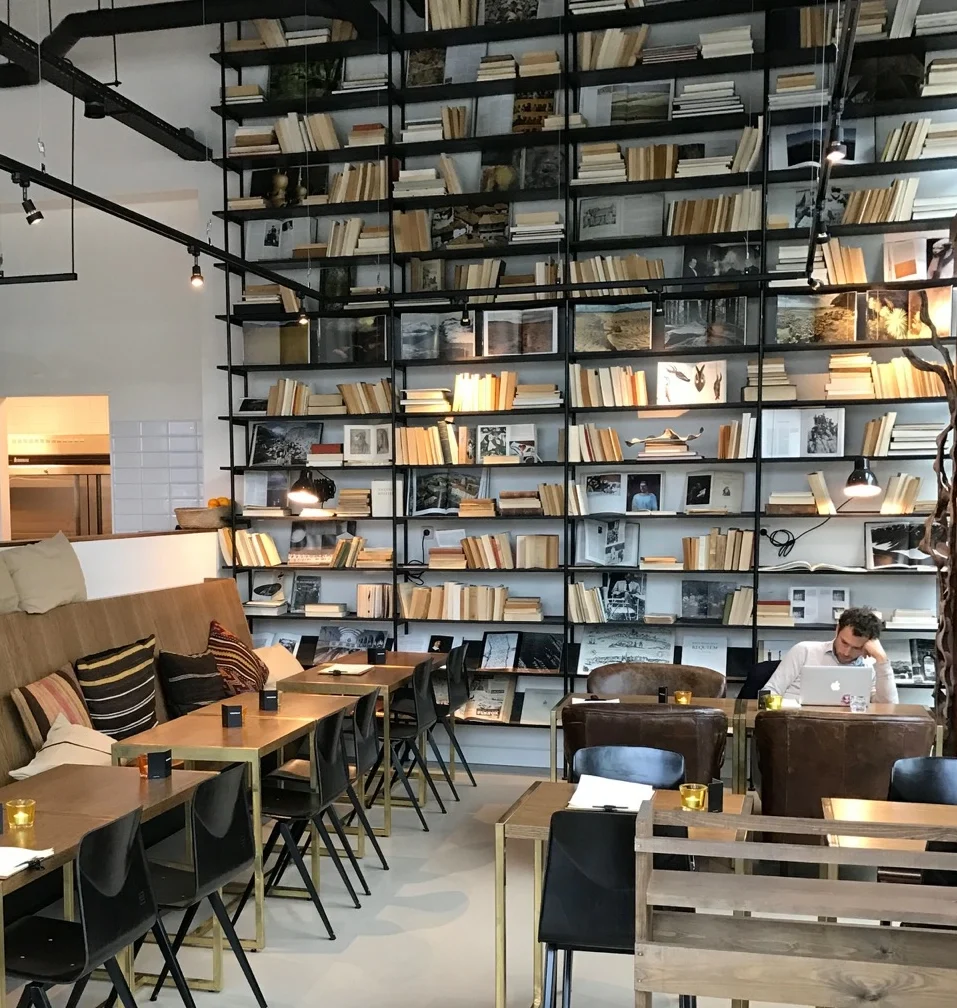
Vascobelo, van origine uit Antwerpen, was bedoeld als een café waar mensen zouden komen voor een unieke koffie ervaring. Inmiddels is de keten aan Vascobelo Café-Brasseries bekend van veel meer dan alleen dat. De vestiging in de Rijnstraat is uniek door het knusse interieur en de open keuken, wat de locatie ideaal maakt voor intieme ontmoetingen of zakelijke bijeenkomsten.
1076 CM Amsterdam
NENI
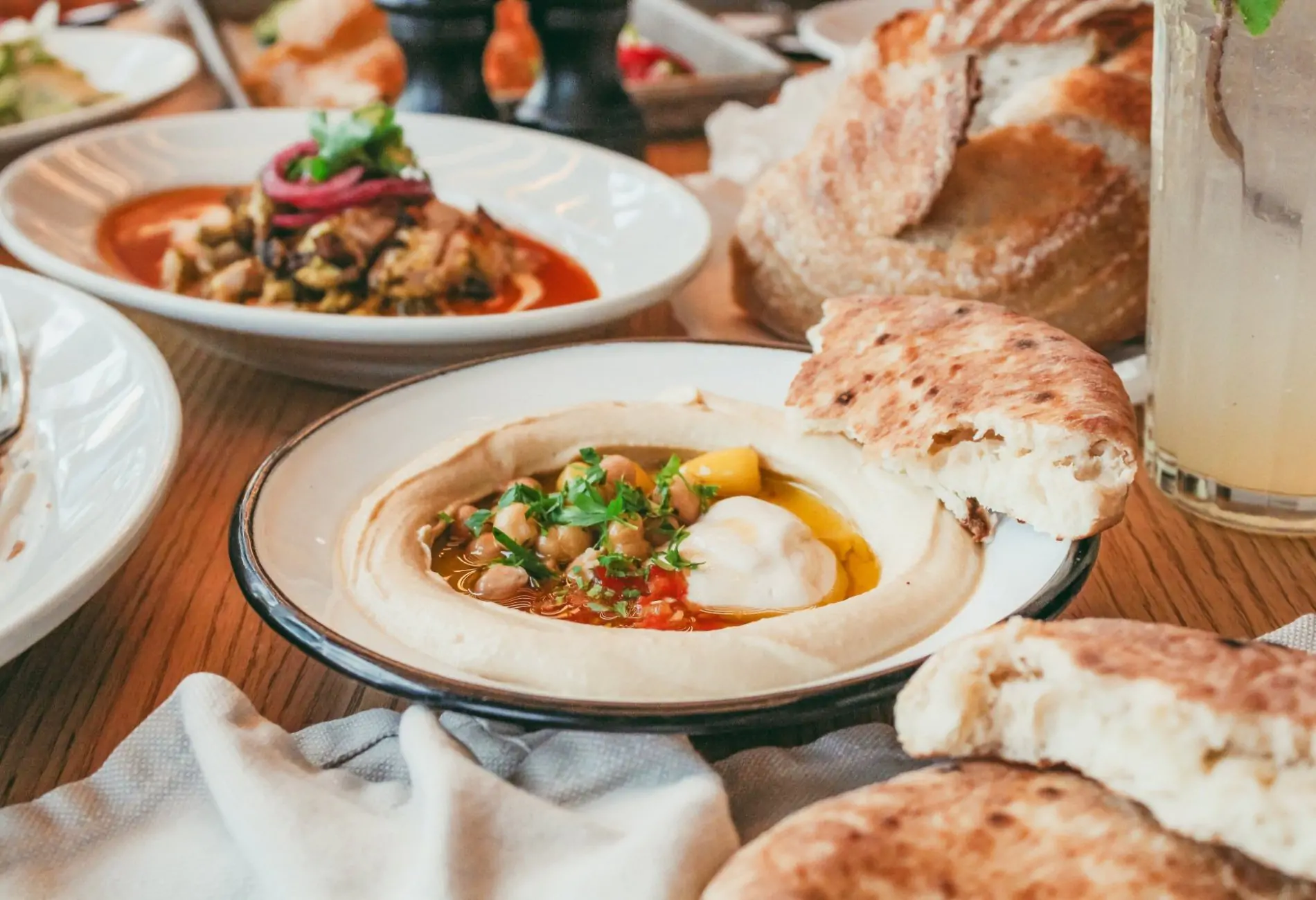
NENI is een Midden-oosters restaurant gevestigd aan het Stadionplein. De naam is een samenstelling van de voorletters van de vier zonen van Haya Molcho; de drijfveer van deze zaak. Haya is geboren in Tel-Aviv en heeft daar psychologie gestudeerd. Ze hield altijd veel van koken en begon in 2009 haar eerste eigen restaurant. Over de jaren is de familie Mocho een bekende familie geworden in de culinaire wereld en ze hebben ook andere vestigingen van NENI in onder andere Wenen en Berlijn. In al hun restaurants staat familie, samenzijn en gerechten delen centraal. De midden-oosterse gerechten zijn uitmuntend en de vers bereidde hummus is een van de beste die Amsterdam te bieden heeft.
1076 CM Amsterdam
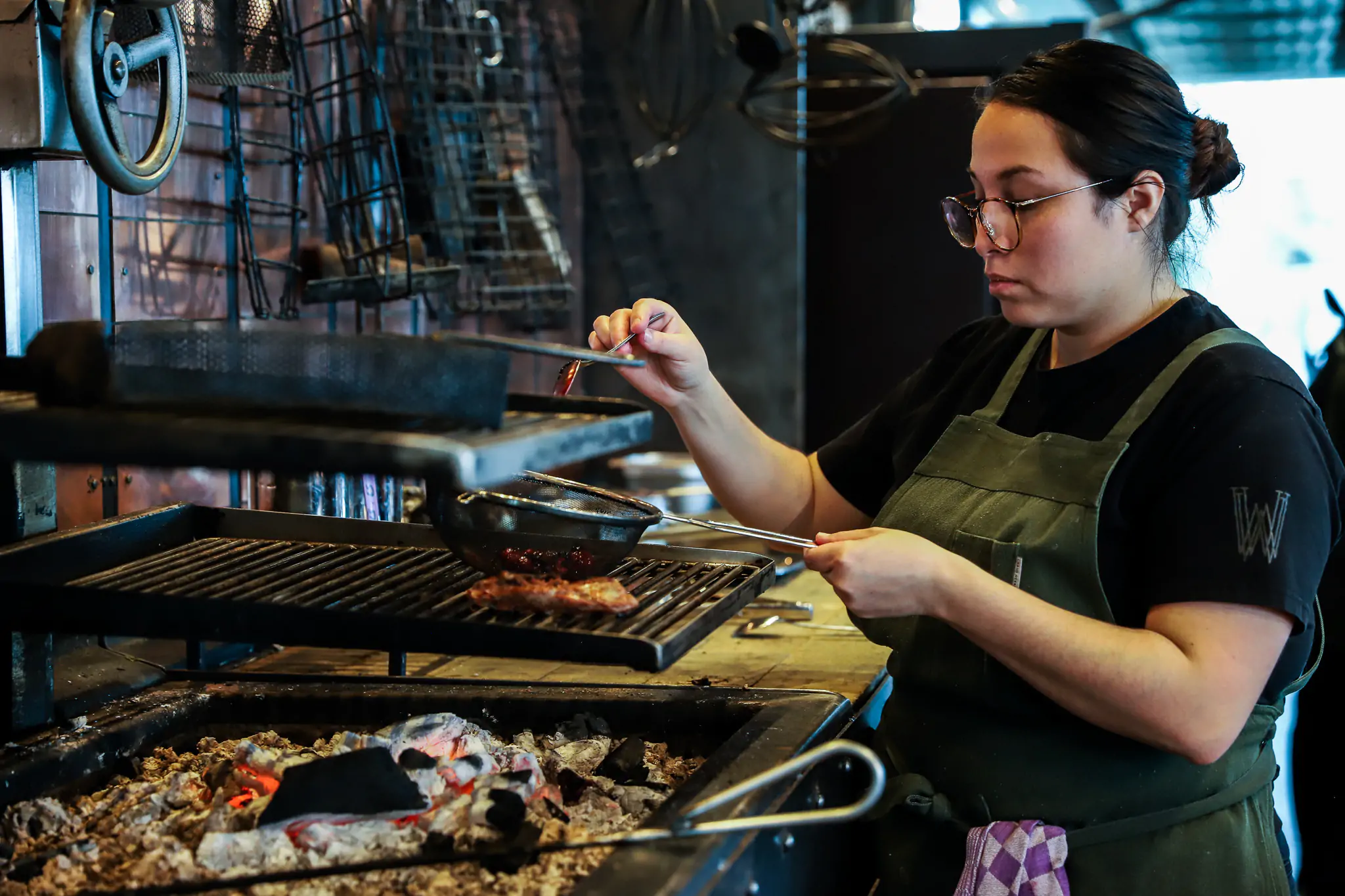
Restaurant Wils (*)
Deze unieke culinaire hotspot opent zijn deuren in 2019 dankzij chef Joris Bijdendijk. Het restaurant bevindt zich naast het Olympische stadion. Joris gaf voor de opening een sneak preview door op open vuur te koken op de middenstip van het stadion in Amsterdam-zuid. De hoge verwachtingen maakt Wils inmiddels helemaal waar. Van de 4 tot 6 gangen worden op open vuur bereid en zitten vol verrassende elementen.
1076 CM Amsterdam
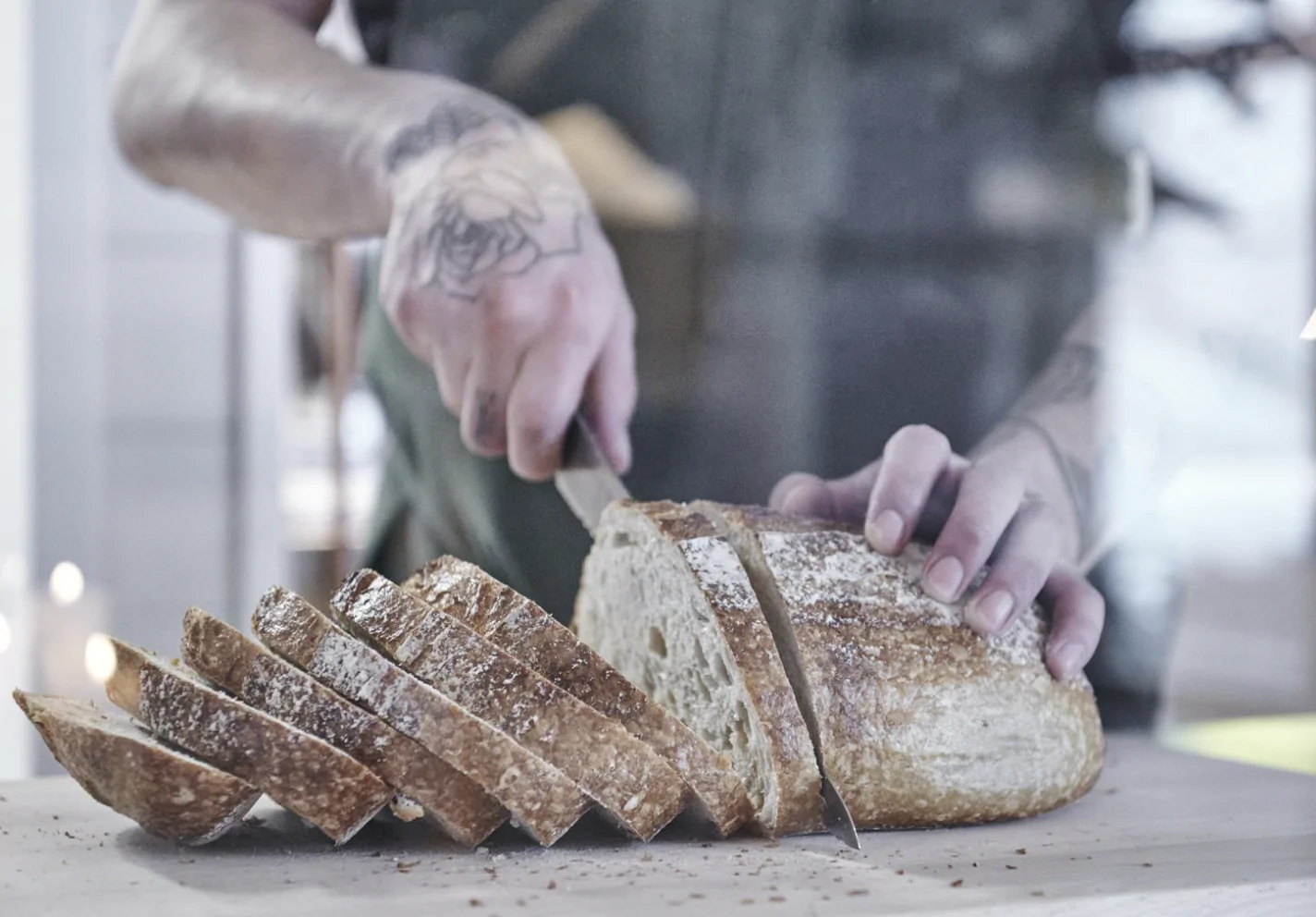
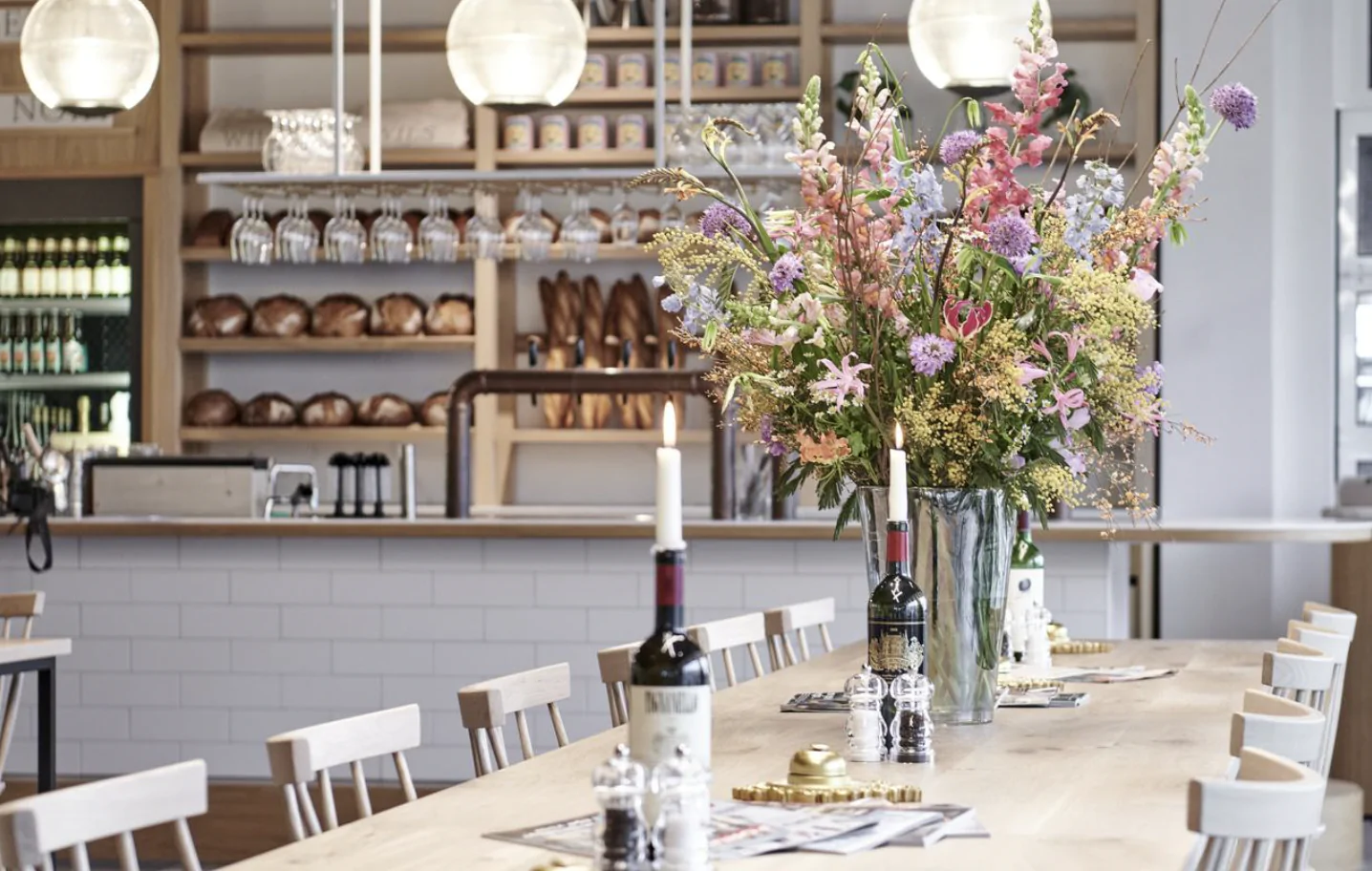
Wils Bakery & Café
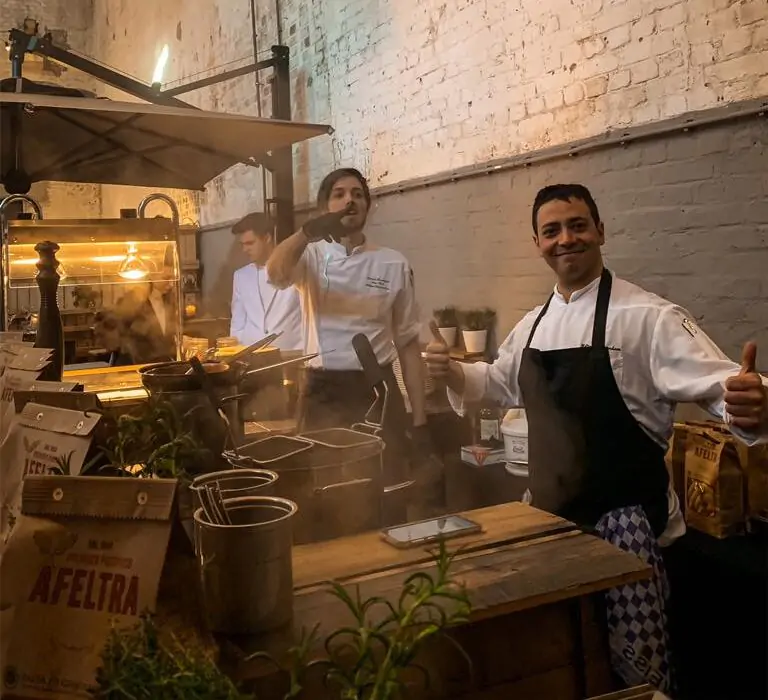
In Amsterdam Zuid vind je nu Wils Bakery Café op de begane grond. Een mix van bakkerij en Franse bistro. Wils is een nieuwe onderneming van chef Joris Bijendijk en de Vermaat Groep (Vermaat bezit Rijks en Wils). In Wils Bakery Café combineren ze het ambacht van een bakkerij met de gezelligheid van een Franse bistro. Op de menukaart vind je herkenbare gerechten, bereid met hetzelfde vakmanschap als in Michelinster restaurant Wils. Proef de patisserie van Tania, de gerechten van Rudolf, lunch met het brood van Maxim en borrel met de wijnen van Barbora.
1075 PD Amsterdam
LOT61 Coffee Roasters
Geboren in Sydney, grootgebracht in Brooklyn en nu stevig geworteld in Amsterdam: LOT61 is allesbehalve een doorsnee koffiezaak. Als onafhankelijke koffiebrander combineert het merk internationale flair met lokaal vakmanschap. Slow coffee die met precisie en aandacht is gezet. De esthetiek is rauw maar verfijnd, de sfeer informeel en creatief – een plek waar buurt en barista samenkomen. Met hun B Corp-certificering laat LOT61 bovendien zien dat smaak en duurzaamheid hand in hand kunnen gaan.
1075 XT Amsterdam
Bonnie
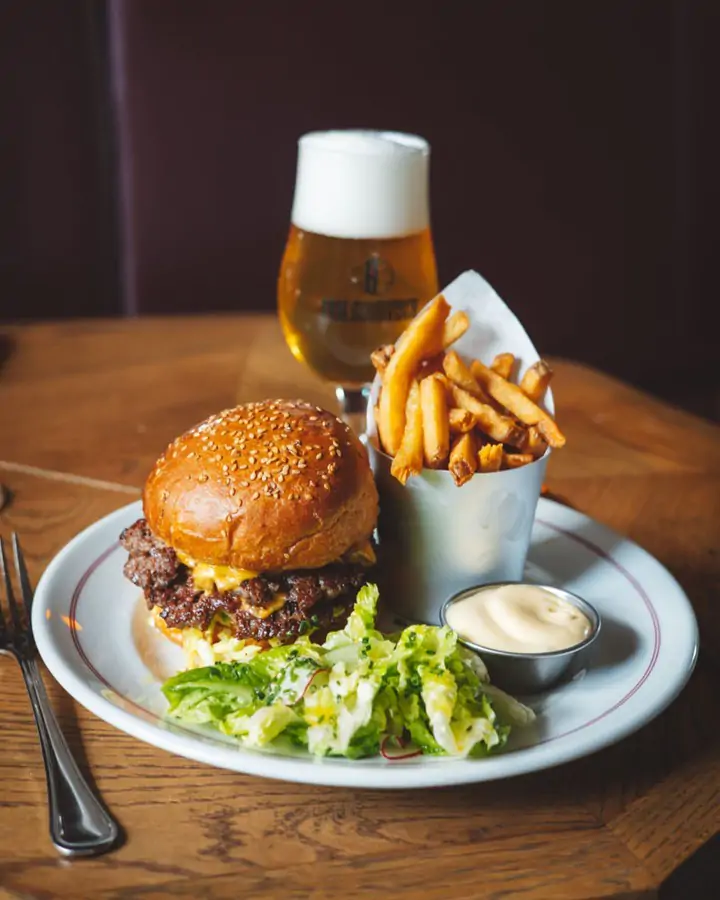
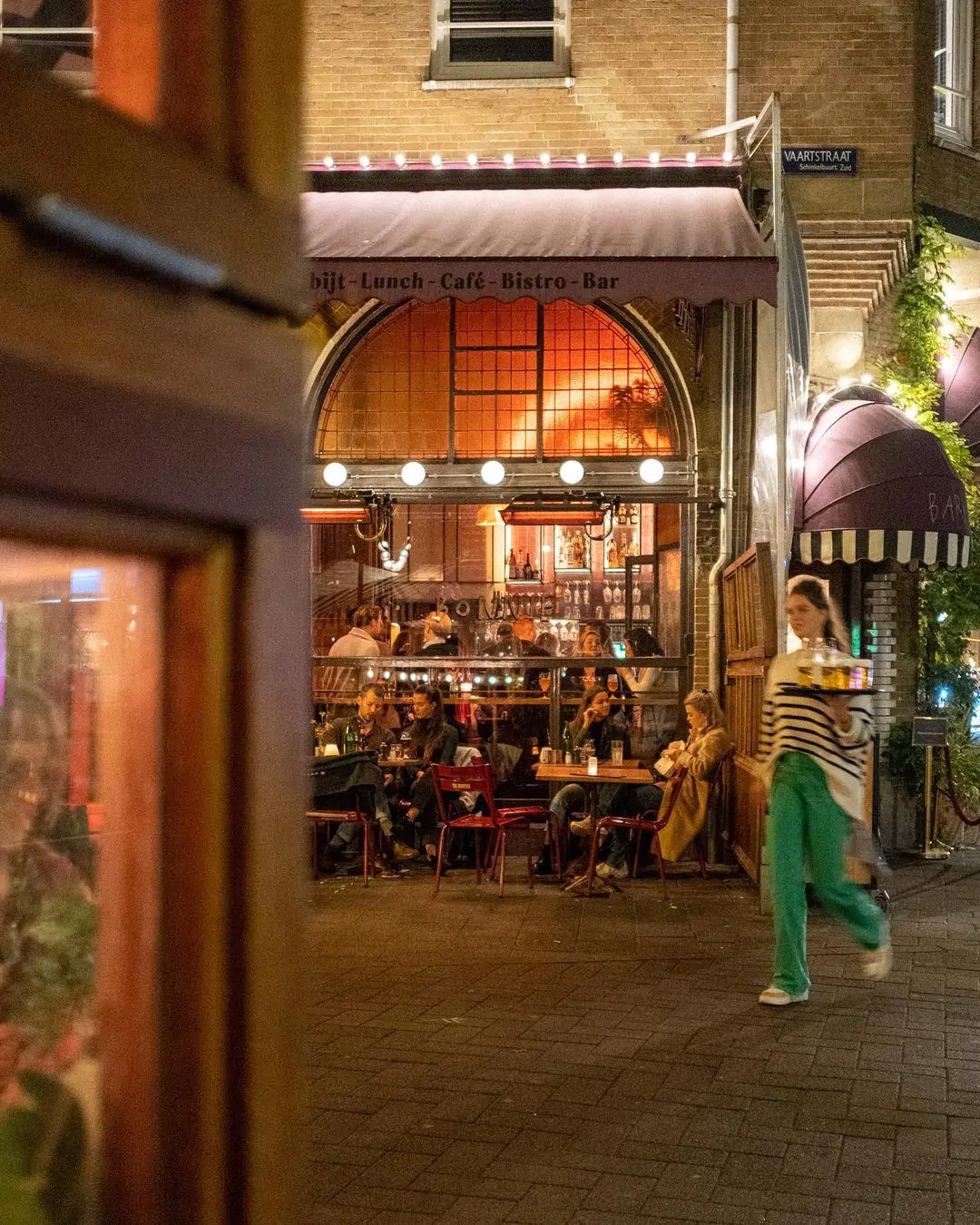
Bonnie, een charmante bistro gelegen in Amsterdam-Zuid. Bij Bonnie draait alles om genieten; van lekkere maaltijden tot zorgvuldig geselecteerde wijnen die perfect aansluiten. Vooral de Bonnie's double cheeseburger is een aanrader. De ambiance zorgt ervoor dat je je al snel op je gemak voelt. Een lunch hier kan gemakkelijk overgaan in een gezellige borrel, waardoor je het gevoel krijgt dat je eigenlijk helemaal niet meer weg wil.
1077 BG Amsterdam
Roberto's Restaurant Amsterdam
In de top tien Italiaanse restaurants van Amsterdam mag Roberto’s niet ontbreken. Het restaurant is gelegen in het Hilton hotel, waar de iconische Italiaanse keuken sinds 25 jaar de borden vult. Het restaurant draait om pure en simpele smaken met gerechten als dungesneden aubergine, groene farfalle pasta met kreeftensaus en Lava cake.
1075 BG Amsterdam
Juliette
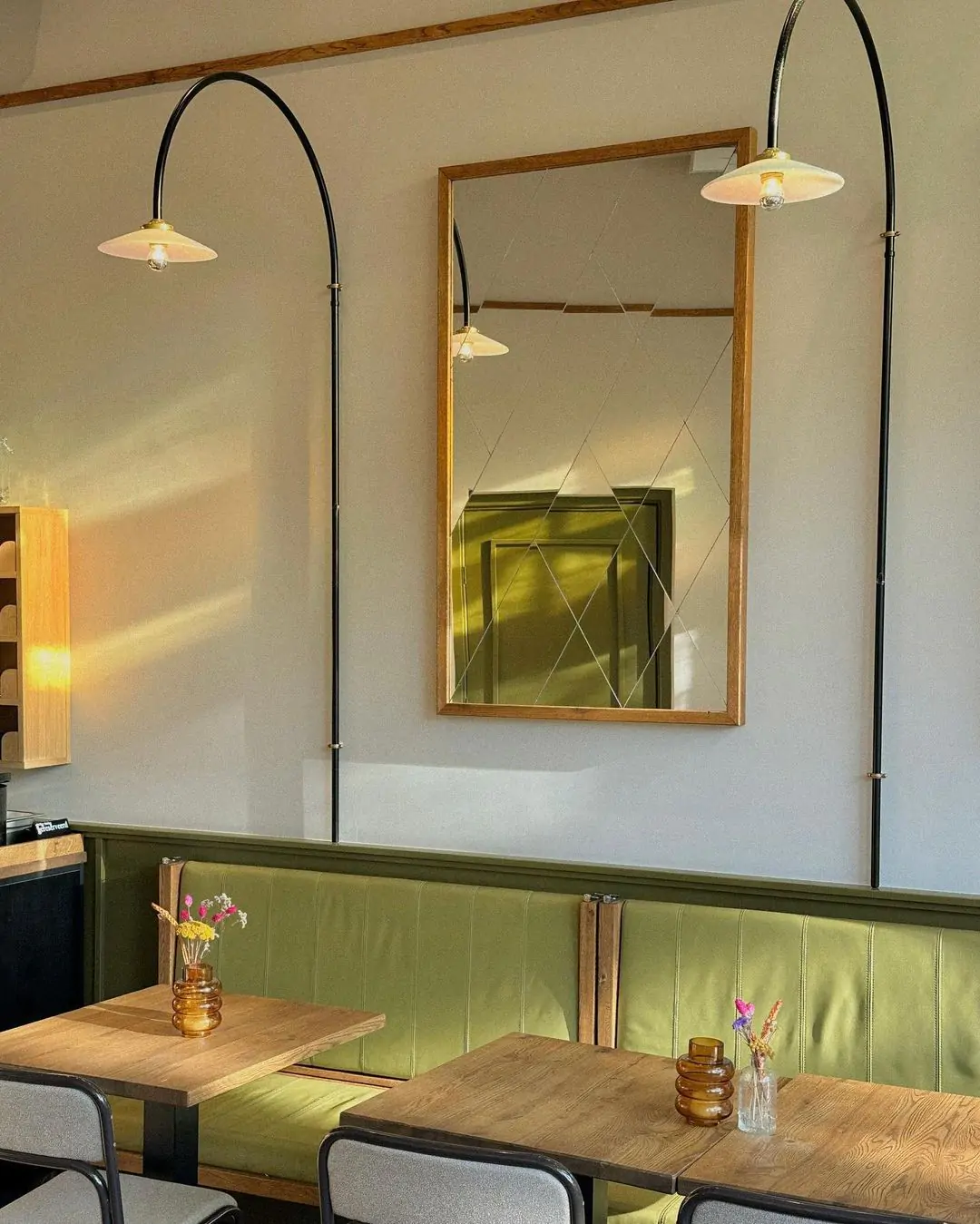
In Amsterdam Zuid kun je bij Juliette genieten van ontbijt en lunch in de zon. Het menu is gebaseerd op verse ingrediënten van lokale leveranciers en wordt dagelijks samengesteld op basis van wat er op de markt beschikbaar is. Denk aan gerechten zoals de Porco Rosso: mortadella, stracciatellakaas, Spaanse guindillapepers en rode pesto. Voor het diner of een borrel kan je terecht bij buurman Bar Jules. De focus ligt op Zuid-Europese gerechten zoals pizzetta's, pata negra en geroosterde octopus.
1075 EL Amsterdam
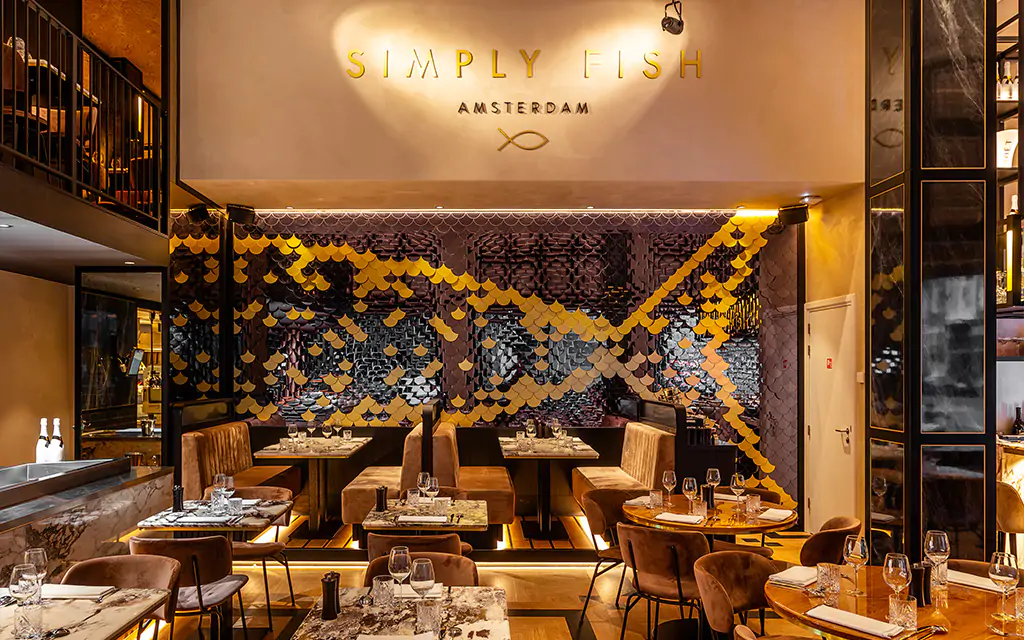
Simply Fish
Simply Fish is gelegen in Oud-Zuid aan de Koninginneweg. Zoals de naam al doet vermoeden is het restaurant gespecialiseerd in het bereiden van vis. Echtpaar Jan en Francis Rijk bezaten voorheen eenzelfde soort restaurant in Zeeland, een welbekende provincie voor overheerlijke vis en zeevruchten. Op het menu kan je onder andere fruit de mer, garnalenkroketjes, oesters en hun beroemde kreeftenbisque vinden.
1077 JK Amsterdam
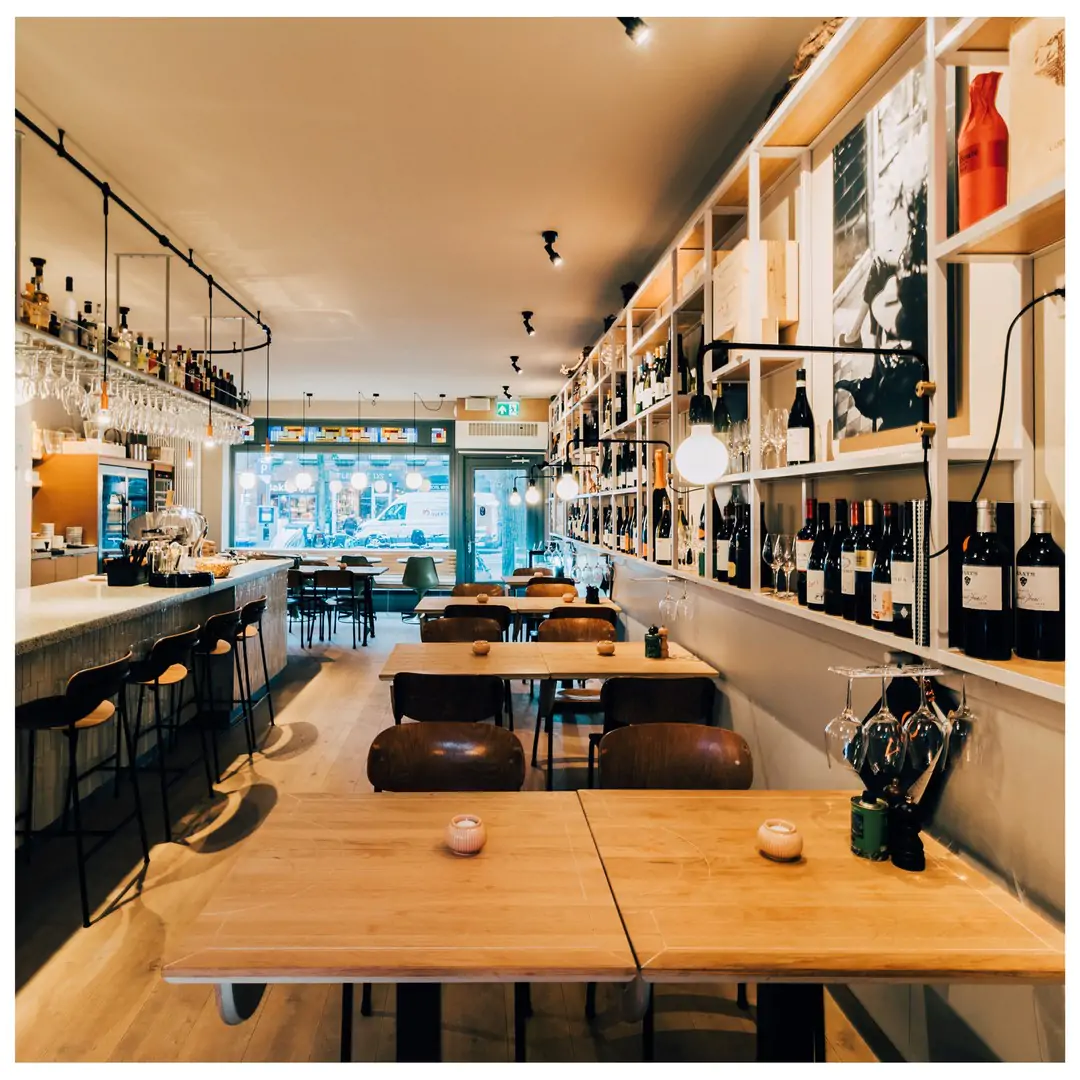
Winebar QV
Bij Winebar QV kan je in principe de hele dag doorbrengen alsof je in Italië bent. Je begint met een Italiaanse espresso, luncht met een warme maaltijd en sluit af met een goed glas wijn met bijbehorend een Italiaanse aperitivo. Het is er gezellig en stijlvol ingericht en je kan aan de hoge krukken aan de bar zitten, aan de lagere tafeltjes of op het kleine terras.
1075 BP Amsterdam
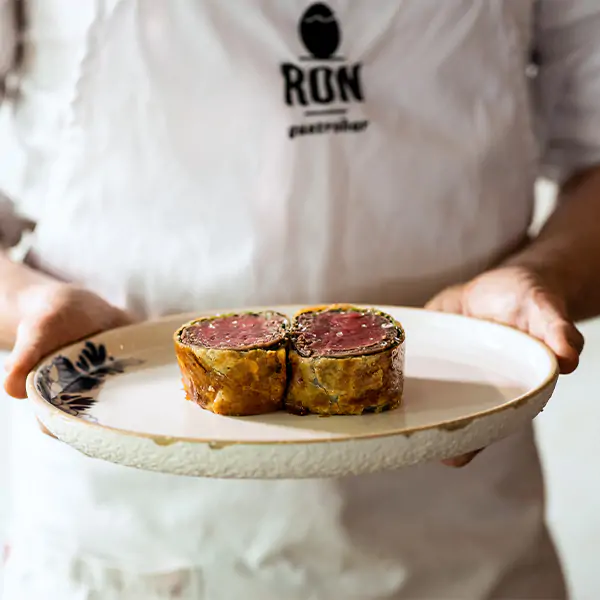
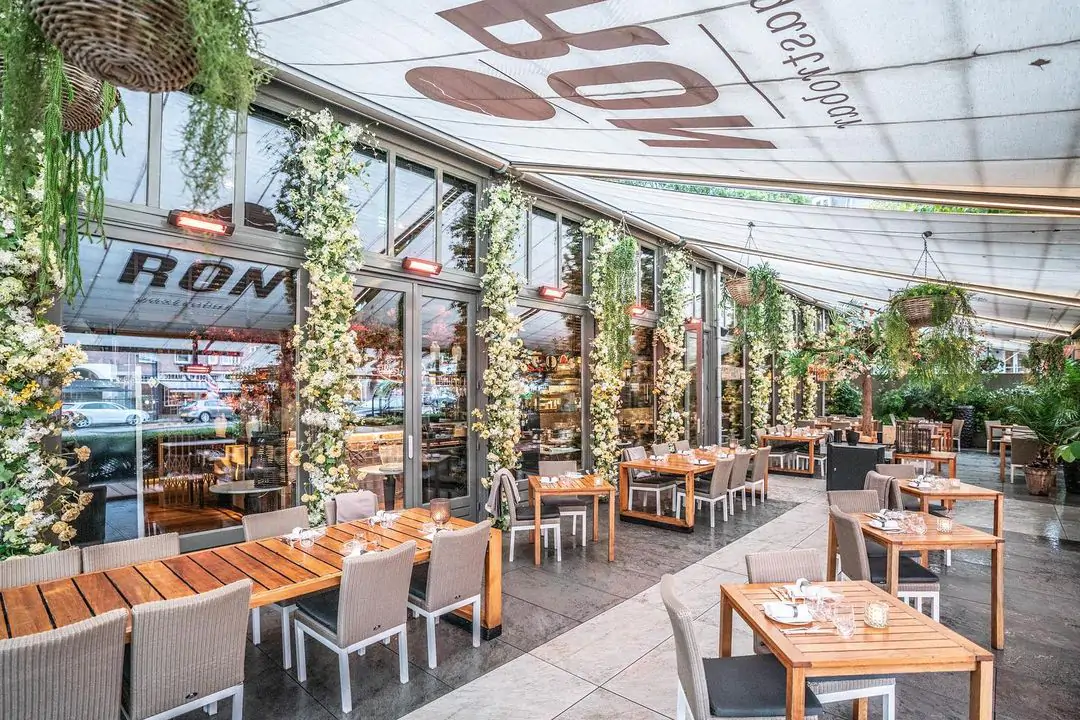
Ron Gastrobar (*)
Bij Ron Blaauw's eerste gastrobar in Amsterdam gaat een laagdrempelige sfeer hand in hand met een Michelinster. Stijl en gezelligheid komen samen voor een smakelijke ervaring. Van details tot amuses, cocktails, broodjes op tafel, nieuwe gerechtjes, heerlijke wijnen en attente service. Alles draait om het credo: "uit eten gaan moet een feestje zijn''.Voor BBQ-liefhebbers is er zelfs een apart gedeelte op de menukaart. Uiteraard ontbreken de klassiekers, zoals de spareribs "The Original," niet; een gerecht dat altijd zal blijven.
1075 GD Amsterdam
Castell Zuid
Castell Zuid is de stijlvolle nieuwe vestiging van het iconische Amsterdamse grillrestaurant Castell, gevestigd aan de Valeriusstraat in Oud-Zuid. Waar het origineel in het centrum bekendstaat om zijn no-nonsense steaks en late diners, brengt deze locatie dezelfde smaken in een verfijnde setting. “Same taste, same vibe, different look” luidt het motto – en dat klopt: herkenbaar en toch helemaal nieuw.
1076 TB Amsterdam
Slagerij Zikking & Zoon
Slagerij Zikking & Zoon zit aan de Marathonweg en is een begrip in Amsterdam. Eigenaar Robert Zikking is een geboren en getogen Amsterdammer die samen met zijn vrouw in 1995 gepassioneerd en vol zelfvertrouwen een eigen zaak begon. Zoals hij zelf zegt: ‘Het is geen sprookje, maar een (h)eerlijke werkelijkheid die een geschiedenis heeft.’ De filet americain is gemaakt met het recept van een oude Jordaanse dam en niet te ontbreken is de nostalgische Amsterdamse ossenworst.
1077 CV Amsterdam
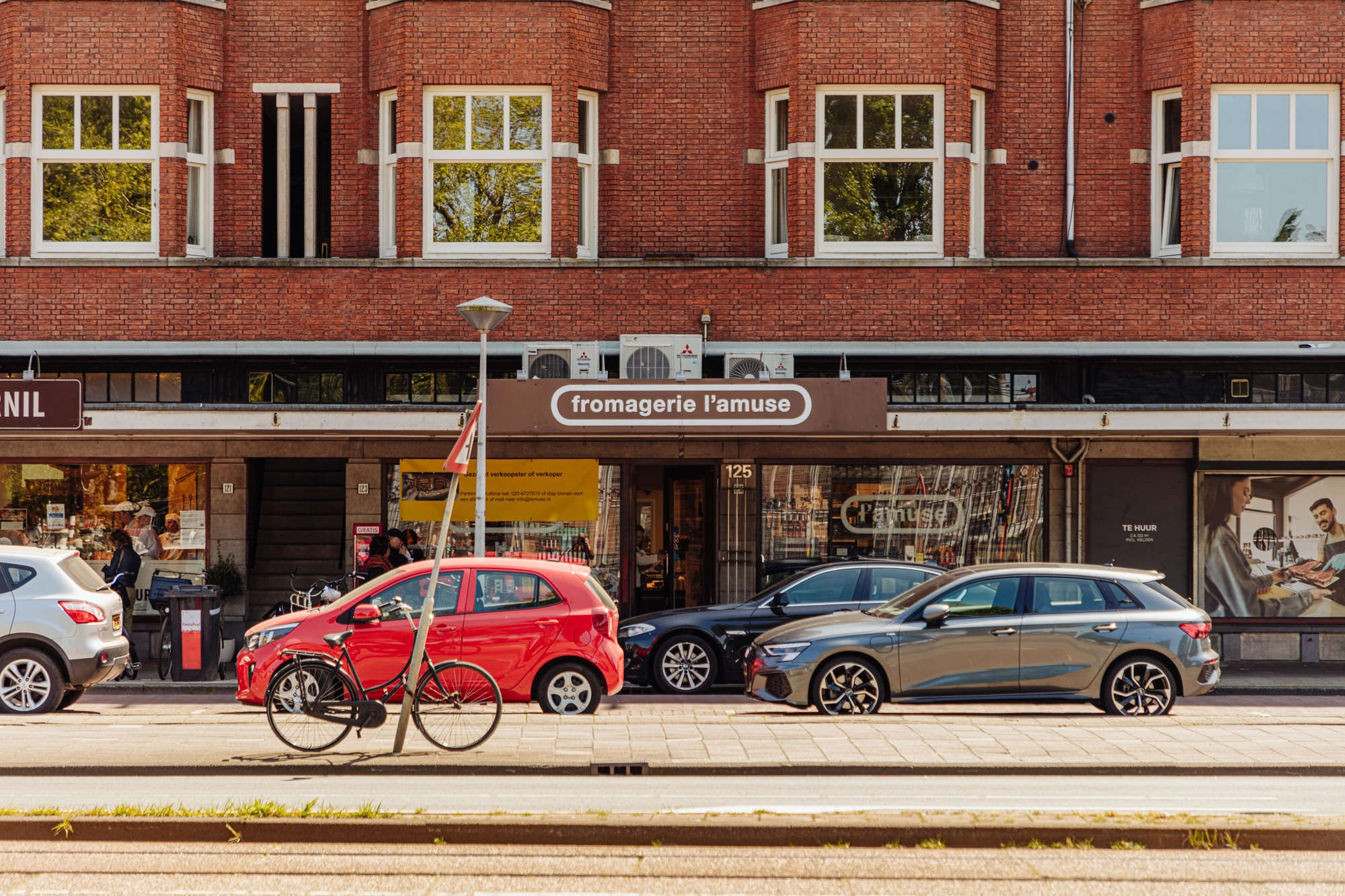
L'Amuse
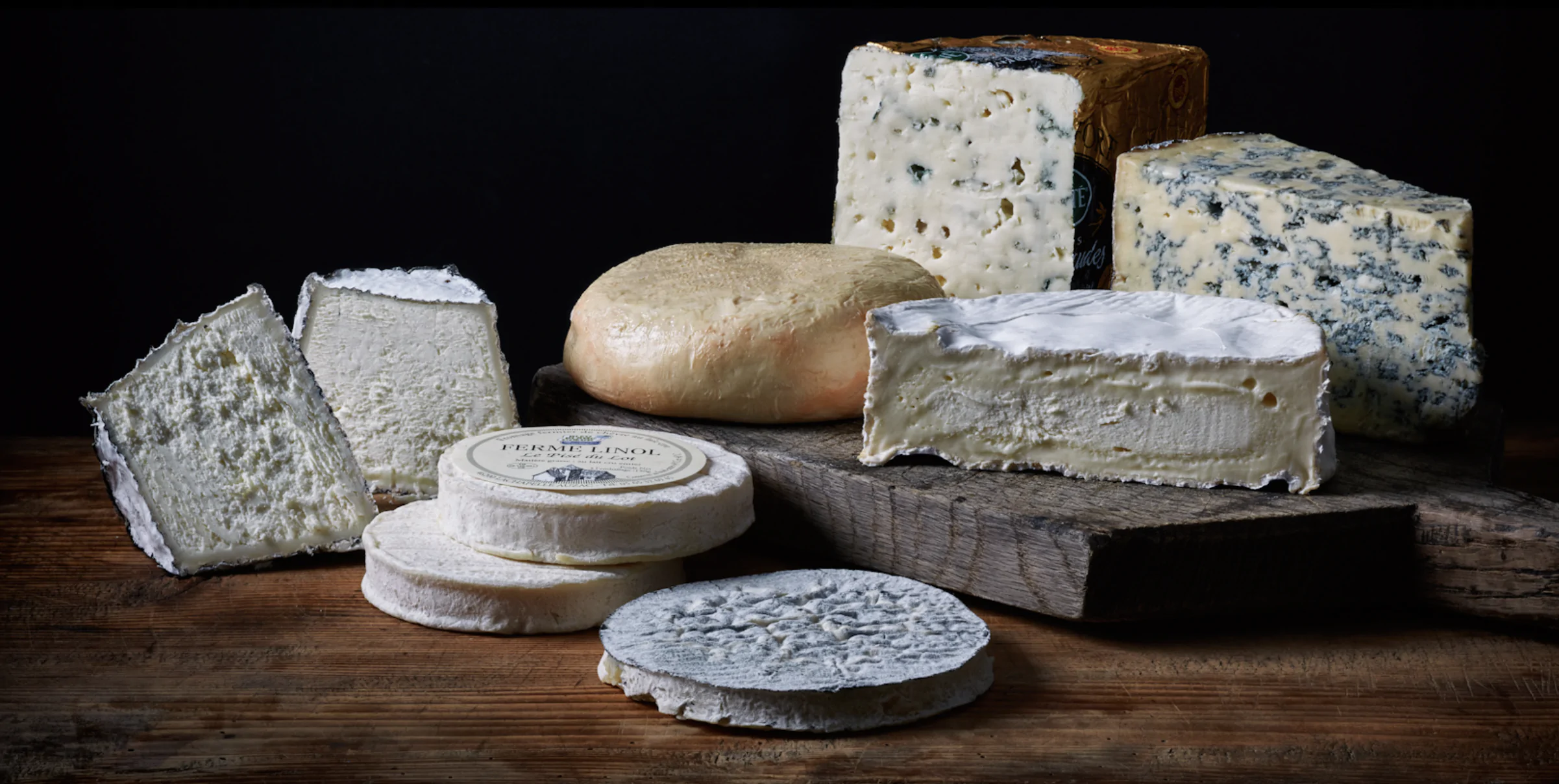
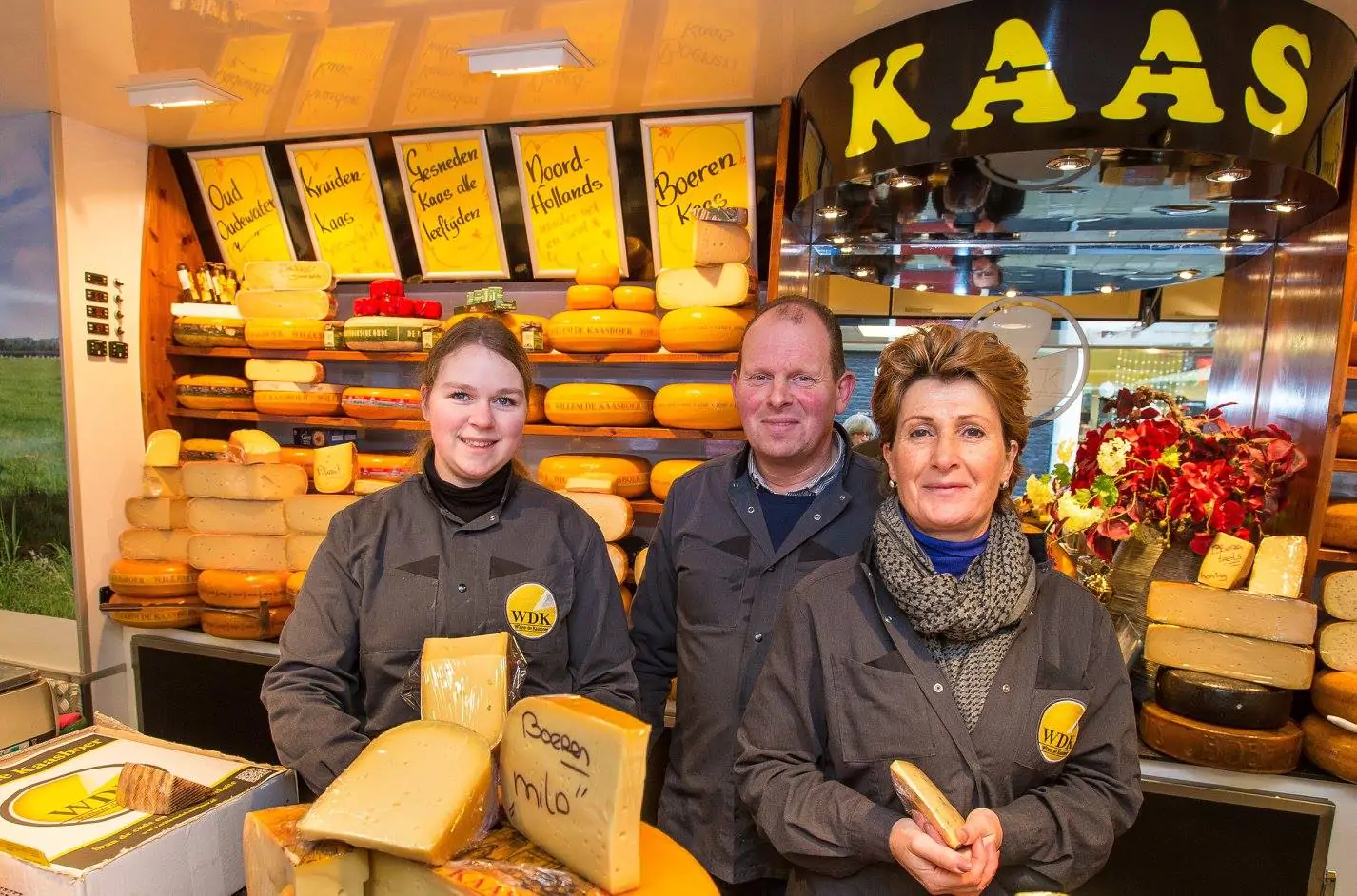
Volgens sommigen is dit de beste kaaswinkel van Nederland. Ze hebben een indrukwekkend breed assortiment van de lekkerste kazen. Ook heerlijke wijn, salami, ham en olijfolie is hier te koop. Je wordt uitstekend geholpen en de kaas is echt van een ander niveau. Aanrader!
1076 CJ Amsterdam
Stadionpleinmarkt
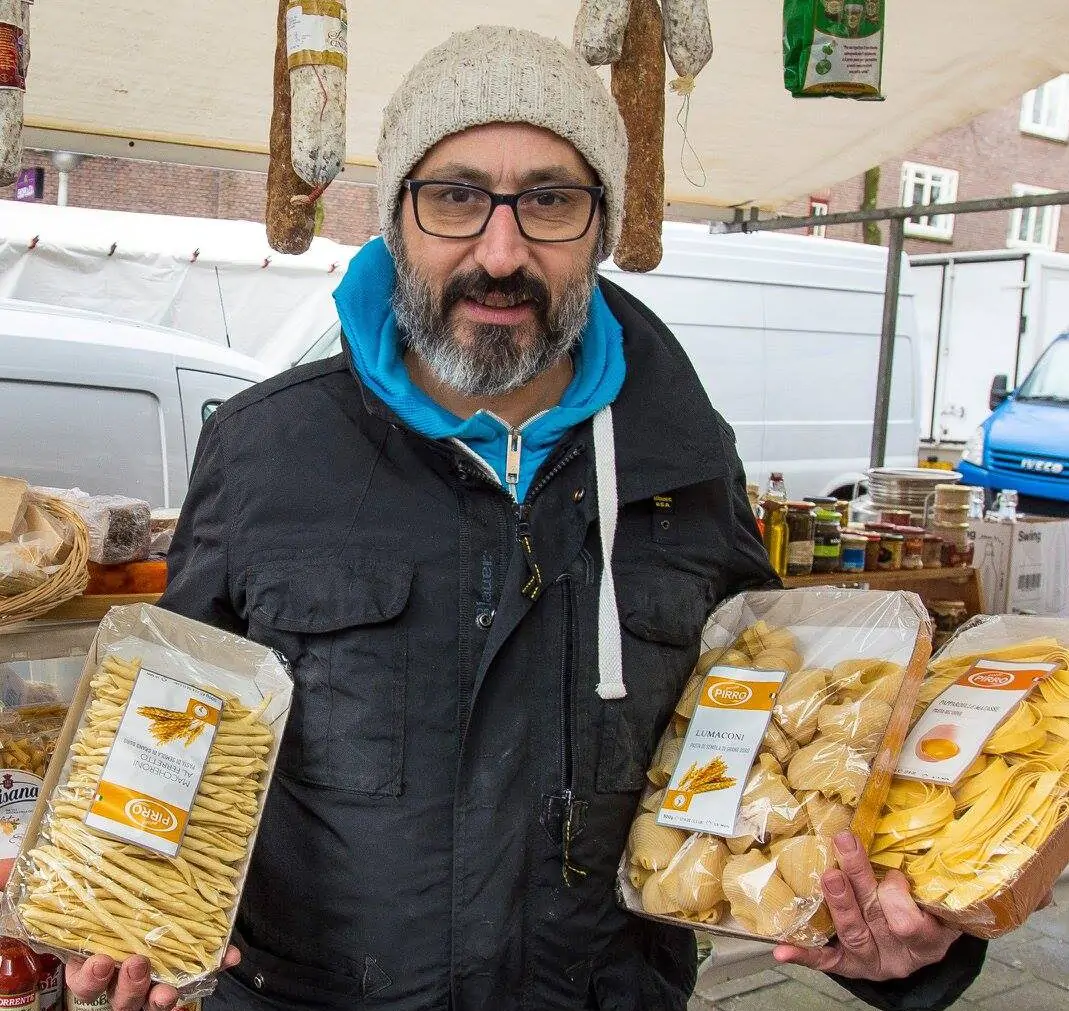
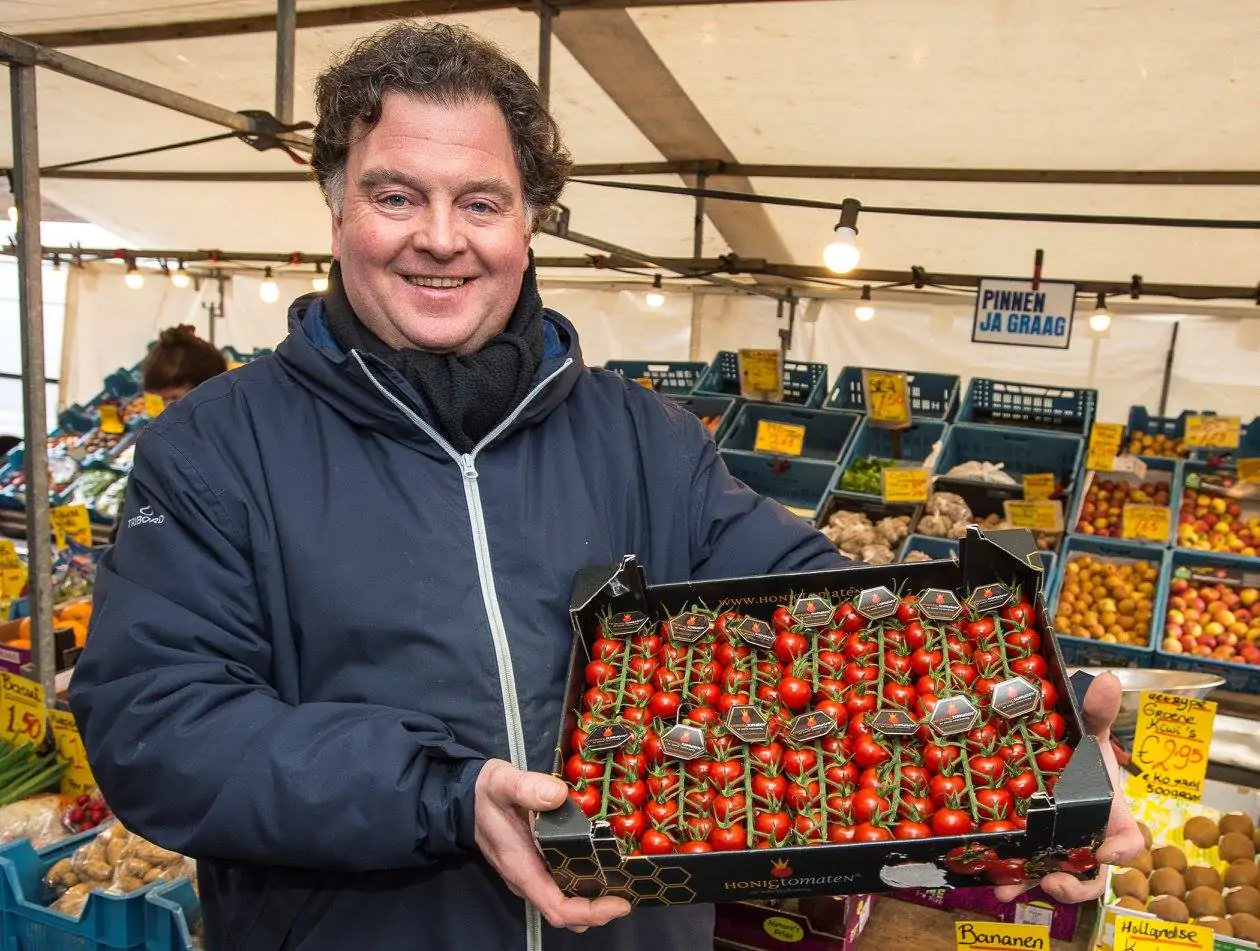
Op het mooie Stadionplein, midden in Oud-Zuid vind je elke zaterdag de Stadionpleinmarkt. Ze gaan om 09:00 open en zijn dus een ideale markt voor mensen die op zaterdag vroeg hun weekboodschappen gedaan willen hebben. Ook hebben ze hier prachtige bloemen te koop en vind je er veel verschillende buurtbewoners. De sfeer is altijd goed en de markt is open tot 17:00.
1075 CV Amsterdam
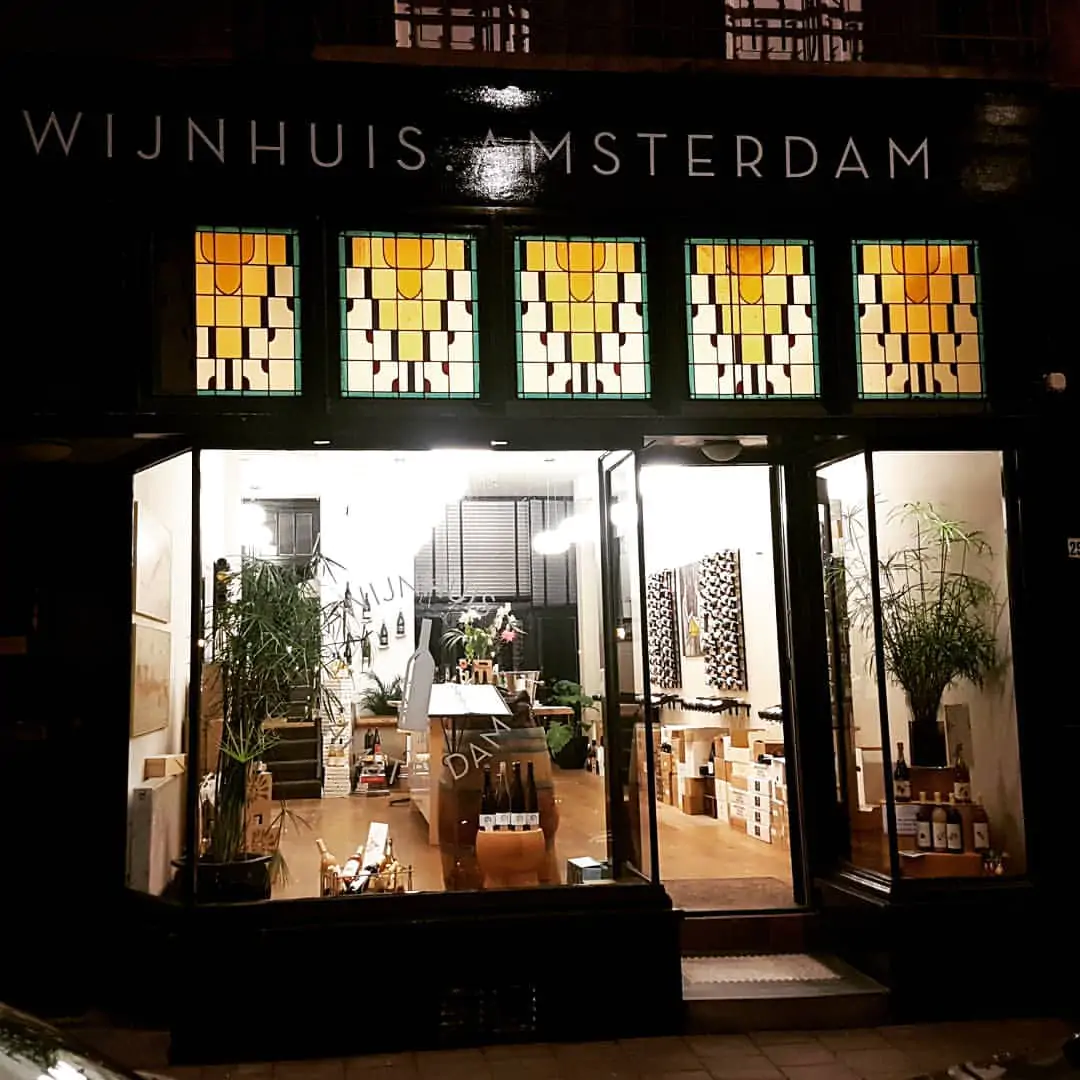
Wijnhuis Amsterdam
Hoewel ze bij Wijnhuis Amsterdam al meer dan 25 jaar professioneel wijn proeven en selecteren, is het wijnhuis in Amsterdam een vrij recente toevoeging aan hun verhaal. Na talloze proefsessies waren ze zo enthousiast over de Duitse wijnen dat ze maar al te graag de wijnen een platform wilden geven binnen Nederland. Zo openden ze in mei 2018 Wijnhuis.Amsterdam, met in eerste instantie slechts drie eigen importen uit Duitsland. Inmiddels vertegenwoordigen ze een indrukwekkend assortiment van twintig Duitse wijnmakers, drie uit Oostenrijk en één uit Luxemburg. Bij het selecteren van de wijnen is elegantie, de drinkbaarheid, lage alcoholpercentages en een minimale interventie in het productieproces belangrijk.
1077 HN Amsterdam
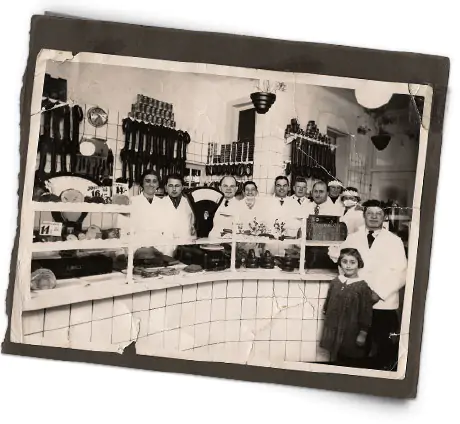
Slagerij Hergo
Slagerij Hergo is de vleesspecialist in Amsterdam. Al in 1930 begon de heer Cantor, een Duitse worstmaker, samen met zijn vrouw die uit een Amsterdamse slagersfamilie kwam, zijn slagerij met typische Duitse worstspecialiteiten. Met het motto ‘De slager met ’n koksmuts’ is Hergo uitgegroeid naar vier verschillende locaties en is zo tegenwoordig niet meer weg te denken uit het straatbeeld van Amsterdam. Met jachtworst, hausmacher, ossenworst, pekelvlees maar ook met een broodje filet americain onderscheidt Hergo zich als slagerij in het topsegment.
1076 AV Amsterdam
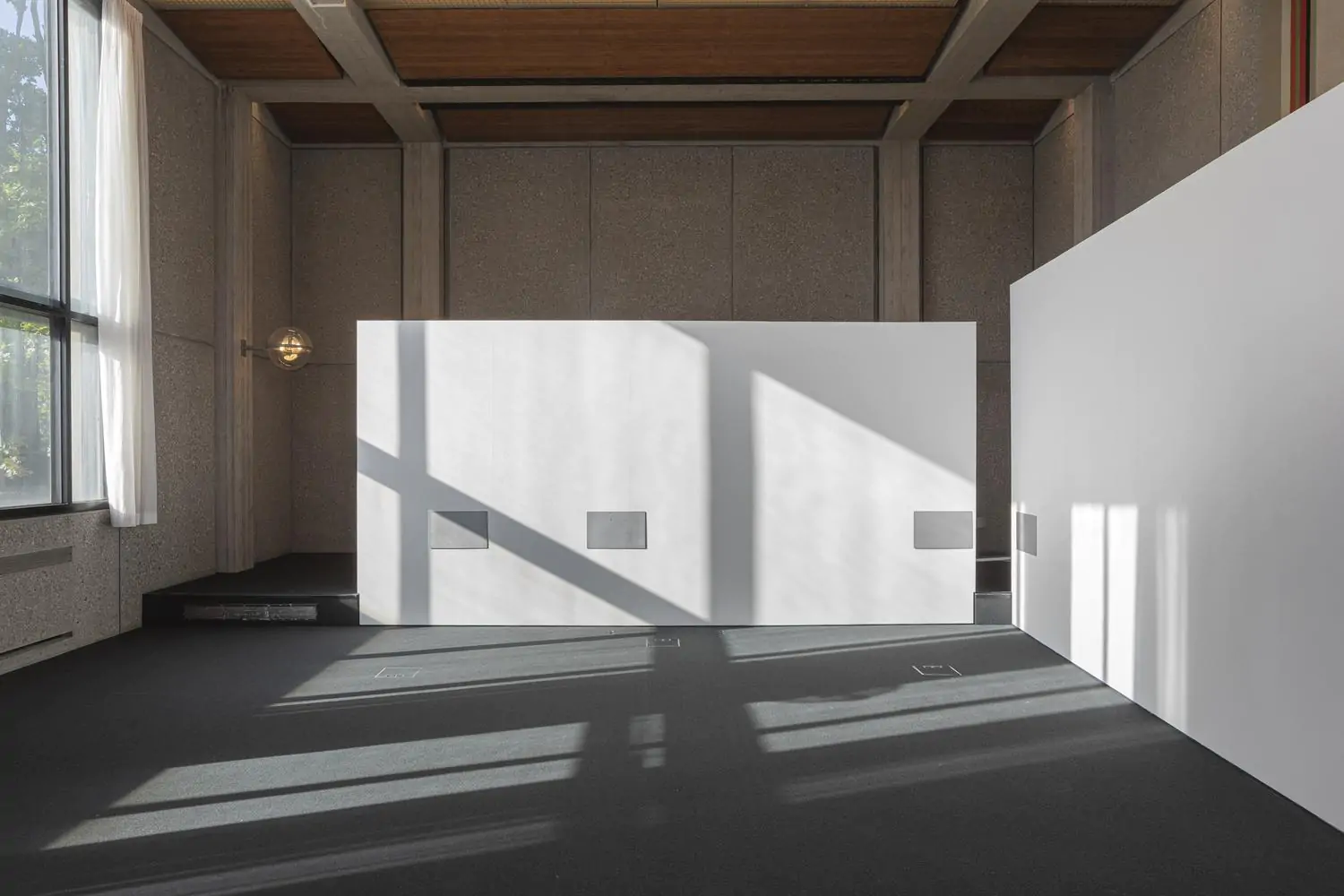
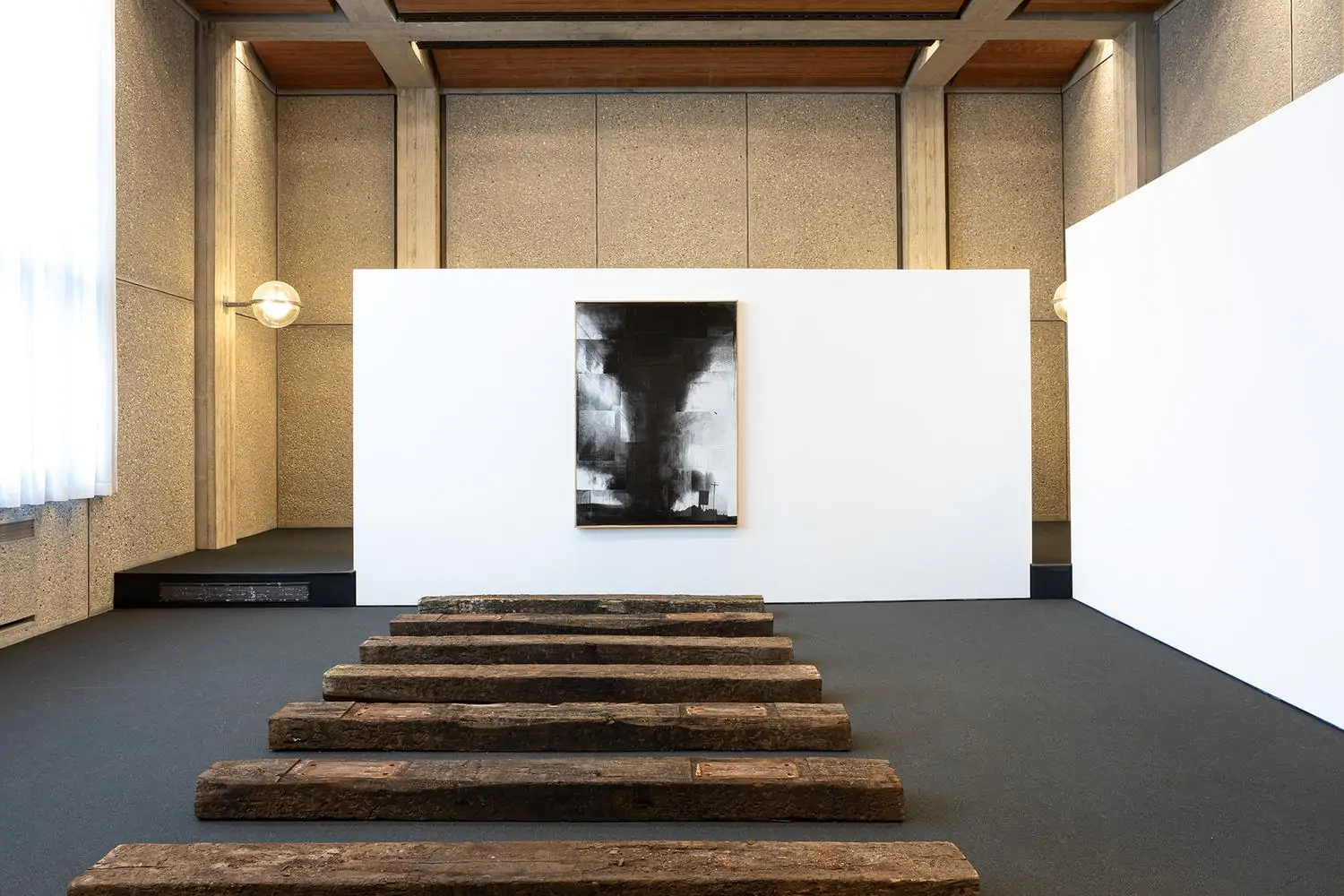
Diez Gallery
Diez is een Amsterdamse kunstgalerie met een internationale uitstraling, opgericht in 2022 door Diego Diez. De tentoonstellingen worden samengesteld in samenwerking met kunstenaars die affiniteit hebben met Diez's interesses en zullen zowel internationaal als nationaal talent presenteren in Amsterdam. Naast het tentoonstellingsprogramma streeft Diez ernaar een toegankelijke ruimte te zijn voor een breed publiek met diverse activiteiten en evenementen zoals poëzielezingen, samengestelde diners en kunstenaarsgesprekken.
1075 NC Amsterdam
Perfume Lounge
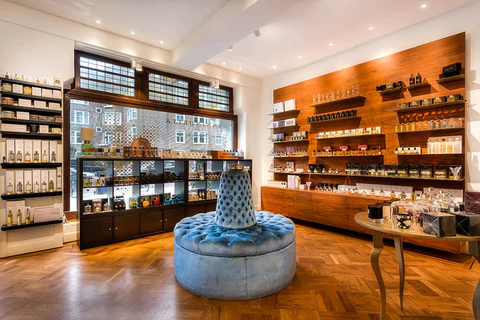
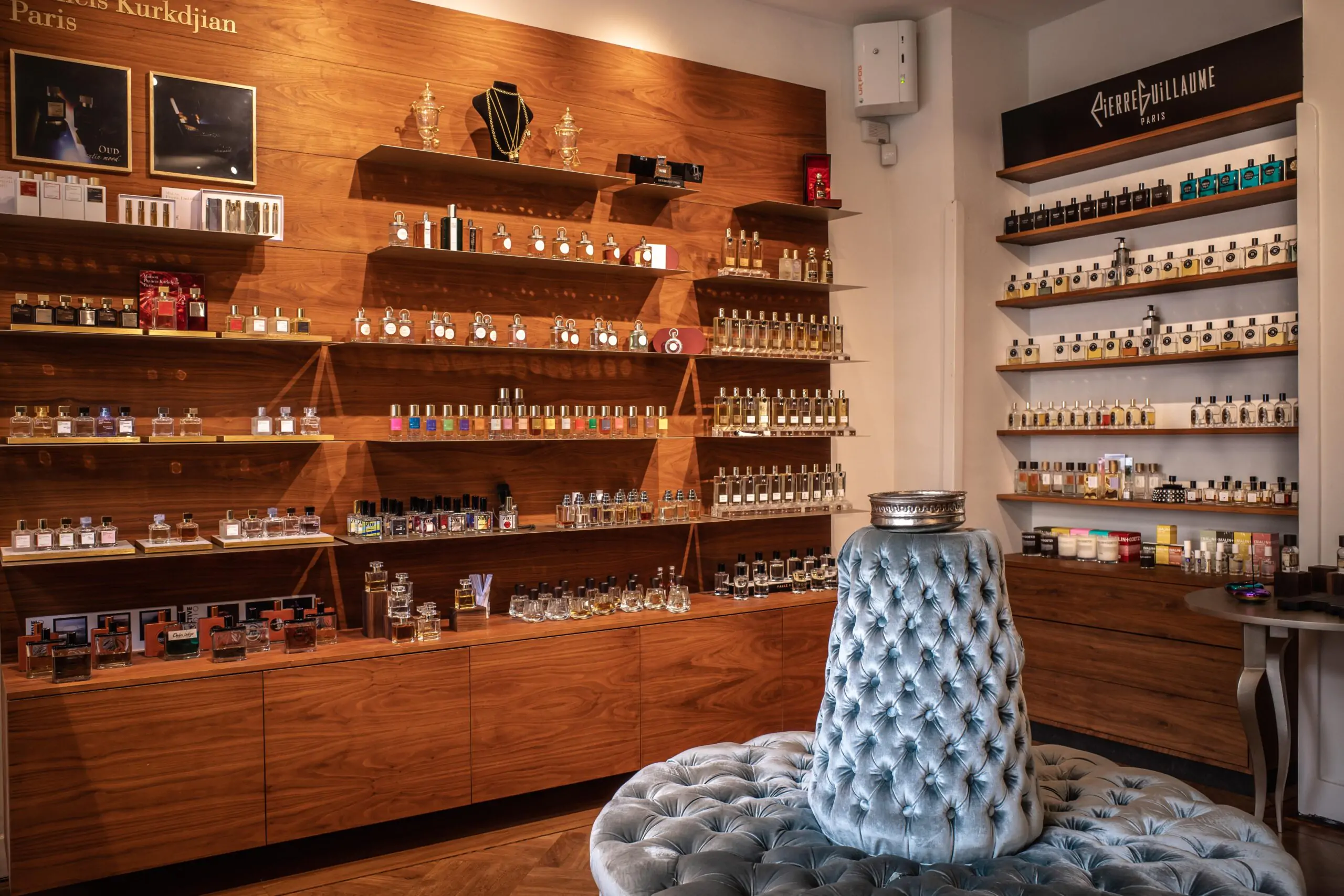
Bij de ‘Perfume lounge’ richten ze zich op het maken en adviseren van geuren voor bedrijven en organisaties en wat reuk kan toevoegen aan een merk of organisatie. Daarnaast hebben zij een winkel met een assortiment van de meest bijzondere parfums van de wereld, waar zij ook persoonlijk geuradvies geven. Advies voor op de huid of in huis. Volgens de experts voegt geur iets toe wat niet zichtbaar en tastbaar is. Je kunt geur op verschillende manieren inzetten in een ruimte. Het begint natuurlijk eerst dat het er niet negatief mag ruiken. Er zijn best wel veel ruimtes waar je het riool of sanitair ruikt, waar veel gerookt is of waar de afzuiging niet goed is en het naar eten ruikt. De meeste simpele manier van geur in huis is dat het schoon ruikt. Veel mensen associëren schoonmaak of wasmiddel met een schoon, opgeruimd en verzorgd huis. Daarnaast kun je de ambiance aanzetten. Net zoals met licht en muziek kun je de sfeer verzachten of versterken. Je kunt het heel huiselijk laten ruiken of juist heel modern. Landelijk of artistiek. Of juist heel minimalistisch of intiem.
1077 MJ Amsterdam
Flower fusion
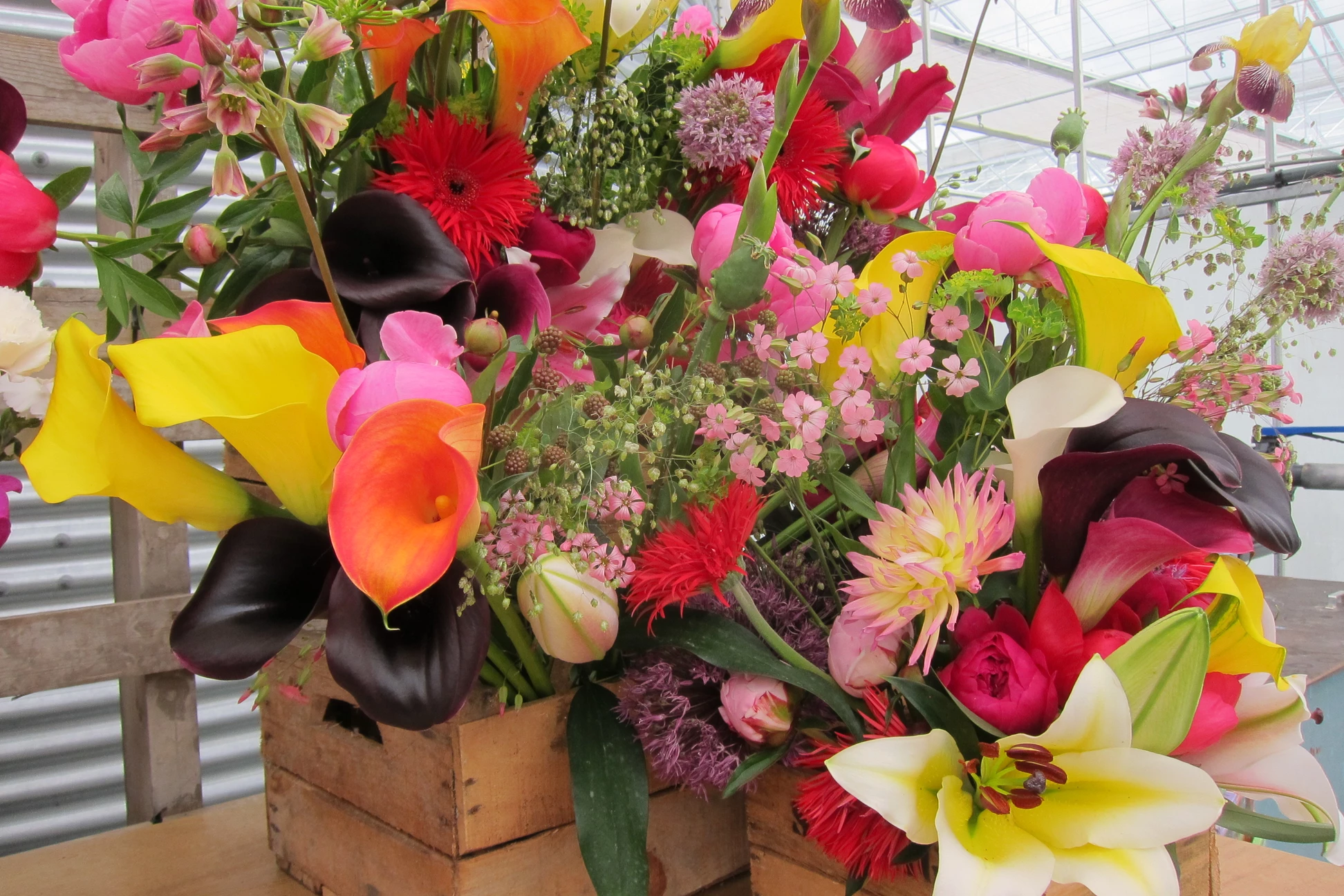
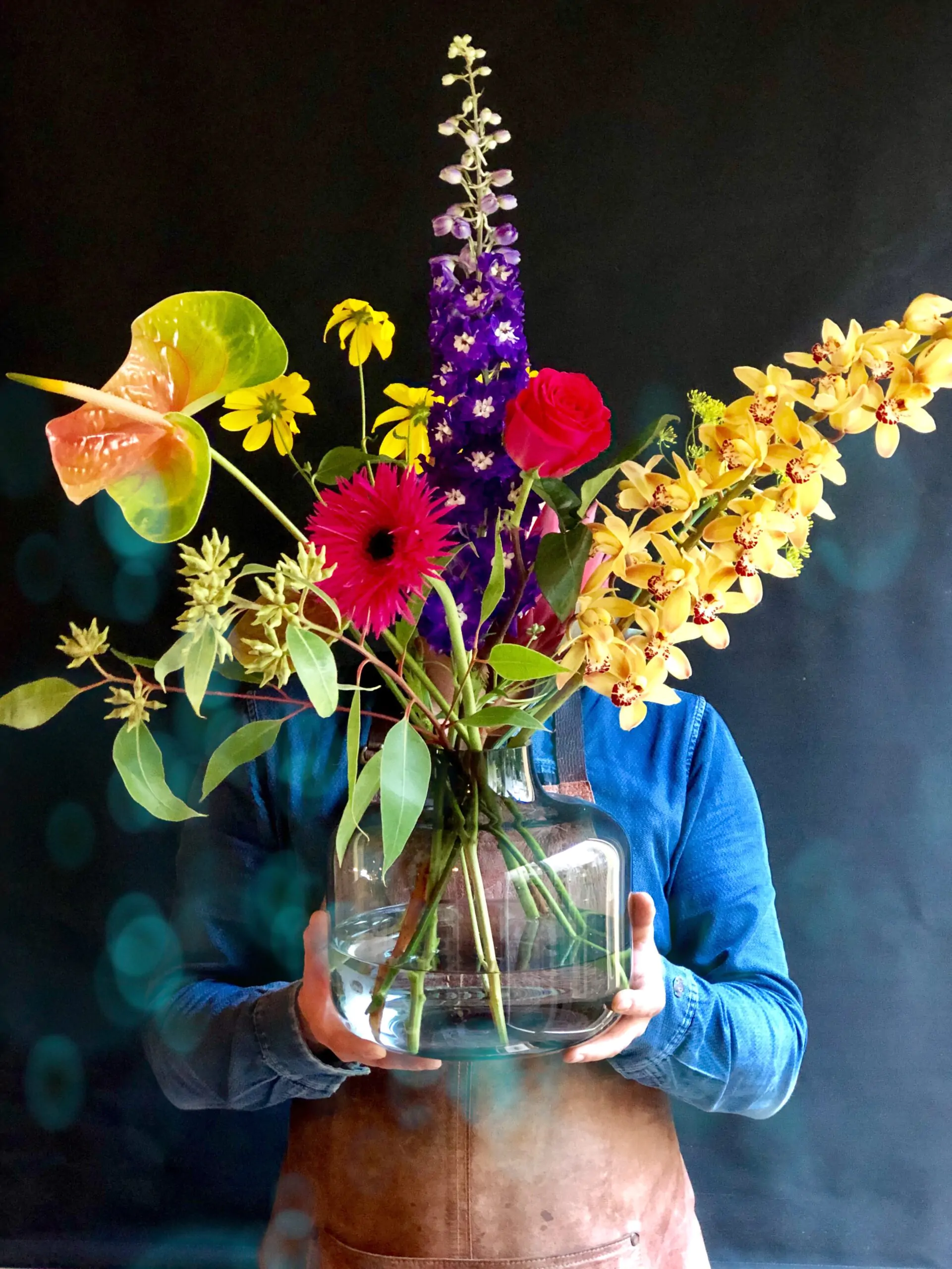
Elke zaterdag van 9:30 tot 17:00 kunt u Ilona Bokma van Flowerfusion vinden op de ZuiderMRKT. Unieke en schitterende bloemen waardoor je het gevoel krijgt middenin een pluktuin te staan. Doordat Ilona iedere week andere bloemen, planten en kleuren uitzoekt die aansluiten bij het seizoen, is het elke zaterdag weer een feestje om langs te gaan bij Flowerfusion.
1075 CW Amsterdam
Teunis Veenema
Teunis Veenema is een pareltje in het hart van Amsterdam-Zuid. Aan de Koninginneweg kun je sinds 2009 terecht voor de mooiste boeketten en planten. Teunis Veenema is geen doorsnee bloemenwinkel maar een winkel waar met je mee wordt gedacht om het mooiste resultaat te behalen zowel particulier of zakelijk. Daarbij biedt hun website de mogelijkheid om geheel gepersonaliseerde boeketten te bestellen voor uzelf of voor anderen.