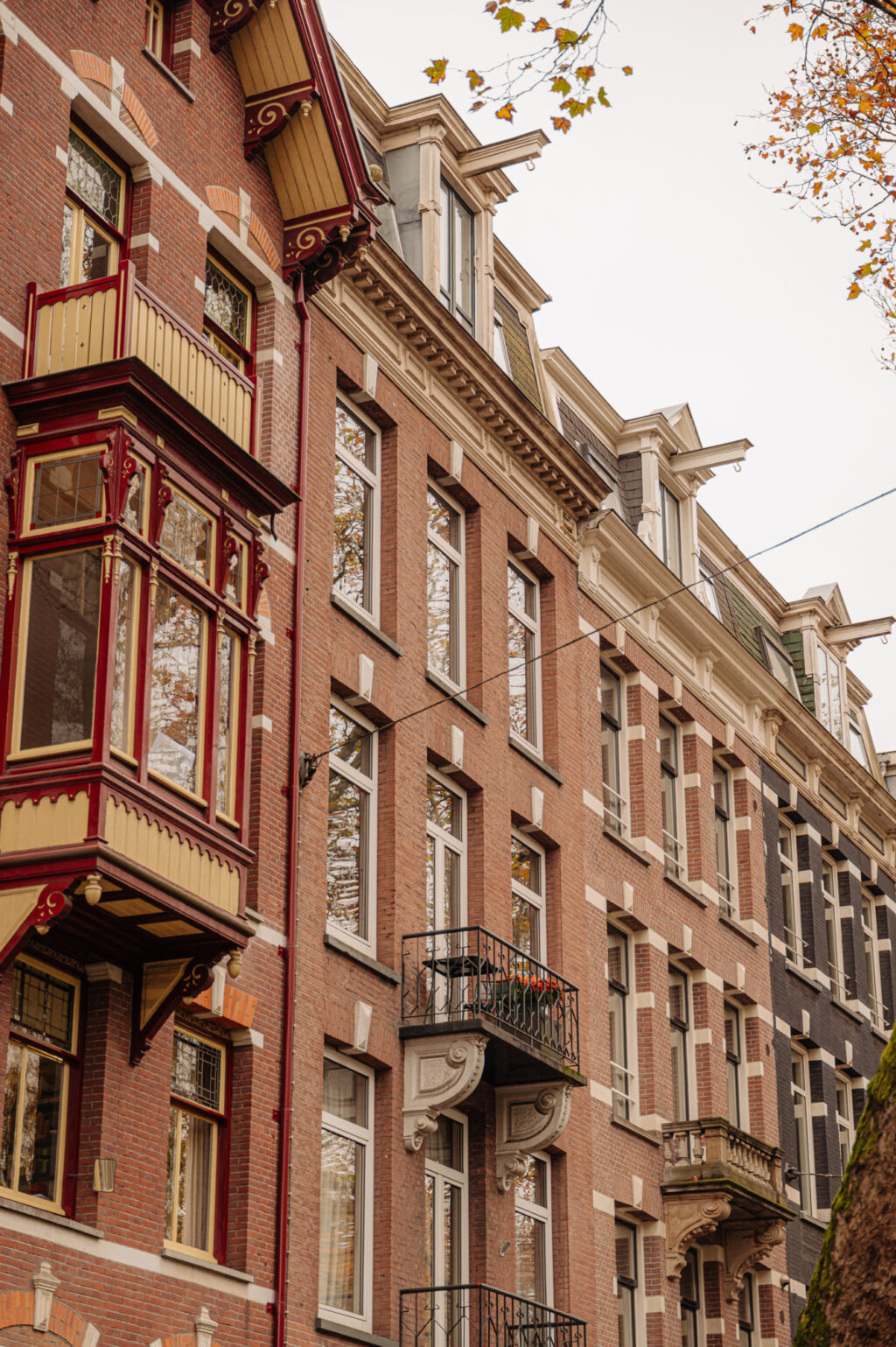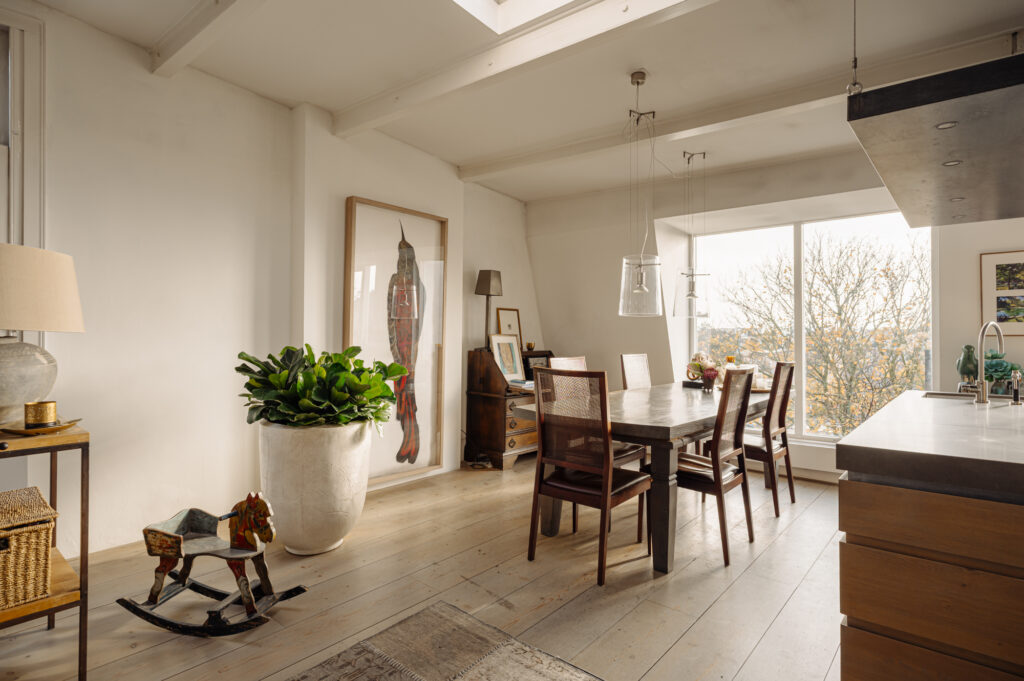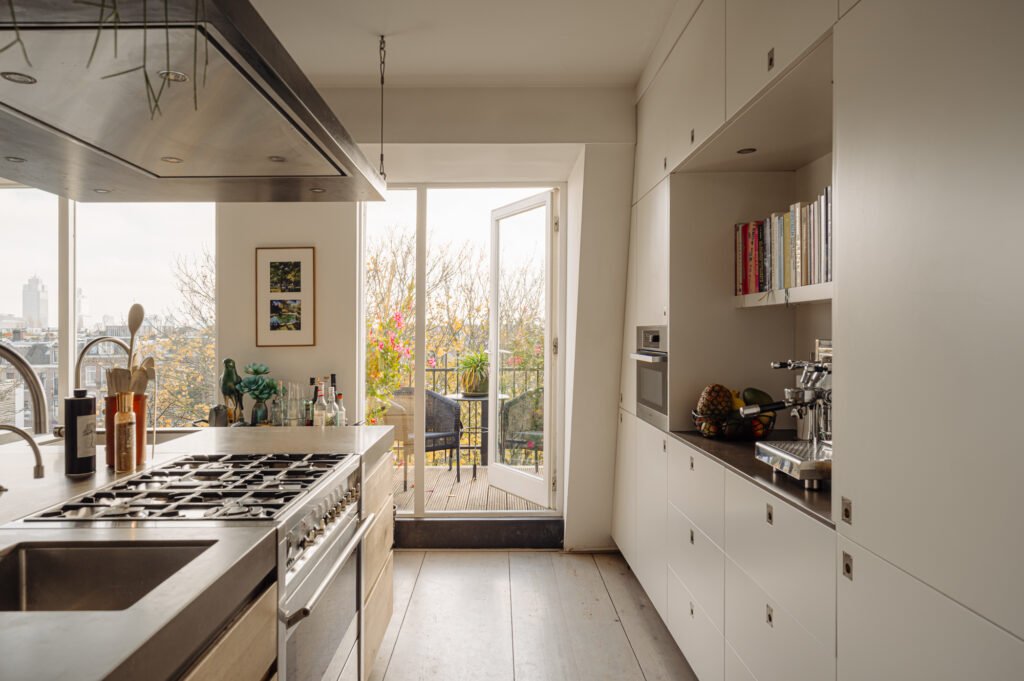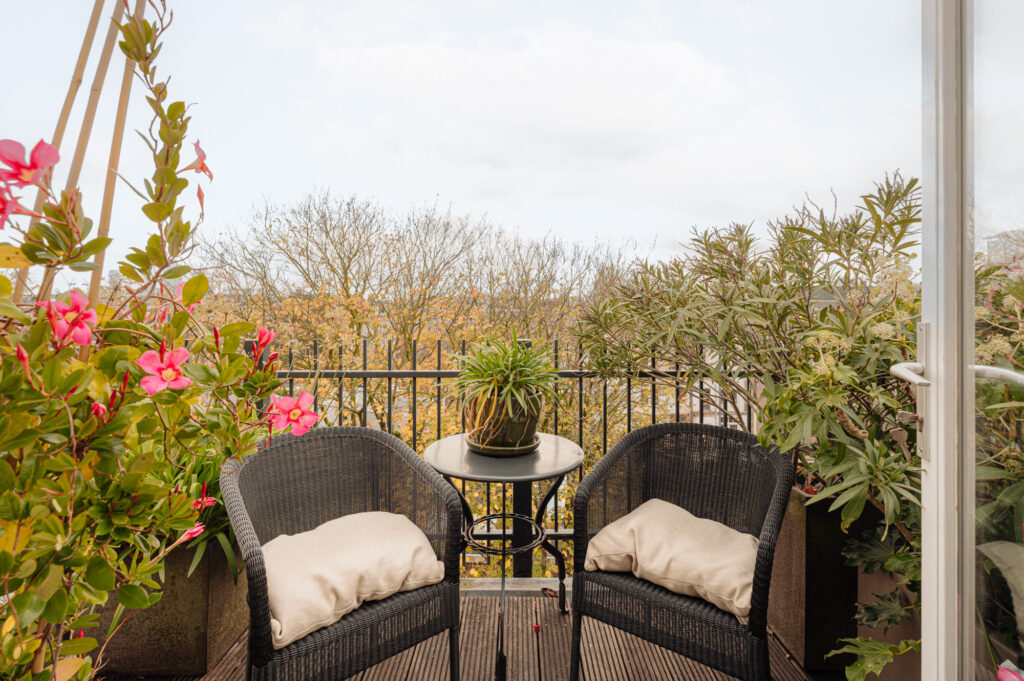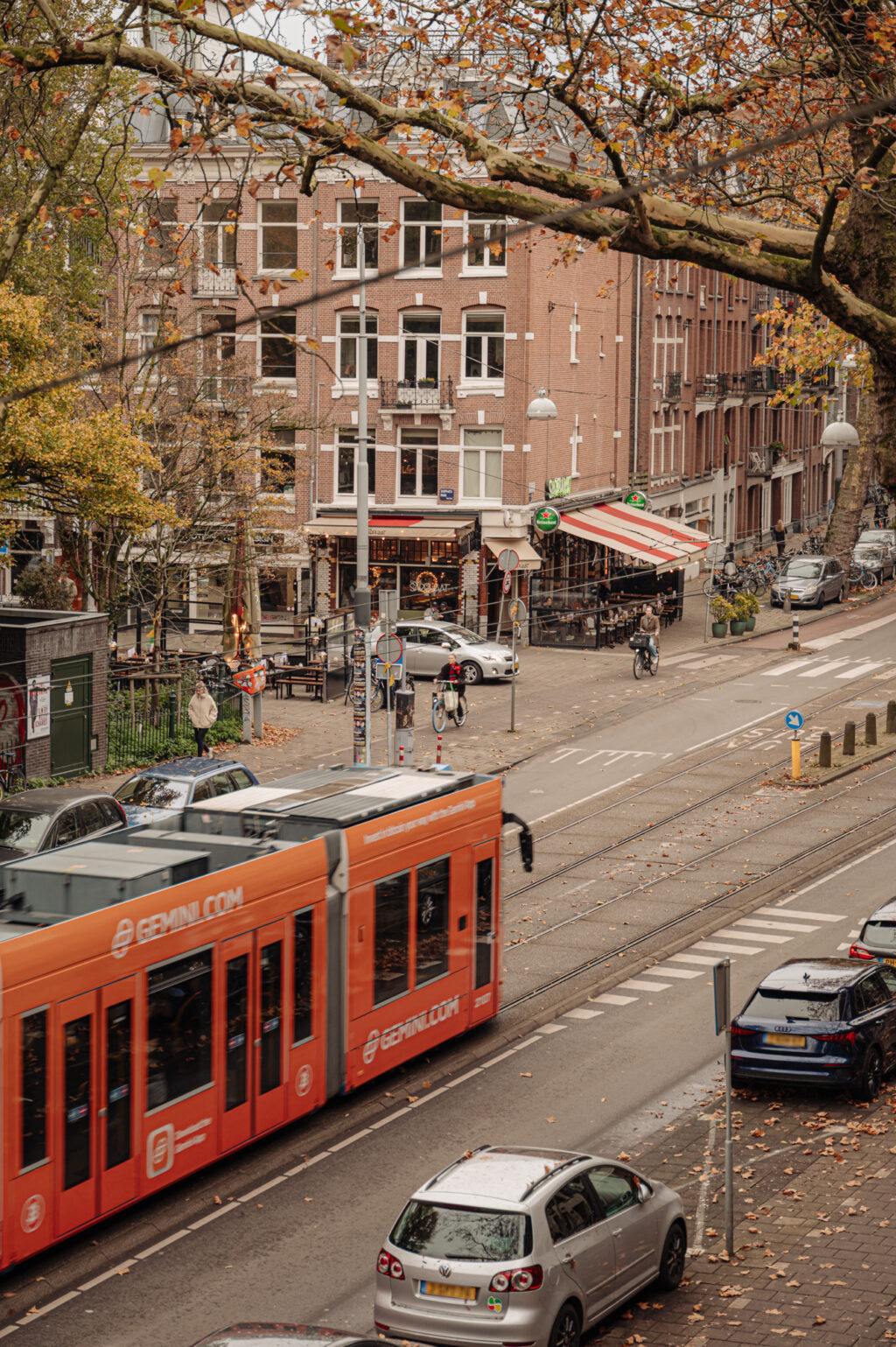
This well-proportioned three-level upper residence of approximately two hundred sixty-five square metres is located along the Sarphatipark in De Pijp. The home features a bright living area, a functional kitchen, five bedrooms and two bathrooms. Three balconies and a generous roof terrace of approximately thirty square metres create a pleasant connection with the outdoors. A well-maintained upper residence on freehold land, situated in an attractive and sought-after neighbourhood.
Tour
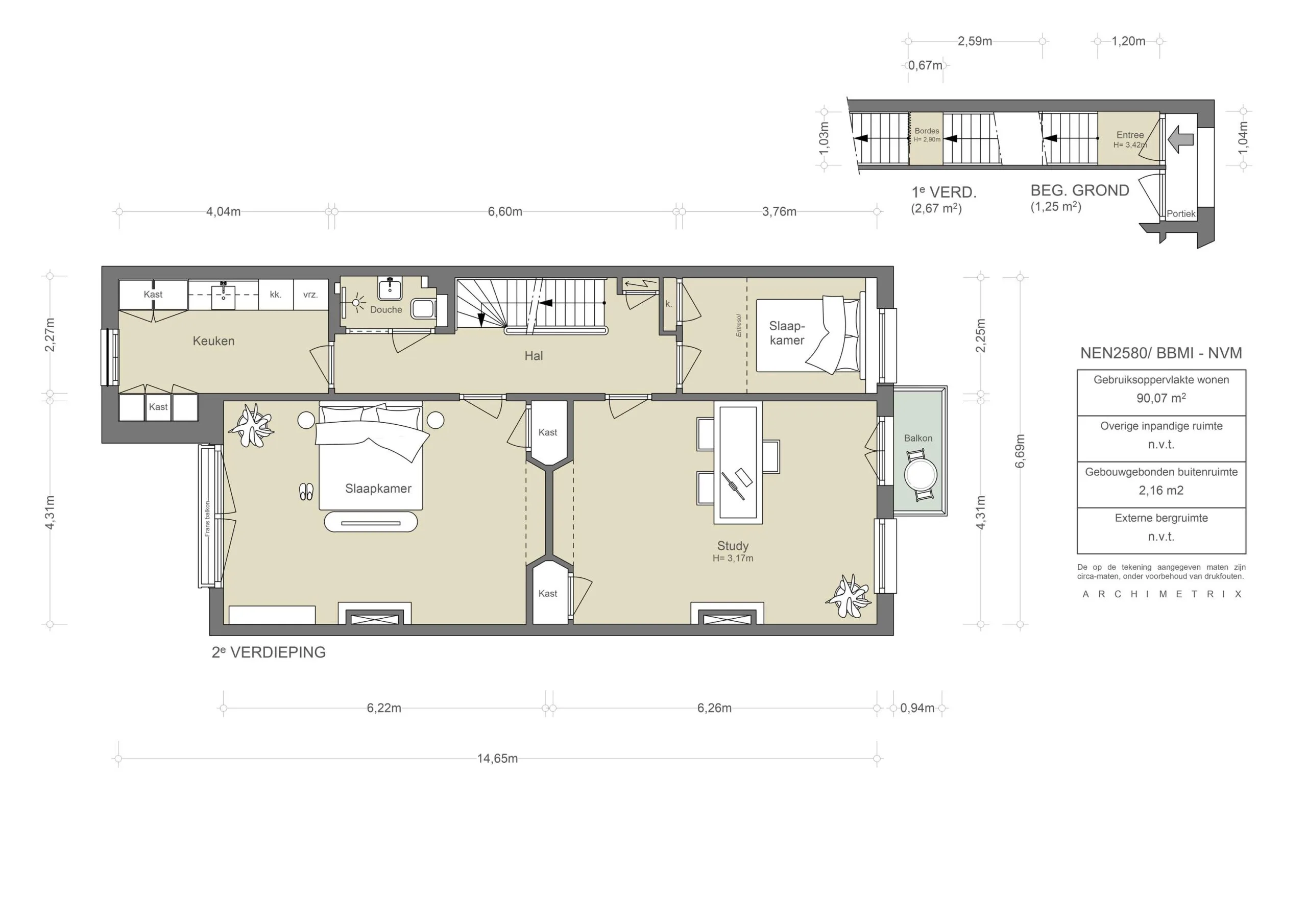
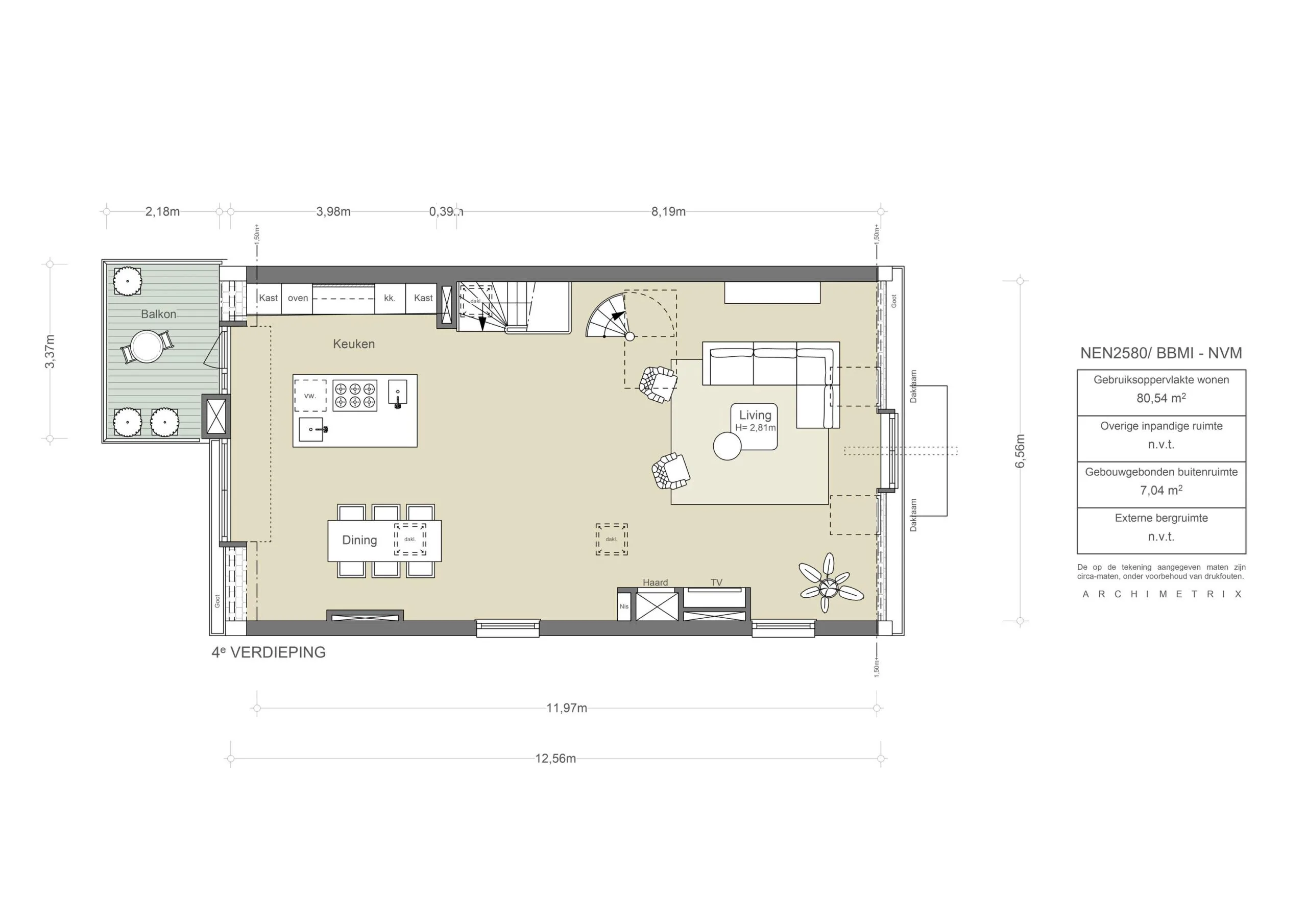
The residence is arranged across three full living levels and a generous roof terrace, with each floor offering direct access to outdoor space. The fourth floor is designed as an open living environment with kitchen, dining area and sitting area around the fireplace, opening onto a south-facing balcony. The second floor comprises several rooms with a flexible layout, suitable as workspaces, guest rooms or additional bedrooms, complemented by a pantry and second bathroom.
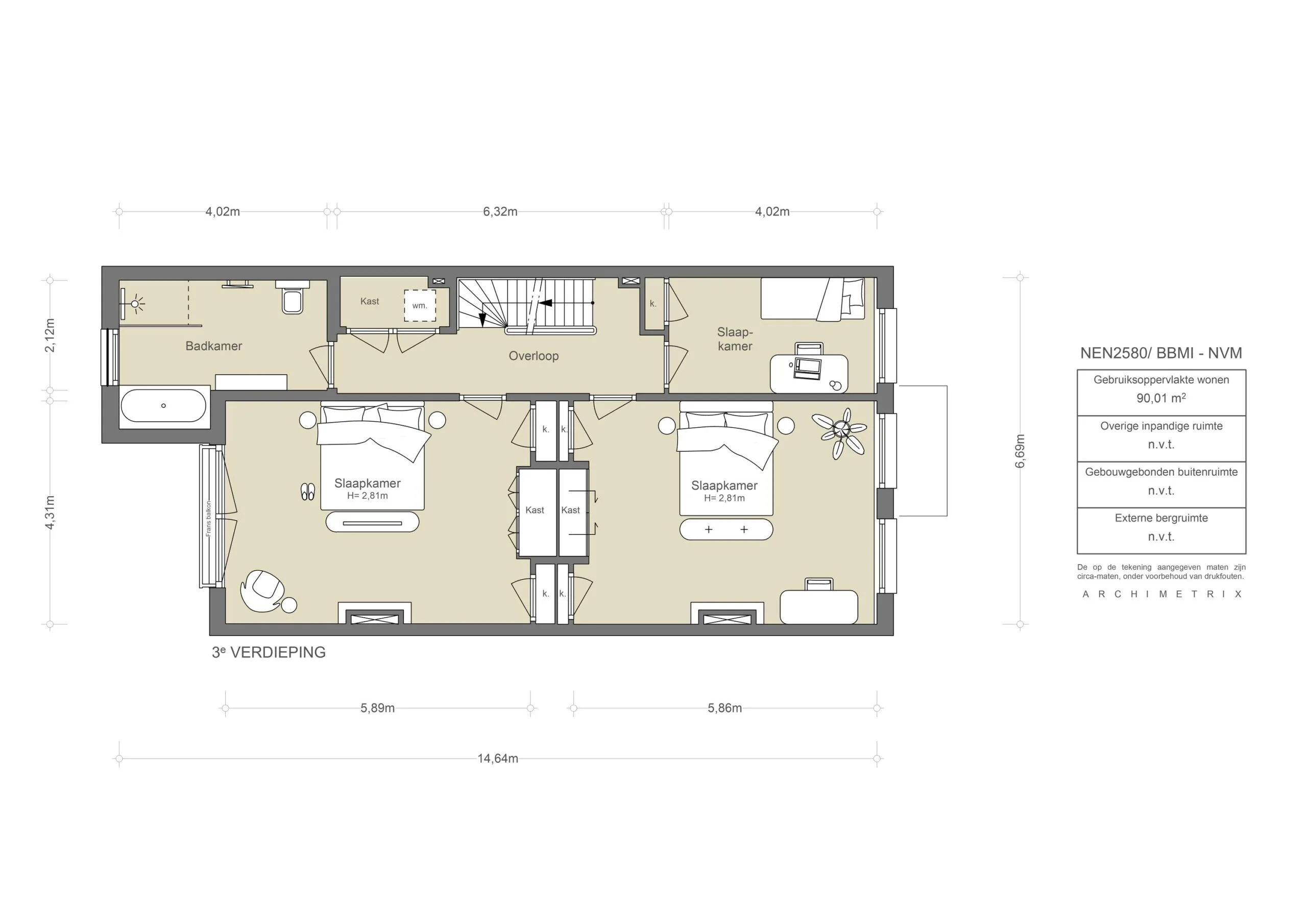
The third floor serves as the main sleeping level, offering three bedrooms and a comfortably appointed bathroom. The roof terrace of over thirty square metres provides open views and abundant sunlight, giving the home a balanced sense of space, light and comfort.
What the residents will miss
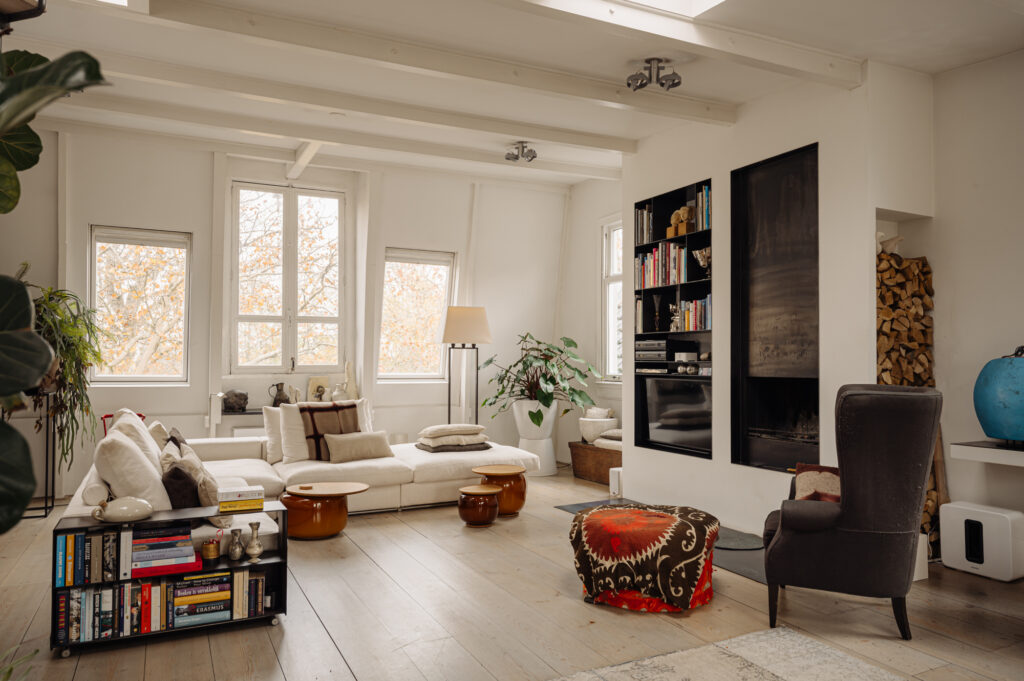
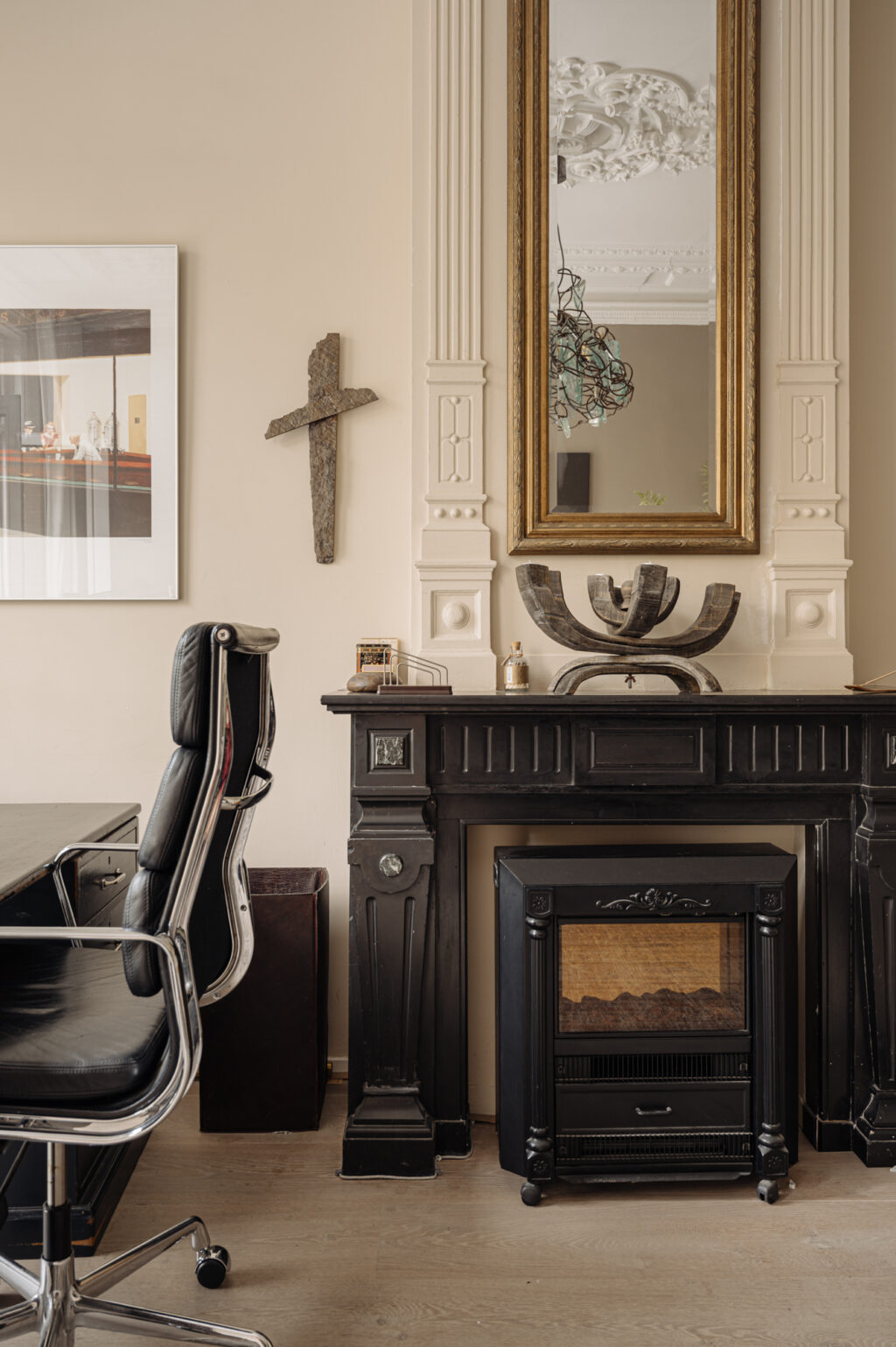
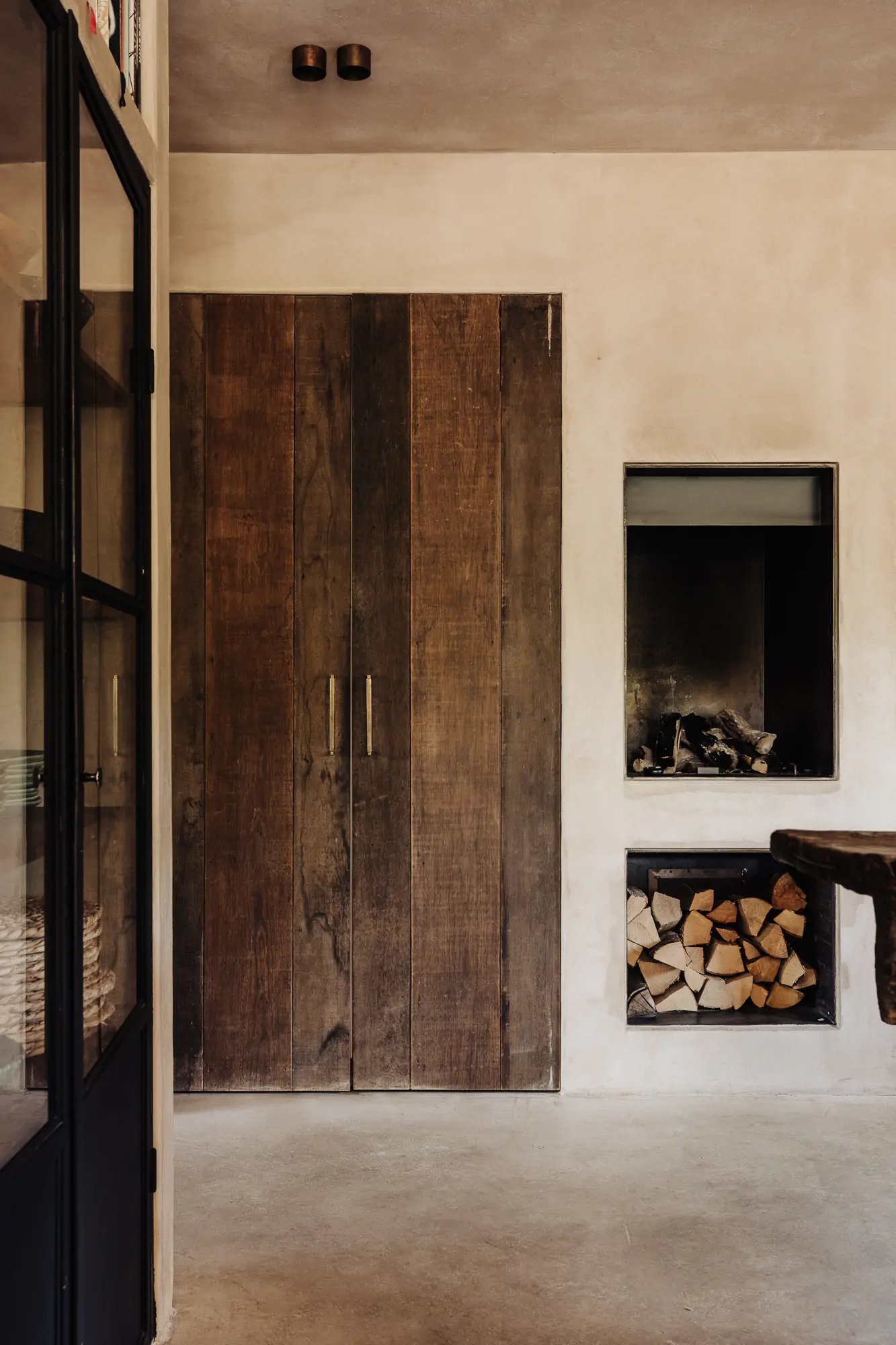
“Through several renovations, we’ve been able to enhance that loft-like feeling over the years. The bold, full-height steel fireplace remains one of those features that still gives us a wow-moment. We also love the many spacious rooms — whether we’re sleeping, working or making music.”
Neighbourhood
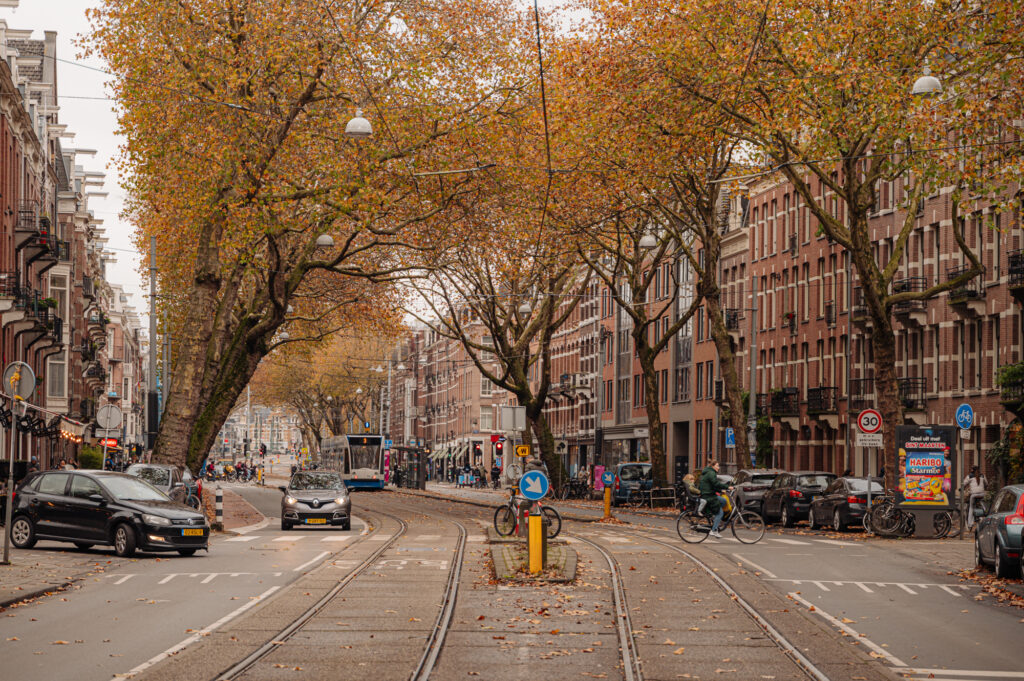
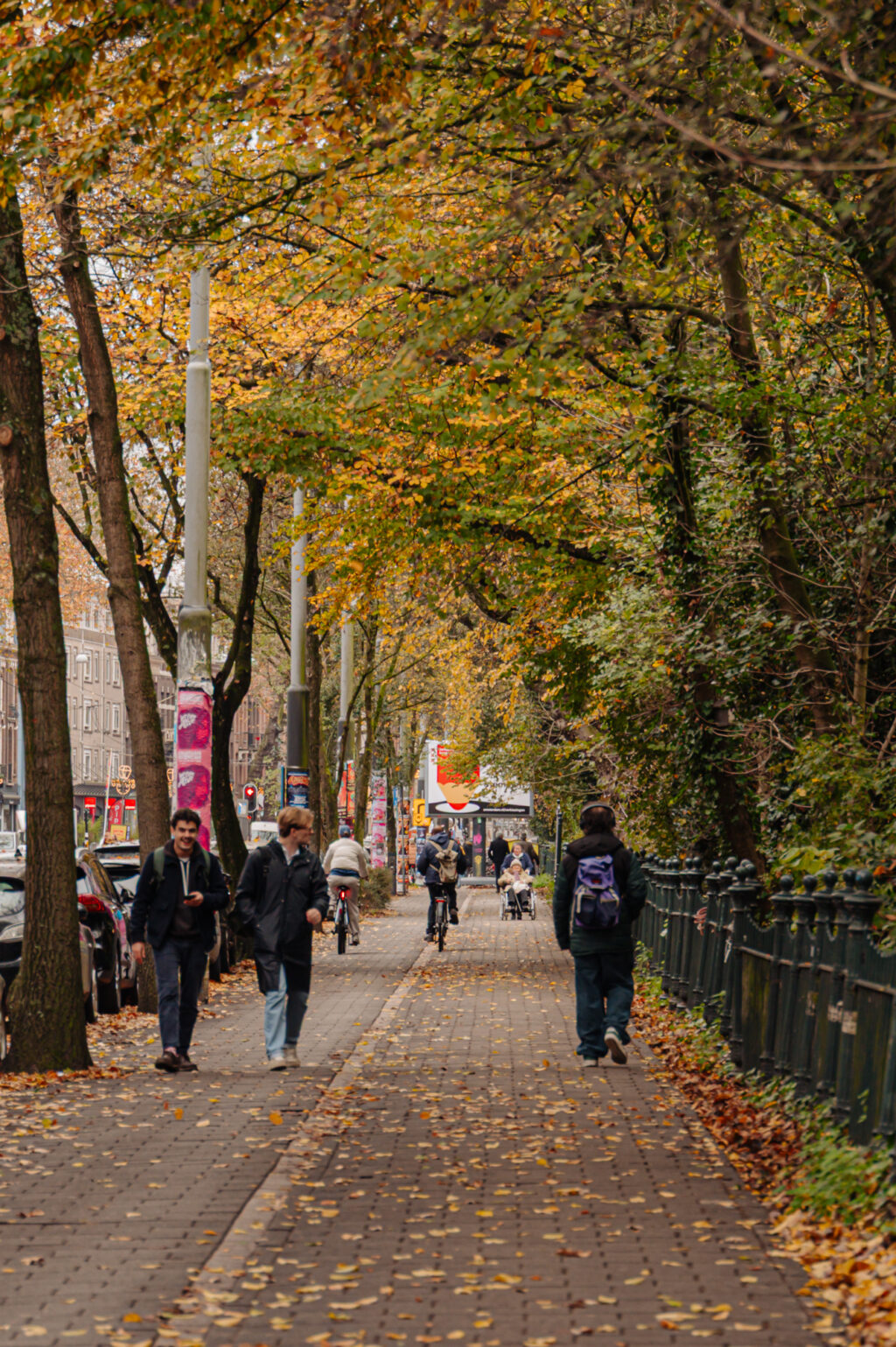
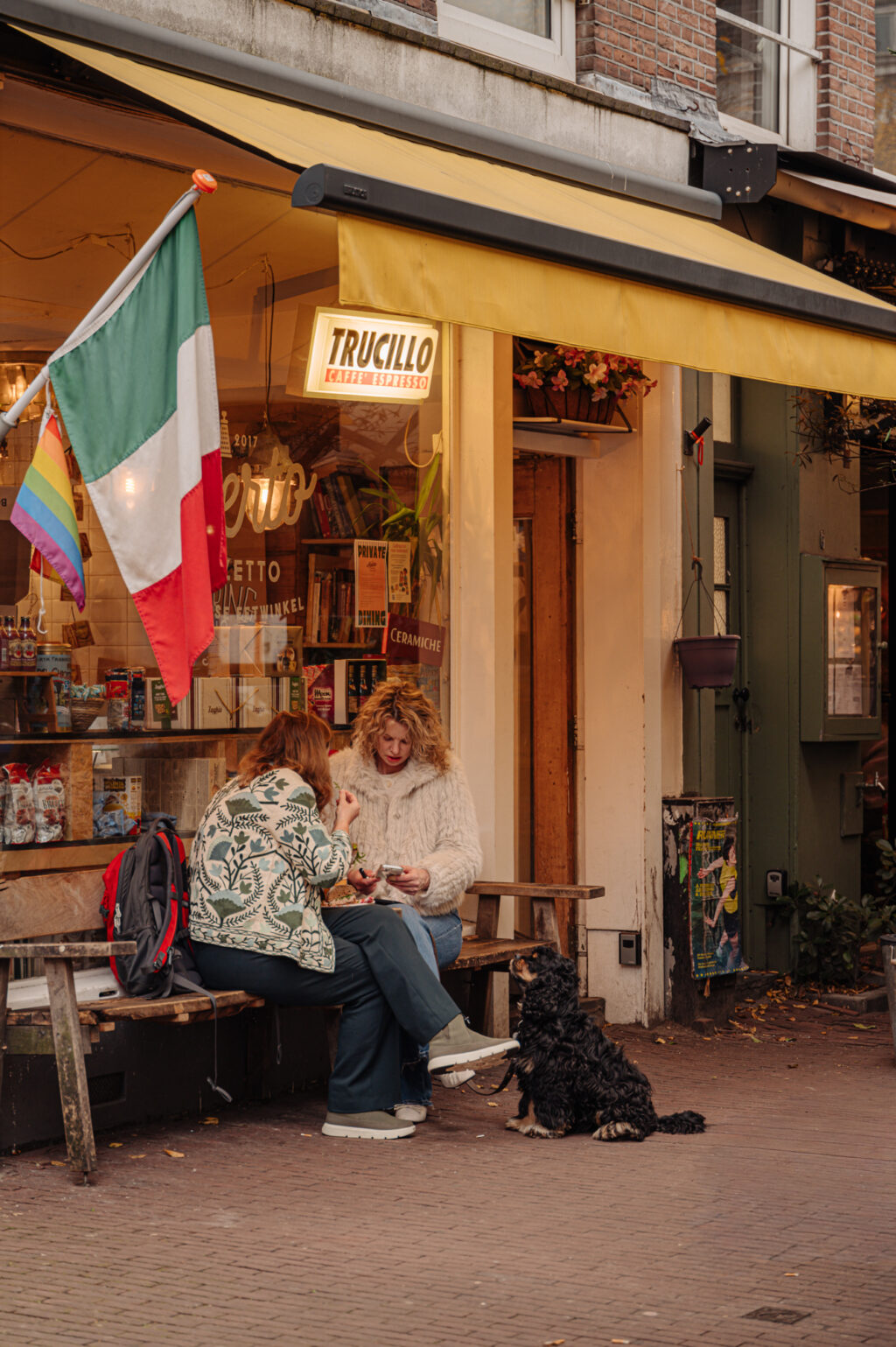
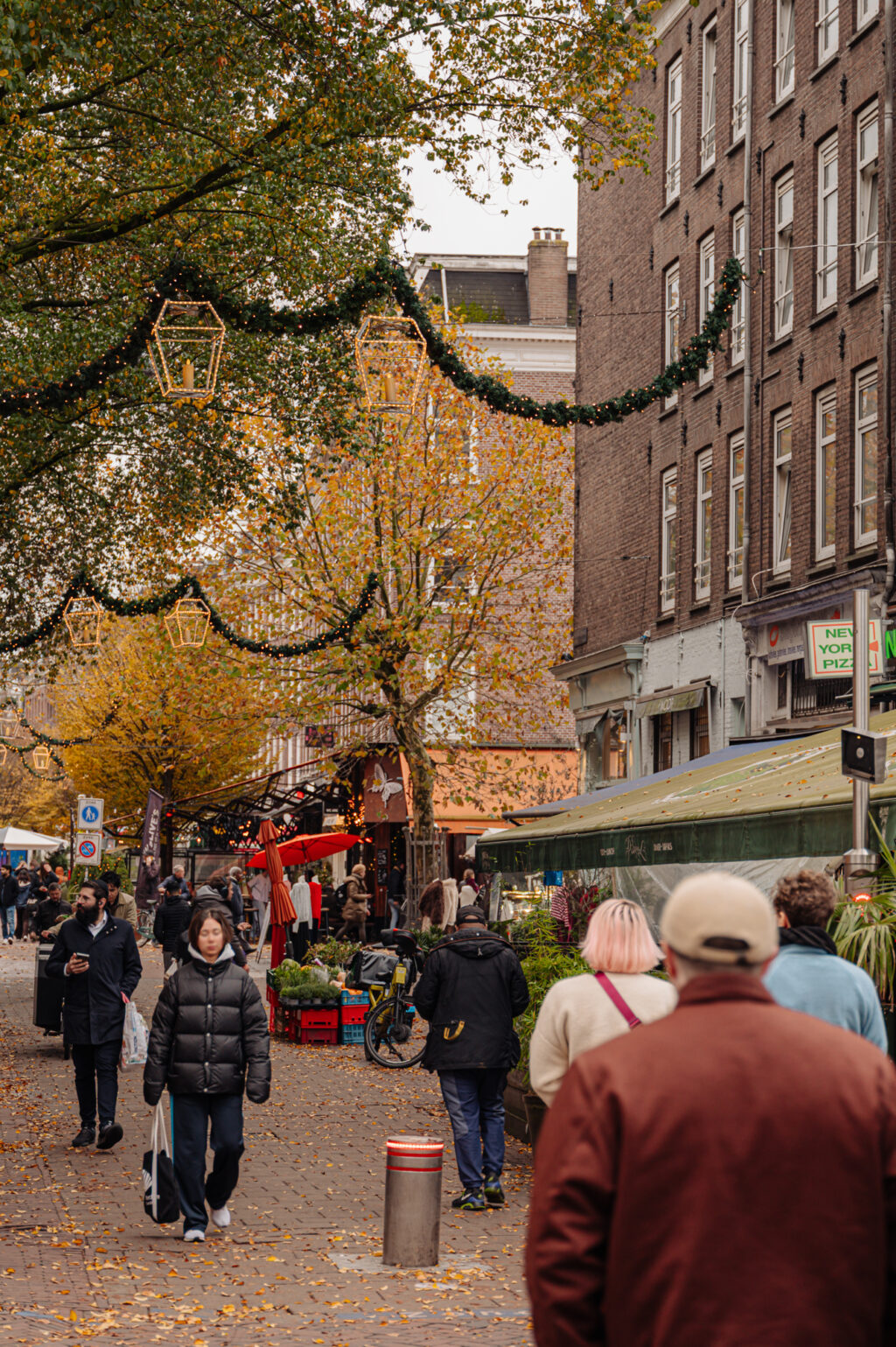
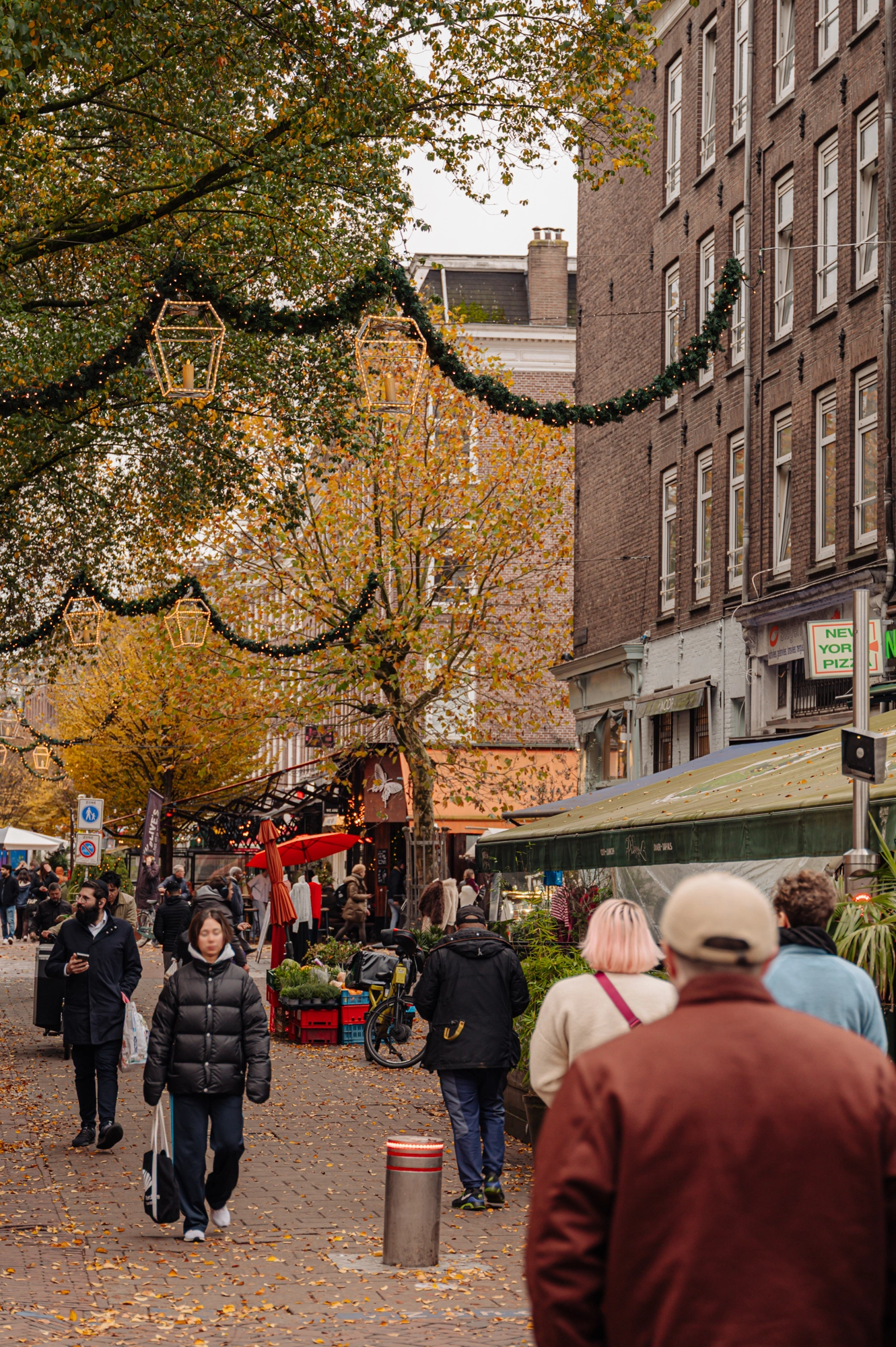
The apartment is located in Amsterdam Zuid, in the most sought-after and peaceful part of De Pijp. The neighbourhood was developed in the late nineteenth century to provide housing for newcomers who moved to the capital for work. In 1886, Freddy Heineken’s father opened the Heineken Brewery here. The first workers’ homes, built around the Albert Cuypstraat, were constructed quickly and economically. Later, moving toward the Diamantbuurt, Berlage added residences in the Amsterdam School style. It is said that the neighbourhood owes its name to its long, straight streets, reminiscent of the shape of a pipe. De Pijp is known for its lively atmosphere and numerous cafés and eateries, all within walking distance. The Albert Cuyp Market and the Sarphatipark shape much of the neighbourhood’s energy. Artists and writers such as Piet Mondriaan, Carel Willink and Gerard Reve lived and worked here. The mixed and dynamic population attracted countless cafés and small restaurants to the area. Today, the neighbourhood is often referred to as the Quartier Latin of Amsterdam, still characterised by a wide variety of restaurants such as Samuel’s, Badcuyp, Impero Romano and the French Arles or Caron. Along the Van Woustraat you will find an extensive selection of eateries from all corners of the world.
Details
• Living area approximately two hundred sixty-five square metres
• Three balconies
• Roof terrace of approximately thirty square metres with panoramic views
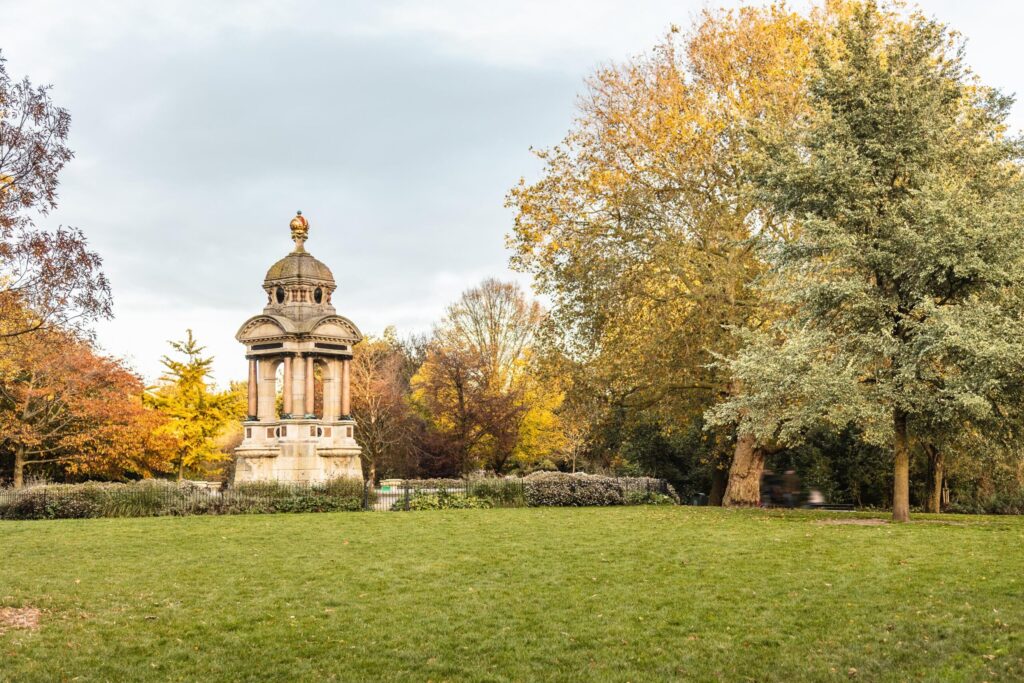
• Located along the Sarphatipark
• Freehold land
• Energy label C
• Homeowners’ association self-managed
• Situated within a municipally protected cityscape
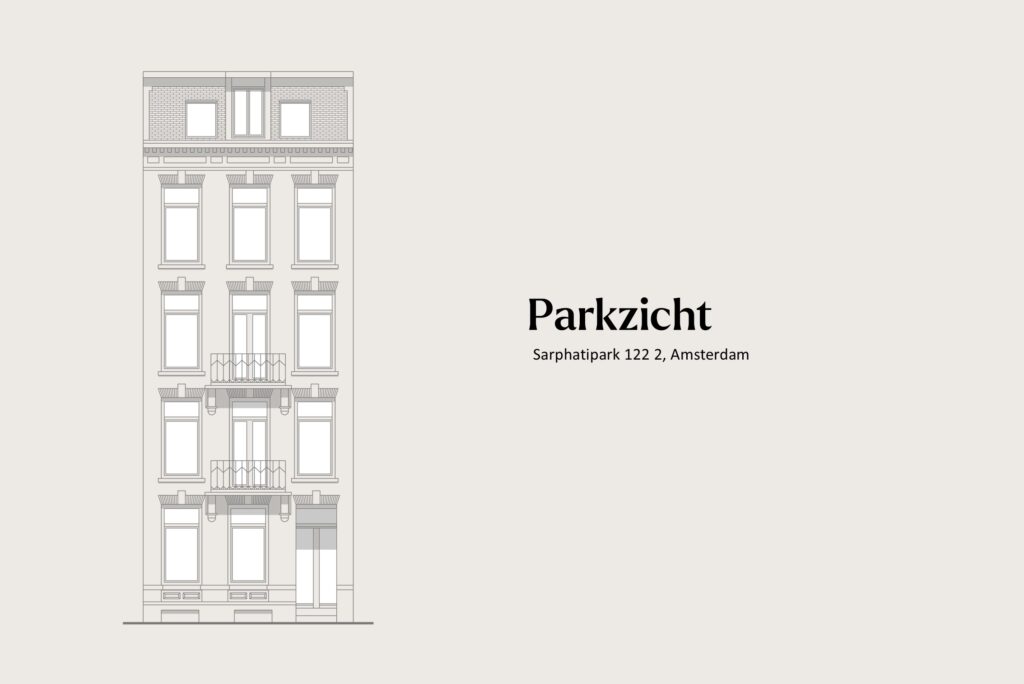
Parkzicht
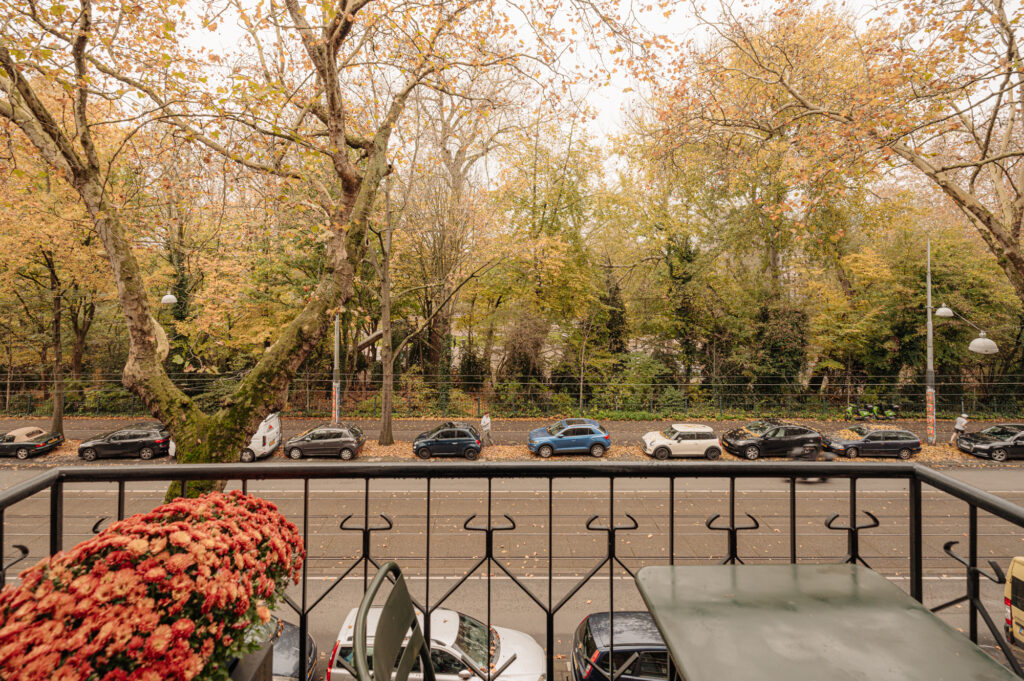
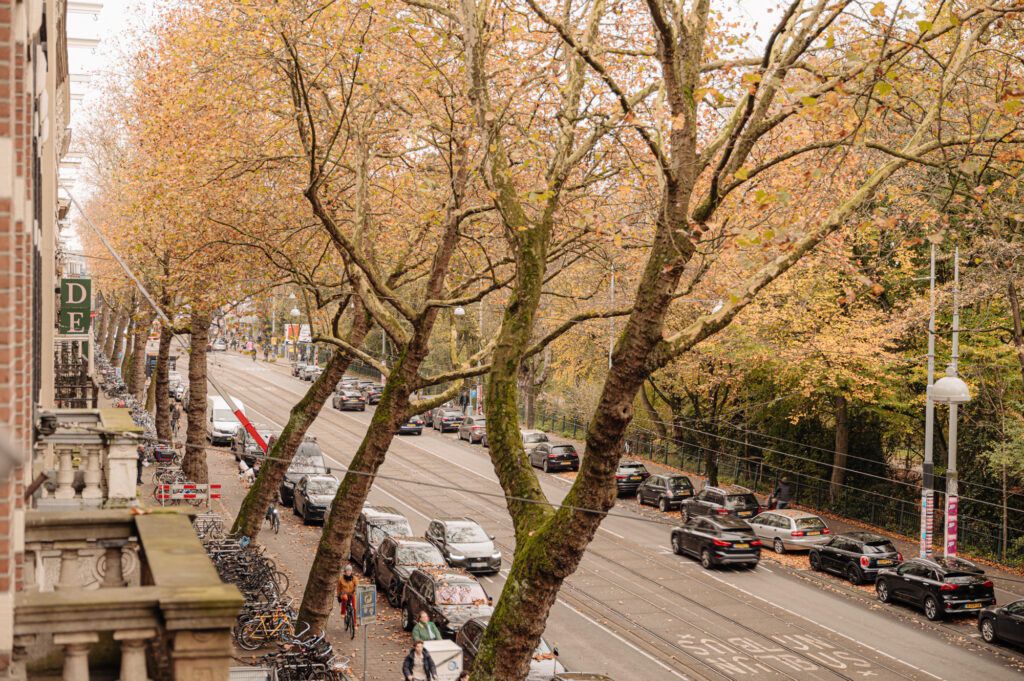
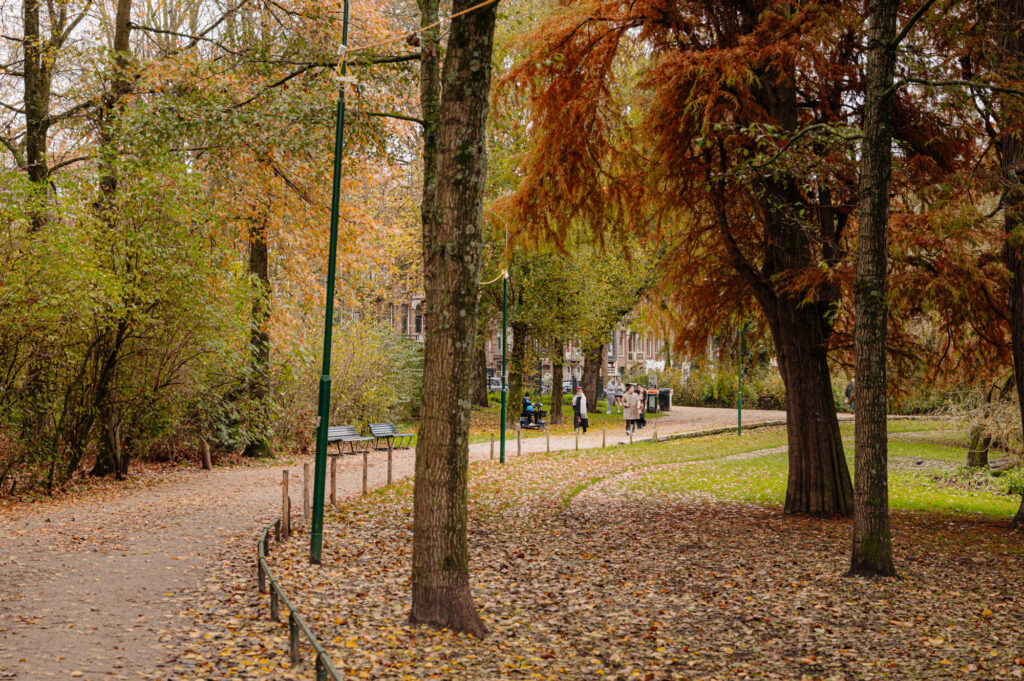
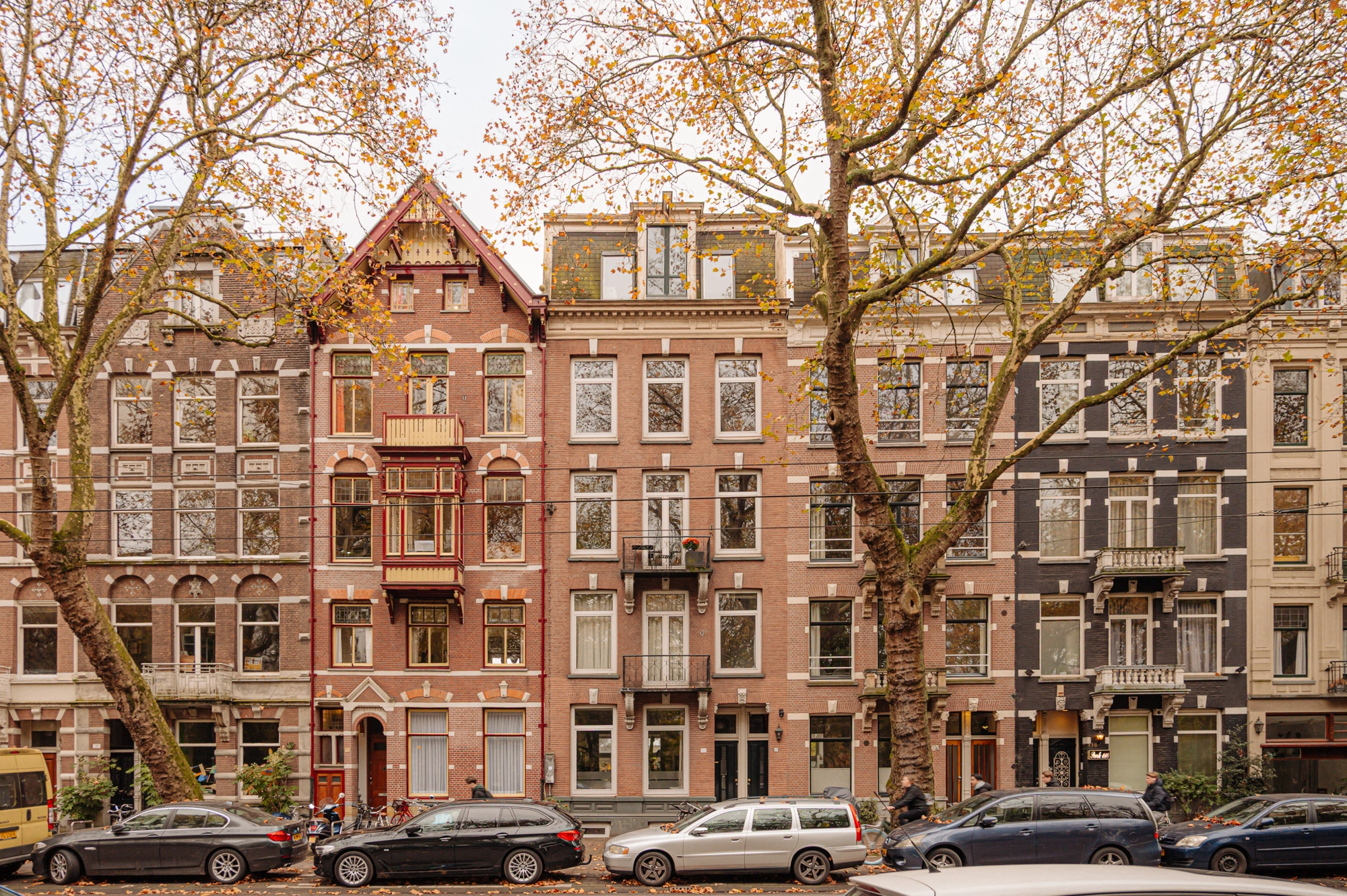
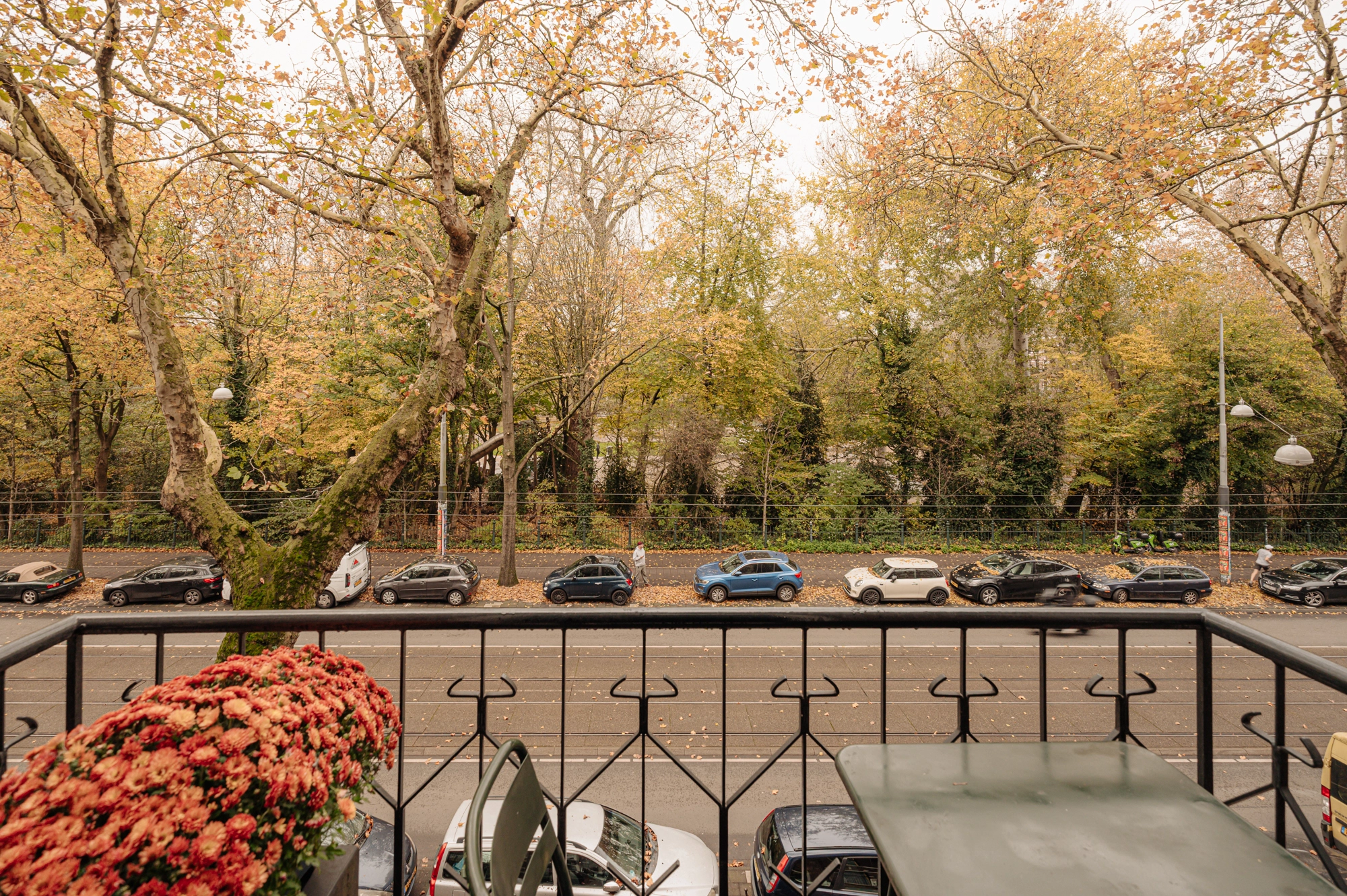
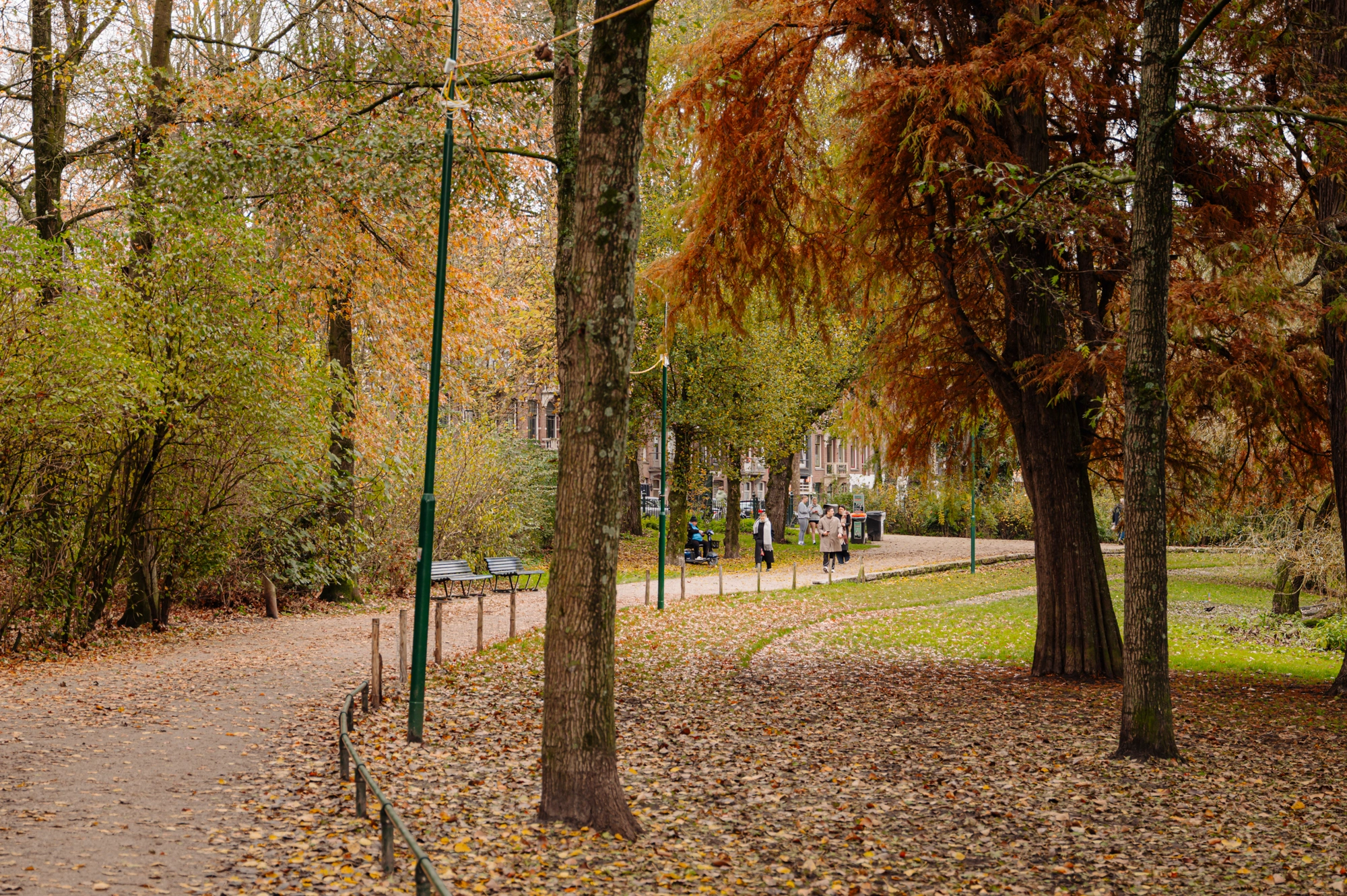
Living alongside the park adds an extra dimension of space and greenery. This unique and generously proportioned upper residence offers that experience across three full levels. The south-facing orientation brings an abundance of light, making the home — in our view, and as confirmed by the owners — an exceptionally pleasant place to live. The view over the Sarphatipark is a daily delight. Its scale is remarkable for this location, where upper residences are often more modest in size. This three-level upper home, with its own entrance and private staircase from the street, has retained its character while also surprising with a loft-like living floor featuring both a terrace and a roof terrace. In our assessment, these combined qualities present a rare opportunity for anyone wishing to live in De Pijp. Across its three living levels, the residence offers approximately two hundred sixty-five square metres of living space, with eight rooms in total, and a top floor that is entirely dedicated to living, cooking and outdoor enjoyment.
Design vision
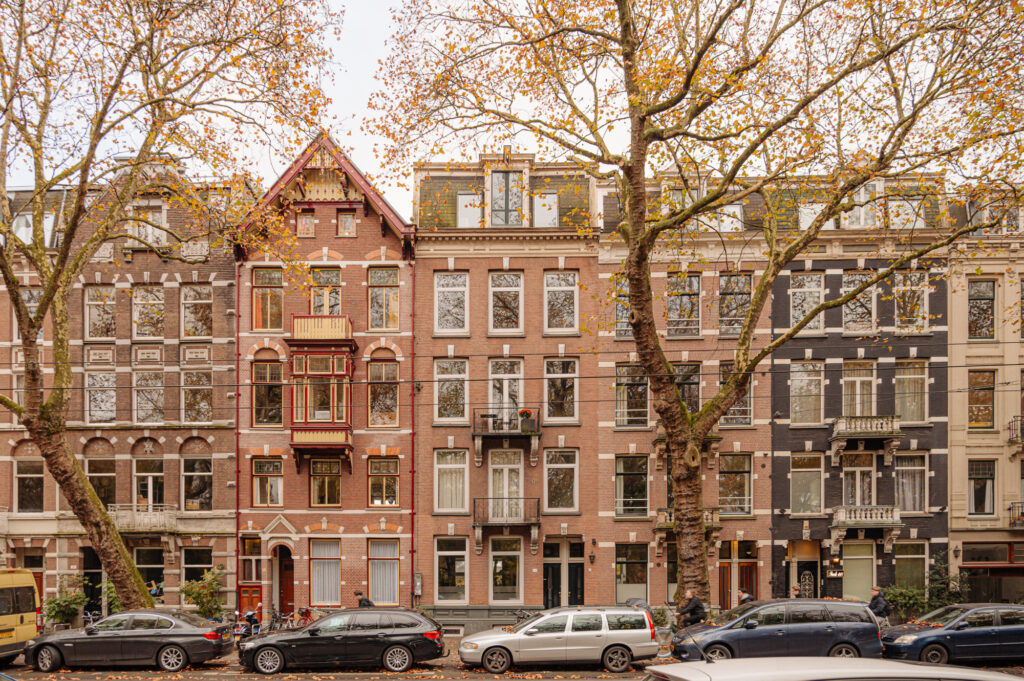
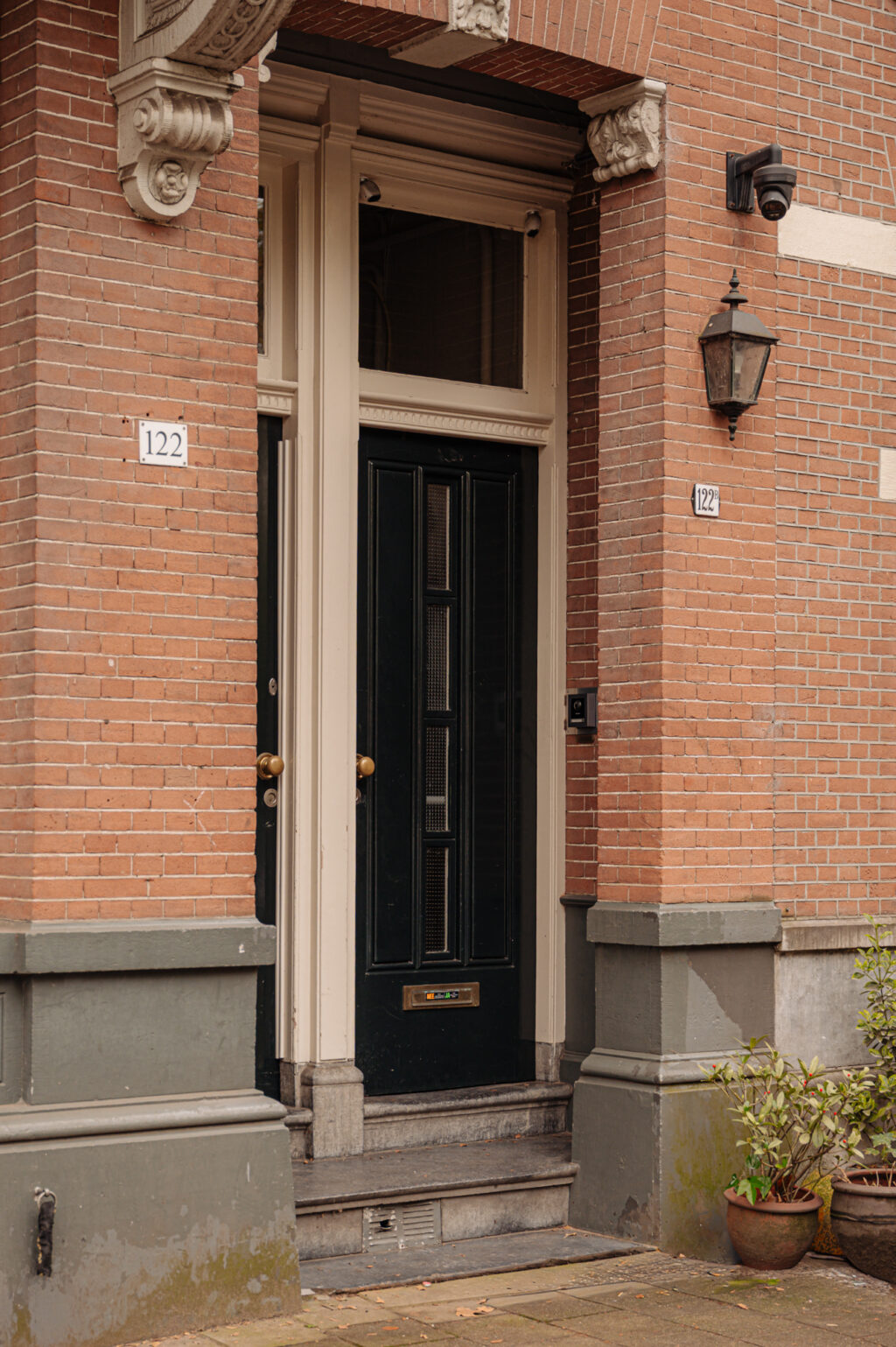
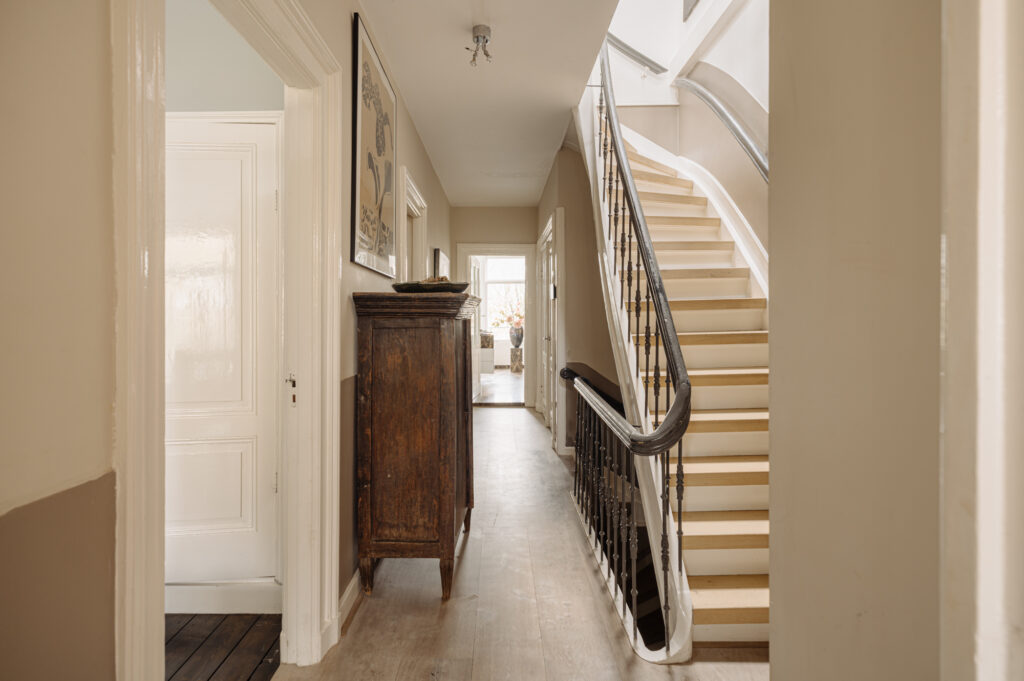
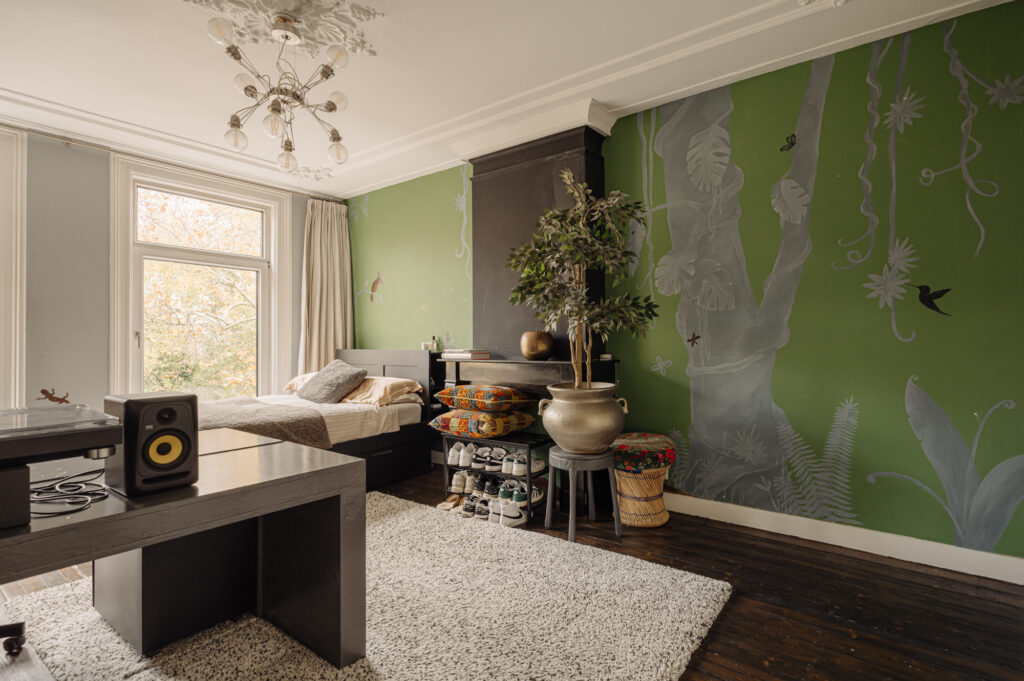
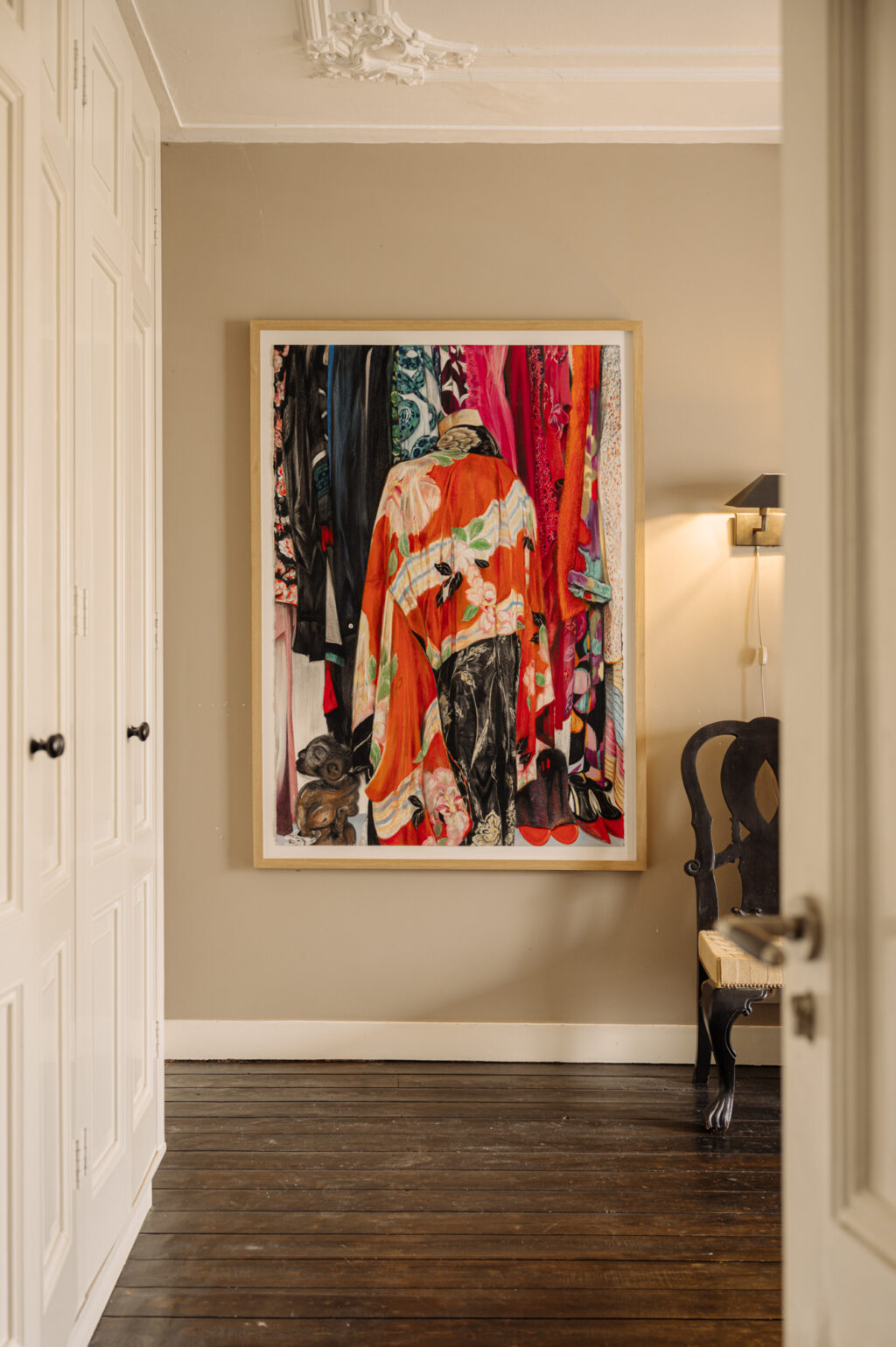
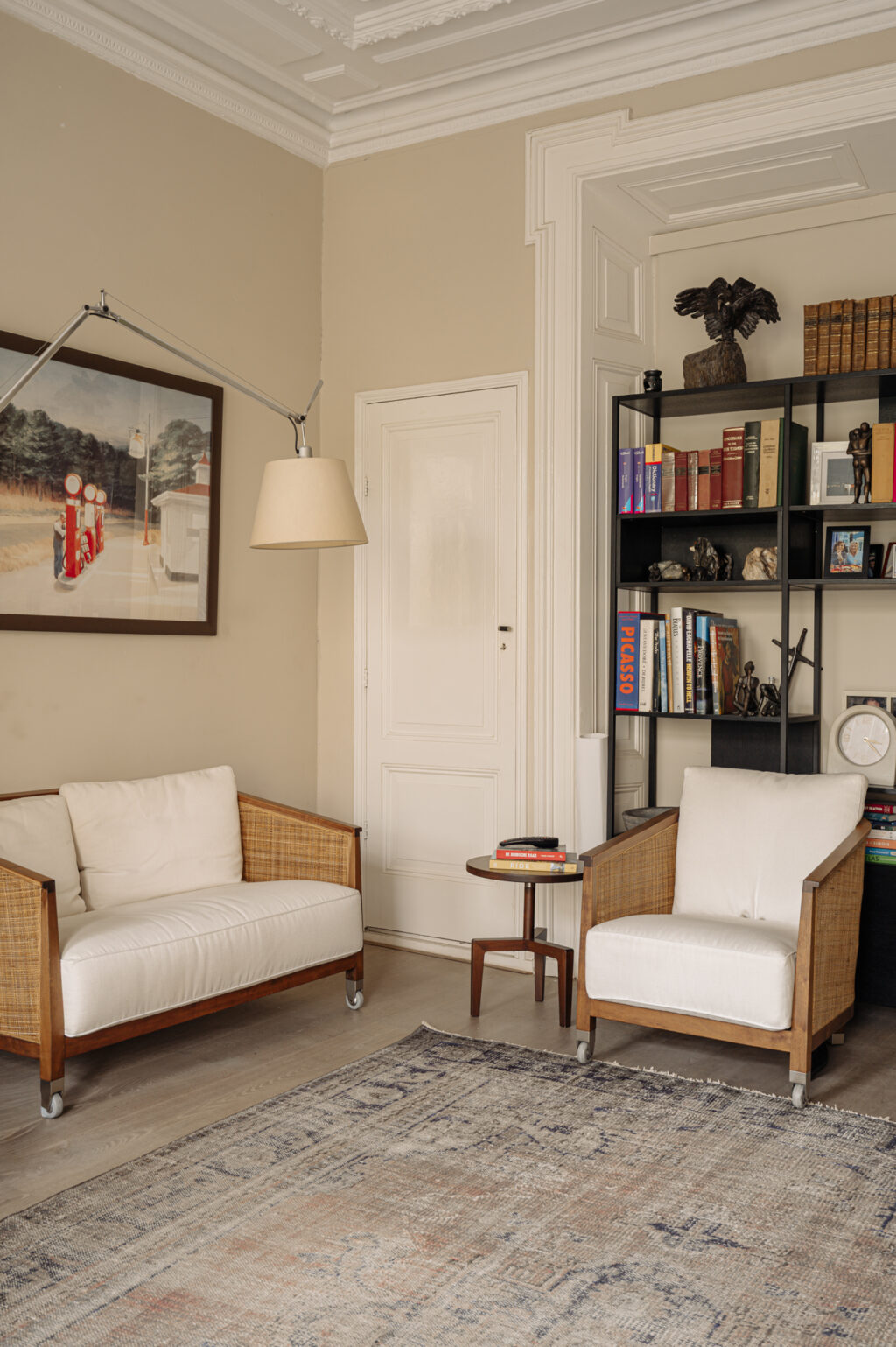
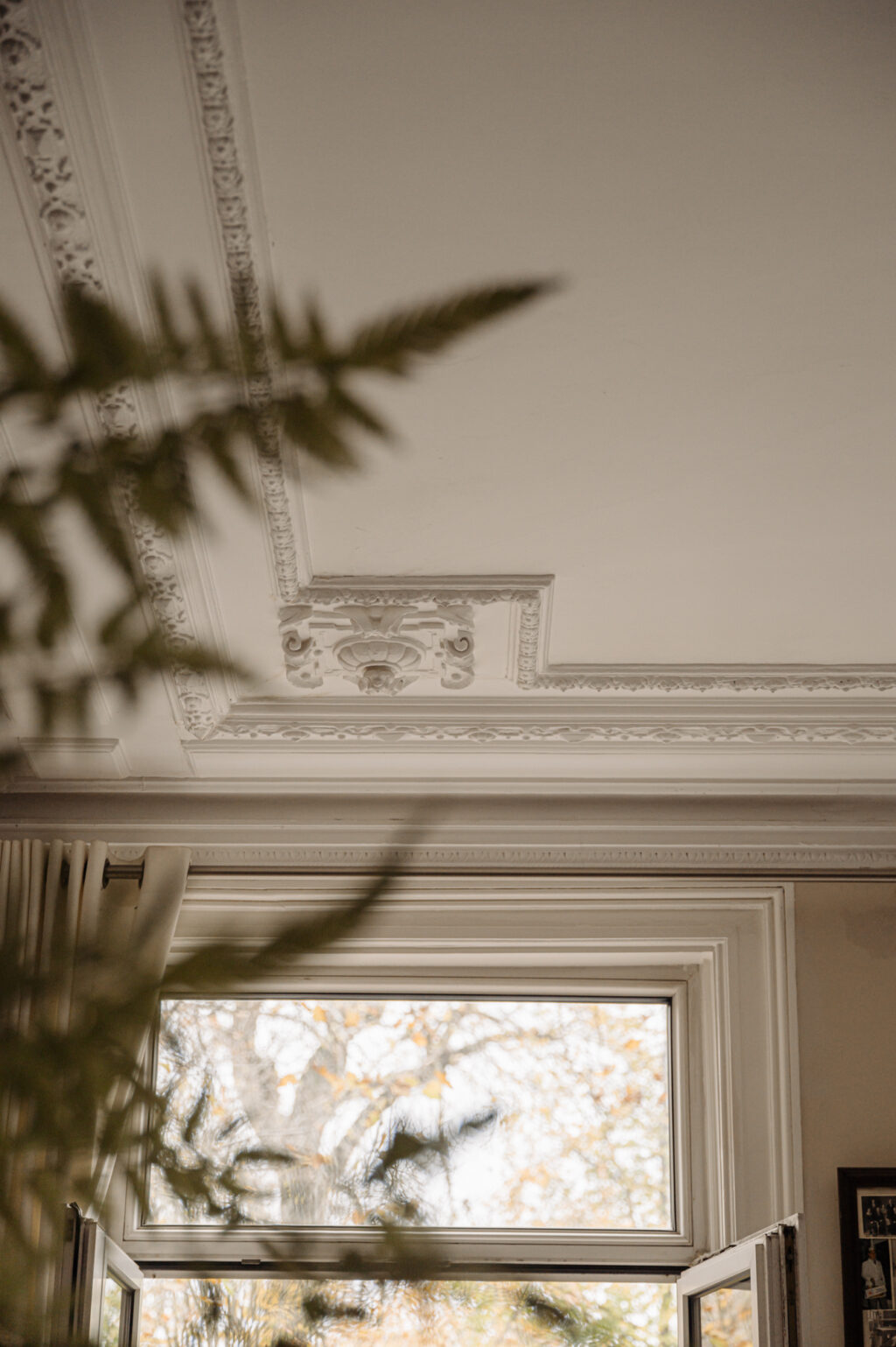
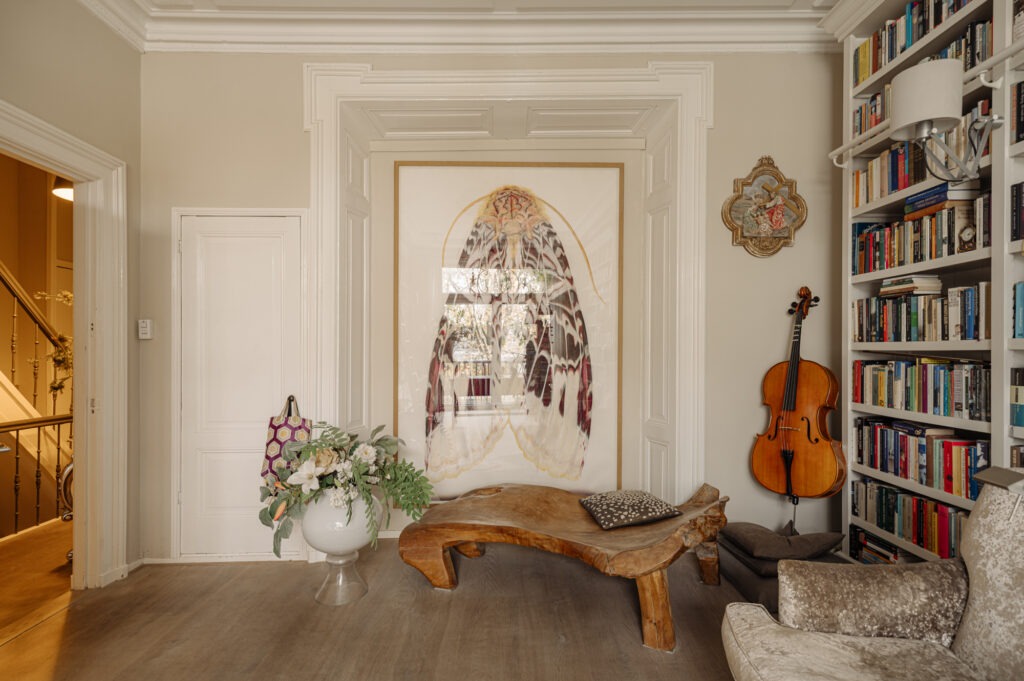
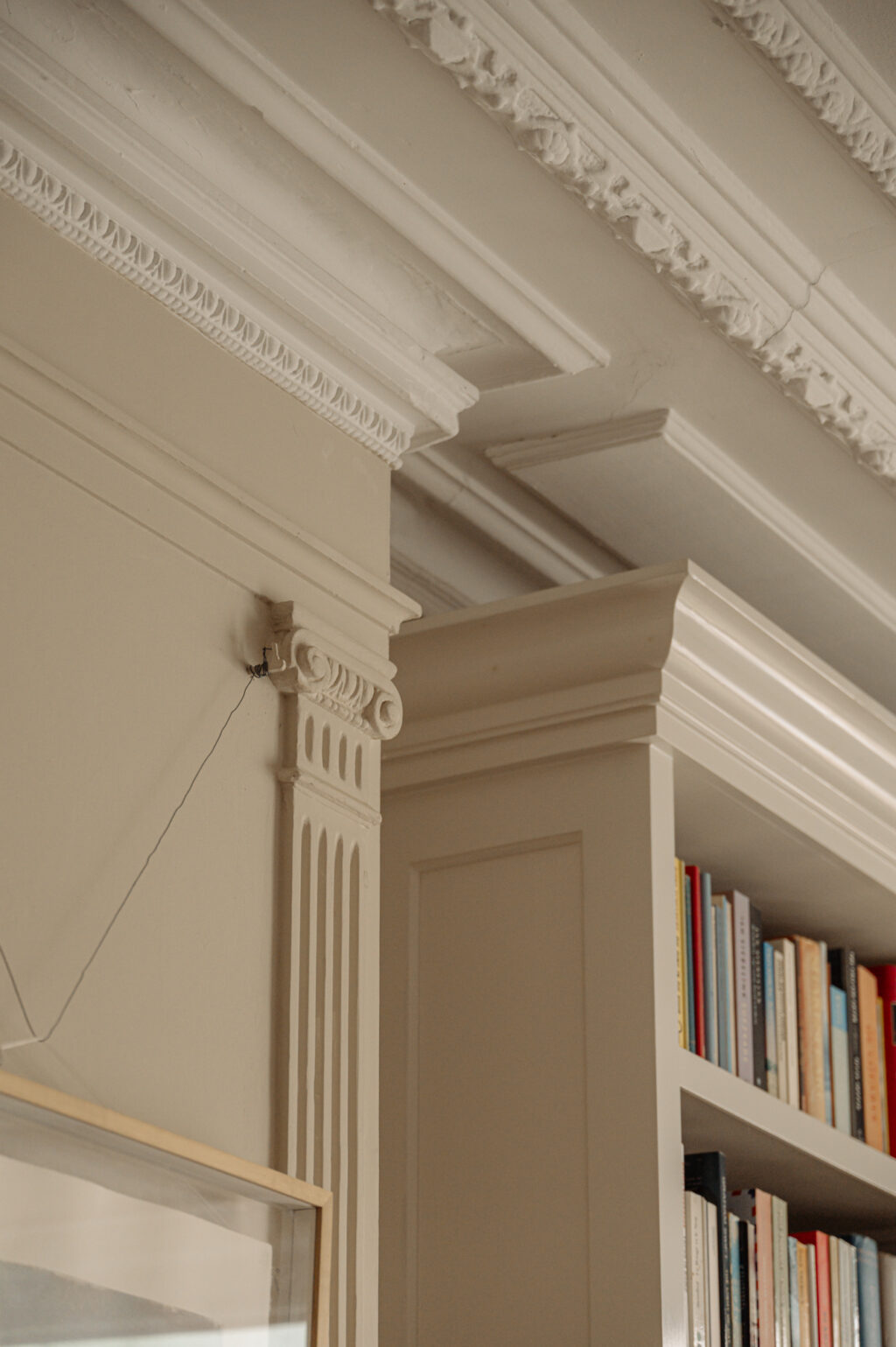
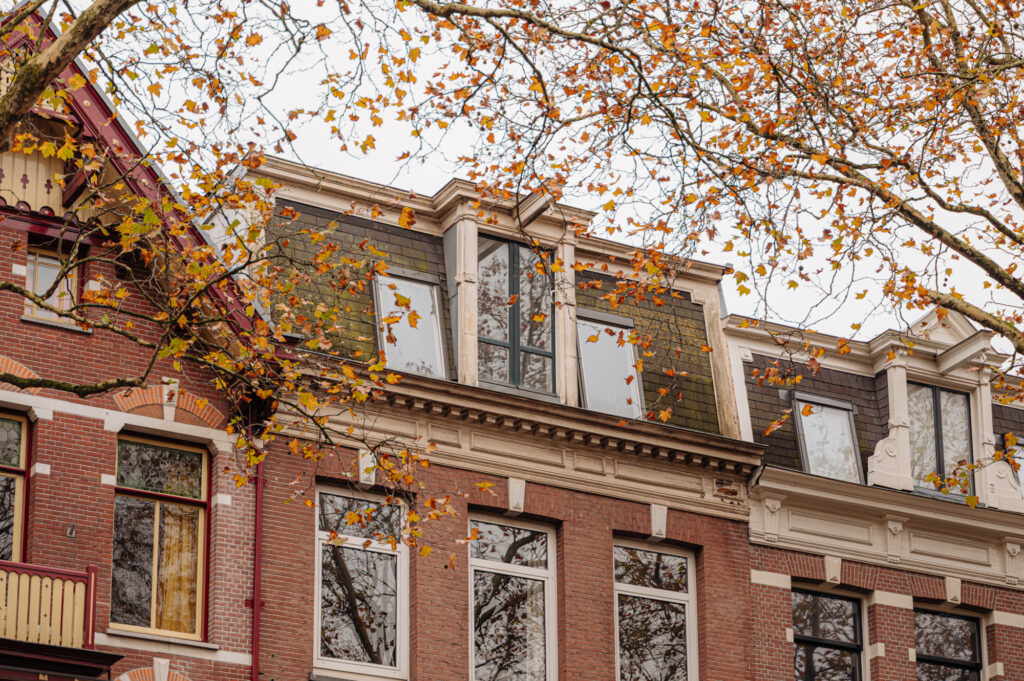
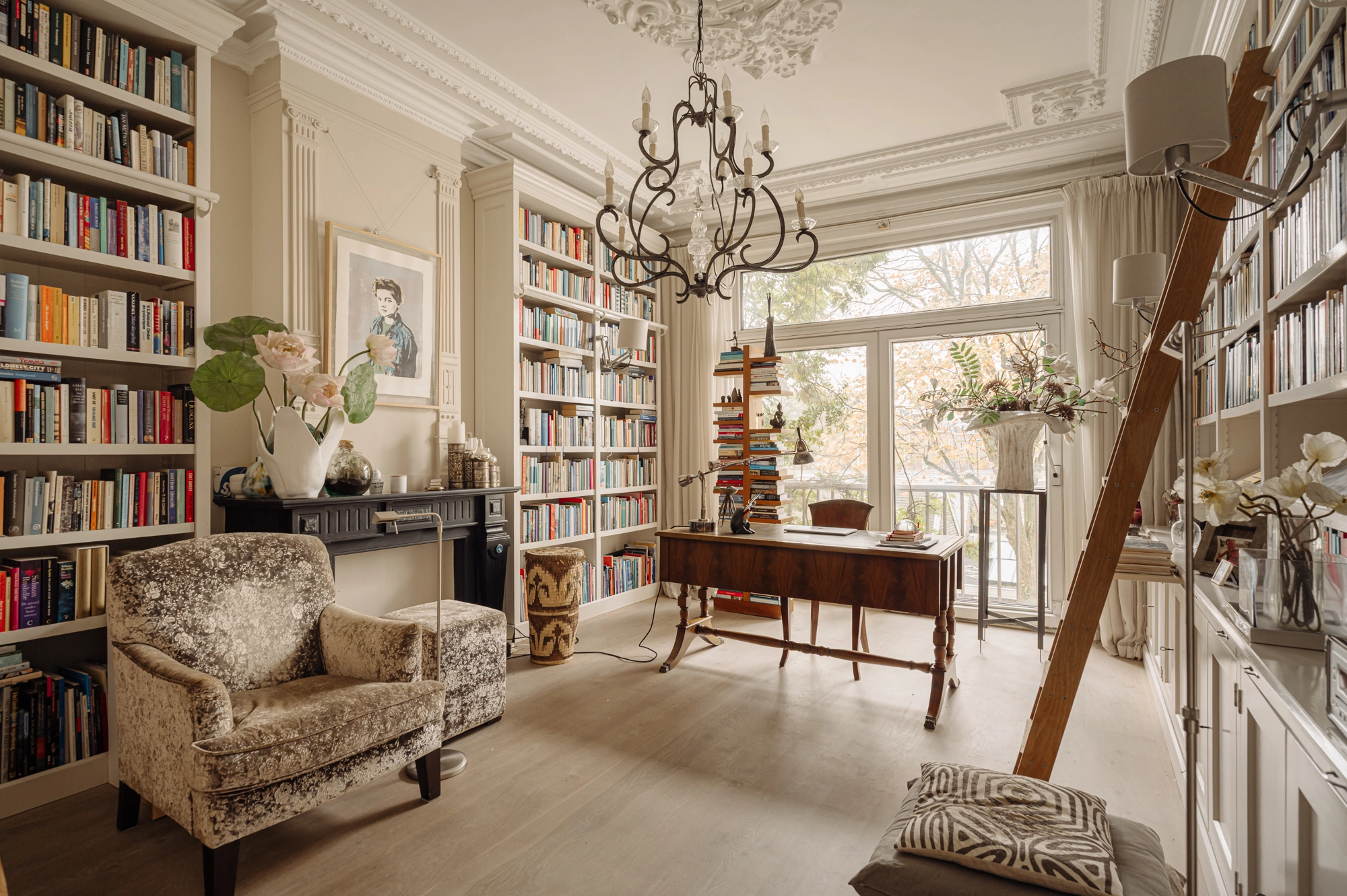
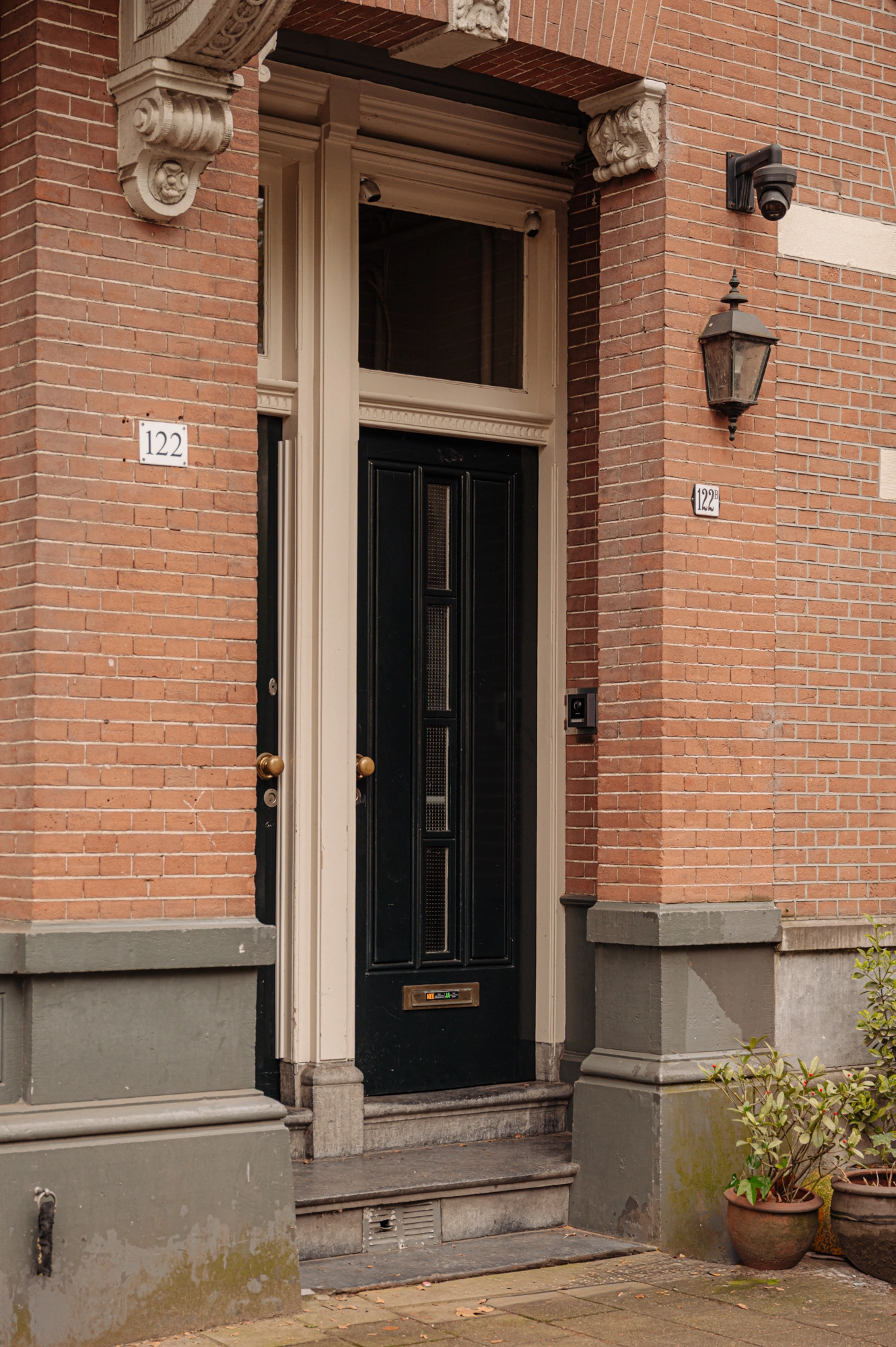
As part of De Pijp — and in particular the development surrounding the Sarphatipark — this residence was built during the fin de siècle period, a time when neoclassical architecture set the tone with designs marked by grandeur and strong French influences. Facades were composed according to the golden ratio and richly adorned with ornamental detailing. Large windows, bay fronts and balconies lend the buildings around the park their elegant presence. Along the Sarphatipark, where the city reveals its most classical character, a generously proportioned upper residence unfolds behind a carefully restored façade. The architecture — detailed with natural stone accents, decorative brickwork and a stately entrance — reflects an era in which aesthetics and craftsmanship reinforced one another. Inside, this architectural language continues effortlessly. High ceilings with original ornamentation, a classical mantelpiece and finely profiled mouldings give the interior a refined and sophisticated atmosphere. The nearly three-metre ceiling height creates an expansive and airy sense of space. Historic details such as the wooden mantelpiece and original joinery have been preserved and meticulously restored. The ambience is calm, timeless and harmonious. The layout is logical and well considered: the second and third floors accommodate the bedrooms and bathroom, while the top floor is dedicated to living, with the kitchen, dining area and sitting area arranged in an open configuration. Above this lies a generous roof terrace. All levels are connected by an internal staircase that integrates naturally into everyday use. Through the combination of classical elements and a modern, functional arrangement, the residence feels both characterful and contemporary — an effortless match with its location.
Living and cooking
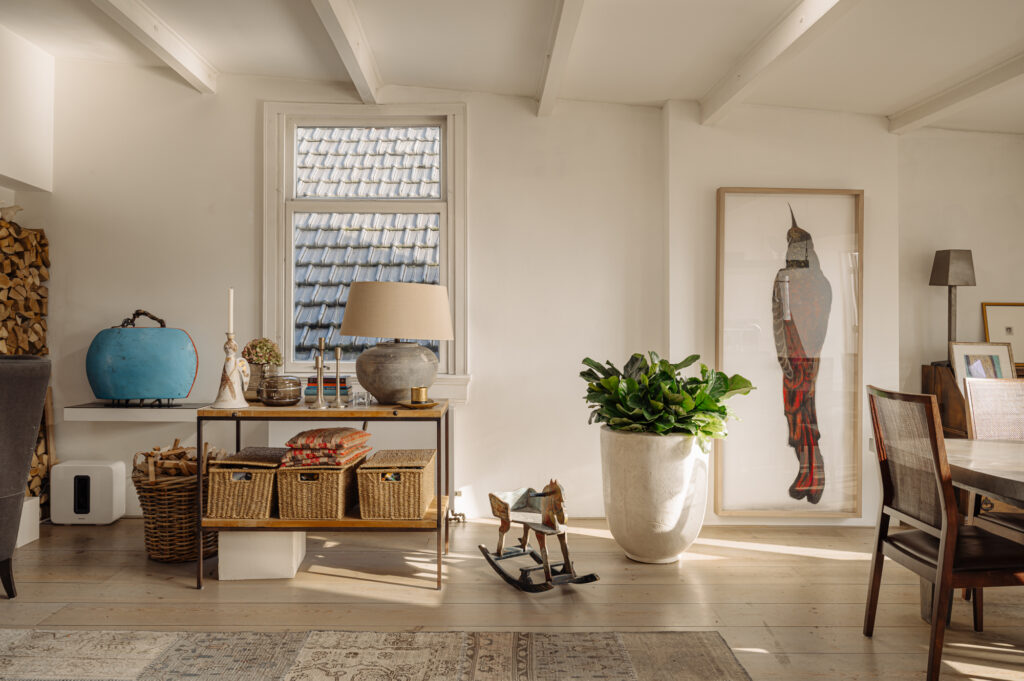
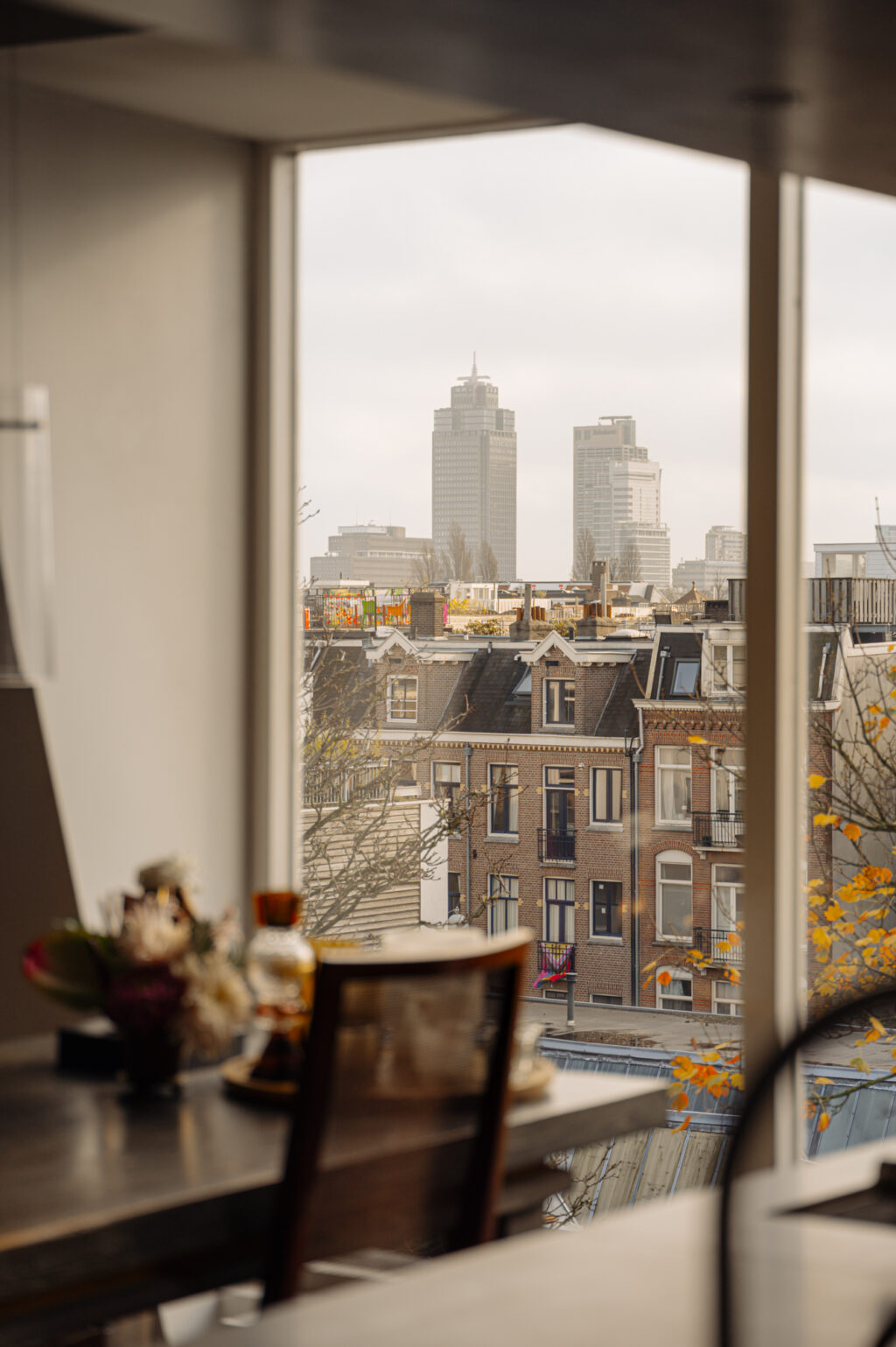
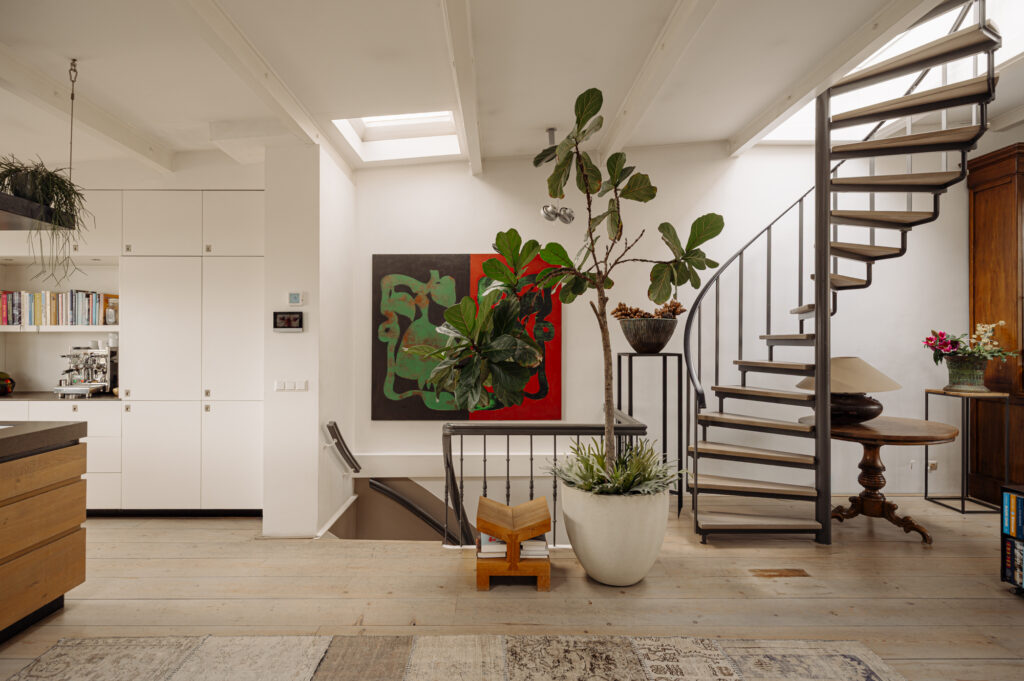
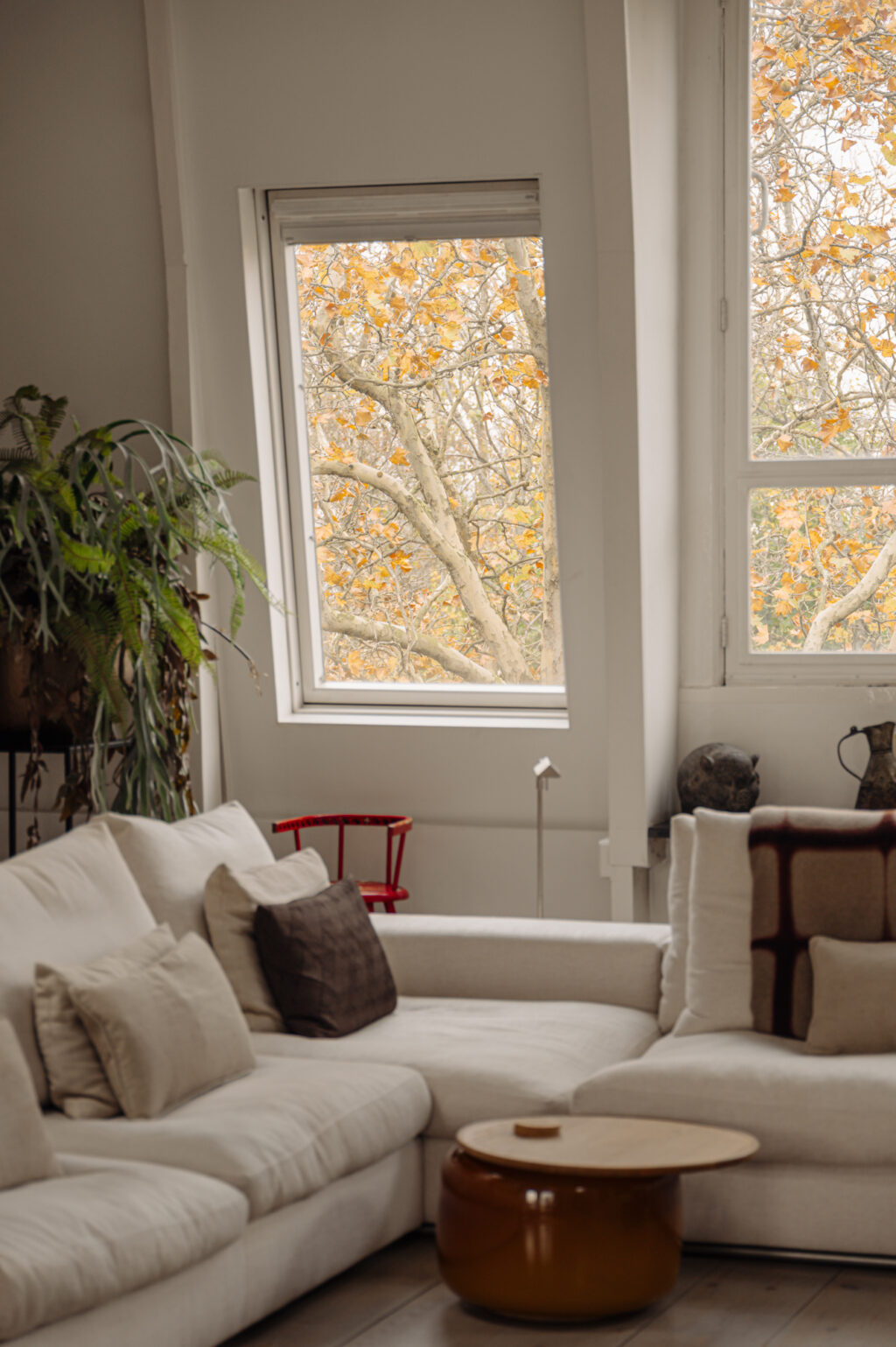
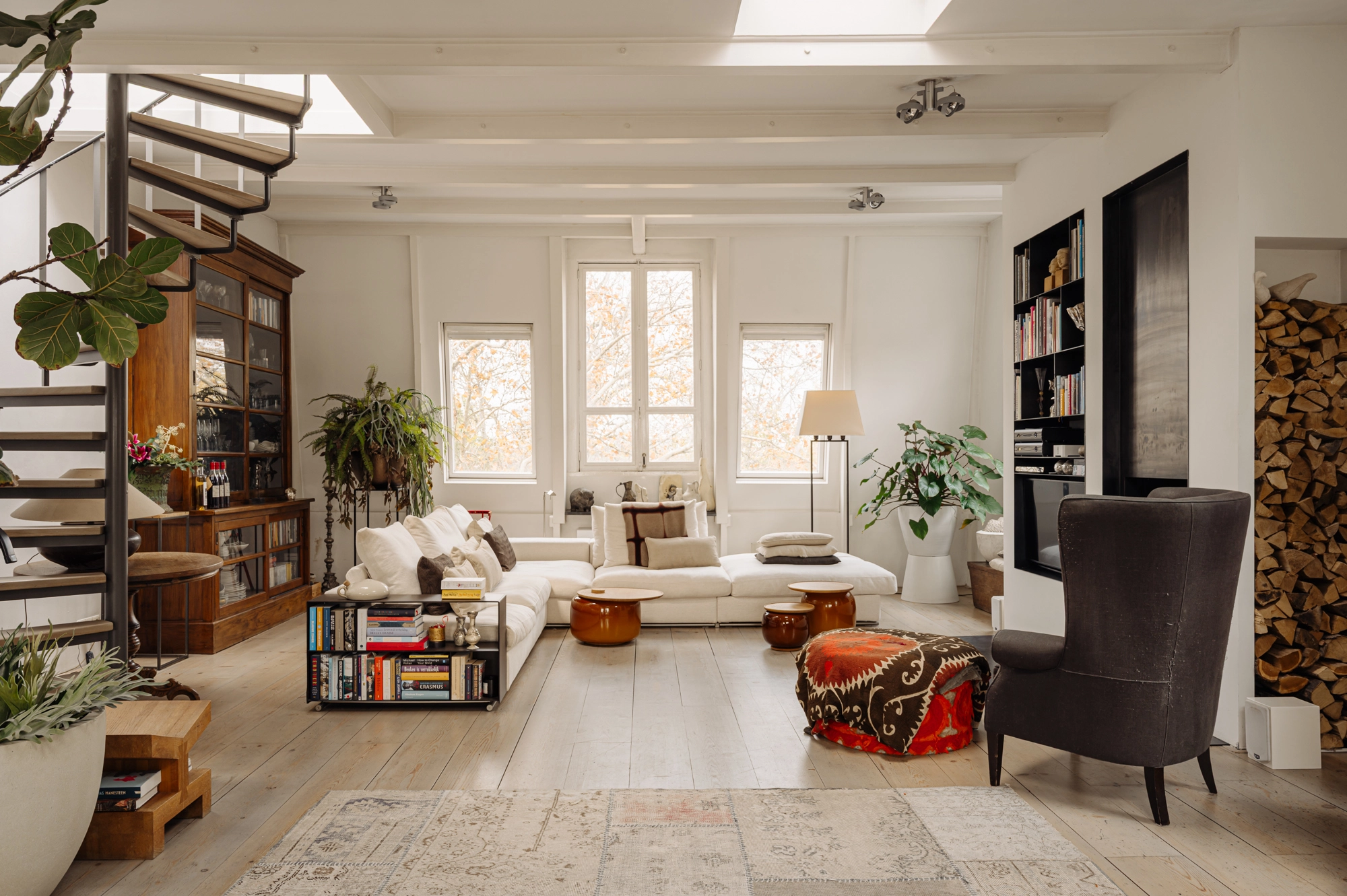
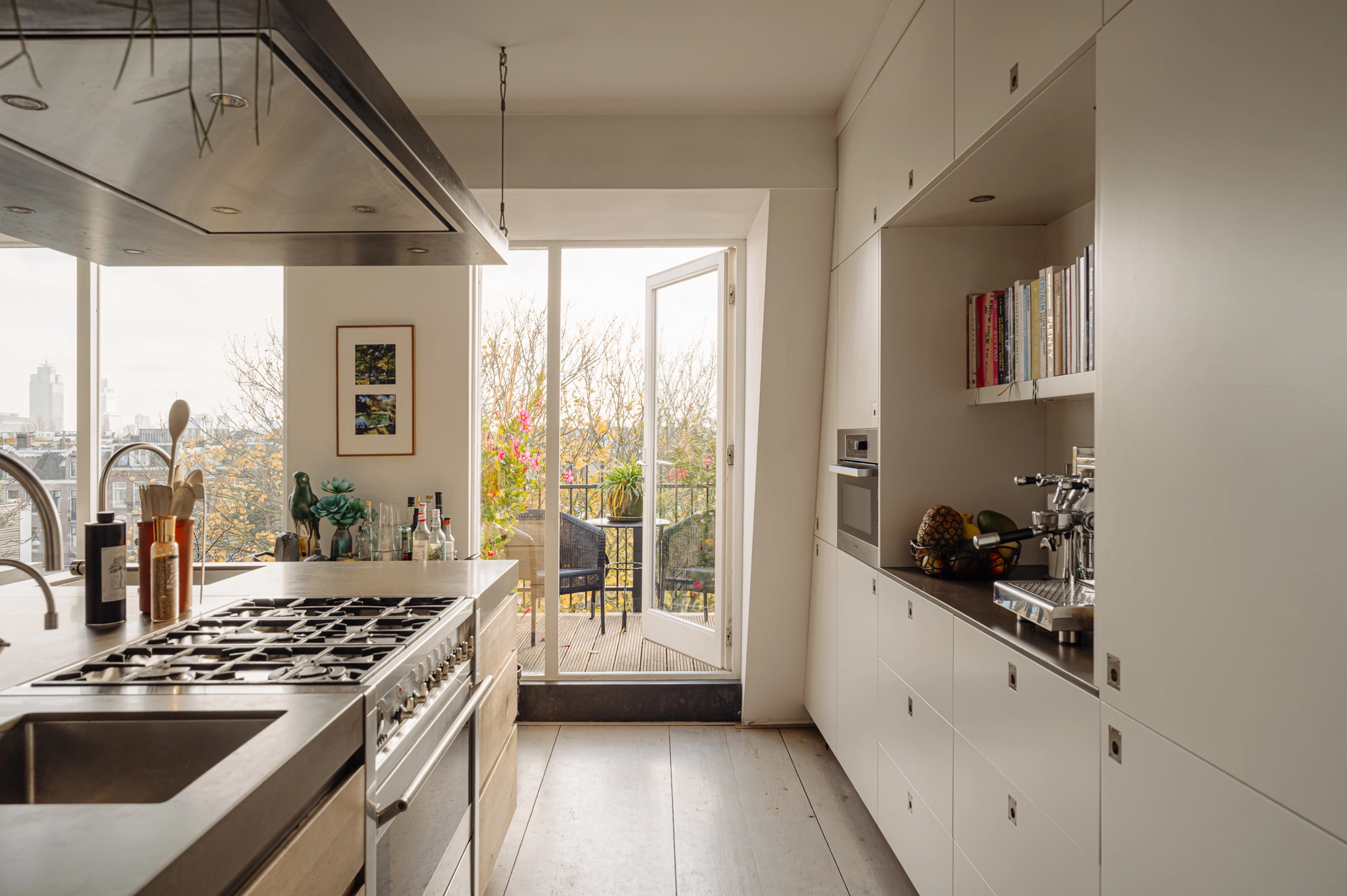
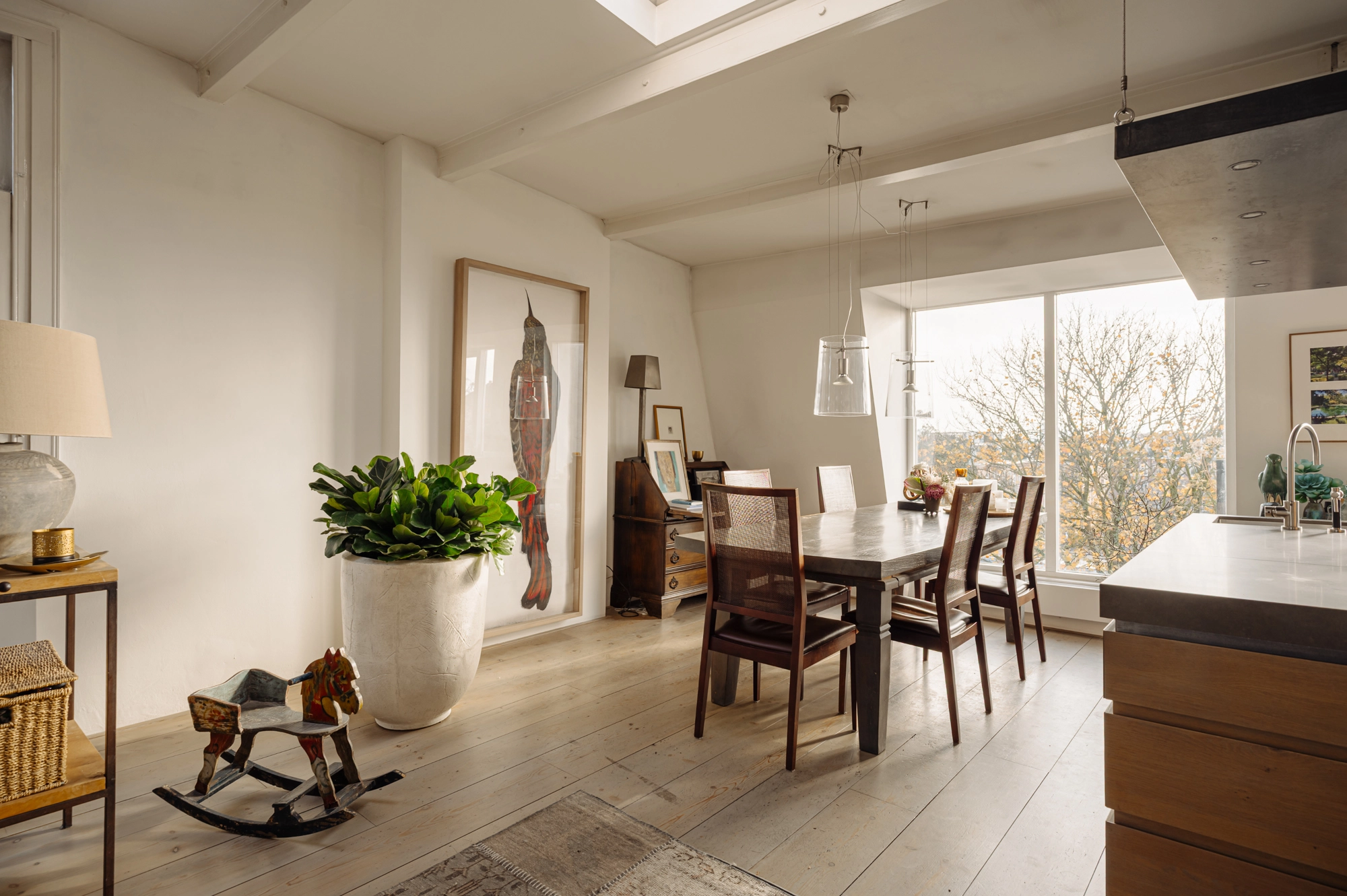
The top floor is designed as a single expansive living space, with the sitting area at the front and the kitchen with dining area at the rear. The room is bright and open thanks to large window openings, two skylights and views over the treetops of the Sarphatipark. This floor has a loft-like character — the very reason the owners chose to place their living area here. It is also where the sunlight is most abundant and where both terraces are located.
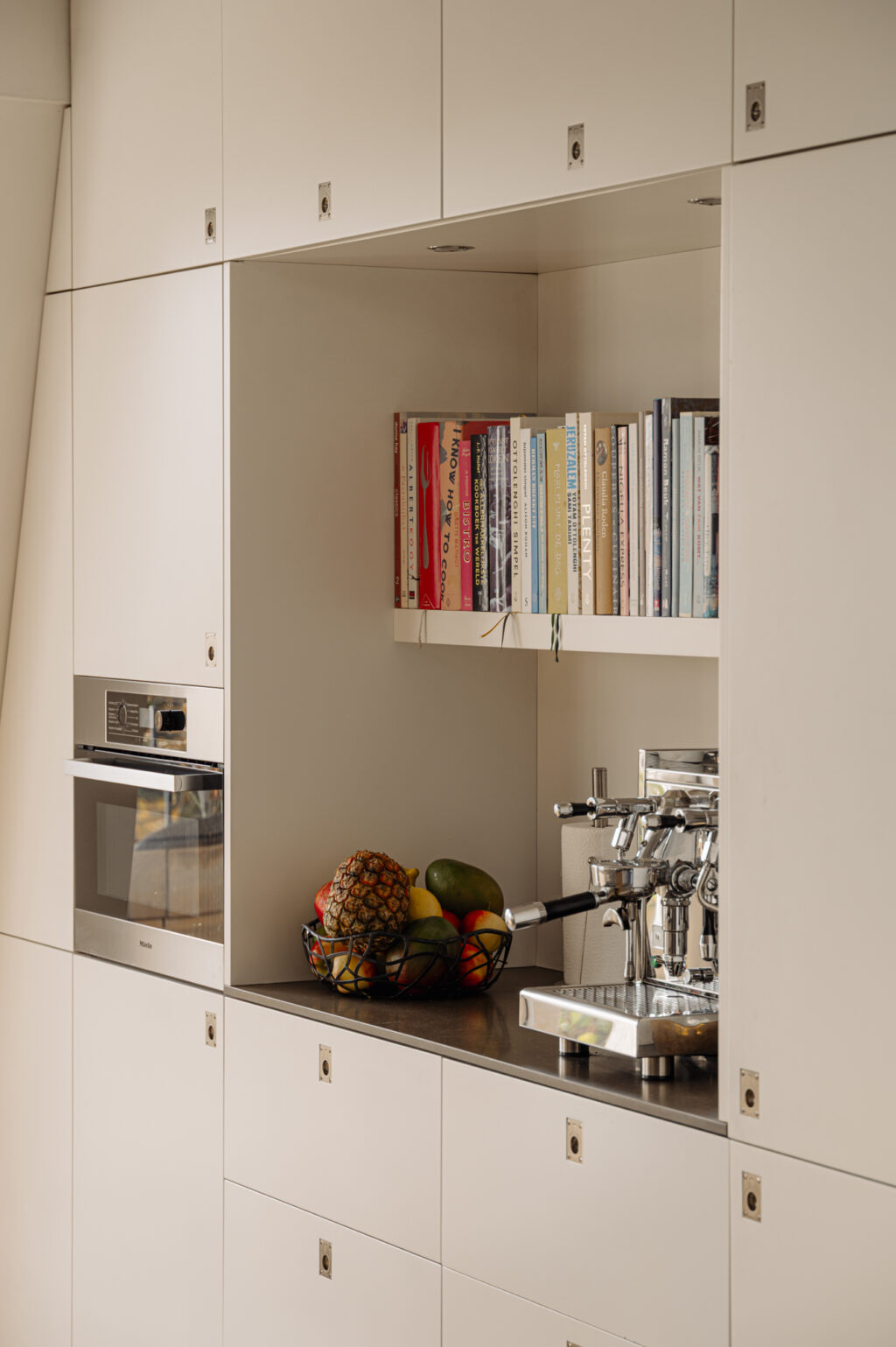
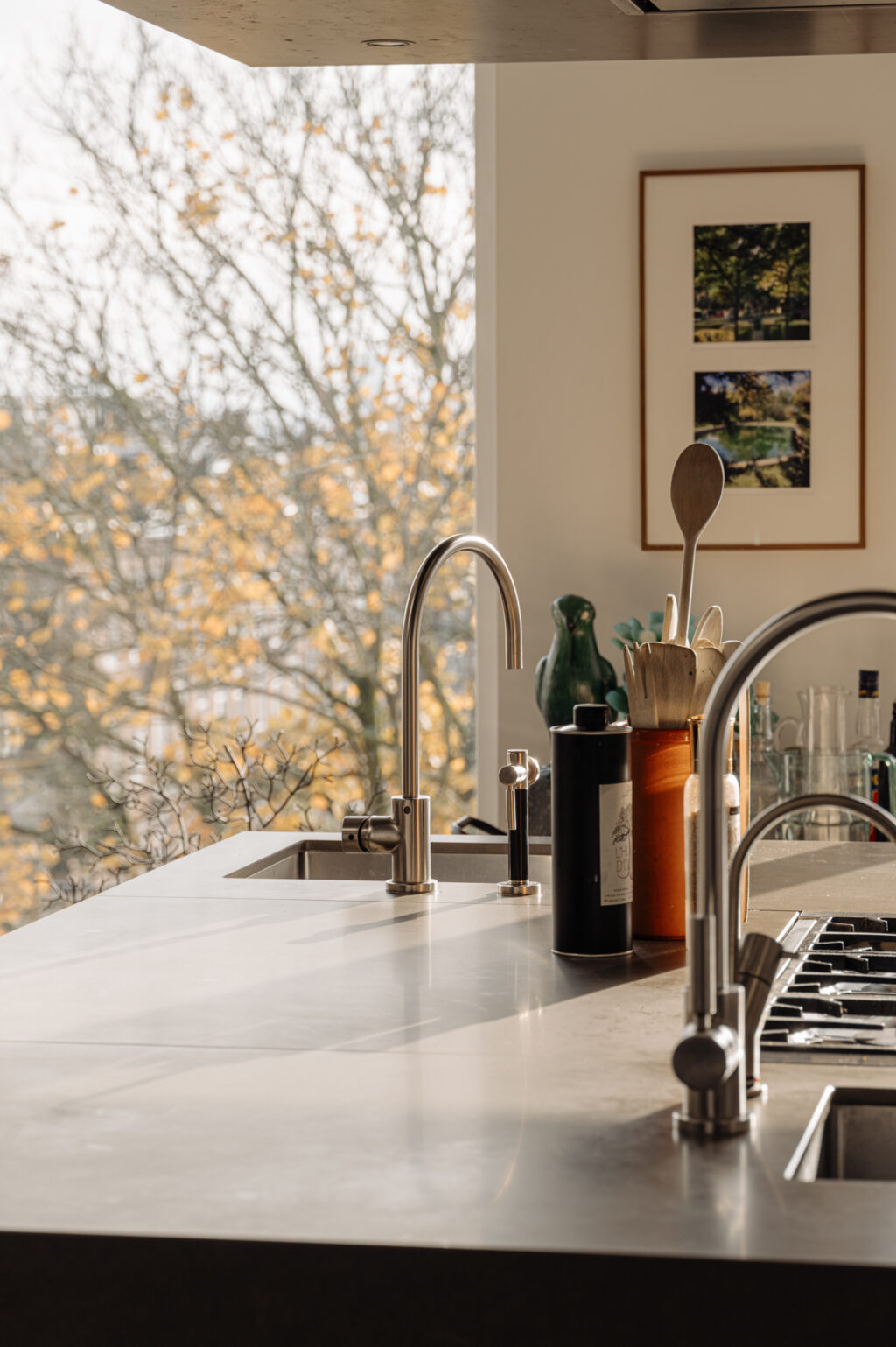
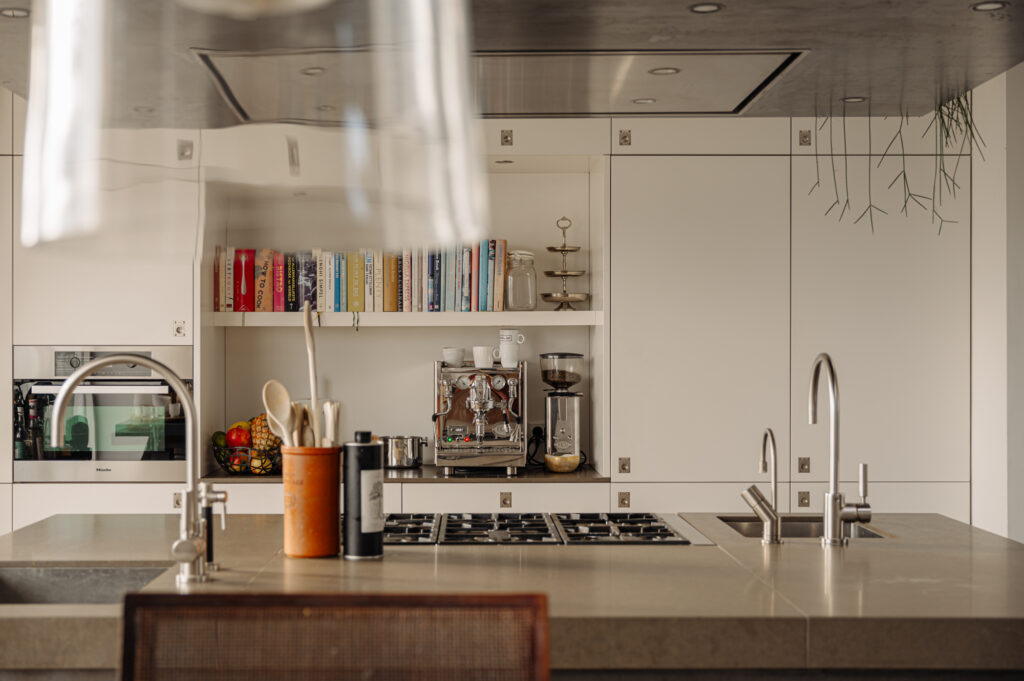
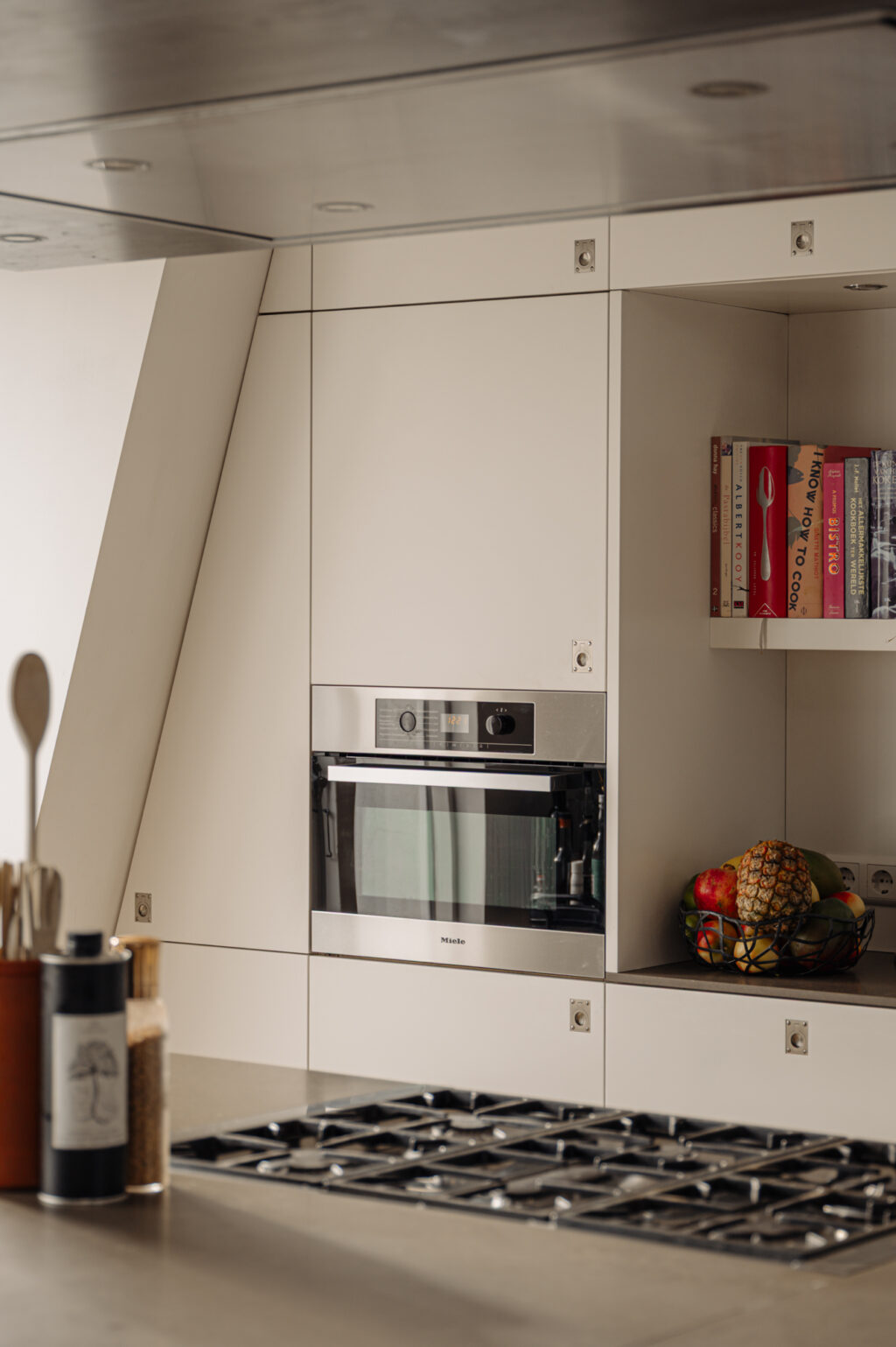
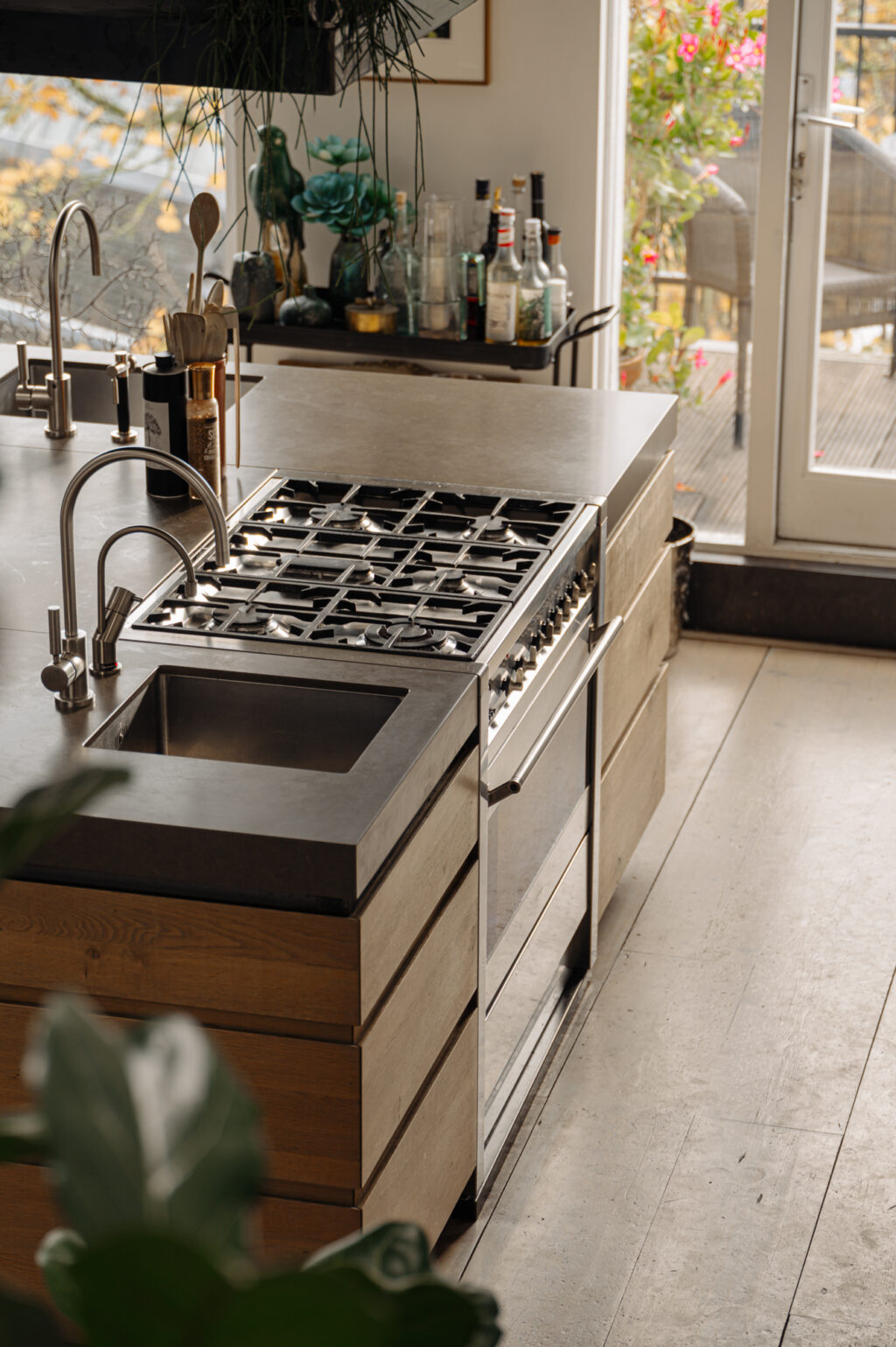
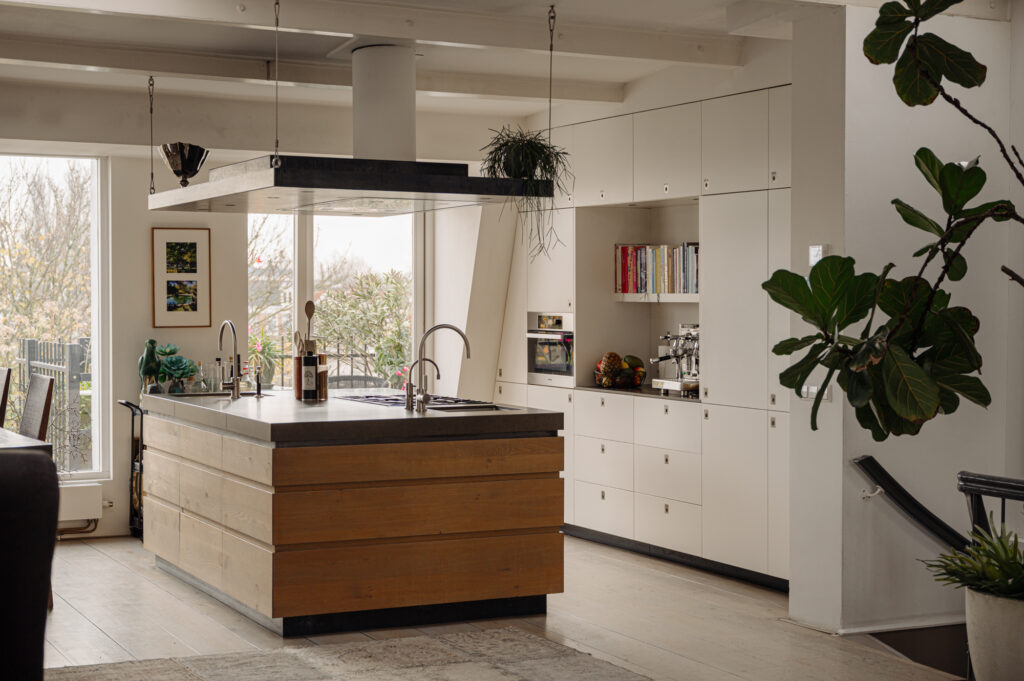
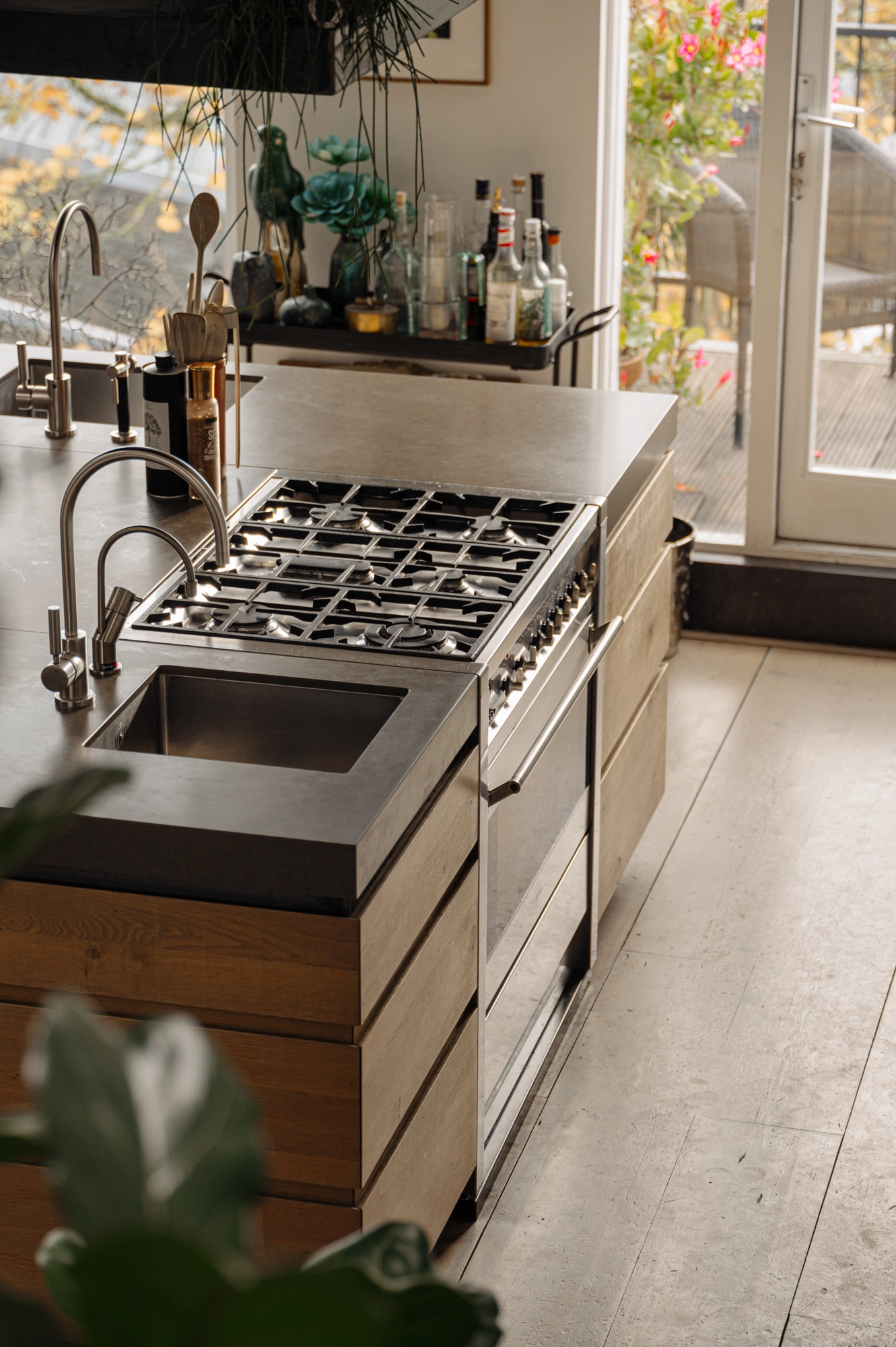
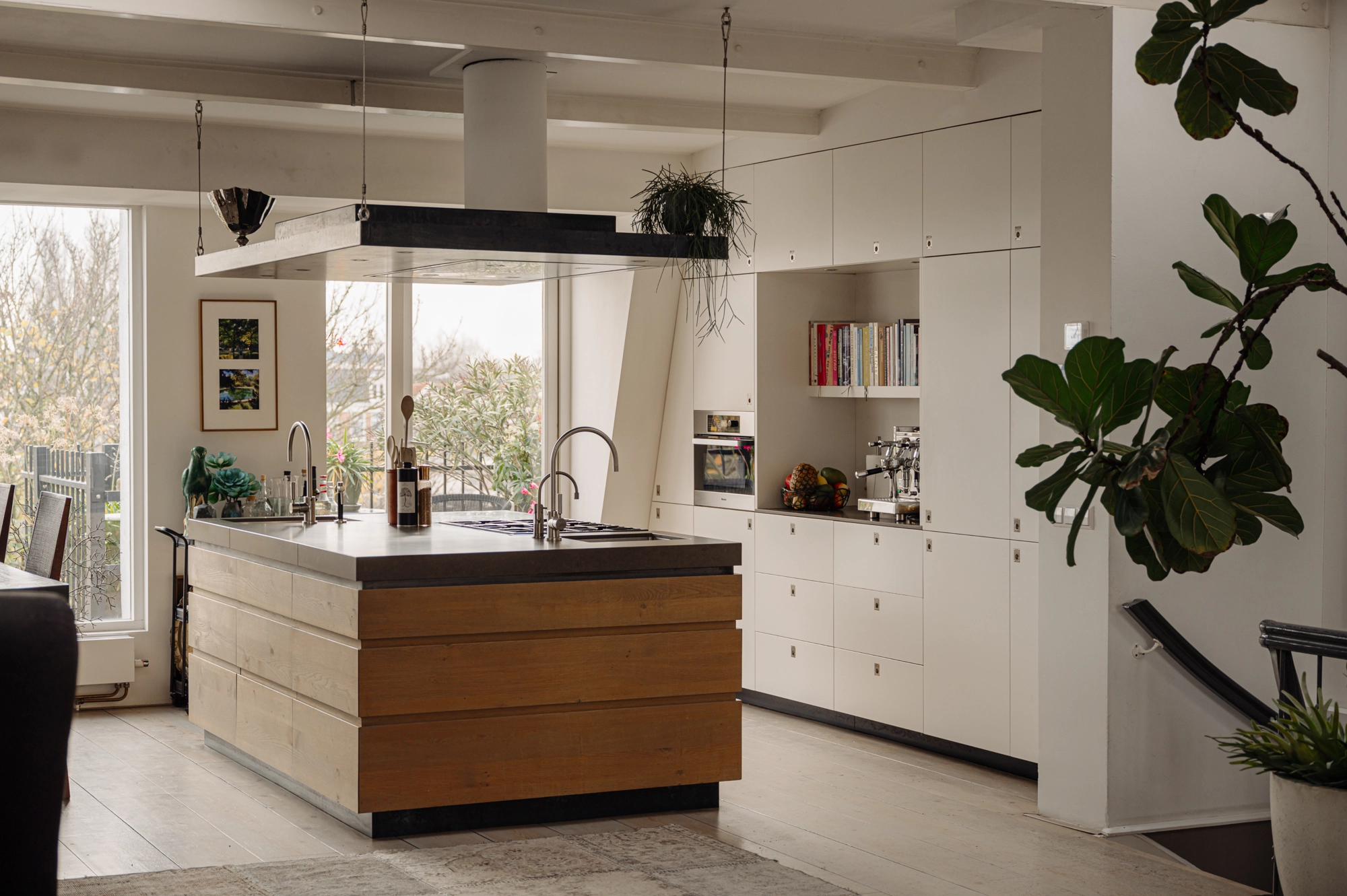
The kitchen is elegantly composed and features a generous cooking island finished with a natural stone worktop. The rear wall consists of custom-made cabinetry offering extensive storage, a dedicated coffee counter and high-quality built-in appliances by manufacturers including Miele and Smeg. From the kitchen, one overlooks and interacts with the entire floor. French doors open onto a spacious balcony at the rear.
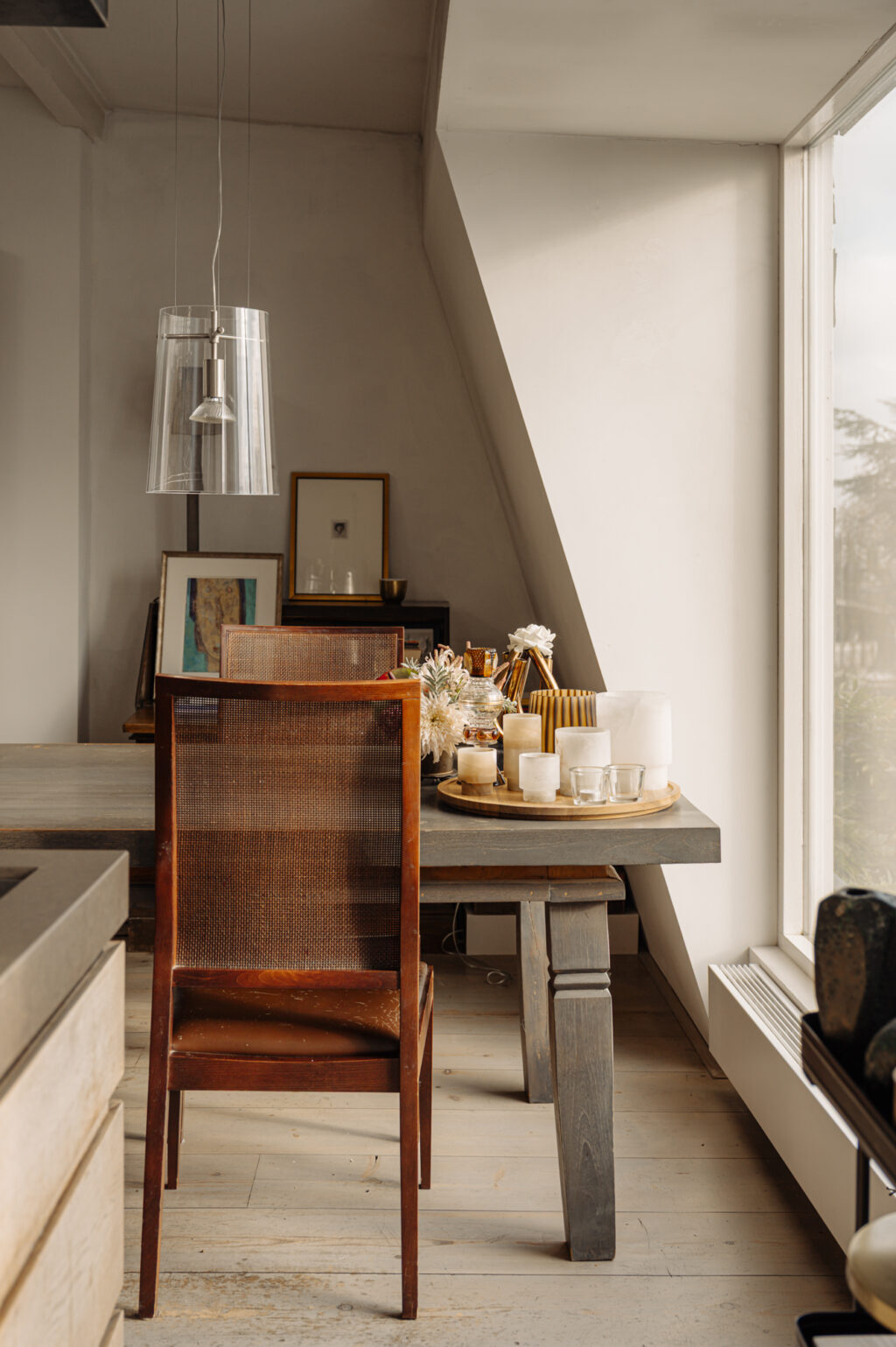
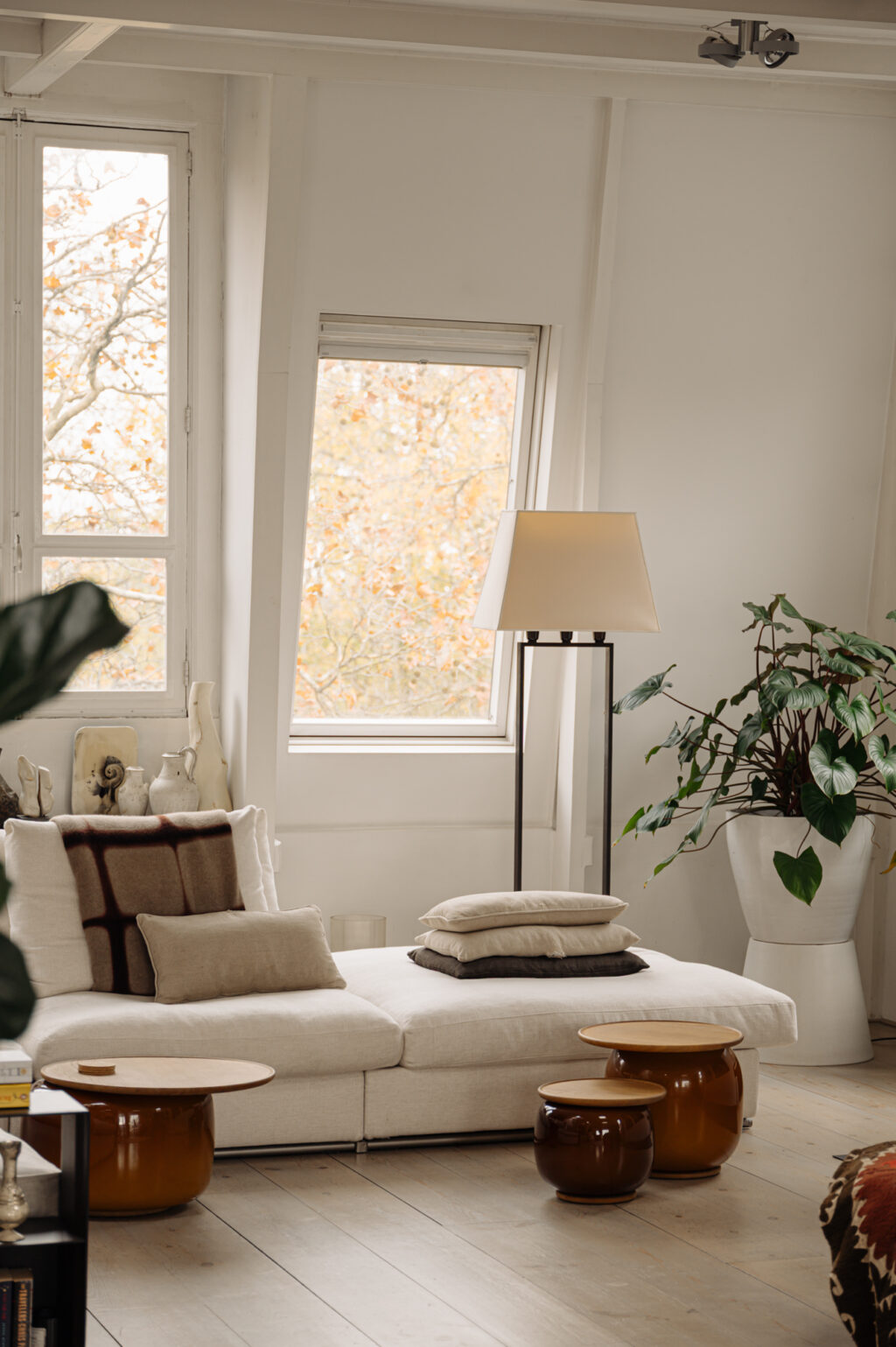
On the dining side, there is ample space for a large dining table. Thanks to the natural light and views of the inner gardens, this area feels spacious and serene. The sitting area at the front is comfortably arranged around an open fireplace, offering more than enough space for a large sofa and additional armchairs. The wooden floor, the colour palette and the ceiling with exposed beams together create a warm and tranquil atmosphere.
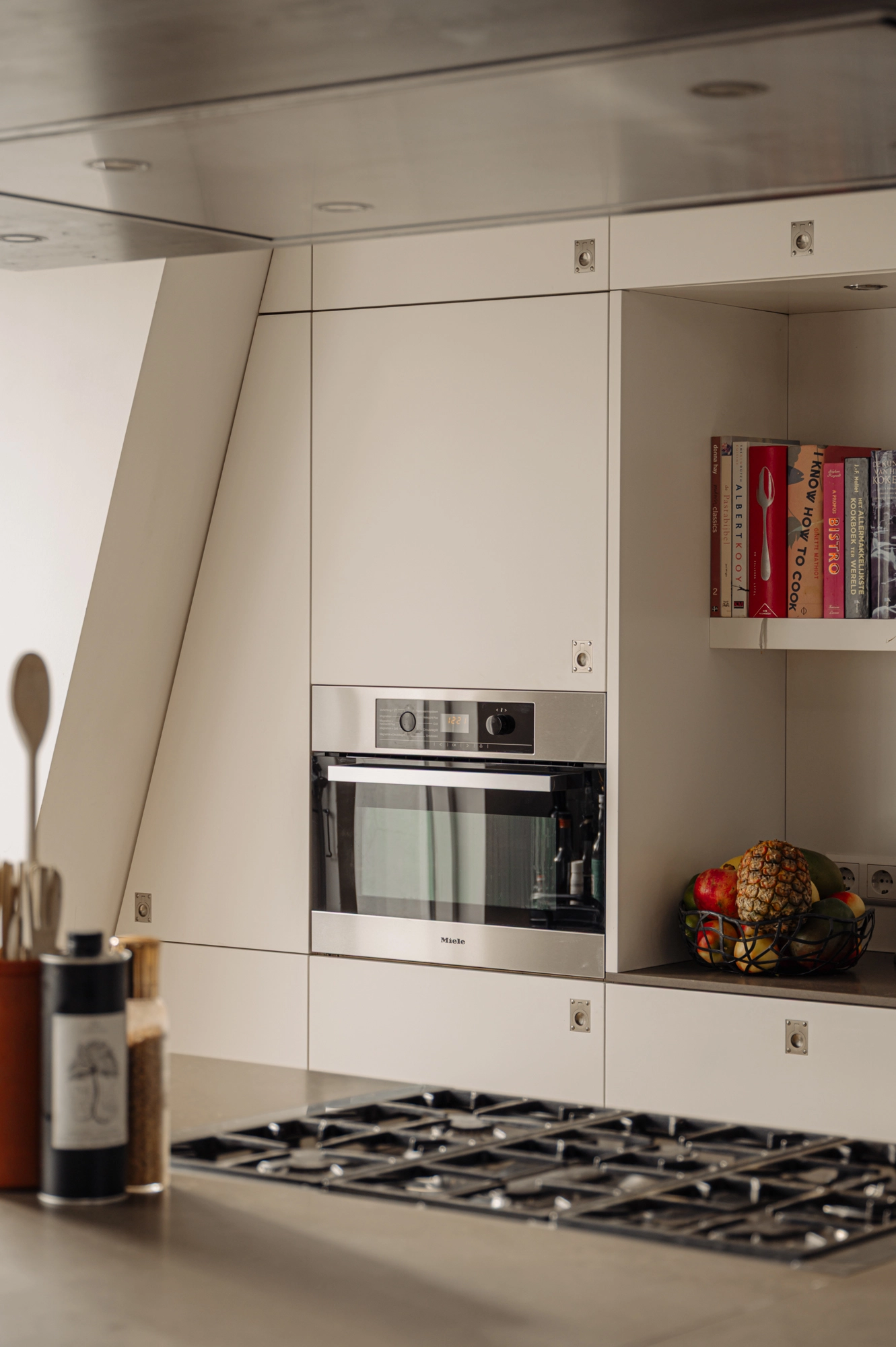
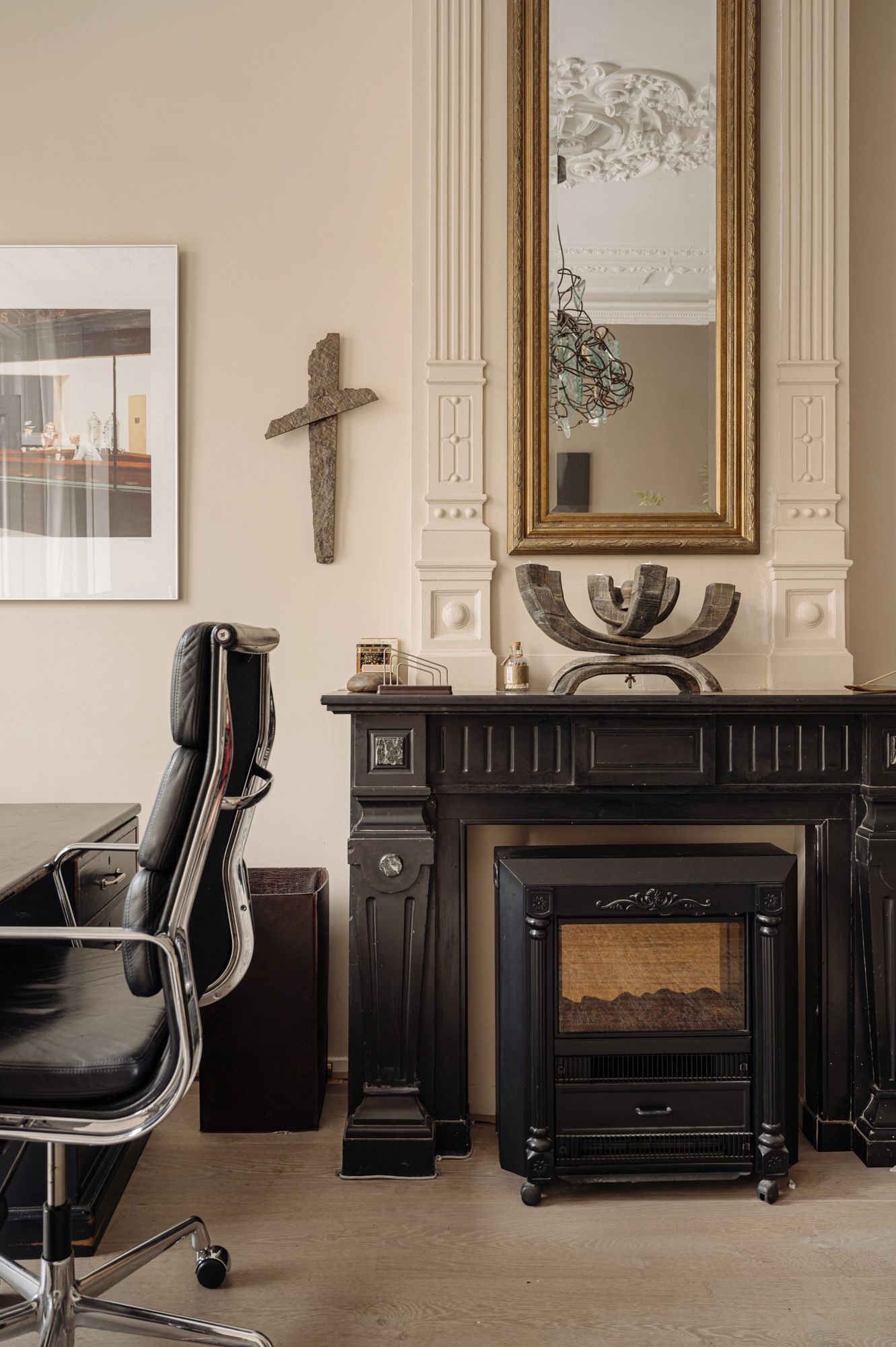
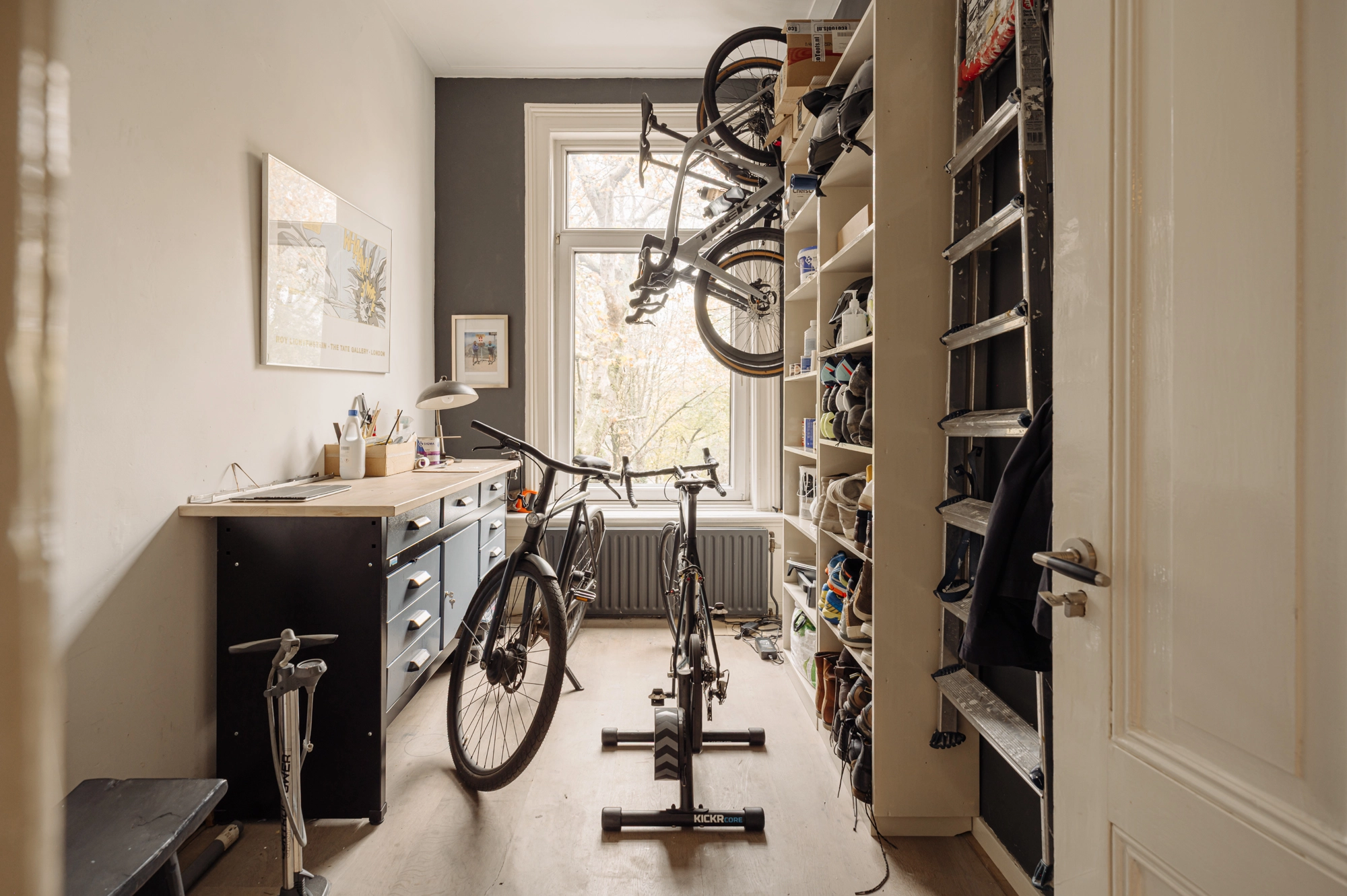
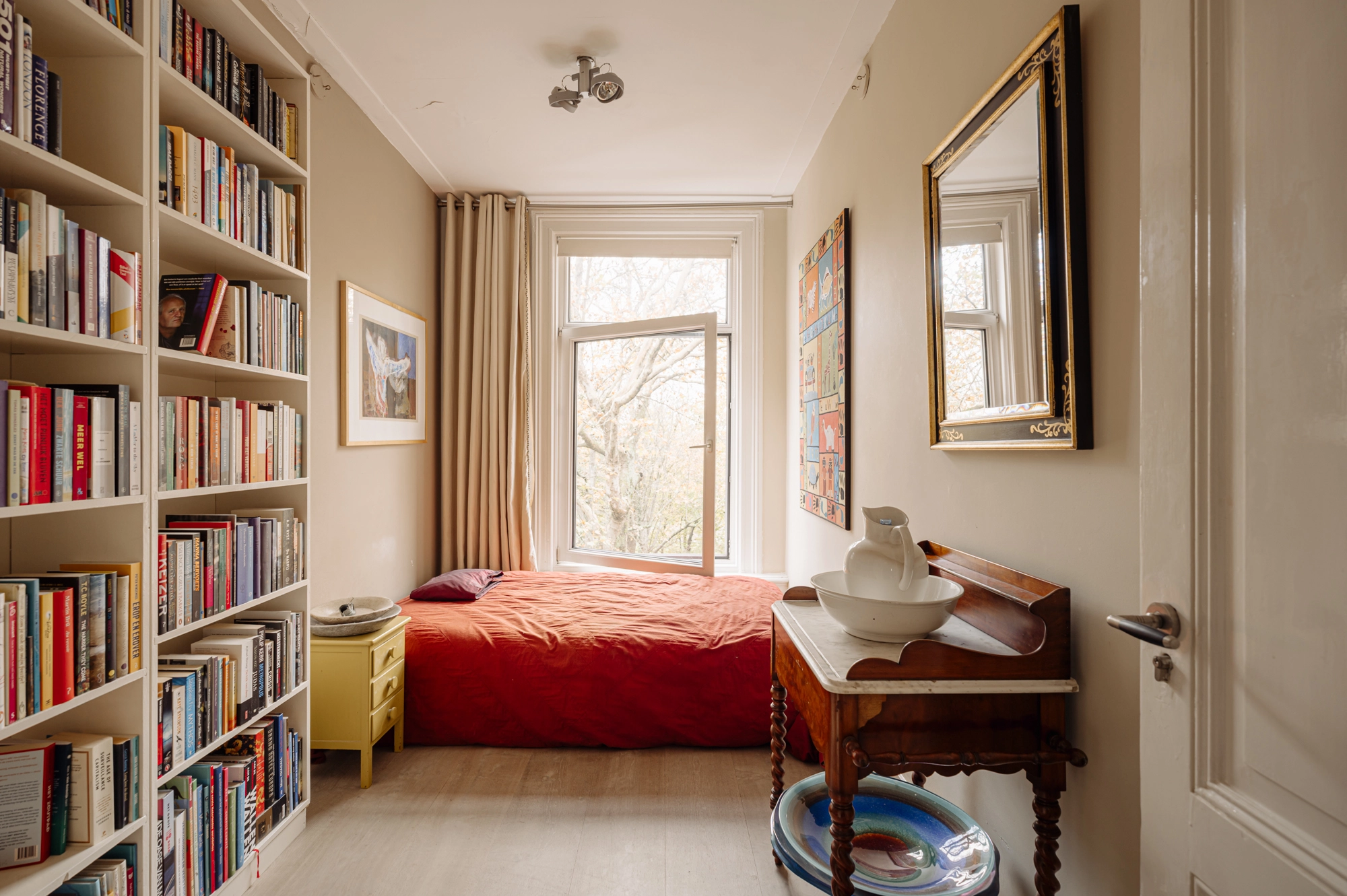
Sleeping and bathing
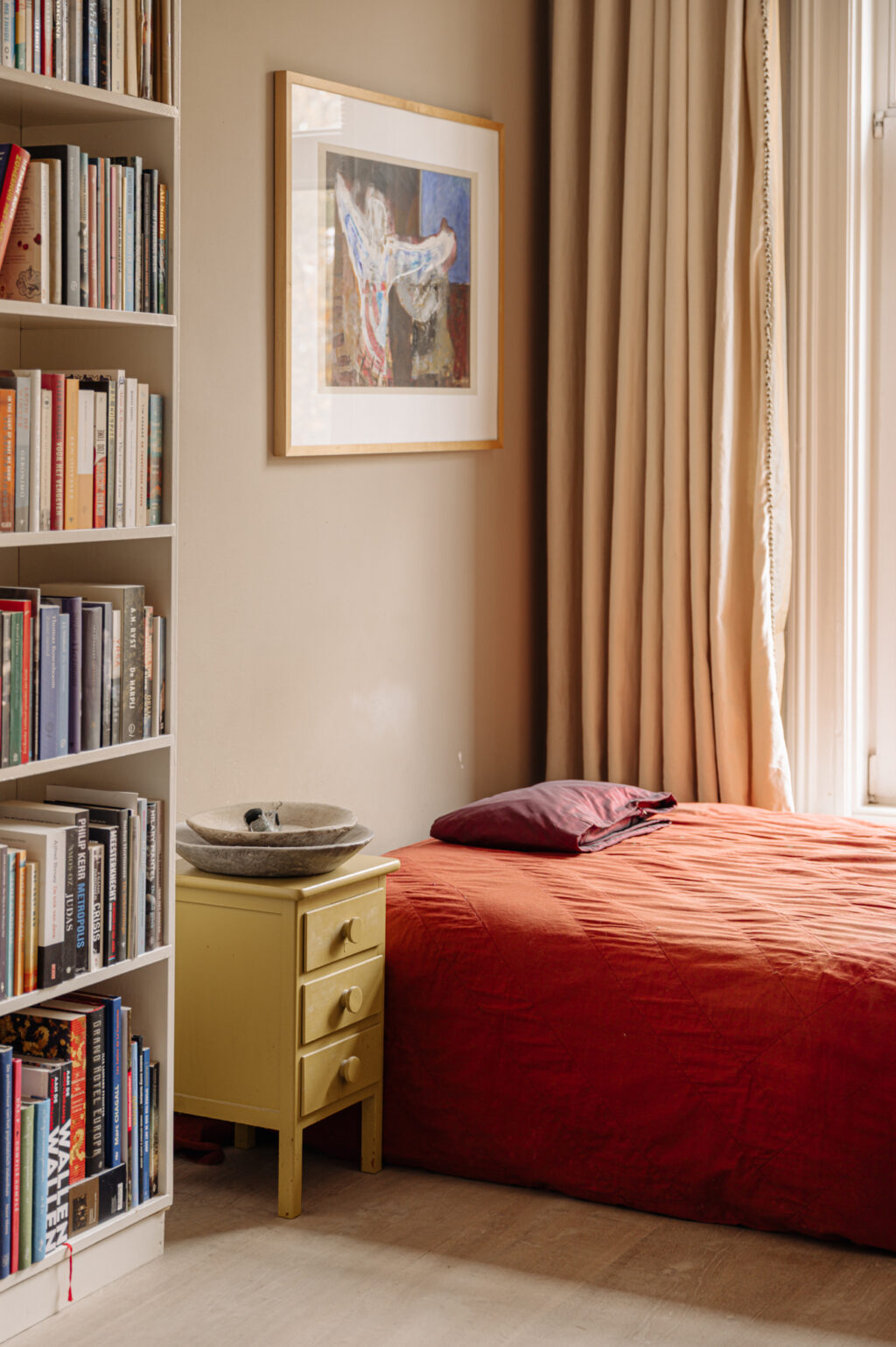
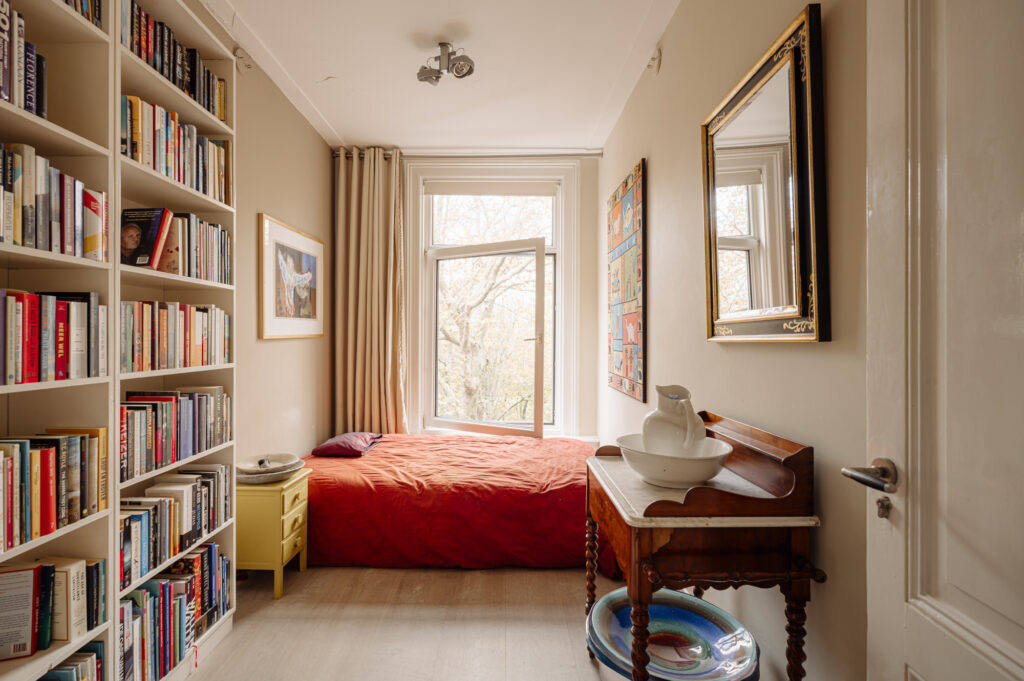
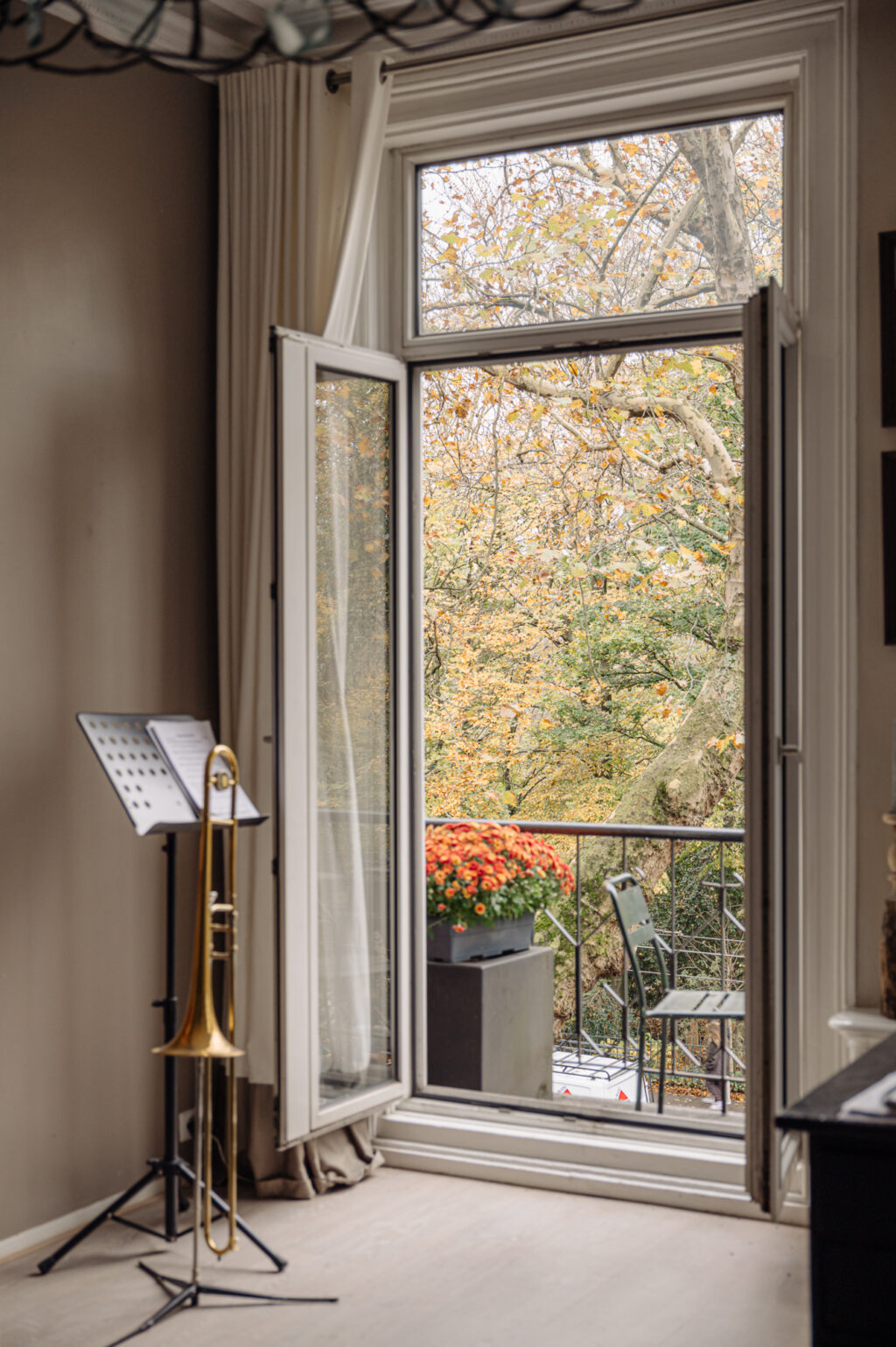
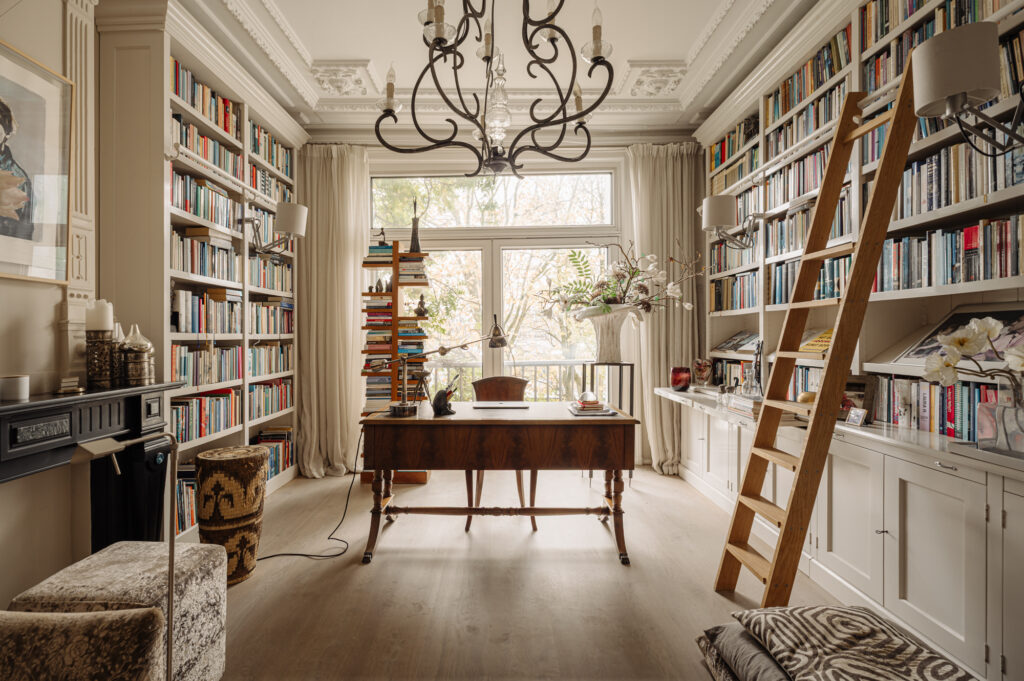
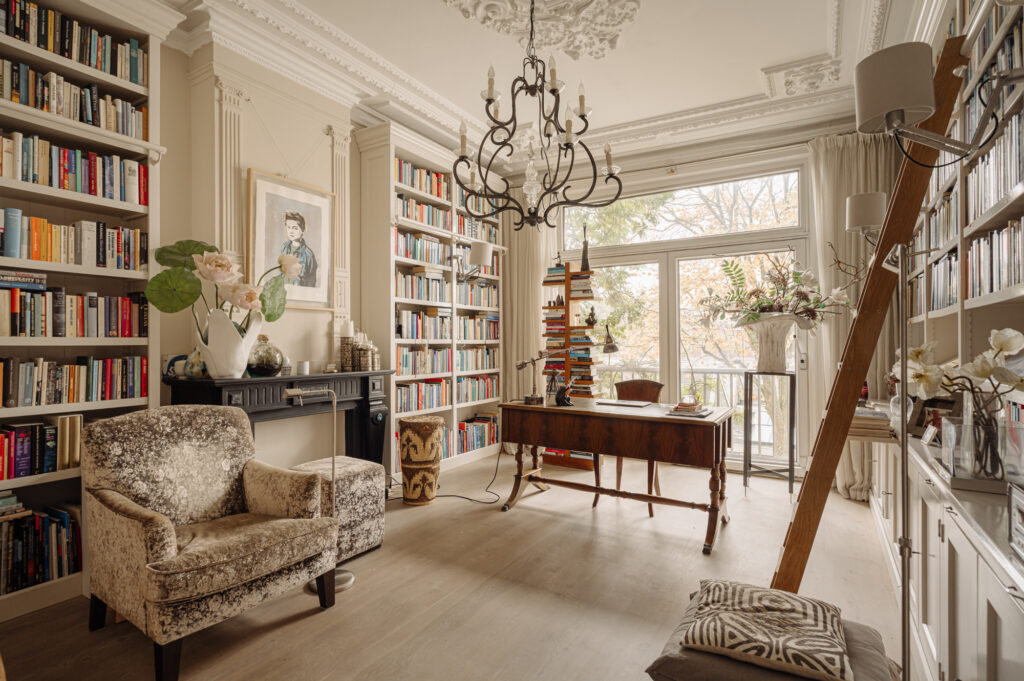
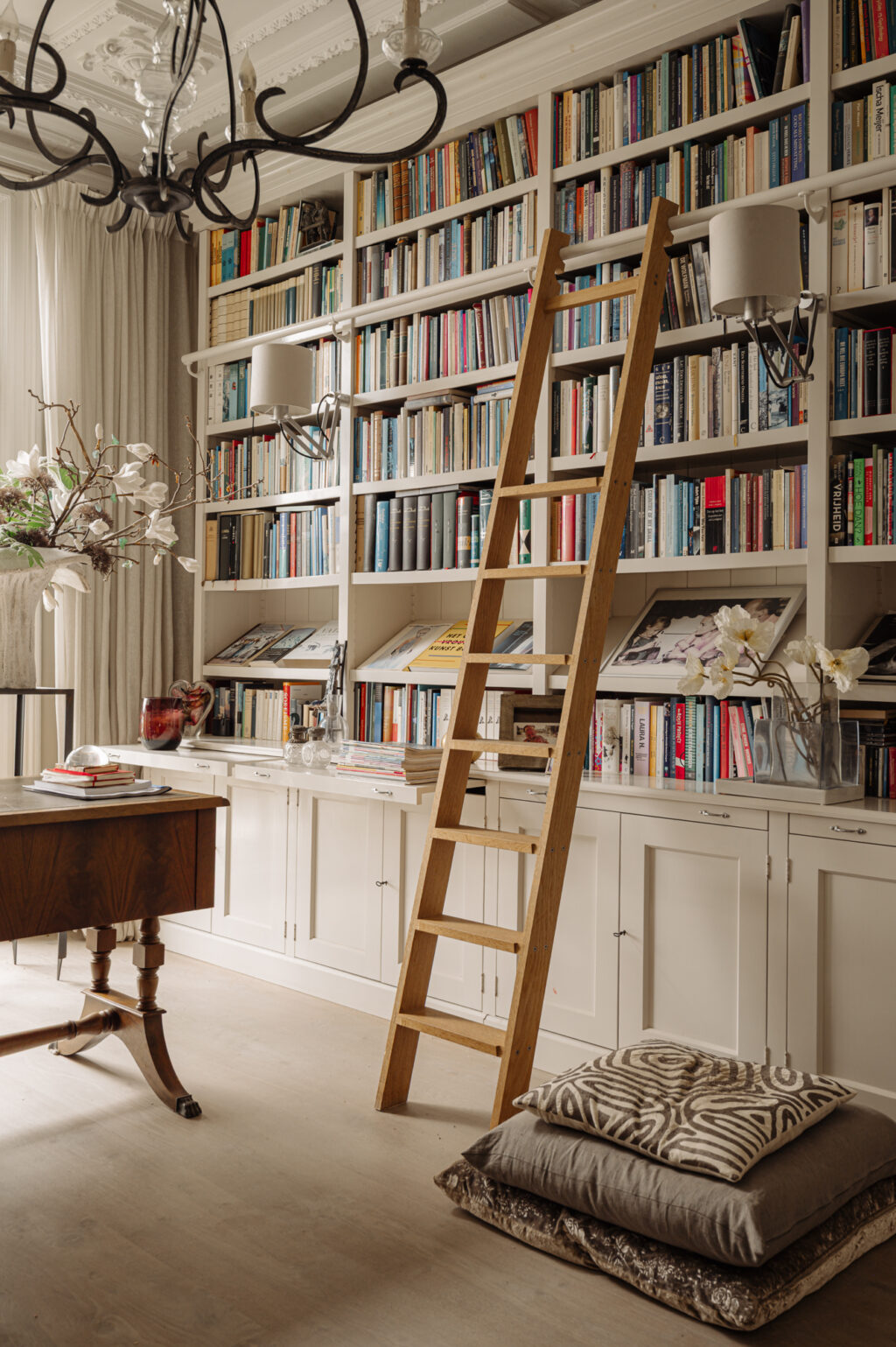
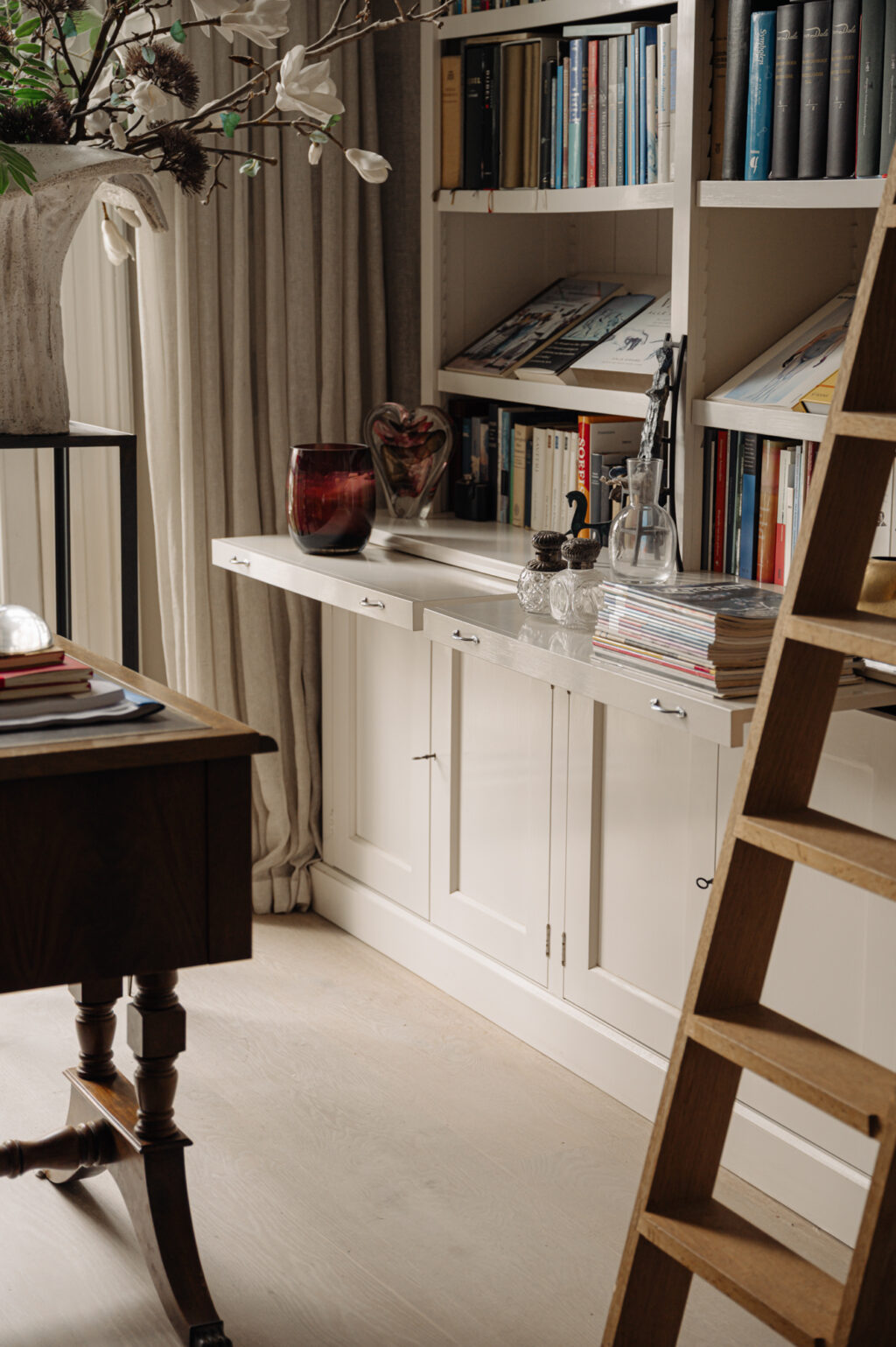
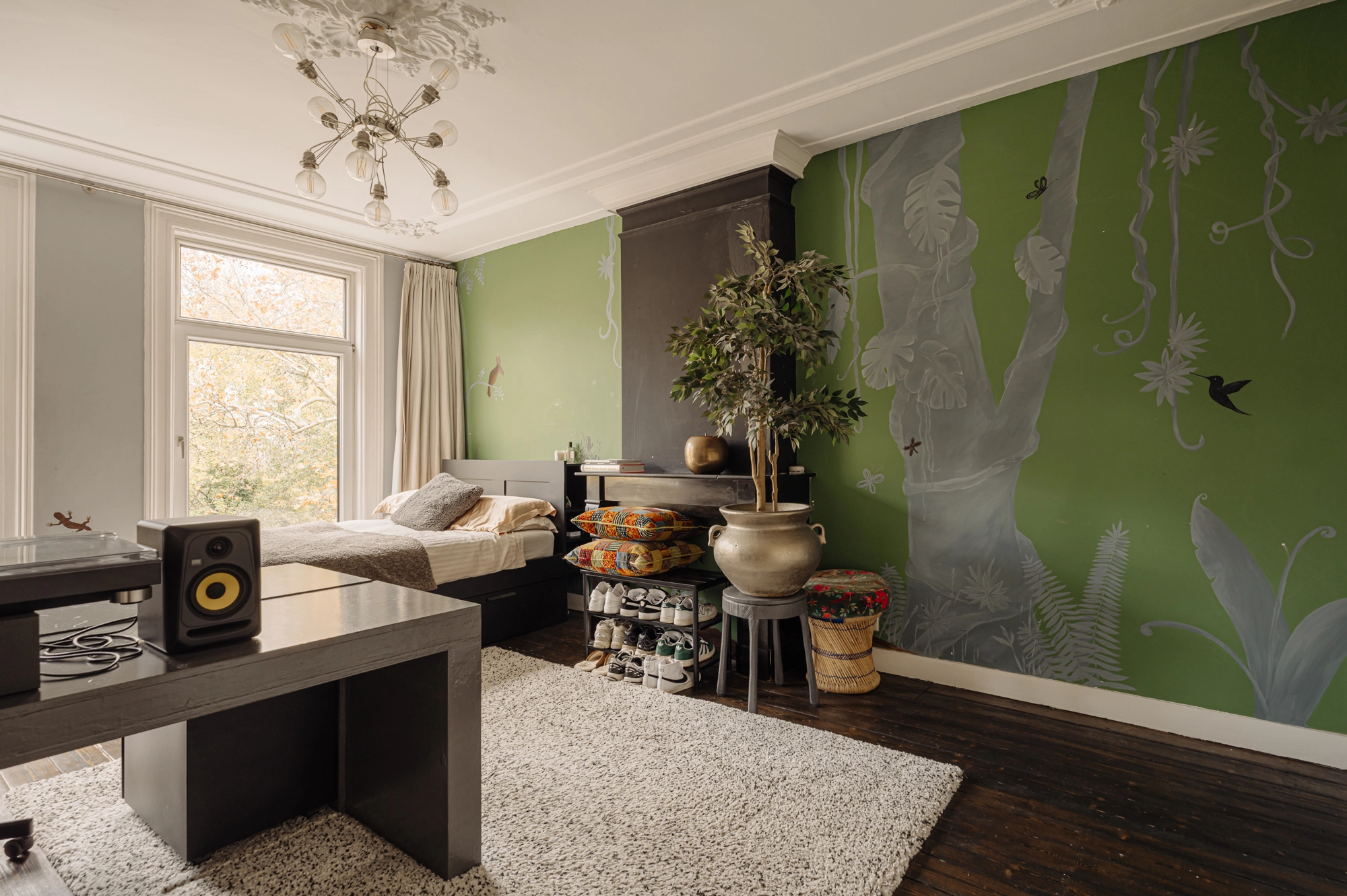
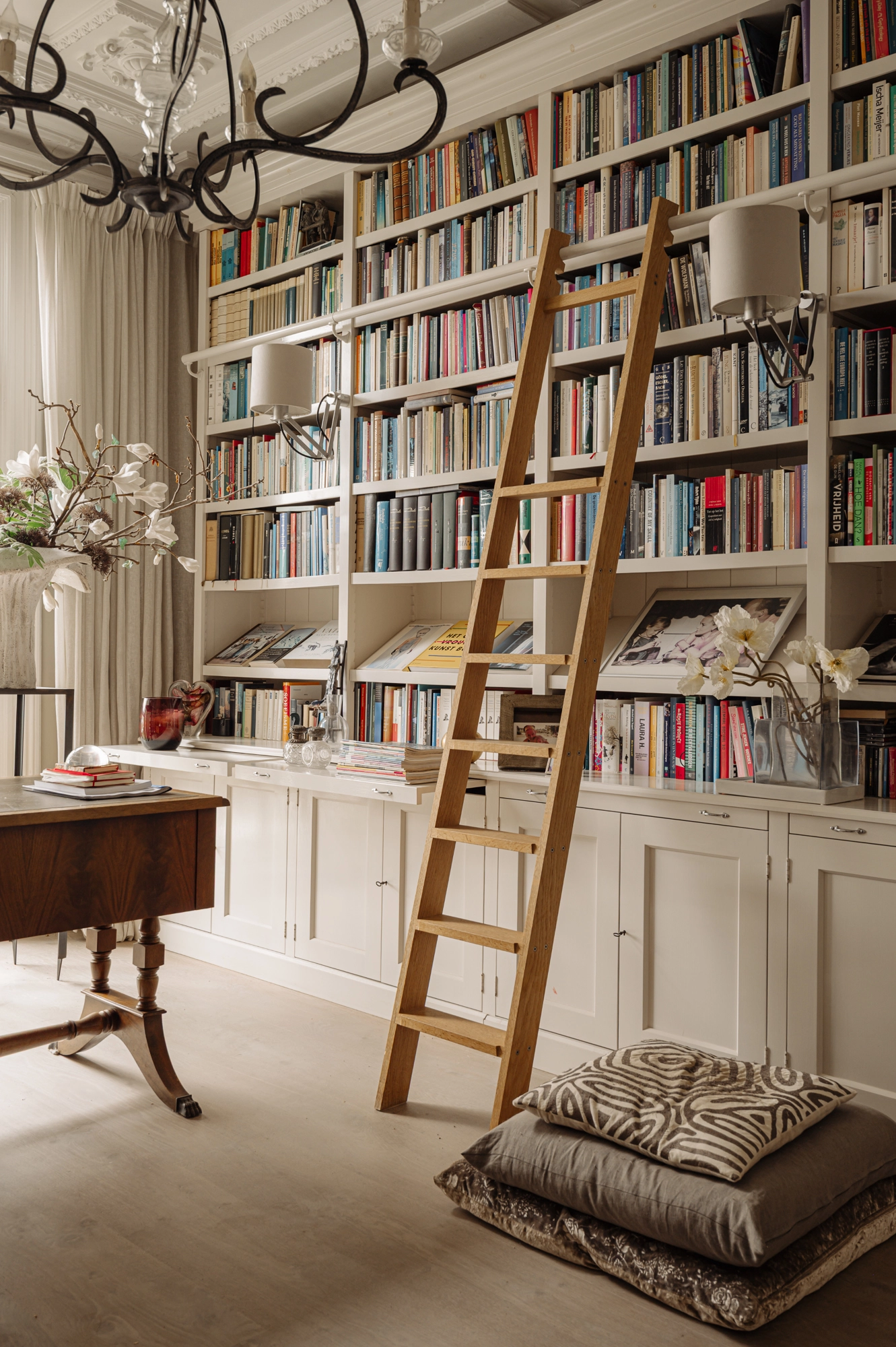
The first living level contains three rooms that offer great flexibility. At the rear is a spacious room currently used as a library and study, featuring bespoke floor-to-ceiling bookcases and French doors opening onto a small balcony. Ceiling and wall ornaments remain intact, lending the room a calm and pleasant presence.
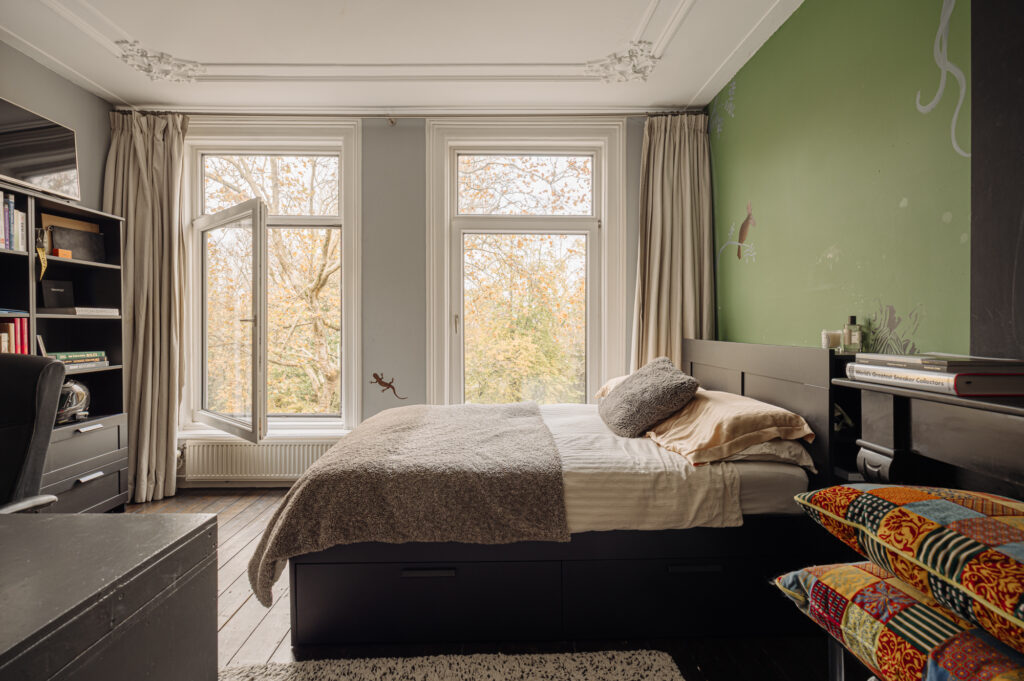
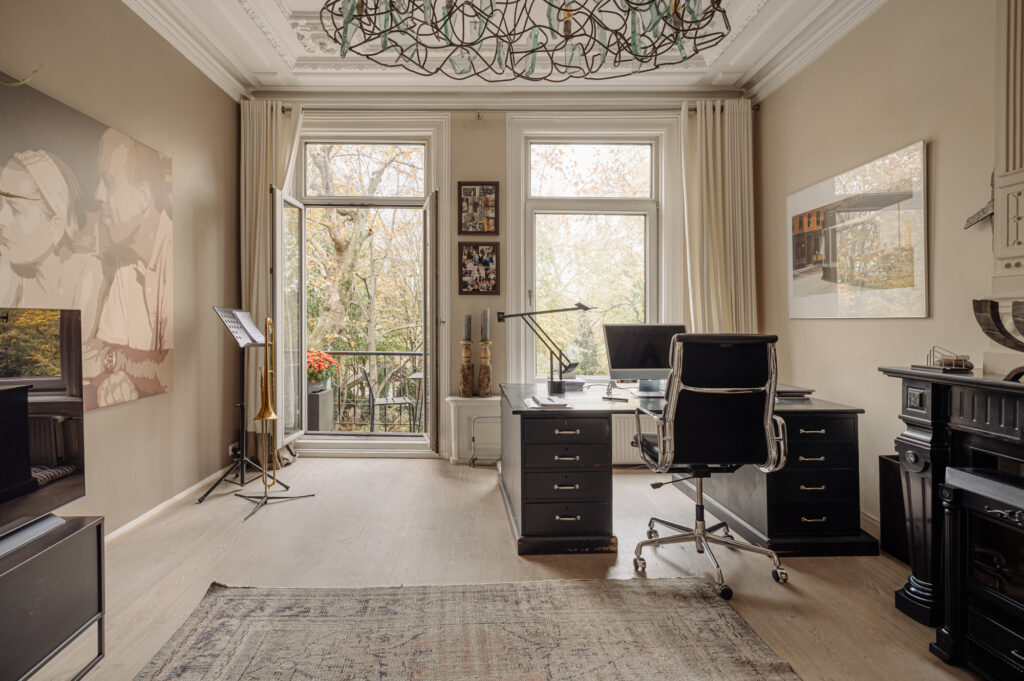
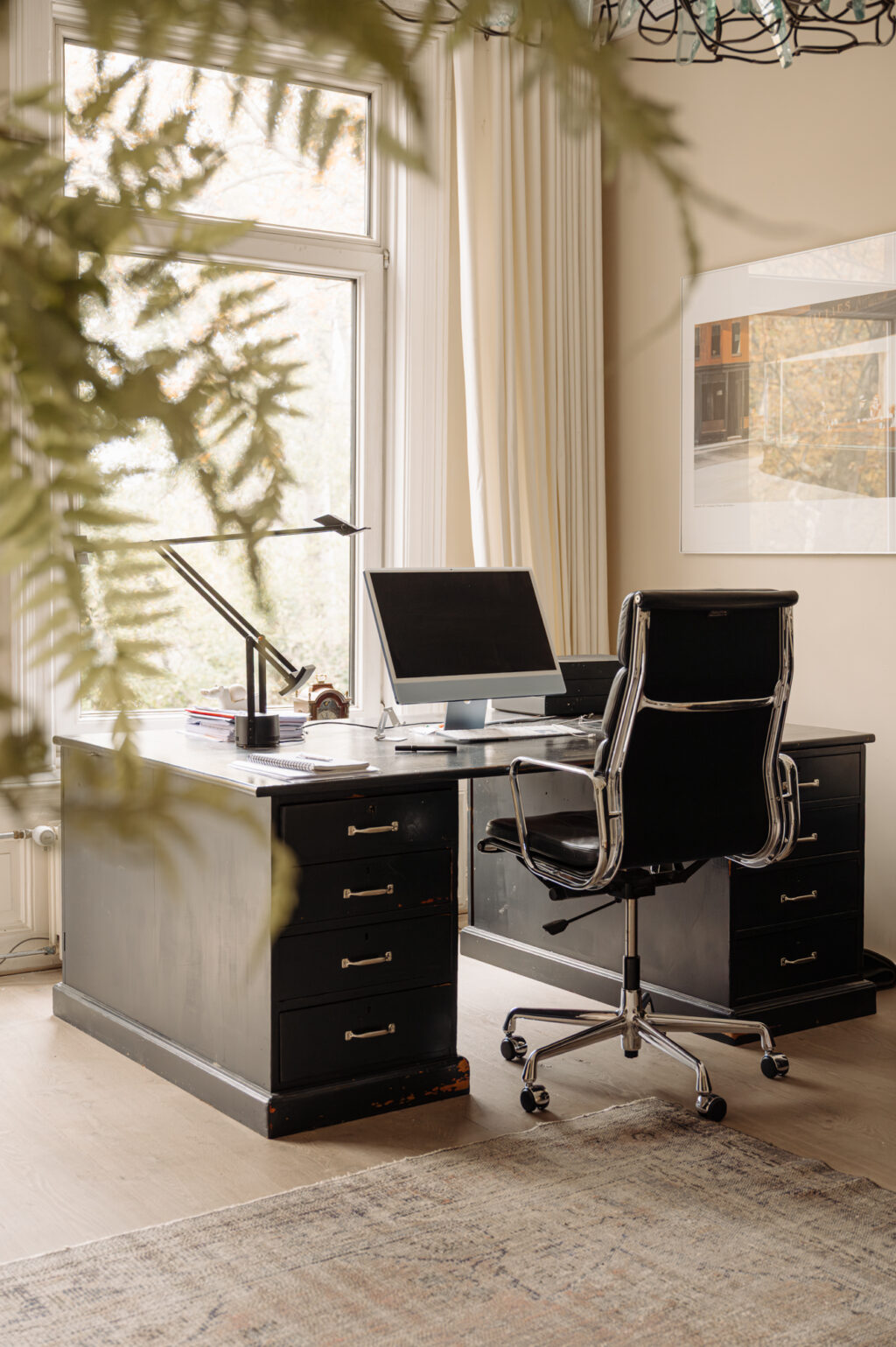
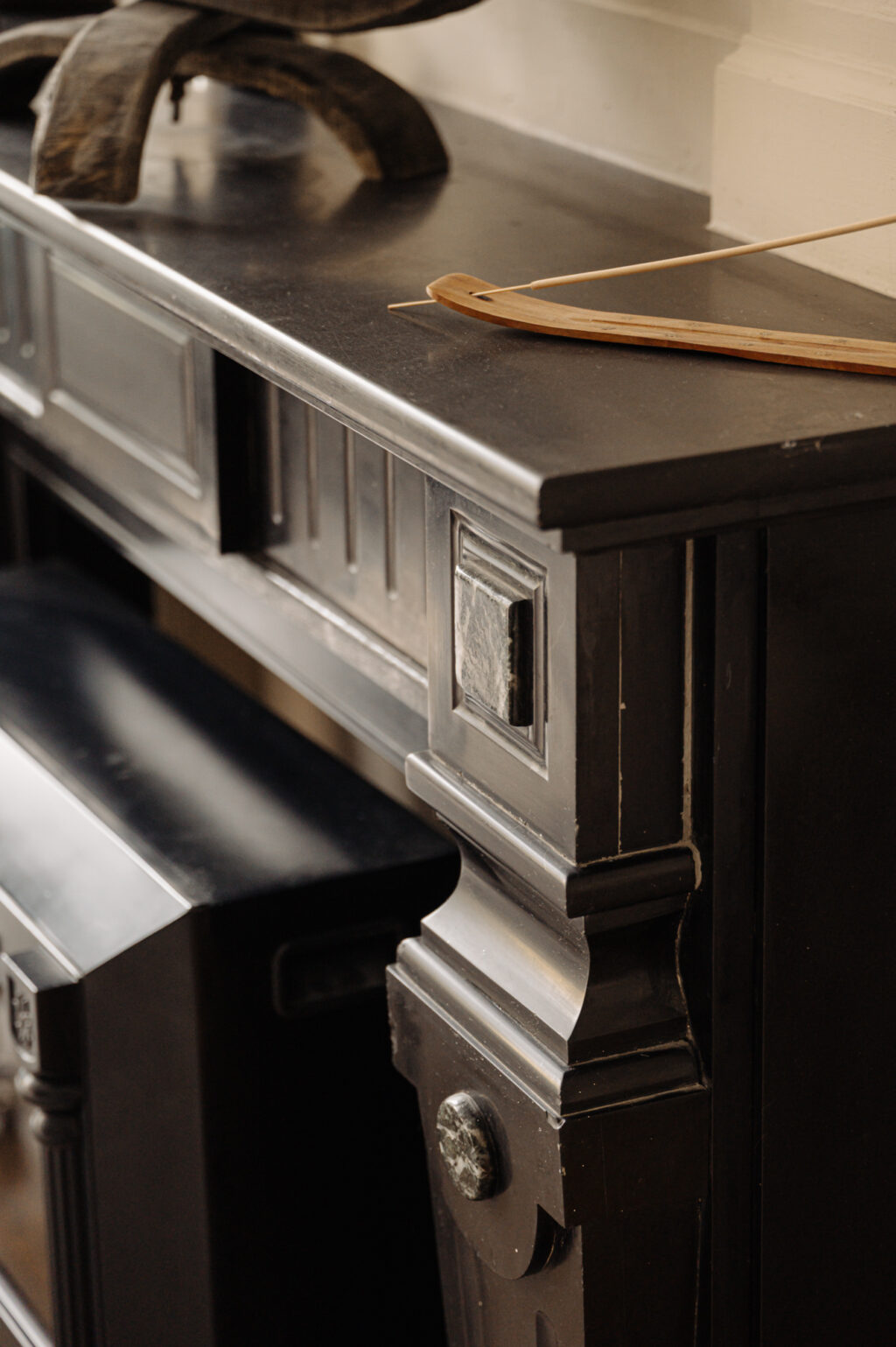
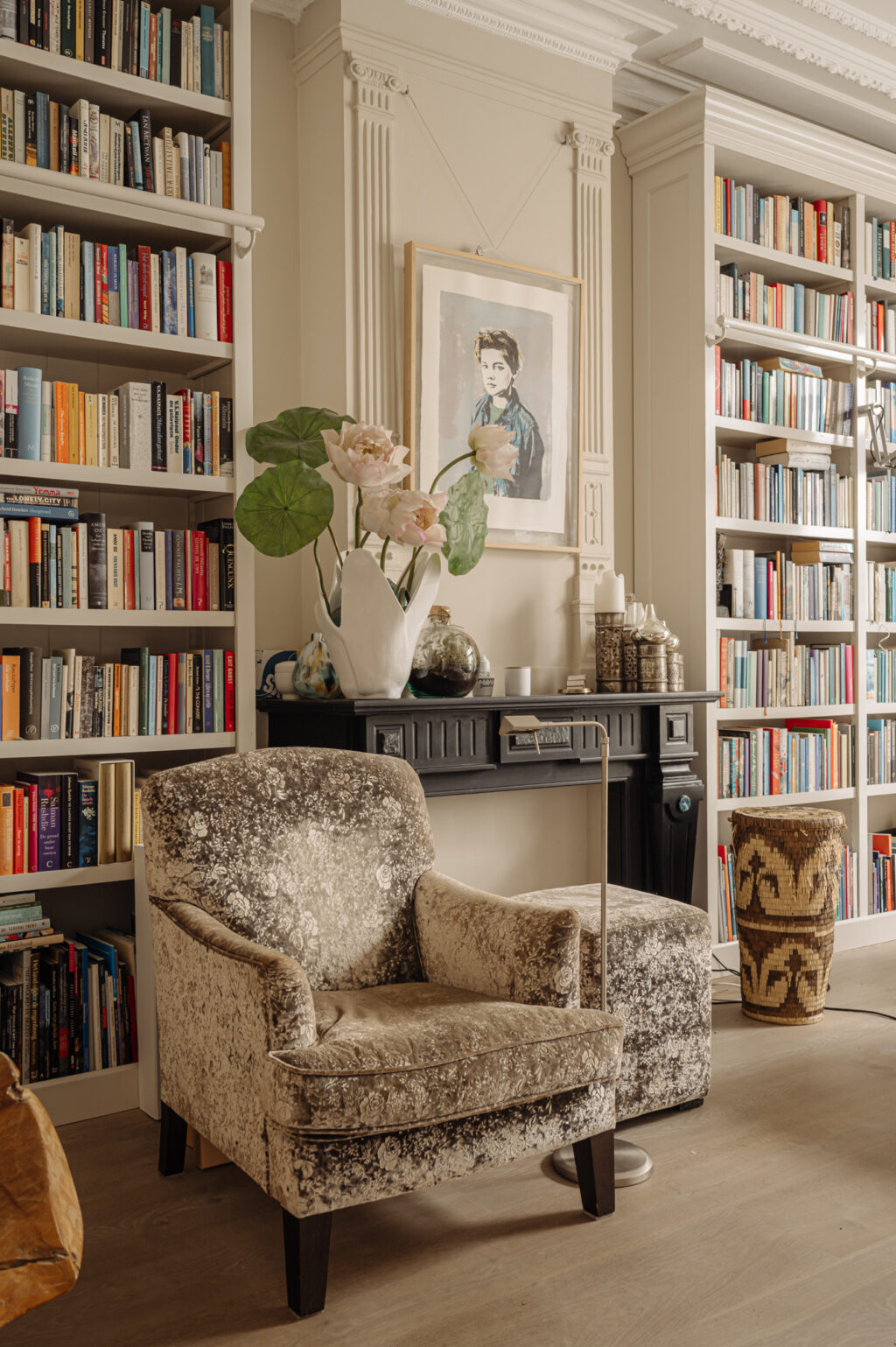
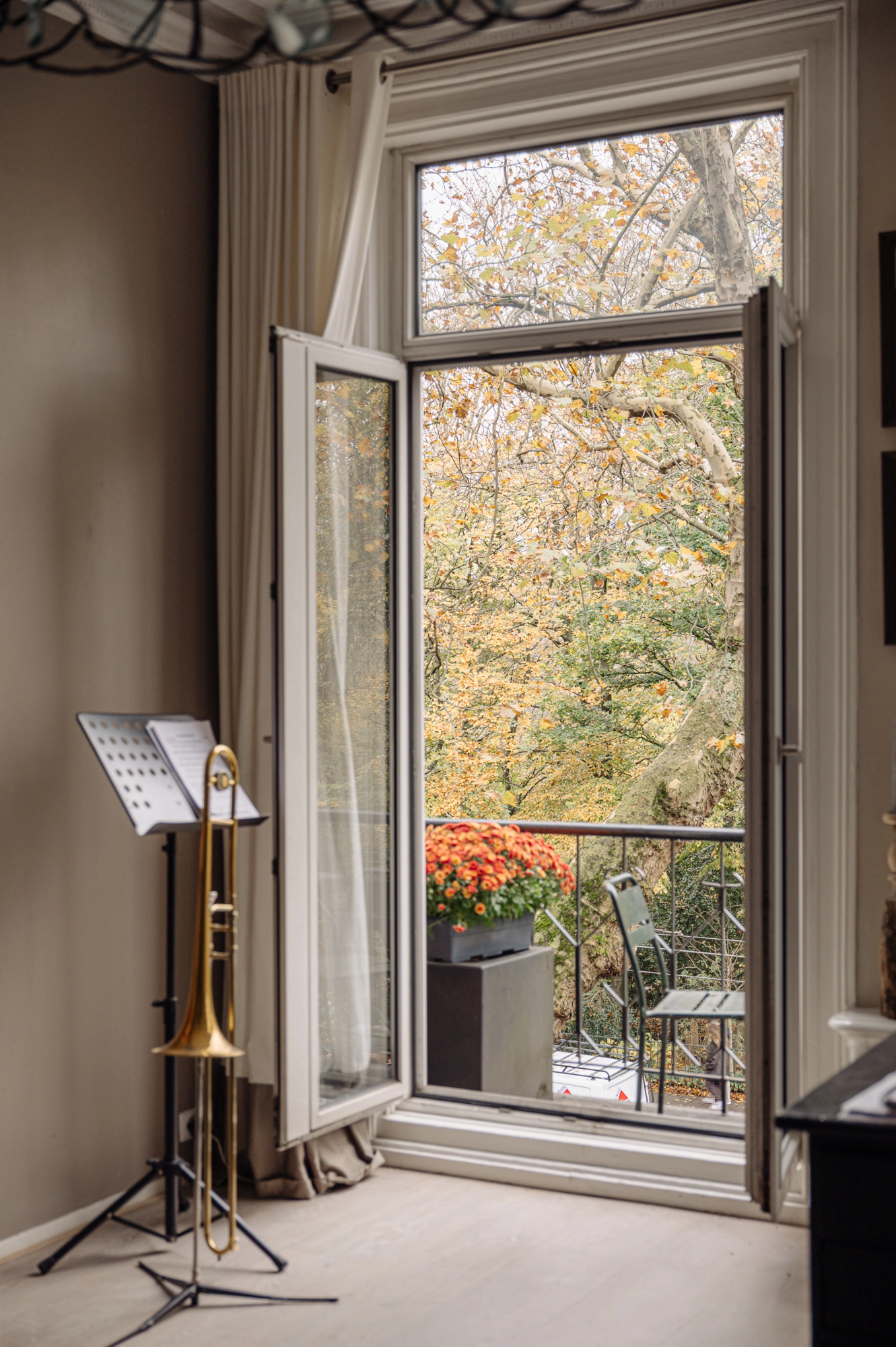
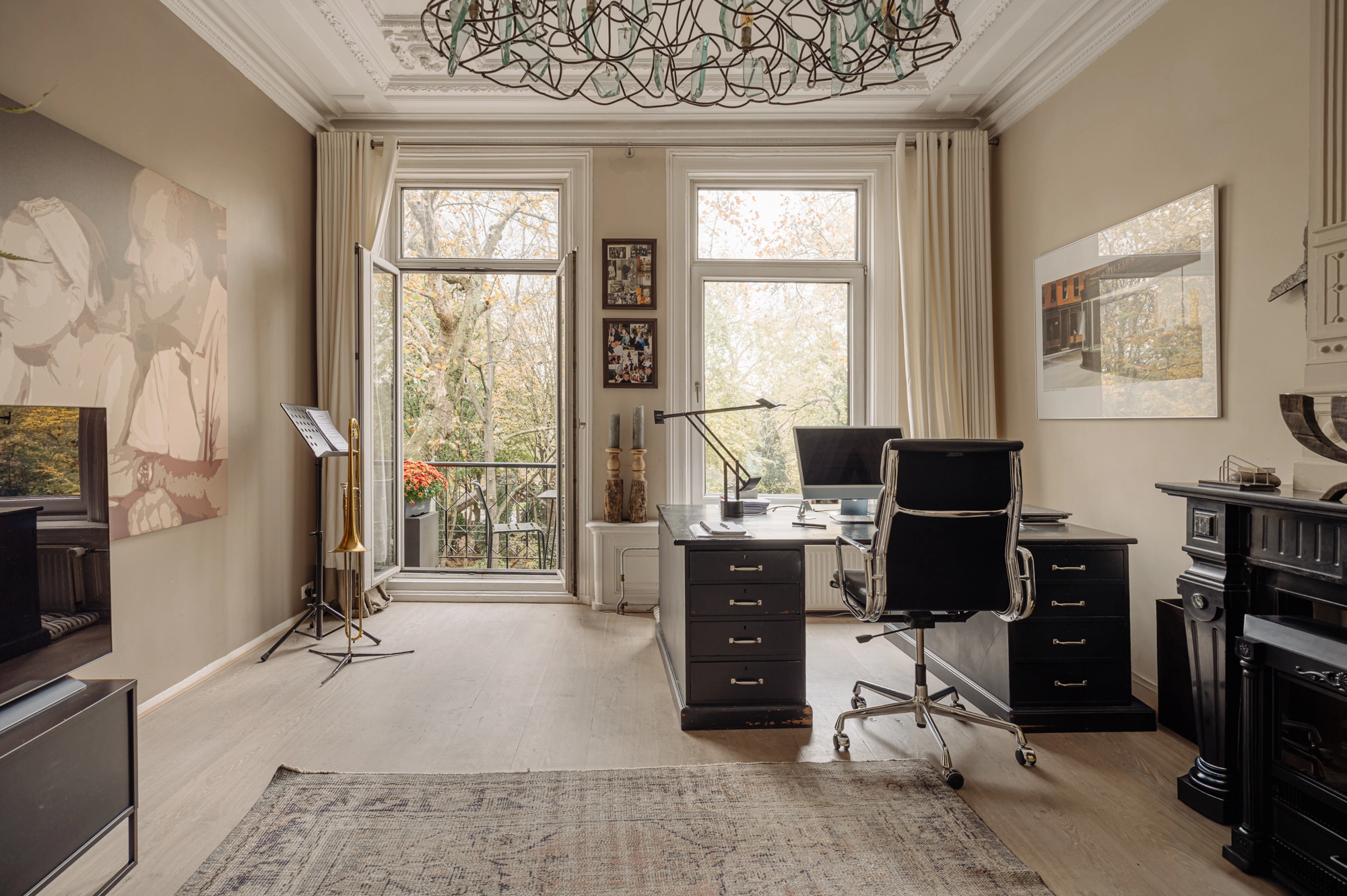
Adjacent is a second study or bedroom overlooking the greenery of the park. Original features such as the ornamental ceiling and natural stone mantel have been preserved. This room also has French doors and is currently used as a home office.
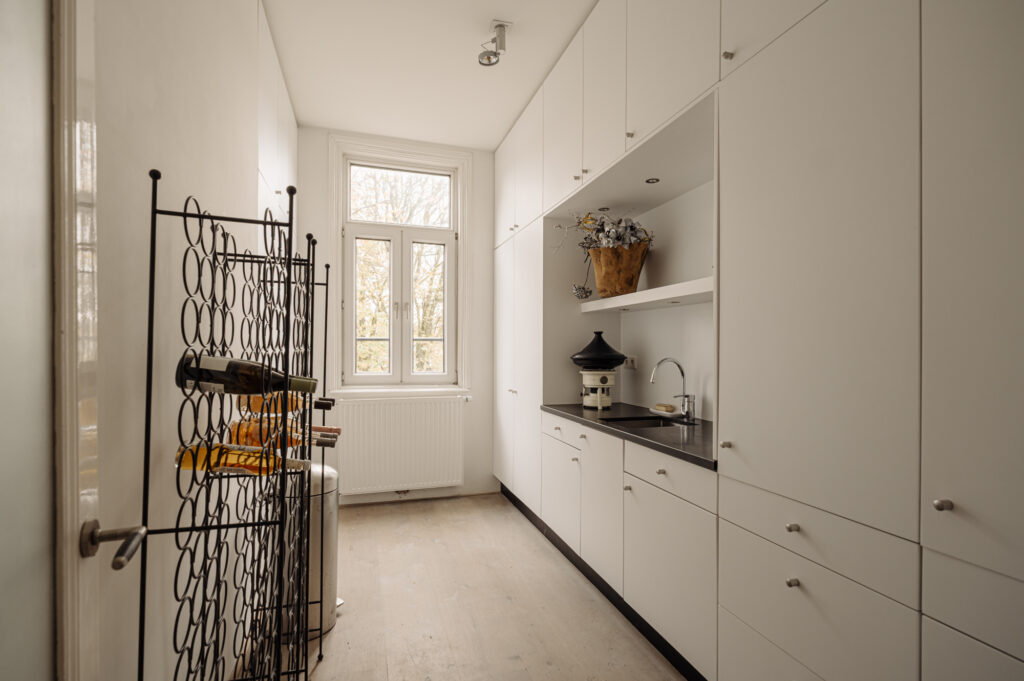
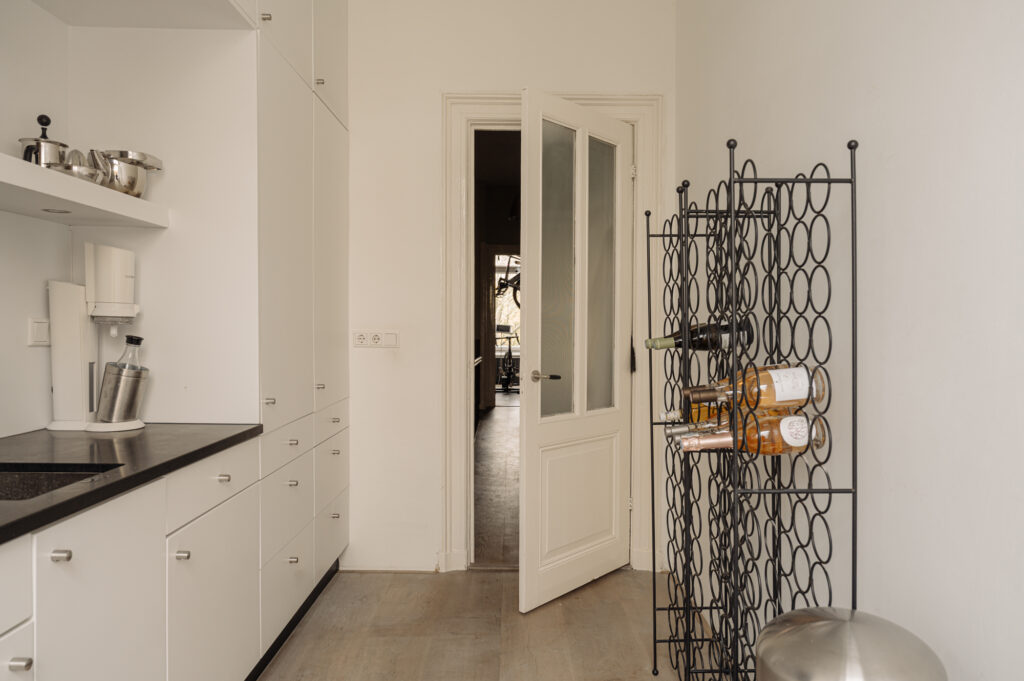
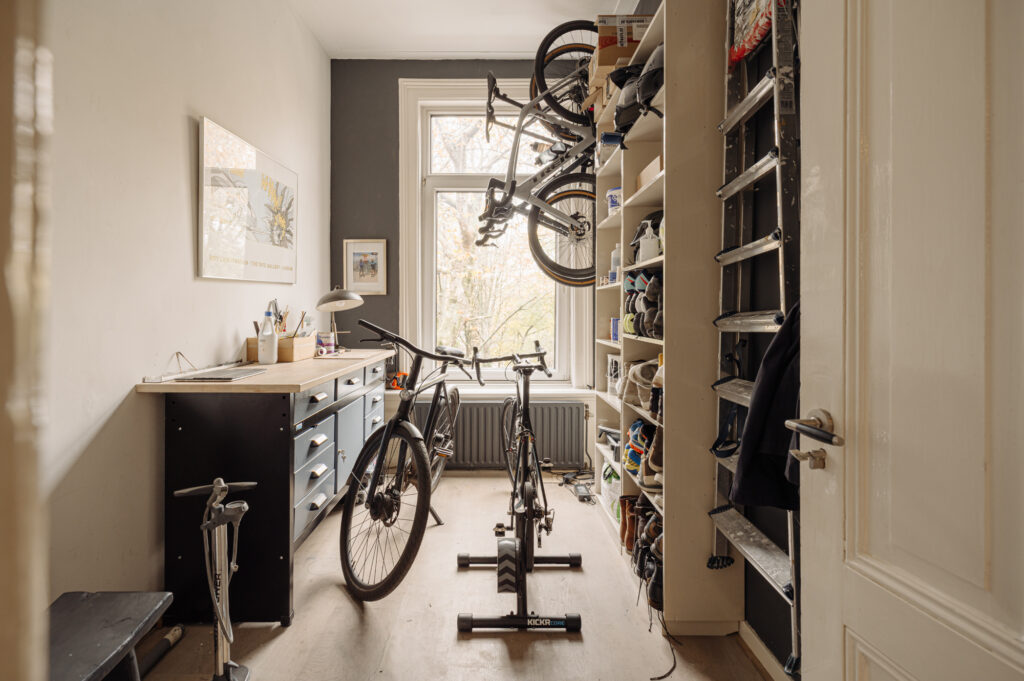
At the front lies the third room, presently arranged as storage and bicycle space but equally suitable as an additional bedroom or hobby room. Next to it is a practical pantry with extensive cabinetry and various appliances. A compact, well-maintained second bathroom with shower and washbasin completes this level. This floor is ideal for guests, older children or a combination of living and working.
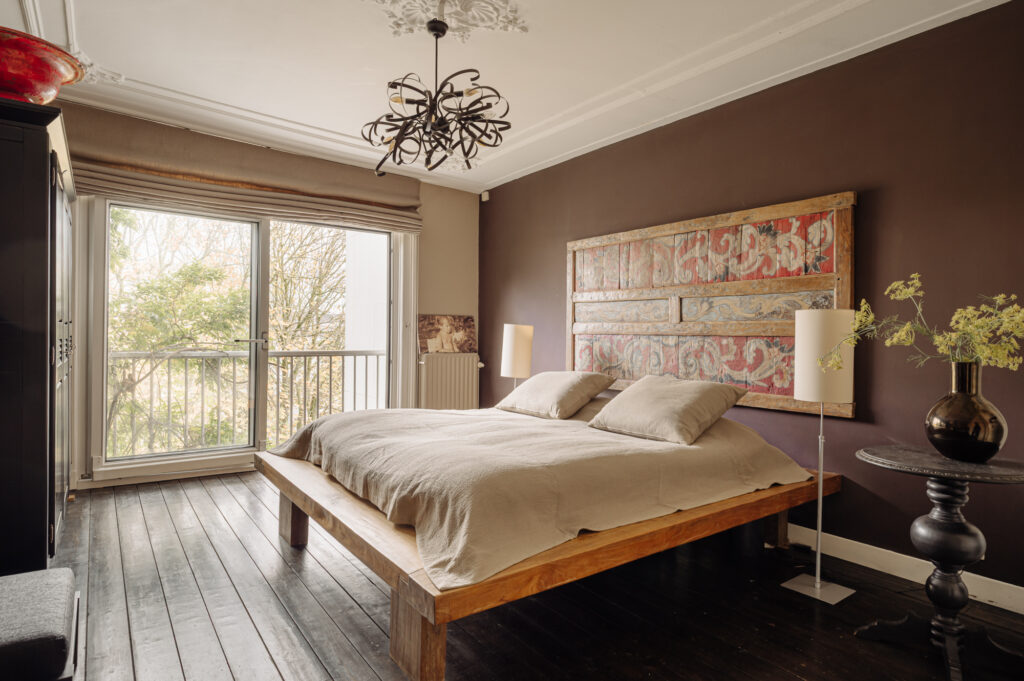
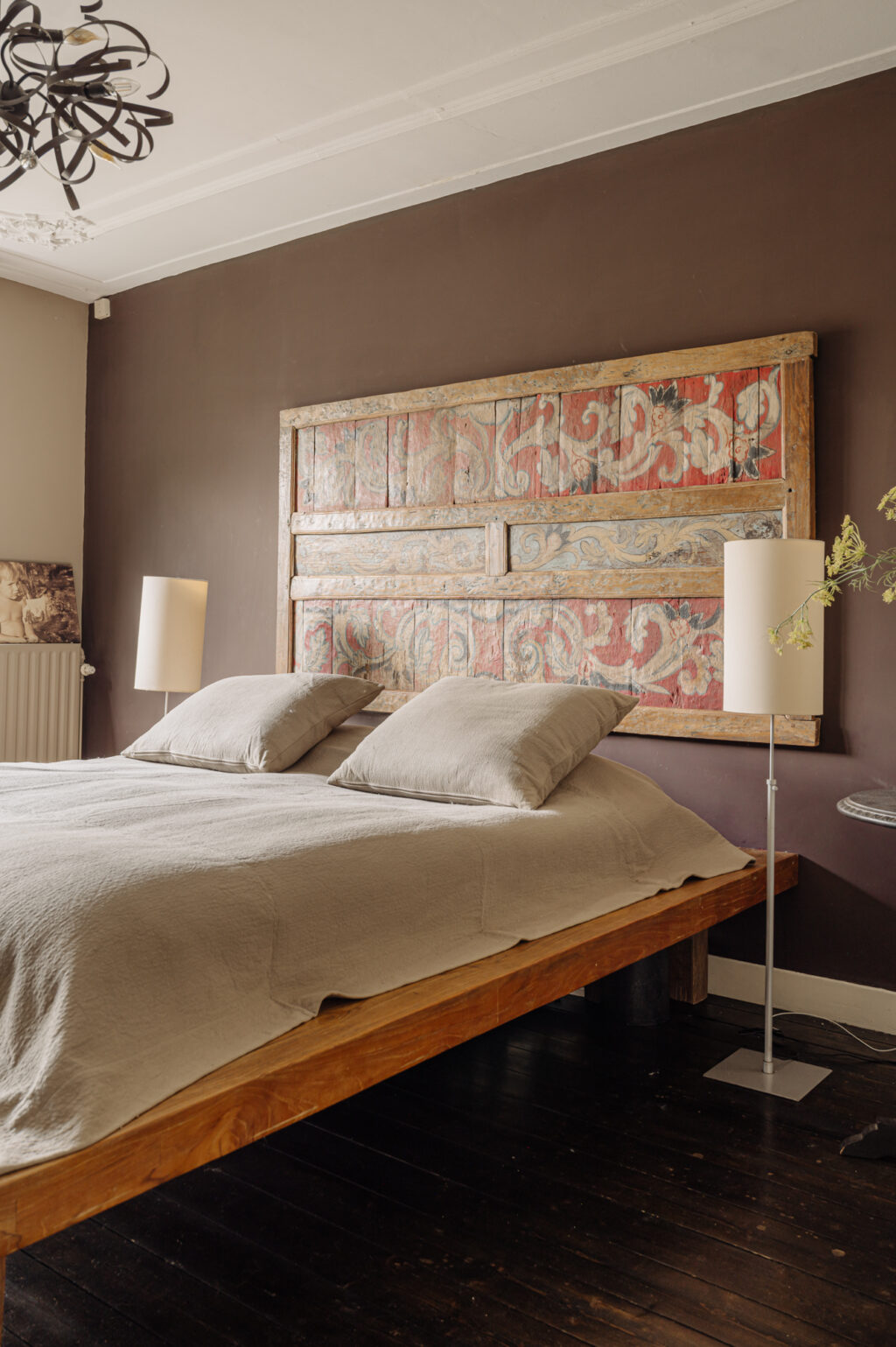
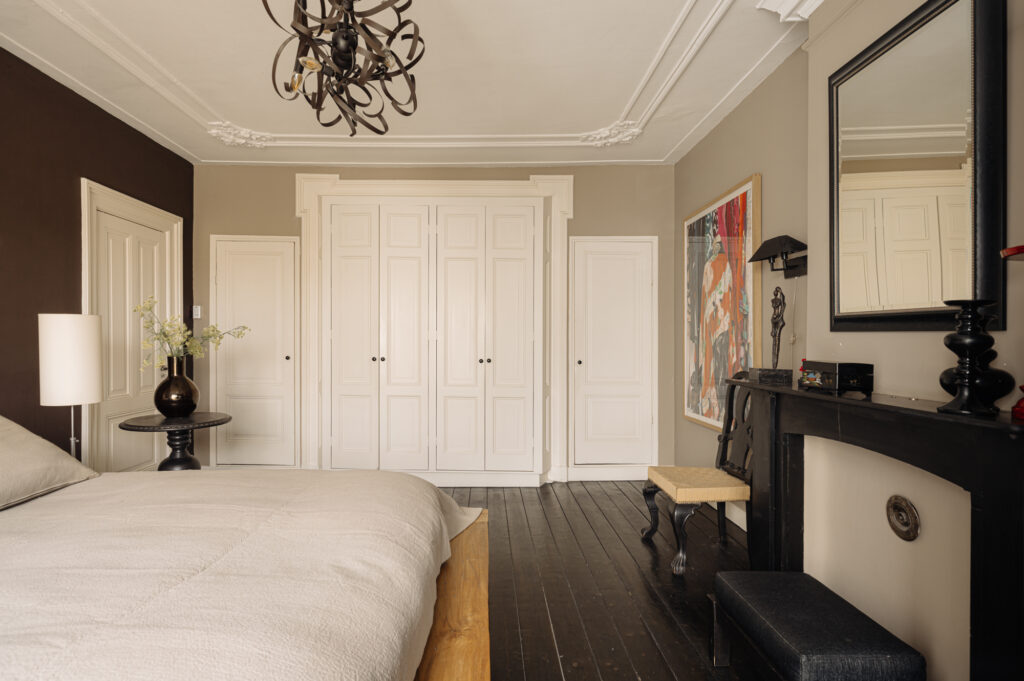
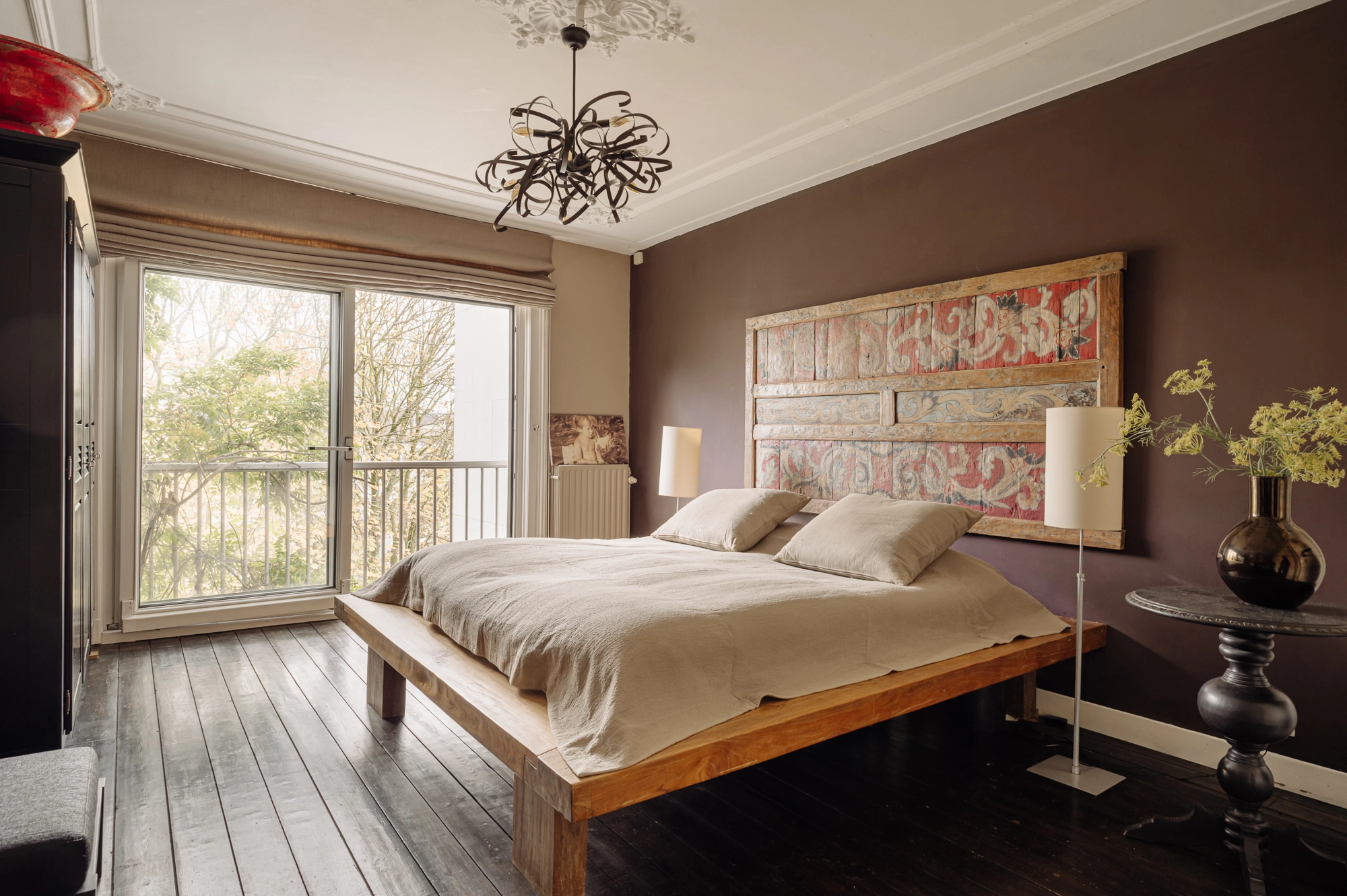
The second living level is organised as the main sleeping floor, with three full bedrooms and a spacious bathroom. At the rear is the primary bedroom, featuring French doors to a balcony and built-in wardrobes across the full width. The two additional bedrooms are positioned at the front, each with ample natural light and sufficient space for a bed and workspace.
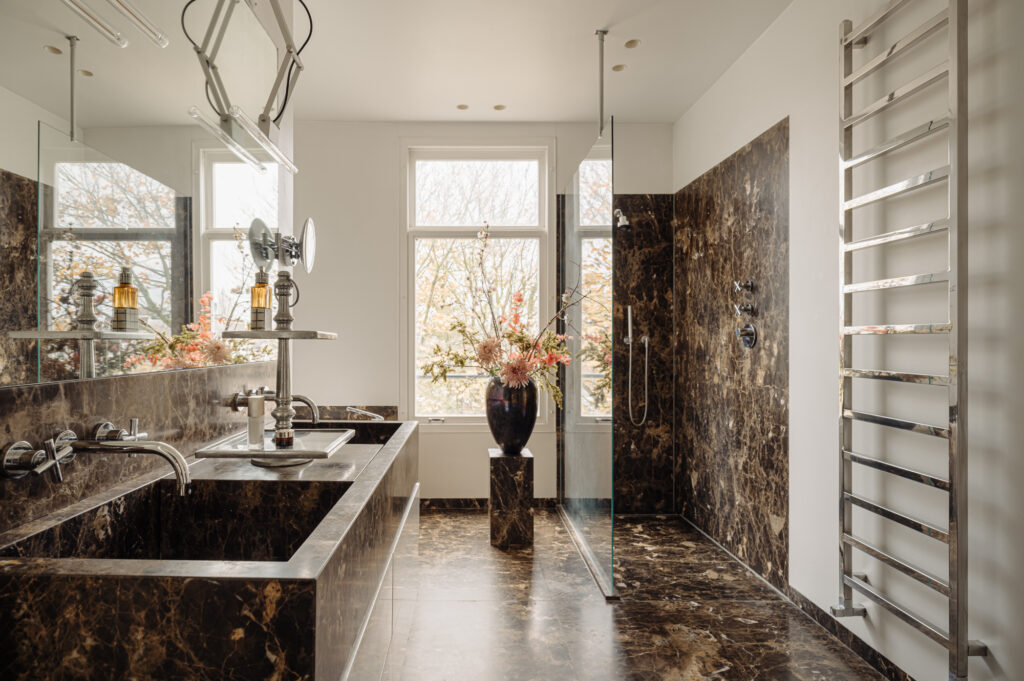
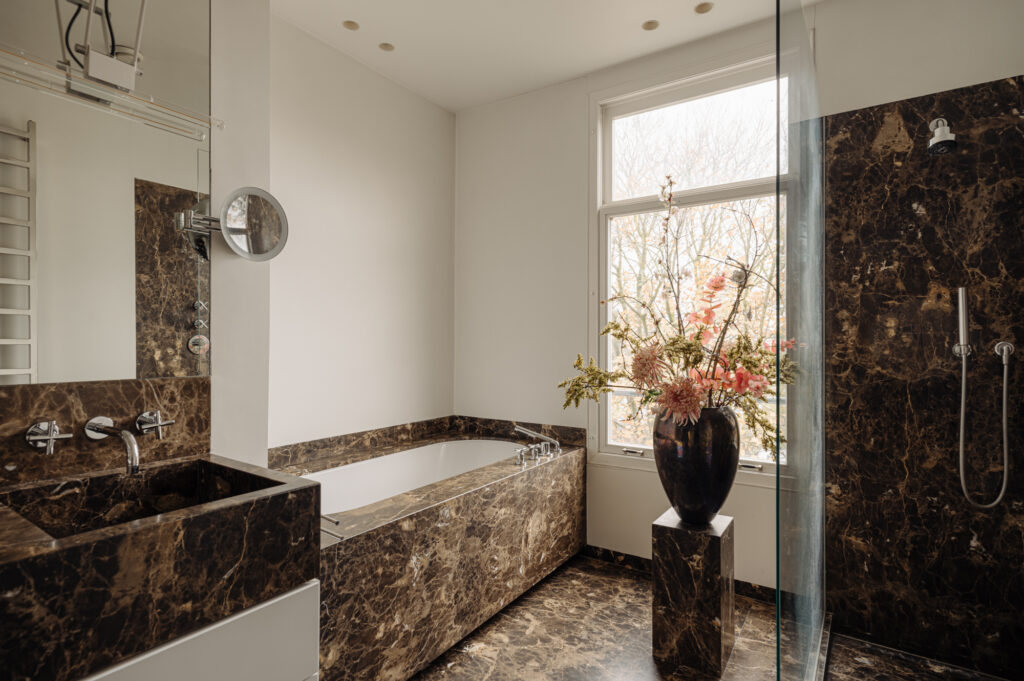
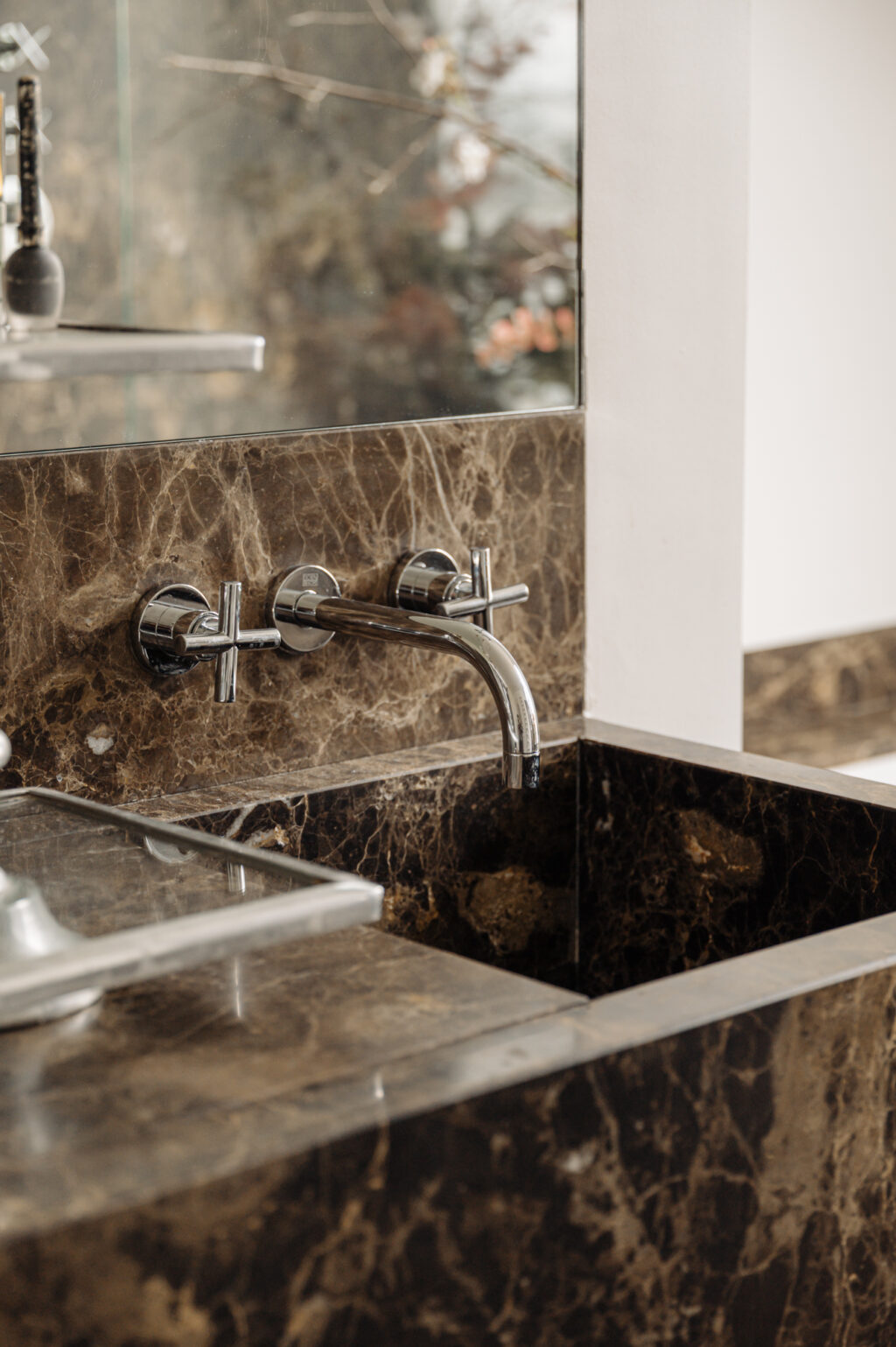
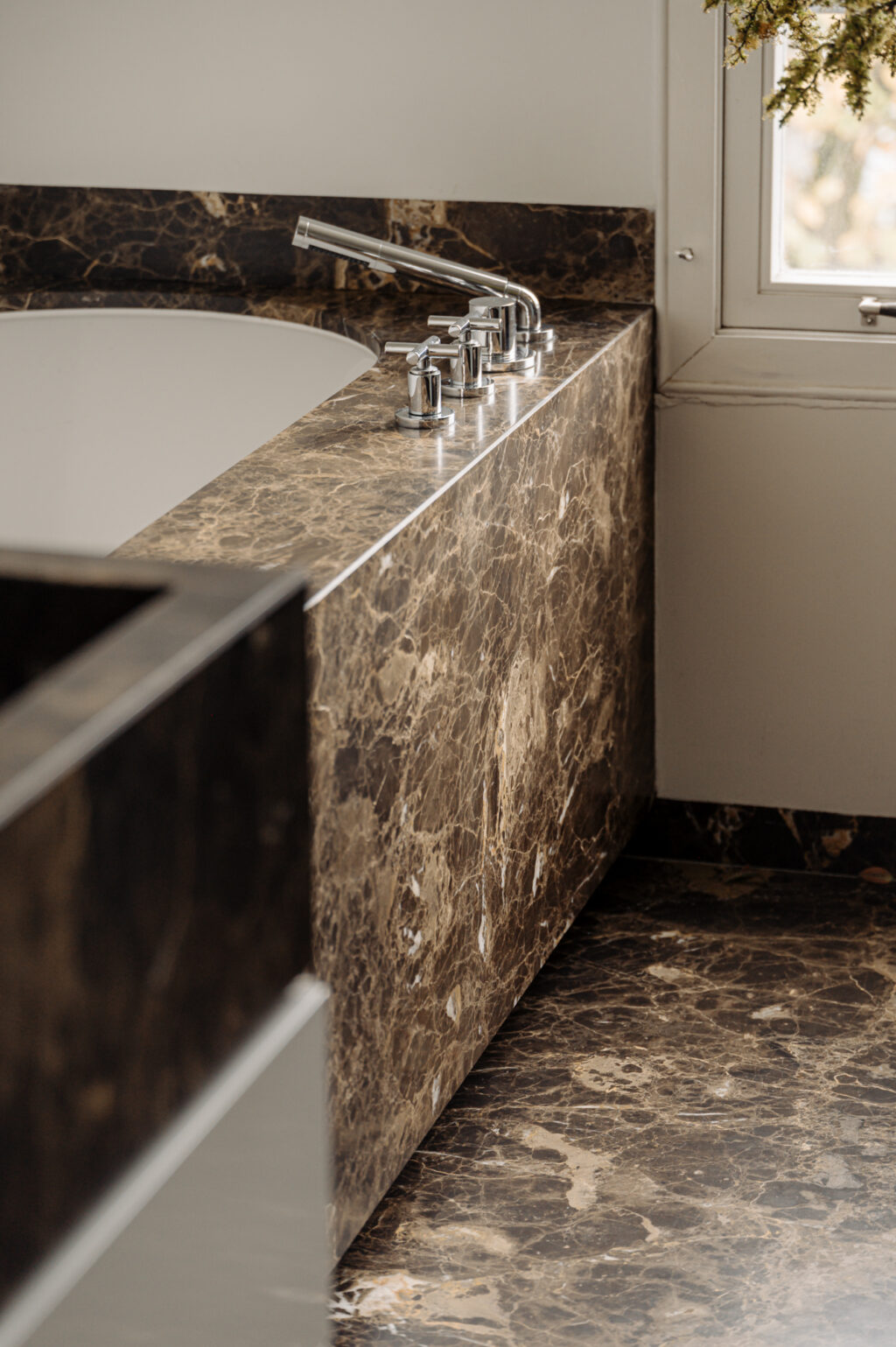
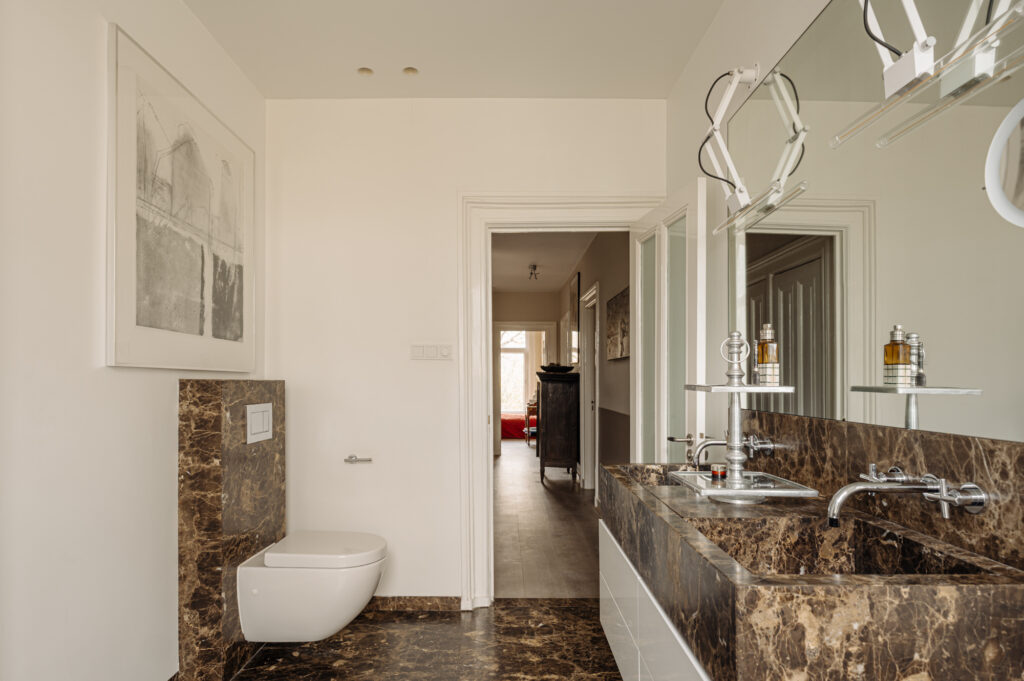
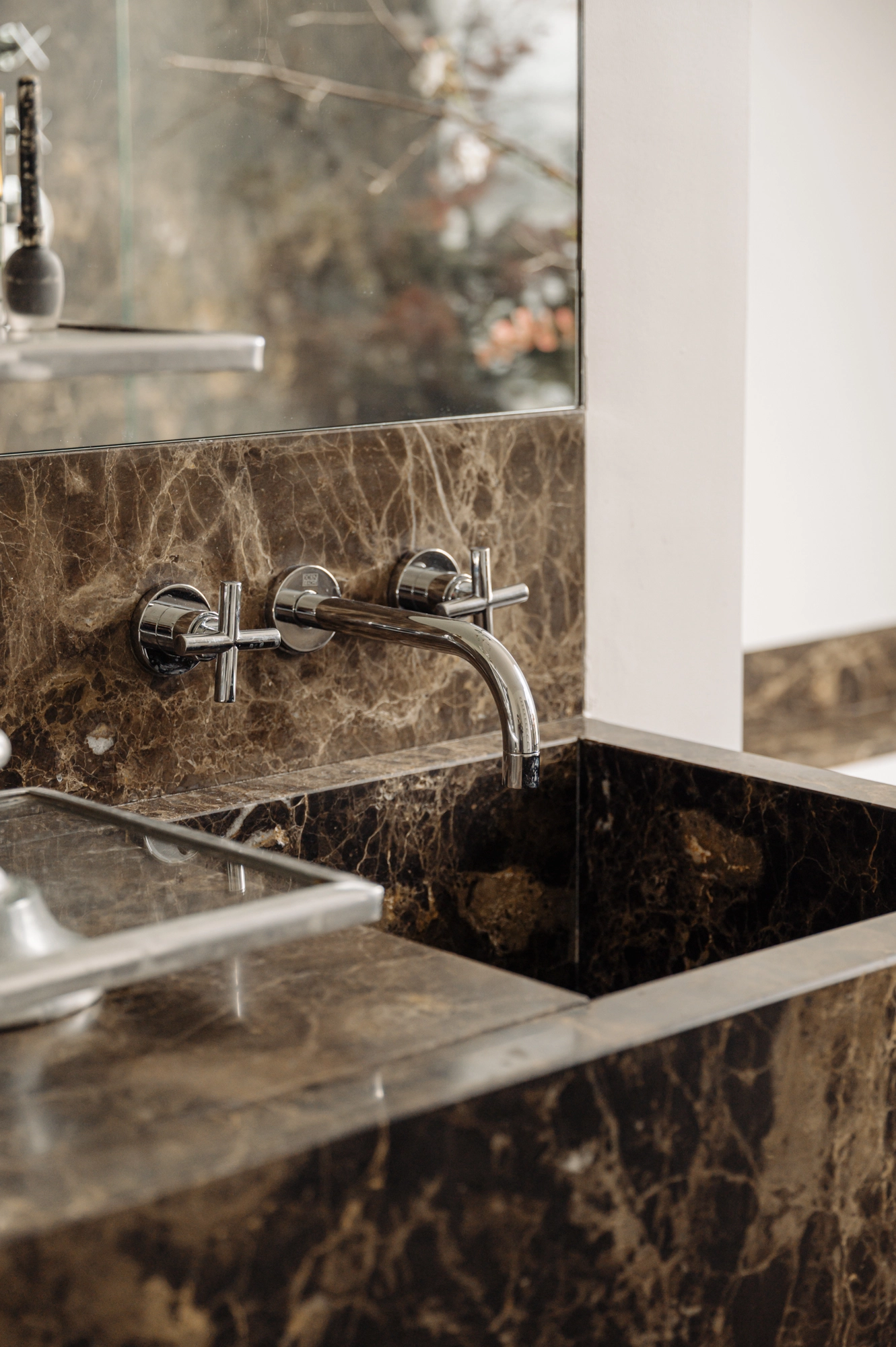
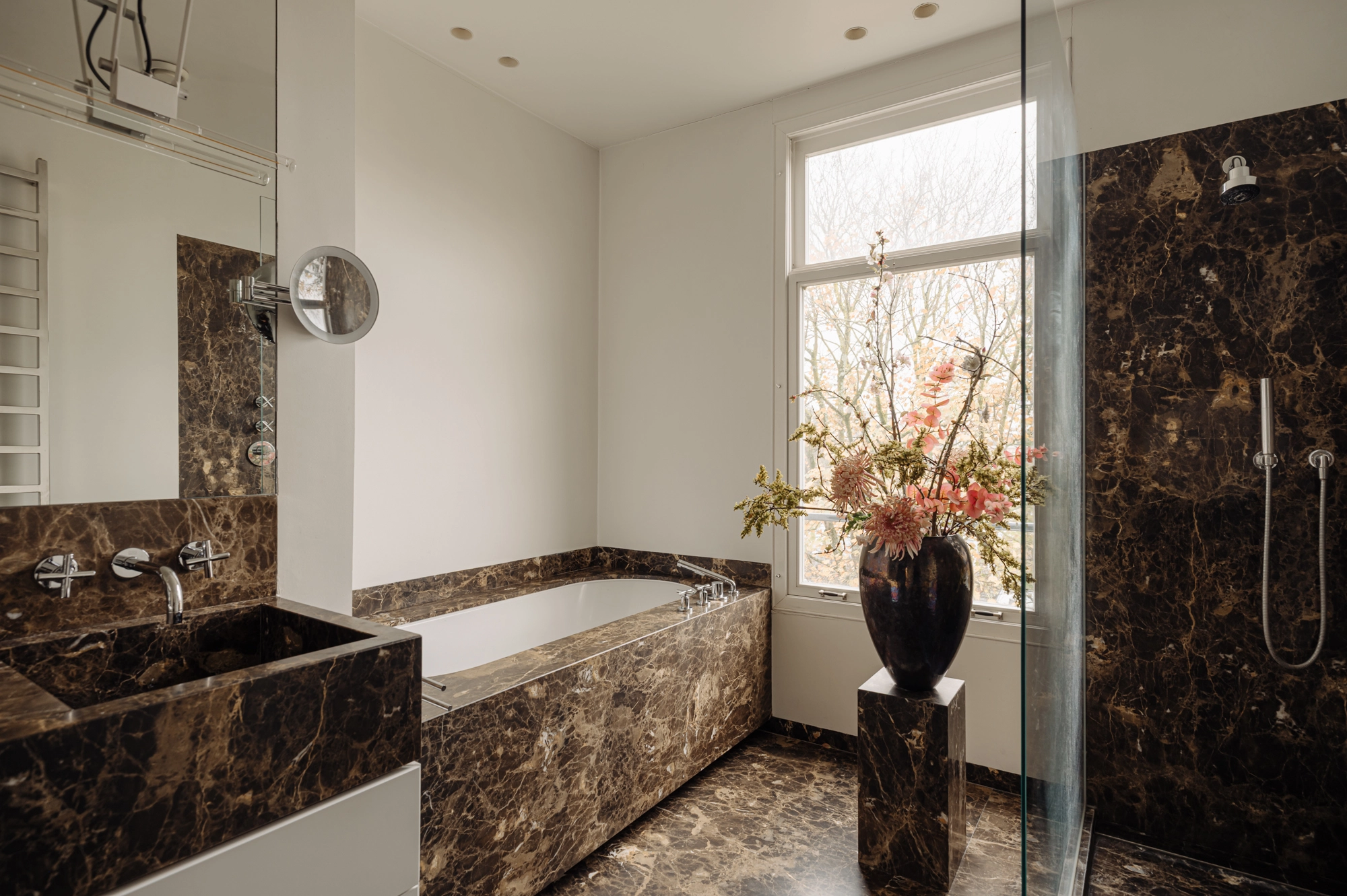
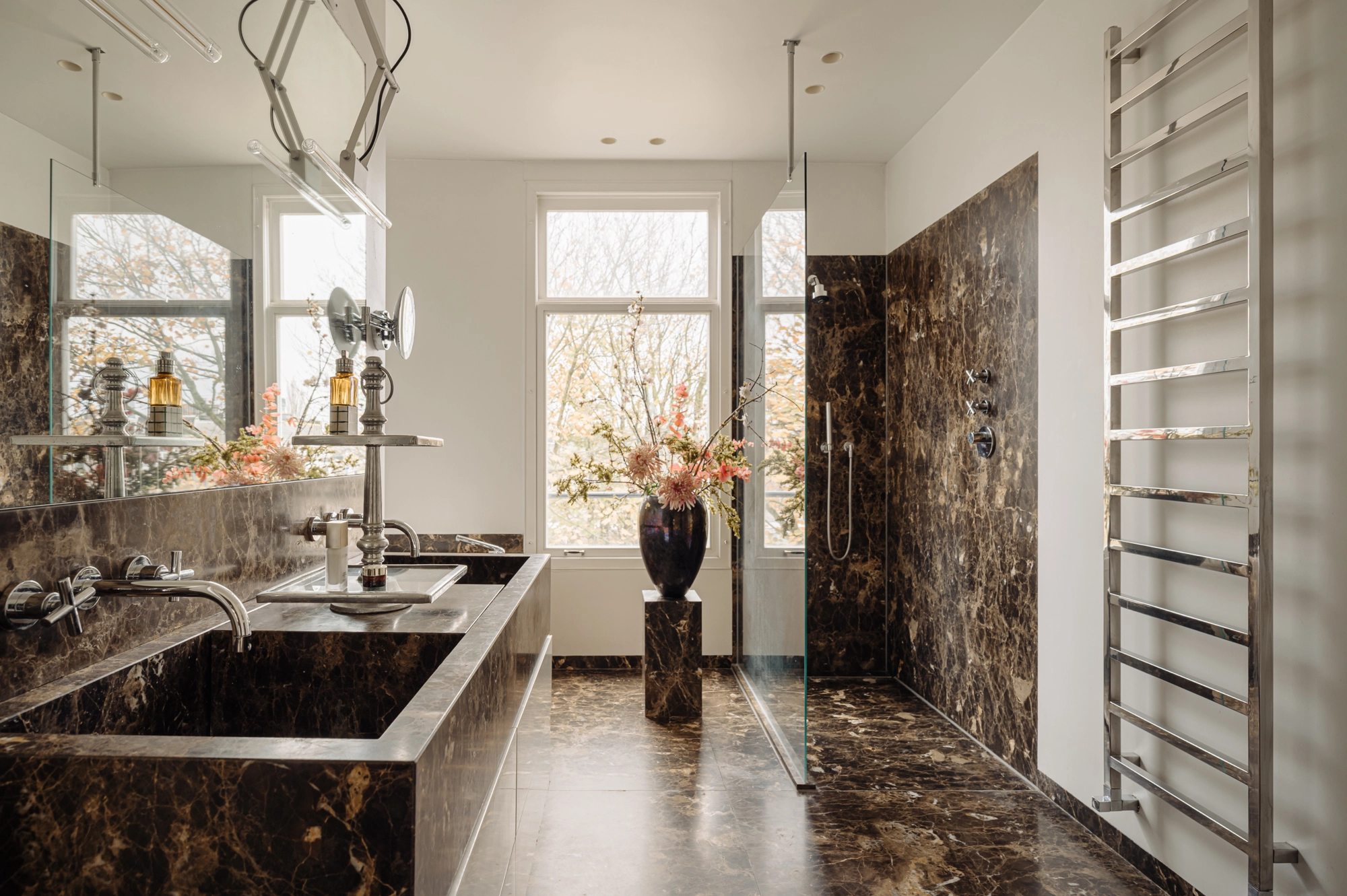
The luxurious bathroom is generously laid out and finished in dark marble. It includes a bespoke double washbasin, a walk-in shower and a large bathtub. A sizeable window introduces natural light and views of the greenery. This floor also provides space for the washing machine and dryer.
Outdoor space
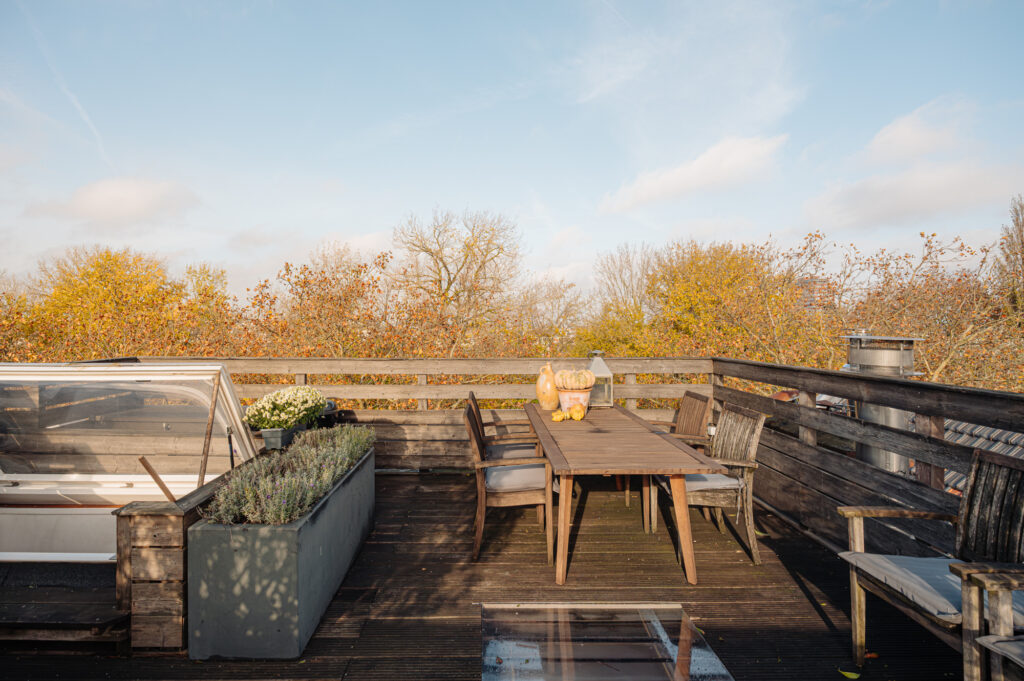
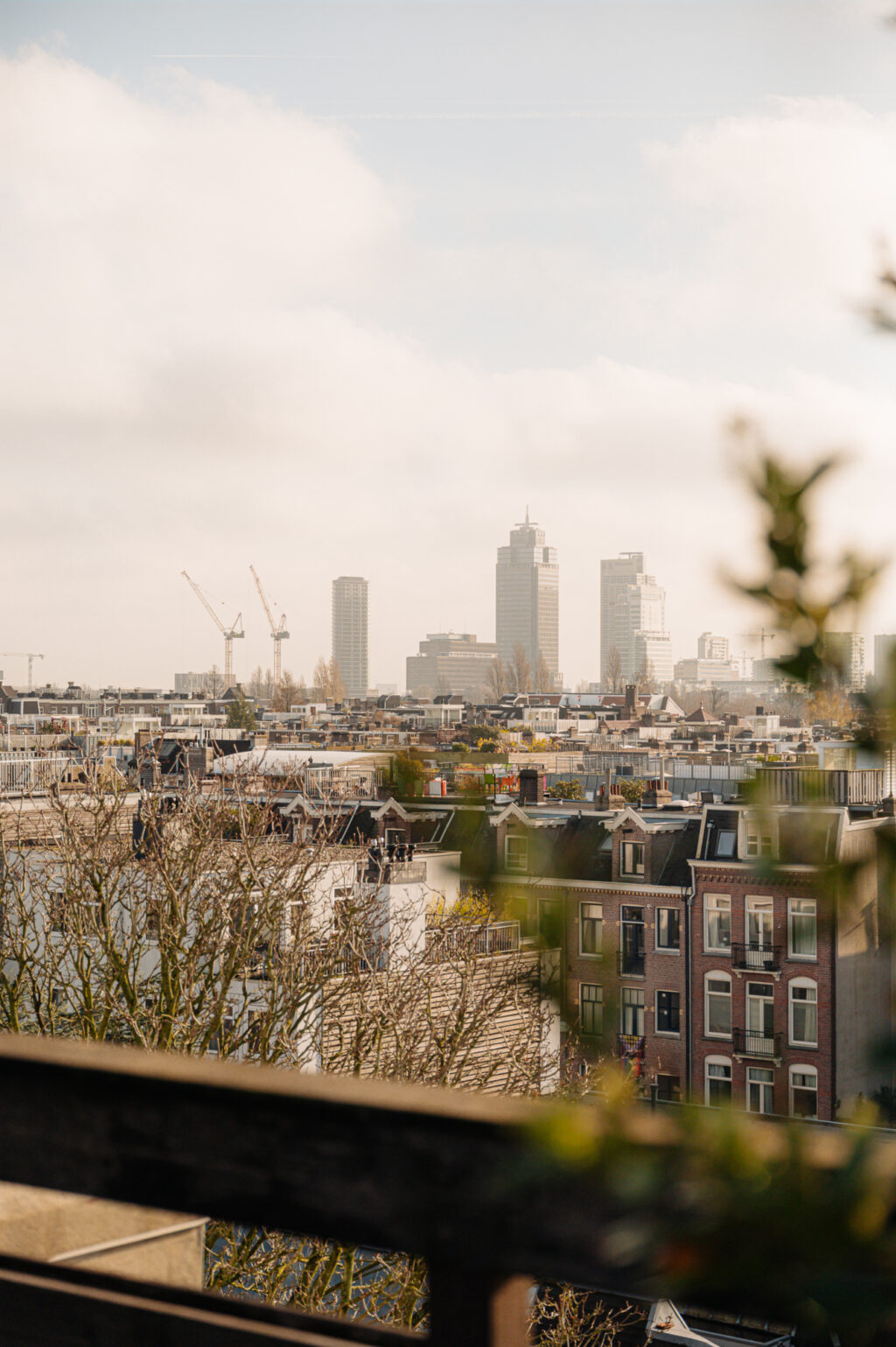
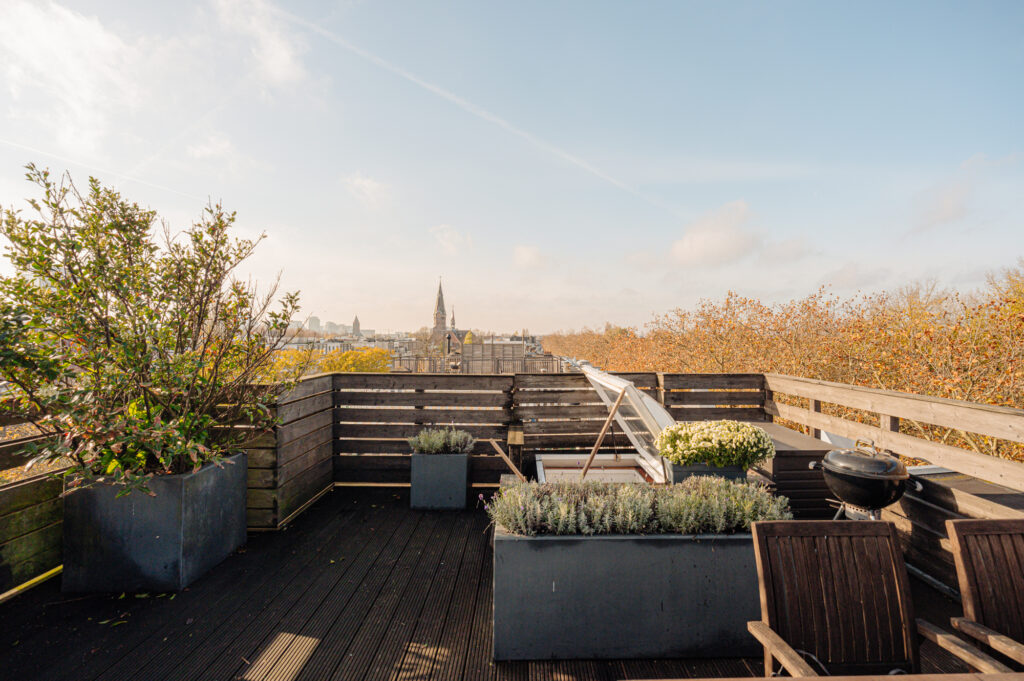
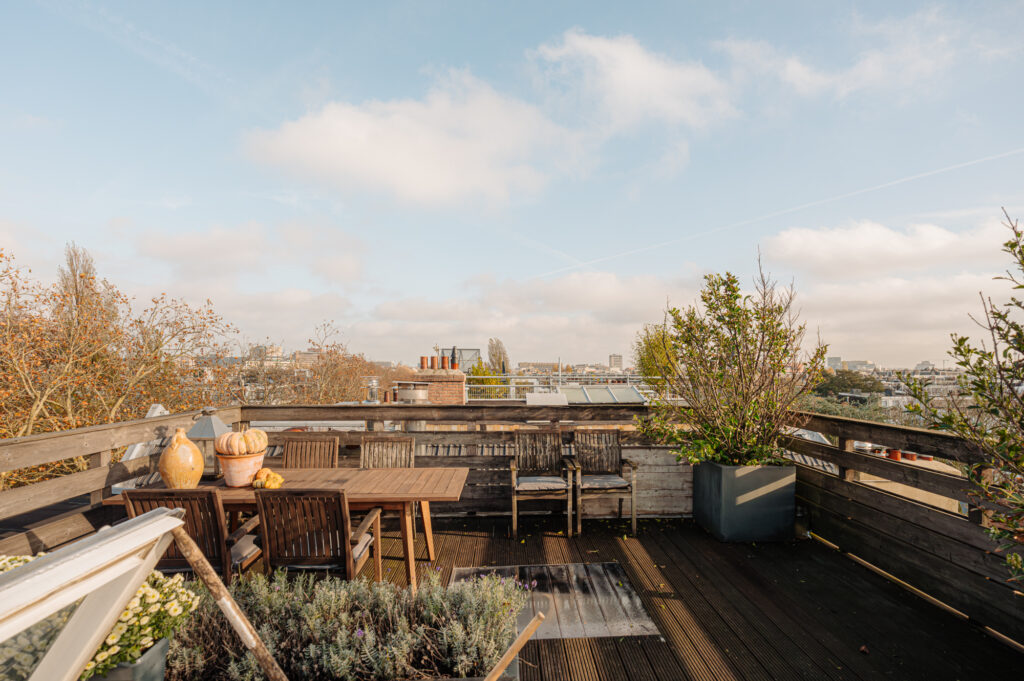
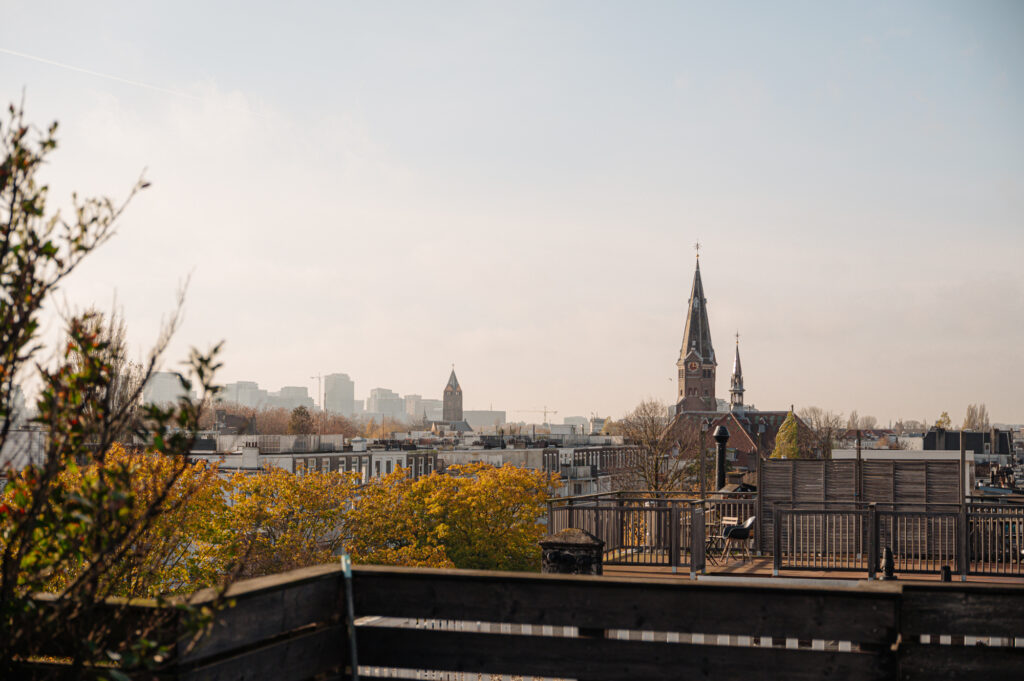
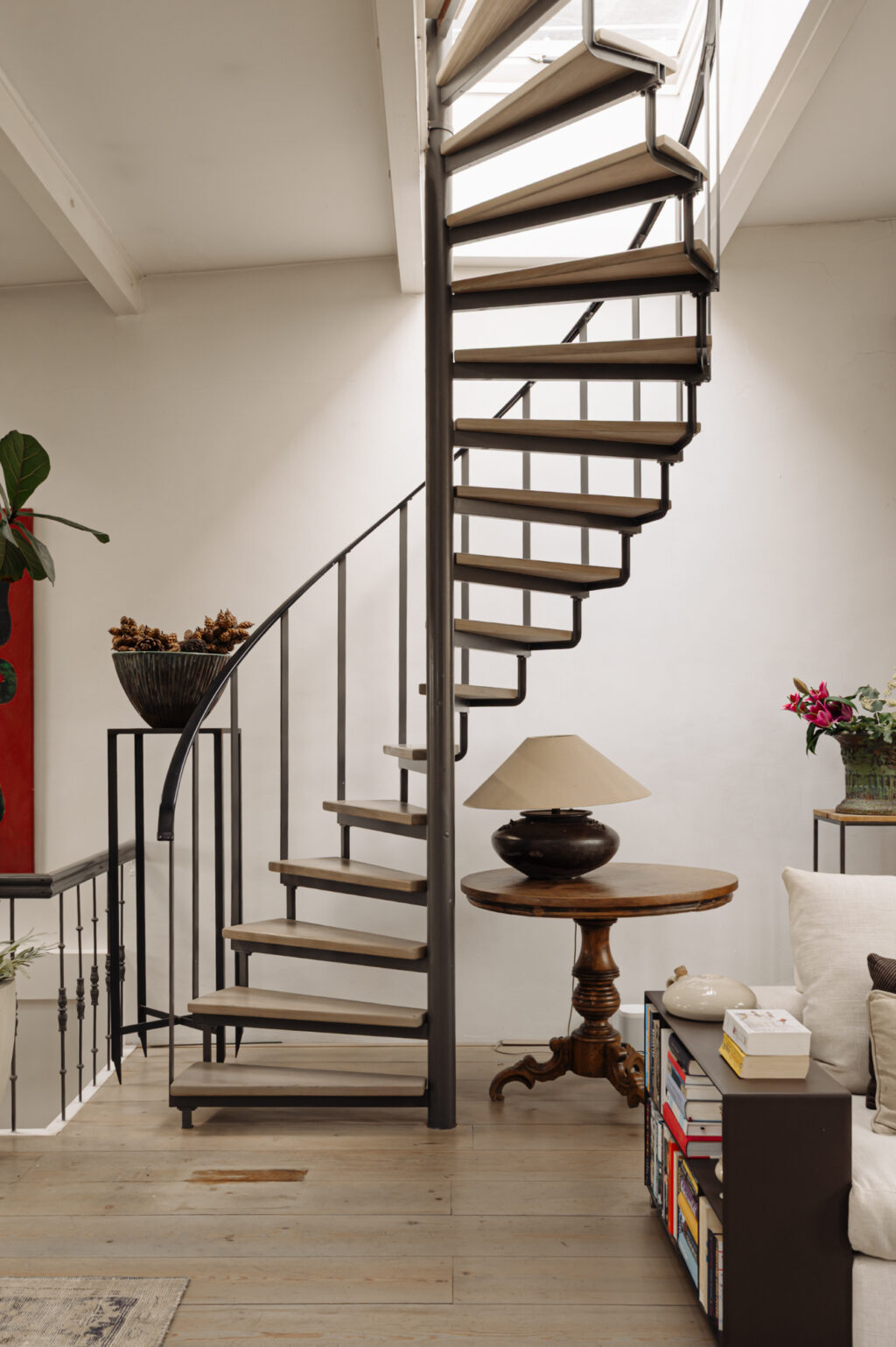
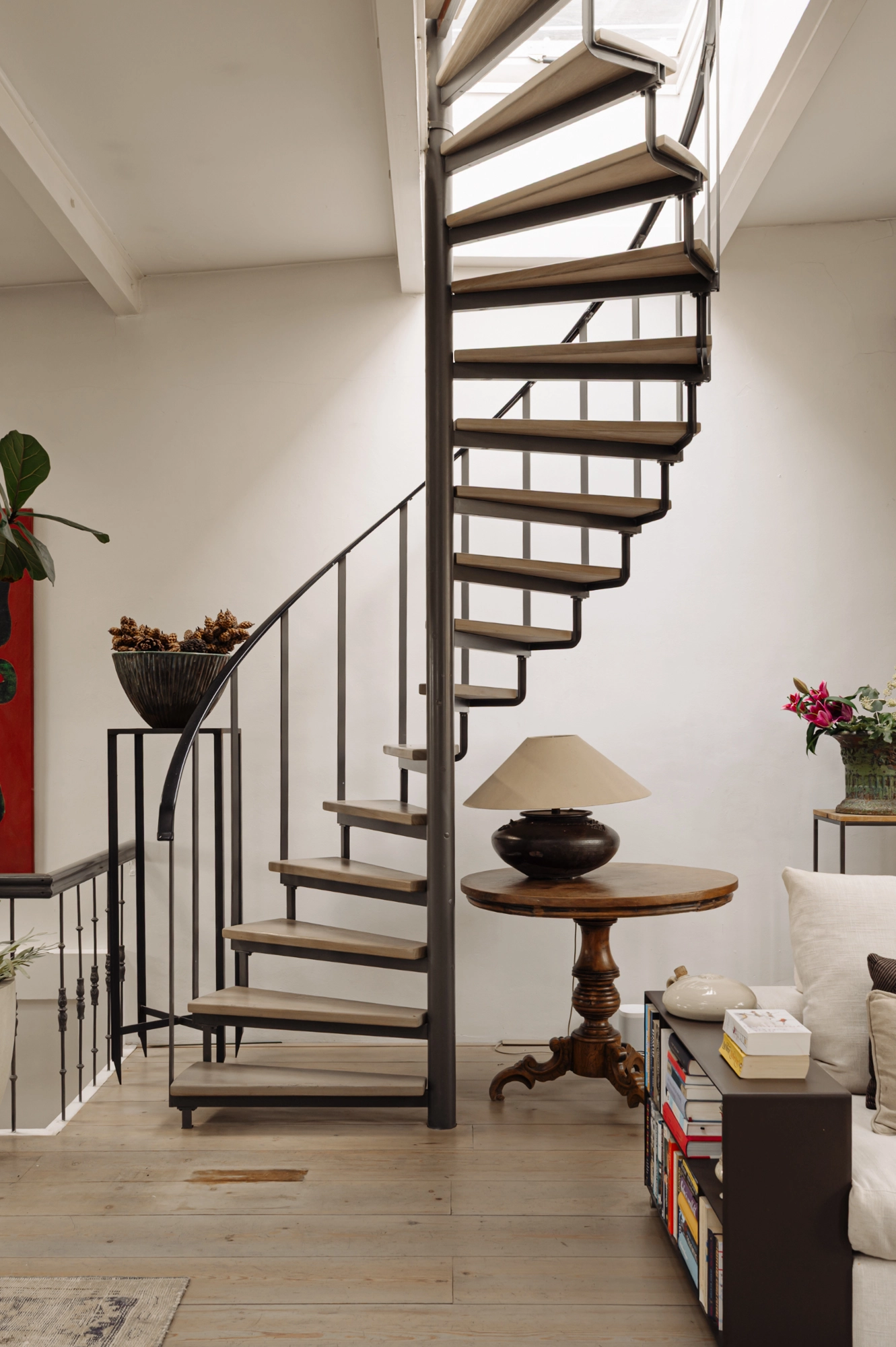
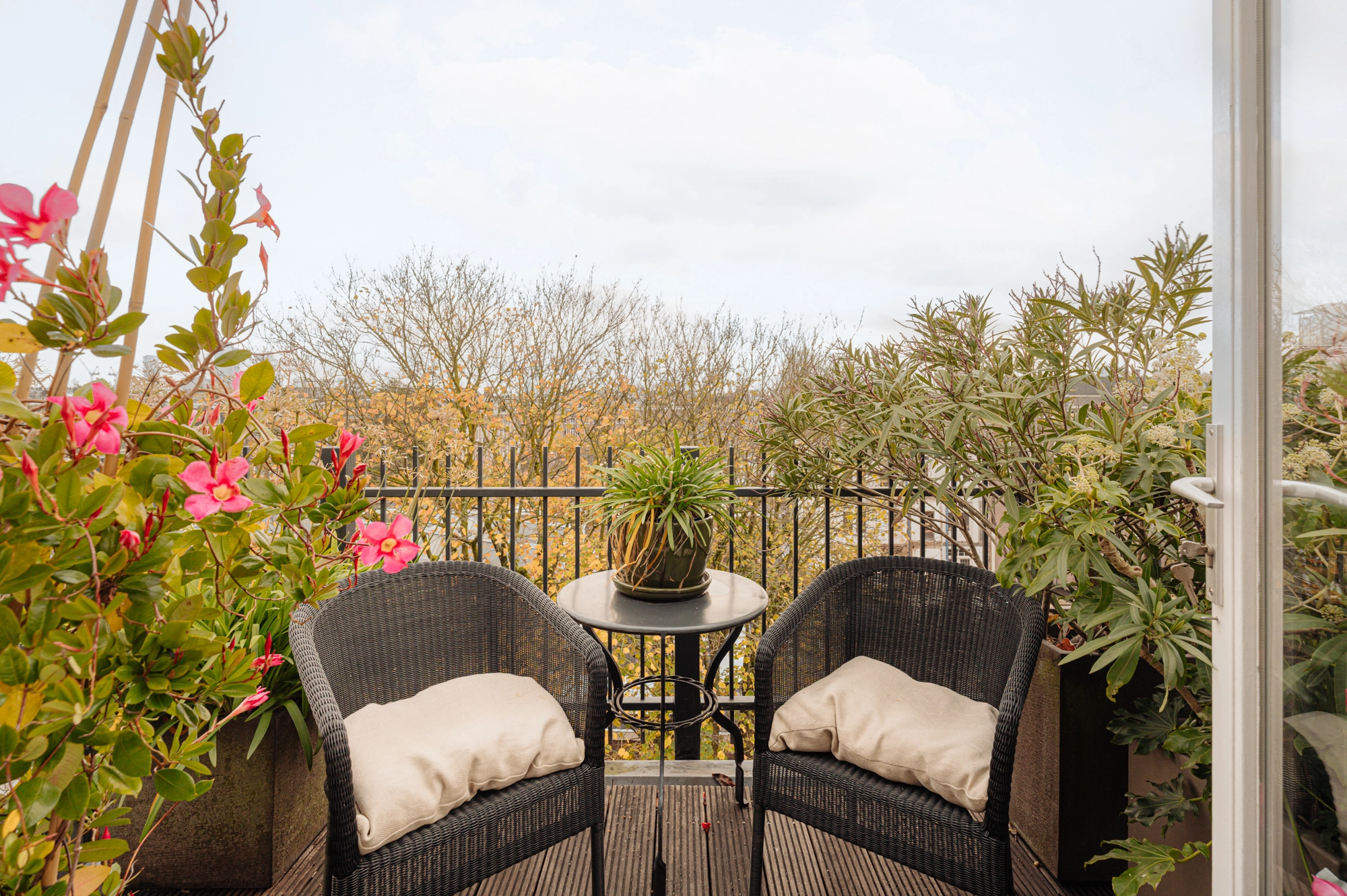
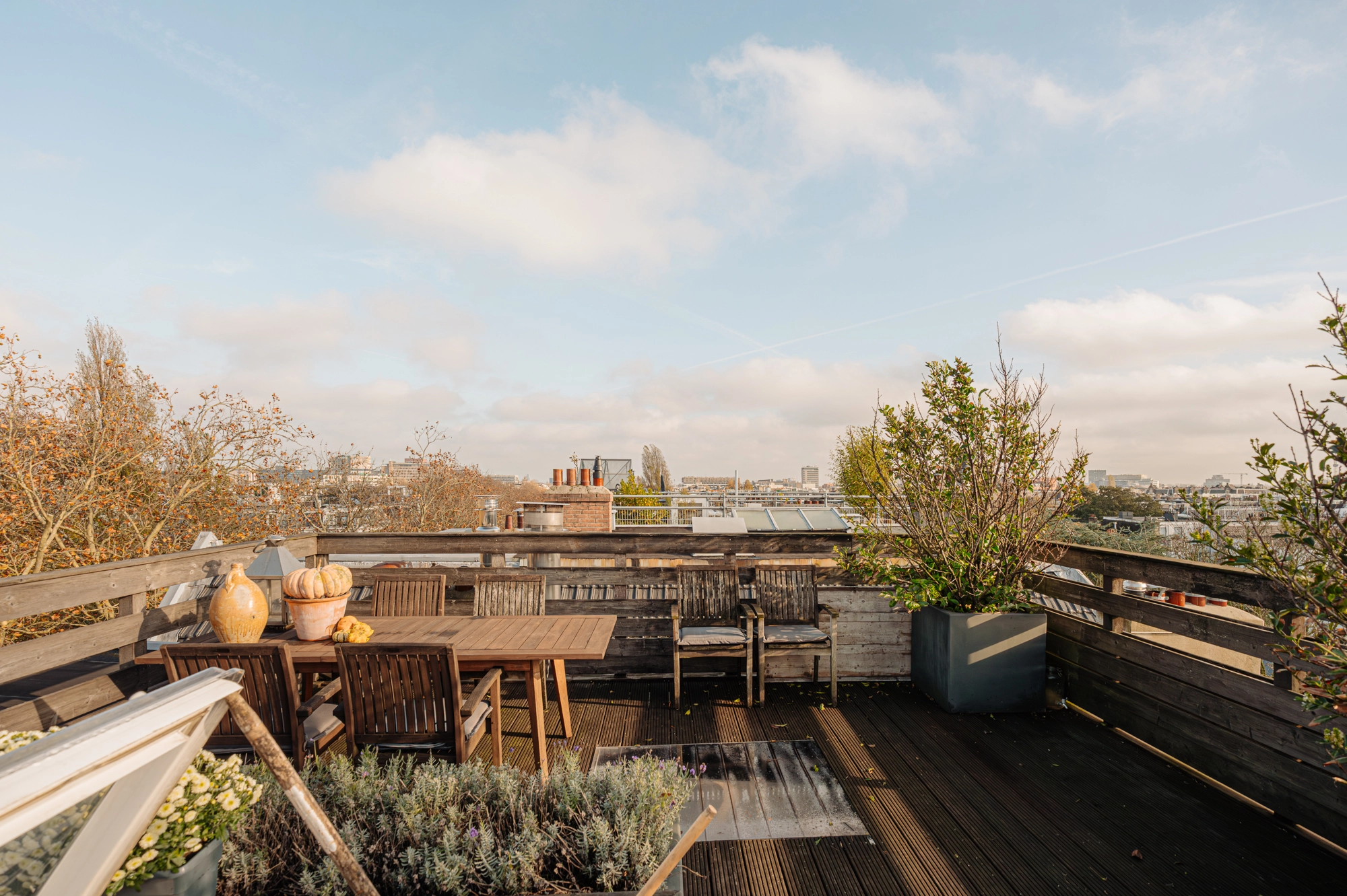
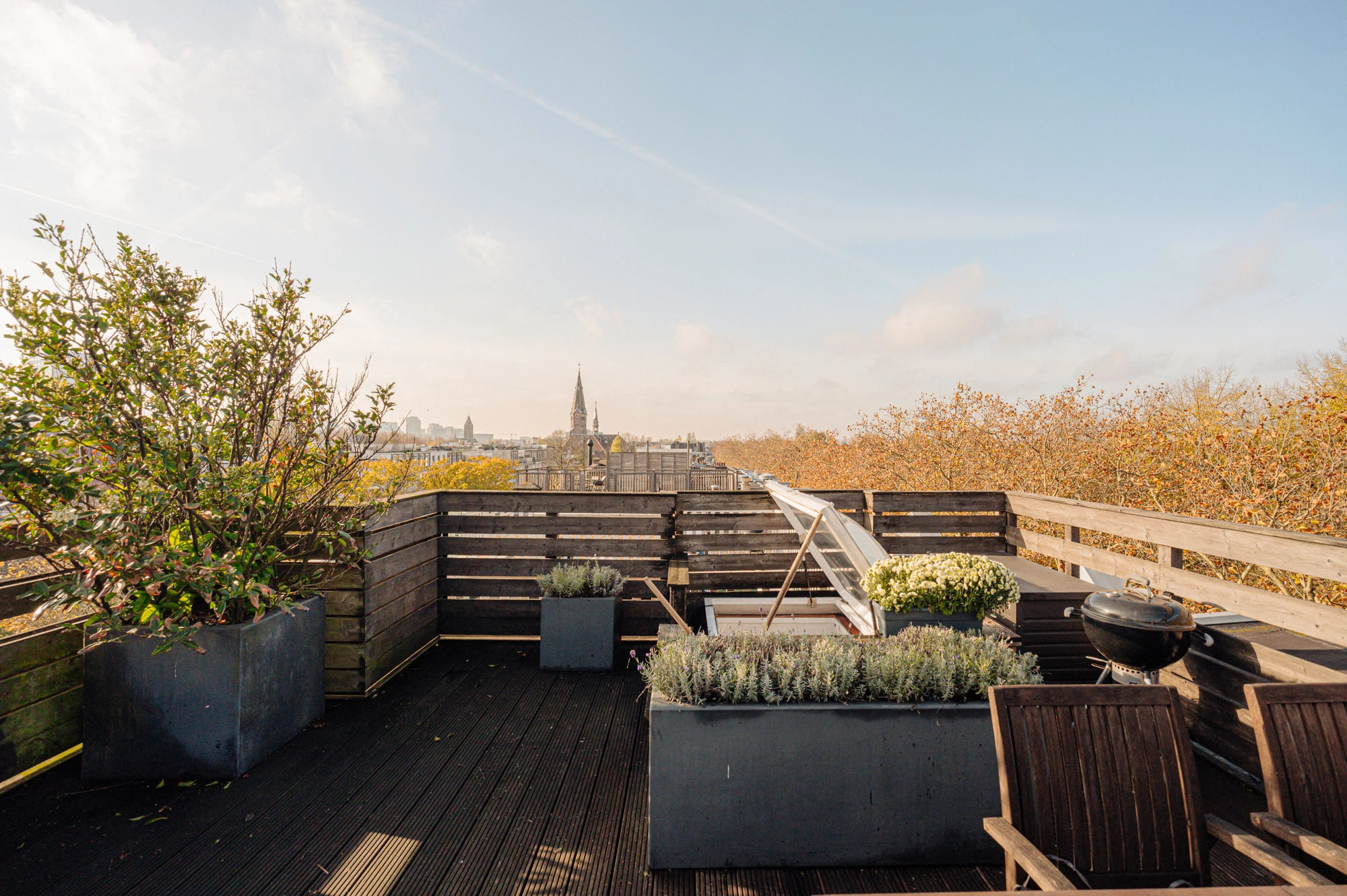
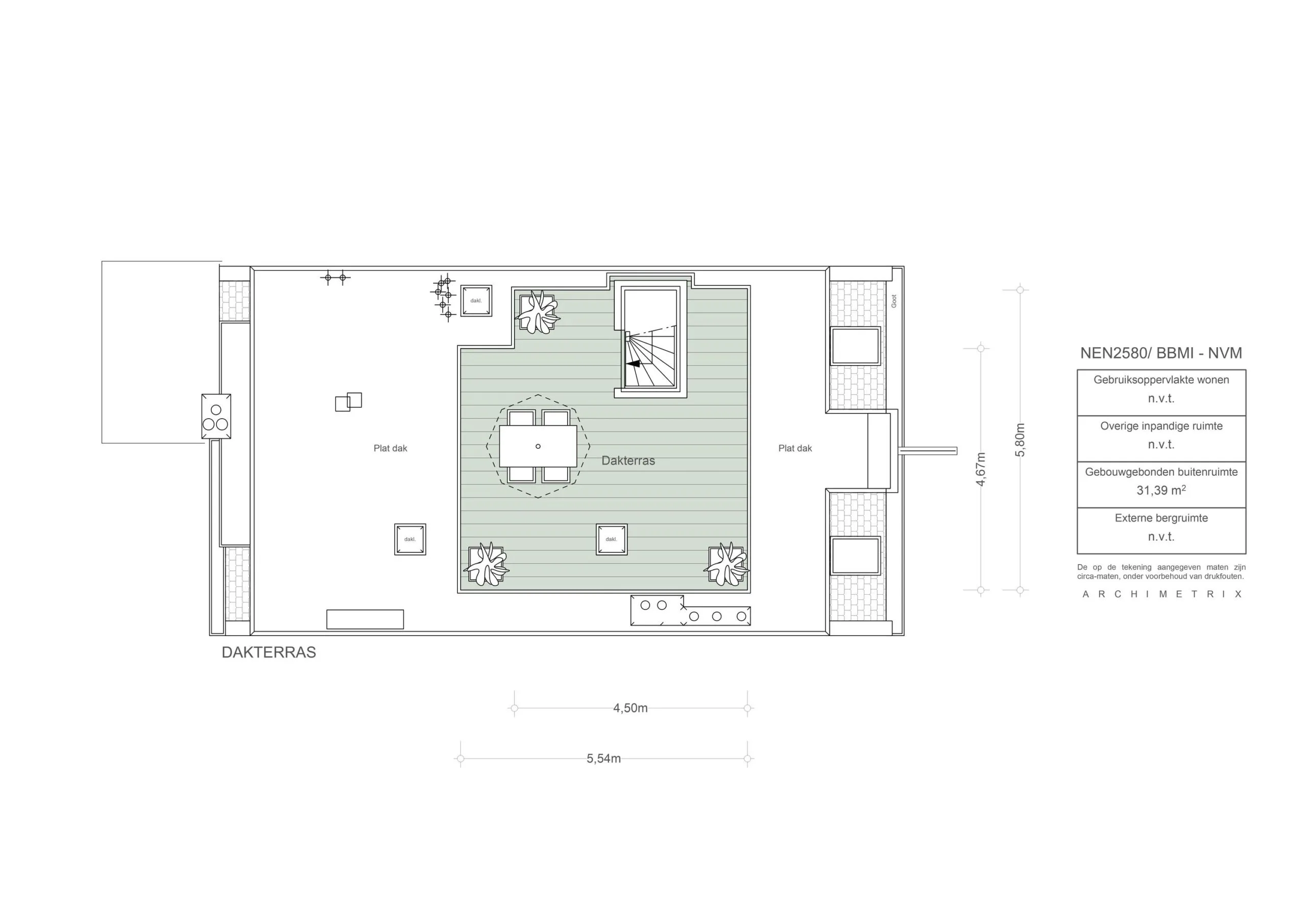
A fixed staircase from the living room leads directly to the roof terrace. This outdoor space of over thirty square metres is positioned freely and offers sweeping, unobstructed views over the city and the greenery of the Sarphatipark. There is ample room for a large dining table, a lounge area and various planters. The open orientation ensures sunlight throughout the day and into the evening. The terrace is finished with timber decking and a solid wooden balustrade.
At the rear of the living floor lies a generous balcony, accessed via French doors from the kitchen. It serves as a natural extension of the living space, offering a sunny outdoor spot throughout the day and views over the inner gardens.
At the front of the study on the second floor, a French balcony provides a view of the park and brings in additional daylight.
Across all levels, the residence maintains a direct and natural relationship with its outdoor spaces
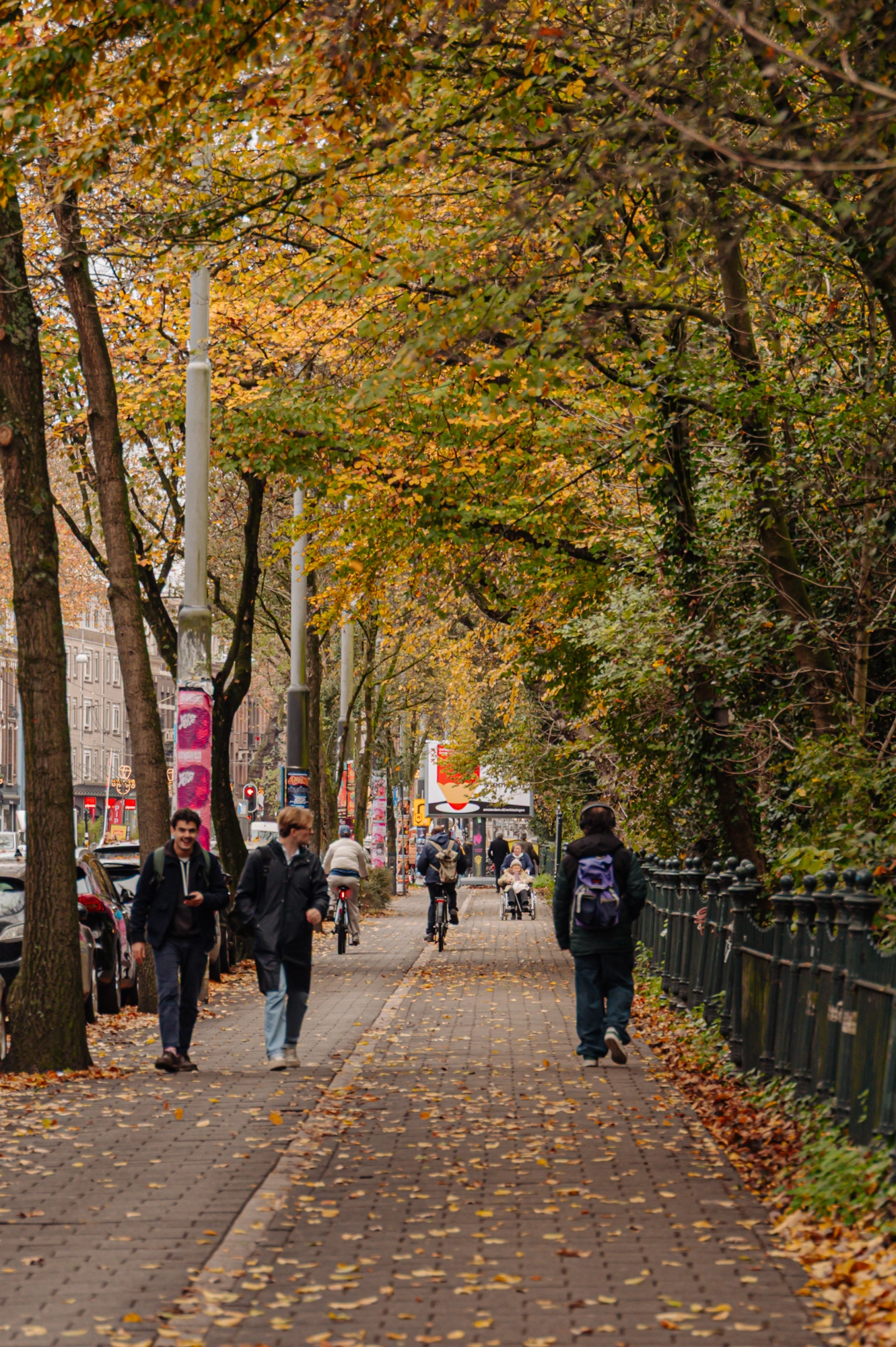
Neighbourhood
The apartment is situated in Amsterdam Zuid, in the most sought-after and tranquil part of De Pijp. This neighbourhood was developed in the late nineteenth century to provide housing for newcomers who moved to the city for work. In 1886, the father of Freddy Heineken opened the Heineken brewery here. The first workers’ homes, built around the Albert Cuypstraat, were constructed quickly and economically. Later, moving toward the Diamantbuurt, Berlage added residences in the Amsterdam School style. It is said that the neighbourhood owes its name to its long, straight streets that resemble the shape of a pipe. De Pijp is renowned for its vibrancy and abundant cafés and eateries, all within walking distance. The Albert Cuyp Market and the Sarphatipark define much of the neighbourhood’s character and energy. Artists and writers such as Piet Mondriaan, Carel Willink and Gerard Reve once lived and worked here. The lively, mixed population drew countless cafés and small restaurants to the area. Today, the neighbourhood is often referred to as the Quartier Latin of Amsterdam, still animated by a diverse selection of restaurants including Samuel’s, Badcuyp, the Italian Impero Romano and the French Arles or Caron. Along the Van Woustraat, a wide variety of casual eateries from different culinary backgrounds can be found.
Accessibility
Within three minutes by bicycle lies the “De Pijp” station of the North/South metro line, along with connections to the train (Amstelstation), tram four (Van Woustraat), tram three (Ceintuurbaan) and bus line two hundred forty-six. By car, there is excellent access to the Amstel interchange toward the A2 and A10 motorways. The residence is located in the Oude Pijp, a central part of Amsterdam near the Sarphatipark, Van Woustraat, Albert Cuyp Market and the Utrechtsestraat.
Parking
Parking is available on public streets via a permit system (permit area Zuid 3.1). A resident permit for this zone allows parking in both Zuid-3 and Zuid-4. The cost of a resident permit in 2025 is €192.45 per six months. At present, the estimated waiting time for a permit is five months. A second permit per address is not available in this area. (Source: Municipality of Amsterdam, November 2025.)
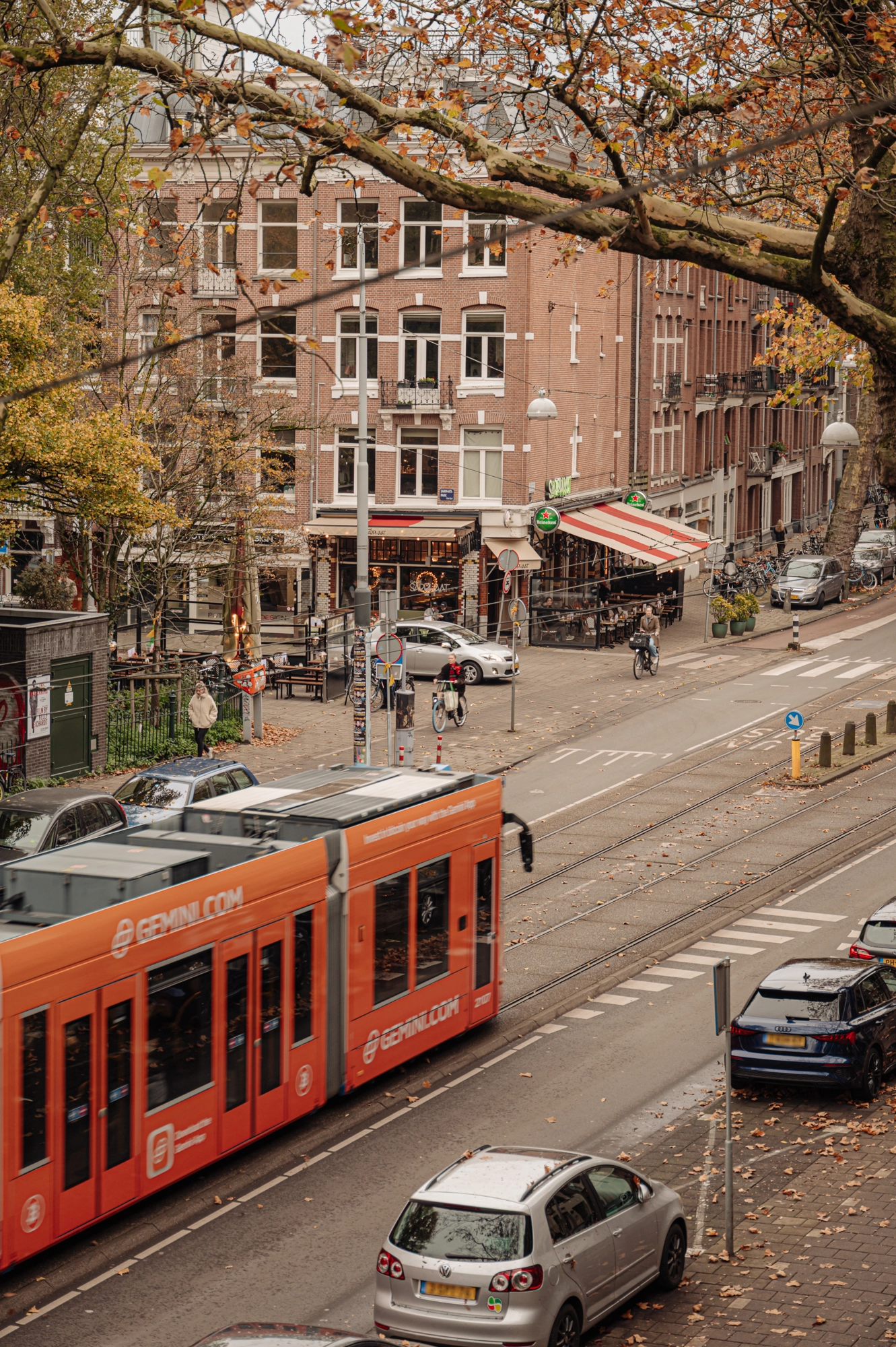
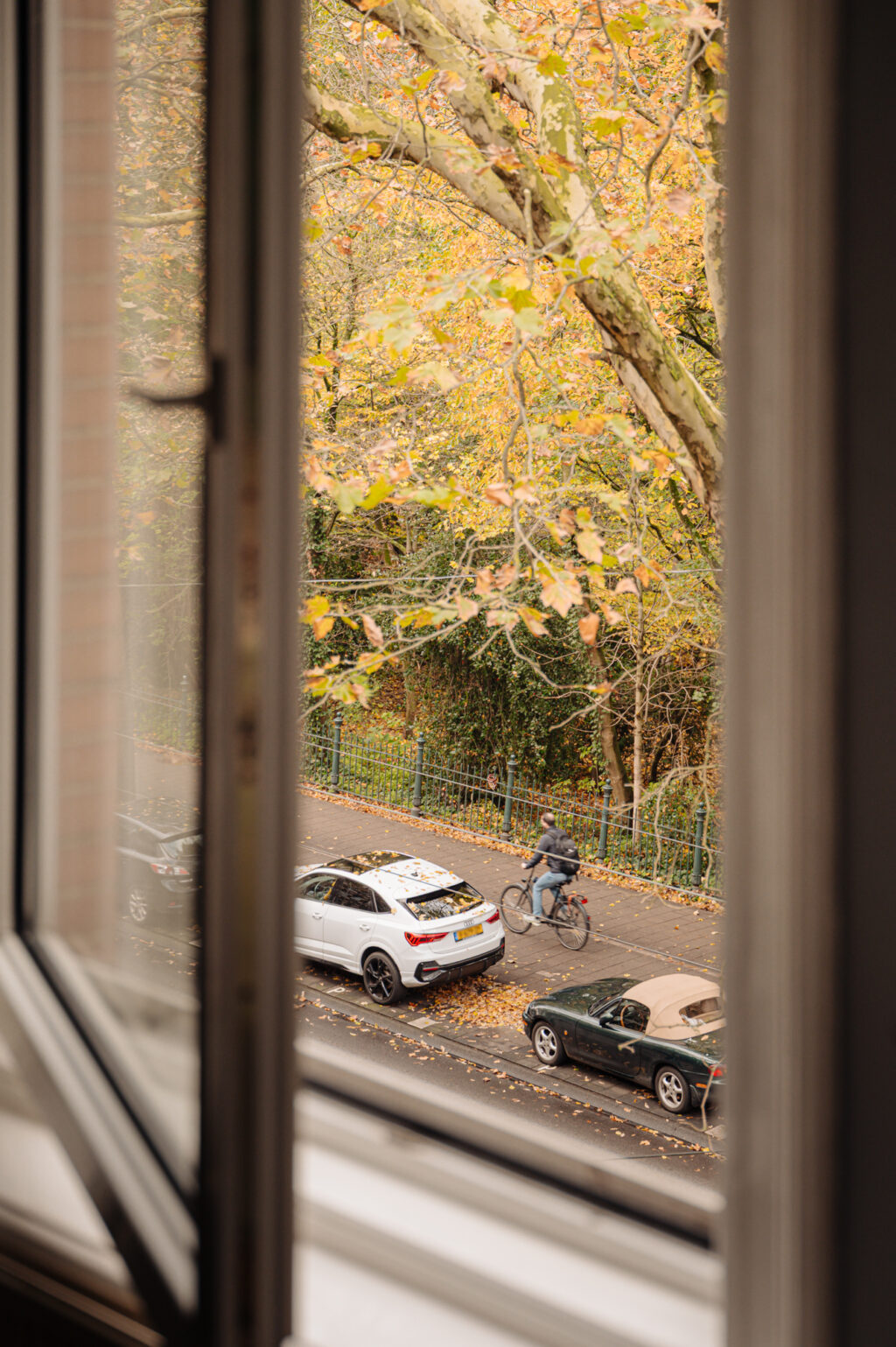
Dit is een huis dat gelukkig maakt. Nog iedere ochtend als we bovenkomen – we wonen ‘ondersteboven’ – en worden blij van het uitzicht. Aan de ene kant de takken wirwar van de straat en het park en de bijna tastbare wisseling van de seizoenen, aan de andere kant de lucht en vrije doorkijk tot aan de Zuid-as. Het is een huis in balans. Midden in de bruisende Pijp en onderdeel van de bijna dorpse gemeenschap van het Sarphatipark is het achter de voordeur een oase van rust en vrijwel volledige privacy.
De hoge sfeervolle stijlkamers van de eerste twee verdiepingen vormen een spannend contrast met de loftachtige, heel brede en hoge woonverdieping. Door een aantal verbouwingen hebben we dat loftgevoel in de loop van de jaren kunnen versterken. De stoere stalen, plafondhoge open haard is een van de ingrepen die wat dat betreft nog steeds een wow-gevoel oproepen.
Heerlijk aan dit huis zijn ook de vele ruime kamers, of we er nu slapen, werken, of muziek maken. We wonen hier nu ruim twintig jaar. Onze zoon is hier geboren en opgegroeid. En nooit hebben we de aandrang gevoeld te vertrekken. De ruimte binnen, het park met speeltuin voor de deur, de vele voorzieningen – winkels, scholen, restaurants – de leuke buren, de goede bereikbaarheid ten opzichte van de ring: ze hebben voor ons van dit huis al die jaren een geweldig thuis gemaakt. We komen nu, ook als gezin, in een andere fase van ons leven. Een ander huis past daarbij. Maar dit huis aan het park zit voorgoed in ons hart.
1073 CM Amsterdam
Mud in May
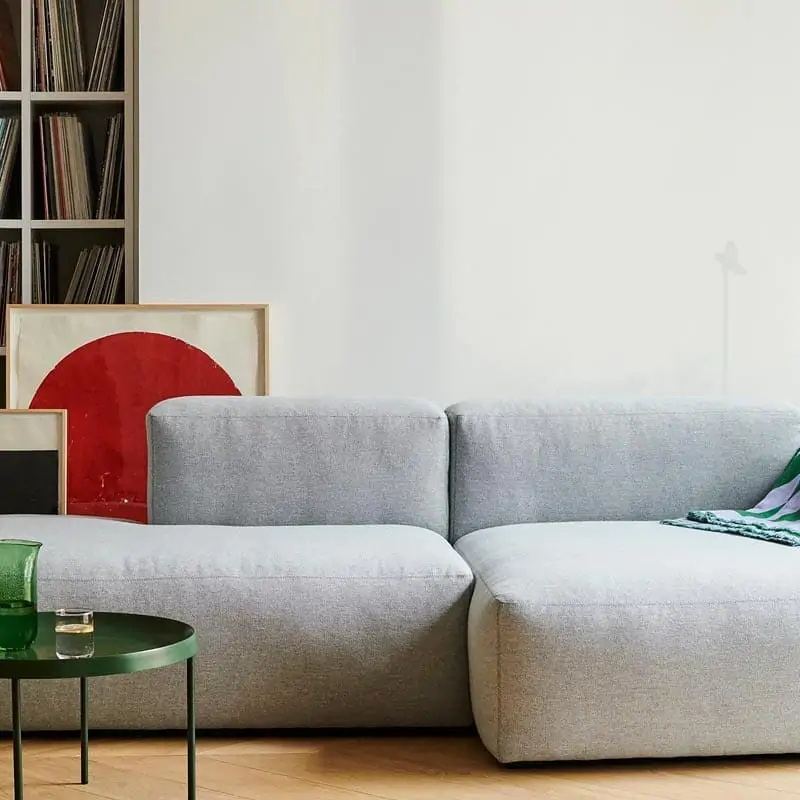
Mud in May is een interieur- en cadeauwinkel in het hartje van de Pijp. Je vindt hier items van zowel bekende designers als minder bekende designers en daardoor ontstaat er een speels mix. Voor ieder budget is hier wel iets te scoren. Mud in may verkoopt allerlei soorten producten; stoelen, vazen, lampen, tafels en zelfs kleding. Ook hebben ze een leuke blog waar ze artikelen waar ze in gesprek gaan met designers over de nieuwste interieurtrends.
1073 VK Amsterdam
Restaurant Ja
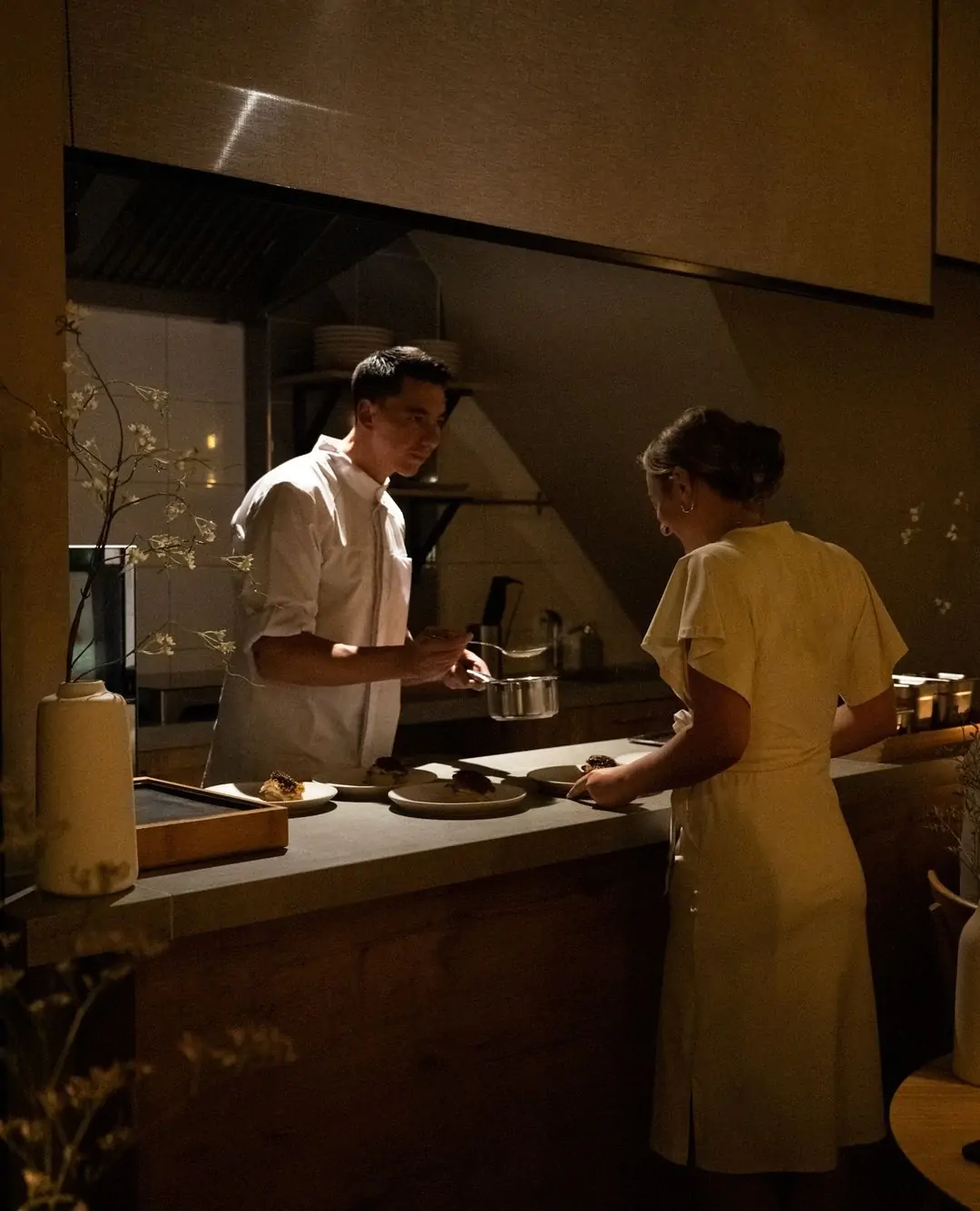
Het charmante restaurant Ja, bevindt zich in het voormalige pand van Jan de Wit's Le Restaurant aan de hoek van het Sarphatipark. Chef chef Julius Busscher, voorheen werkzaam bij Jacobsz en Staets, biedt verrassende gerechten. Zijn partner Amy Delorme verzorgt met toewijding de bediening en selectie van wijnen. Bij Ja wordt alles, van het brood tot de limoncello, ambachtelijk bereid. Het restaurant presenteert een vast 4-gangenmenu, dat desgewenst kan worden uitgebreid met oesters en kaas. De intieme ambiance en culinaire creativiteit maken ja tot een unieke culinaire bestemming in Amsterdam.
1073 CL Amsterdam
BRIO
Restaurant BRIO, gelegen in de levendige wijk De Pijp in Amsterdam, biedt een eigentijdse interpretatie van de Italiaanse keuken. Het restaurant, opgericht door de eigenaren van Little Collins, combineert klassieke Italiaanse smaken met moderne invloeden. Gasten kunnen genieten van een menu dat draait om verse pasta’s en seizoensgebonden gerechten, geserveerd in een sfeervolle en gastvrije setting.
1073 CL Amsterdam
Little Collins
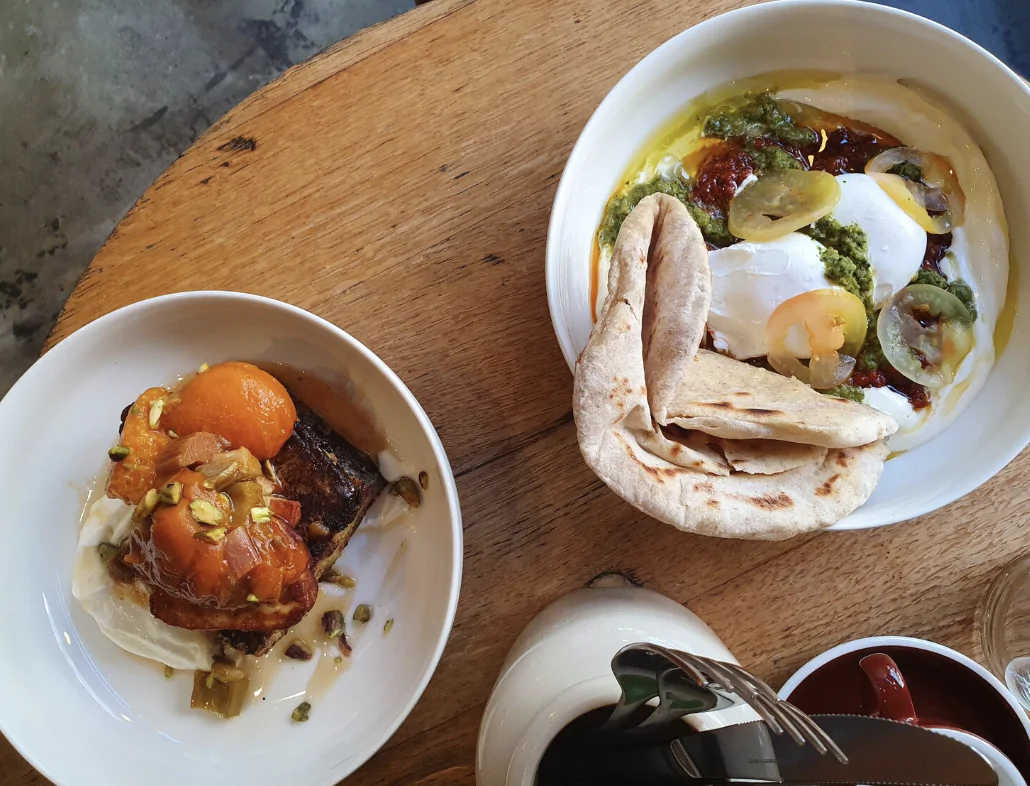
In 2011 openden Stan Kerkhof en zijn Australische vrouw Georgina Patterson het brunchcafé Little Collins in De Pijp. Bij Australisch brunchen moet je denken aan gepocheerde eieren en avocado op toast. Bij de brunch mag ook best wat alcohol gedronken worden, daarom staat ook de bloody mary op de kaart.
1073 TZ Amsterdam
NAZKA
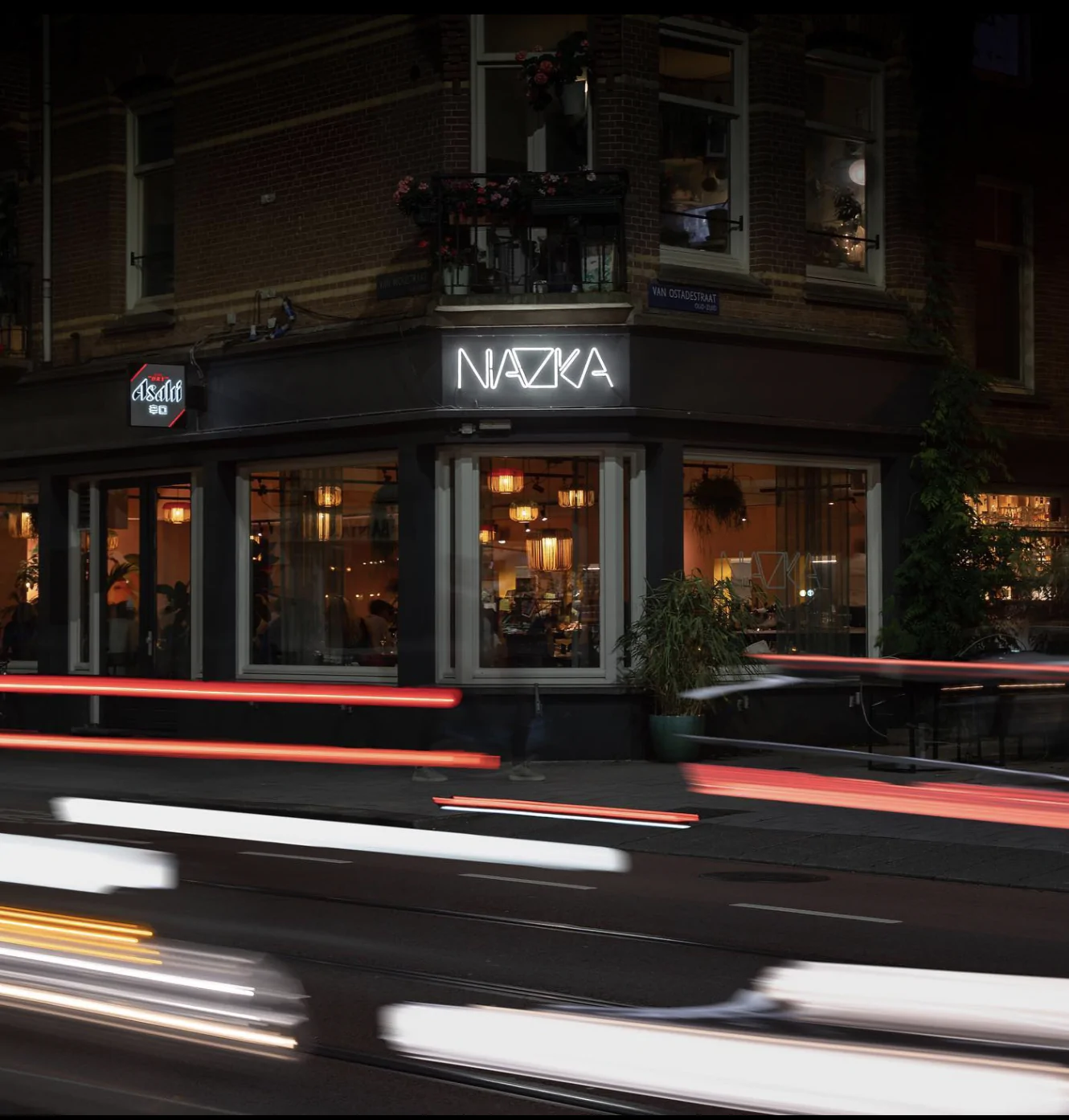
In de Van Ostadestraat vind je het kleurrijke restaurant Nazka. Naast dat het interieur er fantastisch uitziet, is het eten ook spectaculair. De keuken toont zowel Peruaanse klassiekers als innovatieve gerechten, die voortbouwen op het erfgoed van Peru. Nazka heeft een prachtige inrichting, fantastische service, knap eten en de sommelier is een genie, maar het belangrijkst: álles is lekker.
1074 AG Amsterdam
Rayleigh & Ramsay
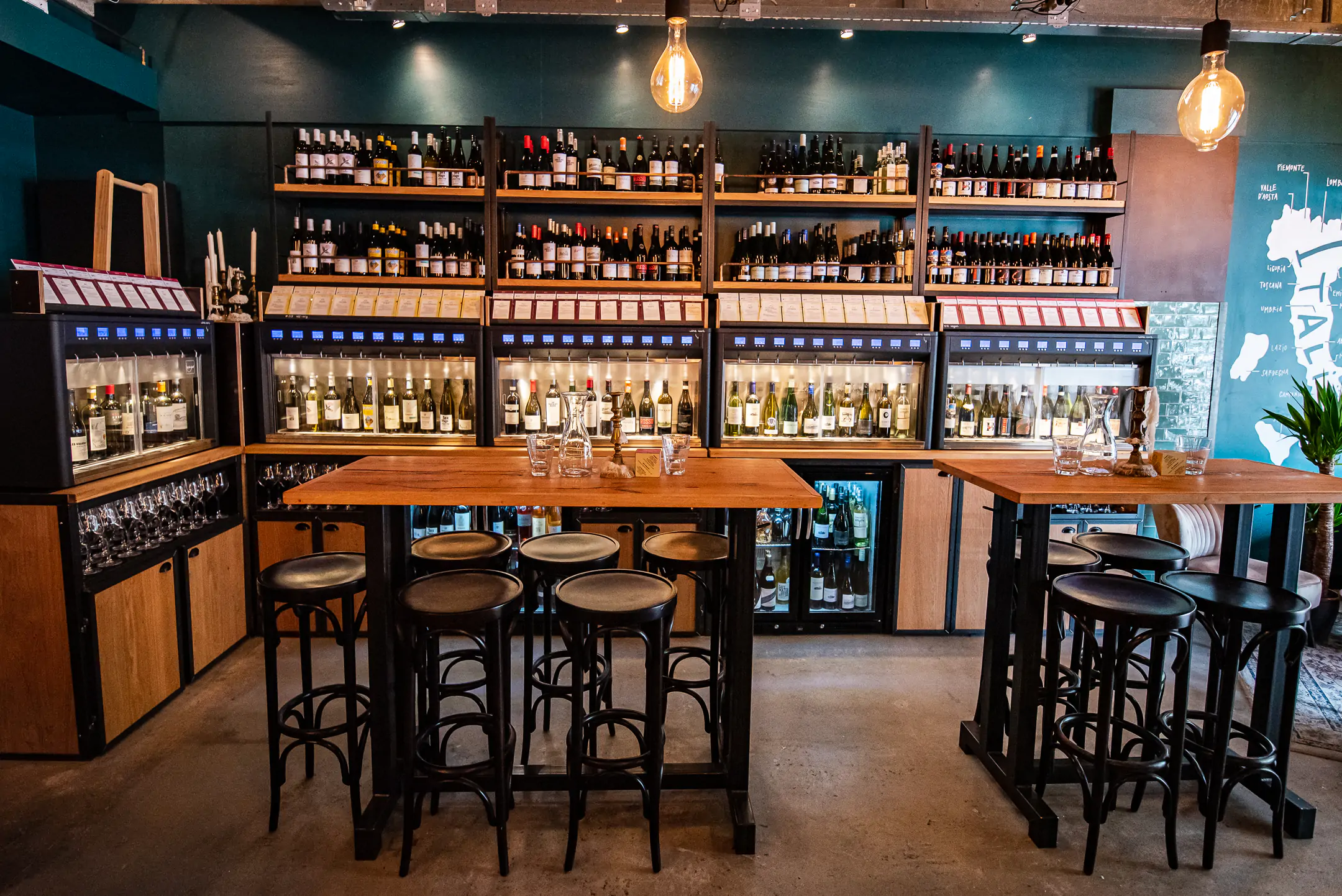
Rayleigh & Ramsay wordt omschreven als een snoepwinkel voor volwassenen. De term wijnbar vinden ze hier te hoogdrempelig, maar de focus ligt toch echt wel op wijn, met meer dan 100 open wijnen. Uniek is dat je wijn per slok, half glas of heel glas kan bestellen. Zo kan je hier terecht om alles wat je wil te proeven en te ontdekken wat je de allerlekkerste wijn vindt. Naast wijnen staat er ook goede koffie, cocktails, tapbier en lekker eten op het menu.
1073 AE Amsterdam
Glouglou
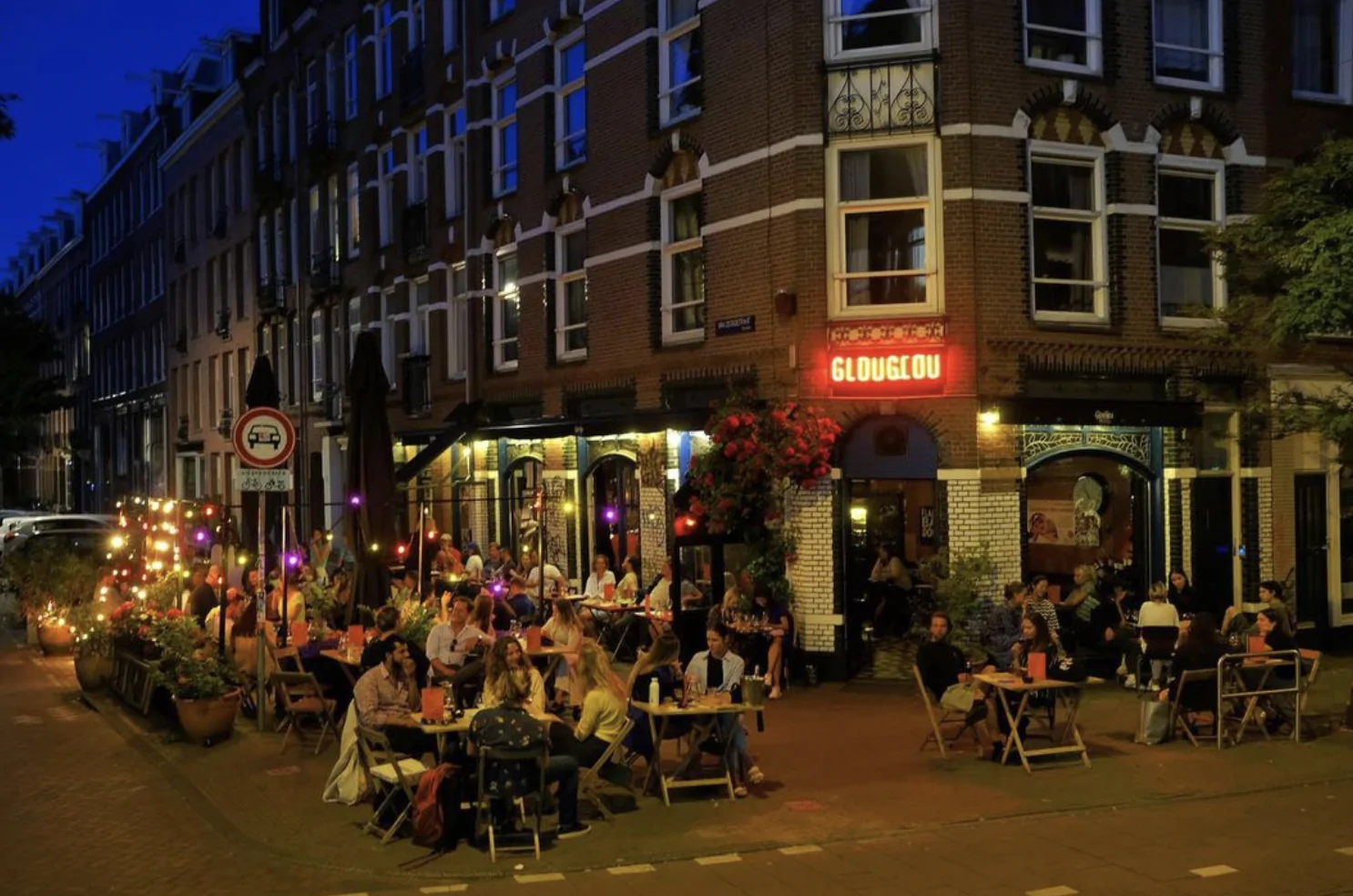
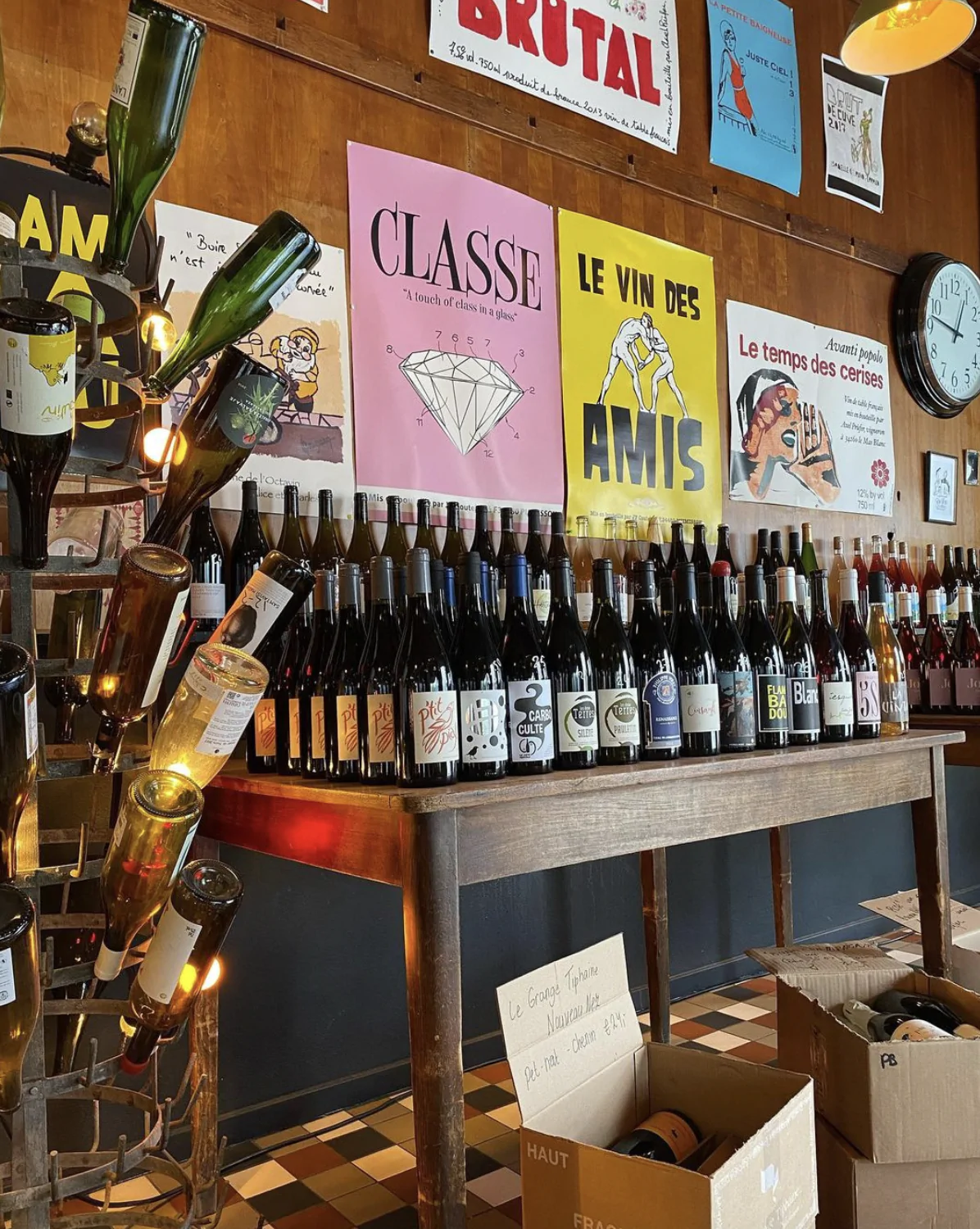
Wie van natuurlijke en biologische wijnen houdt is helemaal zijn plek bij Glouglou. Hier serveren ze namelijk alleen maar natuurlijke wijnen en bijpassende borrelplanken. Heb je je nieuwe favoriete wijn ontdekt bij Glouglou? Geen probleem, in de shop kun je namelijk de hele fles kopen om thuis lekker na te genieten. De sfeer is heel gezellig binnen en ’s zomers kan je lekker mensen kijken in de drukke Pijp vanaf het terras dat midden op straat staat.
1073 BX Amsterdam
Arles
Numa Muller, de chef uit Arles, creëert elke maand een nieuw 3, 4 en 5 gangen menu. Zijn neo-bistro gerechten zijn eenvoudig doch verrassend door de bijzondere combinaties van de Franse keuken met invloeden van buitenaf. De geheel Franse wijnkaart is een interessante combinatie van traditionele producenten met zowel opkomende vins naturels.
In 2022 is het restaurant voor het vijfde jaar op rij door Michelin bekroond met een Bib-Gourmand.
1072 PB Amsterdam
Scandinavian Embassy
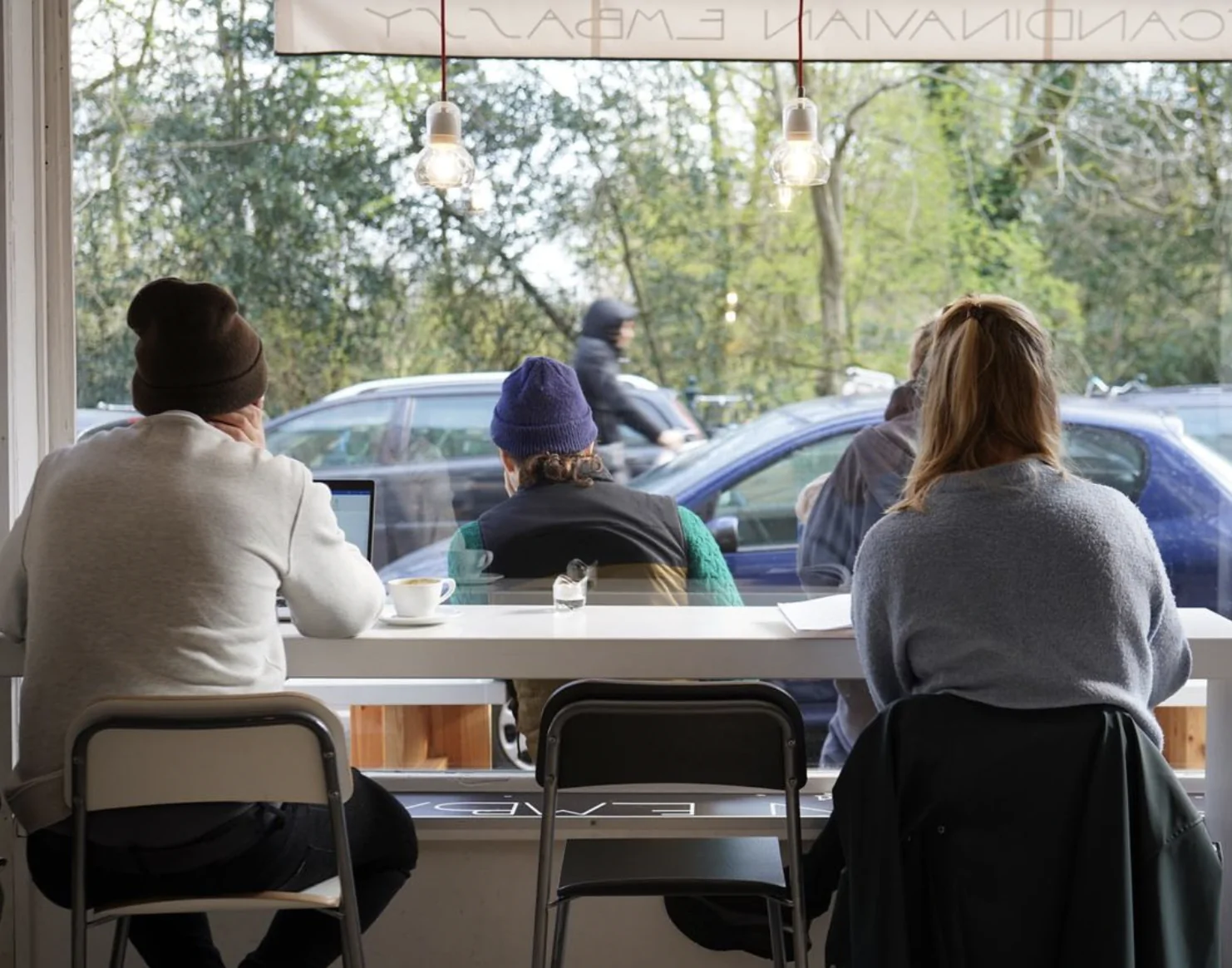
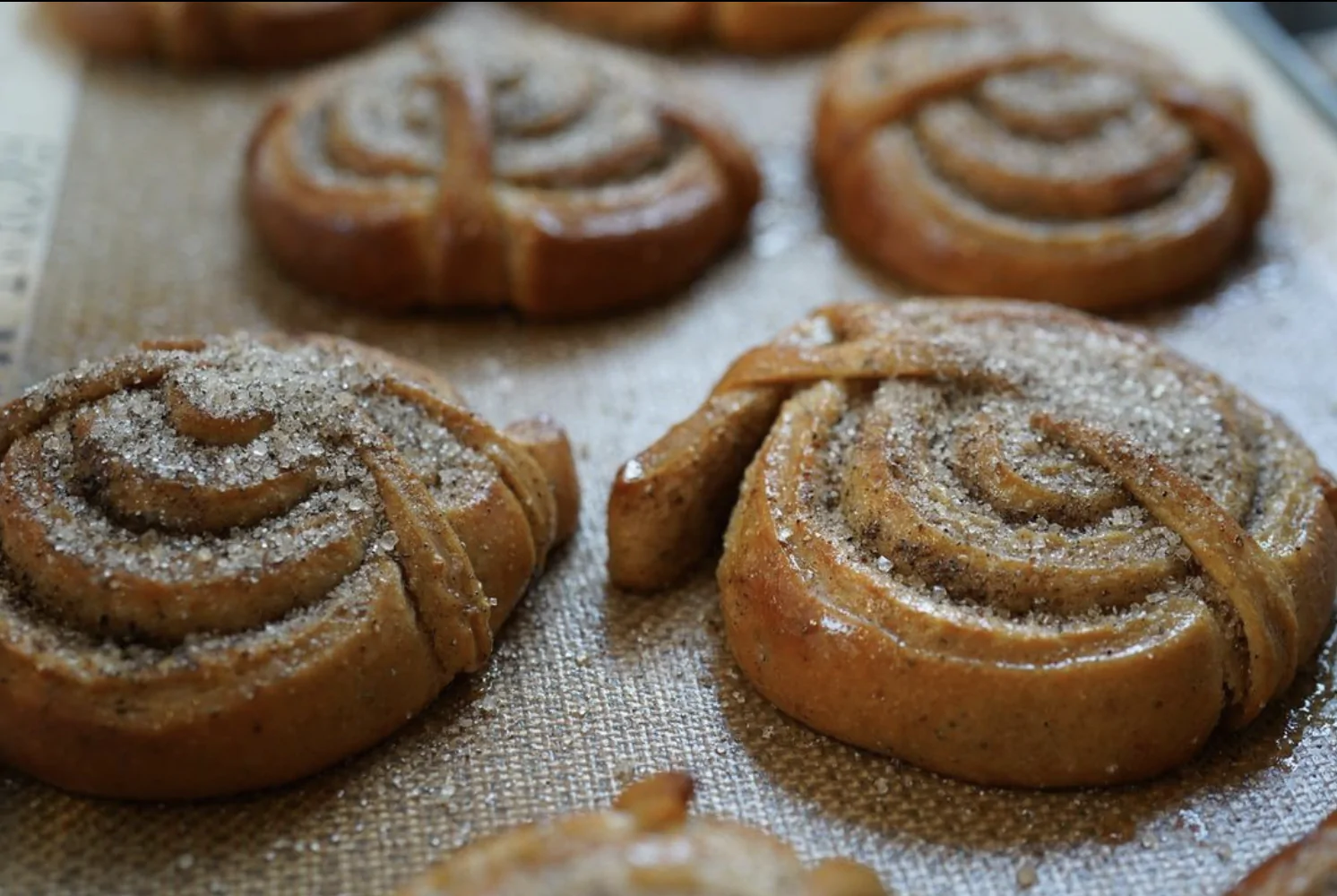
In 2013 opende dit koffietentje. Ze serveren top kwaliteit koffie en zoetigheden, geïnspireerd op de Scandinavische keuken. Er staat vaak een rij tot aan buiten en dat is niet zonder rede. Je proeft dat er hier op hoge kwaliteit eten en koffie wordt bereid. Gelegen naast het altijd gezellige Sarphatipark is het perfect om even op het terras te zitten en uit te kijken, of een parkwandelingetje met een koffie to go te maken.
1072 SW Amsterdam
Massimo Gelato
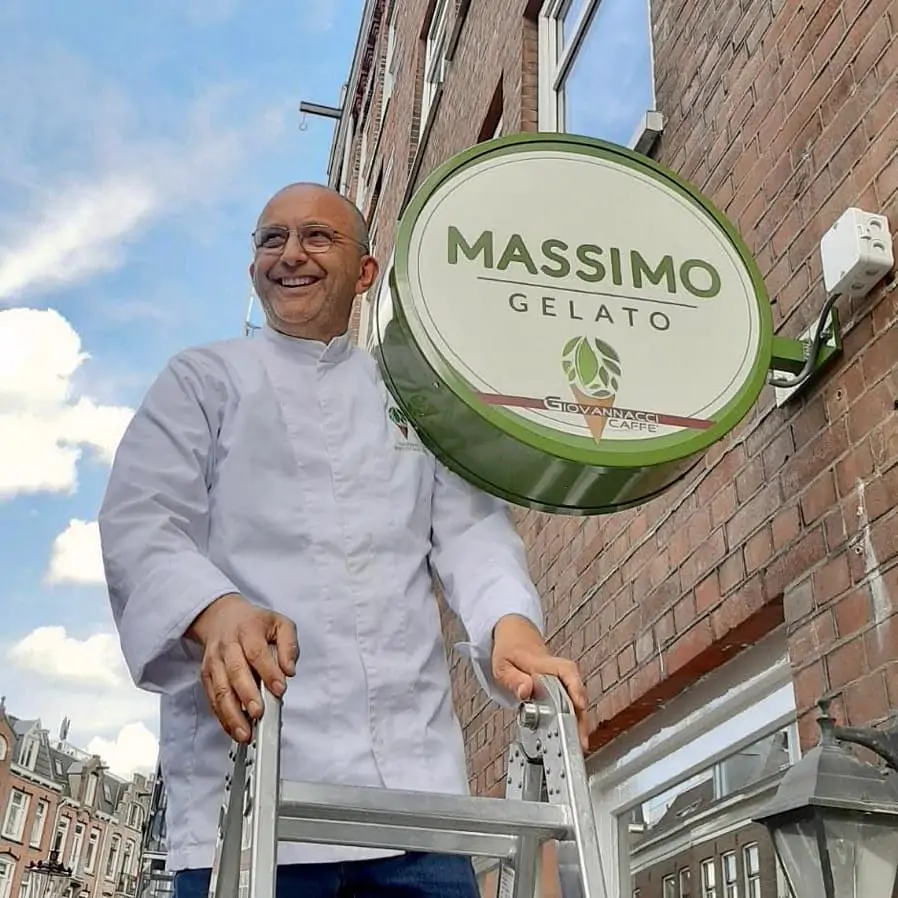
Bij Massimo kan je het hele jaar door terecht voor overheerlijke, authentieke Italiaanse versnaperingen. Massimo staat onder de Amsterdammers vooral bekend om het bijzondere, smaakvolle ijs. De keuze in smaak is ruim en het personeel denkt graag met je mee (als je geluk hebt, laten ze je proeven!). Ook kan je er terecht voor heerlijke koffie. Er zijn maar weinig plekken die tippen aan Massimo. Daarnaast is het interieur overzichtelijk en verwelkomend. Af en toe moet je er een tijdje in de rij voor over hebben, maar dan heb je ook wat
1072 GP Amsterdam
Wijnbar Paulus
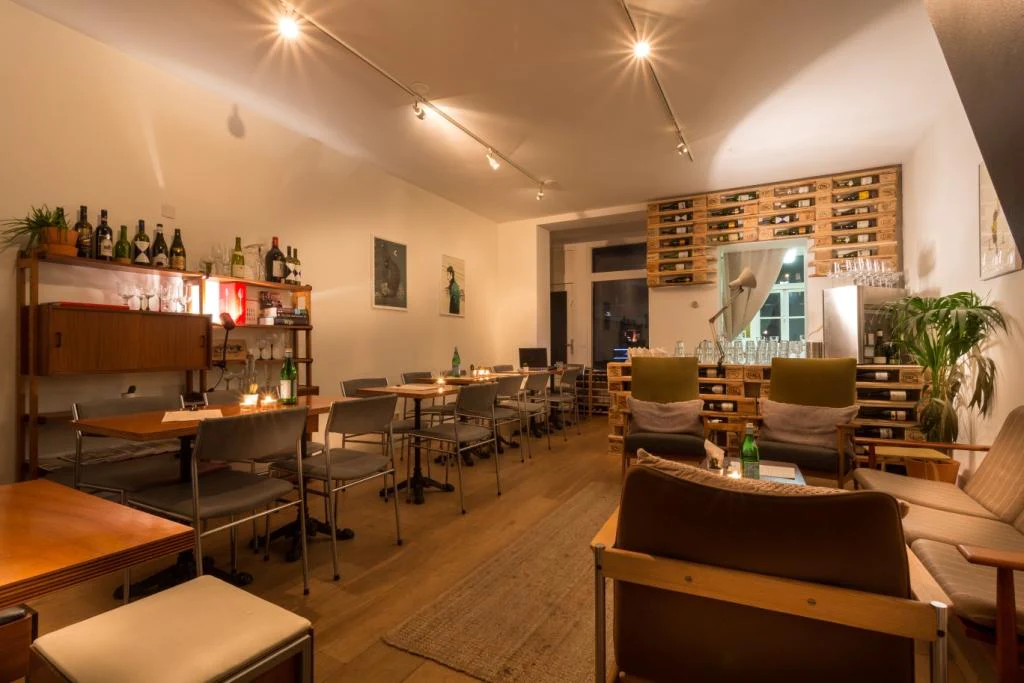
Wijnbar Paulus aan de Ceintuurbaan is een gezellige bar met een huiselijke sfeer. Op de kaart staan talloze wijnen uit allerlei verschillende streken. Daarnaast serveren ze ook lekkere hapjes, zoals bitterbalen en burrata. Als je zin hebt in een verrassing kun je ook kiezen voor de wijntasting. Je kiest zelf de kleuren en de hoeveelheid glazen en de eigenaar kiest de wijn. Heb je tijdens een tasting een nieuwe favoriete wijn ontdekt? Dan heb je geluk; bij Wijnbar Paulus kun je namelijk ook een fles wijn kopen om mee naar huis te nemen.
1073 LM Amsterdam
Mister Nata
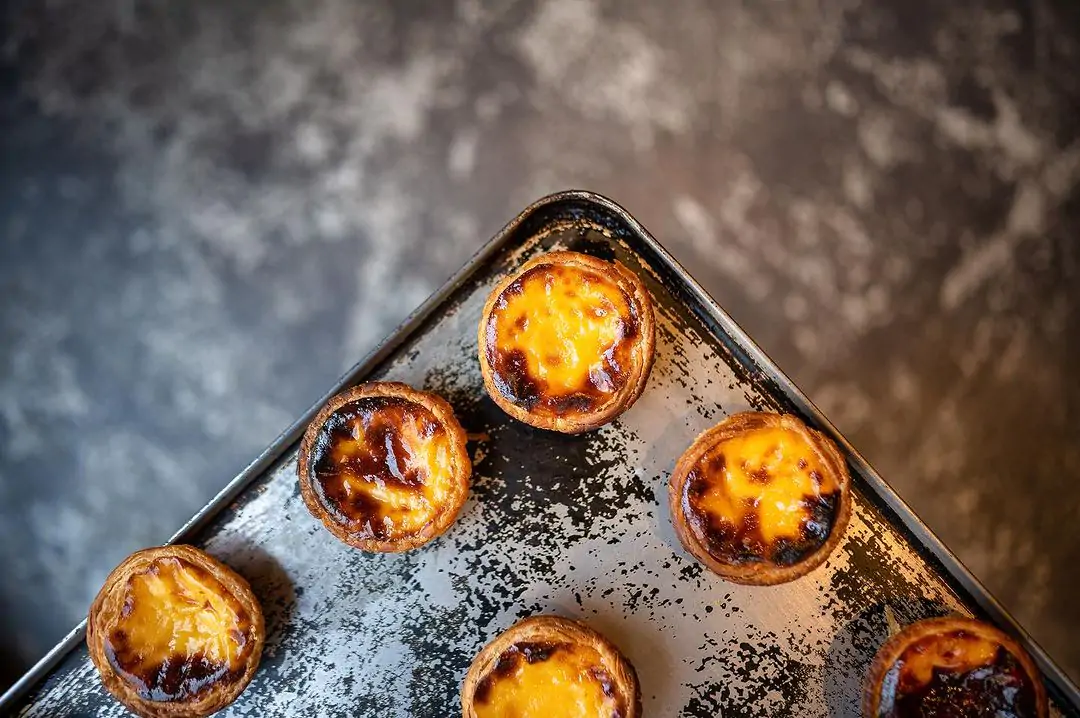
Bij Mister Nata ben je aan het juiste adres voor het lekkerste gebak van Amsterdam, waar je kunt genieten van heerlijke pastel de nata, perfect gecombineerd met prachtige Single Estate Coffee, bereid met een La Marzocco-espressomachine. Portugal staat bekend om zijn verrukkelijke zoetigheden. Snoep, gebak en desserts maken allemaal deel uit van de traditionele Portugese keuken. Te midden van al deze heerlijkheden is de pastel de nata de absolute beroemdheid.
1073 BN Amsterdam
De Japanner
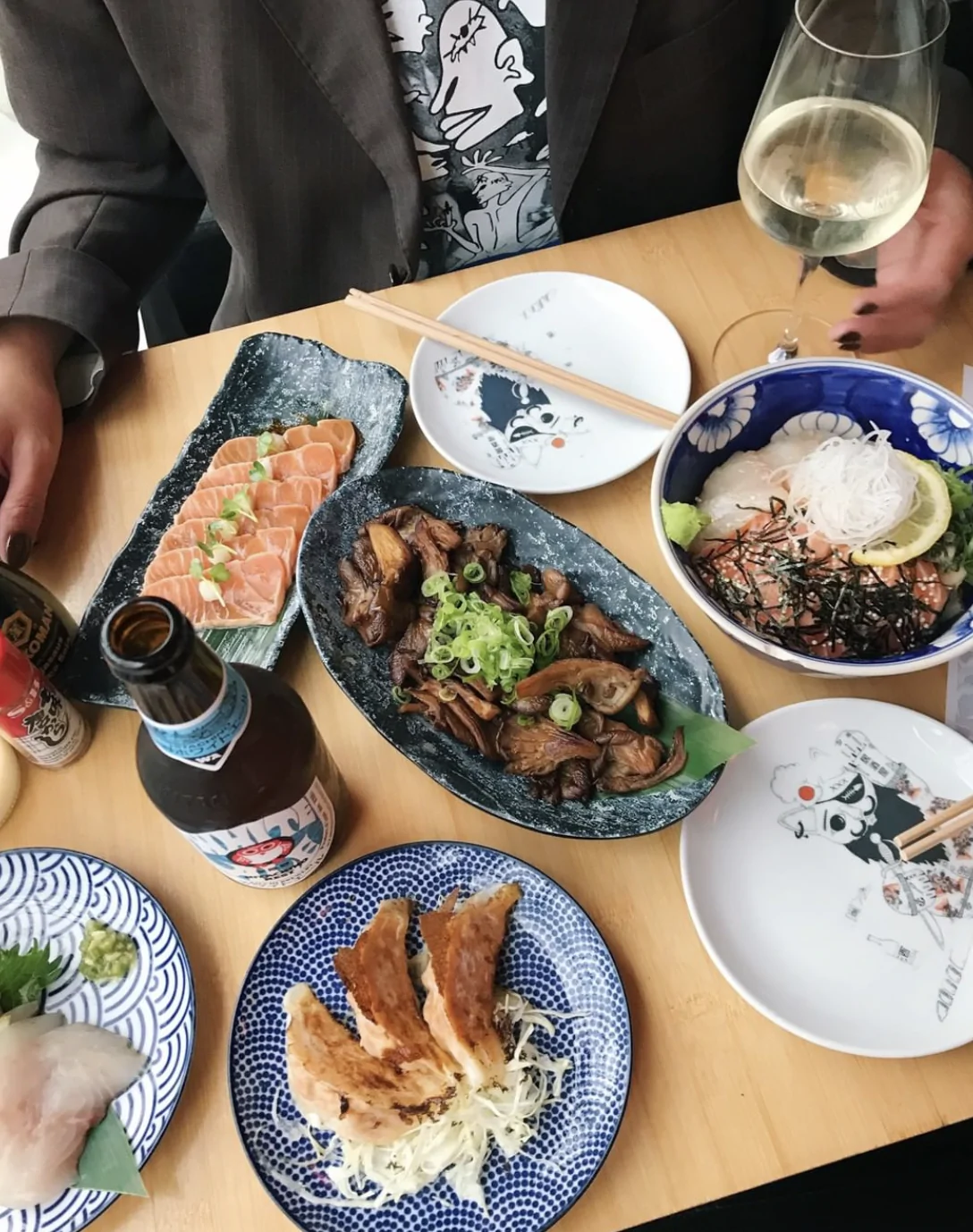
De Japanner is inmiddels een fenomeen geworden in zowel de Pijp als in Oud-West. De vestiging in de Pijp zit op de Albert Cuyp markt, wat het gemakkelijk maakt om binnen te stappen nadat je ergens een biertje hebt gedaan. Het concept is simpel en straight-forward: heerlijk Japans fingerfood wat gepaard gaat met ofwel een cocktail, Japans biertje, saké of een non-alcoholisch alternatief natuurlijk. Het komt dan ook niet als een verassing dat de reviews over de Japanner lovend zijn, waarbij vooral het vriendelijke personeel als de lekkere hapjes worden uitgelicht.
1073 CJ Amsterdam
Restaurant Mont Blanc
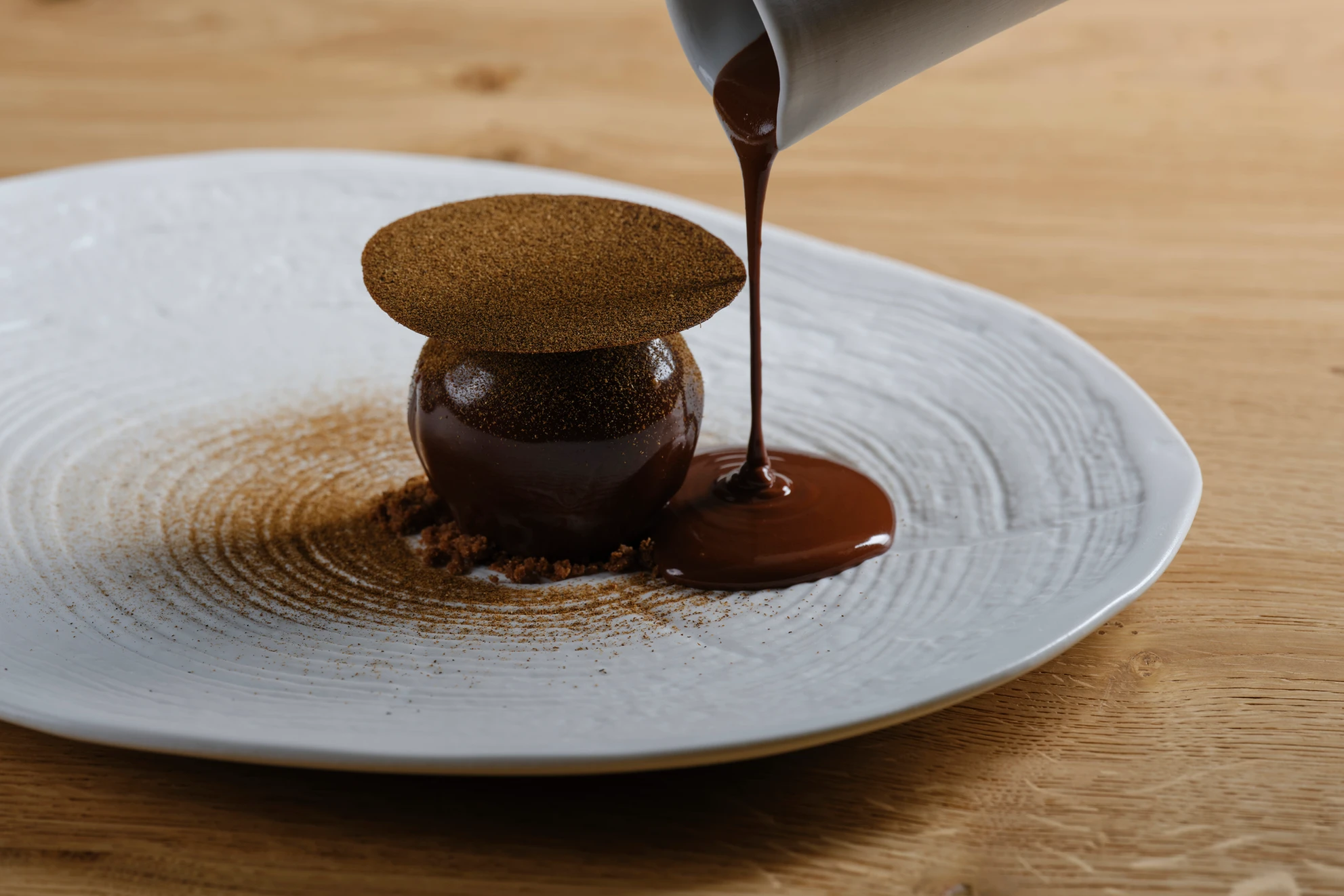
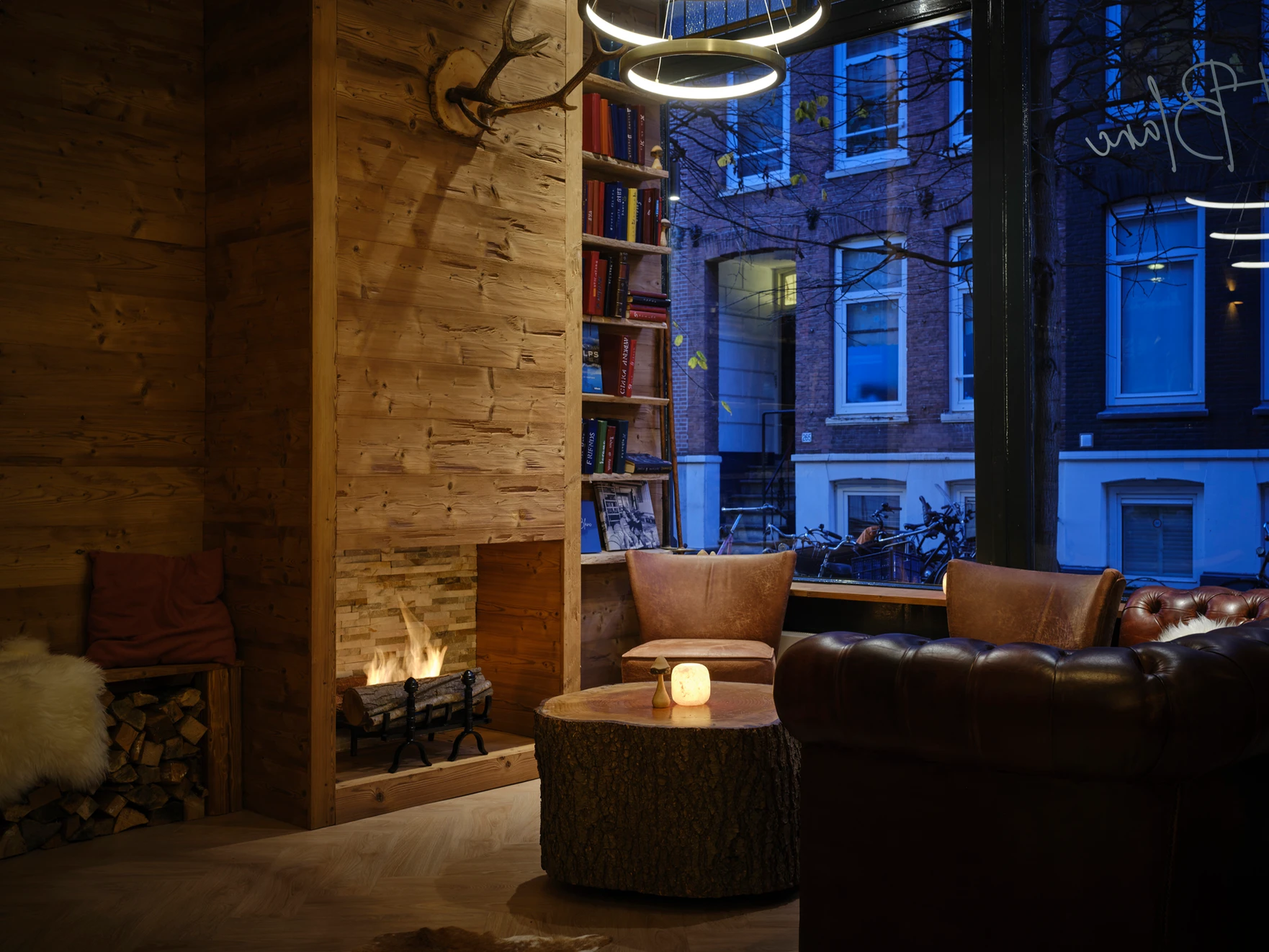
Chef Thibault en zijn vrouw Dieuwertje Gordijn runnen al jaren succesvol Bistrot des Alpes. In oktober 2021 hebben zij op de Govert Flinckstraat 308 een nieuw restautant geopend. Hier kan je op culinaire ontdekkingsreis rondom de Mont Blanc. Chef Thibault neemt je mee langs de bergmeren, door de bergen en tot slot naar de top van de Mont Blanc met zijn signature dessert. Een fine-dining ervaring in een warme sfeer.
1072 PD Amsterdam
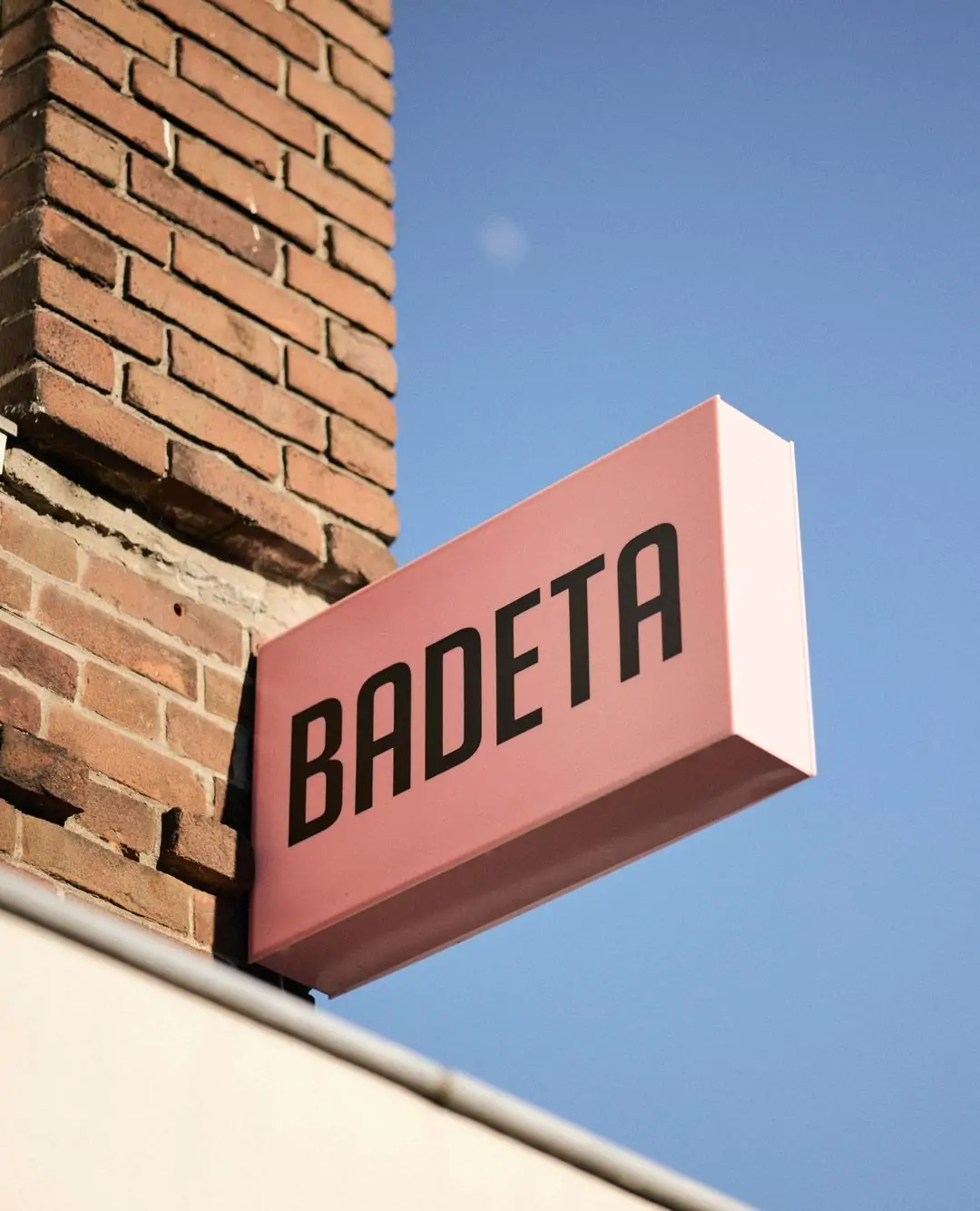
Badeta
Badeta begint langzaamaan naam te maken in de stad met ondertussen twee locaties. Het begon in De Pijp en heeft nu ook een vestiging in de Watergraafsmeer. De twee oprichters hebben de missie om in elk stadsdeel een locatie te openen. Deze koffiebranderij verkoopt heerlijke koffie met hun eigen melanges en diverse huisgemaakte lekkernijen. Duurzame koffie staat centraal, afkomstig van kleinschalige boeren met milieuvriendelijke boerderijen en goede arbeidsomstandigheden.
1072 GP Amsterdam
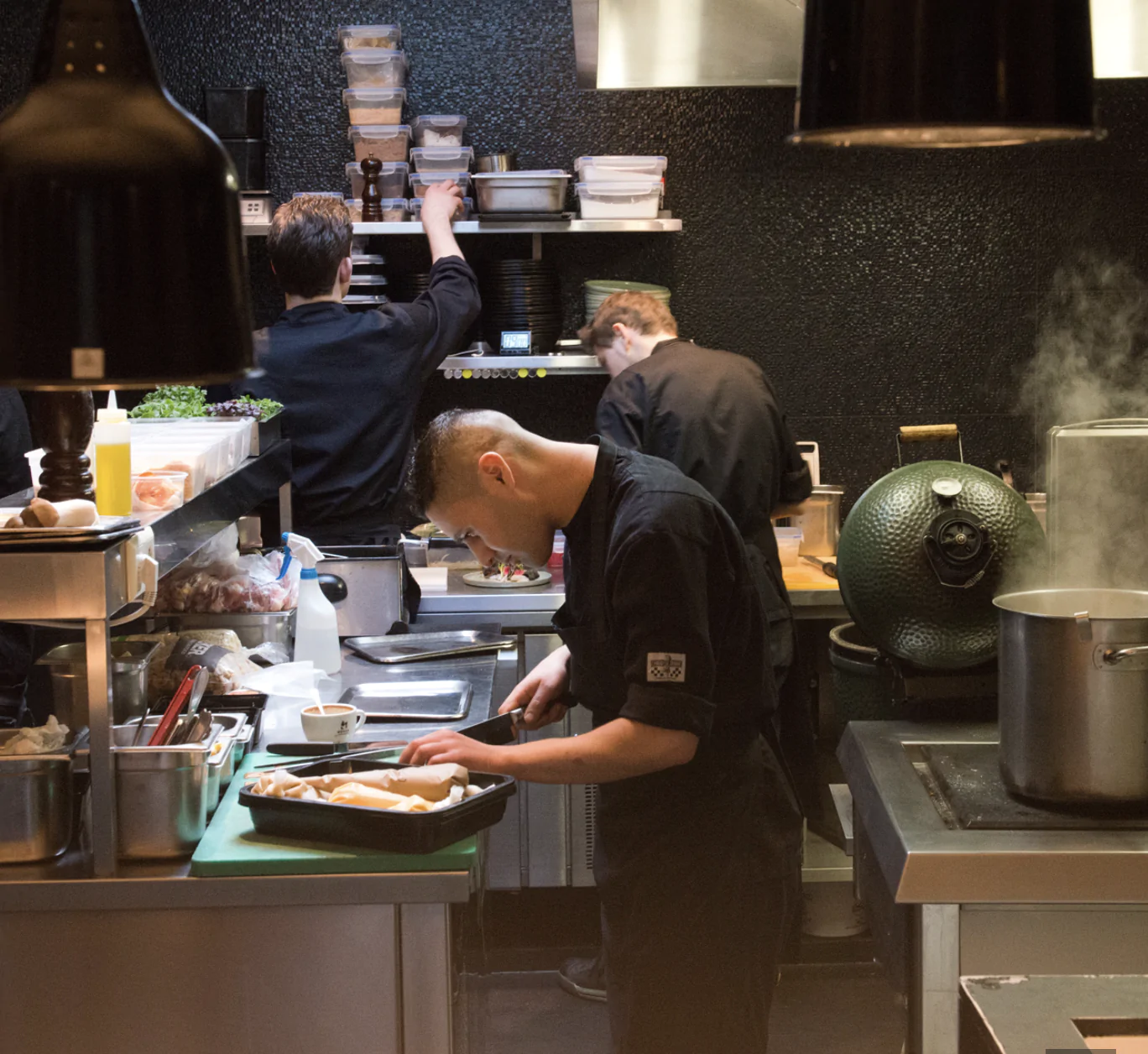
Sinne (*)
In het rijtje Michelinsterren restaurants mag Sinne niet ontbreken. De gastronomische keuken en een relaxte sfeer maken de plek bij uitstek geschikt voor een lange lunch in het weekend. Sinne doet de Michelinster sinds 2015 eer aan dankzij sommelier Suzanne Sluijter en chef-kok Alexander Ioannou. Het restaurant heeft een eigentijds menu geïnspireerd op de Franse, Mediterrane en Oosterse keuken met keuze van 3 tot 8 gangen en een uniek wijnarrangement voor de liefhebber.
1074 AH Amsterdam
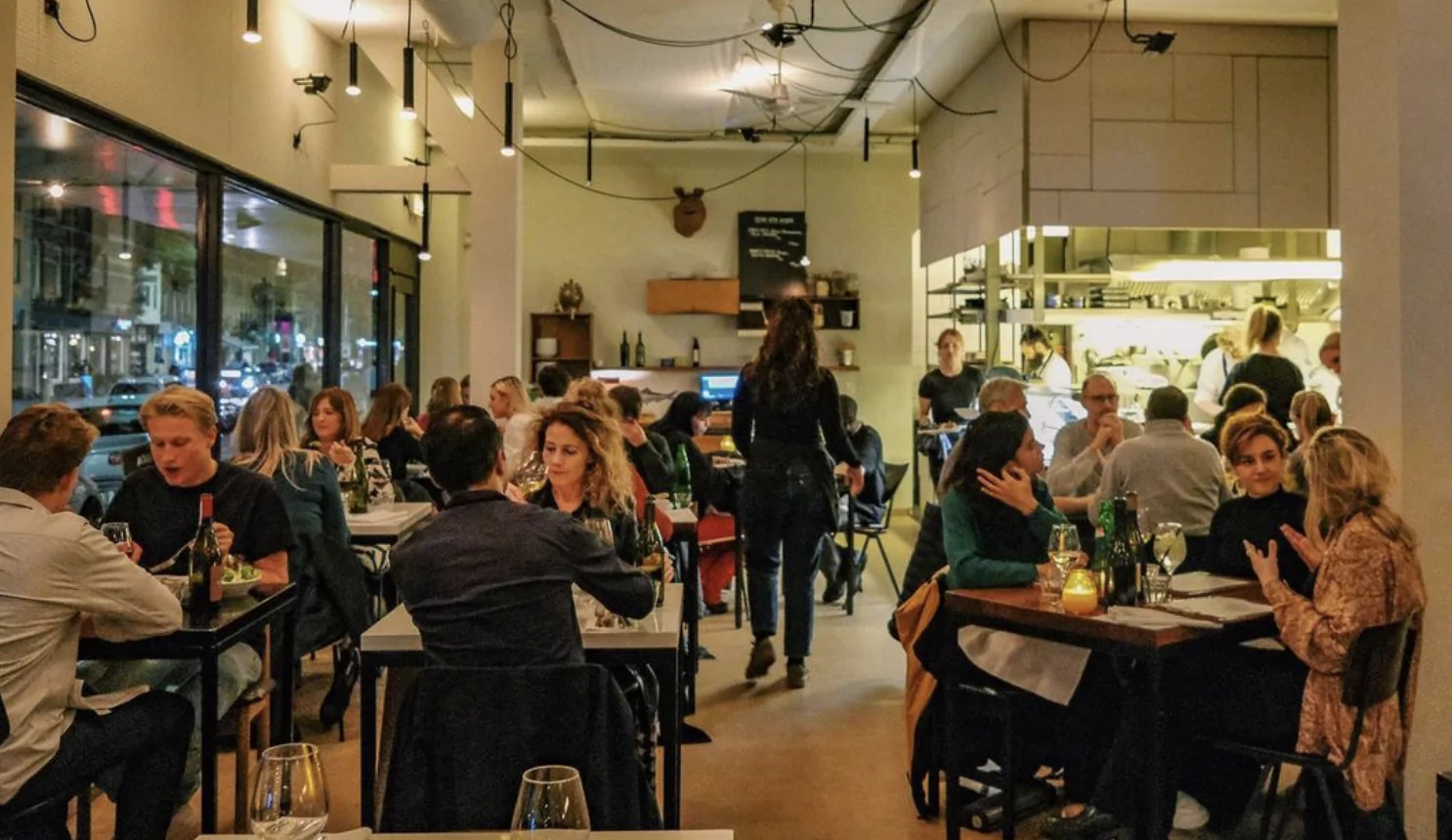
Firma Pekelhaaring
Firma Pekelhaaring is een geliefd Italiaans restaurant gevestigd aan de Van Woustraat 127-129 in Amsterdam. Het restaurant staat bekend om zijn ontspannen sfeer en authentieke gerechten, beïnvloed door de Italiaanse keuken, maar met ruimte voor eigen variaties en lokale invloeden. De eigenaar van Firma Pekelhaaring is Matthias van der Nagel. Onder zijn leiding heeft het restaurant erkenning gekregen, waaronder een vermelding in de MICHELIN Gids met een Bib Gourmand voor de goede prijs-kwaliteitverhouding. Op de kaart gerechten als Arancini, tagliatelle met eendenstoof of kabeljauw met gezouten baccala en schorseneer.
1074 AB Amsterdam
Roopram Roti
Roopram Roti komt oorspronkelijk uit Suriname en werd geëxporteerd naar Nederland vanwege de grote vraag naar roti op de Nederlandse markt, onder andere door vakantiegangers uit Paramaribo. Om aan deze vraag te voldoen, besloot J. Roopram diepvries roti naar Nederland te exporteren. Helaas werd dit op het laatste moment tegengehouden vanwege de beperkingen op de uitvoer van kip en kipdelen uit Suriname. In plaats daarvan opende J. Roopram in juli 2002 zijn eerste restaurant aan het Mathenesserplein 89 te Rotterdam. Dit werd gevolgd door het tweede filiaal in Amsterdam, genaamd Roopram Roti Eetcafé. Sindsdien zijn er twee extra filialen geopend, namelijk in Den Haag en aan de Van Woustraat 37 te Amsterdam.
1074 AG Amsterdam
Stadsmarkt de Pijp
Bij Stadsmarkt de Pijp worden de producten dagelijks zelf opgehaald. Zo komen direct van de boer, tuinder, slager, visboer en bakker allerlei producten midden in de Pijp terecht. De focus bij Stadsmarkt de Pijp ligt op duurzaamheid en hier wordt een eerlijke prijs voor betaald aan de leveranciers. De werkzame vakmensen staan altijd paraat om iets aan te raden of om iets te laten proeven. Ook staat ambacht centraal; het is een markt waar je fijn kan eten en lekker kan genieten.
1073 CM Amsterdam
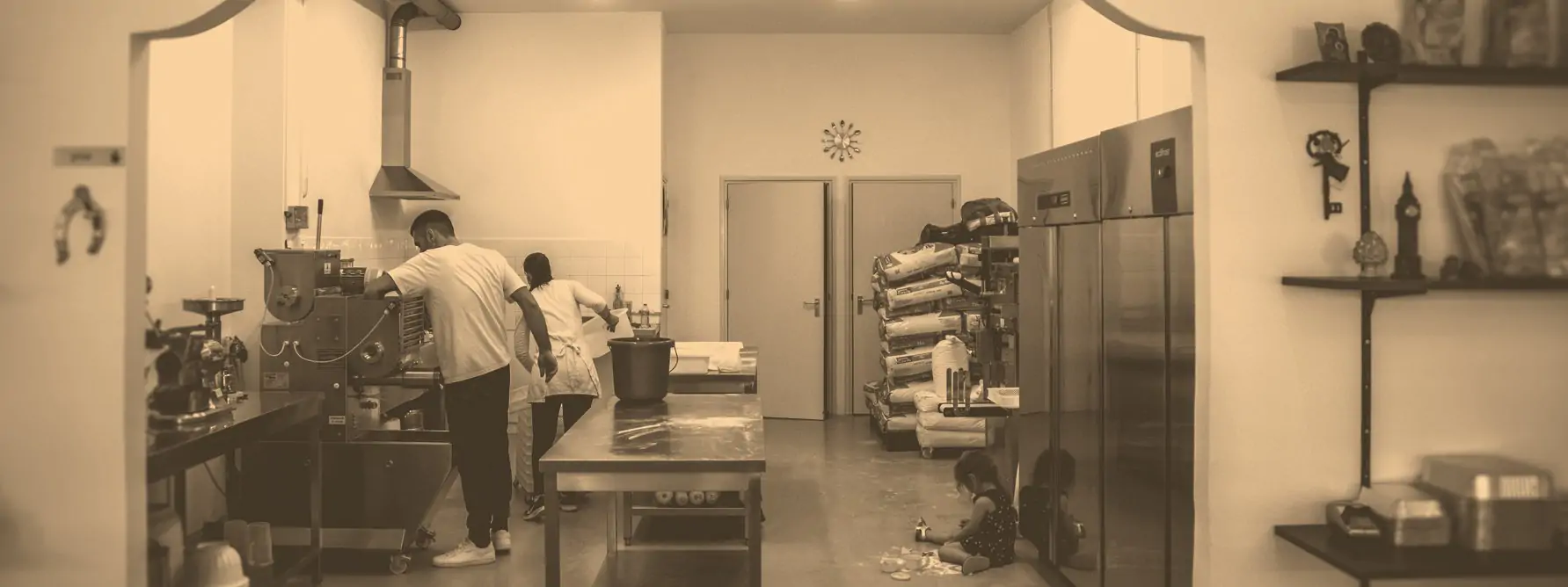
Il Pastificio
Een pastafabriek; zo noemt Il Pastificio zichzelf. Hier maken ze zelf Italiaanse pasta op authentieke wijze. Elke dag zijn ze bezig met het bereiden van verse producten. Het aanbod is groot: van fusilli tot conchiglie tot rigatoni napoletani. Of je nou indruk wil maken tijdens een etentje; of lekker voor jezelf wil koken; met de producten van Il Pastificio wordt elk pastagerecht een succes.
1073 BM Amsterdam
Rise Bakery
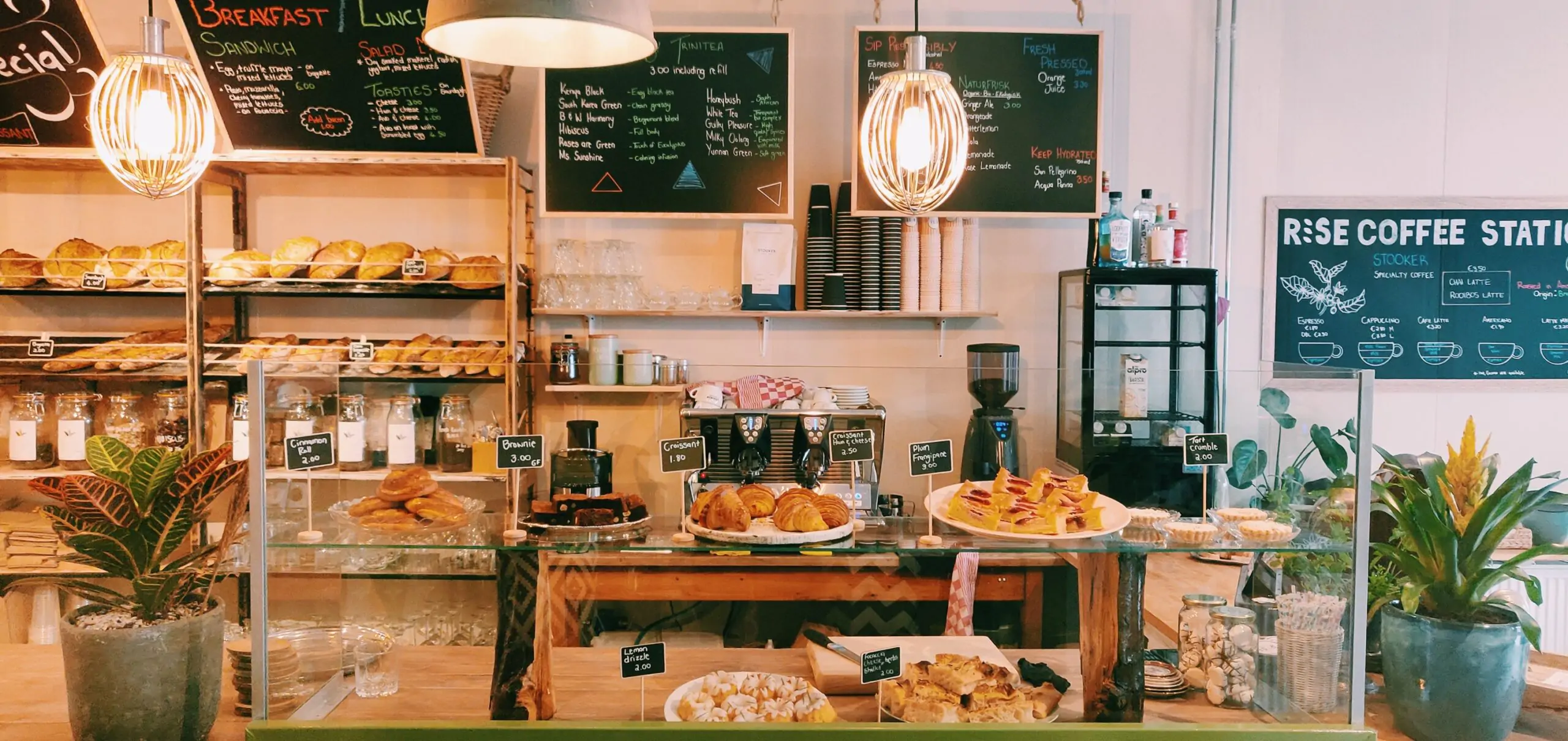
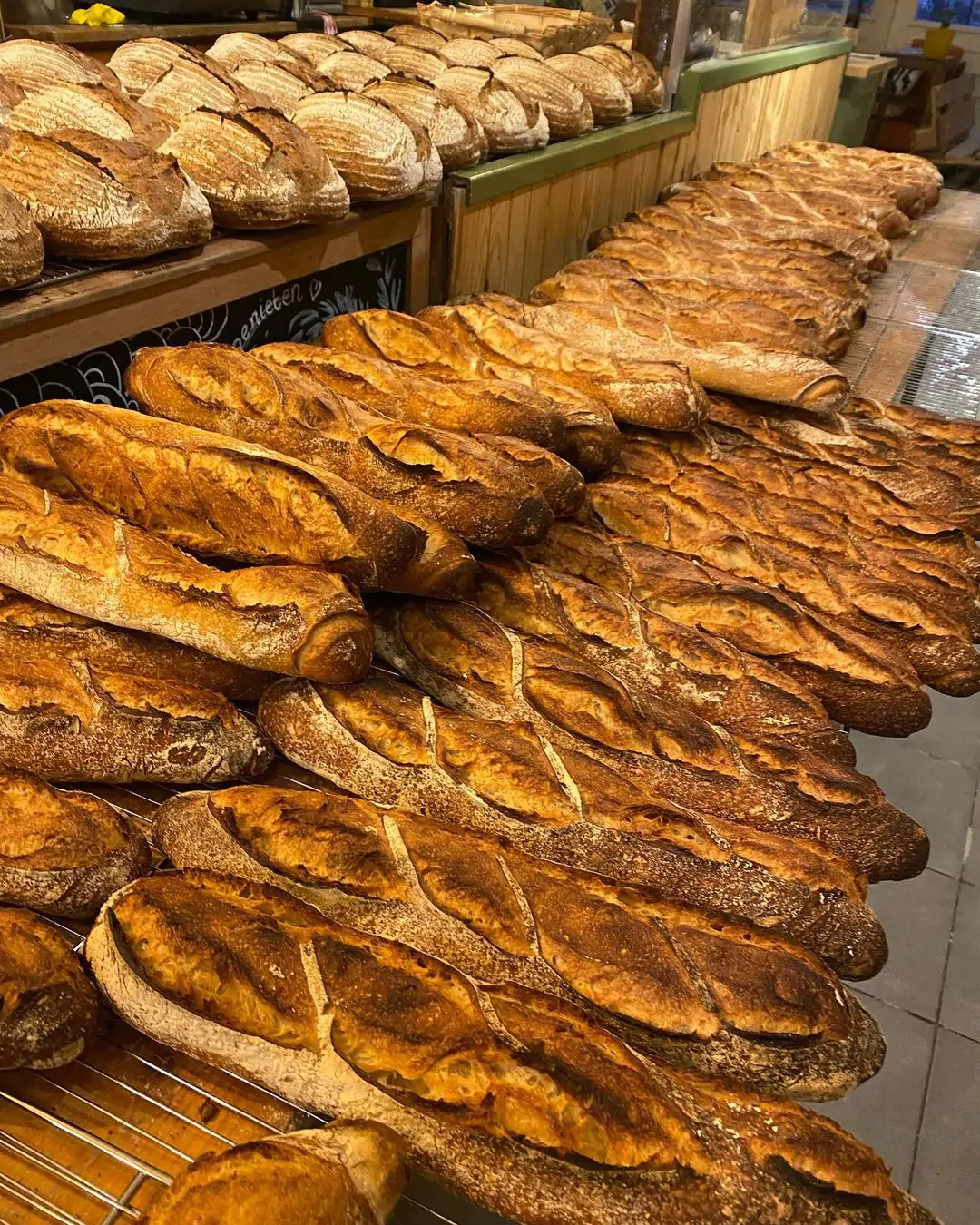
De drie eigenaren van Rise Bakery ontmoetten elkaar in Londen waar ze allemaal in de horeca werkten. Door de maatregelen van de pandemie op de horeca besloten ze gezamenlijk hun droom te volgen en naar Amsterdam te komen om een bakkerij te openen. Alle drie hebben ze een eigen specialiteit en dat resulteert in Franse broden, zuurdesem en taartjes. Gelegen aan de Albert Cuypstraat is dit de perfecte plek om een Deens gebakje of een kaneelbroodje te eten voor of na boodschappen op de markt.
1073 BT Amsterdam
Epicerie de Pijp
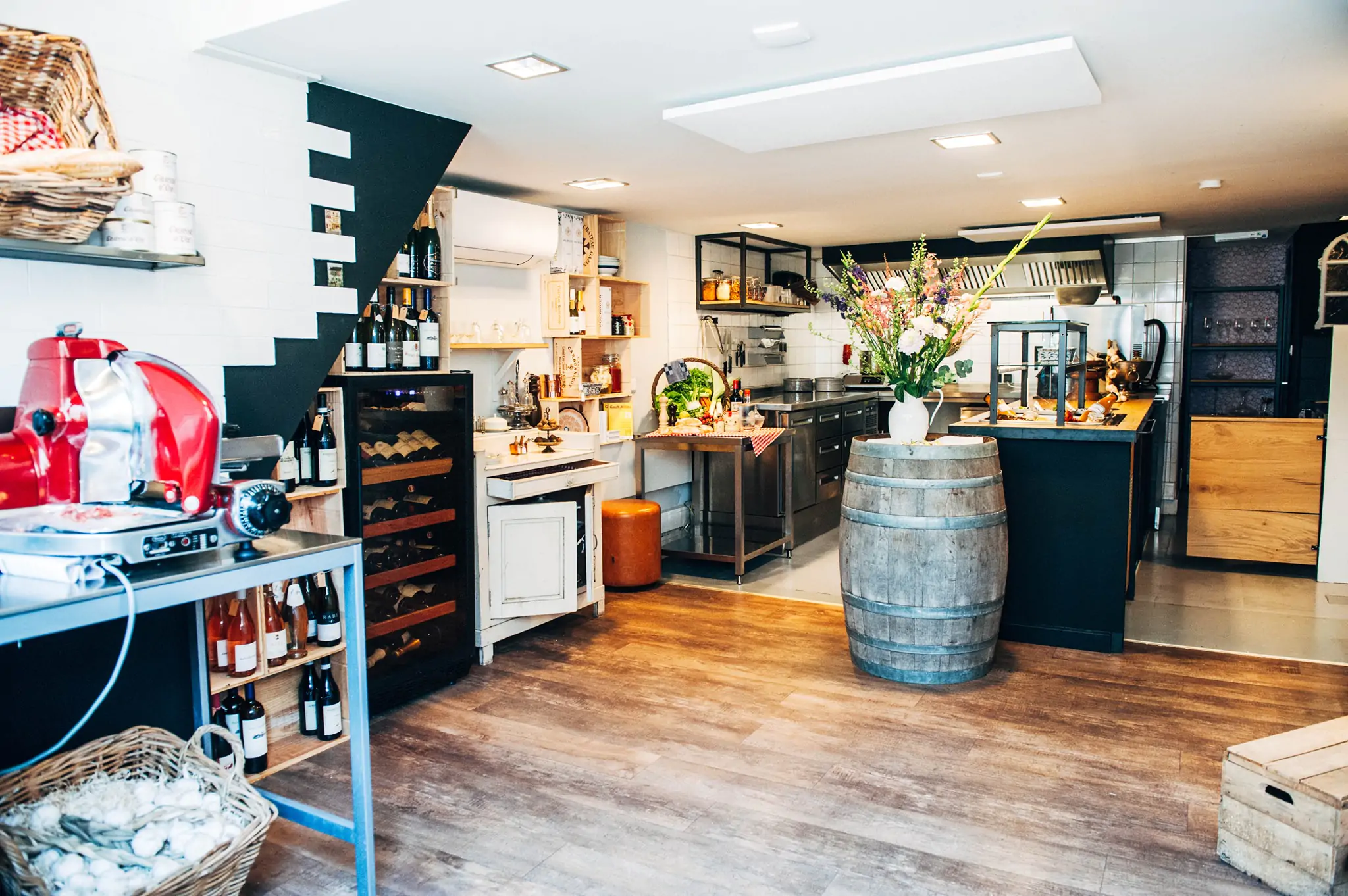
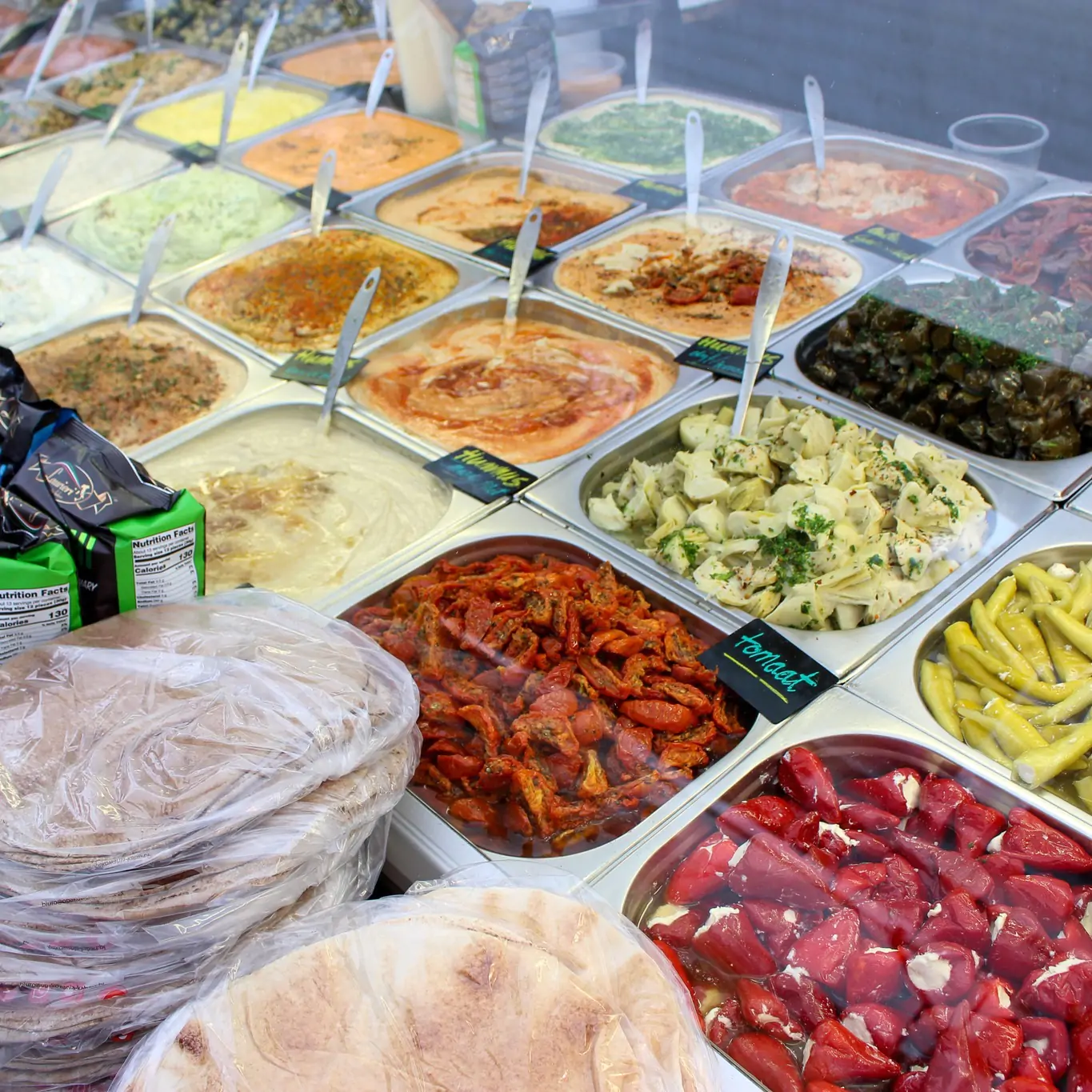
Een beetje Frankrijk in Amsterdam. Vanwege het gemis van franse delicatessen, als eigenaresse Merabi naar Frankrijk ging kwam ze terug met tassen vol boodschappen, is deze zaak om de hoek van de Albert Cuyp markt geopend.
Alle producten zijn door de eigenaren zelf uitgezocht en geïmporteerd. Versproducten zoals Le Mi-chèvre Soignon, een kaas gemaakt van geit en koelmelk, maar ook galettes Saint Jacques, crêpes gevuld met coquilles in roomboter-peterseliesaus.
1073 BD Amsterdam
De Albert Cuypmarkt
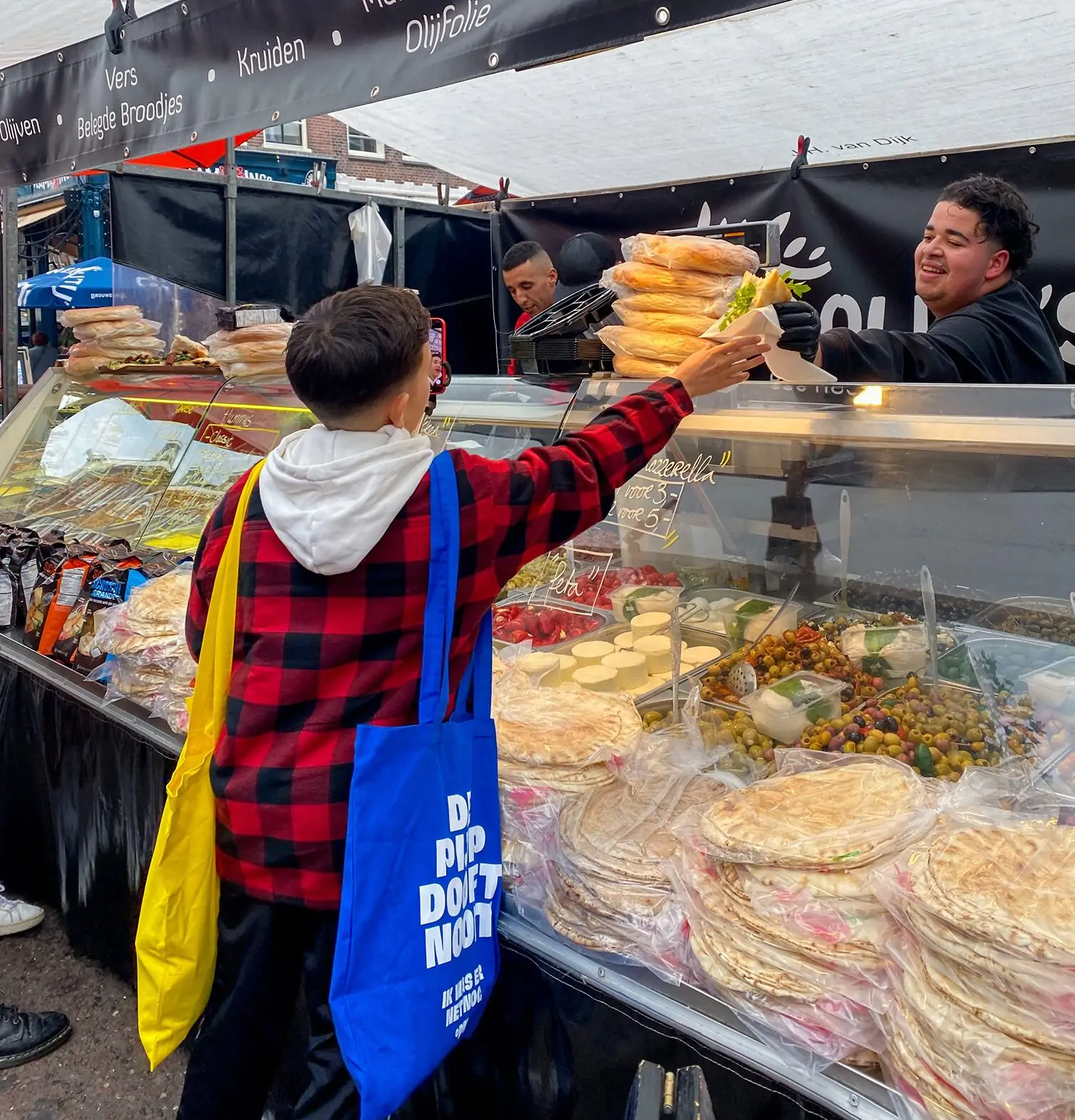
De Albert Cuypmarkt is van maandag t/m zaterdag geopend van 9:00 tot 18:00 en is met 260 kramen de grootste dagmarkt van Europa. Het gemeentebestuur besloot om in 1905 een vrije markt te vestigen dat vandaag de dag de Albert Cuypmarkt is, vernoemd naar een 17e -eeuwse kunstschilder. Je kan hier je dagelijkse boodschappen doen en terecht voor in het speciaal verse vis, delicatessen en verschillende soorten stoffen. De markt is natuurlijk bekend onder de Amsterdammers, maar ook toeristen weten de markt te vinden om bijvoorbeeld de typische Hollandse lekkernijen als haring en stroopwafel te proeven en opzoek te gaan naar souvenirs. Het is ook een leuke markt om gewoon even af te lopen voor de gezelligheid.
1073 SR Amsterdam
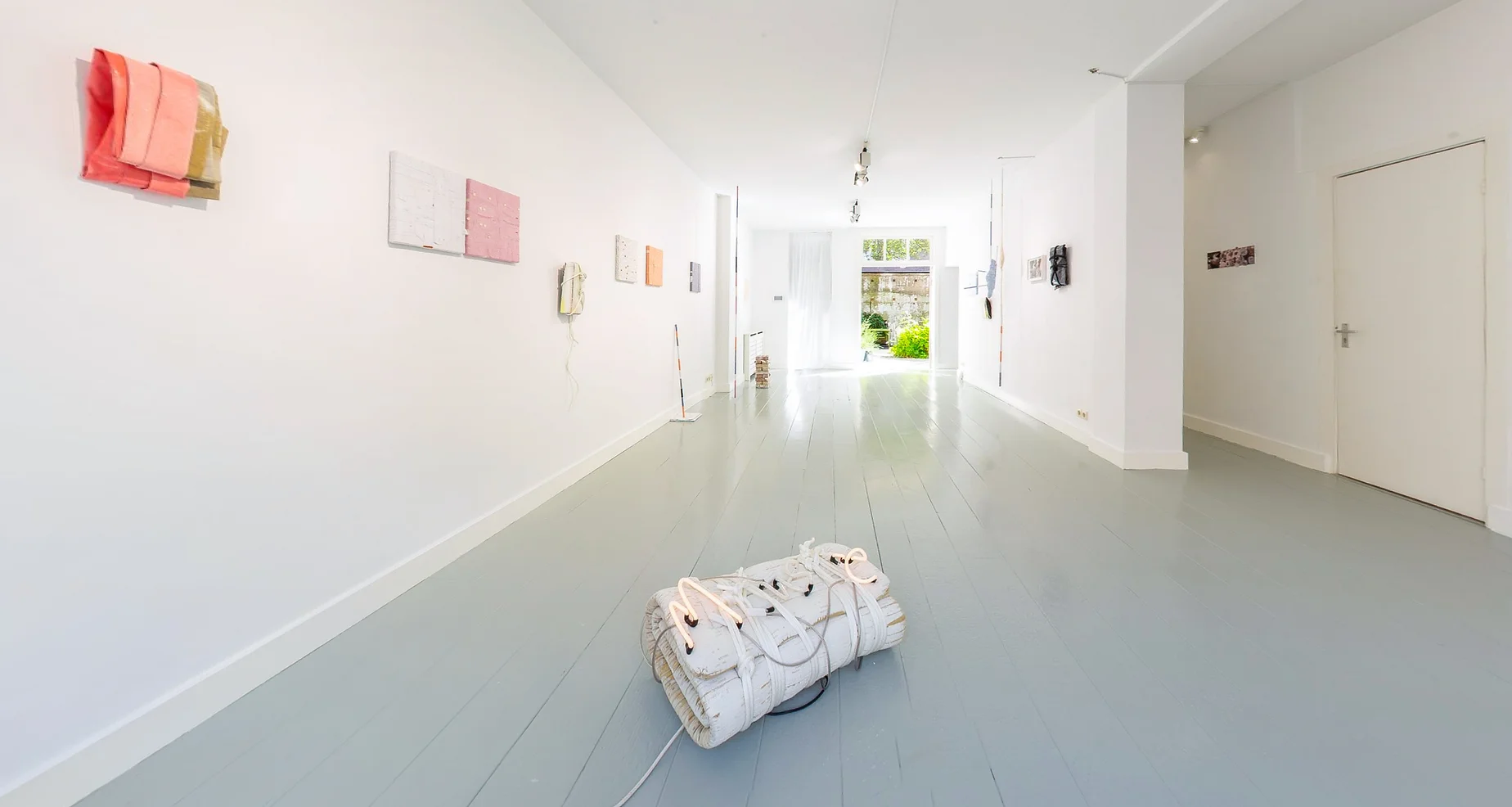
Josilda da Conceição Gallery
Josilda da Conceição Gallery presenteert een veelzijdig programma van hedendaagse kunst, variërend van schilderkunst tot installaties. Sinds de oprichting in 2014 is het de missie van de galerie geweest om internationale artistieke praktijken te verenigen en het gesprek over diverse culturele perspectieven te bevorderen. De galerie ondersteunt opkomend talent en biedt een platform voor gevestigde kunstenaars naast opkomende stemmen, wat nieuwe gebieden voor esthetische en conceptuele reflectie cultiveert.
1072 GN Amsterdam
Rialto
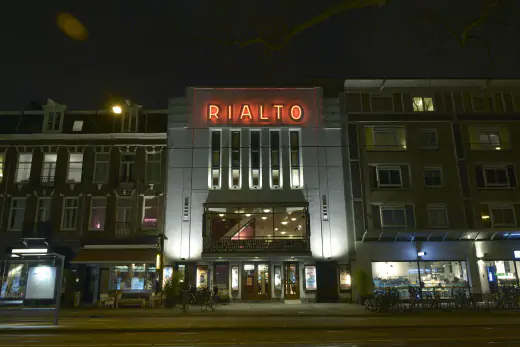
Rialto is een filmtheater aan de Ceintuurbaan in oude volksbuurt de Pijp. Het opvallende Art Deco gebouw waarin Rialto is gevestigd is ontworpen door architect Jan van Schaik. Het werd in 1920 gebouwd en is daarmee een van de oudste bioscopen in Amsterdam. Filmtheater Rialto heeft een divers aanbod van films die zijn gericht aan een breed publiek. Naast het vertonen van films organiseert Rialto vele verschillende evenementen zoals festivals, lezingen en discussieavonden. Sinds kort heeft Rialto ook een vestiging in het Nieuwe Universiteitsgebouw op de campus van de Vrije Universiteit.