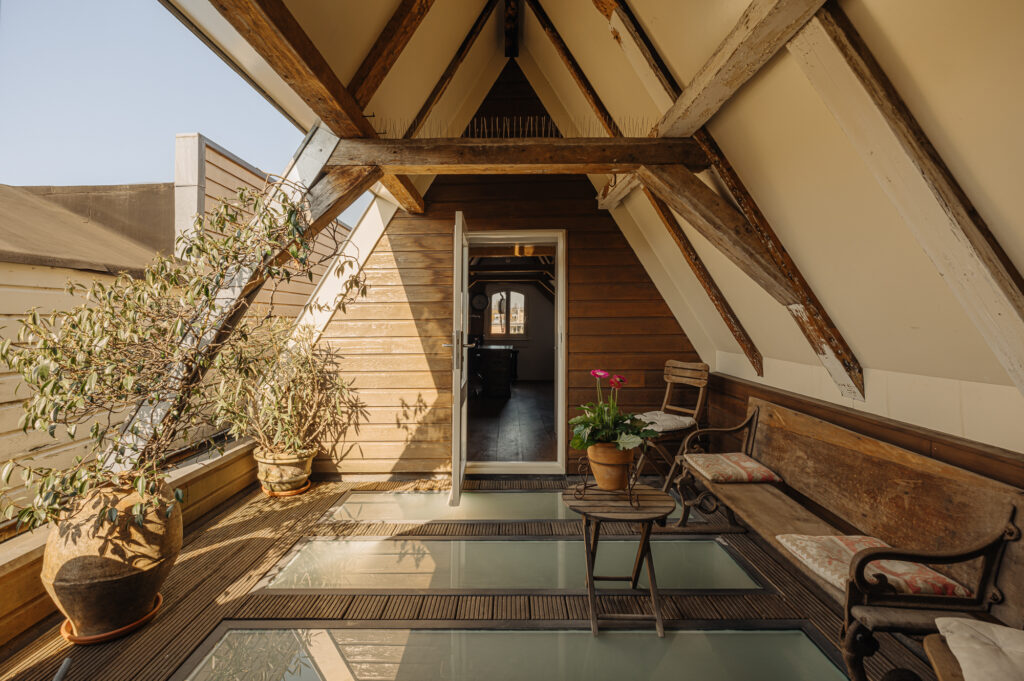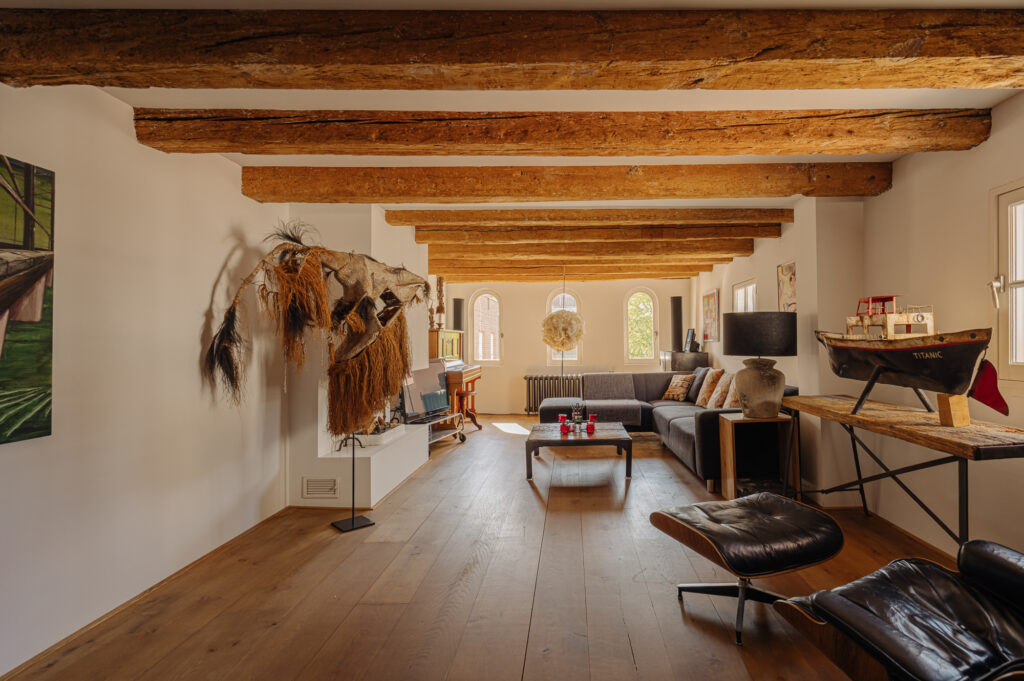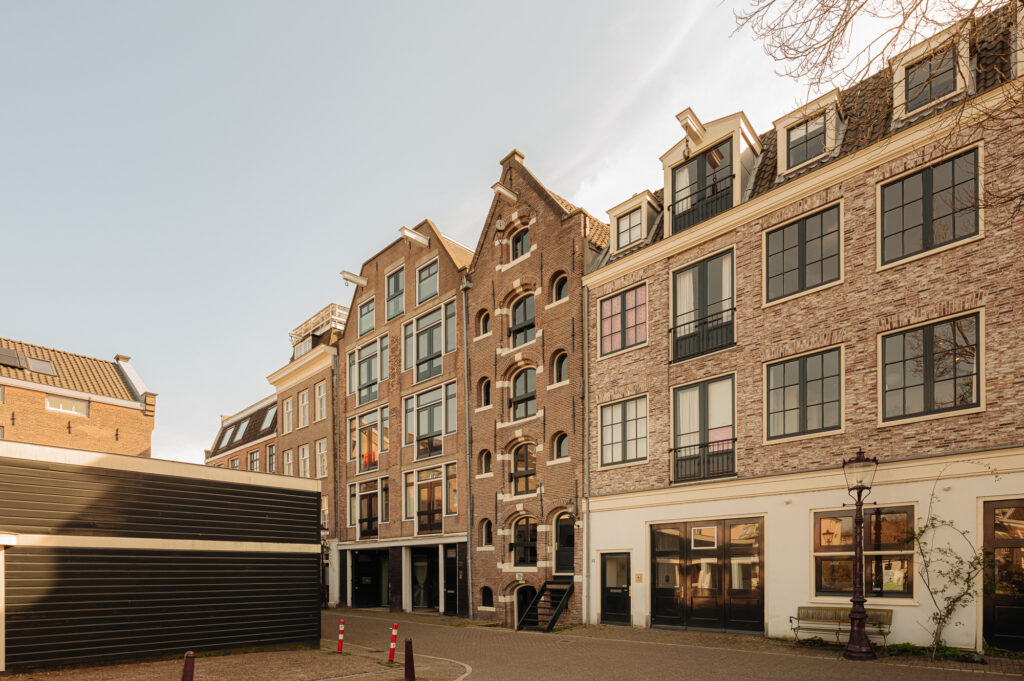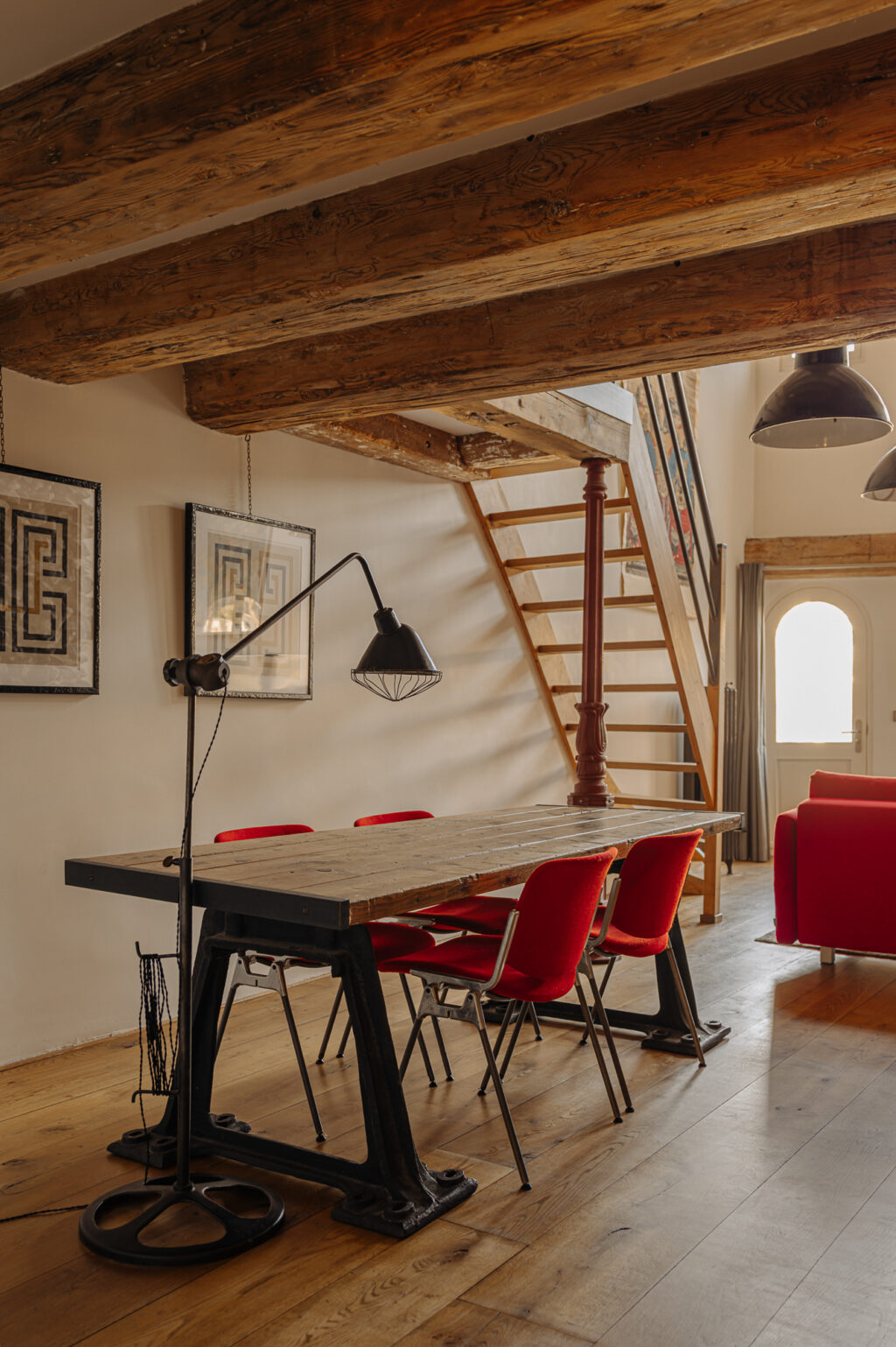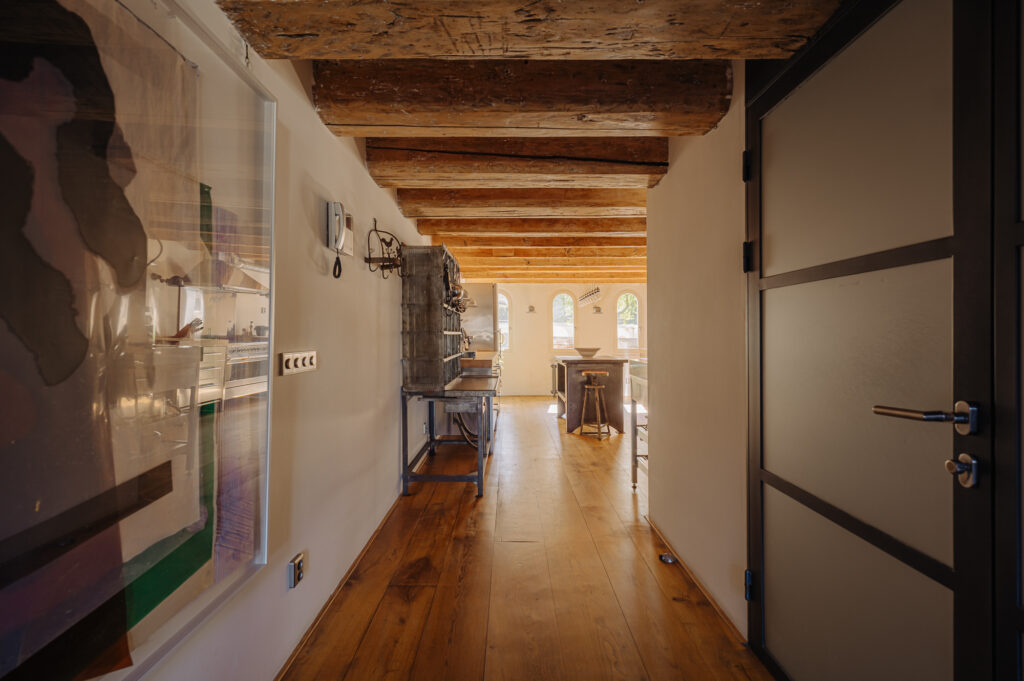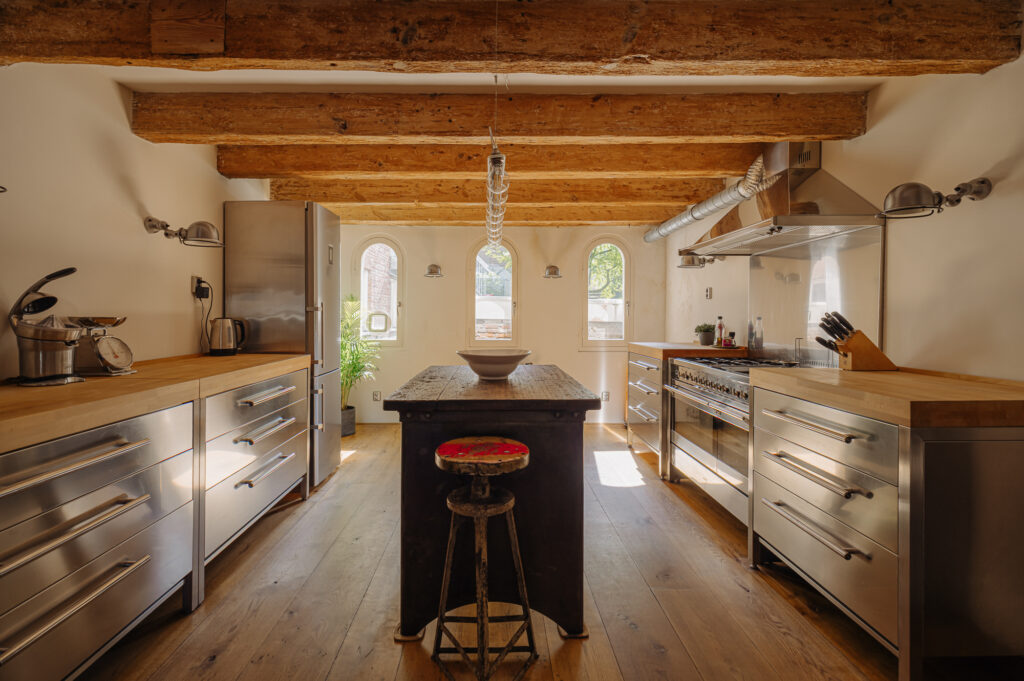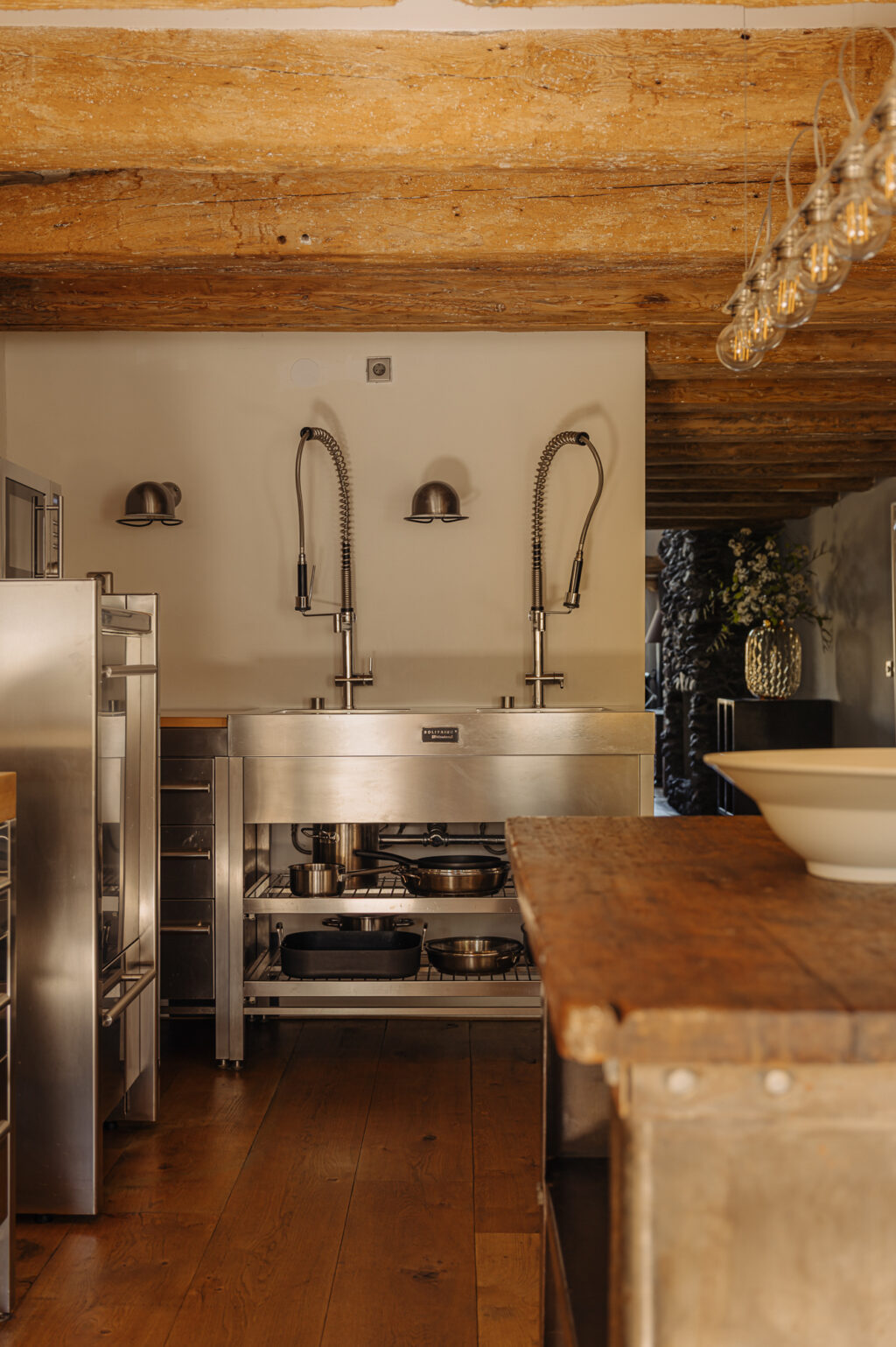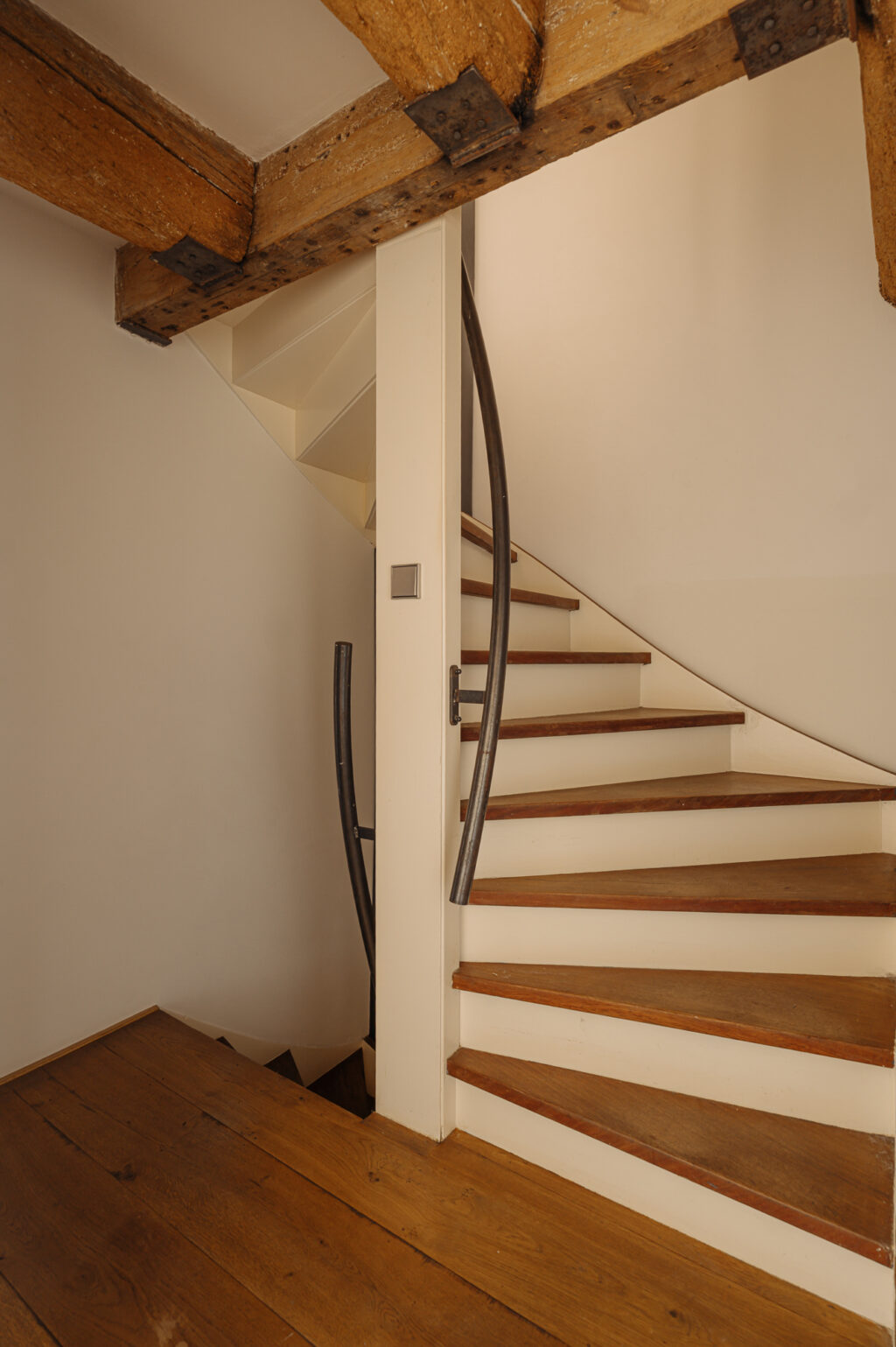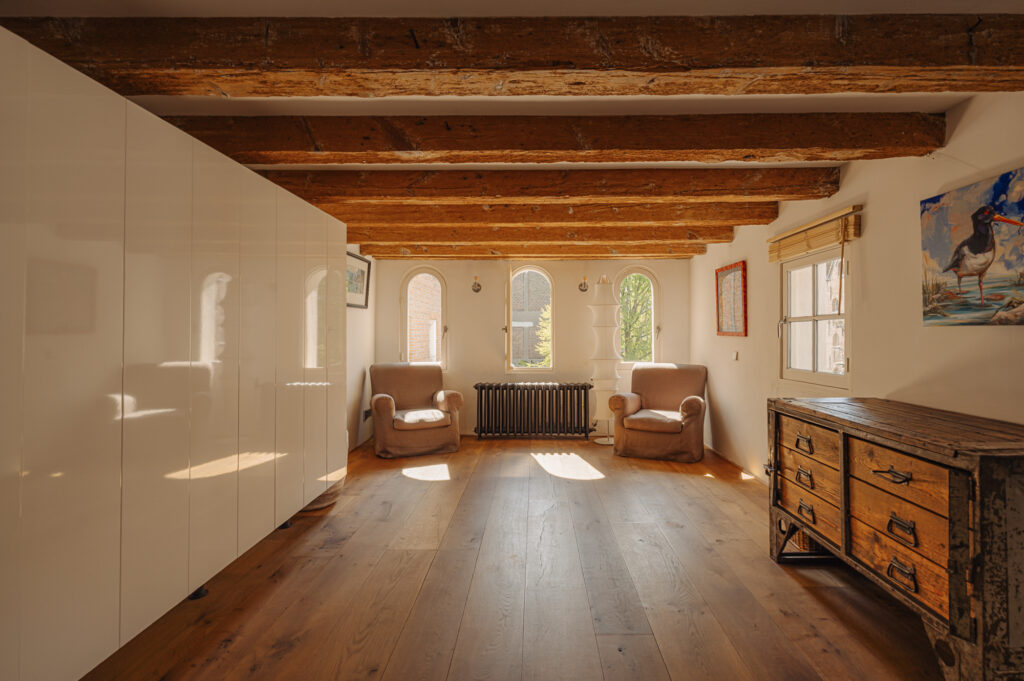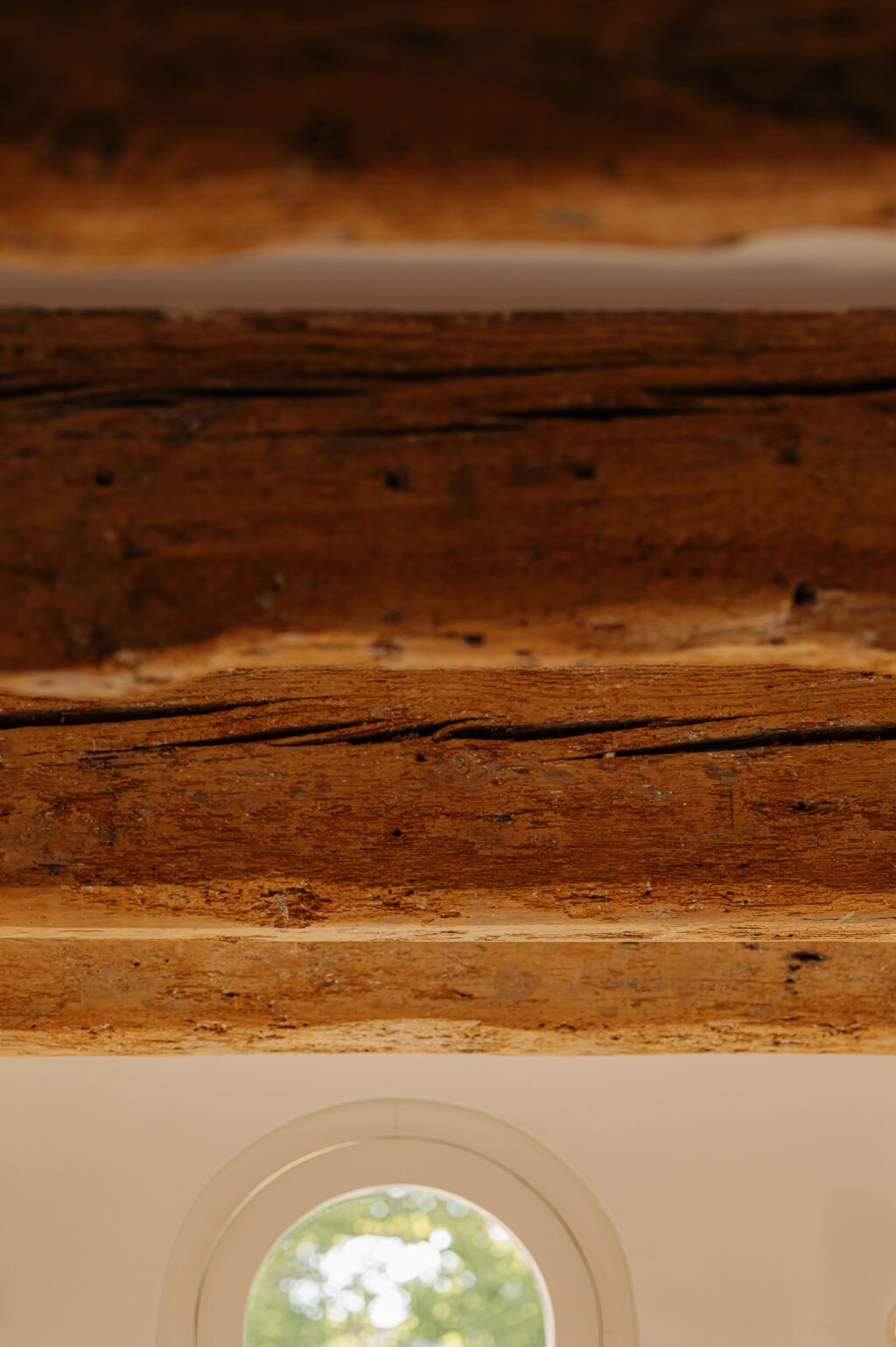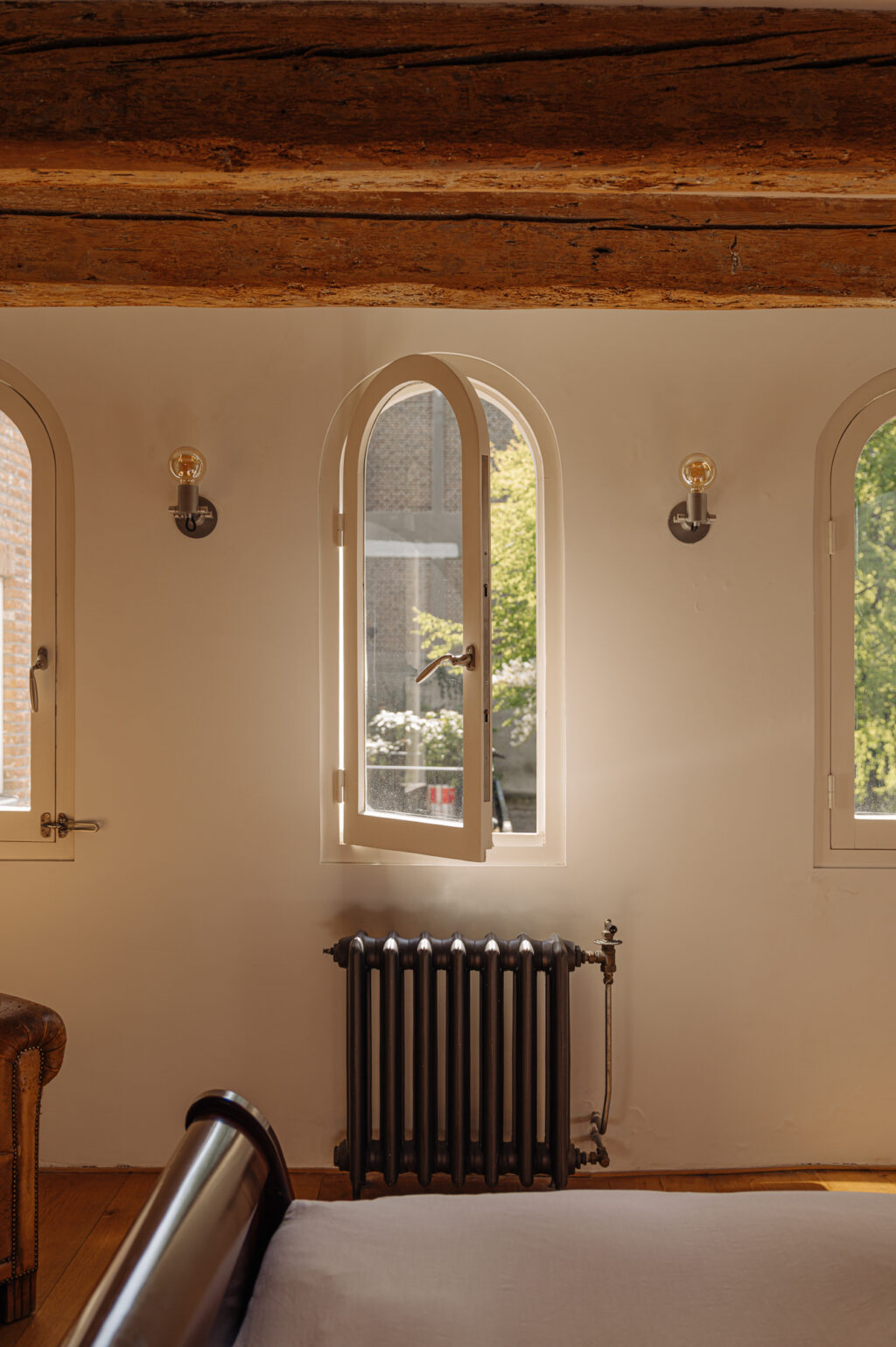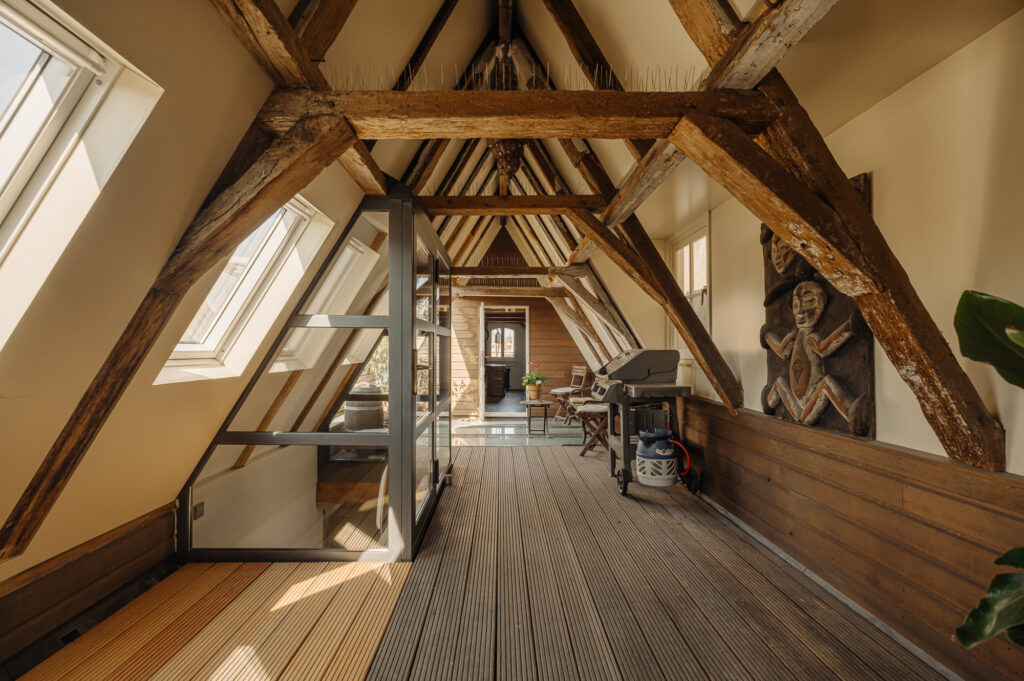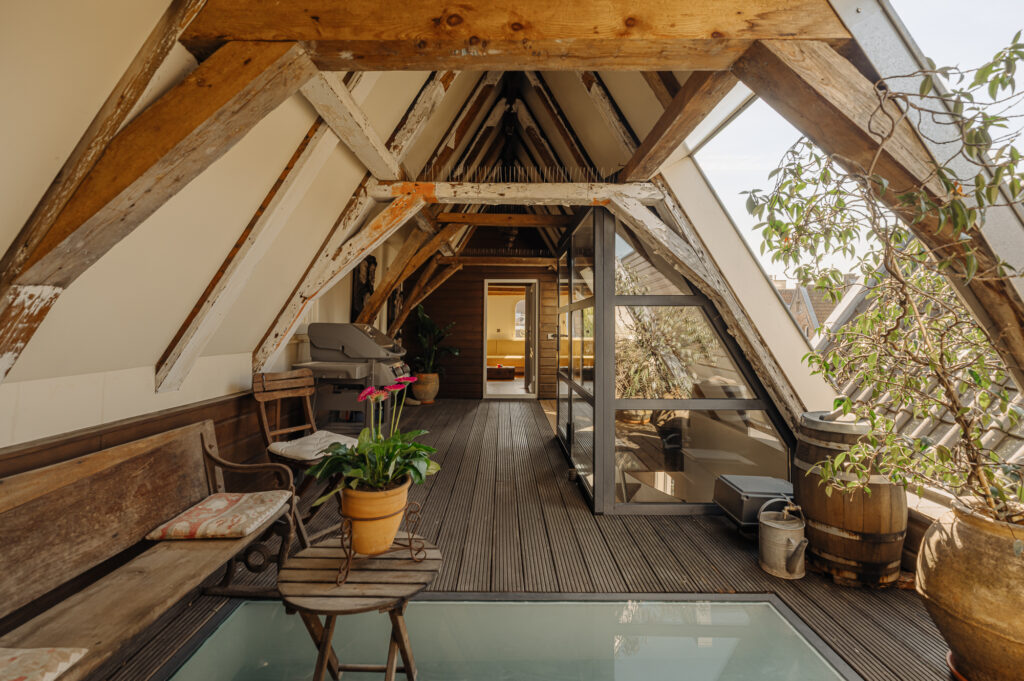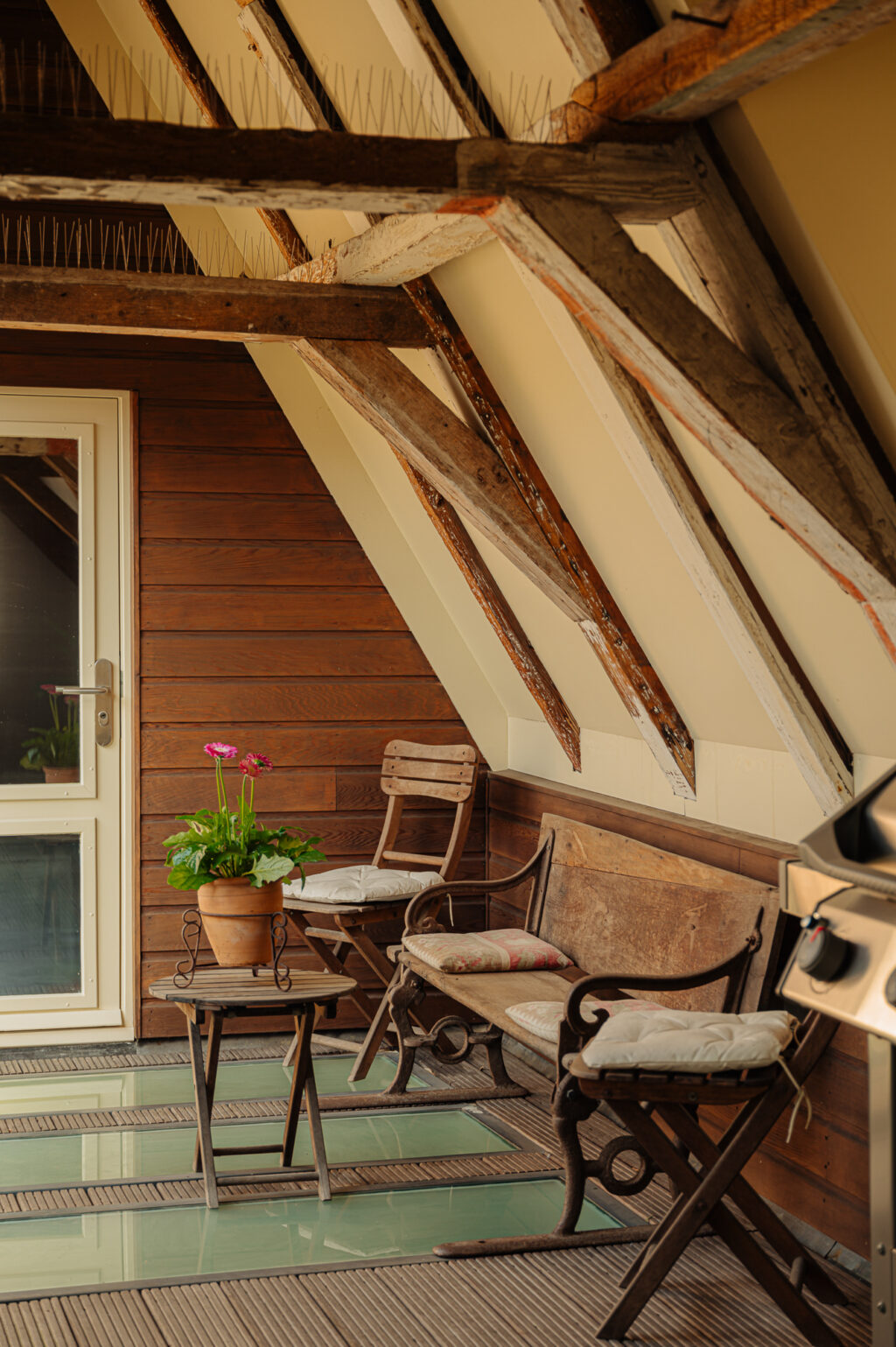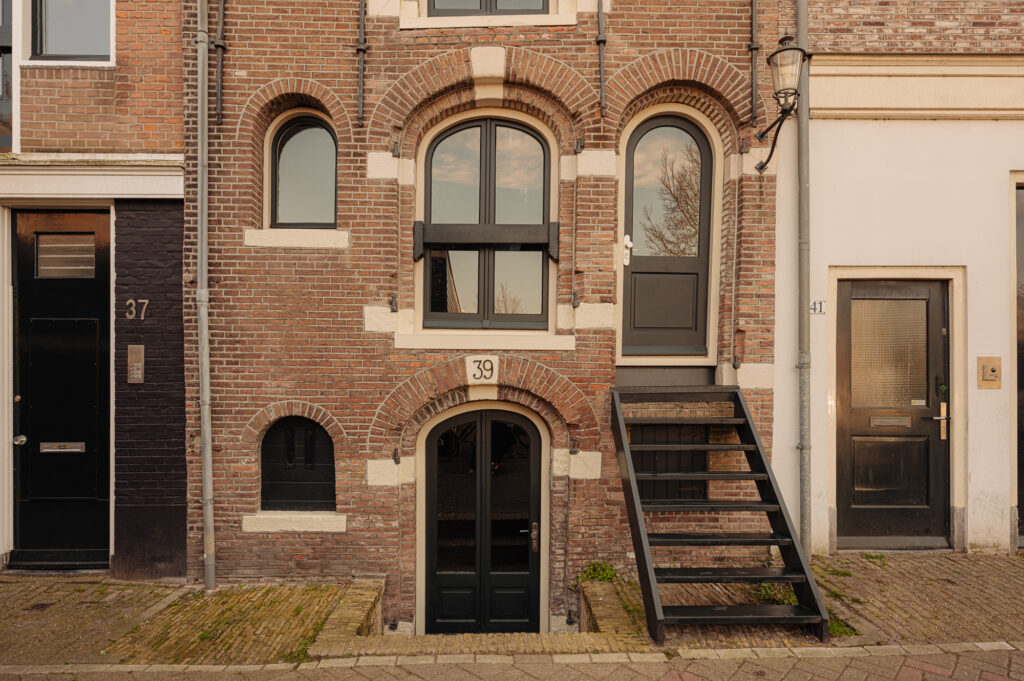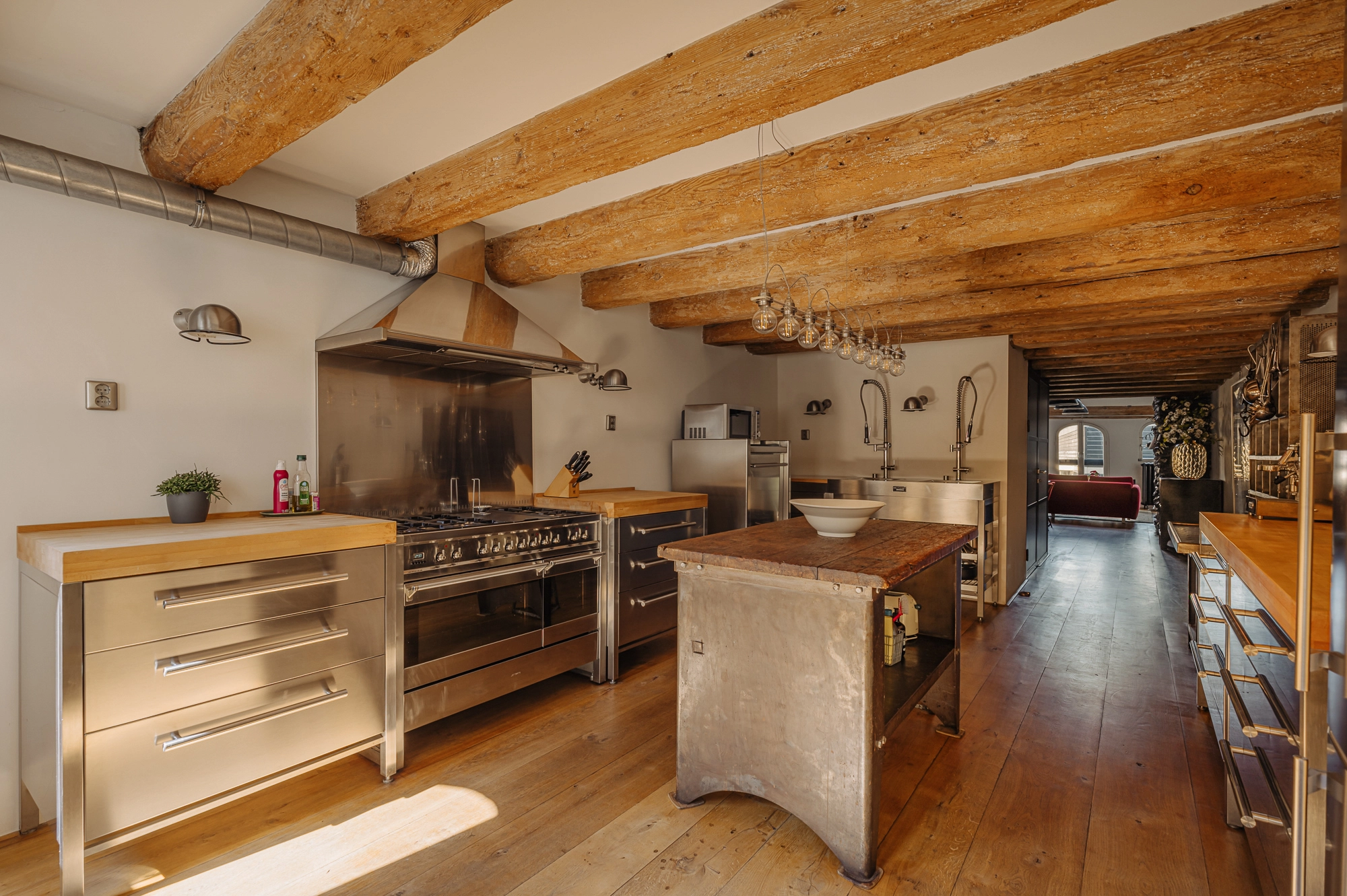
Sturdy, nationally listed warehouse of approximately 362 m², located on private land on the Western Islands. Prinseneiland 39 opens up like a house in layers. The sturdy facade, the double entrance, and the loft—everything points to a carefully constructed whole. Thanks to the presence of multiple living rooms, kitchens, Bathrooms bedrooms, spread over a total of six floors, the house is ideal for working or practicing from home, or for multiple occupancy (e.g., informal care). The current owners have a license for a B&B, which is operated very successfully. The terrace on the fourth—and top—floor is carefully embedded in the structure of the roof. The wooden decking, exposed trusses, and sheltered location create a space with the atmosphere of a veranda.
Guided tour
Prinseneiland 39 opens up like a house in layers. The bel-etage surprises with its height, the fireplace provides tranquility, and the kitchen is the center of daily life. Above that is the floor for work and lodging, followed by the floor for sleeping and silence. Then comes the lively heart with a bookcase, dining table, and skylight. Under the roof, city and tranquility come together, with Rooms either side and a terrace in between. The terrace itself feels like an open room, supported by the wood of the roof and enclosed by the lines of the roof. Here, inside and outside meet – modest, private, self-evident. A house that lives, in layers, with space for tranquility, rhythm, and reflection.
Neighborhood Guide
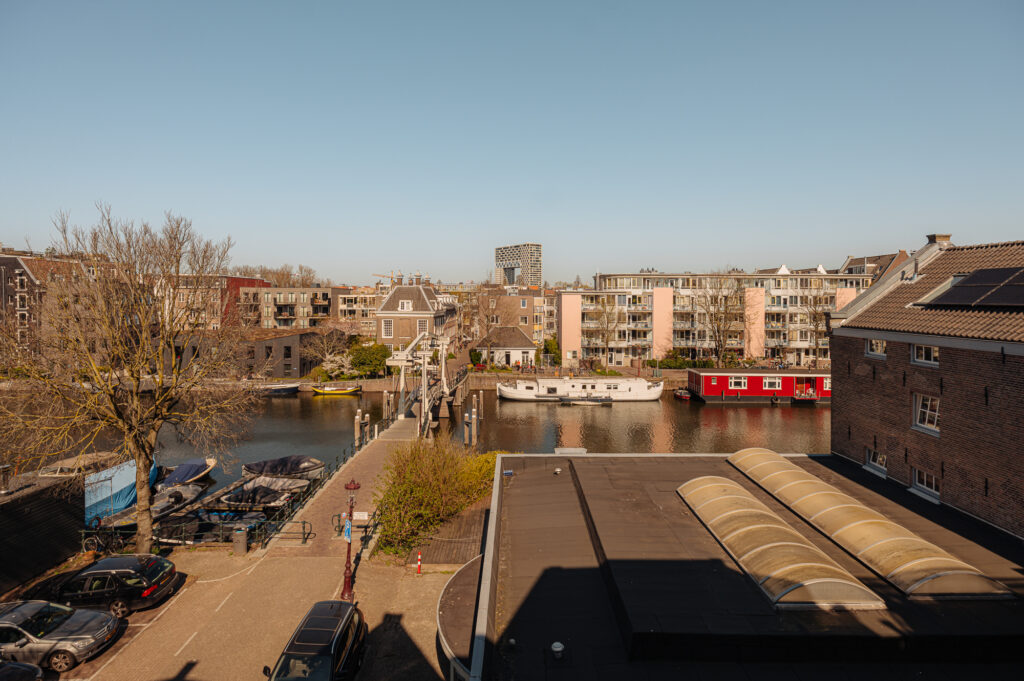
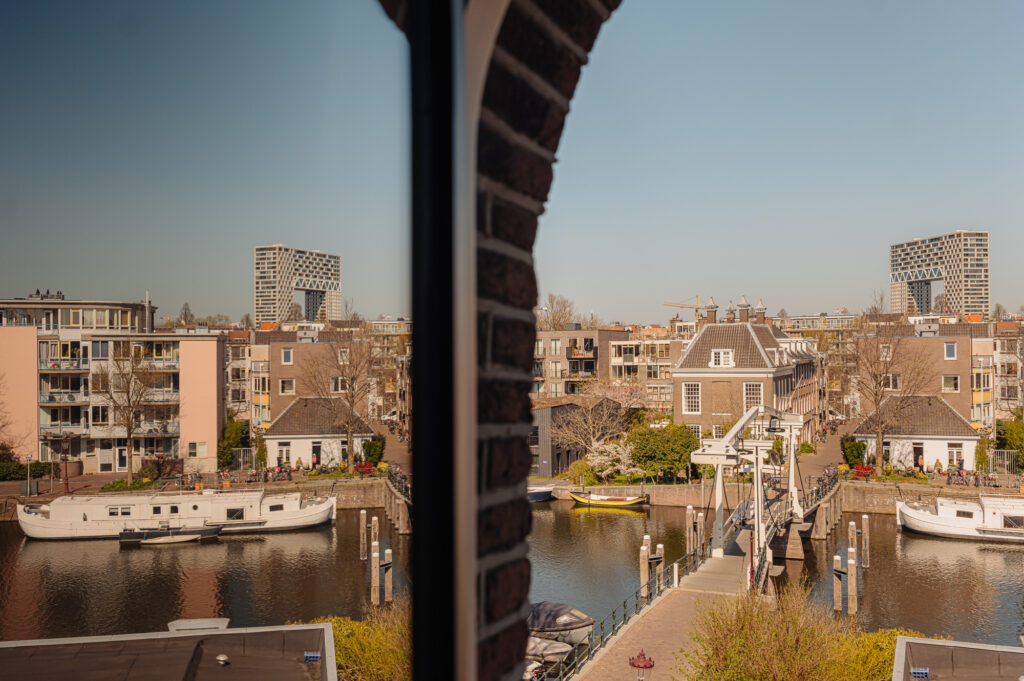
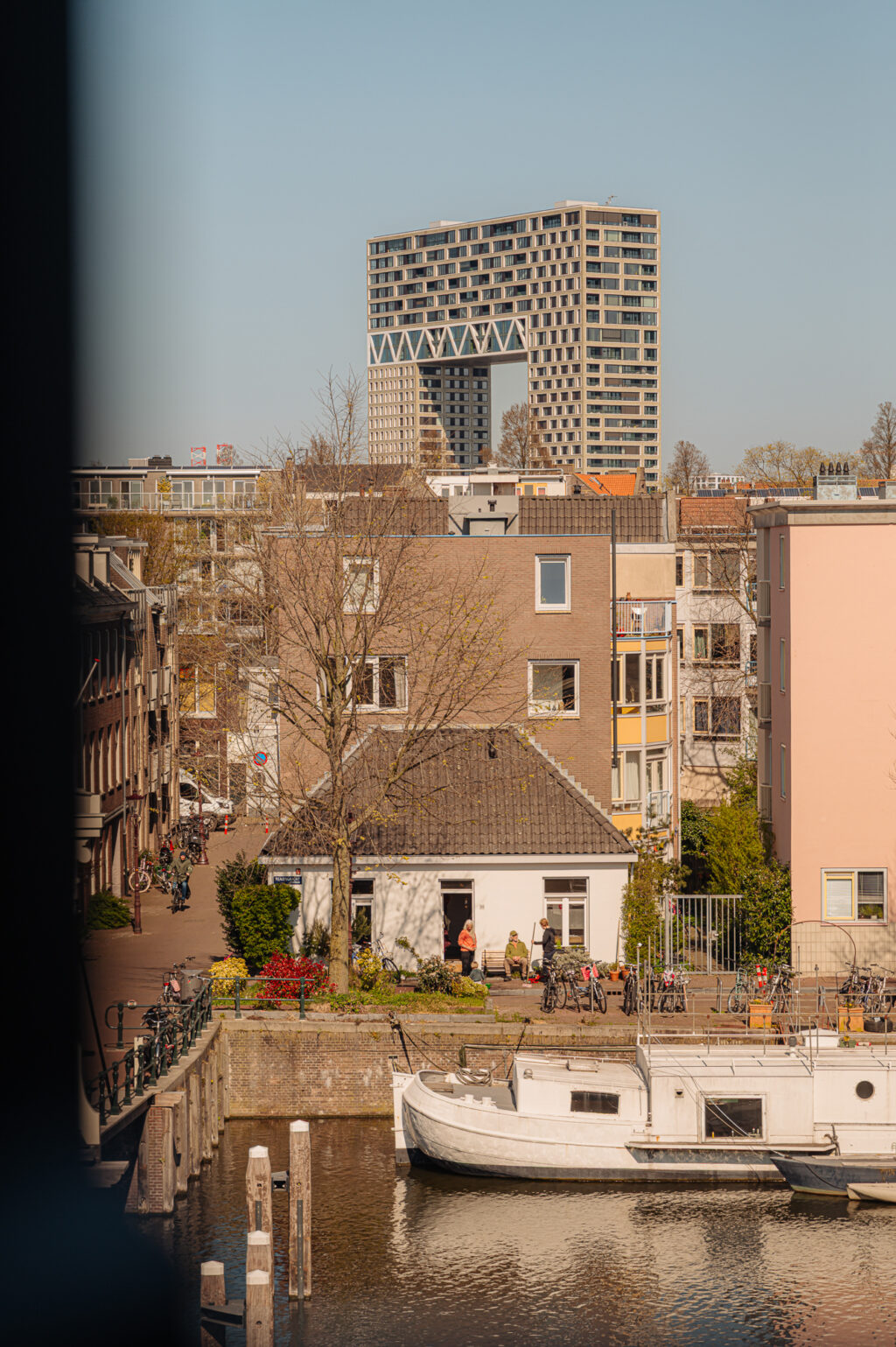
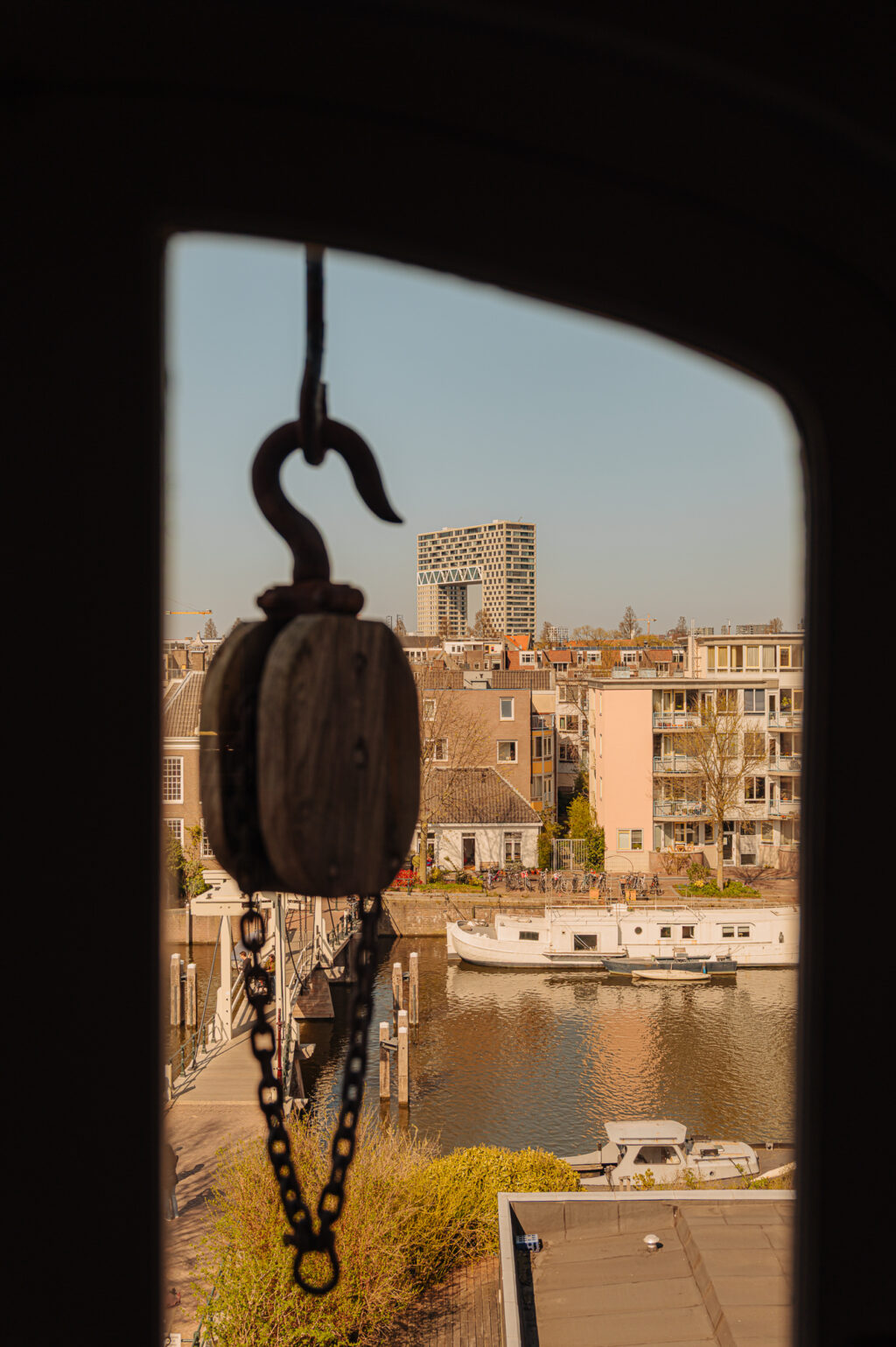
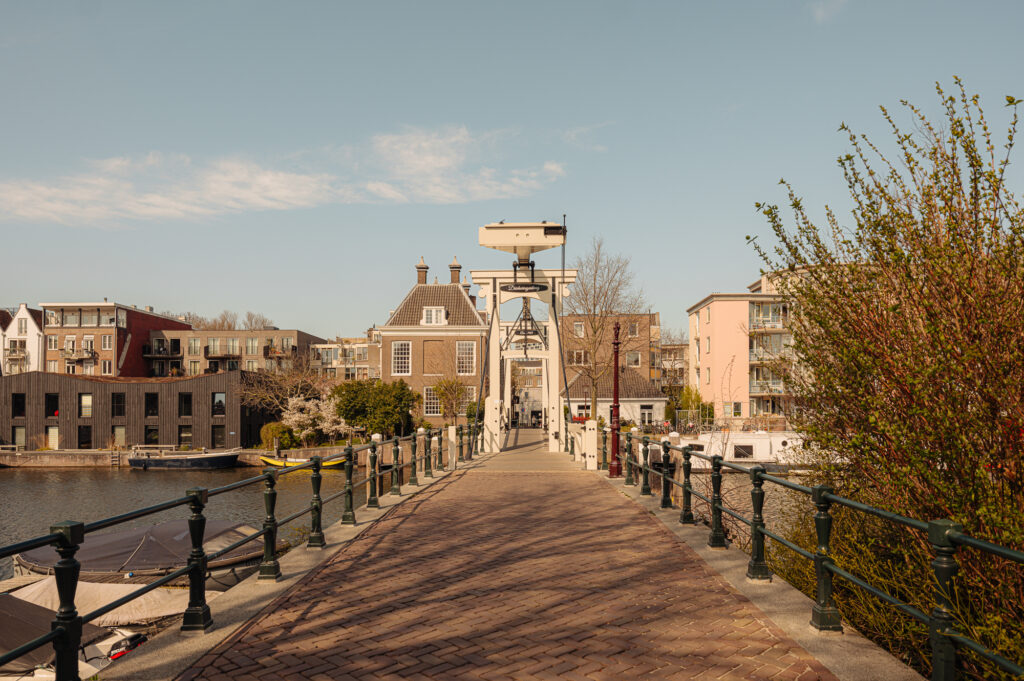
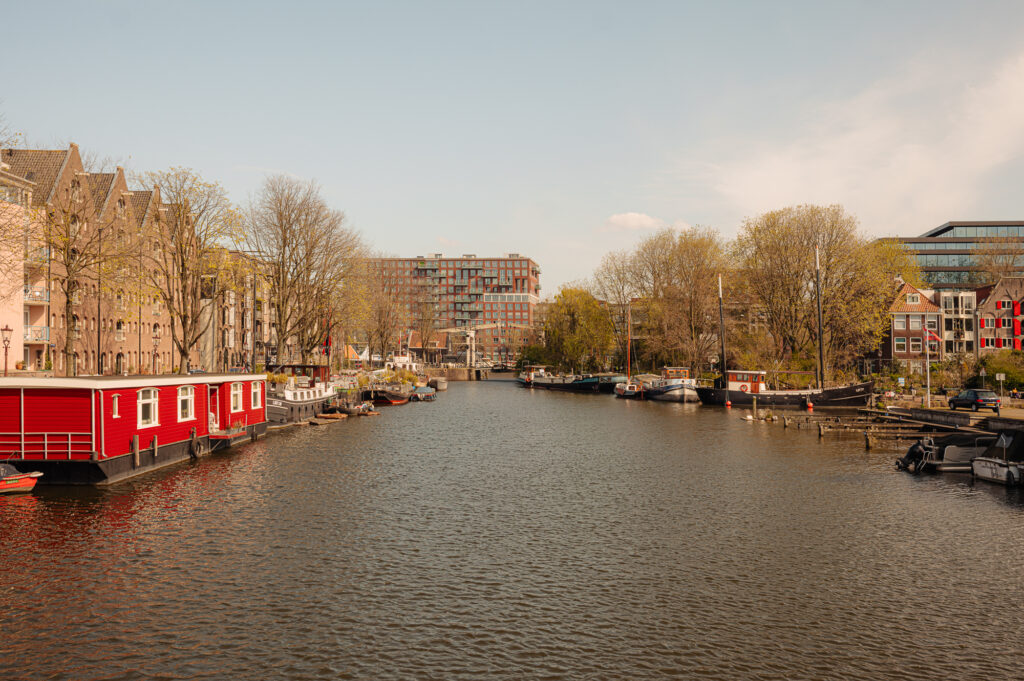
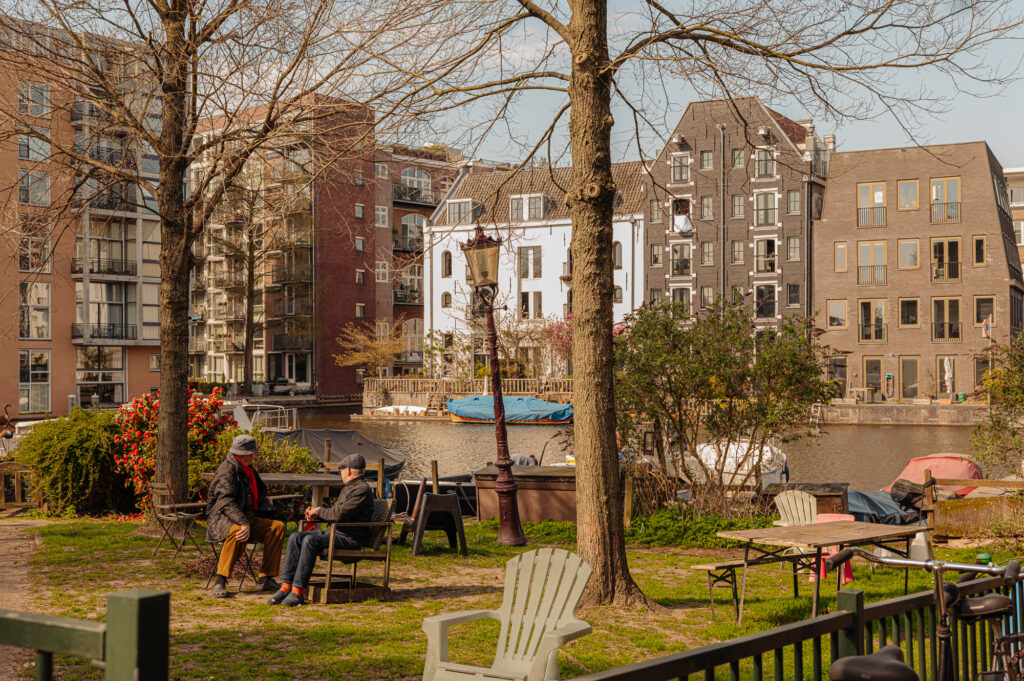
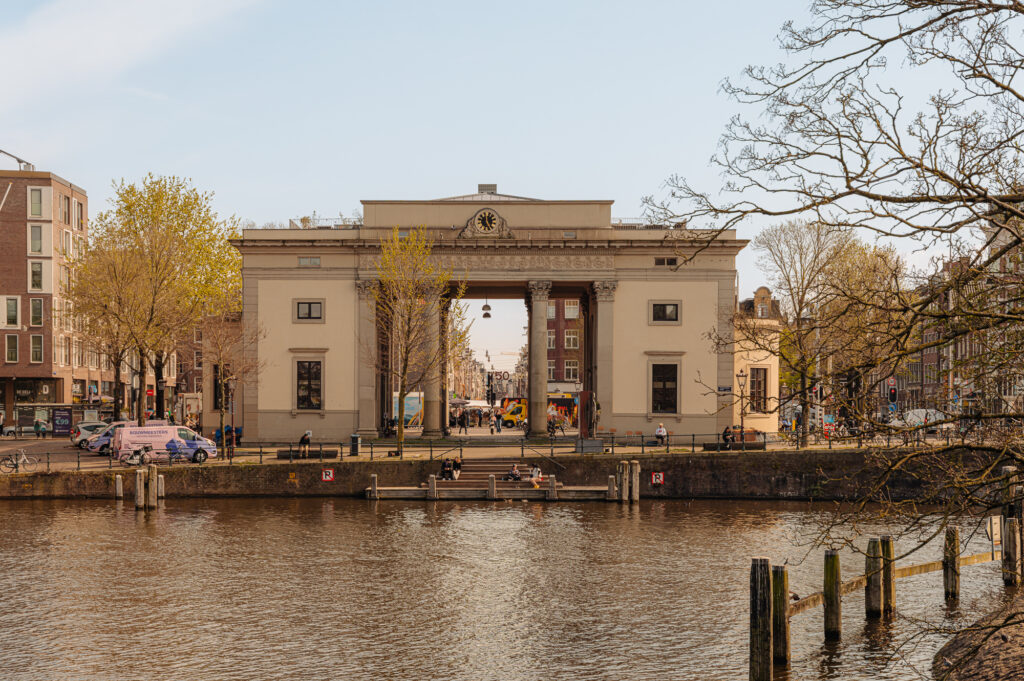
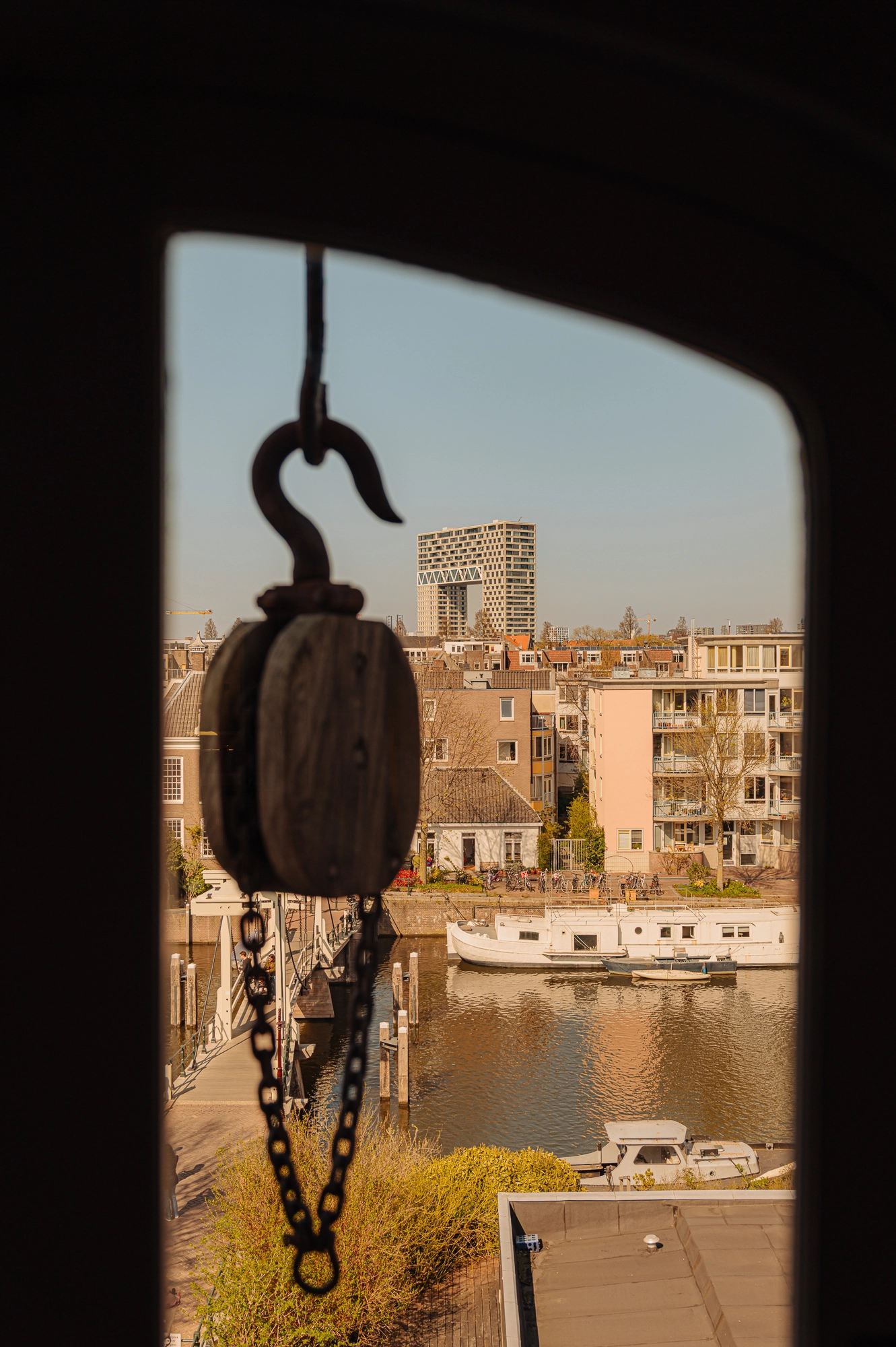
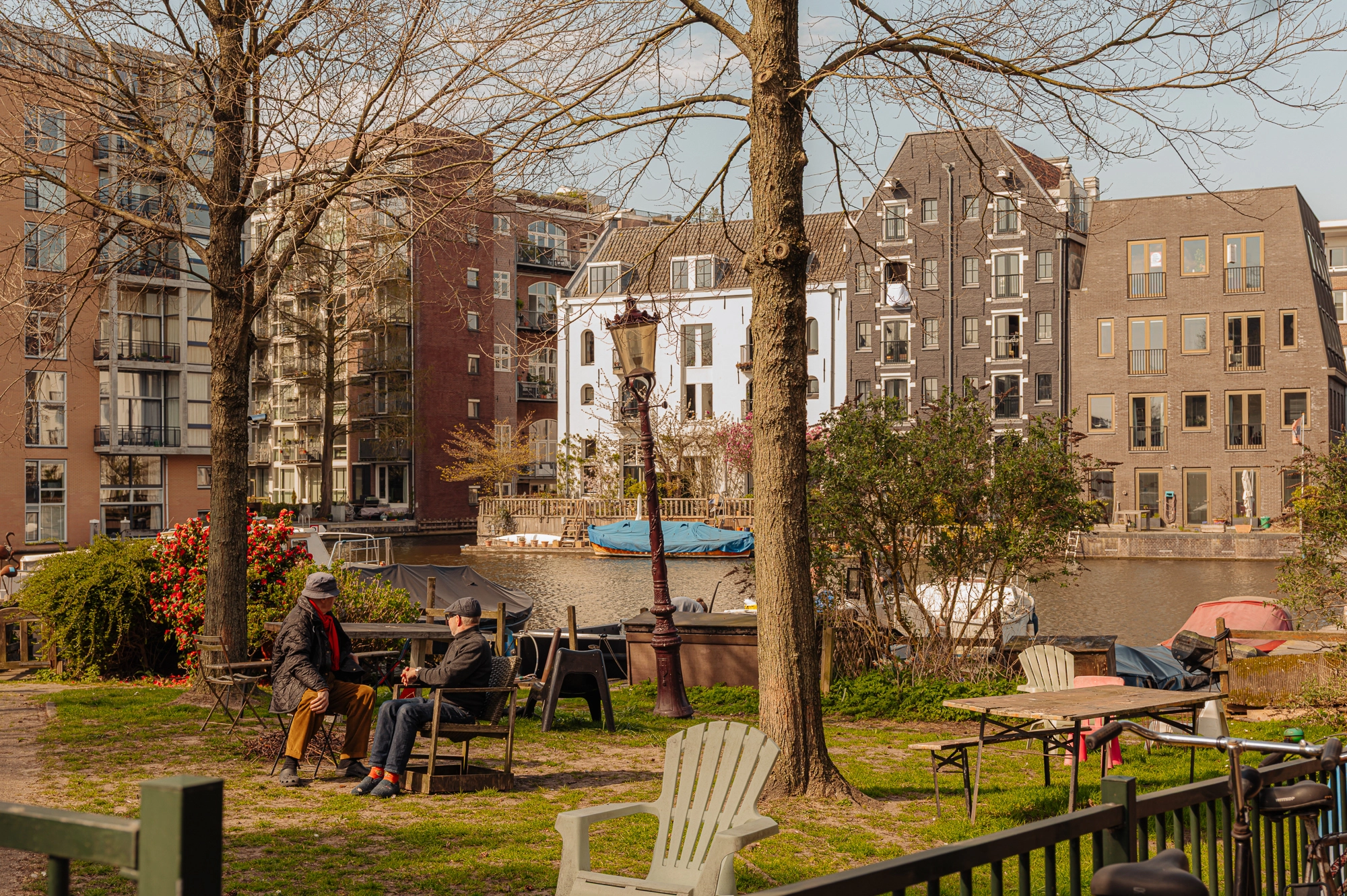
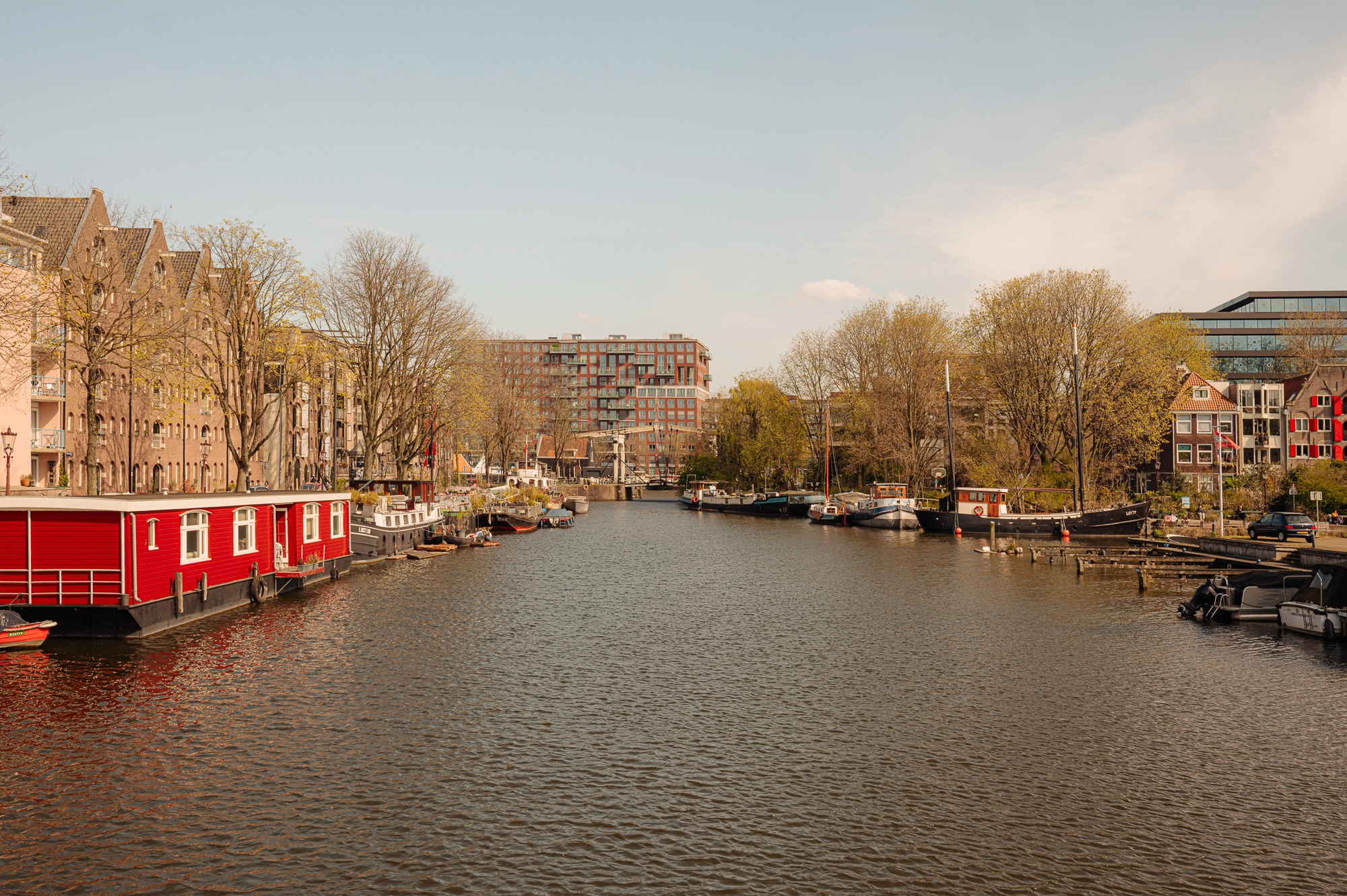
Located in a beautiful and peaceful setting, with a view of the main waterway of the Realengracht and a lovely view of the Drieharingenbrug. From here, the Noordermarkt, Westermarkt, and Westerpark are all within walking distance. On both Prinseneiland and Bickerseiland, as well as in the Jordaan, you’ll find a variety of cozy cafés, excellent restaurants, high-quality shops, and great caterers. This area is also conveniently located near public transportation and major roads. Central Station is within cycling distance and easily accessible on foot. Living on Prinseneiland is a unique experience: the combination of tranquility and vibrancy is special. The residents form a diverse community and often live there for many years—which speaks volumes about the joy of living in this neighborhood. Historically, Prinseneiland was beloved by artists such as Jacob Olie and Breitner. Even today, a relatively large number of artists and artisans still call it home.
Details
• Living area approx. 362 m²
• Roof terrace , total area approx. 17 m²
• Located on freehold land.
• Energy label D, valid until 10/05/2033
• Renovated in 2010 under the supervision of architect Van Zweeden
• National monument (no. 4212)
• Nationally protected cityscape
• B&B license (non-transferable, but can be reapplied for)
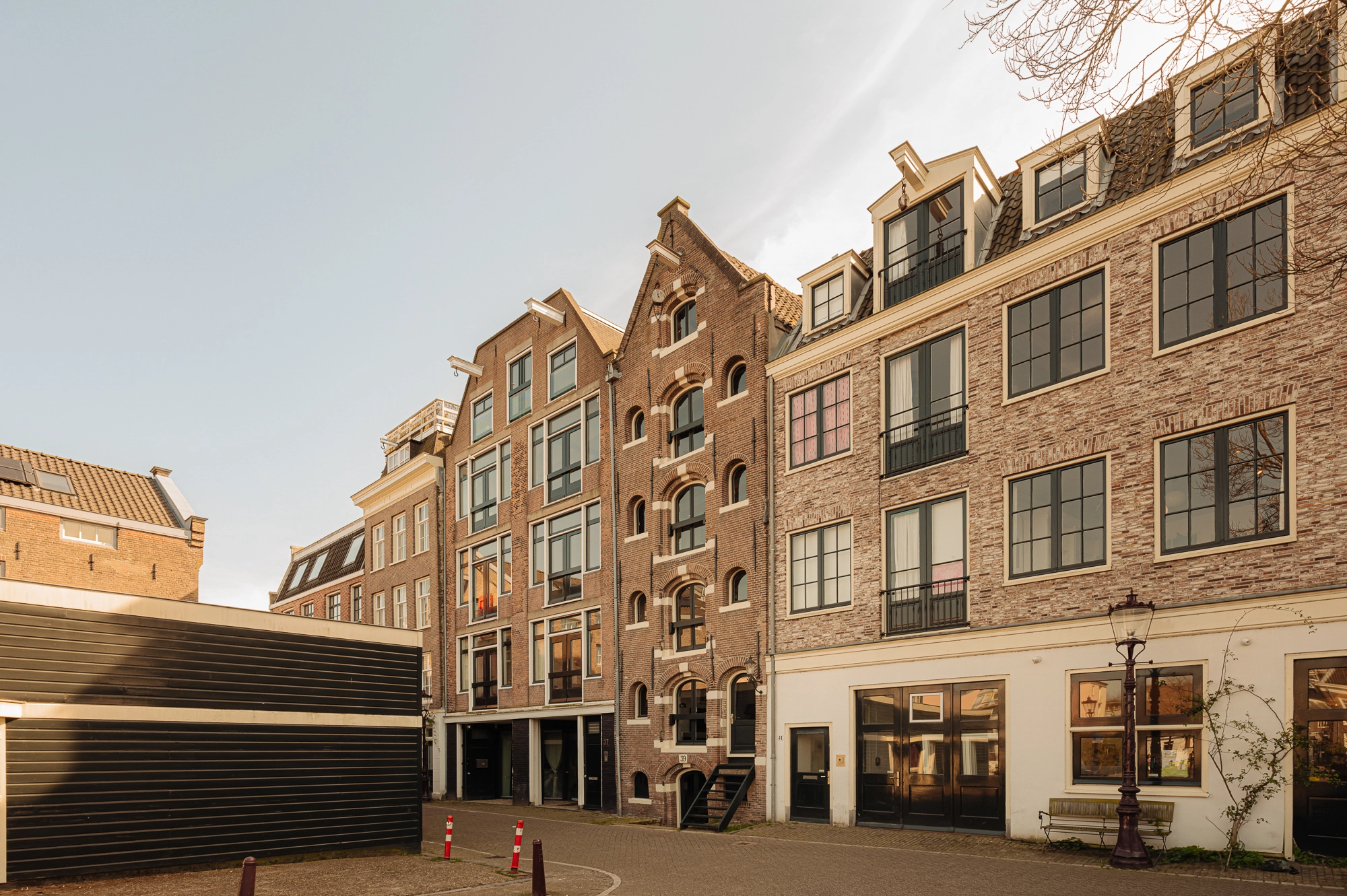
Warehouse ‘De Drieharingen’
As an office, we supervise the sale of a varied range of properties. Personally, I am always impressed by the enchanting atmosphere on Prinseneiland. This oasis of calm, with an almost village-like character in the middle of the busy dynamics of the city center, is unique. The hidden gardens and the water reinforce this feeling. I love water and the hustle and bustle of the city, but I always appreciate a quiet living environment—and that is certainly the case here. The amenities in the neighborhood are excellent. On Haarlemmerdijk, Haarlemmerstraat, and in the Jordaan, among other places, you will find a variety of shops, specialty stores, and caterers. There are also several good restaurants and cozy cafes in the area. The former warehouse, converted into a multifunctional residence, which we are privileged to sell as an office, is particularly surprising. With multiple kitchens, Bathrooms bedrooms spread over a total of six floors, the residence is ideal for working or practicing from home, or for multiple occupancy (e.g., informal care). The current owners have a license for a B&B, which is doing very well. In addition, each floor has something unique: a high loft, a large fireplace, side windows, and nice views. In short, a truly unique property in a quiet location in the city center. Are you interested? Then I would like to invite you to come and take a look. I will of course be happy to tell you more about the property. Hope to see you soon!
Glenn van der Zanden | Real estate agent Broersma Wonen
Jelle Mundt | Makelaar Broersma Wonen
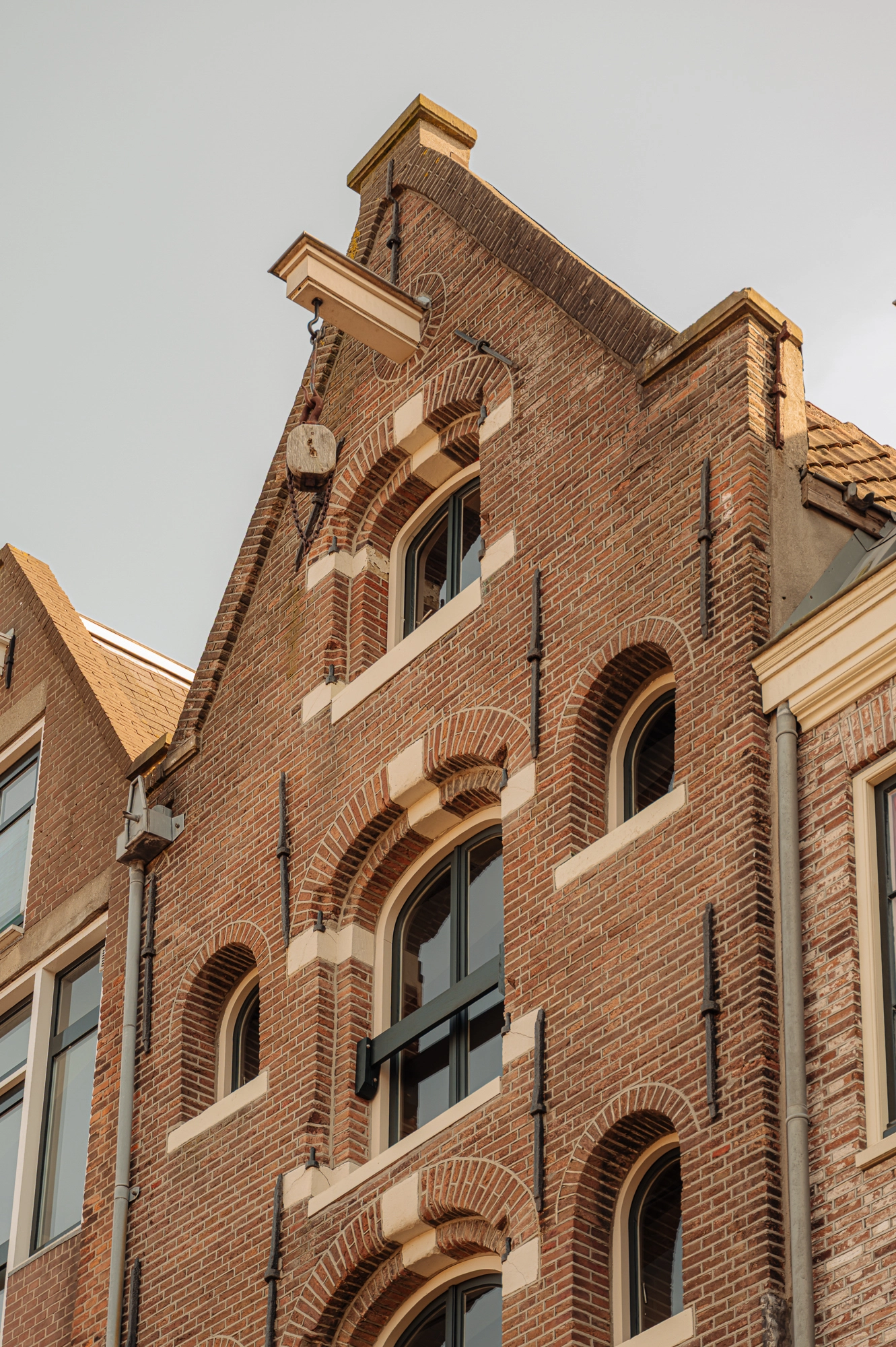
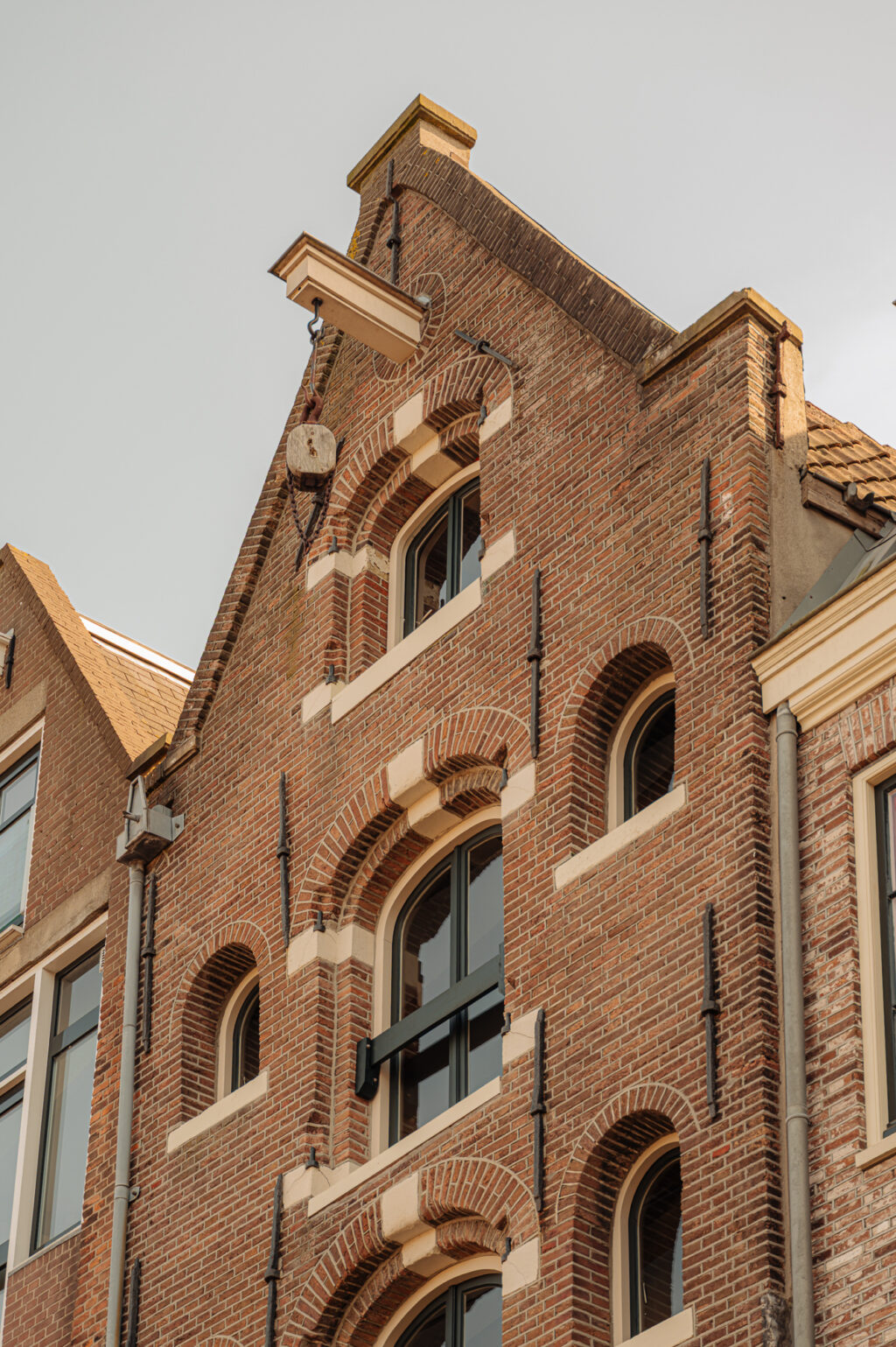
Unfortunately, there is little information in the building file about the rich history of the warehouse. Based on the Basic Registration of Addresses and Buildings, we have been able to trace the building back to around 1893. On September 1, 1970, the warehouse was designated a national monument (no. 4212). The house stands out as a characteristic historic warehouse, built in traditional brick with decorative accents of natural stone. The façade is dominated by a rhythmic repetition of round arches above the windows, which are finished with carefully laid brickwork. White natural stone bands highlight the horizontal articulation and provide a playful contrast to the warm reddish-brown brick. Narrow, tall windows are placed centrally in the facade, which were once intended to facilitate the movement of goods between floors. The vertical emphasis is reinforced by the symmetrical placement of these windows and the stepped finish of the gable, which rises simply but powerfully against the sky. A green wooden exterior staircase leads to the raised entrance on the ground floor, which is framed by a double arch construction. Subtle details, such as the small consoles under the gable and the robust appearance of the walls, exude the atmosphere of Amsterdam warehouse architecture: functional, sturdy, and at the same time refined in its simplicity. The building has been thoroughly renovated twice. The first time was in 1994, under the supervision of architect Dirk Postma, when the warehouse was transformed into a residential house, divided into two separate units. The building was then thoroughly renovated in 2010 by the current owners, in collaboration with architect Van Zweeden. No expense was spared to achieve a robust yet timeless design.
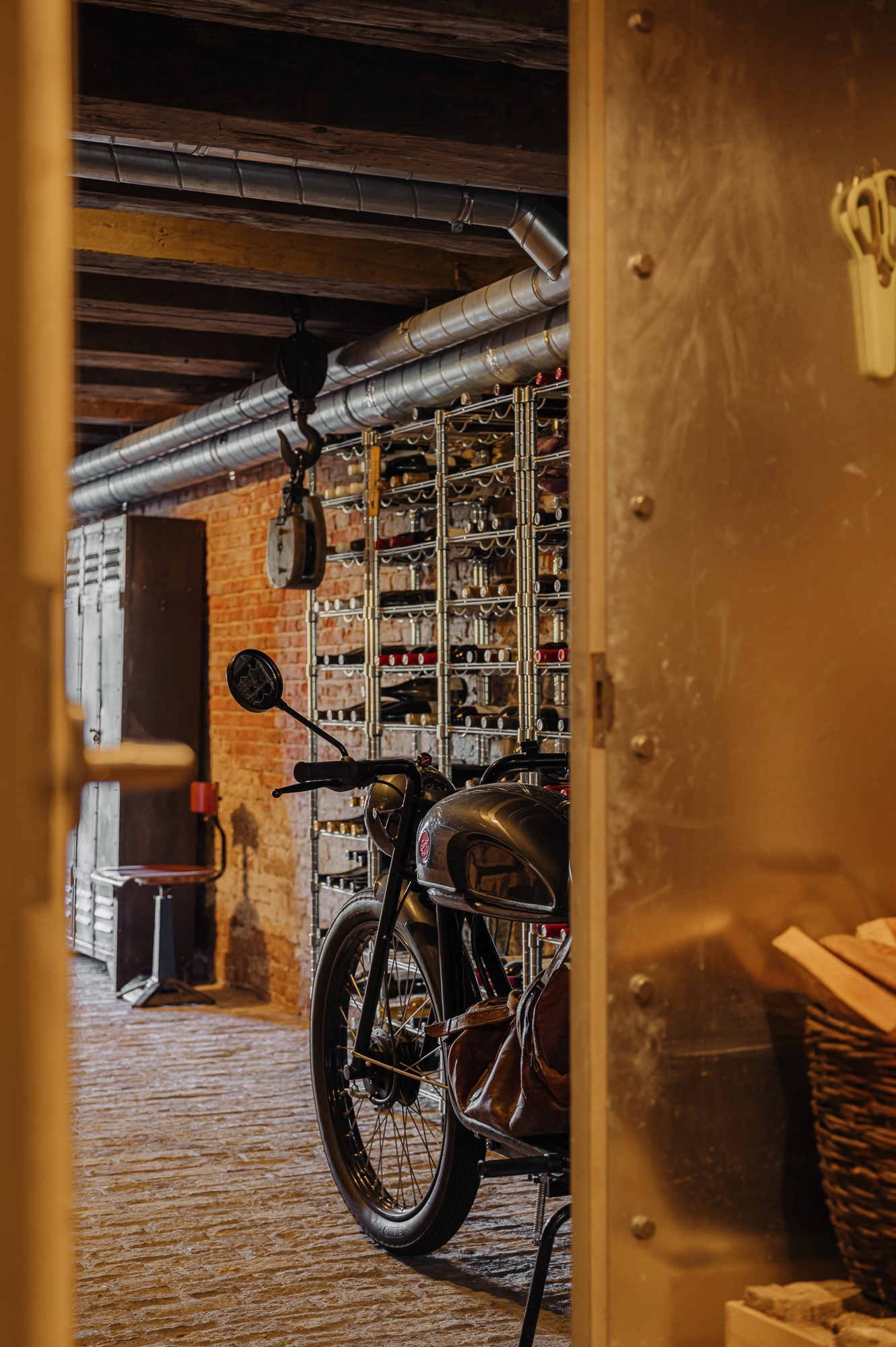
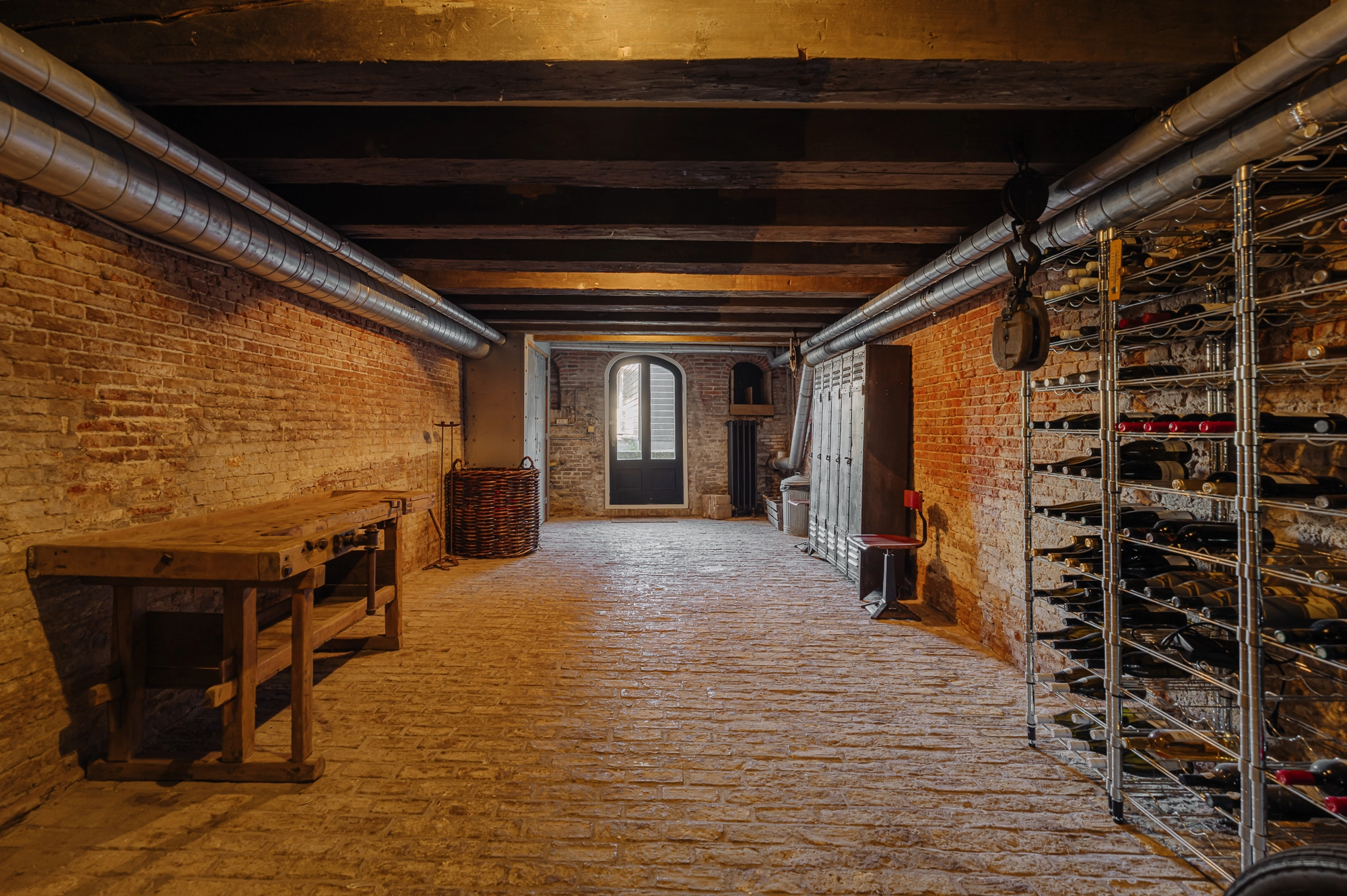
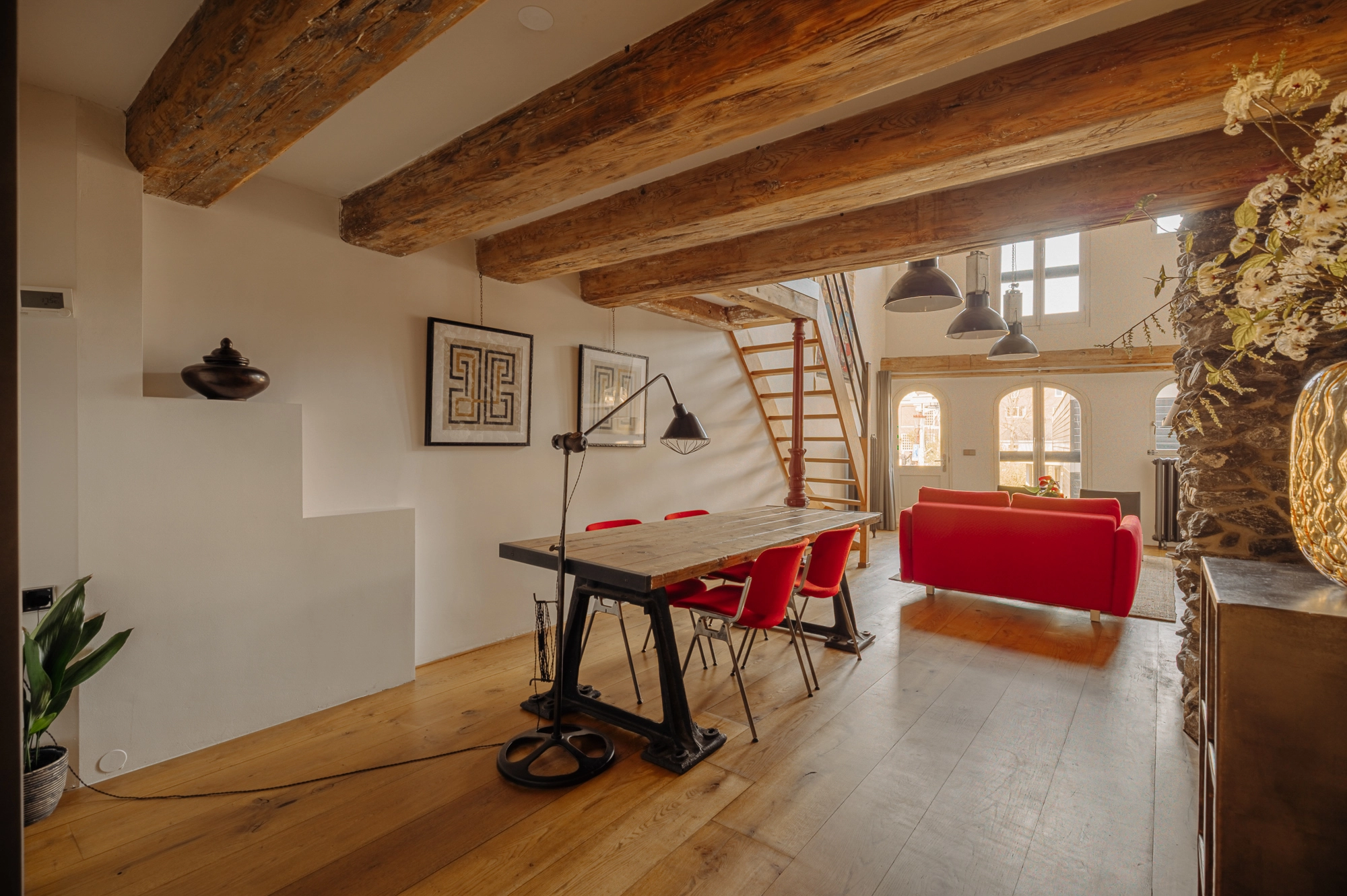
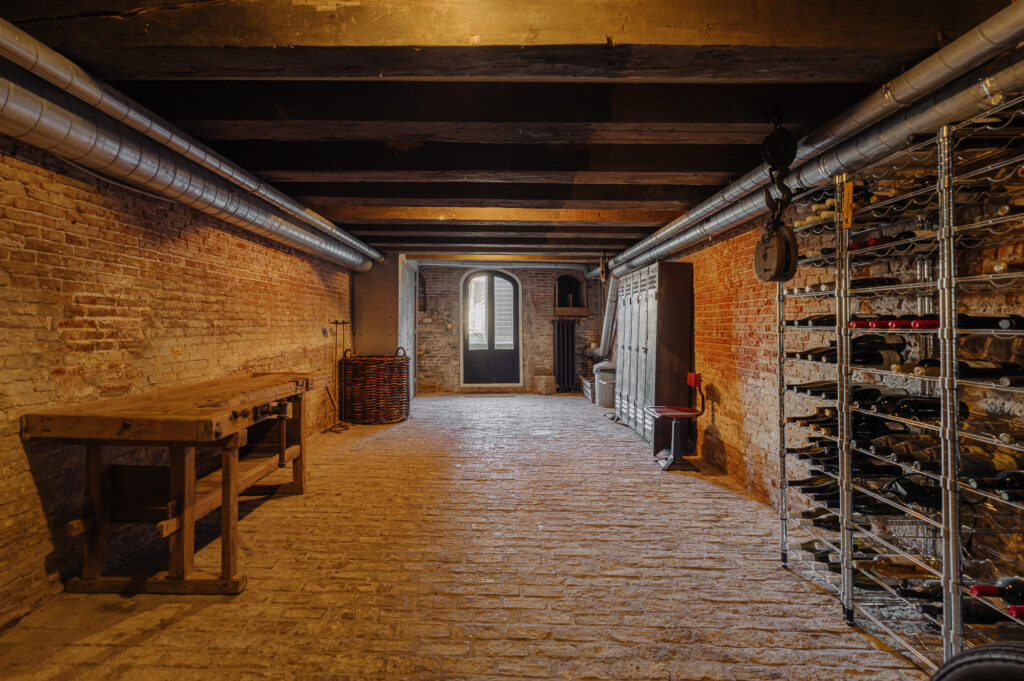
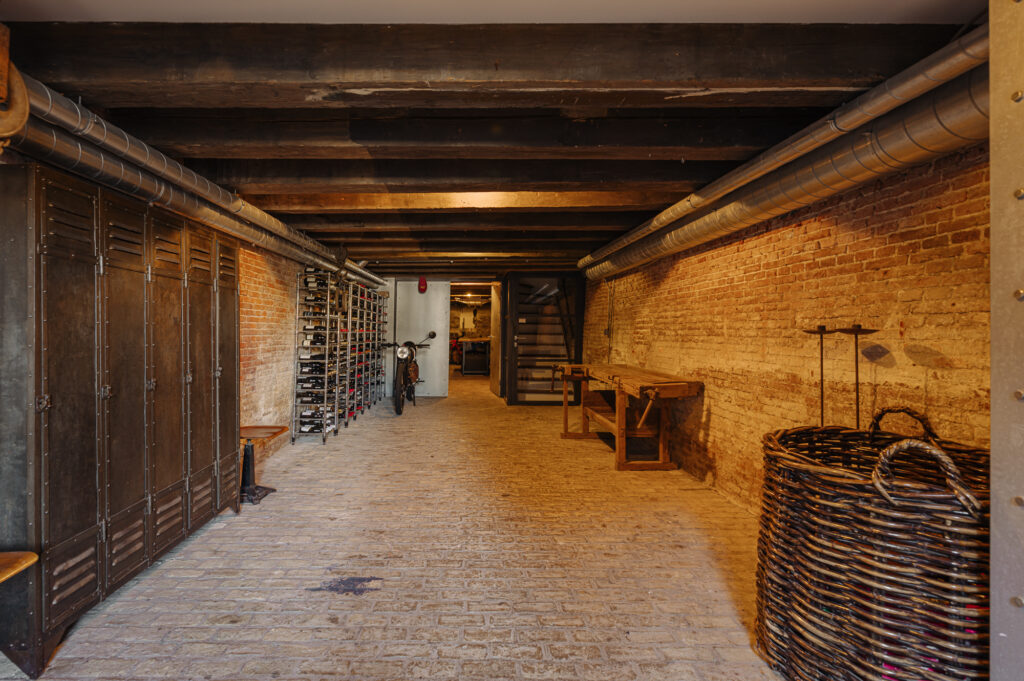
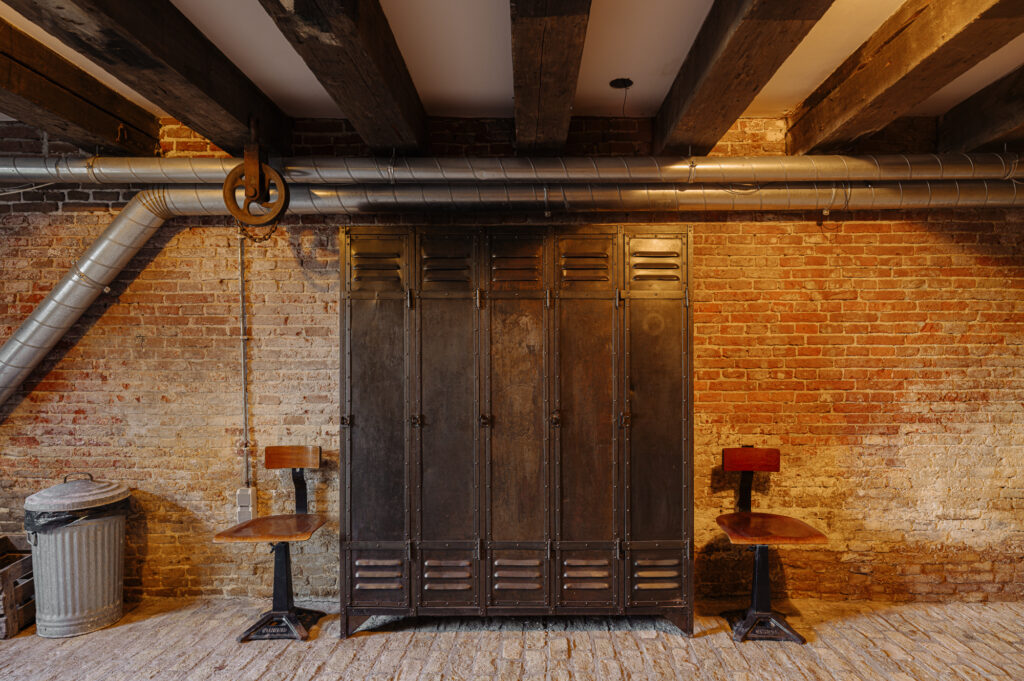
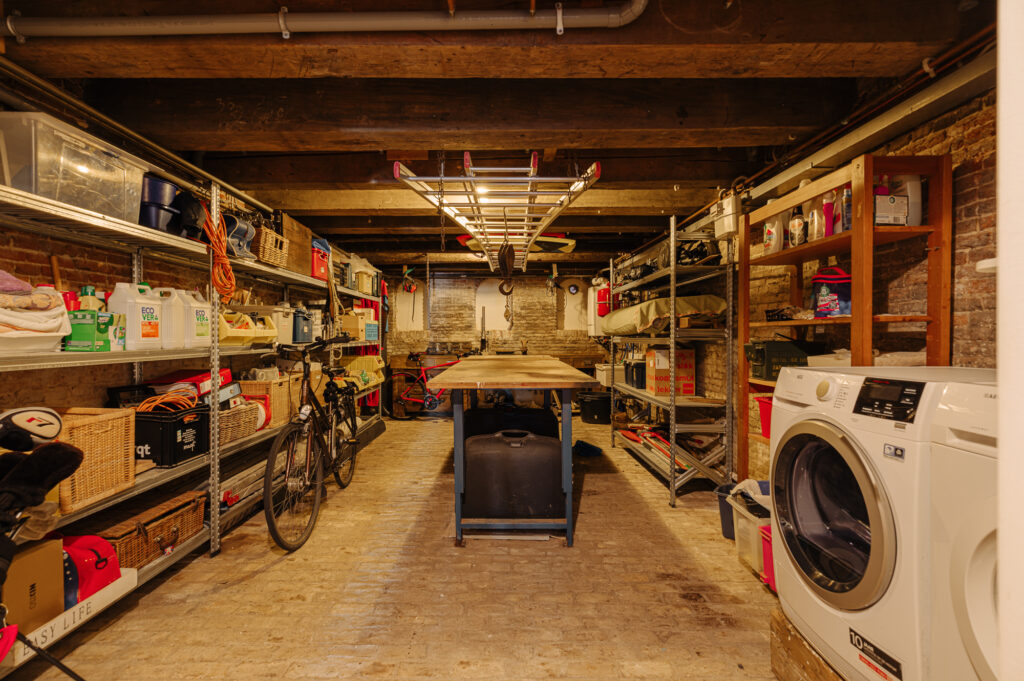
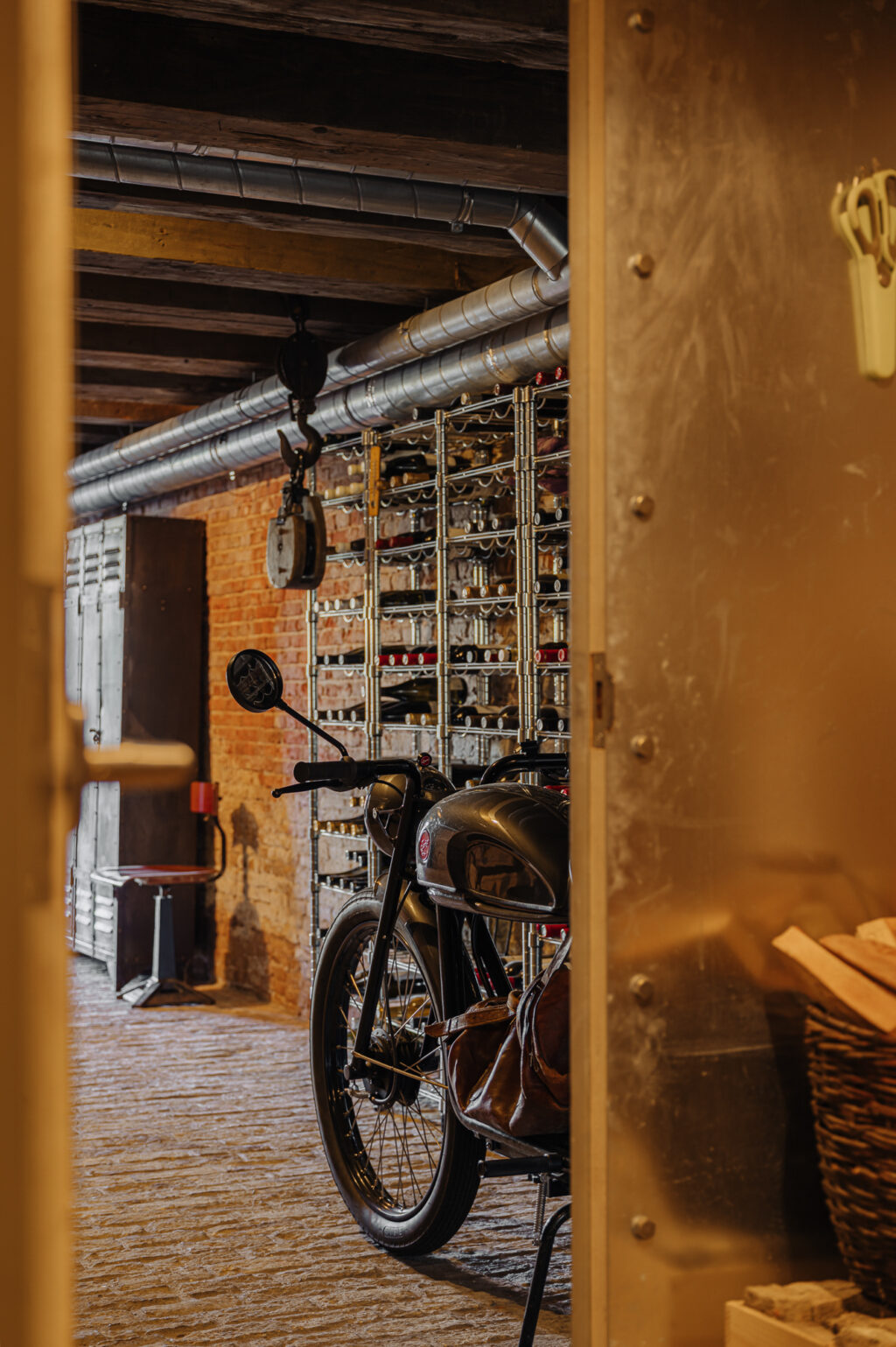
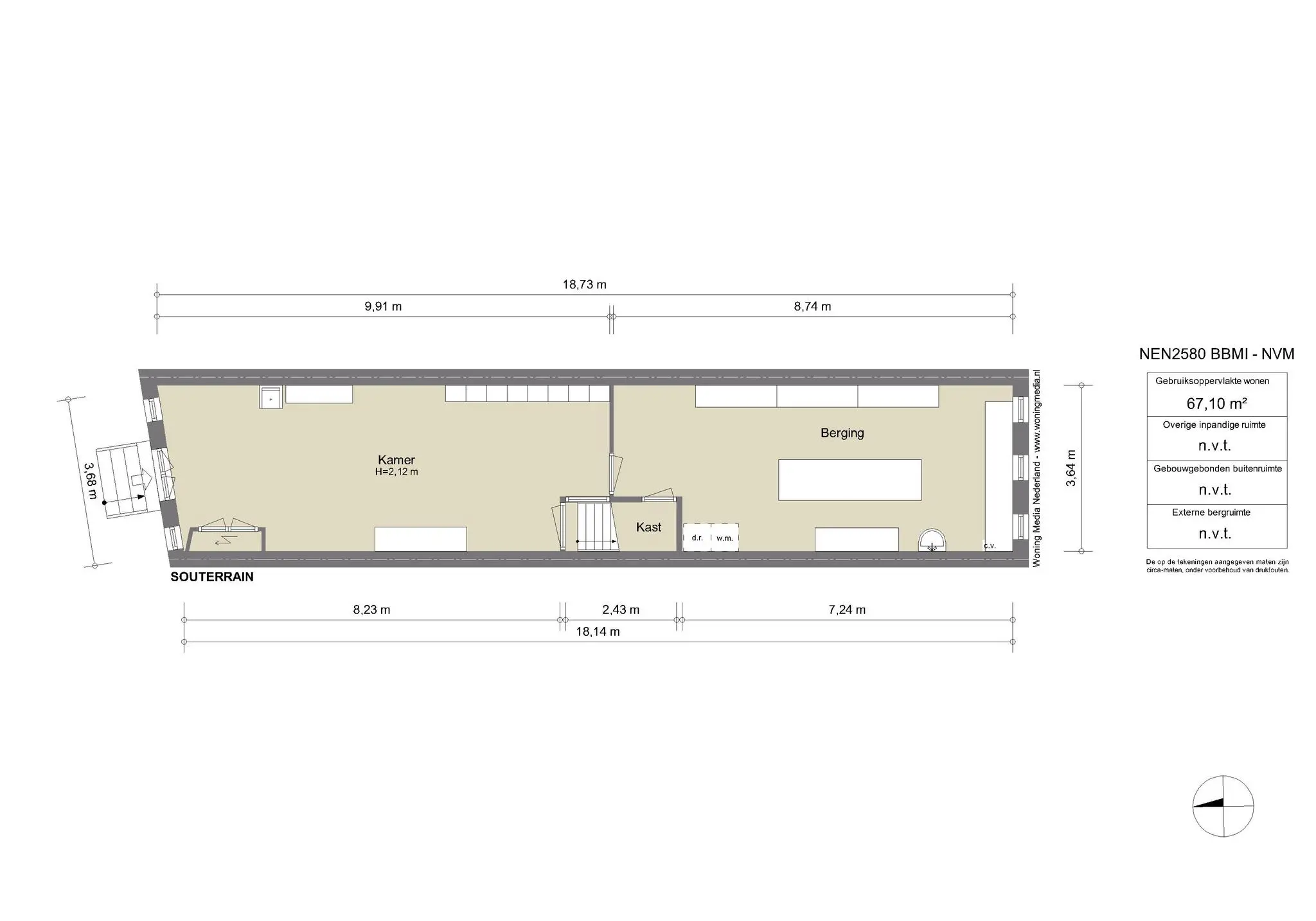
The main entrance to the house does not open via a classic porch, but via a sturdy double door in the basement – a modest gesture that immediately makes it clear that this house follows its own logic. The entrance leads to an impressive space where history is palpable. Original brick walls, a floor of hand-molded bricks, and a beamed ceiling with industrial air ducts tell the story of a past filled with storage, labor, and craftsmanship. The former cellar is now a space with character: versatile and full of atmosphere. Bicycles can be easily stored here, but the space is much more than a storage room. It is a place where a motorcycle is parked like a sculpture, where wine racks function as wall installations, where workbenches tell stories of precision and passion. A space for collection, imagination, and tranquility. At the rear is a separate storage room with access to technical Services and installations, such as a connection for a washing machine and dryer. In addition, the central heating boiler is neatly concealed here, without detracting from the overall aesthetic. This area has a more functional character, with metal shelving and practical storage options. Here, living begins with a nod to the industrial past, firmly rooted in Amsterdam's soil.
The bel étage
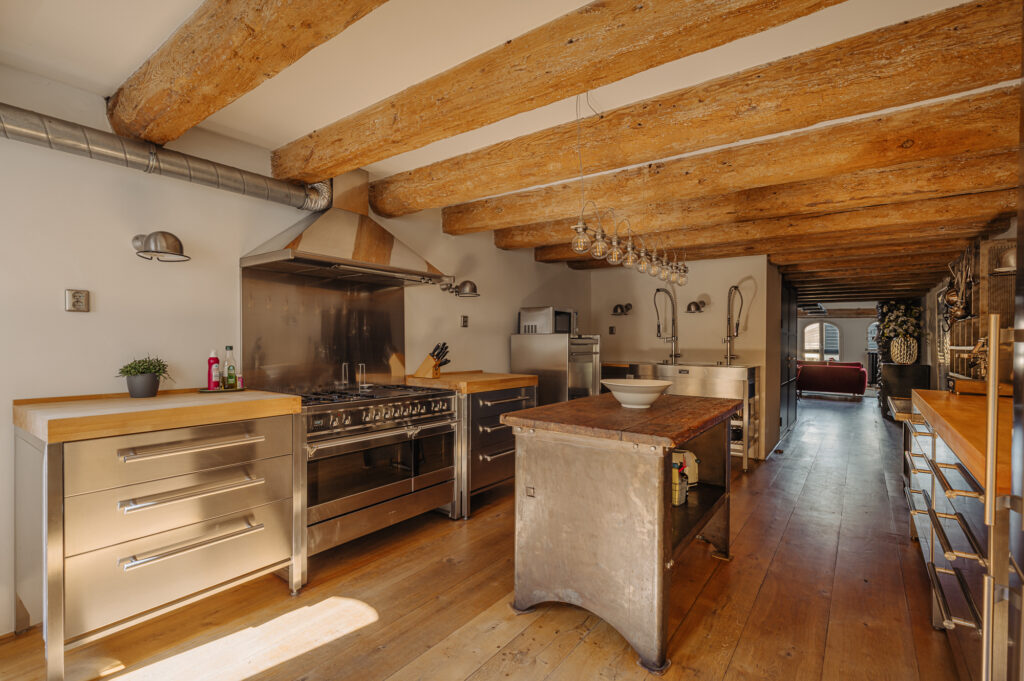
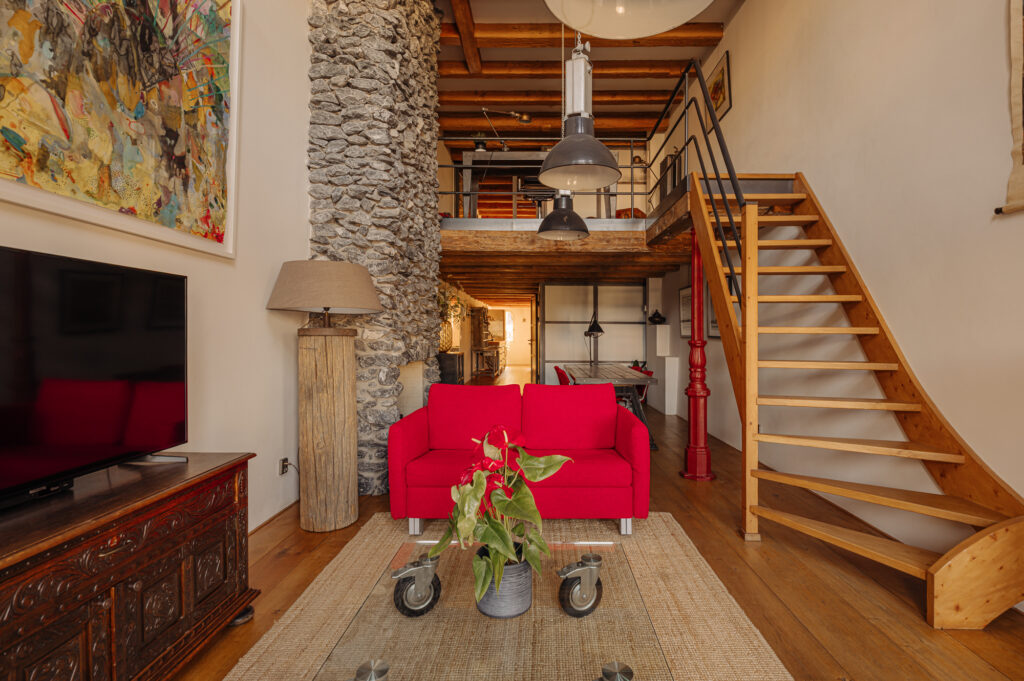
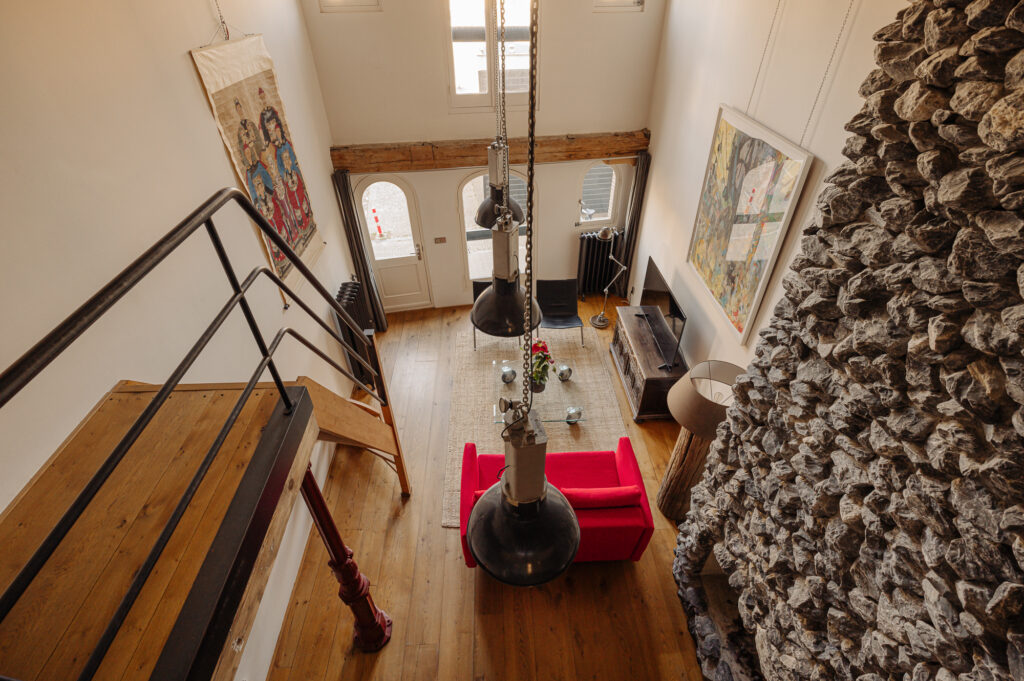
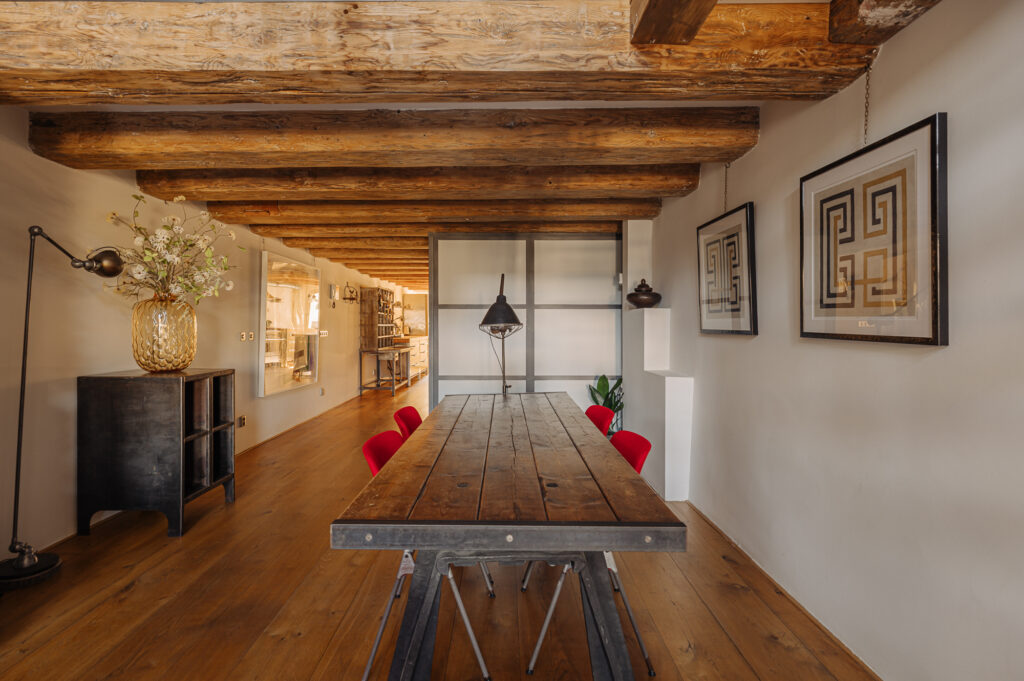
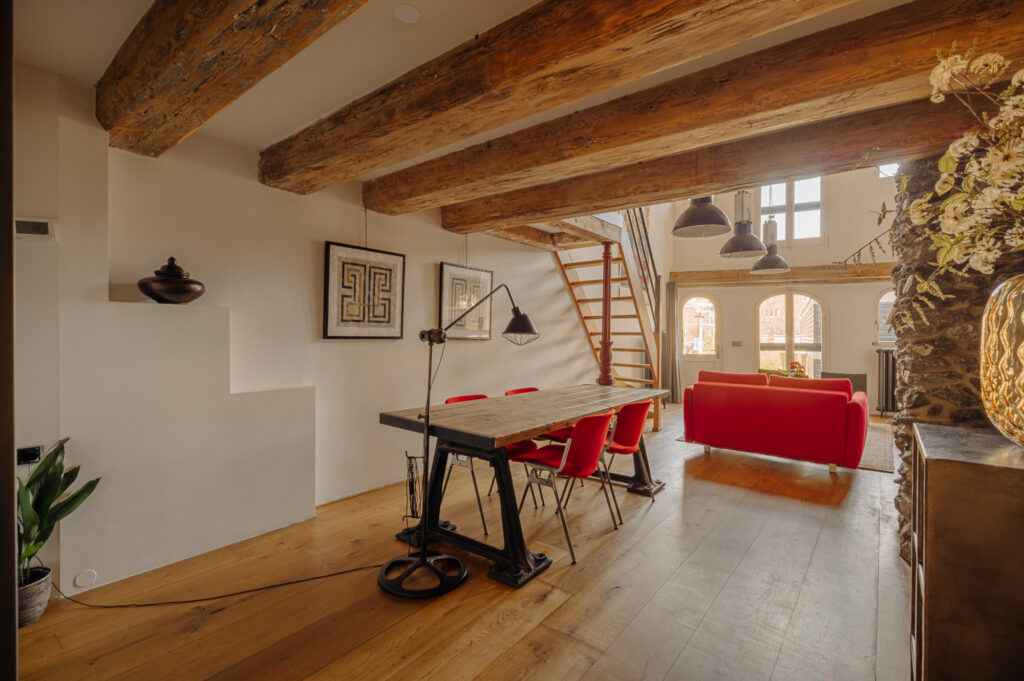
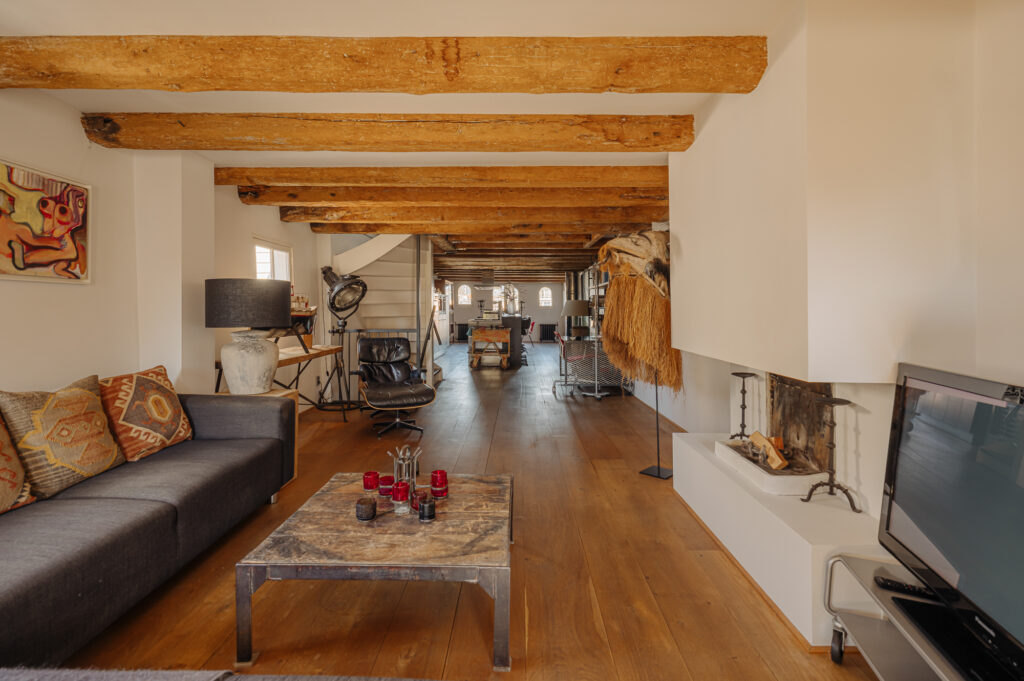
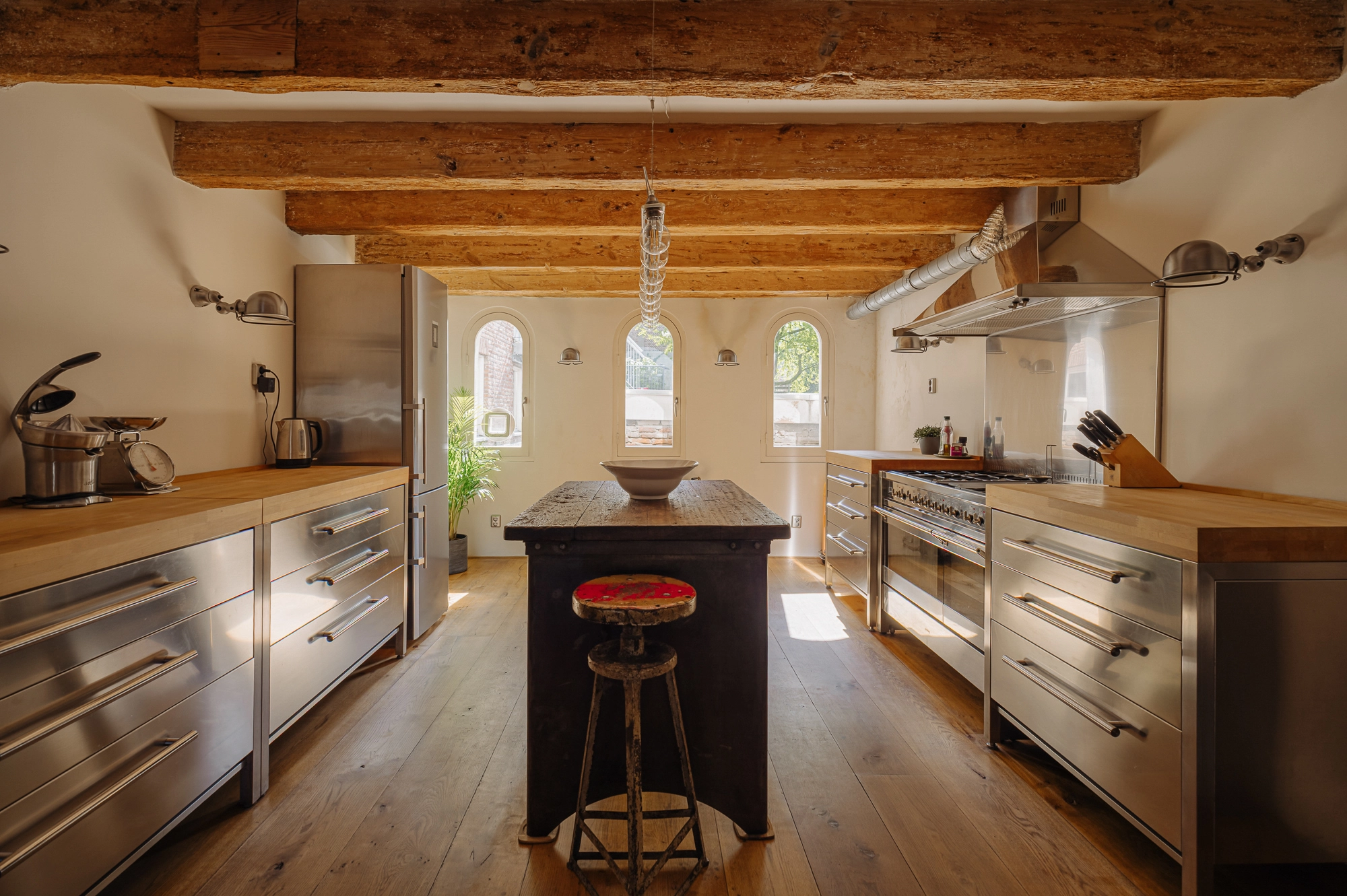
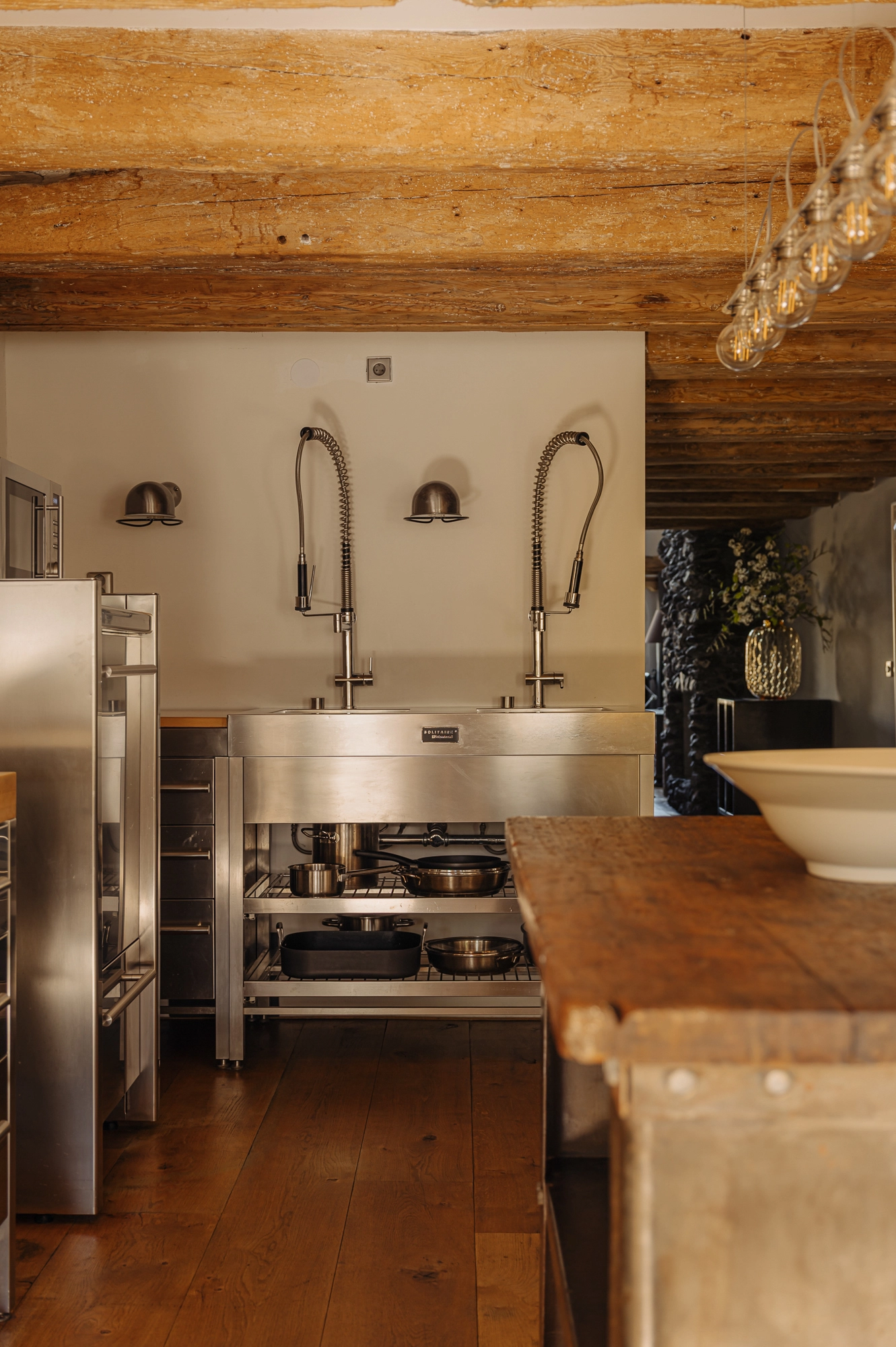
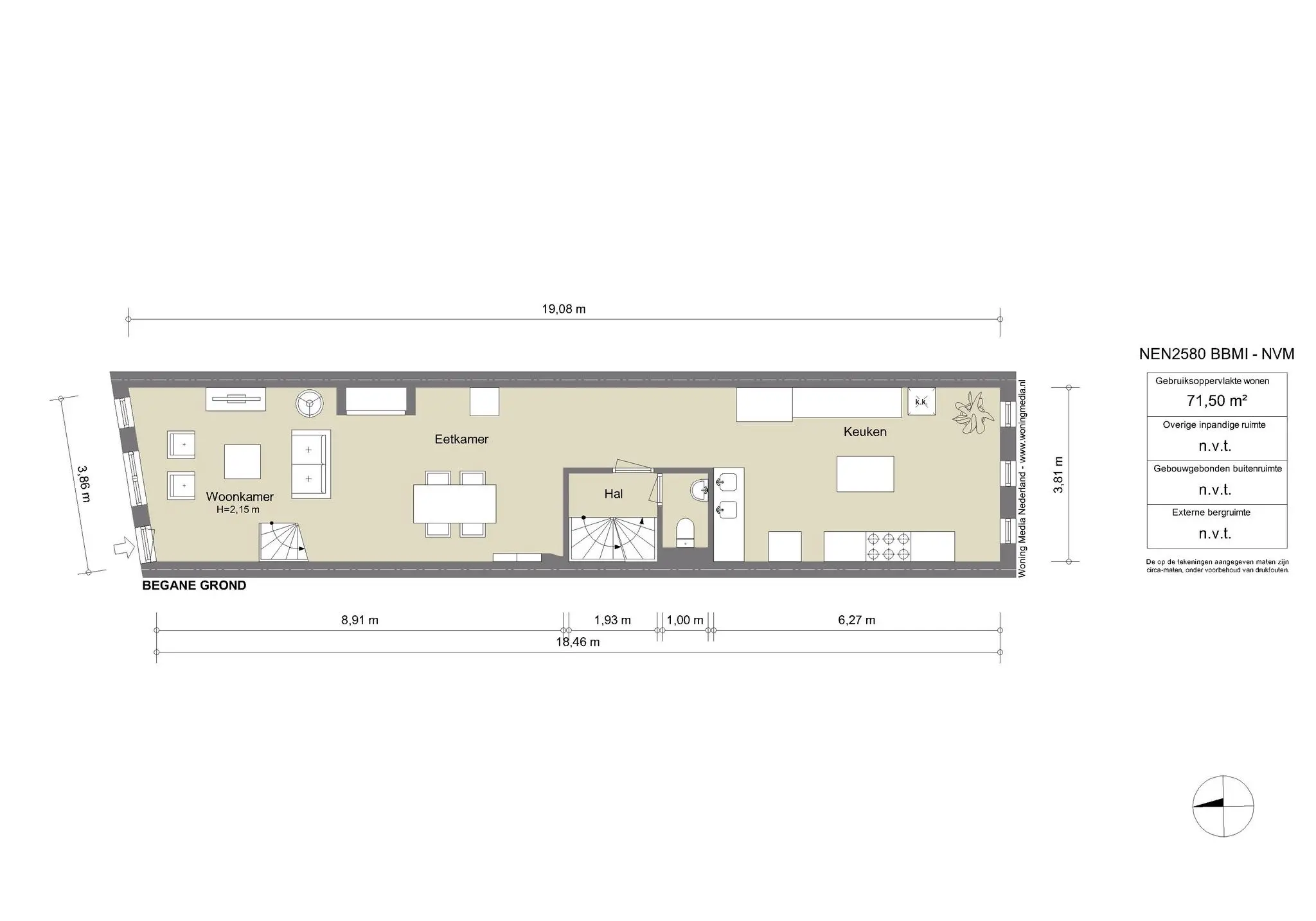
The bel étage is a fascinating composition of height, material, and rhythm. It is a floor that cannot easily be described in standard terms such as "living room" or "kitchen." The ceiling height of 4.60 meters at the front is nothing short of exceptional. The large windows and a wall of rough natural stone combine to form a powerful backdrop. The sitting area is warm and inviting, with a large fireplace as its centerpiece. The light is dynamic and changes throughout the day. Behind the fireplace, the ceiling lowers to a more intimate height. Here, the dining area is located under a wooden beam structure, with a view over the full depth of the space. The kitchen is located at the rear and is fully equipped for those who enjoy cooking and socializing. Stainless steel drawers, a robust stove, double sinks, and a central work block form the functional heart. The view over the inner gardens makes this place surprisingly light, despite the lower ceiling height.
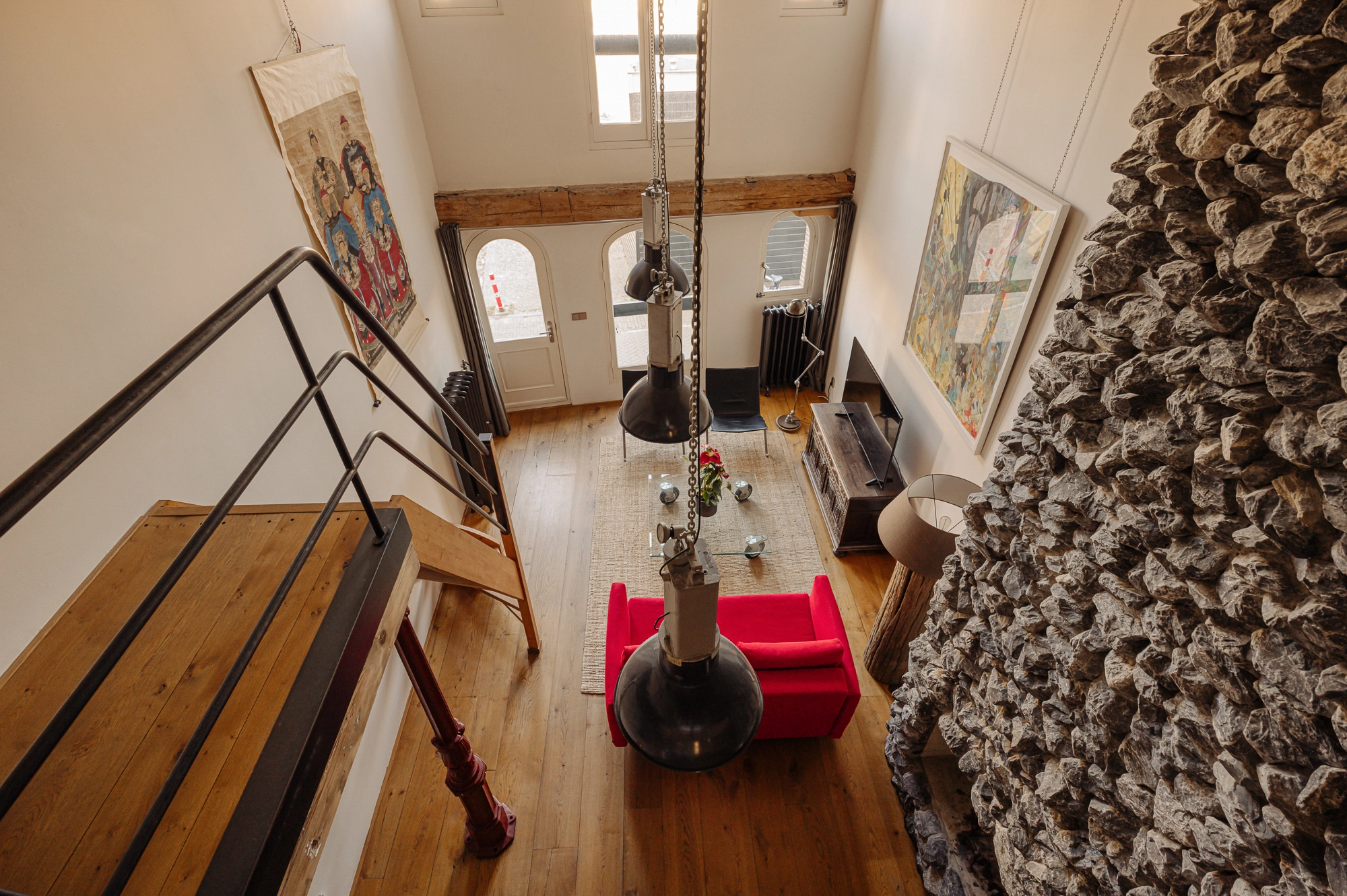
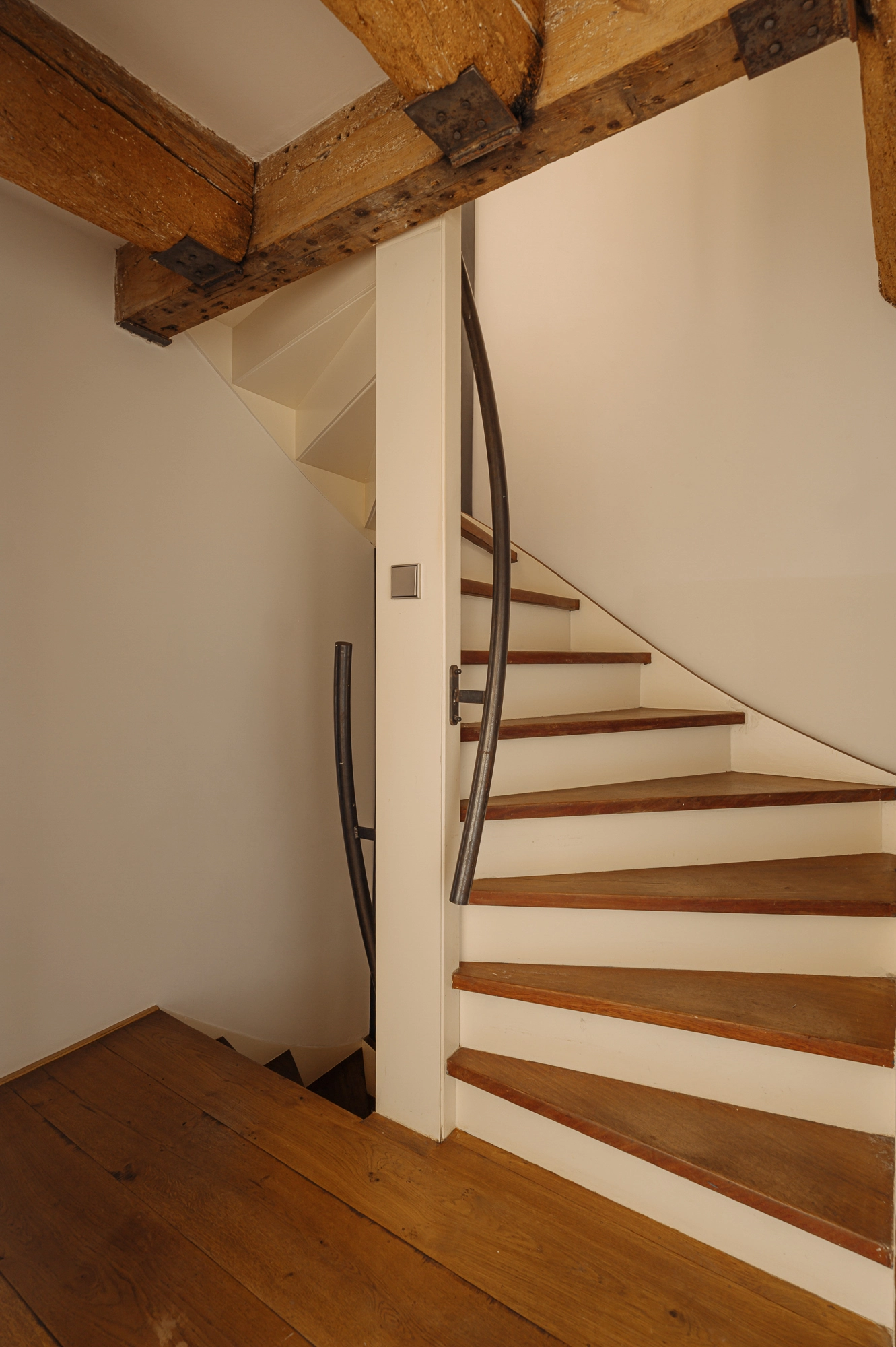
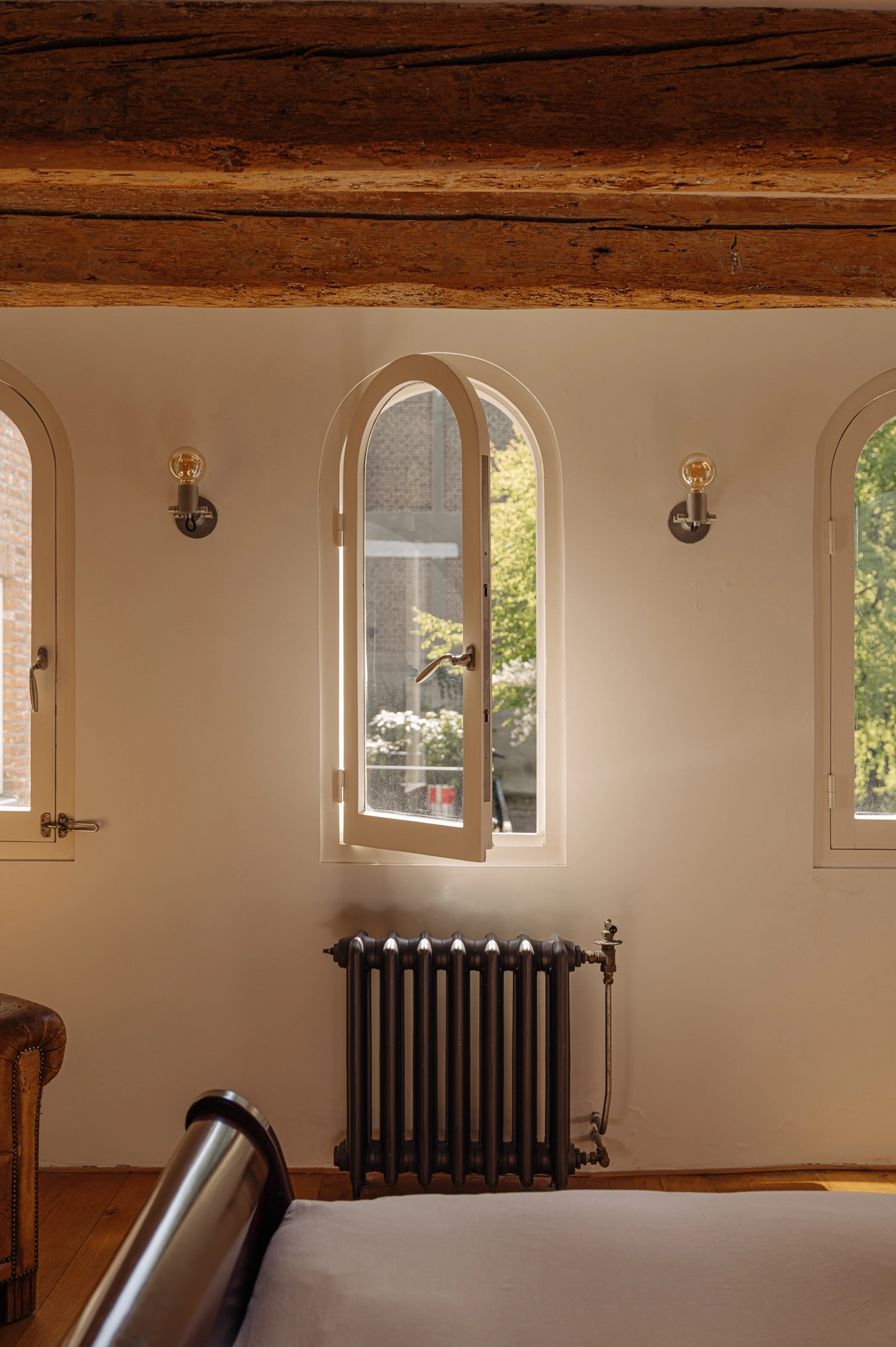
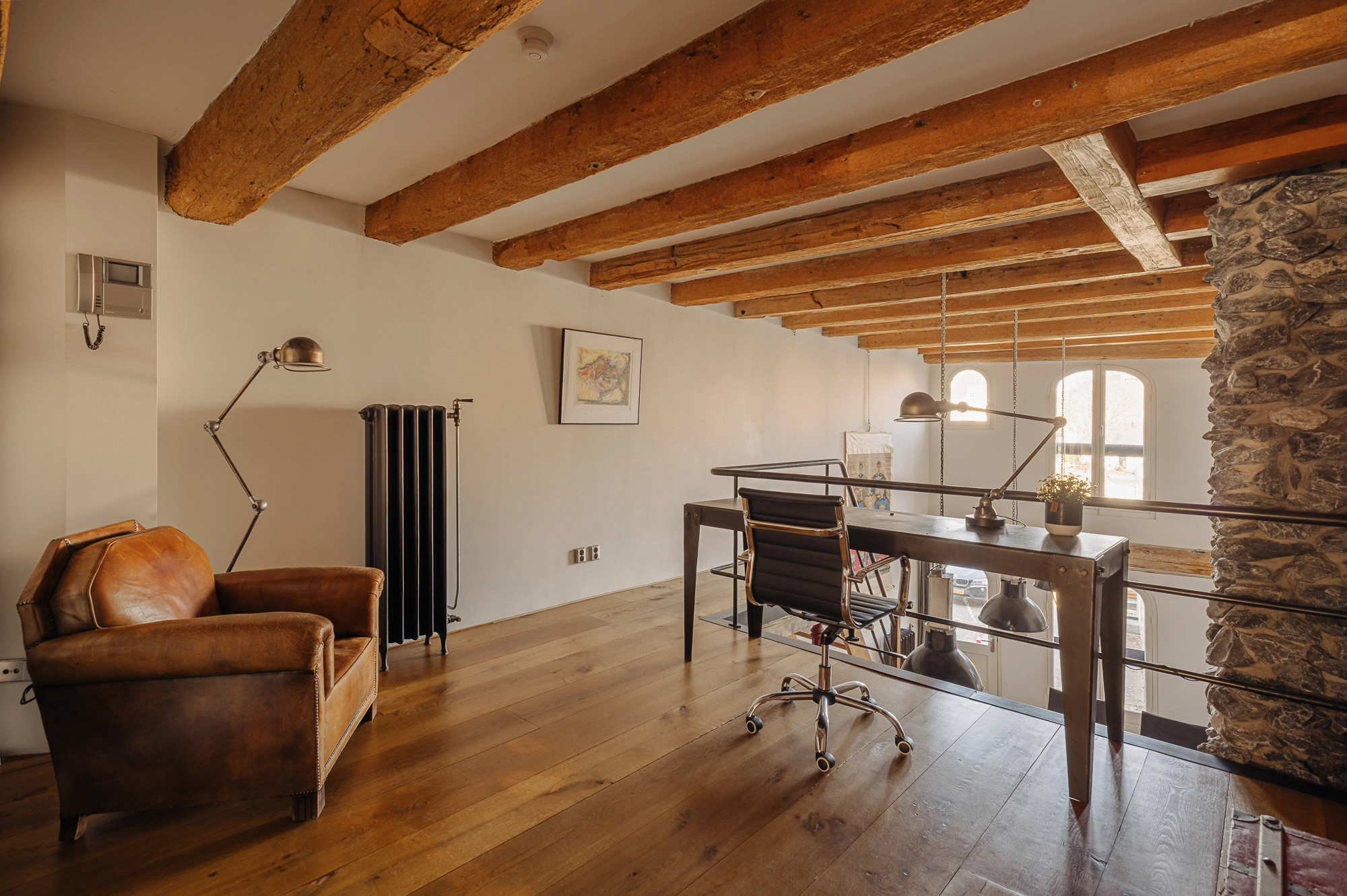
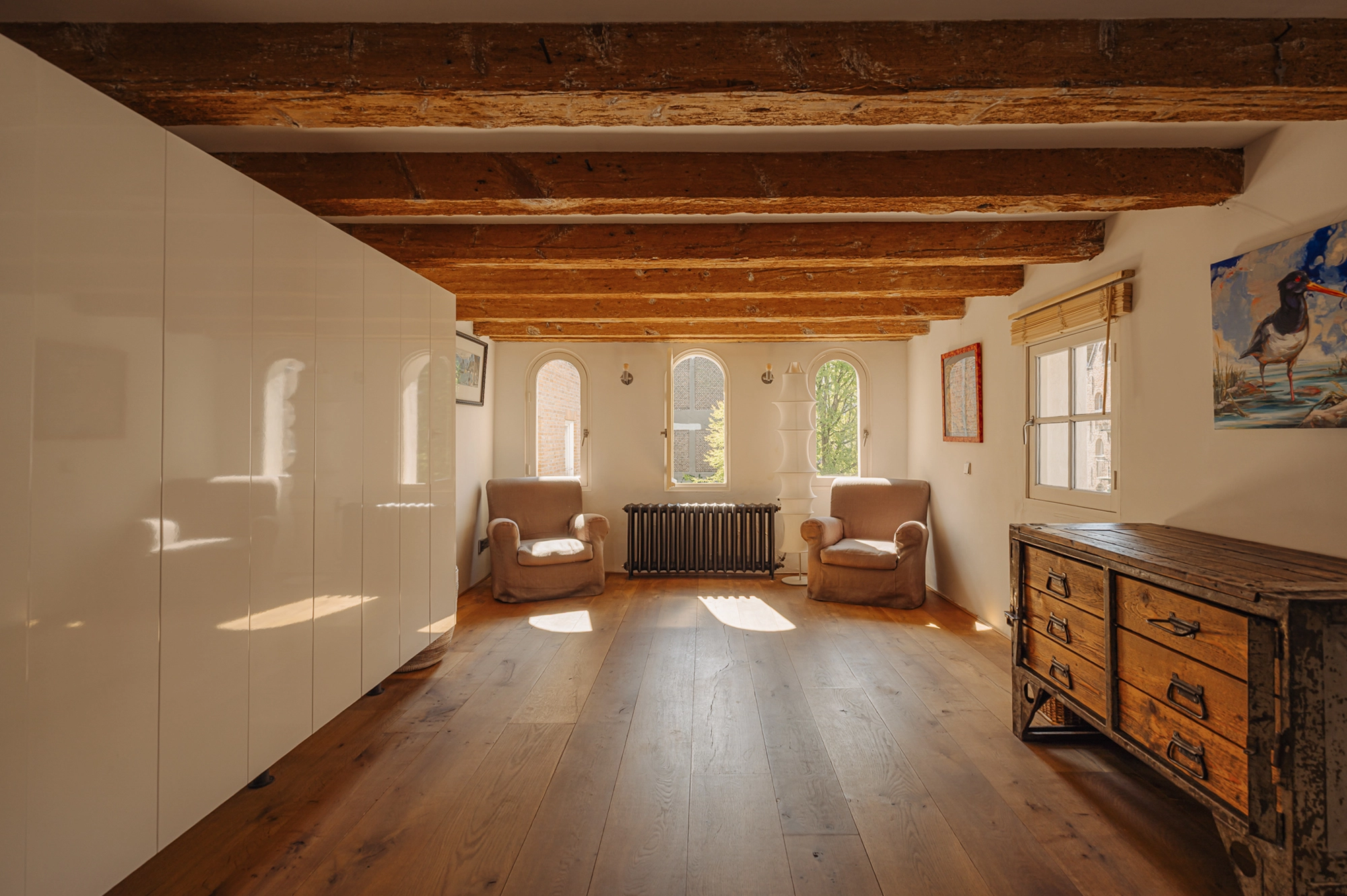
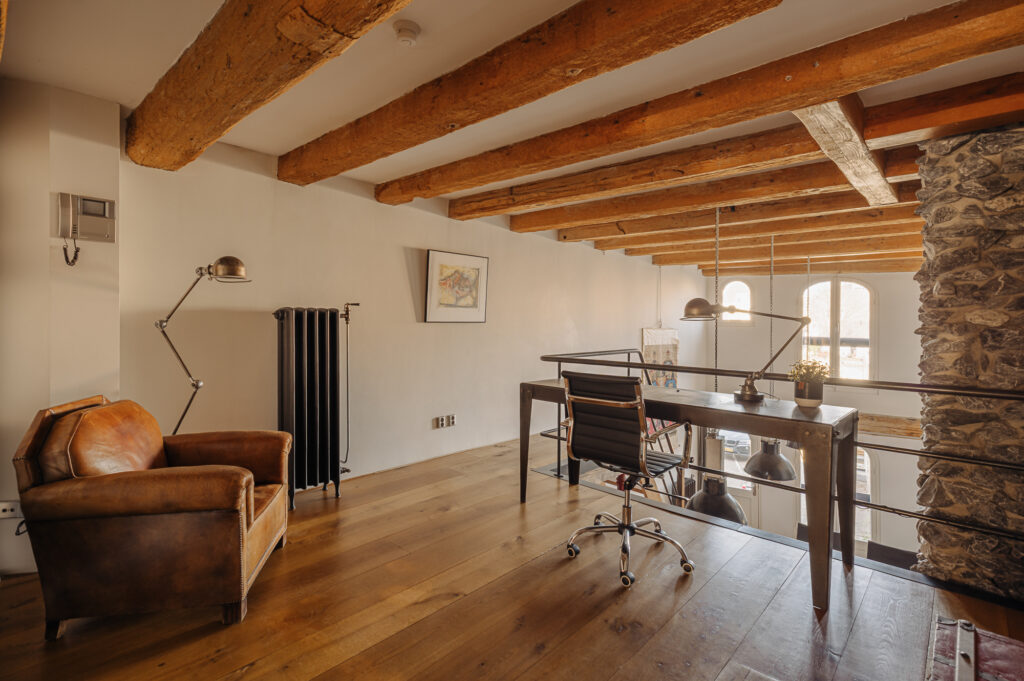
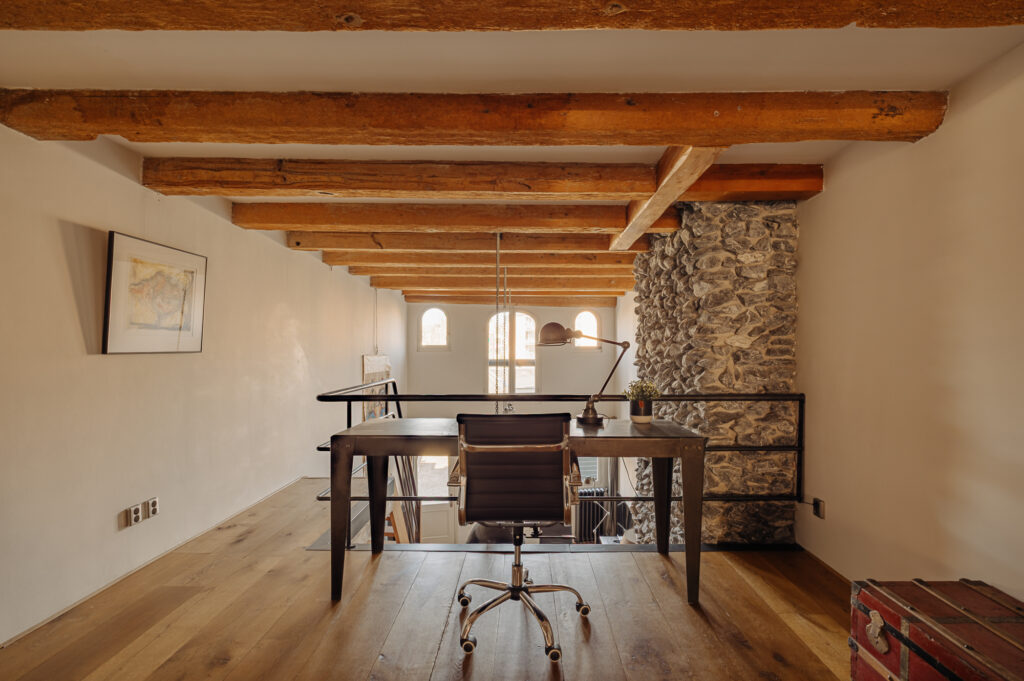
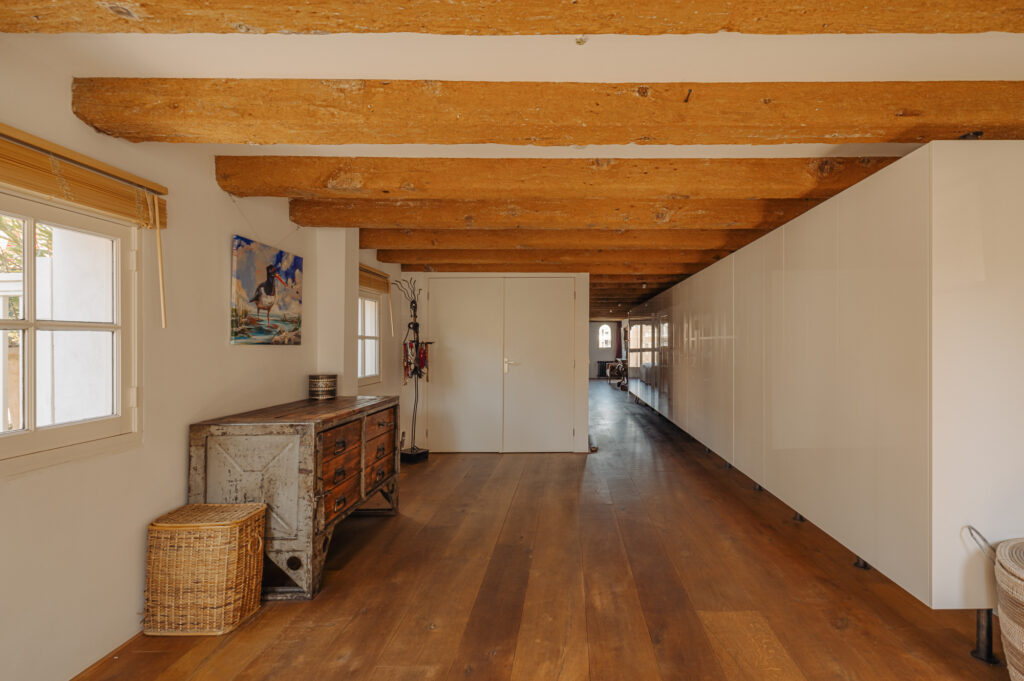
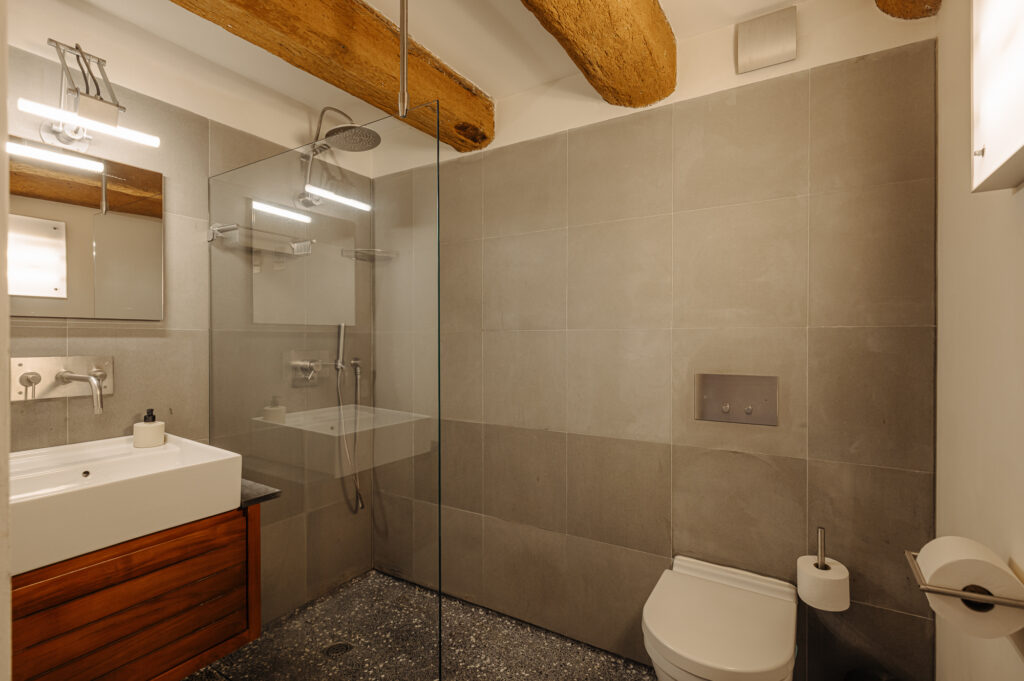
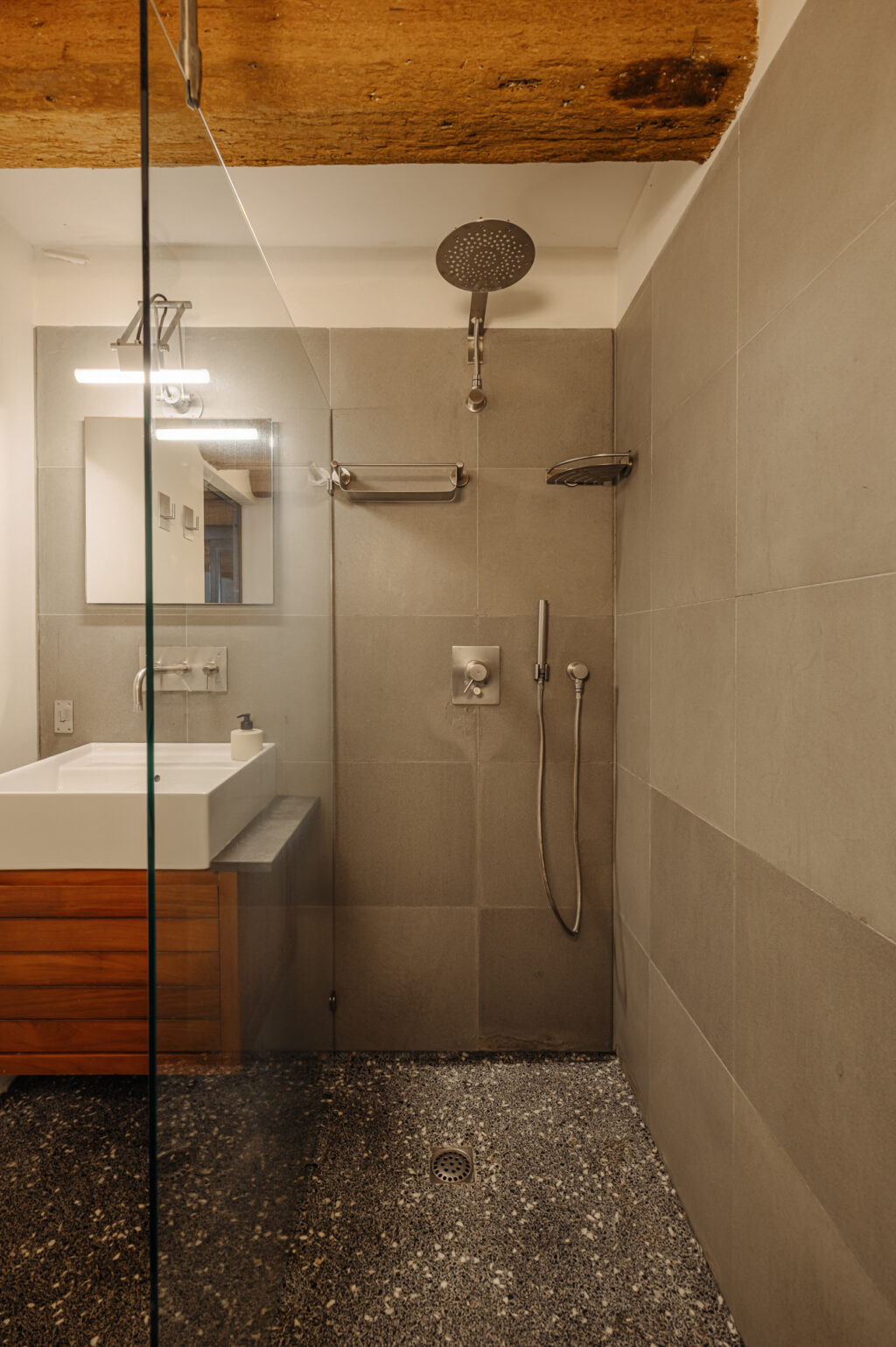
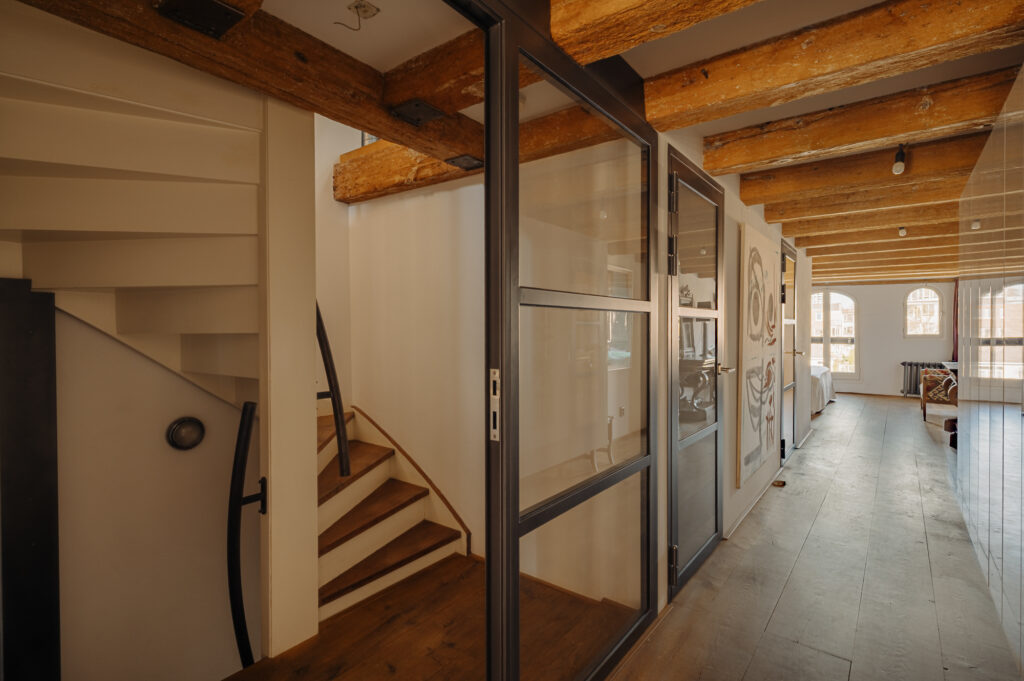
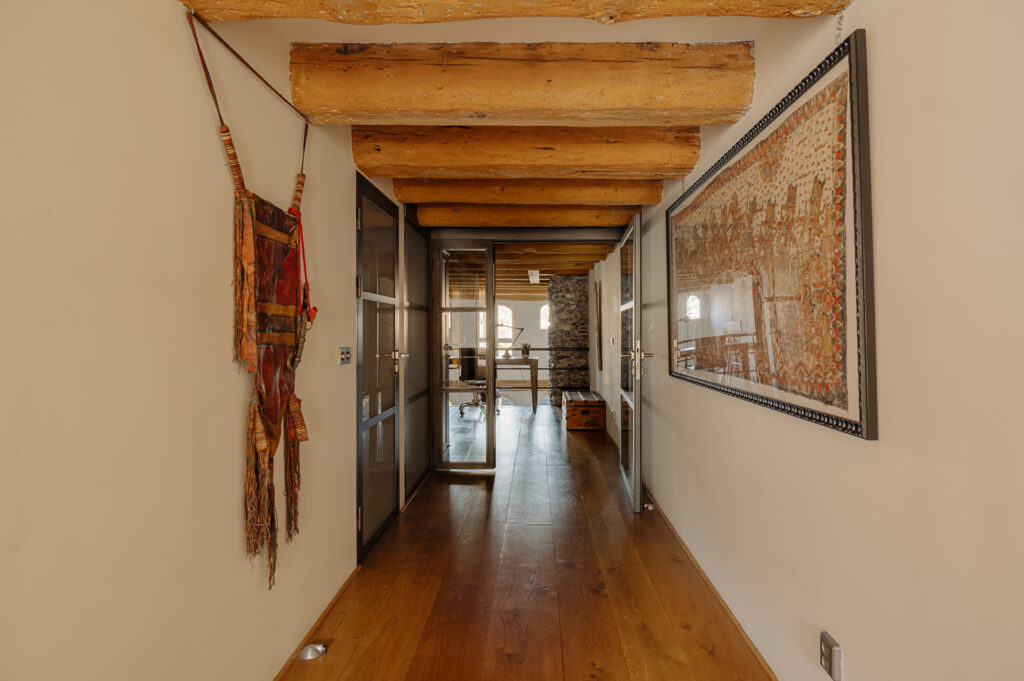
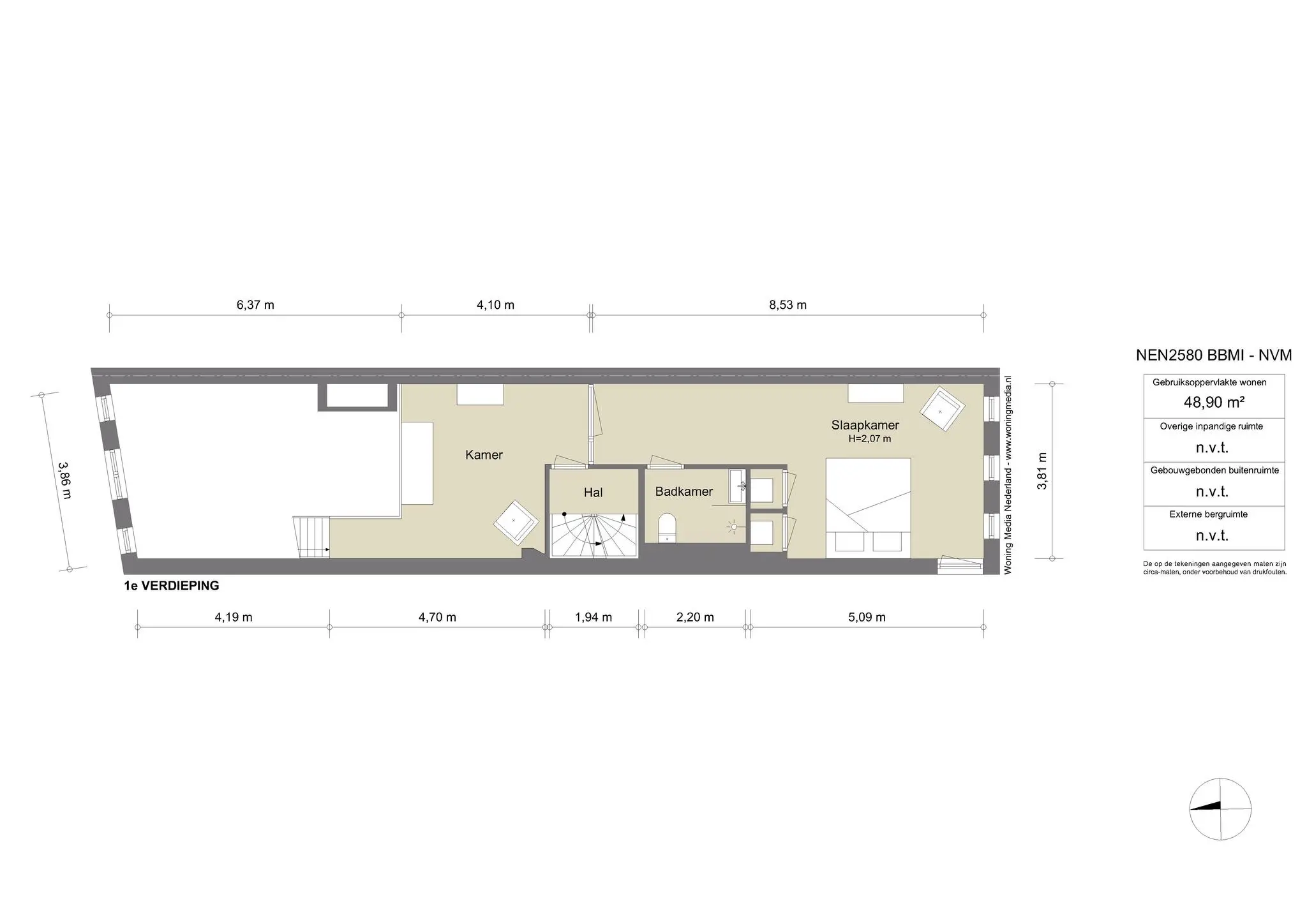
A staircase leads to the first floor, where the loft opens up the space again. The workspace at the balustrade overlooks the living area and the street scene beyond. At the rear is a bedroom/guest room, with a tranquil atmosphere and beautiful views of the greenery. The windows are set deep into the facade and catch the morning light. Immediately is a bathroom with a serene atmosphere. Gray, large-format tiles, a walk-in shower with rain function, a floating toilet, and a washbasin with wooden base cabinet combine to form a modest ensemble. On this floor, too, the beams remain visible and give structure to the space.
The second floor
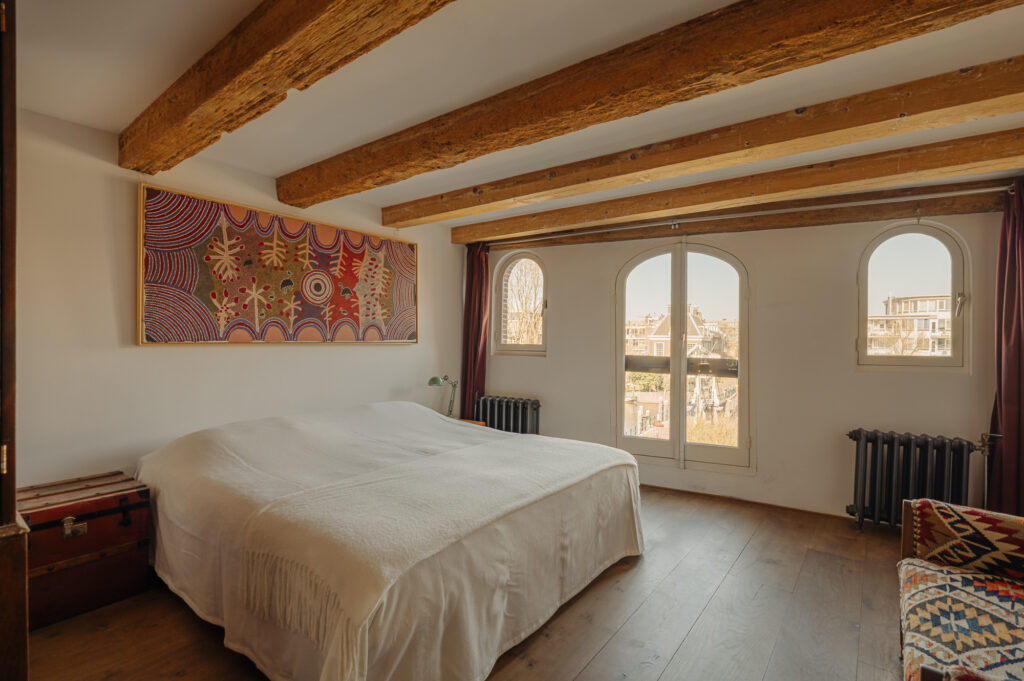
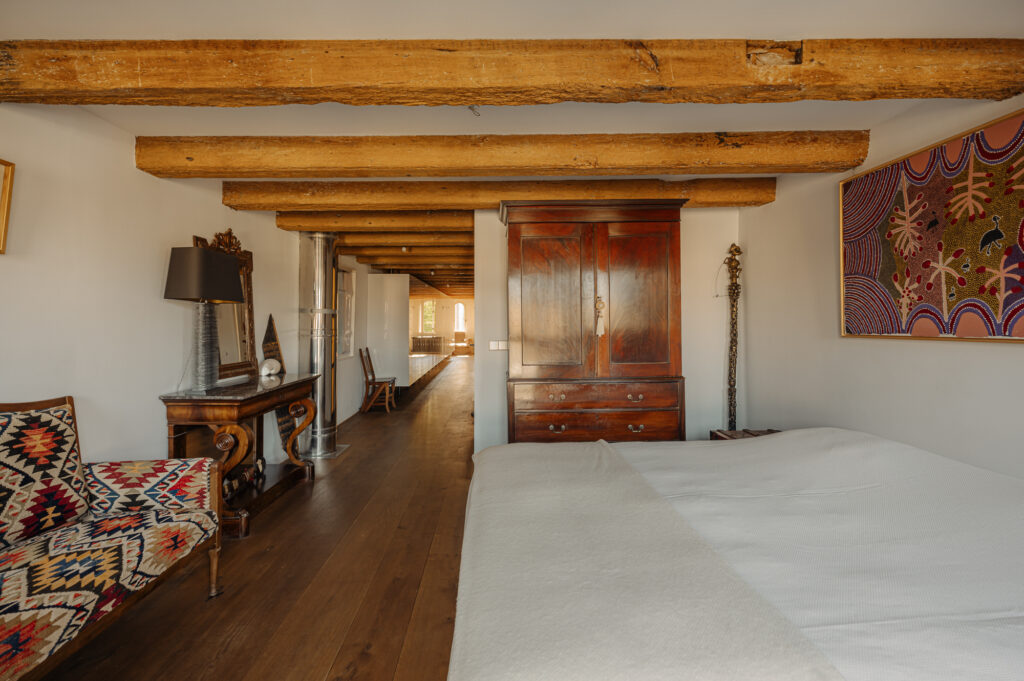
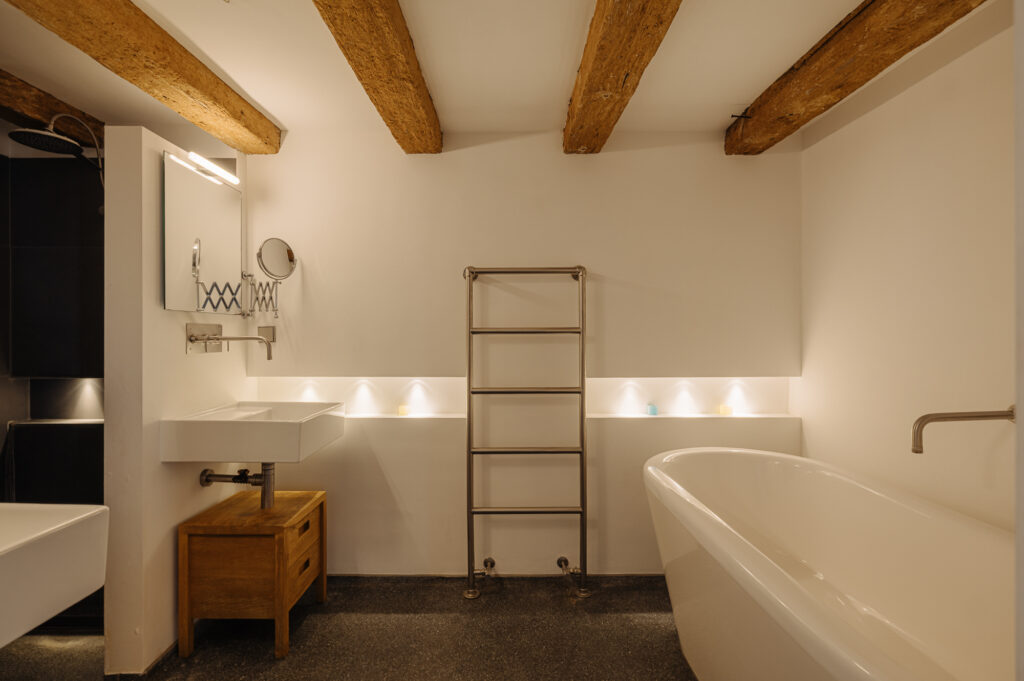
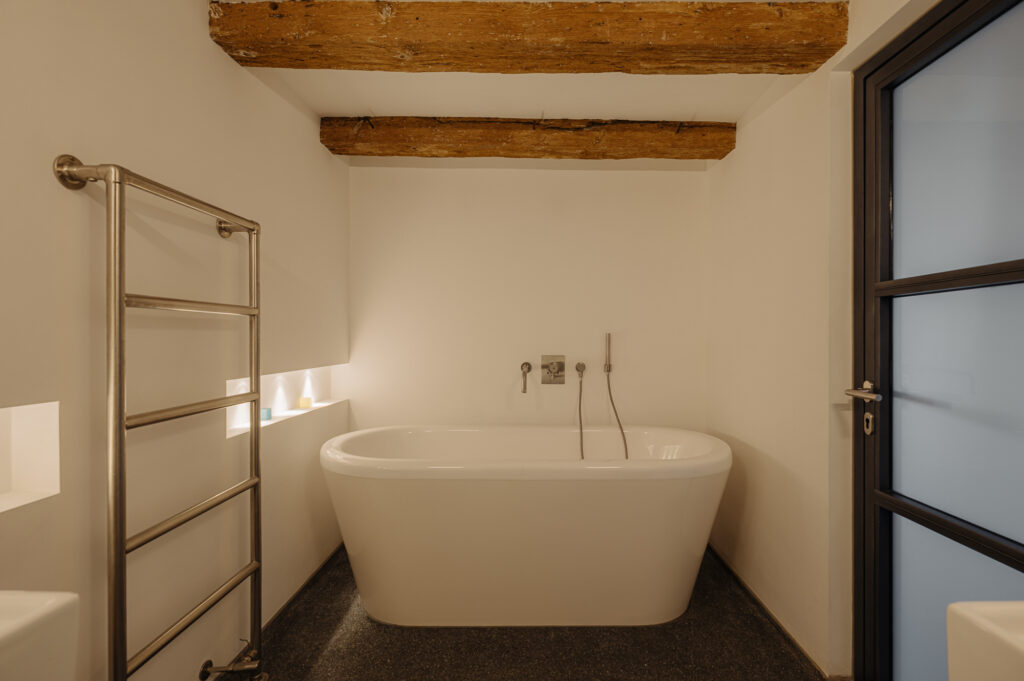
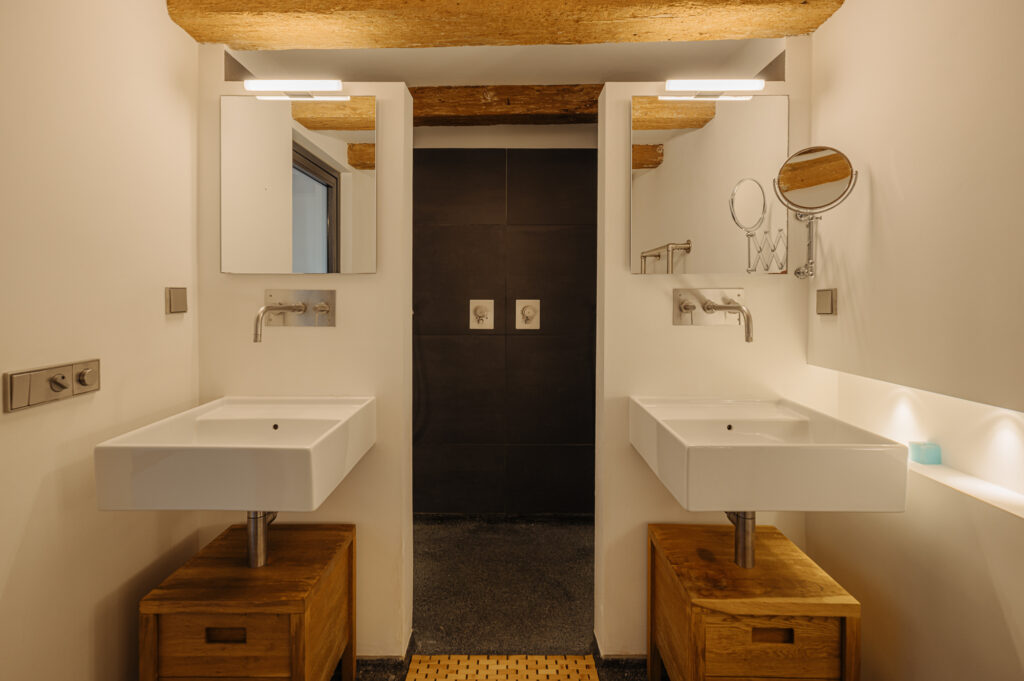
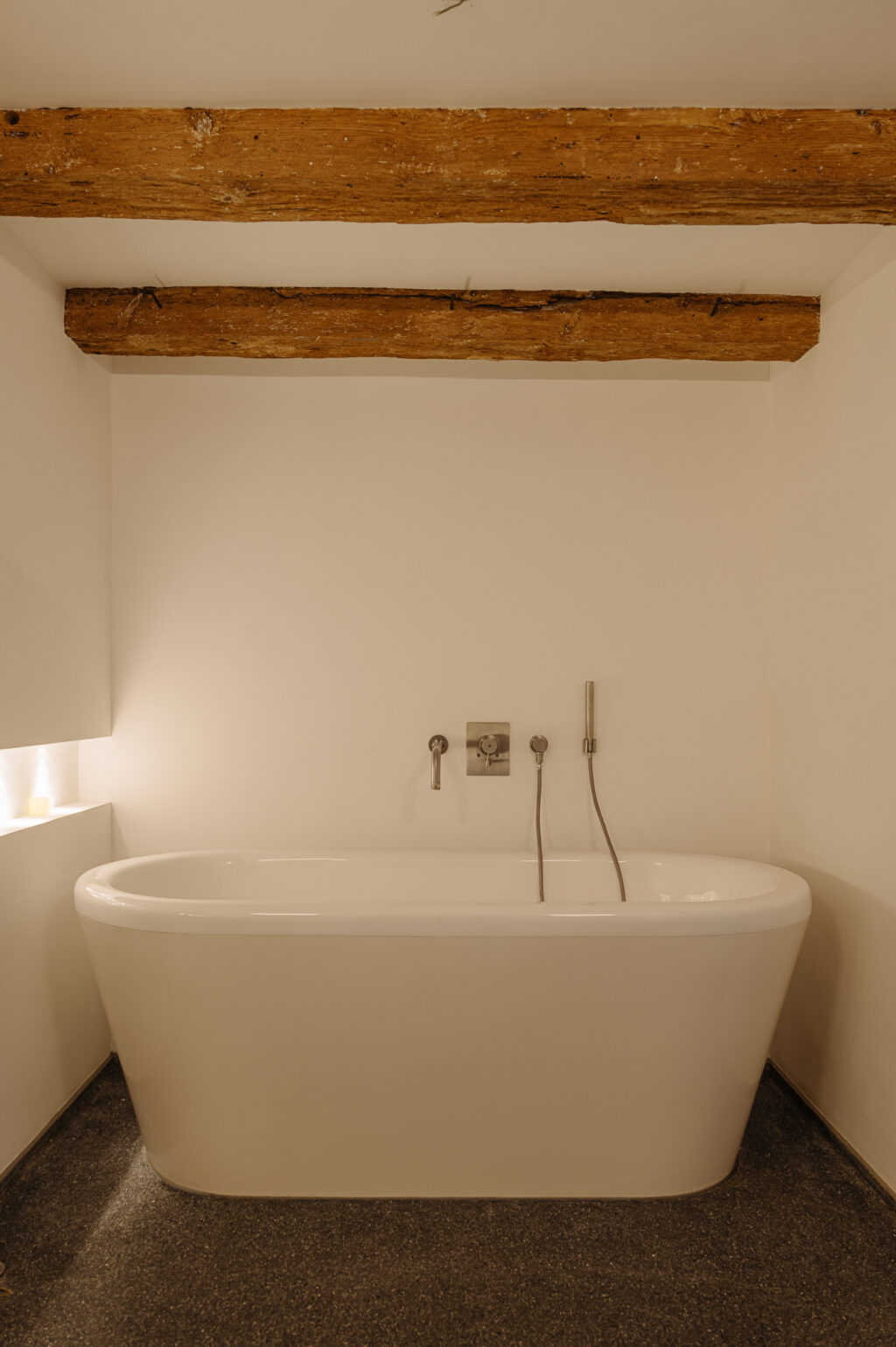
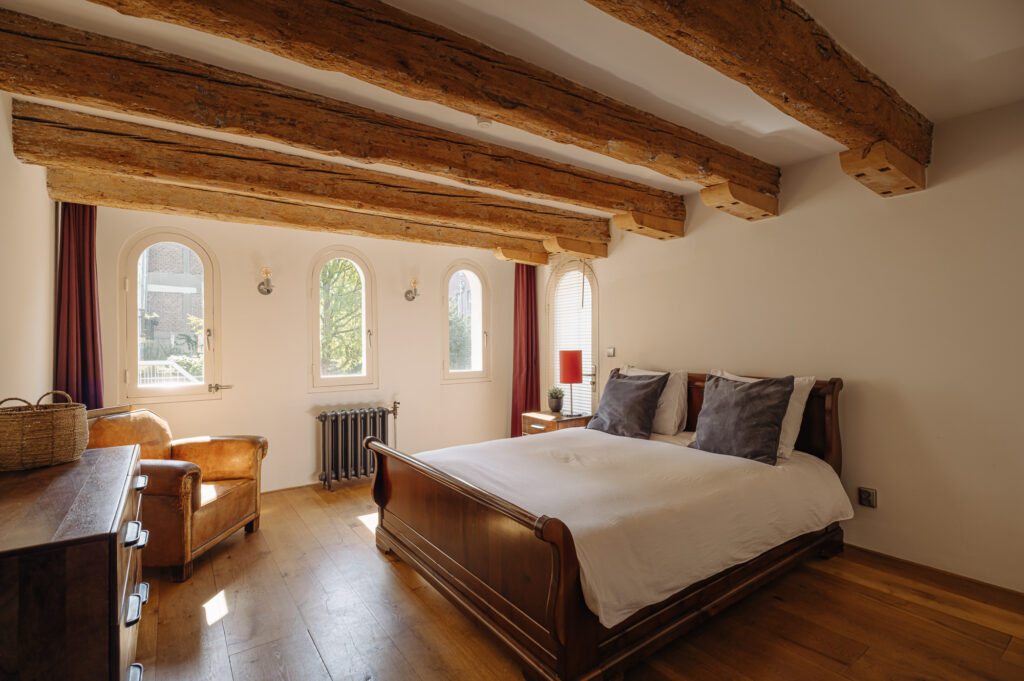
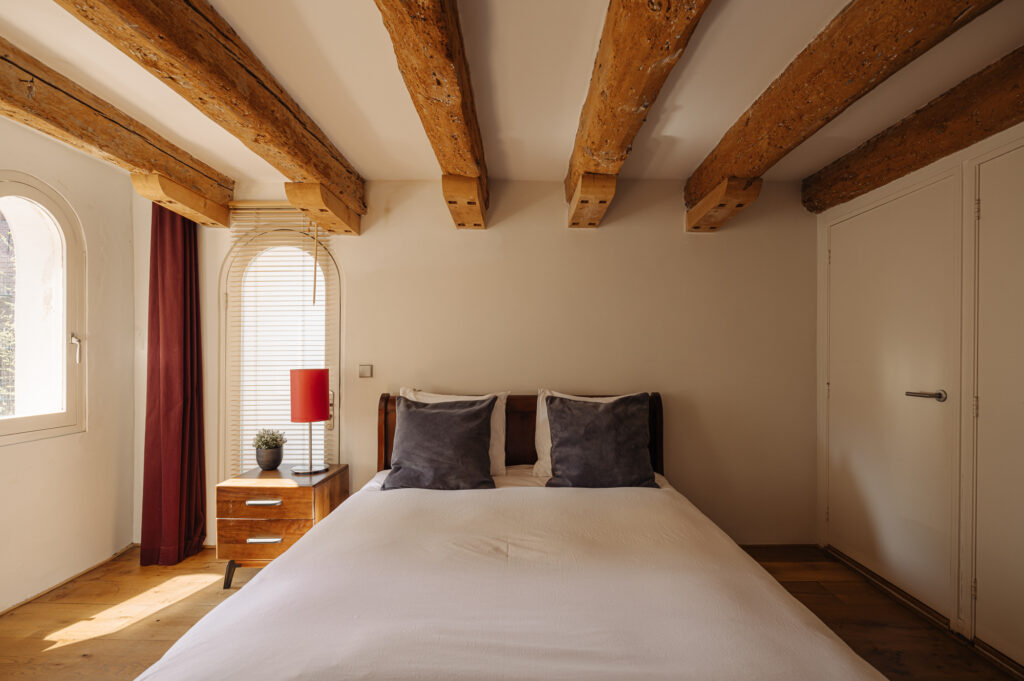
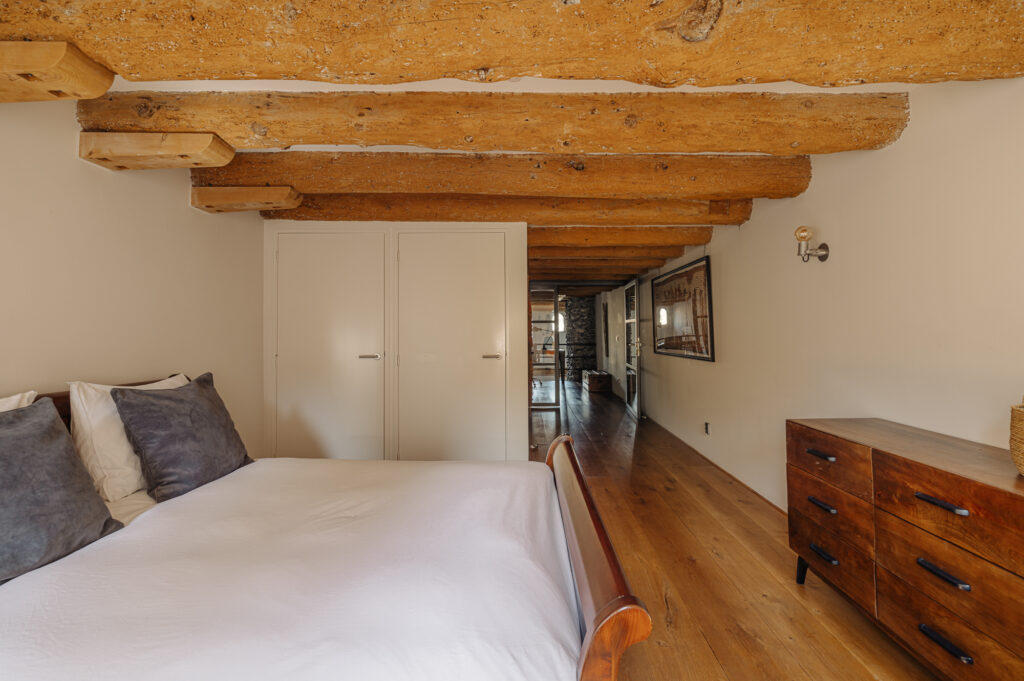
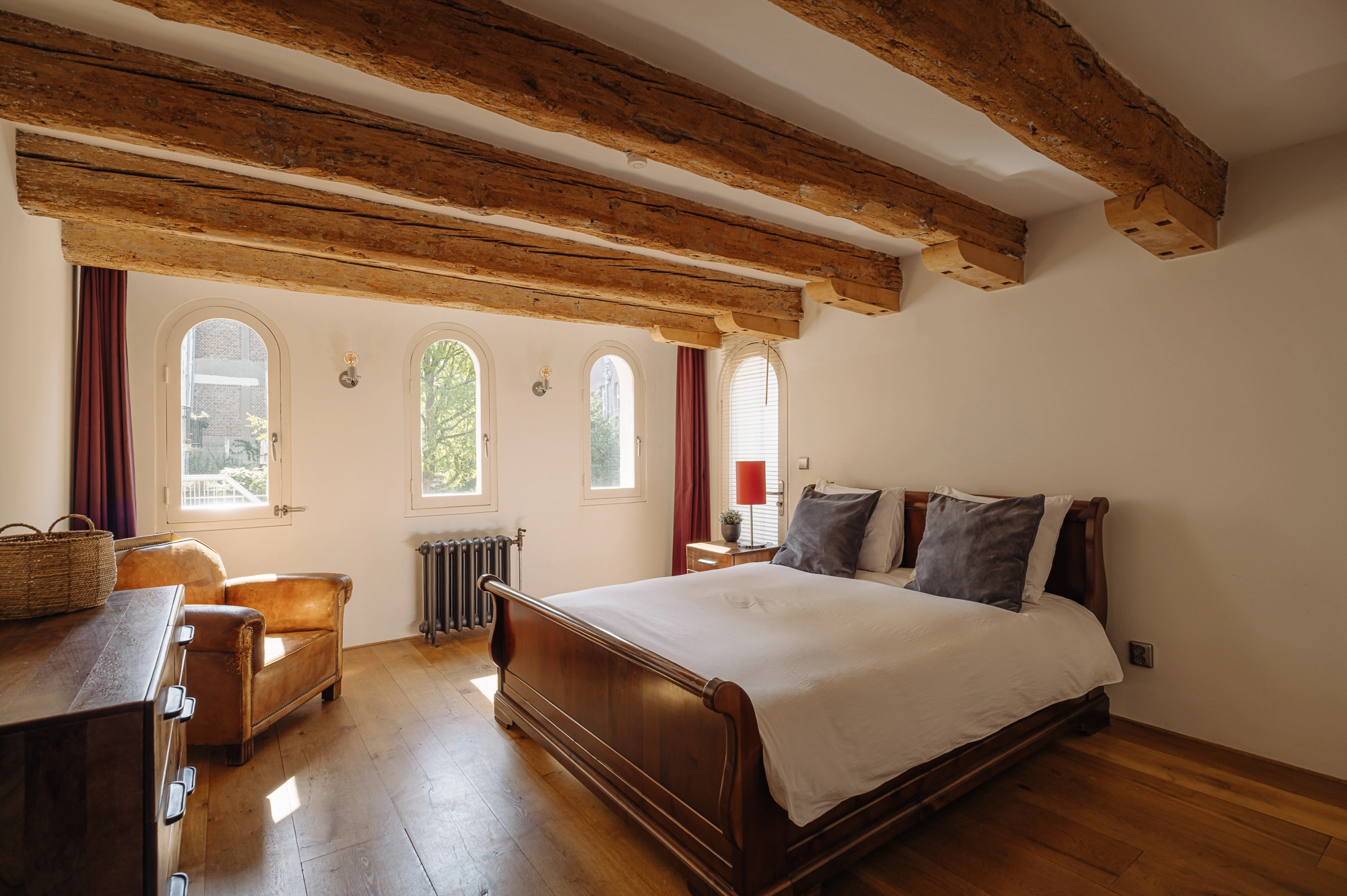
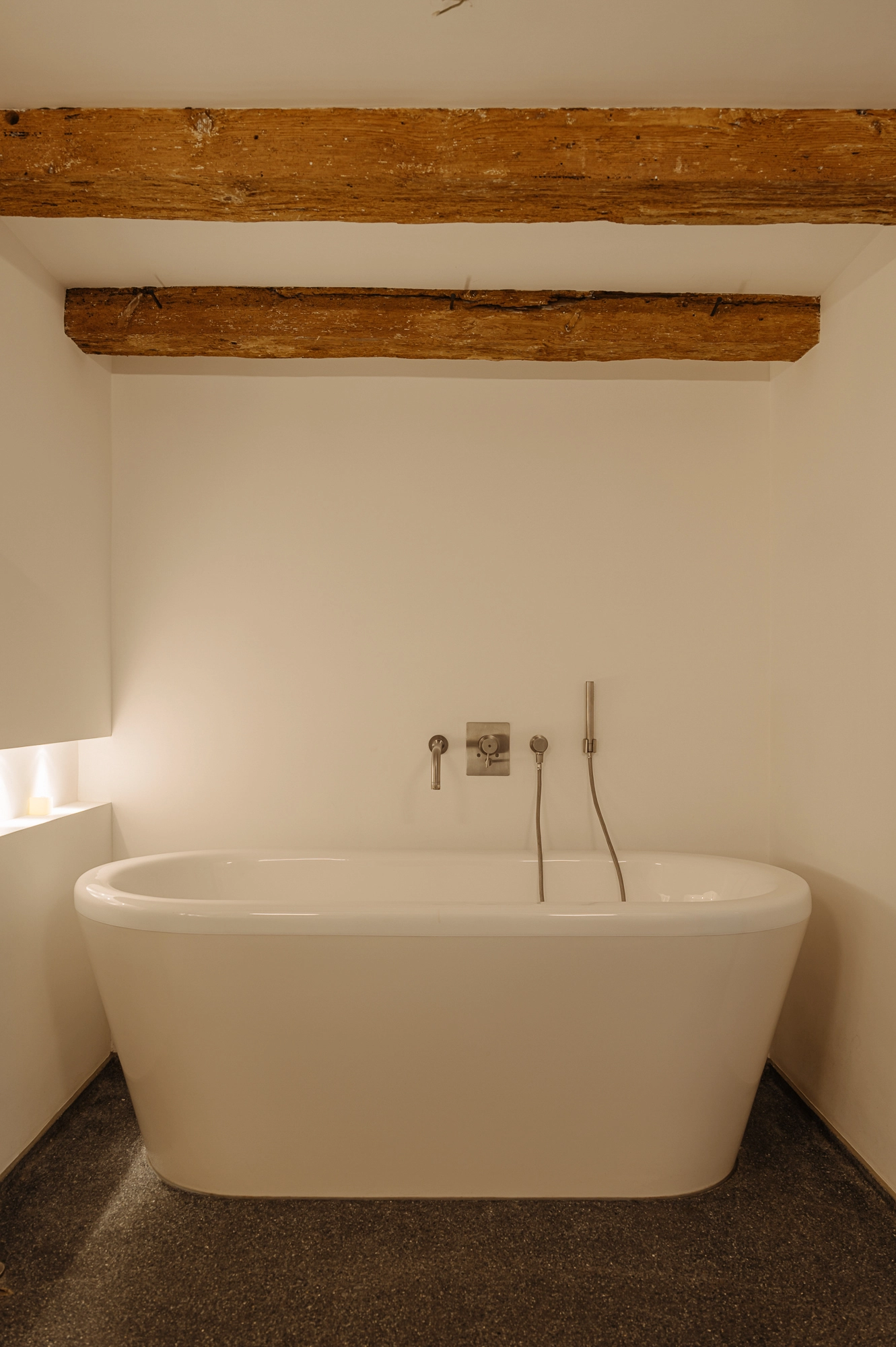
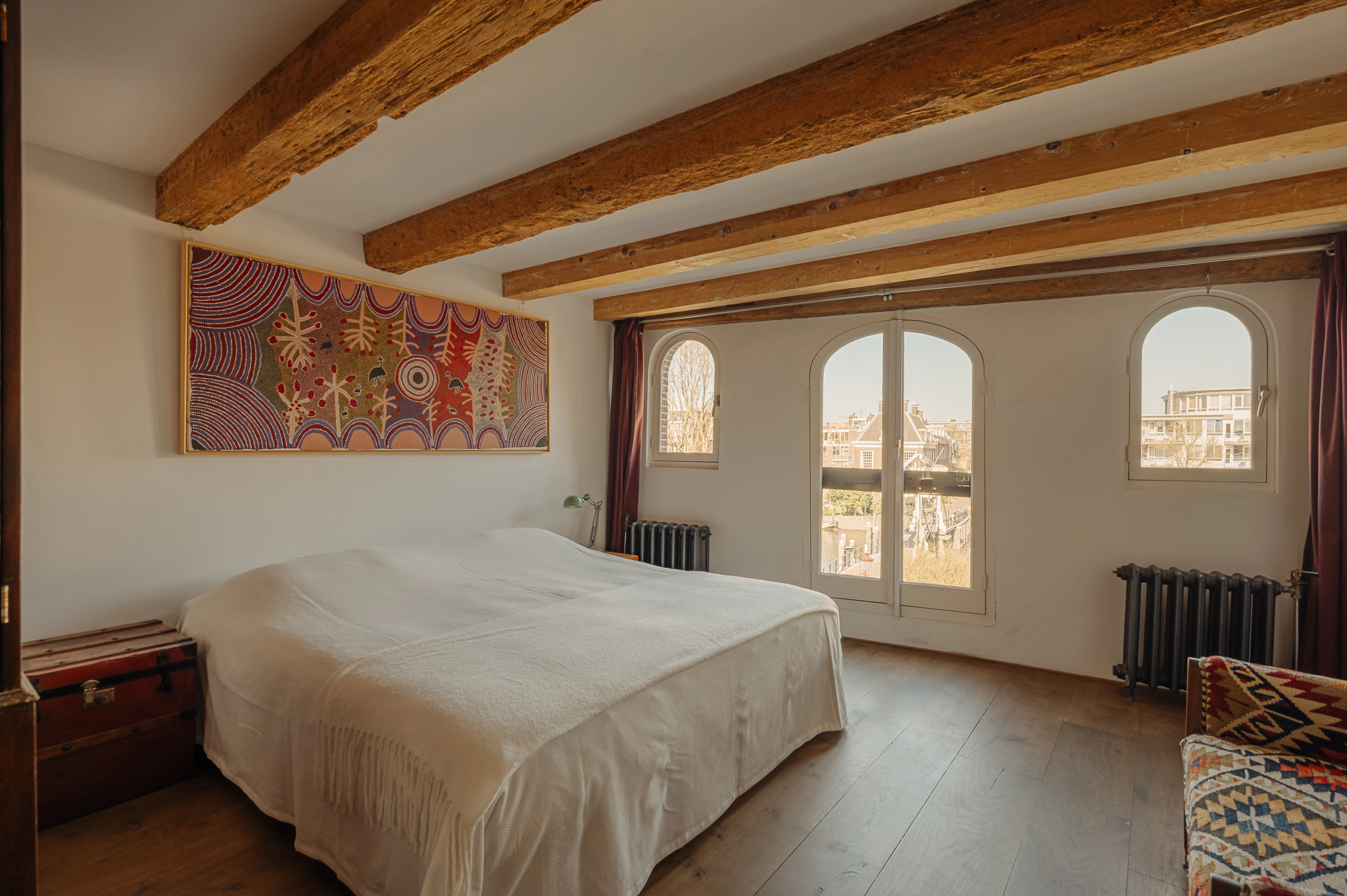
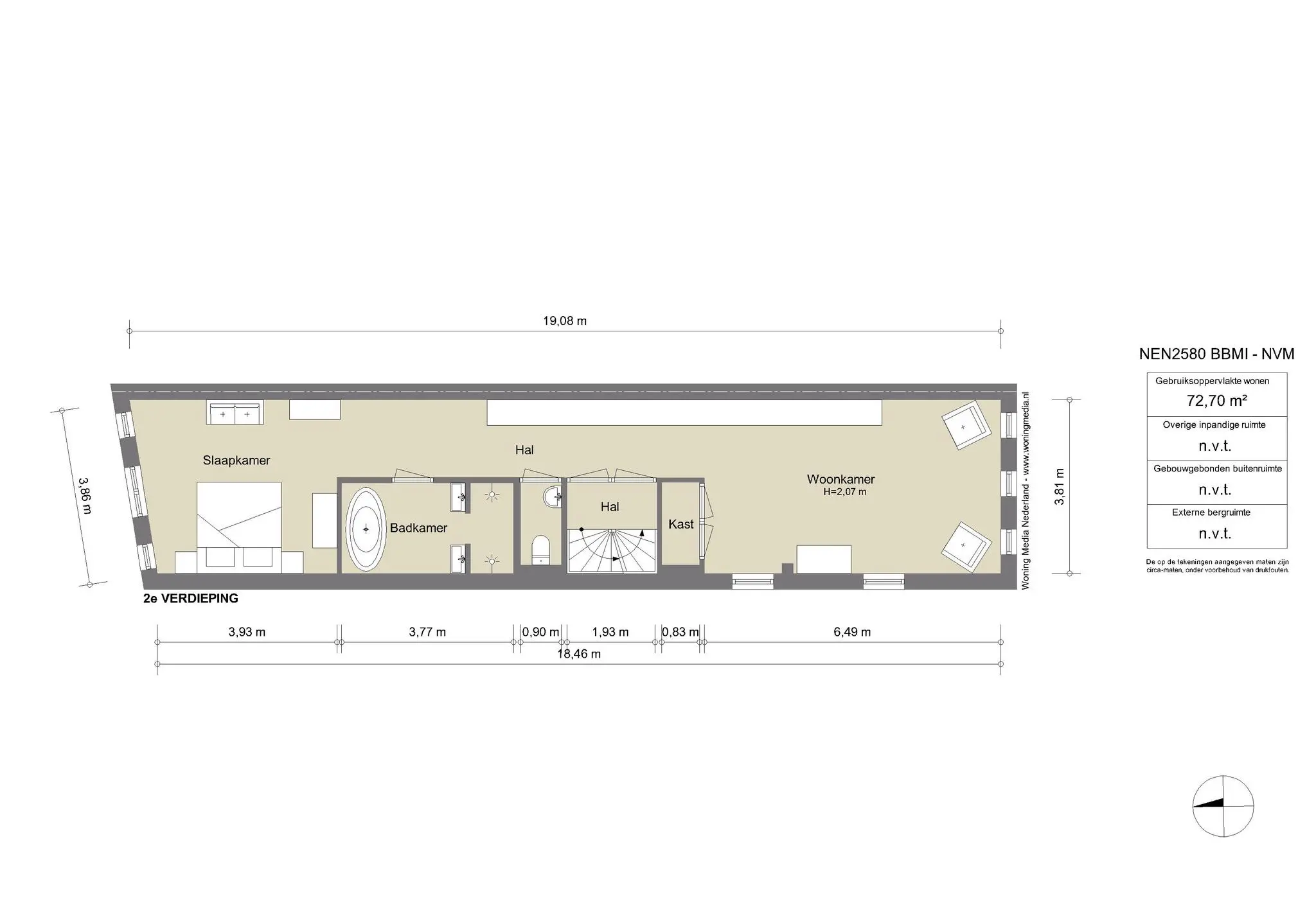
The second floor is entirely furnished as the master bedroom. On either side are two full bedrooms; in the middle is an elegant bathroom and a hallway structure that connects everything. The room at the rear is spacious and light, with five semicircular south-facing windows that bring in the greenery of the inner gardens. In the middle of the floor is the bathroom—a luxurious space where symmetry and serenity come together. The bathroom has two sinks, a double walk-in shower, a freestanding bathtub, and a separate toilet. At the front is the master bedroom: spacious and classically furnished, with a view of the Realengracht. The room feels cozy, partly due to the repetition of wooden ceiling beams, the warm floor, and the soft light that enters through three windows.
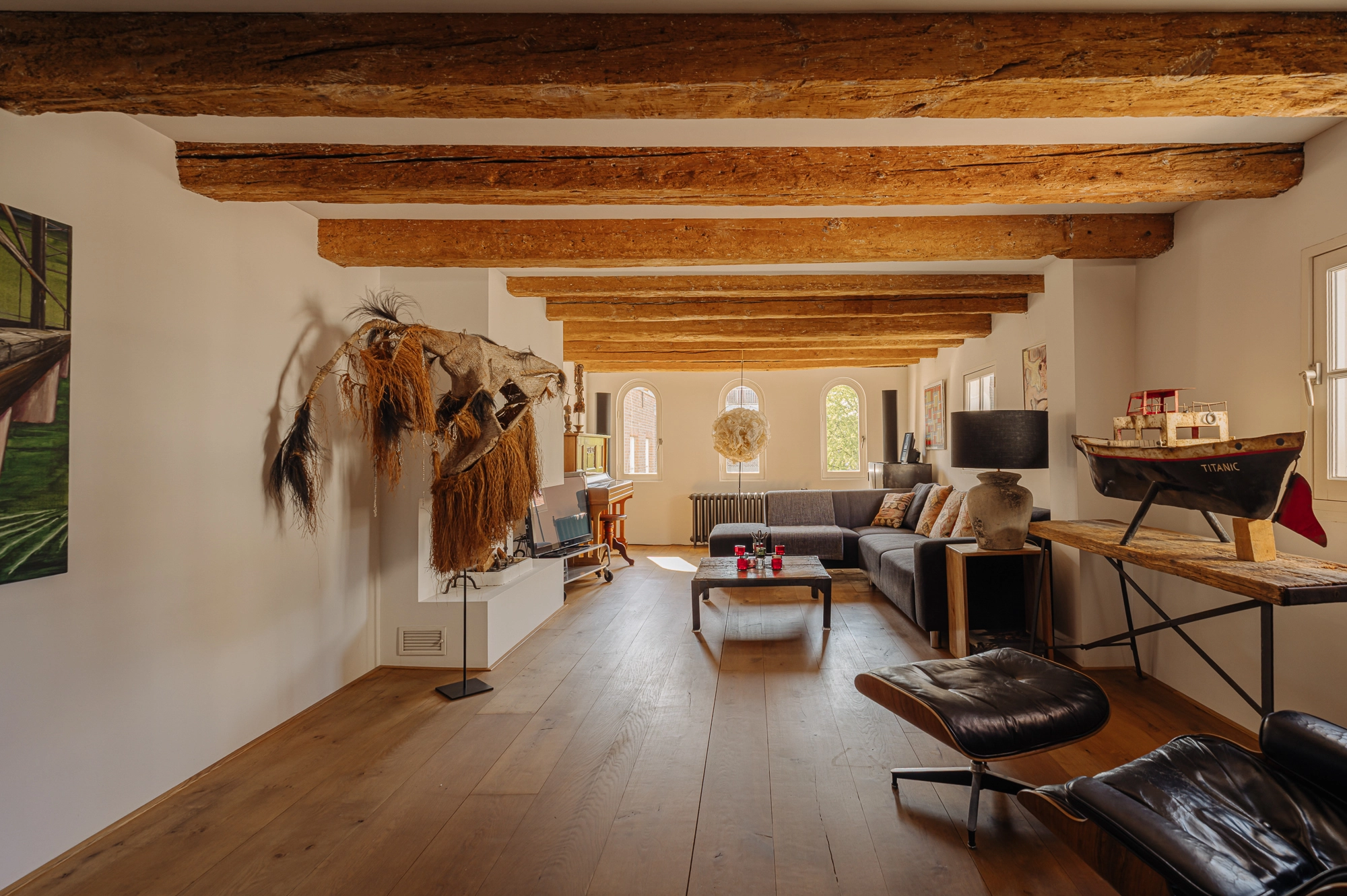
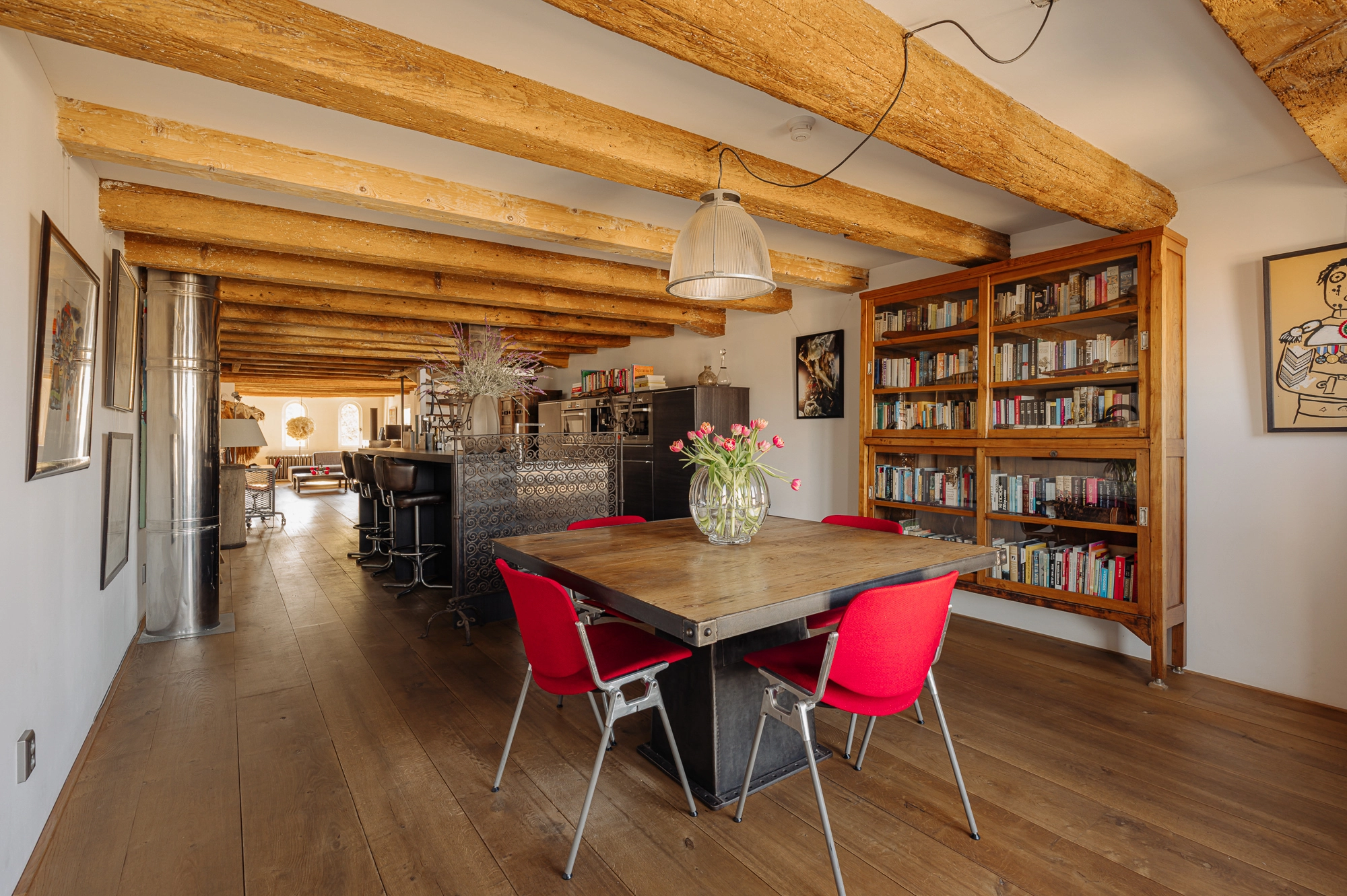
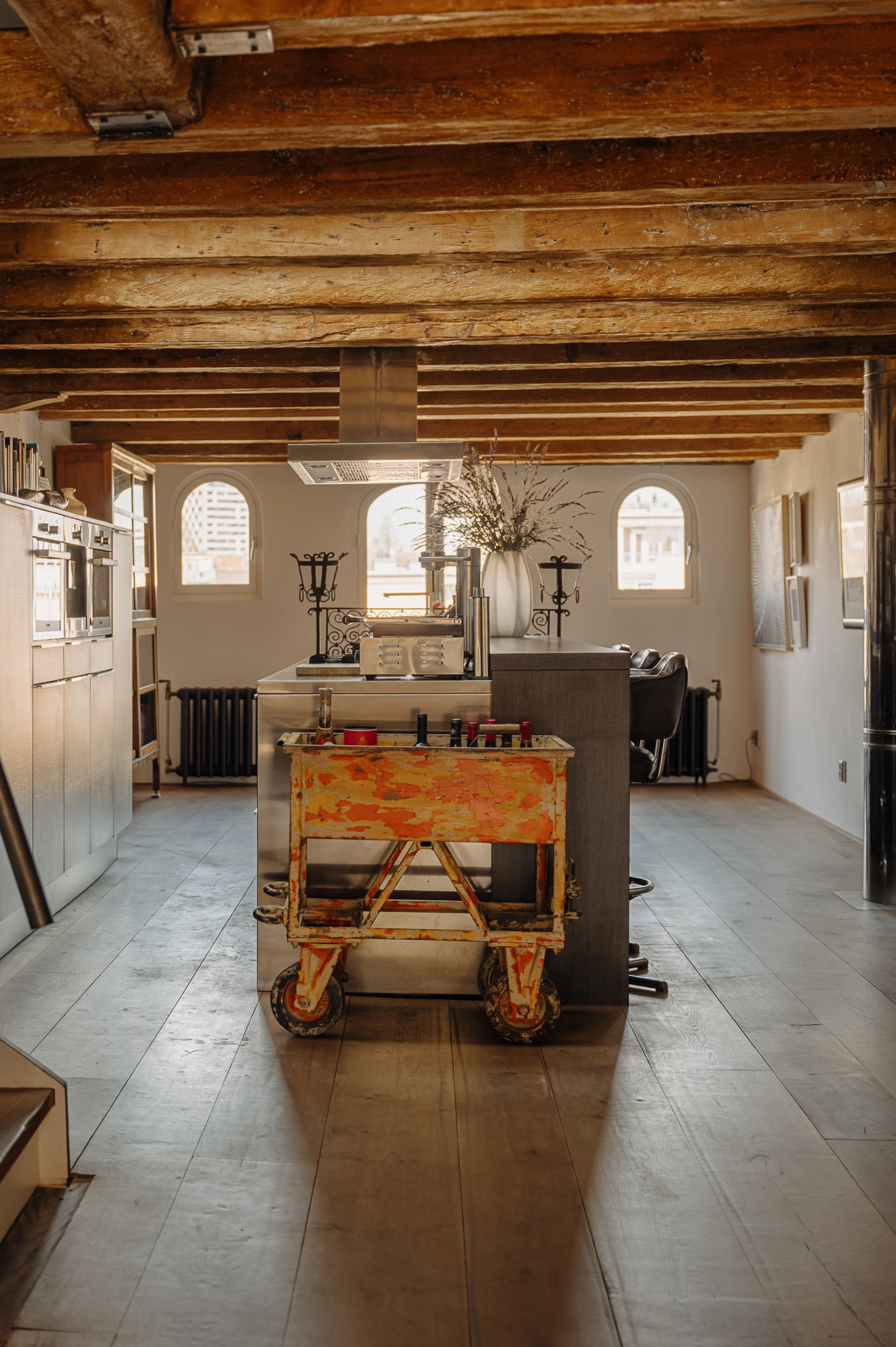
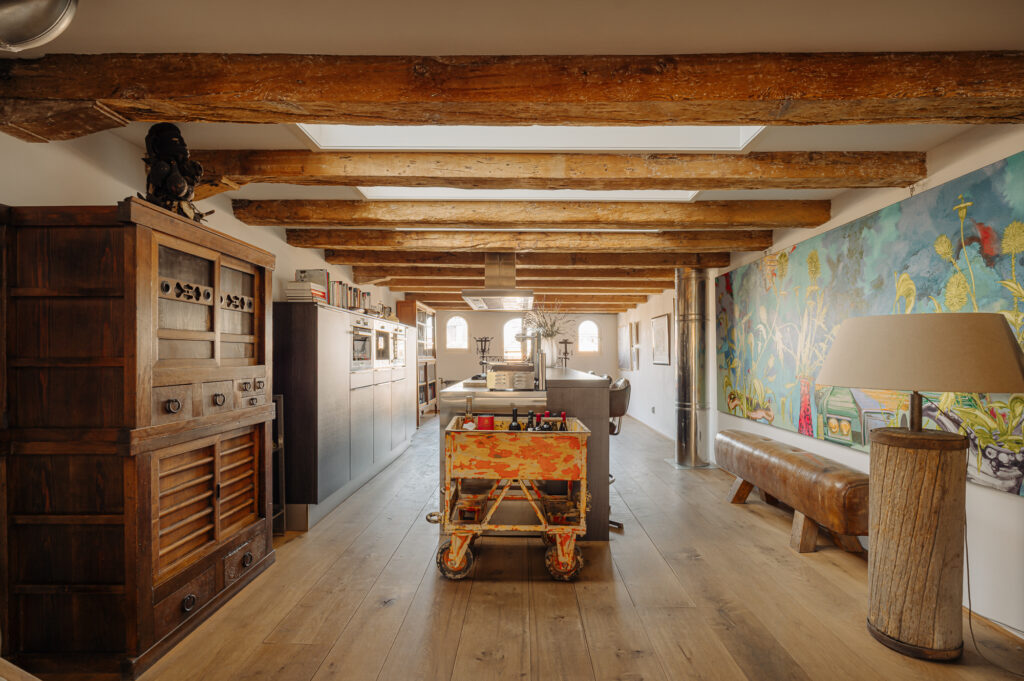
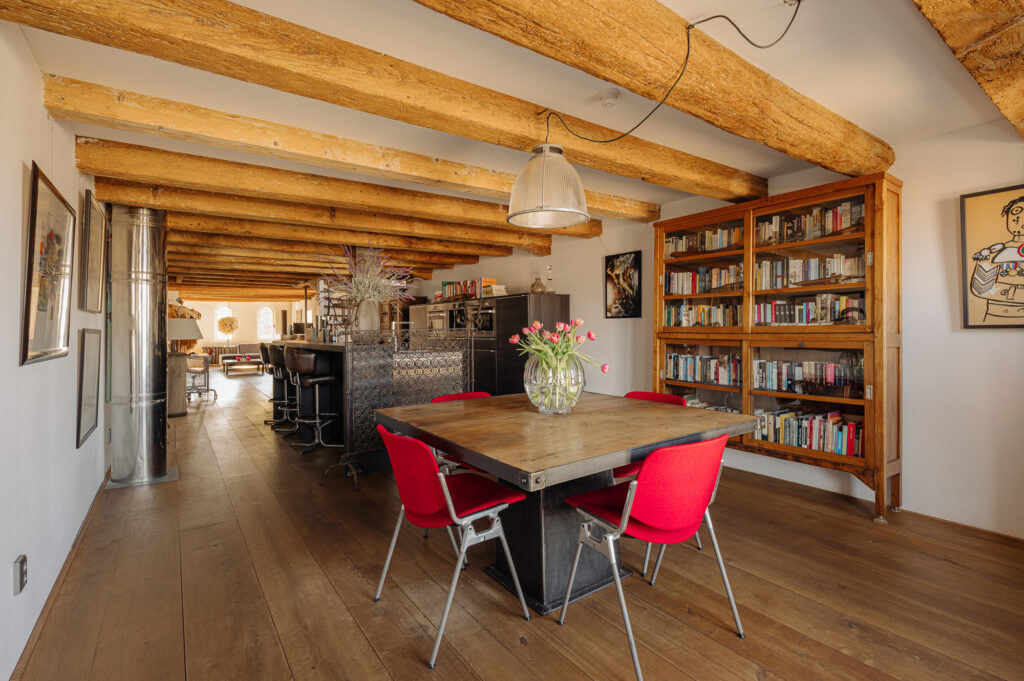
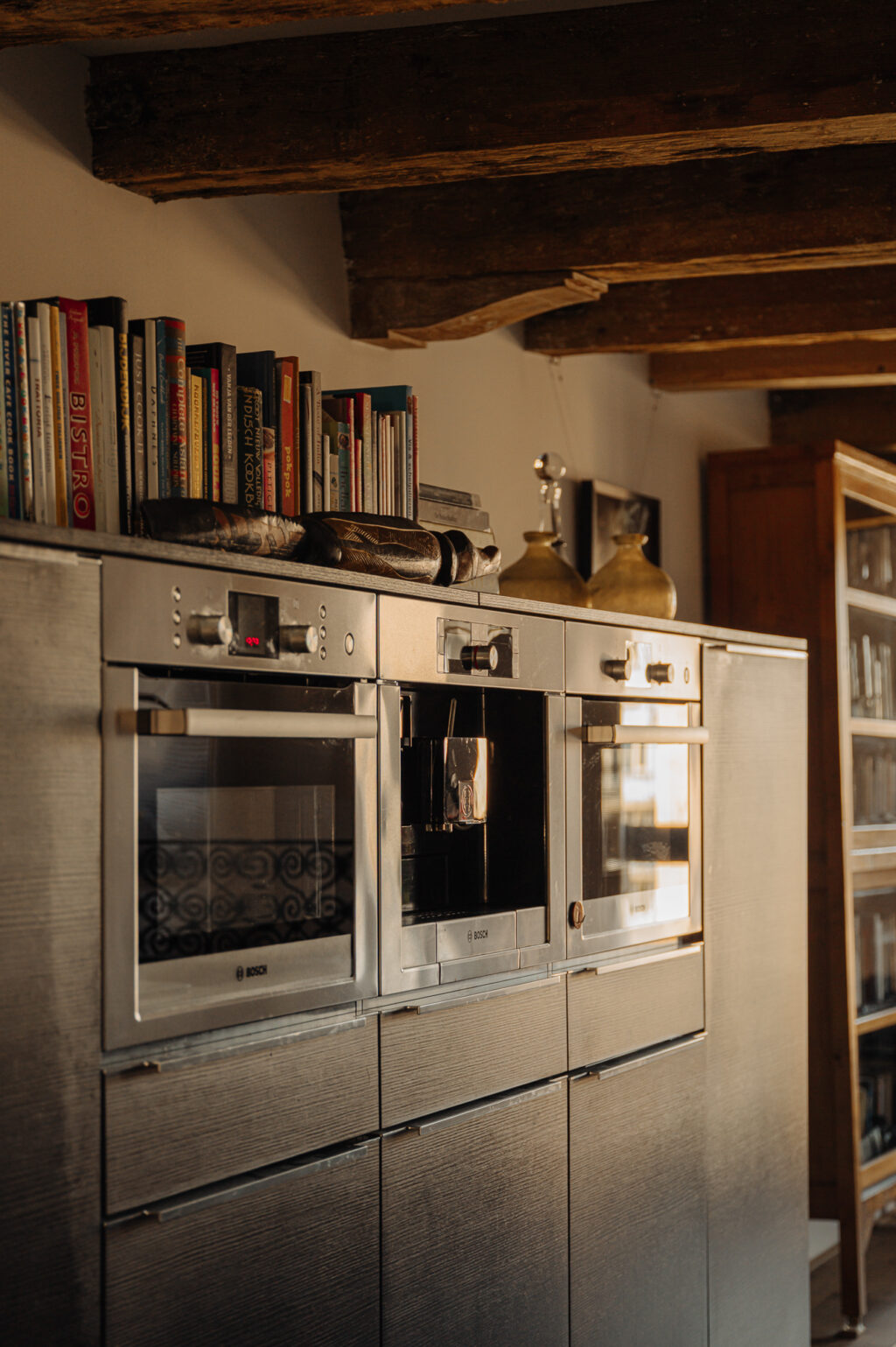
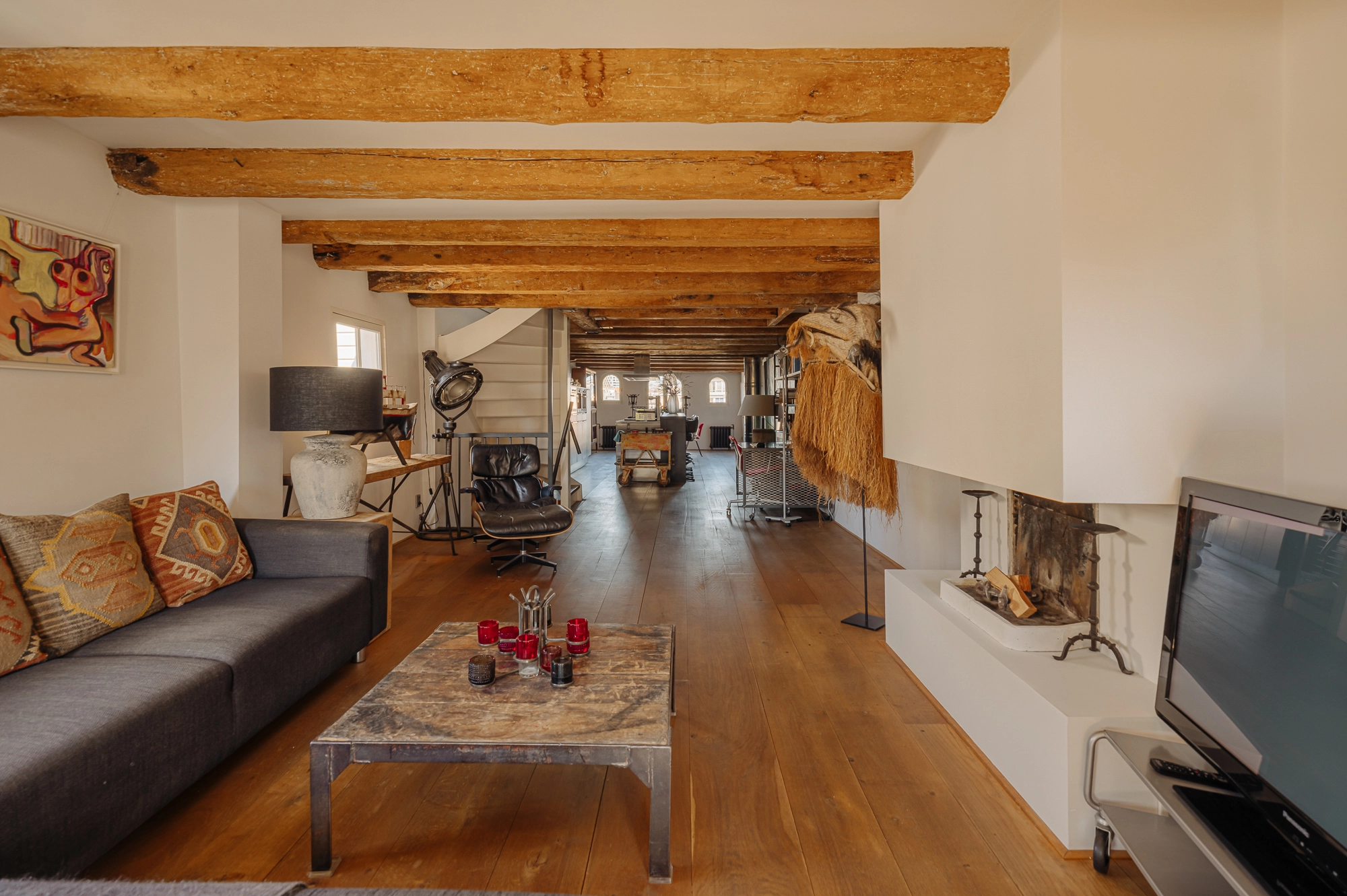
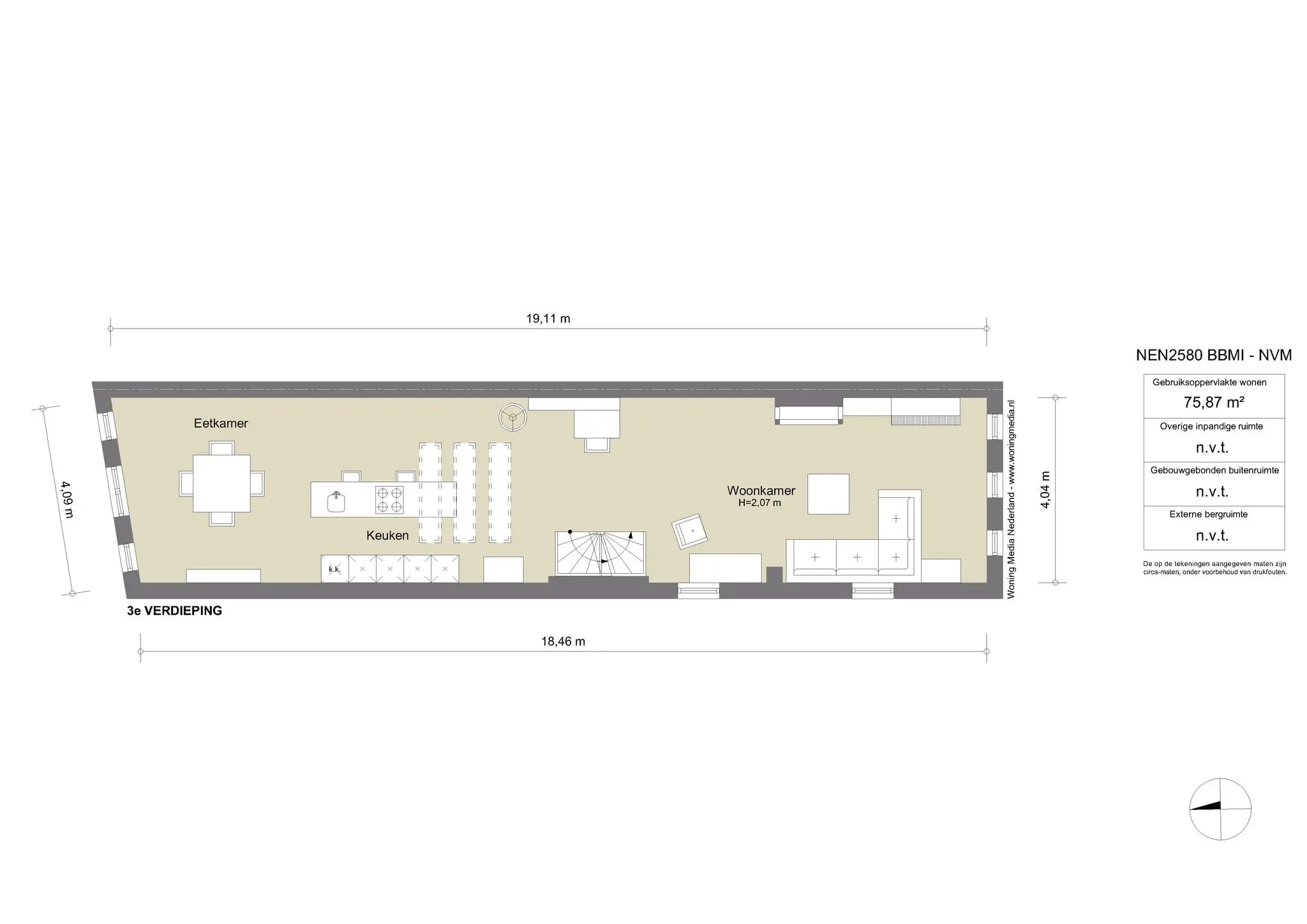
The third floor is designed for living itself. No partitions, no barriers—just space and light. From facade to facade, a spacious, open floor extends, where living, cooking, and socializing flow effortlessly into one another. At the front is a large dining table with a view over the Realengracht. The windows capture the northern light and allow soft daylight to flow deep into the space. Centrally located on the floor is the kitchen: a long, solid cooking island with every conceivable amenity. The worktop is surrounded by a wall with built-in appliances, bookshelves, and china cabinets, making this space feel like a home library with a culinary purpose.
Above the cooking area, three large skylights bring an unexpected vertical dimension to the space. The light falls directly from above and moves with the rhythm of the sun. At the rear, the whole is rounded off with an intimate sitting area, which is remarkably light in character thanks to the windows in the rear and side walls.
The fourth floor
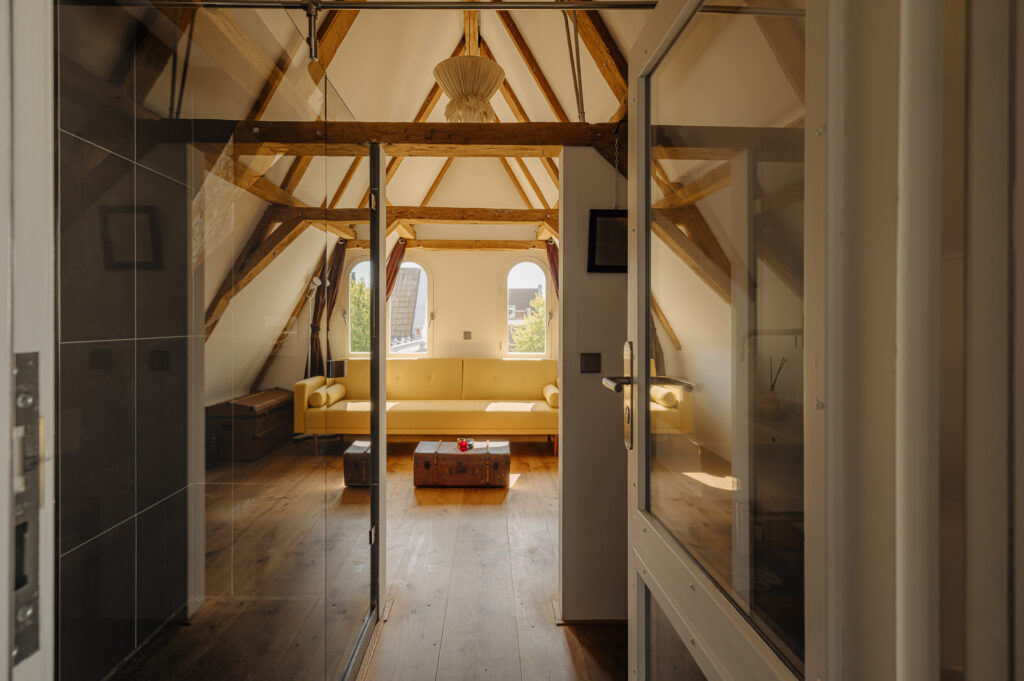
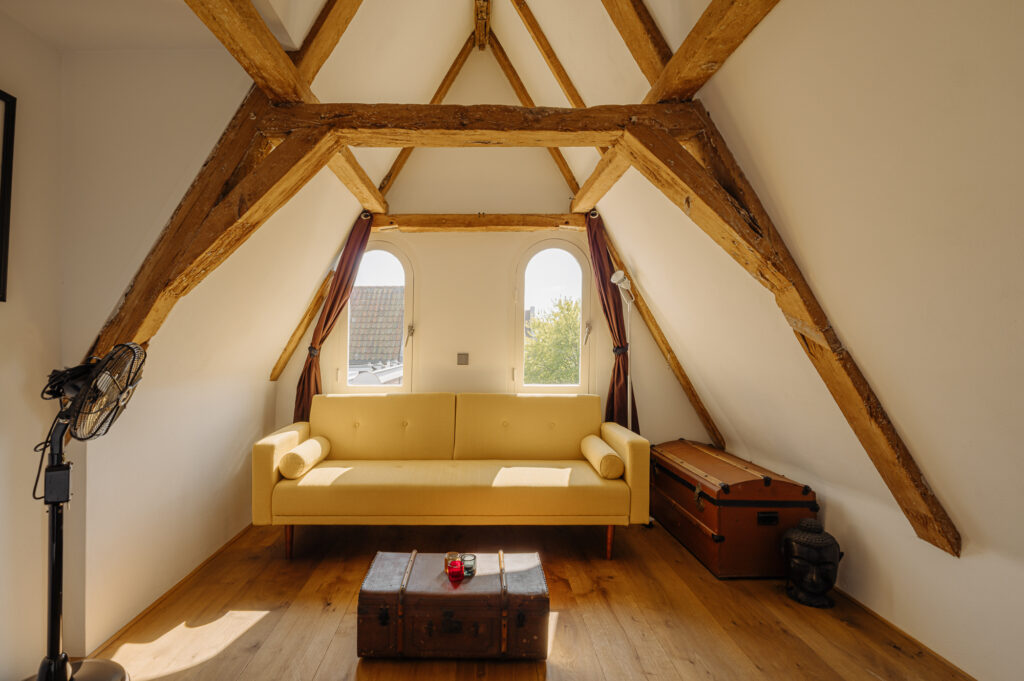
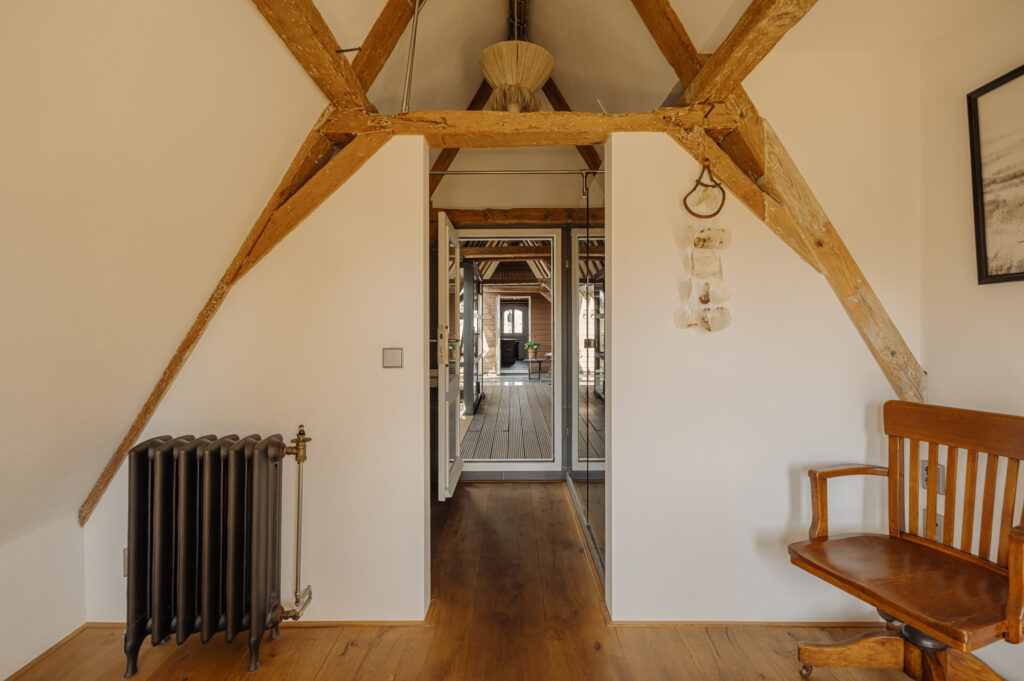
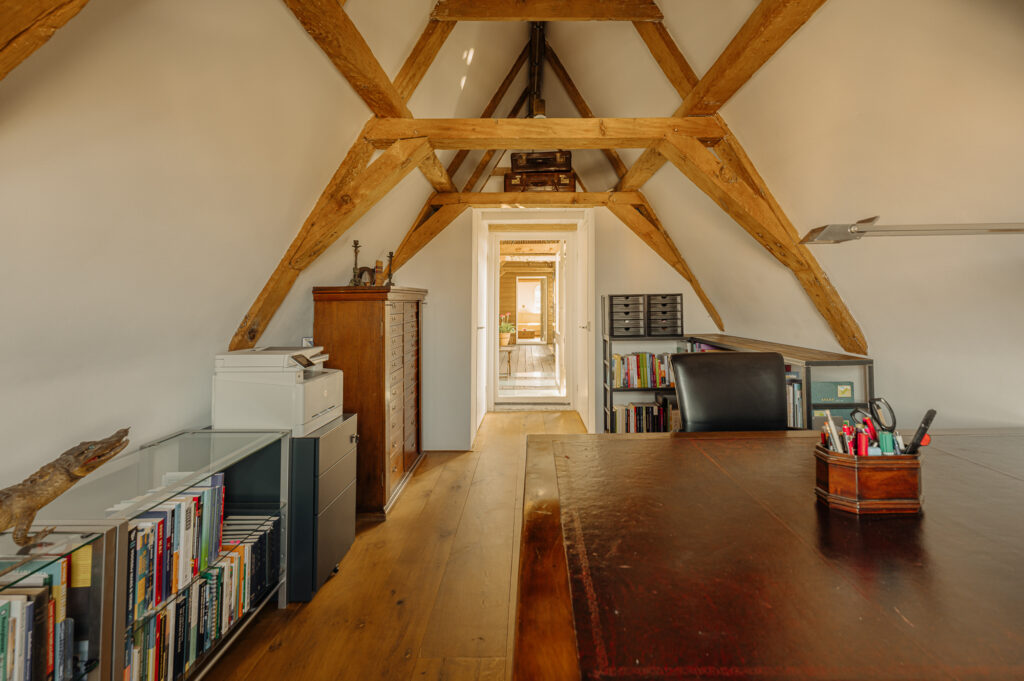
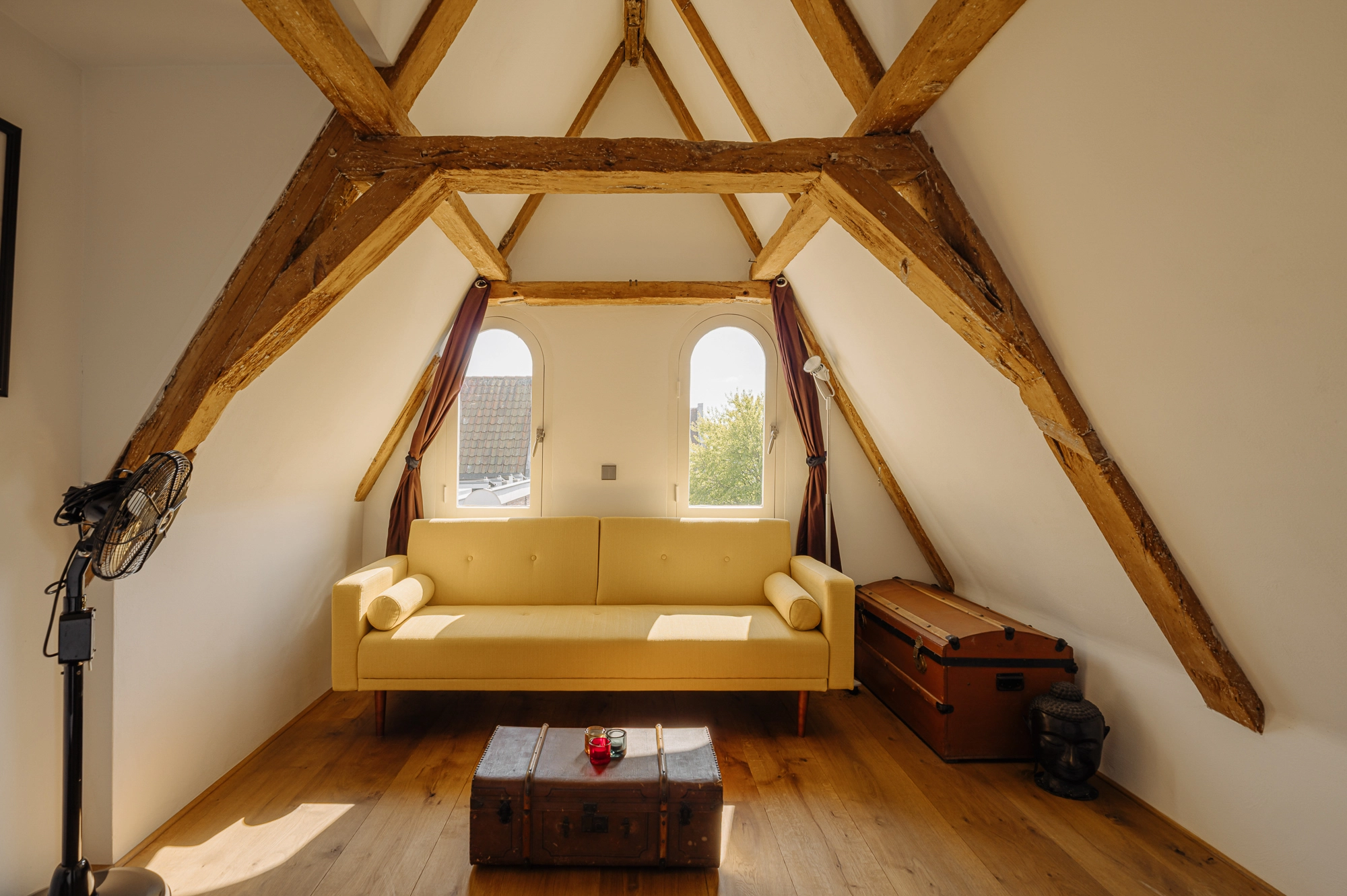
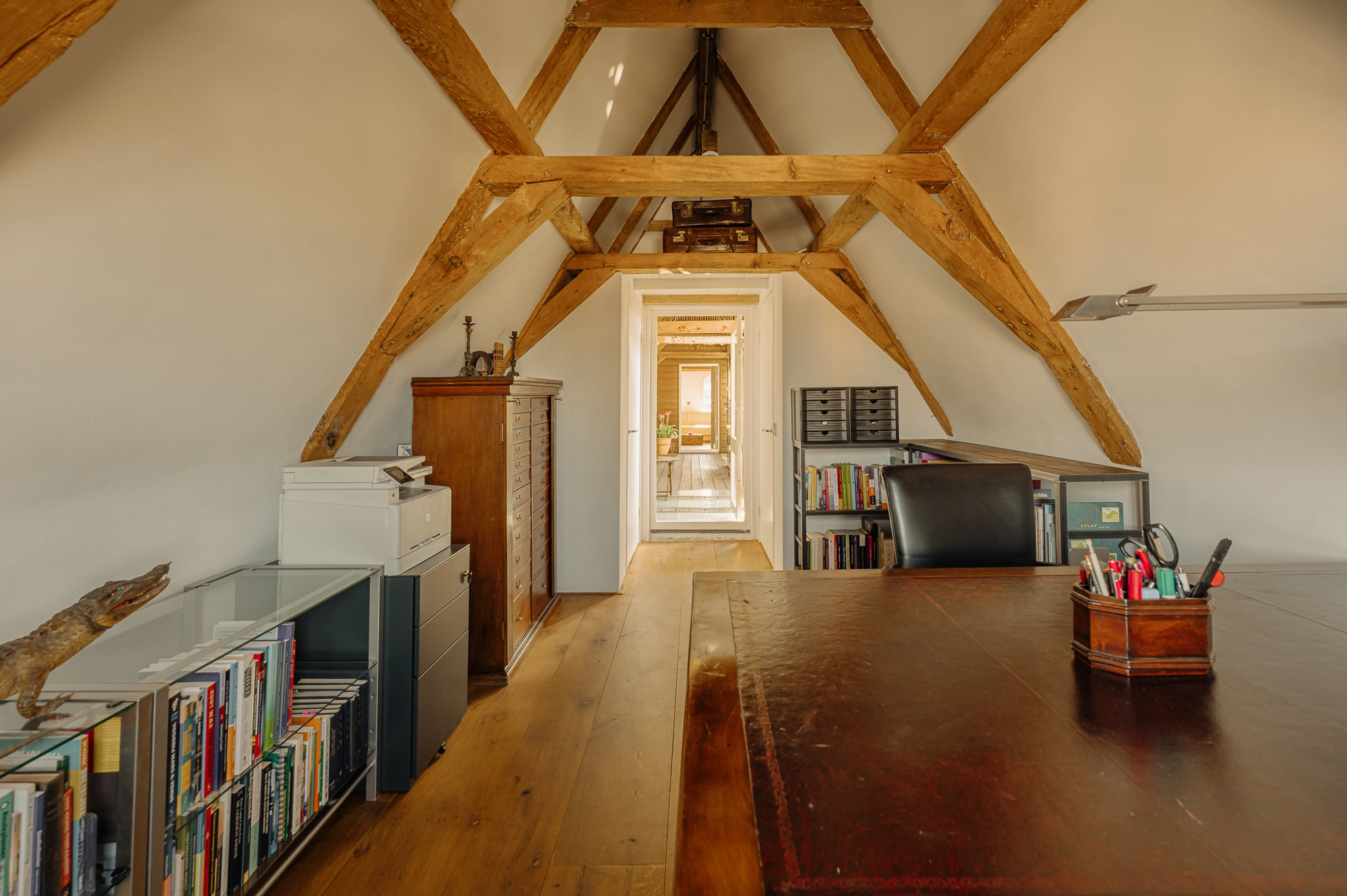
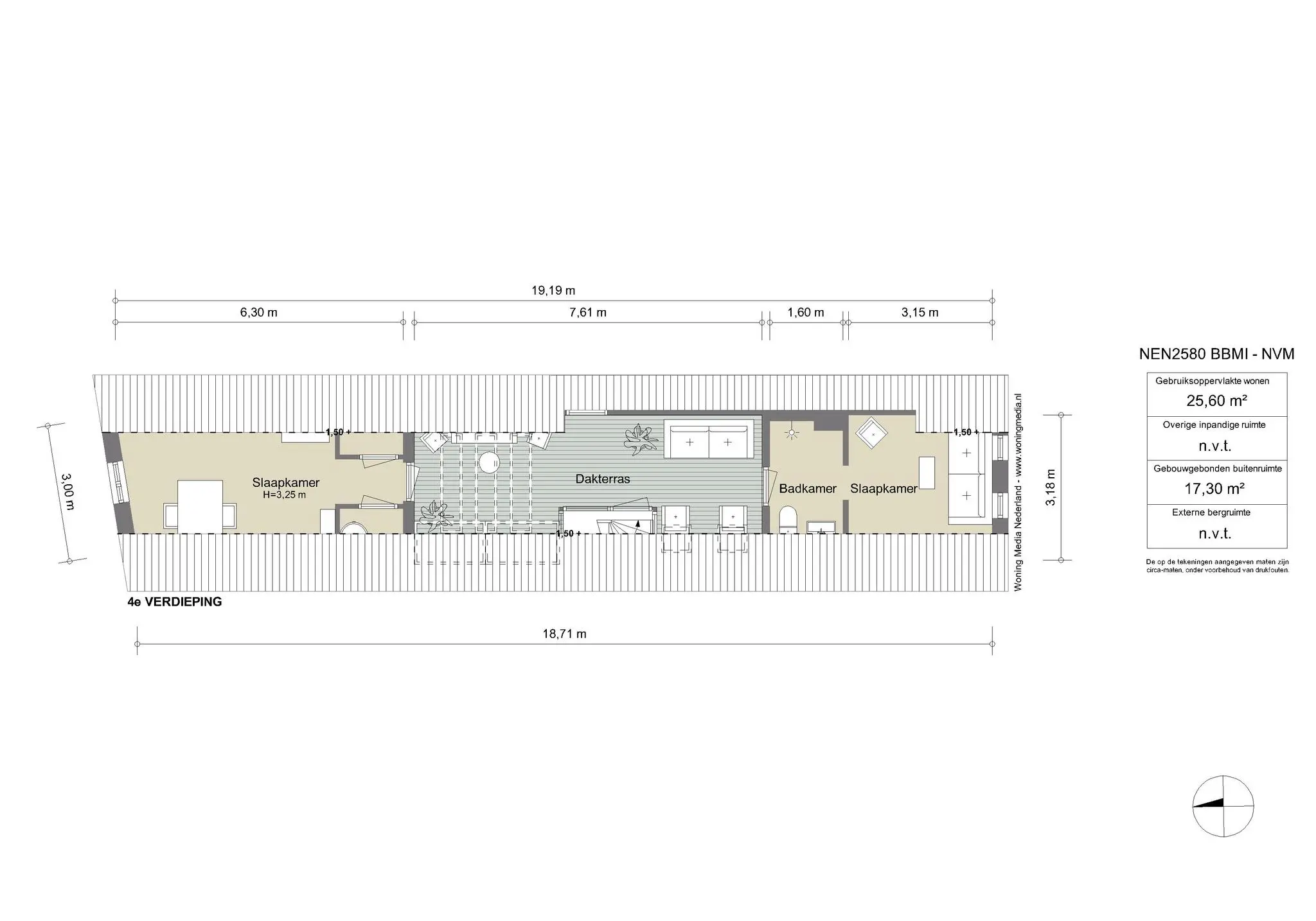
Under the roof, a floor full of character, privacy, and surprising views unfolds. At the rear is an intimate bedroom with two south-facing windows. This room has its own adjoining bathroom and feels like a serene suite high above the city. The bathroom is compact but complete, and subtly integrated into the volume of the roof. The central area of this floor serves as a traffic area and flows effortlessly into the terrace. Here, inside and outside merge seamlessly. At the front is a stylish study, furnished under the trusses and overlooking the Realengracht. The room is elongated and has a window in the gable, offering an impressive panorama of the city.
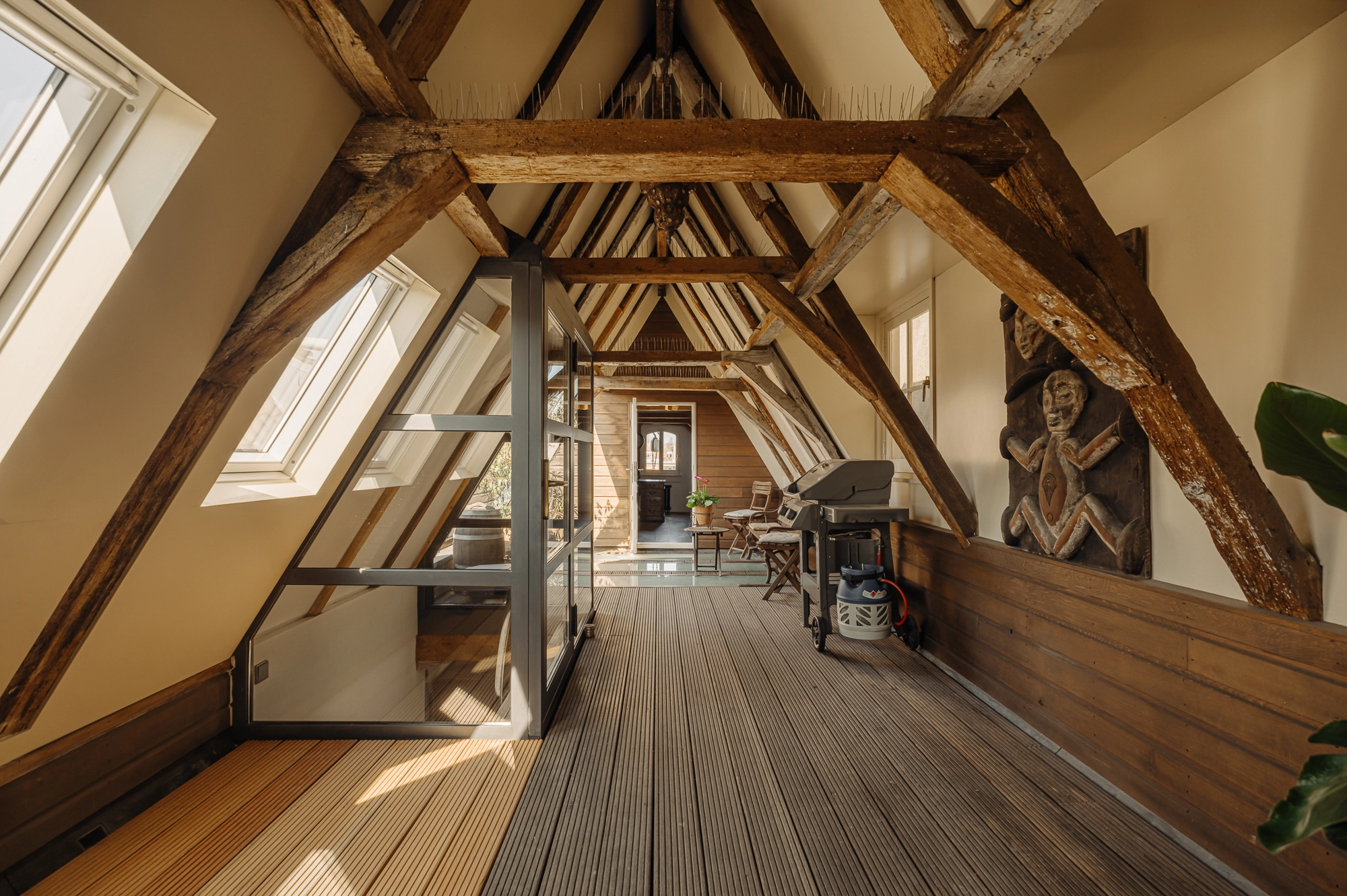
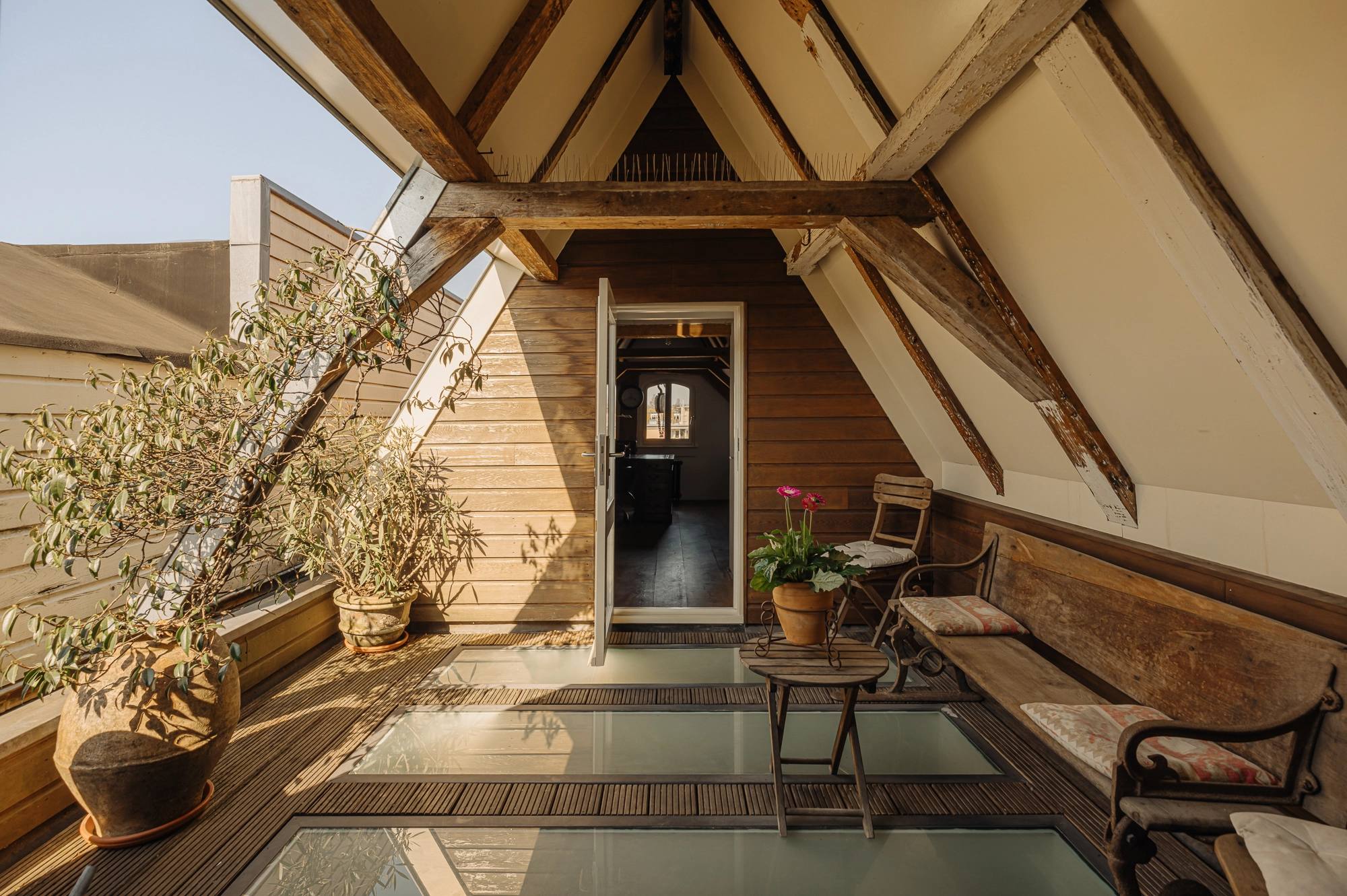
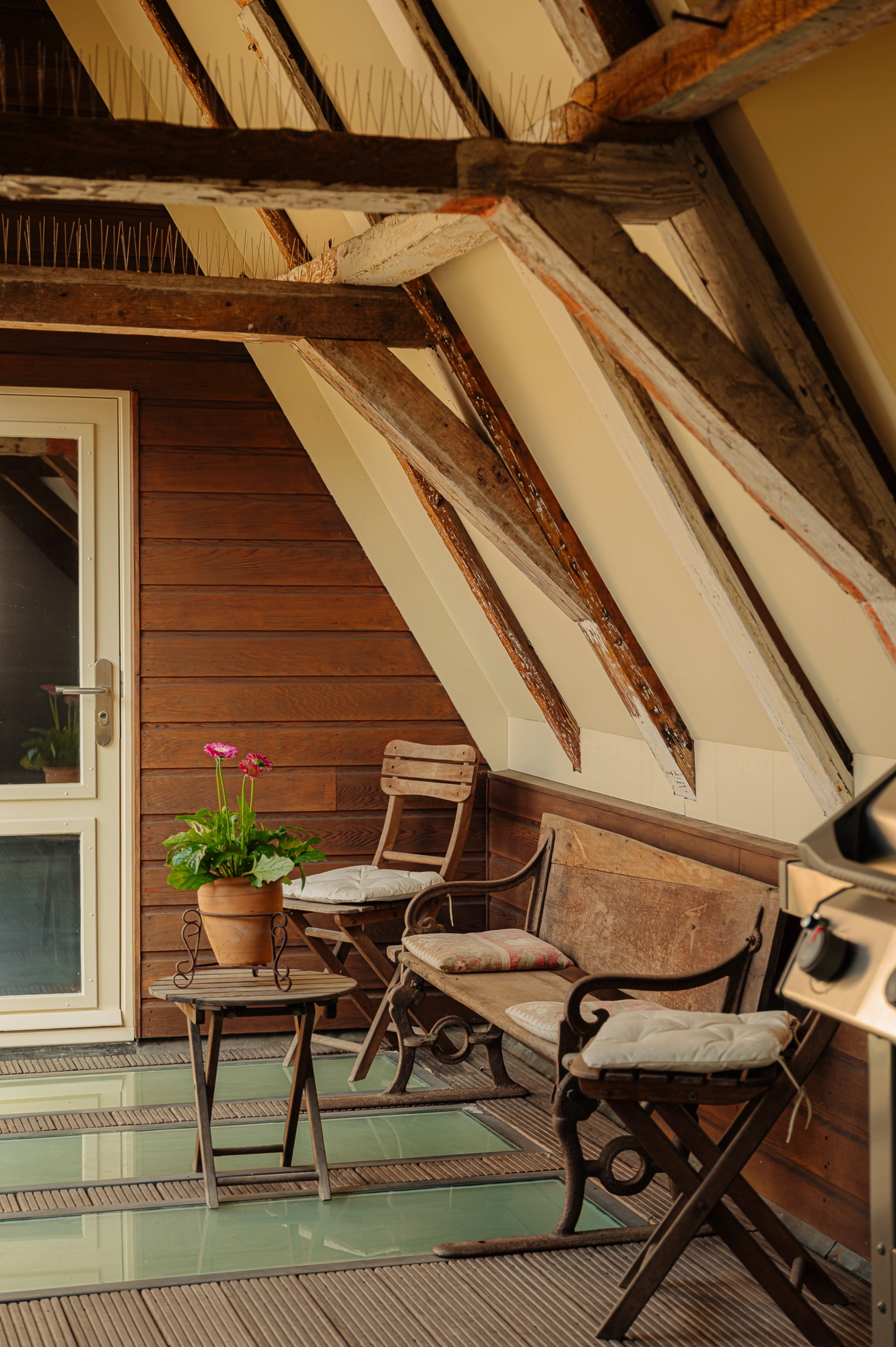
The terrace on the fourth floor forms a sheltered outdoor room, fully integrated into the structure of the roof. The wooden decking, planters, and glass floor panels create an atmosphere of both privacy and lightness. The passageway between the Rooms part of the terrace and is somewhat hidden. This creates a continuous outdoor space with various uses: from breakfast table to reading corner, from city view to green setting. The roof provides shelter, the light does the rest.
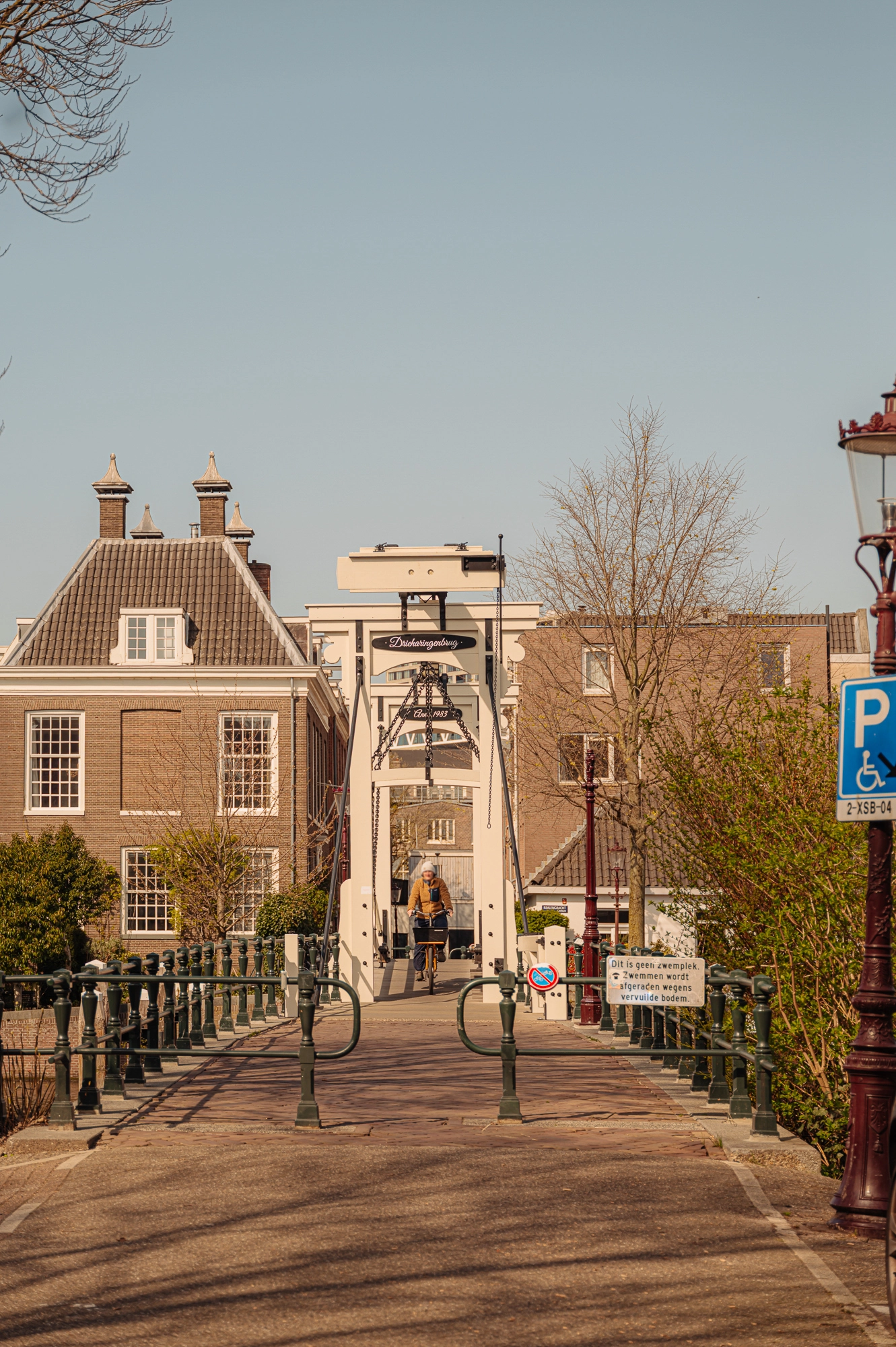
Located in a beautiful and peaceful location, overlooking the Realengracht waterway and offering a beautiful view of the Drieharingenbrug bridge. From here, the Noordermarkt, Westermarkt, and Westerpark are within walking distance. Both on Prinseneiland and Bickerseiland, as well as in the Jordaan, you will find various cozy cafes, excellent restaurants, quality shops, and good caterers. This place is also conveniently located for public transport and major roads. Central Station is within cycling distance and even easily accessible on foot. Living on Prinseneiland is a unique experience: the combination of tranquility and dynamism is special. The residents form a diverse community and often live there for a long time — which says a lot about how pleasant it is to live in this area. Prinseneiland has always been popular with artists such as Jacob Olie and Breitner. Even today, there are still relatively many artists and craftsmen living there.
accessibility
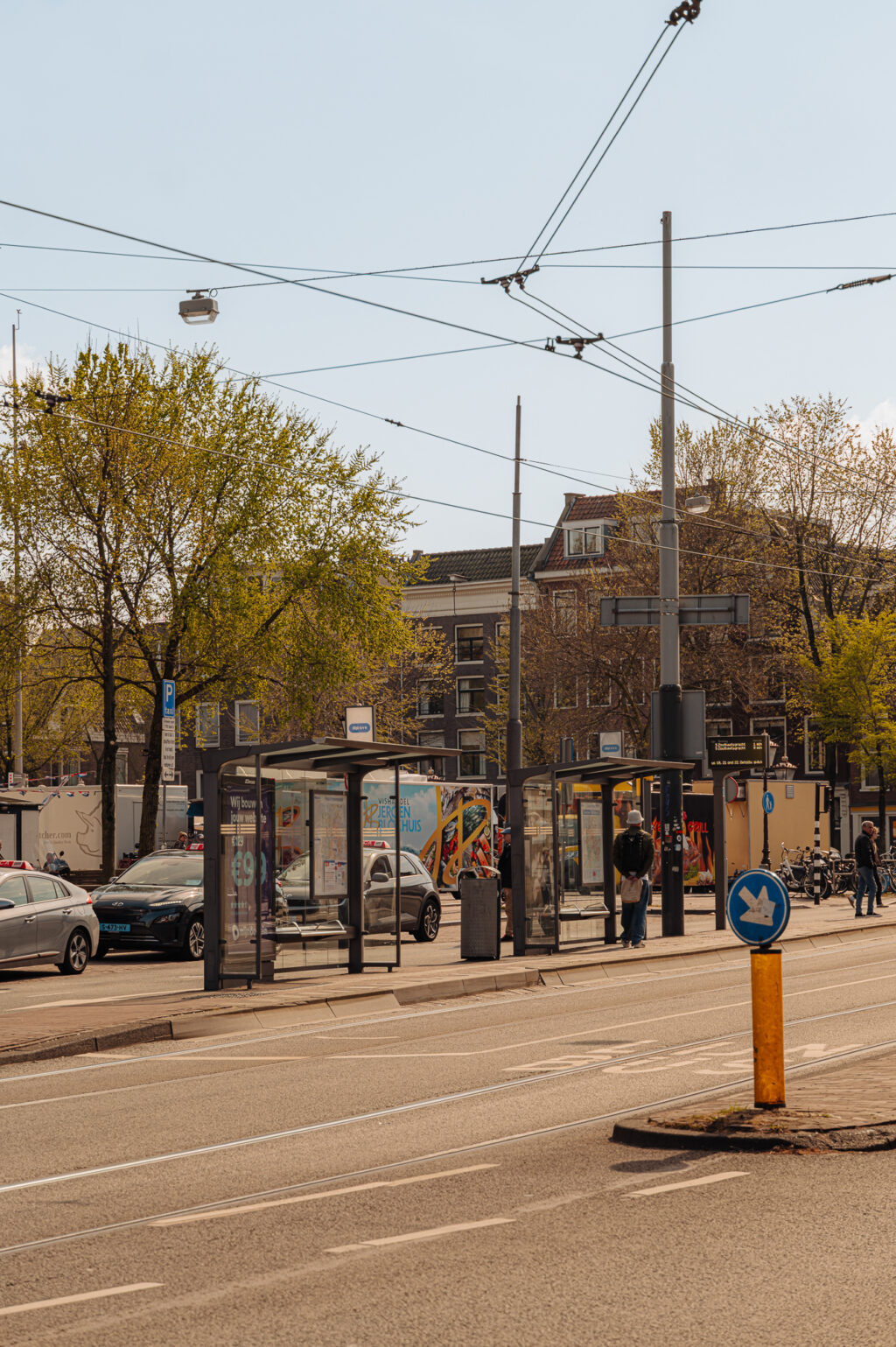
Located on one of the most distinctive islands of the Western Islands, Prinseneiland 39 combines the tranquility of an enclave with the convenience of the city. This place feels sheltered, almost secluded—and at the same time is surprisingly accessible. From here, it's just a few minutes' walk to Central Station, the hub for metro, bus, and ferry connections, as well as international trains. The North/South line is also within easy reach, as are the roads leading to the A10 ring road via the IJ riverbanks or the Spaarndammerbuurt neighborhood. For daily travel, a different rhythm applies: everything is within cycling distance. The Jordaan, Westerpark, Haarlemmerbuurt, Museumplein, or Plantage — the city unfolds from here in a radial, light-footed, and free manner.
parking facilities
Parking is available via a permit system on public roads (Centrum-2a permit area). With a Centrum-2a parking permit, you may park in Centrum-2. A parking permit for residents costs €326.65 per 6 months. There is currently an 18-month waiting list for this permit area. A second parking permit is not possible in this area. (Source: Local authority , May 2025).
1013 MD Amsterdam
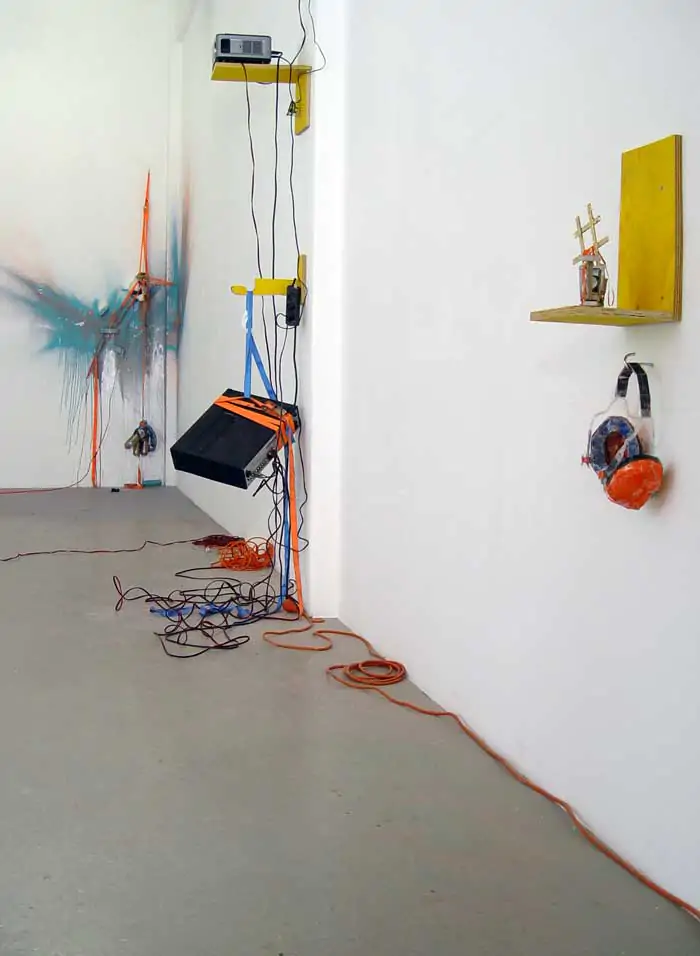
Galerie van Gelder
Galerie van Gelder is open from Tuesday to Sunday and primarily exhibits concept-oriented art. Young and old, well-known and emerging artists are featured in the exhibition program, which consists of drawings and objects as well as film, performances, and Services and installations.
1013 MD Amsterdam
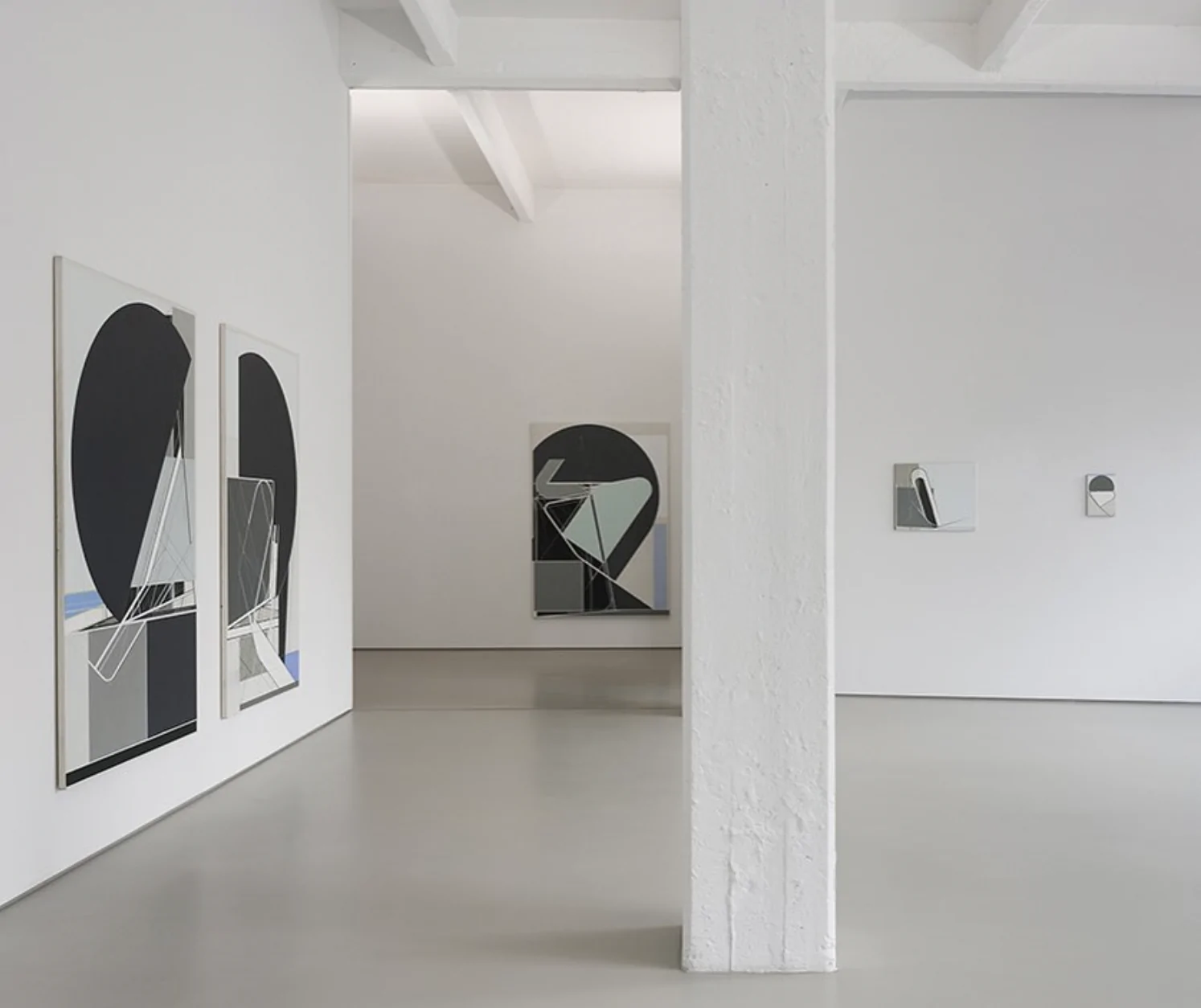
Galerie Onrust
Galerie Onrust was founded in 1986 by Milco Onrust and is now located at Planciusstraat 9. The light and spacious gallery emphasizes contemporary painting. Boudi Eskens is the current owner, and most of the artists she represents have been with them for many years, with whom she has created numerous beautiful exhibitions and publications.
1013 JB Amsterdam
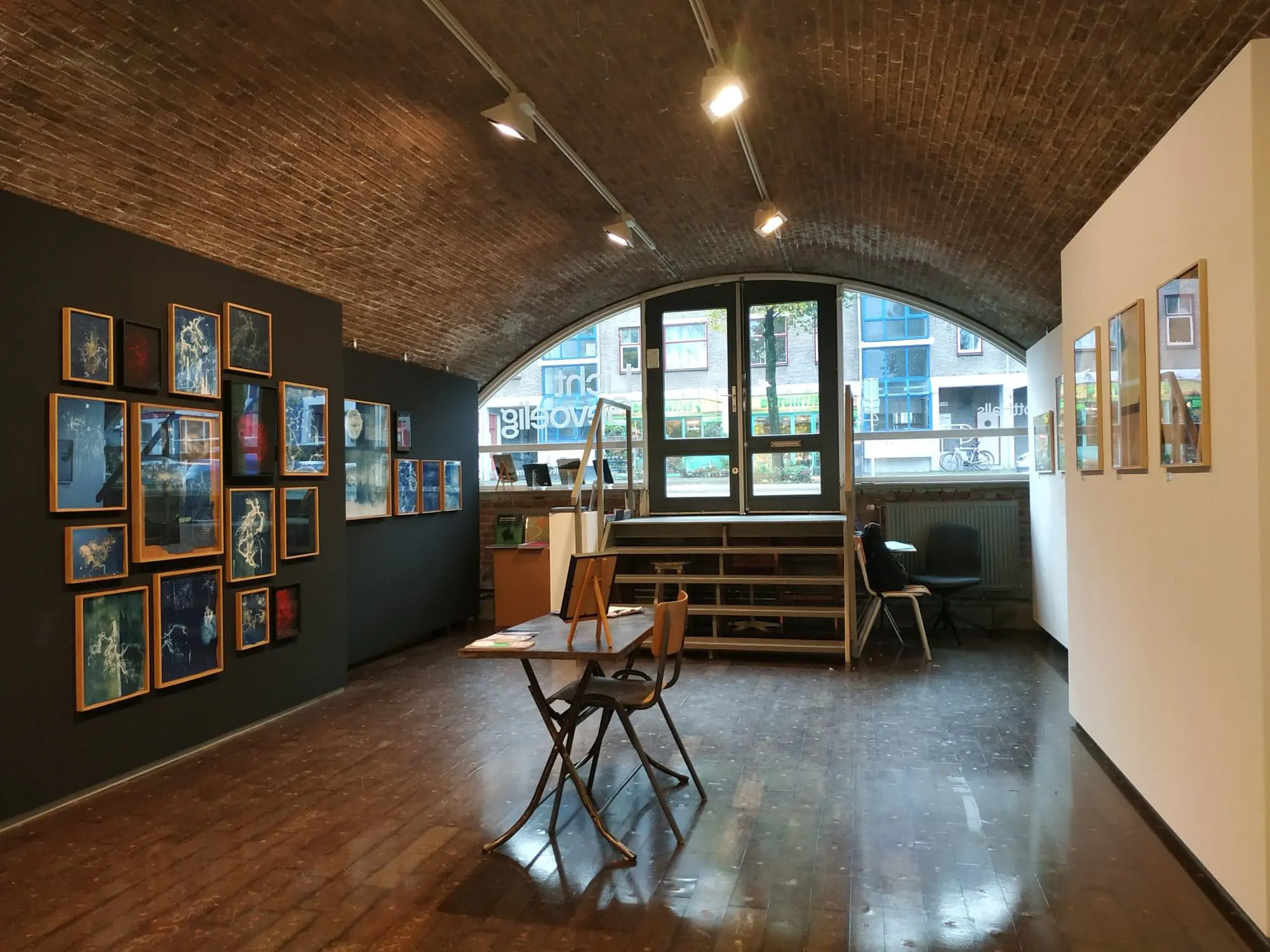
Elliott Gallery
If you like photography, ElliotHalls is the place to be. Throughout the year, this gallery holds extensive exhibitions with the work of historical and contemporary photographers. Their selection of artists includes internationally known names whose work is regularly seen in major museums and corporate collections. The gallery also has a Print Room where clients, photography experts and enthusiasts can view their collection by appointment. ElliottHalls Gallery introduces you to a large but also diverse group of acclaimed photographers from the international photography community.
1013 BV Amsterdam
The Ravestijn Gallery
The Ravestijn Gallery was founded in Amsterdam in 2012 by Jasper Bode and Narda Van 't Veer with a focus on exploratory and provocative approaches to contemporary photography. And they have succeeded in this. The gallery represents various national and international experimental artists who demonstrate the power of photography in all kinds of different ways. This modern approach to contemporary photography makes the exhibitions at De Ravestijn Gallery very interesting. But, in addition, the artworks are also a great aesthetic pleasure to look at and perhaps even a good source of inspiration for decorating a new home?
1013 KH Amsterdam
The Movies
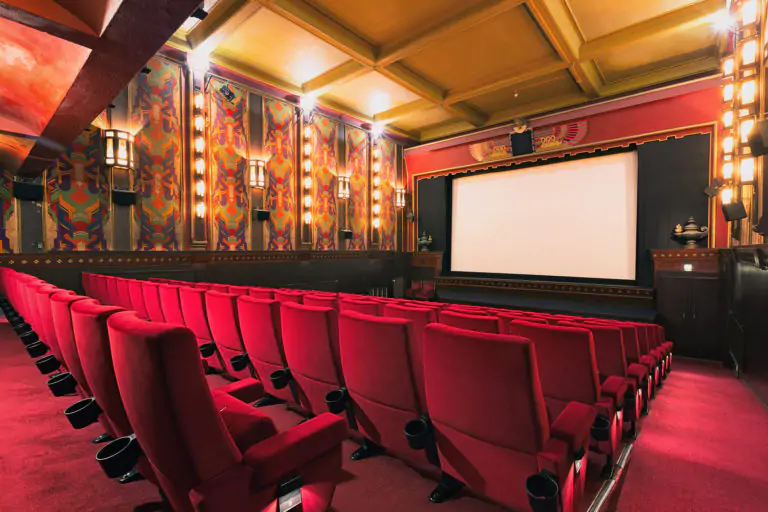
The Movies cinema has been around since 1912. It is often called the oldest cinema in Amsterdam, but formally that is the Uitkijk cinema, which registered a year earlier. In its early years, the cinema was used as a small-scale neighborhood cinema, and only after the Second World War were films shown to a larger audience. Today, it is one of the most popular arthouse cinemas in Amsterdam. Many visitors also come to The Movies to admire the historic interior. The cinema is located in a 17th-century building on the Haarlemmerdijk and the original art-deco interior has been well preserved. A visit to this cinema feels like a journey through time.
1013 BP Amsterdam
We Like Art Foundation
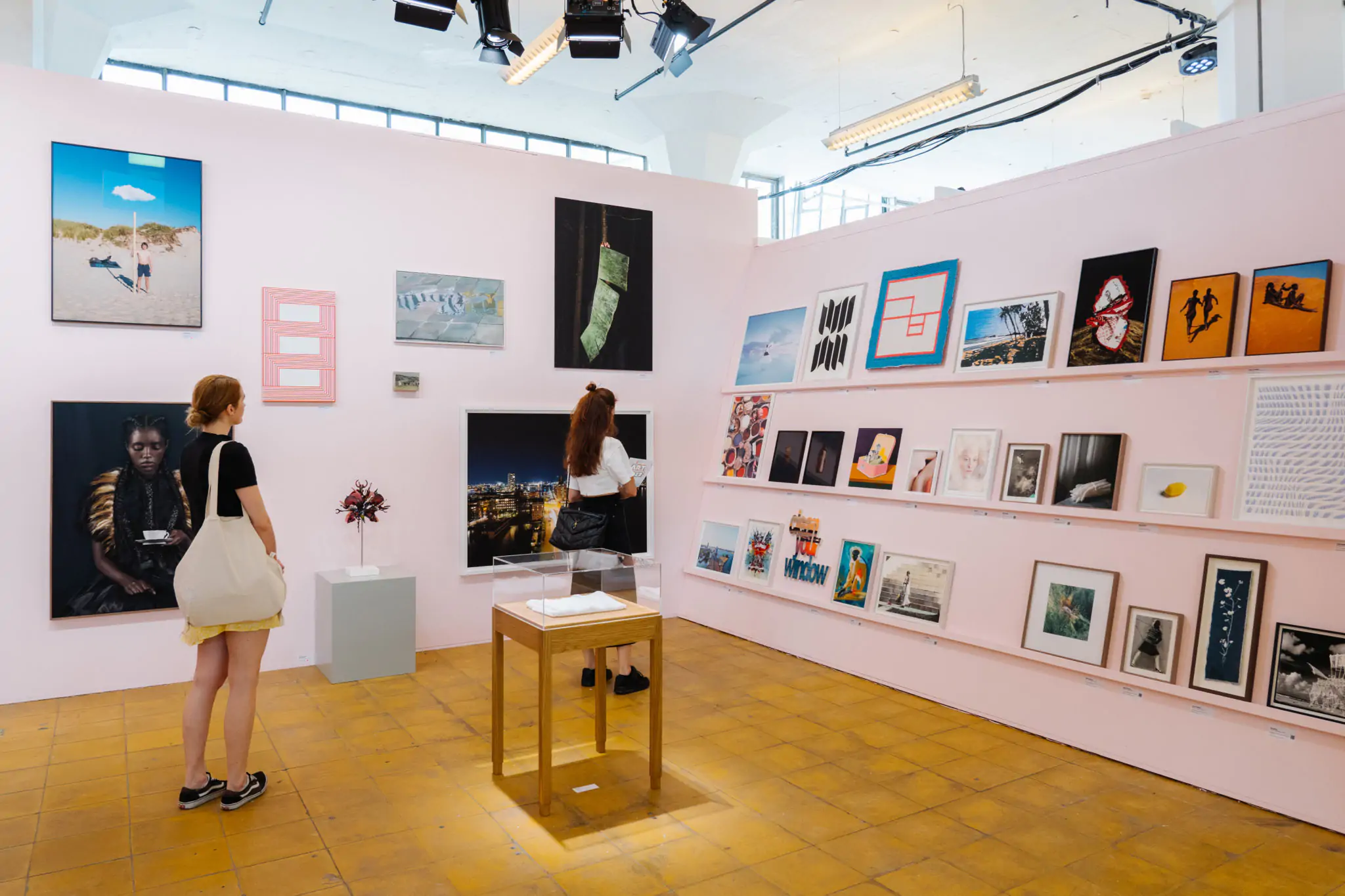
The motto of the We Like Art Foundation is "Art is for everyone!" In the cozy gallery at Leliëndaalstraat 4 in Amsterdam, novice art buyers and experienced collectors alike can indulge themselves and view exceptional work by leading artists (and purchase it at a reasonable price). In addition, their cheerful website welikeart.nl is full of interesting artist interviews.
1013 KT Amsterdam
Tannay
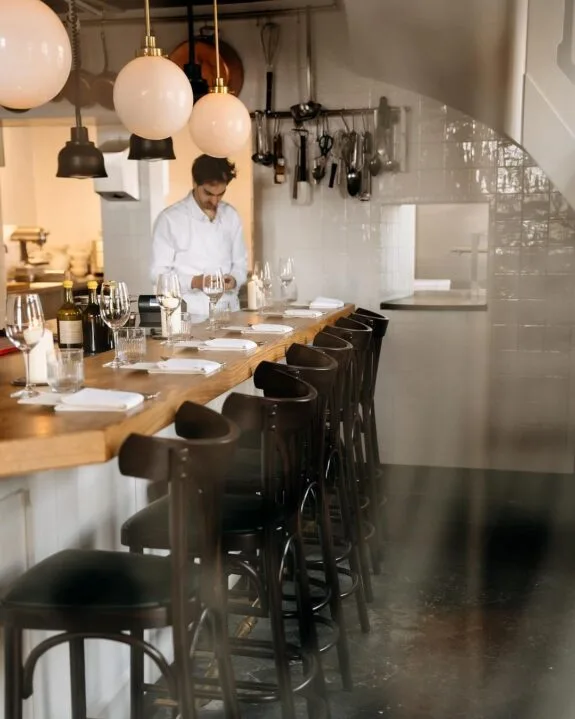
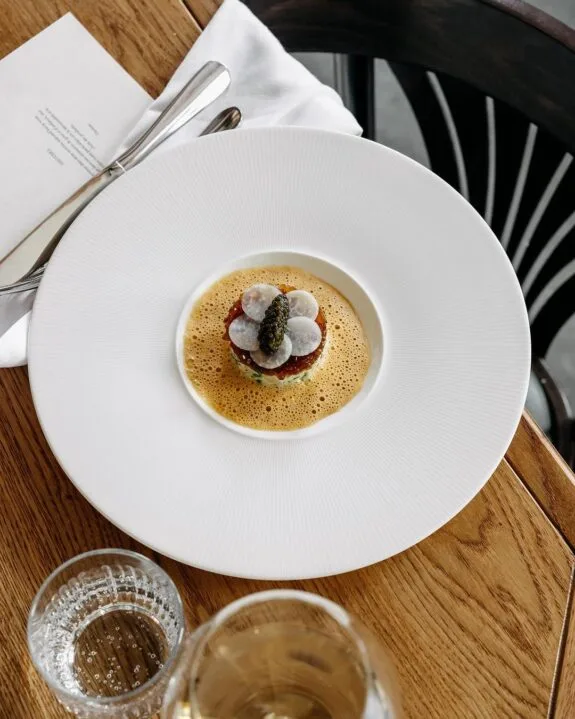
In the former Gouden Reaal, Chef Thomas Demuth, as a partner of the Caron Family, introduces restaurant Tannay. Tannay is named after the Coteaux Tannay appellation where Demuth grew up in Burgundy and where his father still makes wine. You can eat at a table, but there are also places at the kitchen. After working in top businesses in France for many years, Thomas cooks in Amsterdam from memories that take him from his mother's kitchen in Burgundy. He presents his dishes in a 5-course chef's menu or à la carte with a wine list that explores the depths of Burgundy, Loire and Champagne.


1013 NM Amsterdam
Boon & de Koot
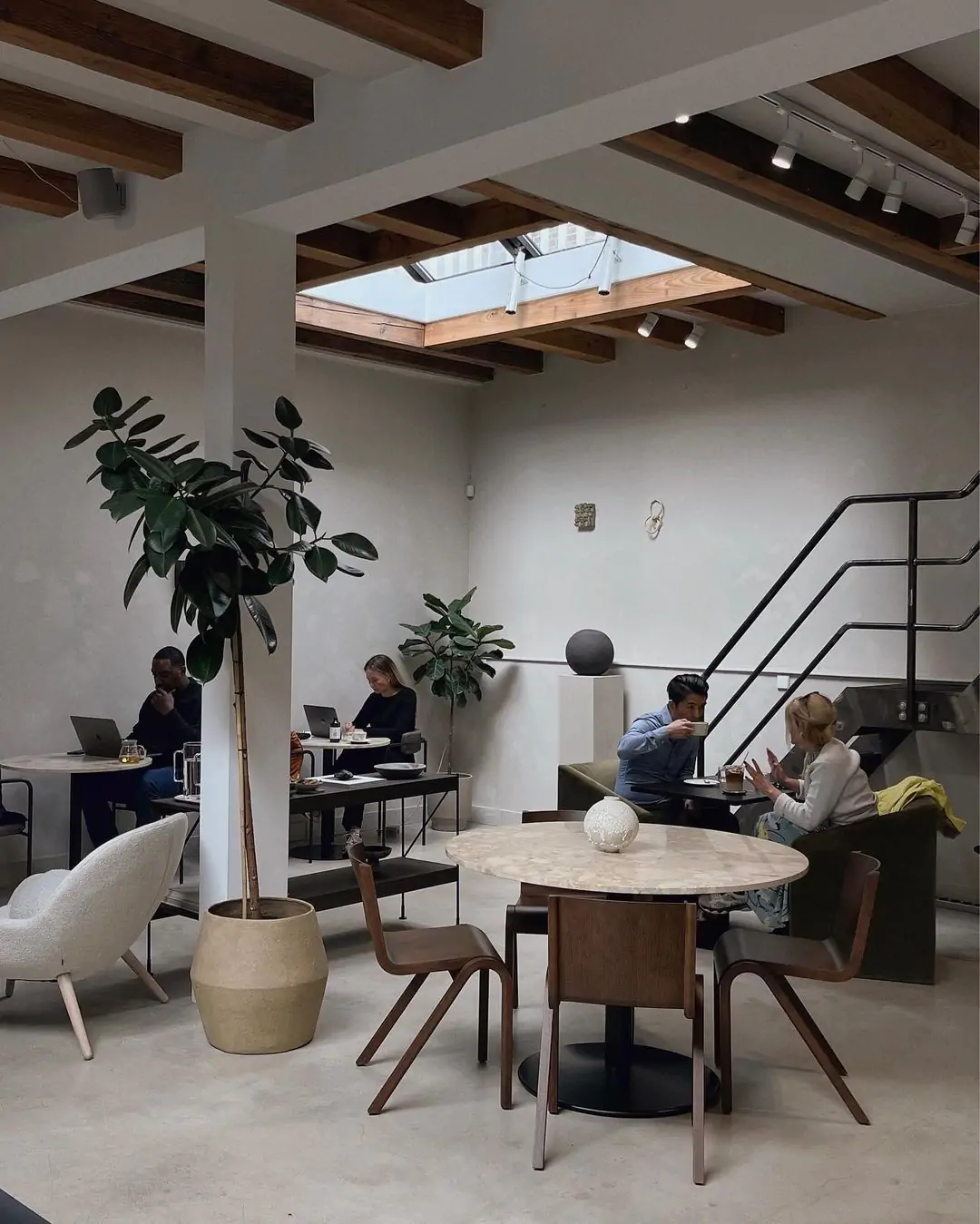
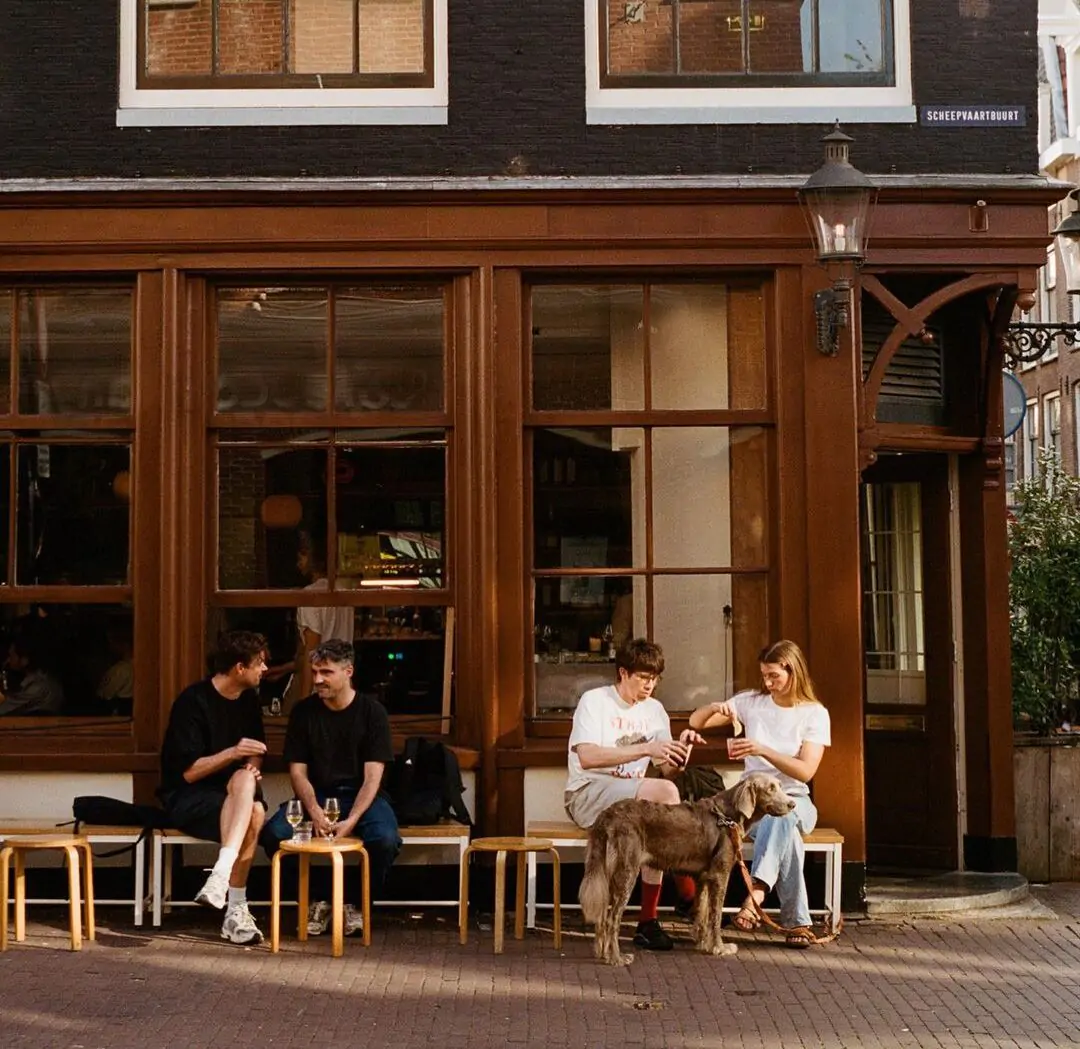
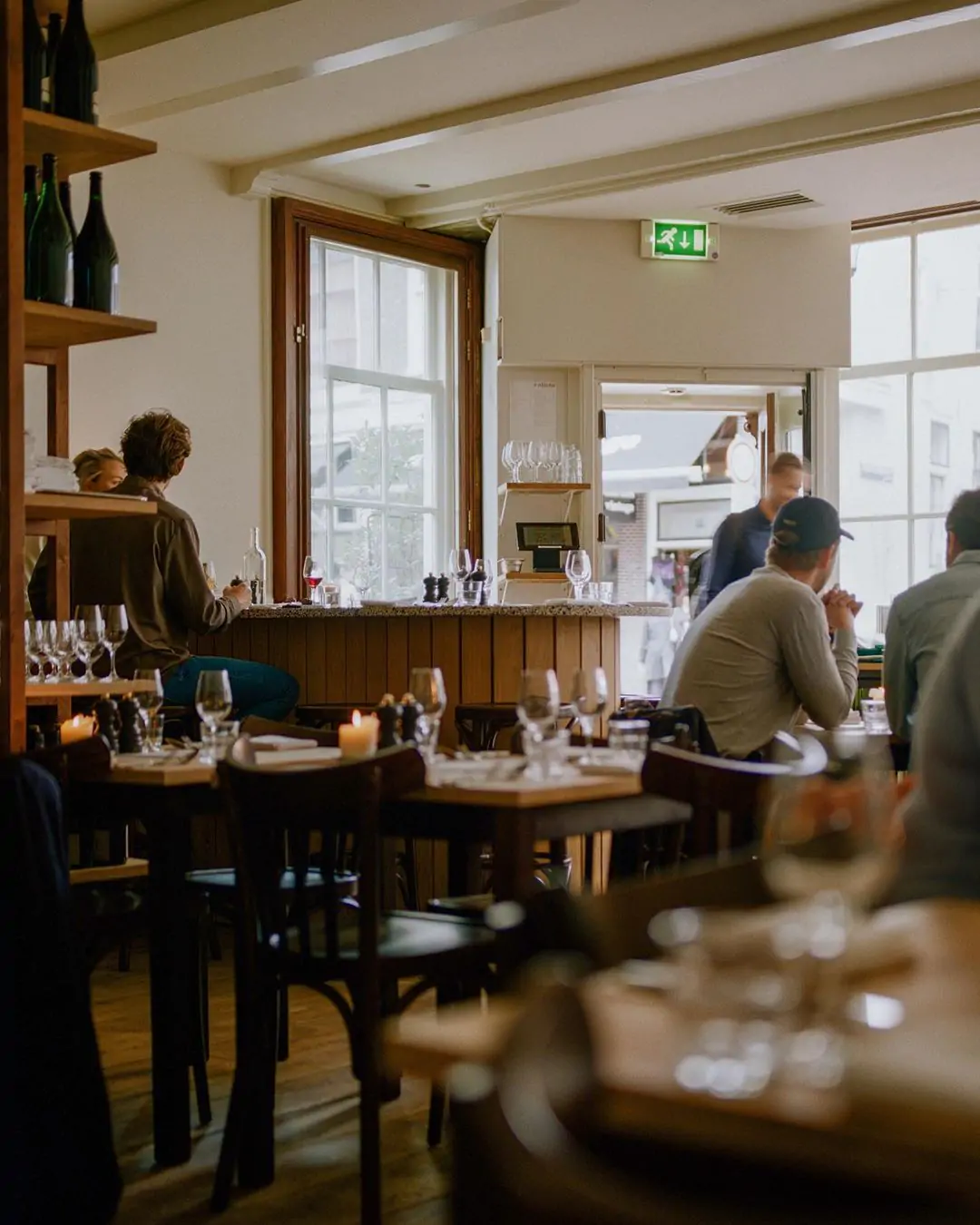
Following the success of Zoldering, chef Thomas Bron, wine importer Joost Clarijs, and sommeliers Job Seuren and Wout Jans opened Boon & de Koot, an accessible wine bar in the Zeeheldenbuurt neighborhood, without compromising on quality. The menu starts with hearty snacks such as oeuf mayo with roasted garlic and lovage, cleverly served so you can eat it in one bite. This is followed by refined starters such as raw sea bass with beurre noisette and calamansi or a coarse steak tartare with radicchio and anchovies. The real showstopper is the dish of roasted peas with tomatillo, olive, and egg yolk, a perfect interplay of smoke, freshness, and creaminess. Inside, there is a French bistro atmosphere, while outside, the terrace with marble tables and burgundy chairs invites you to linger for another glass.
1013 JJ Amsterdam
Venu
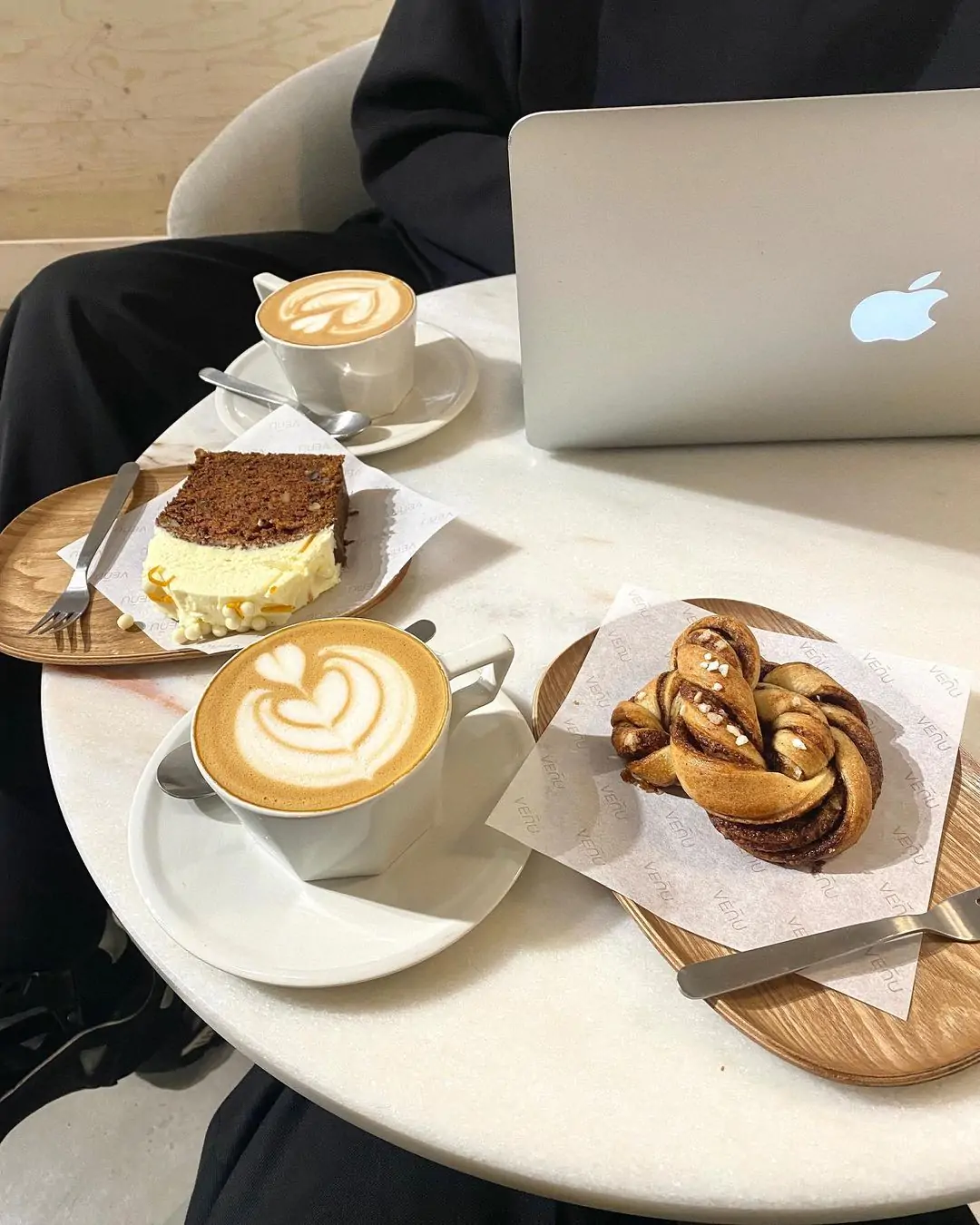
Venu is Location modern co-working space in the first Location that operates by appointment or through a monthly membership, so you are always guaranteed a spot. It is beautifully decorated with a sleek, minimalist interior. Upstairs is the café, where they serve delicious coffee as well as iced matcha lattes and refreshing milky oolong iced tea. They also always have sweet treats on offer.
1013 HS Amsterdam
Wakuli
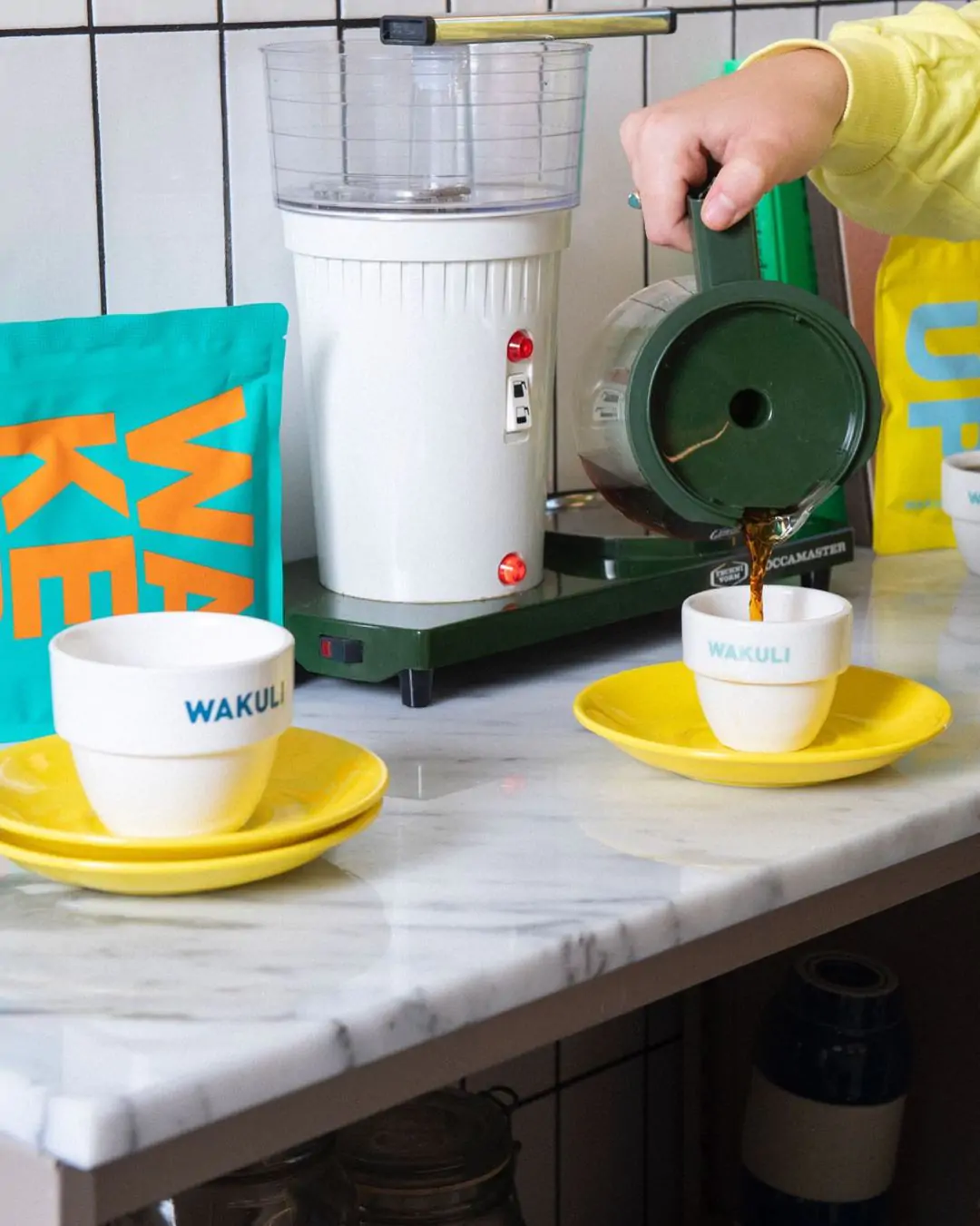
Wakuli derives from the Swahili word 'wakulima', which means farmer. Here you will find high-quality coffee that has been sourced sustainably at affordable prices. They source their beans from small-scale farmers who produce green coffee and roast them in the best possible way for maximum flavor. You can get all the usual coffee varieties here, as well as delicious iced coffee and nitro cold brew. Last but not least, they have a number of sweet and savory treats Available, from empanadas to sandwiches and croissants.
1013 BX Amsterdam
Café Westerdok
Café Westerdok was originally a harbor café. Nowadays, it's the place to be if you like beer. They serve as many as 86 different kinds.
1013 HK Amsterdam
Toki
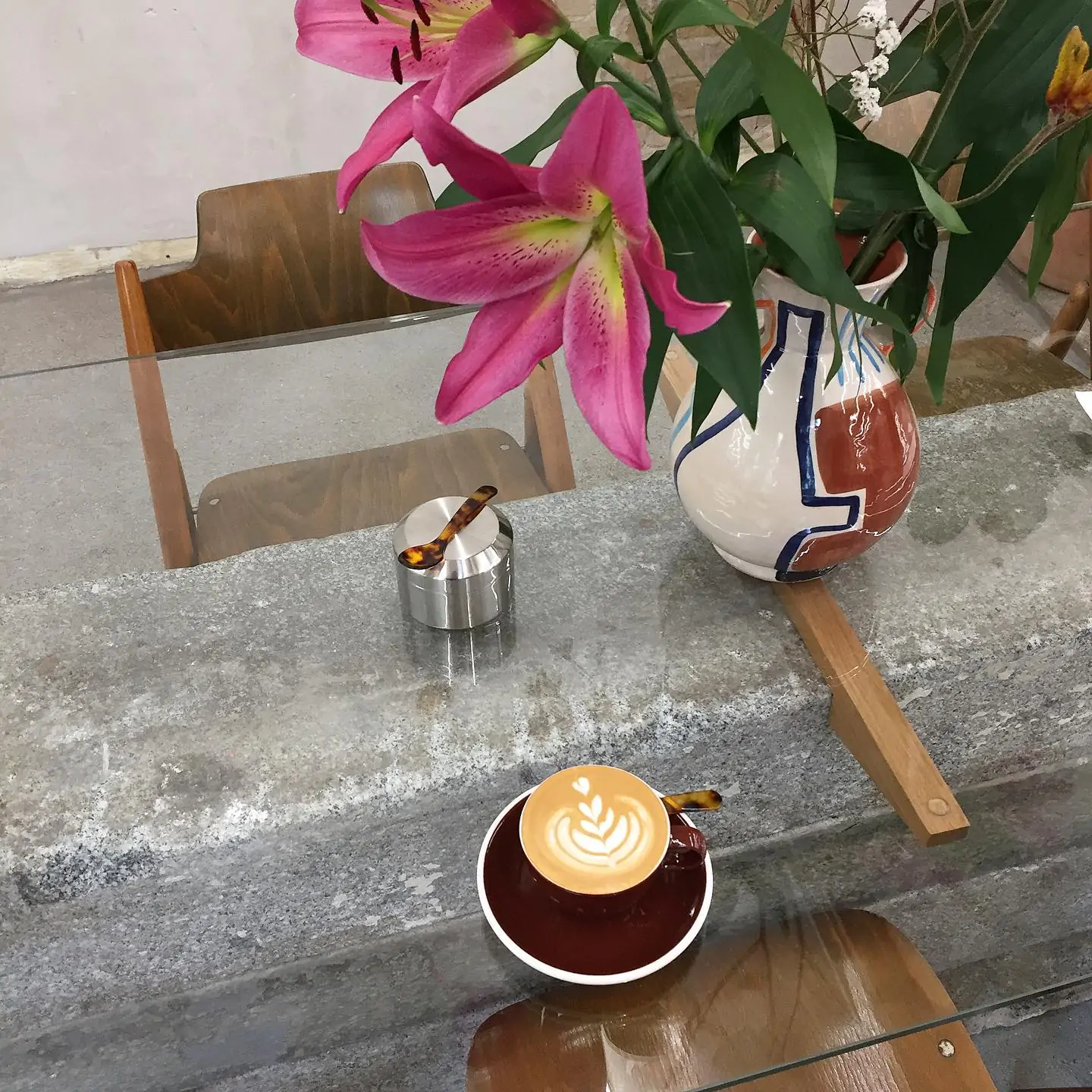
Behind the Haarlemmerdijk you will find Toki, where they serve perfect coffee made by qualified baristas who know exactly how to make the tastiest flat whites, espressos and regular coffees. They also serve delicious banana bread and homemade Asian-inspired salads and sandwiches. It is minimalist in design but has a cozy atmosphere with a diverse crowd. From people enjoying reading the newspaper alone to families or couples, Toki has something for everyone.
1013 CR Amsterdam
BAK
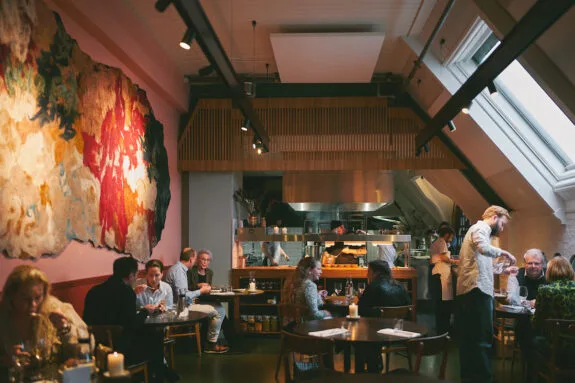
Restaurant Bak is beautifully situated on the water in Amsterdam's Houthavens, on the third floor of warehouse Het Veem. They work with fish from sustainable fisheries, meat from local producers, but with vegetables in the leading role. The menu changes daily with the seasons and the supply from the producers. The wine list contains a nice selection of wines from France and Italy.
1013 KB Amsterdam
Calisto
Calisto is located in a charming historic building and is both a restaurant and a boutique hotel with 10 Rooms the heart of the Jordaan district. The building has always served as a hotel with a restaurant and has been welcoming people to eat, drink, and stay since the 17th century. Restaurant Calisto is a trattoria-style restaurant where Roman chef Stefano Orofino brings 'la cucina romana' to Amsterdam with seasonal snacks, dishes, and pastas. The dishes can be paired with a glass or bottle from the curated wine list featuring natural wines from Italy, France, and beyond. One of the highlights is the Sunday brunch.

1013 JA Amsterdam
Small World Catering
The Australian owner Sean Wainer opened Small World Catering in the late 90s. All food is prepared on site, from hot meals to cakes. They use fresh products, oil and cheeses delivered daily. The menu consists of hot and cold sandwiches. You can choose your bread from foccacia, ciabatta, brown and gluten-free bread. The toppings vary from a classic pastrami with melted cheese to tuna sashimi with sun-dried tomato.
1013 JD Amsterdam
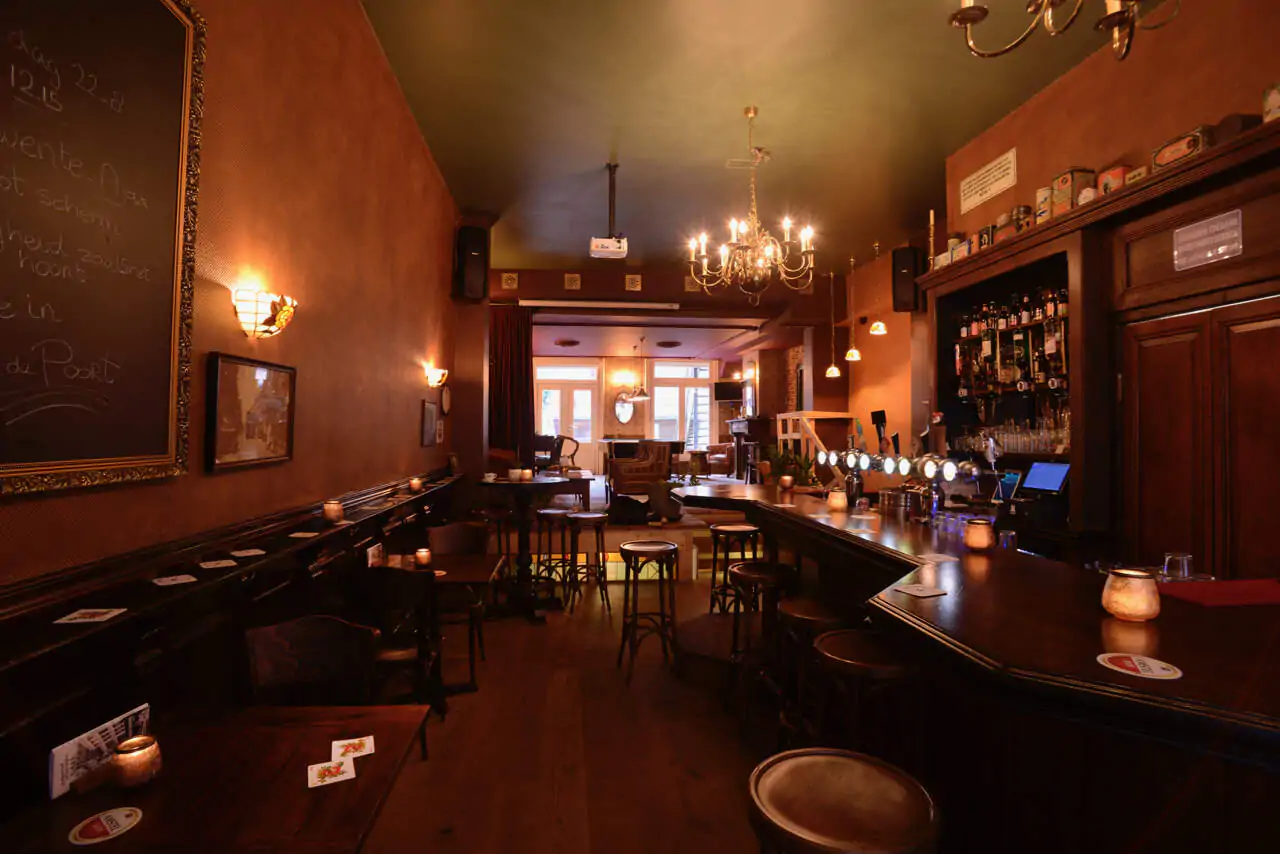
Café de Poort
Café de Poort is a cozy neighborhood café on the Haarlemmerdijk. It is a particularly atmospheric café with a lot of attention to authentic details.
1013 SZ Amsterdam
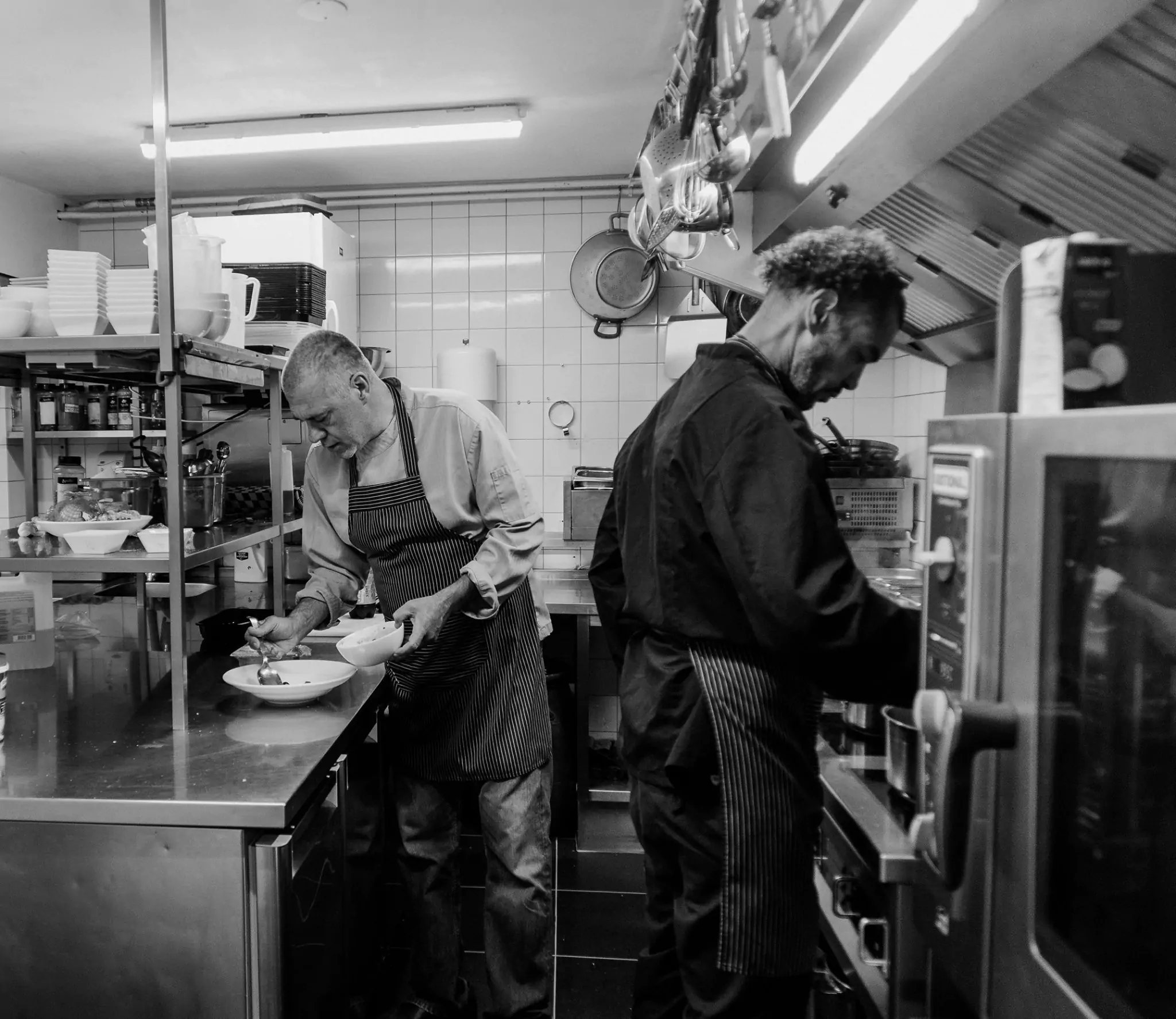
Freud Restaurant
Restaurant Freud is more than just a good restaurant. The restaurant is a training company and part of the social enterprise Roads. This means that Restaurant Freud takes care of mentally 'vulnerable' people who are distanced from the labor market. In addition to focusing on food—inspired by Mediterranean cuisine—there is a great deal of attention and care for people: both staff and guests. The same care goes into the products the restaurant chooses, based on criteria that are "good for society and the environment." If you don't have time to visit the restaurant on Spaarndammerstraat, you can use the catering service or gift vouchers for the restaurant.
1013 MM Amsterdam
Moss (*)
MOS Amsterdam is a Michelin-starred restaurant on the IJdok, with a beautiful view of the water and the Amsterdam skyline. Led by chef Egon van Hoof and host Henry Pattiwael van Westerloo, MOS offers a total culinary experience in which taste, service, and location come together perfectly. MOS's French-international cuisine revolves around pure, seasonal ingredients. Think of dishes such as Dutch veal tartare with Zeeland oysters, Baharat, bloody mary, and trout roe, or scallops with black sesame, maitake, umeboshi, and daikon.
1013 HS Amsterdam
Farmers Market Haarlemmerplein
The Haarlemmerplein farmers' market is open every Wednesday from 10:00 a.m. to 5:00 p.m. They sell fresh produce. The market mainly Sold fresh produce. What makes it special is that the people behind the stalls are often the ones involved in producing the food. That makes the market just that little bit different and also more honest. If you have any questions about food or its production, you can ask the experts directly, which makes a visit to the Haarlemmerplein Farmers' Market even more special!

1013 KE Amsterdam
Scarpetta
Scarpetta is a neighborhood pasta bar, inspired by the atmosphere of classic Italian trattorias, with a modern twist for takeaway and delivery. The name refers to fare la scarpetta: the ritual of using a piece of bread to mop up the last of the sauce from your plate, a gesture of true love for food. The menu features fresh pasta dishes such as gnocchi al pomodoro, tagliatelle al ragù bolognese, rigatoni all'amatriciana, and tagliolini ai funghi, all prepared to Immediately or take away in glass jars. In addition to savory dishes, there is also room for classics such as tiramisù, perfect for ending the meal.
1015 GD Amsterdam
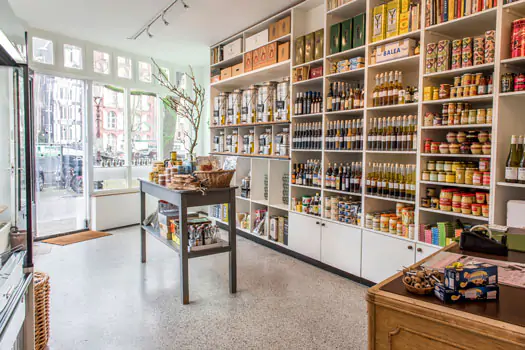
The Oil Shop
In 2016, the Oliewinkel (Oil Shop) opened on the Brouwersgracht. The Oliewinkel is the place for those who love good food and quality products. The range consists mainly of Mediterranean products, but the emphasis is on olive oil from small producers in Italy, Spain, Greece and France. In the store, you can taste the oil so that you can choose the tastiest one yourself and take it with you in a glass bottle that you can have refilled.
Also, the rest of the range has been carefully selected. In addition to various delicious homemade pestos, tapenades and vinaigrettes, you will find, for example, fantastic mustard from the Netherlands, Belgium and France on the shelves.
The Oliewinkel also has several types of olives, fantastic pickles and the tastiest mayonnaises and vinaigrettes in stock. In the middle of the store is a table full of canned fish. In particular, the preserves of the Spanish brand Ortiz are well represented.
1015 JX Amsterdam
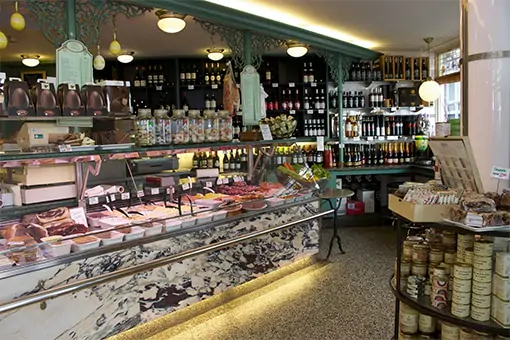
JWO Lekkernijen
Food and drink are the passion and life of the owners of JWO. In the heart of the Jordaan you are welcomed here with real Amsterdam conviviality and delicacies. You can buy all the necessities for a delicious snack board; from cheese and meats to delicious red wine. Around lunchtime you can order a sandwich at the marble bar. After a grill sausage sandwich from butcher Louman with honey mustard sauce and of course a glass of milk, you'll never want anything else.
1015 JP Amsterdam
Lindengracht Market
If you've already eaten an apple pie at Winkel 43 on the Noodermarkt, take a stroll to the Lindenmarkt. At the beginning you will immediately find the delicious fish stall (the kibbeling or the tuna salad sandwich are recommended!) But not only the fish, also the nut specialty shop Notjé is brilliant, and the Sabich sandwich from Abu Salie is one that you should definitely not miss.
1015 JX Amsterdam
Galerie Gaudium
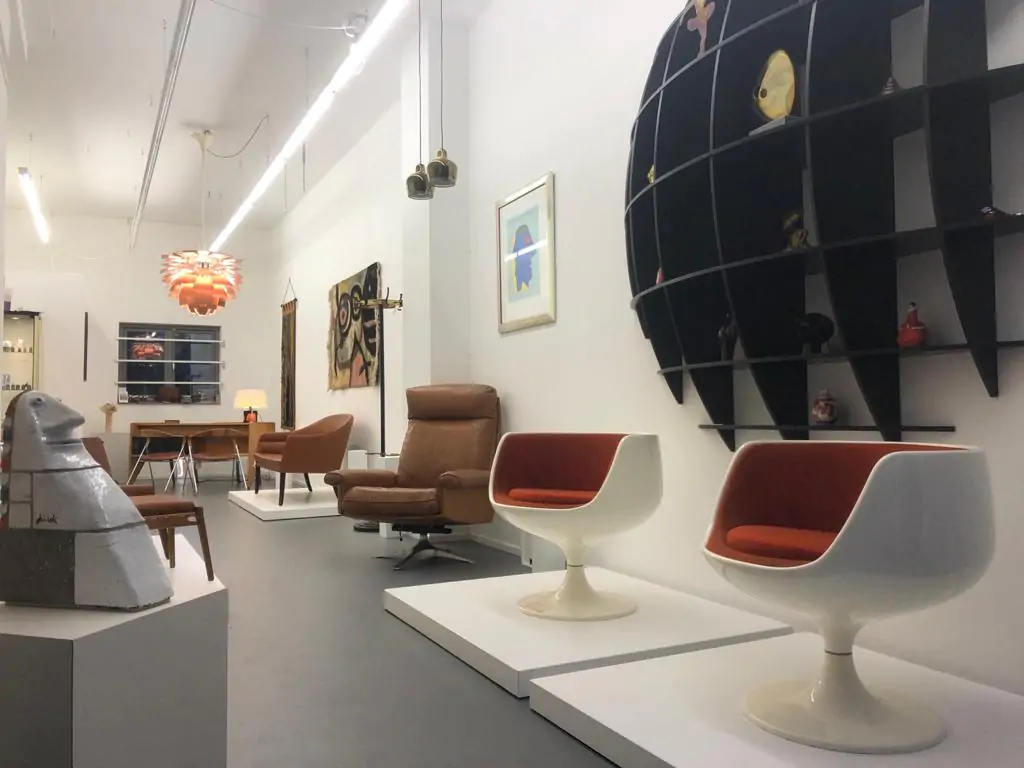
Galerie Gaudium specializes in 20th-century design by the most iconic architects and designers. The gallery is located in the heart of beautiful Amsterdam, where they present various themed exhibitions of mid-century furniture combined with contemporary art. Themes include the work of famous designers such as Mathieu Matégot and Charlotte Perriand, or location-specific exhibitions such as Danish, Italian, or Japanese design. New exhibitions are announced via their social media. The items in the exhibition are For Sale Available the online store.