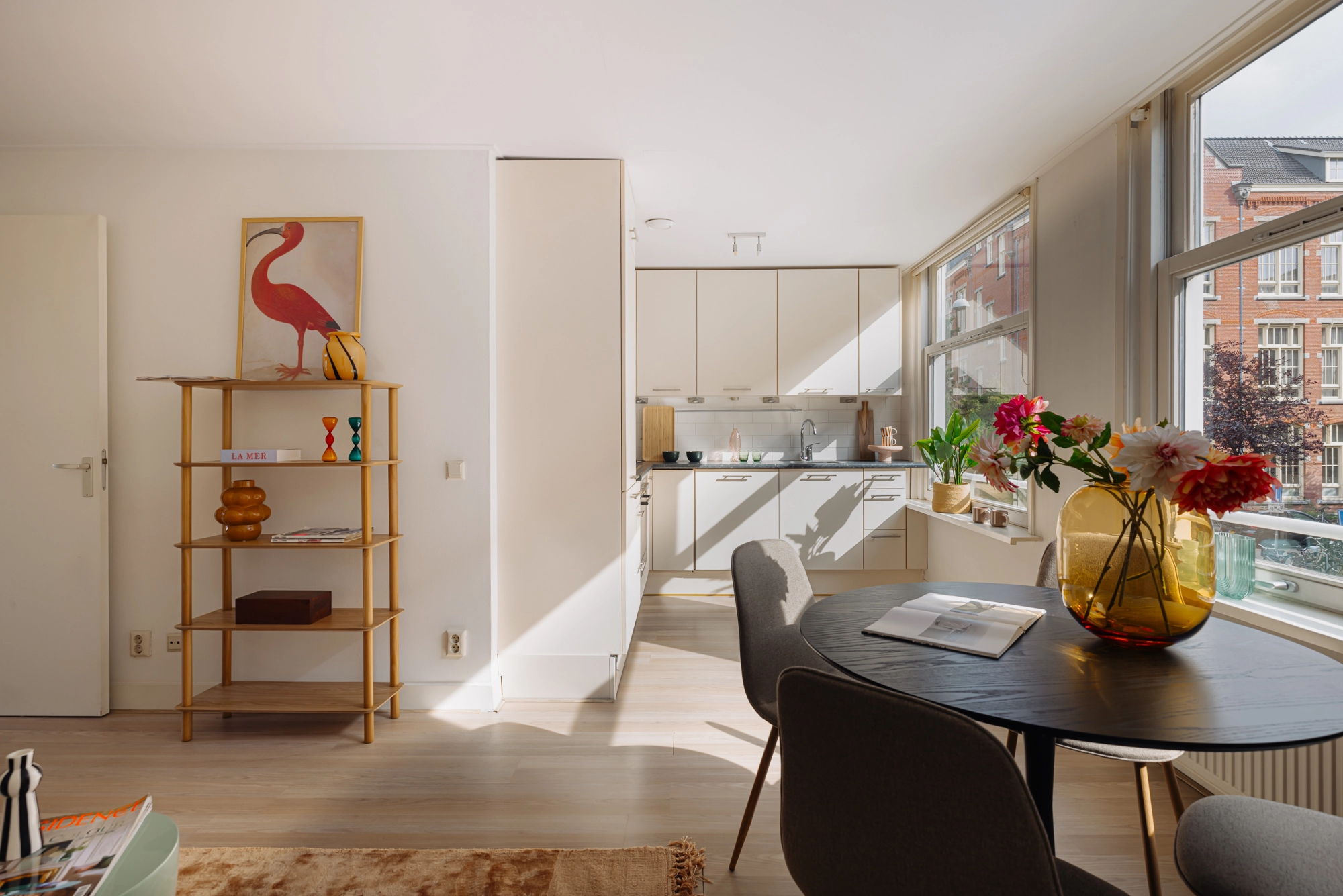
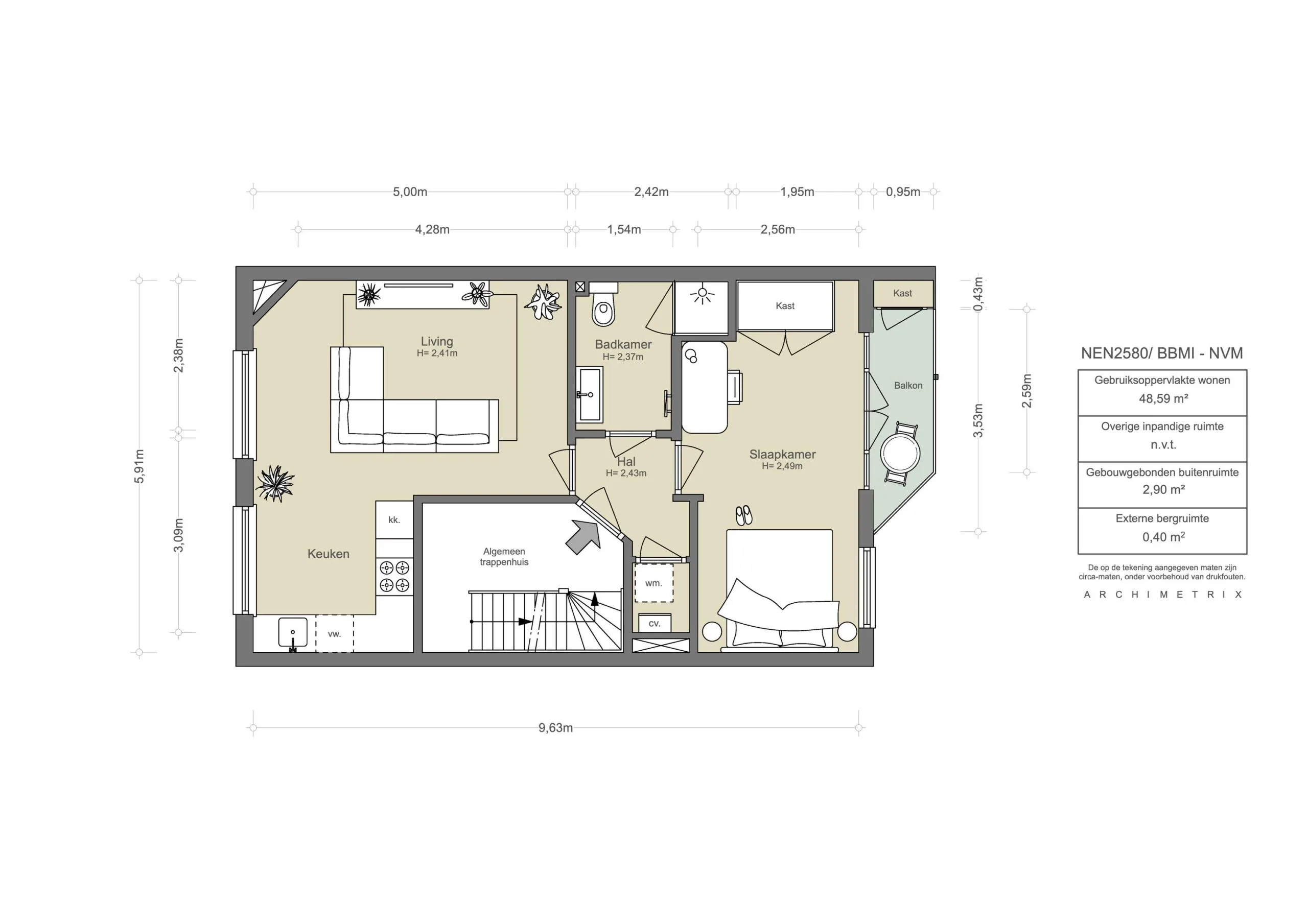
Apartment of approximately 49 m², located in De Pijp. The apartment has a living room, kitchen, one bedroom (with the possibility of bedrooms two bedrooms ), bathroom, and balcony. Located on freehold land.
Guided tour
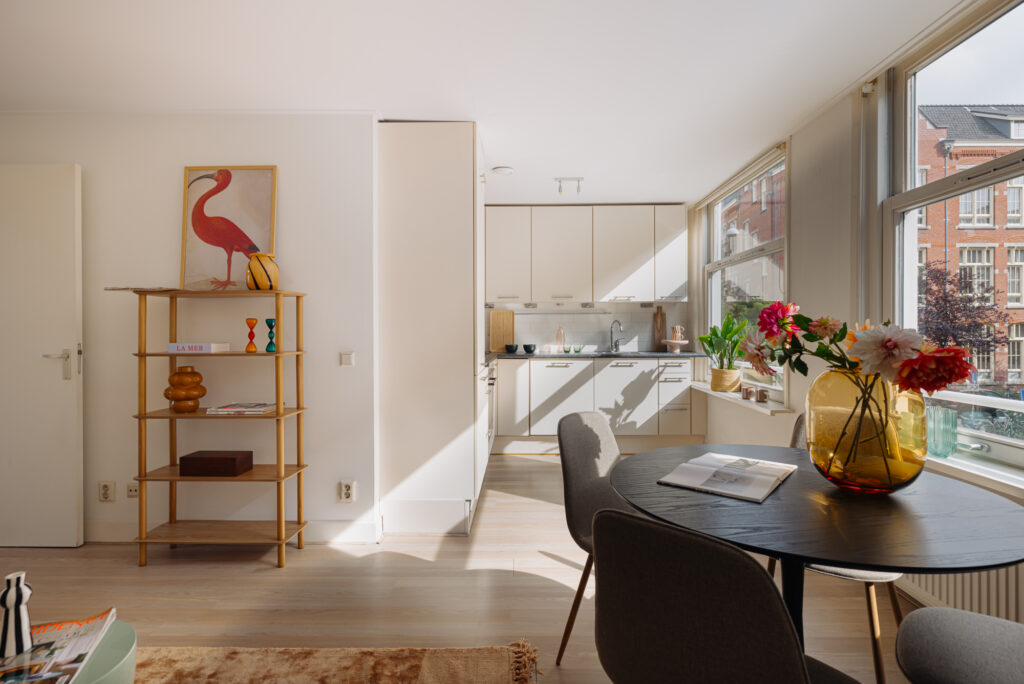
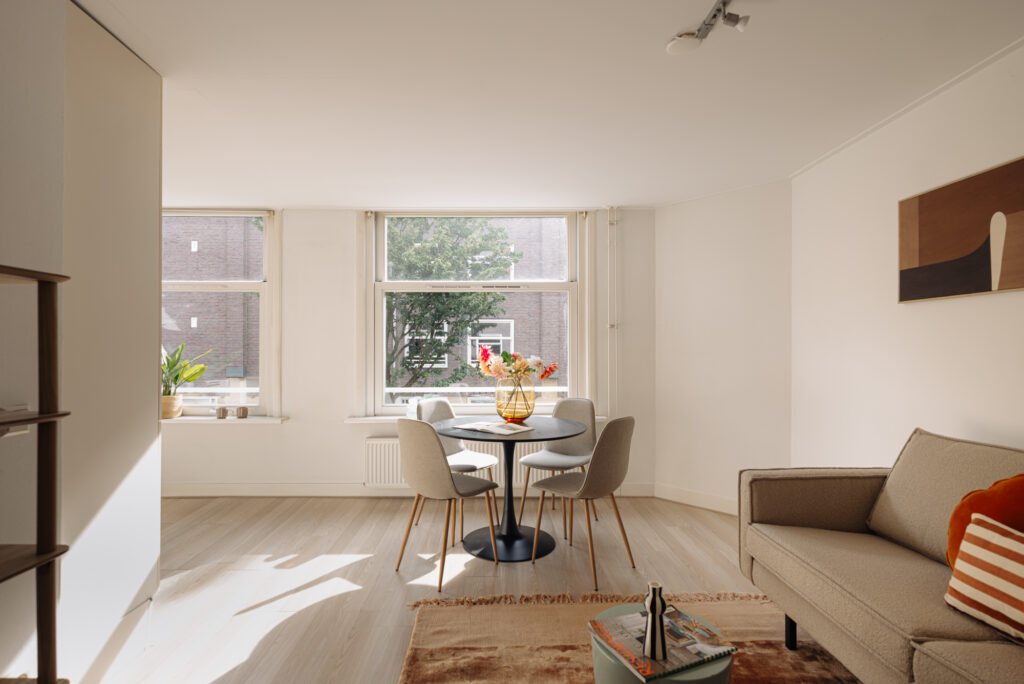
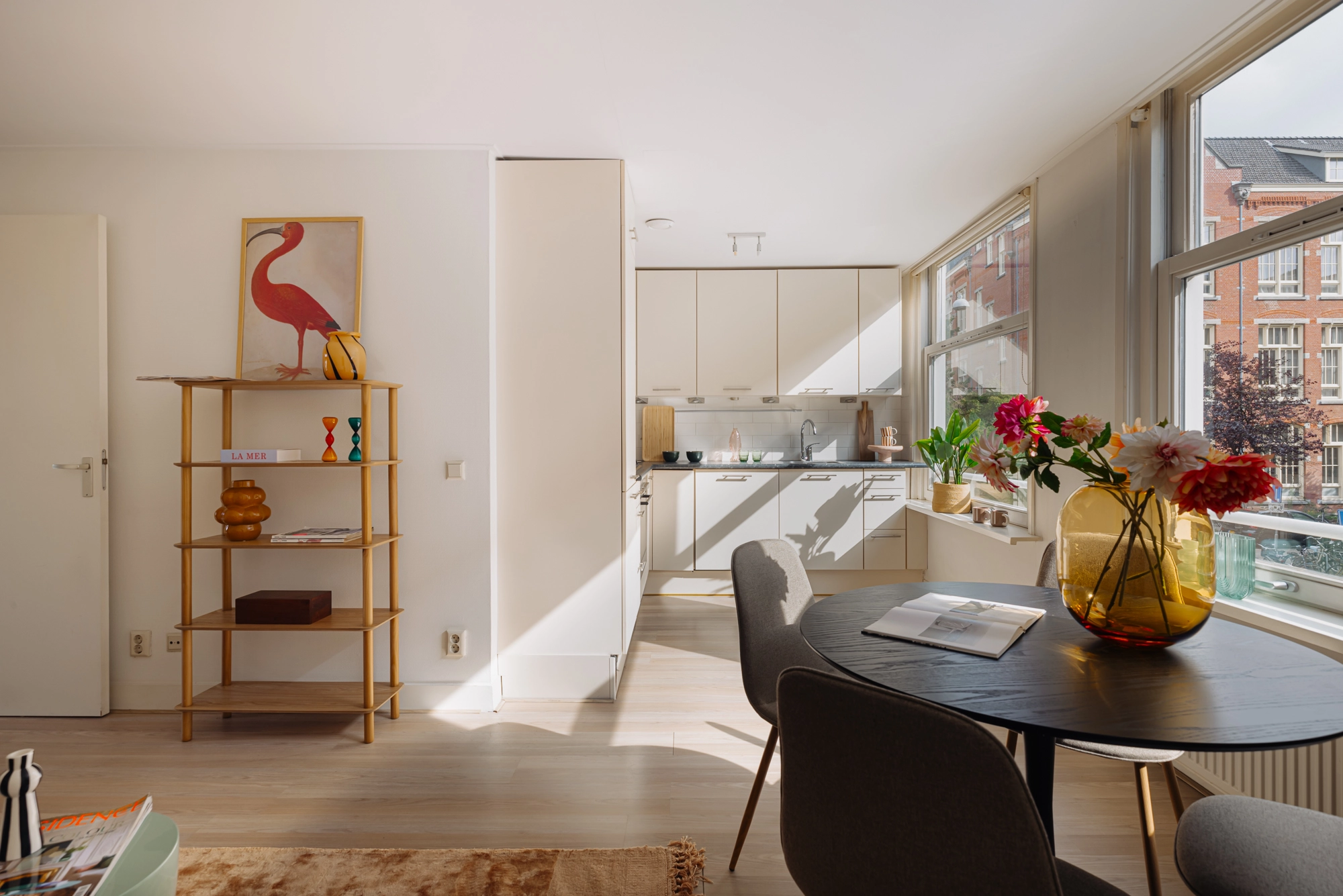
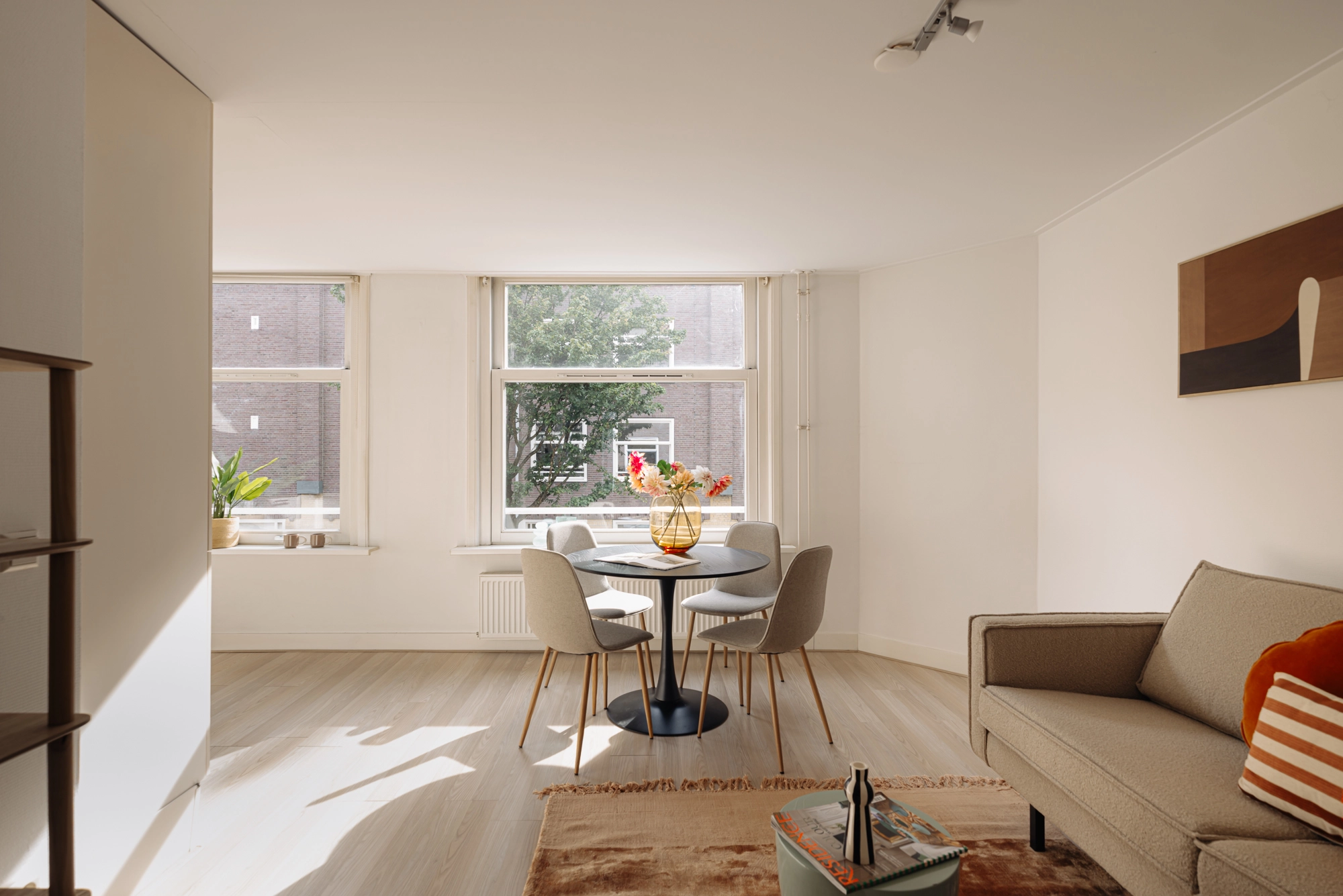
The living room is located at the front of the house. The living space at the front has a bright layout. Two large windows allow daylight to flood into the room, enhancing the feeling of openness.
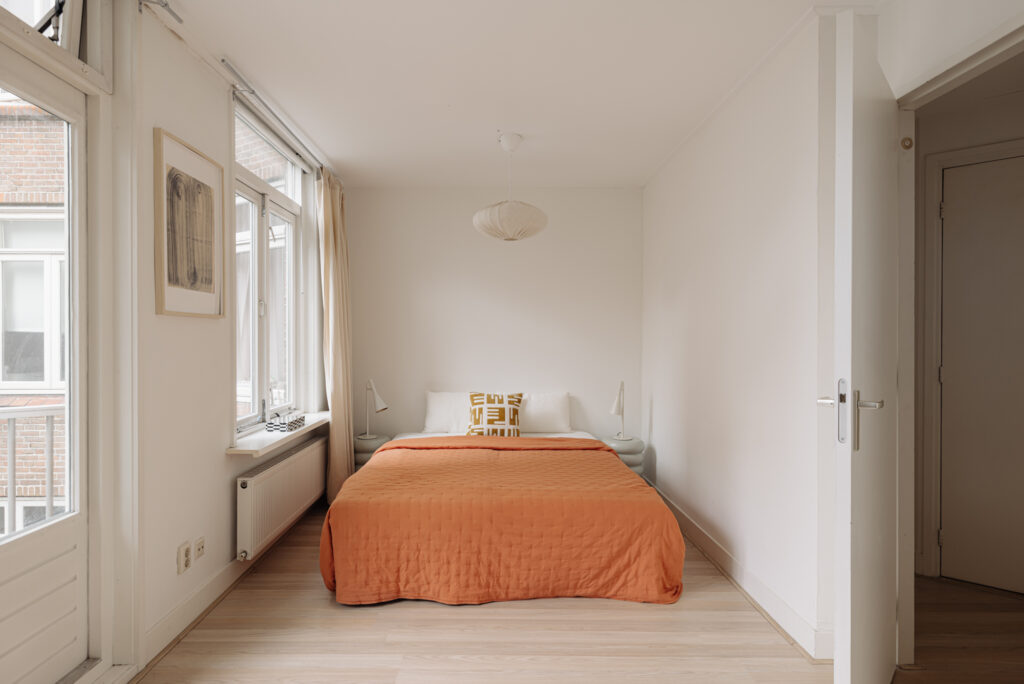
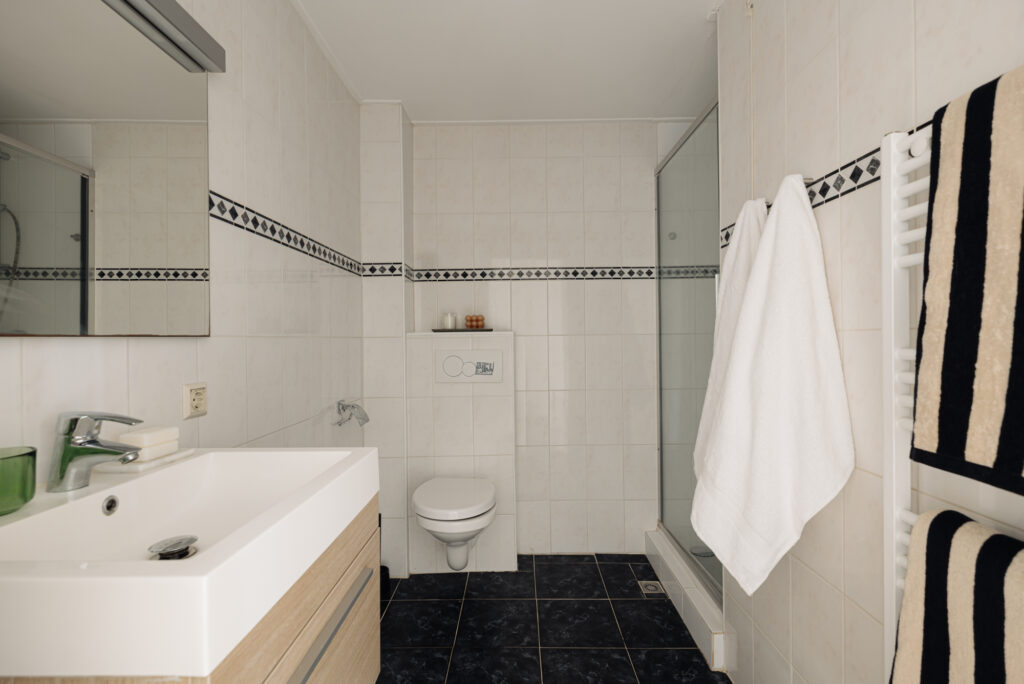
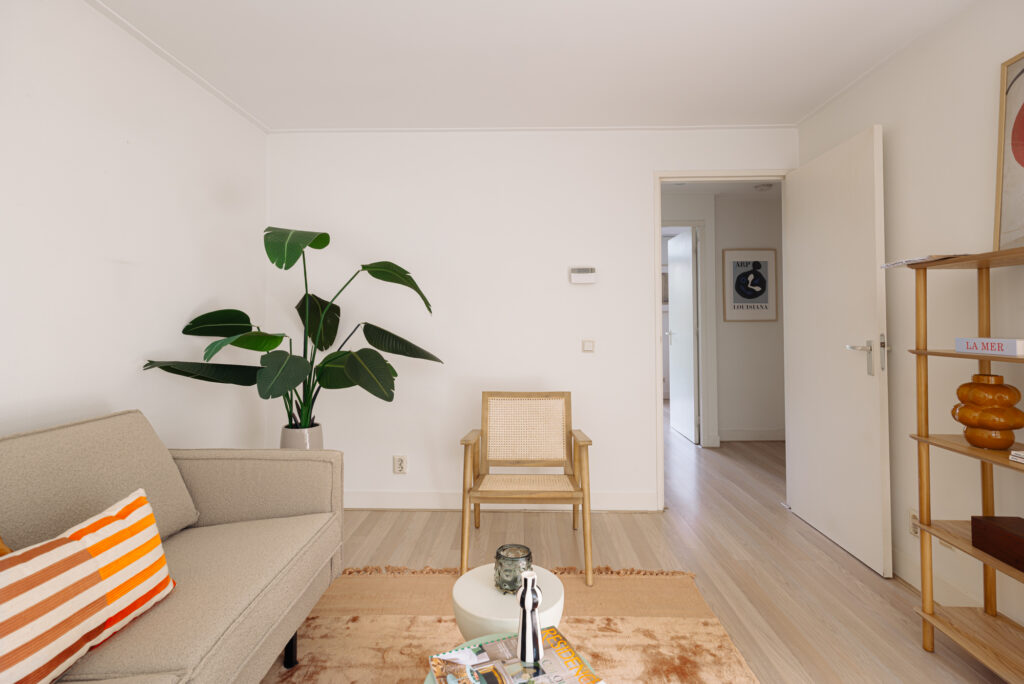
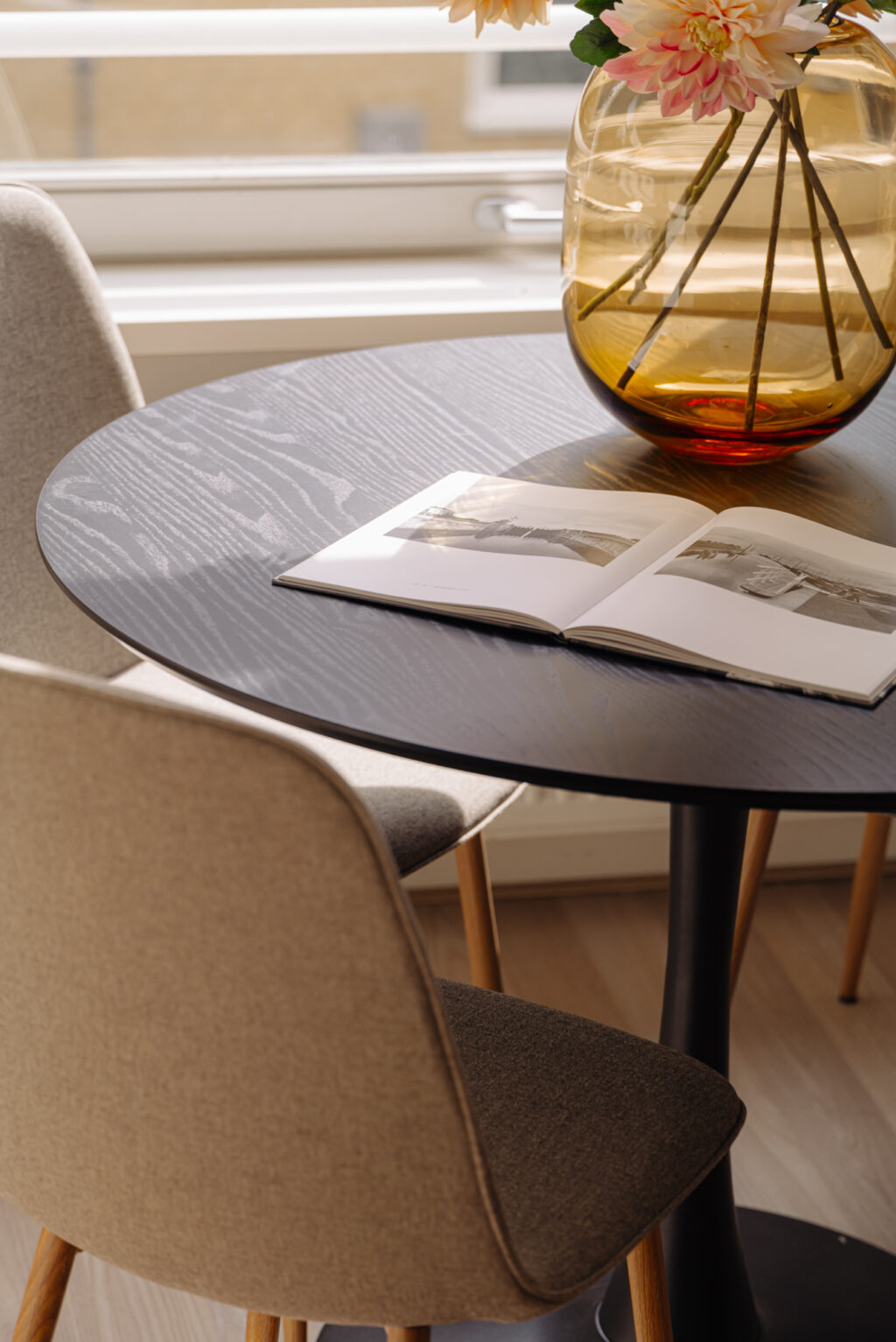
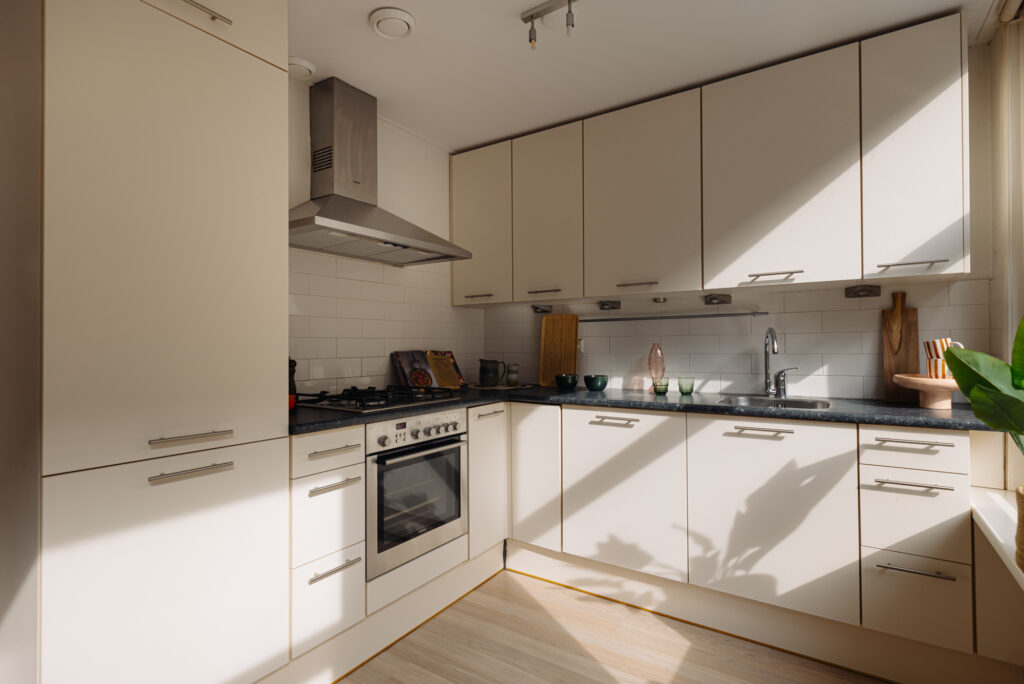
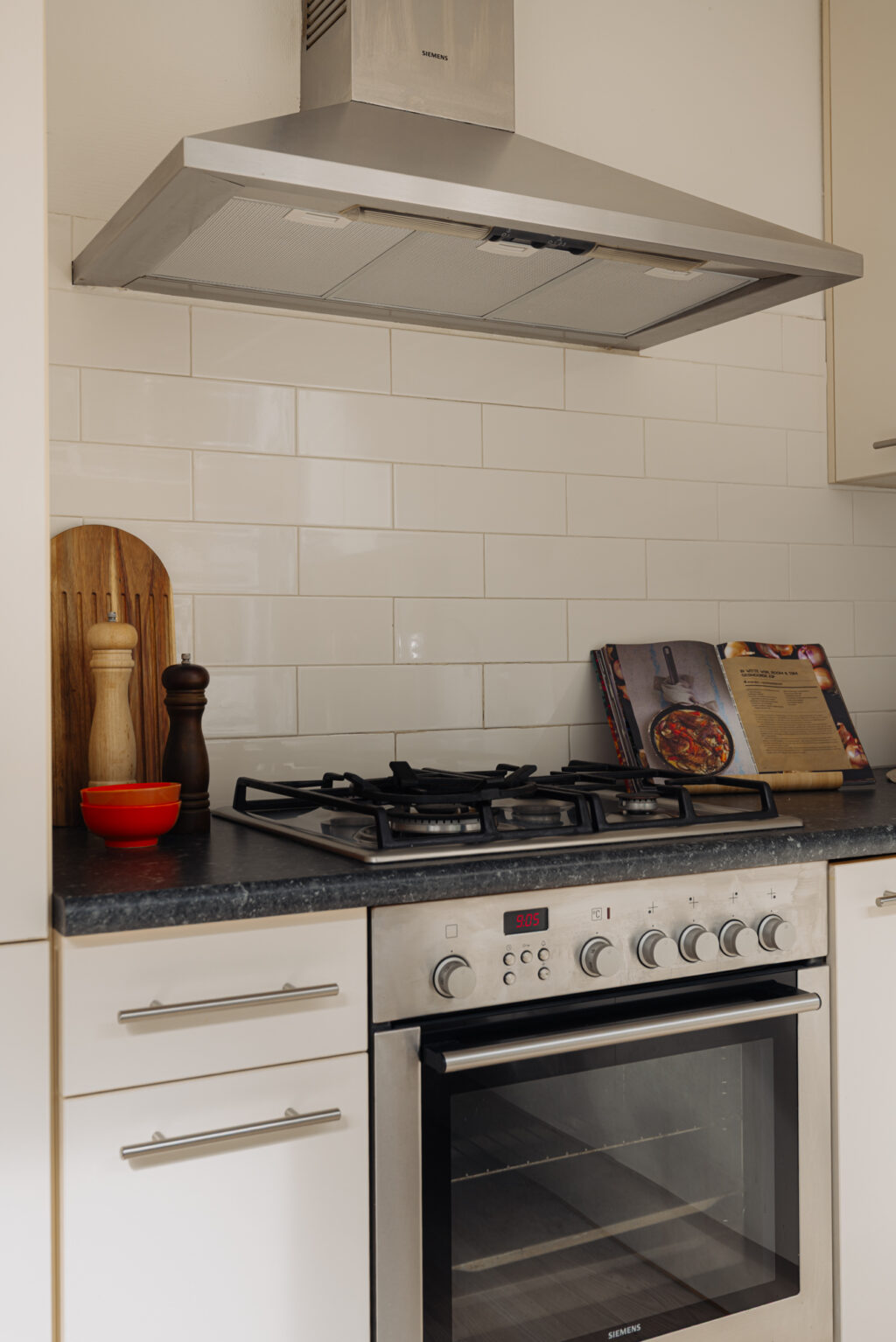
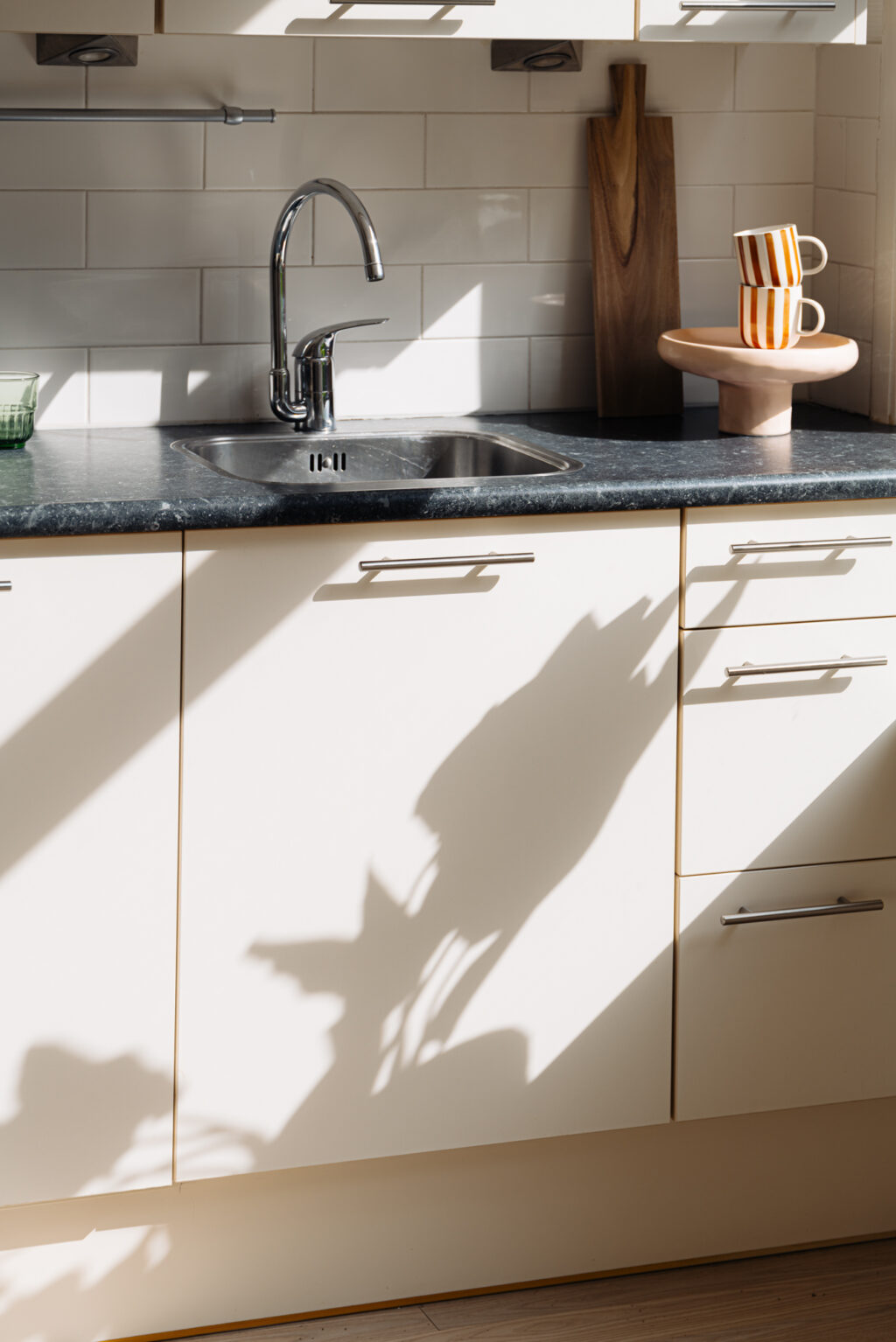
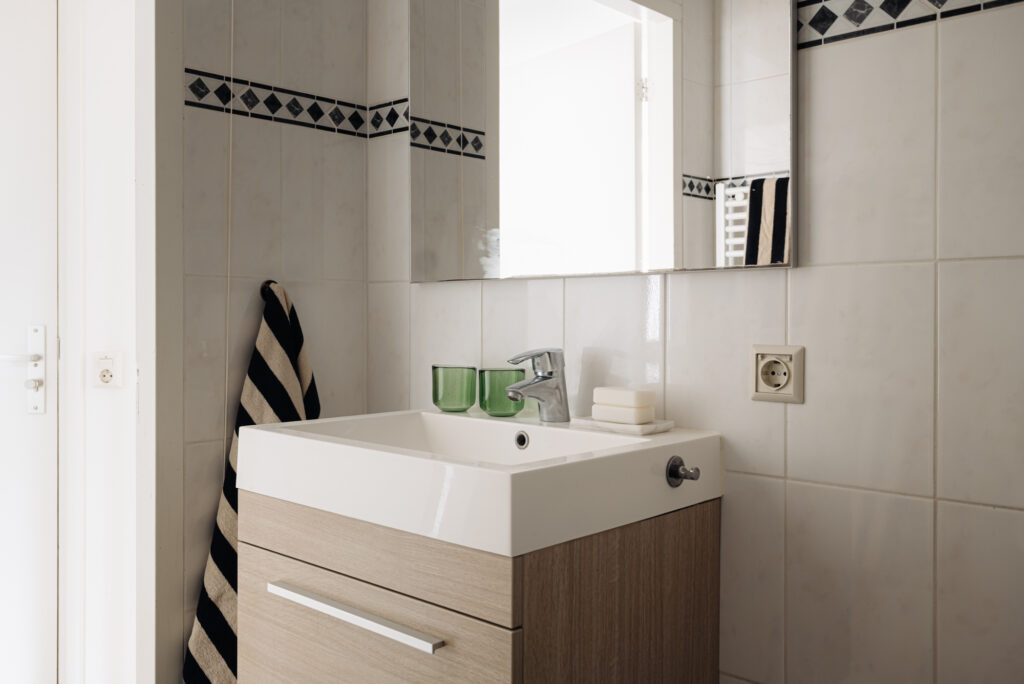
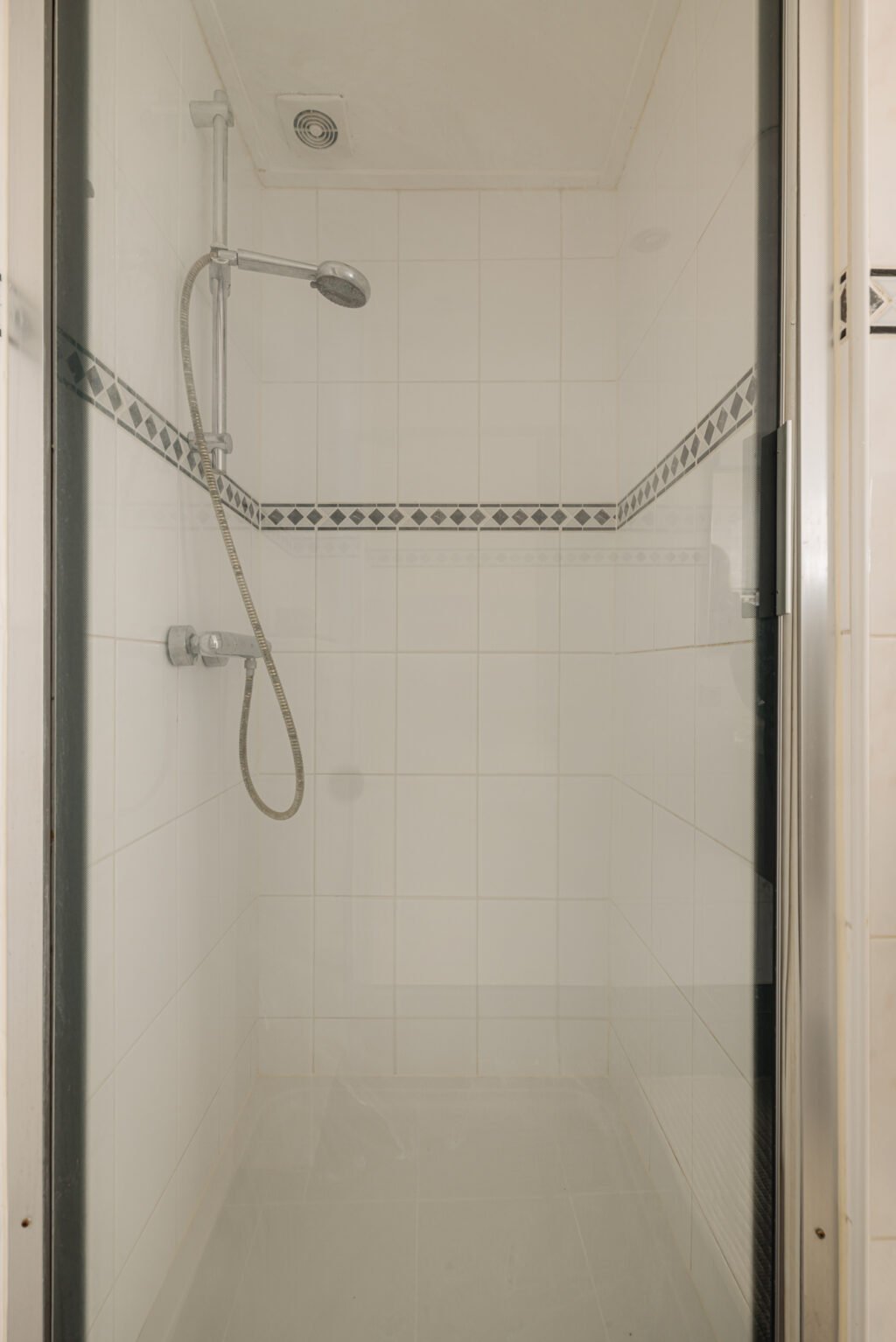
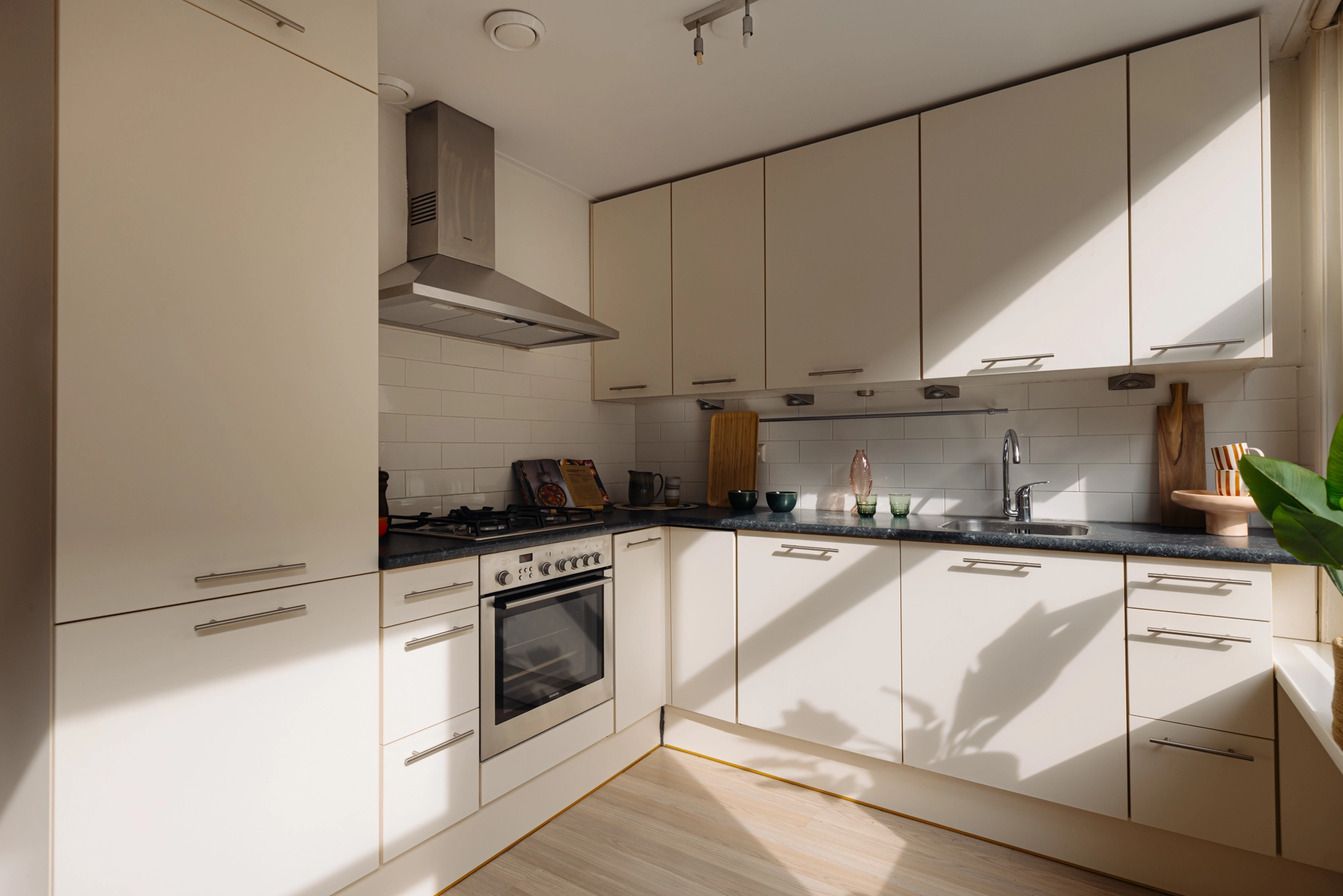
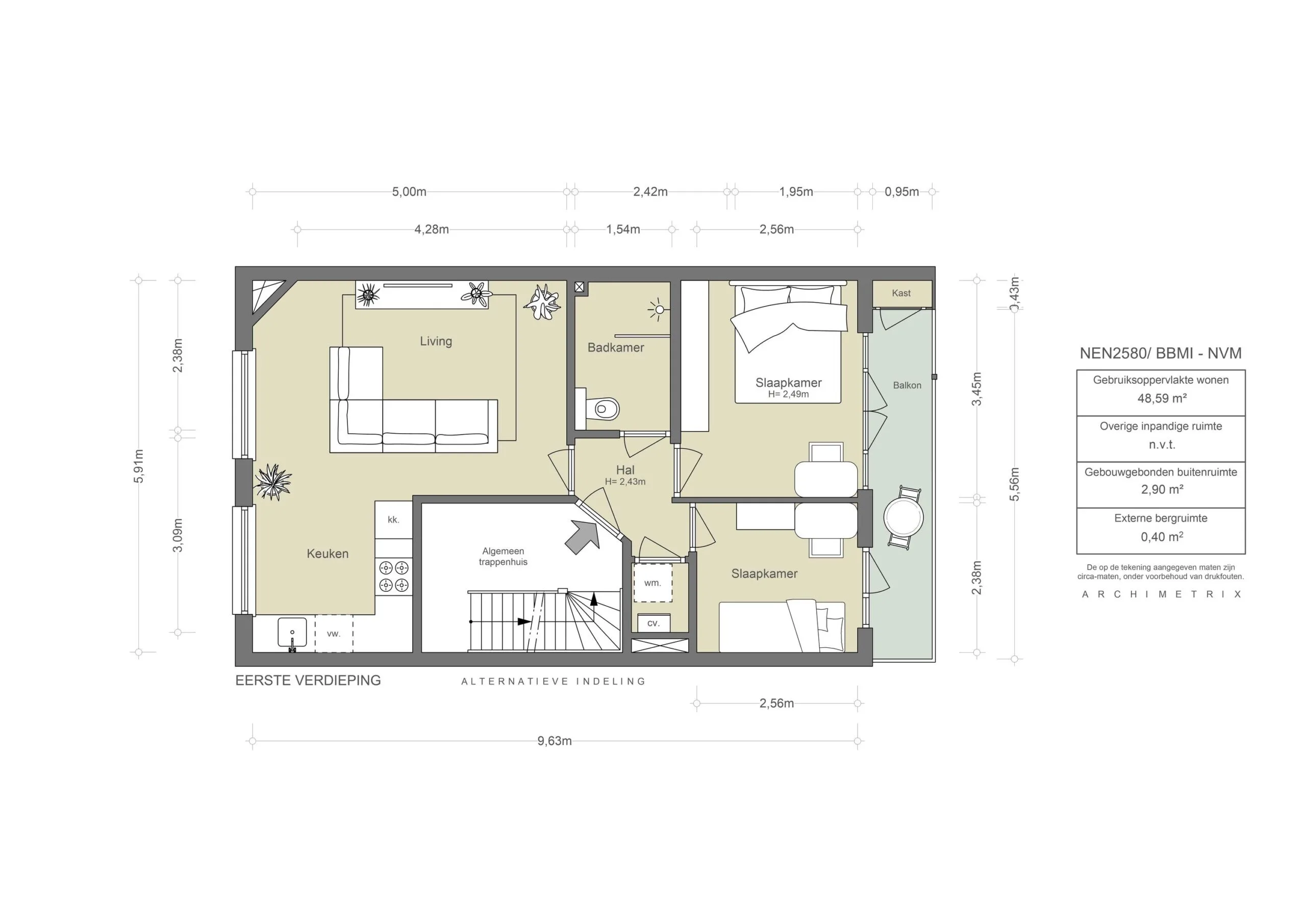
The layout is clear, with Location a sitting area and a dining table, and an open connection to the kitchen. The atmosphere is calm, with light flooring that continues into the bedroom. The kitchen is positioned in a corner at the front of the house, overlooking the street. The kitchen unit has a neutral design, with a bright, functional layout and ample storage space in both upper and lower cabinets. The kitchen is equipped with various built-in appliances, including a gas hob with extractor hood, an oven, fridge-freezer, and dishwasher. The bedroom is located at the rear. There is enough Location a double bed, a large wardrobe, and possibly a workspace. French doors connect the room to the balcony and provide fresh air and a view of the green courtyard gardens. The alternative floor plan clearly shows that the home offers the possibility of creating a second bedroom by dividing the spacious bedroom. The bathroom is centrally located in the apartment. The space is efficiently designed with a walk-in shower, a sink with mirror cabinet, and a floating toilet. The finish is neutral but practical. The balcony is accessible from the bedroom and faces southwest. There is space for a table with two chairs. The view of the inner gardens provides peace and greenery in the middle of the city.
neighborhood guide
De Pijp was built at the end of the 19th century to provide housing for newcomers who moved to the capital in search of work. Freddy Heineken's father opened the Heineken brewery here in 1886. The first workers' houses, around Albert Cuypstraat, were built quickly and cheaply. Later, Berlage added houses in the Amsterdam School style towards the Diamantbuurt. It is said that the neighborhood owes its name to the long, straight streets, which are shaped like a pipe.
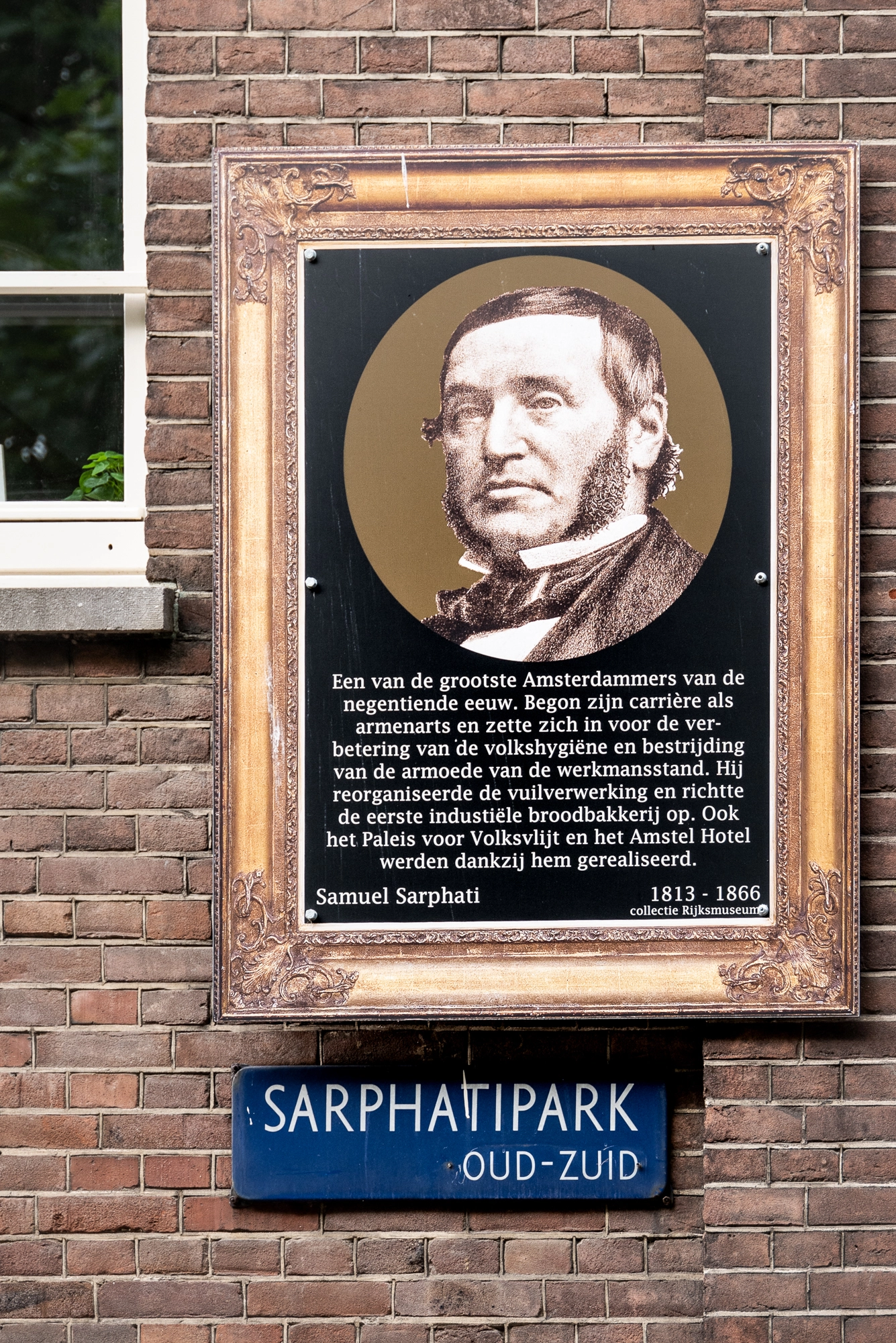
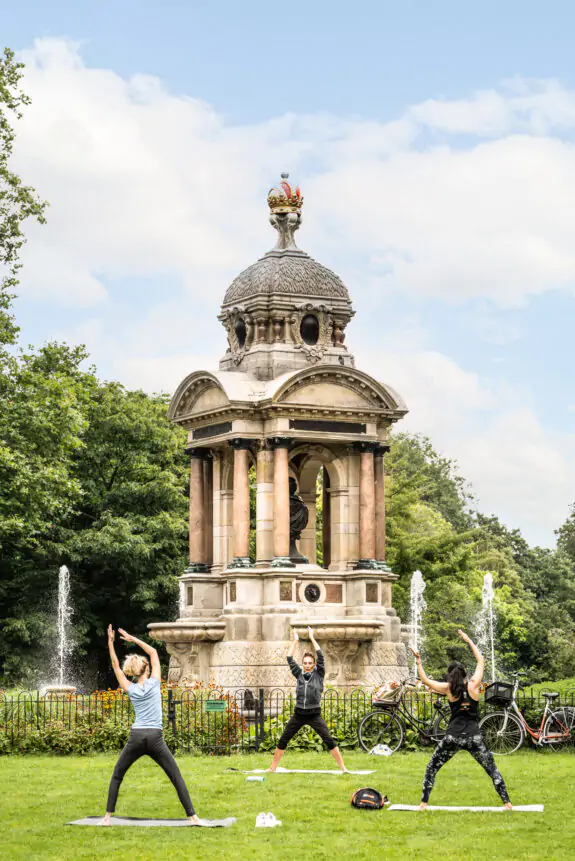
The Albert Cuyp Market and Sarphatipark are decisive for the dynamism of De Pijp. Artists and writers such as Piet Mondriaan, Carel Willink, and Gerard Reve lived and worked here. The lively, mixed population brought many cafes and eateries to the neighborhood. Today, the neighborhood is known as the Latin Quarter of Amsterdam, with many dynamic restaurants such as Brut de Mere, Yamazato, Arles, the Peruvian NAZKA, and authentic bistros such as Petit Caron.
Details
• Living area approx. 49 m²
• West-facing balcony approx. 3 m²
• Located on freehold land
• Energy rating D
• Homeowners’ association fees €136.36 per month
• Municipally protected historic district

House of Henrick
Sometimes a home just feels right. The size, the layout, the location on the street—everything falls into Location.
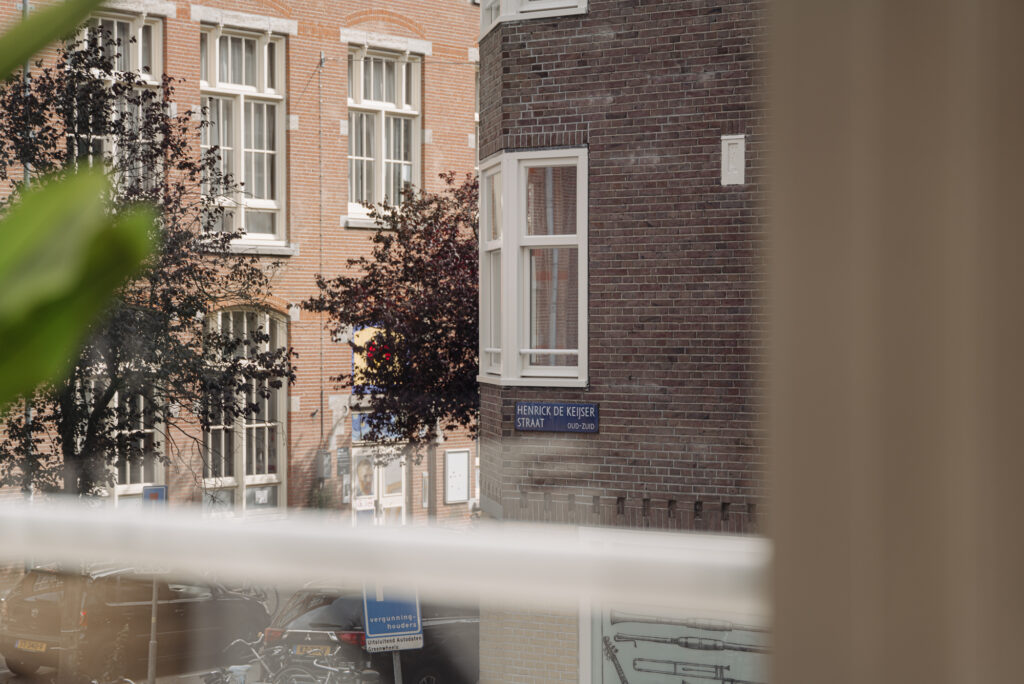
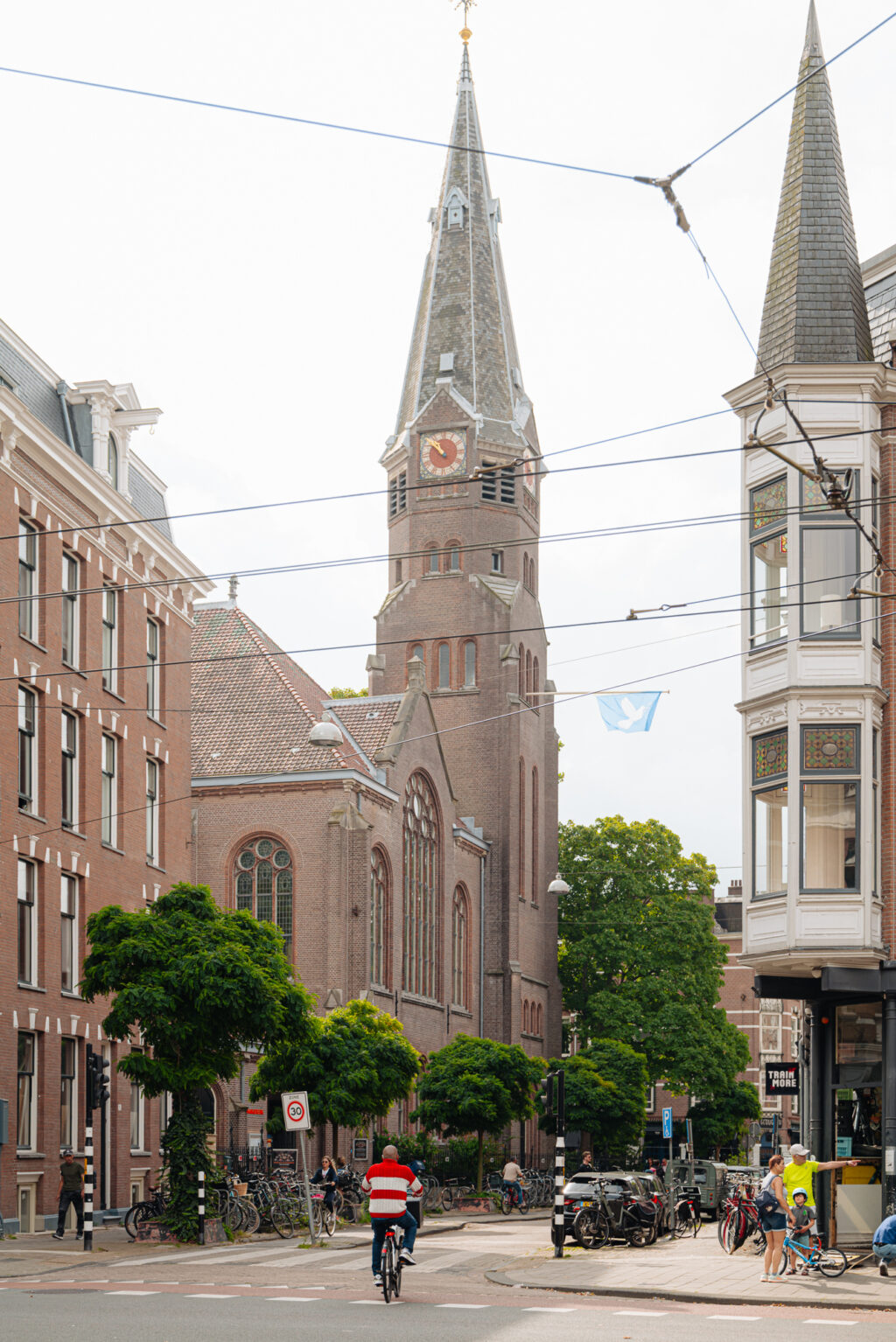
Henrick's House is located in the heart of De Pijp, on the first floor of a building that has been part of the city for over a century. The architecture is recognizable and well thought out, with a facade that blends into the larger whole and interior spaces that invite you to create your own way of living.
Here you live in the shelter of urban life. With windows overlooking the street scene at the front and a quiet bedroom at the rear. The floor plan is clear, the atmosphere light and open. A pleasant, well-organized home for those who love simplicity with quality.
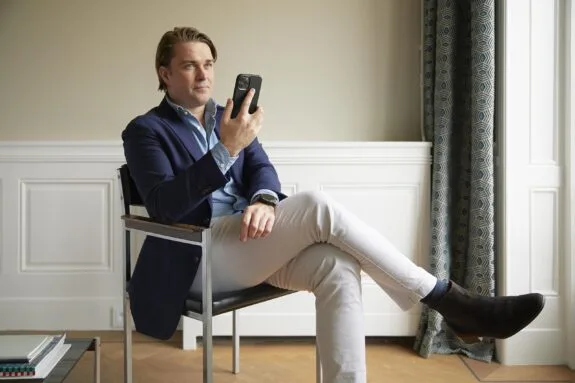
Jelle Mundt | Makelaar Broersma Wonen
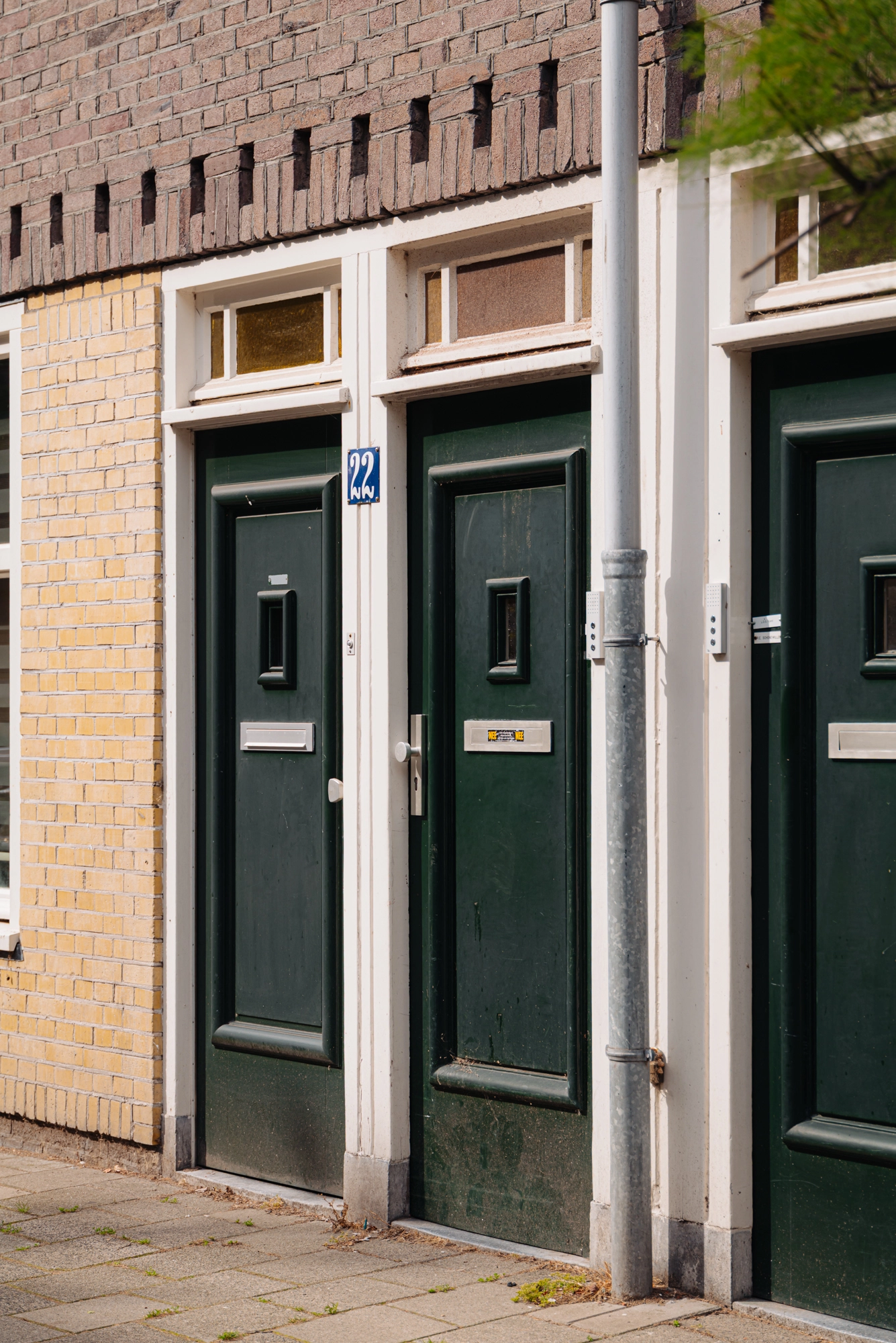
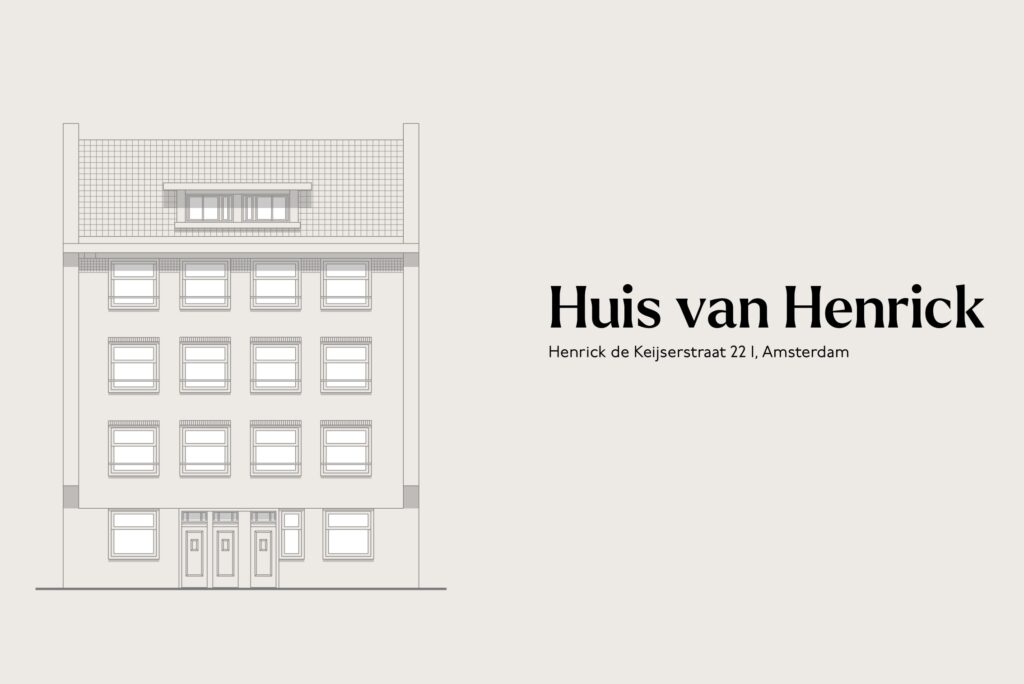
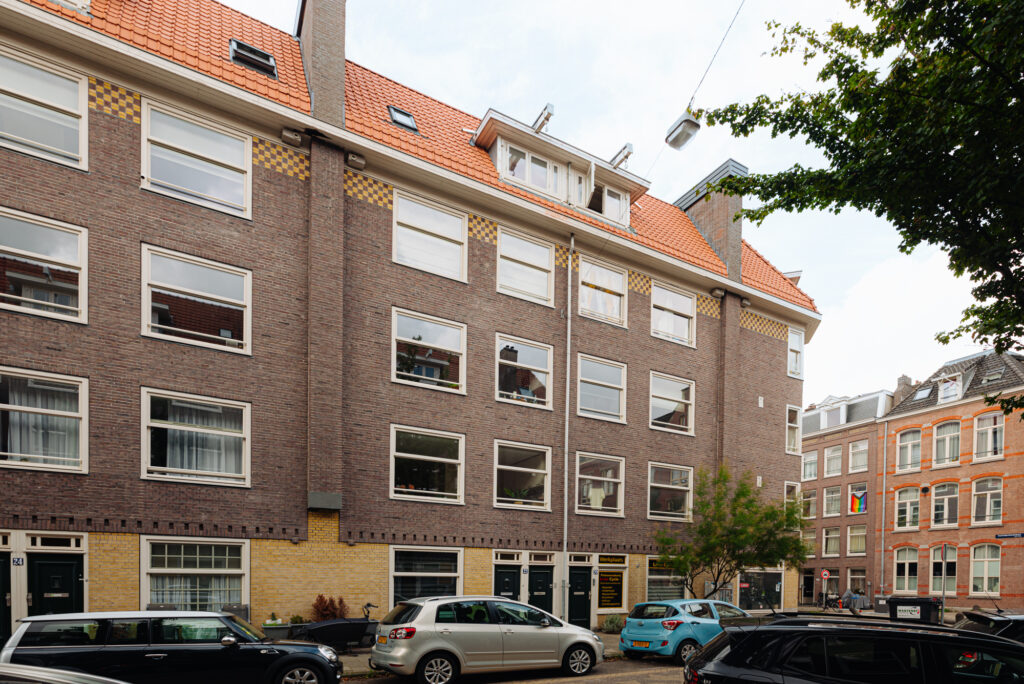
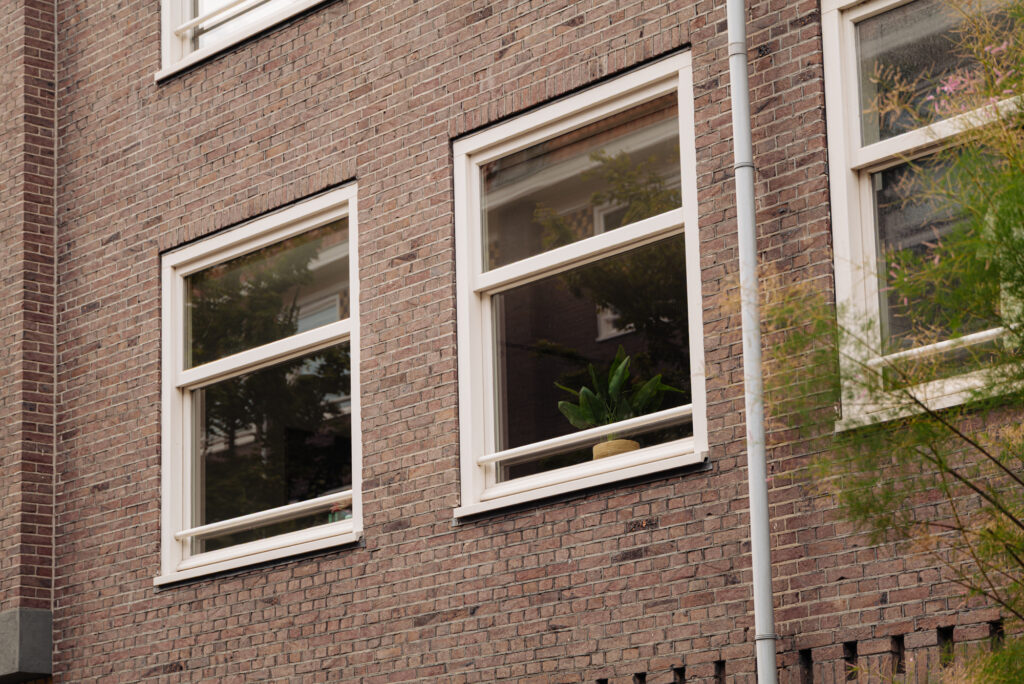
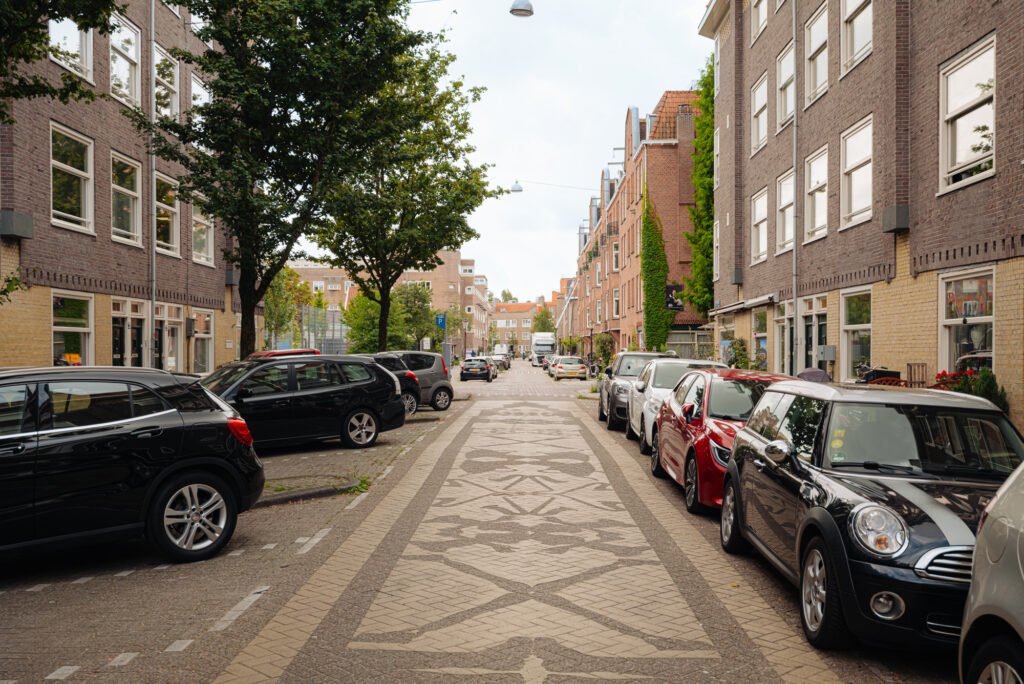
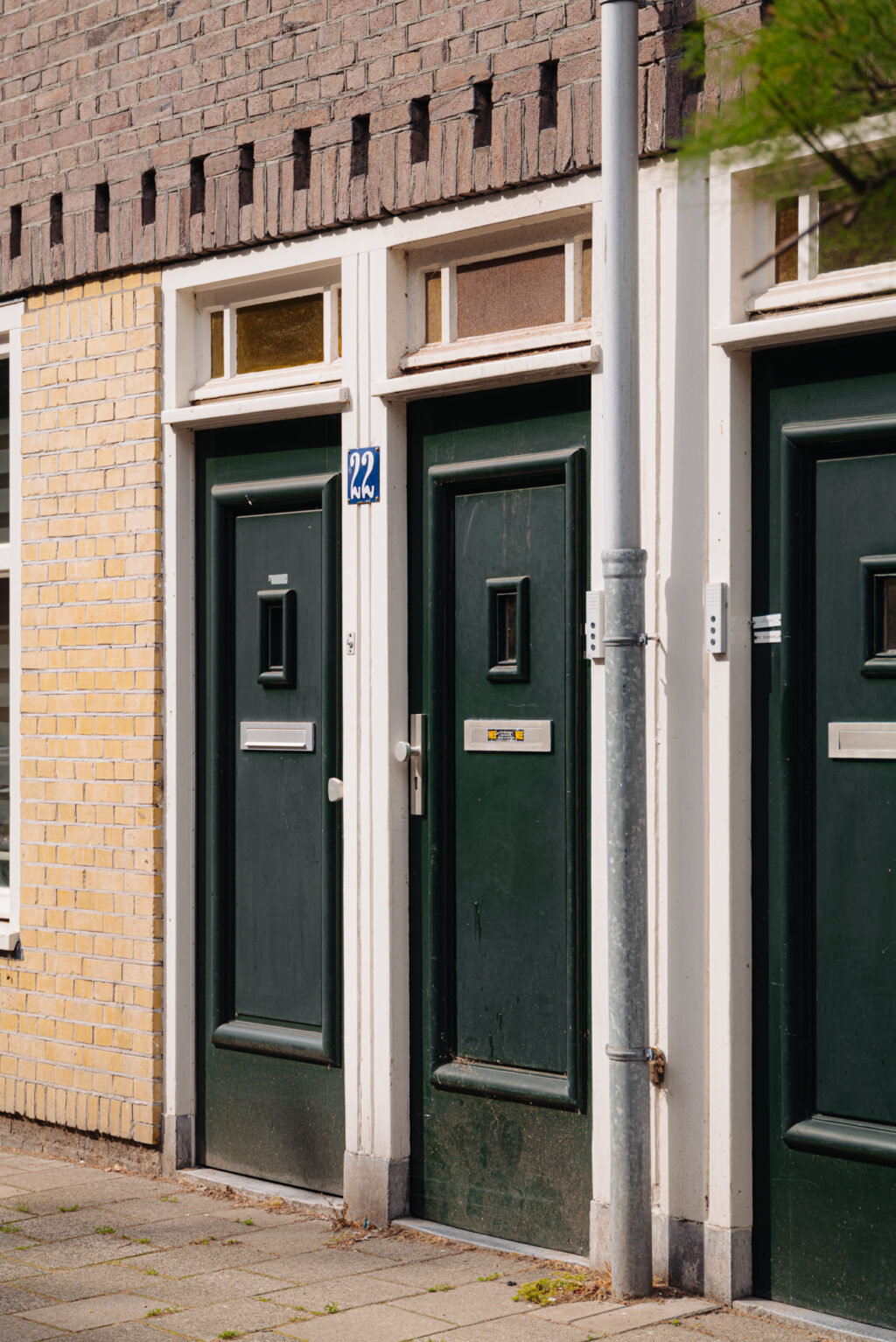
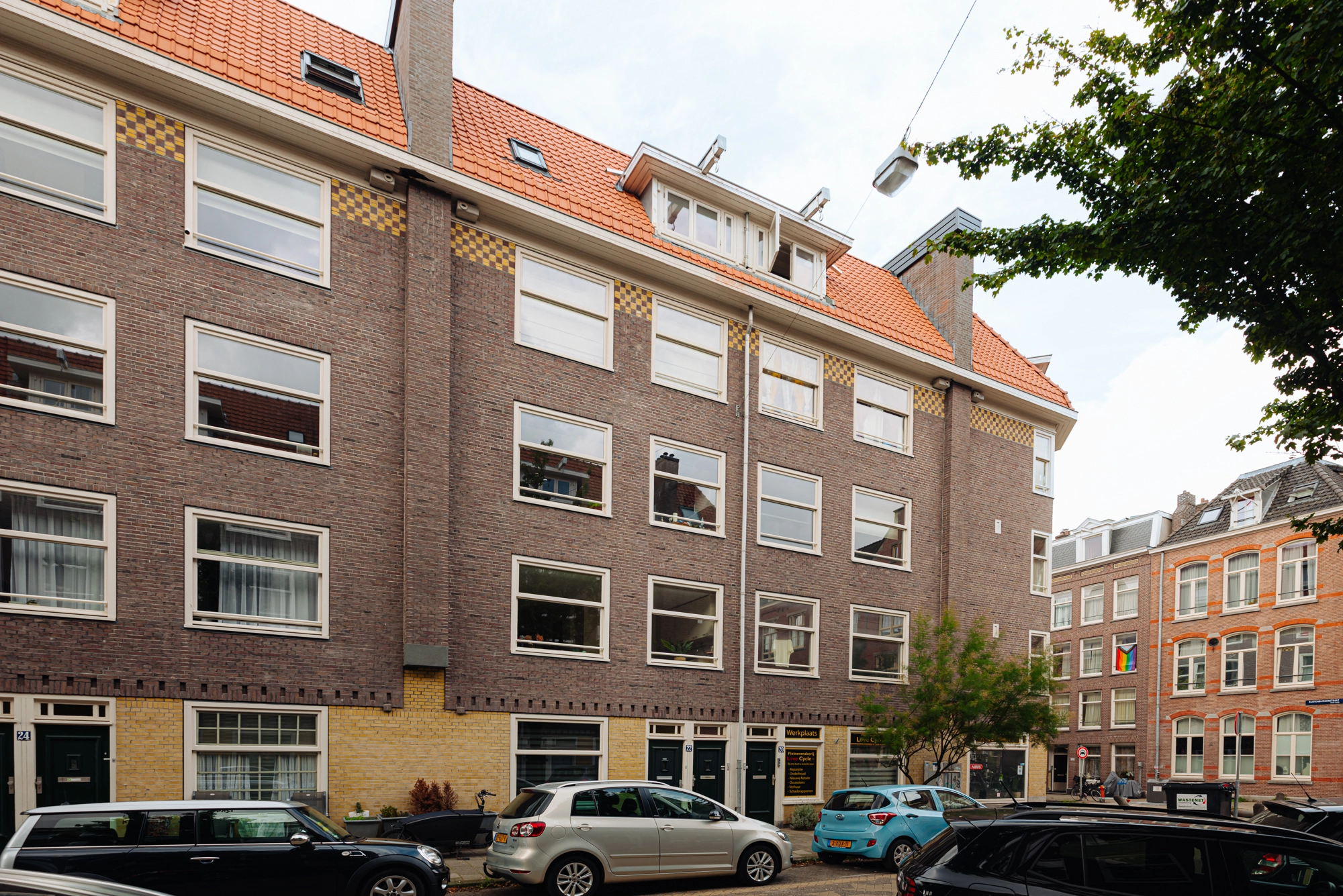
The façade has a sleek and symmetrical design, in keeping with the Amsterdam School architecture that is common in the Pijp district. Arend Jan Westerman's 1920s design, together with the mirror-image block on the opposite side, forms a clear urban whole. The combination of a low yellow plinth and dark brickwork sets the rhythm of the street and contributes to the block's recognizability.
The first-floor apartment follows this architectural structure, but is internally designed according to a contemporary, functional floor plan. The rooms are logically organized, with attention to light and ease of use. On the street side, two large windows provide contact with the surroundings and bring the northern light into the home.
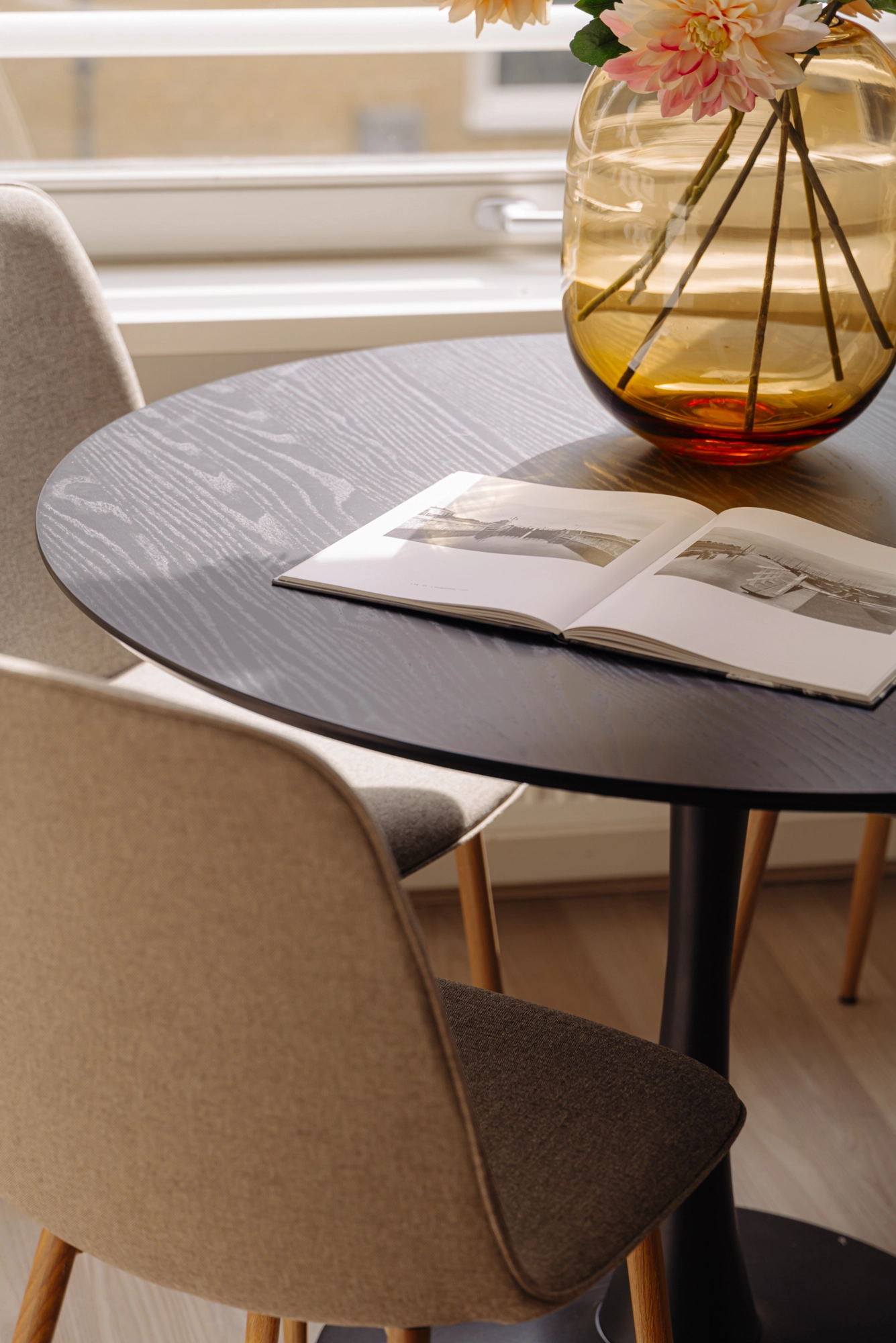
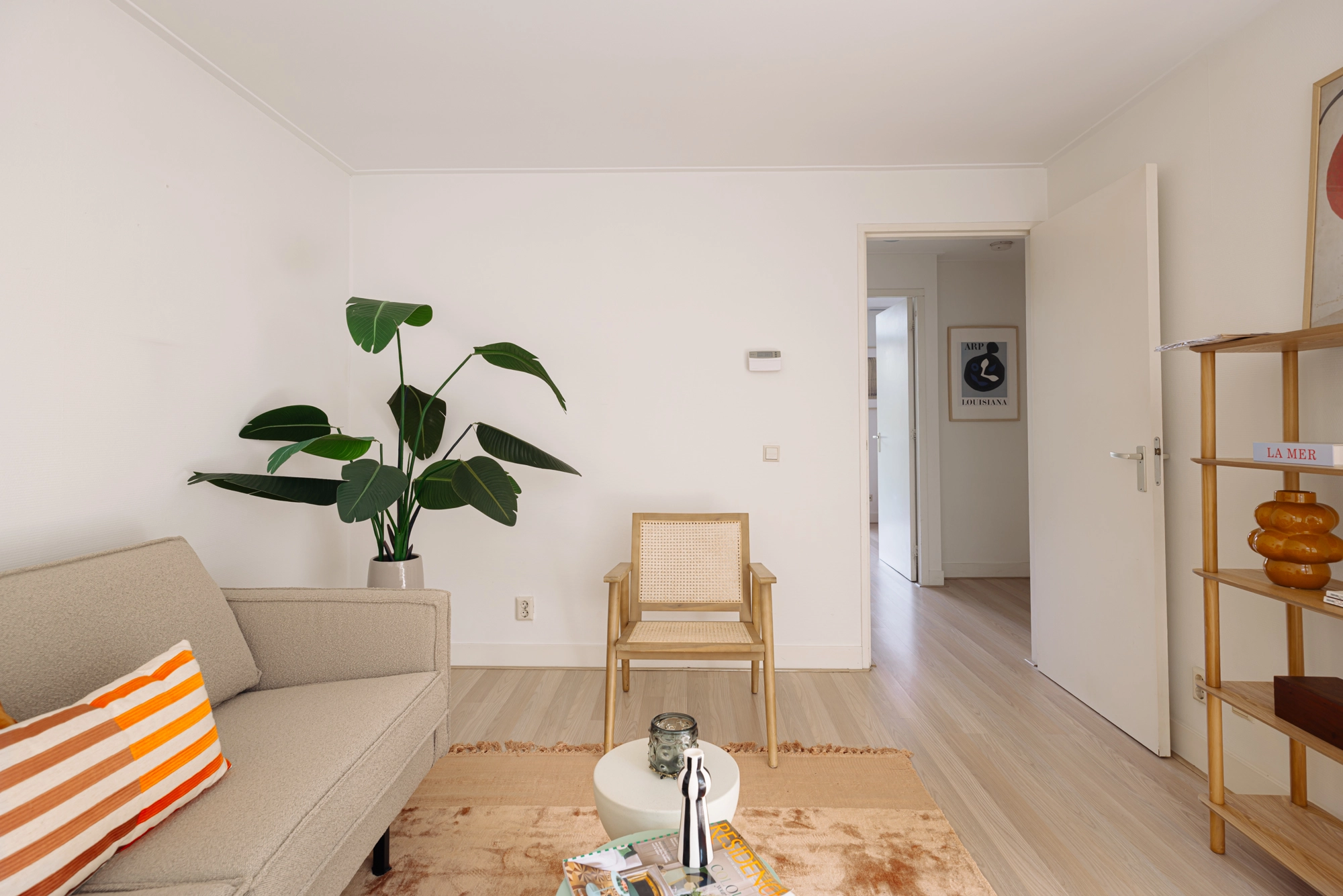
The living space at the front has a bright layout. Two large windows allow daylight to flood into the space, enhancing the feeling of openness. The layout is clear, with a sitting area and dining table directly connected to the kitchen.
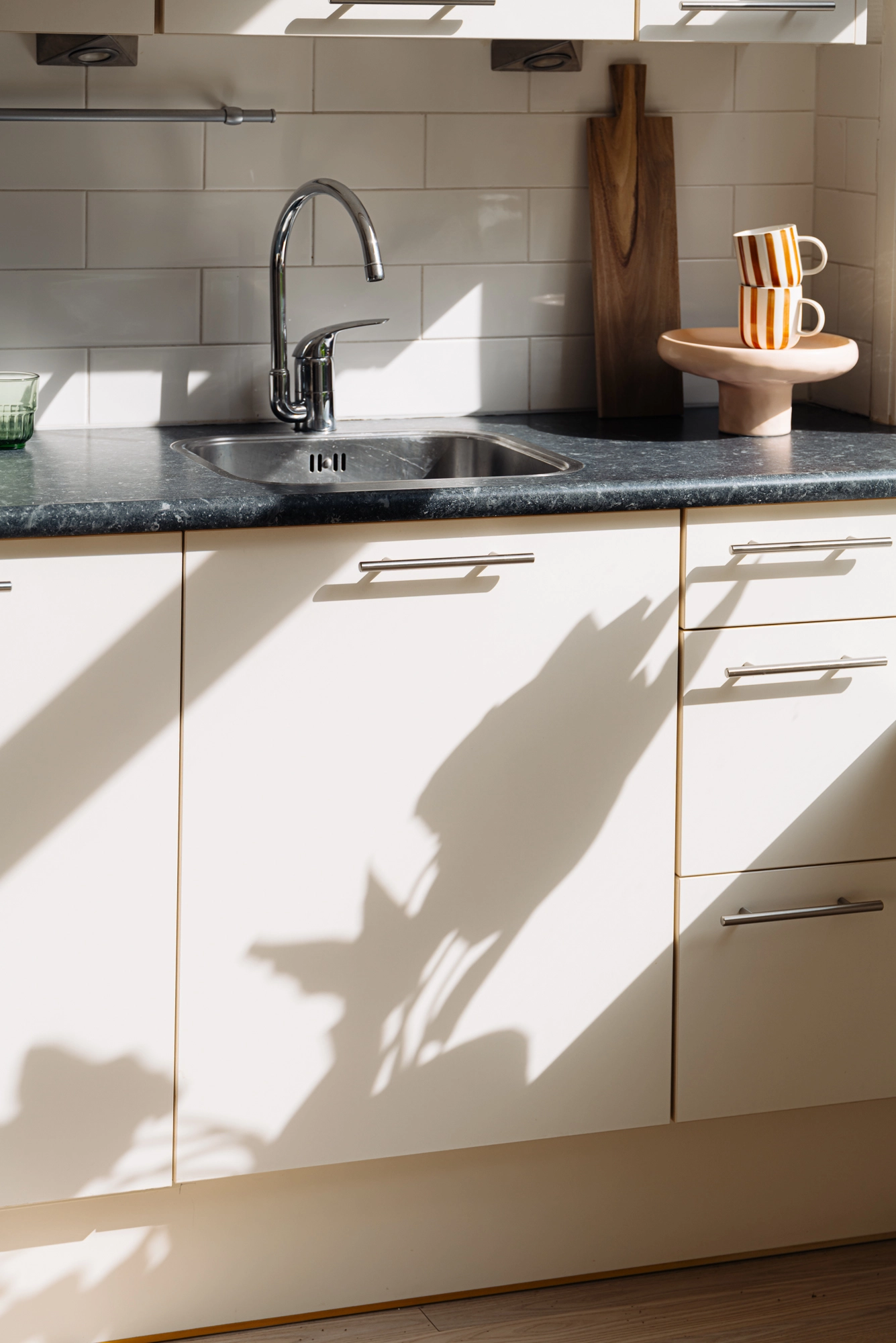
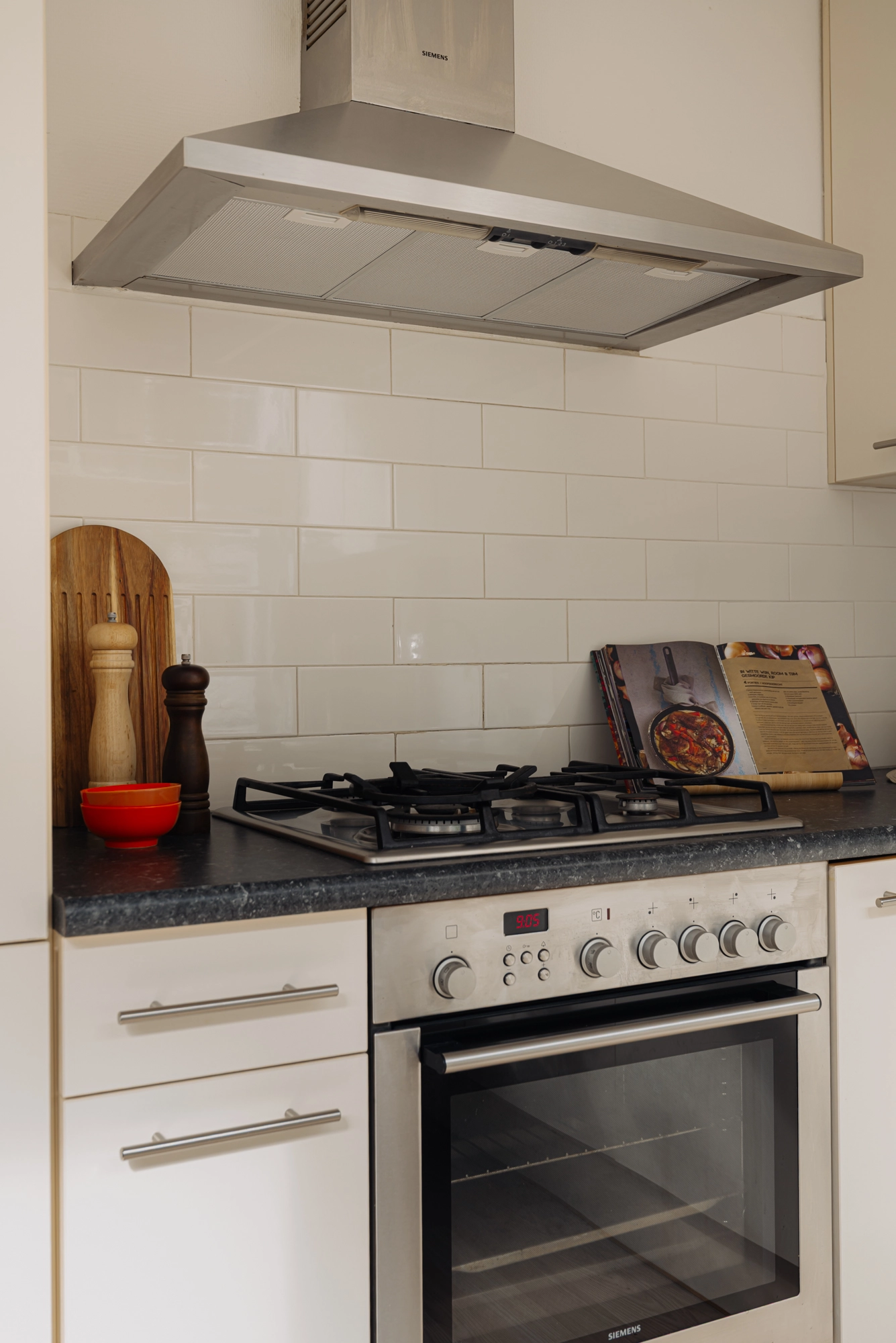
The kitchen is positioned in a corner at the front of the house, overlooking the street. The kitchen unit has a neutral design, with a clear, functional layout and ample storage space in both the upper and lower cabinets. The kitchen is equipped with various built-in appliances, including a gas hob with extractor hood, an oven, a fridge-freezer, and a dishwasher.
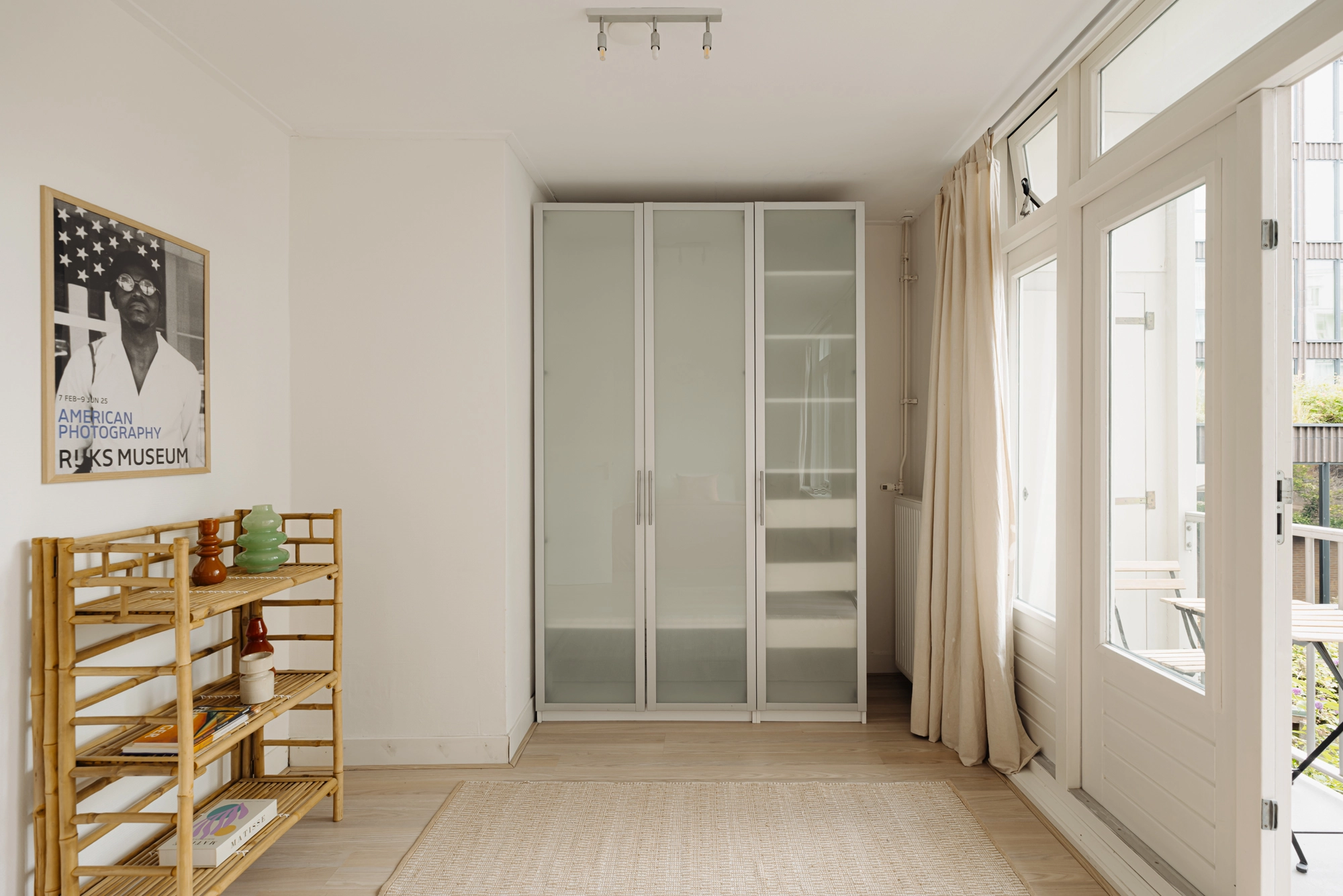
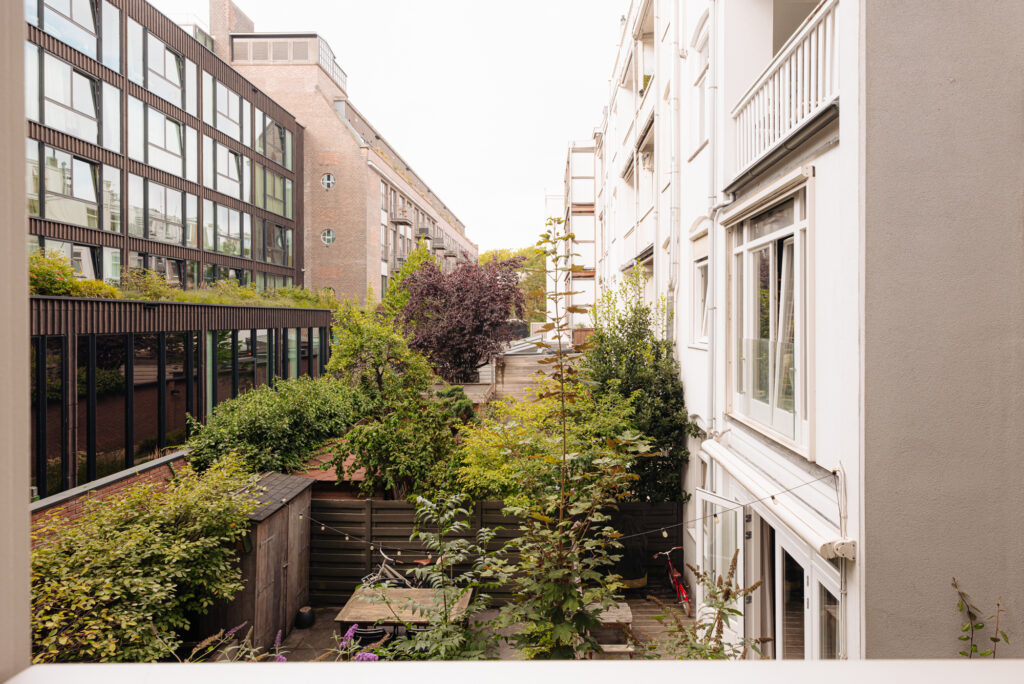
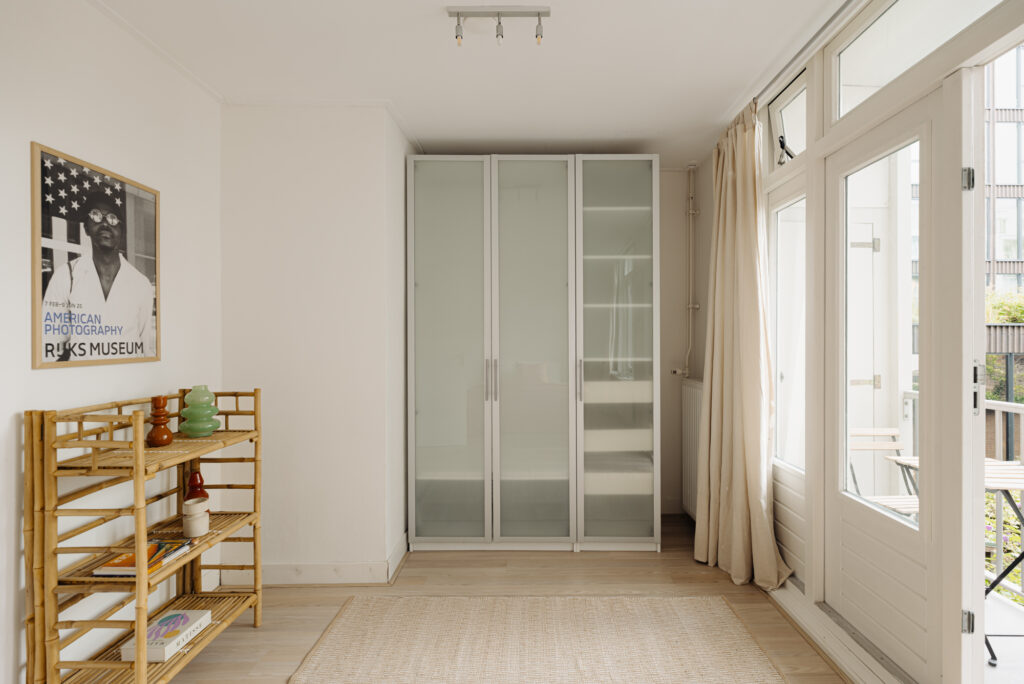
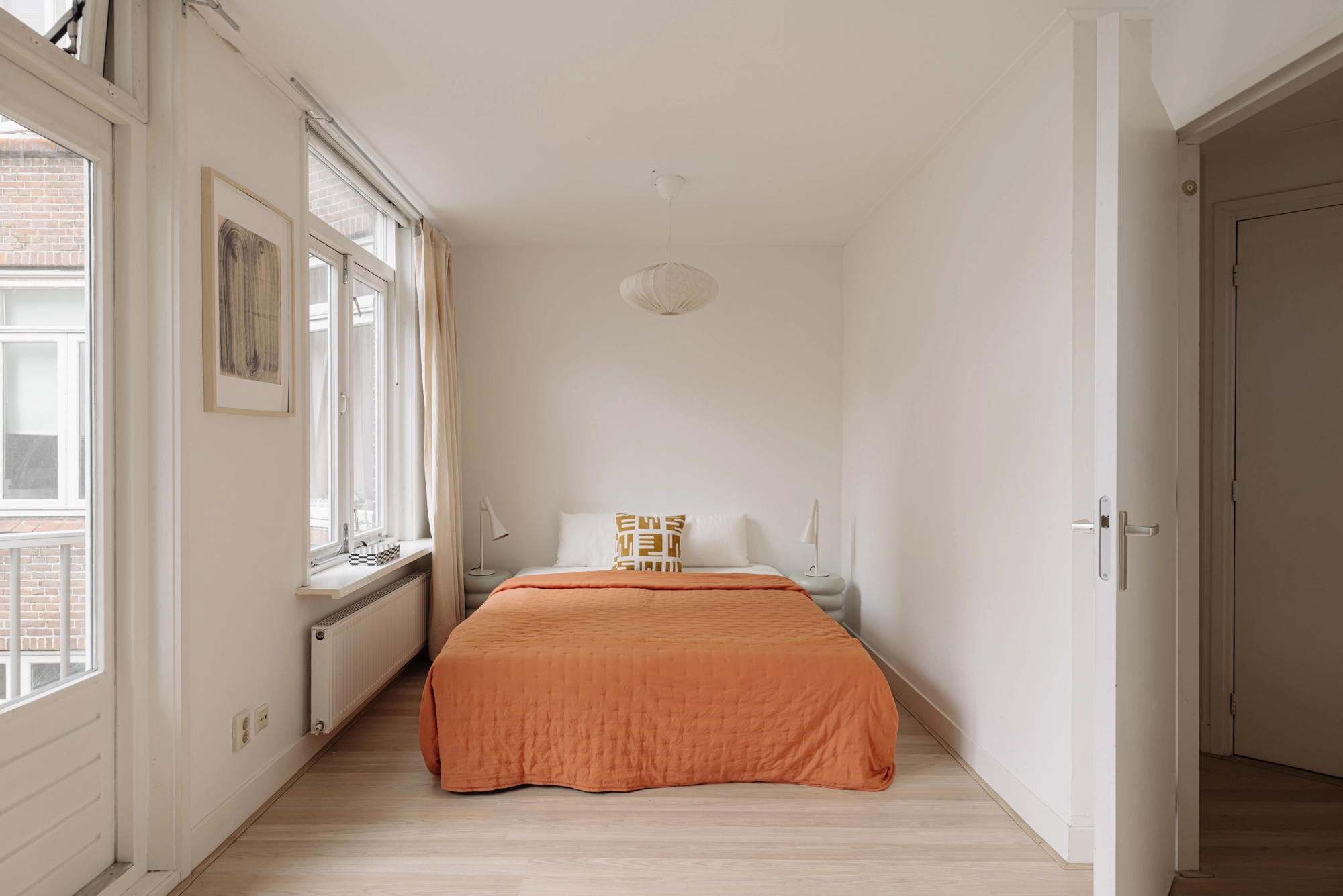
The bedroom is located at the rear of the house, overlooking the inner gardens. The space is quiet and well-proportioned, with Location a double bed, a home office, and a large wardrobe. French doors open onto the balcony, bringing light and air deep into the room. The finish is neutral, with light-colored flooring continuing from the living room.
The alternative floor plan clearly shows that the home offers the possibility of creating a second bedroom by dividing the spacious bedroom.
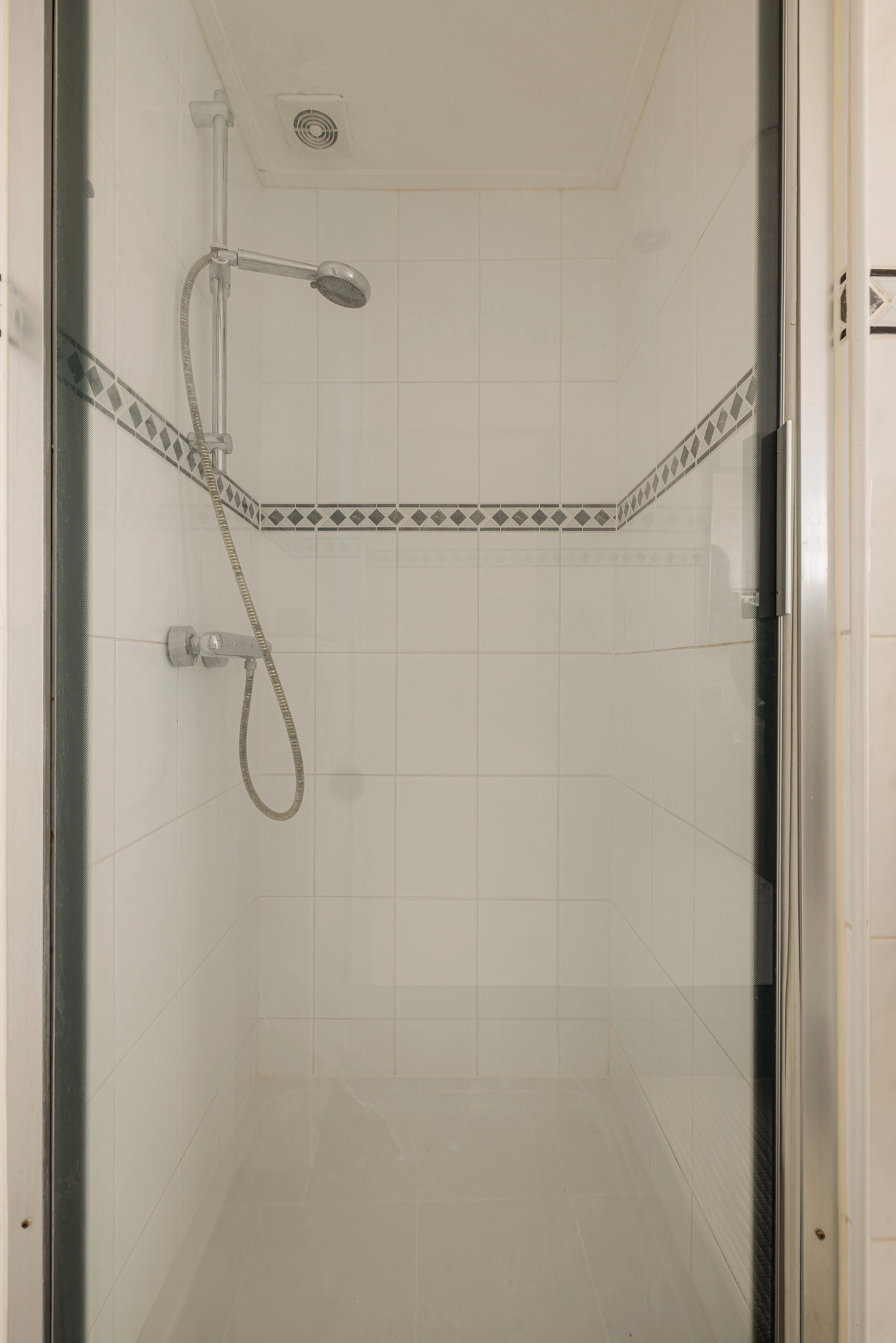
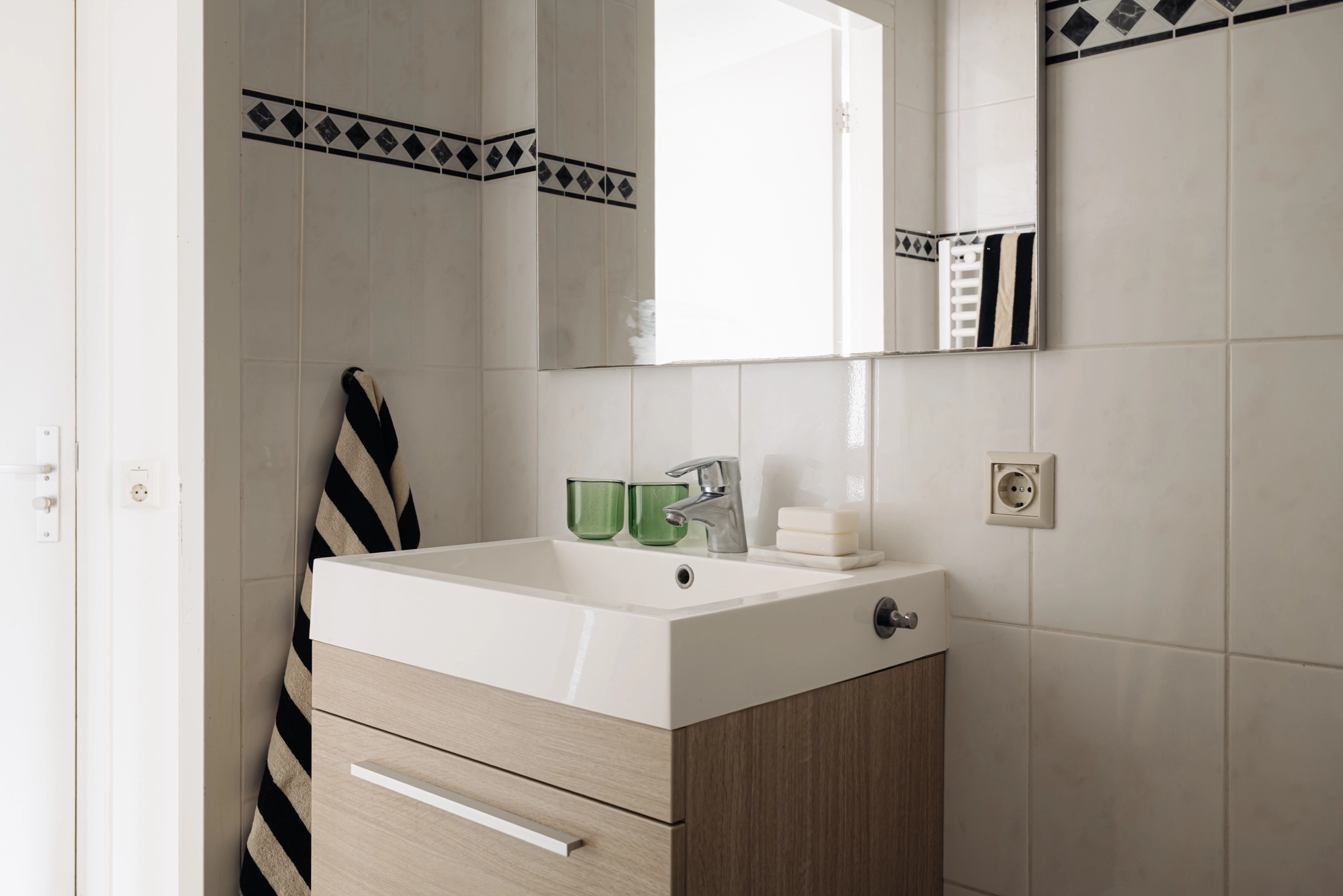
The bathroom is centrally located in the home and is efficiently designed. It has a walk-in shower with a glass wall, a sink with storage space, a mirror cabinet, and a floating toilet. The layout is practical and clear.
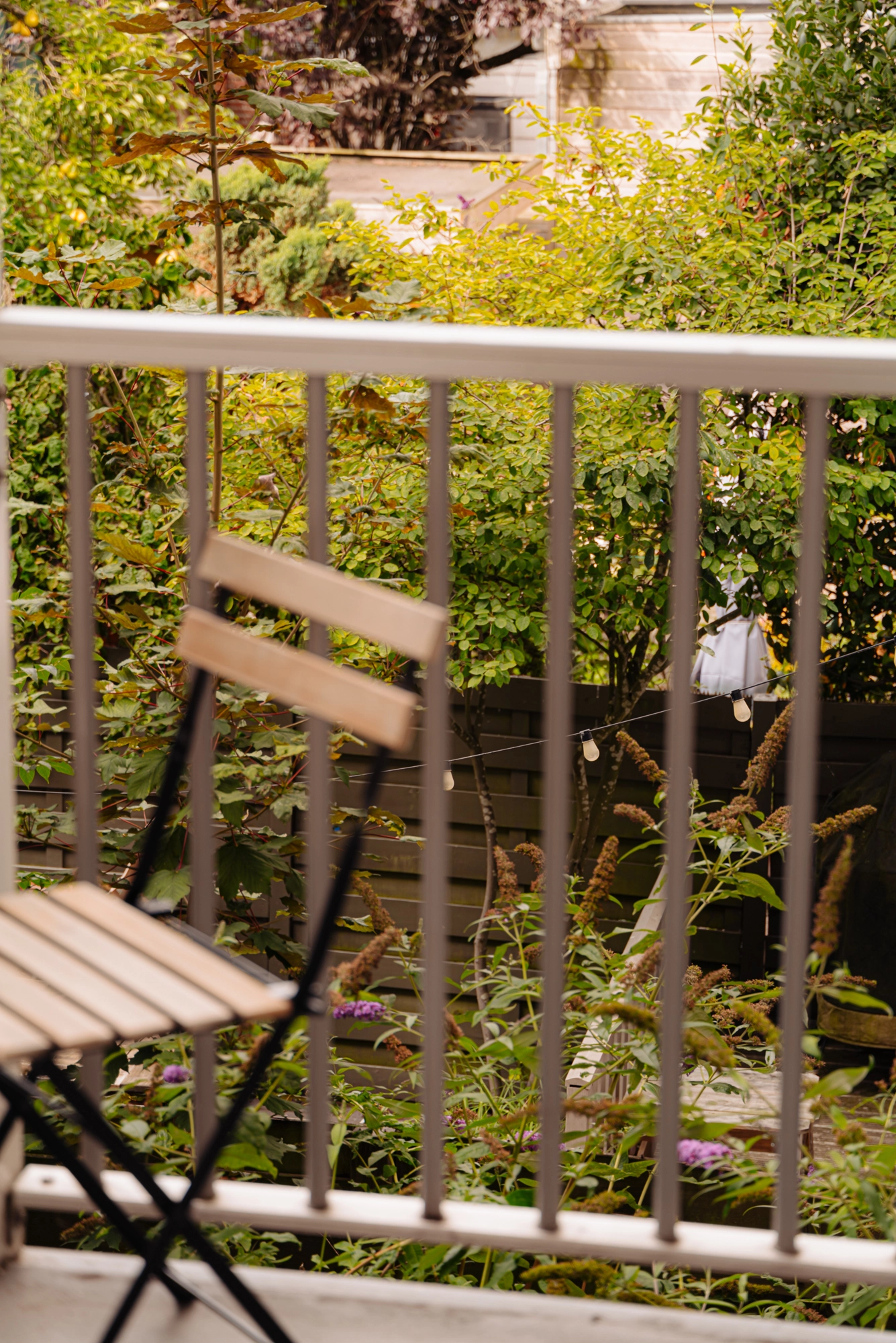
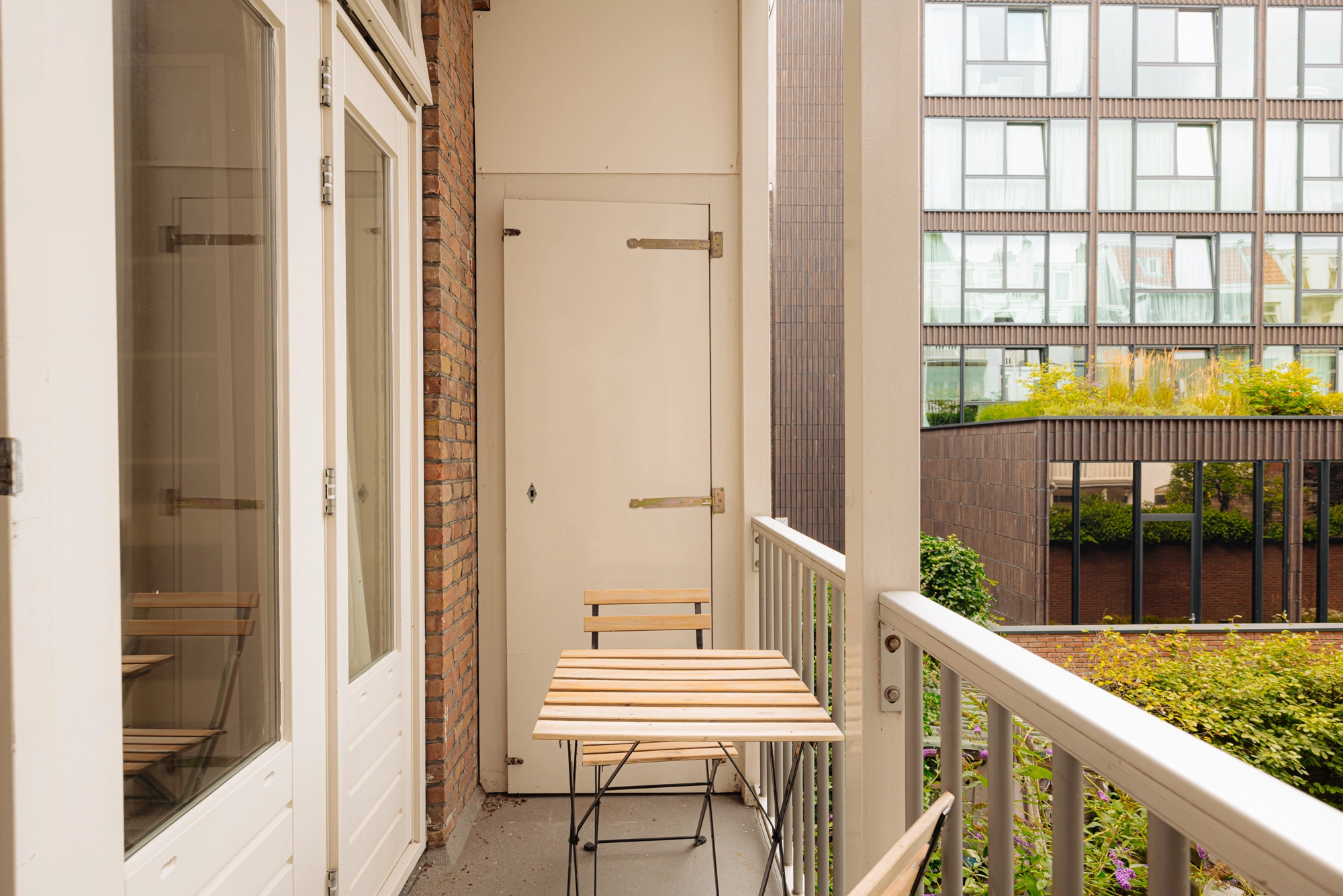
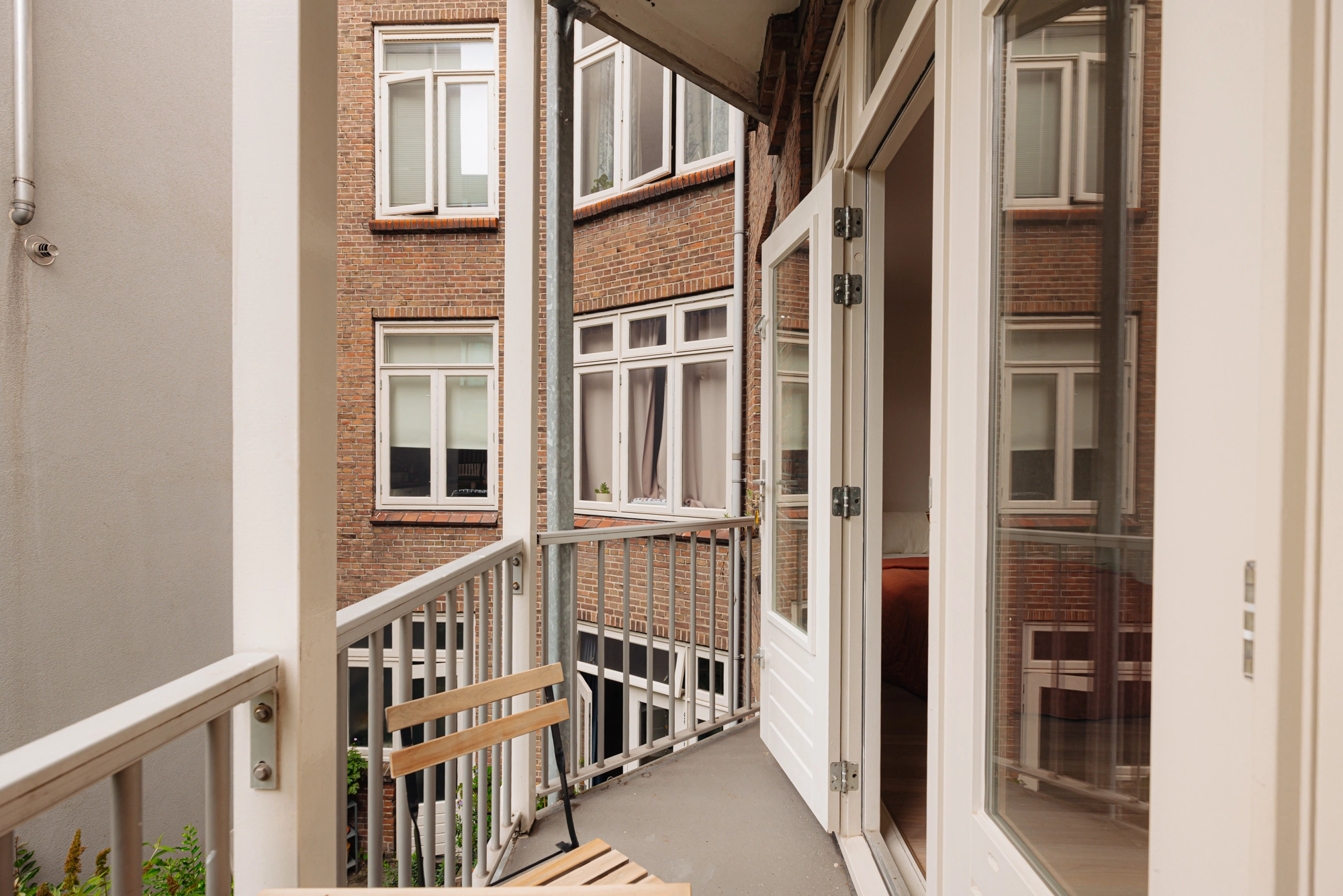
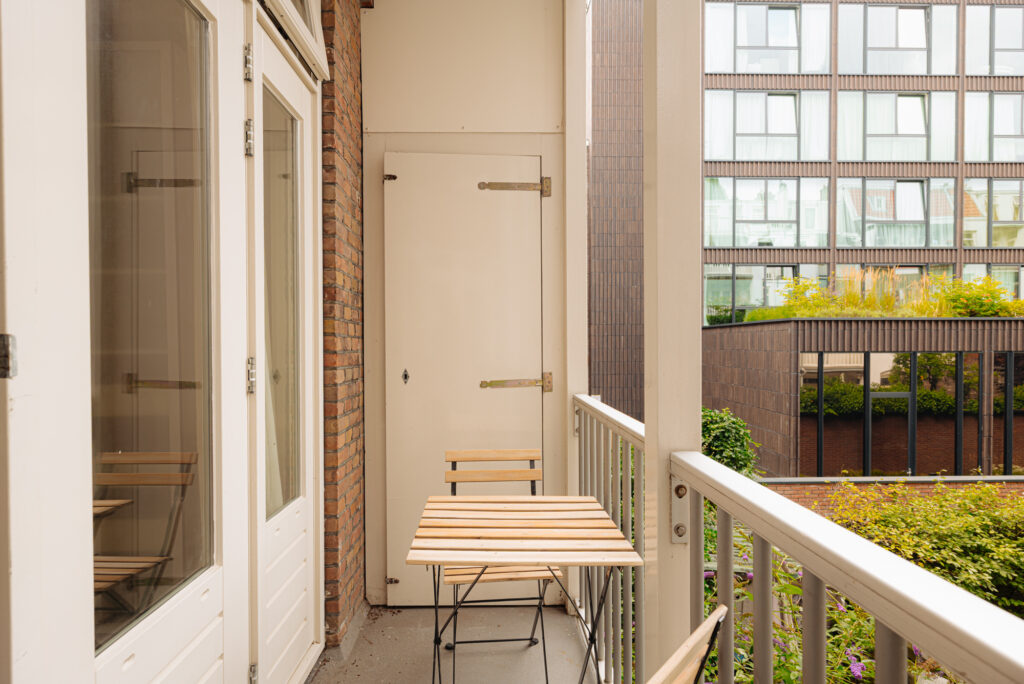
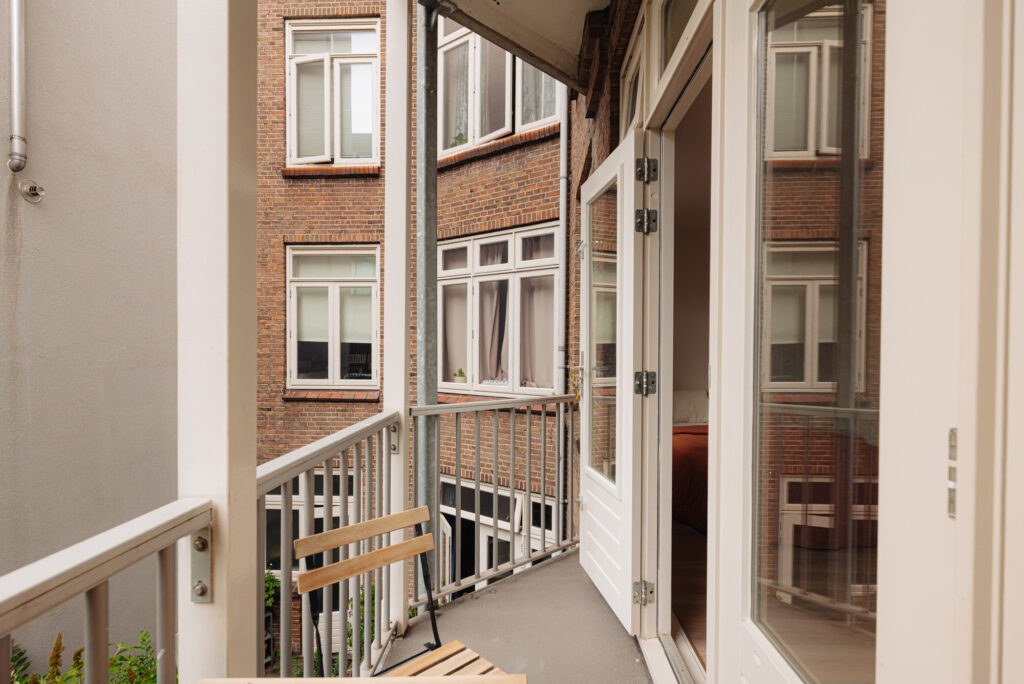
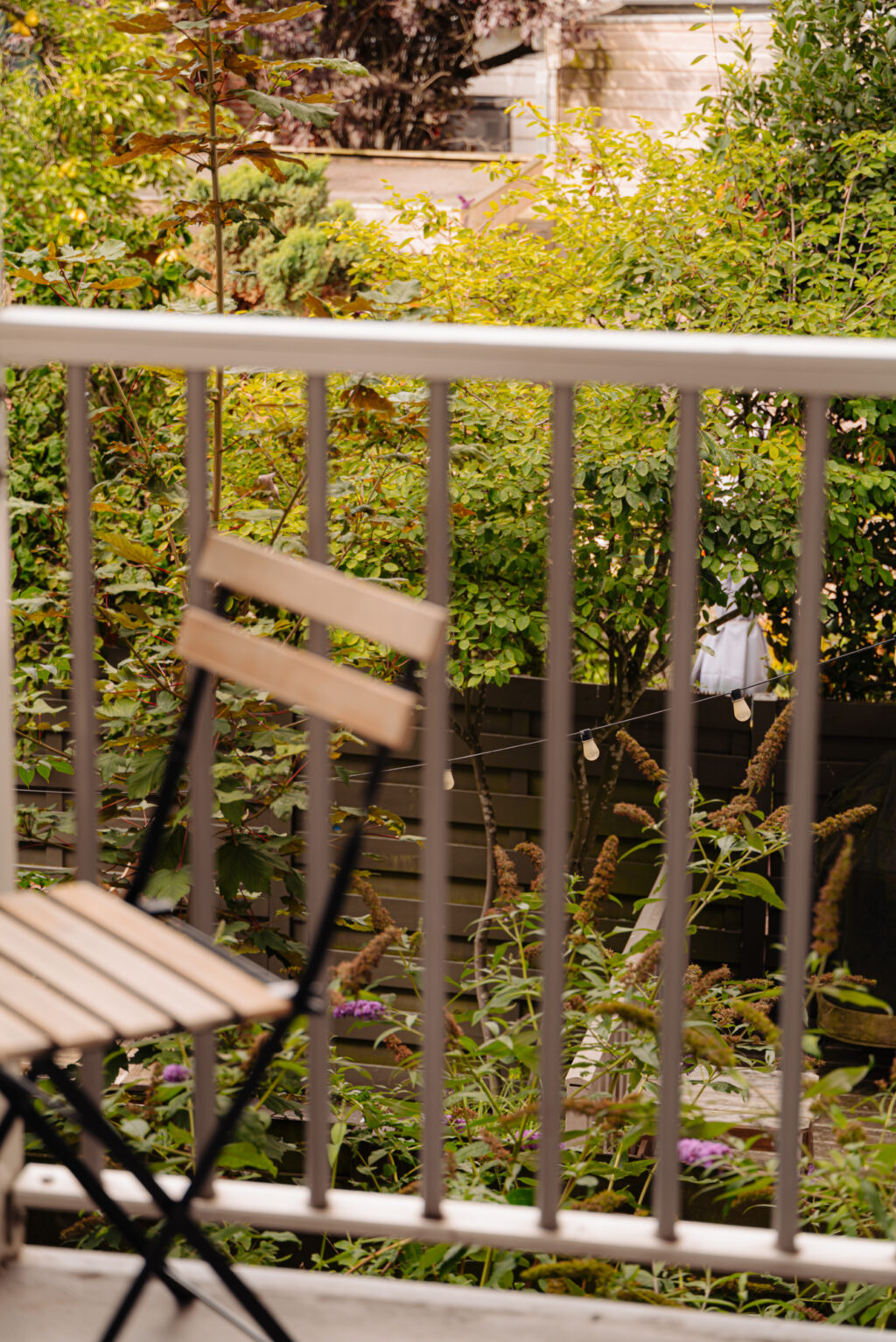
The balcony is located at the rear of the house and is accessible via the bedroom. Its south-west facing position ensures sunshine in the afternoon and evening. The view of the inner gardens gives a feeling of peace and space, right in the middle of the city. The balcony is compact but usable, a place to sit outside, with room for a table and two chairs. A lockable storage cupboard provides space for garden equipment or storage.
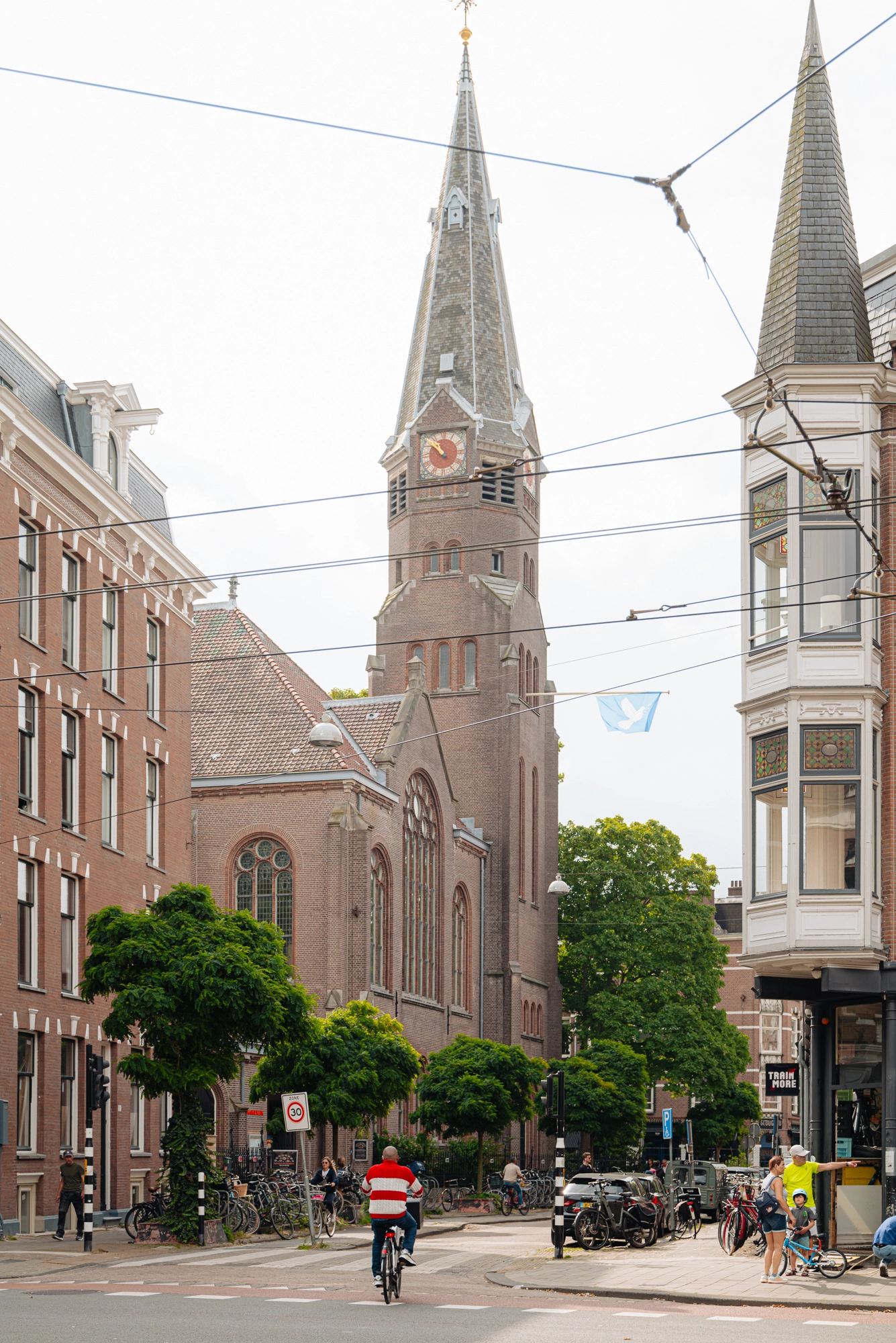
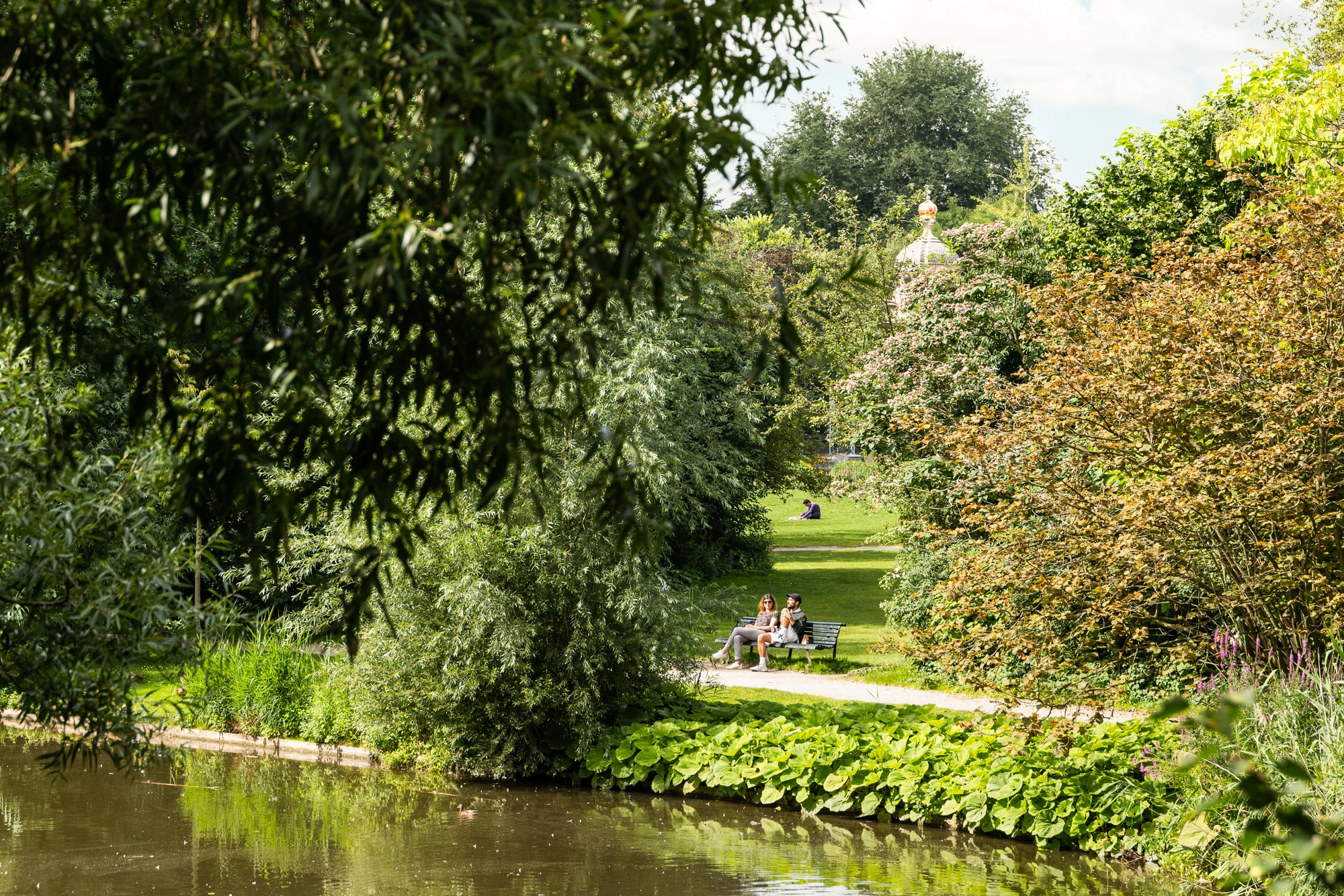
De Pijp was built at the end of the 19th century to provide housing for newcomers who moved to the capital in search of work. Freddy Heineken's father opened the Heineken brewery here in 1886. The first workers' houses, around Albert Cuypstraat, were built quickly and cheaply. Later, Berlage added houses in the Amsterdam School style towards the Diamantbuurt. It is said that the neighborhood owes its name to the long, straight streets, which are shaped like a pipe.
The Albert Cuyp Market and Sarphatipark are decisive for the dynamism of De Pijp. Artists and writers such as Piet Mondriaan, Carel Willink, and Gerard Reve lived and worked here. The lively, mixed population brought many cafes and eateries to the neighborhood. Today, the neighborhood is known as the Latin Quarter of Amsterdam, with many dynamic restaurants such as Brut de Mere, Yamazato, Arles, the Peruvian NAZKA, and authentic bistros such as Petit Caron.
accessibility
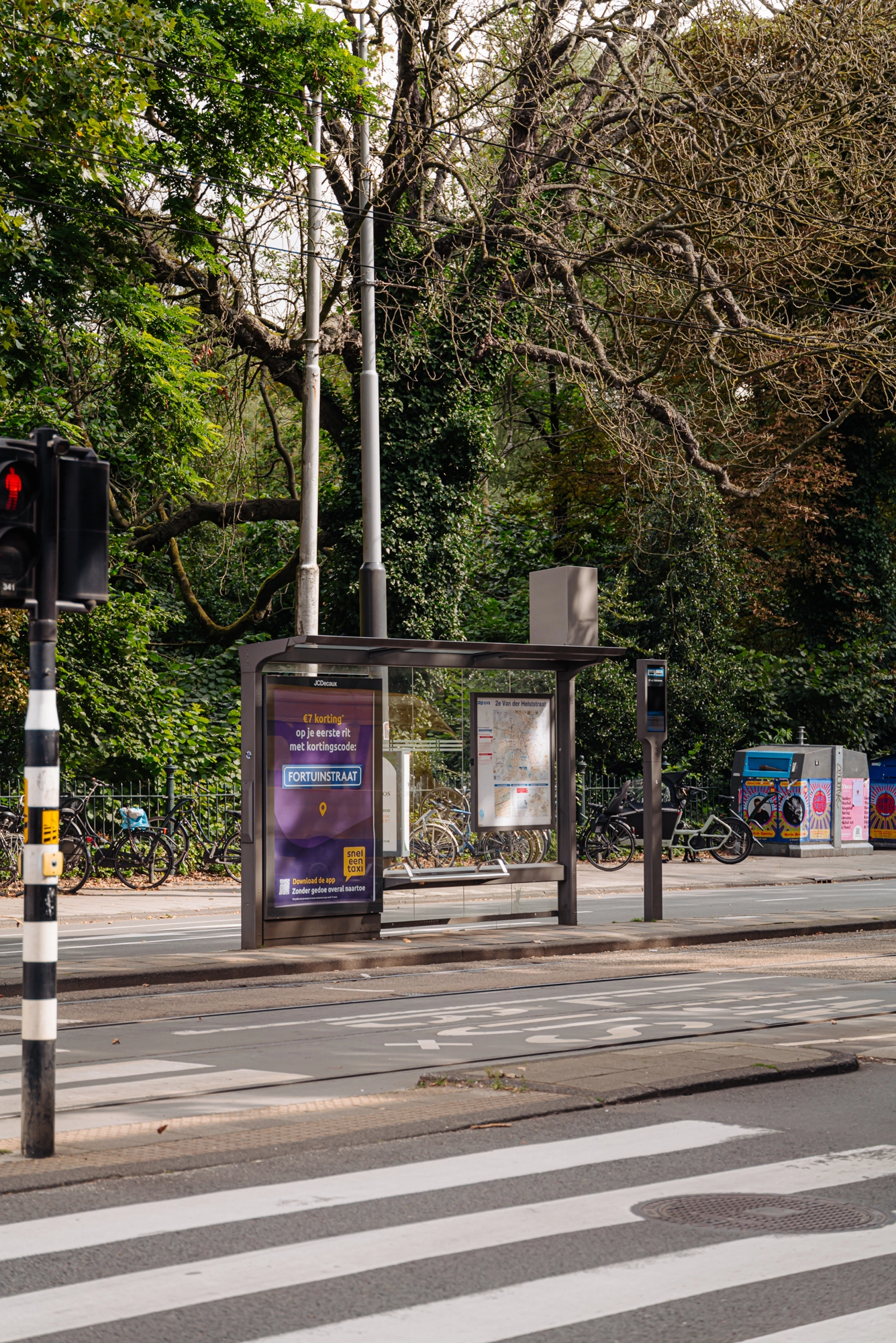
Its location in De Pijp guarantees excellent accessibility, whether you travel by bike, public transport, or car.
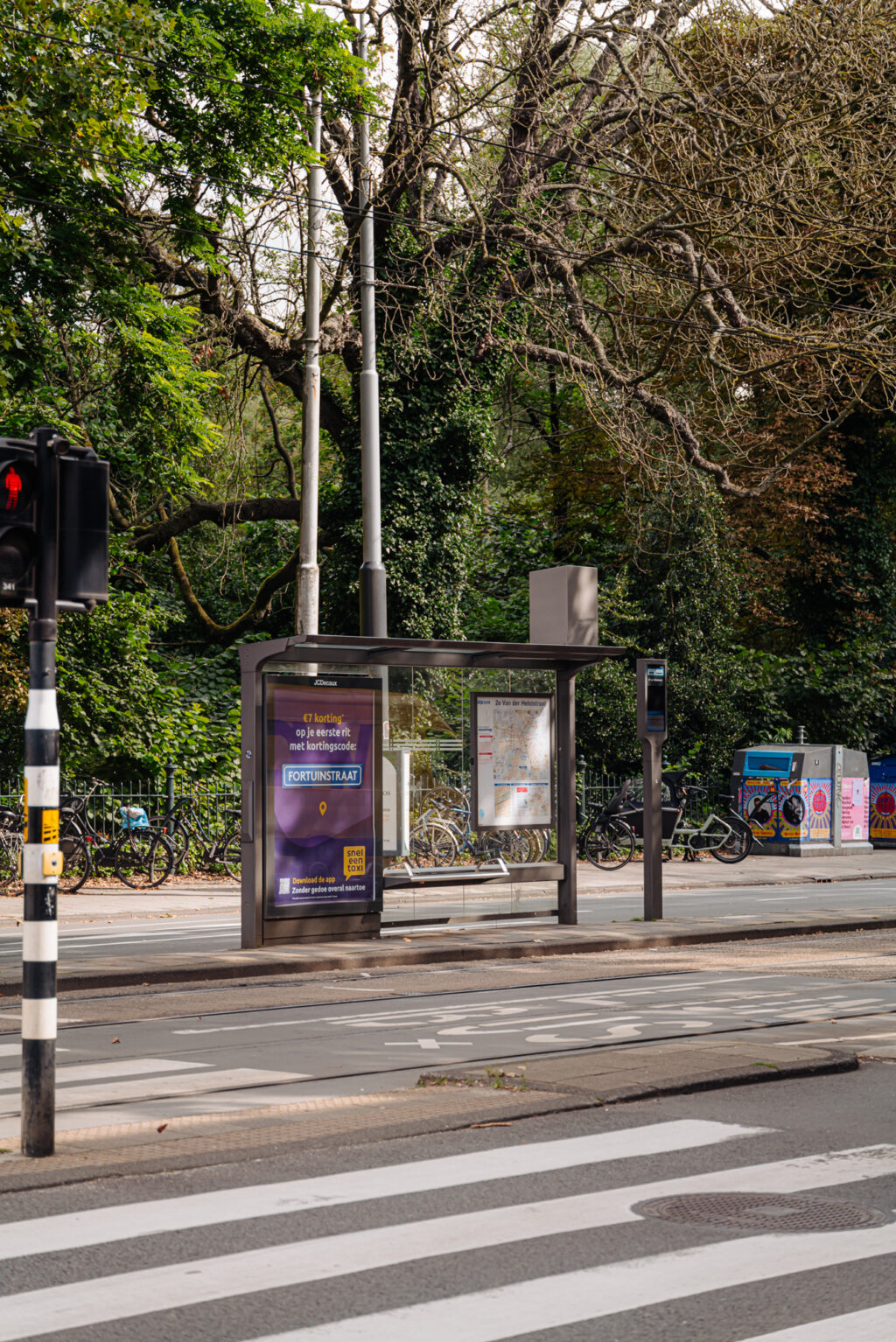
Both De Pijp metro station and various tram lines (including 3, 4, 12, and 24) are within walking distance, with direct connections to Central Station, Amstel Station, and Zuid. The North/South line takes you to the city center or Zuid station in just a few minutes, ideal for those who commute daily or work outside the city.
The property is also easily accessible by car. Via Van Woustraat or Stadhouderskade, you can reach the A10 ring road within ten minutes. Cyclists benefit from short routes to Museumplein, Vondelpark, and Zuidas, among other places.
parking facilities
Parking is available via a permit system on public roads (permit area Zuid 3.2 De Pijp Zuid). With a parking permit for this area, you may park in Zuid-3 and Zuid-4. A parking permit for residents costs €192.81 per 6 months. There is currently a 6-month waiting period for this permit area. A second parking permit is not possible in this area. (Source: Local authority , September 2025).
1073 TB Amsterdam
Weimpe Beukers
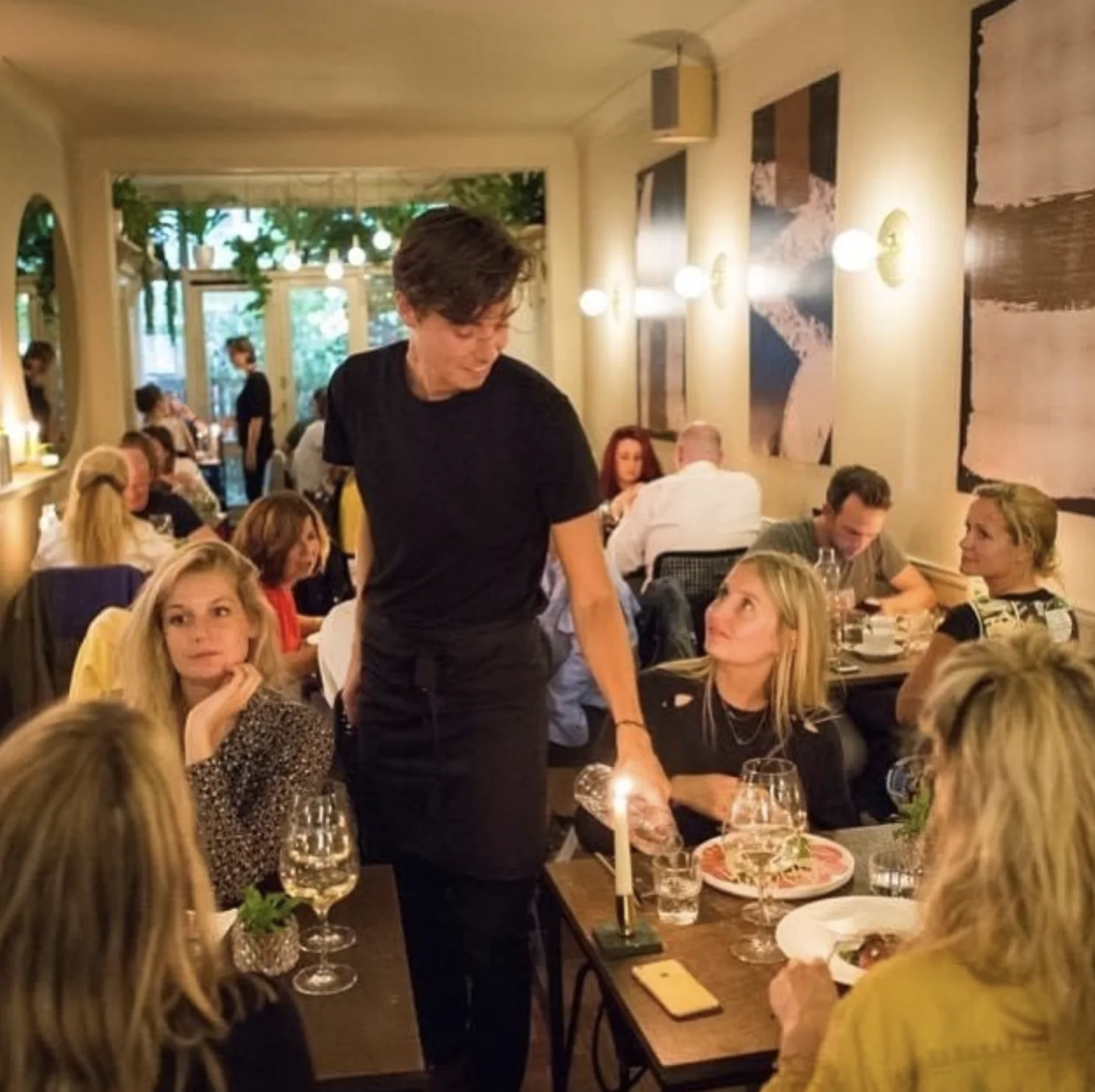
Eetcafé Wijmpje Beukers is located in the middle of the Pijp, in a monumental building. With a cozy terrace and a pleasant interior, you can chat with friends, have a drink or enjoy a nice dinner. The menu is full of dishes made from fresh and local products and everything is prepared in their own kitchen. The owners themselves can be found in the restaurant every day and love nothing more than making everyone happy.
1073 HB Amsterdam
Wine bar fitting room
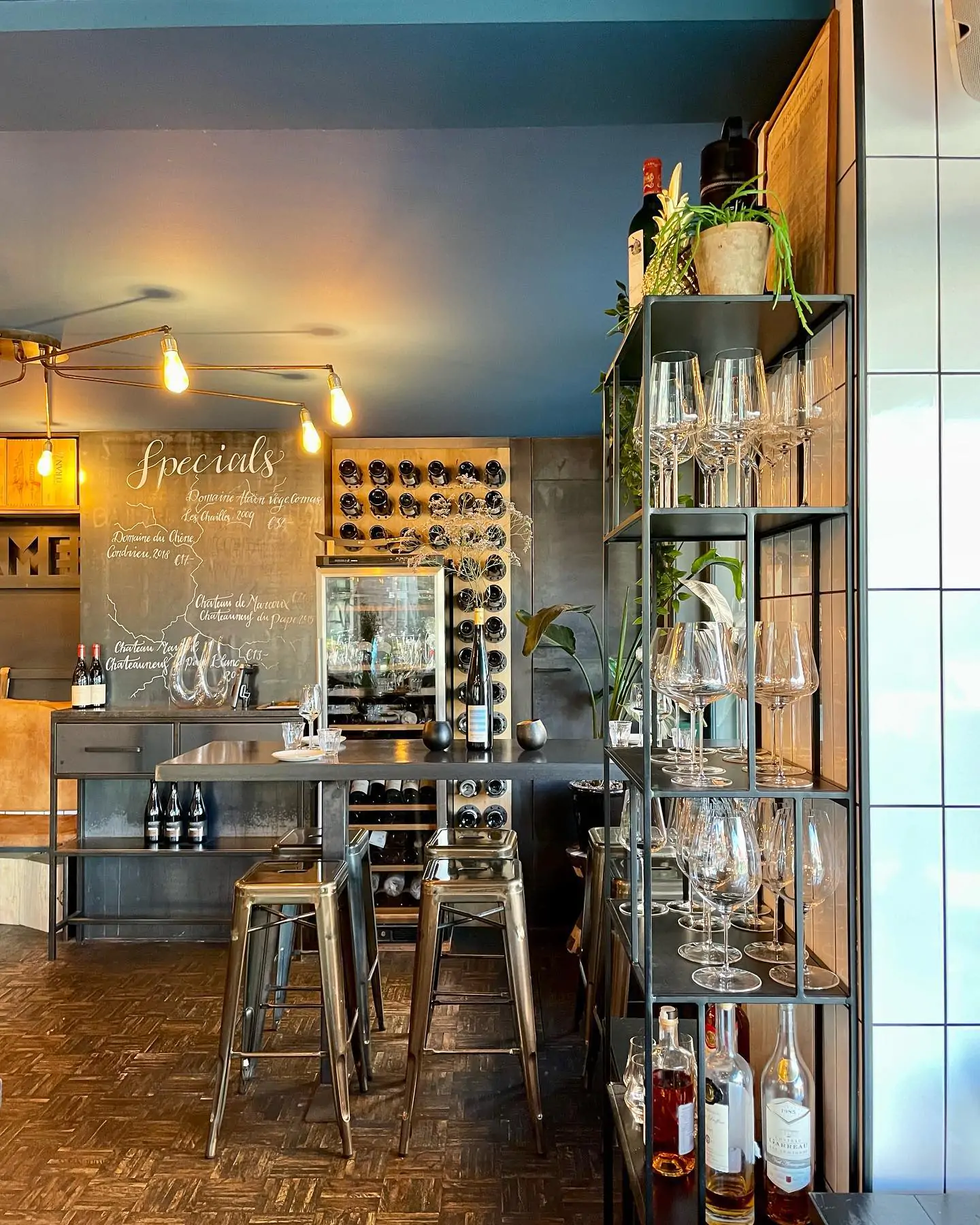
In the building of a former butcher shop (which you can still see from the white tiles) in a quiet street in the Pijp you will find Wijnbar Paskamer. With all kinds of special wines that can be ordered both by the glass and by the bottle, this is a nice place to drink wine and to eat well. Owner Wouter Aalst is so passionate about wine that he even started his own wine school, the Amsterdam Wine Academy. The wine list changes regularly and there is something for everyone with approximately 150 wines, from natural wines to classic.
1073 AR Amsterdam
Miri Mary
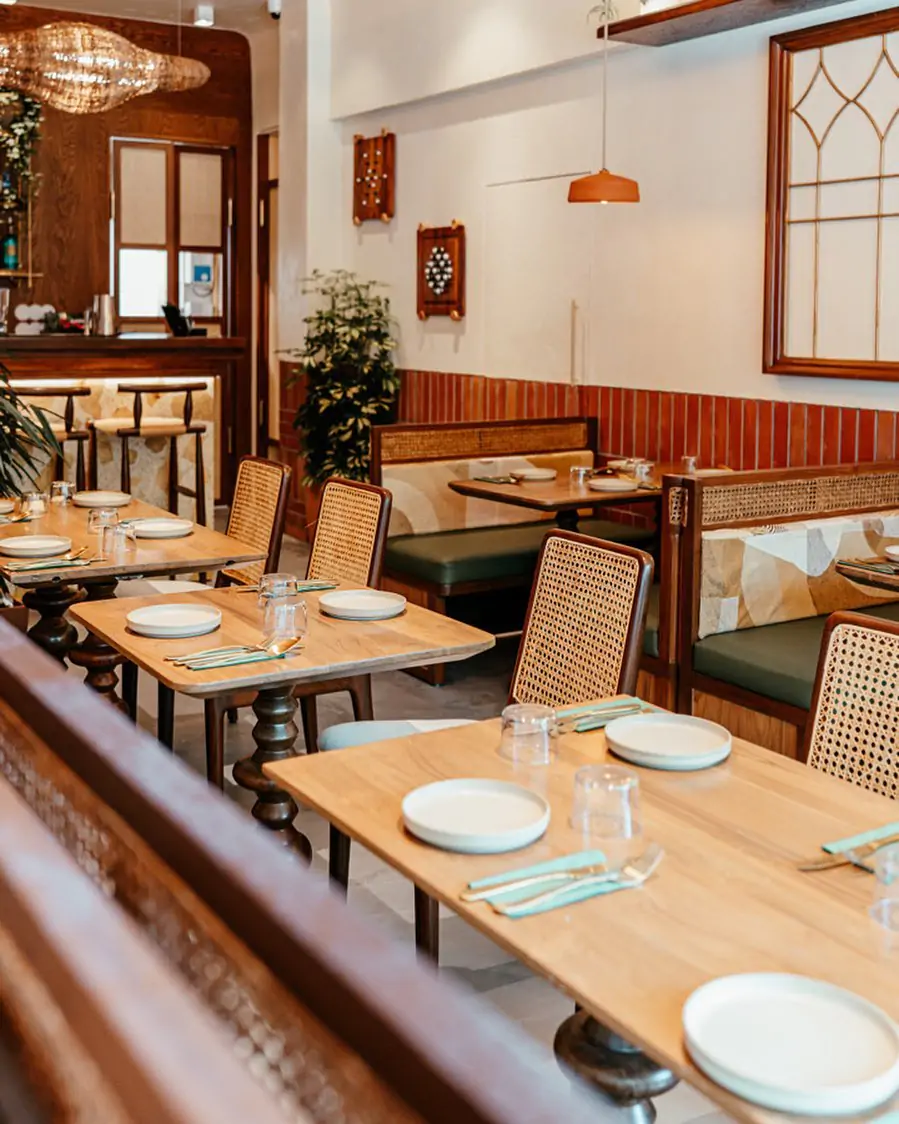
At Miri Mary you can enjoy delicious spicy dishes from Indian cuisine, presented in a modern tapas style, with a smile from hostess Foram Kamdar. In addition to flavorful cocktails and excellent coffee, Miri Mary offers a unique culinary experience where Indian spices come together with Western influences. Sharing dishes are central, so you can taste everything. If you have trouble choosing, just let the chef prepare something surprising for you.
1073 AE Amsterdam
Glouglou
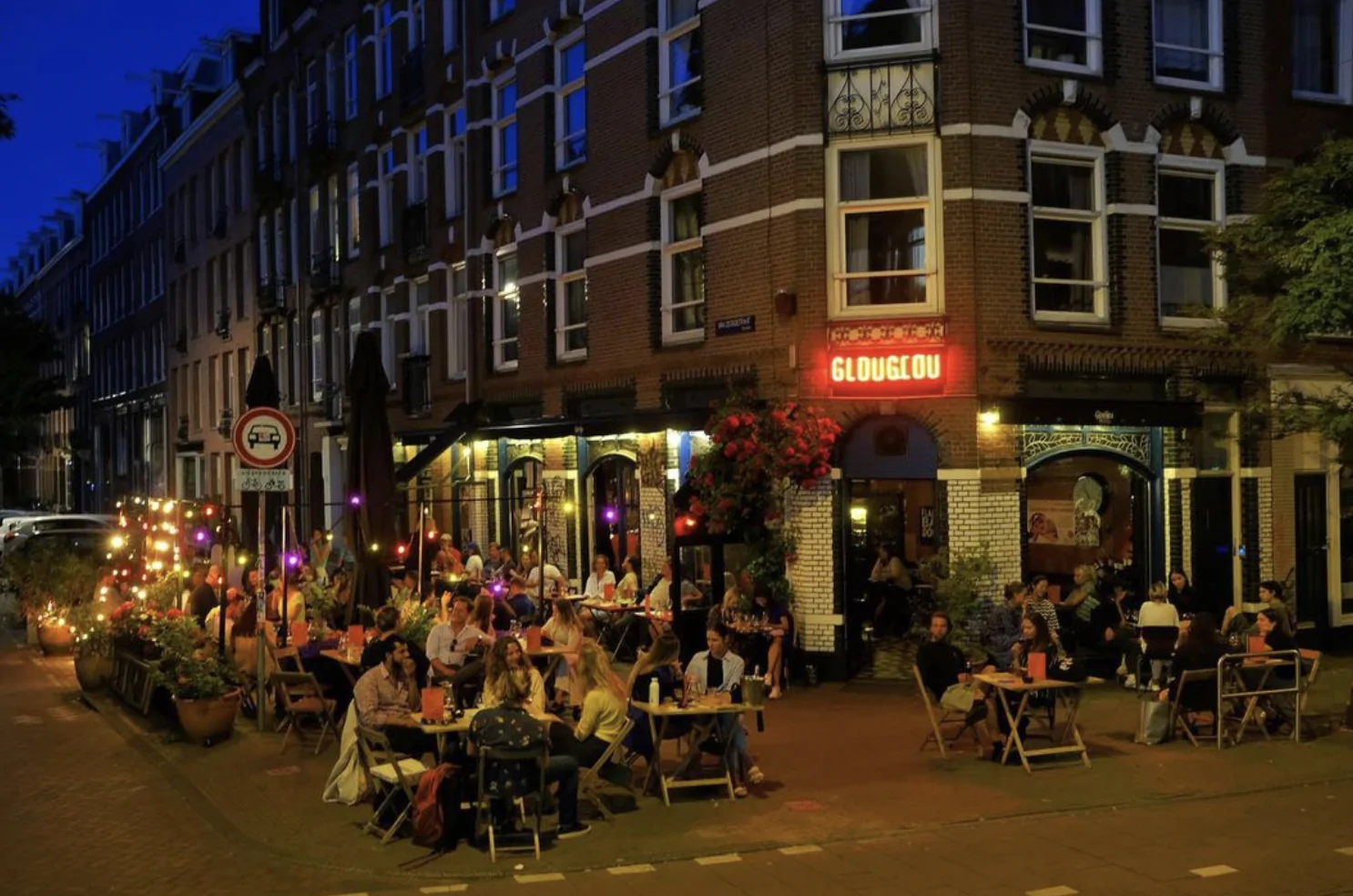
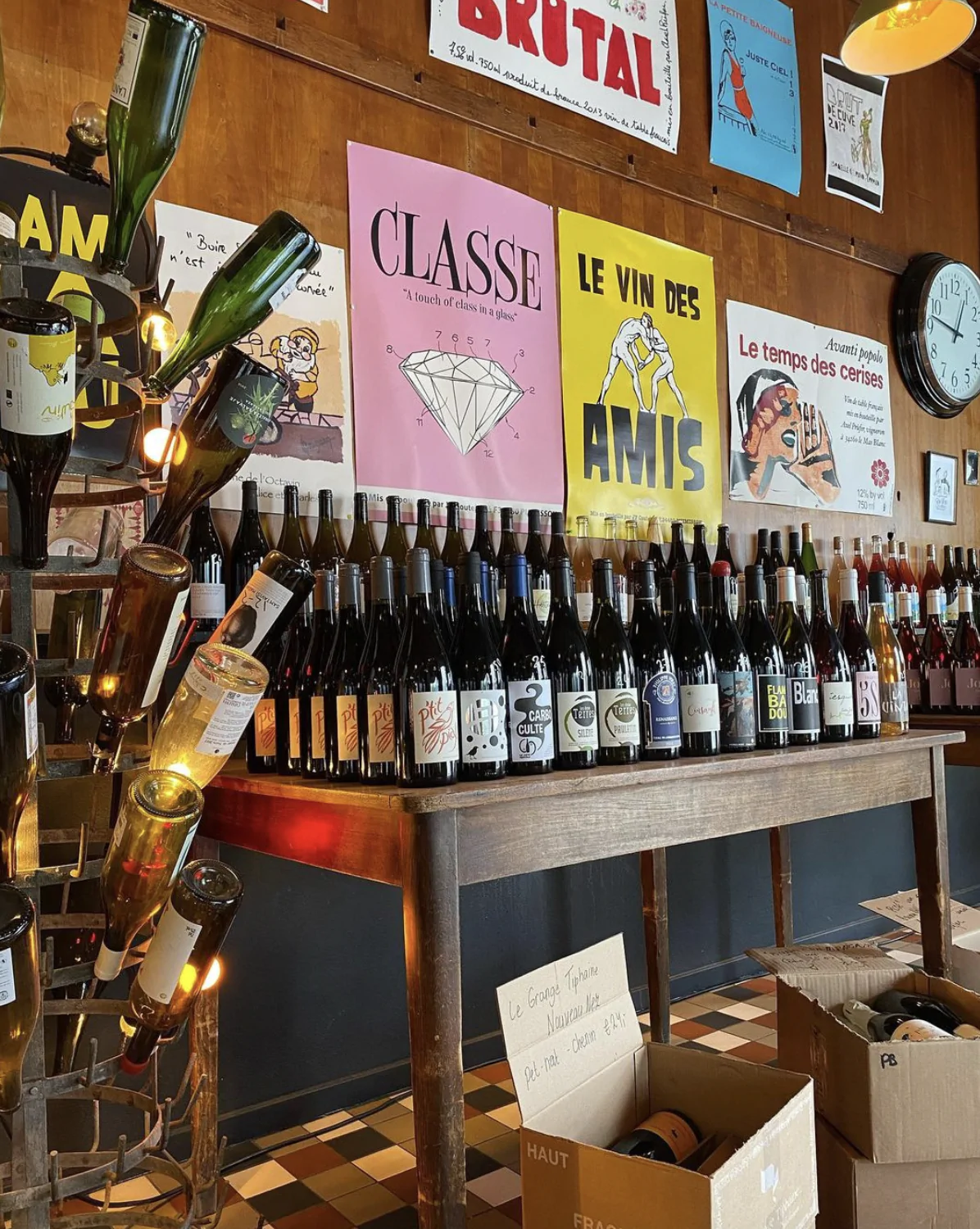
If you love natural and organic wines, Glouglou is the place for you. They only serve natural wines and accompanying snack platters. Have you discovered your new favorite wine at Glouglou? No problem, you can buy the whole bottle in the shop to enjoy at home. The atmosphere inside is very cozy, and in the summer you can enjoy people watching in the busy Pijp neighborhood from the terrace in the middle of the street.
1072 PD Amsterdam
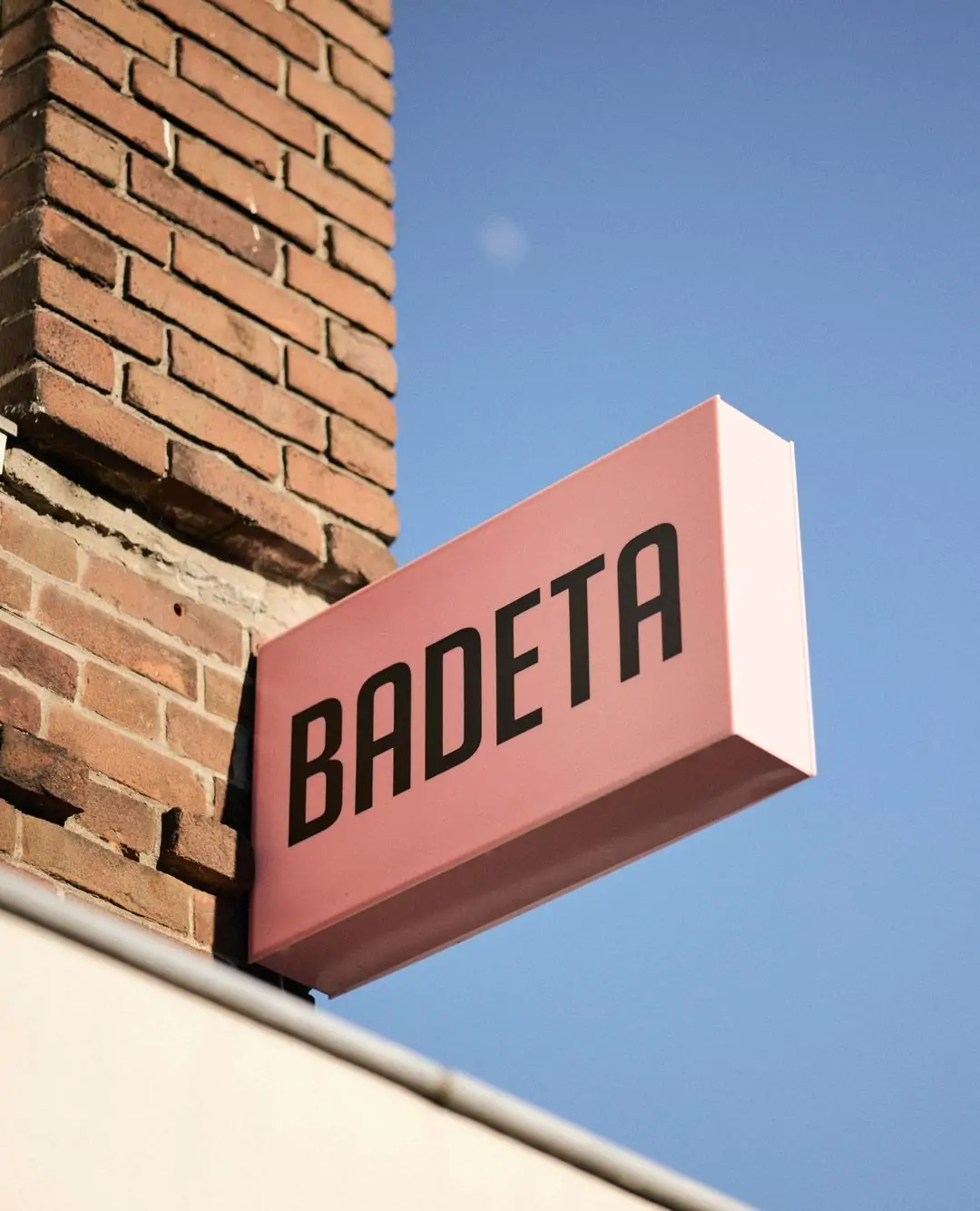
Badeta
Badeta is slowly but surely making a name for itself in the city, now with two locations. It started in De Pijp and now also has a branch in the Watergraafsmeer. The two founders have the mission to open a location in every district. This coffee roastery sells delicious coffee with its own blends and various homemade delicacies. Sustainable coffee is central, sourced from small-scale farmers with environmentally friendly farms and good working conditions.
1072 SW Amsterdam
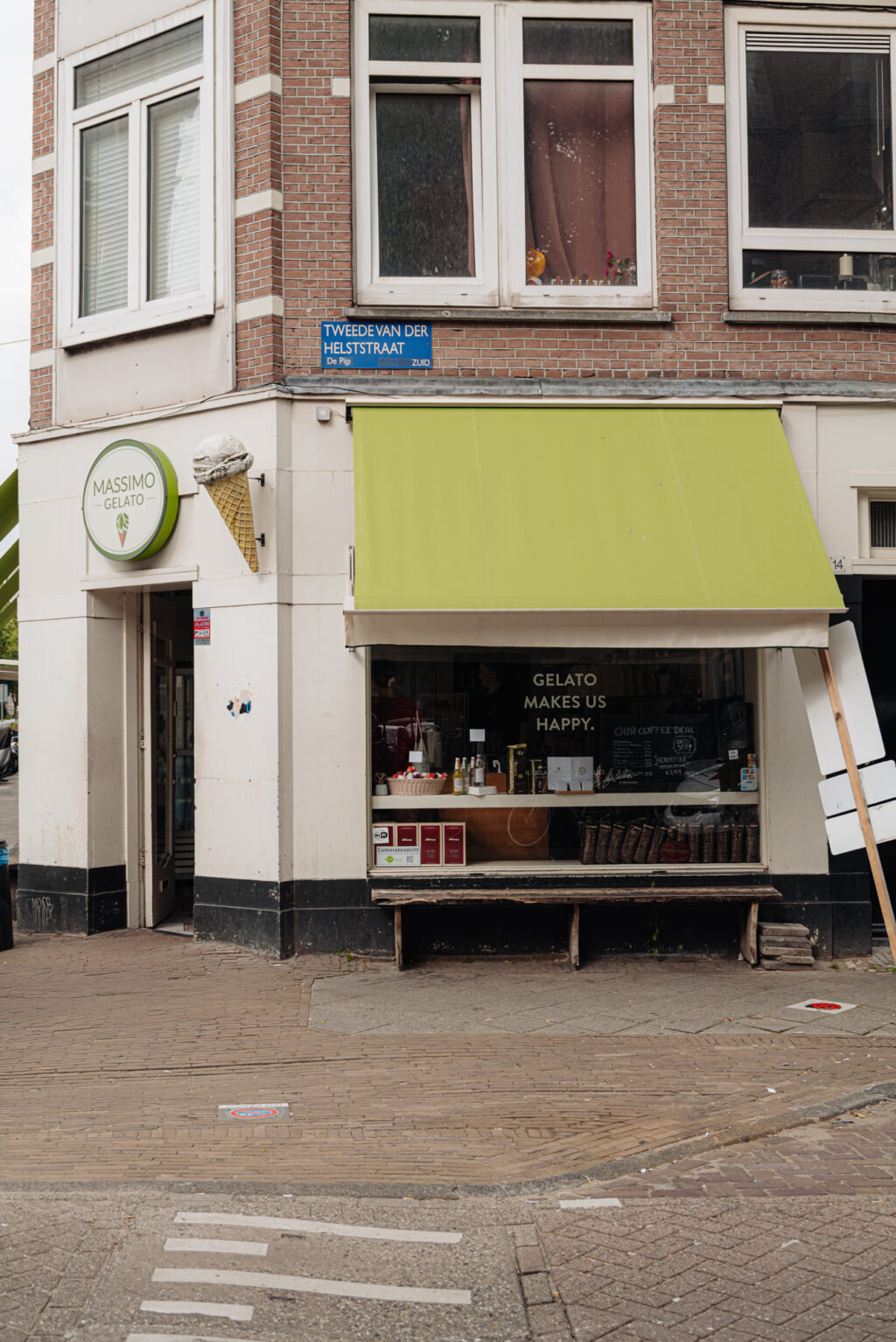
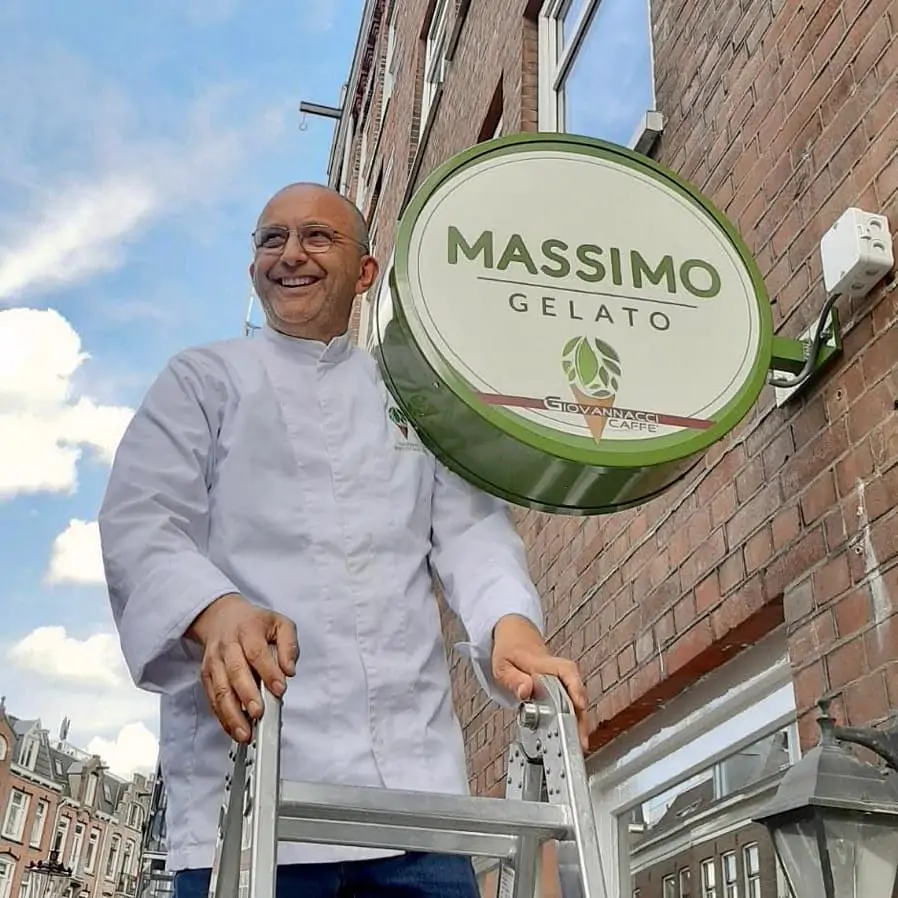
Massimo Gelato
At Massimo you can enjoy delicious, authentic Italian snacks all year round. Massimo is best known among Amsterdammers for its special, flavorful ice cream. The choice in flavor is wide and the staff is happy to help you (if you're lucky, they'll let you taste!). You can also go there for delicious coffee. There are few places that come close to Massimo. In addition, the interior is clear and welcoming. Occasionally you have to wait in line for a while, but then you get something in return
1072 GP Amsterdam
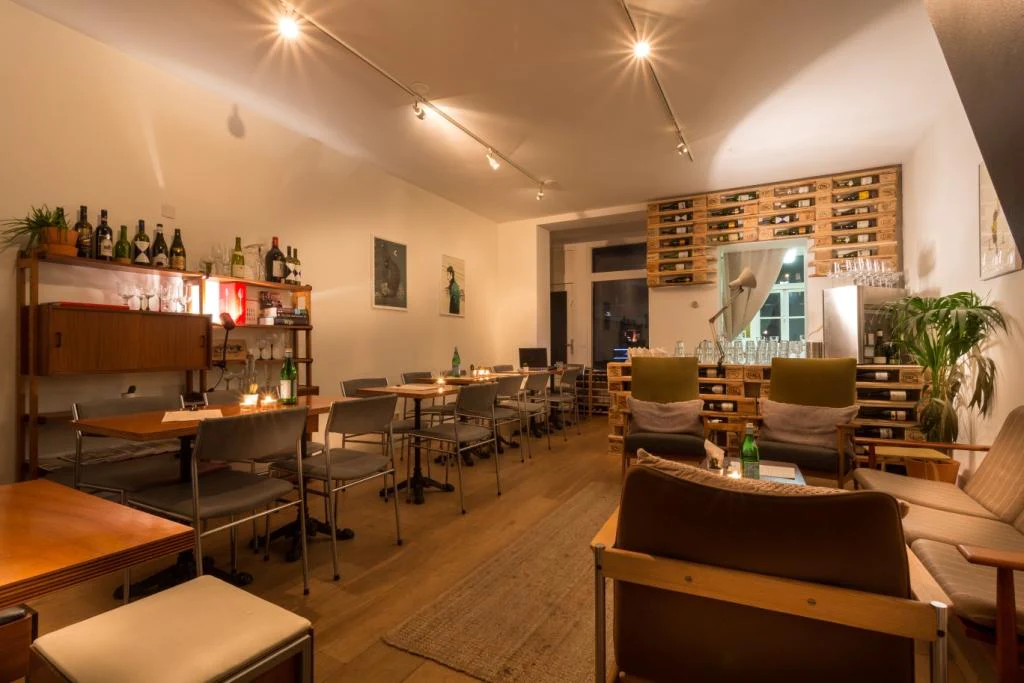
Paulus Wine Bar
Wijnbar Paulus on Ceintuurbaan is a cozy bar with a homely atmosphere. The menu features countless wines from all kinds of different regions. They also serve tasty snacks, such as bitterballen and burrata. If you're in the mood for a surprise, you can also opt for a wine tasting. You choose the colors and the number of glasses, and the owner chooses the wine. Have you discovered a new favorite wine during a tasting? Then you're in luck; at Wijnbar Paulus, you can also buy a bottle of wine to take home with you.
1072 GP Amsterdam
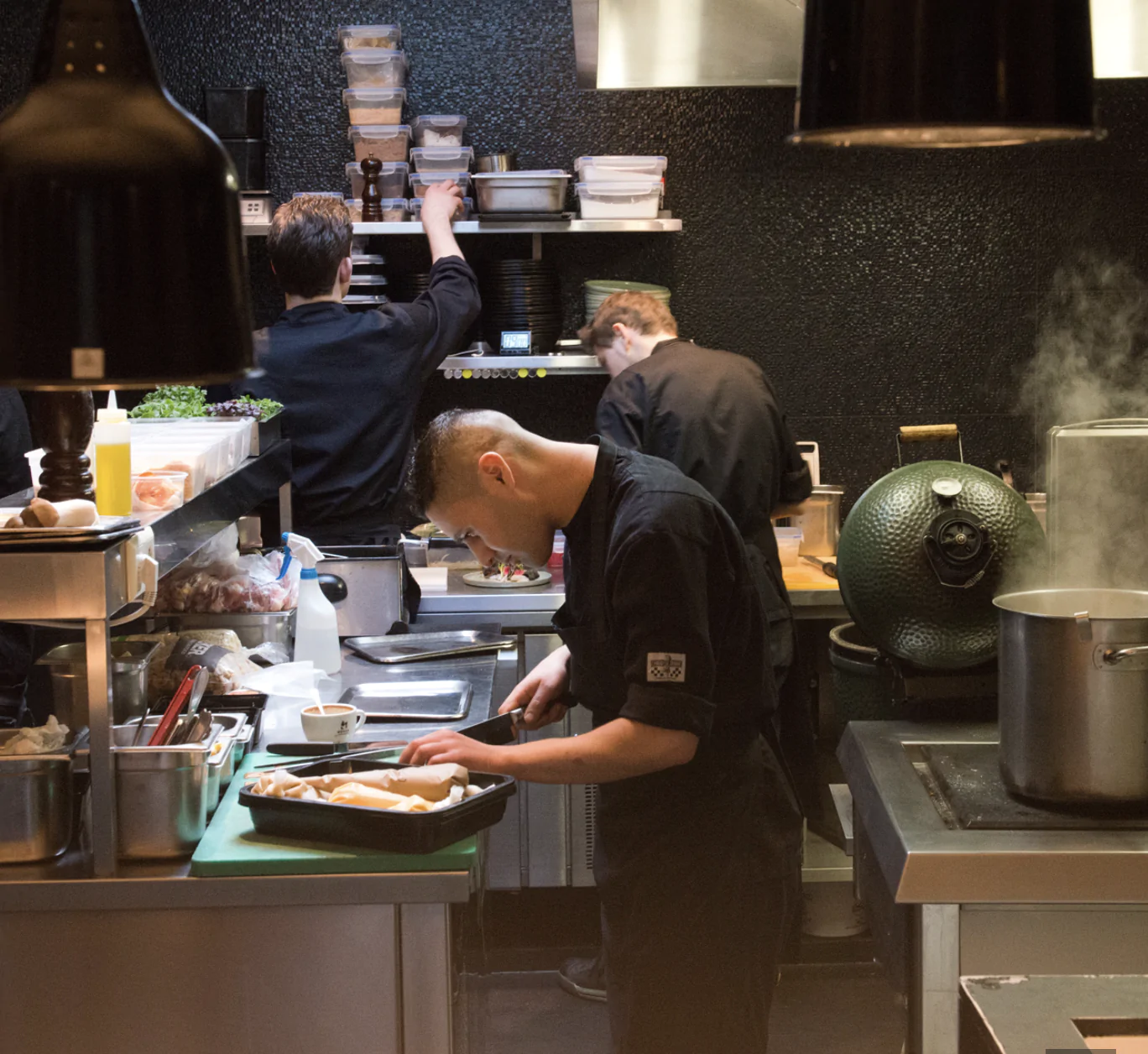
Sinne (*)
Sinne should not be missing from the list of Michelin-starred restaurants. The gastronomic cuisine and a relaxed atmosphere make the place ideal for a long lunch at the weekend. Sinne has been doing justice to the Michelin star since 2015 thanks to sommelier Suzanne Sluijter and chef Alexander Ioannou. The restaurant has a contemporary menu inspired by French, Mediterranean and Eastern cuisine with a choice of 3 to 8 courses and a unique wine arrangement for enthusiasts.
1072 PB Amsterdam
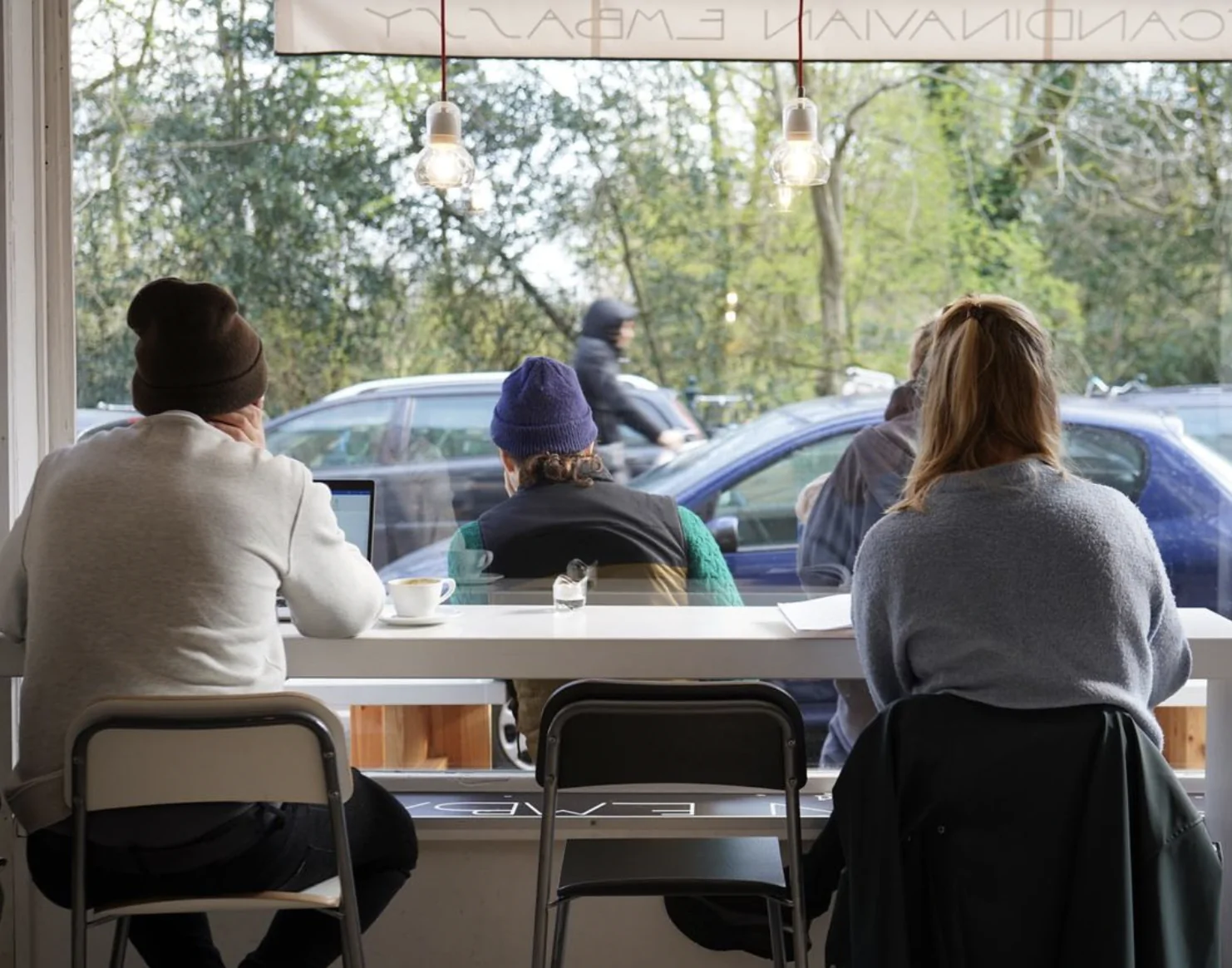
Embassy of Scandinavia
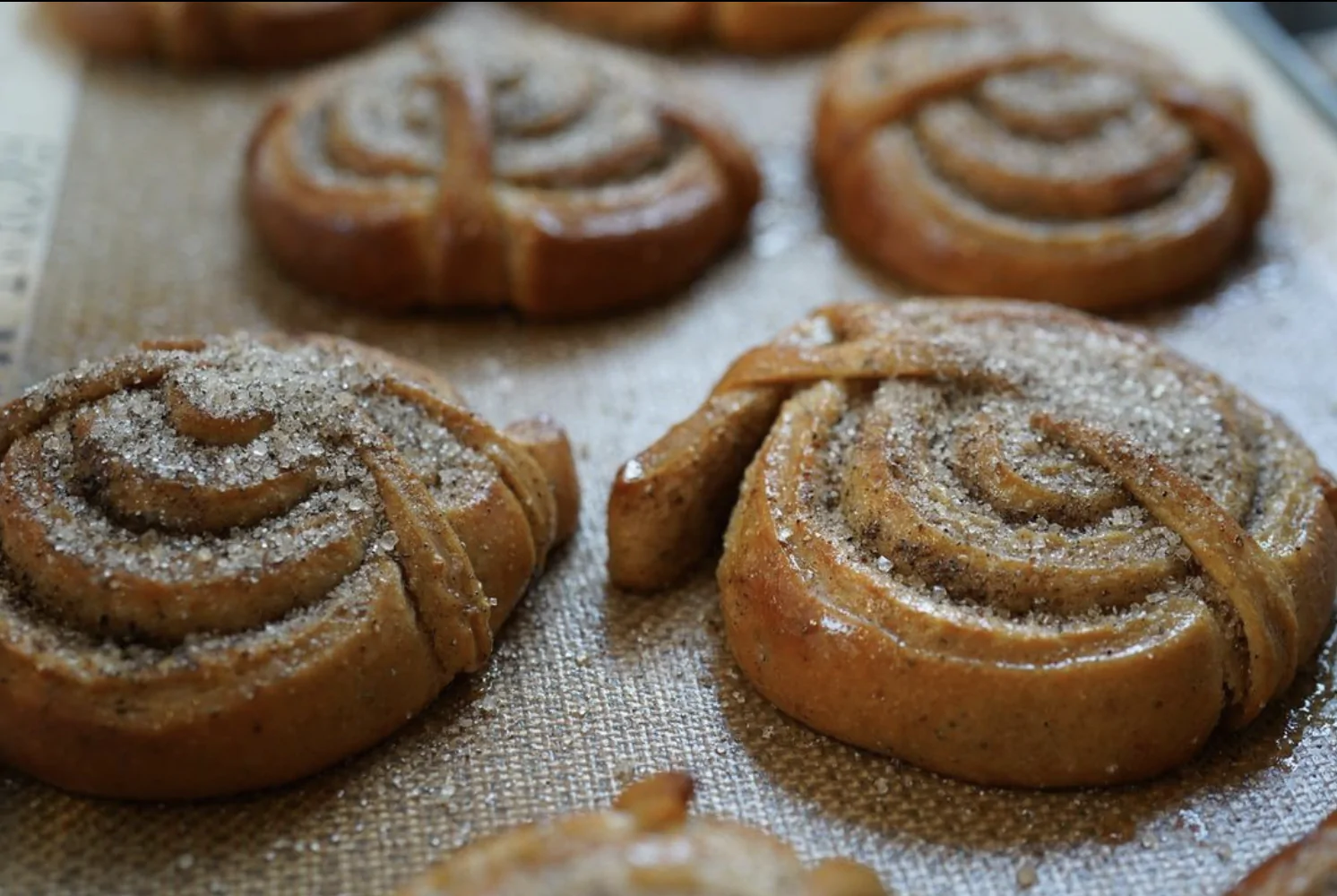
This coffee shop opened in 2013. They serve top-quality coffee and sweets inspired by Scandinavian cuisine. There is often a queue stretching outside, and for good reason. You can taste that high-quality food and coffee are prepared here. Located next to the always pleasant Sarphatipark, it's perfect for sitting on the terrace and watching the world go by, or taking a walk in the park with a coffee to go.

1072 PA Amsterdam
Ladybird
Noah Tucker (New York) and Tony Joseph (London) are inspired by memories of American Down South recipes and family dinners mixed with the culture and vibes of New York. Both chefs have impressive resumes, but the love for chicken ultimately led them to open this restaurant. The fried chicken is executed to perfection here. For the real enthusiasts; also possible in combination with caviar.
1073 TZ Amsterdam
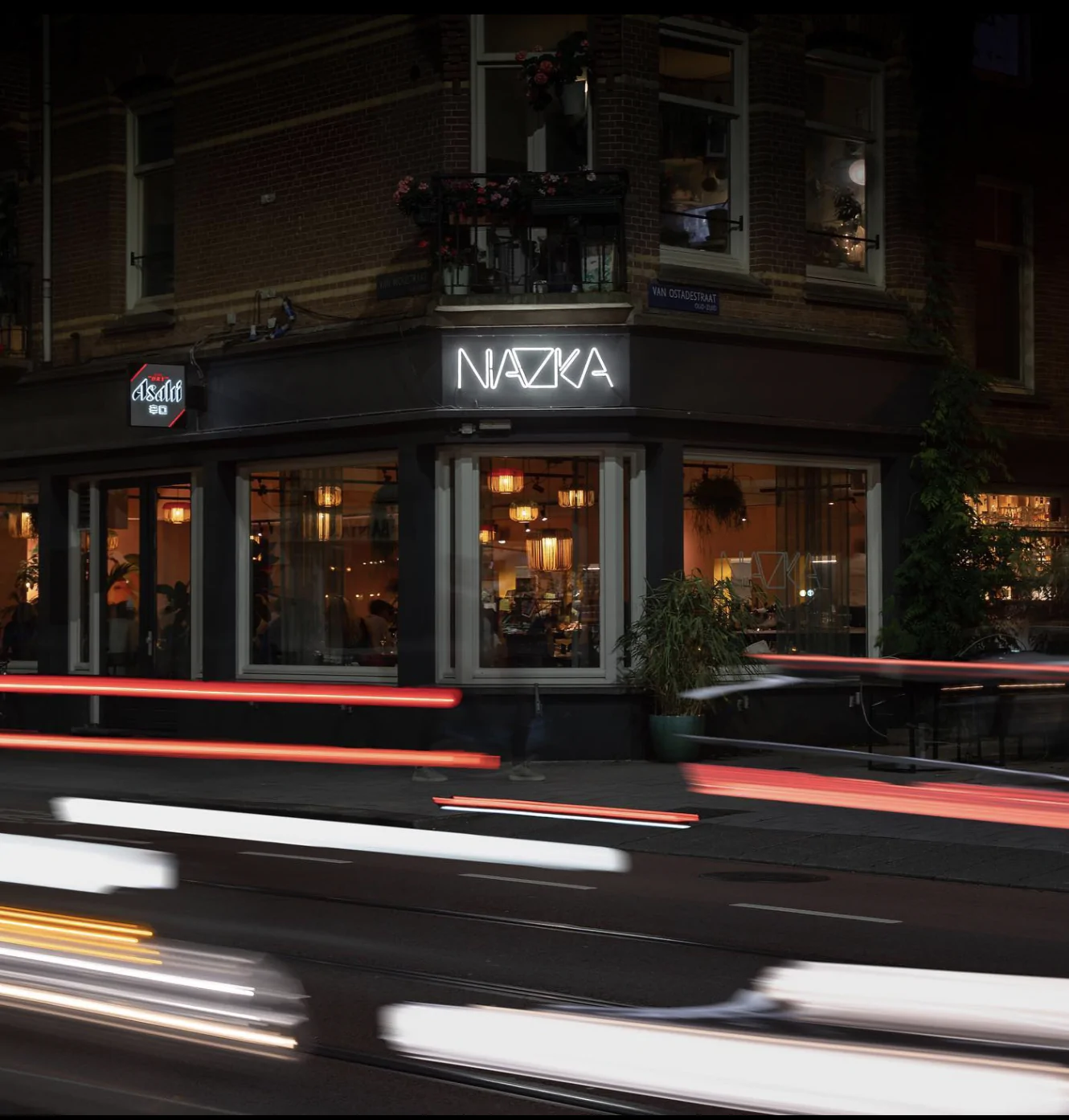
NAZKA
In the Van Ostadestraat you will find the colorful restaurant Nazka. Besides the fact that the interior looks fantastic, the food is also spectacular. The kitchen shows both Peruvian classics and innovative dishes, which build on the heritage of Peru. Nazka has a beautiful interior, fantastic service, clever food and the sommelier is a genius, but most importantly: everything is delicious.
1073 LW Amsterdam
Leeman döner
For a good doner sandwich, head to Leeman döner on Van Woustraat. The shop has been known for years for its delicious doner sandwiches, partly because they are made fresh every day in the bakery at the back of the shop. In addition to döner, they also offer other products such as Turkish pizza, kapsalon, falafel, borek, and baklava. Leeman has gained a lot of popularity over the years, so it can sometimes be very busy. It is a takeaway shop, so there are no seats inside, but in the summer there are sometimes chairs outside.
1073 LZ Amsterdam
El Mauri
El Mauri in De Pijp is one of the best low-budget breakfast spots in the city. For years, this bakery has been serving up a hearty Moroccan breakfast that will make you feel like you're on vacation. Although the bakery looks simple from the outside, inside it offers a delicious breakfast with fresh bread, tagines, and homemade jam.

1072 NZ Amsterdam
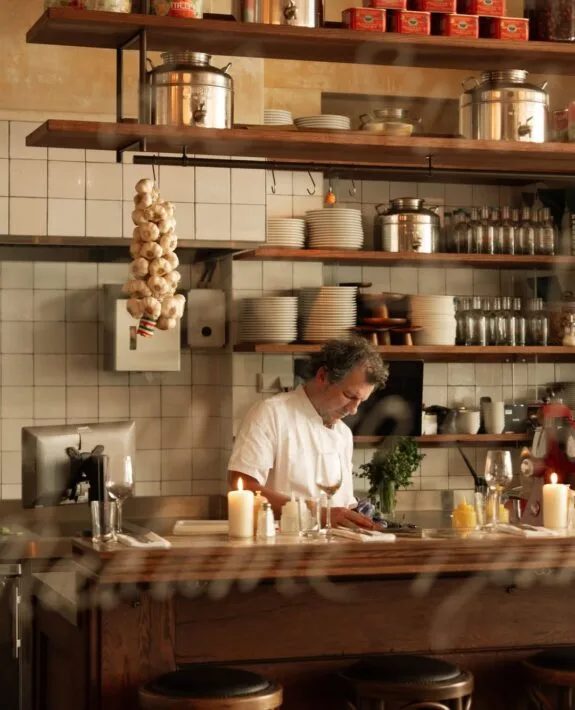
Leonardo's Ravioli Bar
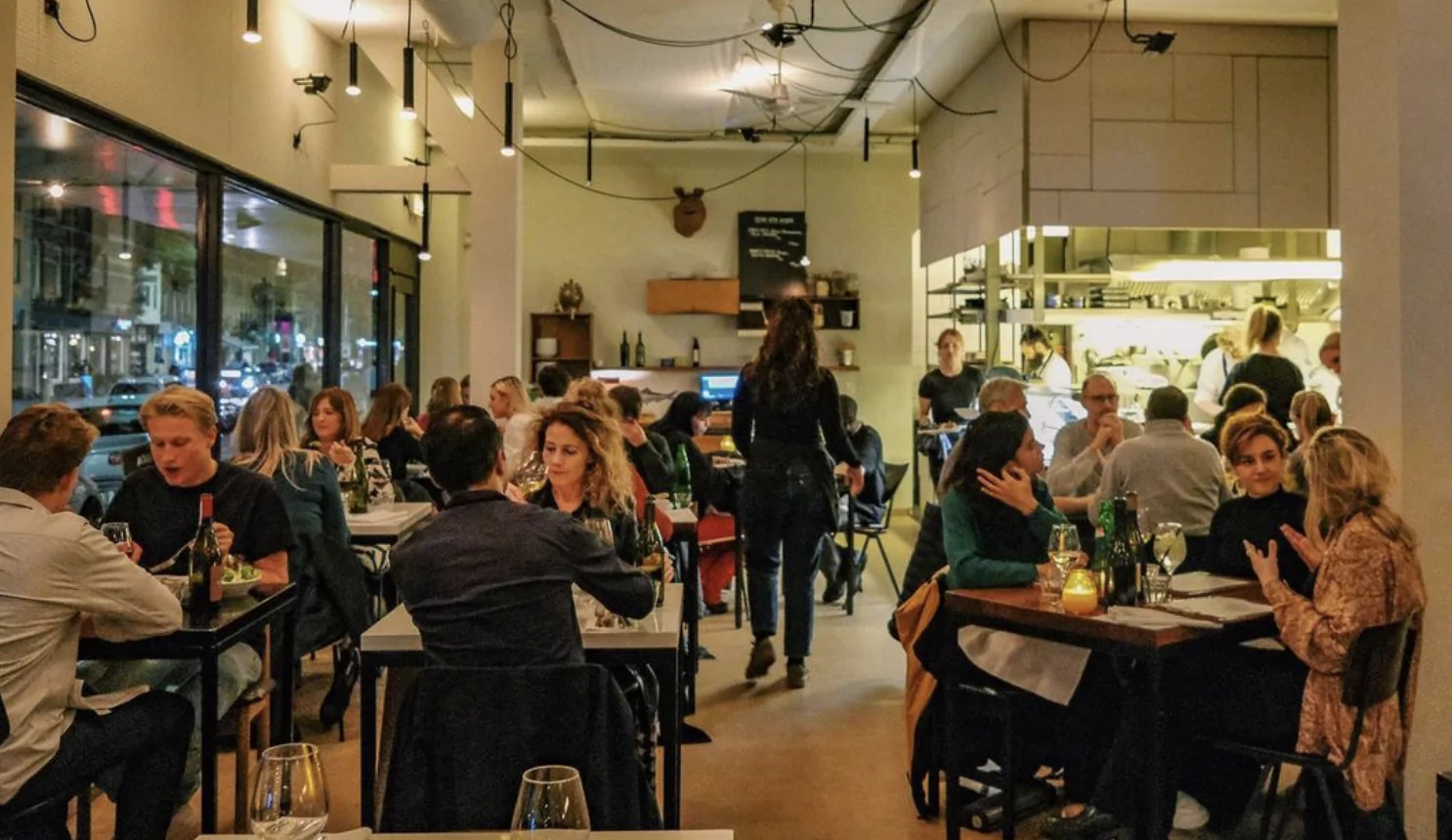
After decades in Toscanini's kitchen, where he is still co-owner and chef, Leonardo Pacenti also opened his own ravioli bar. In De Pijp, he created a place that exudes Italian sprezzatura. A long marble bar with a view of the kitchen. The ravioli are made entirely in-house at Pastahuis Pacenti in IJmuiden, together with partner Mark Wenneker, from durum wheat dough and fillings that change every two months. As Pacenti himself says: delicious food at a reasonable price with a good glass of wine, ideal for a quick bite before the movies or theater, with portions of five ravioli that you can share or keep for yourself.
1074 AH Amsterdam
Firma Pekelhaaring
Firma Pekelhaaring is a beloved Italian restaurant located at Van Woustraat 127-129 in Amsterdam. The restaurant is known for its relaxed atmosphere and authentic dishes, influenced by Italian cuisine, but with room for its own variations and local influences. The owner of Firma Pekelhaaring is Matthias van der Nagel. Under his leadership, the restaurant has gained recognition, including a mention in the MICHELIN Guide with a Bib Gourmand for its good value for money. The menu features dishes such as Arancini, tagliatelle with duck stew, or cod with salted baccala and black salsify.
1074 AG Amsterdam
Rayleigh & Ramsay
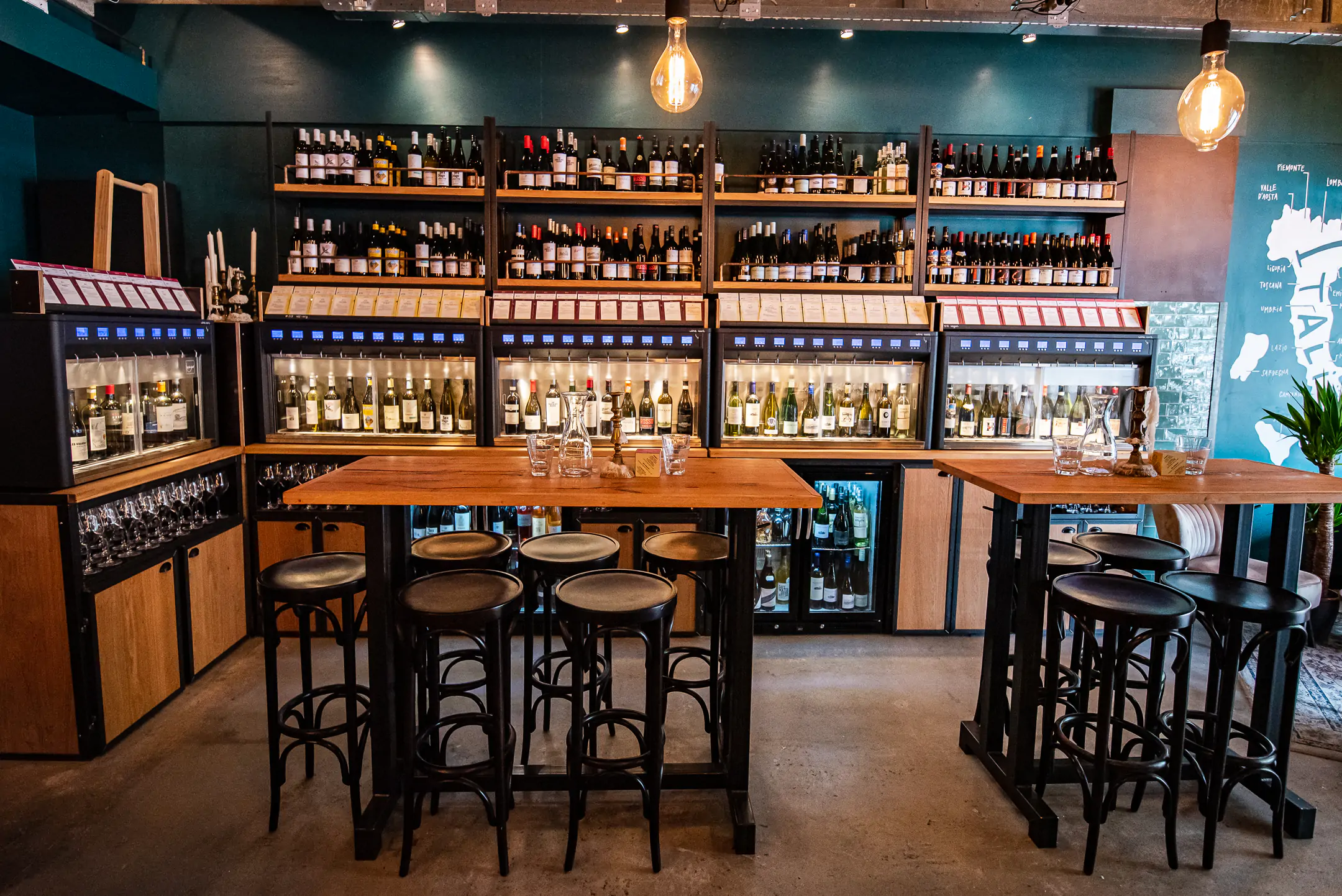
Rayleigh & Ramsay is described as a candy store for adults. They consider the term "wine bar" too intimidating, but the focus is definitely on wine, with more than 100 wines available by the glass. What makes it unique is that you can order wine by the sip, half glass, or full glass. This allows you to taste everything you want and discover which wine you like best. In addition to wines, the menu also includes good coffee, cocktails, draft beer, and delicious food.
1073 AD Amsterdam
Marlon's Food Stall
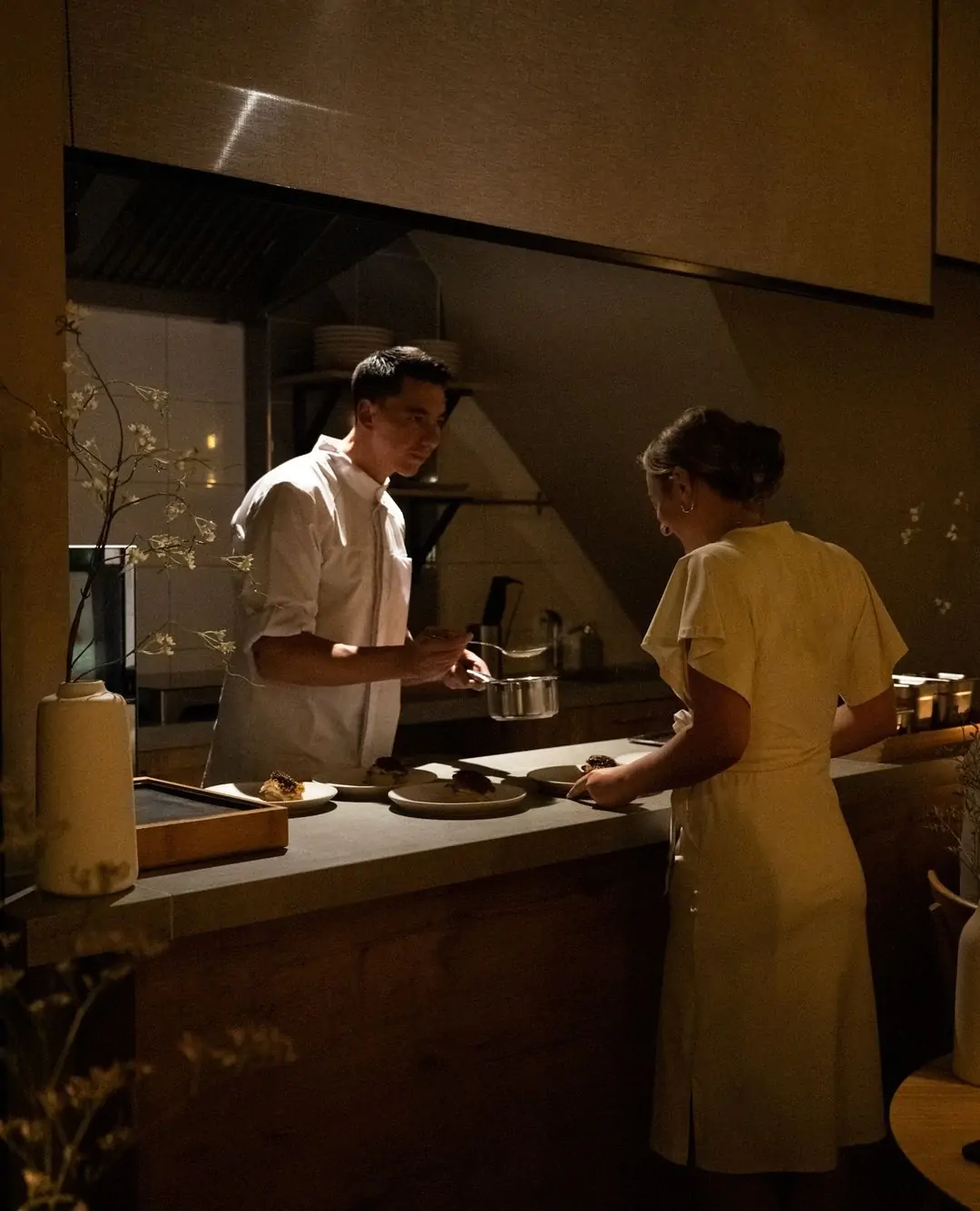
During the coronavirus crisis, Warung Marlon decided to switch to takeout only, officially becoming a Surinamese-Javanese takeout restaurant. The eatery in De Pijp has been open since 1990 and has been putting smiles on the faces of many regular customers for over 20 years. The eatery is known for its soato soup, chicken satay, and, of course, its bakabanas, and the dishes are finished off with a smile from the cheerful staff. From now on, you can order or pick up your food, but it's definitely worth it.
1073 VK Amsterdam
Restaurant Yes
The charming restaurant Ja, is located in the former premises of Jan de Wit's Le Restaurant on the corner of Sarphatipark. Chef Julius Busscher, formerly employed at Jacobsz and Staets, offers surprising dishes. His partner Amy Delorme is dedicated to the service and selection of wines. At Ja, everything from bread to limoncello is prepared traditionally. The restaurant presents a fixed 4-course menu, which can be expanded with oysters and cheese if desired. The intimate ambiance and culinary creativity make Ja a unique culinary destination in Amsterdam.


1073 AE Amsterdam
Peppi Deli
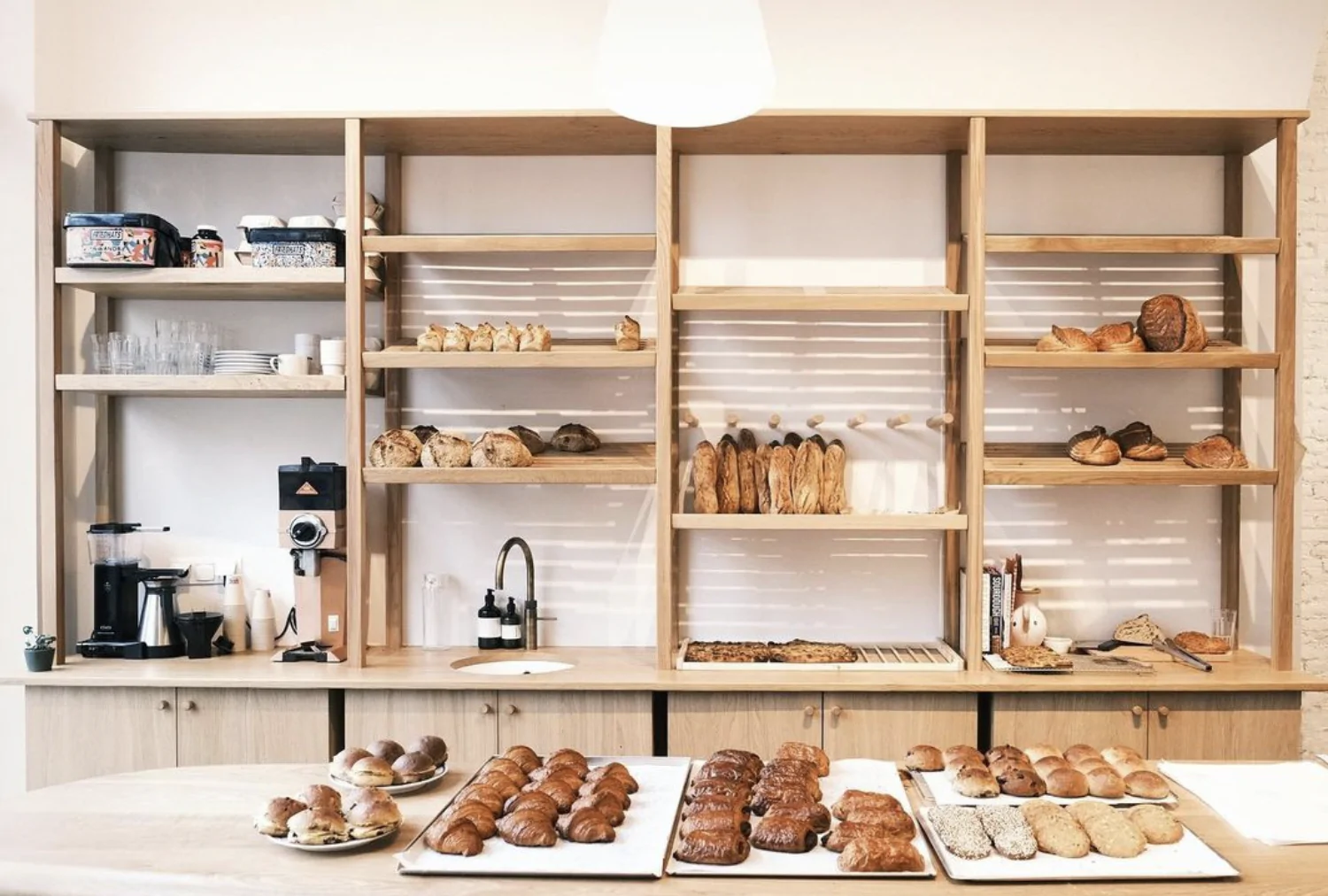
Peppi Deli is not a fast food takeaway, but a personal caterer where owners Roel de Niet and Onno Diepenbach themselves work in the kitchen and in the shop. De Niet changed his classic chef training after traveling through Africa and the Middle East, and you can taste those influences in the vegetarian, largely organic menu. The menu changes with the seasons and includes dishes such as celeriac steak with gnocchi, vegetarian moussaka, and focaccia with caramelized onion and smoked labneh. The bread is baked in-house, visible from the shop, which adds to the artisanal character of the place. Peppi Deli is intended as a regular stop for the neighborhood: a quick, good, healthy meal every day, made with care and without haste.
1072 GP Amsterdam
Bakkerij Mater
Sourdough bakery Mater is not just any bakery. Former banker Willem opened this authentic, honest, and sustainable bakery at the age of 65 when he traded the banking world for bread. It has since become a family business where passion, honesty, and nature take center stage. Everything here has been carefully thought out. The grain comes from special unplowed land, which ensures better soil quality, and the bakery is gas-free. You can buy everything here made with sourdough, from delicious breads to crispy croissants.
1073 AD Amsterdam
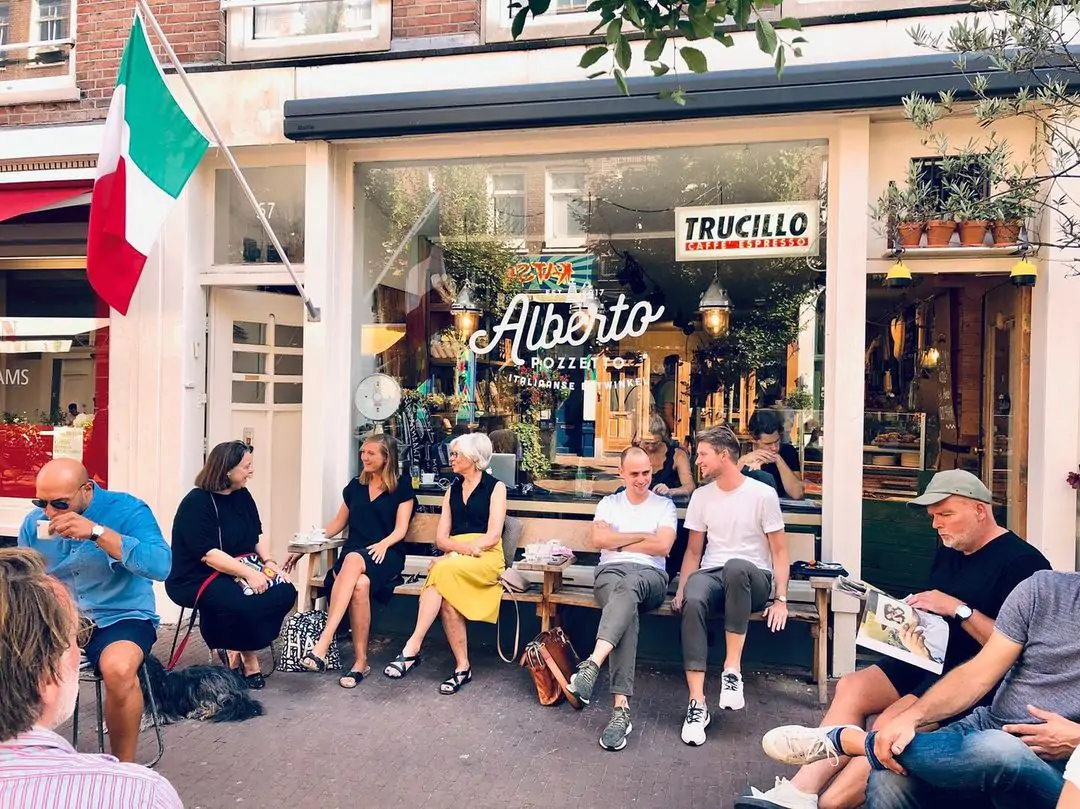
Alberto Pozzetto
Alberto Pozzetto can be found in one of the most vibrant side streets of the Albert Cuyp market in the Pijp district of Amsterdam. At Alberto Pozzetto you can find all your authentic Italian groceries. Coffee, tea, pastries and especially the delicious sandwiches with fresh meats, vegetables and cheeses are highly recommended. The shop is small but nice, but you can also go inside for a delicious meal. Alberto is also recommended for catering. In short, if you get lost on the Albert Cuyp, Alberto Pozzetto is an inviting alternative.
1074 AG Amsterdam
De Pijp City Market
At Stadsmarkt de Pijp, the products are collected daily. This means that all kinds of products come directly from the farmer, market gardener, butcher, fishmonger and baker in the middle of the Pijp. The focus at Stadsmarkt de Pijp is on Sustainability and a fair price is paid to the suppliers. The working professionals are always ready to recommend something or let you taste something. Craftsmanship is also central; it is a market where you can eat well and enjoy yourself.
1072 GN Amsterdam
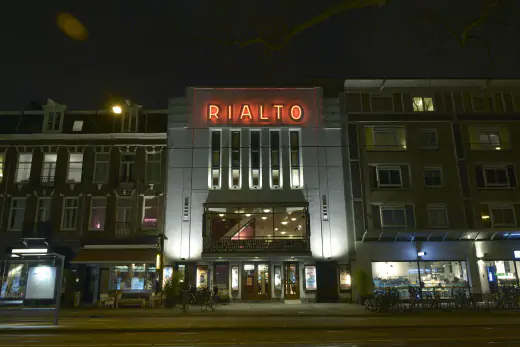
Rialto
Rialto is a movie theater on Ceintuurbaan in the old working-class neighborhood of De Pijp. The striking Art Deco building that houses Rialto was designed by architect Jan van Schaik. It was built in 1920, making it one of the oldest movie theaters in Amsterdam. Rialto Movie Theater offers a diverse selection of films aimed at a wide audience. In addition to showing films, Rialto organizes many different events such as festivals, lectures, and discussion evenings. Rialto recently opened a branch in the New University Building on the campus of VU University Amsterdam.
1073 SR Amsterdam
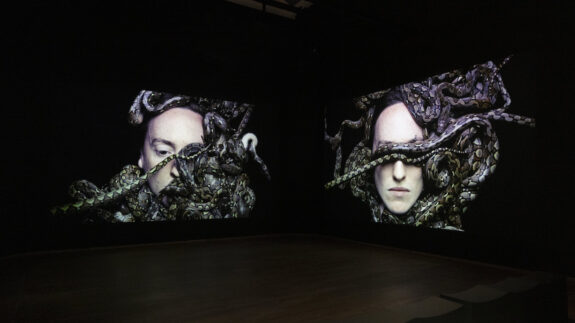
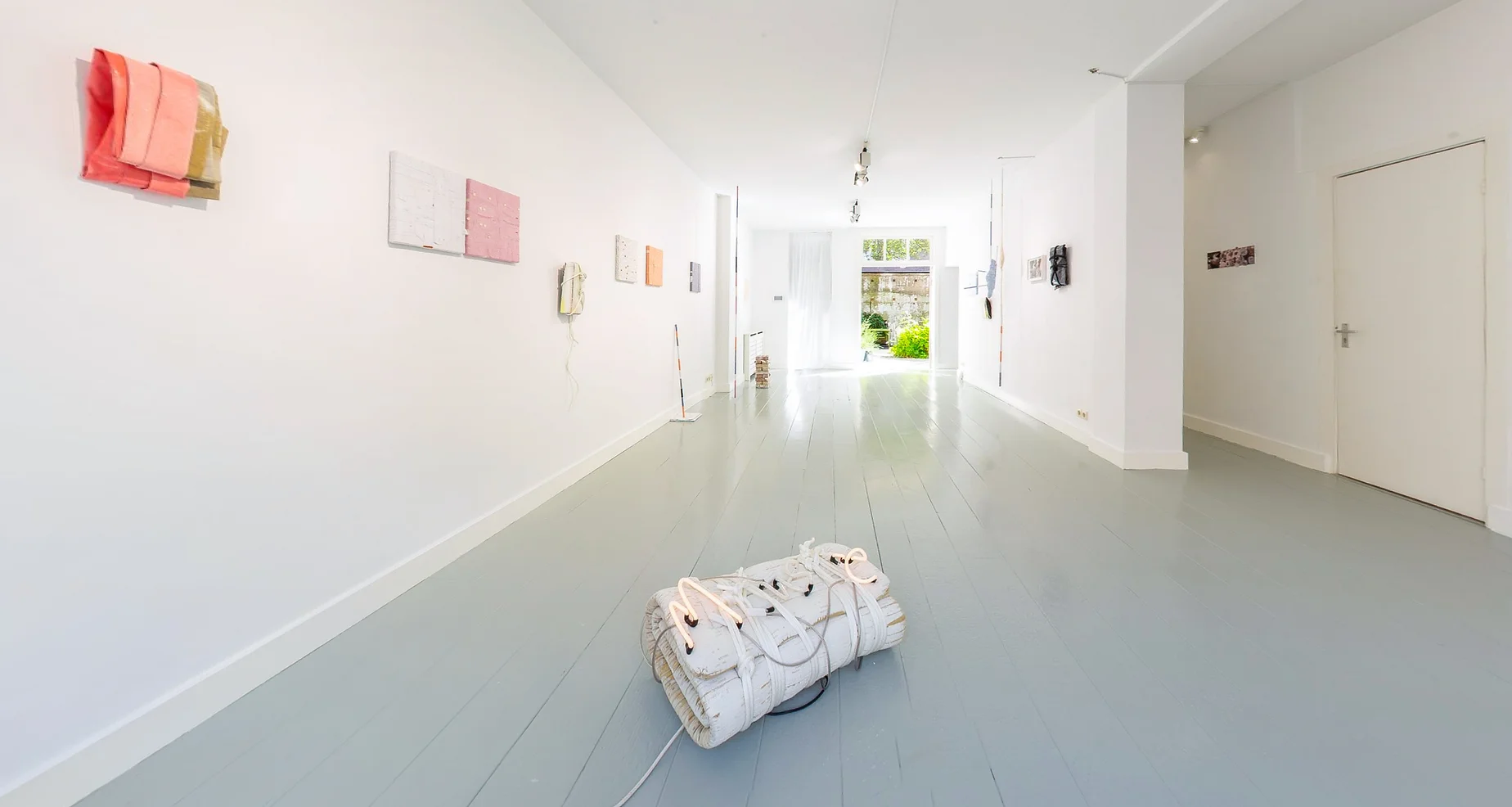
Josilda da Conceição Gallery
Josilda da Conceição Gallery presents a diverse program of contemporary art, ranging from painting to installations. Since its establishment in 2014, the gallery's mission has been to unite international artistic practices and promote dialogue about diverse cultural perspectives. The gallery supports emerging talent and provides a platform for established artists alongside emerging voices, cultivating new areas for aesthetic and conceptual reflection.
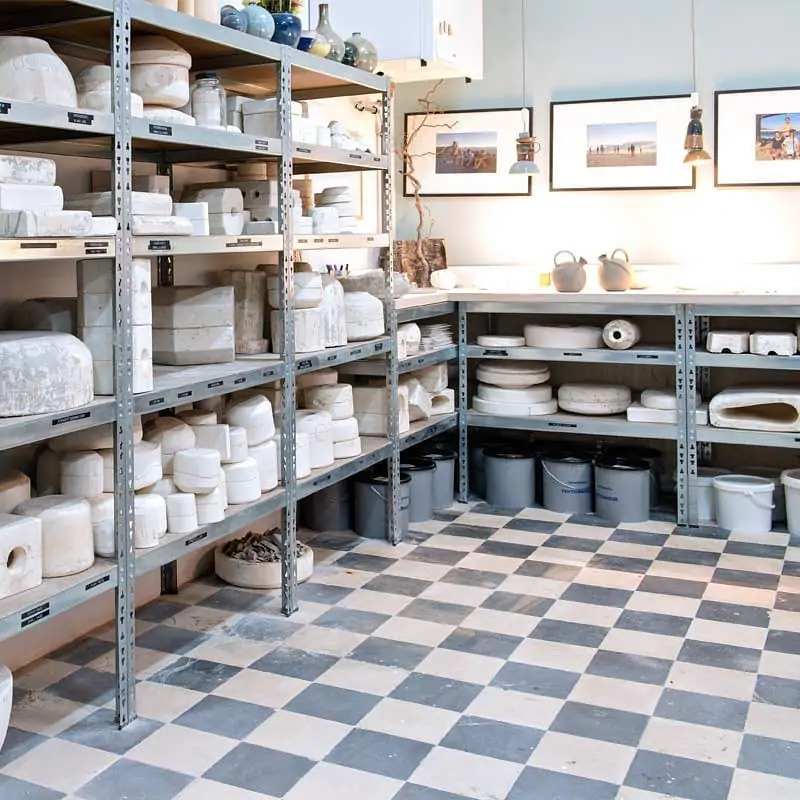
1073 CM Amsterdam
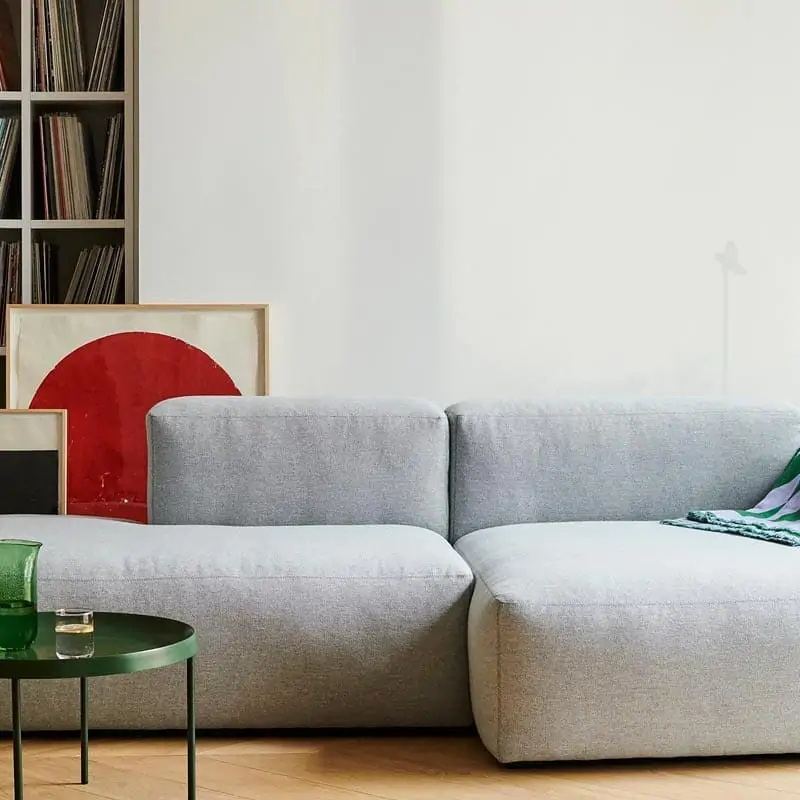
Mud in May
Mud in May is an interior and gift shop in the heart of the Pijp. Here you will find items from both well-known and lesser-known designers, creating a playful mix. There is something for every budget. Mud in May sells all kinds of products; chairs, vases, lamps, tables and even clothing. They also have a nice blog where they publish articles in which they talk to designers about the latest interior trends.