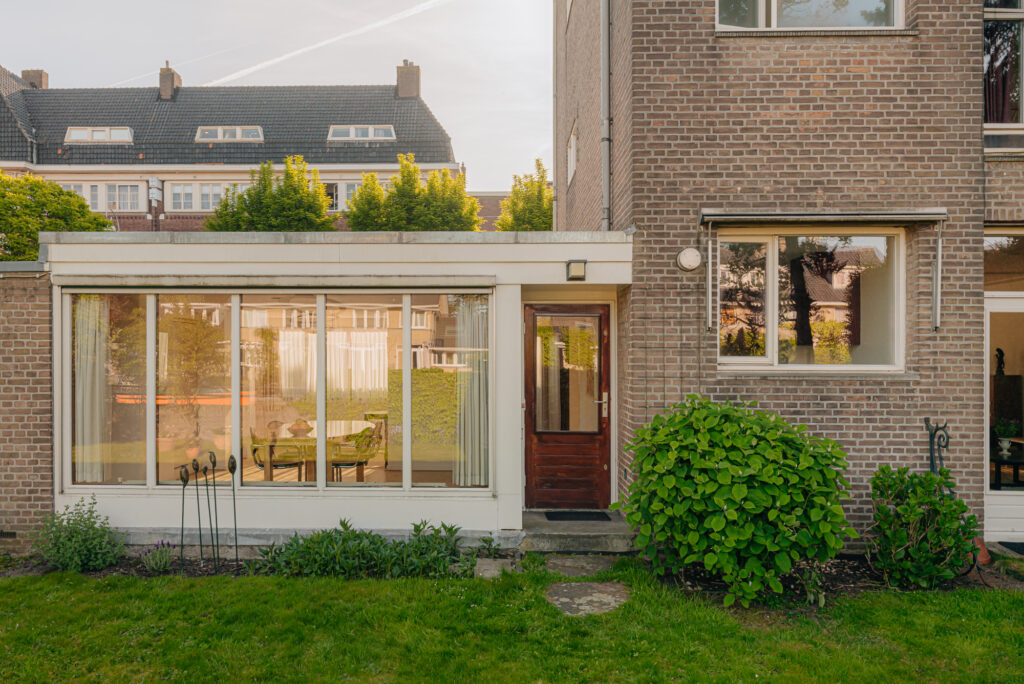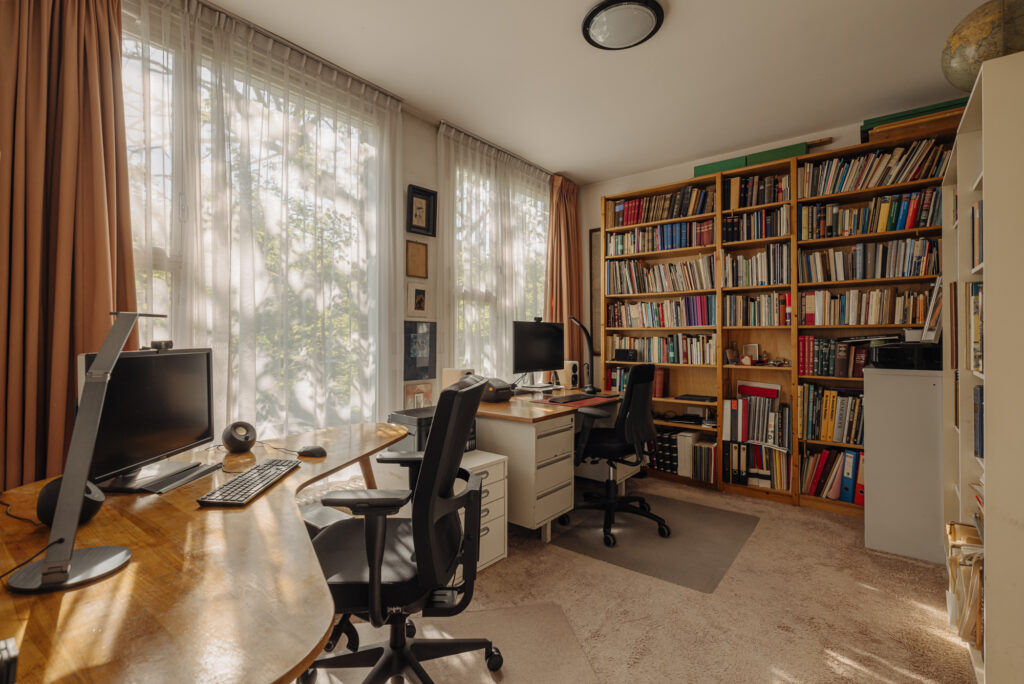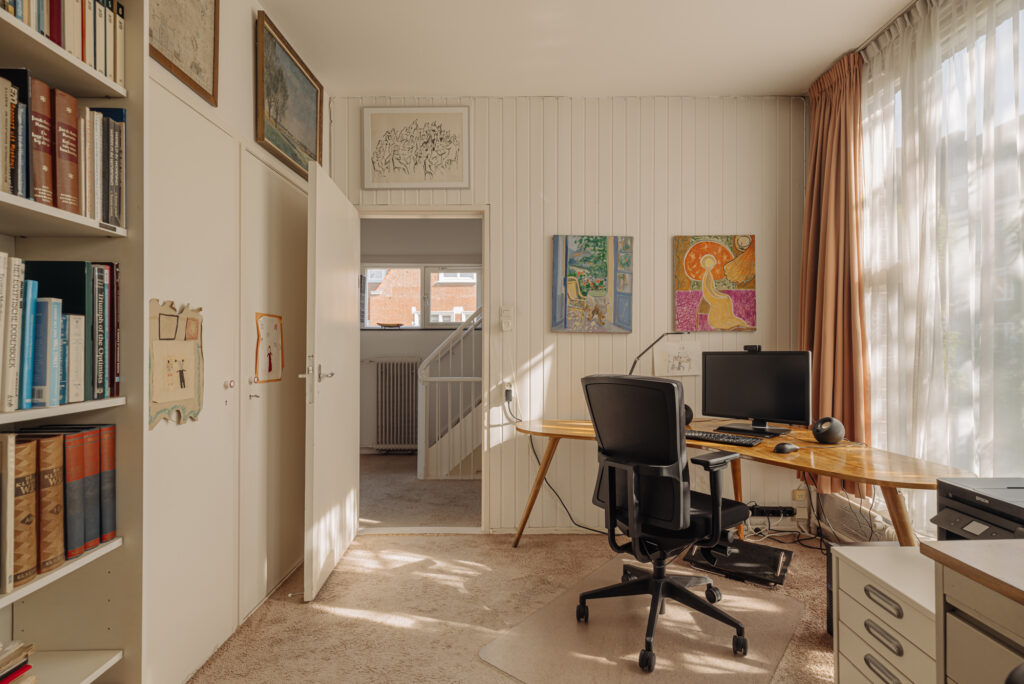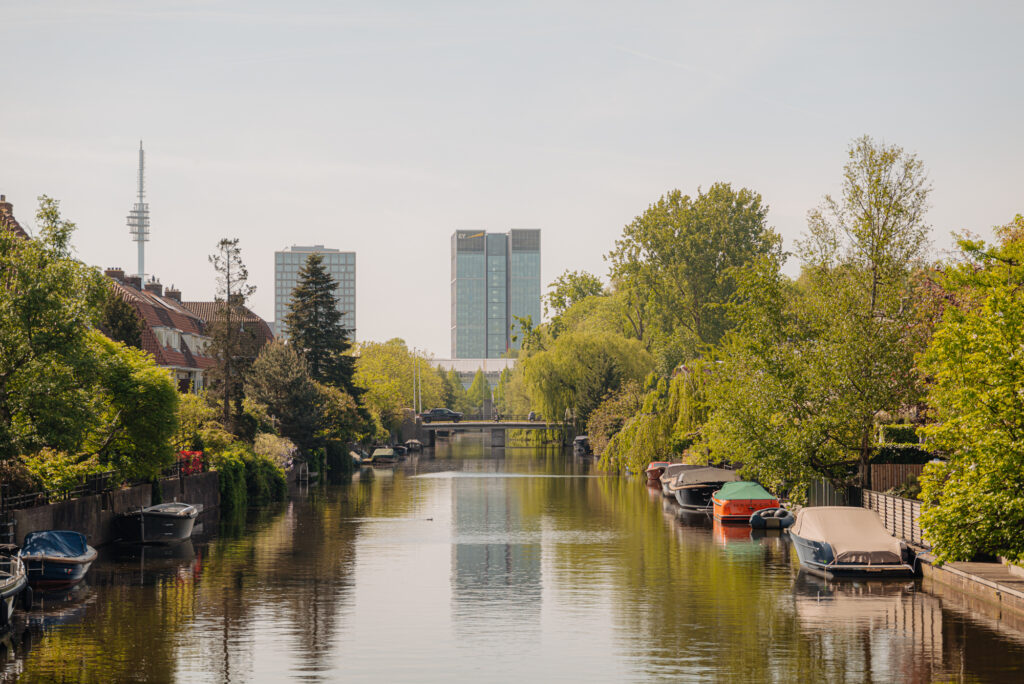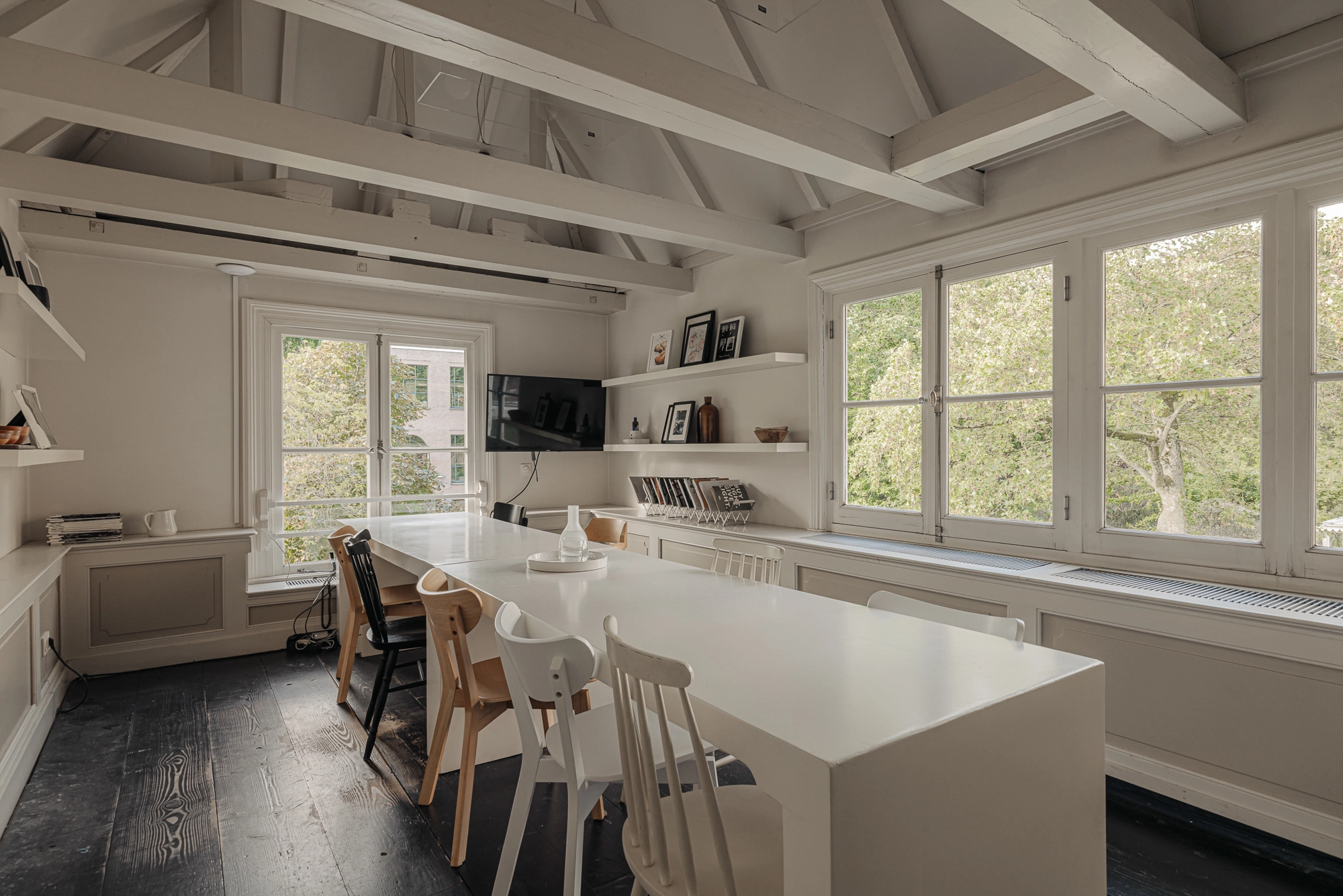
Semi-detached residence of approximately 207 square metres, situated on a generous plot of 459 square metres in a quiet street in the Apollobuurt. The living area opens onto a deep, west-facing garden that borders directly on the water. Designed by the architect couple Pot-Keegstra, the property includes an integrated garage, four bedrooms, a balcony and solar panels.
Tour
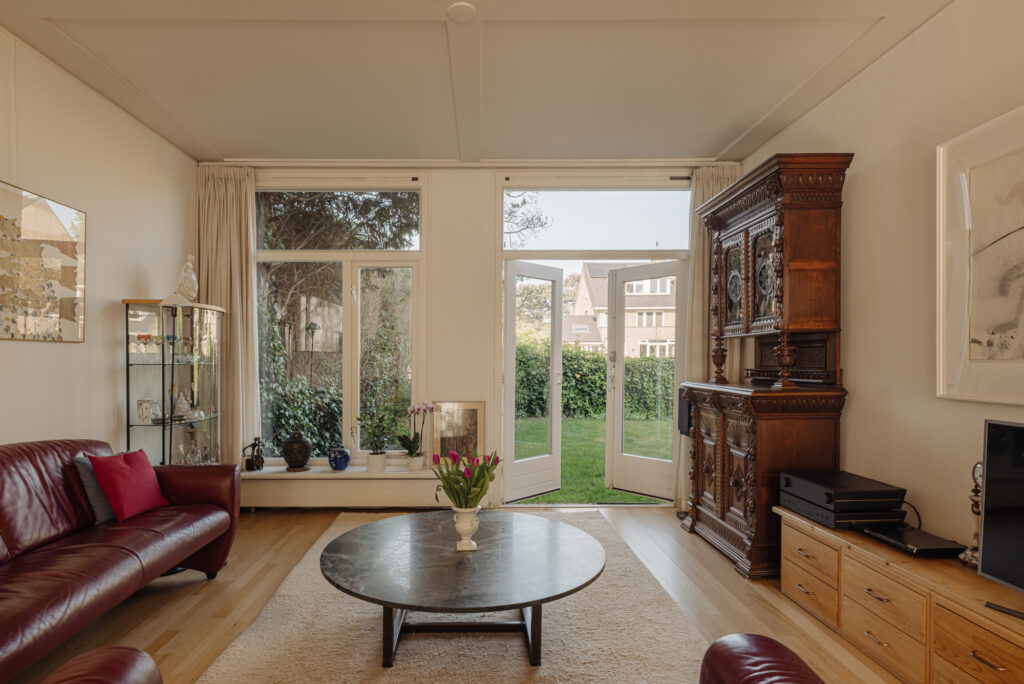
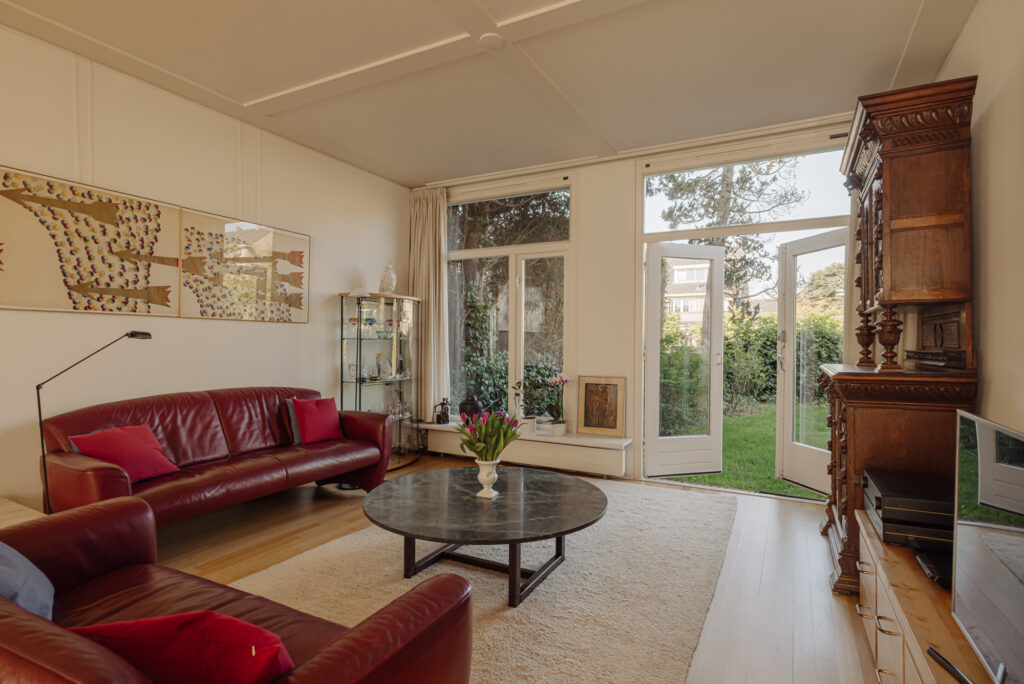
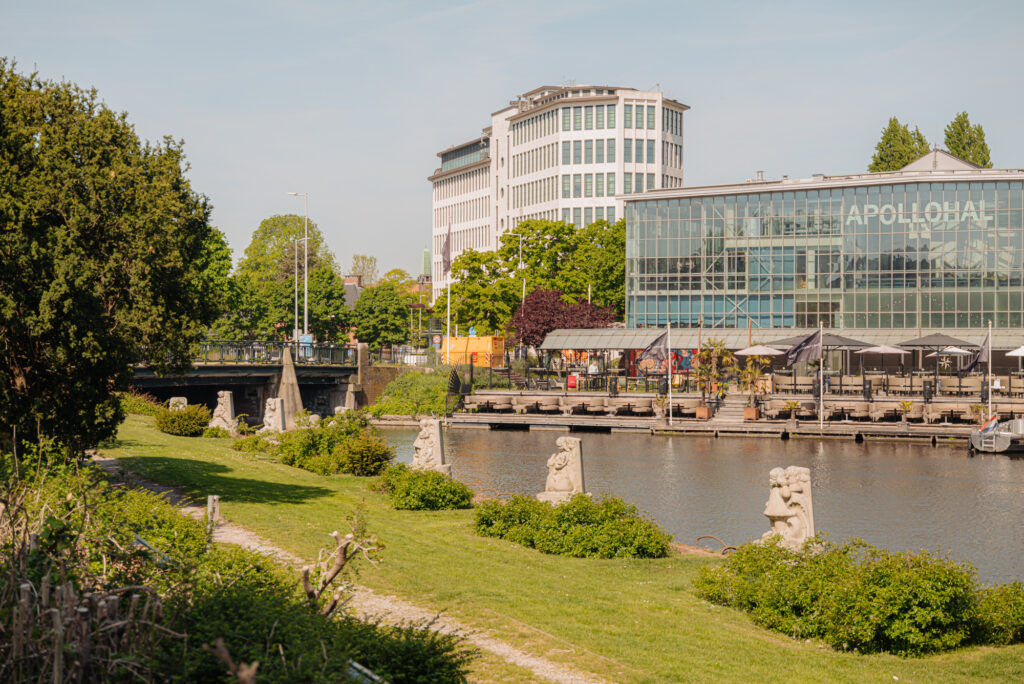
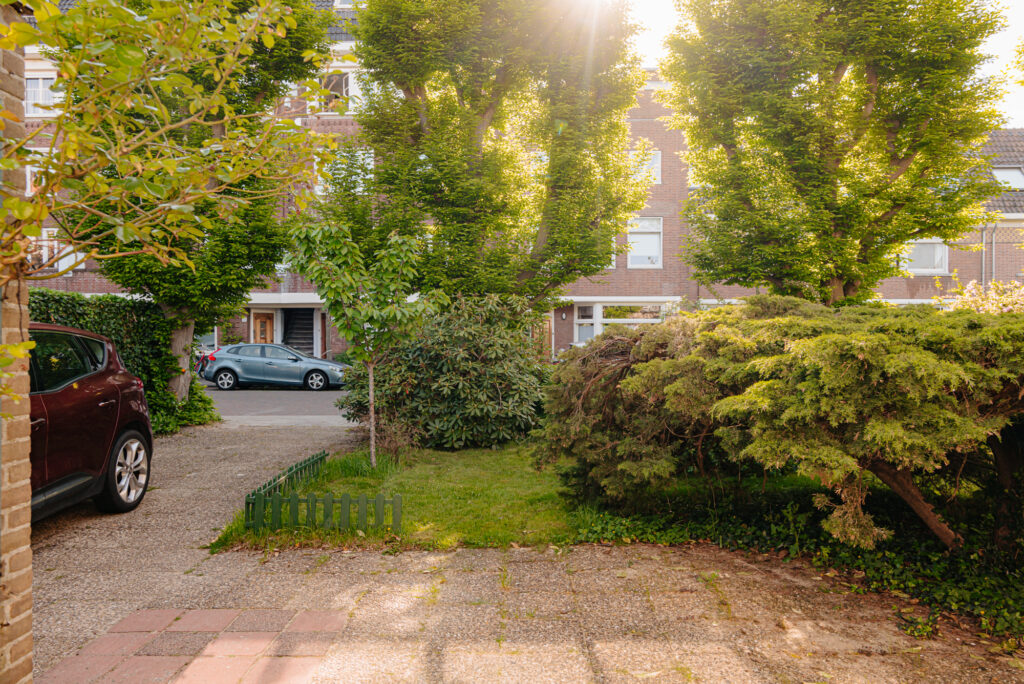
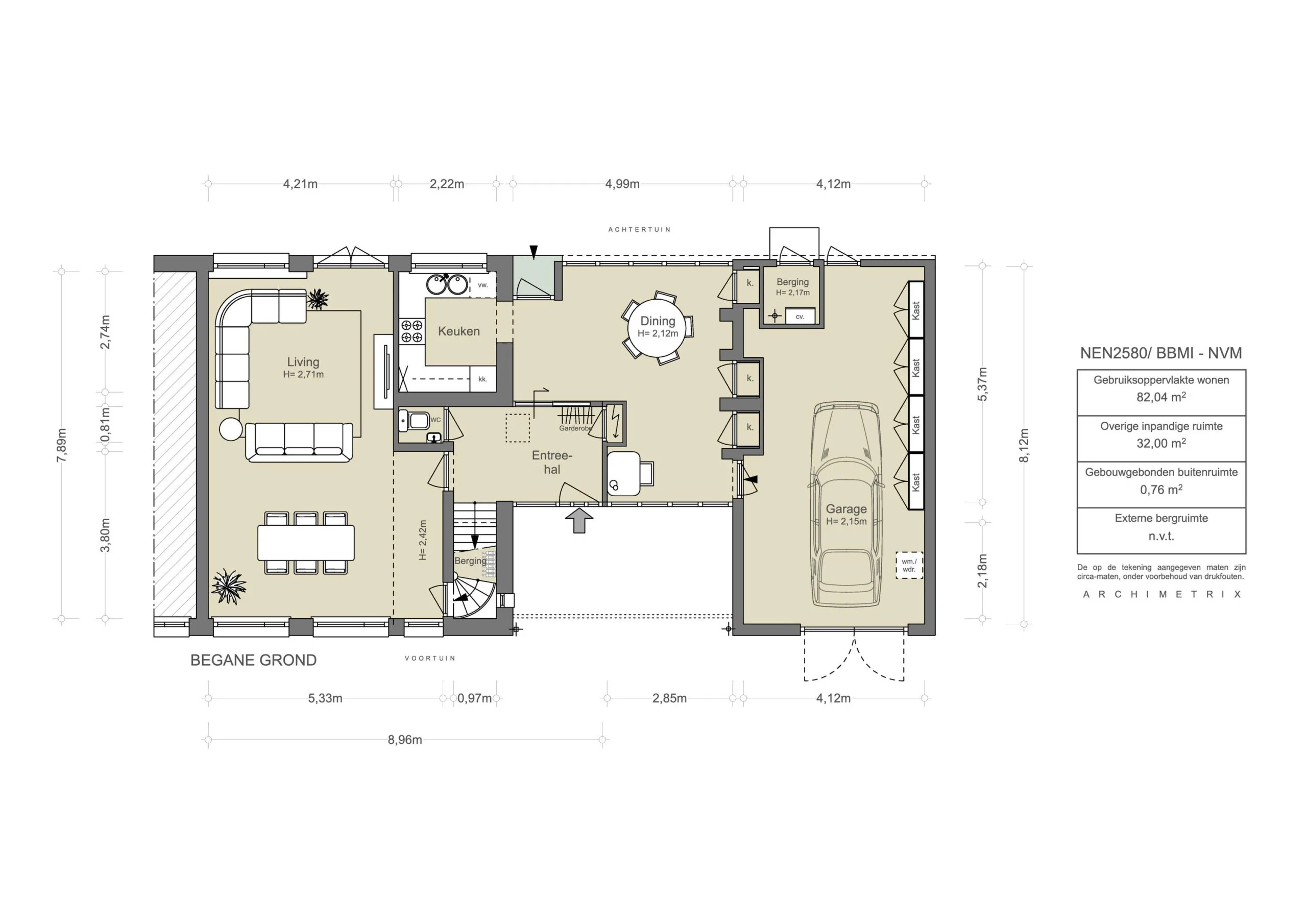
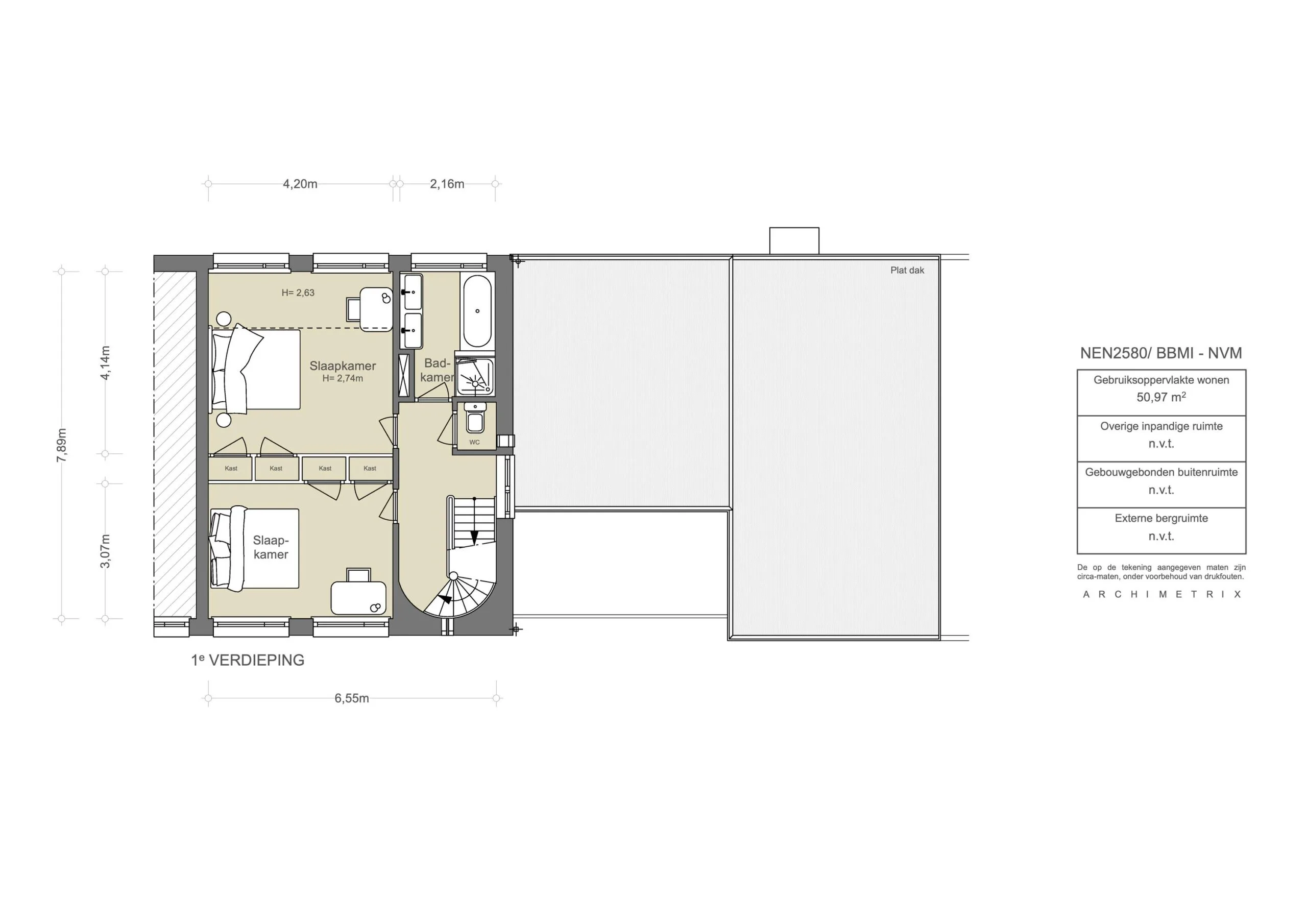
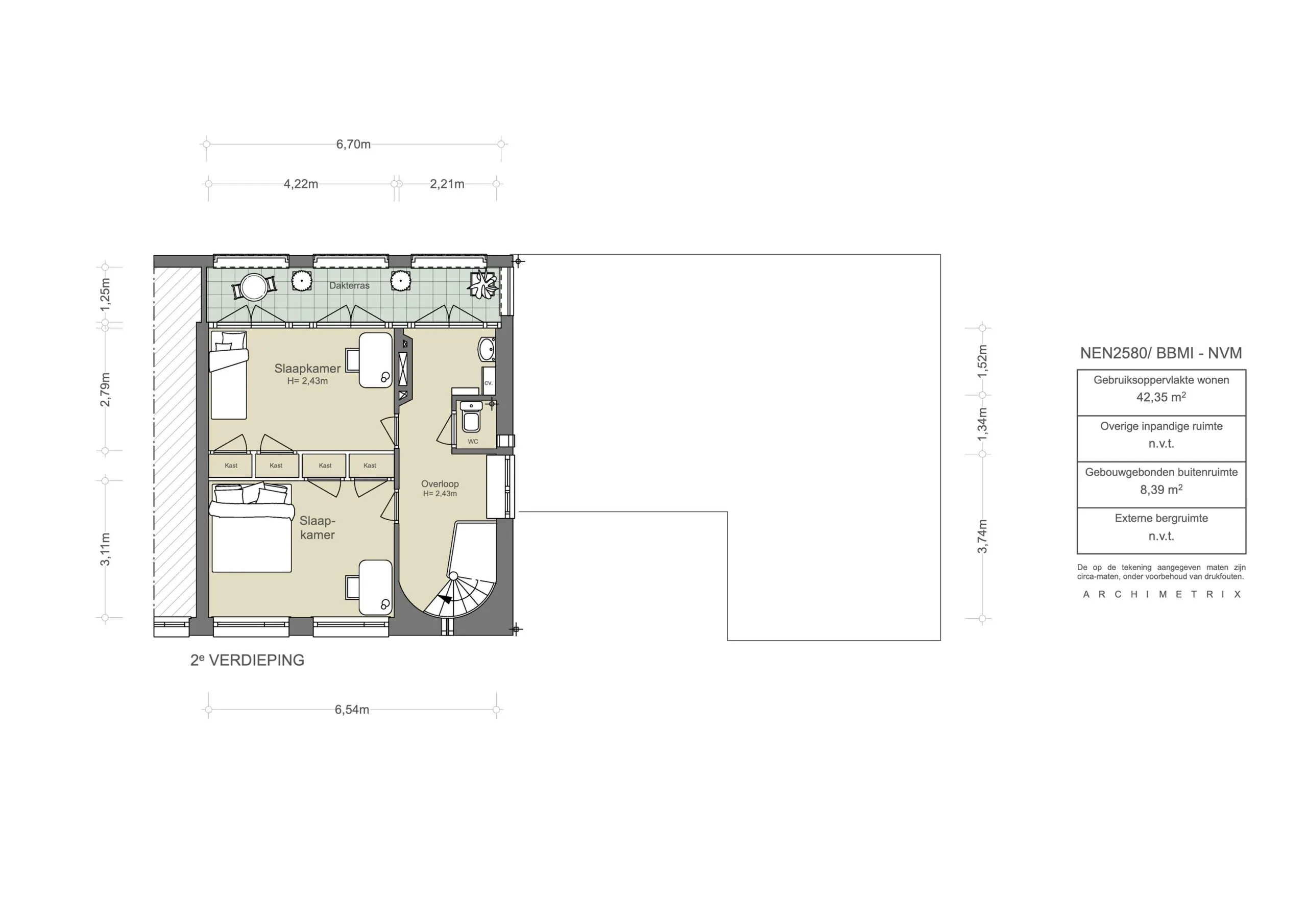
Set back from the street and embraced by a lush front garden, the house enjoys both privacy and a green outlook. The entrance hall is bright and well-proportioned. At the rear of the ground floor lies the living area, framed by wide glass panels and French doors opening onto the garden. The dining area flows naturally into the terrace and continues into the kitchen, which overlooks the driveway. The integrated garage at the front of the house also accommodates laundry connections. On the first floor, two spacious bedrooms are complemented by a bathroom featuring a bathtub, separate shower, and a separate toilet. The second floor offers two additional bedrooms, one of which has access to a west-facing roof terrace. The garden at the rear, facing west, borders directly on the water and provides a tranquil green haven within the city.
Renovation possibilities
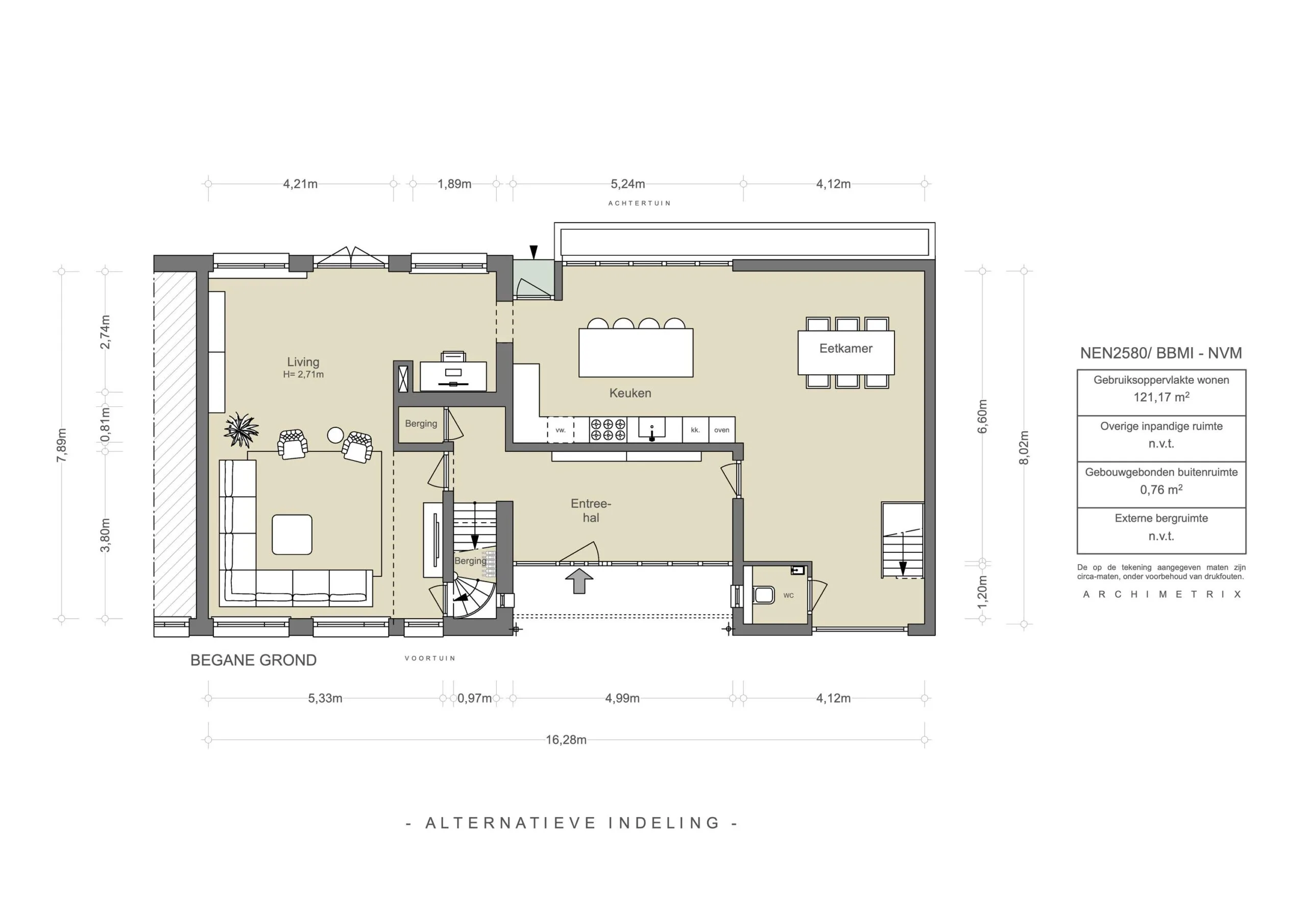
Commissioned by the seller, Allard Architecture has developed a proposal outlining the renovation potential of the residence at Haringvlietstraat 12. The plan primarily involves converting and merging the existing garage into living space and raising the current side extension and garage by one metre externally, allowing for higher ceilings in the extension area. Additionally, the creation of a basement beneath the extension appears technically feasible; however, this would currently fall outside the zoning plan. Should the full scope of the proposed expansion be realised, the total living area could be increased to approximately 275 square metres.
For more information, a zoning diagram prepared by Allard Architecture and an alternative floor plan are available.
Neighbourhood Guide
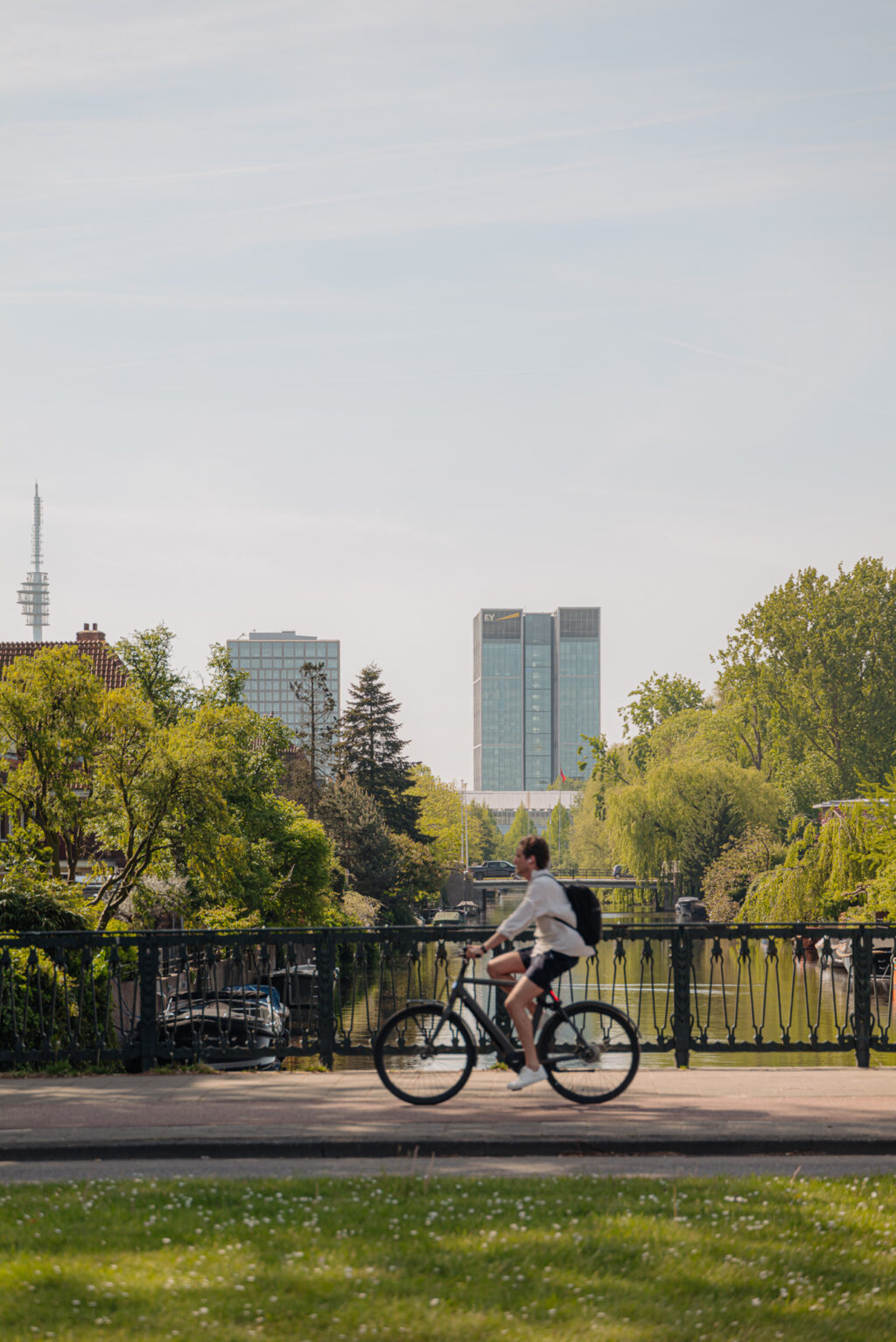
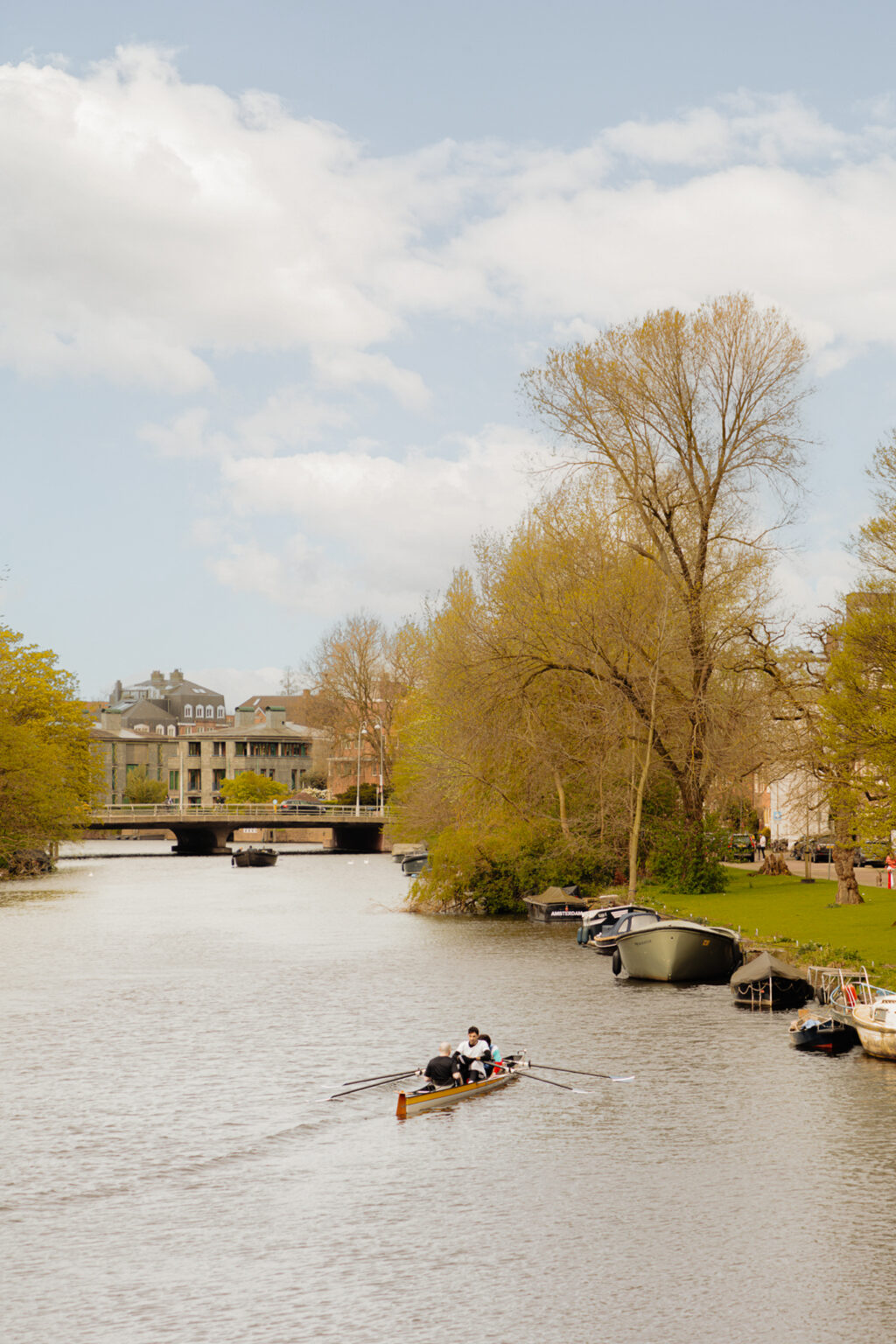
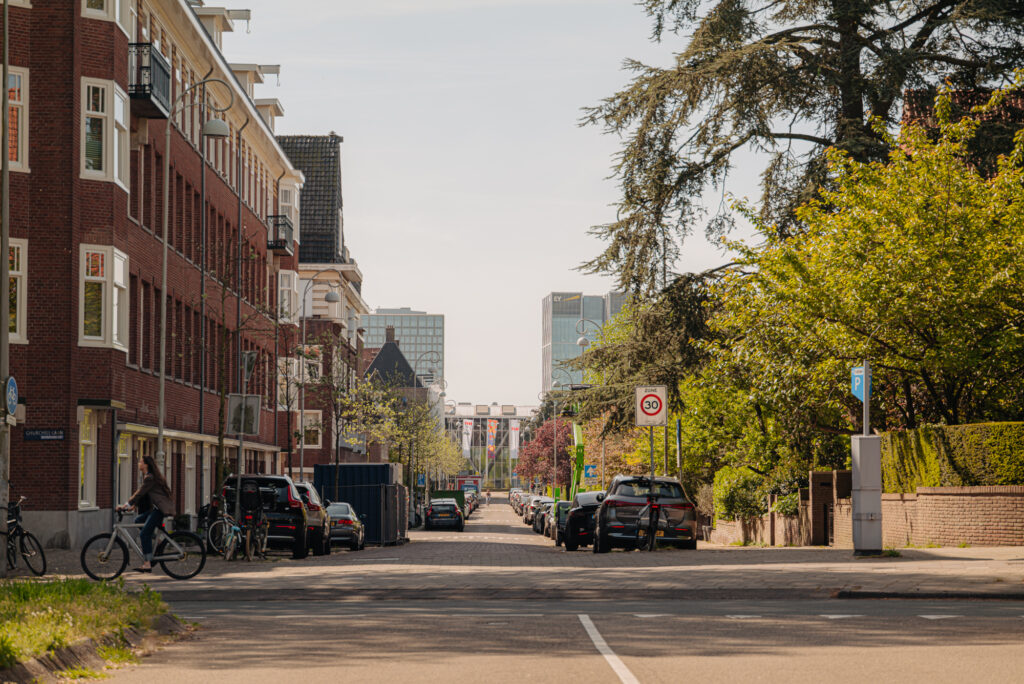
Haringvlietstraat is a quiet and secure street in the sought-after Apollobuurt, near Beatrixpark and Apollolaan. The area is defined by its leafy character and wide avenues. Nearby Scheldestraat and Maasstraat offer a wide array of shops, including a fishmonger, cafés and bakeries. Beatrixpark provides ample green space for recreation, and Beethovenstraat is also within walking distance. For lunch, local favourites such as Feduzzi and Vinnies are excellent choices. Various gyms are located nearby, and the De Mirandabad swimming complex is just a short cycle away.
Specifications
• Living area of approximately 207 square metres
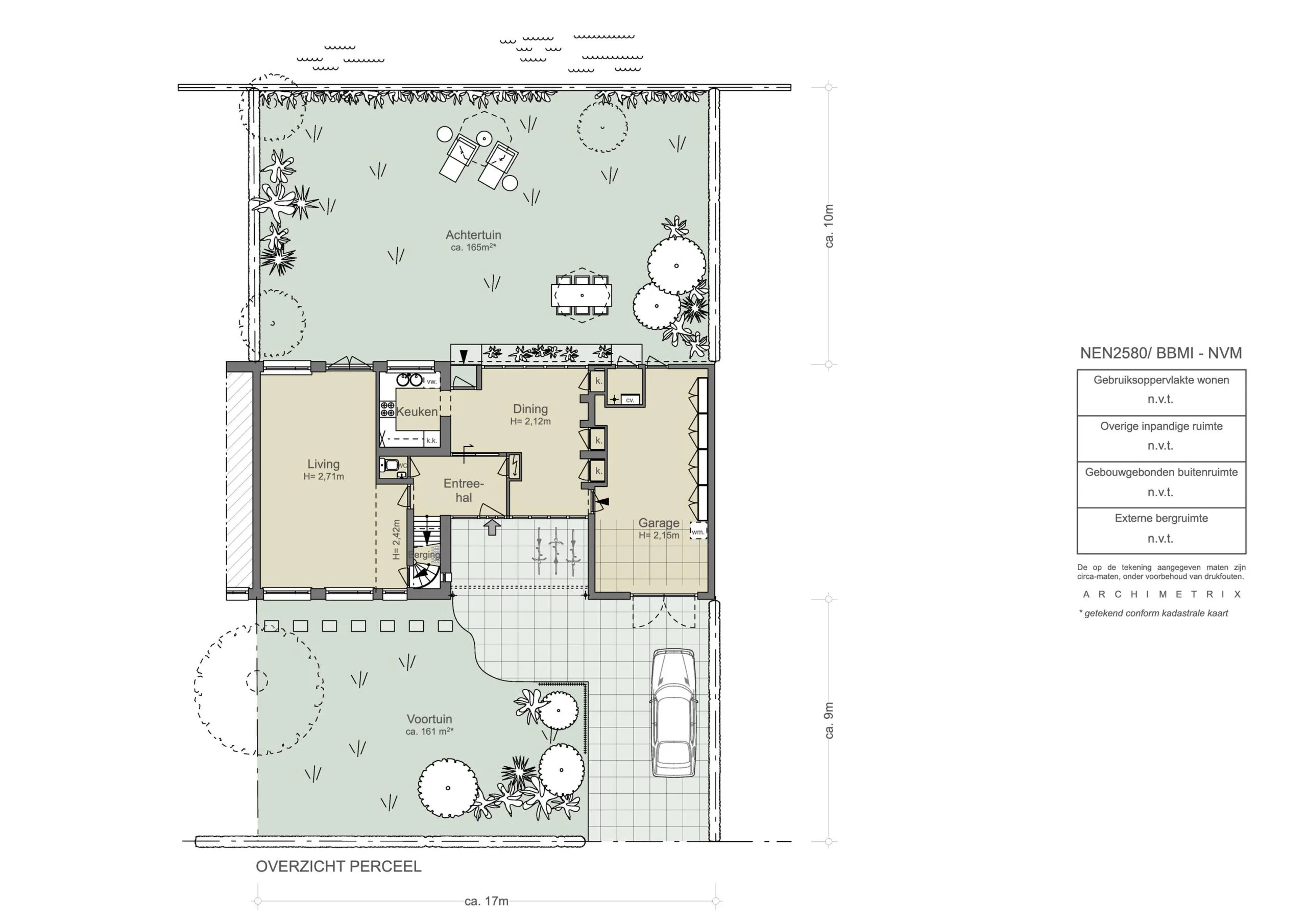
• East-facing front garden of approximately 161 square metres and west-facing rear garden of approximately 165 square metres
• Balcony of approximately 8 square metres, west-facing
• Situated on leasehold land issued by the Municipality of Amsterdam, with lease prepaid until 15 April 2054
• Energy label D
• Listed as a municipal monument
• Part of a nationally protected urban conservation area
• Architectural design proposal to follow
Huys Pot-Keegstra
In 1955, architects Pot and Keegstra designed this semi-detached residence for themselves and their friends. No façade, no frills — just a home defined by structure, light, and character. Now, seventy years later, that vision remains tangible. Huys Pot-Keegstra was conceived around a clear principle: spaciousness without excess, rhythm without repetition, and comfort without ornamentation. Every detail is both functional and deliberately chosen. What sets this home apart is the rare coherence between architecture and landscape. The garden — once designed by Mien Ruys — is not a backdrop, but an extension of the architectural concept. And then there is the location: on a quiet street in the Apollobuurt, with a deep, verdant garden along the Boerenwetering, the oldest canal in Amsterdam. Huys Pot-Keegstra is not for everyone. It is for those with an eye for craftsmanship and tranquillity. For those who prefer to inhabit an idea rather than a convention. For those who find space in simplicity.
Ronald van de Bijl | Real Estate Agent Broersma Wonen
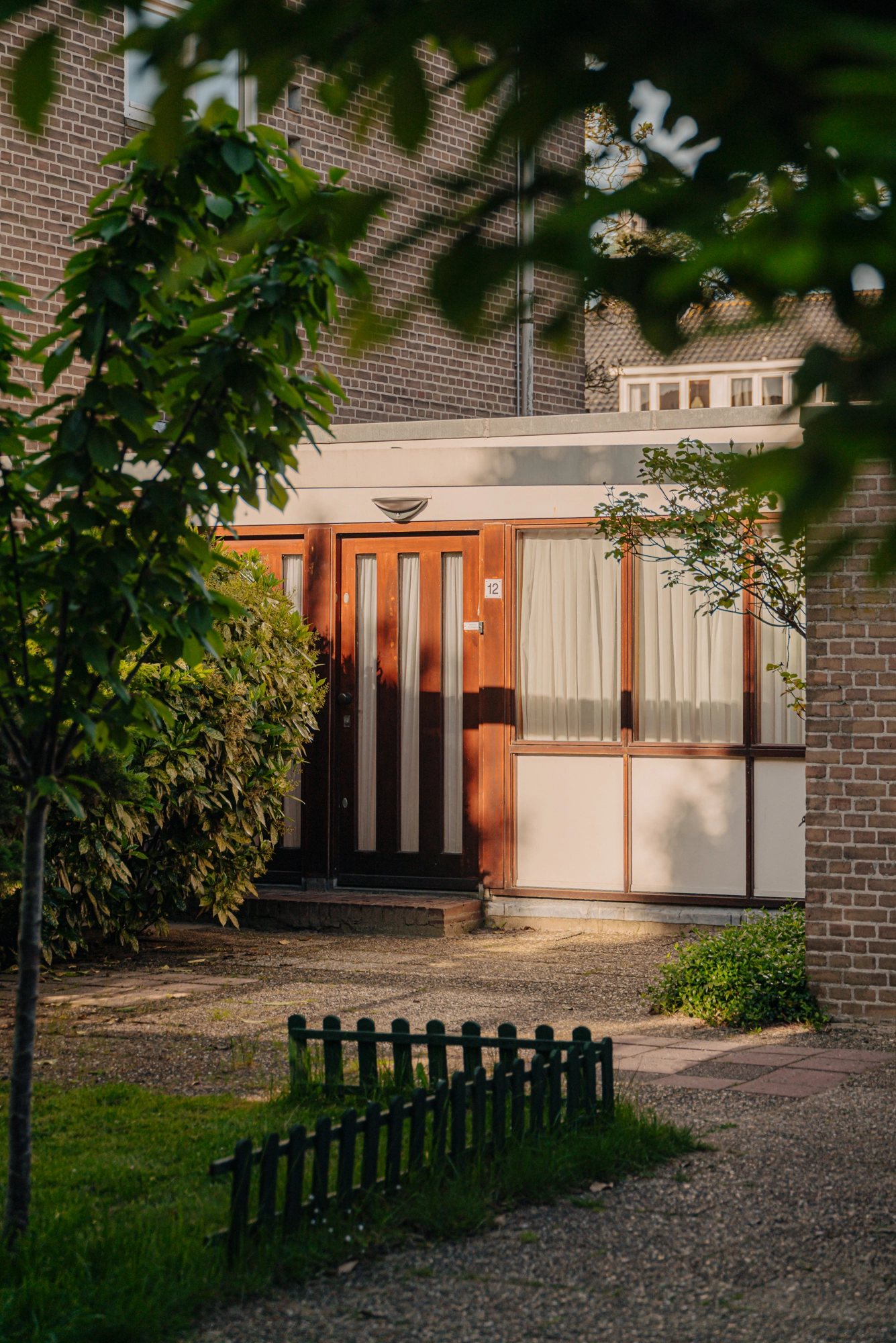
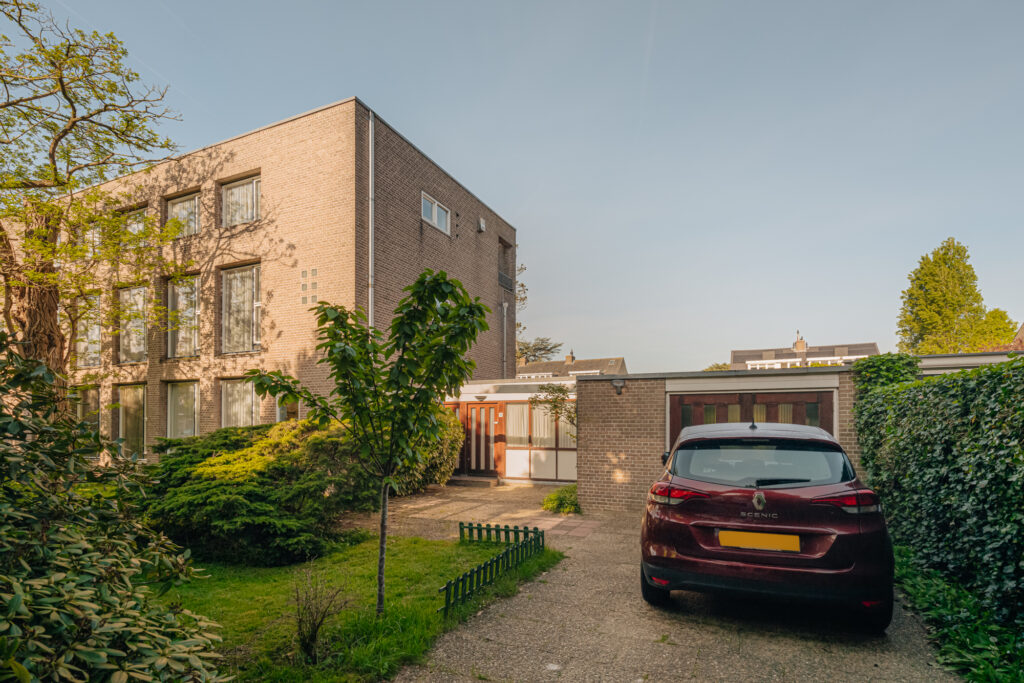
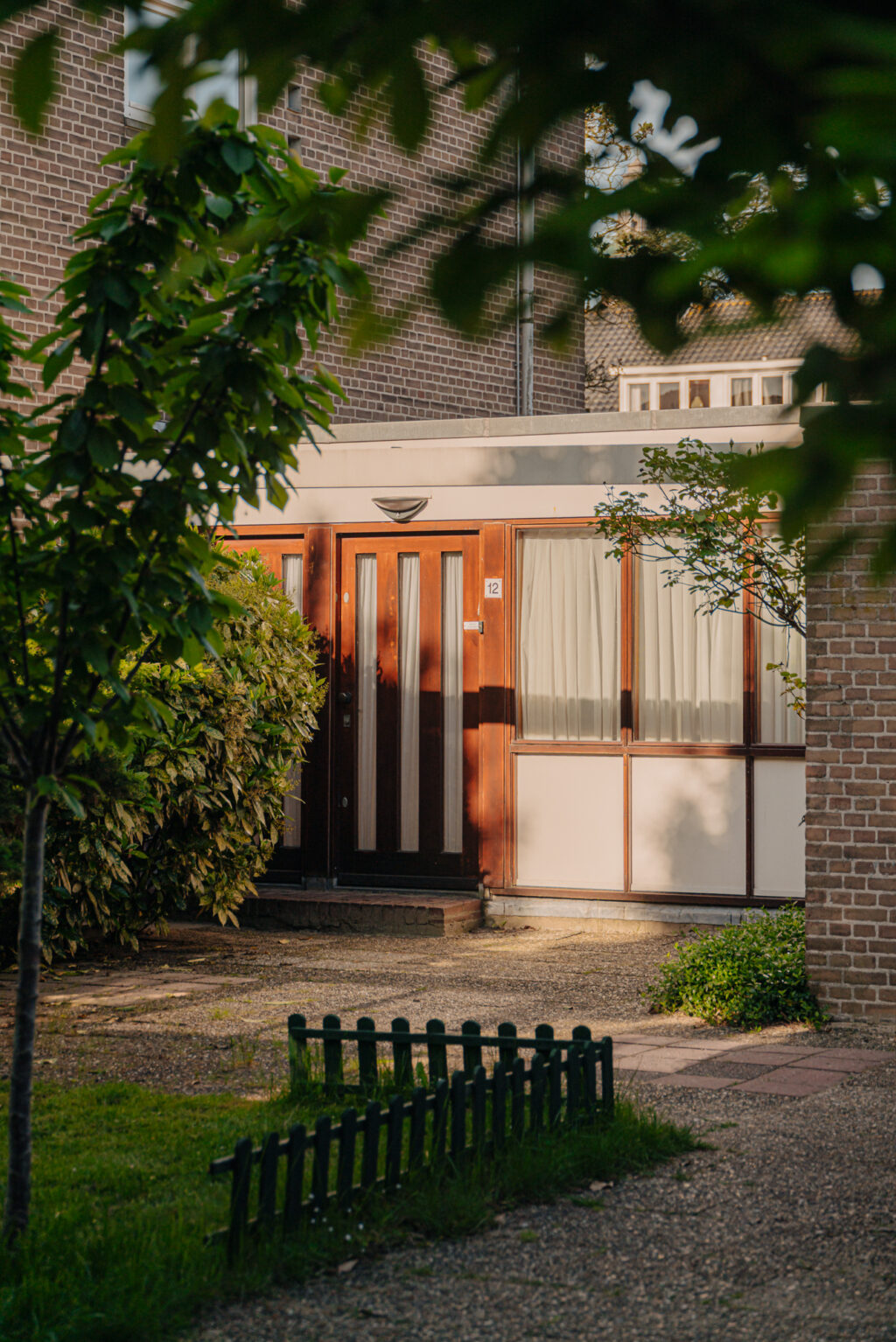
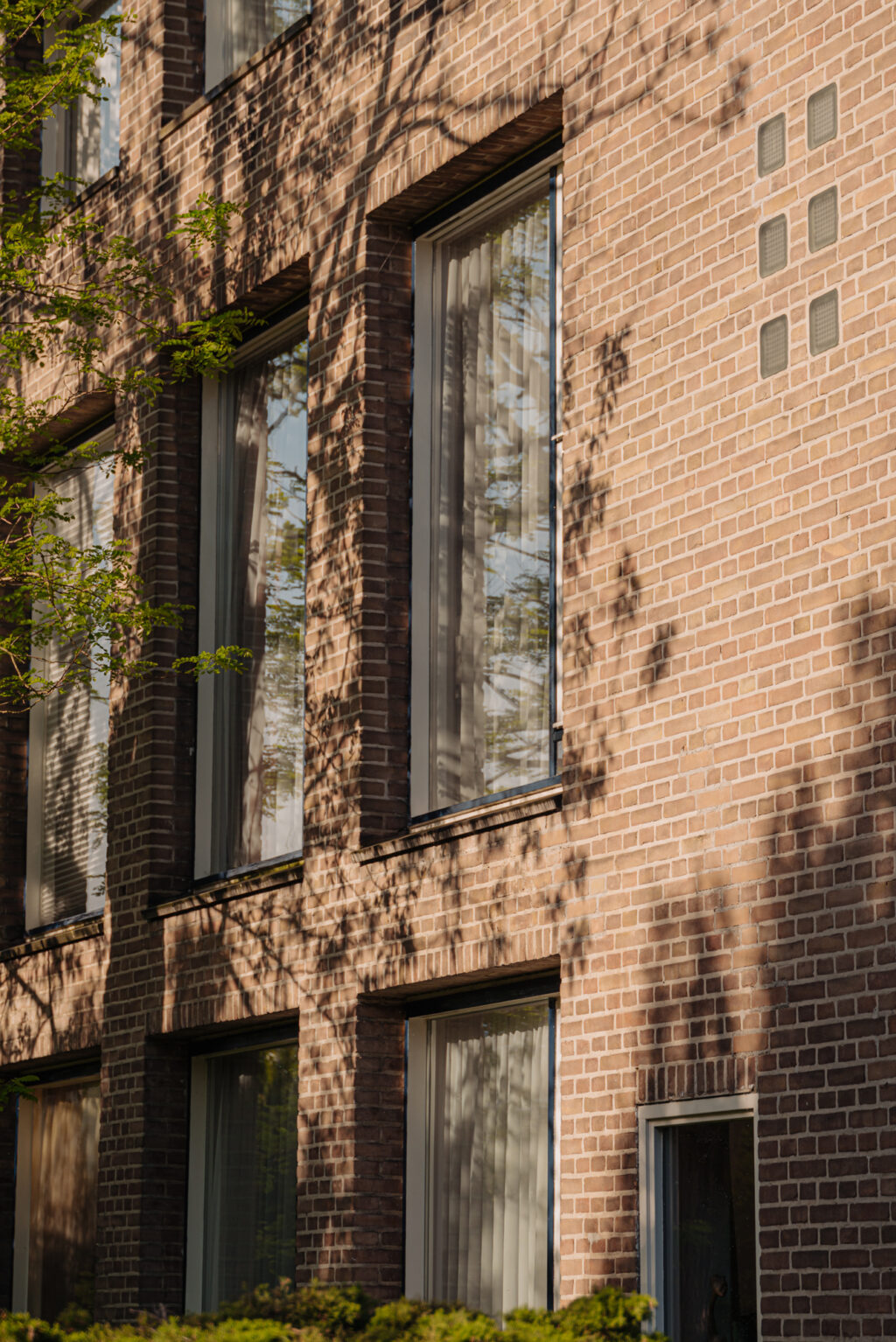
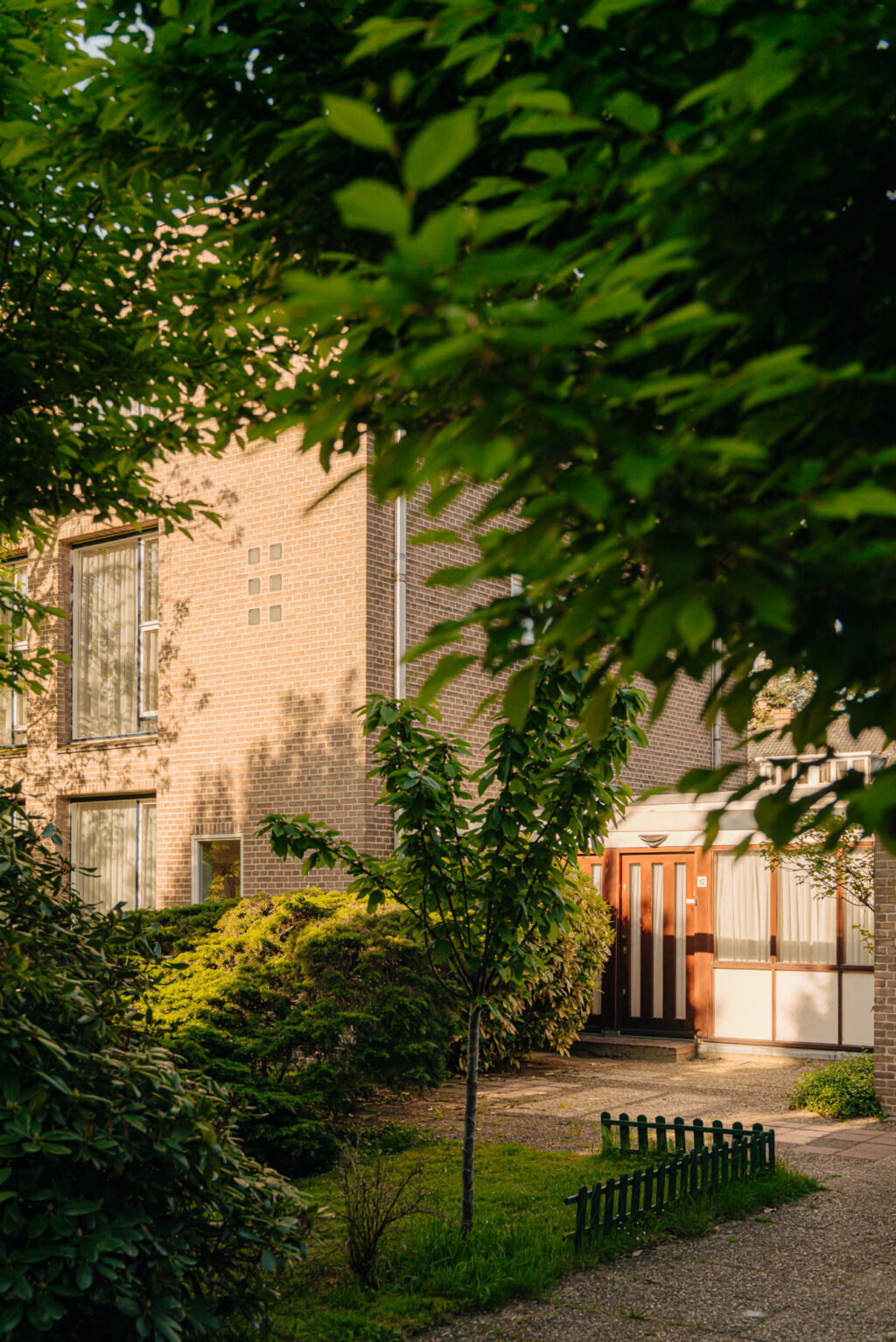
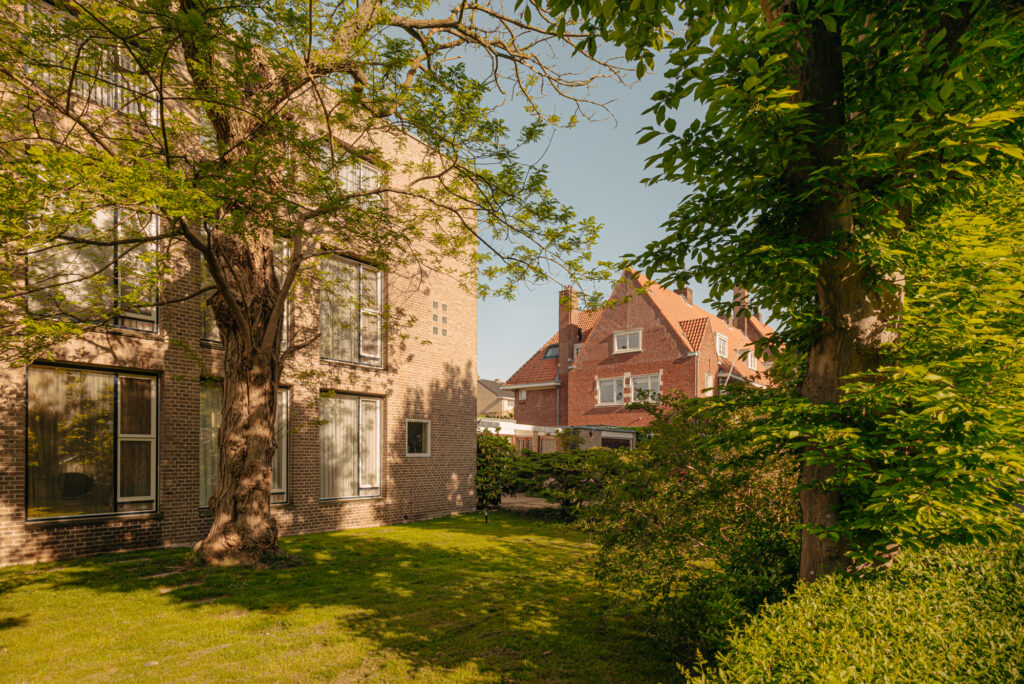
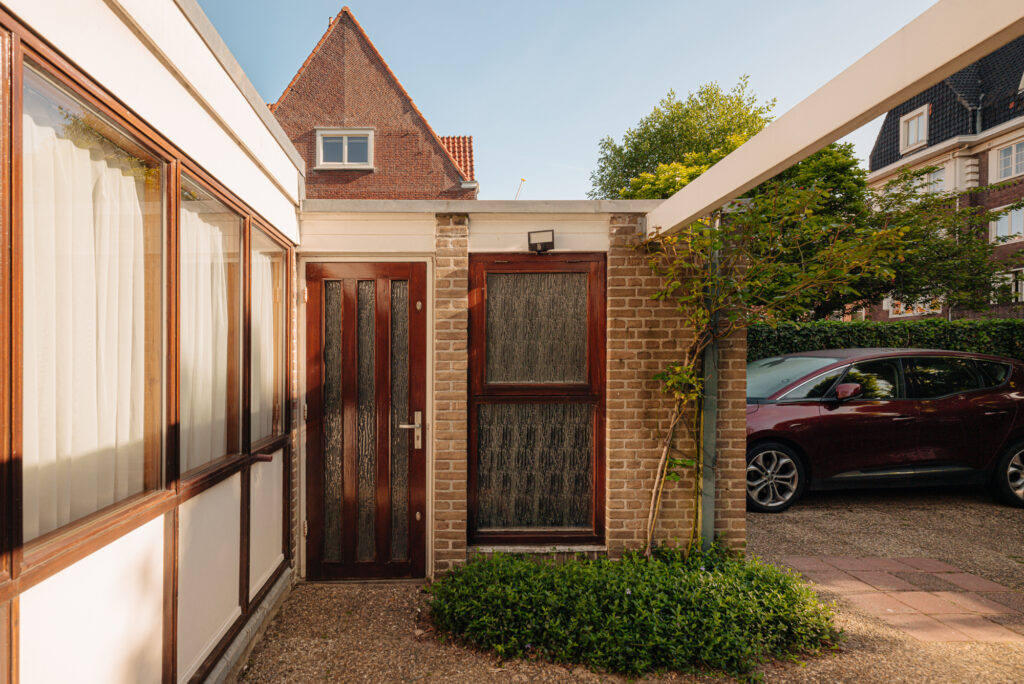
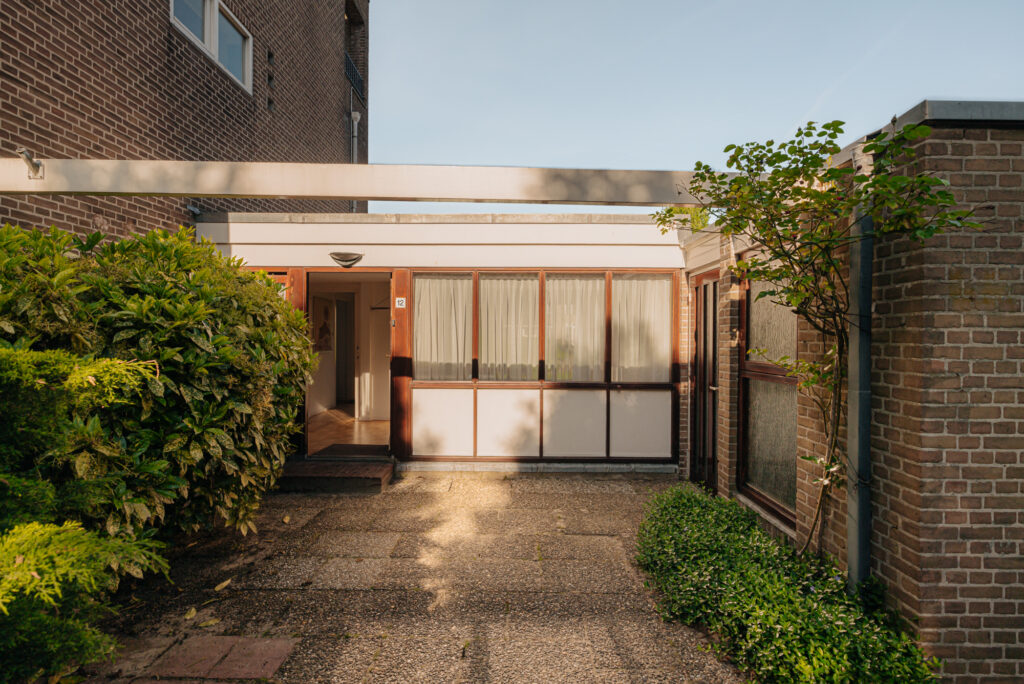
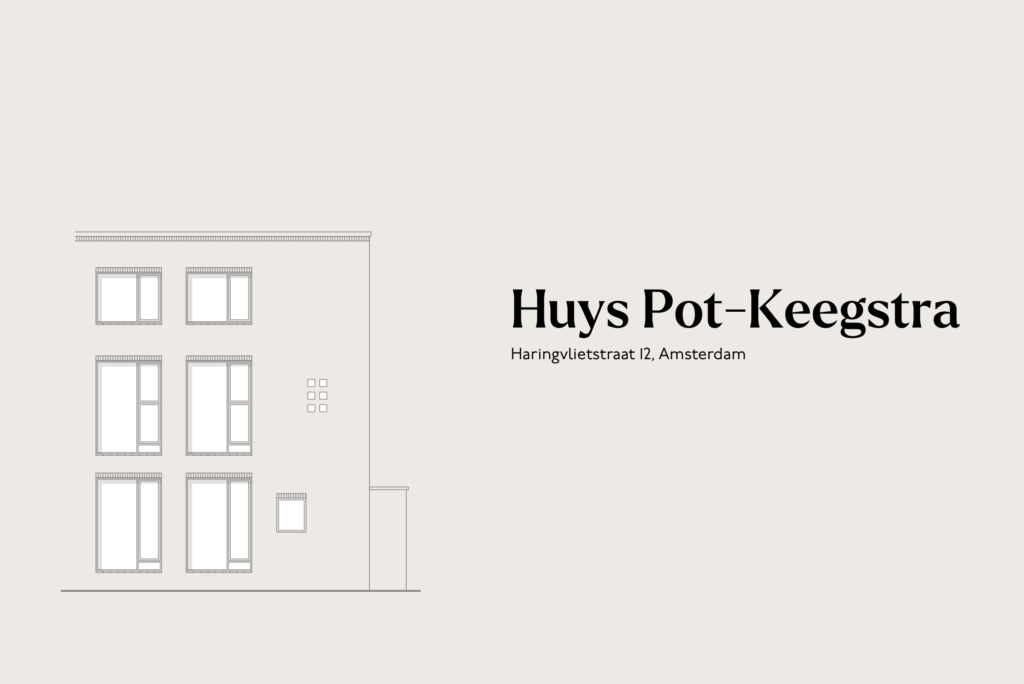
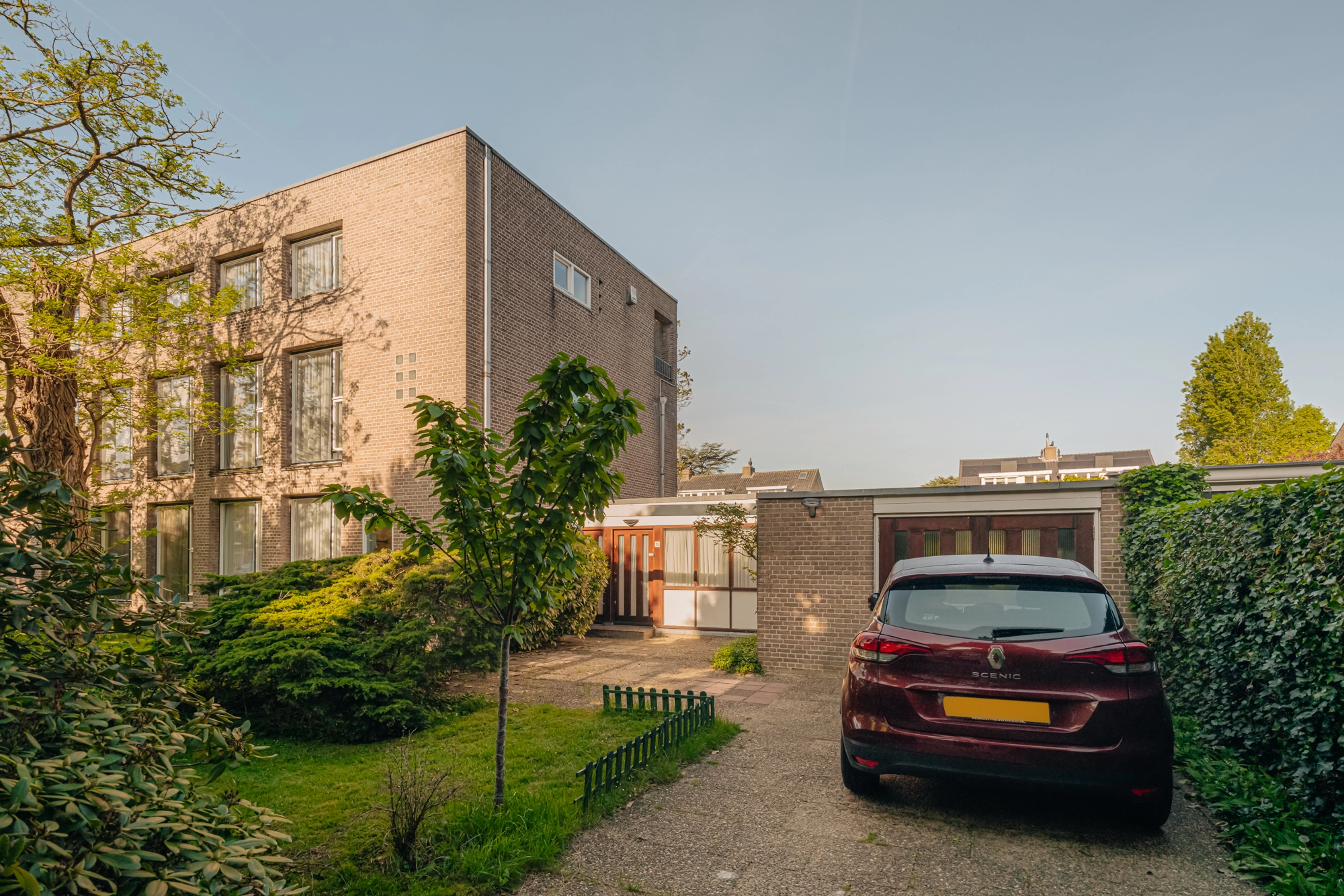
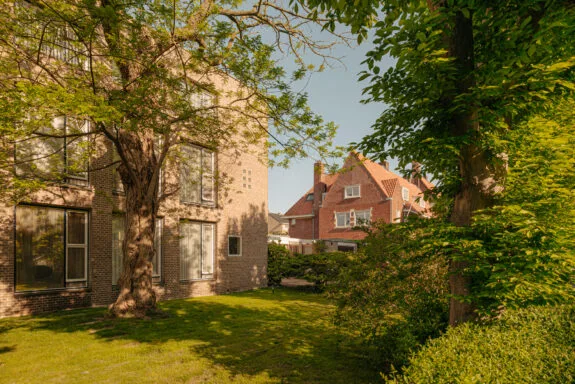
Set on the quiet Haringvlietstraat, this monumental semi-detached residence was designed and inhabited by the architect couple Pot-Keegstra. Built in 1955 as a home with an integrated office, it stands as a distinctive example of late modernist architecture within a neighbourhood predominantly defined by late 1920s housing. The design is clear and functional, with a rhythmic façade composition, rectilinear volumes and a restrained use of materials. Architect Pot embraced an austere architectural language, where expression arises from proportion, rhythm, and form — not from ornament or nostalgia. Architecture here is pure, spatial, and composed with purpose. This vision materialises in the vertical window bands, the generous influx of natural light, the subtle brickwork relief, and the precise balance between solid and open surfaces. The residence is deliberately understated yet meticulously crafted — with attention to scale, proportion, and structure. It unfolds in layers: from a deep front garden, through a generous living floor, to a wide rear garden along the water. The entrance — with timber-framed doors and white-bordered panels — is low-profile and warmly articulated. Inside, the sightlines are long and the spaces are logically connected. The internal garage — originally a detached volume — adds to the practicality and is rare in this context. The garden was designed by Mien Ruys. Solar panels on the roof and a ready-to-execute redesign offer scope for contemporary adjustments. In this residence, the architects Pot-Keegstra — later also responsible for the design of the Bijlmerbajes — demonstrate how modest means can yield a powerful and enduring living environment.
Renovation possibilities
Commissioned by the seller, Allard Architecture has developed a proposal outlining the renovation potential of the residence at Haringvlietstraat 12. The plan primarily involves converting and merging the existing garage into living space and raising the current side extension and garage by one metre externally, allowing for higher ceilings in the extension area. Additionally, the creation of a basement beneath the extension appears technically feasible; however, this would currently fall outside the zoning plan. Should the full scope of the proposed expansion be realised, the total living area could be increased to approximately 275 square metres.
For more information, a zoning diagram prepared by Allard Architecture and an alternative floor plan are available.
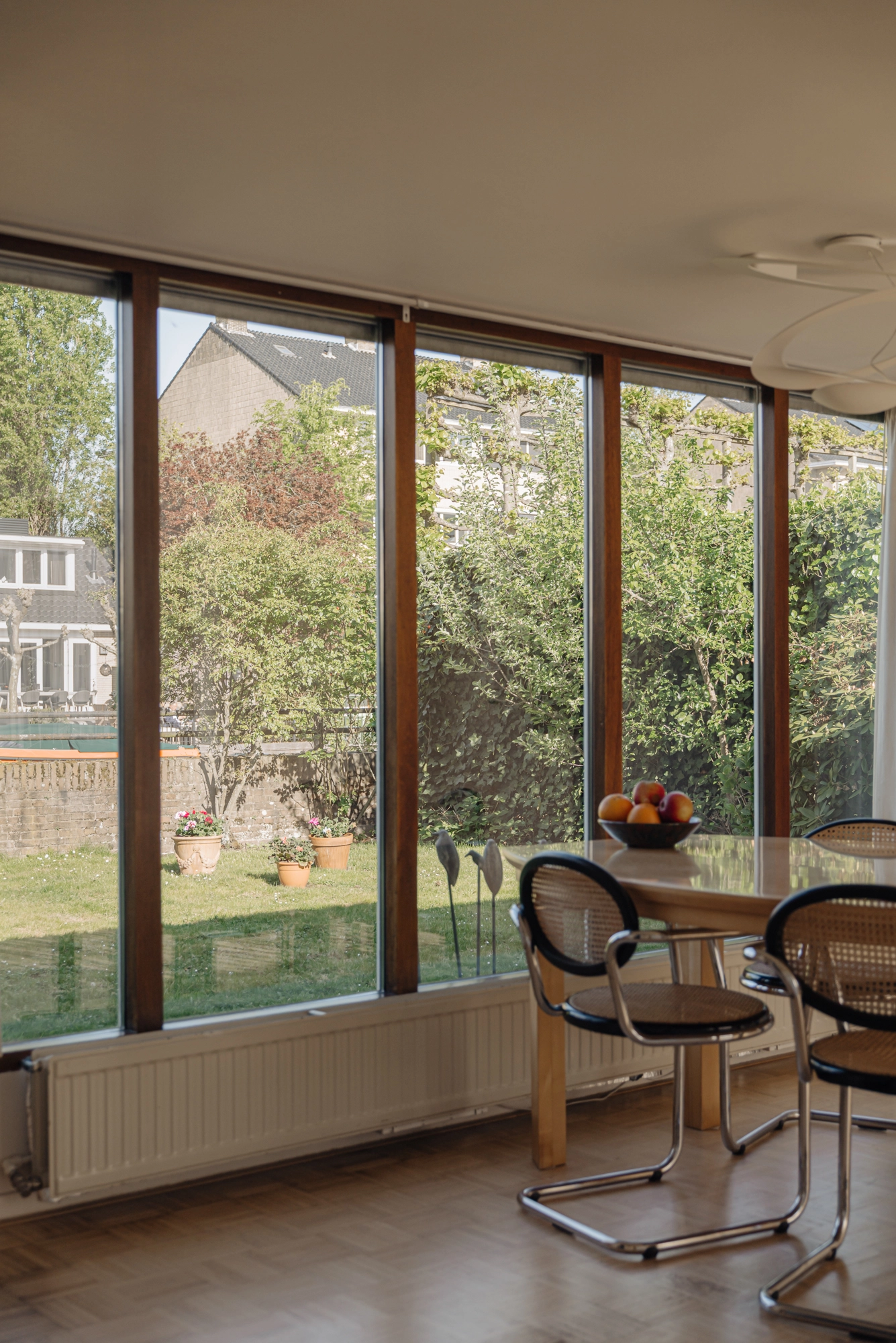
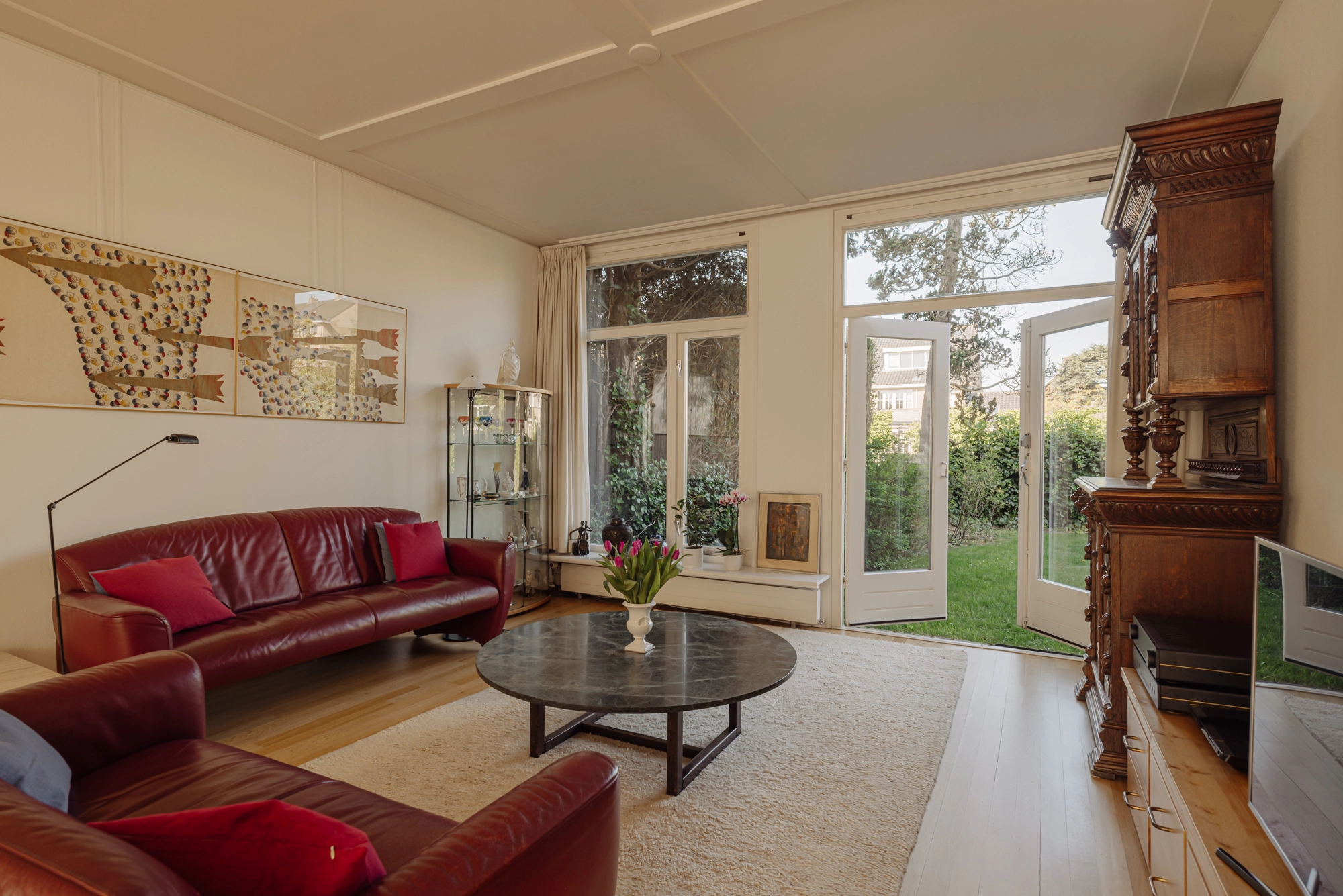
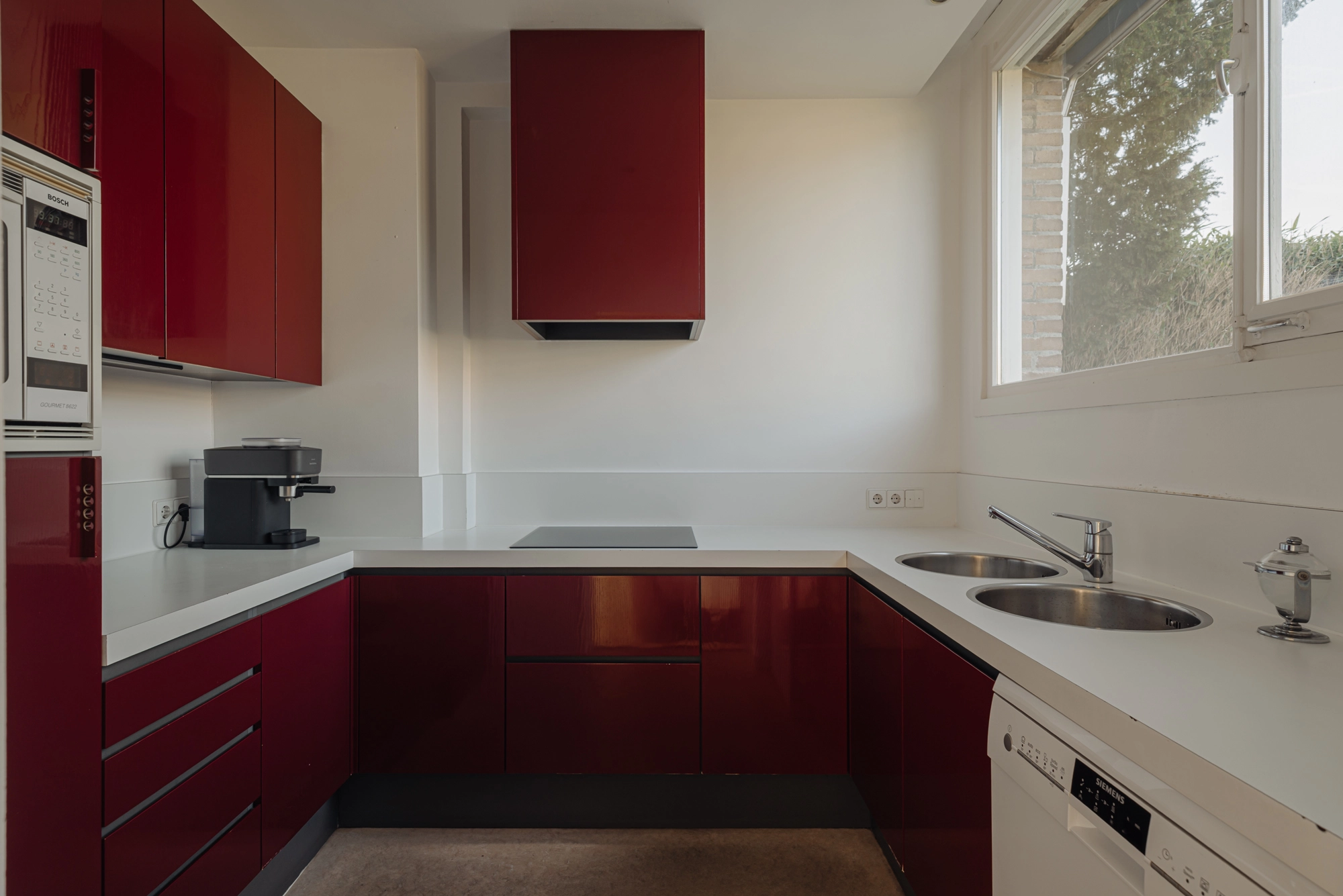
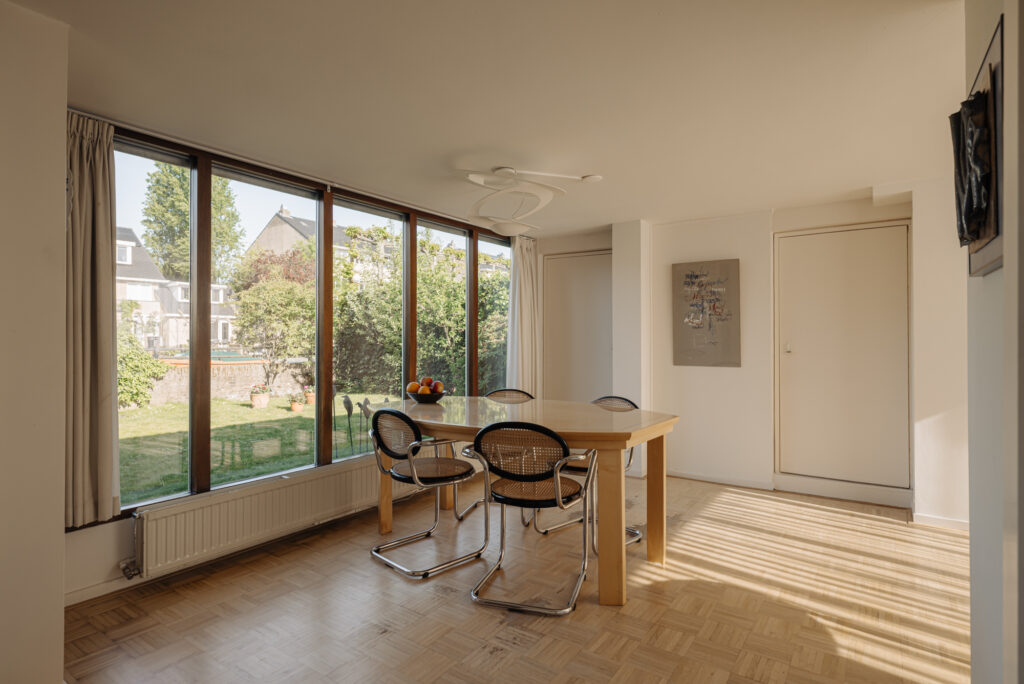
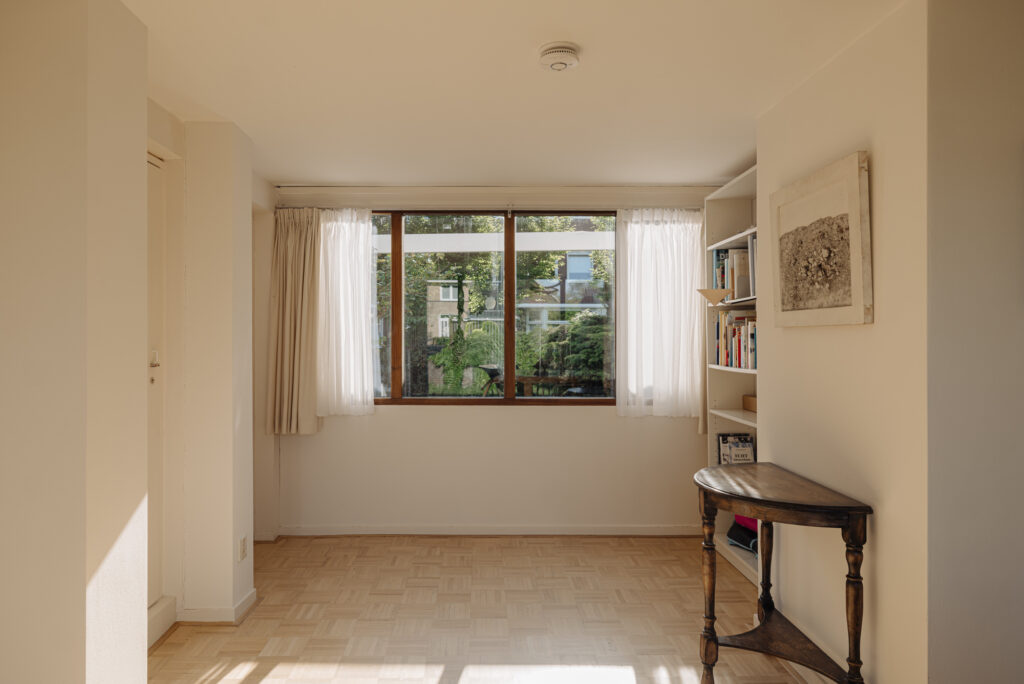
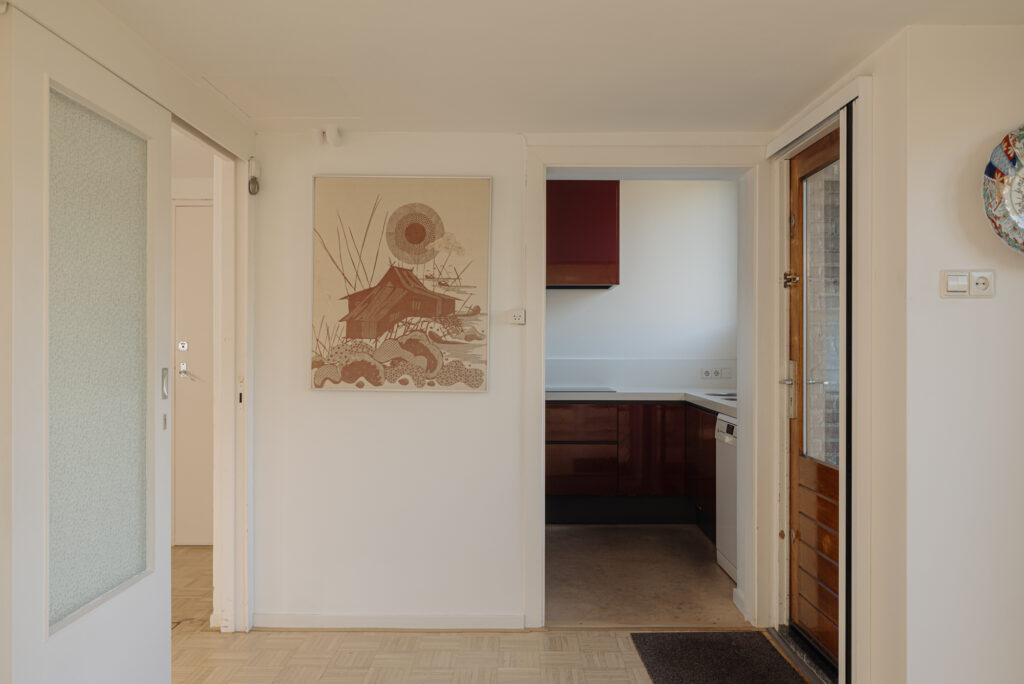
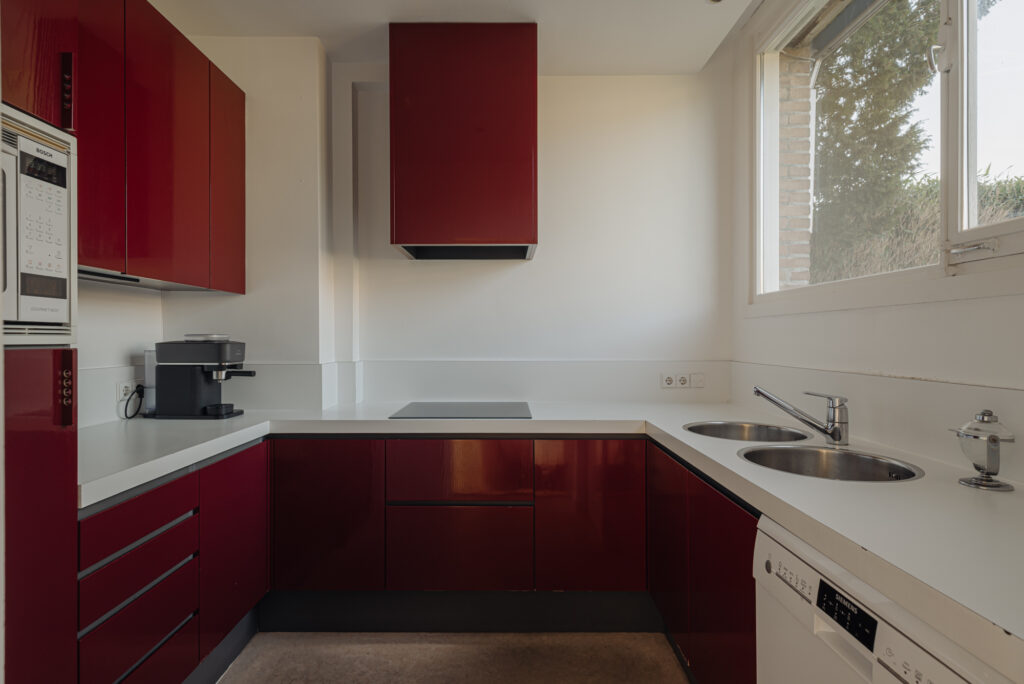
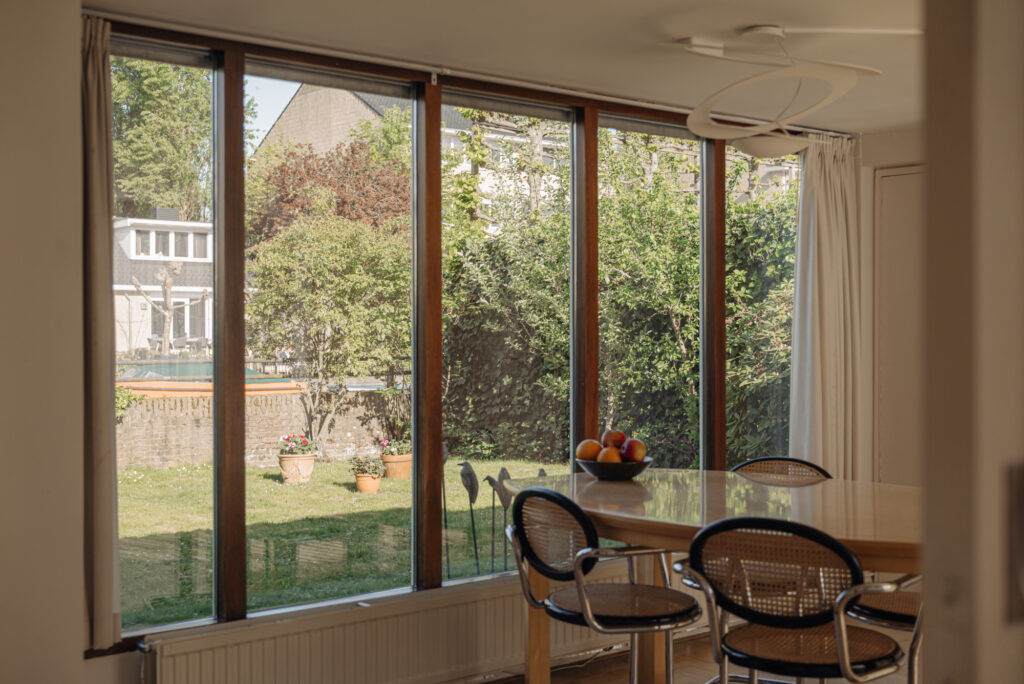
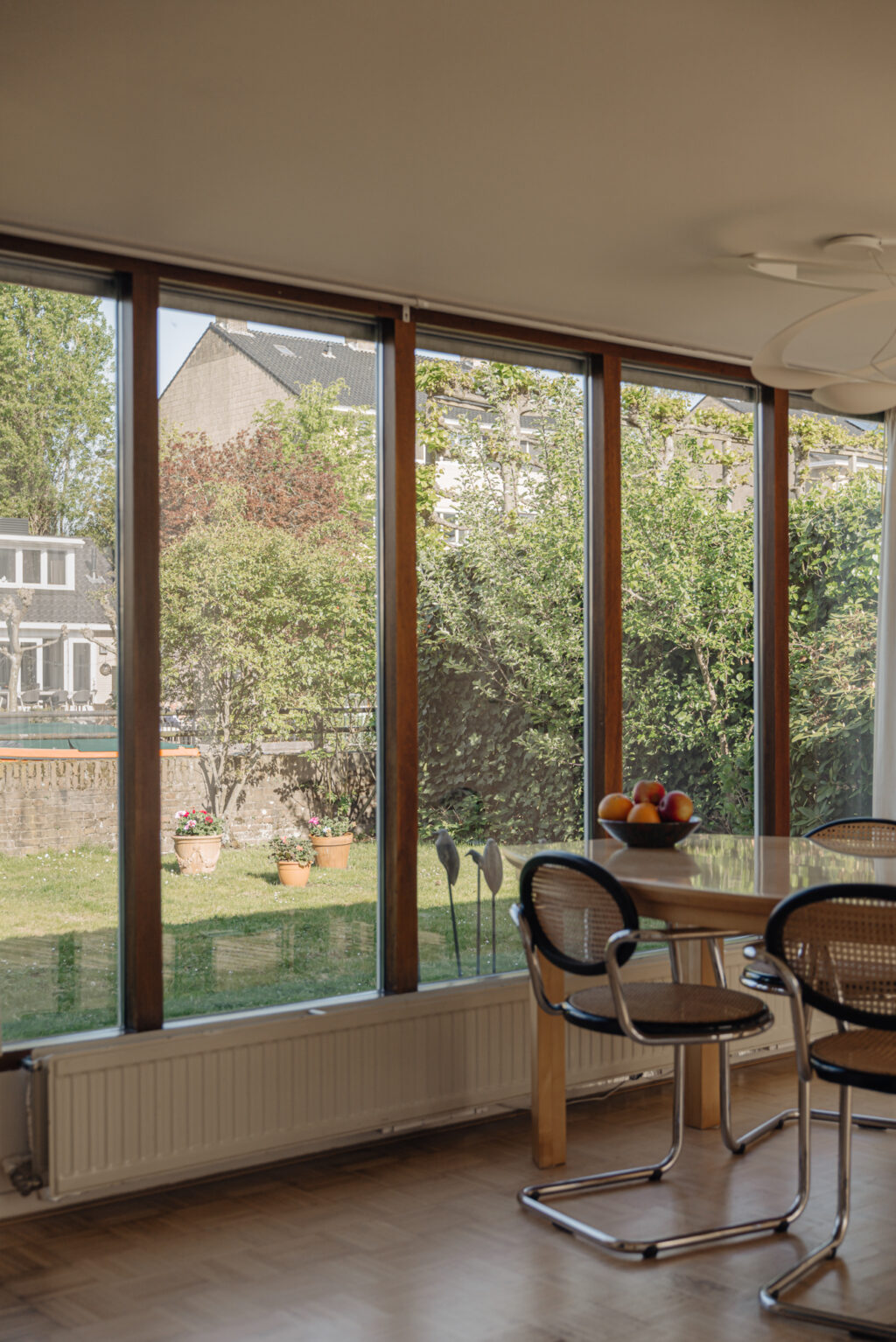
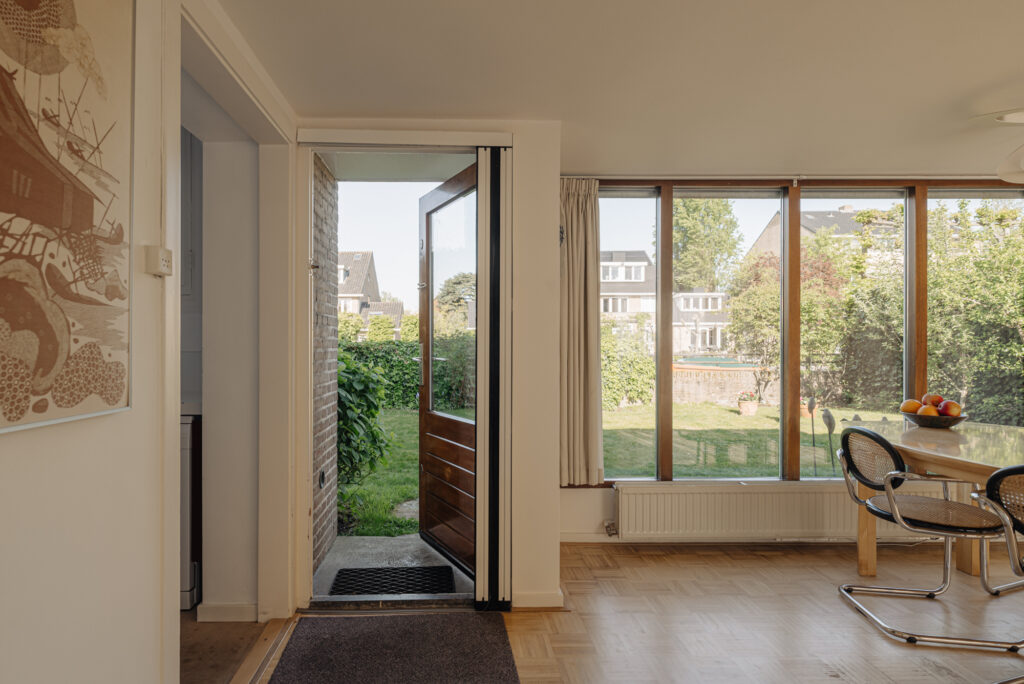
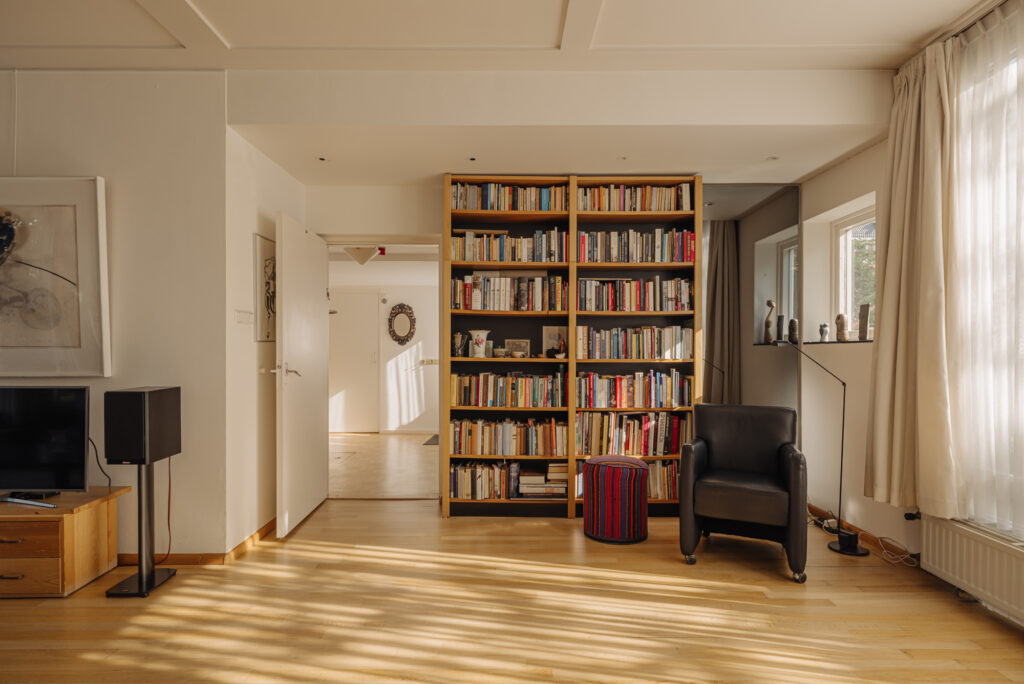
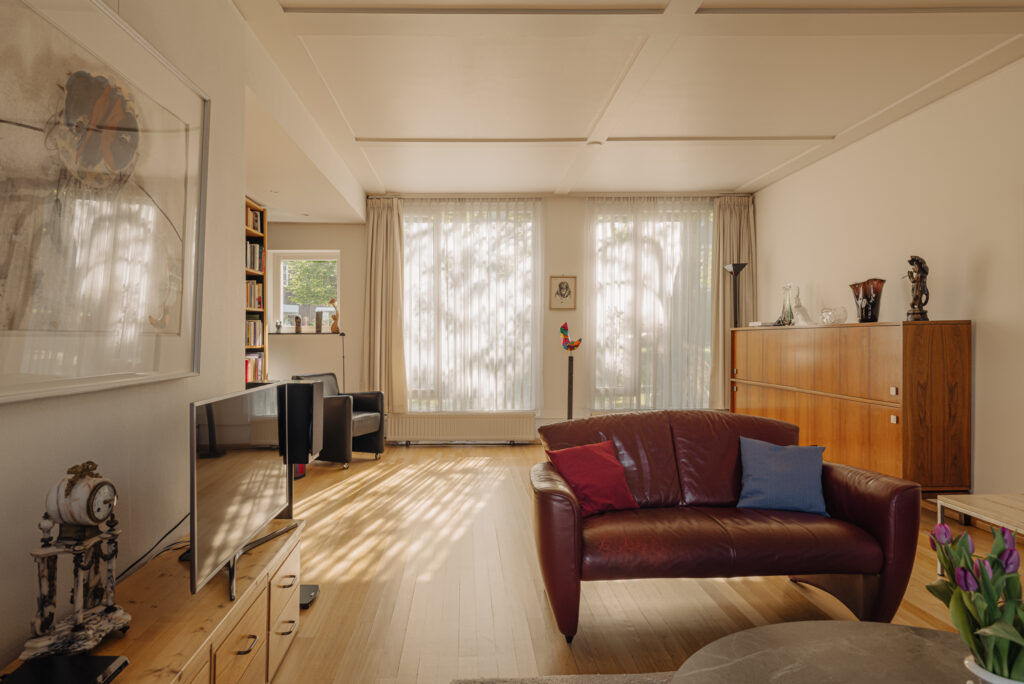
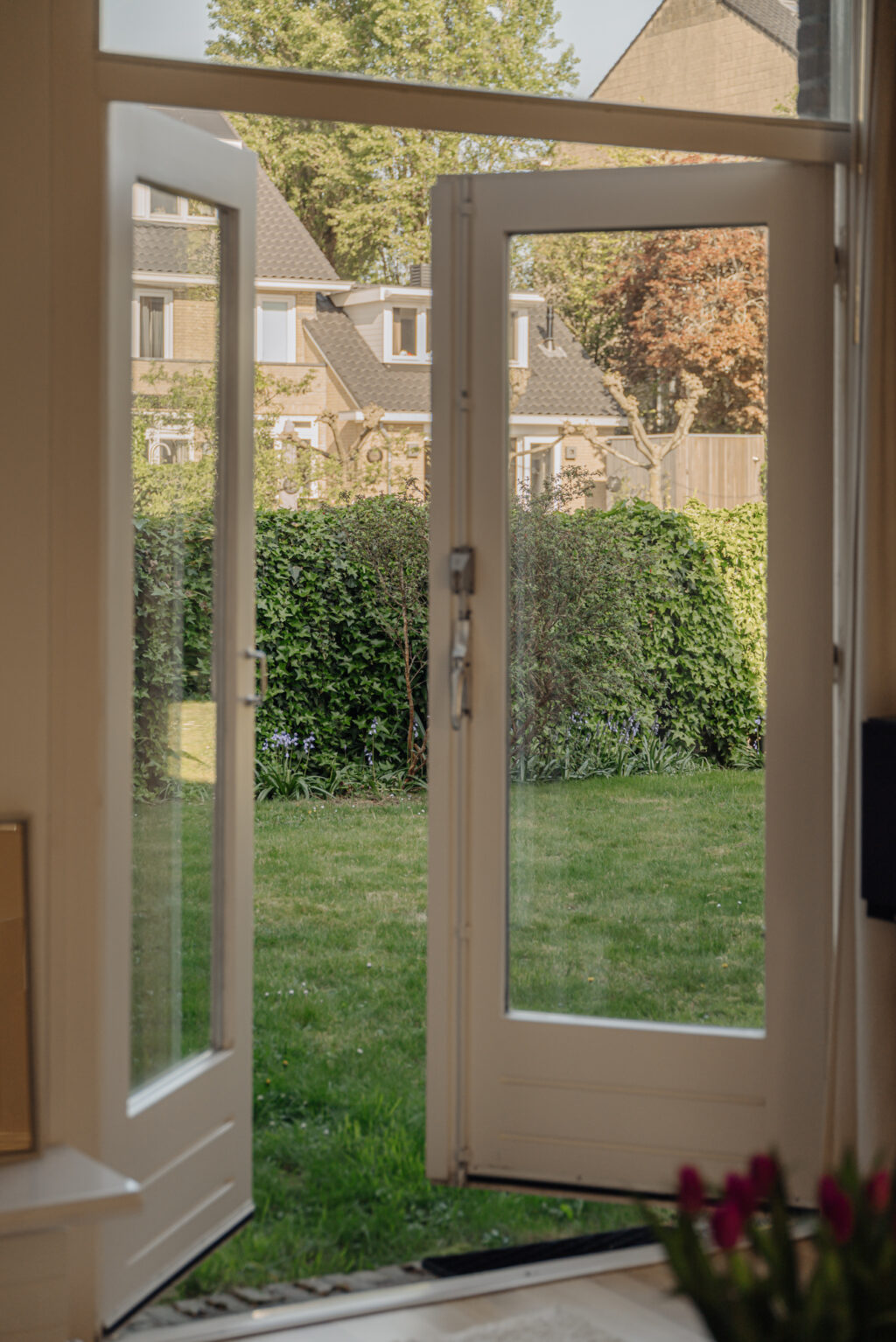
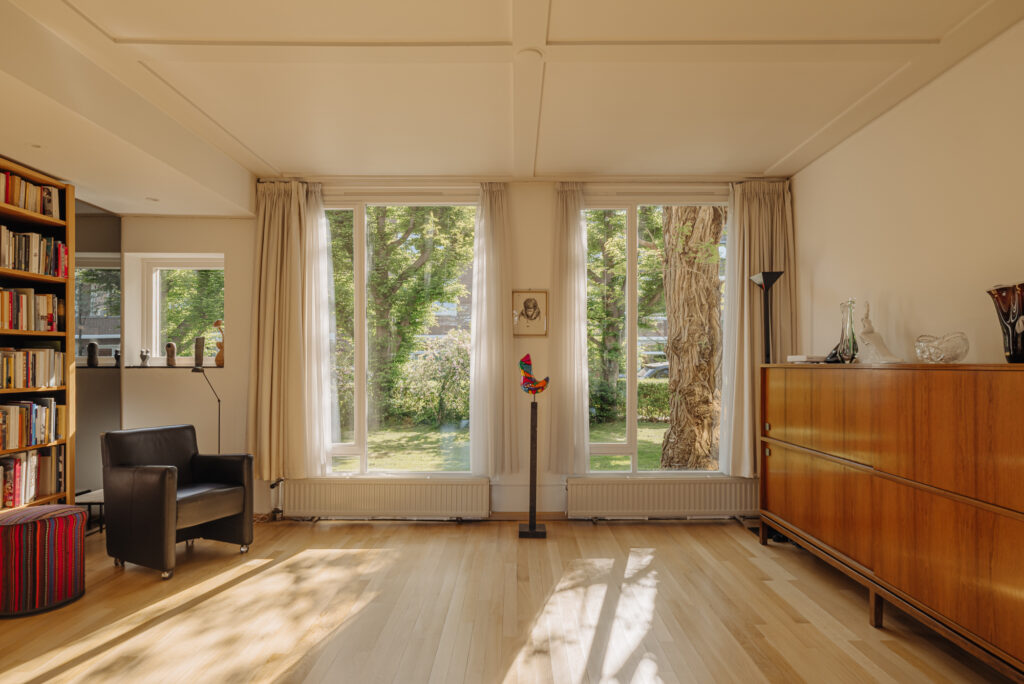
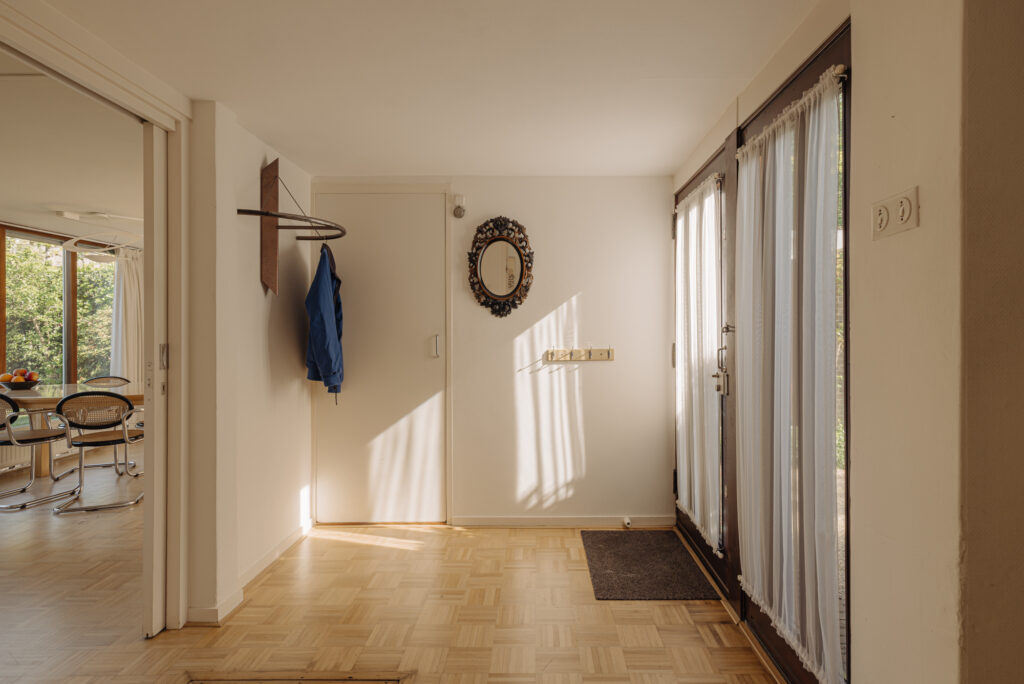
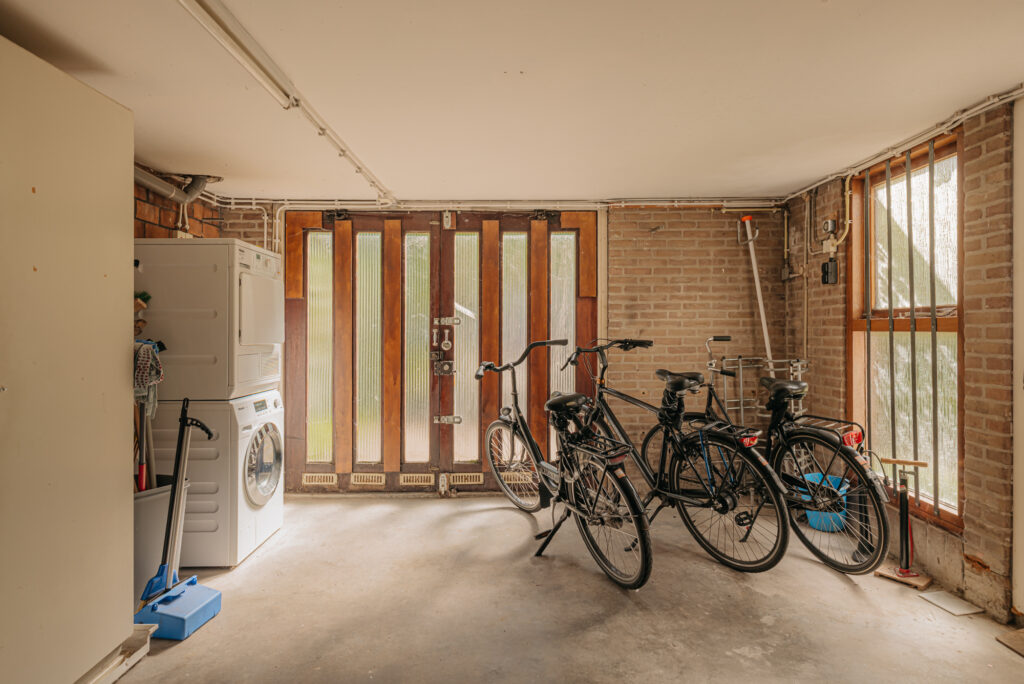
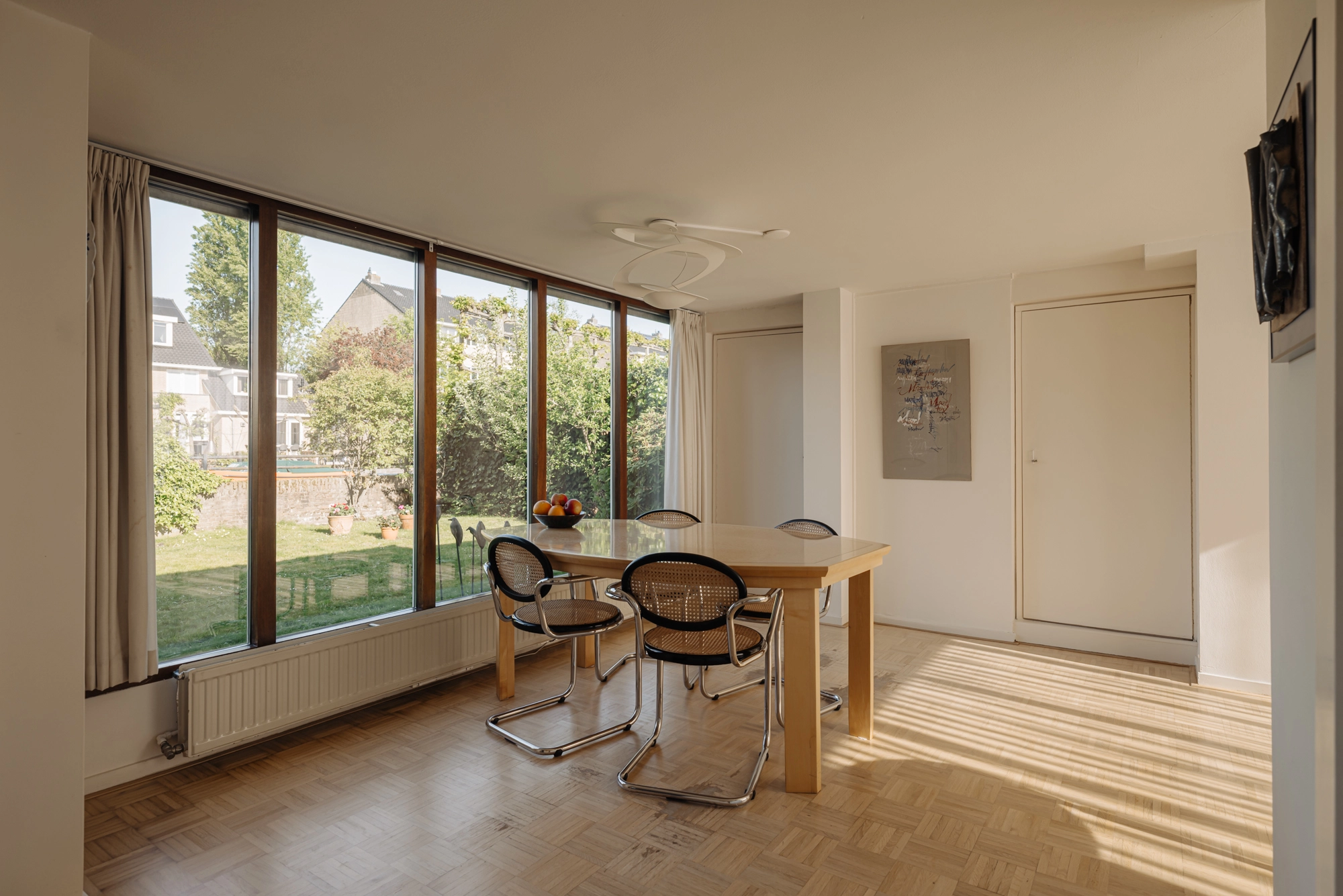
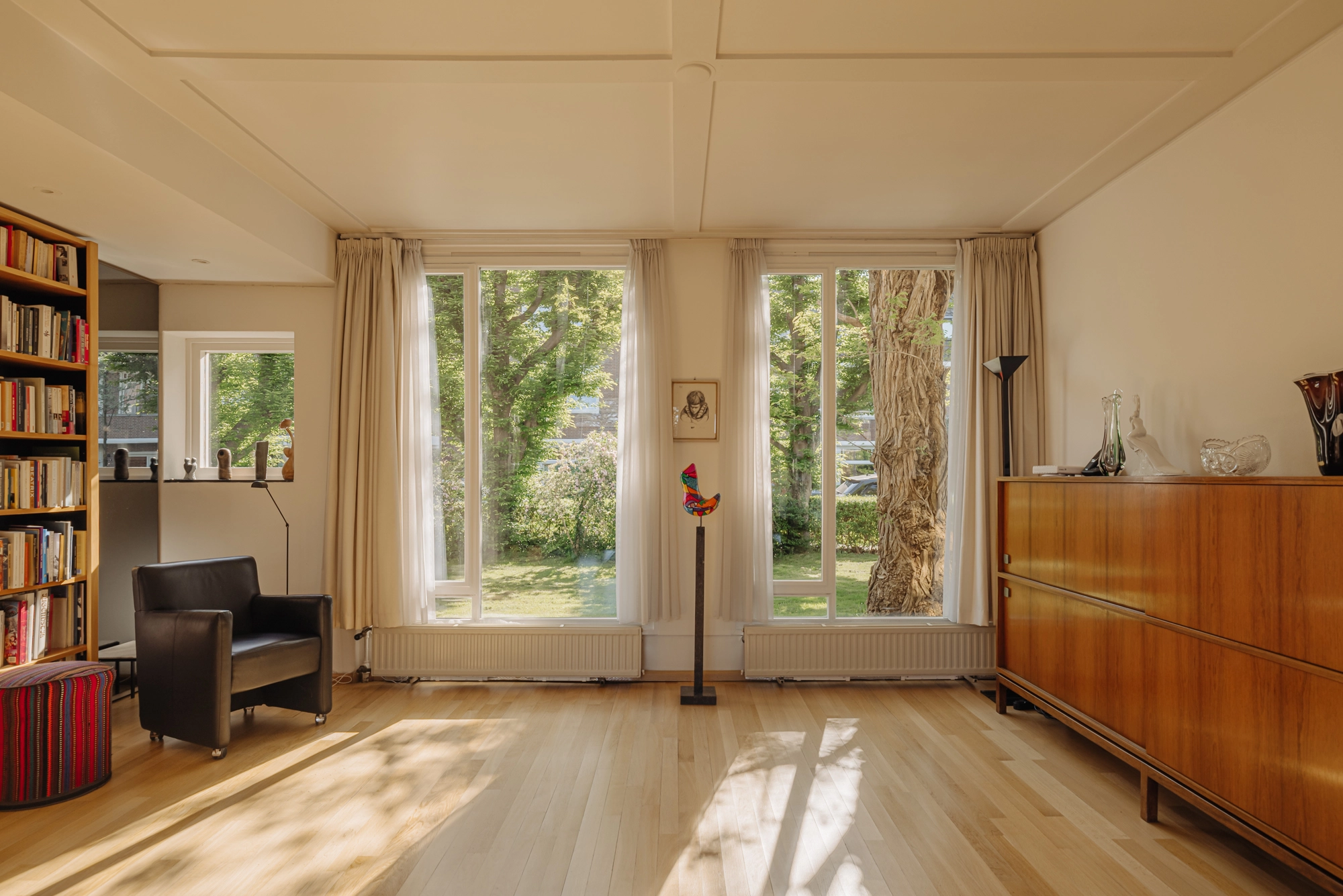
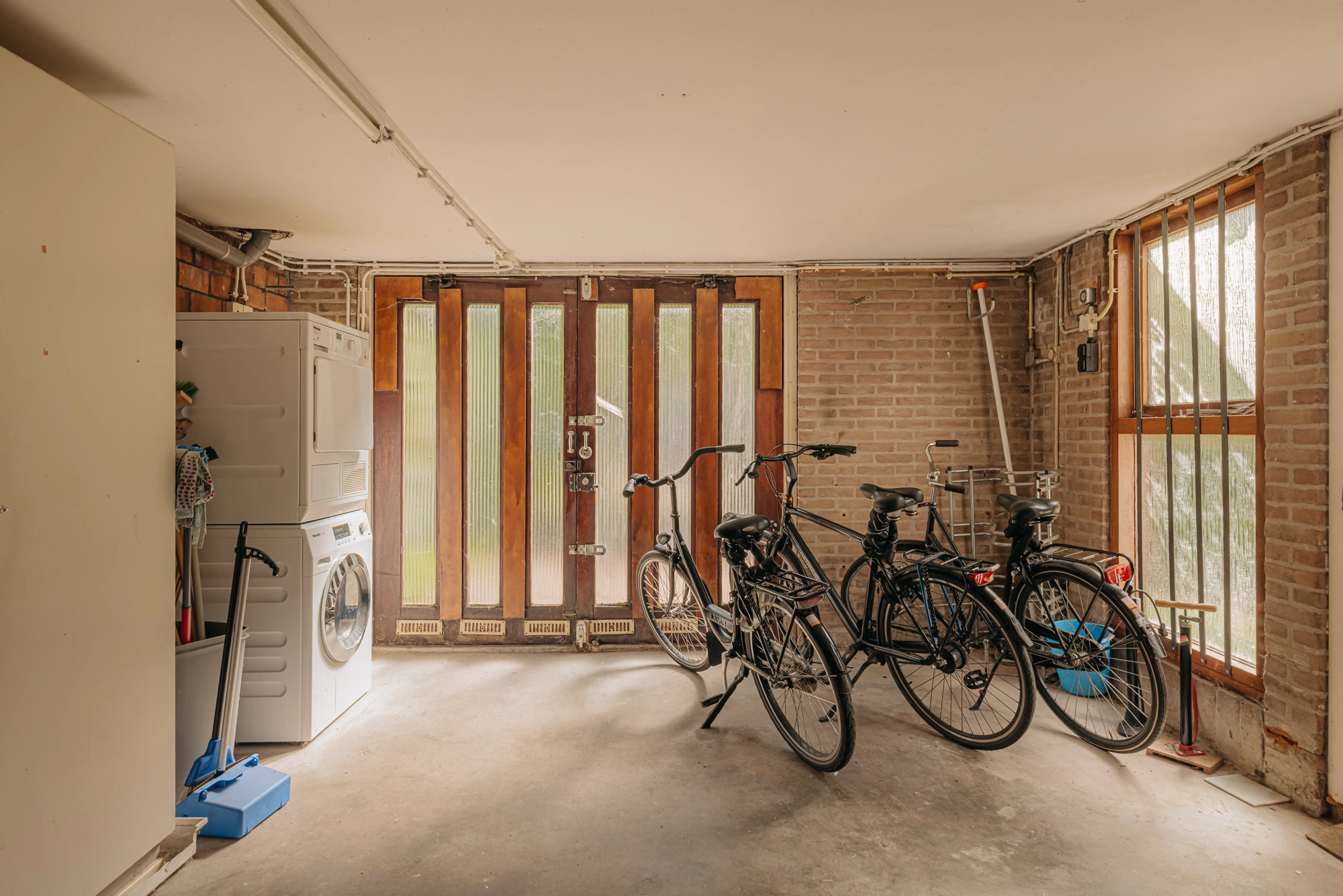
The home opens with a light-filled hallway offering a view of the garden. Tall vertical glass panels flanking the front door create a welcoming entrance, softening the space with natural light. The hall functions as a natural pivot within the floorplan, providing direct access to the living room, dining room, kitchen, and guest lavatory. The living room faces the deep garden and the water beyond through expansive glazed openings. The space is bright and well-organised, with a light wooden floor and a calm, balanced layout. French doors establish a direct connection between the interior and the greenery outside. At the front of the home, the light is beautifully filtered, lending a sense of openness on both sides of the room. The Italian kitchen is set slightly apart yet remains visually connected to the rest of the ground floor. The layout is functional, with deep, high-gloss warm red cabinet fronts and a white countertop. A wide window brings daylight into the sink area. The space is clearly arranged and practically appointed. The dining room overlooks the garden and forms a delightful place within the home. The layout creates a natural transition between living, cooking, and being outdoors. The internal garage provides generous space for bicycles and storage and is equipped with a washing machine connection.
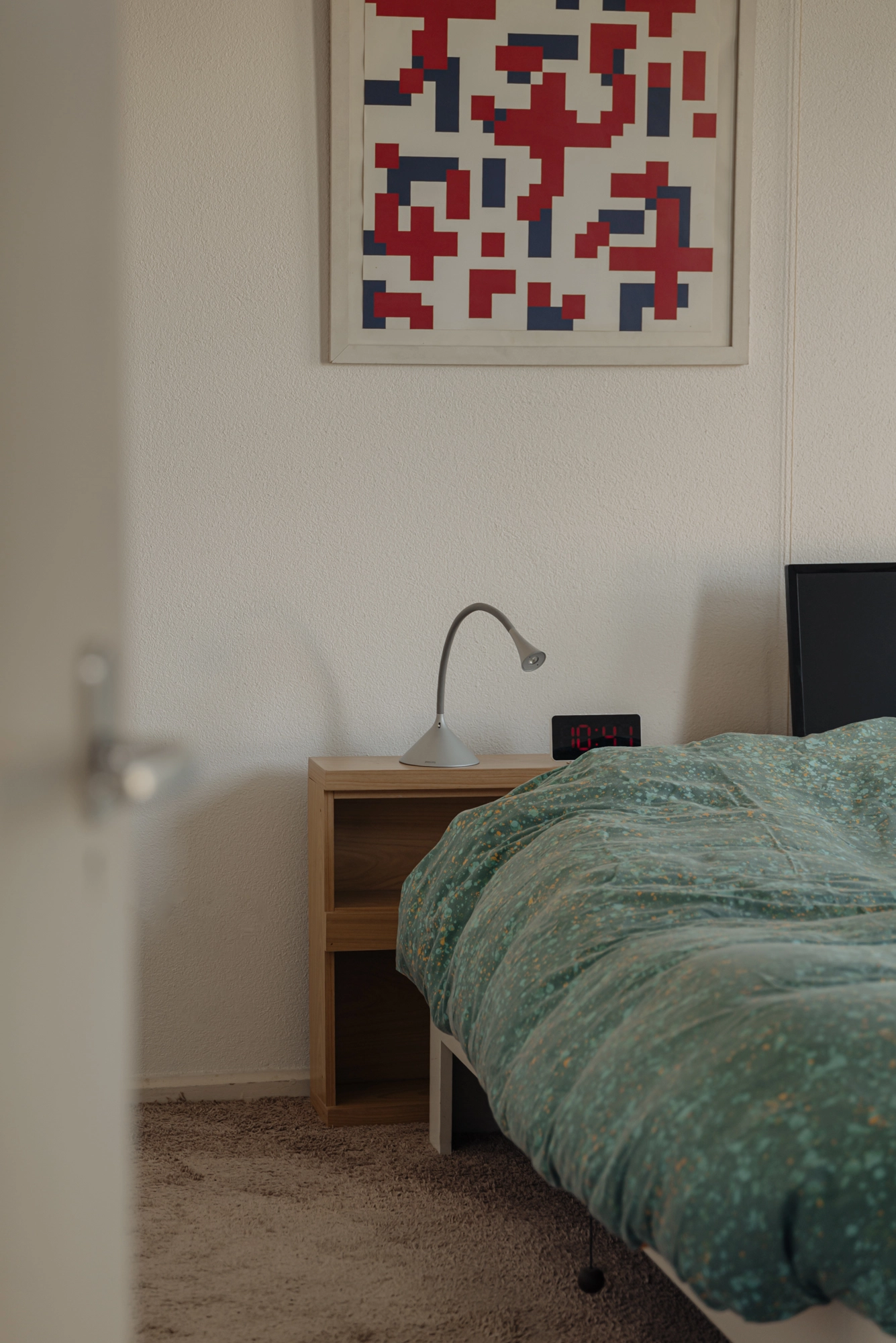
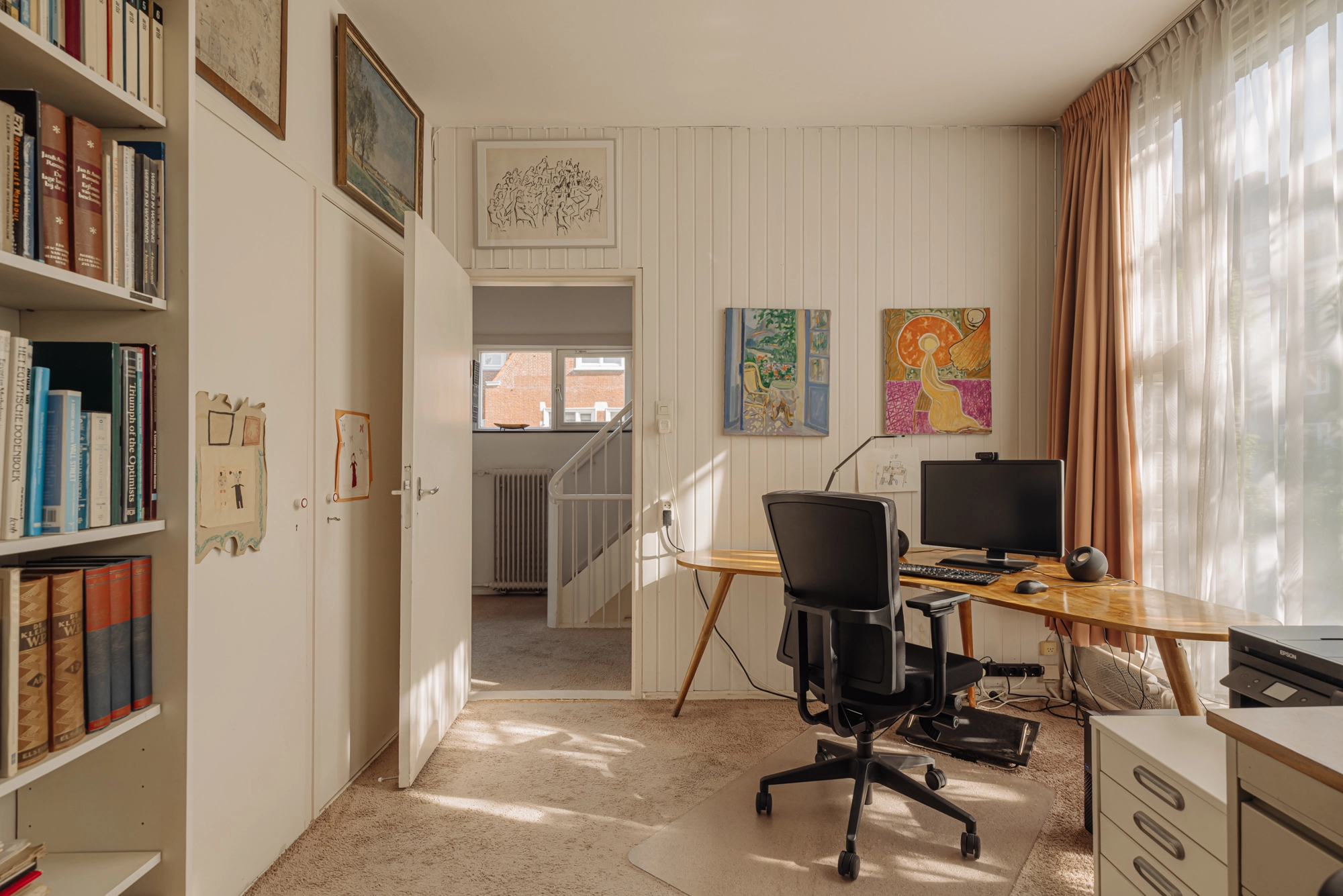
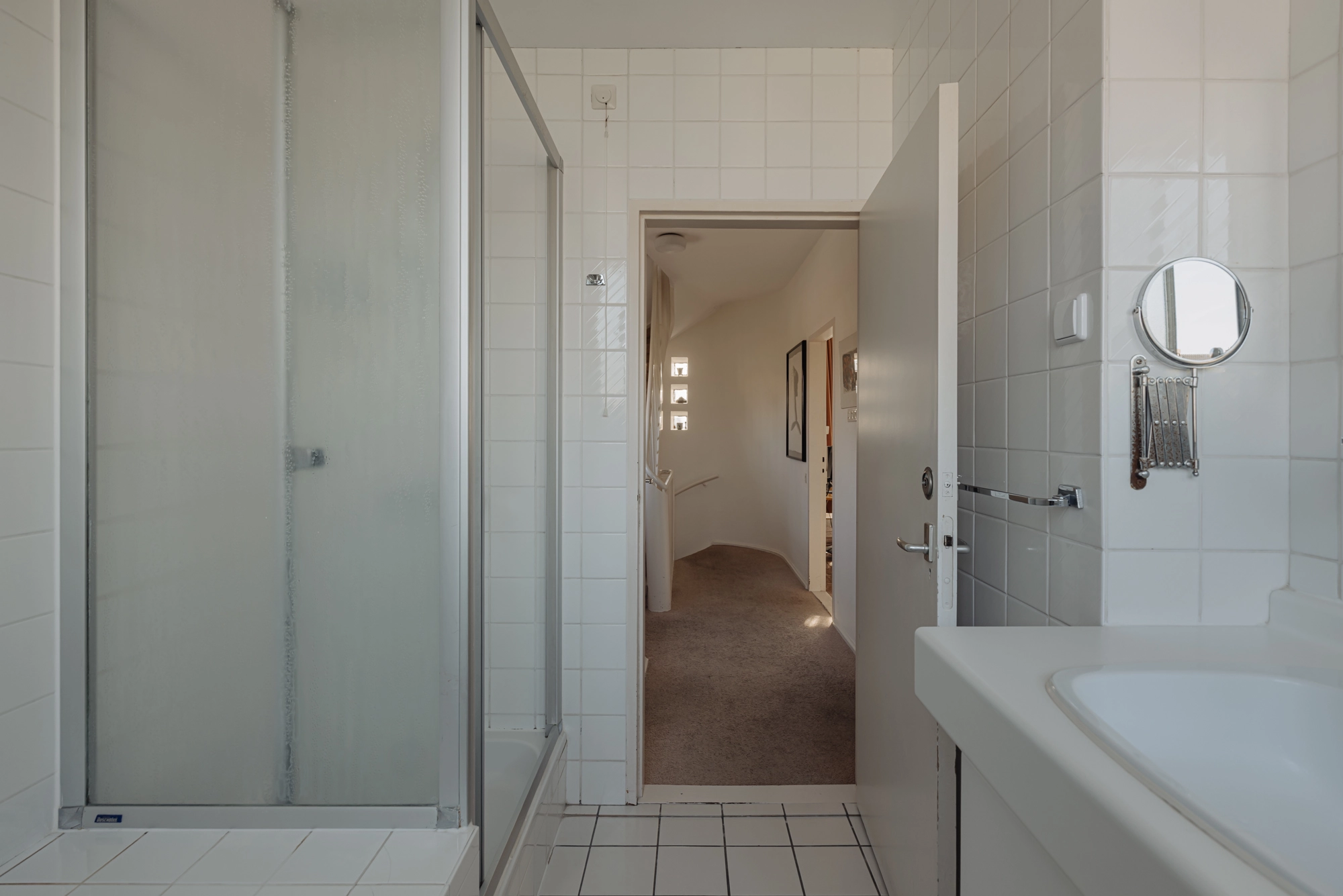
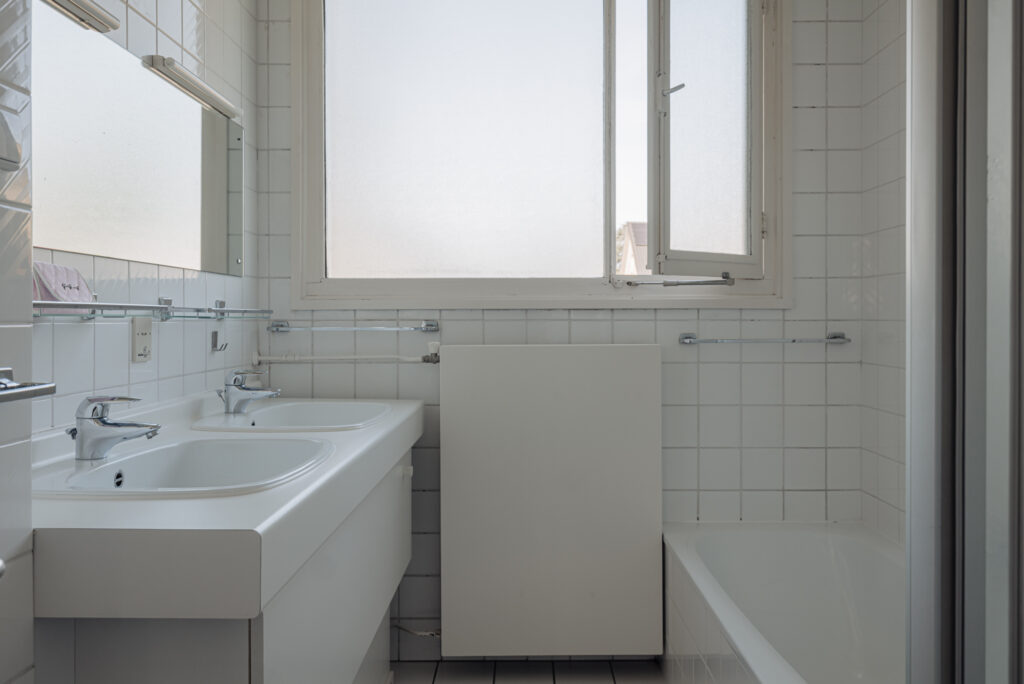
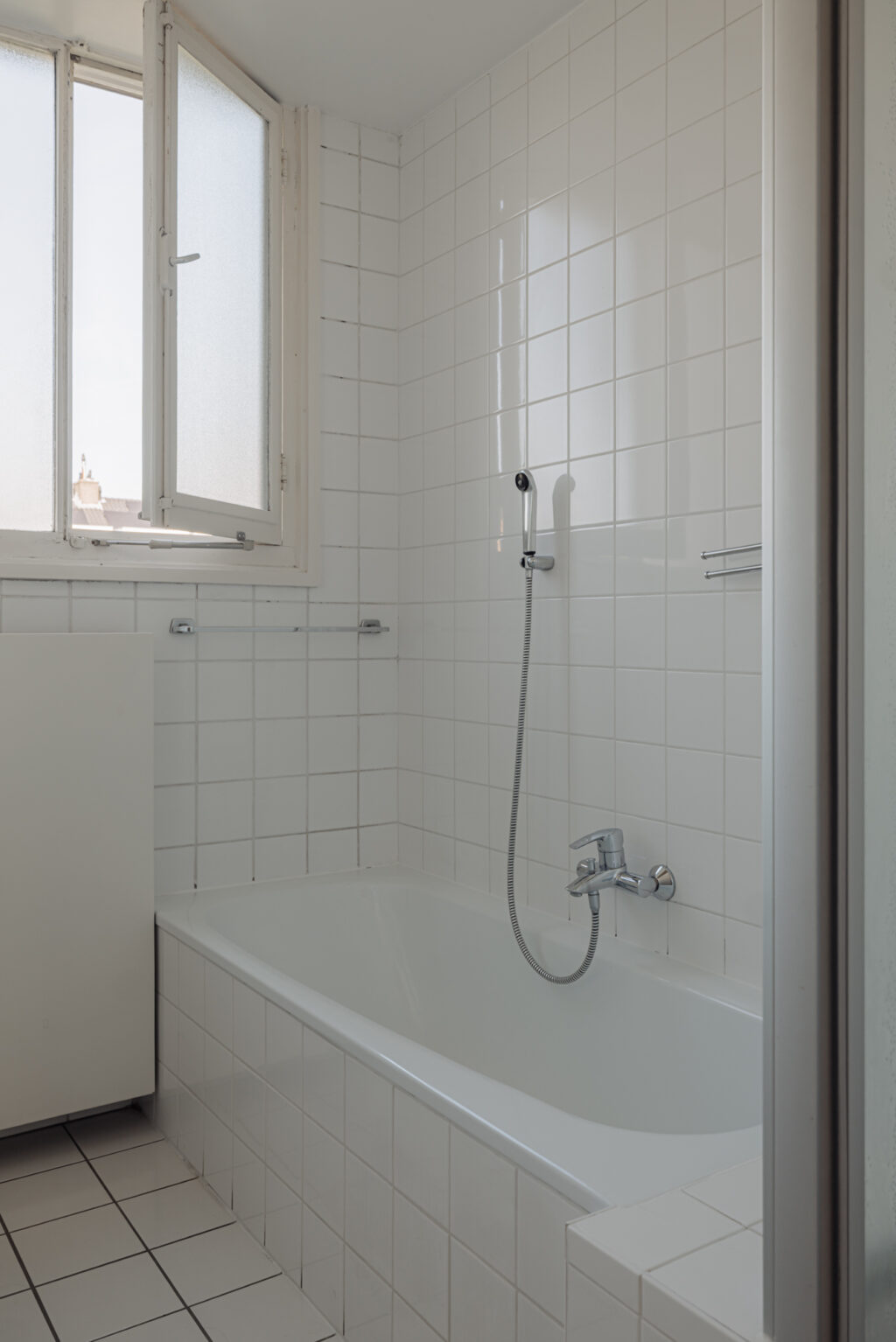
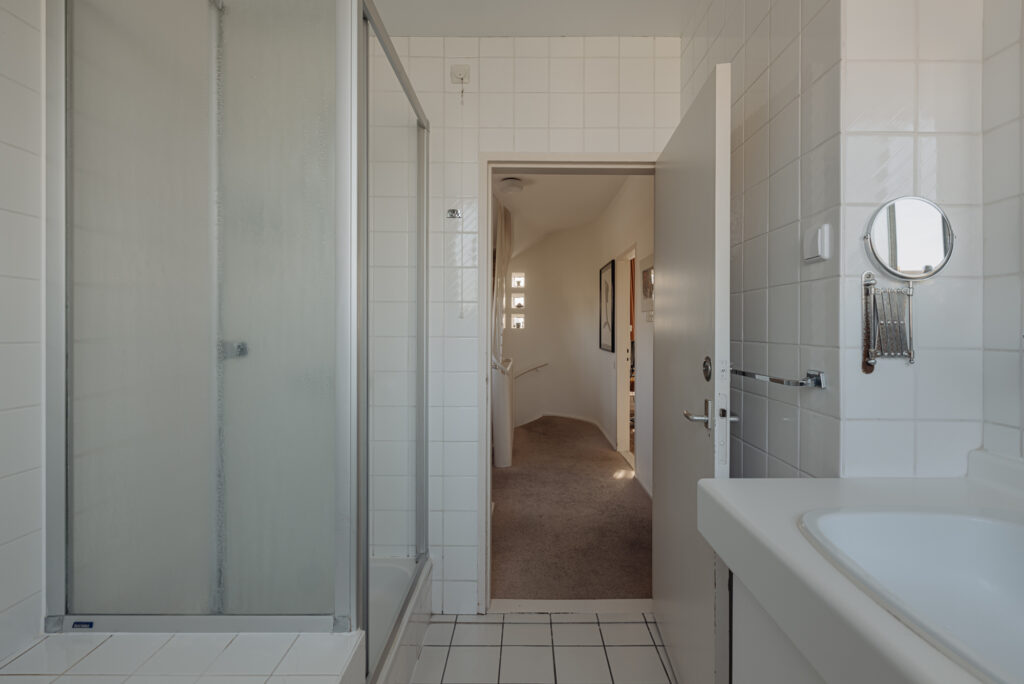
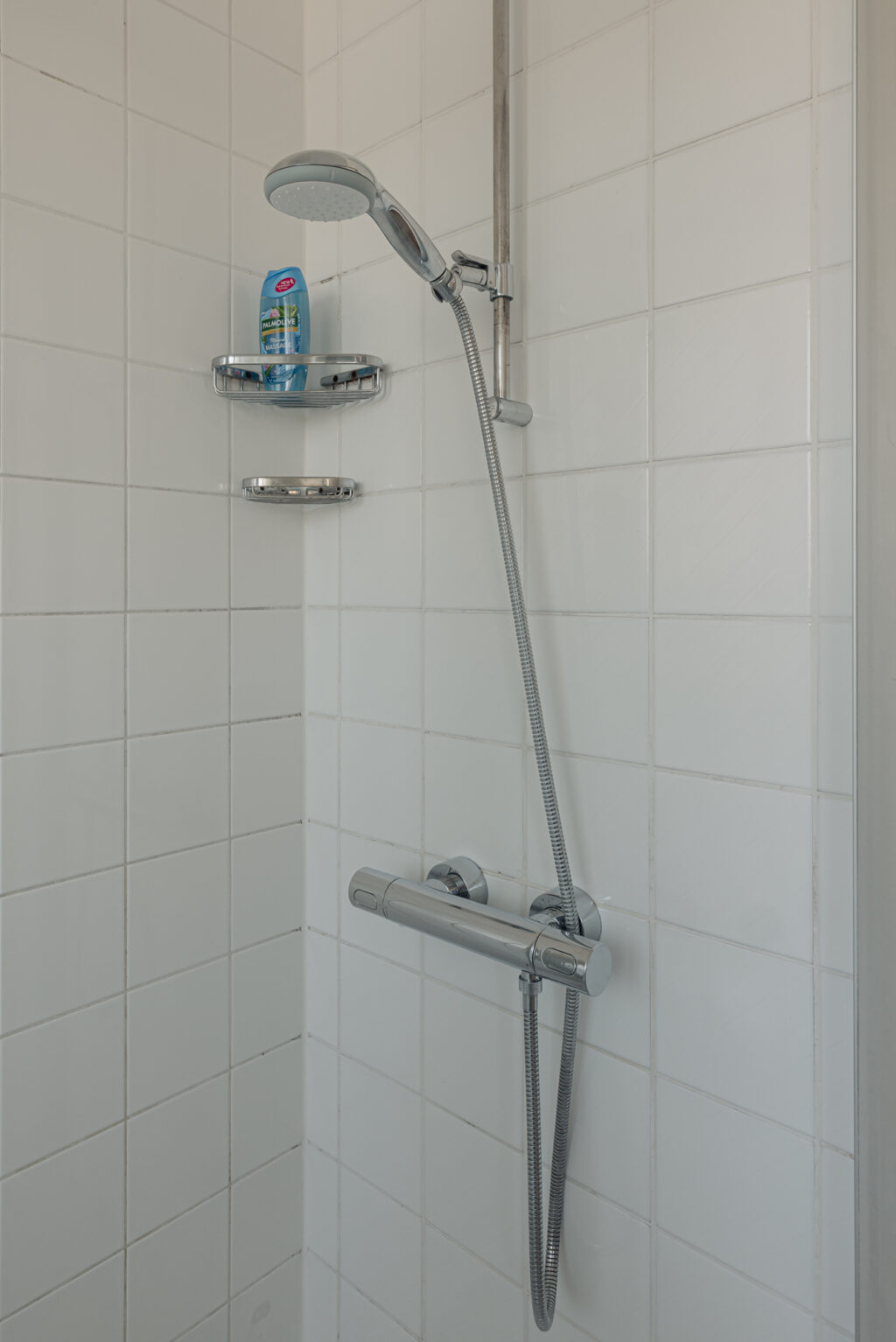
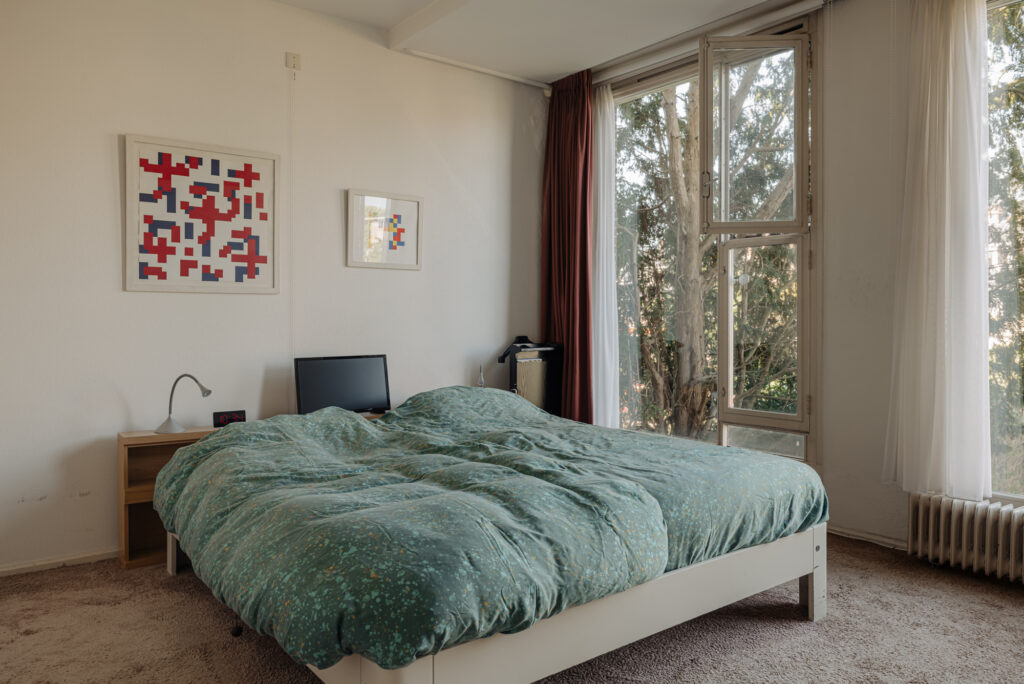
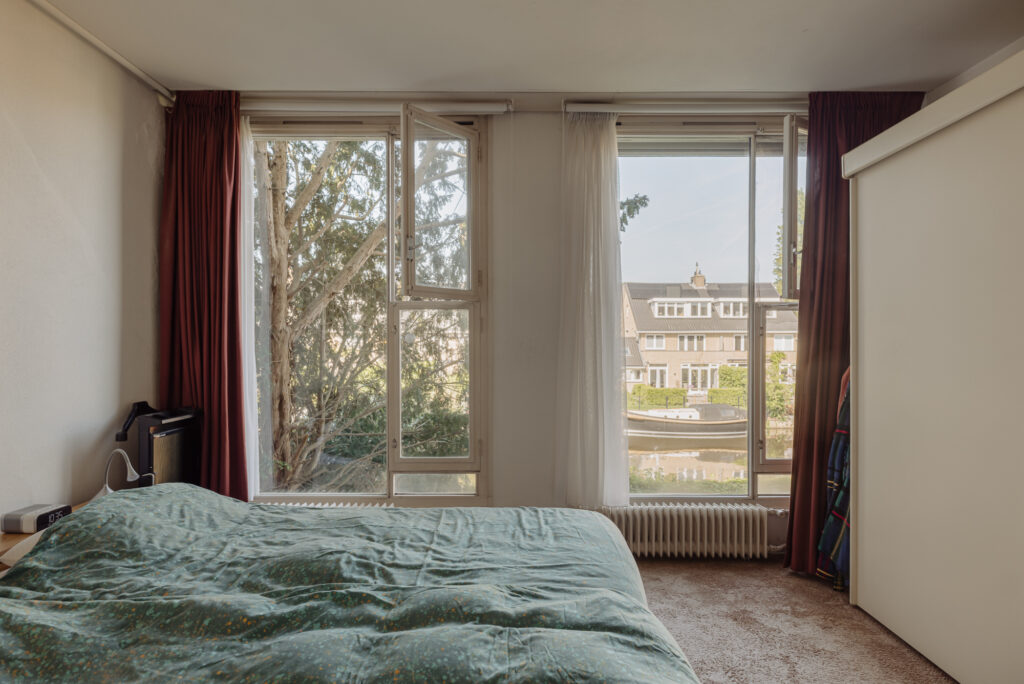
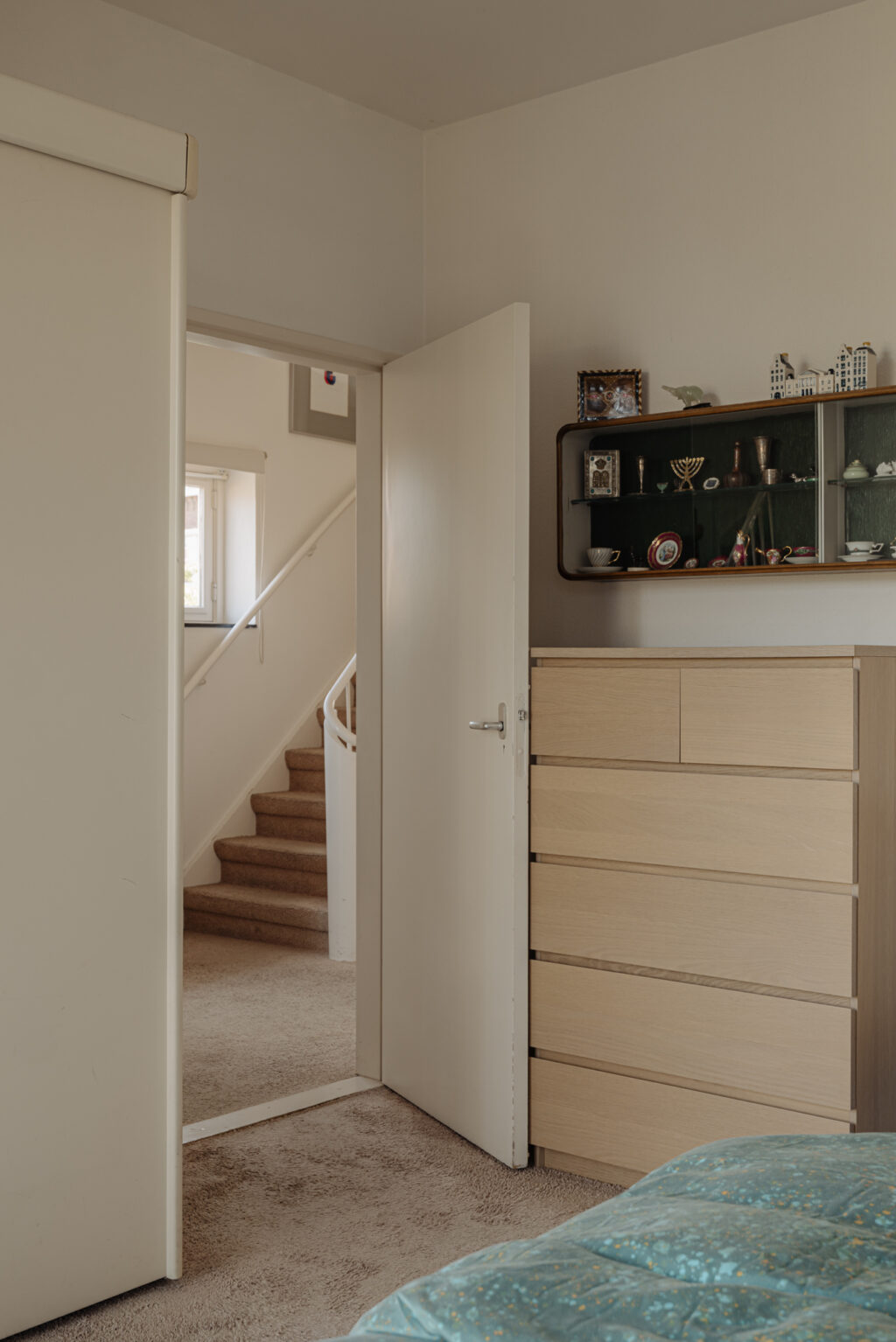
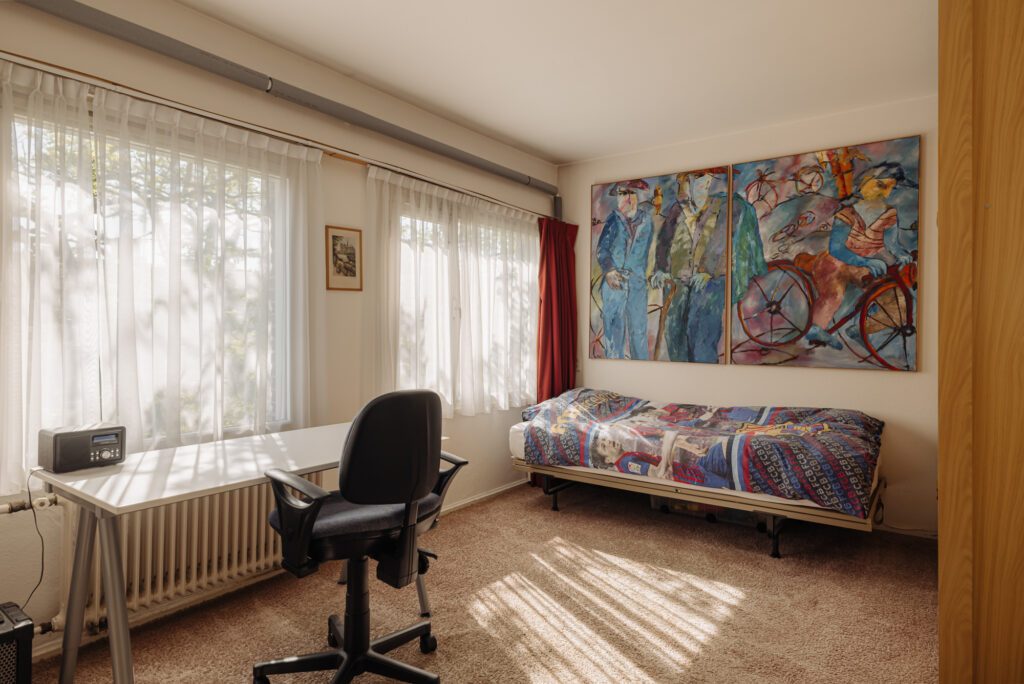
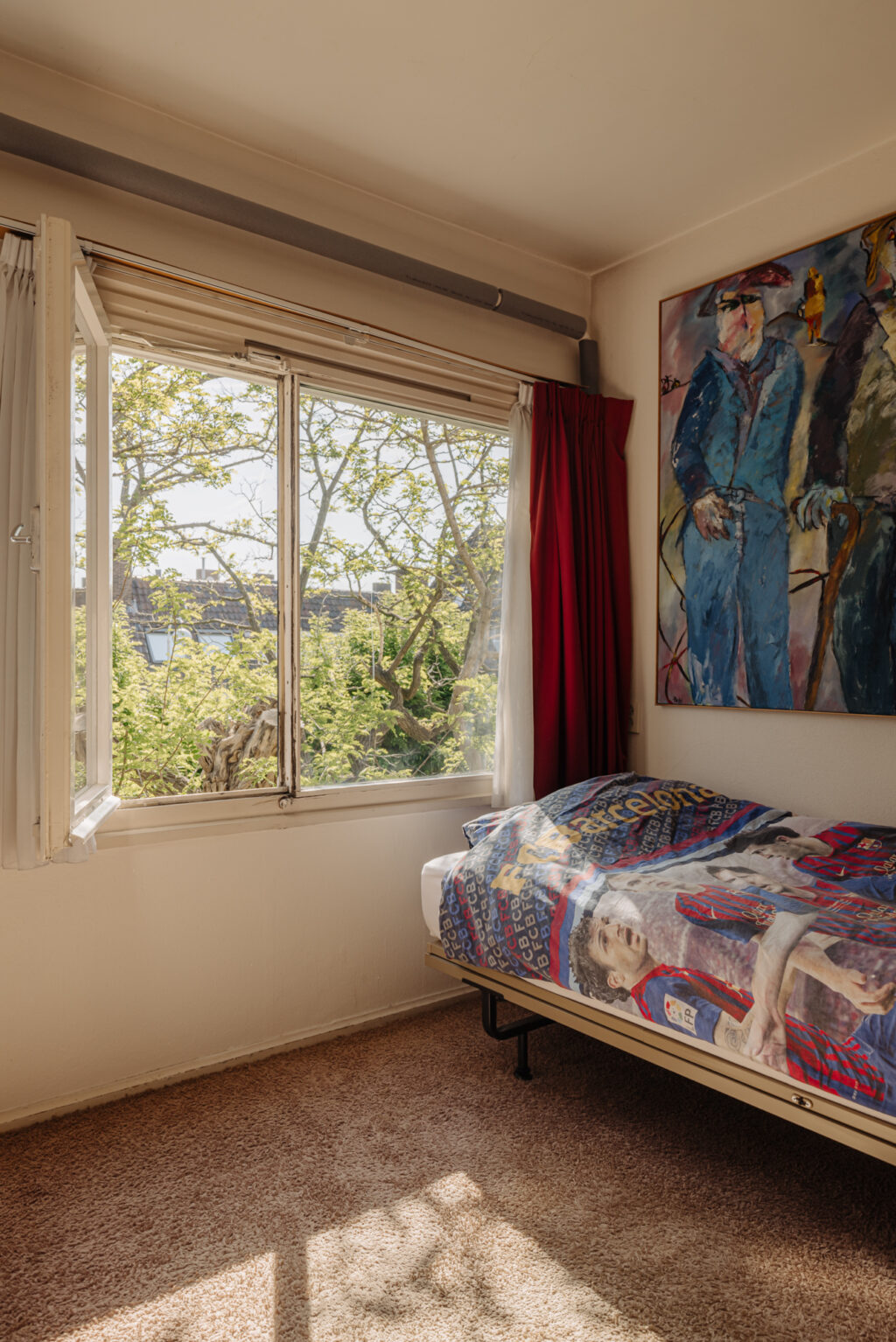
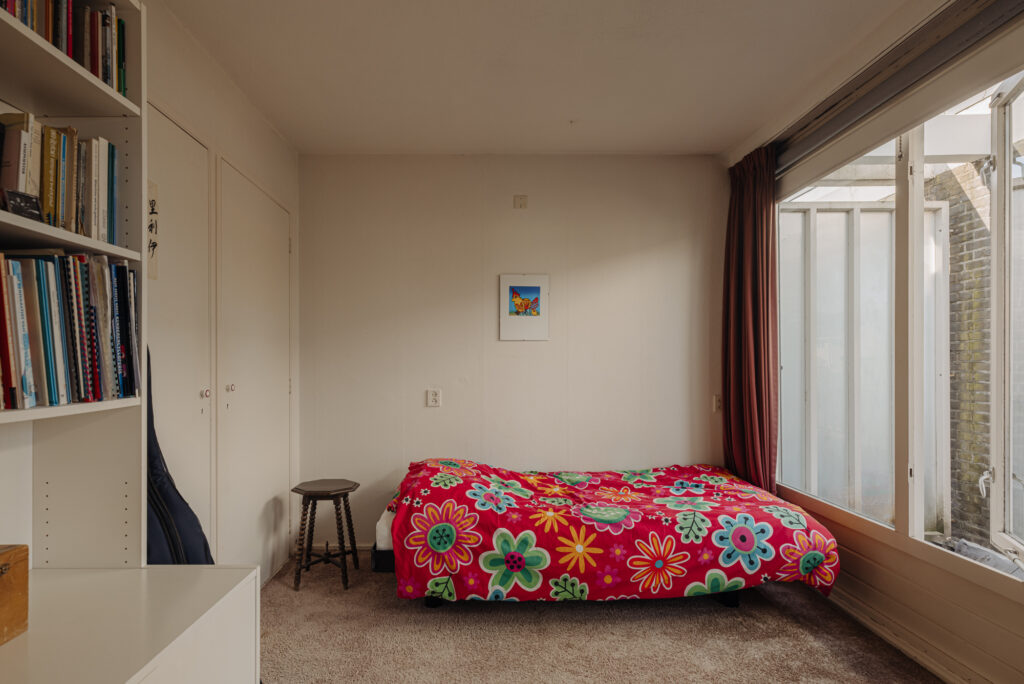
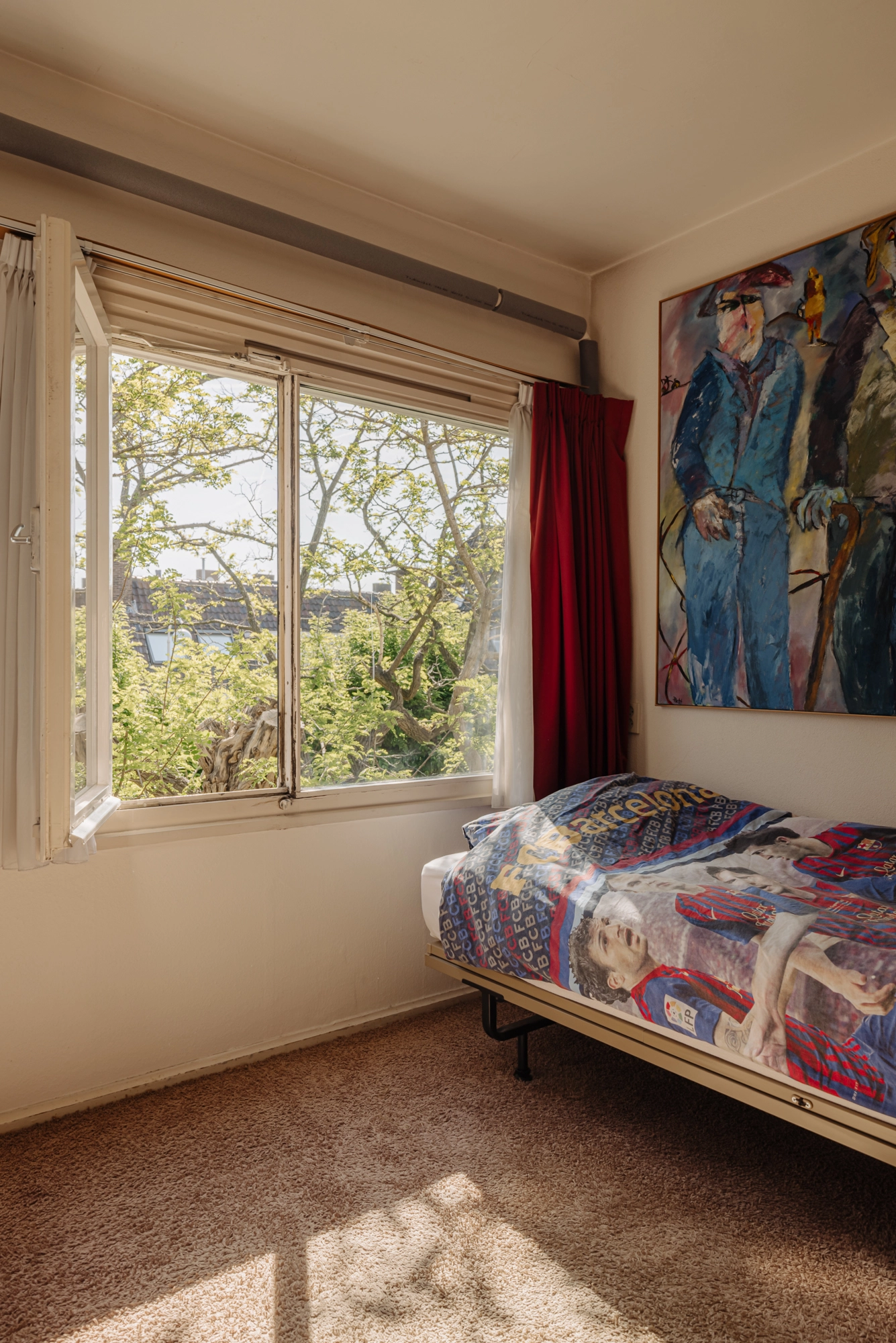
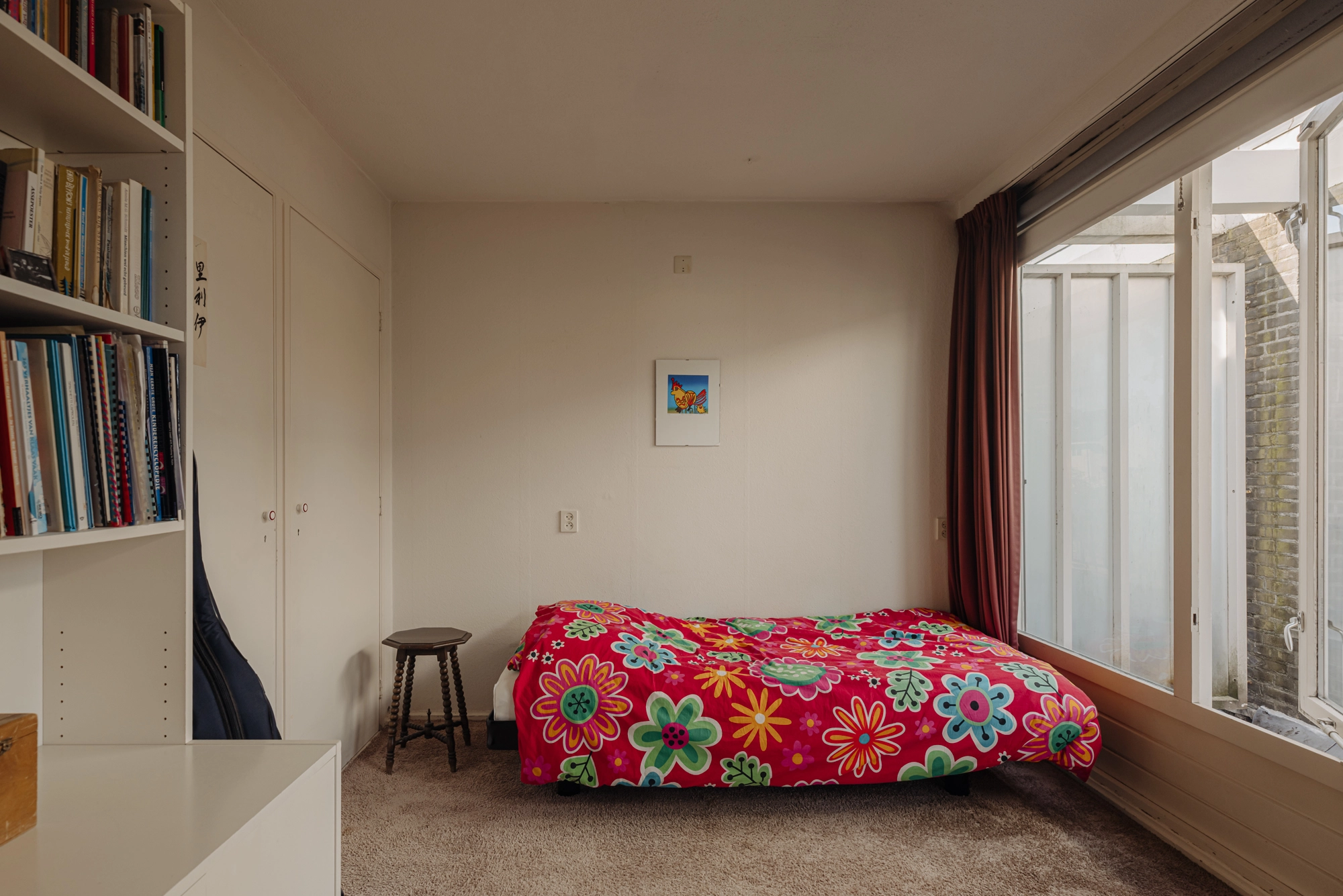
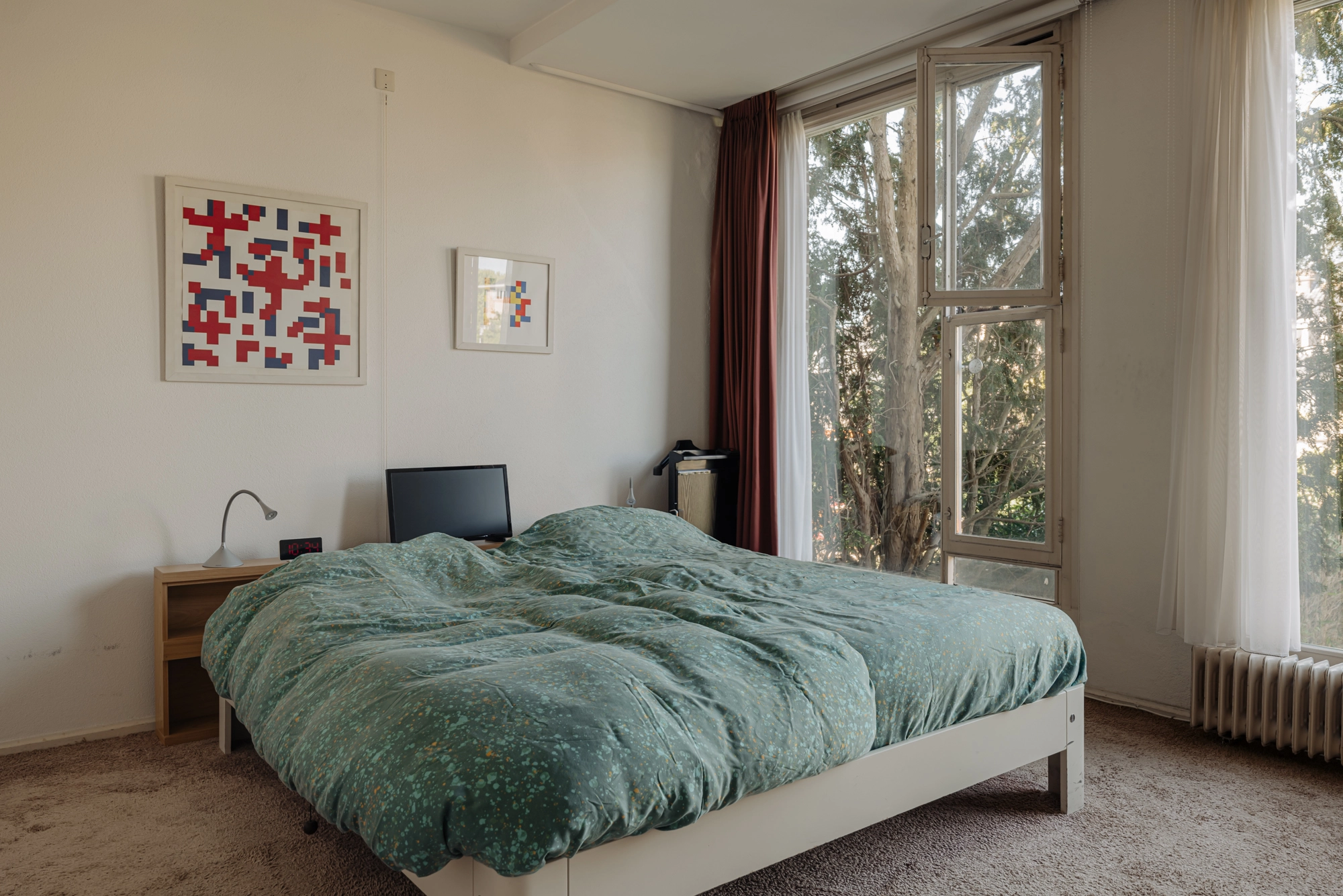
The first floor accommodates two bedrooms, both quietly positioned with views of greenery. The room at the rear is generously proportioned and overlooks the water. The layout is simple and functional, offering ample space for a large bed and a full-height wardrobe. The second bedroom is located at the front and is currently used as a study, benefitting from abundant natural light through large windows. Each bedroom is equipped with two spacious built-in wardrobes. The bathroom is finished in a bright and neutral palette, featuring white wall and floor tiles, a bathtub, a separate shower enclosure, and a double vanity. A window provides abundant daylight and natural ventilation. The lavatory is situated separately, adjacent to the bathroom, and is accessible directly from the landing. The second floor offers two additional bedrooms beneath the flat roof. The room at the rear opens onto a balcony and is well suited for use as a guest room, workspace, or atelier. The other bedroom overlooks the trees in the front garden. Together, they form a peaceful upper level with a wealth of possibilities.
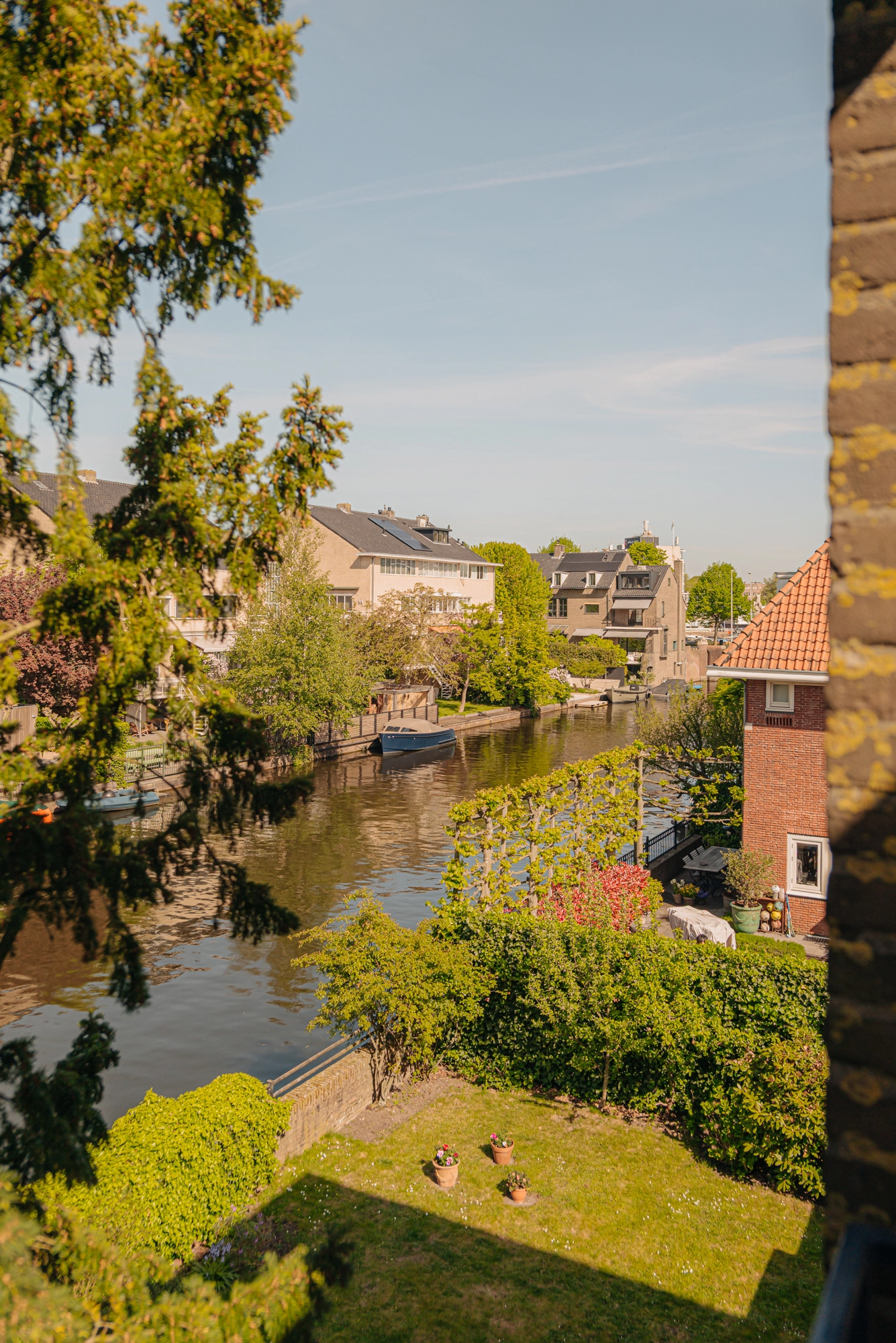
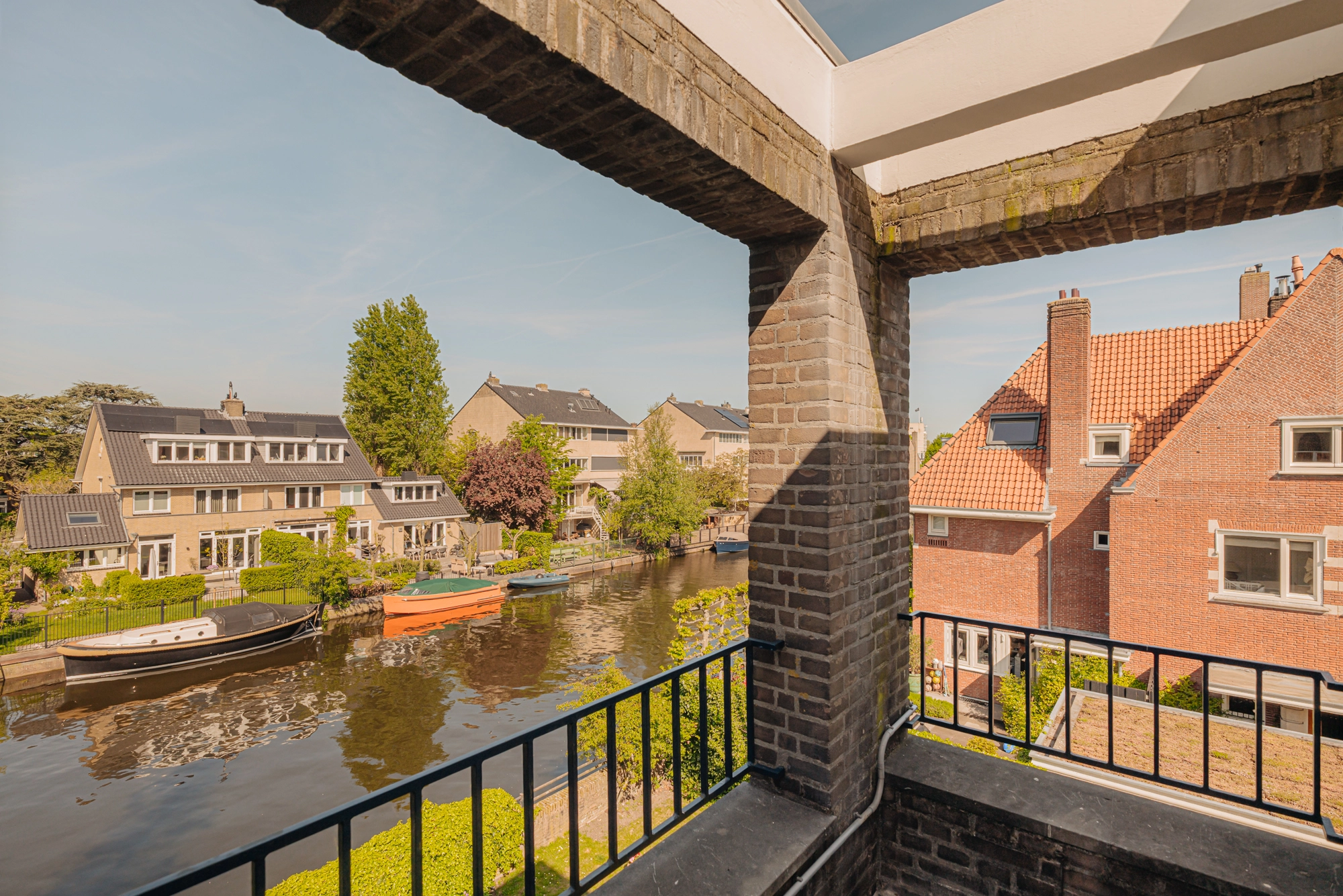
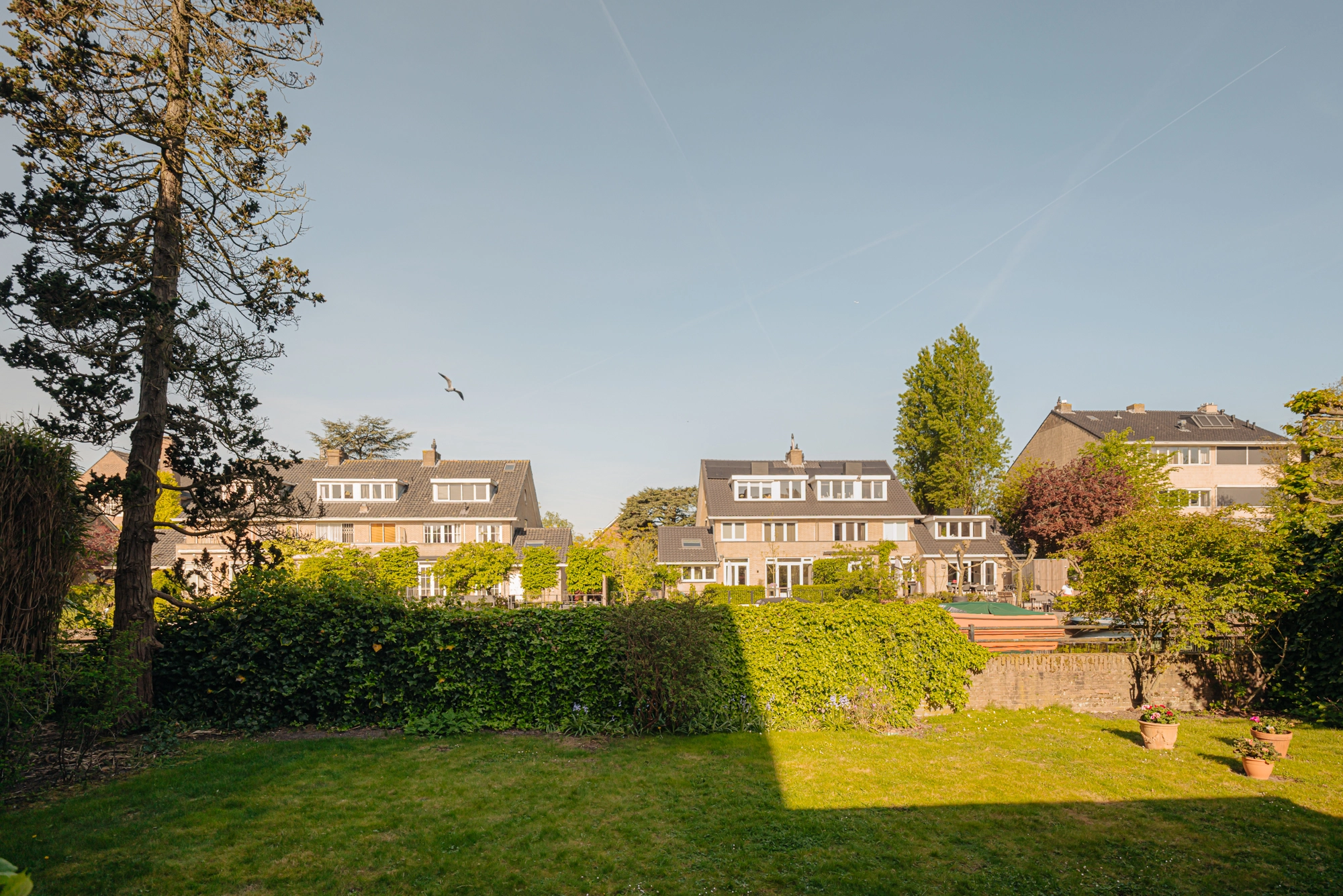
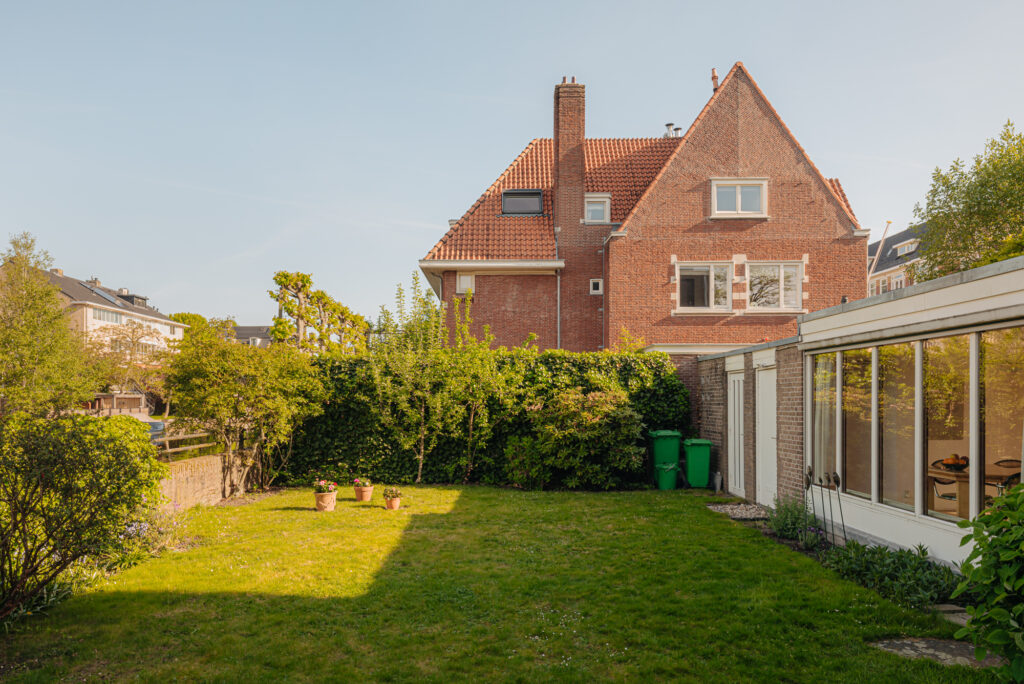
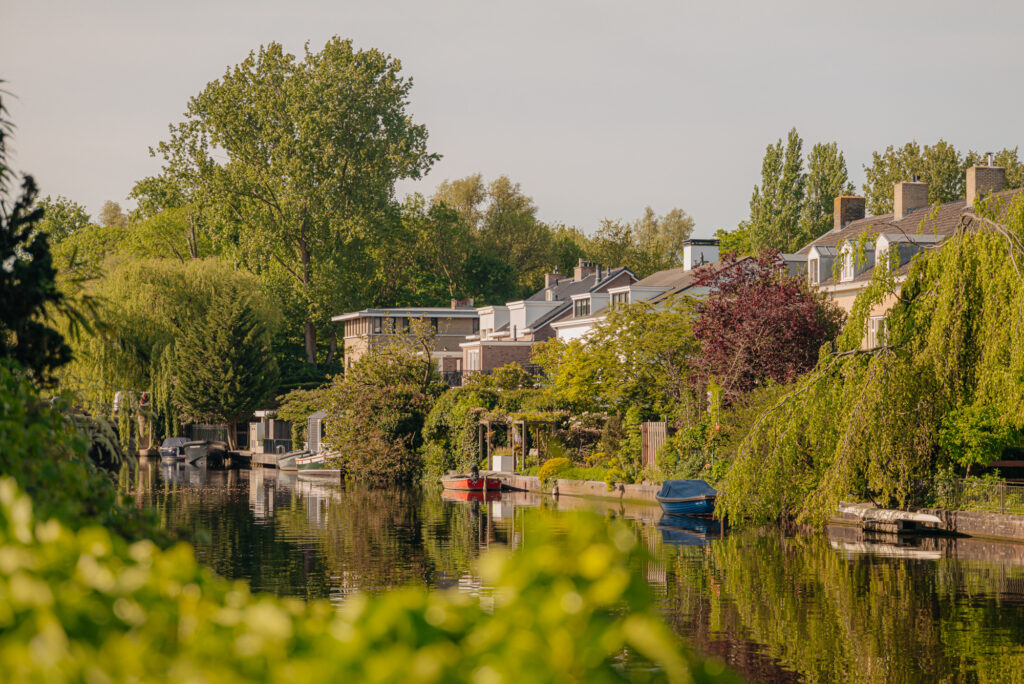
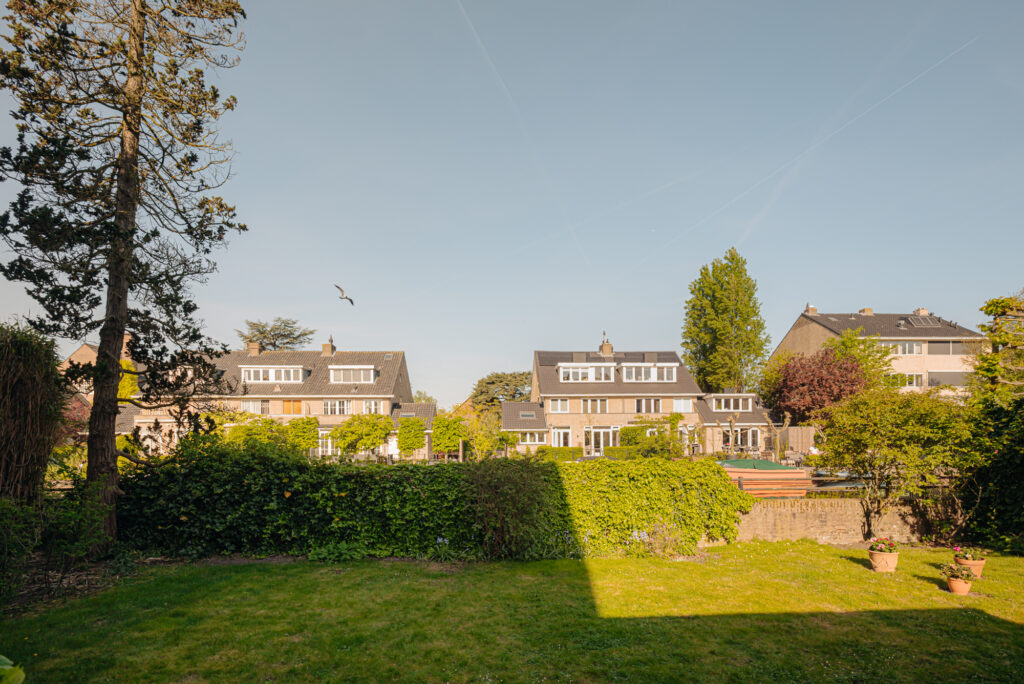
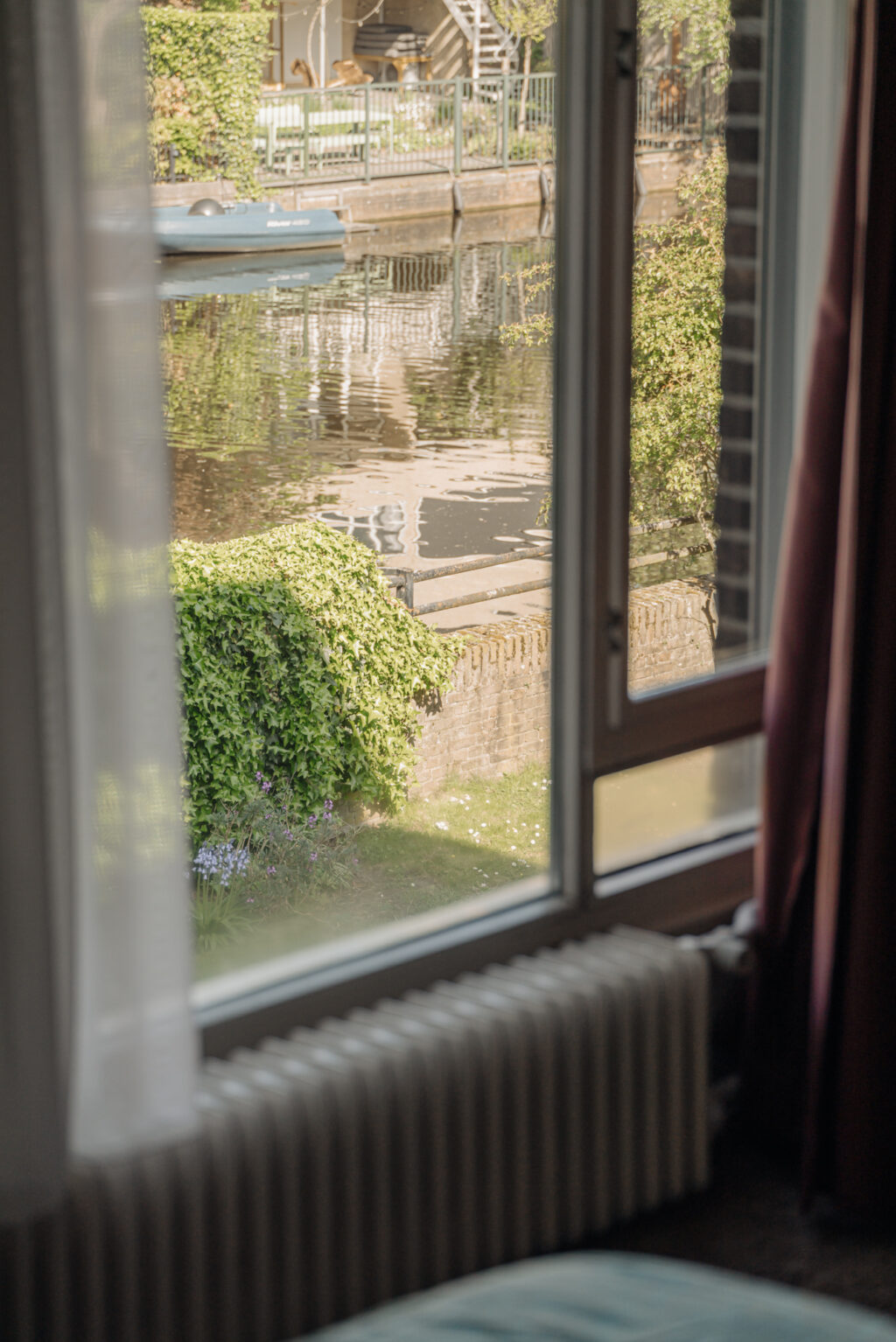
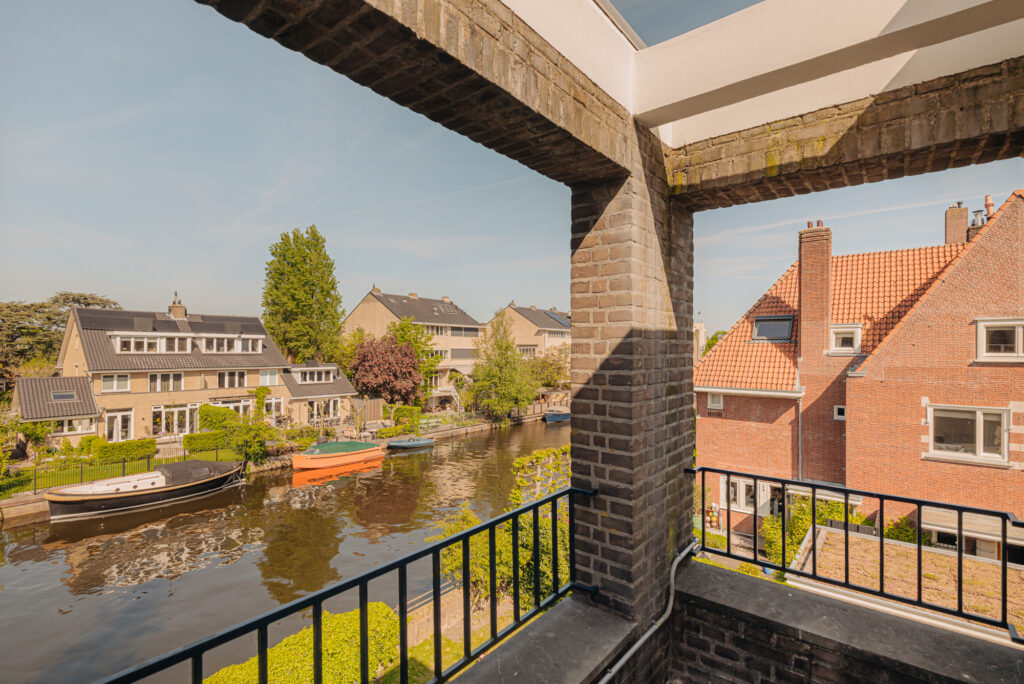
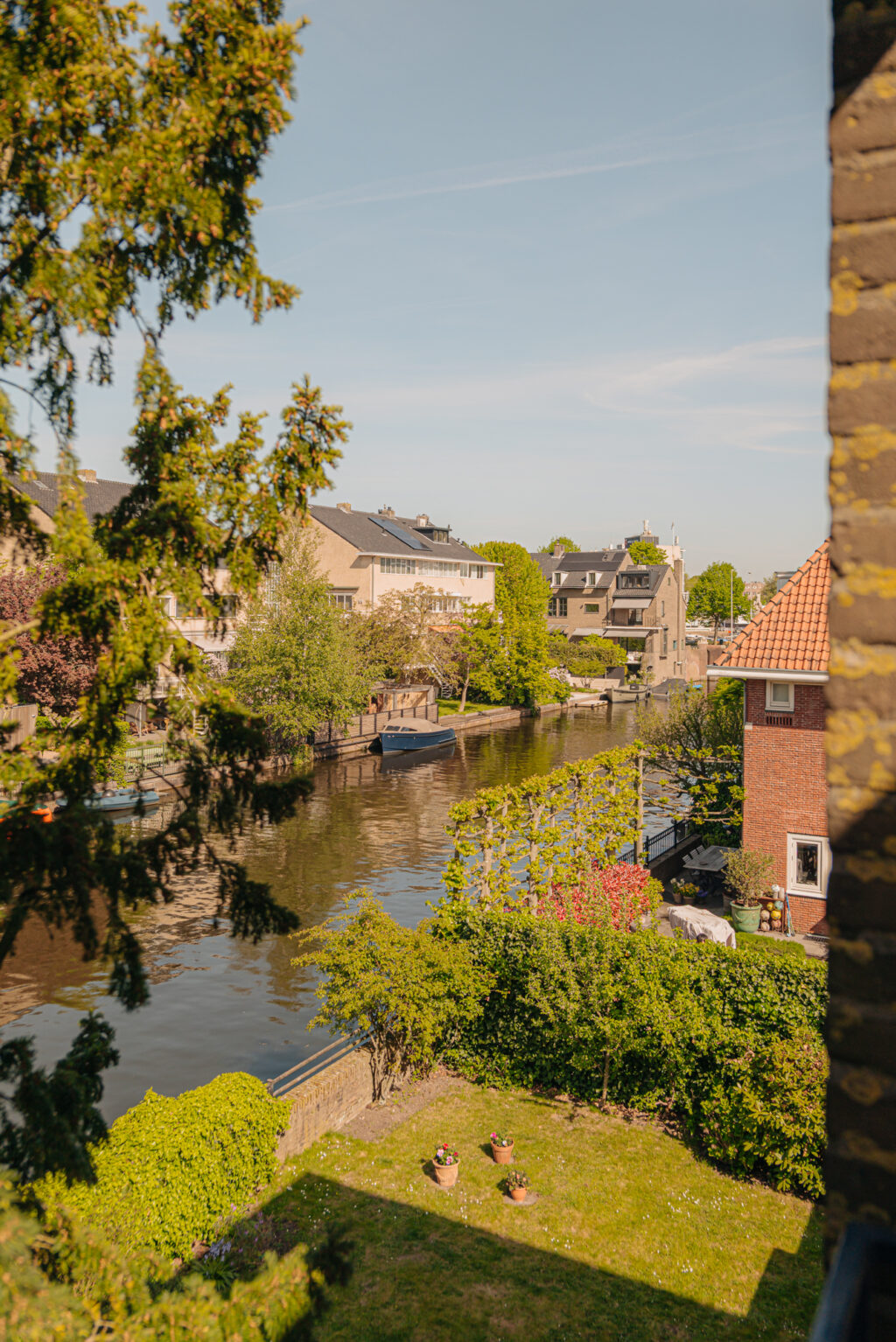
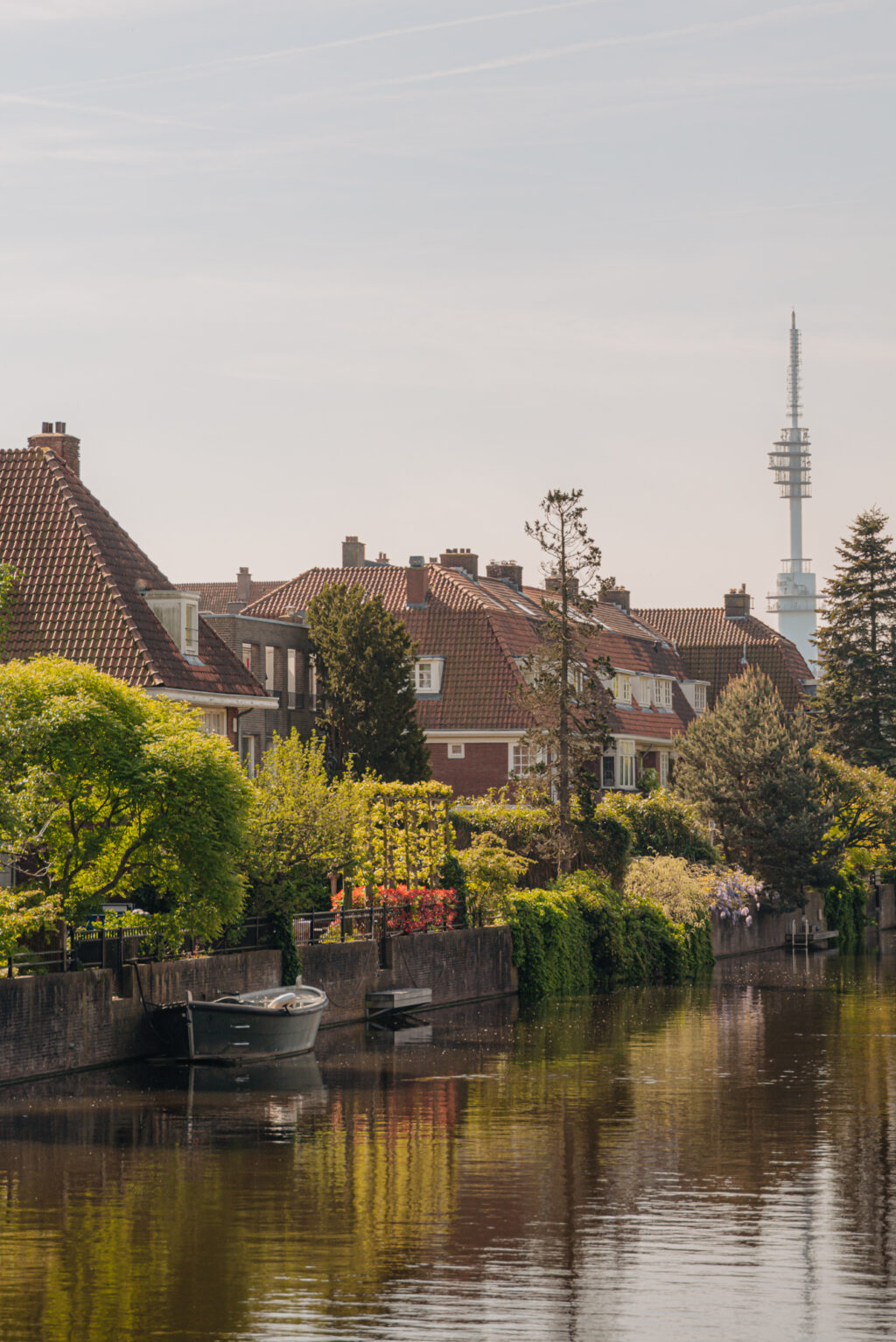
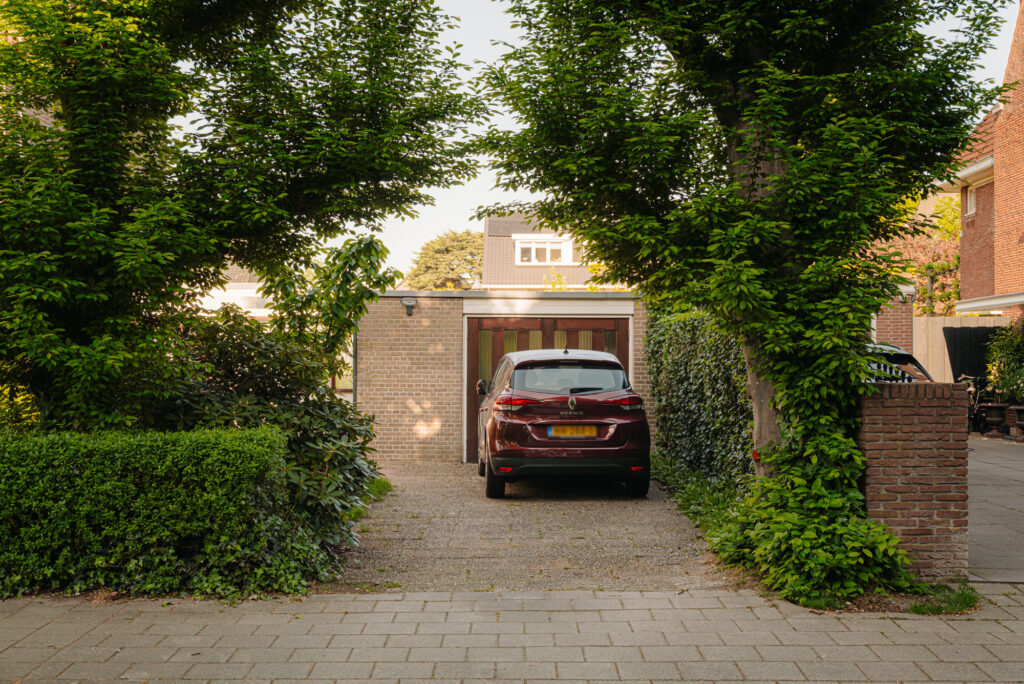
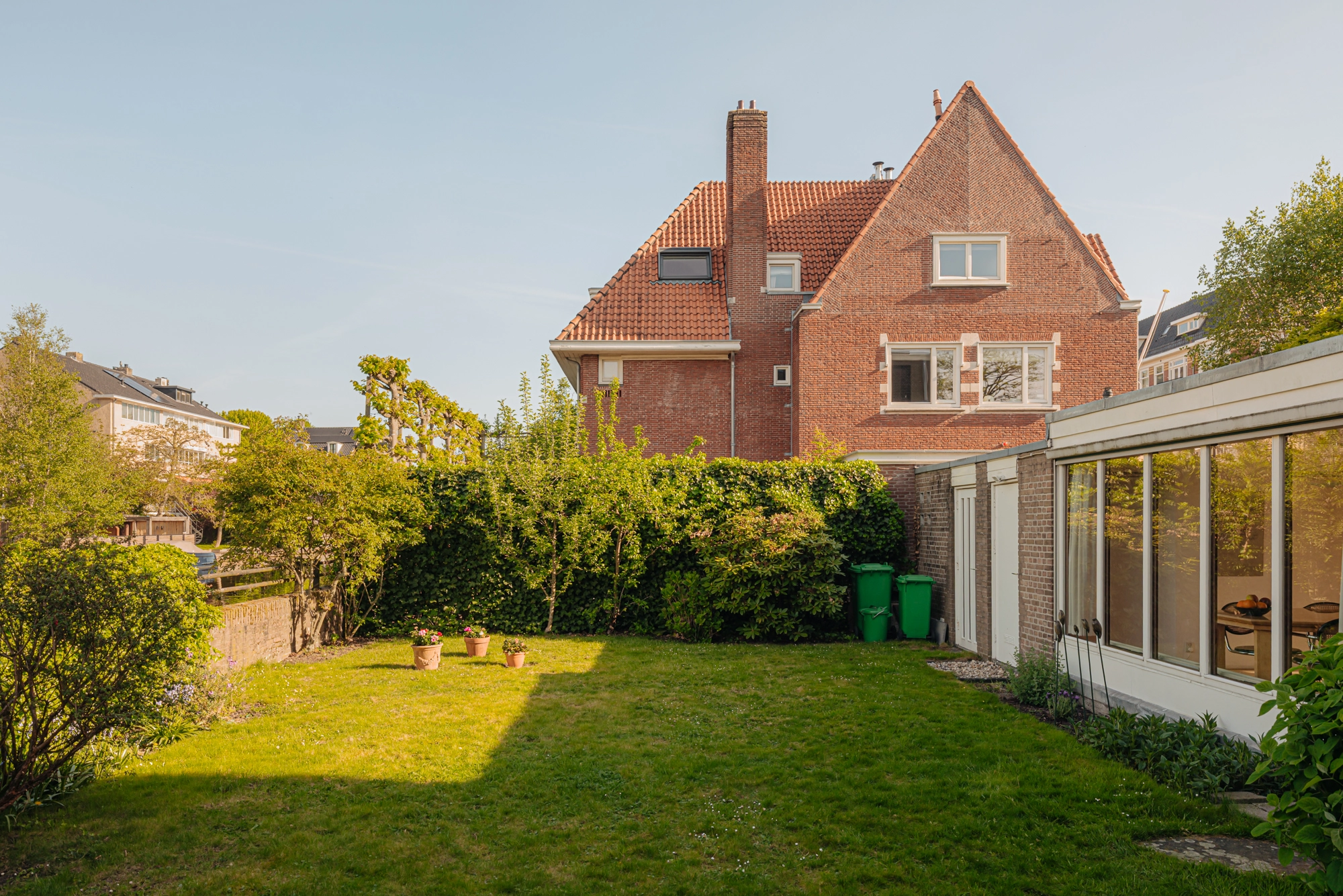
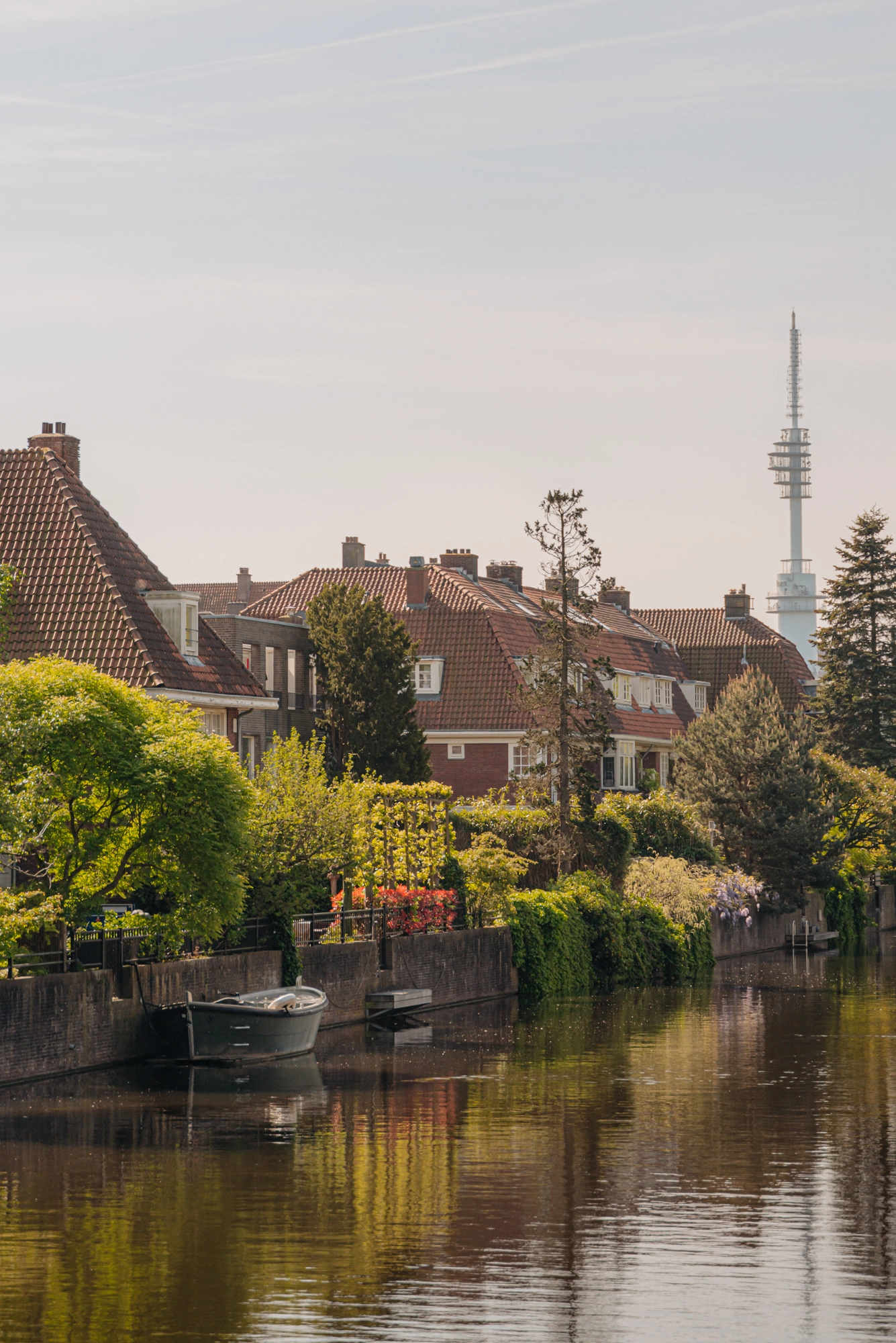
The tree-lined front garden creates a green transition between the house and the street. Thanks to its generous depth and mature planting, the garden offers ample privacy — both at the entrance and in front of the ground floor windows. The driveway accommodates two cars and provides direct access to the internal garage. Originally designed by Mien Ruys, the garden layout accentuates the house’s simplicity and symmetry. At the rear, a deep west-facing garden enjoys sunlight from early afternoon until sunset. It borders directly on the water, offering views across to the opposite residences and the tree-lined banks. The garden is fully enclosed, offering tranquillity, space, and an unbroken connection with the surrounding greenery. Multiple doors from the dining and living rooms open directly into the garden. On the second floor, a sheltered balcony is accessible from one of the bedrooms. From here, the view extends across the water and the green gardens of the neighbourhood. It is a peaceful spot with afternoon sun and a wide perspective over the area. Together, the waterside rear garden, the leafy front garden, and the elevated balcony form a home that is connected to the outdoors on every level.
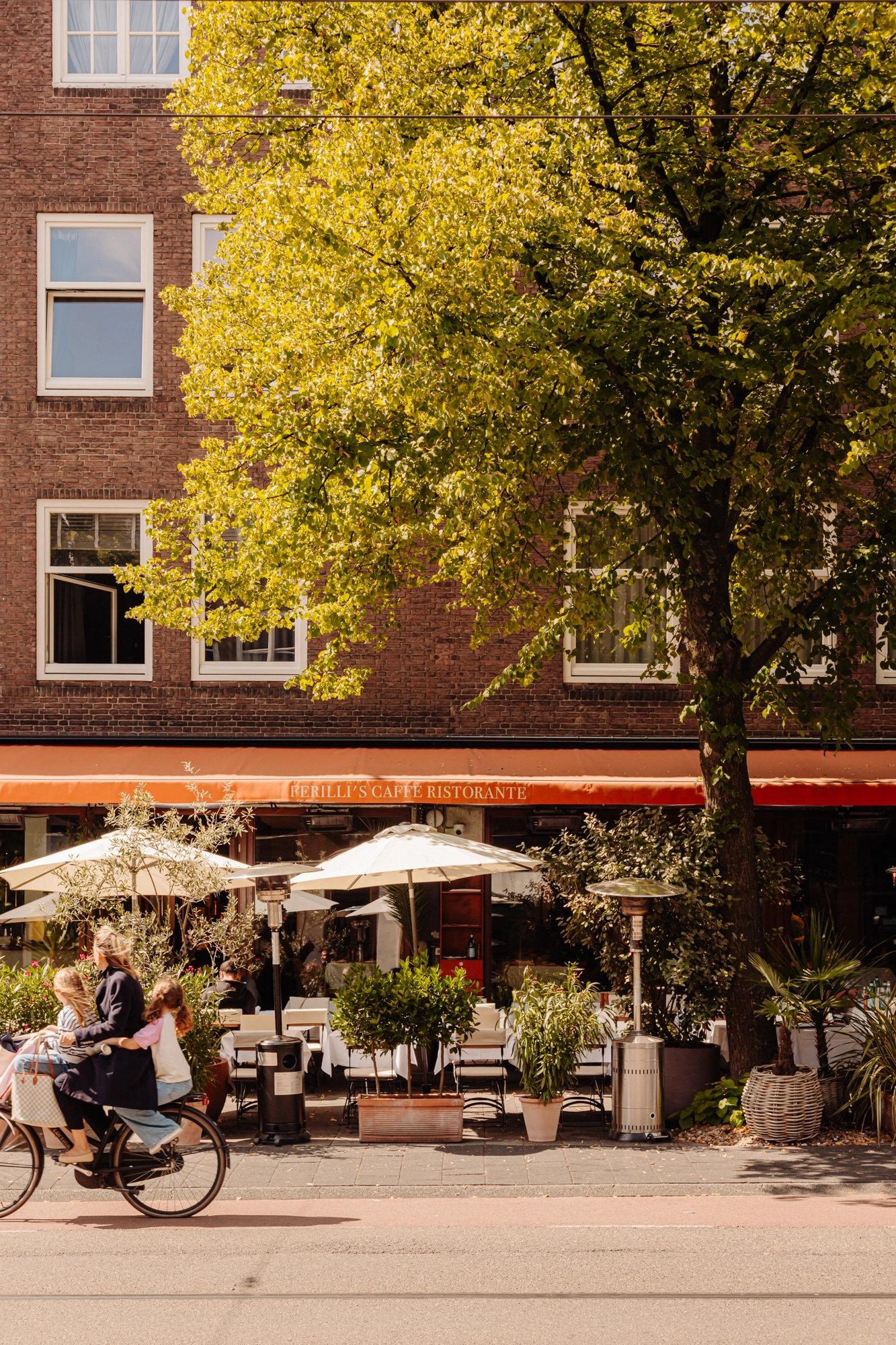
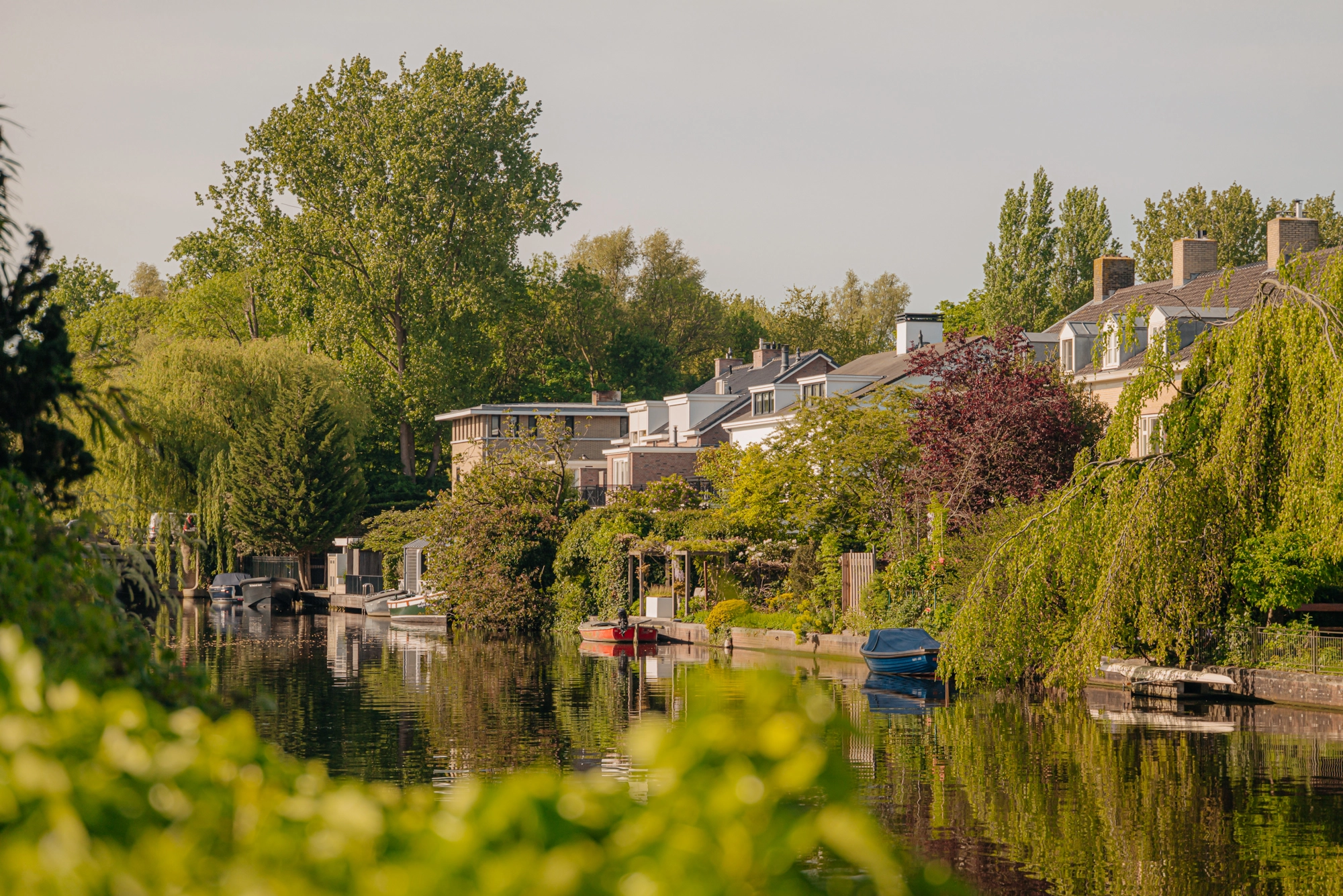
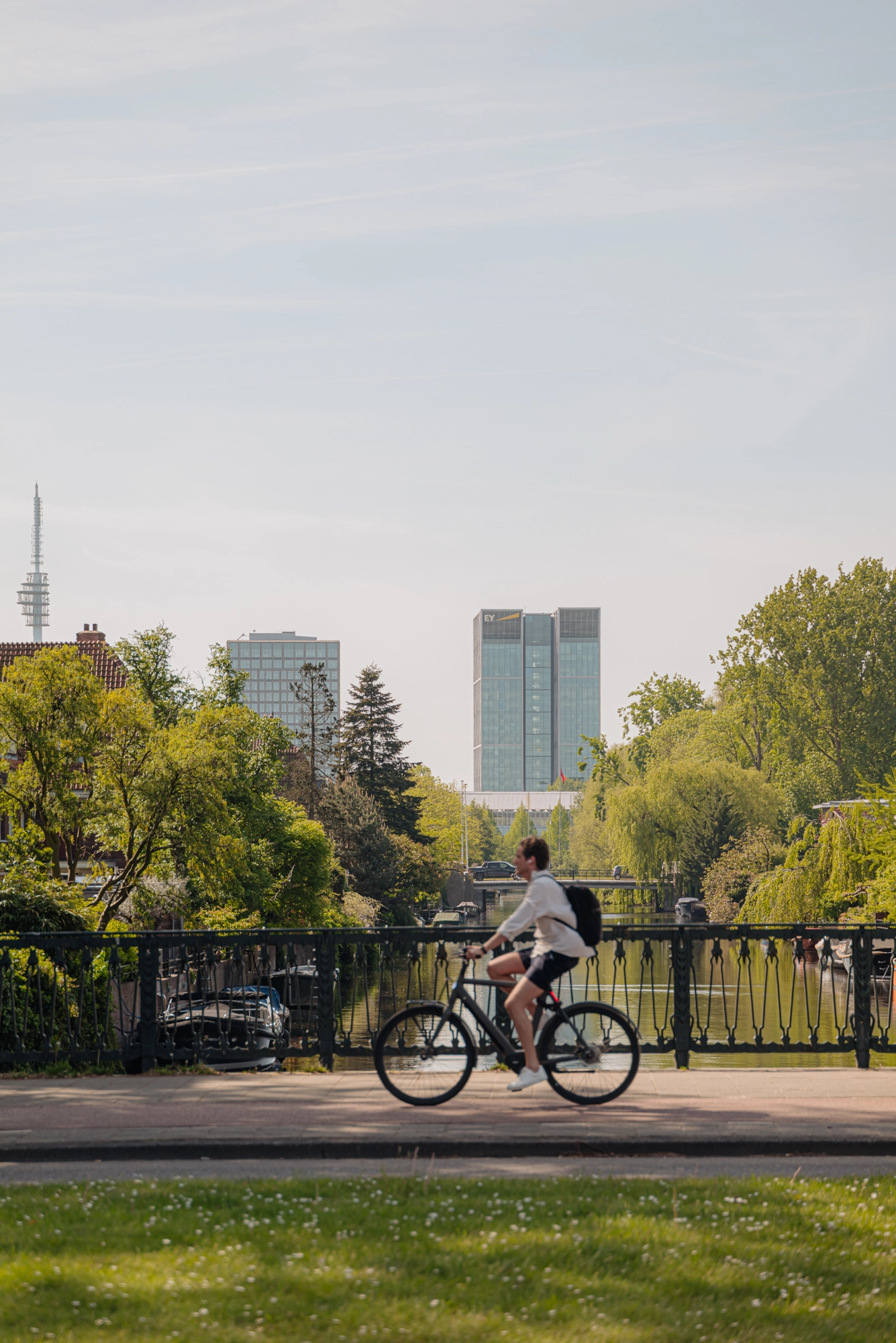
Haringvlietstraat is a quiet and secure street located in the sought-after Apollobuurt, near the Beatrixpark and Apollolaan. The neighbourhood is defined by its green character and broad, tree-lined avenues. On Scheldestraat and Maasstraat, a wide and varied selection of local shops can be found, including a fishmonger, artisan cafés, and a bakery. For relaxation and recreation, the nearby Beatrixpark offers a peaceful escape. The Beethovenstraat is also within walking distance. For a leisurely lunch, charming spots such as Feduzzi and Vinnies are well worth a visit. Several gyms are located in the immediate vicinity, and the De Mirandabad swimming complex can be reached within a few minutes by bicycle.
Accessibility
The property is easily accessible by bicycle, car, and public transport. The A10 ring road can be reached within five minutes by car via exit S109. From RAI Station, various tram, metro, and bus lines operate — including tram 4 to Central Station and buses to Amstelstation and Station Zuid. Regional transport also departs from this hub, with direct connections to Schiphol Airport. RAI Station is also a stop on the North-South metro line. The station is located within five minutes’ walking distance.
Parking
Apart from the two parking spots in the driveway, parking is available through a permit system on public roads (permit area Zuid 4.1 Rivierenbuurt Noord). A permit for this area also allows parking in Zuid-3 and Zuid-4. The cost of a residential parking permit is €192.81 per six months. At present, the waiting time for a permit in this area is two months. A second residential parking permit is not available (Source: Municipality of Amsterdam, May 2025).
1078 KK Amsterdam
Hakata Senpachi
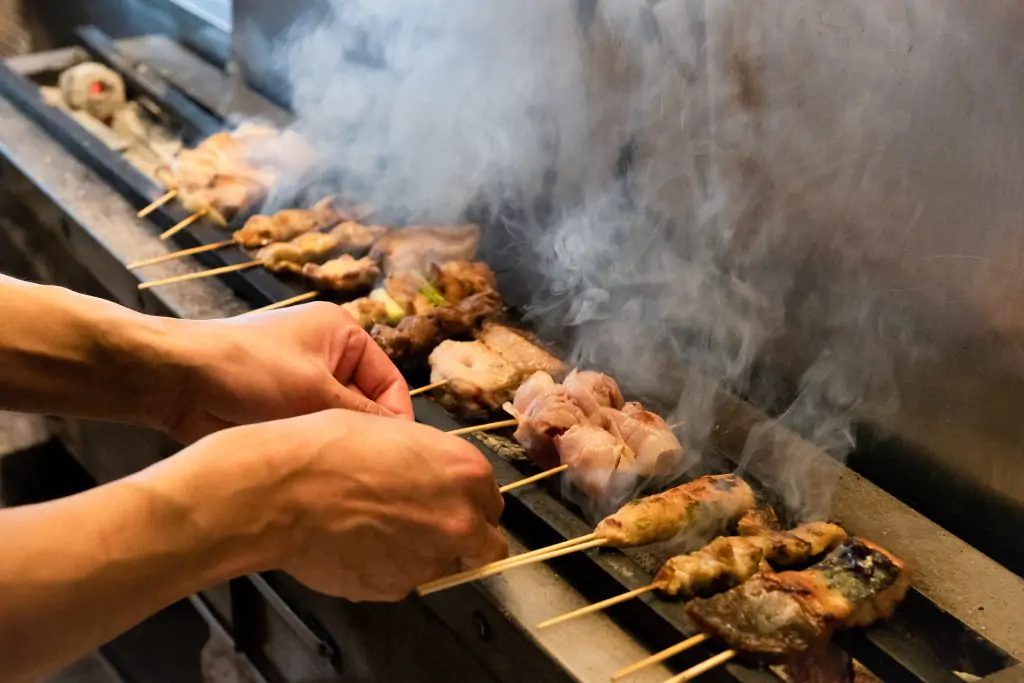
Prachtig Japans eten en de lekkerste saké's; dat is Hakata Senpachi. Dit restaurant aan de Wielingenstraat bestaat al langer dan 20 jaar en heeft in al die jaren altijd haar autentieke japanse sfeer behouden. De manier waarop restaurant is ontworpen doet het lijken op een echt Japans restaurant in de steegjes van Tokyo. Hakanta Senpachi is als Yakitori-ya - gespecialiseerd in het maken van gegrilde kipspiesjes, die in Japans Yakitori worden genoemd. De spiesen worden gegrild via traditionele kookwijzen op de houtskool grill. Deze grill staat overigens in het midden van het restaurant waardoor de ruimte altijd volhangt met de lekkerste aroma's.
1078 GM Amsterdam
Venetië IJS
Bij Venetië hebben ze ambachtelijk Italiaans ijs. Het zijn veelal Italiaanse mensen die de bolletjes scheppen en dat merk je dan ook aan hun charmante accent en hun vriendelijke glimlach. Het ijs is huisgemaakt en ze hebben veel verschillende smaken en heerlijke slagroom. Het interieur is authentiek Italiaans met genoeg zitplekken binnen. In de zomer staan er buiten tafels en stoelen op het terras om even rustig je ijsje op te eten.
1078 GR Amsterdam
Visaandeschelde
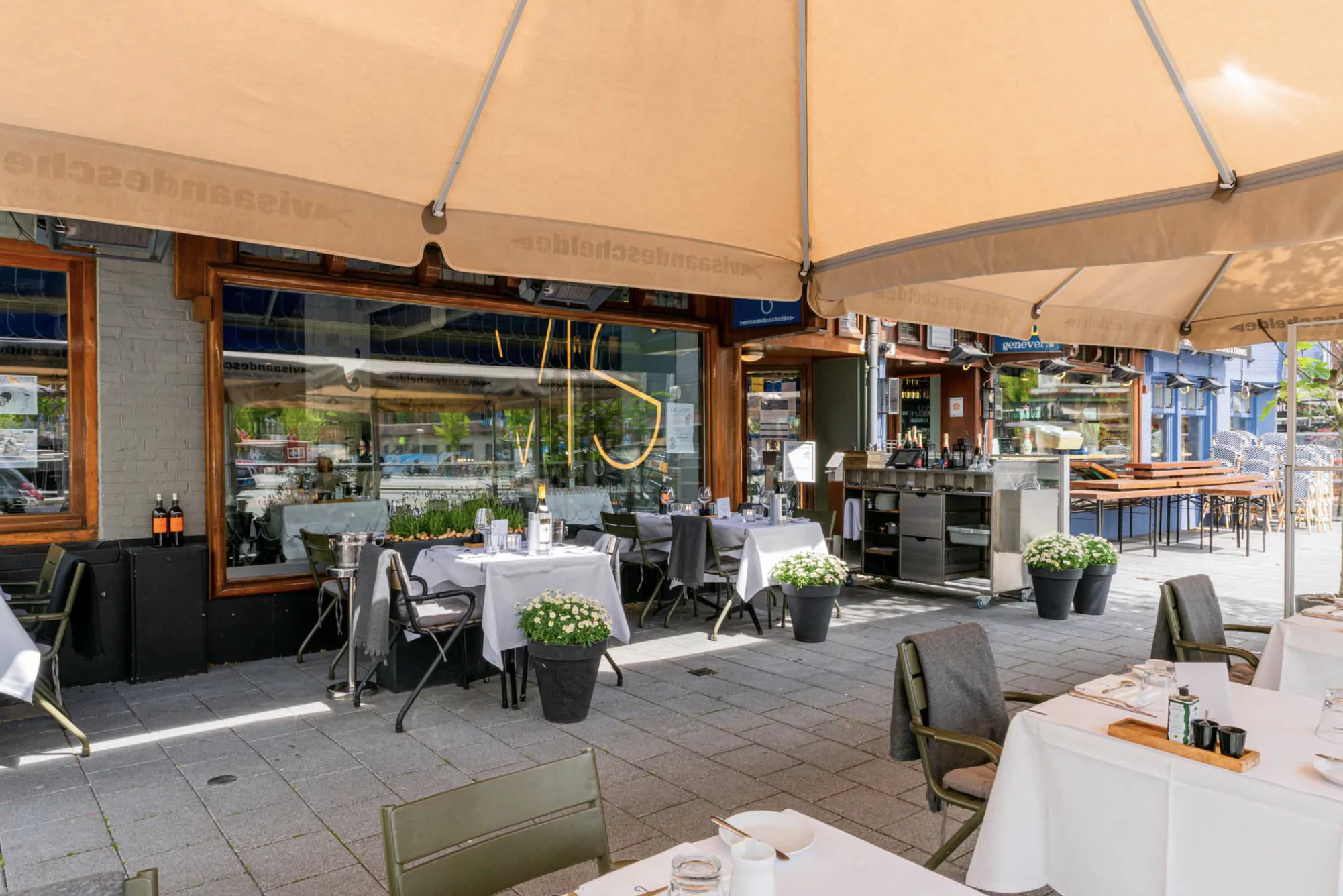
Al meer dan 20 jaar een begrip in Amsterdam Zuid. Zoals ze zelf zeggen is hun culinaire passie het omtoveren van dagverse vis en seizoensproducten tot spannende en heerlijke gerechten. En daarmee is eigenlijk bijna alles al gezegd. Visaandeschelde ziet er chique uit, maar binnen is er geen te kort aan een goede portie Amsterdamse gezelligheid. Ook kan je in de zomer heerlijk op het terras zitten dat uitkijkt op het Scheldeplein.

1072 GJ Amsterdam
Pisa IJs
Bij deze bescheiden ijswinkel bij Amsterdam RAI ben je aan het goede adres voor heerlijk Italiaans ijs. Sinds 1935 kun je hier terecht voor ambachtelijk ijs in meer dan 60 verschillende (wisselende) smaken per seizoen. Samen met ijswinkel Venetië ietsje verderop zijn deze twee ijswinkels dé plekken om goed schepijs in Amsterdam-Zuid te halen, vandaar ook de lange rijen in de zomer, maar het wachten waard en het gaat snel!
1078 GG Amsterdam
Vinnies
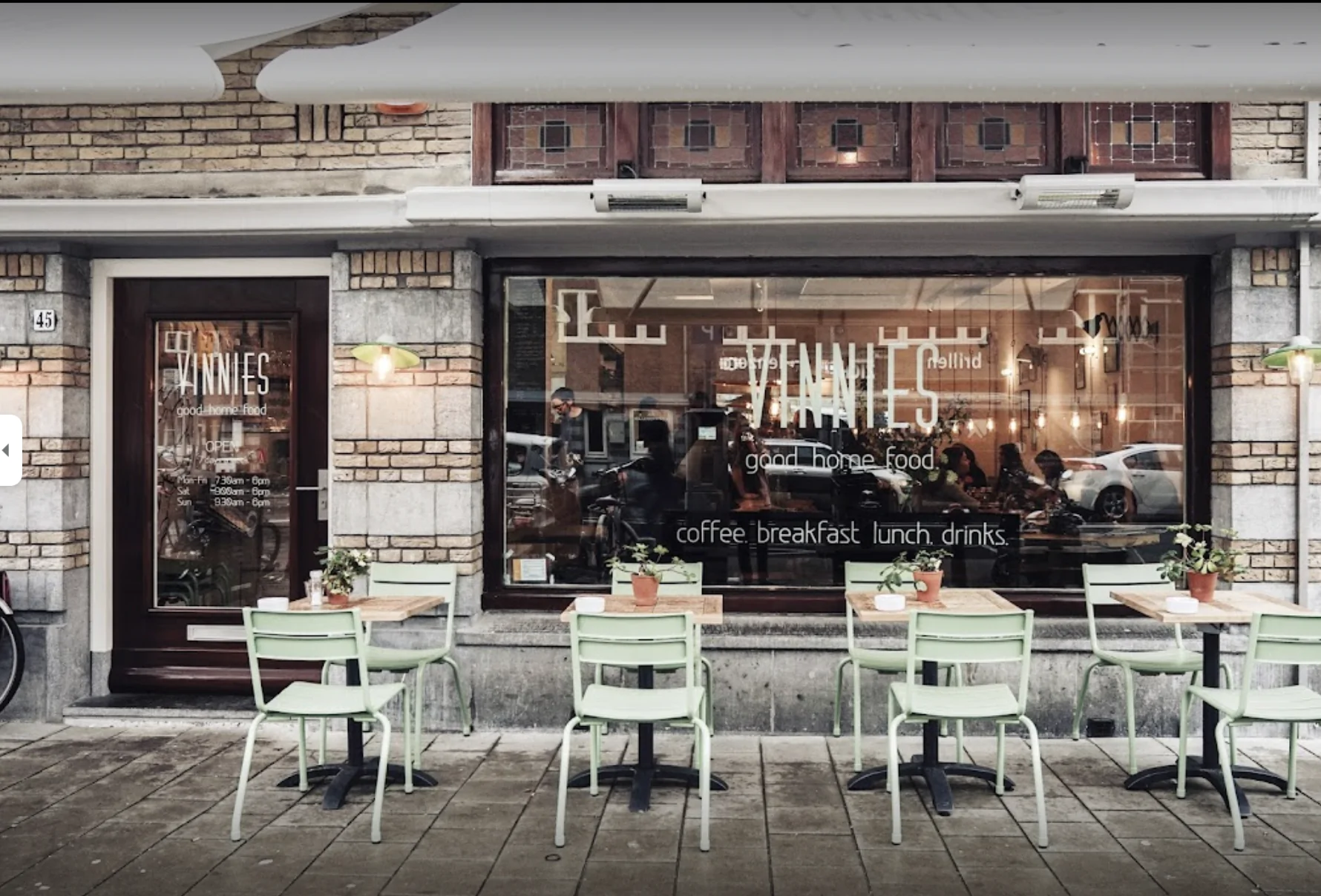
Bij Vinnies draait het om goed en eerlijk eten. Dit restaurant serveert ook all-day ontbijt en lunch. Je kunt bijvoorbeeld kiezen uit lekkere broodjes, gerechten met ei en zelfs Marokkaanse couscous of linzensoep. Als je liever komt voor een drankje ben je bij Vinnies ook op het juiste adres; ze zetten heerlijke koffie en maken ook de mooiste sappen en cocktails voor je klaar. Laat je liever de lunch bezorgen? Geen probleem: Vinnies verzorgt ook catering en heeft een eigen take-away lunchmenu.
1072 AX Amsterdam
KID
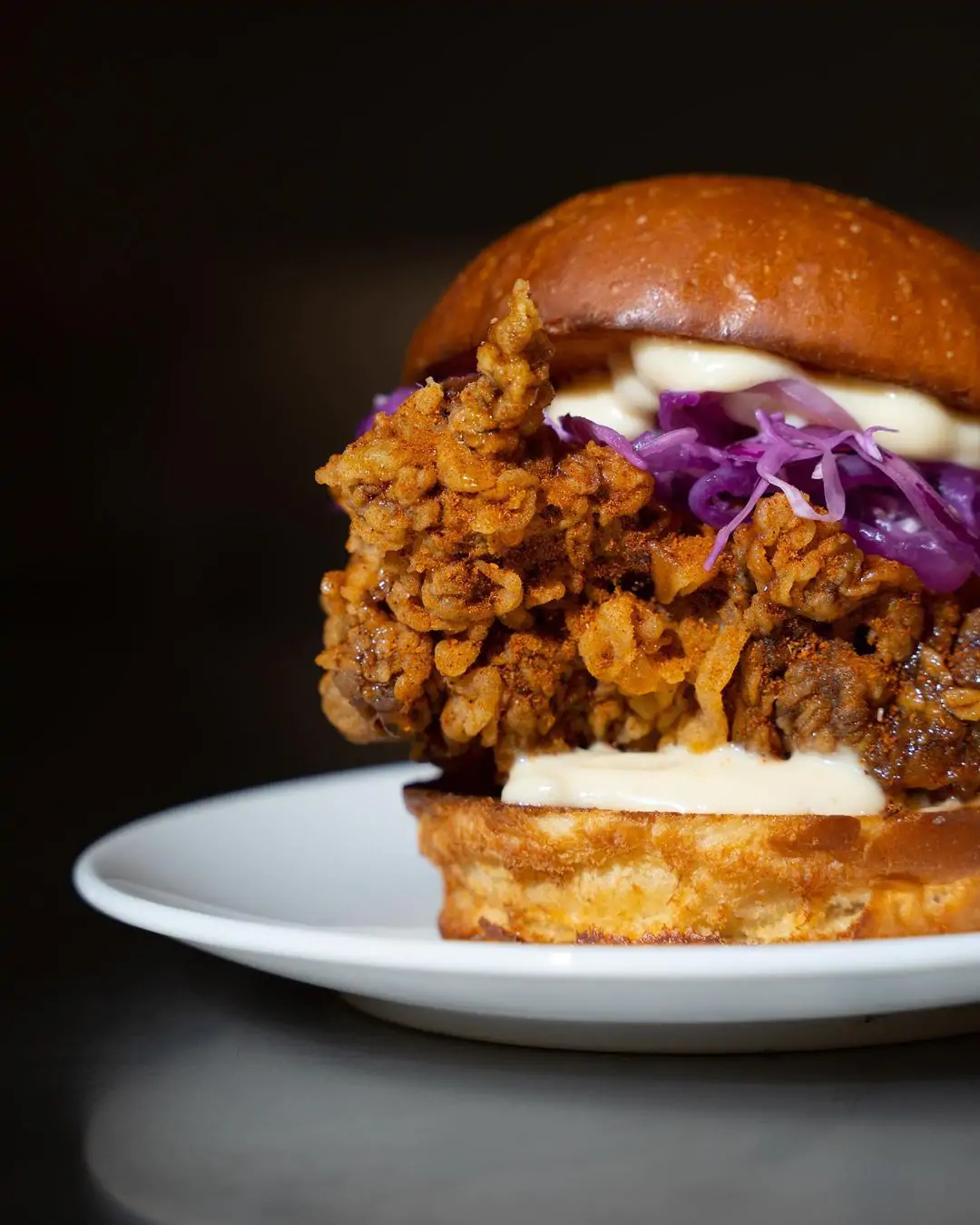
Levy Byron, Joshua Styns en Steven Mamahit begonnen tijdens de pandemie. Het concept begon als pop-up en heeft nu een vaste locatie op de Ruysdaelkade. Het menu is inmiddels fors uitgebreid. Yakitori van kip met kaffir lime en chillies. Chickenwings gevuld met een tartaar van garnaal en een saus van shi-take. Geroosterde kool met gefrituurde ui en een hollandaise saus. En natuurlijk de inmiddels beroemde kip-sandwiches in allerlei varianten zoals bijvoorbeeld de Sichuan spiced firied chicken met pickles en knoflookmayonaise geserveerd op een sake kasu bricohe broodje. KID schenkt er cocktails, bier en een kleine selectie wijn bij.
1078 HK Amsterdam
Pizza Project
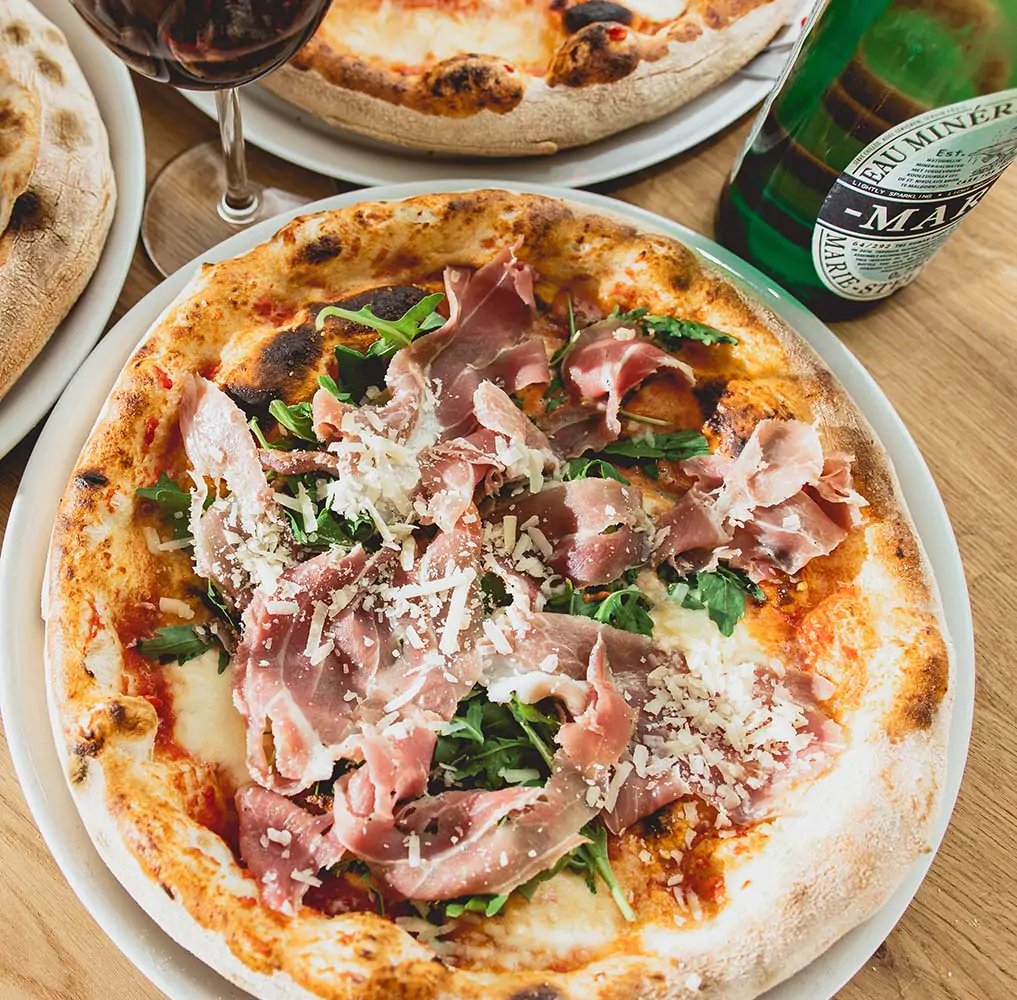
Het begon met een pizzaoven in hun achtertuin. Elke vrijdag stond er een rij voor hun woning met vrienden en familie die een pizza kwamen halen. Inmiddels hebben Idske en Bas twee vestigingen en een foodtruck. Het geheim? Het deeg 48 uur laten rijzen waardoor de bodem luchtig wordt en de pizza minder zwaar op de maag ligt. In het weekend worden er ook broodjes voor de lunch geserveerd.
1072 LH Amsterdam
Serre
Onder leiding van Chef de Cuisine Bram Postel biedt Serre een à-la-cartemenu en het Bibendum-menu, een drie- of viergangenervaring met uitstekende prijs-kwaliteitverhouding, bekroond met een Bib Gourmand door Michelin. Het menu weerspiegelt de internationale flair van Hotel Okura, met fusiongerechten en subtiele Oosterse invloeden.
1078 HL Amsterdam
Hummus bistro d&a
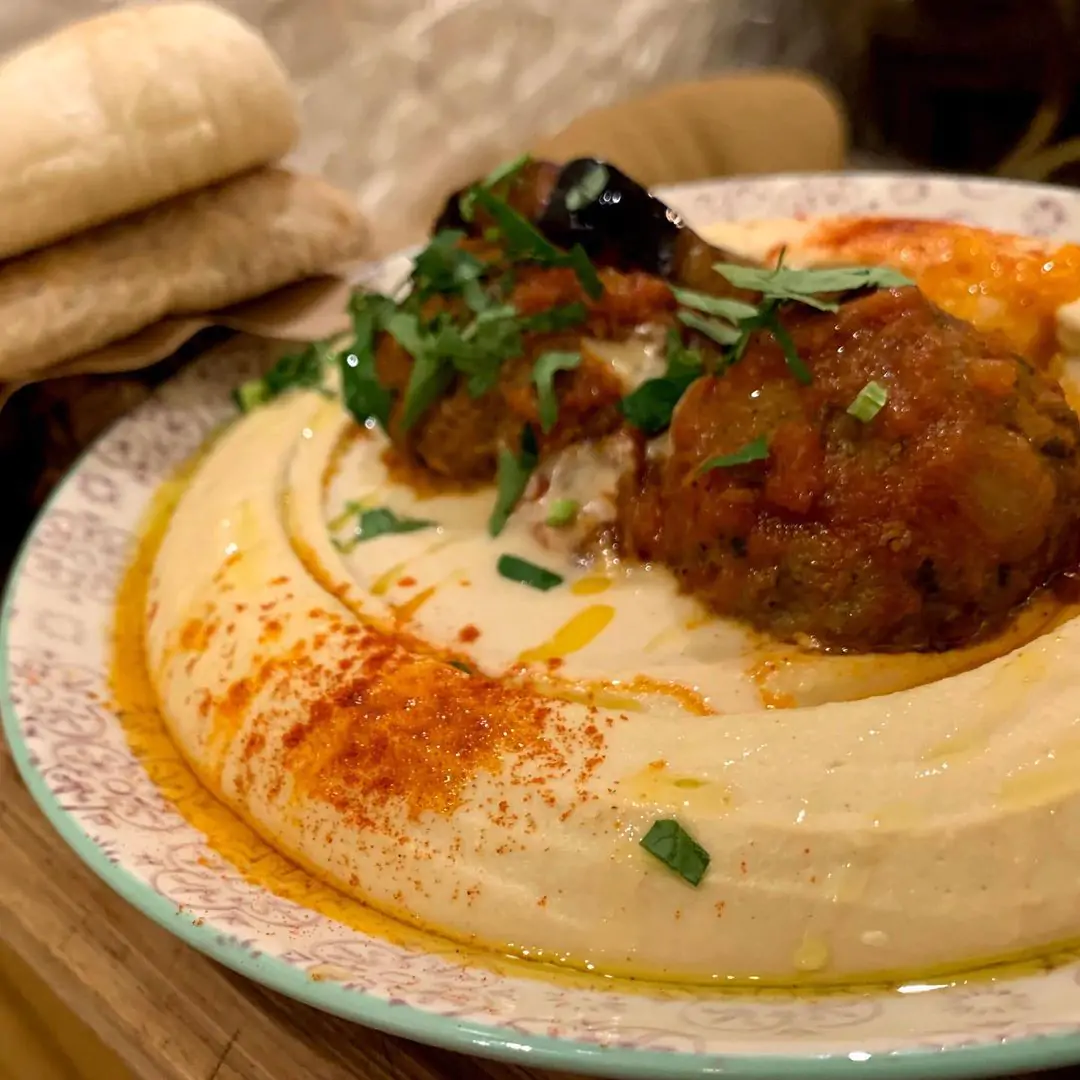
Hummus Bistro D&A is opgezet door twee Israëlische vrouwen. Je kan er de hele dag door genieten van heerlijke gerechten. Begin je dag met shakshuka voor ontbijt, smul van traditionele hummus met verschillende toppings tijdens de lunch en proef vlees- of vegetarische gerechten bij het diner. Alles is mogelijk en kan de hele dag worden besteld. De traditionele hummus wordt geserveerd met pitabrood, salade en zuur, maar je kunt ook kiezen voor toppings zoals geroosterde groenten of langzaam gegaard vlees en verse kruiden.
1072 LH Amsterdam
Teppanyaki Restaurant Sazanka
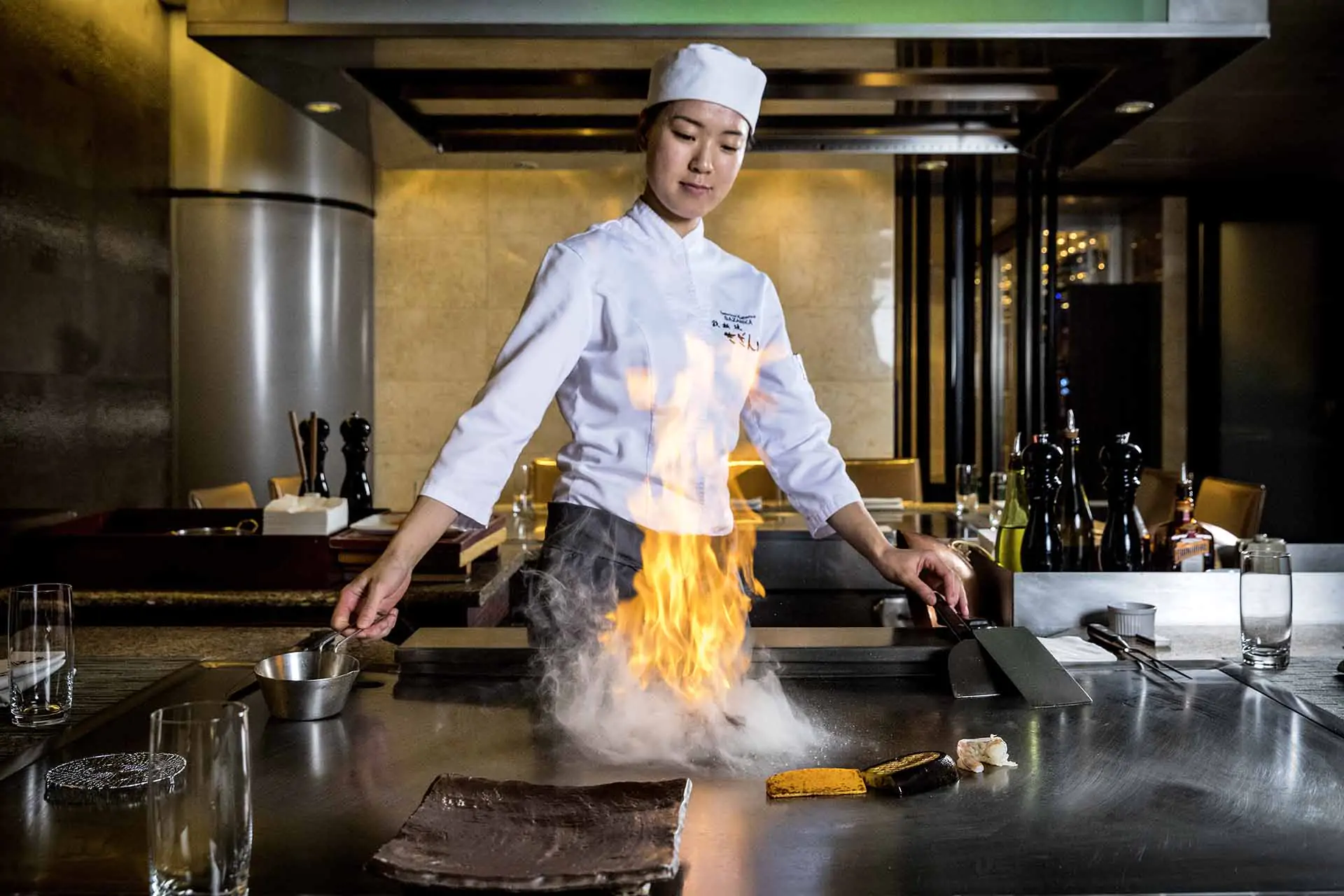
Sazanka is een teppanyaki restaurant in hotel Okura aan de Ferdinand bolstraat. Deze vorm van voedselbereiding uit de Japanse keuken draait om de teppan, een hete ijzeren plaat om op te bakken. In Sazanka is het dan ook mogelijk om met zijn allen aan te schuiven en de teppan-chef te aanschouwen terwijl deze de meest wonderlijke gerechten op de borden tovert. De gerechten bestaan uit zowel vis en vlees, maar er worden ook genoeg vegetarische gerechten aangeboden. Een bezoek aan Sazanka is gegarandeerd een uniek kijkje in de wereld van de Japanse chefs en de kooktechnieken die zij gebruiken om elk gerecht met Japanse precisie klaar te maken. Het klinkt bijna te mooi om waar te zijn, maar Sazanka maakt het simpele grillen op een plaat tot een verfijnd stukje ambachtswerk.
1072 HP Amsterdam
En Japanese kitchen & Sake bar
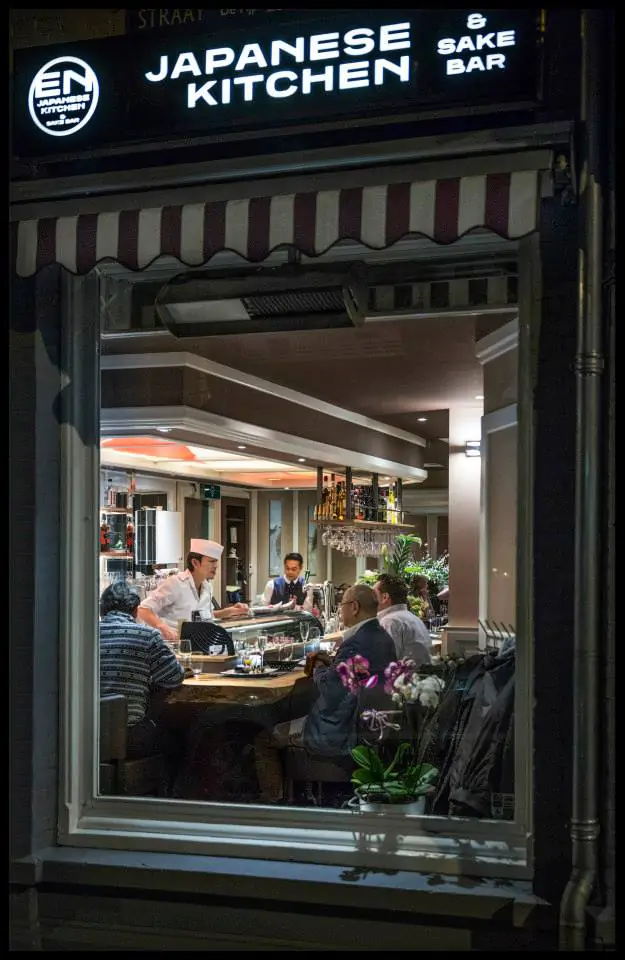
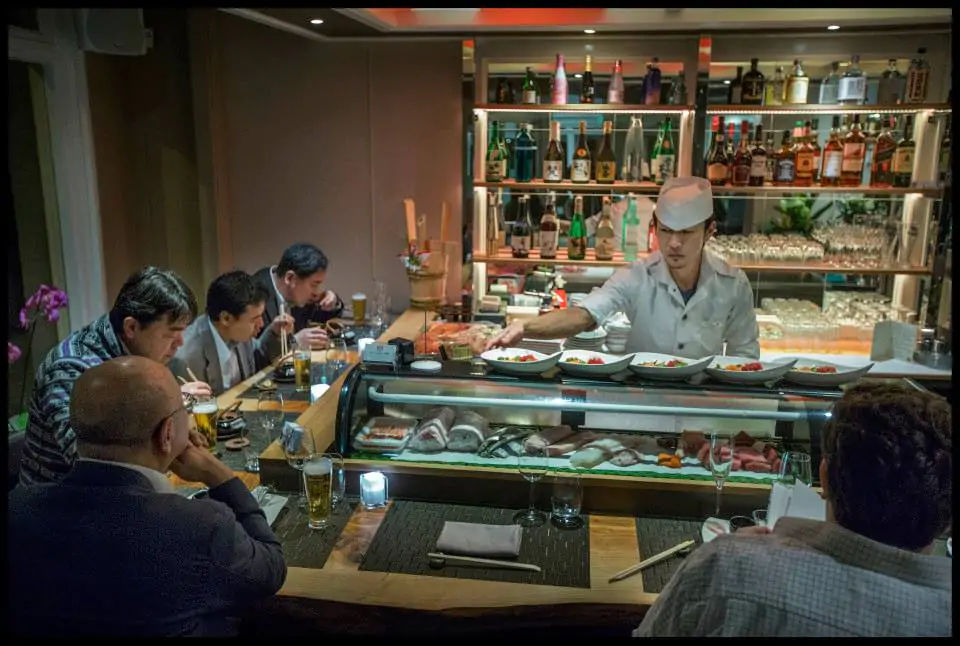
En Japanese kitchen & Sake bar opent in 2015 zijn deuren. Chef Ken Osawa en Ryuji Ikemizu (restaurant manager), die voorheen bij Yamazato werkten, brengen de originele Japanse keuken in zicht. Iedere maand maakt chef Ken Osawa (geboren & opgegroeid in Hokkaido) een nieuw menu in 3, 6 of 8 gangen met oog voor de seizoenen. Manager Ikemizu paart deze aan de mooiste sakes. De sashimi en sushi zijn allebei van top kwaliteit en het wordt altijd mooi geserveerd.
1072 LH Amsterdam
Yamazato (*)
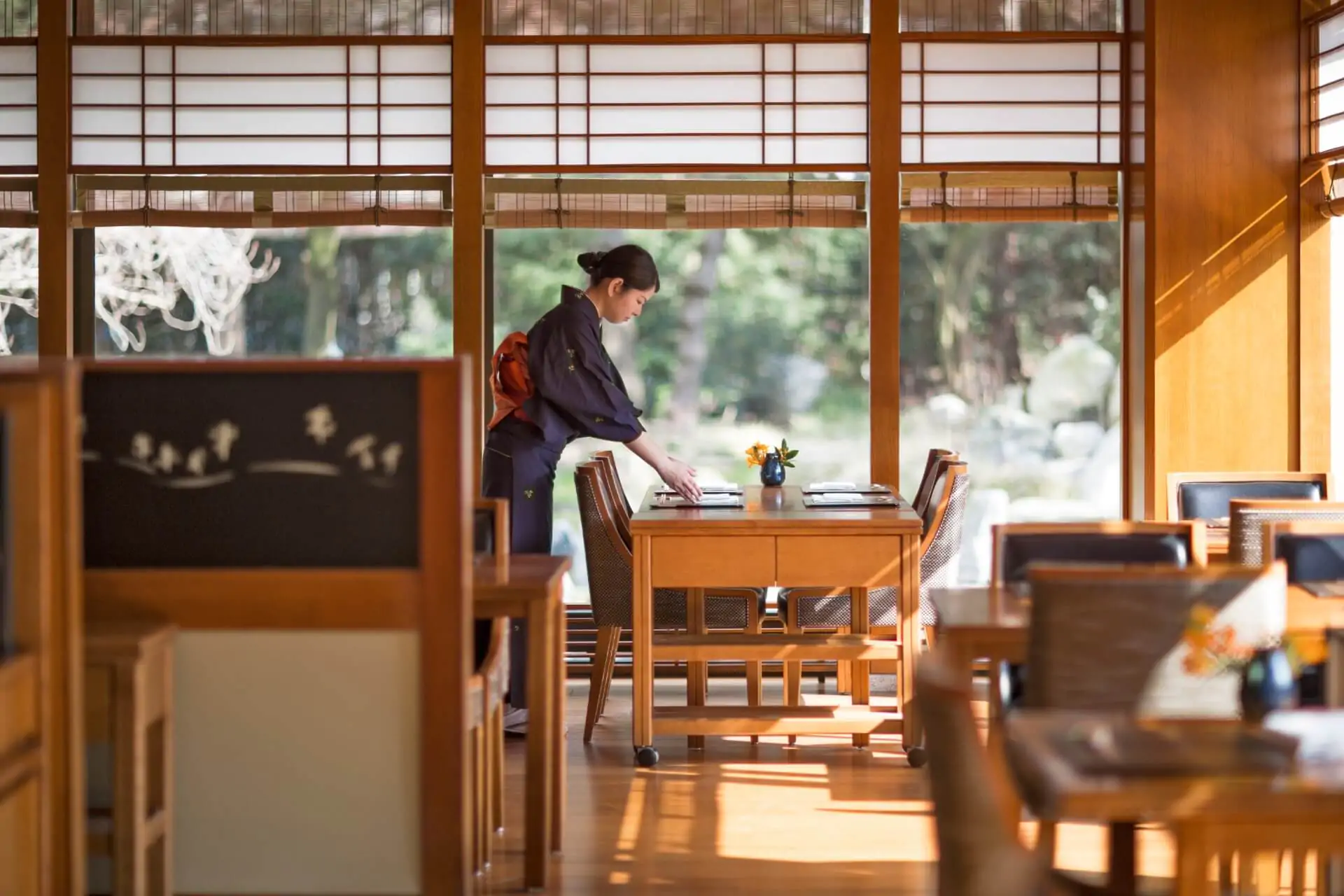
Als de naam Yamazato je niets zegt, is het wellicht makkelijker om te denken aan het Okura hotel. In dit torenachtige hotel aan de Ferdinand Bolstraat zit restaurant Yamazato wat zoals de Michelin gids uitlegt het eerste traditionele kaiseki restaurant is dat in 2002 werd bekroond met een Michelin ster. De keuken is uitgebreid en toegankelijk voor zowel degene die al volop bekend zijn met authentiek Japans, als zij die net om de hoek komen kijken. Het personeel is vriendelijk en hoffelijk en brengt het op kunstwerk gelijkende eten met een elegante flair naar de tafels. De traditionele kaiseki keuken toont zich hier simpelweg van haar mooiste en puurste kant. Yamazato biedt daarmee een ingetogen moment waarin een topproduct als zeebaars en intense bereidingen rond miso en yuzu de hoofdrol spelen. De aangepaste saké’s dienen als kers op de taart!
1078 HJ Amsterdam
Mangi Amore
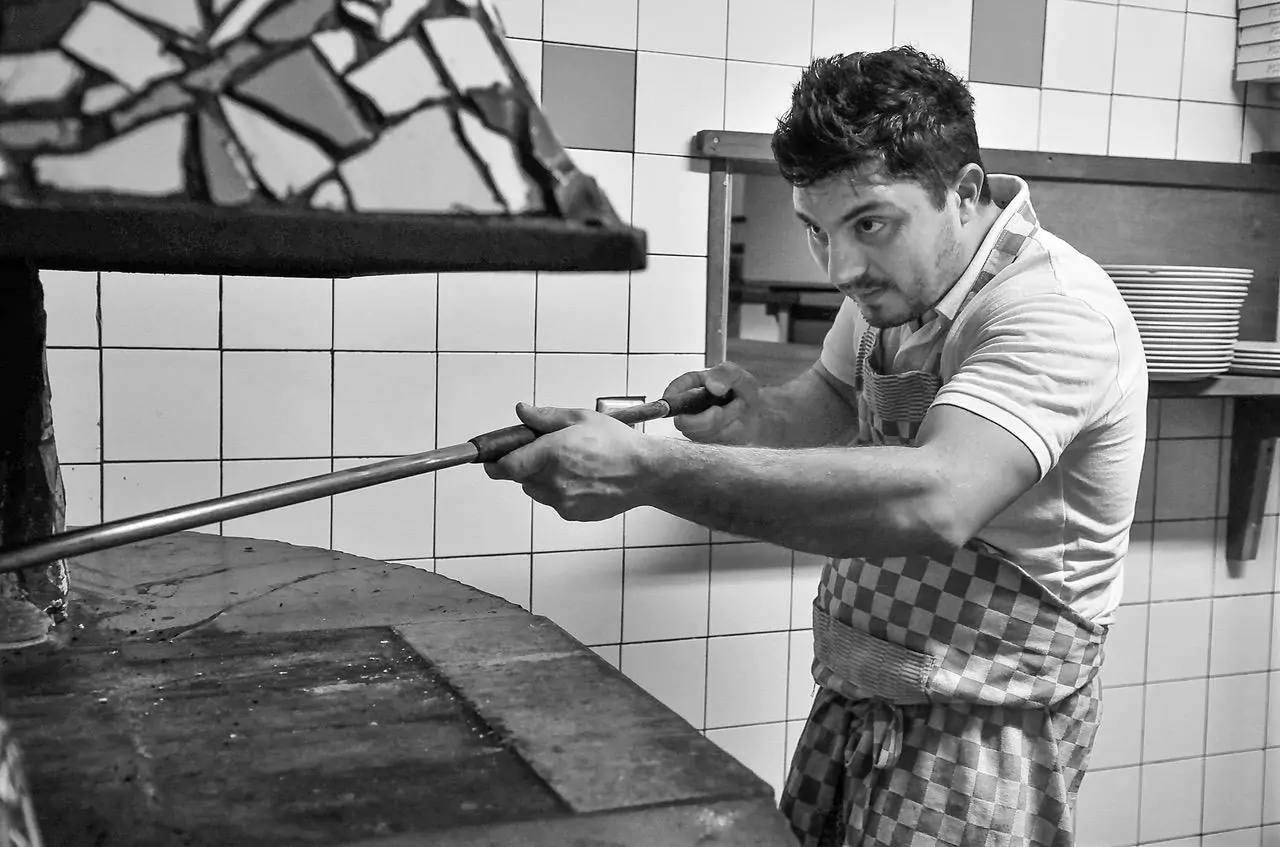
Bij Mangi Amore kun je terecht voor heerlijke authentieke pizza's zoals die in de Italiaanse pizza-stad Napoli worden gegeten. Chefkok Cico is een Napolitaan in hart en nieren en weet als geen ander hoe hij de perfecte krokante pizza's kan maken. In 2014 won Cico zelfs de prijs voor het bakken van de beste pizza van Nederland! De ingrediënten die worden gebruikt -in Mangi Amore zoals de tomaten uit Campania en de fameuze buffelmozzerella - worden rechtstreeks uit Italië geïmporteerd. Breng een bezoekje aan deze pizzeria om écht Italië te proever, of zoals de naam van het restaurant zelf als zegt "eet mijn lief!"
1072 LH Amsterdam
Ciel Bleu (**)
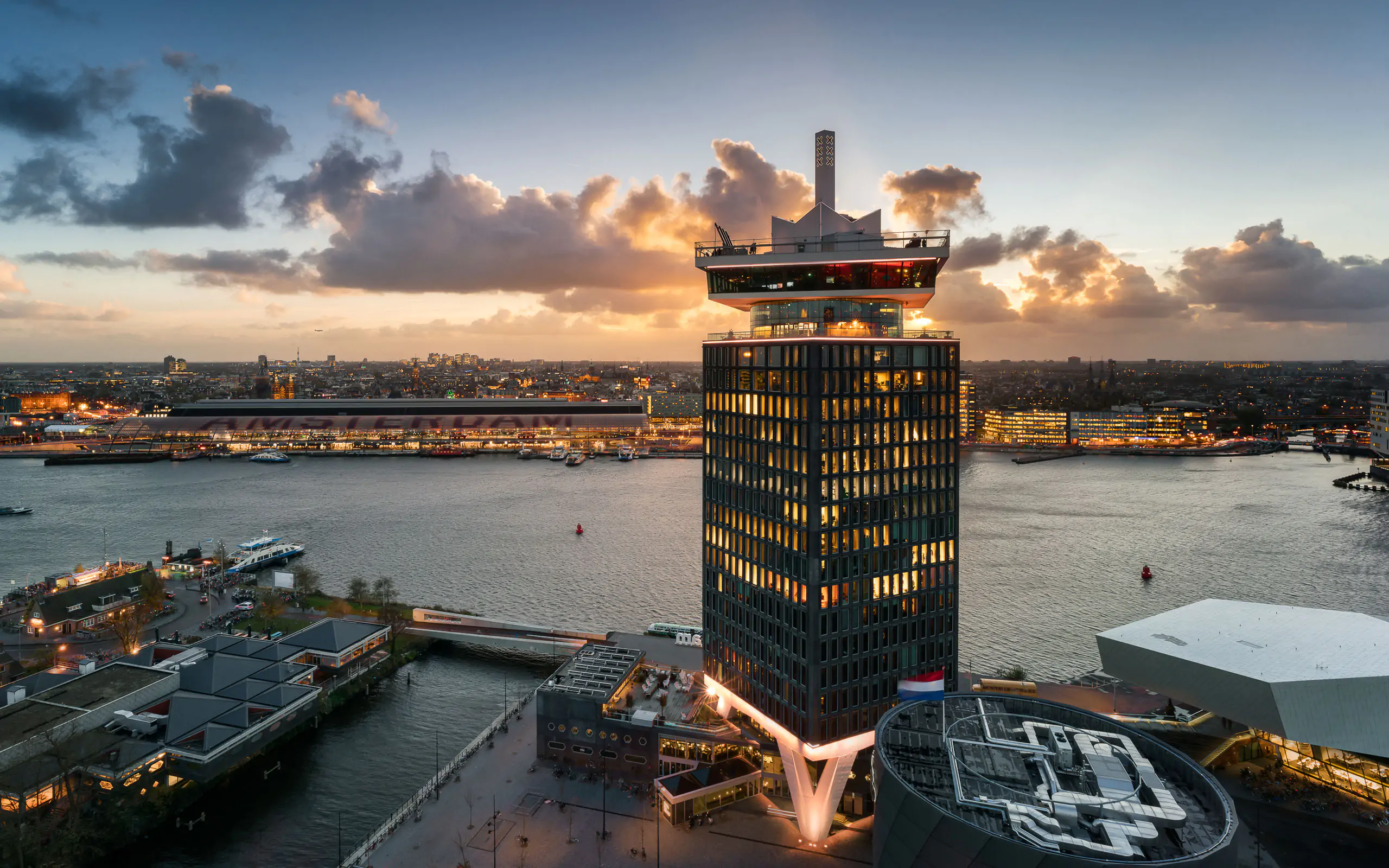
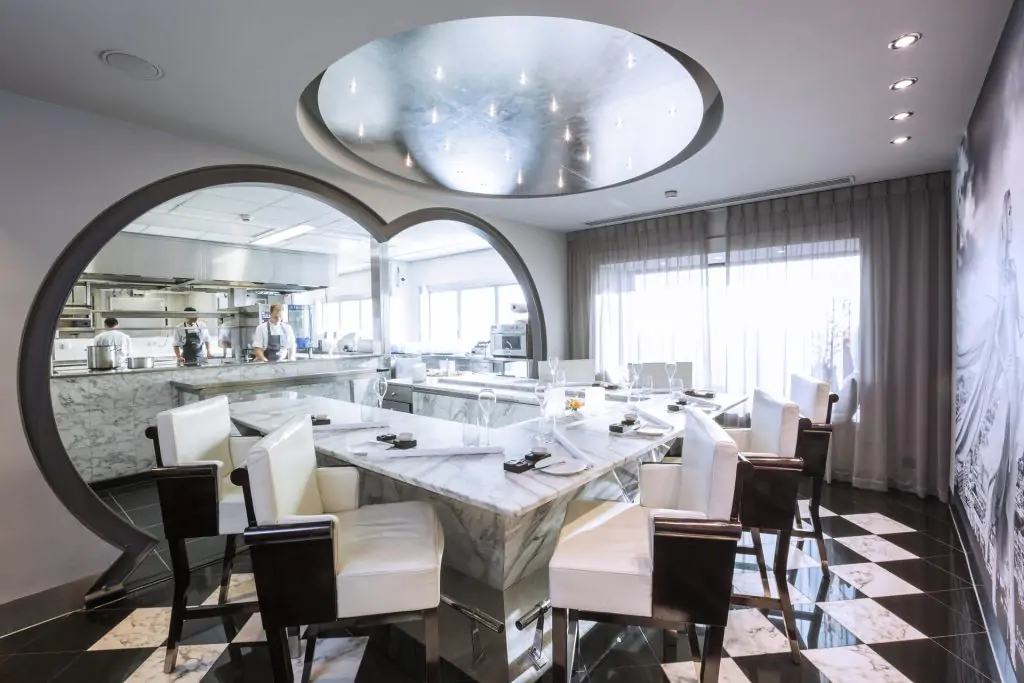
Het gastronomische restaurant Ciel Bleu zit in het welbekende Okura Hotel. Het hotel dat boven Amsterdam Zuid uittorent. Verwacht bij Ciel Bleu diner van hoog niveau. Niet alleen bevindt het restaurant zich op de 23e verdieping, de internationale keuken heeft inmiddels twee michelinsterren op zijn naam staan. Waan je in de seizoensgebonden gerechten bereid door chefs Onno Kokmeijer en Arjan Speelman en geef je over aan een puur zintuiglijke ervaring.
1072 SL Amsterdam
Sjefietshé
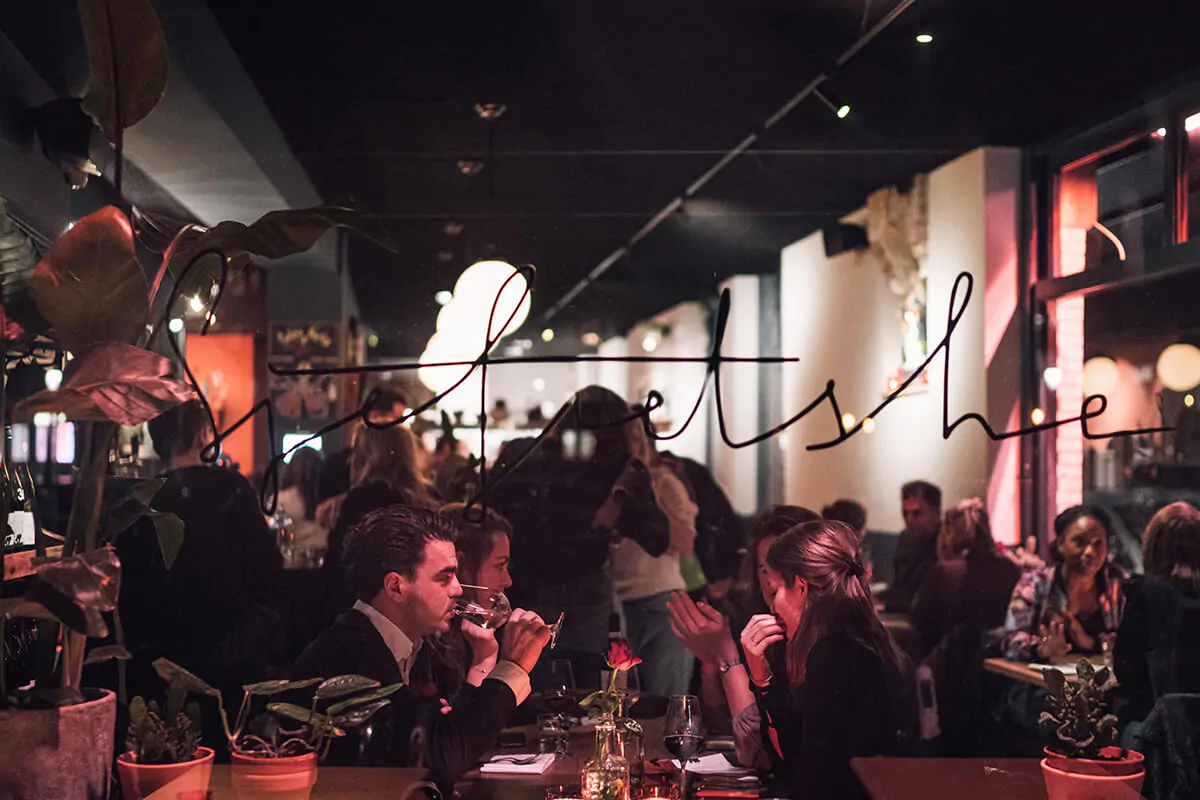
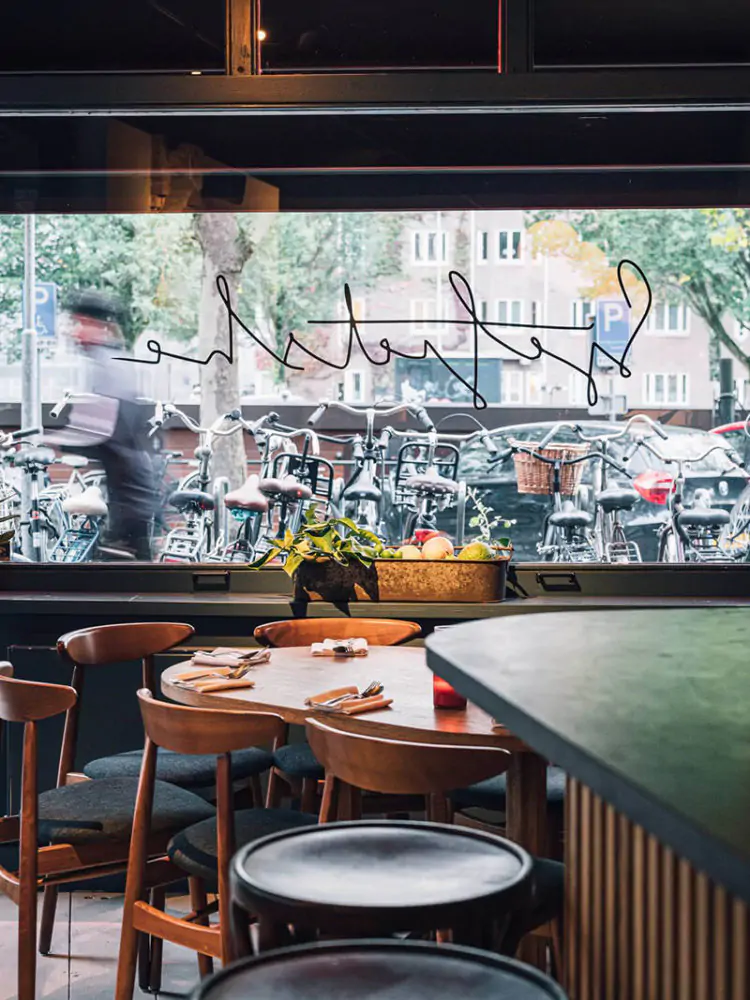
Sjefietshe is een cevicheria in het midden van de Pijp, met een mooi terras met genoeg plek. Voor eenieder die niet bekend is met het heerlijke Zuid-Amerikaanse gerecht: het klassieke Peruviaanse voorgerecht bestaat uit rauwe (wit) vis die ‘gegaard’ is in limoensap. Het gerecht wordt geserveerd met chili, koriander, rode ui en een oceaan aan limoen. Een overdonderende smaaksensatie en daarom ook moeilijk om goed te evenaren. Sjefietshe doet een goede poging en maakt met een Amsterdamse flair een goede eigen variant. Naast de ceviches met verschillende soorten vis is er ook de optie om van lekkere bites te genieten, waaronder de Sjefietshe special: de door hun uitgevonden ‘hotdoctopus’. Genoeg redenen om hier dus langs te gaan en voor jezelf te besluiten of de zaak erin slaagt je mee te nemen naar hogere Zuid-Amerikaanse sferen!

1078 GZ Amsterdam
Scandinavian Embassy
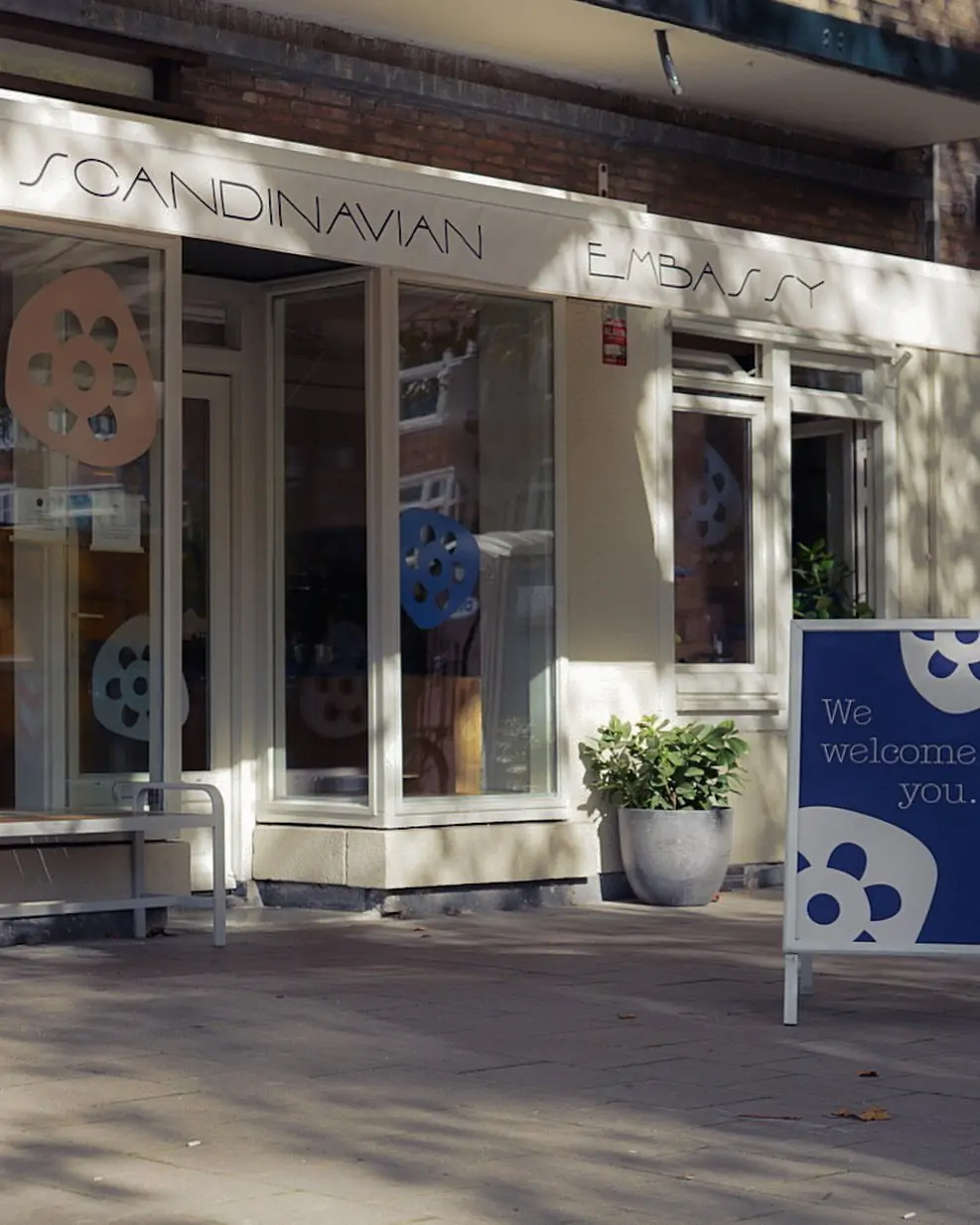
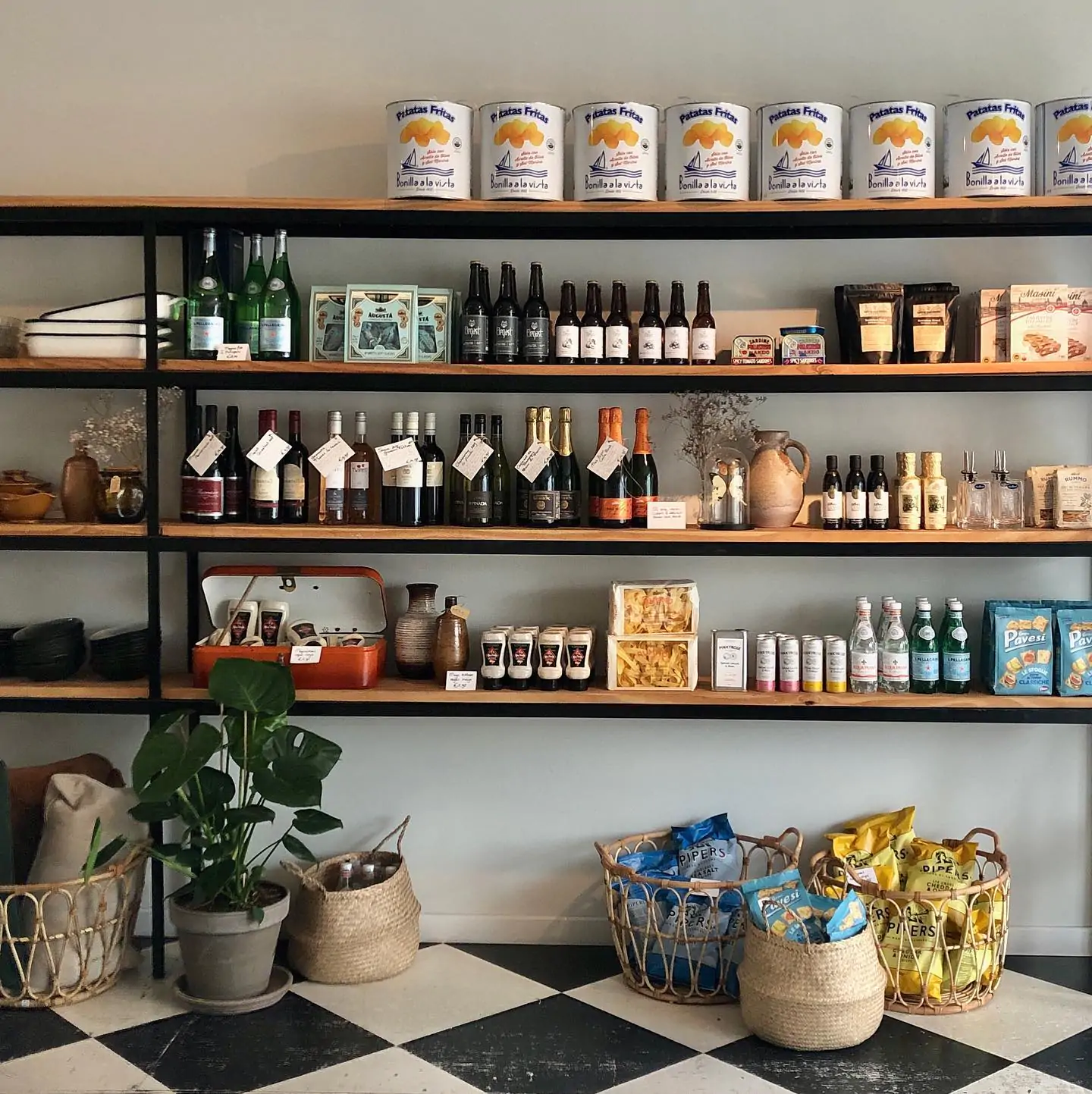
Hier wordt ervaring en interesse in Scandinavisch eten en duurzaamheid geboden. Bij de Embassy traceren ze kleine, niche-leveranciers en gaan mee met de seizoenswisselingen van producten. De keuken biedt menu's voor een betaalbare prijs waarbij de gezonde en milieuvriendelijke wortels van de Scandinavische keuken behouden blijven. Bijzonder is dat ze ook koffie met eten combineren , waardoor, volgens hun zeggen, de algehele culinaire ervaring verbeterd wordt. Dit is hun tweede locatie. De ander locatie is in de Pijp gevestigd.
1078 GR Amsterdam
Sab’s Deli
Bij Sab’s Deli ligt de focus op echt lekker, maar net wat specialer dan normaal, en uiteraard waar mogelijk duurzame en lokale producten. Al deze dingen samen vormen het merk ‘Sab’s. Ze verzorgen ook complete caterings van thuisdiners tot heerlijke borrelhapjes. Gelegen vlak naast de drukke RAI in Amsterdam Zuid, kan je ook altijd als je net de trein uitstapt even binnenlopen en kijken wat de pot schaft. Het zal niet tegenvallen!
1078 GH Amsterdam
Feduzzi
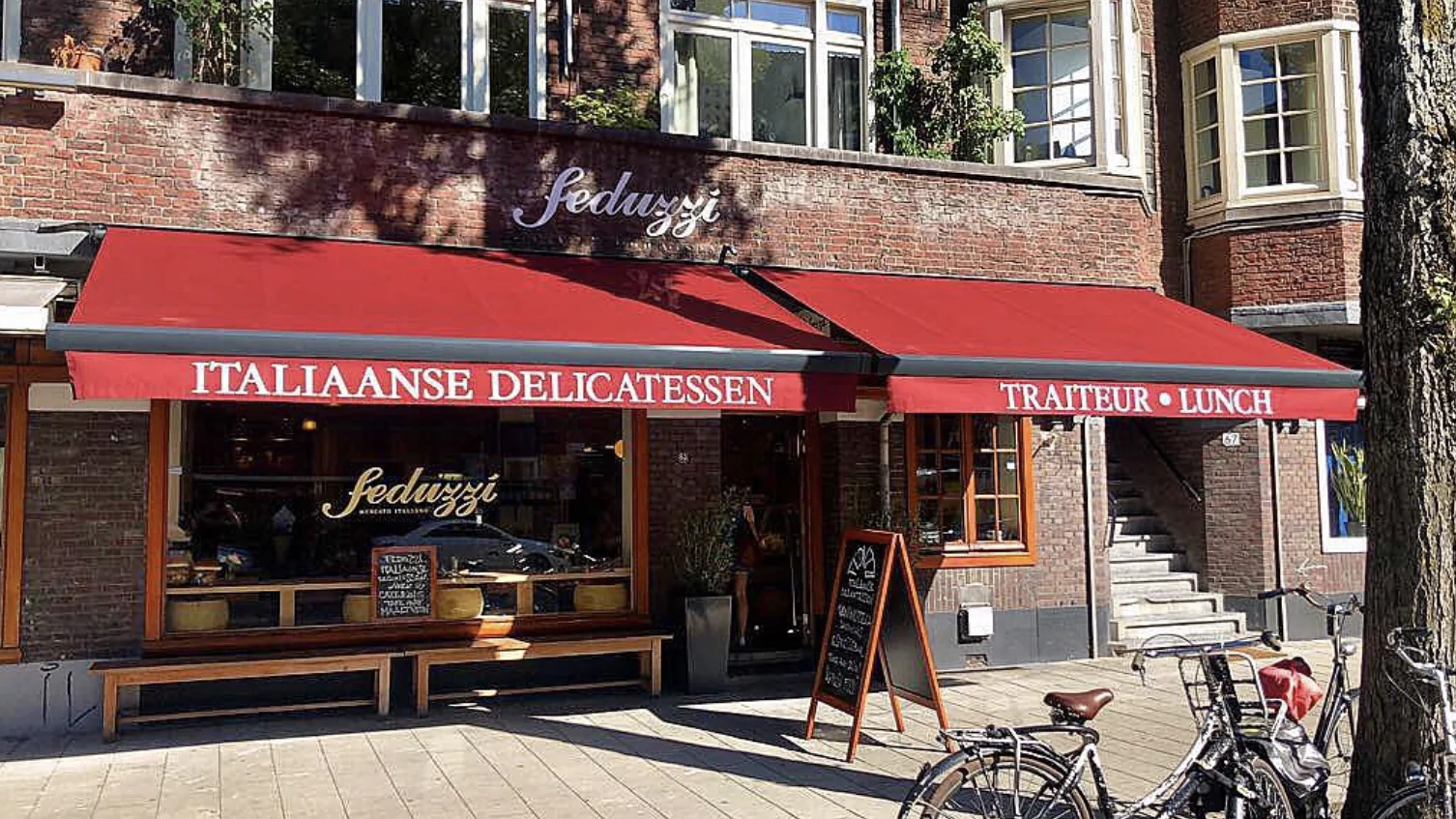
Feduzzi is opgezet in 1981 door de Italiaanse familie Feduzzi en was daarmee de allereerste Italiaanse delicatessenwinkel in Nederland. In 2001 werd het bedrijf overgenomen door Pjotr Meuwissen, die het liet uitgroeien tot een van de beste Italiaanse traitteurs in de stad. Je kunt bij Feduzzi terecht voor traditionele Italiaanse producten, zoals pasta's en wijnen en olijfolies, maar je kunt hier ook allerlei lekkere panini's halen; belegd met mozzarella, tonijnsalade of een van de andere heerlijke affetati, zoals beenham of coppa di parma.
1078 HJ Amsterdam
Grammes
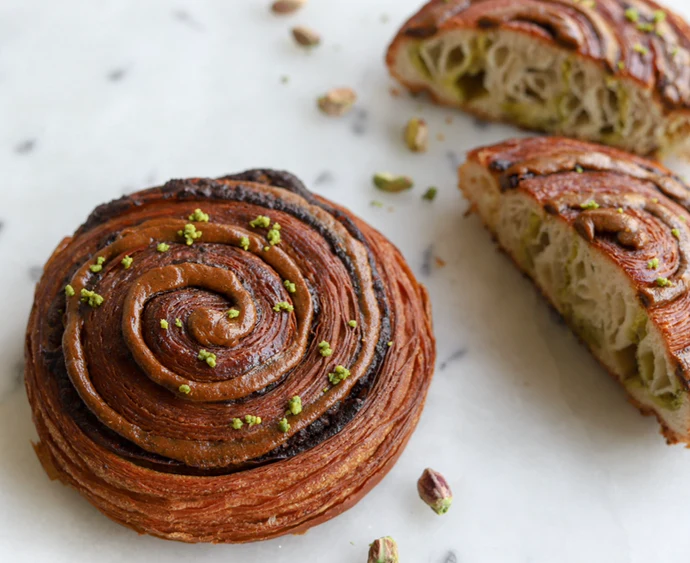
Na maar liefst 10 jaar training in de beste patisserieën in Parijs en New York, brengt Chef Maxime Papin zijn kennis en technieken naar Amsterdam. Papin kreeg al vroeg de kneepjes van het vak met de paplepel kreeg ingegoten van zijn moeder toen hij opgroeide in Frankrijk, en zette dit voort in de culinaire wereld van New York. Zijn creaties zijn dan ook allesbehalve doorsnee; het befaamde cappuccino taartje maar ook chocolade croissants, koekjes en zelfgemaakte granola.
1078 HM Amsterdam
Sophie Eats
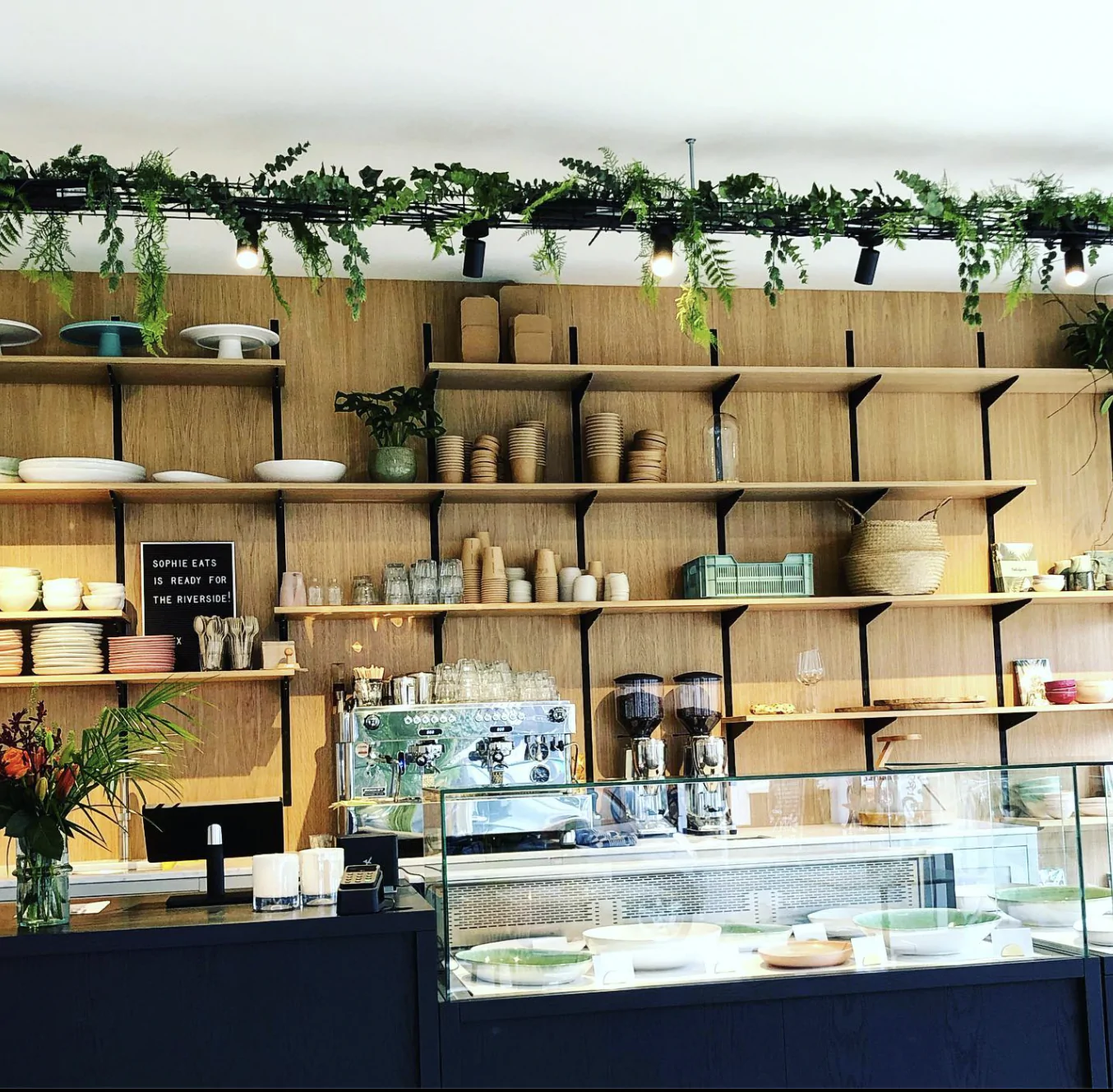
Sophie Eats is een cateringbedrijf en deli-shop gevestigd in Amsterdam. Met kwalitatieve seizoen producten wordt er een balans naar smaken en textuur gezocht die het eten uniek en lekker maken. Het kleurrijke menu is geschikt voor iedere gelegenheid; van een zakenlunch of een mode-evenement tot een sfeervolle borrel. In het winkeltje kan je terecht voor koffie, een vers sapje of iets lekkers te eten voor onderweg.
1078 HB Amsterdam
Poelier Jonker
Poelier Jonker in de Maasstaat bestaat al meer dan 45 jaar. Anno 1974 is het bedrijf opgezet door de familie Jonker en is vandaag de dag nog steeds in het bezit van de familie. Bij Poelier Jonker is de missie "het behouden van het poeliers-ambacht" en dat is te zien! Het assortiment is zeer uitgebreid; van gegrilde producten tot heerlijke salades. Daarnaast verkopen ze hier ook maaltijden en ragouts. Alle producten van poelier Jonker zijn dagvers en van de beste kwaliteit.
1078 HE Amsterdam
Slagerij Woorts
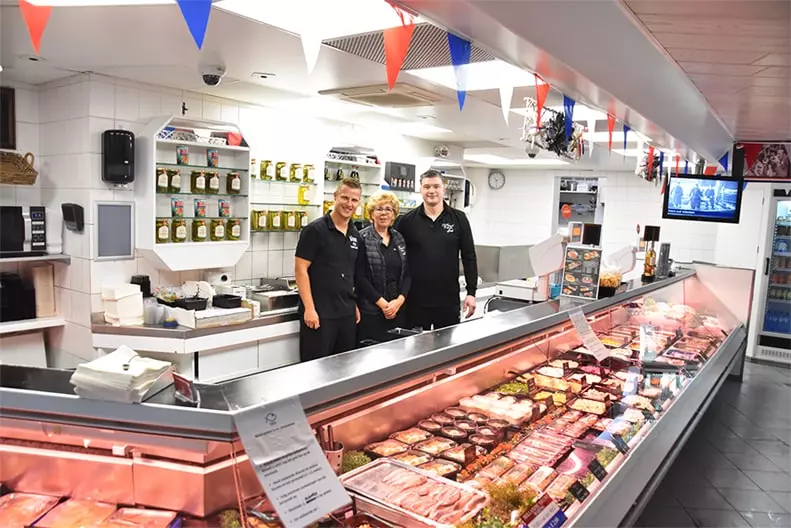
Slagerij Woorts opende al in 1964 de deuren van de winkel op de Maasstraat. Met het motto ‘niet teveel kruiden, niet teveel specerijen, gewoon dat wat hoort, en dat moet het product an sich het zelf doen’, is dit een typisch Amsterdamse slagerij waar de producten weinig poespas nodig hebben. De klanten komen van heinde en verre hier naartoe voor de ossenworst en filet americain. Er wordt hier met aandacht gewerkt zodat het dier krijgt wat het verdient.
1077 HN Amsterdam
Slagerij Hergo
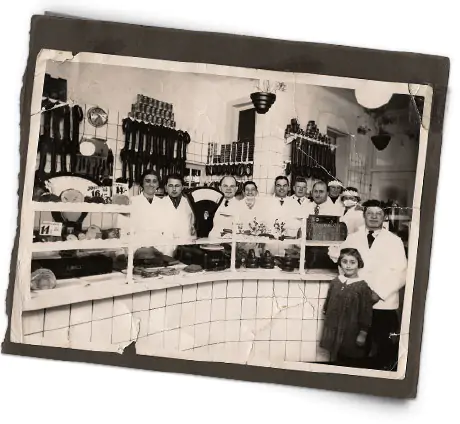
Slagerij Hergo is de vleesspecialist in Amsterdam. Al in 1930 begon de heer Cantor, een Duitse worstmaker, samen met zijn vrouw die uit een Amsterdamse slagersfamilie kwam, zijn slagerij met typische Duitse worstspecialiteiten. Met het motto ‘De slager met ’n koksmuts’ is Hergo uitgegroeid naar vier verschillende locaties en is zo tegenwoordig niet meer weg te denken uit het straatbeeld van Amsterdam. Met jachtworst, hausmacher, ossenworst, pekelvlees maar ook met een broodje filet americain onderscheidt Hergo zich als slagerij in het topsegment.
1072 SN Amsterdam
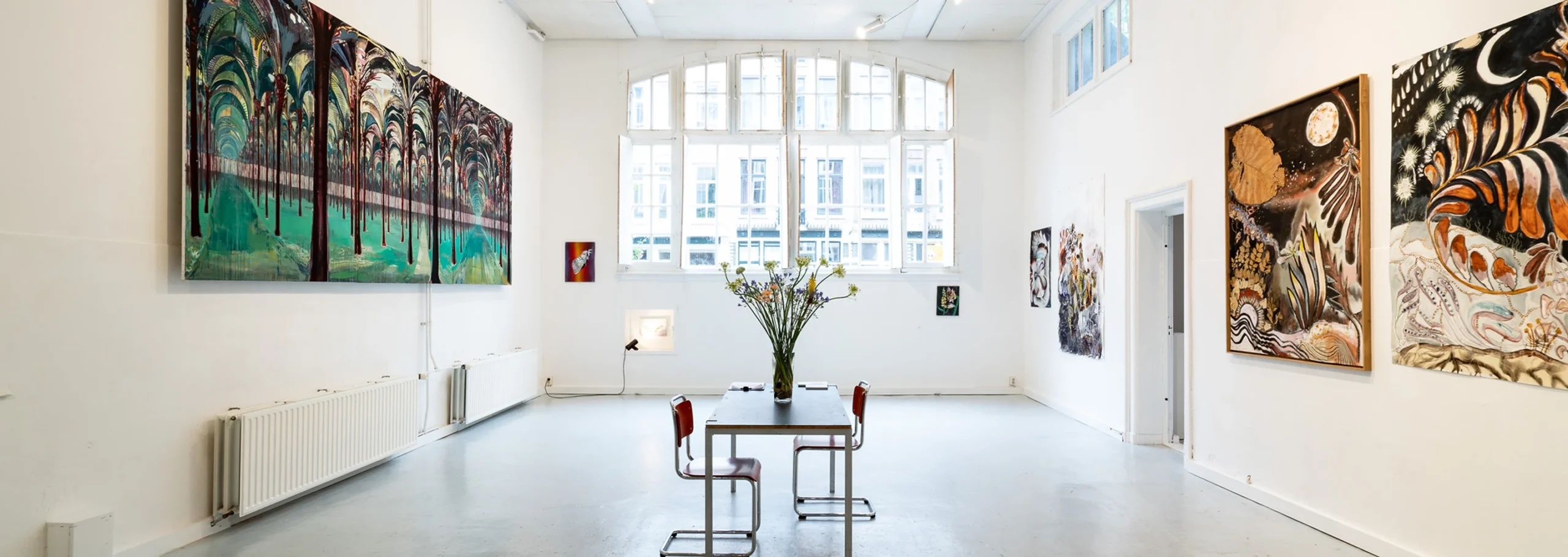
Galerie Fleur & Wouter
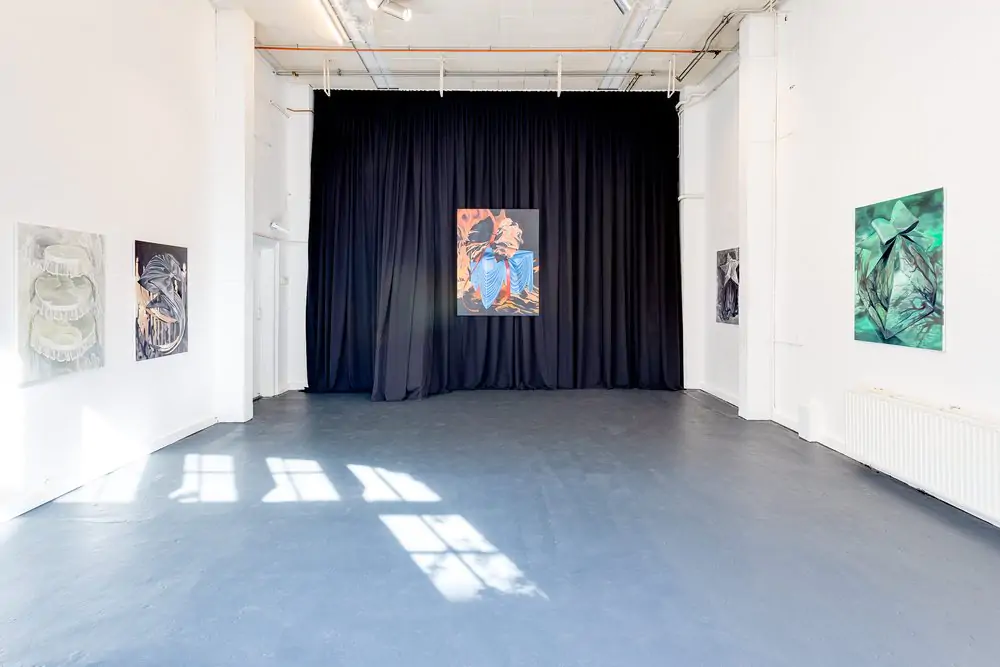
Galerie Fleur & Wouter werd in 2019 opgericht door Fleur Feringa en Wouter van Herwaarden. De galerie heeft als missie jongeren te betrekken bij kunst, hen vertrouwd te maken met galerieën en aan te moedigen om kunst te verzamelen. Deze toegankelijke en inclusieve filosofie weerspiegelt zich in alle activiteiten. Ze streven naar begrijpelijke communicatie en heldere verhalen.
1072 SN Amsterdam
GoMulan Gallery
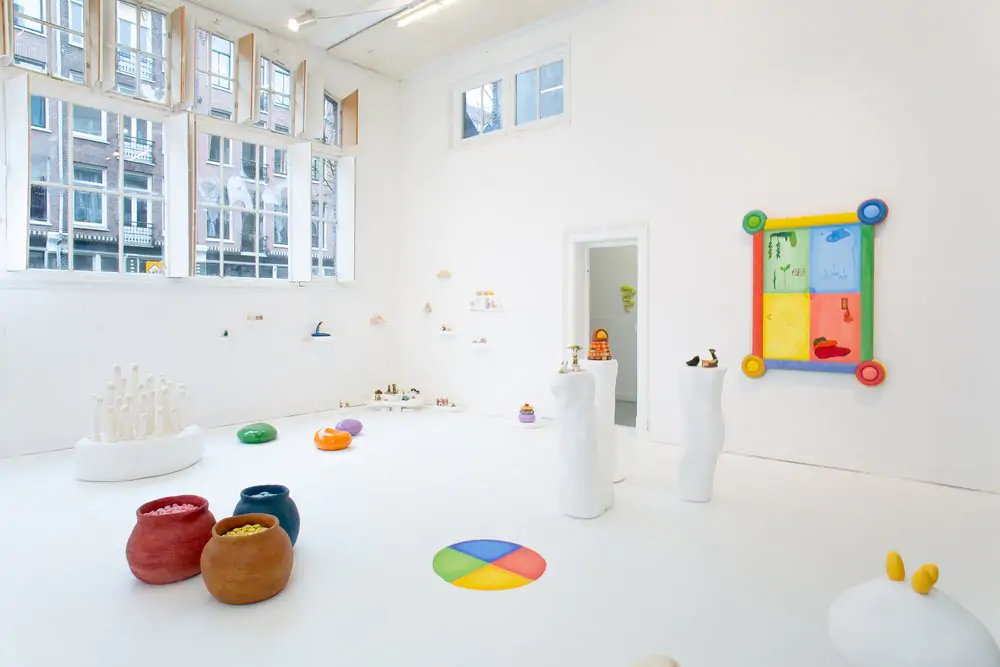
In 2018 opende GoMulan Gallery haar deuren als een pop-up galerie, opgericht door Mulan Go (1998). Slechts drie maanden later vestigde de galerie zich permanent als een artistieke ruimte. Het voornaamste doel van deze galerie is het bieden van een platform aan opkomende kunstenaars. De galerie toont zowel opkomende talenten als gevestigde kunstenaars en creëert zo een sterke inhoudelijke brug tussen verschillende generaties.