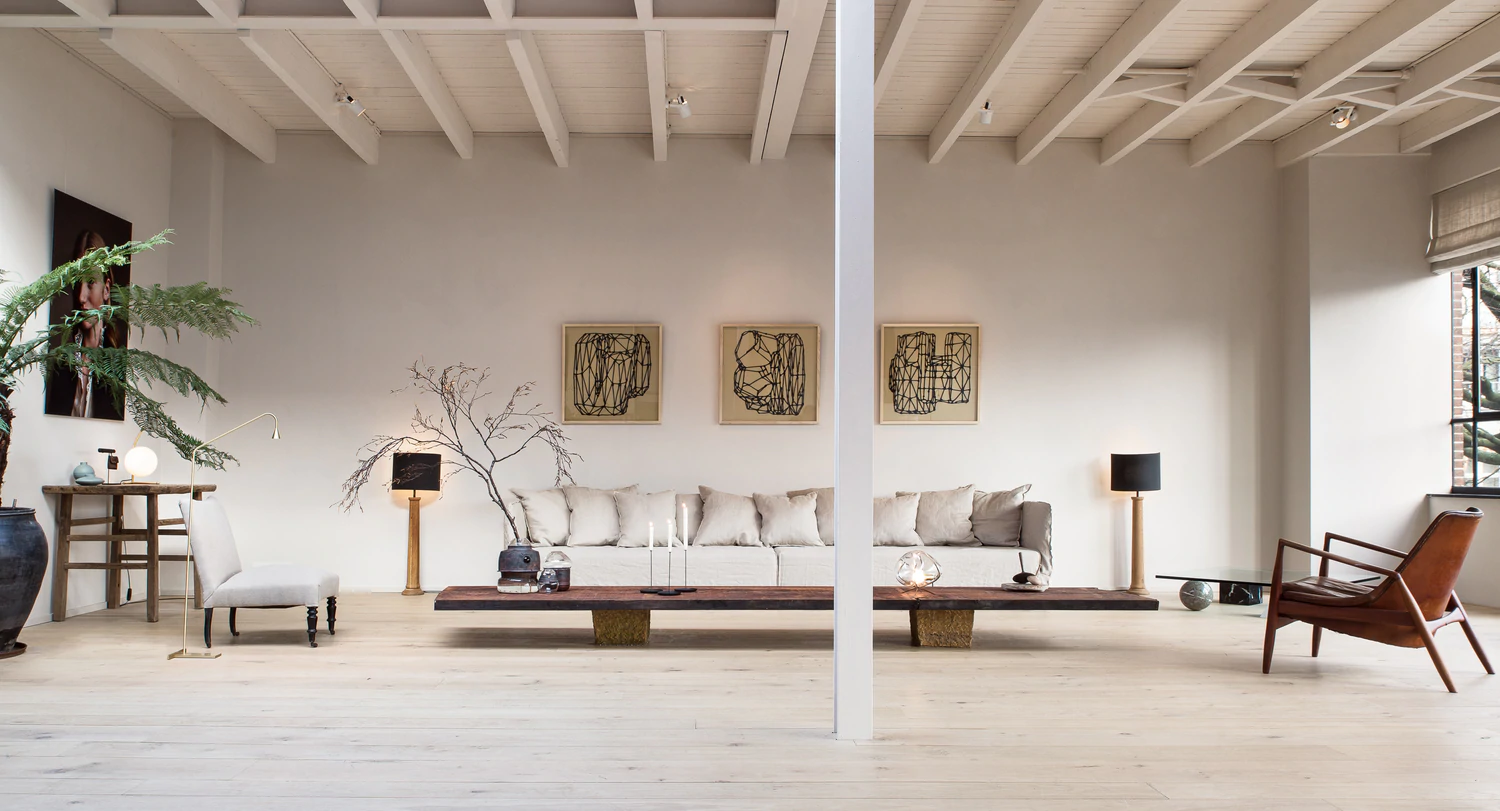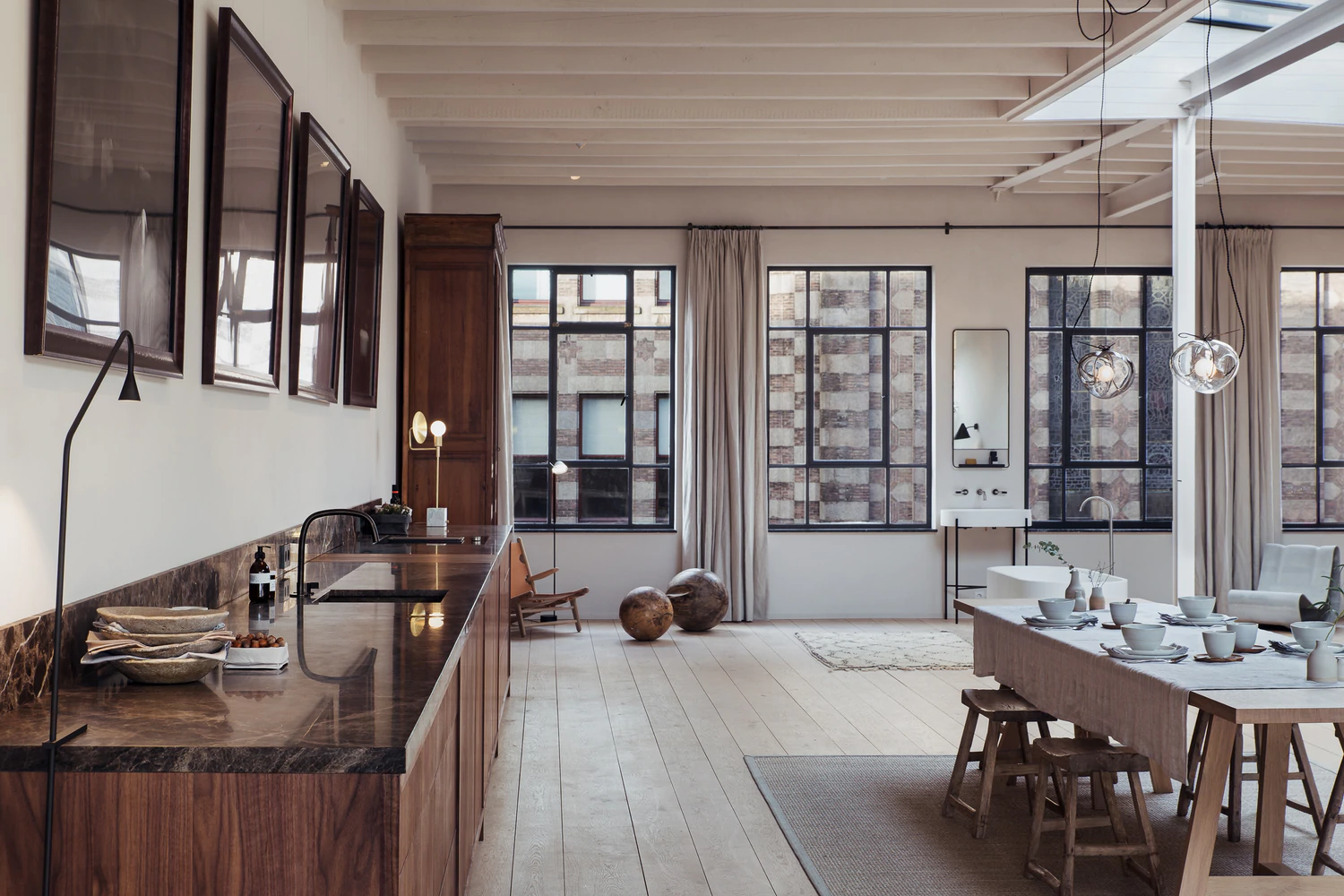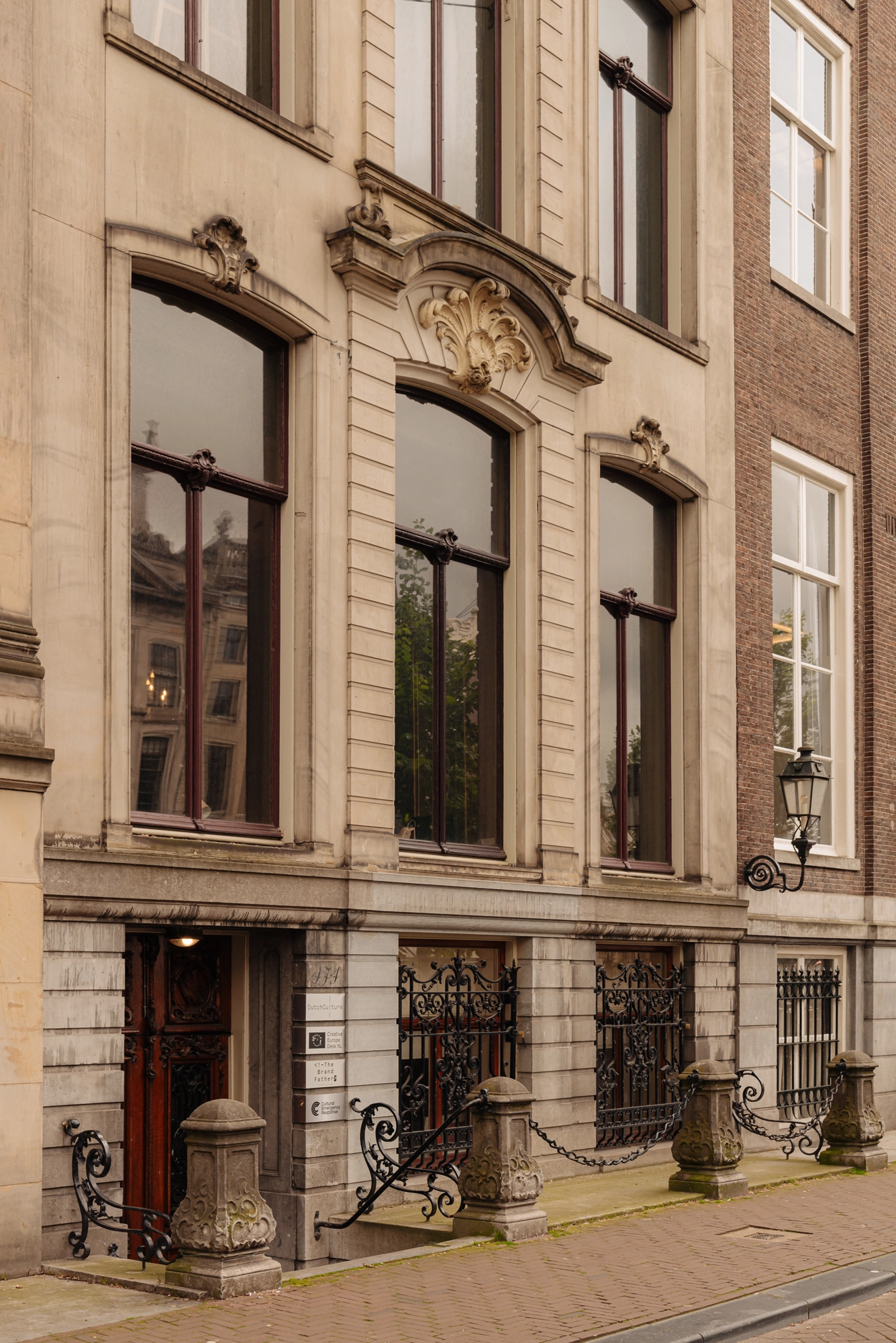
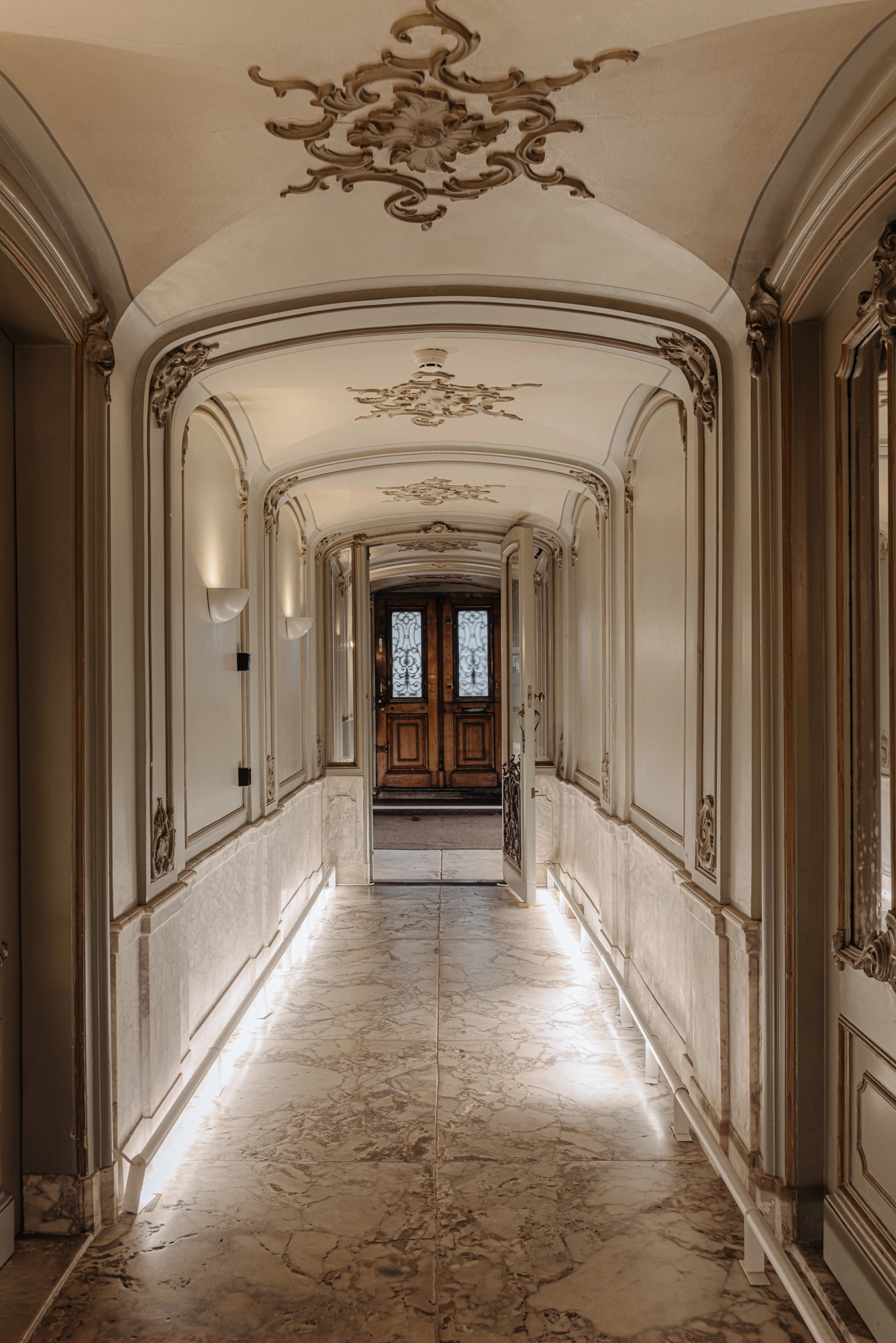
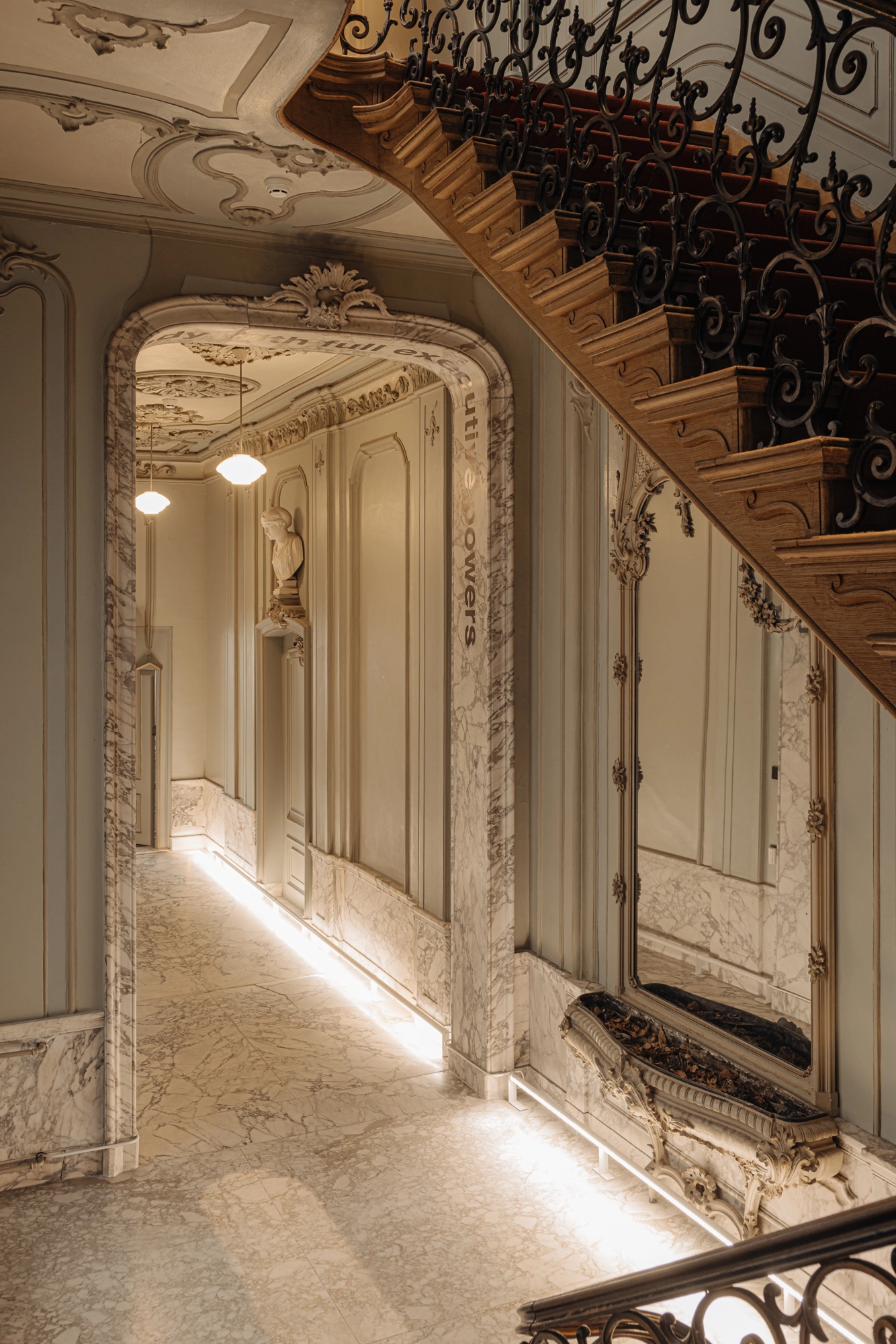
The Erfgoedhuis, located in the Golden Bend, is a particularly beautiful canal house listed as a national monument, with unparalleled grandeur and an authentic atmosphere. This majestic canal house has a rich history in terms of its residents and users. Various renovations to the interior and exterior have Location , preserving original details and maintaining the character of the building.
The Erfgoedhuis was built in 1669. The plot on which the house stands was purchased in 1665 for 7,400 guilders, a sought-after plot in the Golden Bend. While the first buildings were constructed in 1670, the current building was commissioned in 1756 by the widow of Jacob Vosterman. After that, the house style can be traced back to the design and construction by Marcus Muyssart.
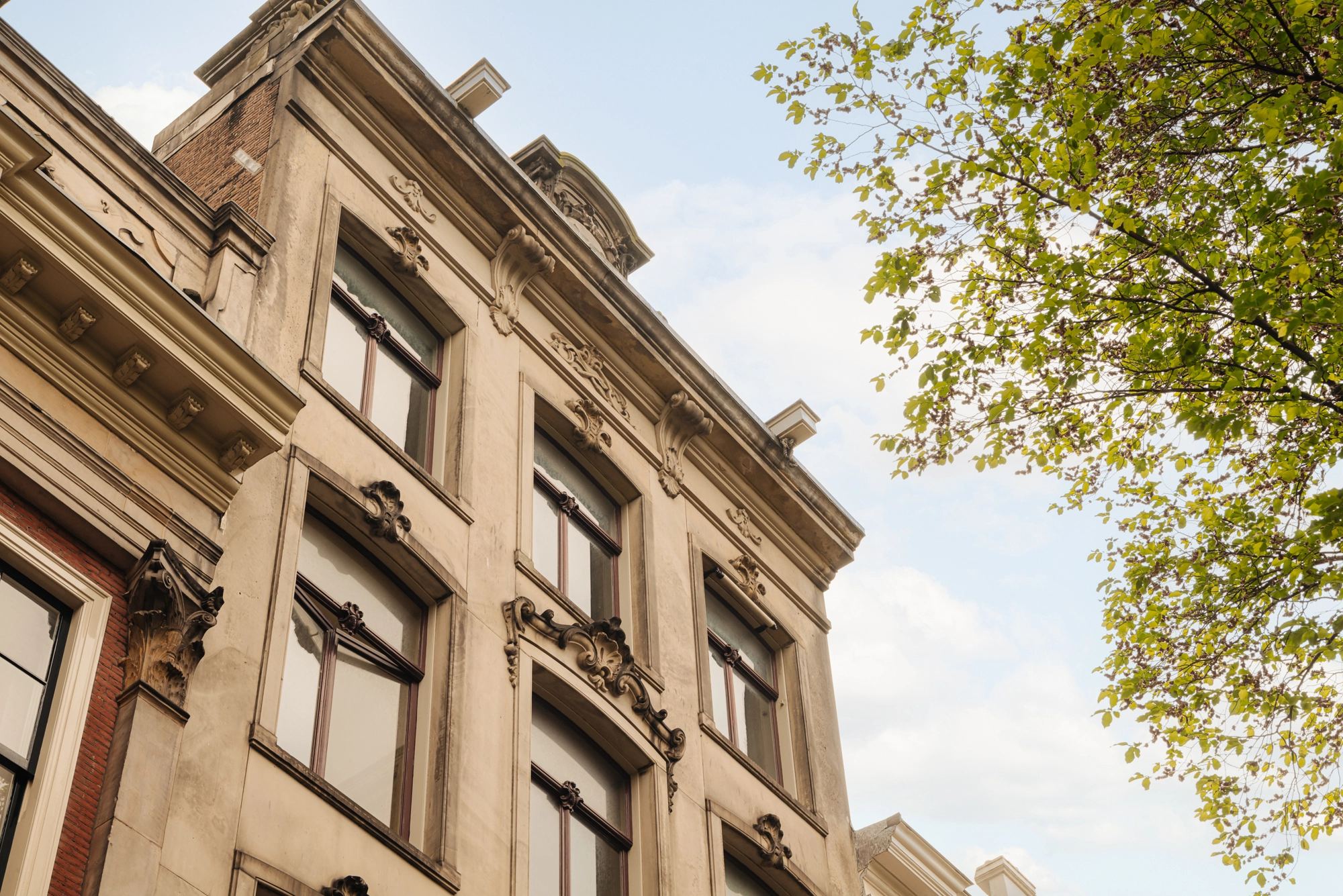
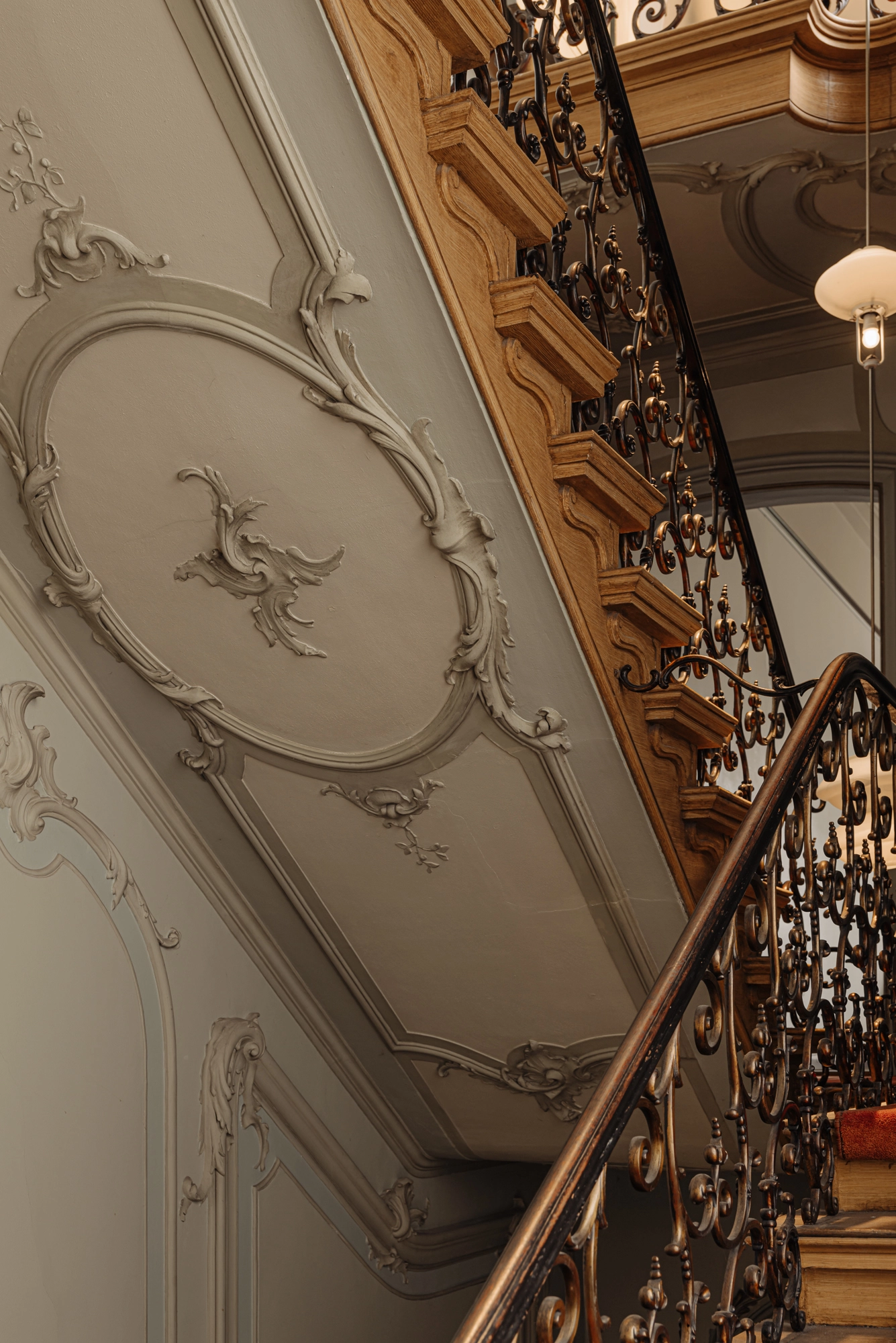
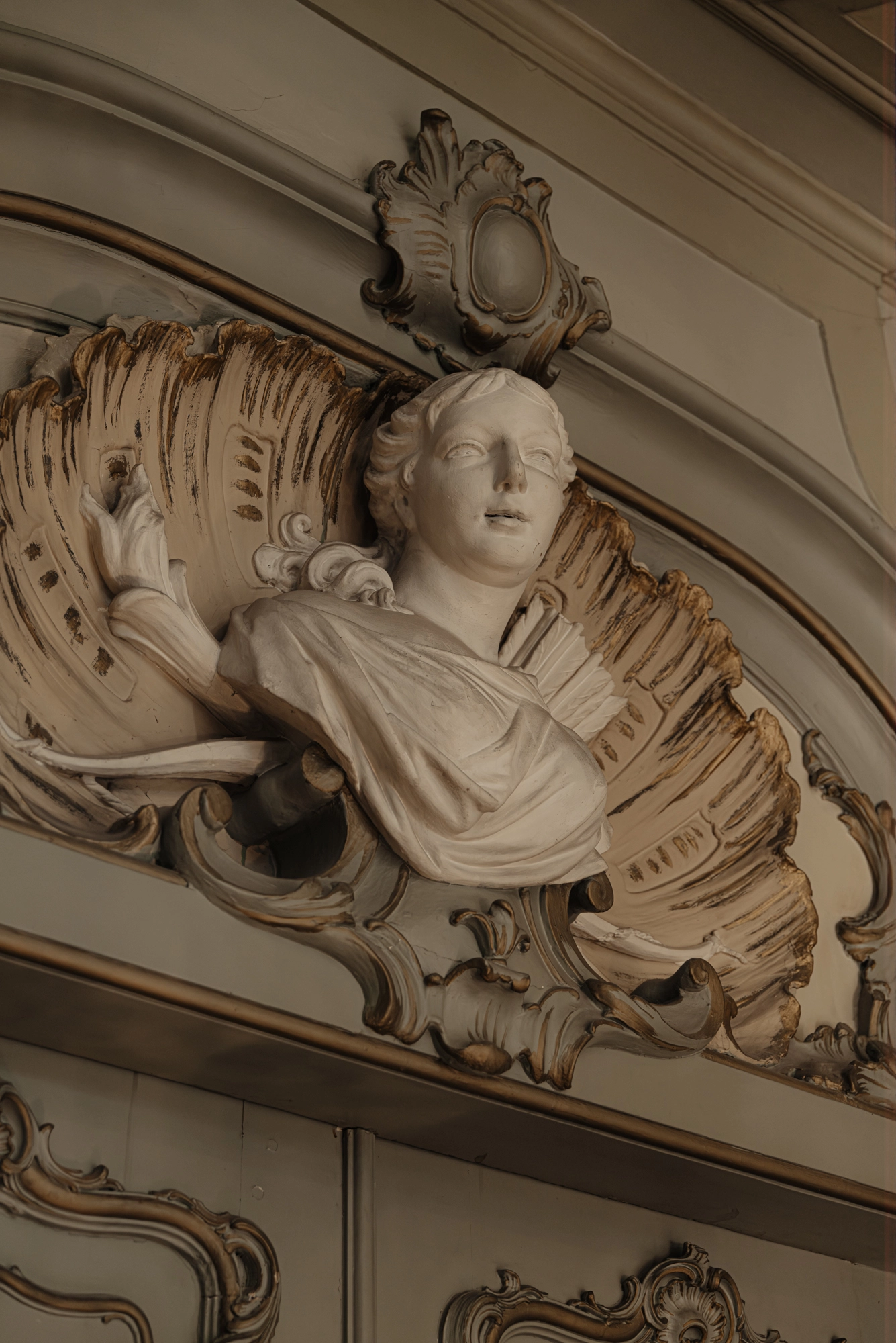
The canal house has a beautiful cornice in Louis XV style, an architectural style often seen in the canal belt. During the 18th century, French architecture dominated Amsterdam. After the sturdy, heavy Louis XIV style, the lighter, more feminine Louis XV style emerged, with a baroque and asymmetrical way of building. This style is often difficult to recognize, but asymmetrical decorations, lighter ornaments, and soft pastel shades betray the Louis XV character.
Golden Bend
This canal house was built on a single plot, unlike the rest of the Golden Bend on Herengracht, where the neighboring houses are double-width. This gives the building a more human scale than the mostly large neighboring buildings. After its original construction in 1669, major changes were made to the interior and exterior in 1756.
For example, the neck gable was replaced by a cornice gable. Beer brewer Van Marwijk Kooy purchased the building in 1879 and had it renovated around 1880 by architect Jan L. Springer. The family used the building as their home. The most significant change was the demolition of the high sidewalk, which resulted in the entrance to the basement being relocated. Eighteenth-century sliding windows with muntin bars were also replaced by T-windows, giving the façade a nineteenth-century character.
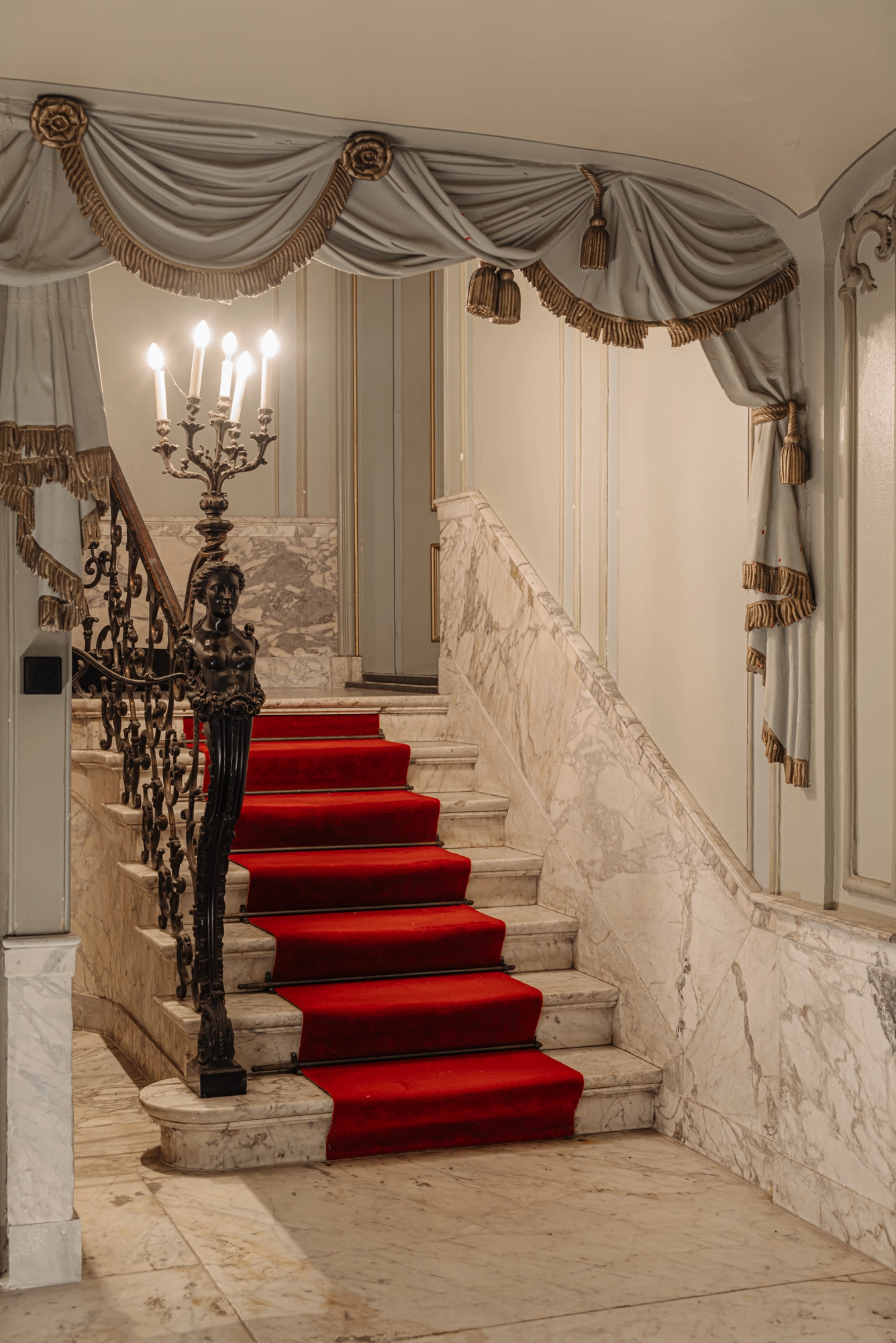
Inside, the building takes you back to times gone by. It is frivolous and impressive. The Wertheim-Van Heukelom family were the last residents before the building was taken over by a renowned Amsterdam art dealer and later by a wine merchant.
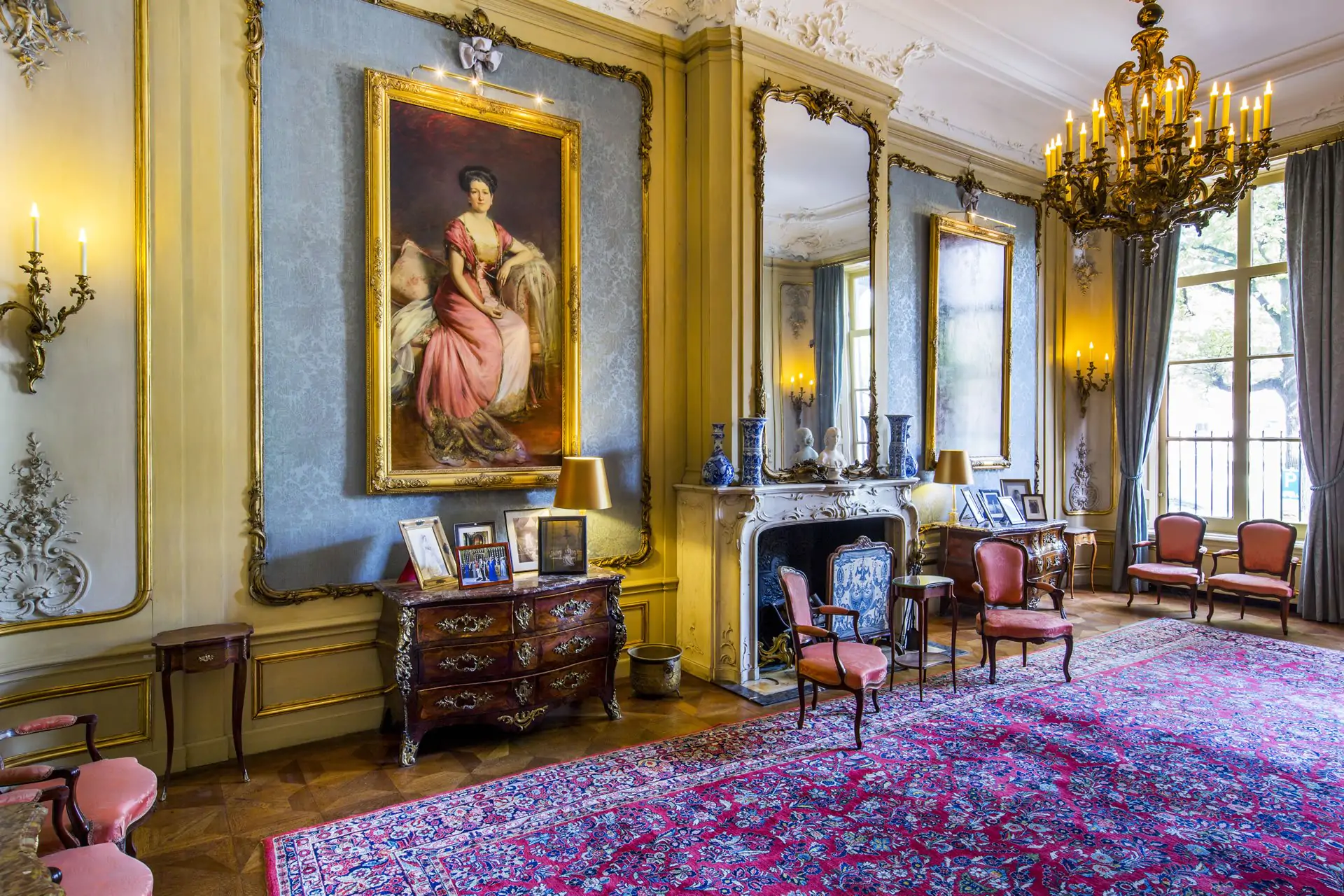
The bel-etage is grand and distinguished, with high ceilings that give a feeling of space and grandeur. Both in the front and rear of the house, there are three large, richly decorated rooms in Rococo style, which exude a frivolous charm.
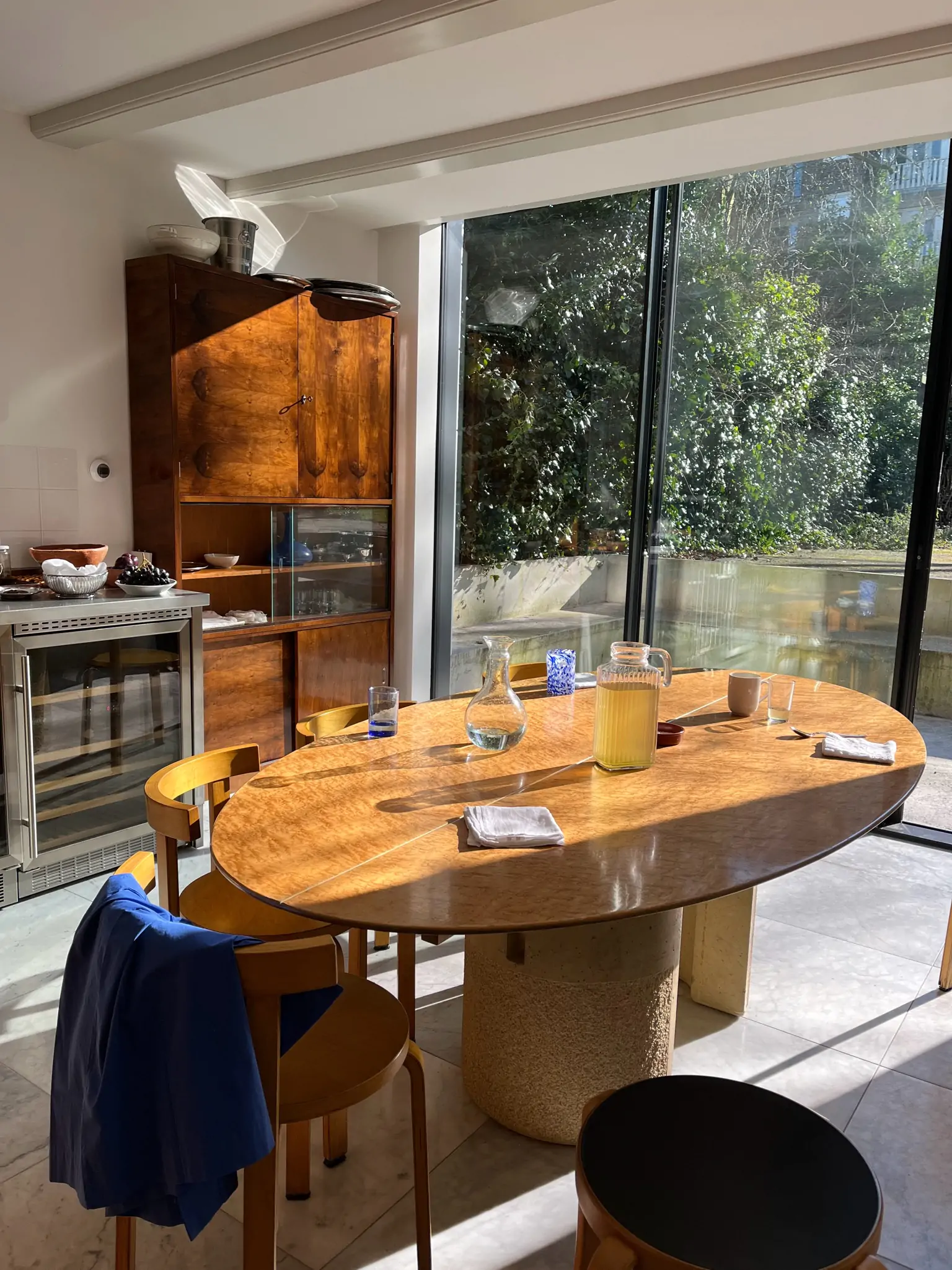
On the canal side, three large windows across the full width offer a beautiful view of the canal, transporting you back to the Golden Age. On the garden side, there is another impressive period room, with beautiful raking light that gives the room extra allure.
Both in the front and rear sections of the house, there are three large, richly decorated rooms in Rococo style, which exude a frivolous charm.
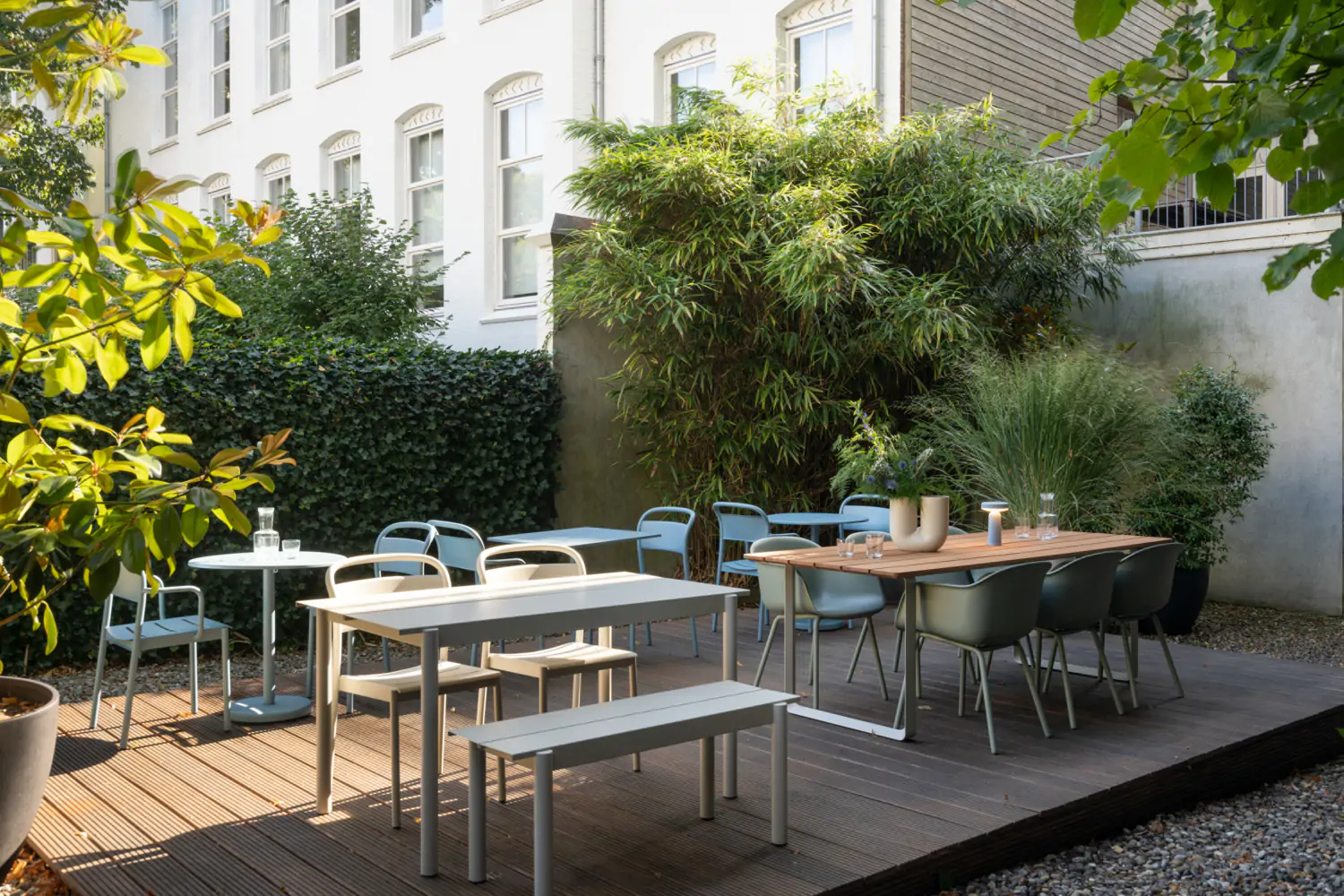
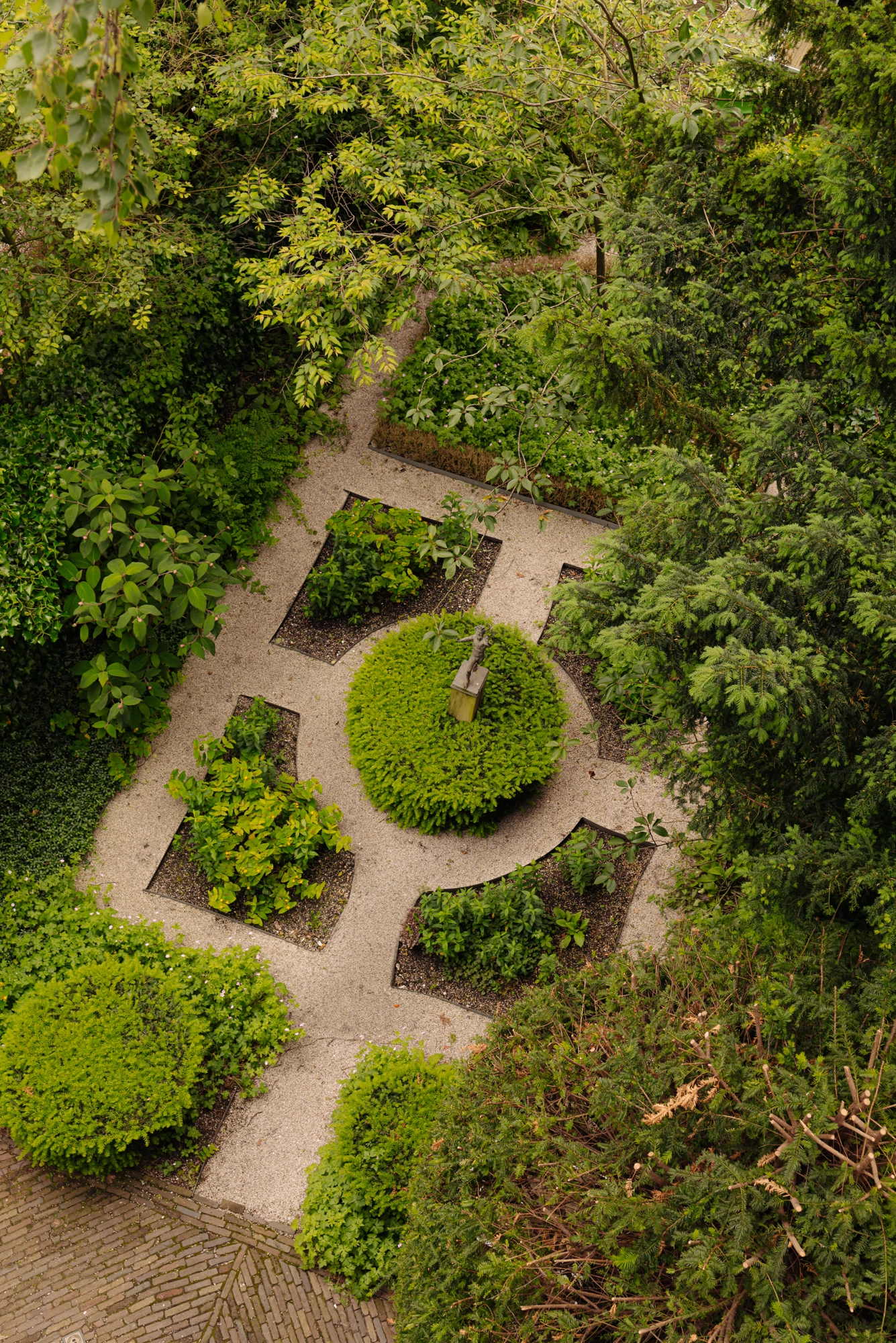
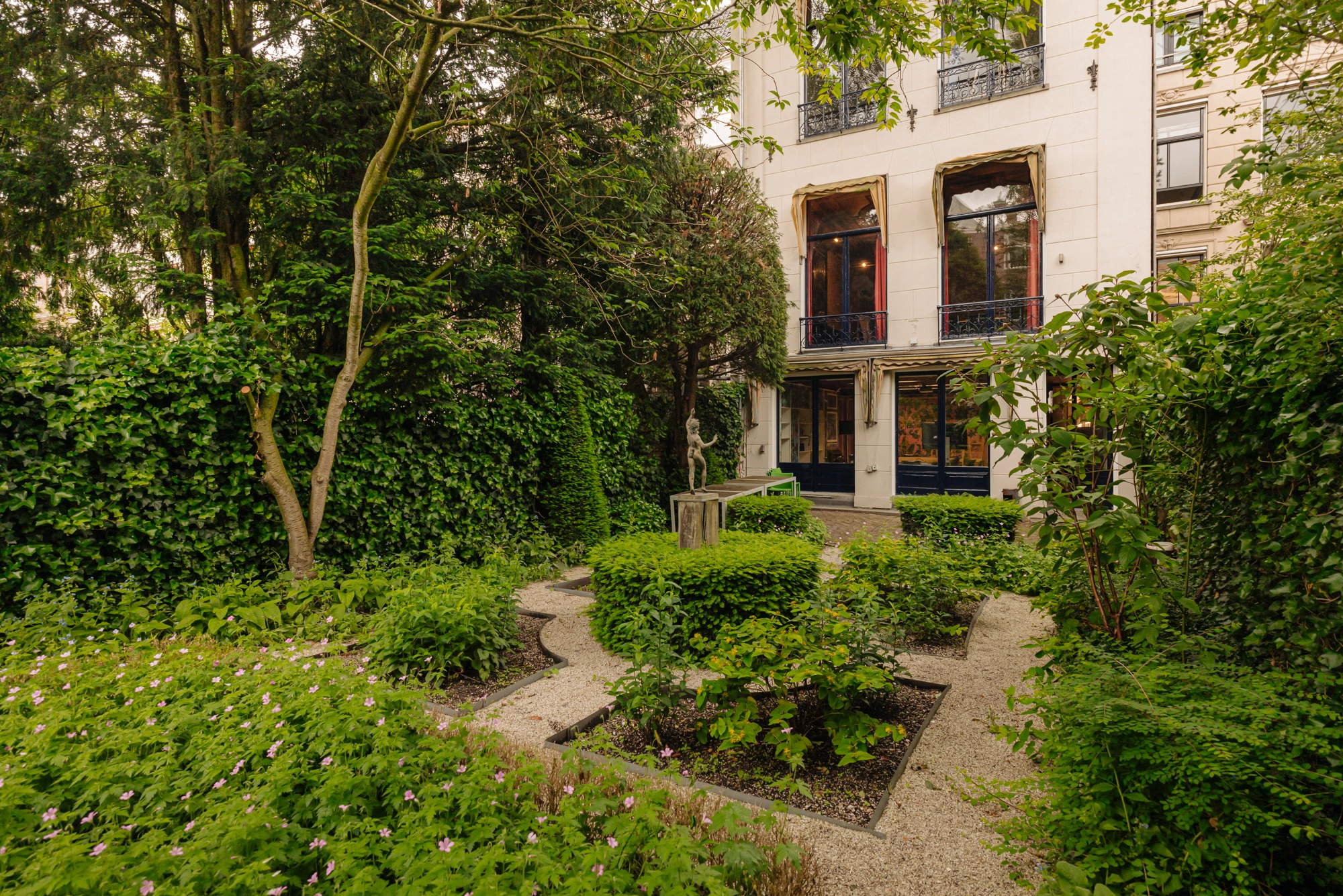
The garden is a hidden treasure, an oasis of peace and greenery in the city. The inner gardens along the canals are already known as blue zones, and this neat inner garden is sure to surprise you.
Facing south, the garden has a depth of approximately 23 meters. The greenery of the surrounding gardens provides the necessary privacy and creates an almost park-like atmosphere. On the garden side, there is another impressive period room, with beautiful raking light that gives the room extra allure.