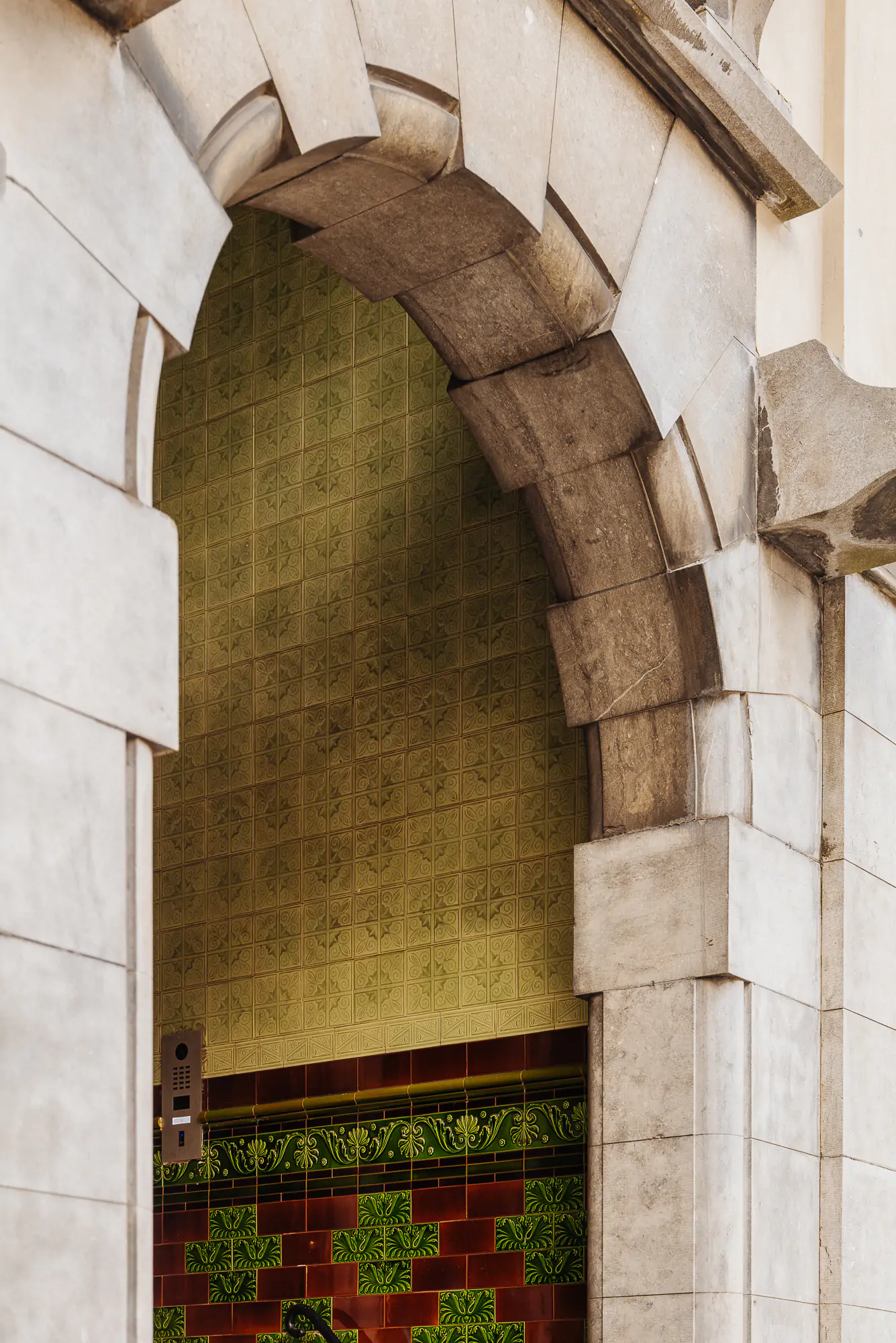
A national monument from 1896 built in an Art Nouveau style designed by Gerrit van Arkel.
Art Nouveau, also known as Jugendstil or New Art
Amsterdam is not particularly rich in buildings in this exuberant art and architectural style, which took Europe by storm around 1900. Nevertheless, the cityscape is enlivened by a few fine examples of Art Nouveau architecture. As the name suggests, Art Nouveau (also known as Jugendstil or New Art) was intended as a break with the art of the past. The artists involved were particularly opposed to the imitation of historical styles that dominated the late 19th century, such as Neo-Gothic and Neo-Renaissance. Location they sought new inspiration in nature, especially the plant world. Architects also liked to show off the construction of their buildings. The original and slender type of ornamentation used in Art Nouveau was ideal for emphasizing this.
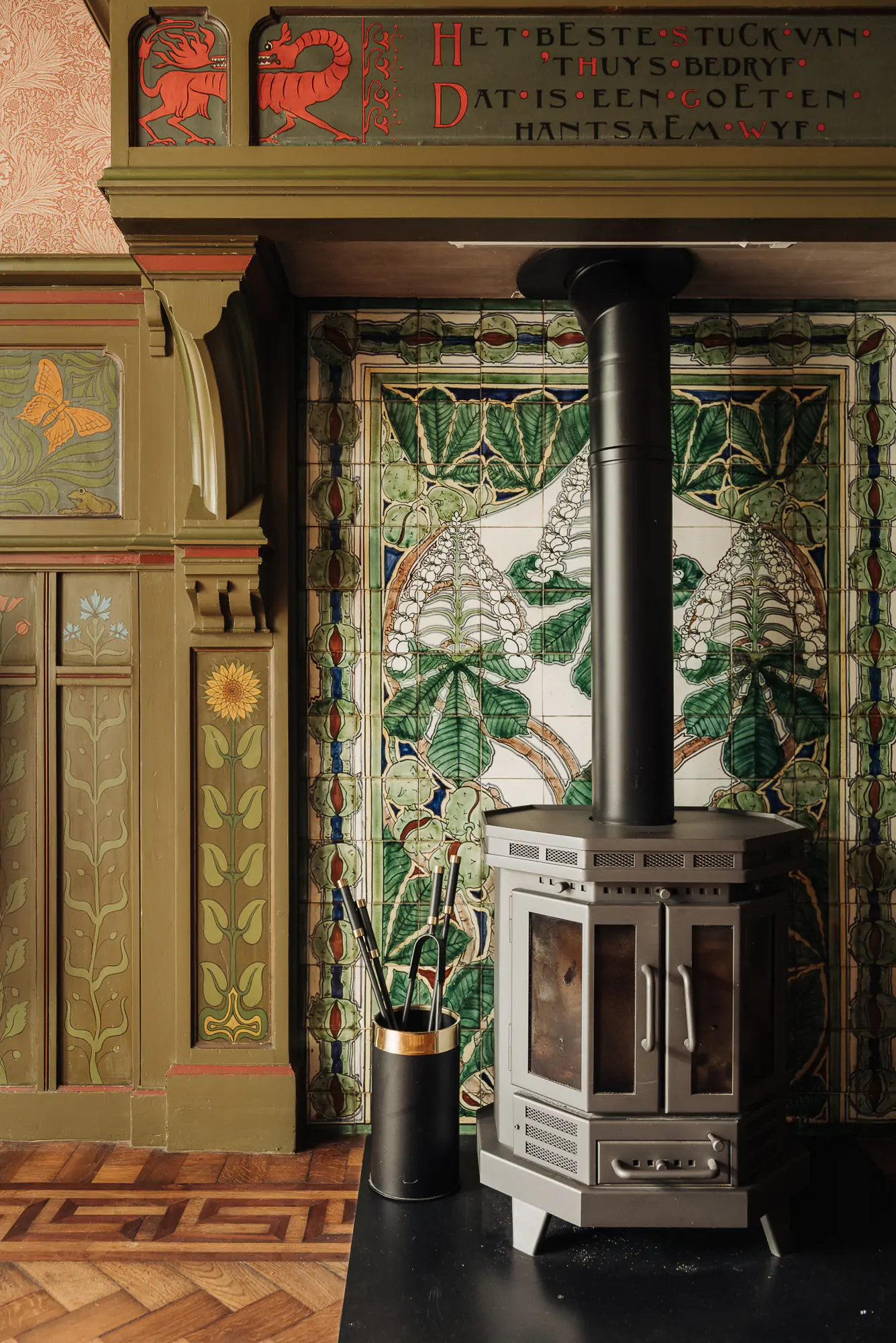
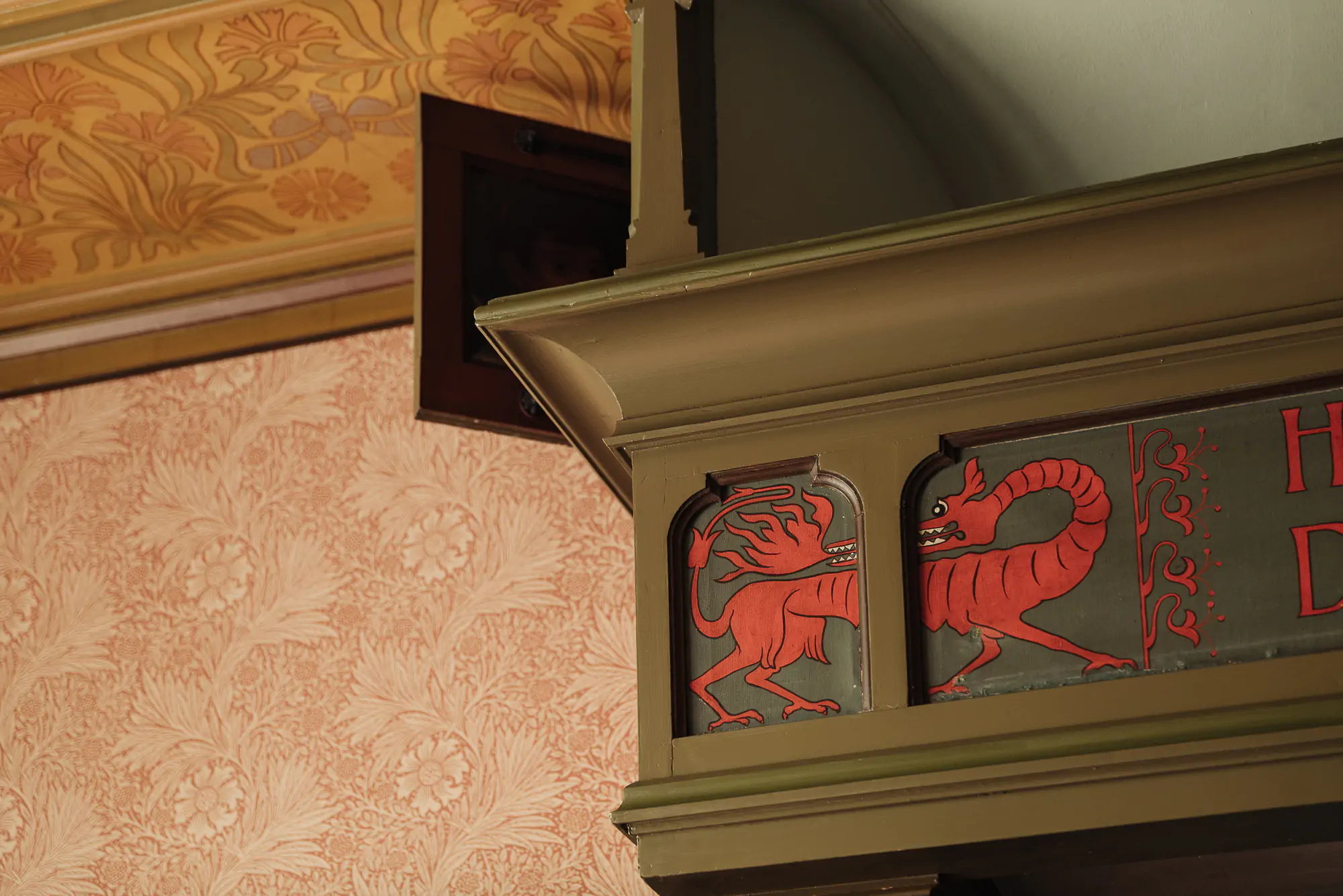
“The best part of running a household is a good and capable wife.”
The original dining room on the garden level is finished in an Art Nouveau style and features green-painted wooden paneling and a green-painted wooden ceiling. A fireplace is incorporated into the paneling. On the front of the fireplace is a frieze with painted dragons flanking a text by P.C. Hooft: "The best piece of housework is a good and honest wife." On either side of the mantelpiece are small doors of the bedroom wardrobe, which are painted on the inside with realistic female figures holding wine glasses.
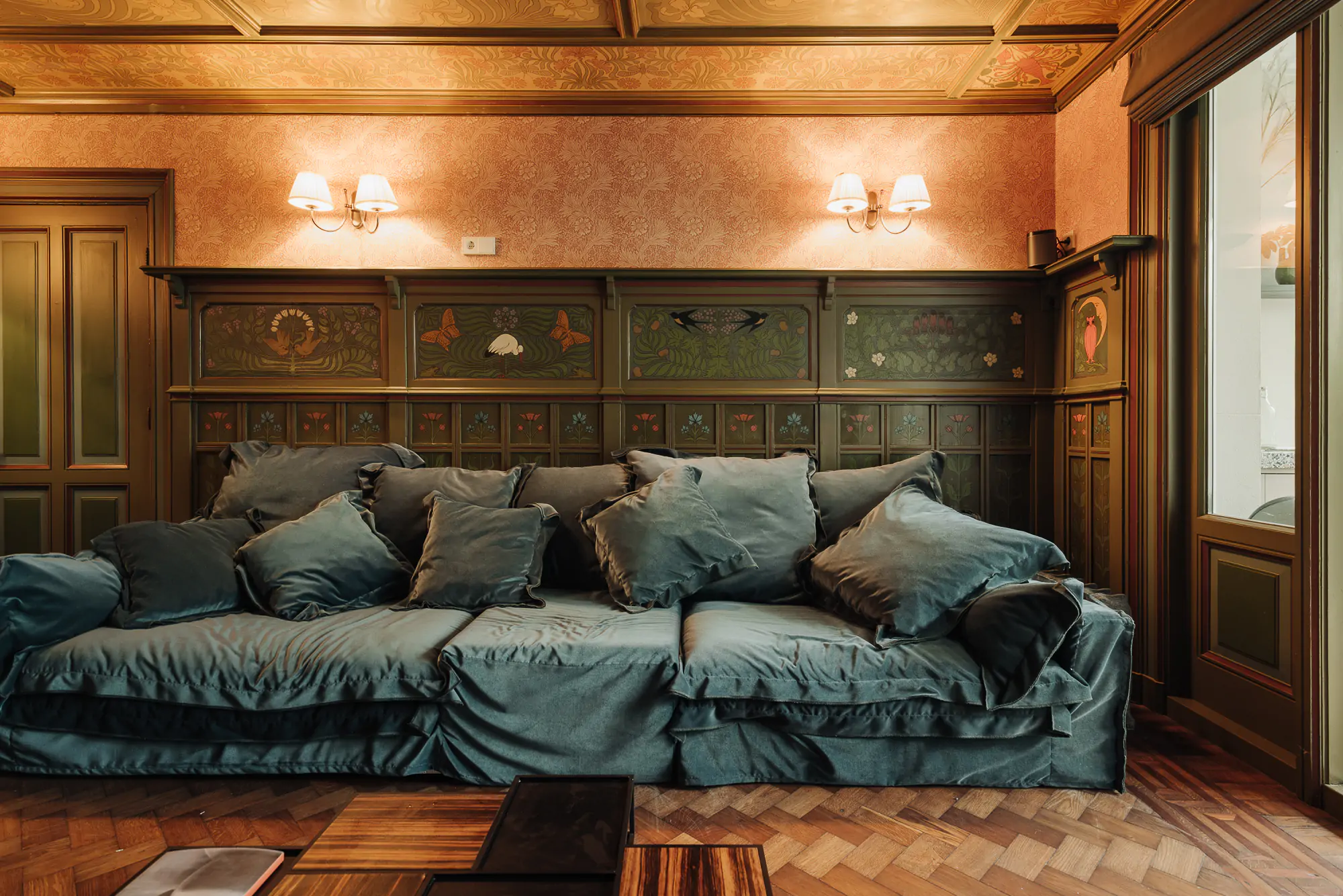
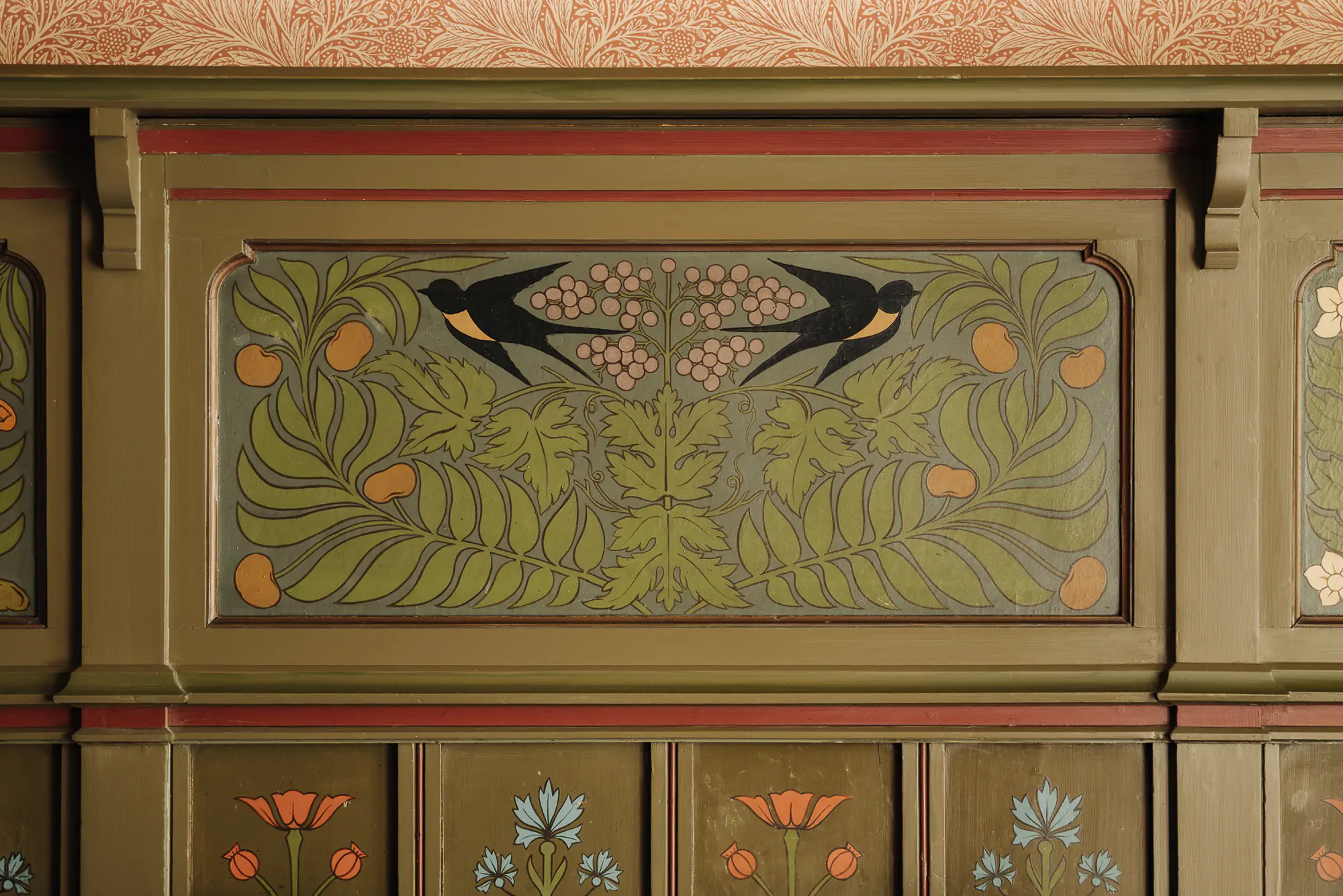
The floral and animal motifs depict the four seasons and day and night on each wall.
The fireplace has a floral tile tableau from the Rozenburg pottery factory in The Hague with border decoration and images of chestnut blossoms and leaves. The paneling has a division into sections in the upper part with stylized floral and animal stencil paintings. The upper section has large fabric-covered compartments with stylized floral stencil paintings. The flower and animal motifs depict the four seasons and day and night on each wall. The ceiling has a recessed central oval field, framed by panels with carnations. The corners are each painted with a lobster, and along the edges is a band with water lilies and (yellow) lilies.
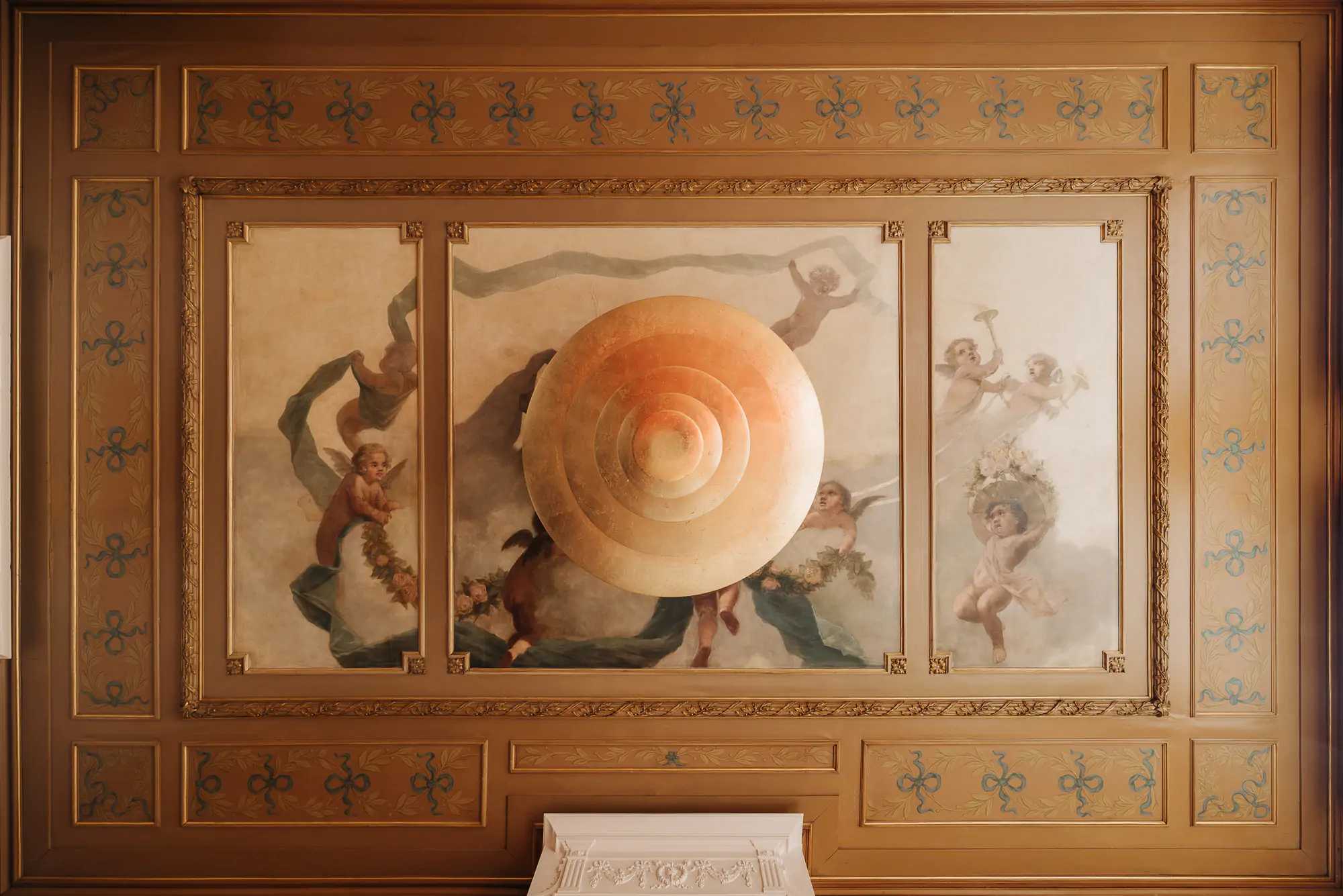
Neo-Classical style
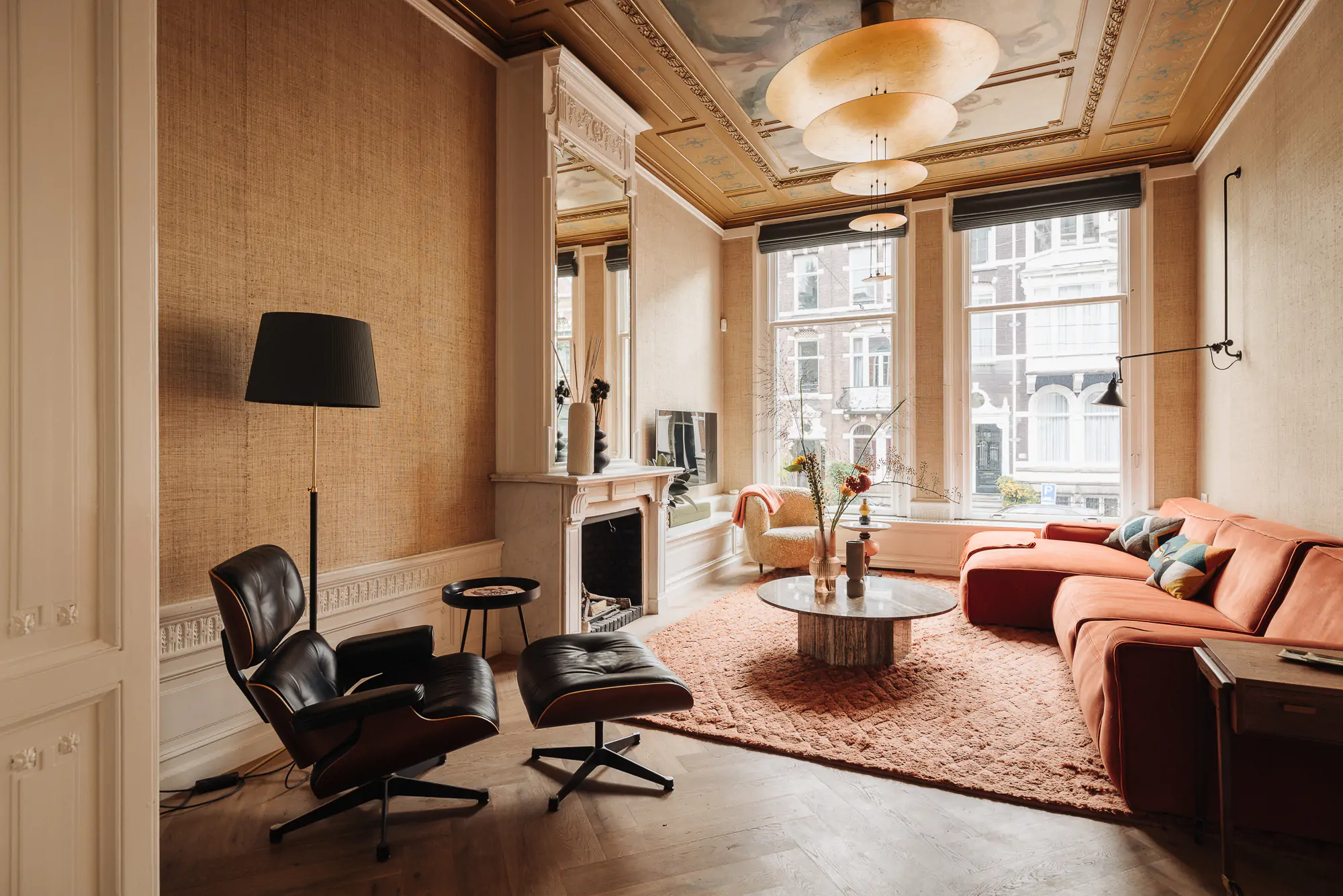
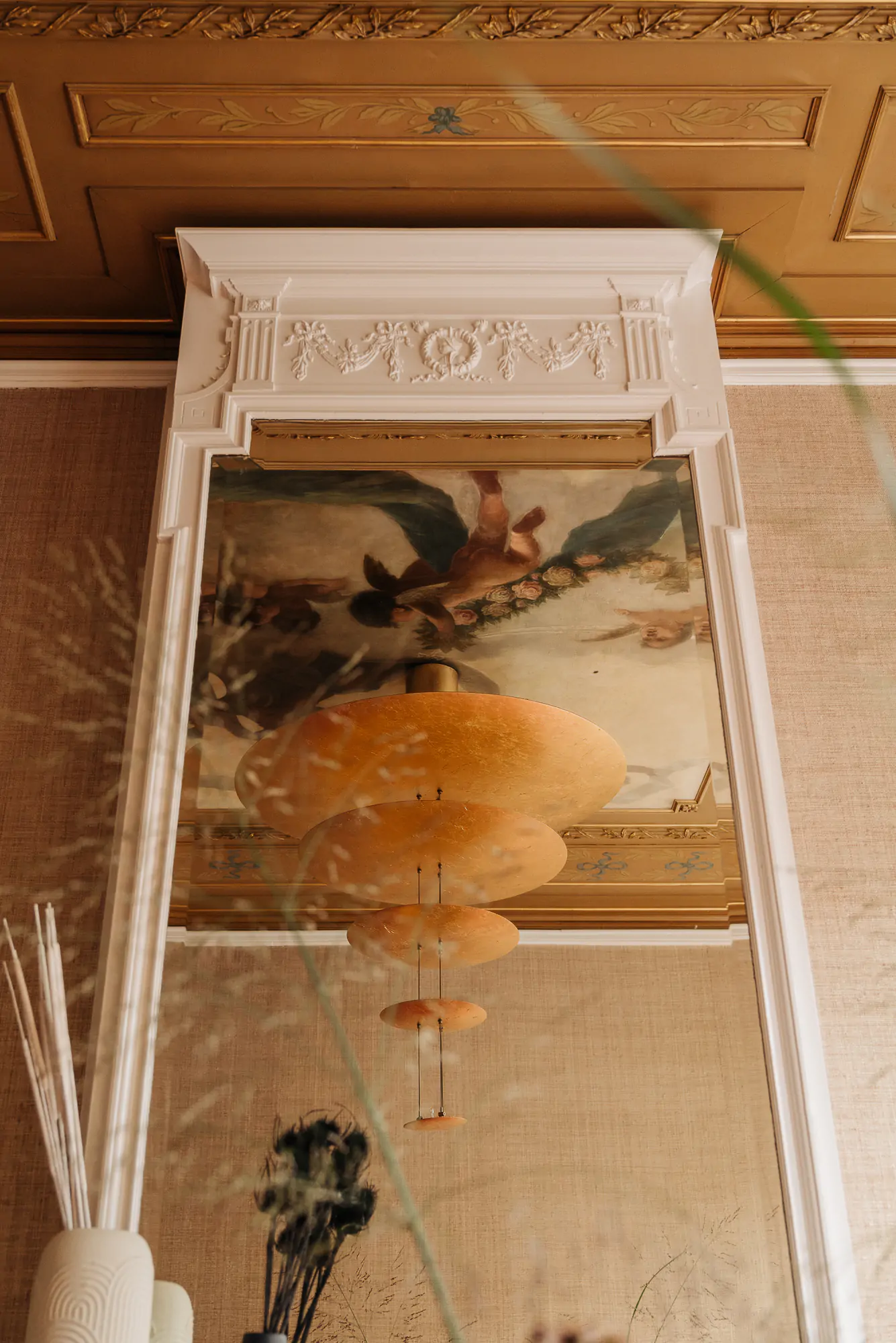
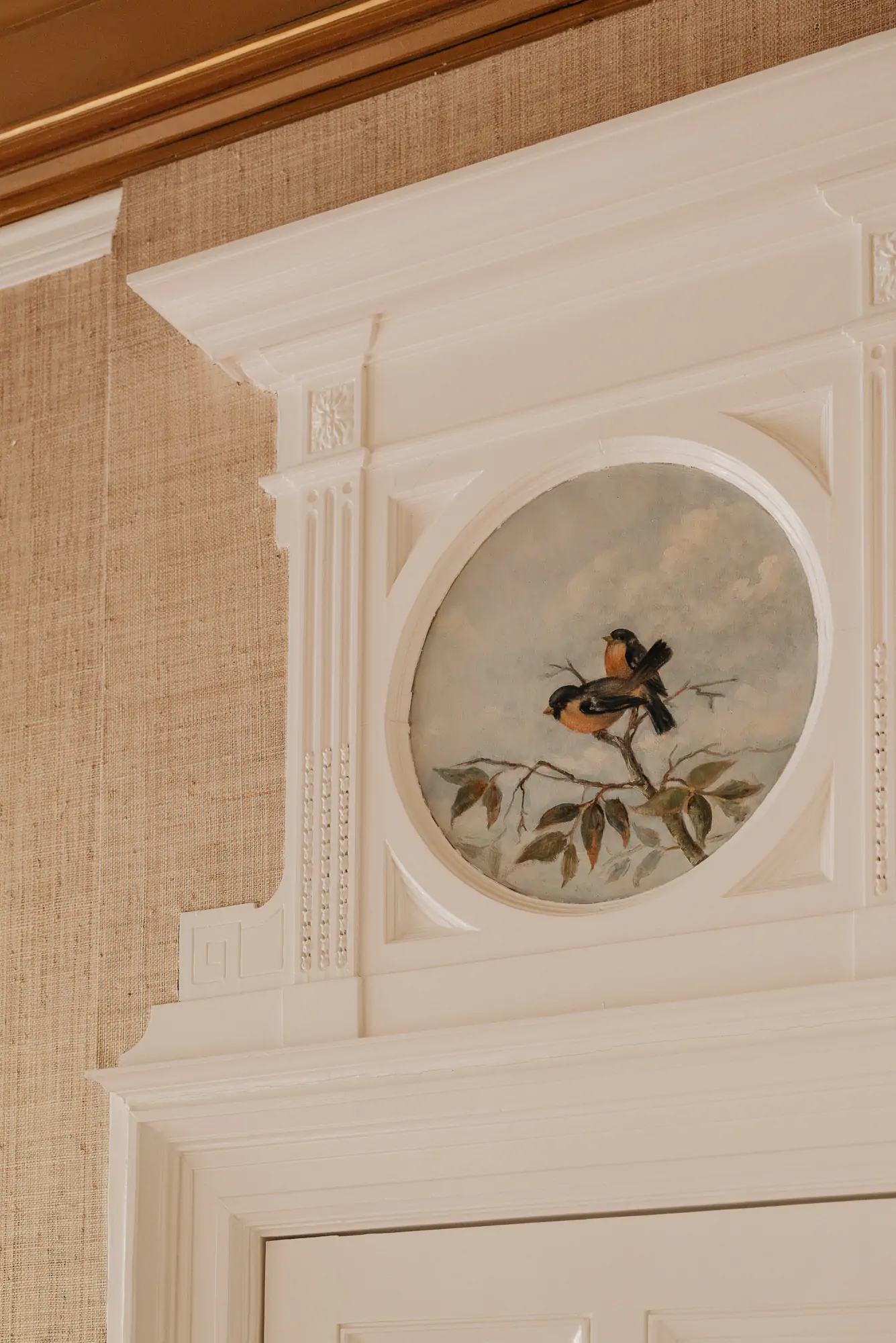
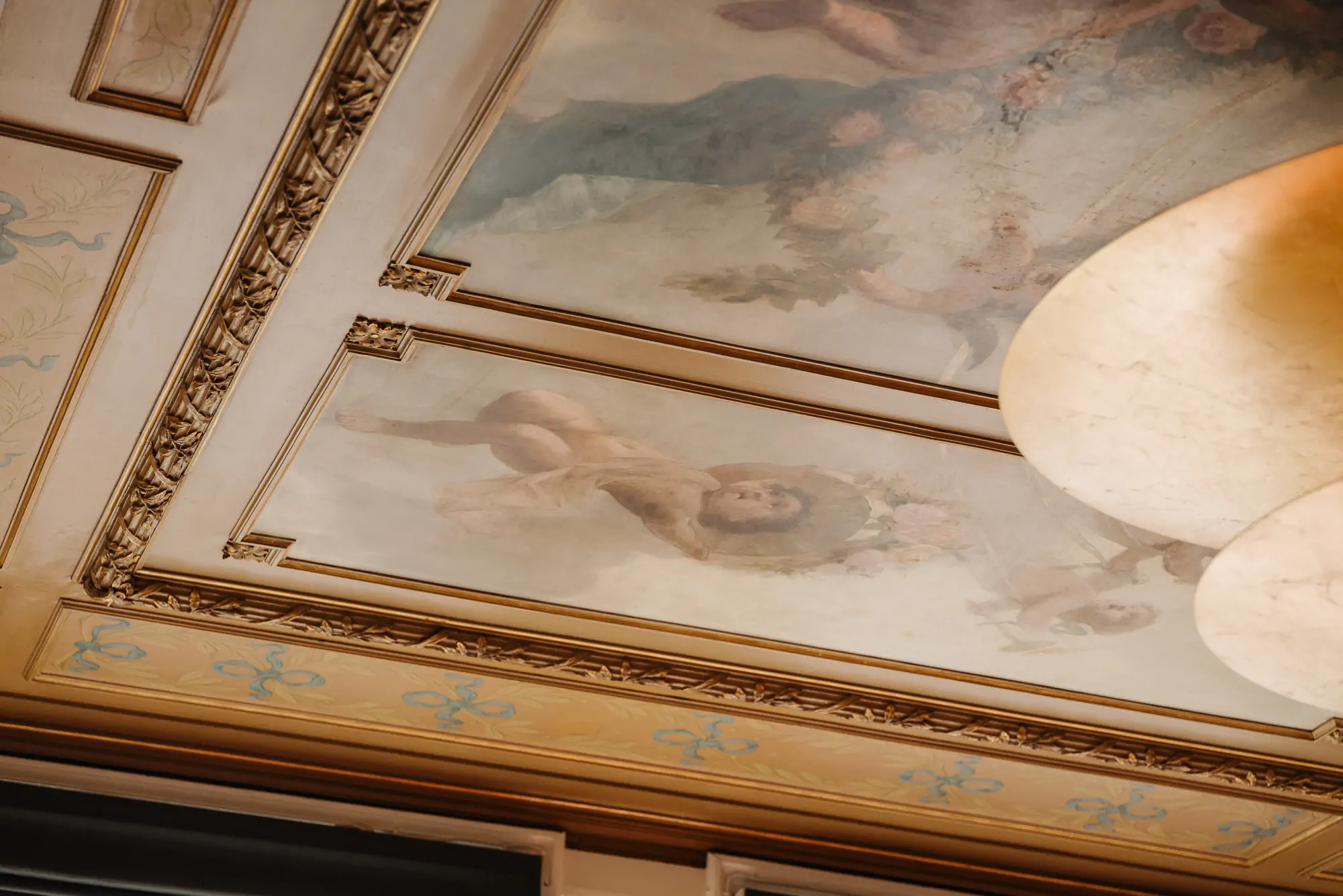
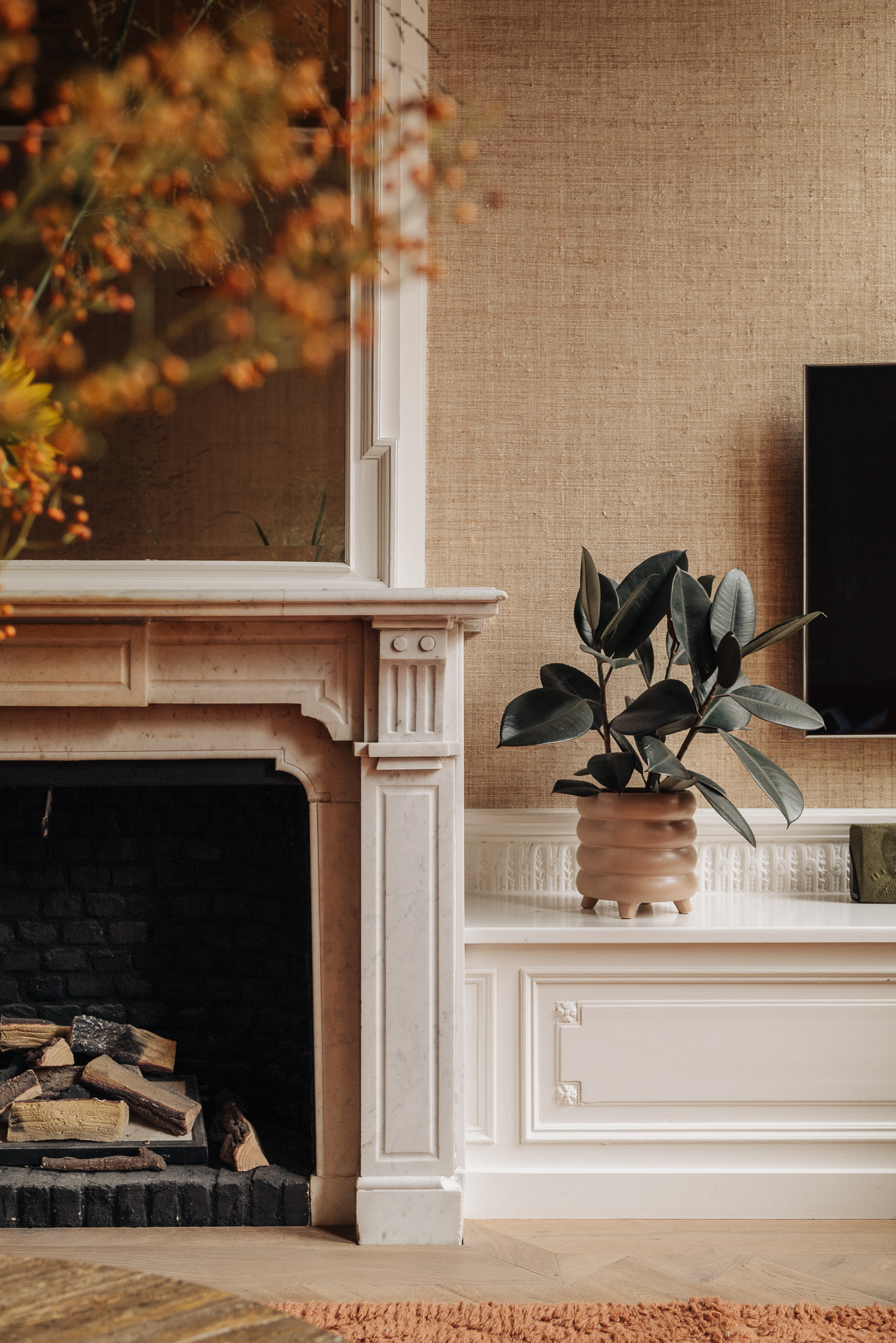
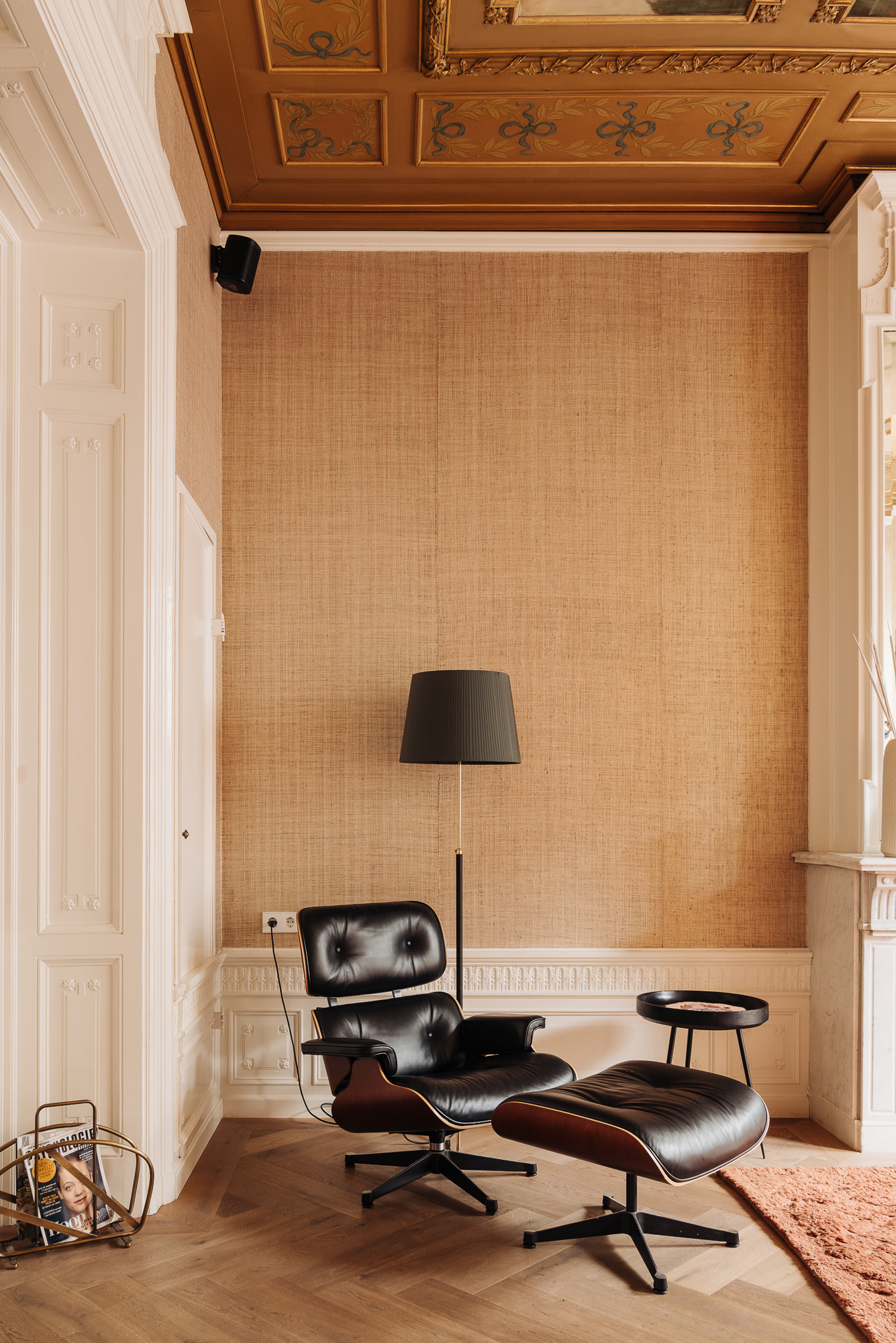
On the bel-étage, Rooms, the front room (salon) of which is finished in Neo-Classical style and has a stucco ceiling with a realistic painting of cherubs and clouds divided into three sections. Around this is a stucco band and a border painting with tied ribbons and twigs. The room also has low paneling and a mantelpiece with pilaster stucco work on the high breast. The entrance door has a transom with two birds on a branch, set in a substantial frame. Other notable features in the interior are the stairwell with a niche and fountain, the staircase, and the draft door with etched glass featuring floral motifs.
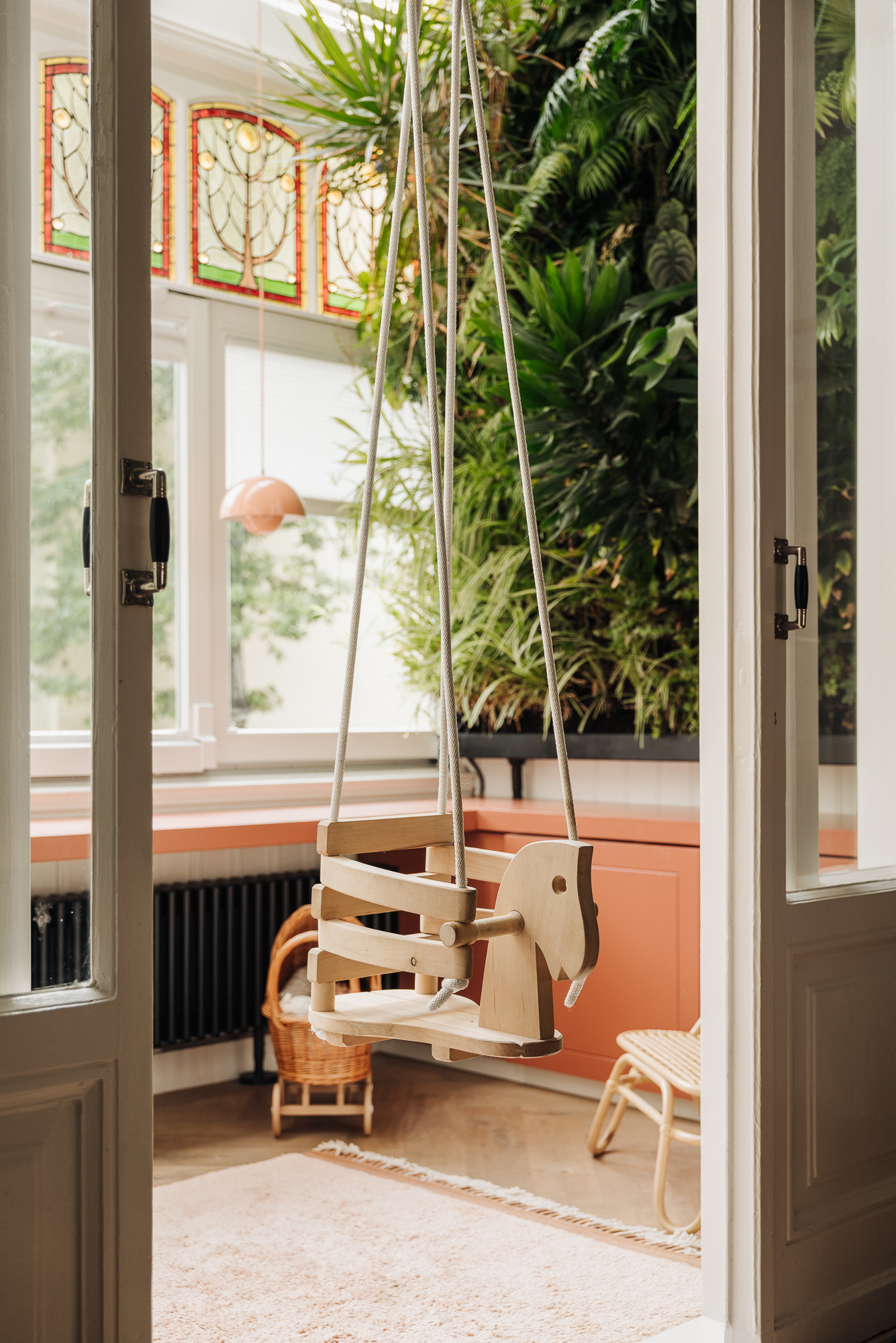
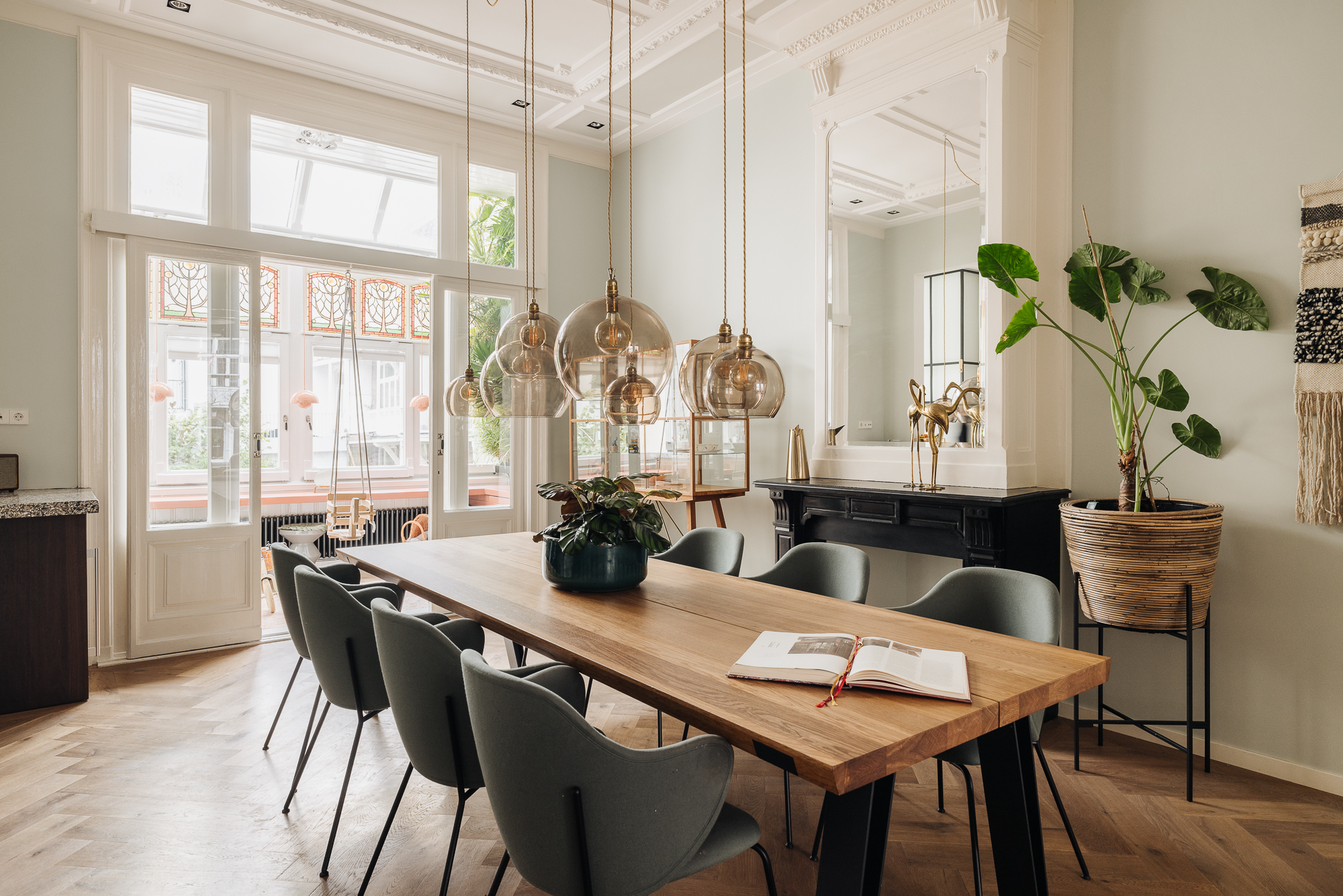
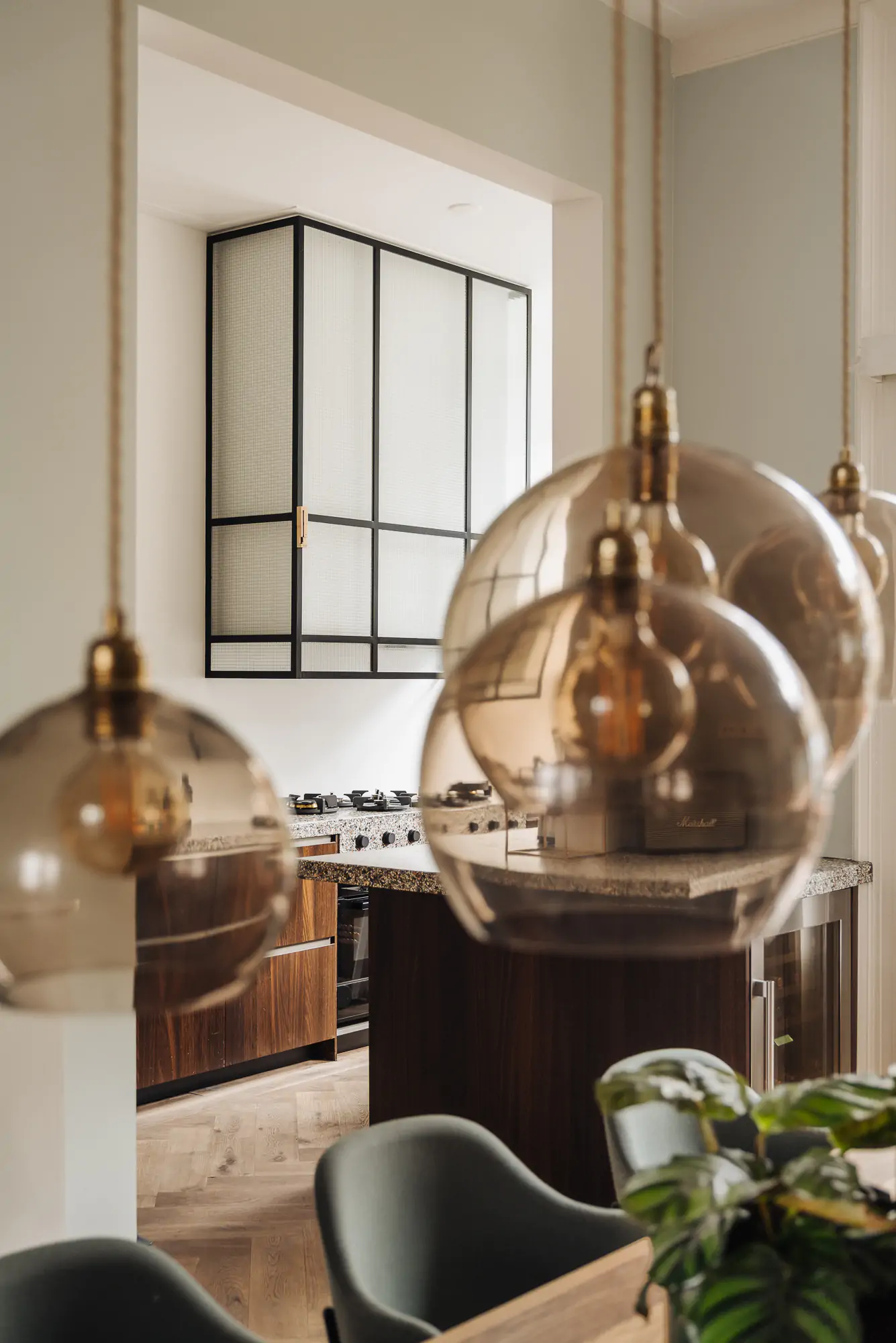
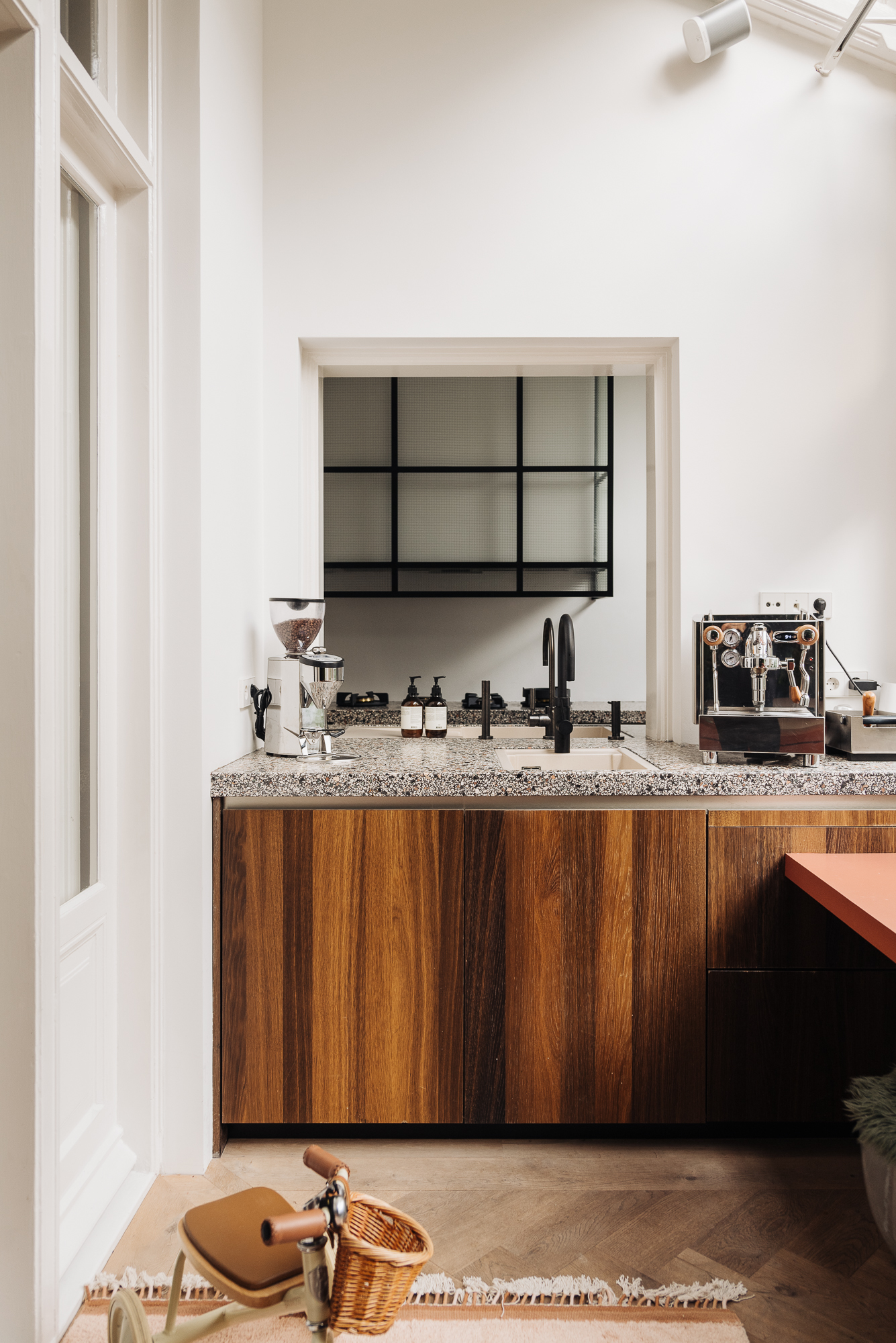
A home with charm and grandeur, where the current owners have modernized the house with an eye for detail and atmosphere.
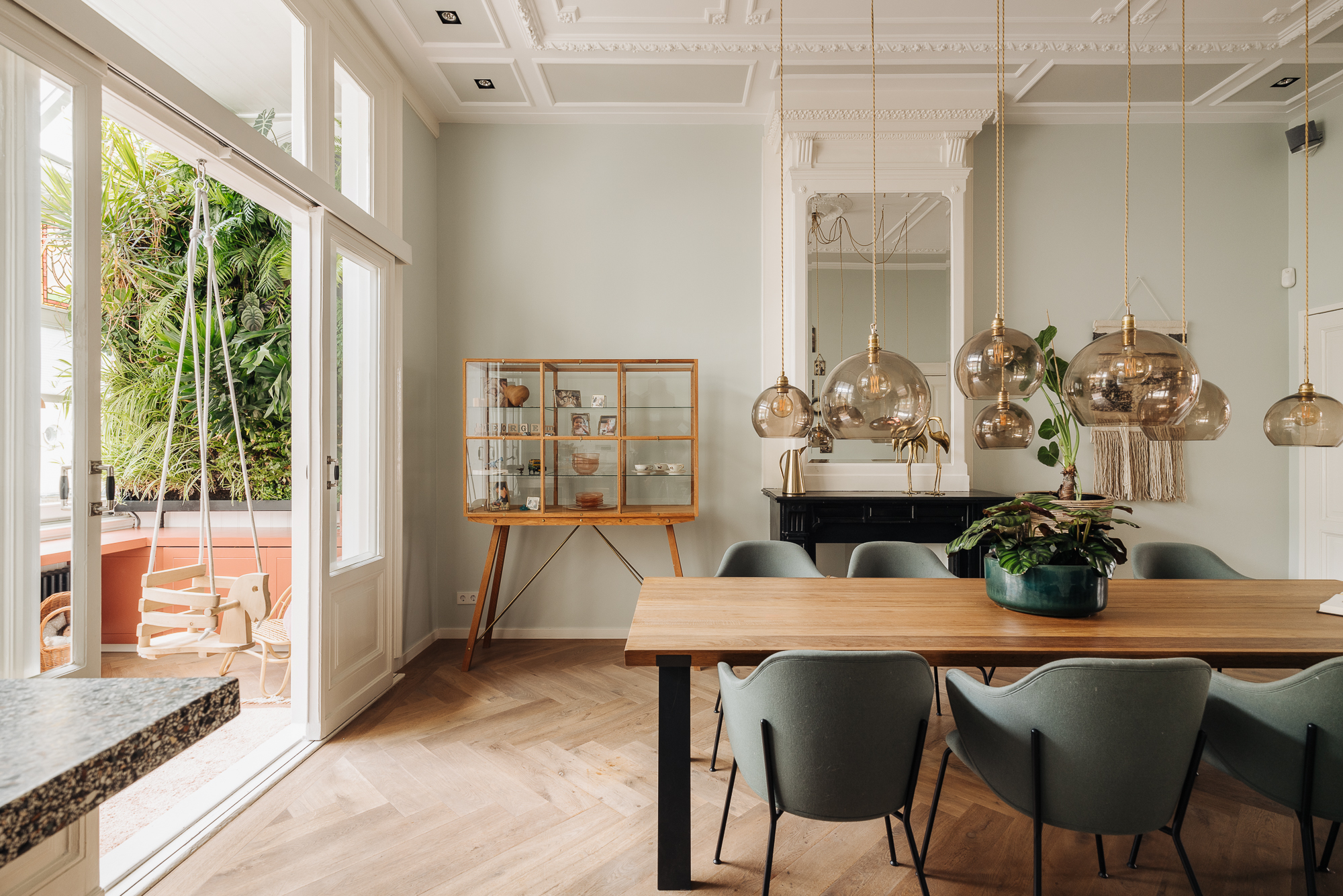
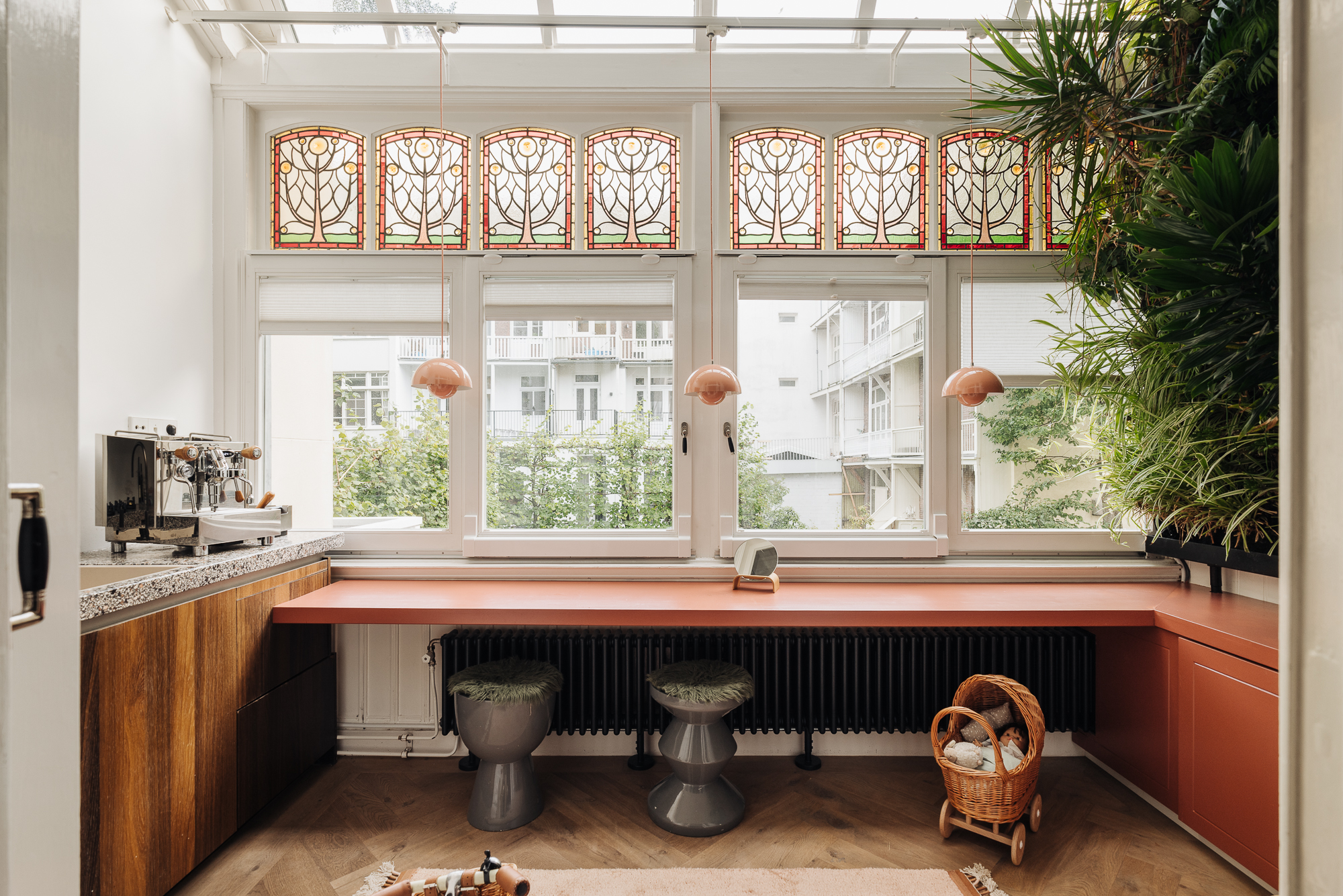
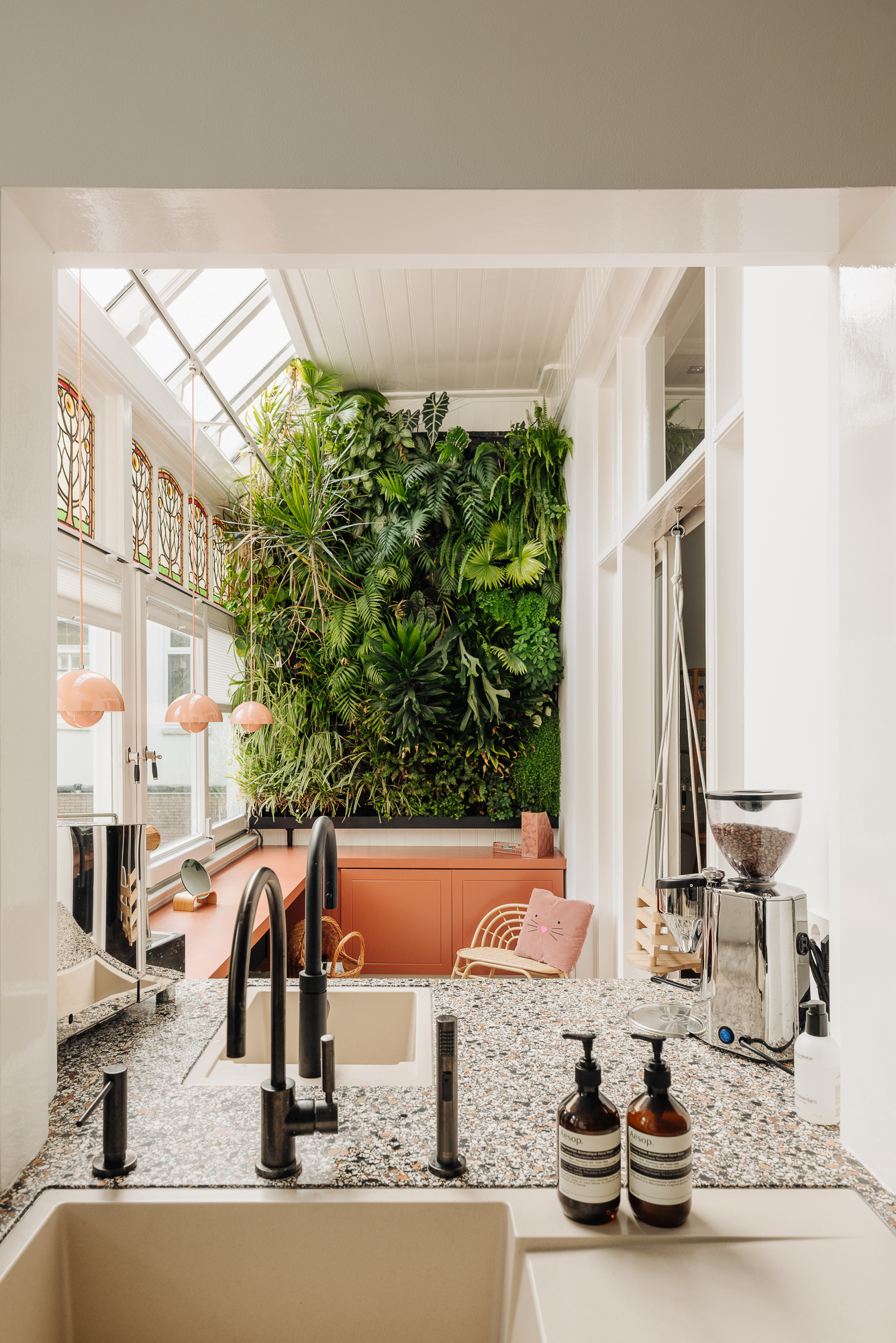
A national monument from 1896 built in an Art Nouveau style designed by Gerrit van Arkel.
Read more