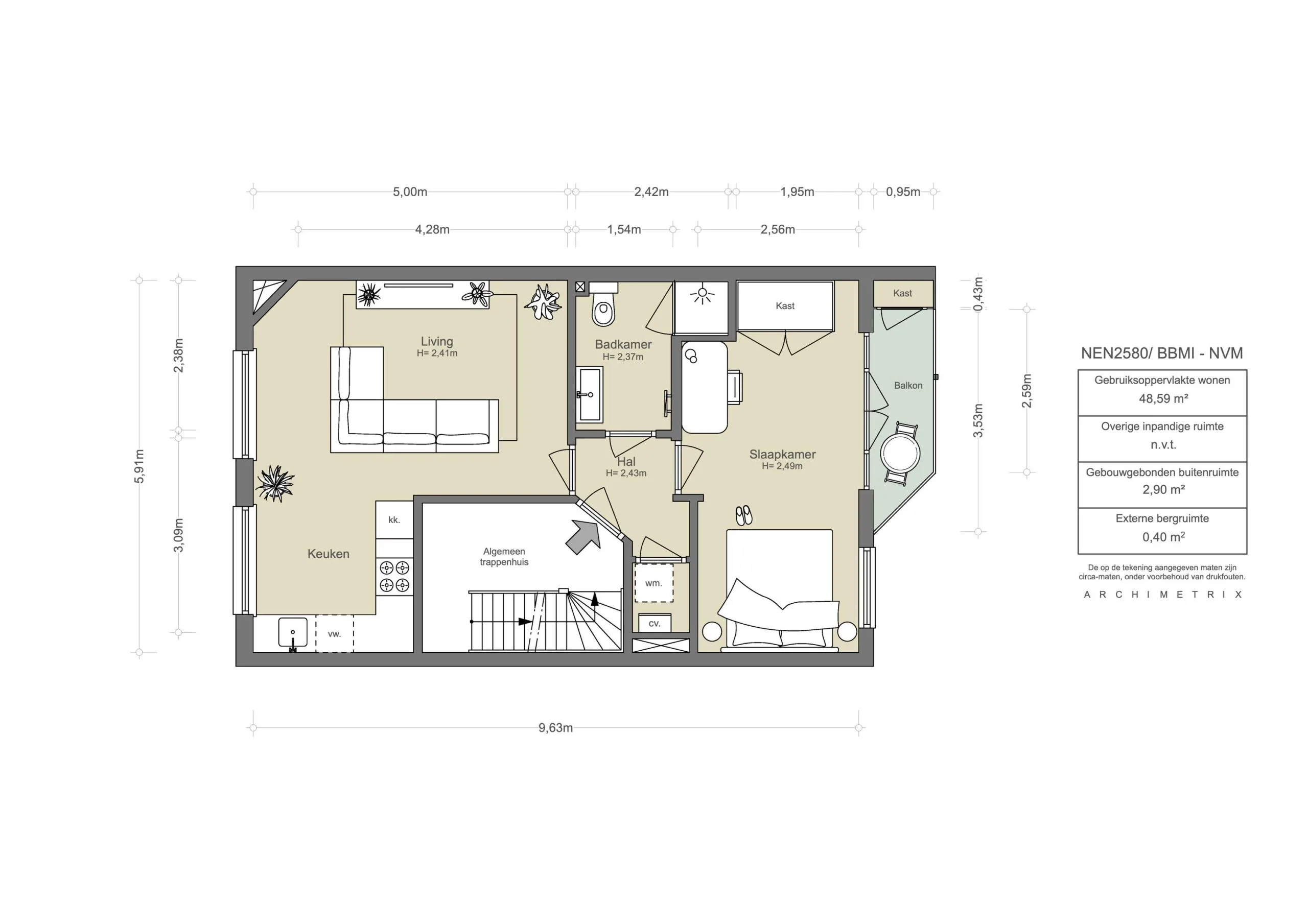
Apartment of approximately 49 m², located in De Pijp. The apartment comprises a living room, kitchen, one bedroom with the possibility to create two bedrooms, bathroom, and a balcony. Freehold property.
Tour
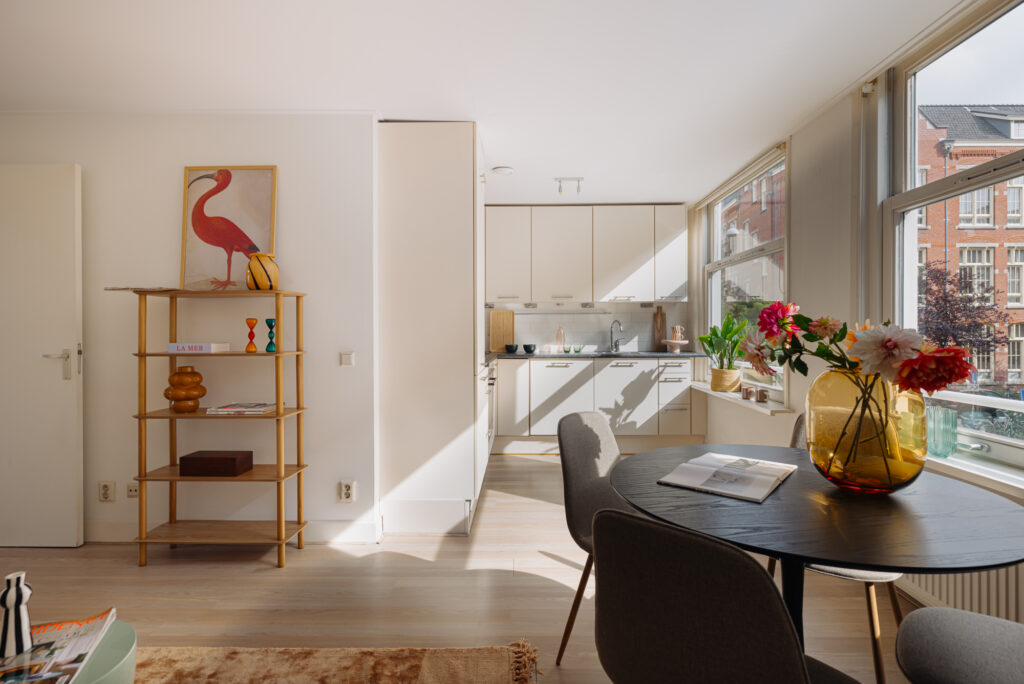
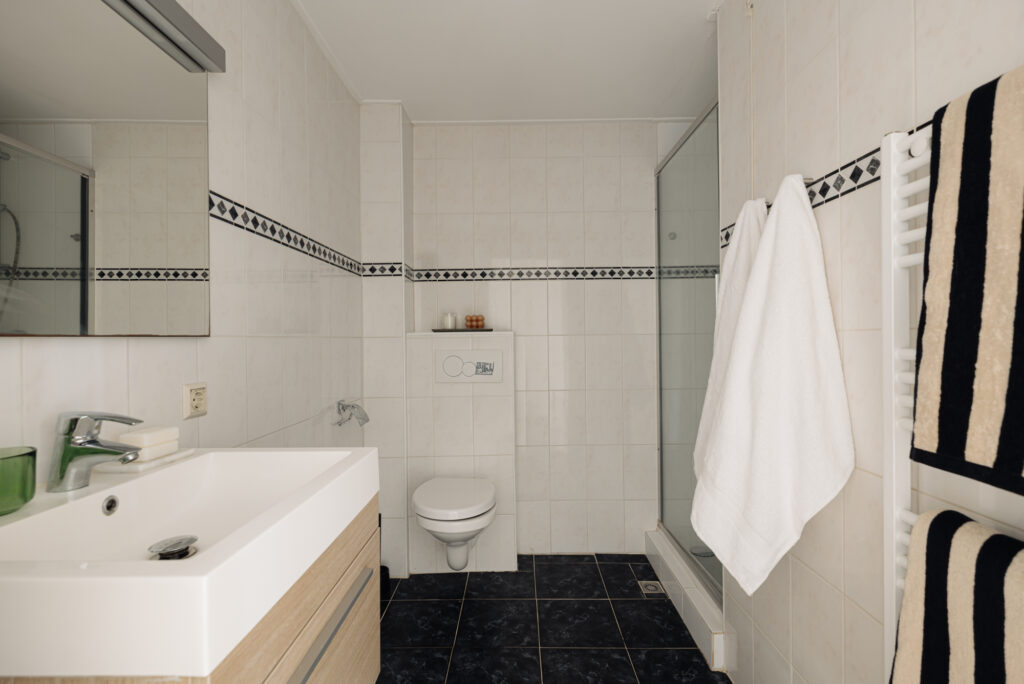
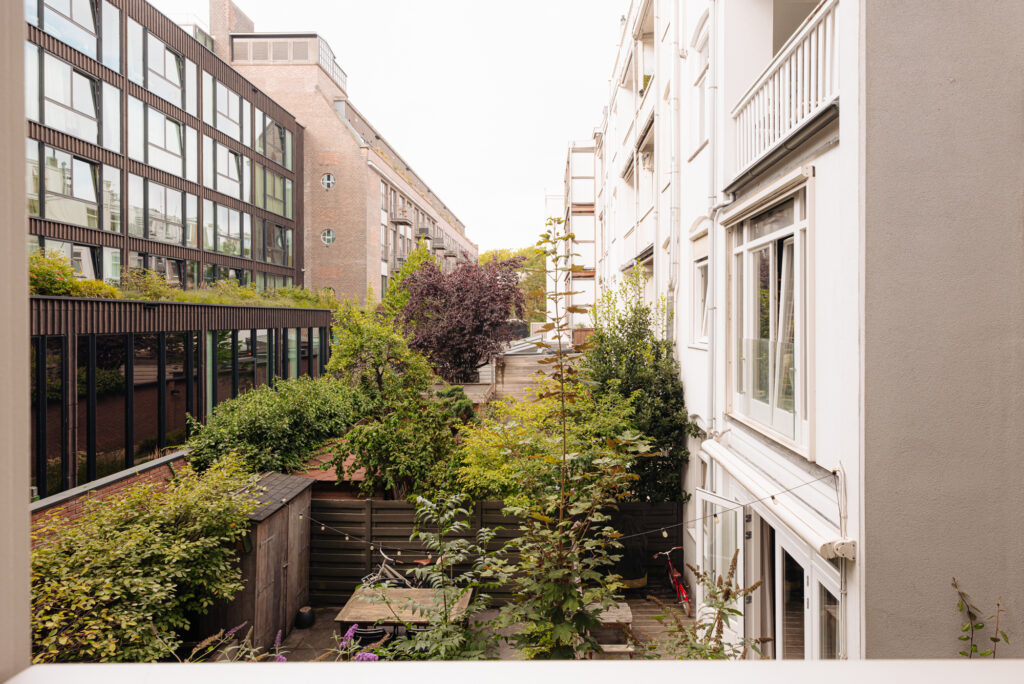
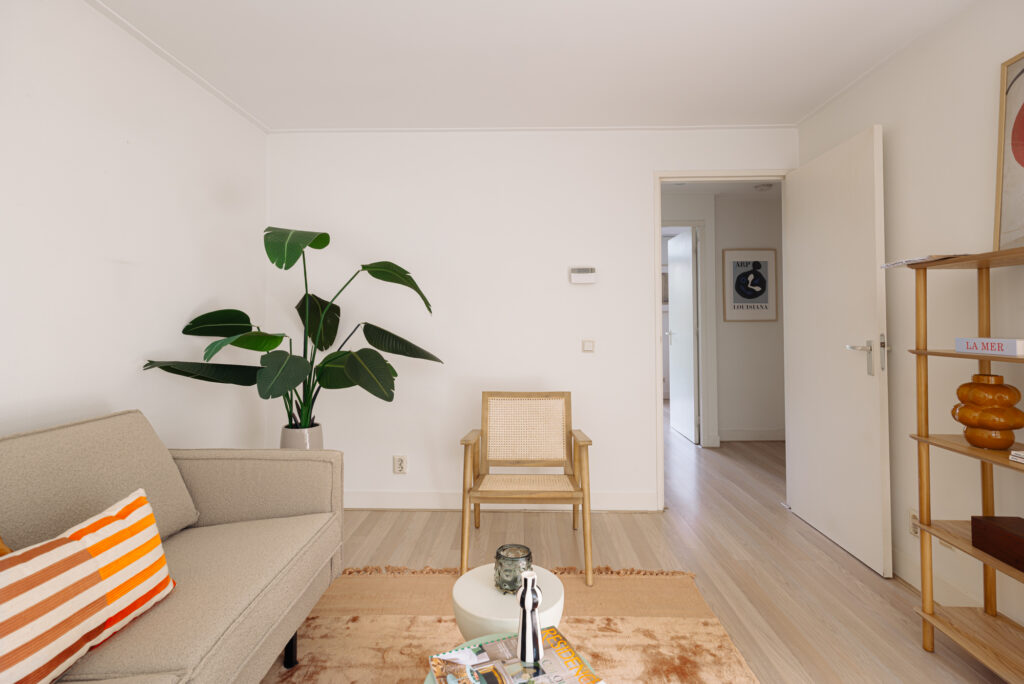
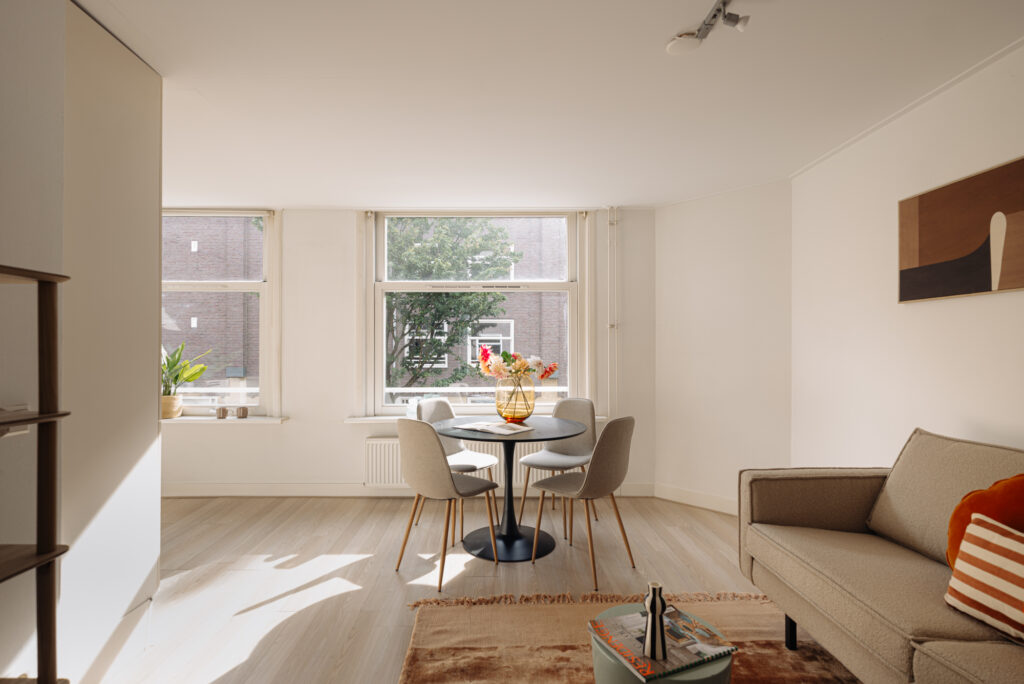
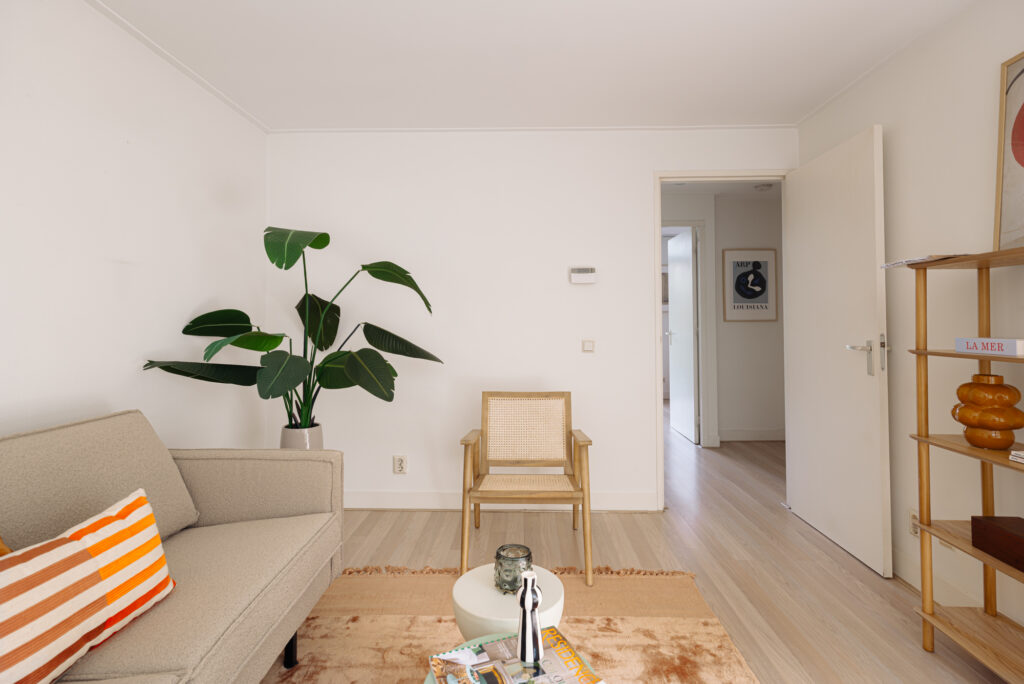
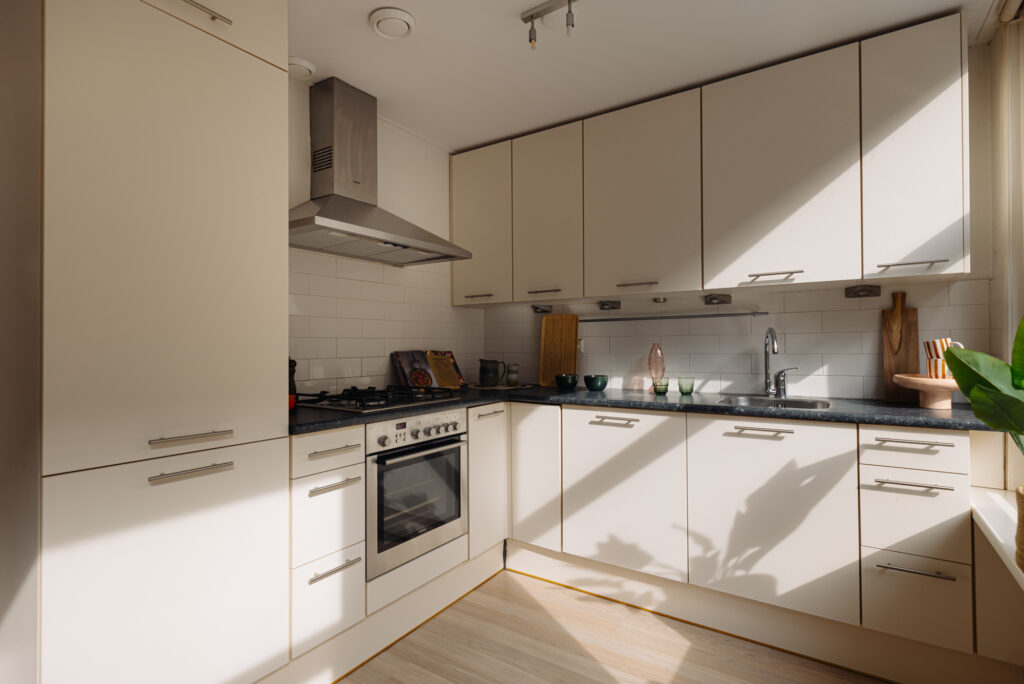
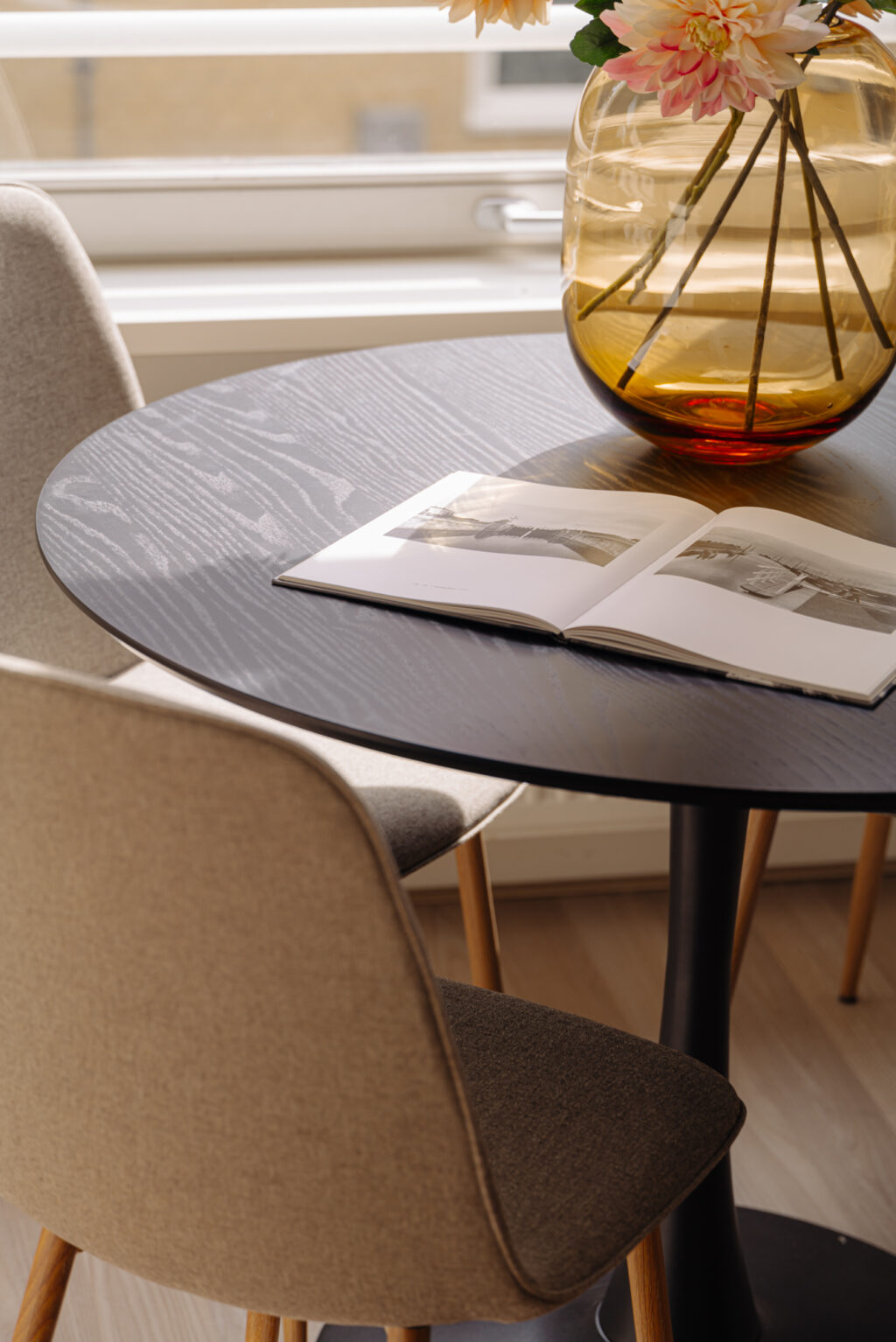
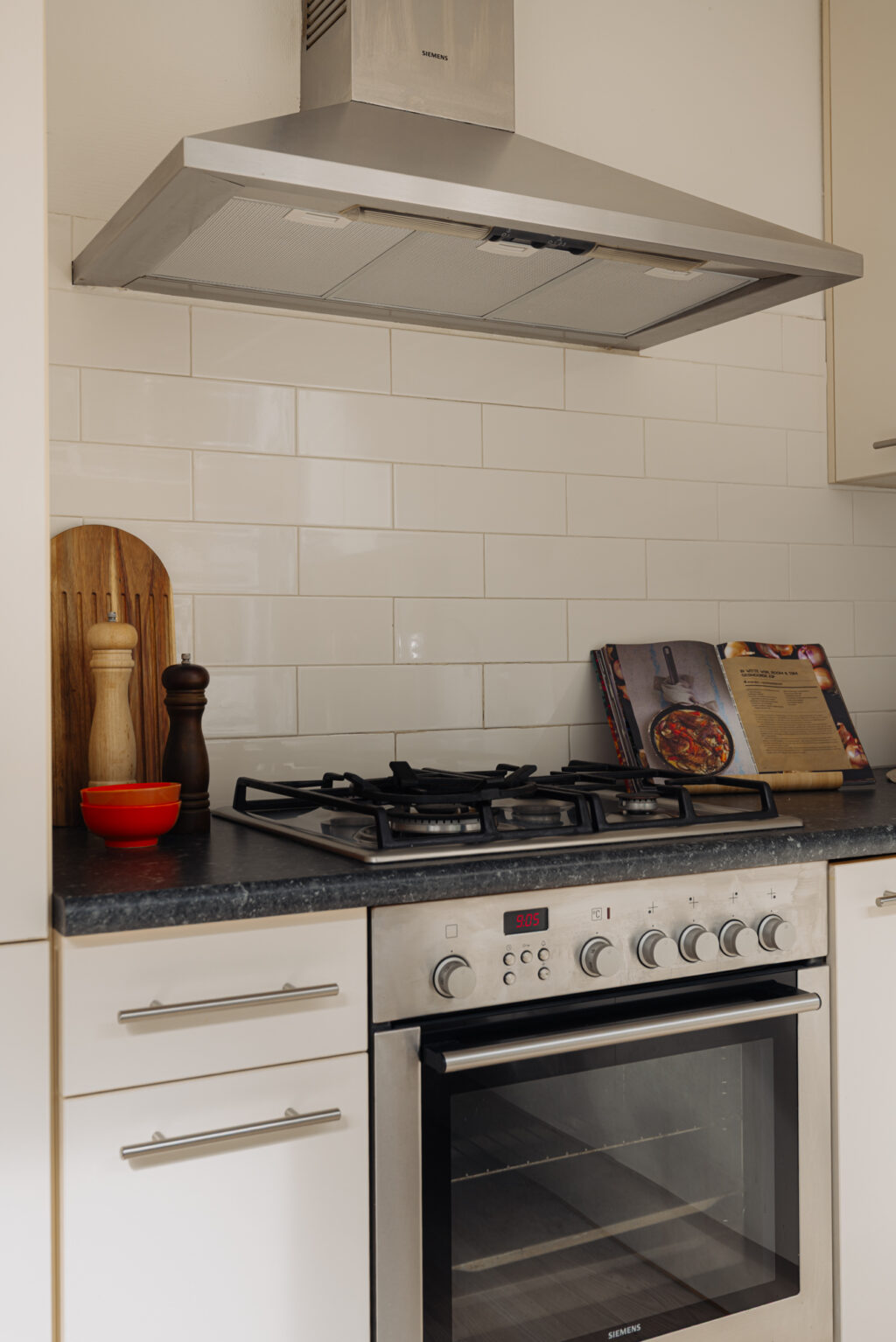
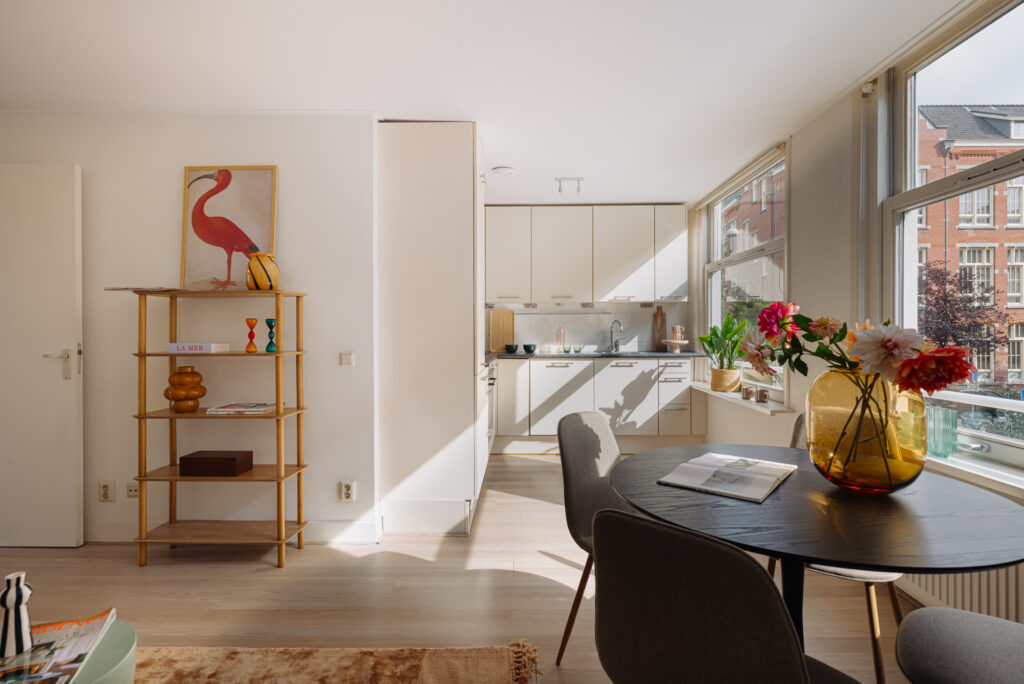
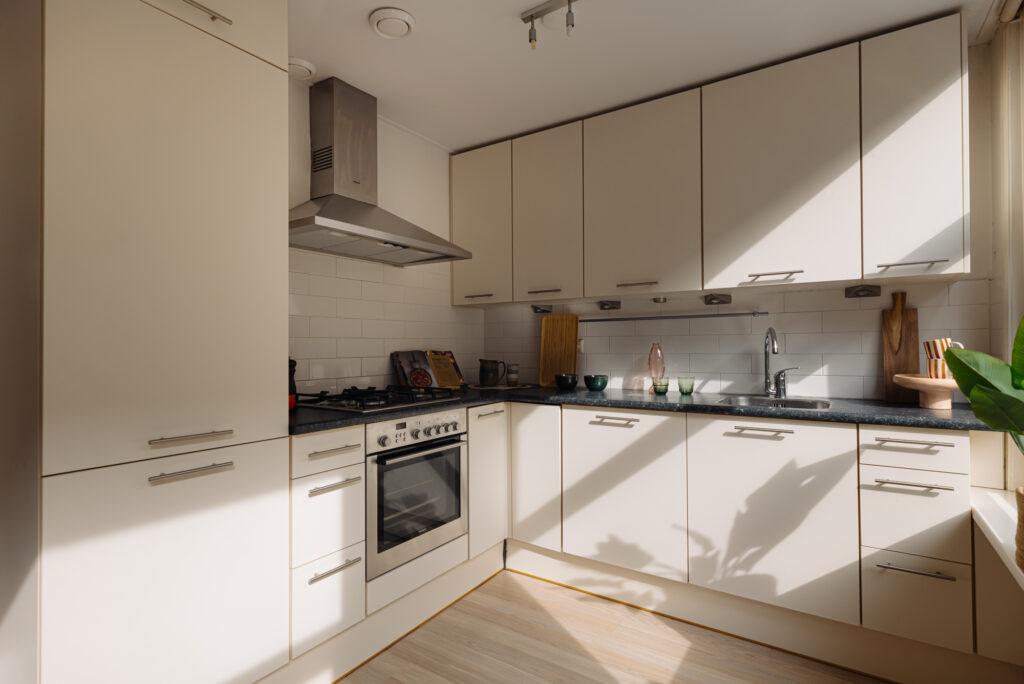
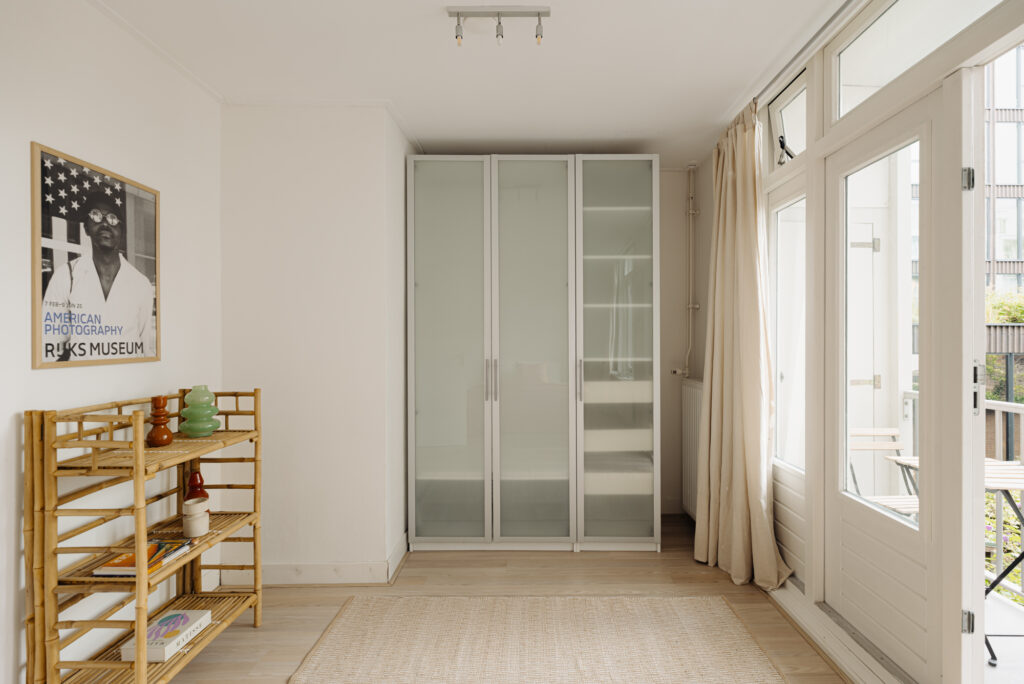
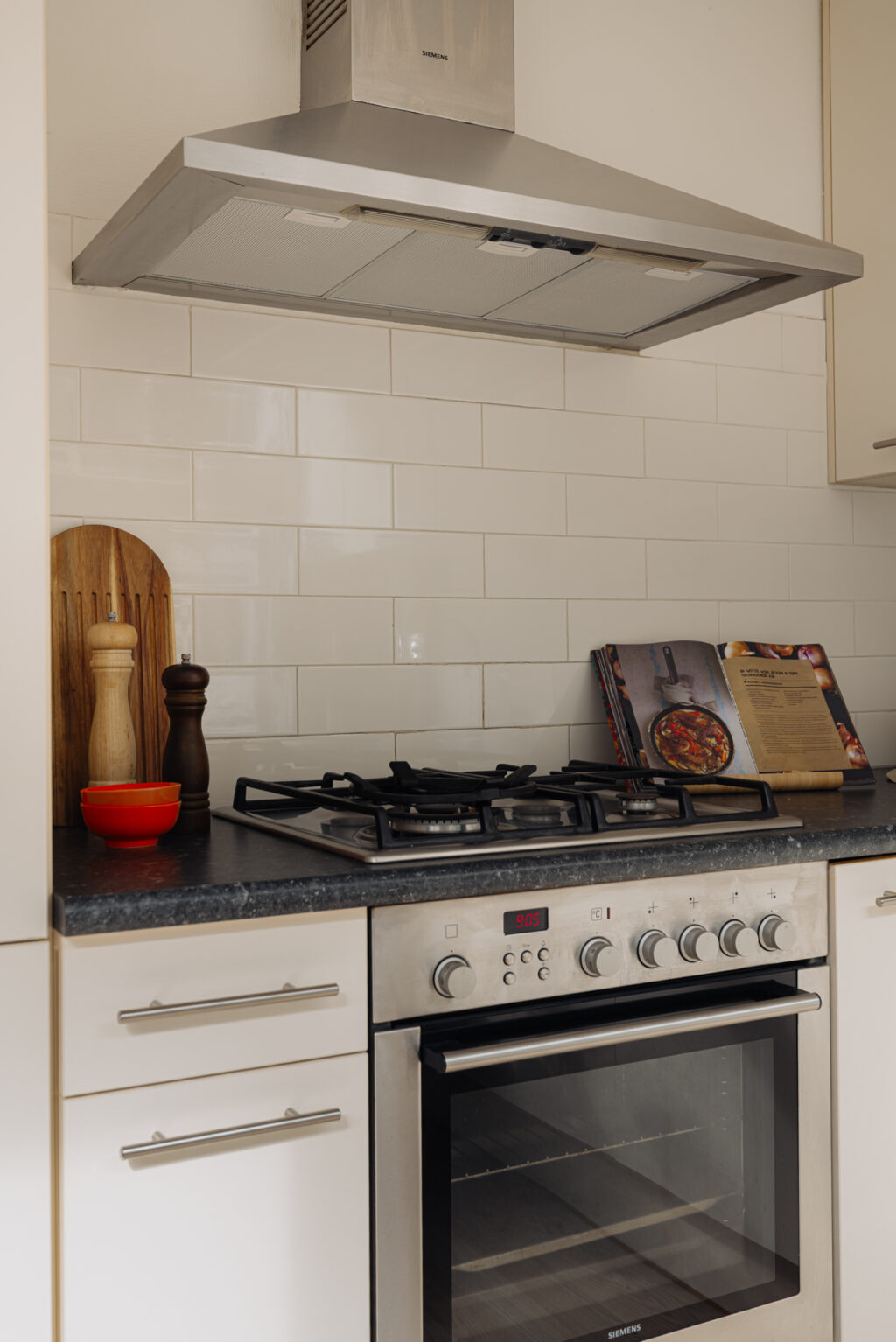
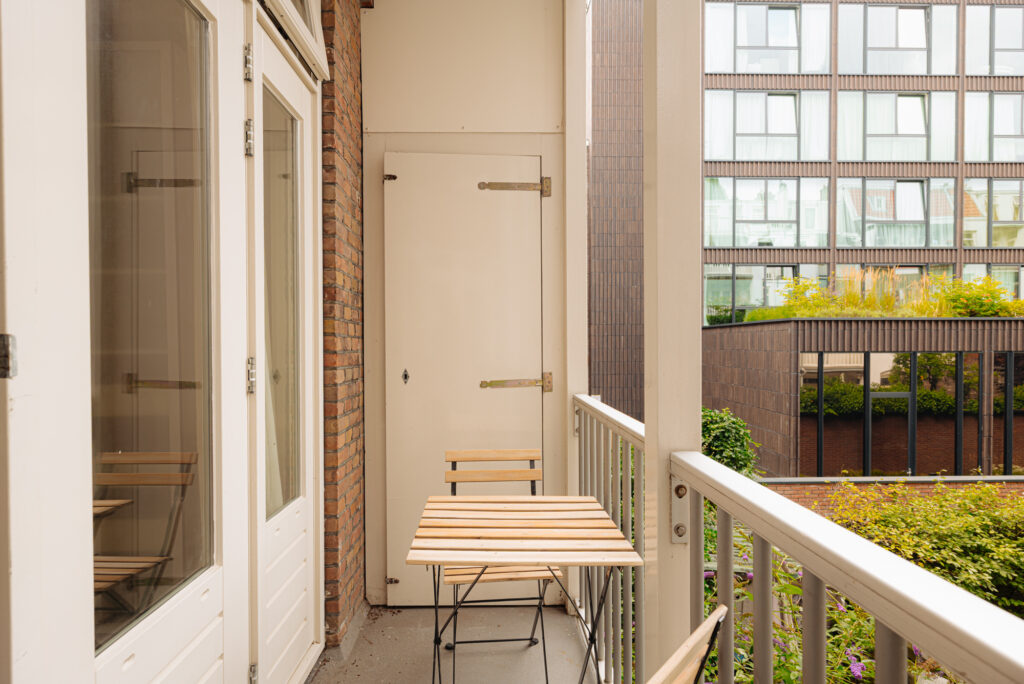
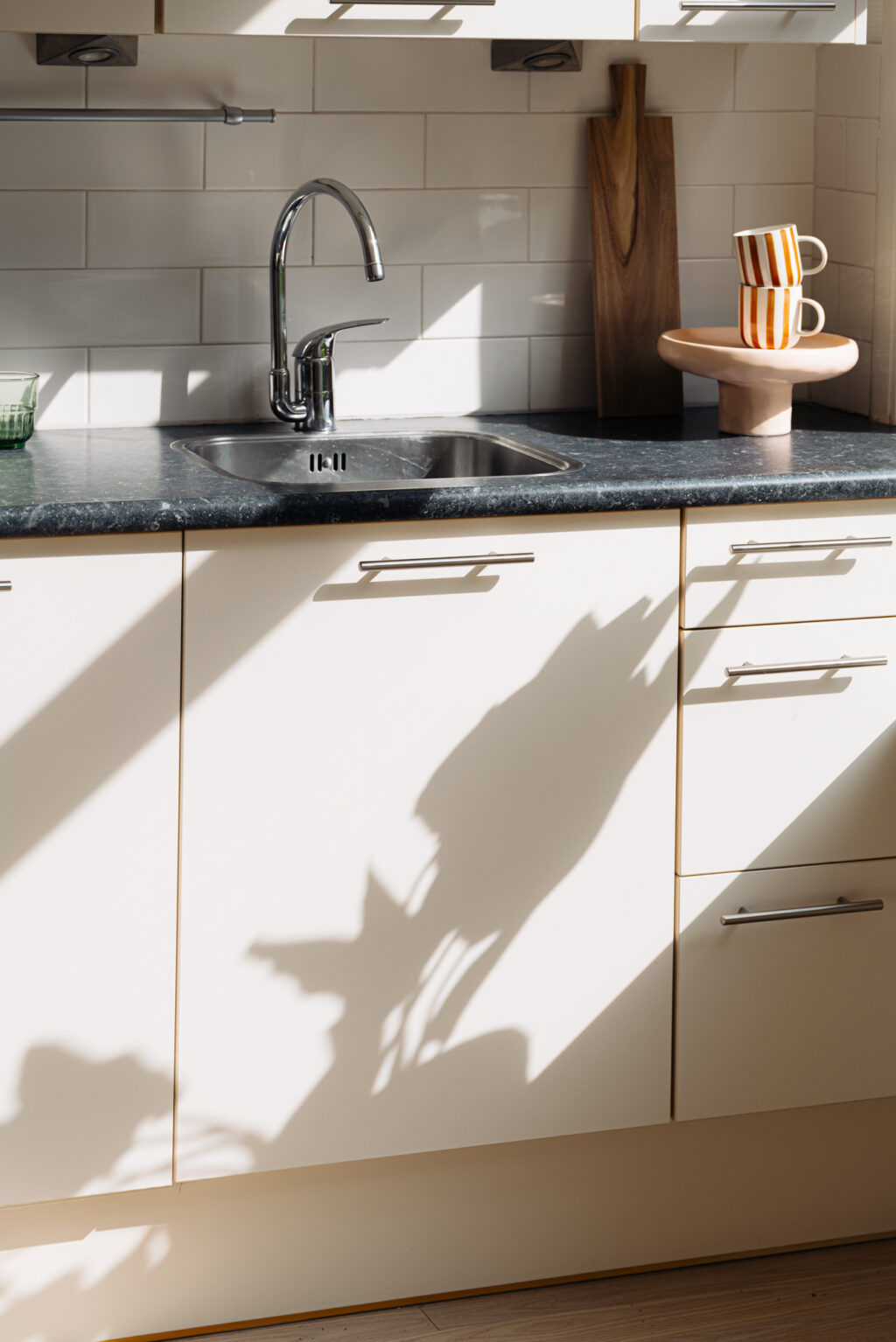
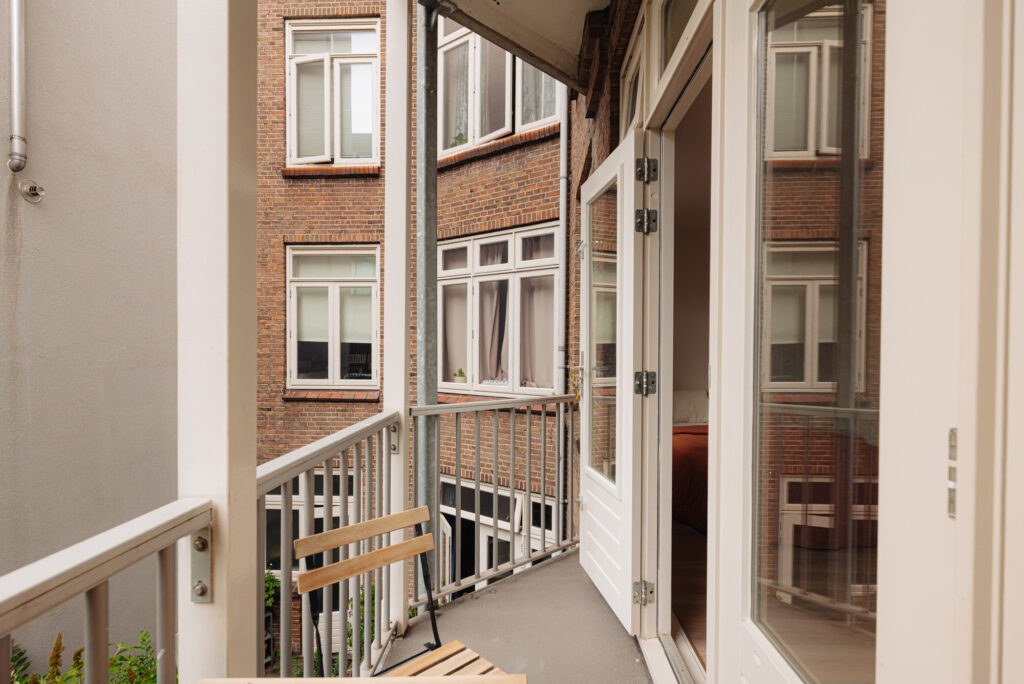
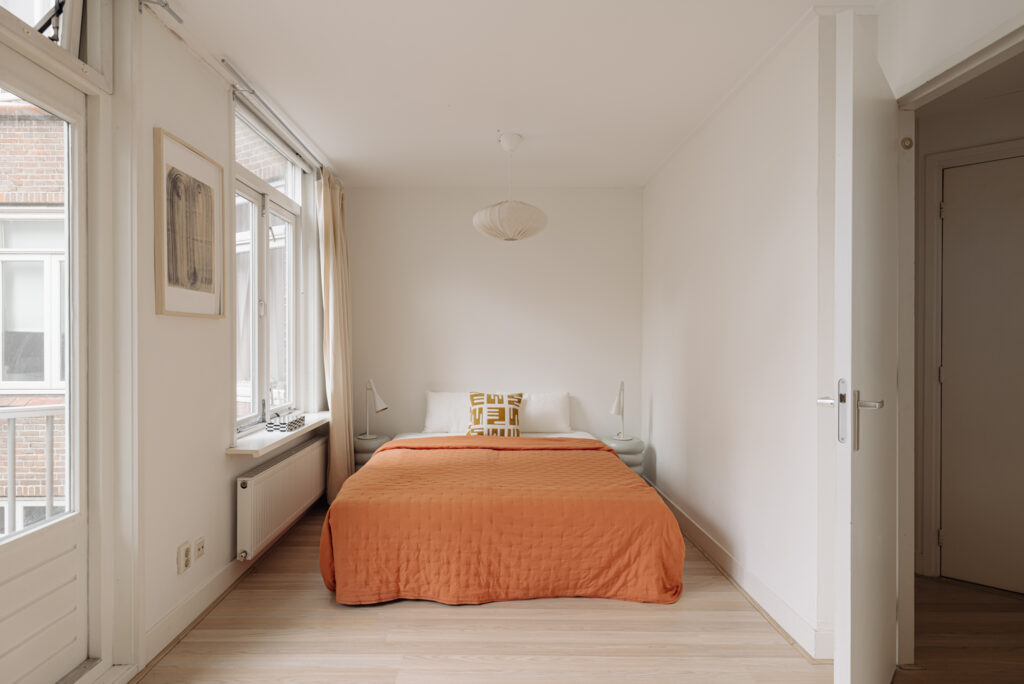
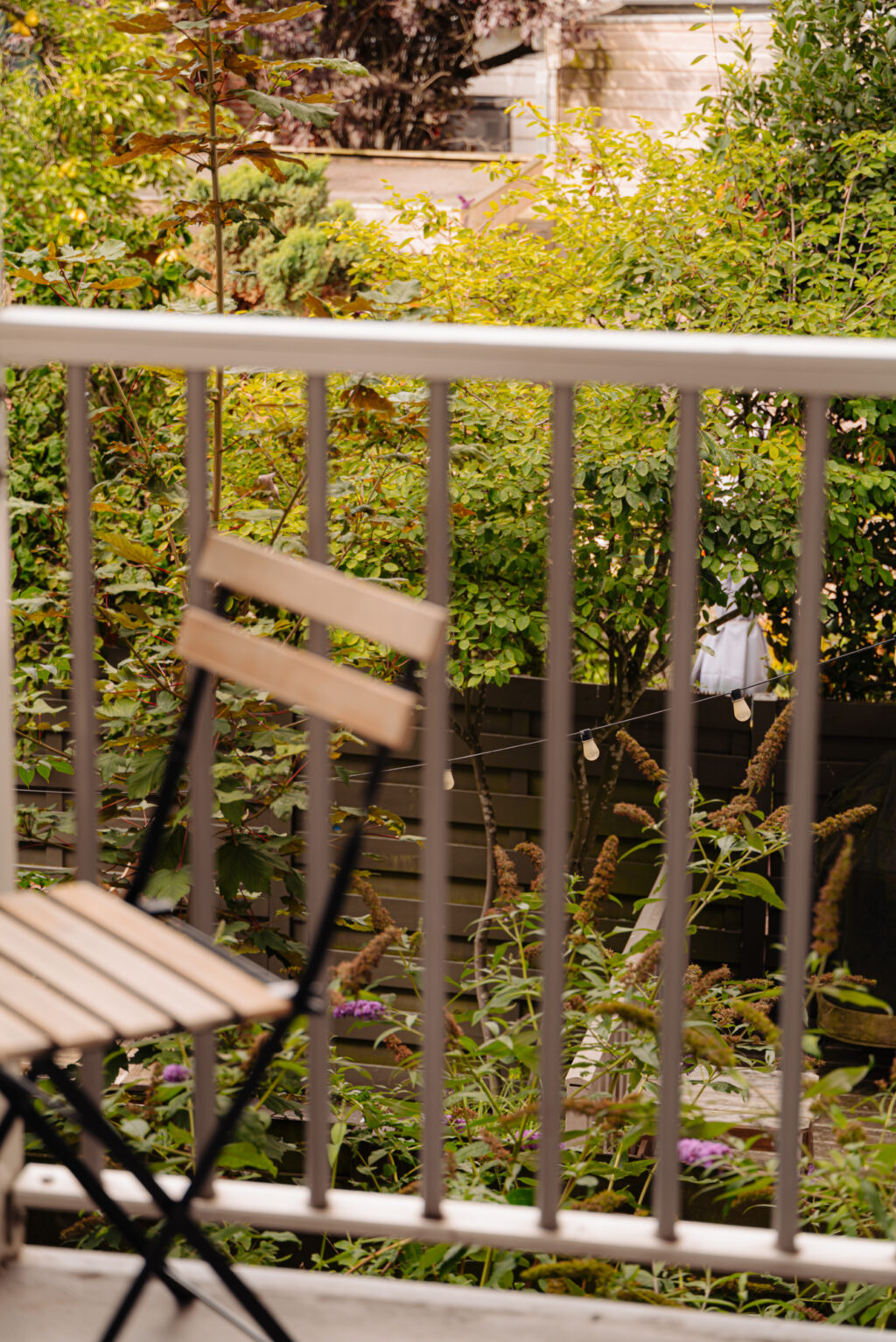
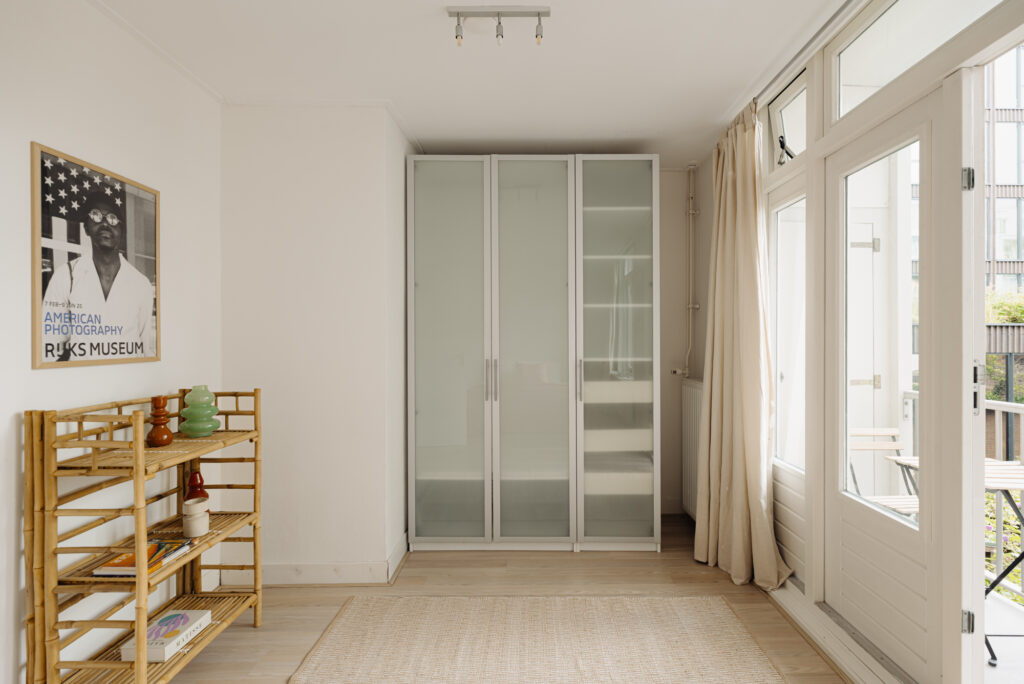
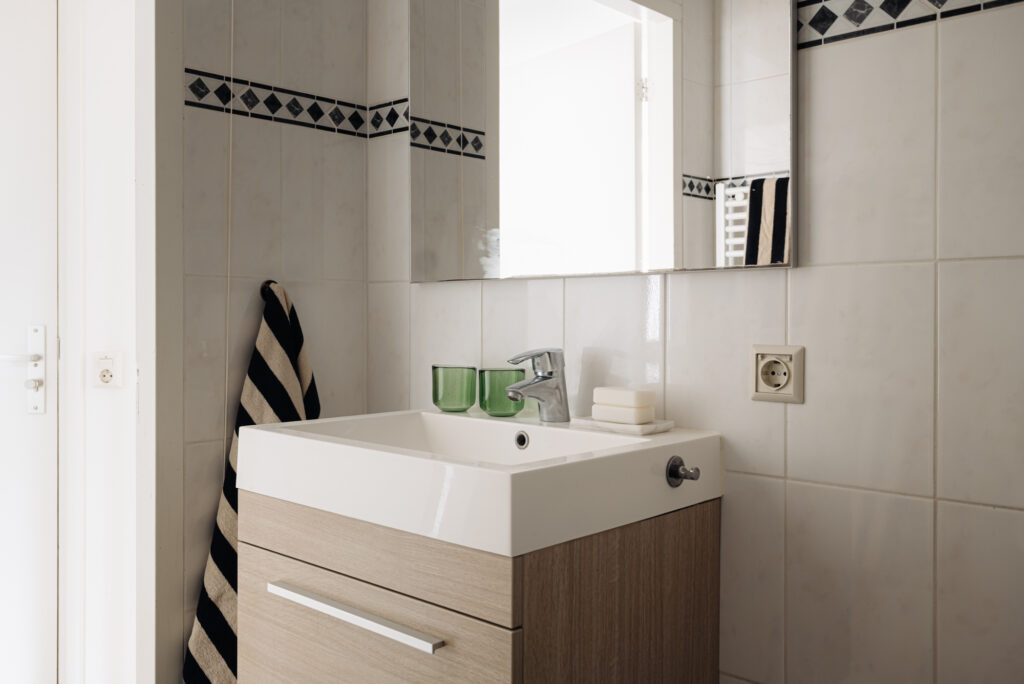
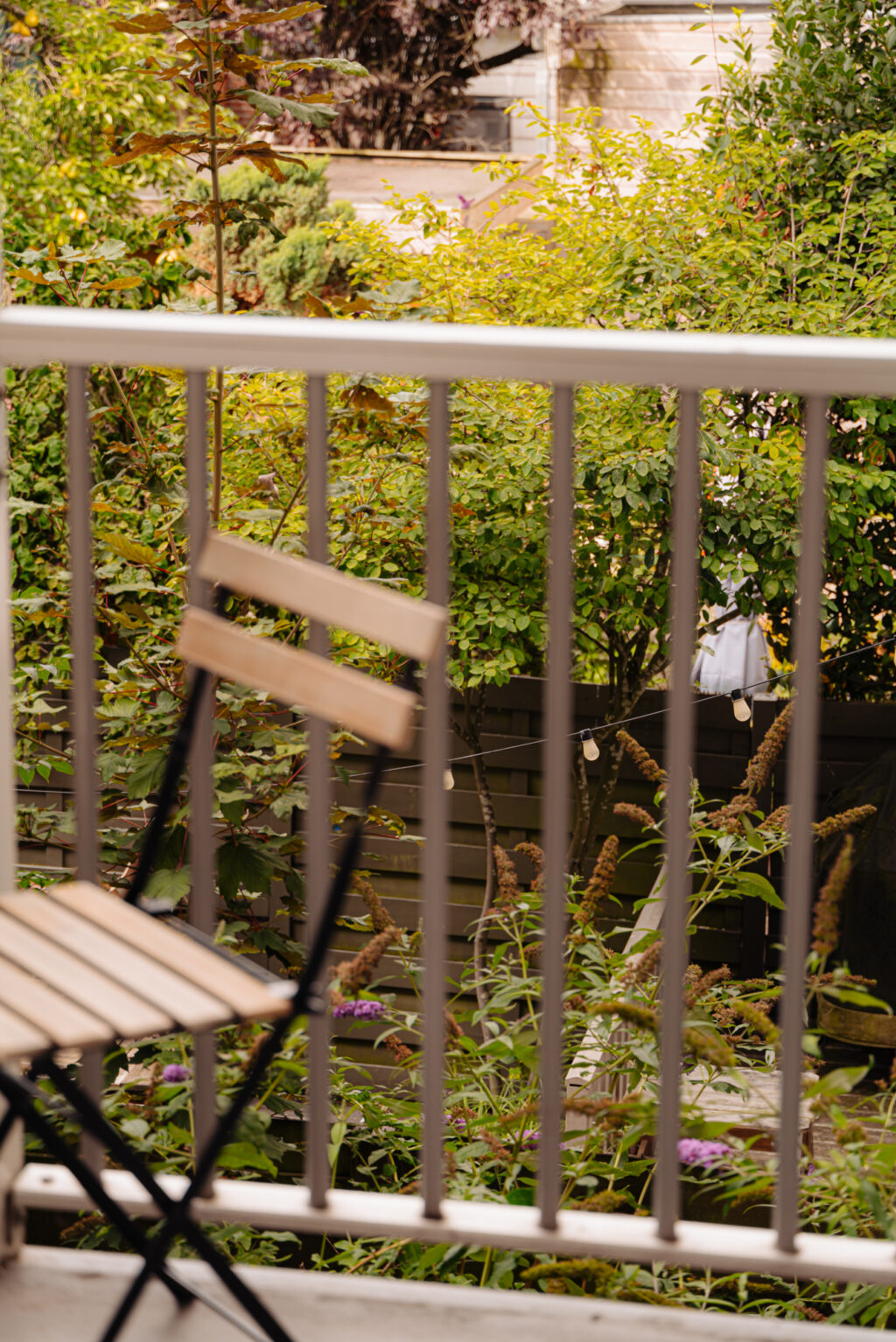
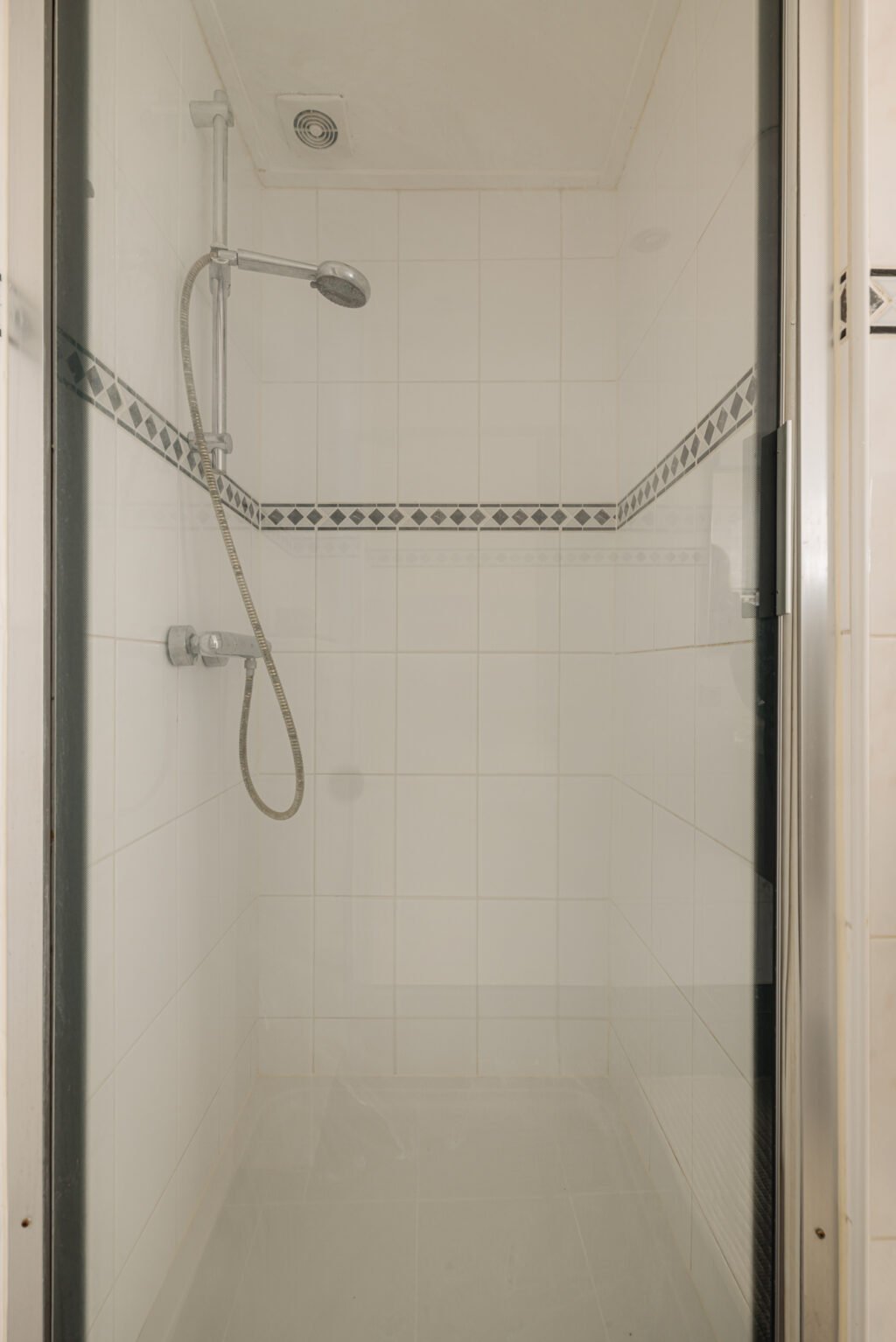
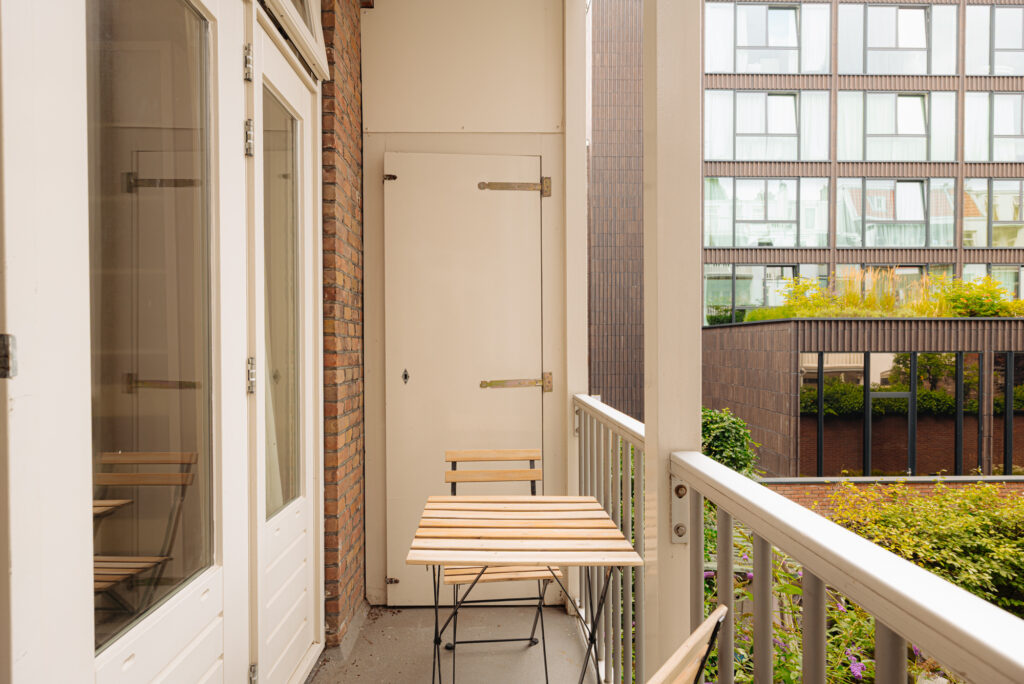
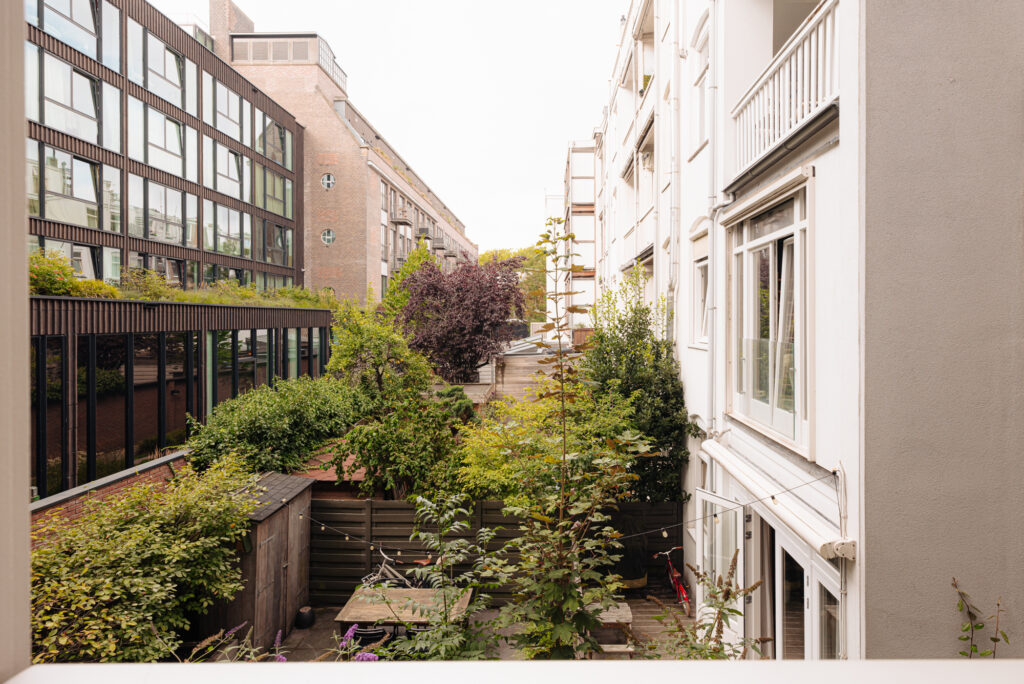
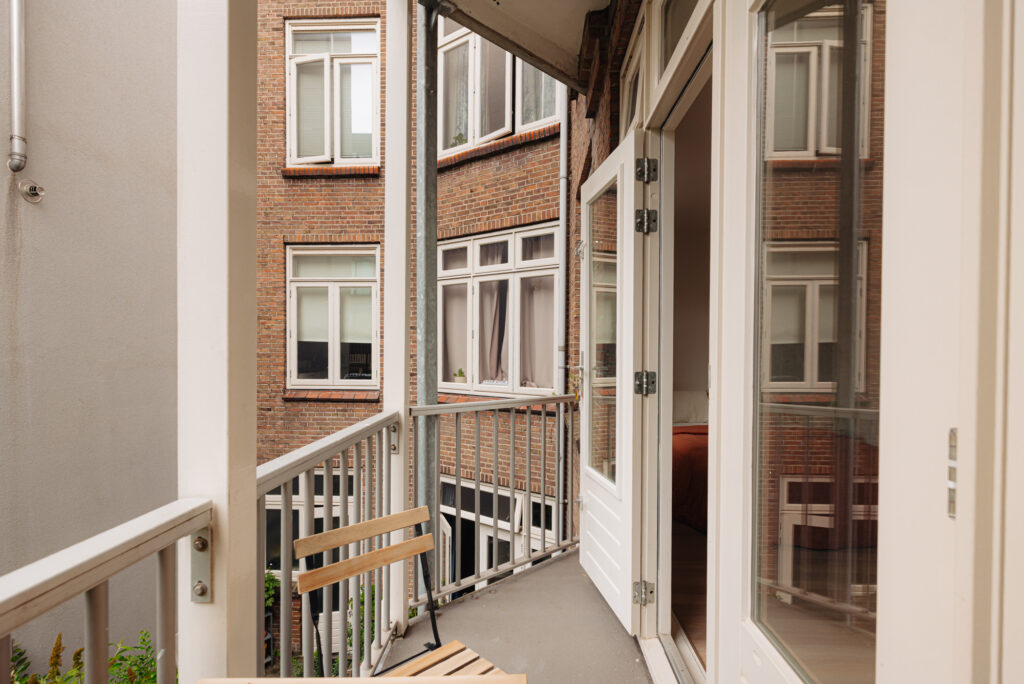
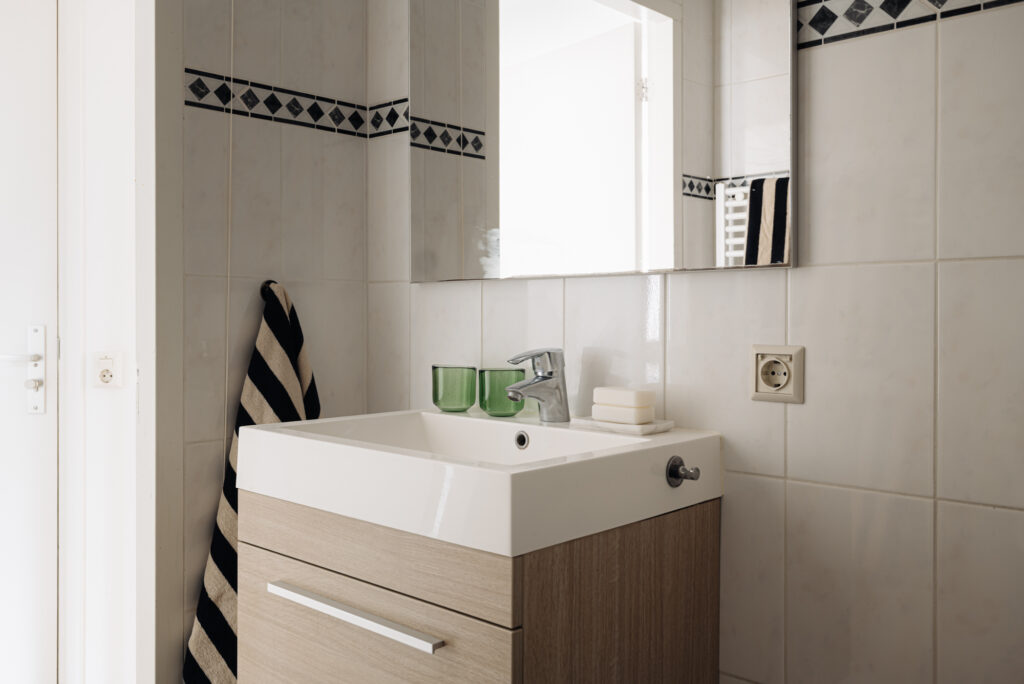
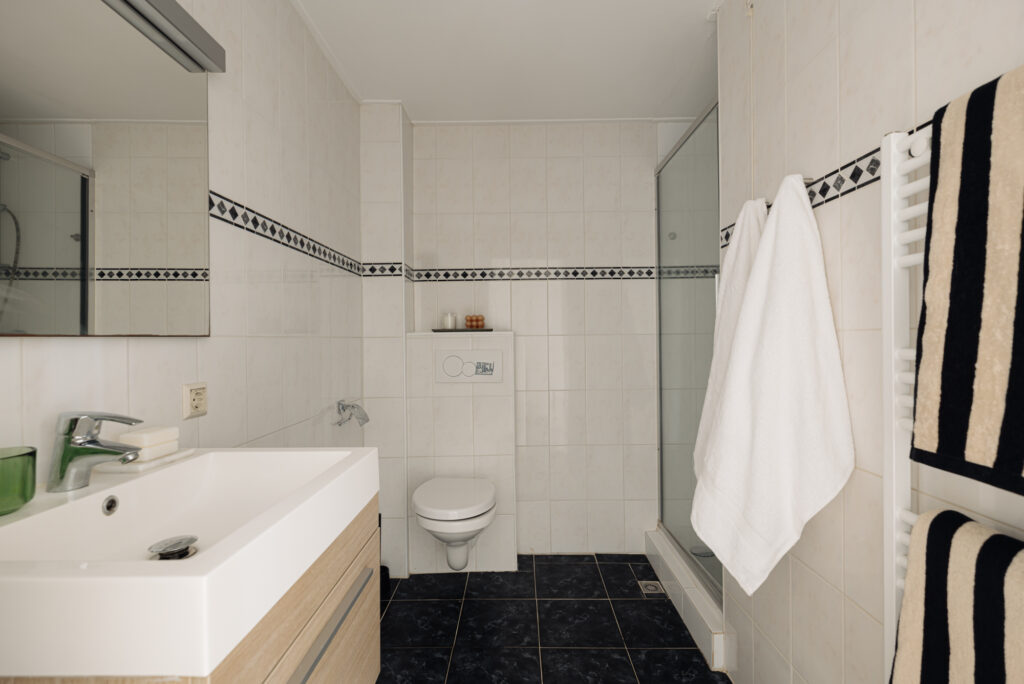
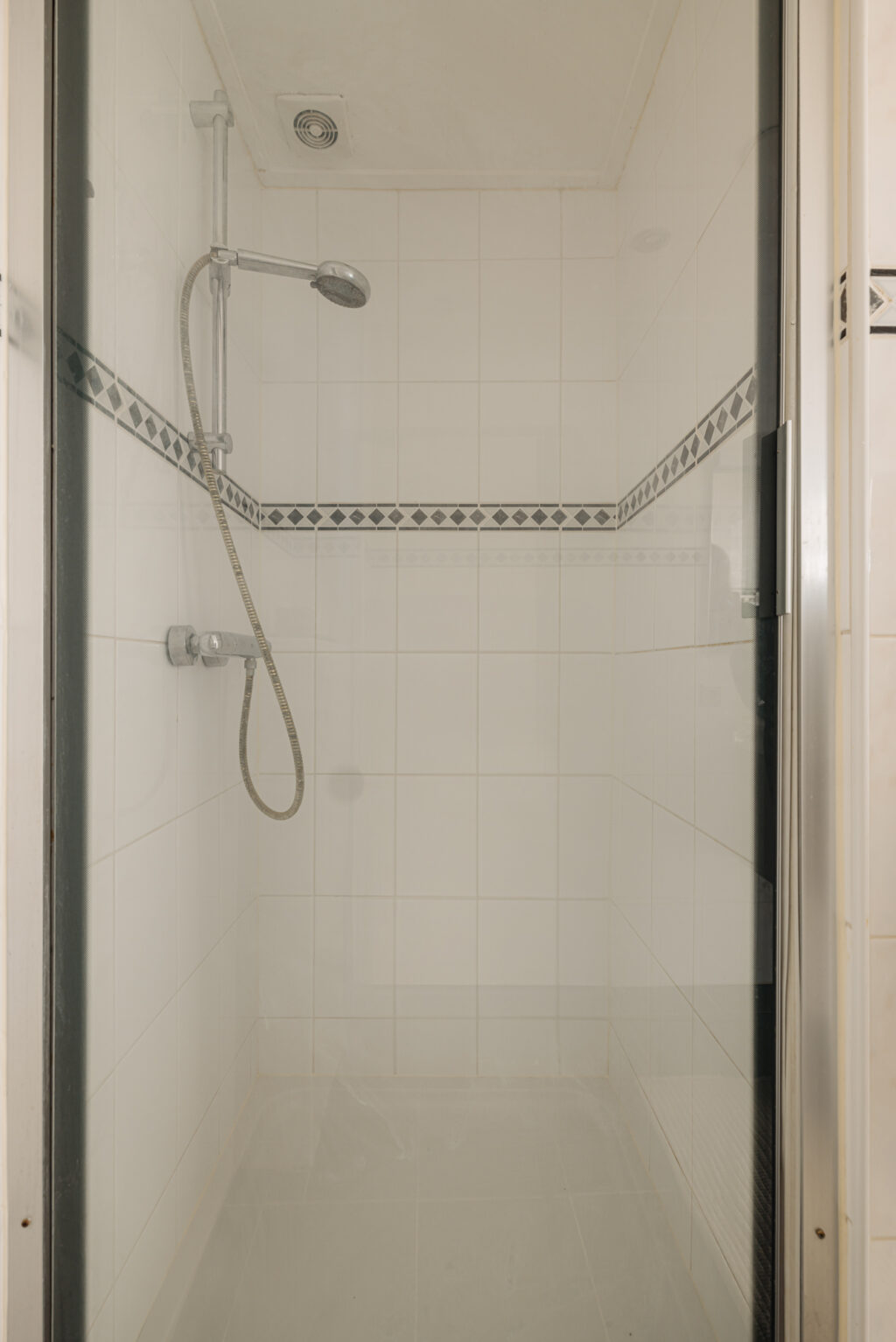
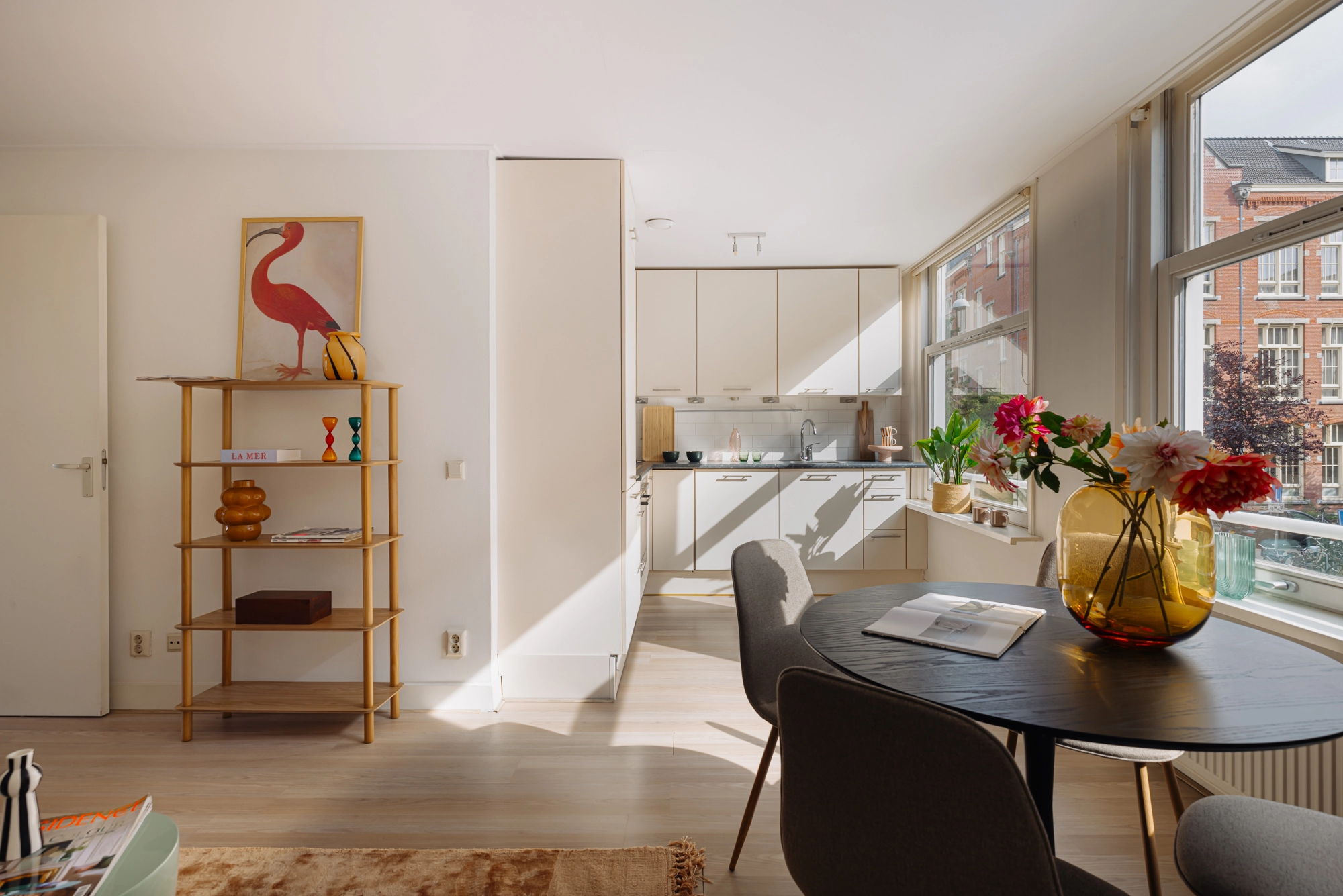
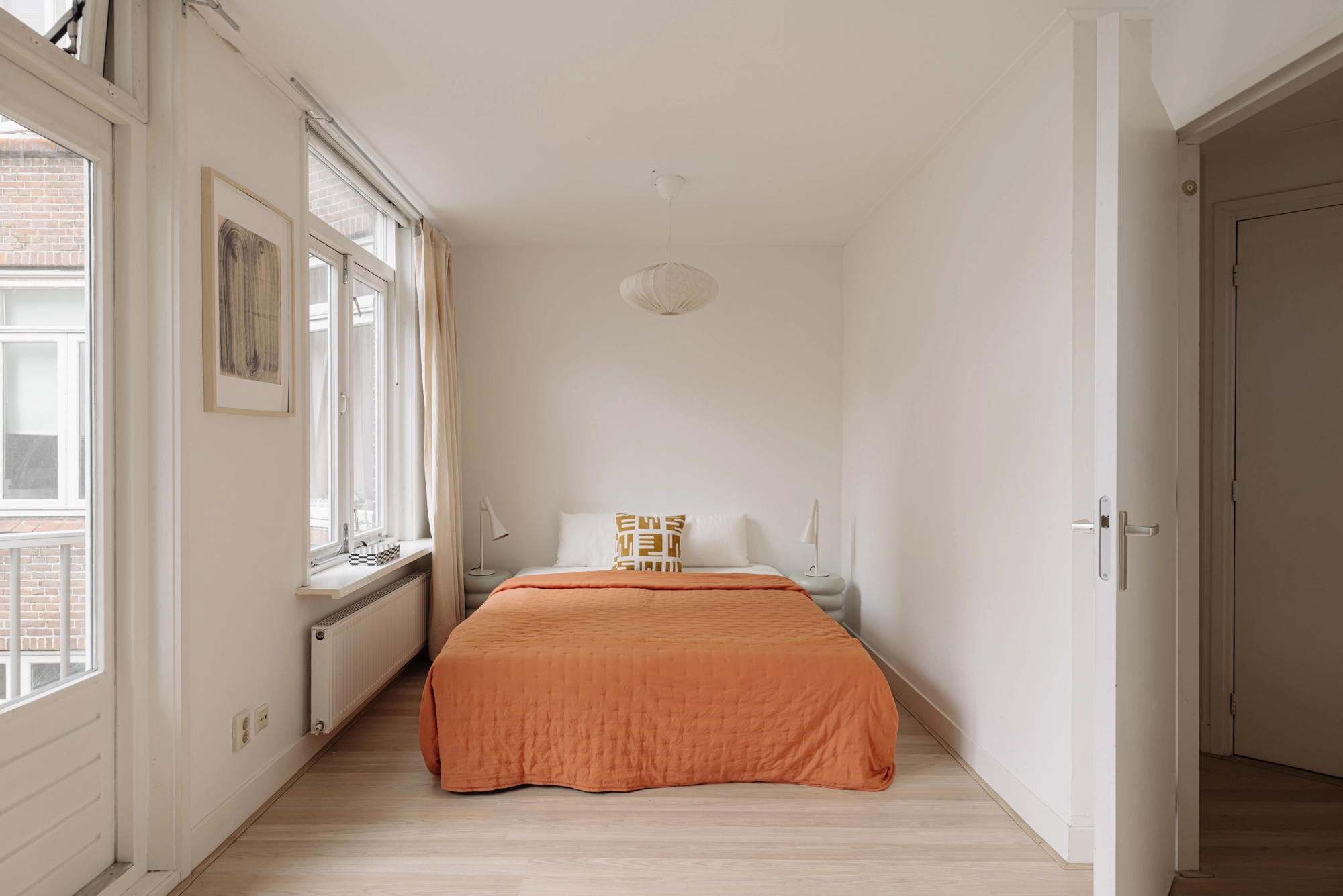
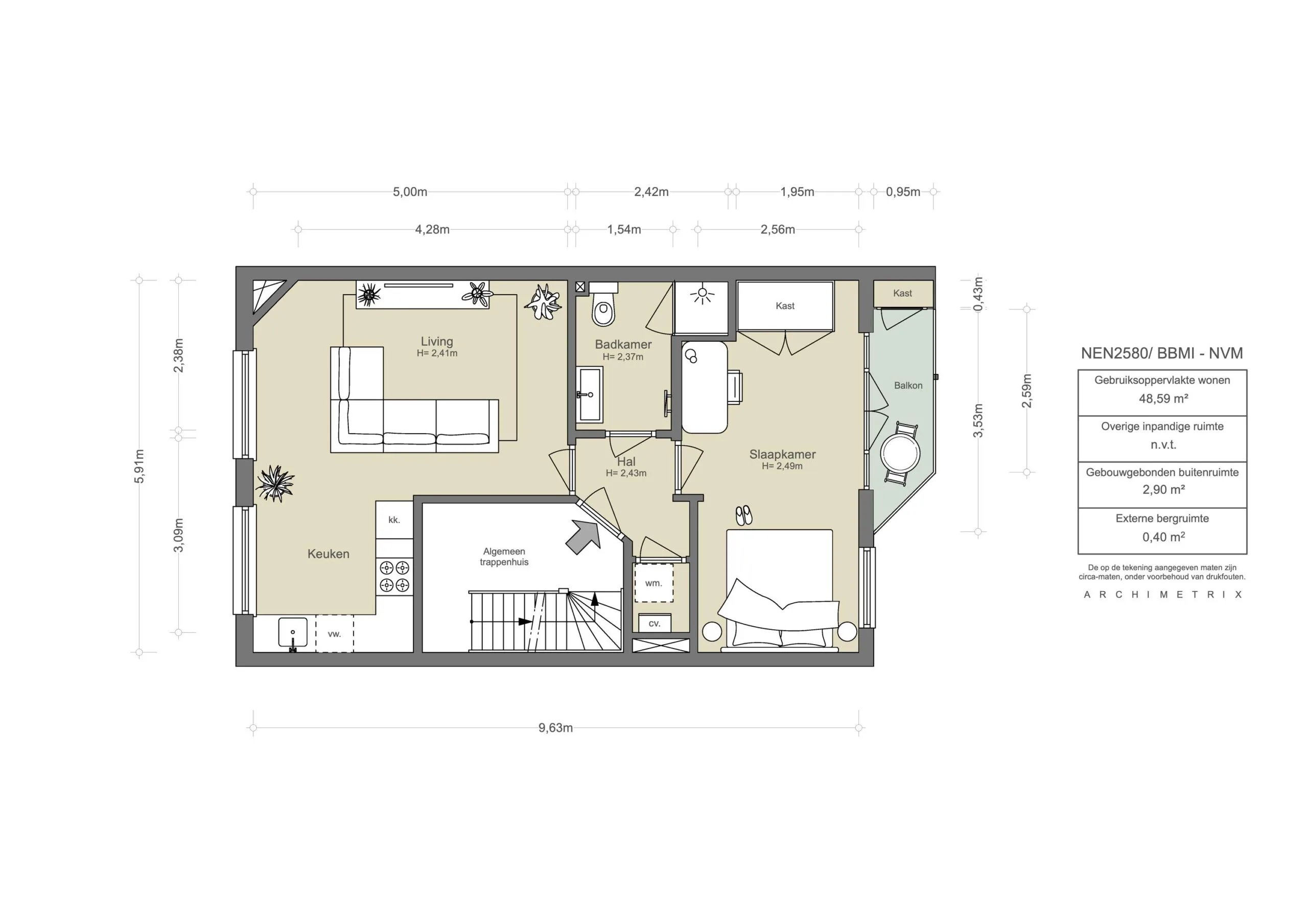
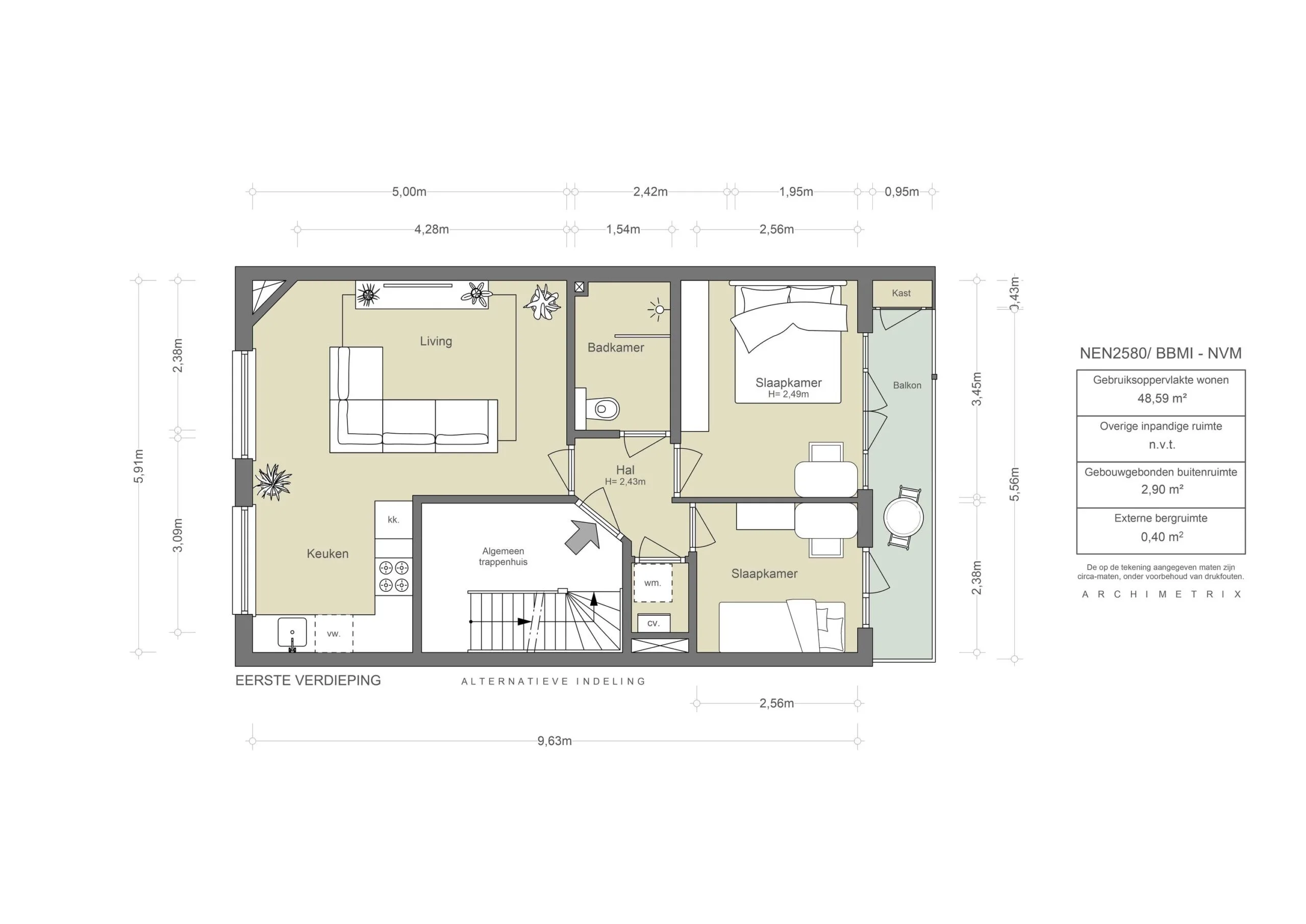
The living room is situated at the front of the residence. This area enjoys a bright layout, with two large windows drawing daylight deep into the space and enhancing the sense of openness. The arrangement is well-structured, offering room for a seating area and dining table, with an open connection to the kitchen. The atmosphere is calm, featuring a light floor that extends seamlessly into the bedroom. The kitchen is positioned in a corner layout at the front of the residence, overlooking the street. Executed in a neutral style, it offers a clear and functional arrangement with ample storage in both upper and lower cabinets. It is equipped with several built-in appliances, including a gas hob with extractor, oven, fridge-freezer, and dishwasher. At the rear, the bedroom provides sufficient space for a double bed, a large wardrobe, and potentially a workspace. French doors connect the room to the balcony, allowing fresh air and views over the lush inner gardens. The alternative floor plan highlights the potential to create a second bedroom by dividing the spacious bedroom. Centrally located in the apartment, the bathroom has been efficiently designed with a walk-in shower, washbasin with mirrored cabinet, and a floating toilet. The finish is neutral yet practical. The balcony is accessible from the bedroom and faces southwest. There is room for a table with two chairs, offering a green and tranquil outlook over the inner gardens, right in the heart of the city.
Neighbourhood
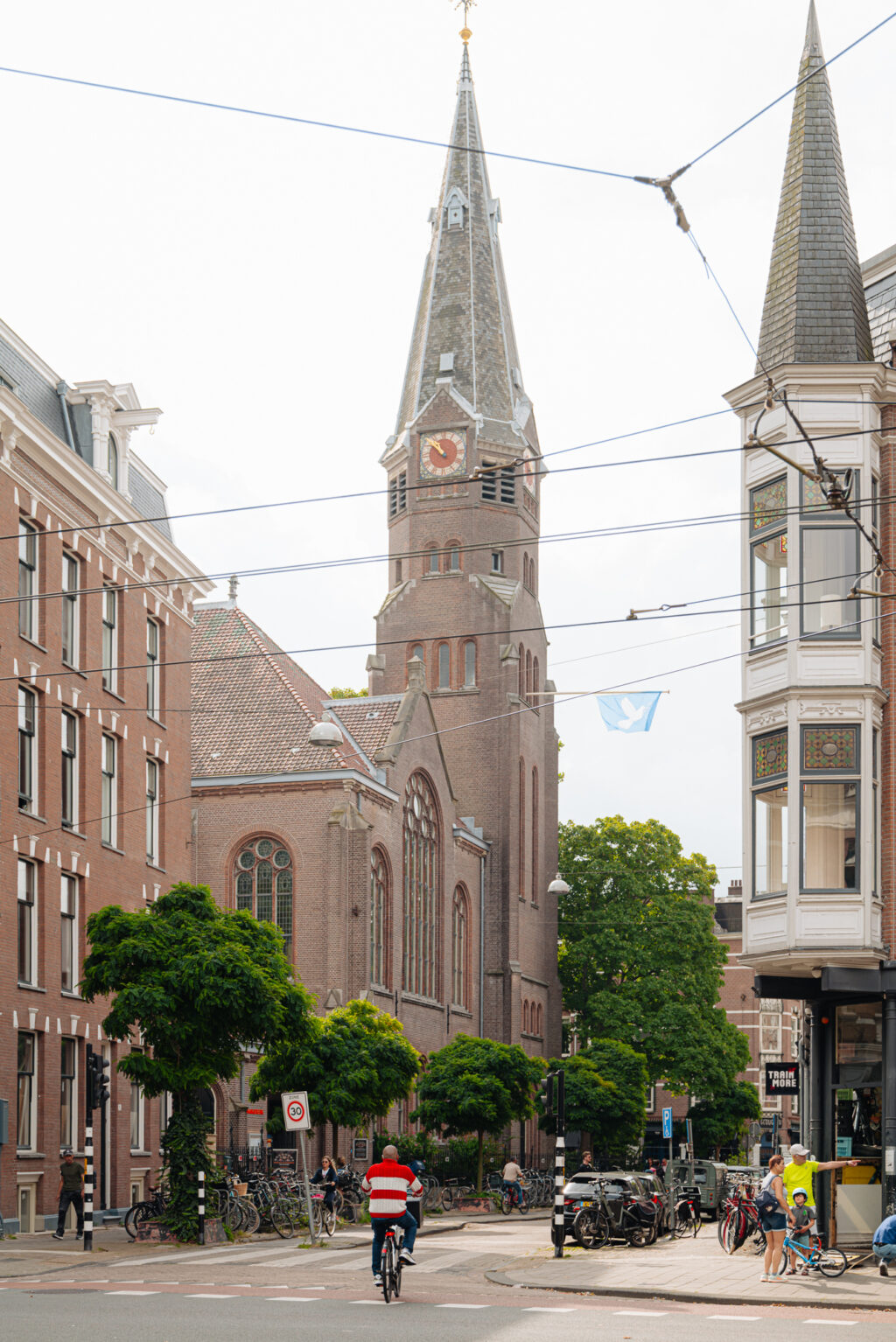
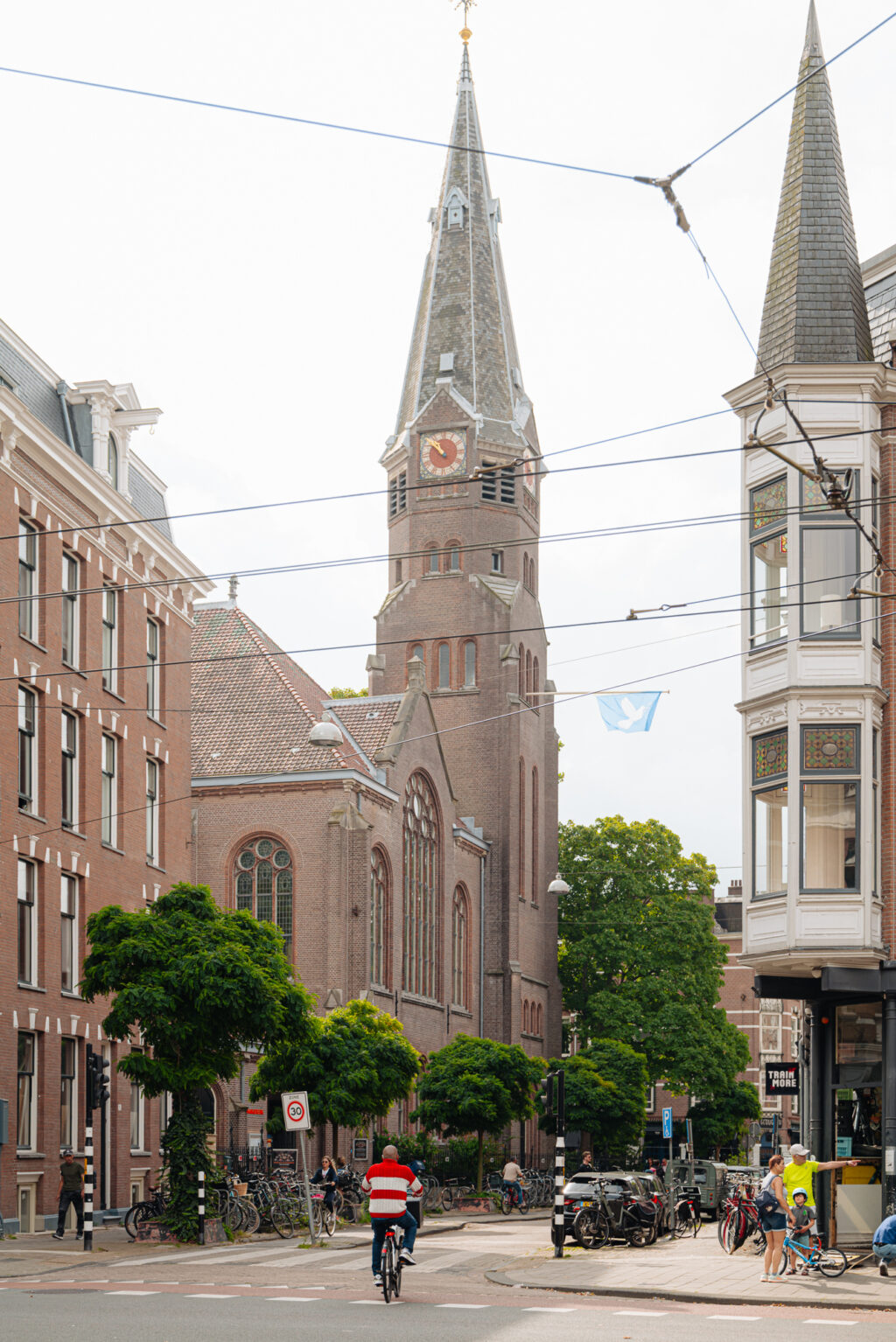
De Pijp was laid out at the end of the nineteenth century to provide housing for newcomers who moved to the capital for work. In 1886, Freddy Heineken’s father opened the Heineken brewery here. The first workers’ homes, around Albert Cuypstraat, were built quickly and inexpensively. Later, moving towards the Diamantbuurt, architect Berlage added homes in the Amsterdam School style. It is said that the neighbourhood owes its name to the long, straight streets, shaped like a pipe. The Albert Cuyp Market and Sarphatipark define the vibrancy of De Pijp. Artists and writers such as Piet Mondriaan, Carel Willink, and Gerard Reve lived and worked here. Its lively, mixed community gave rise to many cafés and eateries. Today, the area is known as the Quartier Latin of Amsterdam, still characterised by its dynamism and a wide range of restaurants such as Brut de Mer, Yamazato, Arles, the Peruvian NAZKA, and authentic bistros such as Petit Caron.
Key details
• Living area approximately 49 m²
• Balcony facing west of approximately 3 m²
• Freehold property
• Energy label D
• Service charges VvE € 136.36 per month
• Municipal protected cityscape

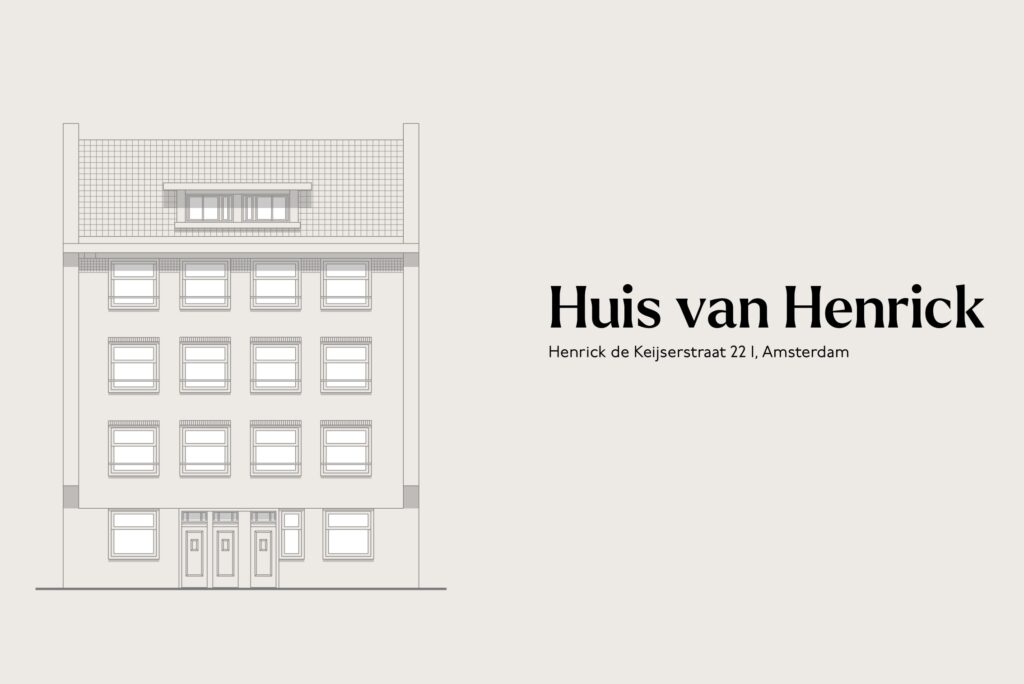
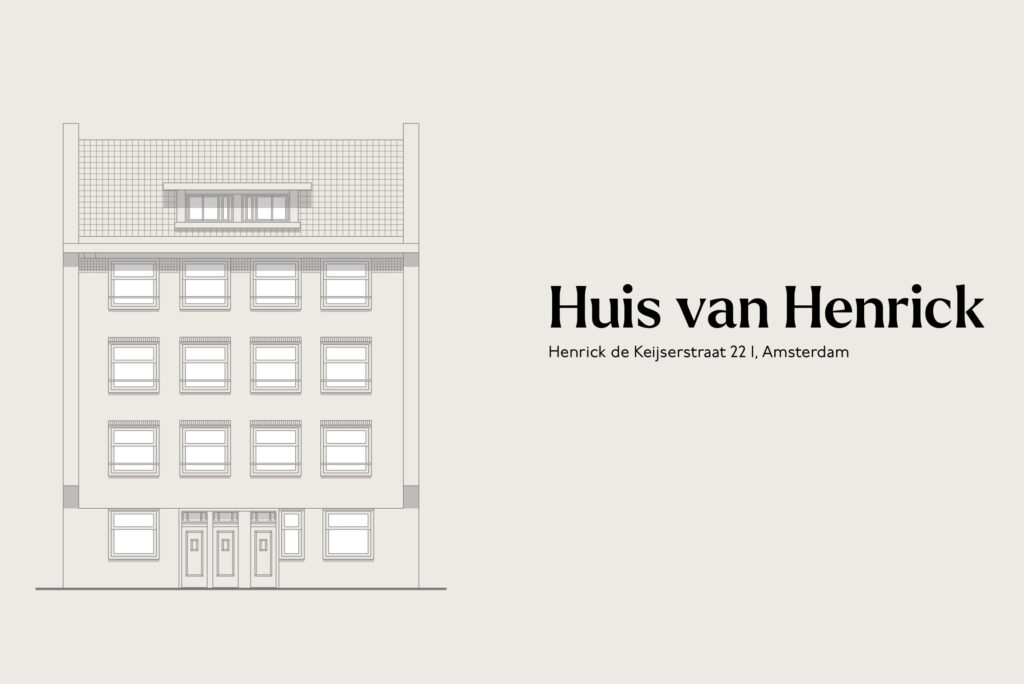
Huis van Henrick
Sometimes a residence simply feels right. The proportions, the layout, the position within the street everything falls into place.
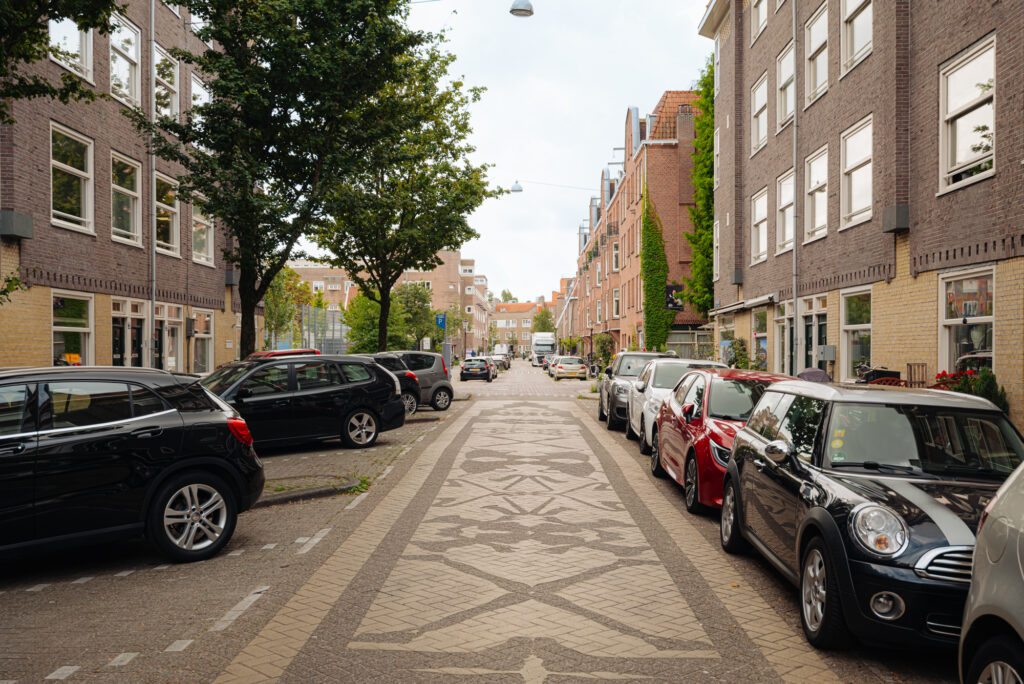
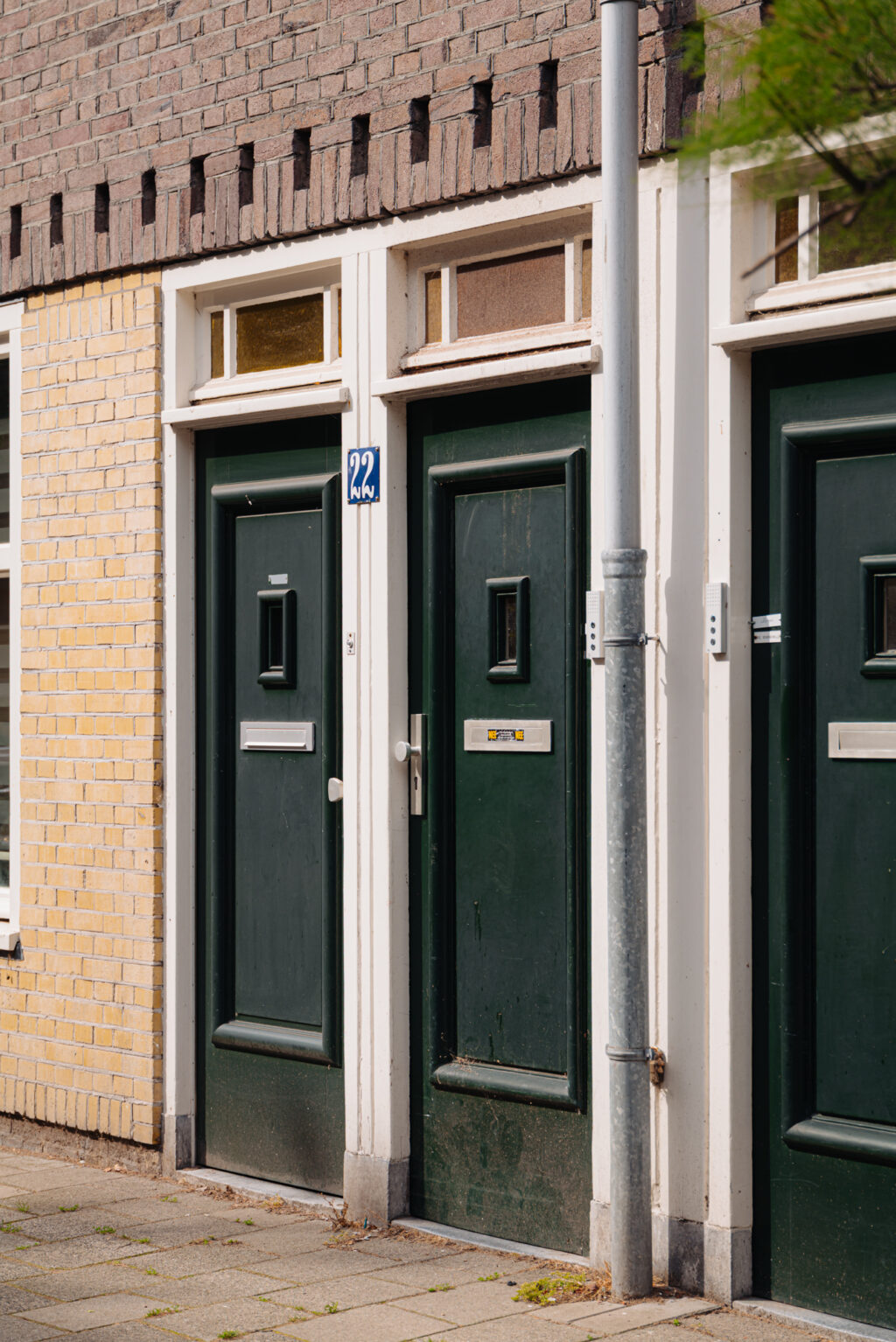
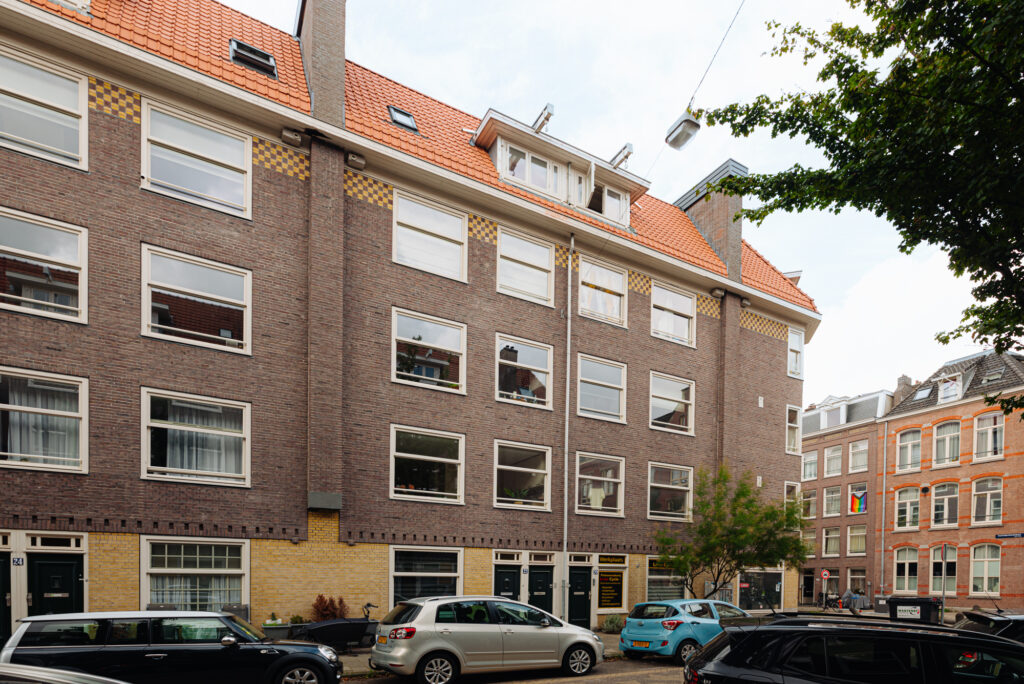
The House of Henrick is situated in the heart of De Pijp, on the first floor of a building that has been part of the city for more than a century. The architecture is both recognizable and considered, with a façade that blends into the larger whole and interiors that invite a personal way of living.
Life here unfolds in the calm of the urban setting. Windows at the front open onto the lively street scene, while a quiet bedroom at the rear offers retreat. The floorplan is clear, the atmosphere bright and open. An elegant, well-balanced residence for those who value simplicity paired with quality.
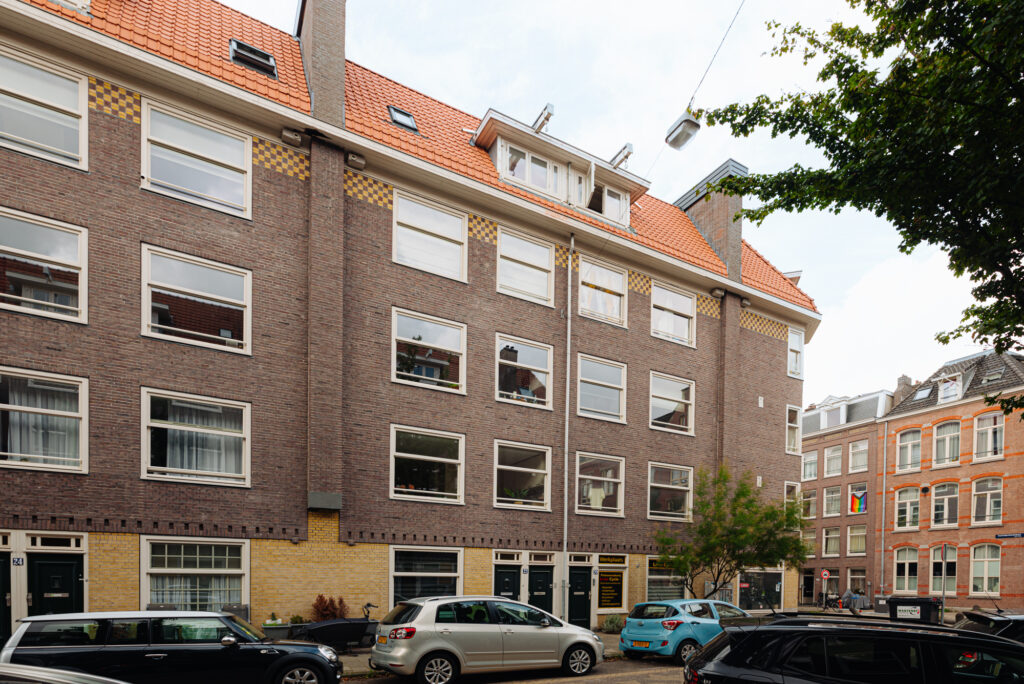
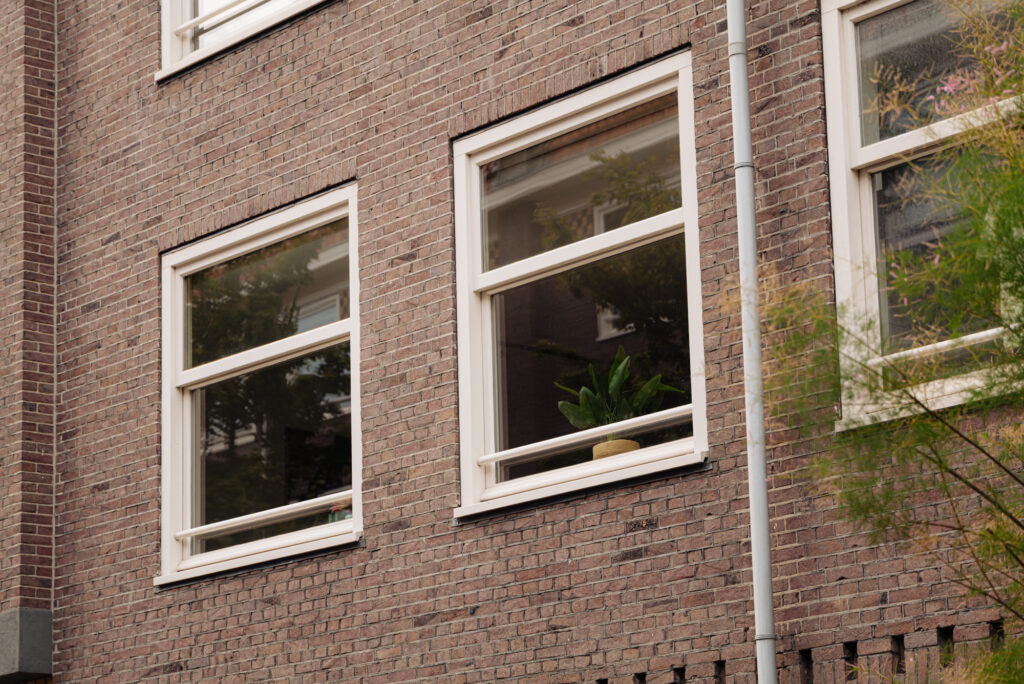
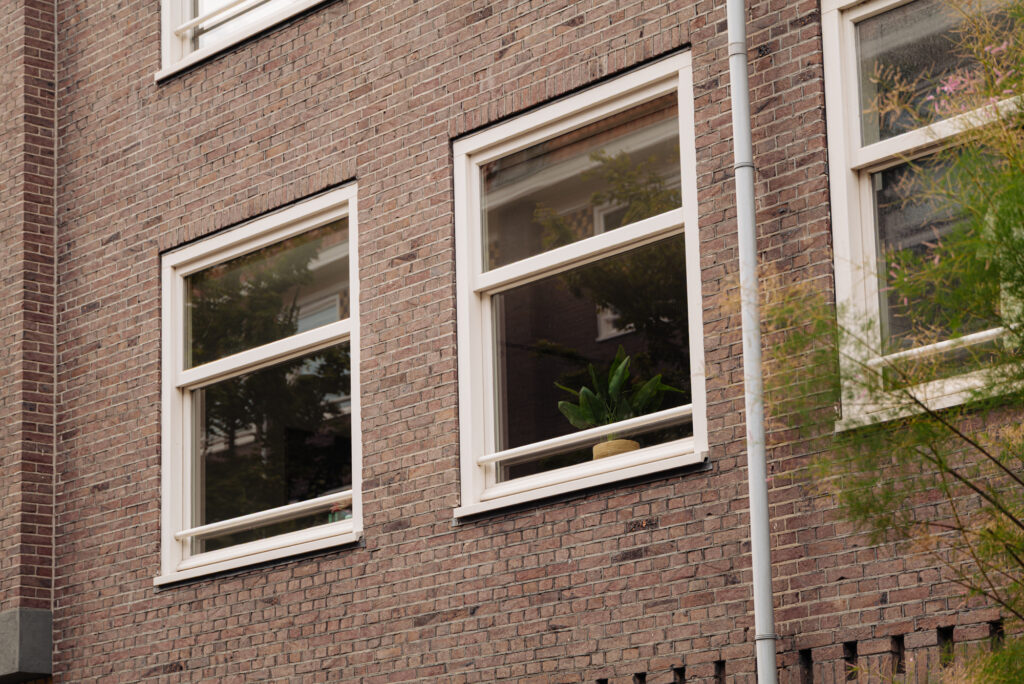
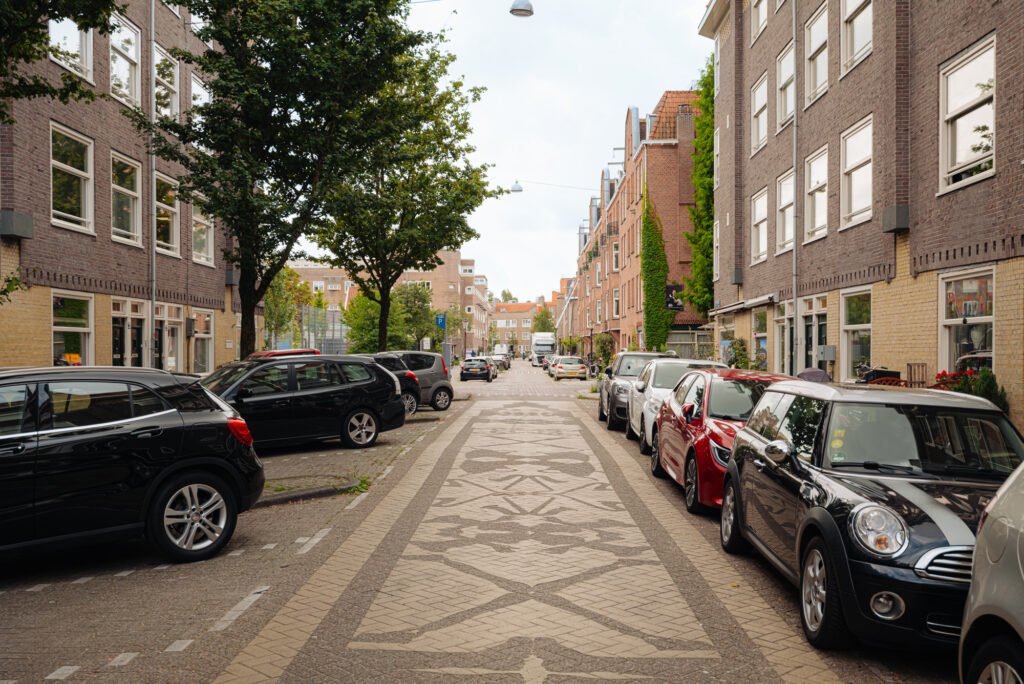
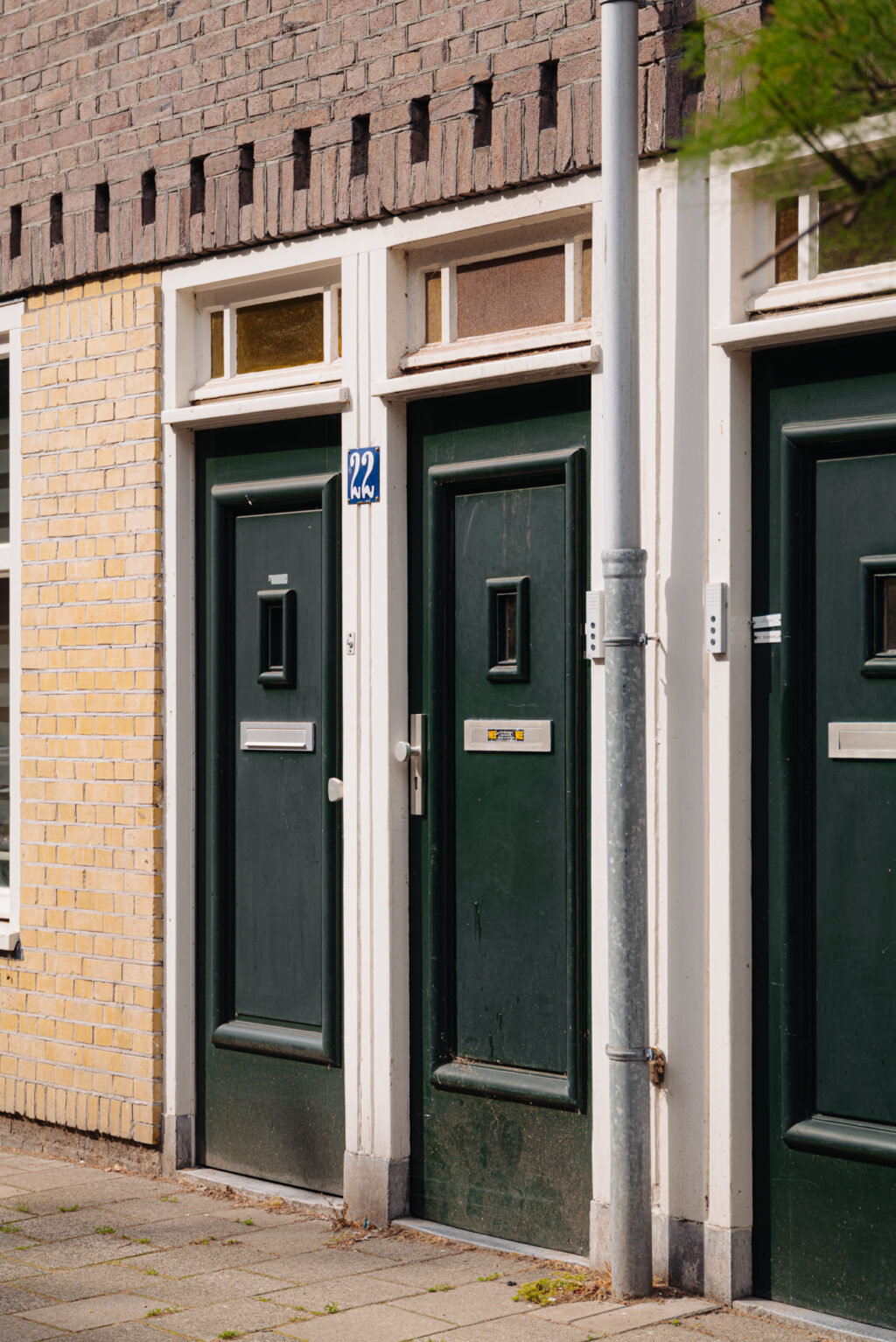
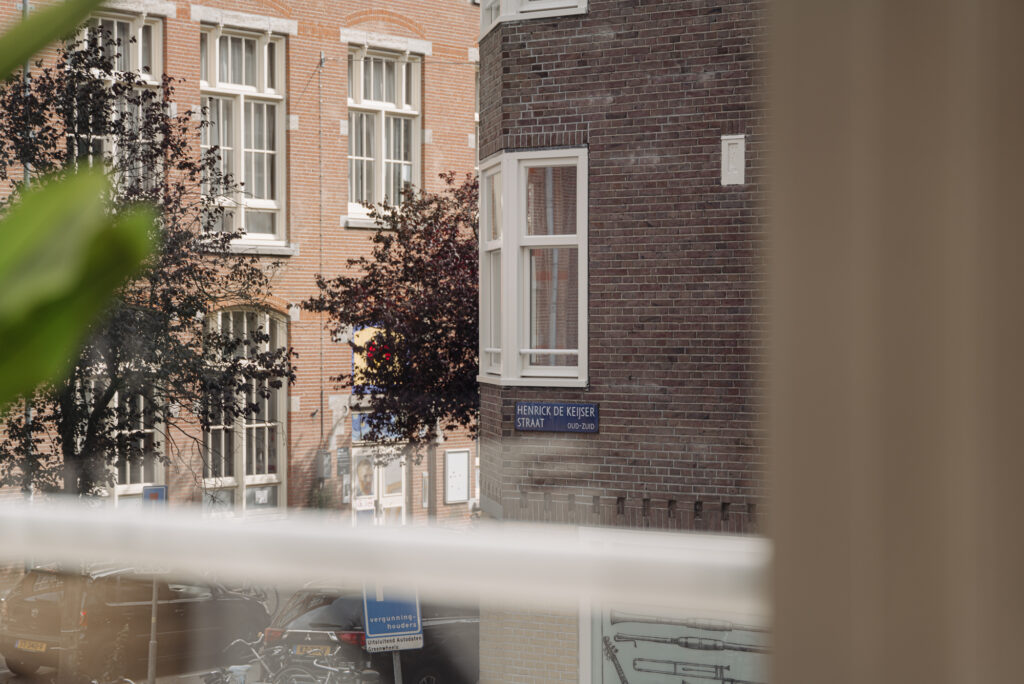
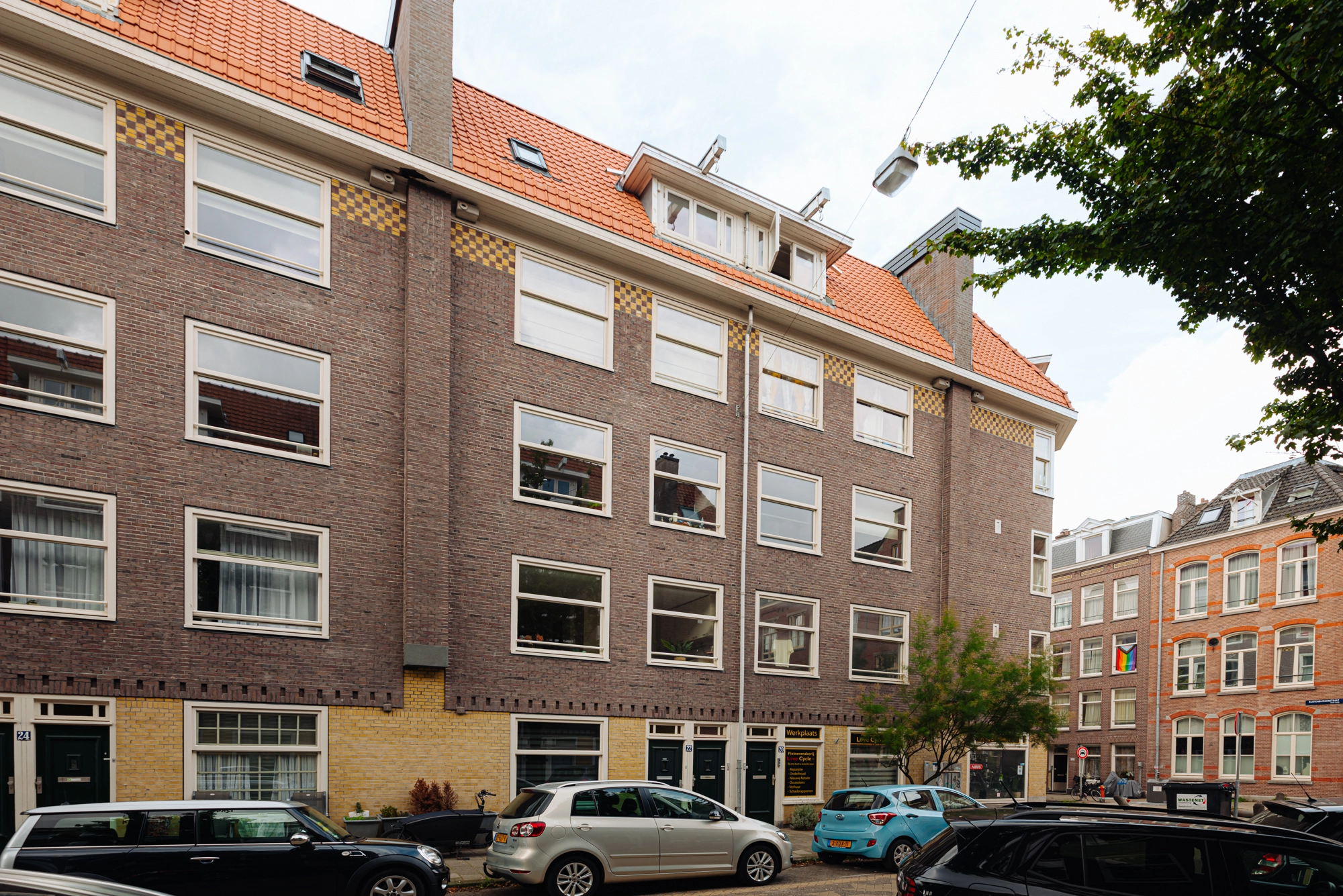
The façade reveals a clean and symmetrical composition, characteristic of the Amsterdam School architecture that frequently appears in De Pijp. The design by Arend Jan Westerman, dating from the 1920s, together with the mirrored block across the street, forms a distinct urban ensemble. The combination of a low yellow base and dark brickwork establishes the rhythm of the street and enhances the recognizability of the block.
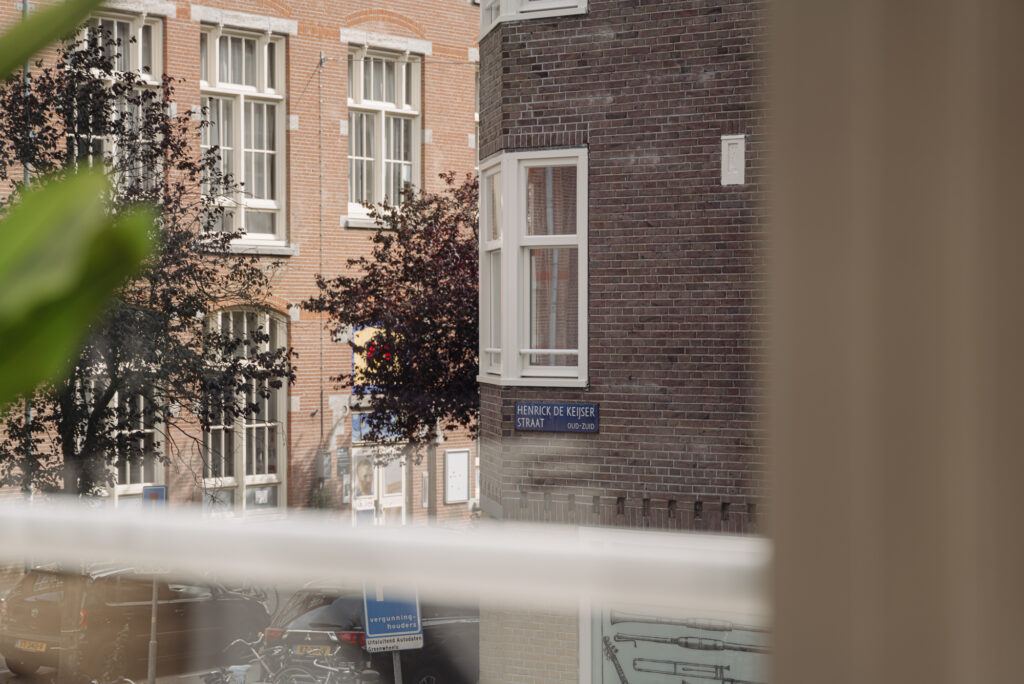
The residence on the first floor aligns with this architectural structure, yet its interior is arranged according to a contemporary and functional layout. The spaces are logically organized, with careful attention to natural light and ease of use. At the front, two large windows connect with the streetscape and draw northern light into the residence.
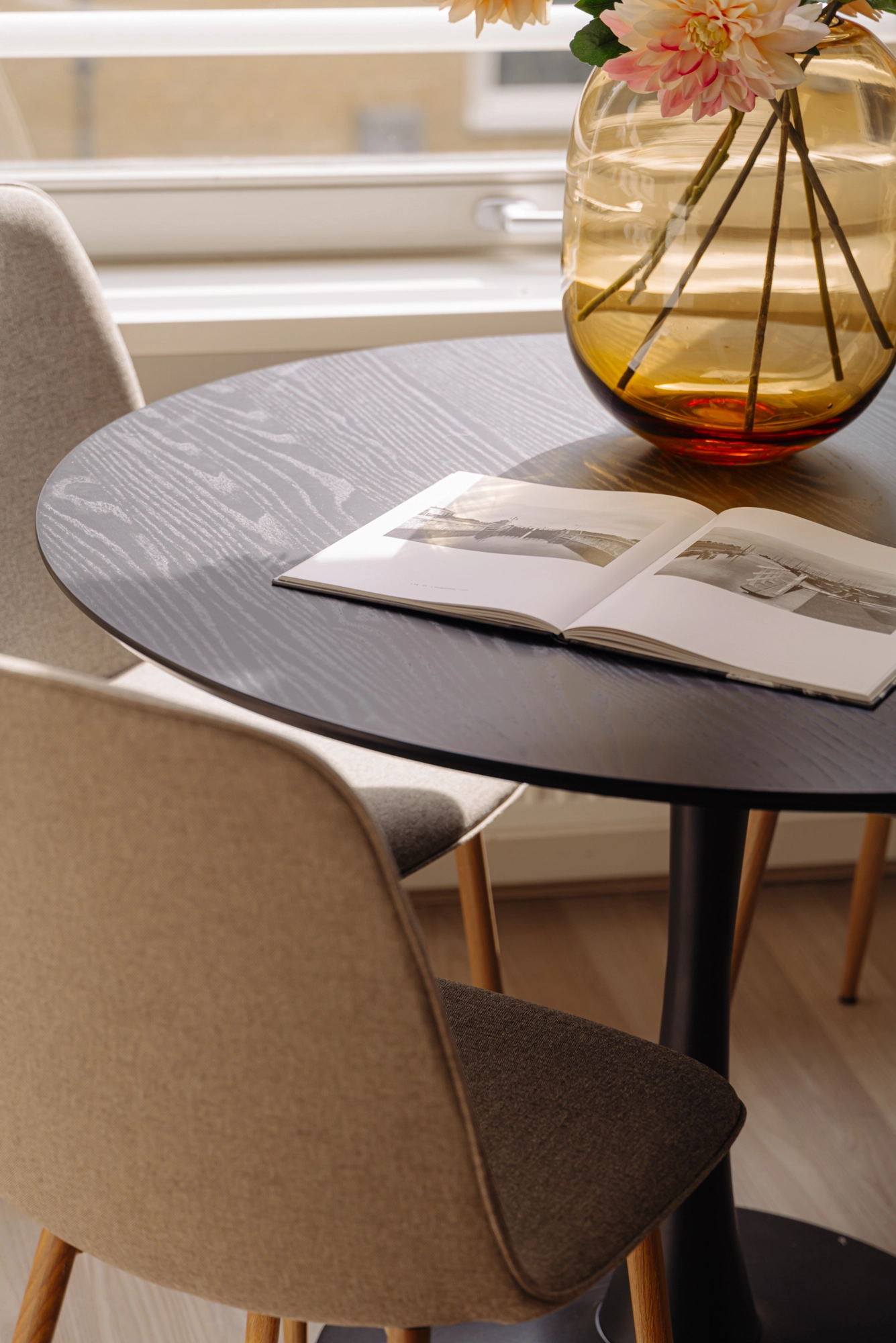
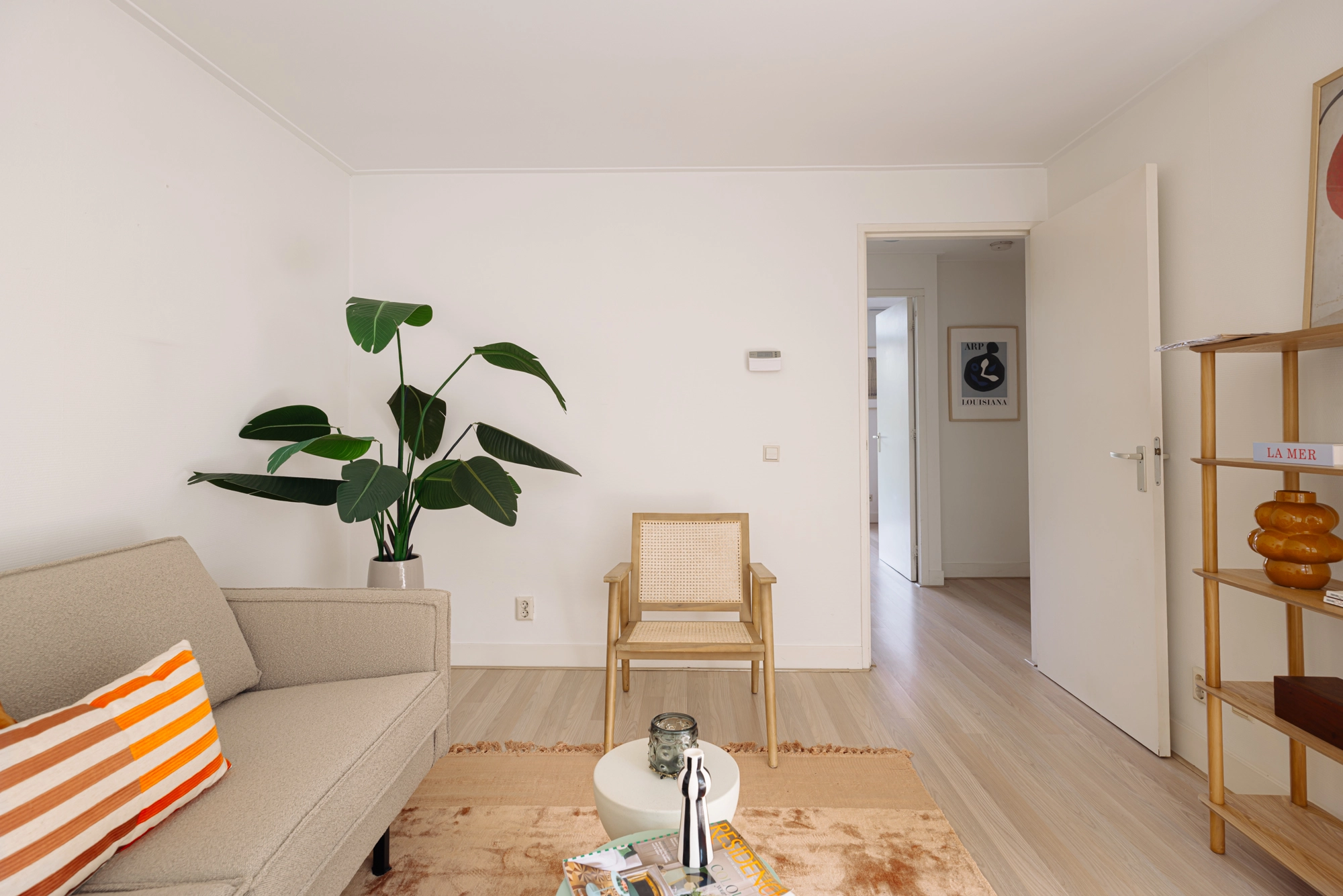
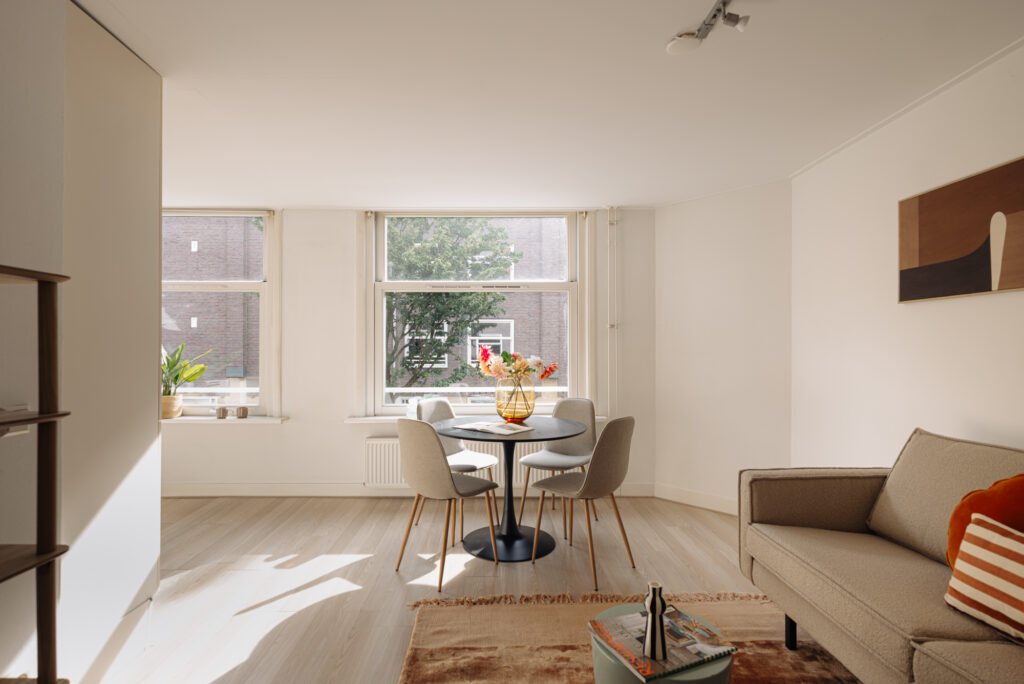
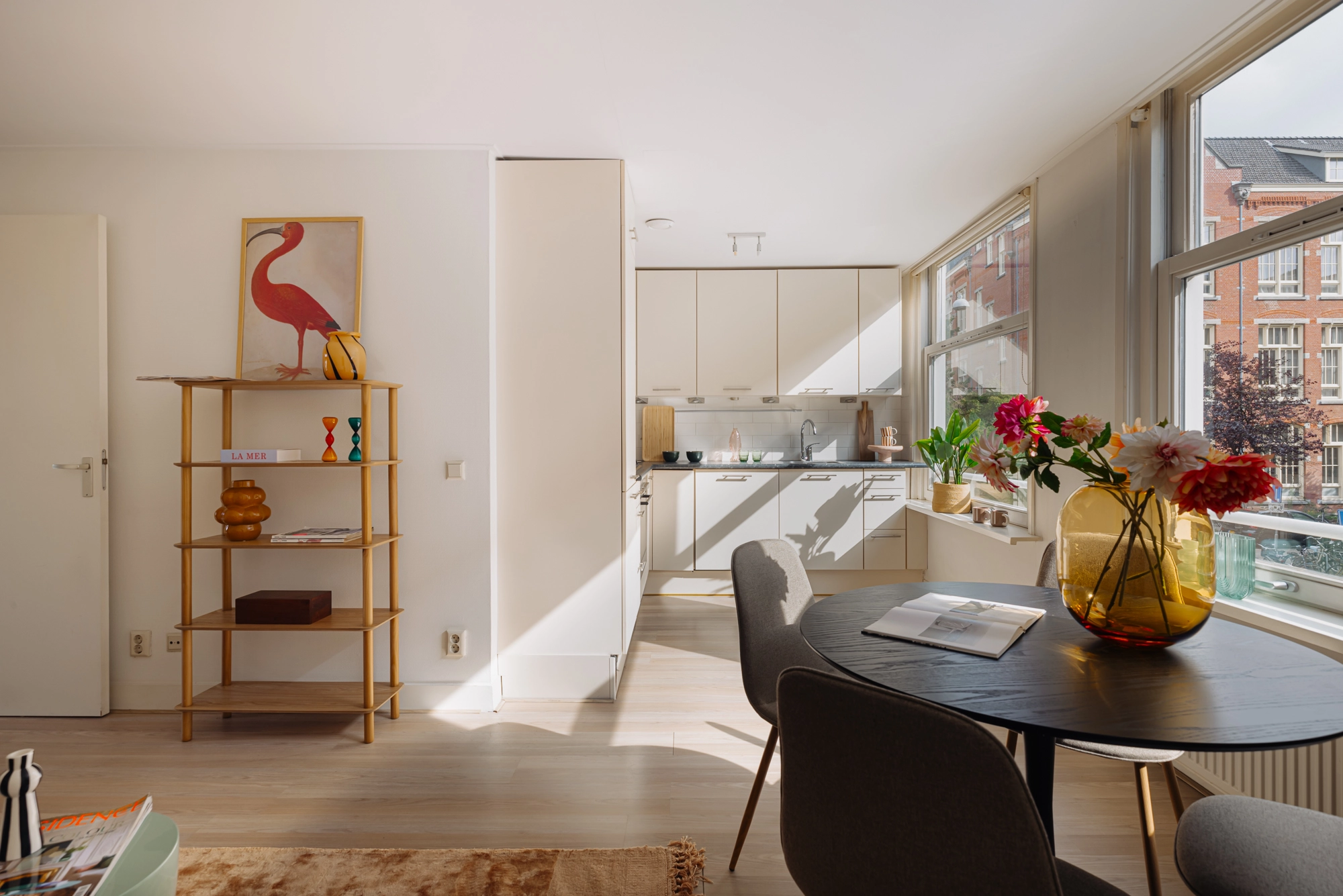
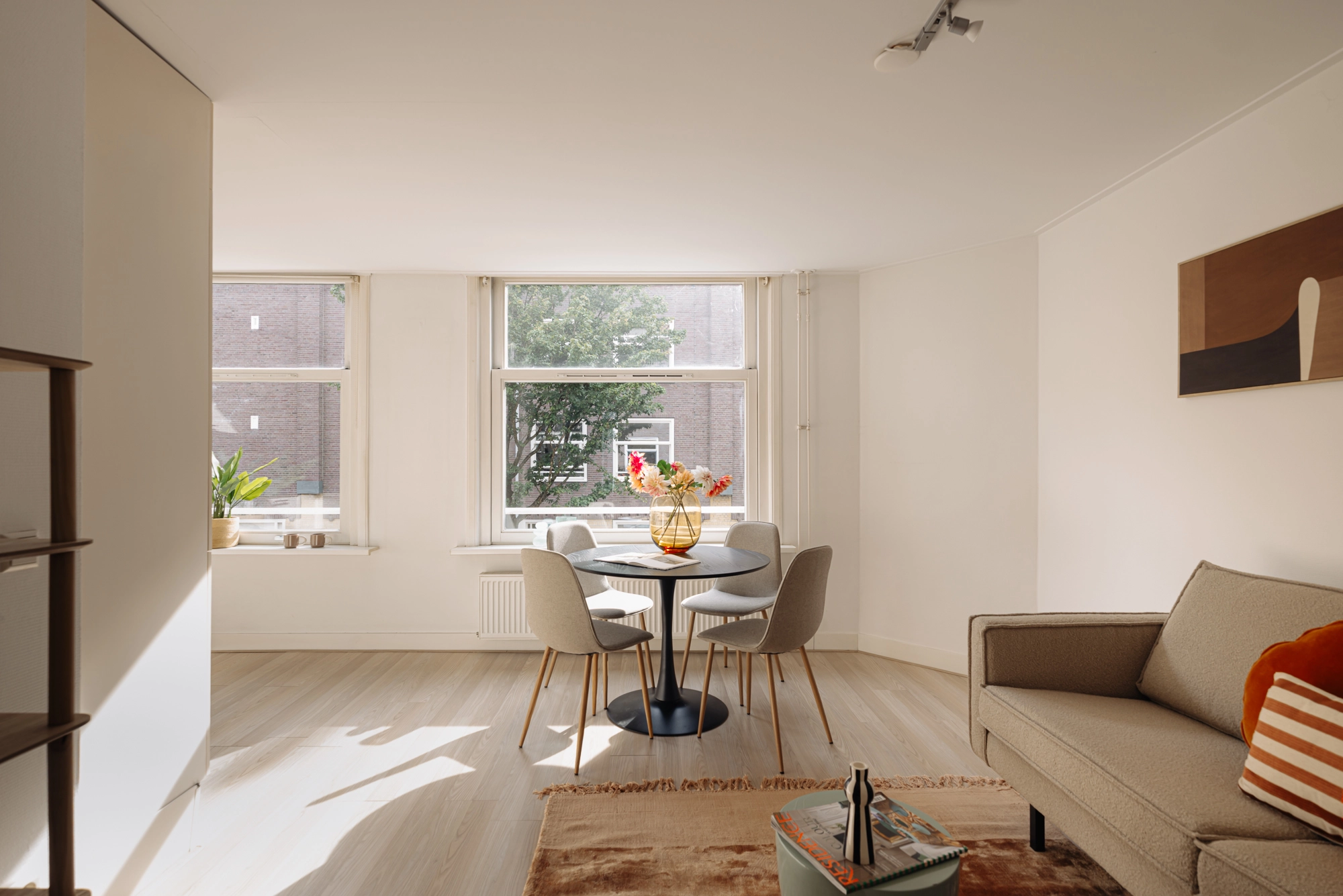
The living area at the front is thoughtfully arranged. Two large windows allow daylight to flow deep into the space, enhancing the sense of openness. The layout is clear, with a sitting area and dining table in direct connection to the kitchen.
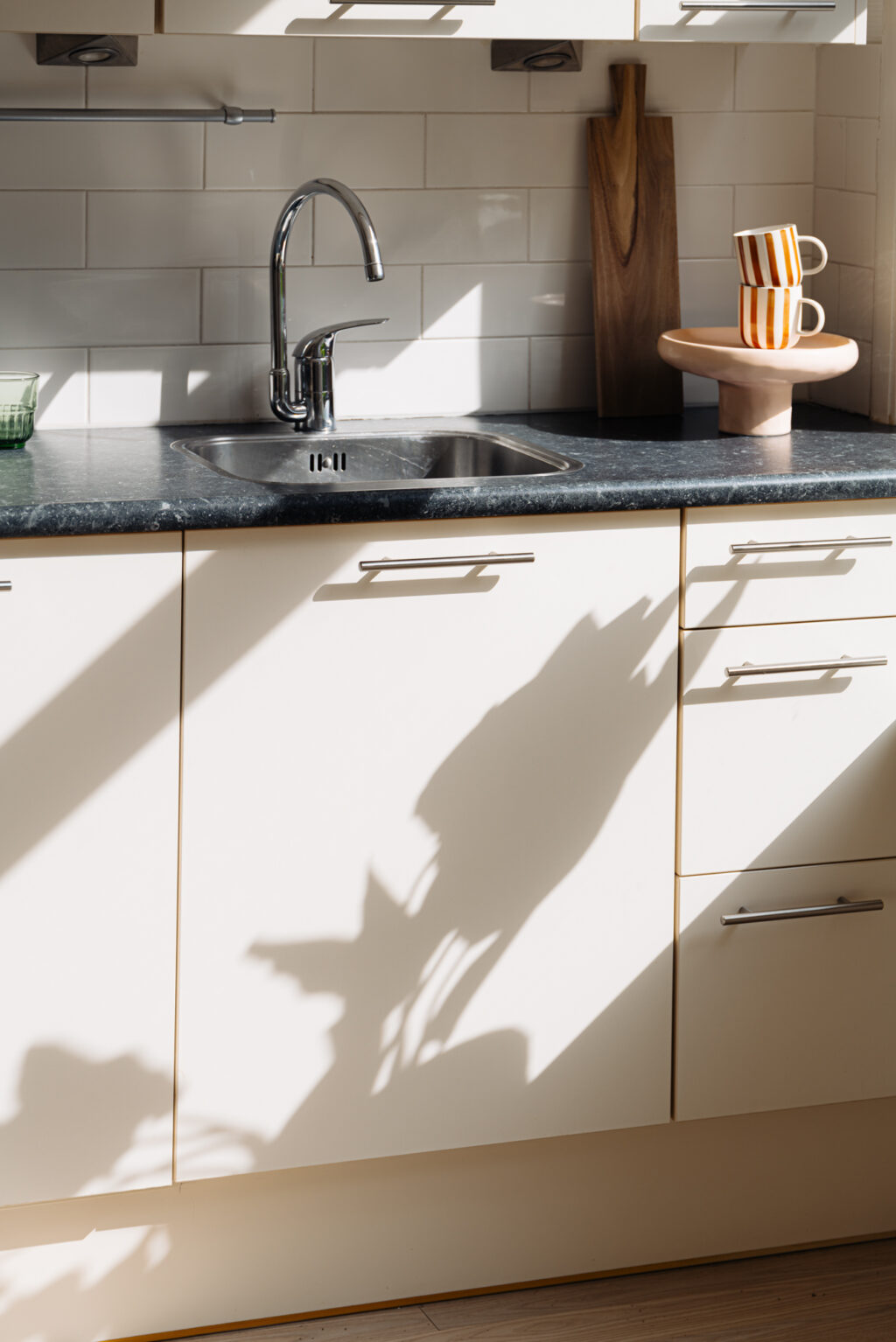
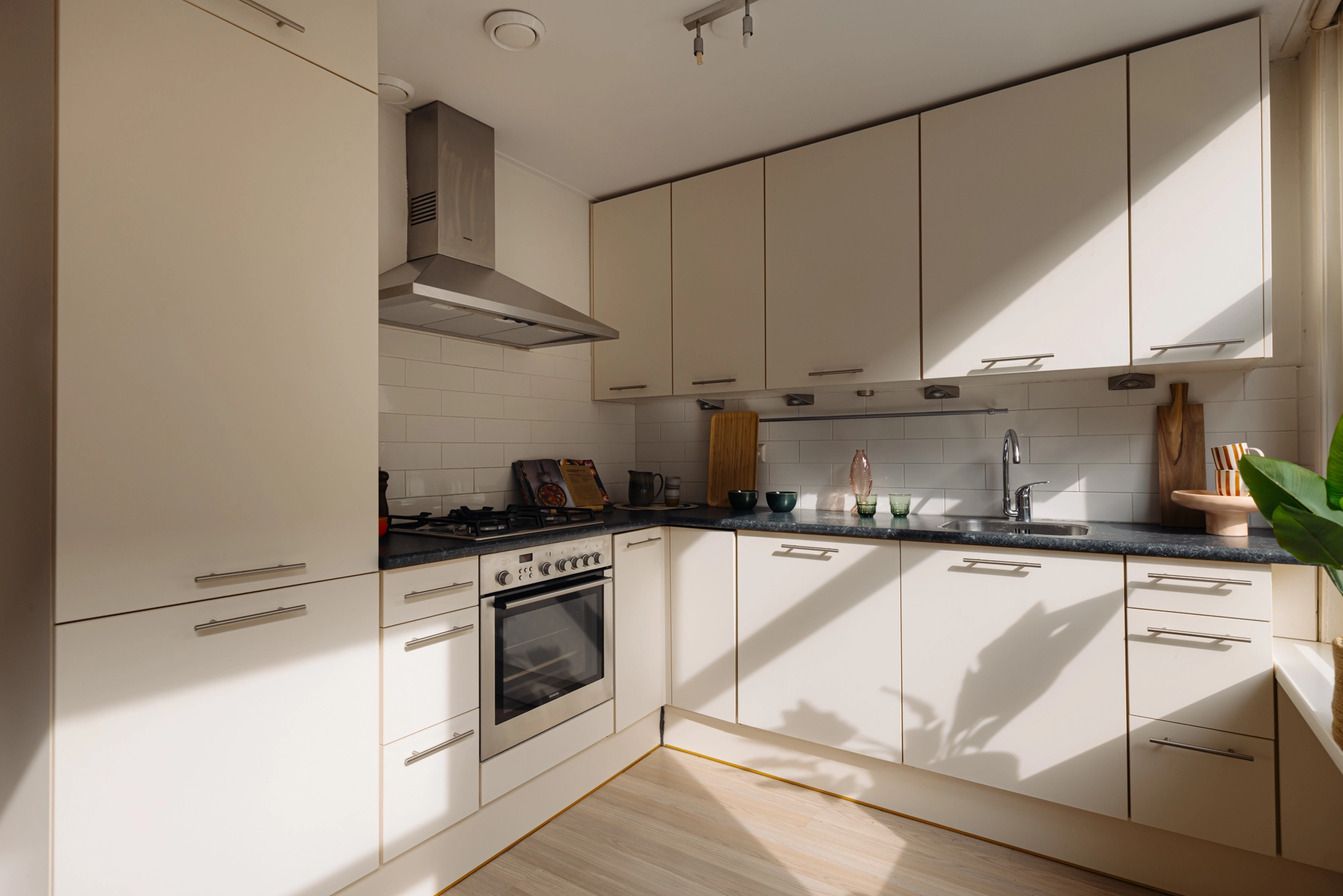
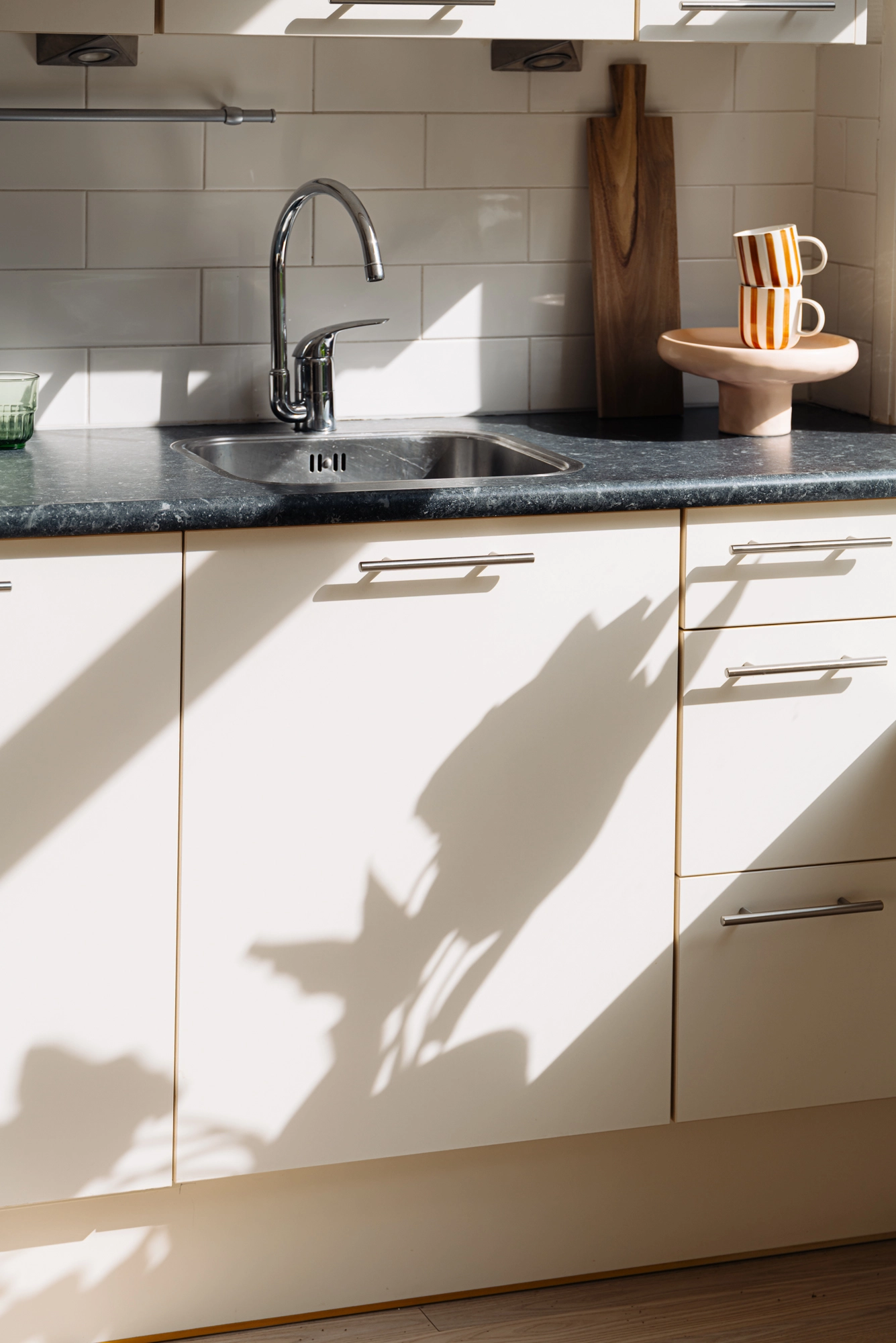
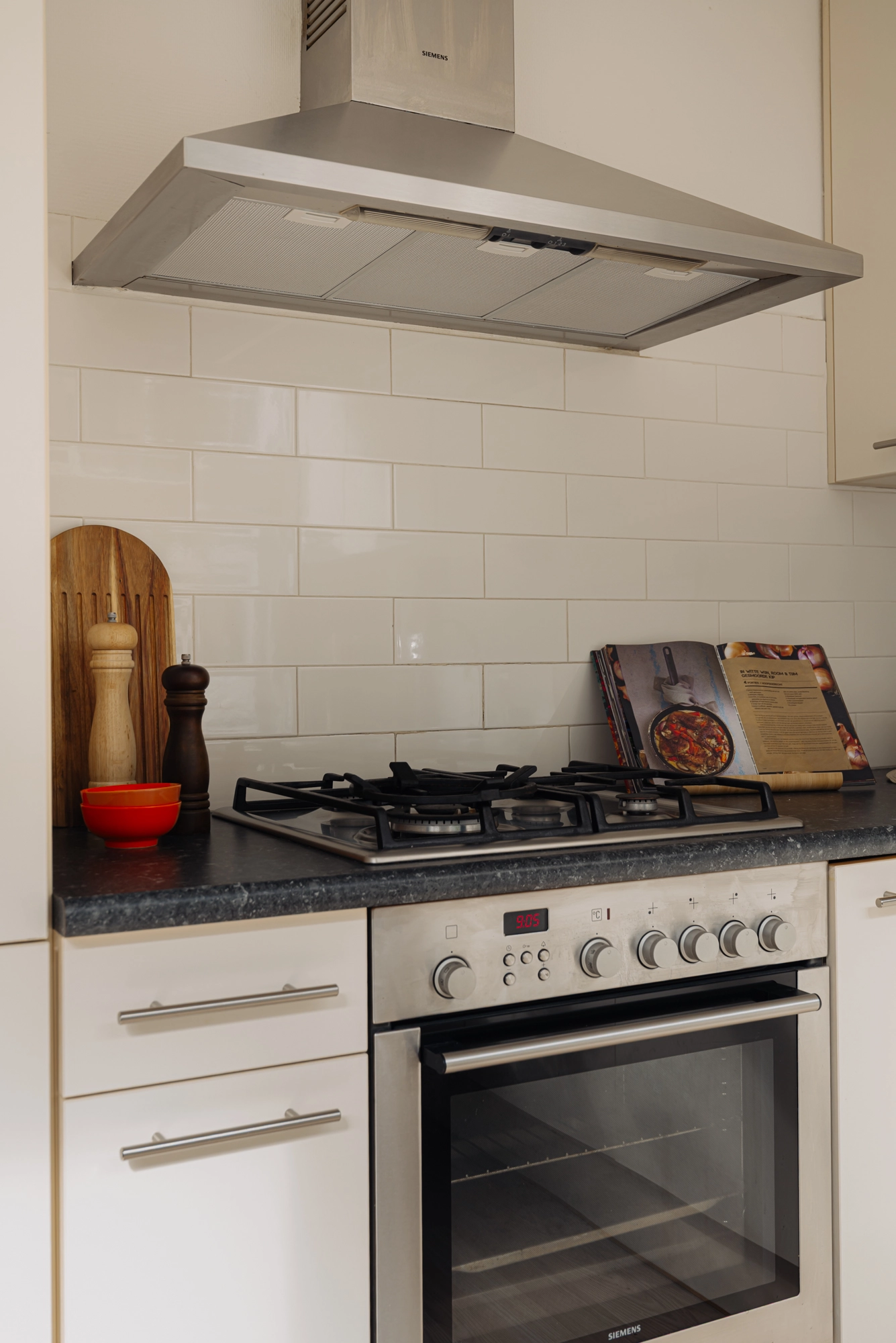
The kitchen is positioned in a corner layout at the front of the residence, overlooking the street. The cabinetry is neutral in appearance, with a bright and functional arrangement that offers ample storage in both upper and lower units. The kitchen is equipped with a range of built-in appliances, including a gas cooktop with extractor hood, an oven, a fridge-freezer combination, and a dishwasher.
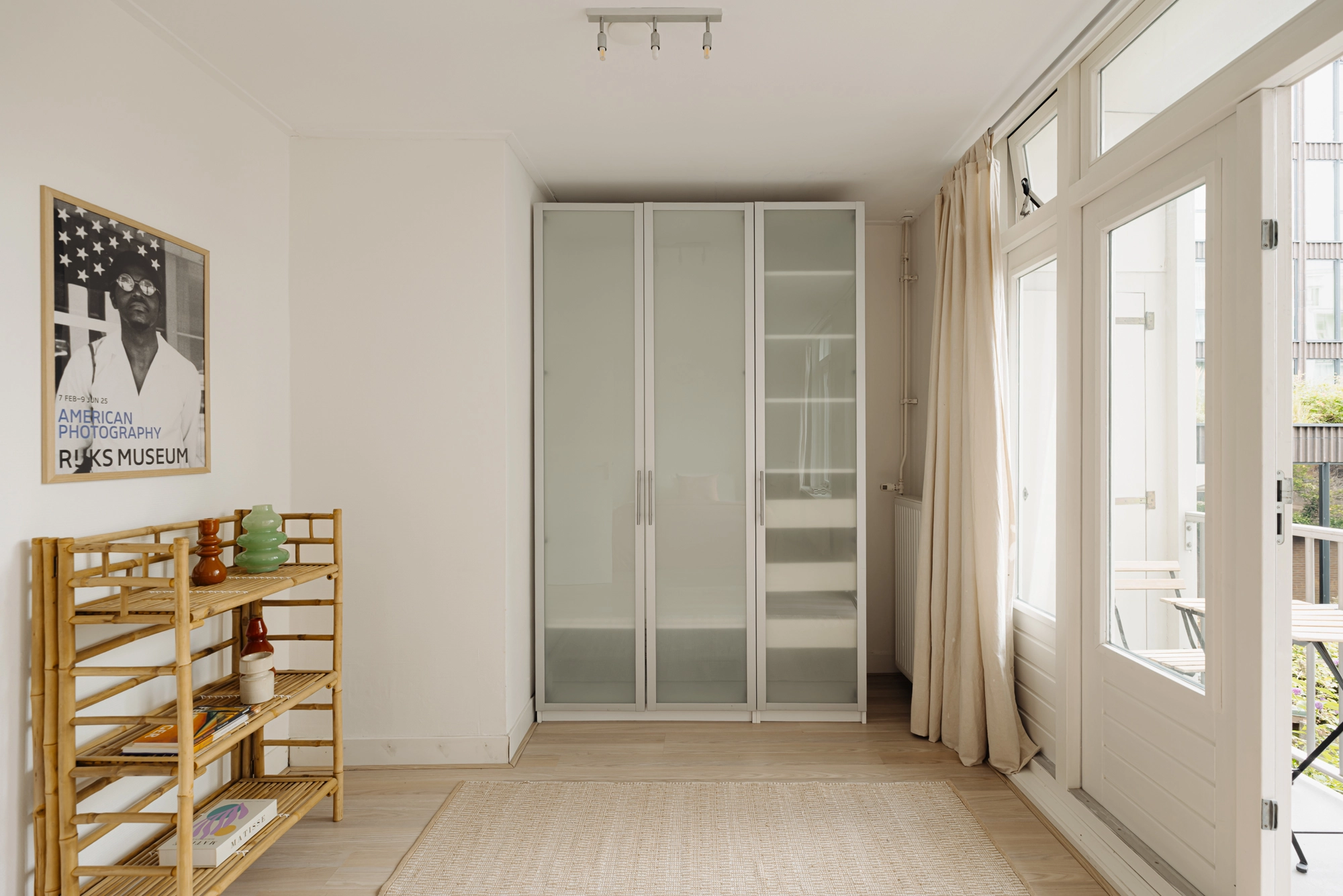
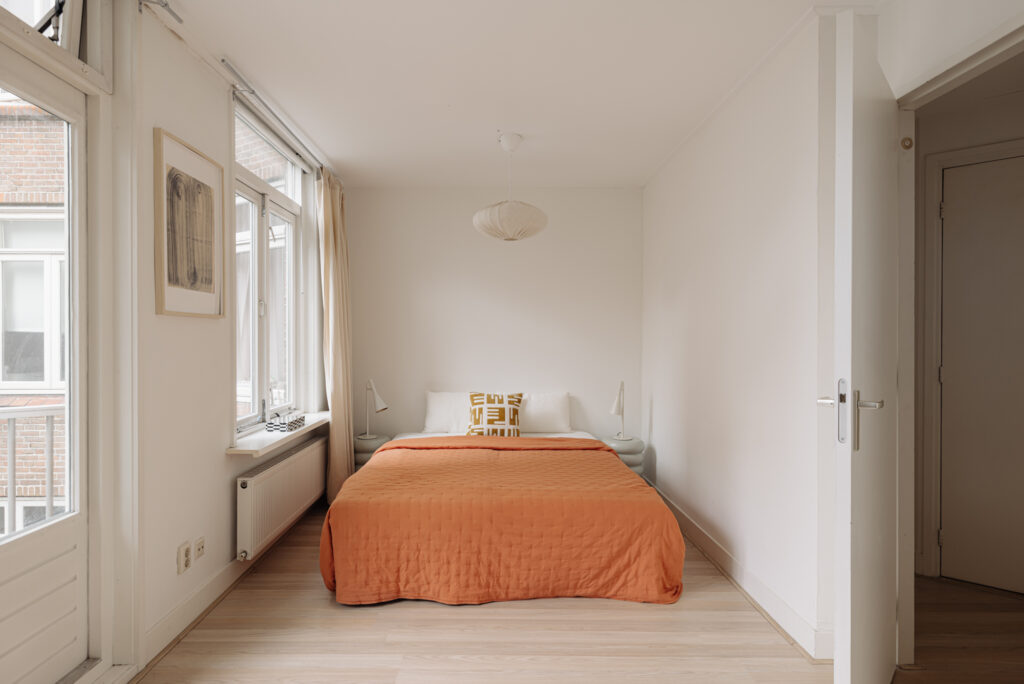
The bedroom is situated at the rear of the residence, overlooking the inner gardens. The space is quiet and well-proportioned, with room for a double bed, a home office setup, and a large wardrobe. French doors open onto the balcony, allowing light and air to flow deep into the room. The finishes are neutral, with the light flooring continued from the living area.
The alternative floorplan makes it clear: the residence offers the possibility to create a second bedroom by dividing the generous existing one.
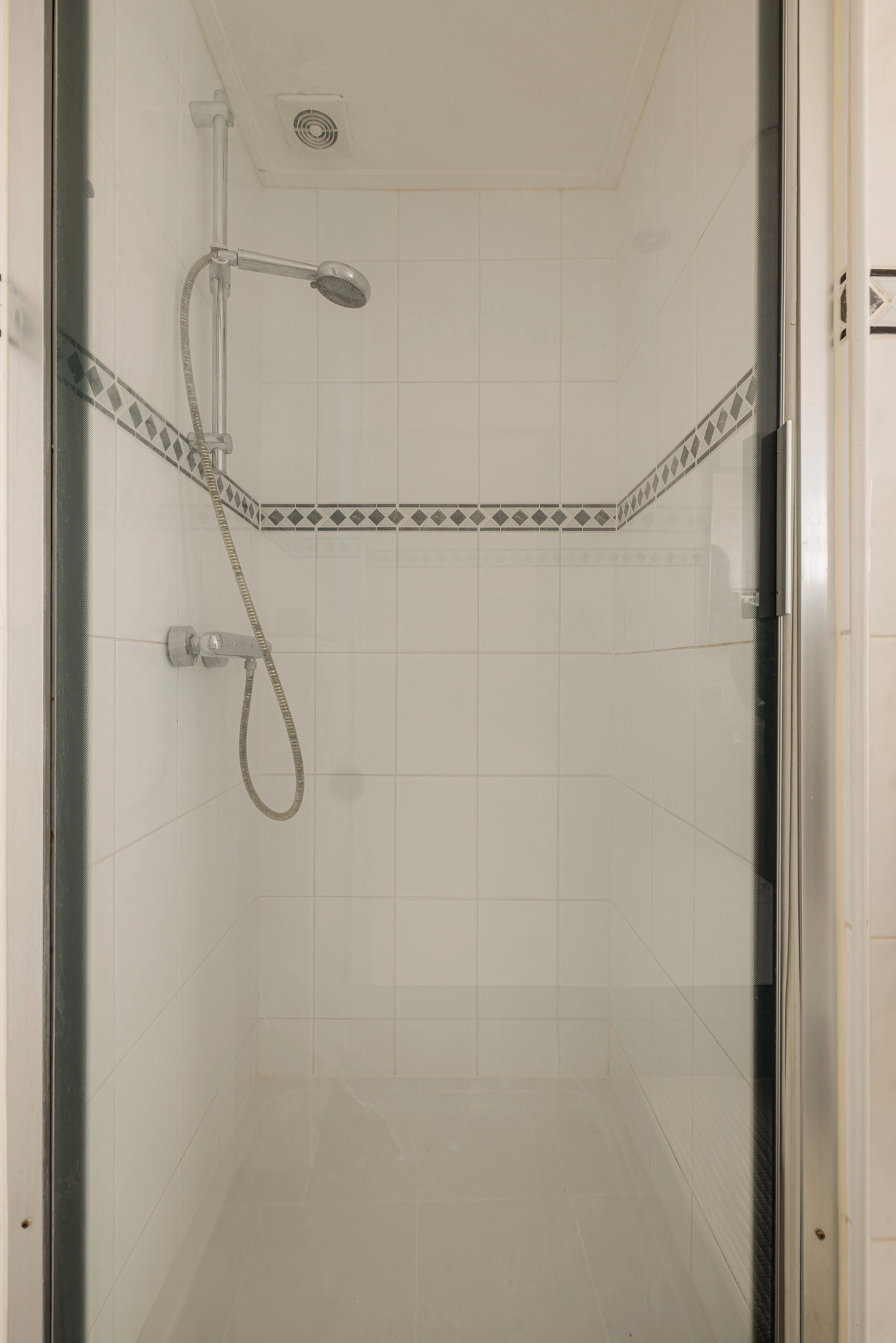
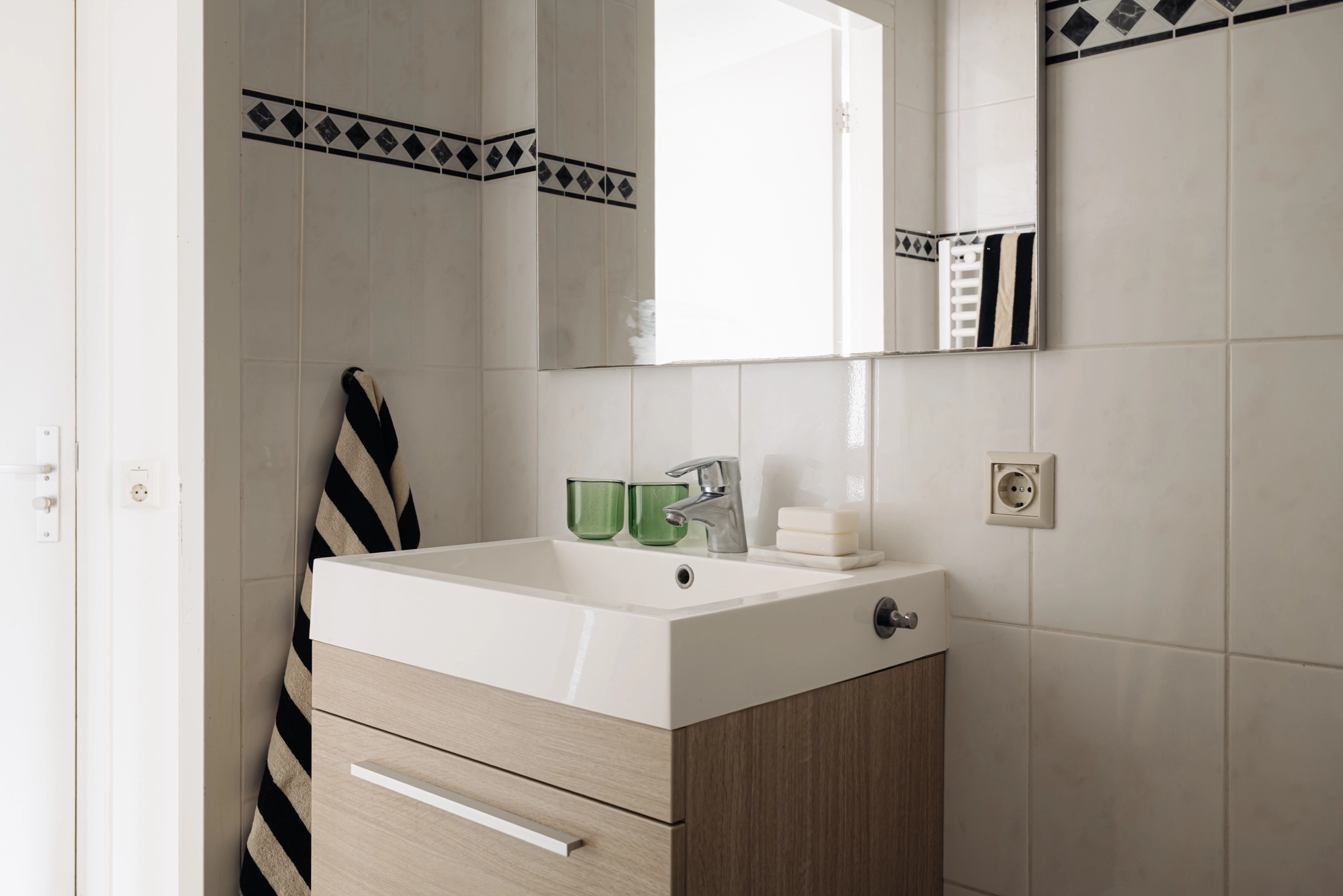
The bathroom is centrally positioned within the residence and arranged with efficiency. It features a walk-in shower with glass partition, a washbasin unit with storage, a mirrored cabinet, and a wall-mounted toilet. The layout is practical and straightforward.
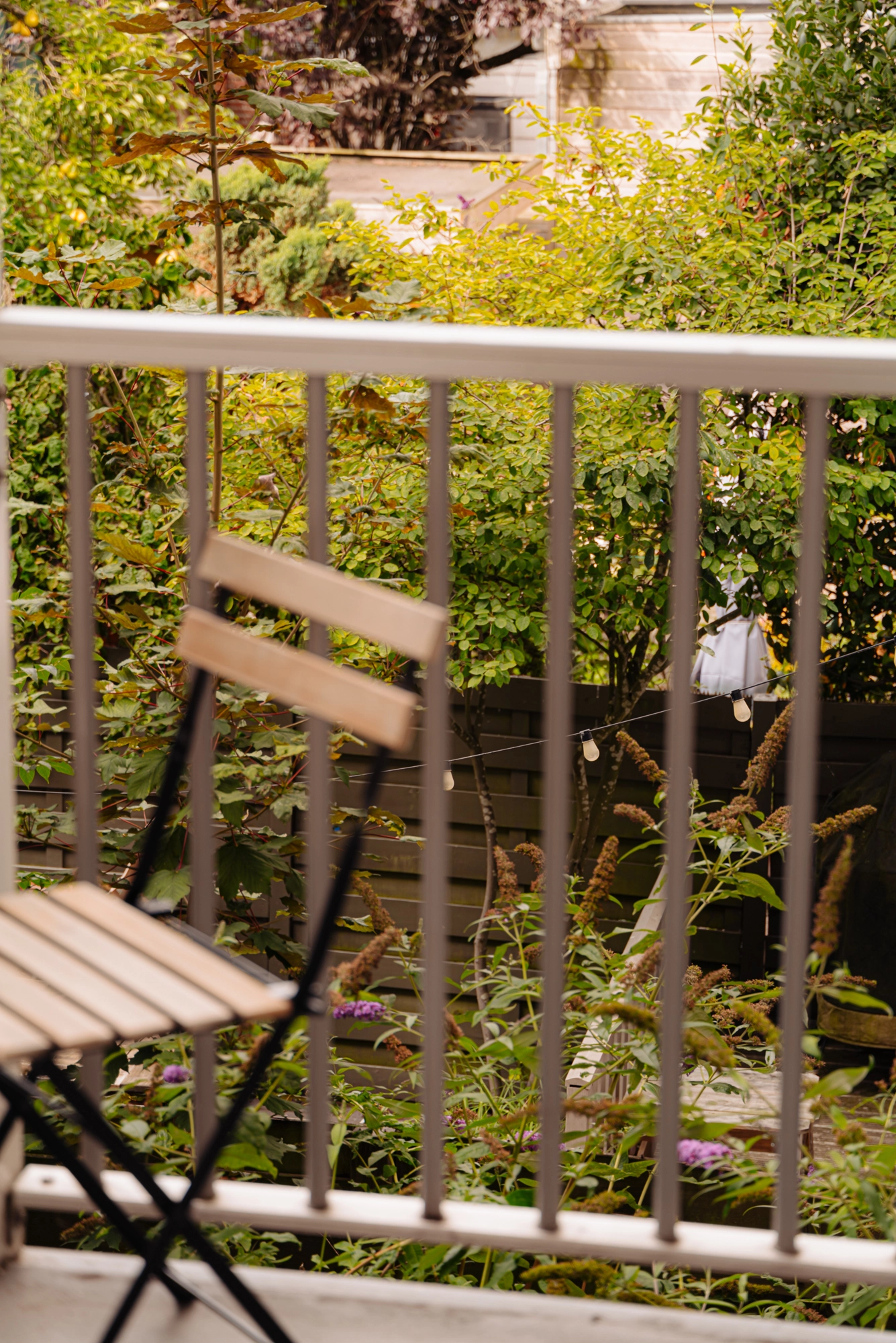
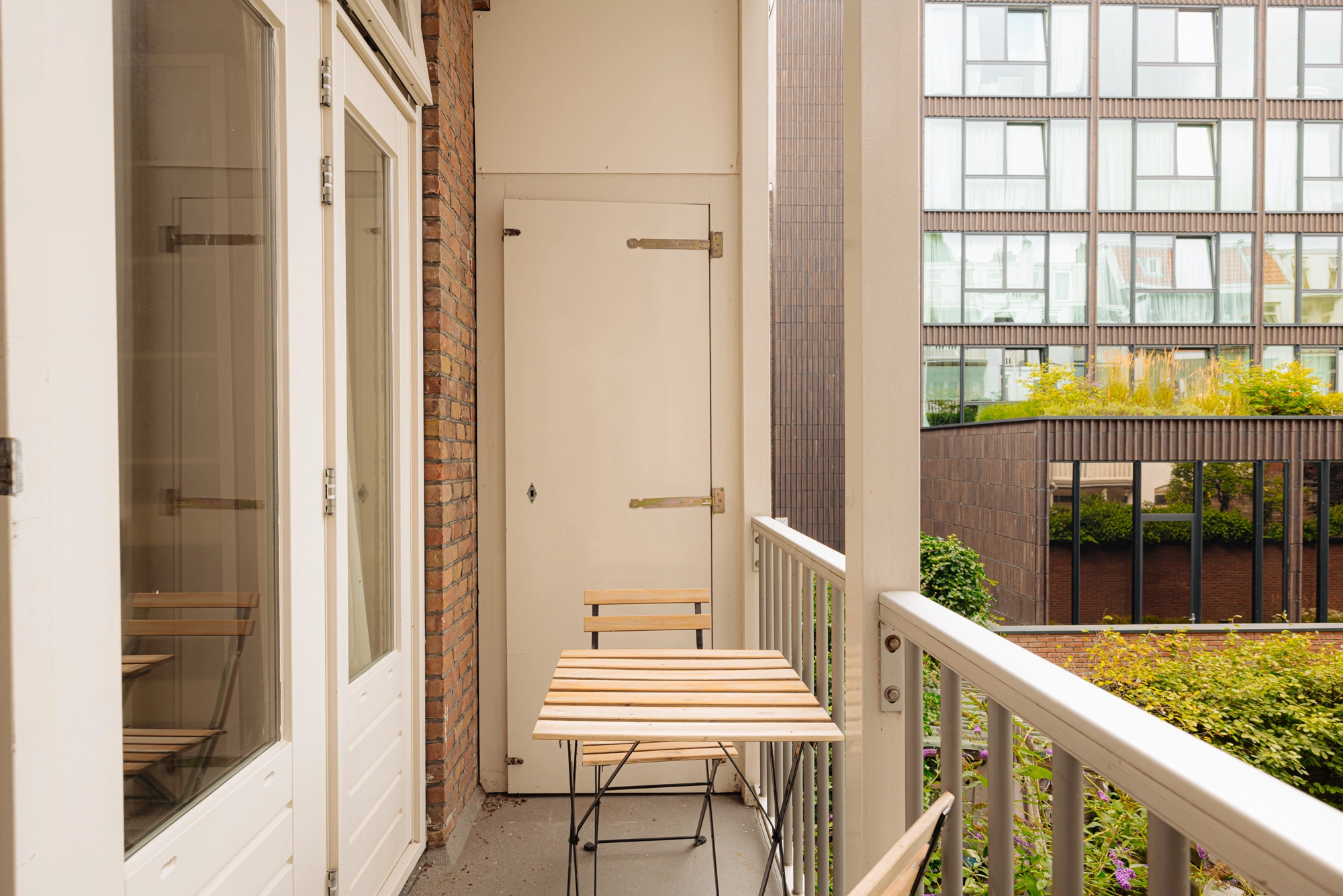
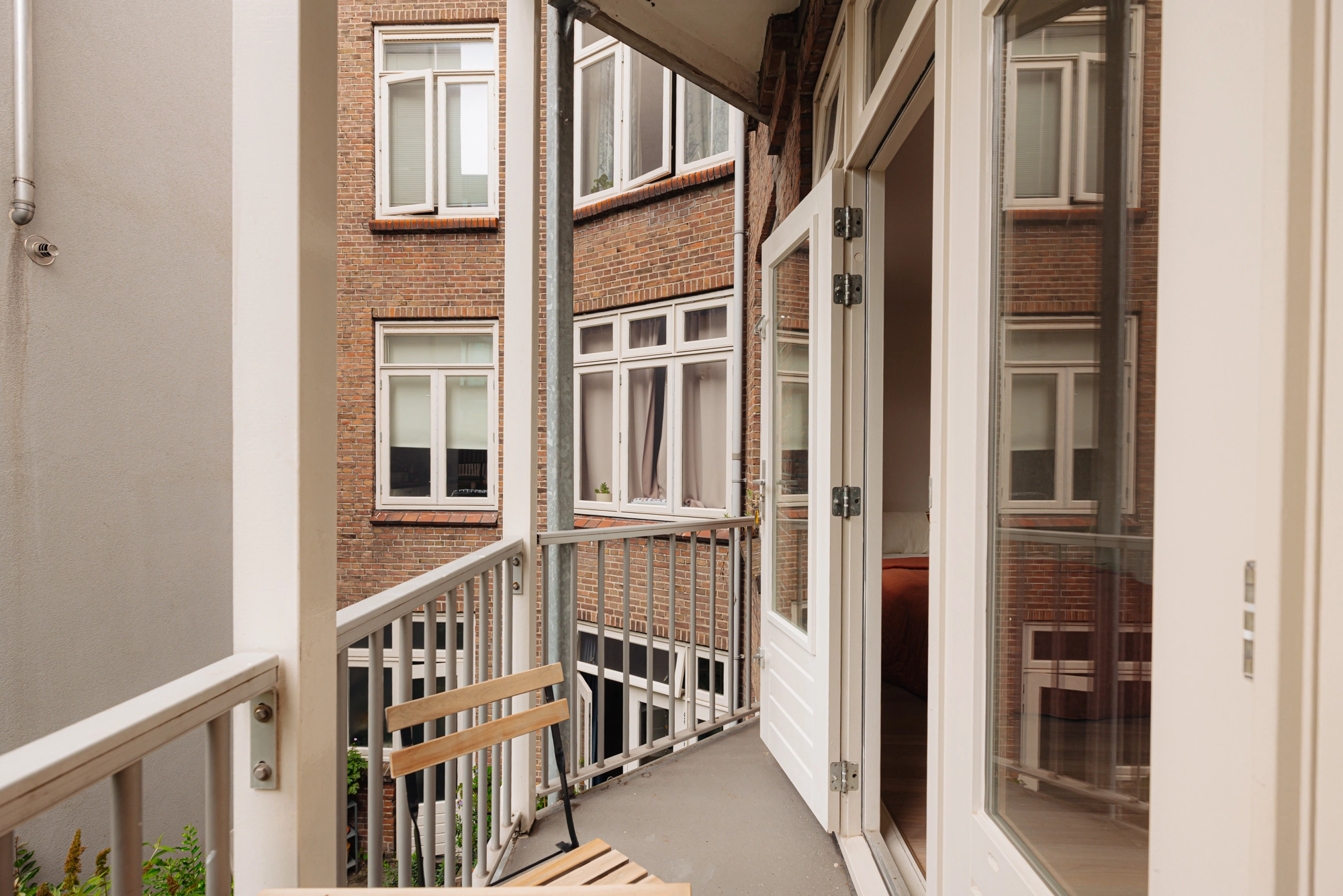
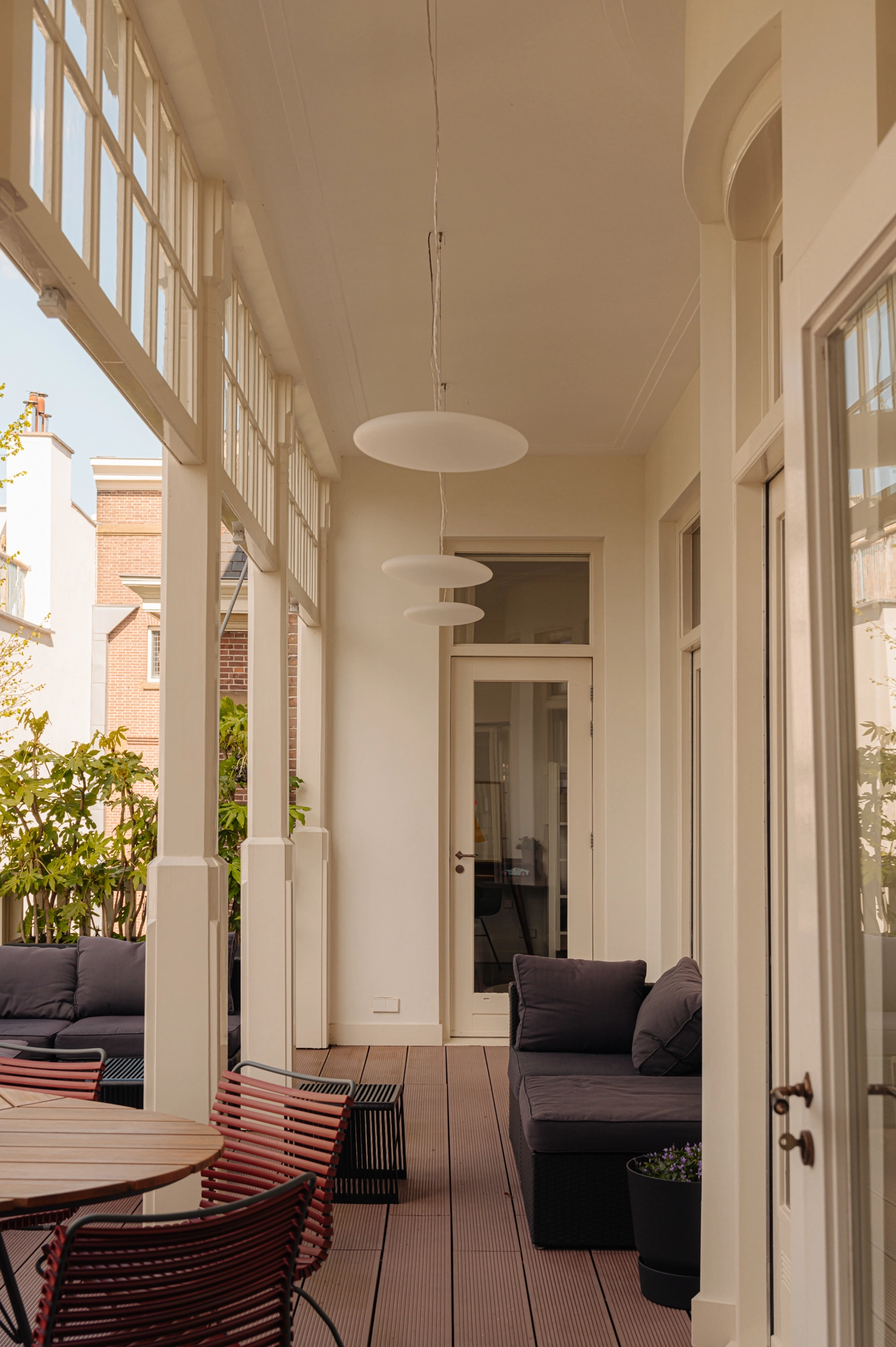
At the rear of the residence lies the balcony, accessible from the bedroom. Its south-west orientation ensures afternoon and evening sun. The view over the inner gardens brings a sense of calm and openness, right in the middle of the city. The balcony is compact yet practical, offering a place to sit outside with space for a table and two chairs. A lockable storage cupboard provides room for garden items or additional storage.
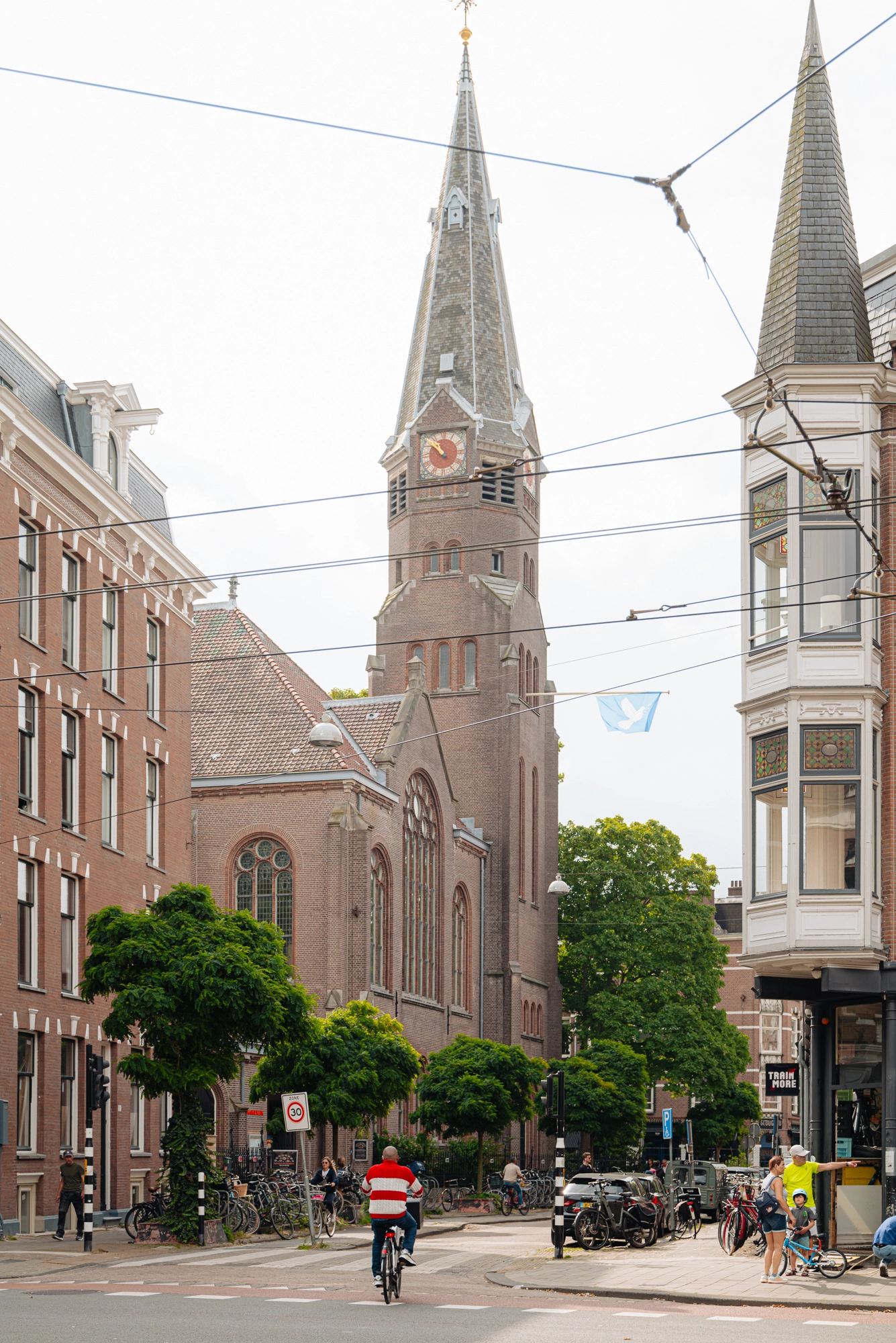
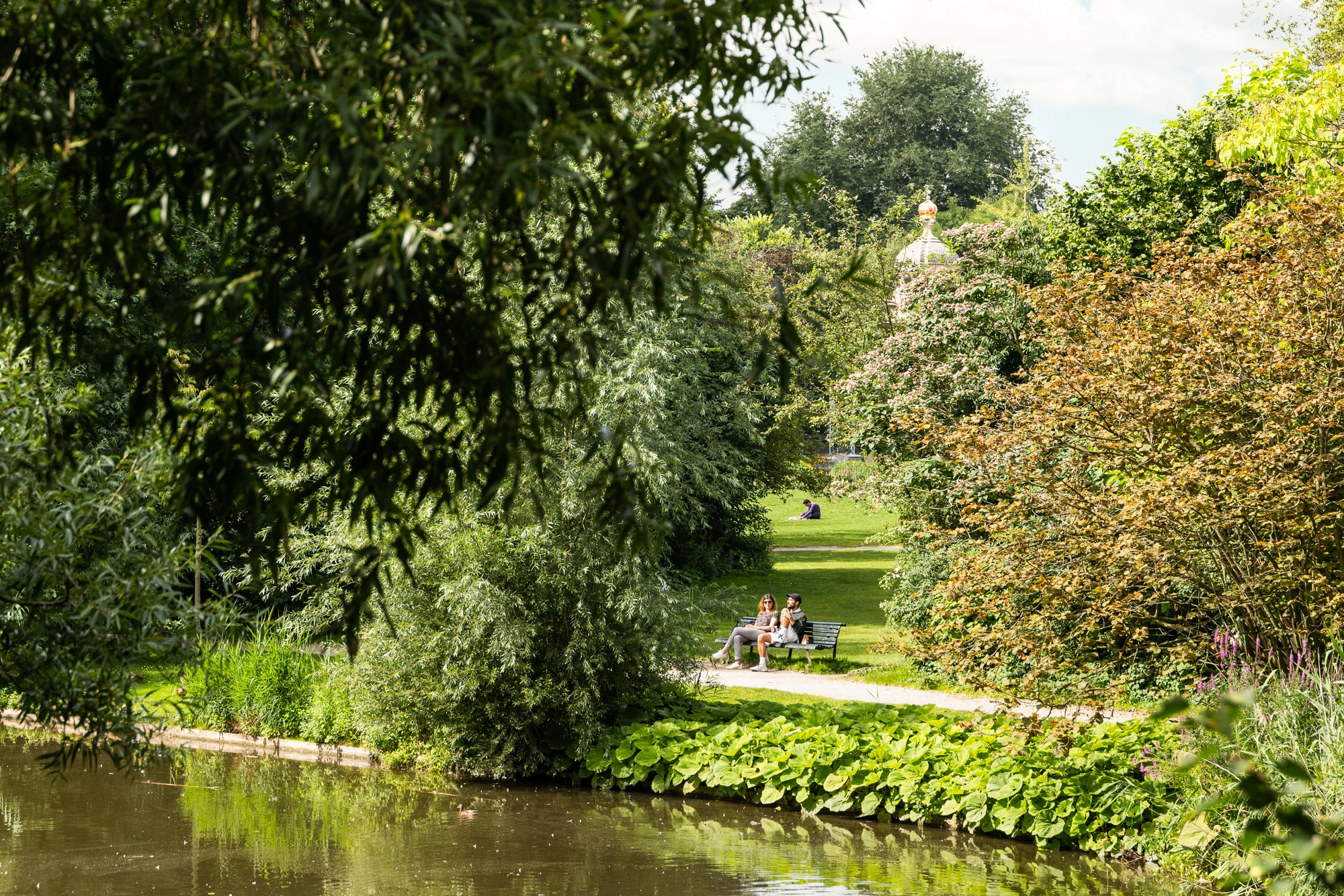
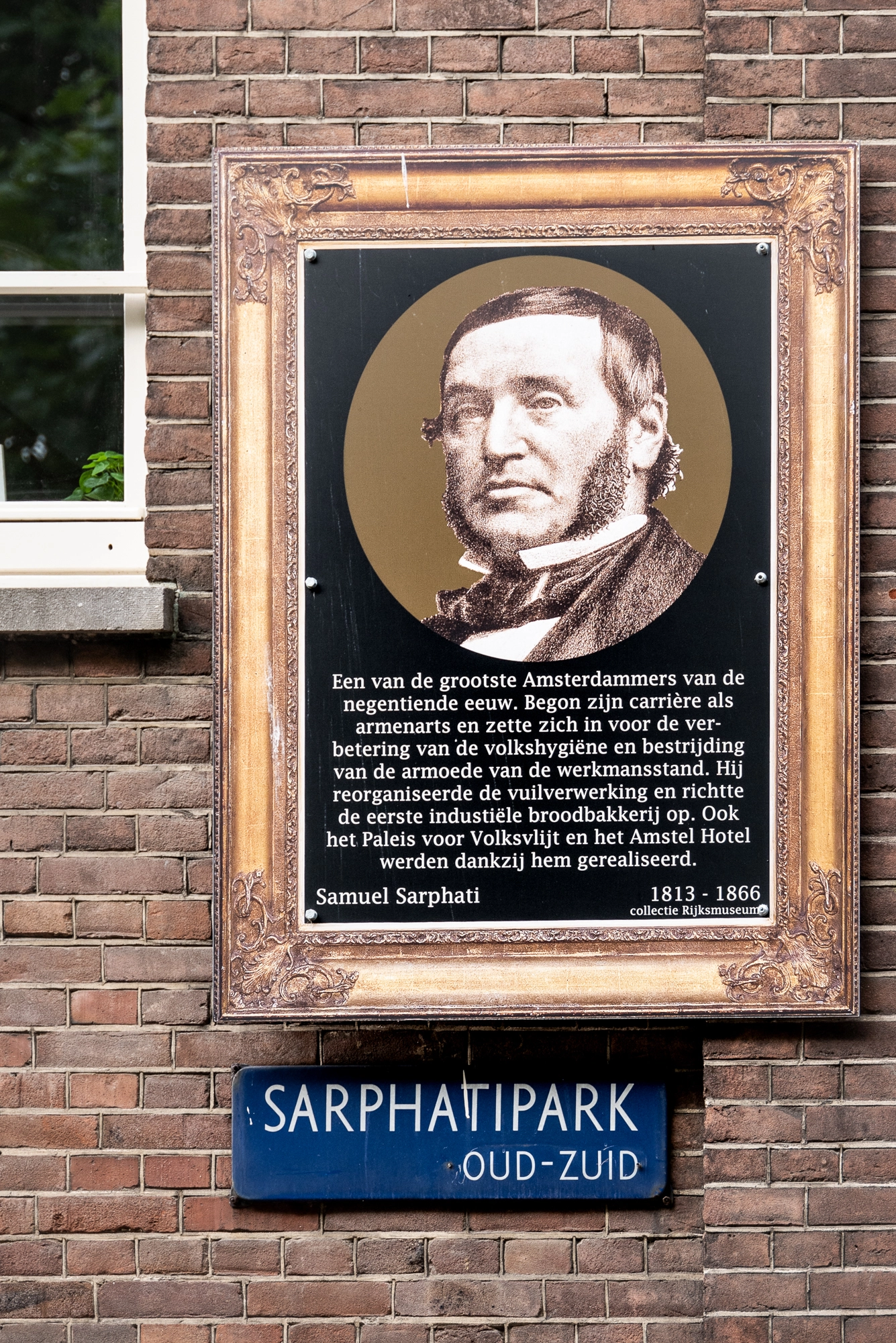
De Pijp was developed at the end of the nineteenth century to provide housing for newcomers who came to the capital in search of work. In 1886, the father of Freddy Heineken opened the Heineken Brewery here. The first workers’ houses, built around the Albert Cuypstraat, were constructed quickly and affordably. Later, towards the Diamantbuurt, dwellings in the Amsterdam School style designed by Berlage were added. It is said that the neighborhood owes its name to the long, straight streets that resemble the shape of a pipe.
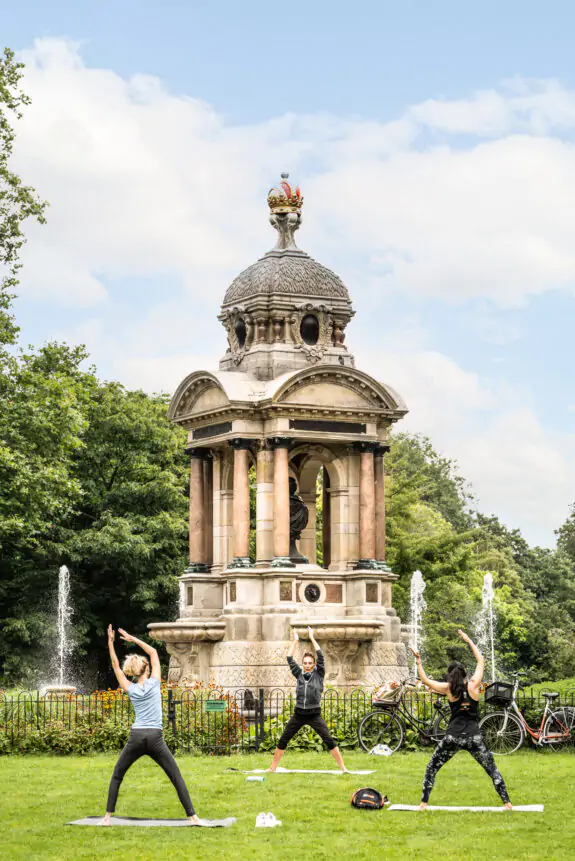
The Albert Cuyp Market and Sarphatipark define much of the dynamism of De Pijp. Artists and writers such as Piet Mondriaan, Carel Willink, and Gerard Reve once lived and worked here. The lively, mixed population brought many cafés and eateries to the area. Today, the neighborhood is known as the Quartier Latin of Amsterdam, still vibrant with a wide variety of restaurants such as Brut de Mer, Yamazato, Arles, the Peruvian NAZKA, and authentic bistros such as Petit Caron.
Accessibility
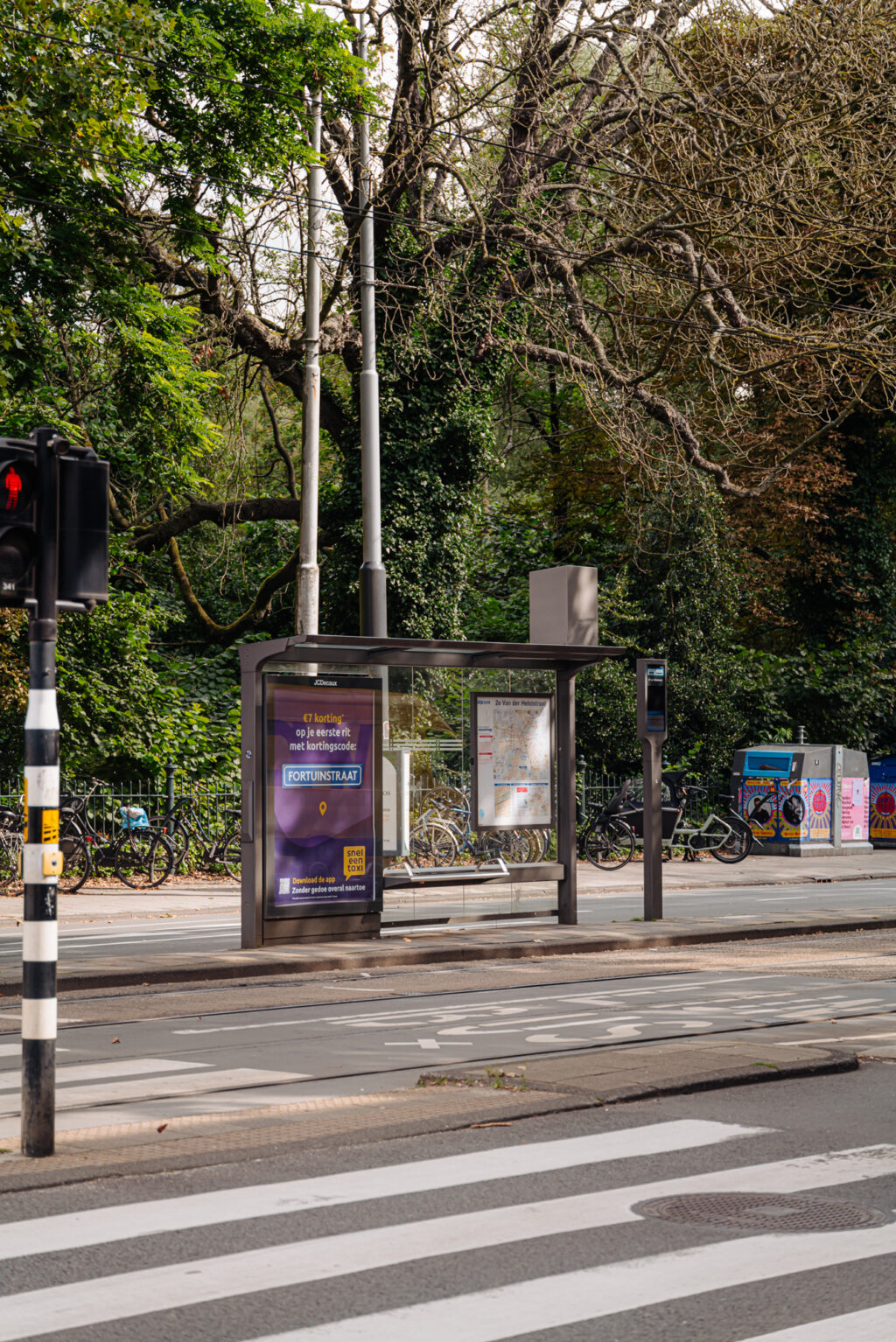
The location in De Pijp ensures excellent accessibility, whether by bicycle, public transport, or car.
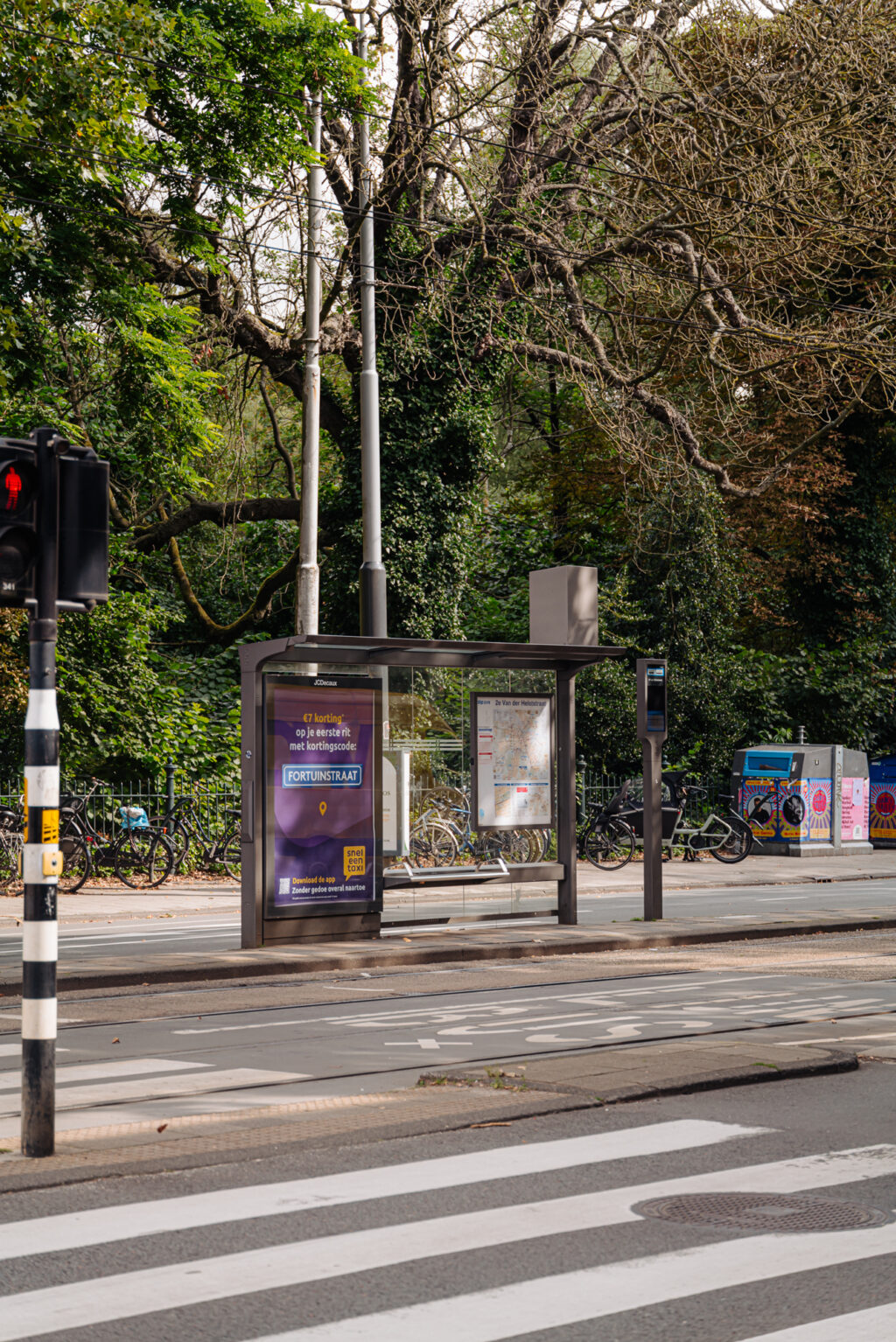
Within walking distance are both De Pijp metro station and several tram lines (including 3, 4, 12, and 24), with direct connections to Central Station, Amstel Station, and Zuid. The North/South metro line brings you within minutes to the city center or Station Zuid, ideal for those commuting daily or working outside the city.
The residence is also well connected by car. From the Van Woustraat or Stadhouderskade, the A10 ring road can be reached within ten minutes. Cyclists benefit from short routes to the Museumplein, the Vondelpark, and the Zuidas.
Parking
Parking is available via a permit system on public roads (permit area Zuid 3.2 De Pijp Zuid). With a parking permit for this area, parking is allowed in Zuid-3 and Zuid-4. A resident’s permit costs €192.81 for six months. At present, the waiting time for this permit area is six months. A second parking permit is not available in this area. (Source: Municipality of Amsterdam, September 2025).
1073 TB Amsterdam
Wijmpje Beukers
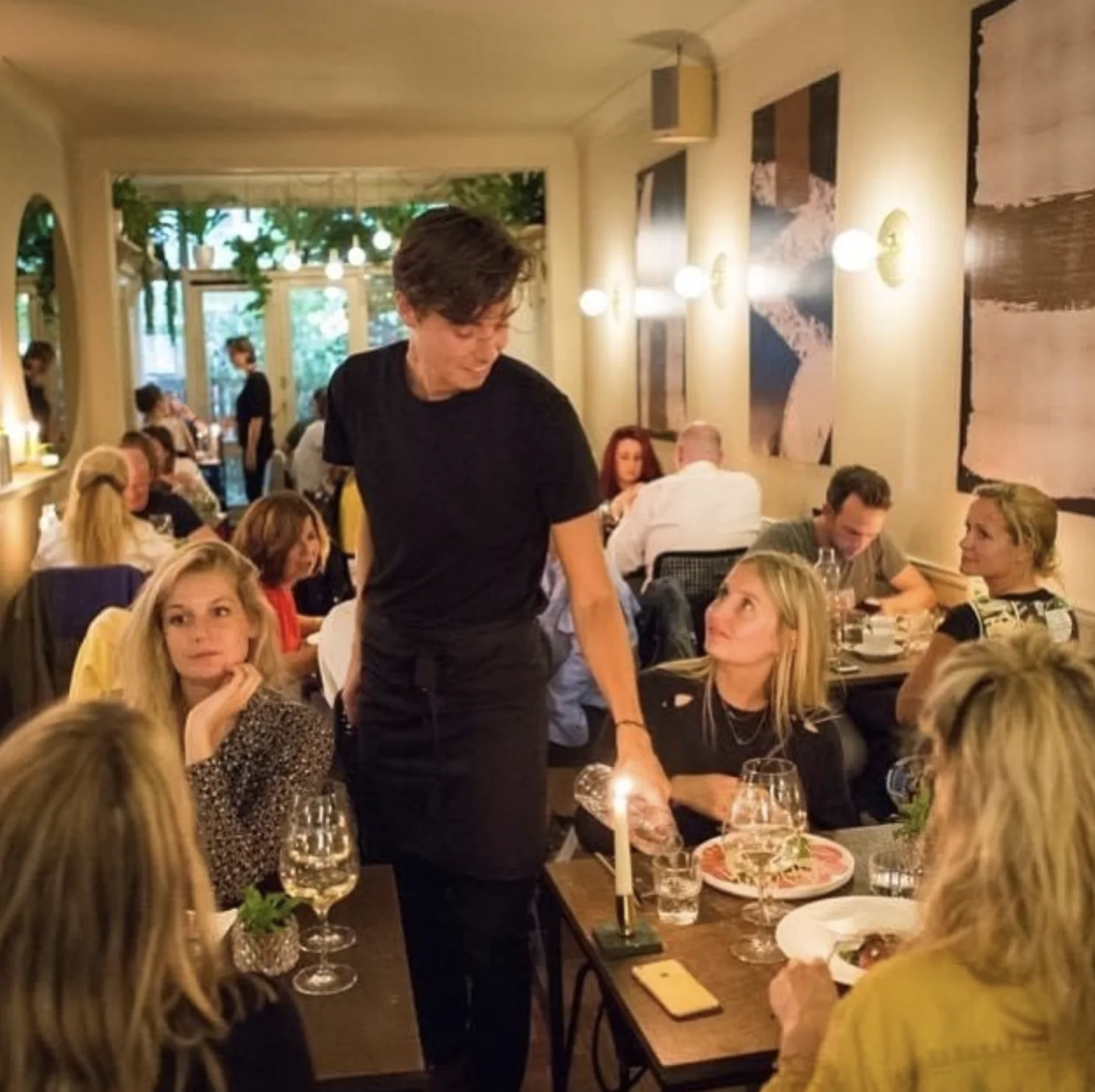
Midden in de Pijp, gelegen in een monumentaal pand, is eetcafé Wijmpje Beukers gevestigd. Met een knus terras en een gezellig interieur kan je hier met vrienden de dag doorspreken, een borrel drinken of lekker dineren. Het menu staat vol met gerechten gemaakt van verse en lokale producten en alles is in de eigen keuken klaargemaakt. De eigenaren zijn zelf dagelijks in de zaak te vinden en doen niets liever dan het iedereen naar de zin maken.
1073 HB Amsterdam
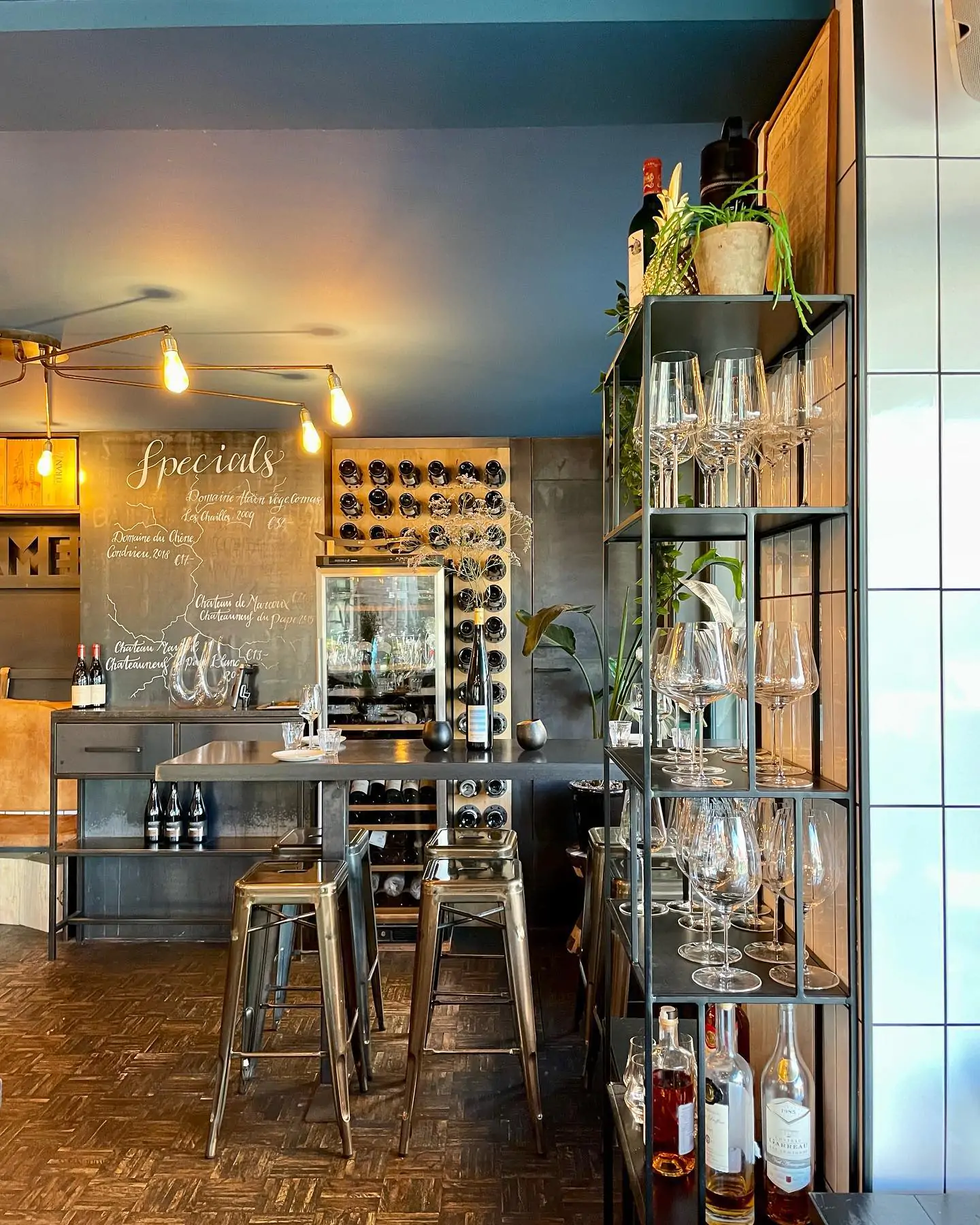
Wijnbar paskamer
In het pand van een voormalige slagerij (dat zie je nog aan de witte tegels) in een rustige straat in de Pijp vind je Wijnbar Paskamer. Met allerlei bijzondere wijnen die zowel per glas als per fles te bestellen zijn is dit een fijne plek om wijn te drinken én om lekker te eten. Eigenaar Wouter Aalst is zo gepassioneerd over wijn dat hij zelfs een eigen wijnschool opstartte, de Amsterdam Wine Academy. De wijnkaart verandert regelmatig en er is voor ieder wat wils met ongeveer 150 wijnen, van natuurwijnen tot klassiek.
1073 AR Amsterdam
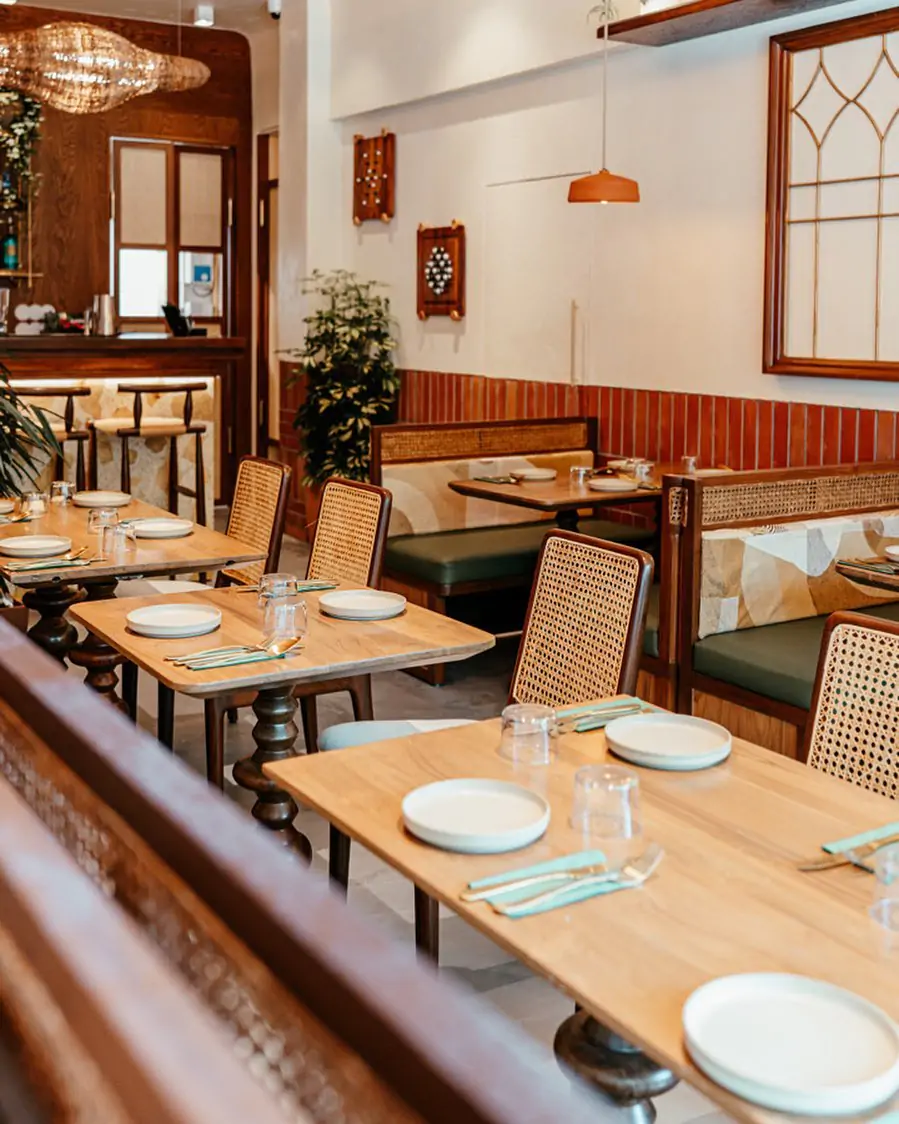
Miri Mary
Bij Miri Mary kun je genieten van heerlijke kruidige gerechten uit de Indiase keuken, gepresenteerd in een moderne tapasstijl, met een glimlach van gastvrouw Foram Kamdar. Naast smaakvolle cocktails en uitstekende koffie biedt Miri Mary een unieke culinaire ervaring waar Indiase kruiden samenkomen met westerse invloeden. Deelgerechten staan centraal, zodat je alles kunt proeven. Als je moeite hebt met kiezen, laat de chef dan gewoon iets verrassends voor je bereiden.
1073 AE Amsterdam
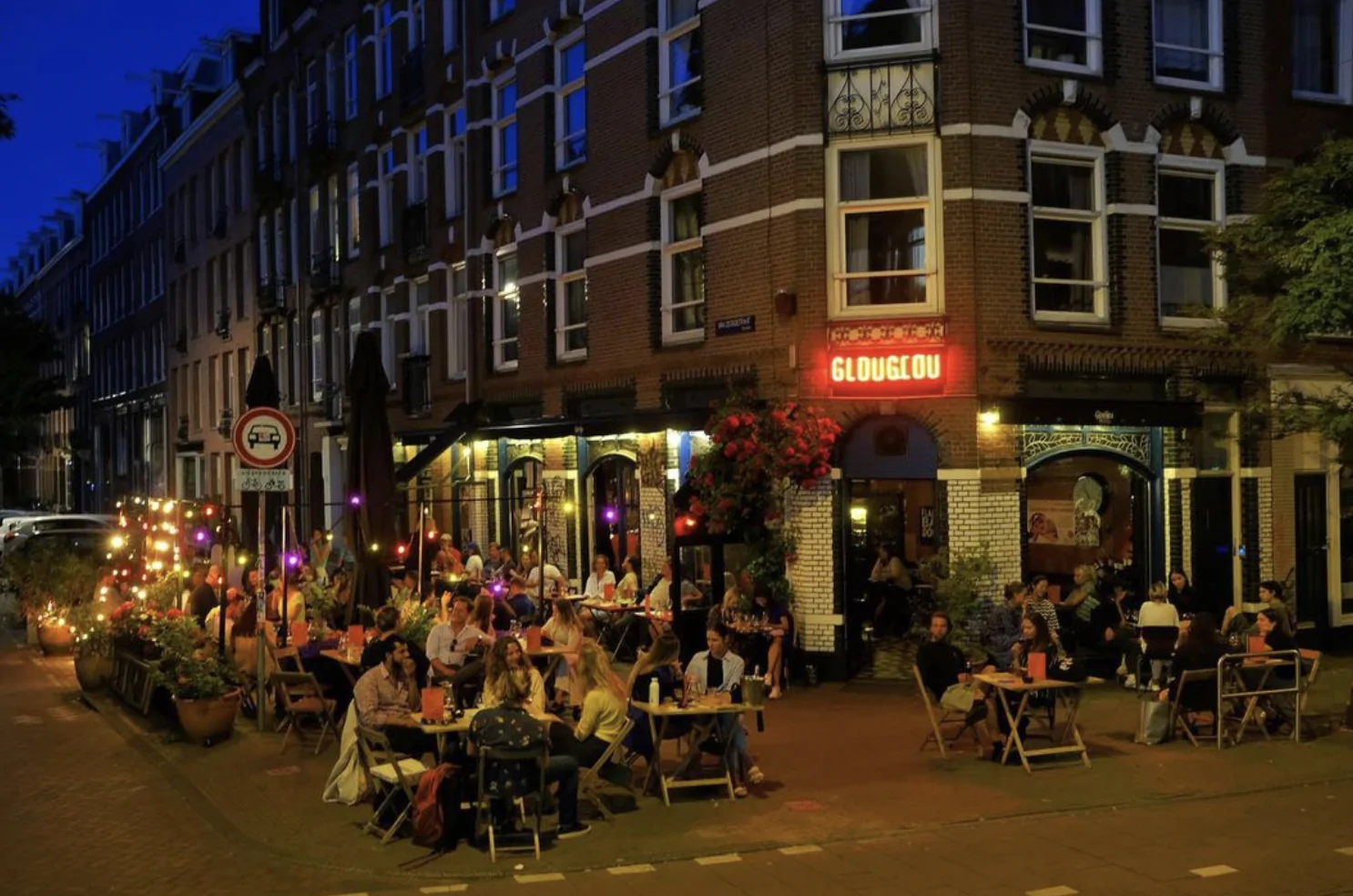
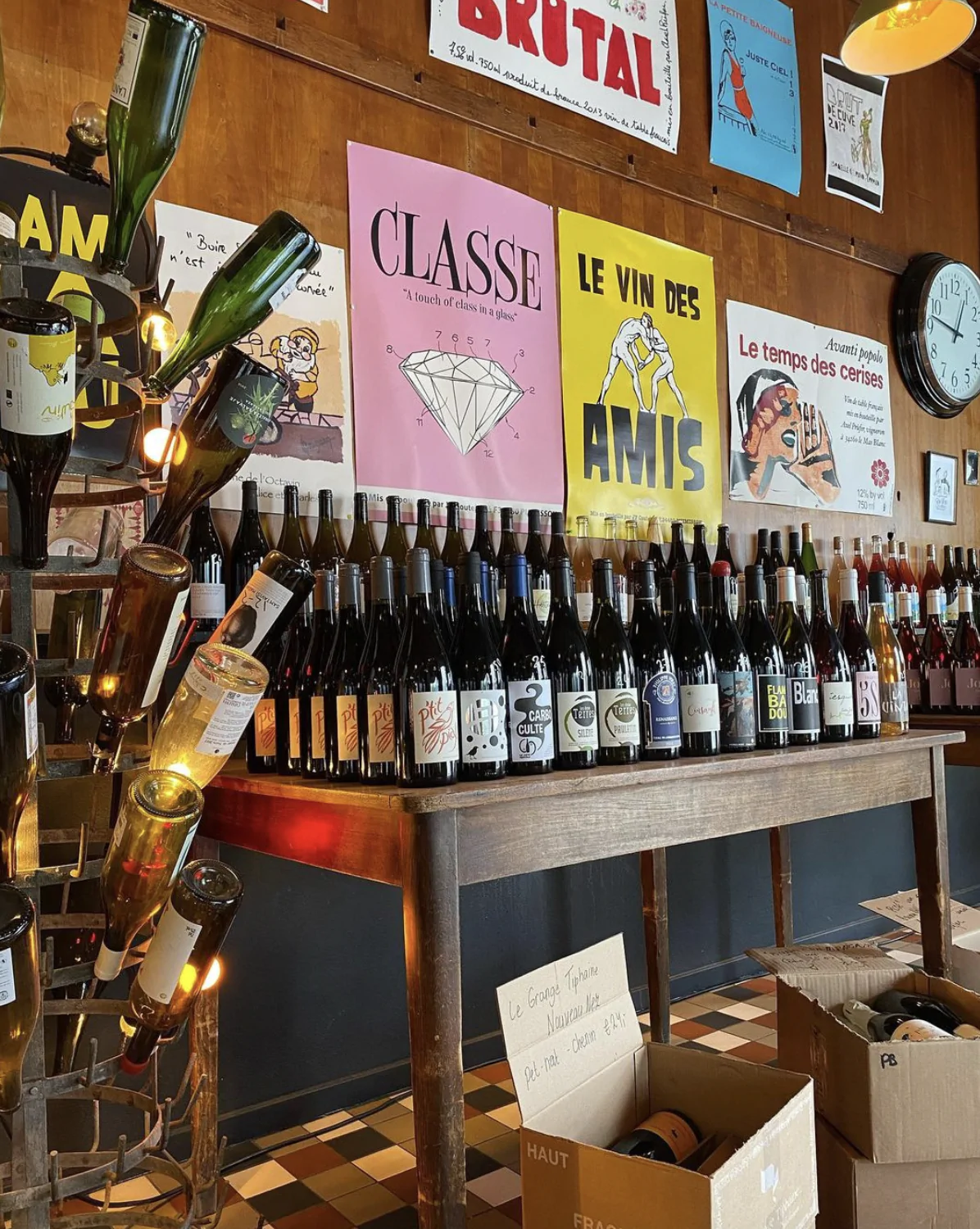
Glouglou
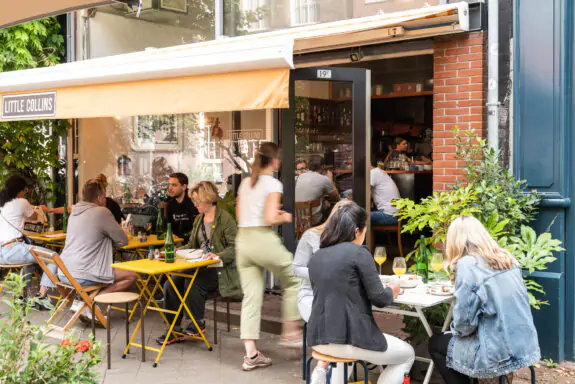
Wie van natuurlijke en biologische wijnen houdt is helemaal zijn plek bij Glouglou. Hier serveren ze namelijk alleen maar natuurlijke wijnen en bijpassende borrelplanken. Heb je je nieuwe favoriete wijn ontdekt bij Glouglou? Geen probleem, in de shop kun je namelijk de hele fles kopen om thuis lekker na te genieten. De sfeer is heel gezellig binnen en ’s zomers kan je lekker mensen kijken in de drukke Pijp vanaf het terras dat midden op straat staat.
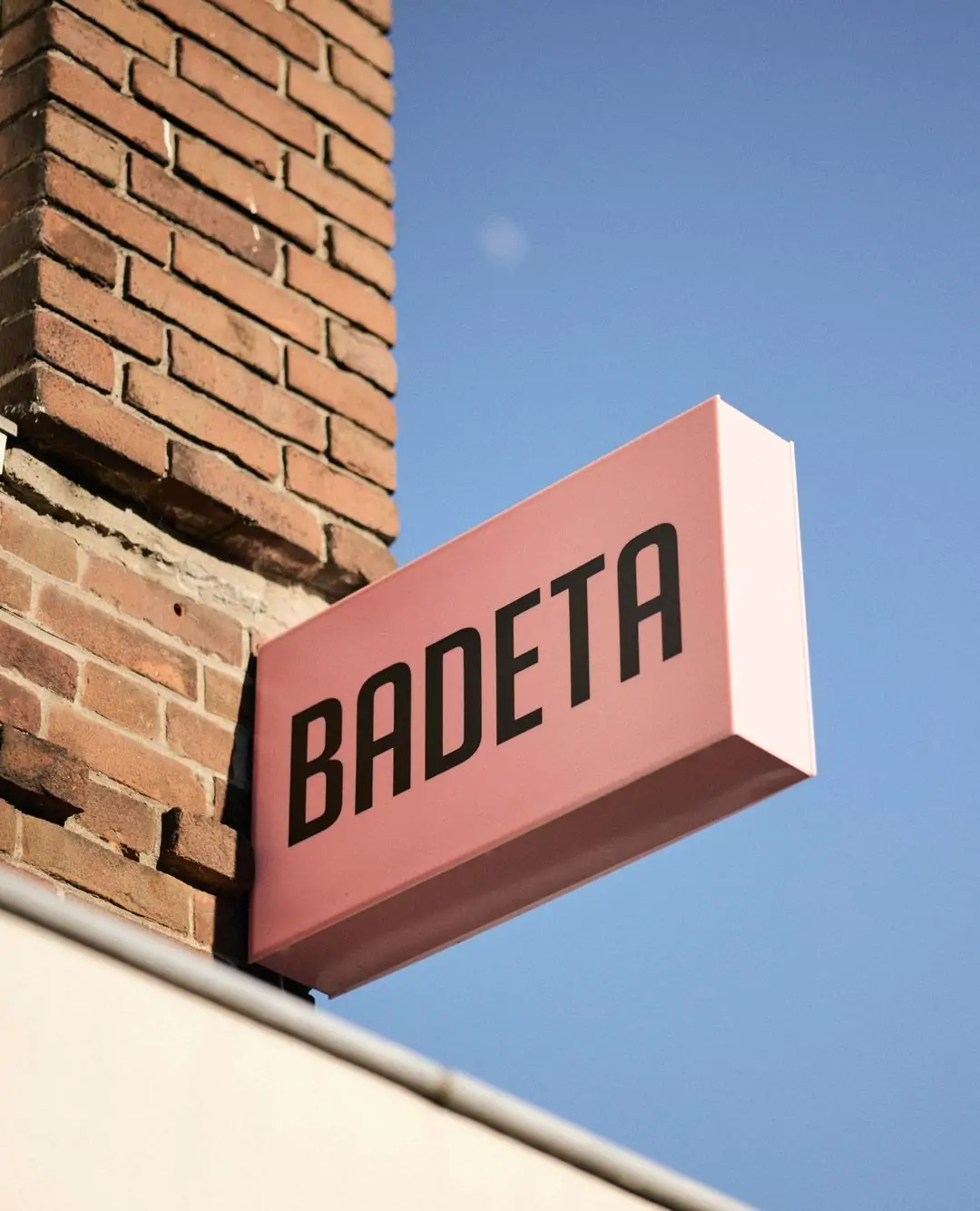
1072 PD Amsterdam
Badeta
Badeta begint langzaamaan naam te maken in de stad met ondertussen twee locaties. Het begon in De Pijp en heeft nu ook een vestiging in de Watergraafsmeer. De twee oprichters hebben de missie om in elk stadsdeel een locatie te openen. Deze koffiebranderij verkoopt heerlijke koffie met hun eigen melanges en diverse huisgemaakte lekkernijen. Duurzame koffie staat centraal, afkomstig van kleinschalige boeren met milieuvriendelijke boerderijen en goede arbeidsomstandigheden.
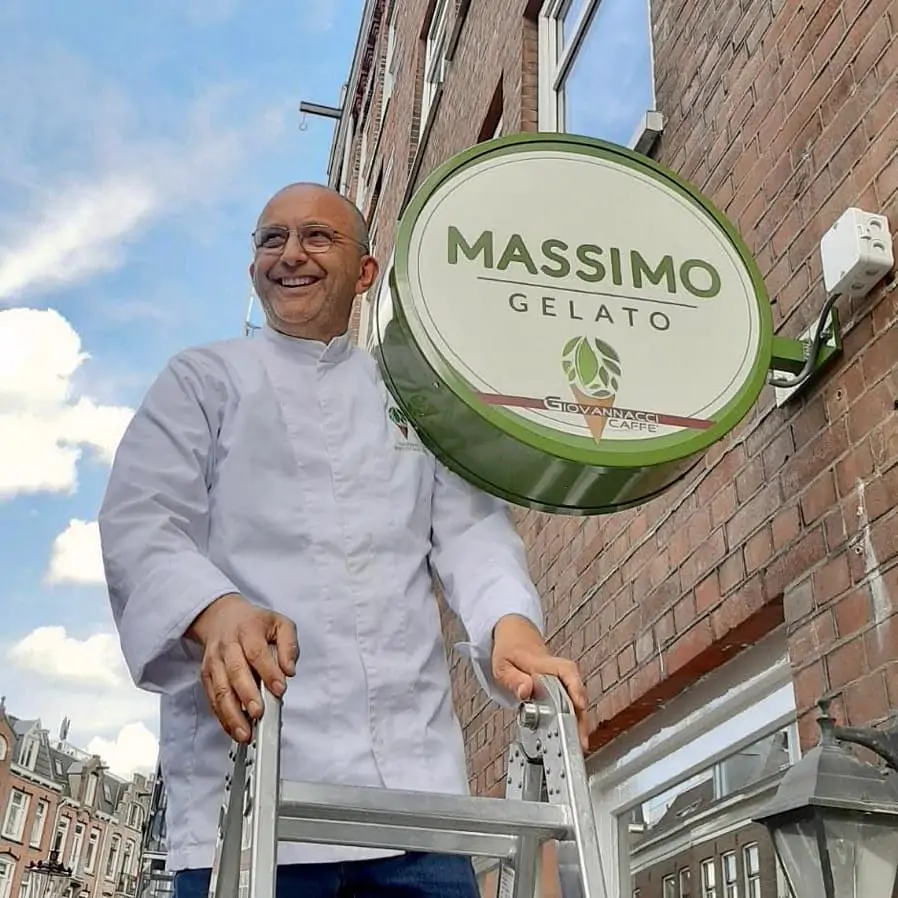
1072 SW Amsterdam
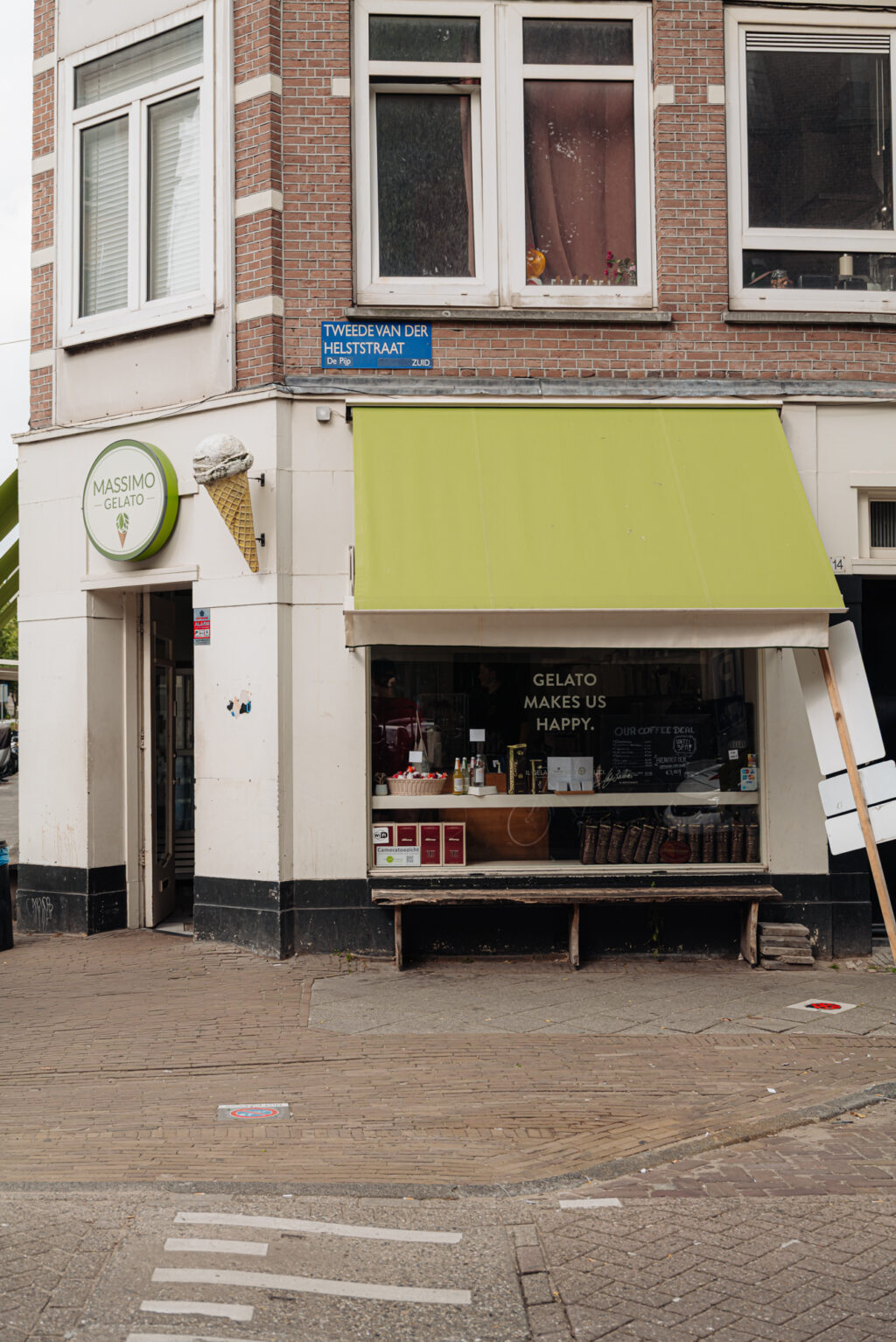
Massimo Gelato
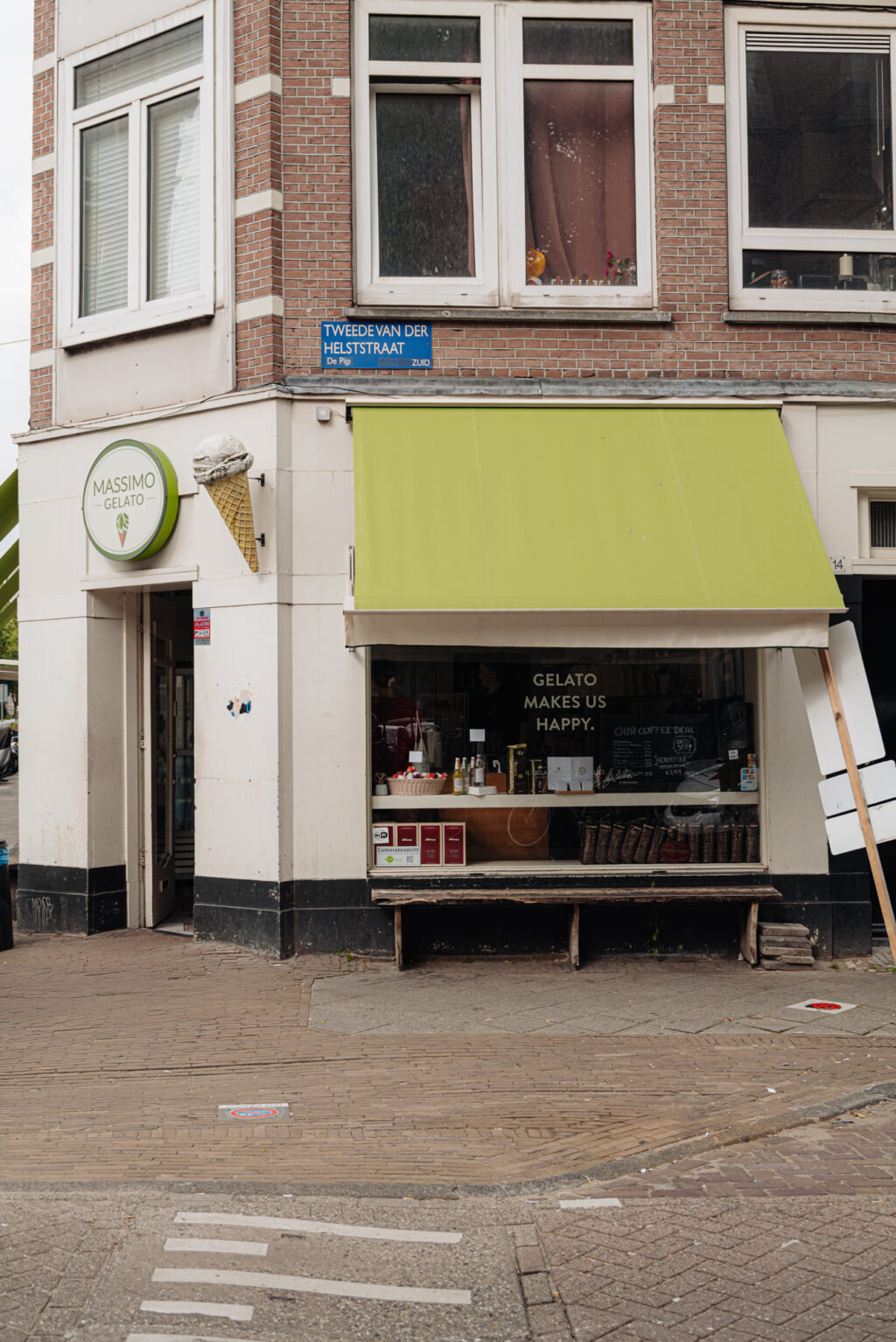
Bij Massimo kan je het hele jaar door terecht voor overheerlijke, authentieke Italiaanse versnaperingen. Massimo staat onder de Amsterdammers vooral bekend om het bijzondere, smaakvolle ijs. De keuze in smaak is ruim en het personeel denkt graag met je mee (als je geluk hebt, laten ze je proeven!). Ook kan je er terecht voor heerlijke koffie. Er zijn maar weinig plekken die tippen aan Massimo. Daarnaast is het interieur overzichtelijk en verwelkomend. Af en toe moet je er een tijdje in de rij voor over hebben, maar dan heb je ook wat
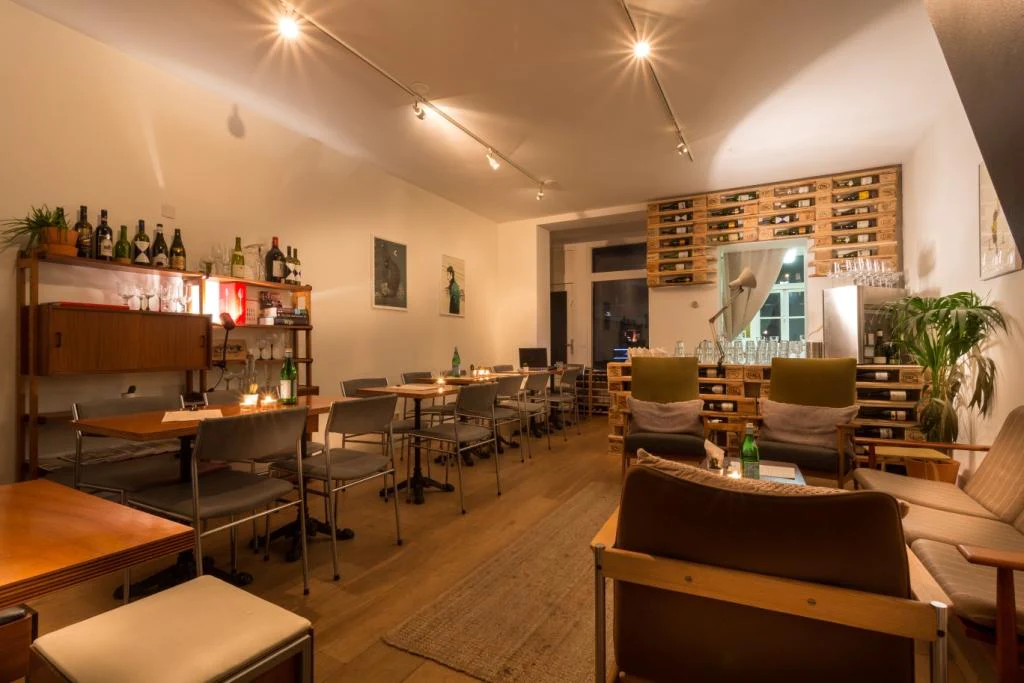
1072 GP Amsterdam
Wijnbar Paulus
Wijnbar Paulus aan de Ceintuurbaan is een gezellige bar met een huiselijke sfeer. Op de kaart staan talloze wijnen uit allerlei verschillende streken. Daarnaast serveren ze ook lekkere hapjes, zoals bitterbalen en burrata. Als je zin hebt in een verrassing kun je ook kiezen voor de wijntasting. Je kiest zelf de kleuren en de hoeveelheid glazen en de eigenaar kiest de wijn. Heb je tijdens een tasting een nieuwe favoriete wijn ontdekt? Dan heb je geluk; bij Wijnbar Paulus kun je namelijk ook een fles wijn kopen om mee naar huis te nemen.
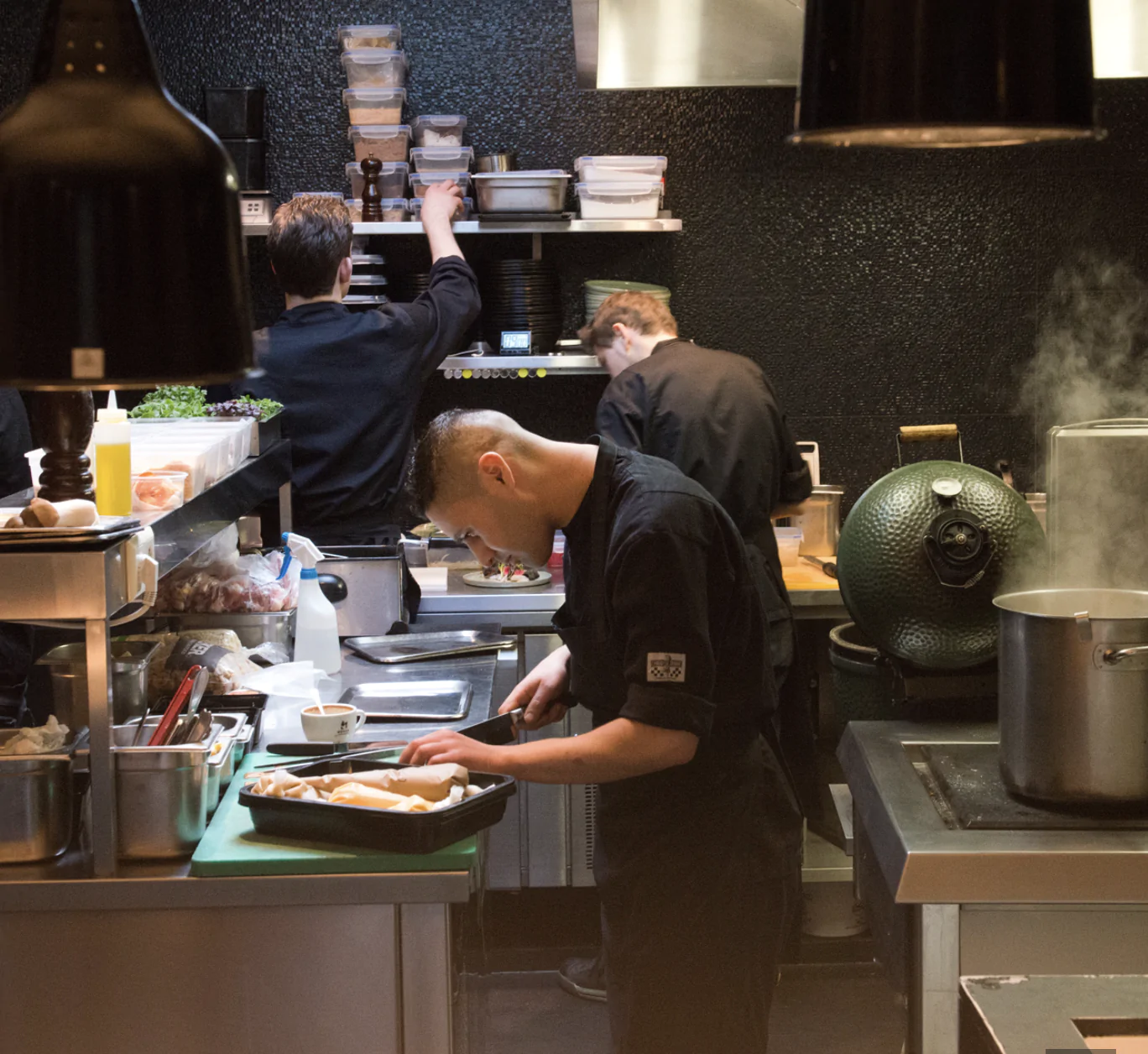
1072 GP Amsterdam
Sinne (*)
In het rijtje Michelinsterren restaurants mag Sinne niet ontbreken. De gastronomische keuken en een relaxte sfeer maken de plek bij uitstek geschikt voor een lange lunch in het weekend. Sinne doet de Michelinster sinds 2015 eer aan dankzij sommelier Suzanne Sluijter en chef-kok Alexander Ioannou. Het restaurant heeft een eigentijds menu geïnspireerd op de Franse, Mediterrane en Oosterse keuken met keuze van 3 tot 8 gangen en een uniek wijnarrangement voor de liefhebber.
1072 PB Amsterdam
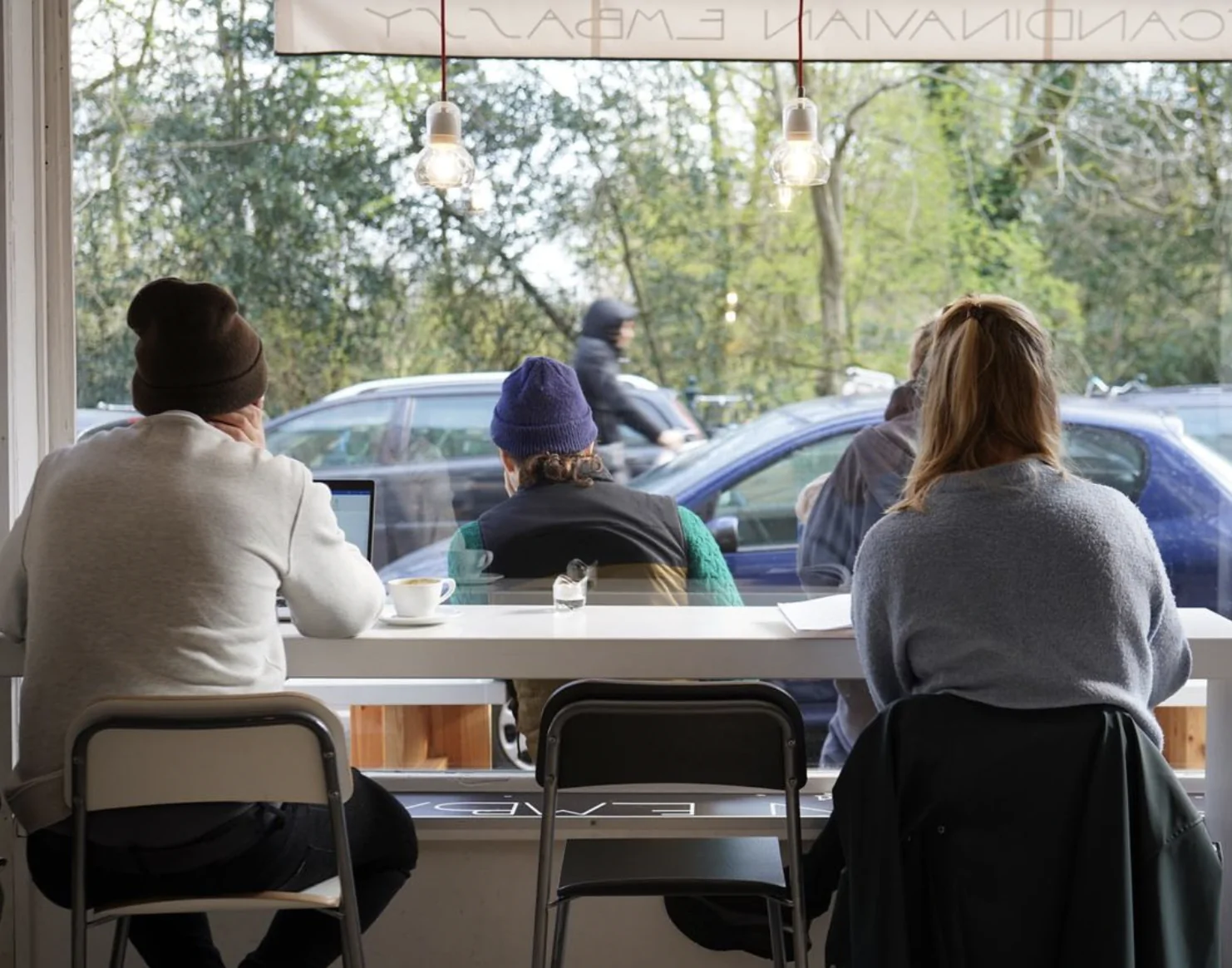
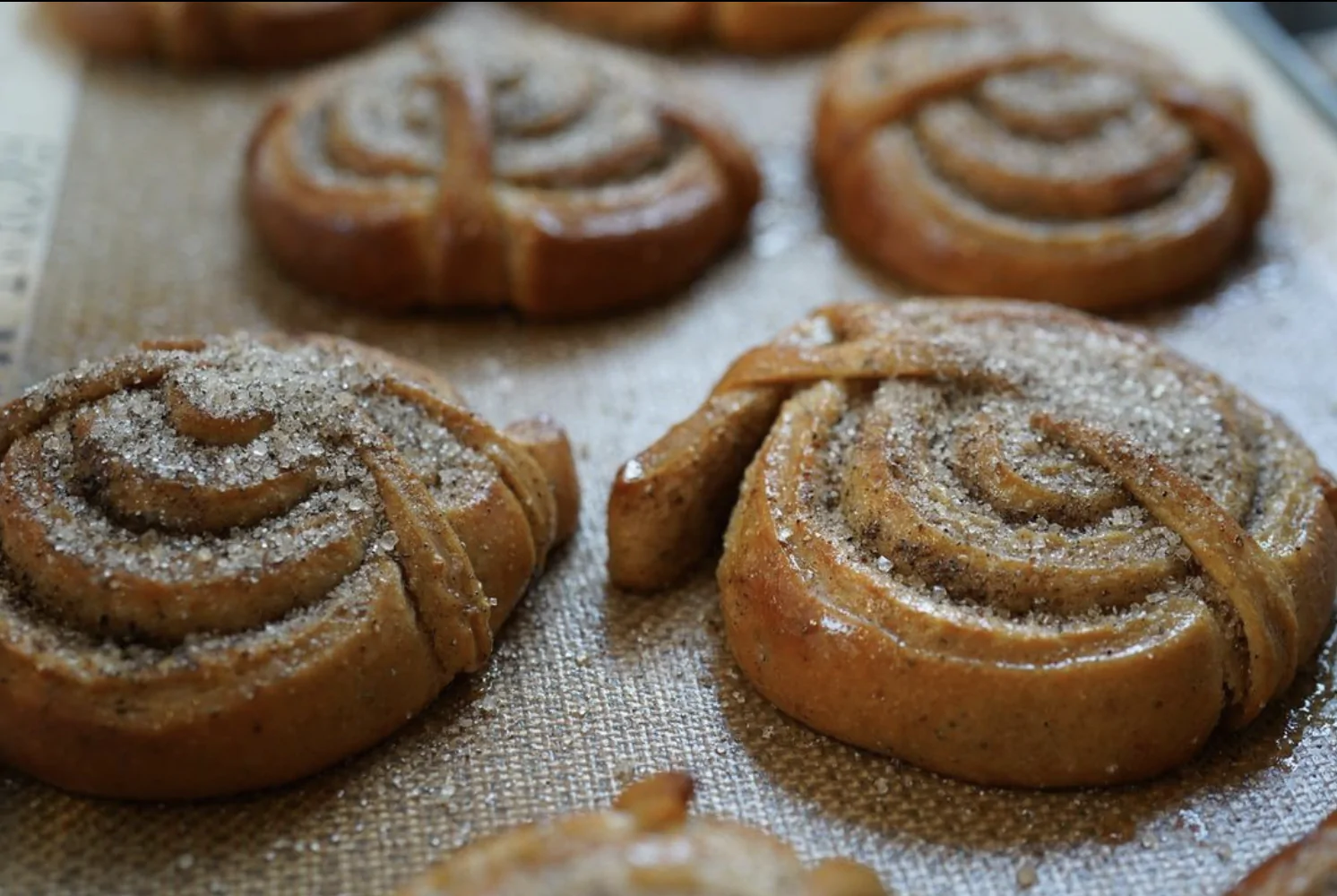
Scandinavian Embassy
In 2013 opende dit koffietentje. Ze serveren top kwaliteit koffie en zoetigheden, geïnspireerd op de Scandinavische keuken. Er staat vaak een rij tot aan buiten en dat is niet zonder rede. Je proeft dat er hier op hoge kwaliteit eten en koffie wordt bereid. Gelegen naast het altijd gezellige Sarphatipark is het perfect om even op het terras te zitten en uit te kijken, of een parkwandelingetje met een koffie to go te maken.

1072 PA Amsterdam
Ladybird
Noah Tucker (New York) en Tony Joseph (Londen) zijn geïnspireerd door herinneringen aan Amerikaanse Down South-recepten en familiediners vermengd met de cultuur en vibes van New York. Beide chefs hebben een indrukwekkend cv, maar de liefde voor kip heeft hun uiteindelijk geleid tot het openen van dit restaurant. De fried chicken wordt hier tot in perfectie uitgevoerd. Voor de echte liefhebbers; ook mogelijk in combinatie met kaviaar.
1073 TZ Amsterdam
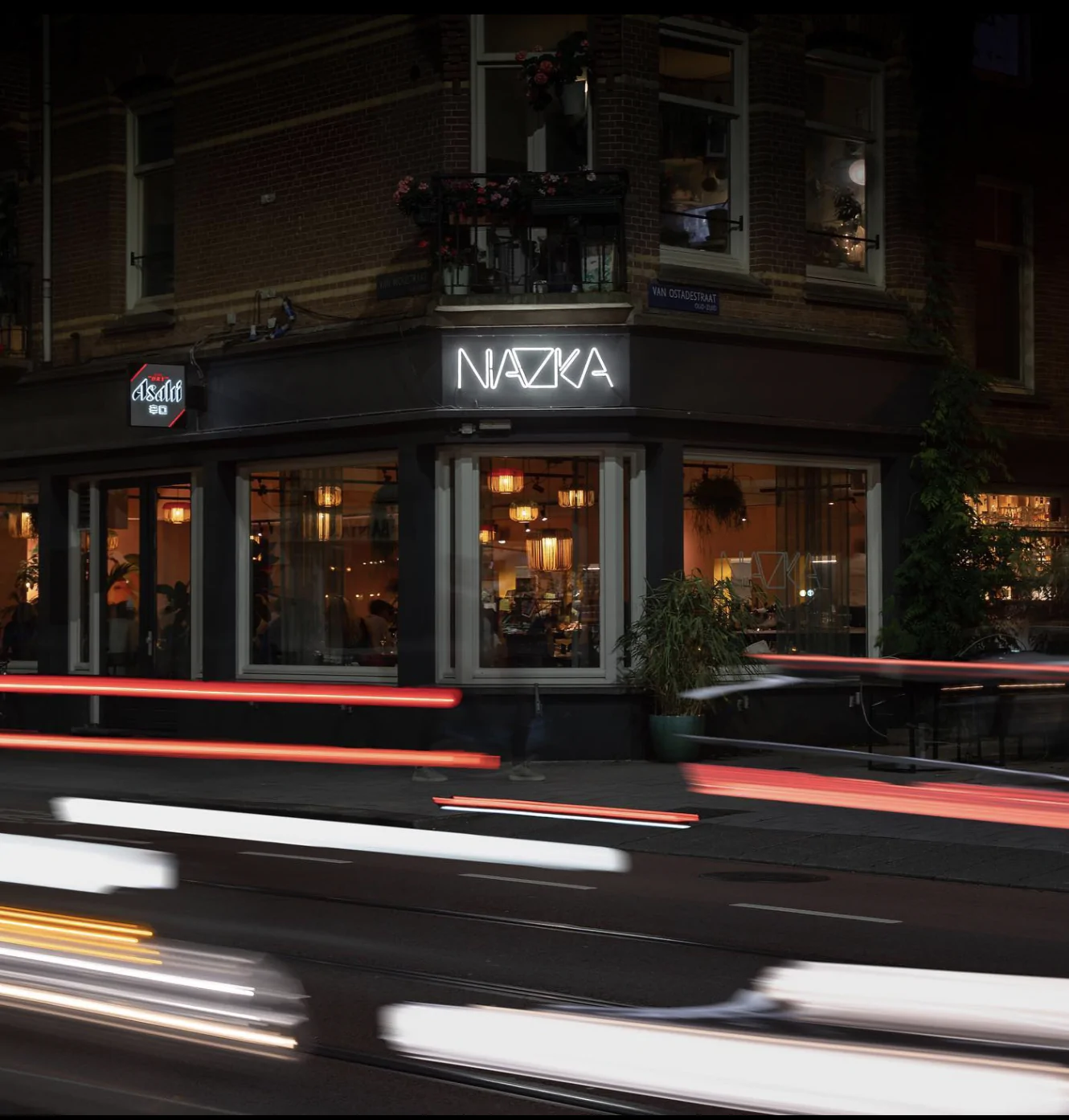
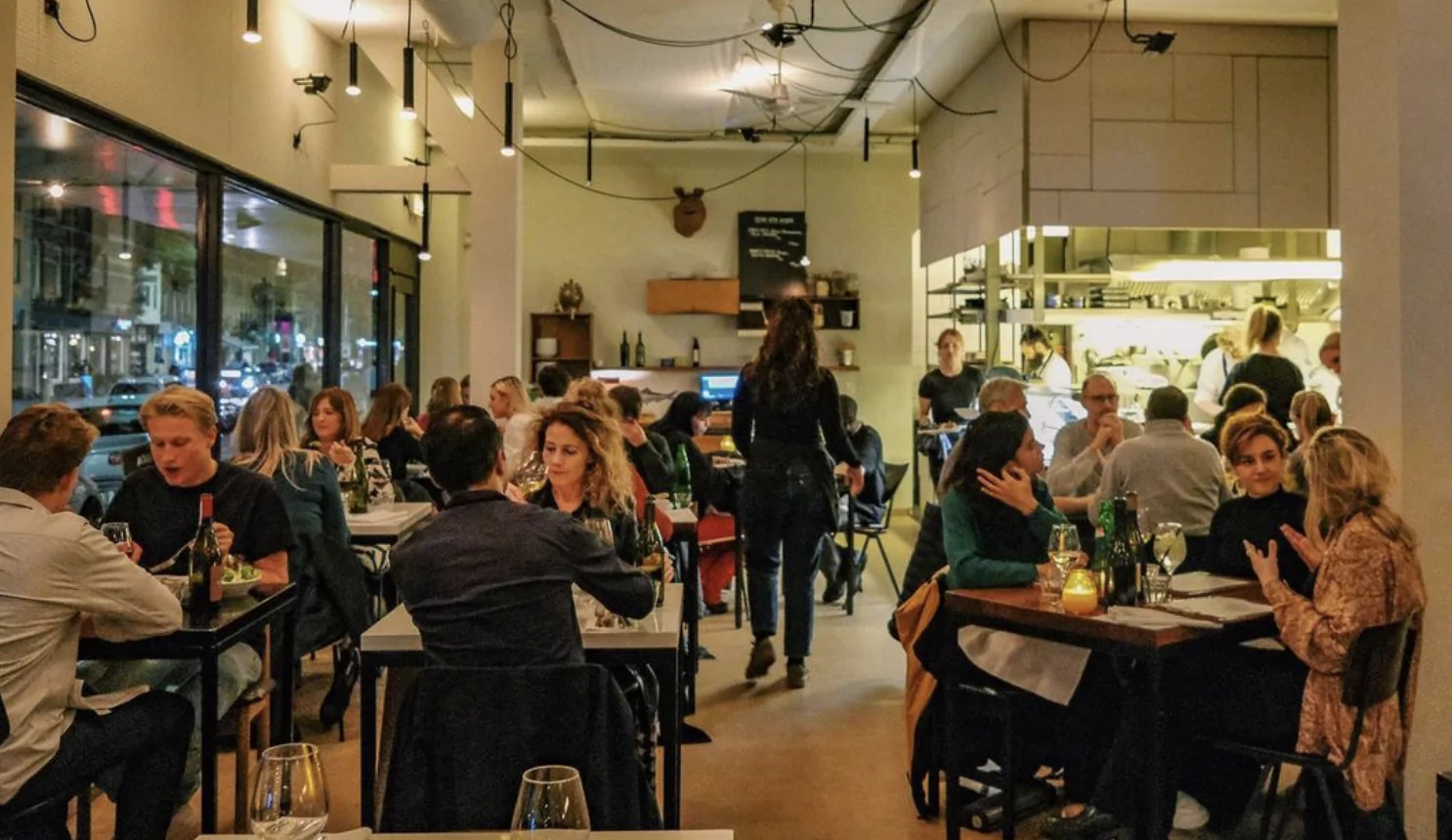
NAZKA
In de Van Ostadestraat vind je het kleurrijke restaurant Nazka. Naast dat het interieur er fantastisch uitziet, is het eten ook spectaculair. De keuken toont zowel Peruaanse klassiekers als innovatieve gerechten, die voortbouwen op het erfgoed van Peru. Nazka heeft een prachtige inrichting, fantastische service, knap eten en de sommelier is een genie, maar het belangrijkst: álles is lekker.
1073 LW Amsterdam
Leeman döner
Voor een goed broodje doner kan je terecht bij Leeman döner op de Van Woustraat. De zaak staat al jaren bekend om zijn goede broodjes döner en dit komt mede omdat de broodjes elke dag vers gemaakt worden in de bakkerij achterin de winkel. Naast de döner hebben ze ook nog allemaal andere producten zoals Turkse pizza, kapsalon, falafel, borek en baklava. Leeman heeft door de jaren heen veel bekendheid gekregen dus het kan er soms erg druk zijn. Het is een afhaalwinkel er zijn dus geen zitplekken binnen, in de zomer staan er nog wel eens stoeltjes buiten.
1073 LZ Amsterdam
El Mauri
El Mauri in De Pijp is een van de beste low-budget ontbijtadressen van de stad. Bij deze bakker kun je al jaren terecht voor een uitgebreid Marokkaans ontbijt met een vakantiegevoel. Hoewel de bakker er van buiten eenvoudig uitziet, biedt hij van binnen een heerlijk ontbijt met vers brood, tajines en zelfgemaakte jam.
1074 AH Amsterdam
Firma Pekelhaaring
Firma Pekelhaaring is een geliefd Italiaans restaurant gevestigd aan de Van Woustraat 127-129 in Amsterdam. Het restaurant staat bekend om zijn ontspannen sfeer en authentieke gerechten, beïnvloed door de Italiaanse keuken, maar met ruimte voor eigen variaties en lokale invloeden. De eigenaar van Firma Pekelhaaring is Matthias van der Nagel. Onder zijn leiding heeft het restaurant erkenning gekregen, waaronder een vermelding in de MICHELIN Gids met een Bib Gourmand voor de goede prijs-kwaliteitverhouding. Op de kaart gerechten als Arancini, tagliatelle met eendenstoof of kabeljauw met gezouten baccala en schorseneer.
1074 AG Amsterdam
Rayleigh & Ramsay
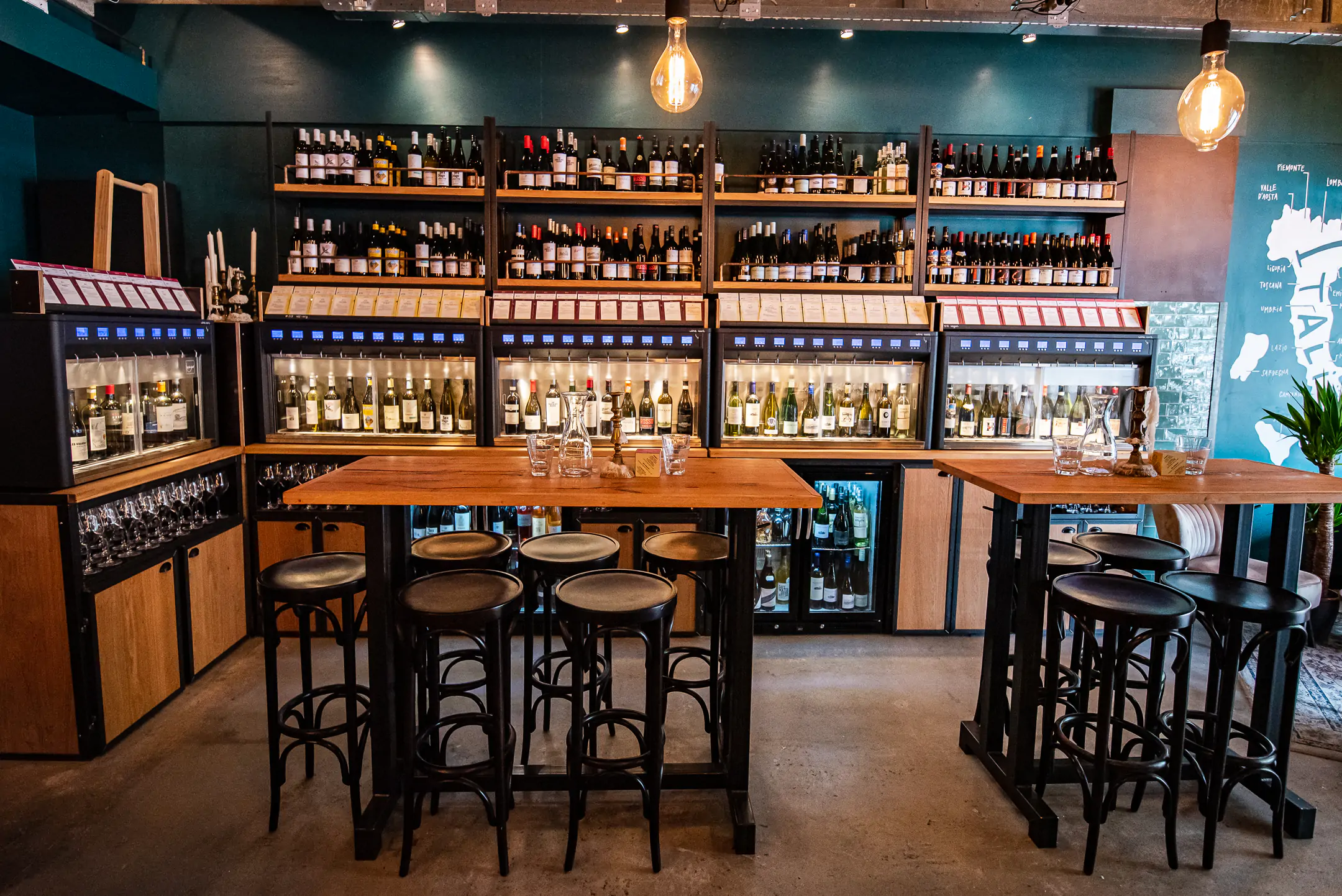
Rayleigh & Ramsay wordt omschreven als een snoepwinkel voor volwassenen. De term wijnbar vinden ze hier te hoogdrempelig, maar de focus ligt toch echt wel op wijn, met meer dan 100 open wijnen. Uniek is dat je wijn per slok, half glas of heel glas kan bestellen. Zo kan je hier terecht om alles wat je wil te proeven en te ontdekken wat je de allerlekkerste wijn vindt. Naast wijnen staat er ook goede koffie, cocktails, tapbier en lekker eten op het menu.
1073 AD Amsterdam
Warung Marlon
Tijdens de coronacrisis besloot Warung Marlon alleen nog maar aan afhaal te doen, waarmee het dus officieel een Surinaams Javaans afhaalrestaurant is geworden. Het eethuis in de Pijp is al open sinds 1990 en bezorgt al meer dan 20 jaar een lach op vele vaste klanten hun gezicht. Het eethuis staat bekend om de soatosoep, kipsaté en uiteraard de bakabana’s en maakt de gerechten af door een glimlach op het gezicht van het vrolijke personeel. Vanaf heden te bestellen of af te halen, maar absoluut de moeite waard.
1073 VK Amsterdam
Restaurant Ja
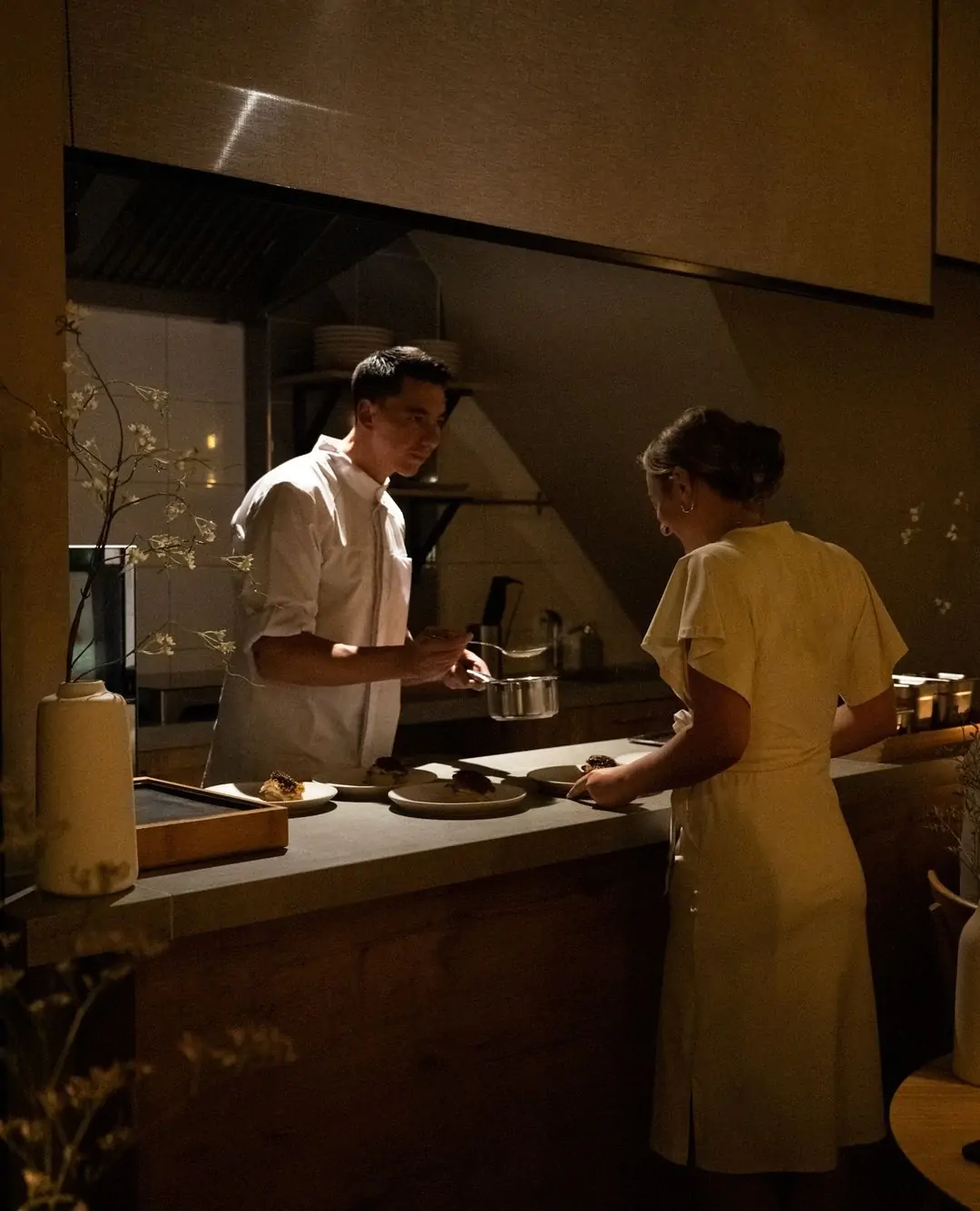
Het charmante restaurant Ja, bevindt zich in het voormalige pand van Jan de Wit's Le Restaurant aan de hoek van het Sarphatipark. Chef chef Julius Busscher, voorheen werkzaam bij Jacobsz en Staets, biedt verrassende gerechten. Zijn partner Amy Delorme verzorgt met toewijding de bediening en selectie van wijnen. Bij Ja wordt alles, van het brood tot de limoncello, ambachtelijk bereid. Het restaurant presenteert een vast 4-gangenmenu, dat desgewenst kan worden uitgebreid met oesters en kaas. De intieme ambiance en culinaire creativiteit maken ja tot een unieke culinaire bestemming in Amsterdam.
1073 CL Amsterdam
BRIO
Restaurant BRIO, gelegen in de levendige wijk De Pijp in Amsterdam, biedt een eigentijdse interpretatie van de Italiaanse keuken. Het restaurant, opgericht door de eigenaren van Little Collins, combineert klassieke Italiaanse smaken met moderne invloeden. Gasten kunnen genieten van een menu dat draait om verse pasta’s en seizoensgebonden gerechten, geserveerd in een sfeervolle en gastvrije setting.
1072 GN Amsterdam
Rialto
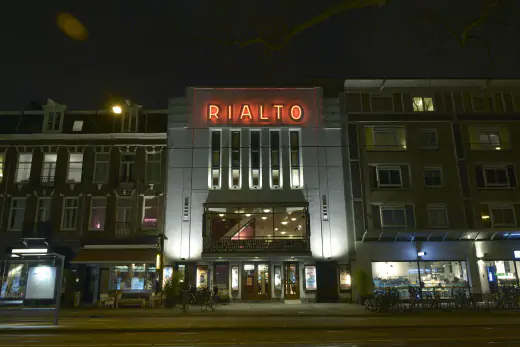
Rialto is een filmtheater aan de Ceintuurbaan in oude volksbuurt de Pijp. Het opvallende Art Deco gebouw waarin Rialto is gevestigd is ontworpen door architect Jan van Schaik. Het werd in 1920 gebouwd en is daarmee een van de oudste bioscopen in Amsterdam. Filmtheater Rialto heeft een divers aanbod van films die zijn gericht aan een breed publiek. Naast het vertonen van films organiseert Rialto vele verschillende evenementen zoals festivals, lezingen en discussieavonden. Sinds kort heeft Rialto ook een vestiging in het Nieuwe Universiteitsgebouw op de campus van de Vrije Universiteit.
1073 SR Amsterdam
Josilda da Conceição Gallery
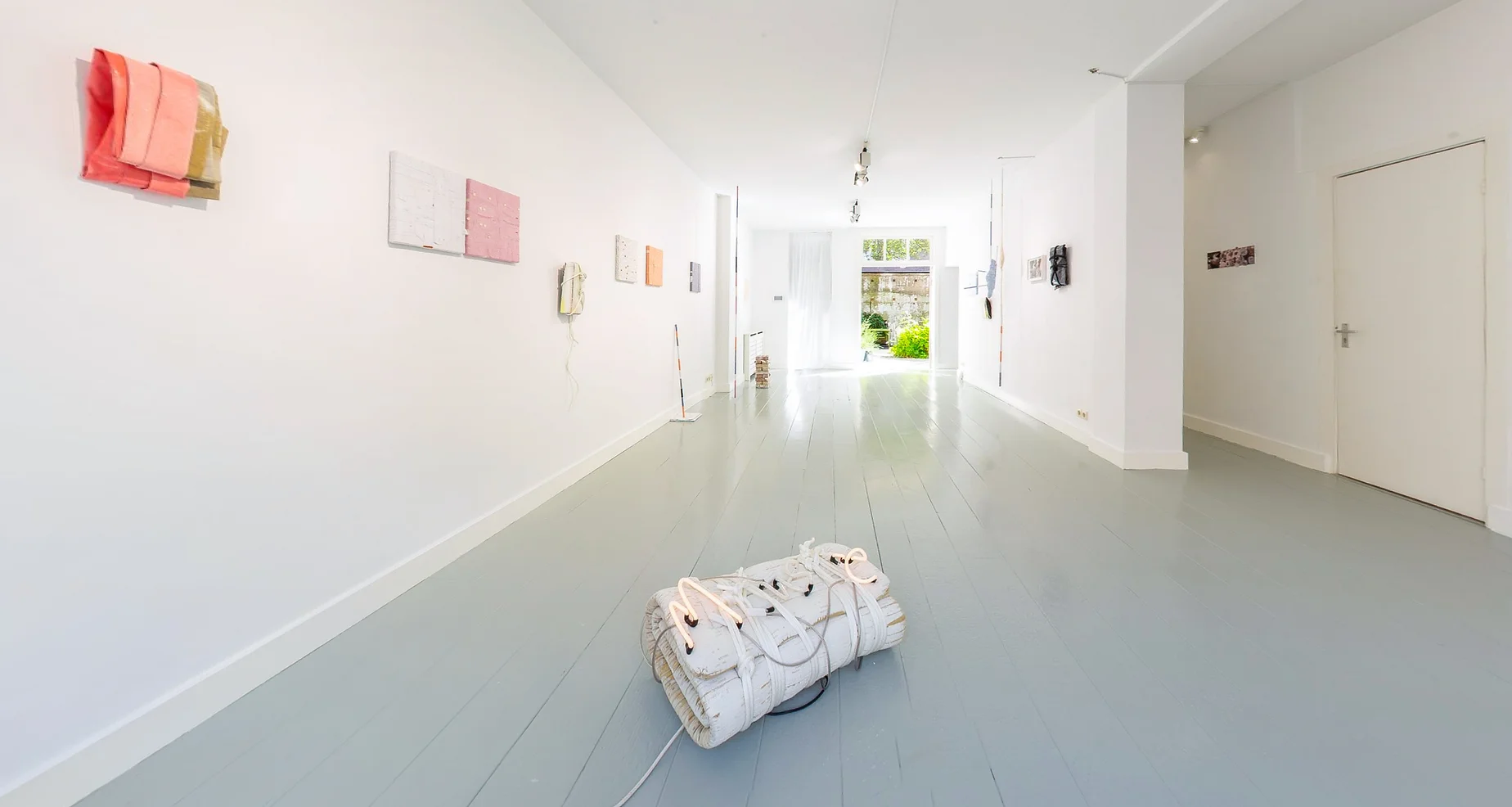
Josilda da Conceição Gallery presenteert een veelzijdig programma van hedendaagse kunst, variërend van schilderkunst tot installaties. Sinds de oprichting in 2014 is het de missie van de galerie geweest om internationale artistieke praktijken te verenigen en het gesprek over diverse culturele perspectieven te bevorderen. De galerie ondersteunt opkomend talent en biedt een platform voor gevestigde kunstenaars naast opkomende stemmen, wat nieuwe gebieden voor esthetische en conceptuele reflectie cultiveert.
1072 GP Amsterdam
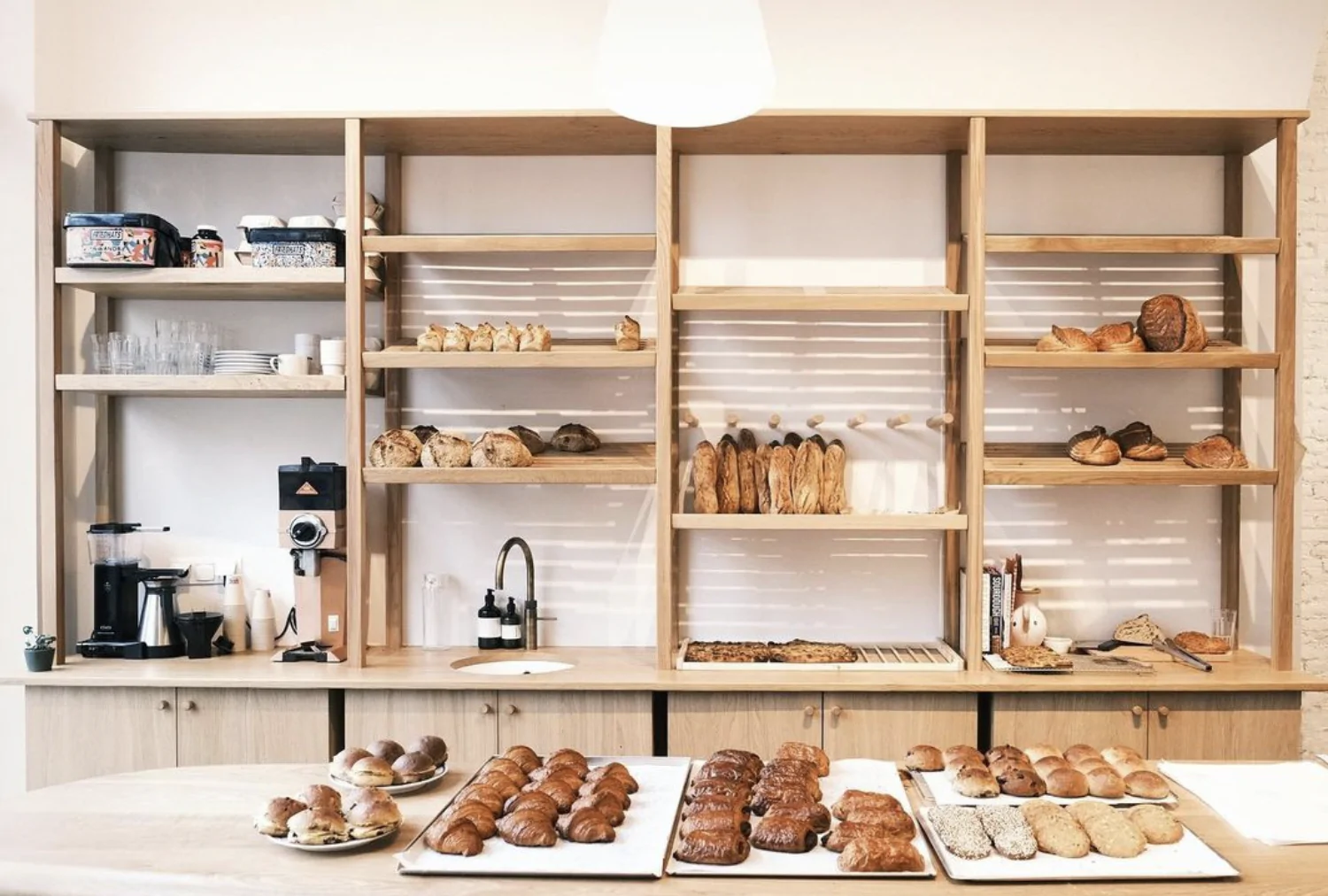
Bakkerij Mater
Zuurdesembakkerij Mater is niet zomaar een bakkerij. Ex-bankier Willem opende deze echte, eerlijke en duurzame bakkerij op zijn 65e toen hij de bankwereld omruilde voor brood. Het is ondertussen een familiebedrijf geworden waar passie, eerlijkheid en de natuur centraal staan. Over alles is hier nagedacht. Het graan komt van speciaal land dat niet geploegd is dat zorgt voor een betere bodemkwaliteit en de bakkerij is van het gas af. Je kunt hier alles op basis van zuurdesem kopen, van heerlijke broden tot knapperige croissants.
1073 AD Amsterdam
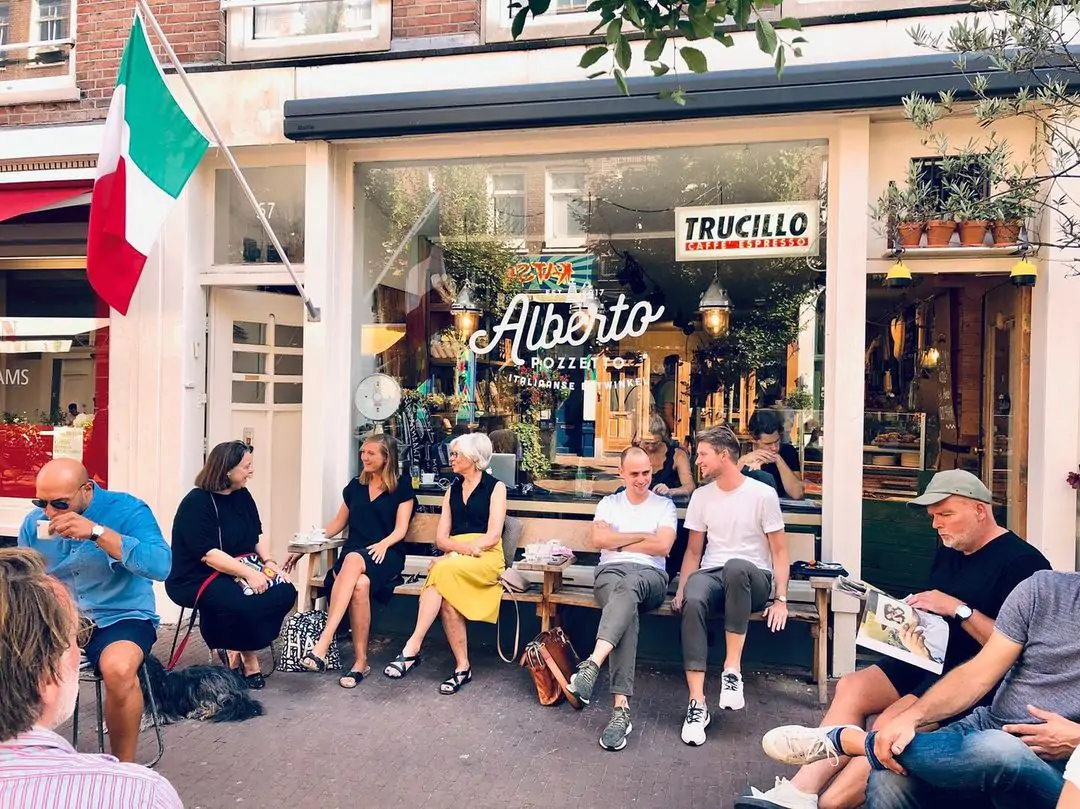
Alberto Pozzetto
Alberto Pozzetto is te vinden in één van de bruisendste zijstraten van de Albert Cuypmarkt in de Pijp in Amsterdam. Bij Alberto Pozzetto kan je terecht voor al je authentieke Italiaanse boodschappen. Koffie, thee, taartjes en vooral de heerlijke broodjes met verse vleeswaren, groenten en kazen zijn een aanrader. Het winkeltje is klein maar fijn, maar je kan ook binnen terecht voor een heerlijke maaltijd. Ook is Alberto een aanrader voor catering. Kortom, mocht je verdwalen op de Albert Cuyp, is Alberto Pozzetto een uitnodigend alternatief.
1074 AG Amsterdam
Stadsmarkt de Pijp
Bij Stadsmarkt de Pijp worden de producten dagelijks zelf opgehaald. Zo komen direct van de boer, tuinder, slager, visboer en bakker allerlei producten midden in de Pijp terecht. De focus bij Stadsmarkt de Pijp ligt op duurzaamheid en hier wordt een eerlijke prijs voor betaald aan de leveranciers. De werkzame vakmensen staan altijd paraat om iets aan te raden of om iets te laten proeven. Ook staat ambacht centraal; het is een markt waar je fijn kan eten en lekker kan genieten.
1073 BT Amsterdam
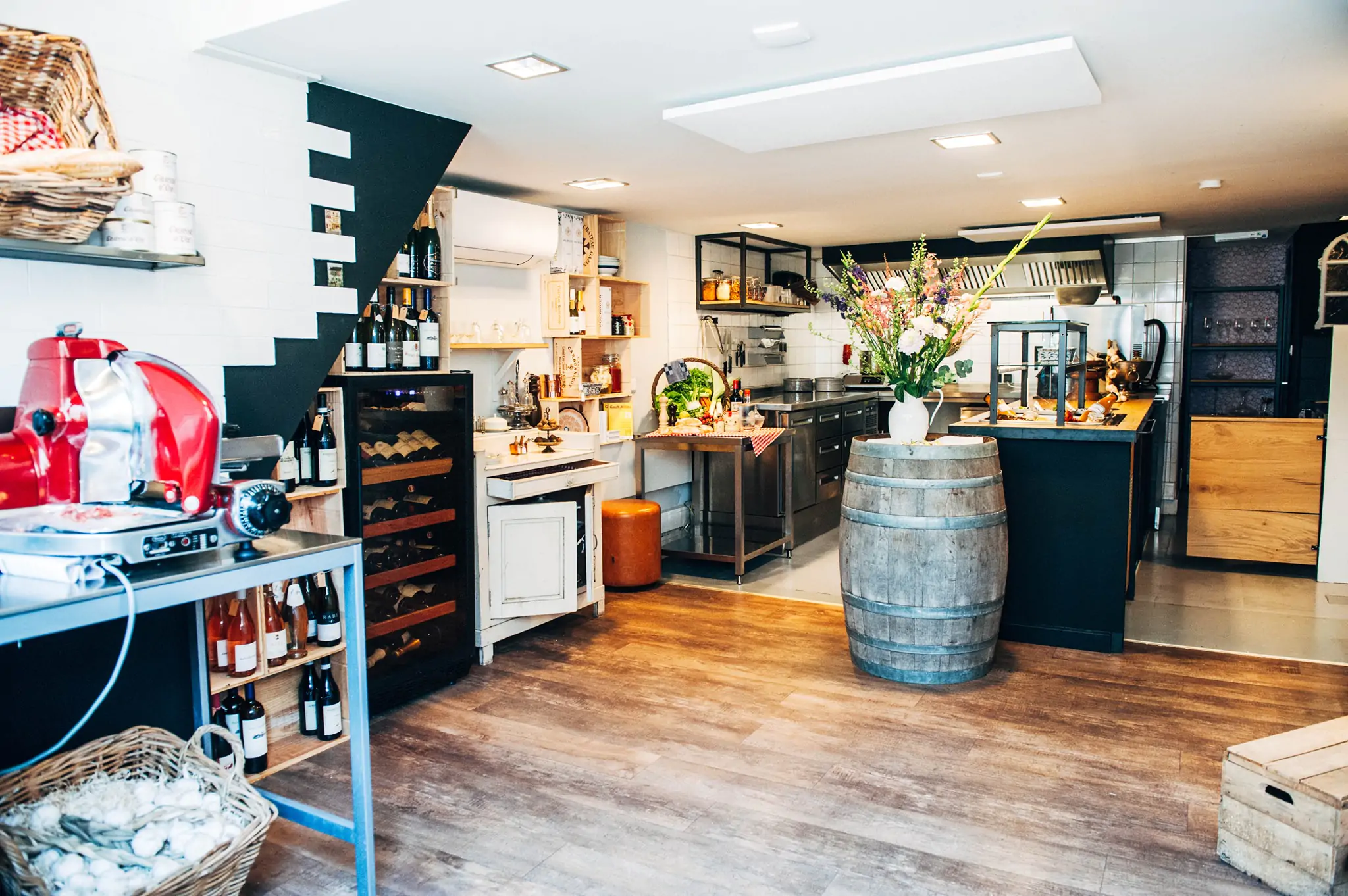
Epicerie de Pijp
Een beetje Frankrijk in Amsterdam. Vanwege het gemis van franse delicatessen, als eigenaresse Merabi naar Frankrijk ging kwam ze terug met tassen vol boodschappen, is deze zaak om de hoek van de Albert Cuyp markt geopend.
Alle producten zijn door de eigenaren zelf uitgezocht en geïmporteerd. Versproducten zoals Le Mi-chèvre Soignon, een kaas gemaakt van geit en koelmelk, maar ook galettes Saint Jacques, crêpes gevuld met coquilles in roomboter-peterseliesaus.
1073 CM Amsterdam
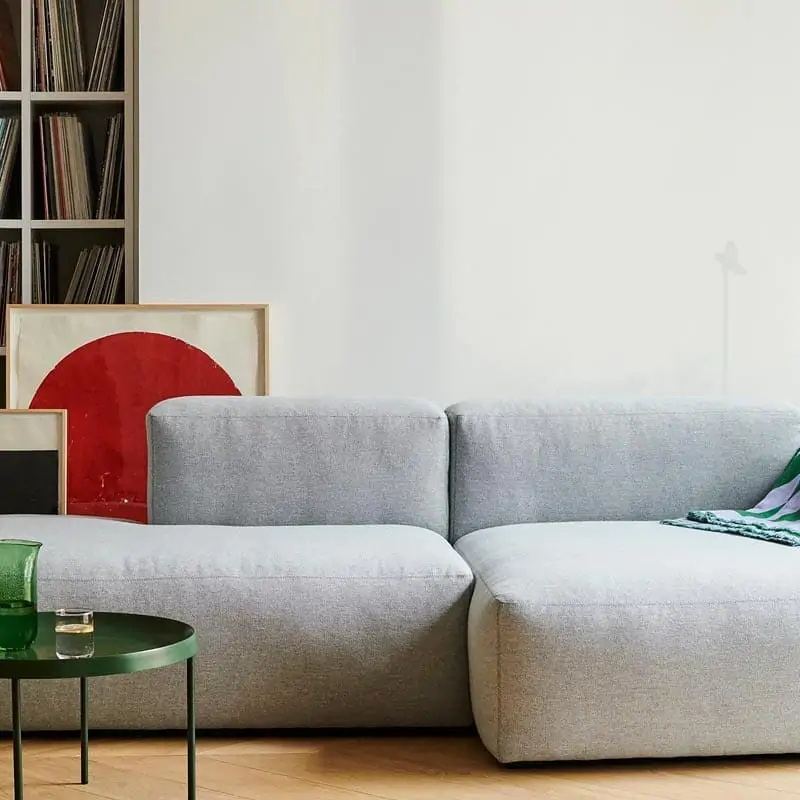
Mud in May
Mud in May is een interieur- en cadeauwinkel in het hartje van de Pijp. Je vindt hier items van zowel bekende designers als minder bekende designers en daardoor ontstaat er een speels mix. Voor ieder budget is hier wel iets te scoren. Mud in may verkoopt allerlei soorten producten; stoelen, vazen, lampen, tafels en zelfs kleding. Ook hebben ze een leuke blog waar ze artikelen waar ze in gesprek gaan met designers over de nieuwste interieurtrends.