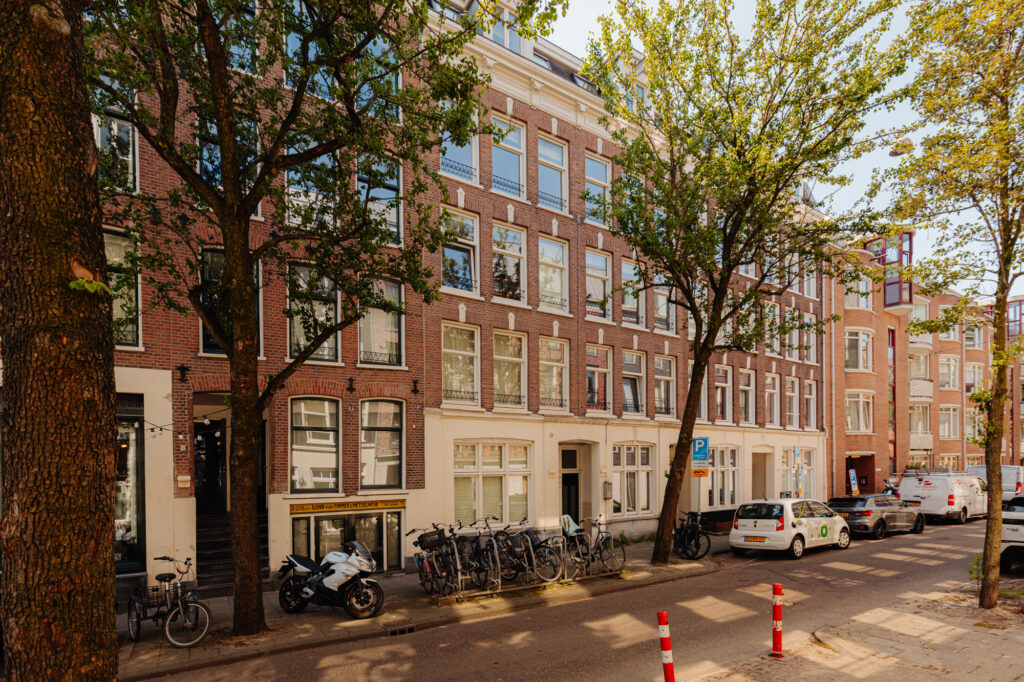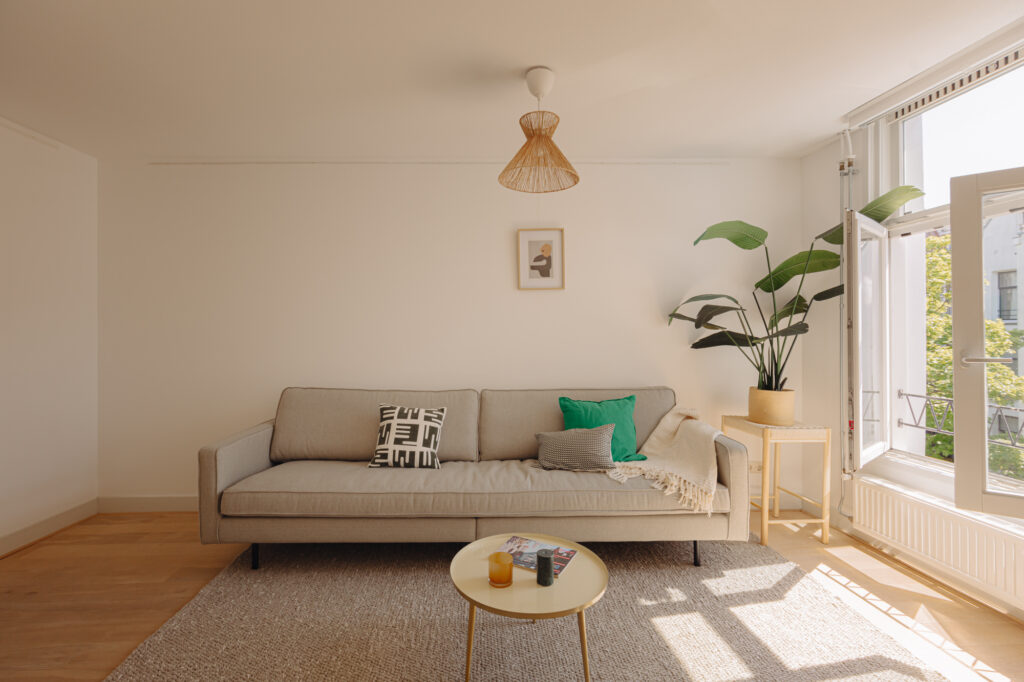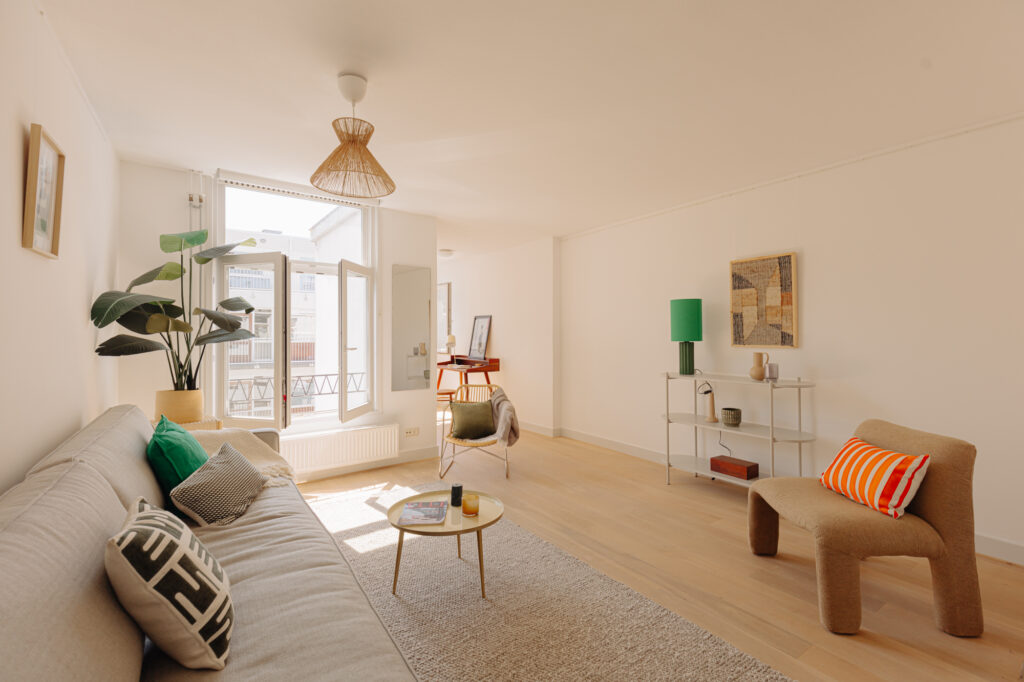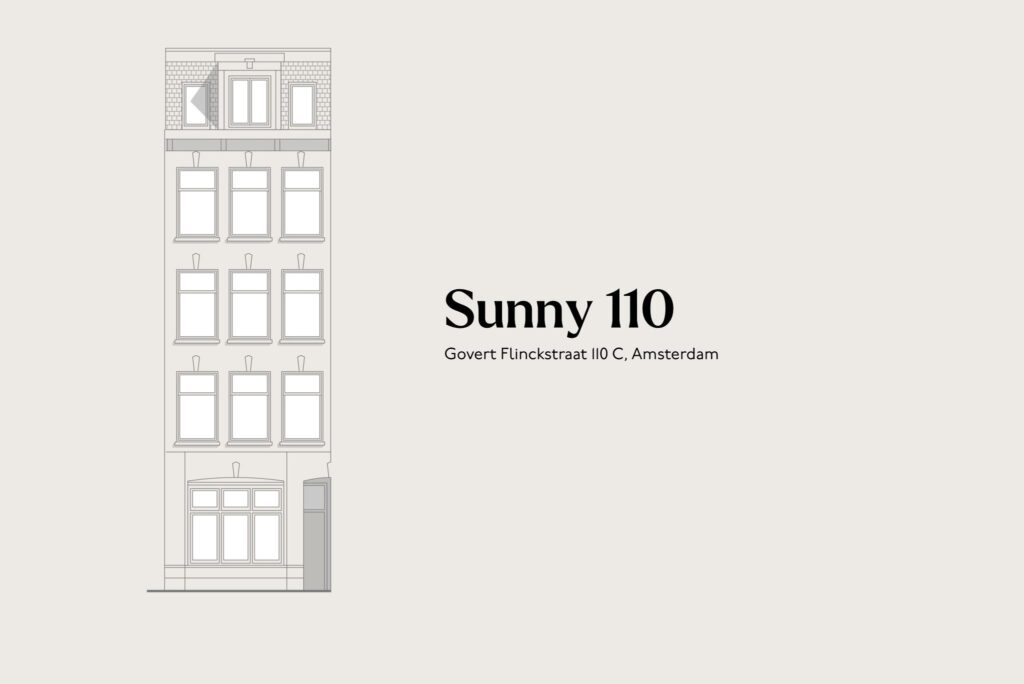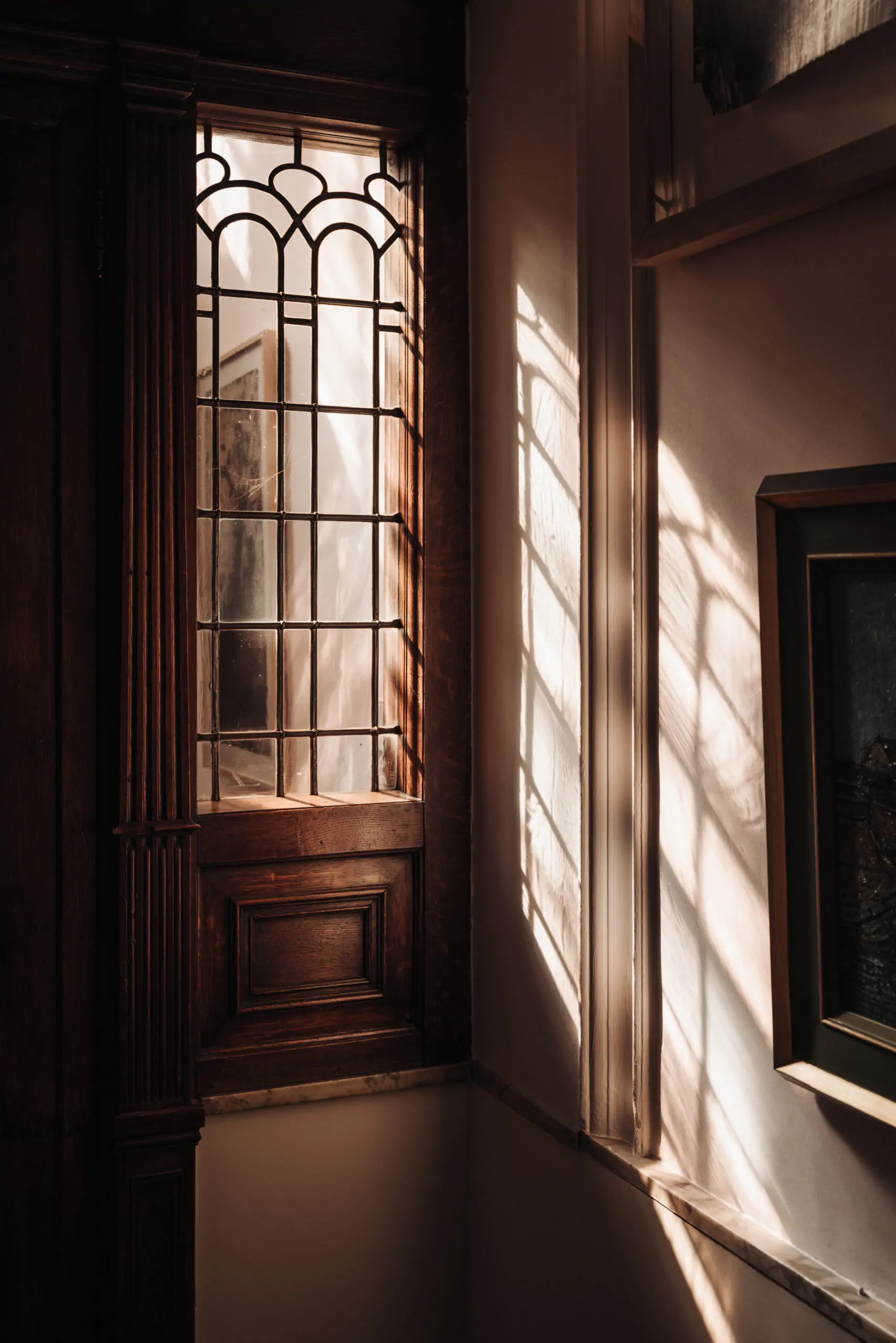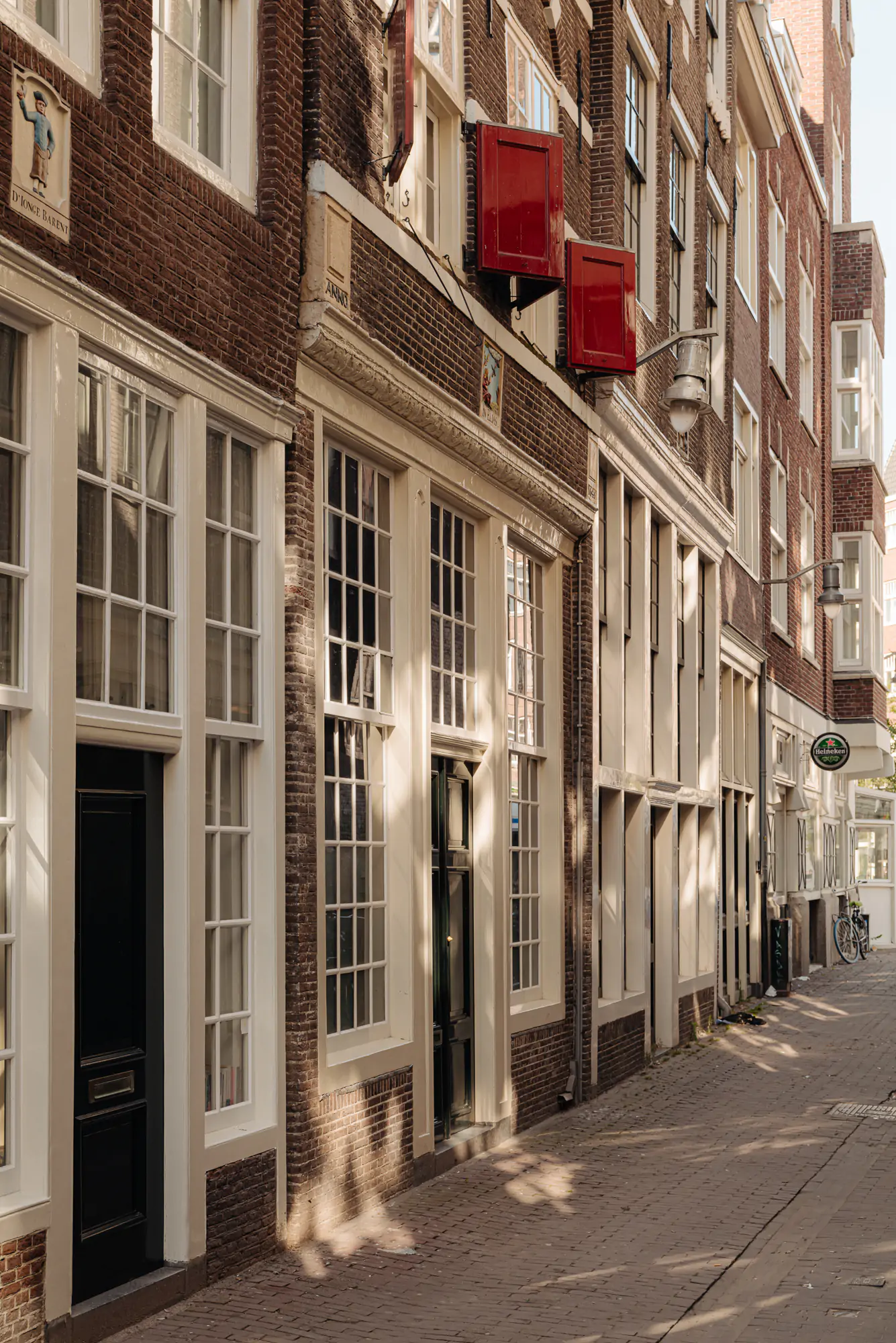
Living in De Pijp — a dream for many. This generously laid-out apartment of approximately 86 square metres is located on the top two floors of a building on Govert Flinckstraat and features a spacious rooftop terrace. The ground lease has been bought off in perpetuity, and thanks to the complete reconstruction in 2010, the apartment holds an energy label A.
Tour
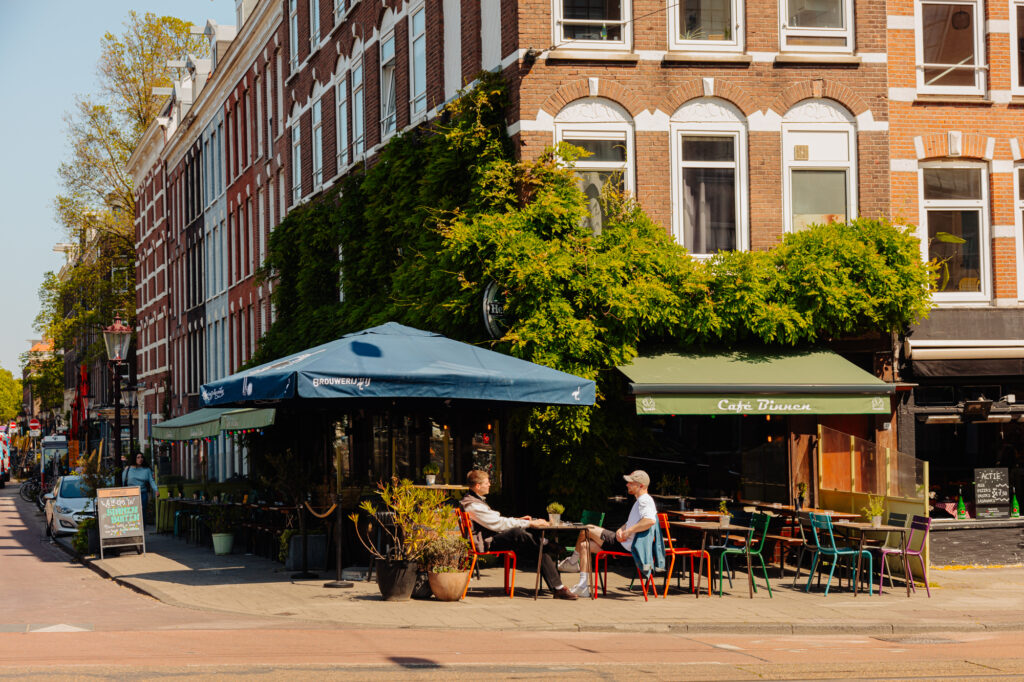
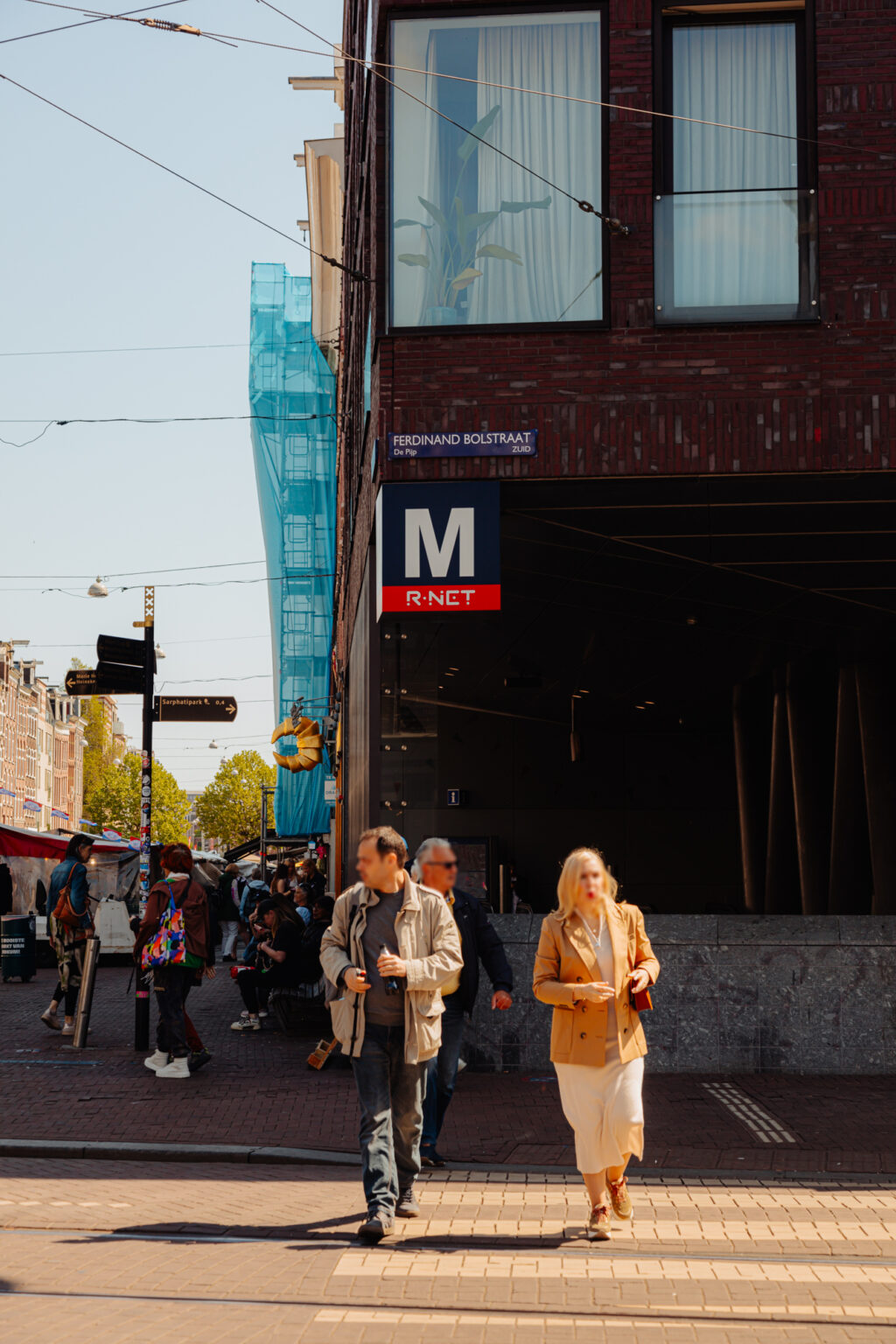
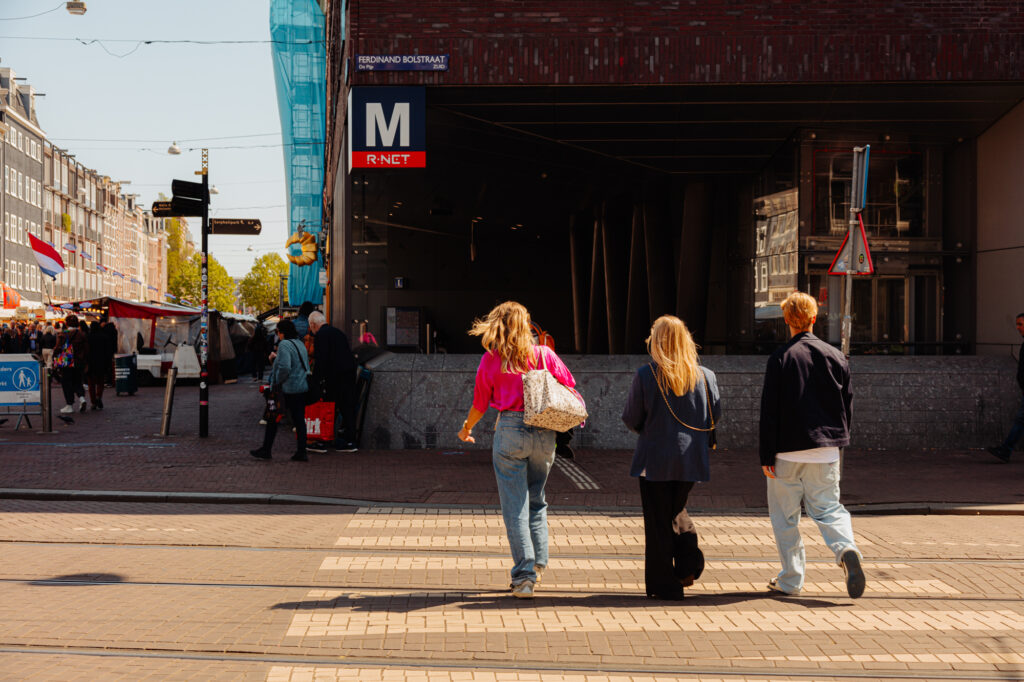
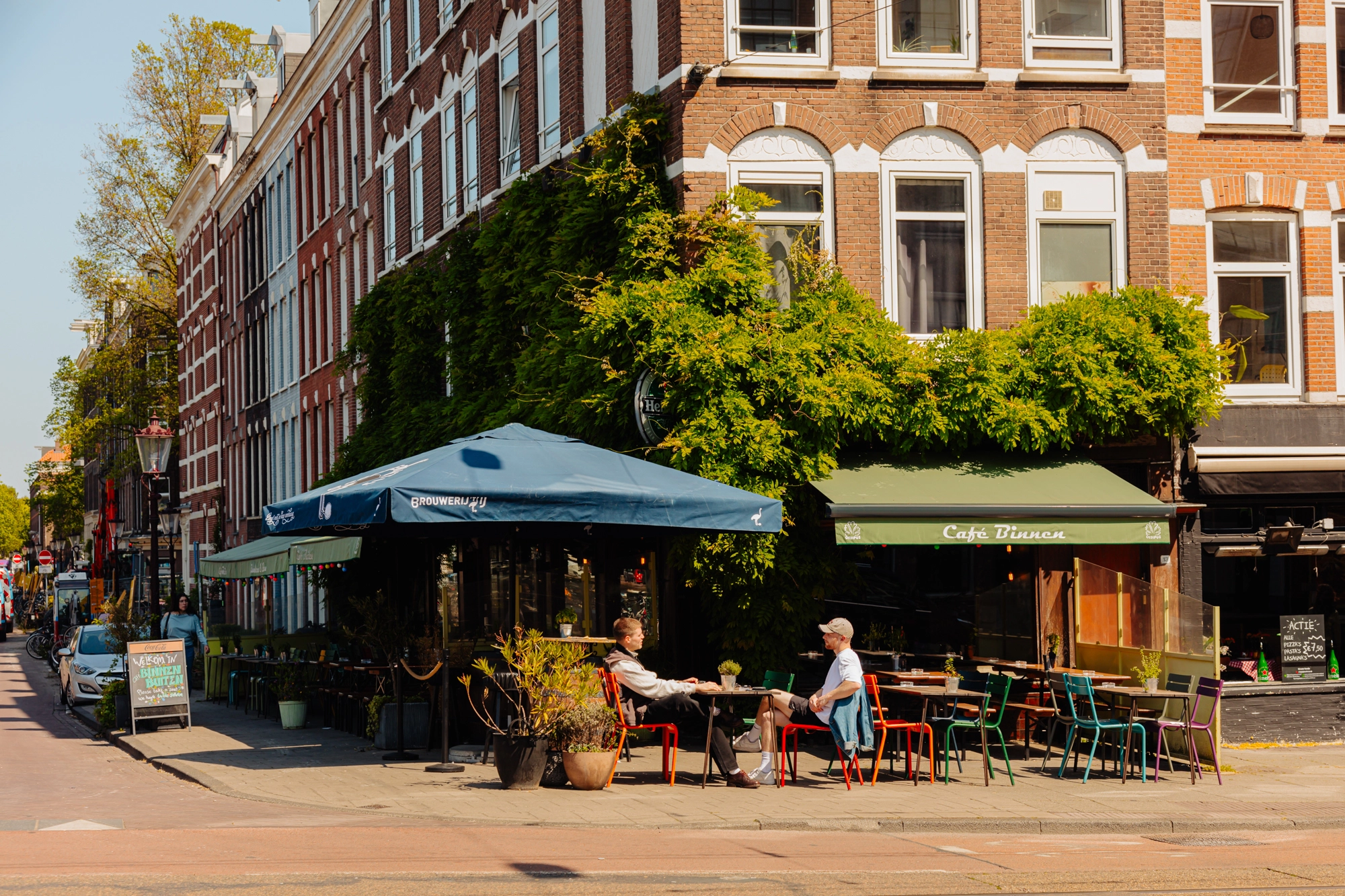
The location is exceptionally central in De Pijp, a true haven for lovers of food and drink. On every corner, one finds a charming café or a welcoming restaurant.
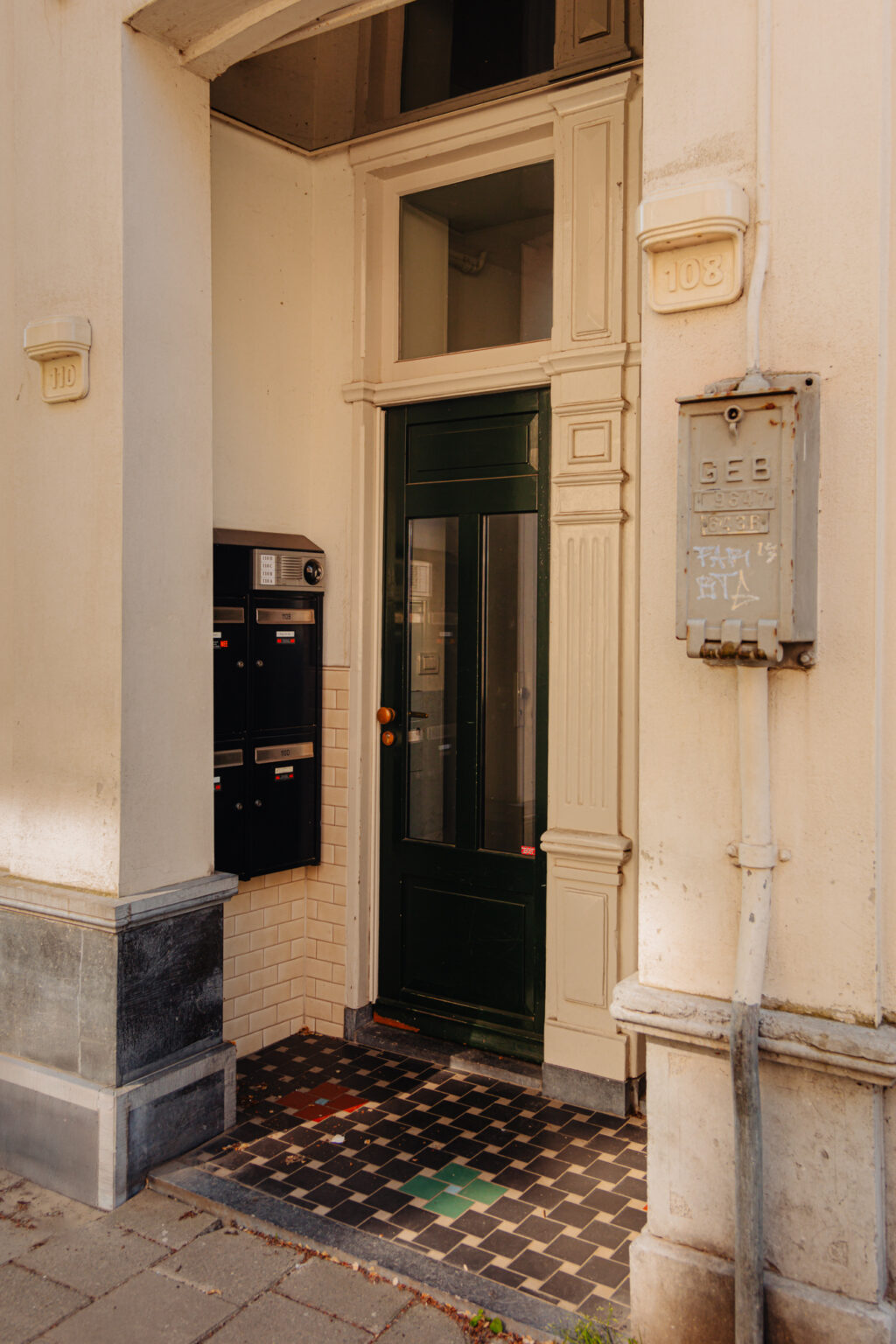
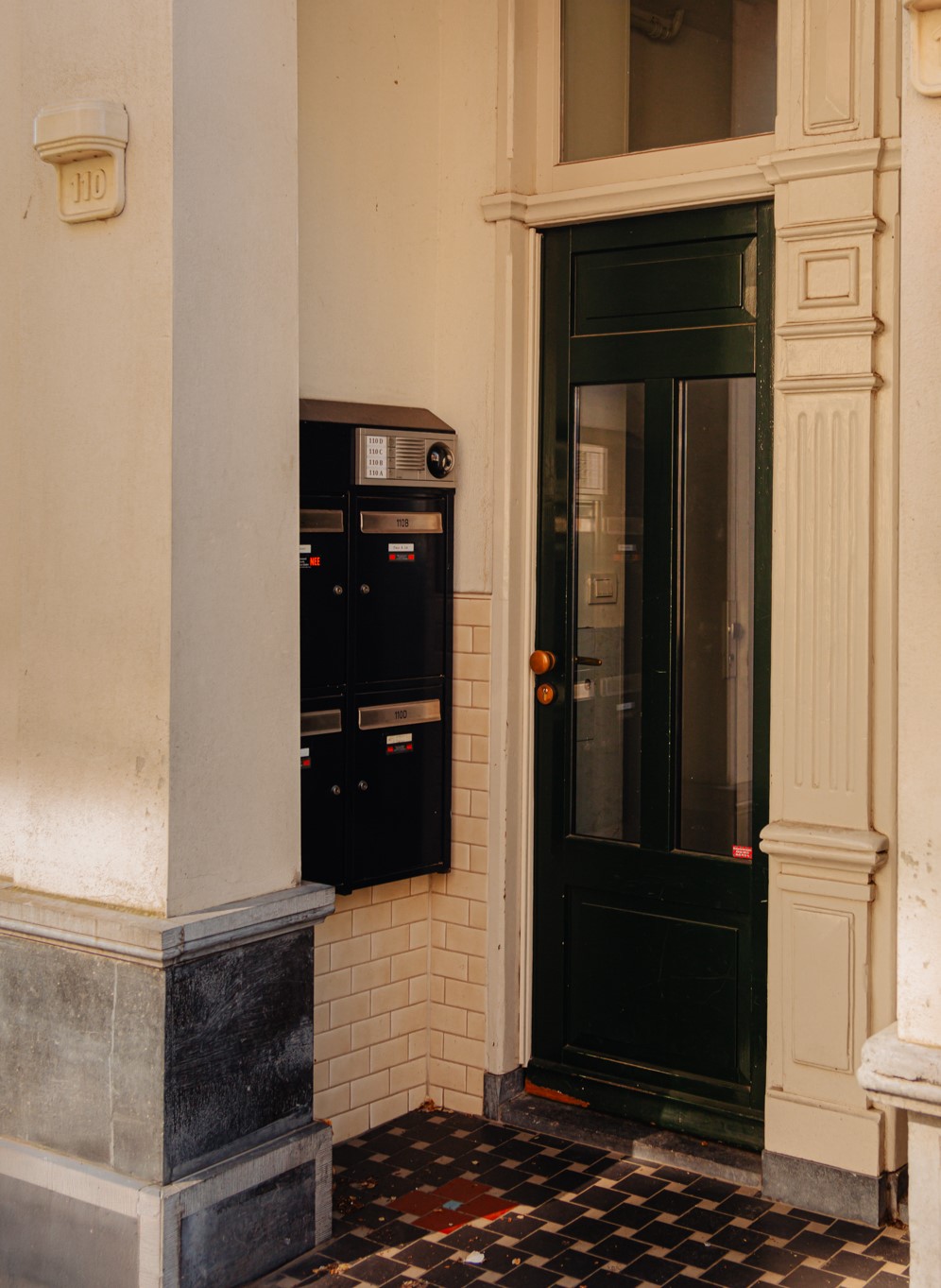
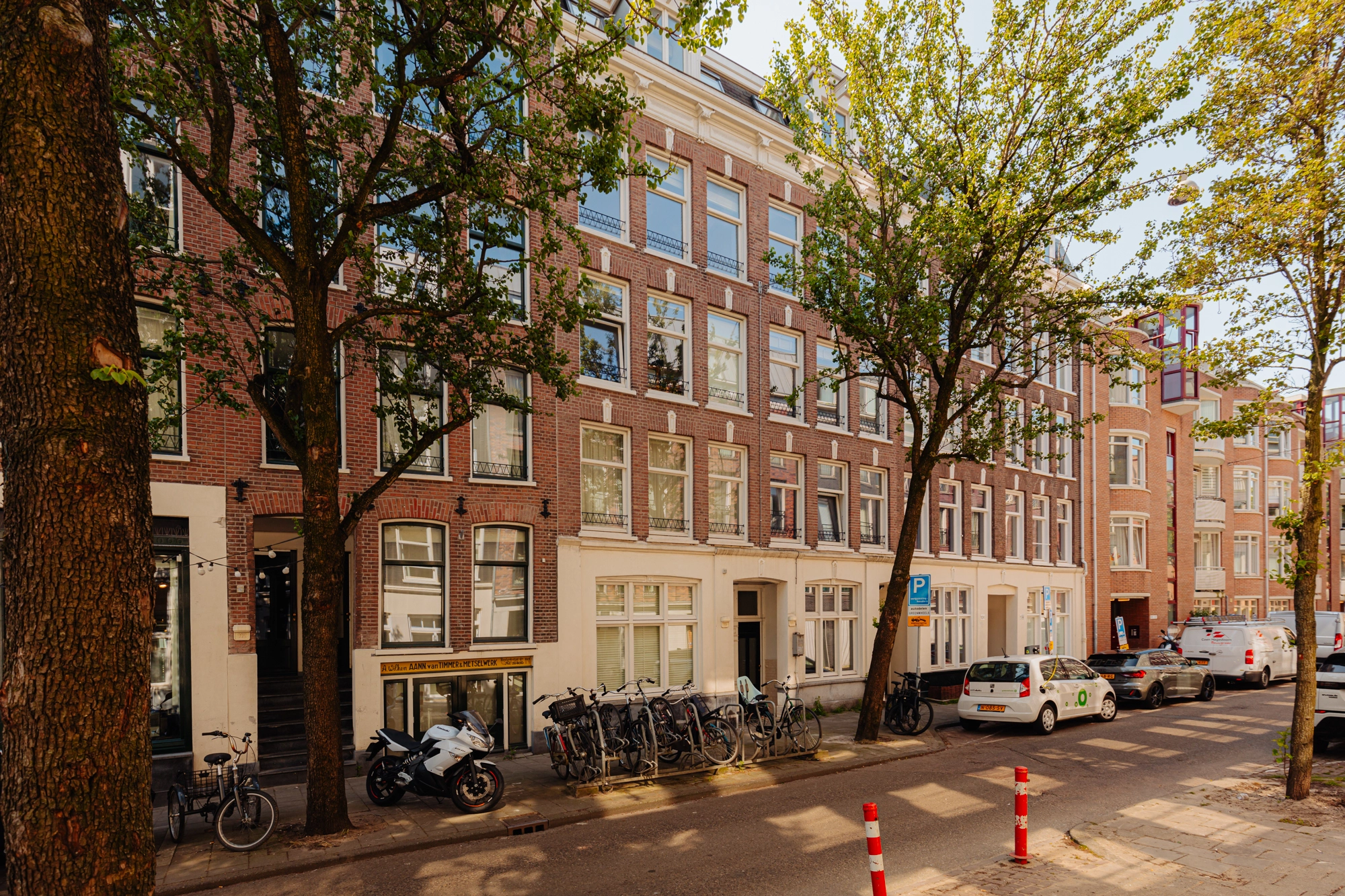
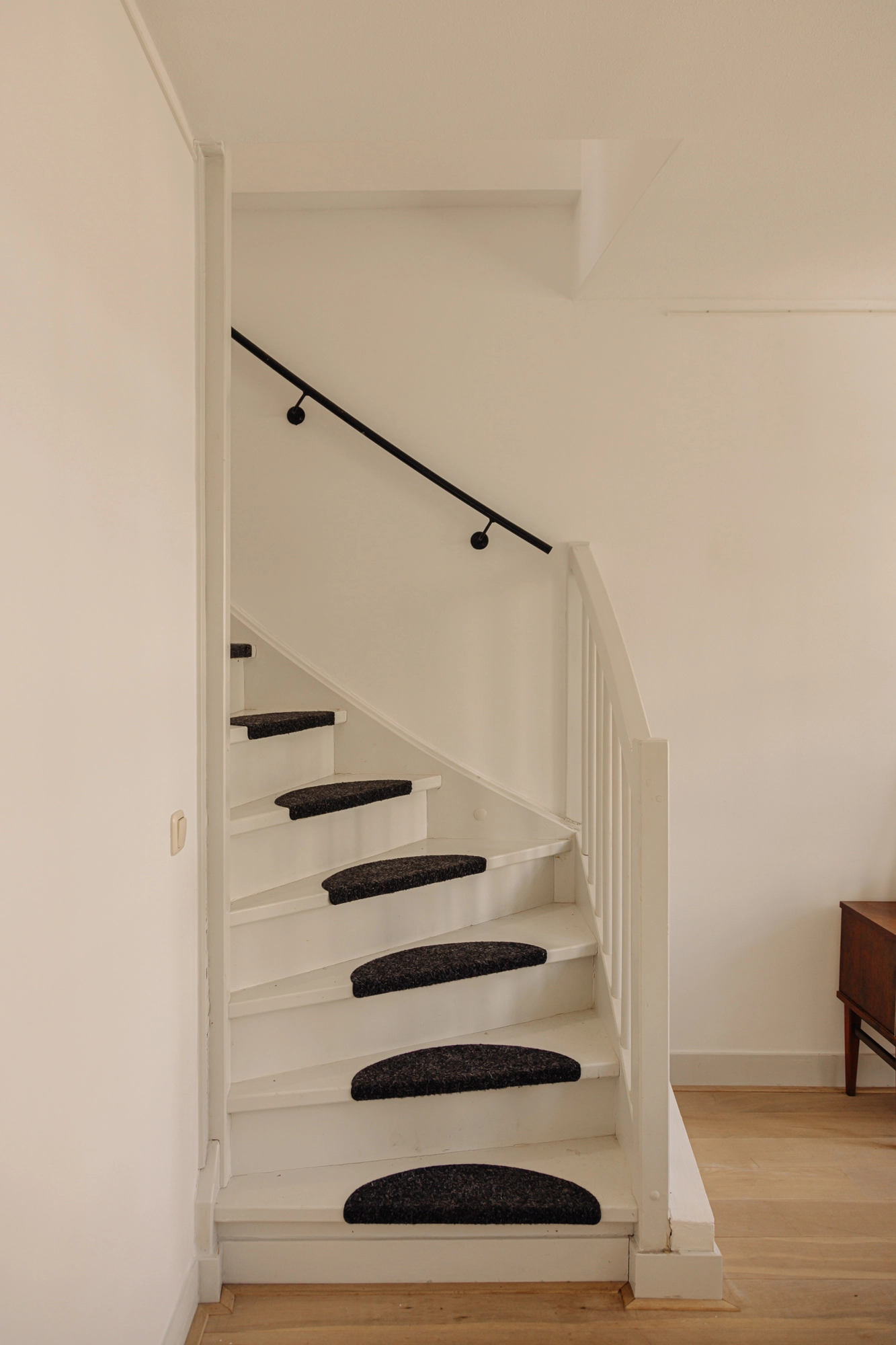
The building (numbers 108–114) underwent a complete reconstruction behind the historic façade in 2010. During this process, the foundation was reinforced and elements such as plumbing, windows, and frames were entirely renewed. The characteristic façade was preserved, maintaining the original appearance of the building while offering the comfort of new construction.
Third floor
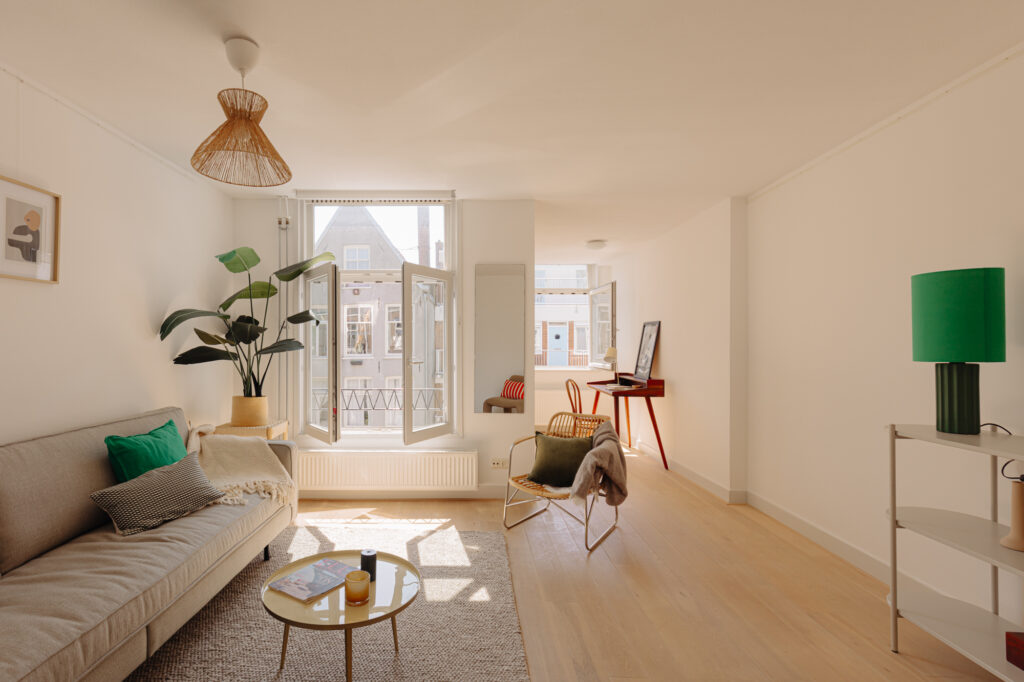
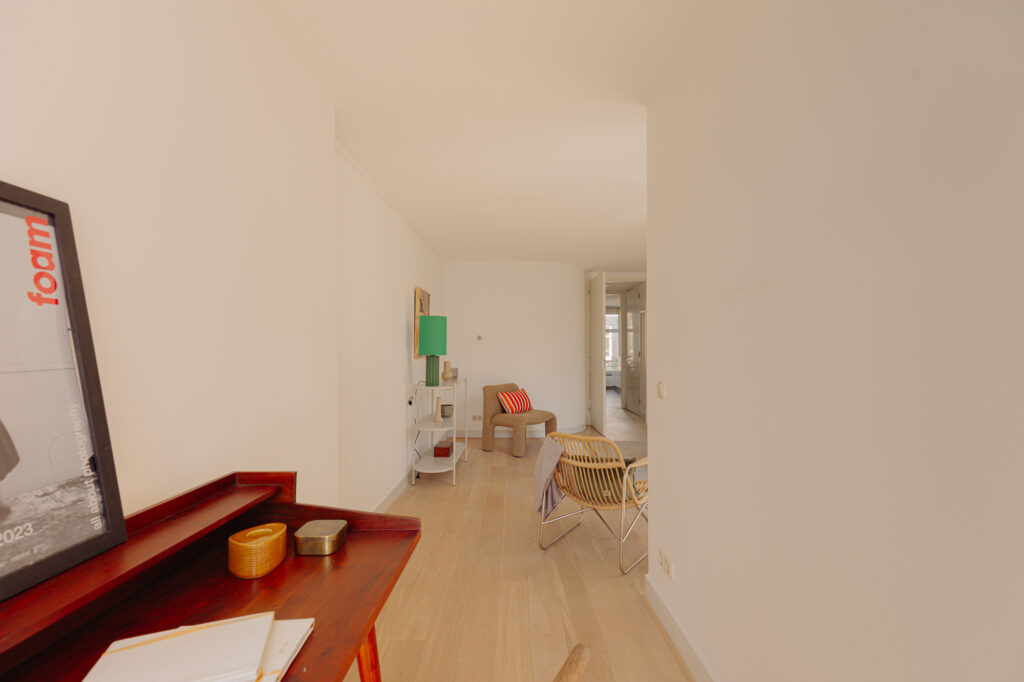
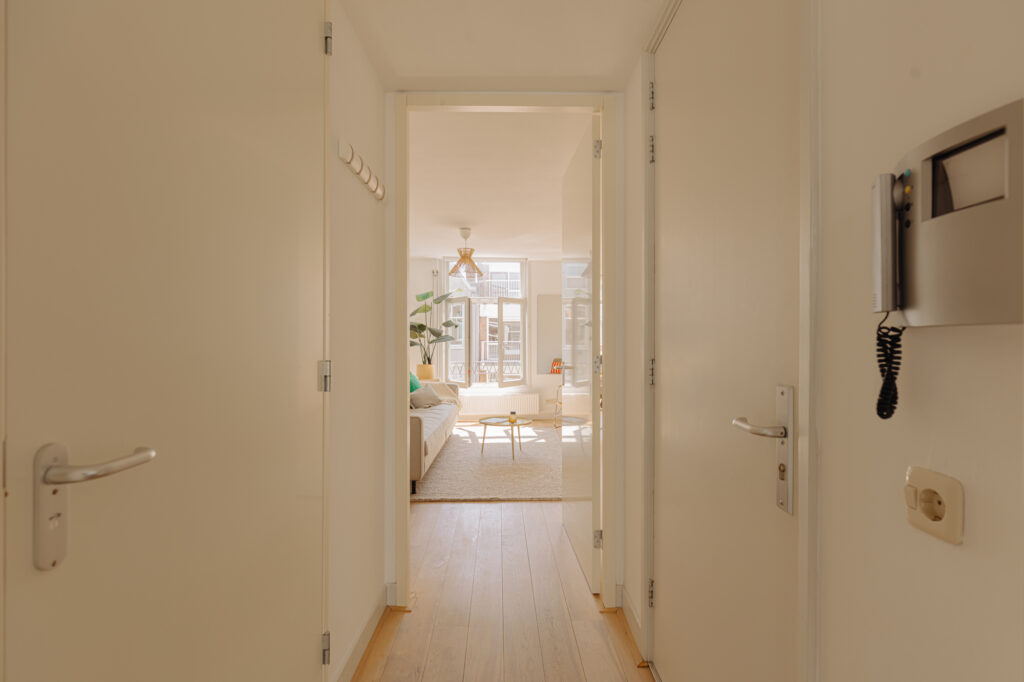
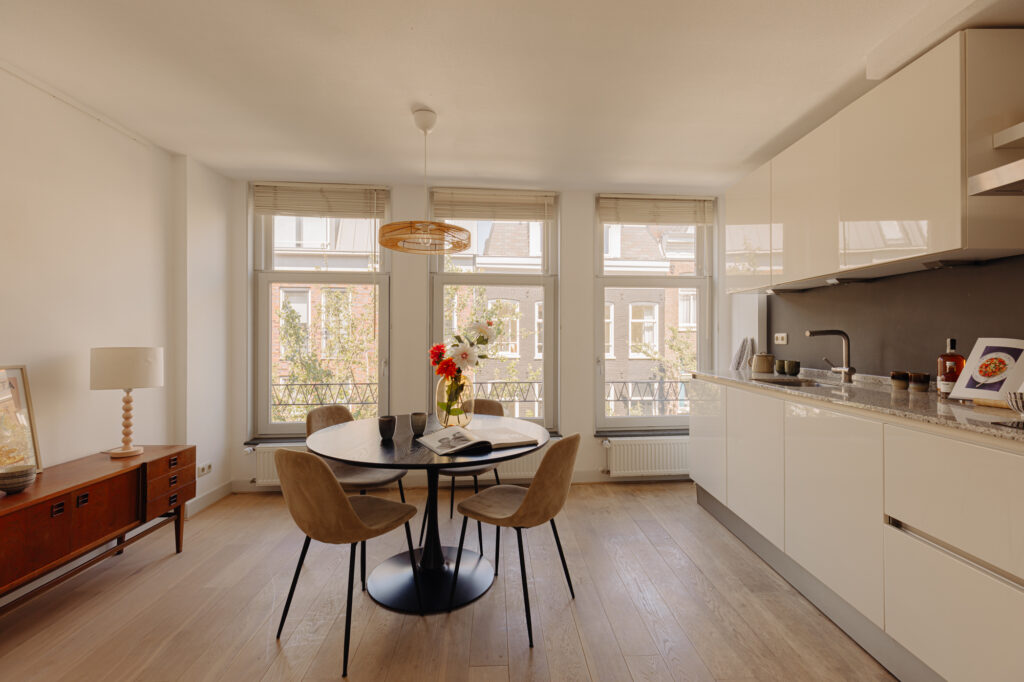
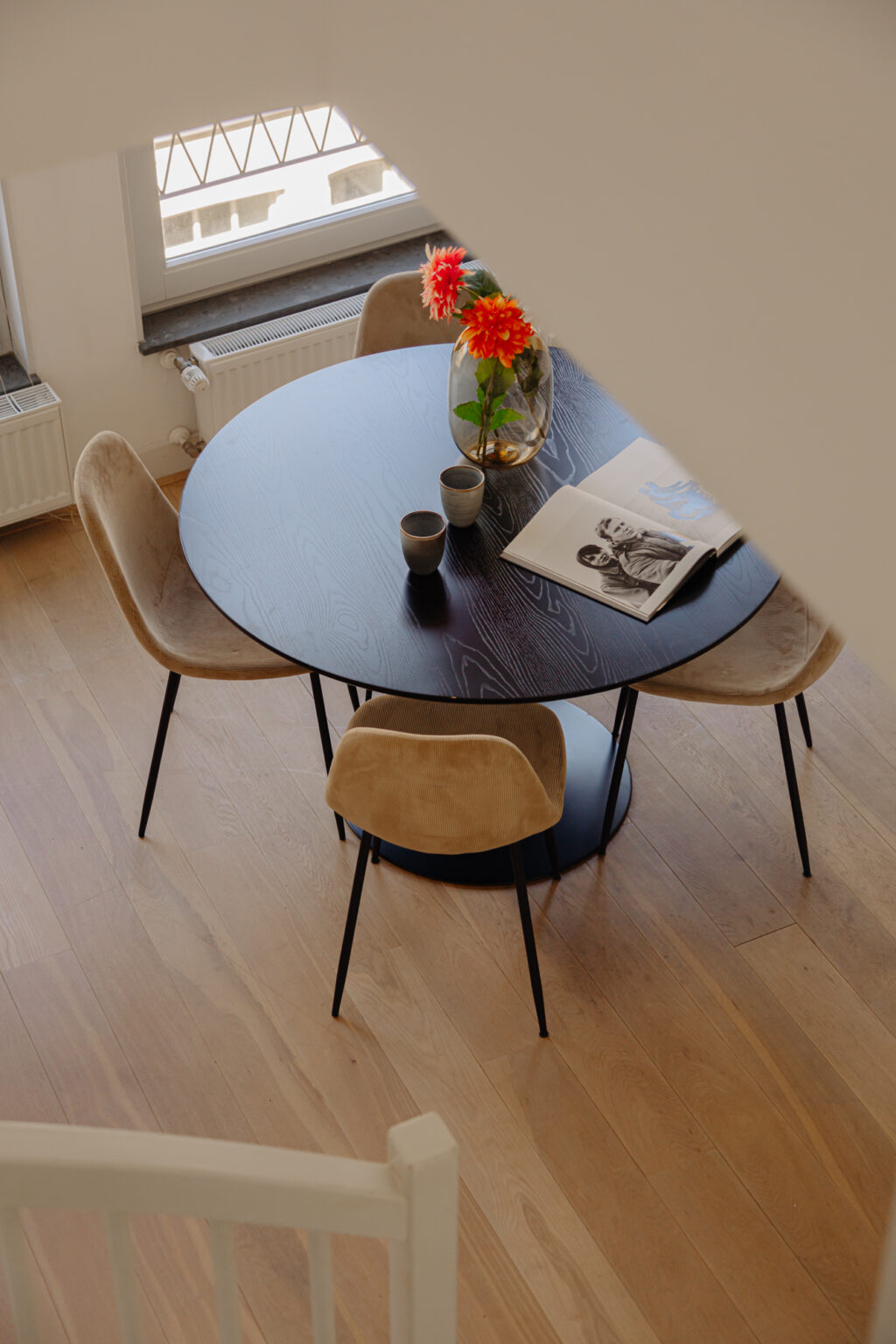
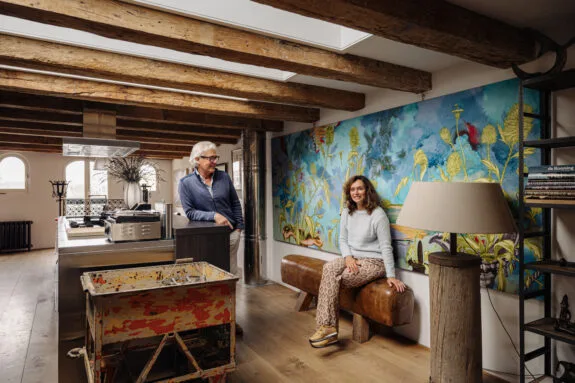
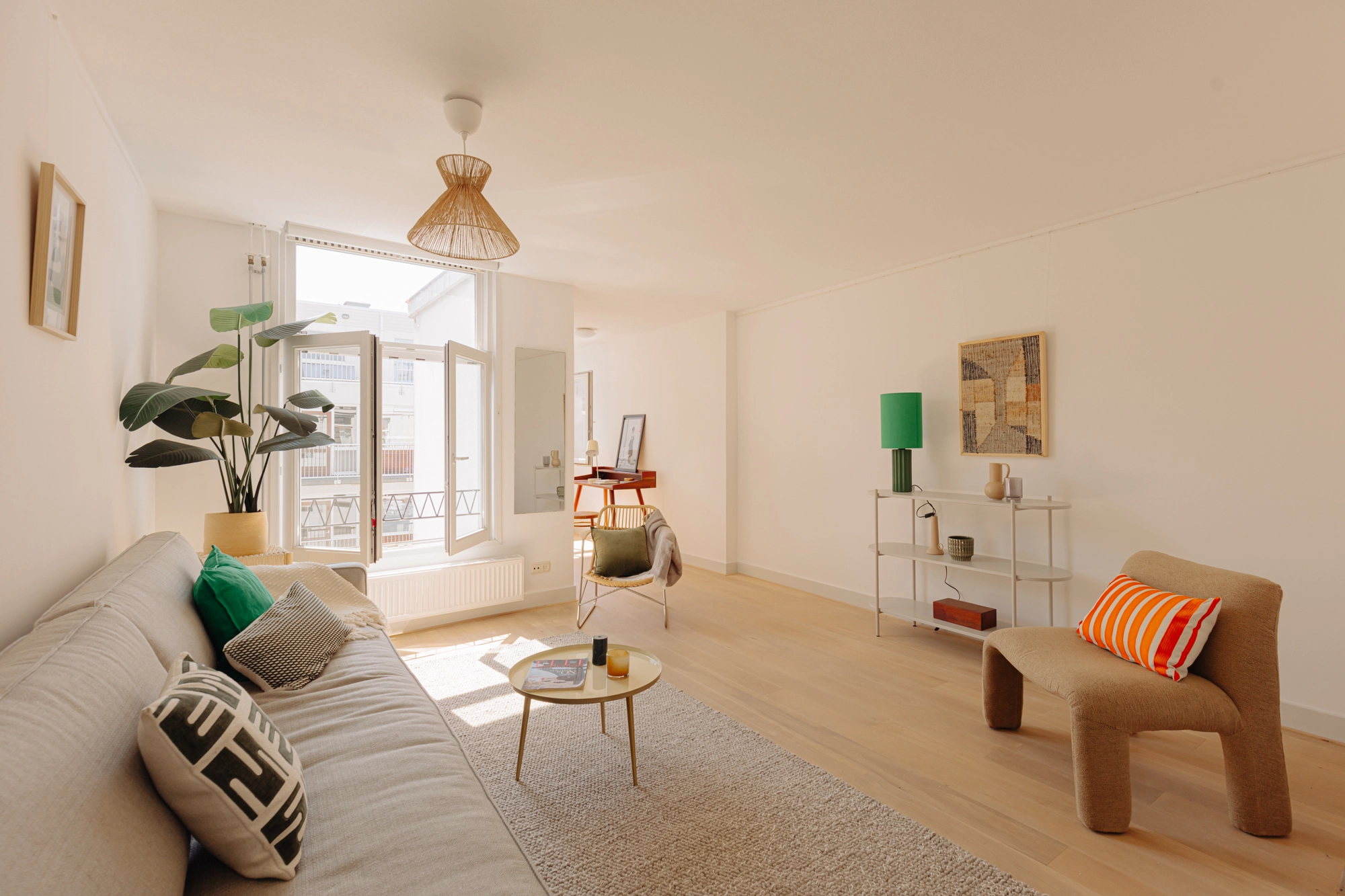
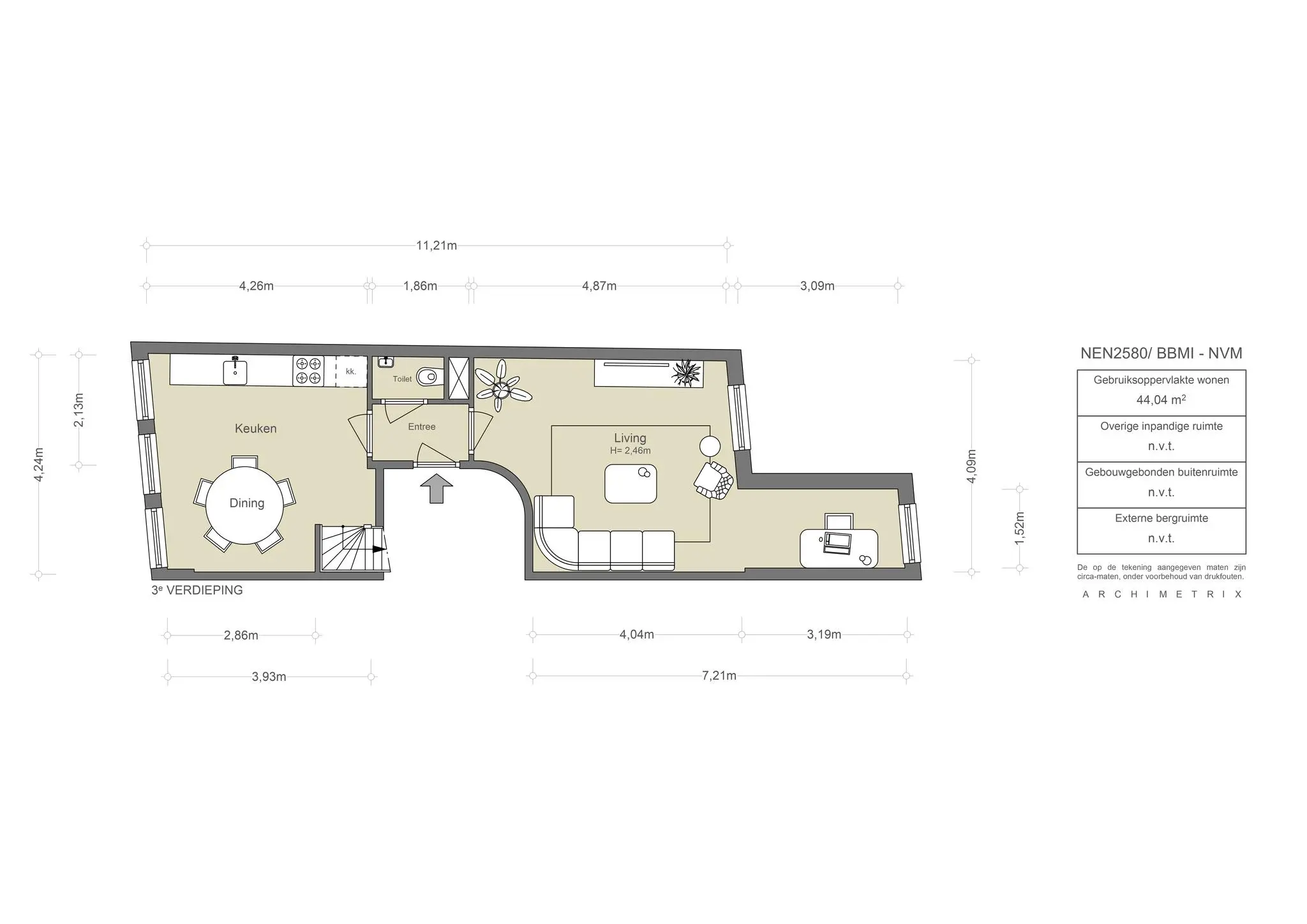
On the third floor, a bright and playful living space unfolds. This level is arranged as a living room and eat-in kitchen, spanning the full depth of the building and separated by the entrance — with cooking at the front and living and working at the rear. Near the entrance, there is also a separate toilet with a washbasin.
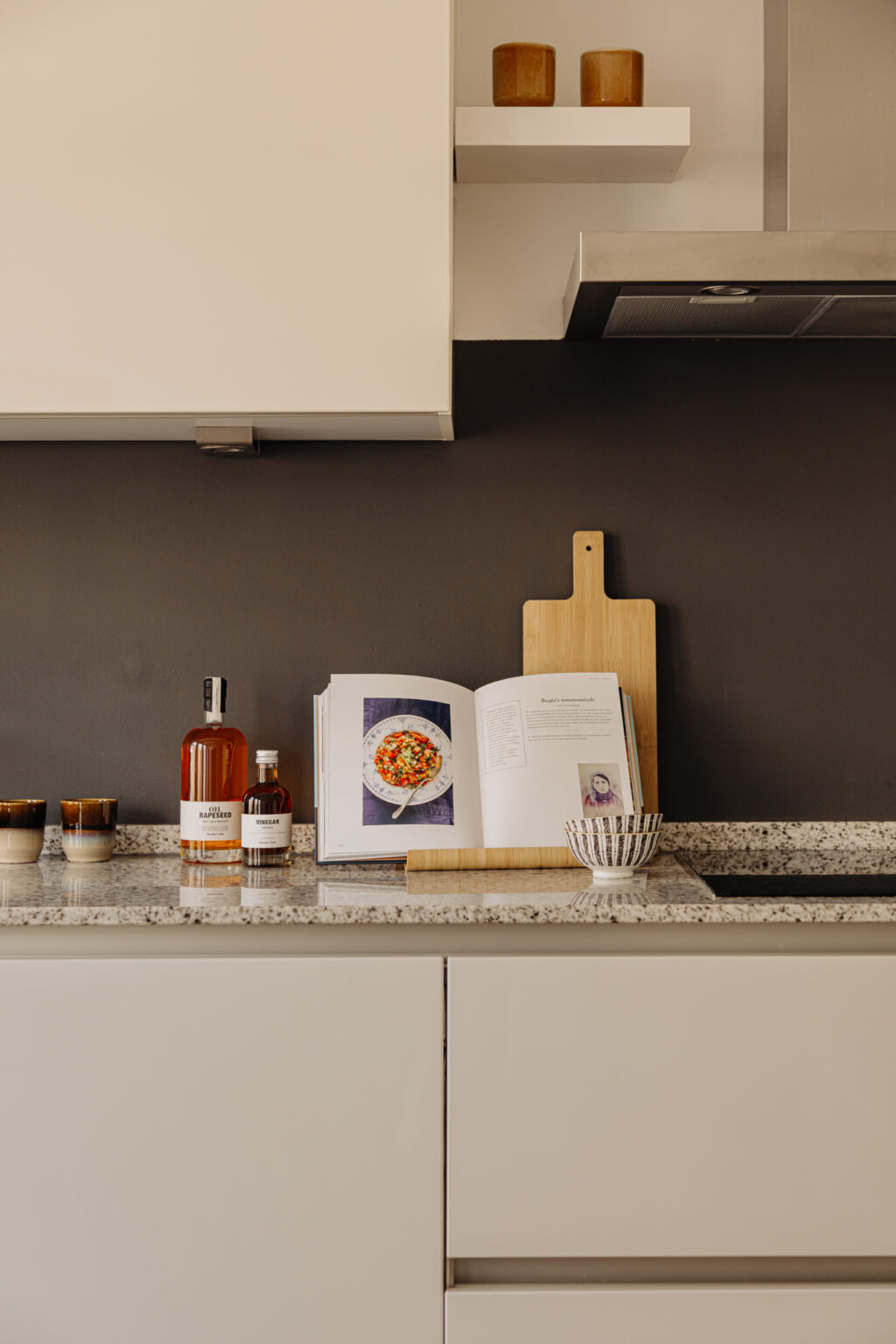
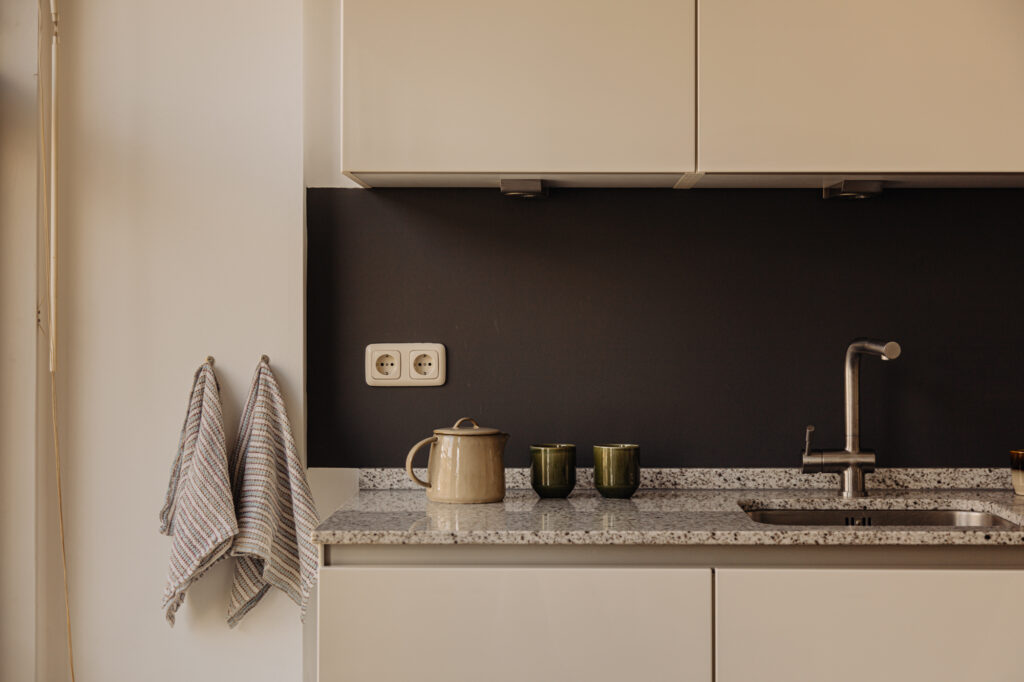
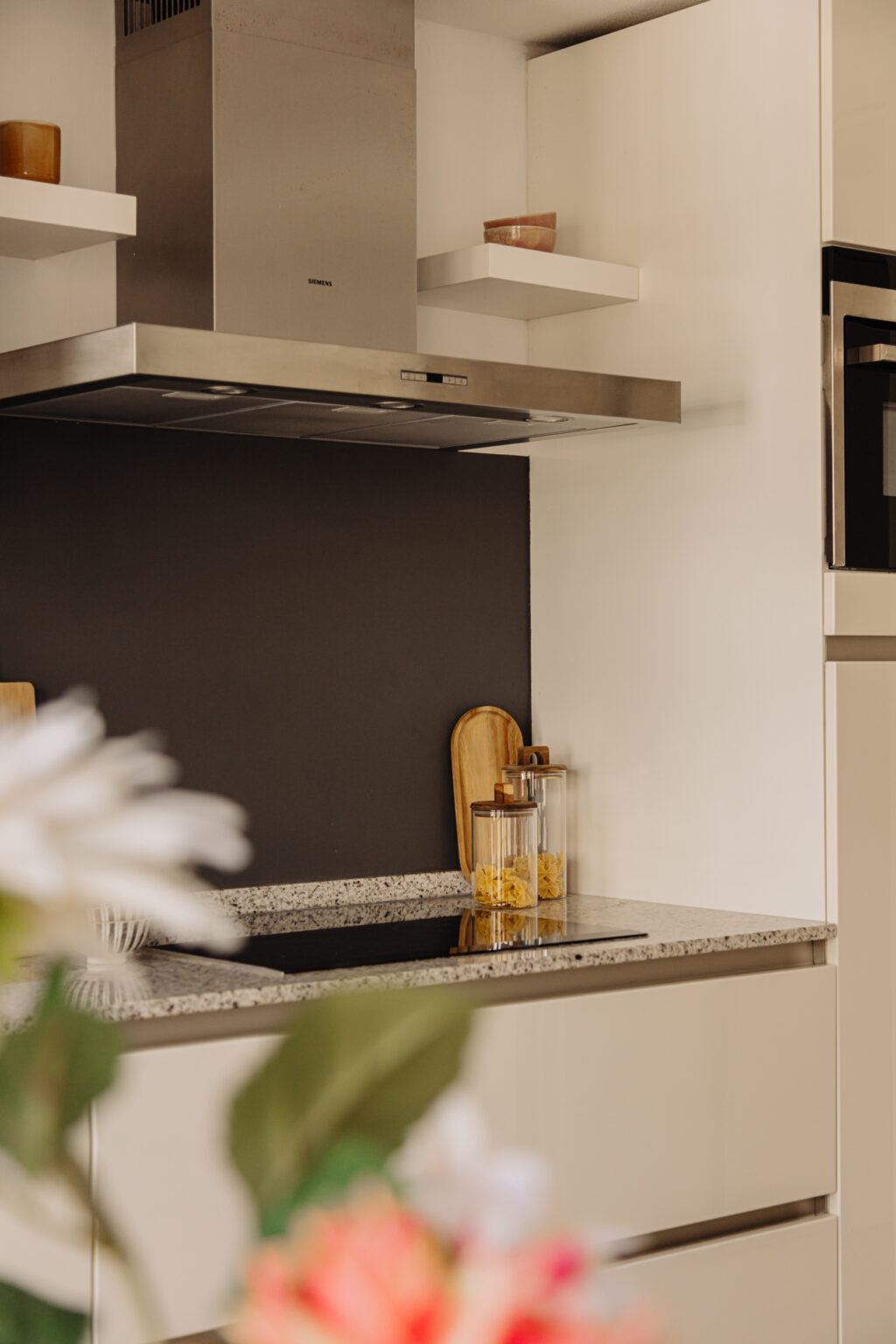
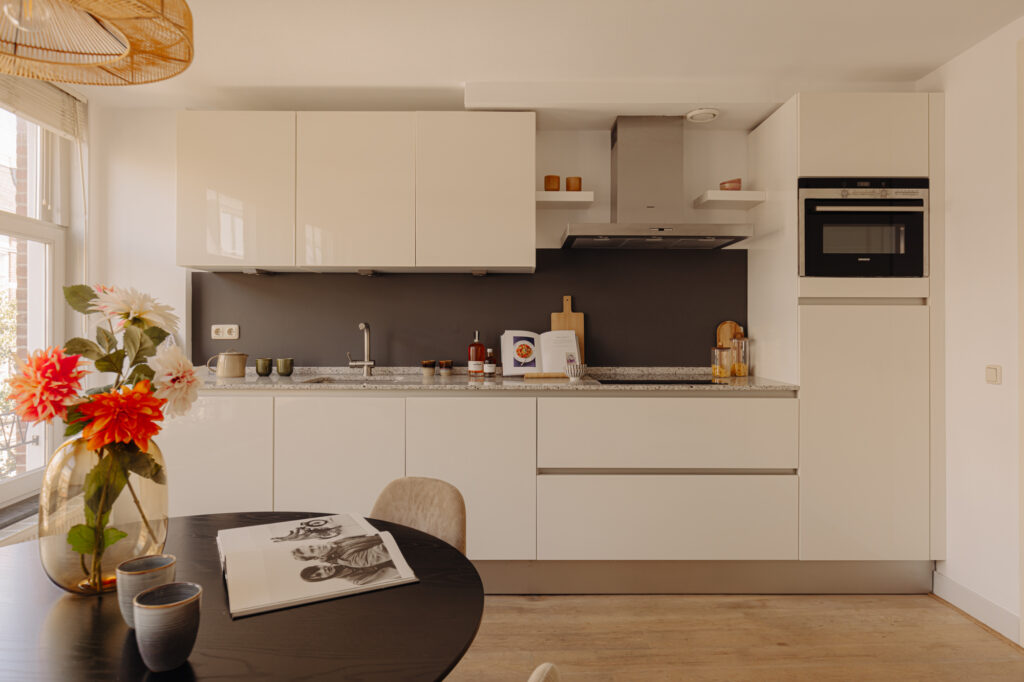
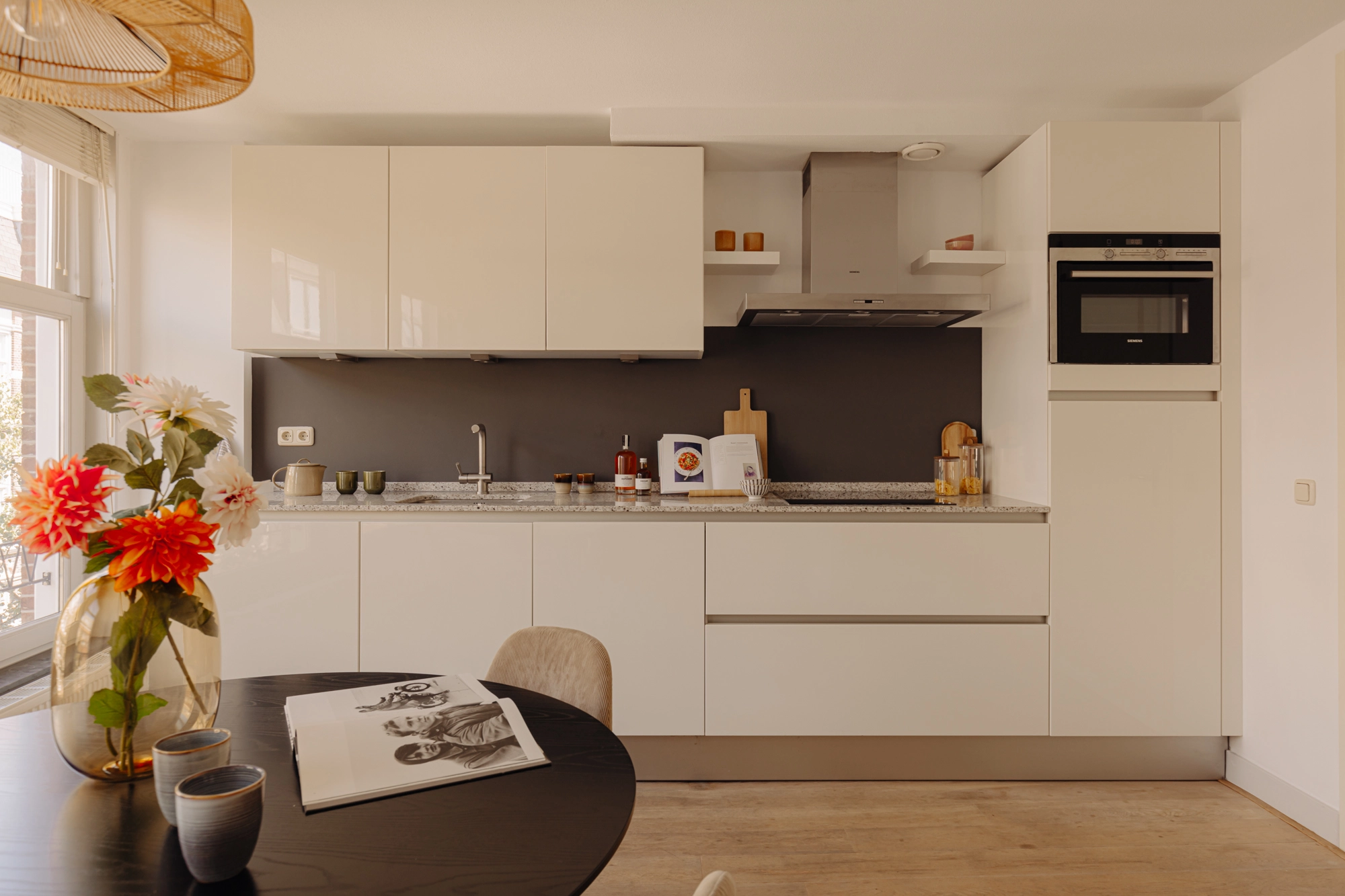
The kitchen is clean-lined and minimalist, with handleless high-gloss white cabinets and a granite countertop. A built-in cabinet wall houses modern appliances, and the long worktop offers ample space for cooking or placing a coffee machine. Three tall windows at the front bring in abundant daylight and create a strong connection with the street.
Both floors are finished with a neat wooden floor.
Fourth floor
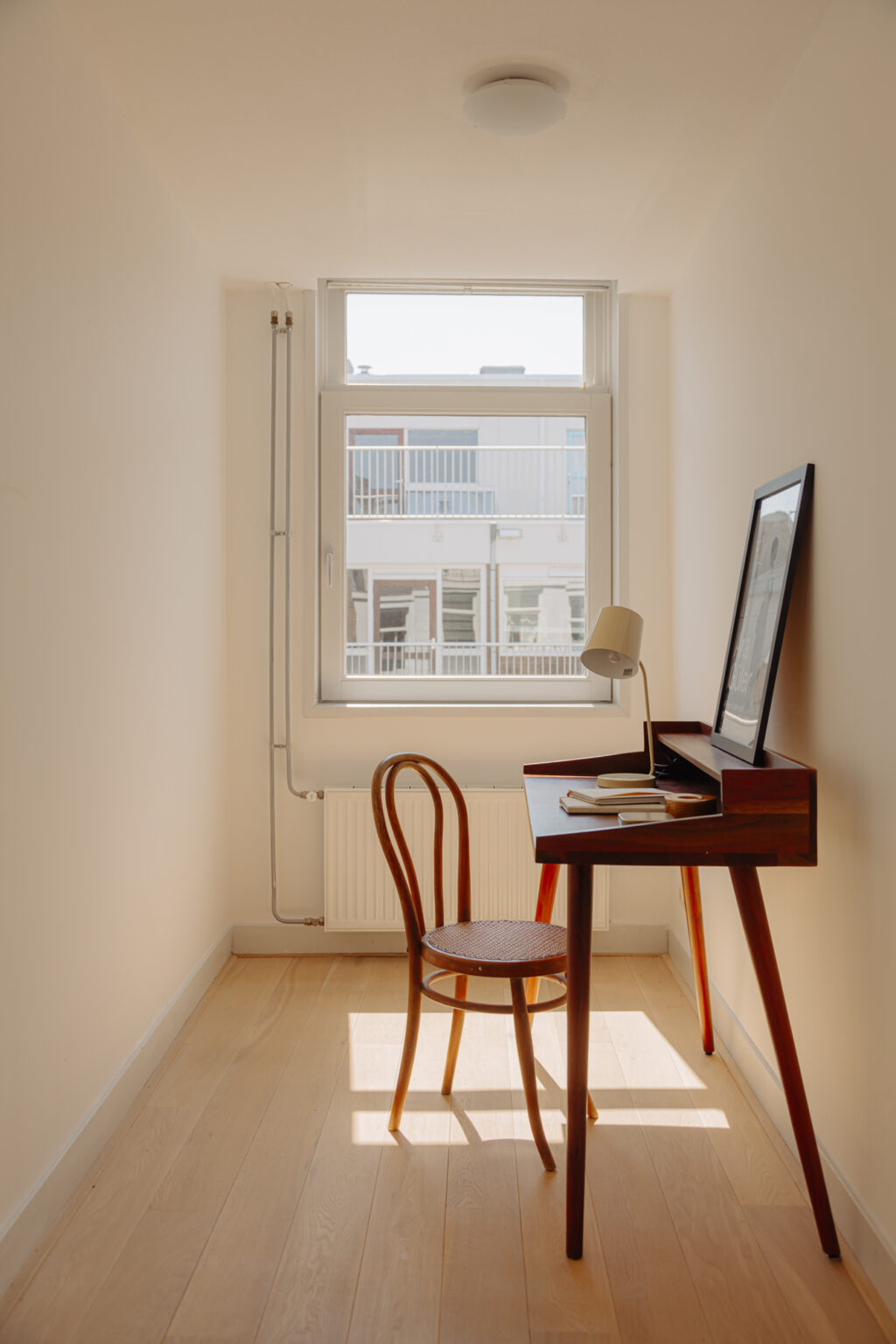
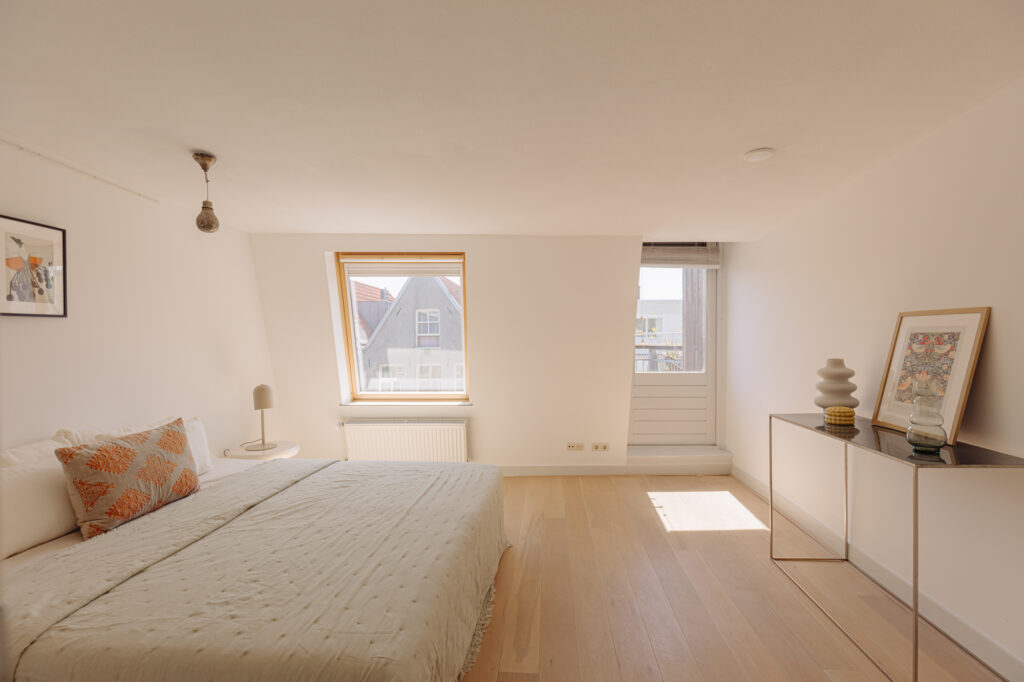
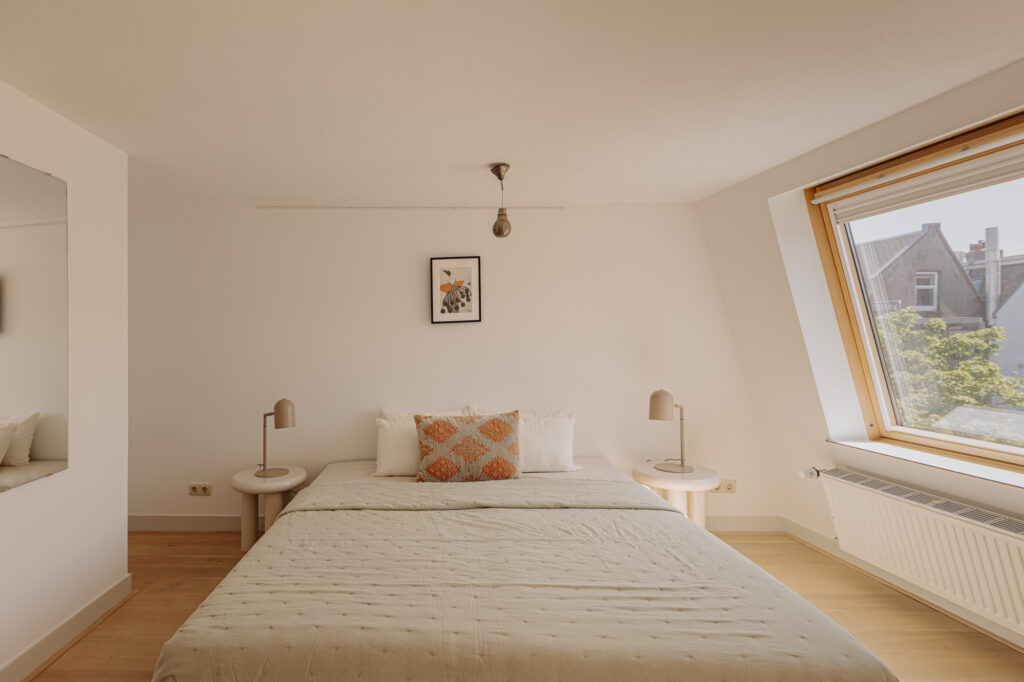
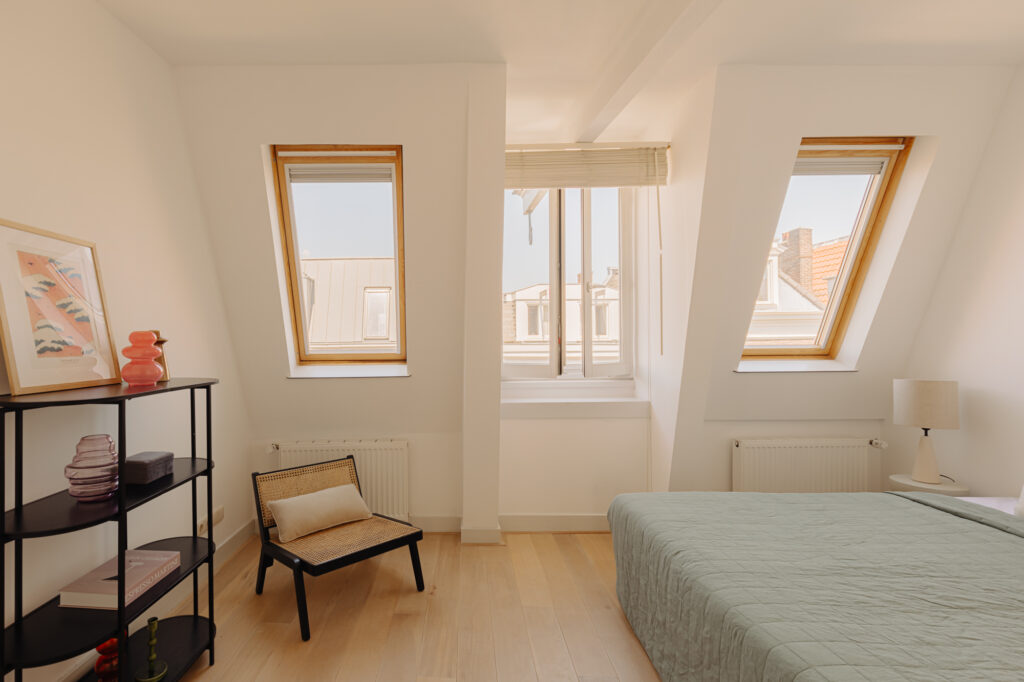
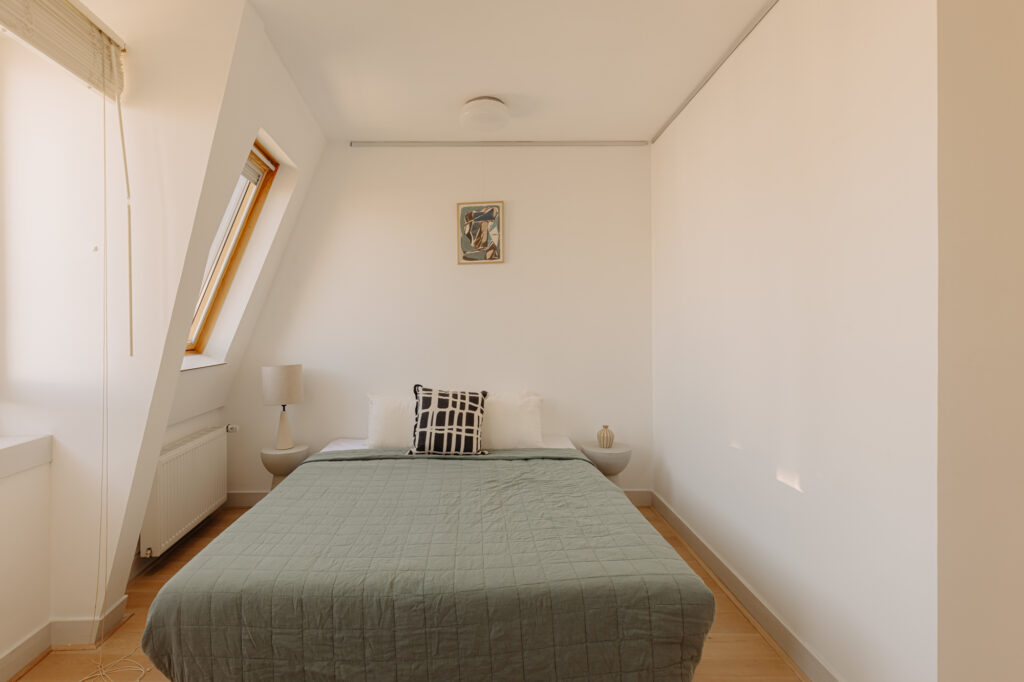
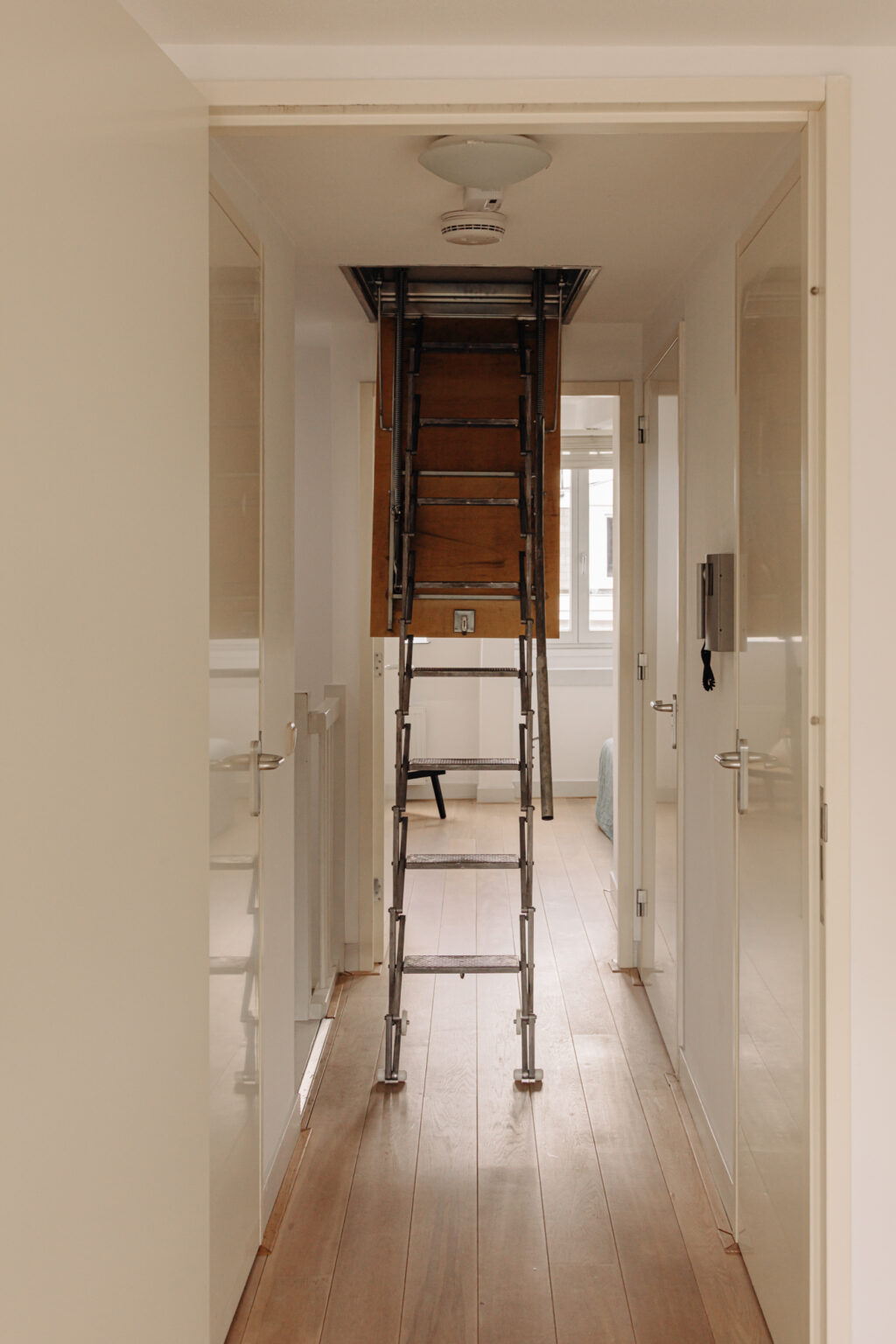
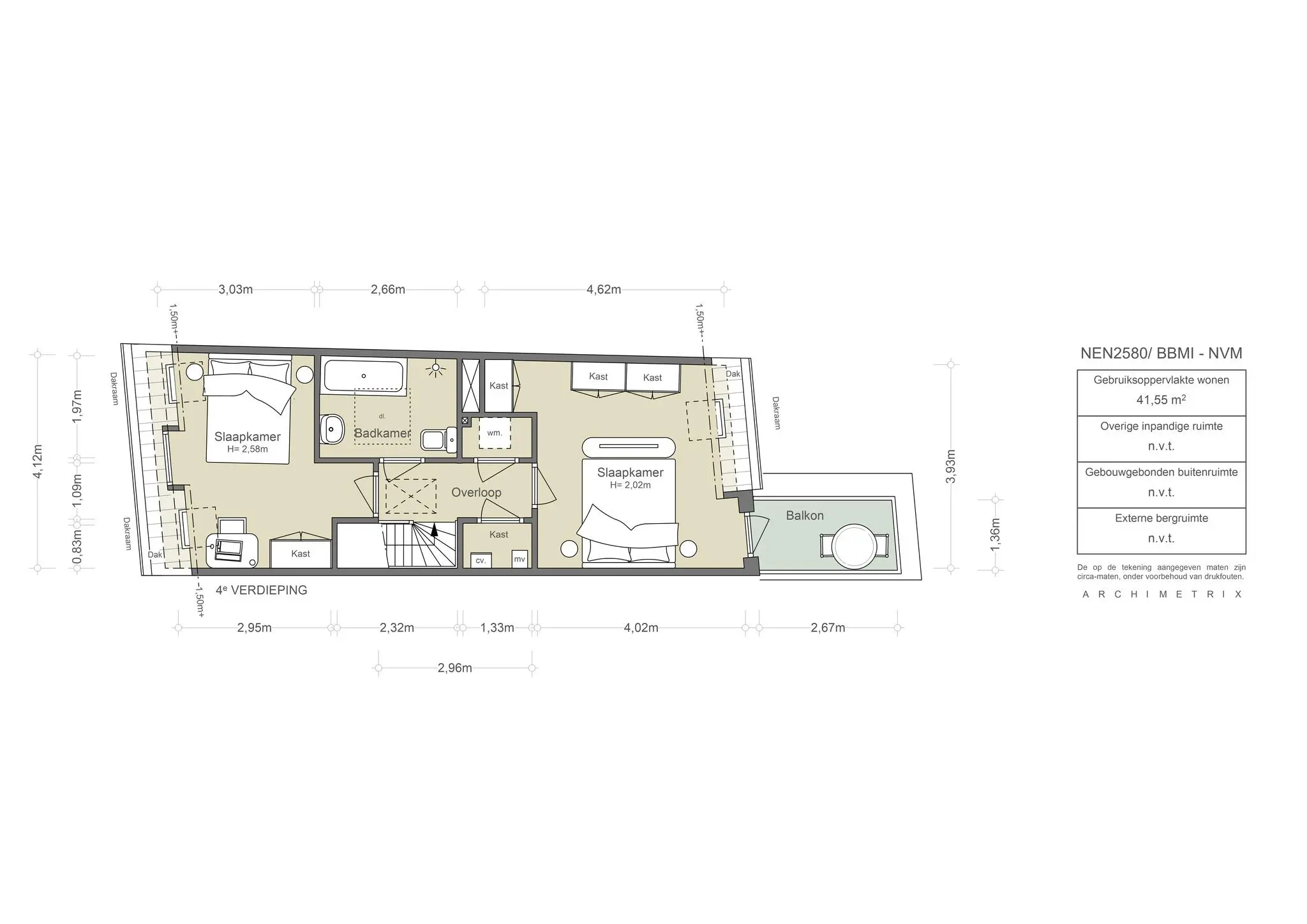
On the fourth floor lies the sleeping level — a quiet upper layer above the lively living space below. The main bedroom is situated at the rear and opens directly onto the south-facing balcony. The second bedroom is located at the front and benefits from a wide façade with three windows. Both rooms are spacious enough to accommodate a double bed, a workspace, or additional storage.
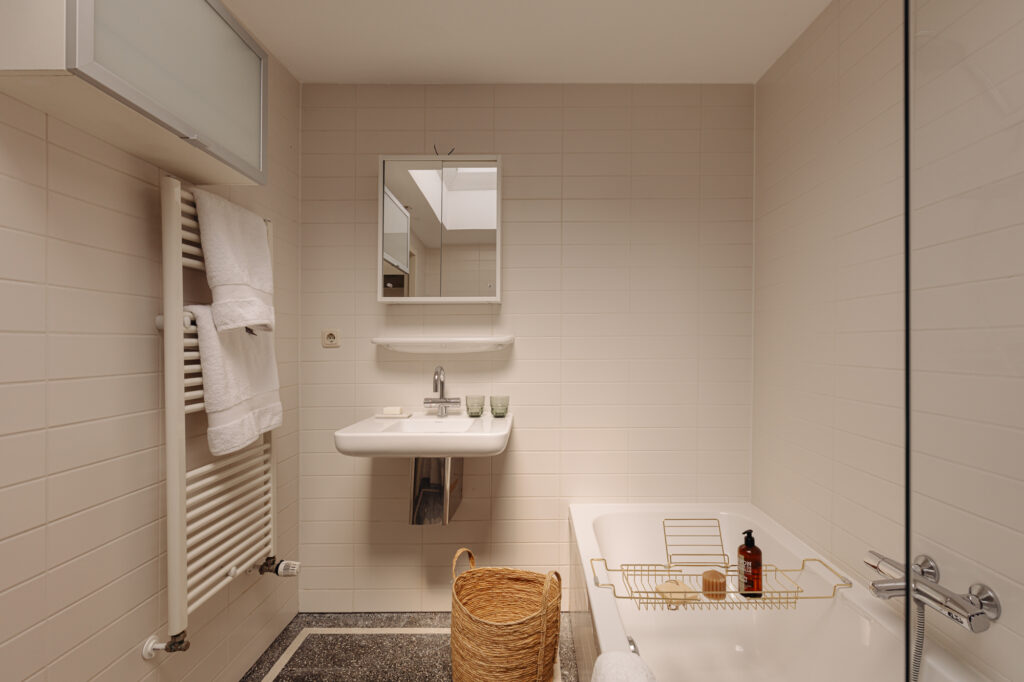
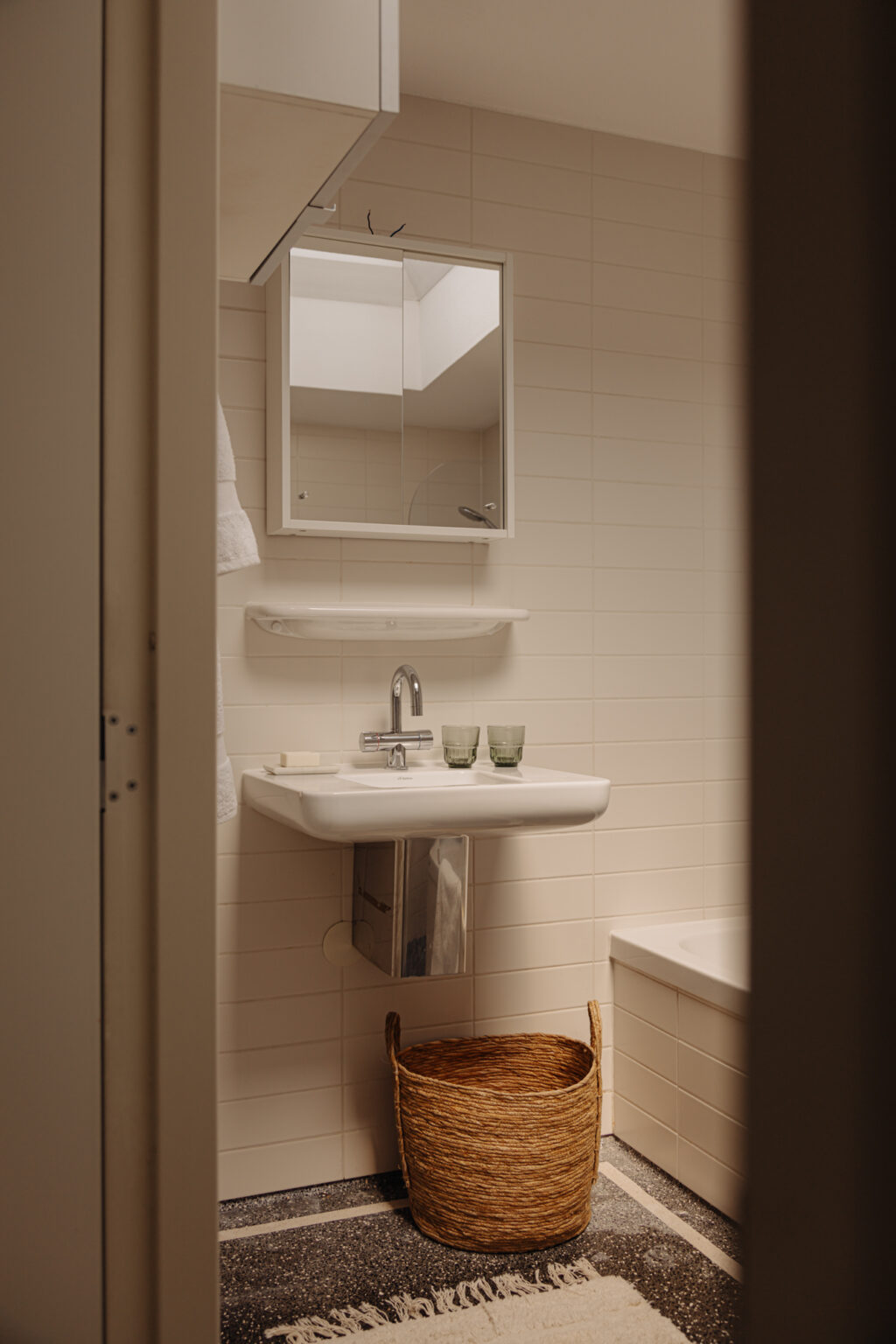
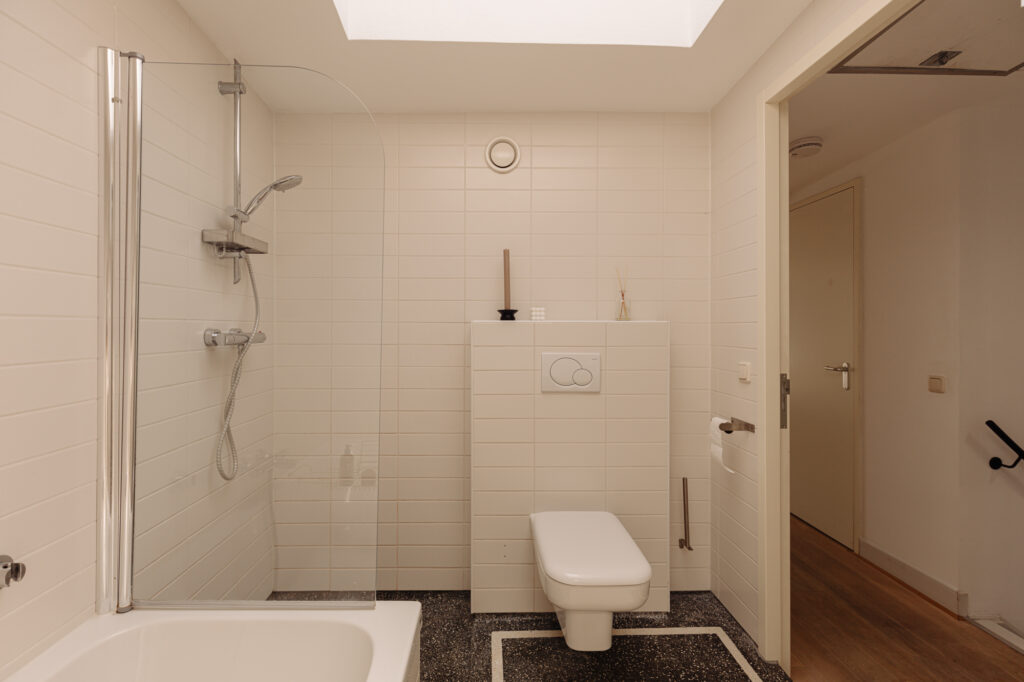
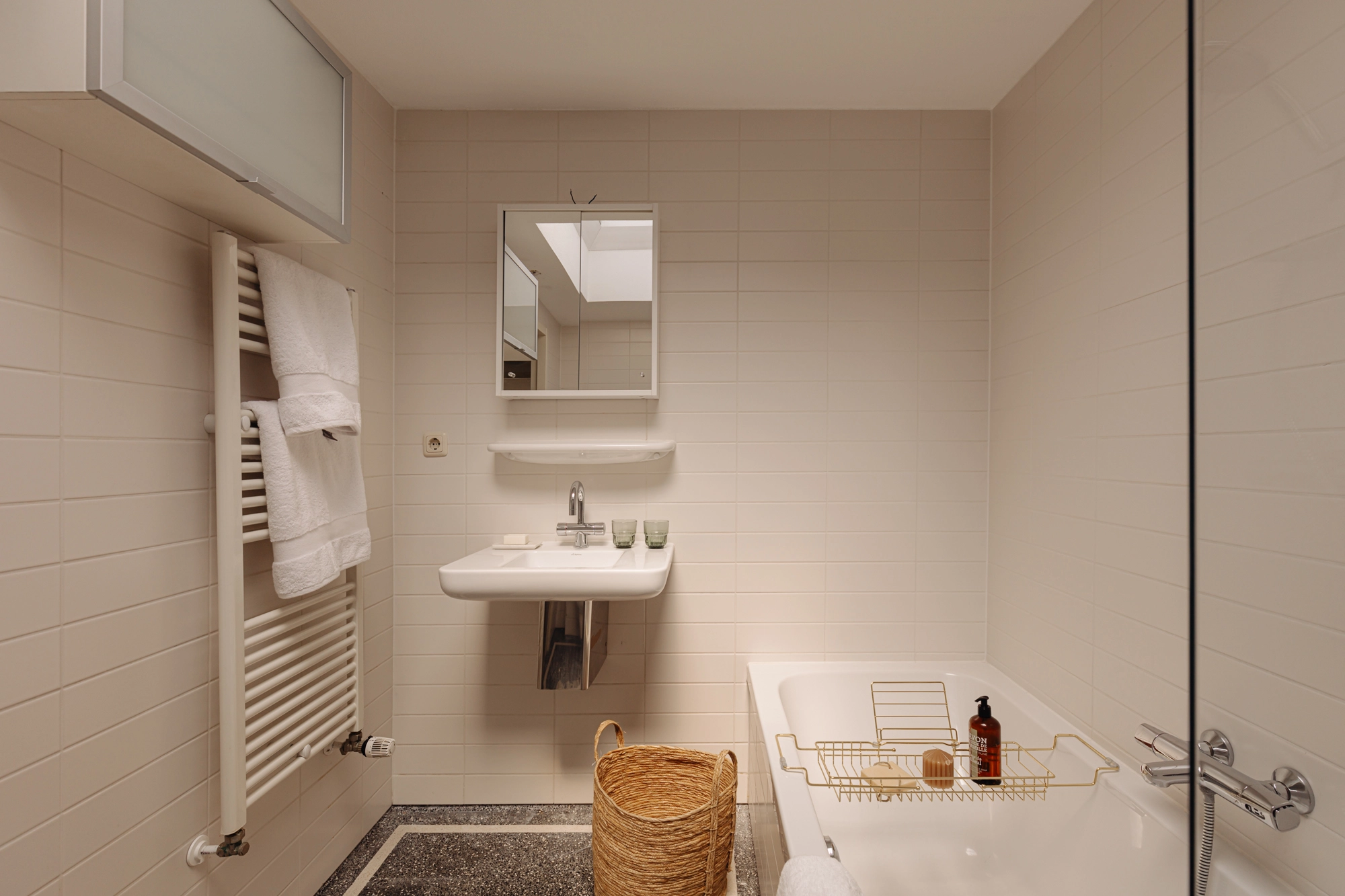
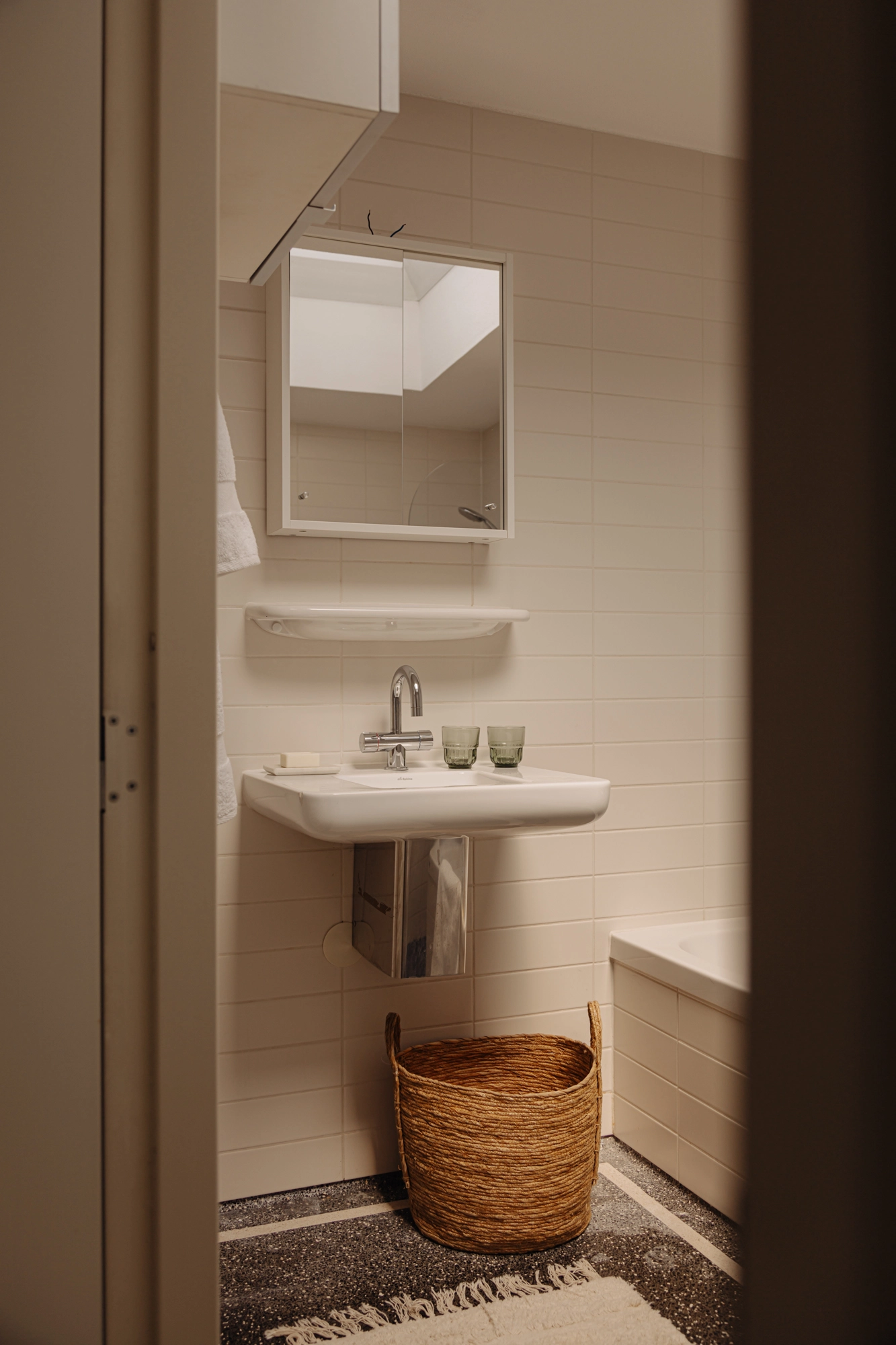
Between the two bedrooms lies the central bathroom — tiled in a bright, clean style, both functional and well maintained. The room is fully equipped with a bathtub and separate shower, a toilet, and a washbasin with mirror. The black terrazzo floor with white edging adds a graphic accent to the otherwise soft, neutral atmosphere. A skylight brings in natural daylight, even at the center of the home.
Outdoor Space
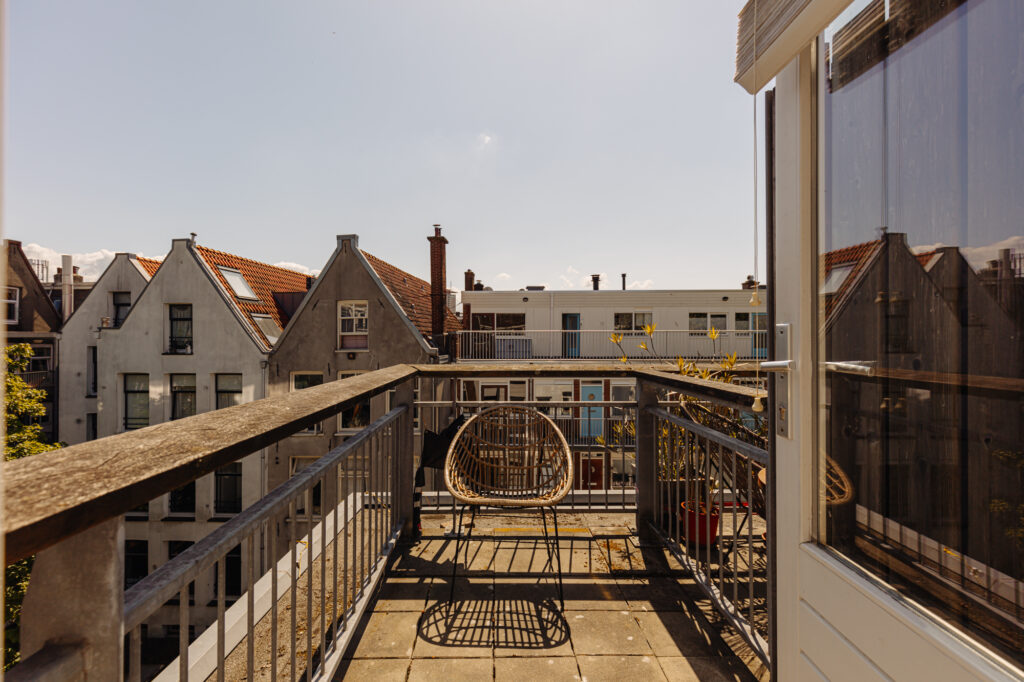
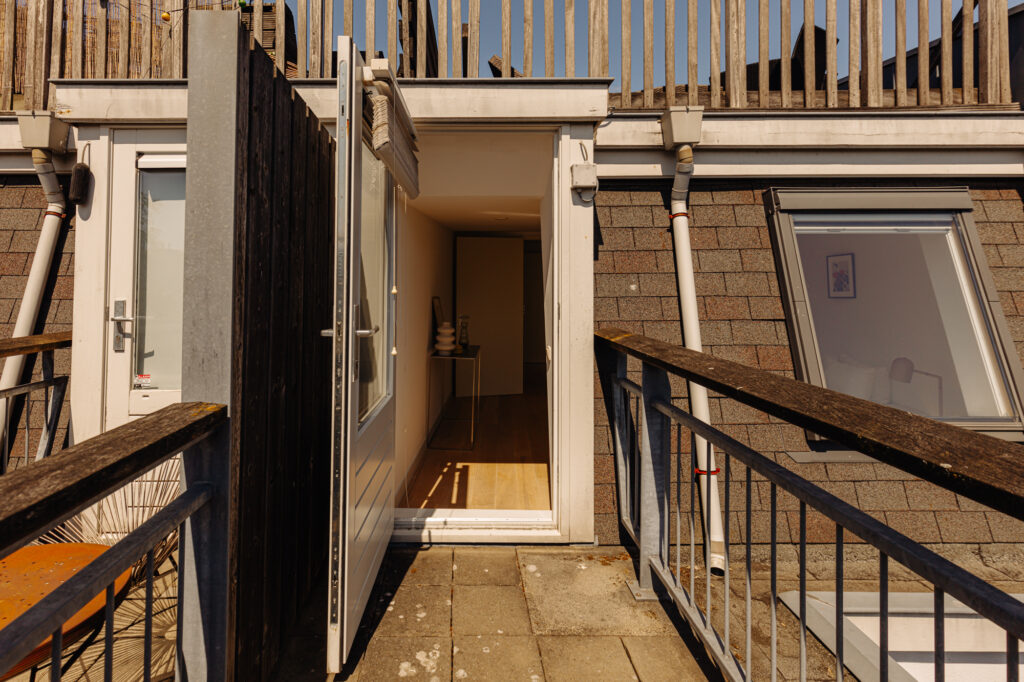
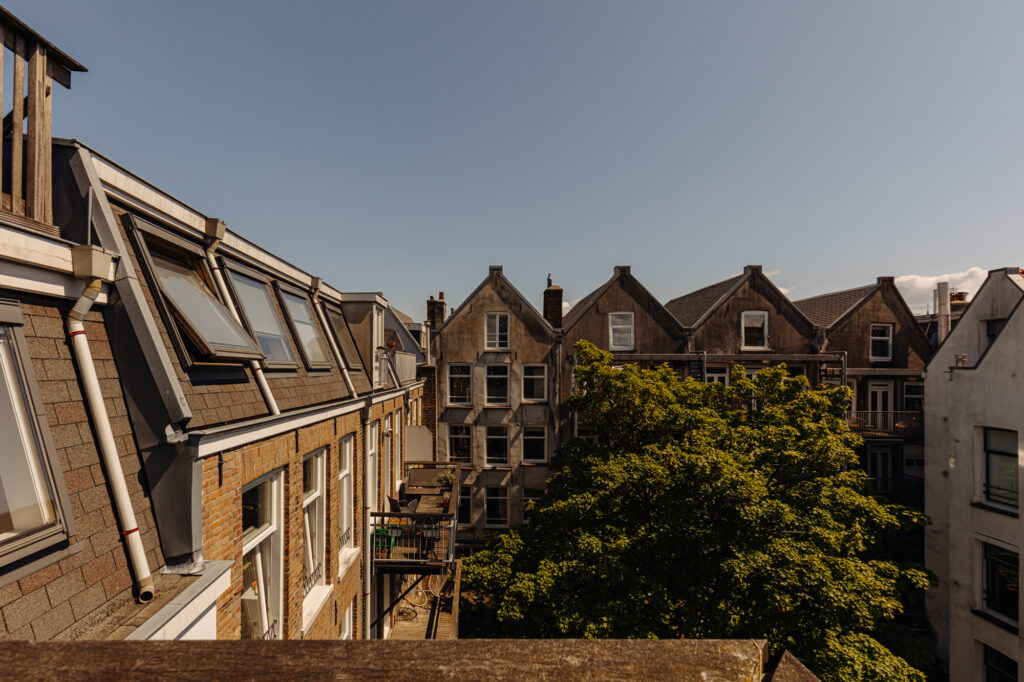
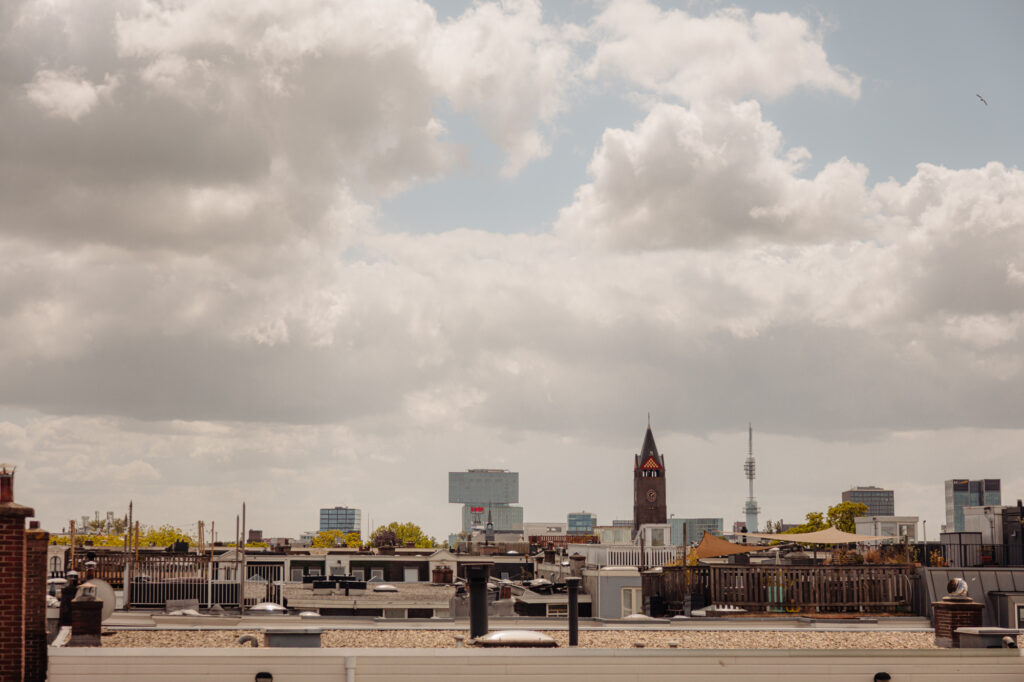
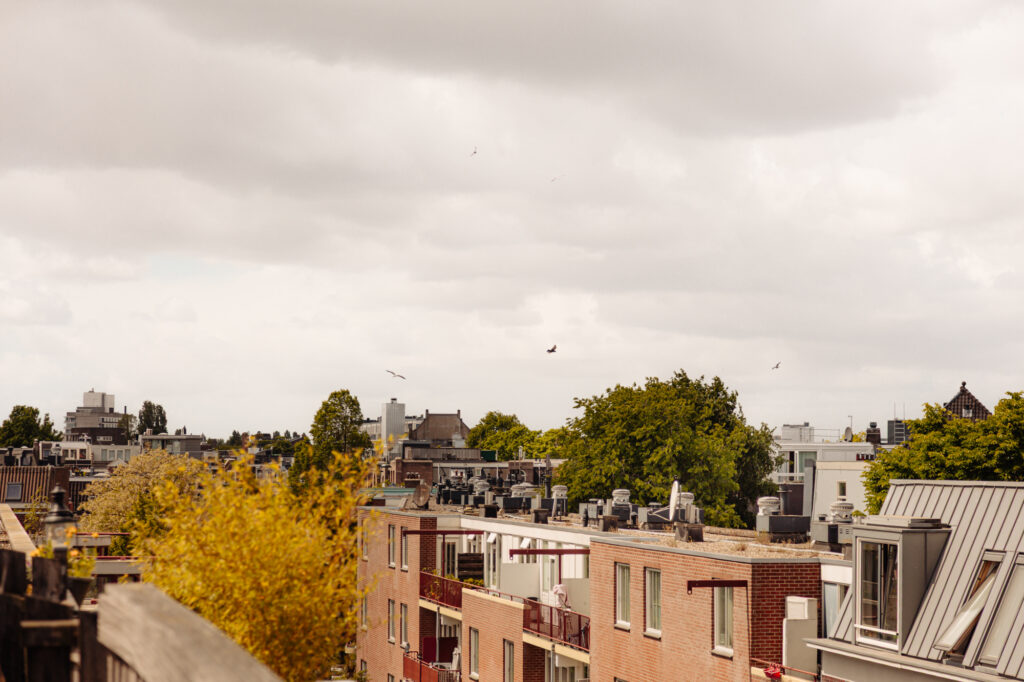
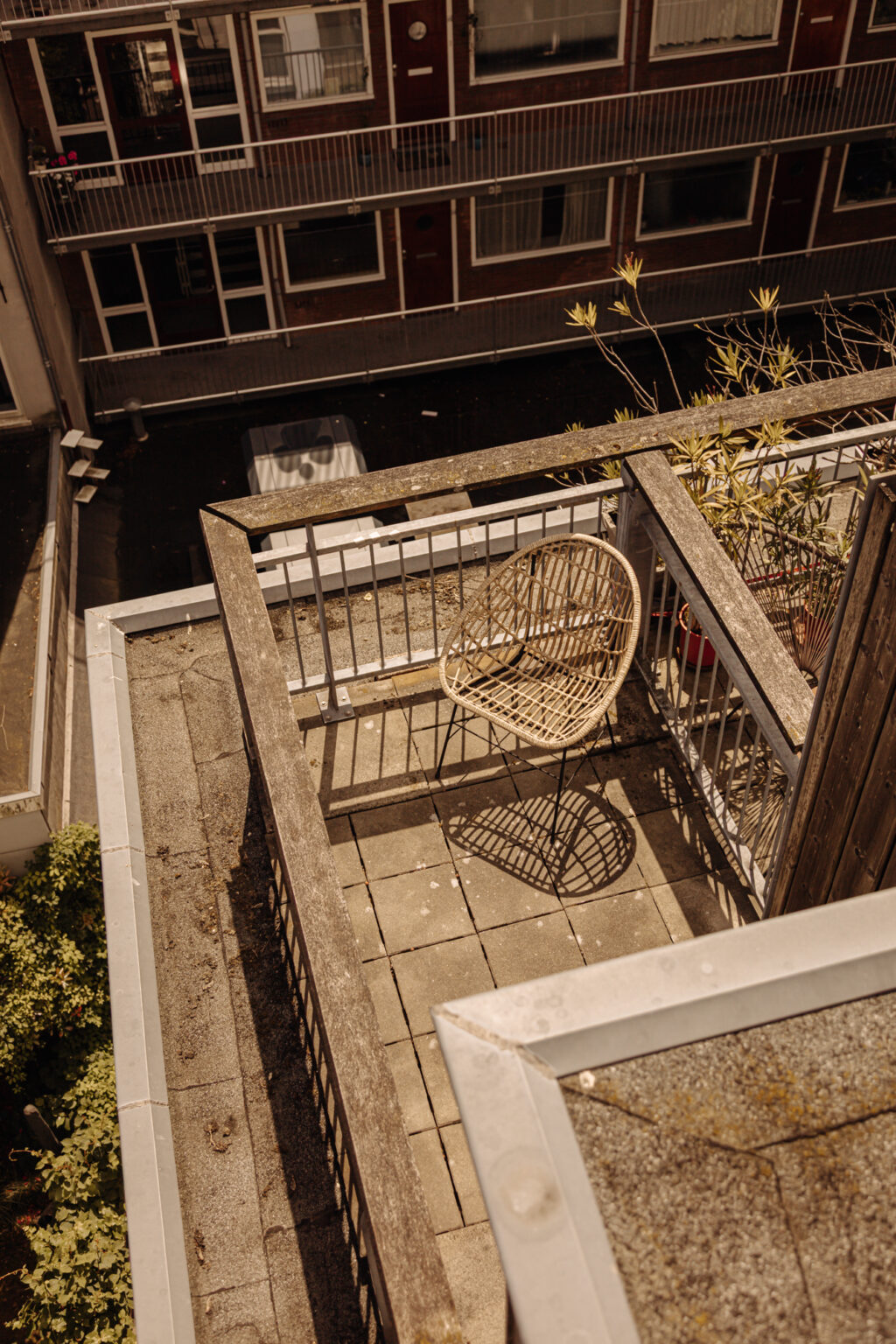
From the primary bedroom, step directly onto the balcony — a quiet spot between the rooftops of De Pijp, with views of leafy courtyards and historic façades.
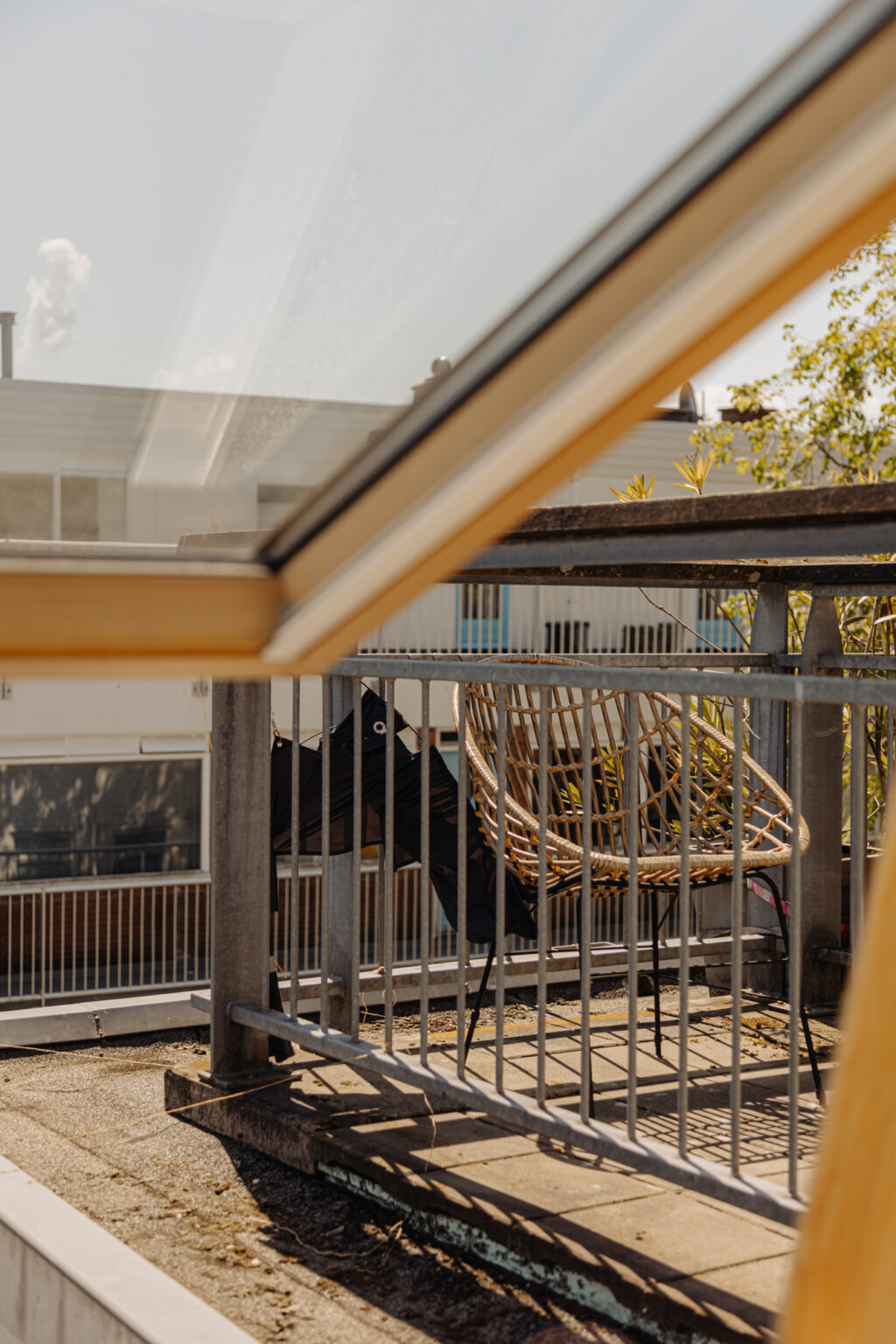
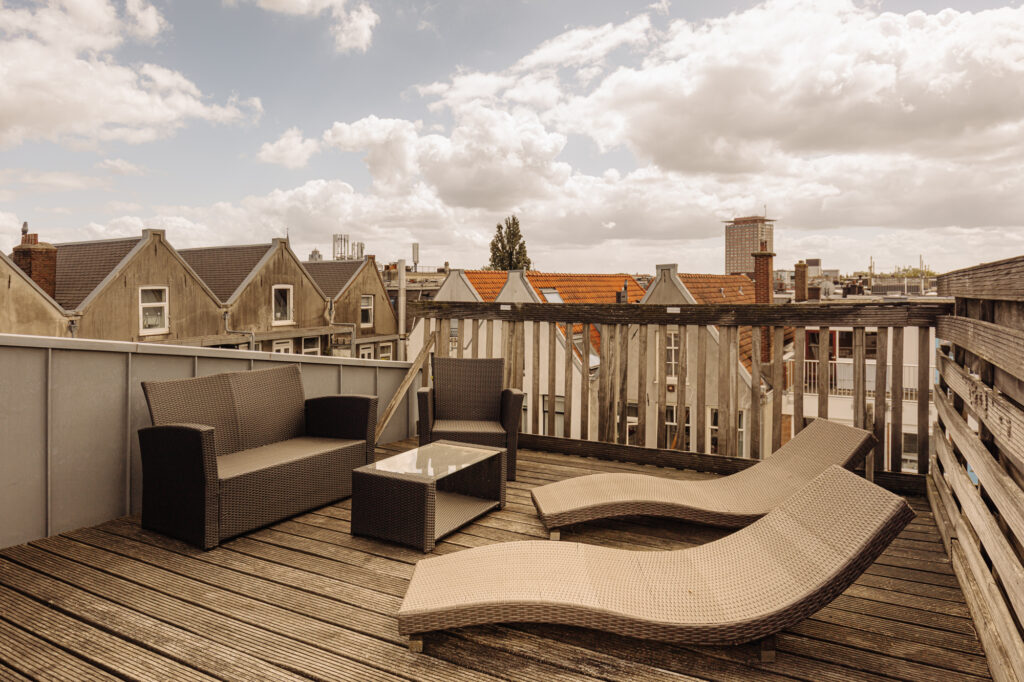
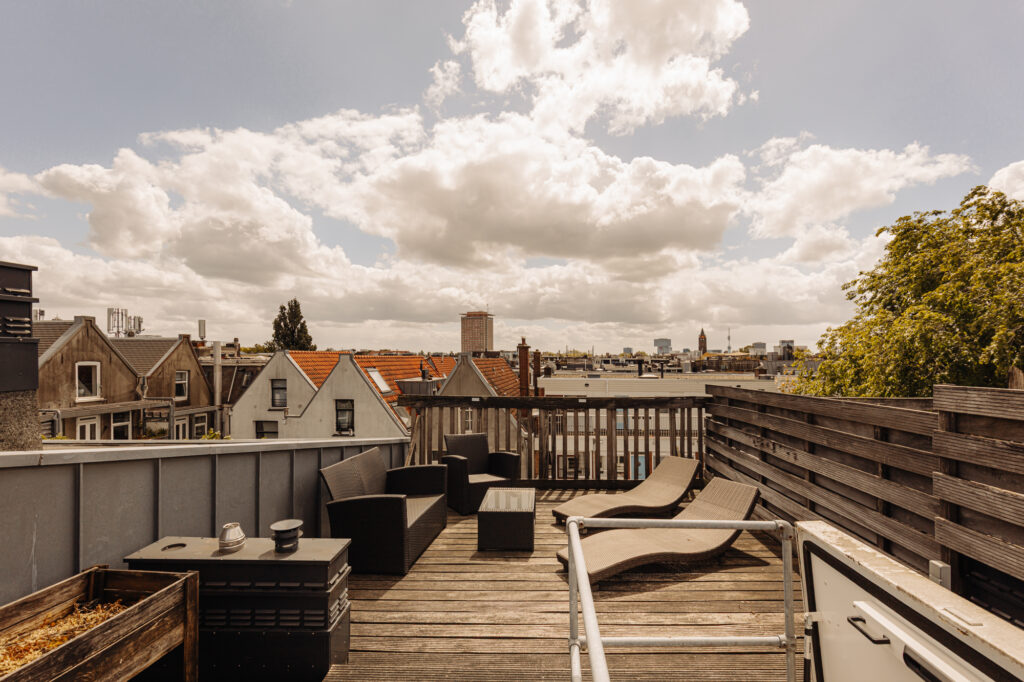
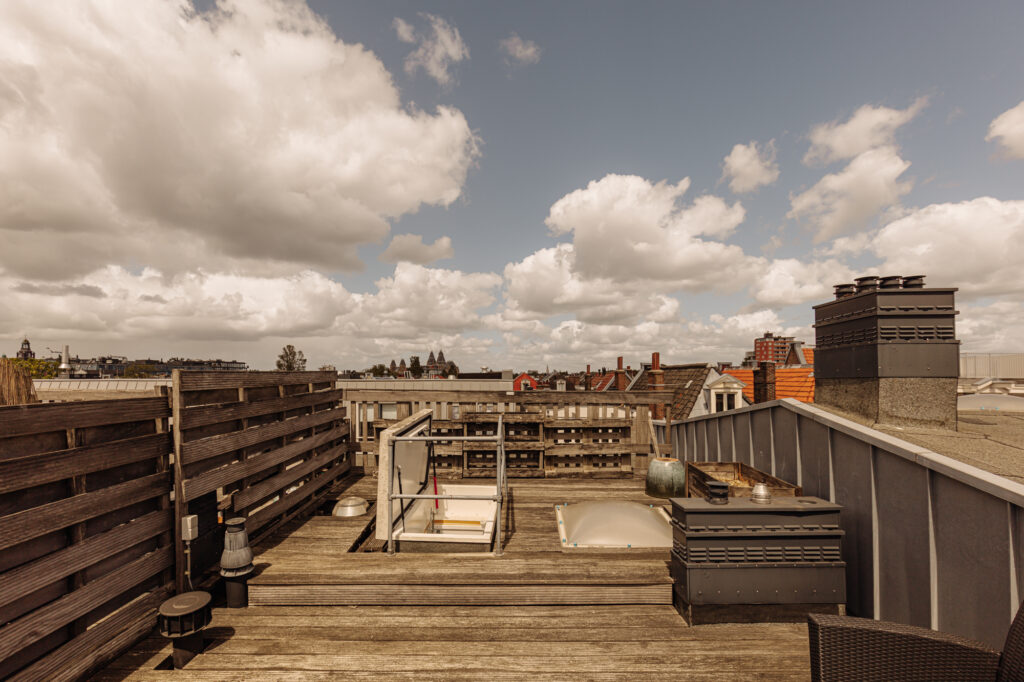
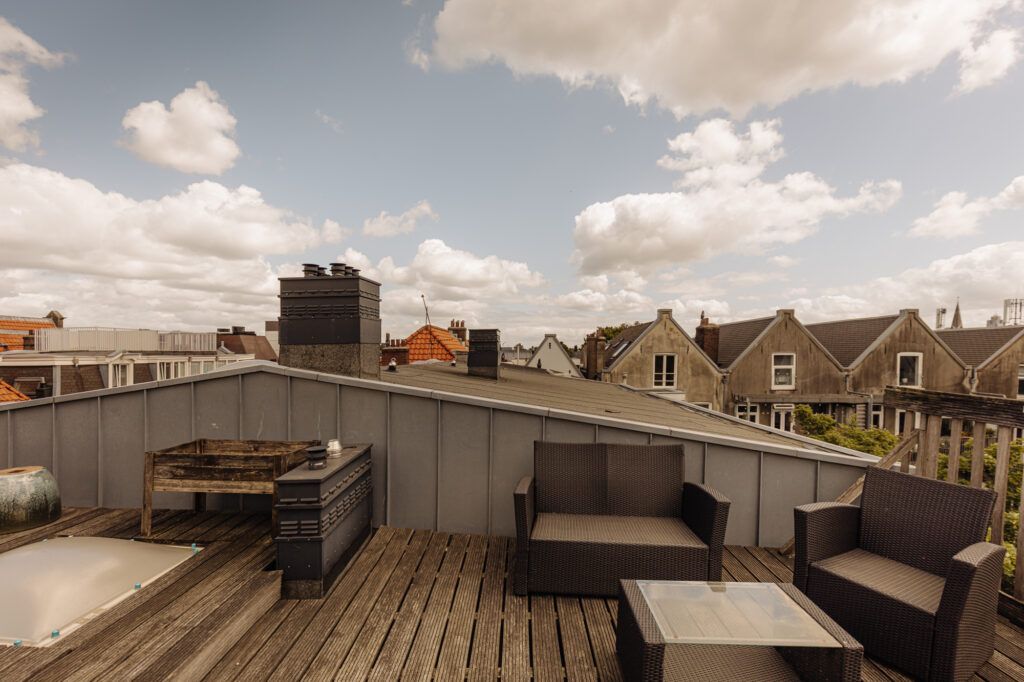
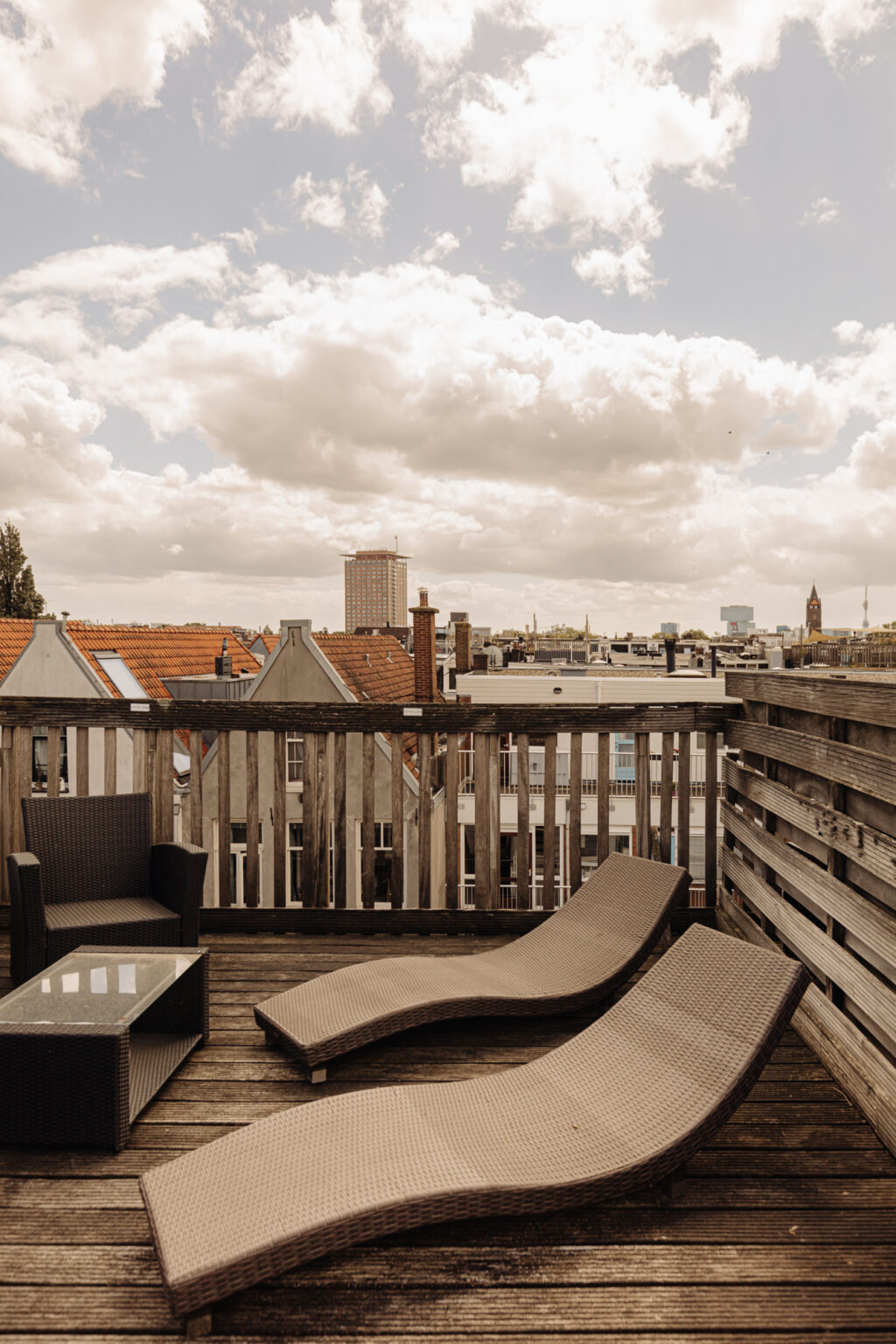
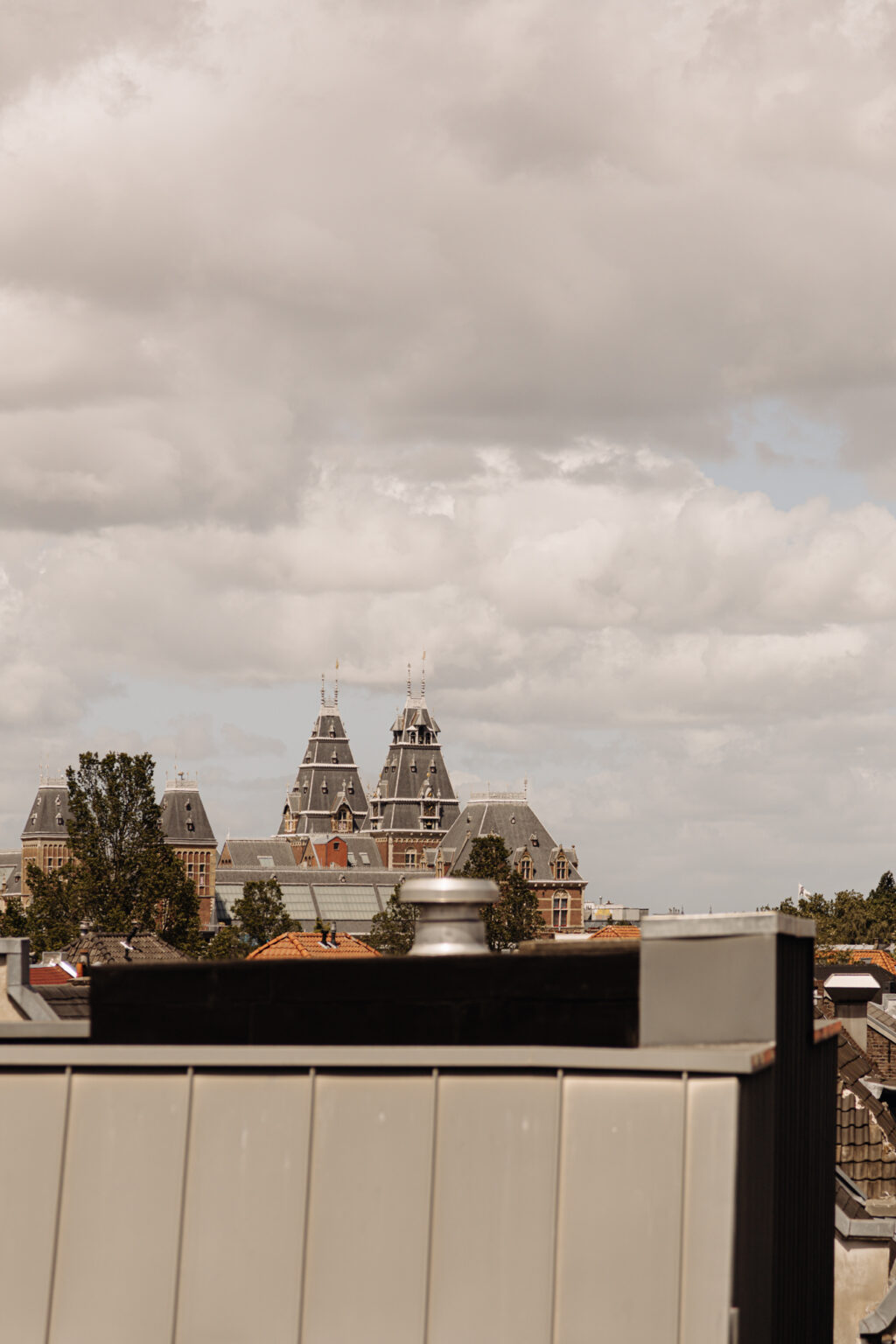
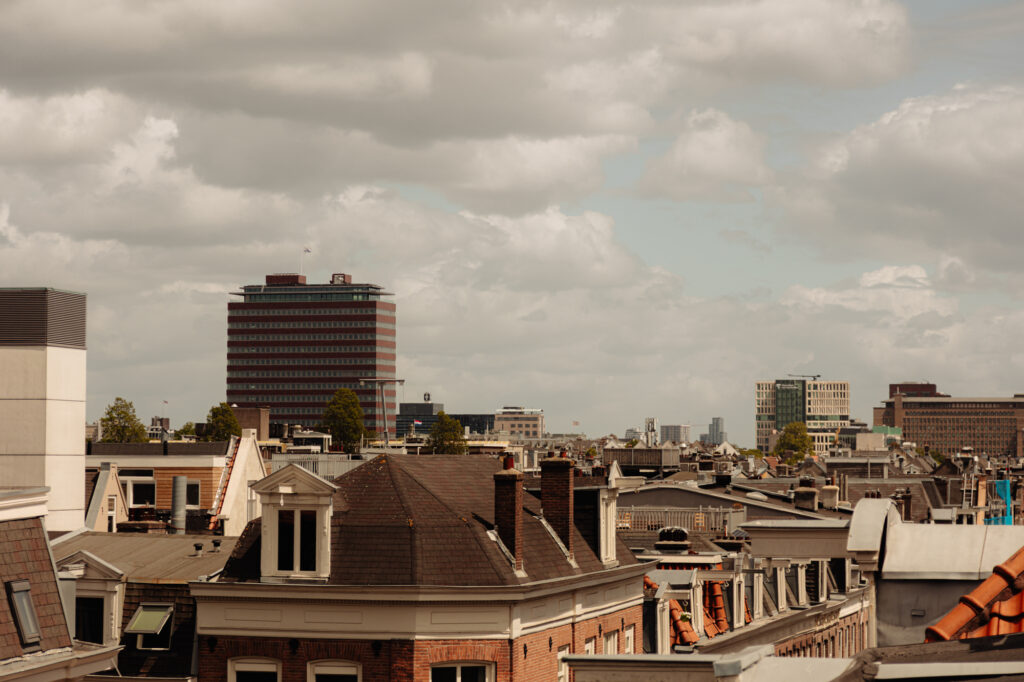
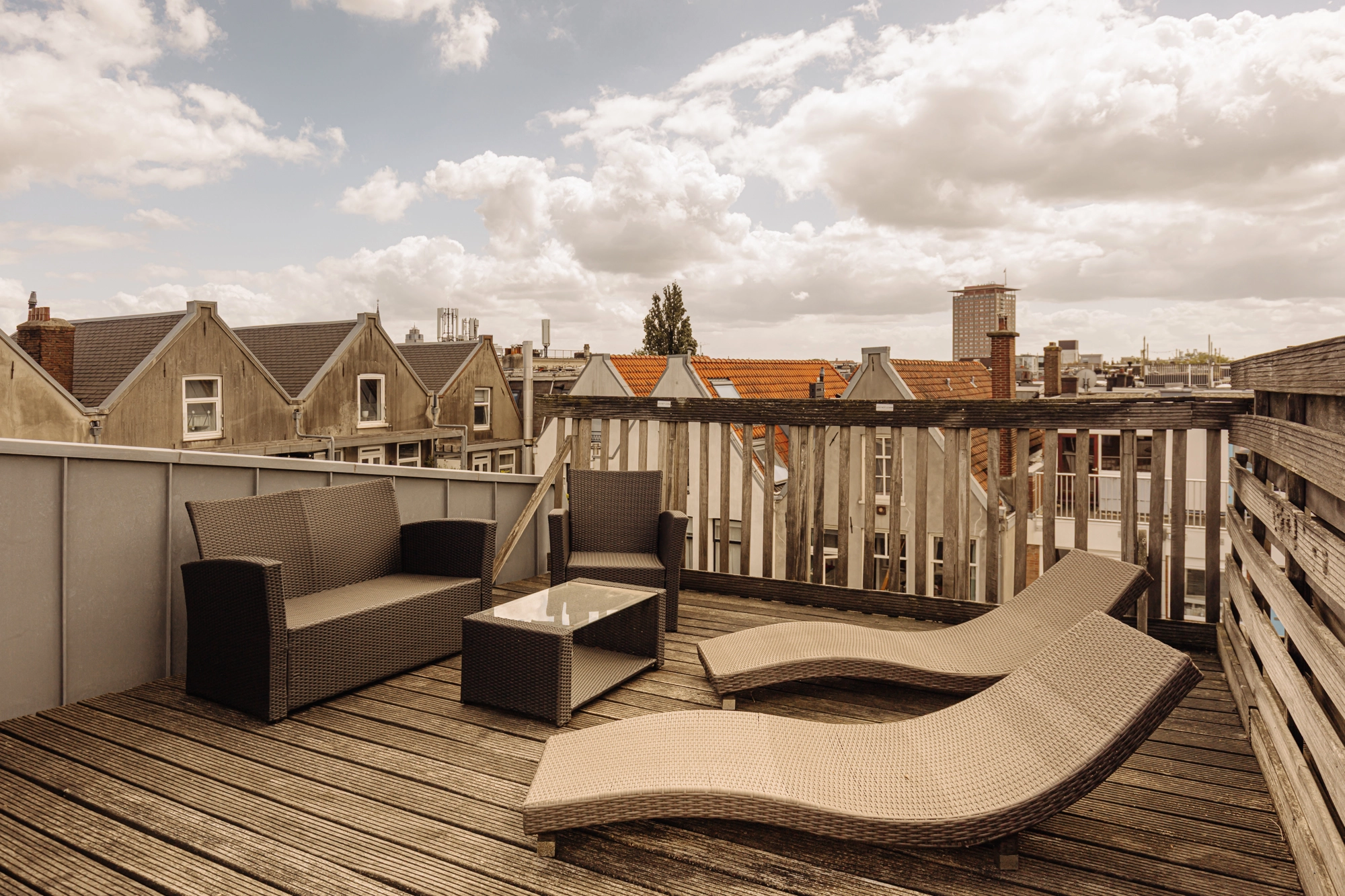
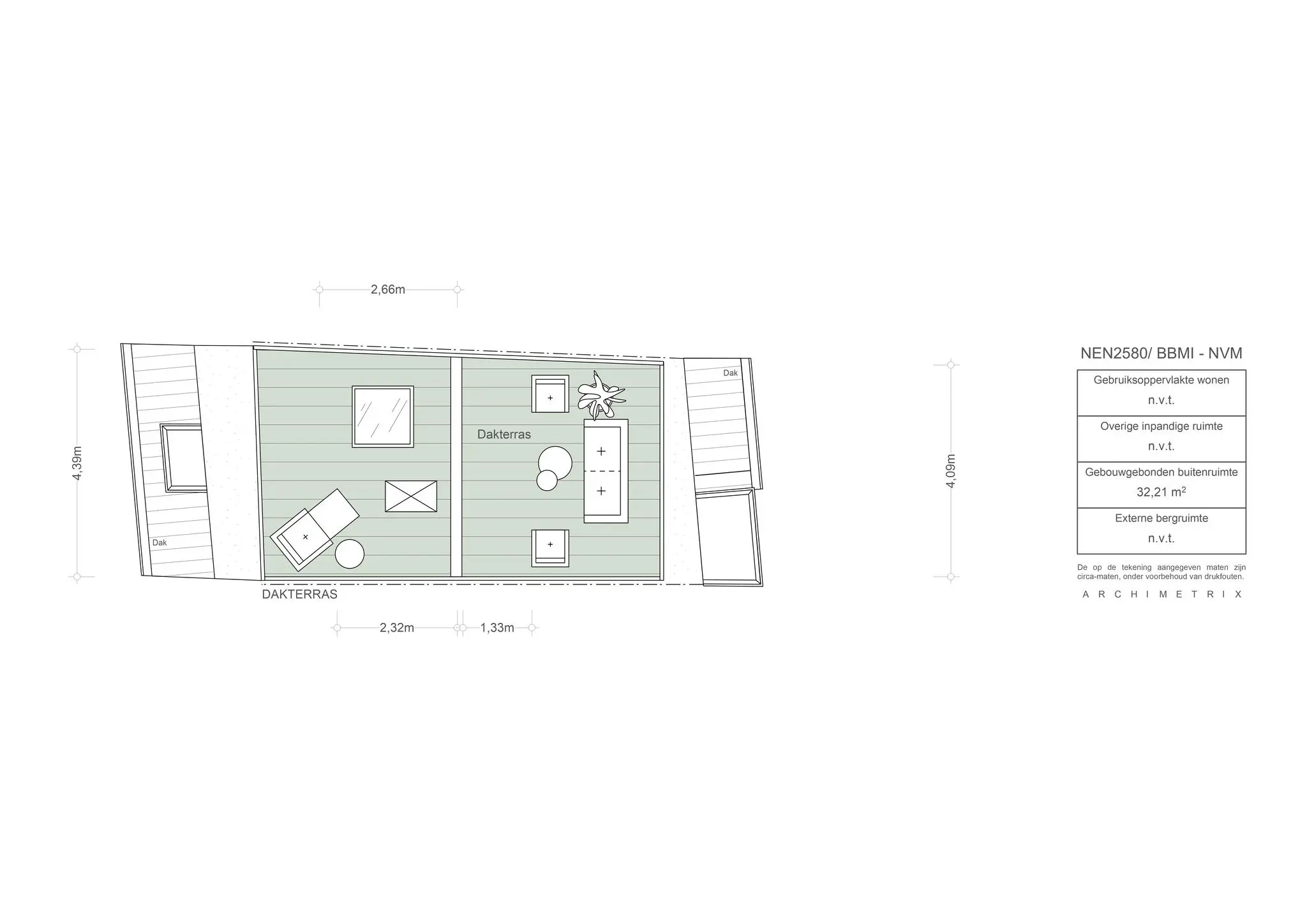
One level up is the 31 m² roof terrace: a generous, private space with room for lounge seating, greenery, and outdoor dining in the evening sun. The panoramic view stretches across the rooftops of Zuid and the treetops of the inner gardens. These outdoor areas feel like a natural extension of the living space — perfect for a glass of wine, a good book, or a relaxed conversation at sunset.
Neighbourhood Guide
De Pijp was developed in the late 19th century to house newcomers arriving in the city for work. In 1886, Freddy Heineken’s father opened the Heineken Brewery here. The first workers’ homes, built around Albert Cuypstraat, were constructed quickly and affordably. Later, in the direction of the Diamantbuurt, Berlage added housing in the Amsterdam School style. The neighbourhood is said to have earned its name from its long, straight streets resembling the shape of a pipe.
The Albert Cuyp Market and Sarphatipark are central to the energy of De Pijp. Artists and writers such as Piet Mondriaan, Carel Willink, and Gerard Reve once lived and worked here. Its lively, diverse population brought many cafés and eateries to the area. Today, the neighbourhood is known as Amsterdam’s Quartier Latin, still dynamic, with a wide range of restaurants including Brut de Mer, Yamazato, Arles, Peruvian NAZKA, and bistros like Petit Caron.
Details
• Living area approximately 86 m²
• Roof terrace of approximately 31 m², south-facing
• Ground lease bought off in perpetuity
• Energy label A
• Monthly VvE contribution: €135.12
• Complete reconstruction in 2010, including foundation restoration.
• Municipal protected cityscape
Sunny 110
Living in De Pijp — for many, it is a dream come true. This generously laid-out apartment of approximately 86 square metres is located on the top two floors of a building on Govert Flinckstraat.
The location is exceptionally central in De Pijp, a true haven for food and coffee lovers. Around every corner, there is a charming café or a cosy restaurant to discover.
The building (numbers 108–114) underwent a complete reconstruction behind the historic façade in 2010. During this process, the foundation was restored, and the plumbing, windows, and window frames were entirely renewed. The characteristic façade was preserved, allowing the building to retain its original appearance, now combined with the comfort and energy efficiency of modern construction.
Contemporary living with delightful outdoor spaces in a prime location.
Judith de Jong | Real Estate Agent, Broersma Wonen
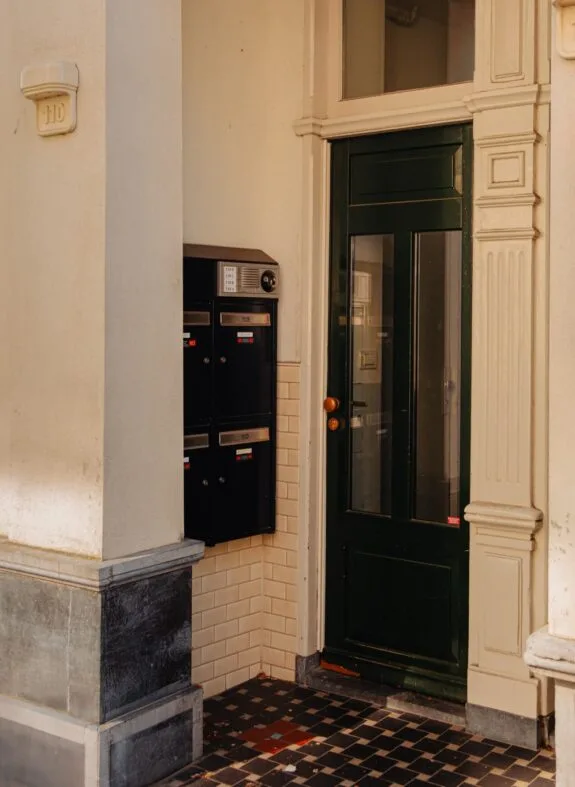
The most popular architectural style in the second half of the 19th century was Neo-Renaissance — a period in which the Dutch Renaissance of the 16th century was reinterpreted. Characteristic features of the Neo-Renaissance include horizontal natural stone bands between the brickwork and stepped gables that are nearly indistinguishable from those of the original Renaissance period. However, historic sentiment was now further enhanced by even more lavish use of decorative elements. The same applied to shopfronts, which were designed to attract attention and draw in the public.
The building at Govert Flinckstraat 108–114 underwent an extensive renovation in 2010. Layouts were reconfigured, the foundation was reinforced, new windows and double glazing were installed, stairwells were expanded, and all technical systems were updated. As part of the renovation, the municipality required that the original architectural character of the building be preserved.
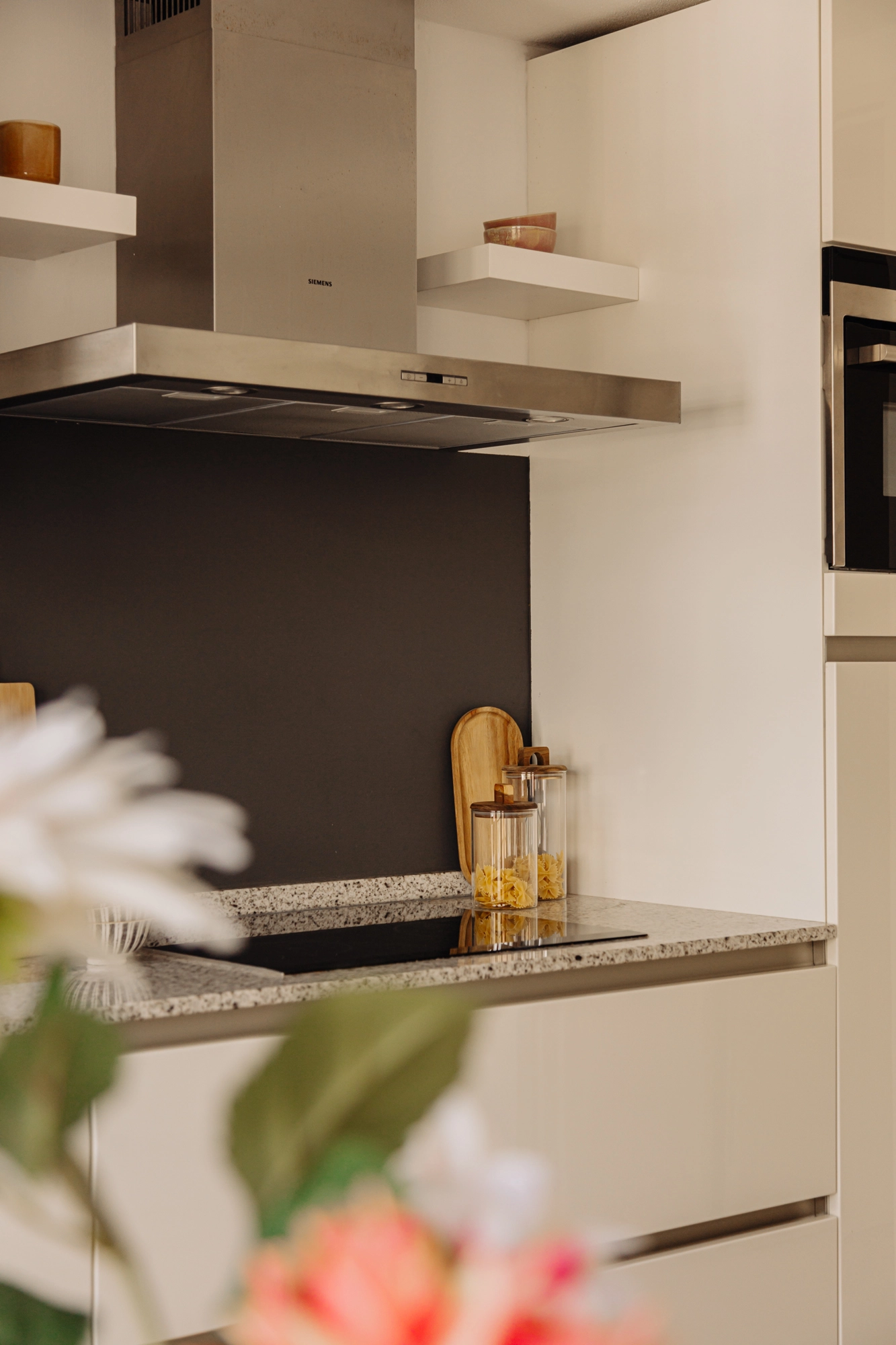
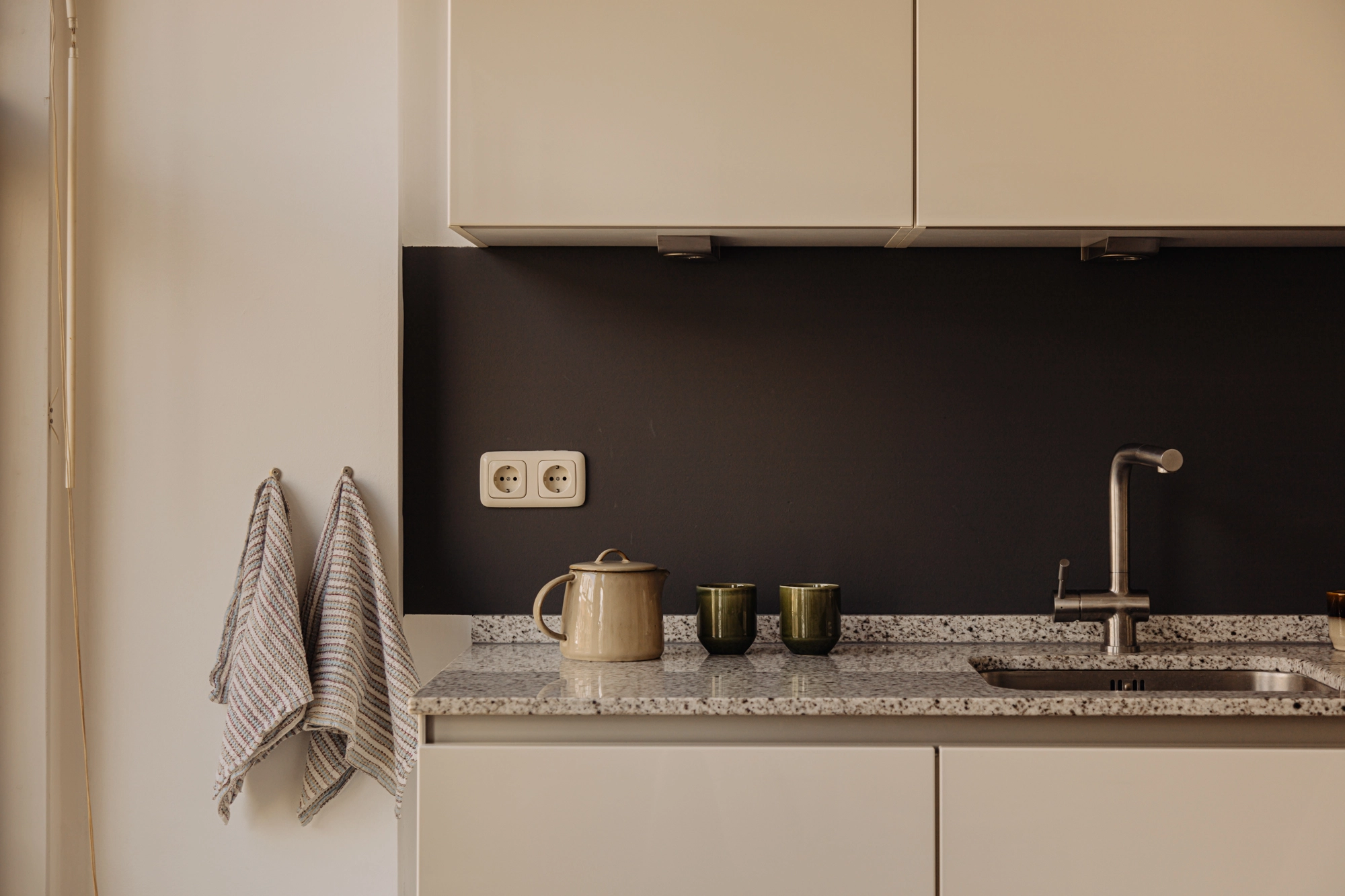
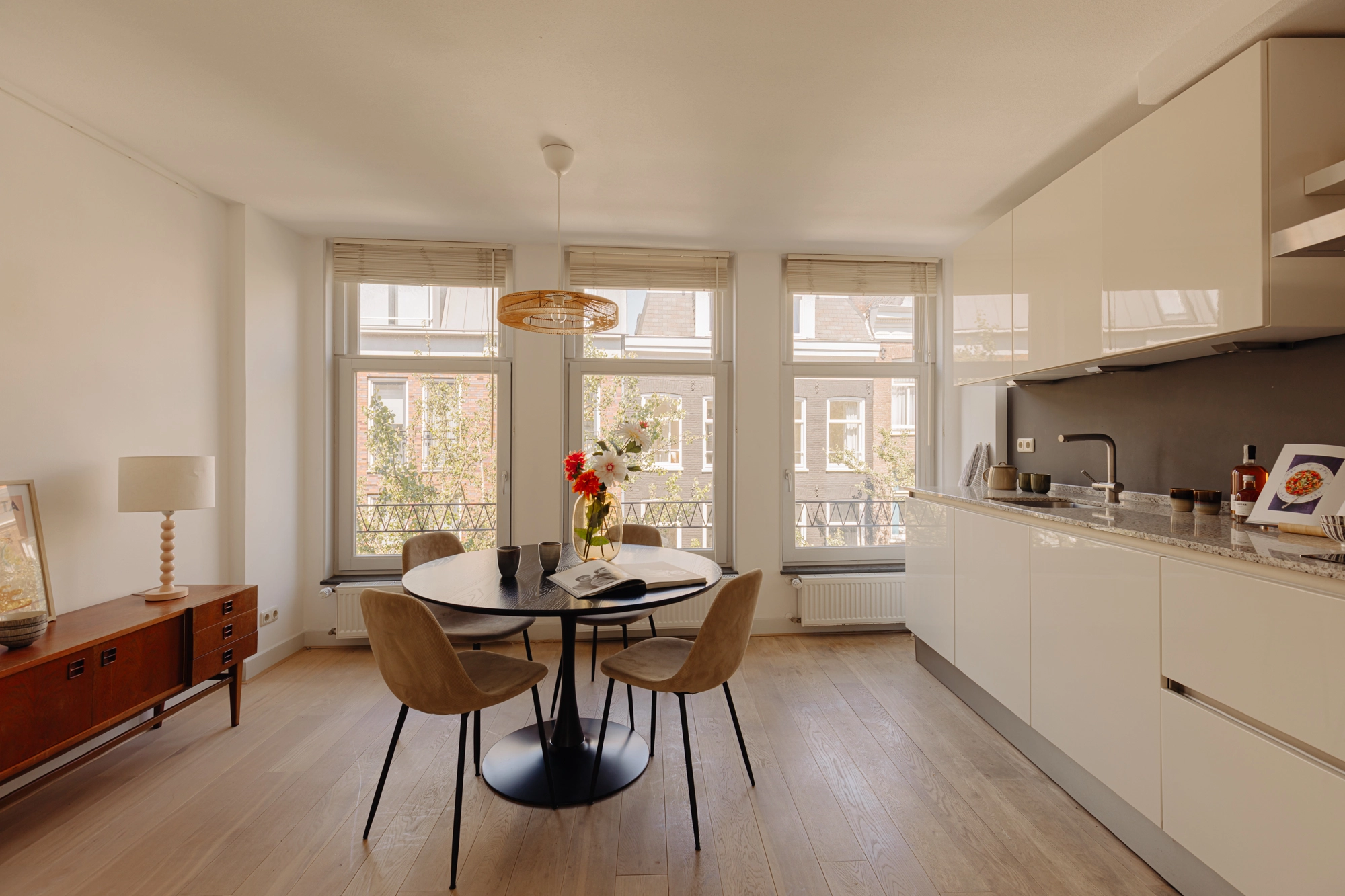
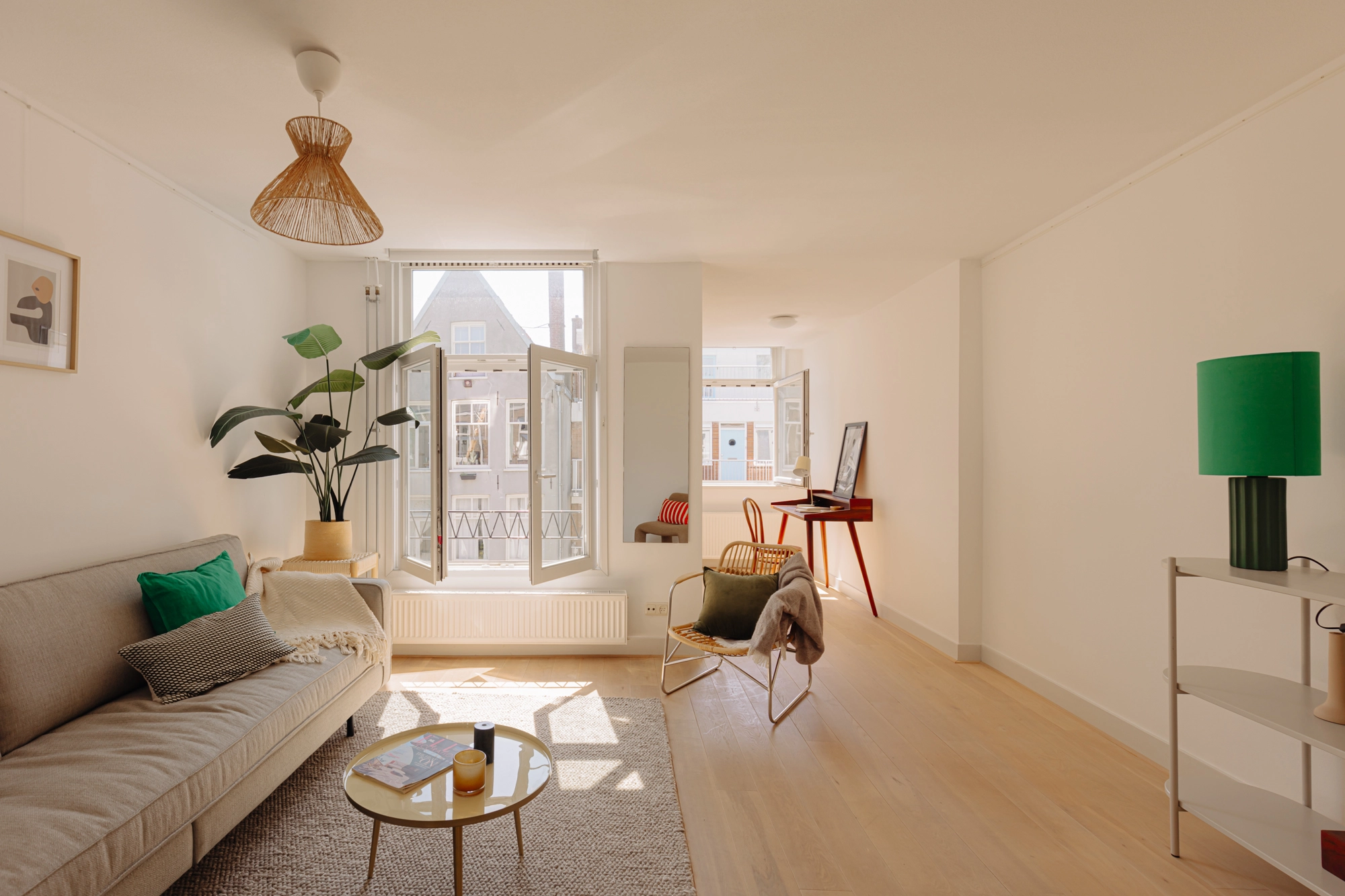
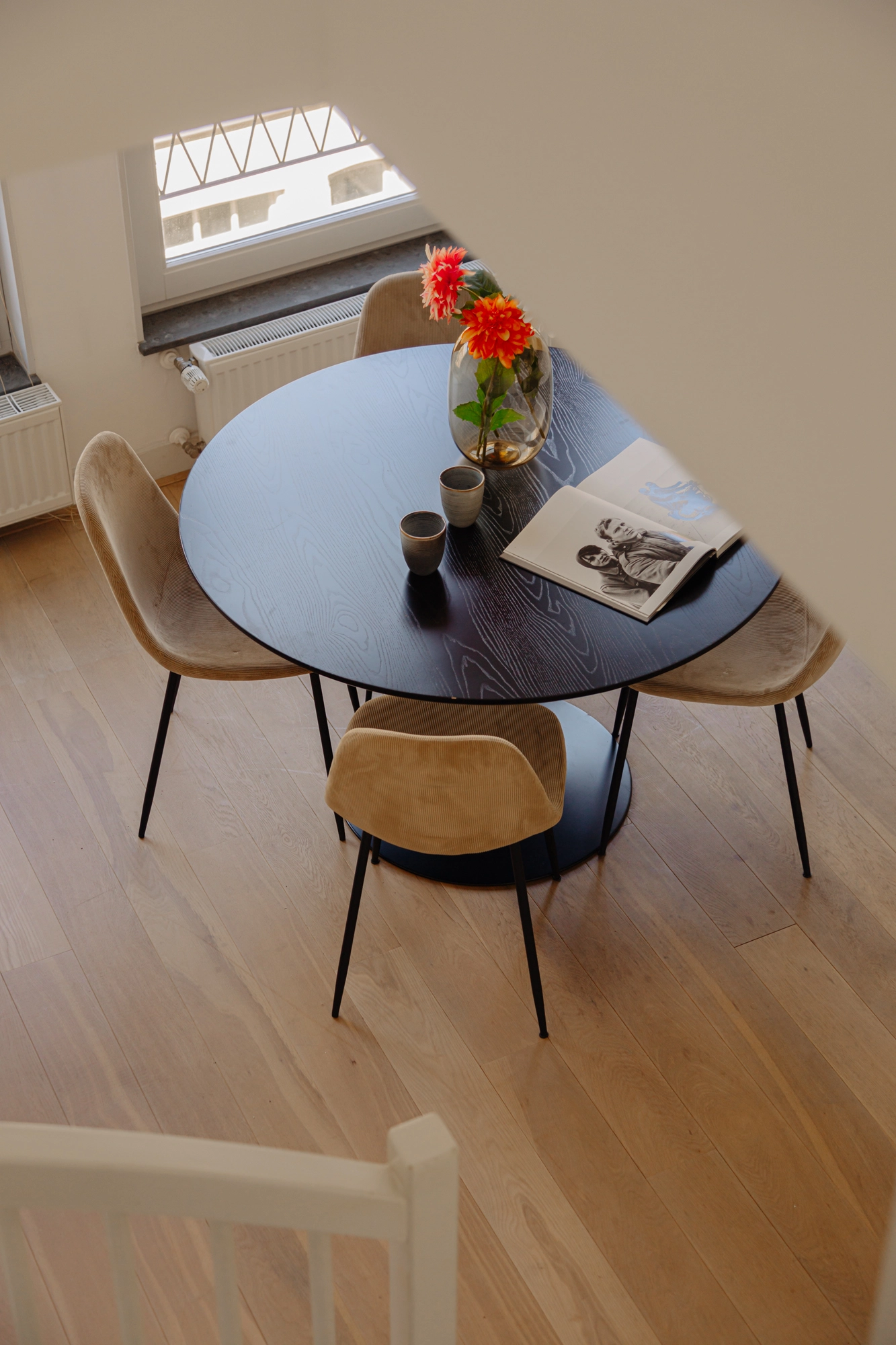
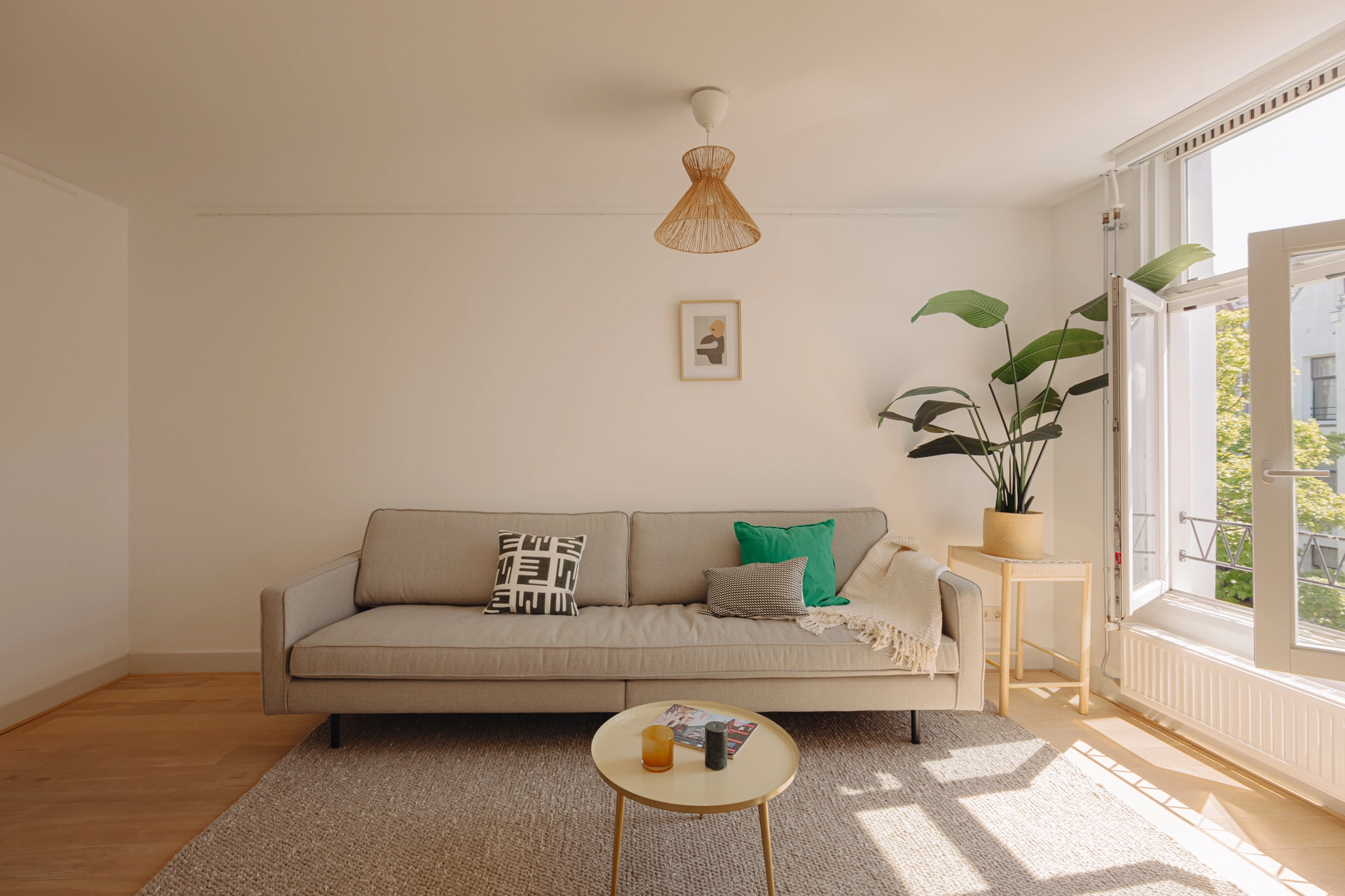
On the third floor, a bright and playful living space unfolds. It is divided into a living room and a dining kitchen, stretches across the full depth of the building, and is interrupted by the central entrance — allowing for cooking at the front and living or working at the rear.
The kitchen is sleek, light, and free of unnecessary detail. Handle-free high-gloss white cabinets and a granite countertop form a clean and refined foundation. The cabinetry includes built-in appliances, and the long counter provides ample space for cooking or, for example, a coffee machine. Three tall front-facing windows bring in abundant natural light and create a pleasant connection to the street below.
This floor and the upper floor are finished with wooden flooring.
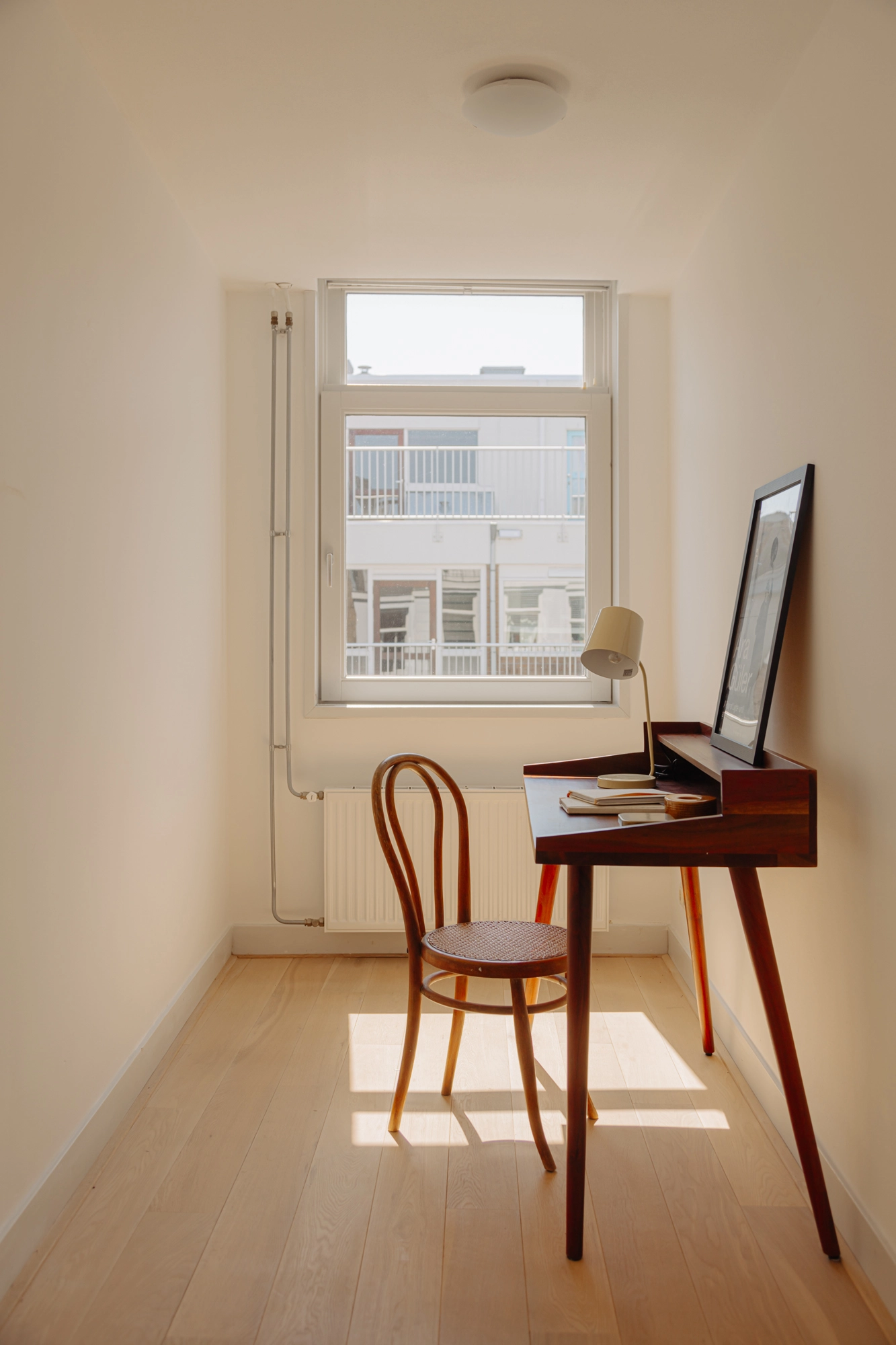
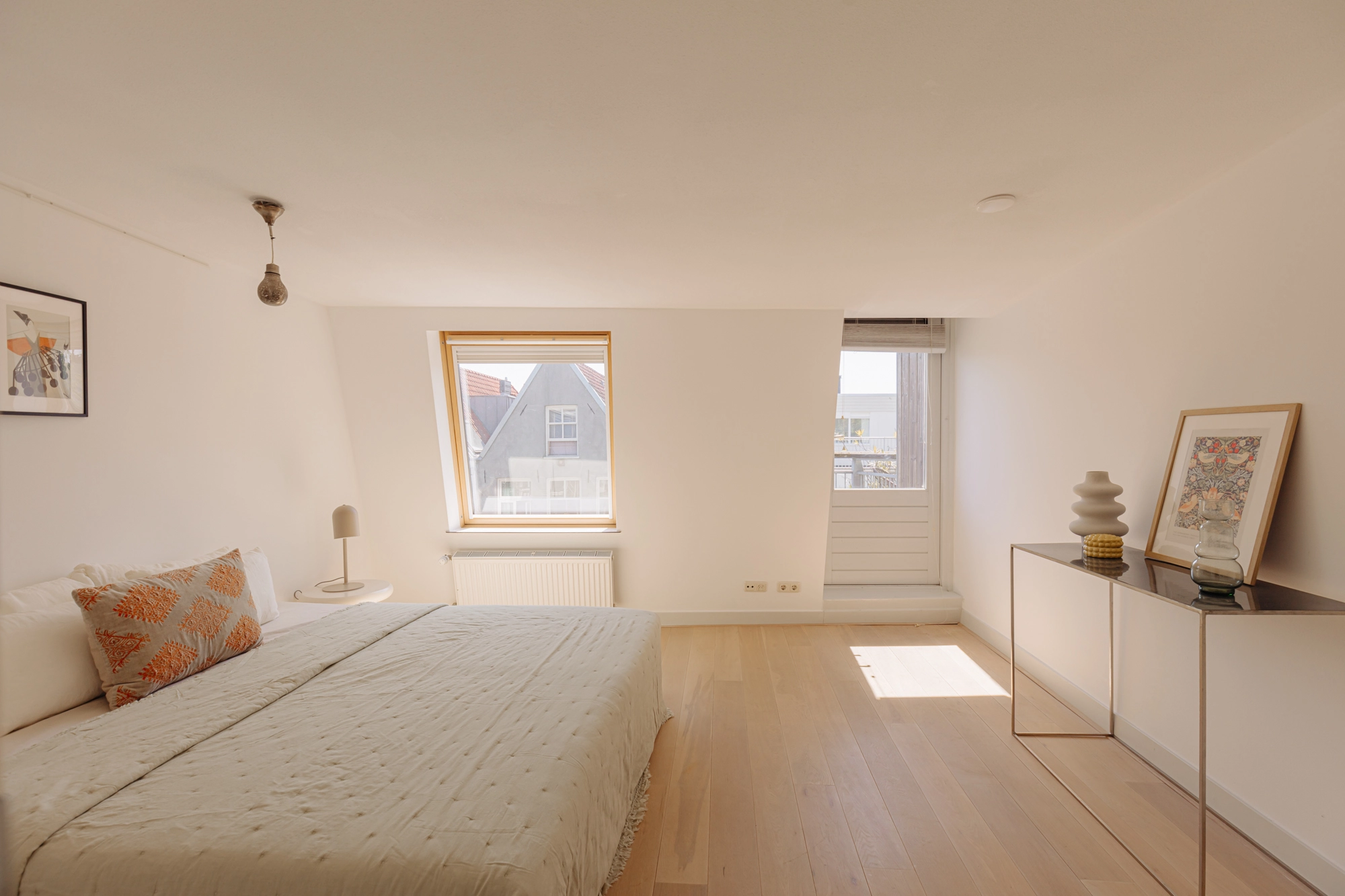
On the fourth floor, the sleeping quarters form a peaceful upper layer above the lively living space below. The primary bedroom is located at the rear and opens directly onto the south-facing balcony. The second bedroom is situated at the front and benefits from a wide façade with three windows. Both rooms are spacious enough to accommodate a double bed along with a workspace or additional storage.
Between the two rooms lies the central bathroom — brightly tiled, functional, and well-maintained. The space is fully equipped with a bathtub and separate shower, a toilet, and a washbasin with mirror. The black terrazzo floor with a white border adds a graphic accent to the otherwise soft, neutral ambiance. A skylight provides pleasant daylight, even in the heart of the home.
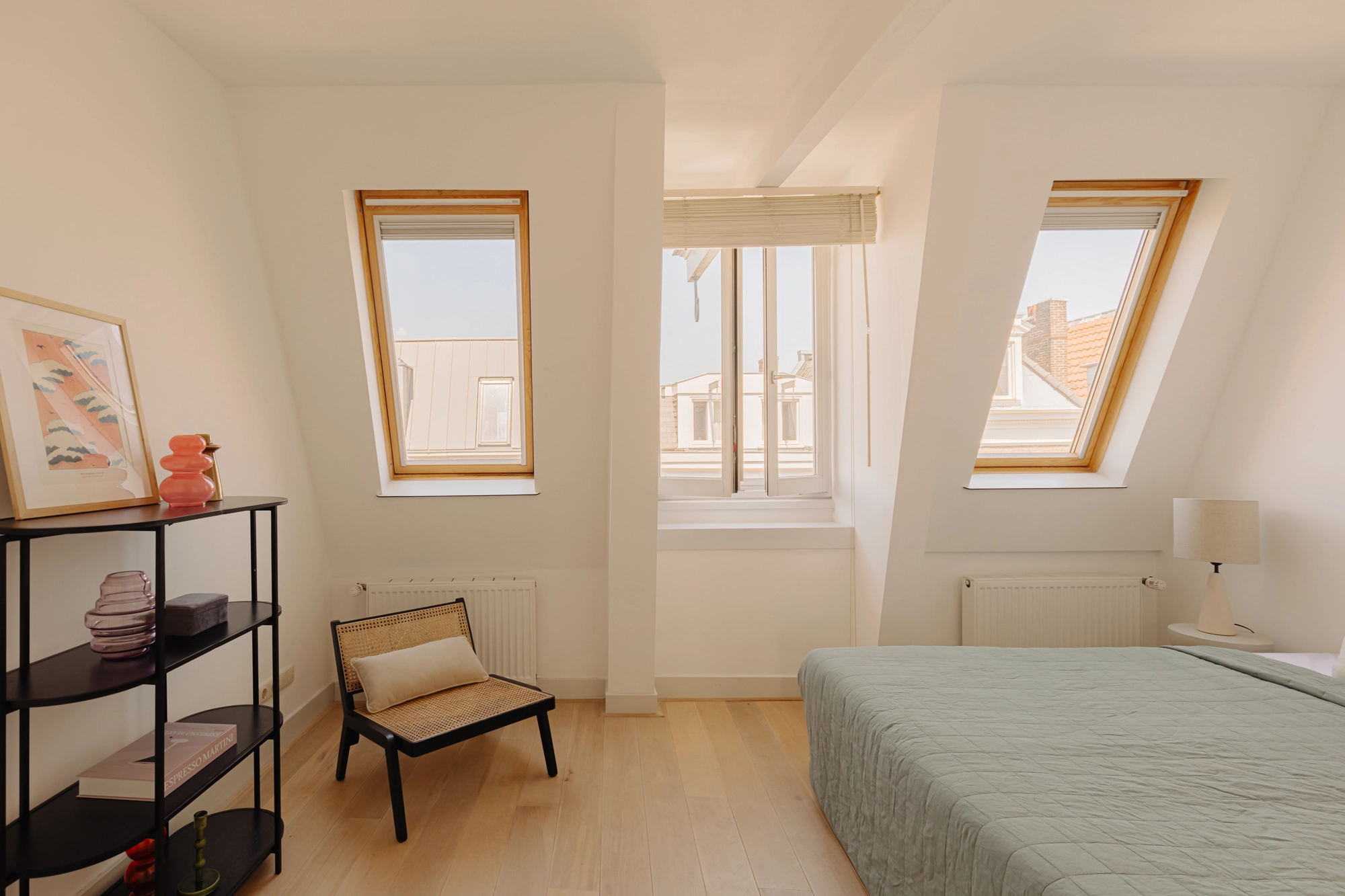
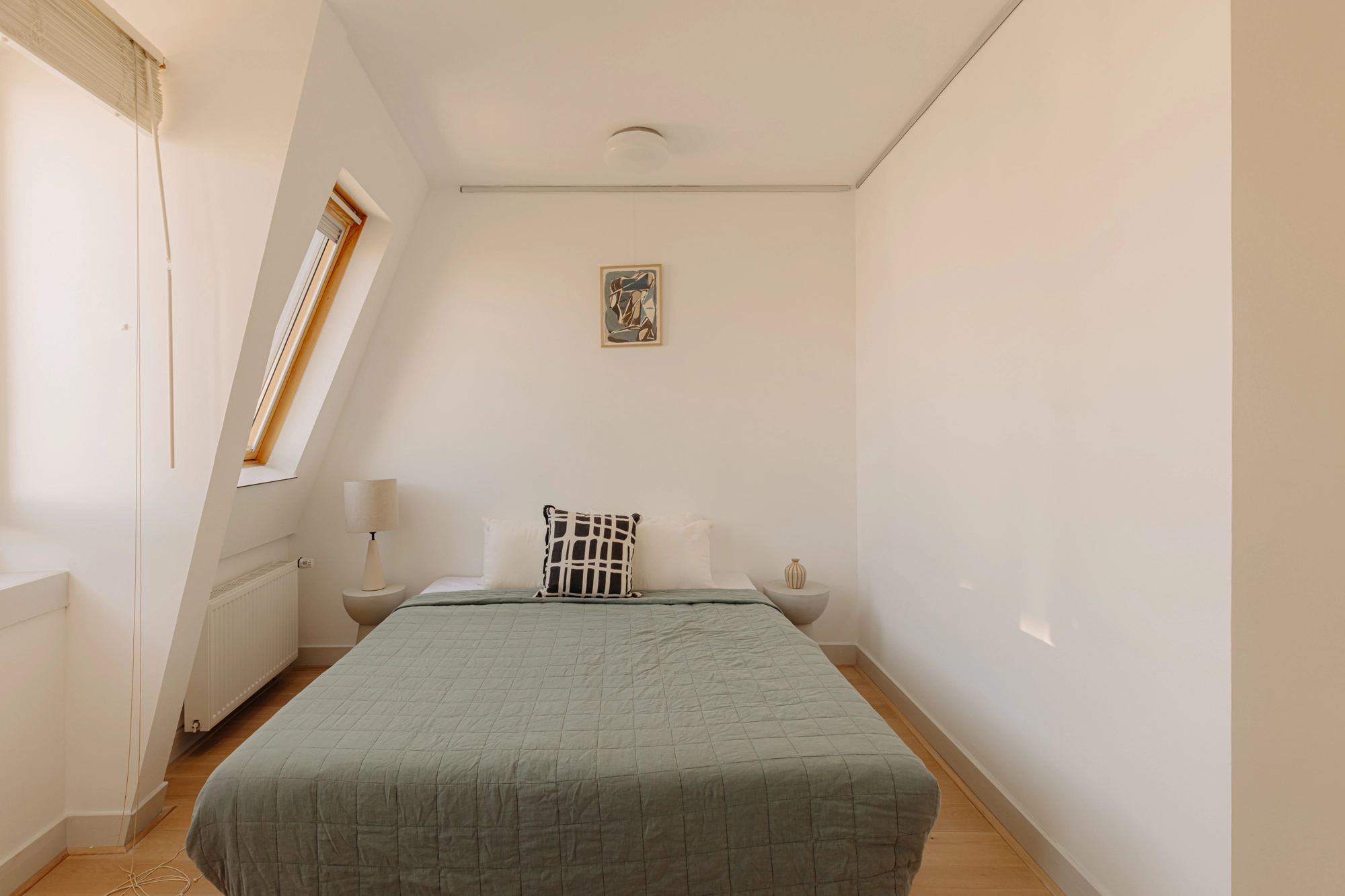
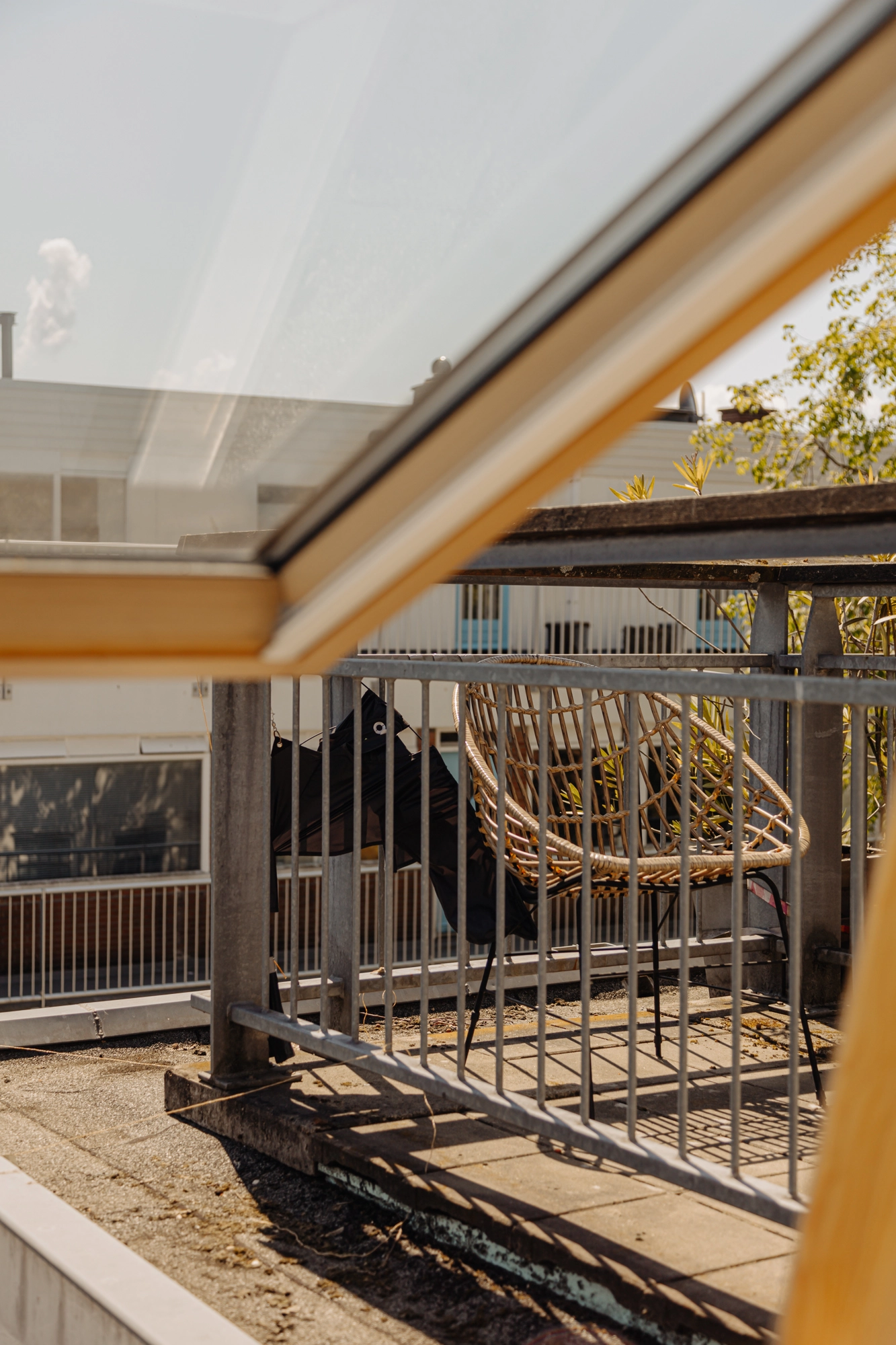
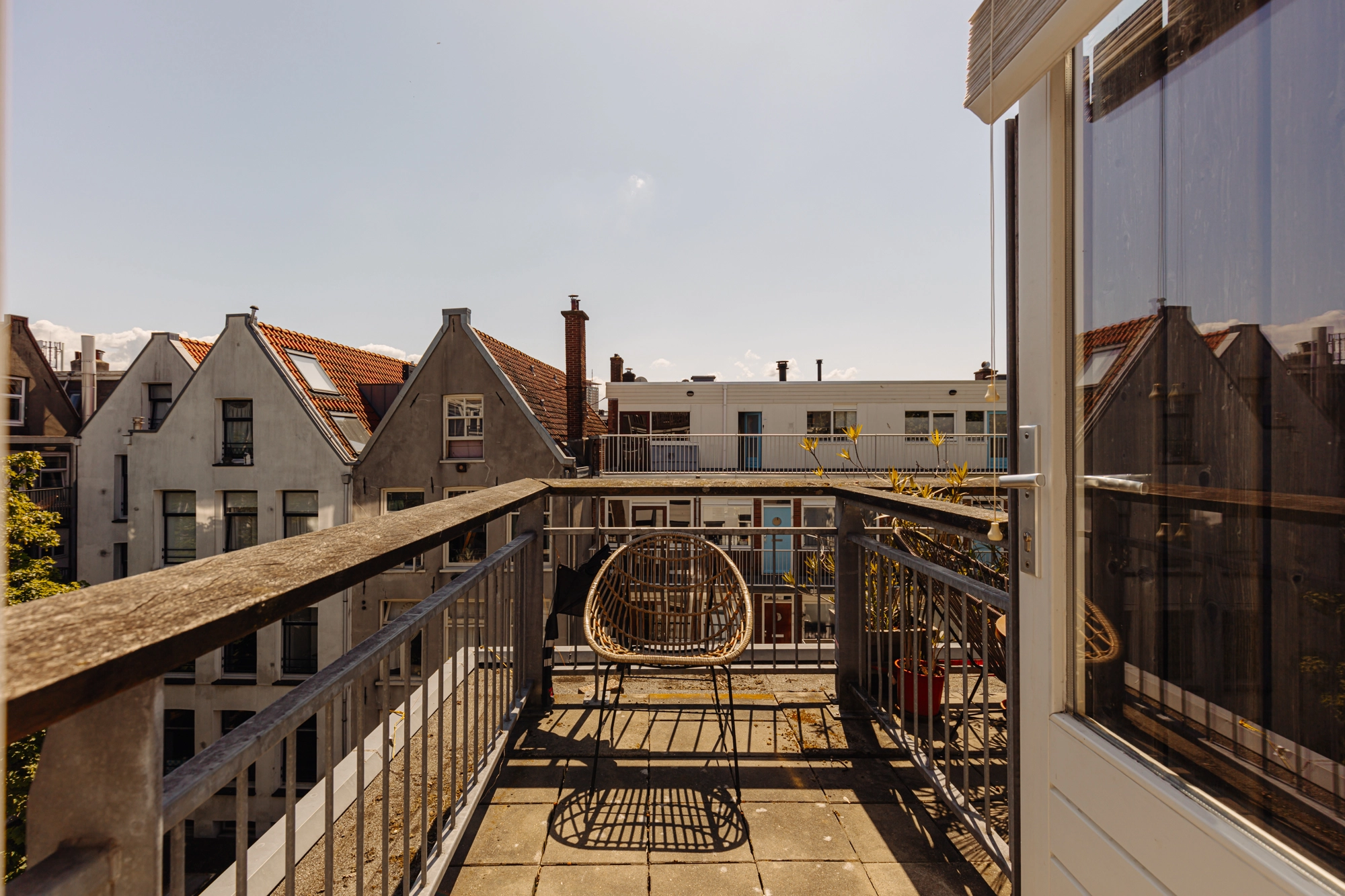
From the primary bedroom, you step straight onto the balcony — an open spot tucked between the rooftops of De Pijp, with views of leafy inner gardens and distinctive façades.
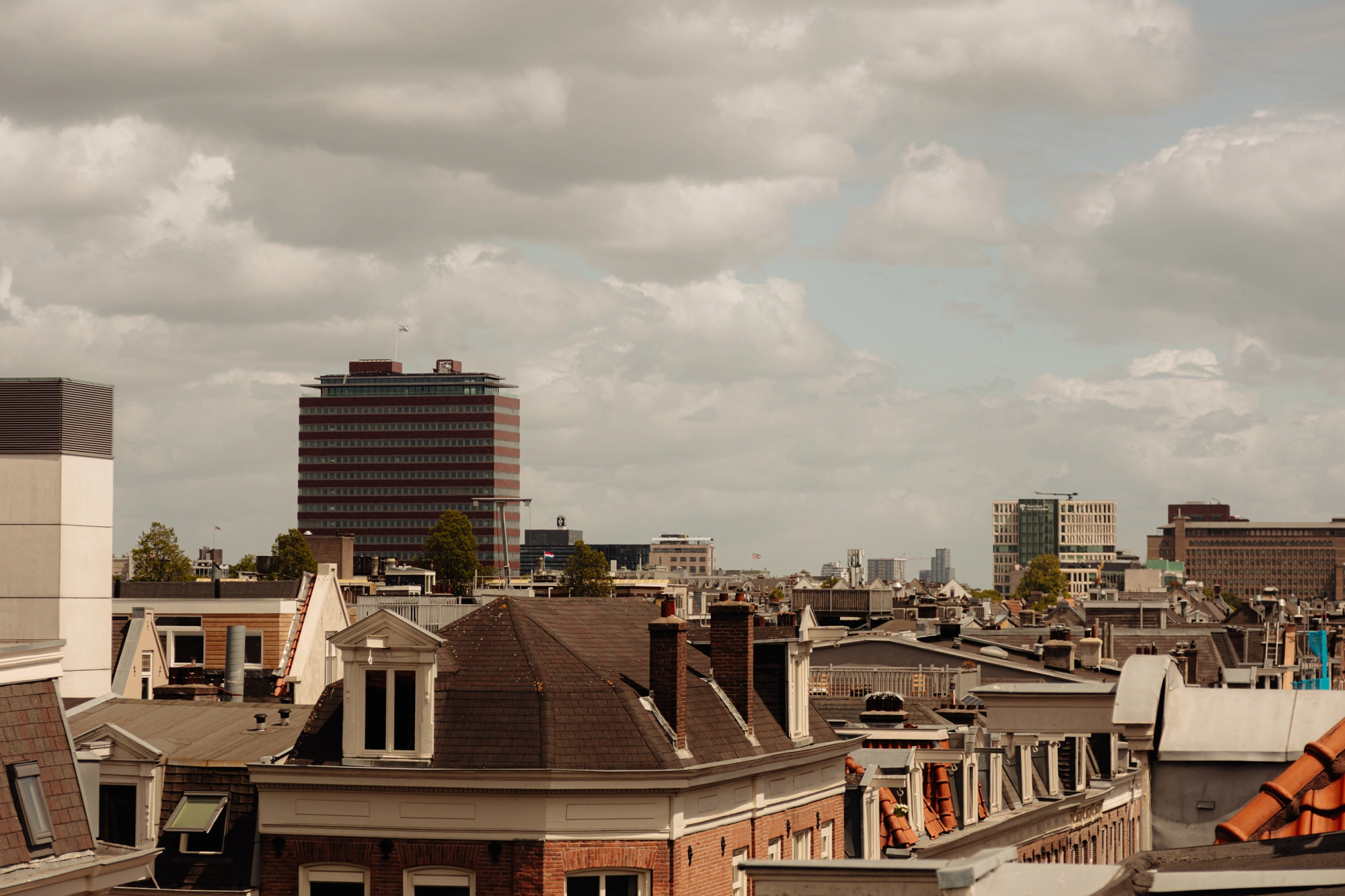
One level up, the 31 m² roof terrace awaits: a generous private space with room for a lounge set, greenery, and outdoor dining in the evening sun. The panoramic view stretches across the rooftops of Zuid and the treetops of the surrounding courtyards. These outdoor areas feel like a natural extension of the home — a perfect spot (with friends) for a glass of wine, a good book, or a quiet conversation as the sun sets.
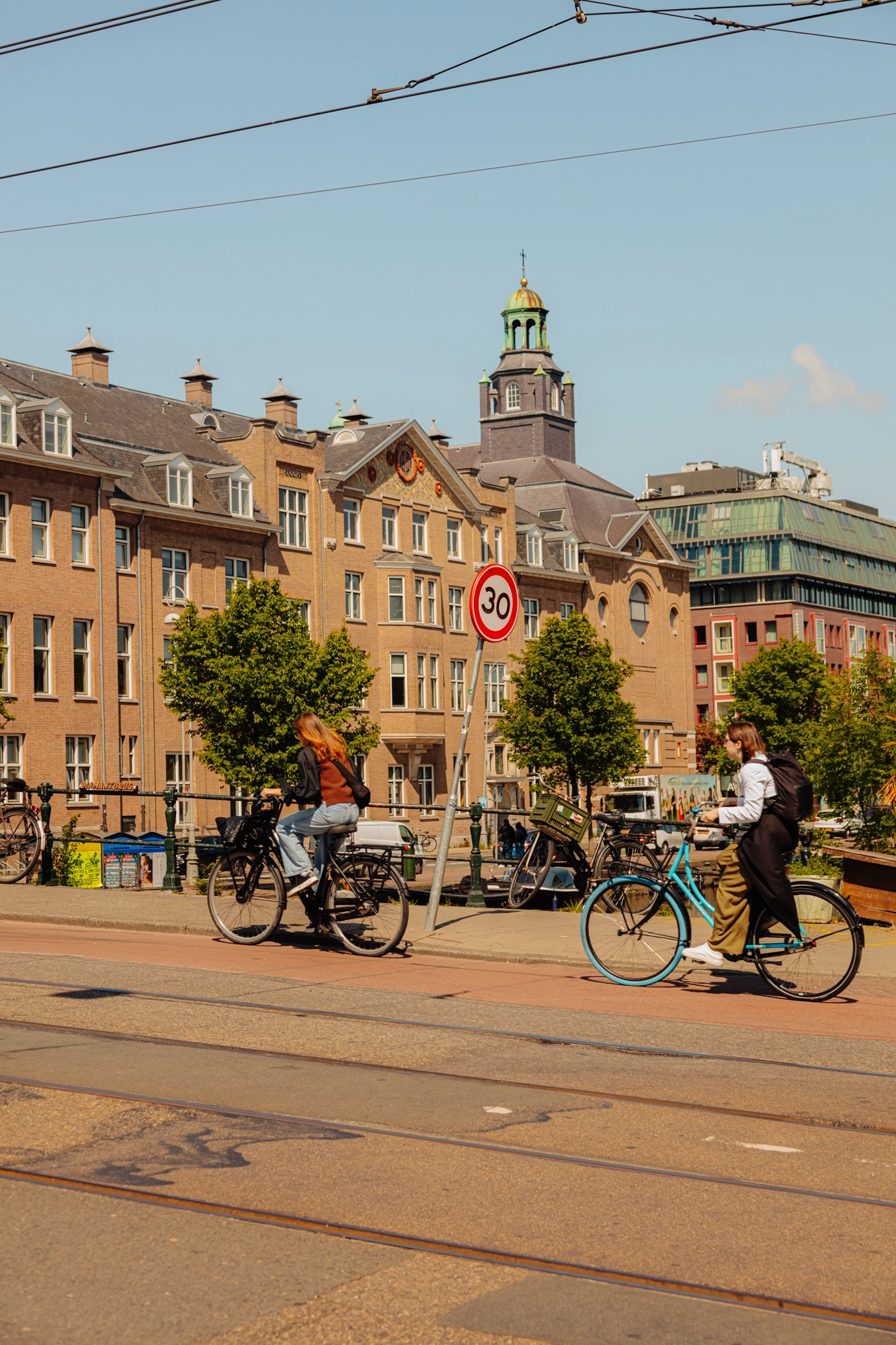
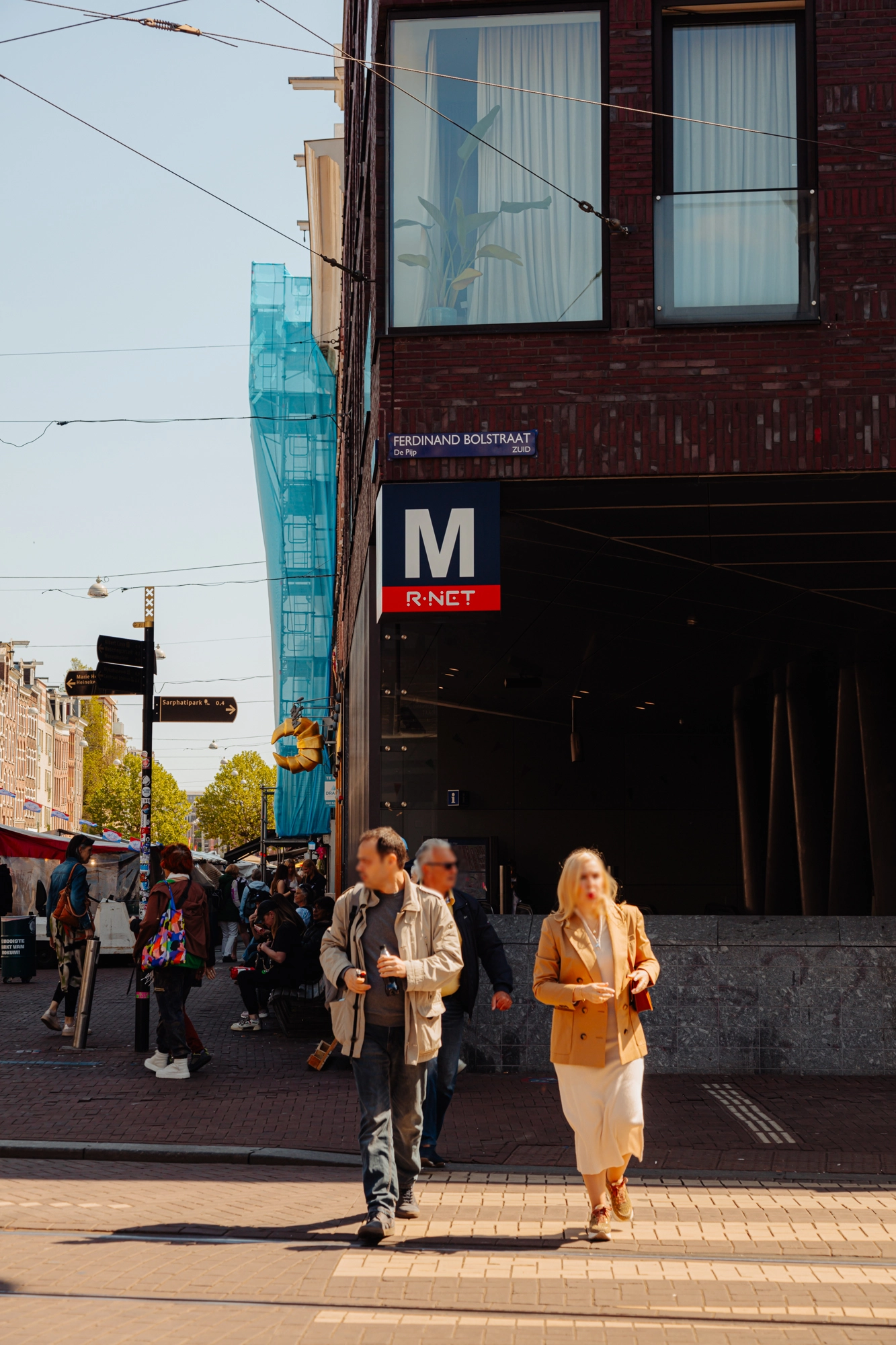
De Pijp was developed in the late 19th century to provide housing for newcomers who moved to the capital in search of work. In 1886, Freddy Heineken’s father opened the Heineken Brewery here. The first workers’ houses, built around the Albert Cuypstraat, were constructed quickly and affordably. Later, as the neighbourhood expanded toward the Diamantbuurt, Berlage added homes in the Amsterdam School architectural style. The area is said to have earned its name from its long, straight streets resembling the shape of a pipe.
The Albert Cuyp Market and Sarphatipark define much of De Pijp’s energy. Artists and writers such as Piet Mondriaan, Carel Willink, and Gerard Reve lived and worked here. Its lively, mixed population gave rise to numerous cafés and eateries. Today, the neighbourhood is often referred to as Amsterdam’s Quartier Latin, still dynamic and home to a wide range of restaurants — including Brut de Mer, Yamazato, Arles, the Peruvian NAZKA, and authentic bistros like Petit Caron.
Accessibility
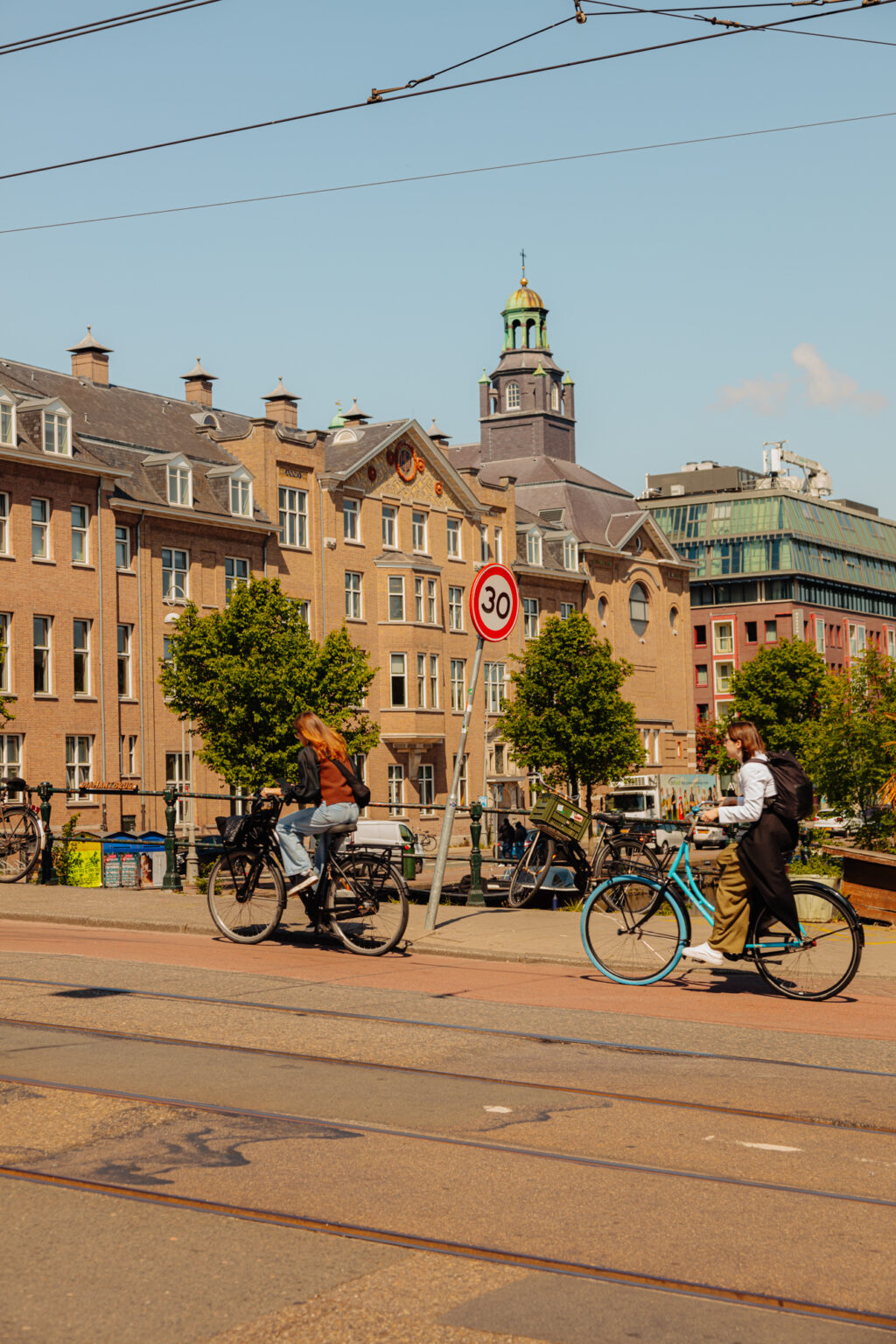
Situated in De Pijp, a centrally located area in Amsterdam Oud-Zuid near the Concertgebouw, Museumplein, and the city centre.
The location offers convenient access to arterial roads (S108 and S110) and is well connected by public transport. Tram lines 12, 24, and 25 are within walking distance, as is a metro station for the North-South line (Noord/Zuidlijn), providing quick access to Station Zuid.
Parking
Parking is available through a permit system for public street parking (permit area Zuid 3.1 De Pijp Noord). With a permit for Zuid 3.1 De Pijp Noord, you are also allowed to park in Zuid-3 and Zuid-4. A residential parking permit costs €192.81 per six months. Currently, there is a waiting time of approximately seven months for this permit area. A second residential permit is not available in this zone. In addition to on-street parking, permit holders can park free of charge in the Museumplein parking garage.
(Source: Municipality of Amsterdam, May 2025)
1072 CV Amsterdam
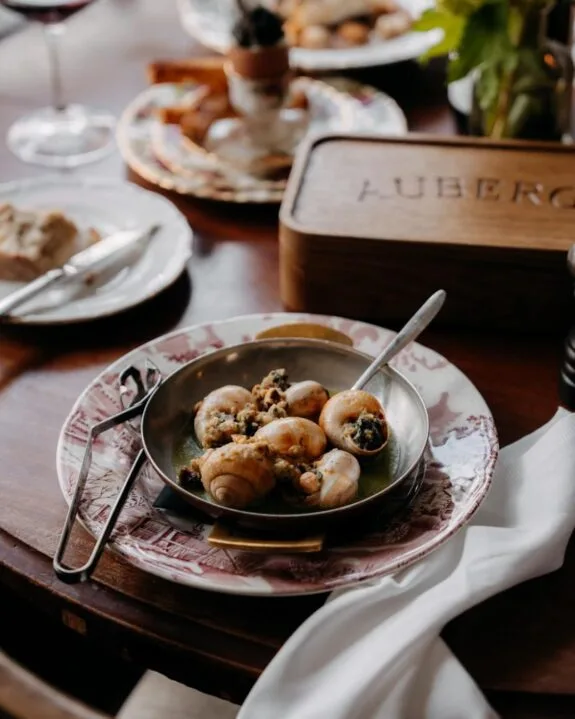
Auberge Amsterdam
De eigenaren van onder andere 212 (**), de Juwelier (*) en Bistro de la Mer (*) waren zelf een fervent bezoeker van voorheen Auberge jean & Marie. Nu zetten zij de Auberge traditie voort op deze zelfde plek. Voor 38 euro eet je hier een uitstekend 3 gangen menu.
1072 LM Amsterdam
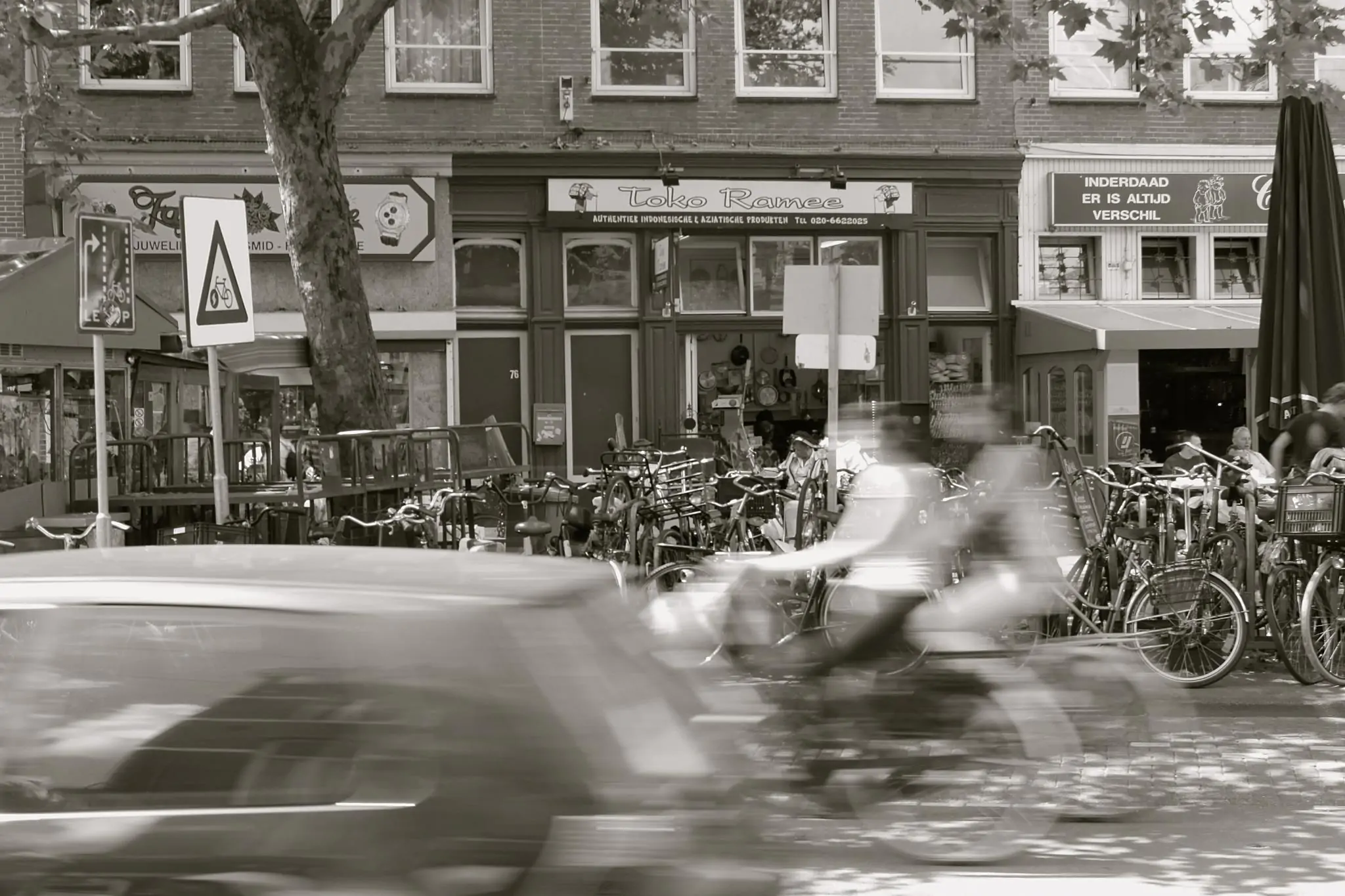
Toko Ramee
Midden op de Ferdinandbolstraat vind je Toko Ramee. Zoals al vermeld staat op de buitenkant van de toko is er een scala aan authentieke Indonesische en Aziatische producten. Het is een toko die aansluit op het familiare gevoel van de traditionele Indische en Chinees-Indische keuken, waar er voor iedereen iets te vinden valt. De toko is gevuld met geïmporteerde hapjes en drankjes en ook met kookgerei om zelf dingen thuis te maken. Van een complete rijsttafel tot huisgemaakt spekkoek: Toko Ramee neemt je maar al te graag mee in het proces om een heerlijke maaltijd samen te stellen. Mocht dat niet genoeg reden zijn om naar de toko toe te komen, vrees niet – toko Ramee heeft ook een catering service paraat!
1072 CT Amsterdam
Sababa
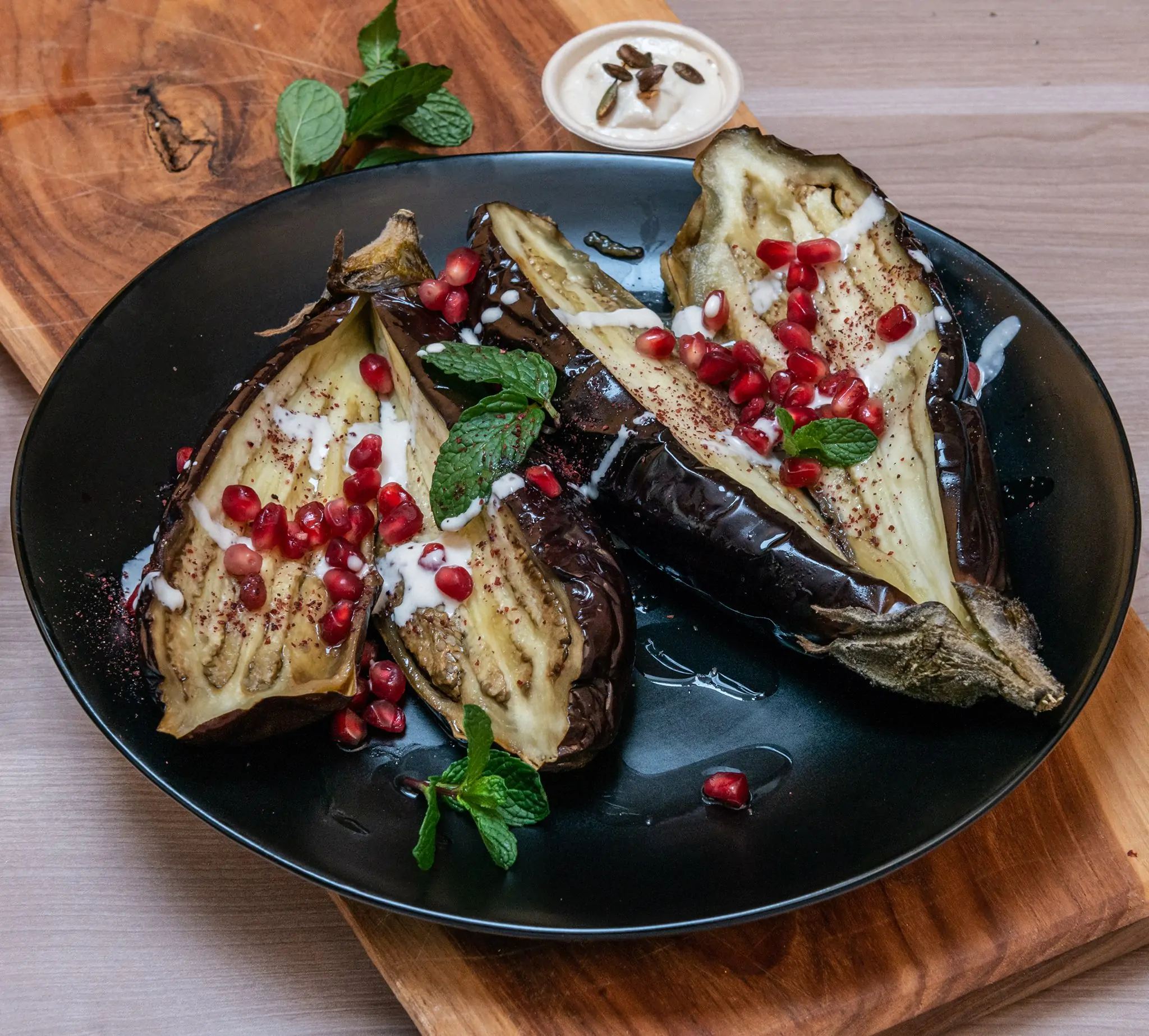
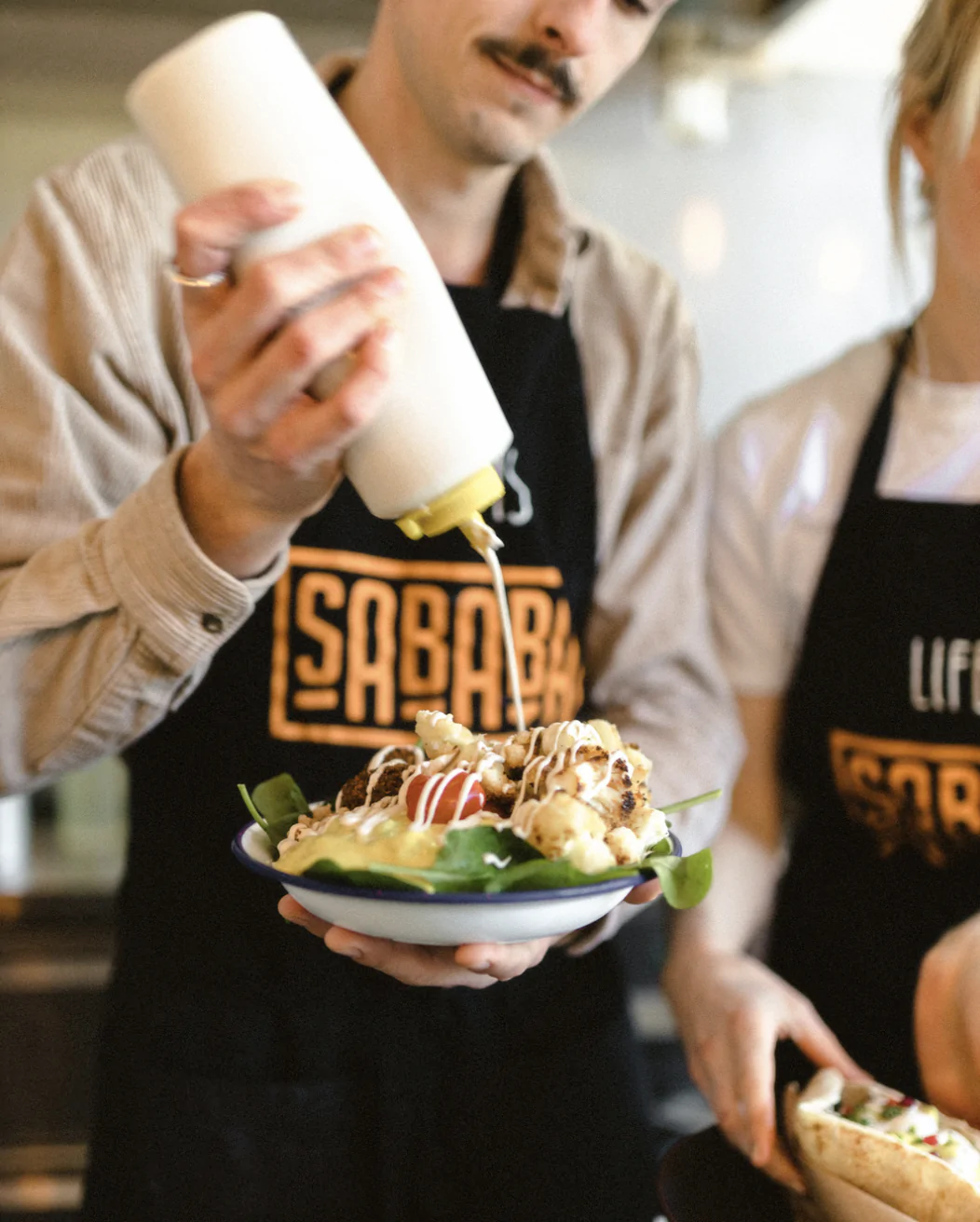
De eigenaar van Sababa wilde goede, perfecte falafel. Ze zijn verschillende combinaties gaan uitproberen, producten gaan proeven en zo ontstond hun perfecte falafel broodje. Geïnspireerd op de Israëlische keuken, heerlijk voor een snelle hap of om uitgebreid te eten met een biertje erbij.
1072 CP Amsterdam
Pho 91
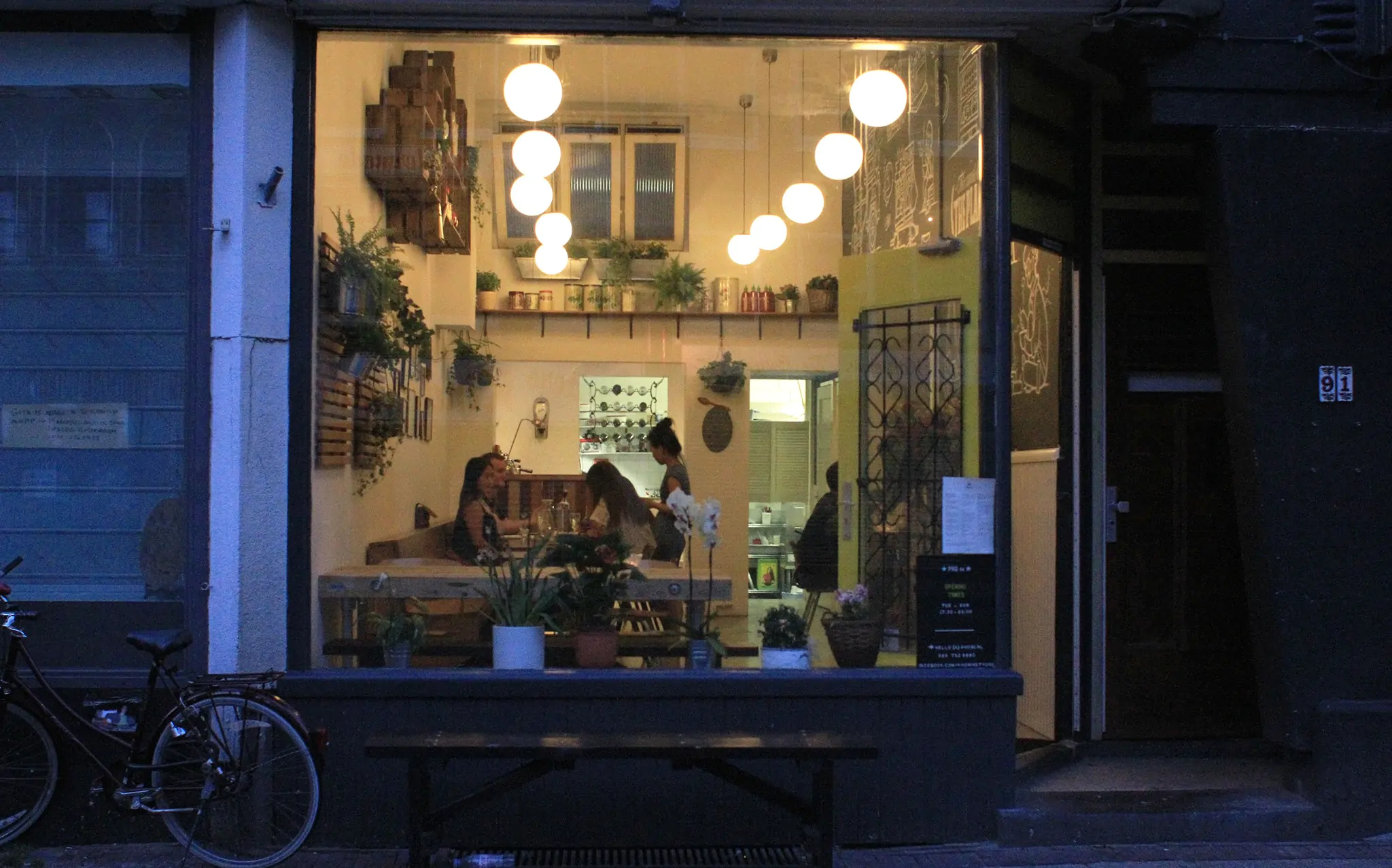
Dit kleine restaurant serveert traditionele Vietnamese pho (noedelsoep). De menukaart is bewust klein en verfijnd om de dagelijkse kwaliteit en versheid van het eten te garanderen. De meeste gerechten zijn gluten-, ei- en zuivelvrij en er is een uitgebreide selectie van spannende keuzes voor vleeseters, vegetariërs en veganisten. Als je geen zin hebt in soep, probeer de rund en noedels salade (Bun bo Xao Sa). Oftewel er is voor elk wat wils!
1072 LZ Amsterdam
Bisous
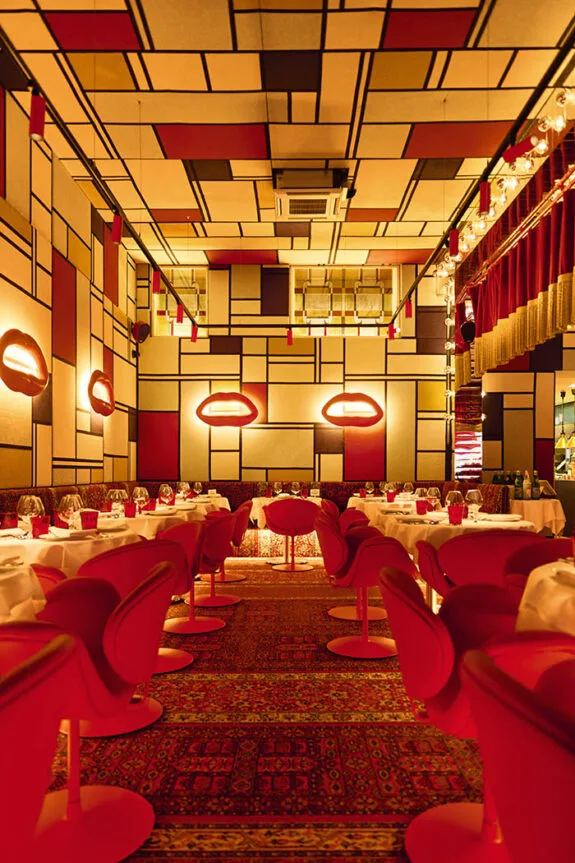
Een 'over de top interieur' van Jean-Philippe Demeyer (Architectural Digest AD100 architect) gecombineerd met een uitstekende keuken waarvan ze zelf zeggen 'A sumptuous French – Zeeland cuisine'. Een goed voorbeeld hiervan zijn de Zeelandse kokkels in een room witte wijnsaus afgemaakt met Pasris en peterselie. Bisou!
1072 LB Amsterdam
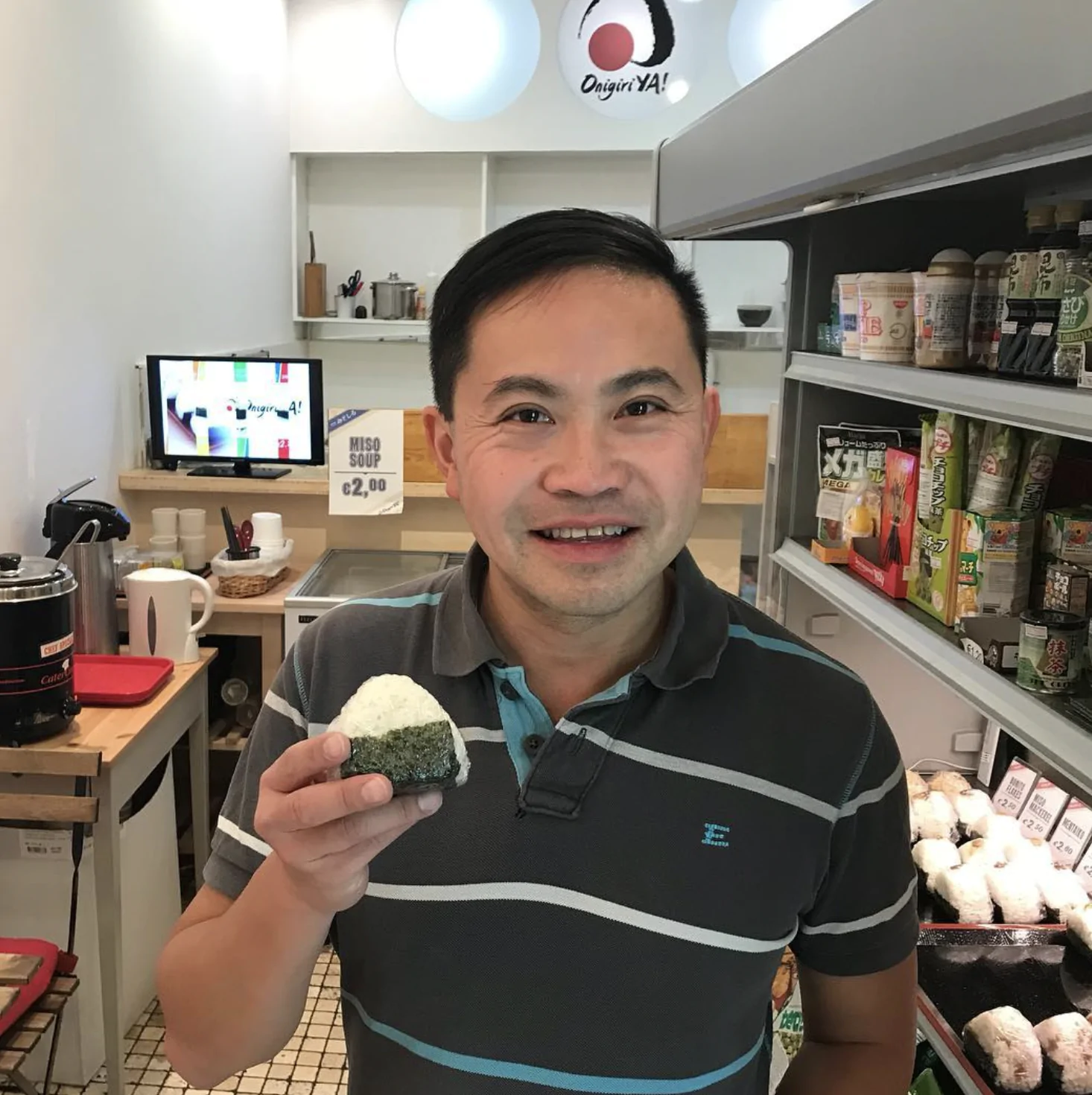
Onigiri YA!
De meeste mensen die door de Pijp struinen voor Japans komen niet veel verder dan het denken aan sushi en bubble tea (ook al komt dit oorspronkelijk uit Taiwan). Bij Onigri Ya staat dan ook specifiek op de deur vermeld dat deze items hier niet te koop zijn. In plaats daarvan is Onigri Ya een authentiek Japans restaurant en daarnaast ook een kruideniers- en delicatessenwinkel. Zoals verwacht zijn de Onigri’s een specialiteit: gekruide Japanse rijstballen in verschillende vormen, bedekt met nori en met vullingen van vis tot fruit. Voor eenieder die wel eens naar animé kijkt, Onigri Ya brengt het voedsel wat eenieder zo doet watertanden van het beeldscherm naar een lief klein winkeltje in de Pijp. Simpelweg een must-go.
1072 EW Amsterdam
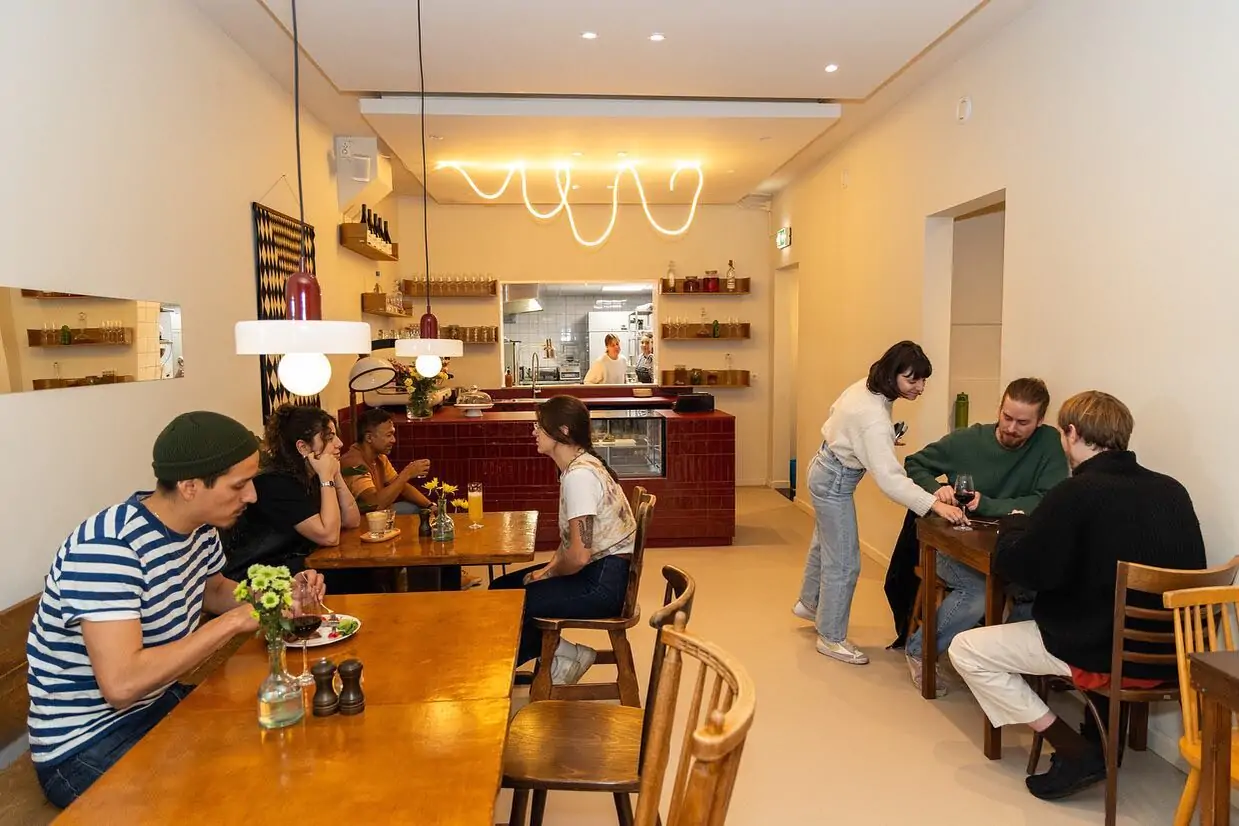
Kafé Kontrast
Kafé Kontrast is ontstaan uit de liefde voor het ongecompliceerde. Ze laten zich inspireren door hun Scandinavische roots en de charme van cafés in Zuidoost-Azië. De essentie is om een ruimte te creëren waar mensen kunnen eten, drinken en gewoon zichzelf kunnen zijn. Op doordeweekse dagen bieden ze een diner aan en in het weekend serveren ze brunch.
1072 BV Amsterdam
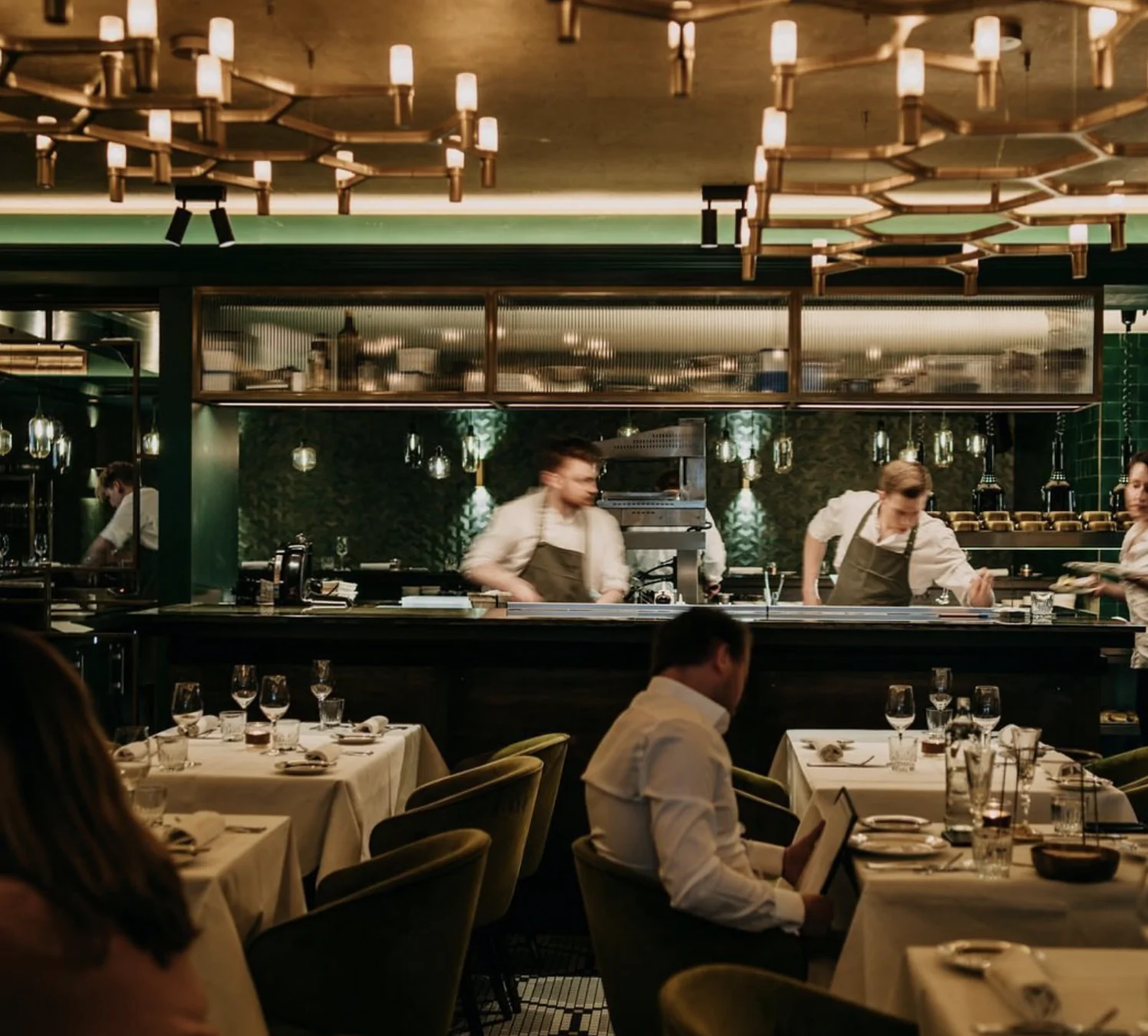
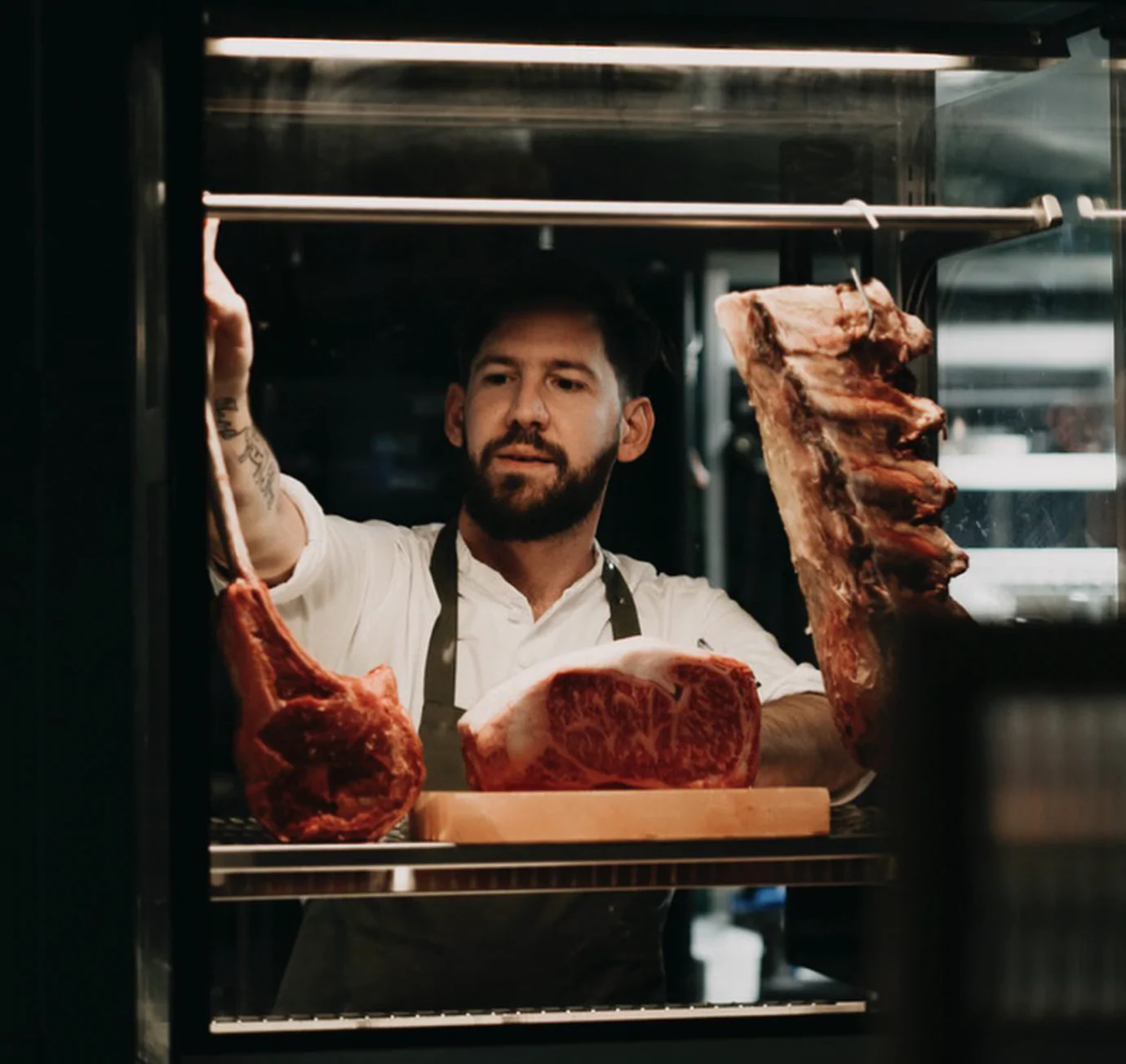
Maris Piper Brasserie
Het begrip brasserie vindt zijn oorsprong in de Elzas en serveert over het algemeen wat luxere gerechten dan een bistro. De Breda Group heeft met Maris Piper is een eigentijdse versie neergezet. Hier kun je traditionele vis- en schelpdierengerechten, vlees en seizoensfavorieten bestellen. Denk aan Denk aan oesters, artichoke en piepkuiken.Wil je je laten verrassen, dan kan je kiezen voor de Chef's Table, een dertiengangenmenu dat veranderd per seizoen. Voor een gezellige sfeer en een goed gevuld bord is dit restaurant in De Pijp zeker het bezoeken waard.
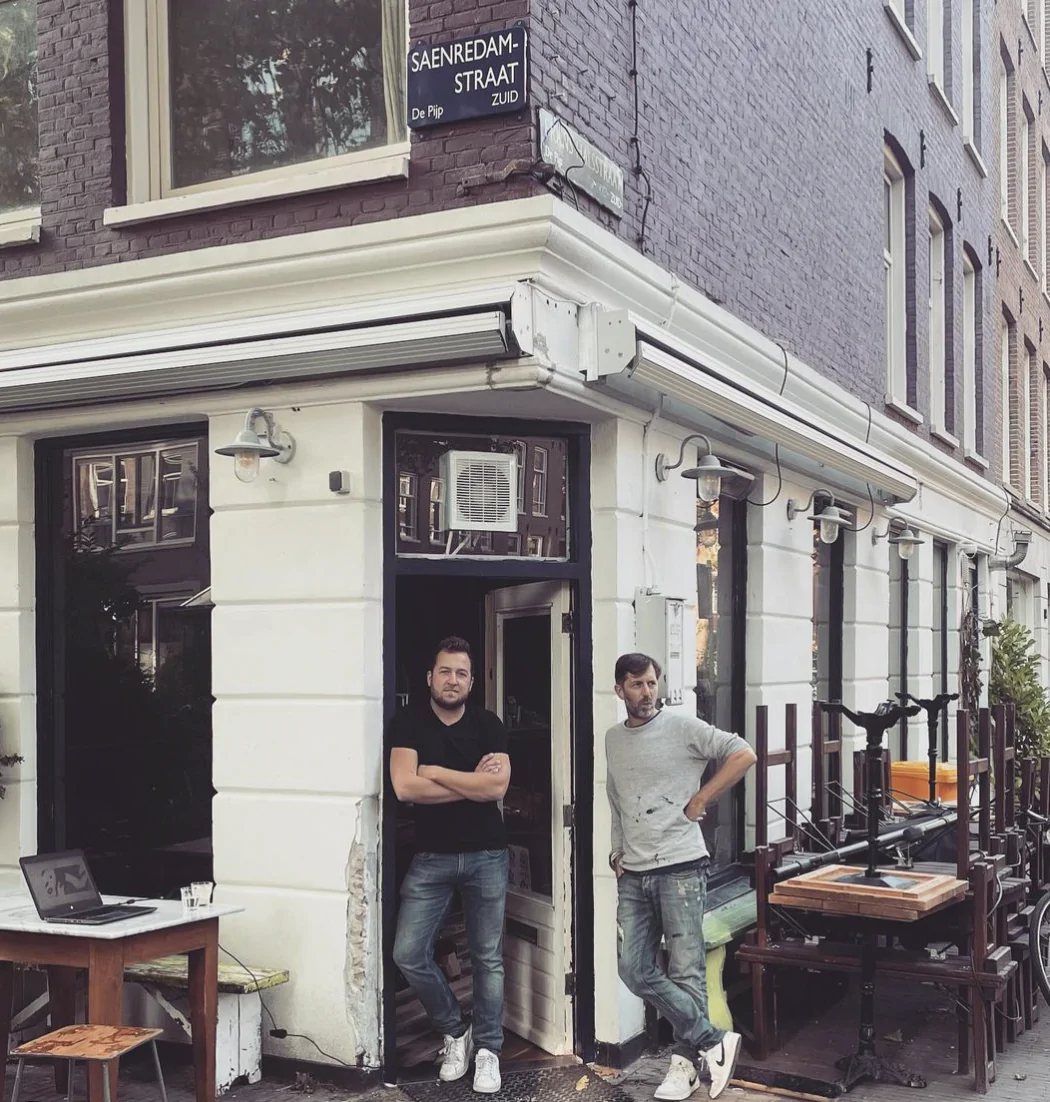
1072 CB Amsterdam
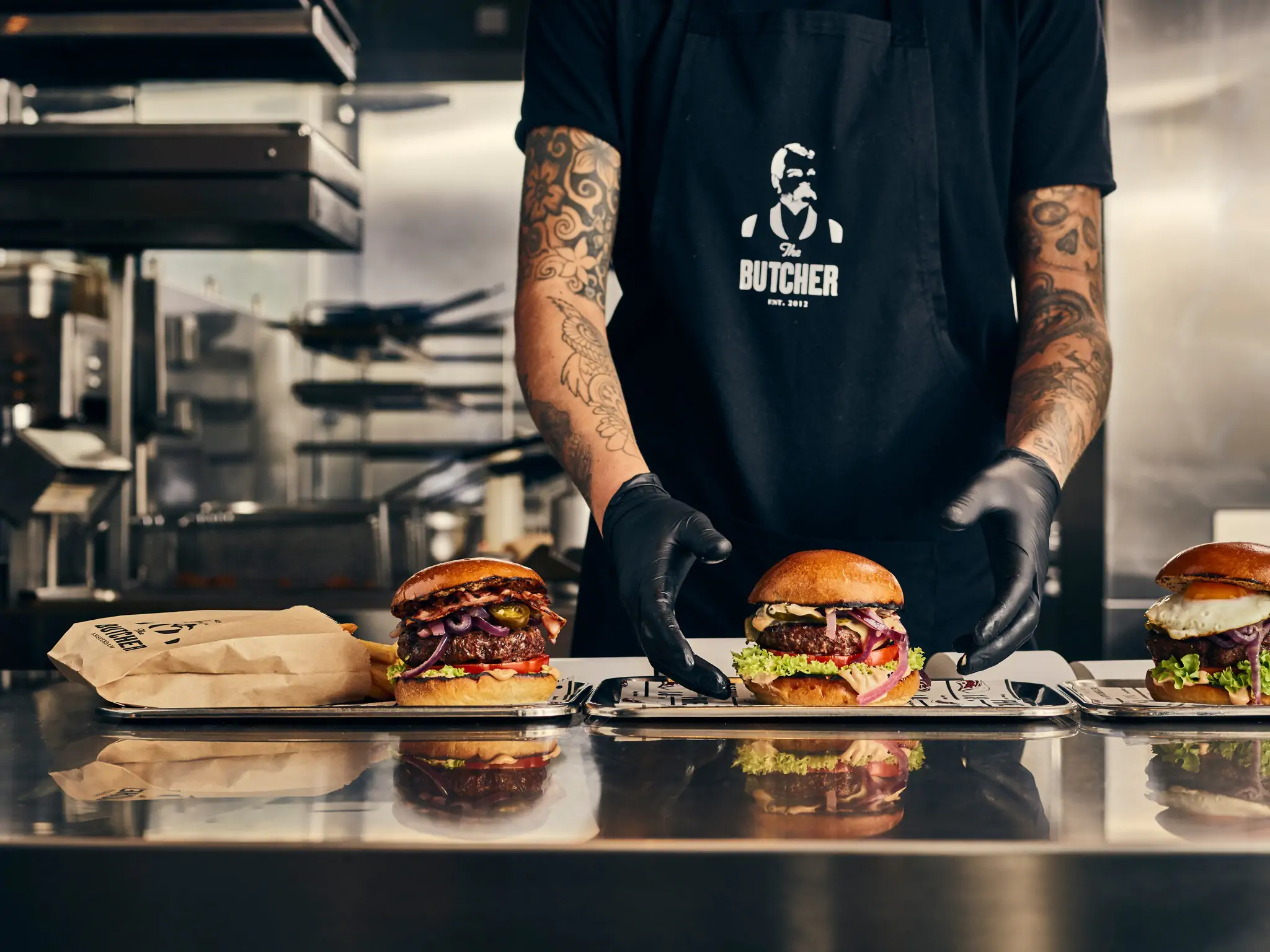
La Dilettante
Eigenaren Olivier von Grumbkow en Hans Vervoort openden de deuren van La Dilettante. La Dilettante is open voor lunch en wijn. Bij de natuurwijnen worden hapjes geserveerd als quiches, tarte tatins, patés en rillettes. Een van die natuurwijnen die de mannen schenken heet La dilettante. Dat is niet de enige verklaring voor de gekozen naam. Het woord heeft verschillende betekenissen. Een daarvan is: iemand die iets doet uit liefhebberij.
1072 CS Amsterdam
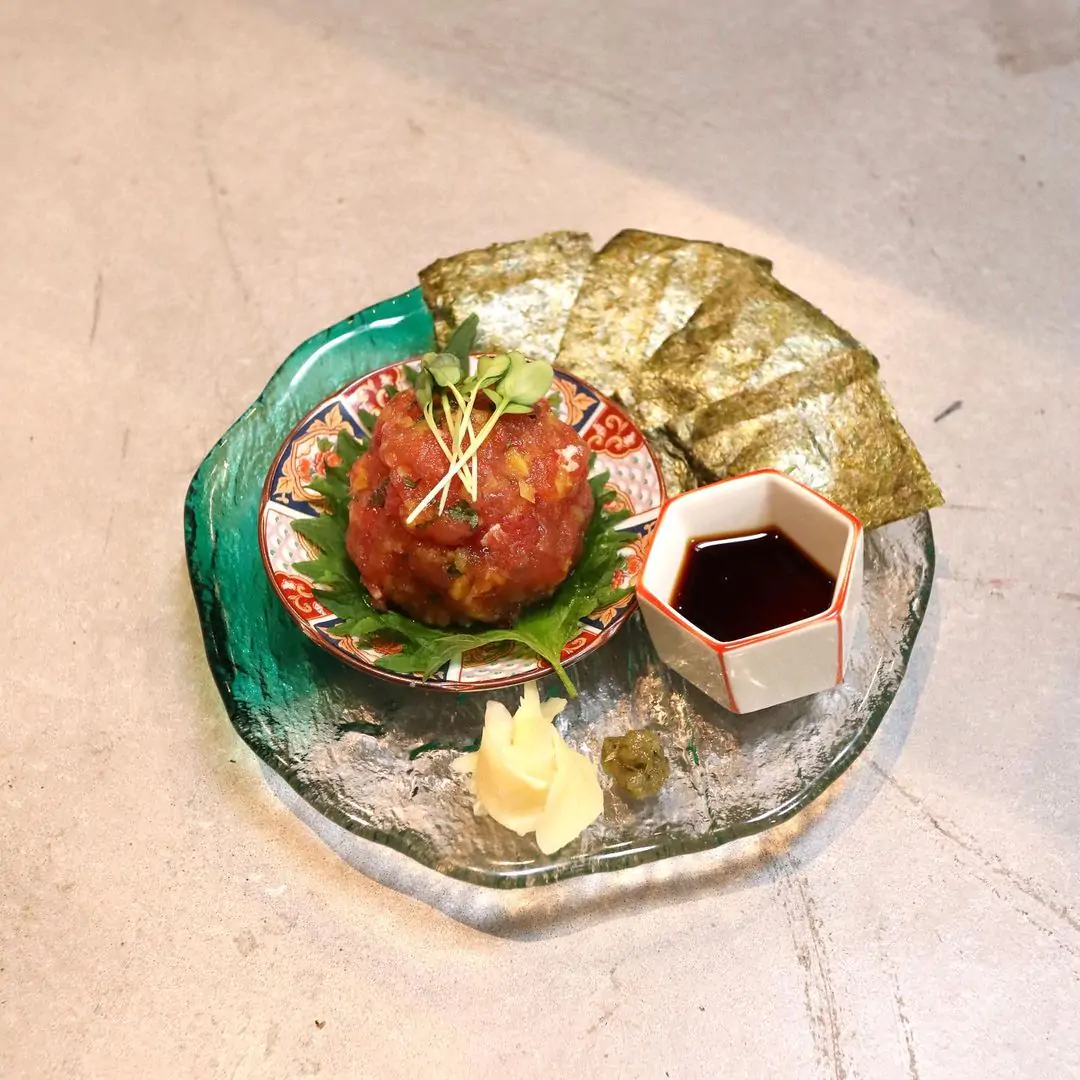
The Butcher
Wie burger zegt, zegt Butcher. Met meerdere locaties in Amsterdam heeft The Butcher een heus burger imperium opgebouwd. De eerste locatie opende in 2012 in De Pijp en groeide al snel uit tot fameuze fastfoodketen van kwaliteit. De sappige burgers worden gemaakt met kunde en kennis én natuurlijk het Aberdeen Angus rundvlees. Zoals ze zelf zeggen ‘bloody good’.
1072 GG Amsterdam
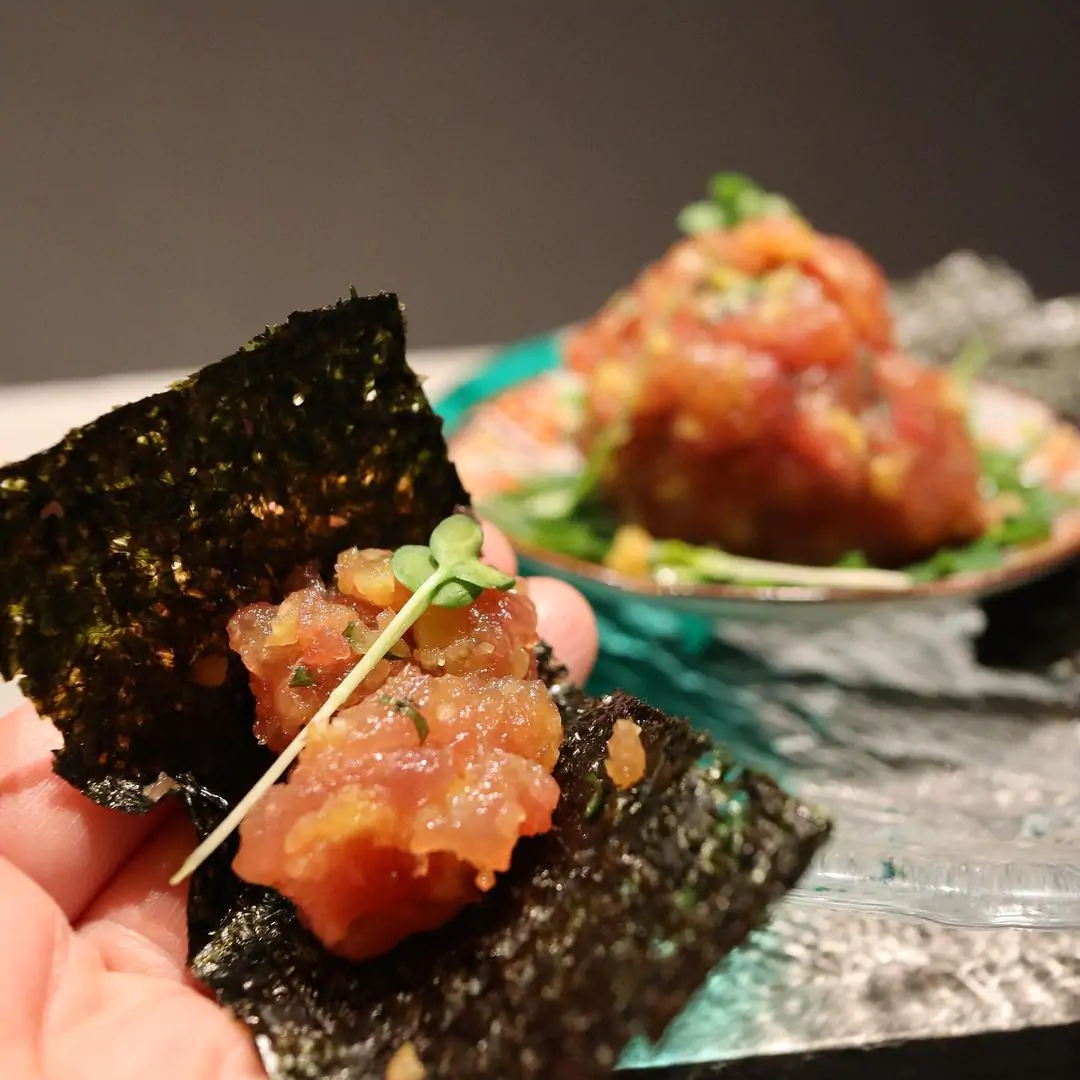
Ikkoku
Bij Ikkoku izakaya serveren ze individuele traditionele en bijna niche izakaya-gerechten met hun eigen kijk op sake, wijn en cocktailpairing. De twee eigenaren begonnen tijdens covid in 2020 Sushi Fanatics en opende daarna omakase shigure. Ikkoku is een nieuwe uitdaging omdat ze nog dieper de niche en onbekende wereld van de Japanse keuken ingaan. De individuele à-la-carte gerechten variëren van echt traditionele izakaya-gerechten tot Japanse gerechten die je in Europa niet vaak tegenkomt,
1072 ET Amsterdam
Sora Sapporo
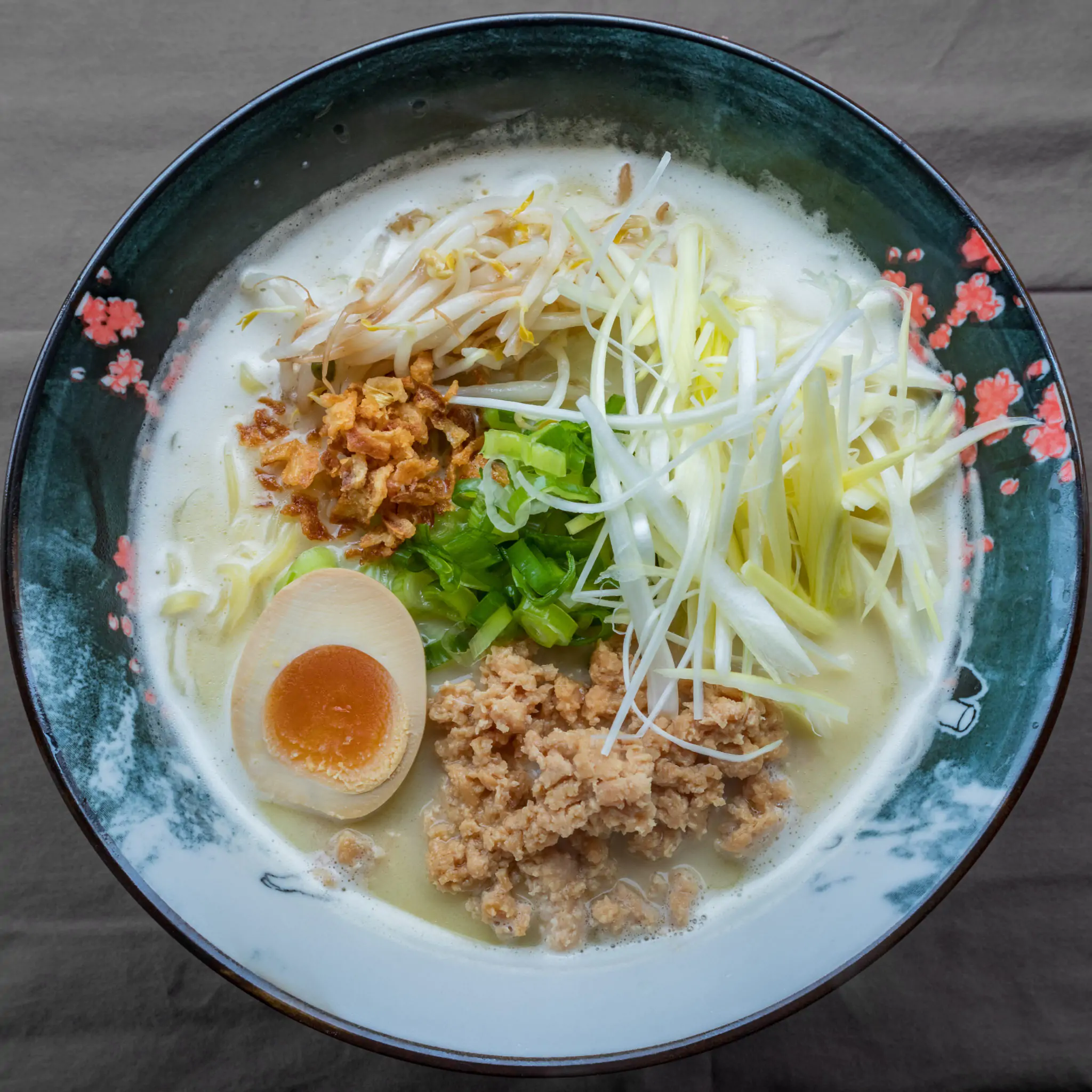
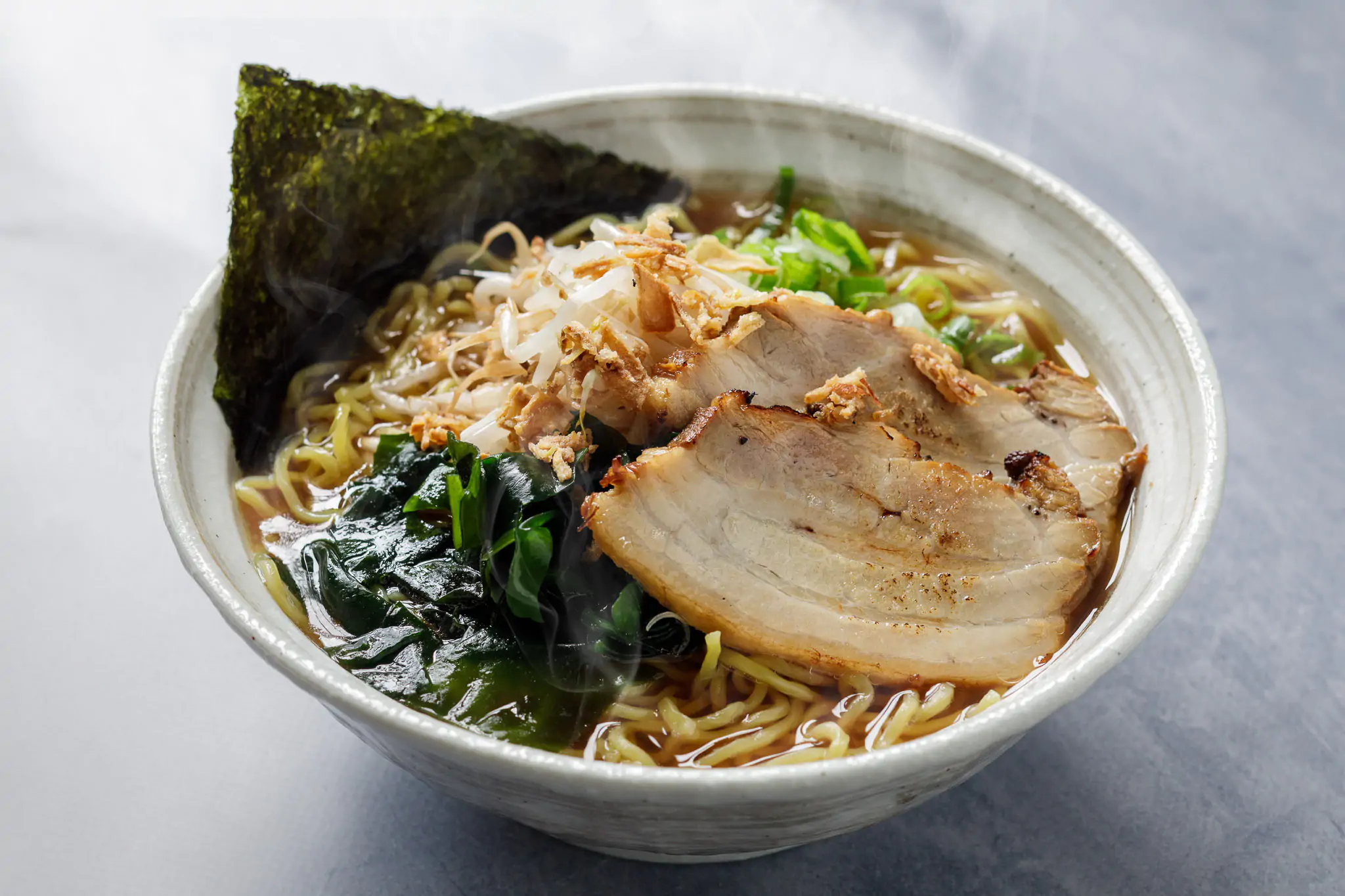
Sora Sapporo Ramen serveert authentieke Japanse ramen en andere Aziatische gerechten. Het restaurant heeft twee vestigingen in Amsterdam, waarvan één is geleden aan de Ceintuurbaan in de Pijp. Het restaurant staat bekend om zijn smaakvolle noedels. Deze noedels worden geïmporteerd uit Japan, waar ze gespecialiseerd zijn in het bereiden van dit product. Ook de bouillon, die deel uit maakt van de miso soep en de tonkotsu shoyu ramen is het proberen waard. Voor degenen die liever thuis van een heerlijke kom noedels genieten: Sora Sapporo Ramen bezorgt ook aan huis.
1072 LK Amsterdam
Takumi Ramen Kitchen
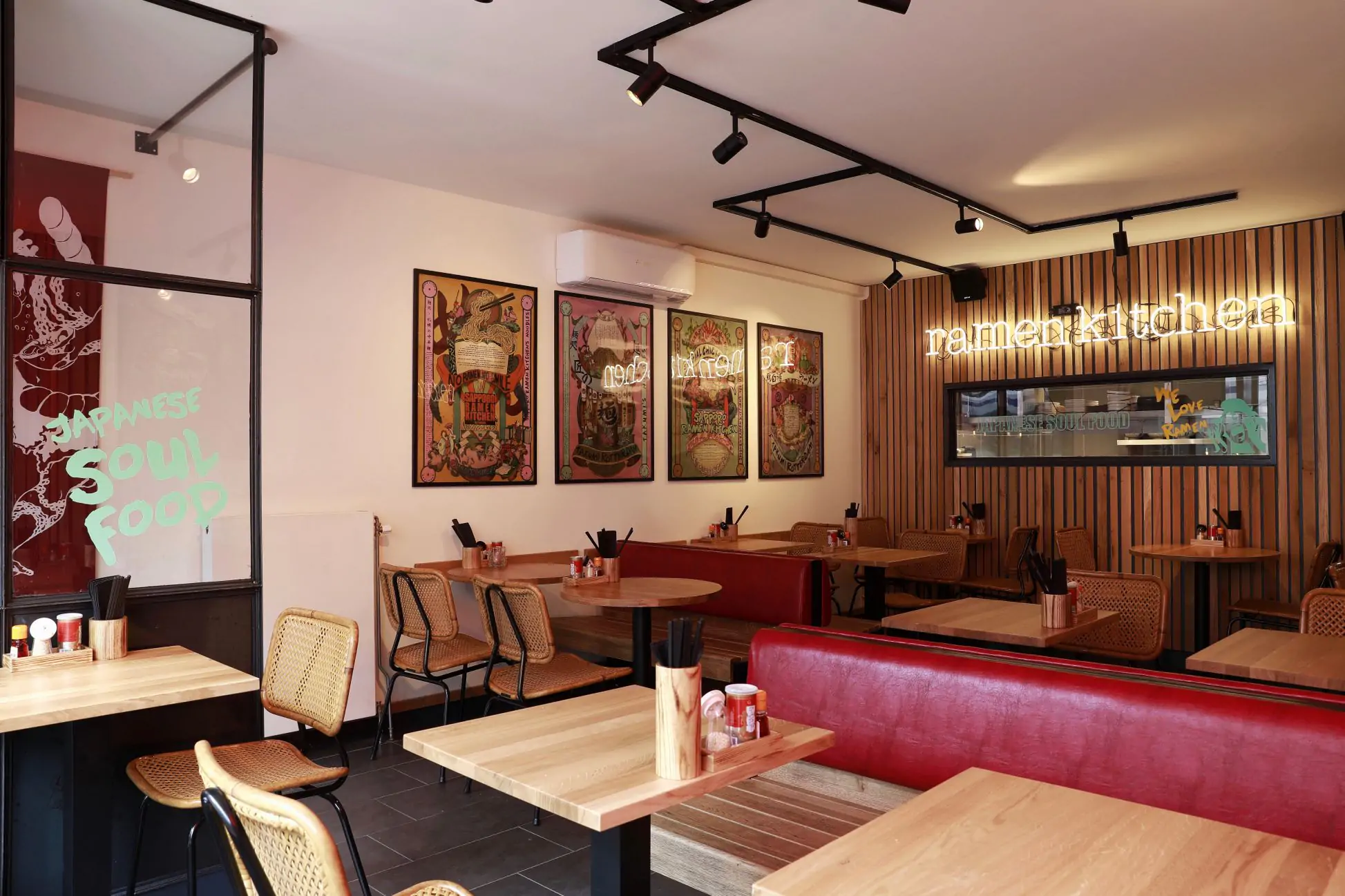
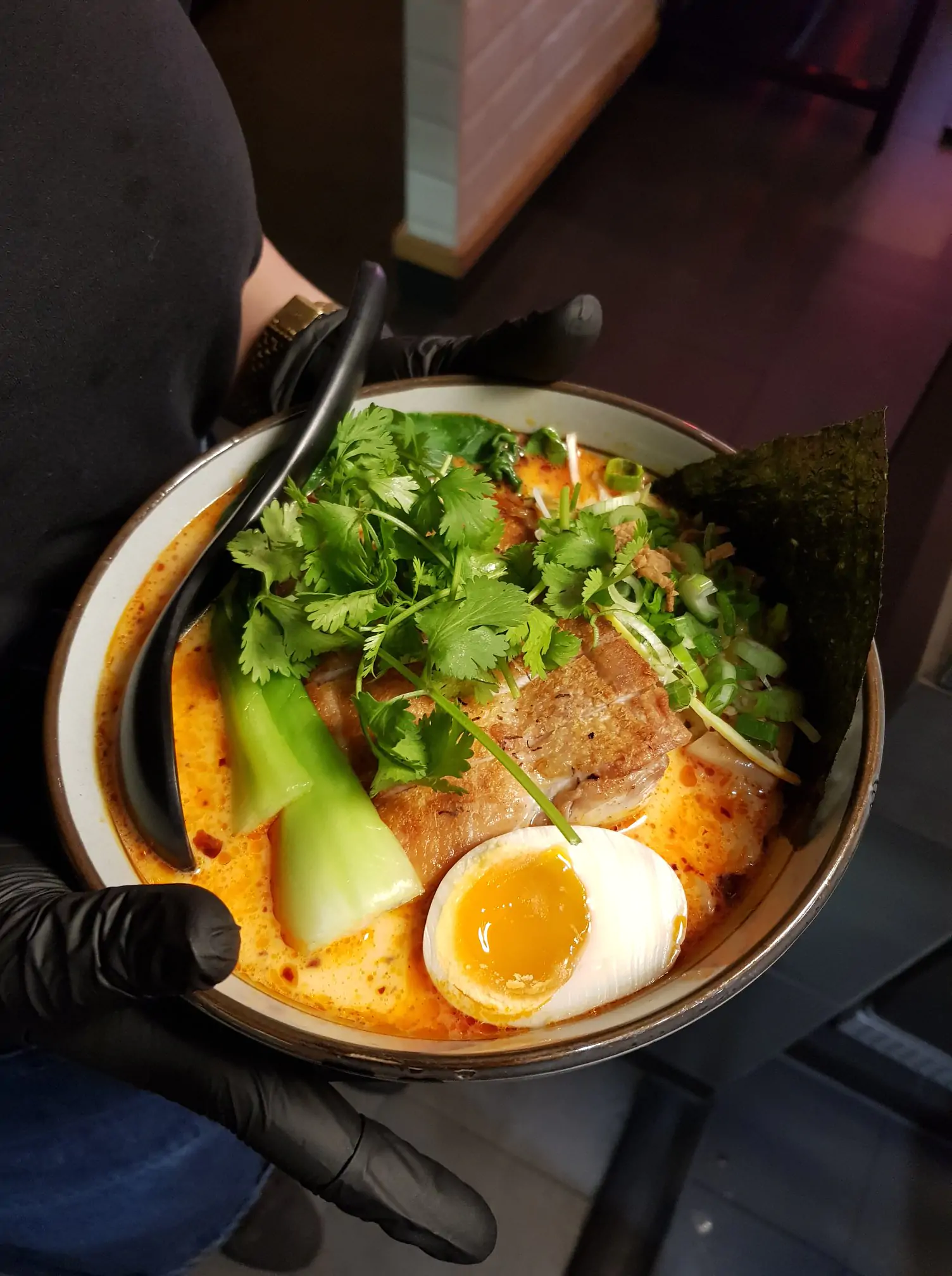
Takumi is het zuster Restaurant Umaimon ramen op het Leidseplein. Het restaurant is intiem met uitstekend vriendelijke bediening. Takumi biedt een klein, maar heerlijk aanbod. Je hebt de keuze uit shio (zout), shoyu (soyasaus) of miso ramen met gevarieerde toppings en smaken.
1072 GE Amsterdam
Tapi 'n Bowls
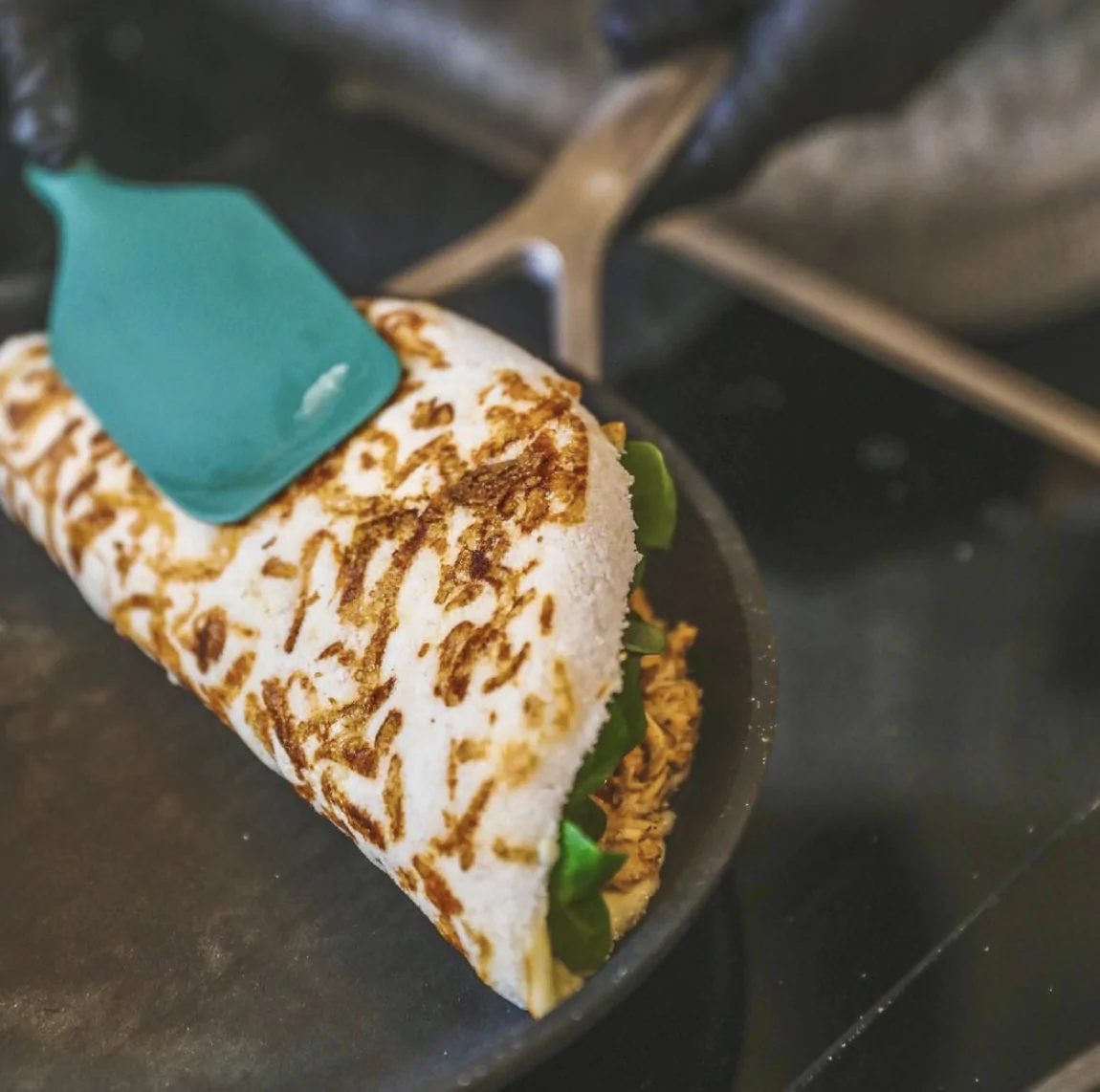
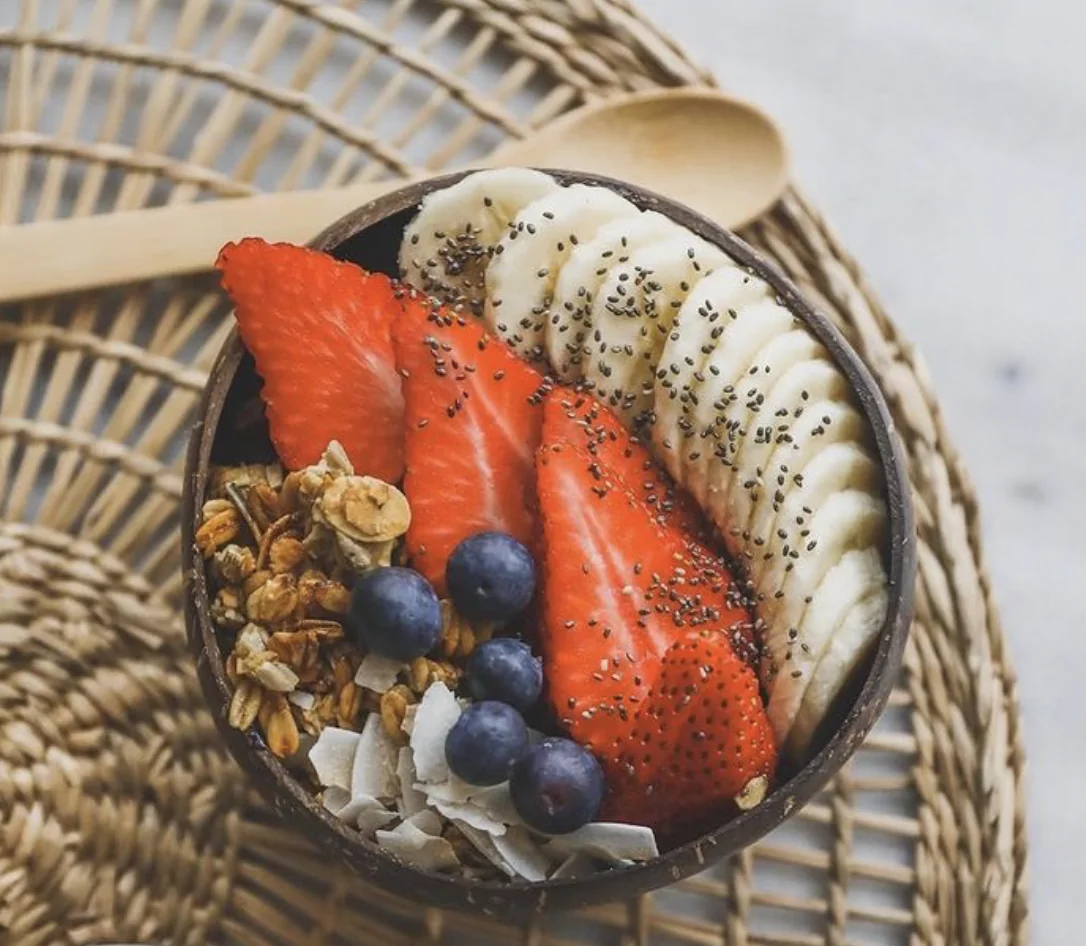
Bij Tapi 'n Bowls bieden ze Braziliaanse gerechten met een moderne jonge twist. De specialiteiten zijn Tapiocas en exotische smoothie bowls. De smoothie bowls worden geserveerd met meer dan 200 verschillende soorten vruchten met verschillende kleuren en smaken. De tapioca is een gerecht van cassave zetmeel, wat erg populair is in het noorden van Brazilië. De Tapioca heeft een knapperige buitenkant en is zacht van binnen. Daarbij is het ook erg gezond omdat het geen geen gluten, vetten, lactose of suiker bevat.
1072 VE Amsterdam
Brut de Mer
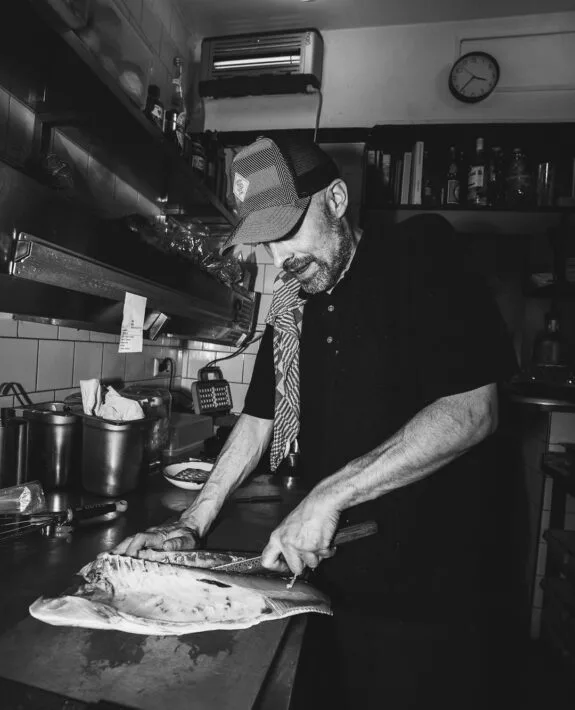
De inrichting van Brut de Mer is levendig en stedelijk, passend bij de dynamische oester- en visbar in De Pijp. Het interieur is informeel en ademt de sfeer van een Franse Rivièra-bar, waar je geniet van verse zeevruchten zoals oesters en fruits de mer. De ruimte is compact en knus, waardoor je het gevoel hebt in een authentieke, bruisende viszaak te zijn. Bij mooi weer biedt het terras een populaire plek om buiten te eten.
1072 LA Amsterdam
Soju bar
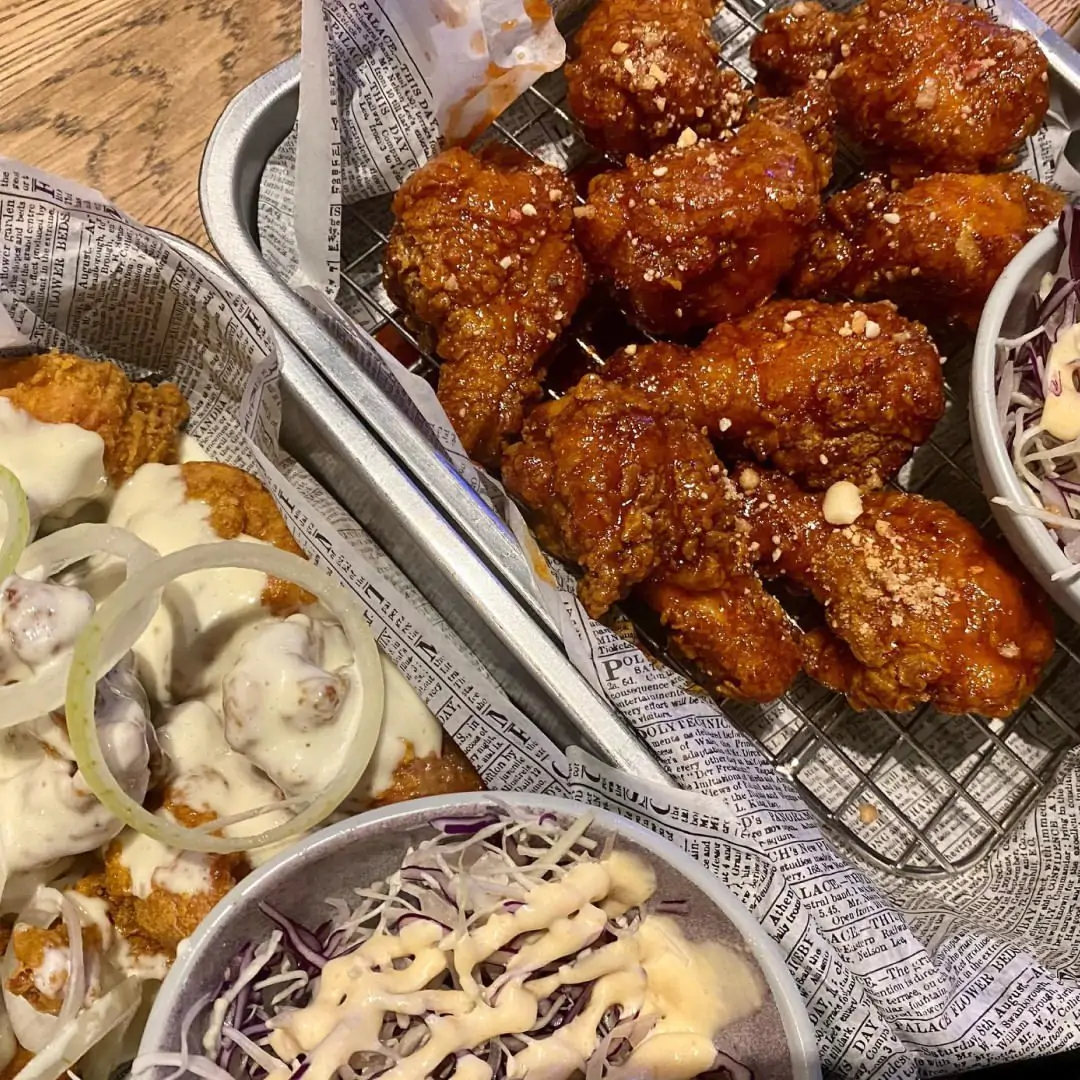
Bij Soju Bar kun je genieten van heerlijk knapperige Korean Fried Chicken. Naast de Fried Chicken bieden ze ook andere Koreaanse gerechten aan en natuurlijk de befaamde Soju. Bij Soju bar kun je genieten van Korean Fried Chicken en dit wegspoelen met bier en Soju, een Koreaanse borrel die vergelijkbaar is met sake in Japan. Soju wordt meestal gemaakt van rijst en is een gedestilleerde drank die verrassend lekker is om te drinken. Als je je avond echt op z'n Koreaans wilt beginnen, bestel dan een sojubomb, een soort 'kopstootje' maar dan met soju in plaats van jenever.
1072 VE Amsterdam
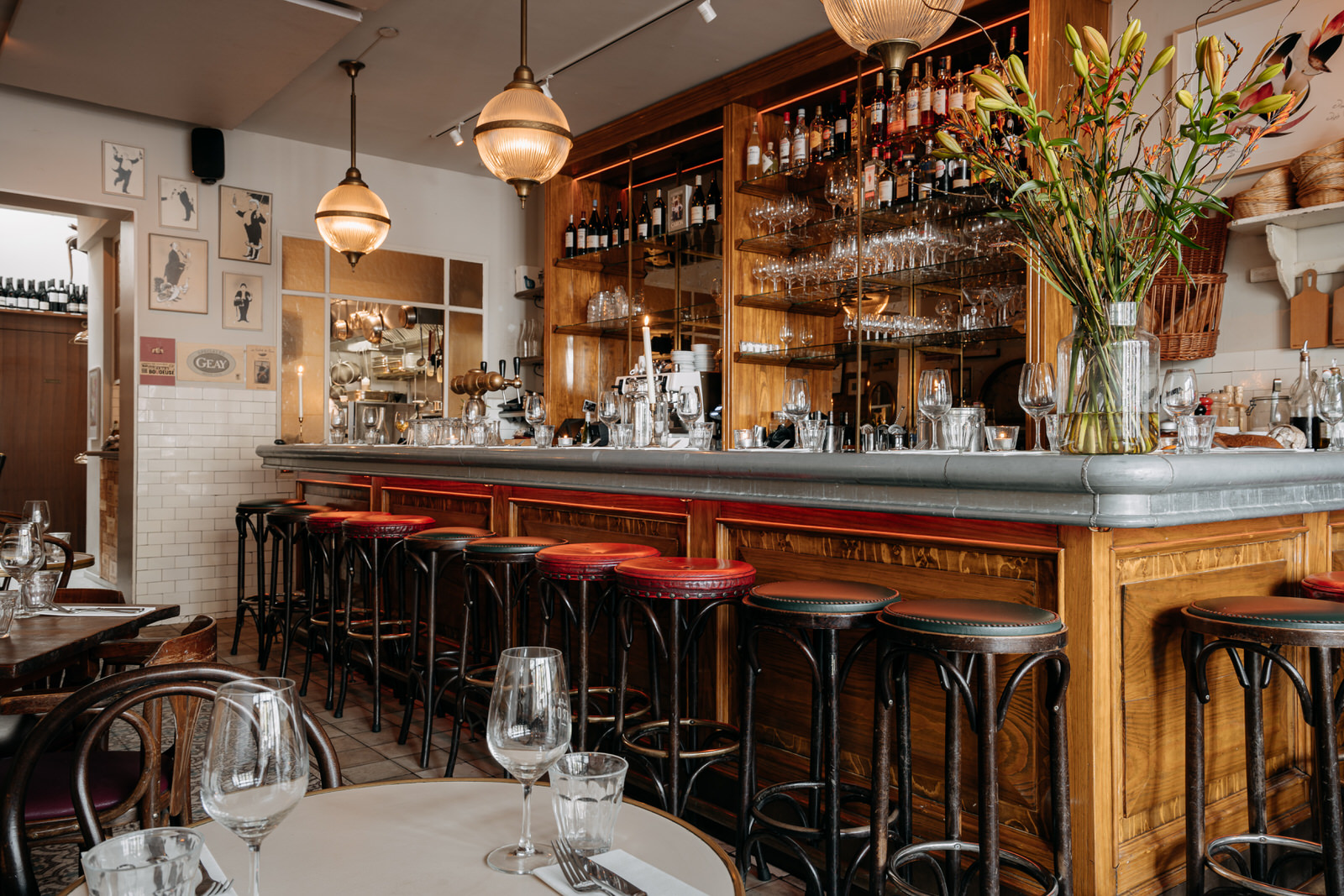
Petit Caron
Het kleine broertje van Café Caron, opgericht en gemanaged door Alain Caron en zijn zoons, gelegen op het altijd gezellig drukke Gerard Douplein. Reserveer een tafeltje op het terras en waan je in de Parijse wijk Les Marais. Bestel de signature dish van Petit: Côte de Boeuf, en een mooie fles Lowel. De wijn komt ook uit de koker van de Caron Familie, en is vernoemd naar de jongste zoon uit het telg Caron. Een soepele wijn rode wijn, het liefst mild gekoeld gedronken, uit de Loire, die zich ideaal leent om te genieten van alles wat Petit te bieden heeft.
1072 PA Amsterdam
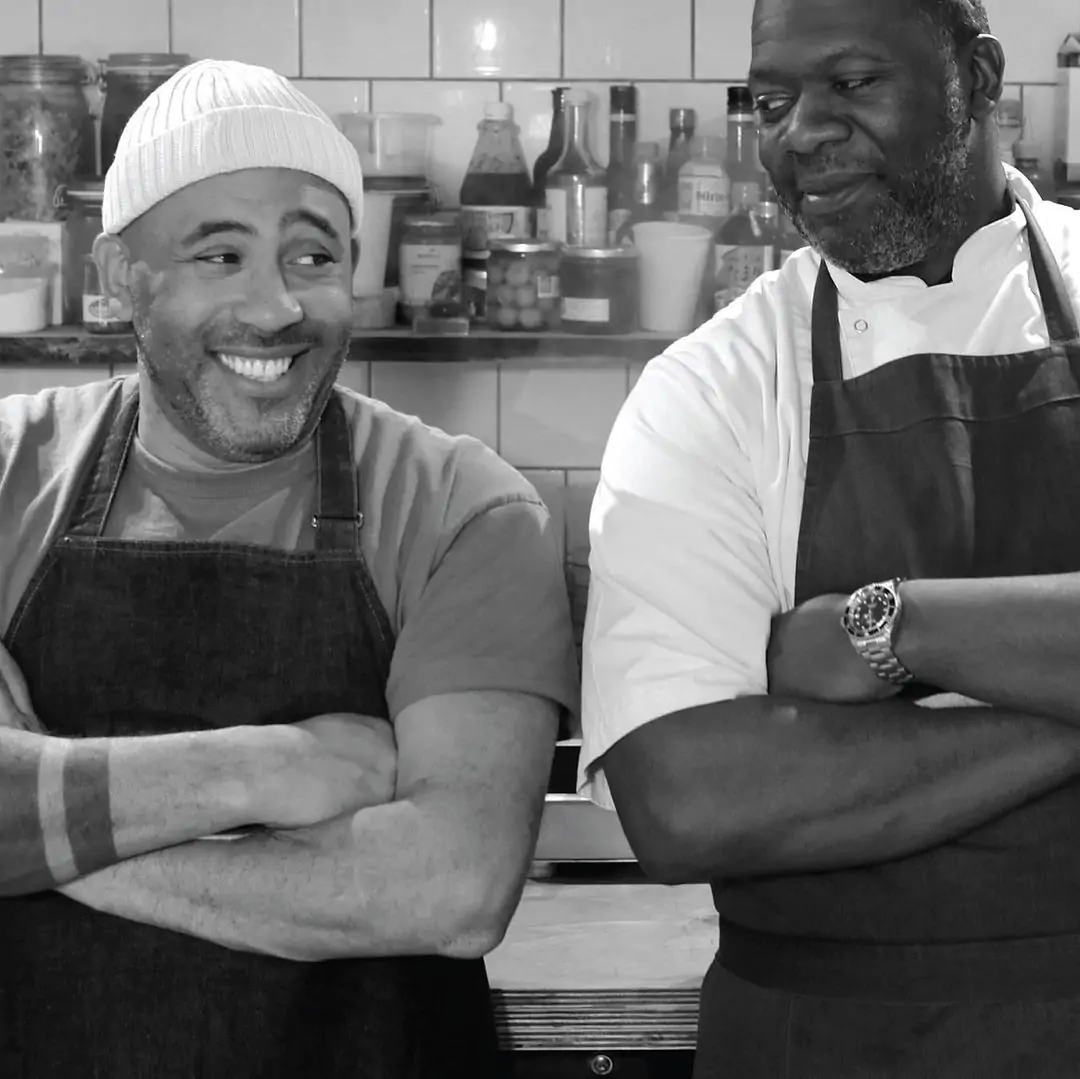
Ladybird
Noah Tucker (New York) en Tony Joseph (Londen) zijn geïnspireerd door herinneringen aan Amerikaanse Down South-recepten en familiediners vermengd met de cultuur en vibes van New York. Beide chefs hebben een indrukwekkend cv, maar de liefde voor kip heeft hun uiteindelijk geleid tot het openen van dit restaurant. De fried chicken wordt hier tot in perfectie uitgevoerd. Voor de echte liefhebbers; ook mogelijk in combinatie met kaviaar.
1072 VT Amsterdam
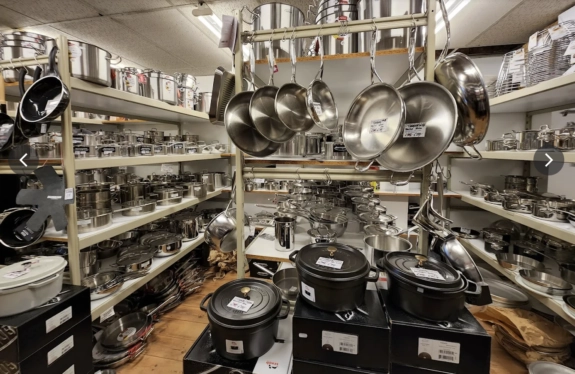
Duikelman
In het hart van De Pijp vind je Duikelman, al sinds 1940 dé kookwinkel van Amsterdam. Van espressomachines tot Japanse messen – elke kok, professioneel of thuis, raakt hier geïnspireerd. De speciaalzaken op de Ferdinand Bolstraat en Gerard Doustraat vormen samen een culinair walhalla. Hier proef je niet alleen kwaliteit, maar ook vakmanschap. Een must voor wie koken als ambacht ziet.


1072 TN Amsterdam
Juki Amsterdam
JUKI Amsterdam is een ode aan design met karakter. In de showroom in De Pijp vind je iconische vintage meubels, lampen en objecten – elk met een verhaal.Van Bauhaus tot Memphis, met liefde geselecteerd en klaar voor een tweede leven. JUKI Amsterdam biedt haar collectie aan via de webshop, met elke donderdag om 18:00 uur (CET) een nieuwe drop. De showroom in De Pijp is open op afspraak én elke zaterdag van 12:00 tot 18:00.
1072 TN Amsterdam
Juki Amsterdam
JUKI Amsterdam is an ode to design with character. In the showroom in De Pijp, you’ll find iconic vintage furniture, lighting and objects – each with its own story. From Bauhaus to Memphis, lovingly curated and ready for a second life. JUKI Amsterdam also offers its collection online, with a new drop every Thursday at 6:00 pm (CET). The De Pijp showroom is open by appointment and every Saturday from 12:00 to 6:00 pm.
1072 VV Amsterdam
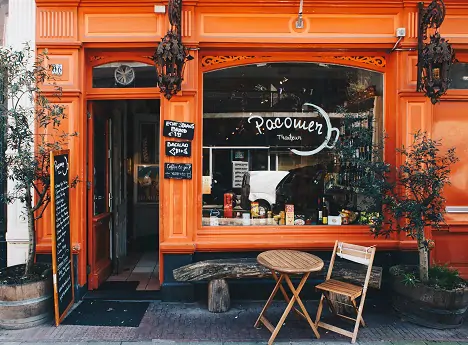
Pacomer traiteur
Pacomer traiteur is een zaak in de Pijp, gespecialiseerd in de verkoop van Spaanse delicatessen. Binnen in de winkel staat een grote tafel waar je de heerlijke huisgemaakte paella, broodjes of tapas kan eten. Daarnaast is er buiten een klein terrasje, waar je – mocht je geluk hebben – ook plaats kunt nemen. Alle gerechten kunnen worden meegenomen en zijn dus ook ideaal om in bijvoorbeeld het Sarphatipark te nuttigen, onder het genot van een glas rioja, sidra of cava op een picknickkleed. De traiteur doet ook aan catering, waarbij het mogelijk is om je eigen borrel en/of tapas plateaus samen te stellen. Heb je niet genoeg gasten voor een catering, maar wil je wel graag lekker Spaans borrelen met jezelf of je vrienden? Pacomer levert met liefde een groot deel van de tapas aan huis, van broodjes pata negra of tortilla, tot paella’s en Spaanse kaas en vlees plateaus!
1072 CS Amsterdam
Alain Bernard Butchery
Verstopt achter de drukke Albert Cuypmarkt vind je deze top slager. Ze hebben een groot assortiment van rund, varken, lam en kalf. De merguez worstjes zijn heerlijk, maar eigenlijk is al het vlees hier van hoge kwaliteit. Ook hebben ze goede Bretonse roomboter (gezouten of ongezouten). Kortom, als je al over de Albert Cuyp struint, vergeet deze plek dan niet!
1072 NZ Amsterdam
Tjin's Toko
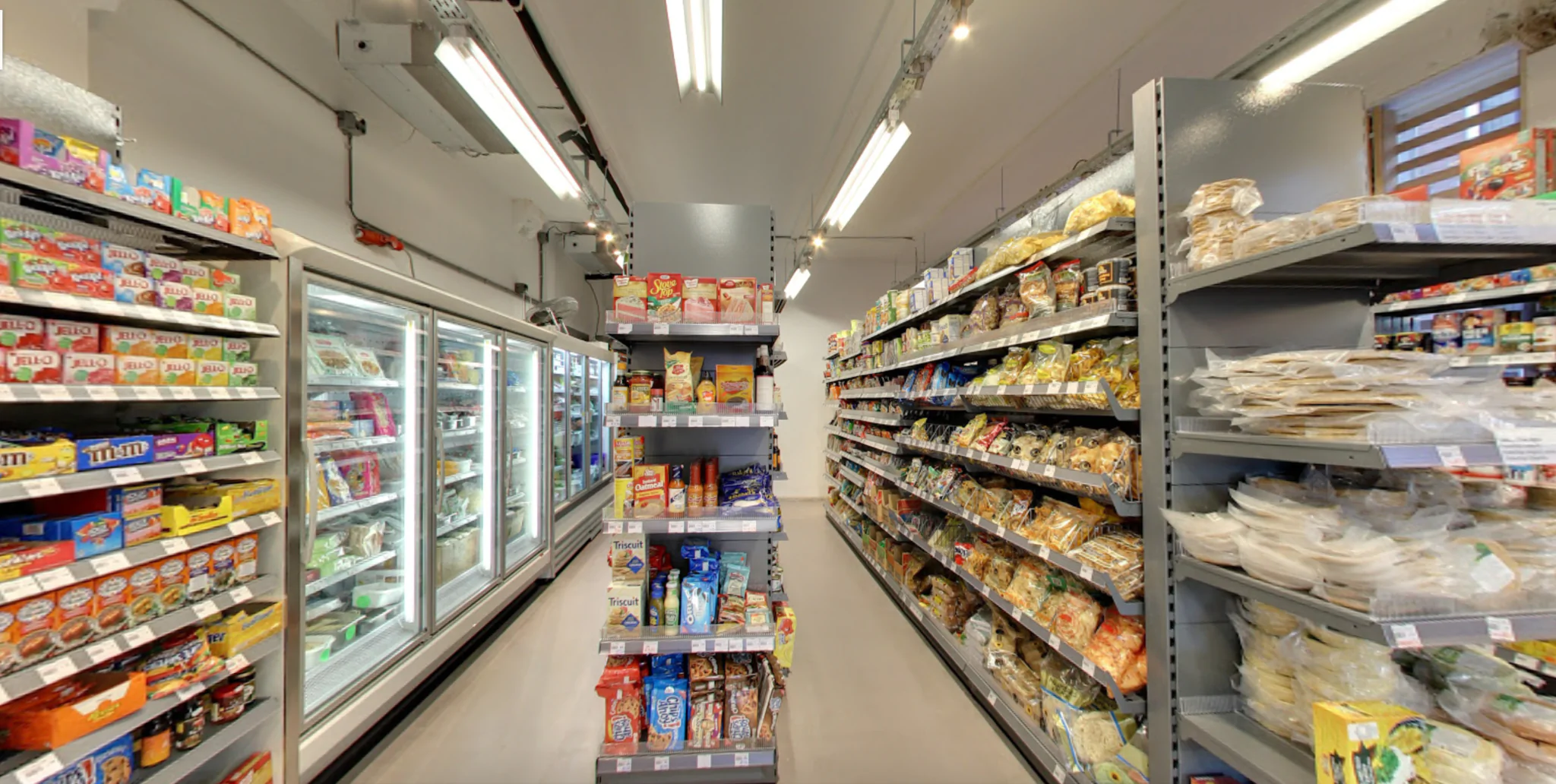
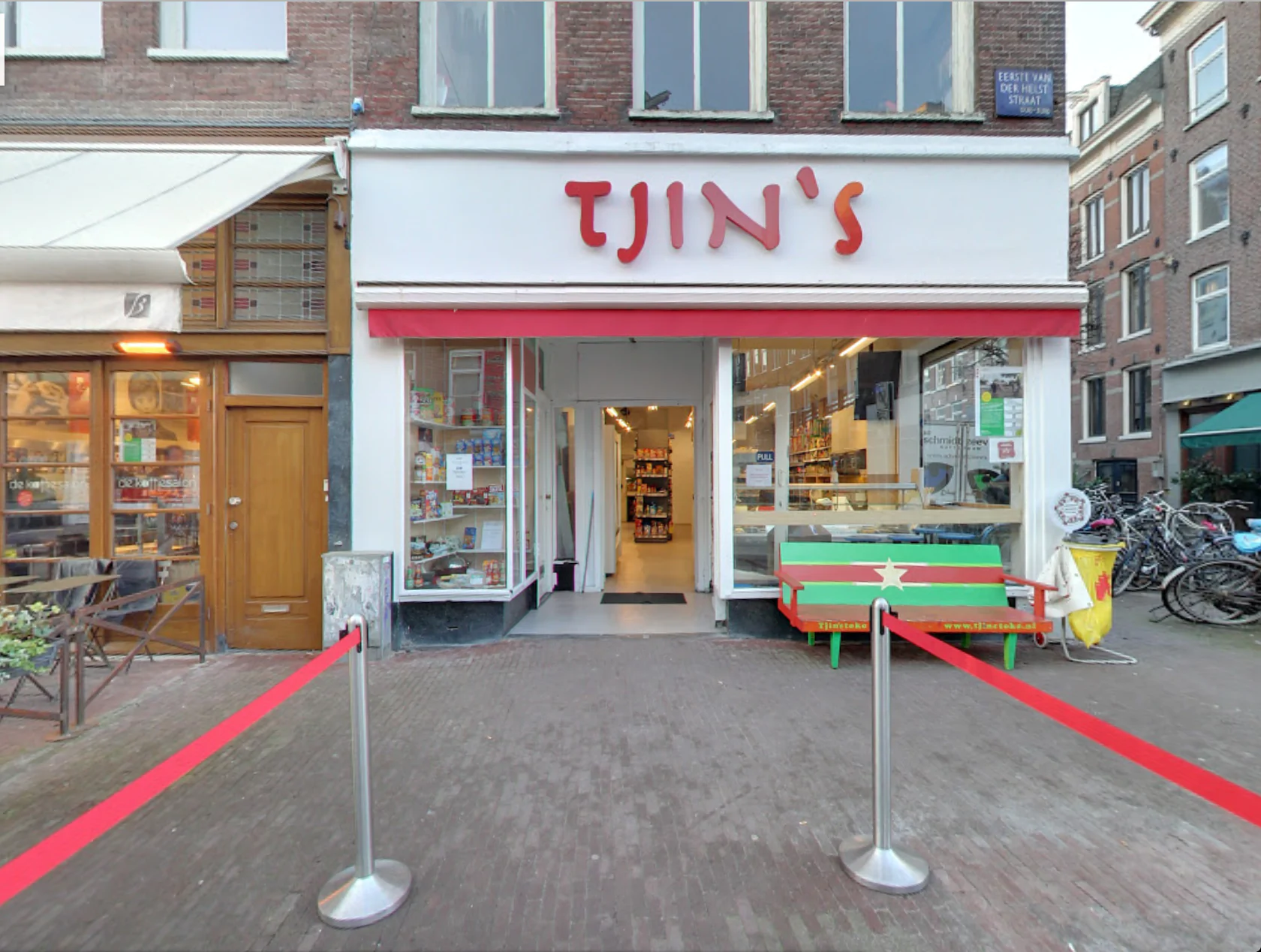
Tjins is inmiddels een welbekende broodjeszaak in Amsterdam. Al 40 jaar een perfect adres voor een broodje hete kip of bakkeljauw. Minder bekend is de International Foodstore die gevestigd is achter de afhaal-vitrine. Verschillende gedroogde Mexicaanse pepers, echte Chinese smaakmakers, verse Indiase producten en een ruim arsenaal aan Amerikaanse snacks. Van plan om echt buitenlandse gerechten te maken? Tjins is the place to be.
1072 NX Amsterdam
Slagerij Zagora
Islamitische slagerij Zagora is bij menig buurtbewoner van de Pijp bekend. In een zijstraatje van de Albert Cuyp Markt vind je deze parel van een winkel, die veel meer is dan een slager alleen. Voor de deur staan oneindig veel dozen en kratten met groentes uitgestald, allemaal even kleurrijk en vers. Kruiden zoals onder andere rozemarijn en tijm koop je hier in potjes, voor bespottelijk goede prijzen. In tegenstelling tot de bosjes uit de supermarkt kun je deze onderhouden met water, waardoor de kruiden veel langer meegaan. De slagerij maakt uiteraard ook vlees, waaronder huisgemaakte merquez worstjes, shoarma en hamburgers. De vriendelijke mannen uit de winkel staan altijd paraat voor het groepje trouwe klanten en maken maar al te graag tijd voor je vrij. Een duidelijke tussenstop voor iedereen die graag zijn boodschappen op de Albert Cuyp doet!