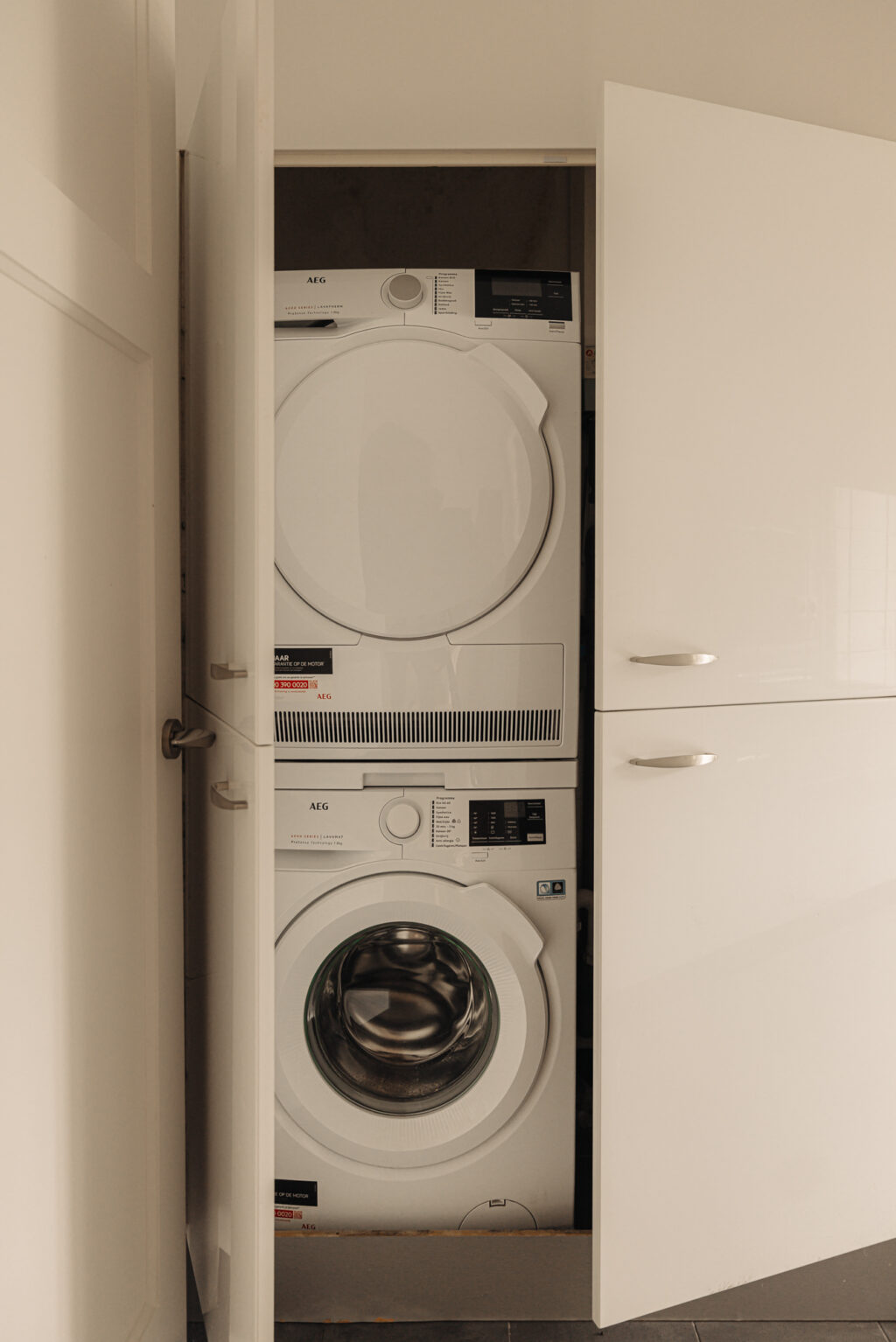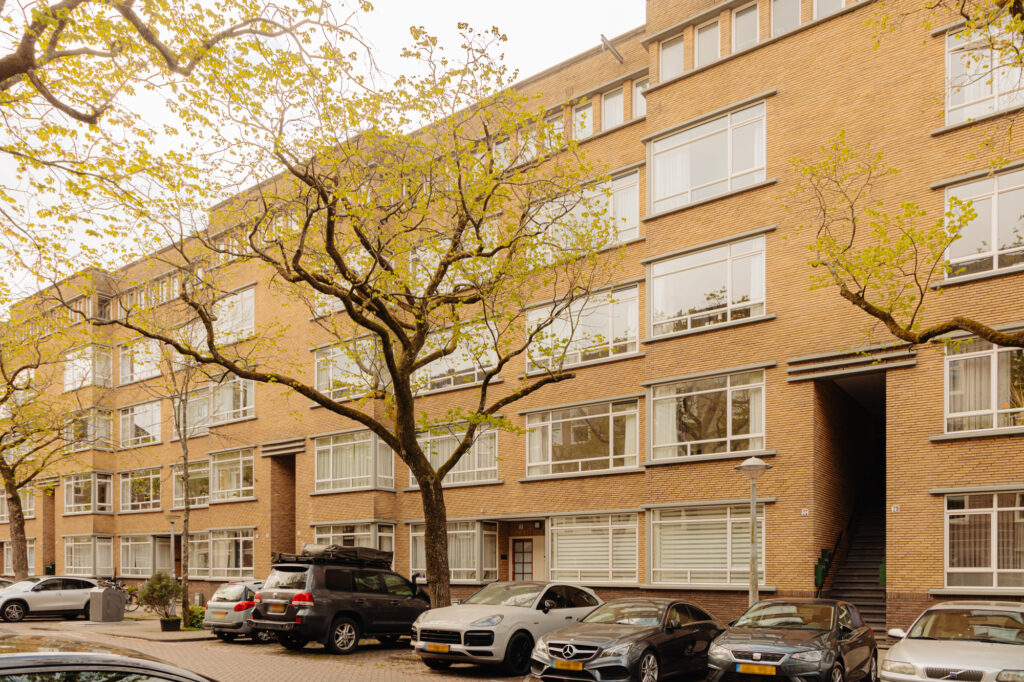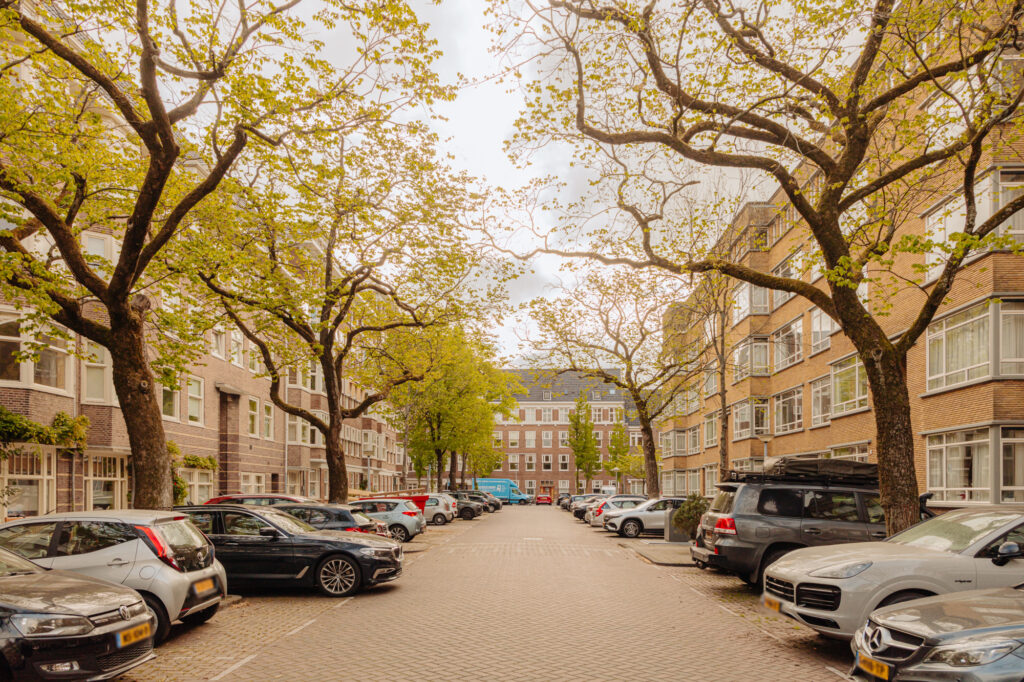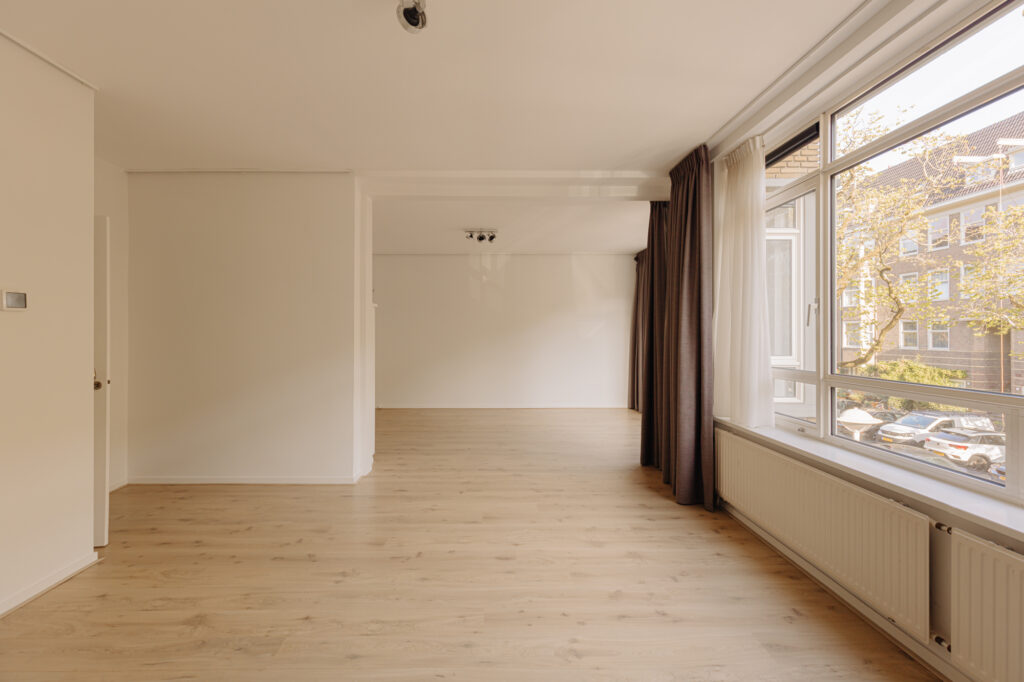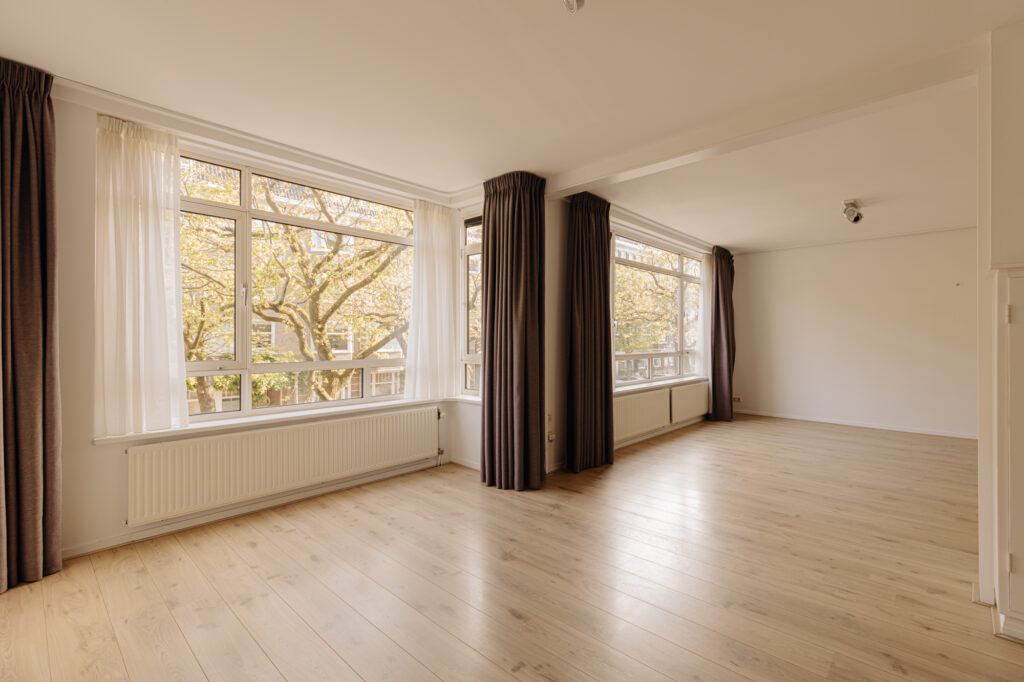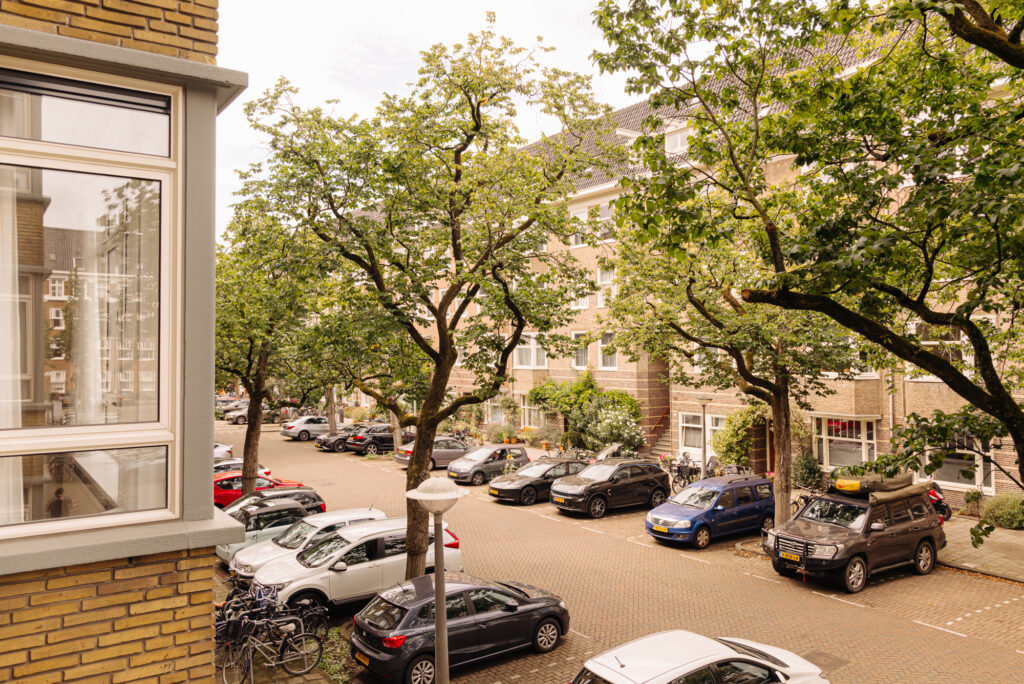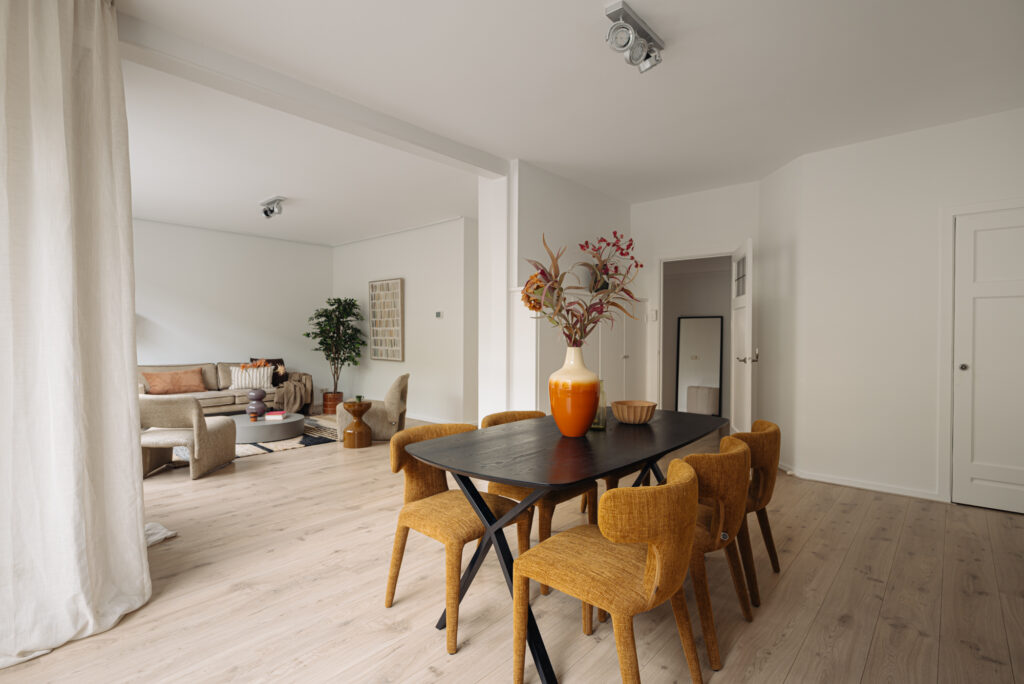
Apartment of approximately 106 m², located in Amsterdam Zuid.
It features a living room, well-maintained kitchen, two bedrooms, a bathroom, and a balcony. The ground lease has been bought off in perpetuity.
Tour
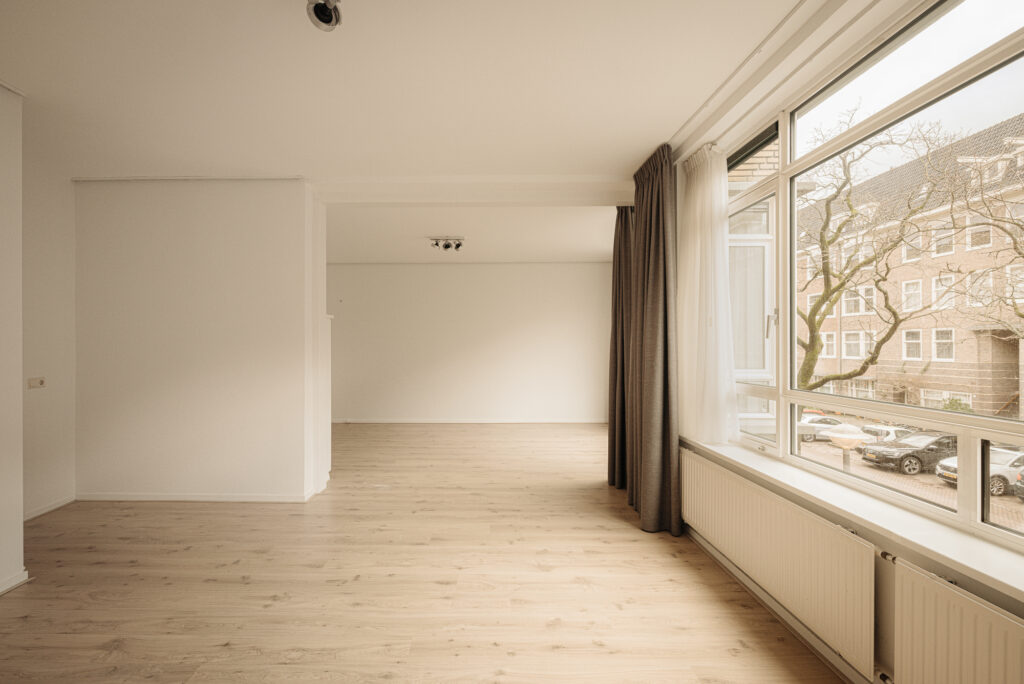
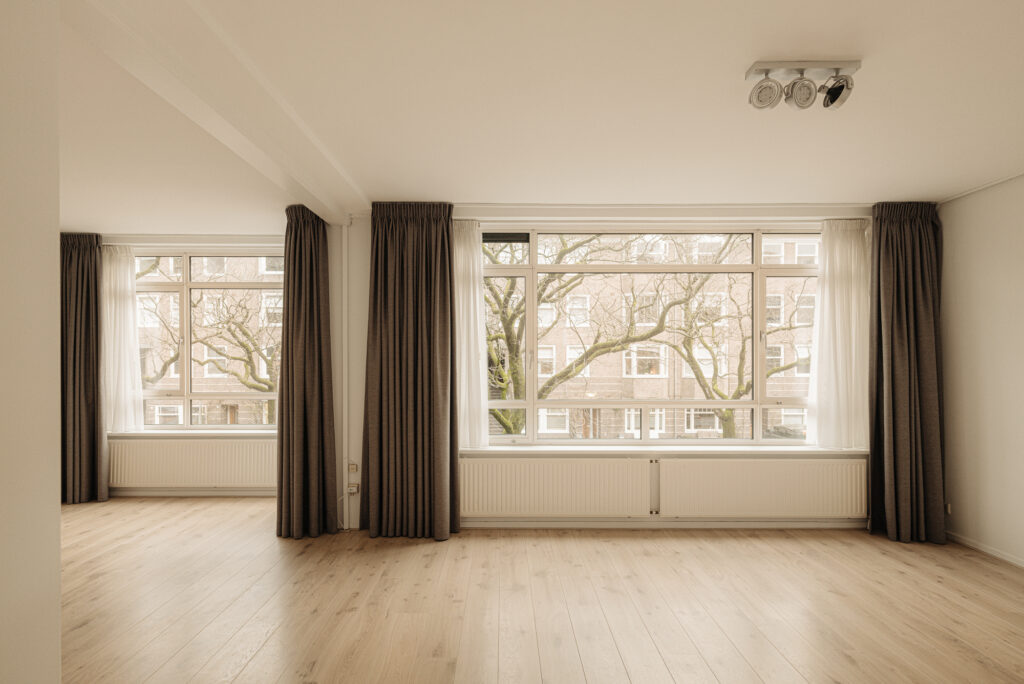
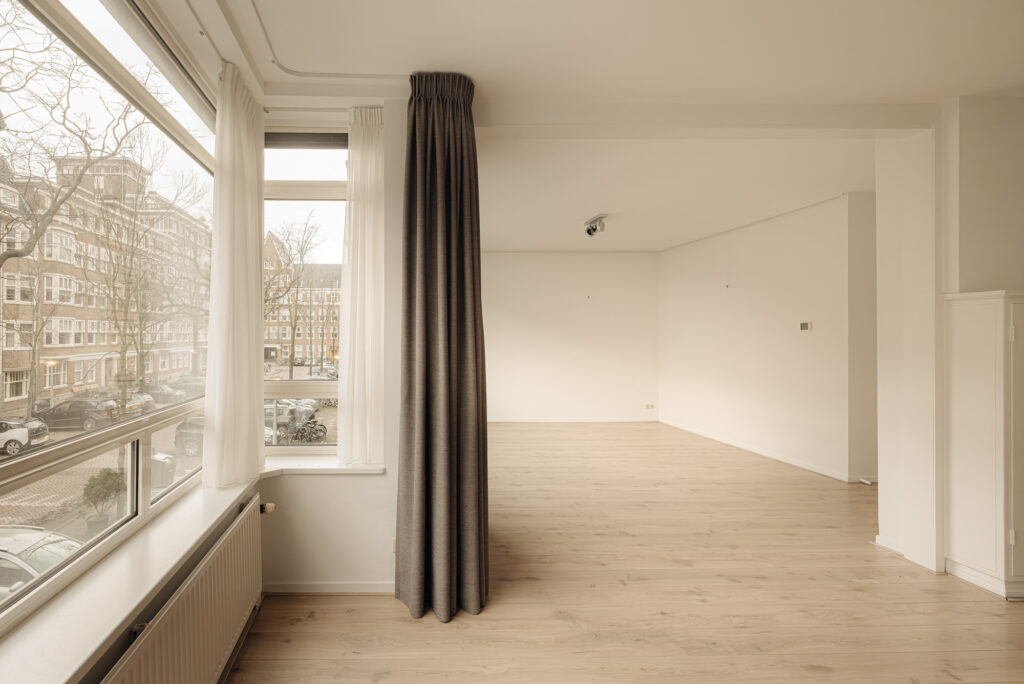
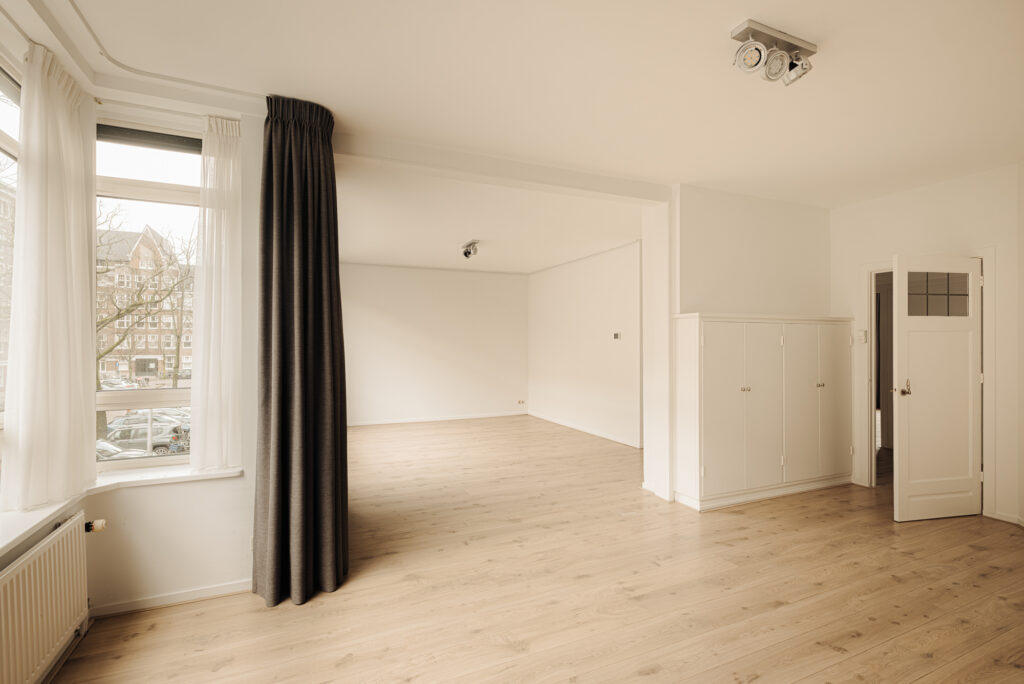
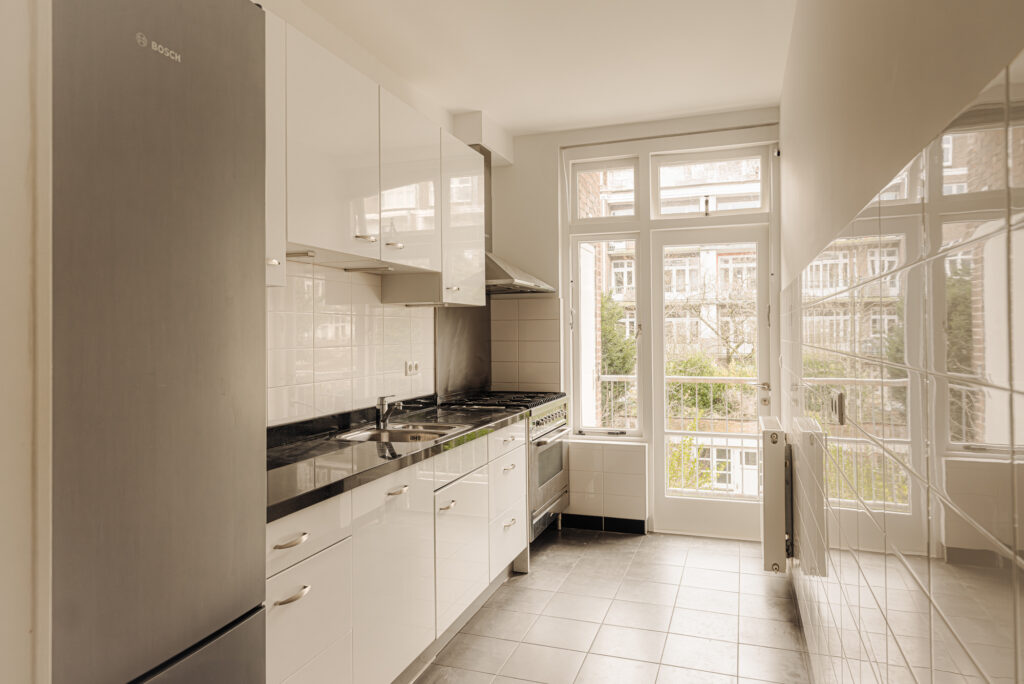
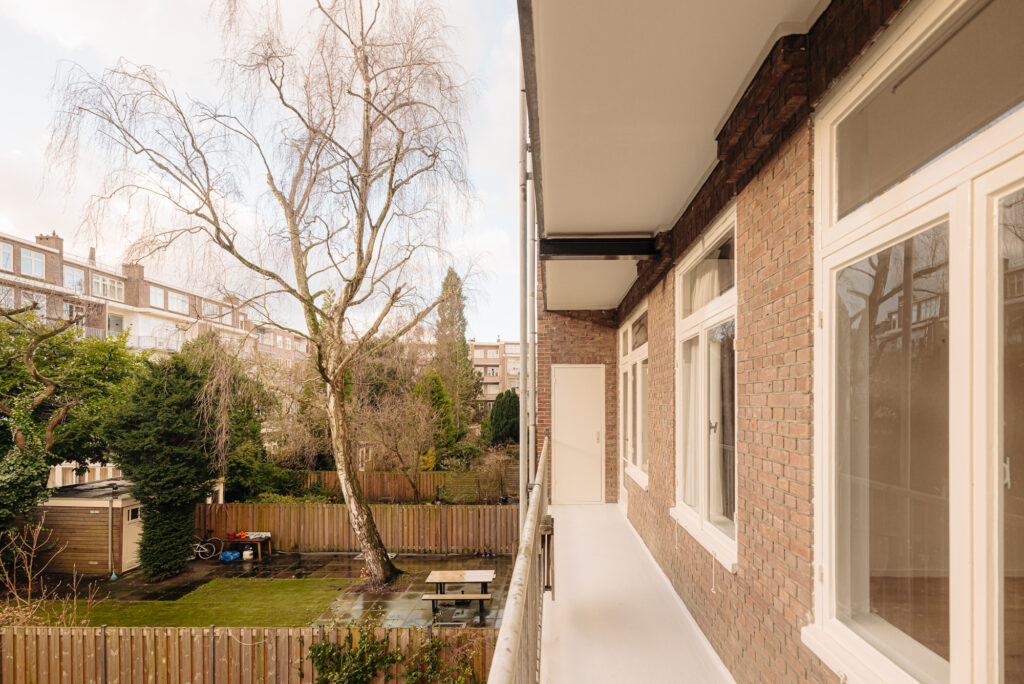
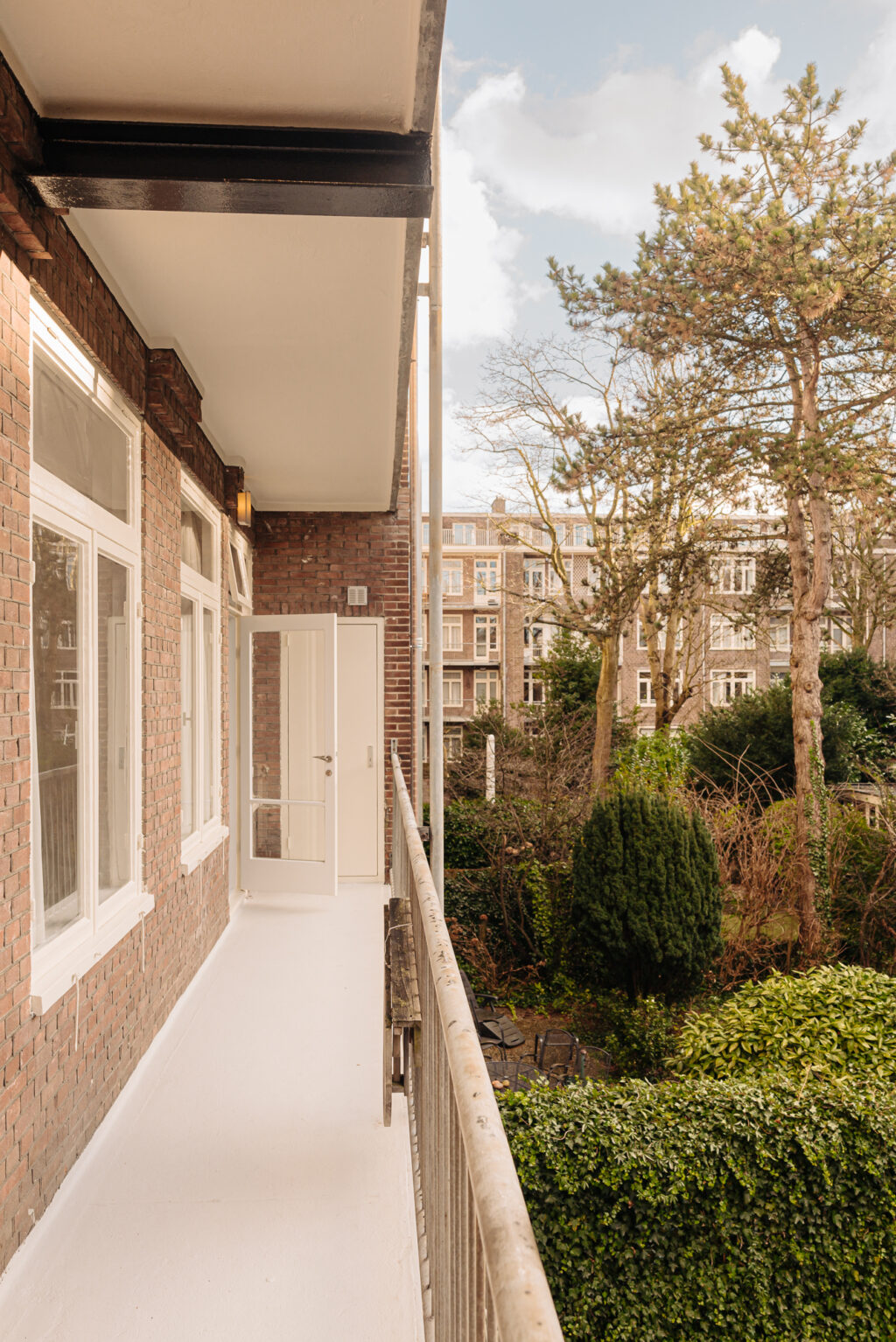
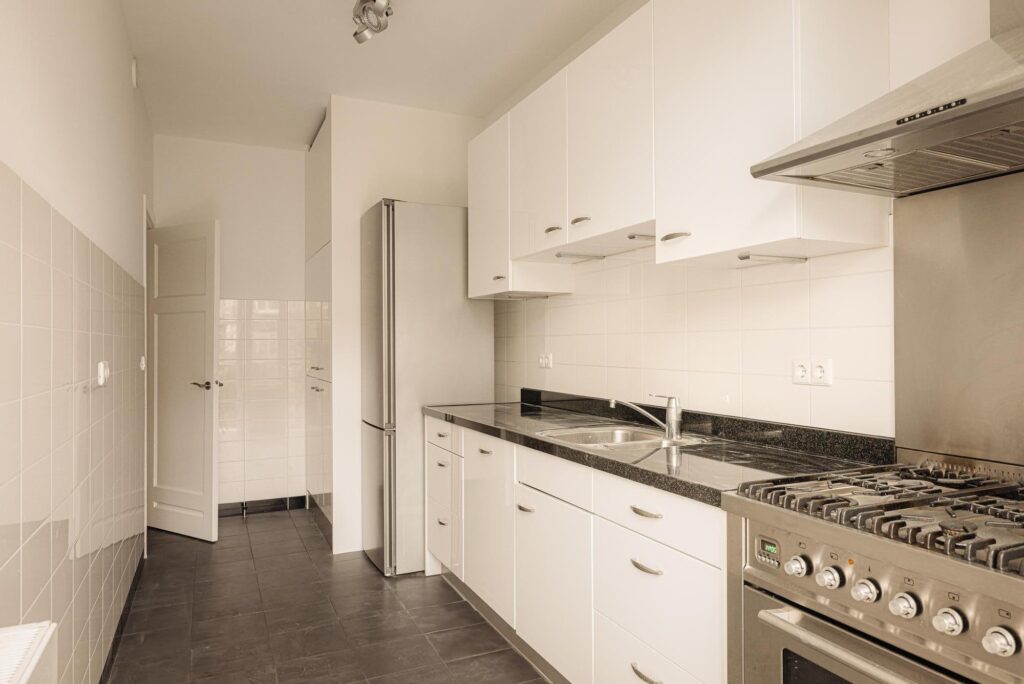
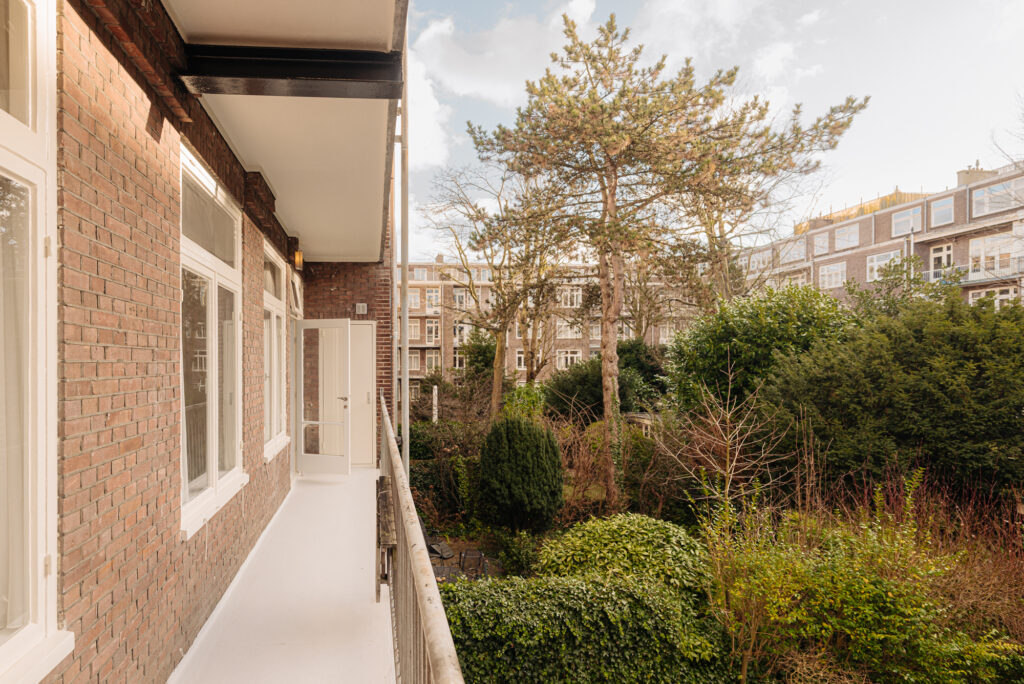
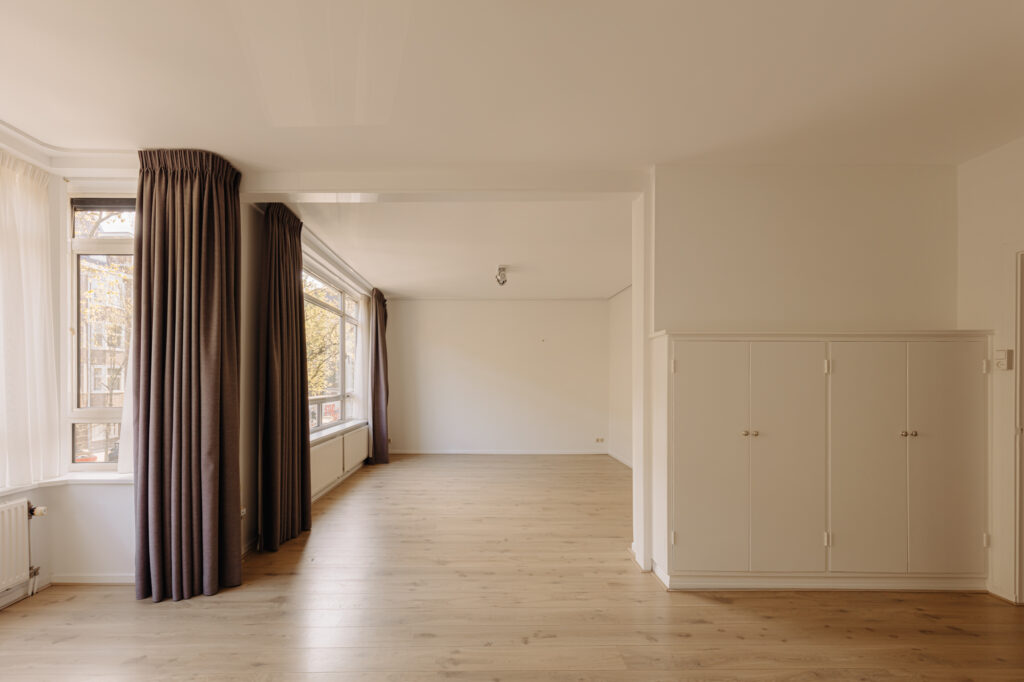
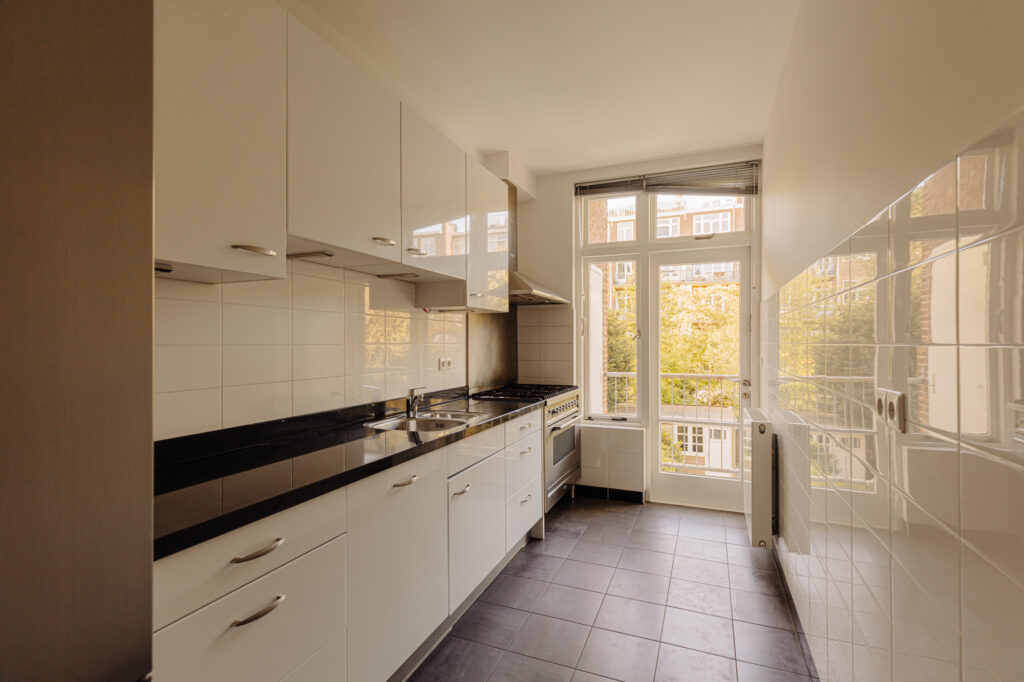
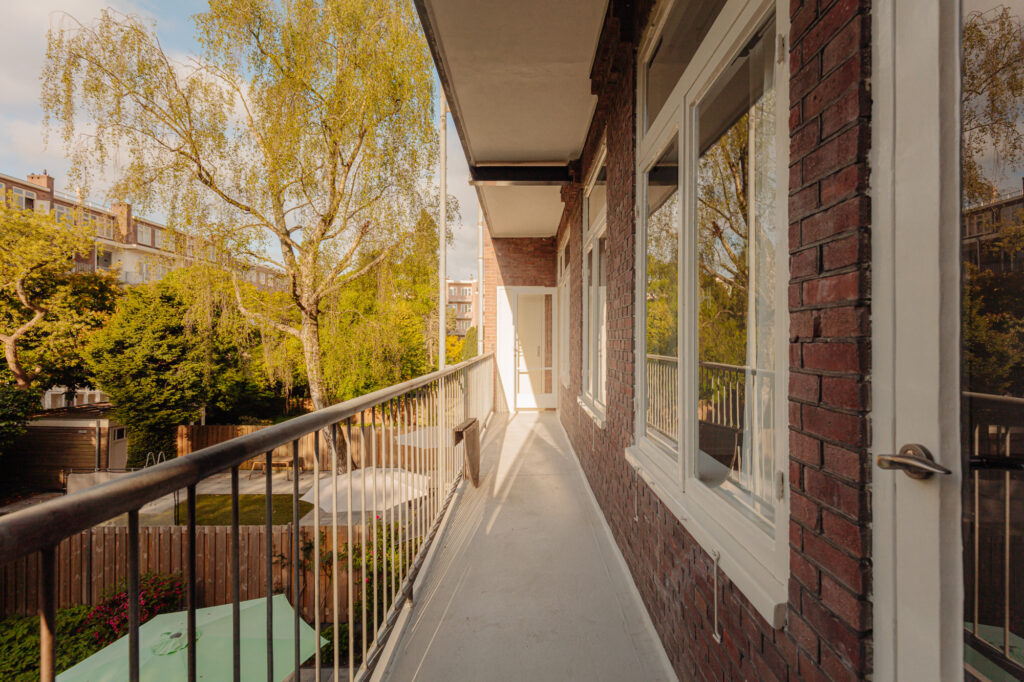
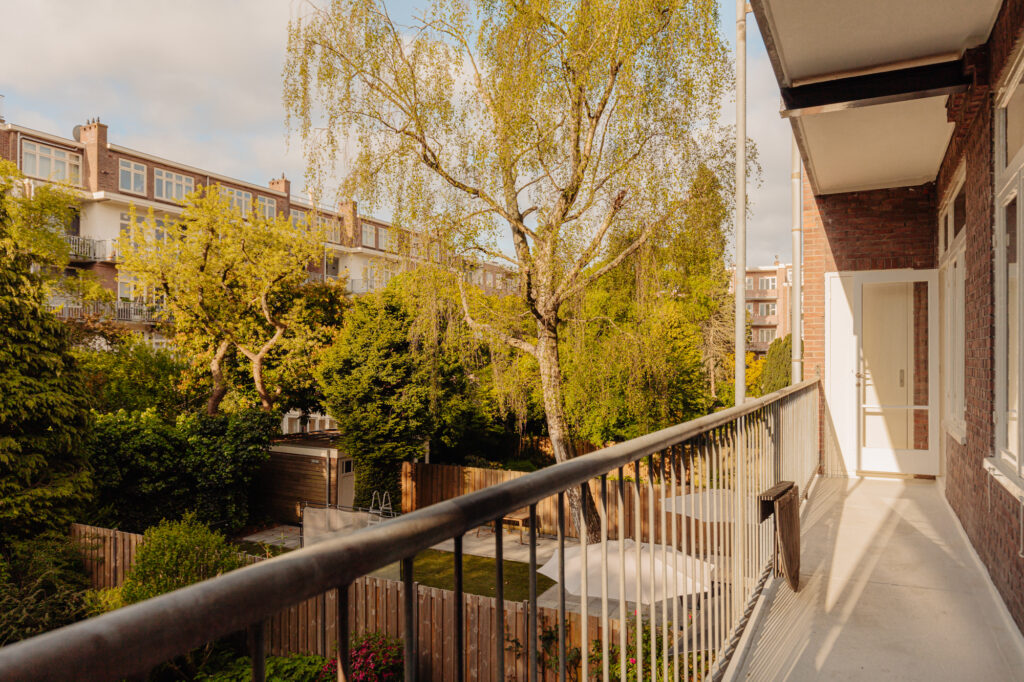
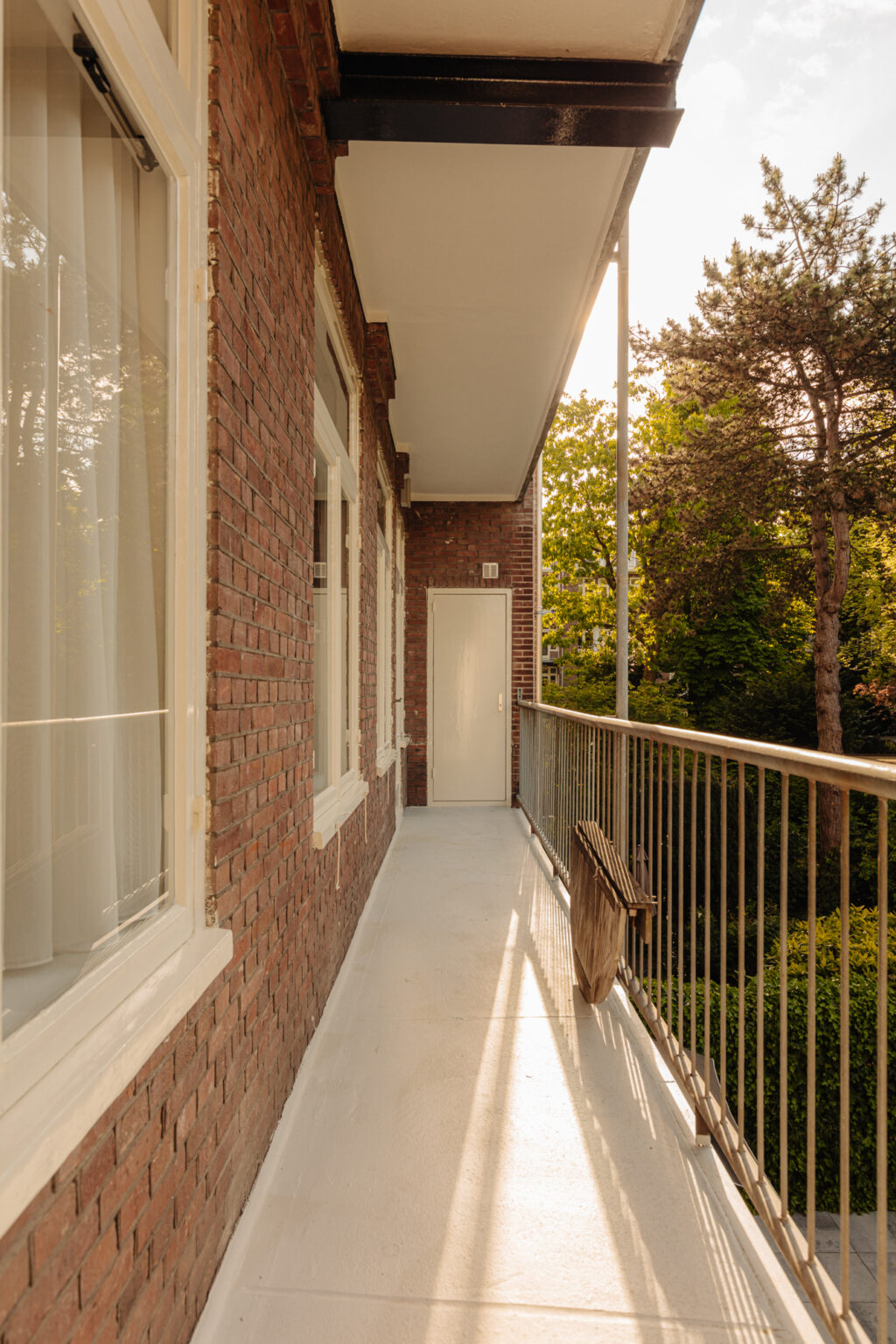
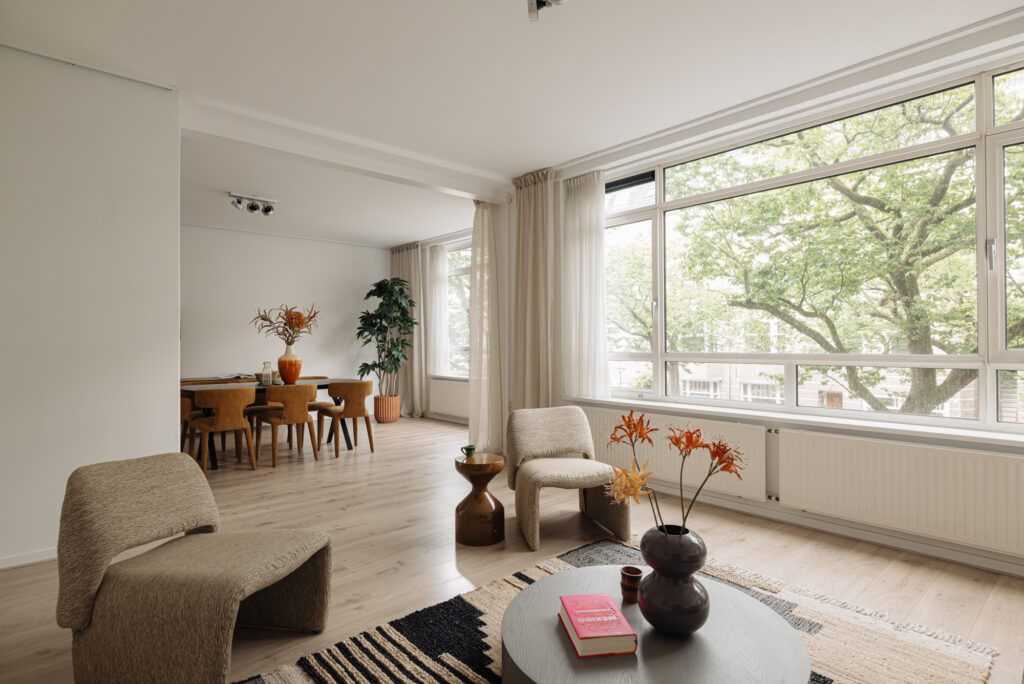
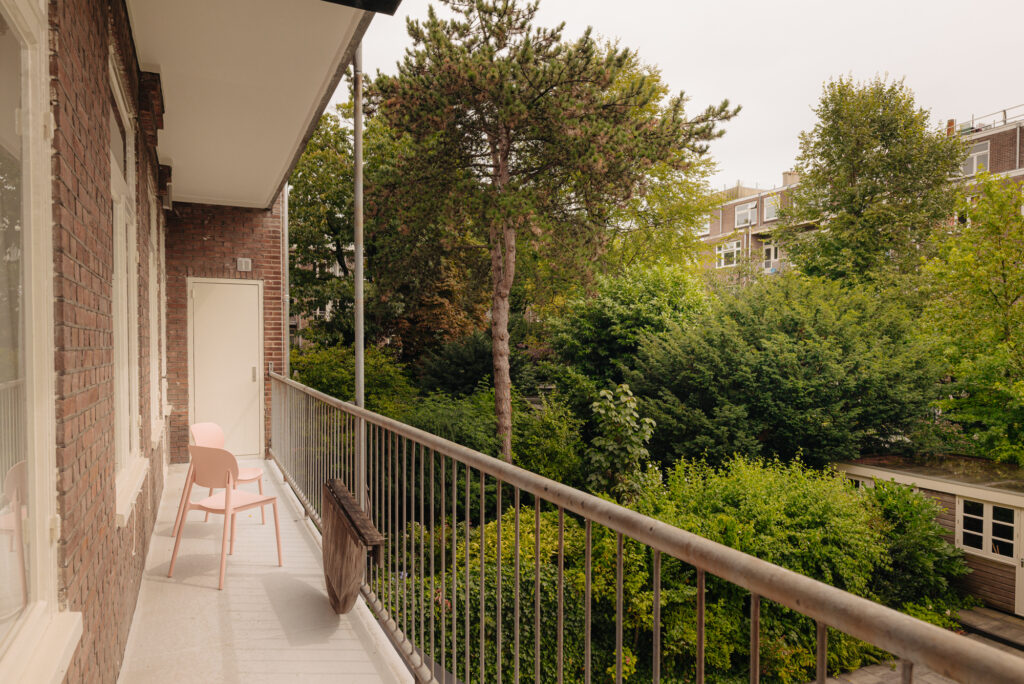
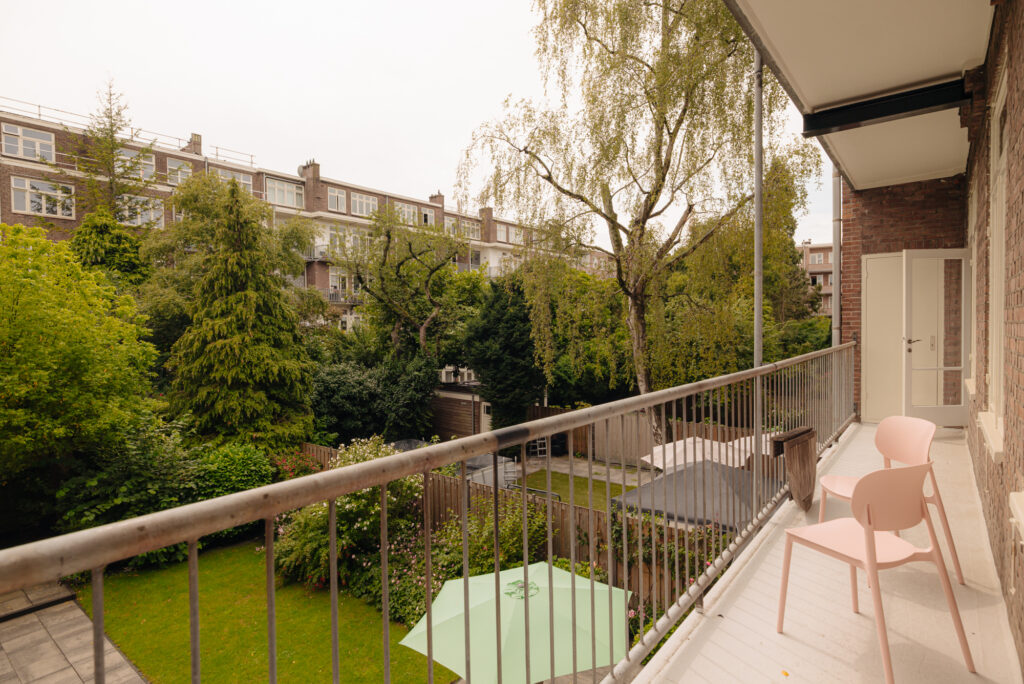
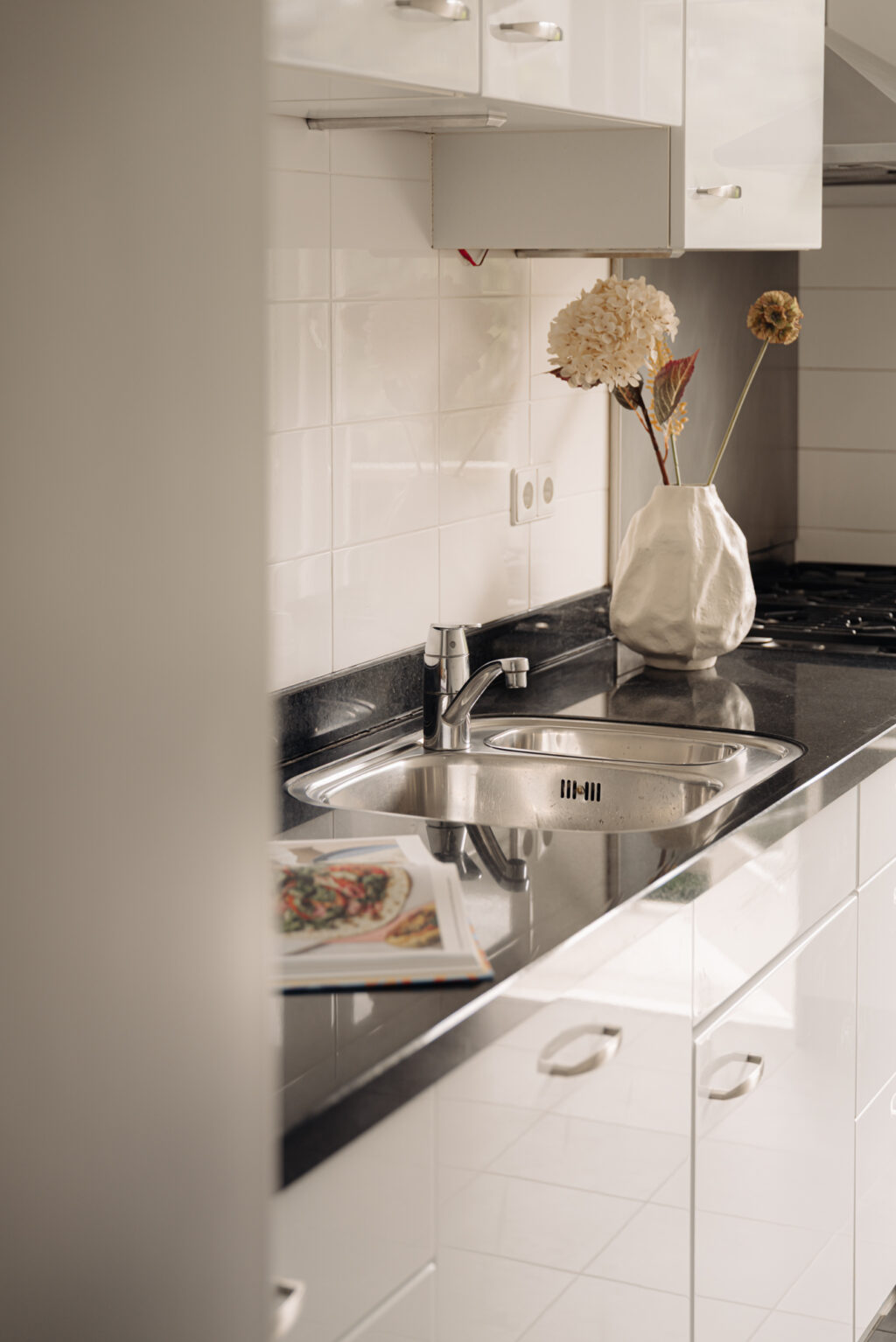
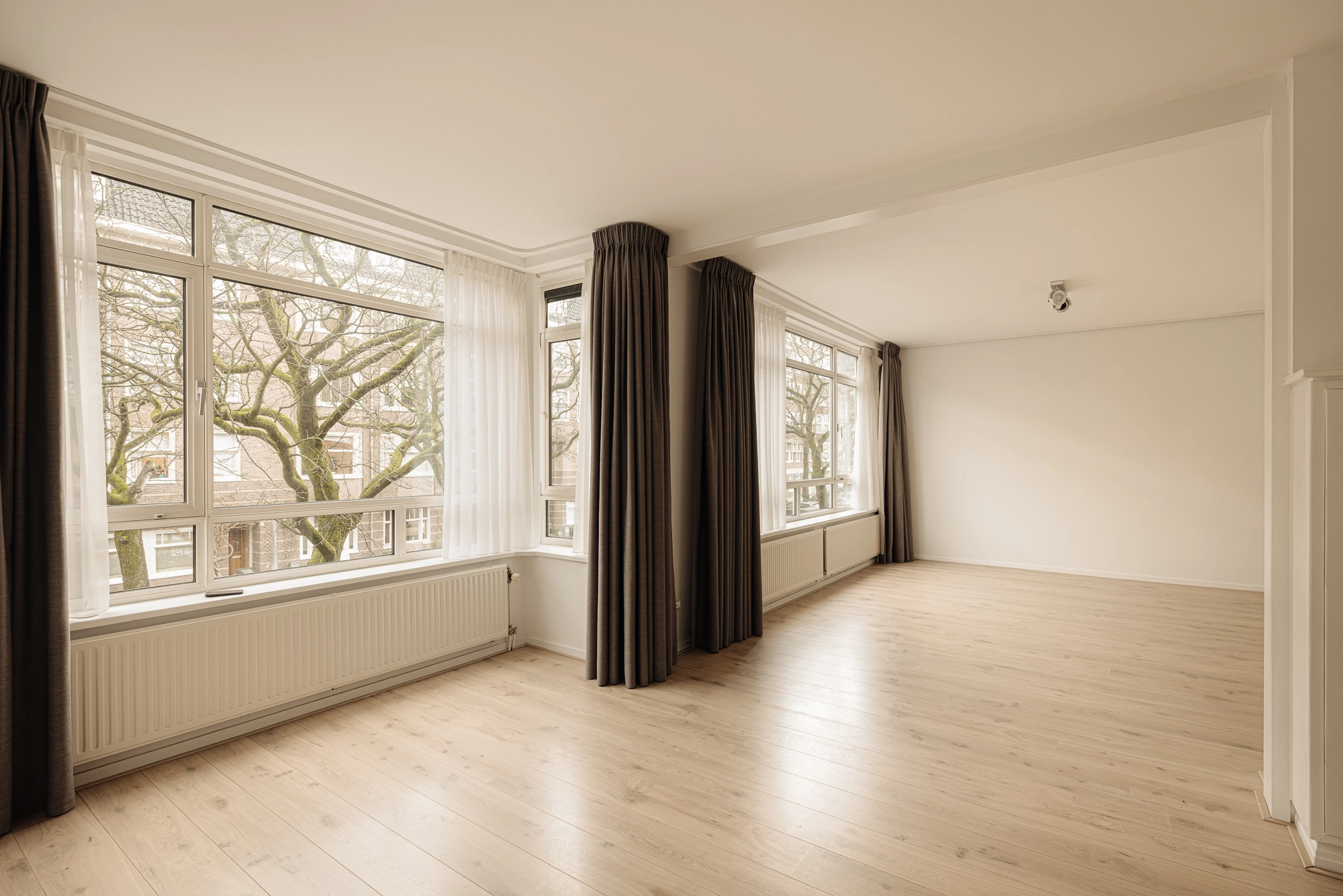
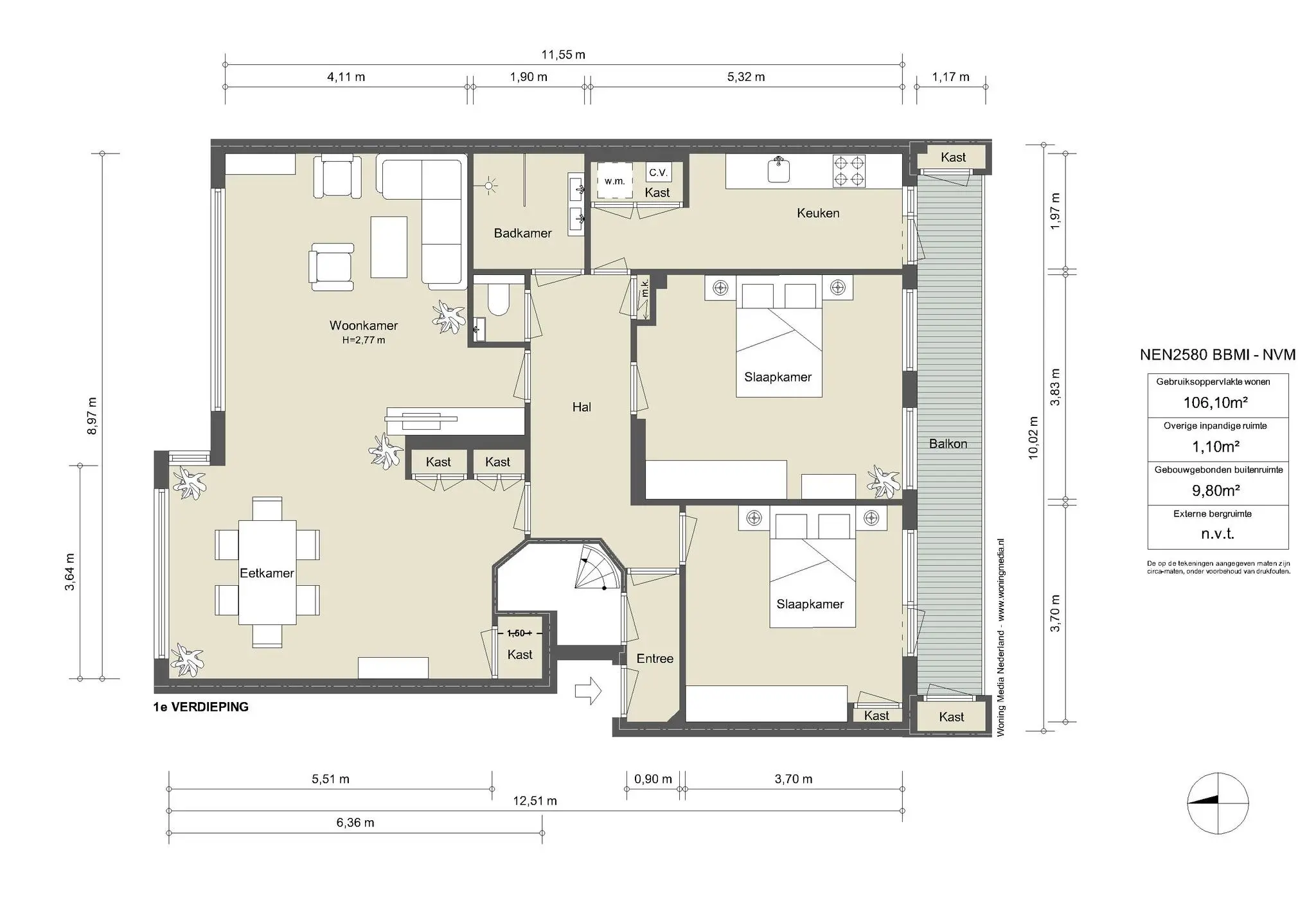
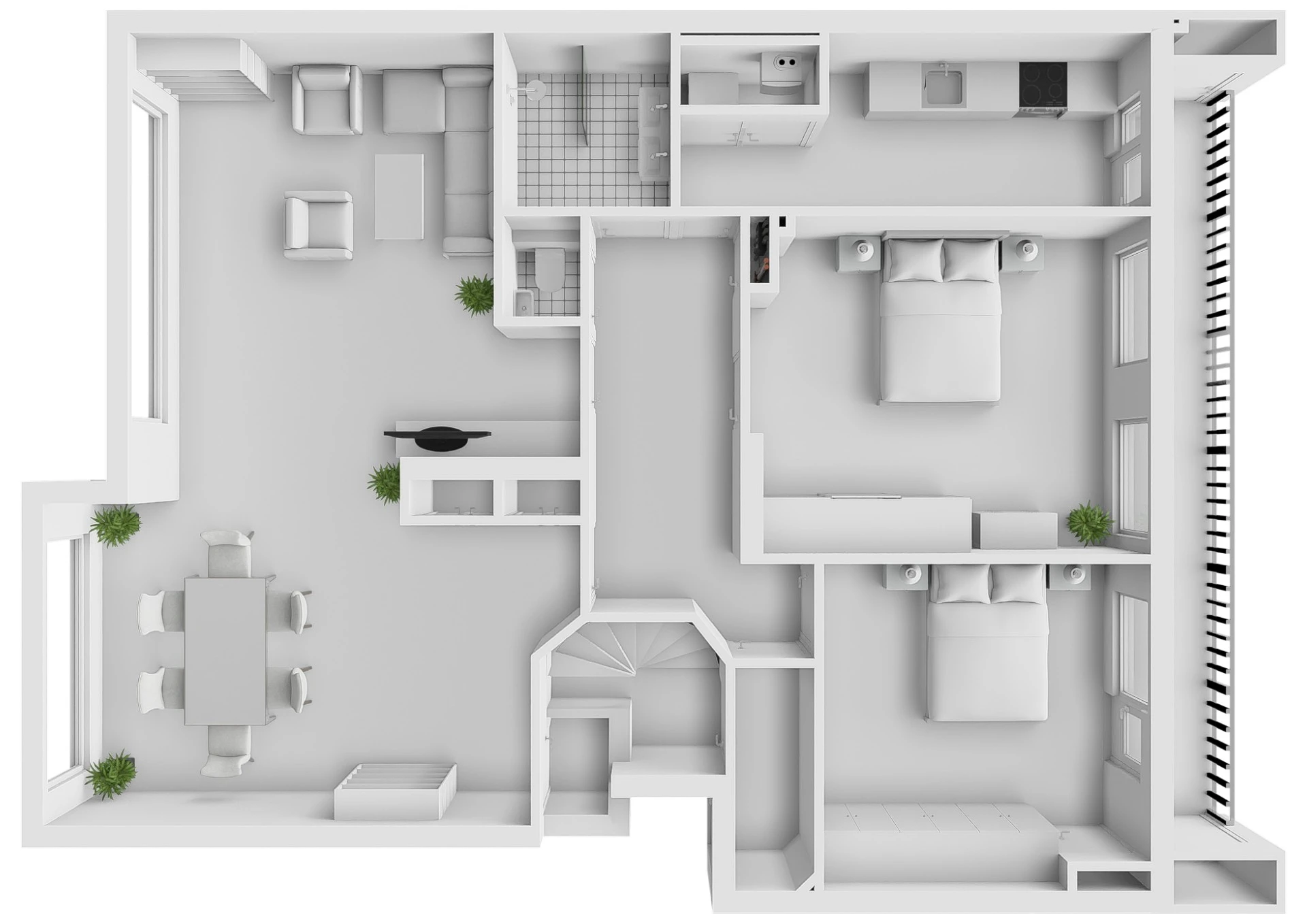
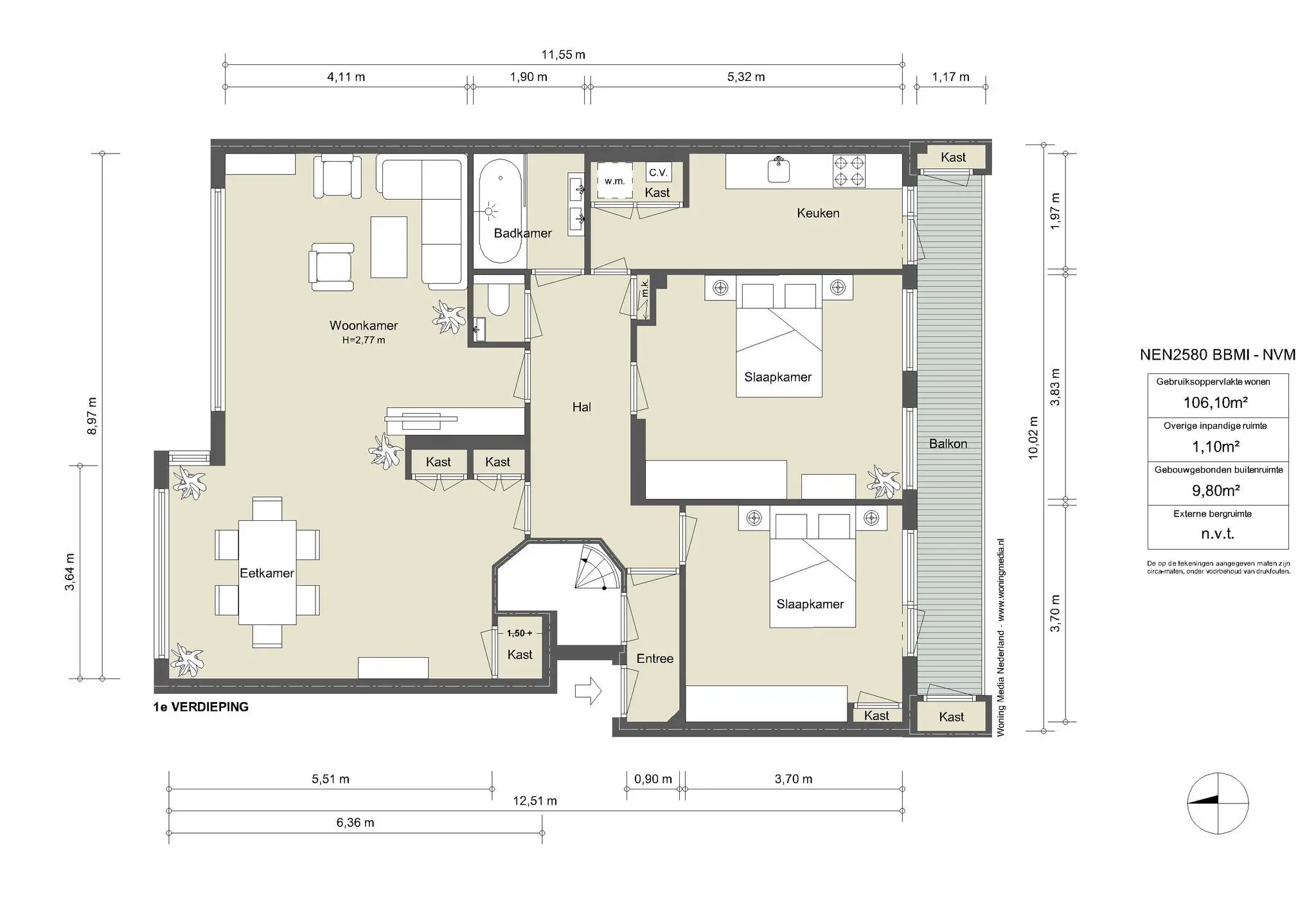
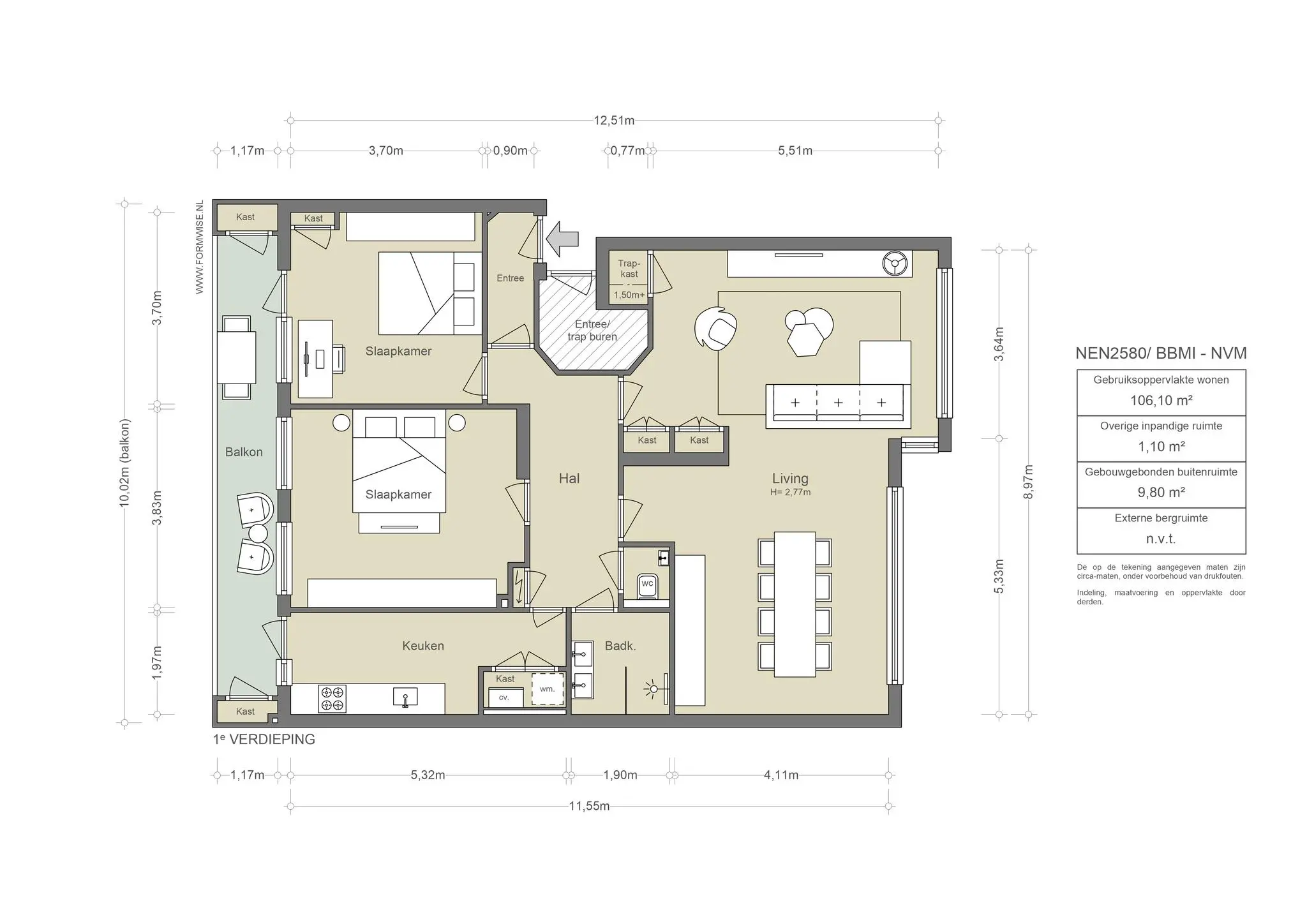
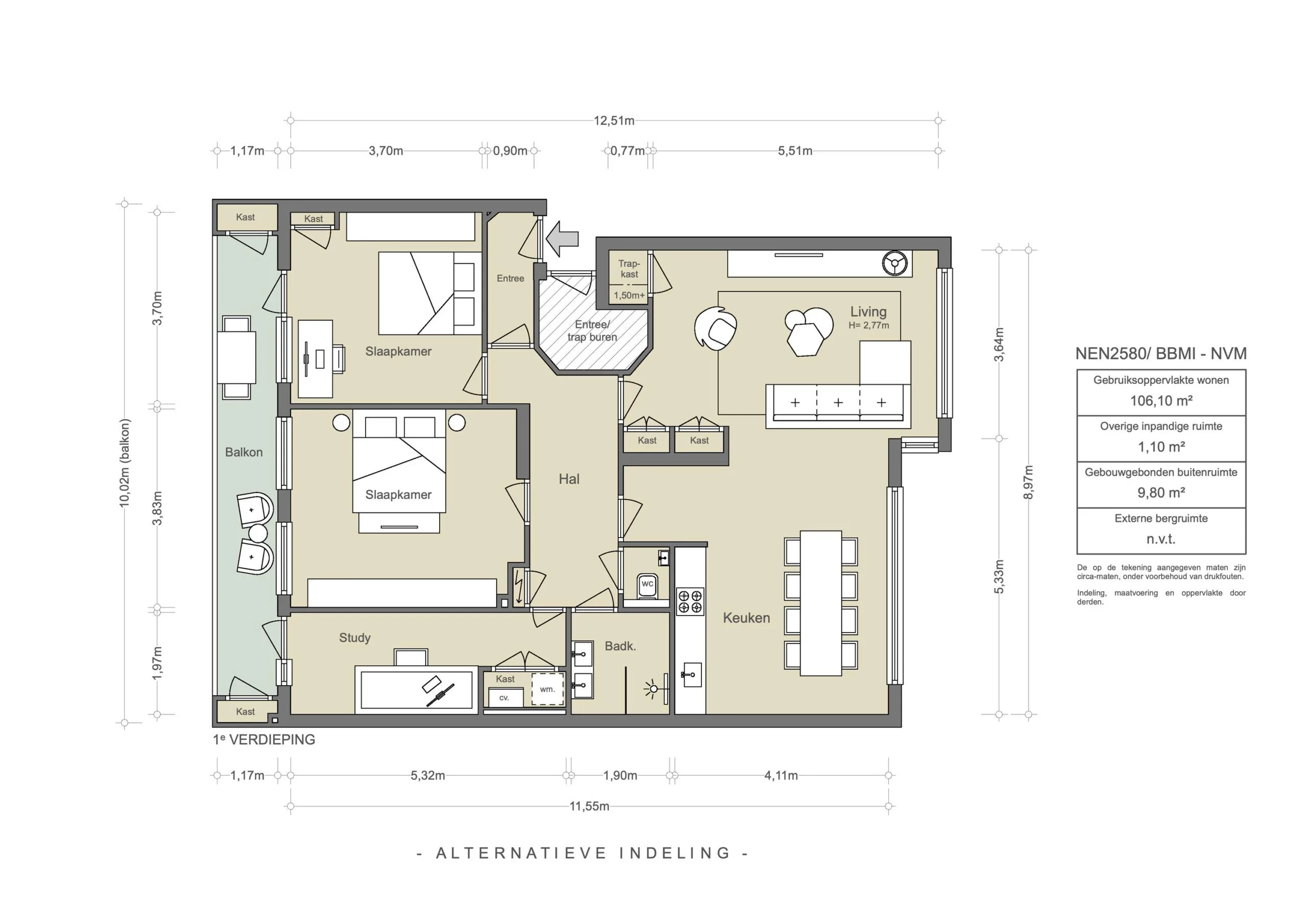
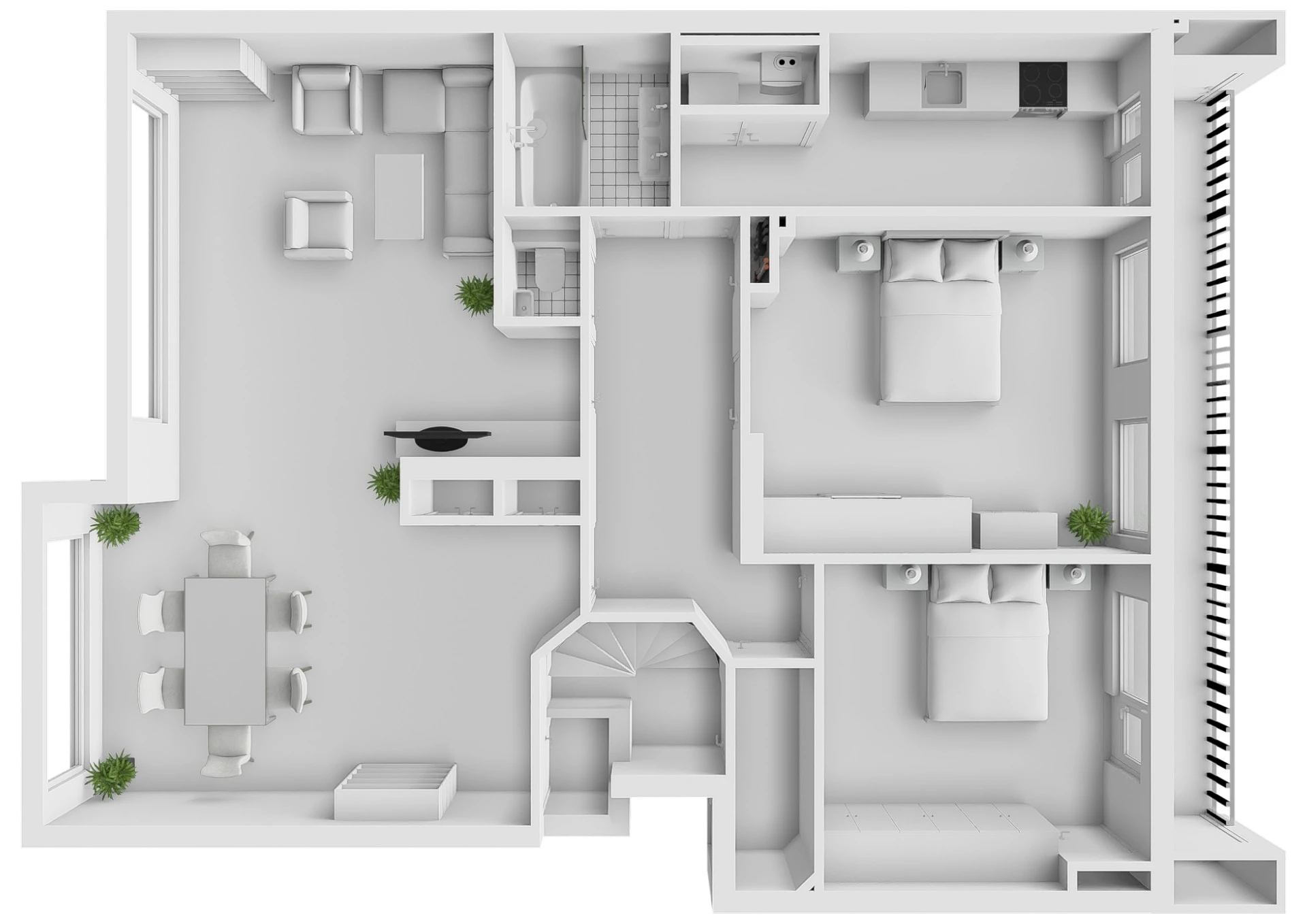
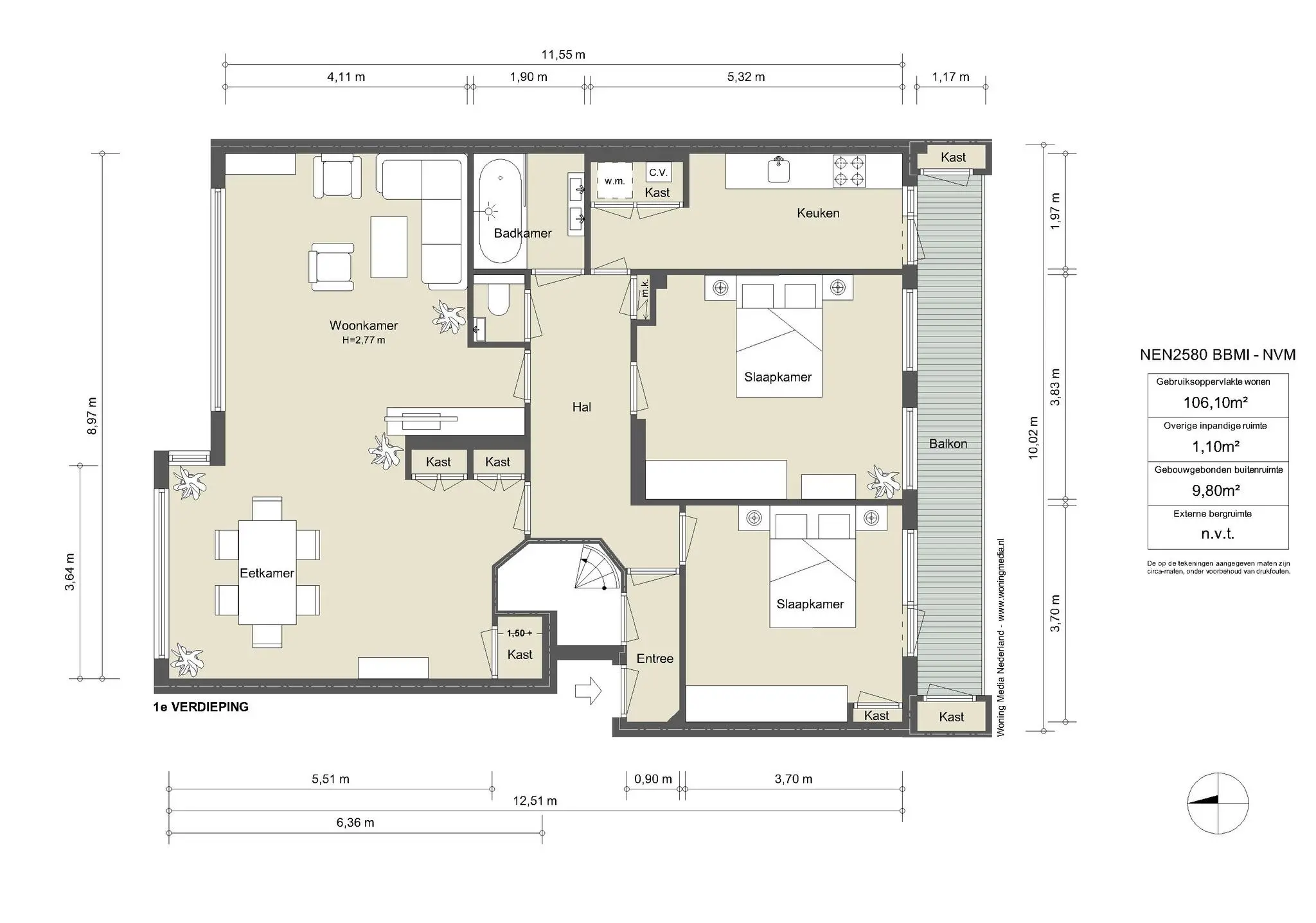
The apartment has a practical layout, with a bright living room at the front and a separate, well-maintained kitchen at the rear, providing access to the sunny balcony.
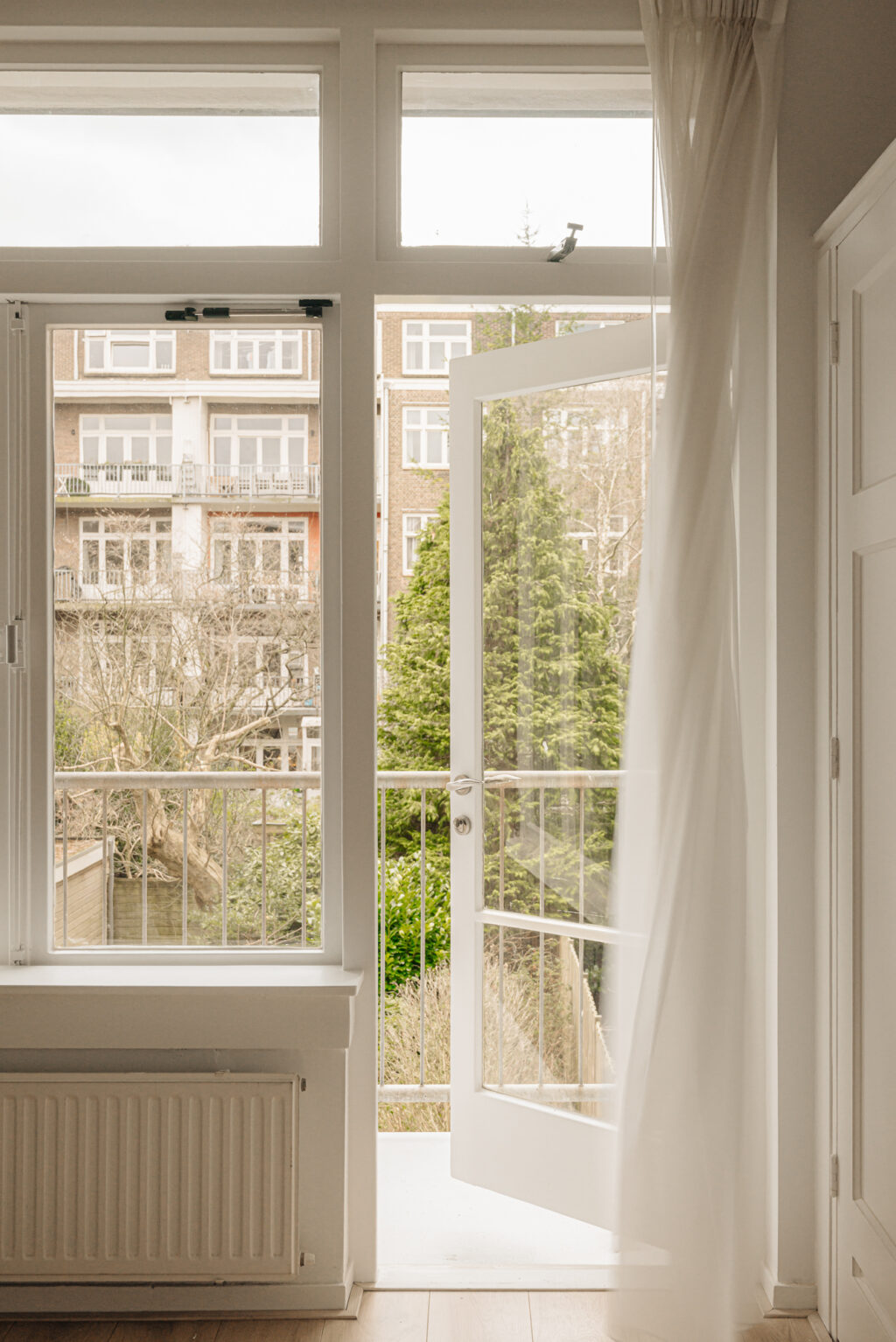
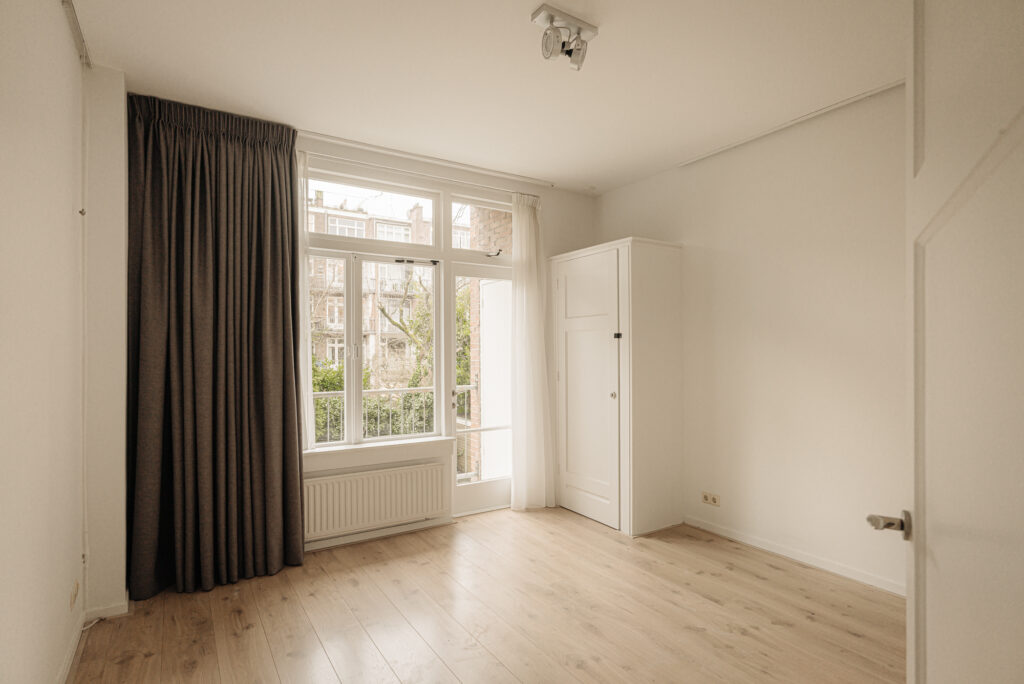
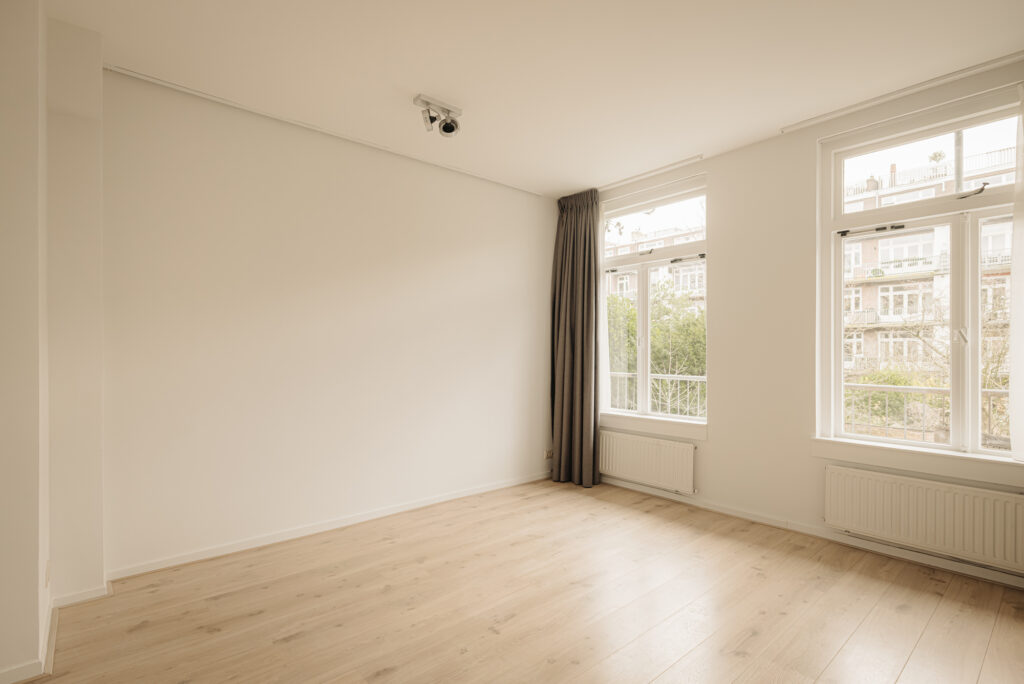
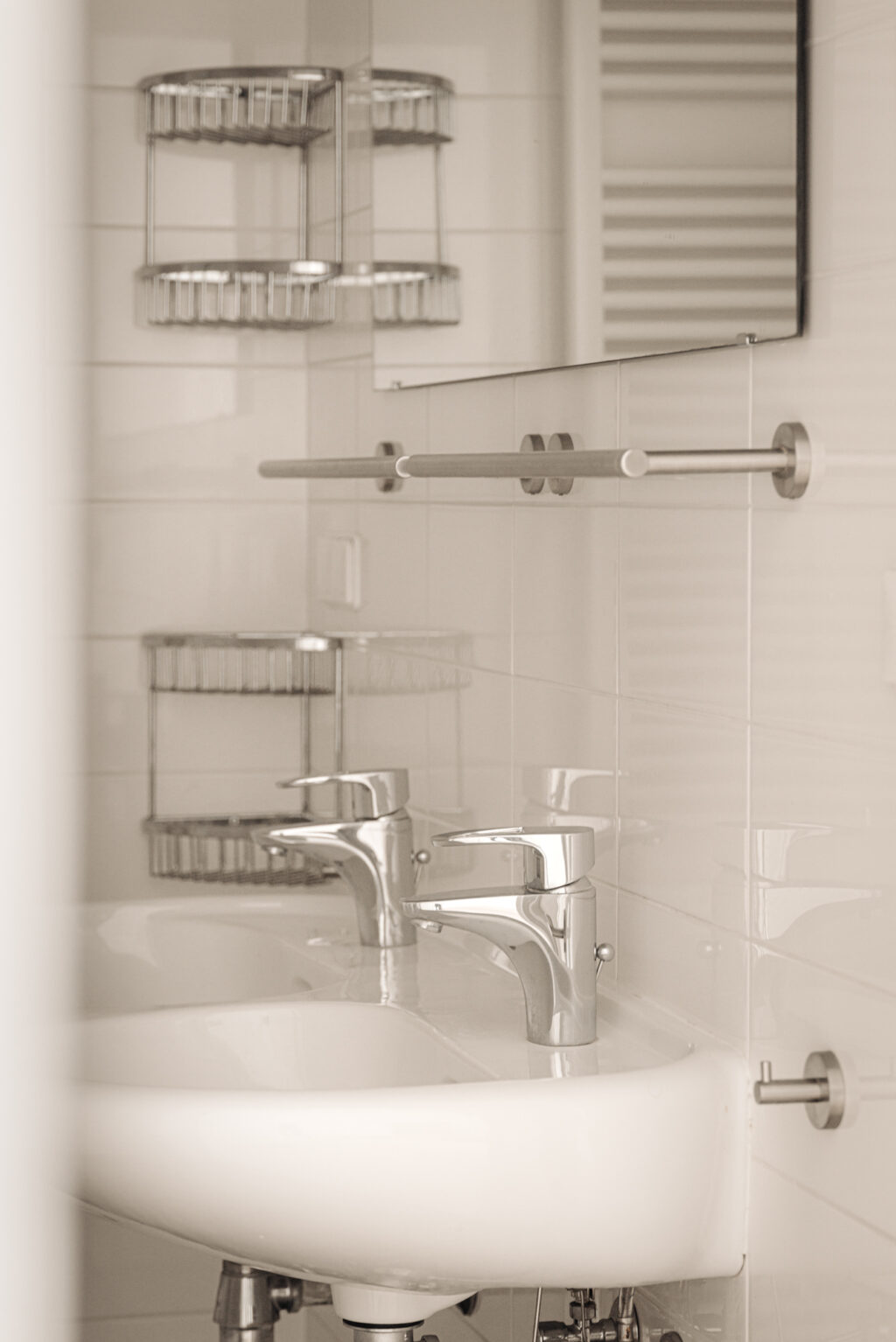
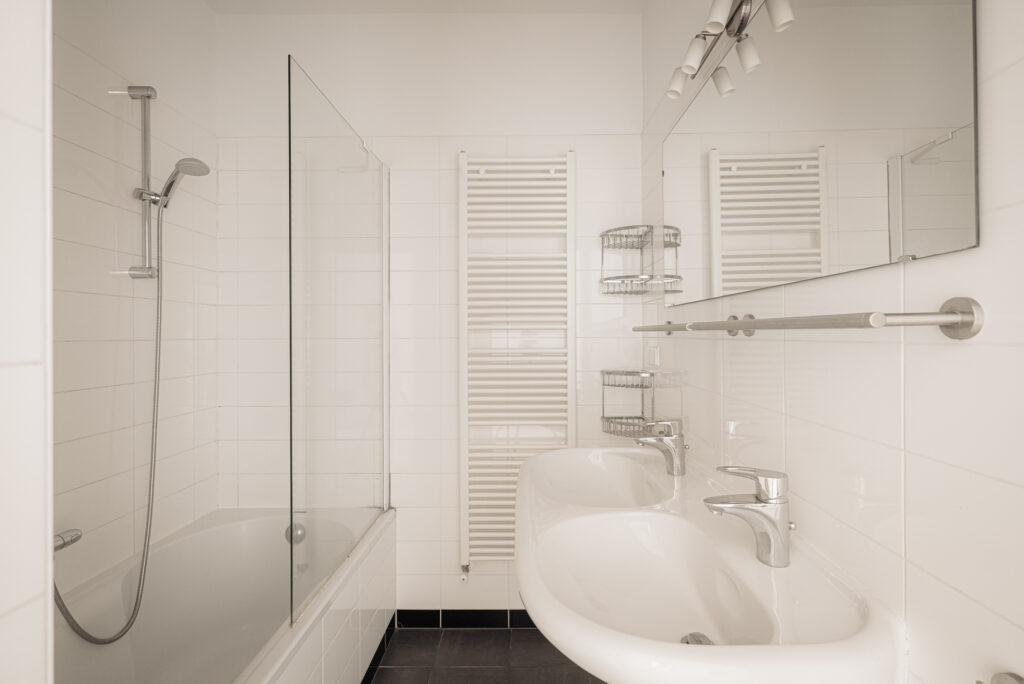
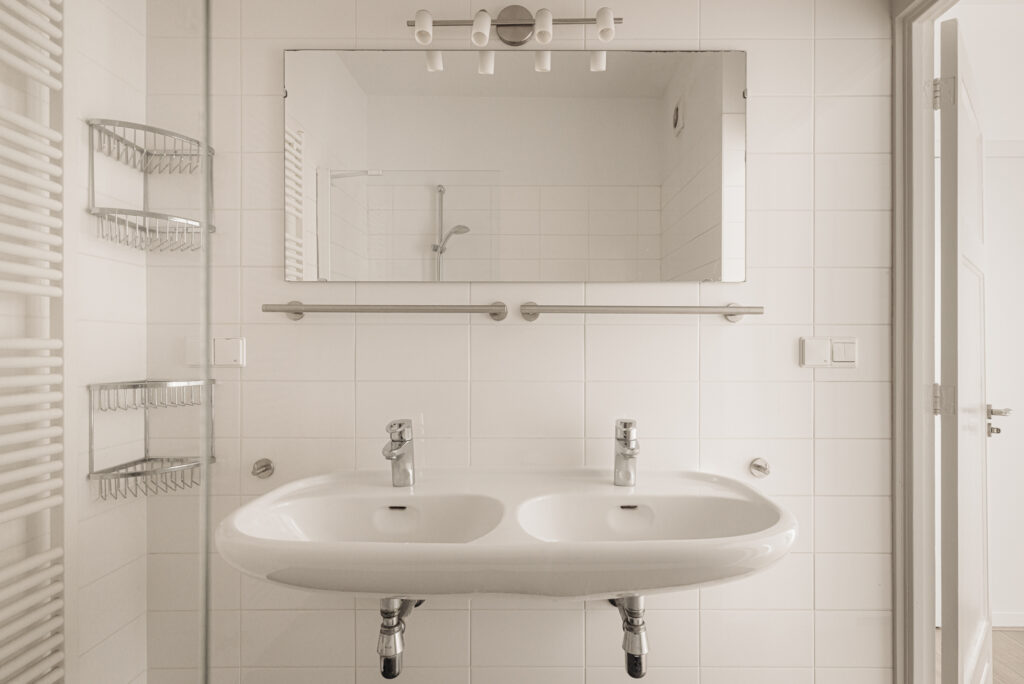
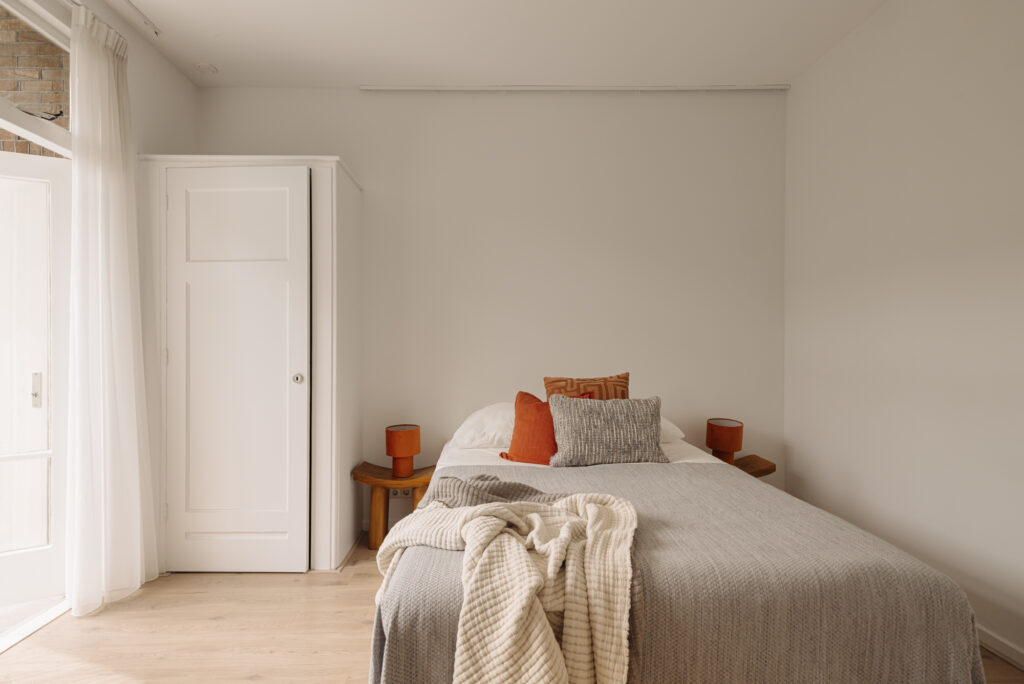
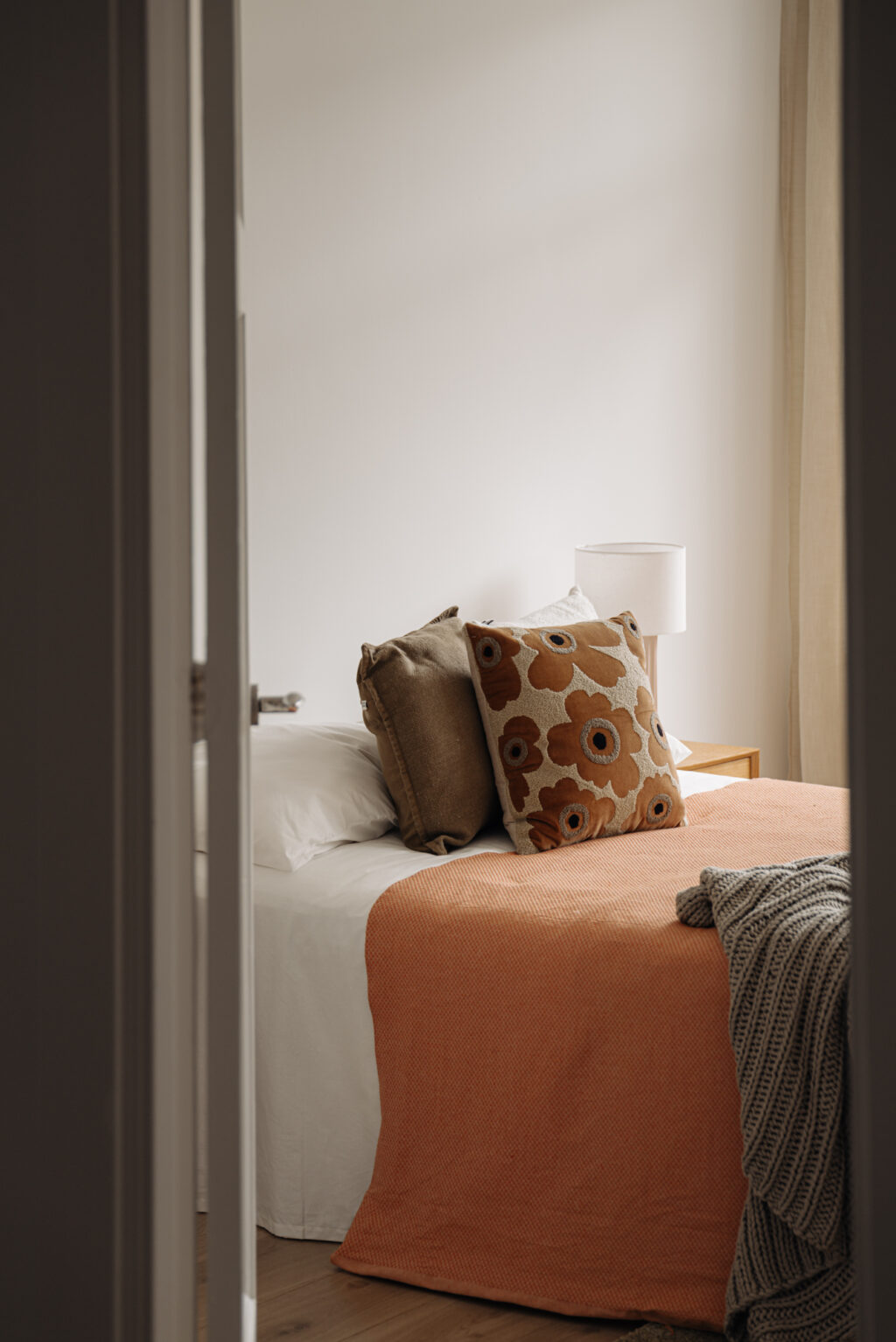
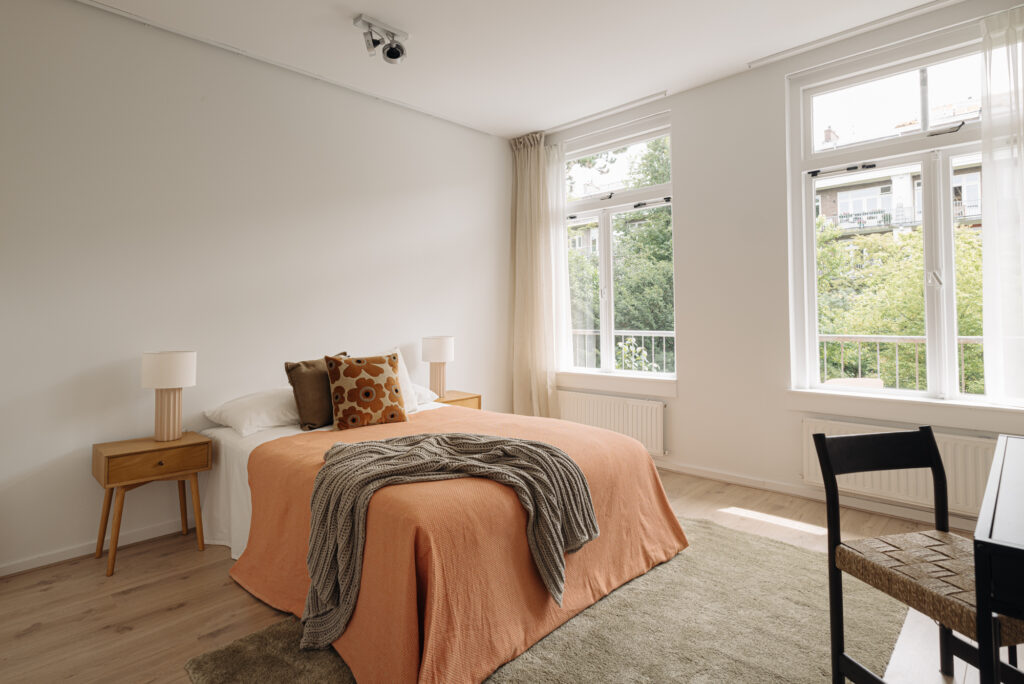
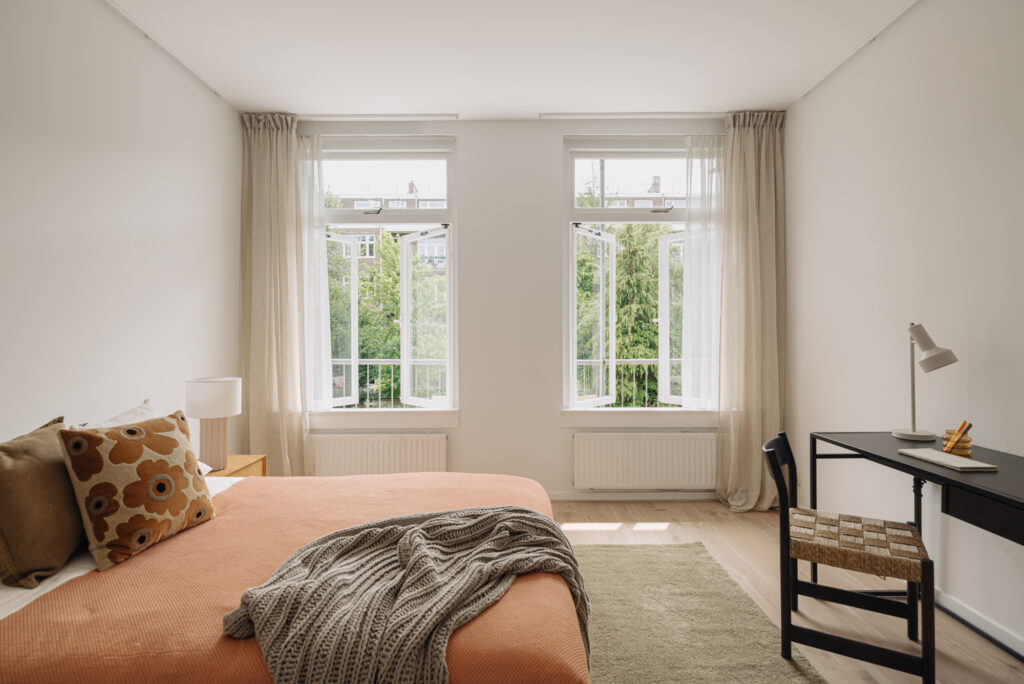
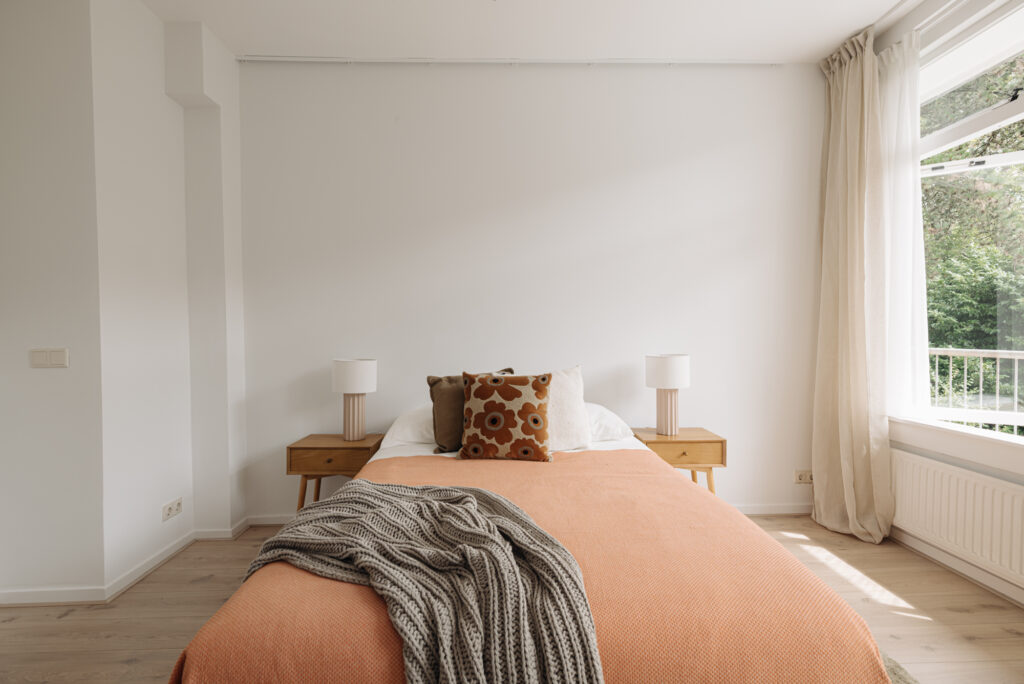
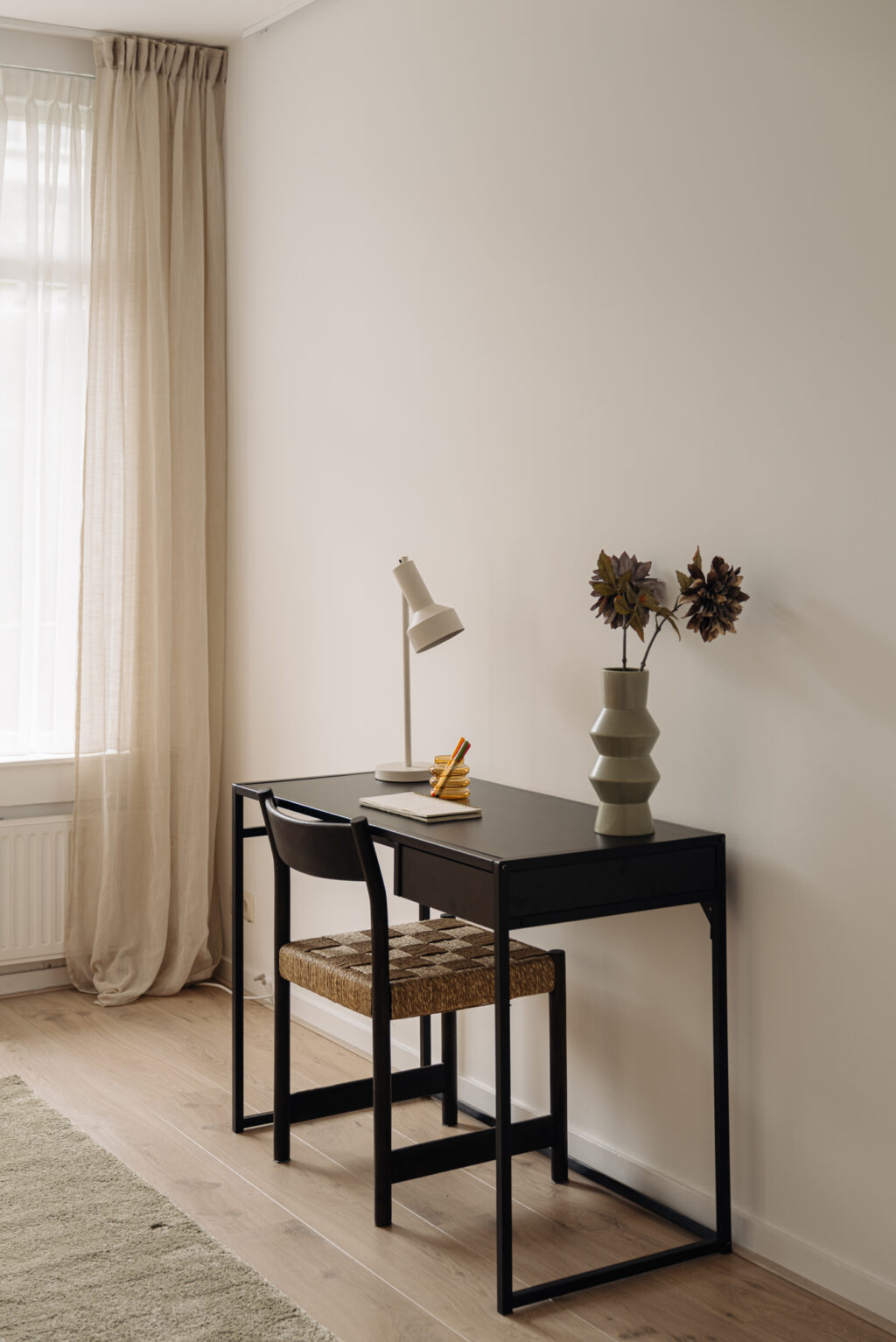
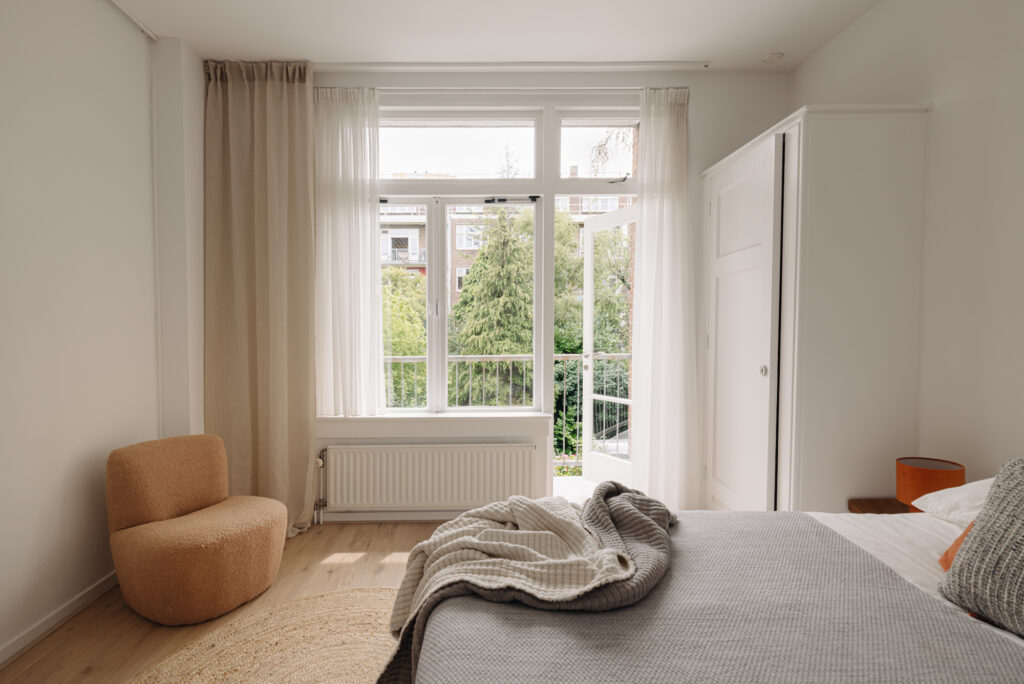
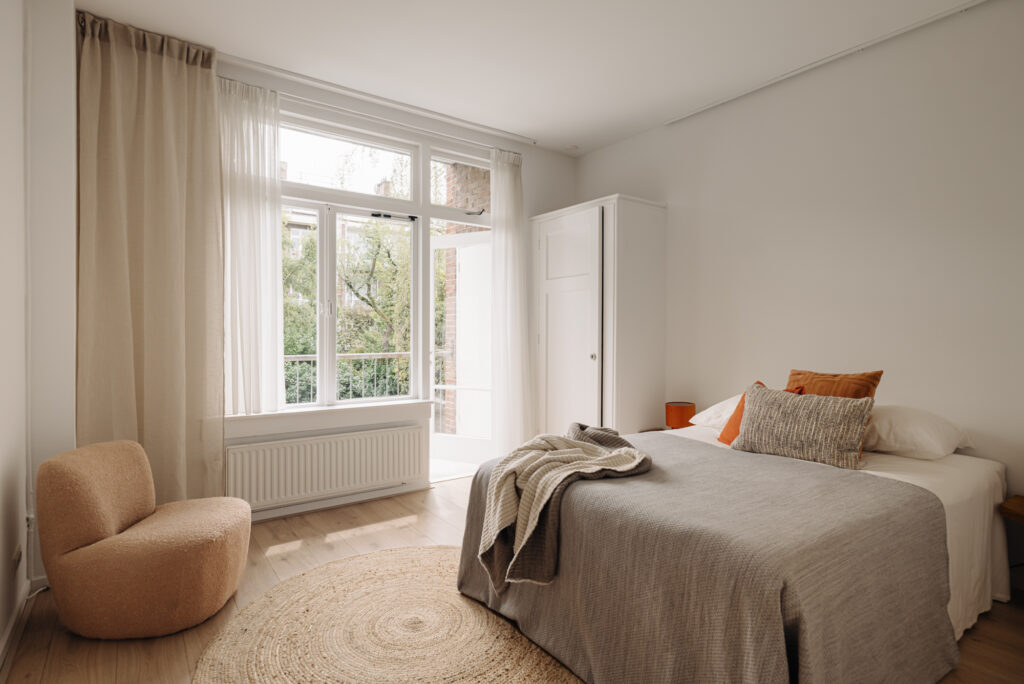
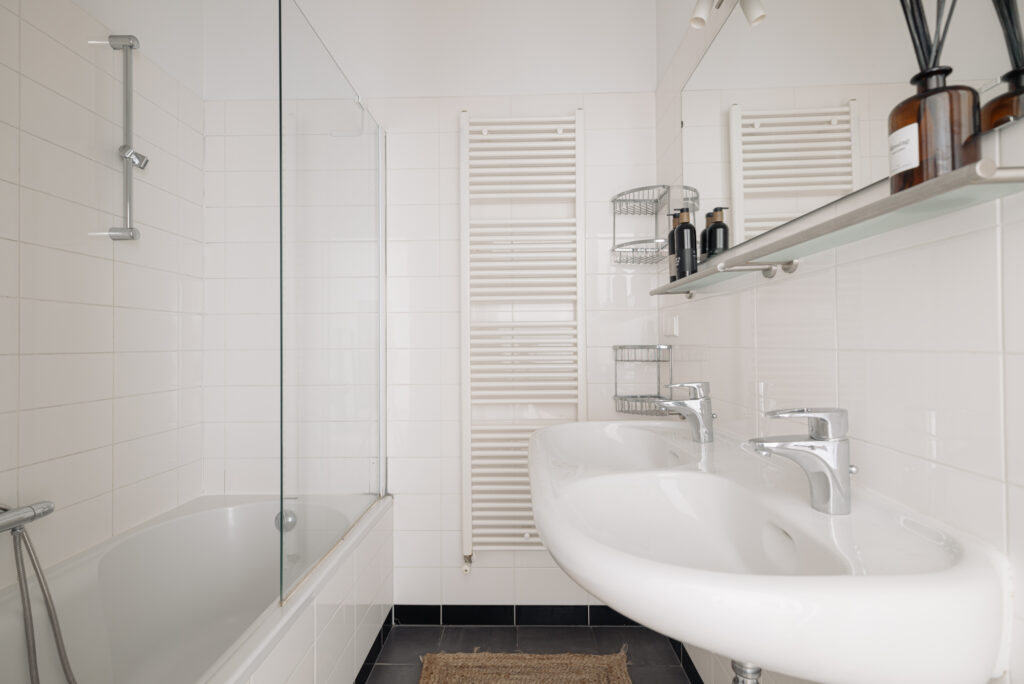
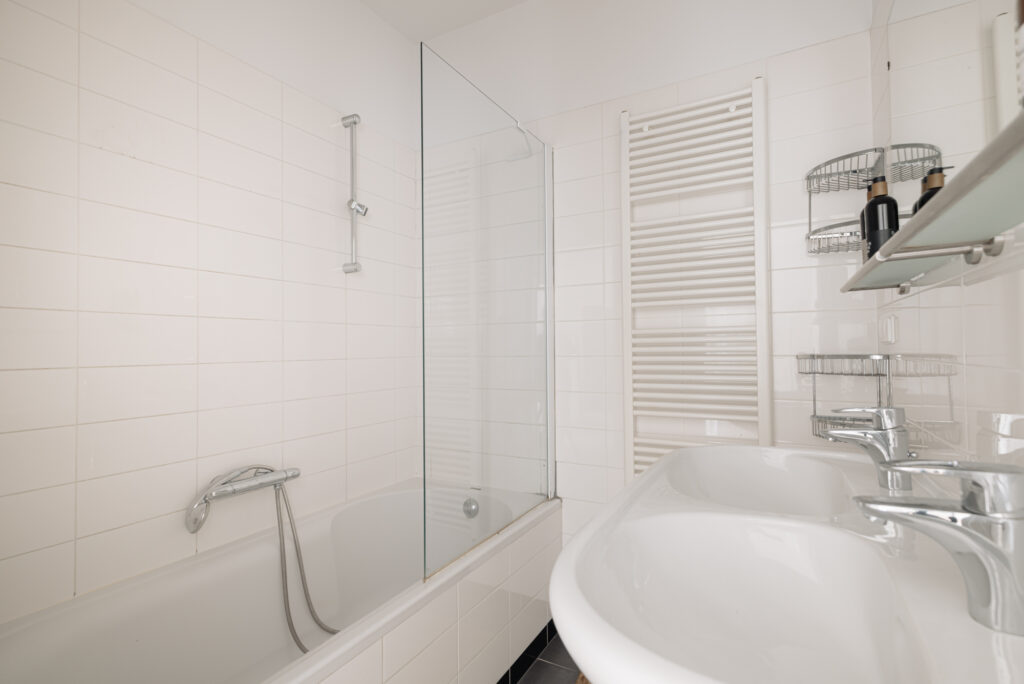
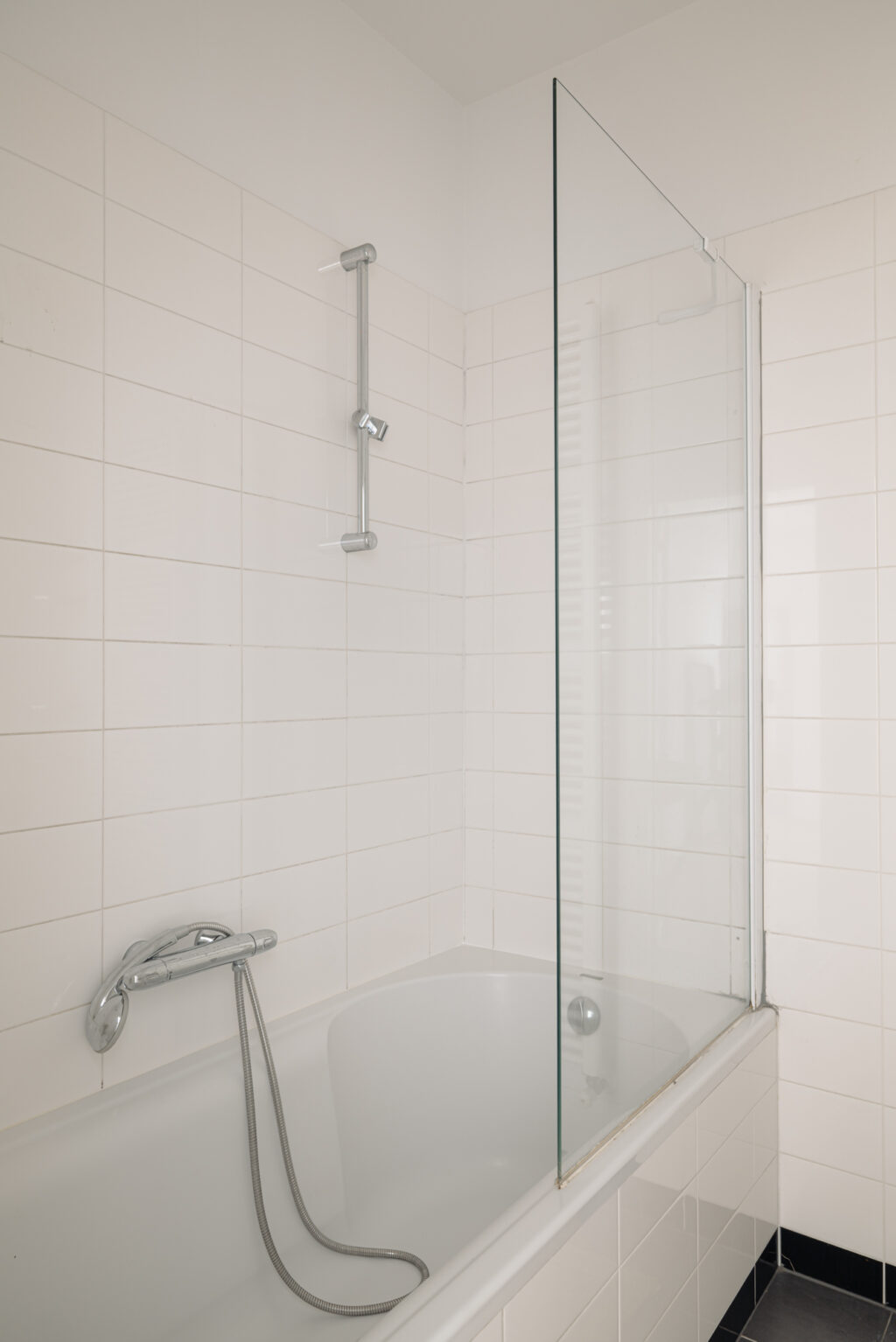
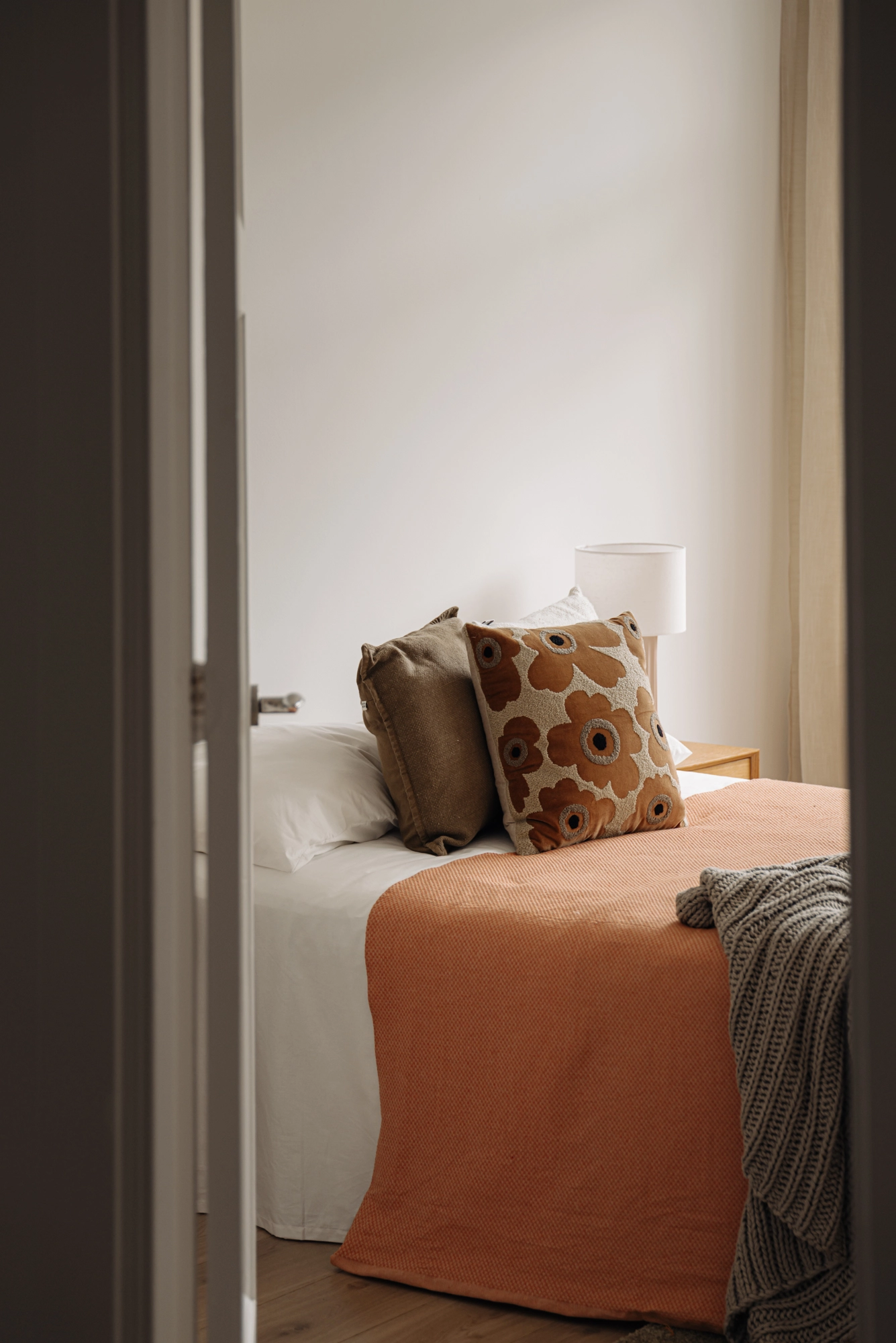
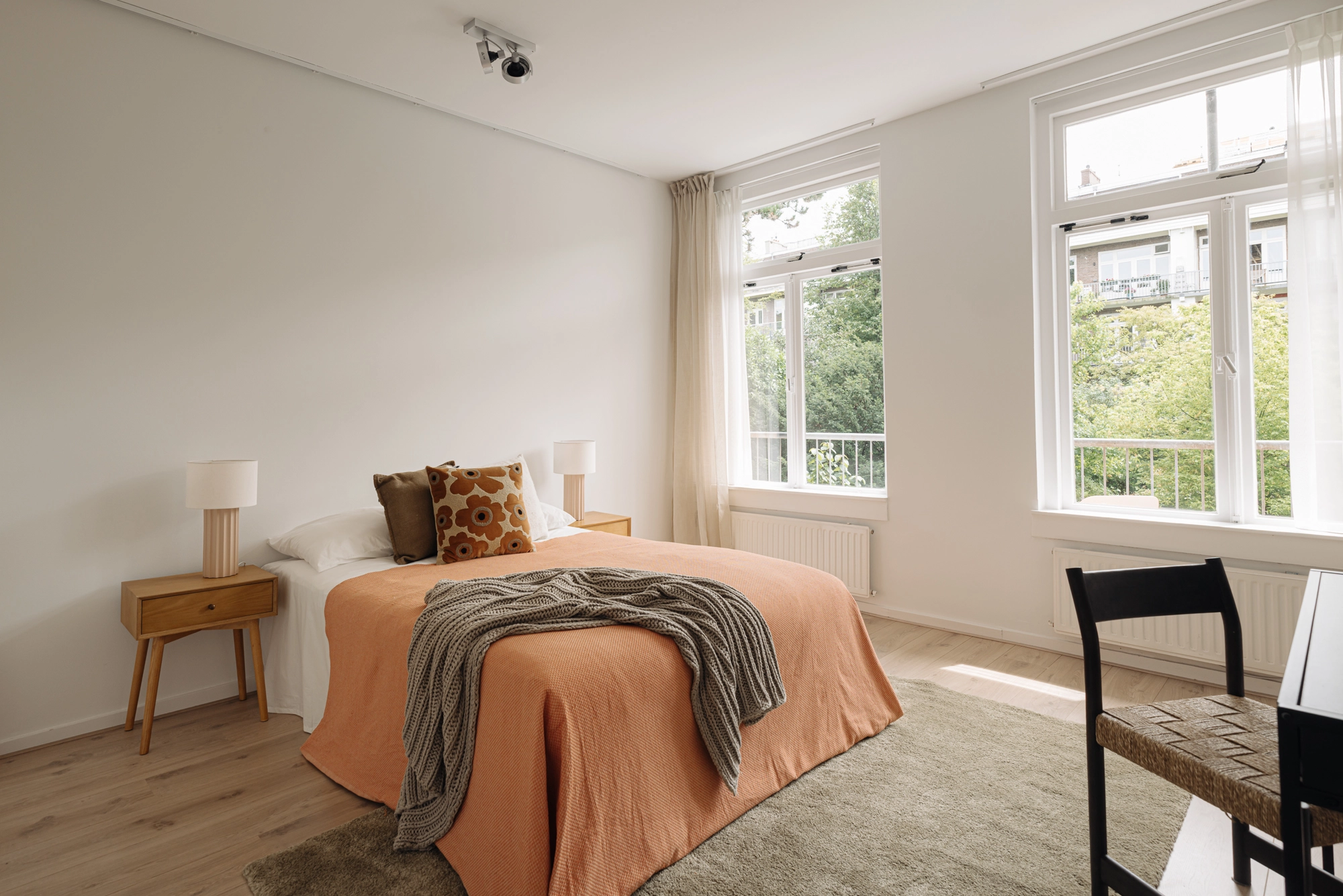
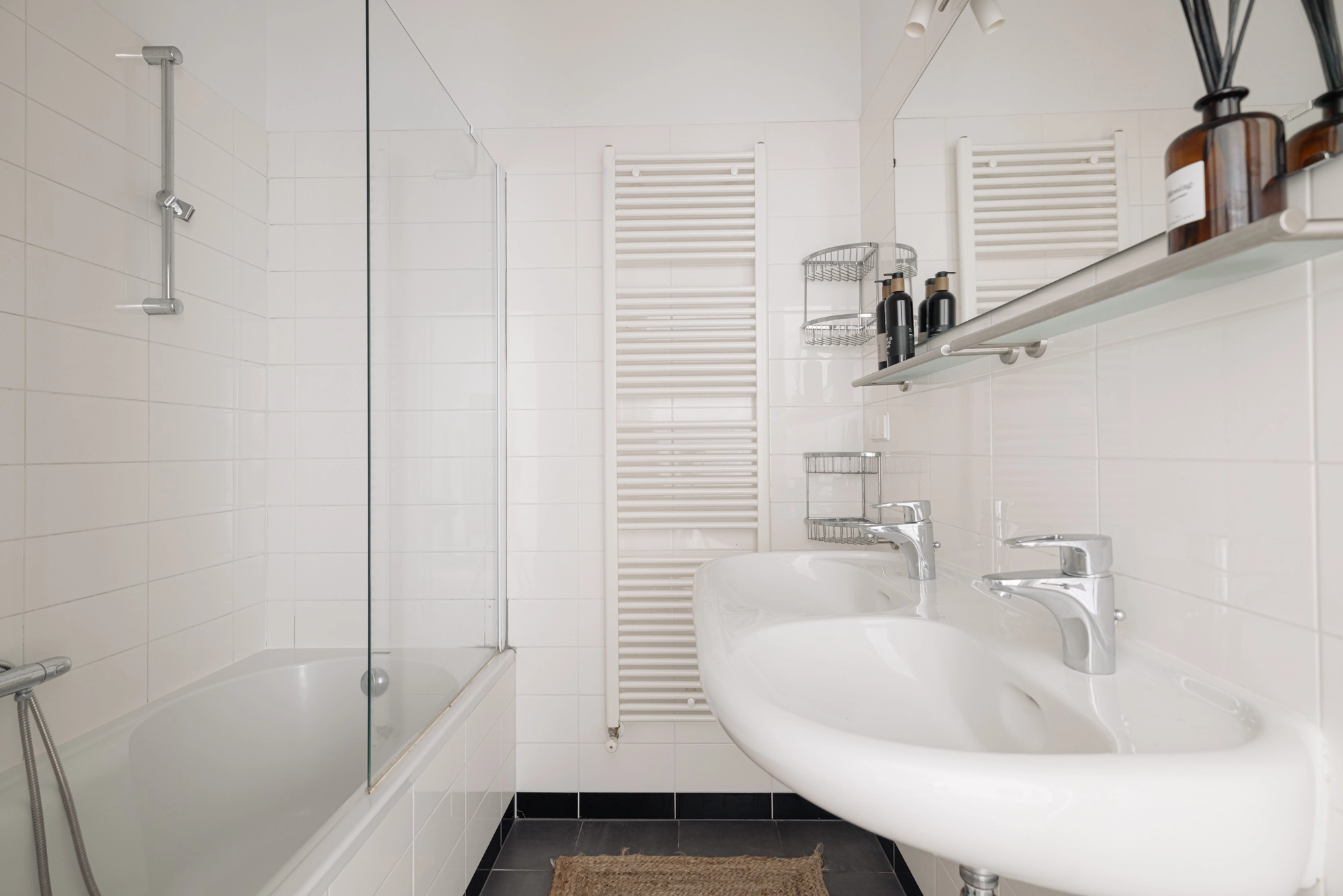
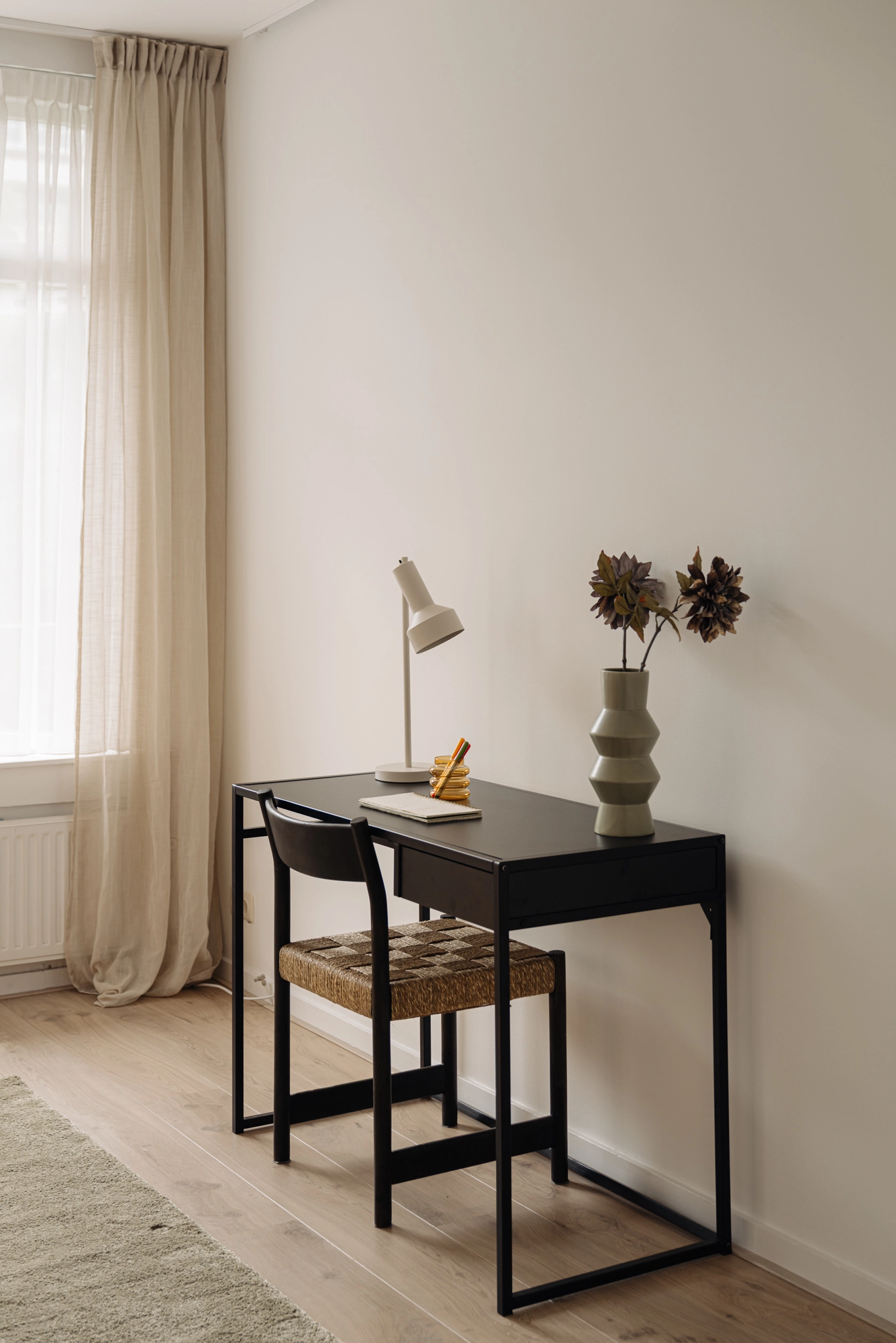
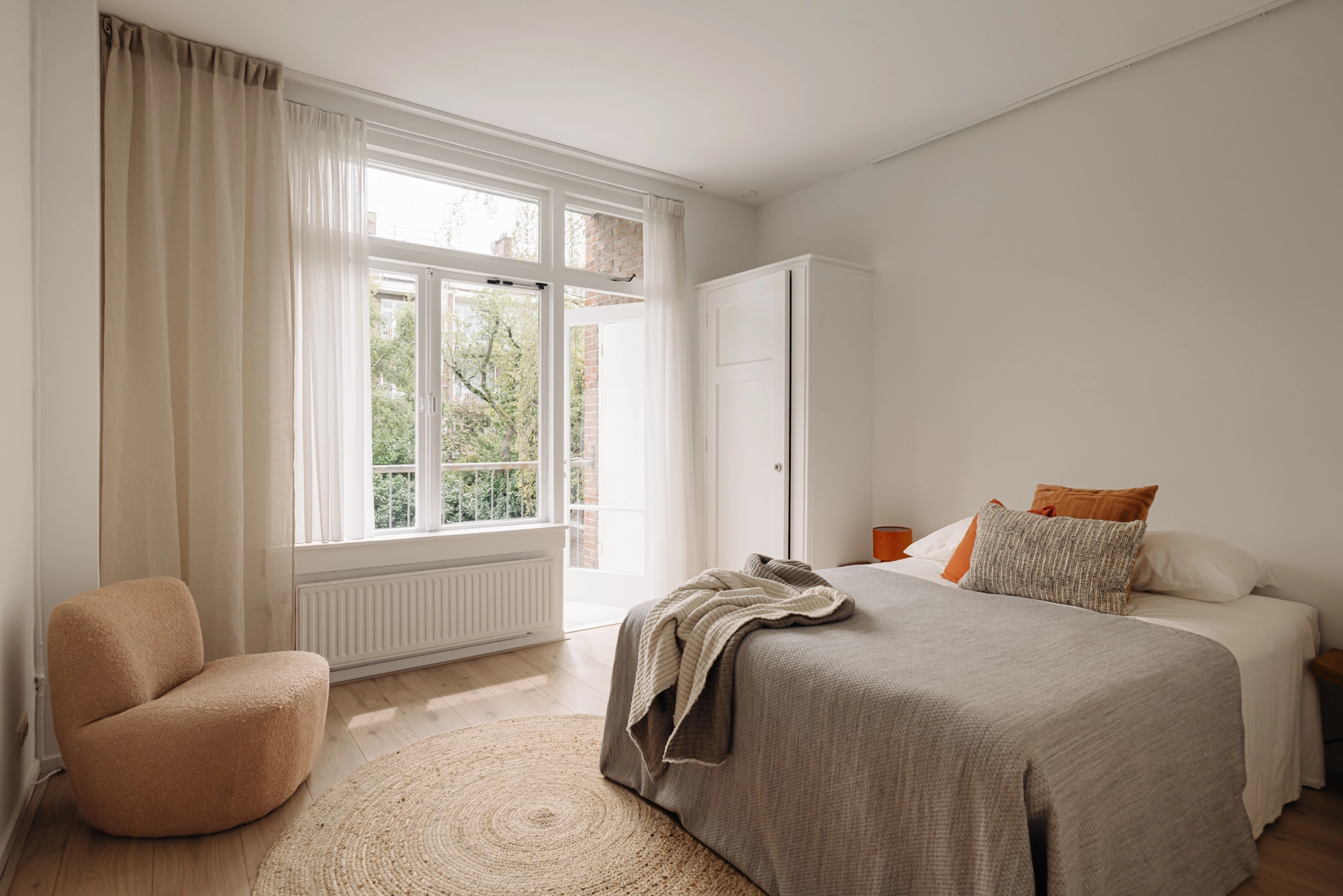
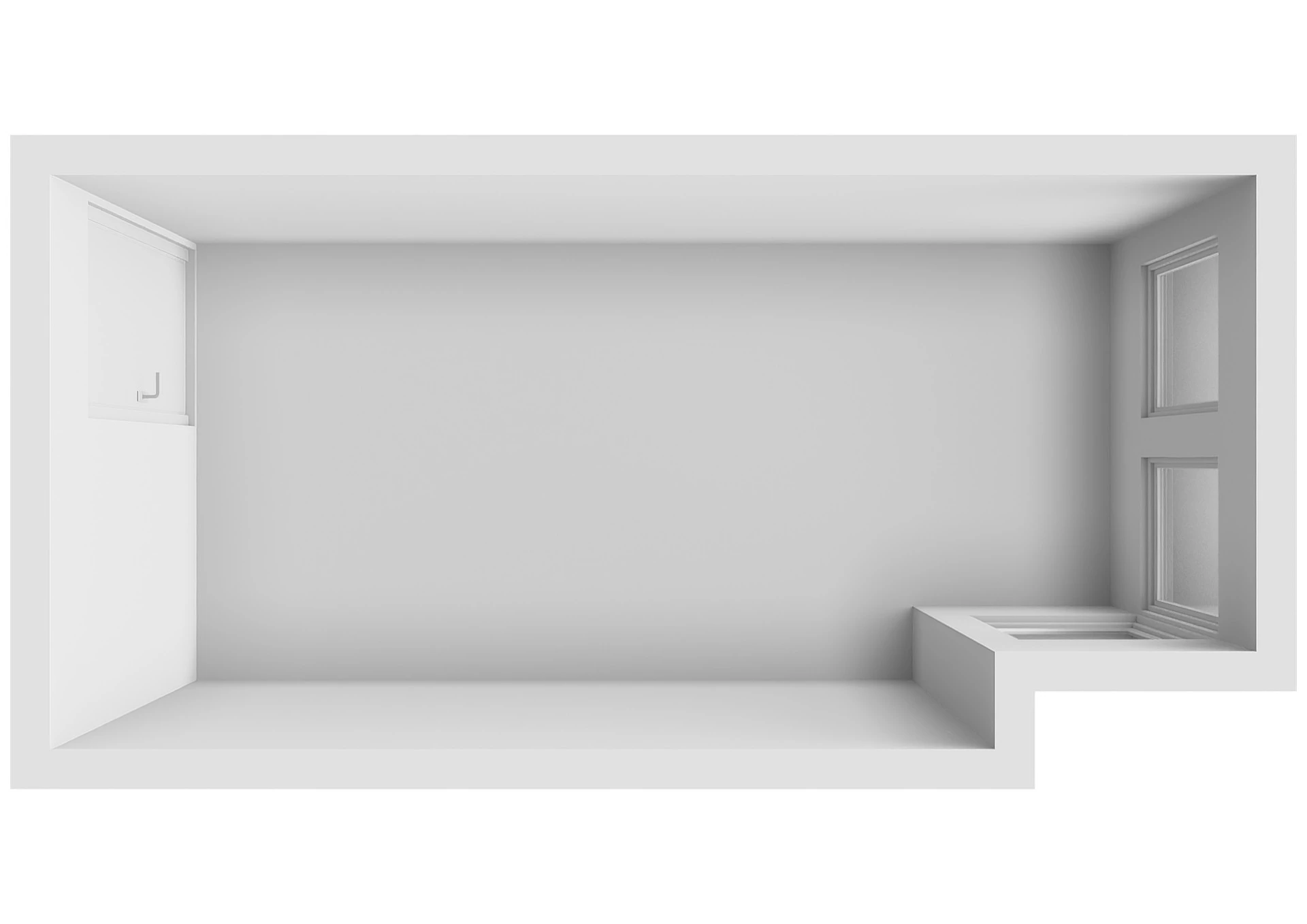
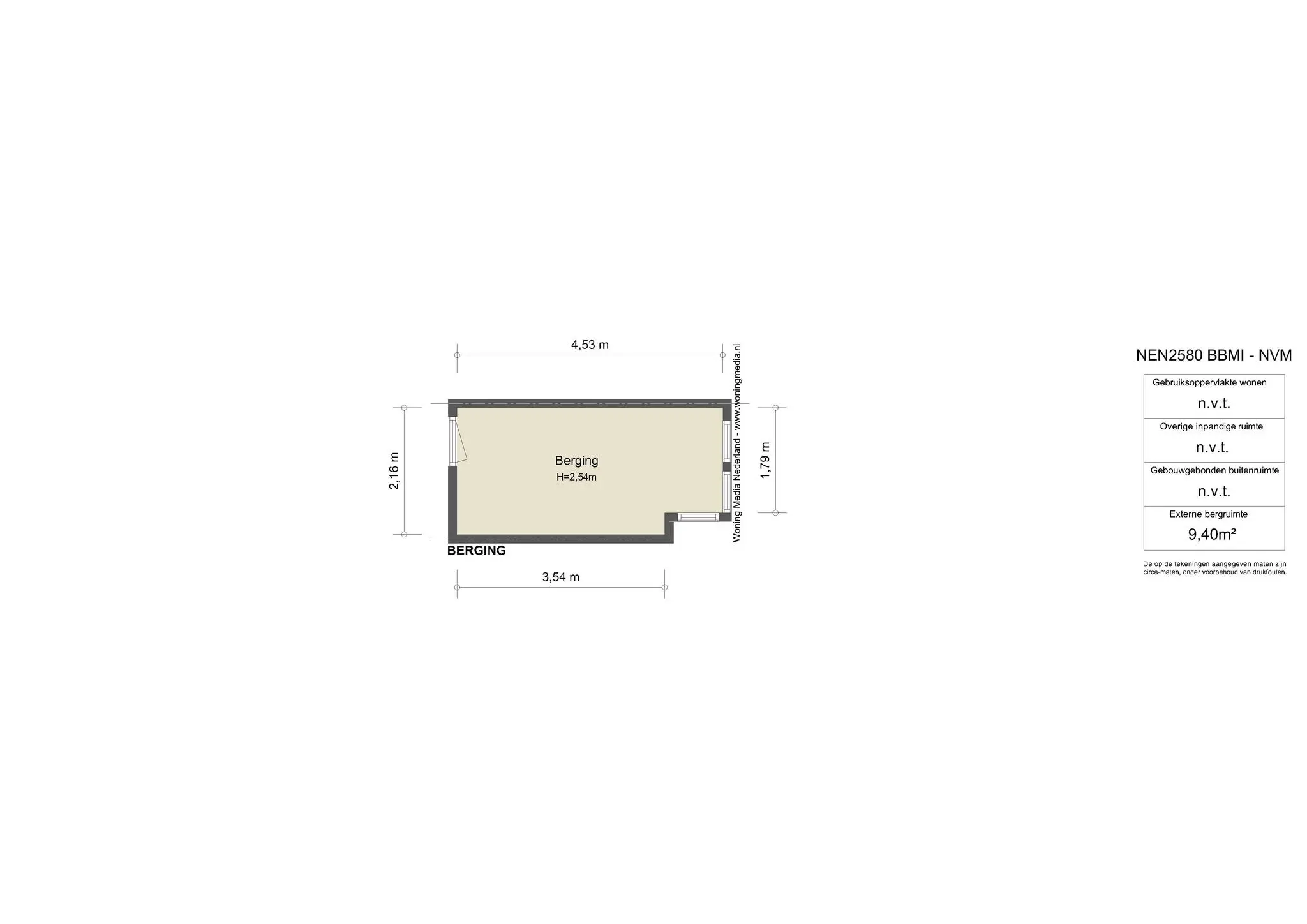
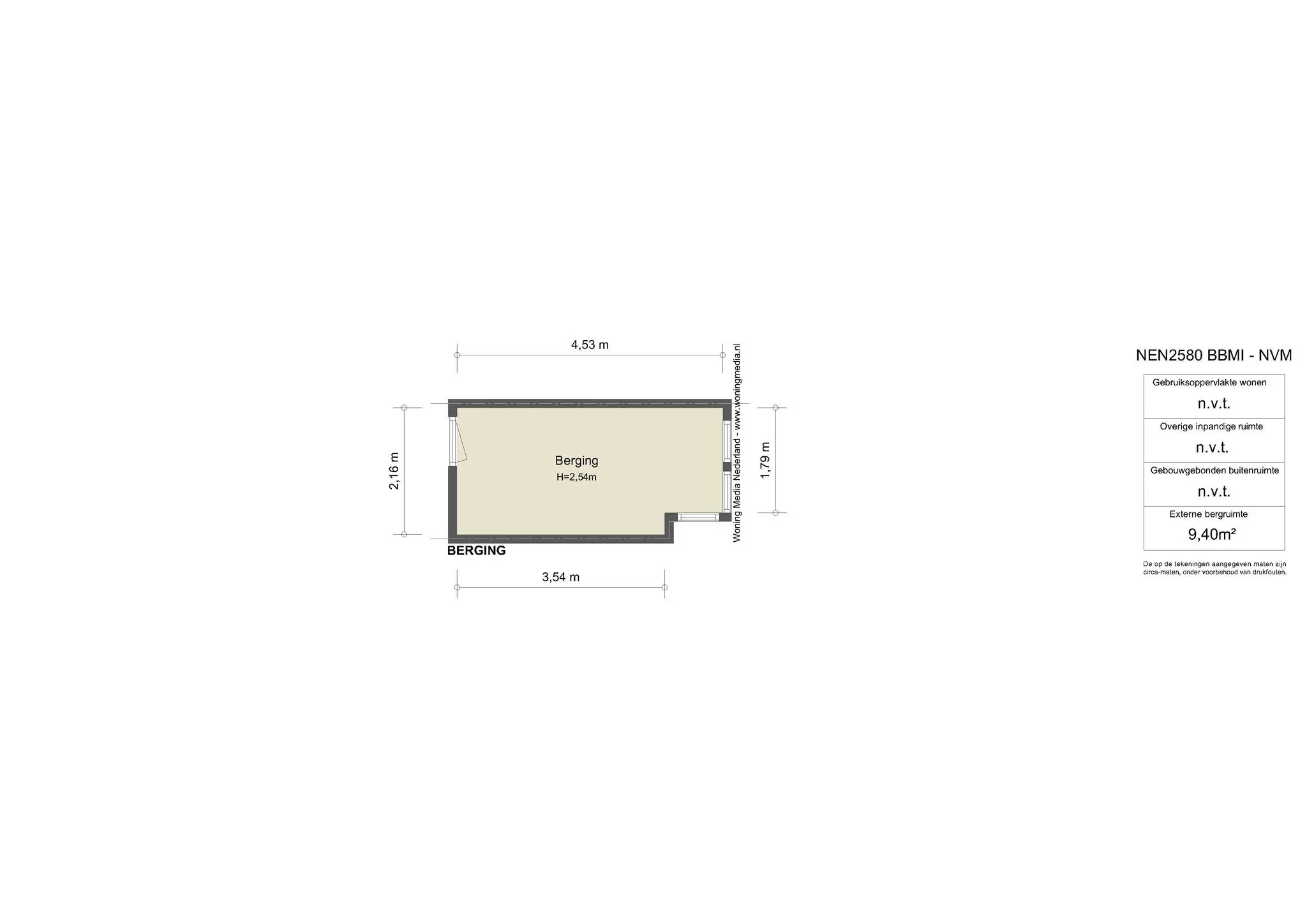
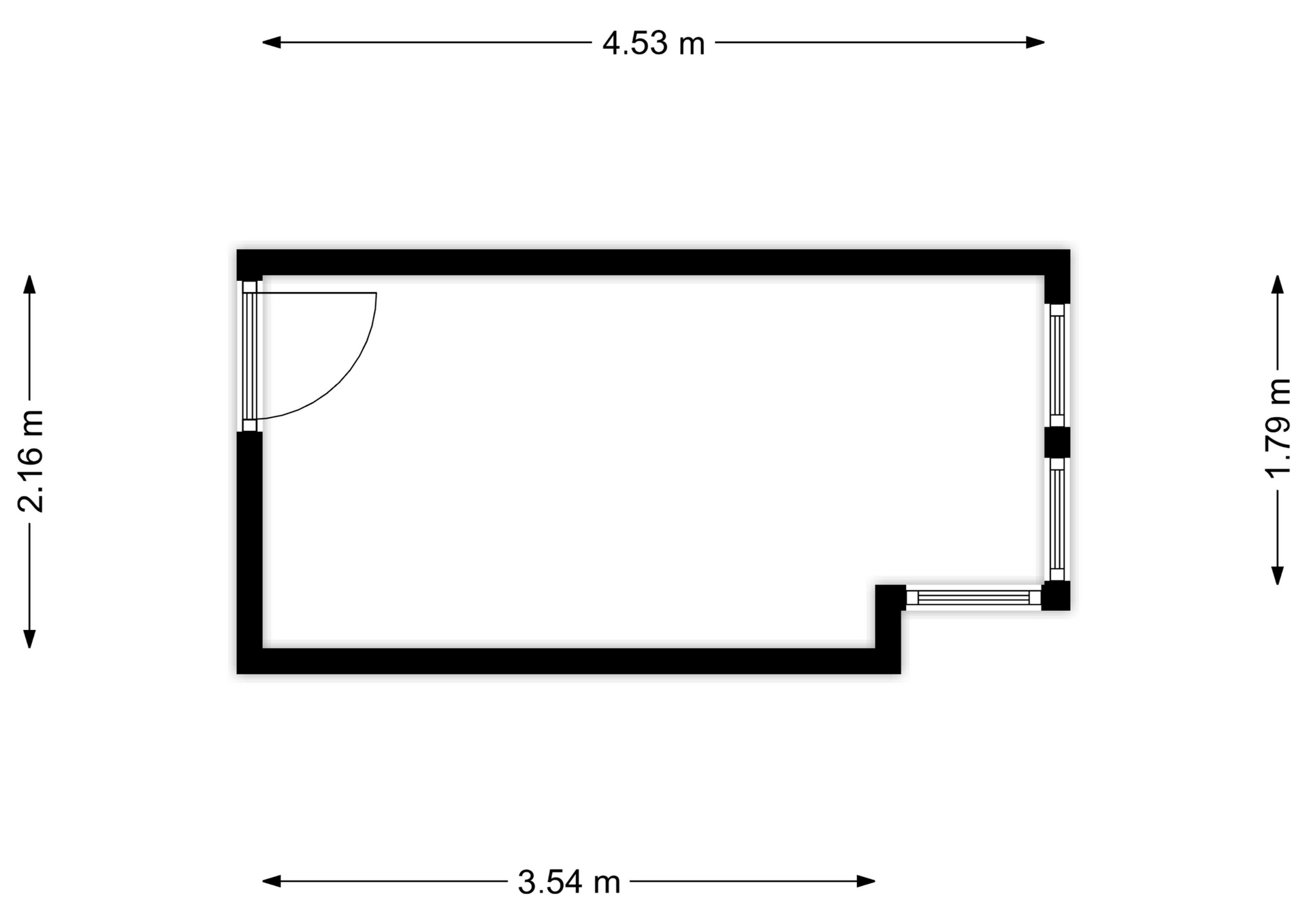
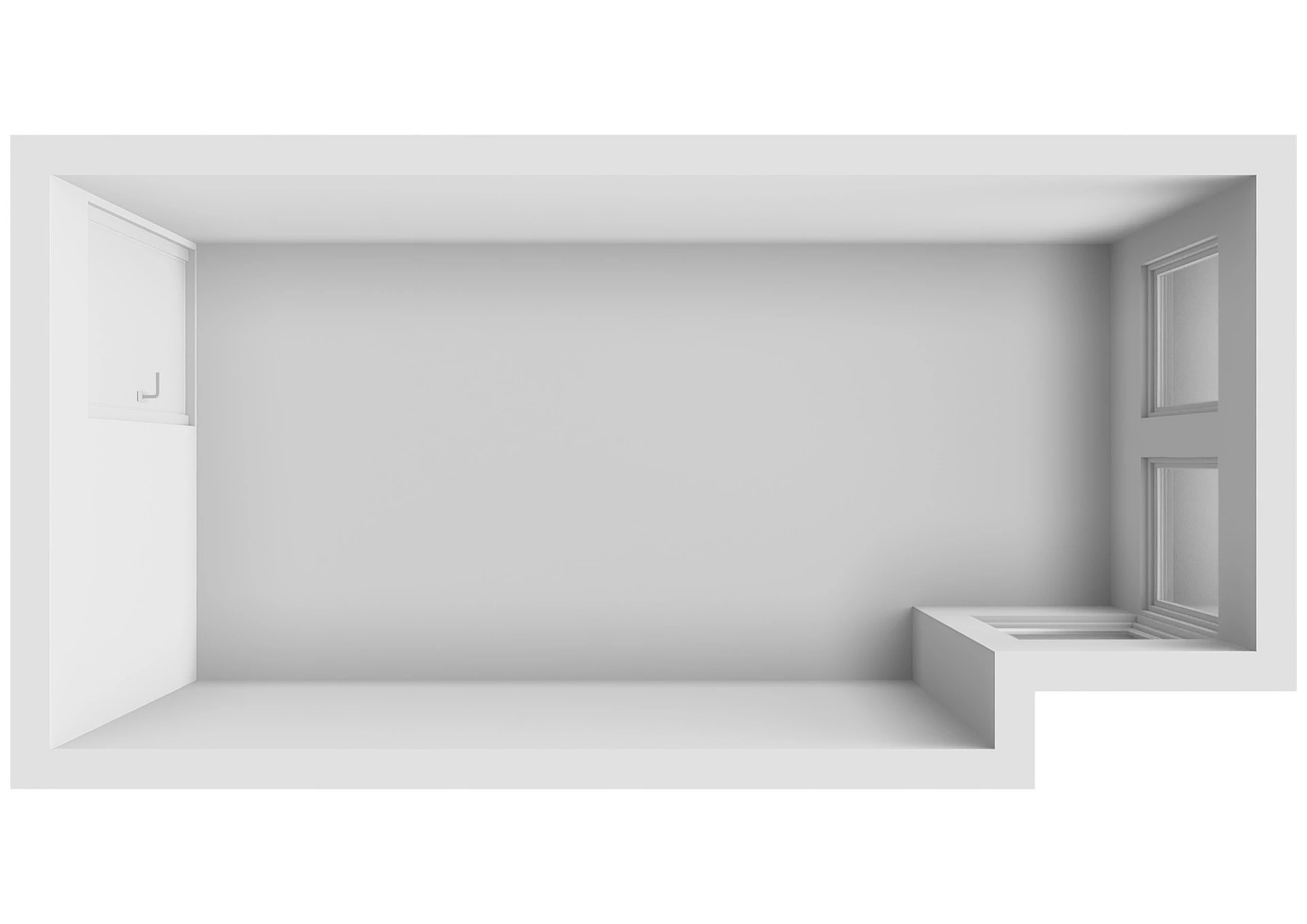
There are two bedrooms, one of which has access to the balcony, and a neat bathroom featuring a combined bath/shower and double washbasin. On the top floor, there is an additional room of approximately 9 m², ideal as a workspace or storage.
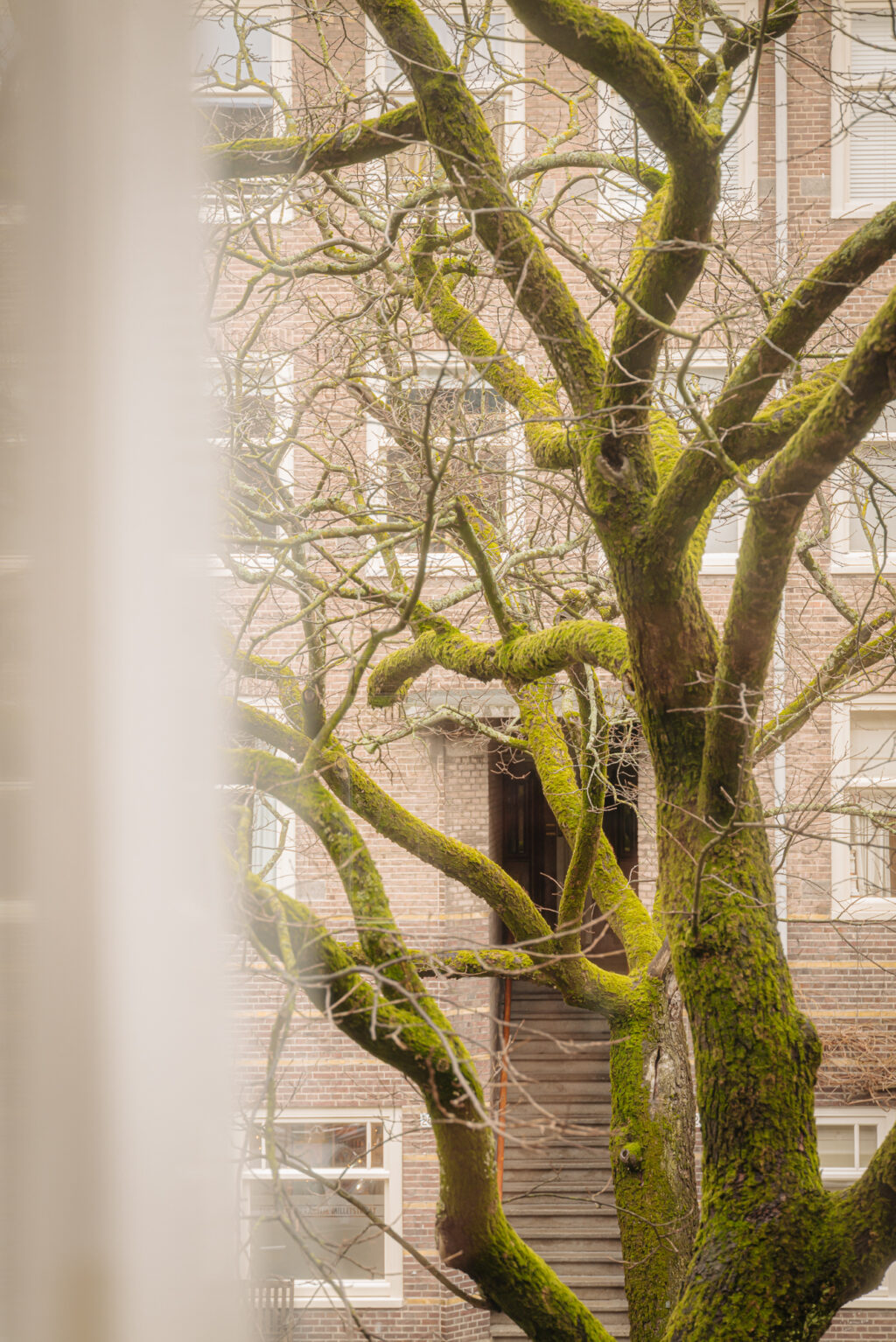
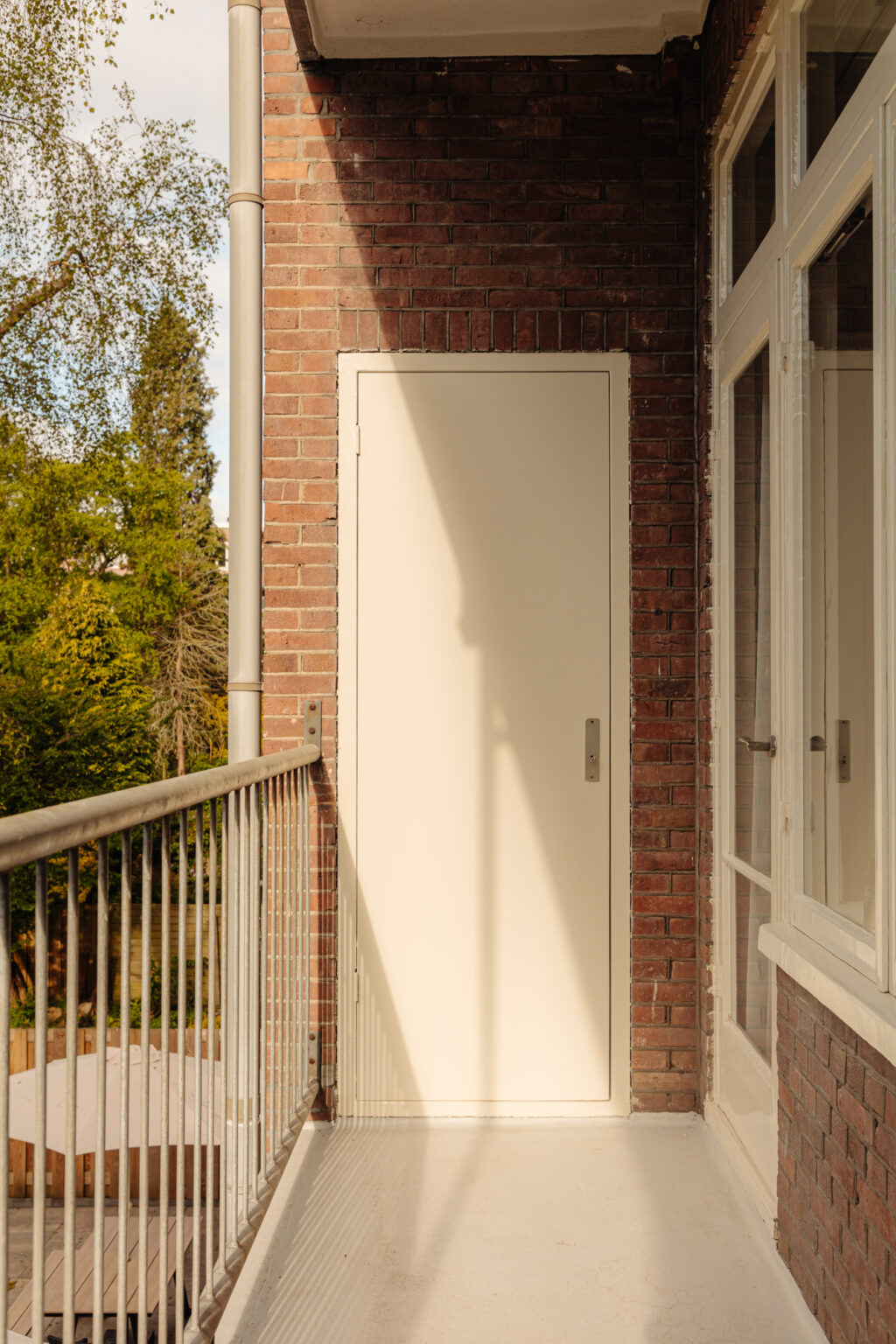
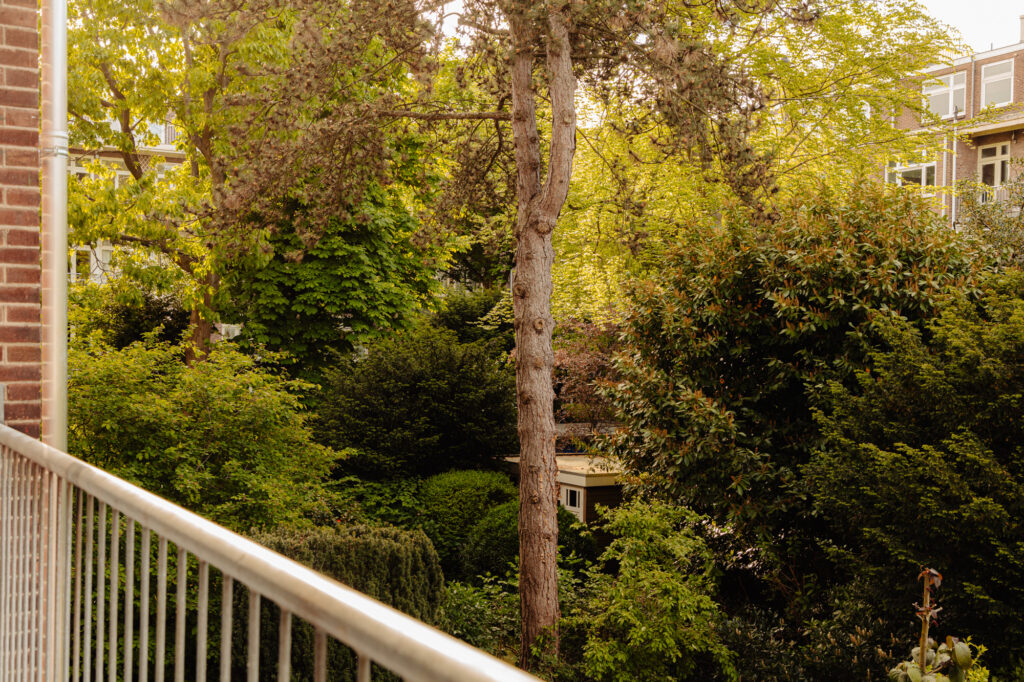
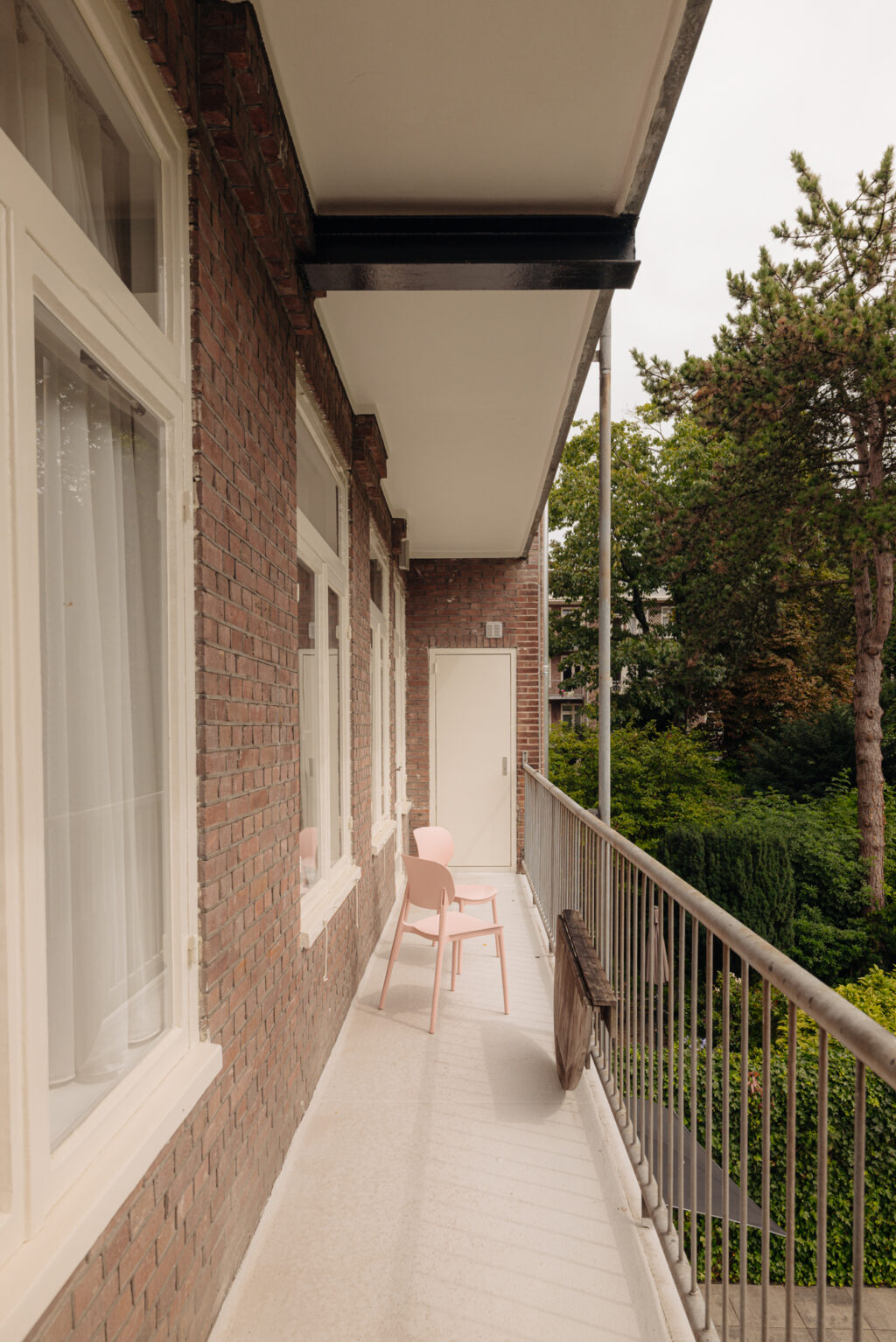
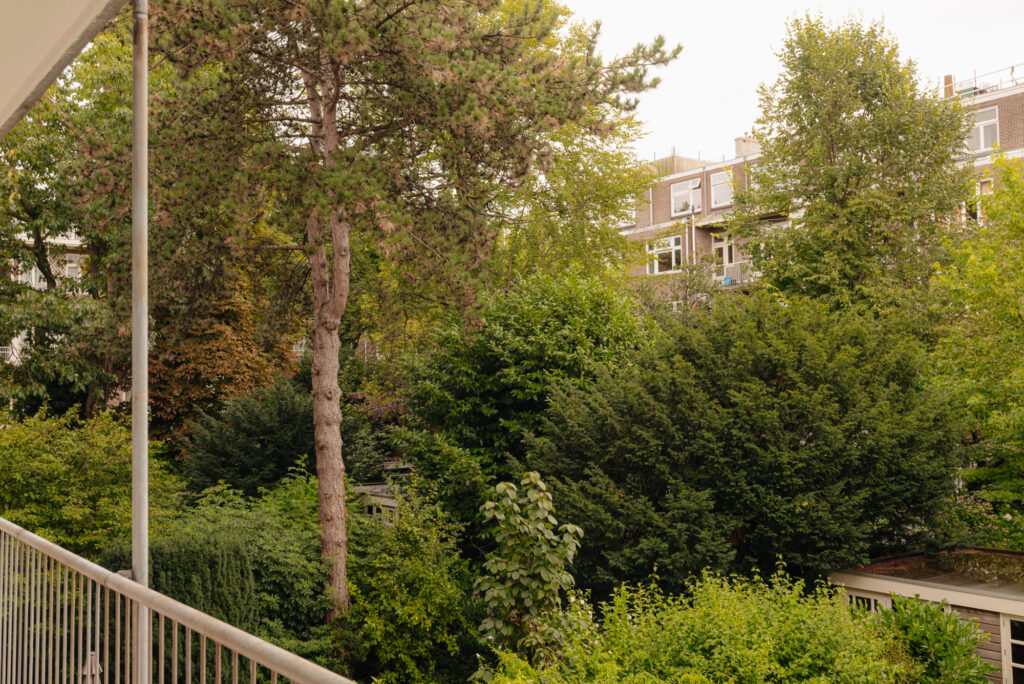
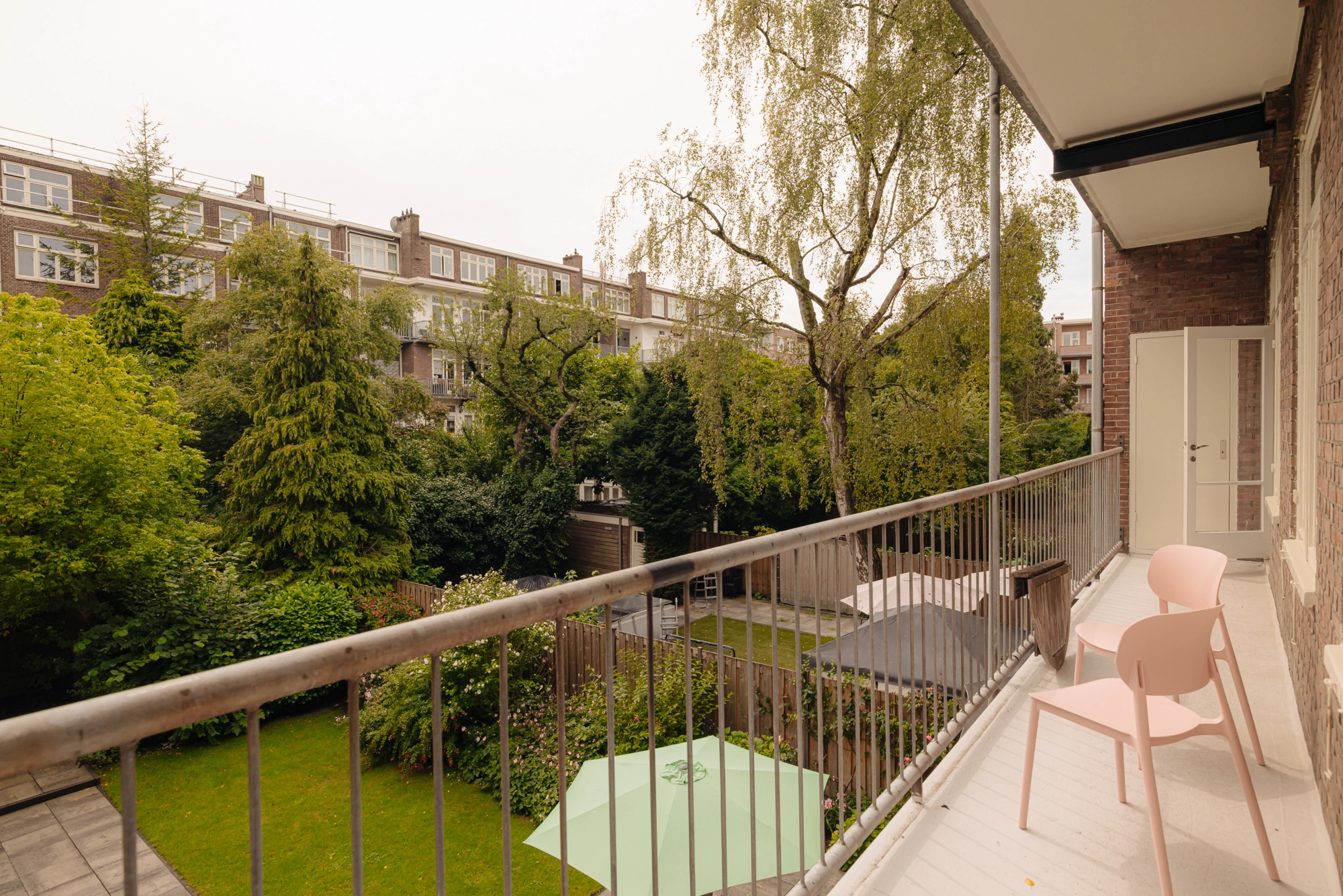
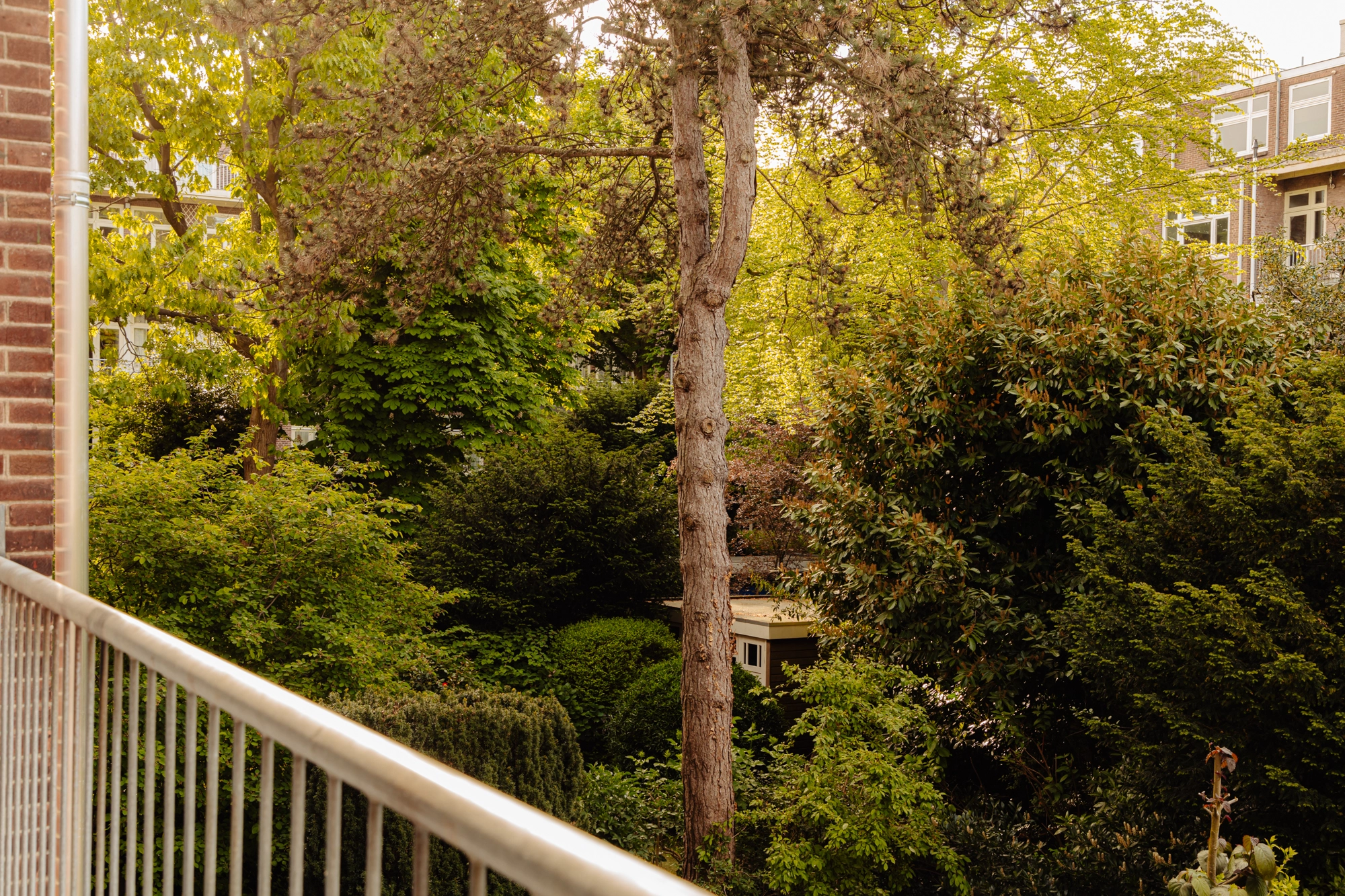
The spacious south-facing balcony offers views over the green inner gardens.
Neighborhood
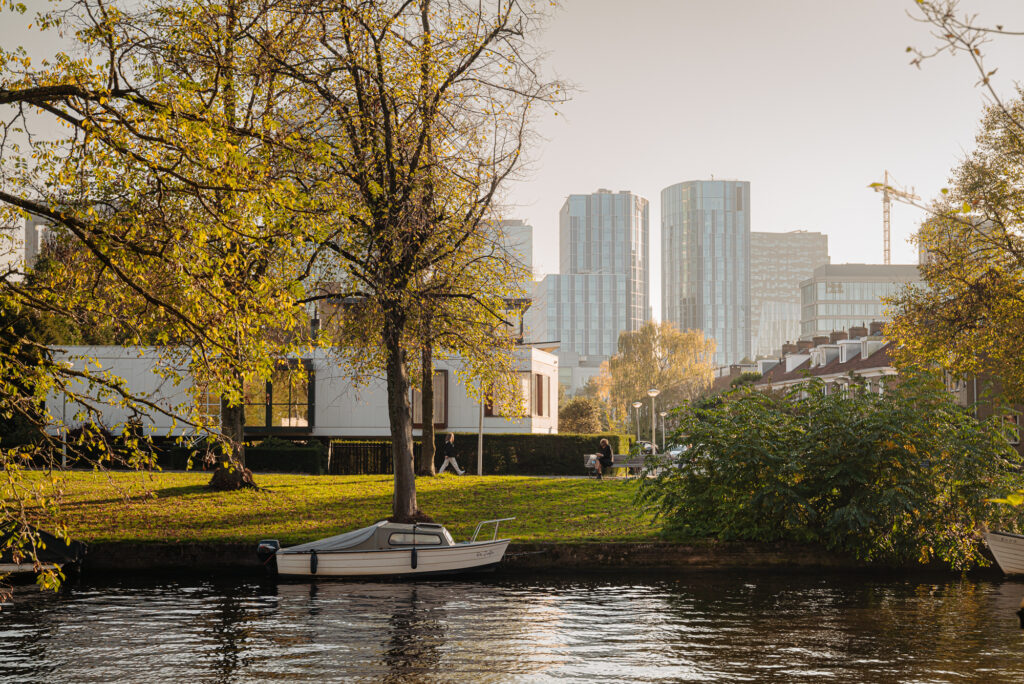
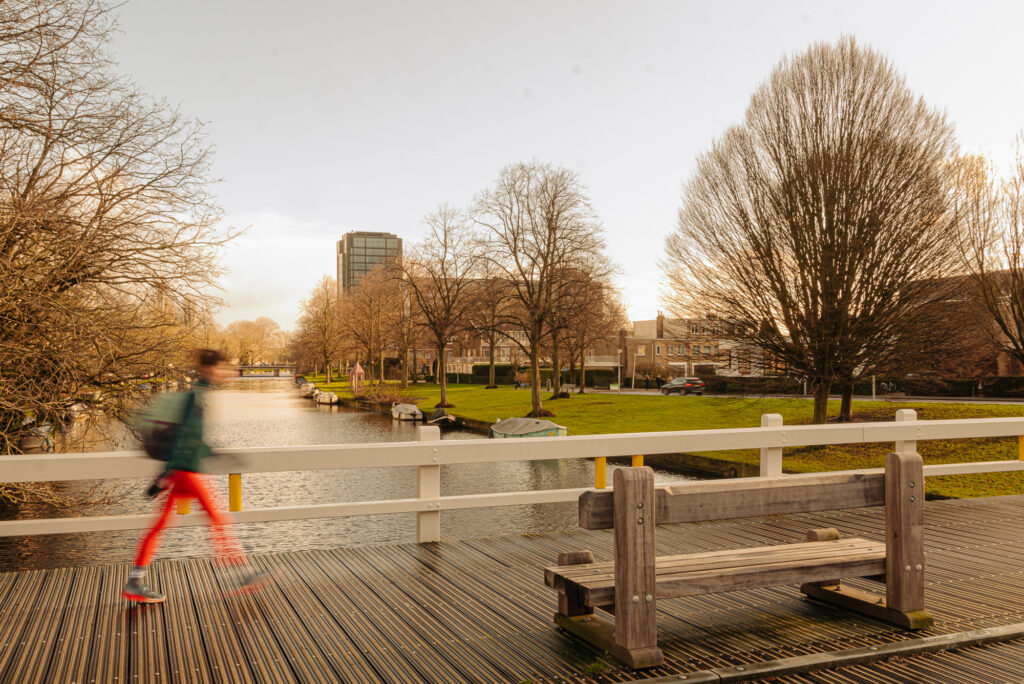
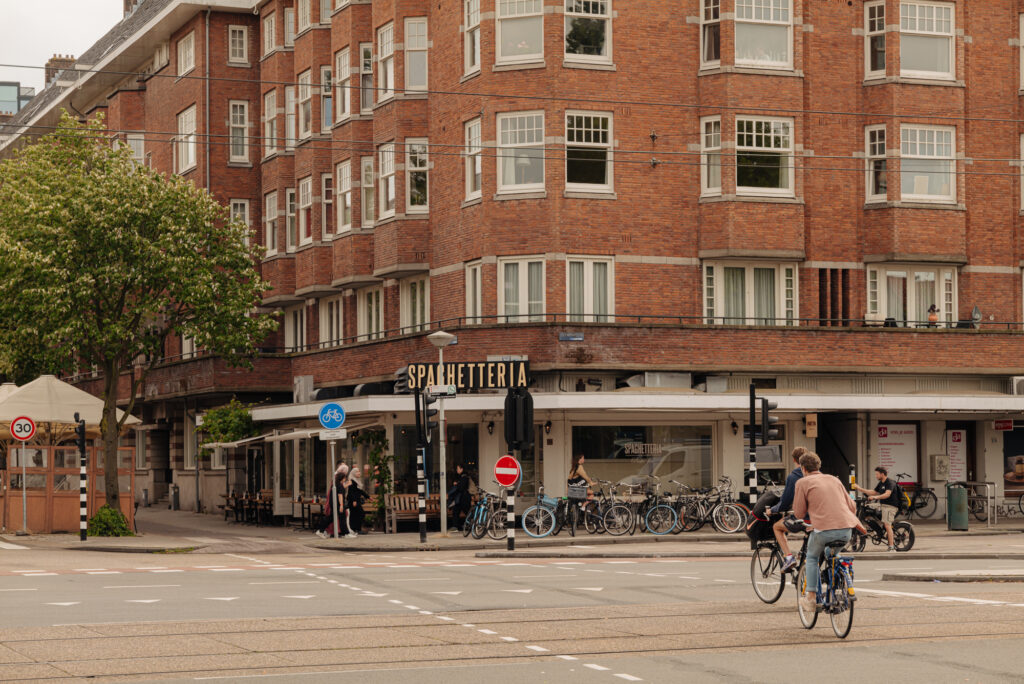
Residents of the Apollobuurt still enjoy the urban design influence left by architect Berlage in the last century. From villas to townhouses: this 1930s neighbourhood, almost entirely surrounded by canals, is known for its generously proportioned homes in the Amsterdam School architectural style.
The façade stones and bridge sculptures by Hildo Krop, who was awarded the honorary title of Amsterdam’s City Sculptor, add further character to the area.
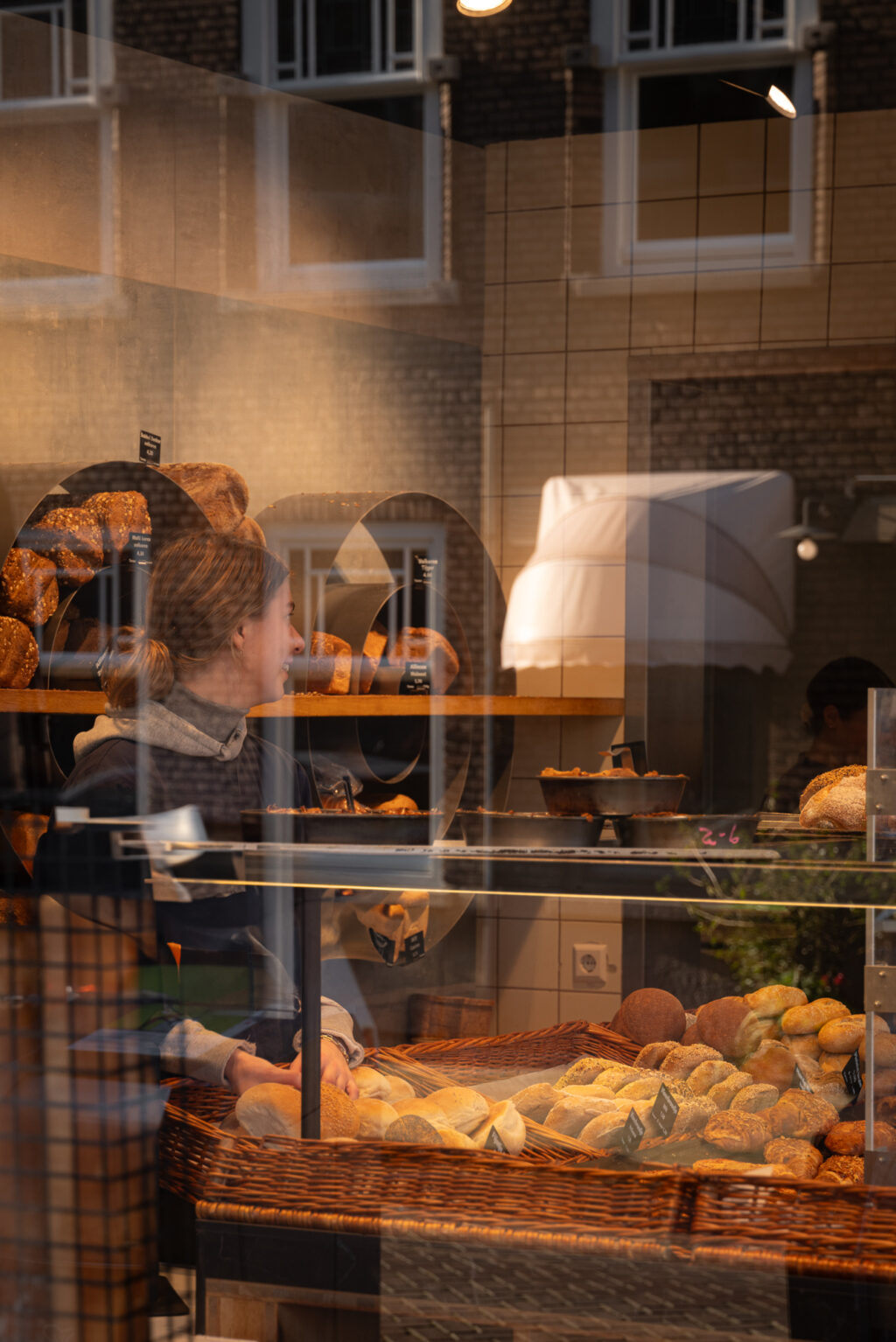
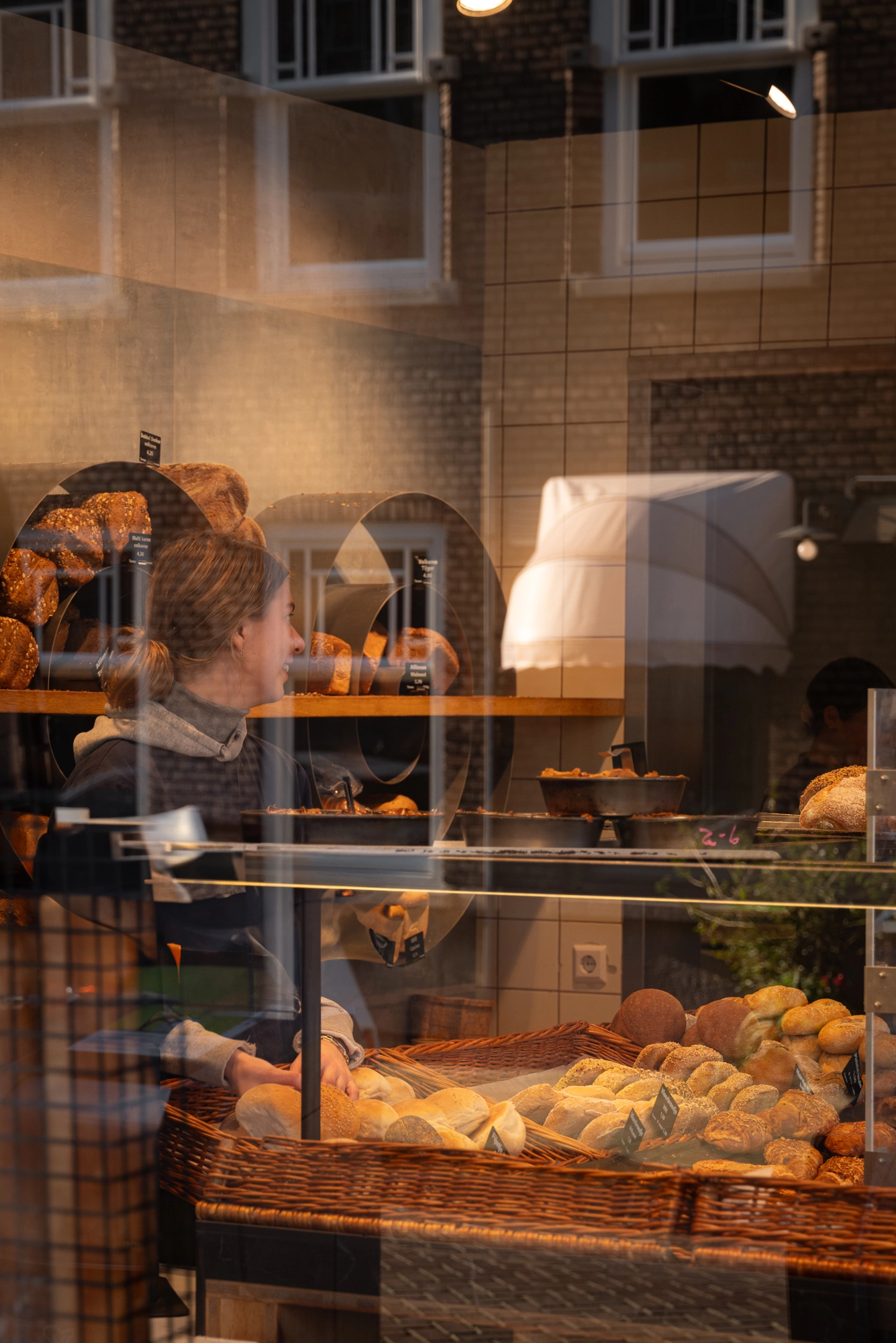
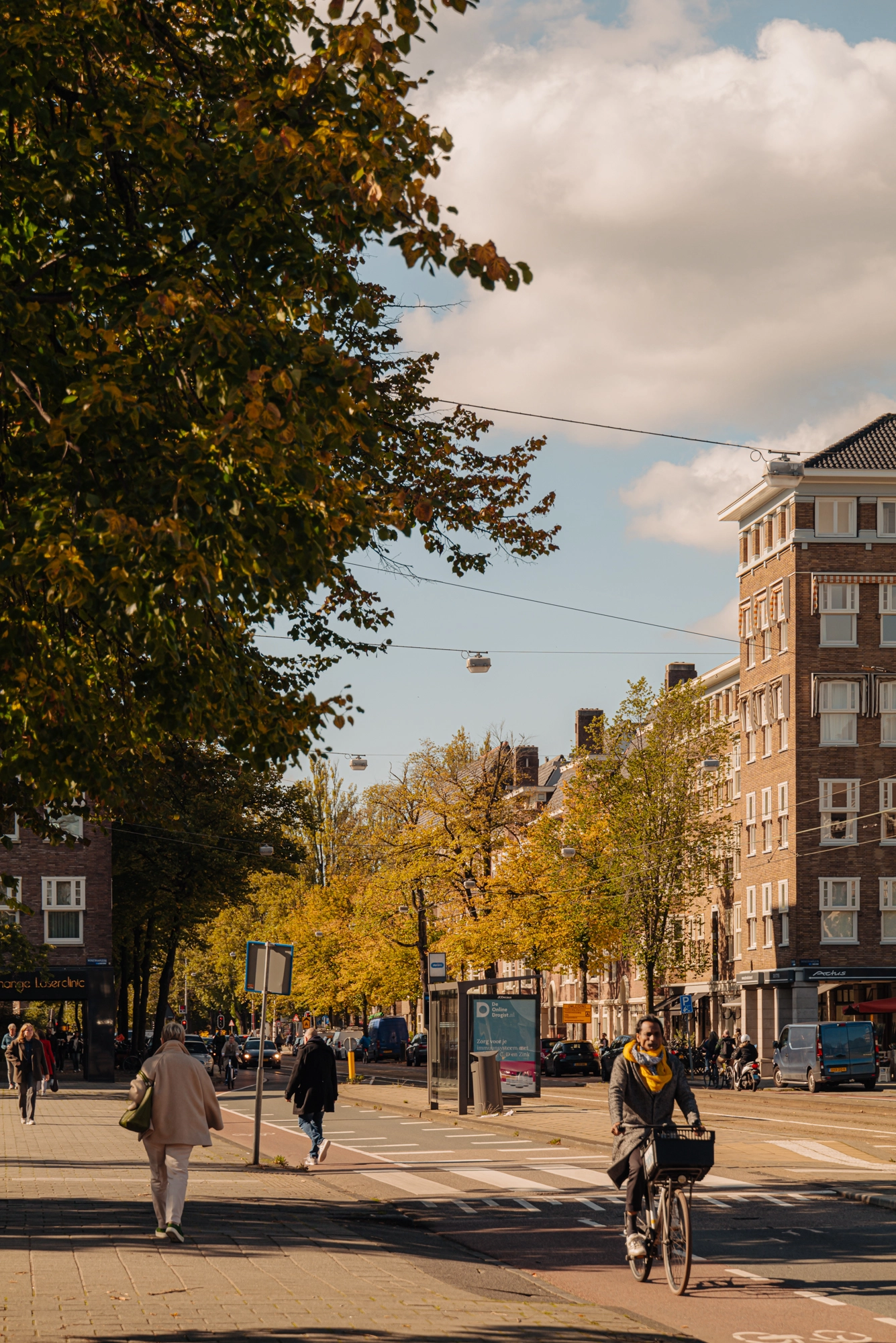
The Beethovenstraat gives the neighbourhood a young and dynamic atmosphere, with coffee bars and restaurants such as Cafecito, Et Claire, Margaux, and Ferilli’s. On Olympiaplein, you will find Coffee District for excellent coffee, the French bakery Le Fournil, and cheese shop Fromagerie L’Amuse.
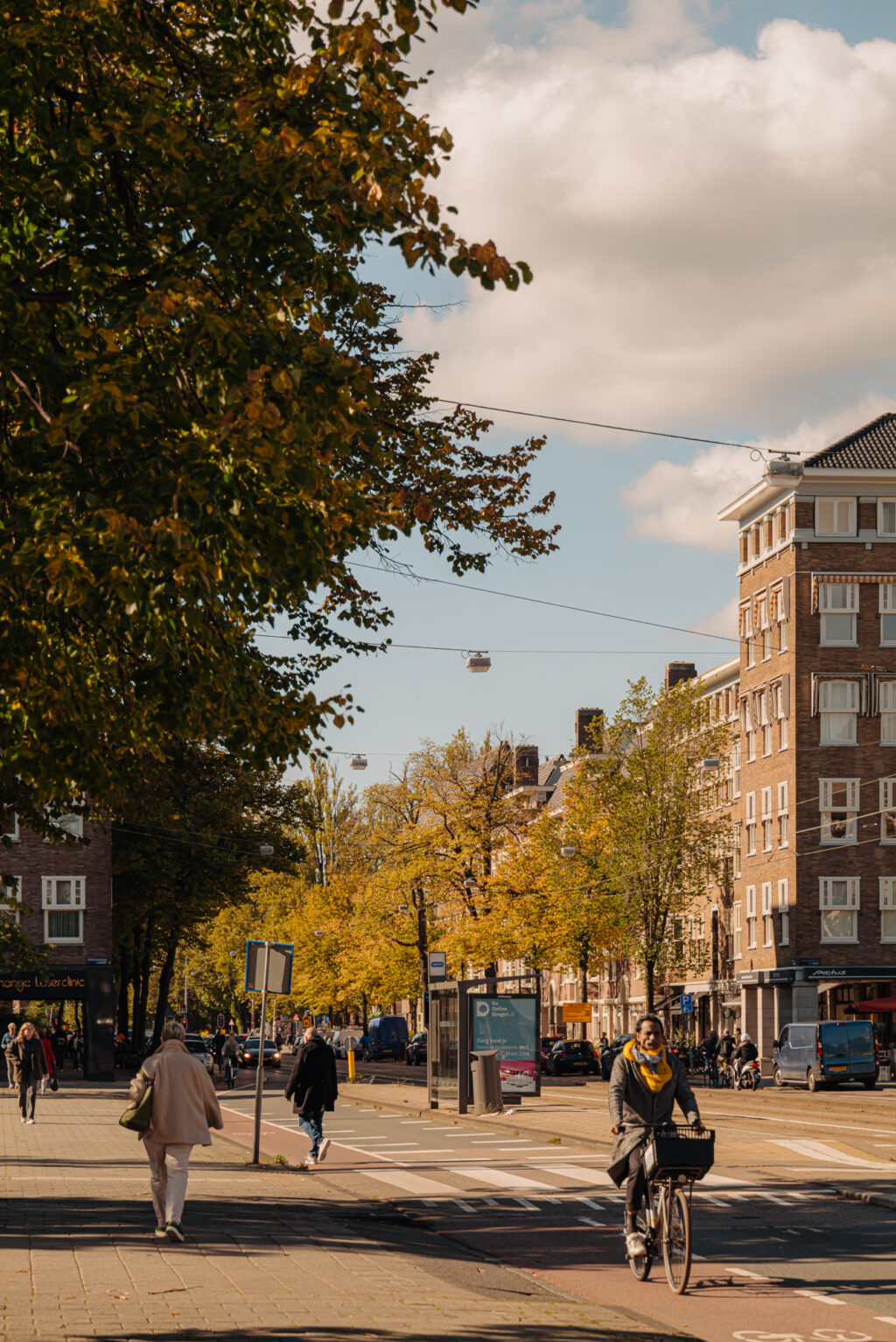
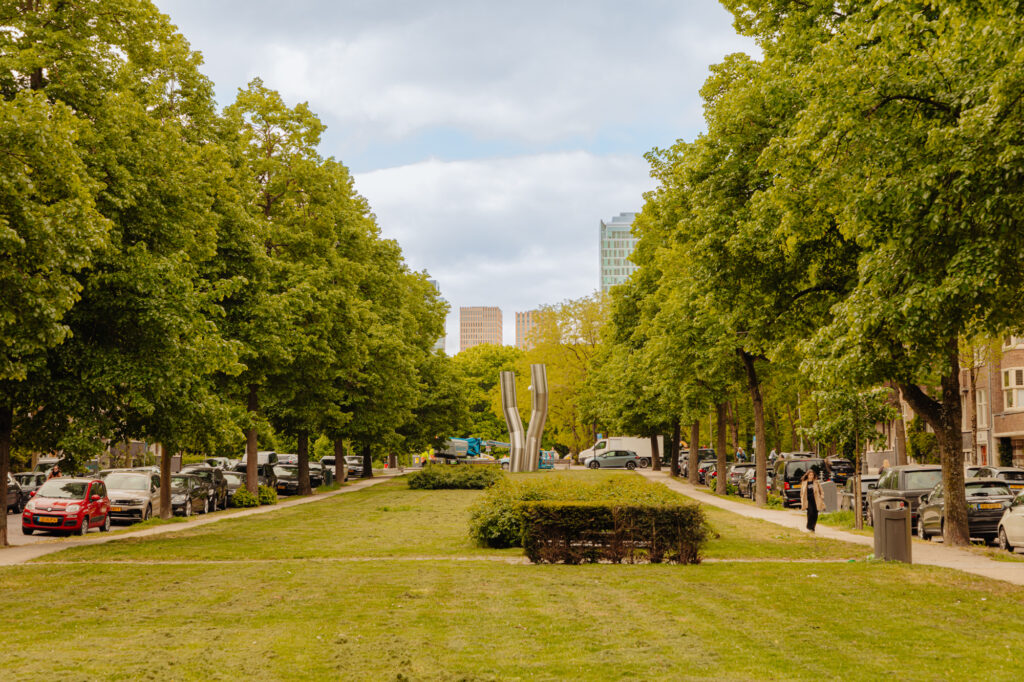
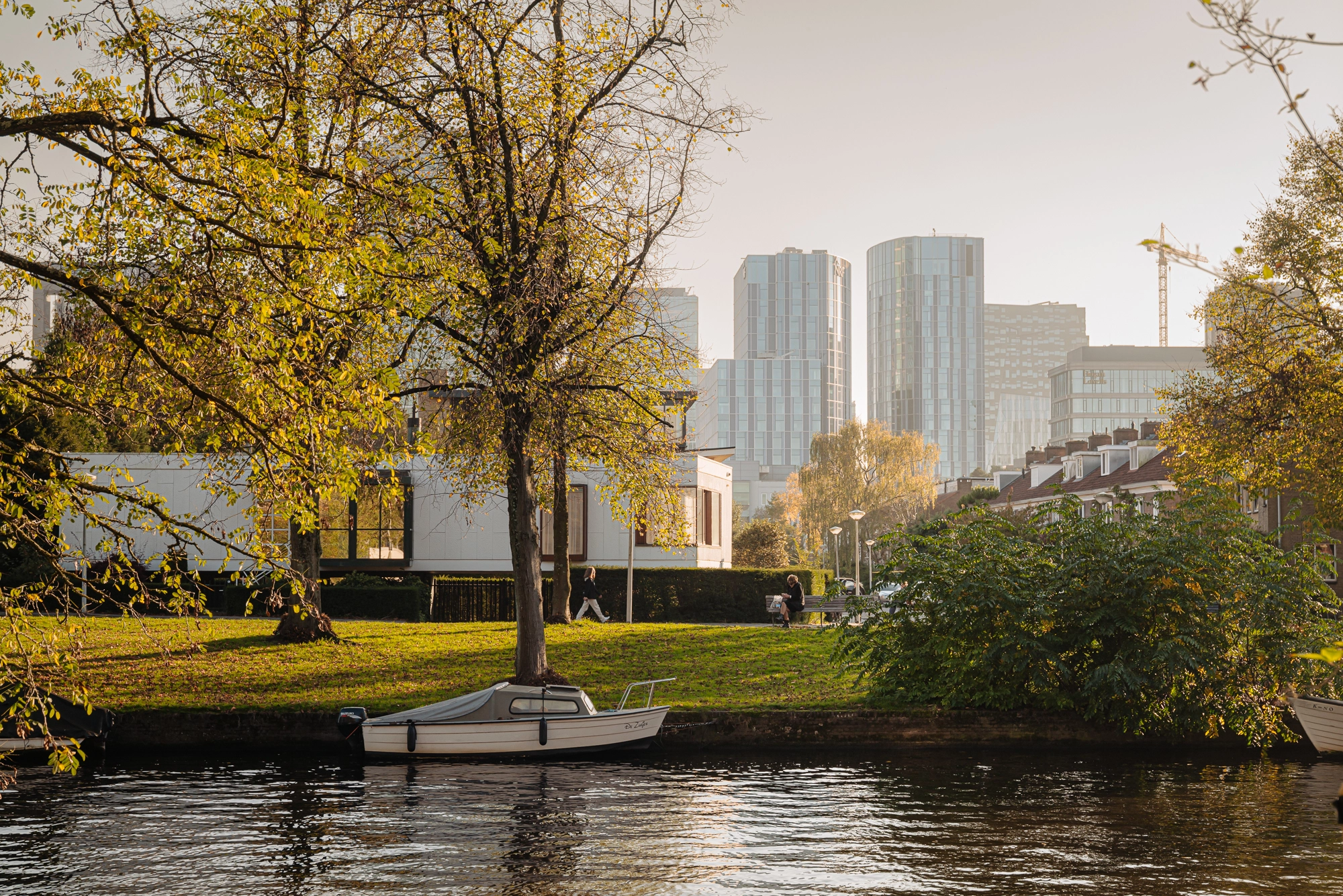
The wide boulevards and the greenery of Beatrixpark, with its modern sculptures and ancient trees, create a feeling of space and are perfect for sports and relaxation.
The area is known for its excellent primary and secondary schools and its convenient location near the A10 Ring Road and Amsterdam Zuid station.
Details
• Usable living area approximately 106 m²
• Storage room (attic room designation) of approximately 9 m²
• South-facing balcony
• The ground lease has been bought off in perpetuity
• Monthly service charges for the Owners' Association: €181.51
• National monument
• Protected cityscape status
• Designated for residential and room use according to the deed of division
• Project notary: Lubbers & Dijk
• A "non-owner-occupier" and "age clause" will be included in the purchase agreement
Zonnehof
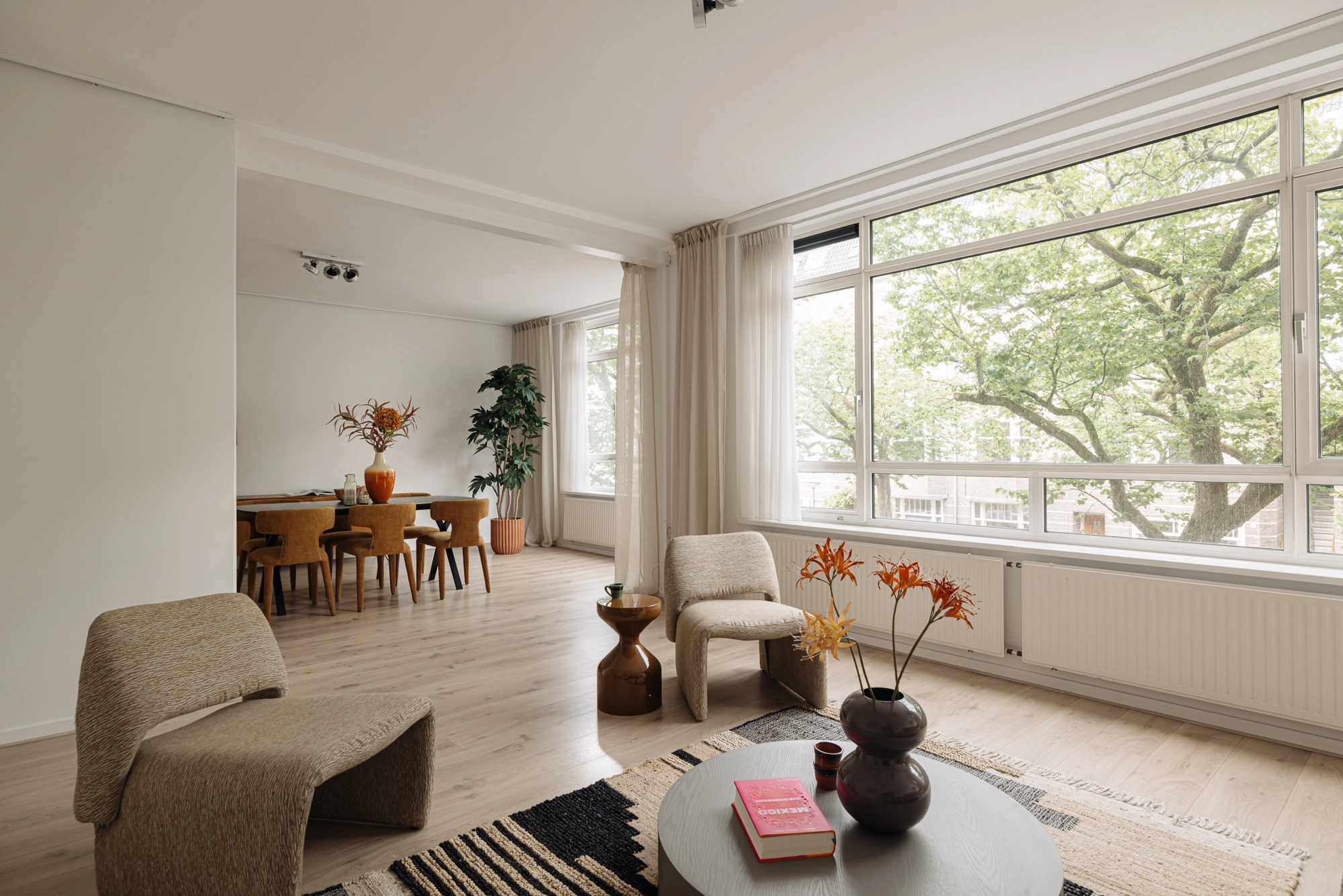
The contemporary apartment of approximately 106 m² features a spacious and bright living room with a private entrance. In addition, there is a storage room of about 10 m² on the attic floor, perfect for extra storage or as a home office.
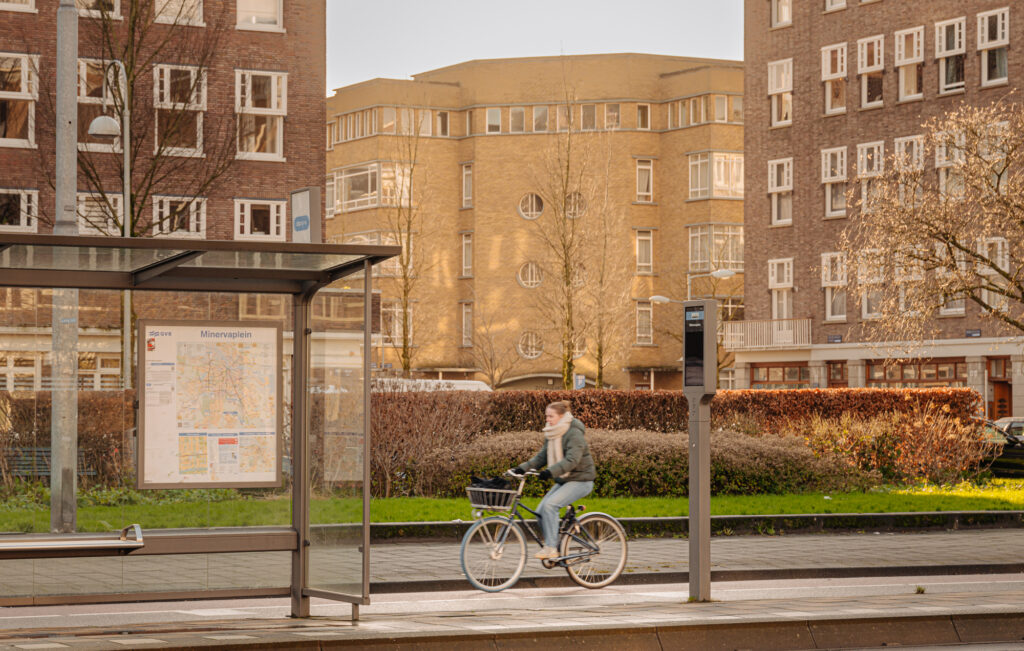
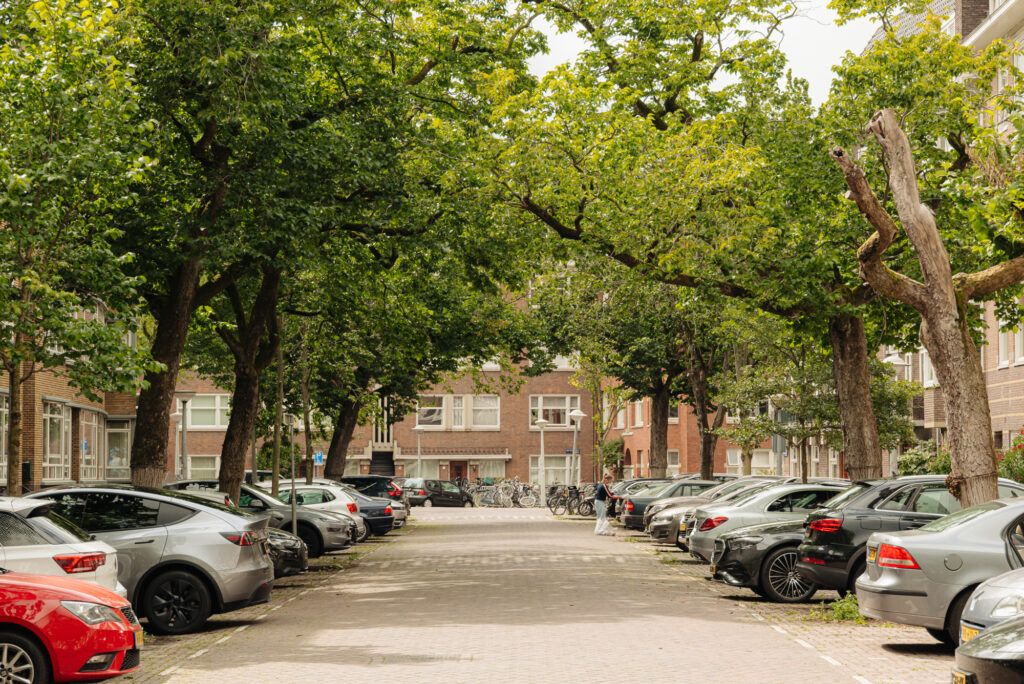
Milletstraat is a wide and quiet street, perfectly located near high-end shops, refined restaurants, and the lively organic market held every Friday at Minervaplein.
An ideal home for anyone looking to live peacefully while enjoying all conveniences nearby. Super comfortable living in Zuid.
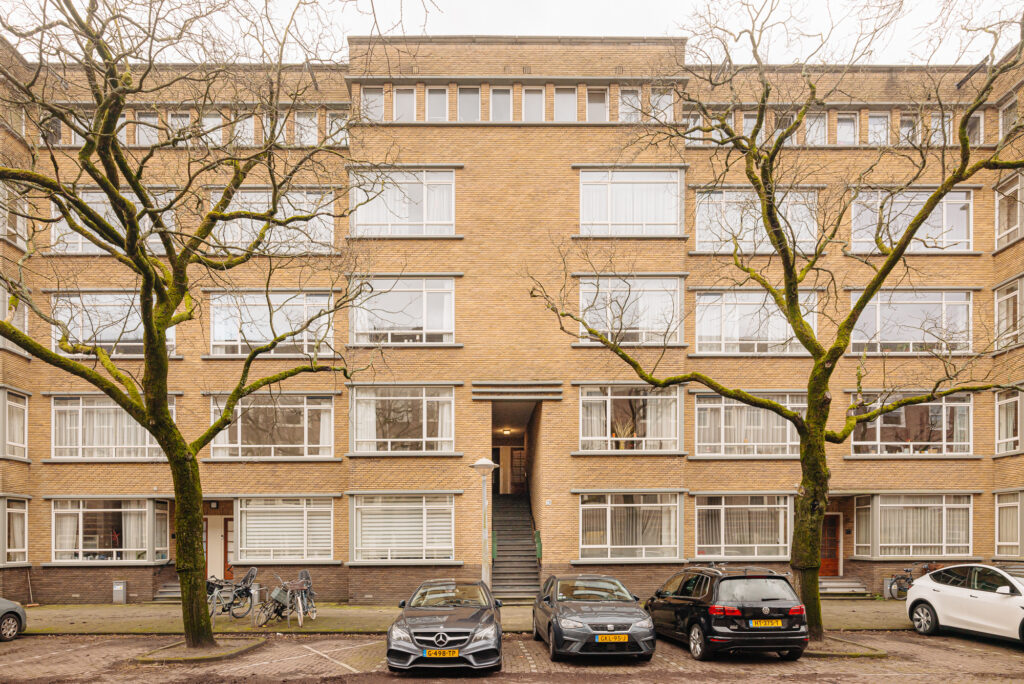
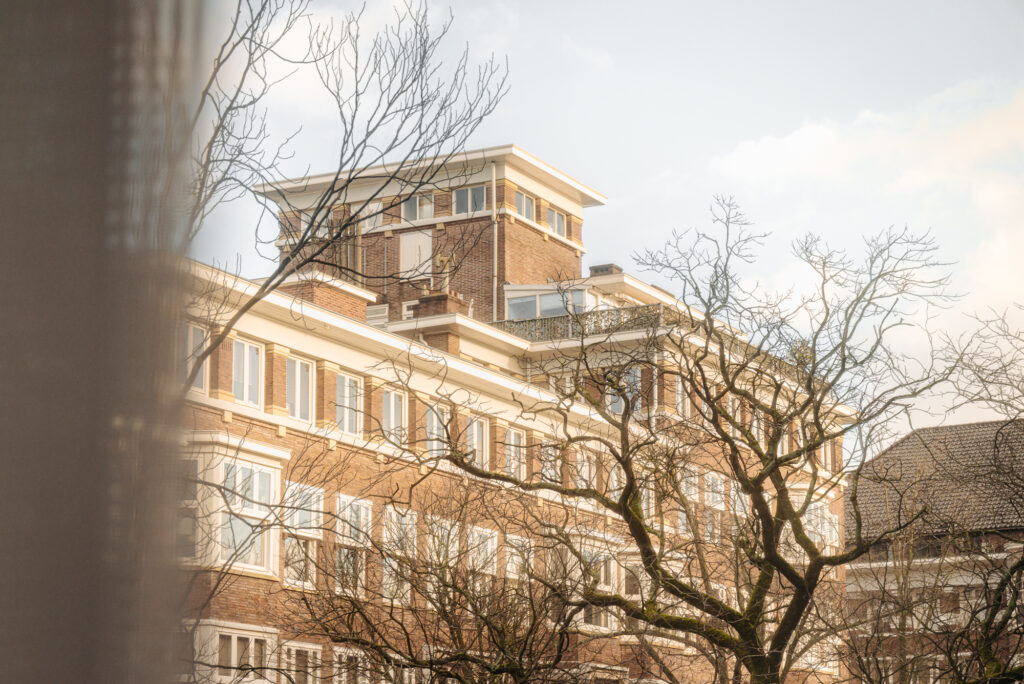
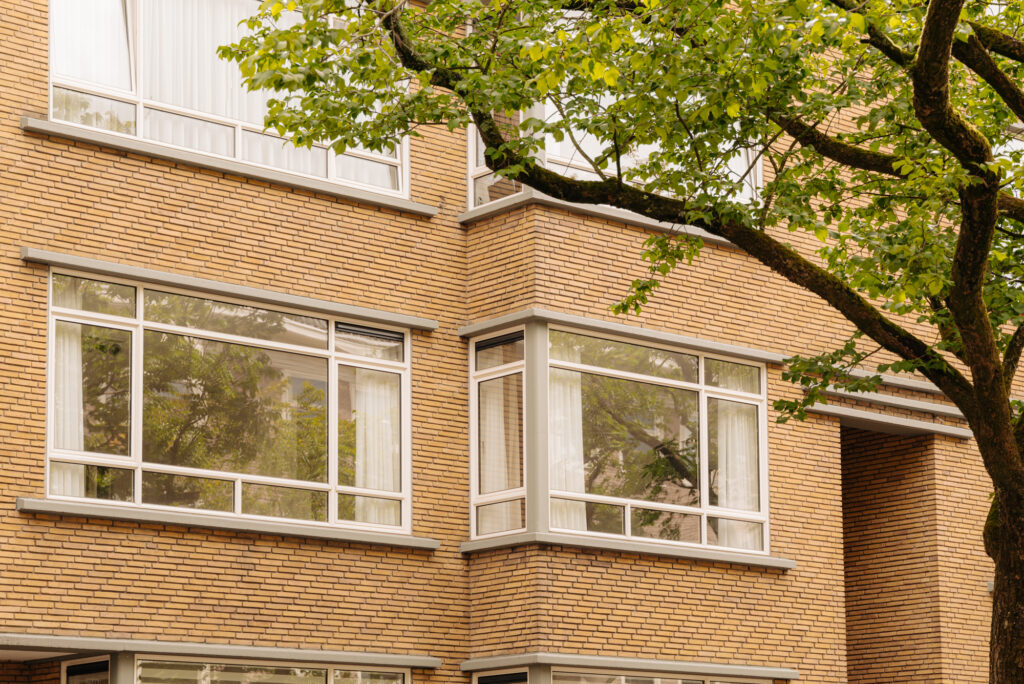
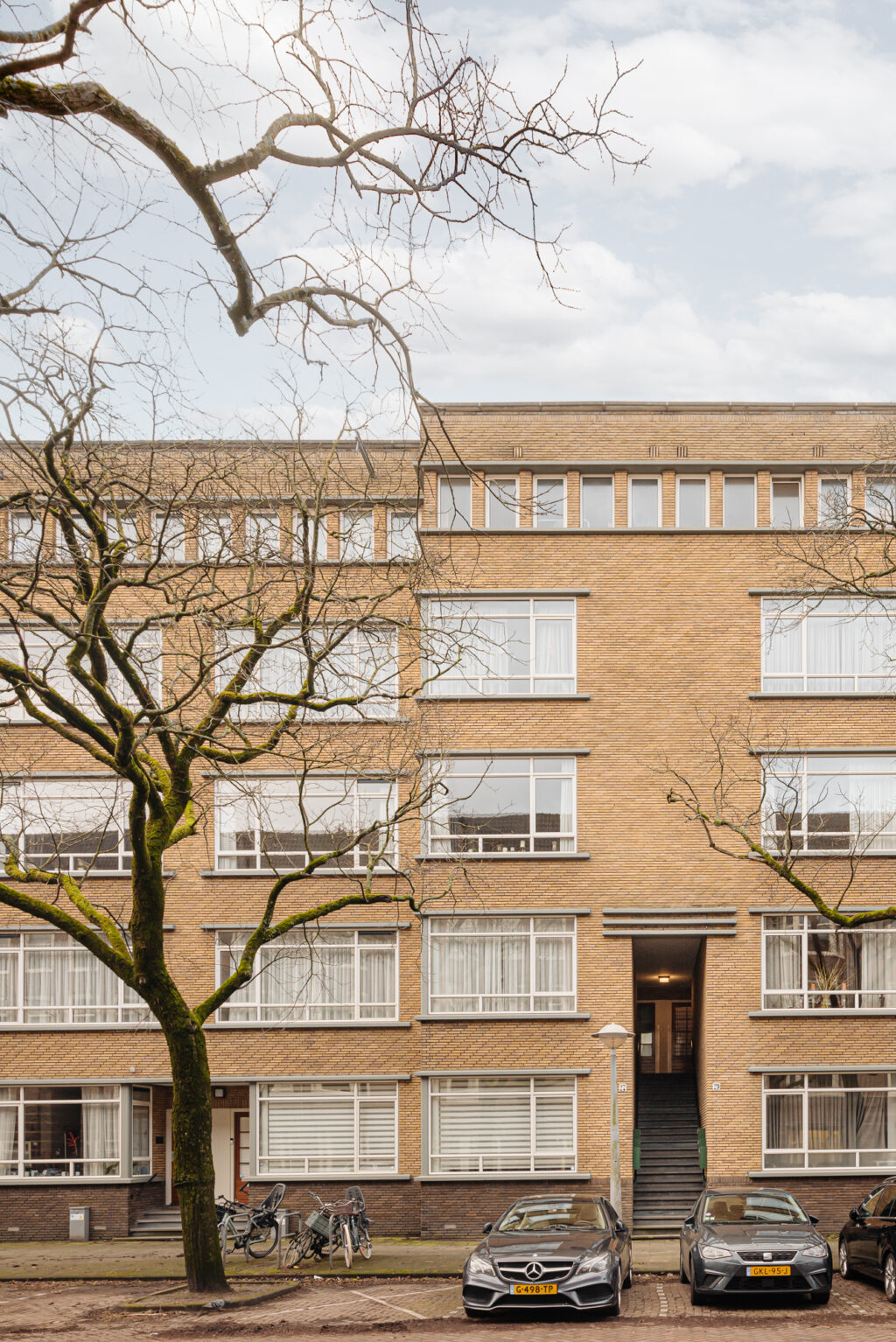
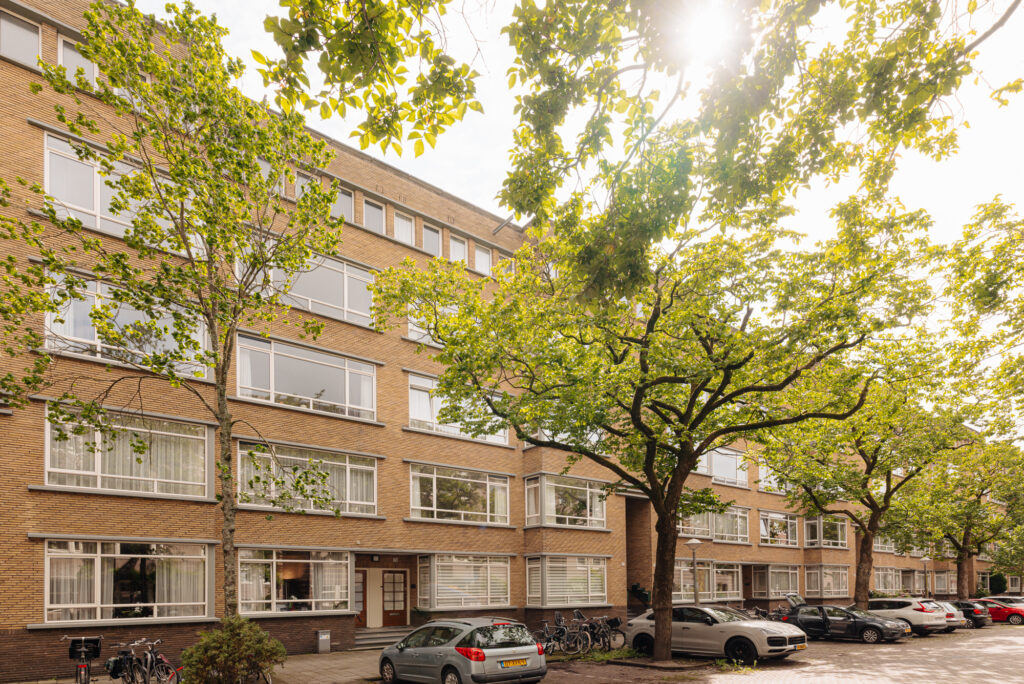
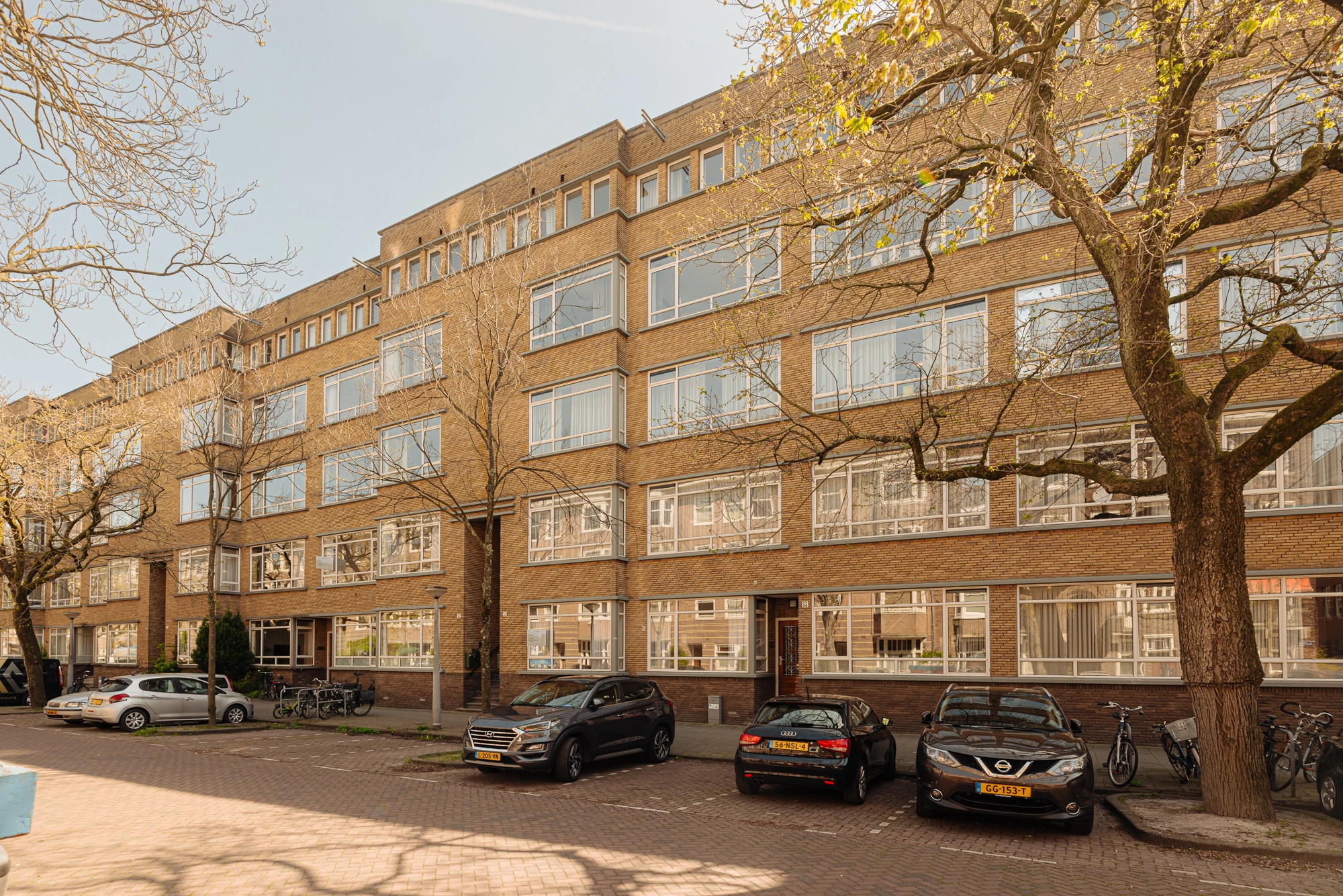
I personally find the Amsterdam School a beautiful architectural style, which defines this part of the city. The apartments in the Zonnehof residential block are part of this style, and the block has since been designated a national monument.
Judith de Jong | Real Estate Agent, Broersma Wonen
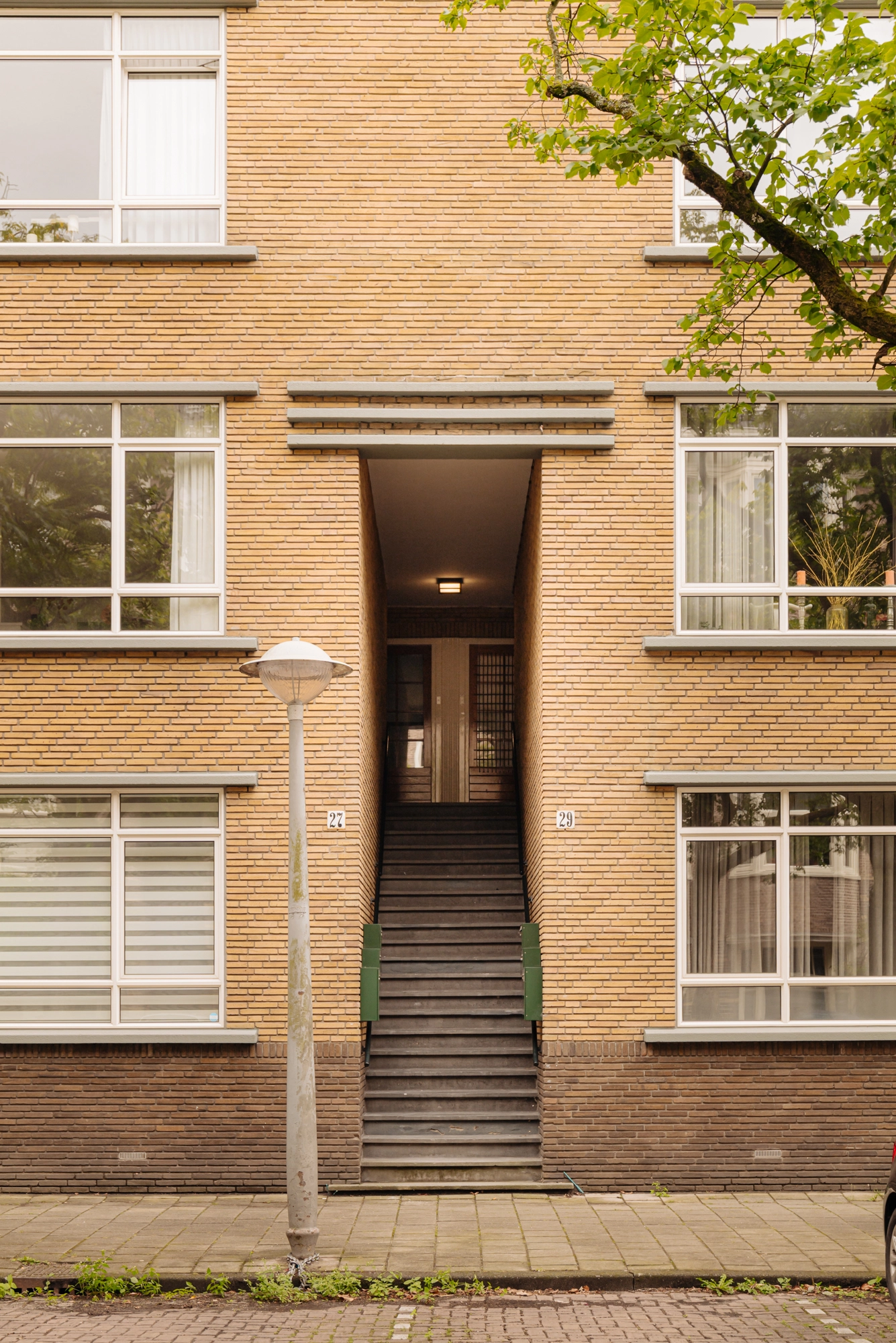
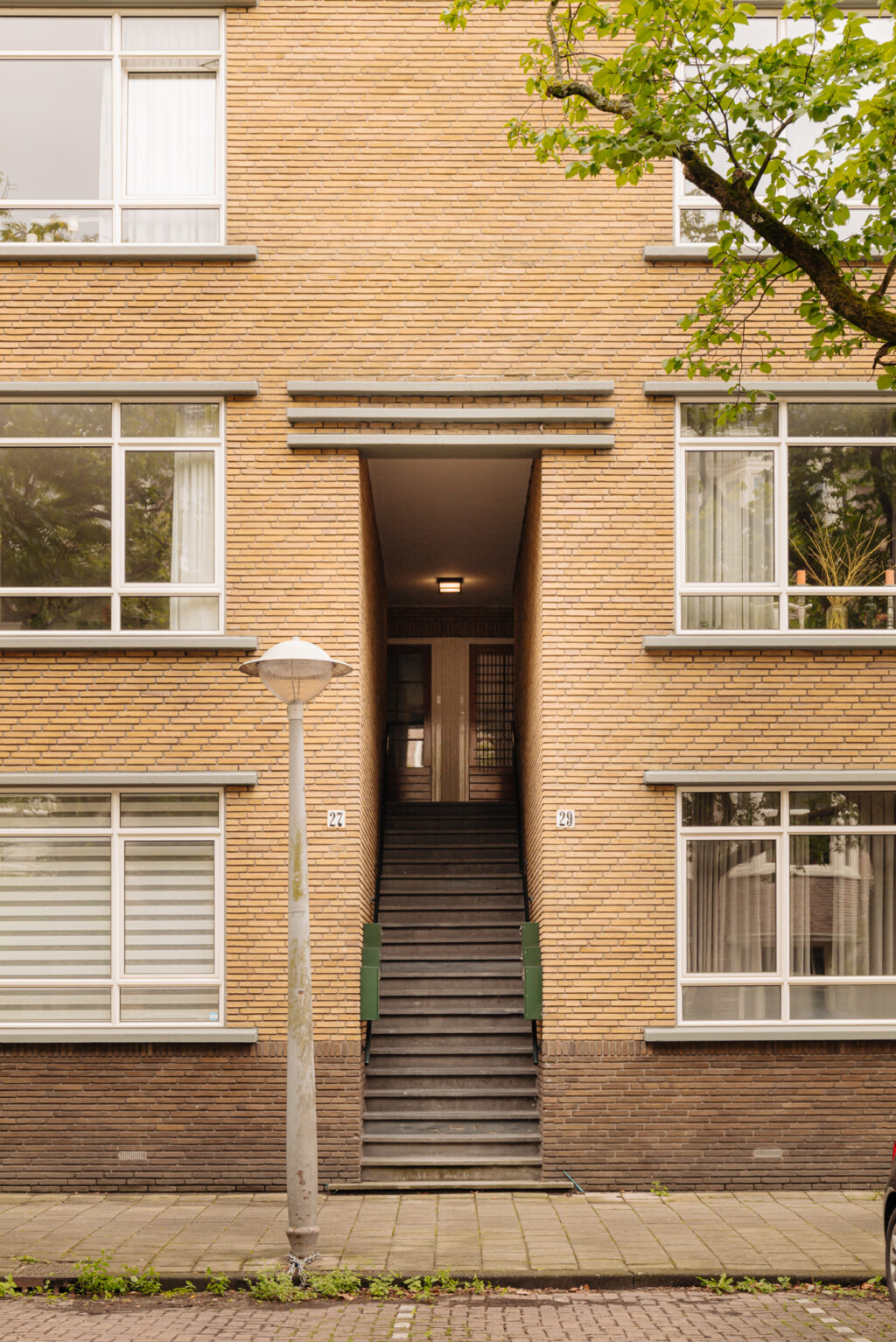
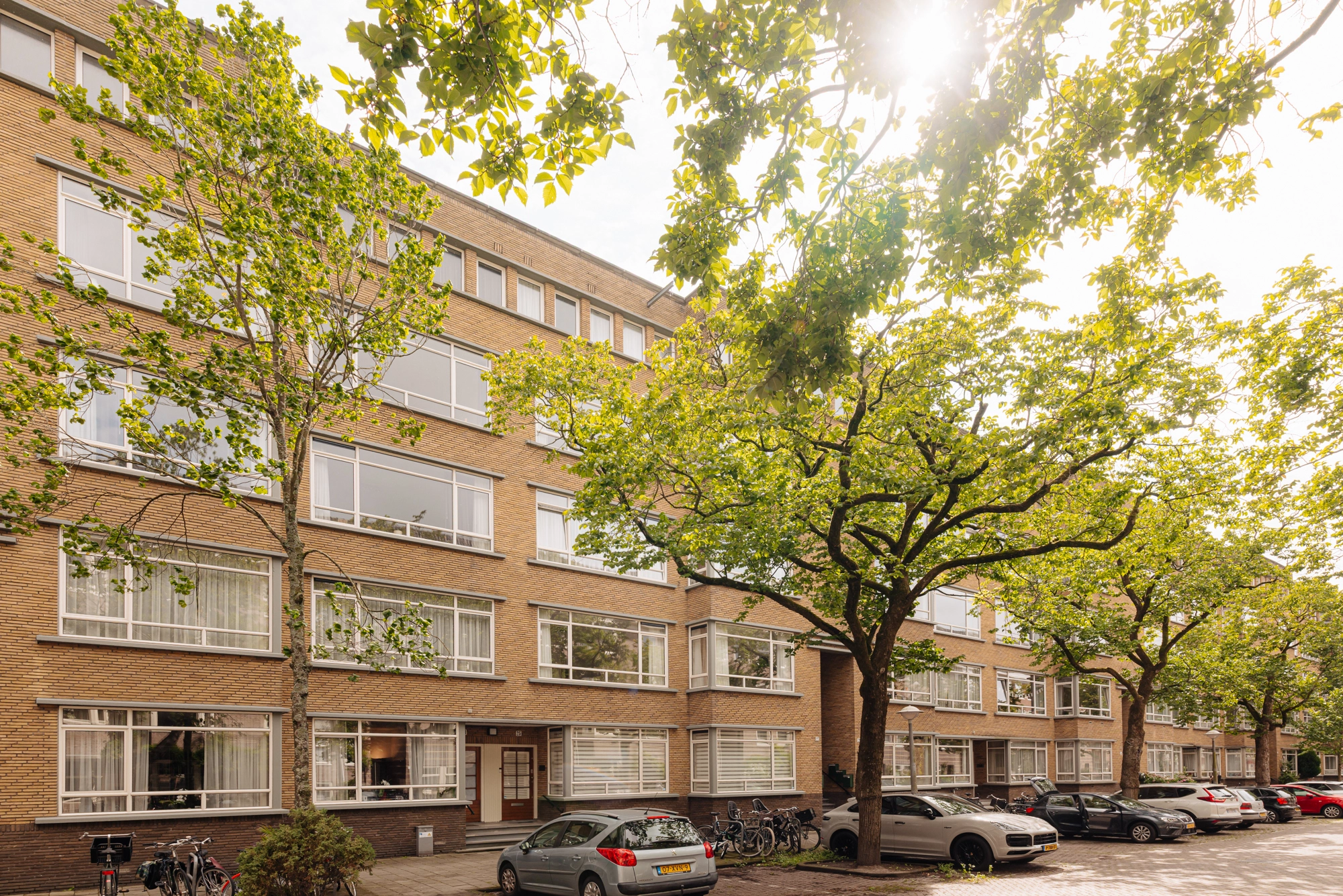
The residential block ‘Zonnehof’ was built in 1938–1939, comprising 256 luxurious apartments designed by Dick Greiner in a blend of Late Amsterdam School and Nieuwe Bouwen (New Building) styles. It was commissioned by the N.V. Bouw- en Exploitatiesmaatschappij ‘Socrates’. The complex, named ‘Zonnehof’, encompasses the entire block bordered by Watteaustraat, Courbetstraat, Michelangelostraat, and Milletstraat. The section on the corner of Watteaustraat and Courbetstraat (Watteaustraat 13 to 17a and Courbetstraat 42 to 48) was also designed by Greiner but added later, in 1951.
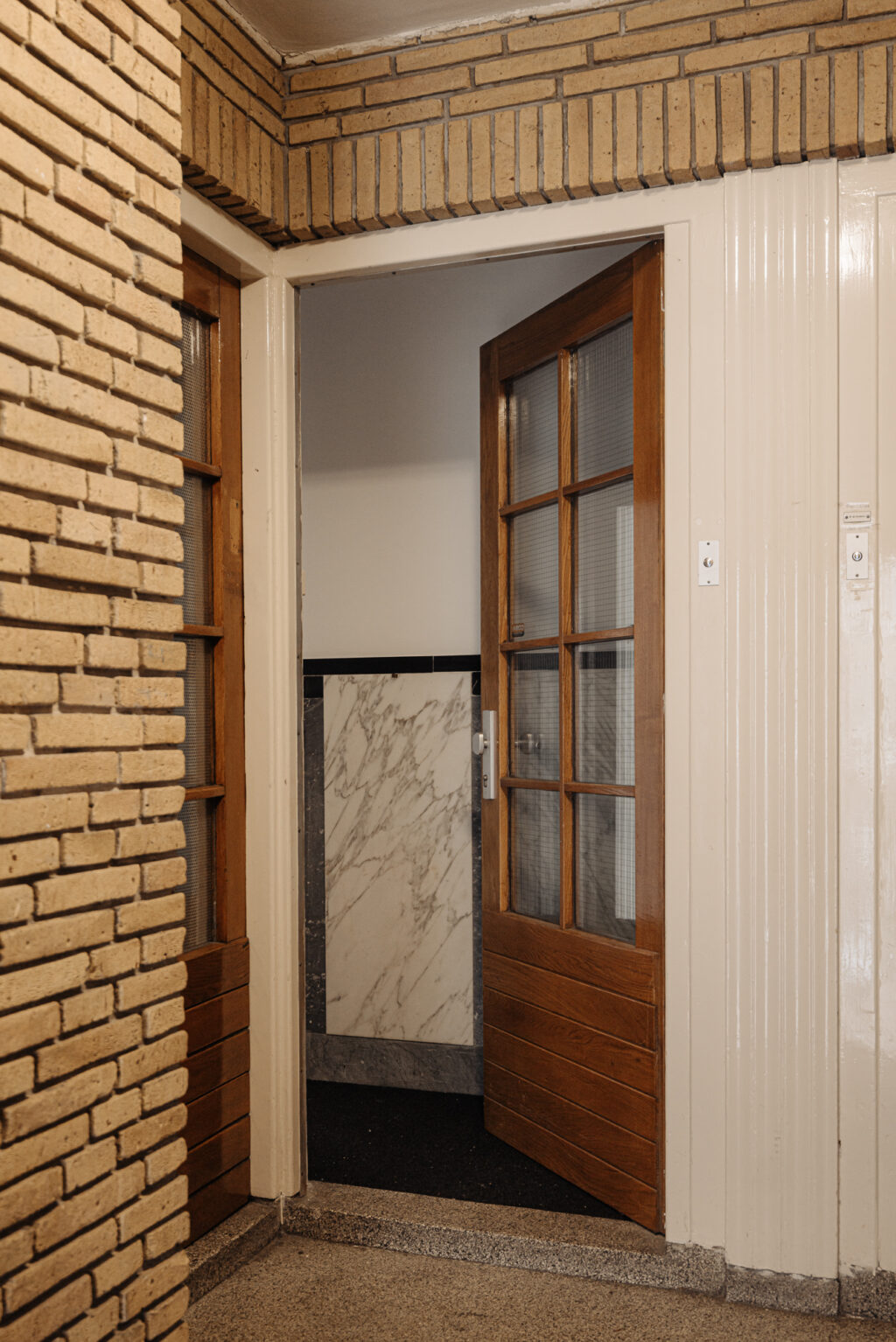
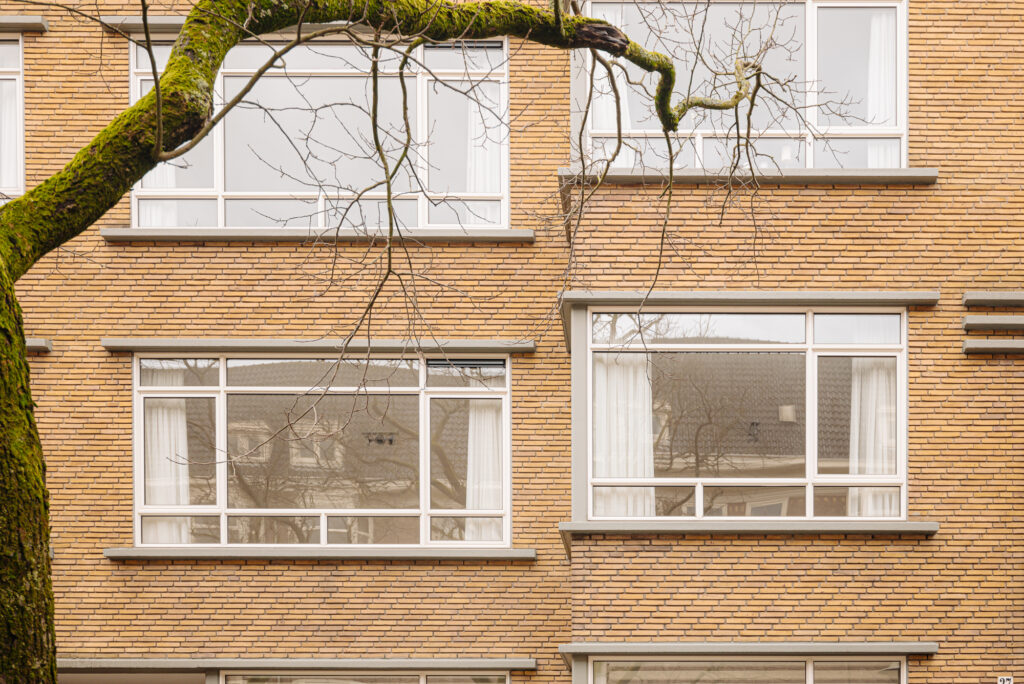
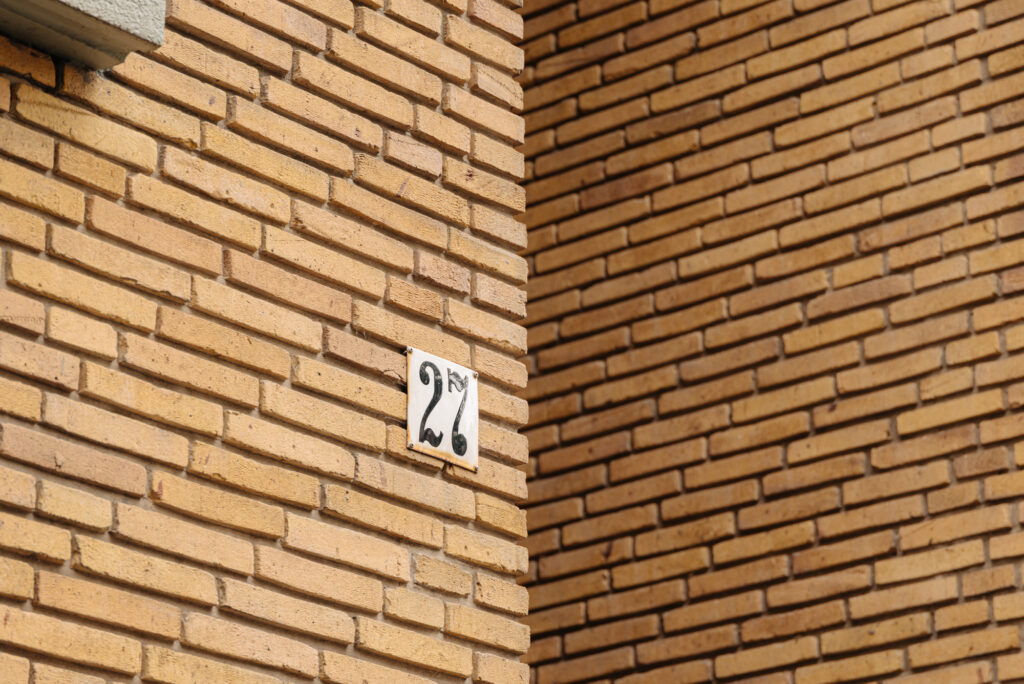
The ‘Zonnehof’ residential block from 1939–1940, including an integrated post office, holds significant architectural and typological value. The building marks an important development in multi-storey housing with stairwells and reflects the later style of architect Dick Greiner, blending expressionist and functionalist elements. The carefully designed facades, featuring striking brickwork, terrazzo steps, and concrete canopies and sills, make it an architectural highlight.
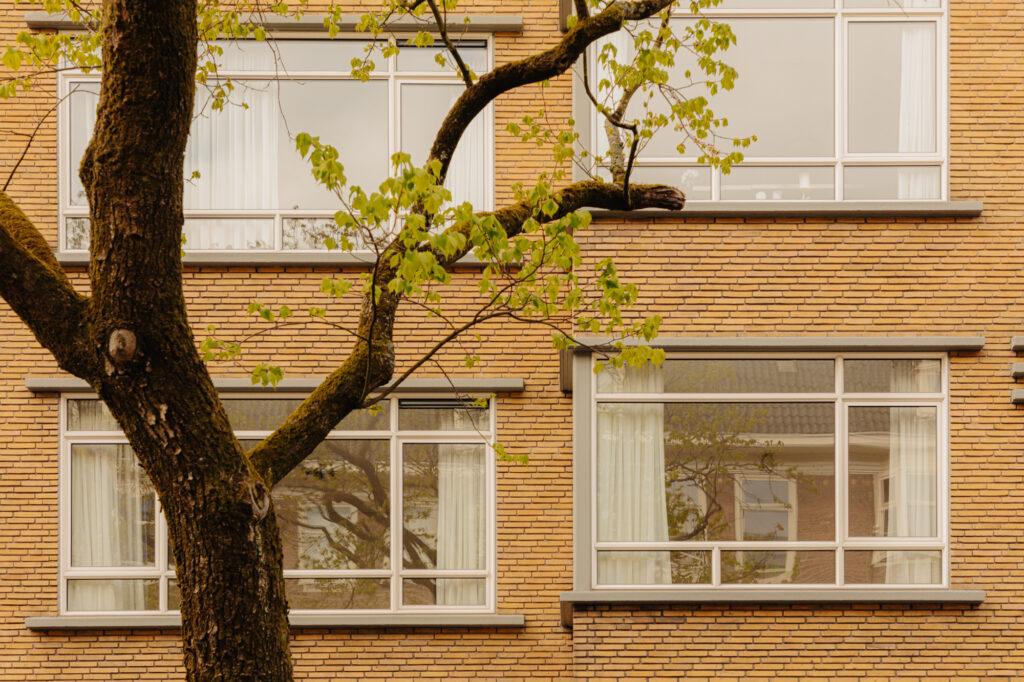
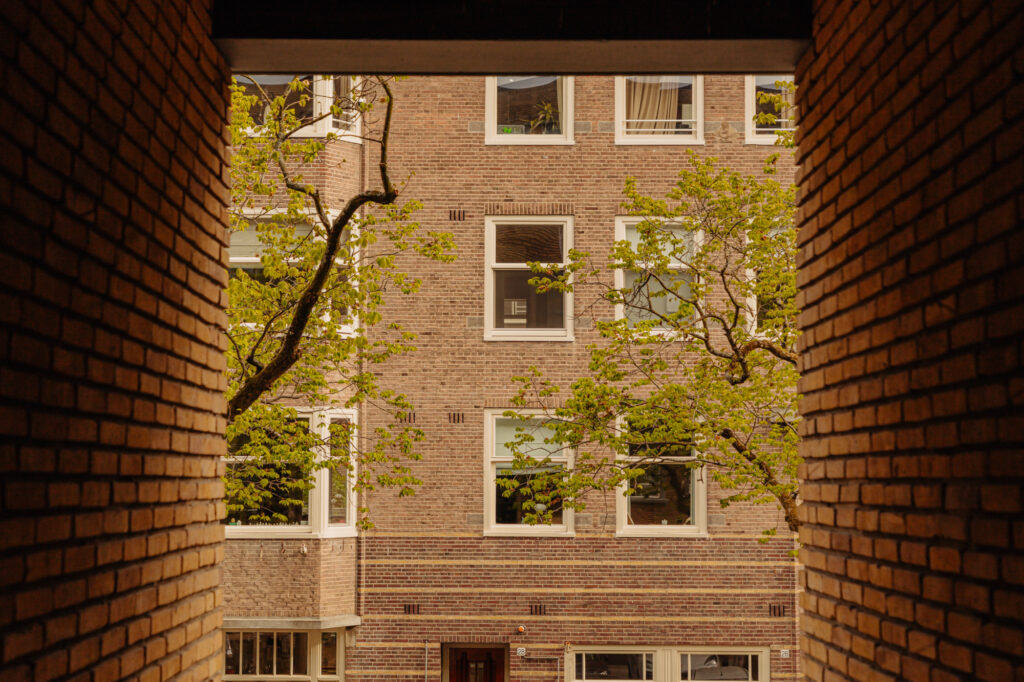
The ‘Zonnehof’ in the Milletstraat, located in Amsterdam Zuid, is a striking example of Amsterdam School architecture. Built during the 1920s–1930s, the building is characterized by expressive brick facades, rounded forms, and decorative details. The design shows a strong attention to craftsmanship, with ornamental brickwork, horizontal lines, and large windows allowing natural light to flood the interiors. Notable features include the distinctive balconies and bay windows that combine functionality with aesthetic appeal. The Amsterdam School influence is clearly visible in the sculptural forms and the integration of art, such as decorative elements at the entrances and along the facades.
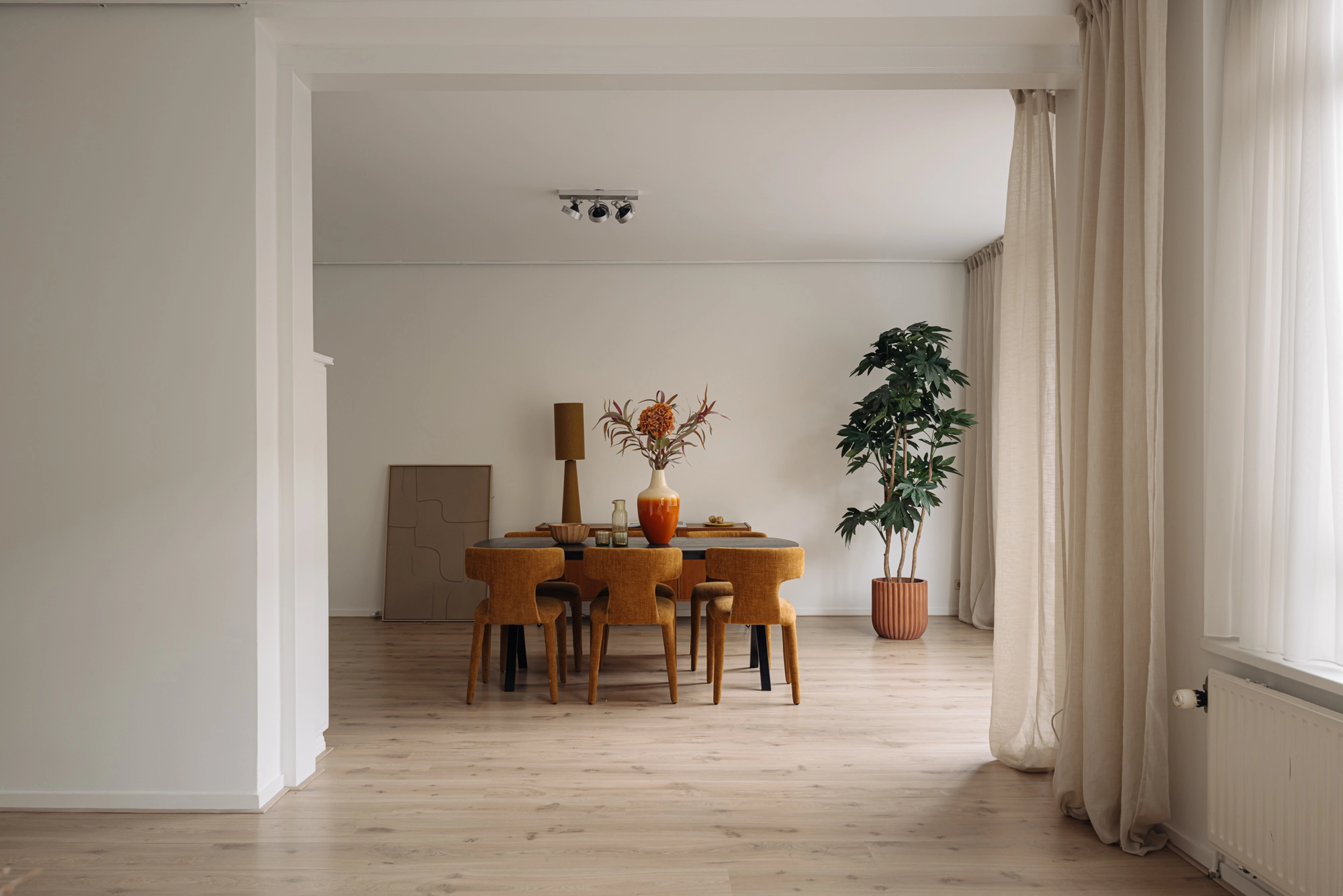
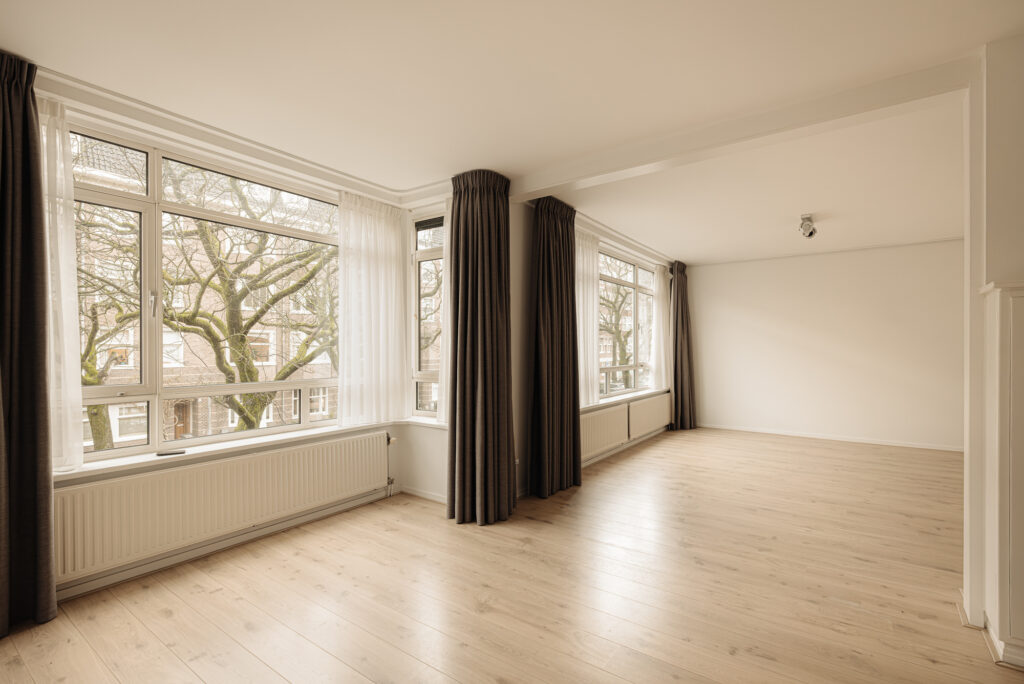
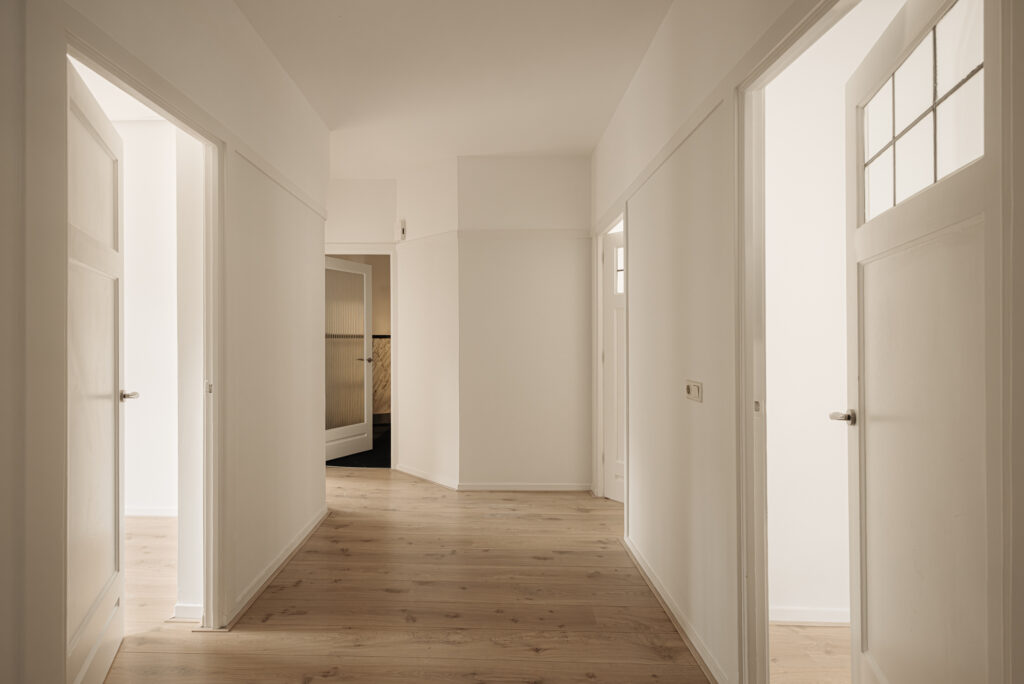
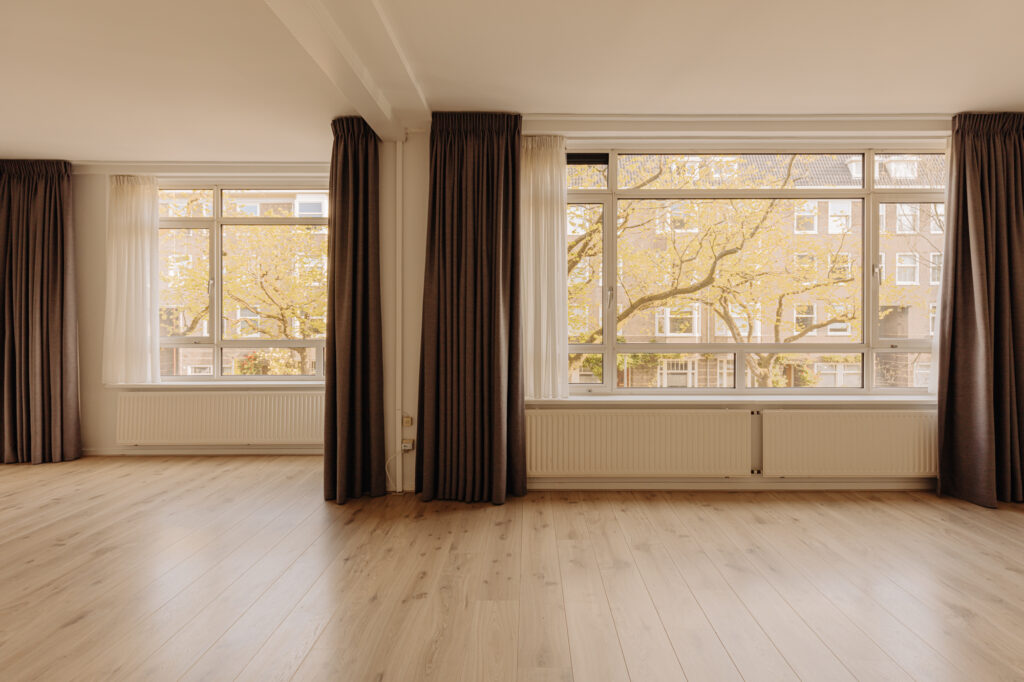
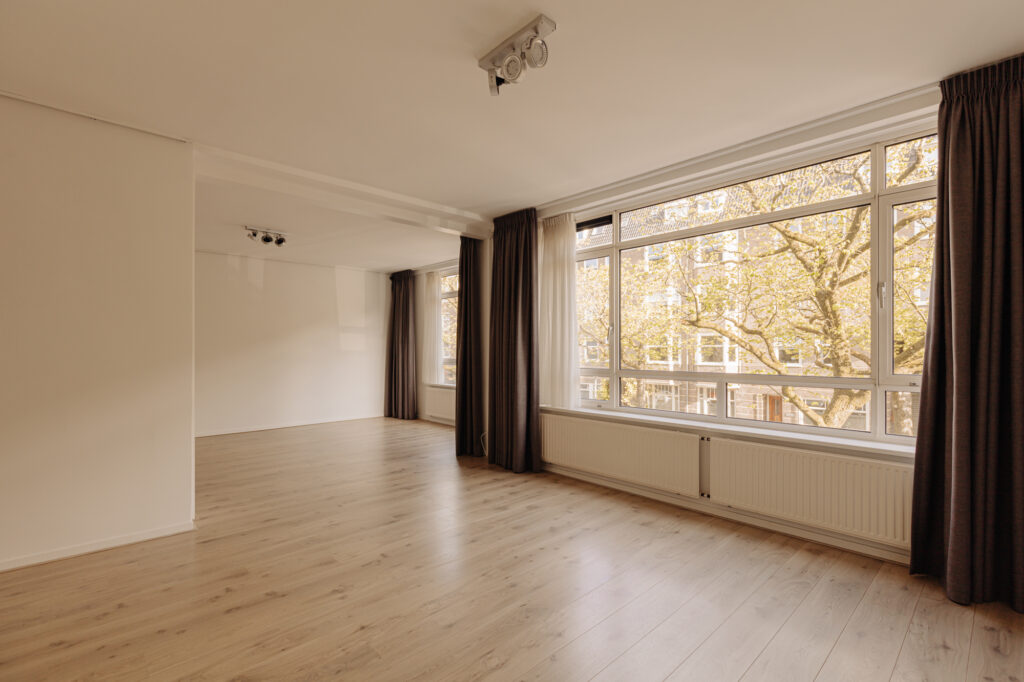
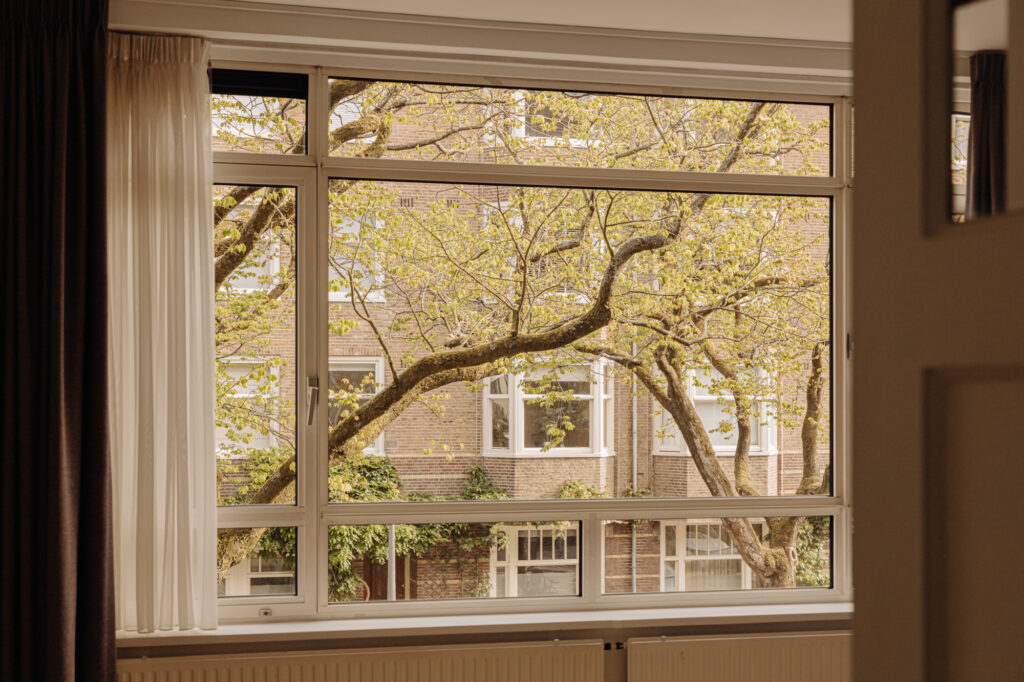
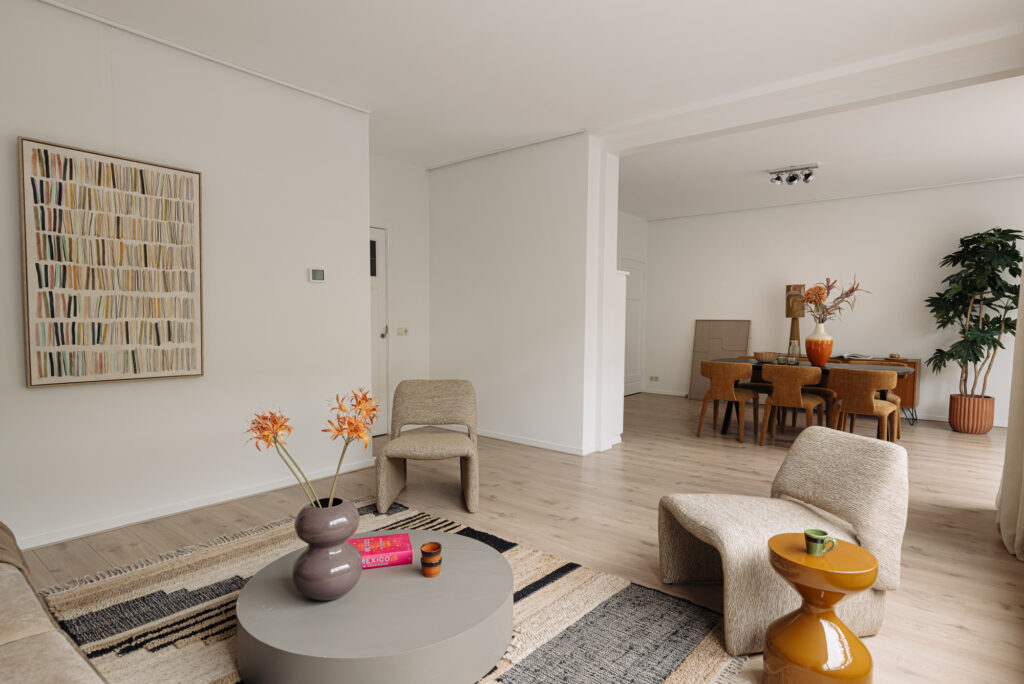
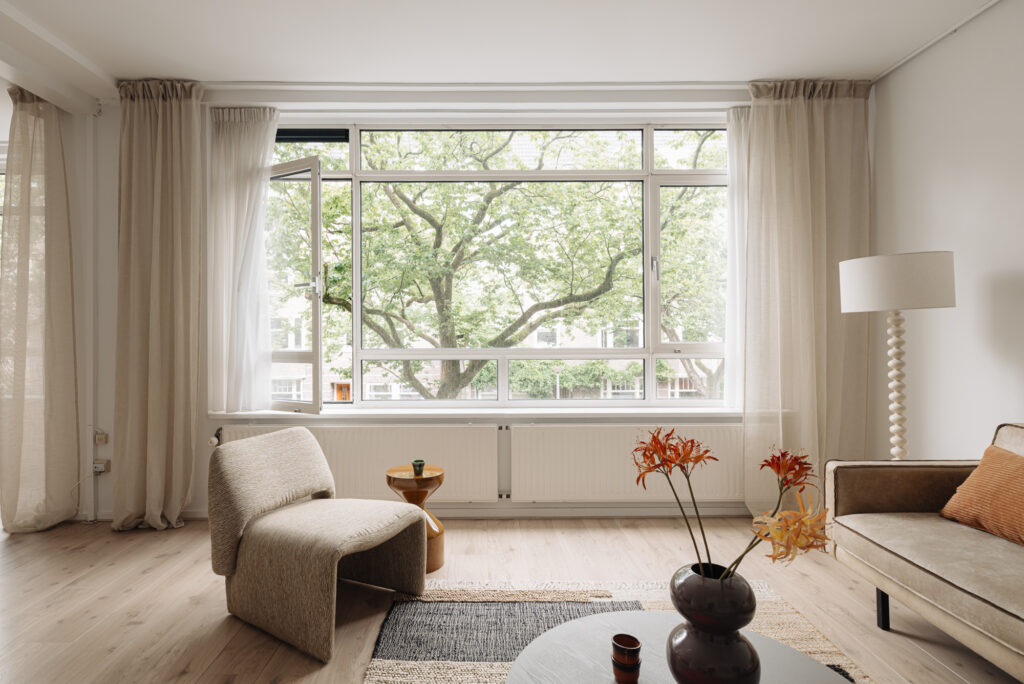
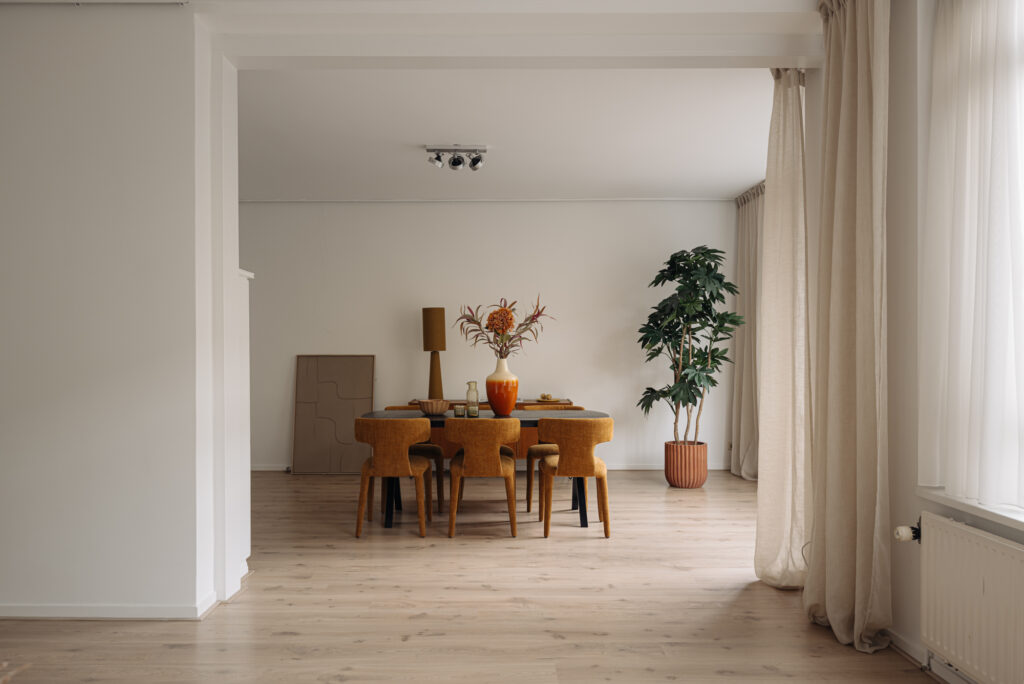
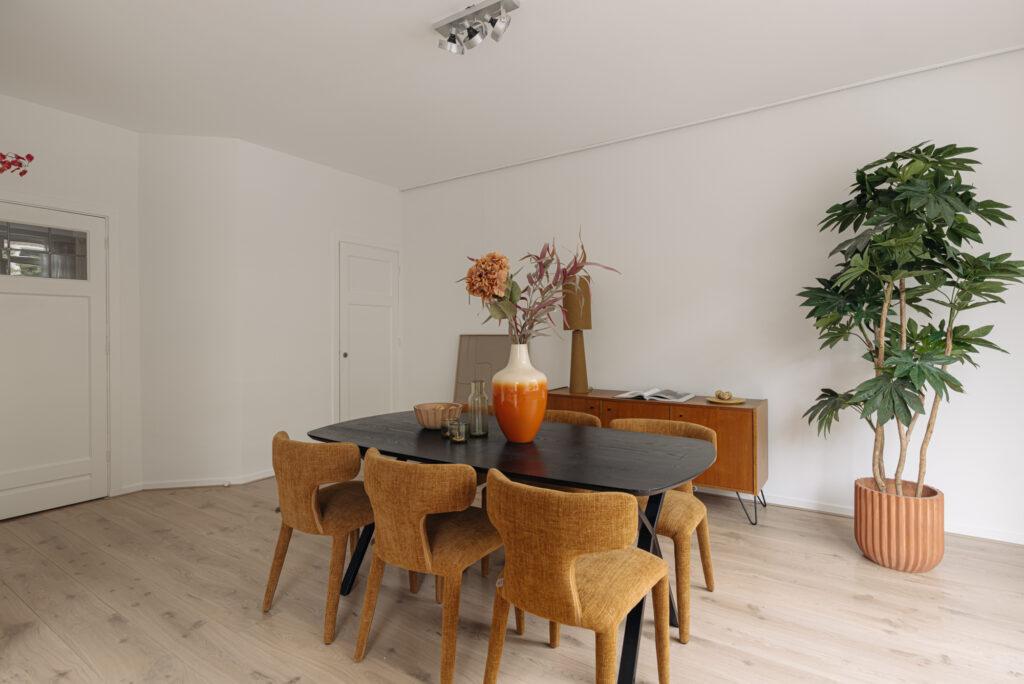
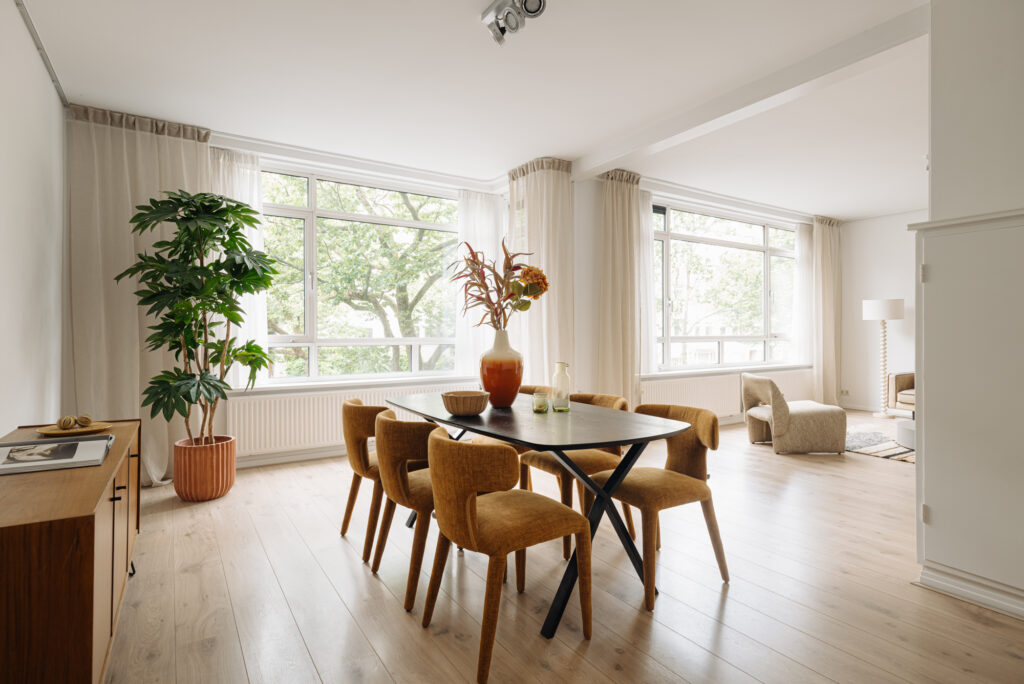
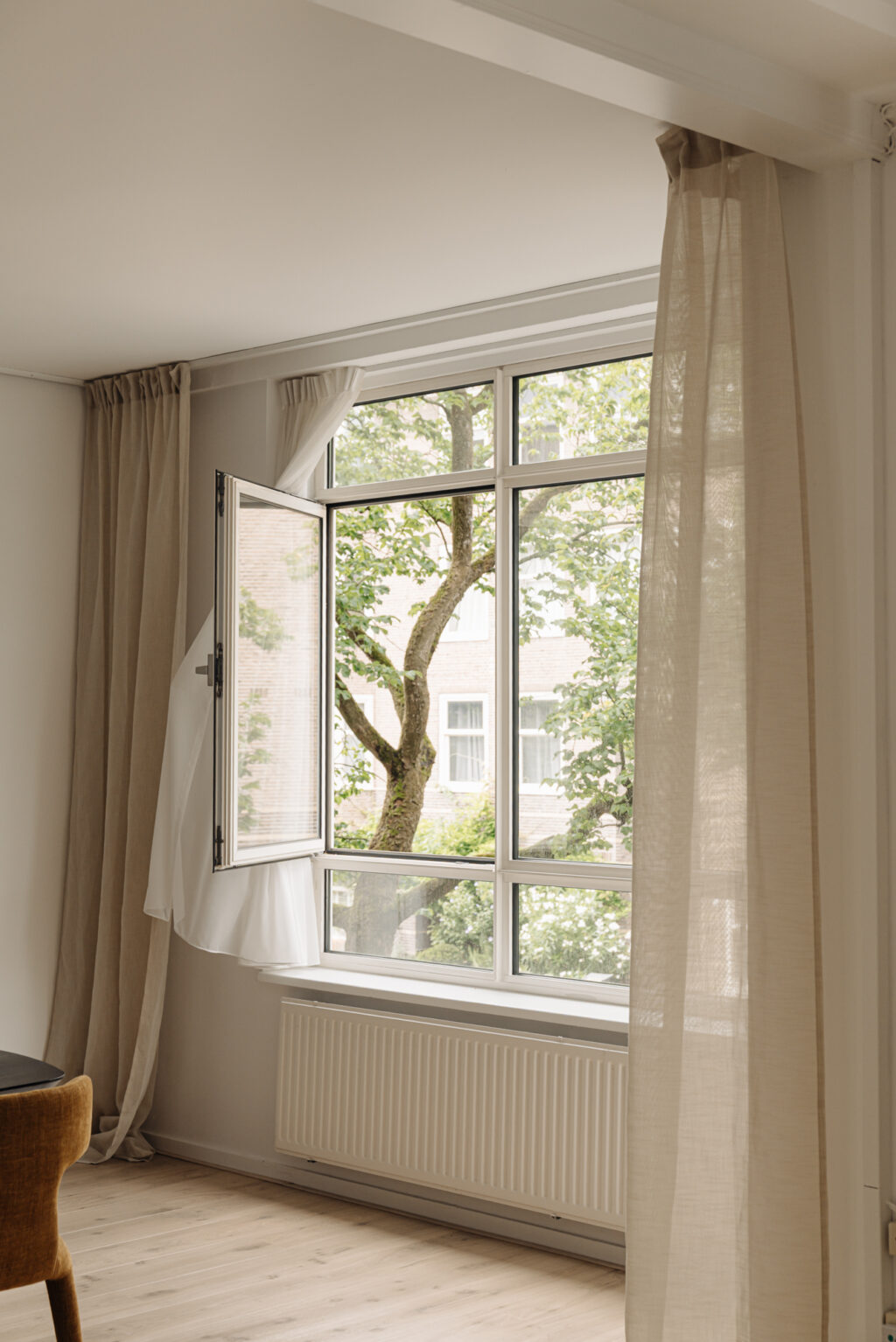
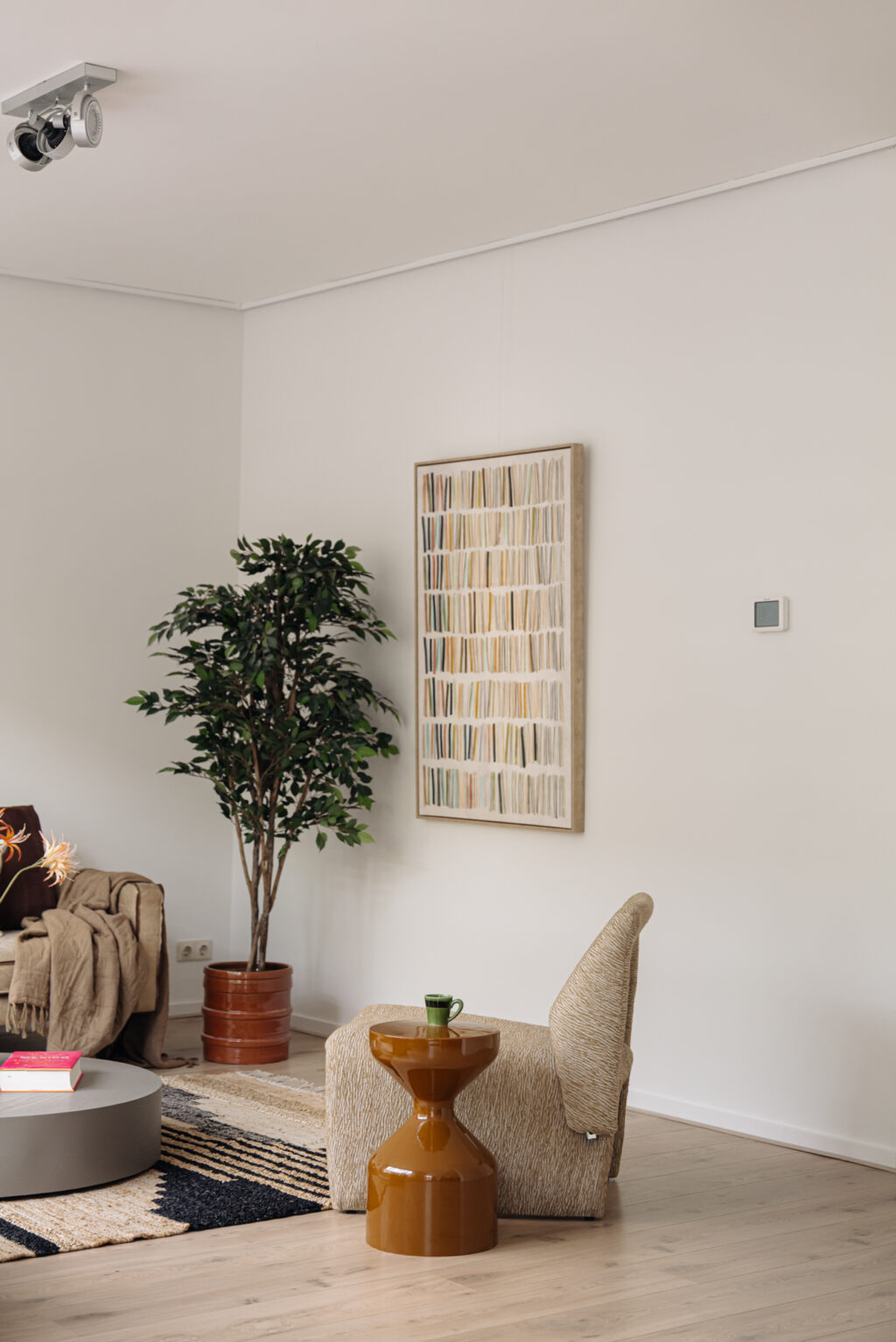
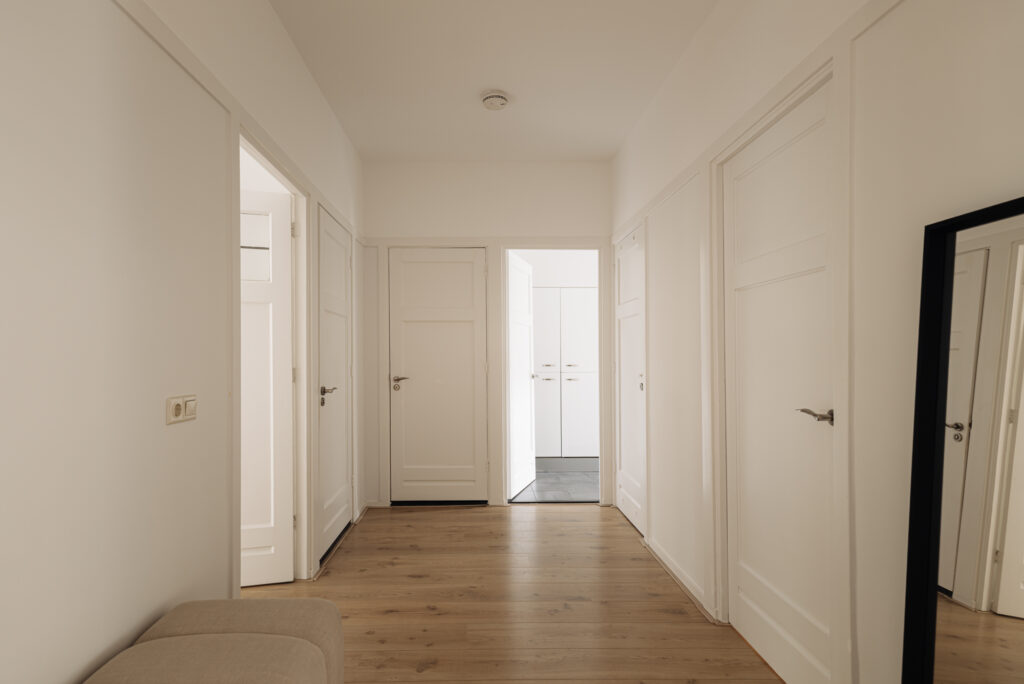
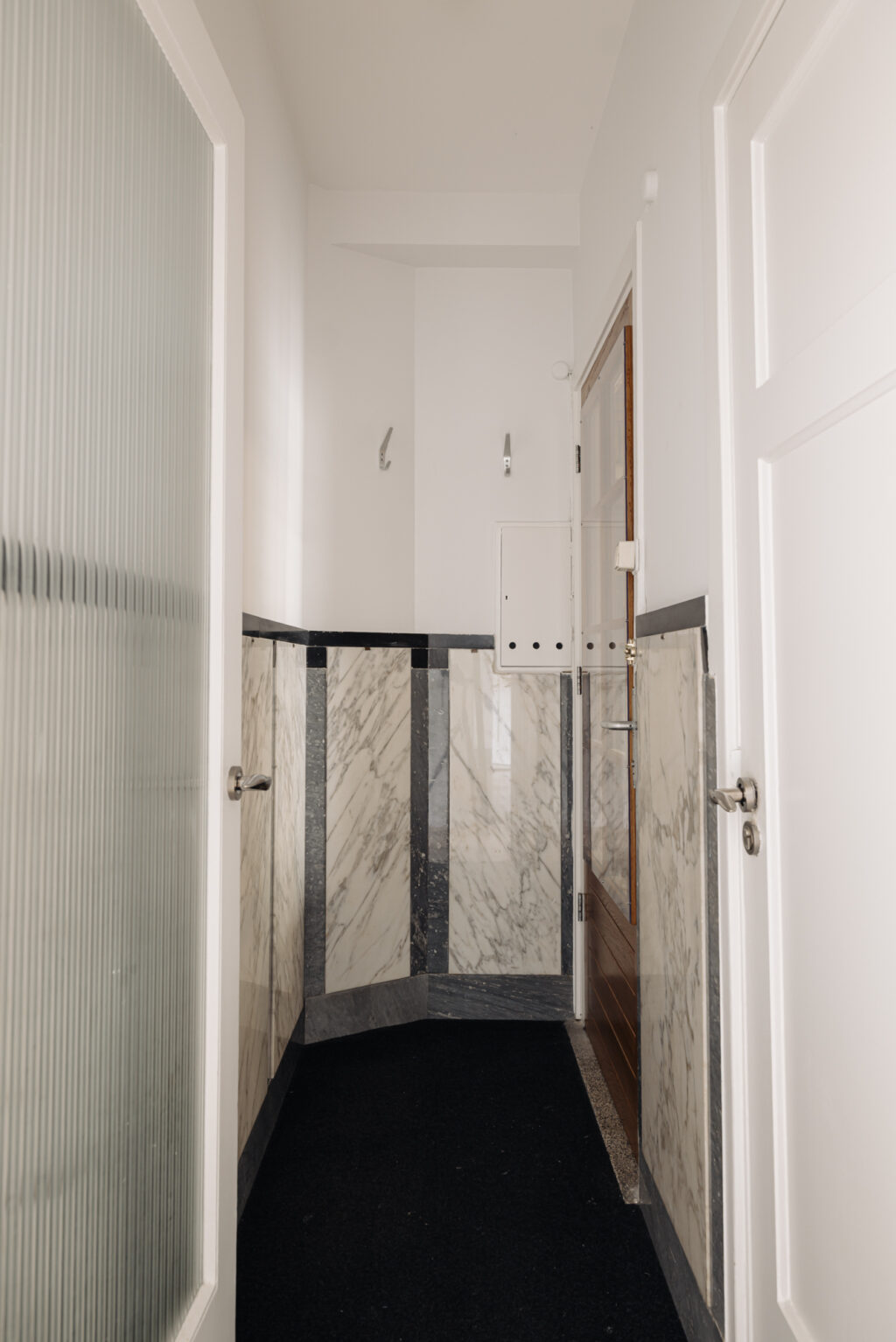
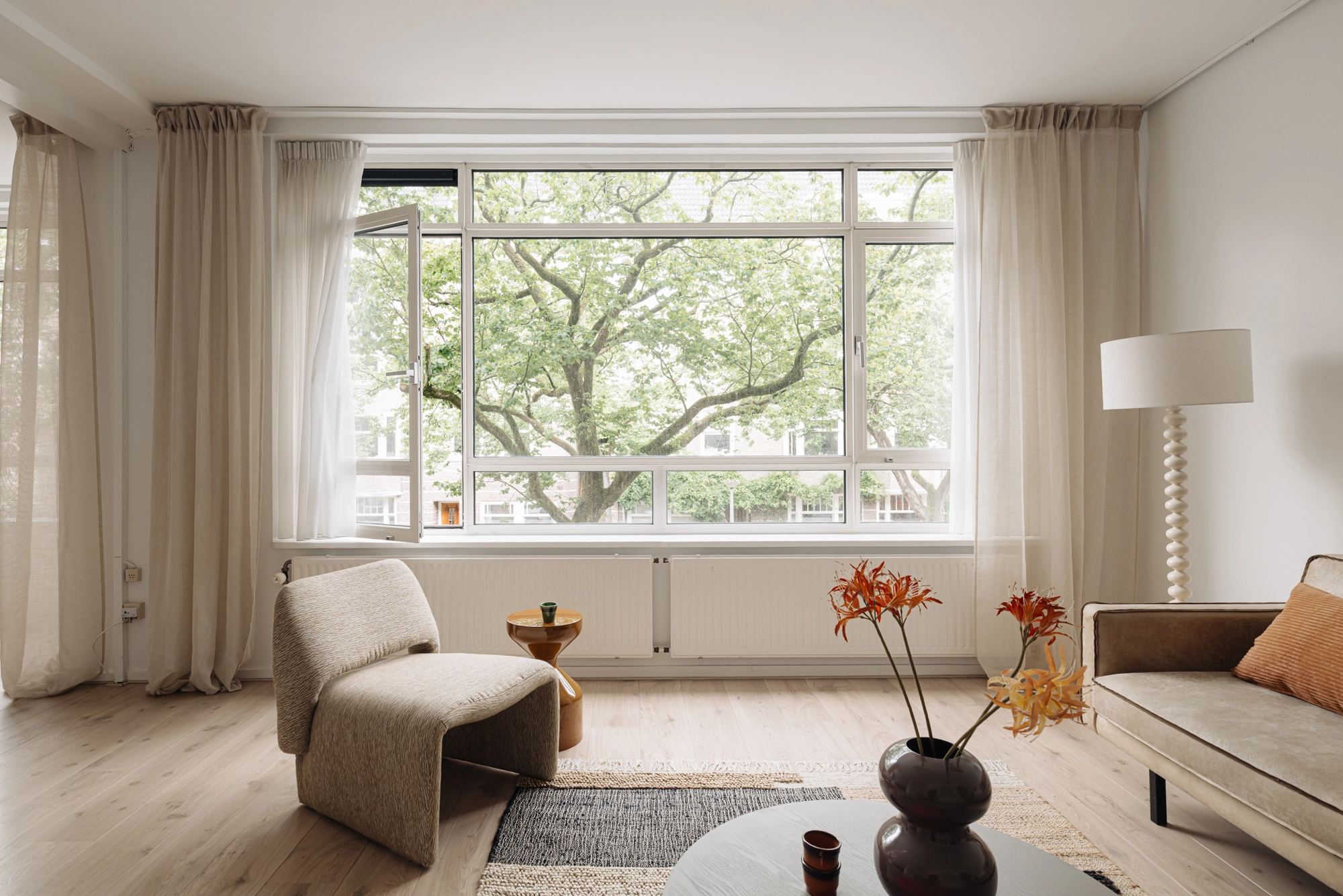
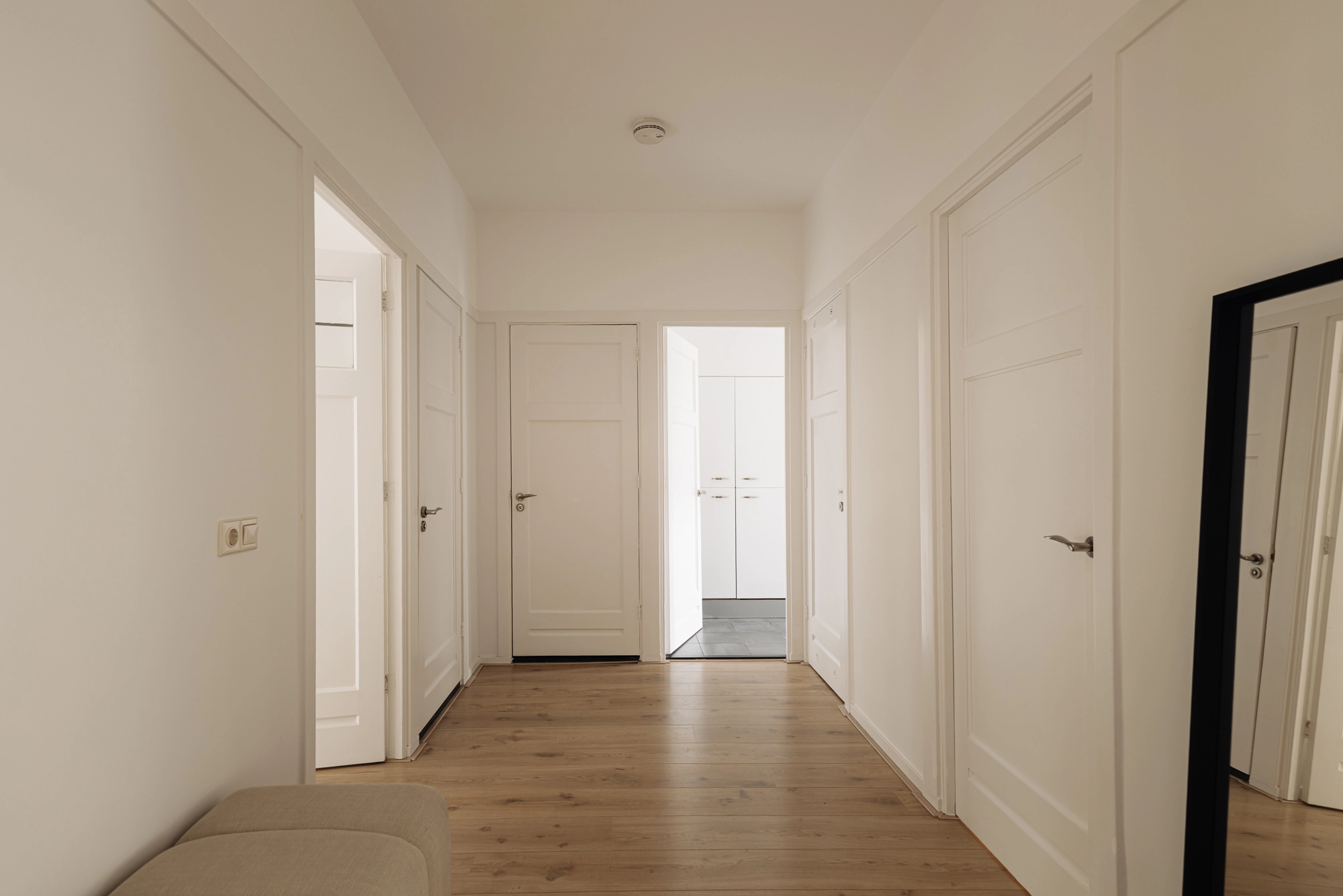
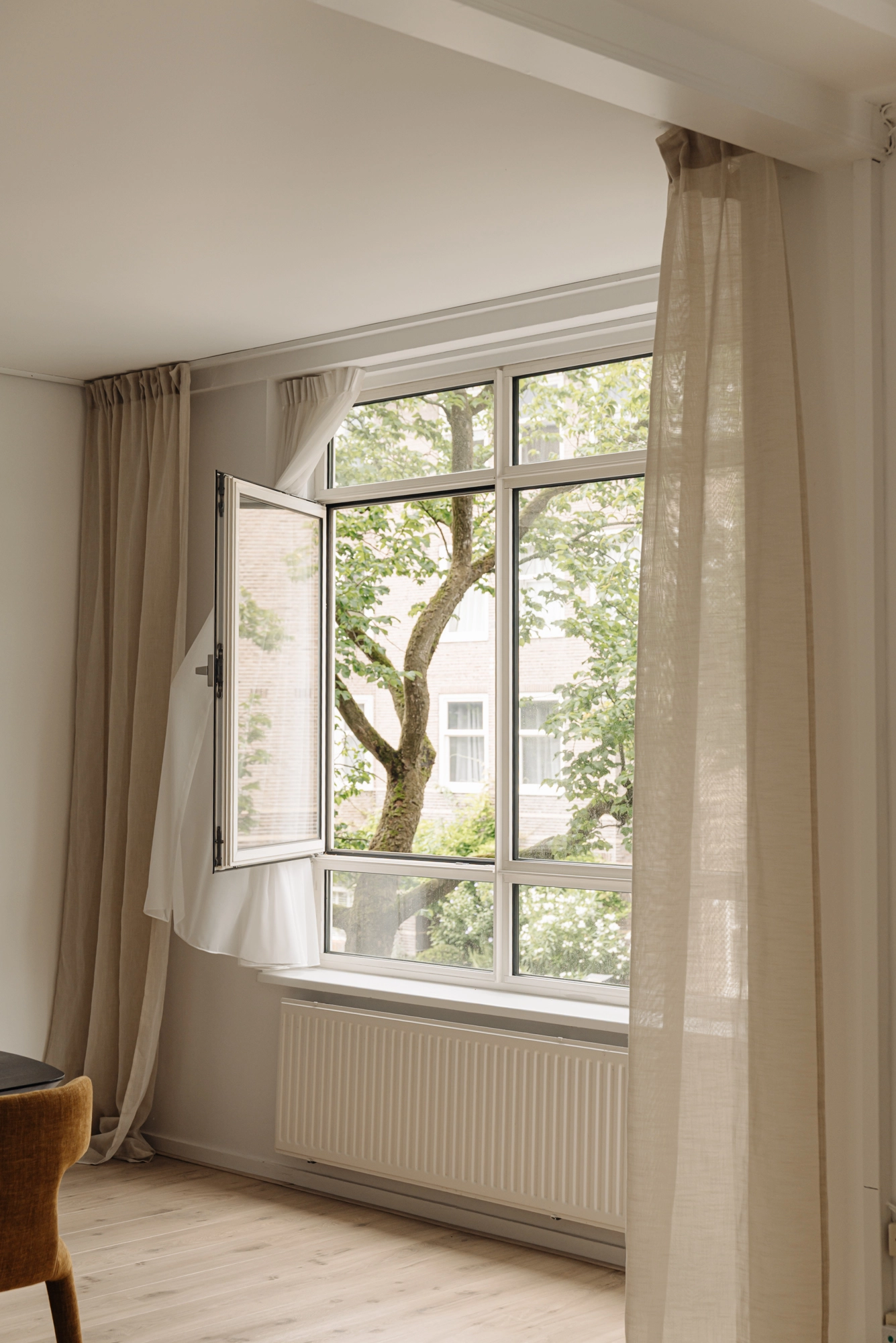
The centrally located hallway ensures a spacious and practical layout. At the front of the apartment, you will find the bright living area, where large windows allow an abundance of natural light to pour in. A comfortable sitting area has been created here, combined with a dining area overlooking the quiet street.
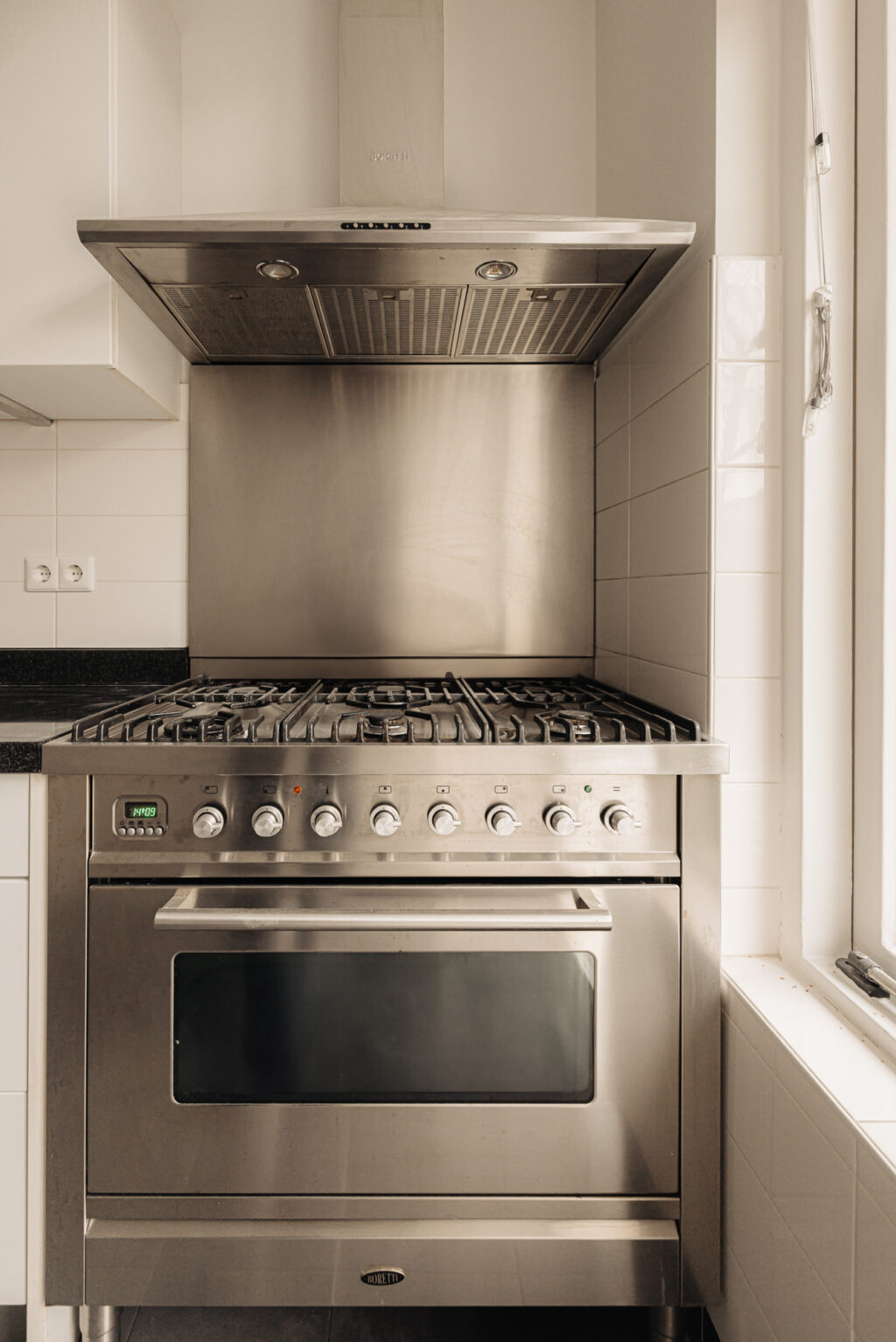
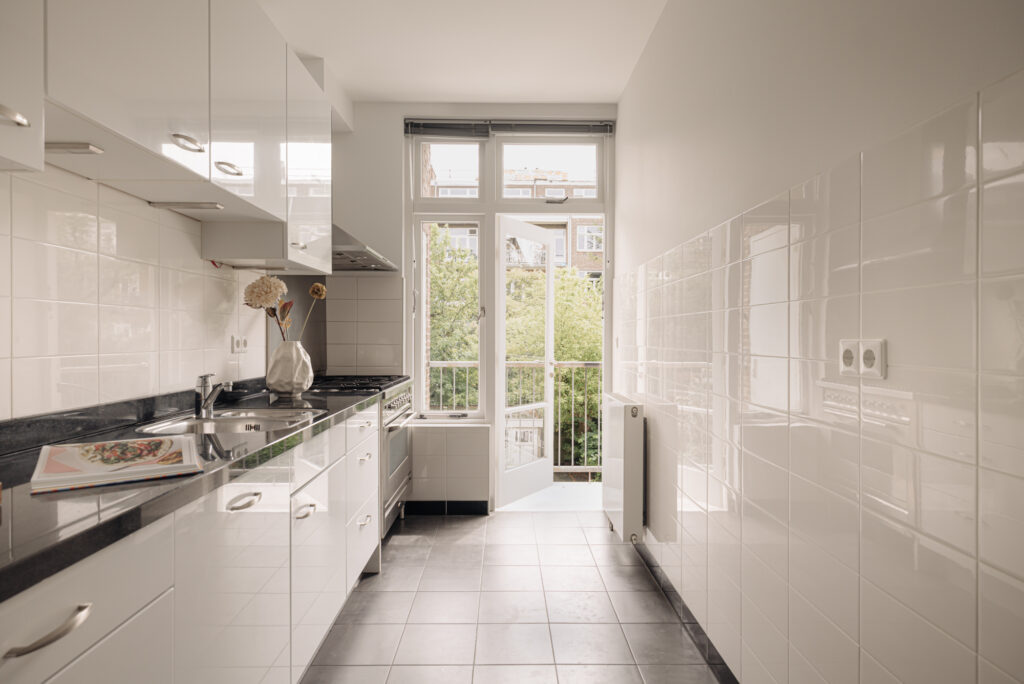
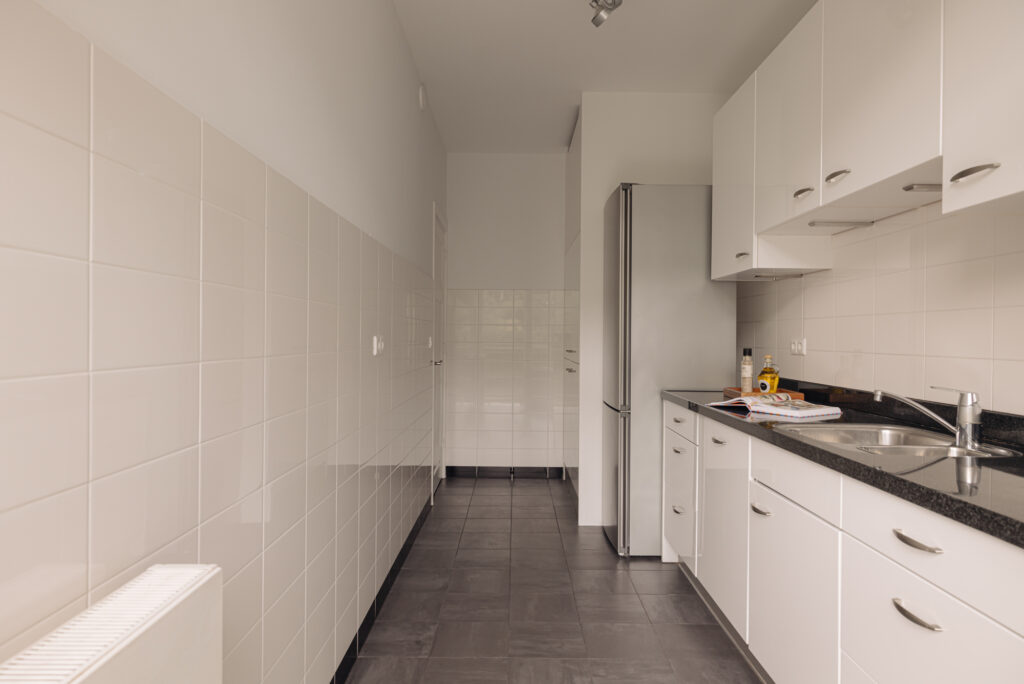
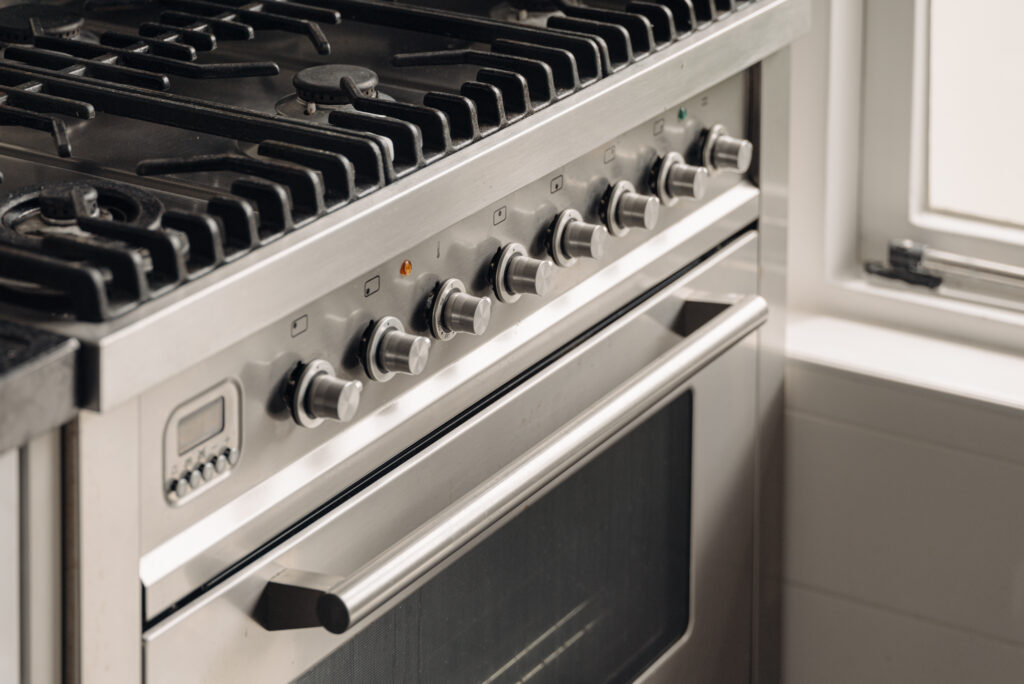
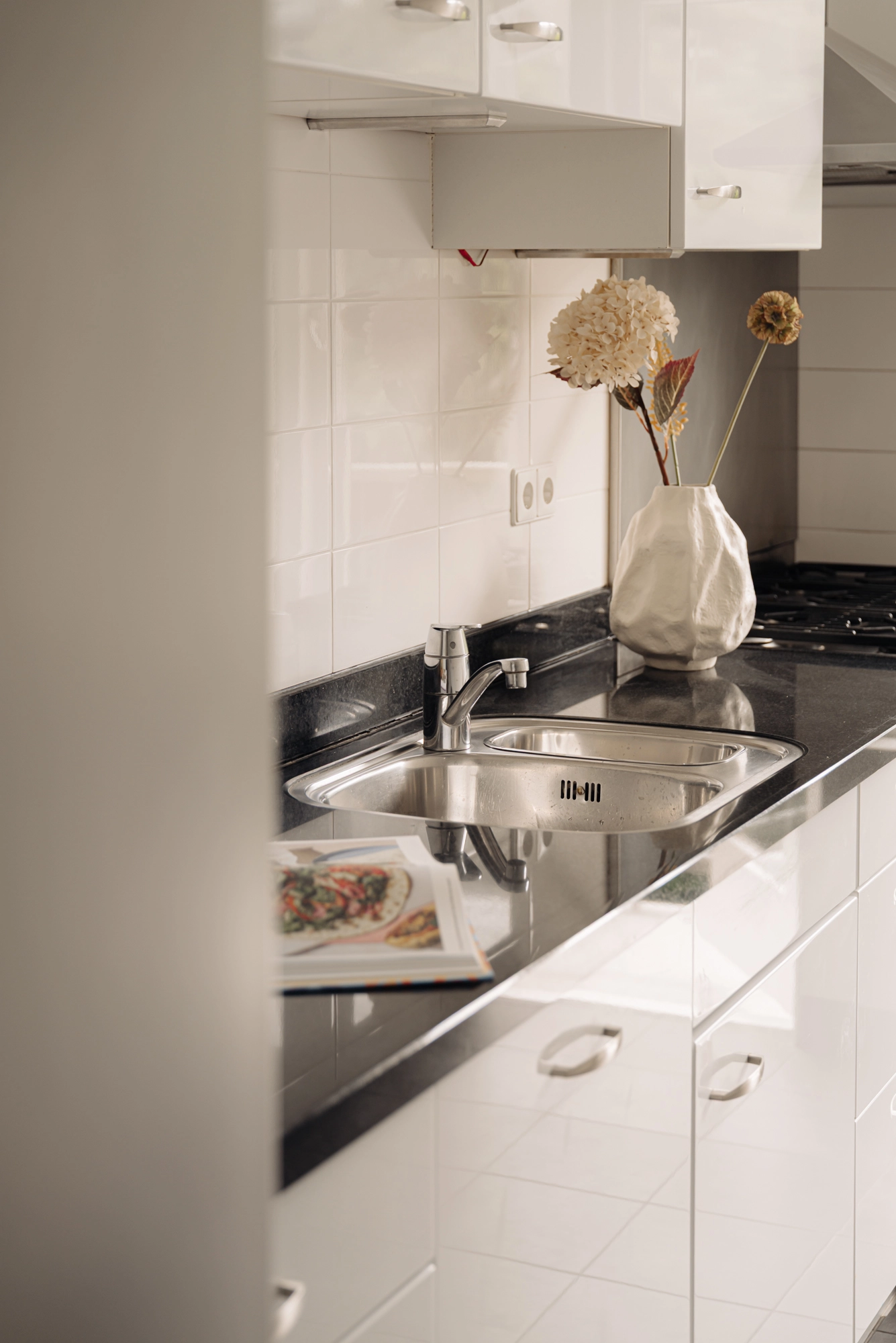
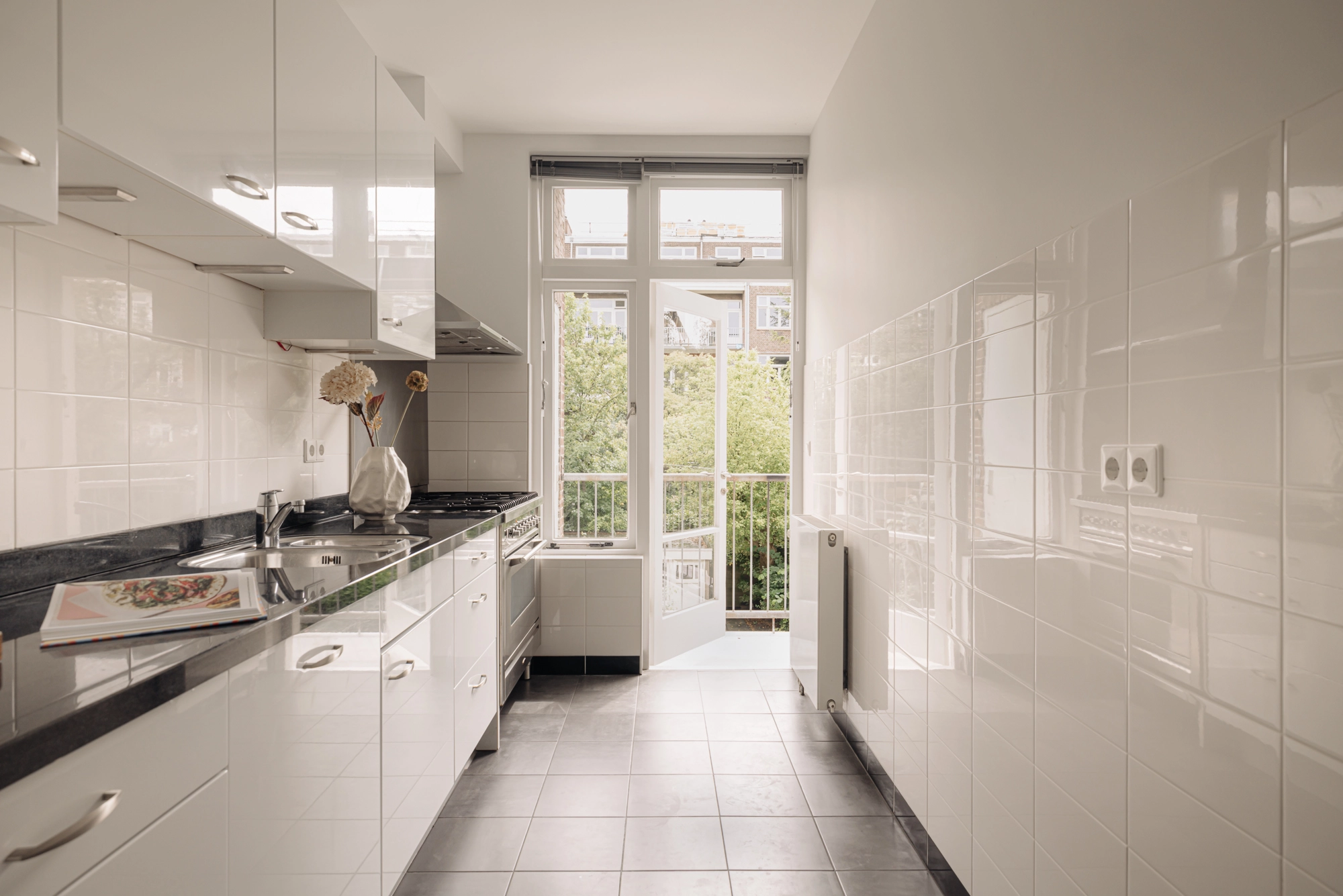
The separate, well-maintained kitchen at the rear features a light color scheme and is equipped with a gas stove with oven, a dishwasher, and a freestanding fridge/freezer combination. From the kitchen, there is direct access to the sunny balcony.
The apartment is largely finished with a light laminate floor, creating a calm and uniform appearance.
1077 CV Amsterdam
The Coffee District
Eigenaren Adil Loukane en Rosa Loukane begonnen met een hole-in-the-wall coffeeshop in een modewinkel in Zuid. Toen de winkel de deuren sloot, grepen Adil en Rosa hun kans en besloten om hun eigen koffiebar te openen. Inmiddels hebben ze meerdere locaties. De koffie wordt gemaakt met een eigen melange gebrand door Lot Sixty One. Daarnaast worden er zoetigheden aangeboden zoals de inmiddelsal bekende kaneelbroodjes en bananenbrood.
1076 BJ Amsterdam
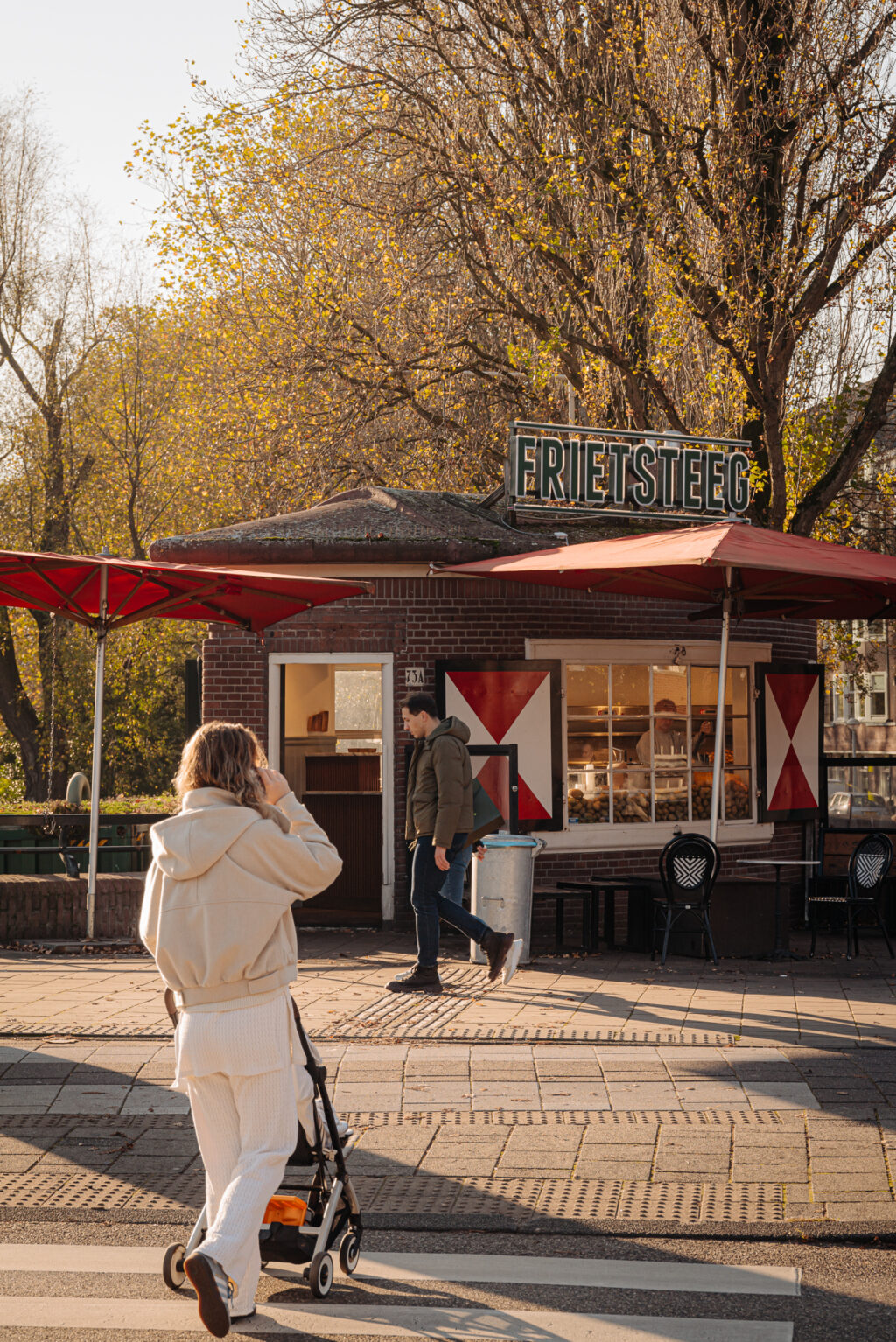
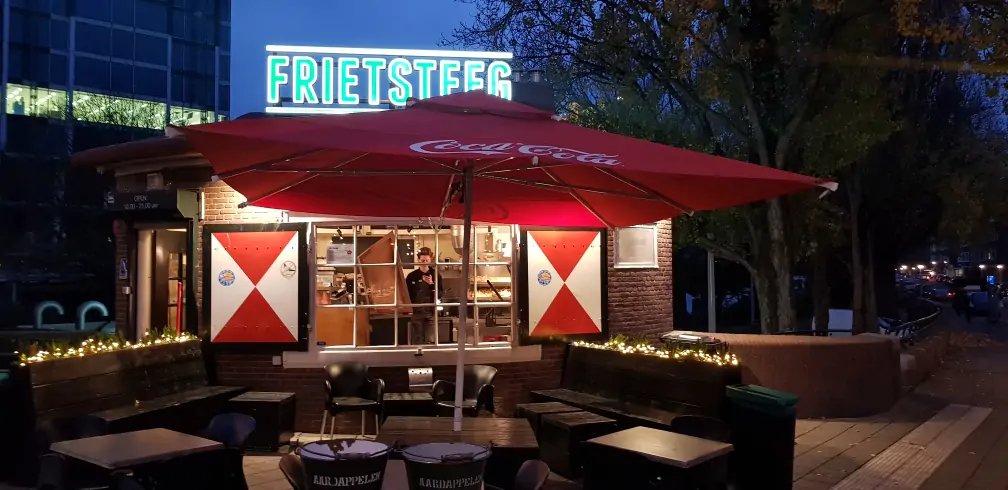
De Frietsteeg
De Frietsteeg is een snackbar aan de gracht in de Stadionbuurt. Ze serveren hier heerlijke krokante frietjes en vele andere snacks. De frieten worden met de hand gesneden en je hebt keus uit meer dan 20 sauzen. Ook bijzonder: de Frietsteeg is gevestigd in een historisch huisje en er is een groot zonnig terras aan het water
1076 LP Amsterdam
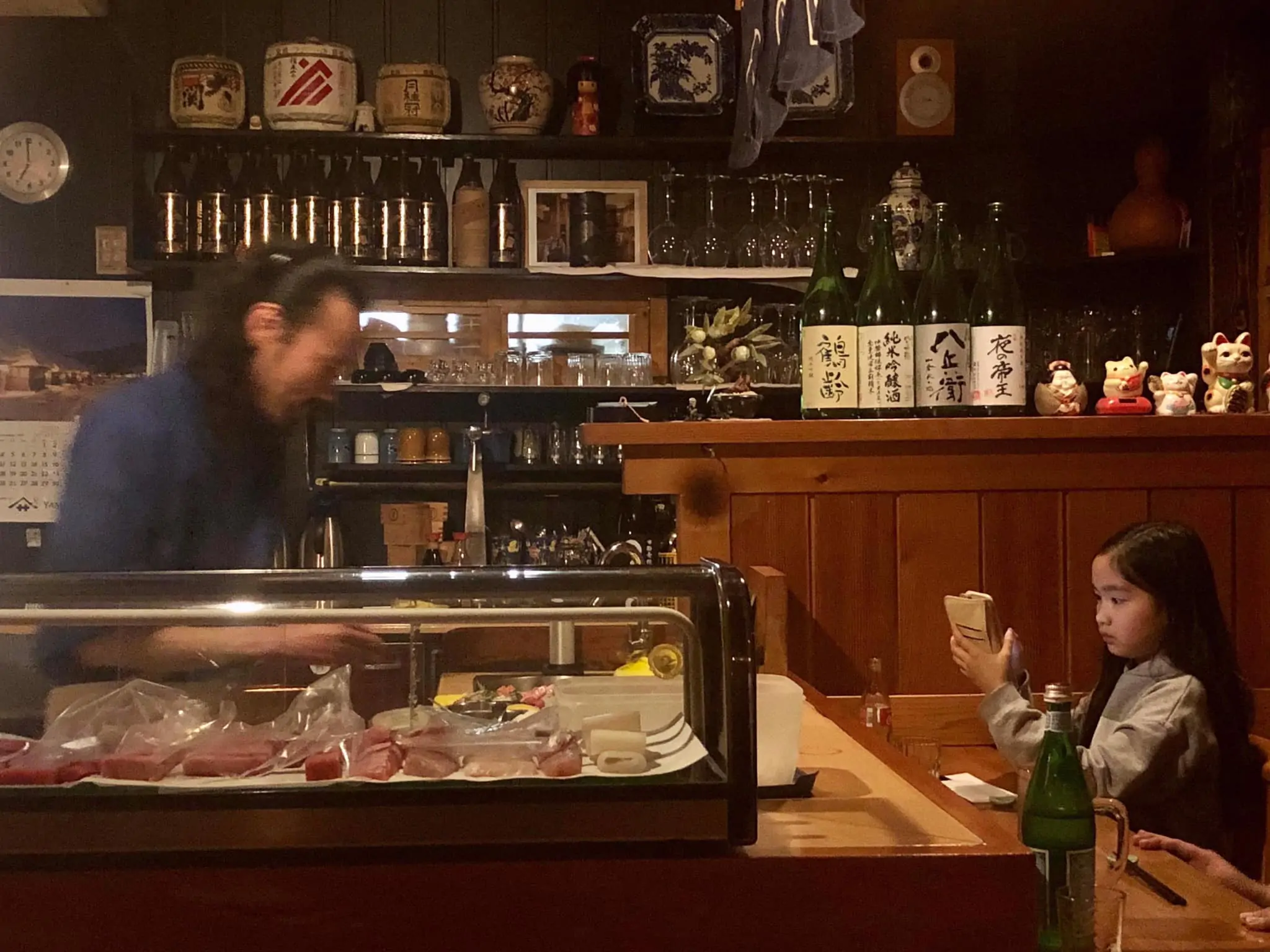
Umeno
Umeno is een van de oudste Japanse restaurants in Amsterdam dat geliefd is bij haar vaste lokale gasten. Zodra je binnenstapt zie je een intieme ruimte met traditionele Japanse authenticiteit gevormd door het handgemaakte houten interieur, de shamisen en shakuhachi muziek en de enorme gastvrijheid van Ayumi en Atsuhito Hosono. De nigiri sushi is een aanrader, want de kwaliteit van de vis is uitstekend.
1077 JK Amsterdam
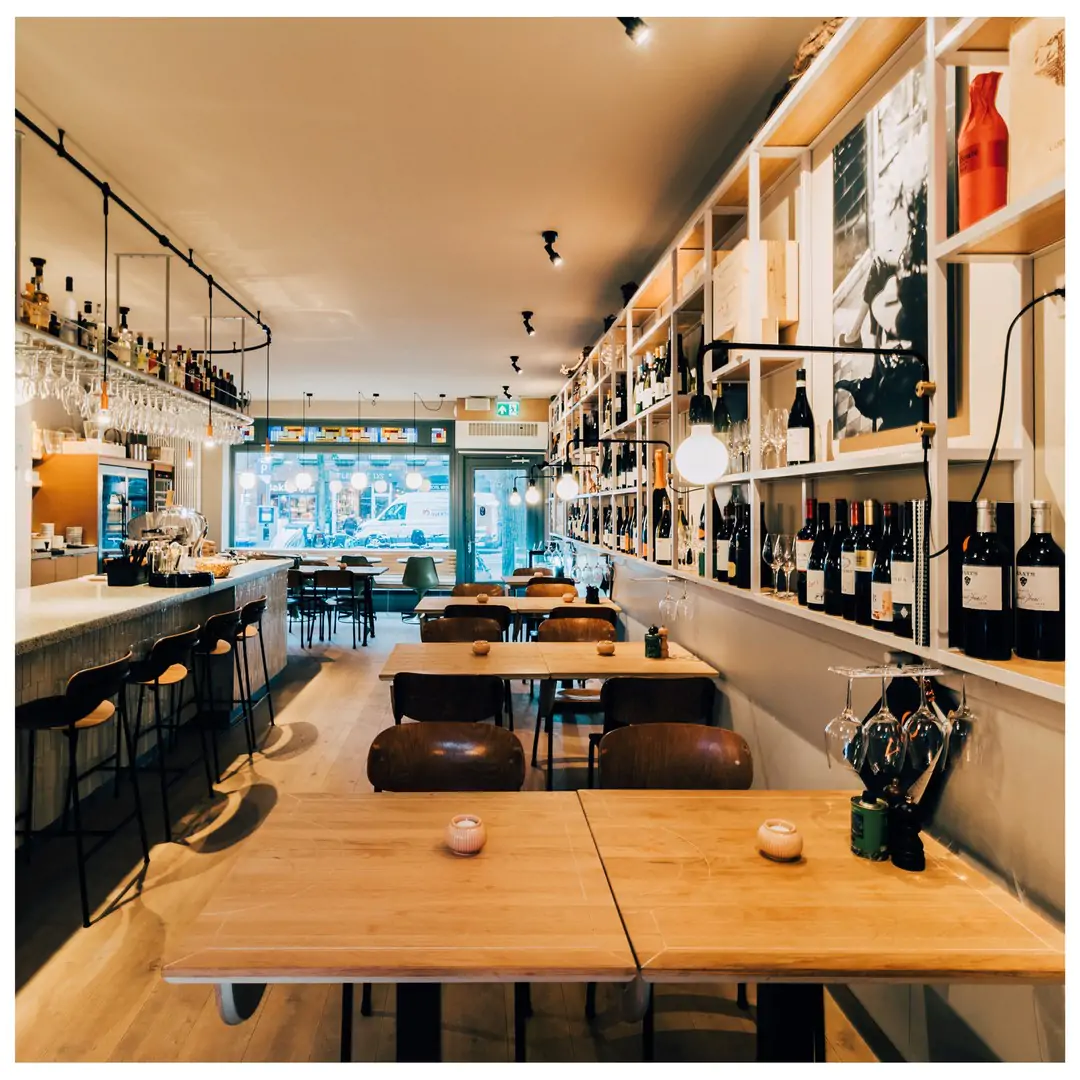
Winebar QV
Bij Winebar QV kan je in principe de hele dag doorbrengen alsof je in Italië bent. Je begint met een Italiaanse espresso, luncht met een warme maaltijd en sluit af met een goed glas wijn met bijbehorend een Italiaanse aperitivo. Het is er gezellig en stijlvol ingericht en je kan aan de hoge krukken aan de bar zitten, aan de lagere tafeltjes of op het kleine terras.
1077 JJ Amsterdam
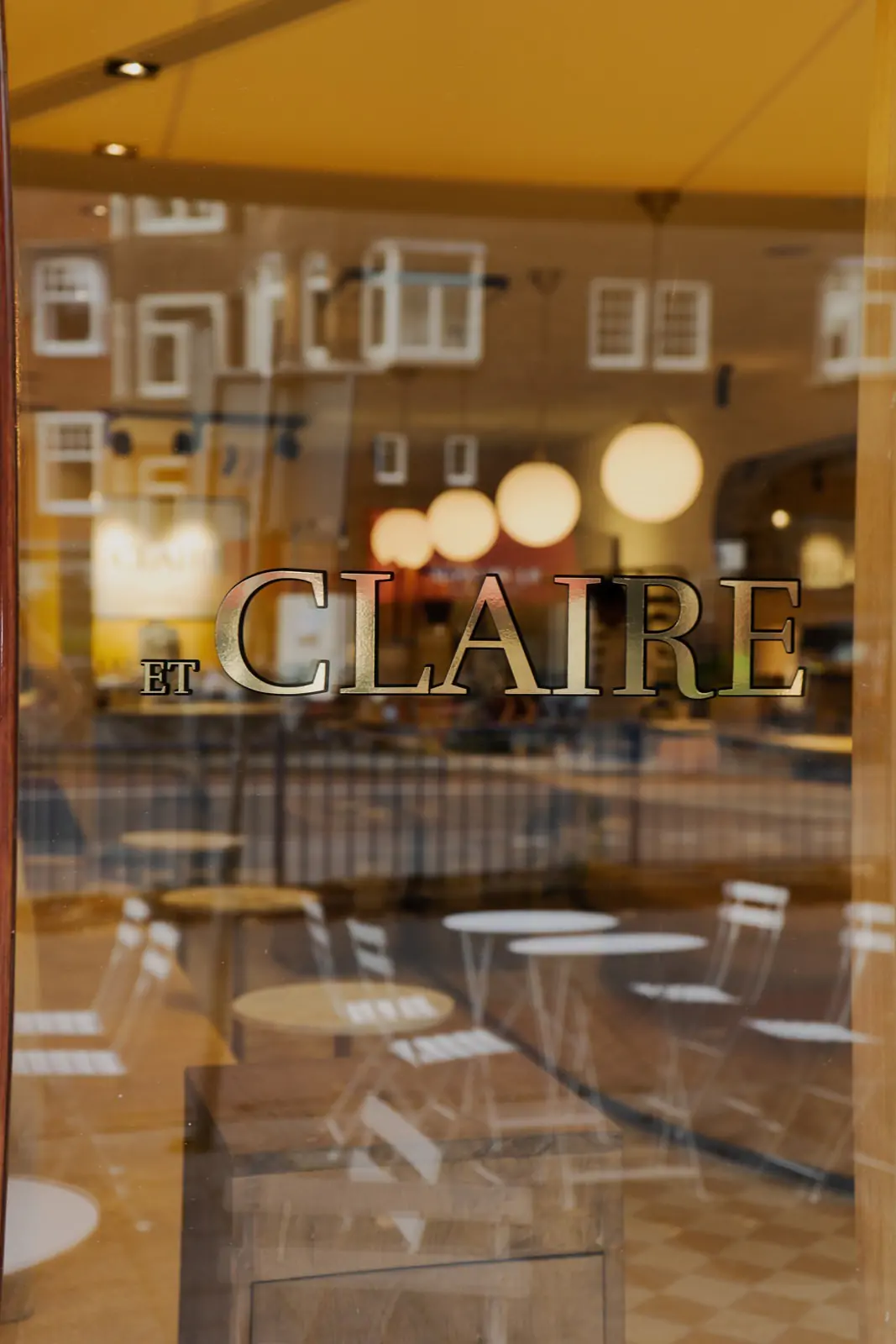
Et Claire
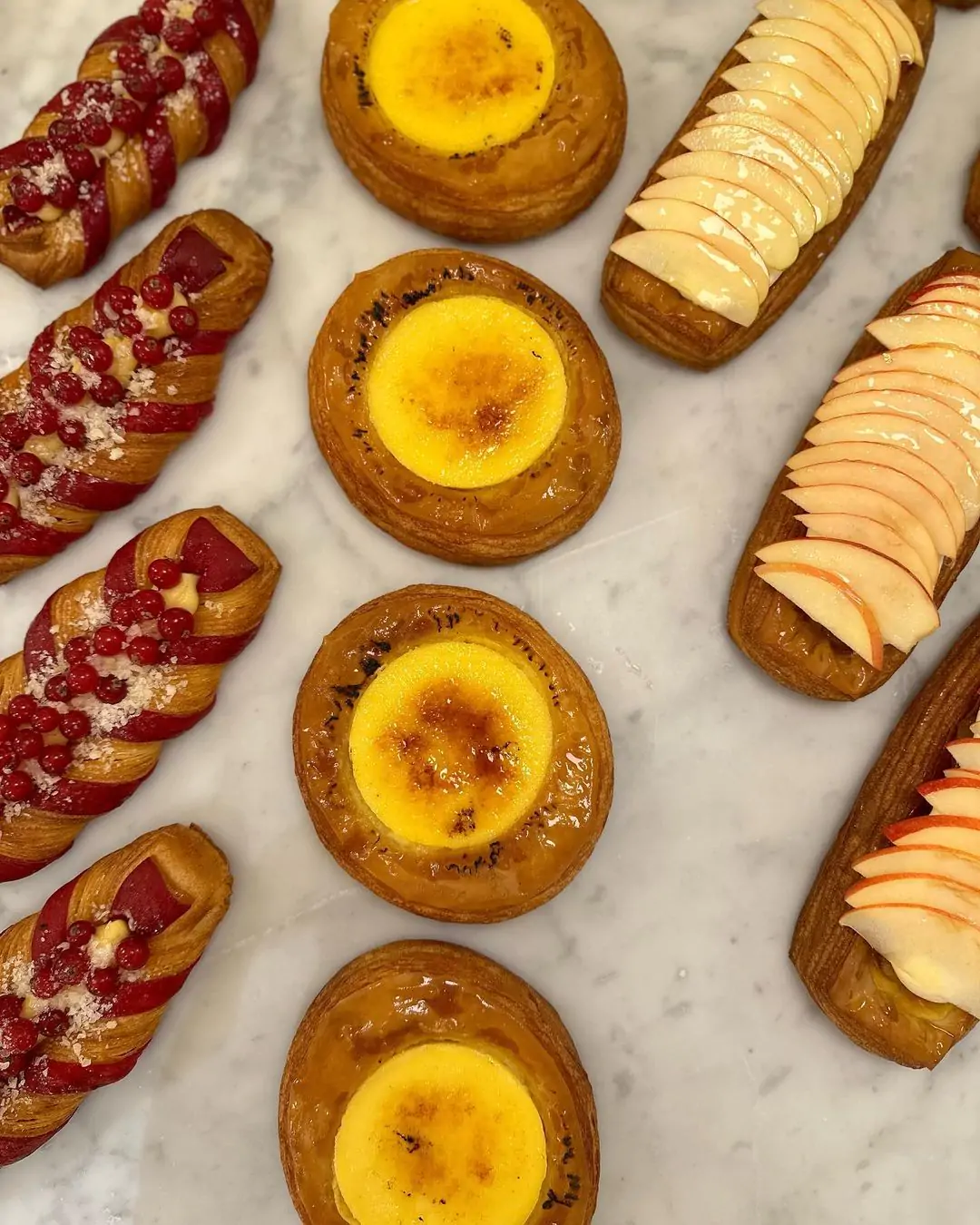
Op de Beethoven straat bevindt zich Et Claire. Et Claire is ontstaan uit een voorliefde voor de beste viennoiserie, koffie, (ijs)thee in combinatie met eindeloze zoete en hartige mogelijkheden. Het motto bij et Claire is ''ne vous contentez pas de moins'', wat betekent dat je niet genoegen moet nemen met minder.
1077 BG Amsterdam
Roberto's Restaurant Amsterdam
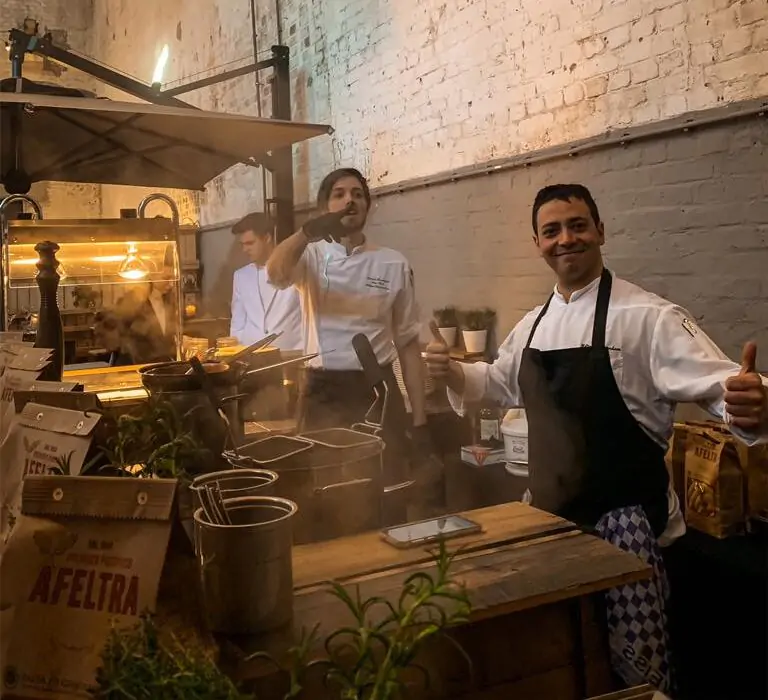
In de top tien Italiaanse restaurants van Amsterdam mag Roberto’s niet ontbreken. Het restaurant is gelegen in het Hilton hotel, waar de iconische Italiaanse keuken sinds 25 jaar de borden vult. Het restaurant draait om pure en simpele smaken met gerechten als dungesneden aubergine, groene farfalle pasta met kreeftensaus en Lava cake.
1077 HM Amsterdam
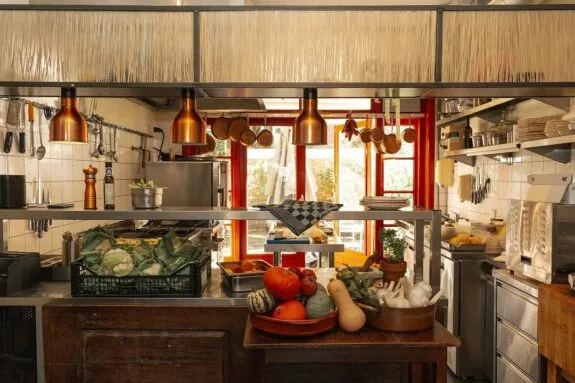
Cafecito
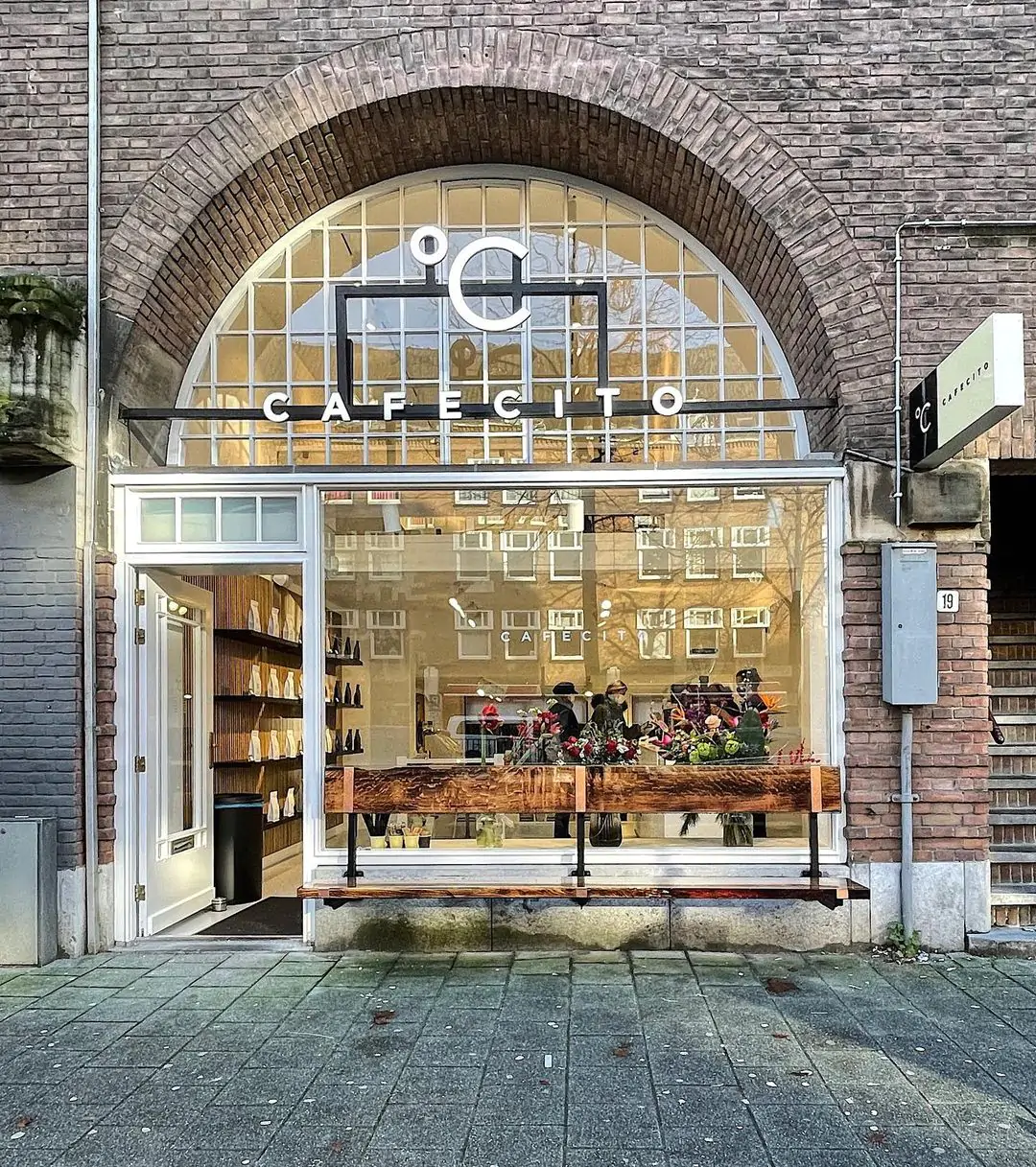
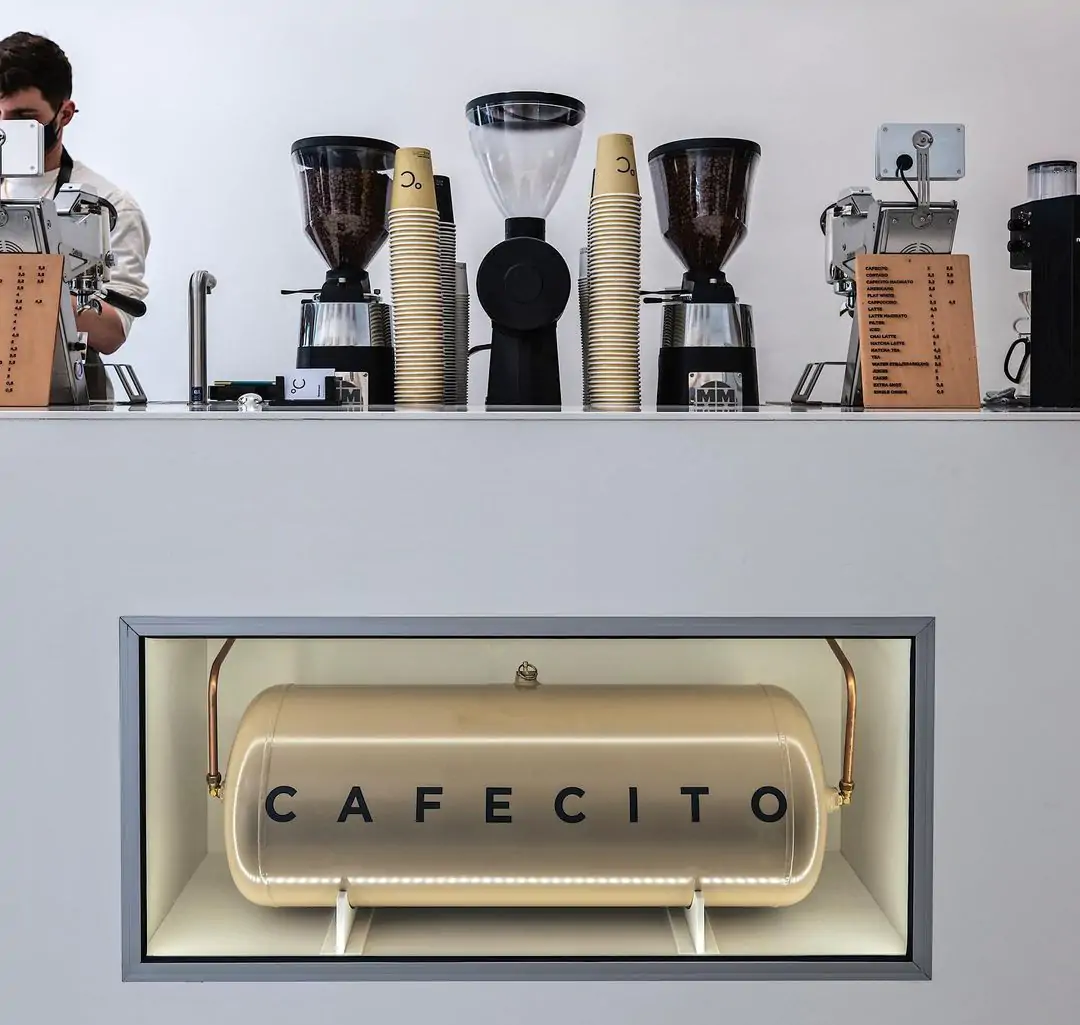
Cafecito, een minimalistische koffiezaak, biedt hoogwaardige koffie uit stralend witte machines. Het is een onderdeel van de Cafecito-franchise, een Amsterdamse koffiebranderij die besloot koffiezaken te openen om hun eigen afzet te stimuleren toen de verkoop aan horecagelegenheden tijdens de pandemie stagneerde. Cafecito heeft al drie vestigingen in Amsterdam en één in Rotterdam. Cafecito is een tot de essentie teruggebrachte zaak. Je drinkt er topkoffie uit witte machines.
1076 NZ Amsterdam
Cucina casalinga
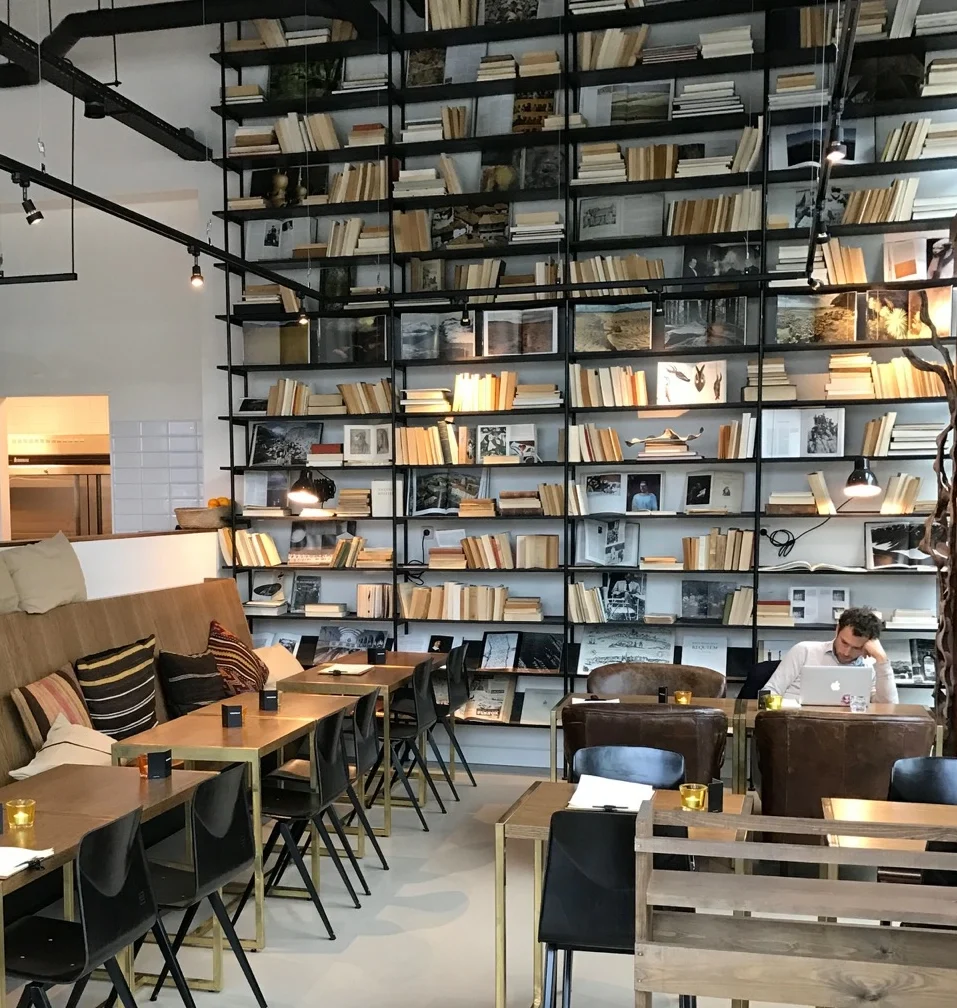
Giovanni Carmelitano is de eigenaar van Cucina Casalinga, een Italiaans restaurant gevestigd aan de Stadionweg 271 in Amsterdam-Zuid. Geboren in Rome, met een moeder uit Puglia, brengt Giovanni zijn Zuid-Italiaanse roots tot leven in zijn restaurant. Al meer dan twintig jaar is hij een toegewijde vertolker van de Italiaanse keuken, waarbij hij traditionele smaken combineert met een moderne benadering. De intieme sfeer en het beperkte aantal zitplaatsen zorgen voor een persoonlijke eetervaring die doet denken aan dineren bij een Italiaanse ‘nonna’ thuis.
1076 CK Amsterdam
Vascobelo
Vascobelo, van origine uit Antwerpen, was bedoeld als een café waar mensen zouden komen voor een unieke koffie ervaring. Inmiddels is de keten aan Vascobelo Café-Brasseries bekend van veel meer dan alleen dat. De vestiging in de Rijnstraat is uniek door het knusse interieur en de open keuken, wat de locatie ideaal maakt voor intieme ontmoetingen of zakelijke bijeenkomsten.
1075 GD Amsterdam
Castell Zuid
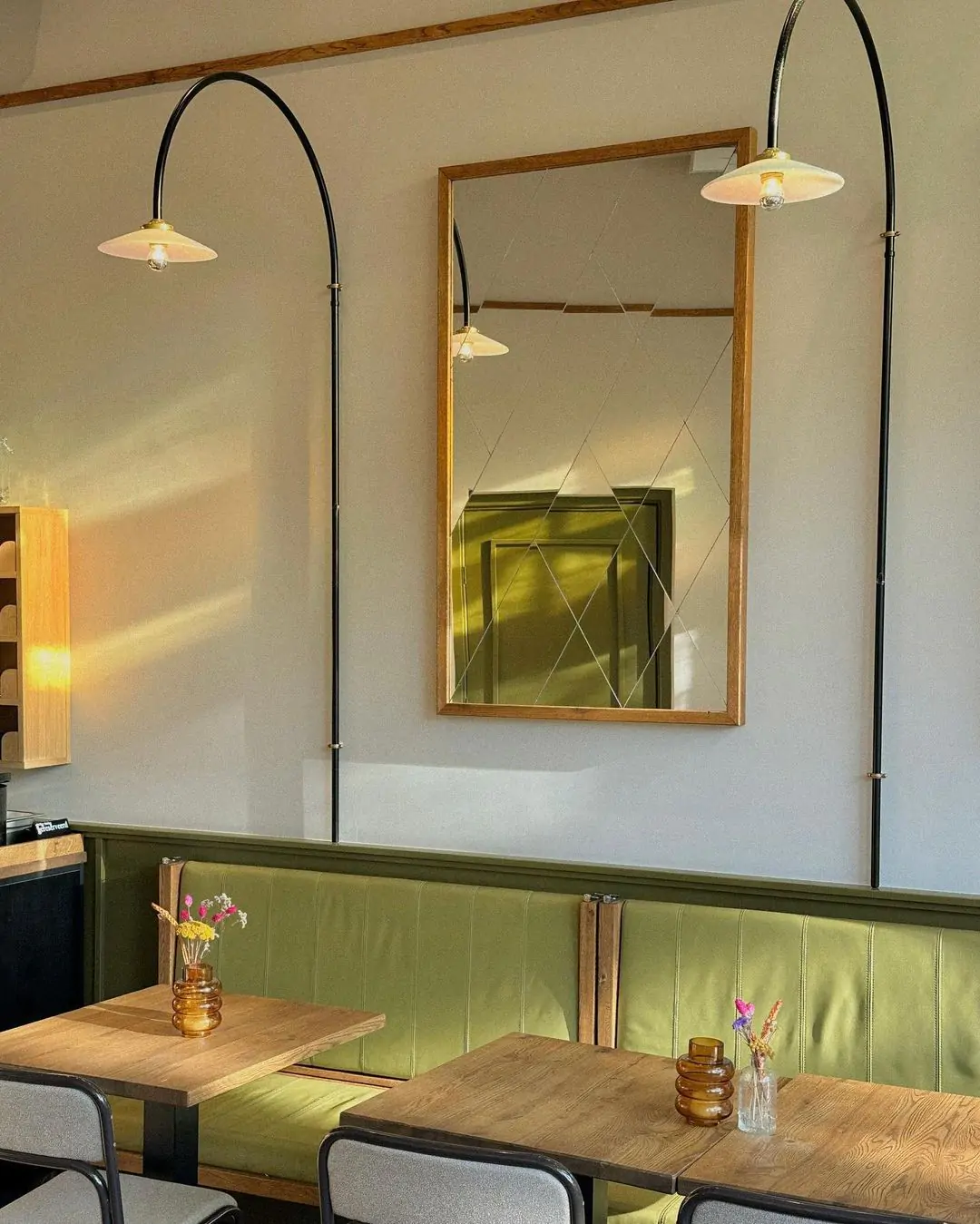
Castell Zuid is de stijlvolle nieuwe vestiging van het iconische Amsterdamse grillrestaurant Castell, gevestigd aan de Valeriusstraat in Oud-Zuid. Waar het origineel in het centrum bekendstaat om zijn no-nonsense steaks en late diners, brengt deze locatie dezelfde smaken in een verfijnde setting. “Same taste, same vibe, different look” luidt het motto – en dat klopt: herkenbaar en toch helemaal nieuw.
1075 BG Amsterdam
Juliette
In Amsterdam Zuid kun je bij Juliette genieten van ontbijt en lunch in de zon. Het menu is gebaseerd op verse ingrediënten van lokale leveranciers en wordt dagelijks samengesteld op basis van wat er op de markt beschikbaar is. Denk aan gerechten zoals de Porco Rosso: mortadella, stracciatellakaas, Spaanse guindillapepers en rode pesto. Voor het diner of een borrel kan je terecht bij buurman Bar Jules. De focus ligt op Zuid-Europese gerechten zoals pizzetta's, pata negra en geroosterde octopus.
1075 PD Amsterdam
LOT61 Coffee Roasters
Geboren in Sydney, grootgebracht in Brooklyn en nu stevig geworteld in Amsterdam: LOT61 is allesbehalve een doorsnee koffiezaak. Als onafhankelijke koffiebrander combineert het merk internationale flair met lokaal vakmanschap. Slow coffee die met precisie en aandacht is gezet. De esthetiek is rauw maar verfijnd, de sfeer informeel en creatief – een plek waar buurt en barista samenkomen. Met hun B Corp-certificering laat LOT61 bovendien zien dat smaak en duurzaamheid hand in hand kunnen gaan.
1071 MG Amsterdam
Carter
Carter is een moderne brasserie in Amsterdam-Zuid waar internationale klassiekers worden geserveerd met flair en finesse. Aan de Valeriusstraat voelt deze plek als een elegant buurtcafé – informeel, verfijnd en altijd gastvrij. Op de kaart staan tijdloze gerechten als steak tartare, burrata en kreeftenpasta, met een solide wijnselectie ernaast.
1075 GH Amsterdam
Barolo
Bar Barolo brengt de sfeer van Noord-Italië naar de Valeriusstraat, midden in het elegante Amsterdam-Zuid. De wijnkaart is royaal en zorgvuldig samengesteld, met Barolo als vanzelfsprekend middelpunt. Op het menu: huisgemaakte pasta, klassieke antipasti en seizoensgerechten zonder opsmuk. Het interieur is warm en ingetogen, net als de gastvrijheid – hier wordt met aandacht gewerkt.
1076 CM Amsterdam
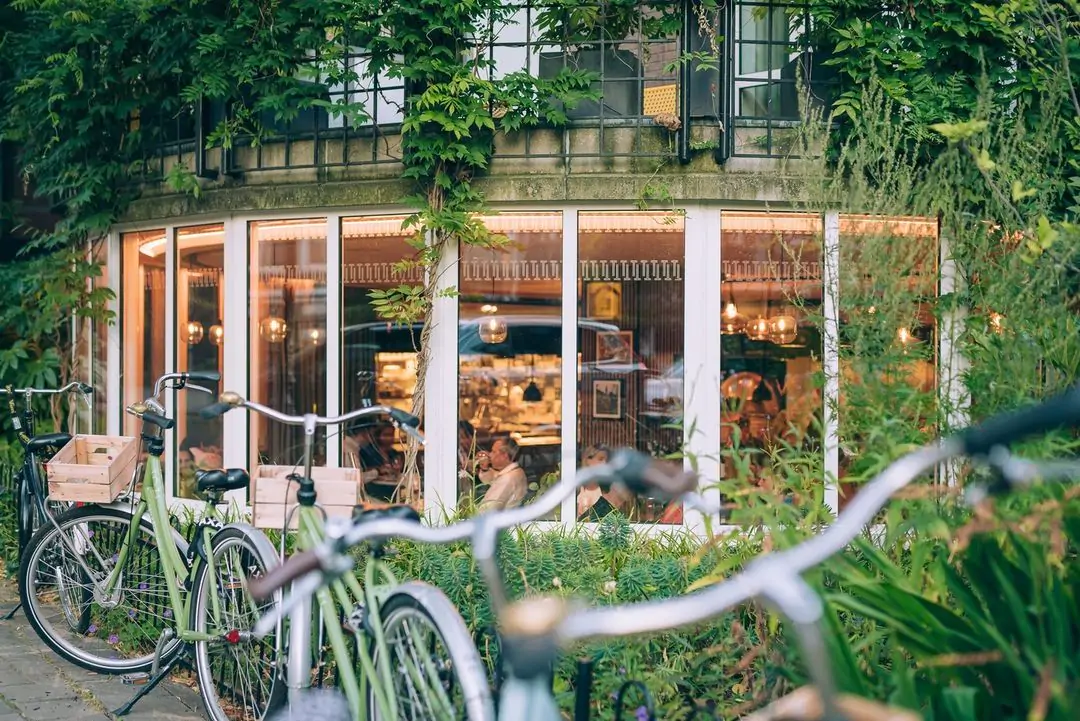
NENI
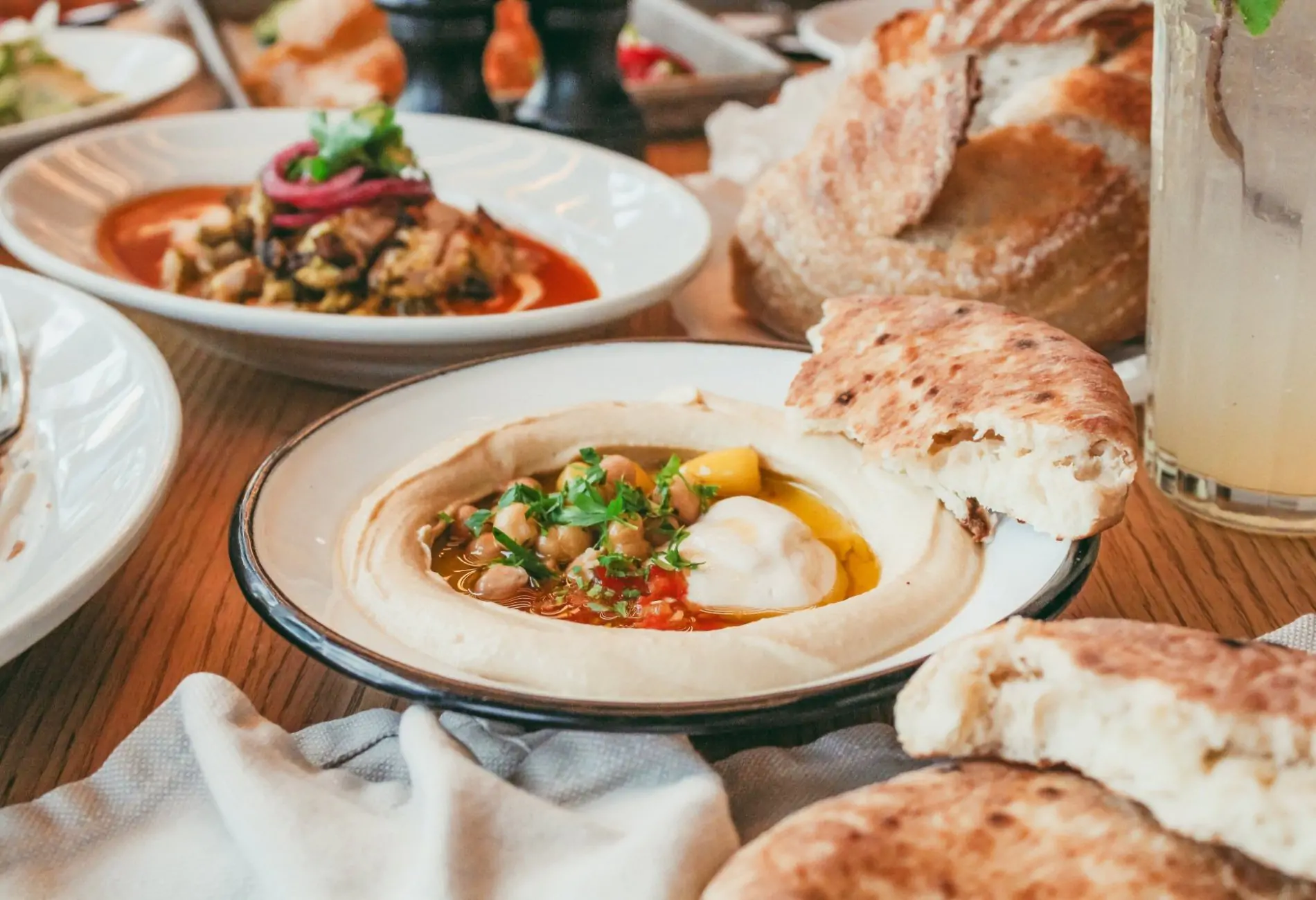
NENI is een Midden-oosters restaurant gevestigd aan het Stadionplein. De naam is een samenstelling van de voorletters van de vier zonen van Haya Molcho; de drijfveer van deze zaak. Haya is geboren in Tel-Aviv en heeft daar psychologie gestudeerd. Ze hield altijd veel van koken en begon in 2009 haar eerste eigen restaurant. Over de jaren is de familie Mocho een bekende familie geworden in de culinaire wereld en ze hebben ook andere vestigingen van NENI in onder andere Wenen en Berlijn. In al hun restaurants staat familie, samenzijn en gerechten delen centraal. De midden-oosterse gerechten zijn uitmuntend en de vers bereidde hummus is een van de beste die Amsterdam te bieden heeft.
1075 CZ Amsterdam
Tozi
TOZI betekent in Venetiaans dialect ‘een groep vrienden’, en dat voel je direct als je binnenkomt. Het is net alsof je terecht komt in één grote familie. De kaart toont een selectie van kleine Venetiaans geïnspireerde gerechten om te delen, bekend als cicchetti. Met een Italiaanse wijnkaart en een cocktailbar met Italiaanse gins en negroni's.
1076 CM Amsterdam
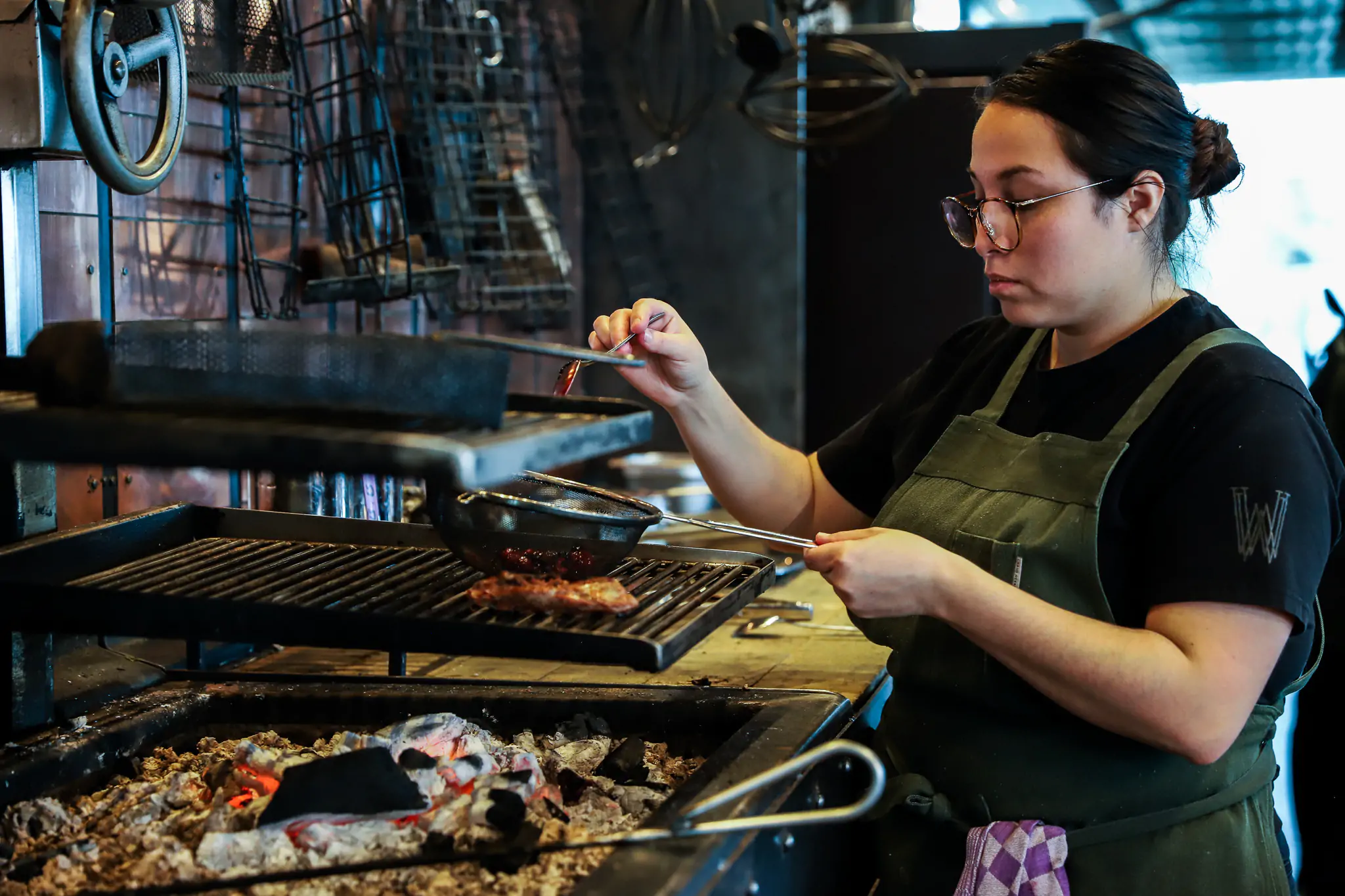
Restaurant Wils (*)
Deze unieke culinaire hotspot opent zijn deuren in 2019 dankzij chef Joris Bijdendijk. Het restaurant bevindt zich naast het Olympische stadion. Joris gaf voor de opening een sneak preview door op open vuur te koken op de middenstip van het stadion in Amsterdam-zuid. De hoge verwachtingen maakt Wils inmiddels helemaal waar. Van de 4 tot 6 gangen worden op open vuur bereid en zitten vol verrassende elementen.
1077 CV Amsterdam
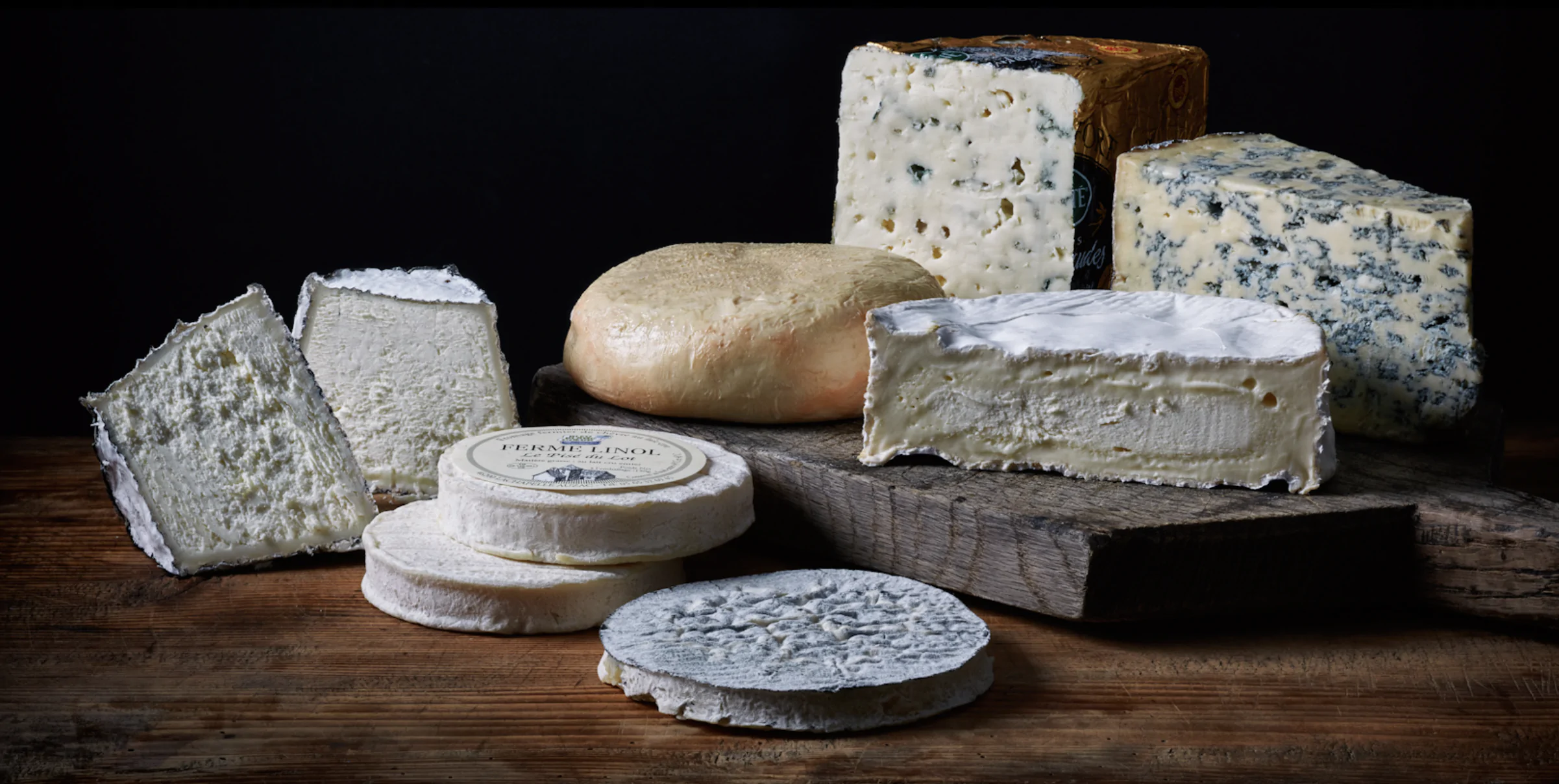
L'Amuse
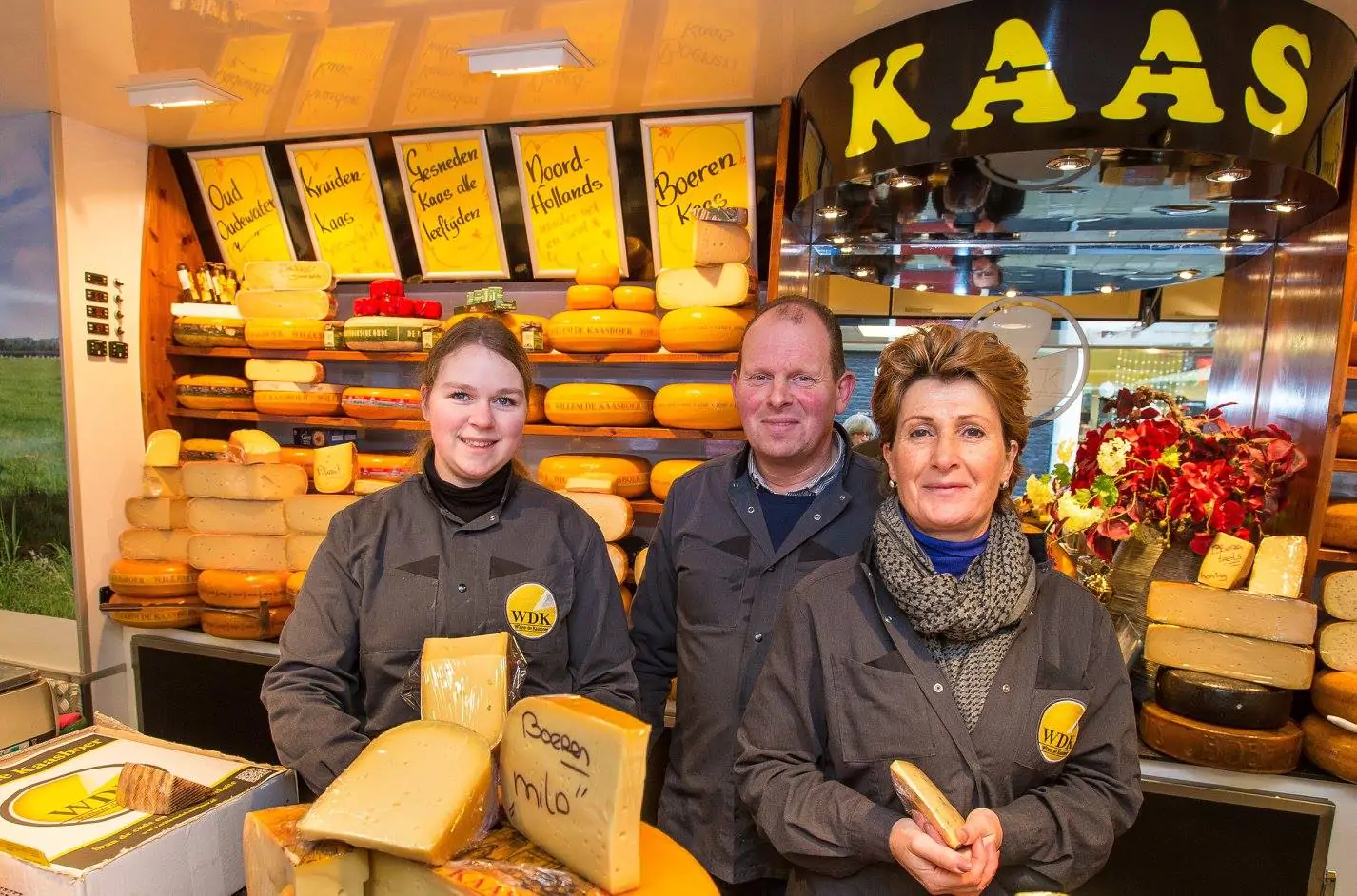
Volgens sommigen is dit de beste kaaswinkel van Nederland. Ze hebben een indrukwekkend breed assortiment van de lekkerste kazen. Ook heerlijke wijn, salami, ham en olijfolie is hier te koop. Je wordt uitstekend geholpen en de kaas is echt van een ander niveau. Aanrader!
1076 TB Amsterdam
Slagerij Zikking & Zoon
Slagerij Zikking & Zoon zit aan de Marathonweg en is een begrip in Amsterdam. Eigenaar Robert Zikking is een geboren en getogen Amsterdammer die samen met zijn vrouw in 1995 gepassioneerd en vol zelfvertrouwen een eigen zaak begon. Zoals hij zelf zegt: ‘Het is geen sprookje, maar een (h)eerlijke werkelijkheid die een geschiedenis heeft.’ De filet americain is gemaakt met het recept van een oude Jordaanse dam en niet te ontbreken is de nostalgische Amsterdamse ossenworst.
1077 HN Amsterdam
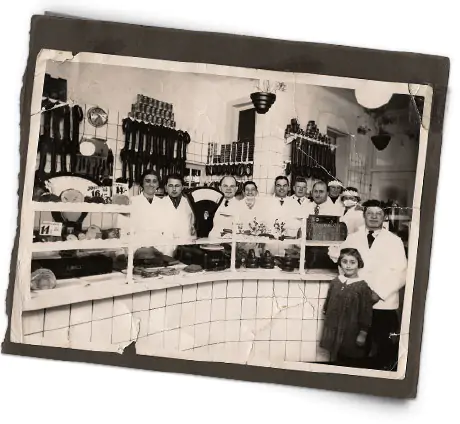
Slagerij Hergo
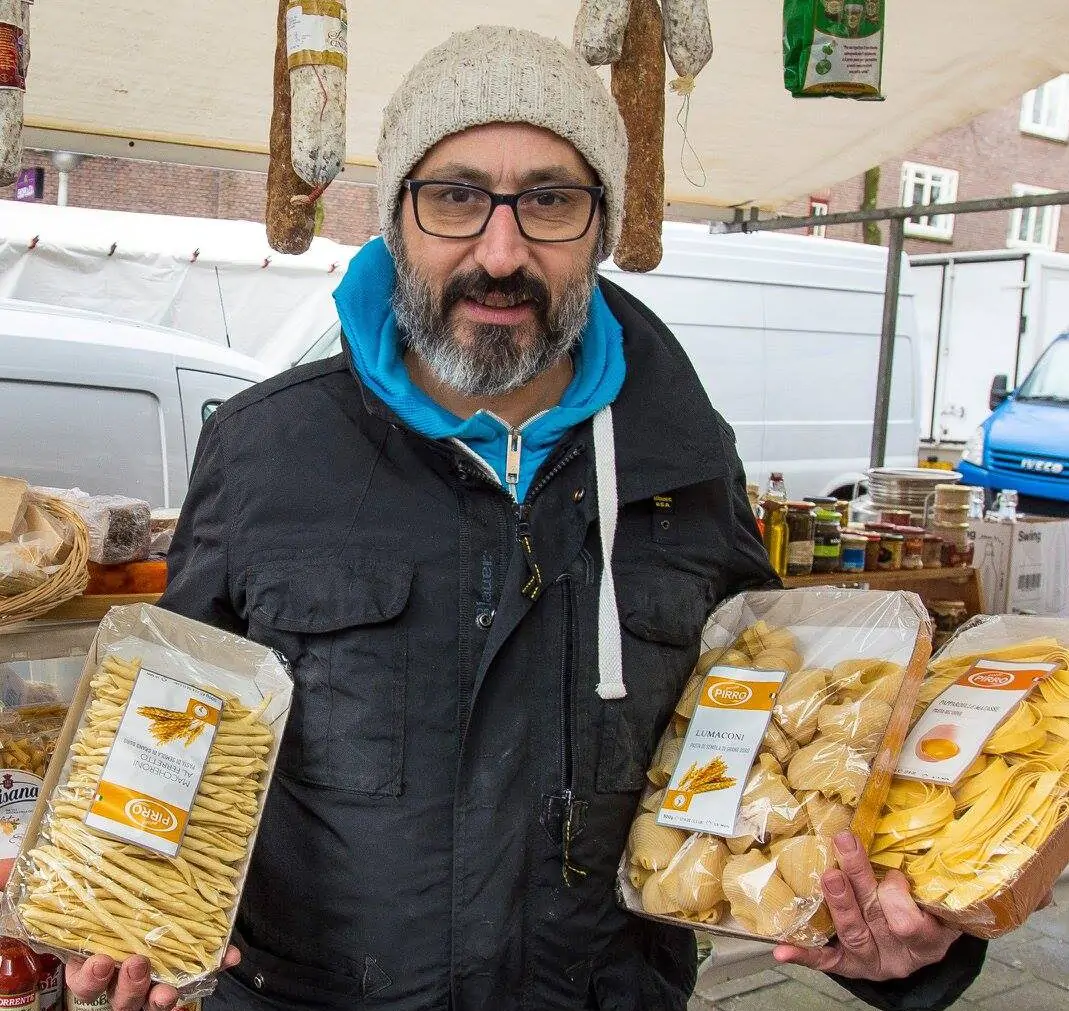
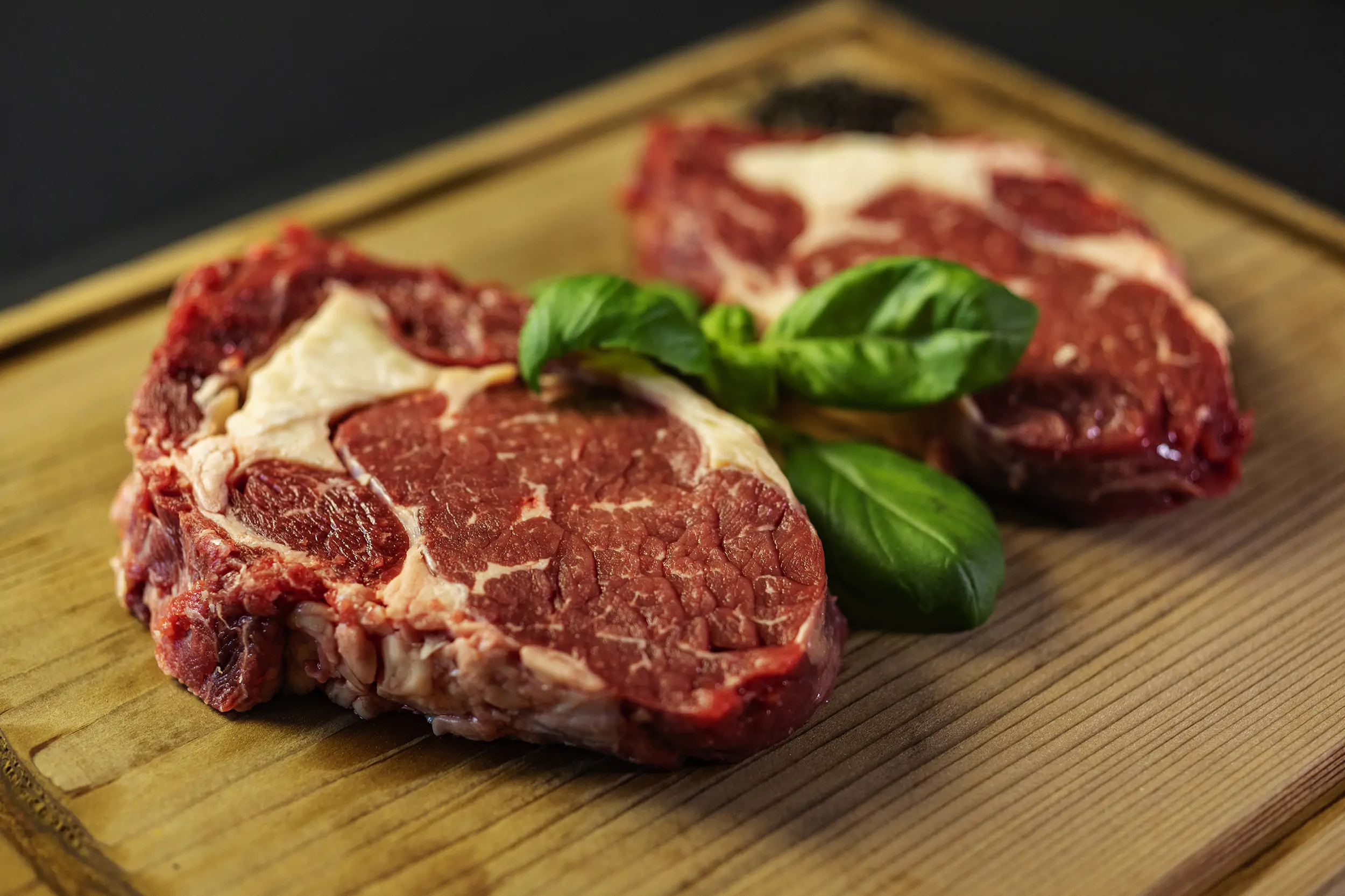
Slagerij Hergo is de vleesspecialist in Amsterdam. Al in 1930 begon de heer Cantor, een Duitse worstmaker, samen met zijn vrouw die uit een Amsterdamse slagersfamilie kwam, zijn slagerij met typische Duitse worstspecialiteiten. Met het motto ‘De slager met ’n koksmuts’ is Hergo uitgegroeid naar vier verschillende locaties en is zo tegenwoordig niet meer weg te denken uit het straatbeeld van Amsterdam. Met jachtworst, hausmacher, ossenworst, pekelvlees maar ook met een broodje filet americain onderscheidt Hergo zich als slagerij in het topsegment.
1076 CJ Amsterdam
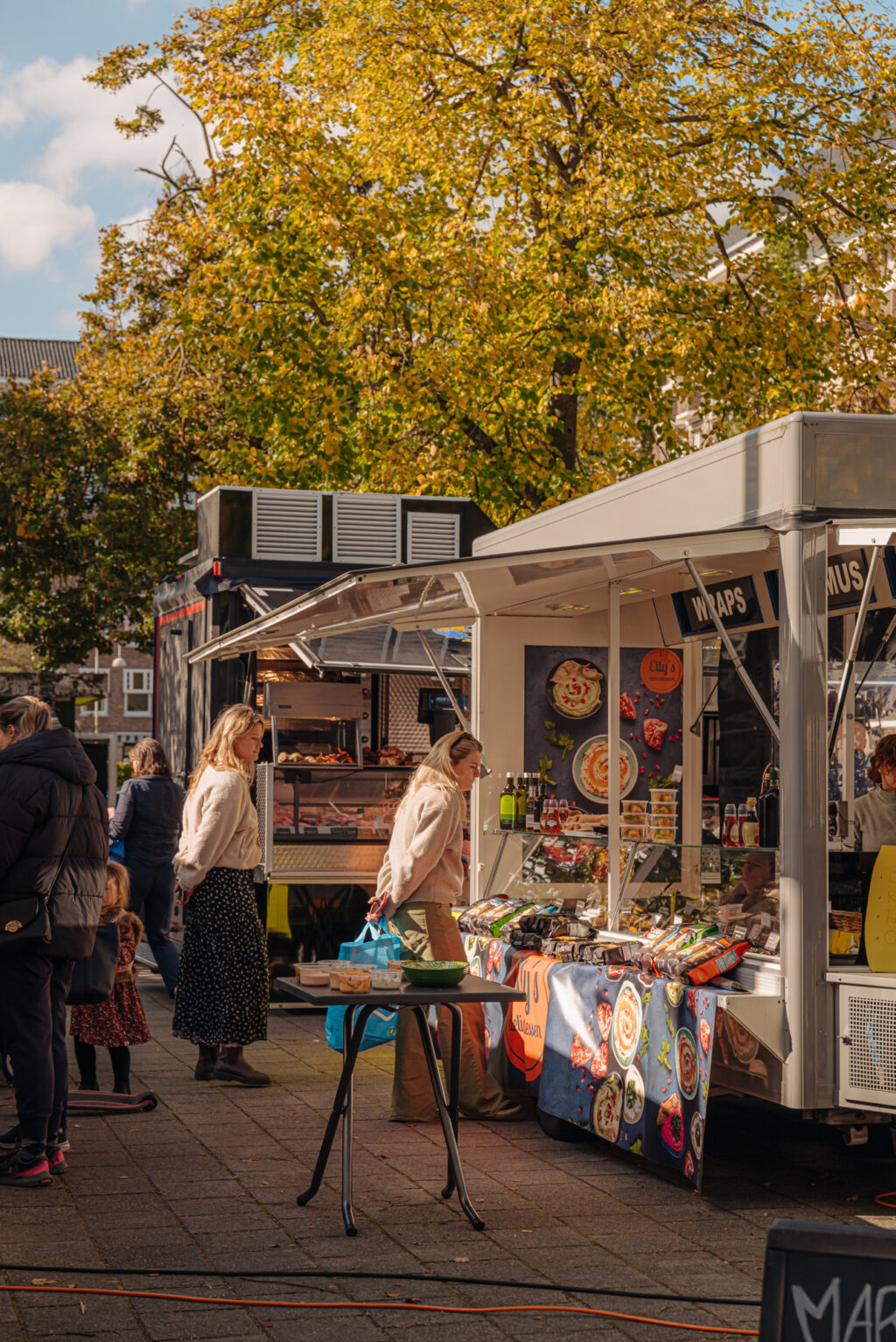
Stadionpleinmarkt
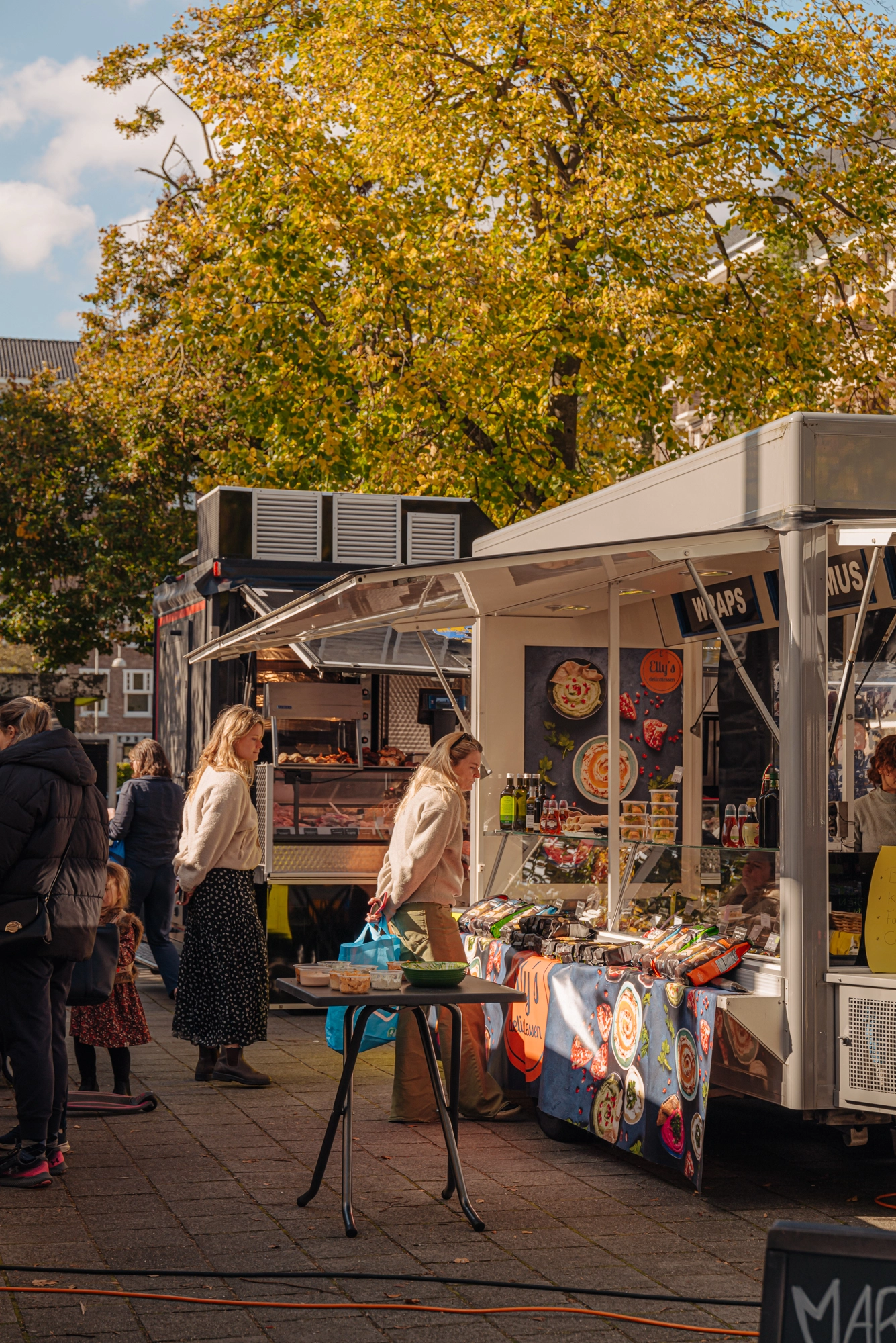
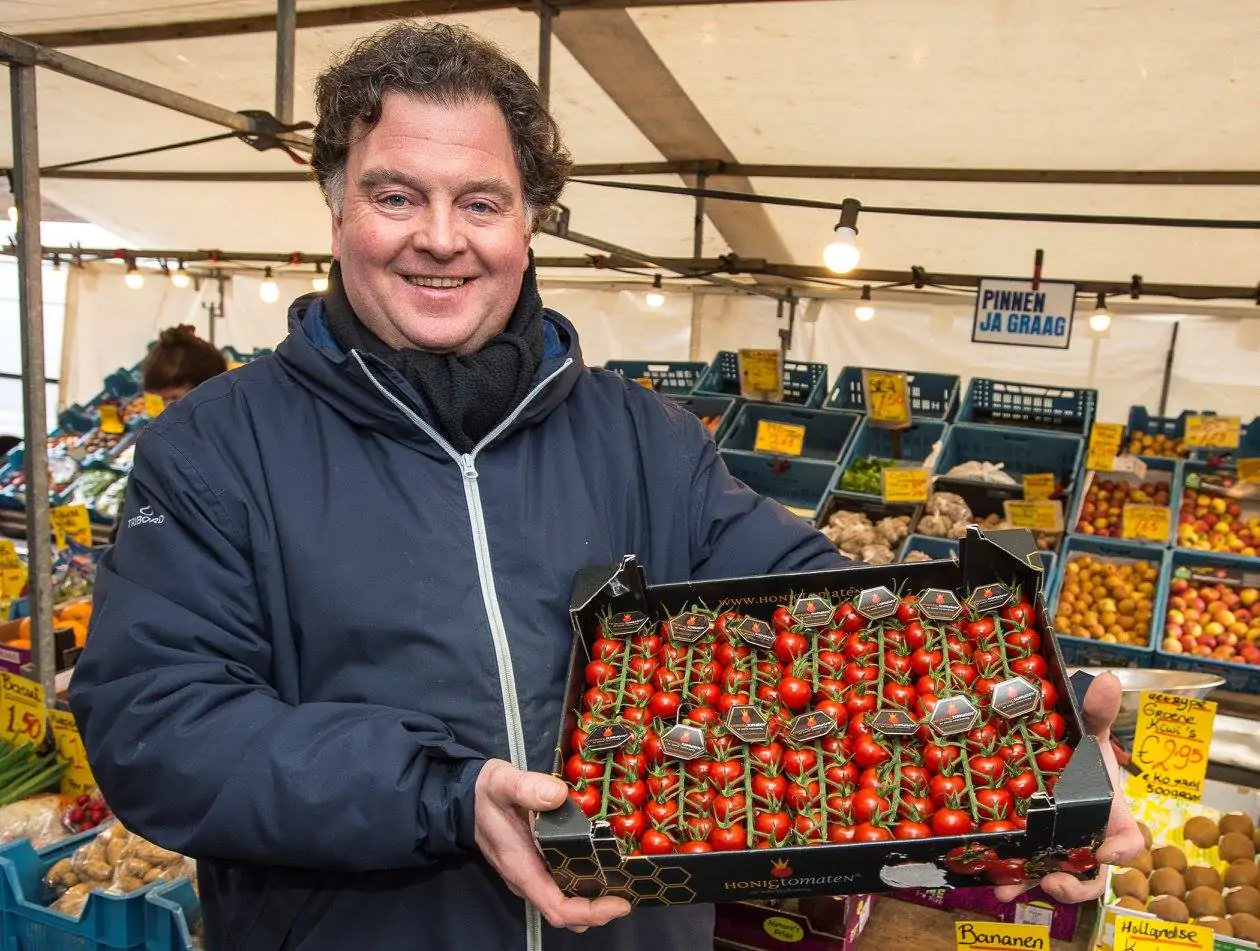
Op het mooie Stadionplein, midden in Oud-Zuid vind je elke zaterdag de Stadionpleinmarkt. Ze gaan om 09:00 open en zijn dus een ideale markt voor mensen die op zaterdag vroeg hun weekboodschappen gedaan willen hebben. Ook hebben ze hier prachtige bloemen te koop en vind je er veel verschillende buurtbewoners. De sfeer is altijd goed en de markt is open tot 17:00.
1066 VH Amsterdam
Slagerij De Schuyt
Slagerij De Schuyt, vernoemd naar hun locatie in de Cornelis Schuytstraat, heeft als symbool de parkiet. Net als de parkiet heeft deze kenmerkende slagerij zijn oorsprong in de jaren zeventig en hebben beiden hun plek veroverd in Amsterdam. Geïnspireerd door de parkiet begon eigenaar Evert Blauwendraat zijn slagerij met het idee om daar een karakteristiek, persoonlijk en bijzonder embleem aan te geven dat voor iedereen herkenbaar is. Bij dit familiebedrijf met een rijke historie kan je terecht voor vlees en delicatessen.
1077 MJ Amsterdam
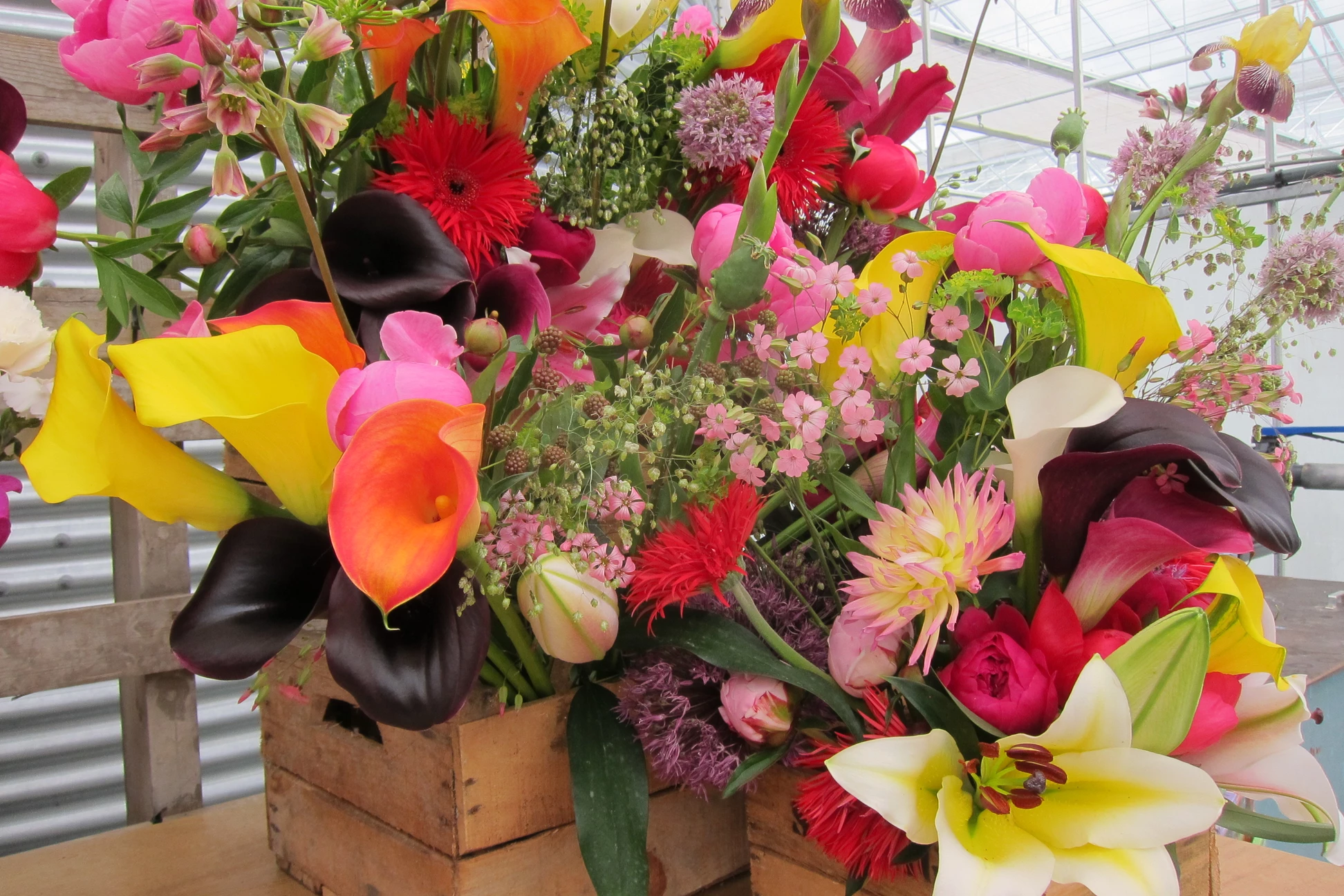
Flower fusion
Elke zaterdag van 9:30 tot 17:00 kunt u Ilona Bokma van Flowerfusion vinden op de ZuiderMRKT. Unieke en schitterende bloemen waardoor je het gevoel krijgt middenin een pluktuin te staan. Doordat Ilona iedere week andere bloemen, planten en kleuren uitzoekt die aansluiten bij het seizoen, is het elke zaterdag weer een feestje om langs te gaan bij Flowerfusion.
1075 NC Amsterdam
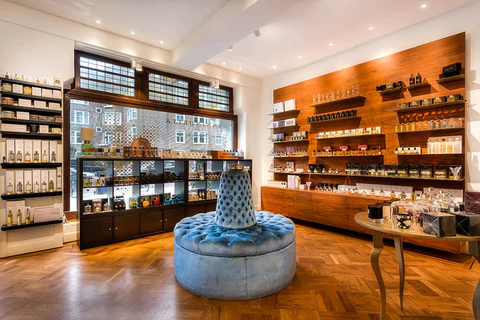
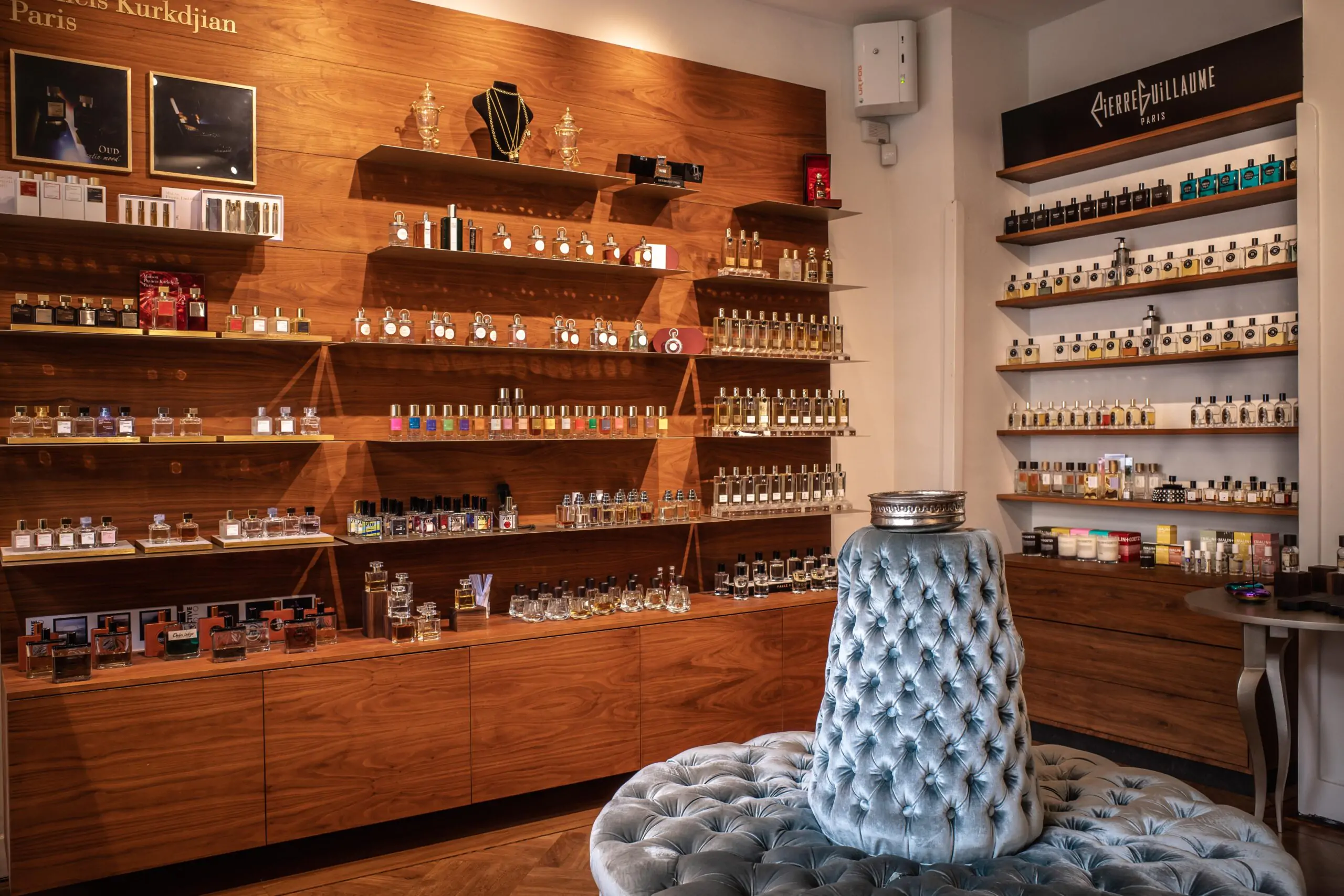
Perfume Lounge
Bij de ‘Perfume lounge’ richten ze zich op het maken en adviseren van geuren voor bedrijven en organisaties en wat reuk kan toevoegen aan een merk of organisatie. Daarnaast hebben zij een winkel met een assortiment van de meest bijzondere parfums van de wereld, waar zij ook persoonlijk geuradvies geven. Advies voor op de huid of in huis. Volgens de experts voegt geur iets toe wat niet zichtbaar en tastbaar is. Je kunt geur op verschillende manieren inzetten in een ruimte. Het begint natuurlijk eerst dat het er niet negatief mag ruiken. Er zijn best wel veel ruimtes waar je het riool of sanitair ruikt, waar veel gerookt is of waar de afzuiging niet goed is en het naar eten ruikt. De meeste simpele manier van geur in huis is dat het schoon ruikt. Veel mensen associëren schoonmaak of wasmiddel met een schoon, opgeruimd en verzorgd huis. Daarnaast kun je de ambiance aanzetten. Net zoals met licht en muziek kun je de sfeer verzachten of versterken. Je kunt het heel huiselijk laten ruiken of juist heel modern. Landelijk of artistiek. Of juist heel minimalistisch of intiem.
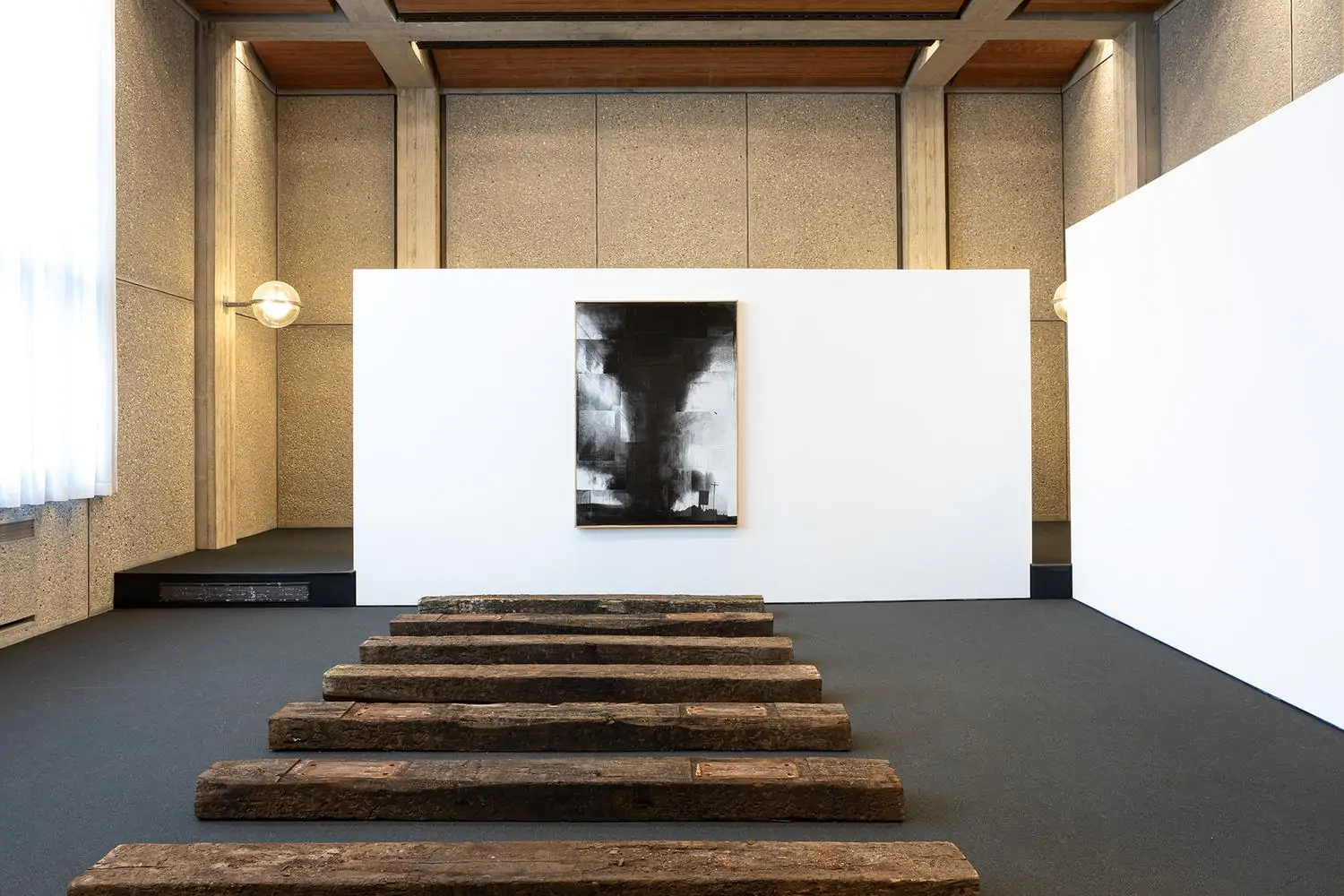
1076 AV Amsterdam
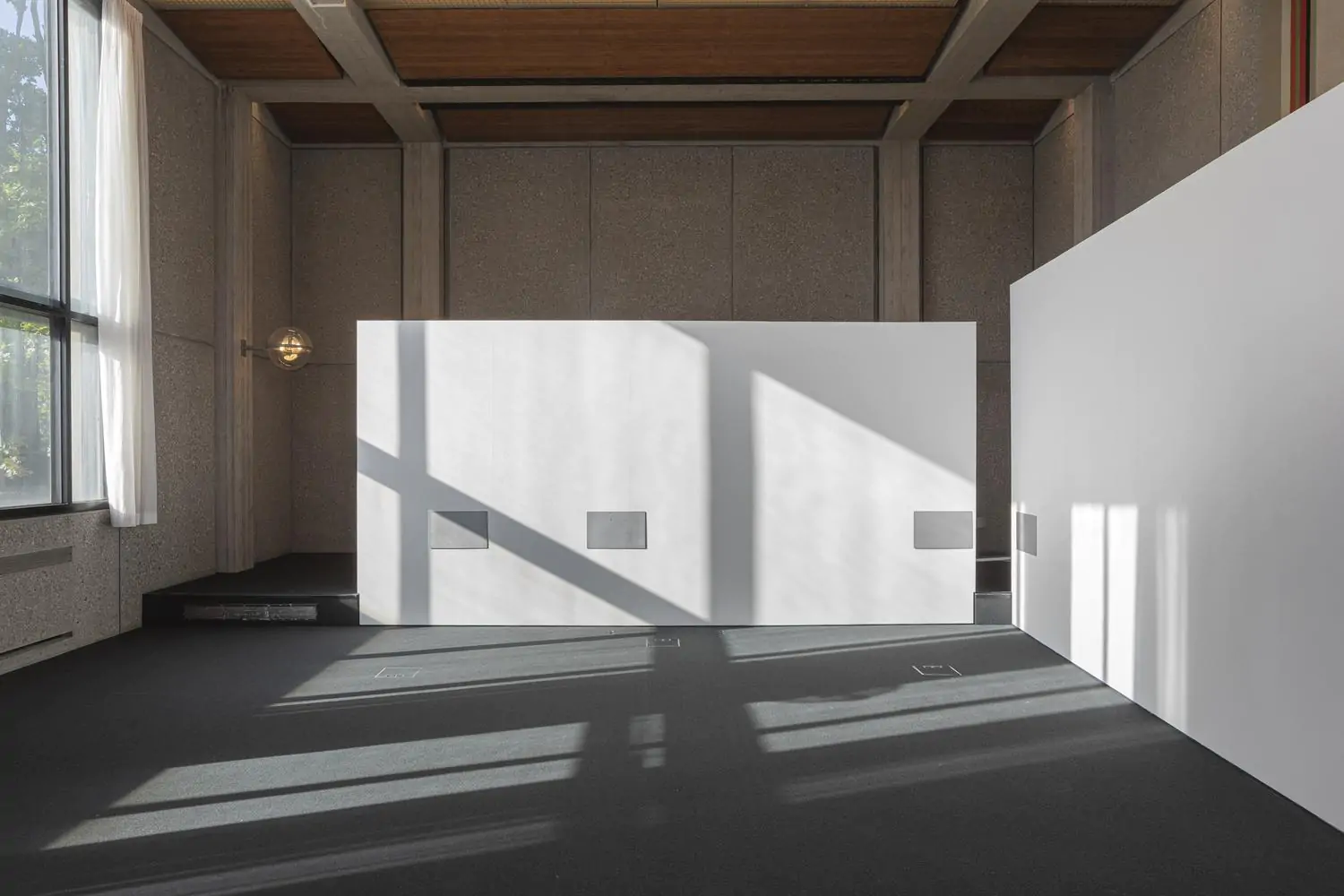
Diez Gallery
Diez is een Amsterdamse kunstgalerie met een internationale uitstraling, opgericht in 2022 door Diego Diez. De tentoonstellingen worden samengesteld in samenwerking met kunstenaars die affiniteit hebben met Diez's interesses en zullen zowel internationaal als nationaal talent presenteren in Amsterdam. Naast het tentoonstellingsprogramma streeft Diez ernaar een toegankelijke ruimte te zijn voor een breed publiek met diverse activiteiten en evenementen zoals poëzielezingen, samengestelde diners en kunstenaarsgesprekken.