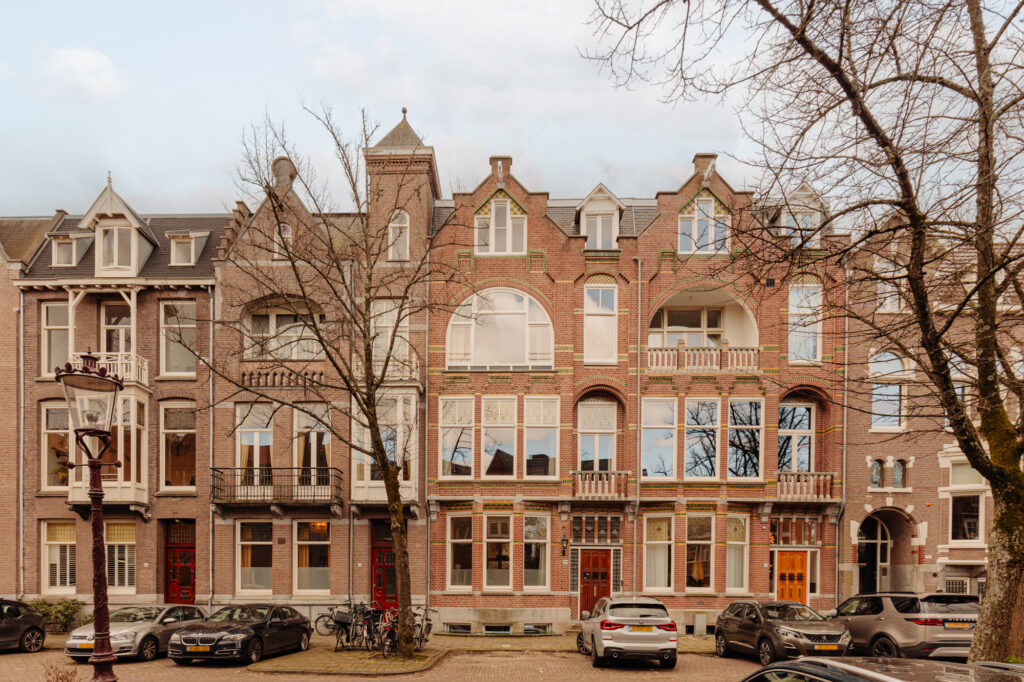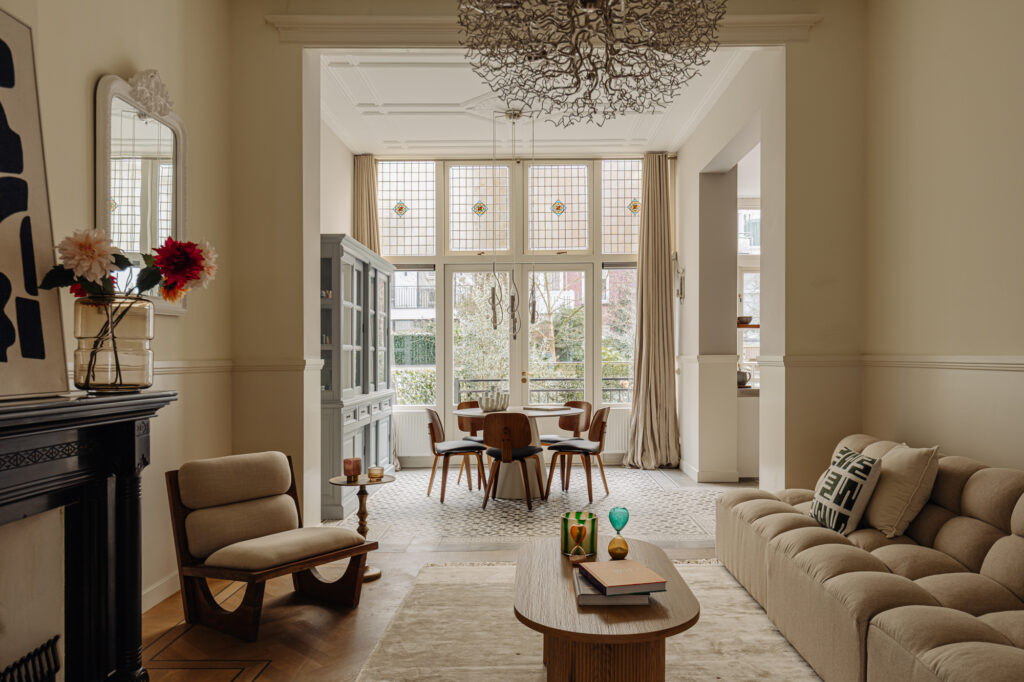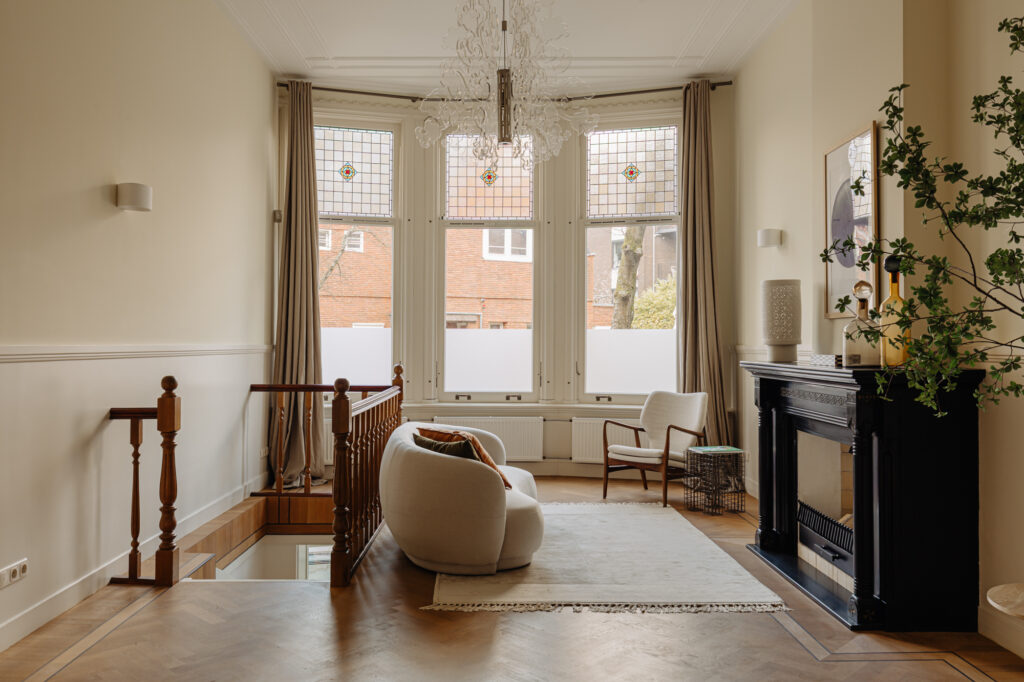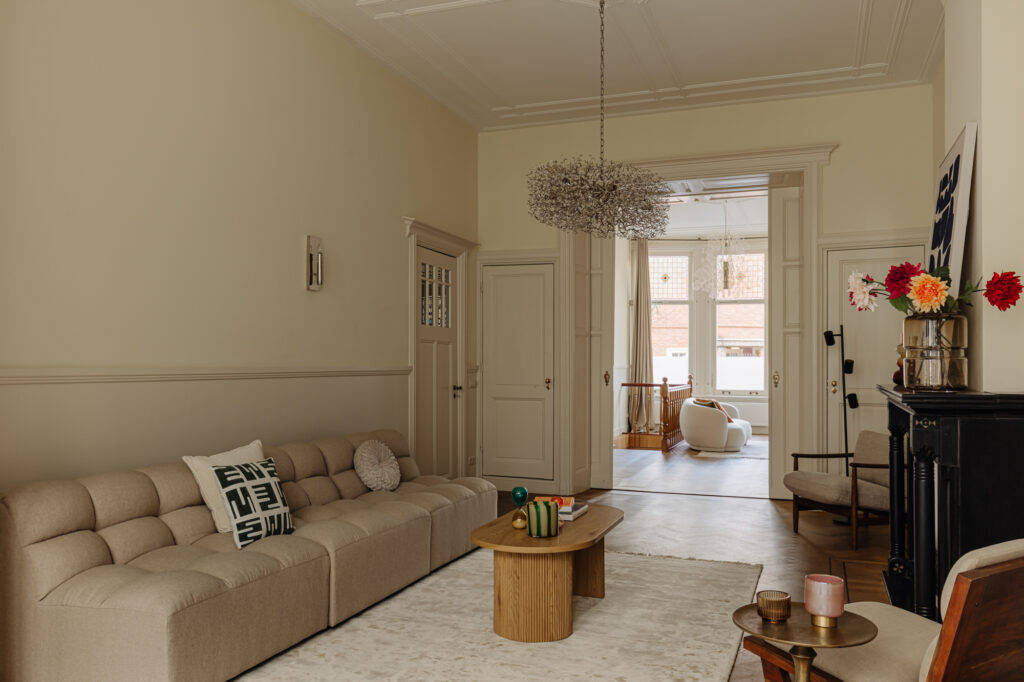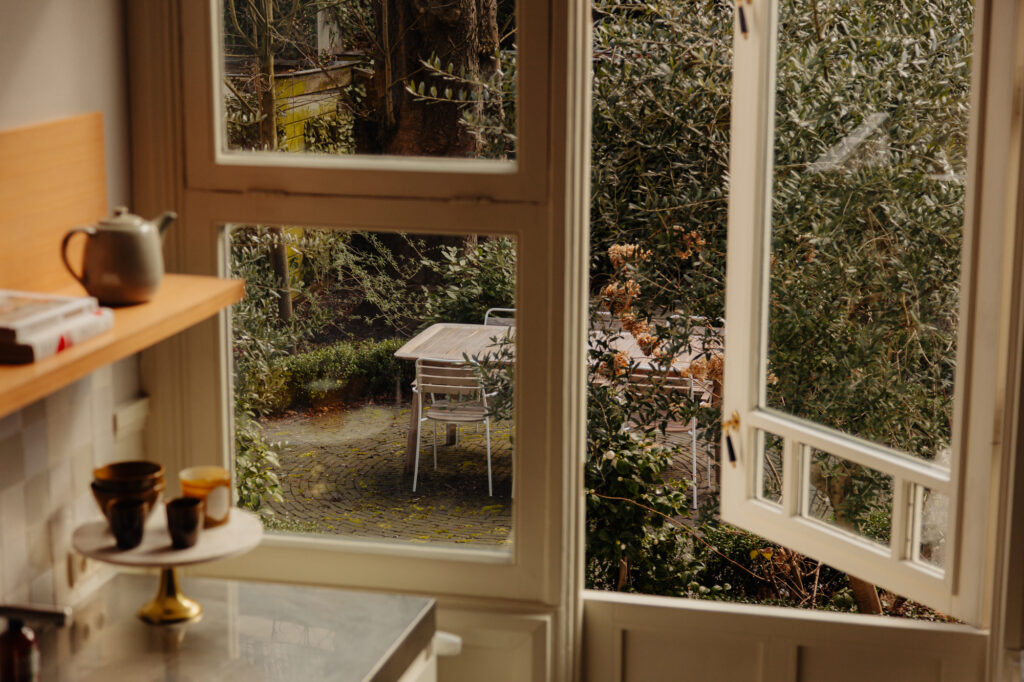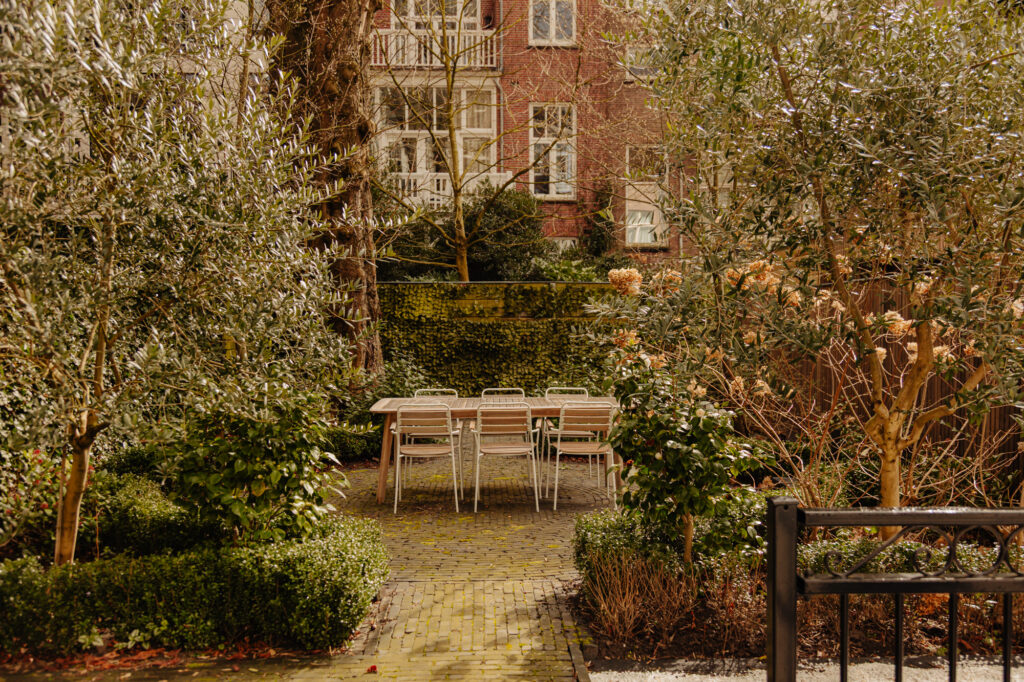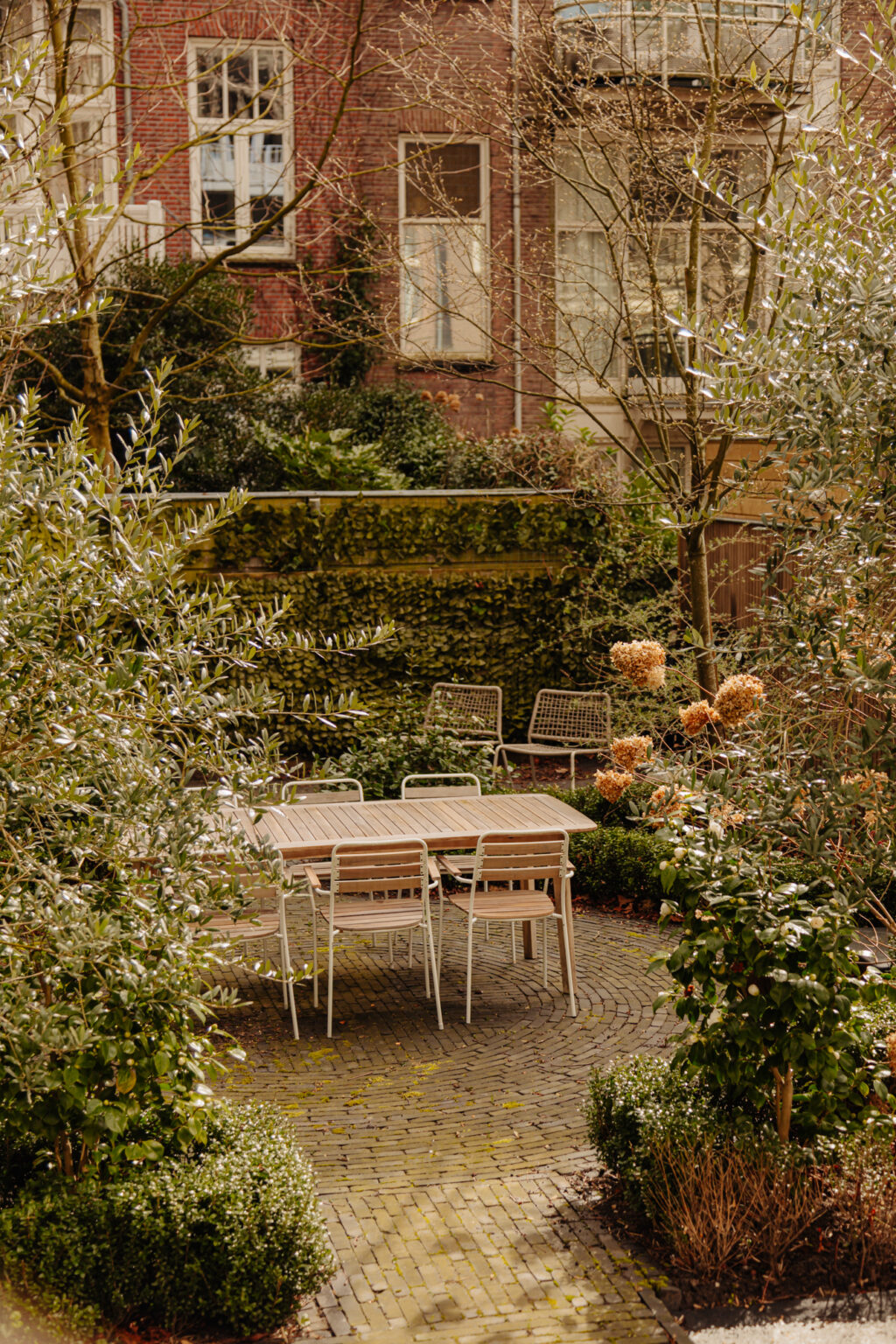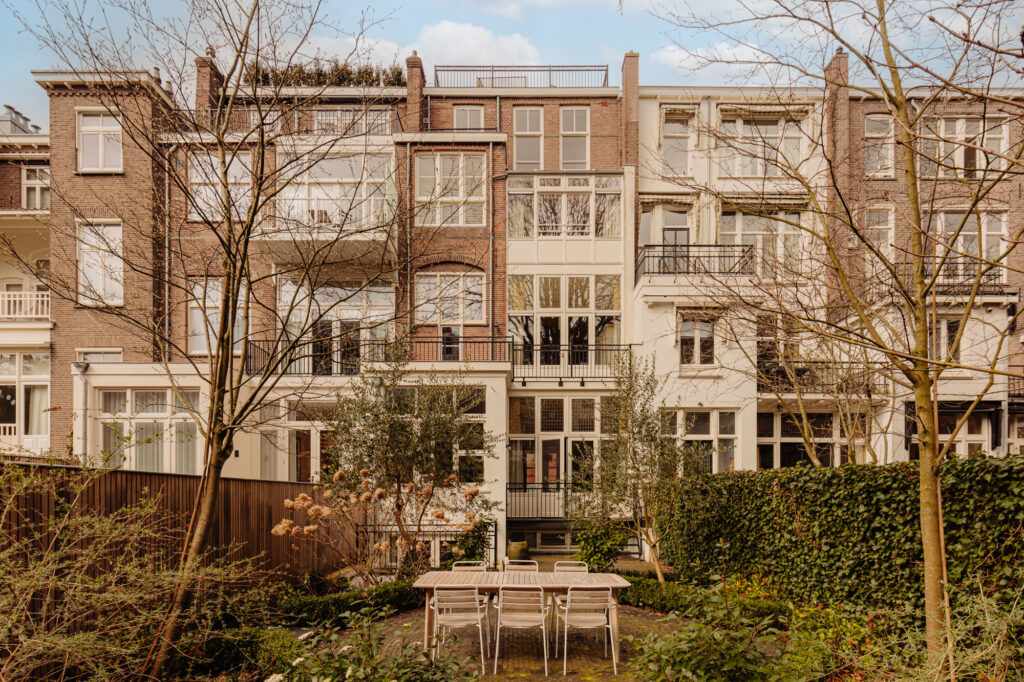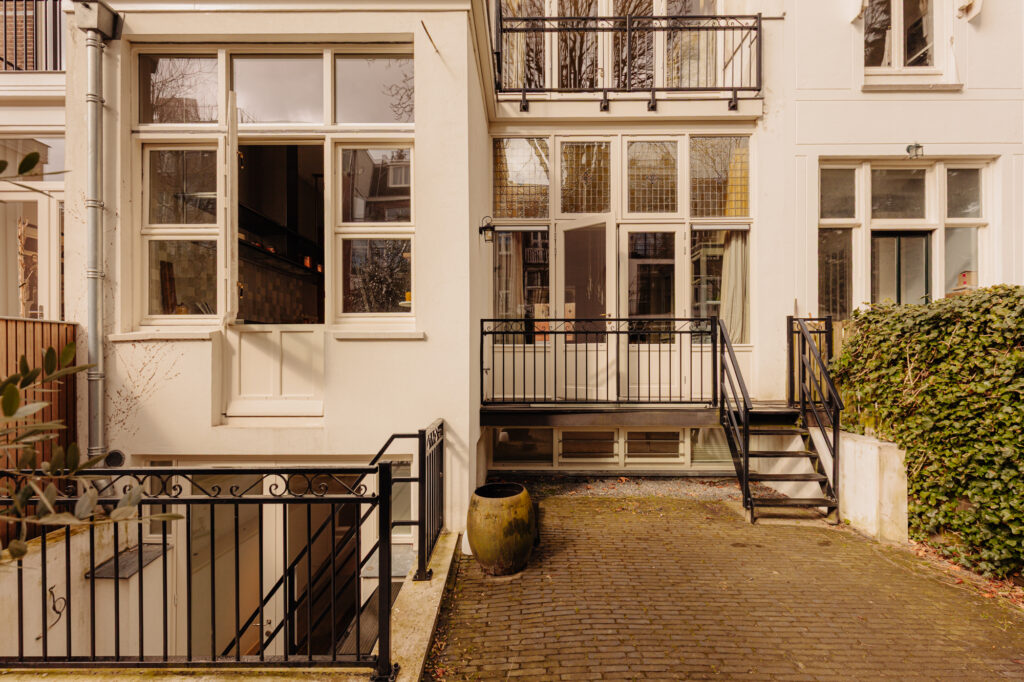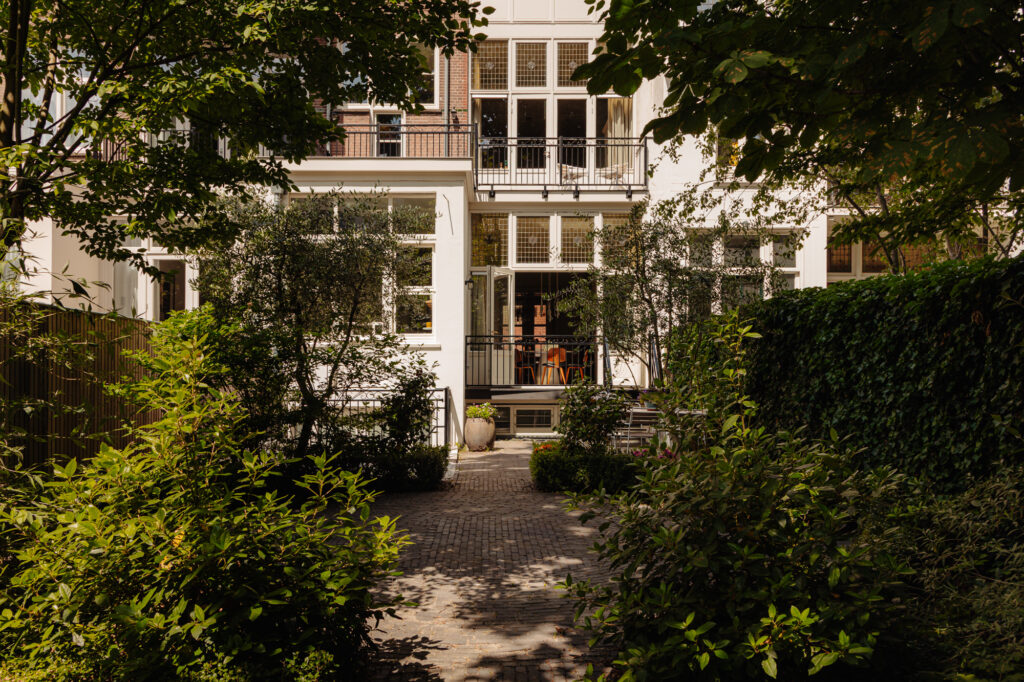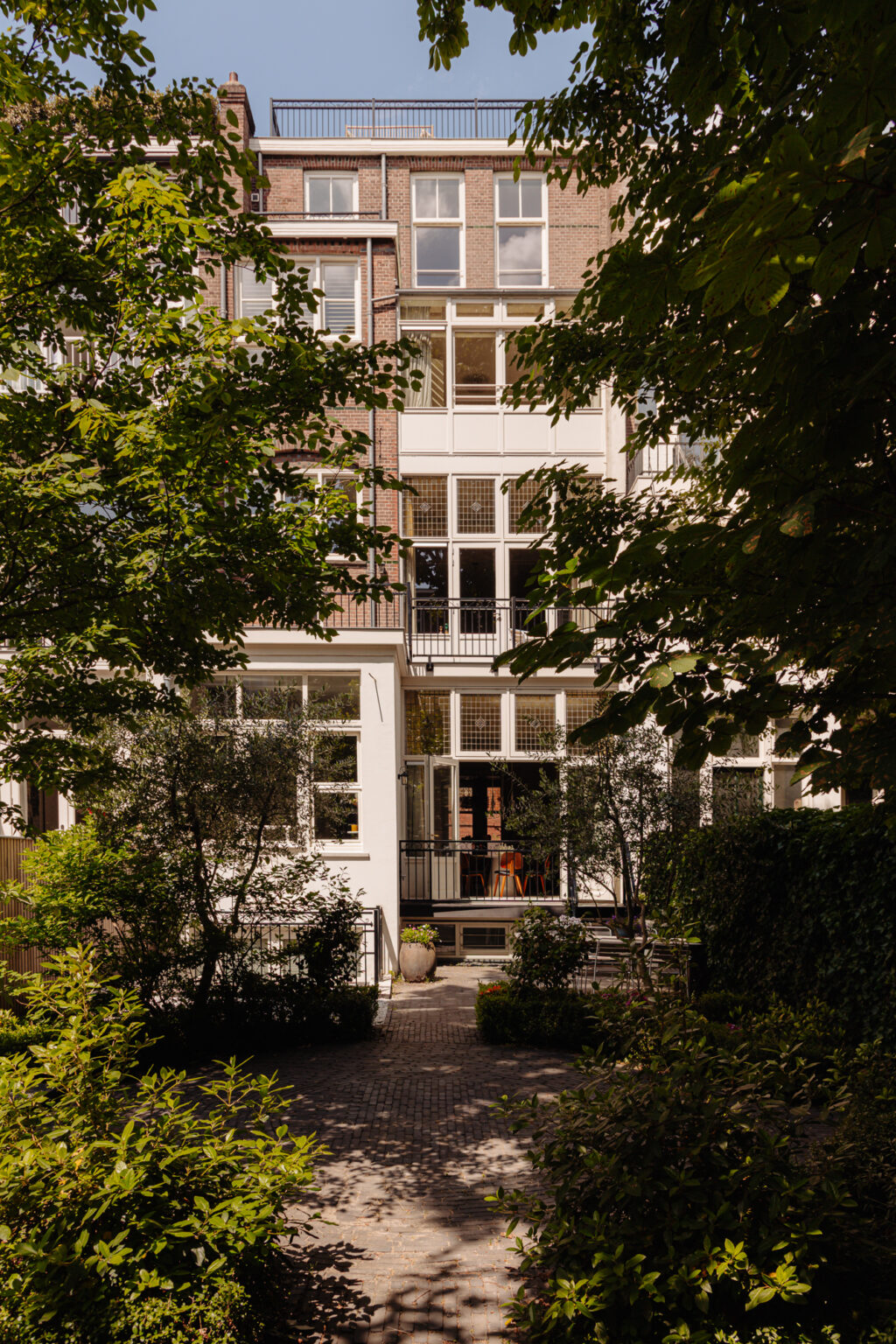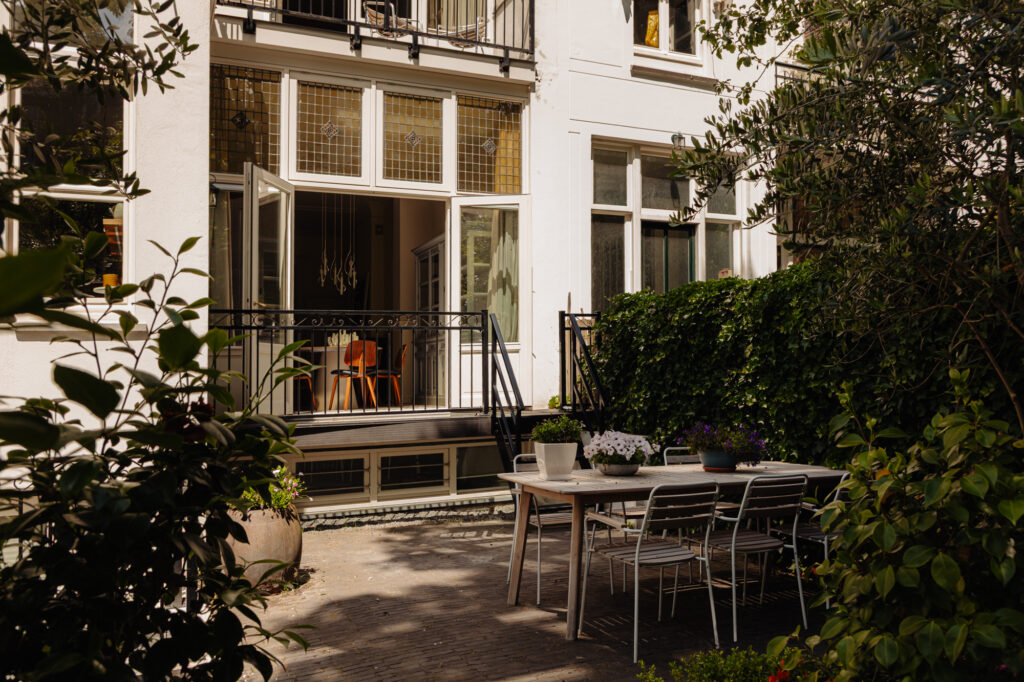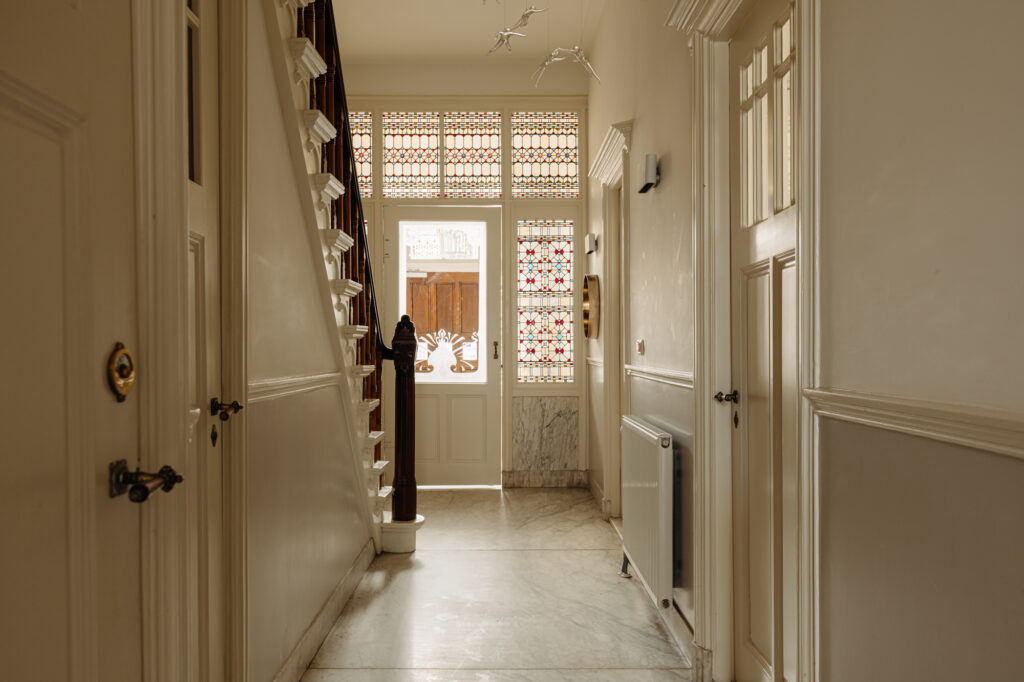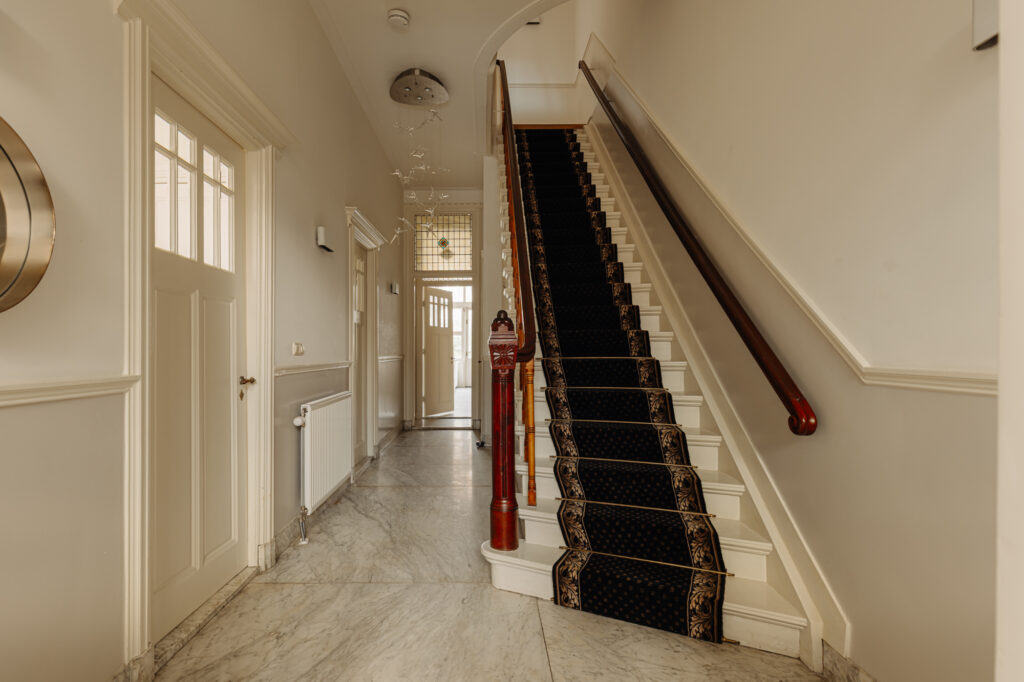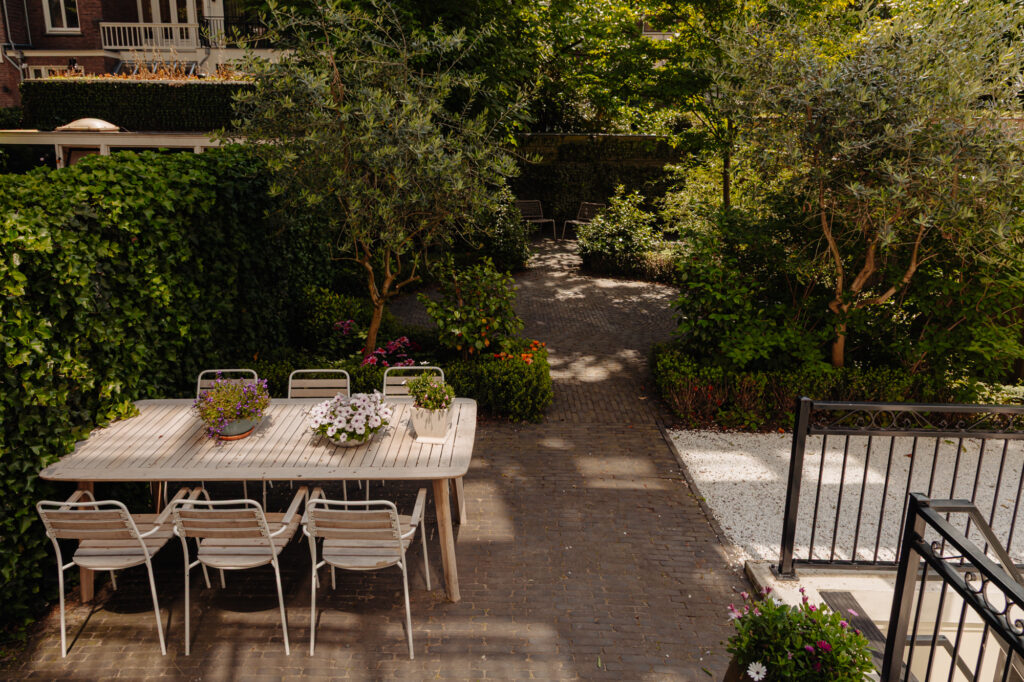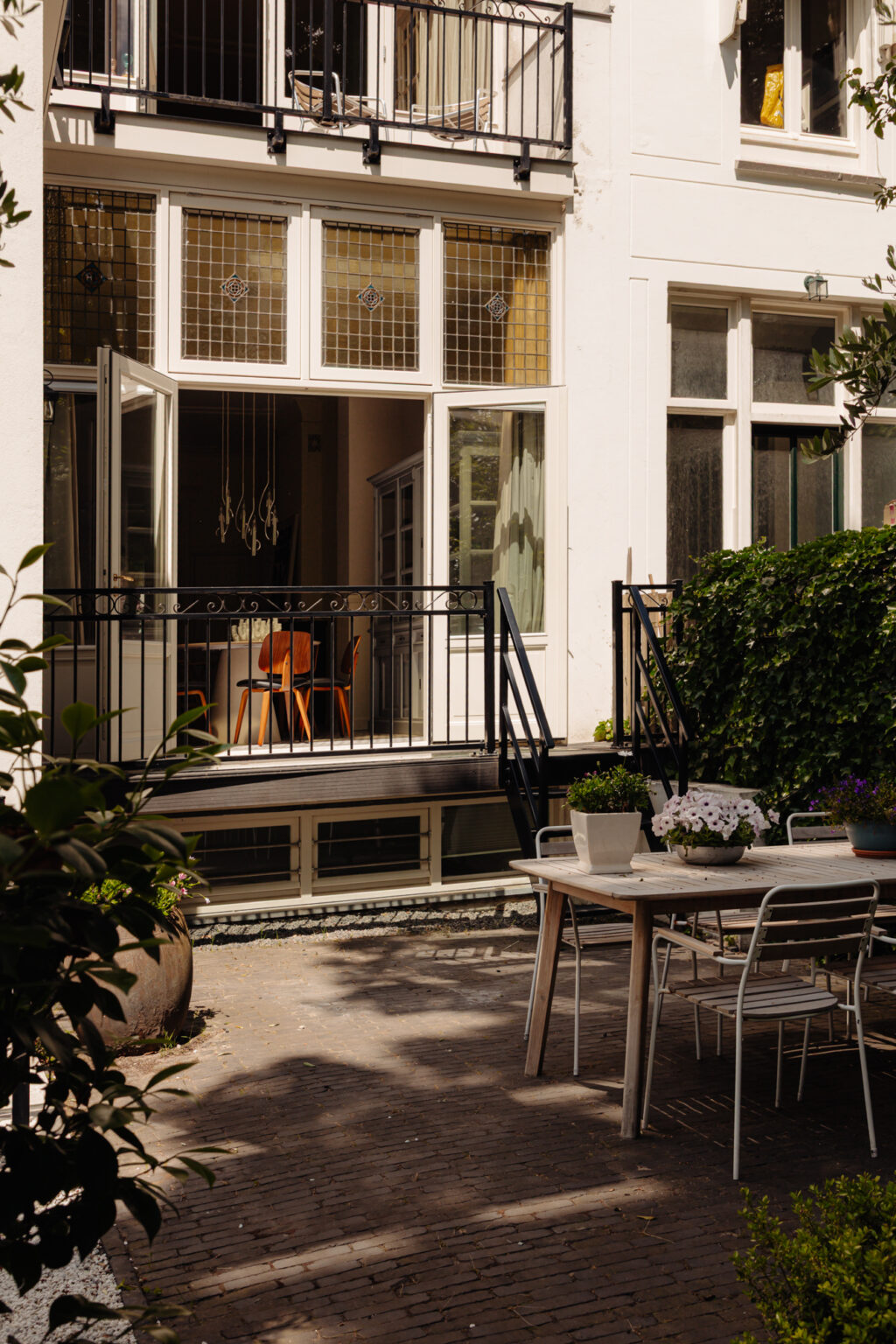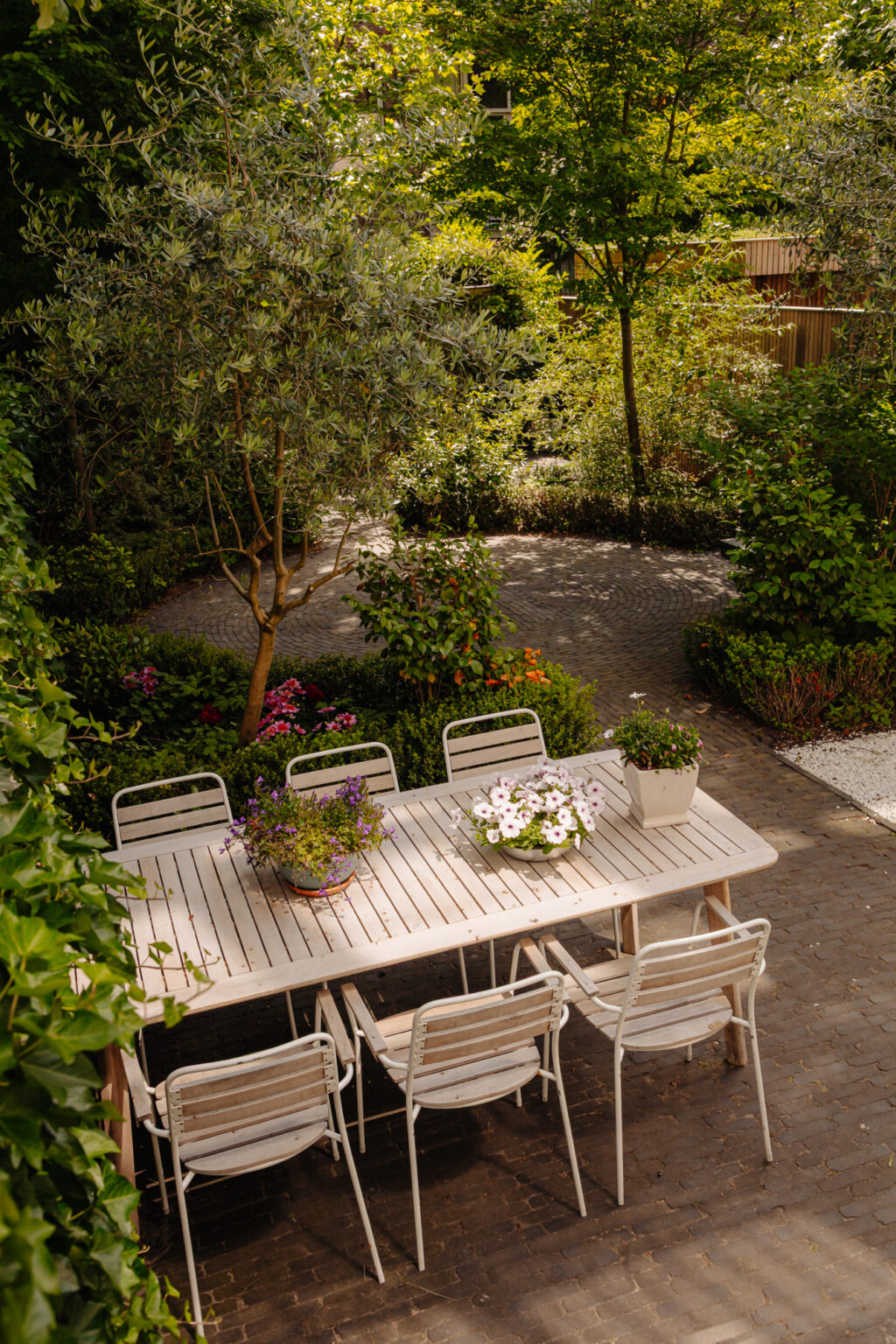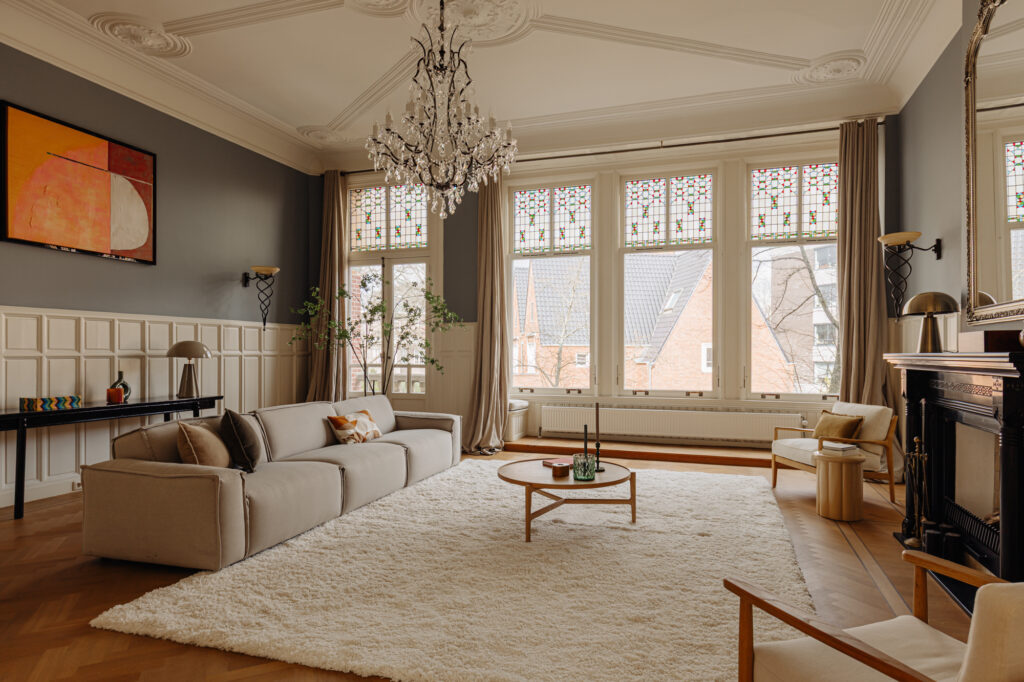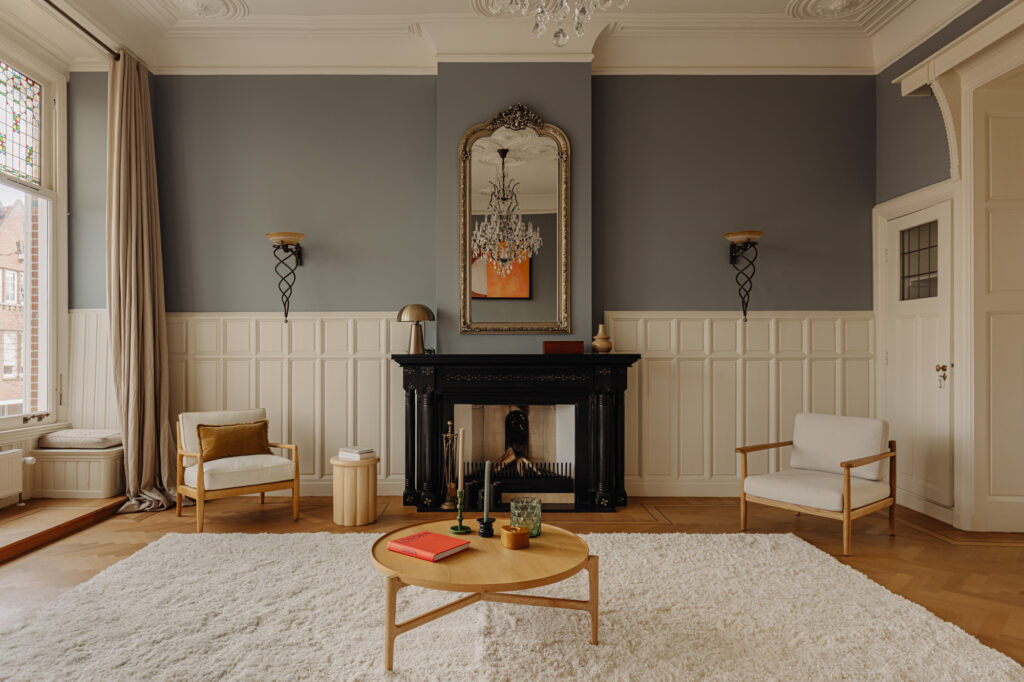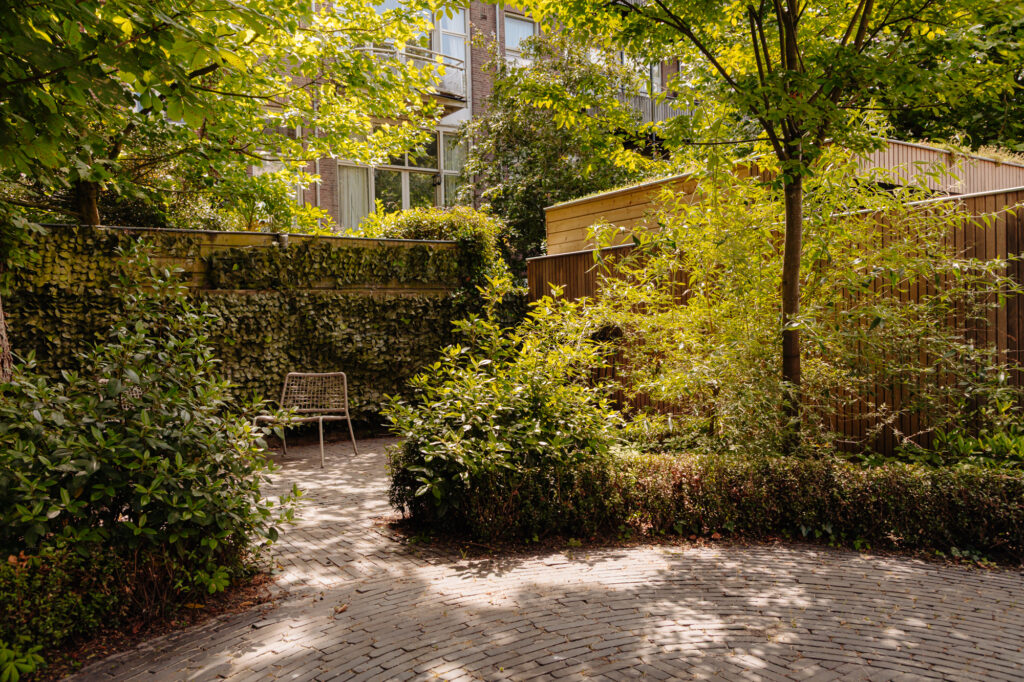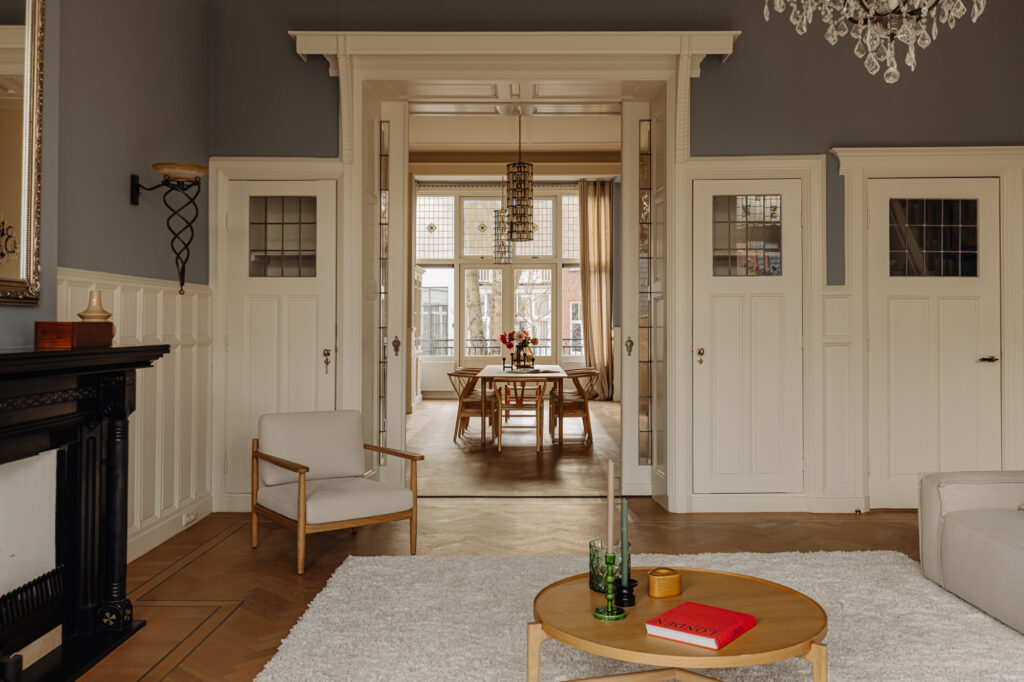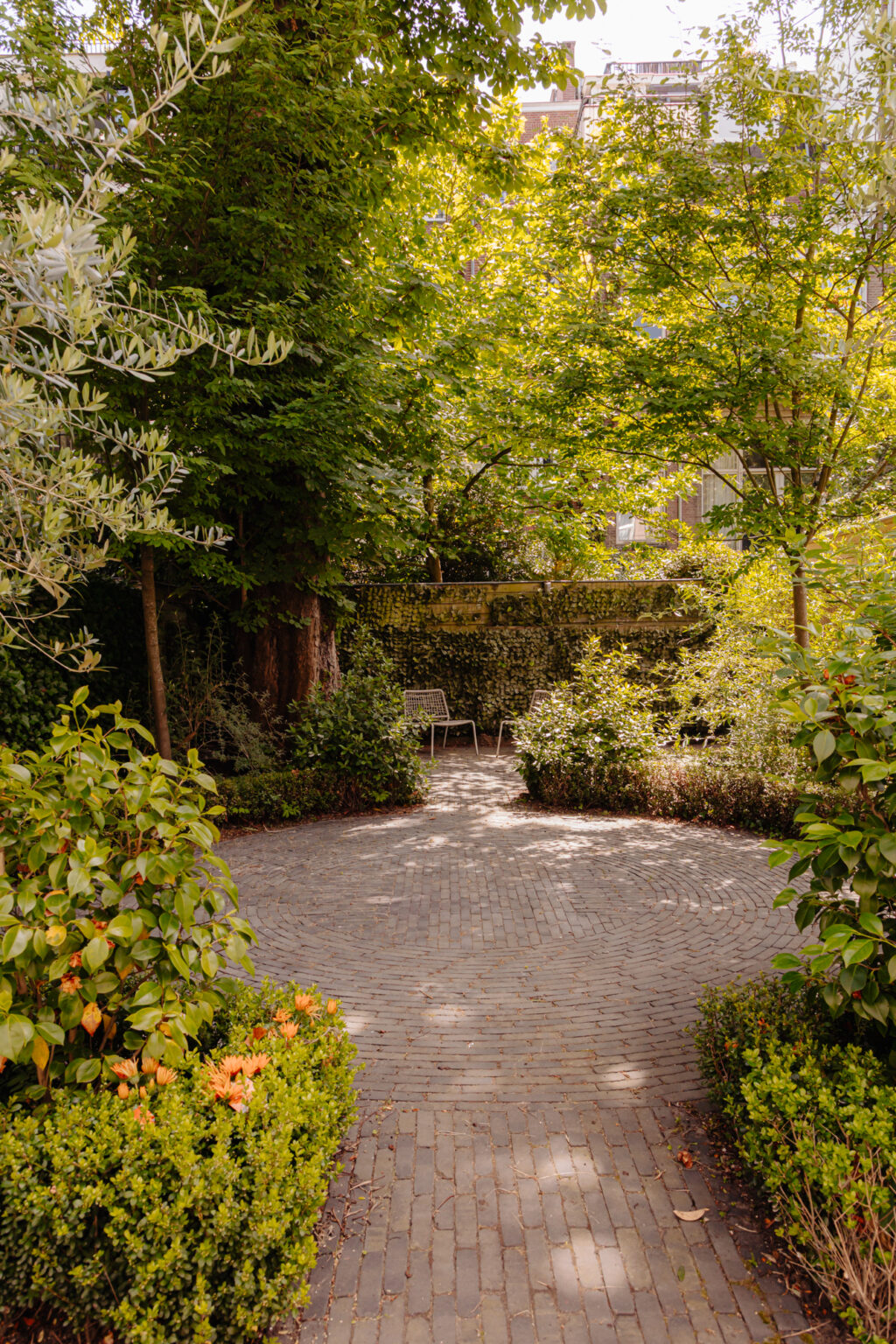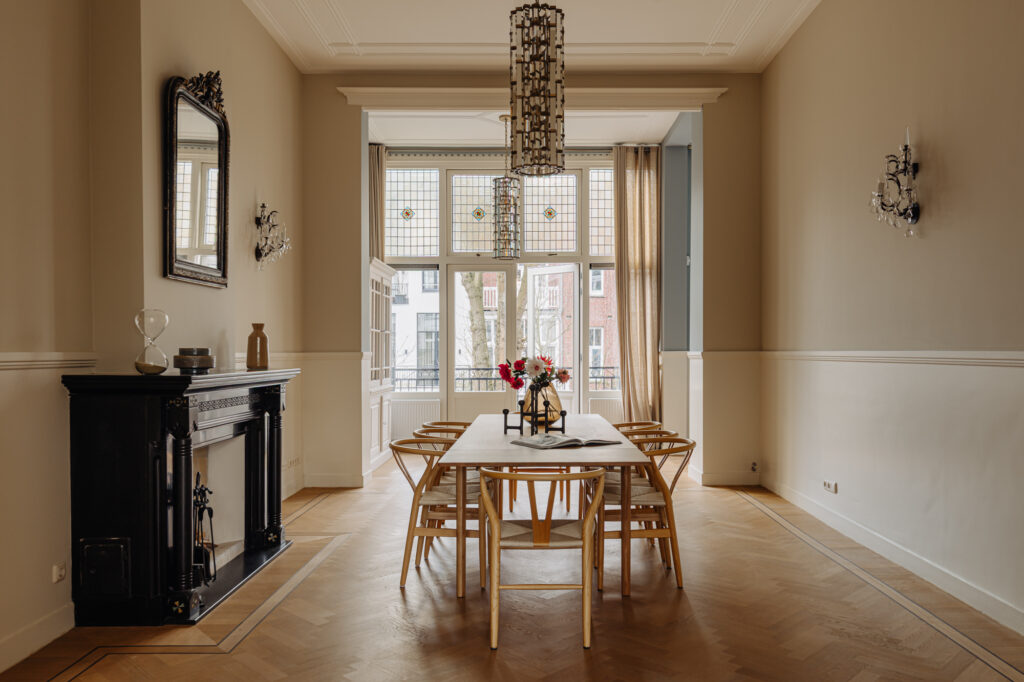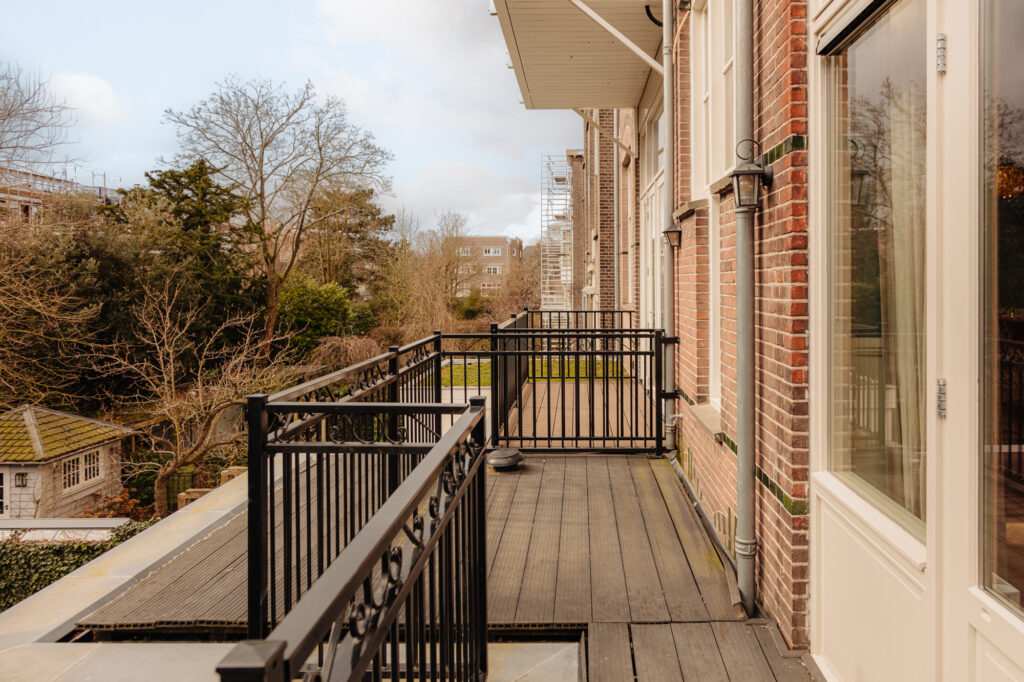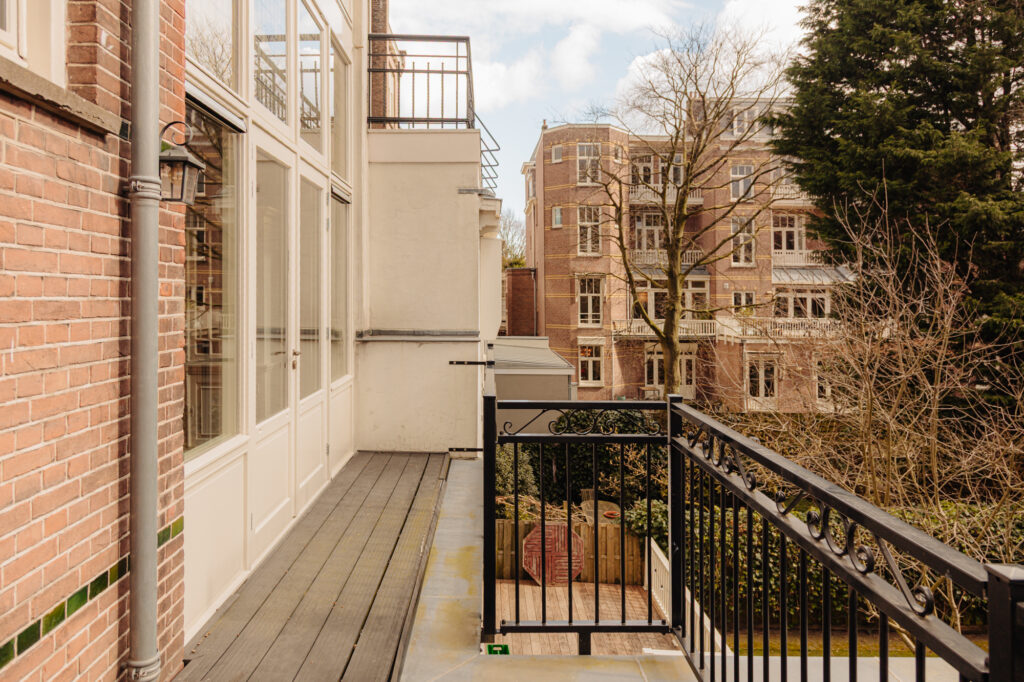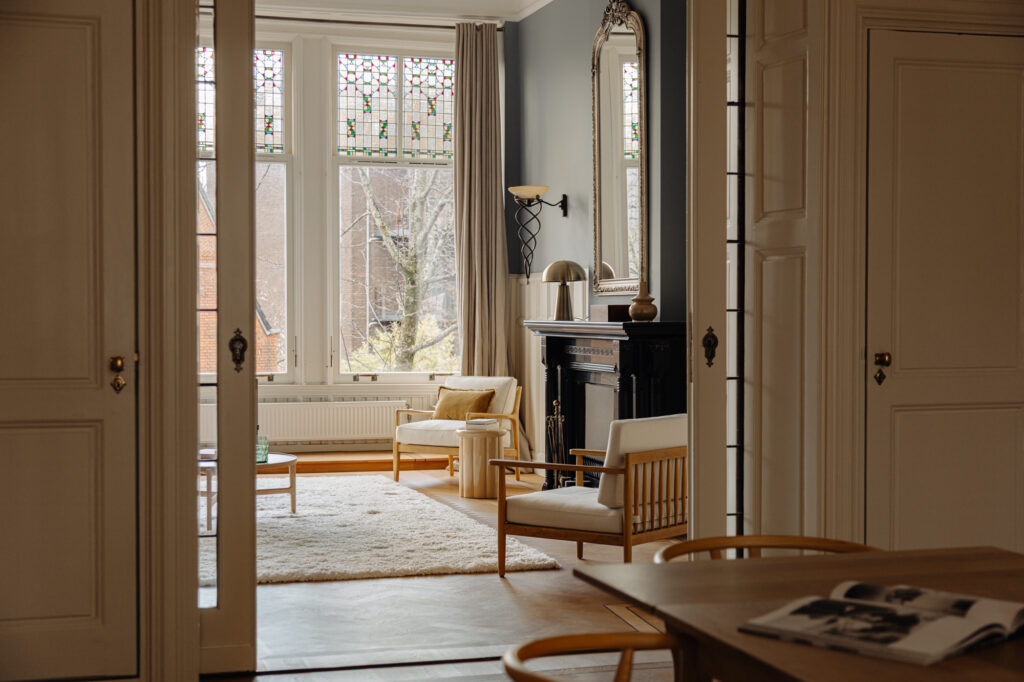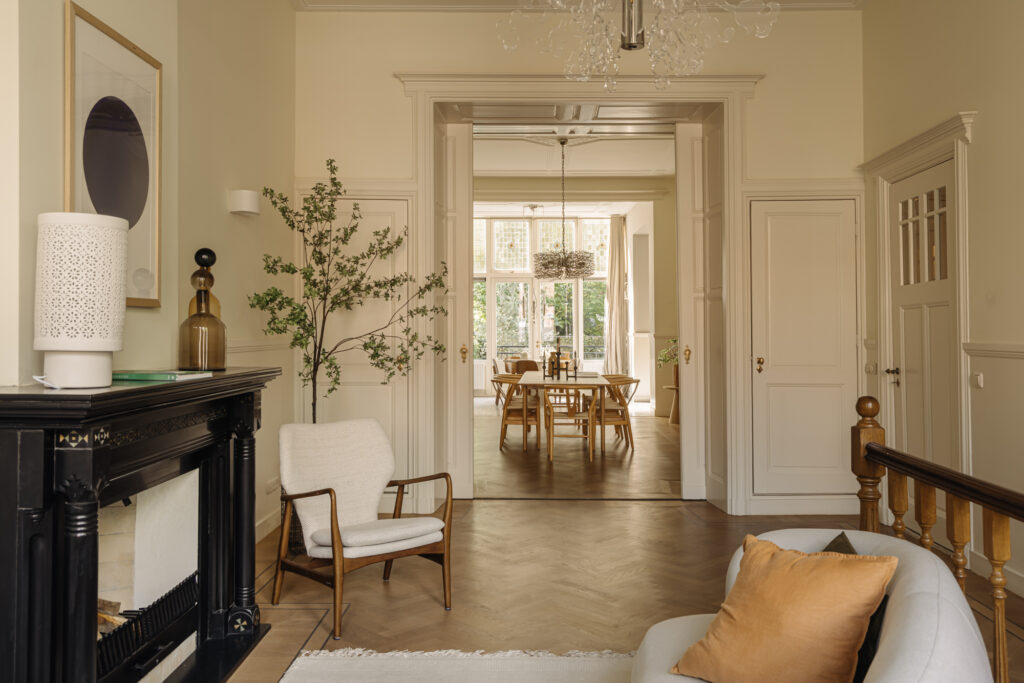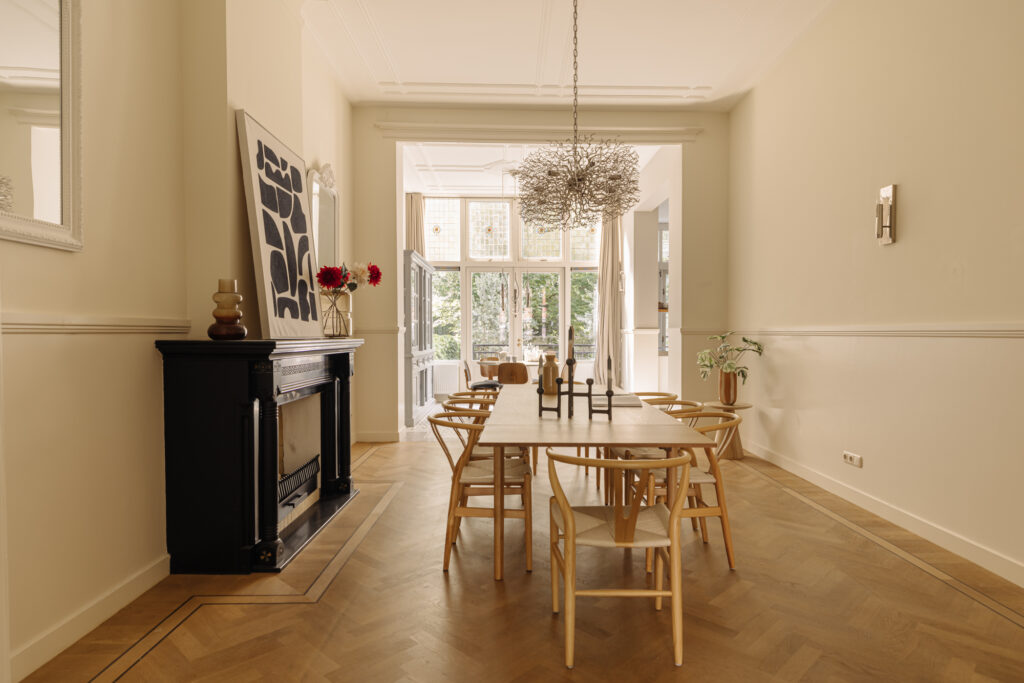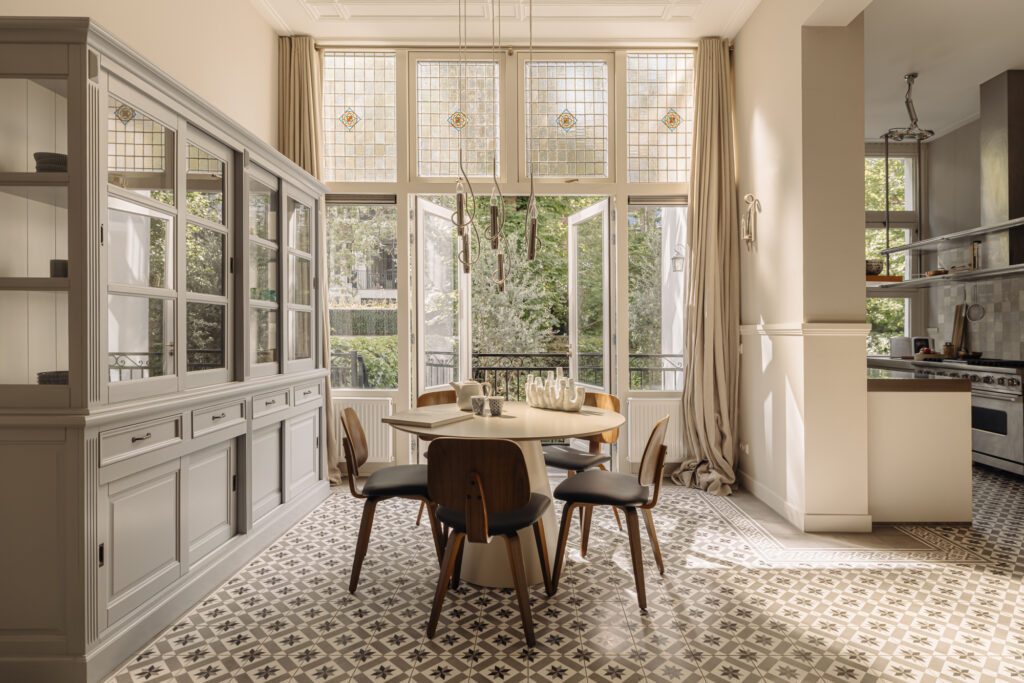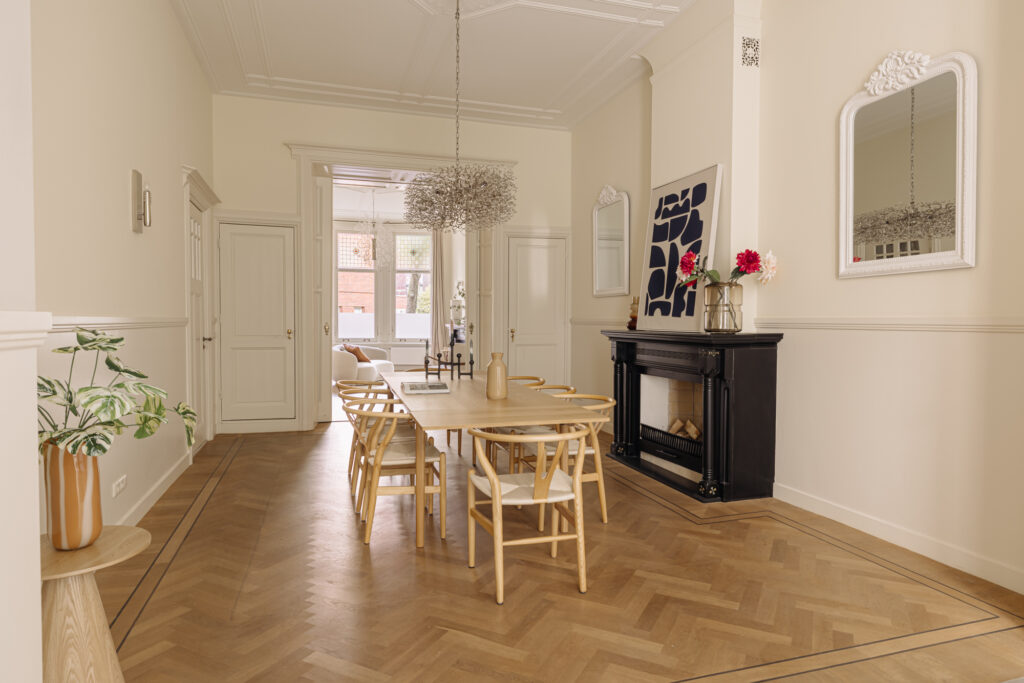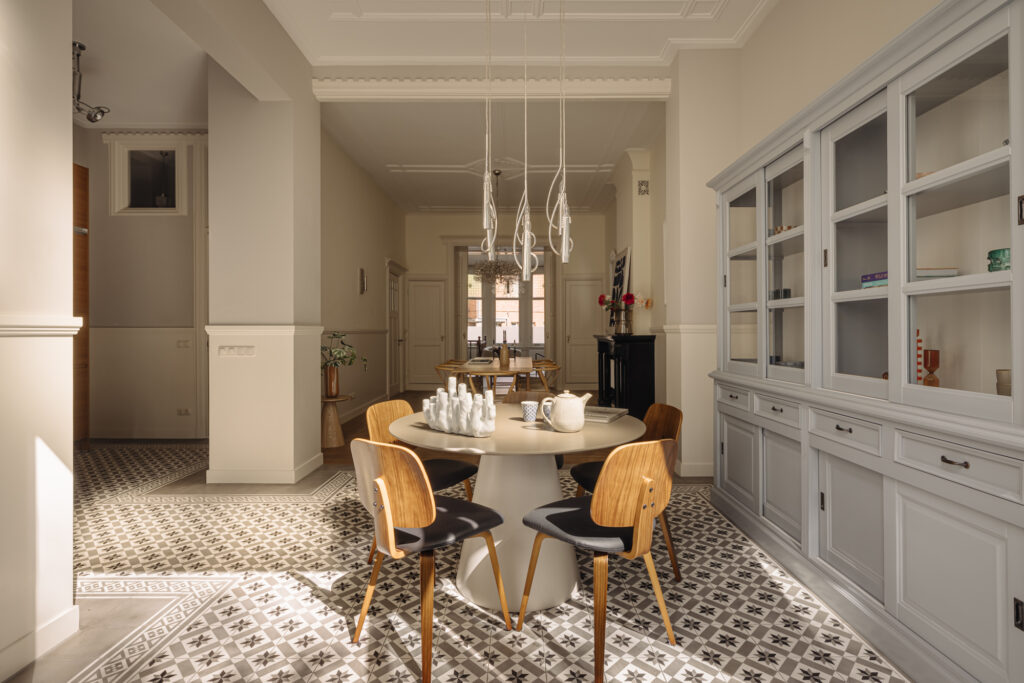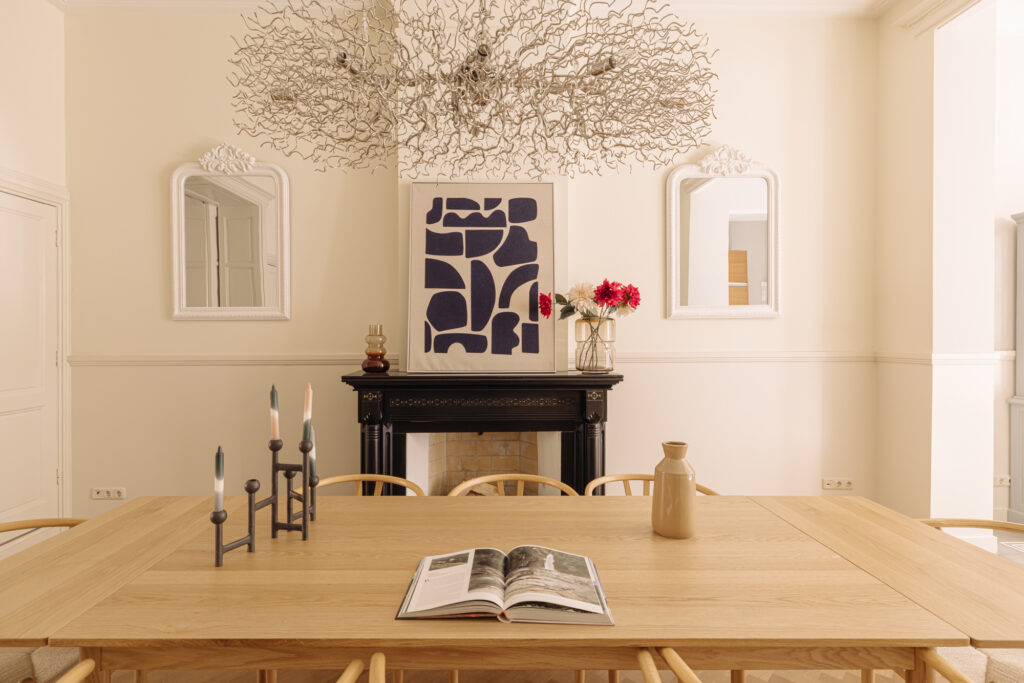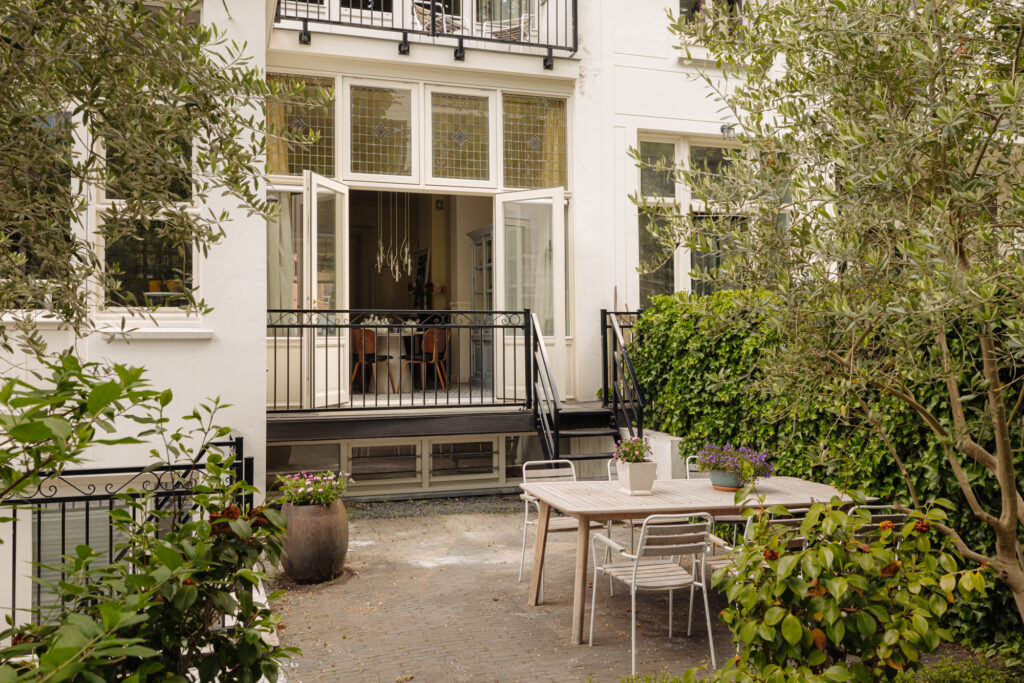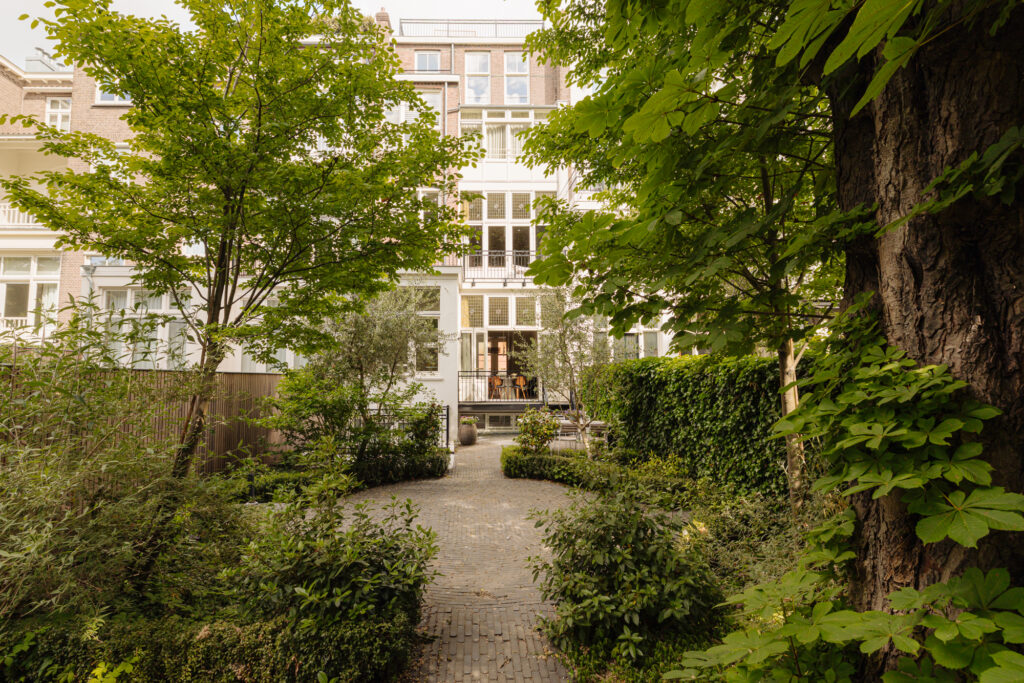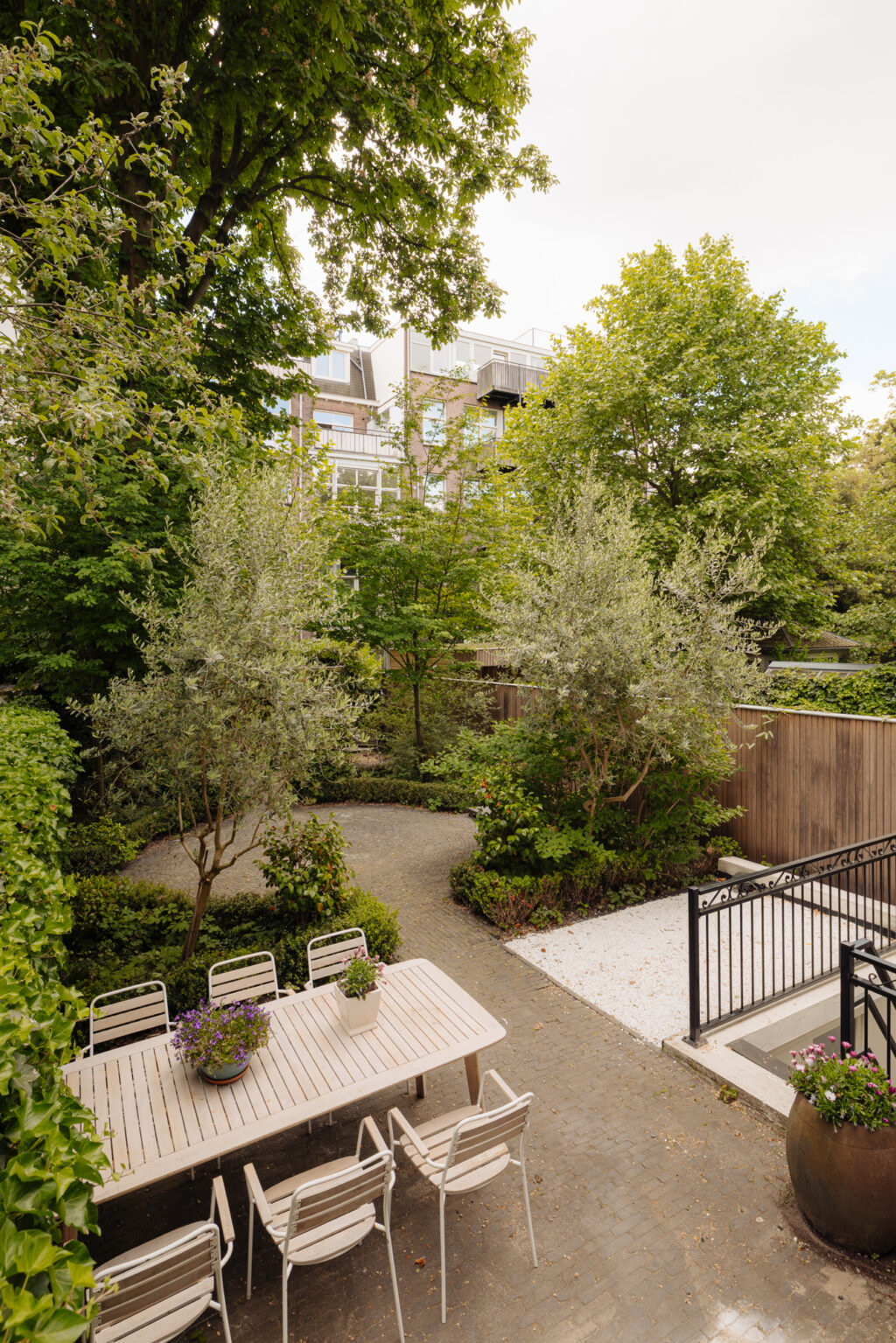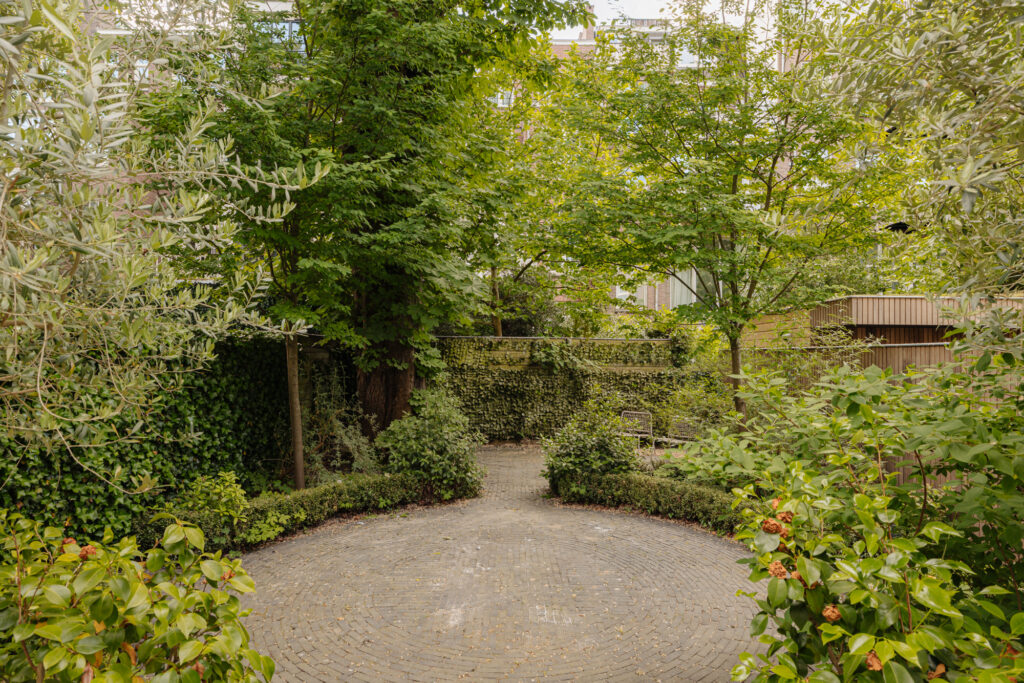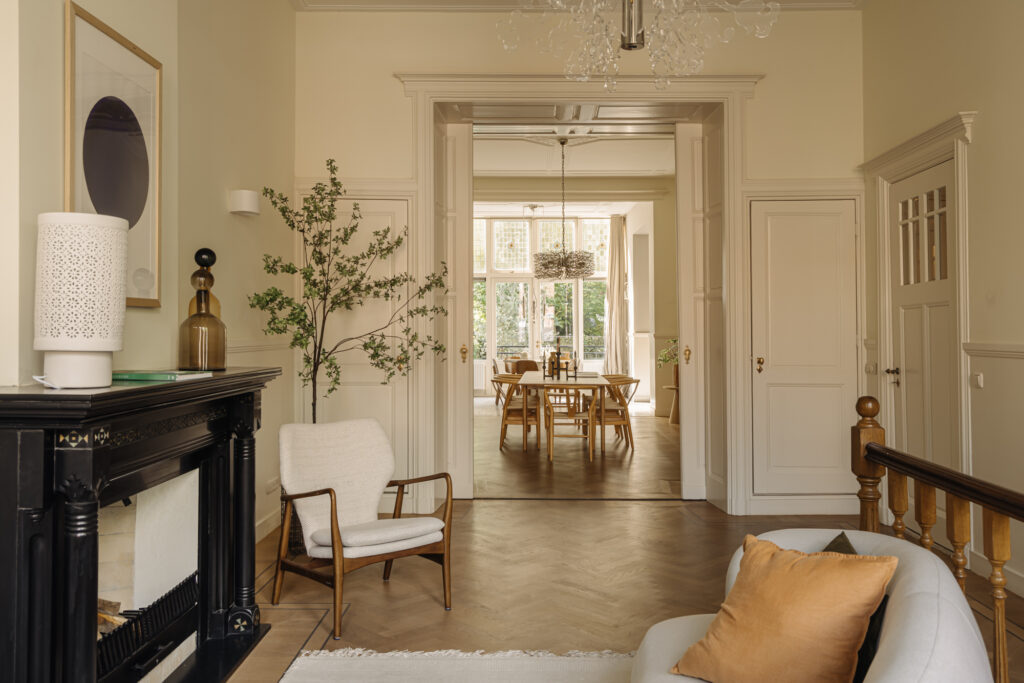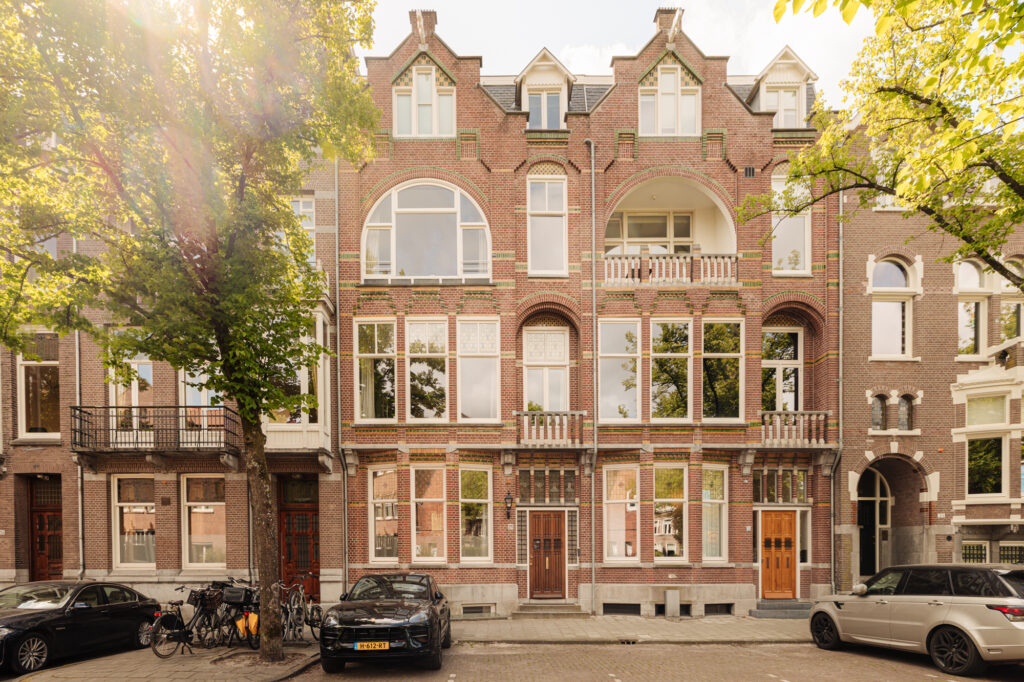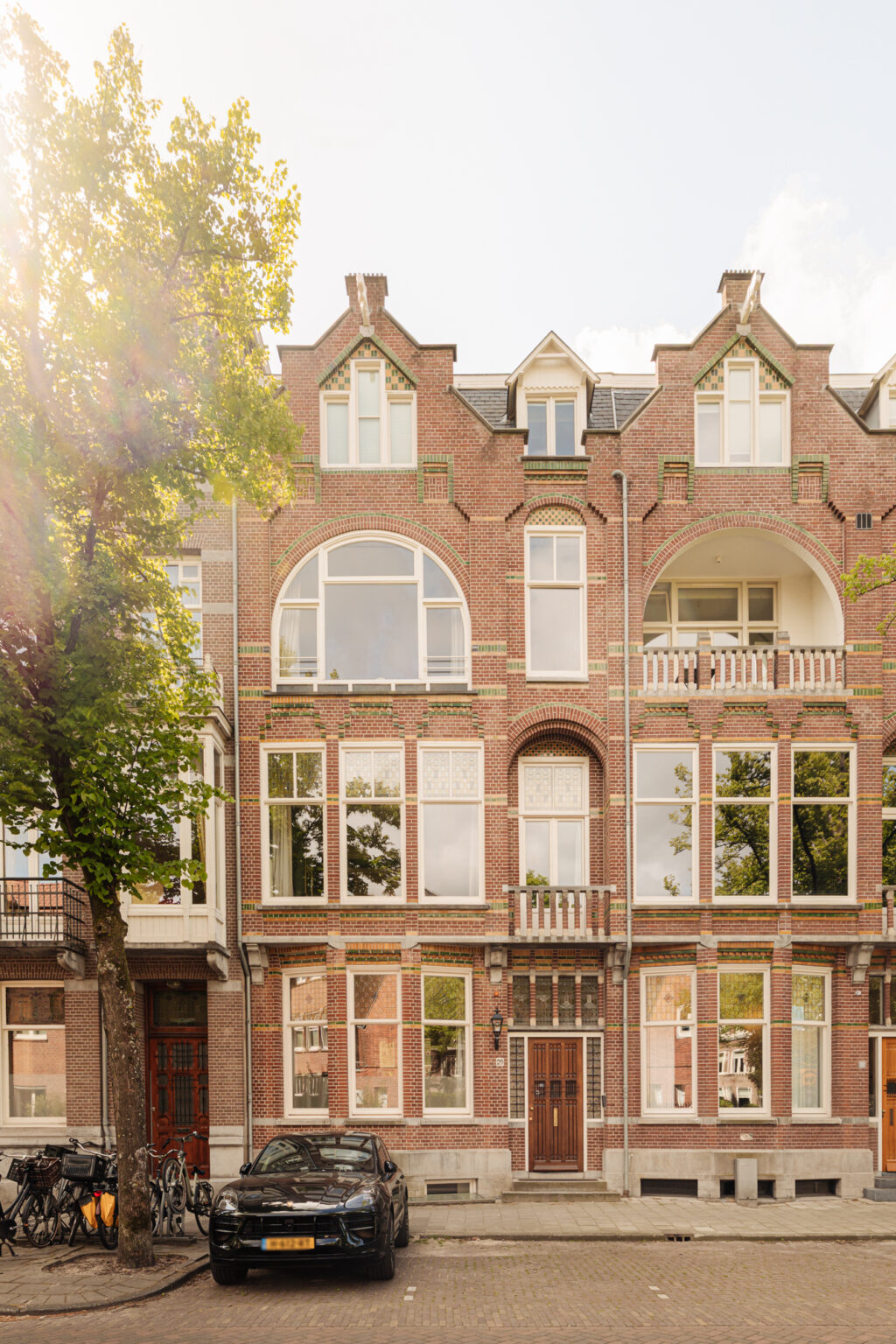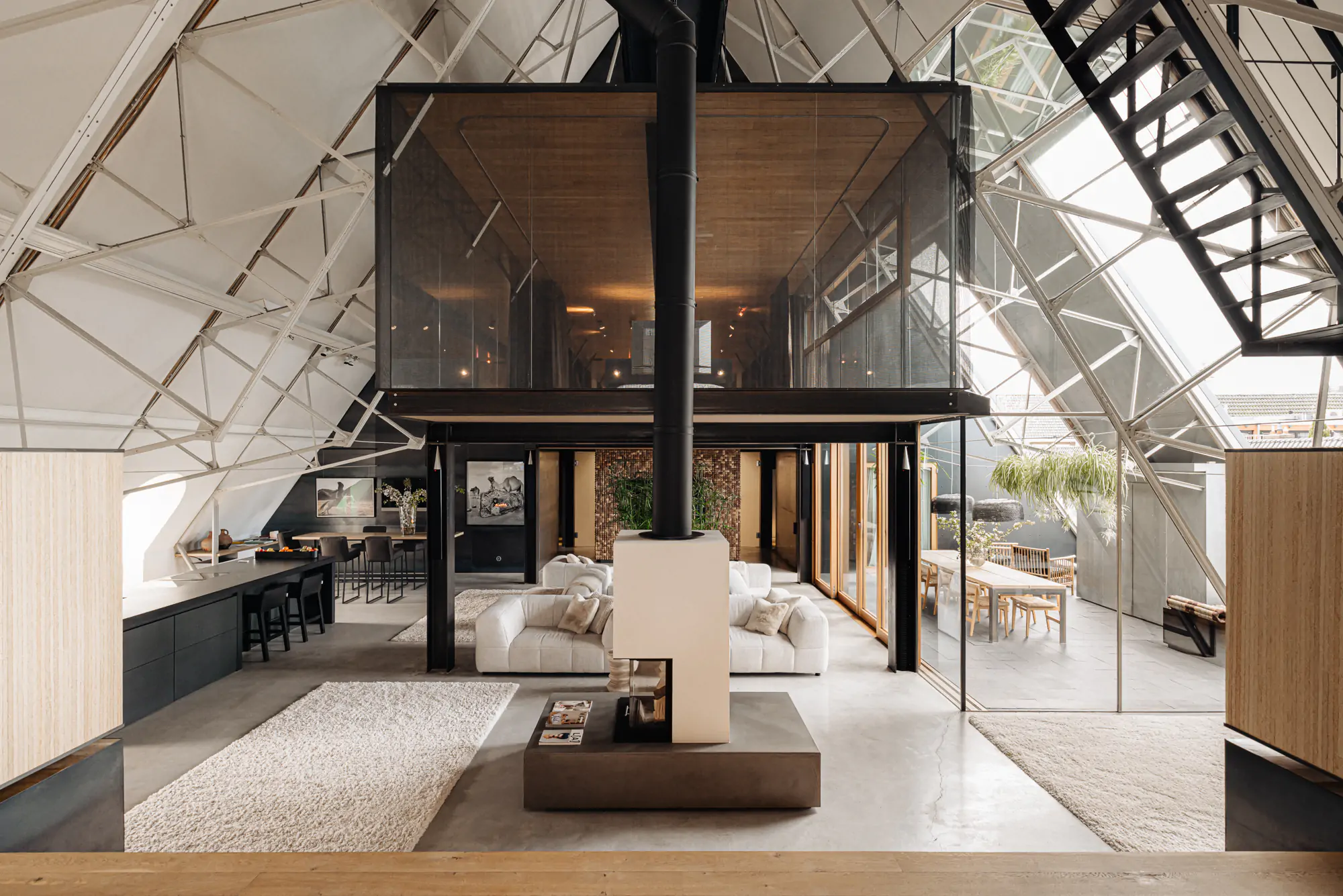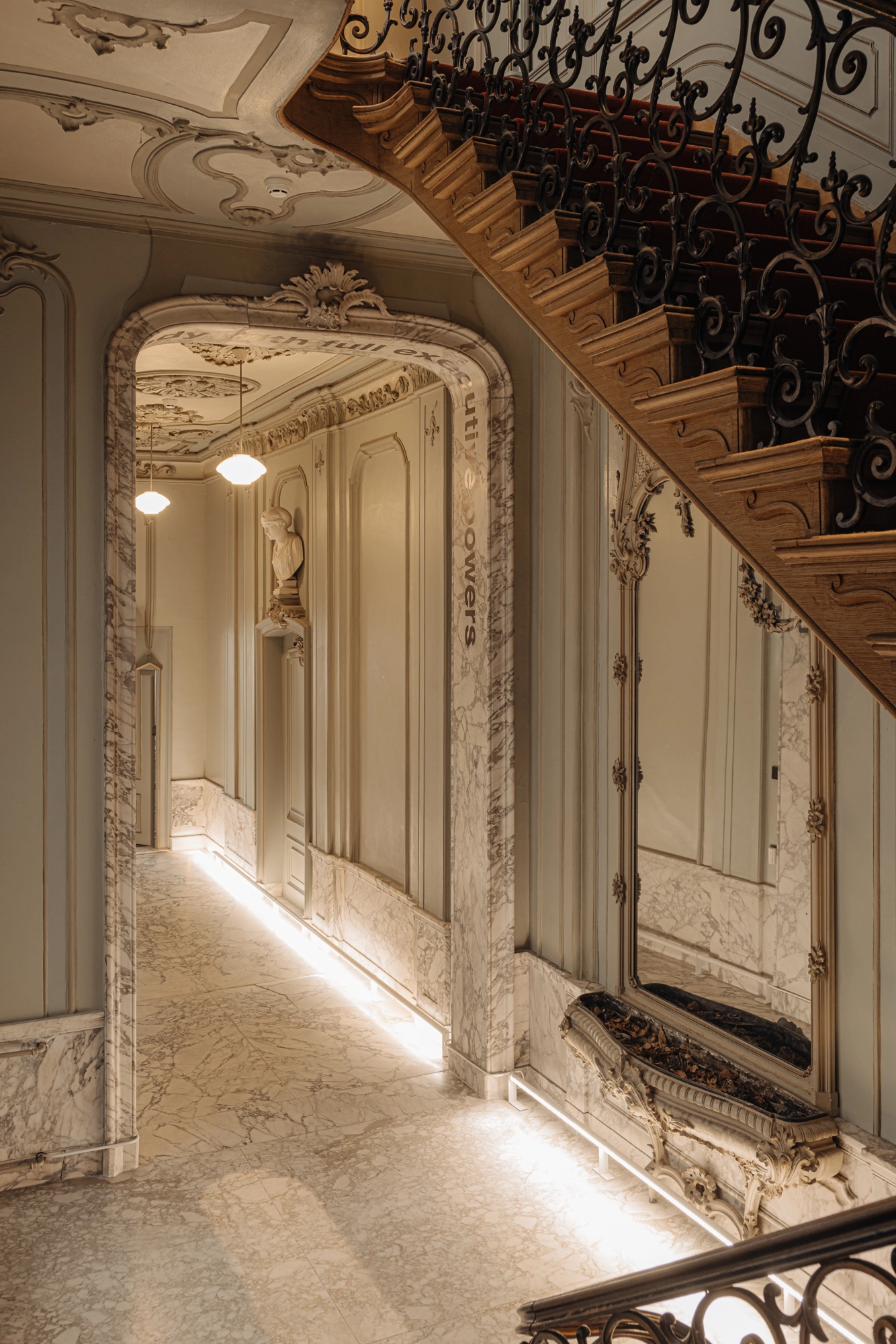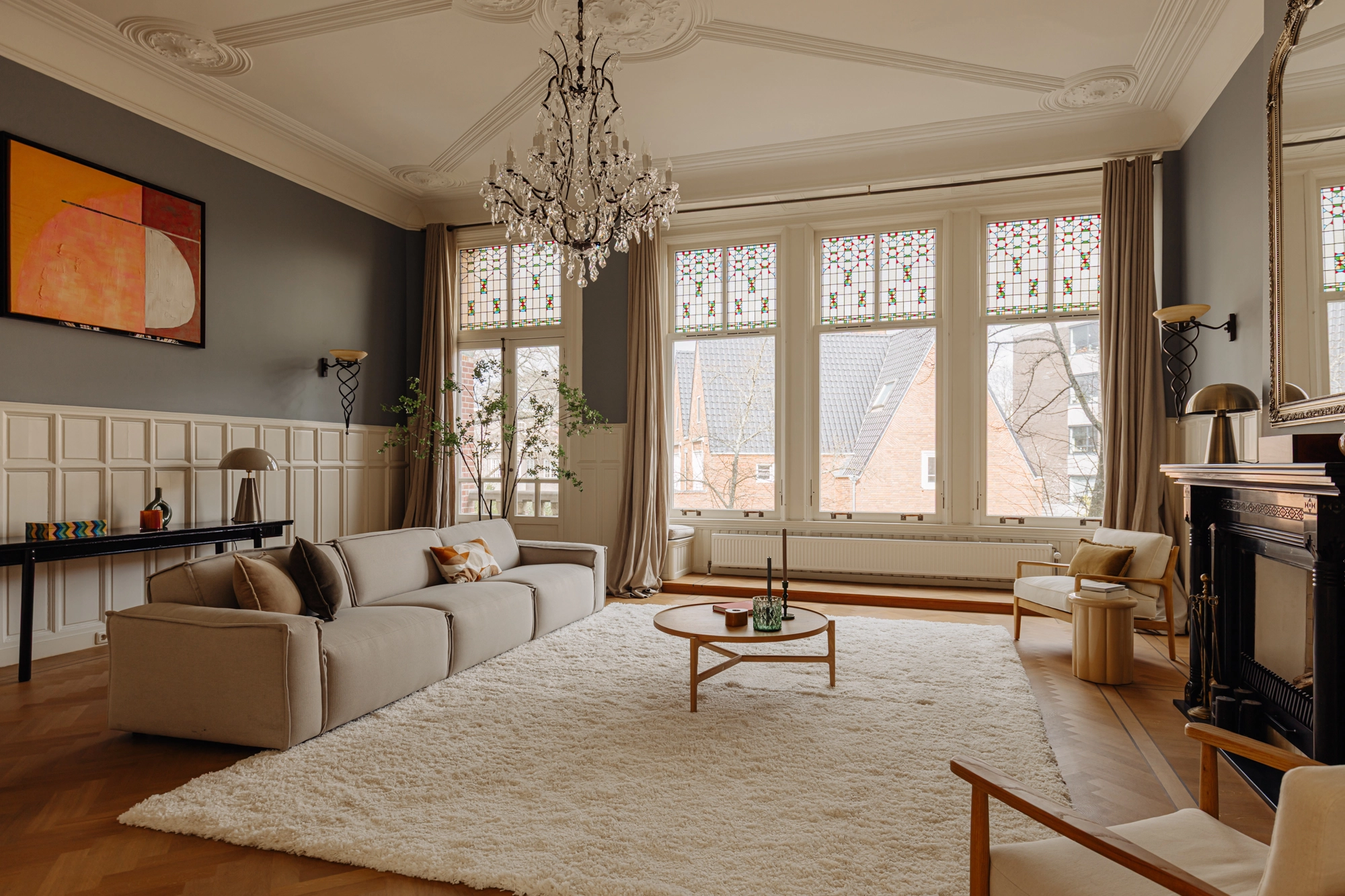
Oranje Nassaulaan 29 is a semi-detached residence designed by architect P.J. Perquin. With its entrance at street level, this property welcomes you with an impressive entrance hall. The house is grand and sophisticated, offering spaces that are perfectly suited for multifunctional use by a large family. The current owners have extensively renovated and expanded the property, including the addition of a fully habitable basement. Thanks to its high ceilings, large windows, and southern orientation, the house is always filled with natural light. In addition, the property not only boasts a delightful south-facing garden but also multiple sunny terraces and a spacious rooftop terrace. Living in the Willemspark neighborhood is a privilege—living in this house even more so.
Tour
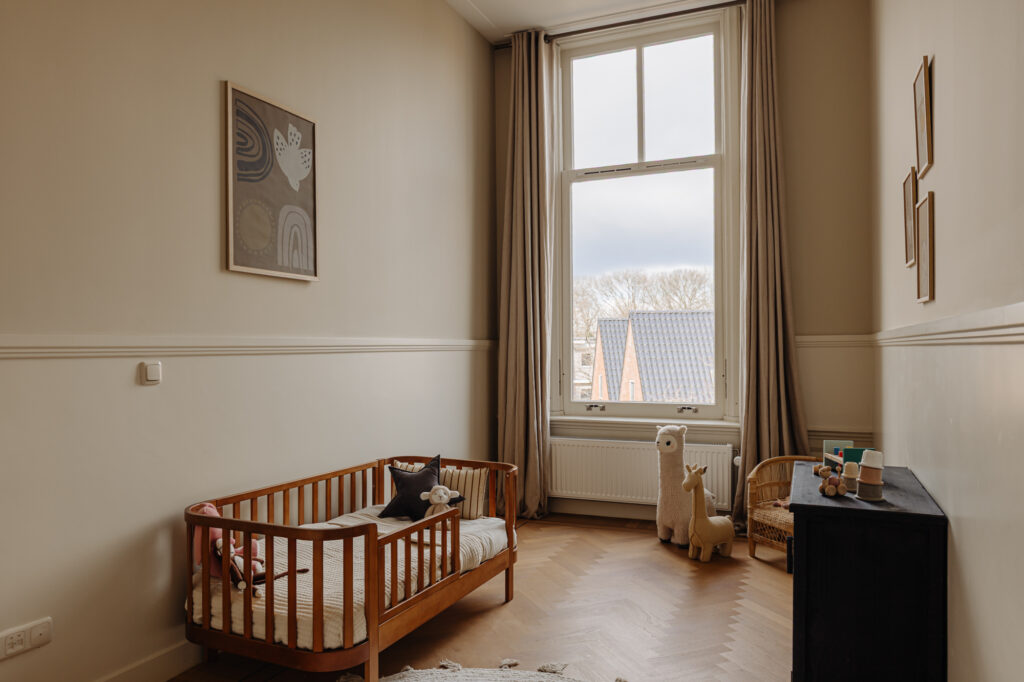
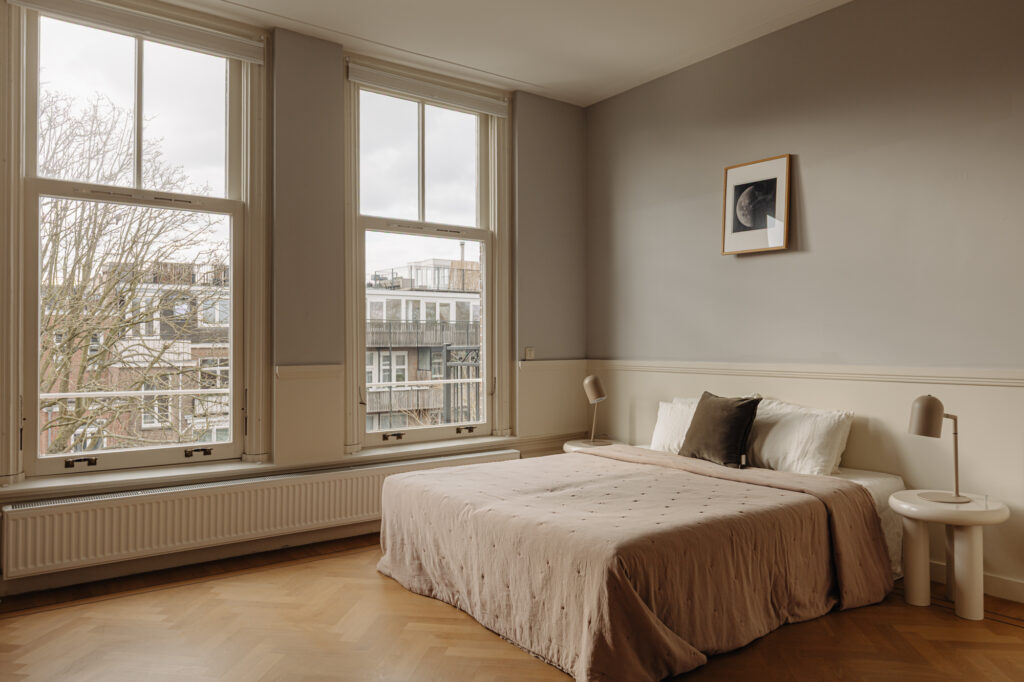
Het Huys van Oranje is a grand and spacious family home with early 1900s grandeur. Situated on a beautiful green avenue in the Willemspark neighborhood, this house offers everything one would expect. The detailing and dimensions confirm the status of the house, which boasts a striking and imposing facade. Upon entering and touring the house, the generous proportions are impressive, with large windows providing an abundance of light and expansive views. Spread over five generously designed floors, the house comprises a total of 13 rooms and offers approximately 514 m² of living space. The bel-etage and first floor form the main living areas, while the top two floors provide six bedrooms, a dressing room, and two bathrooms. For additional functionality, the spacious and bright basement offers options for a gym, yoga room, or home office. With an additional bathroom on this level, the space is also suitable for guests. The house underwent extensive modernization in 2016, including the renewal of the foundation and basement. During this renovation, the property was also sustainably upgraded and insulated, resulting in an energy label B. With a southern orientation, the property is not only exceptionally bright, but thanks to the multiple terraces, the garden, and a rooftop terrace, there are always opportunities to enjoy outdoor living. The garden, measuring over 15 meters in depth, is a true asset. Surrounded by greenery, it offers both tranquility and privacy. Living in the Willemspark neighborhood is both regal and residential, while urban amenities remain within easy reach, and the Vondelpark is just a short stroll away. For those who seek a refined and spacious home, this is an exceptional opportunity.
Neighborhood guide
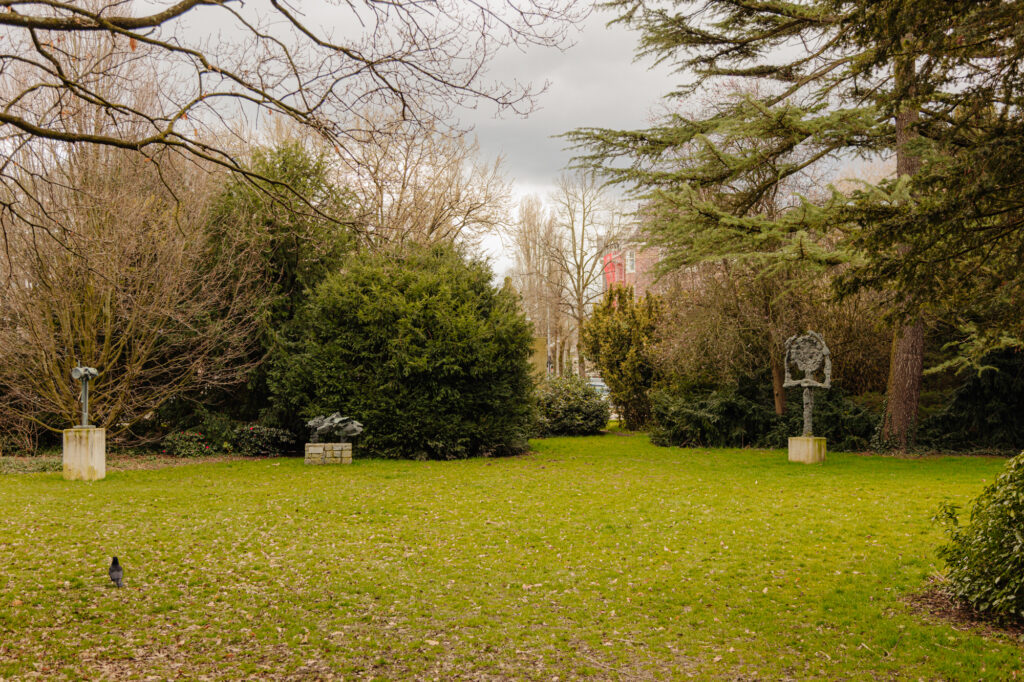
At the end of the 19th century, as Amsterdam's city center became increasingly crowded, the demand for a green neighborhood near the city center grew. Initiated by Van Eeghen, architect Zocher designed Willemspark in 1881, adjacent to Vondelpark. A few decades later, the first villas emerged around its ponds. Elegant buildings in classic architectural styles welcomed affluent families to this quieter, greener part of the city. The grandeur of that era remains intact today. Most buildings have been renovated, and the tree-lined avenues and green spaces have matured as originally envisioned. Both the residents and the culinary scene—featuring the likes of Vlaamsch Broodhuys, chocolatier Linnick, greengrocer Wessels, Michelin-starred restaurant Ron Gastrobar, the French seafood restaurant VISQUE, and several gourmet delicatessens—contribute to the neighborhood’s contemporary allure. Located between Vondelpark, Koninginneweg, and Amstelveenseweg, with the Museum Quarter within walking distance, this unique oasis within Amsterdam offers a perfect balance of relaxation and inspiration.
Specifications
• Living area approximately 514 m²
• South-facing terraces and rooftop terrace totaling approximately 91 m²
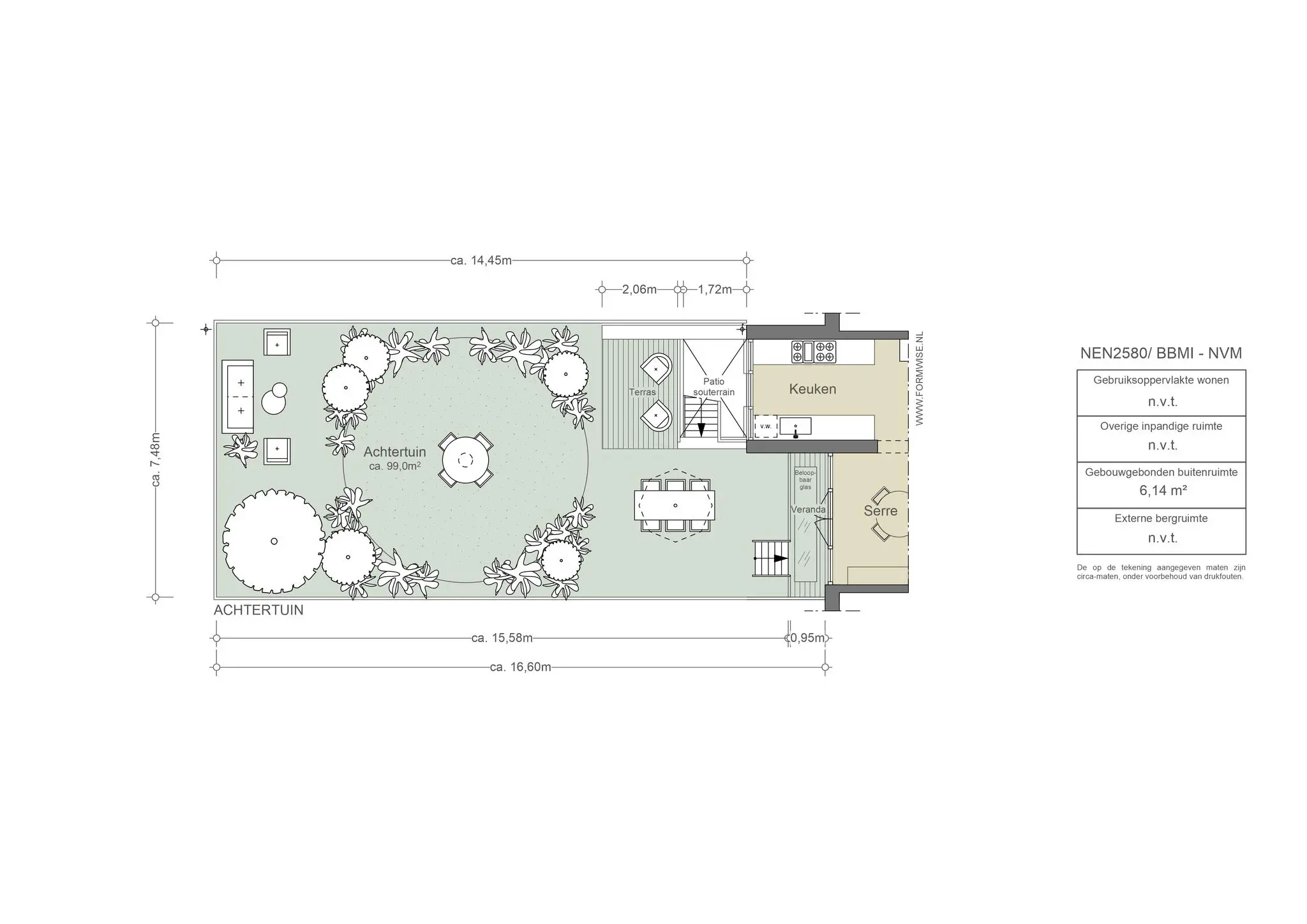
• South-facing garden of approximately 99 m²
• Situated on freehold land
• Energy label B
• Designed by architect P.J. Perquin
• Foundation and basement renewed in 2016
• Designated as a municipal protected cityscape
Het Huys van Oranje
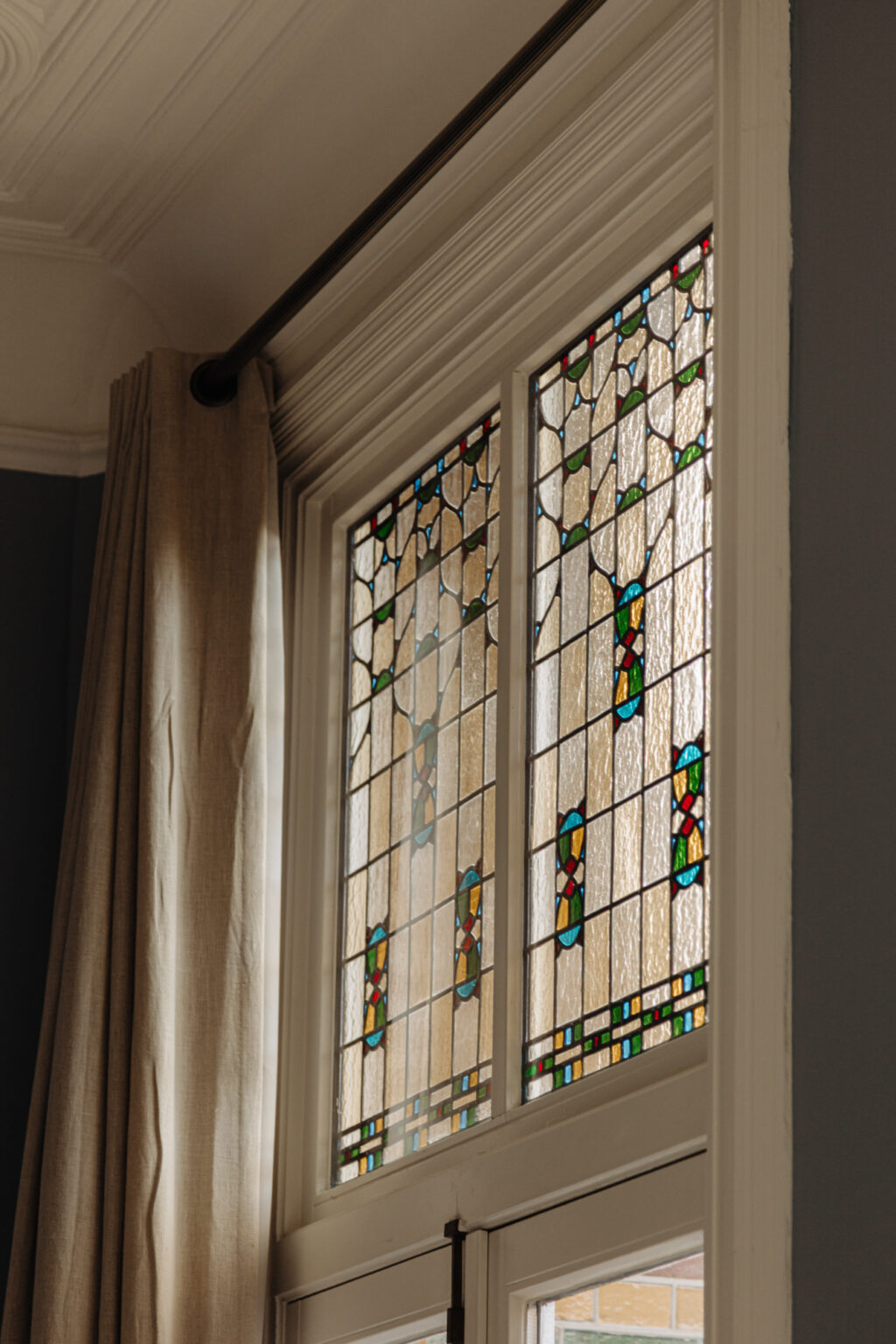
The uneven side of the Oranje Nassaulaan is characterized by distinguished houses, built in blocks of four or six in the same architectural style. Oranje Nassaulaan 29 is part of a twin block designed by architect P.J. Perquin. Entirely in the fashion of around 1910, when golden standards in proportions were applied, and detailing was still rich and classical. These buildings give the street character, and number 29 is no exception. This house, with its entrance at street level, welcomes you with an impressive entrance hall. Every time I have entered this house over the past years, I have been struck by its grandeur once again. This feeling repeats itself time and time again – not just upon entering but throughout the entire home. This house is grand and mature, with spaces perfectly suited for multifunctional use by a large family. The current owners have thoroughly renovated and expanded the property, including a well-designed and livable basement. With high ceilings, large windows, and a southern exposure, this is a home where natural light always floods in. In addition to a lovely south-facing garden, the house also offers multiple sunny terraces and a spacious rooftop terrace. Living in the Willemspark neighborhood is a privilege – and living in this house even more so.
Kees Kemp | Real Estate Agent Broersma Residential
Kees Kemp | Makelaar Broersma Wonen
Ronald van de Bijl | Makelaar Broersma Wonen
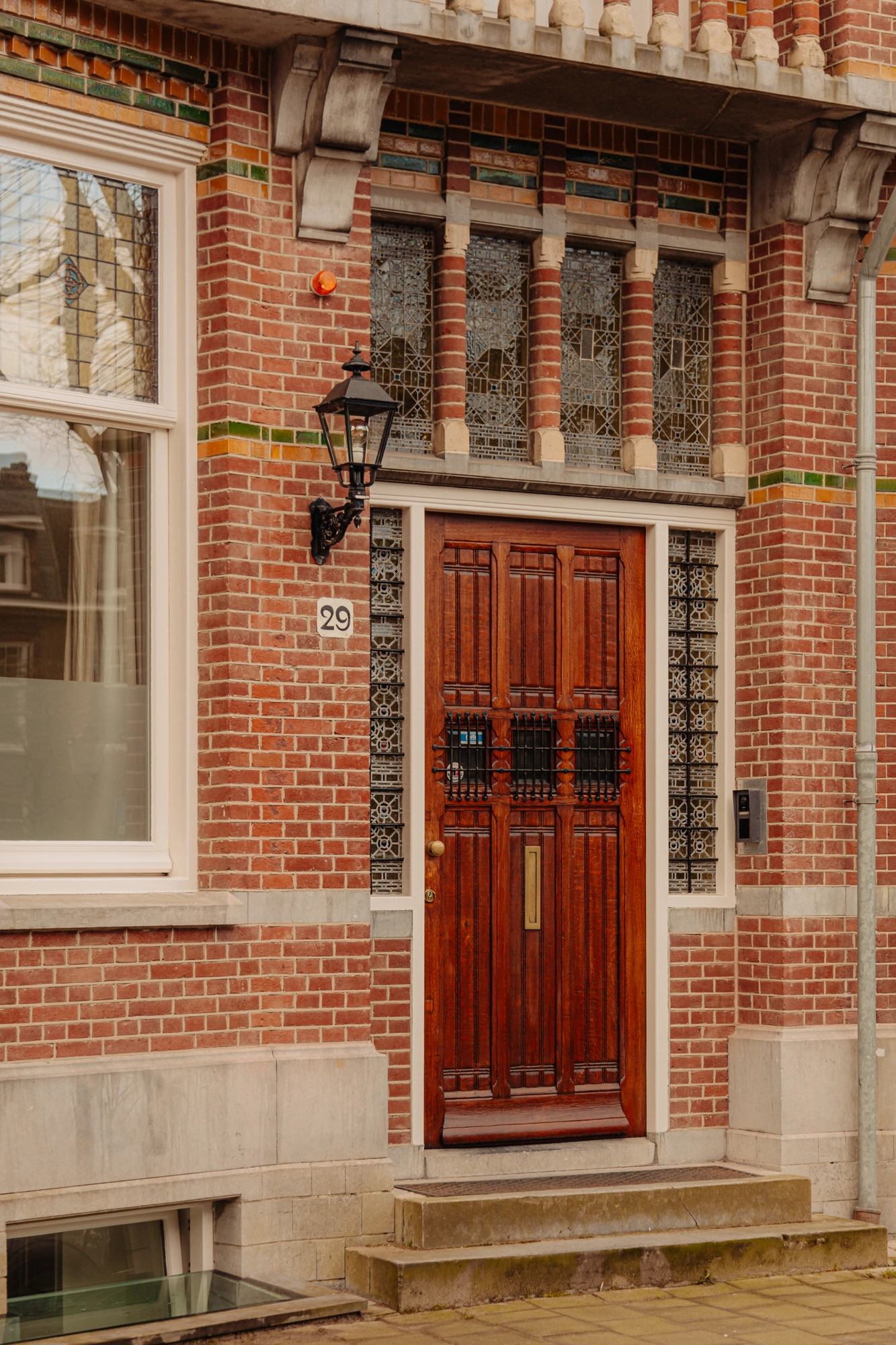
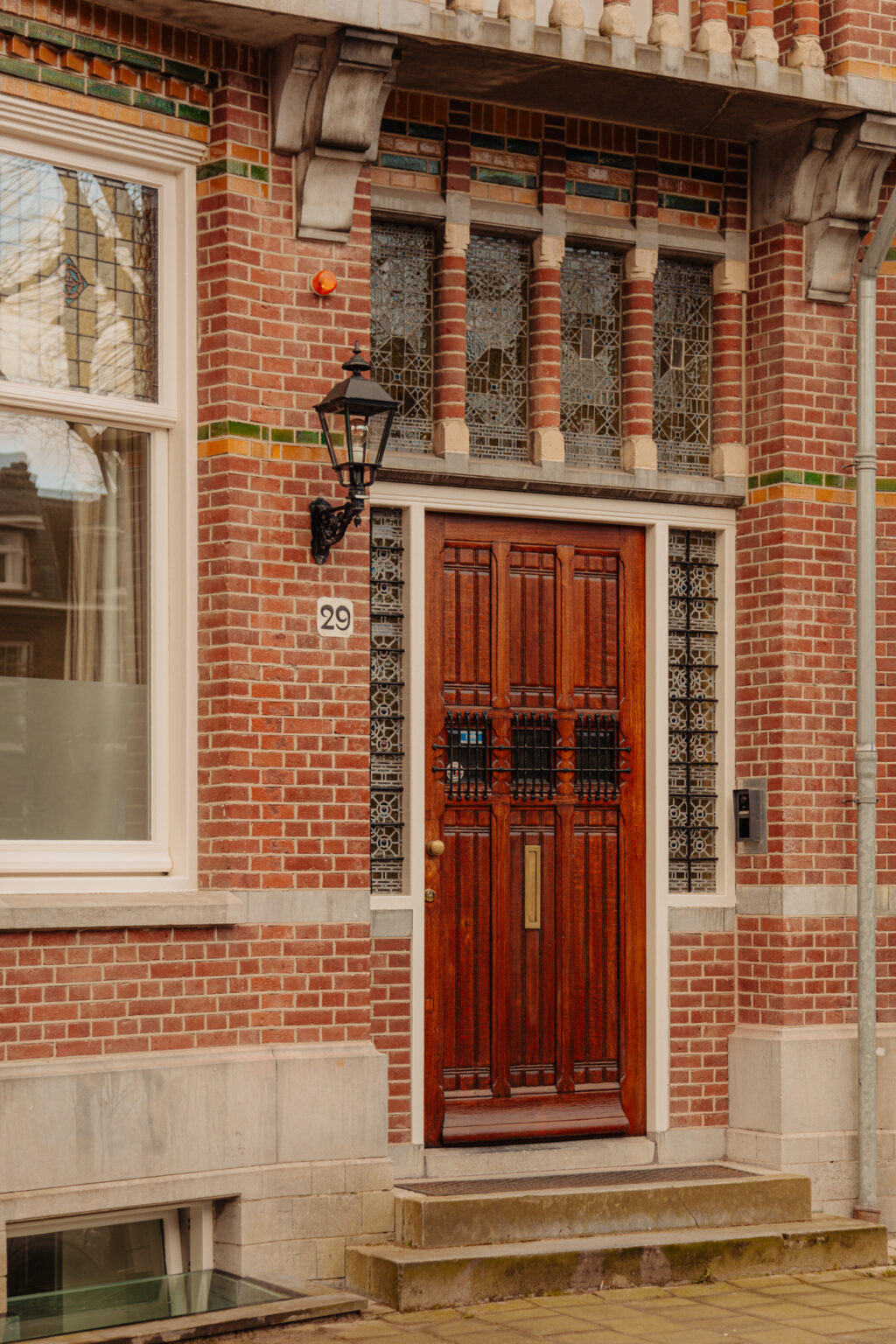
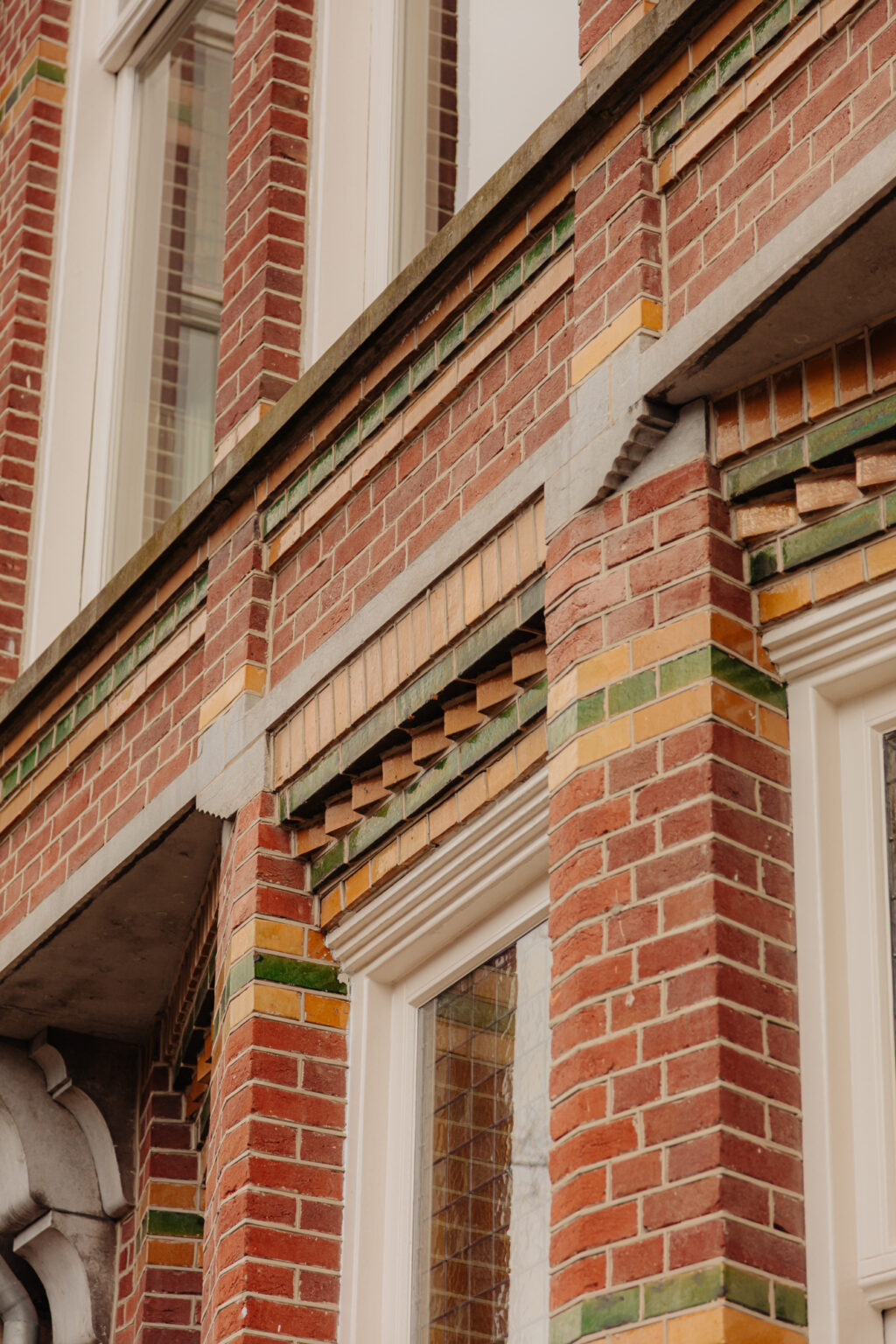
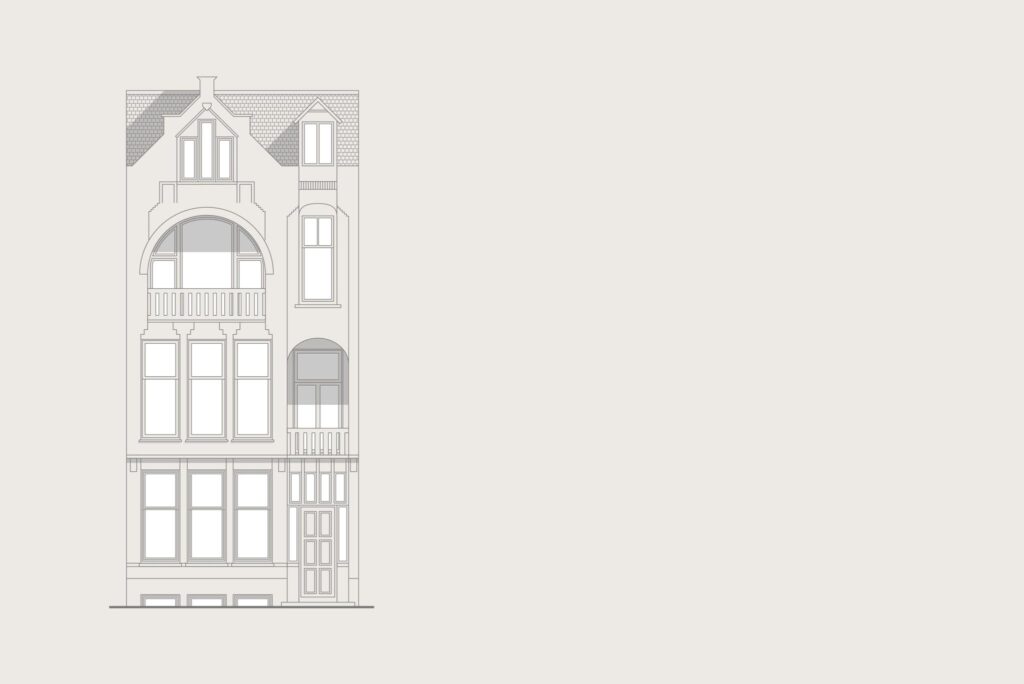
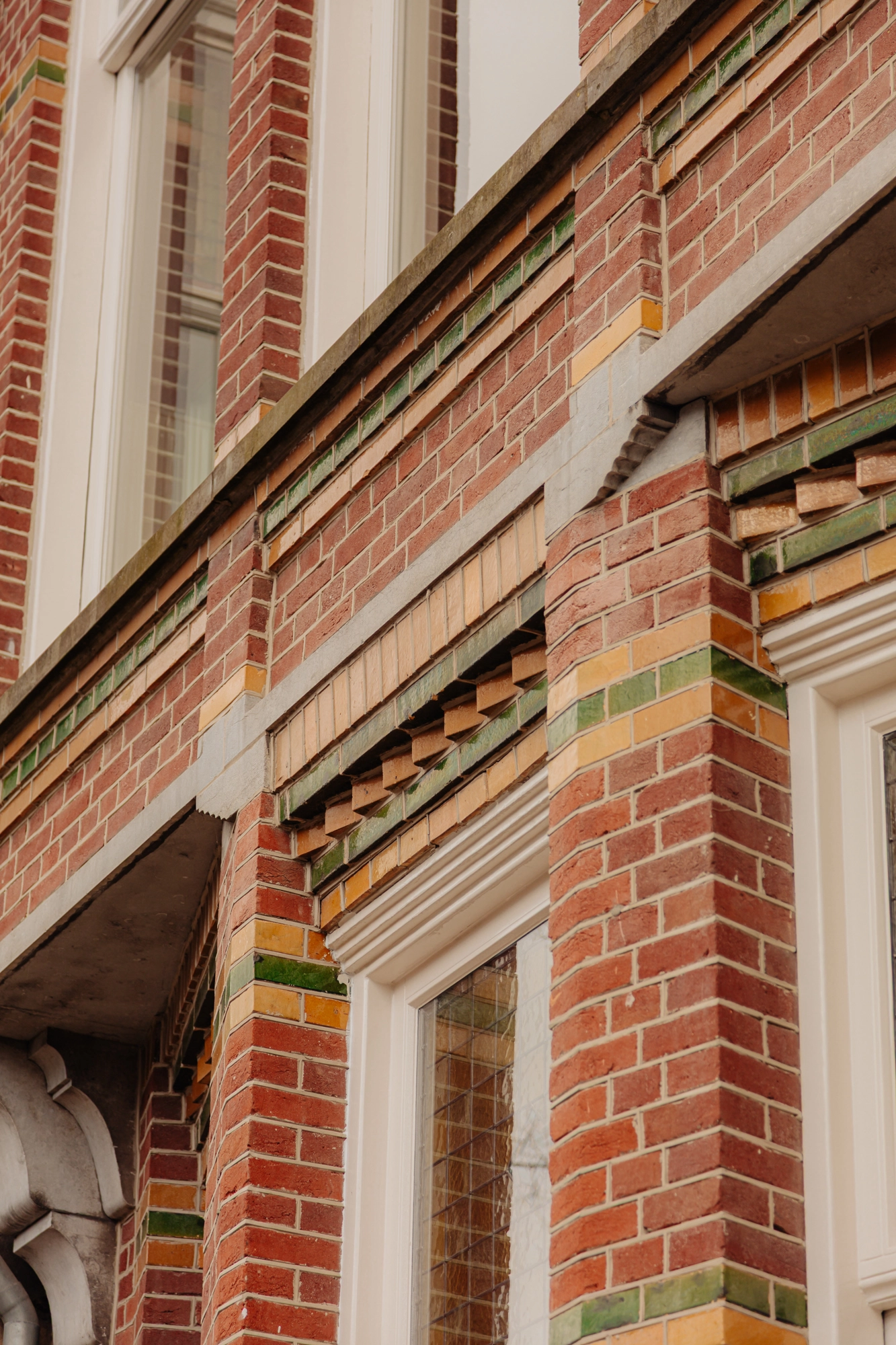
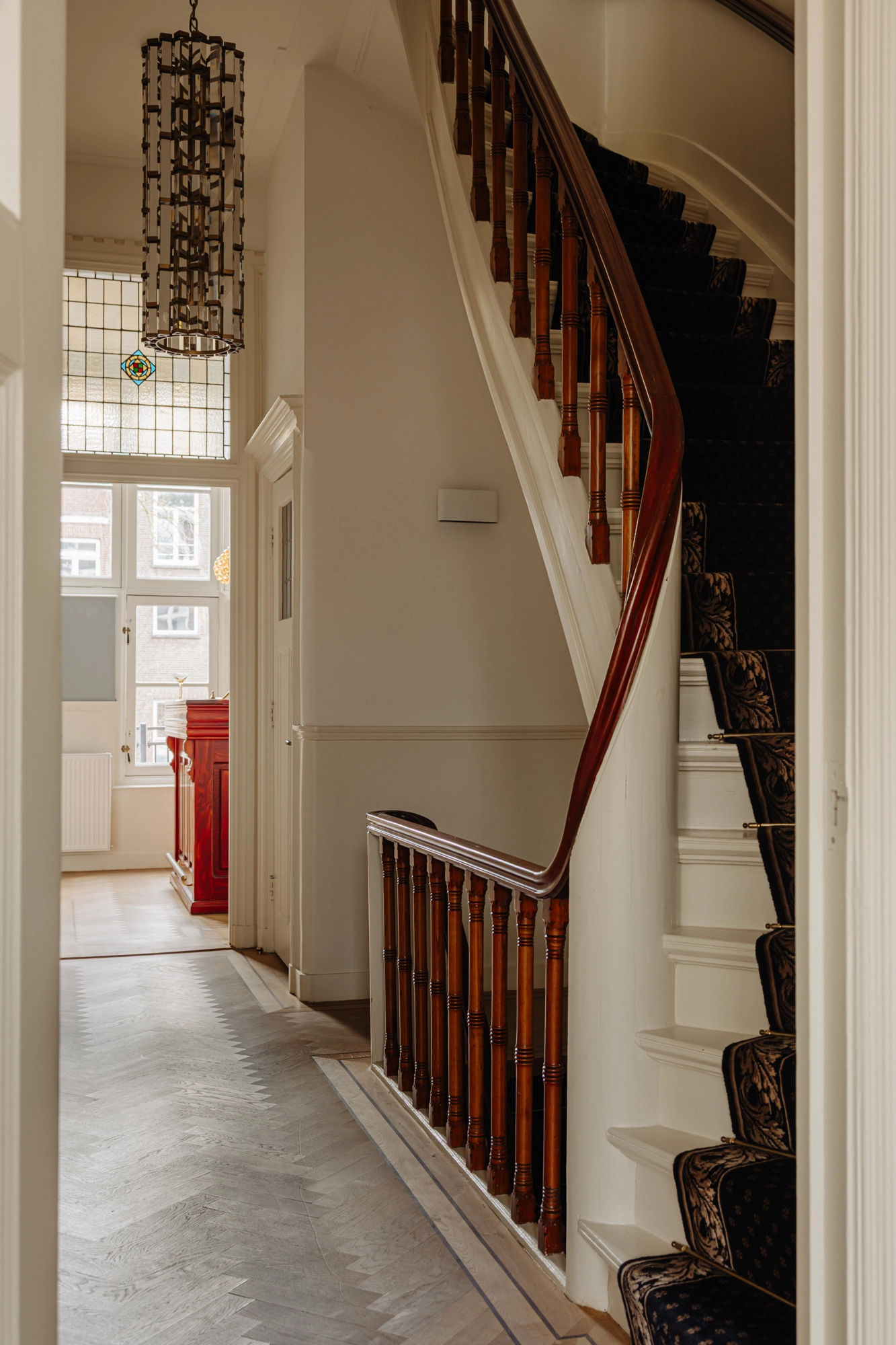
As part of a “twin,” Oranje Nassaulaan 29 and 31 were designed around 1904 by architect P.J. Perquin. At the time, he was an architect whose designs were inspired by Jugendstil. Around the fin de siècle, this style defined trends in architecture, art, and fashion. This was a continuation of Art Nouveau, which was more playful in decoration and based on forms from nature, romance, and vitality. Art Deco, which emerged later, was more symmetrical and figurative. This style was also influenced by Chinese and African materials and moldings. Perquin designed two stately townhouses in this style, featuring an elegant and distinguished façade. The use of brickwork, wooden moldings, bay windows, and balconies enhances the façade’s character. It combines both arches and strict symmetrical angles and divisions. Both houses stand out positively compared to the more modest buildings further down the street. Another distinctive feature of the house is its entrance at street level. Although the ground floor is slightly elevated, it is less so than in neighboring buildings. As a result, fewer steps are needed to reach the ground floor and raised ground floor, allowing for greater interaction with the garden. The architecture and construction methods of that era guarantee generous dimensions and high ceilings. Furthermore, the entrance and staircase exude an impressive elegance. Despite several renovations, the house has beautifully retained its original appearance, with the characteristic colors on the front façade that are also reflected throughout the property.
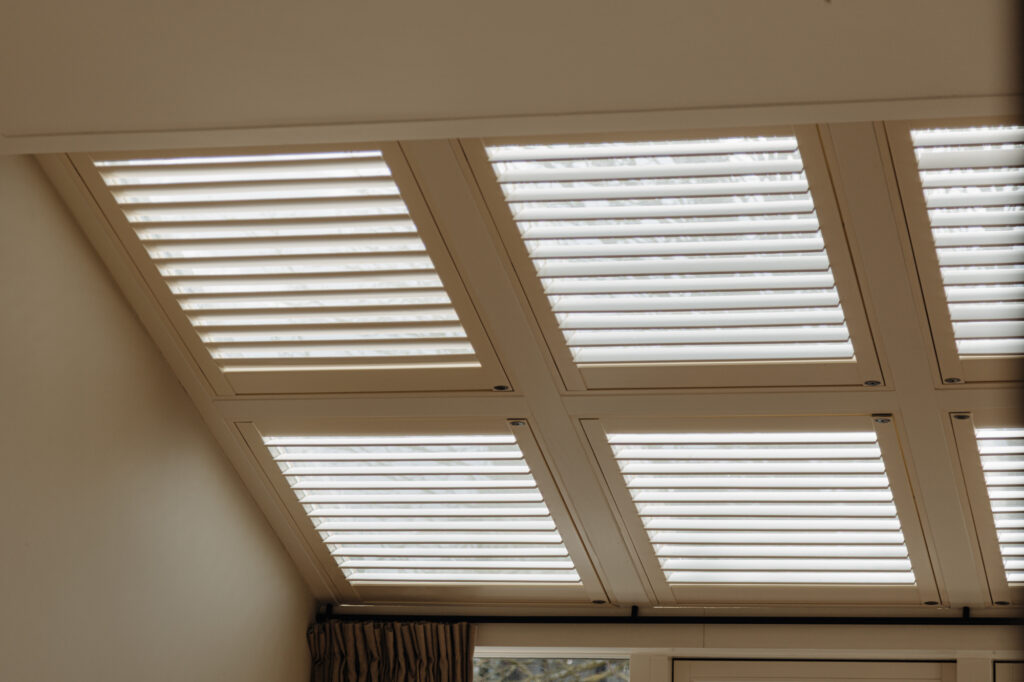
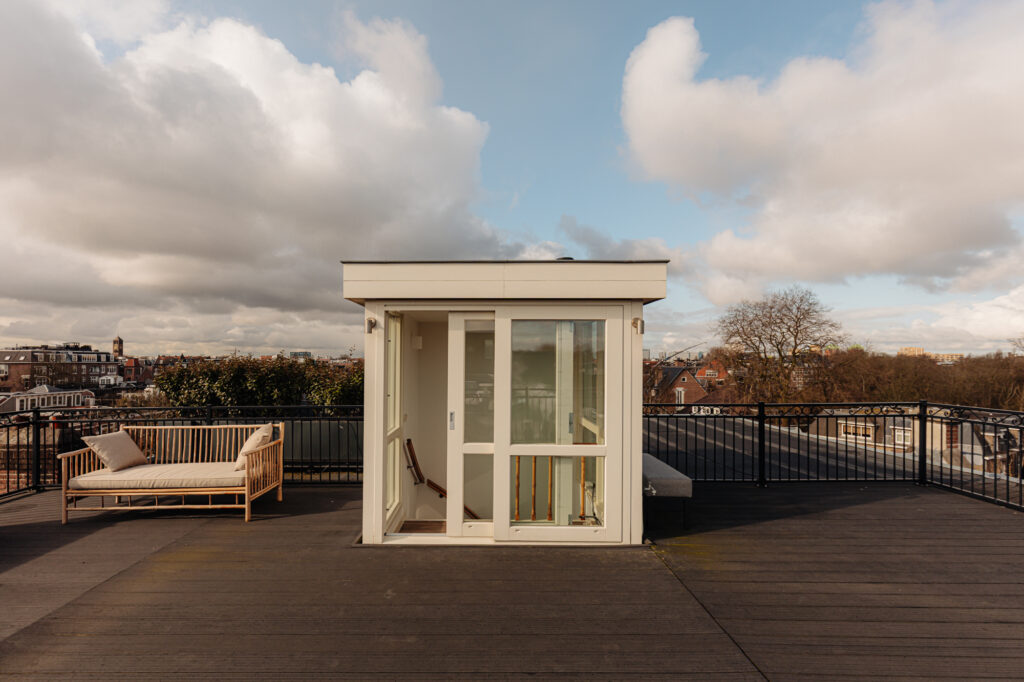
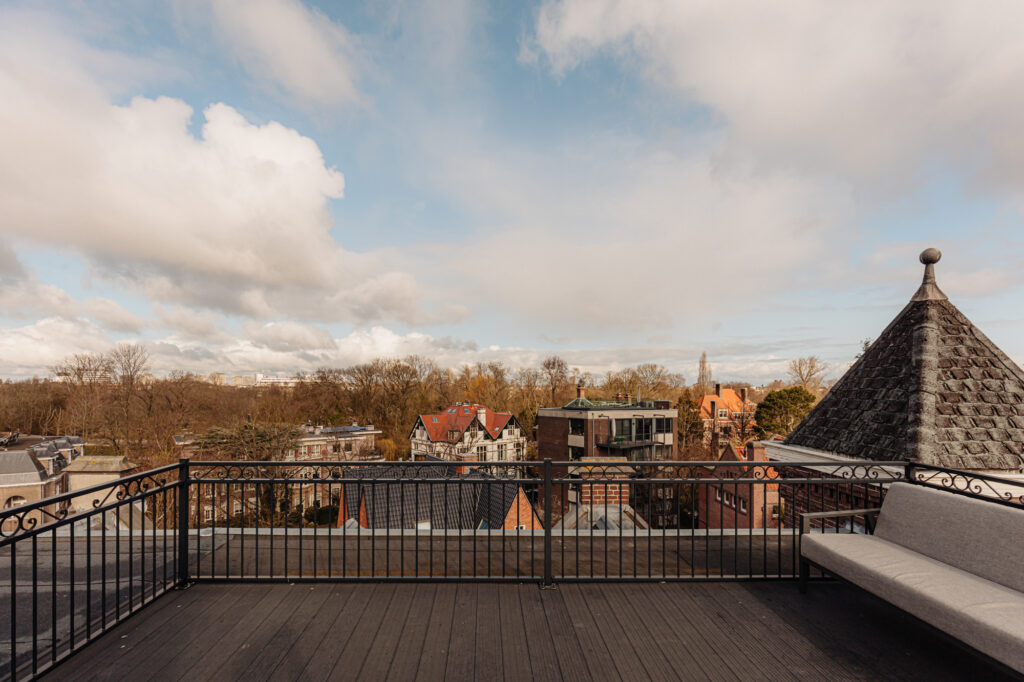
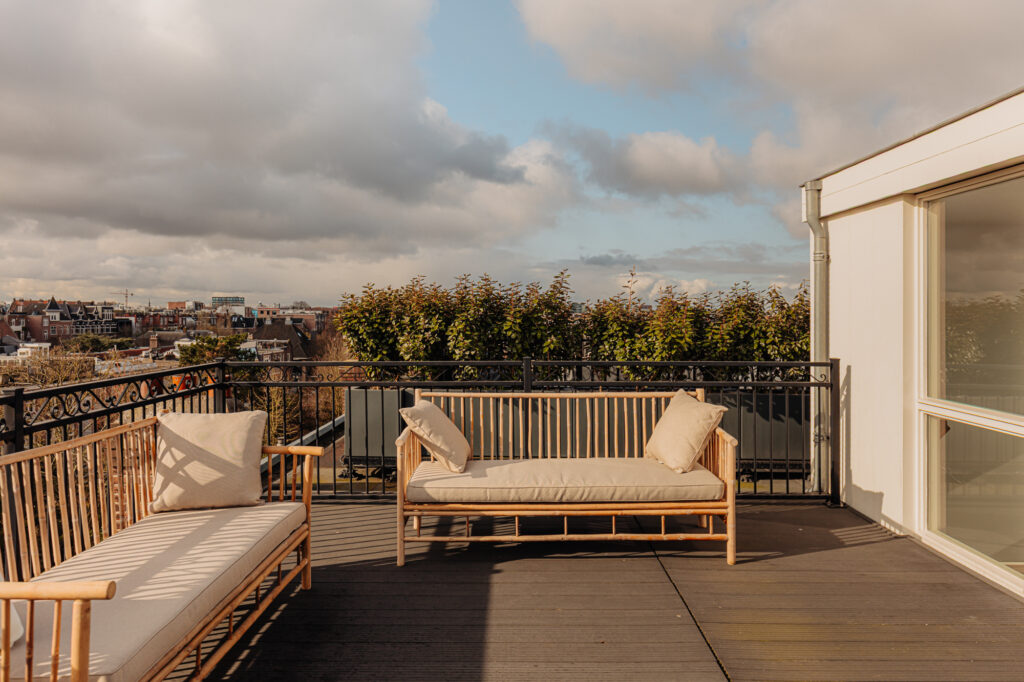
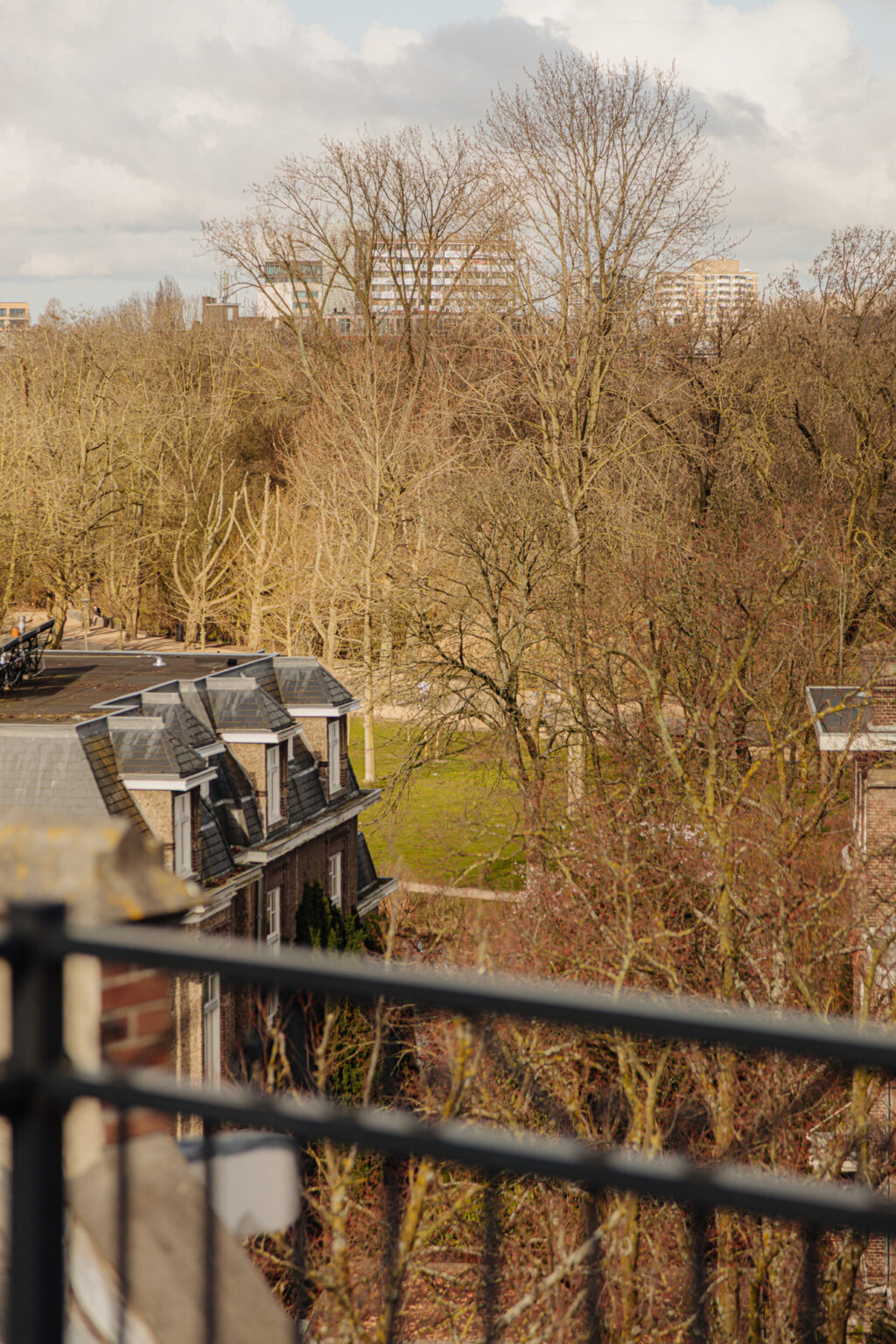
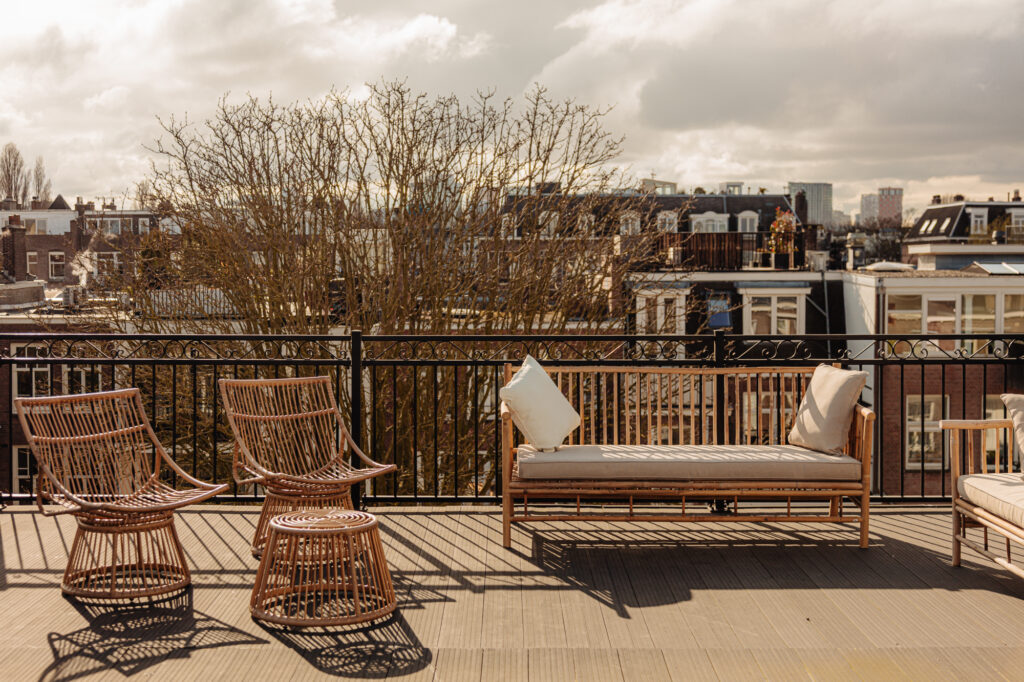
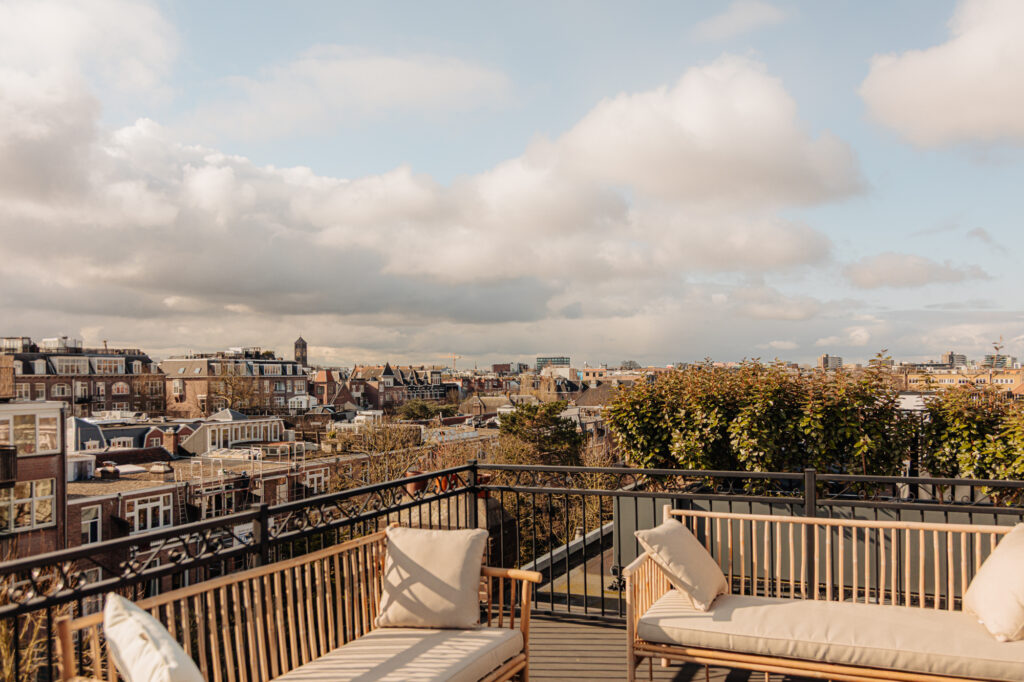
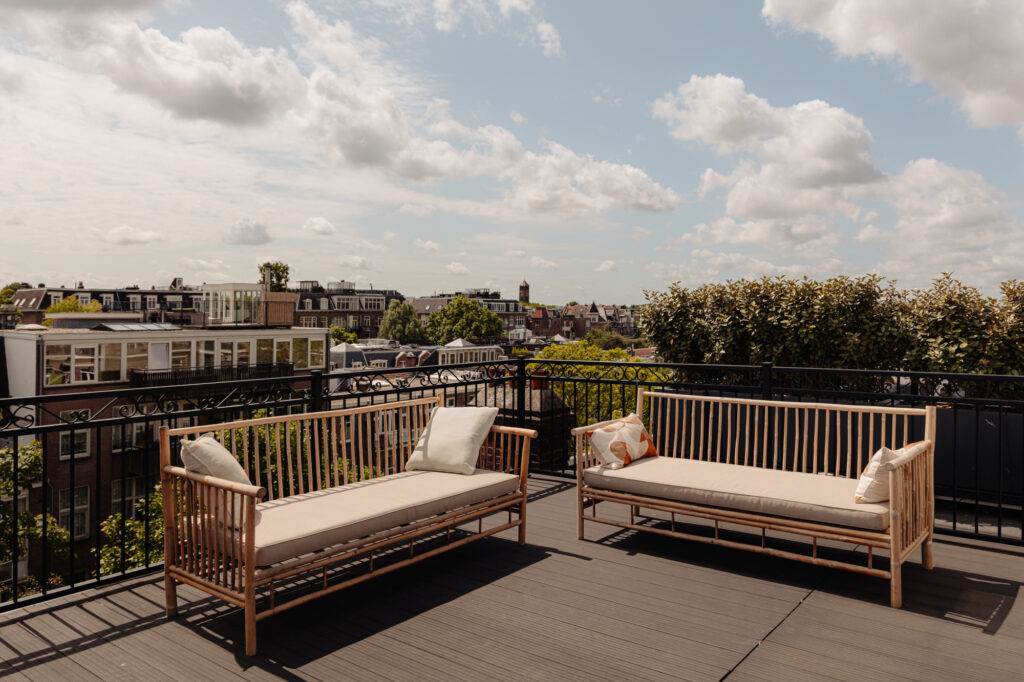
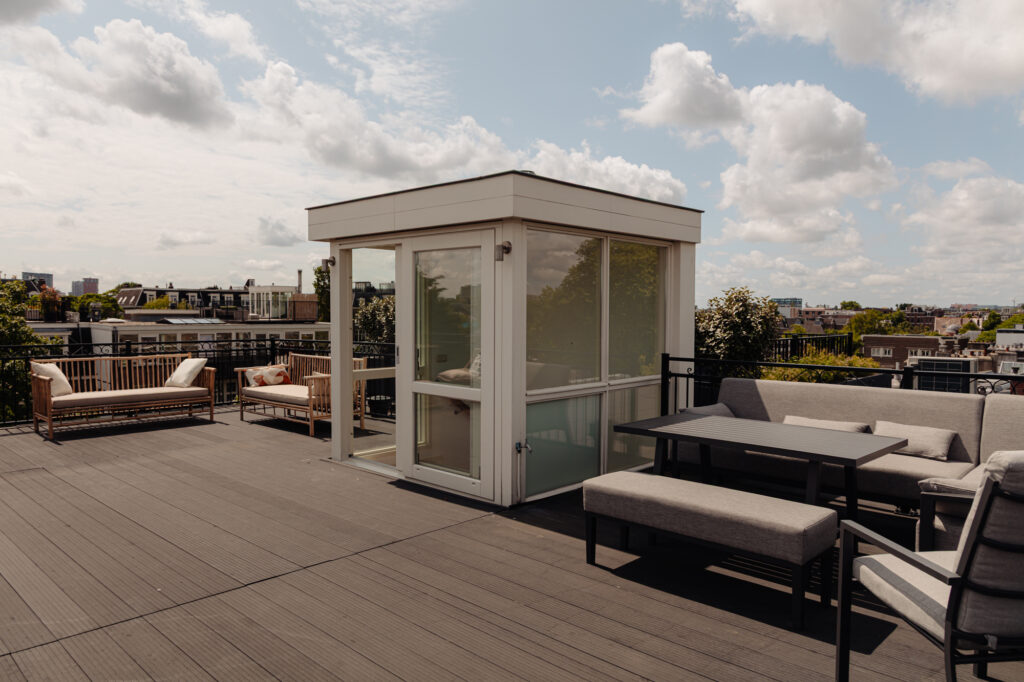
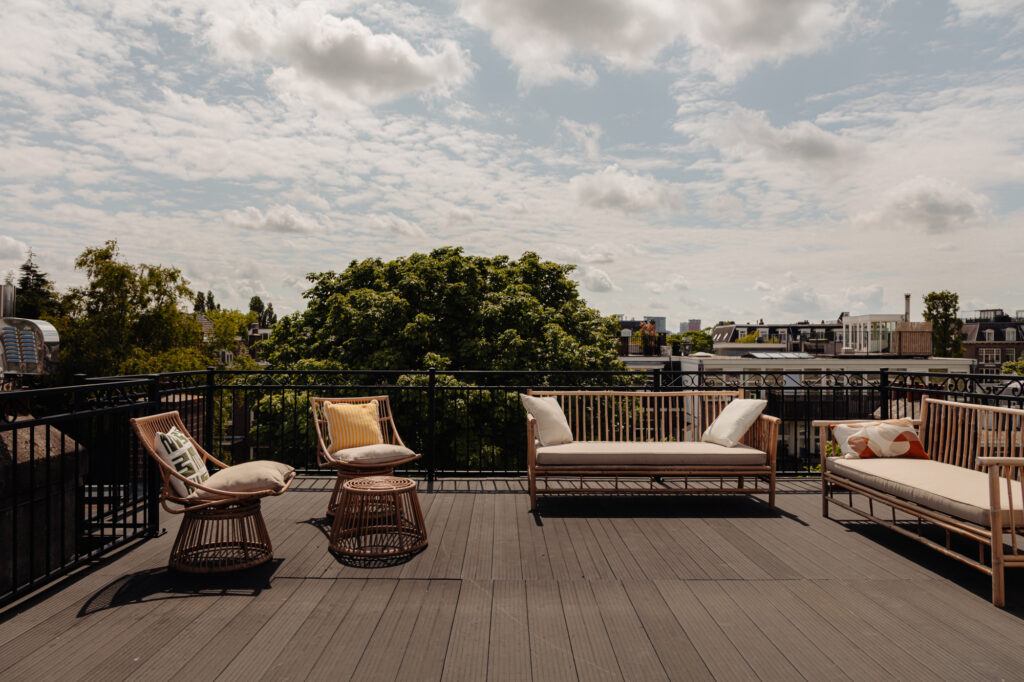
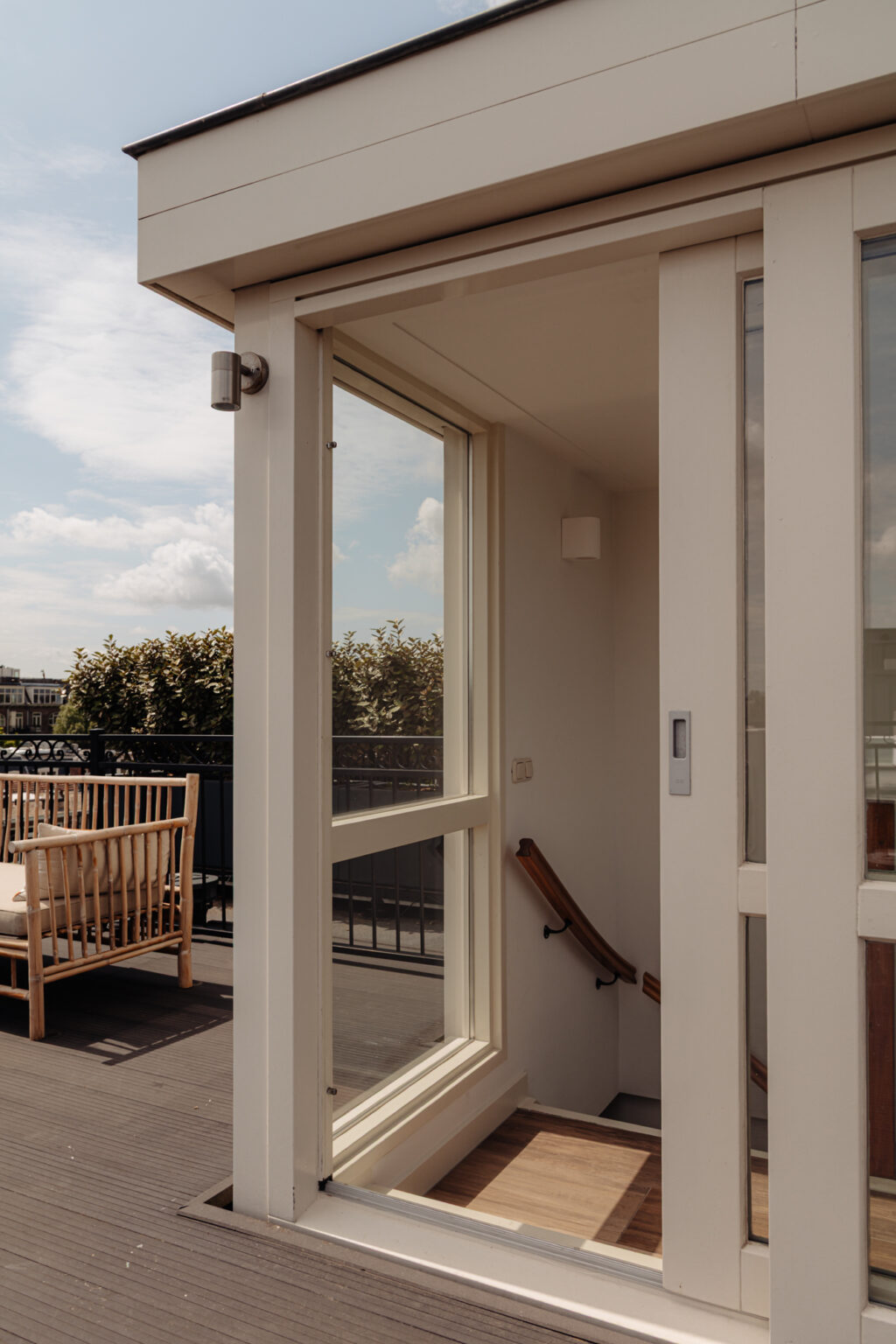
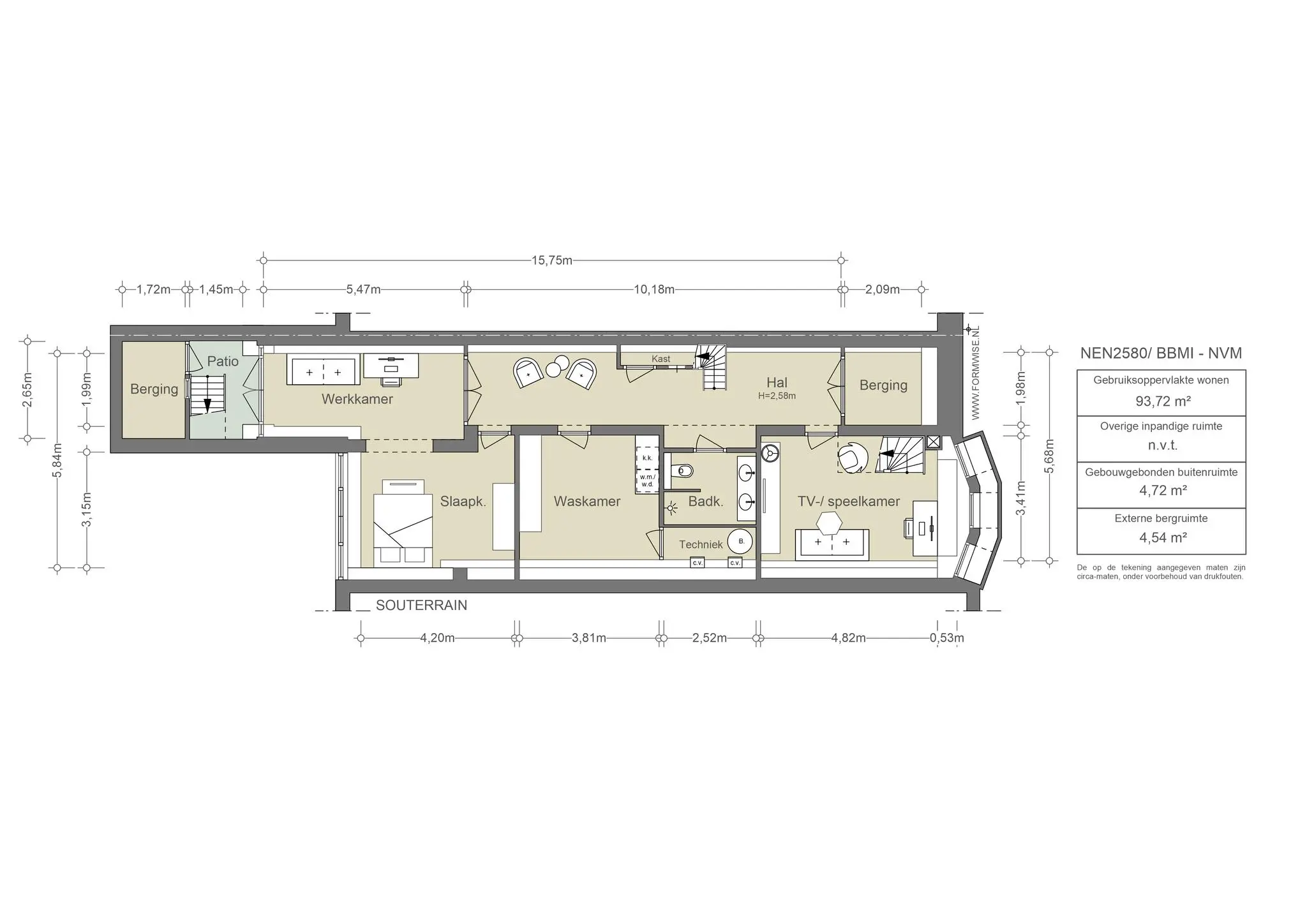
In 2016, the property underwent a major modernization and renovation at the request of the current owners. At that time, the house was completely re-piled and fitted with a new foundation and basement. The basement has an area of approximately 94 m² and benefits from extra height and natural light. As part of the renovation, all installations were updated, and the property was made more sustainable with double glazing, as well as wall and roof insulation. The energy label is B. This extensive renovation has not only improved the property’s sustainability but has also enhanced its luxury and comfort to meet modern standards—while respecting its original architectural style. Additionally, a rooftop terrace was created, accessible via a fixed staircase. From here, there is a panoramic view over the entire Oud-Zuid district.
With this transformation, Het Huys van Oranje has become a timeless residence, unaffected by passing trends or decay.
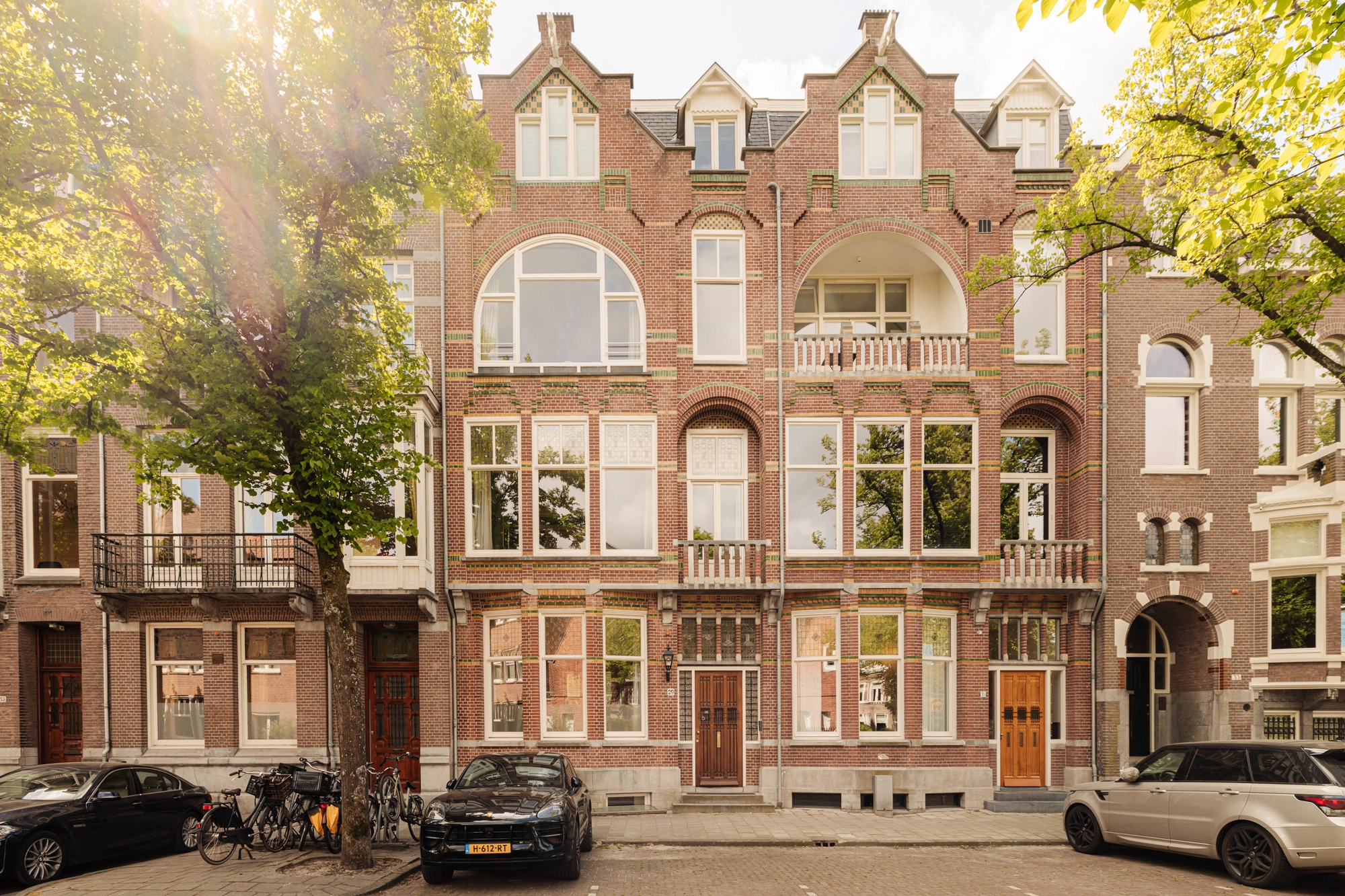
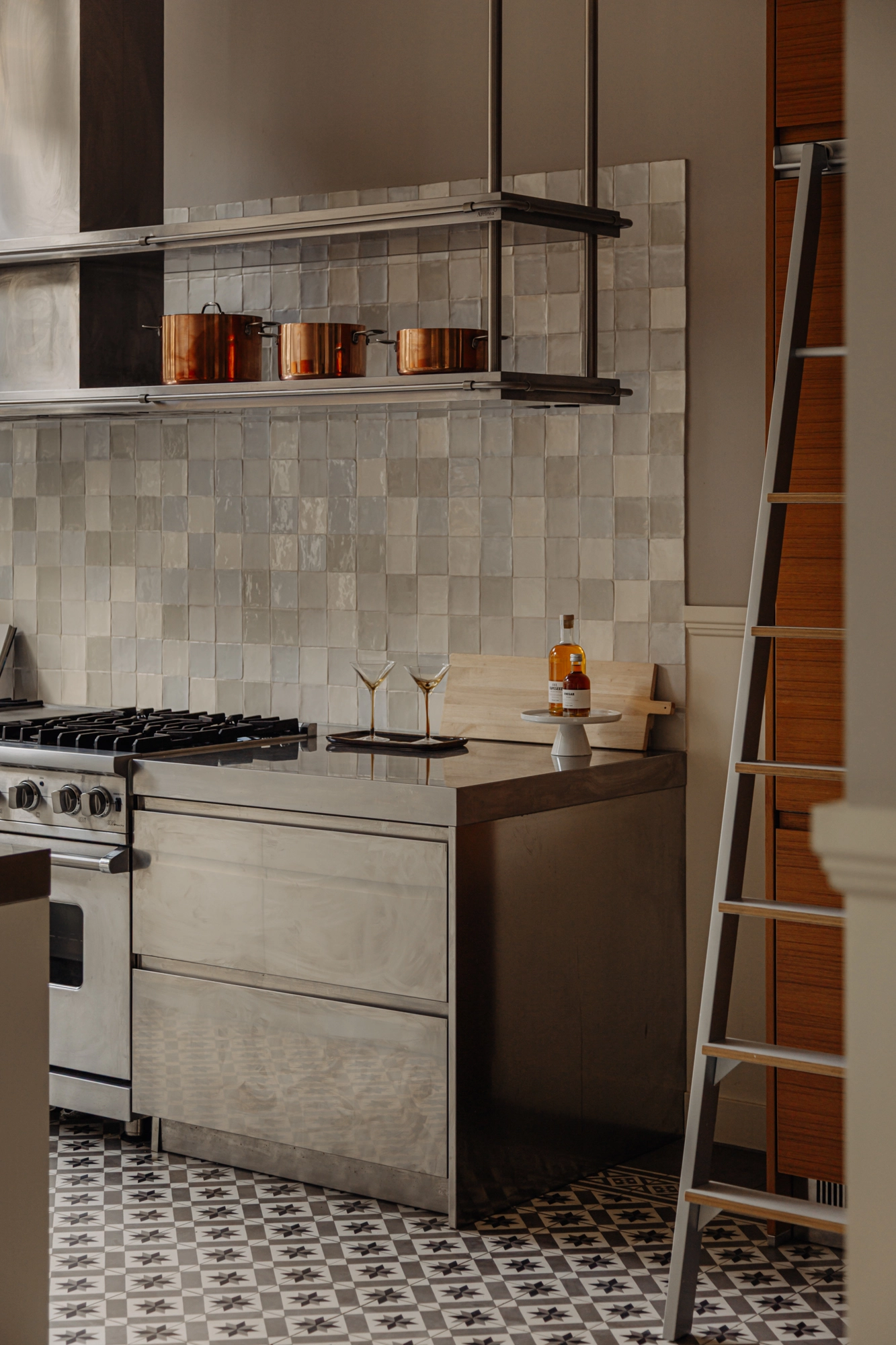
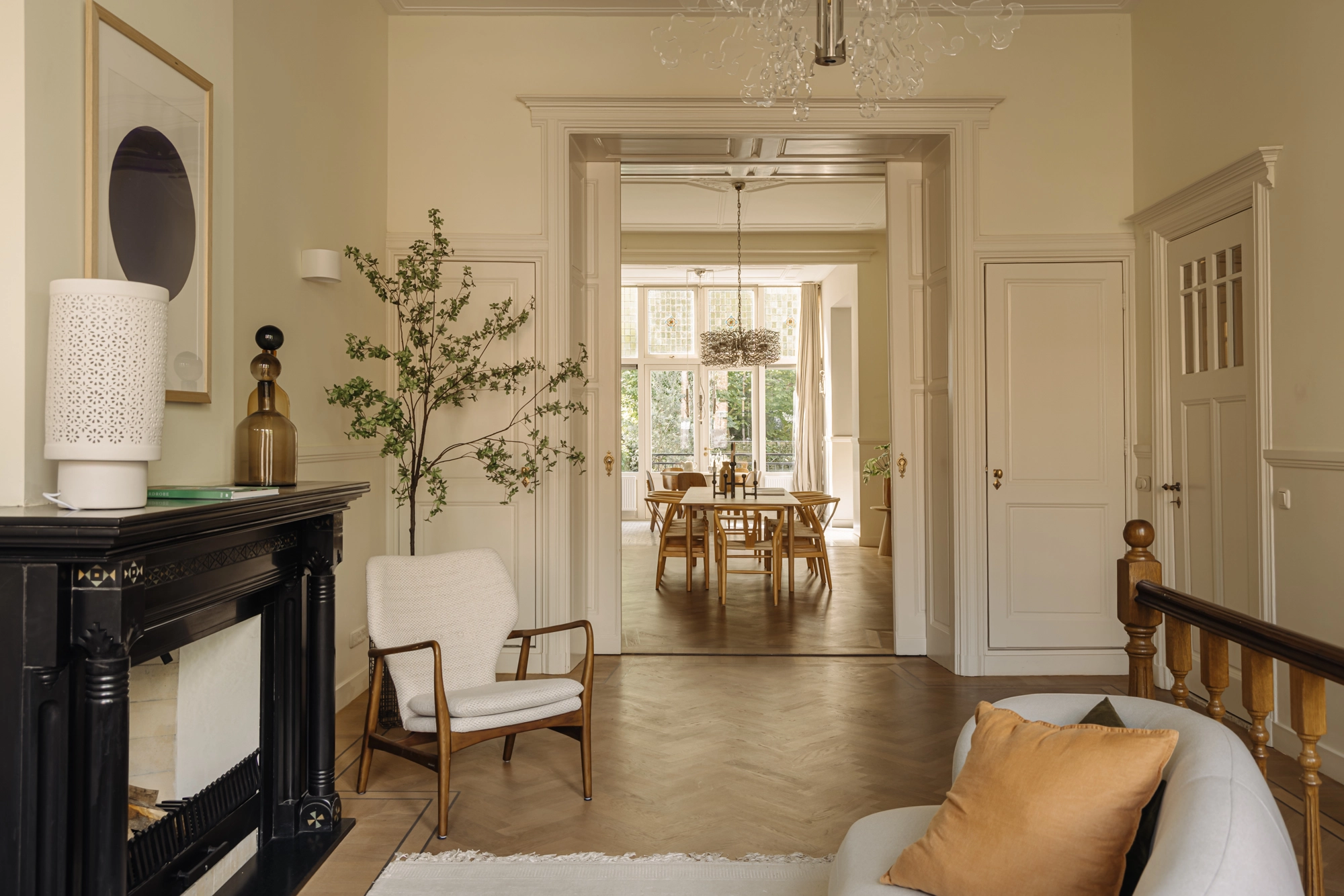
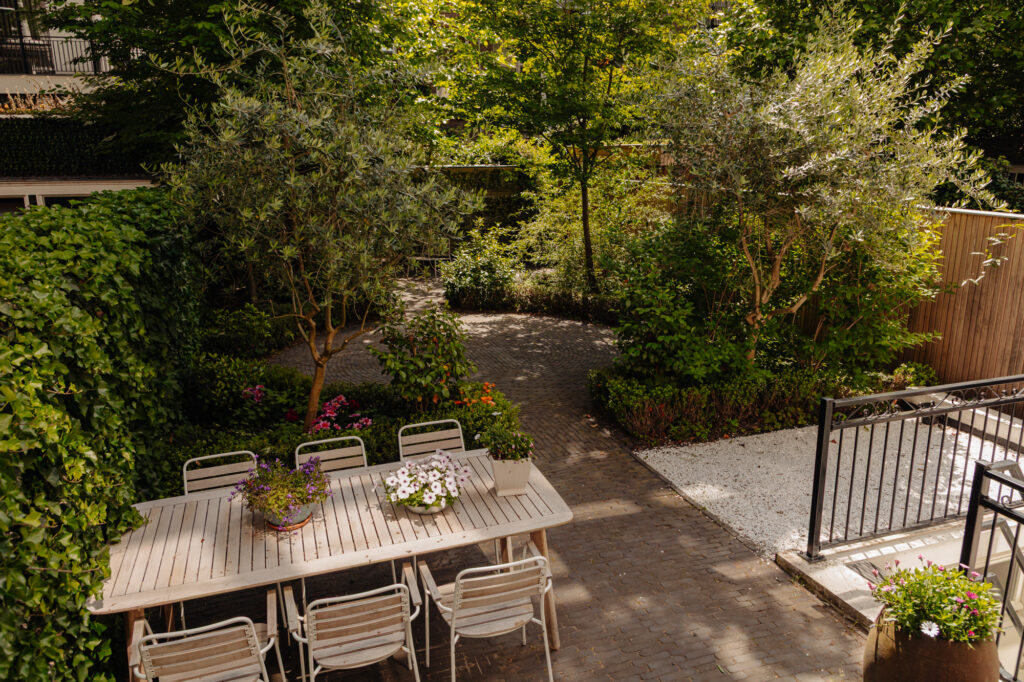
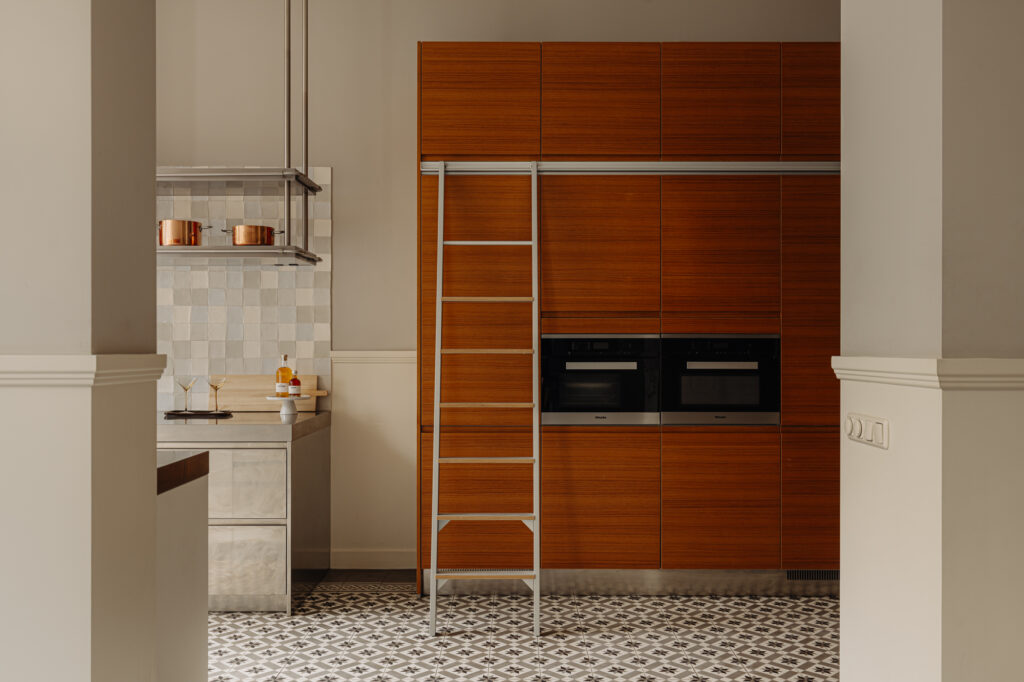
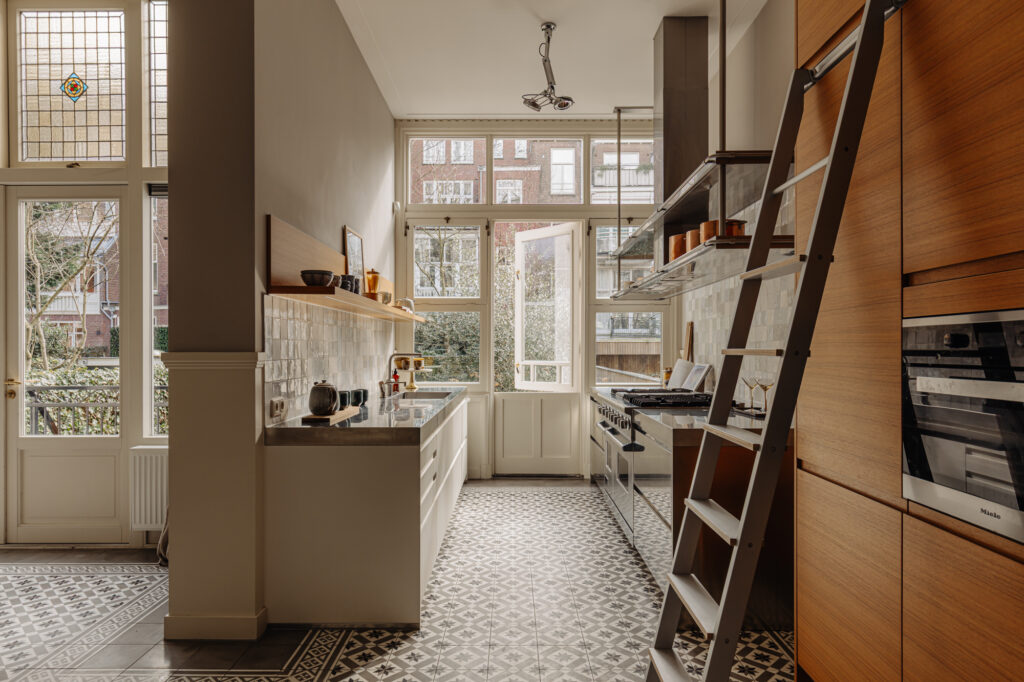
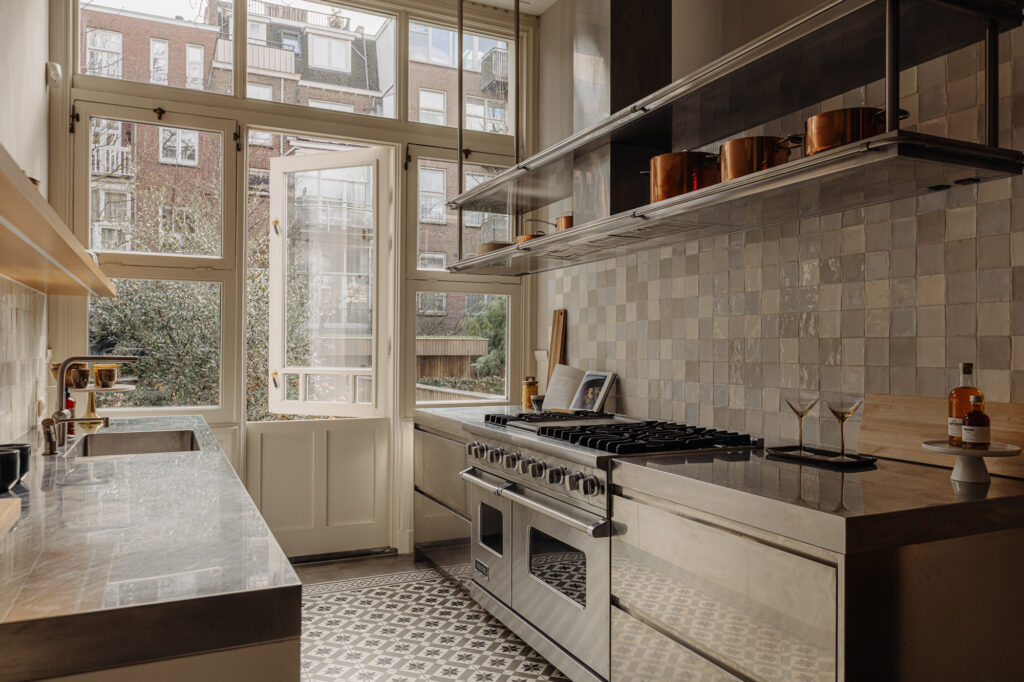
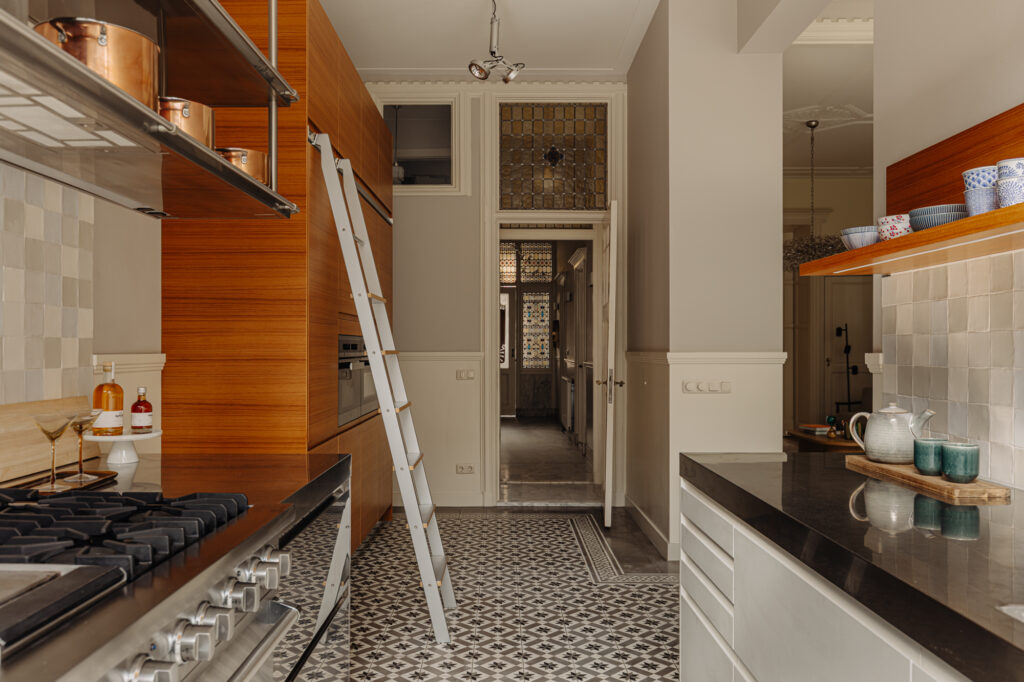
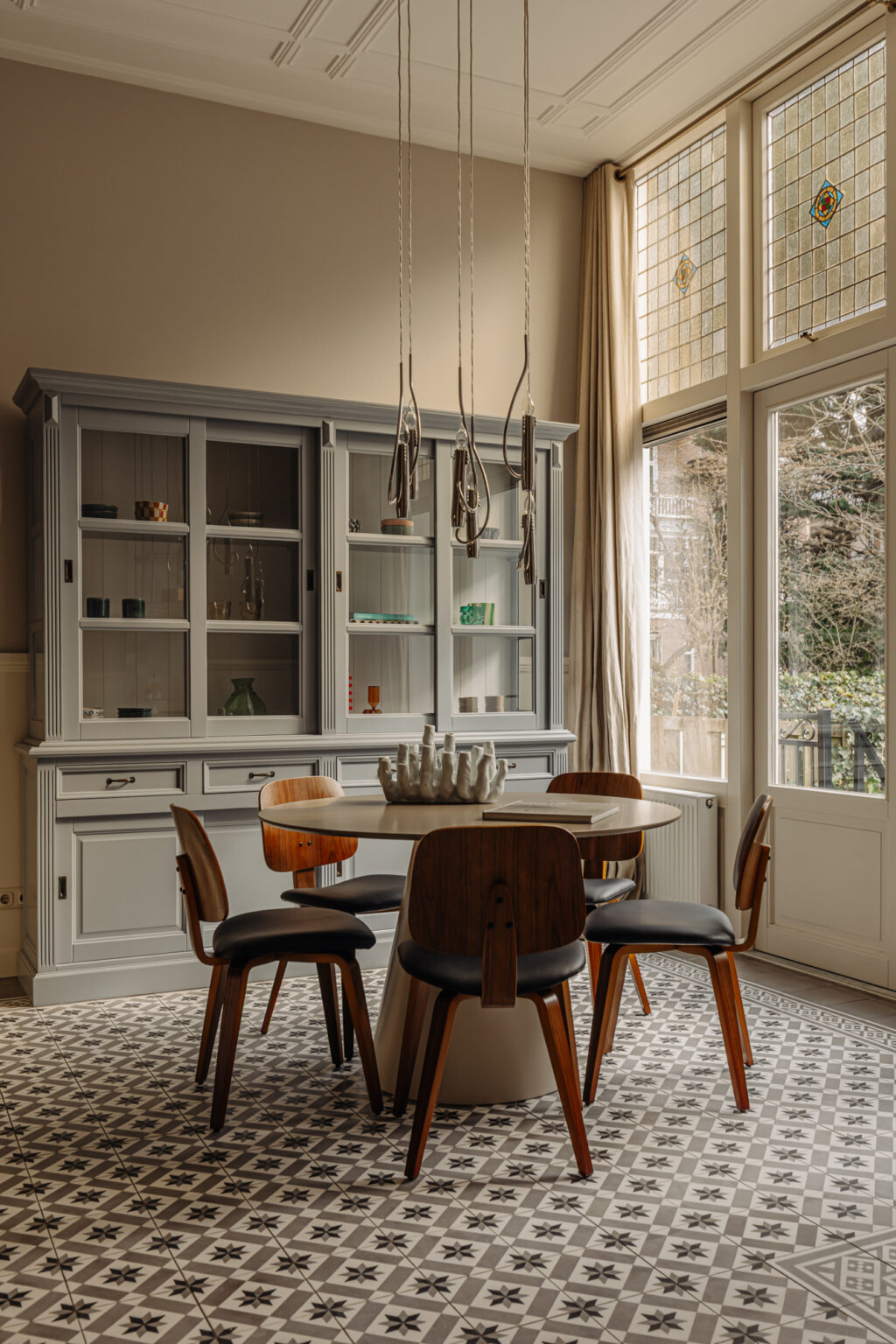
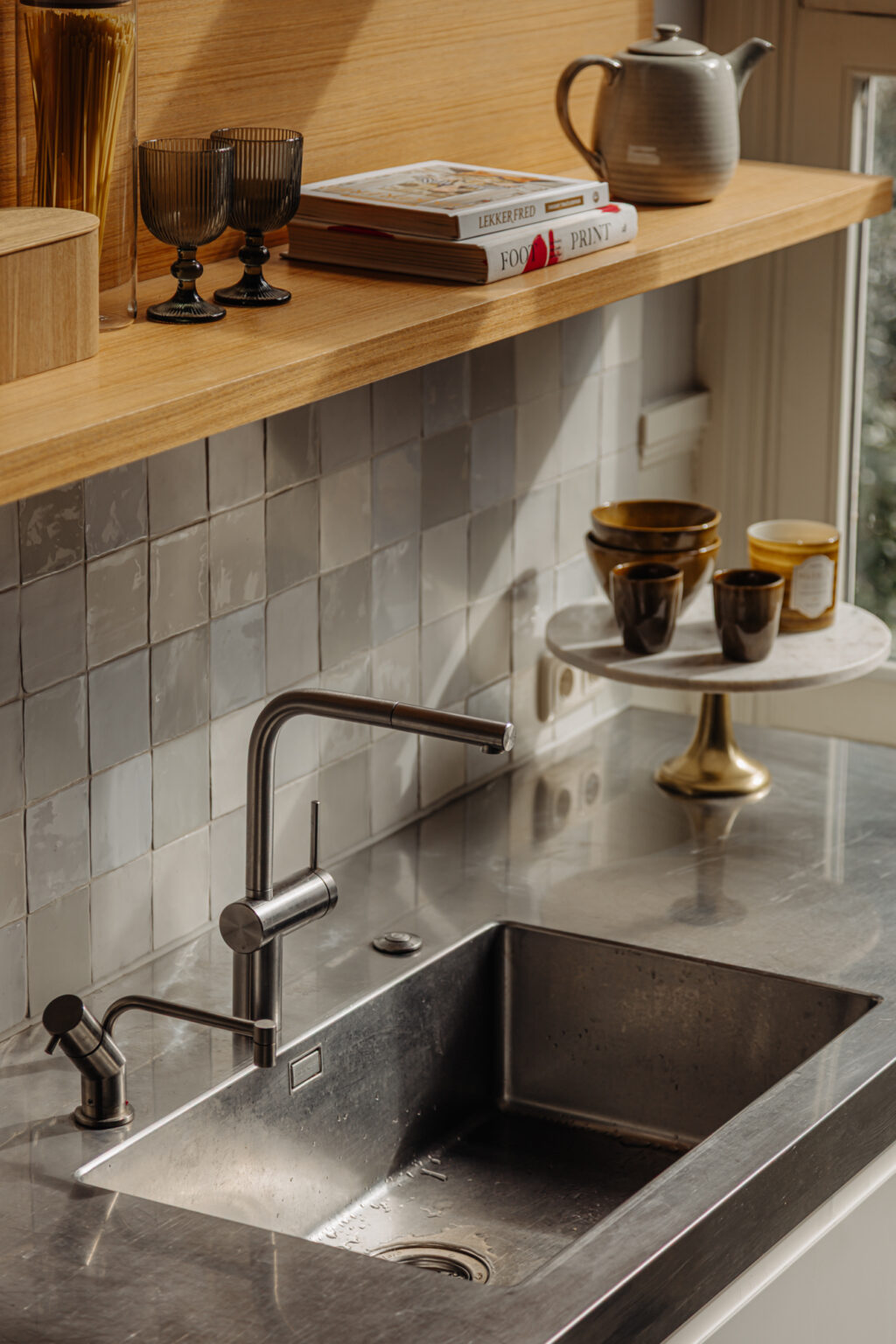
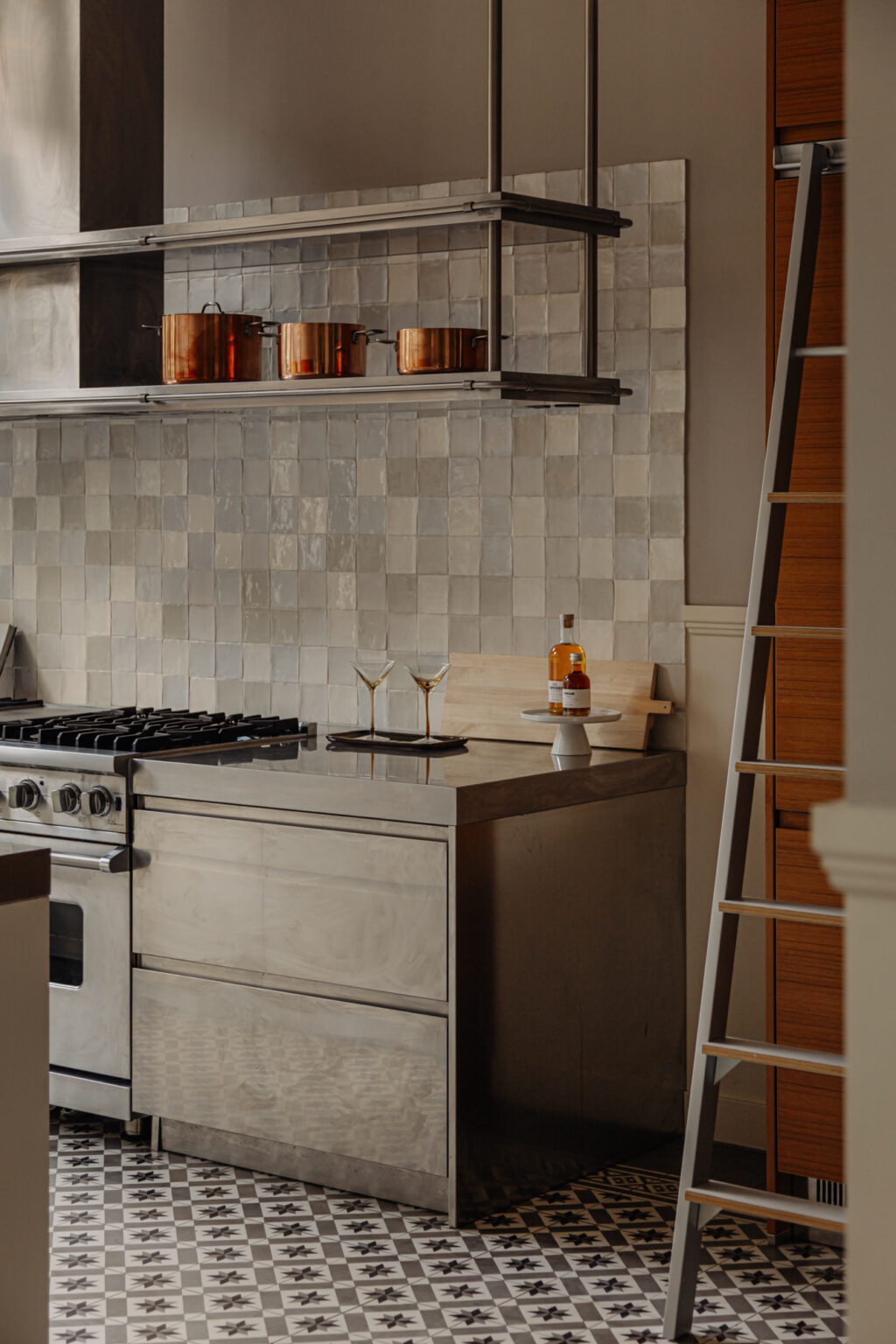
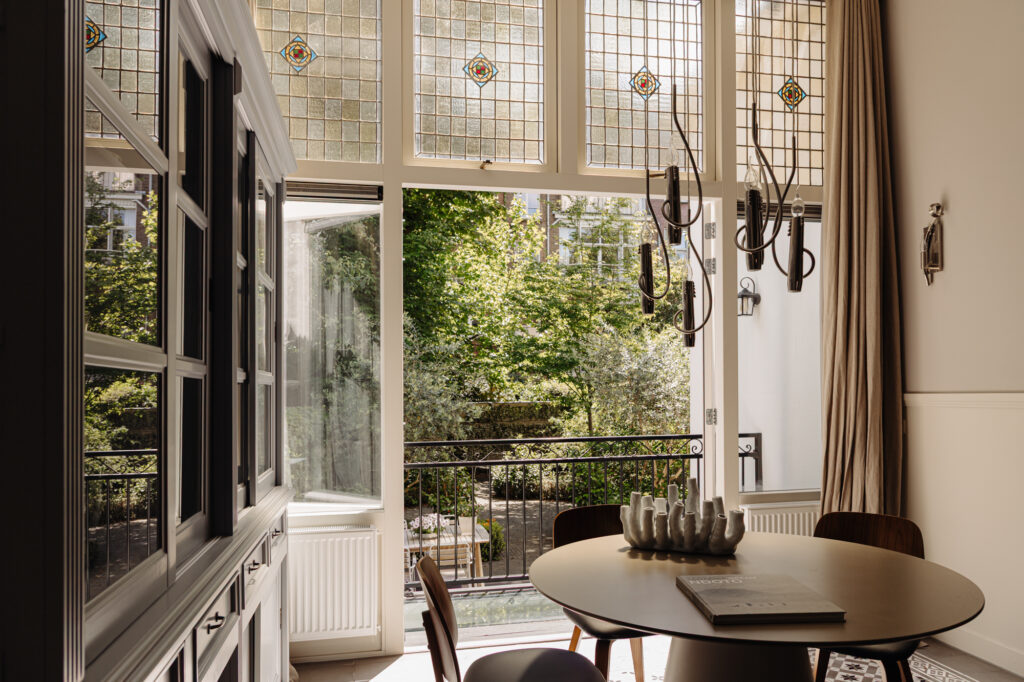
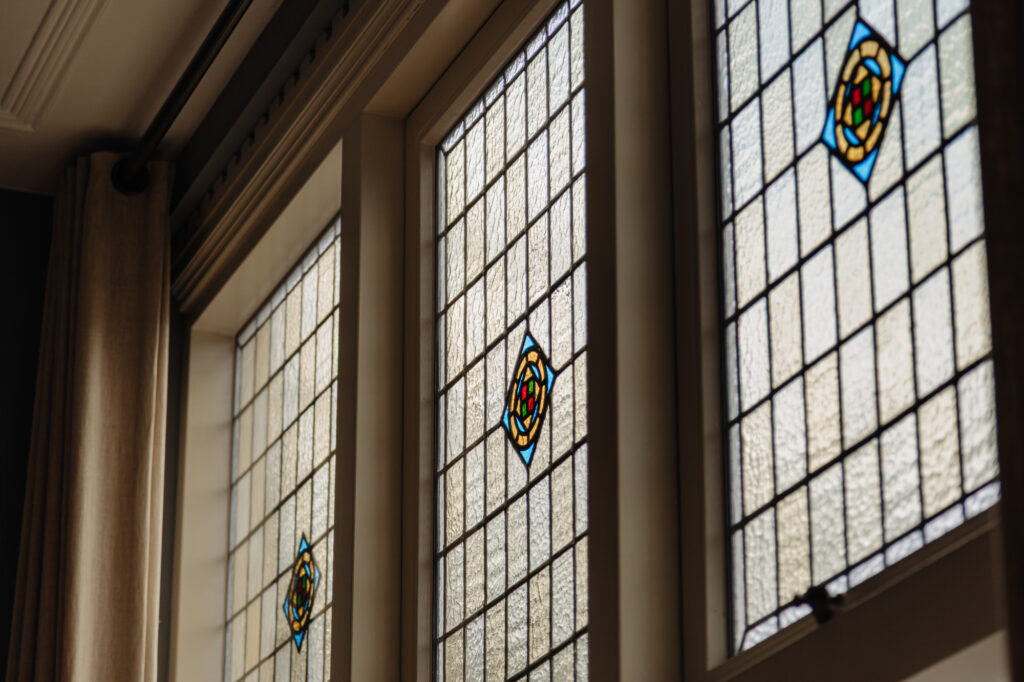
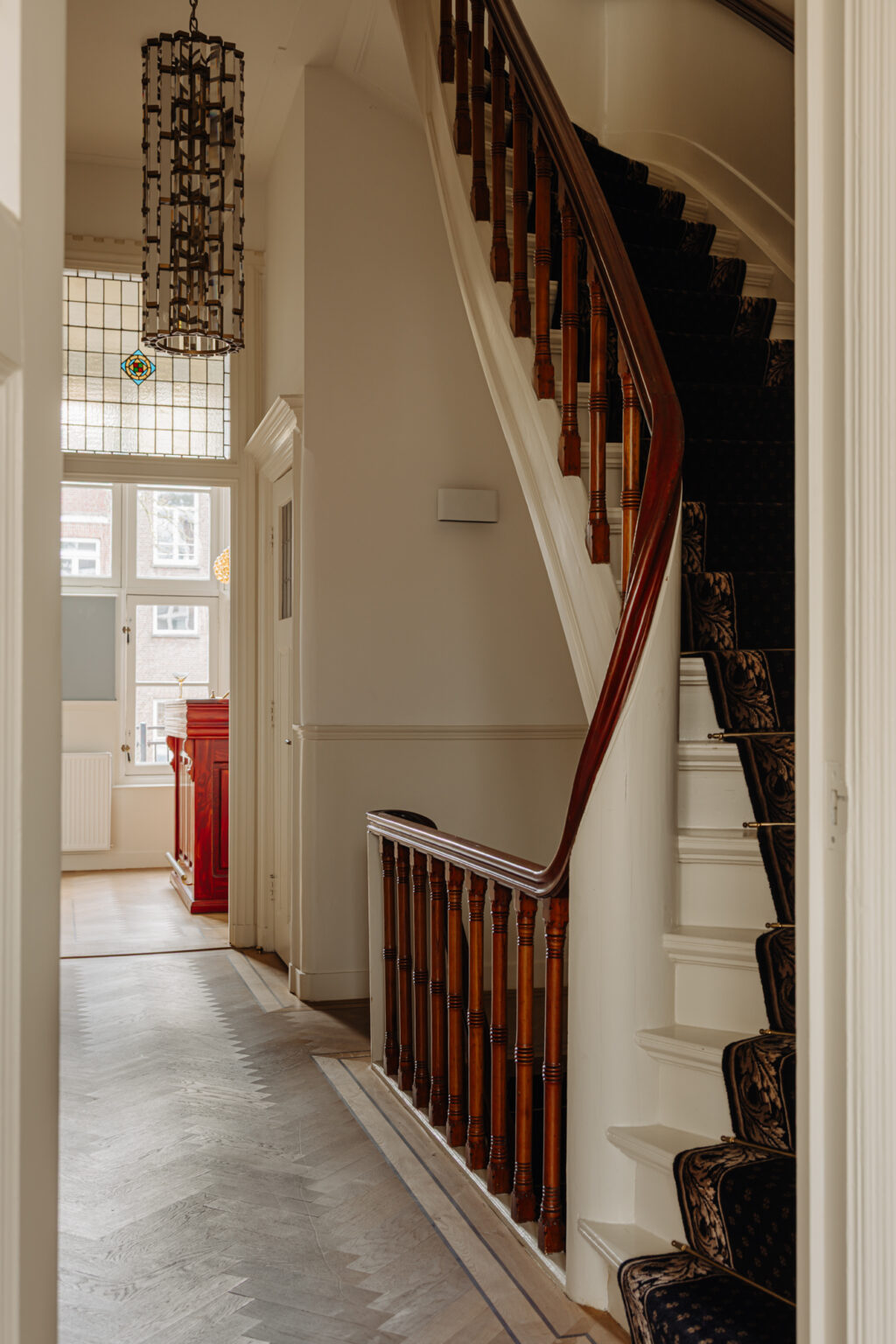
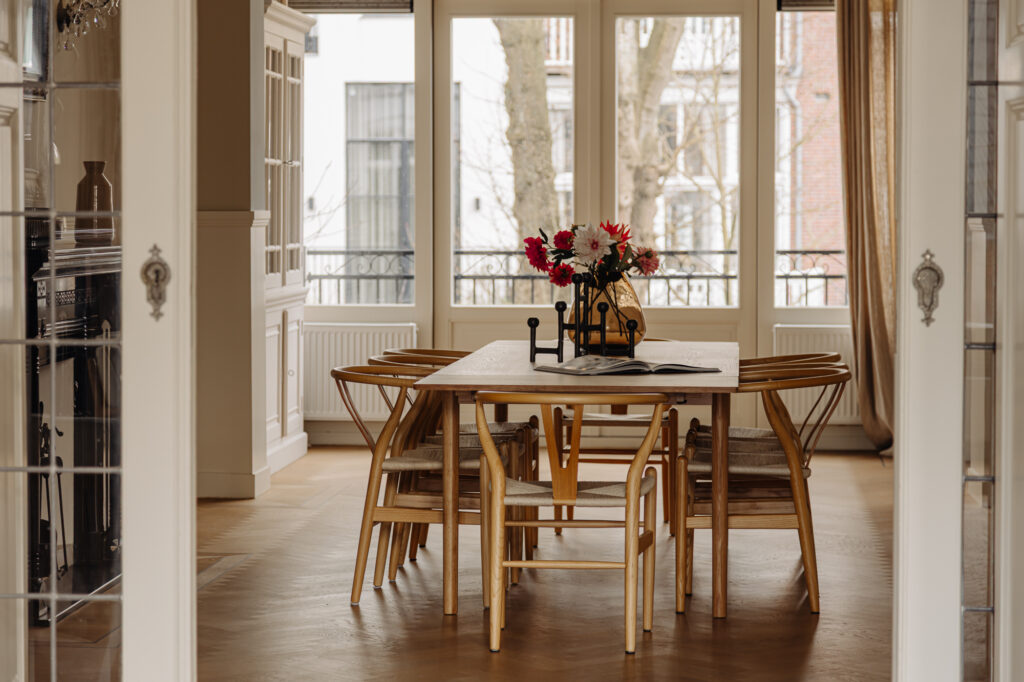
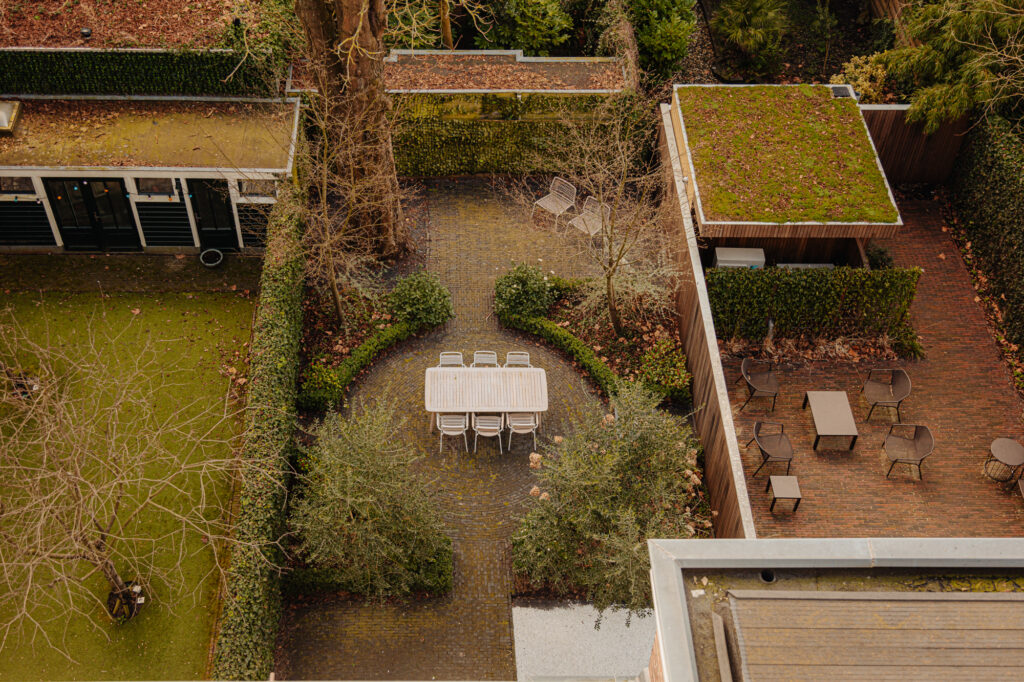
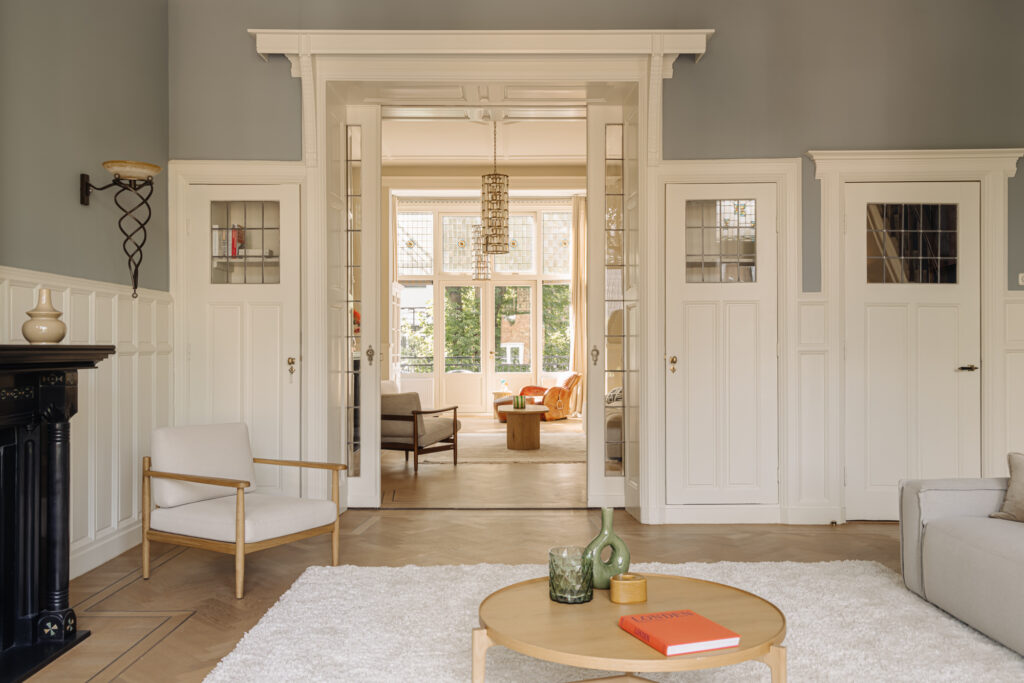
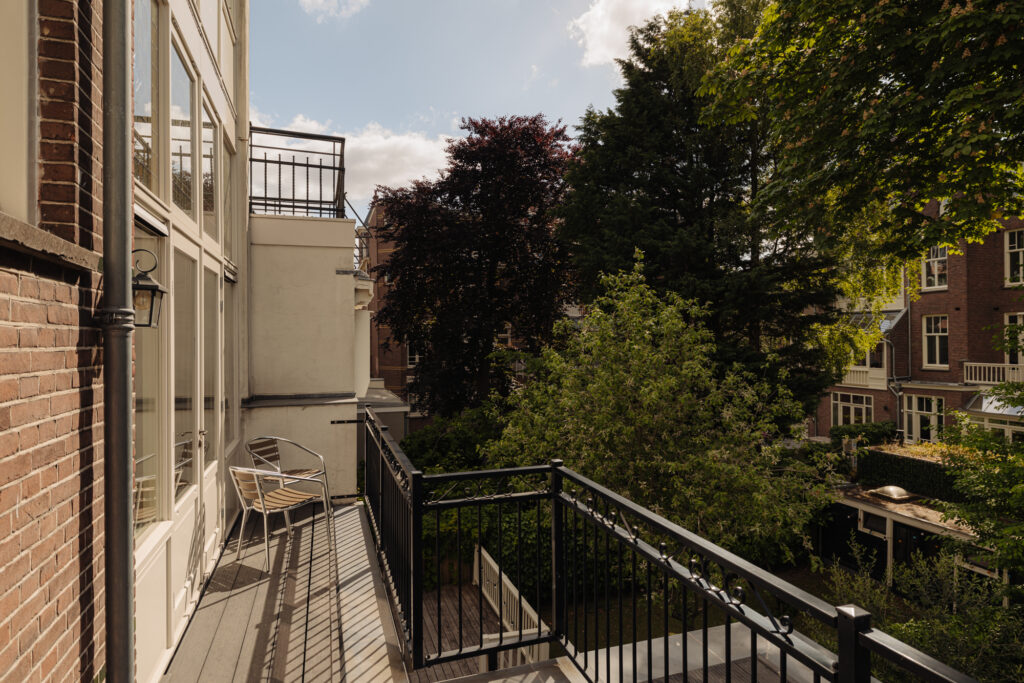
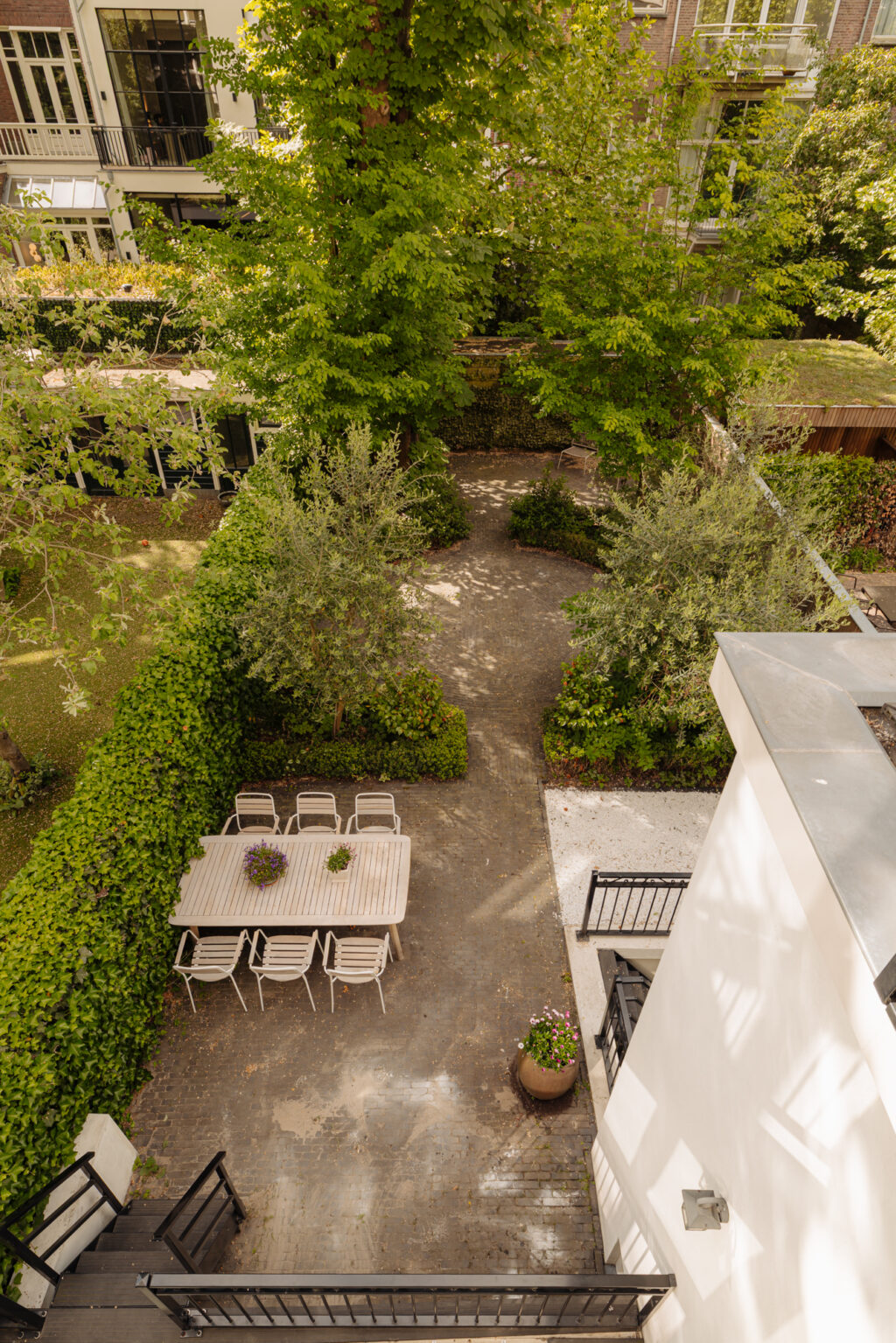
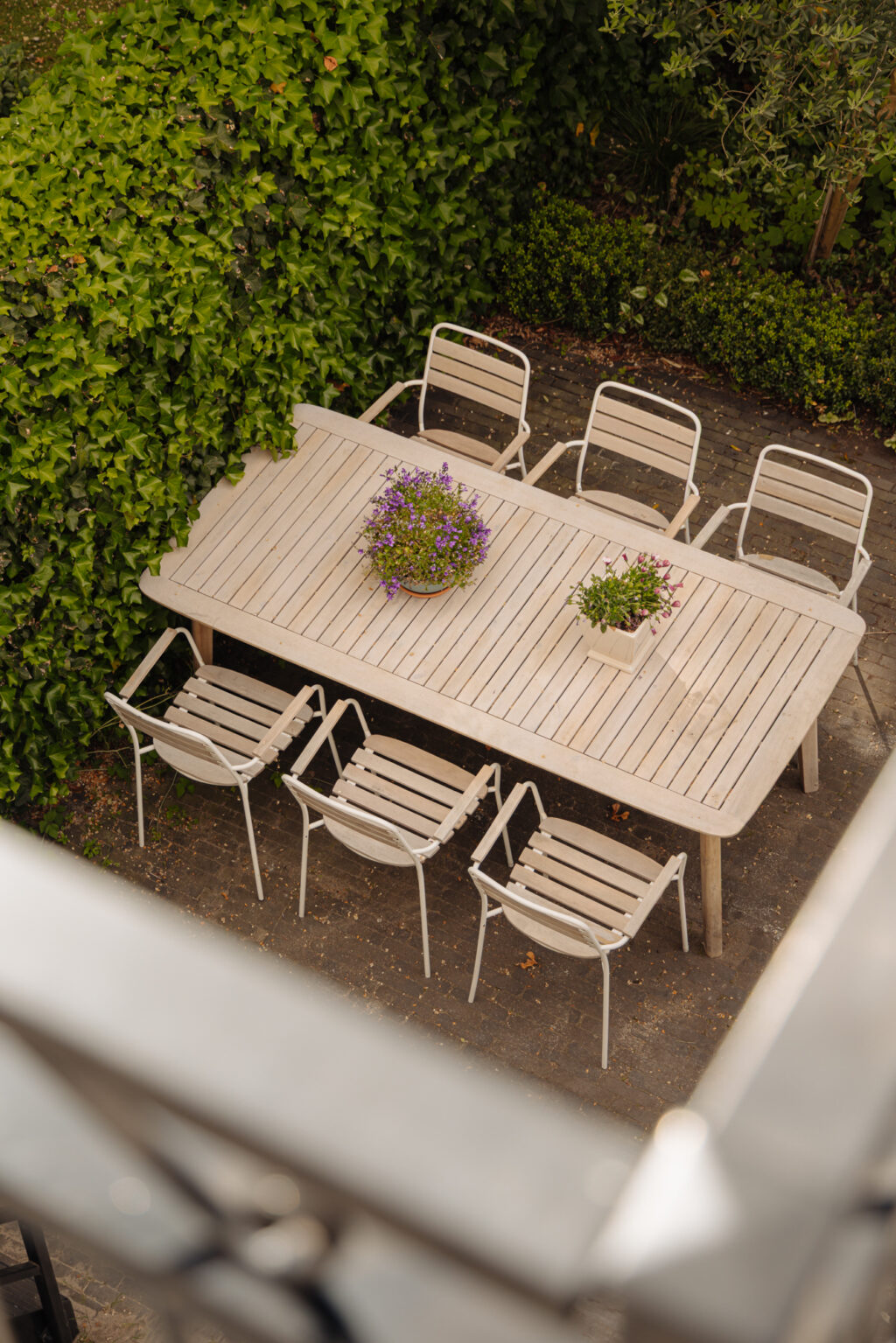
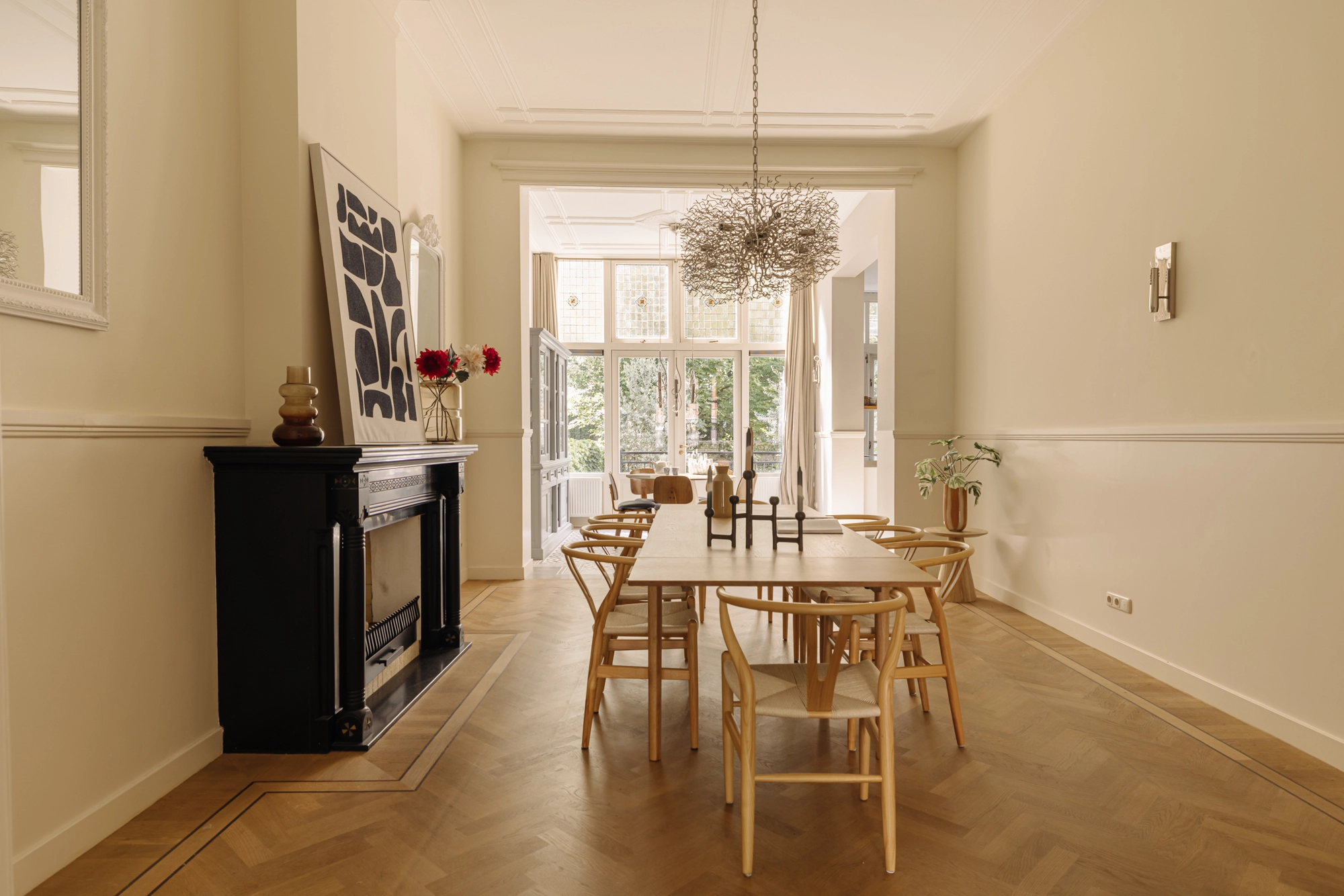
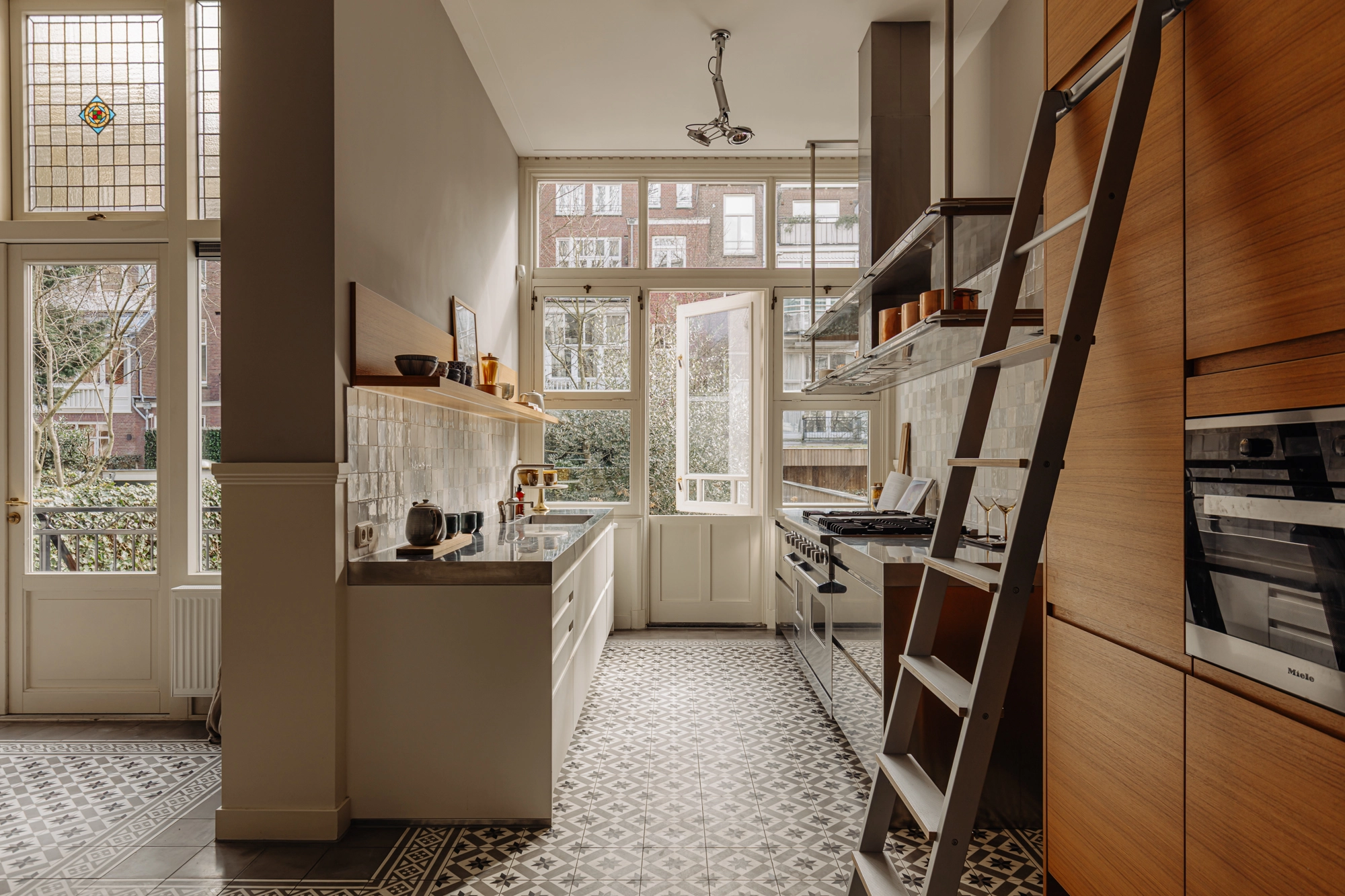
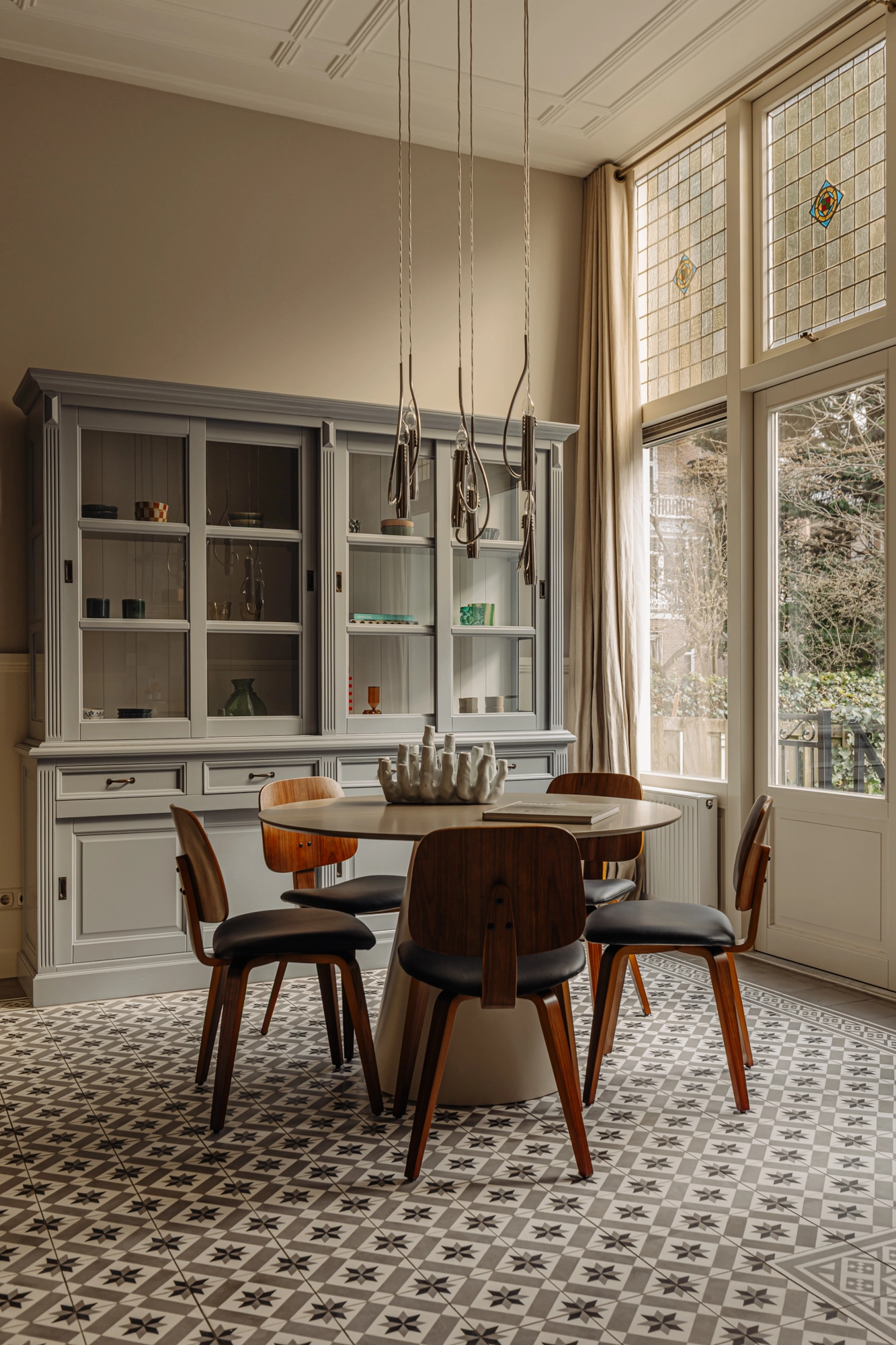
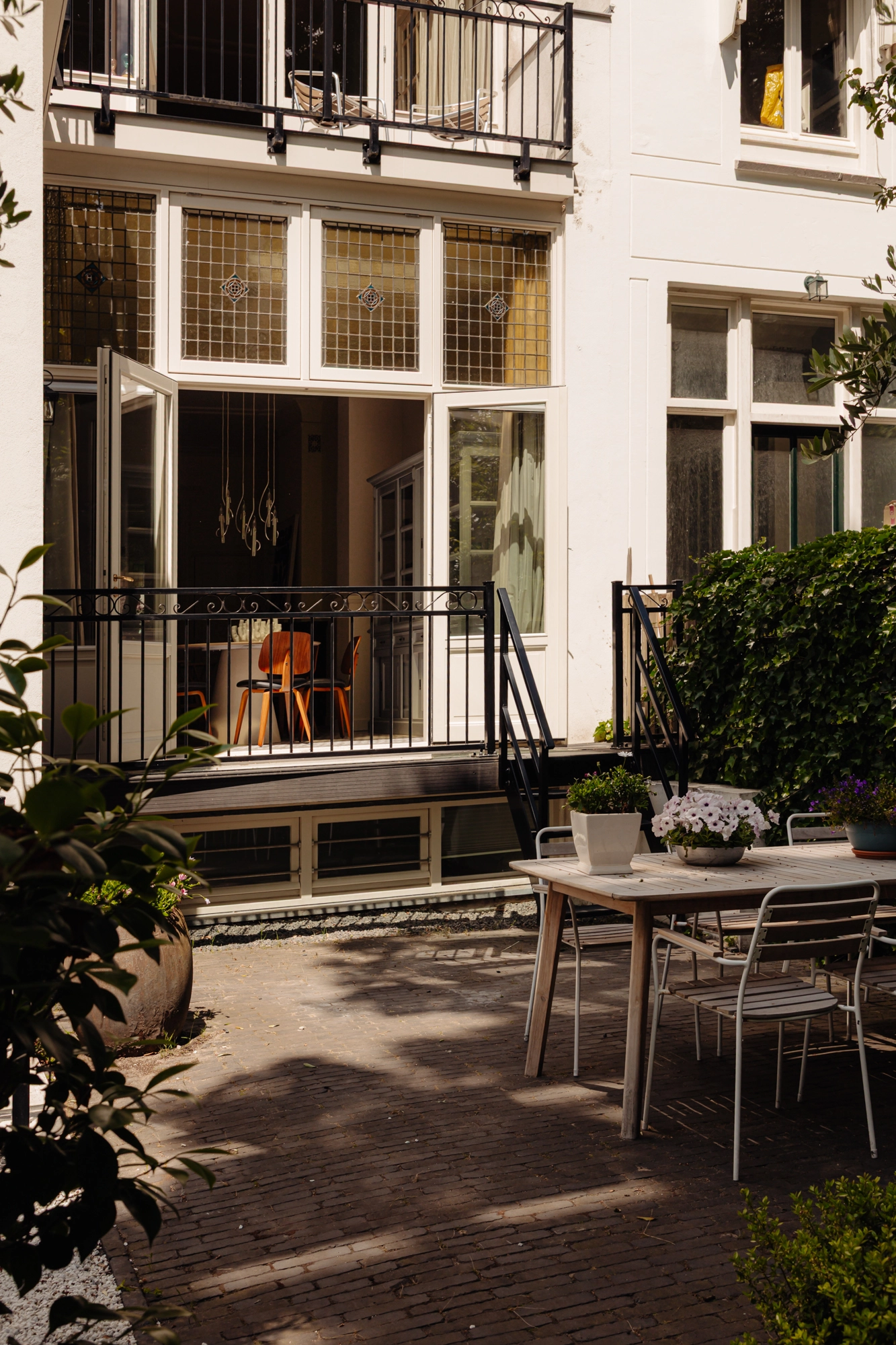
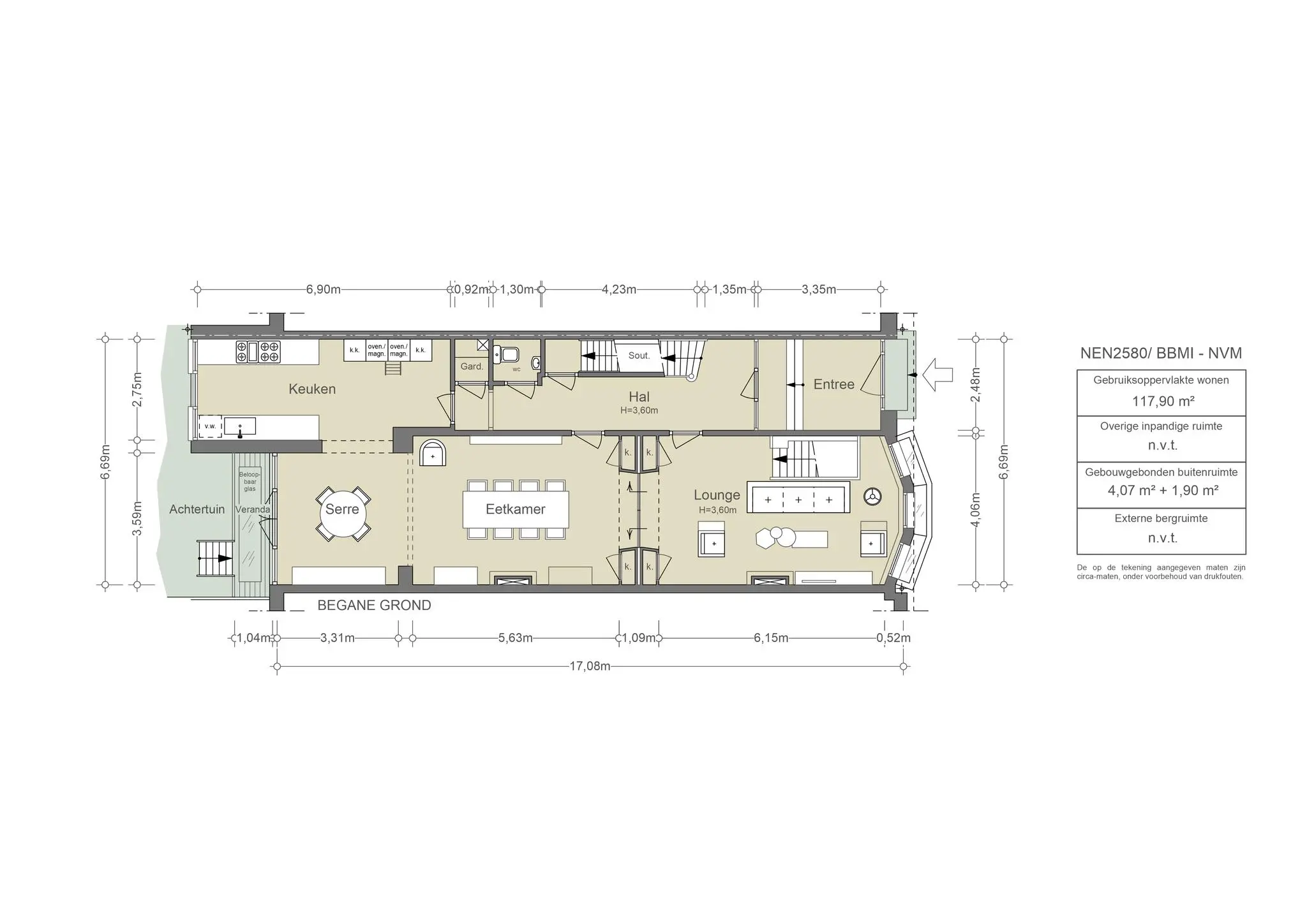
A representative entrance on the ground floor with a high vestibule, beautifully finished with marble and stained glass. From this vestibule, one enters a central hall featuring a grand, wide staircase leading to the first living floor. Tall doors provide access to both the front and back rooms, as well as the cloakroom. The hall also includes a toilet and a door to the basement. This impressive floor of 118 m² boasts ceilings as high as 3.60 meters. The front room covers approximately 25 m², has a width of 4.37 meters, and features one fireplace with open hearths, while the TV room also has a fireplace with a mantel. At the garden side, the dining room seamlessly flows into a conservatory and the kitchen. Everything is organically connected, including the terrace and the garden. The kitchen features a long countertop with high-end designer appliances, tall cabinets, and a view of the garden. The garden, spanning approximately 99 m², is an ideal play area for children and perfect for outdoor dining. In summer, the garden enjoys sunlight throughout the entire day—even into the late evening hours.
The basement
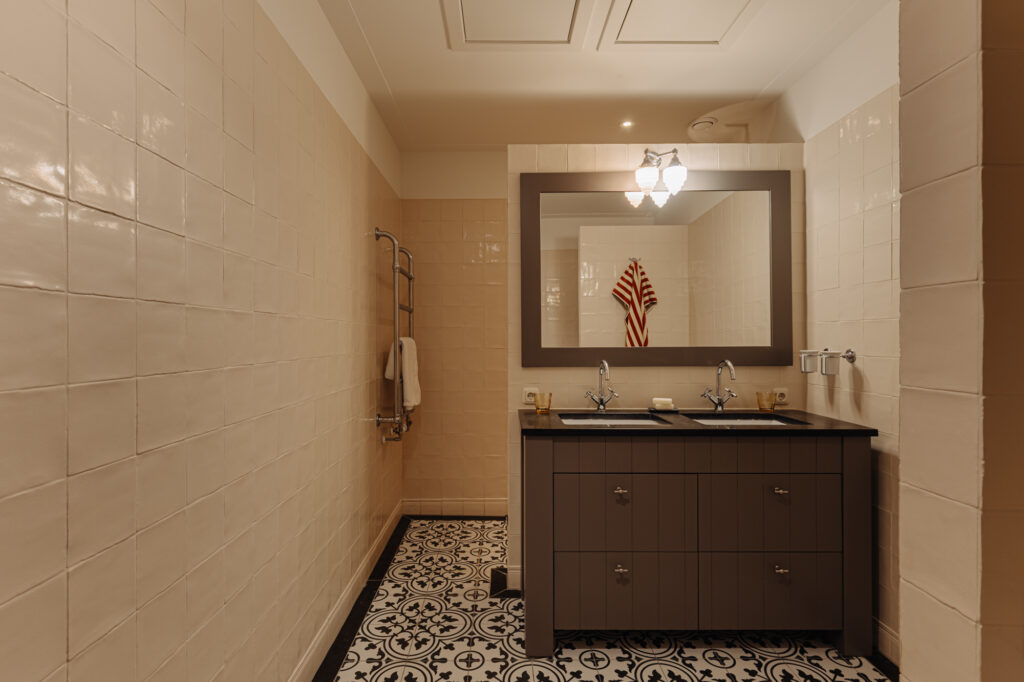
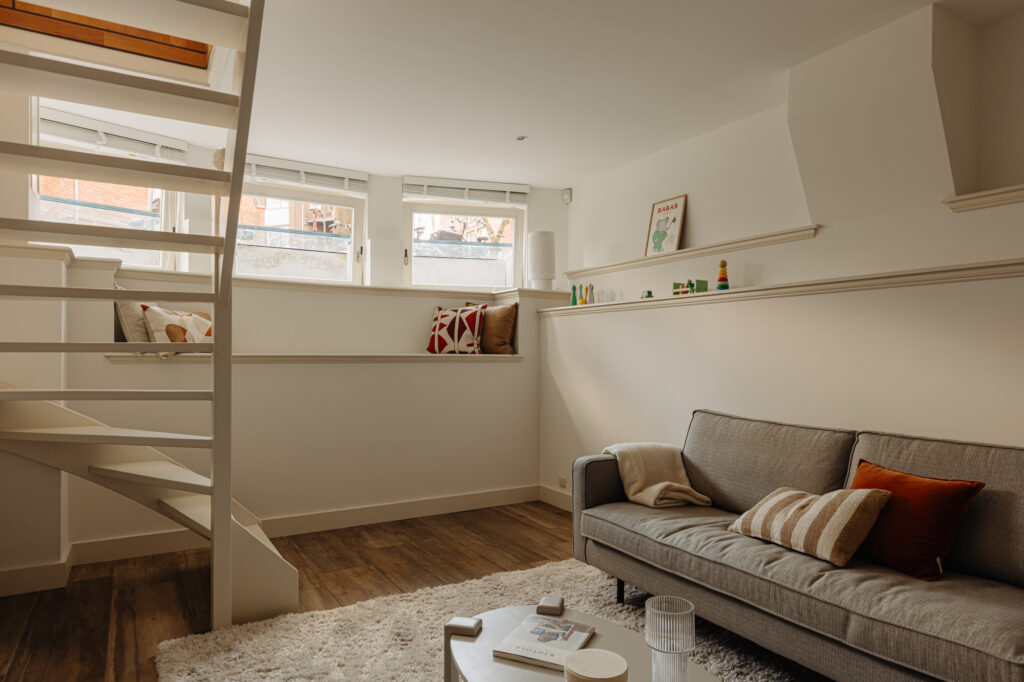
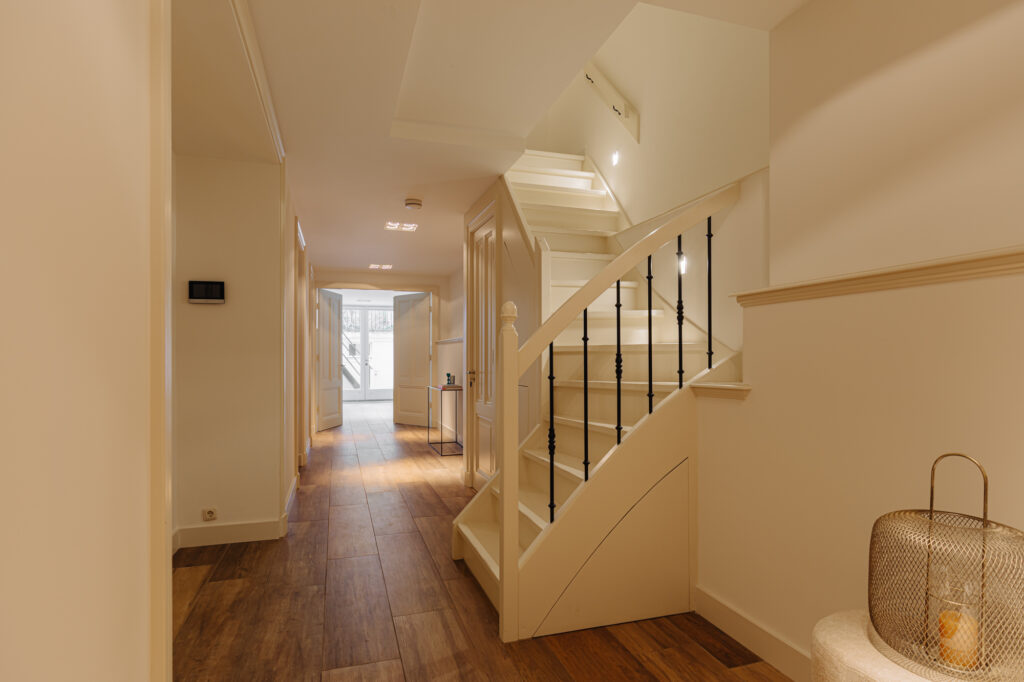
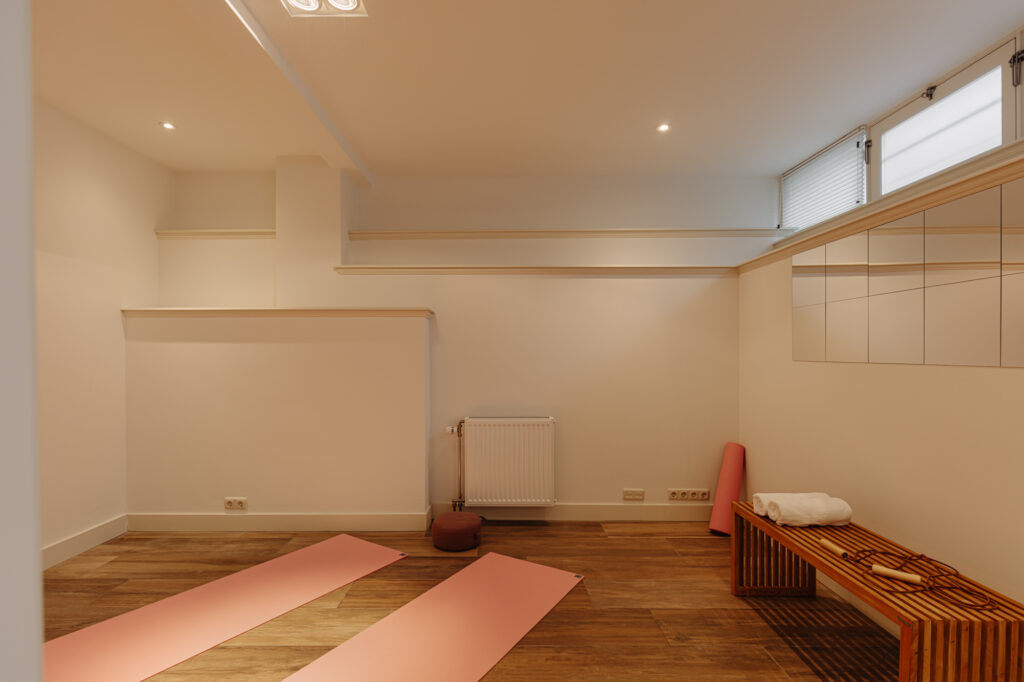
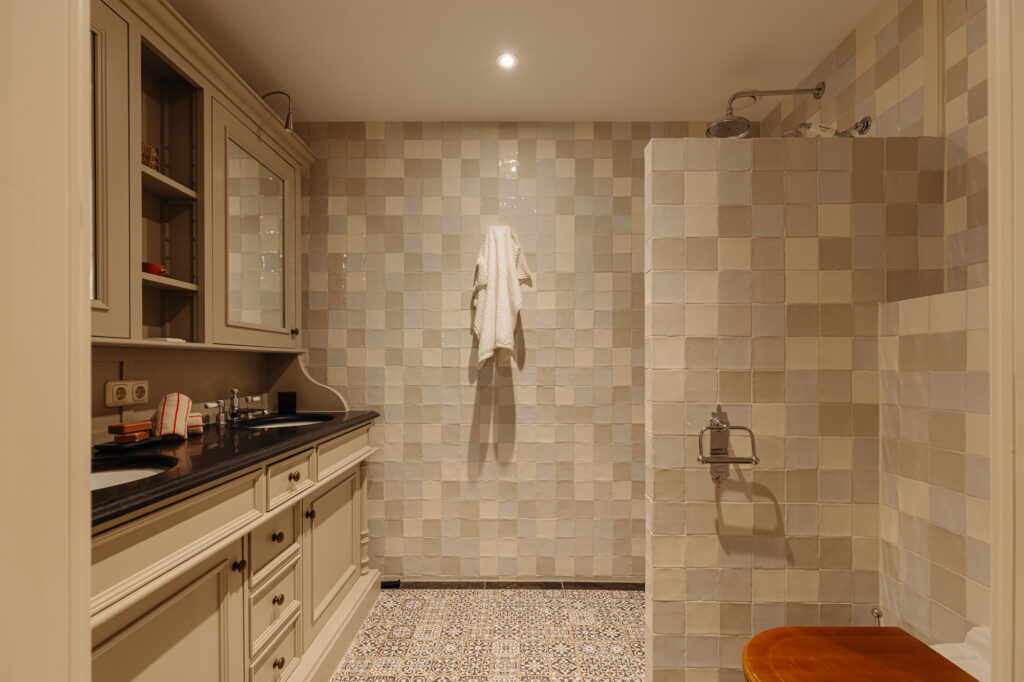
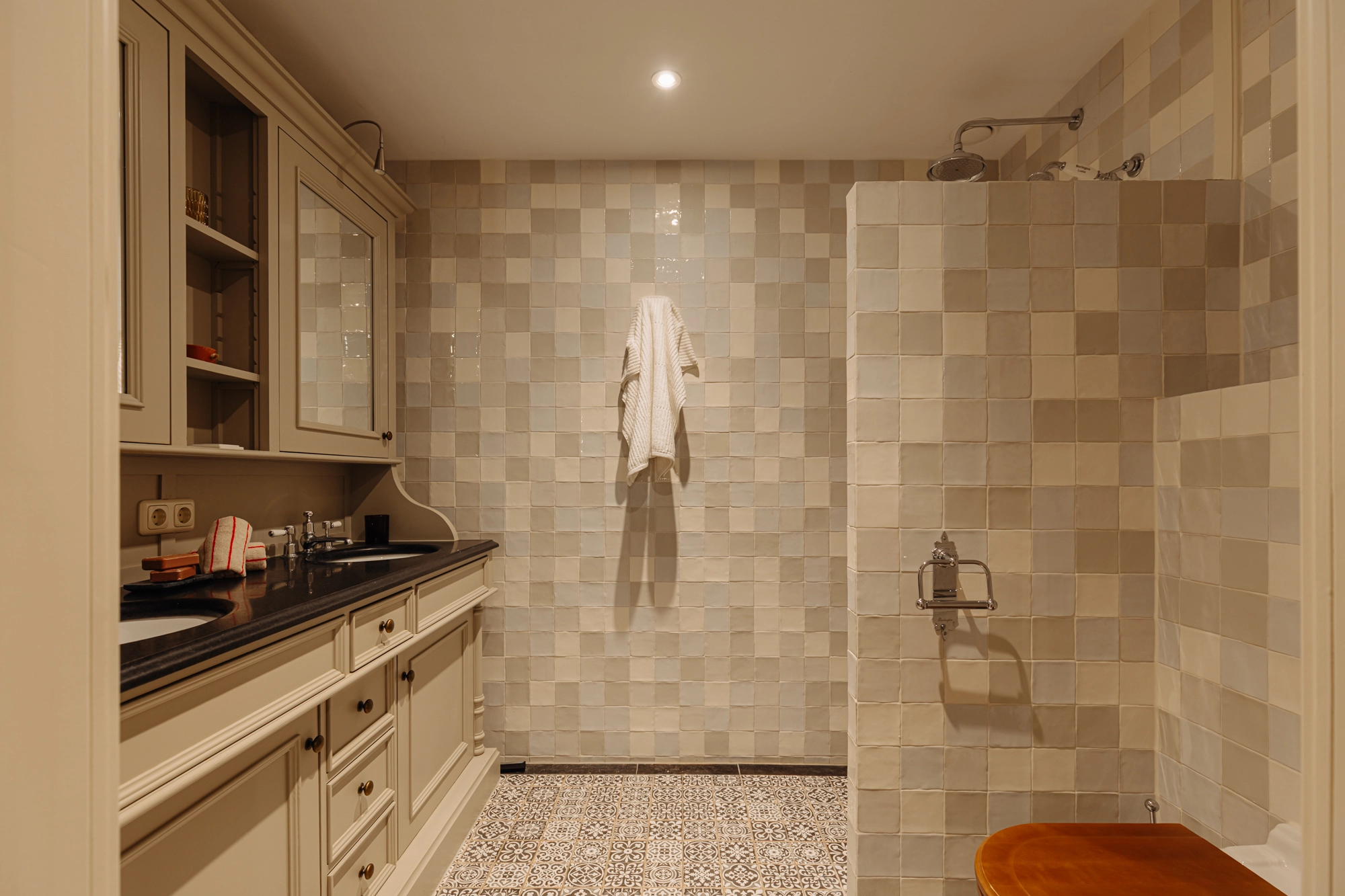
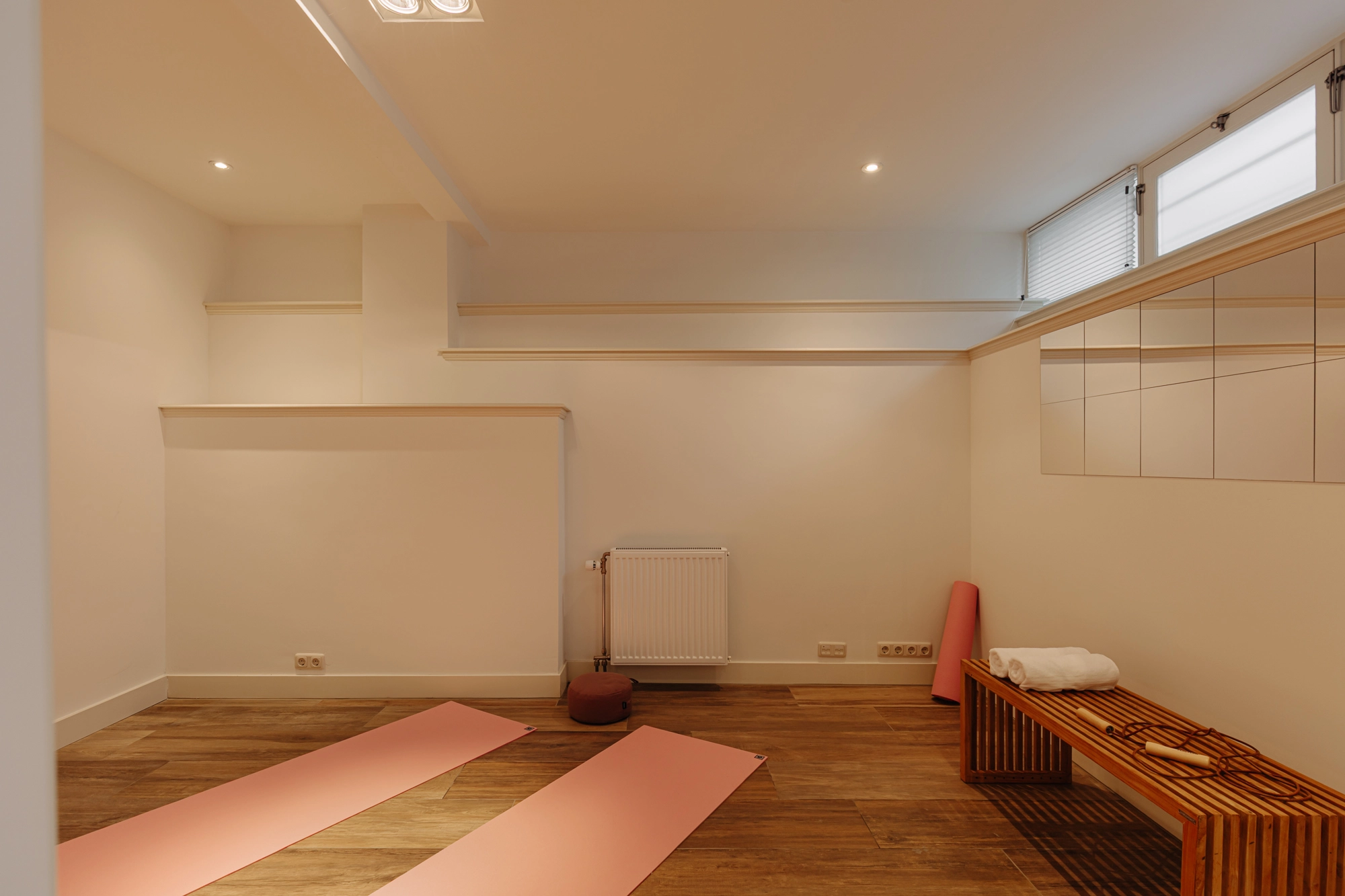
The basement is a full-fledged and valuable addition. It features a spacious hall with access to a TV/playroom, a laundry room, a room for sports or yoga, and a bedroom with an en-suite bathroom. The bathroom is equipped with a double vanity unit, a toilet, and a walk-in shower. The bedroom is perfect for an older child or an au pair. Thanks to the large windows and generous ceiling height, the basement feels particularly comfortable. From the basement, a staircase provides access to the garden and a separate storage room.
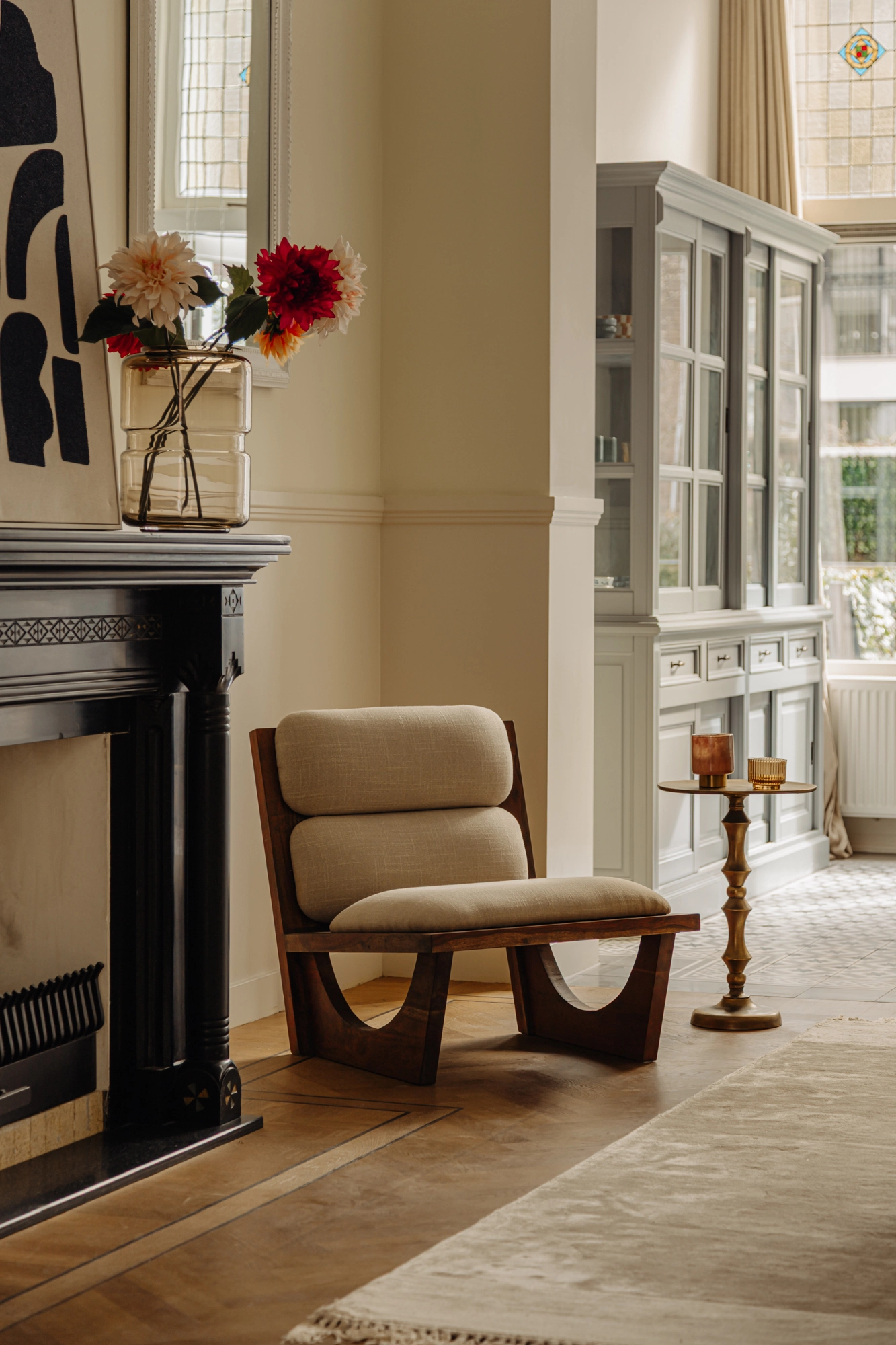
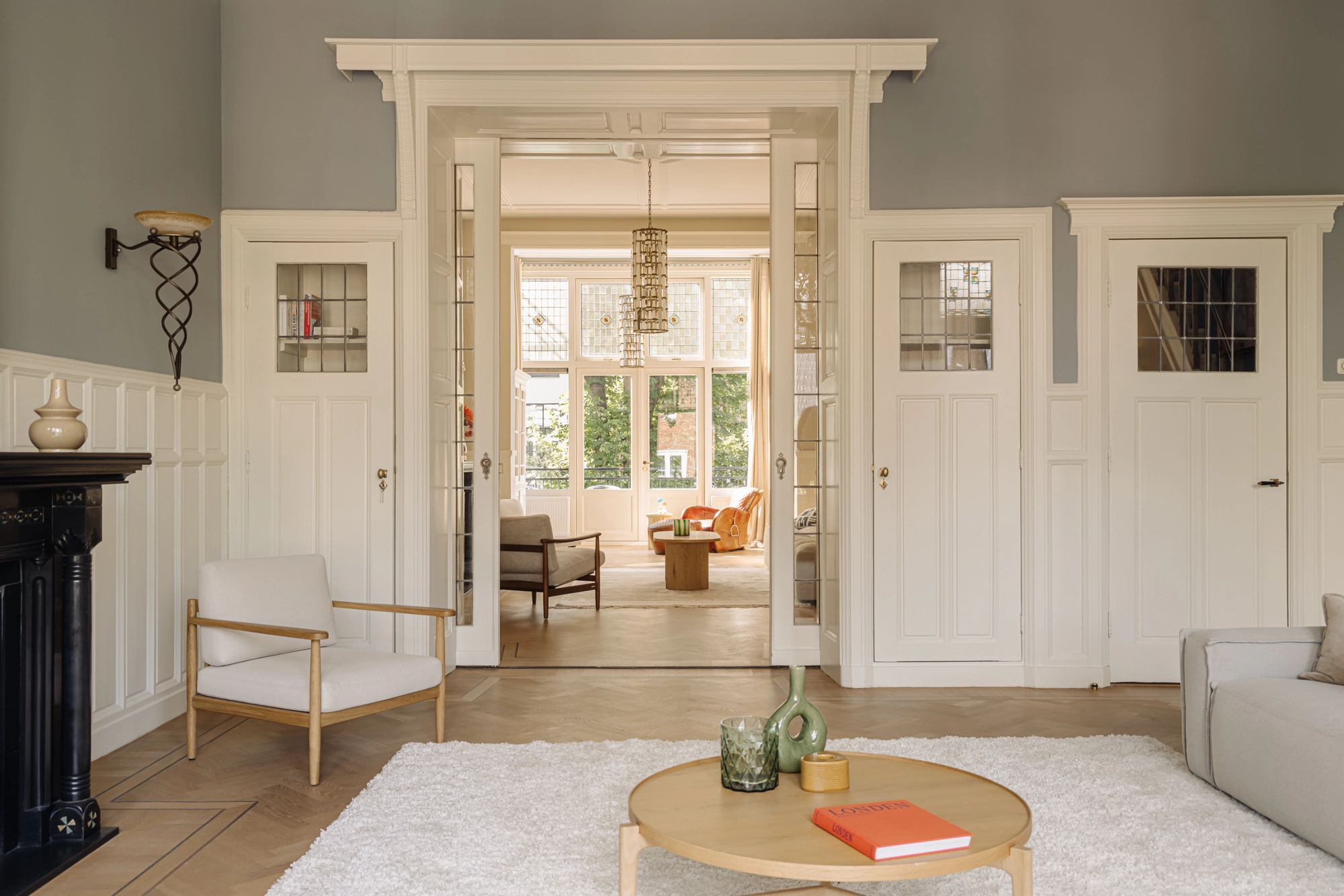
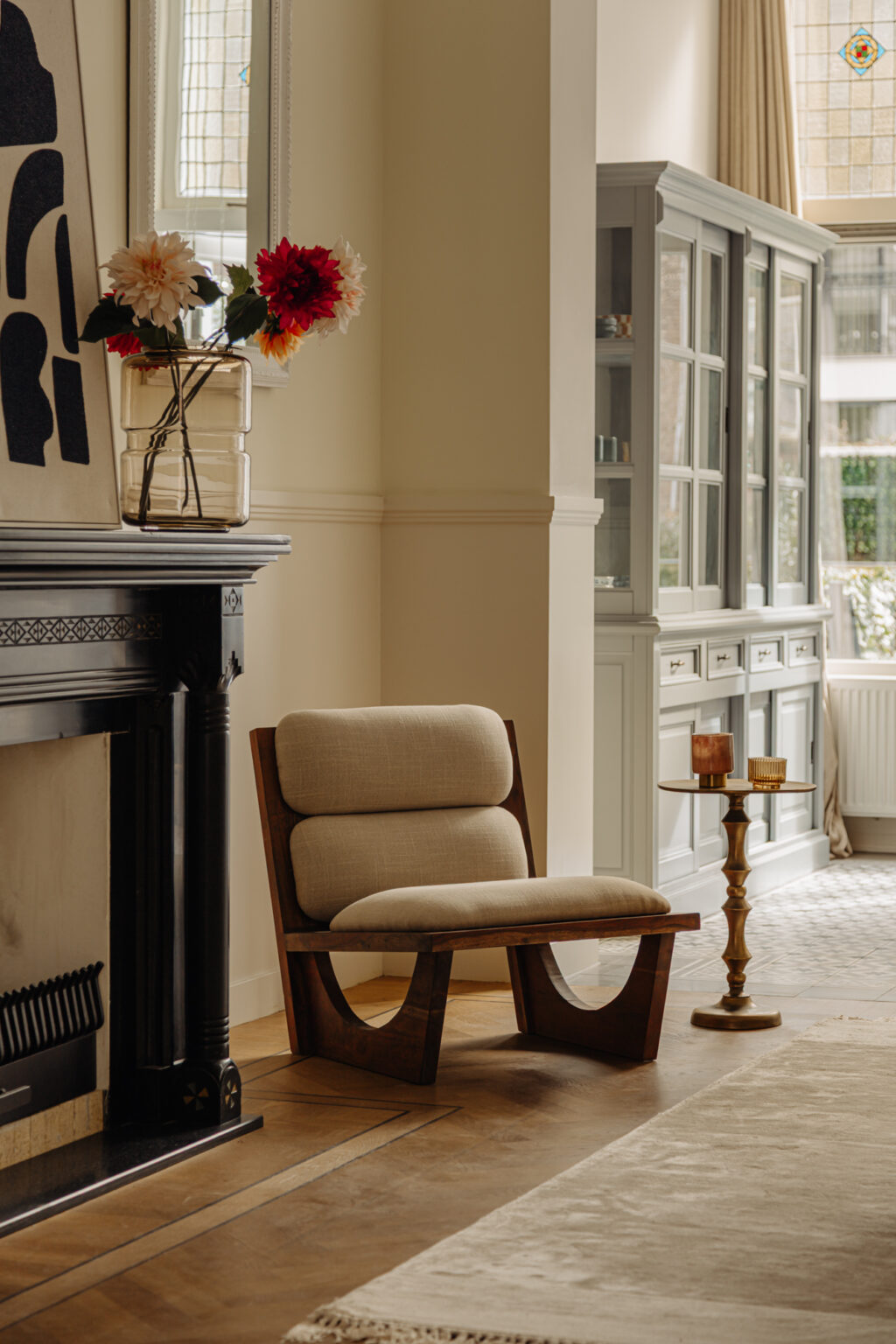
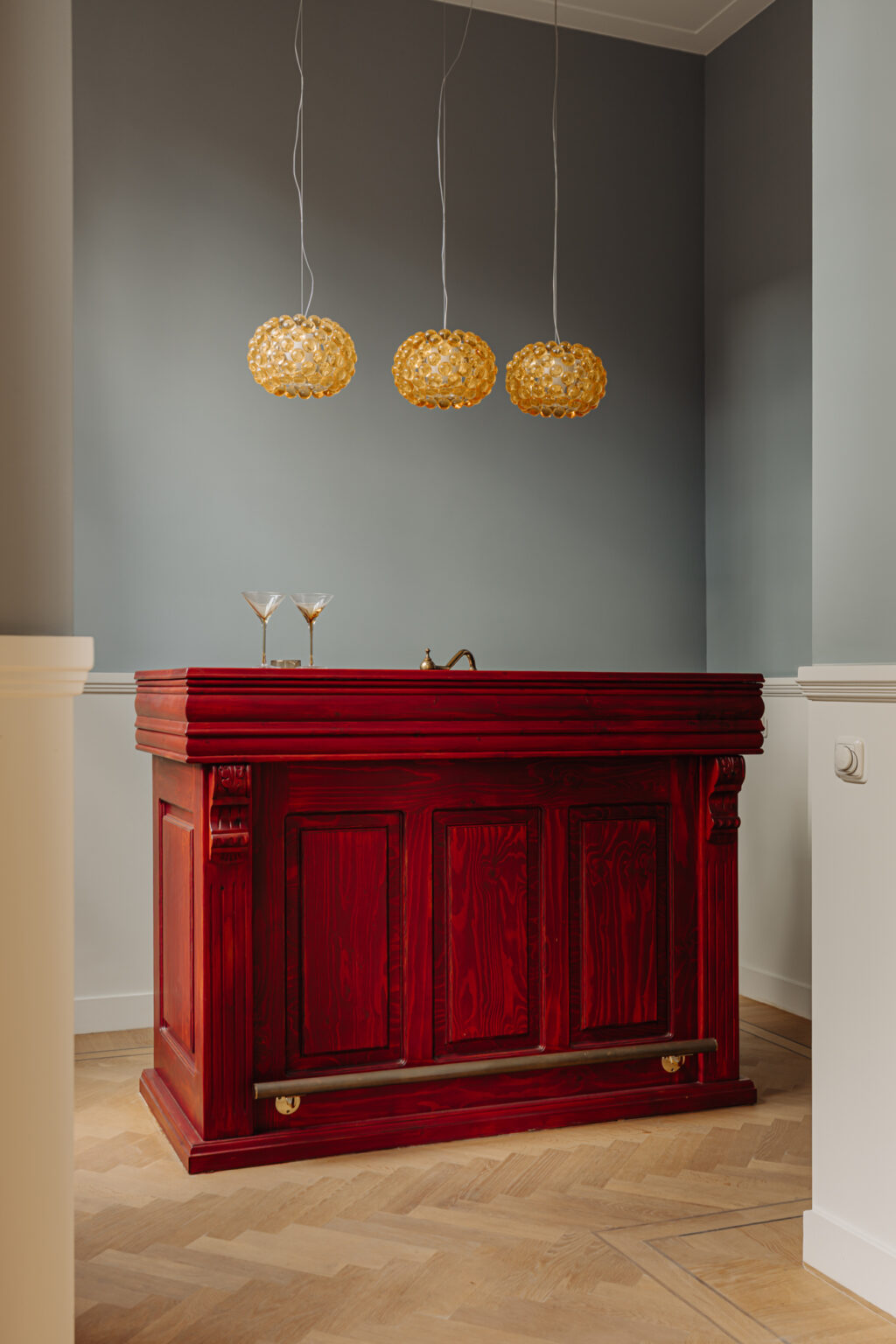
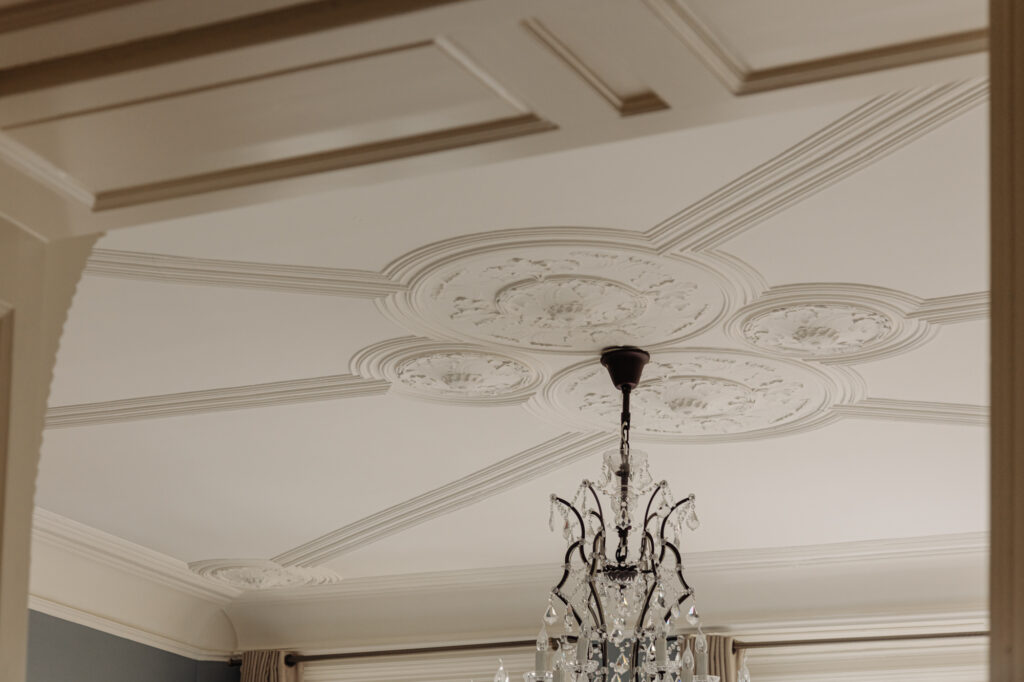
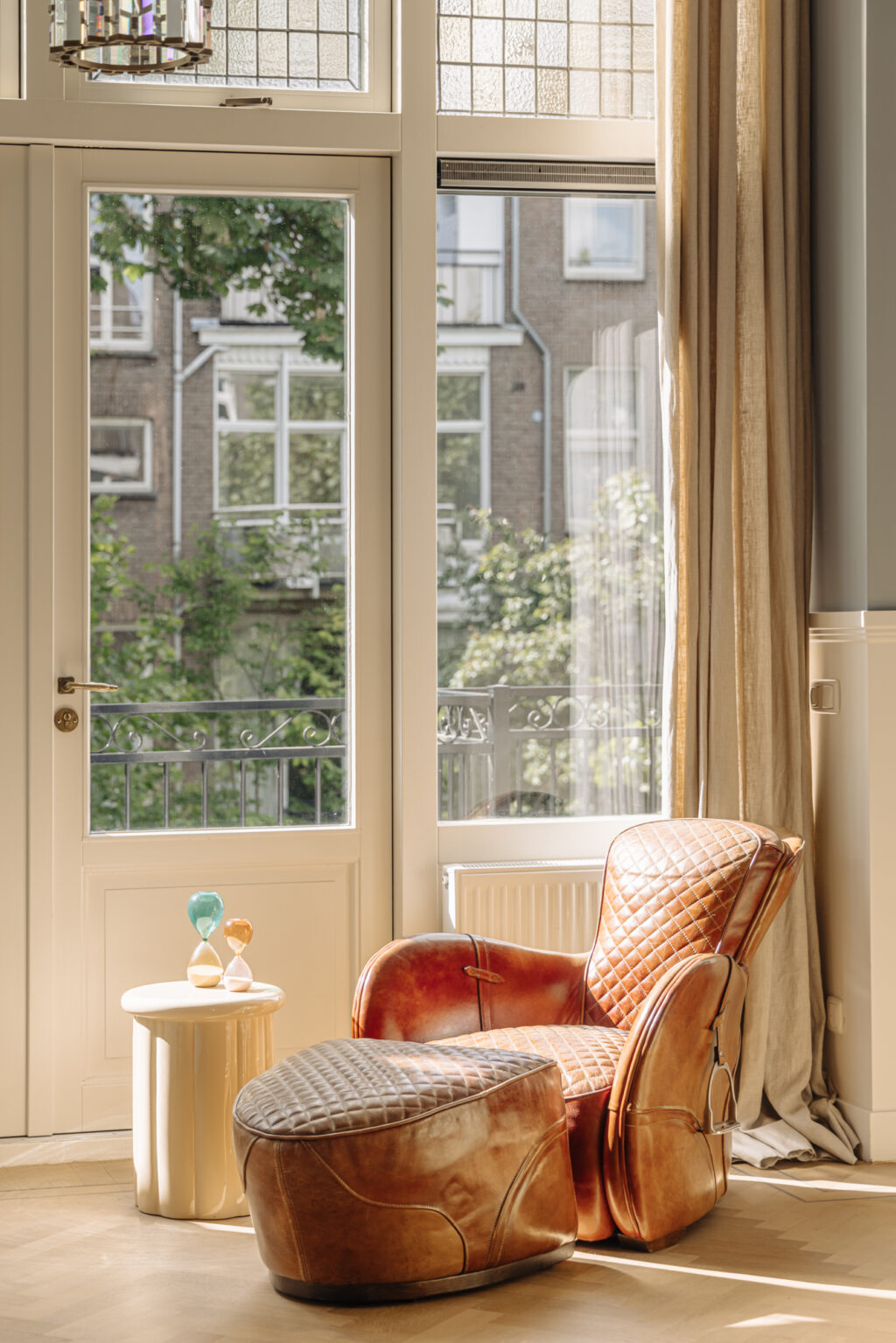
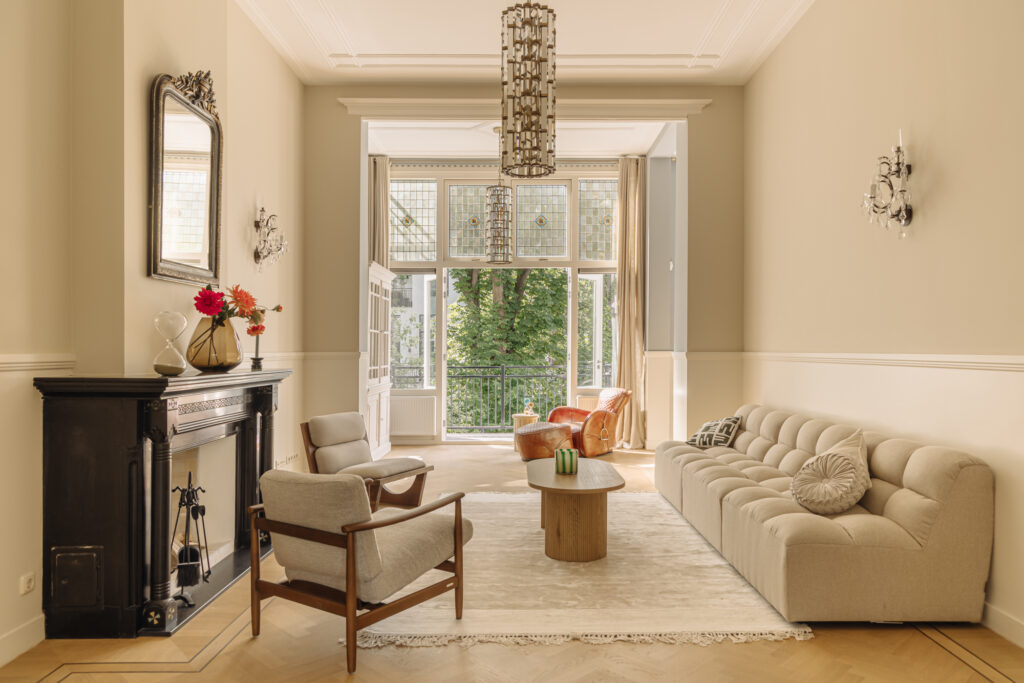
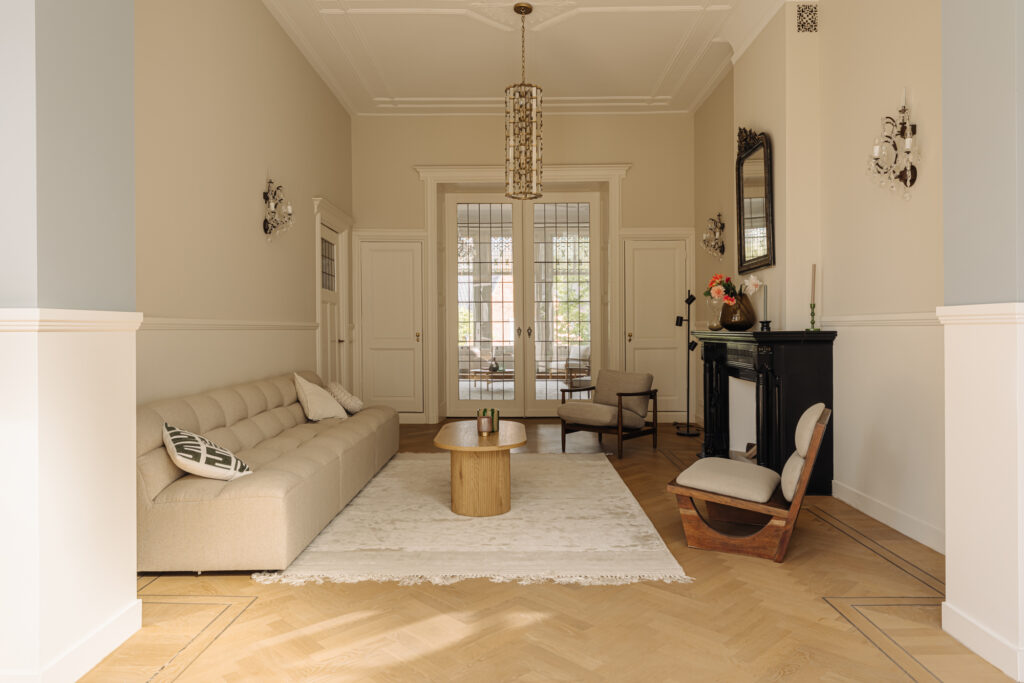
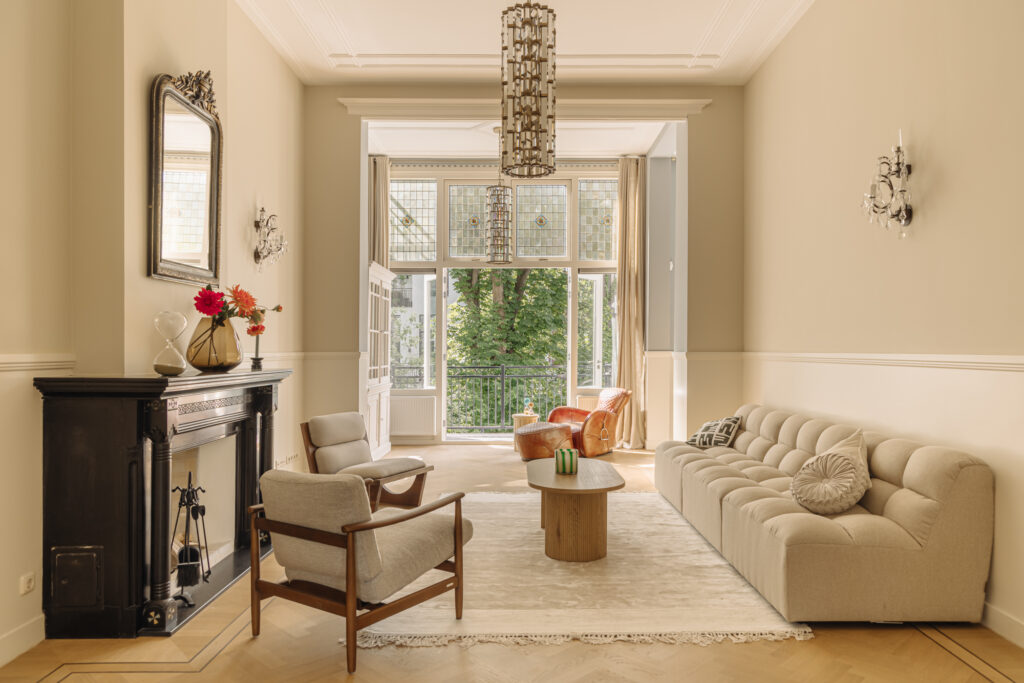
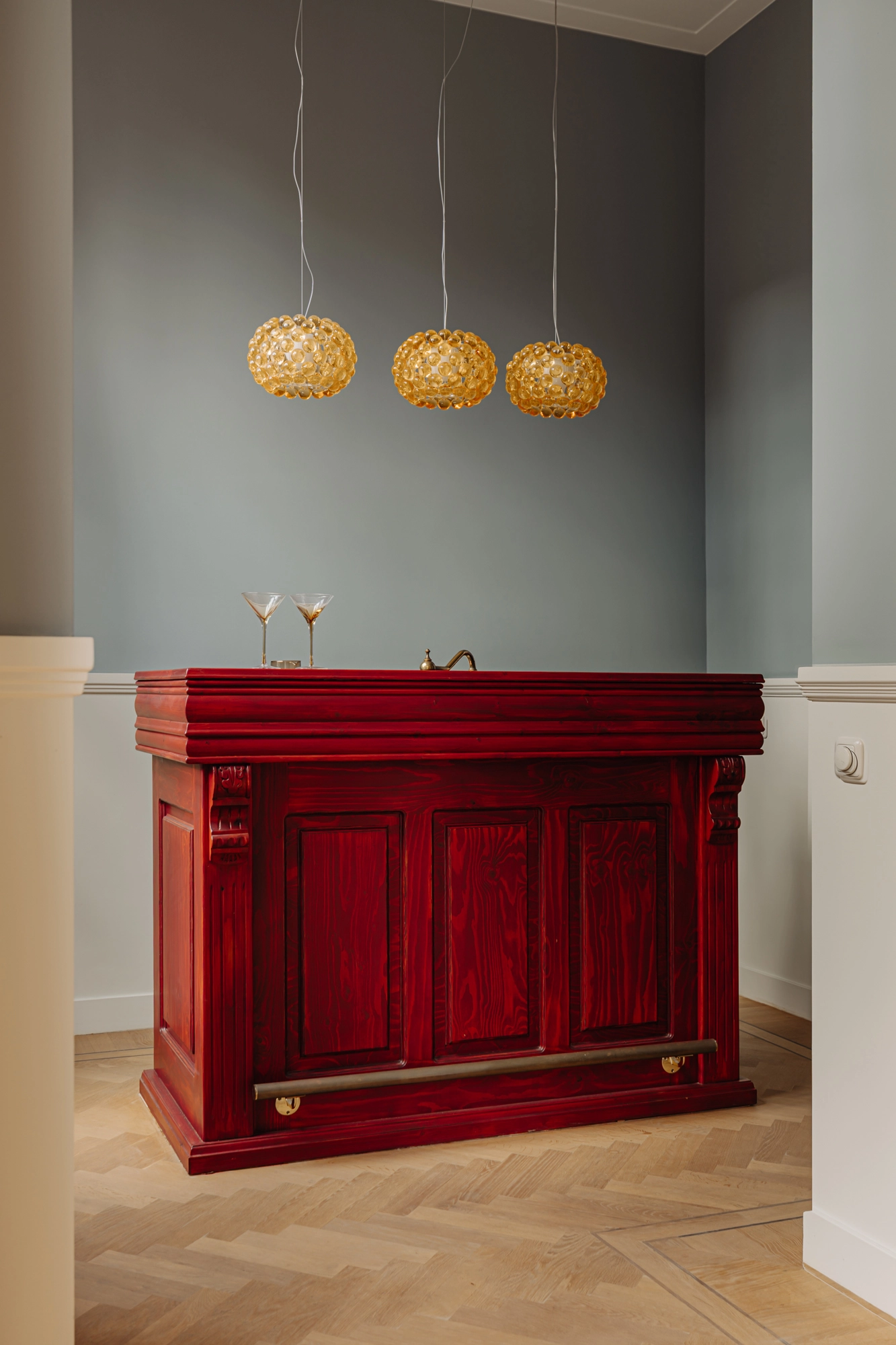
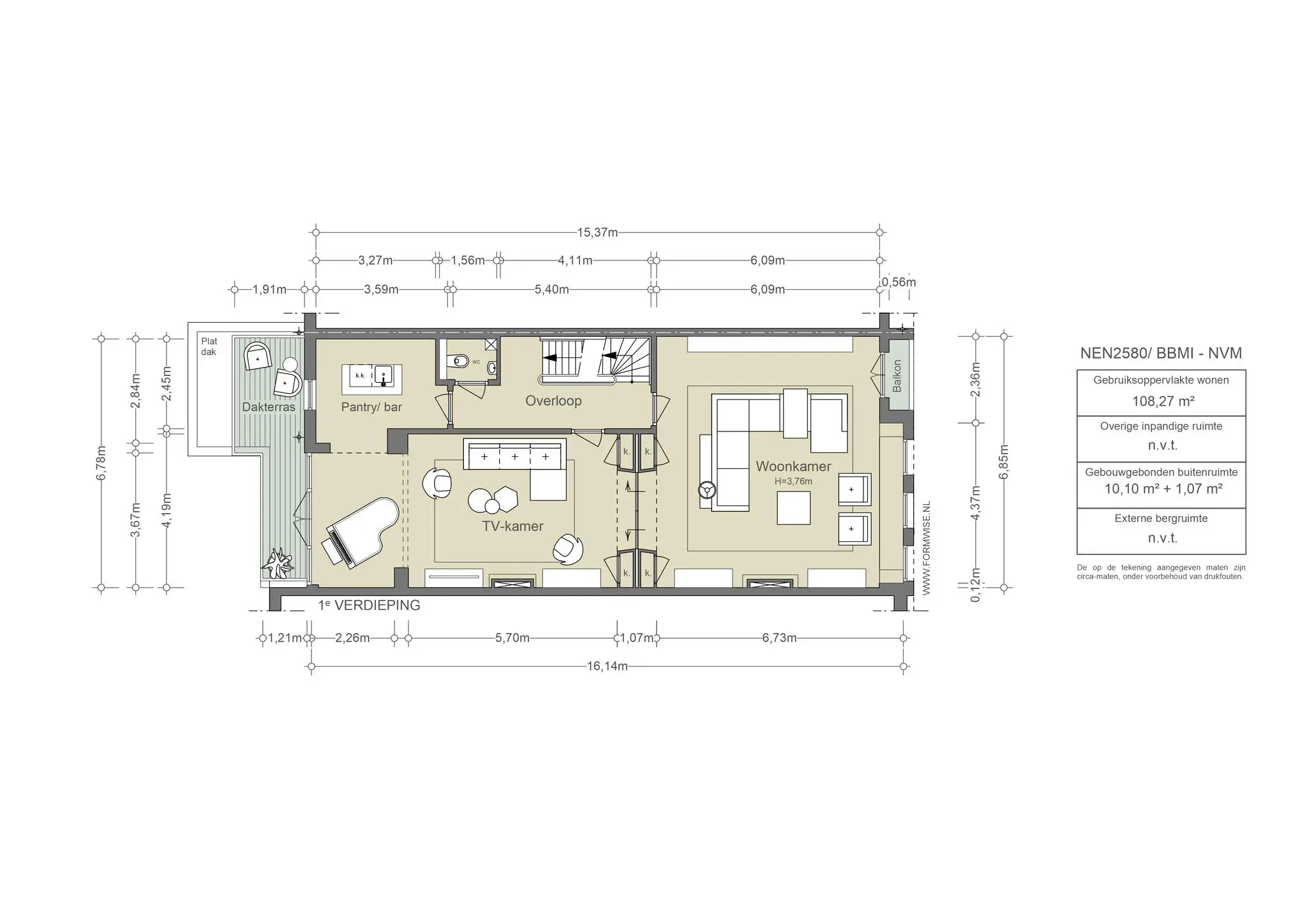
A floor with extra height and grandeur. The rooms on this level boast an impressive ceiling height of 3.76 meters! At the front of the house is the salon, a stylish room spanning the entire width of the property, featuring three large windows and a bay window. The room is adorned with an elegant decorative ceiling, wainscoting, and a refined fireplace with an open hearth. Originally, this space was designed to impress, showcase wealth, and host private concerts. And to this day, it still leaves a lasting impression. The rear room serves as a spacious living room and includes a pantry/bar. With a generous surface area of over 42 m², this room offers plenty of space and also features a south-facing terrace. This floor also has a separate toilet. From the spacious landing, the staircase leads to the second floor.
The second floor
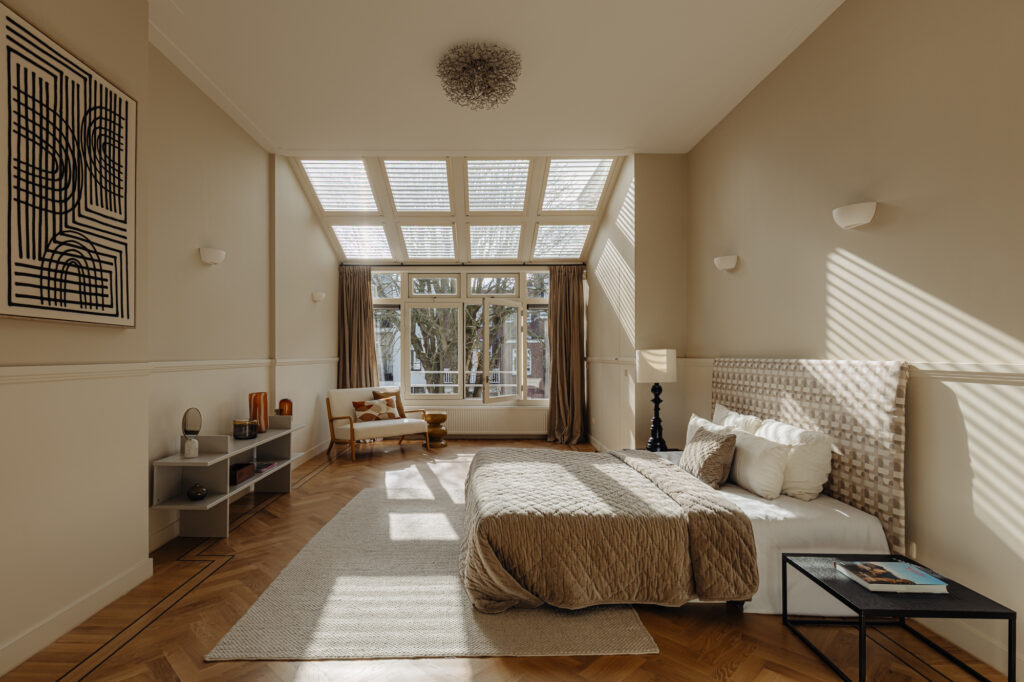
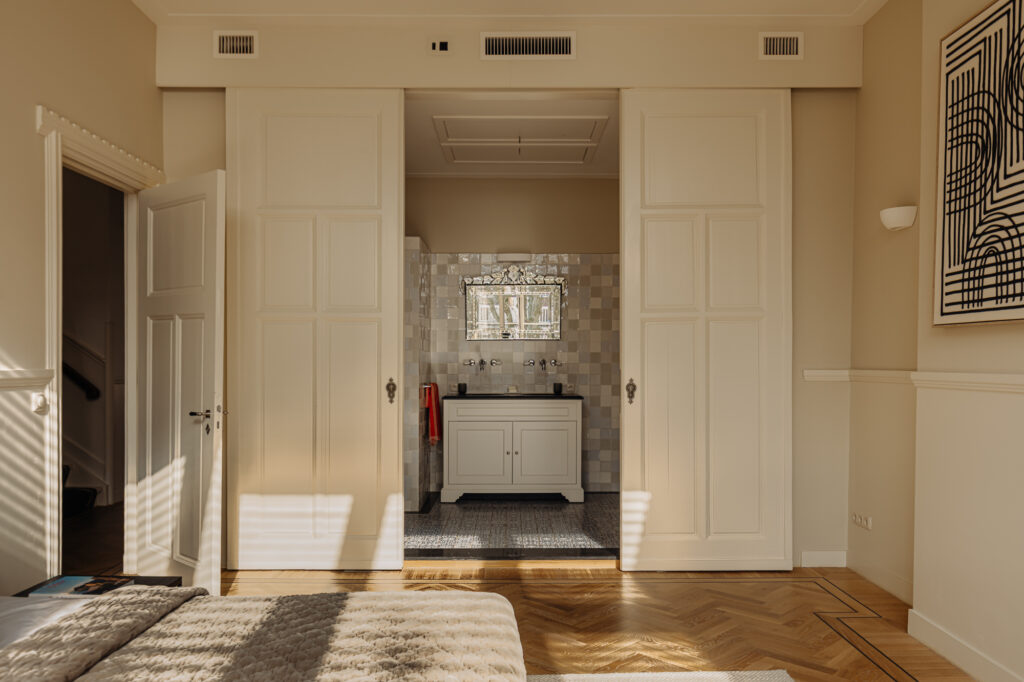
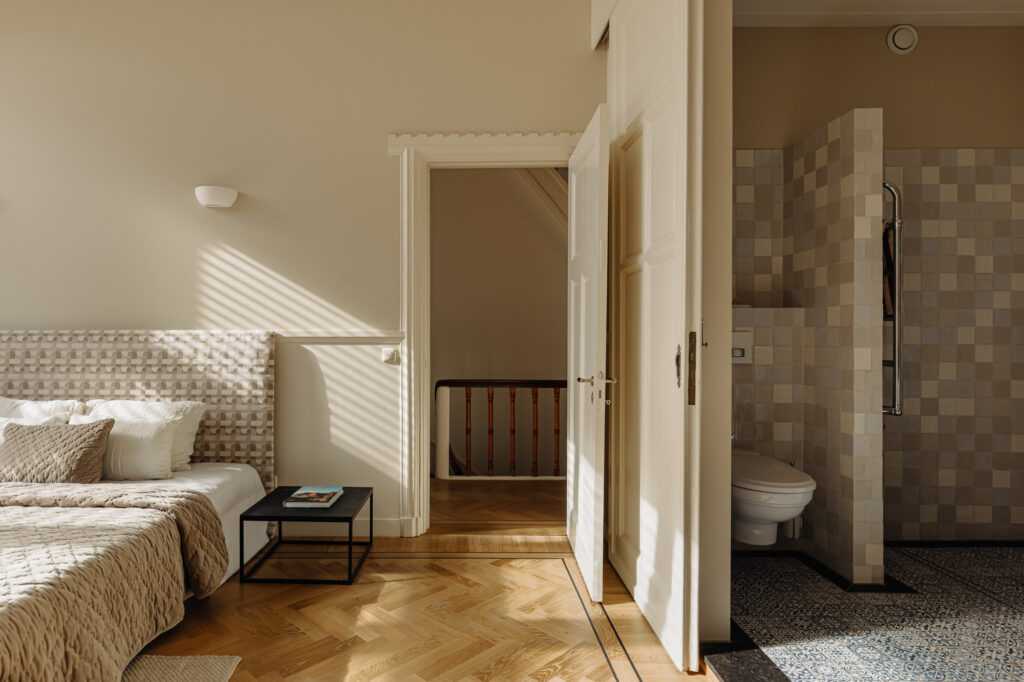
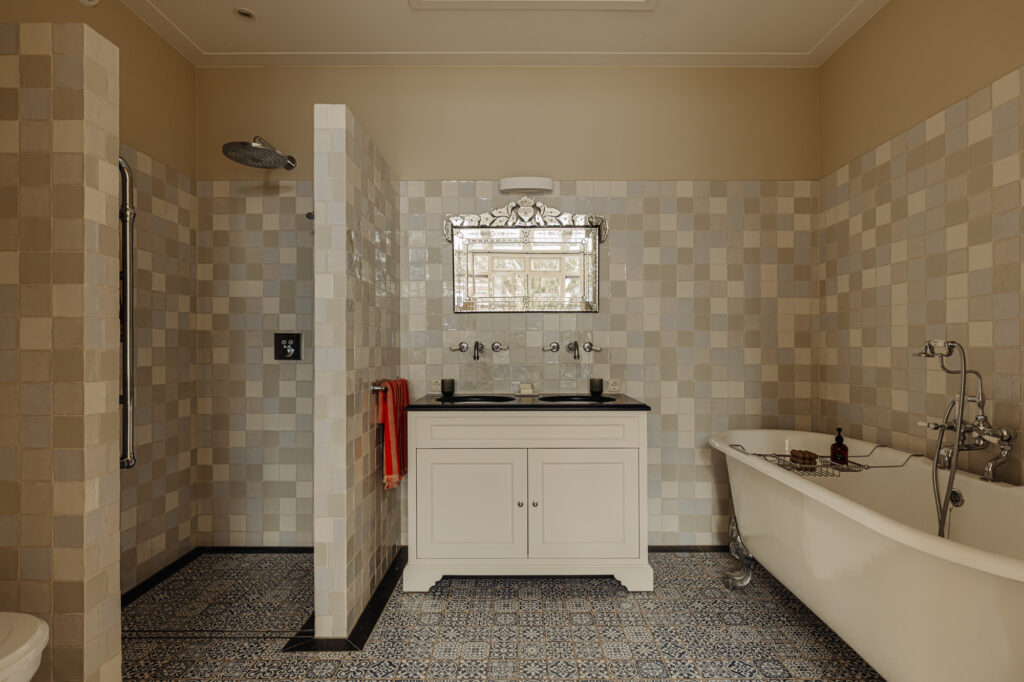
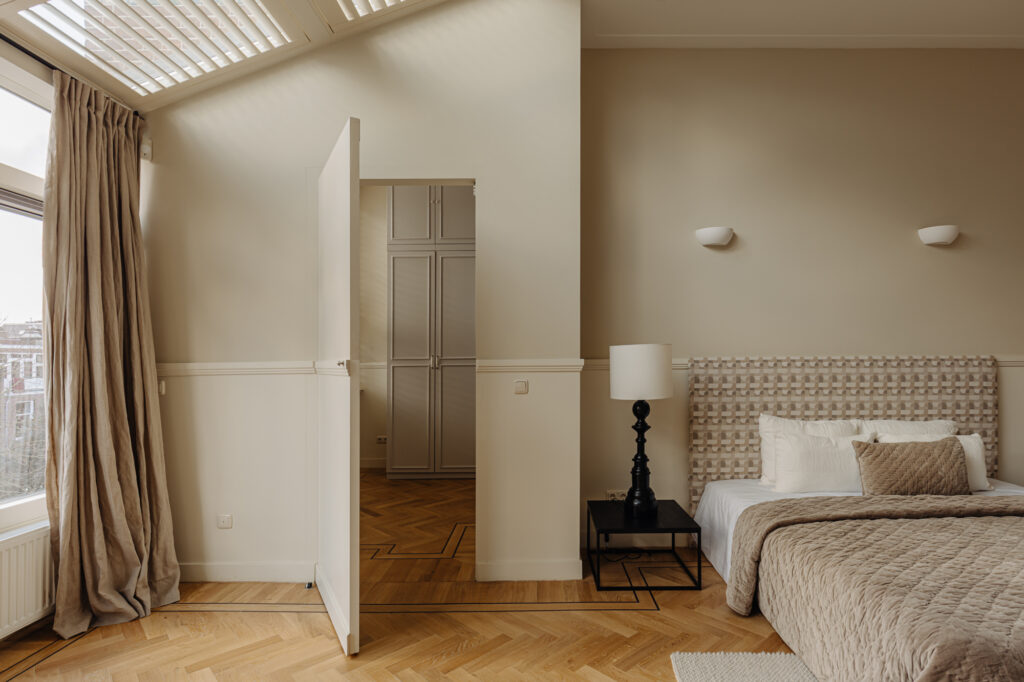
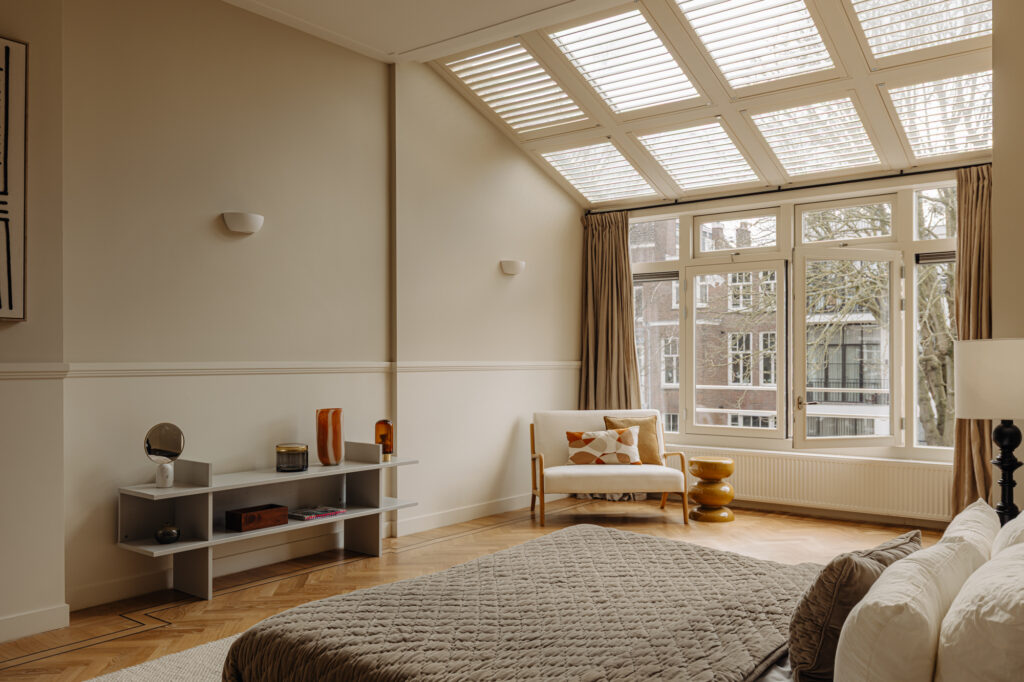
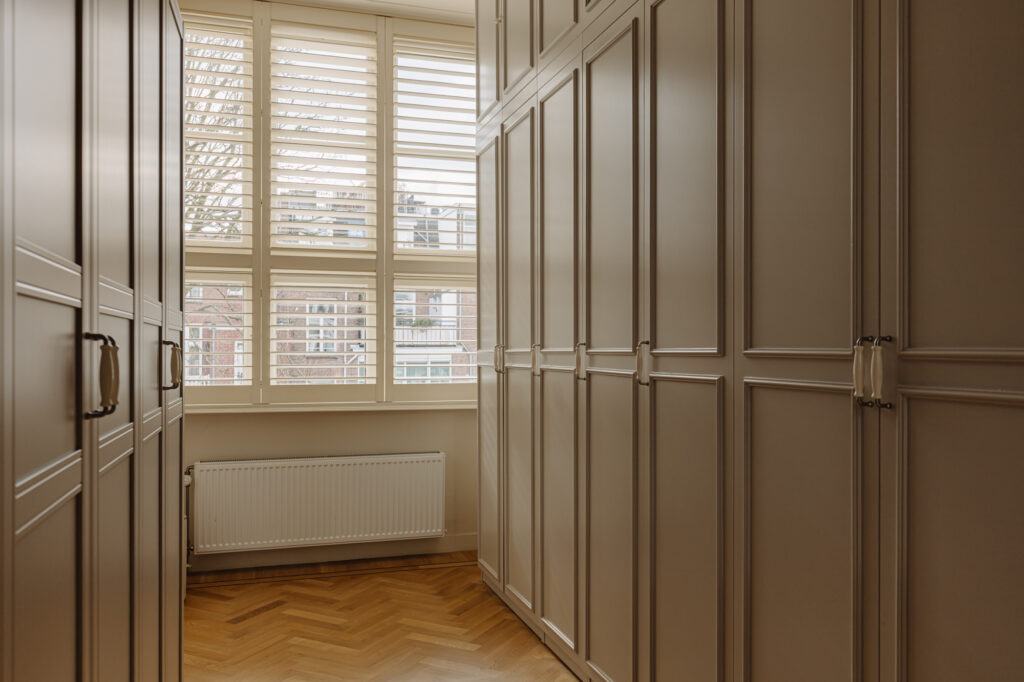
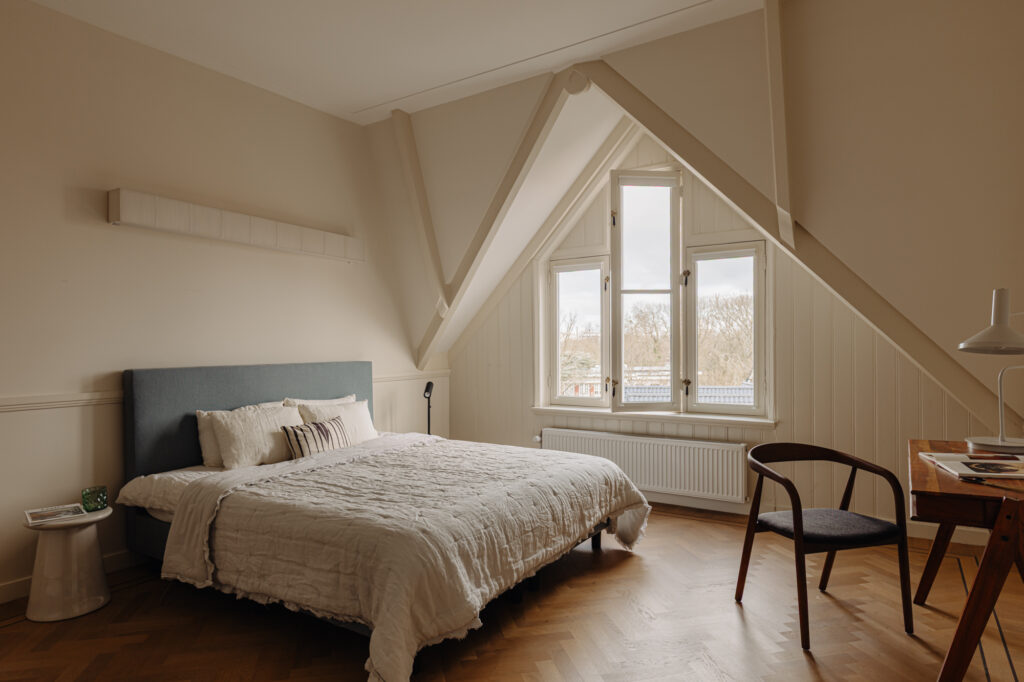
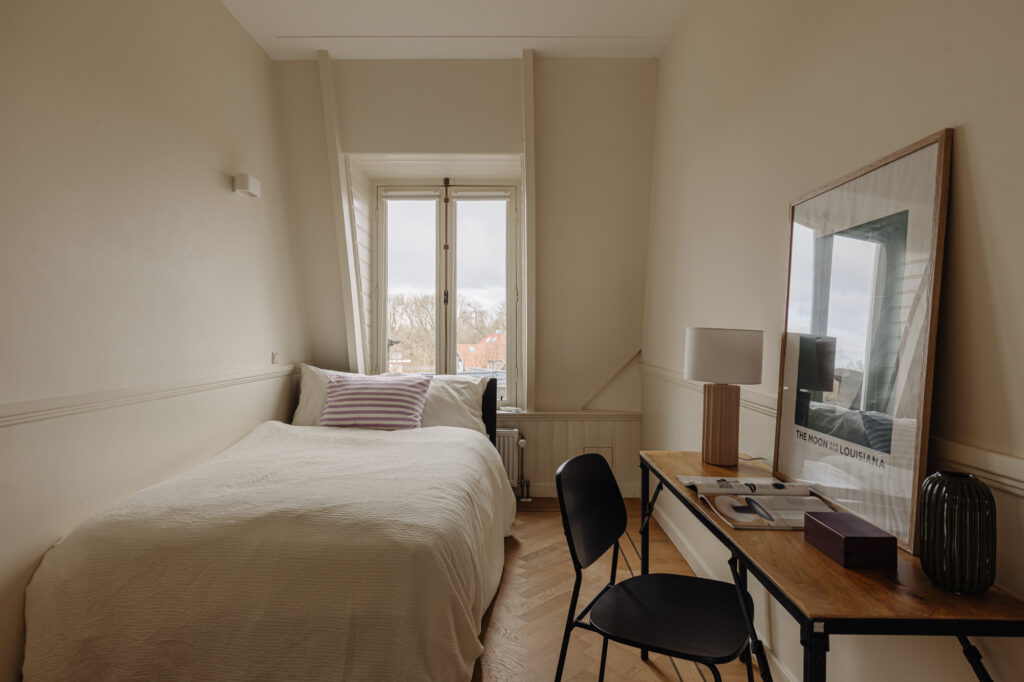
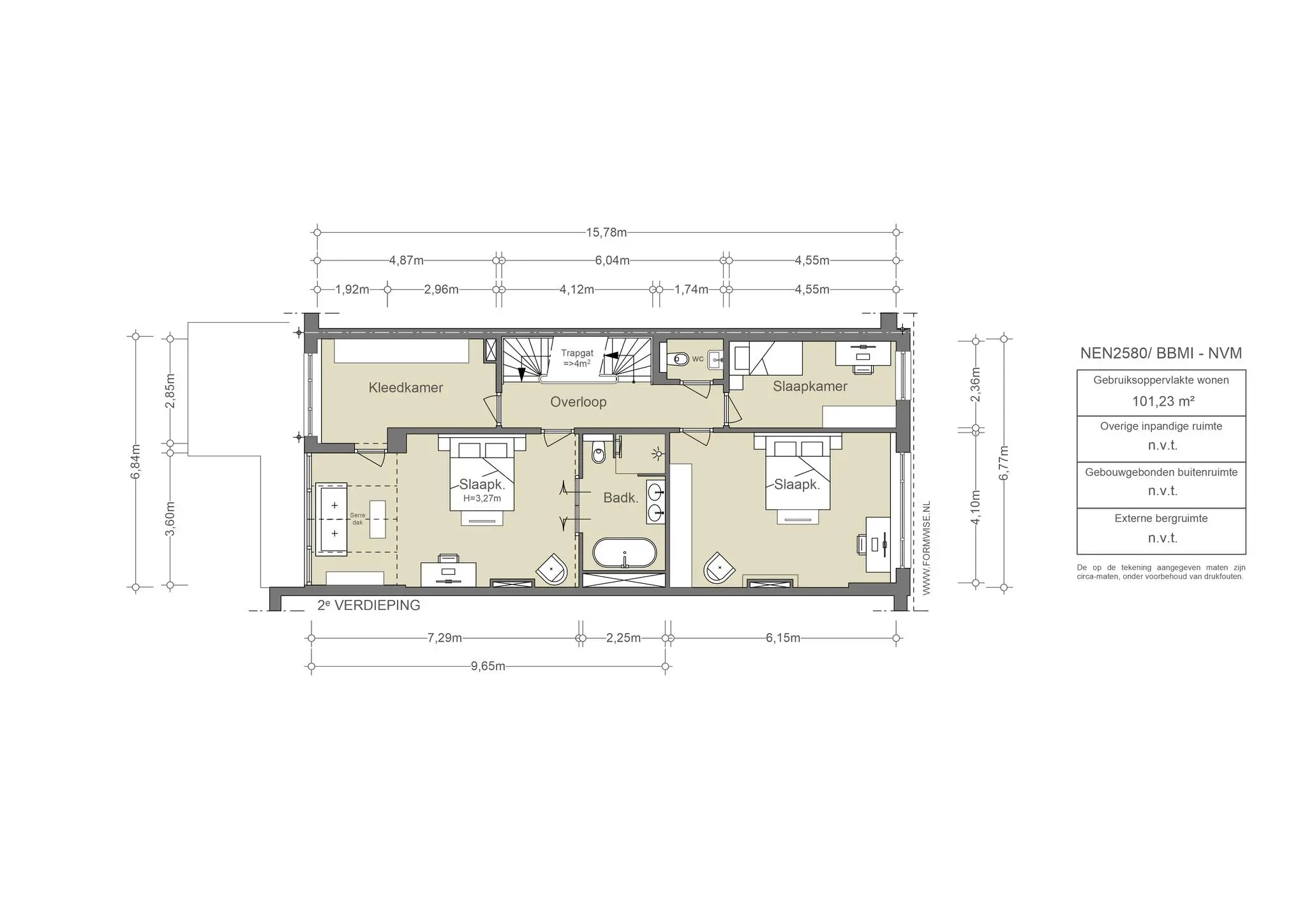
The second floor is a spacious and bright sleeping level with three bedrooms. The master bedroom features an en-suite bathroom with a walk-in shower, a double vanity with cabinetry, a bathtub, and a toilet. Additionally, there is a separate toilet on the landing. Both the landing and the master bedroom provide access to a generous walk-in closet. The other two bedrooms are located at the front of the house. One of the bedrooms can also serve as a study.
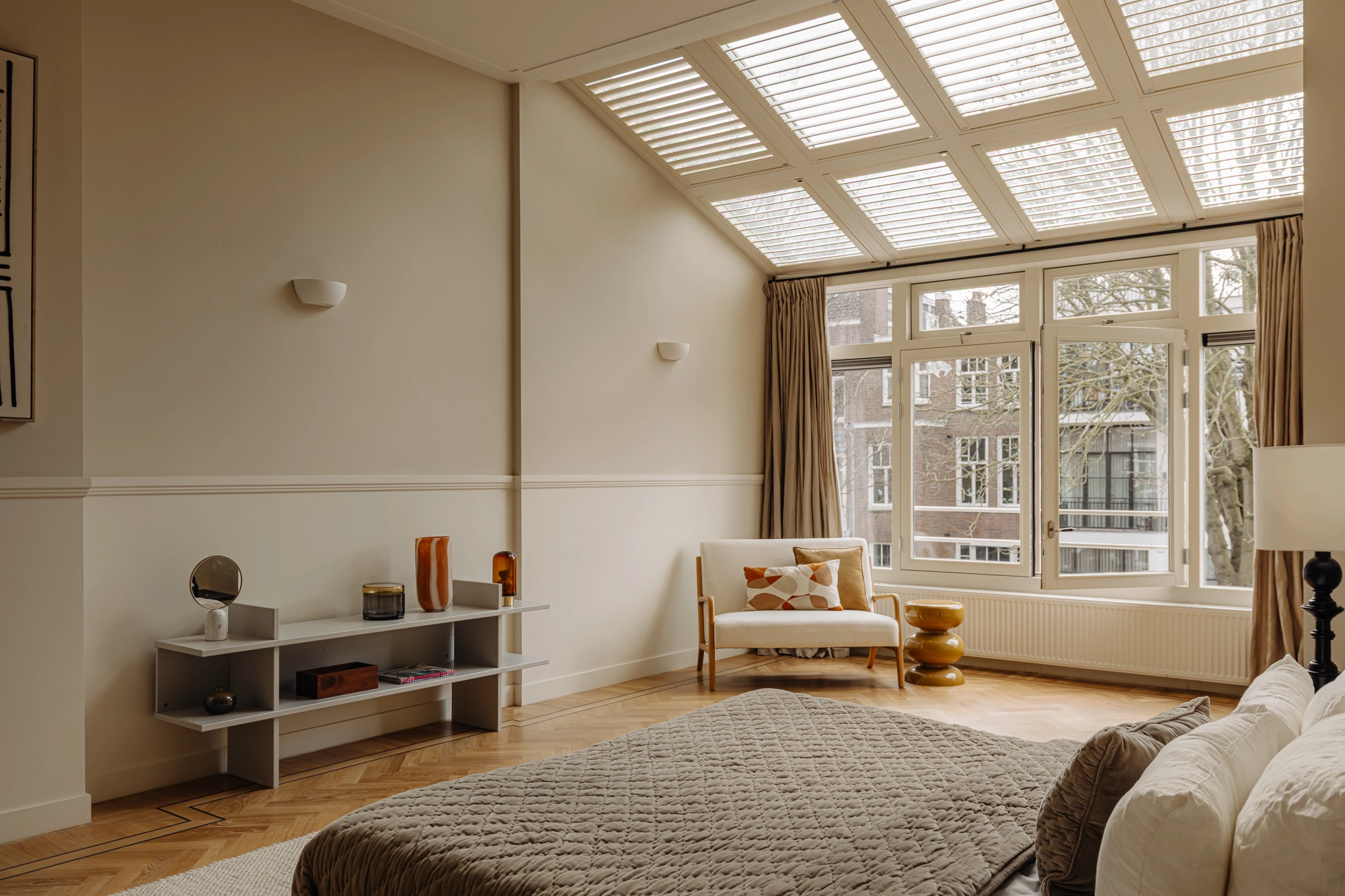
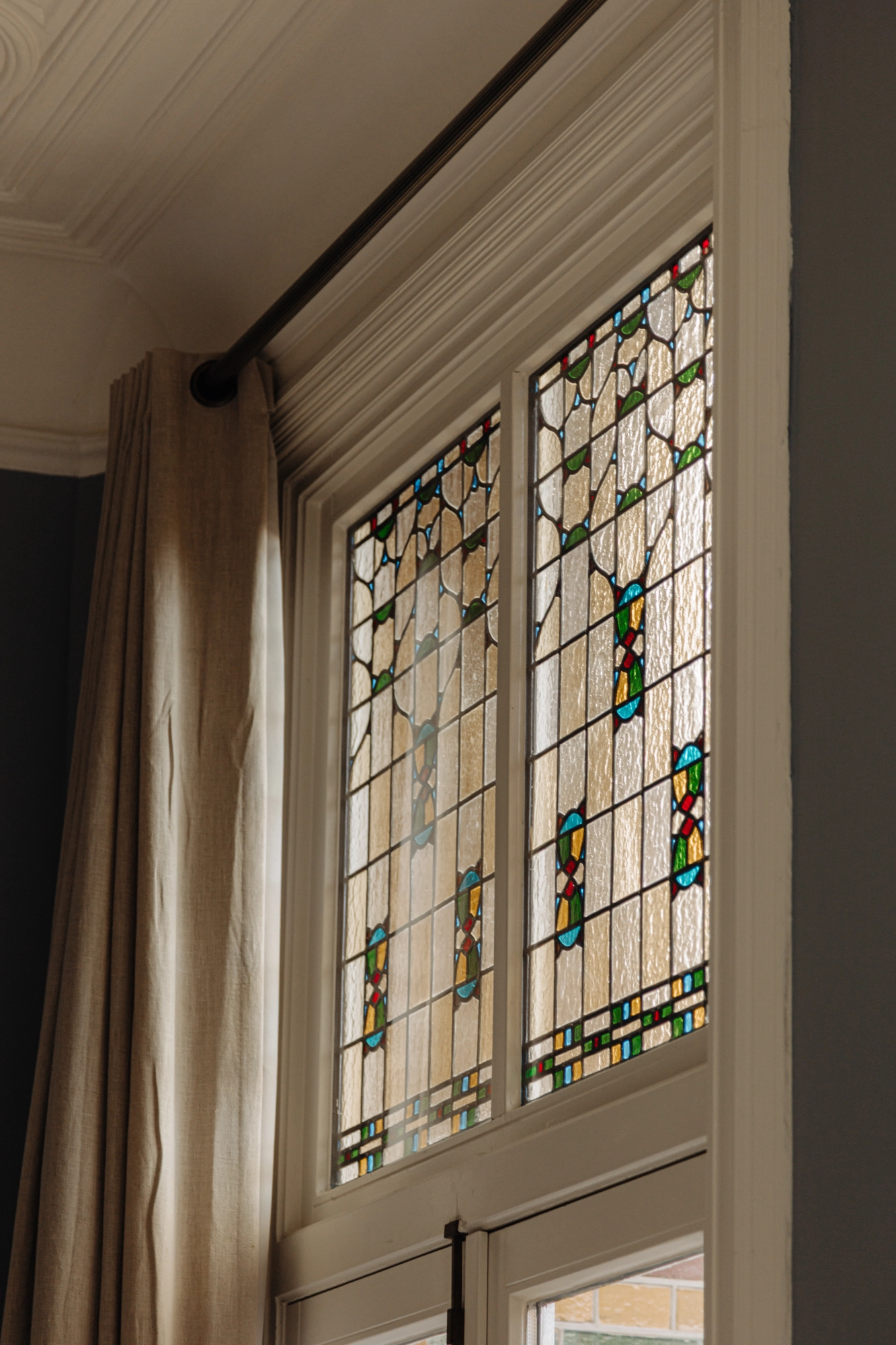
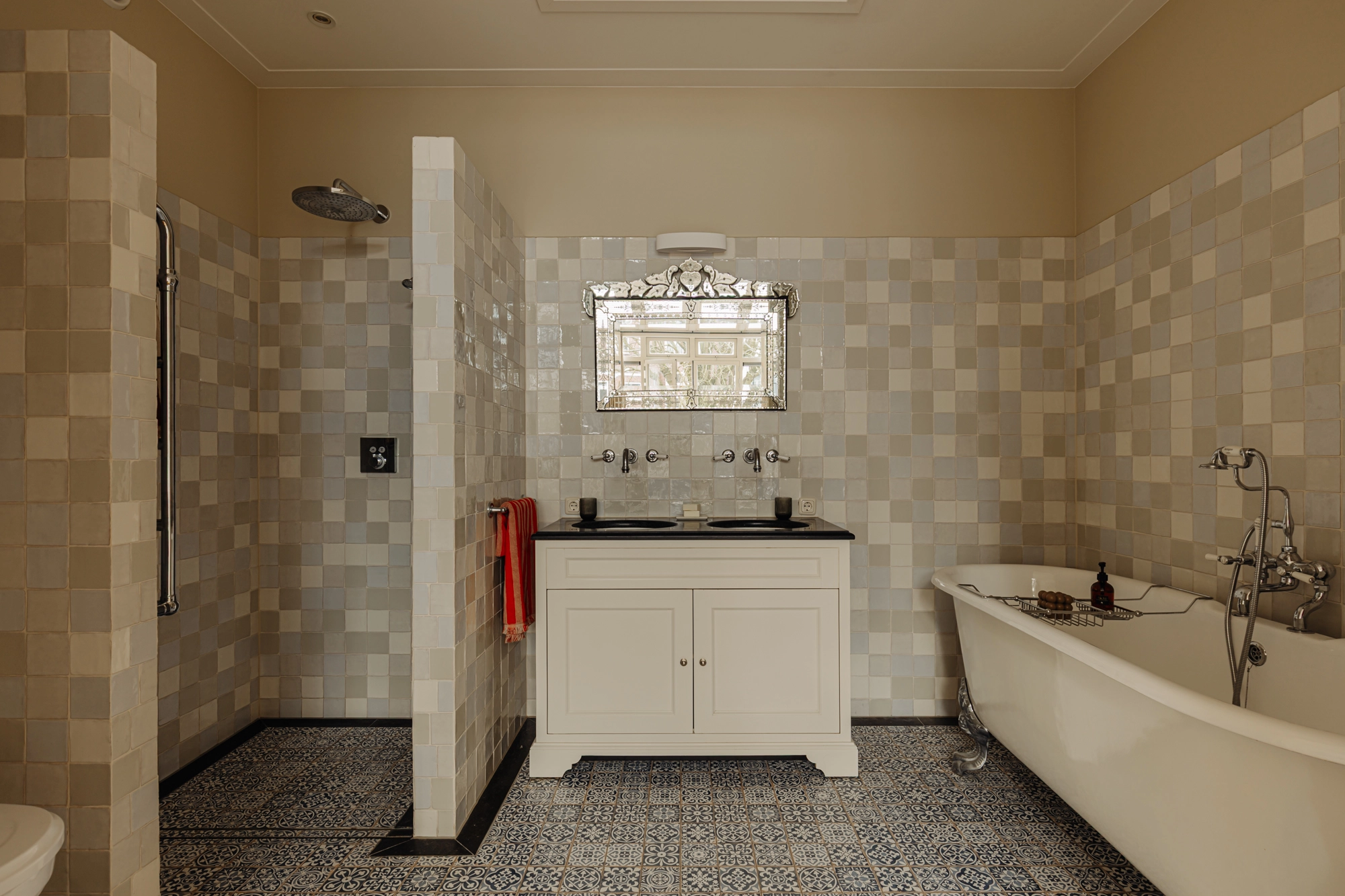
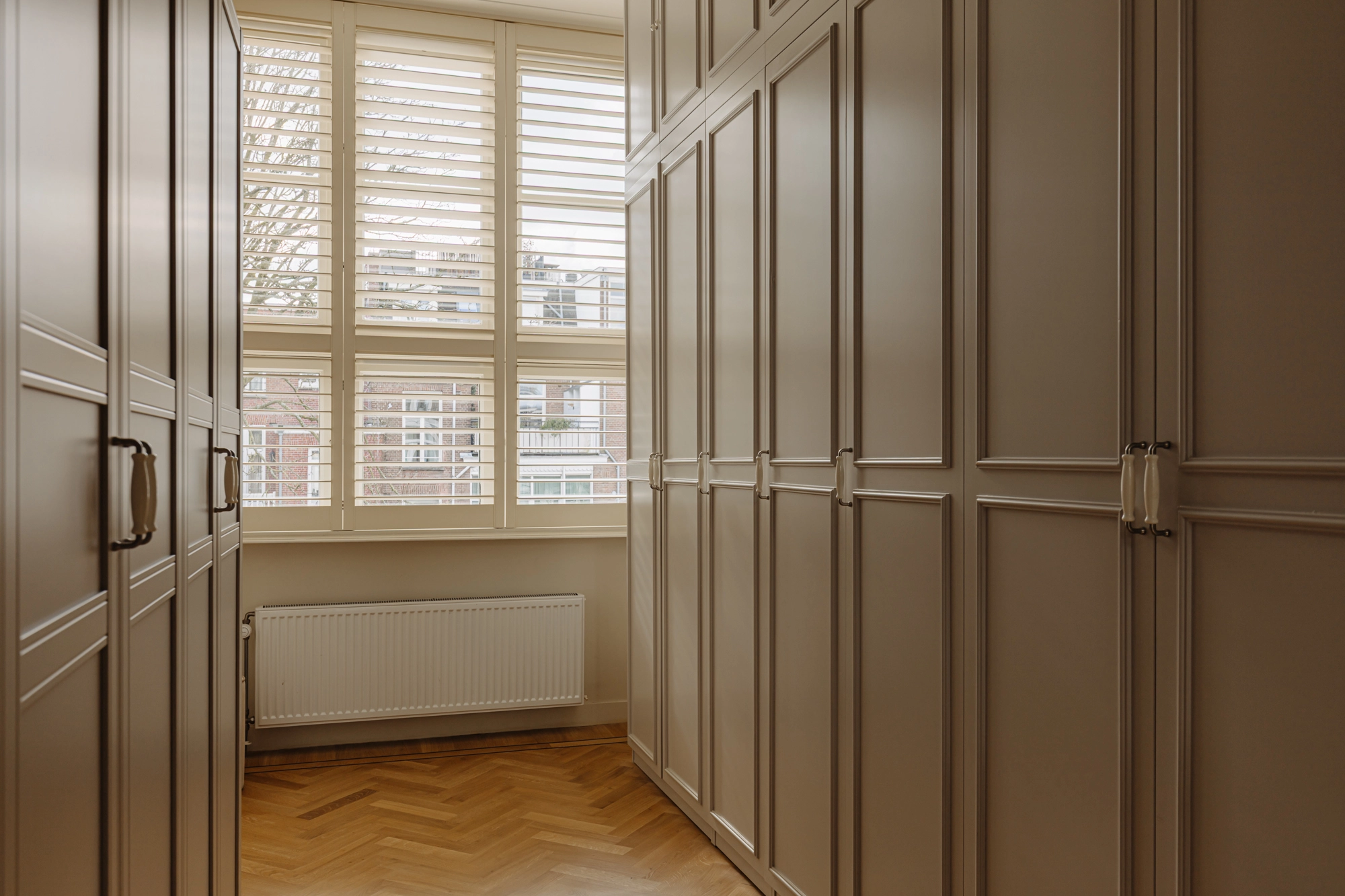
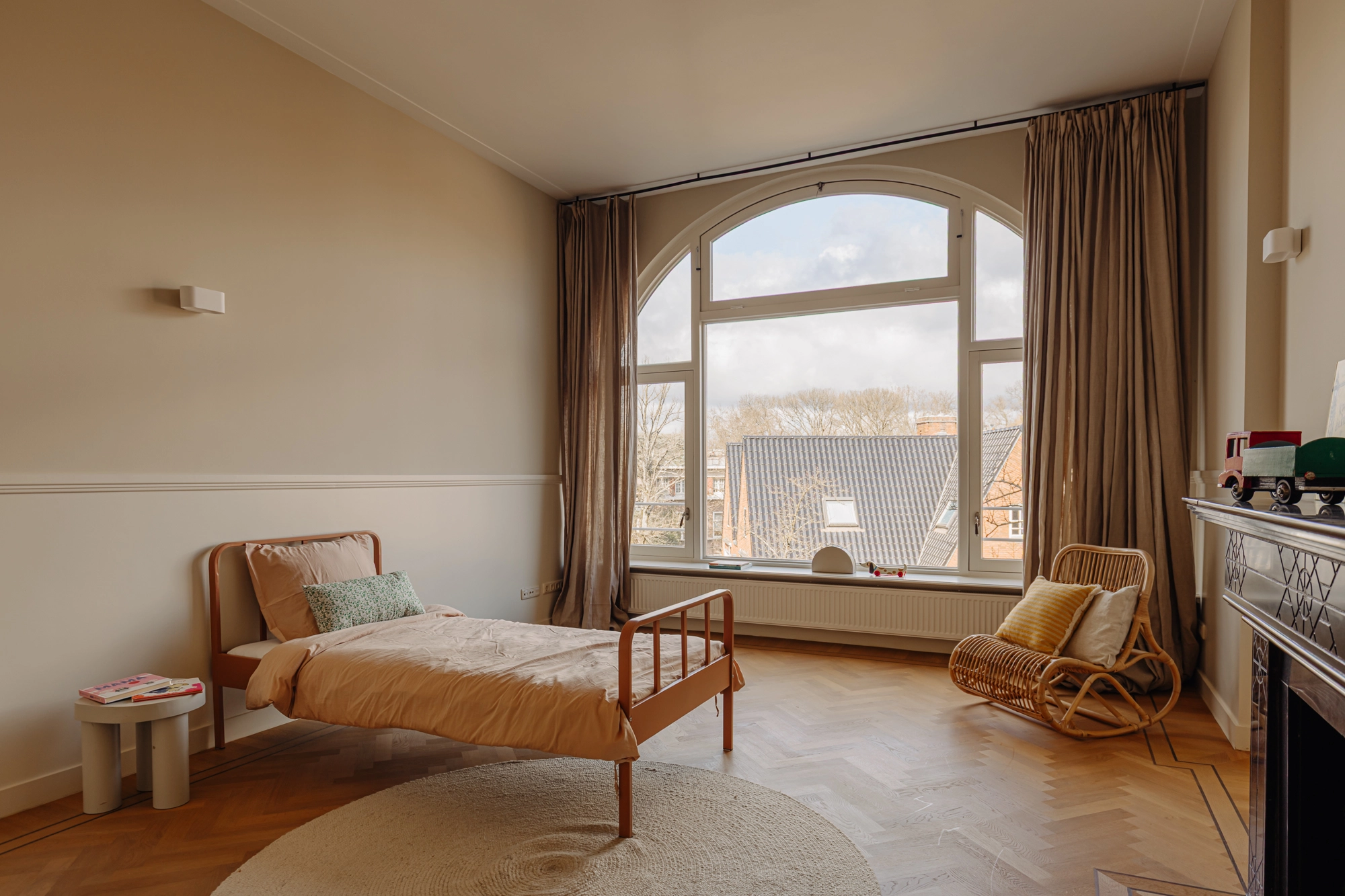
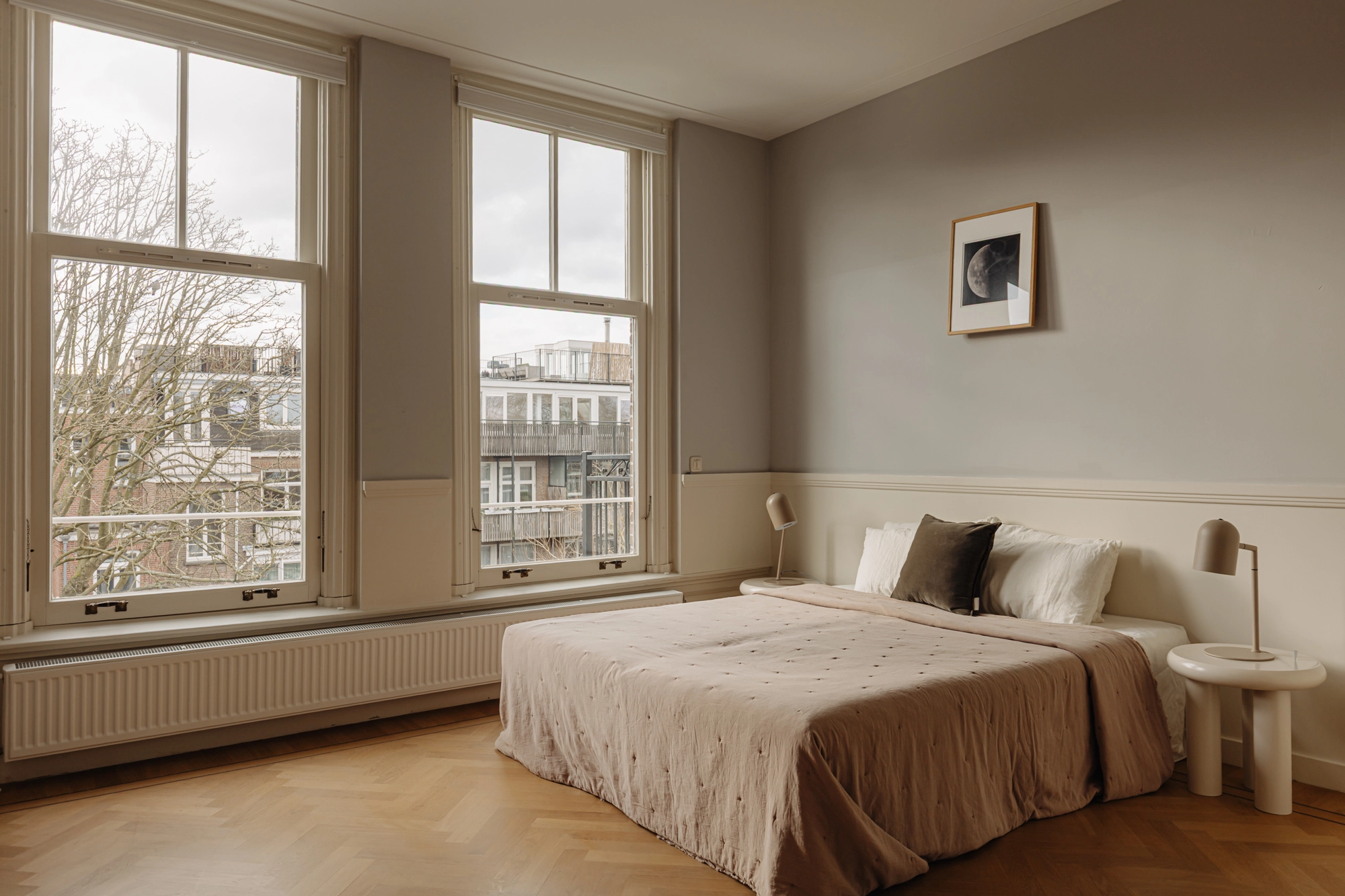
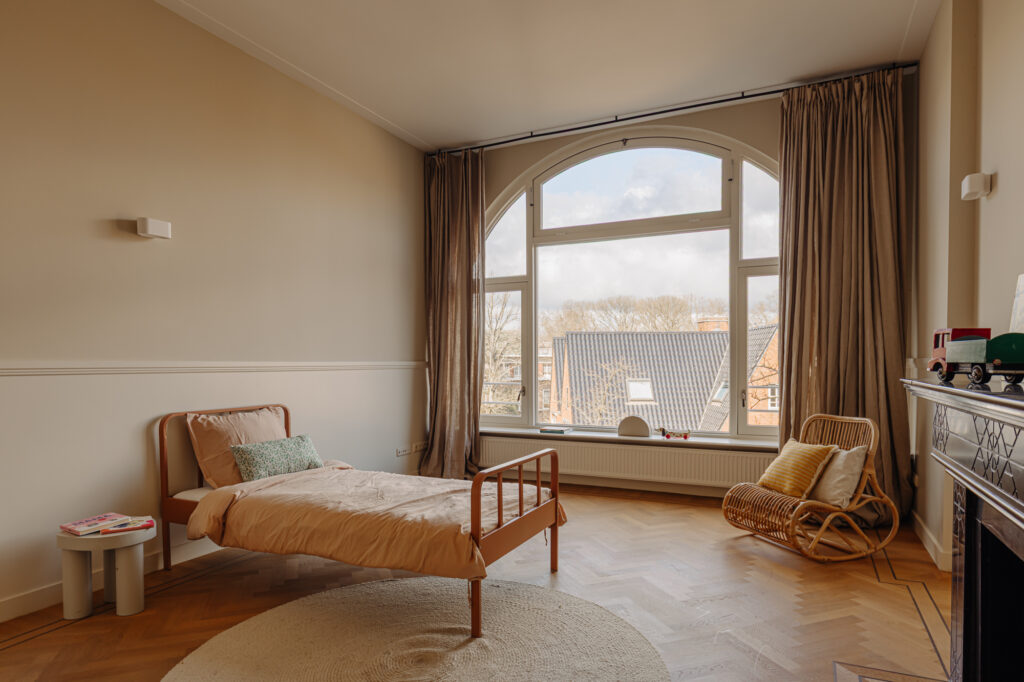
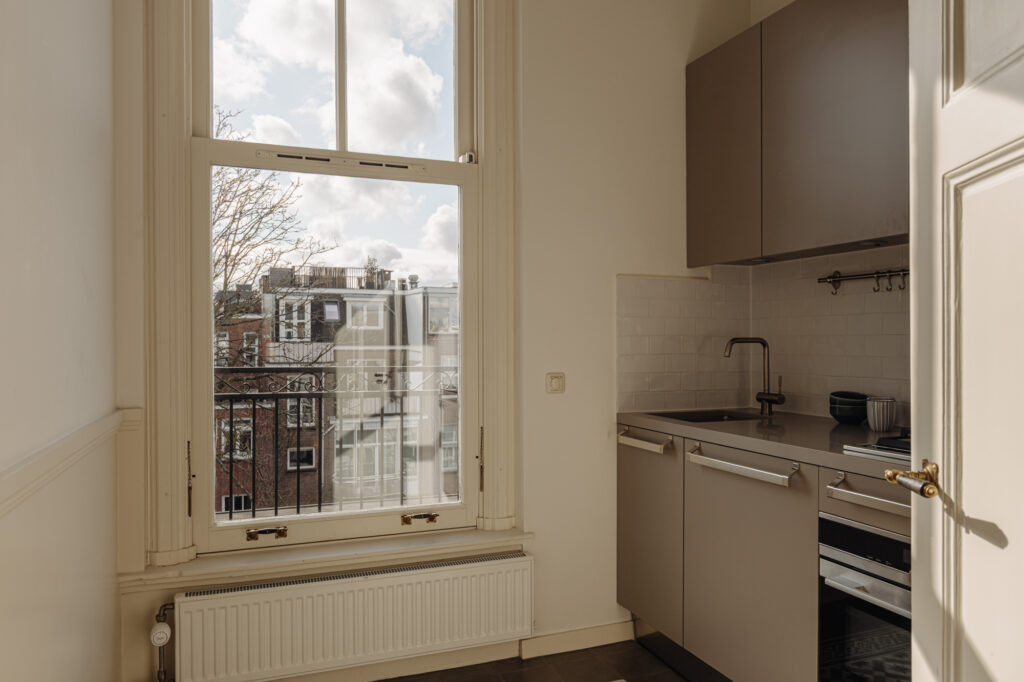
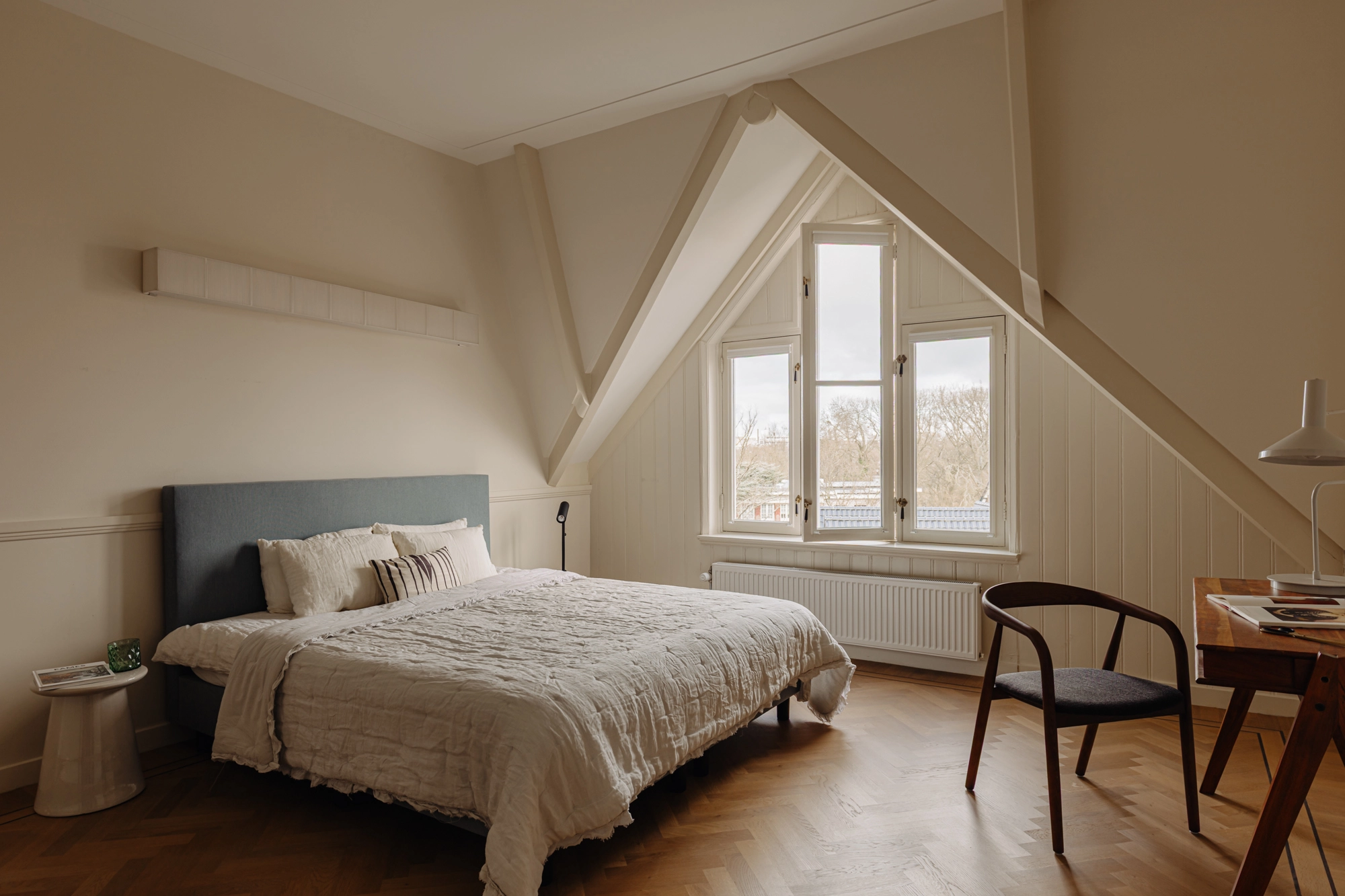
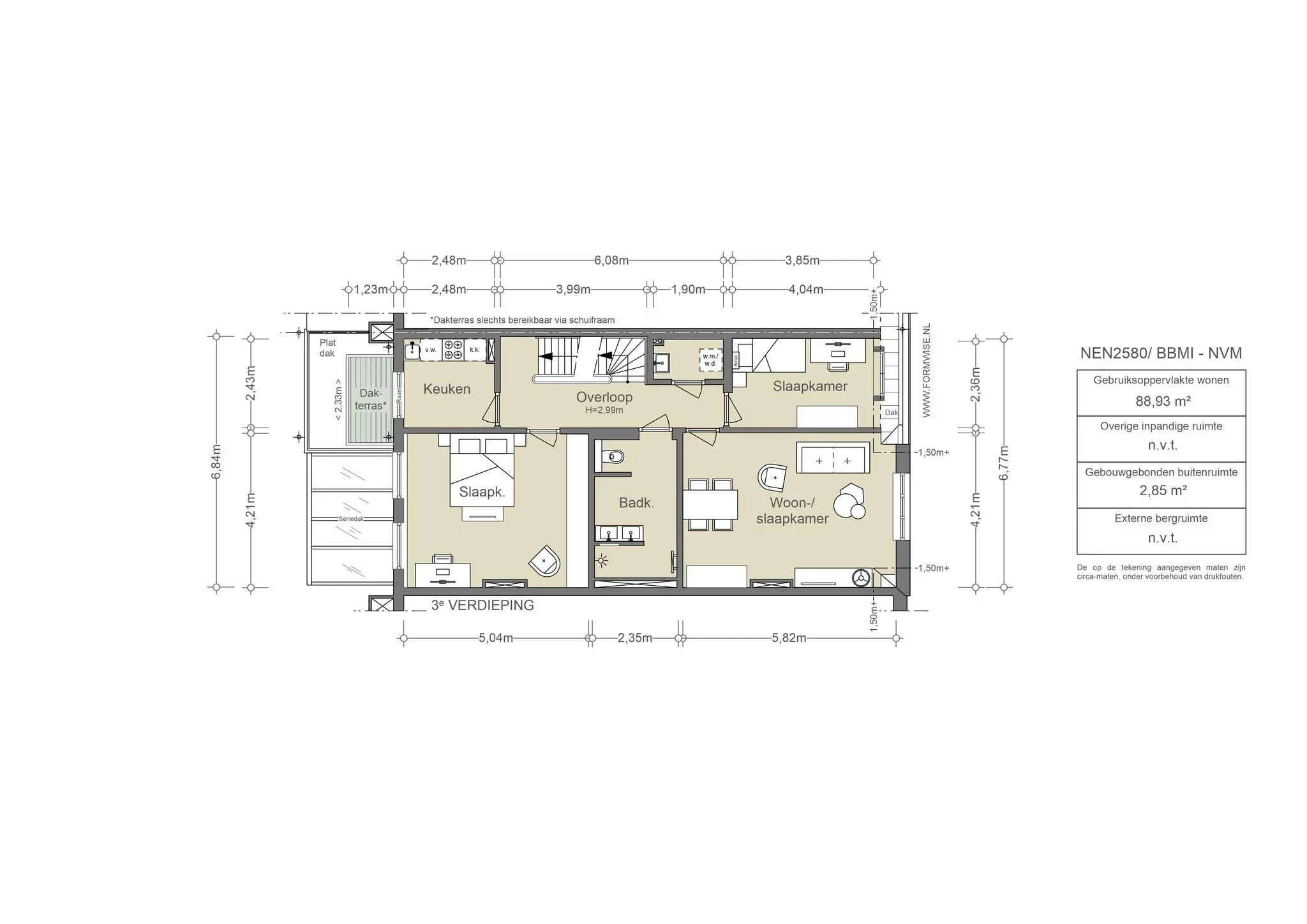
The third floor also has three bedrooms, bringing the total number of bedrooms in the house to seven. This was one of the reasons the current owners chose this house. On this floor, there is another bathroom with a toilet. With an additional kitchenette, equipped with built-in appliances, this floor is also suitable for guests, and the kitchen can also be used for access to the rooftop terrace.
The roof terrace
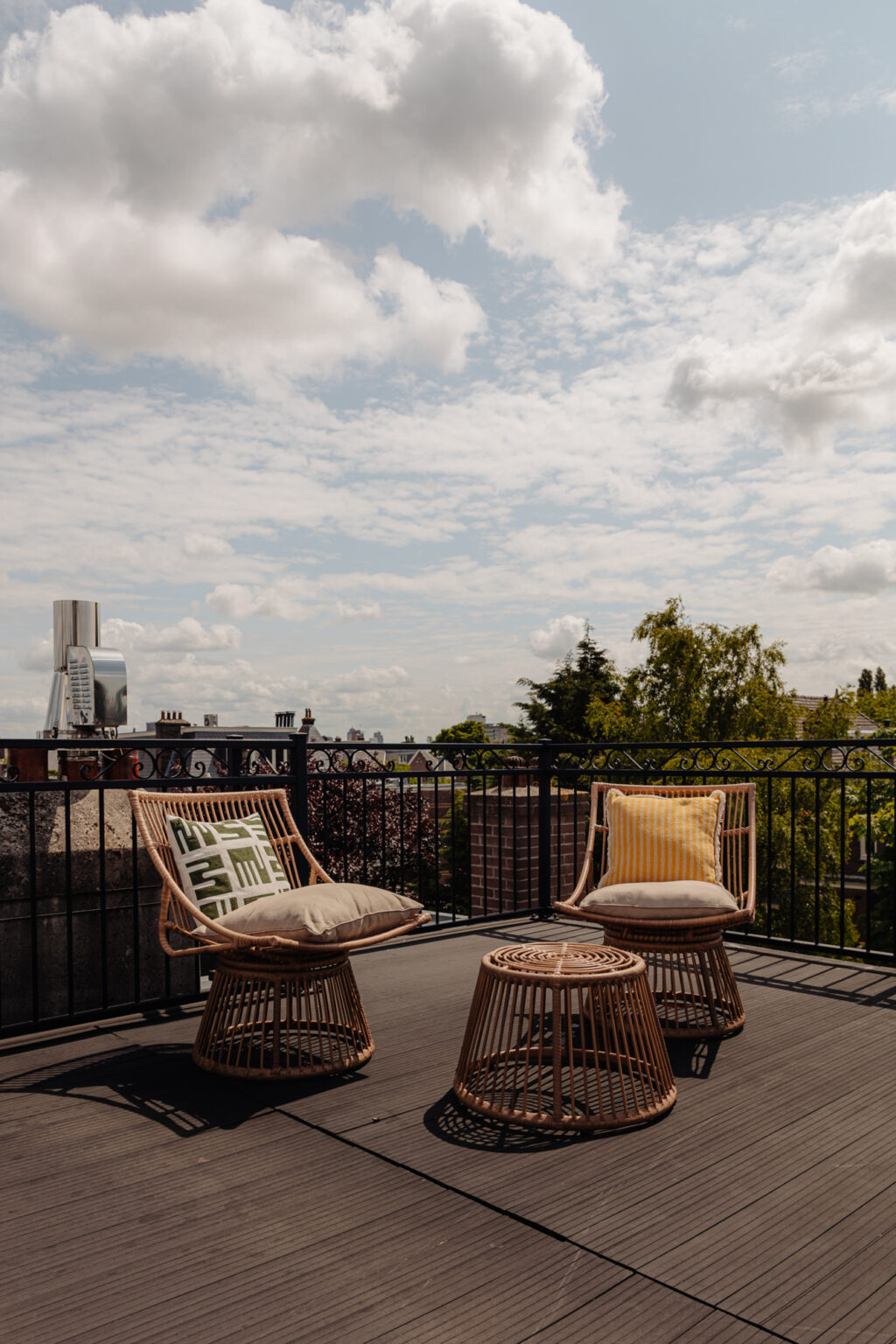
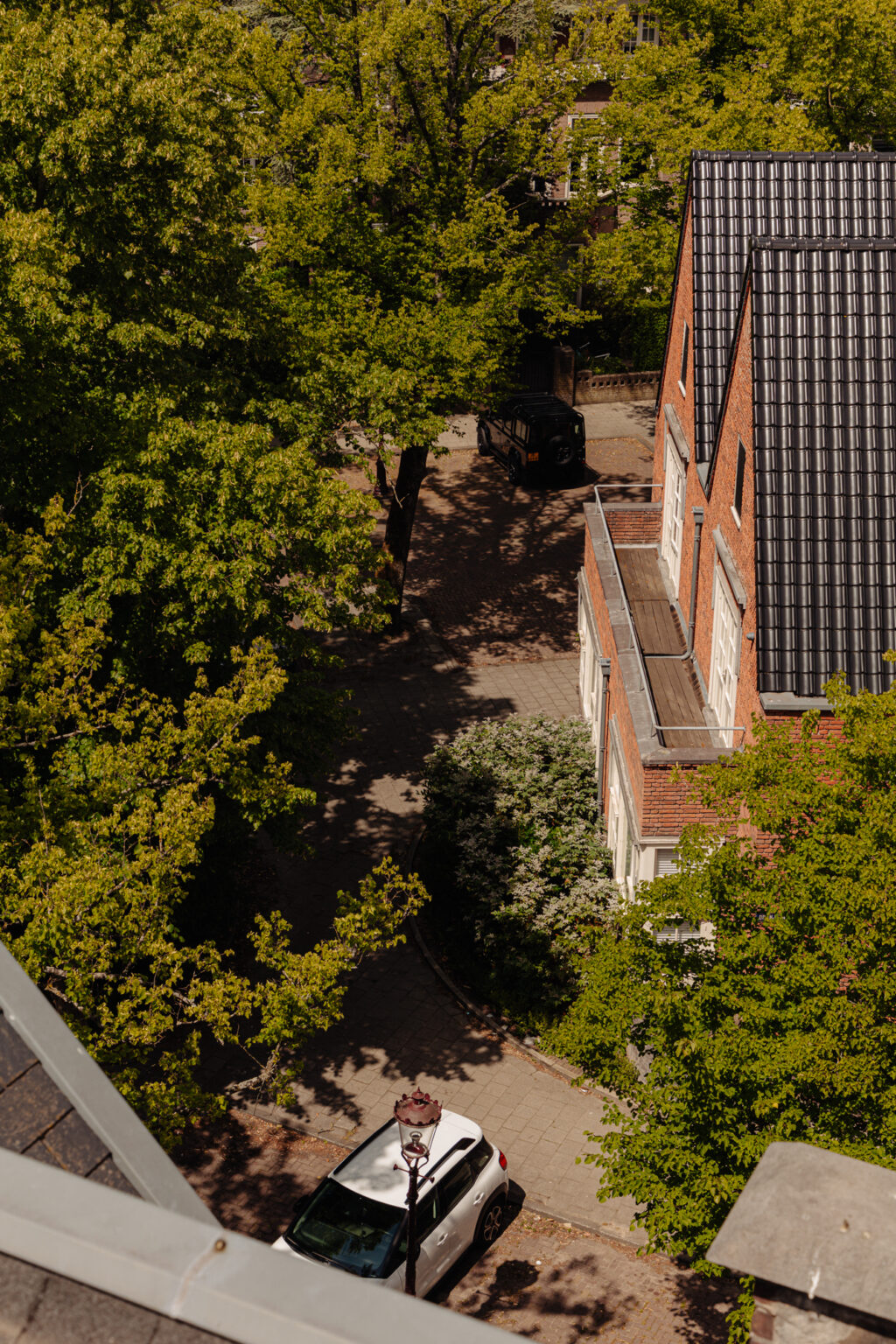
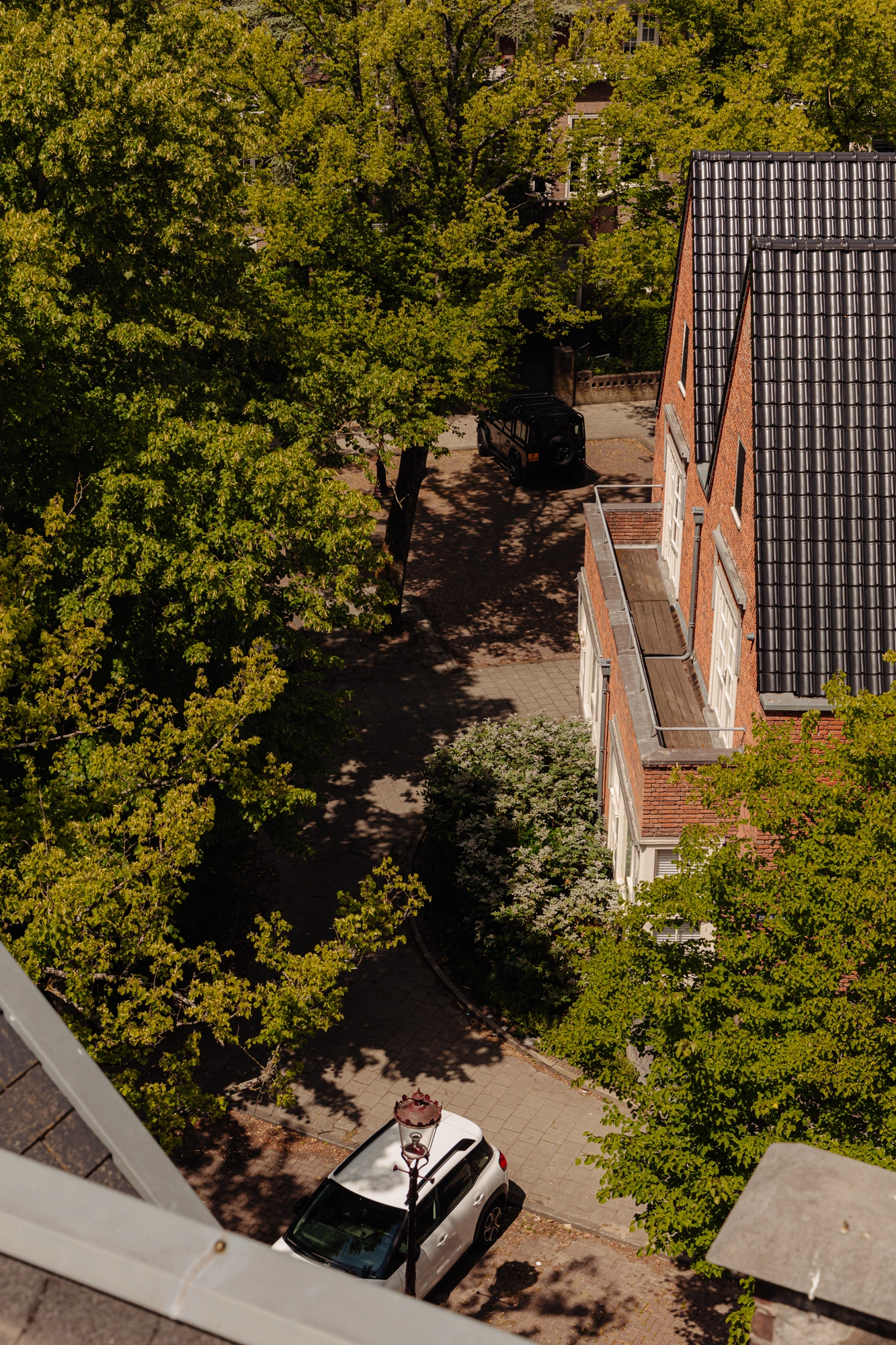
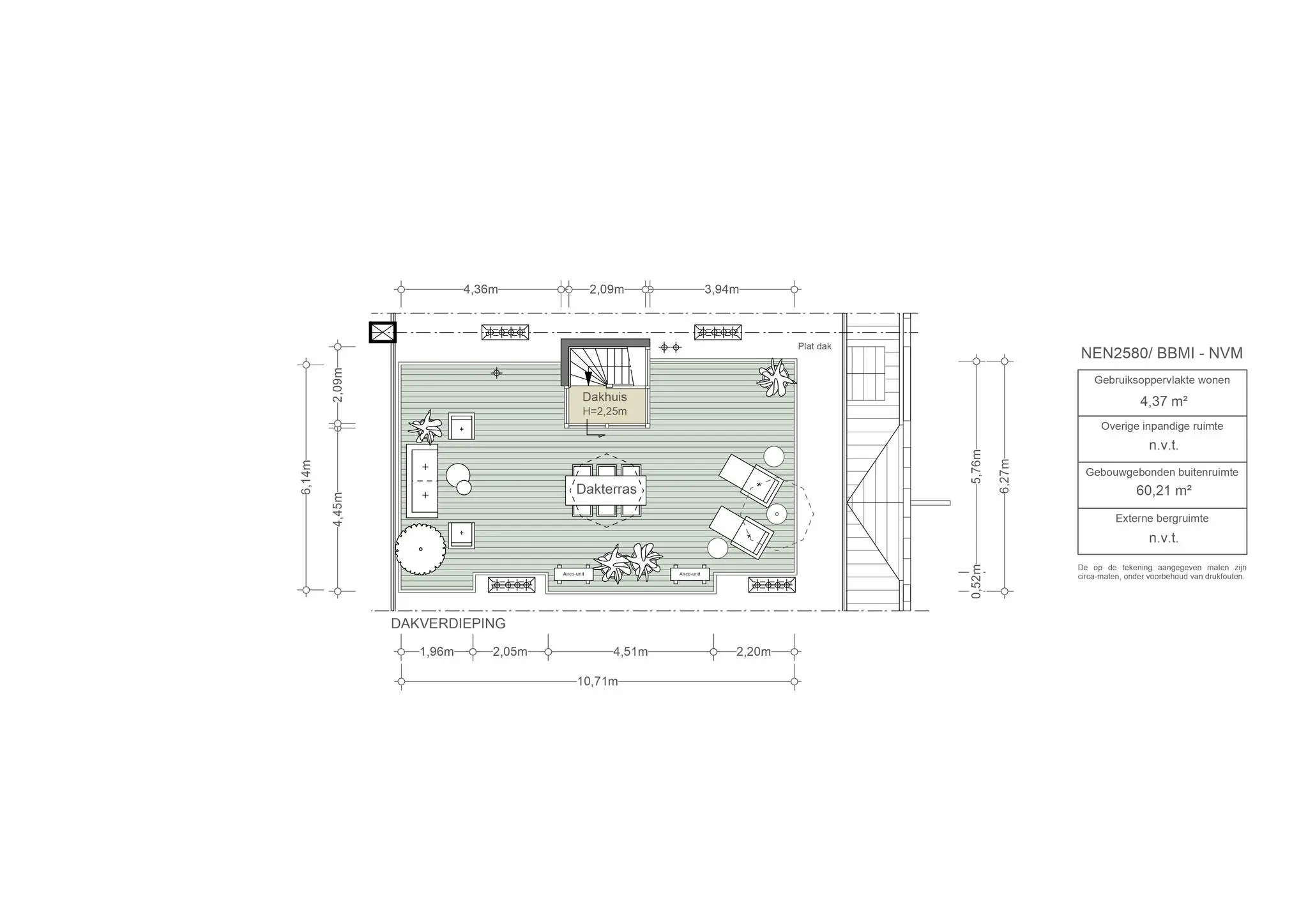
At the top of the building is a very spacious rooftop terrace of approximately 60 m². The terrace is accessible via a fixed staircase and a rooftop shed, which provides ample space for storing cushions and an umbrella. From this rooftop garden, there is a magnificent, unobstructed view over Vondelpark and Amsterdam South.
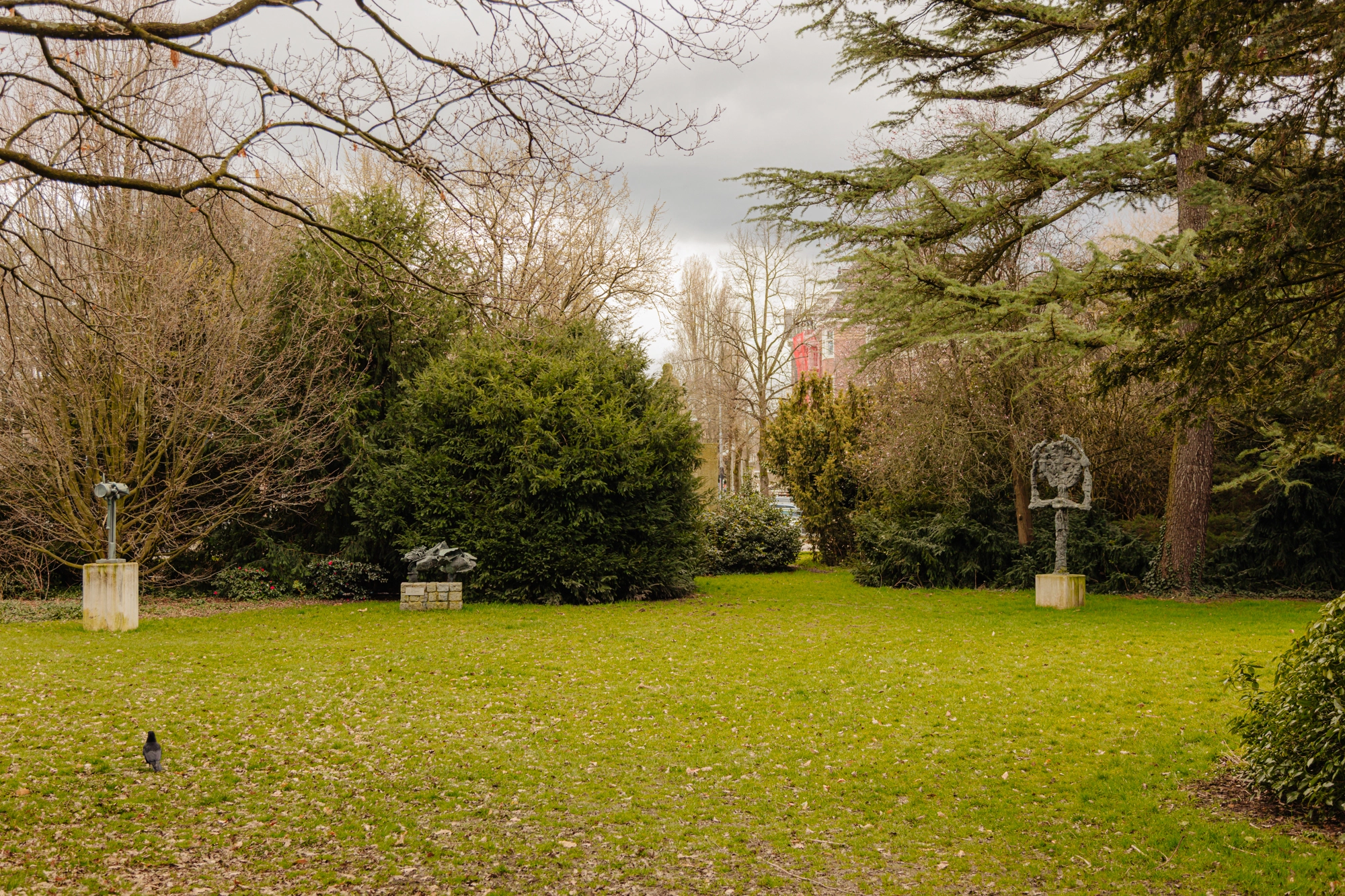
At the end of the 19th century, when the city center of Amsterdam became increasingly crowded, the need for a green neighborhood close to the center grew. At the initiative of Van Eeghen, architect Zocher designed the Willemspark in 1881, which borders the Vondelpark. A few decades later, the first villas were built around the ponds. Majestic buildings in classical architectural styles welcomed affluent families to this quieter and greener part of the city. The grandeur of that time is still intact. Most of the buildings have been renovated, and the avenues and greenery, as originally planned, have matured. Both the residents and the culinary offerings, such as Vlaamsch Broodhuys, chocolatier Linnick, greengrocer Wessels, Michelin-star restaurant Ron Gastrobar, the French fish restaurant VISQUE, and several caterers, give this residential neighborhood its contemporary allure. Located between the Vondelpark, Koninginneweg, and Amstelveenseweg – with the Museum Quarter within walking distance – this is a unique oasis within Amsterdam to live, where relaxation and inspiration are always close by.
Accessibility
This location is well-served by public transport, with tram line 2 stopping near Emmaplein. Additionally, there are various connections from Haarlemmermeerstation and Amstelveenseweg. By bike, the entire city is easily accessible, including the WTC/Zuidas station, about 7 minutes away. This location is also easily accessible by car, via the A10 ring road of Amsterdam and nearby exits.
Parking
Parking is available through a permit system on the public road (permit area Zuid 8.1). With a parking permit for Zuid 8.1, you are allowed to park in Zuid-1, Zuid-2, and Zuid-8. A resident parking permit costs €192.81 for 6 months. Currently, there is a 7-month waiting time for this permit area. A second parking permit is not possible in this area. (Source: Municipality of Amsterdam, April 2025).
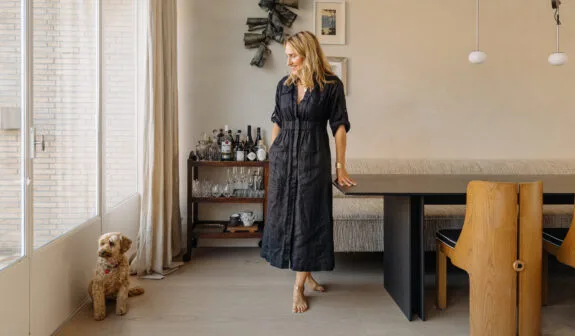
Our home was the vibrant heart of social activities, where friends and family gathered for cozy sleepovers, culinary delights, and atmospheric barbecues on the rooftop terrace during warm summer evenings. The kitchen? A paradise for cooking enthusiasts! Here, we passionately devised and prepared the most delicious dishes, always accompanied by a good glass of wine. Enjoying life at home was central: from daily workouts and yoga in the basement to game nights in the media room, where the kids had fun with the latest games. A place full of life, fun, and warmth – and we will miss that!
1075 BG Amsterdam
Juliette
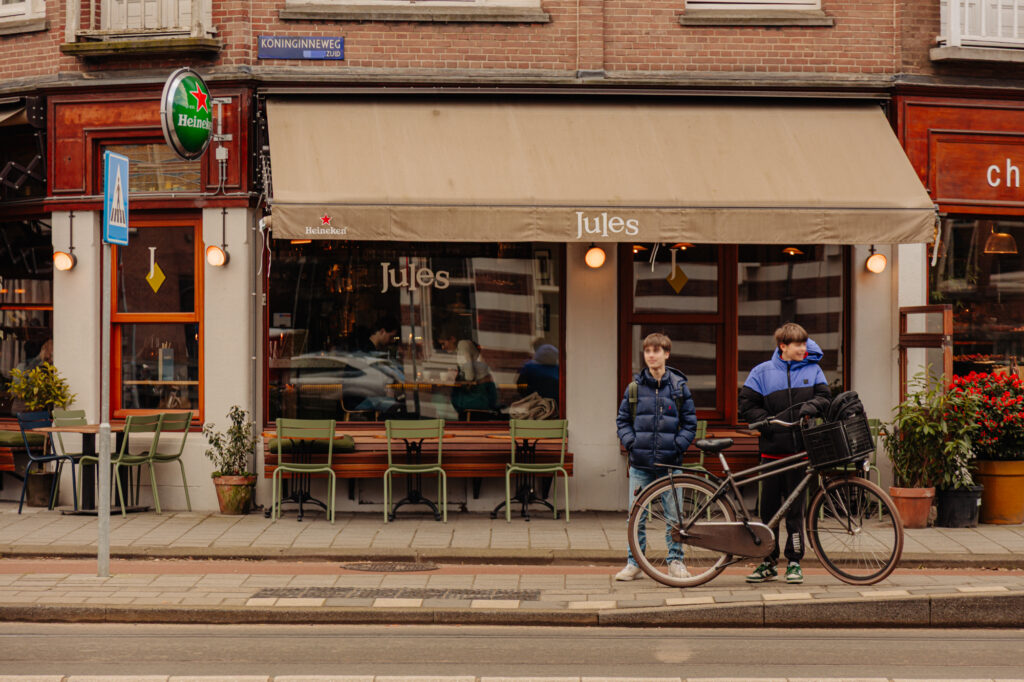
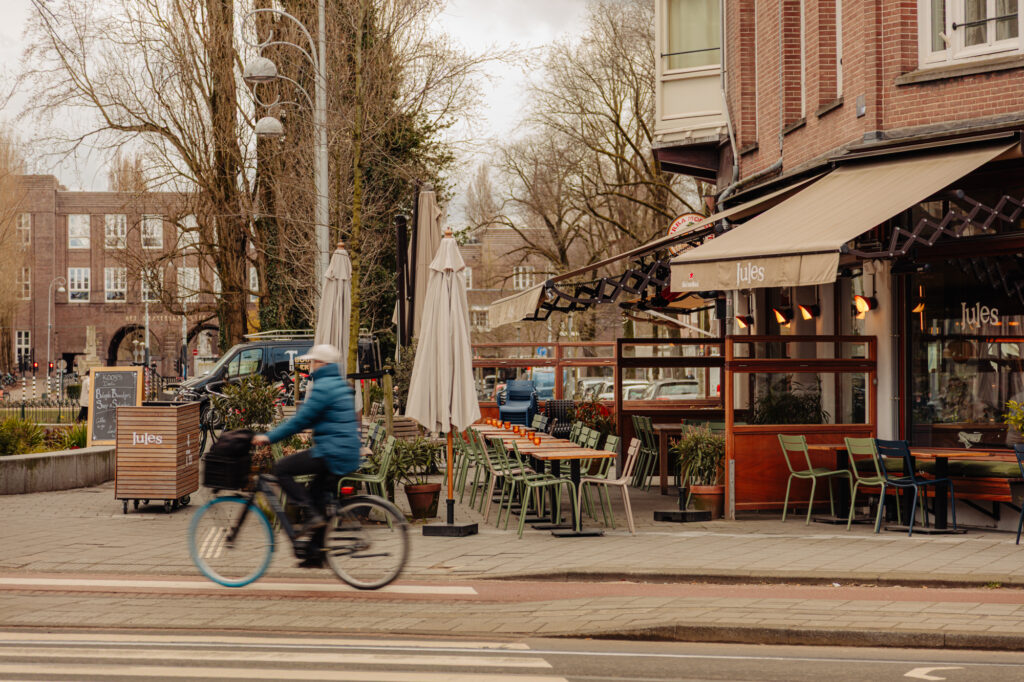
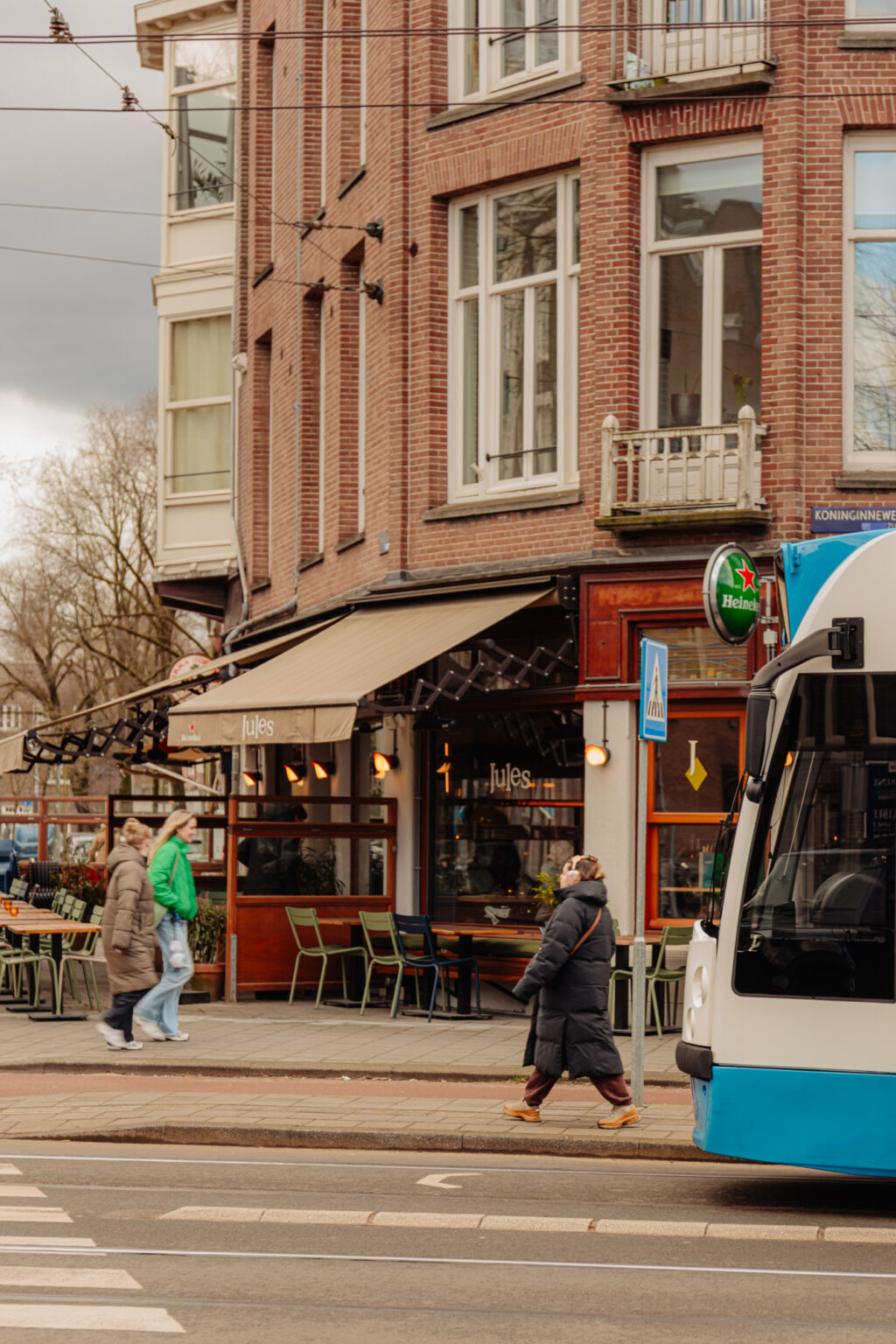
In Amsterdam Zuid kun je bij Juliette genieten van ontbijt en lunch in de zon. Het menu is gebaseerd op verse ingrediënten van lokale leveranciers en wordt dagelijks samengesteld op basis van wat er op de markt beschikbaar is. Denk aan gerechten zoals de Porco Rosso: mortadella, stracciatellakaas, Spaanse guindillapepers en rode pesto. Voor het diner of een borrel kan je terecht bij buurman Bar Jules. De focus ligt op Zuid-Europese gerechten zoals pizzetta's, pata negra en geroosterde octopus.
1075 PD Amsterdam
LOT61 Coffee Roasters
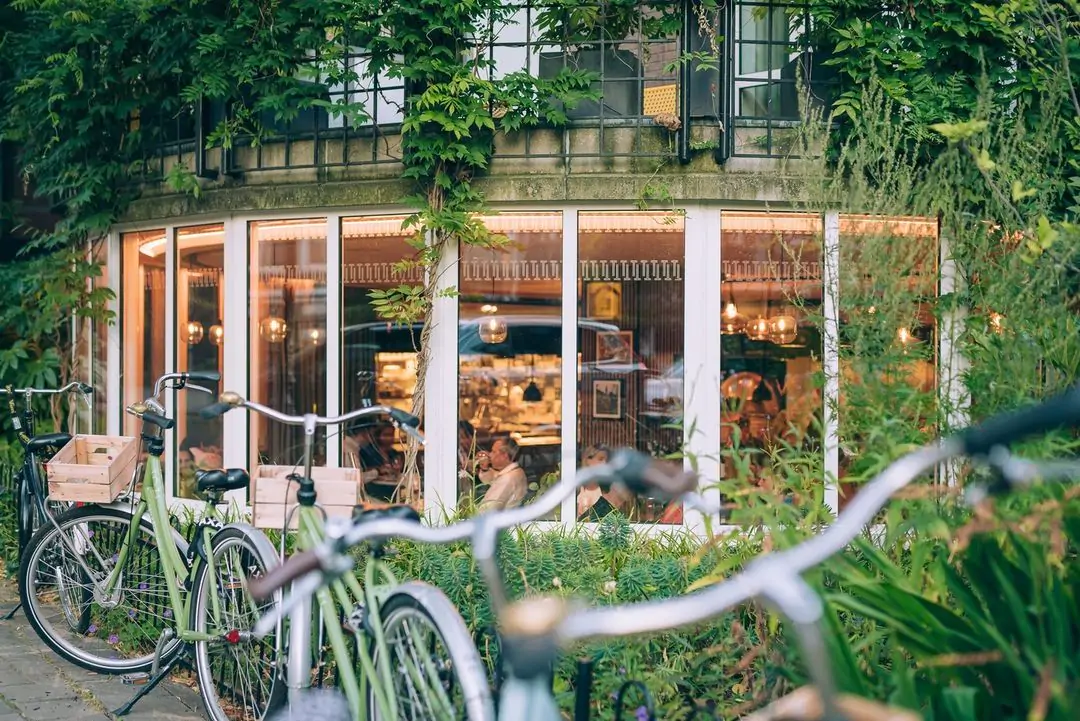
Geboren in Sydney, grootgebracht in Brooklyn en nu stevig geworteld in Amsterdam: LOT61 is allesbehalve een doorsnee koffiezaak. Als onafhankelijke koffiebrander combineert het merk internationale flair met lokaal vakmanschap. Slow coffee die met precisie en aandacht is gezet. De esthetiek is rauw maar verfijnd, de sfeer informeel en creatief – een plek waar buurt en barista samenkomen. Met hun B Corp-certificering laat LOT61 bovendien zien dat smaak en duurzaamheid hand in hand kunnen gaan.
1075 CZ Amsterdam
Tozi
TOZI betekent in Venetiaans dialect ‘een groep vrienden’, en dat voel je direct als je binnenkomt. Het is net alsof je terecht komt in één grote familie. De kaart toont een selectie van kleine Venetiaans geïnspireerde gerechten om te delen, bekend als cicchetti. Met een Italiaanse wijnkaart en een cocktailbar met Italiaanse gins en negroni's.
1075 EL Amsterdam
Simply Fish
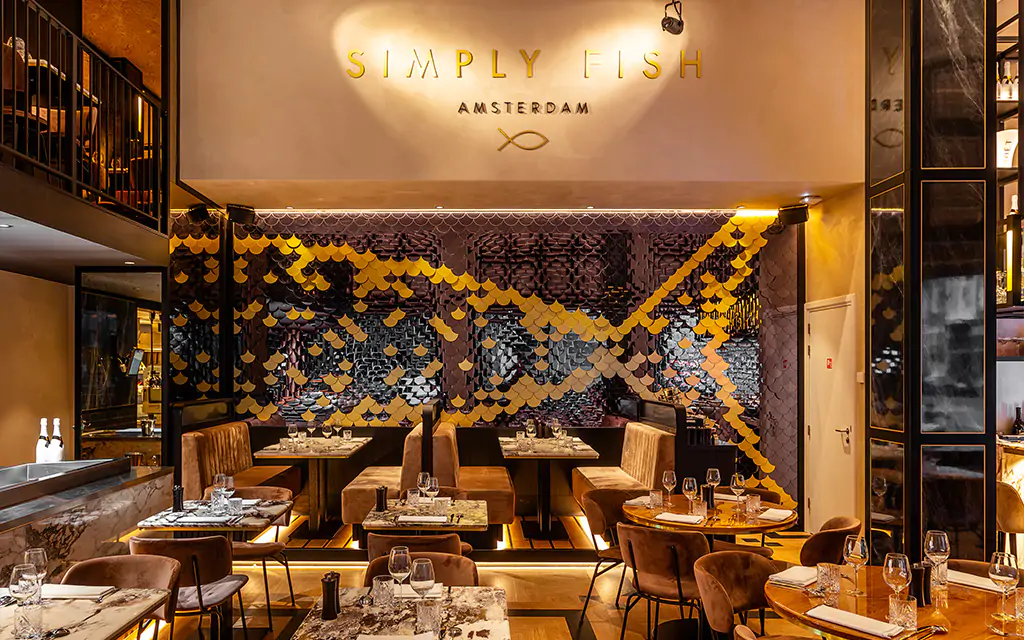
Simply Fish is gelegen in Oud-Zuid aan de Koninginneweg. Zoals de naam al doet vermoeden is het restaurant gespecialiseerd in het bereiden van vis. Echtpaar Jan en Francis Rijk bezaten voorheen eenzelfde soort restaurant in Zeeland, een welbekende provincie voor overheerlijke vis en zeevruchten. Op het menu kan je onder andere fruit de mer, garnalenkroketjes, oesters en hun beroemde kreeftenbisque vinden.
1075 VW Amsterdam
Sotto Pizza
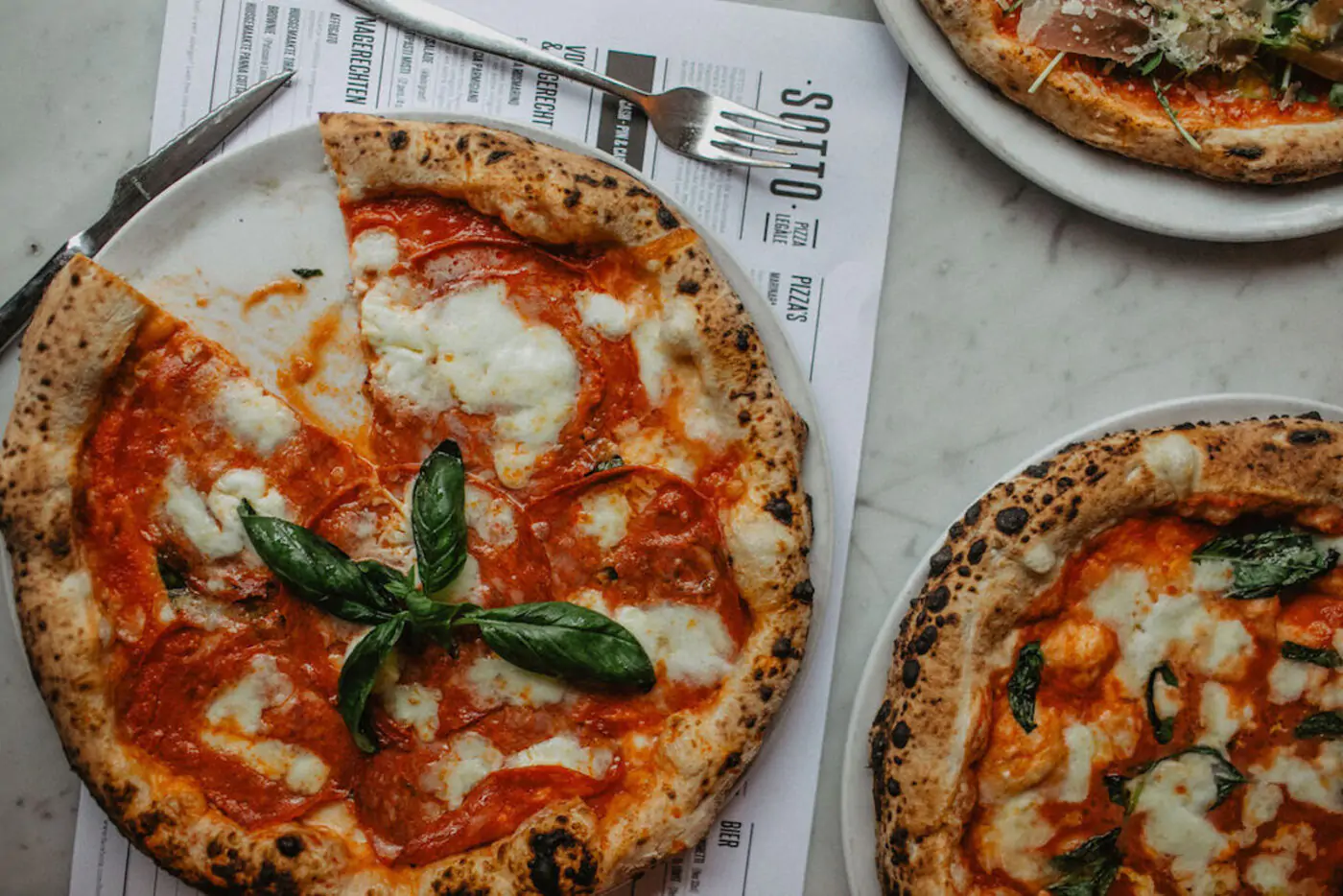
Sotto Pizza is één van de top 10 Italiaanse restaurants in Amsterdam. Het restaurant opende haar deuren in 2021, maar is sindsdien een begrip onder de pizza-liefhebbers. De diverse keuze is een weergave van de kundigheid van de koks, maar hun klassieke Margherita is onverslaanbaar. Het interieur heeft iets weg van een moderne Spaanse tapasbar, met een fijne sfeer. Je kan bij Sotto uitgebreid tafelen of snel een pizza eten aan de bar. Het personeel is behulpzaam en vriendelijk.
1075 GD Amsterdam
Castell Zuid
Castell Zuid is de stijlvolle nieuwe vestiging van het iconische Amsterdamse grillrestaurant Castell, gevestigd aan de Valeriusstraat in Oud-Zuid. Waar het origineel in het centrum bekendstaat om zijn no-nonsense steaks en late diners, brengt deze locatie dezelfde smaken in een verfijnde setting. “Same taste, same vibe, different look” luidt het motto – en dat klopt: herkenbaar en toch helemaal nieuw.
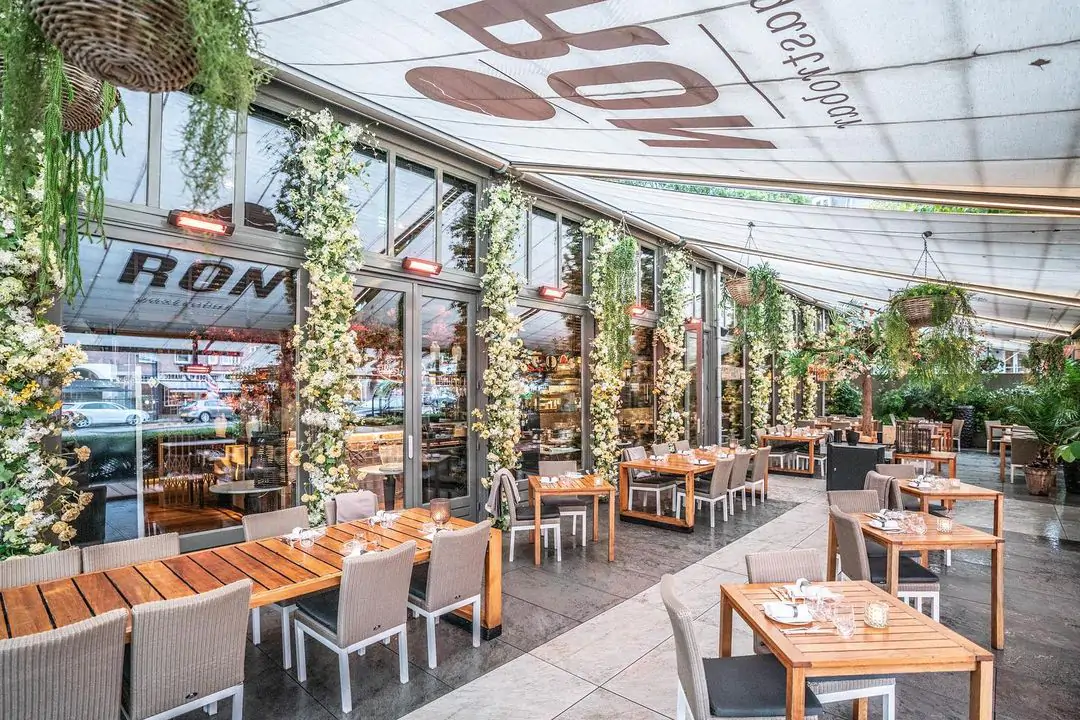
1075 BP Amsterdam
Ron Gastrobar (*)
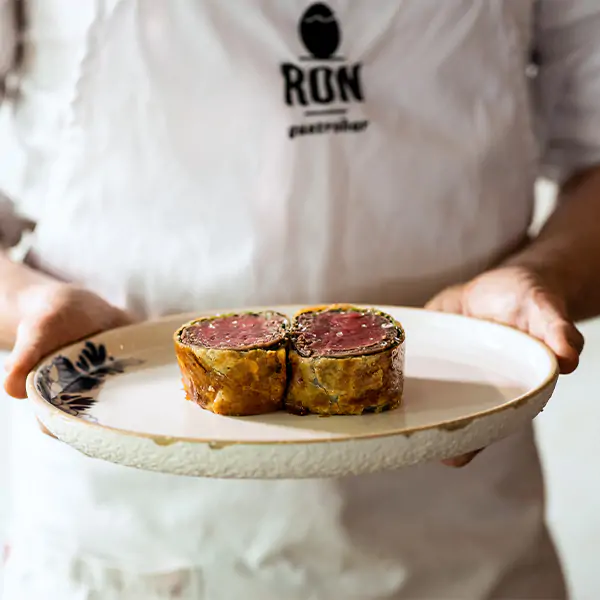
Bij Ron Blaauw's eerste gastrobar in Amsterdam gaat een laagdrempelige sfeer hand in hand met een Michelinster. Stijl en gezelligheid komen samen voor een smakelijke ervaring. Van details tot amuses, cocktails, broodjes op tafel, nieuwe gerechtjes, heerlijke wijnen en attente service. Alles draait om het credo: "uit eten gaan moet een feestje zijn''.Voor BBQ-liefhebbers is er zelfs een apart gedeelte op de menukaart. Uiteraard ontbreken de klassiekers, zoals de spareribs "The Original," niet; een gerecht dat altijd zal blijven.
1075 XN Amsterdam
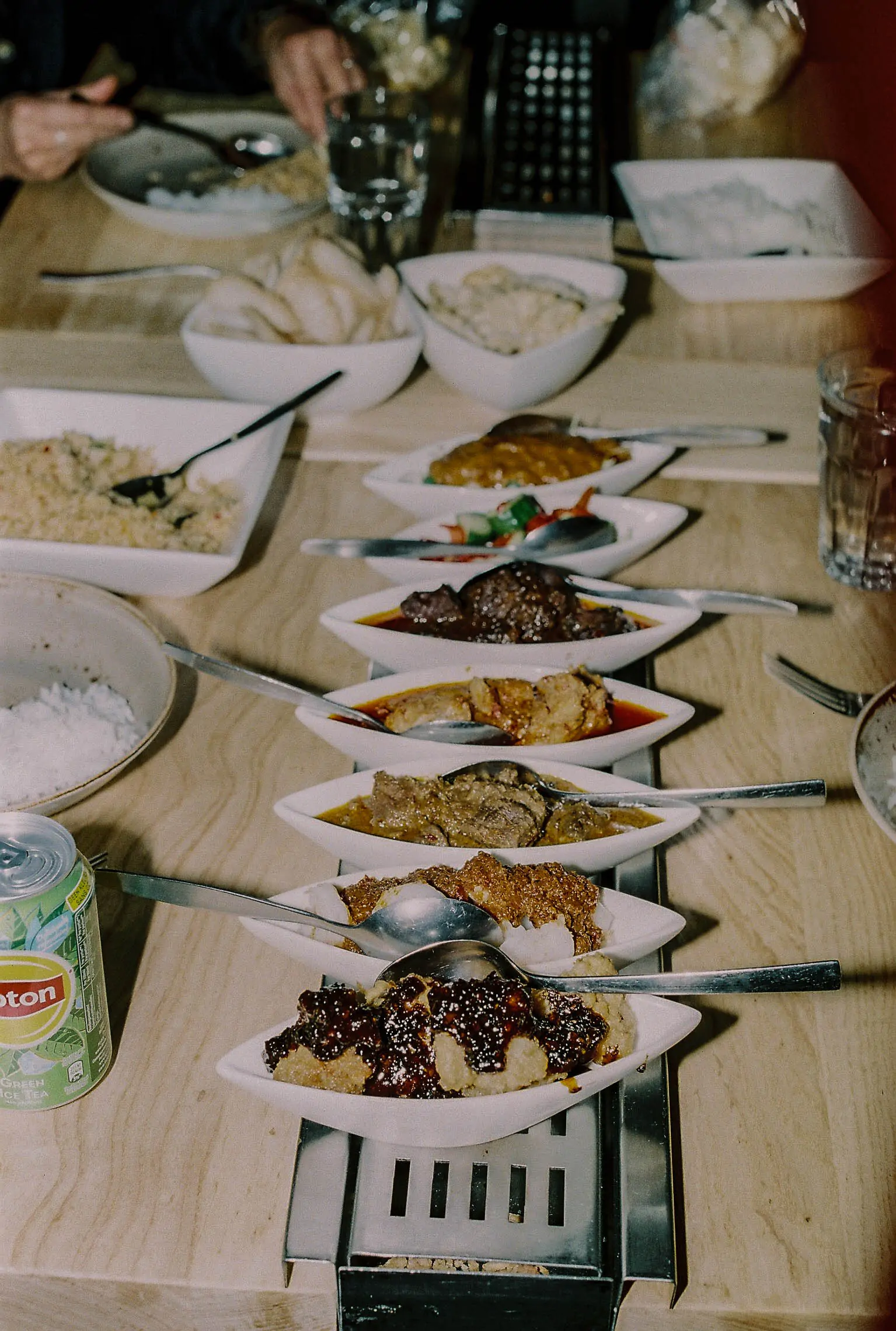
Restaurant Blauw
Aan de Amstelveenseweg ligt het Indonesische restaurant Blauw. In tegenstelling wat de naam doet verwachten, is het hele interieur rood. De rijsttafels bij restaurant Blauw zijn bij beide locaties identiek (Amsterdam en Utrecht), maar de rest van het menu is per vestiging uniek. De chefs stellen zelf hun ultieme authentieke Indonesische belevingen samen op basis van hun eigen inspiratie en invloeden.
1071 HX Amsterdam
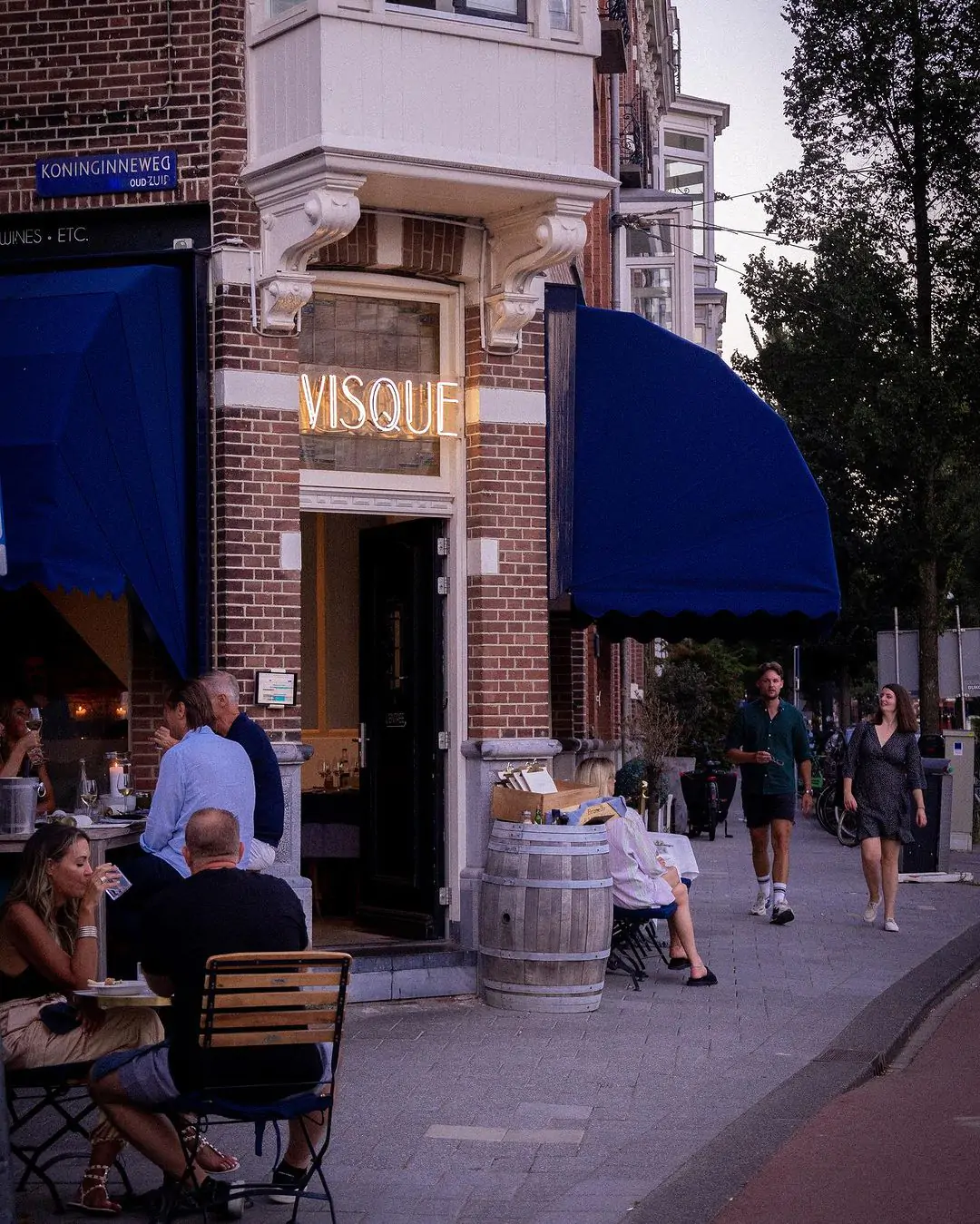
Restaurant Visque
Op het prachtige hoekje van Amsterdam Zuid bevindt zich Restaurant Visque, waar vis de hoofdrol speelt. Onze menukaart is flexibel en afhankelijk van de dagelijkse keuze voor de meest verse en smaakvolle producten. Chef Menno geeft een eigen twist aan eenvoudige Franse gerechten, zoals coquilles, Hollandse garnalen, sliptong en onze bekende Tuna Wellington.
1075 XT Amsterdam
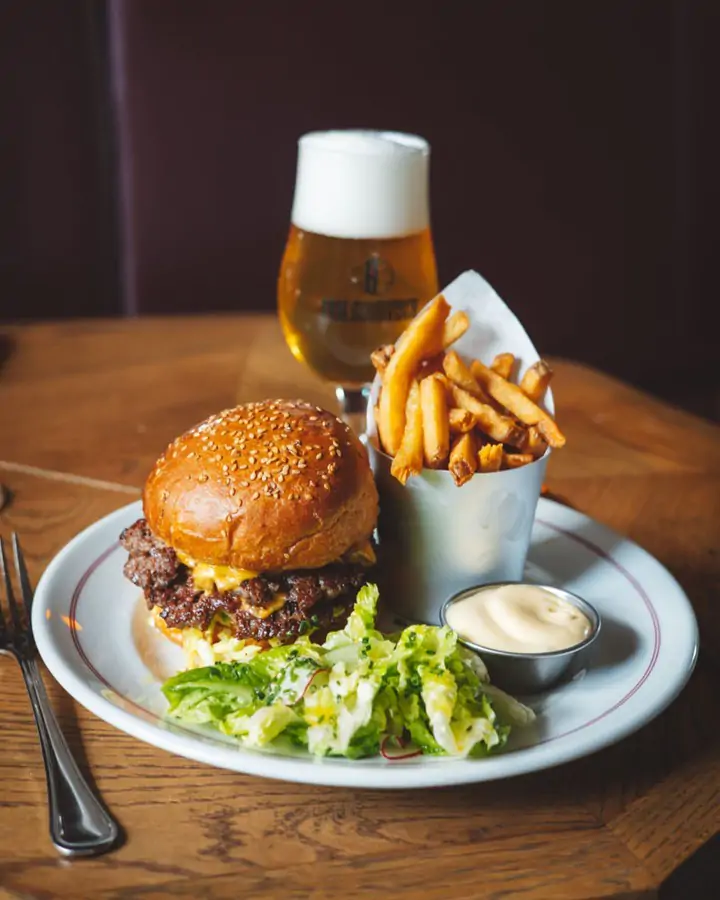
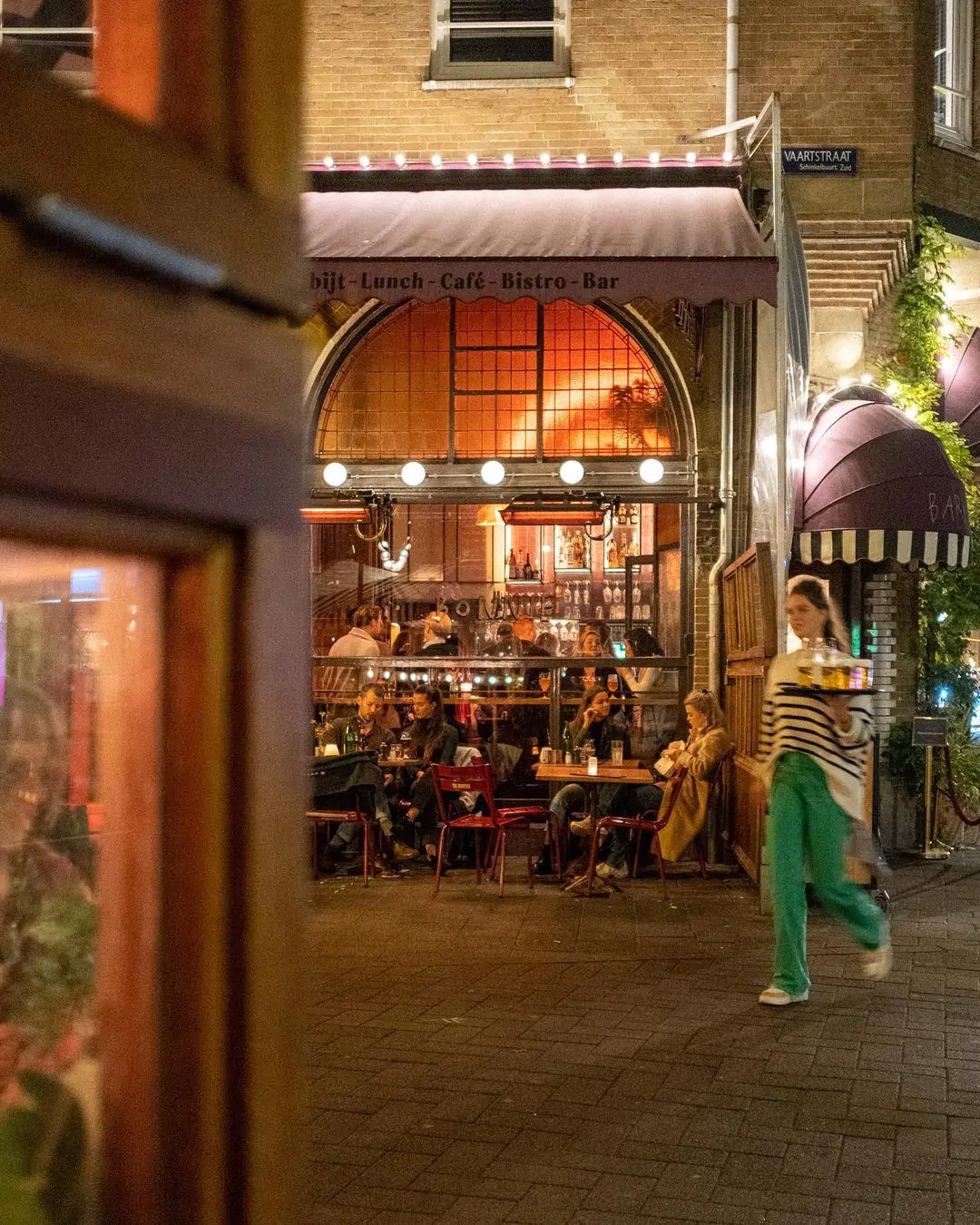
Bonnie
Bonnie, een charmante bistro gelegen in Amsterdam-Zuid. Bij Bonnie draait alles om genieten; van lekkere maaltijden tot zorgvuldig geselecteerde wijnen die perfect aansluiten. Vooral de Bonnie's double cheeseburger is een aanrader. De ambiance zorgt ervoor dat je je al snel op je gemak voelt. Een lunch hier kan gemakkelijk overgaan in een gezellige borrel, waardoor je het gevoel krijgt dat je eigenlijk helemaal niet meer weg wil.
1075 GH Amsterdam
Barolo
Bar Barolo brengt de sfeer van Noord-Italië naar de Valeriusstraat, midden in het elegante Amsterdam-Zuid. De wijnkaart is royaal en zorgvuldig samengesteld, met Barolo als vanzelfsprekend middelpunt. Op het menu: huisgemaakte pasta, klassieke antipasti en seizoensgerechten zonder opsmuk. Het interieur is warm en ingetogen, net als de gastvrijheid – hier wordt met aandacht gewerkt.
1054 KG Amsterdam
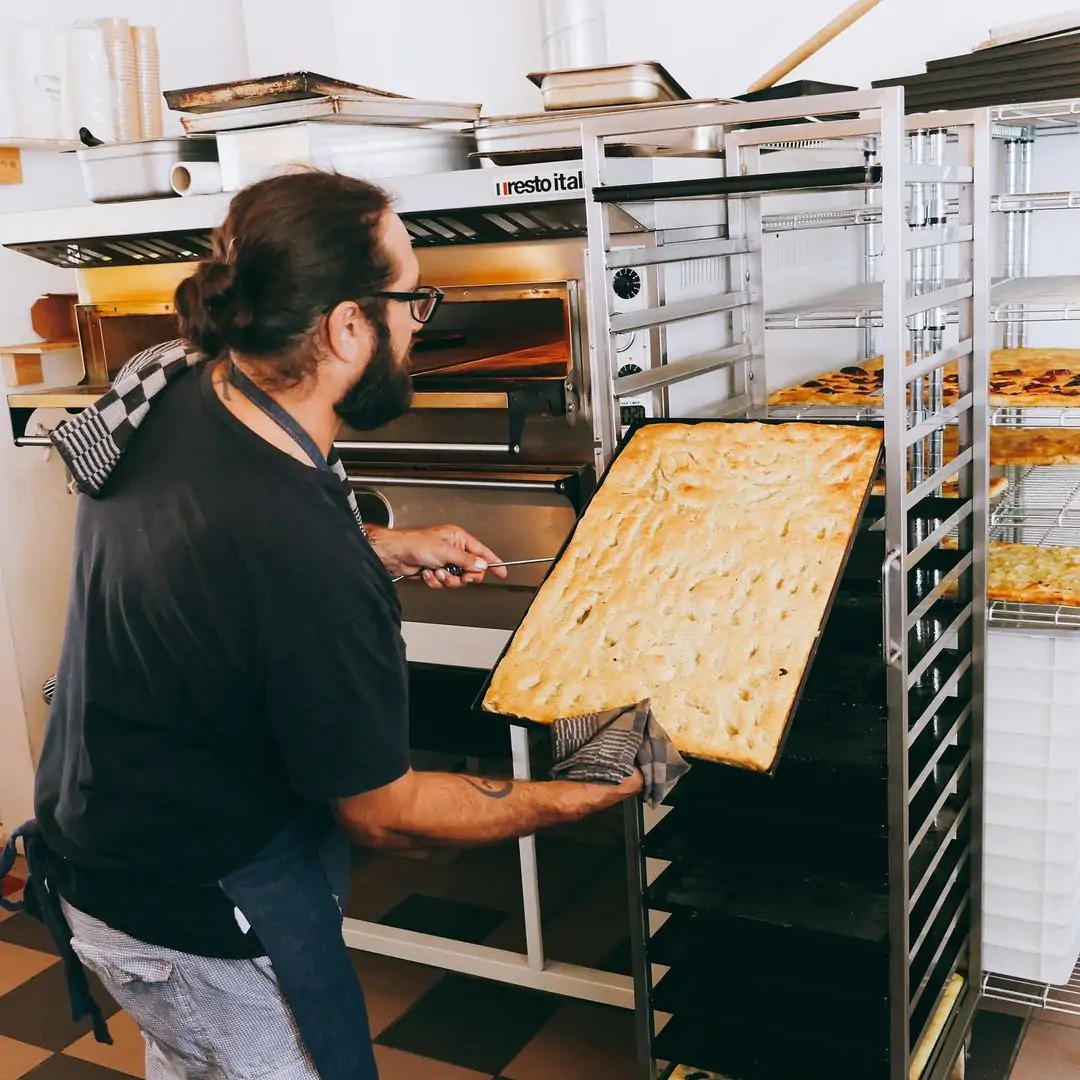
Focacceria
De Italiaanse Valeria Lucente vindt de Italiaanse restaurants in Amsterdam verrassend goed, maar ze heeft wel heimwee naar de smaken van thuis. Vooral de focaccia uit haar streek. Dit delicate platbrood, ongeveer twee centimeter dik, is luchtig, vettig en zo zacht als een wolk. In tegenstelling tot focaccia uit andere Italiaanse regio's heeft de genovese-variant geen knapperige, maar een zachte bovenkant. Dit komt door voor het bakken het deeg te bestrijken met olijfolie, water en zout. Vooral in Genua wordt focaccia genoten bij elk eetmoment en dat kan nu dus ook in Amsterdam.
1054 LN Amsterdam
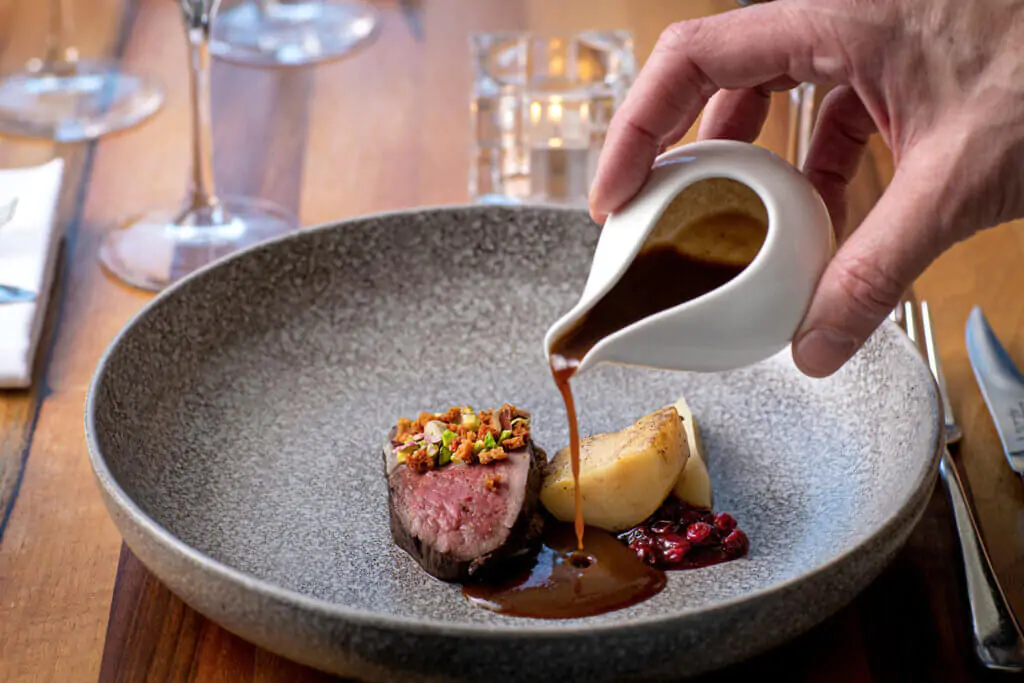
Adam
Alle gerechten zien er fraai uit, zonder overdreven gedoe. Ook de smaken doen zich gelden: eerlijk, spannend en in balans. Al snel in ons menu komen we een topper tegen: perfect gegaarde griet met een fris-ziltige oestervinaigrette, komkommerlinten, amandelcrème, een bite van gefrituurde vishuid en een saus van nori. Even tongstrelend: een perfect stukje lam van de Big Green Egg, bereid met chorizo en geserveerd met twee heerlijke sauzen.’
1071 MG Amsterdam
Carter
Carter is een moderne brasserie in Amsterdam-Zuid waar internationale klassiekers worden geserveerd met flair en finesse. Aan de Valeriusstraat voelt deze plek als een elegant buurtcafé – informeel, verfijnd en altijd gastvrij. Op de kaart staan tijdloze gerechten als steak tartare, burrata en kreeftenpasta, met een solide wijnselectie ernaast.
1071 GZ Amsterdam
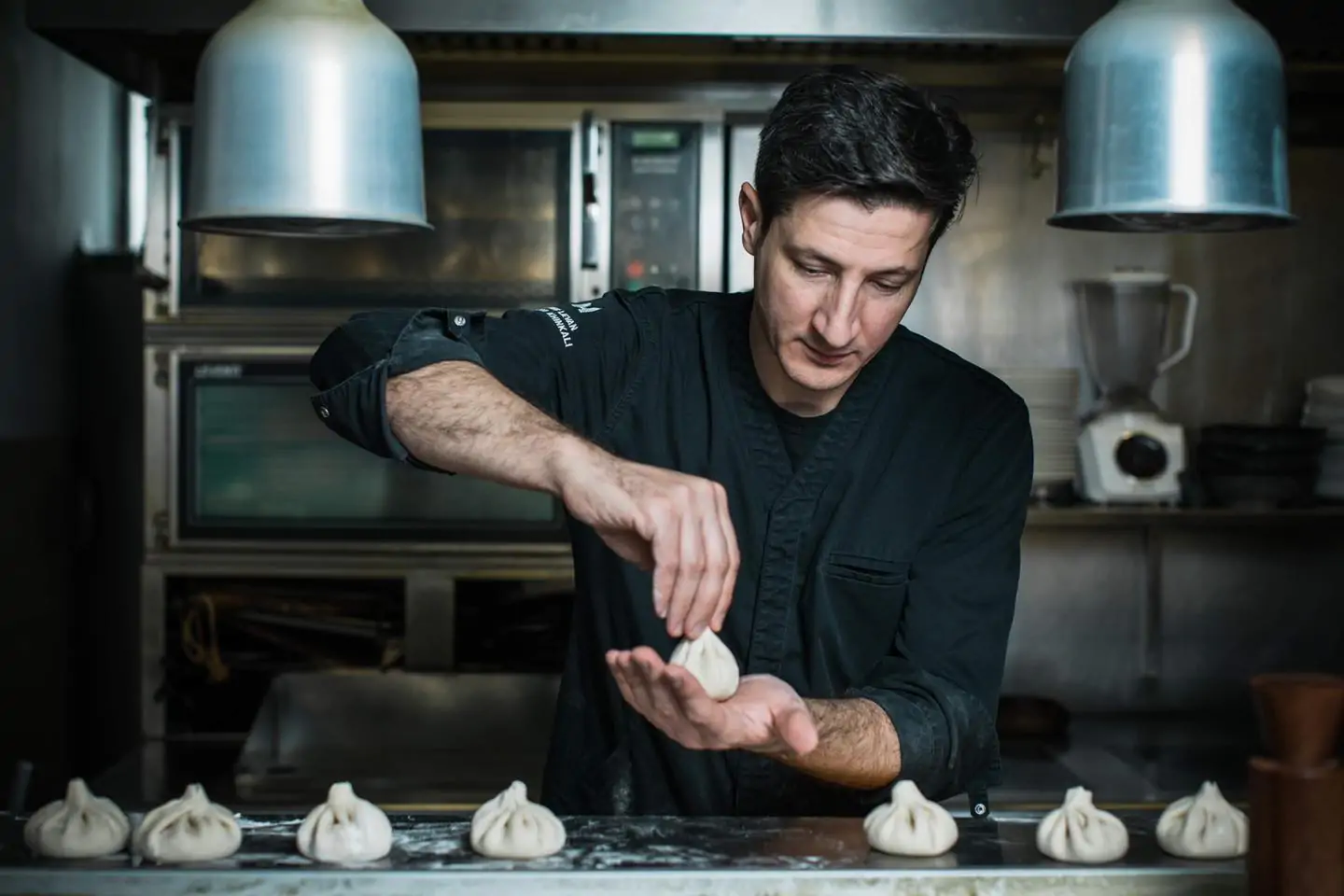
Batoni Khinkali
In Nederland is de Georgische keuken helaas ondervertegenwoordigd, ondanks haar rijke en boeiende culinaire erfgoed. Gelukkig biedt Batoni Khinkali een introductie tot deze smaakvolle keuken. Dit restaurant, opgericht door de Georgische klarinettist Levan Tskhadadze, combineert zijn liefde voor muziek met zijn passie voor koken. Hier kunnen gasten genieten van Georgische klassiekers zoals khinkali, katsjapuri en lobio, evenals een veganistisch en vleesmenu, allemaal geserveerd met de kenmerkende Georgische gastvrijheid.
1071 JH Amsterdam
Brasserie van Dam
Brasserie van Dam staat bekend om een simpele maar effectieve receptuur: een niet te uitgebreide kaart met kwalitatief goede producten, acceptabele prijzen, goede koffie, een fijne sfeer en vriendelijk personeel.
1071 GZ Amsterdam
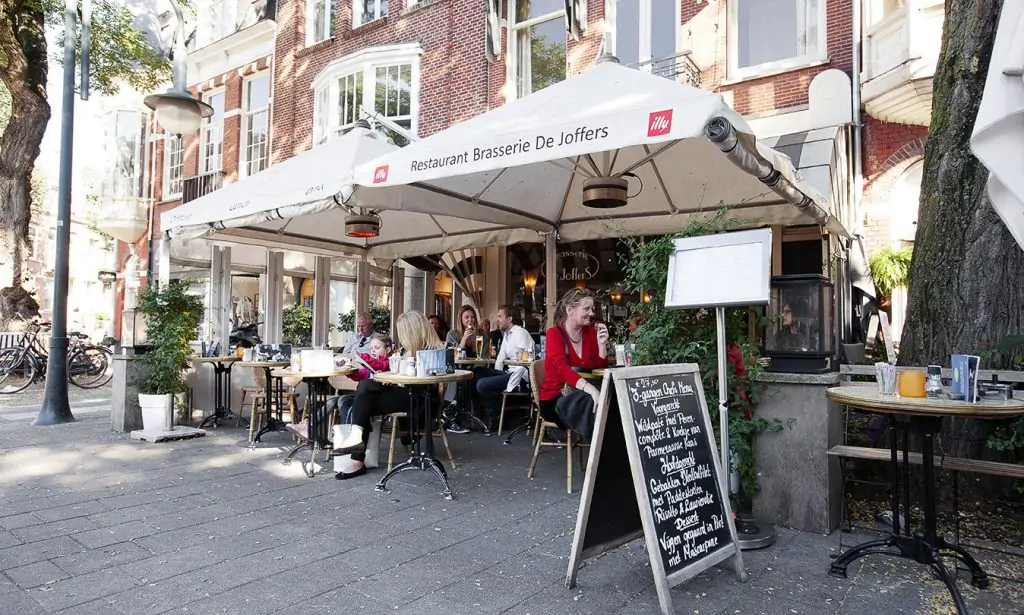
Brasserie de Joffers
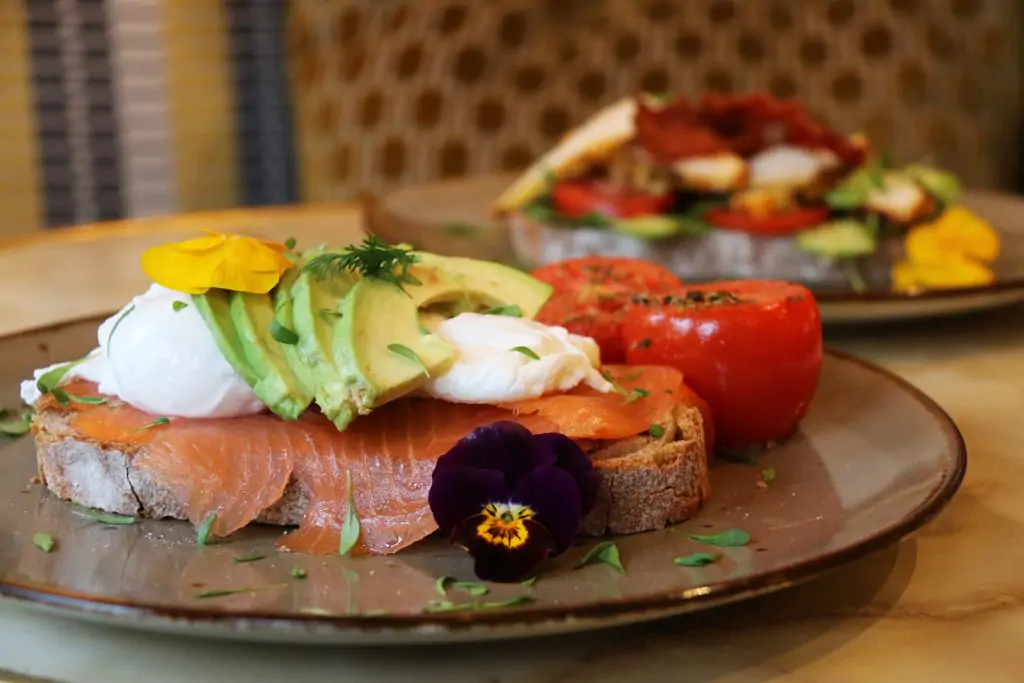
Met een groot terras in de zomer én winter is brasserie Joffers al 15 jaar een bekende hotspot op steenworp afstand van het Vondelpark en het Museumkwartier. Mocht de zon niet schijnen, dan is er binnen genoeg plek - een met kunst en spiegelwanden ingerichte ruimte, wat voor een huiselijke sfeer zorgt. De ontmoetingsplek voor de buurt is ideaal voor ontbijt, lunch en diner of simpelweg voor een lekkere kop koffie.
1075 NC Amsterdam
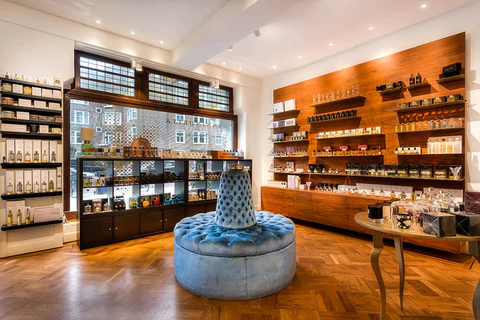
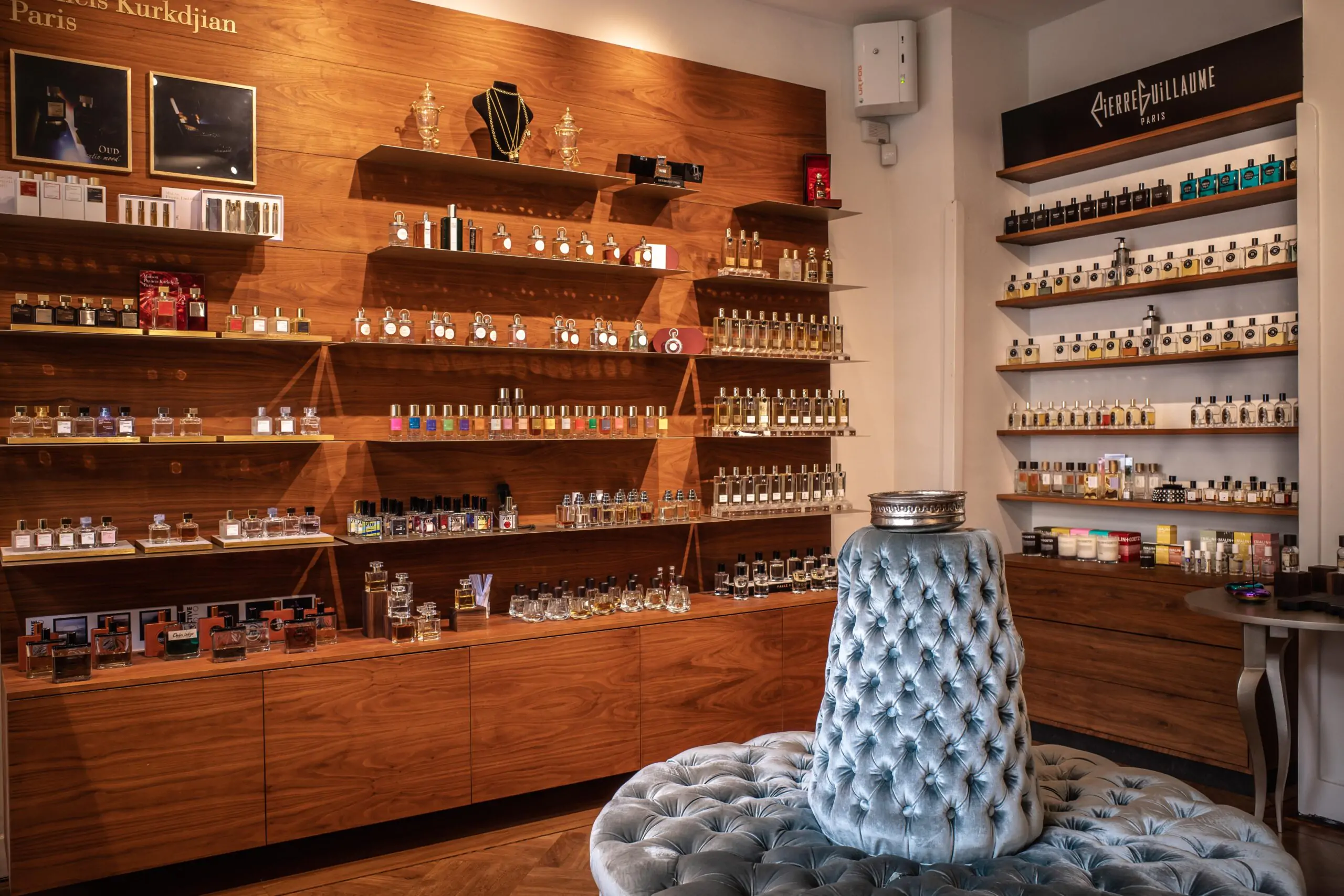
Perfume Lounge
Bij de ‘Perfume lounge’ richten ze zich op het maken en adviseren van geuren voor bedrijven en organisaties en wat reuk kan toevoegen aan een merk of organisatie. Daarnaast hebben zij een winkel met een assortiment van de meest bijzondere parfums van de wereld, waar zij ook persoonlijk geuradvies geven. Advies voor op de huid of in huis. Volgens de experts voegt geur iets toe wat niet zichtbaar en tastbaar is. Je kunt geur op verschillende manieren inzetten in een ruimte. Het begint natuurlijk eerst dat het er niet negatief mag ruiken. Er zijn best wel veel ruimtes waar je het riool of sanitair ruikt, waar veel gerookt is of waar de afzuiging niet goed is en het naar eten ruikt. De meeste simpele manier van geur in huis is dat het schoon ruikt. Veel mensen associëren schoonmaak of wasmiddel met een schoon, opgeruimd en verzorgd huis. Daarnaast kun je de ambiance aanzetten. Net zoals met licht en muziek kun je de sfeer verzachten of versterken. Je kunt het heel huiselijk laten ruiken of juist heel modern. Landelijk of artistiek. Of juist heel minimalistisch of intiem.
1075 CW Amsterdam
Teunis Veenema
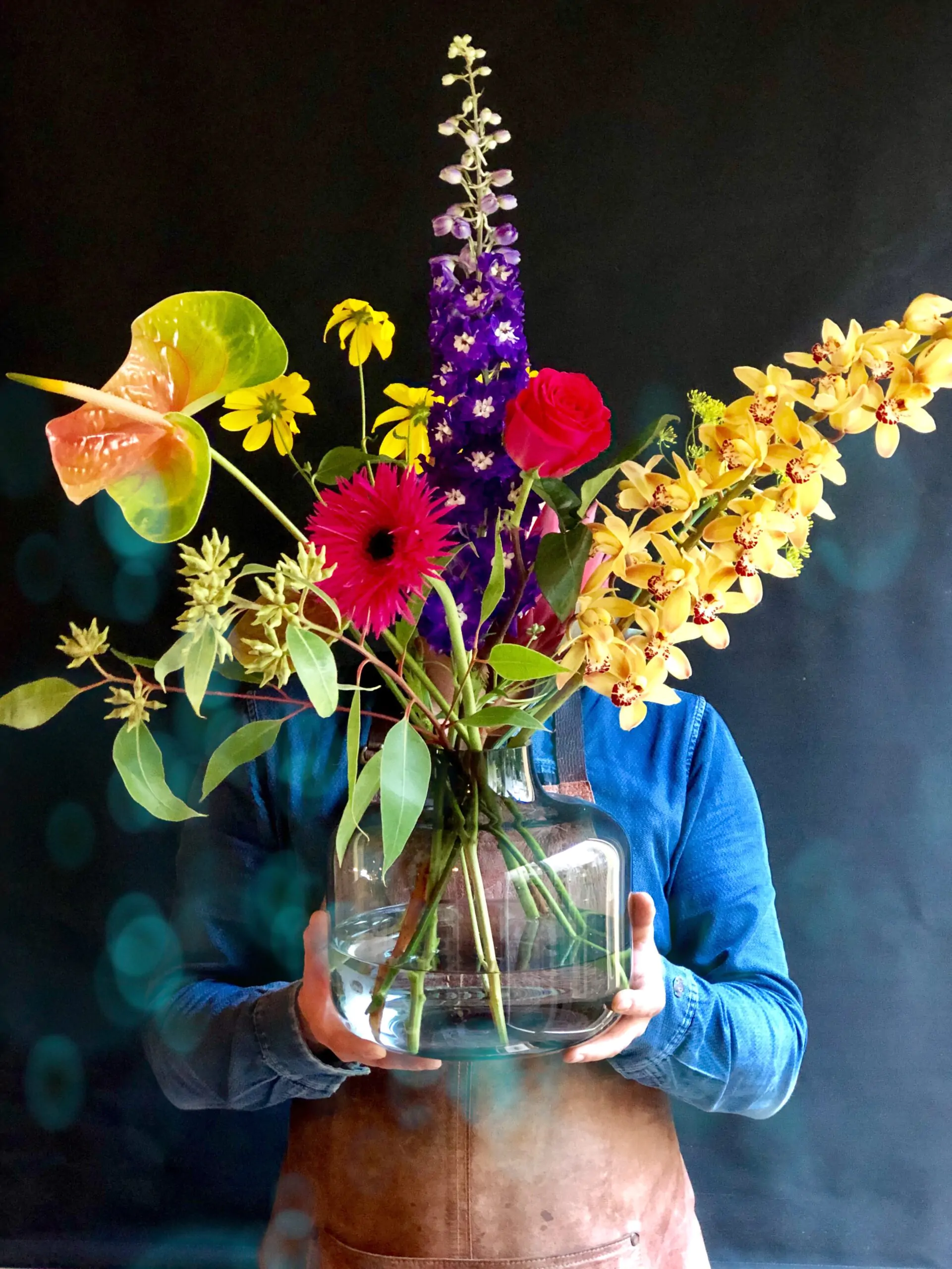
Teunis Veenema is een pareltje in het hart van Amsterdam-Zuid. Aan de Koninginneweg kun je sinds 2009 terecht voor de mooiste boeketten en planten. Teunis Veenema is geen doorsnee bloemenwinkel maar een winkel waar met je mee wordt gedacht om het mooiste resultaat te behalen zowel particulier of zakelijk. Daarbij biedt hun website de mogelijkheid om geheel gepersonaliseerde boeketten te bestellen voor uzelf of voor anderen.
1075 XH Amsterdam
DIS Studio
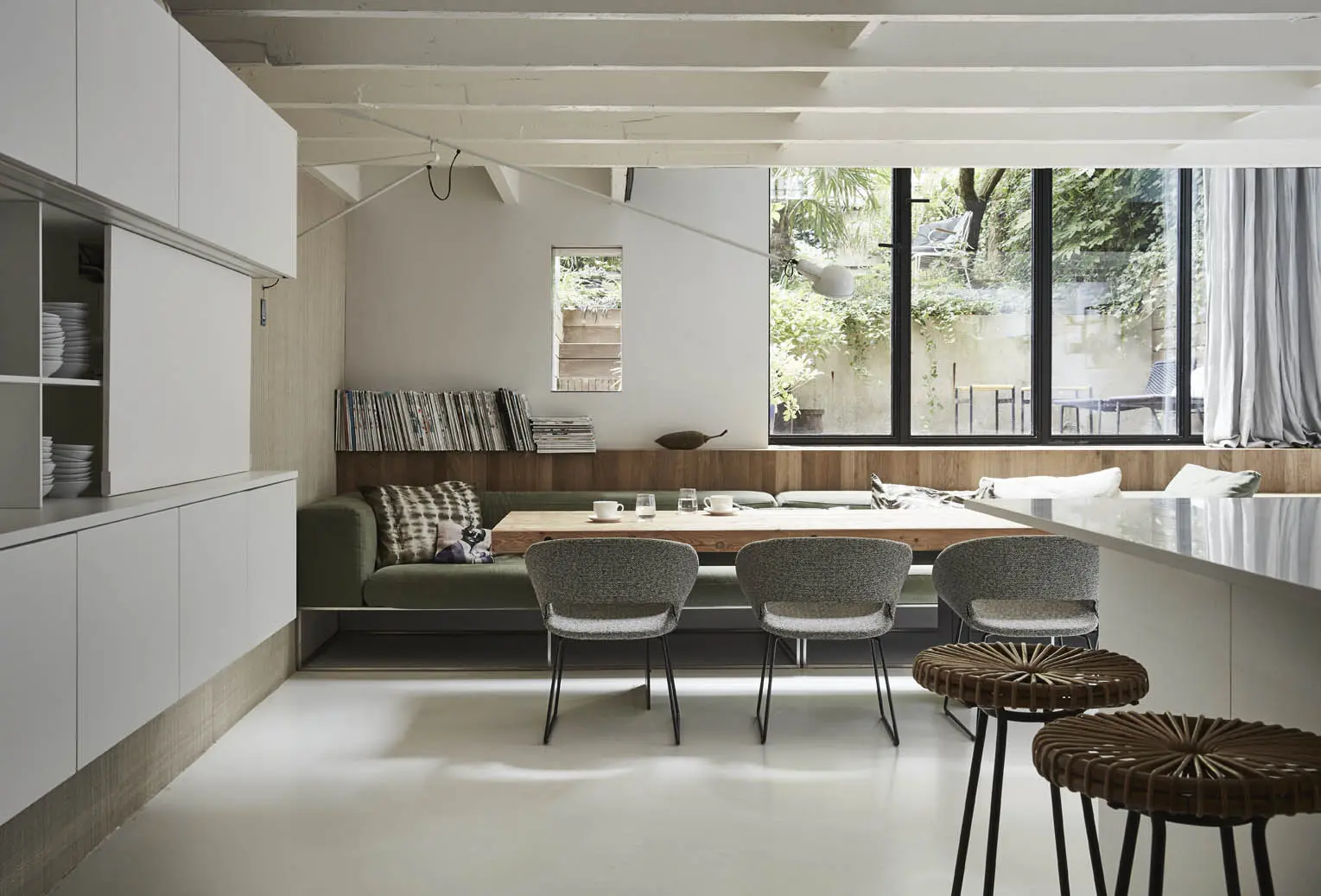
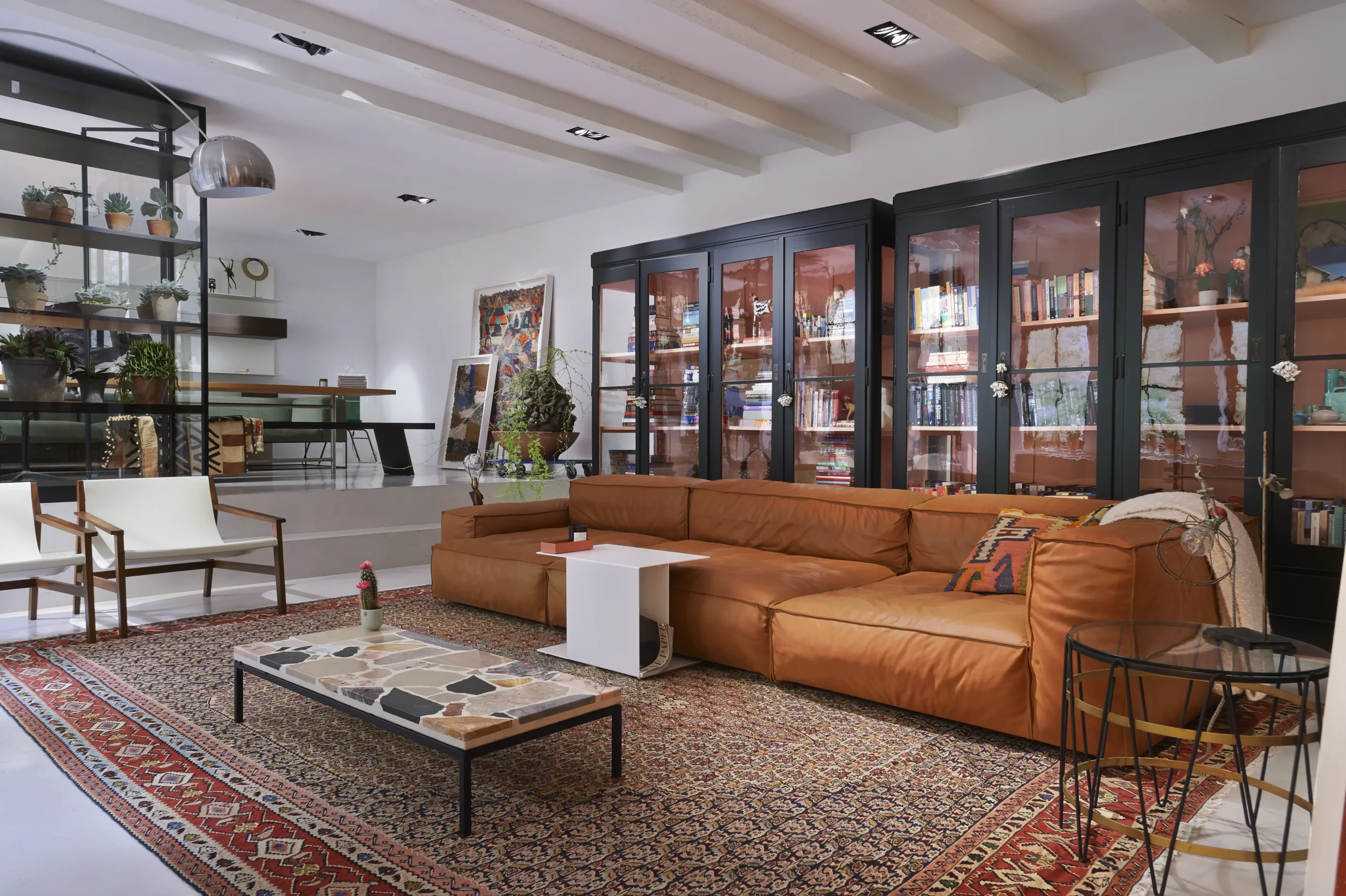
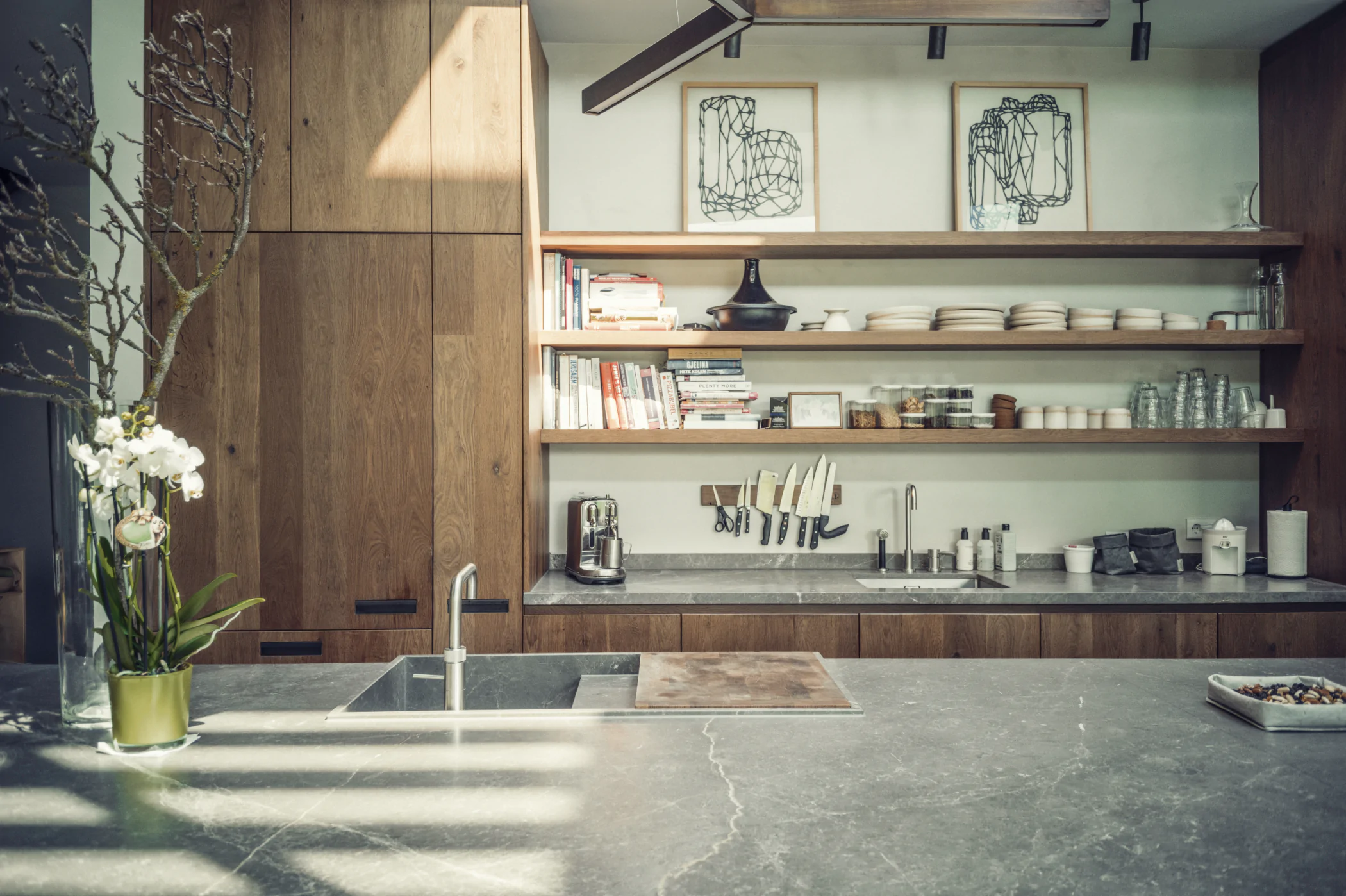
DIS Studio is een designbureau, interieurwinkel en showroom in één. DIS Studio is opgezet door Daniela Germone en Dis Abhelakh. Zij werkten beide voor het Italiaanse interieurmerk Boffi en zijn sinds 2004 samen eigenaar van een eigen studio in Amsterdam. Je kunt bij DIS Studio terecht voor interieusdesign voor je hele huis; van keukens tot stoelen tot tafellampen. Hoewel Daniele en Dis graag werken met strakke Italiaanse designs en natuursteen worden kleine imperfecties niet vermeden. Volgens hen zorgen juist die kleine imperfecties voor een warme en huiselijke sfeer. In de showroom van DIS Studio worden uitsluitend producten getoond van Italiaanse merken. Het is ook de enige plek in Nederland die producten van het merk Boffi verkoopt.
1054 MC Amsterdam
Eginstill
Eginstill is een bijzonder collectief, gespecialiseerd in interieurdesign. Het grote team aan leden, van ambachtsmannen tot aan de creatief leider Frans Pahlplatz, voorziet enthousiastelingen van workshops waarin alle interieur wensen waar kunnen worden gemaakt. Deze processen worden zo duurzaam mogelijk gemaakt, door het gebruik van recyclebare materialen zoals staal en hout van een familiebedrijf in Finland. Eginstill wil het liefste alle projecten zo uniek maken als hun klanten en dit doen ze met passie. Ook voor de lekkere bak koffie kan je hier goed terecht en er is genoeg om tijdens het nuttigen naar te kijken!
1054 TS Amsterdam
Studio 3000
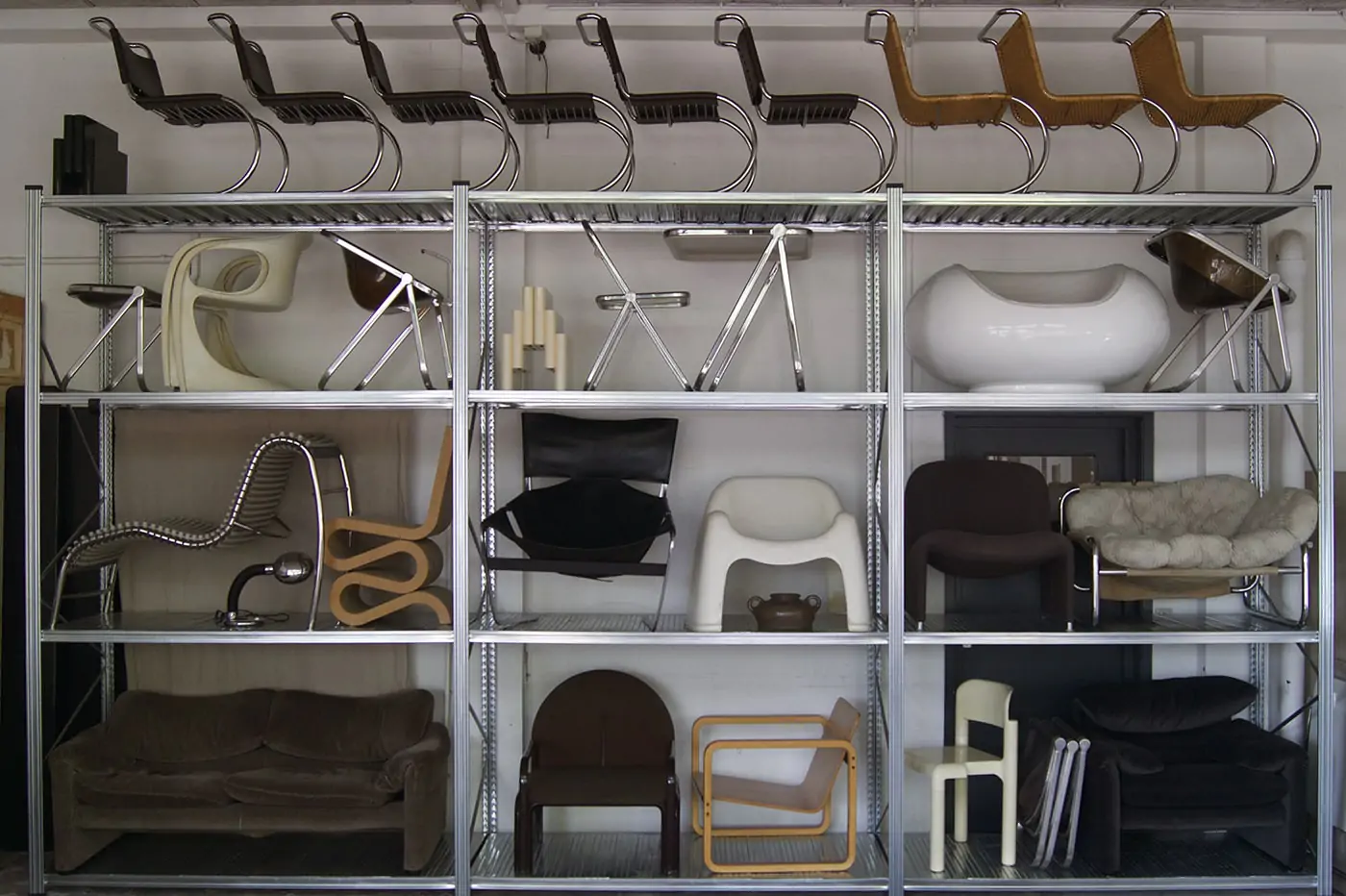
Studio 3000 is een multifunctionele creatieve ruimte. De studio is opgericht in 2020 door Nurcan Tuzkapan en is gevestigd lang de Derde Kostverlorenkade. In de studio worden design meubels getoond, verkocht en verhuurd. Naast vintage designmeubels vind je hier ook een fotografiestudio. Op haar instagramkanaal houdt Nurcan haar volgers op de hoogte van haar nieuwste vondsten en geplande event. Als je geïnteresseerd bent in creatieve projecten en design, is het zeker aan te raden om het platform van Nurcan in de gaten te houden.
1075 CV Amsterdam
Wijnhuis Amsterdam
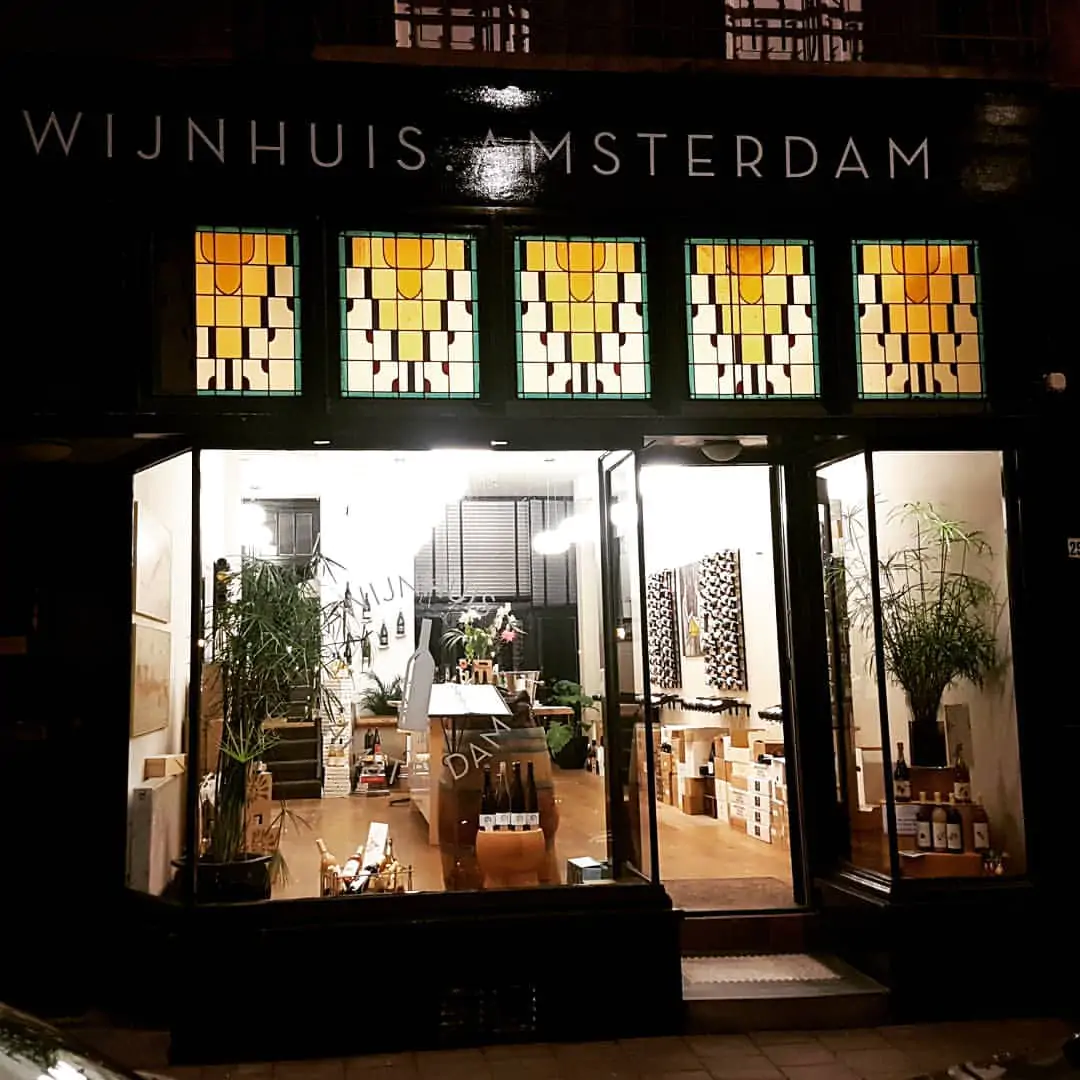
Hoewel ze bij Wijnhuis Amsterdam al meer dan 25 jaar professioneel wijn proeven en selecteren, is het wijnhuis in Amsterdam een vrij recente toevoeging aan hun verhaal. Na talloze proefsessies waren ze zo enthousiast over de Duitse wijnen dat ze maar al te graag de wijnen een platform wilden geven binnen Nederland. Zo openden ze in mei 2018 Wijnhuis.Amsterdam, met in eerste instantie slechts drie eigen importen uit Duitsland. Inmiddels vertegenwoordigen ze een indrukwekkend assortiment van twintig Duitse wijnmakers, drie uit Oostenrijk en één uit Luxemburg. Bij het selecteren van de wijnen is elegantie, de drinkbaarheid, lage alcoholpercentages en een minimale interventie in het productieproces belangrijk.
1075 CE Amsterdam
Patisserie Linnick
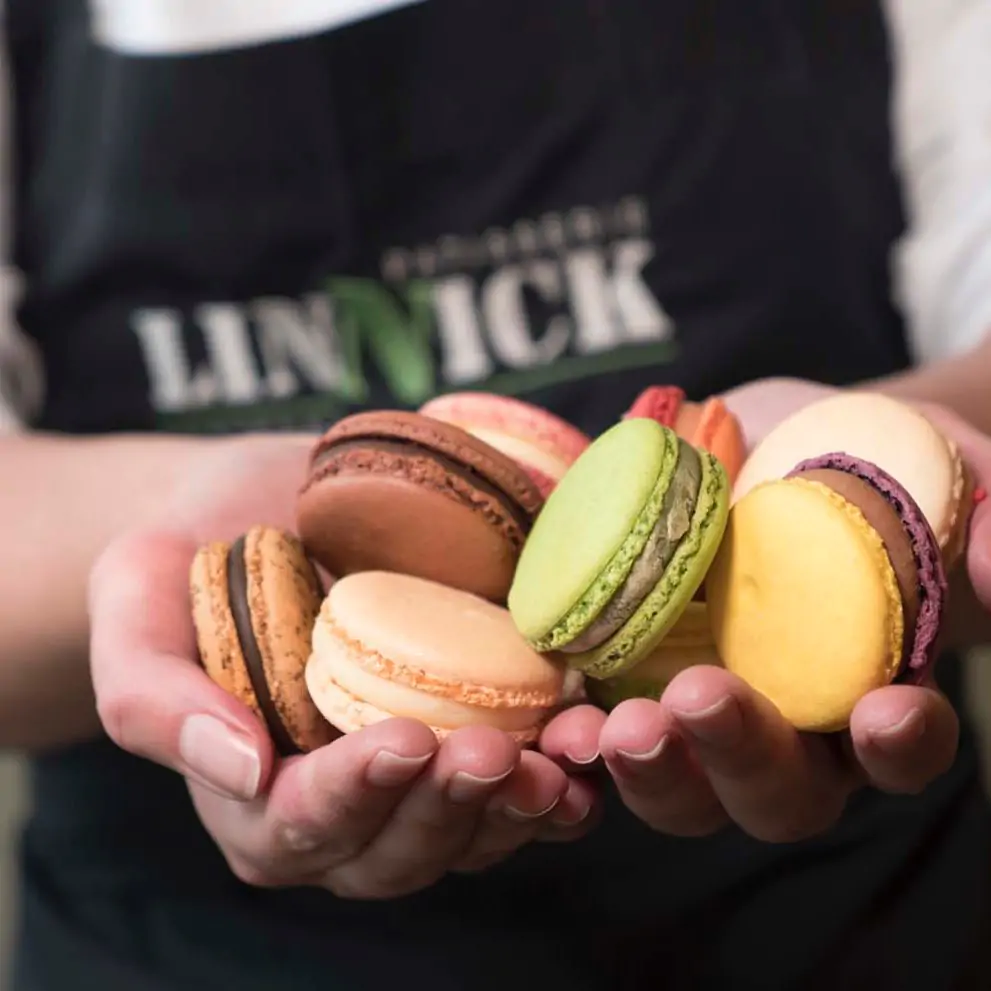
Patisserie Linnick wordt bestierd door het Amstelveense koppel Linda en Nick. Zij leerden elkaar kennen in Patisserie Holtkamp en werden verliefd. In 2014 werd hun droom werkelijkheid: een eigen patisserie waar zij hun kunstwerkjes aan het publiek kunnen tonen. Met passie en ambacht werken zij elke dag aan de prachtige gebakjes en chocolade die zij vervolgens in de vitrines etaleren. Patisserie Linnick werkt met hoogwaarde ingrediënten zoals de Valrhona chocolade uit Tain-l’Hermitage in Hermitage. De heerlijke zoete traktaties van Patisserie Linnick zul je niet snel vergeten.
1054 JW Amsterdam
Chabrol
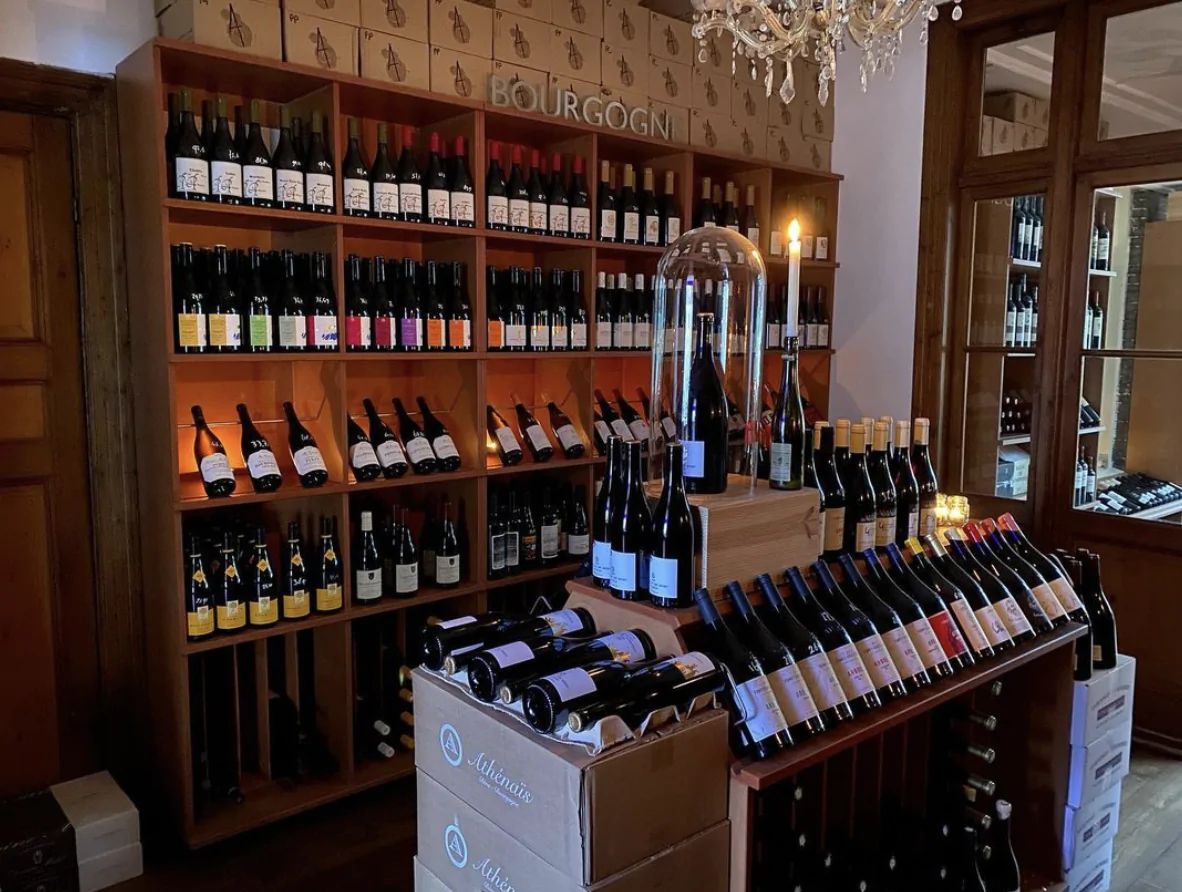
Al meer dan dertig jaar is Chabrol een gevestigde wijnwinkel in Amsterdam en omstreken. Chabrol is gegroeid van een kleine wijnwinkel in de buurt naar een importeur van unieke, organische wijnen. De wijnen worden met een passie voor wijn en het verhaal achter de wijn geselecteerd. Dat kan je bijvoorbeeld lezen in de nieuwsbrief waar ze over iedere wijn een verhaal schrijven zodat de echte wijnliefhebber alles te weten komt. Je kan bij Chabrol voor een hele brede variatie aan wijnen terecht, zowel voor een wijntje voor doordeweeks als een wijn voor speciale momenten.