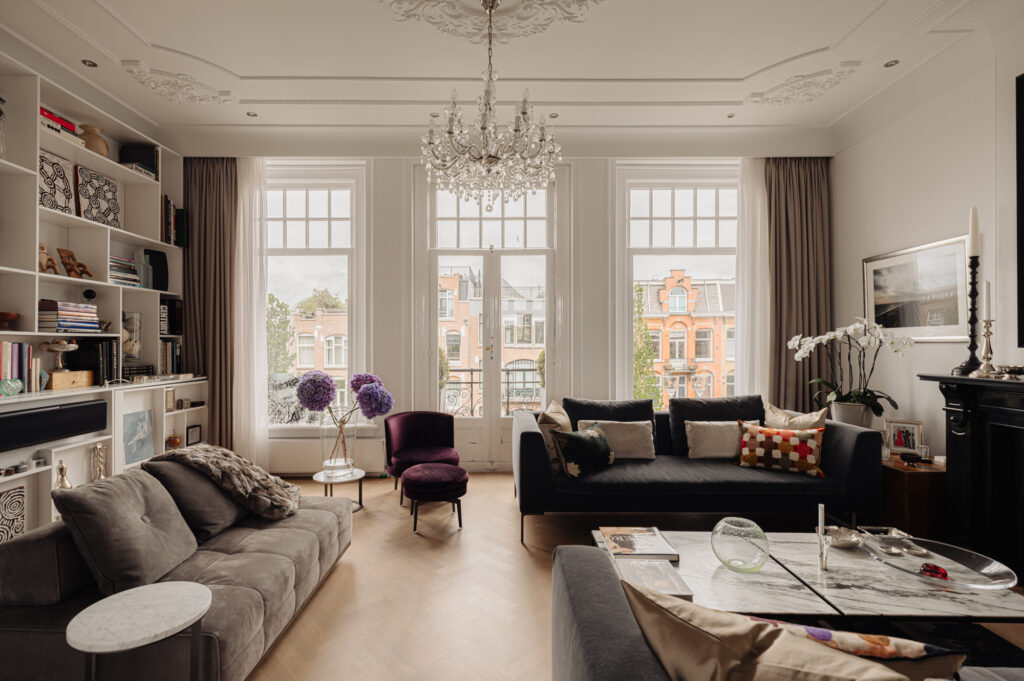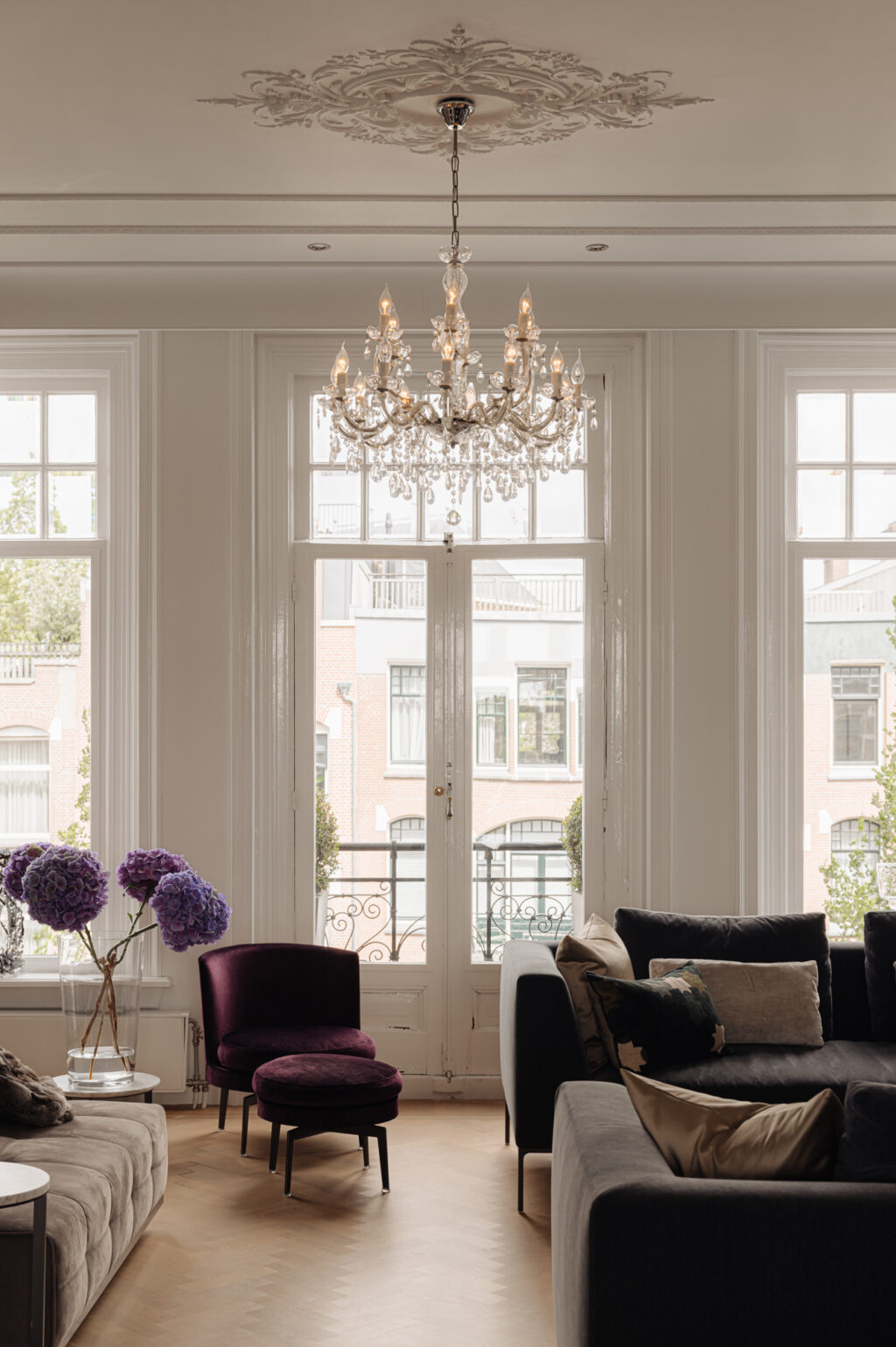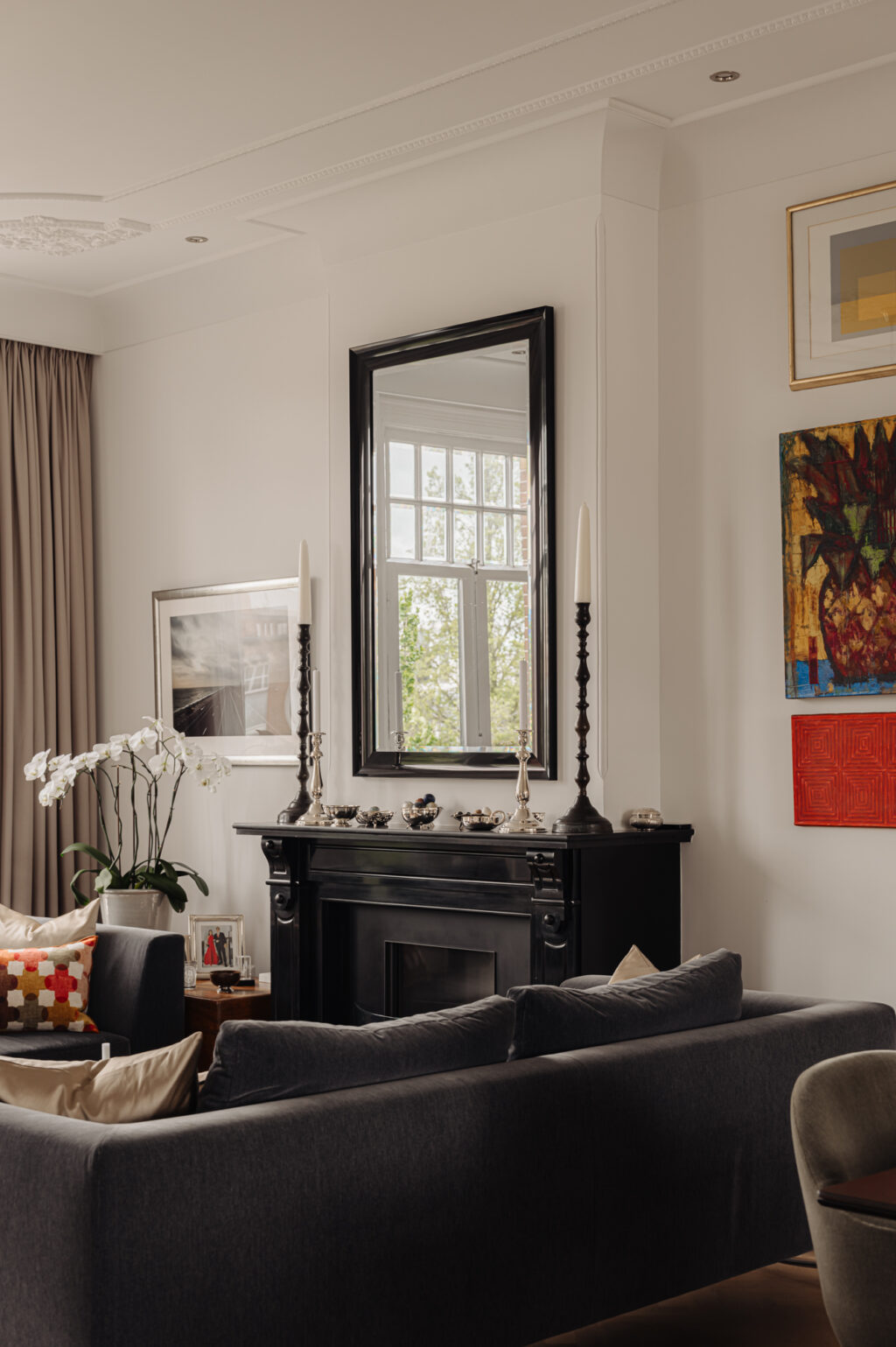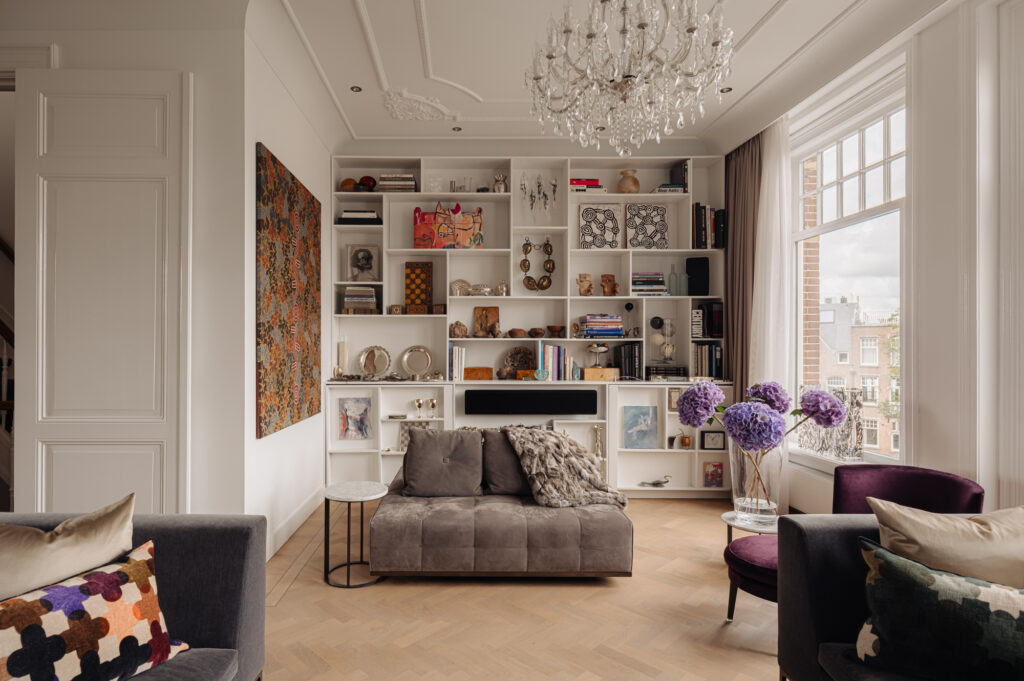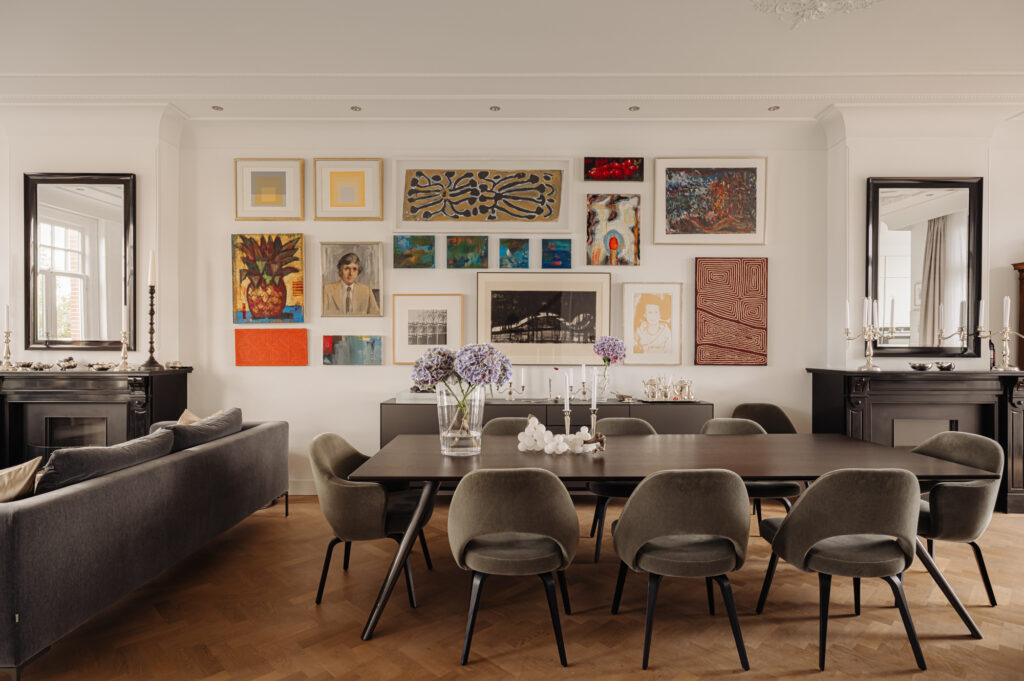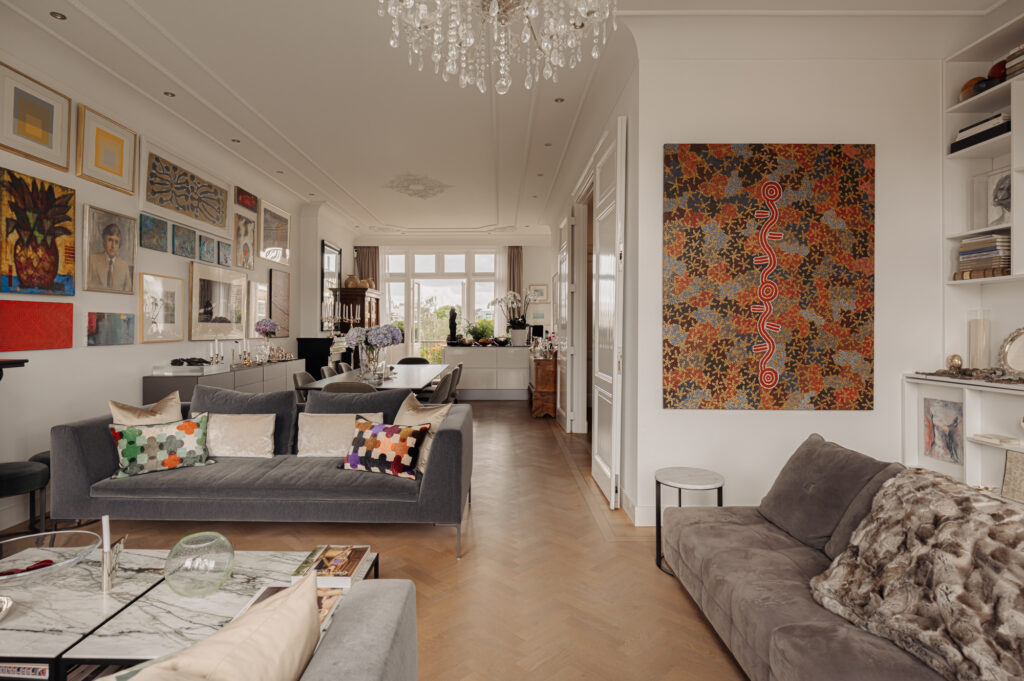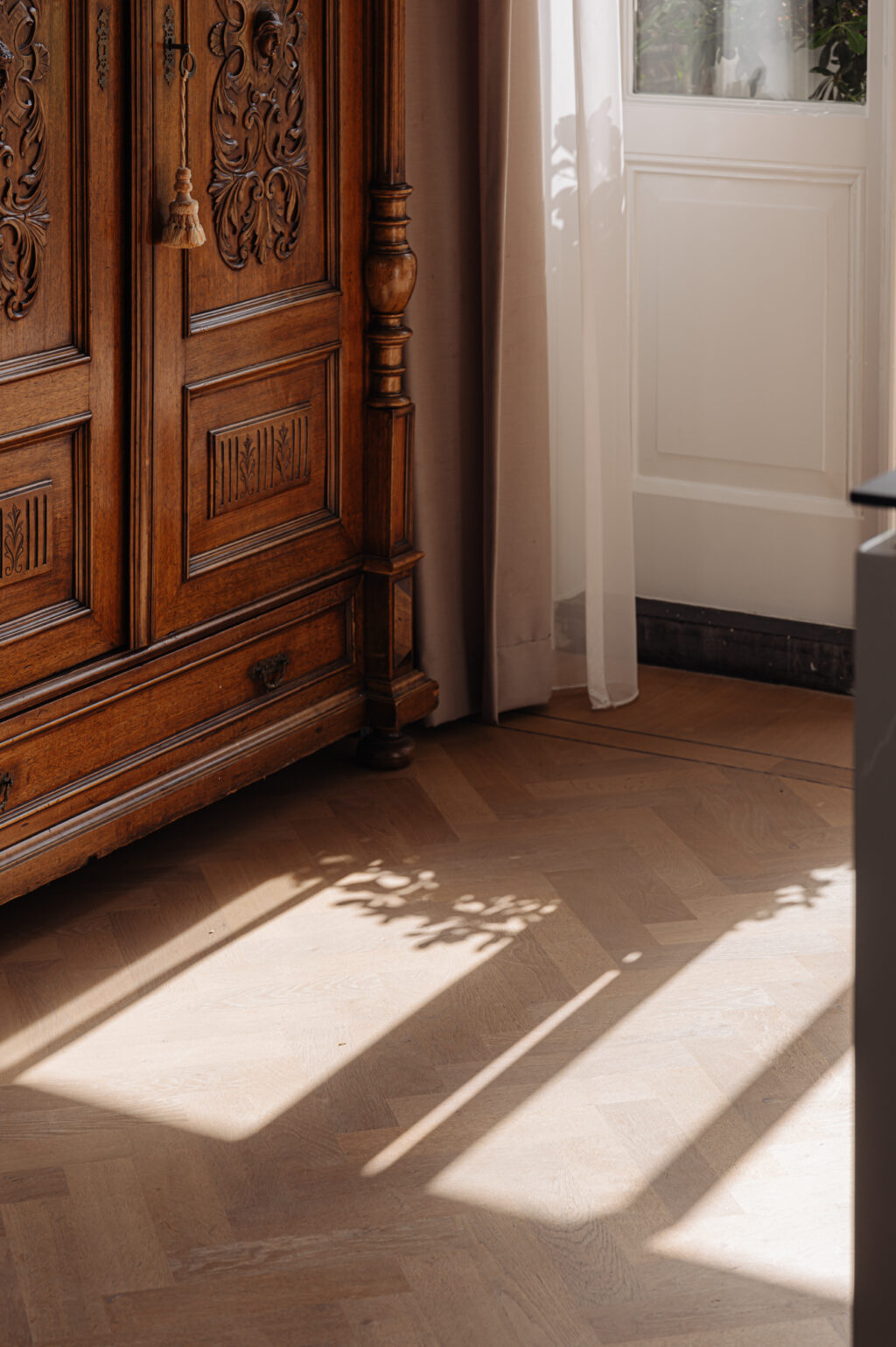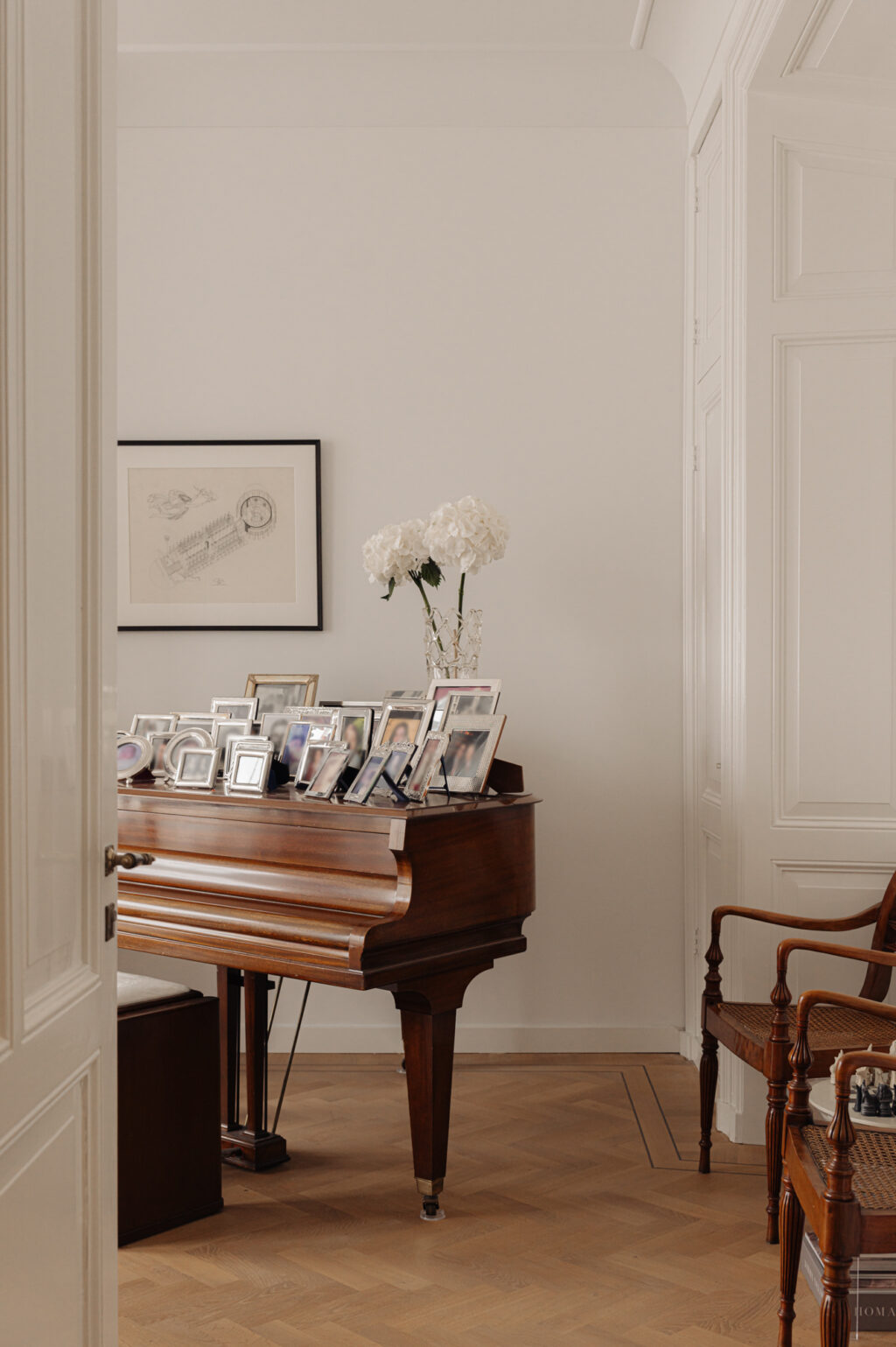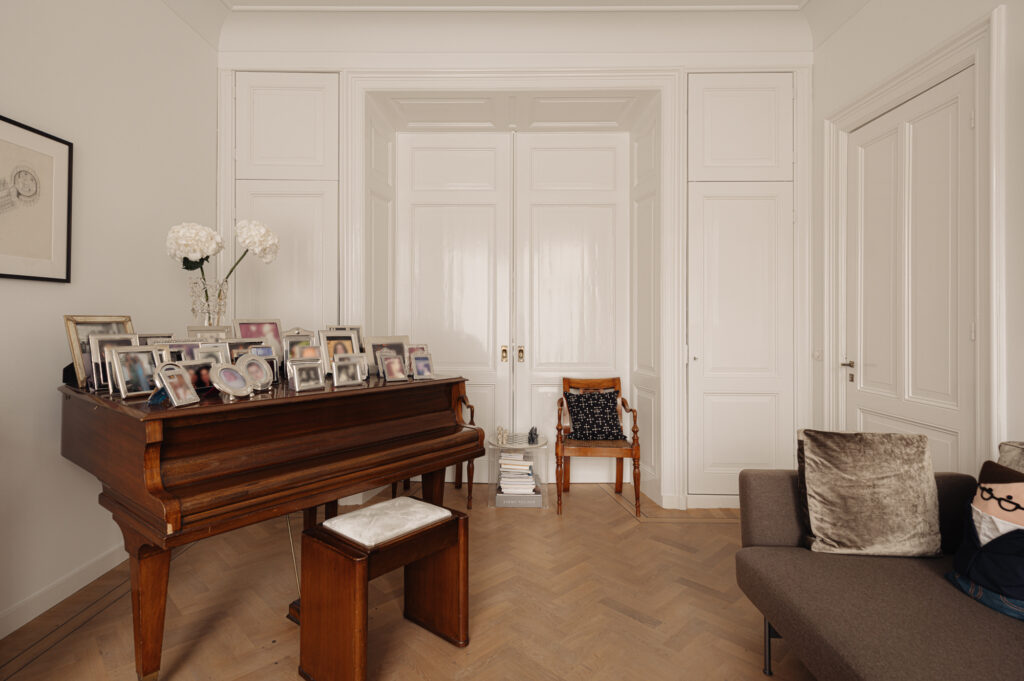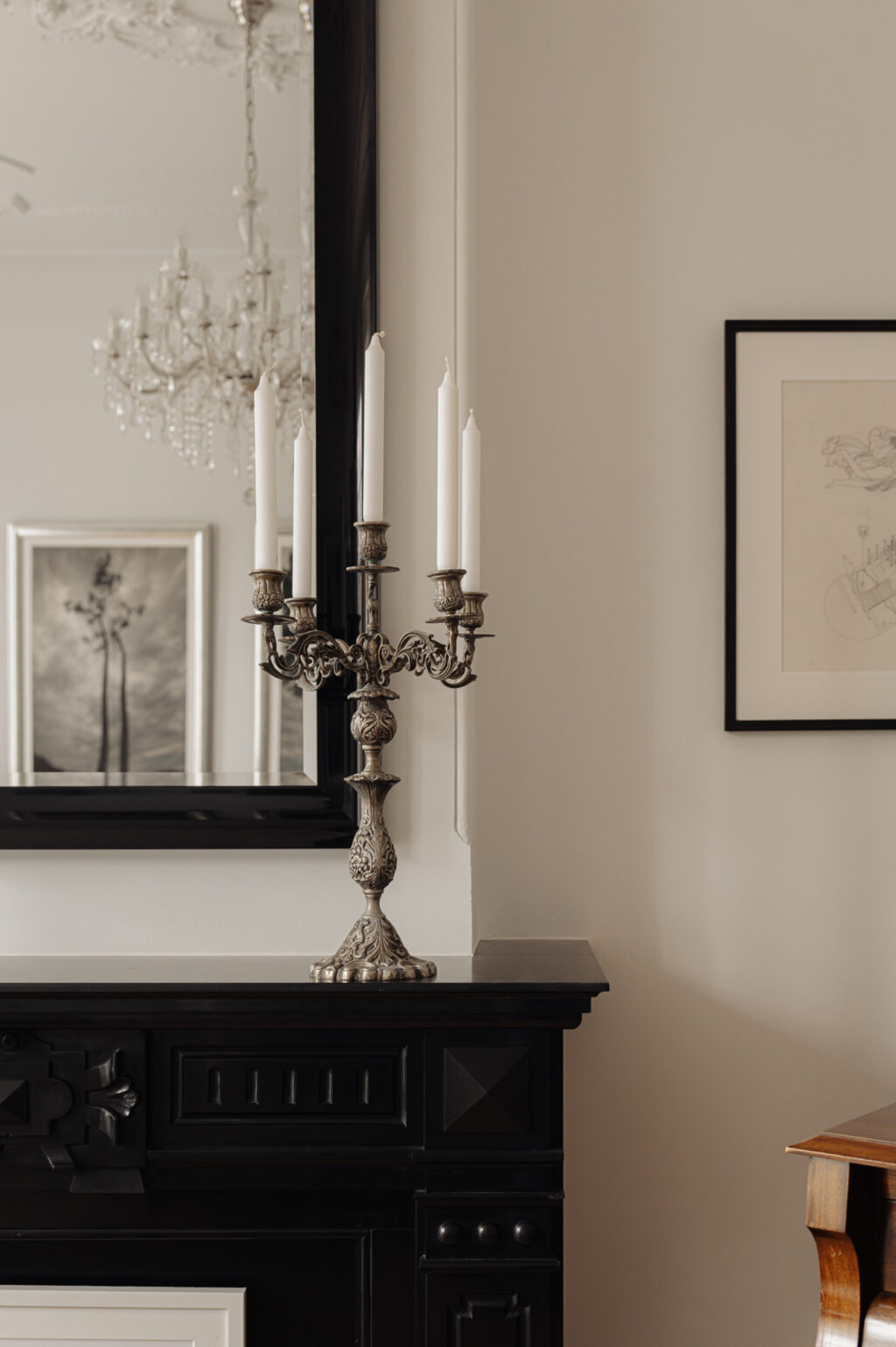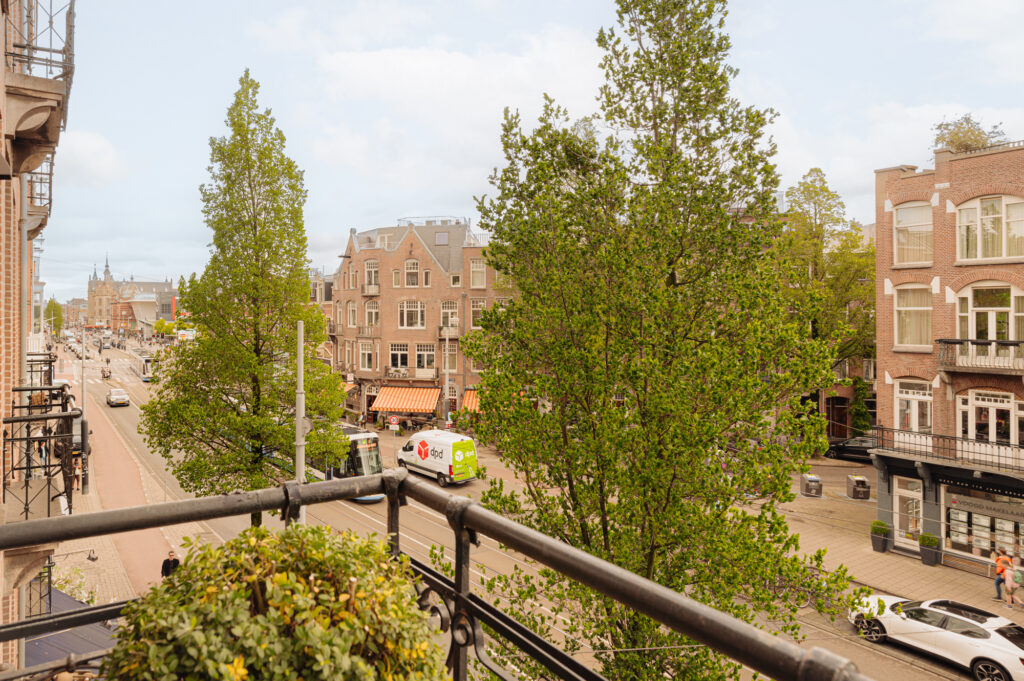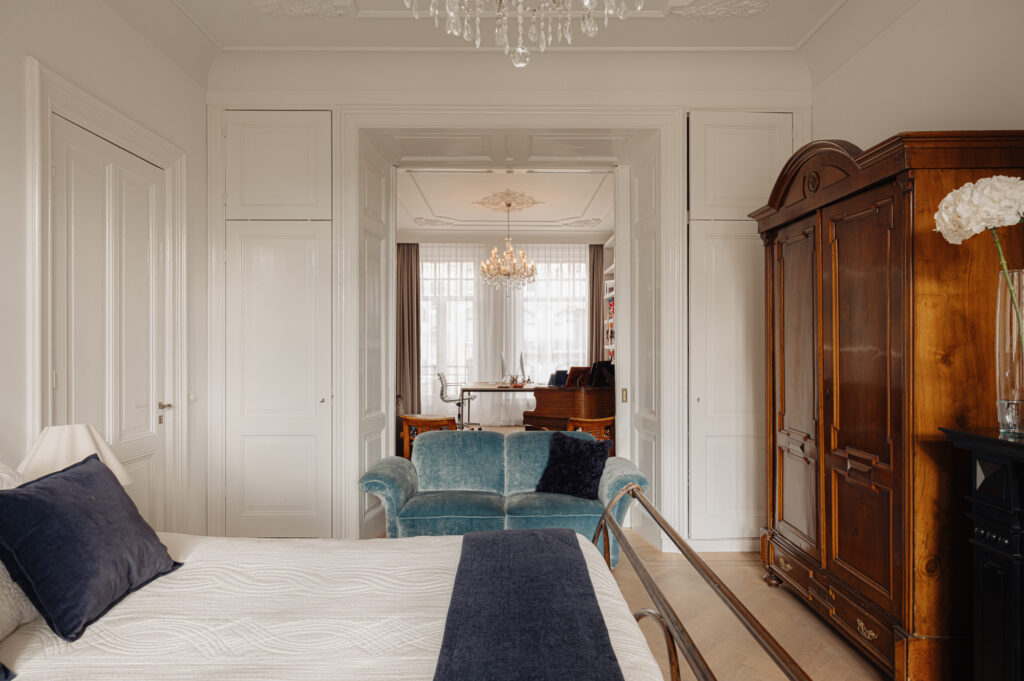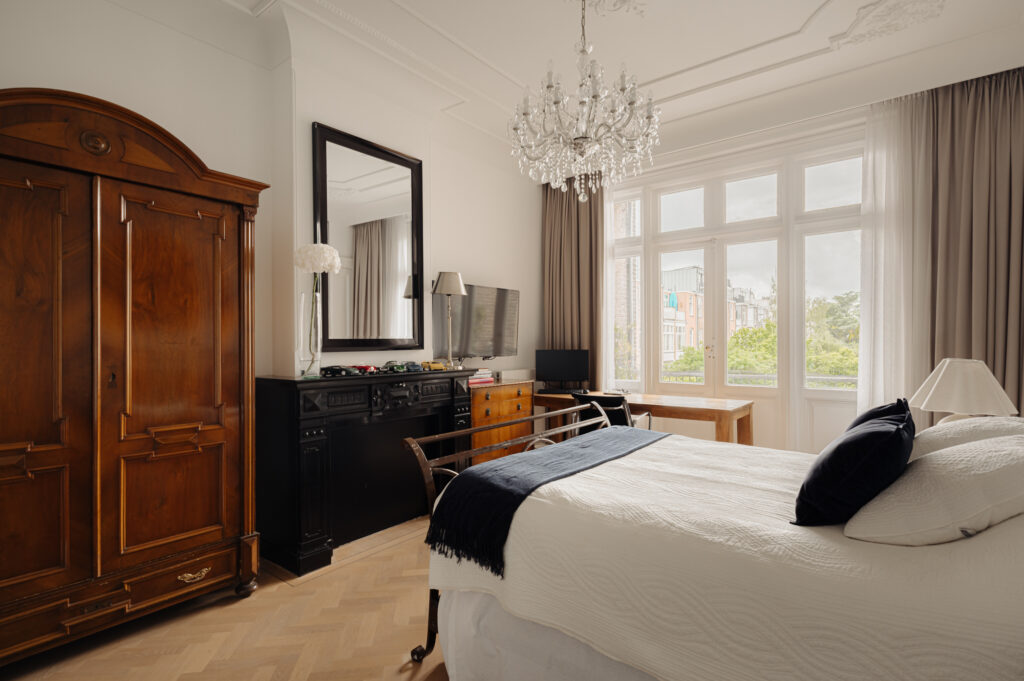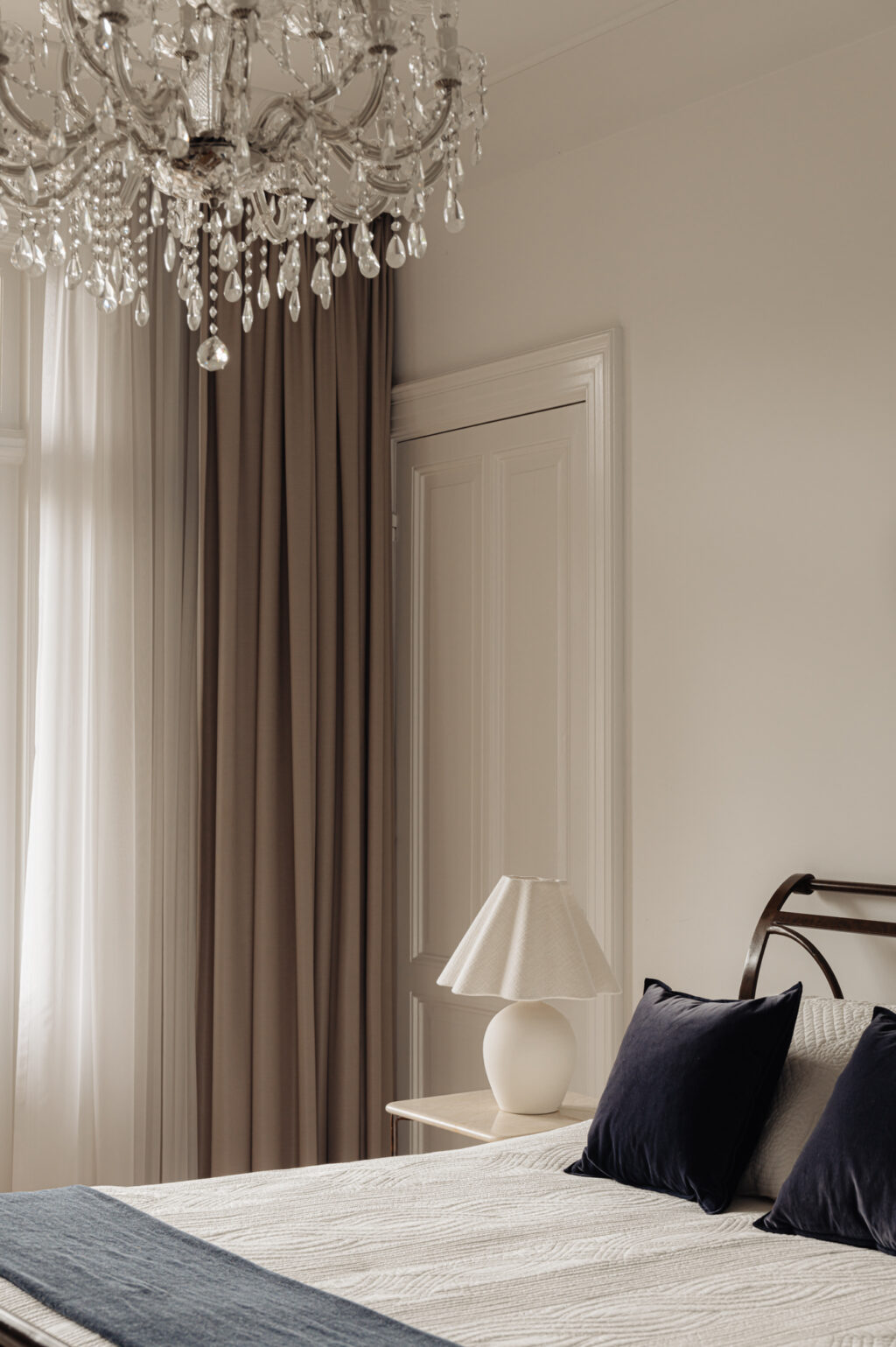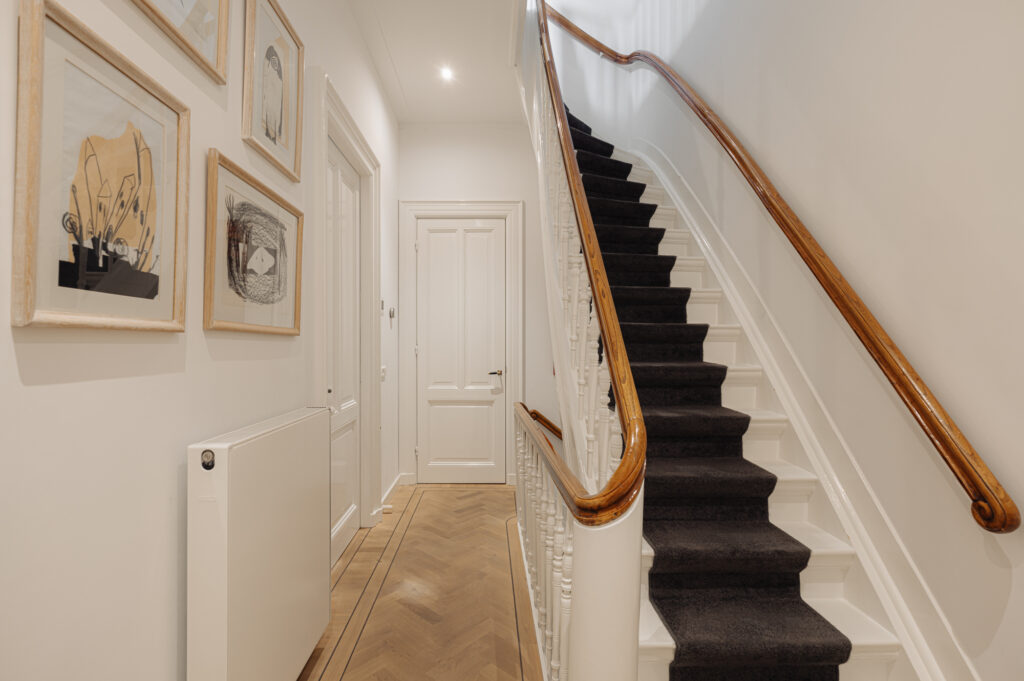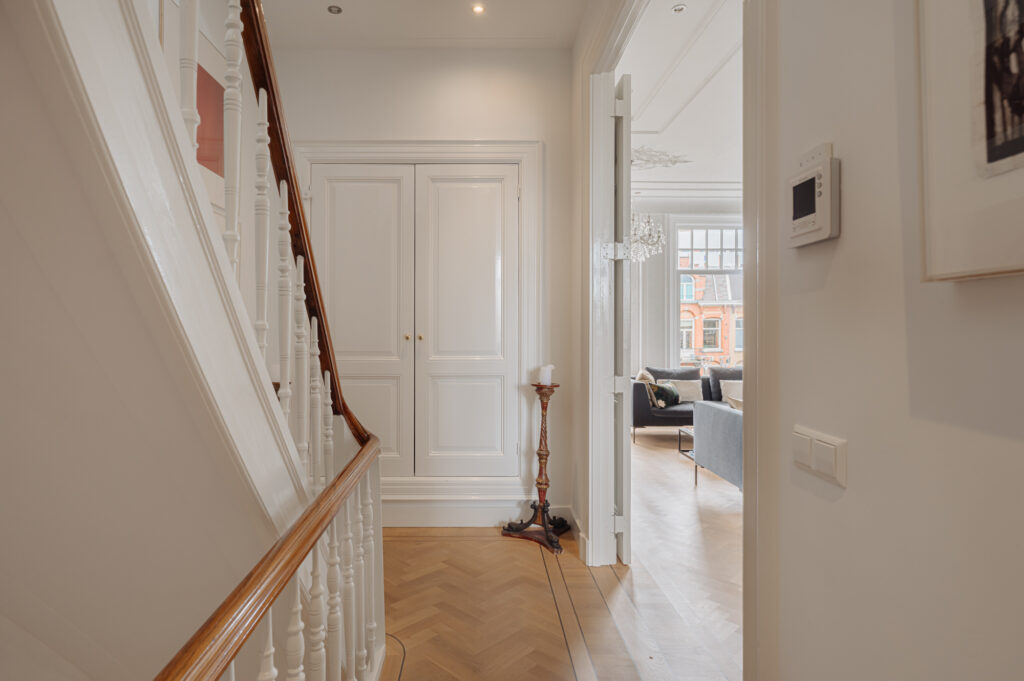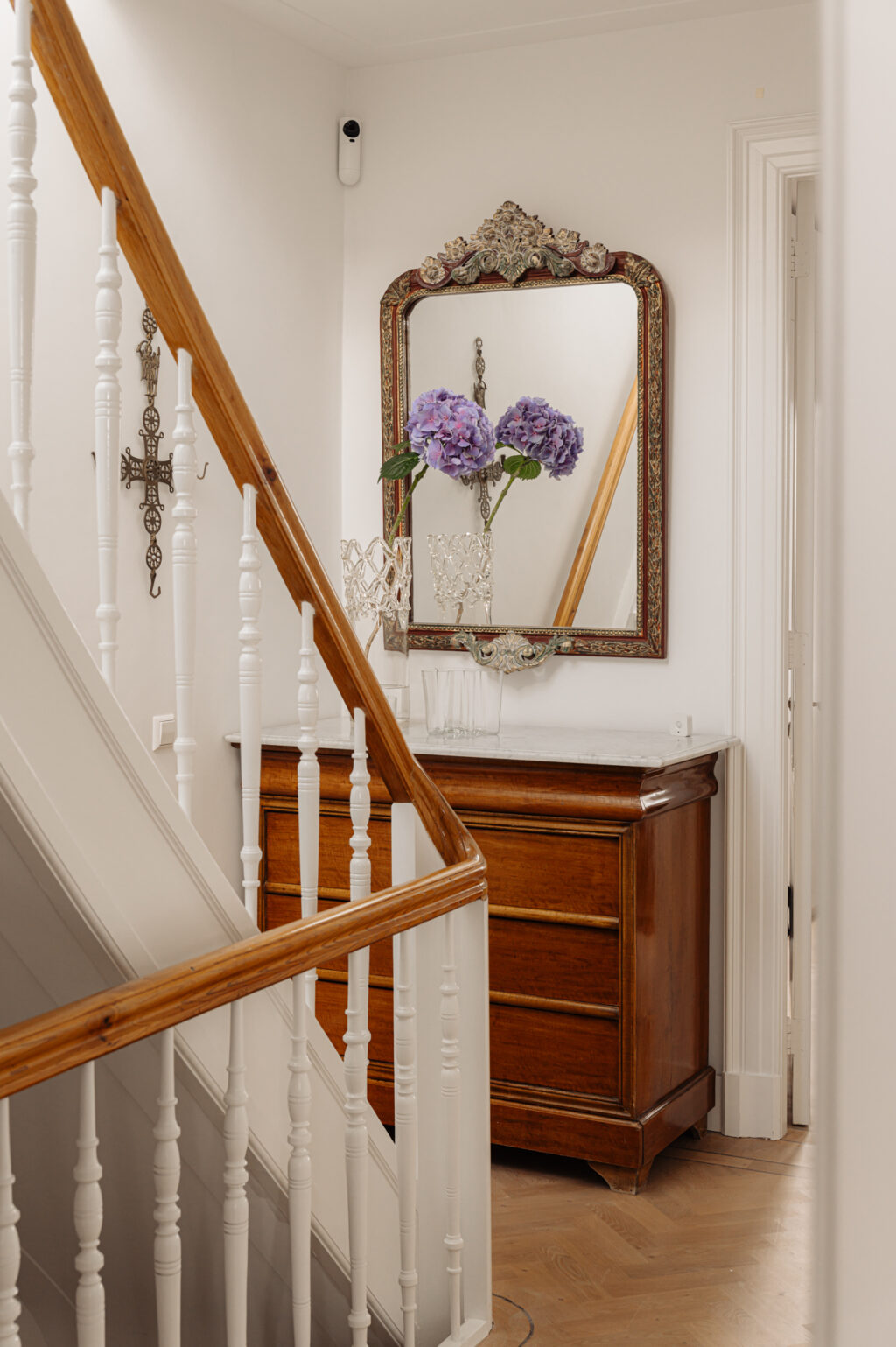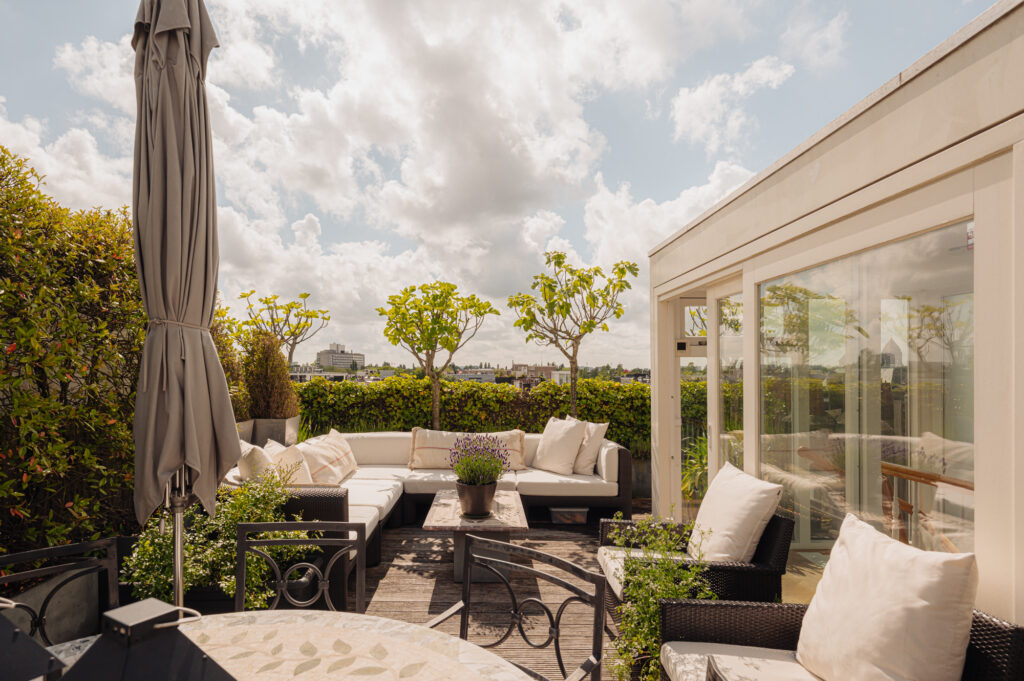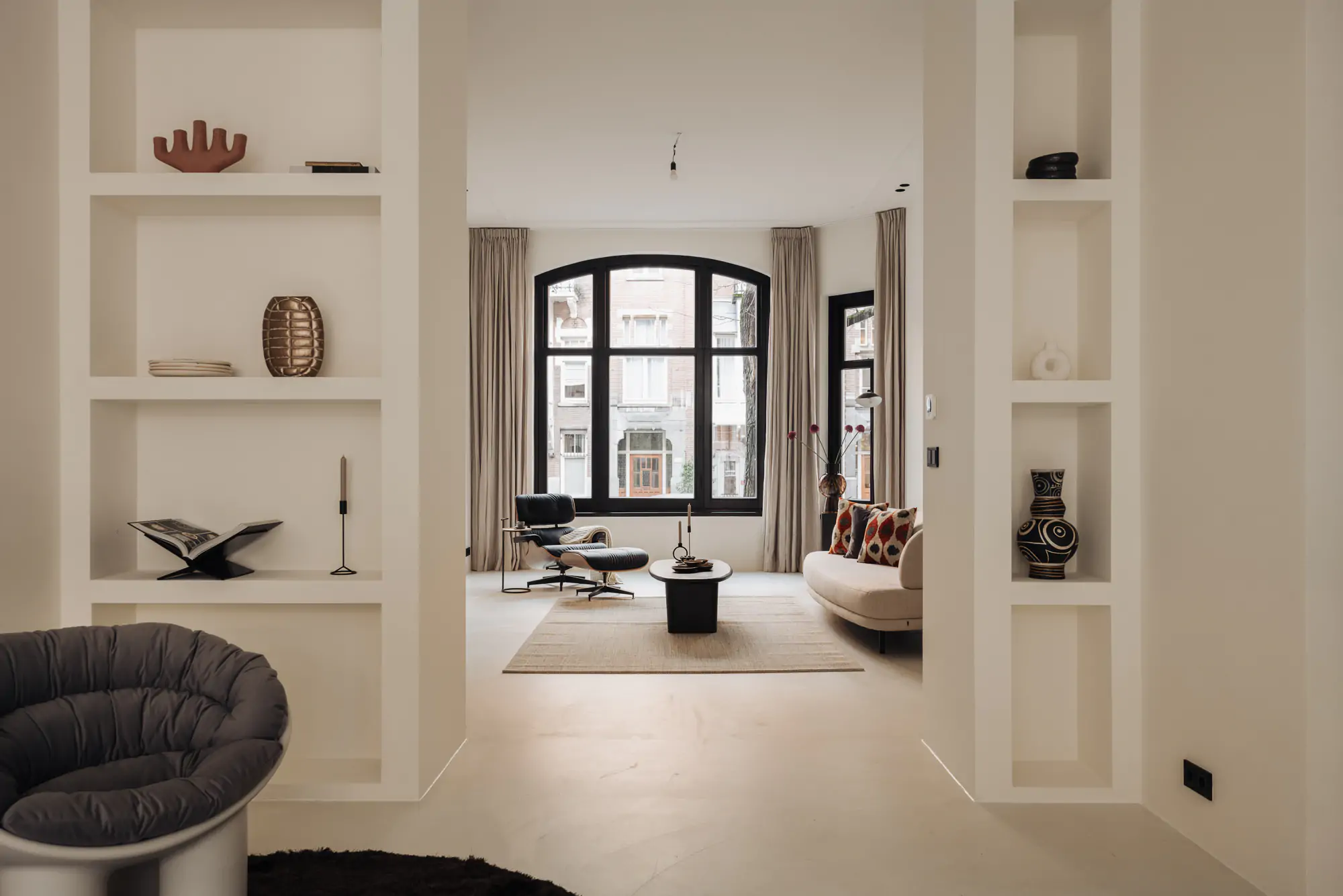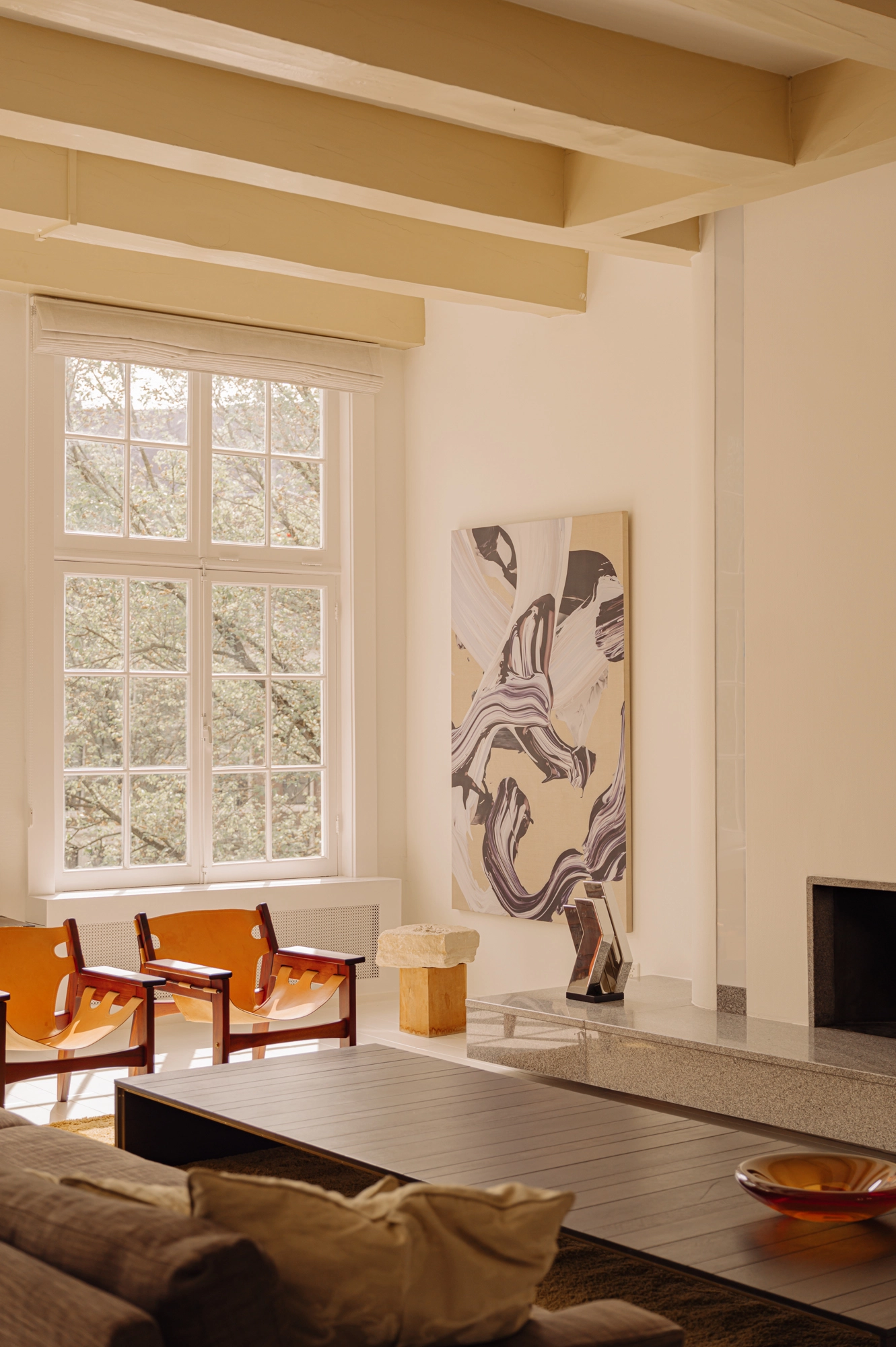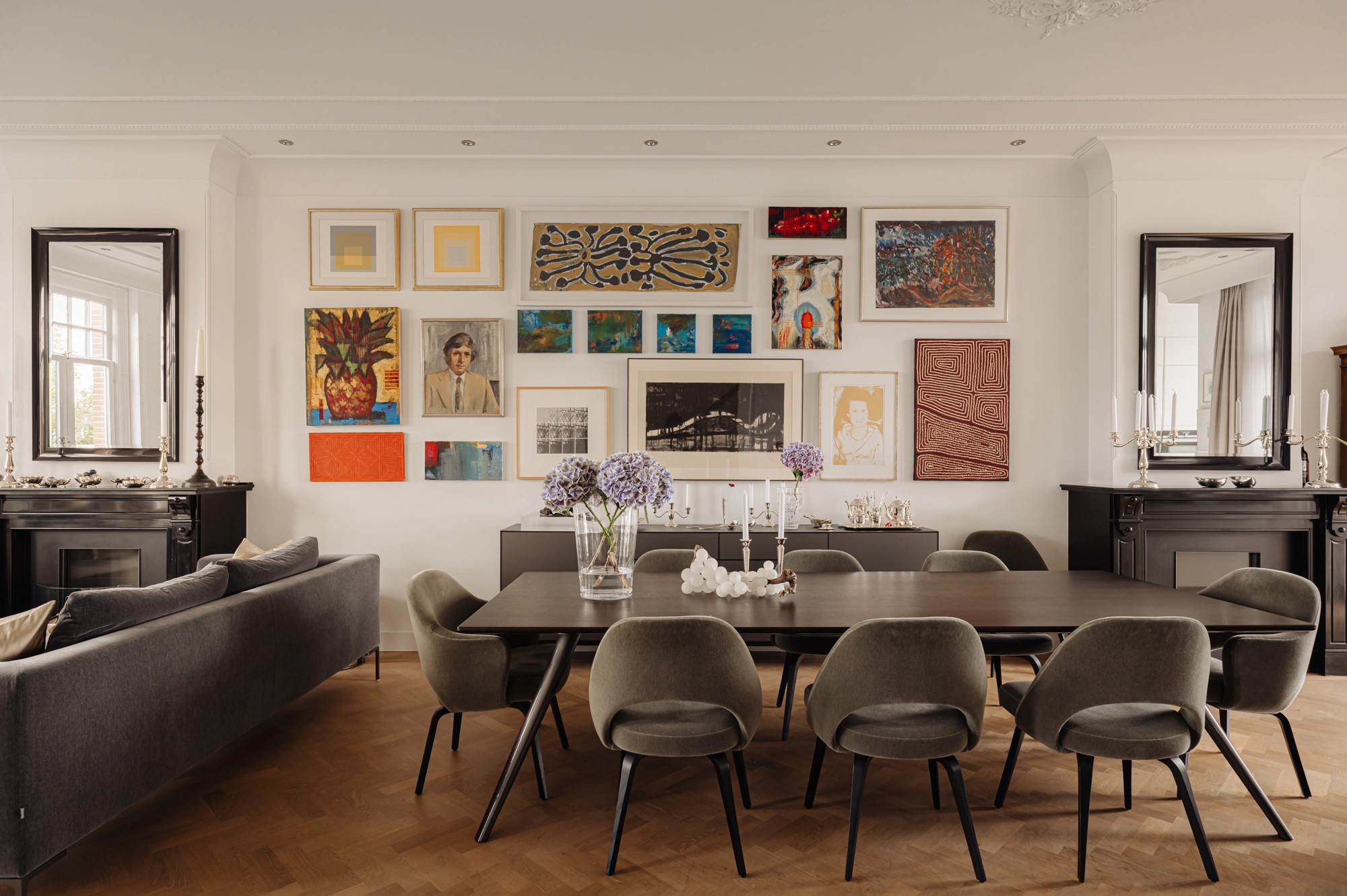
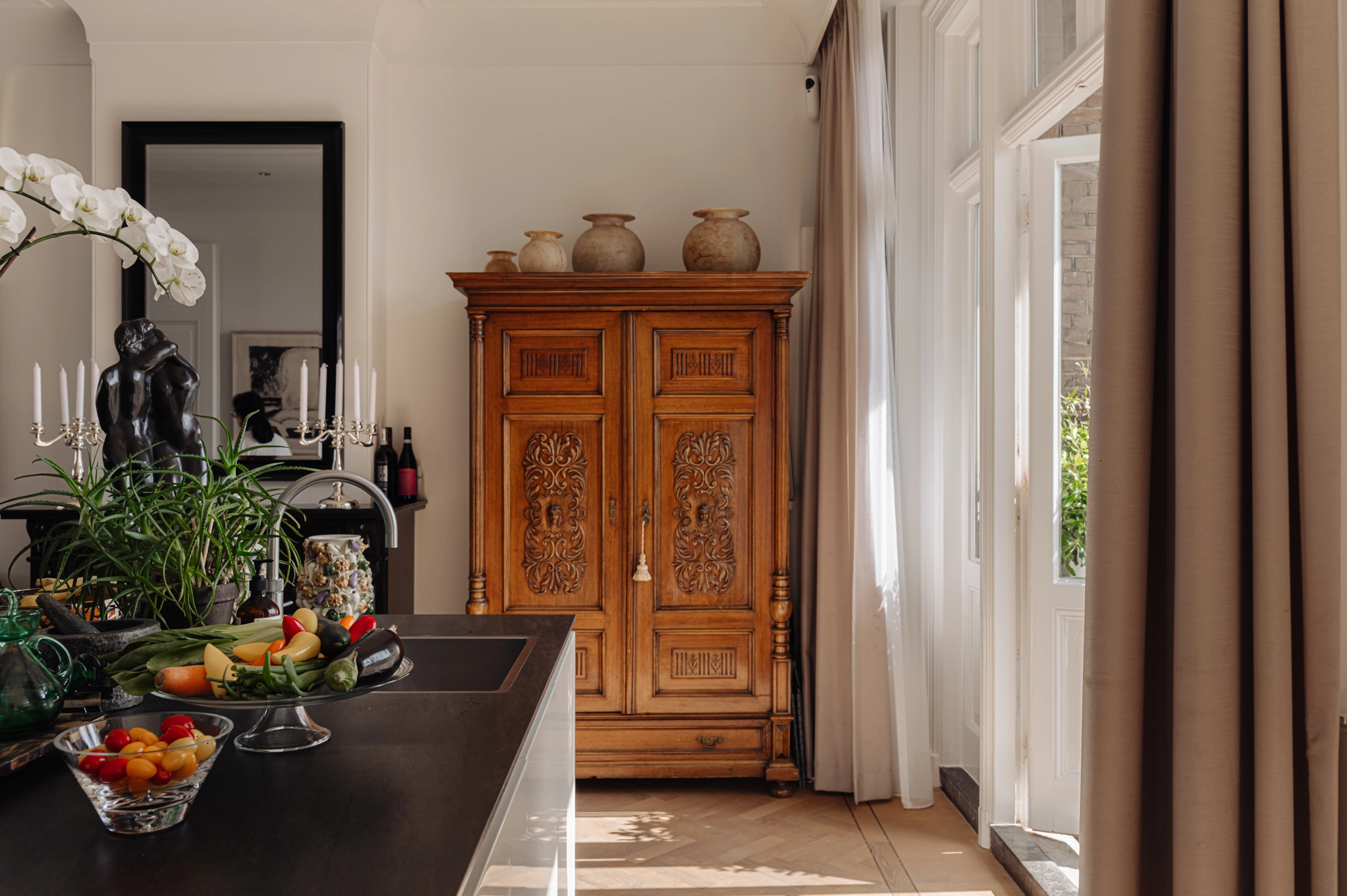
Living on Van Baerlestraat in a stylishly designed home with three spacious floors. Upon entering, the impressive width and height of the home immediately stand out, giving it a grand appearance. The beautiful living floor benefits from its high ceilings and open layout, allowing for plenty of natural light. Combined with the elegant interior, this creates a refined and luxurious atmosphere. The layout, featuring four spacious bedrooms, makes the home ideal for families with older children, offering everyone their own space. The absolute highlight is the rooftop garden. With lush greenery and a private, open setting, it offers plenty of privacy and tranquility.
Tour
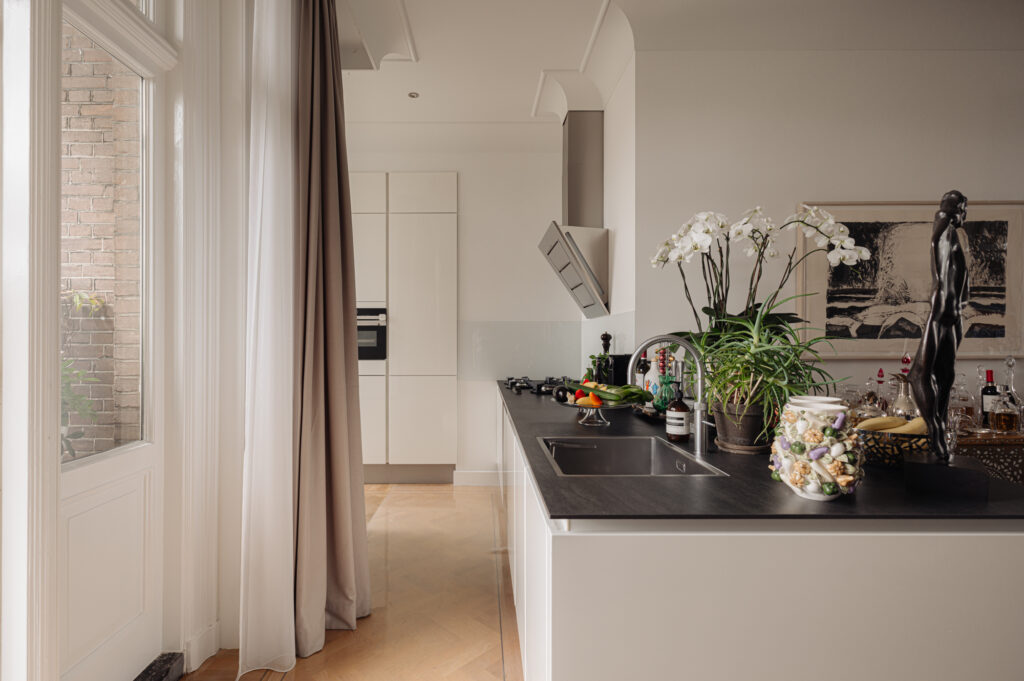
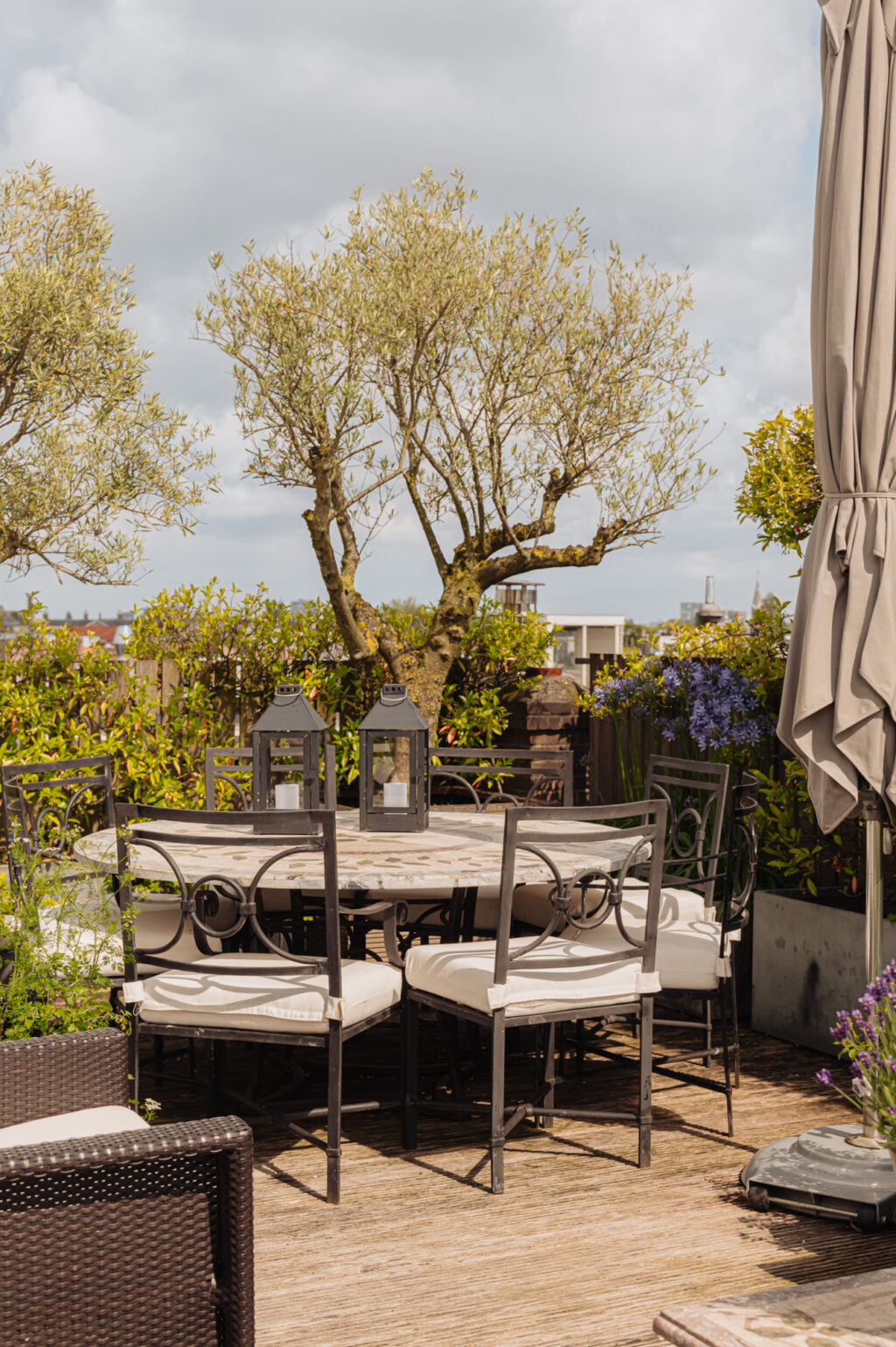
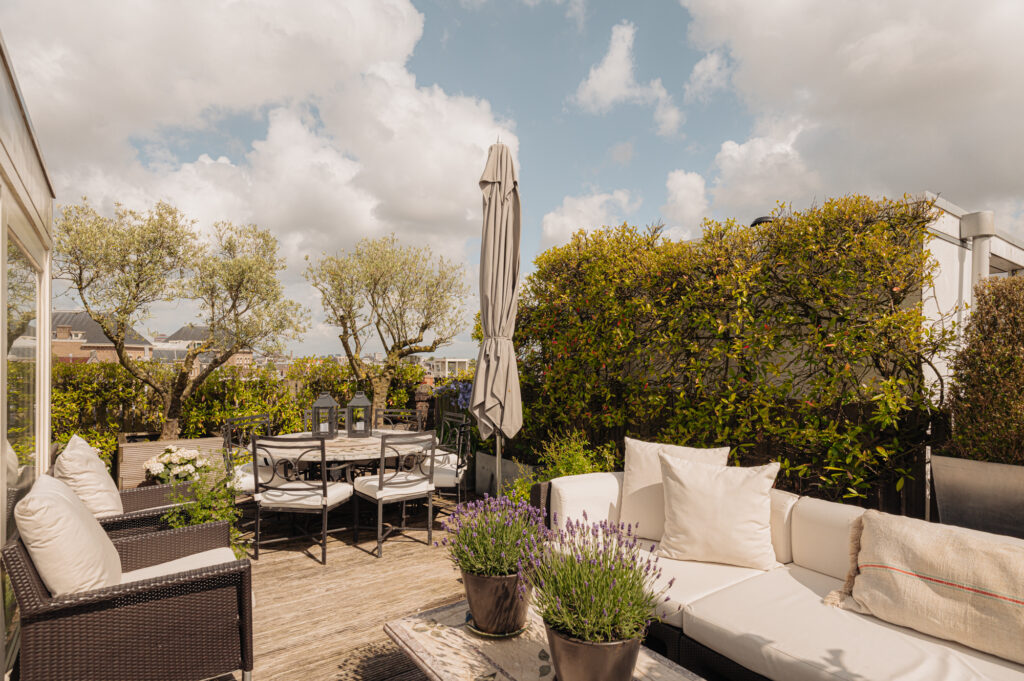
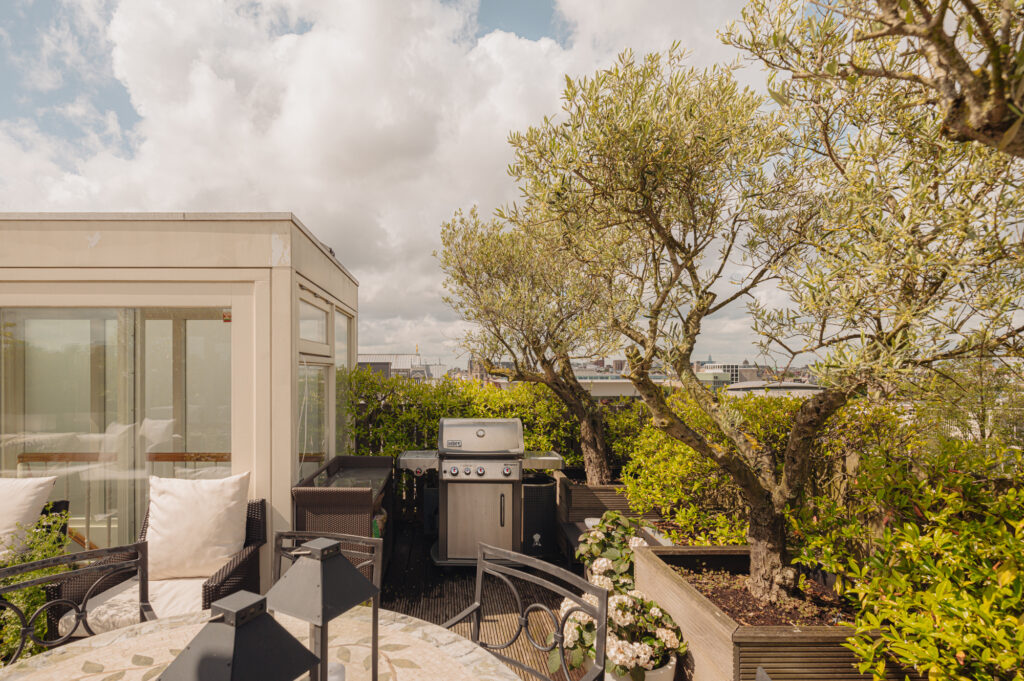
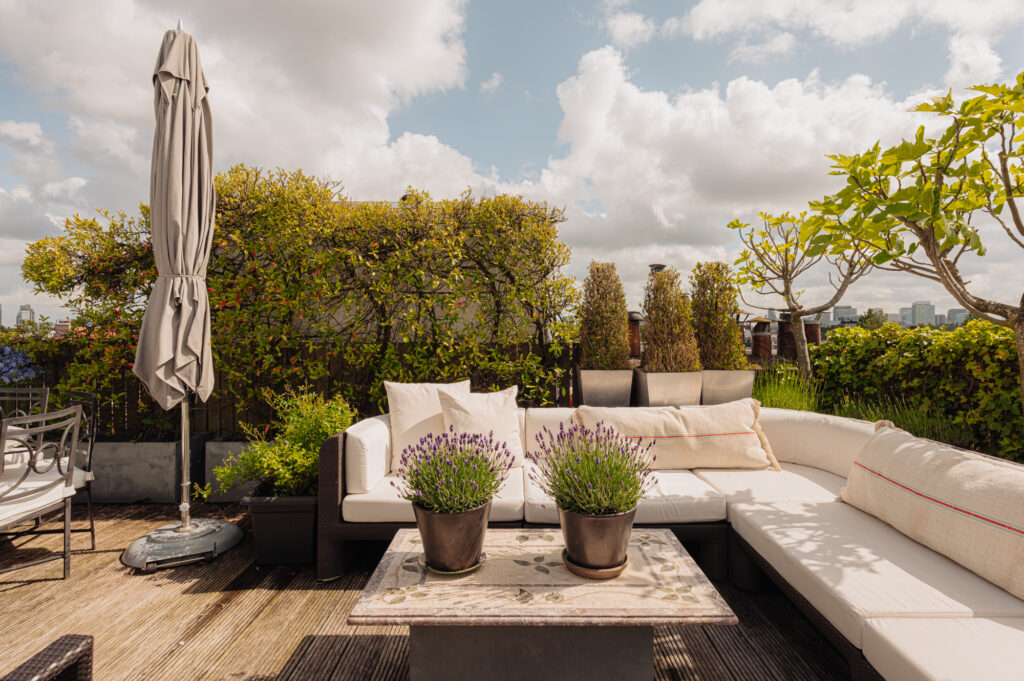
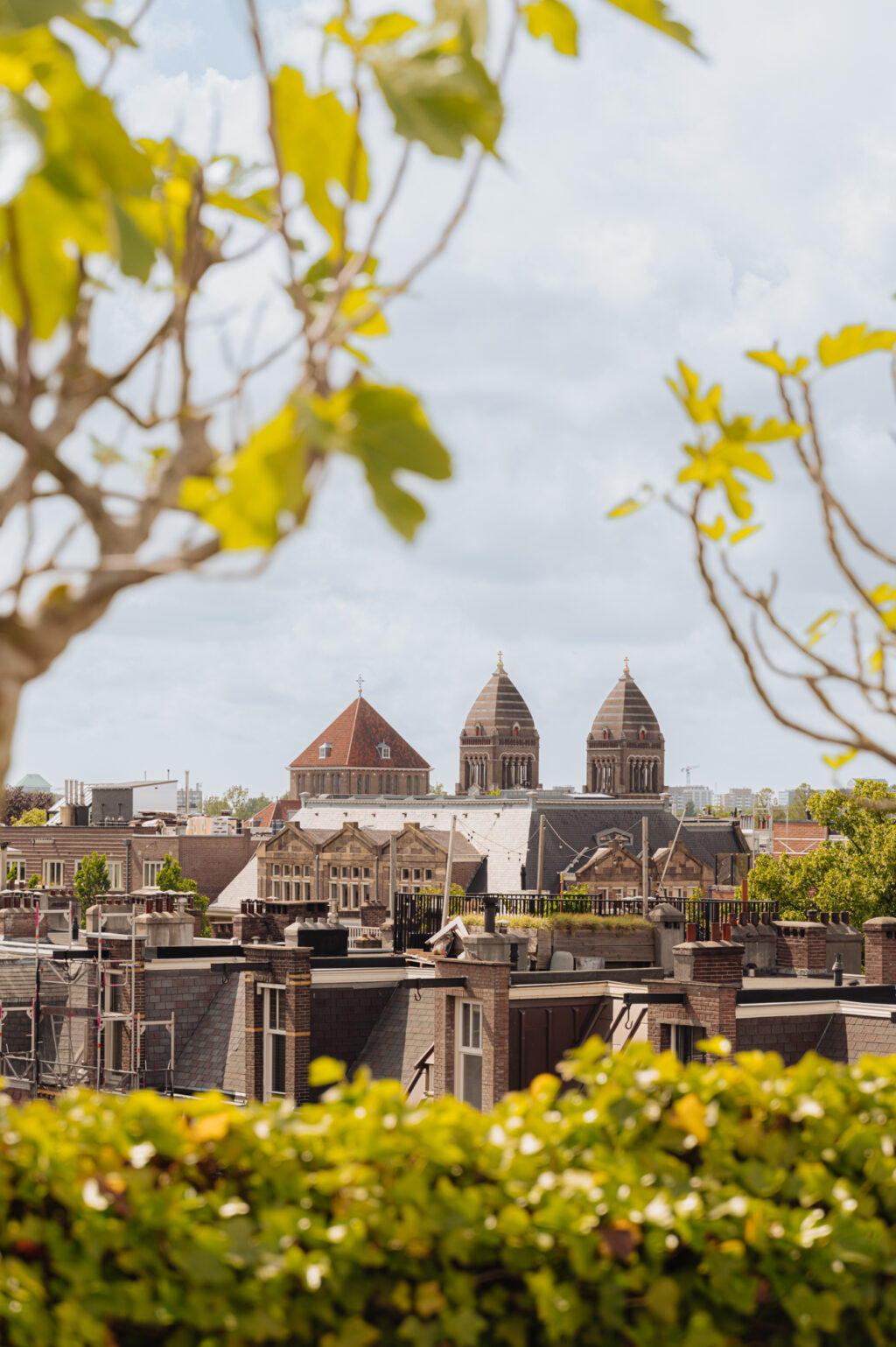
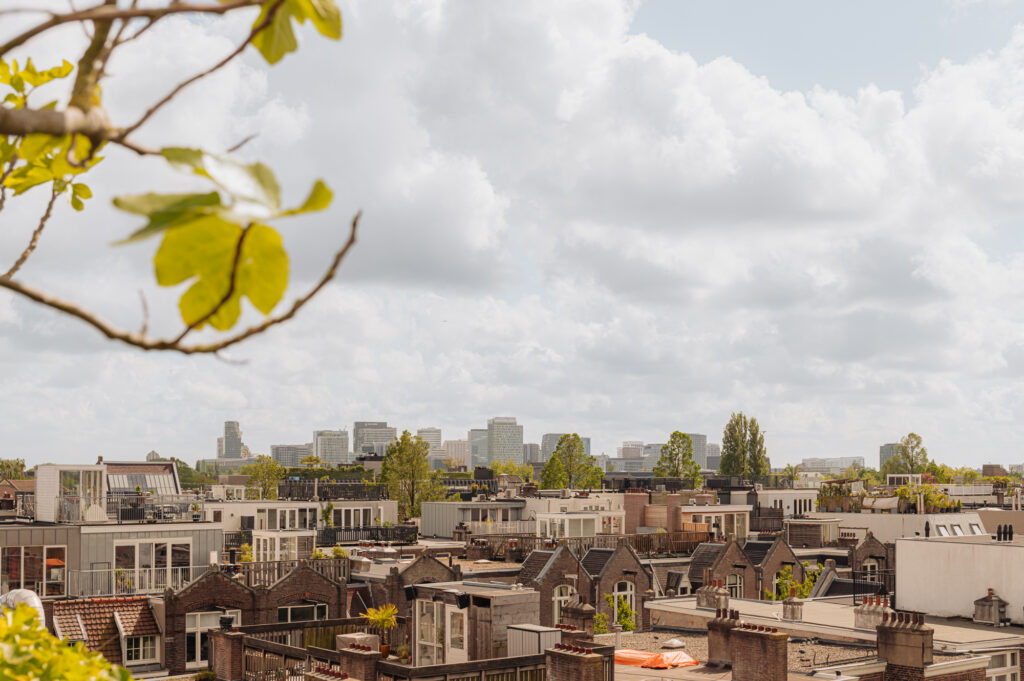
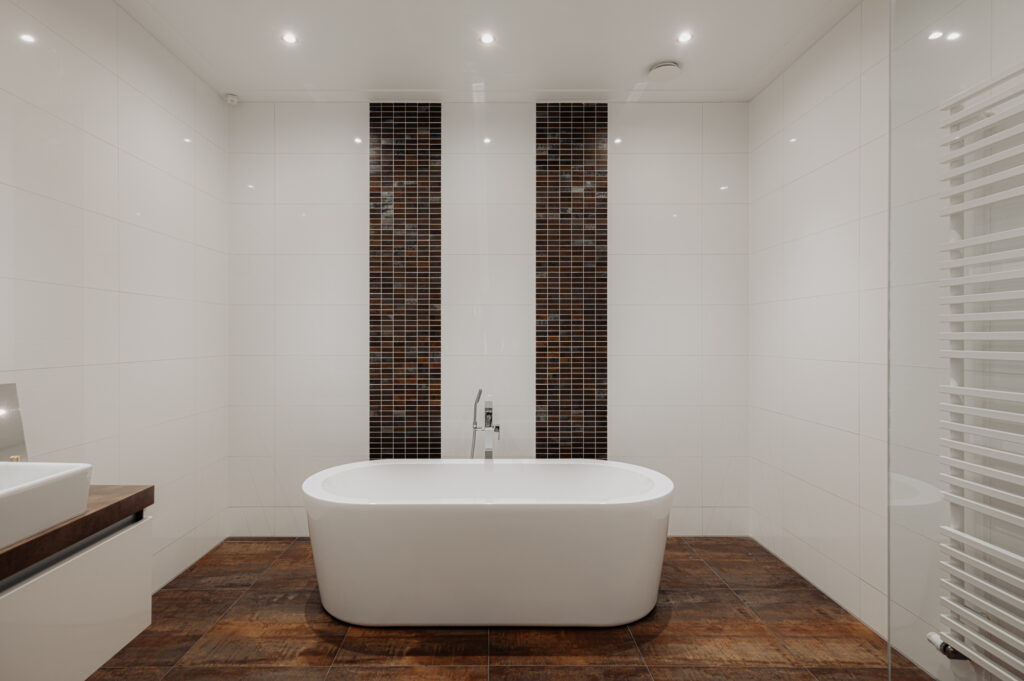
This expansive home has a private entrance and spans multiple floors. The living floor, located on the third level, boasts an open layout with high ceilings, a spacious sitting area with a balcony, a luxurious kitchen with a cooking island, and a dining area with access to a second balcony. The second floor features two large bedrooms (approx. 22 m²), each with its own balcony and en-suite bathroom. The fourth floor offers two additional spacious bedrooms, an extra room, and a generous bathroom with a freestanding bathtub. In total, there are five outdoor spaces, including a 45 m² rooftop garden with unobstructed views of the Rijksmuseum, Museumplein, and the Concertgebouw. Thanks to the lush greenery, this outdoor space provides privacy and shade—a unique home with an abundance of light, space, and outdoor areas.
Neighborhood Guide
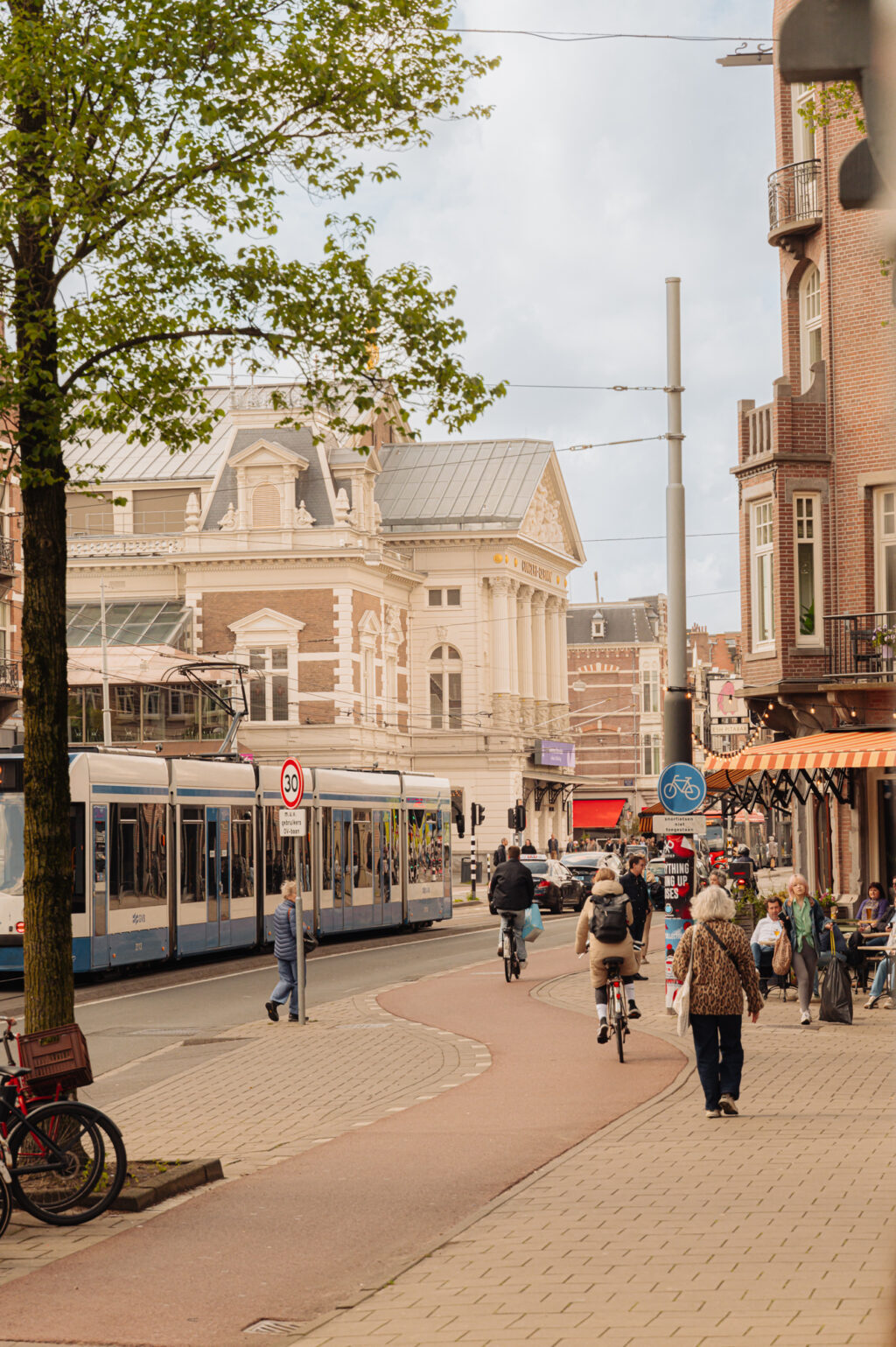
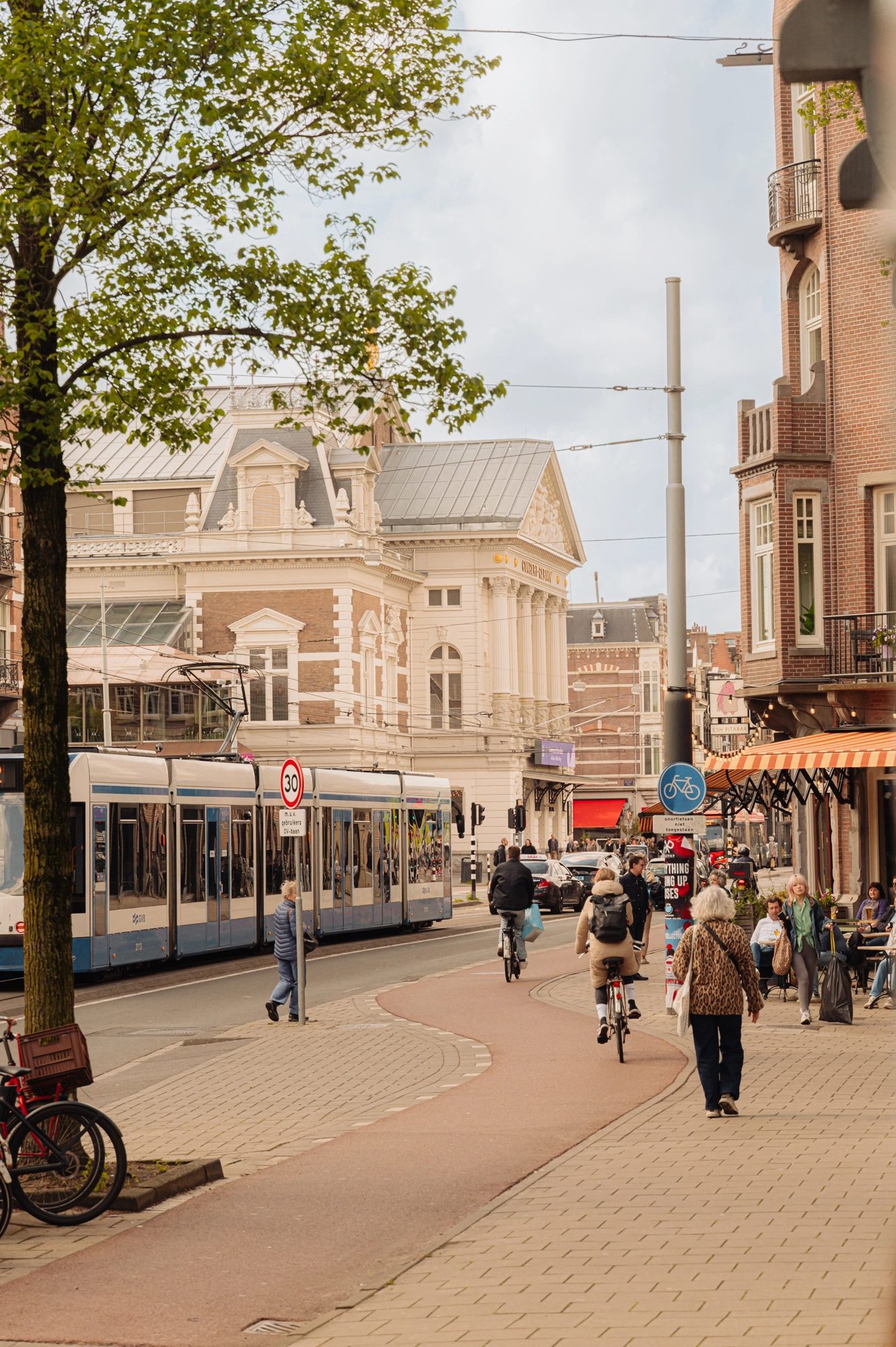
Two hundred years ago, the area now known as Museumplein was home to farmlands. In the early 20th century, the Museum Quarter was developed to create more living space. The architectural influence of Pierre Cuypers is unmistakable, as he not only designed the first homes here but also the Rijksmuseum in neo-Gothic style. This era is beautifully depicted in Public Works by Thomas Rosenboom. Alongside the Concertgebouw, built in neo-Renaissance style, these landmarks define the character of the neighborhood. With the addition of the Van Gogh Museum, modern architecture by Gerrit Rietveld also found its place on Museumplein. The variety of restaurants, cafés, and shops is as eclectic as the architectural styles and perfectly complements the international appeal of the area. Haute couture enthusiasts can explore the P.C. Hooftstraat, home to renowned fashion houses such as Burberry, Ba&sh, and Isabel Marant Étoile. One of the greatest advantages of this neighborhood is its prime location, with the city center, De Pijp, and Amsterdam Zuid—including the Vondelpark—all within walking distance.
Specifications
• Living area of approximately 236 m²
• Four balconies—two at the front and two at the rear
• Spacious 45 m² rooftop terrace with sunlight throughout the day
• Four bedrooms
• Three bathrooms
• High ceilings of 3.25 meters
• Unobstructed views
• Generous width of 6.25 meters
• Freehold property
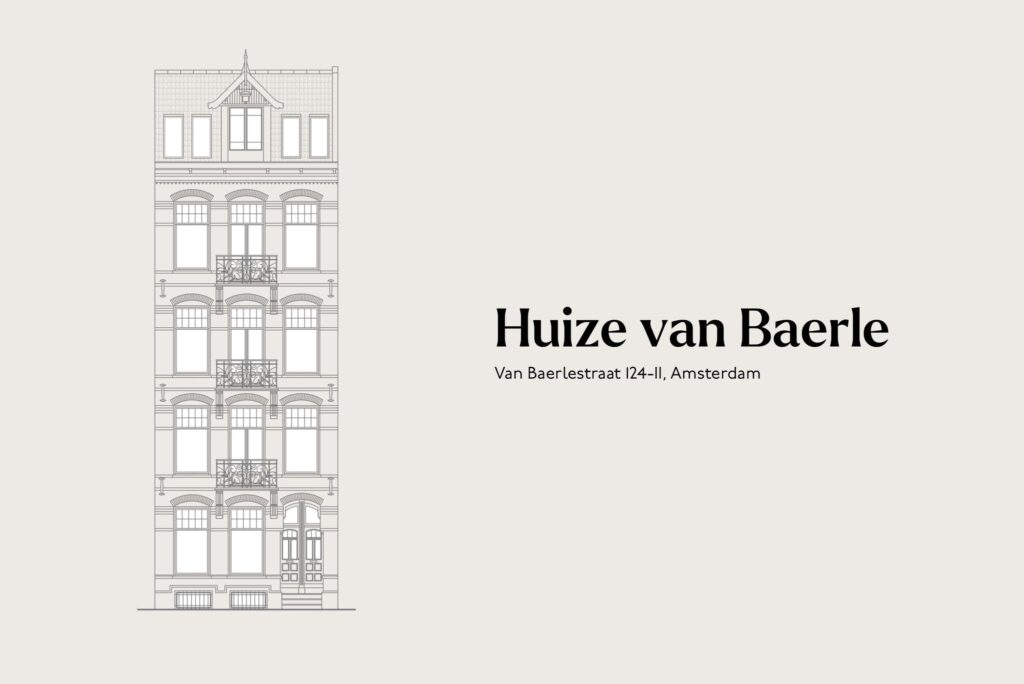
Huize van Baerle
The property has three floors with a well-thought-out layout. Upon entering, the width and height immediately catch the eye, giving the house an imposing character. The beautiful living floor benefits from ample natural light due to its height and open design. Together with the interior, it forms a tasteful and luxurious whole. The layout, featuring four spacious bedrooms, makes the house ideal for families with older children, where everyone can enjoy their own space. The absolute highlight is the rooftop garden. With its beautiful greenery and private location, it offers plenty of privacy and tranquility.
Daniël de Bont | Real Estate Agent Broersma Residential
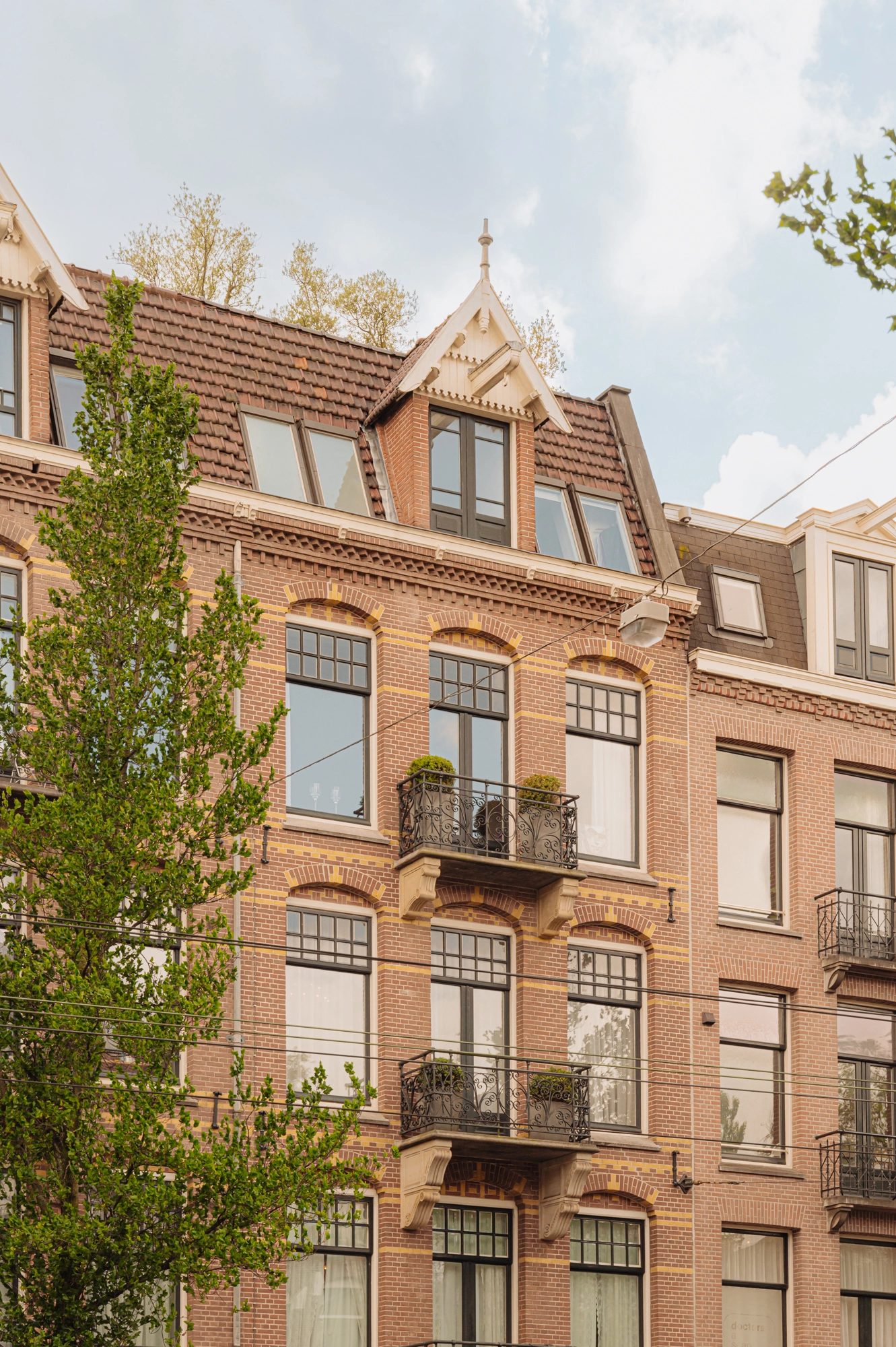
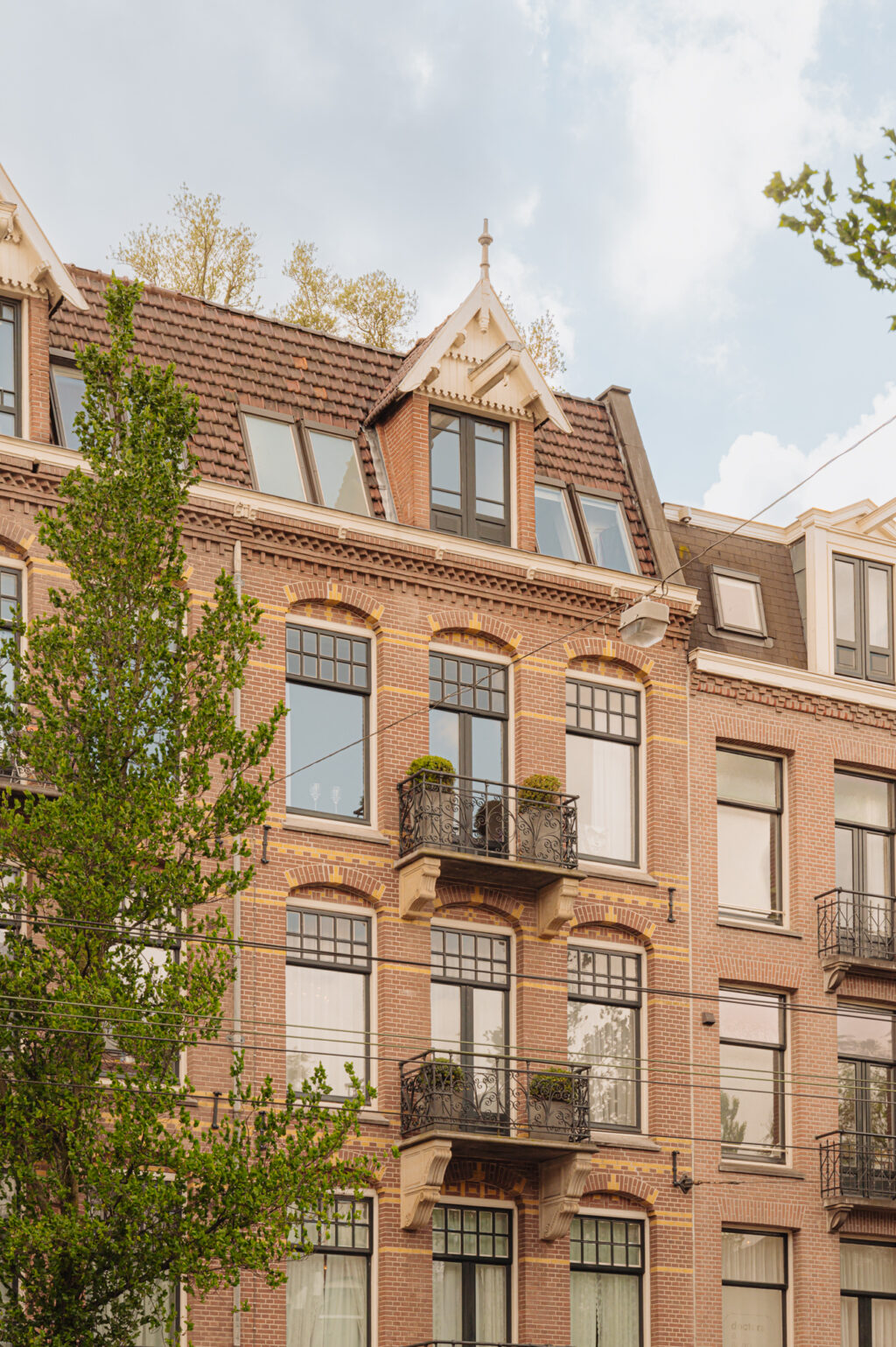
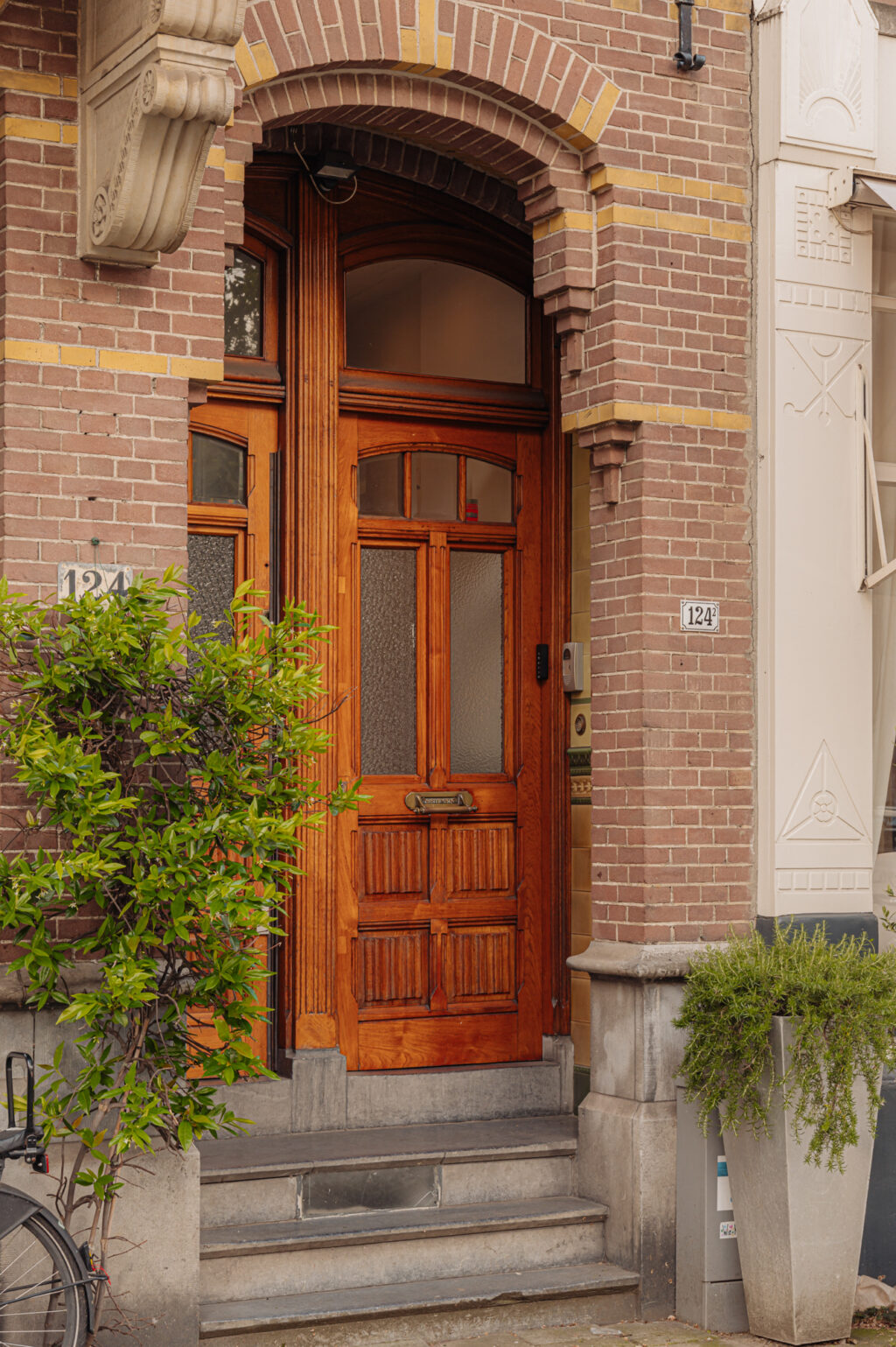
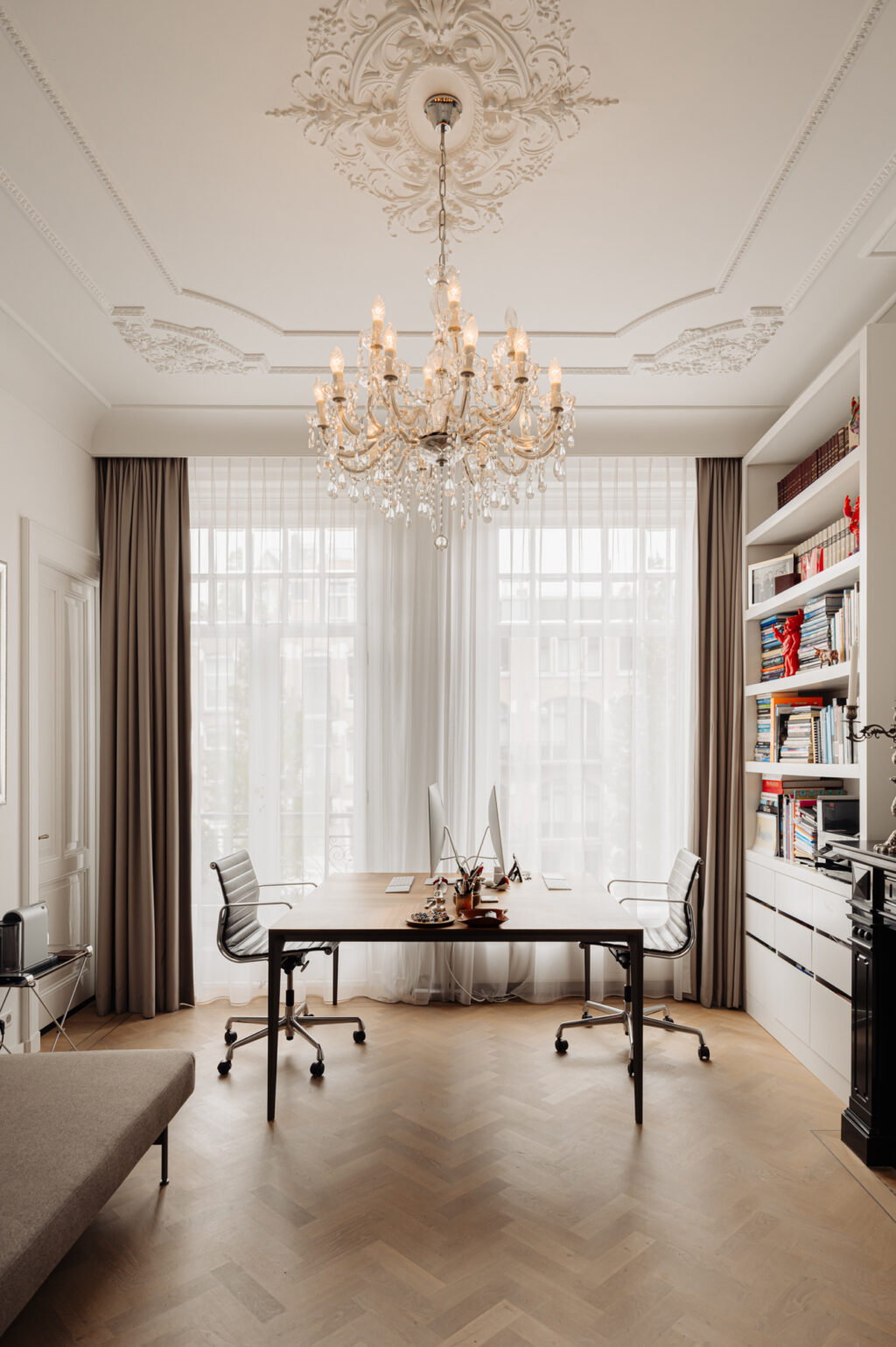
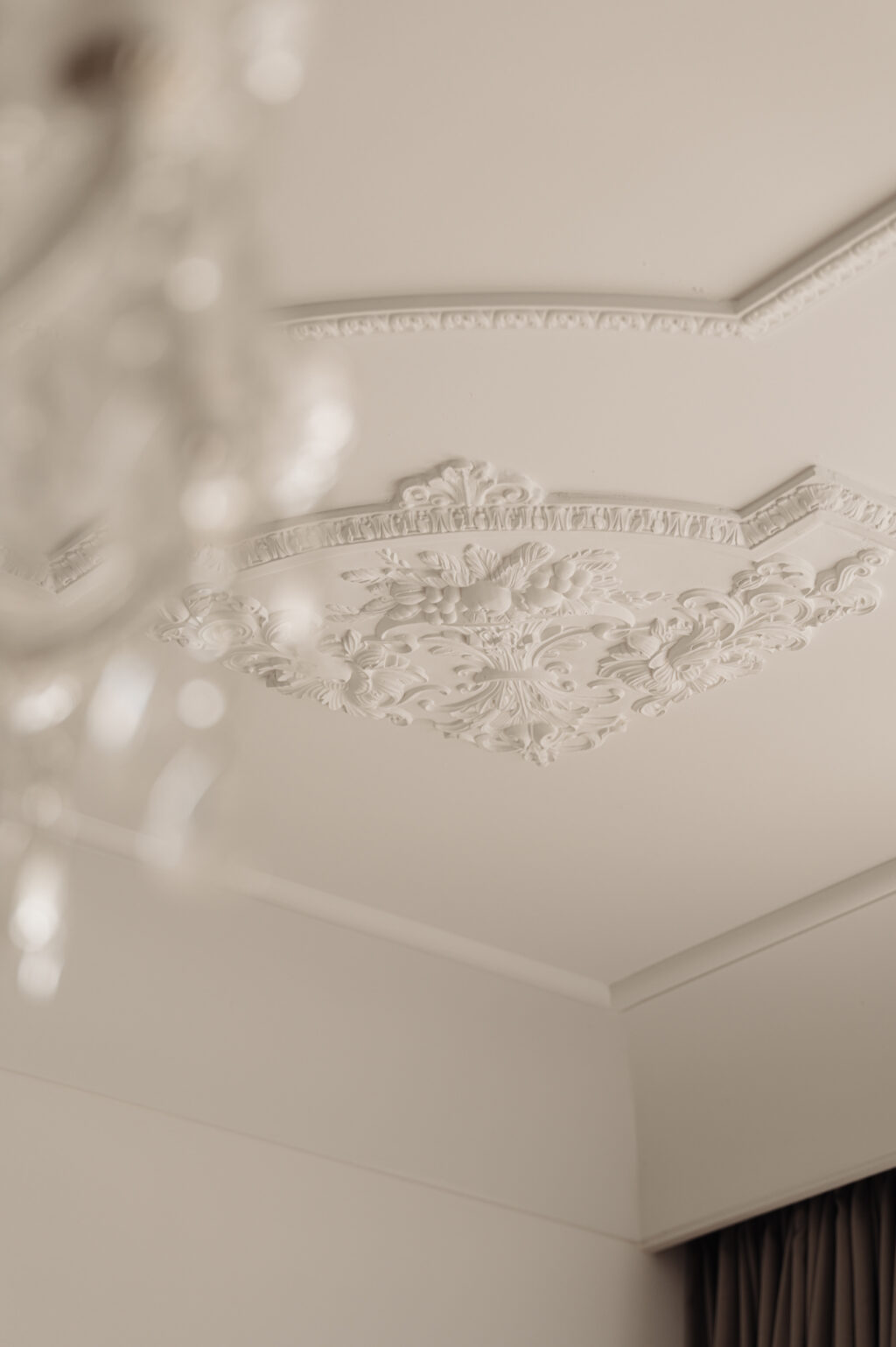
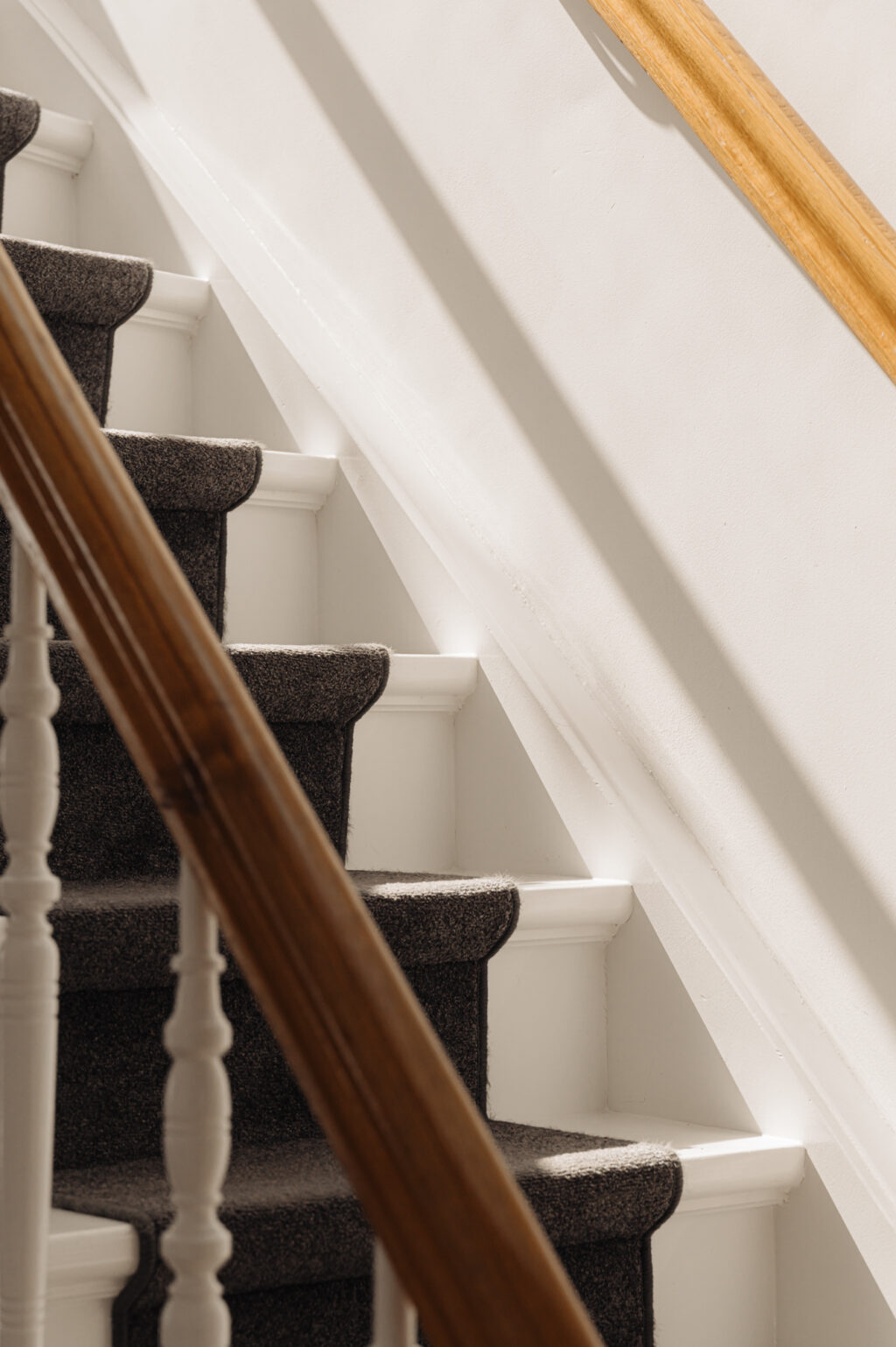
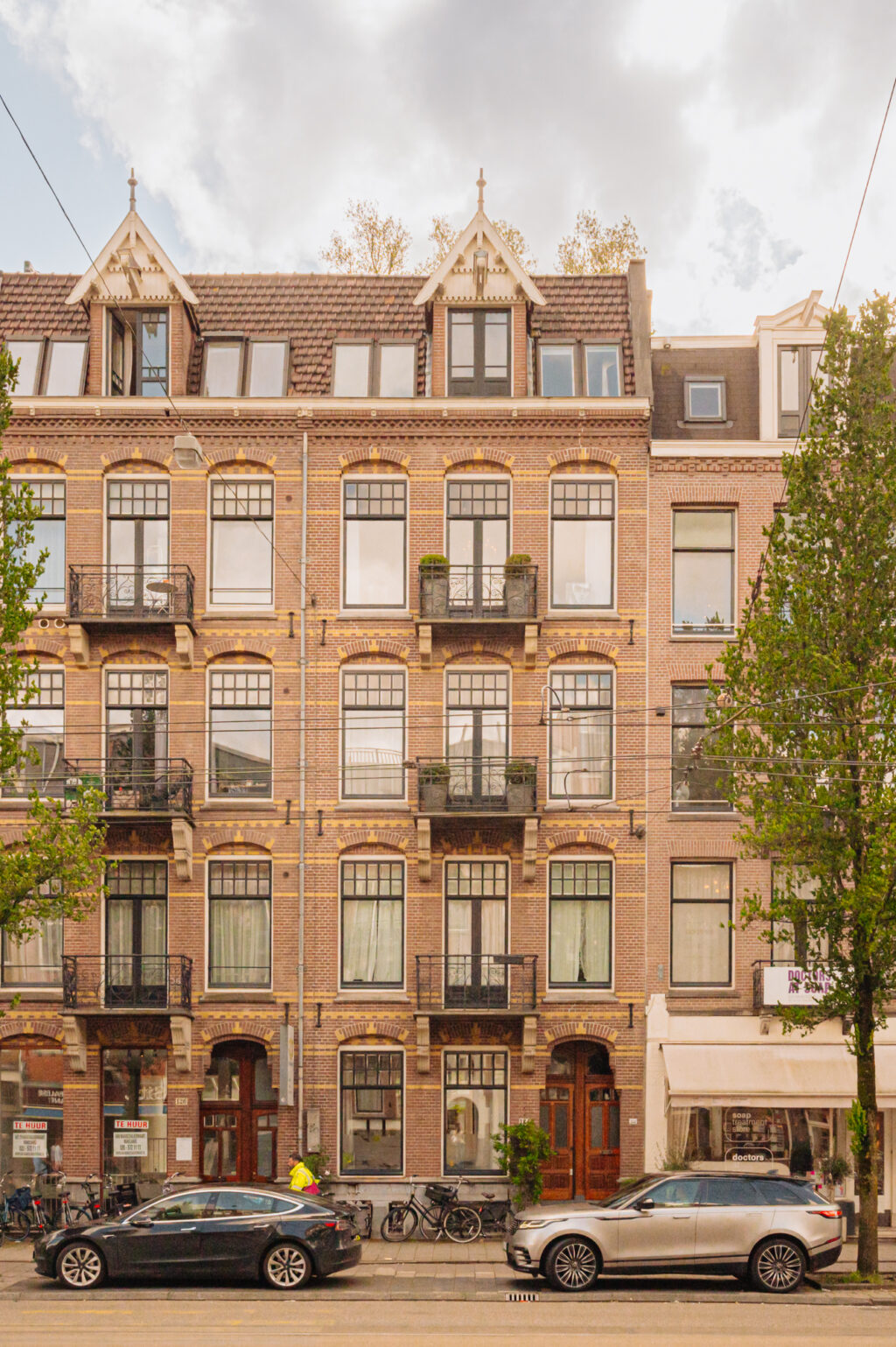
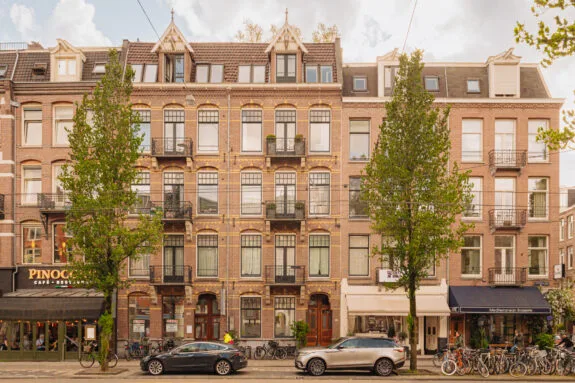
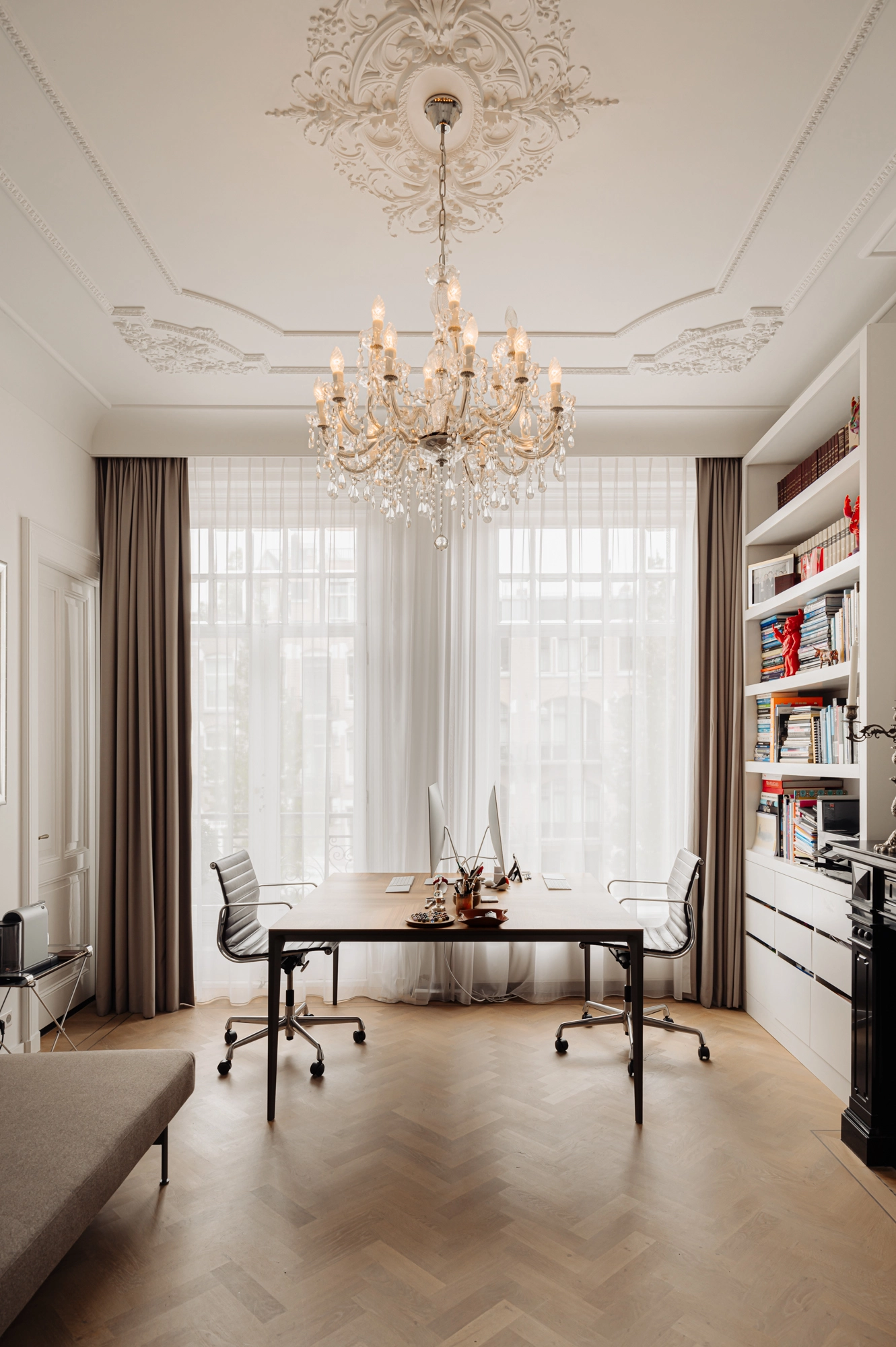
In 1904, J.B. Janus commissioned the construction of four buildings, each consisting of a lower and upper residence. At that time, this section of the Van Baerlestraat was still called the Roelof Hartstraat. The buildings were constructed in the then-popular architectural style of neorenaissance, a period in which the Dutch Renaissance of the 16th century was reinterpreted. Characteristic of the neorenaissance are the horizontal natural stone bands between the brickwork and the stepped gables, which are almost indistinguishable from those of the original Renaissance period. The historical sentiment was further emphasized by even more lavish use of decorations. The same applied to shops, which aimed to stand out in order to attract customers. Typical of this period are the ornate balconies, elegant front doors, and the pointed dormer window at the front. Inside, the original en suite, decorative ceilings, and panel doors have been preserved.
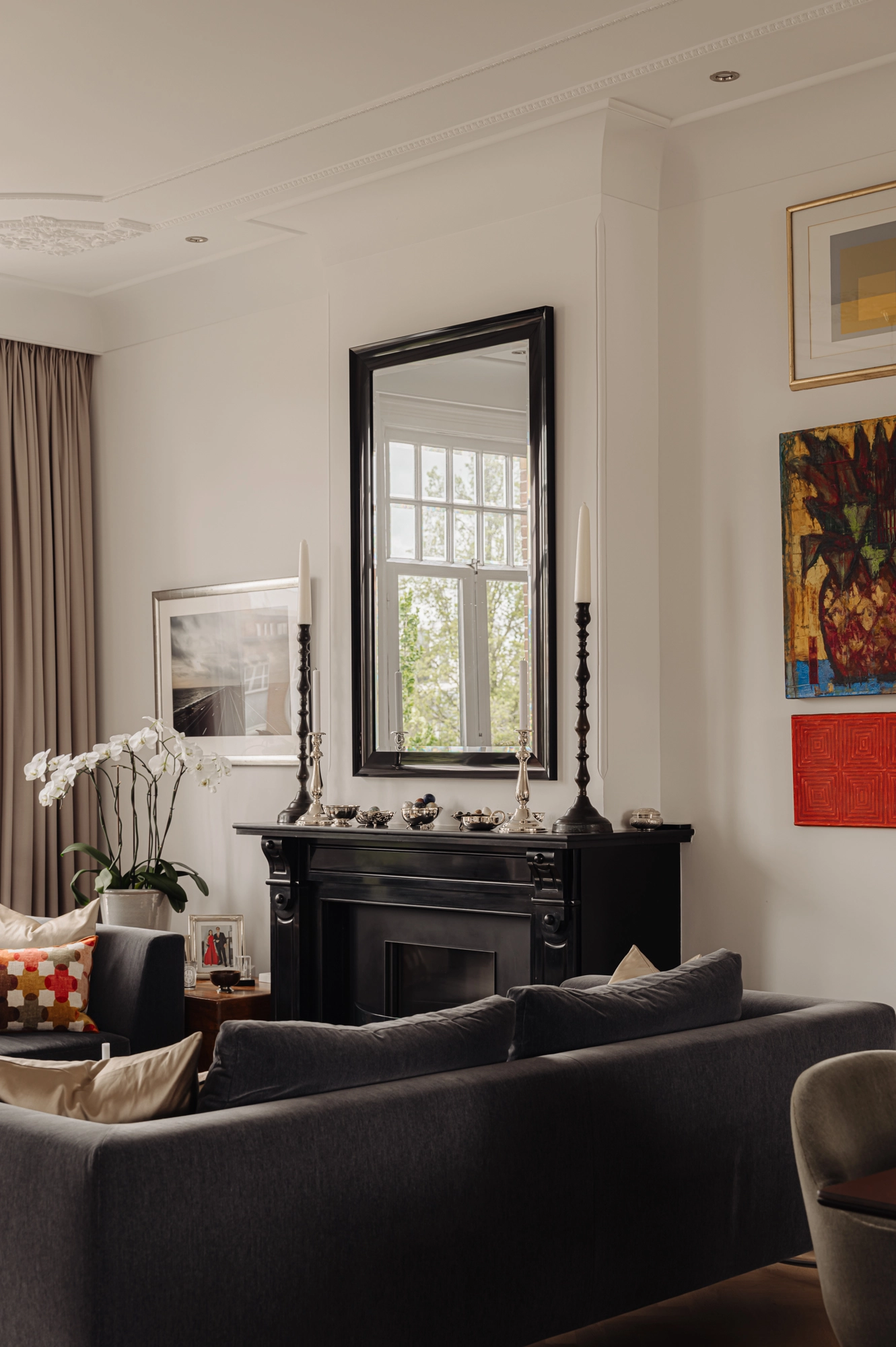
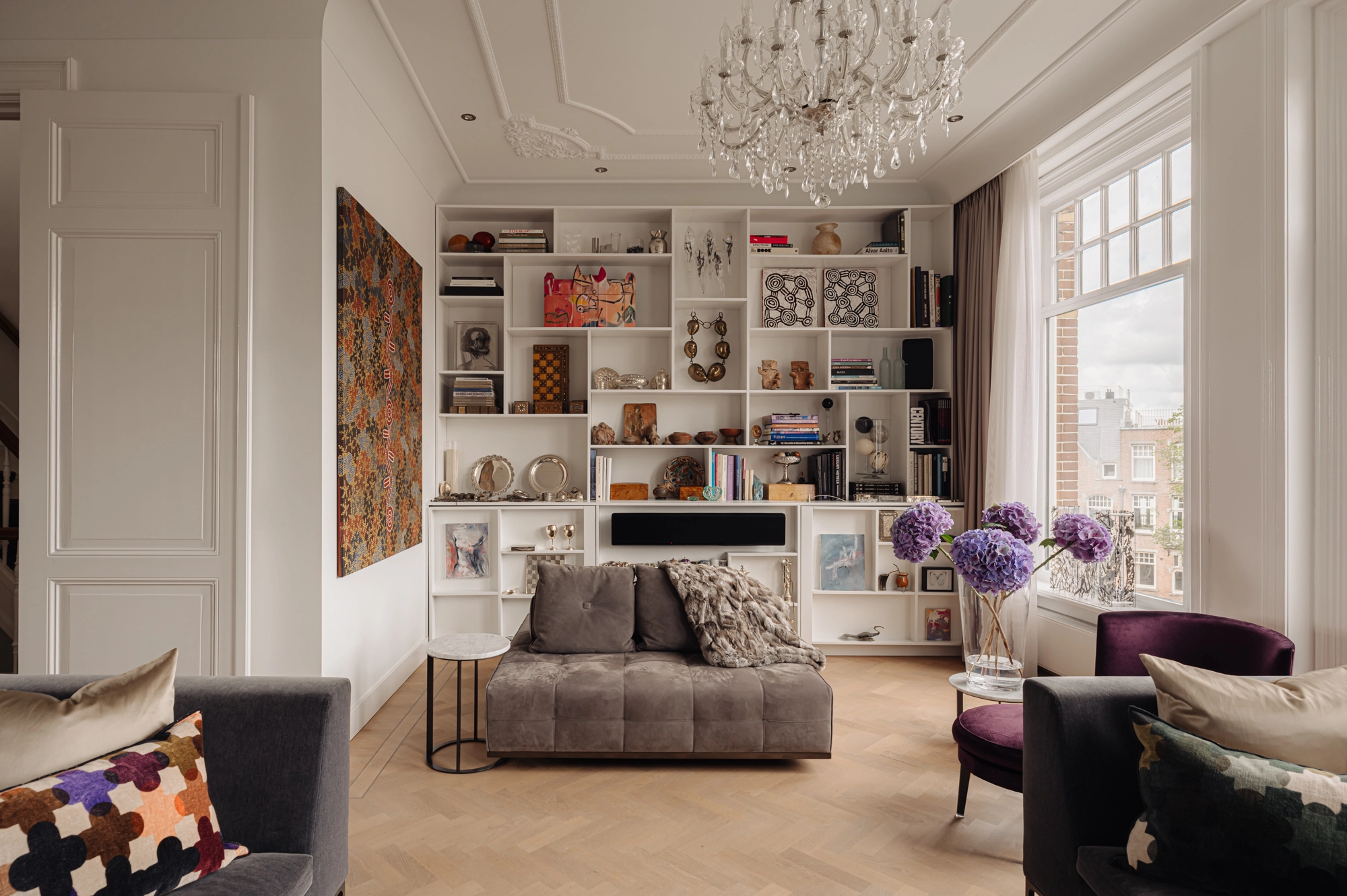
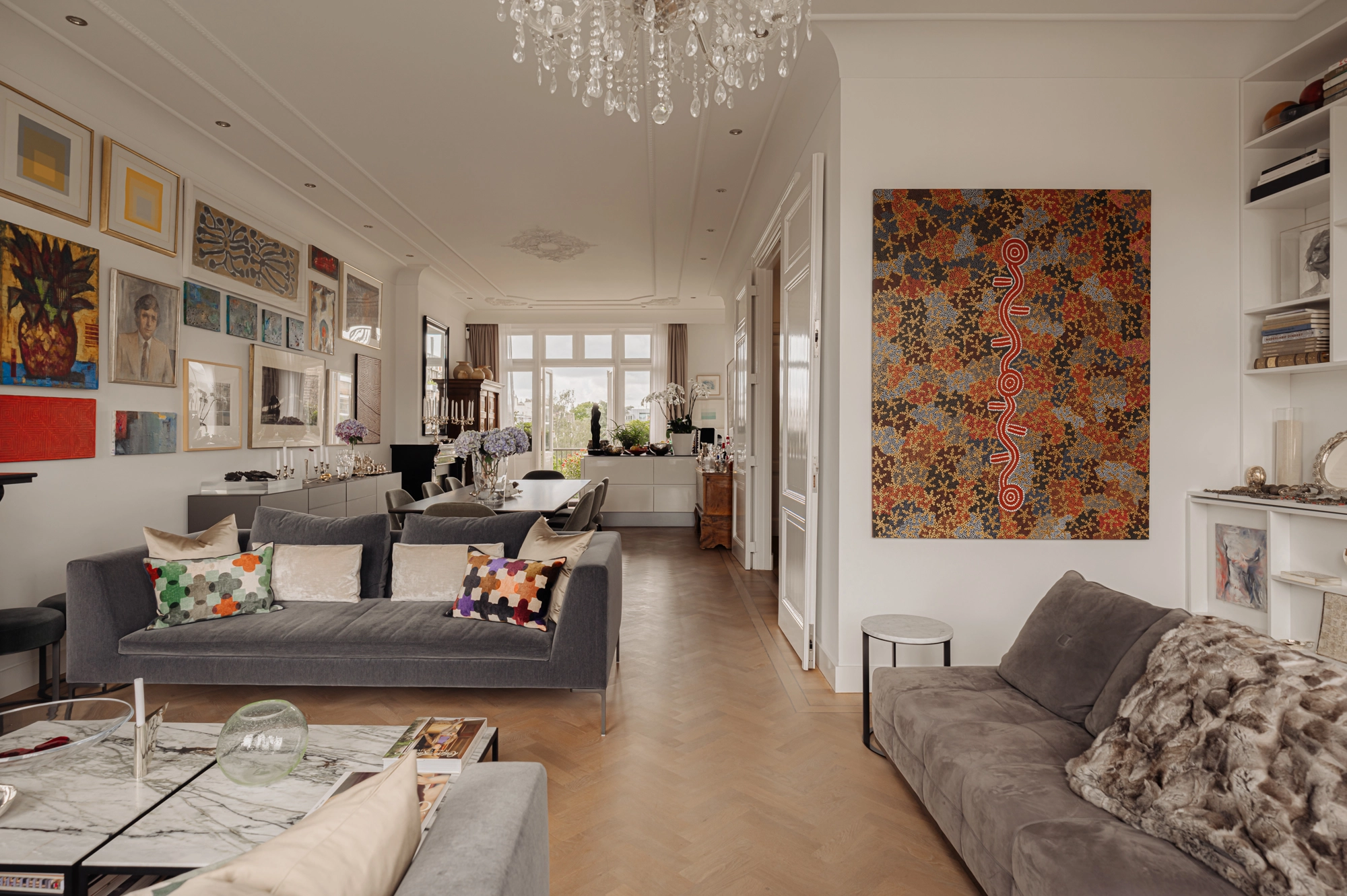
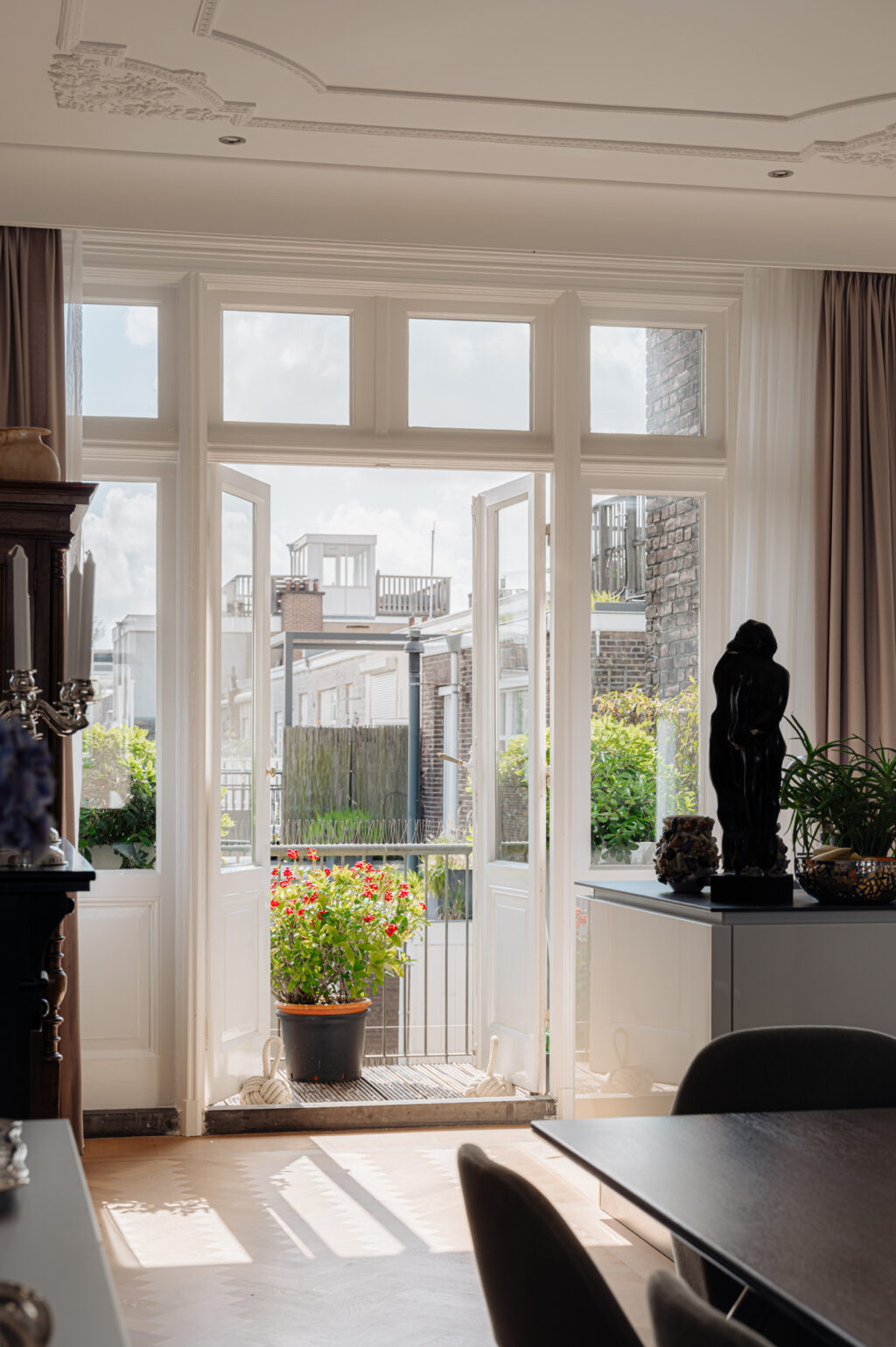
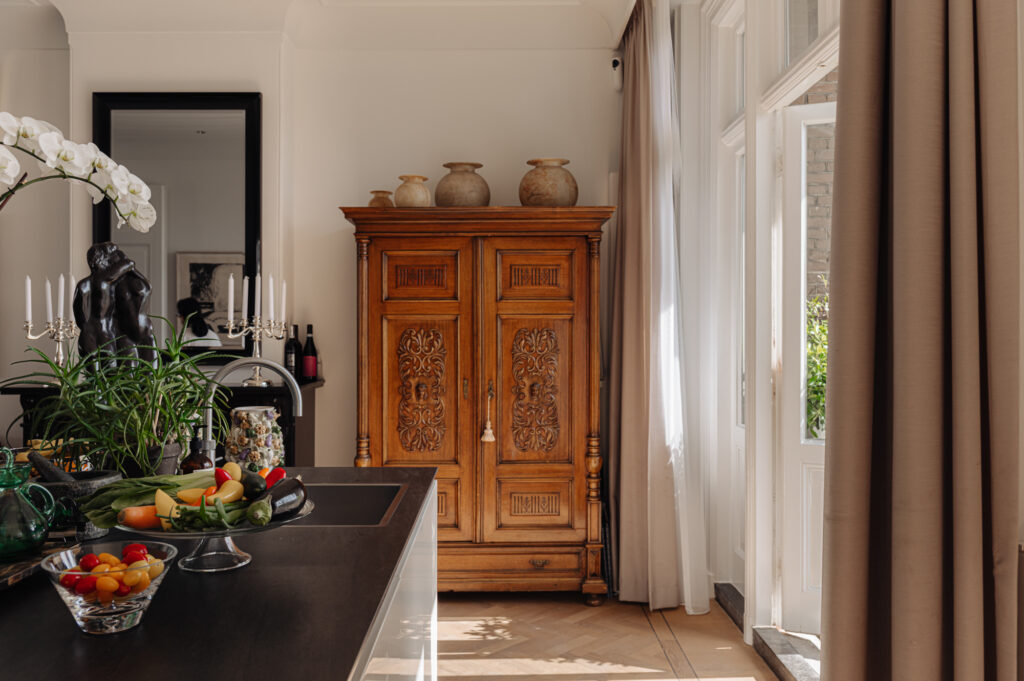
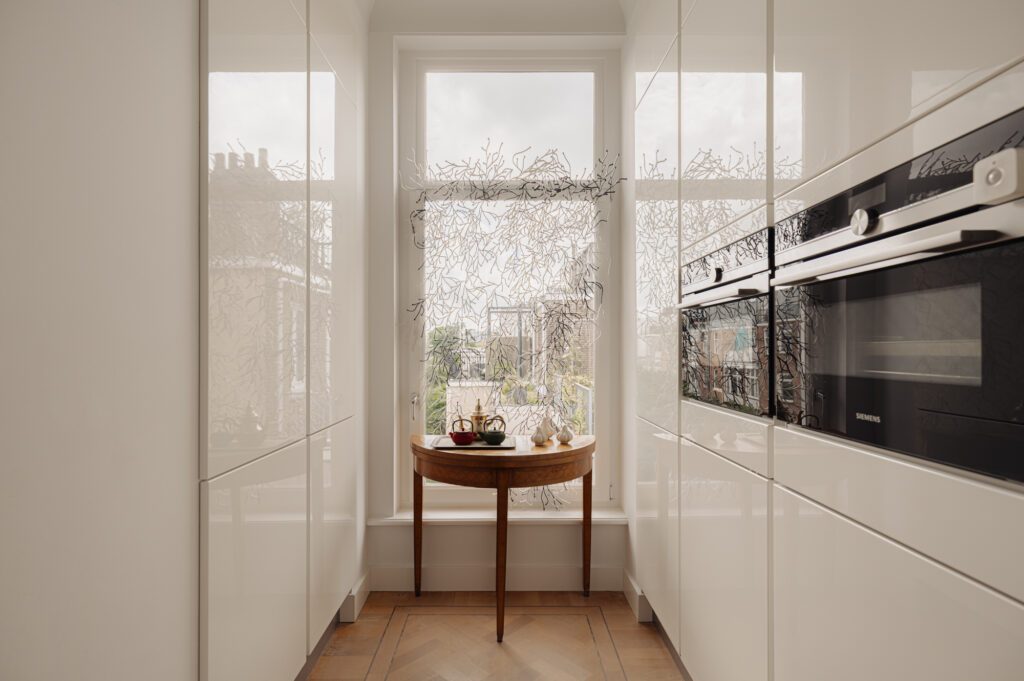
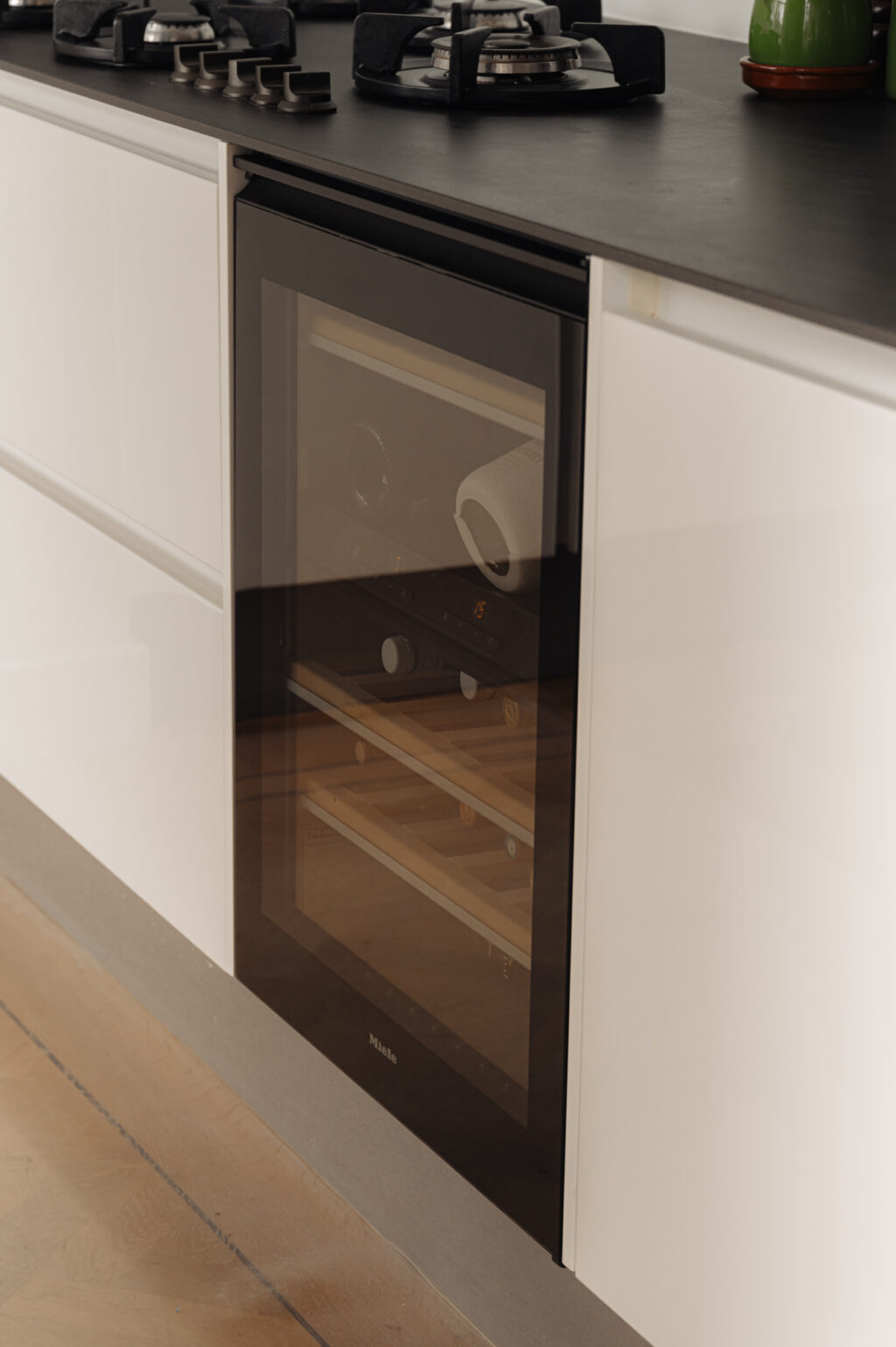
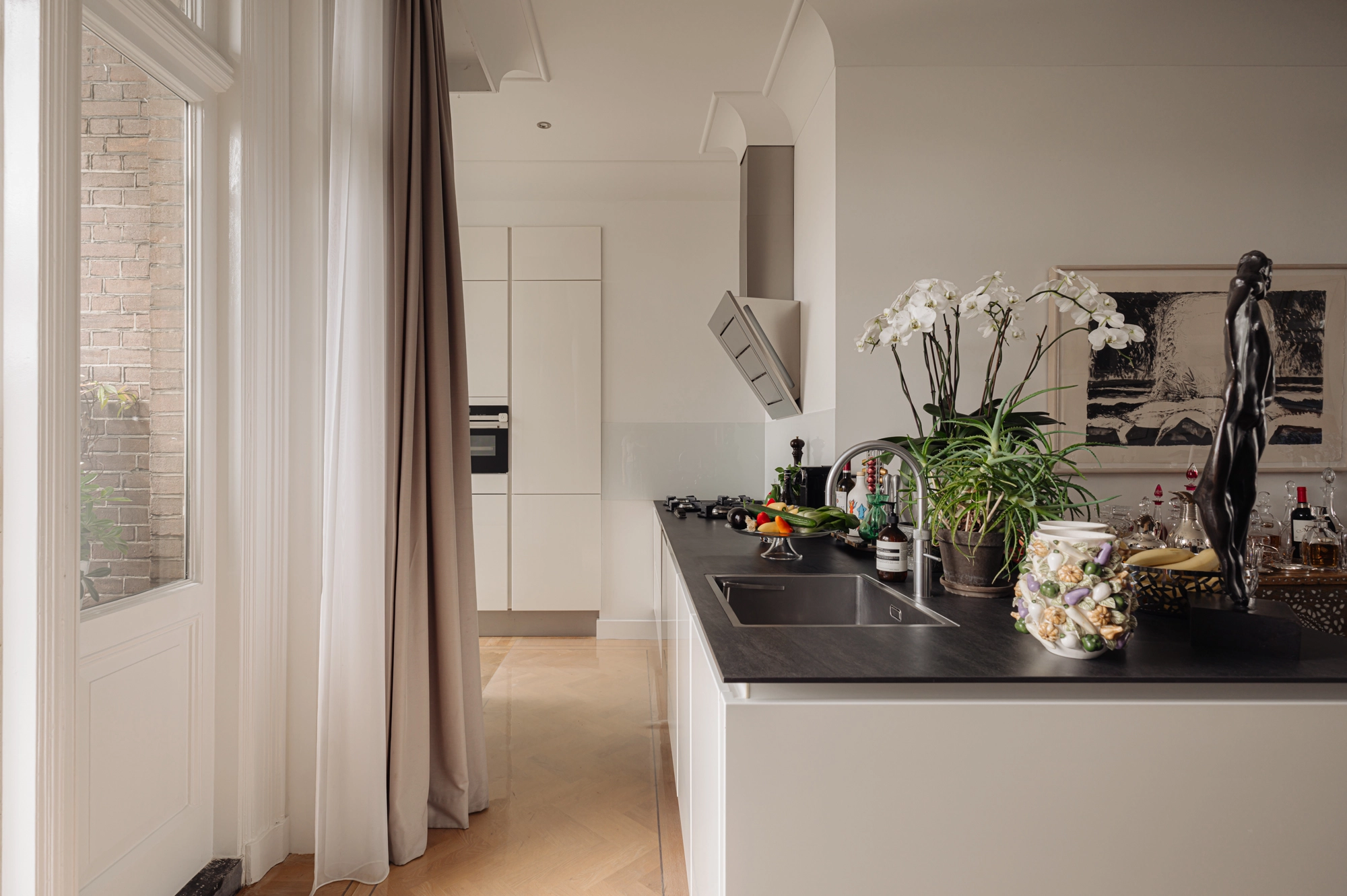
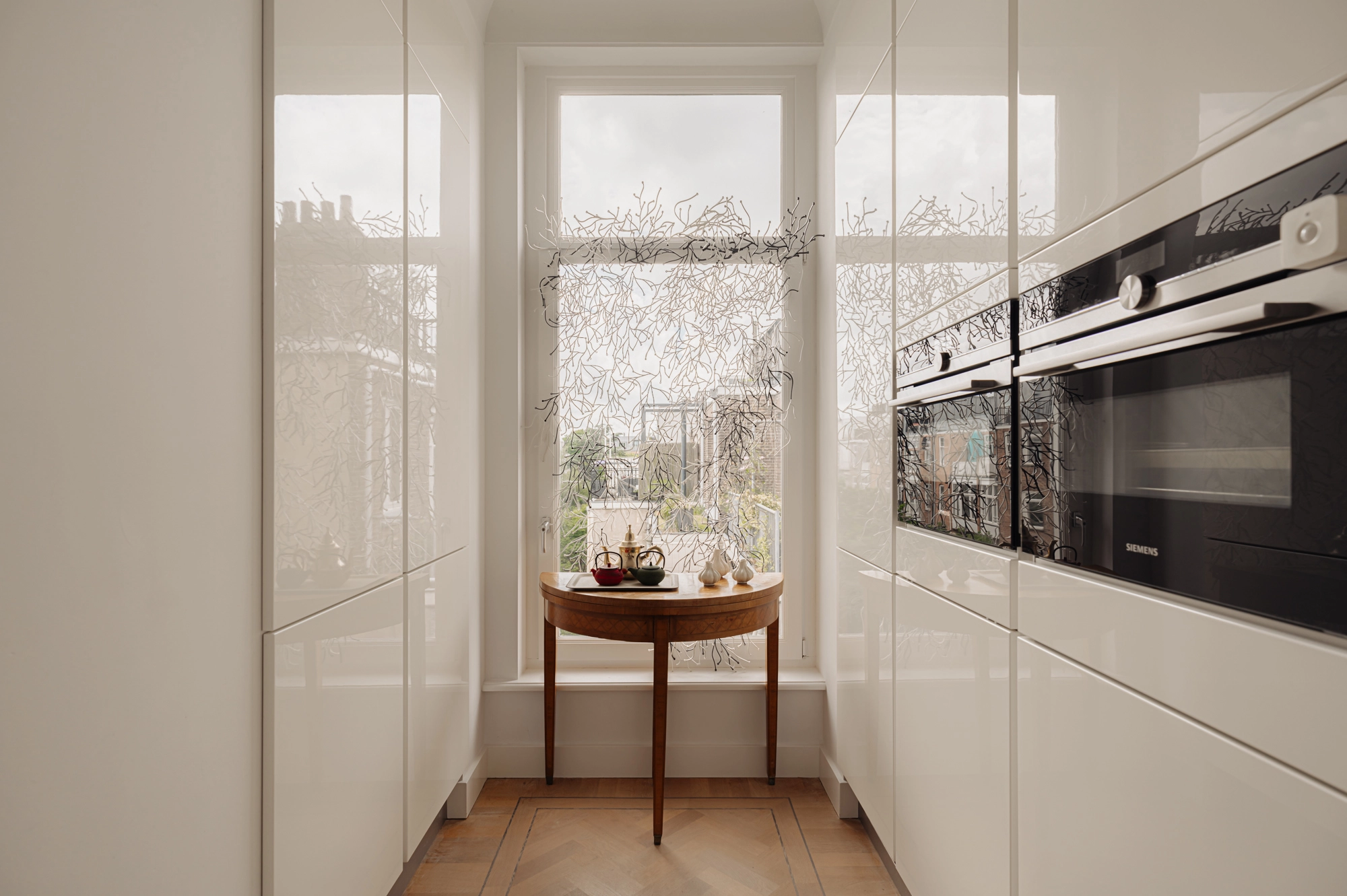
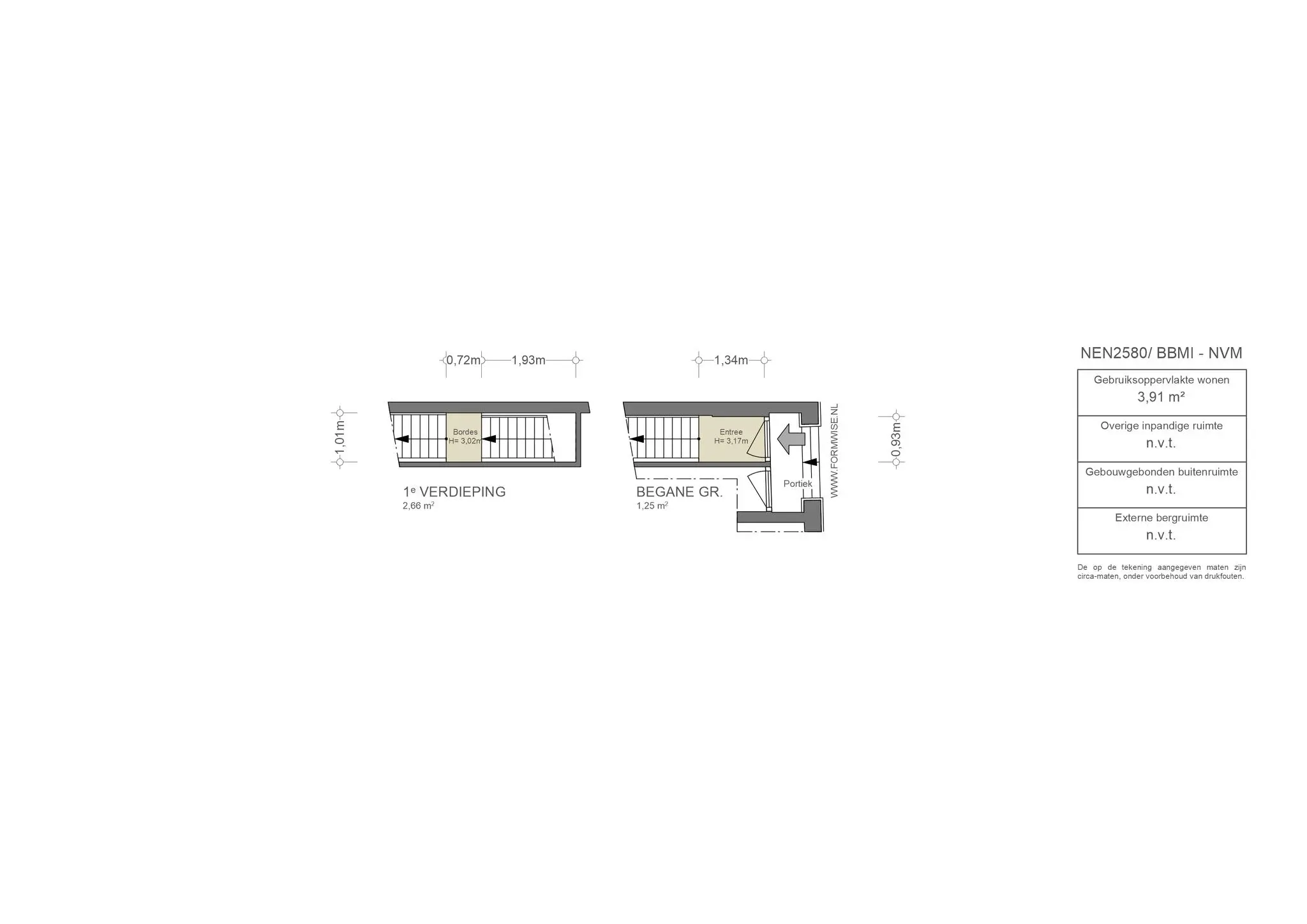
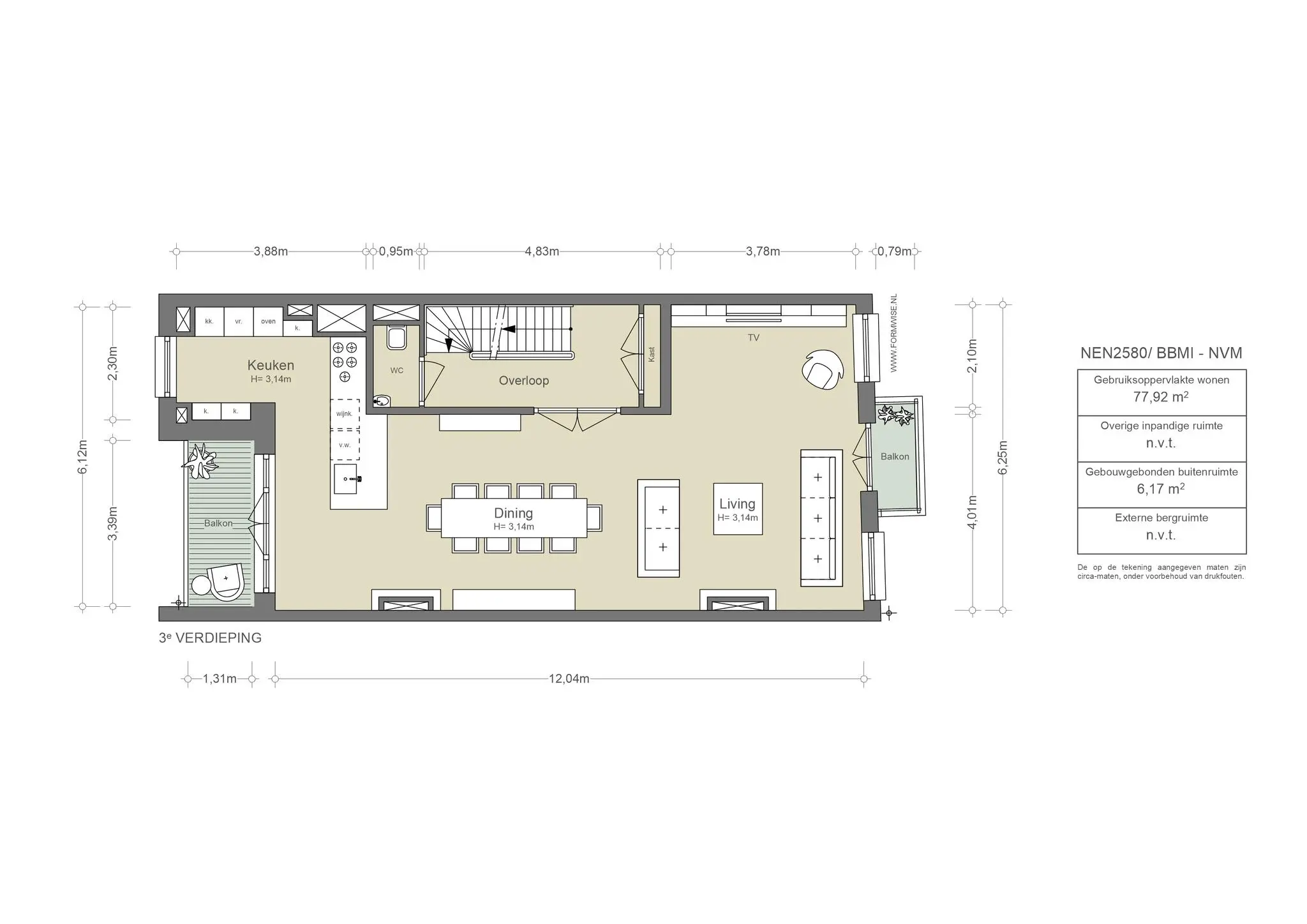
Private entrance from the ground floor with a staircase leading to the second floor. The living area is located on the third floor. The space benefits from an open layout and high ceilings, providing plenty of natural light and a sense of spaciousness. At the front, there is a generous sitting area with French doors opening onto a balcony. At the rear, there is a semi-open kitchen with an island. The kitchen is equipped with high-end built-in appliances. In the center of the space, there is room for a large dining table. The French doors at the rear provide access to a second balcony. Off the hallway, there is a cloakroom and a guest toilet.
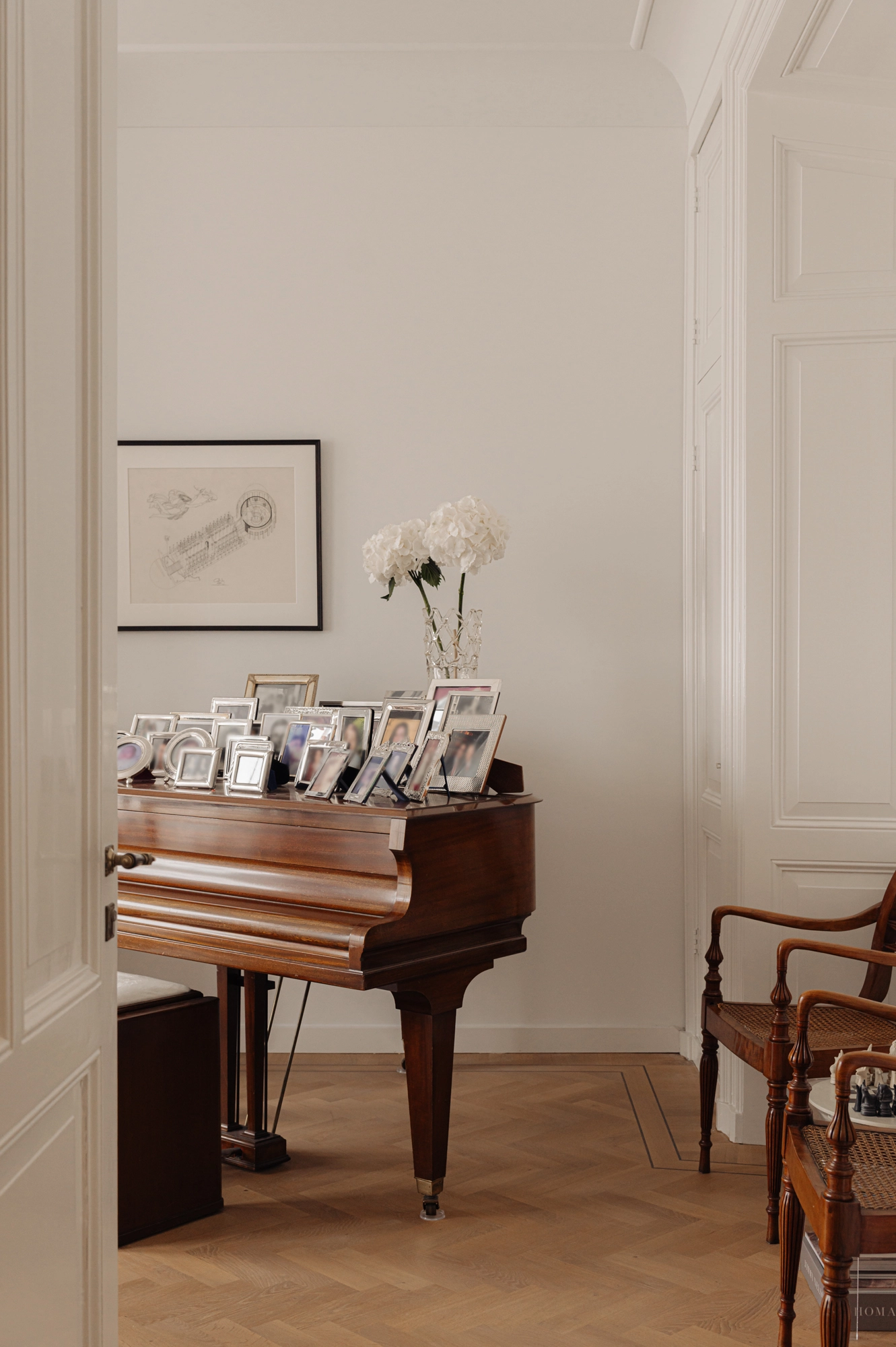
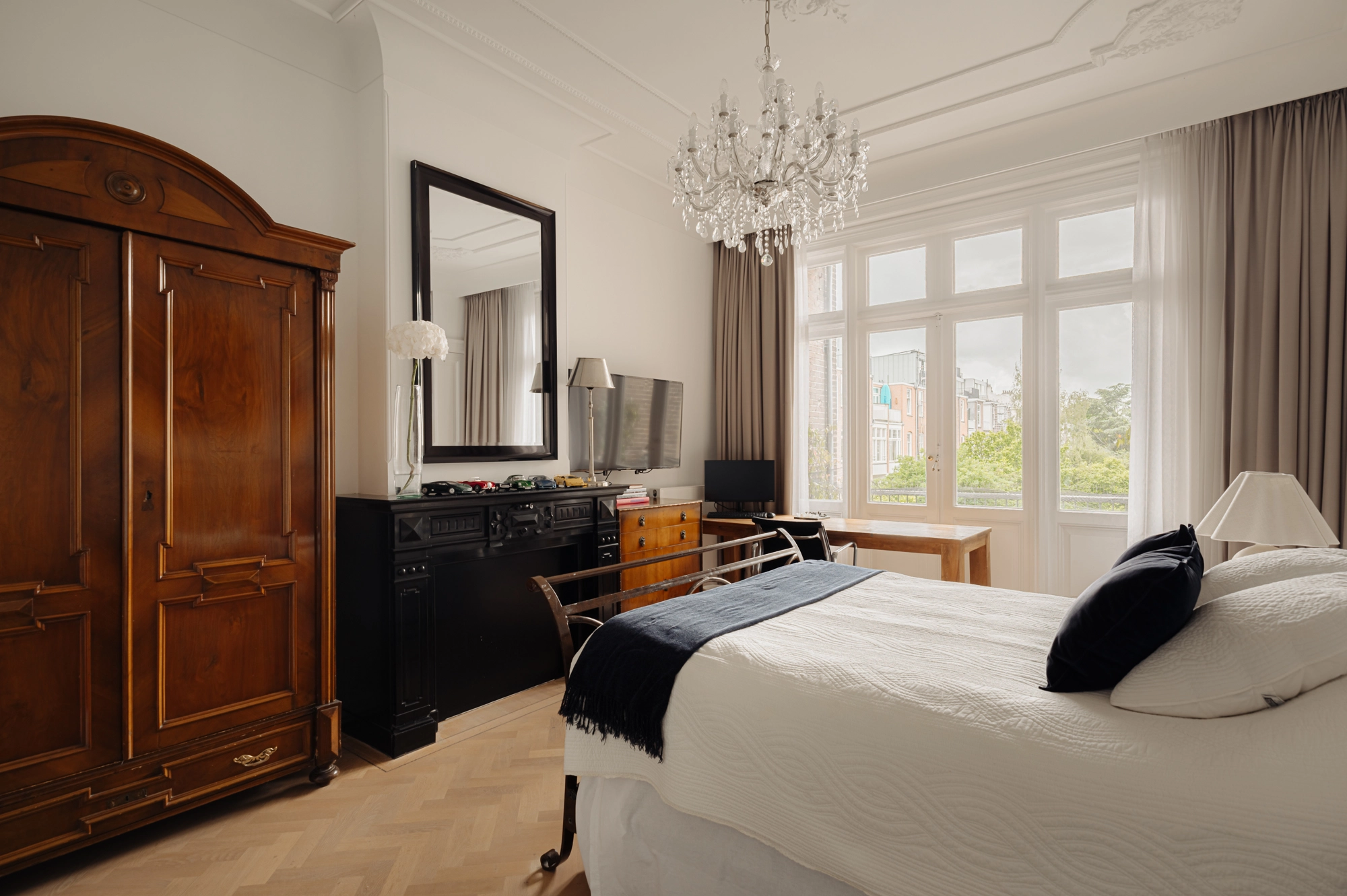
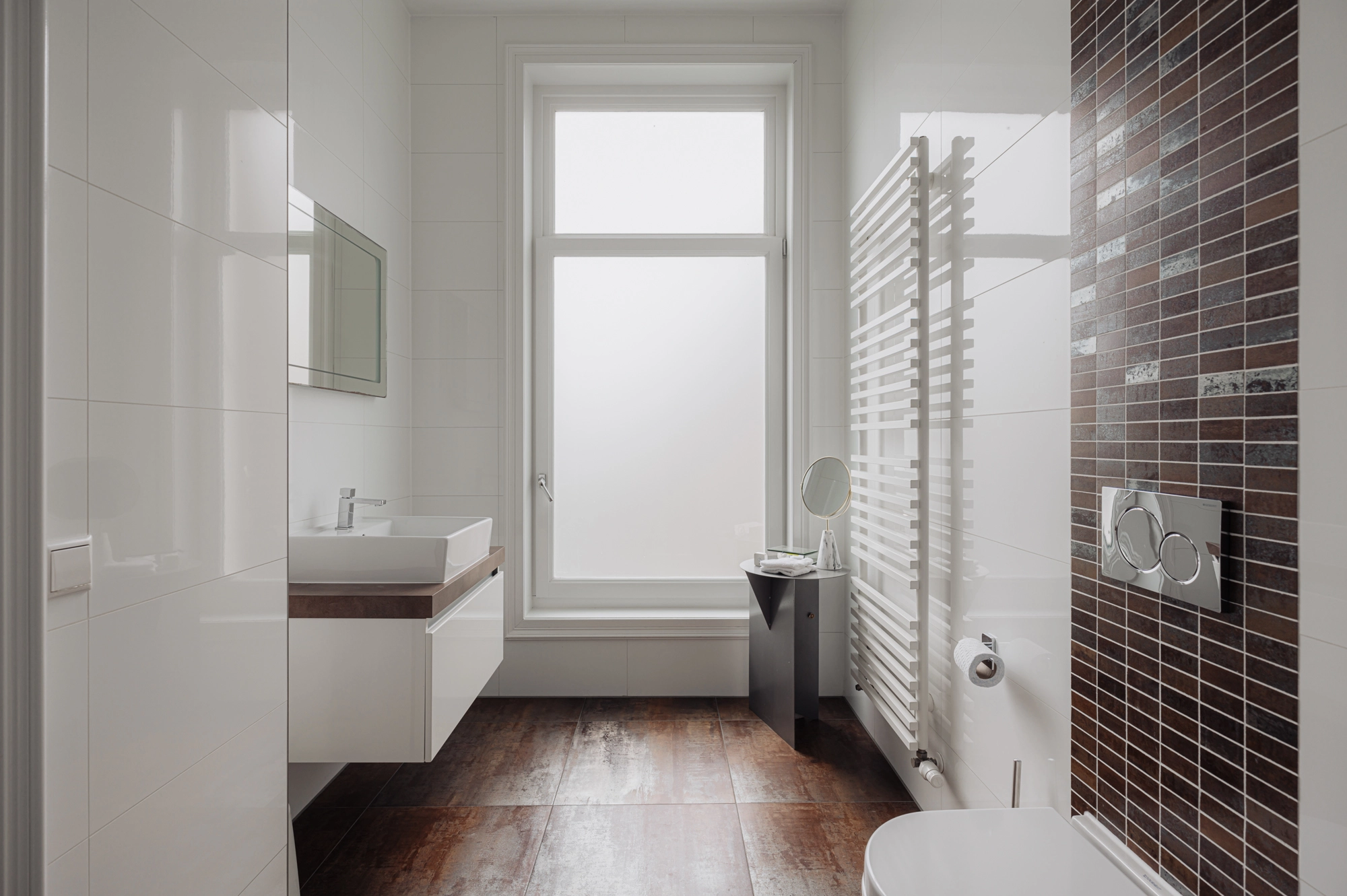
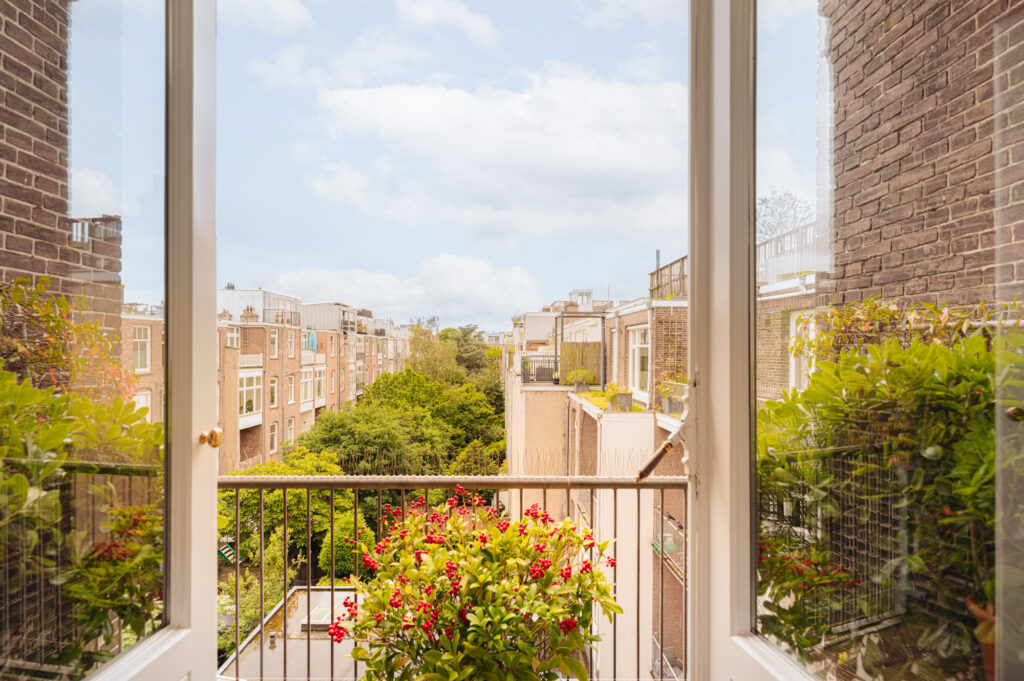
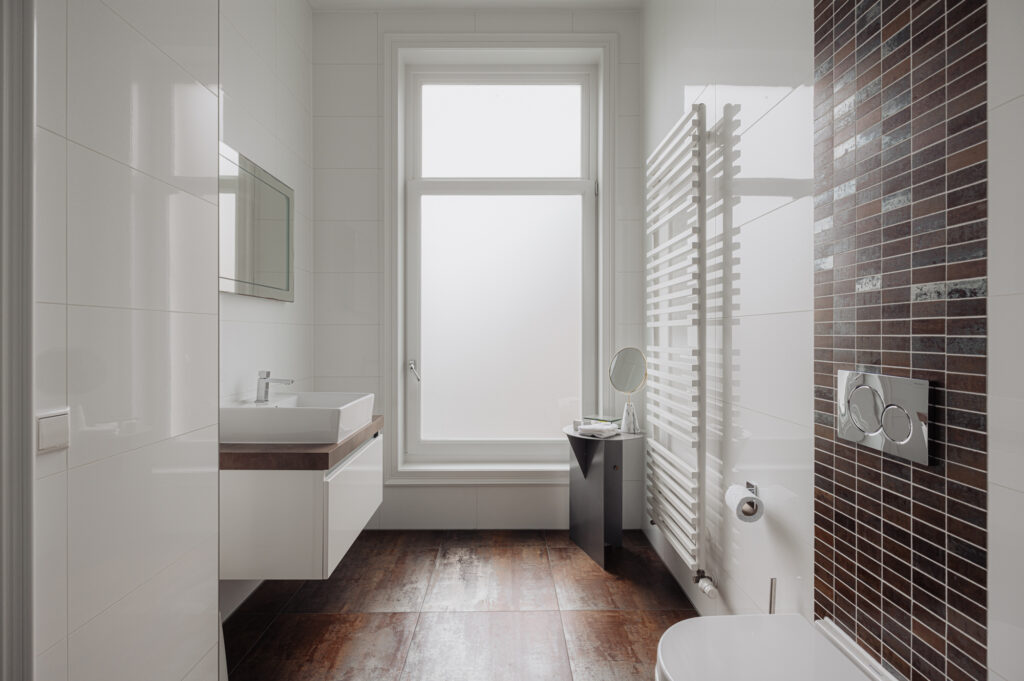
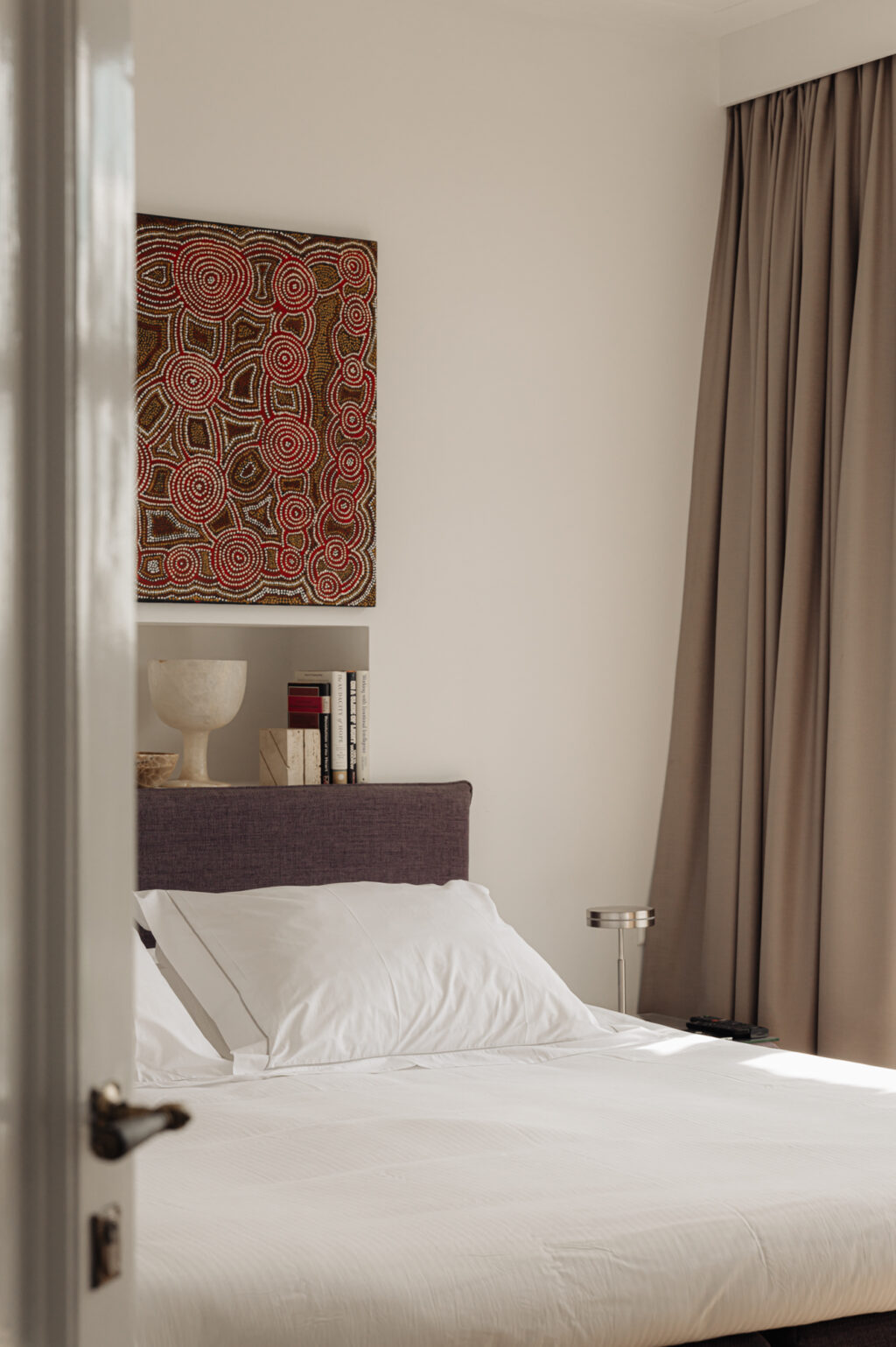
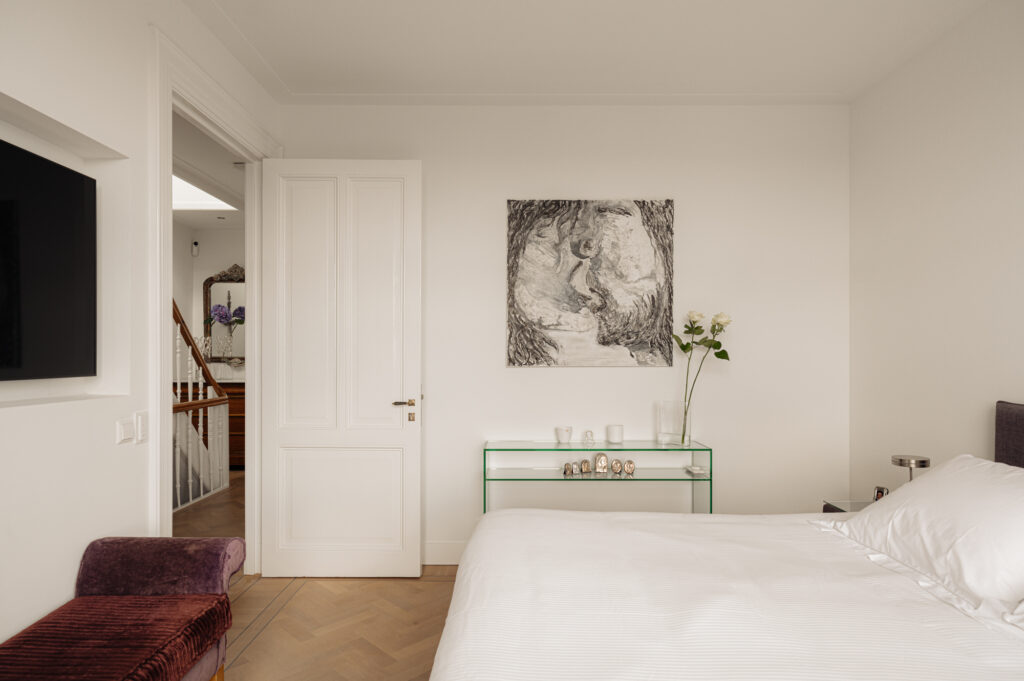
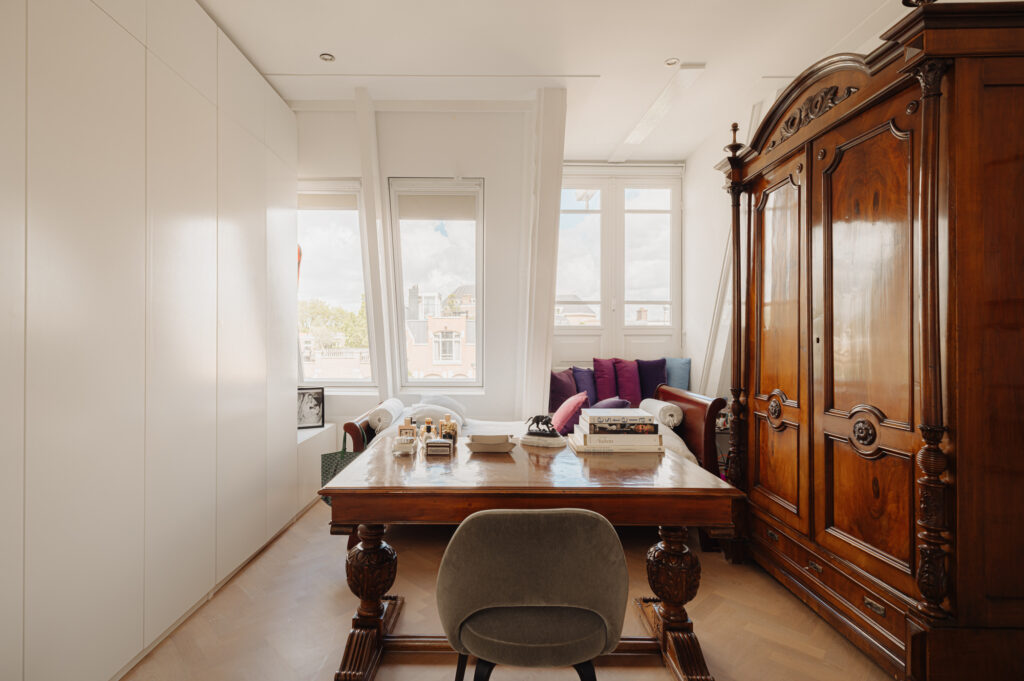
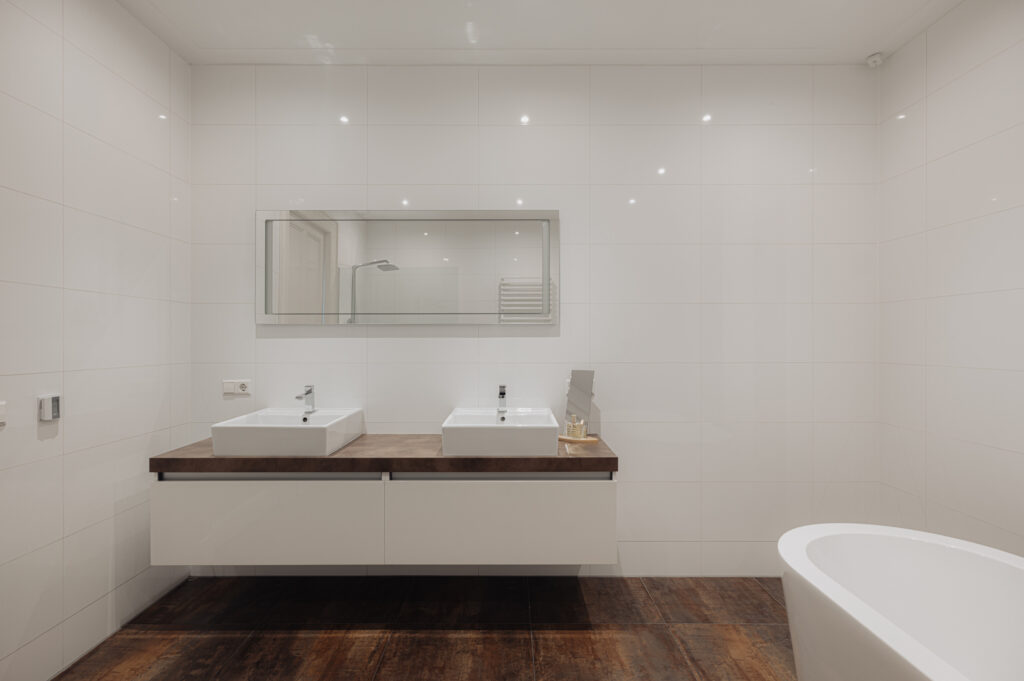
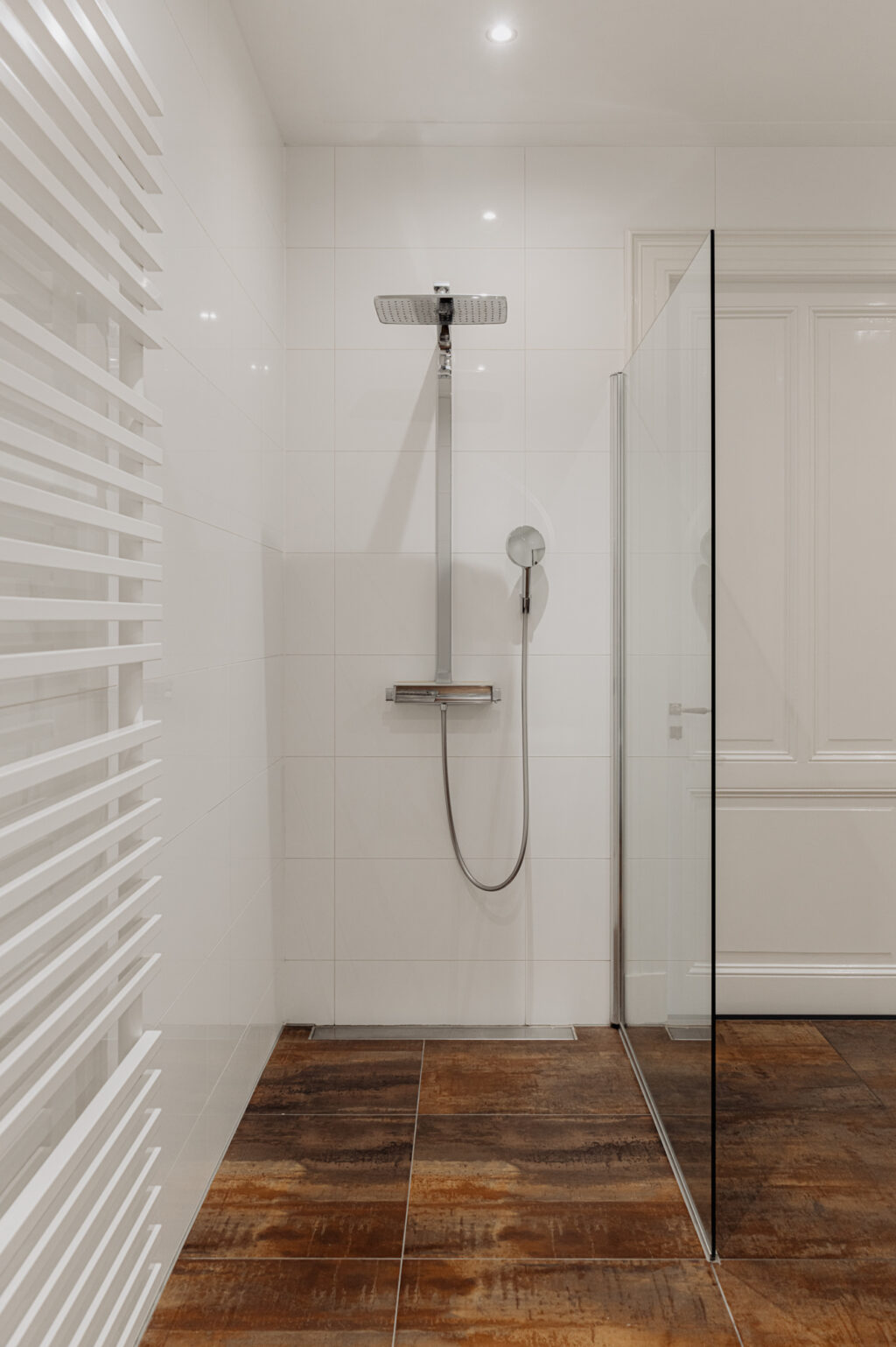
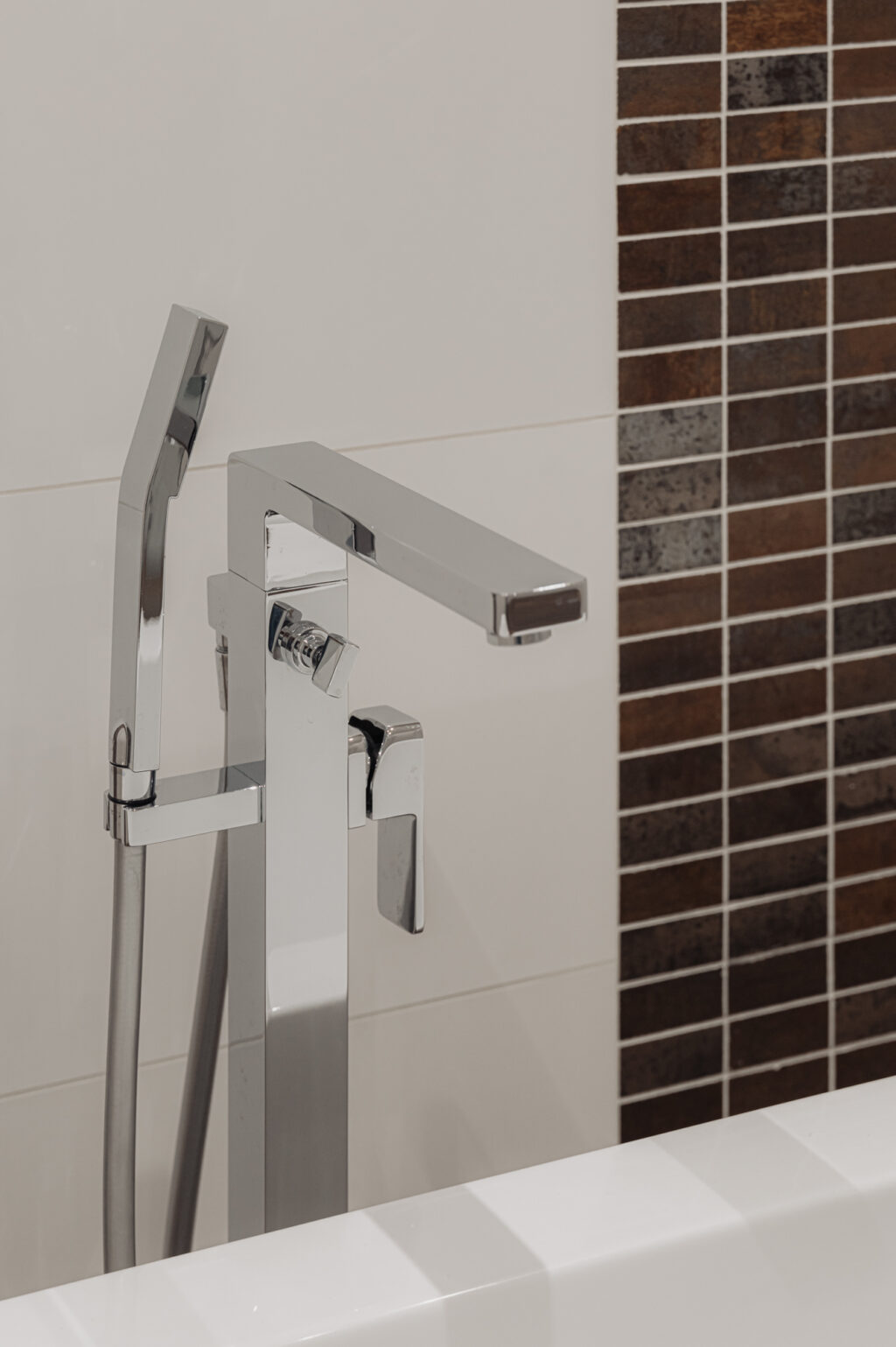
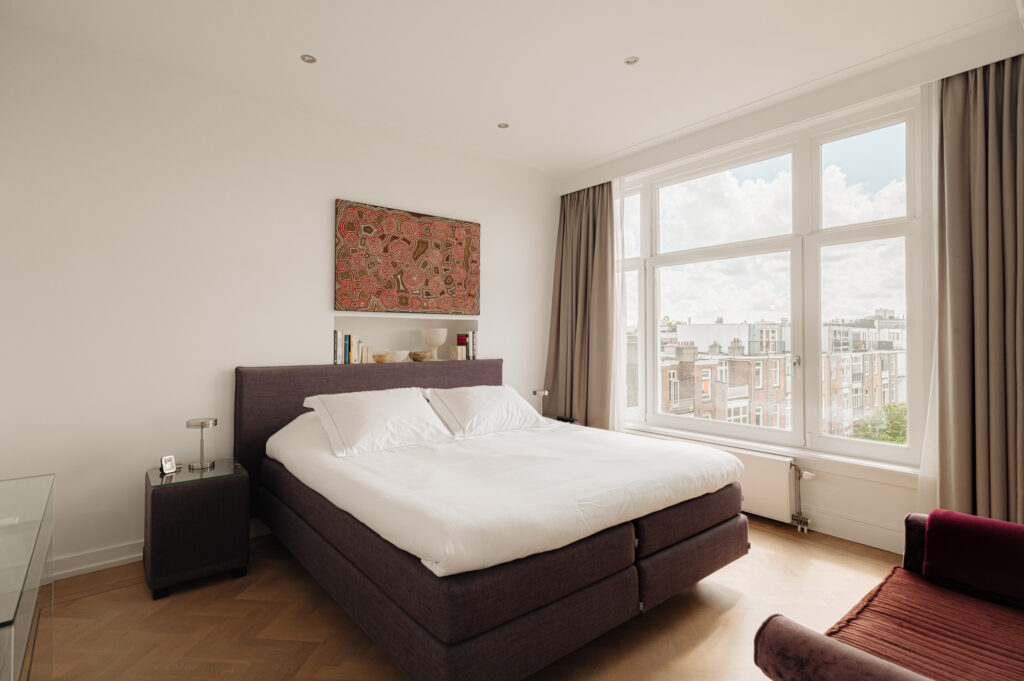
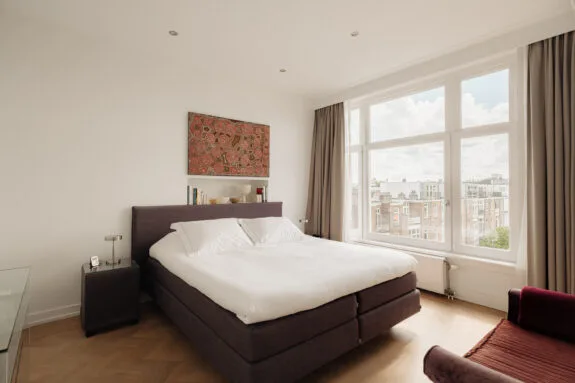
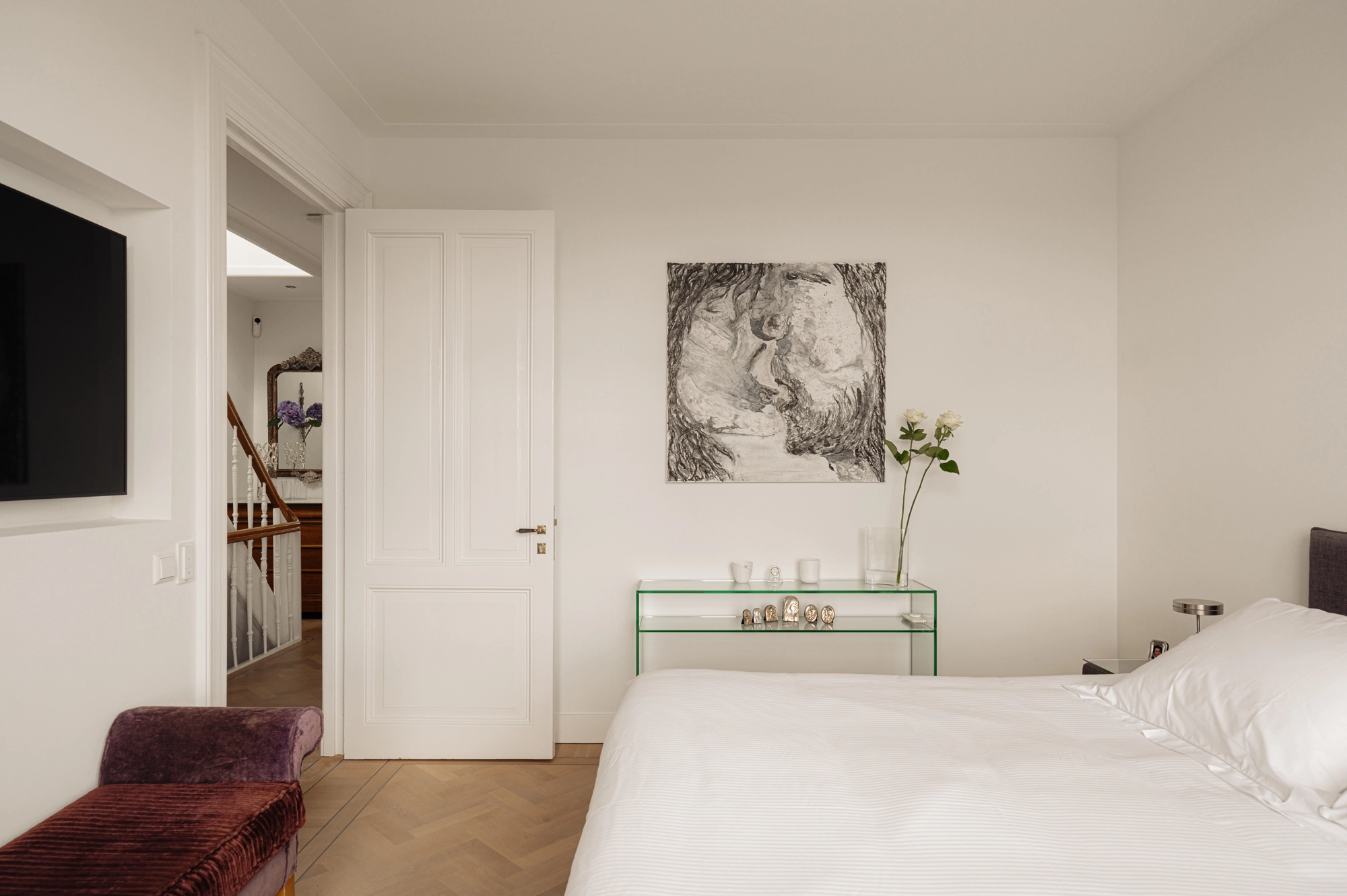
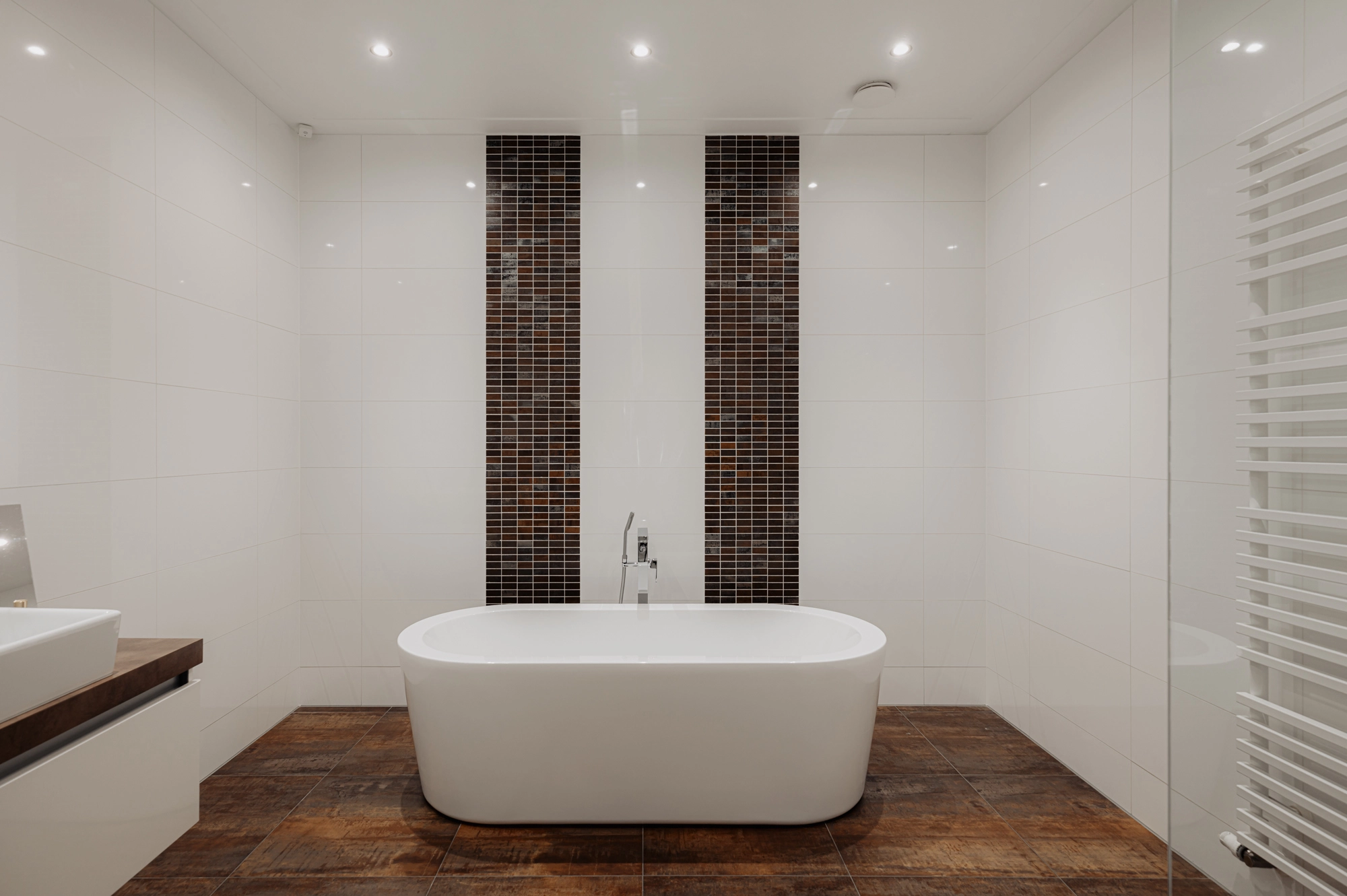
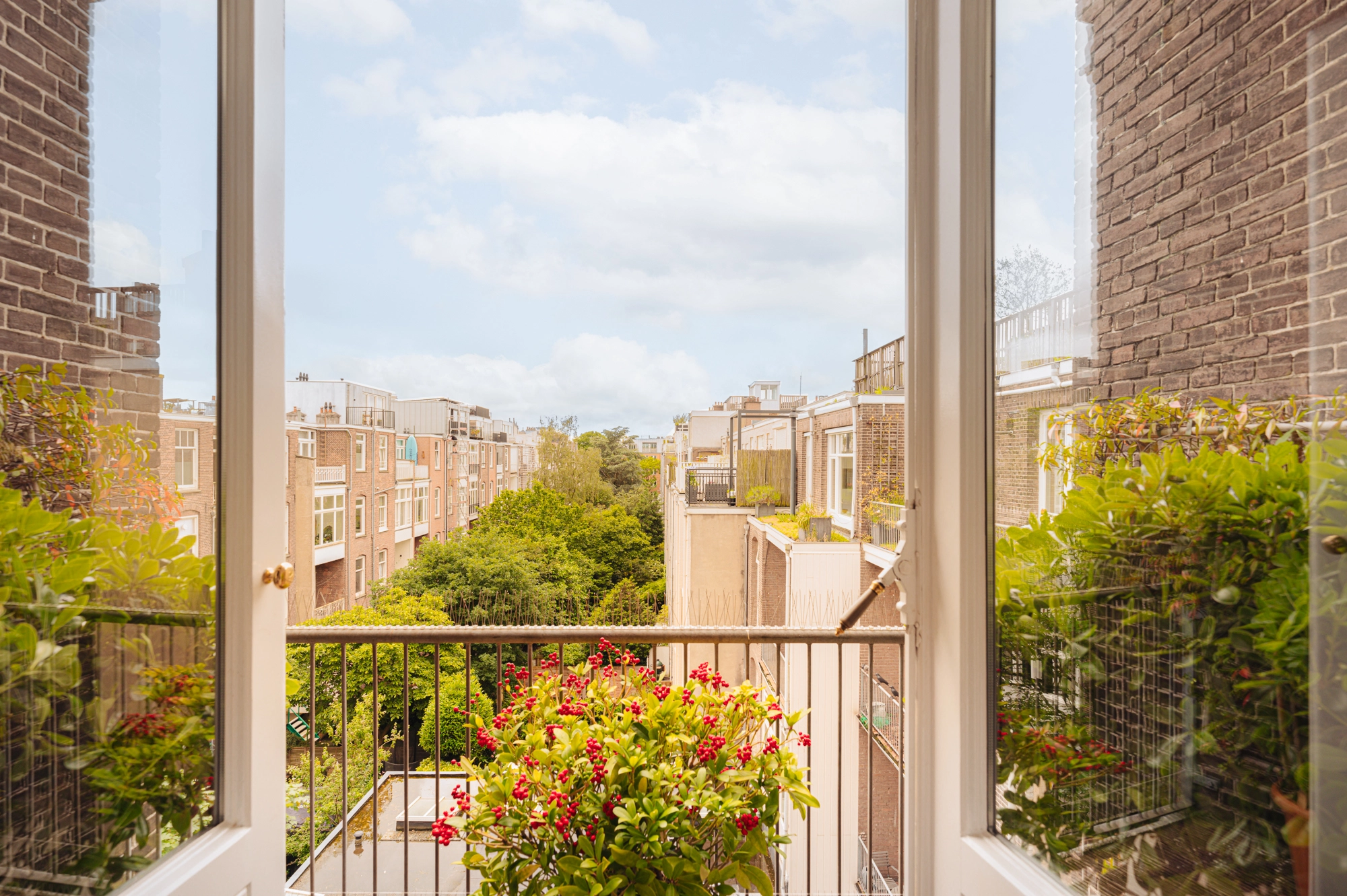
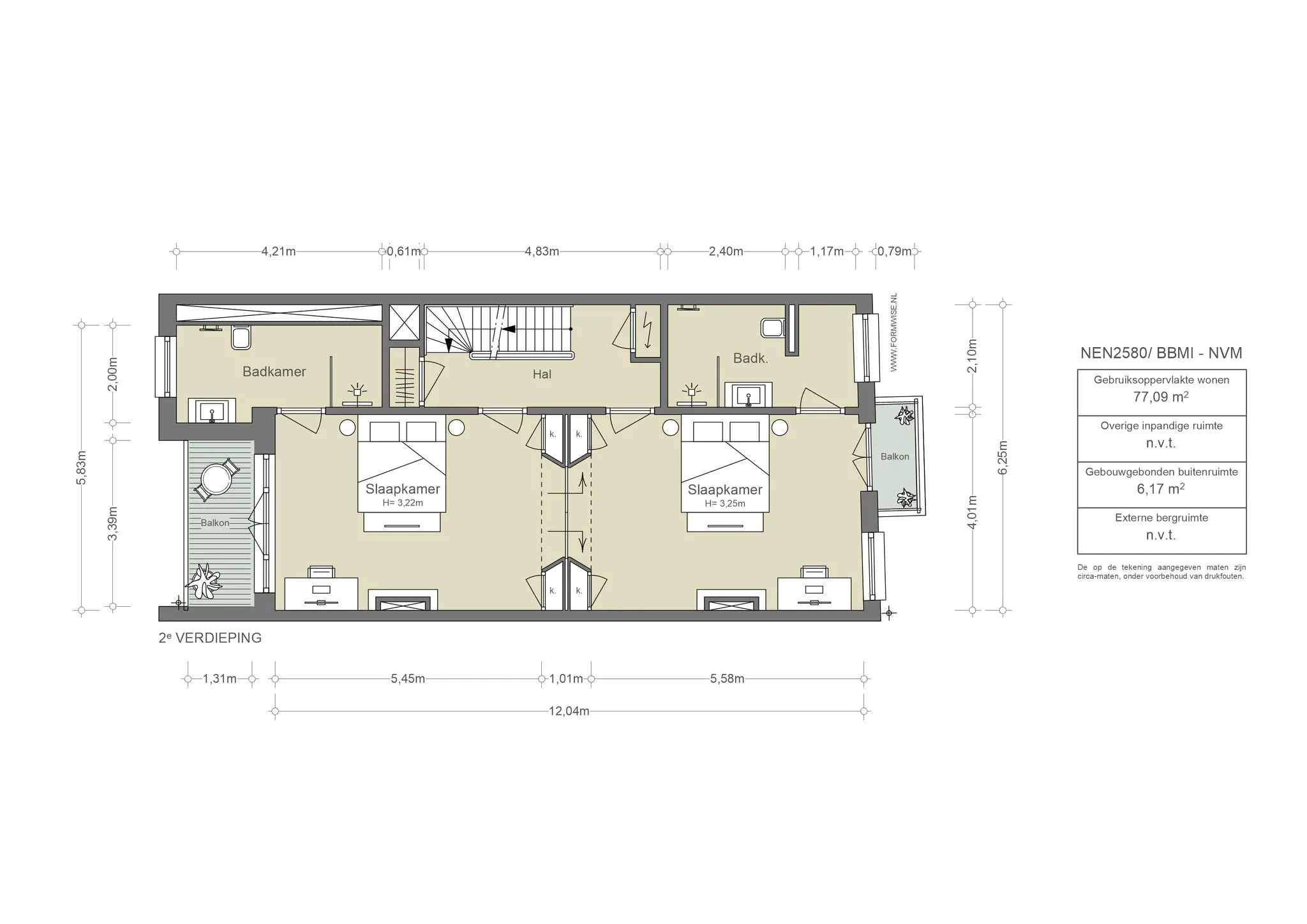
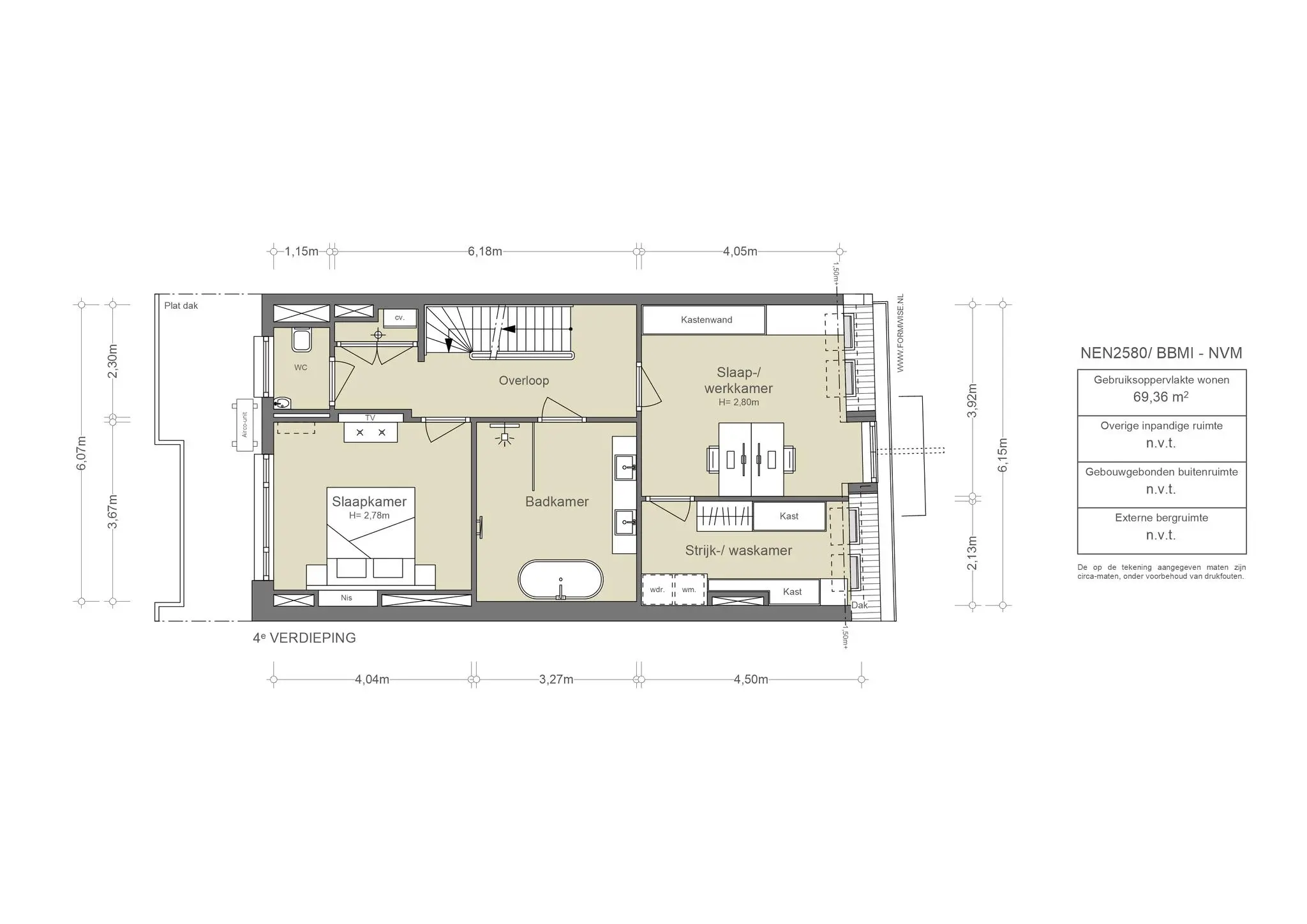
On the second floor, there are two spacious bedrooms, each measuring over 22 m². The bedroom at the front features French doors opening onto a small balcony with morning sun. The bedroom at the rear has a larger balcony with afternoon sun. Due to its location in the middle of the block, there is an unobstructed view. Both bedrooms have en suite private bathrooms with a walk-in shower, sink, and toilet. The generous layout of the rooms and their private bathrooms makes them particularly suitable for older children. On the fourth floor, there are a third and fourth bedroom, both of a good size. Adjacent to the bedroom at the front is a smaller third room, suitable as a laundry room, children’s room, or walk-in closet. The spacious bathroom is equipped with a freestanding bathtub, double sink, walk-in shower and floor heating. Off the hallway, there is a separate toilet.
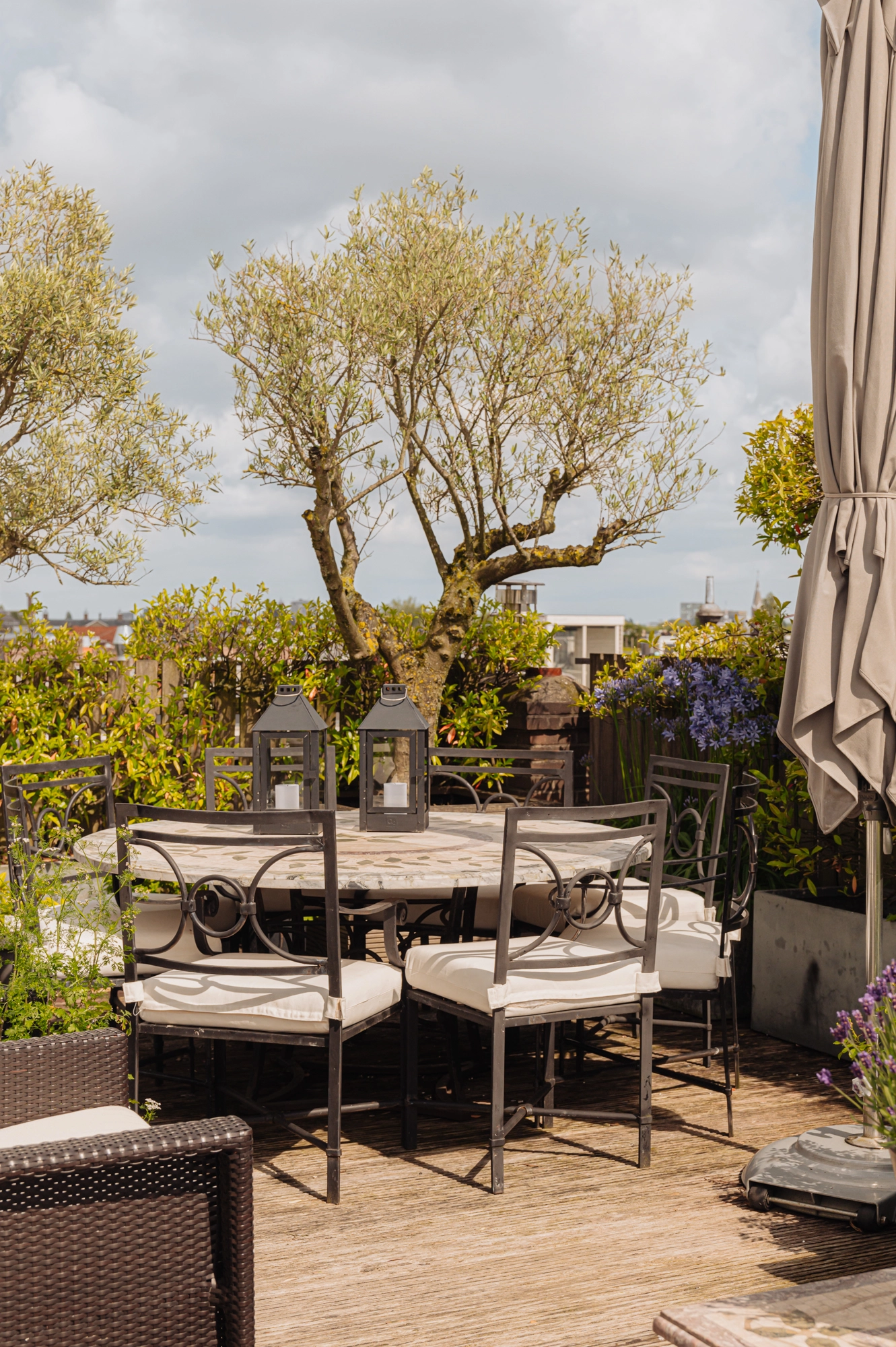
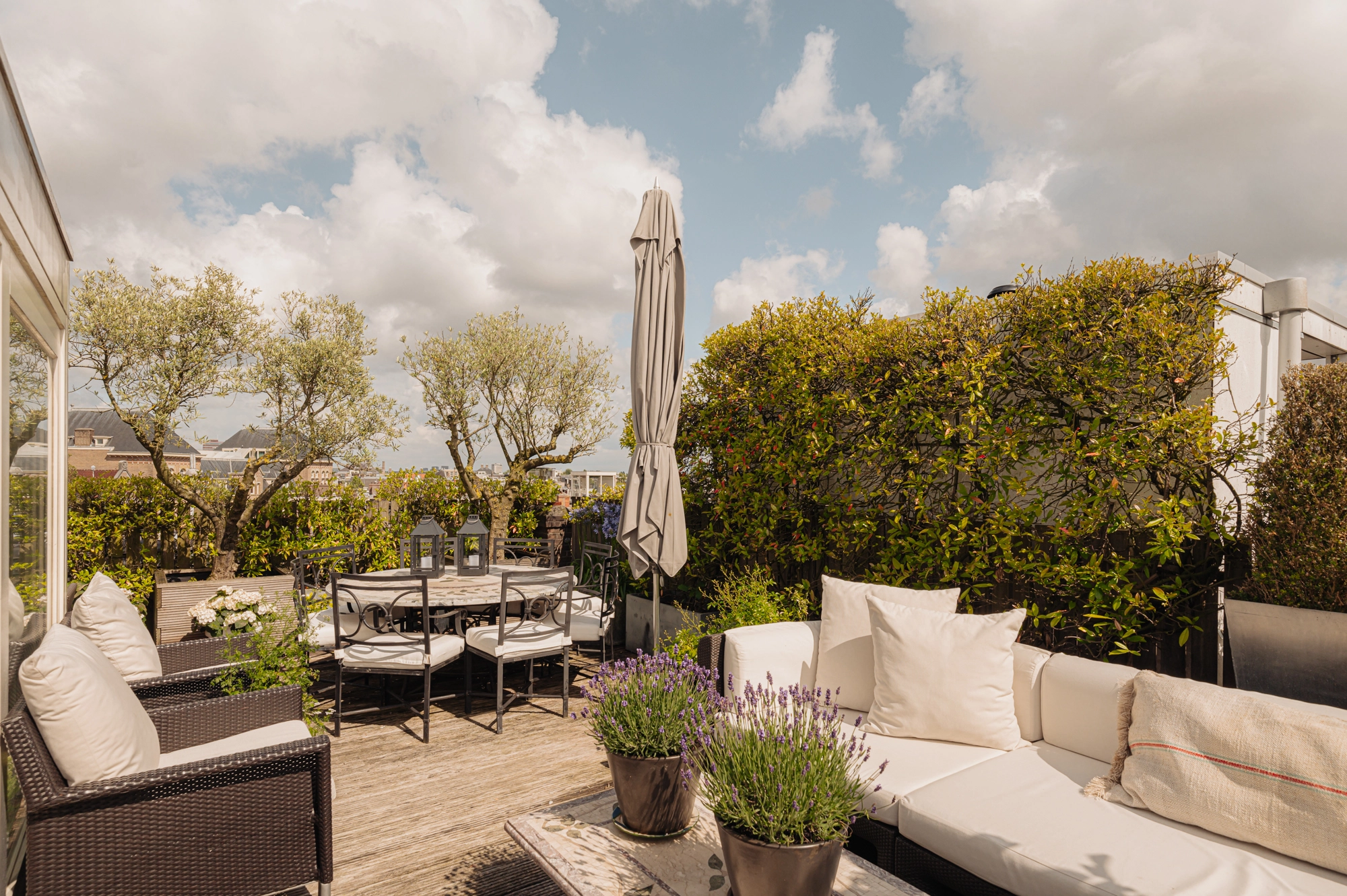
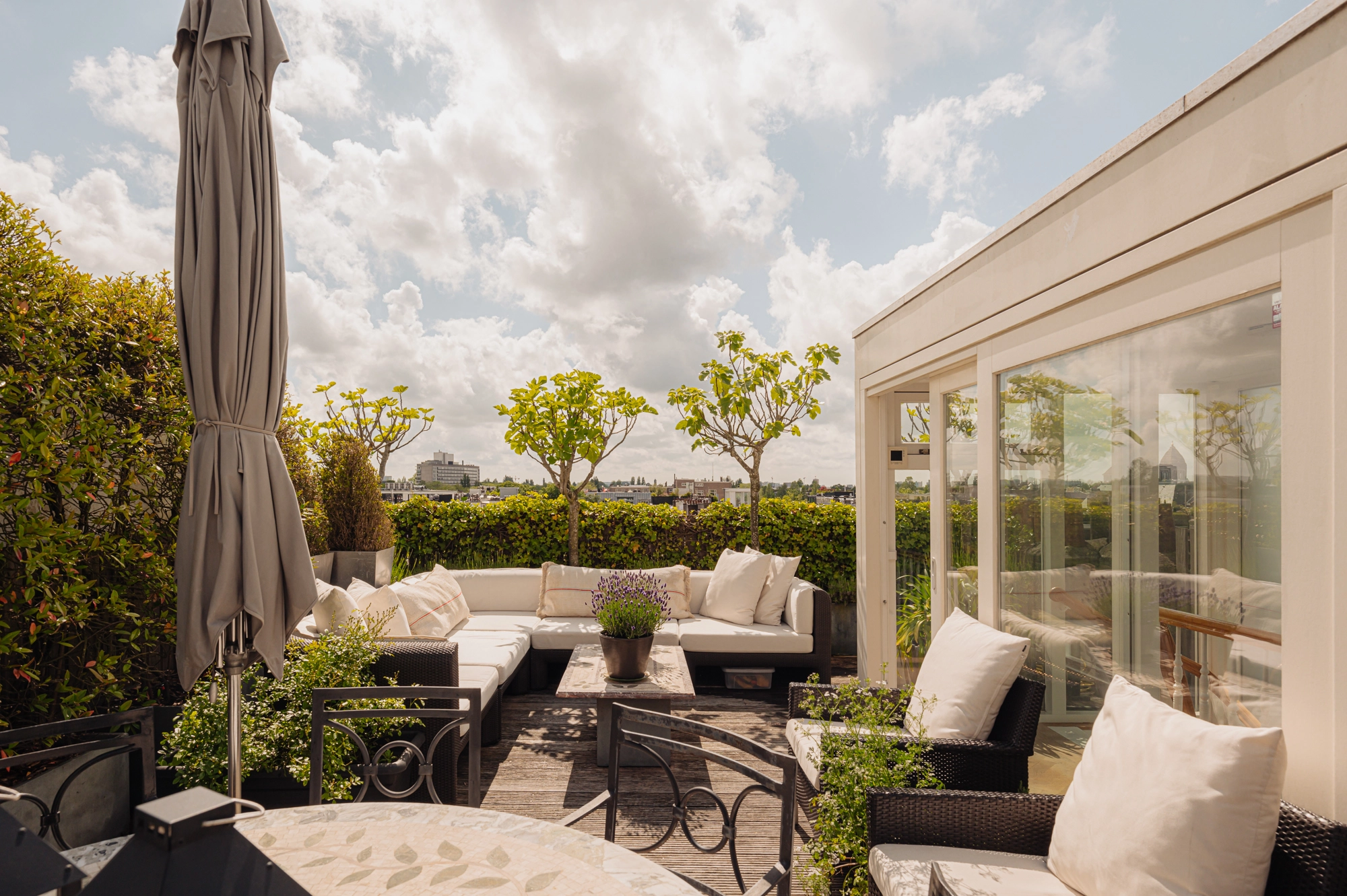
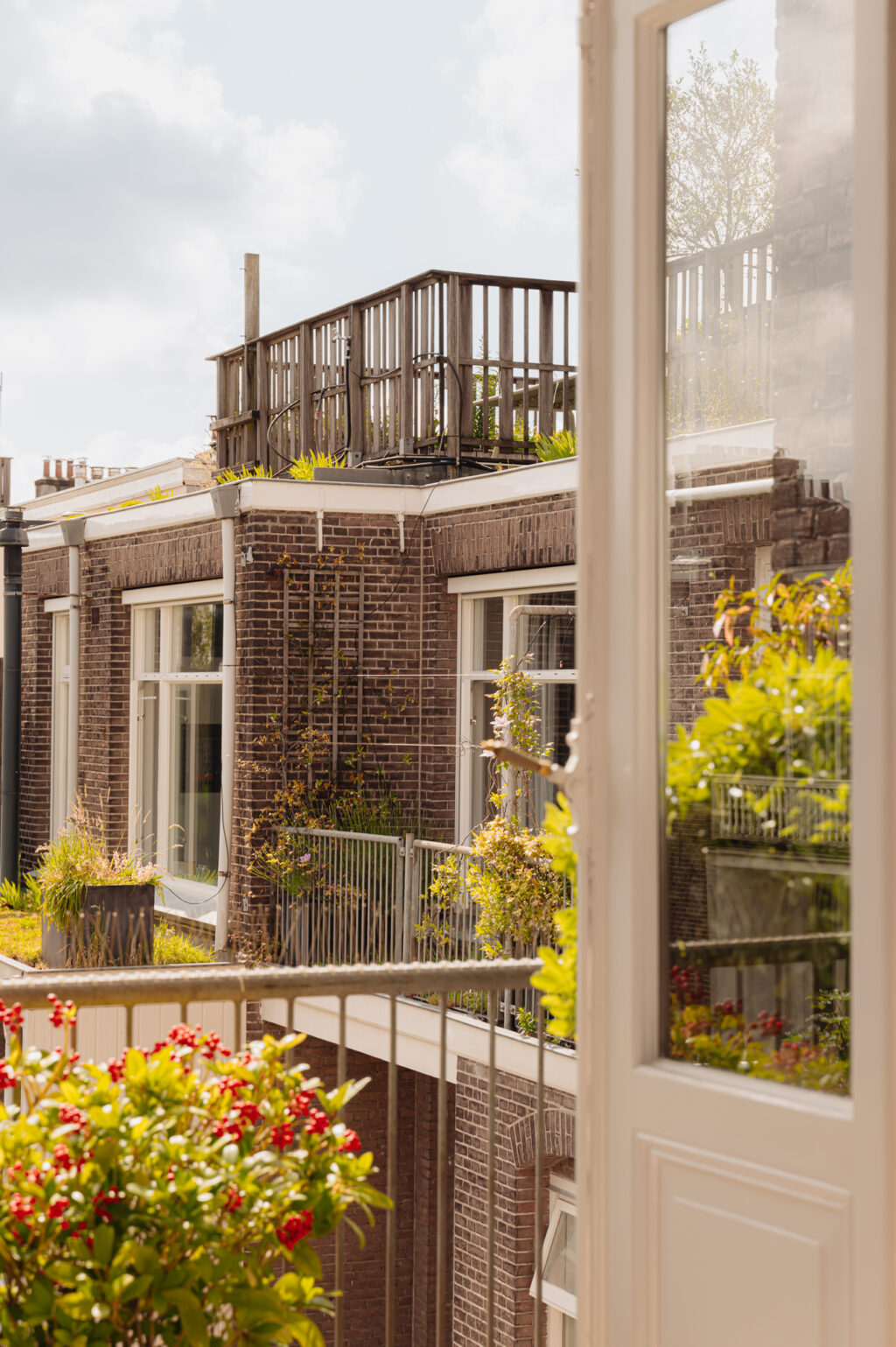
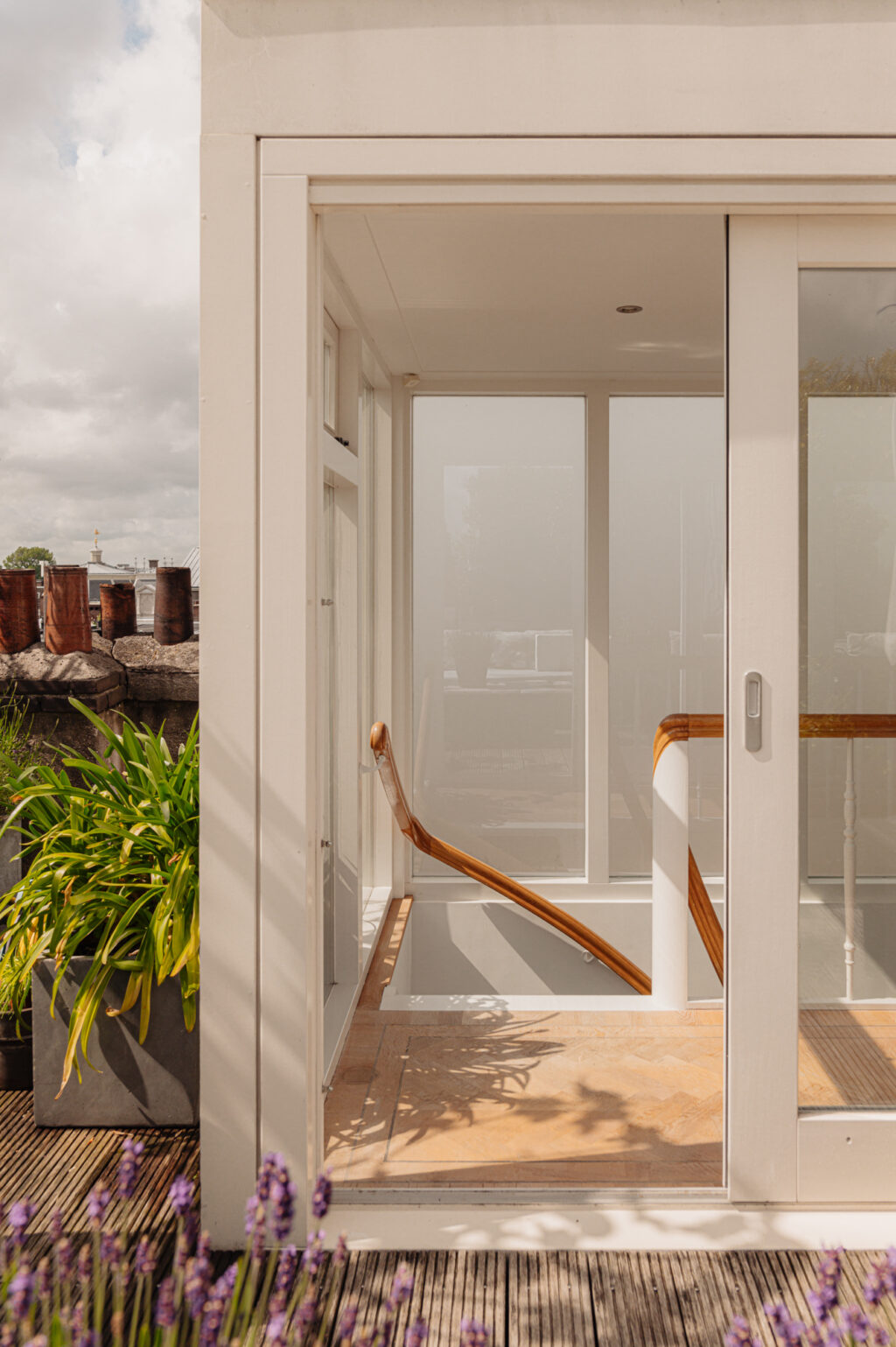
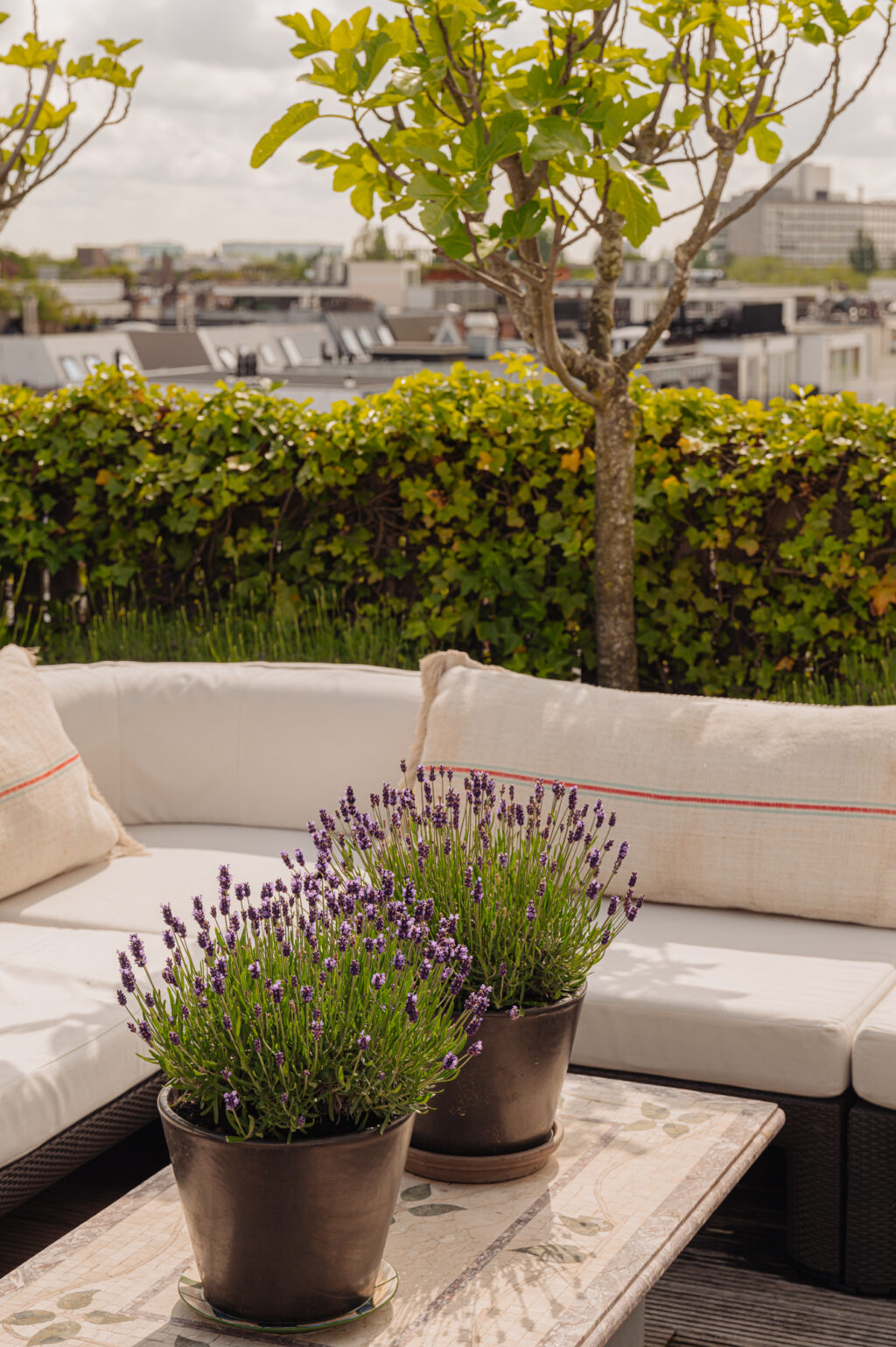
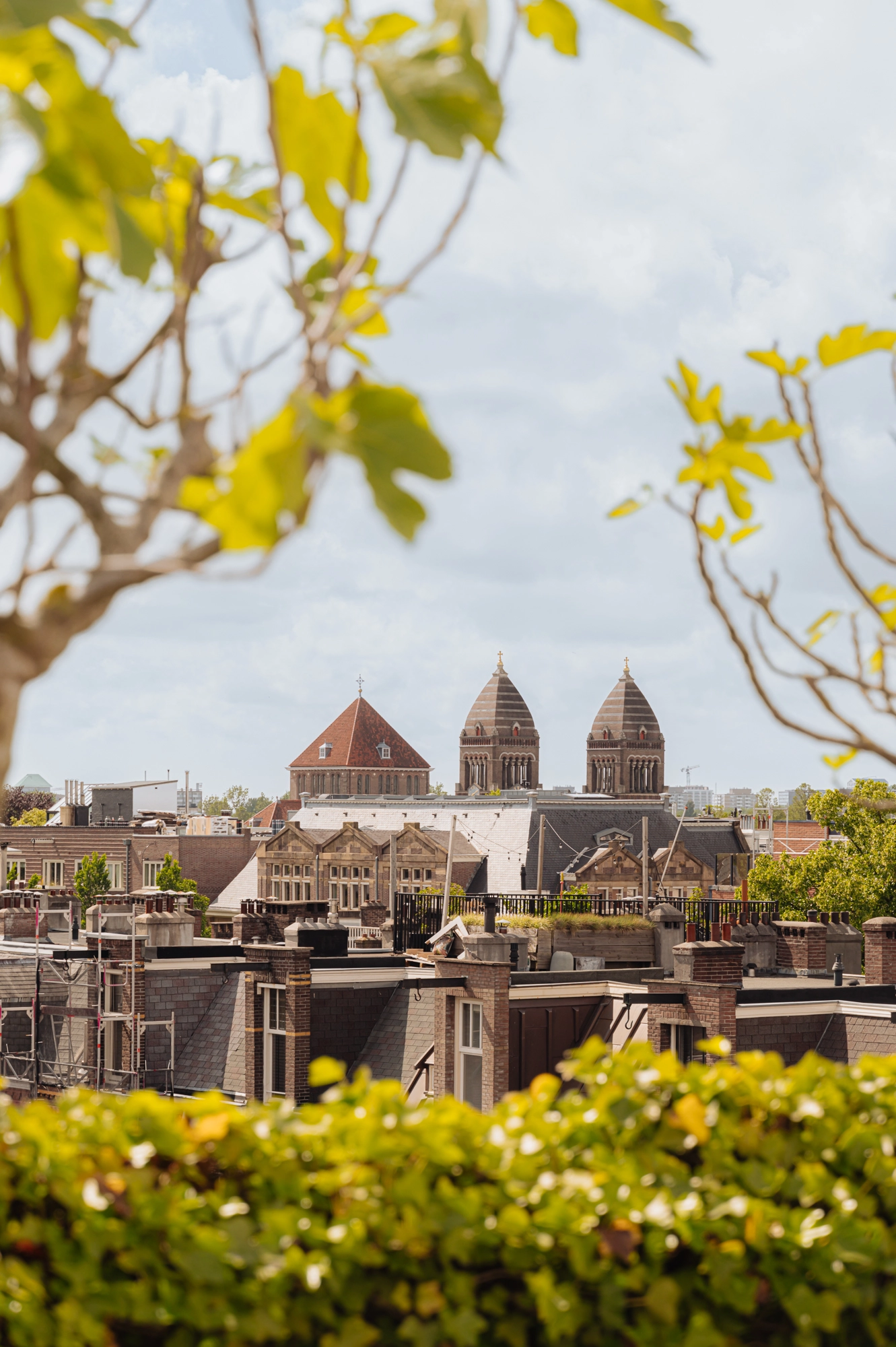
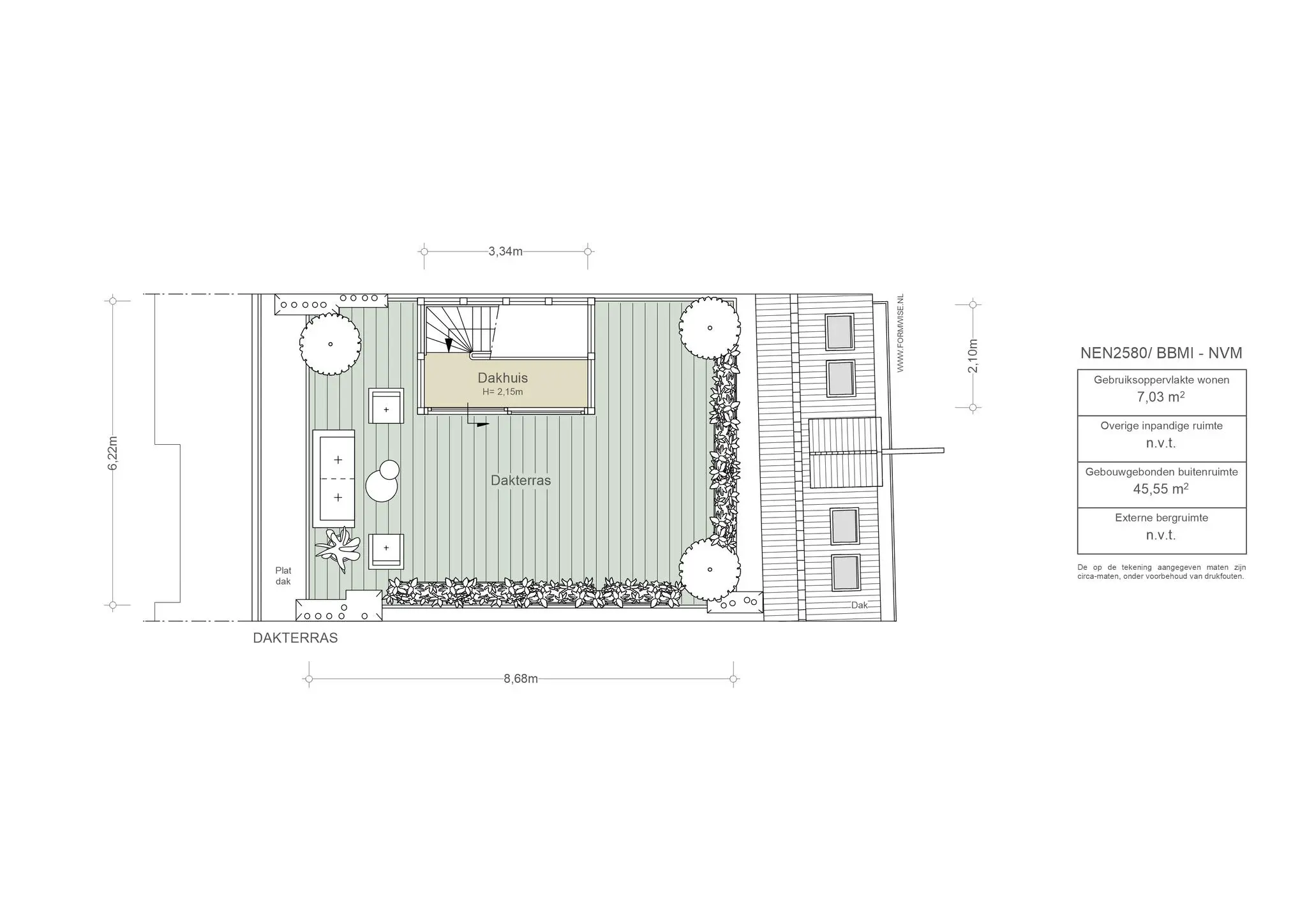
The house features five outdoor spaces. On the second and third floors, there are two smaller balconies at the front and two larger ones at the rear. The balconies at the rear enjoy evening sun due to the western orientation and offer an unobstructed view thanks to the open positioning at the back. On the fifth floor, there is a beautiful rooftop garden of over 45 m². The rooftop garden is accessible via a fixed staircase and a small shed, which provides enough space to store cushions and a parasol. From the rooftop garden, there is a clear view of the Rijksmuseum, Museumplein, and the Concertgebouw. The mature plants ensure plenty of privacy and shade on warm days.
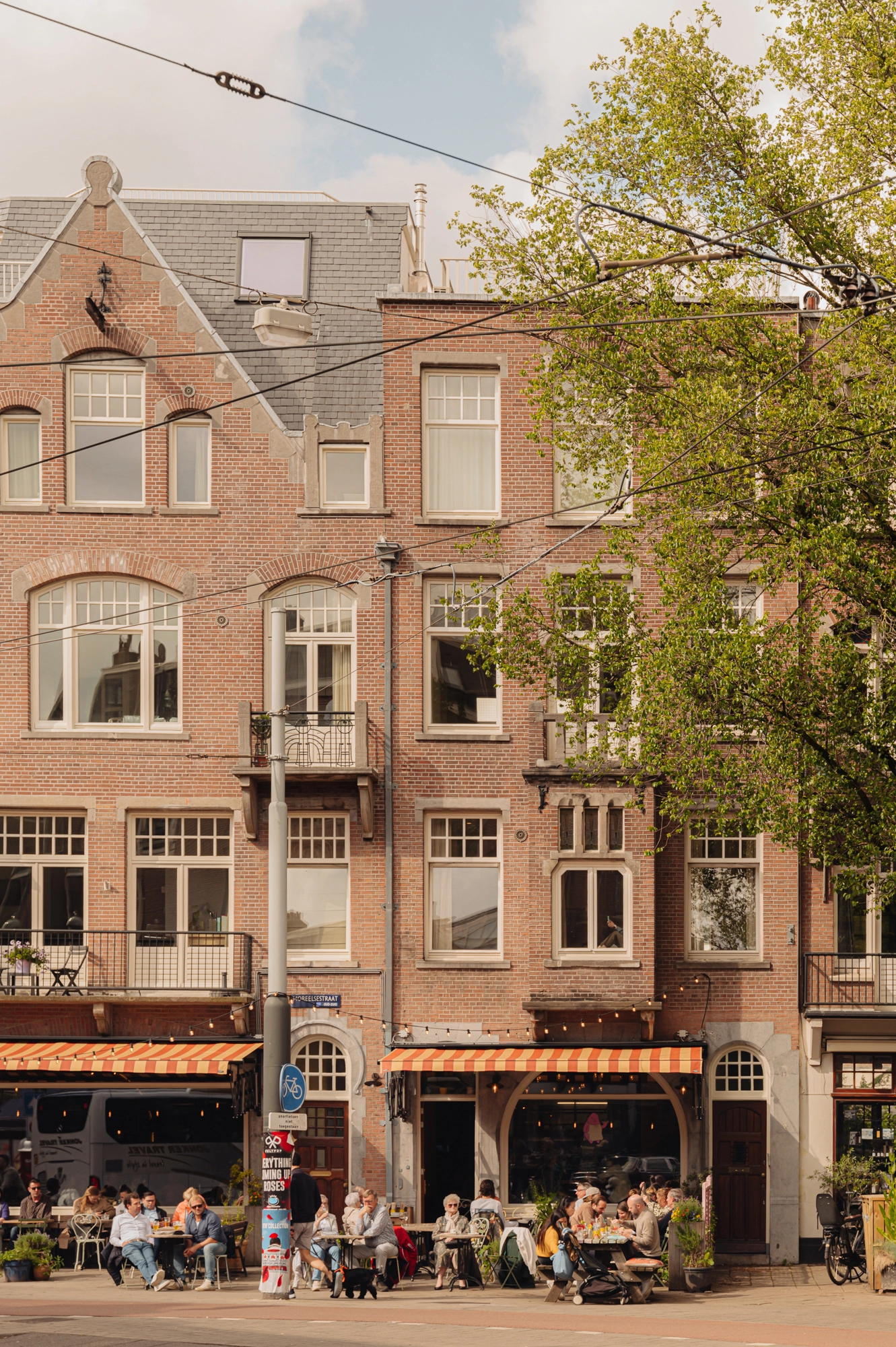
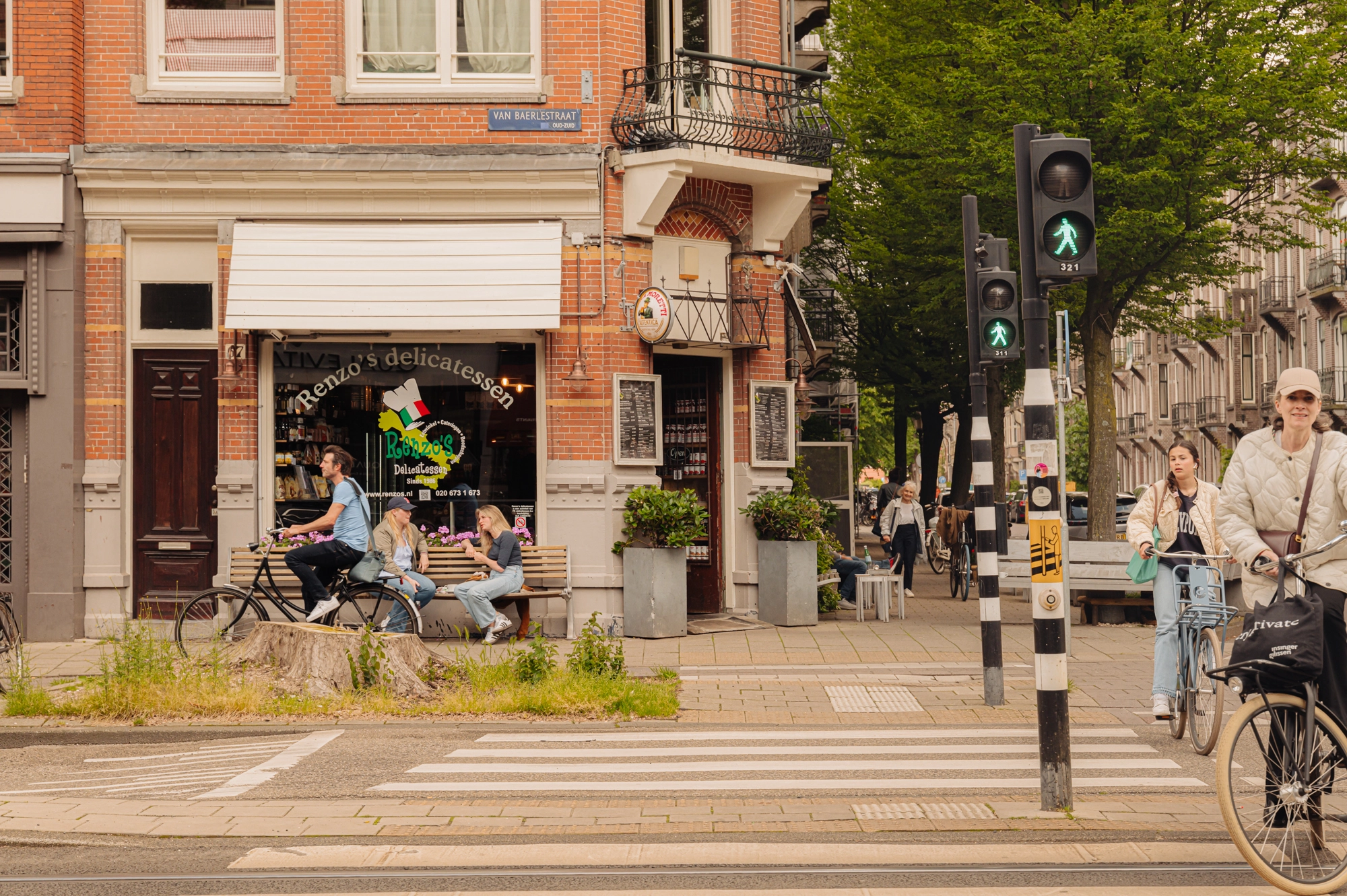
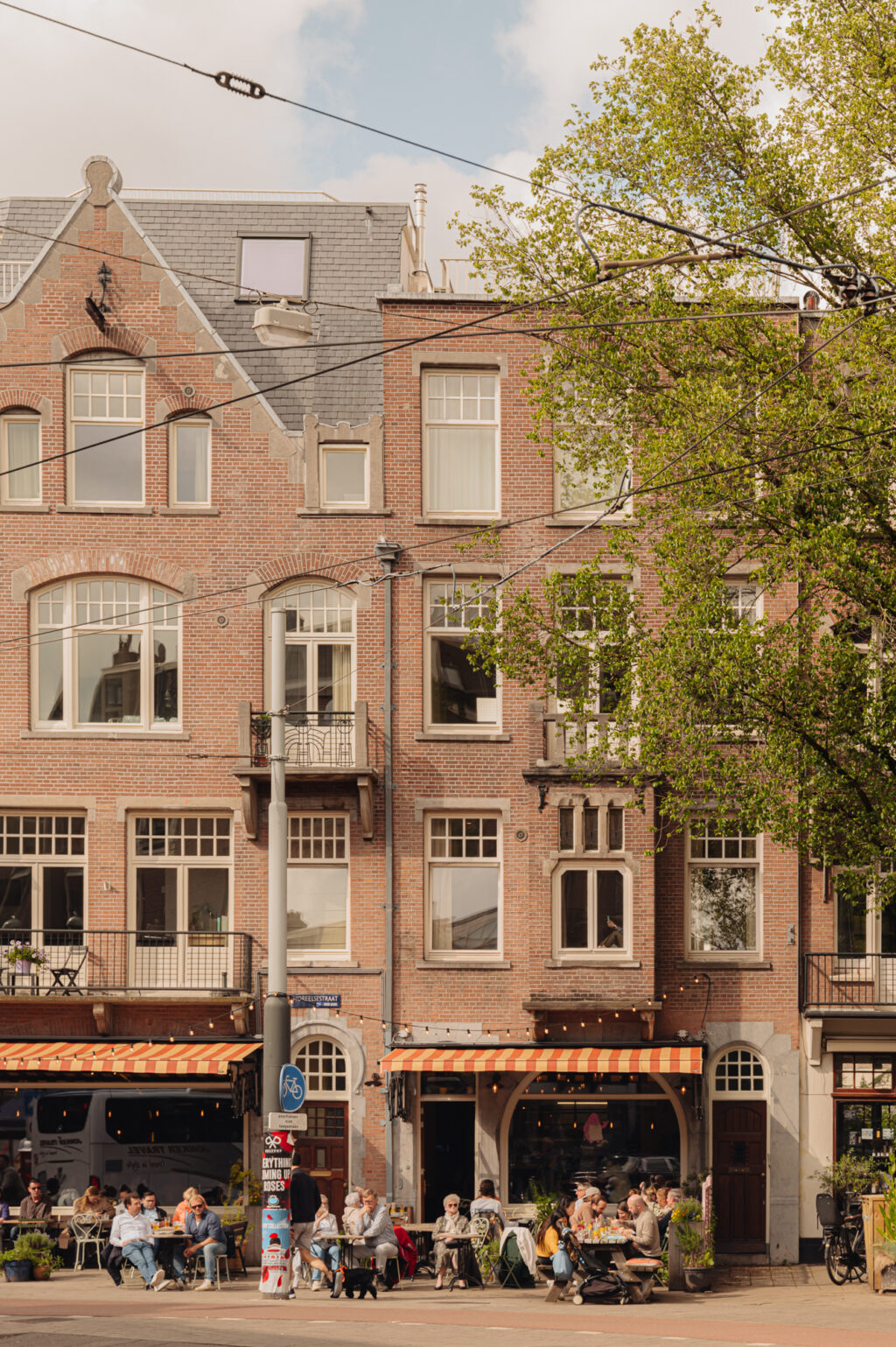
Where Museumplein now lies, farms once stood. Two hundred years ago, the area now known as Museumplein was home to farmland. To create more residential space, construction of the Museum Quarter began in the early 20th century. The architectural influence of Pierre Cuypers is unmistakable—he not only designed the first homes here but also the Rijksmuseum in neo-Gothic style. This era is beautifully depicted in Public Works by Thomas Rosenboom. Along with the Concertgebouw, built in neo-Renaissance style, these landmarks define the character of the neighborhood. With the arrival of the Van Gogh Museum, contemporary architecture by Gerrit Rietveld also made its mark on Museumplein. The variety of restaurants, cafés, and shops is as eclectic as the architectural styles and perfectly complements the international allure of the area. Haute couture enthusiasts can explore P.C. Hooftstraat, home to renowned fashion houses such as Burberry, Ba&sh, and Isabel Marant Étoile. One of the greatest advantages of this neighborhood is its prime location, with the city center, De Pijp, and Amsterdam Zuid—including Vondelpark—all within walking distance.
Accessibility
The property is easily accessible by car and exceptionally well connected by public transport. Tram lines 3, 5, and 12, as well as bus lines 347, 357, and 397, stop just around the corner. A direct bus to Schiphol Airport also has a nearby stop, making the airport reachable in just 18 minutes—an unparalleled convenience. Of course, in Amsterdam, cycling is always an option; from this central location, everything is within biking distance.
Parking
Parking is available through a permit system for on-street parking (permit zone Zuid 8.1). With a Zuid 8.1 parking permit, you are also allowed to park in Zuid-1, Zuid-2, and Zuid-8. A residential parking permit costs €192.81 per six months. Currently, there is a seven-month waiting list for this permit zone. A second parking permit is not available in this area. (Source: Municipality of Amsterdam, February 2025).
1071 AR Amsterdam
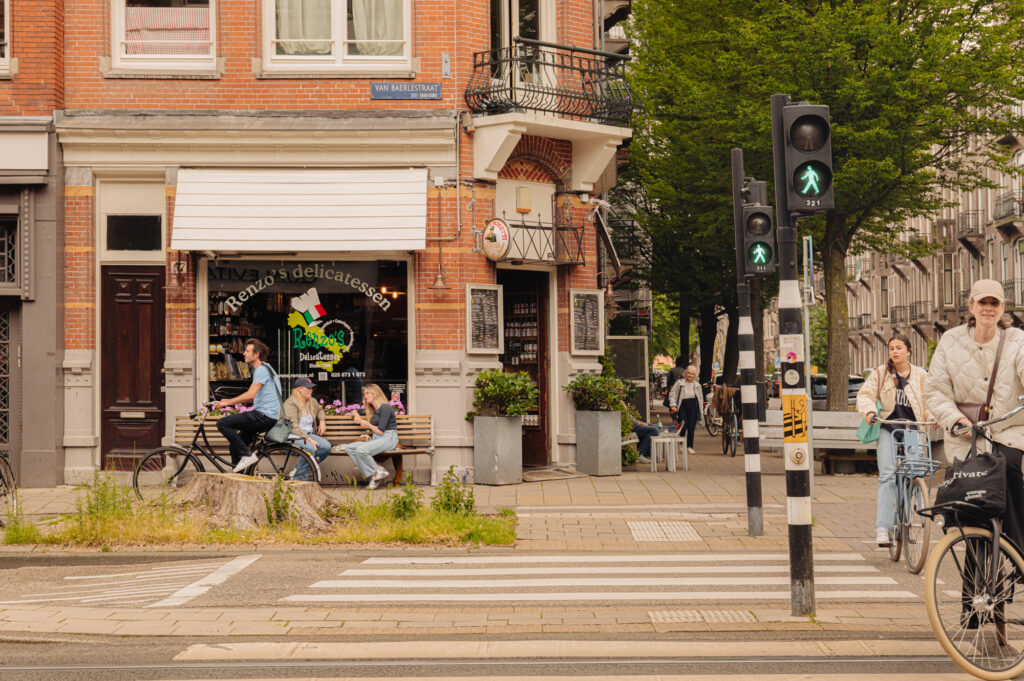
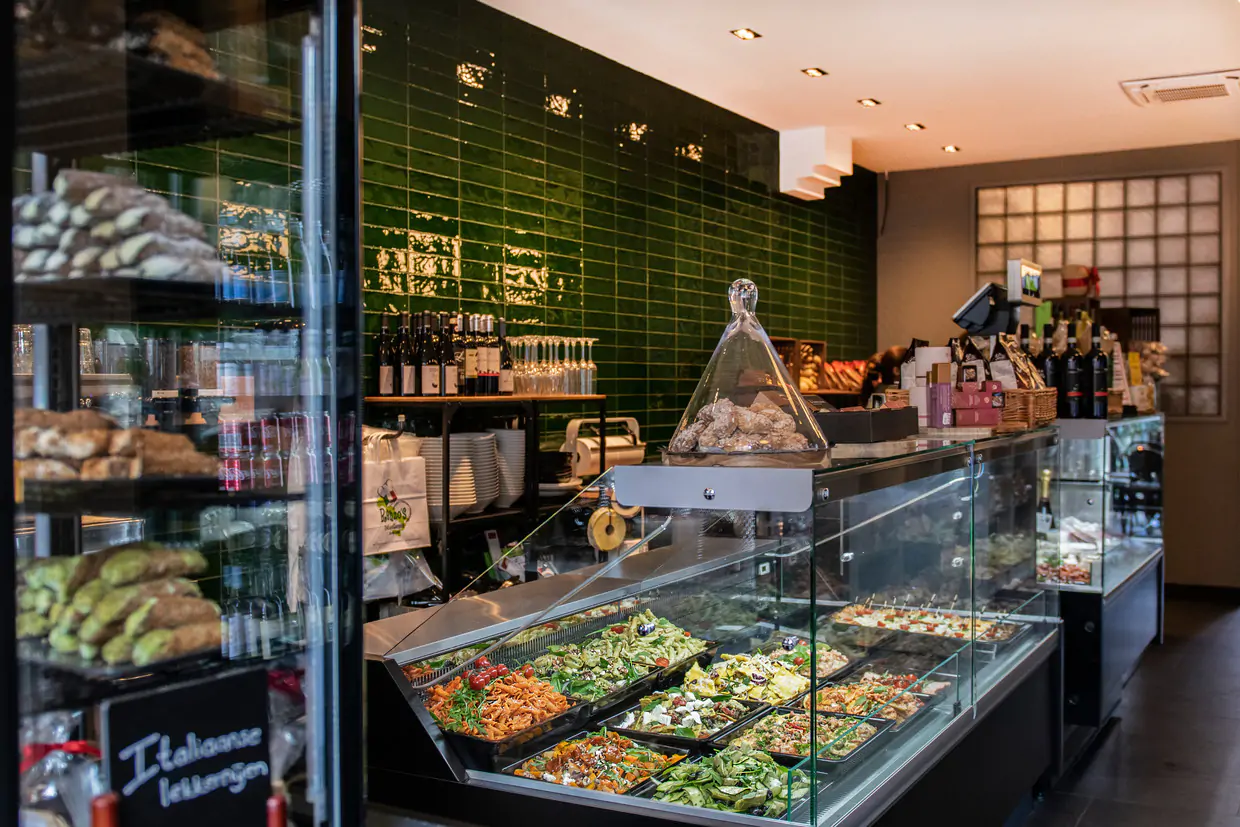
Renzo’s Delicatessen
Bij Renzo’s Delicatessen draait het om huisgemaakte, culinaire en Italiaanse producten. Alle gerechten worden hier dagvers gemaakt. Naast Renzo’s klassiekers is er ook een variërend menu. Voor de een is Renzo’s een buurtwinkel en voor de ander een plek om te lunchen of dineren. Je kan er ook terecht voor boodschappen, een Italiaanse meeneem menu of een broodje. En dan vooral het broodje Dino: rundergehakt of warme kippendijen met de beruchte dinosaus, zonnemayo, rucola en zongedroogde tomaatjes.
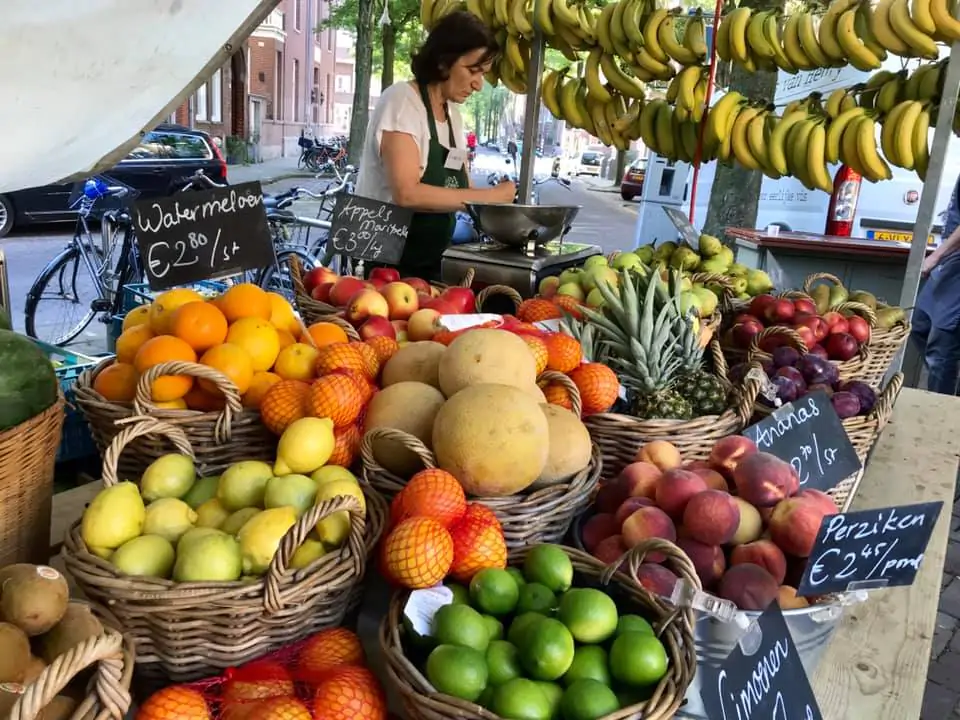
ZuiderMRKT
De zuiderMRKT is een kleine, gezellige, wekelijkse buurtmarkt. Uniek door haar coöperatieve karakter. De coöperatie bestaat uit leden - enthousiaste buurtbewoners - die de markt een warm toedragen en meehelpen op de markt en in de groentekraam. De leden bepalen samen het aanbod van alle kramen. Zij kopen groente en fruit rechtstreeks in bij de boer, om ze voor eerlijke prijzen op het zuiderMRKT-plein te verkopen.
1071 ZJ Amsterdam
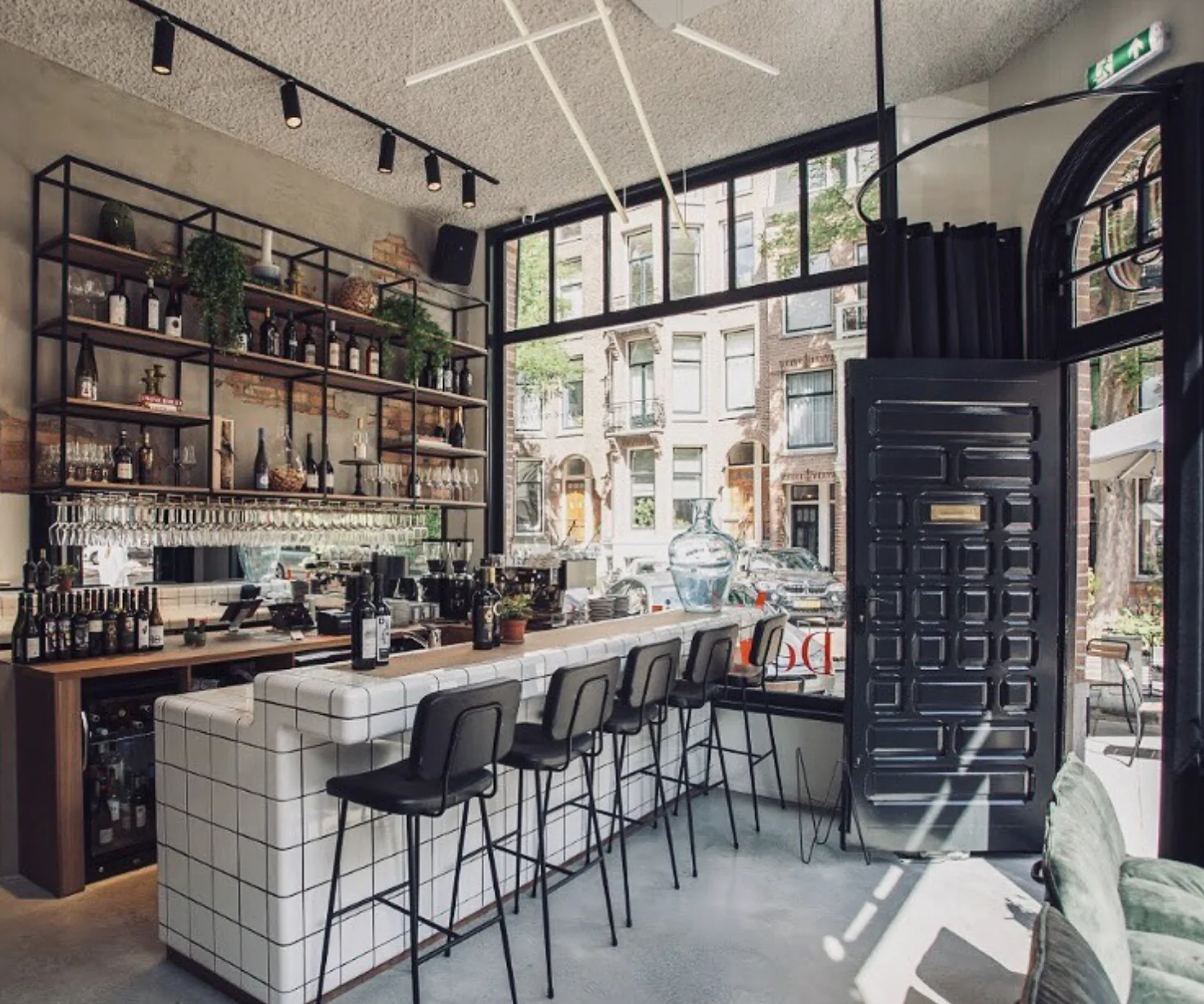
De Wijnkaart
In het Museumkwartier in Amsterdam-Zuid zit De Wijnkaart. Hier worden allerlei soorten wijnen uit de vergeten Oost-Europese wijnlanden geserveerd. Alhoewel de geschiedenis van het wijn maken hier is begonnen, zijn deze landen vaak vergeten in de wijnwereld. Als je benieuwd bent geworden naar alle soorten wijnen kan je een wijnproeverij doen in de wijnbar, waarbij je zelf mag uitkiezen welke je wil proeven. Naast de borrelplanken die wekelijks veranderen, staan er ook hoofdgerechten op het menu.
1071 AP Amsterdam
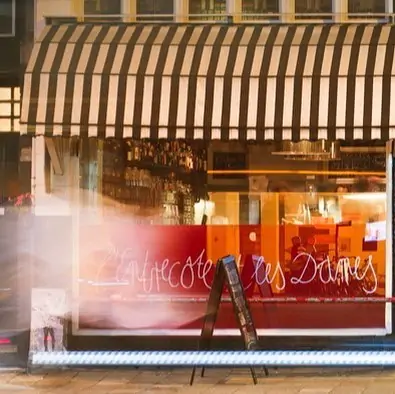
L'Entrecôte et les Dames
L’Entrecôte et les Dames omarmt het concept van een formule-restaurant, zoals de Fransen het noemen. Binnen een sfeervol ingerichte Franse brasserie staat de entrecôte centraal, altijd met een lichte 'bleu' bereiding van het Maas-Rijn-IJsel rund. Dit wordt geserveerd met frietjes en een verfrissende salade. Als je hierna nog trek hebt krijg je nog een keer een portie opgediend. Liever geen vlees? Als alternatief serveren zij in roomboter gebakken sliptong met ravigottesaus. Zelfde formule en zelfde prijs als het entrecôte menu.
1071 BG Amsterdam
Brasserie van Baerle
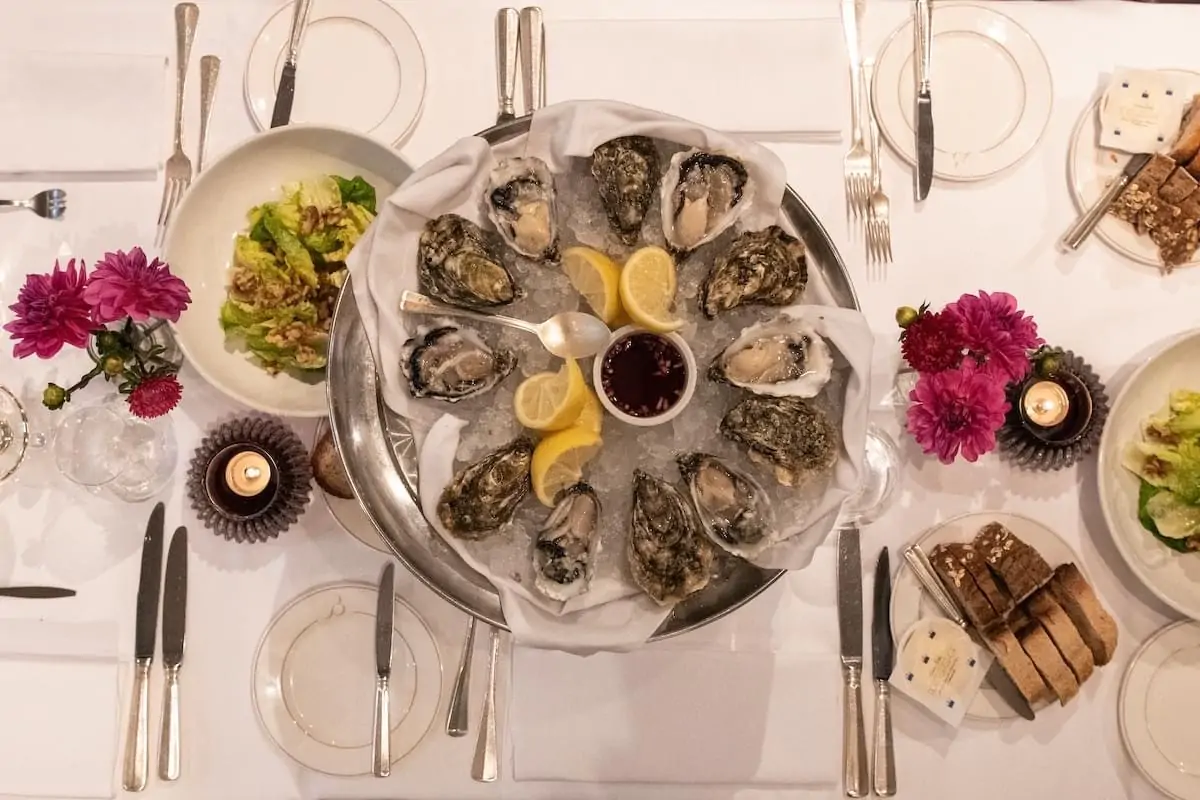
De Franse brasserie van Baerle is niet meer weg te denken uit het Amsterdamse stadsbeeld. Met een levensloop van al 41 jaar in Amsterdam-Zuid, is het een vertrouwde plek. De compacte lunch- en dinerkaart bestaat uit klassieke gerechten uit de overwegend Franse brasserie keuken én vernieuwende eigentijdse gerechten. In het seizoen zijn er altijd oesters, asperges en kreeft. Naast à la carte is er zowel voor lunch als diner een wisselend 3-gangen keuzemenu dat sinds 2010 jaarlijks door Michelin met een ‘BIB Gourmand’ onderscheiden wordt. Grootspraak, de restaurantgids voor wijnliefhebbers, rangschikt Brasserie van Baerle al jaren tot de beste ‘wijnrestaurants’ van Amsterdam.
1071 LK Amsterdam
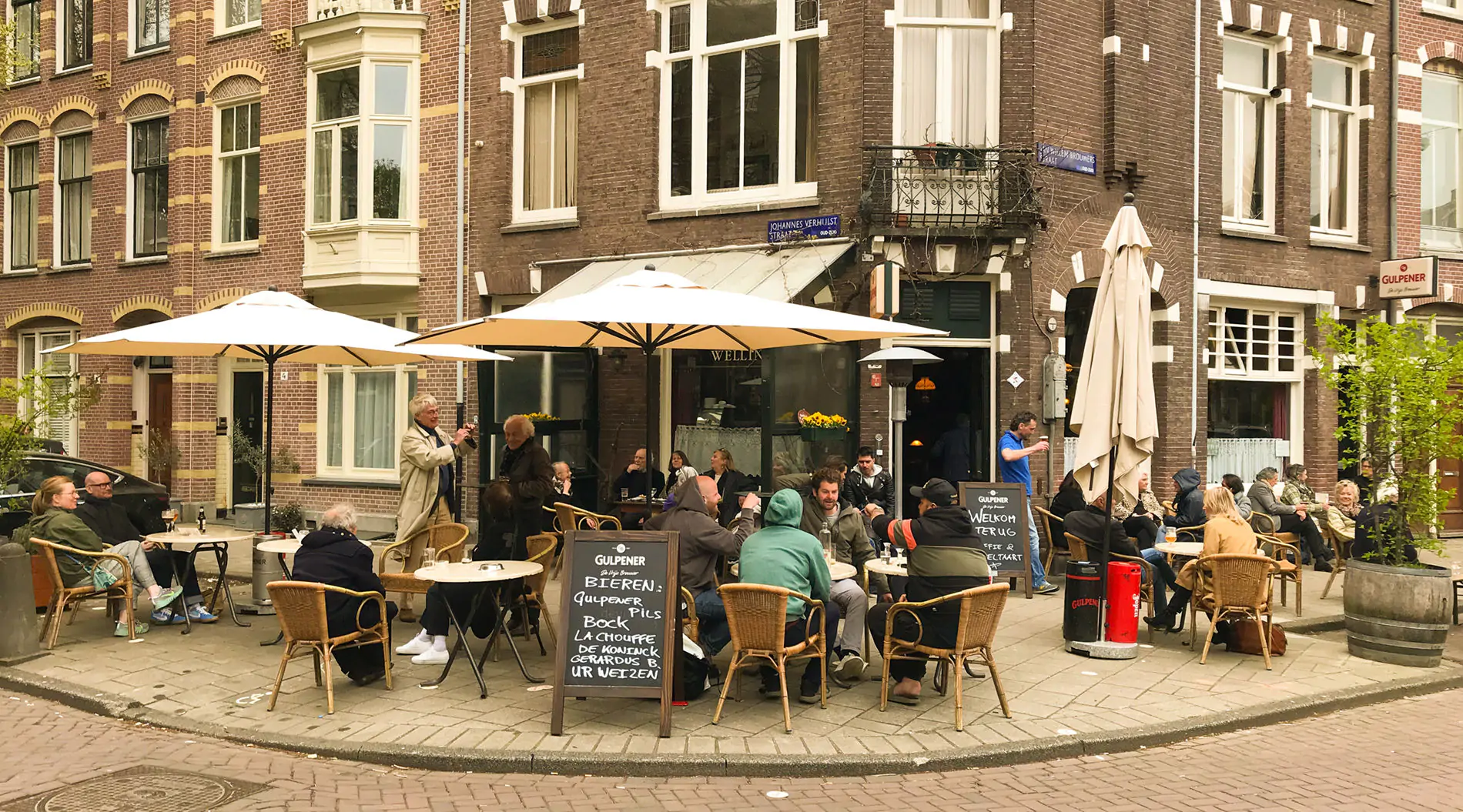
Café Welling
Café Welling is een knus buurtcafé aan de J.W. Brouwersstraat; vlakbij het Museumplein. Hier kun je genieten van een lekker biertje aan de bar of op het terras als het zonnetje schijnt. Dit buurtcafé kent een lange geschiedenis. Het café bestaat al langer dan 70 jaar maar draagt pas sinds 1963 de naam Café Welling. Deze historie verklaart misschien wel de oude vertrouwde sfeer die in dit café altijd te vinden blijkt. Interessant voor muziekliefhebbers: bij Café Welling worden regelmatig Jazz-avonden georganiseerd.
1071 TR Amsterdam
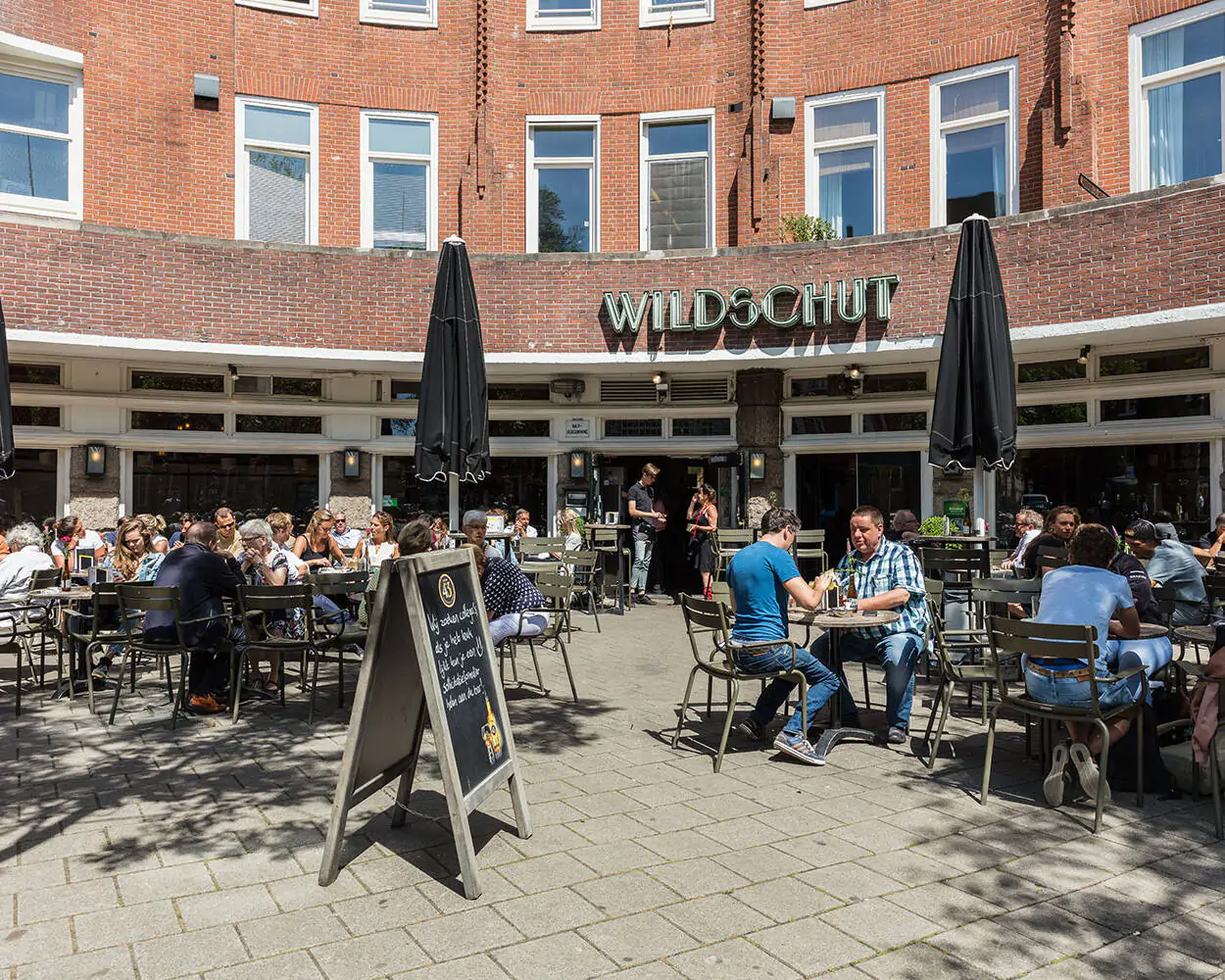
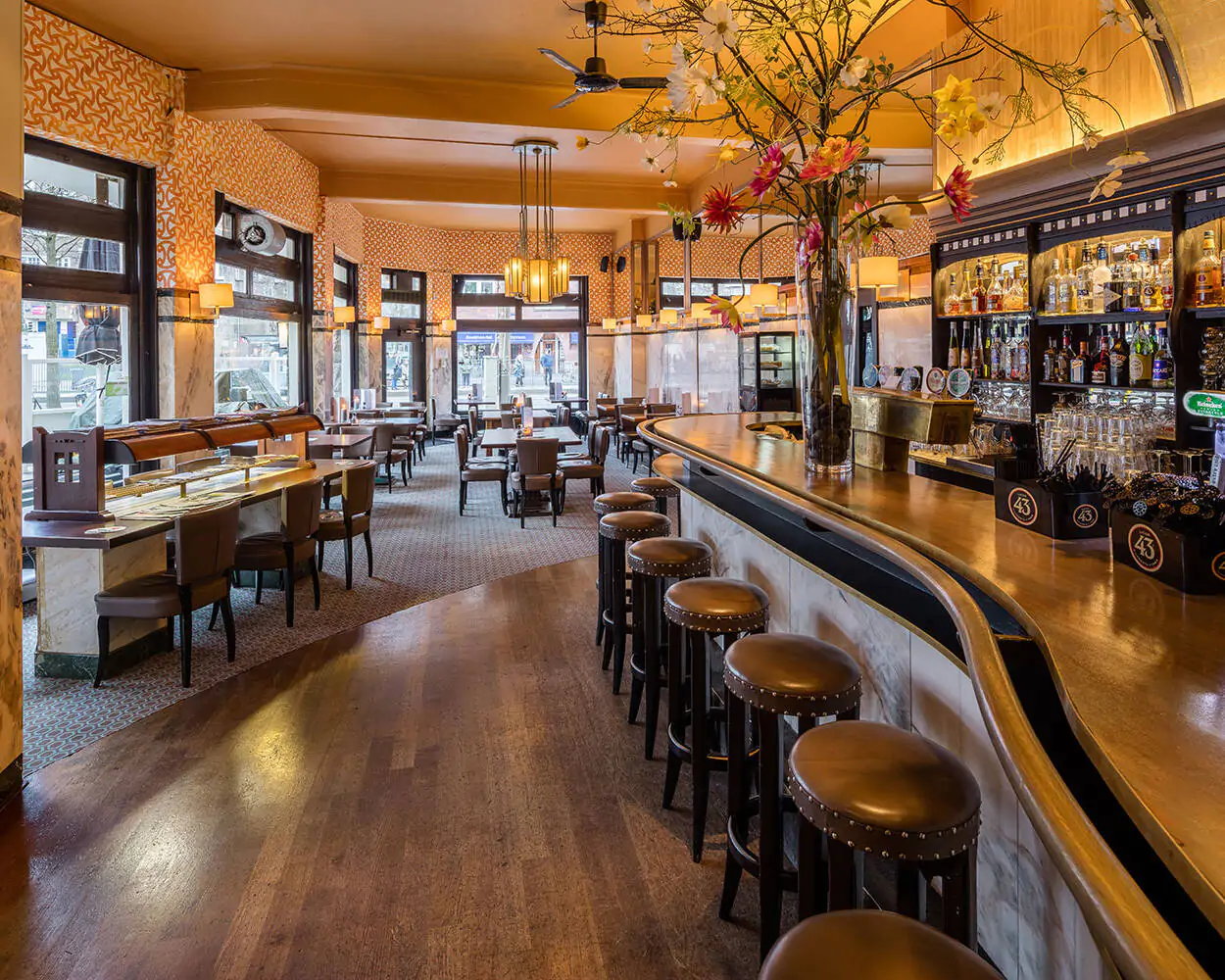
Café wildschut
Café wildschut zit aan het Roelof Hartplein en is een ideale uitvalbasis om een drankje te doen. Vooral 's zomers ben je hier aan het goede adres, het terras heeft namelijk van 's ochtends vroeg tot 's avonds zon. Omdat het café aan een plein zit is er altijd reuring. Het café is gevestigd in een monumentaal pand van de Amsterdamse school en heeft kosmopolitisch interieur met jaren '20 elementen. Er komt een gemêleerd publiek en is inmiddels al decennia een begrip onder Amsterdammers. Je kan hier ook terecht voor ontbijt, lunch en diner.
1071 DT Amsterdam
Café Loetje
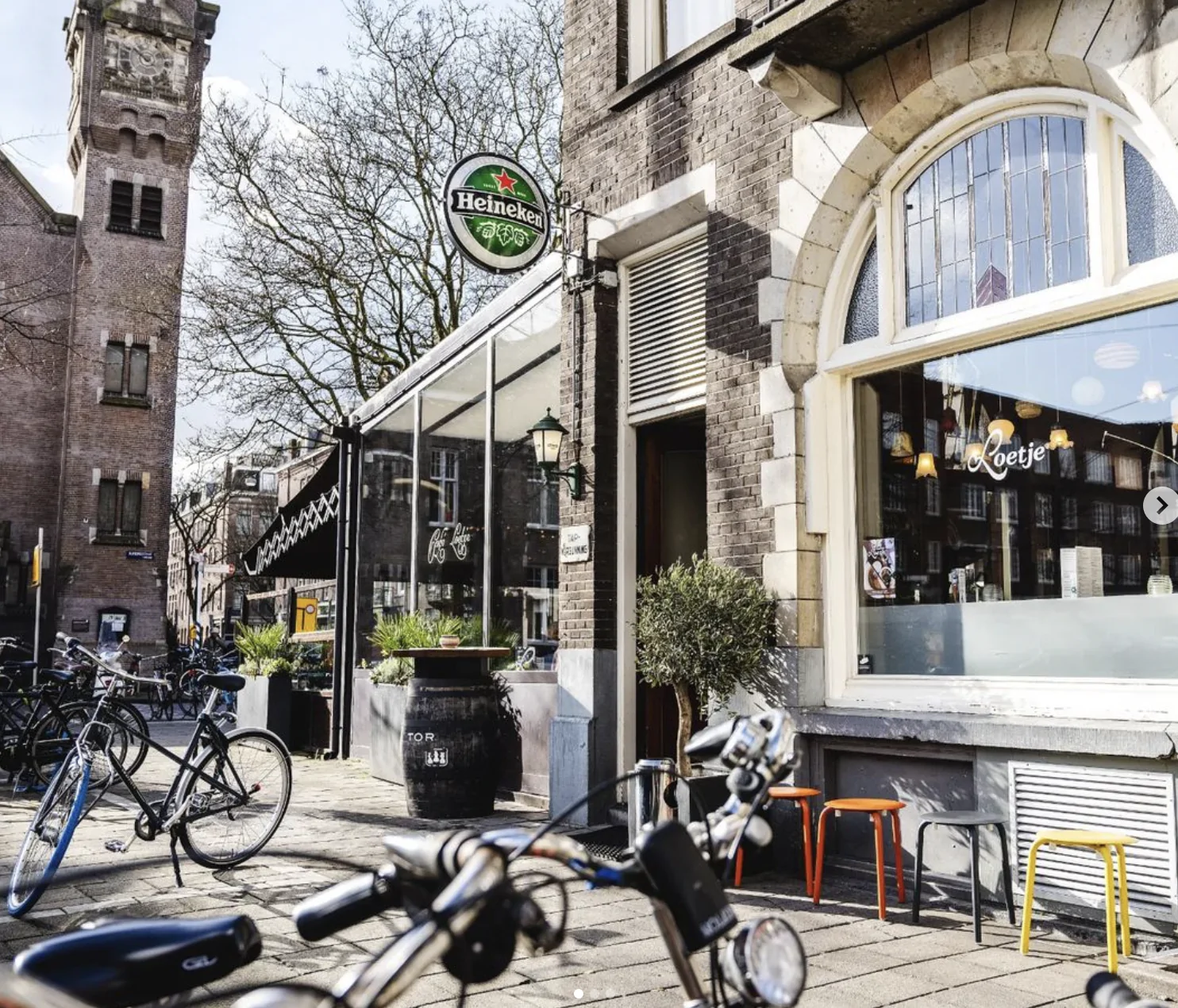
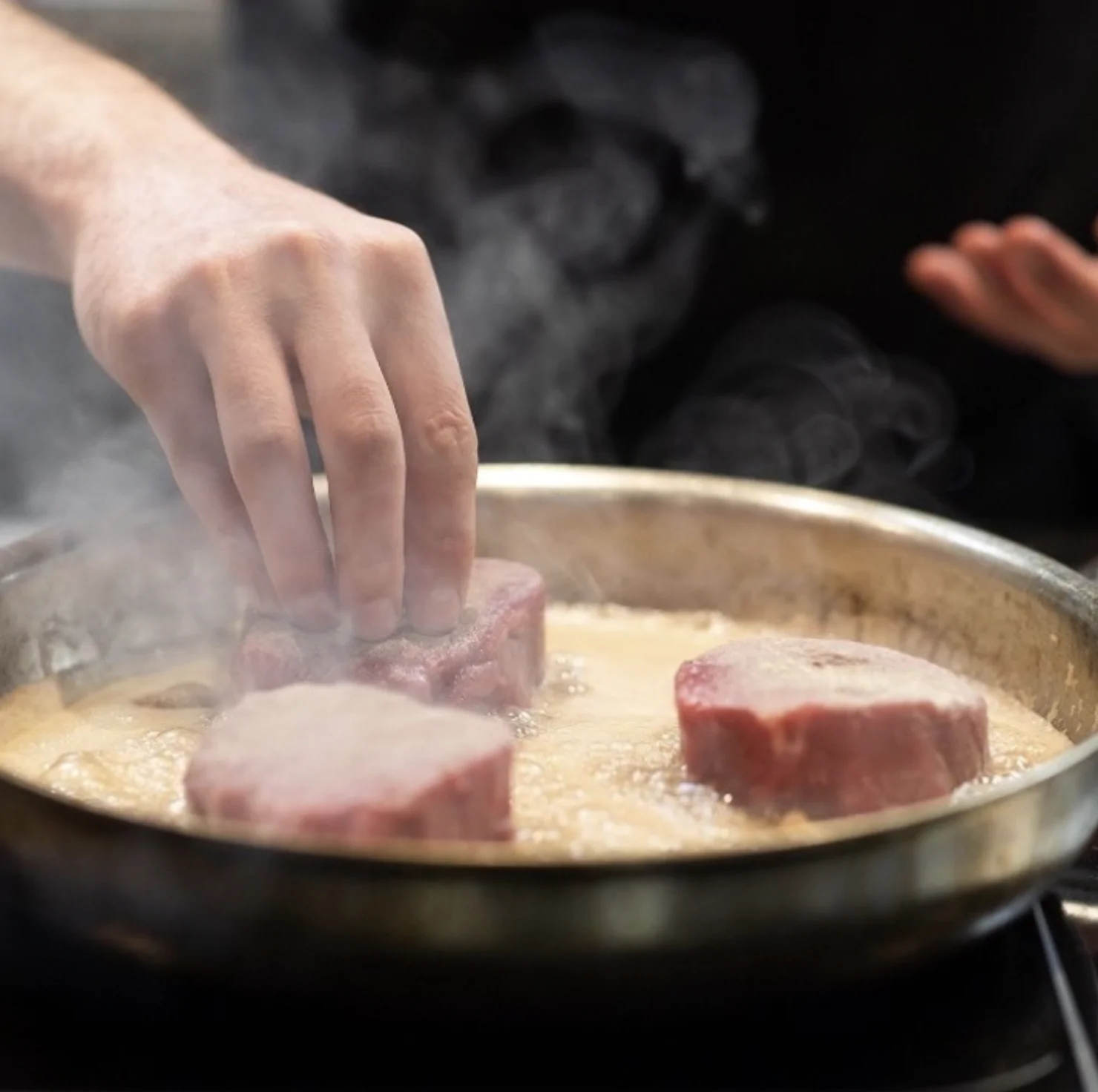
In 1977 werd café Loetje opgericht als biljartcafé door Ludwig 'Loetje' Klinkhamer, maar het duurde niet lang voor men het biljart inruilde voor de ossenhaasbiefstuk die werd geserveerd. Meer dan veertig jaar later is Loetje een gigantische keten en is het oorspronkelijke 'Café' een begrip in Amsterdam. De smakelijke biefstuk wordt geserveerd met huisgemaakte frietjes en zwemt in verse jus - om je vingers bij af te likken!
1071 KK Amsterdam
Edible Treasures
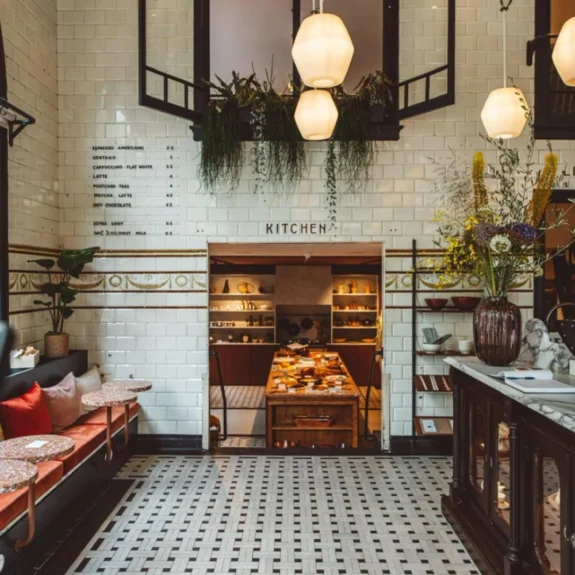
In een voormalige slagerij in Amsterdam Zuid huist de concept store Edibe Treasures. Naast de 'edibles en drinkables' in de koffieshop vind je hier een prachtige selectie van alles voor op de tafel zoals zilverwerk, keramiek, tafellinnen, maar ook kookboeken en accessoires. Er worden ook regelmatig pop ups en workshops georganiseerd.
1071 DJ Amsterdam
Sandberg
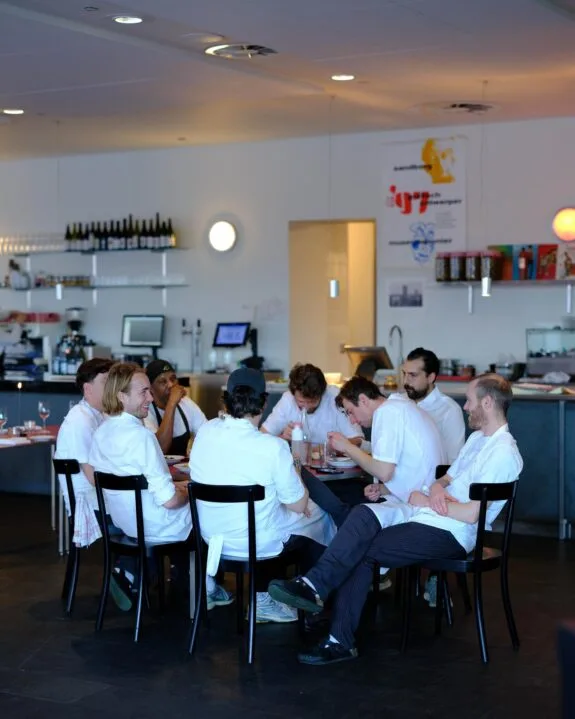
Café Restaurant Sandberg is genoemd naar Willem Sandberg, de vernieuwende oud-directeur van het Stedelijk Museum, een naam die meteen iets zegt over de ambities achter dit restaurant. Het is opgezet door dezelfde jonge Amsterdamse horecaondernemers die ook achter Entrepot en Metro zitten. Overdag werkt de bakkerij samen met de keuken voor zoet bij de koffie, broodjes om mee te nemen of juist een uitgebreide lunch. Voor het diner sluiten de gordijnen en serveert het jonge team creatieve, maar herkenbare en klassieke gerechten.
1071 NE Amsterdam
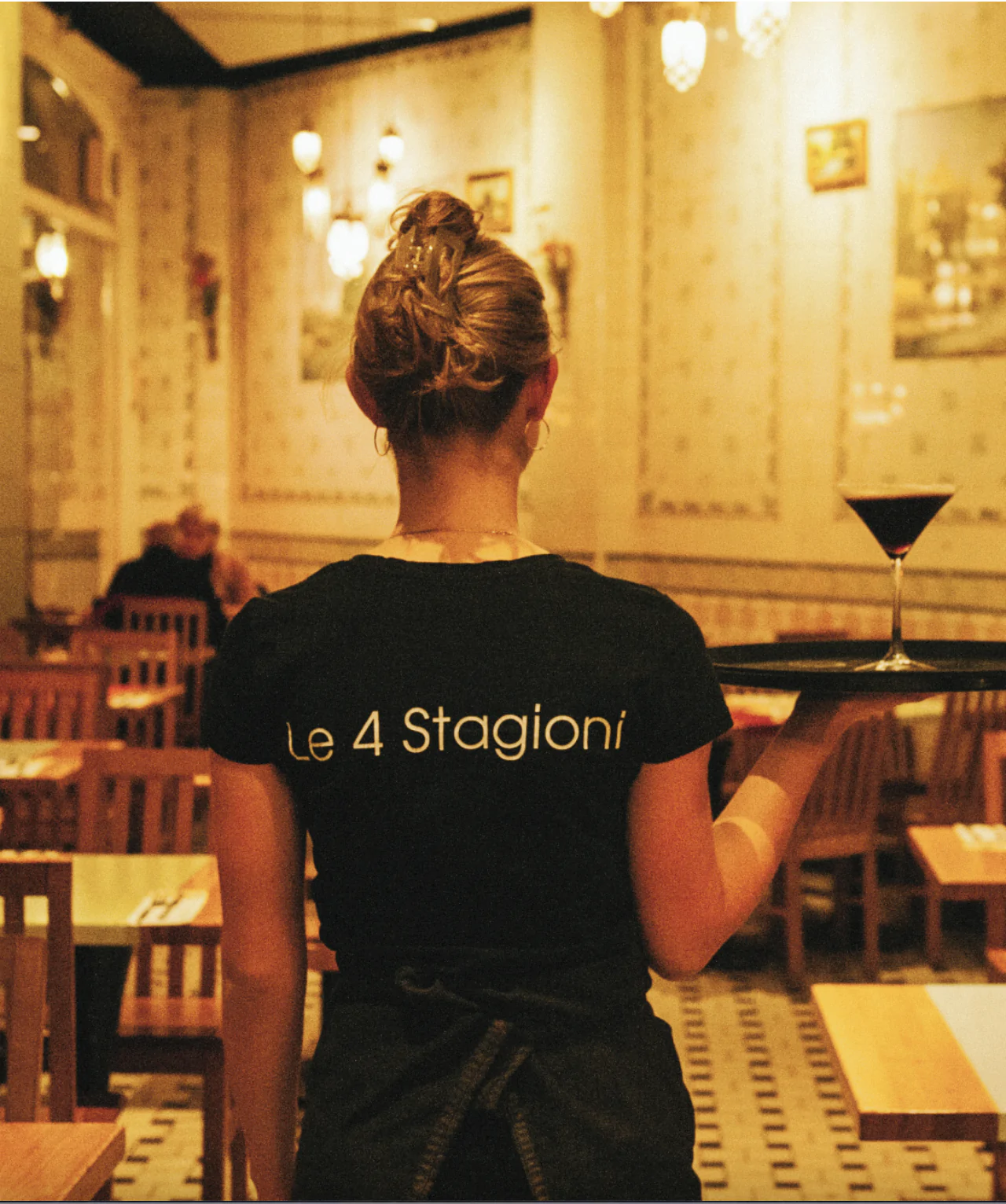
Pizzeria Le 4 Stagioni
Voor bezoekers van het Concertgebouw zijn de Romaanse pizza's met dunne bodem geen vreemde. Sinds 1978 voorziet de pizzeria in Oud-Zuid menige groep en (grote) families van authentiek Italiaans eten. Het interieur heeft een Mediteraans tintje en het menu biedt voor ieder wat wils, van verse pasta's en mals vlees, tot onmisbare antipasti en vegetarische alternatieven.
1071 HD Amsterdam
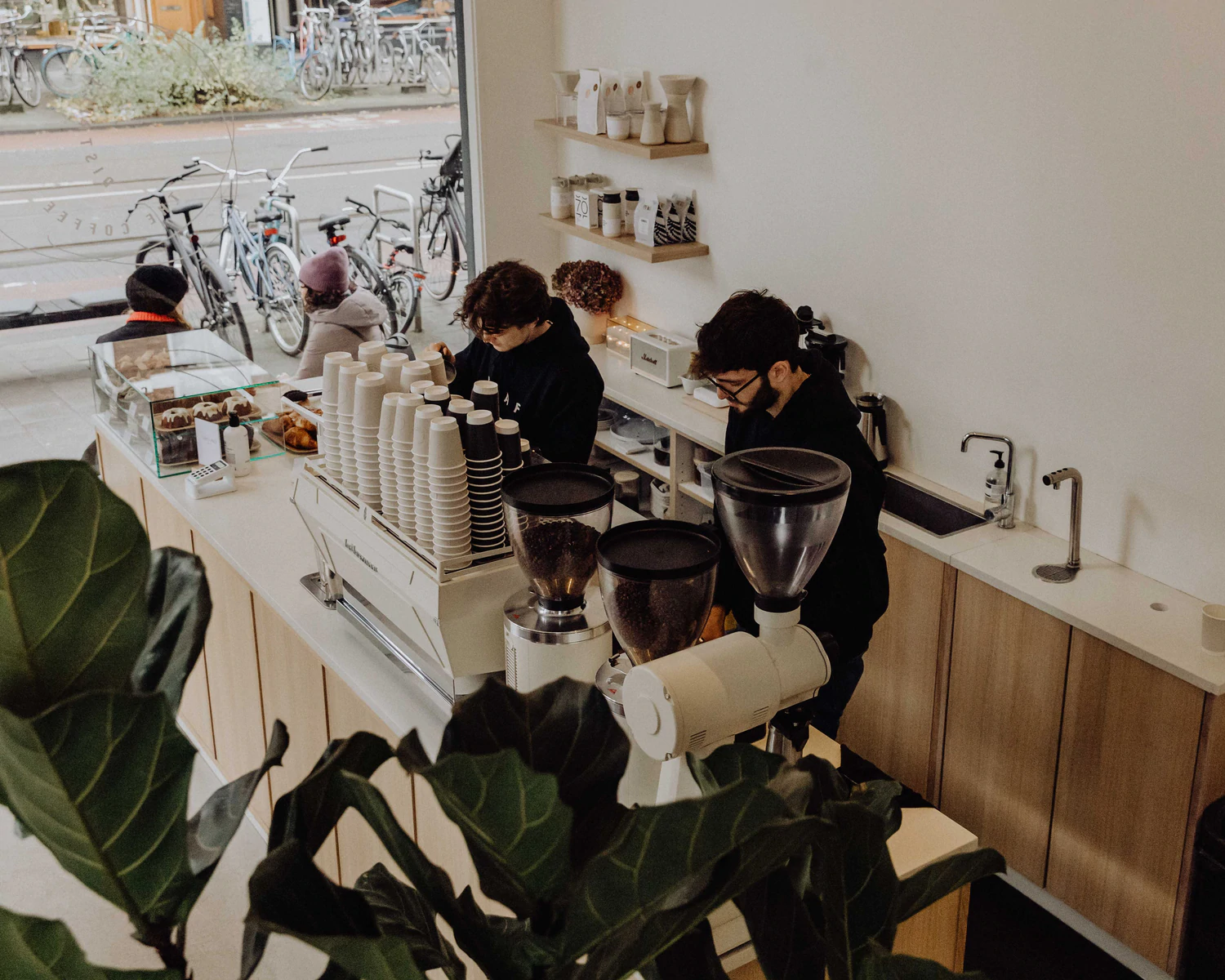
Coffee District
Eigenaren Adil Loukane en Rosa Loukane begonnen met een hole-in-the-wall coffeeshop in een modewinkel in Zuid. Toen de winkel de deuren sloot, grepen Adil en Rosa hun kans en besloten om hun eigen koffiebar te openen. Inmiddels hebben ze meerdere locaties. De koffie wordt gemaakt met een eigen melange gebrand door Lot Sixty One. Daarnaast worden er zoetigheden aangeboden zoals de inmiddelsal bekende kaneelbroodjes en bananenbrood.
1071 DB Amsterdam
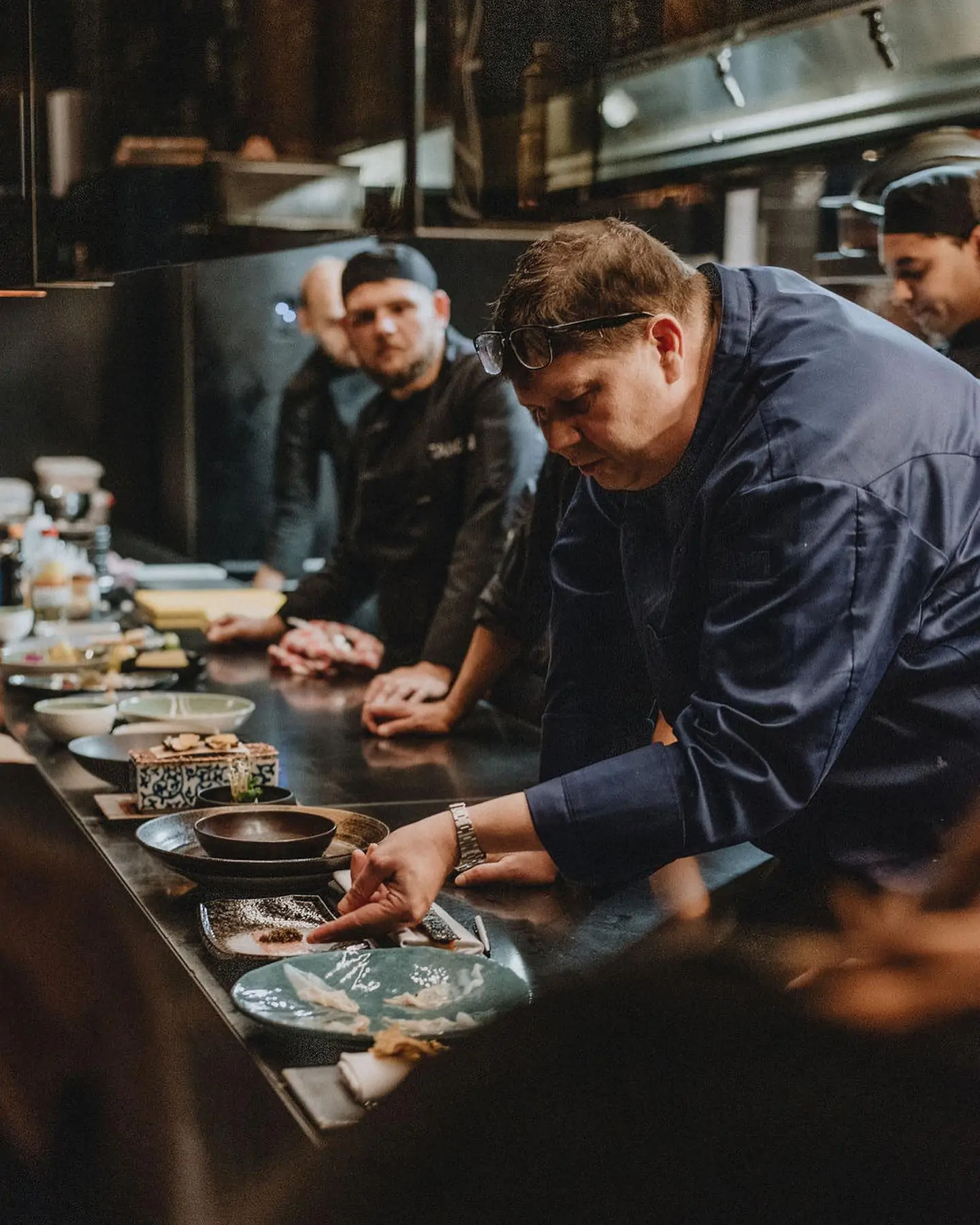
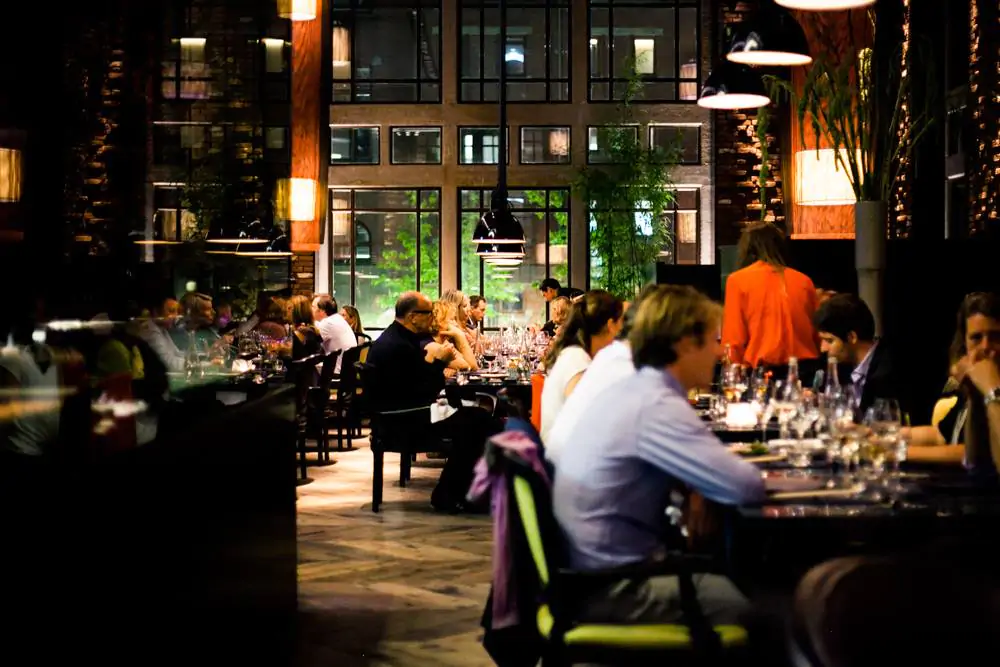
Taiko
Taiko bevindt zich in het vijfsterren Conservatorium Hotel in Amsterdam. In de keuken staat chef Schilo van Coevorden. Als chef is hij klassiek Frans geschoold, maar raakte al snel niet uitgepraat over de exotische smaken uit Azië. Samen met zijn team heeft hij een menu samengebracht met onder andere sushi, dimsum, curry's en vlees en vis gerechten. Uiteraard zijn er ook vegetarische opties.
1071 NH Amsterdam
Franzen
Chef en eigenaar Jesse Franzen groeide op in een horecafamilie in Haarlem. Zijn vader stond in de keuken, zijn moeder werkte in de bediening. Zijn eigen professionele reis begon in de keuken van het tweesterrenrestaurant Chapeau, waarna hij ervaring opdeed bij onder andere Aan de Poel, Ron Gastrobar en Lars Amsterdam. Met Franzen creëert Jesse een plek die voelt als een moderne huiskamer voor de stad. Toegankelijk en warm, maar altijd met een hoge standaard. Het menu is klassiek en herkenbaar, met hier en daar een verrassende twist.
1071 HK Amsterdam
George W.P.A
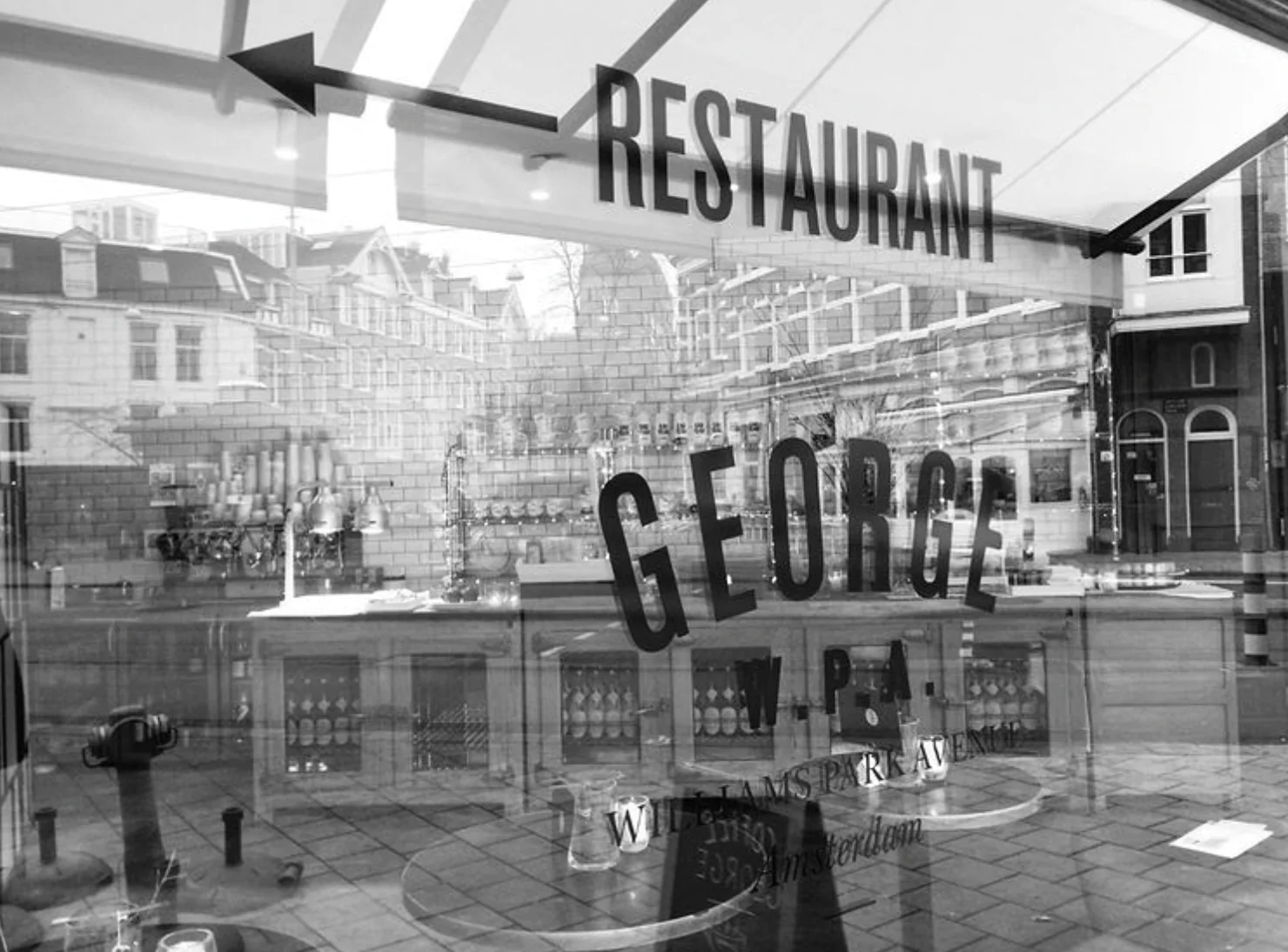
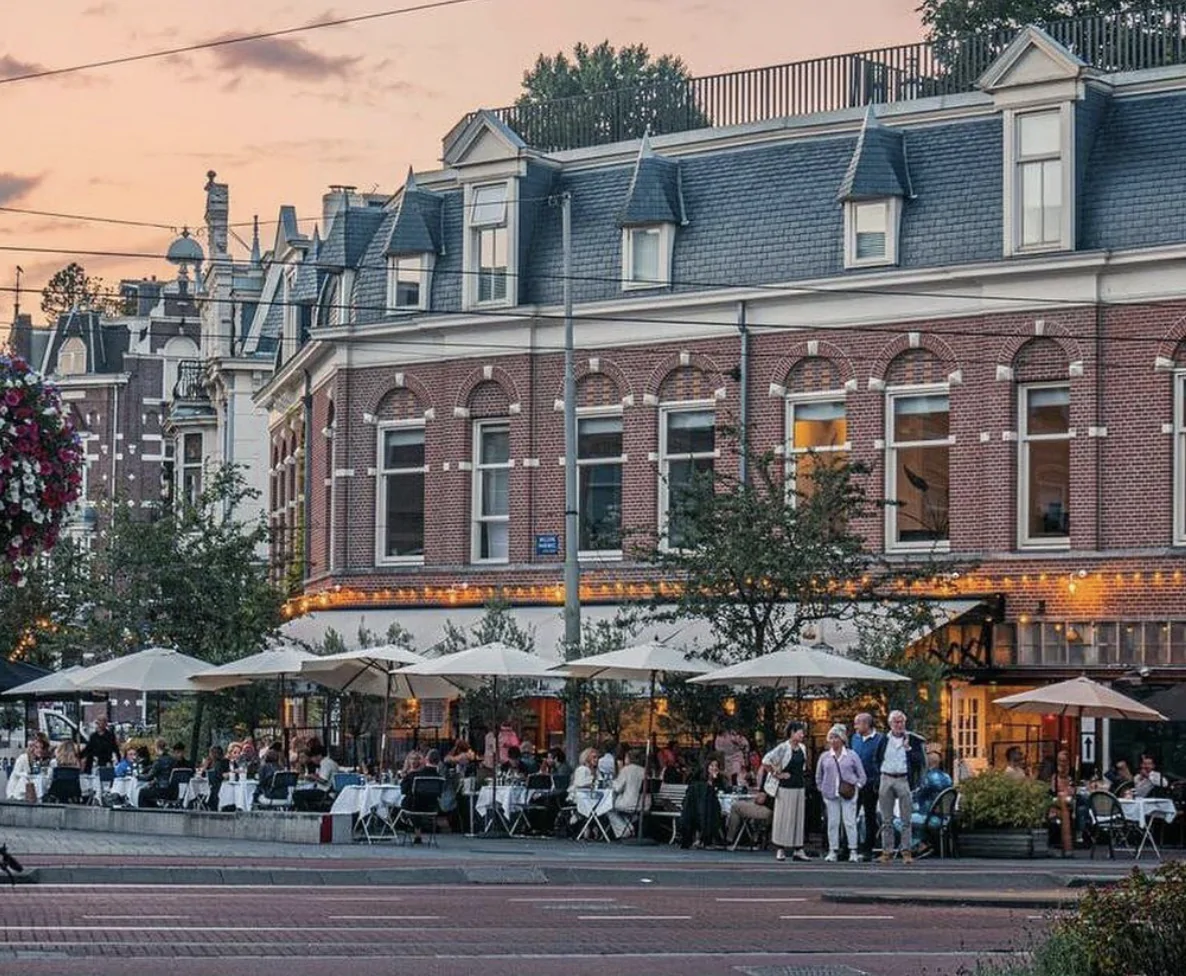
George W.P.A is de ideale plek om neer te strijken voor een goed glas wijn en lekker eten met een chique touch. De brasserie in Zuid is naar eigen zeggen een combinatie van klassieke Franse gerechten, verpakt in New-Yorkse stijl en staat bekend om signature dishes zoals gegrilde kreeft en Blackened Tuna. Treed binnen (op reservering) in het "Upper South" van Amsterdam en see for yourself!
1072 LZ Amsterdam
Bisous
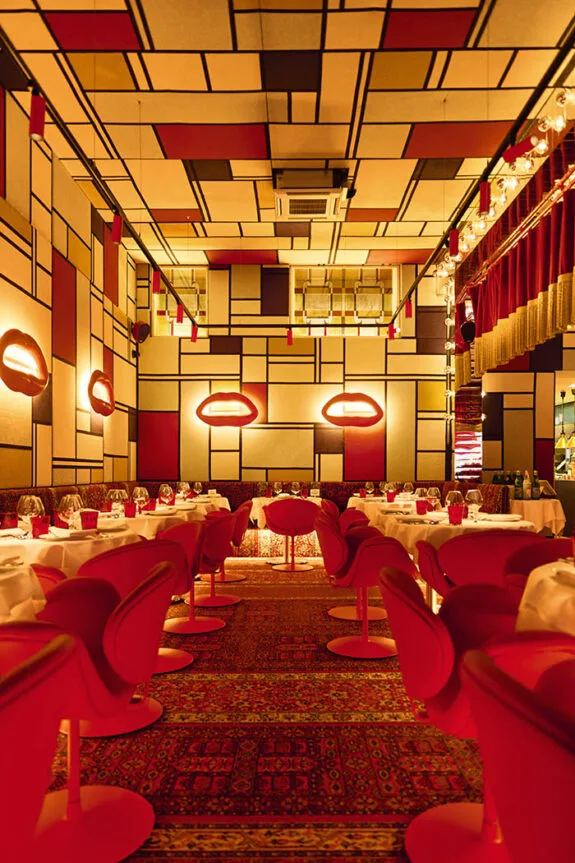
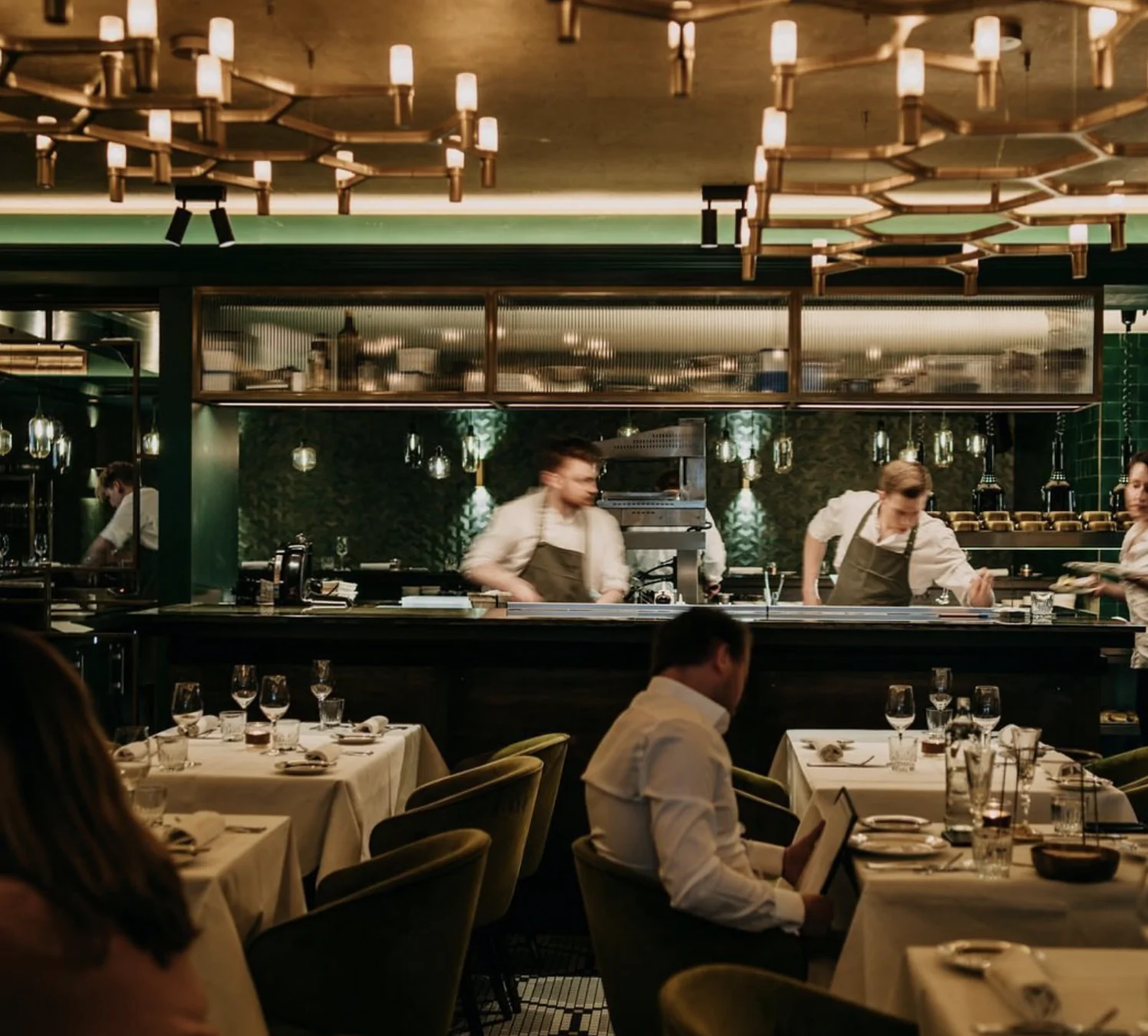
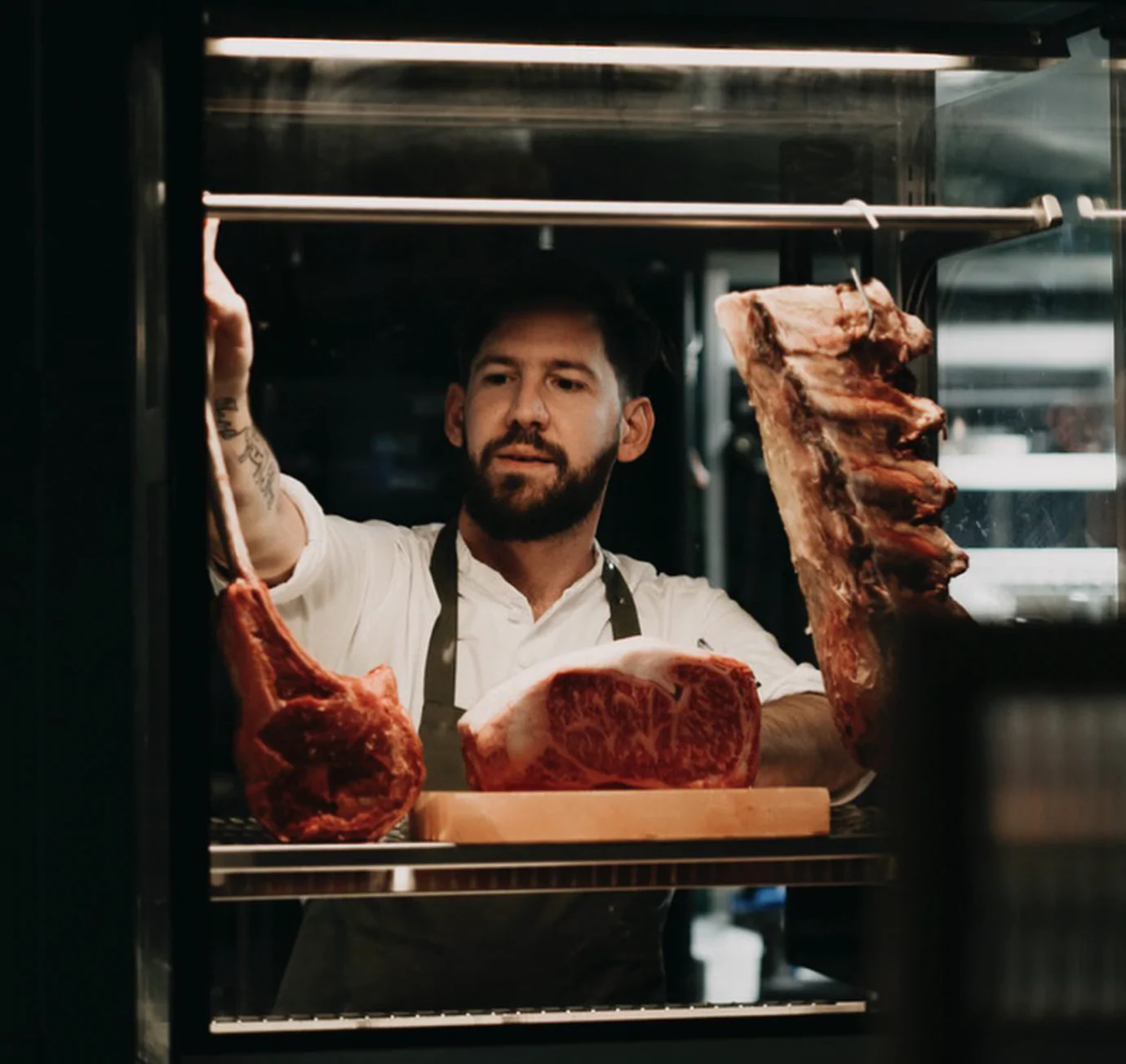
Een 'over de top interieur' van Jean-Philippe Demeyer (Architectural Digest AD100 architect) gecombineerd met een uitstekende keuken waarvan ze zelf zeggen 'A sumptuous French – Zeeland cuisine'. Een goed voorbeeld hiervan zijn de Zeelandse kokkels in een room witte wijnsaus afgemaakt met Pasris en peterselie. Bisou!
1072 CT Amsterdam
Sababa
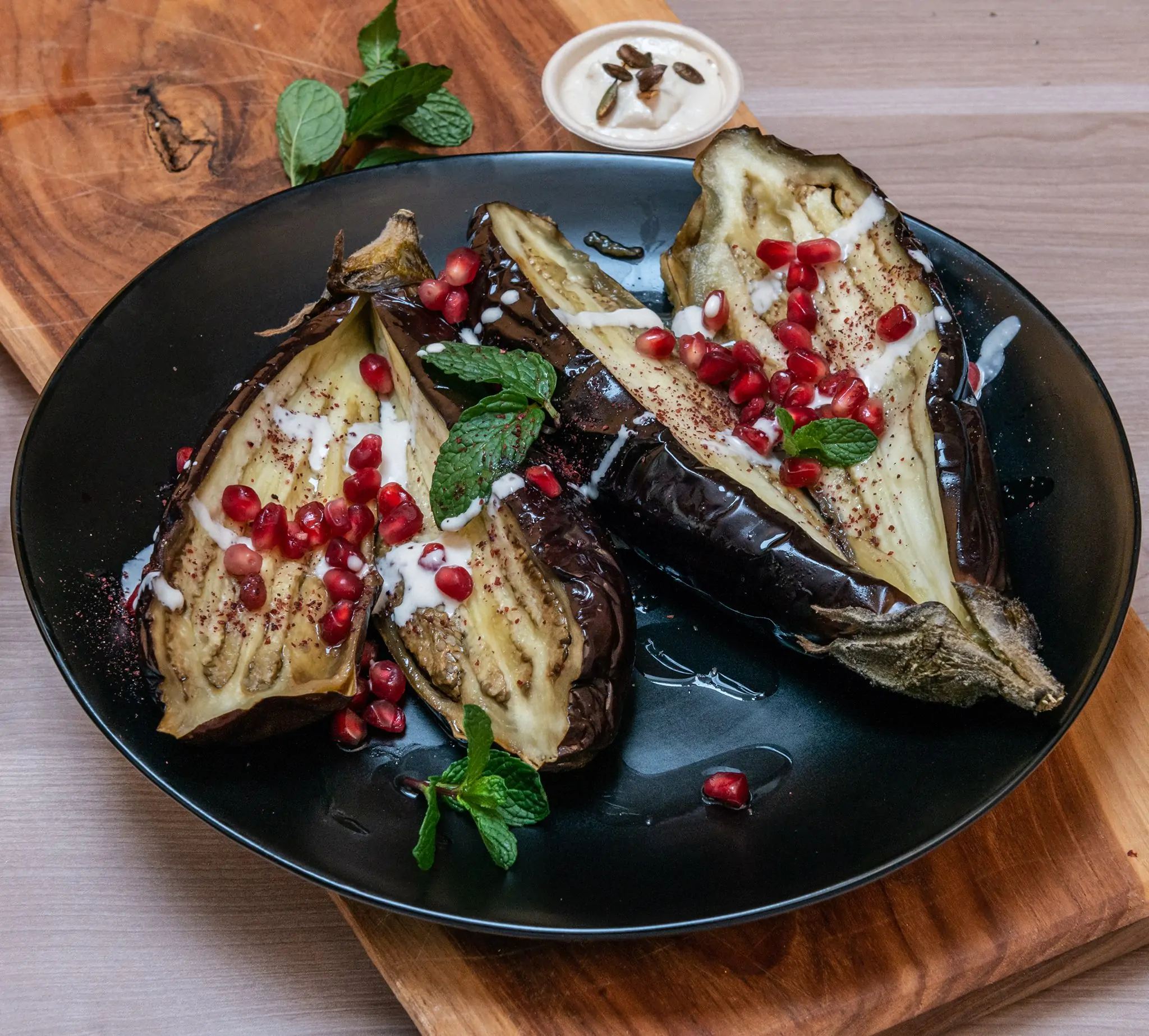
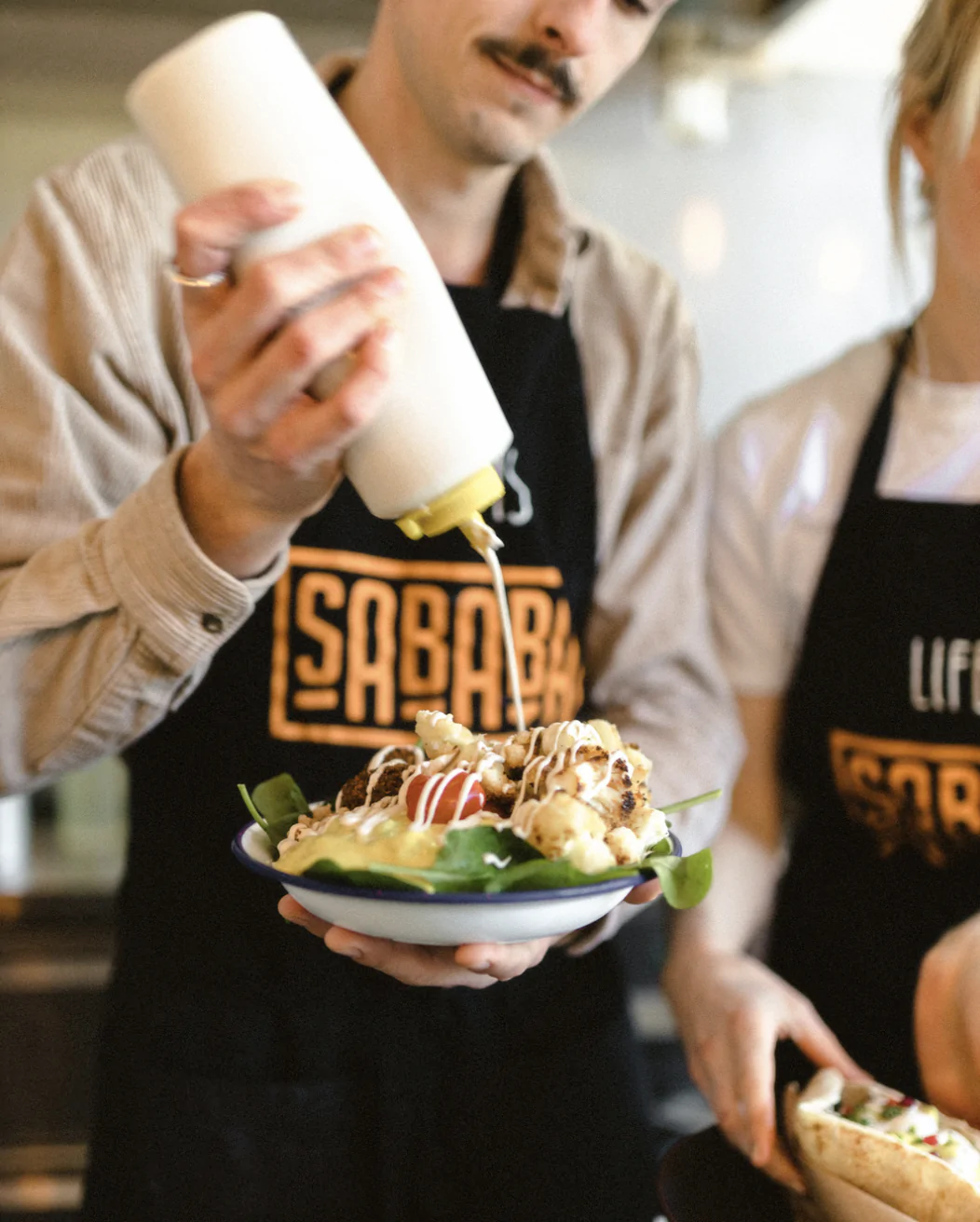
De eigenaar van Sababa wilde goede, perfecte falafel. Ze zijn verschillende combinaties gaan uitproberen, producten gaan proeven en zo ontstond hun perfecte falafel broodje. Geïnspireerd op de Israëlische keuken, heerlijk voor een snelle hap of om uitgebreid te eten met een biertje erbij.
1072 BV Amsterdam
Maris Piper Brasserie
Het begrip brasserie vindt zijn oorsprong in de Elzas en serveert over het algemeen wat luxere gerechten dan een bistro. De Breda Group heeft met Maris Piper is een eigentijdse versie neergezet. Hier kun je traditionele vis- en schelpdierengerechten, vlees en seizoensfavorieten bestellen. Denk aan Denk aan oesters, artichoke en piepkuiken.Wil je je laten verrassen, dan kan je kiezen voor de Chef's Table, een dertiengangenmenu dat veranderd per seizoen. Voor een gezellige sfeer en een goed gevuld bord is dit restaurant in De Pijp zeker het bezoeken waard.
1071 BP Amsterdam
Café Georgette
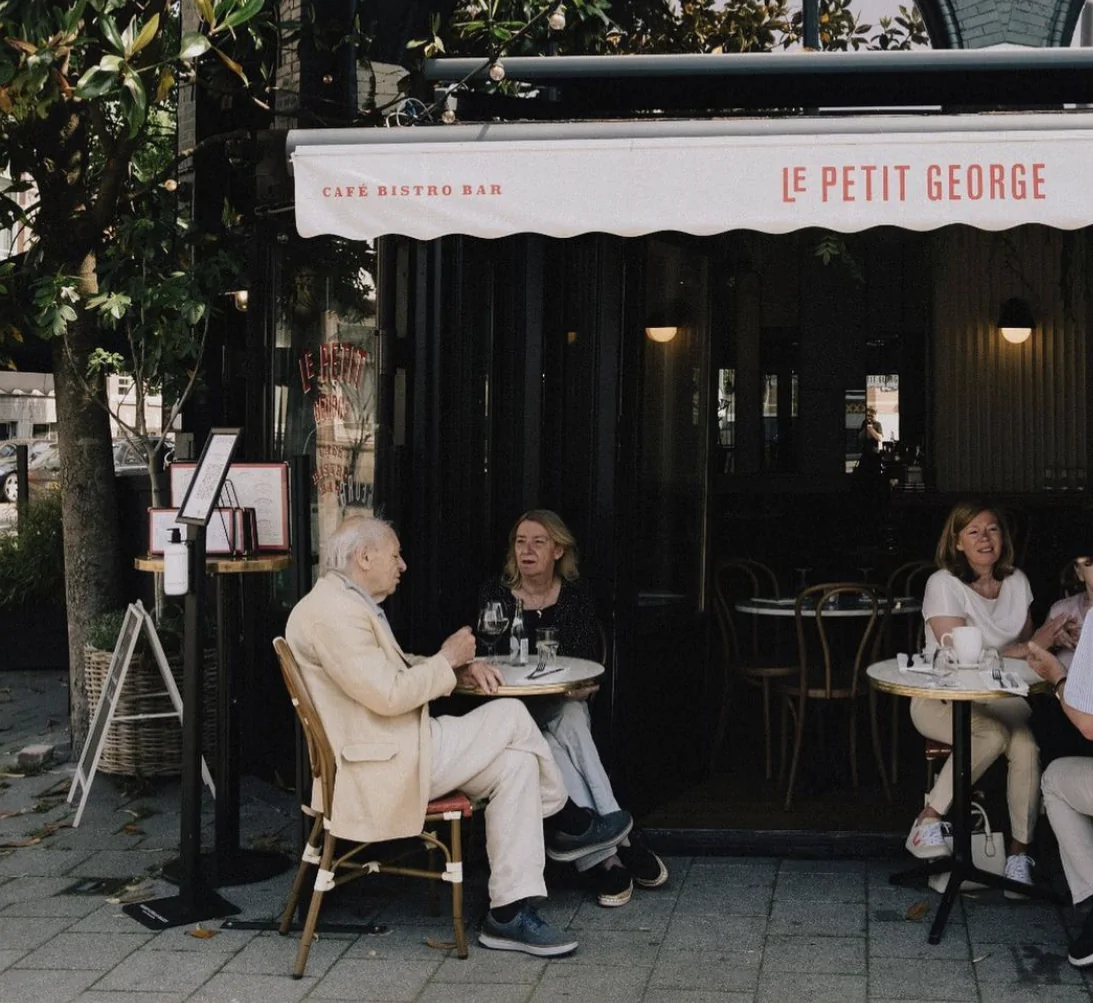
Café Georgette is het kleine zusje van Café George. Het is een mooie plek met een Franse, elegante en charmante sfeer. De vroege vogels kunnen hier terecht voor een espresso en de avondmensen voor een cocktail. Gelegen aan de chique P.C. Hooftstraat is deze plek de droom voor iedere fijnproever. Het menu staat vol lunchklassiekers zoals avocadotoast en croque-monsieur, maar ook tijdloze Franse klassiekers zoals oesters en steak tartare.
1071 AP Amsterdam
Cosentino
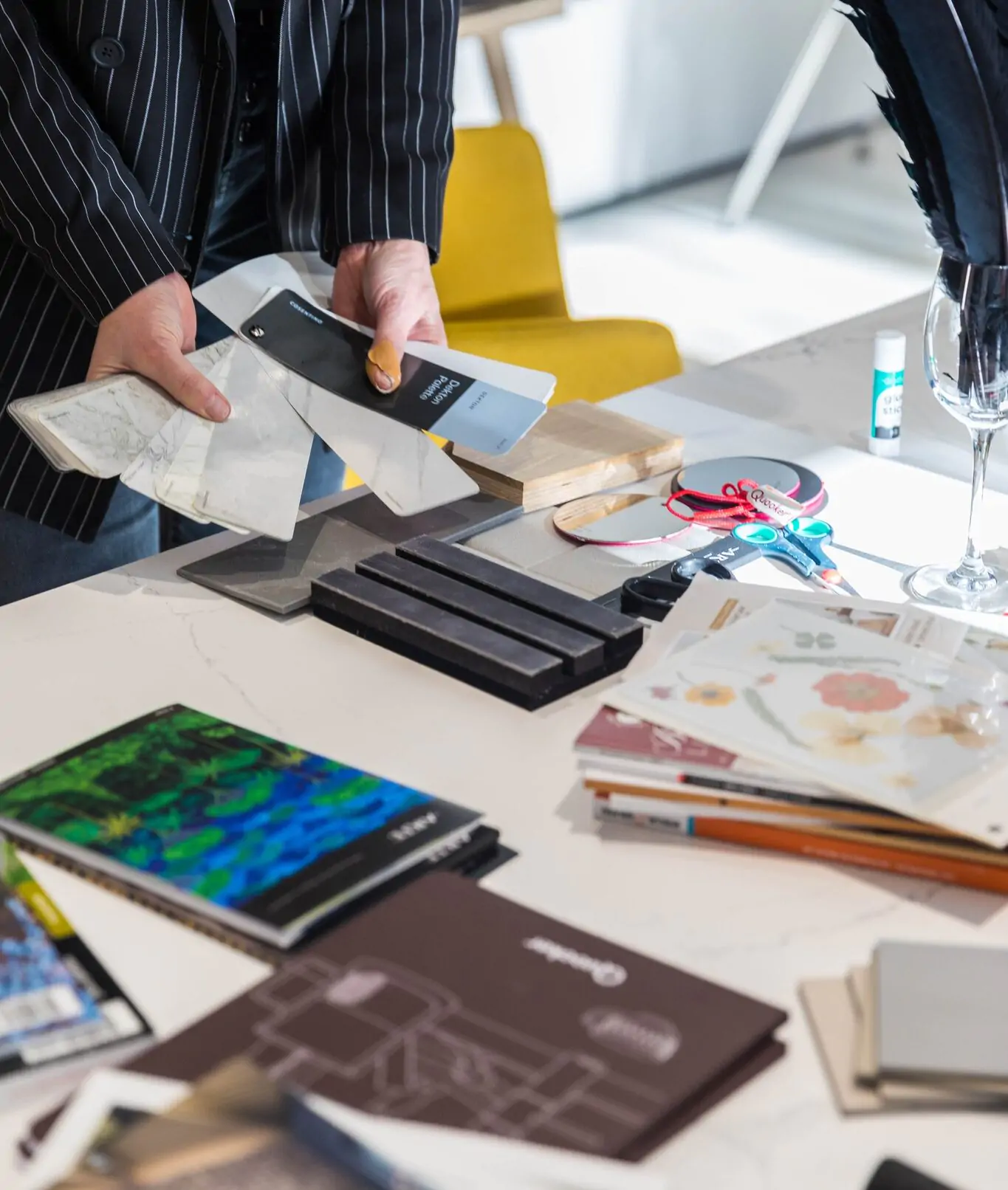
Cosentino Group is een wereldwijd bekend Spaans familiebedrijf dat hoogwaardige innovatieve oppervlakken produceert en distribueert voor de wereld van design en architectuur. Aan de Van Baerlestraat bevindt zich hun inspiratiecentrum waar men kleuren, materialen en toepassingen voor architectuur en designprojecten met elkaar kan vergelijken. Cosentino City biedt een uitgebreid inspiratieplatform waar architecten en ontwerpers elkaar kunnen ontmoeten en kunnen werken.
1071 LN Amsterdam
Het Concertgebouw
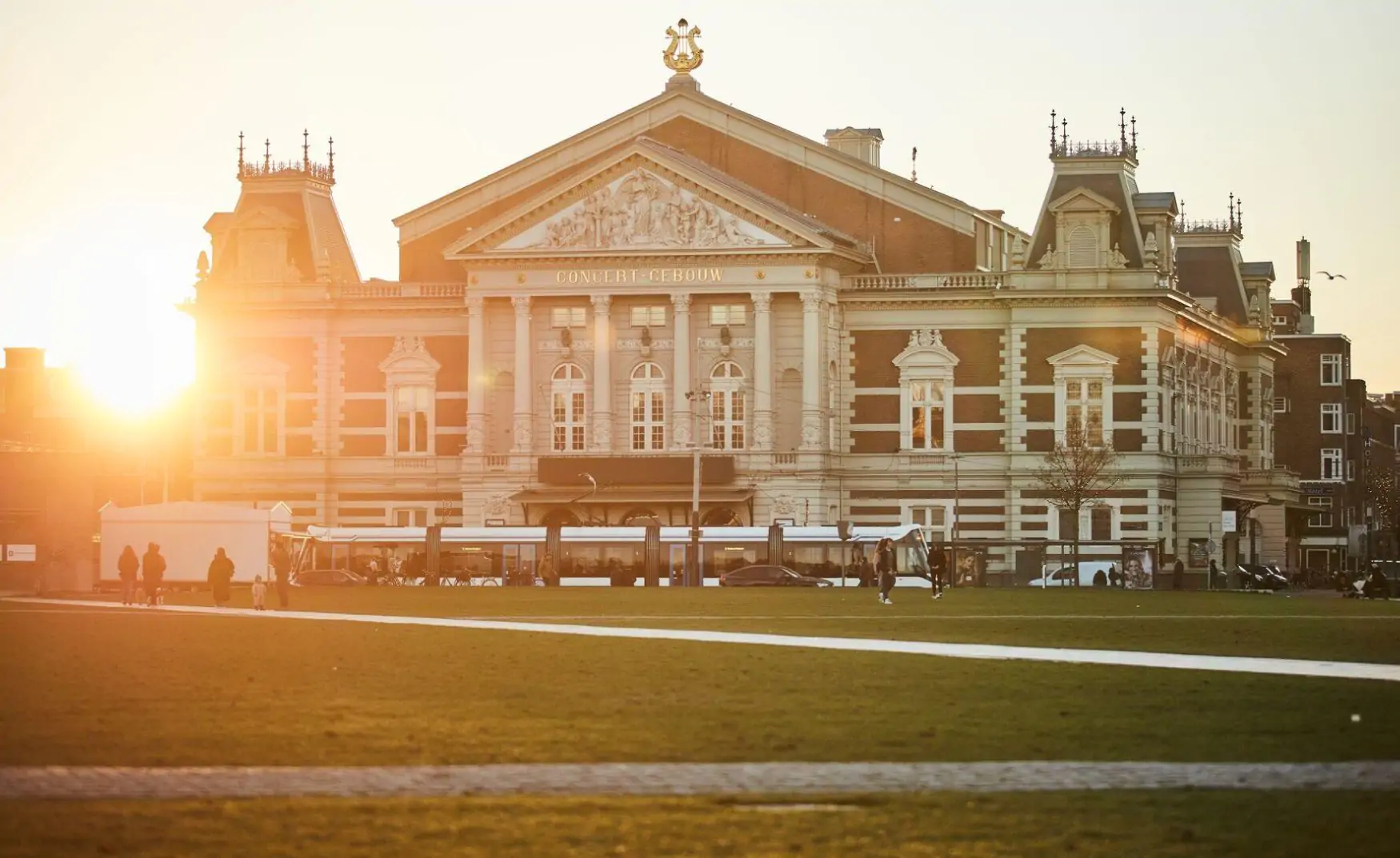
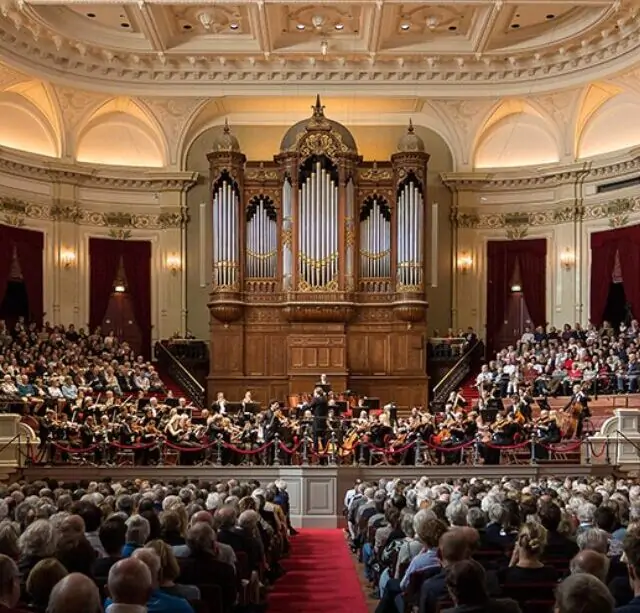
Het Concertgebouw is één van de monumentale panden aan het Amsterdamse Museumplein. Het gebouw stamt uit 1888 en is voltooid volgens de stijl van het Weens classicisme; als heeft het ook kenmerken uit de neorenaissance. Het gebouw is ontworpen voor klassieke concerten maar heeft in de jaren 60 en 70 ook een tijd dienst gedaan als poppodium. Bekende sterren die hier hebben opgetreden zijn onder andere Led Zappelin en Aretha Franklin. Tegenwoordig vinden er jaarlijks bijna duizend concerten en andere culturele activiteiten in het Concertgebouw plaats. Voor degenen met een kleiner budget zijn er ook gratis lunchconcerten. Voor een bezoek aan een lunchconcert kun je het beste eerst even op de website kijken. Vaak kun je daar van de voren gratis kaartjes reserveren.
1071 DJ Amsterdam
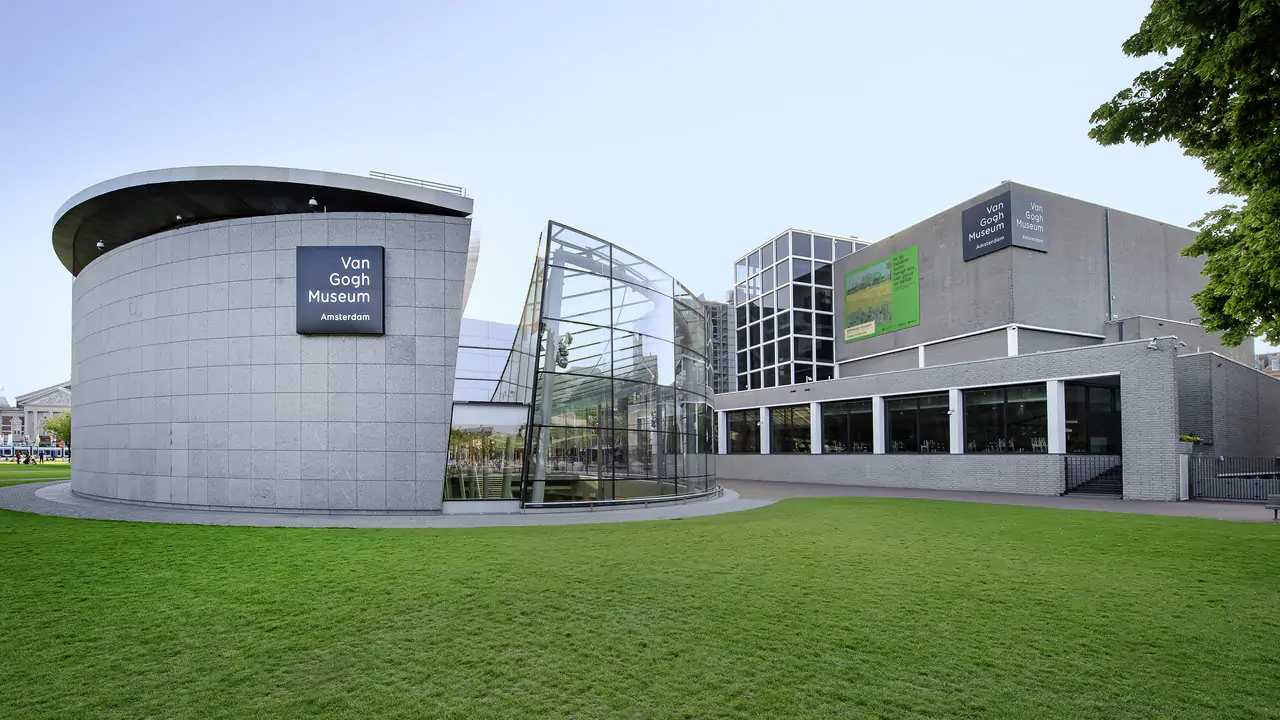
Van Goghmuseum
In het Van Goghmuseum aan het museumplein vind je de mooiste werken van bekend Nederlands schilder Vincent van Gogh. Het museum heeft een vaste collectie met de meesterwerken van Van Gogh en een wisselende expositie waar werken worden getoond van zowel tijdsgenoten als hedendaagse kunstenaars. In het museum zijn tentoonstellingen geweest van onder andere David Hockney en Maurice Denis. Naast het tonen van kunst voert het Van Goghmuseum ook onderzoek uit over Vincent van Gogh en zijn tijd. Op de website van het museum kun je veel informatie vinden over de uitgevoerde onderzoeksprojecten en restauraties. Het museum is erg populair, met name onder de internationale toeristen, om teleurstelling en lange rijen te voorkomen is het handig om van te voren online al tickets te bestellen.
1071 DJ Amsterdam
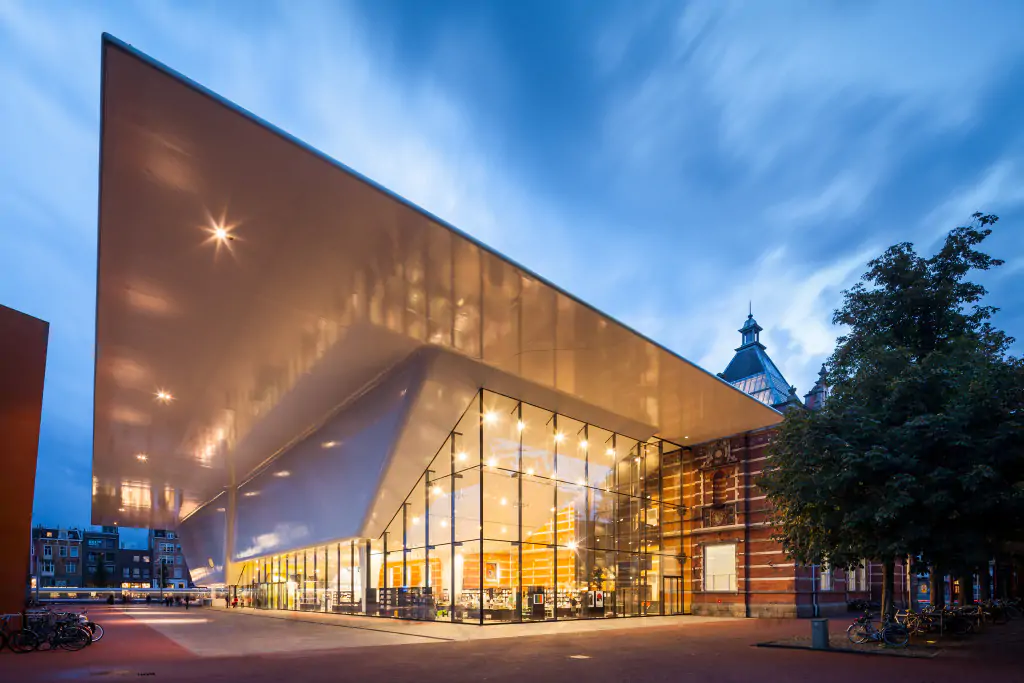
Stedelijk Museum
Het Stedelijk Museum is dé plek waar iedereen moderne en hedendaagse kunst en vormgeving kan ontdekken en beleven. 365 dagen per jaar geopend. In het gebouw van het Stedelijk Museum Amsterdam versmelten oude en moderne architectuur tot een geheel. Architect Mels Crouwel gebruikte in de verbouwing van 2012 het wit van ouddirecteur Willem Sandberg als uitgangspunt voor 'de badkuip'. Het Stedelijk Museum Amsterdam neemt sinds 2008 jaarlijks 15 nieuwe Blikopeners aan. Blikopeners zijn open-minded Amsterdamse jongeren, die een jaar lang in het museum werken om de blik van het publiek en personeel te openen.
1071 DE Amsterdam
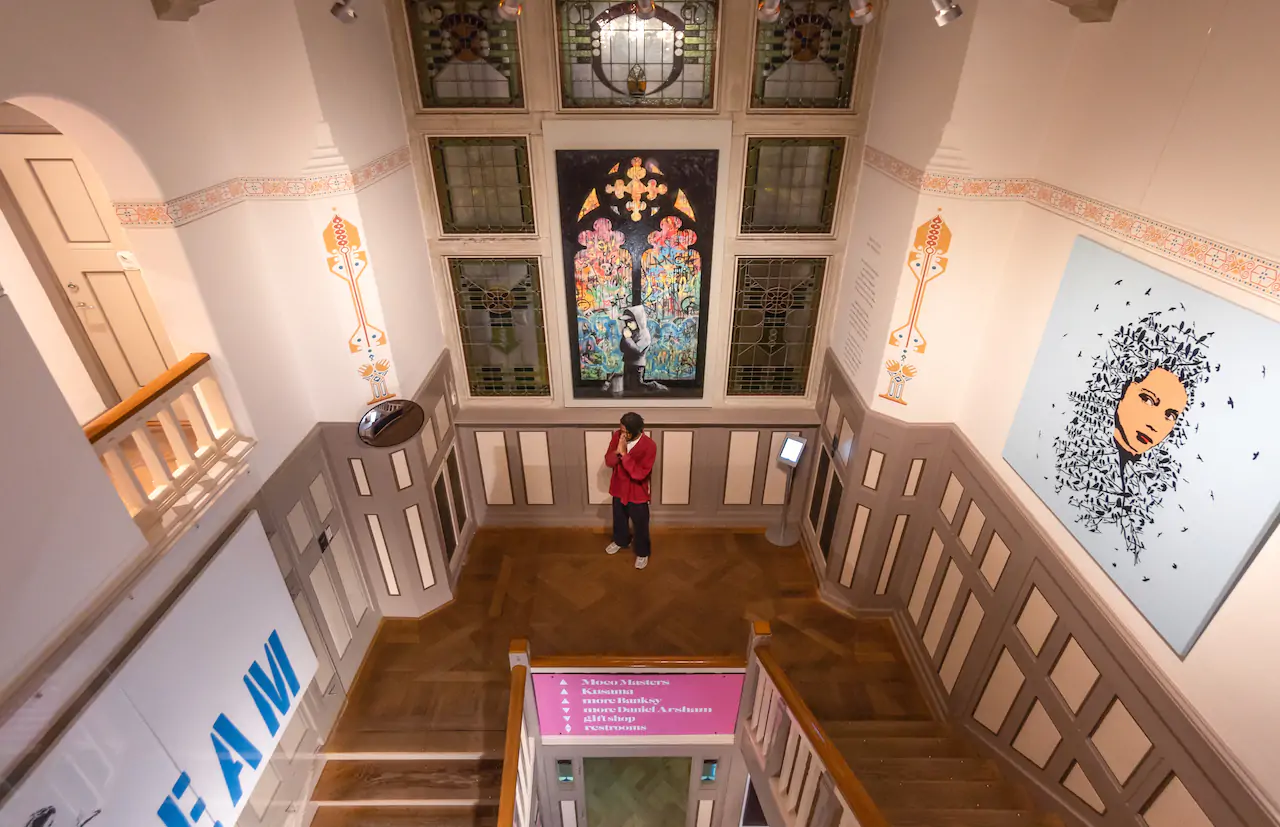
Moco
Het Moco museum (Modern Contemporary museum) is één van de nieuwste musea aan het Museumplein. Dit museum is opgericht in 2016 en heeft ook een vestiging in Barcelona. Het Moco museum is een onafhankelijk museum dat stukken toont van onder andere Banksy en Yayoi Kusama. Het Moco museum richt zich op hedendaagse kunst, zoals (post)moderne beeldende kunst en straatkunst. In Amsterdam is het Moco museum gevestigd in Villa Alsberg. Het pand uit 1904 is ontworpen door Edward Cuypers, de neef van de architect van het Rijksmuseum en was een van de eerste particuliere villa's op het museumplein.
1071 HK Amsterdam
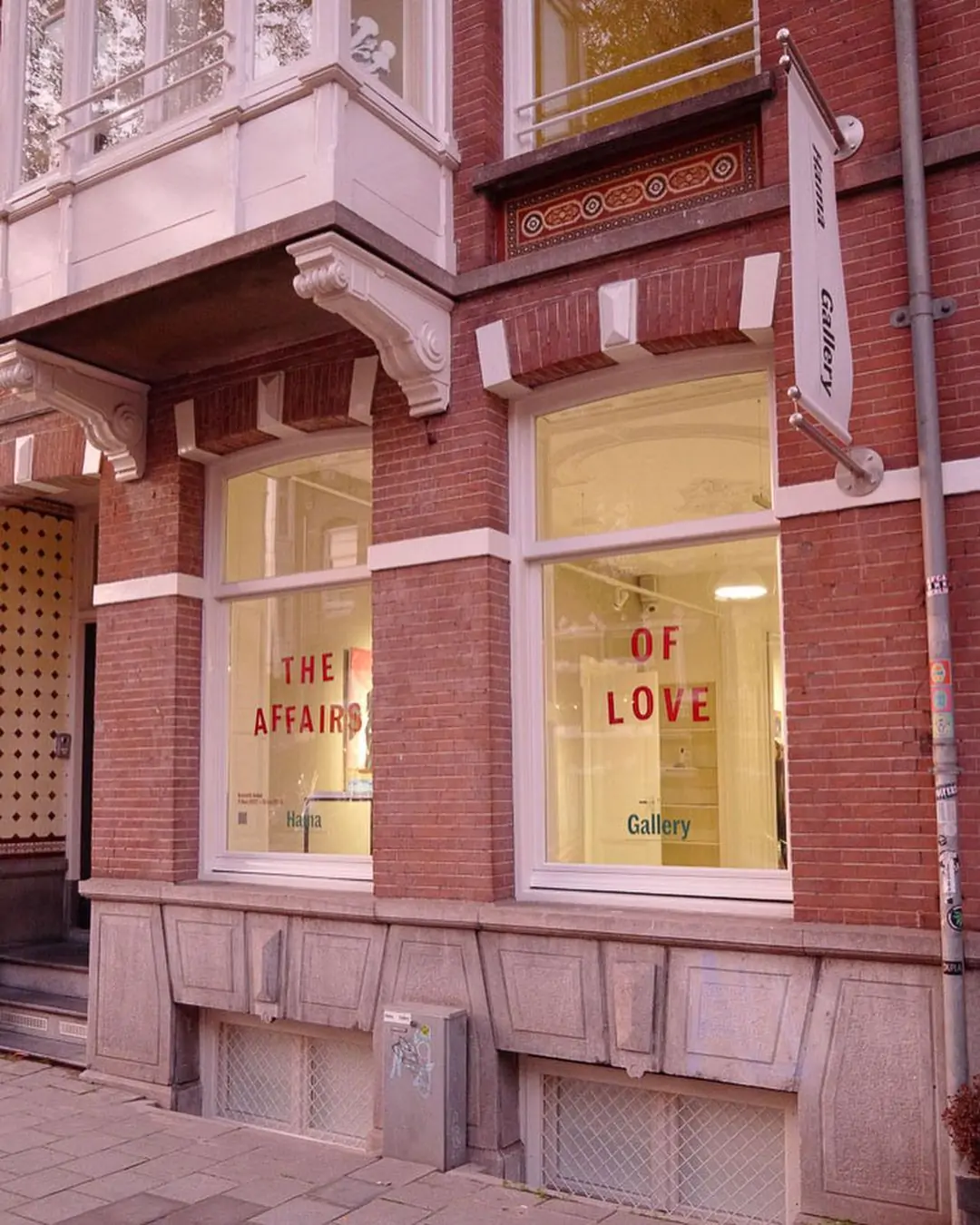
Hama Gallery
Bij Hama Gallery geloven ze dat een galerie een grenzeloze ontmoetingsplaats is waar kunst en mensen samenkomen. Het doel is om kunst toegankelijker te maken door een unieke ervaring te bieden die breekt met traditie. De galerie verwelkomt bezoekers met open armen, of je nu binnenloopt voor een spontaan bezoek, een intieme privébezichtiging wilt, of samen met anderen kunst wilt vieren tijdens onze feestelijke openingen en tuinevenementen.