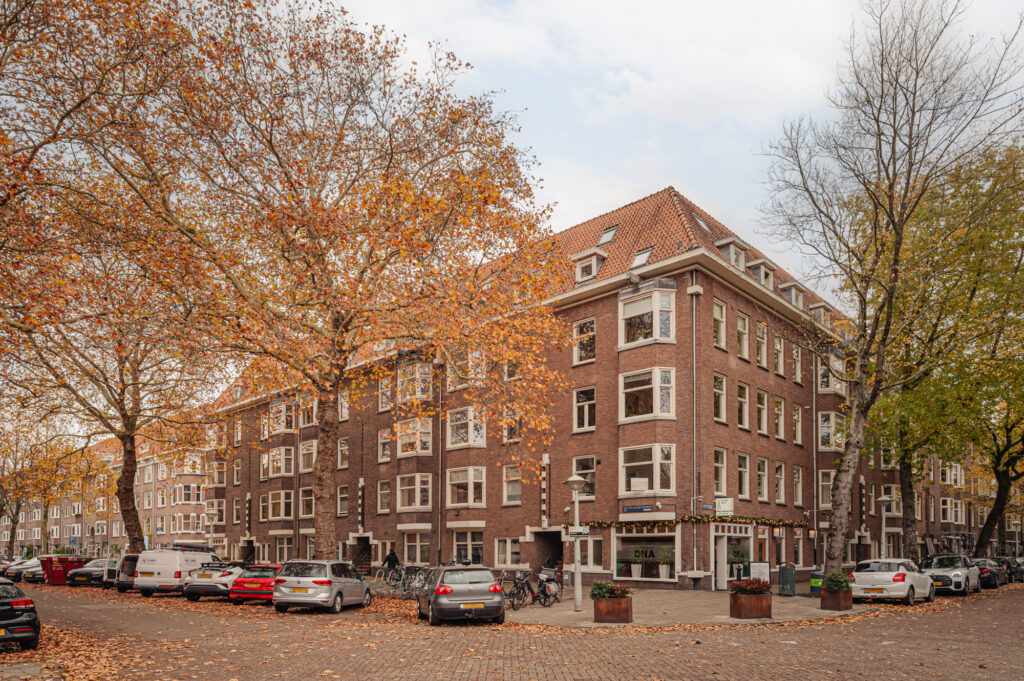
Apartment of approximately 58 m², located in the Stadionbuurt neighborhood, part of the monumental Plan Zuid. The property features a bright living room, a kitchen with access to the balcony, one bedroom with French doors to the second balcony, and a bathroom with separate toilet. The layout is efficient and offers daylight on both sides of the building. Located on leasehold land, with two balconies at the quiet rear.
Guided tour
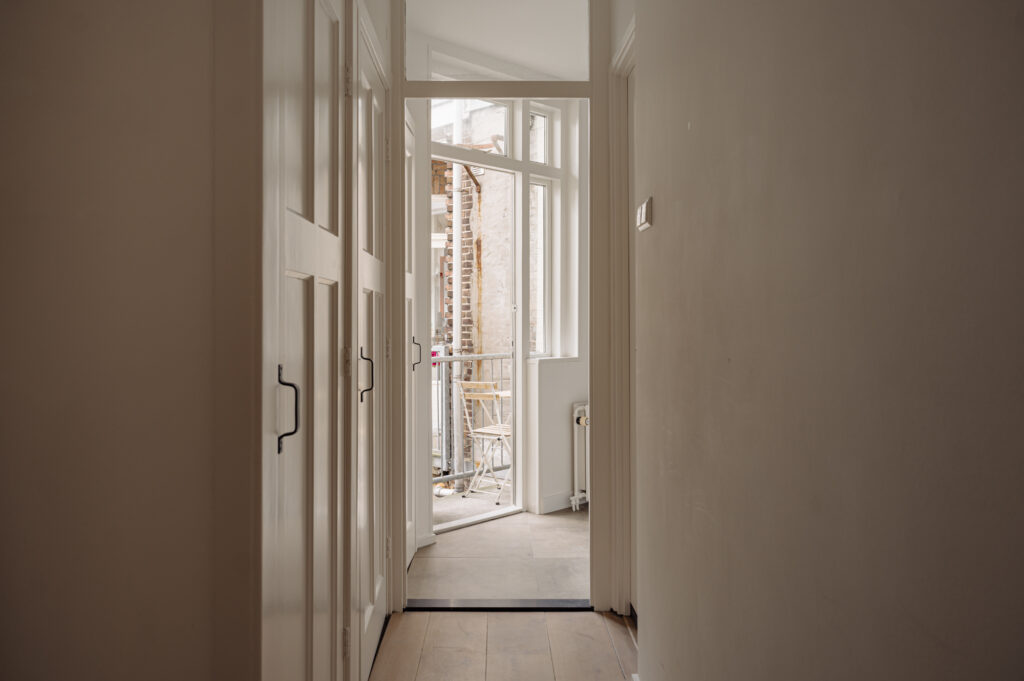
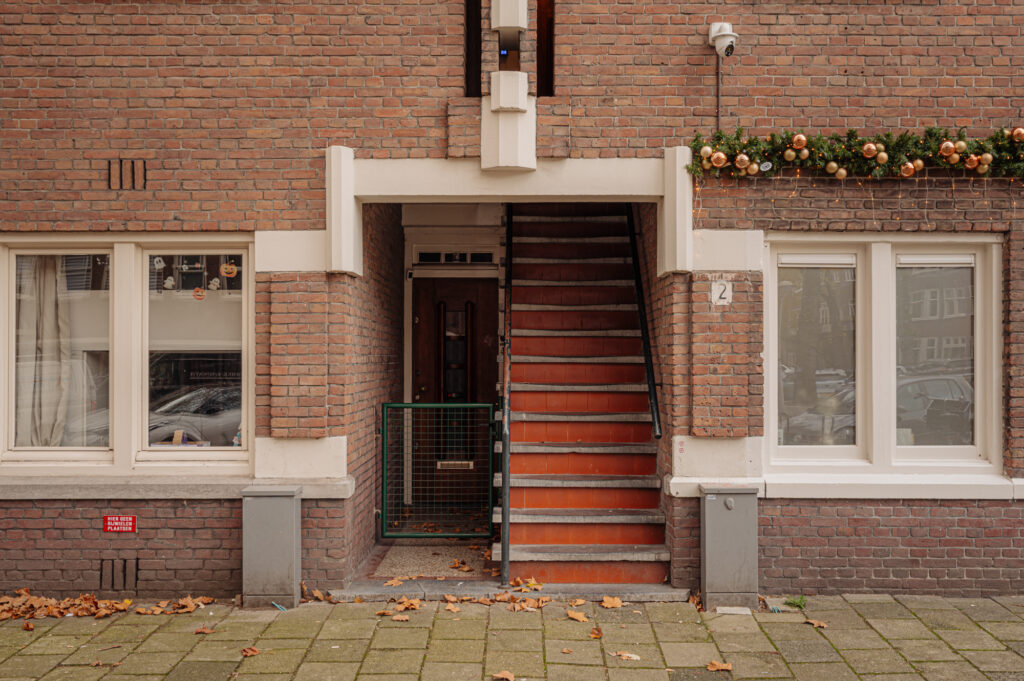
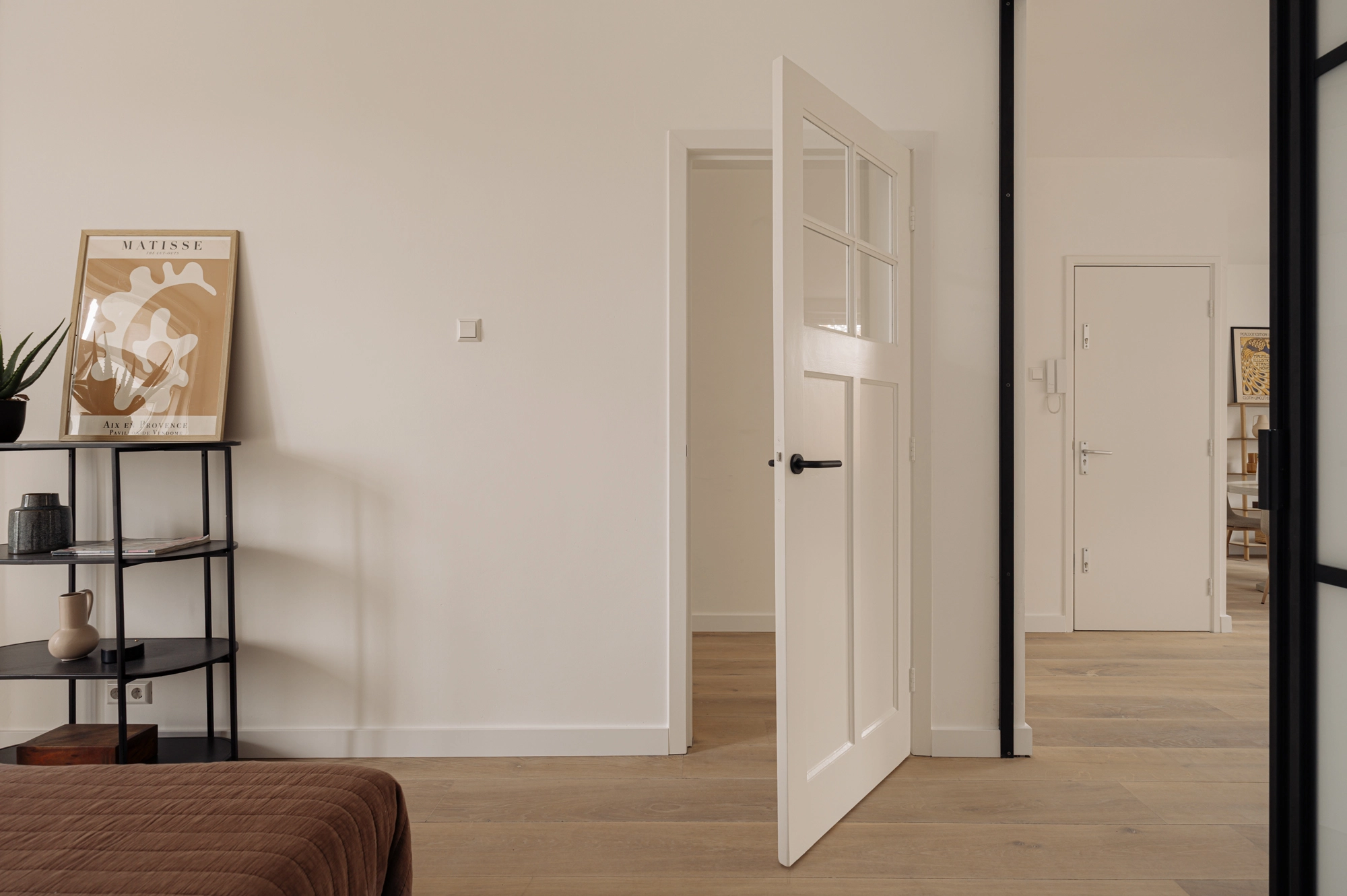
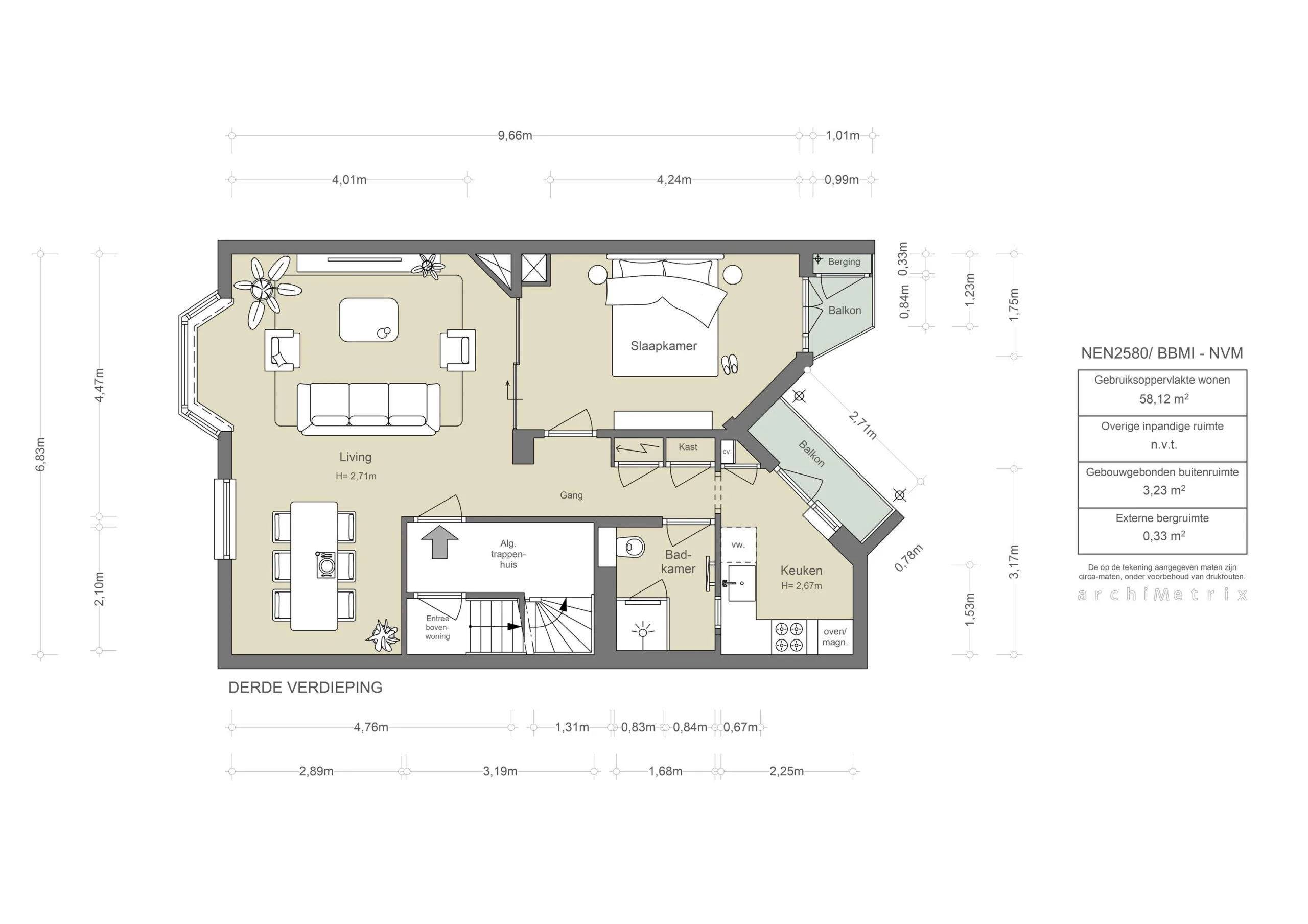
The apartment is located on the third floor and is accessed via the communal staircase. The entrance opens onto an elongated hall that Rooms all Rooms . Adjacent to the hall is a storage cupboard with space for a washing machine, a separate toilet, and the bathroom.
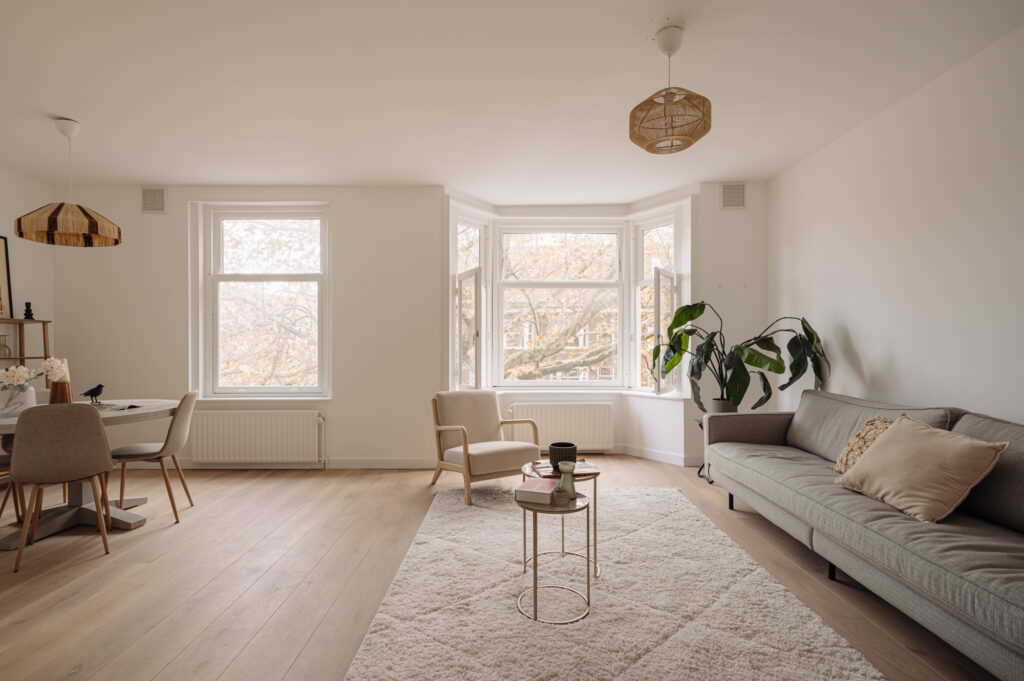
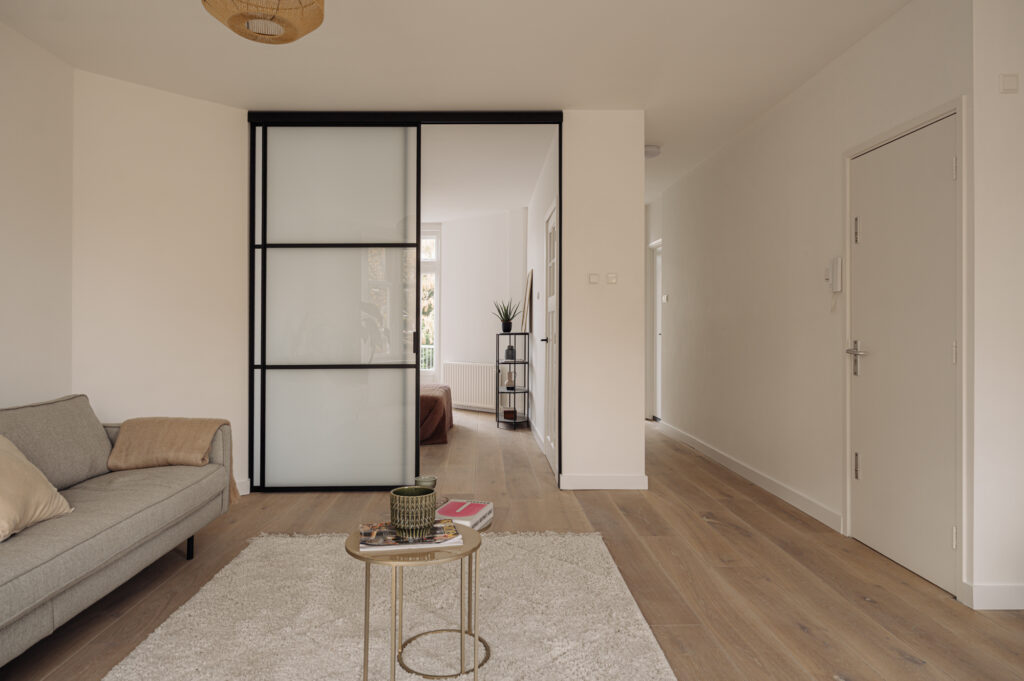
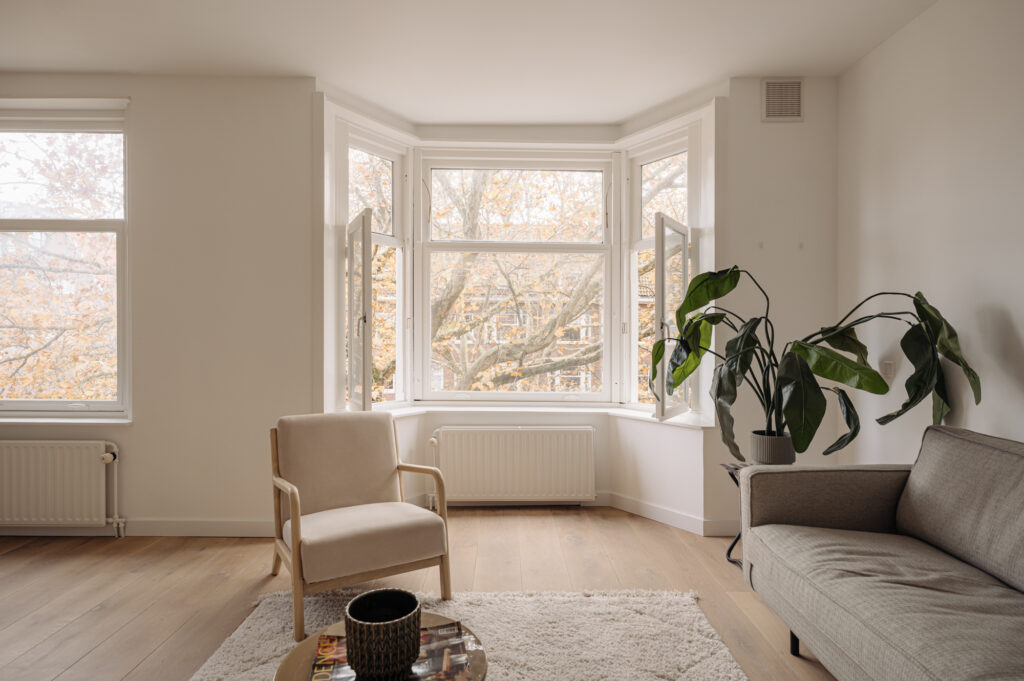
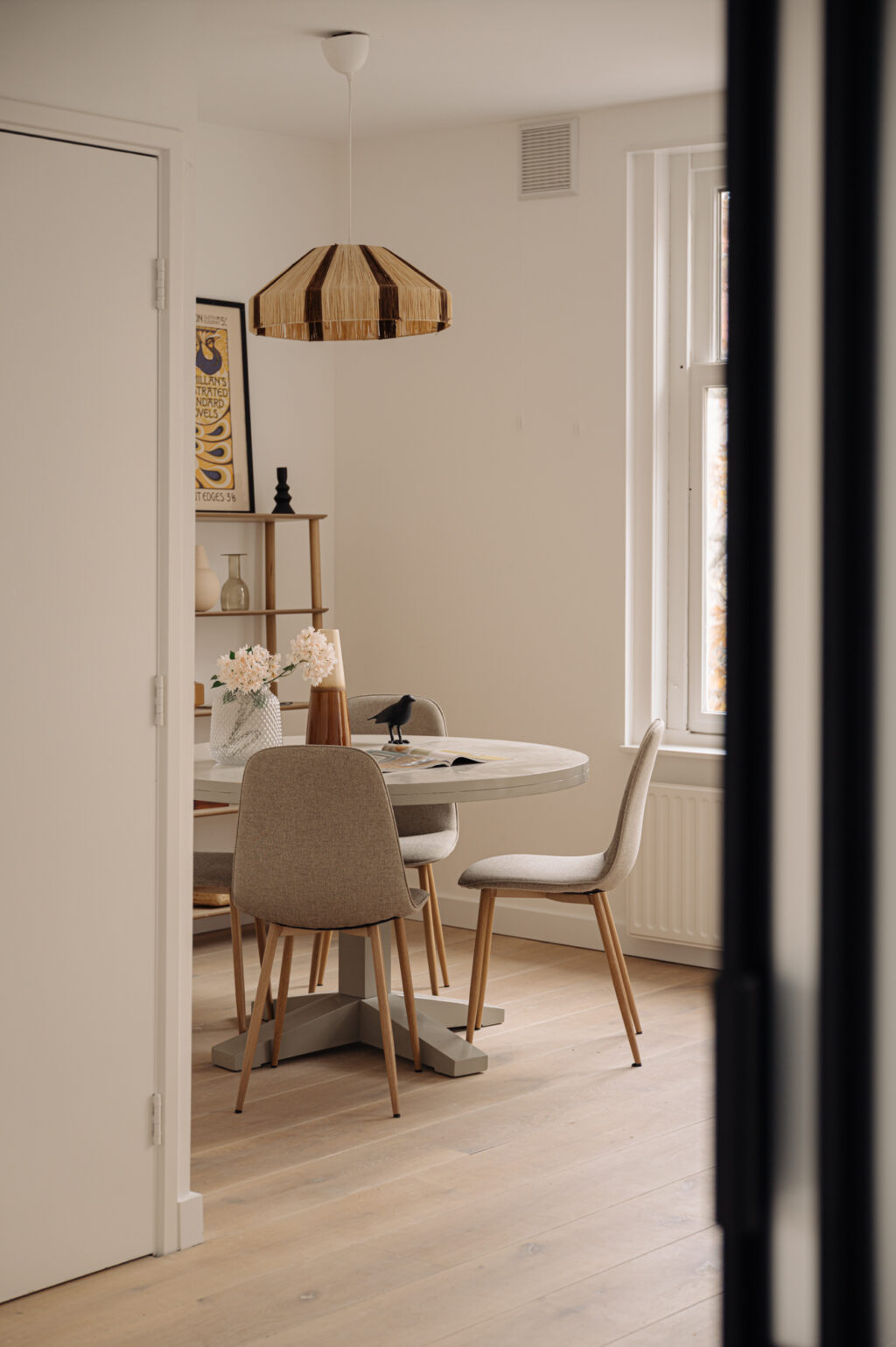
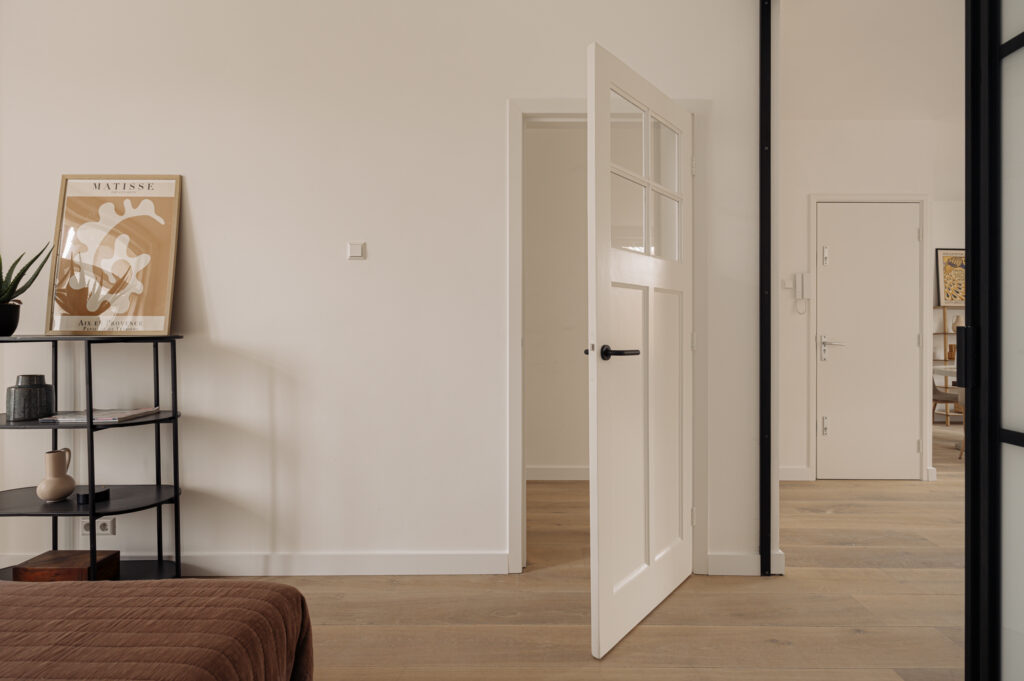
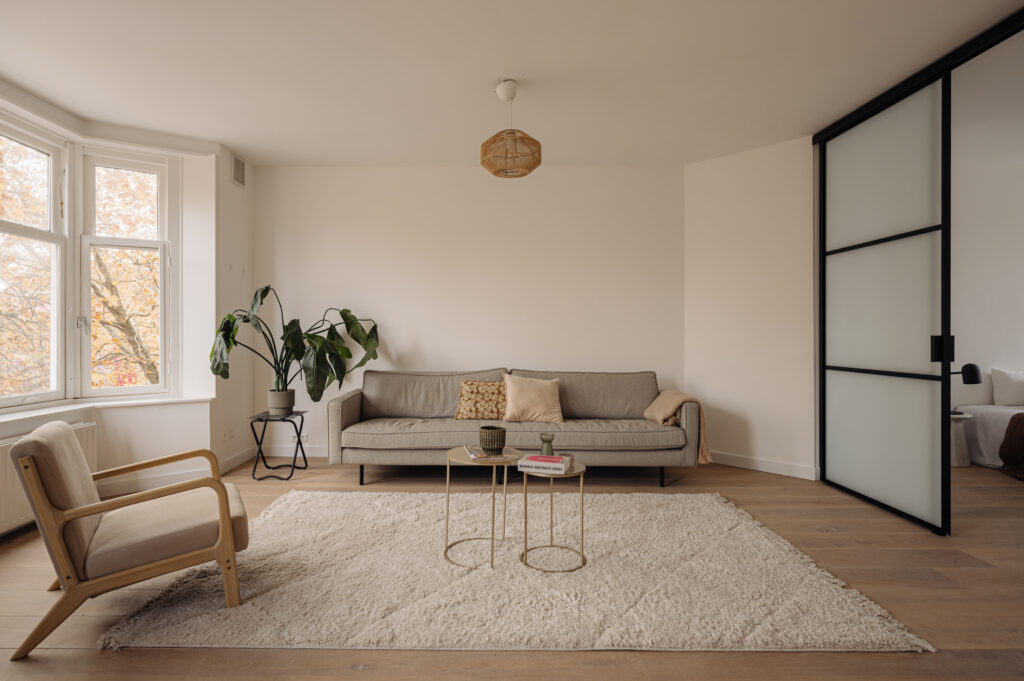
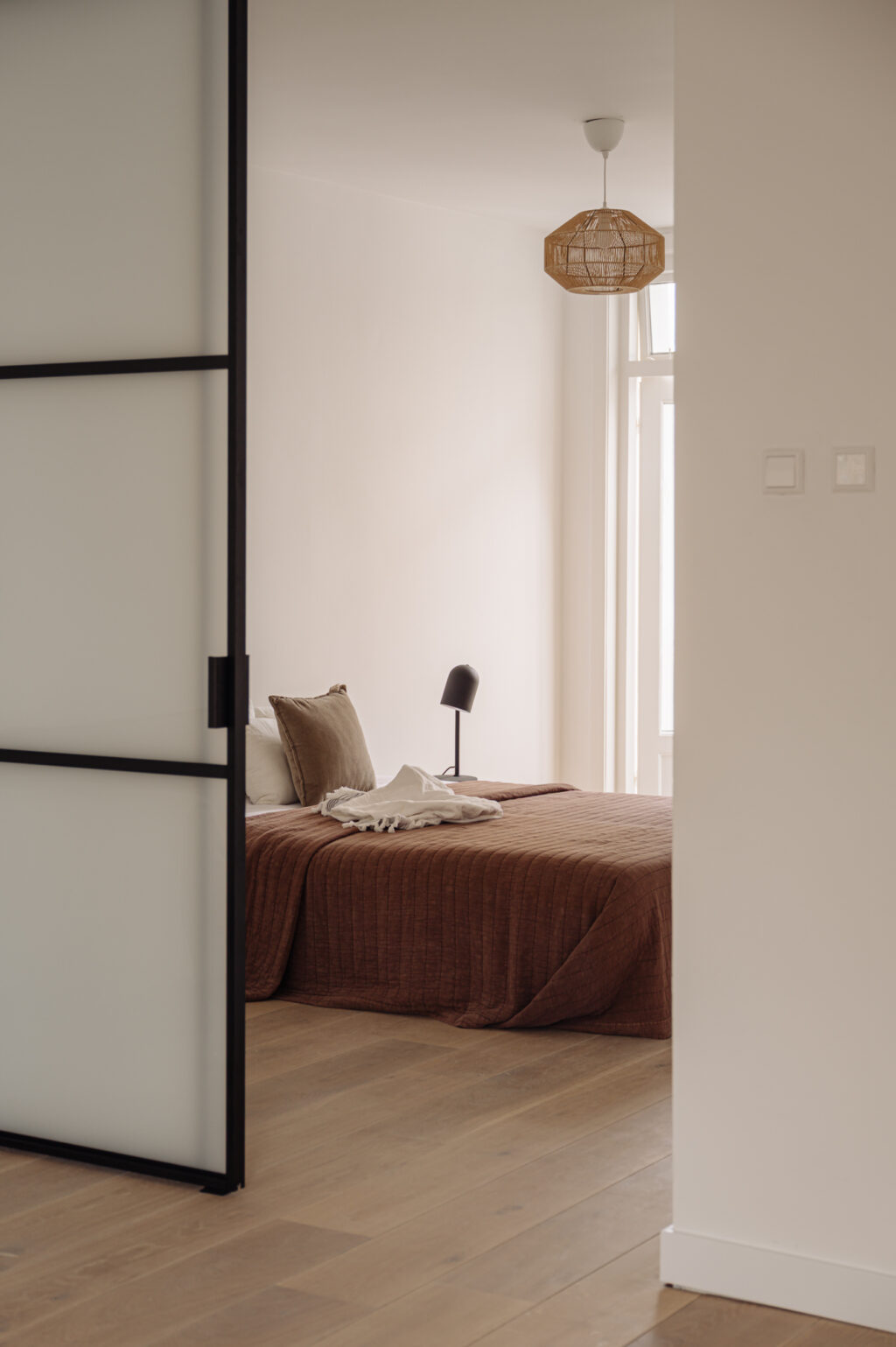
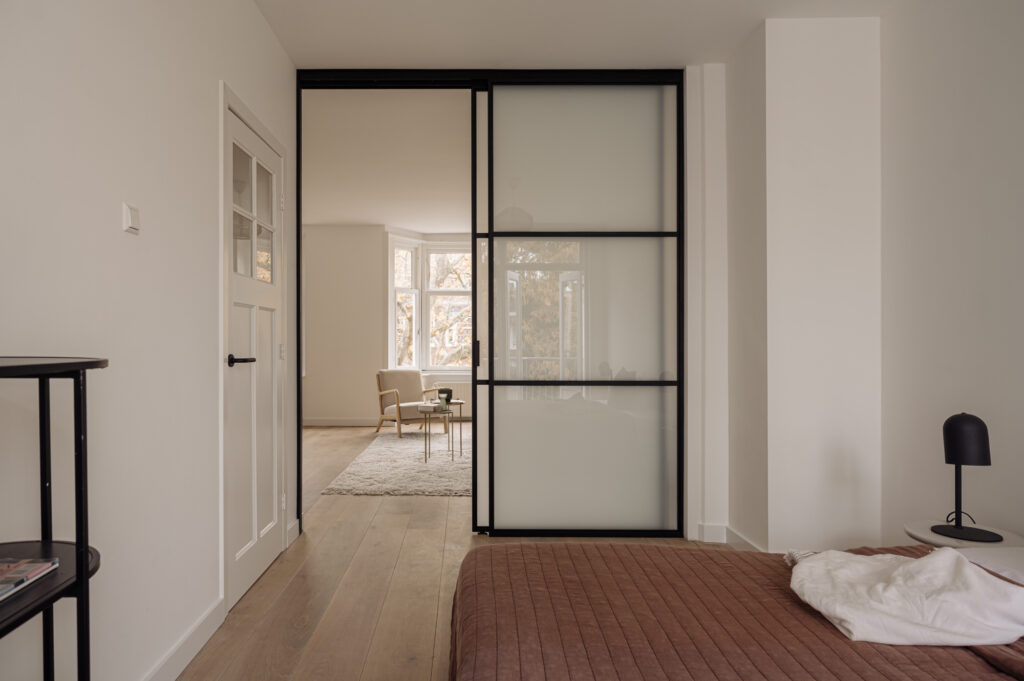
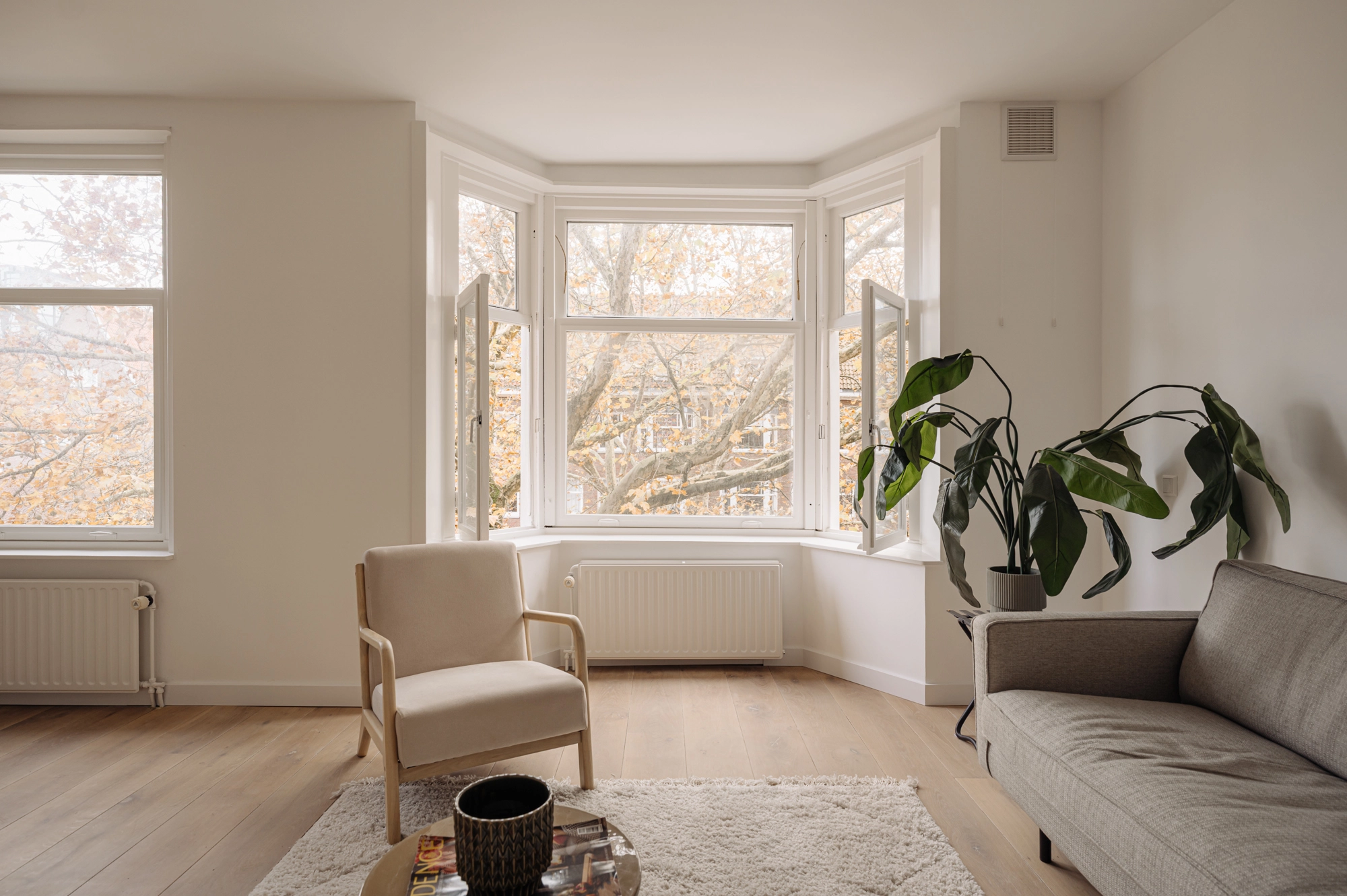
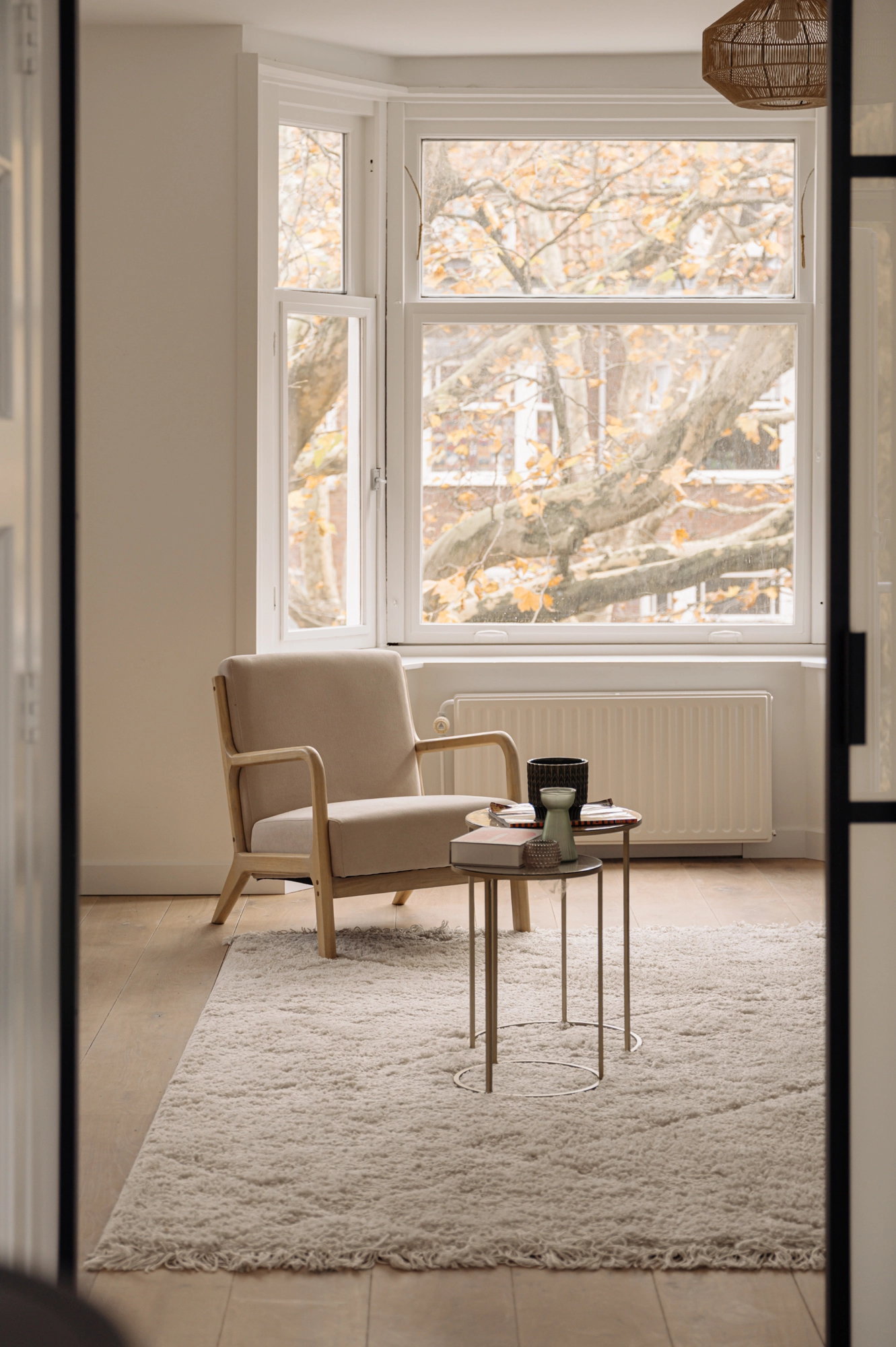
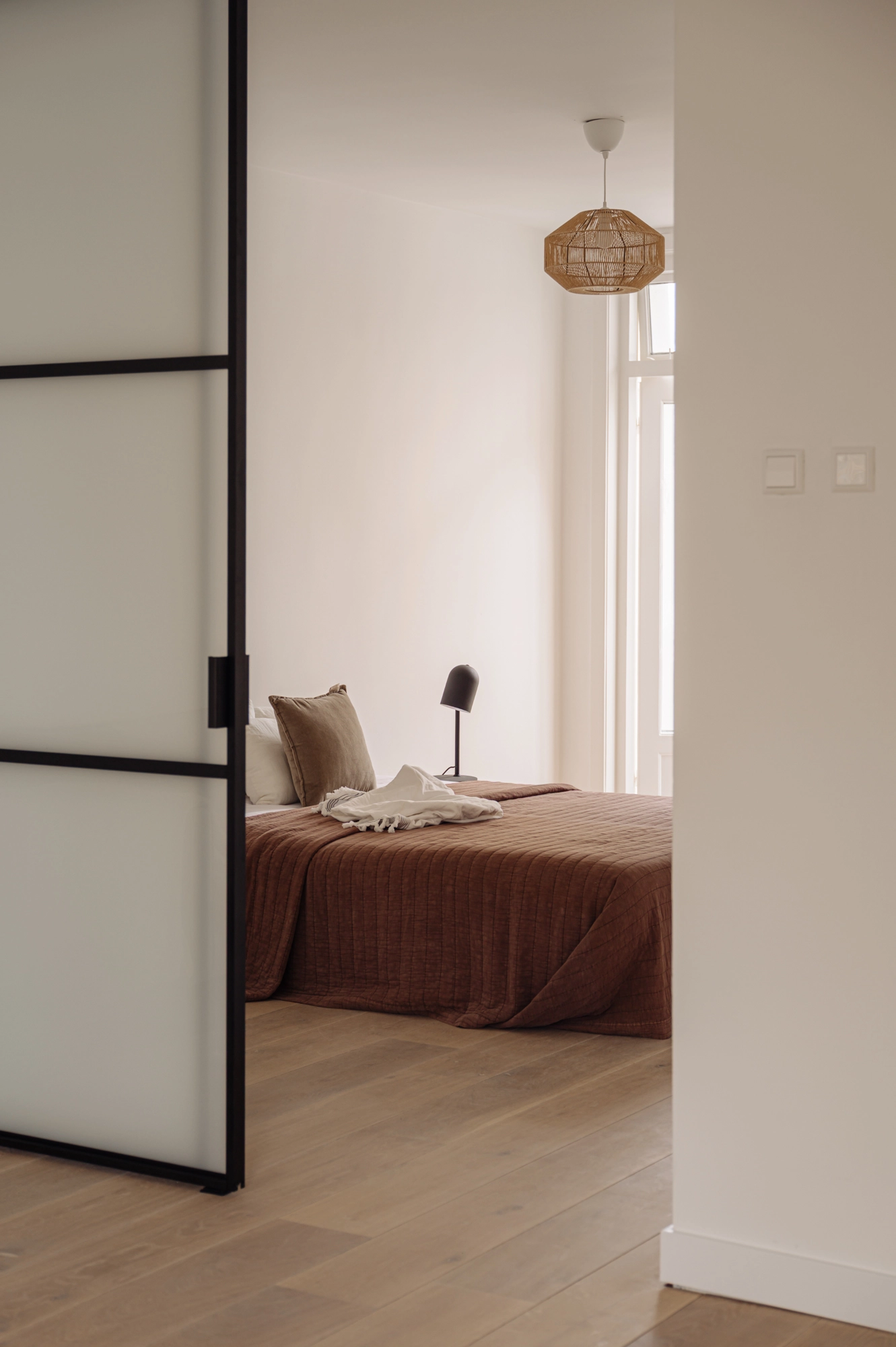
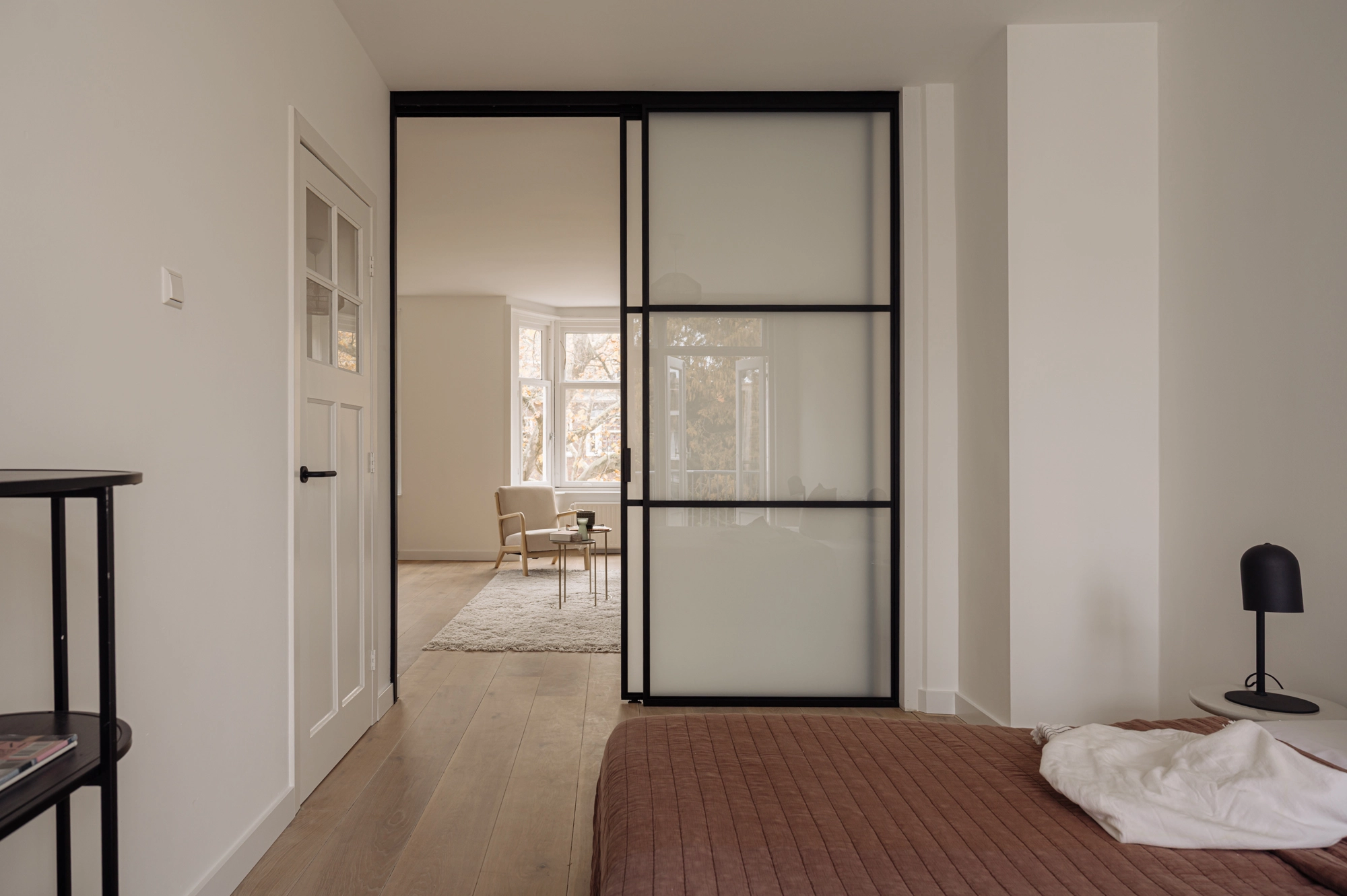
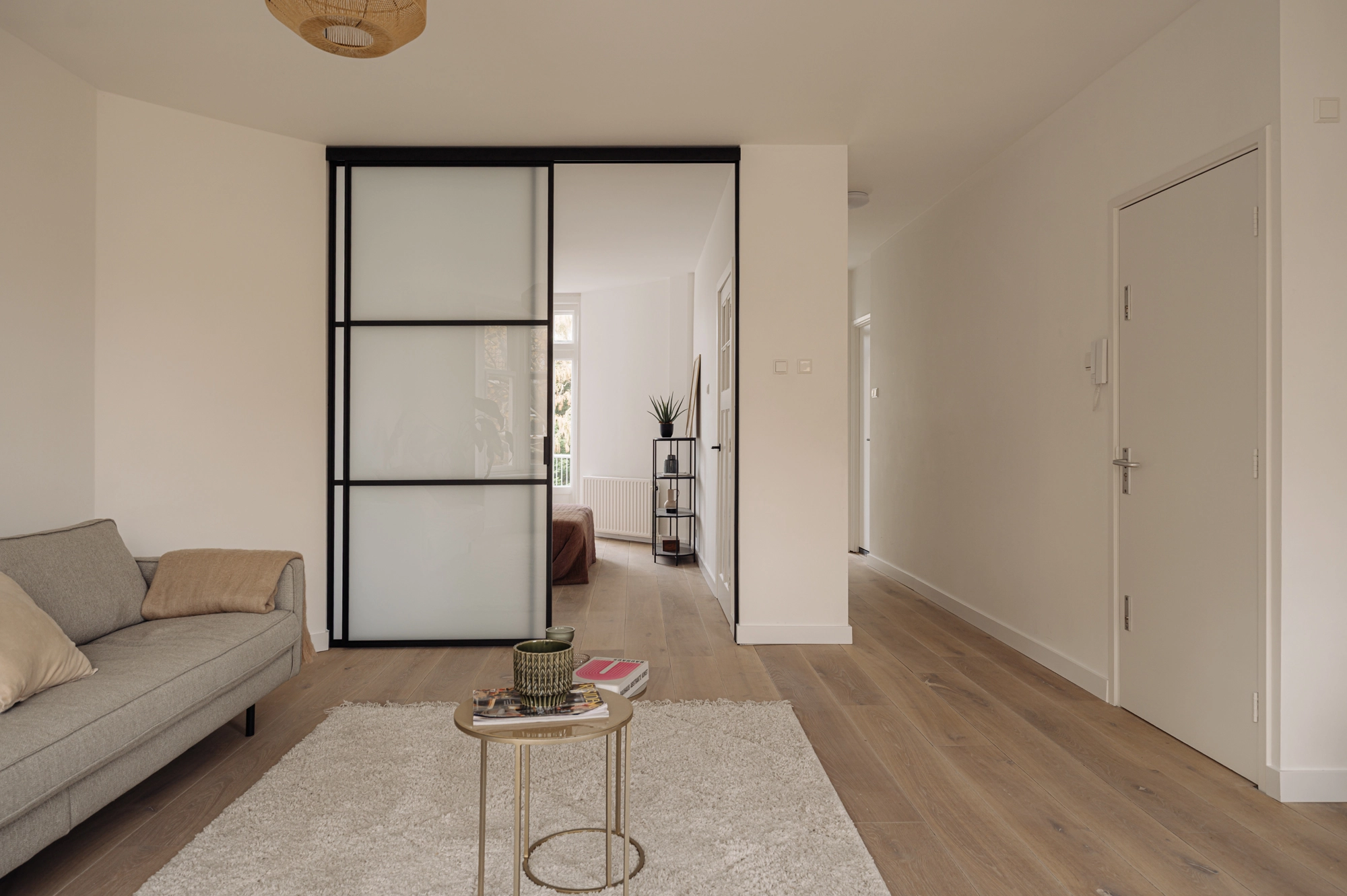
The living room is located at the front of the house and faces south-southeast. This space is connected to the bedroom at the rear via sliding doors made of steel and frosted glass. The sliding doors make it possible to separate or combine the spaces, depending on the desired layout.
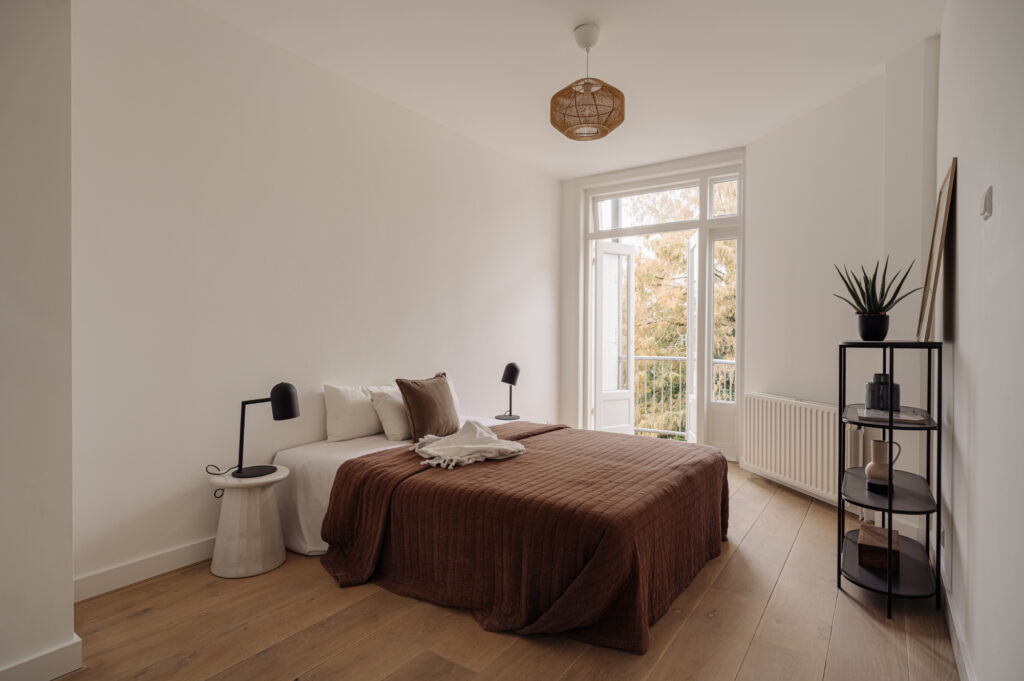
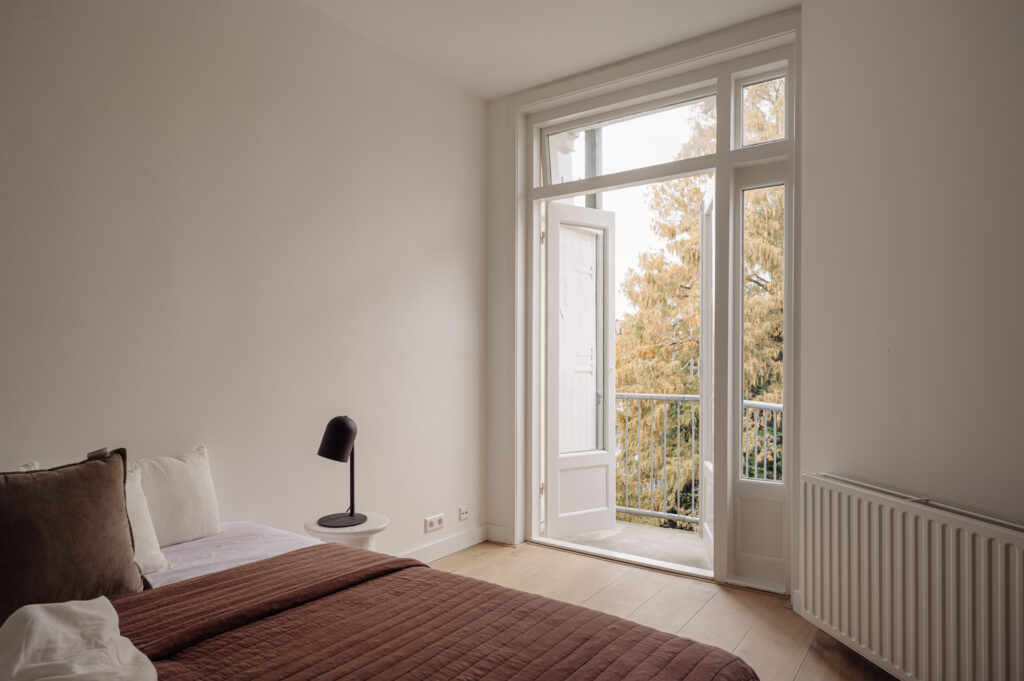
The bedroom at the rear has French doors leading to a balcony and is also accessible from the hall. This double access increases flexibility of use.
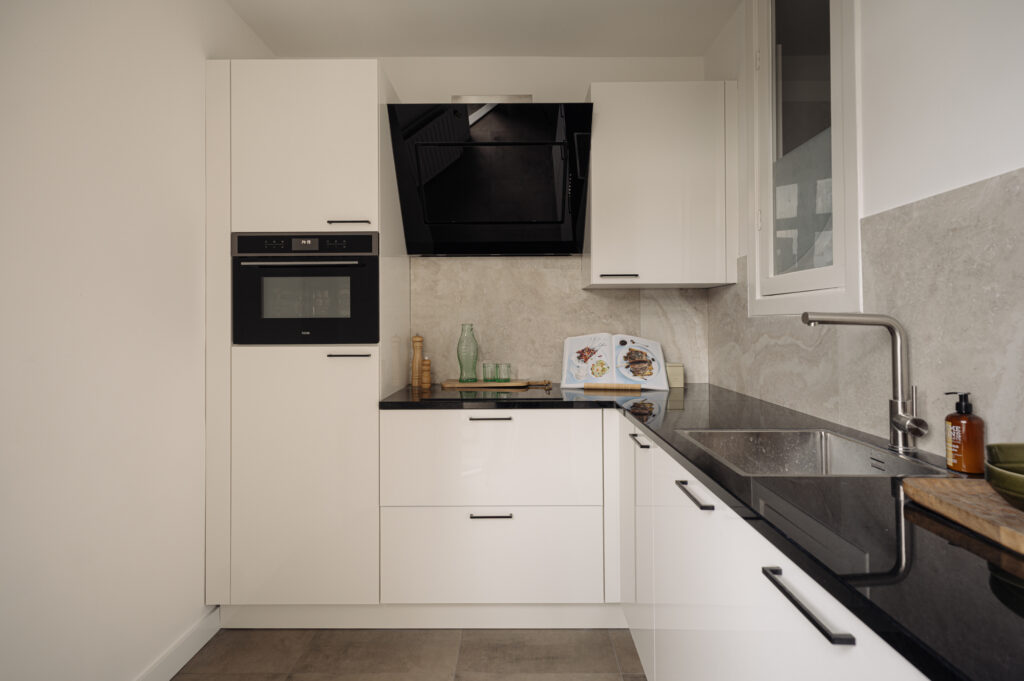
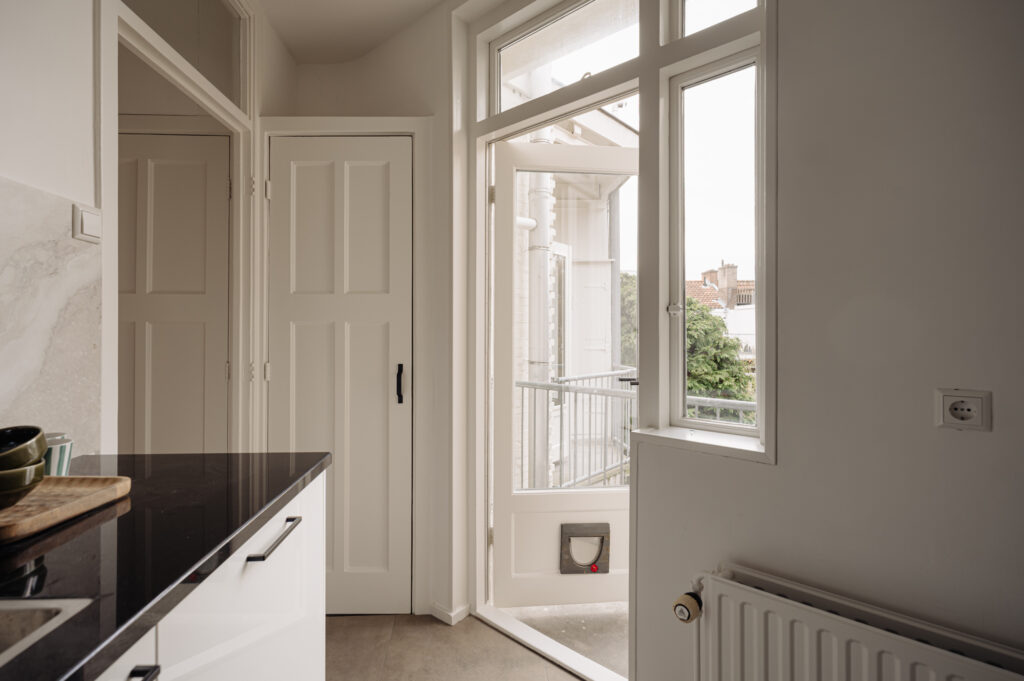
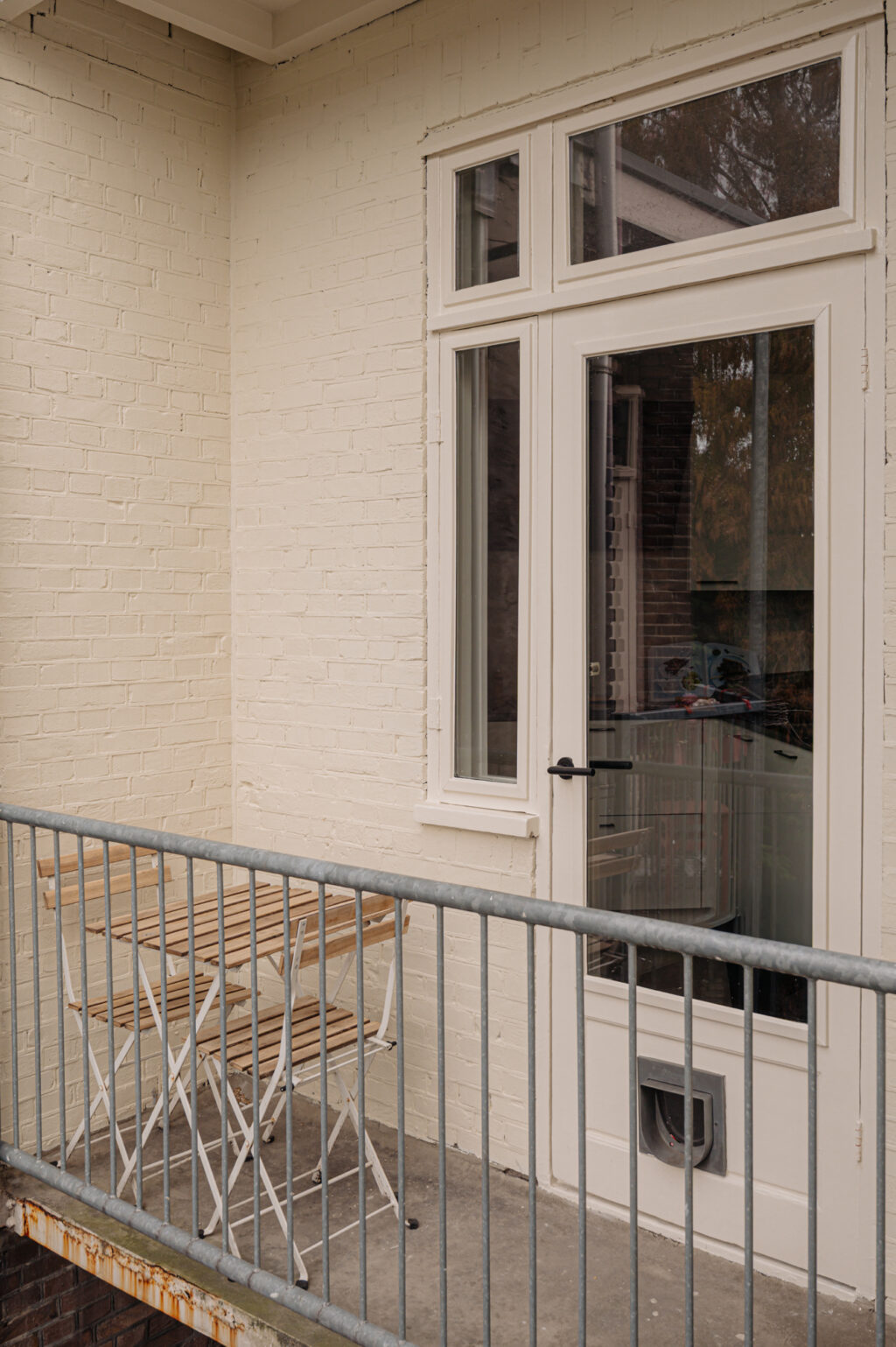
At the end of the hall is the kitchen, also at the rear of the house. The kitchen provides access to a second balcony. The washing machine is located in the adjacent cupboard.
Outdoor Space
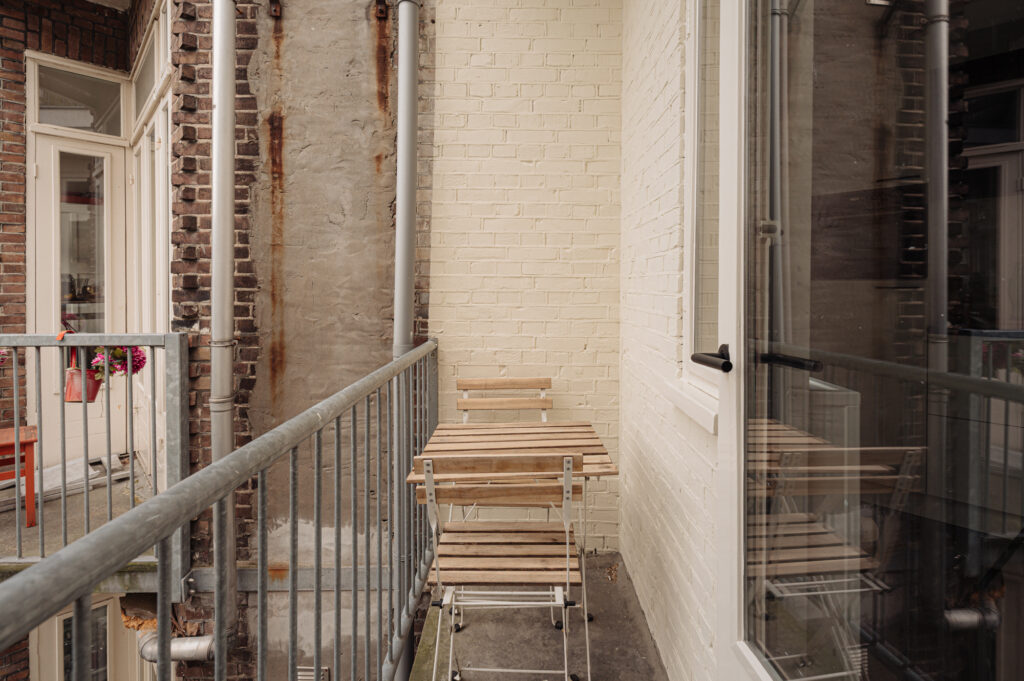
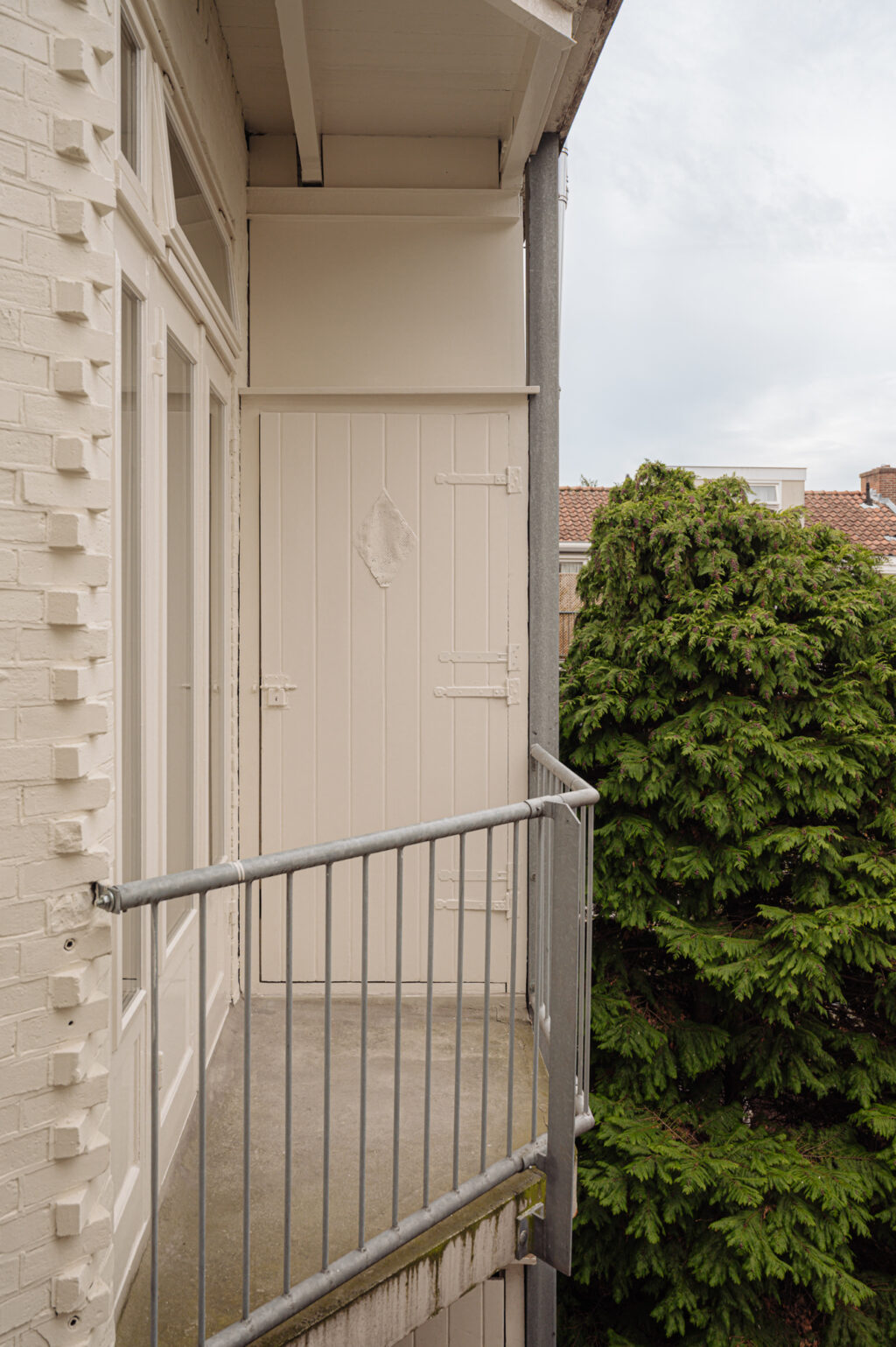
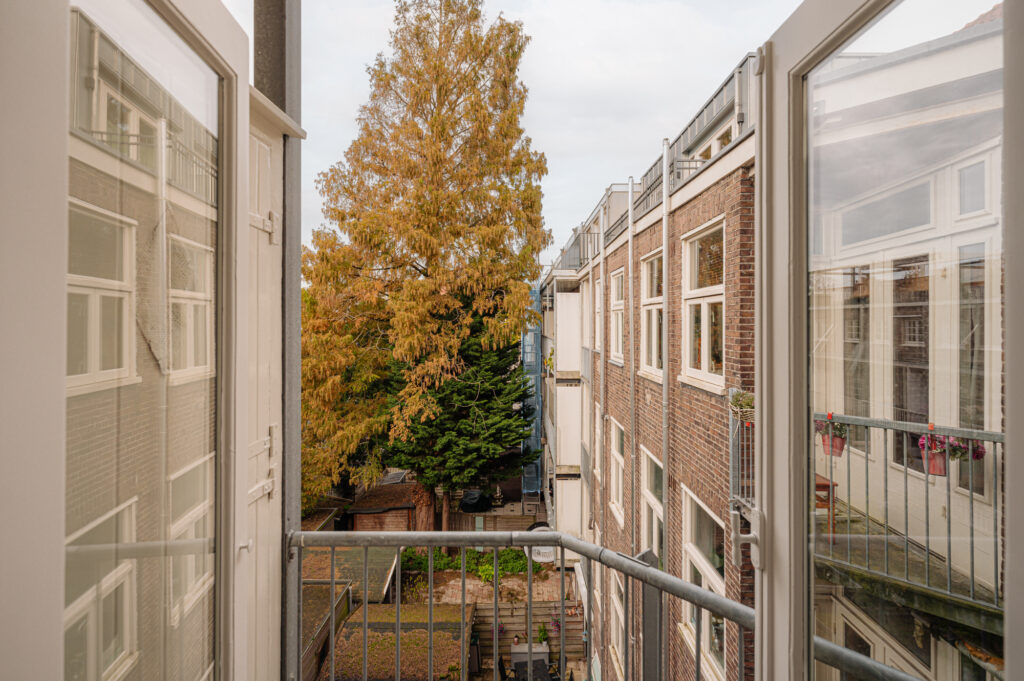
Both balconies face northwest and offer views of the courtyard gardens. Their location on either side of the home creates an open-plan layout with natural light streaming in from both facades.
Describe the key features. For a single-story home: include everything under the “Tour” section. For multi-story homes: mention each floor. Written in a descriptive style.
Neighborhood Guide
The Stadionbuurt neighborhood, located in Amsterdam Zuid, owes its name to Harry Elte’s former National Stadium, not to be confused with Jan Wils’ Olympic Stadium. The original stadium stood on the site of today’s Jason- and Argonautenstraat until 1929, when it was demolished to make way for housing after the 1928 Olympic Games.
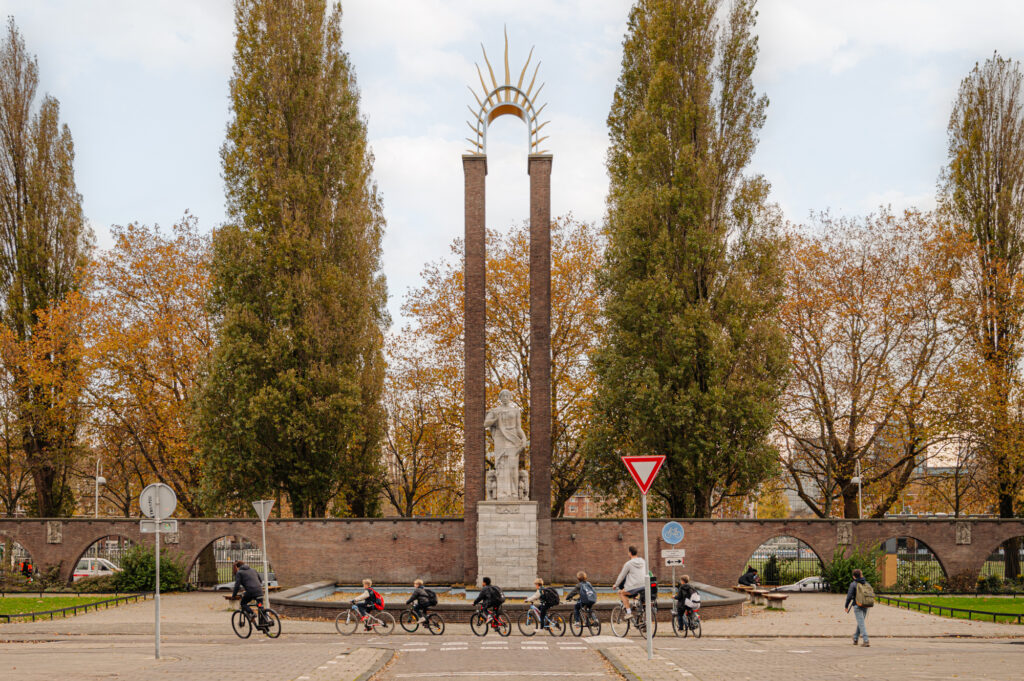
The most striking building in the Stadionbuurt is the Olympic Stadium, designed by architect Jan Wils for the 1928 Olympic Games. Along the axis from the Olympic Stadium to Parnassusweg, one finds green spaces and small parks with play areas, which contribute to the neighborhood’s diversity and appeal.
The renovated Stadionplein has become a vibrant hub with various dining and entertainment options and a weekly market, making it a hotspot for both residents and visitors. With its mix of buildings and amenities, the Stadionbuurt offers a pleasant residential and living environment in the heart of Amsterdam.
Details
• Living area: approximately 58 m²
• Two balconies totaling approximately 3 m²
• Located on leasehold land owned by Local authority . Current lease term valid through 12/15/2054, AB 2000; annual ground rent is €500.25
• Energy efficiency rating: C
• Homeowners’ association (VvE) service charges: €156.75 per month
• Interior renovated in 2025
• Property will be delivered including a washing machine
• Nationally protected cityscape
• Non-owner-occupancy, asbestos, and age clauses will be included in the deed of sale
• Project notary: Van Rooij Wassink Notaries
• Closing can take place quickly
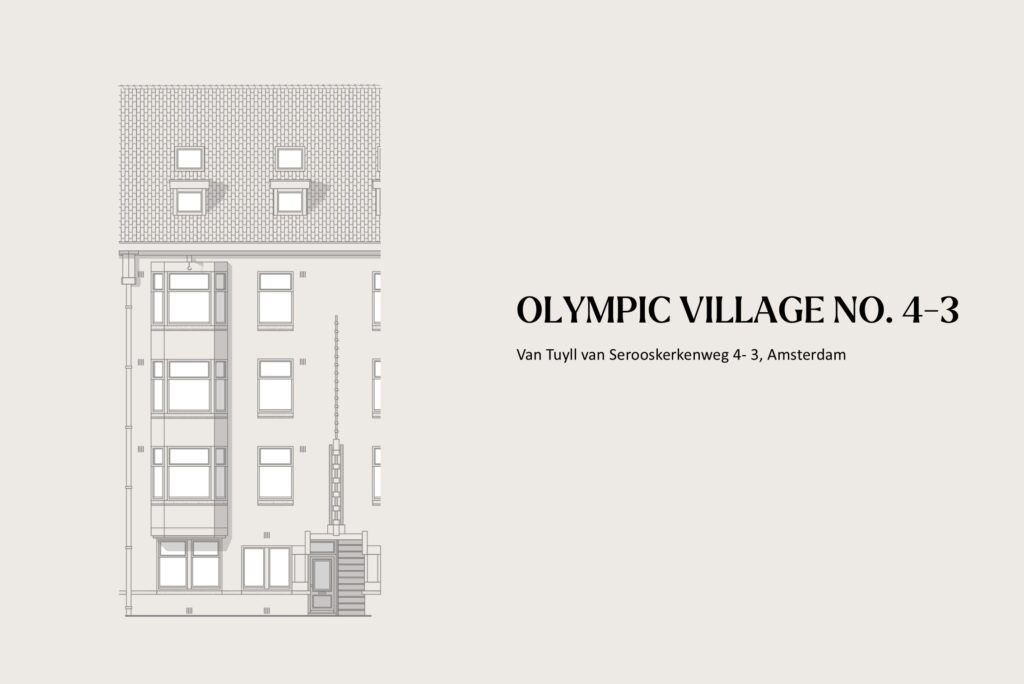
Village No. 4-3
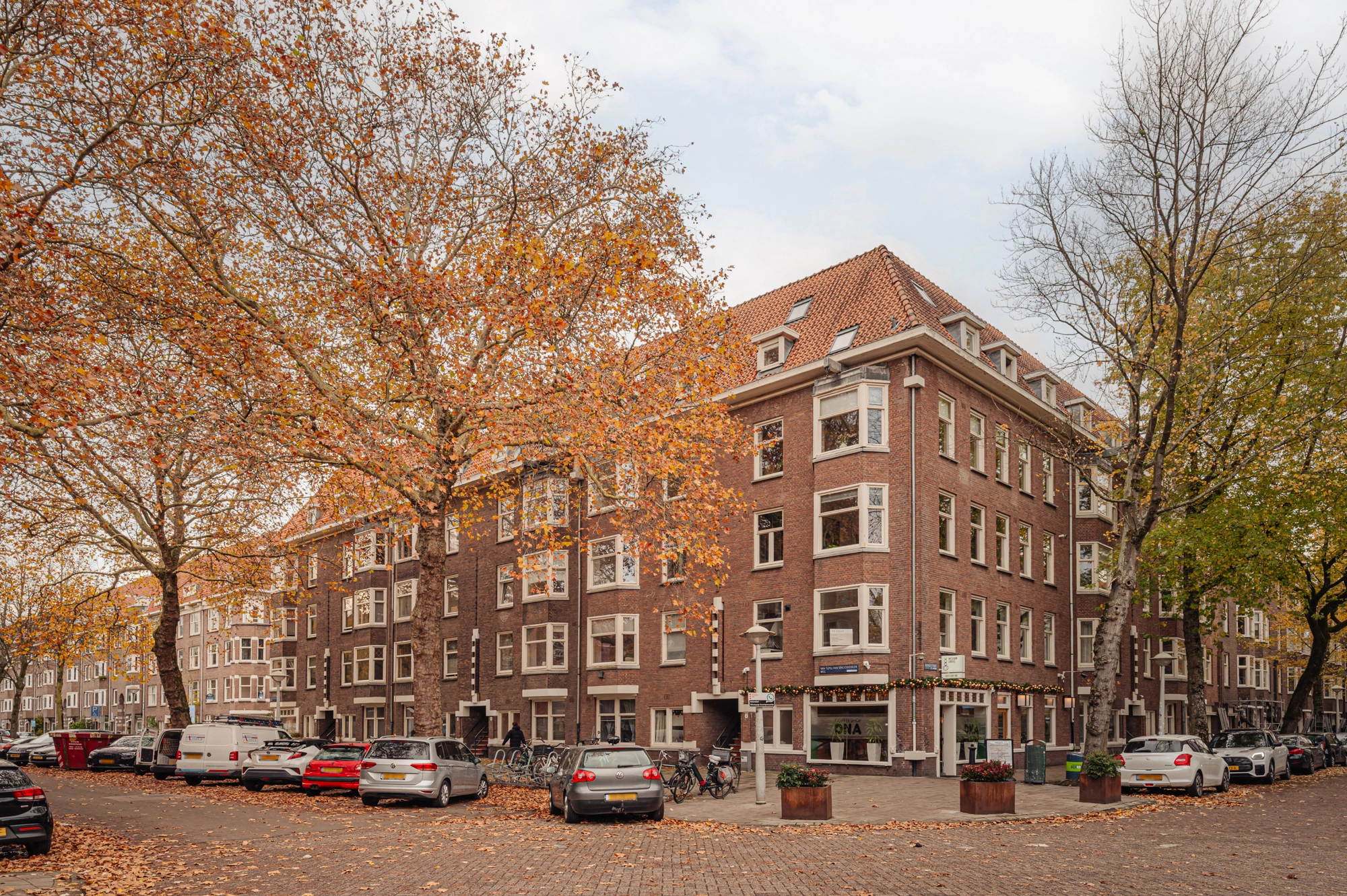
As a real estate agent, I see many residences Amsterdam, but some combinations of location, architecture, and layout remain exceptional. The Van Tuyll on Serooskerkenweg is a wonderful example of this: located in the monumental Plan Zuid, with the leafy tranquility of Stadionplein and the dynamism of the city within walking distance.
The property at Number has been meticulously maintained. The open-plan layout creates a light and spacious feel, with sightlines from facade to facade. The steel sliding doors between the living room and bedroom allow you to effortlessly alternate between openness and privacy. And with two balconies overlooking the greenery of the inner gardens, you immediately feel the tranquility of Amsterdam-Zuid.
In short: a pleasant and complete home in one of the most beloved neighborhoods in the city. Would you like to experience it for yourself? Feel free to call or email for a viewing. See you soon on Van Tuyll van Serooskerkenweg.
Daniël de Bont | Makelaar Broersma Wonen
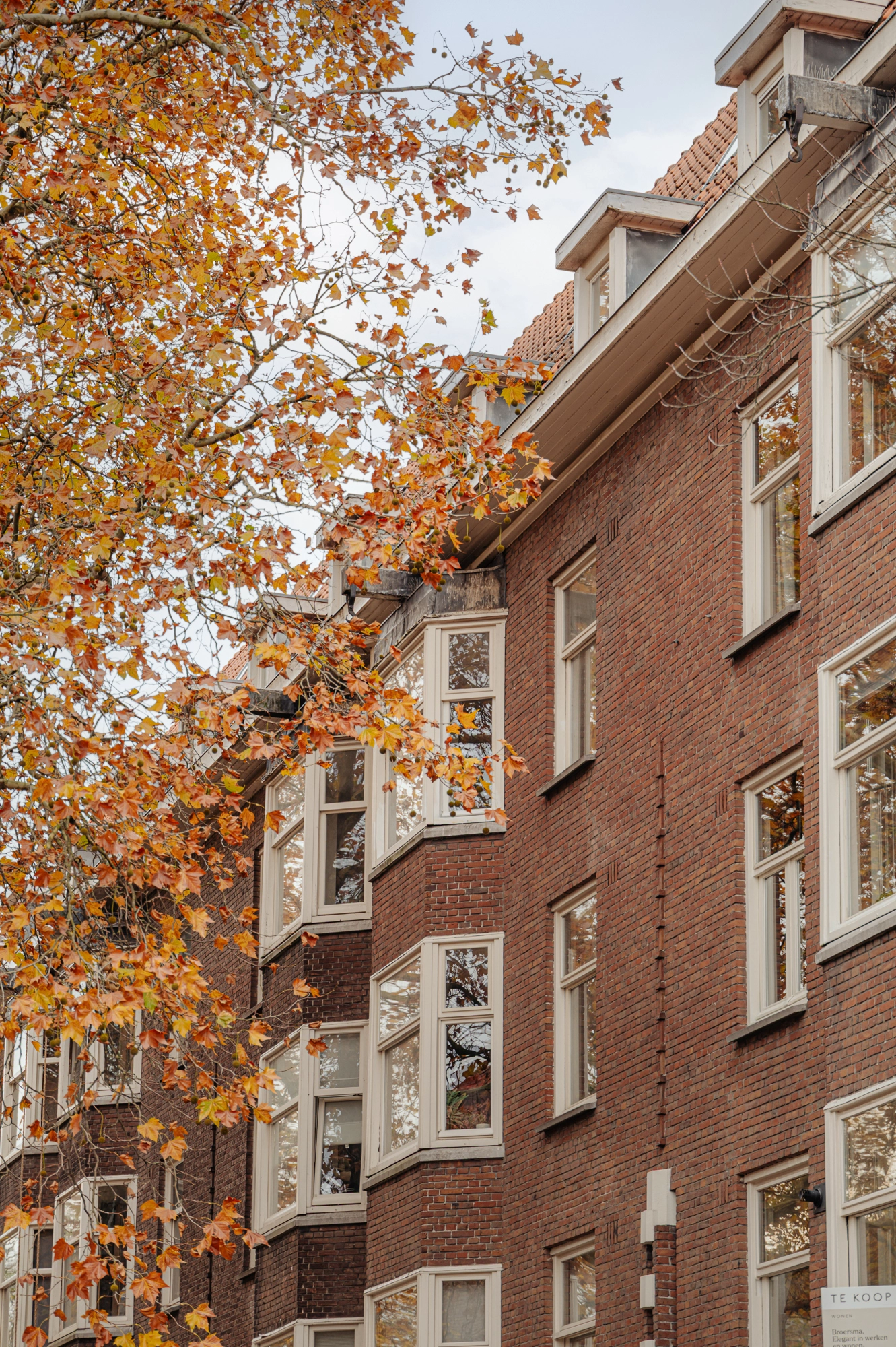
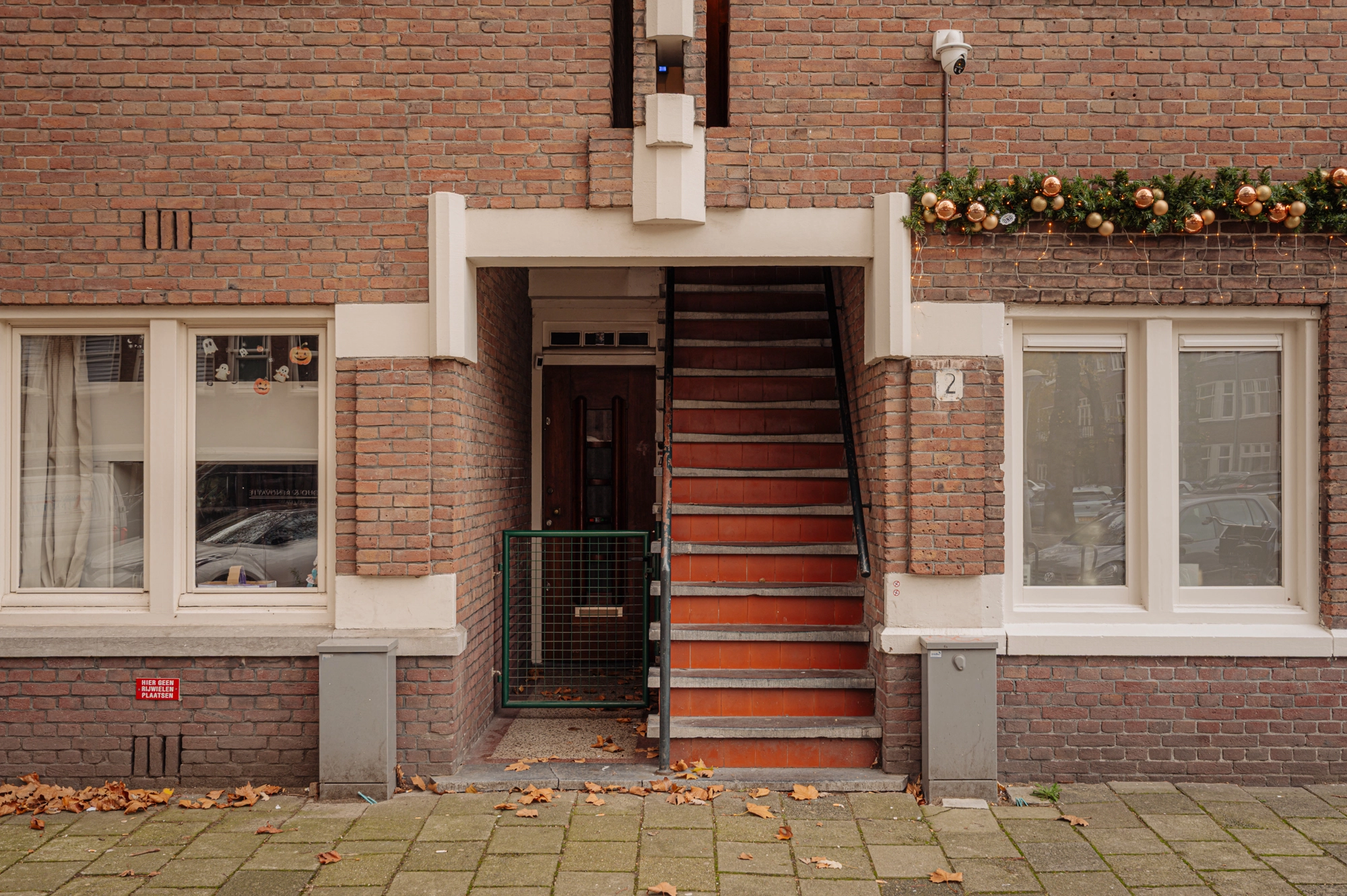
The Van Tuyll van Serooskerkenweg is part of the famous Plan-Zuid, the progressive urban design by H.P. Berlage from 1917. In 1929, the street plan incorporating this avenue was officially adopted. Plan-Zuid represented a radical departure from the conventional housing construction of its time. Berlage designed a spacious urban expansion with wide avenues, abundant greenery, and residential blocks of monumental allure. The architecture was inspired by the expressive design language of the Amsterdam School. Brickwork was given relief, and facades were enriched with natural stone, elegant ironwork, and traditional stained glass. The deep colors and ornaments gave the buildings an almost stately appearance. It was not without reason that people in those years spoke of 'workers' palaces'. The Van Tuyll van Serooskerkenweg forms a sightline towards the Olympic Stadium, built for the 1928 Games. Architect G.J. Rutgers designed the sleek, symmetrical buildings. Sculptor Antoon Rädecker gave the square its character with, among other things, the iconic equestrian statues on high pillars – still a recognizable landmark in the neighborhood. The street takes its name from Baron Frederik van Tuyll van Serooskerken (1851–1924), the first chairman of the Dutch Olympic Committee. As an advocate of the Olympic spirit in the Netherlands, he was instrumental in bringing about the 1928 Games. His vision lives on in this carefully designed district, where history, architecture, and urban allure come together.
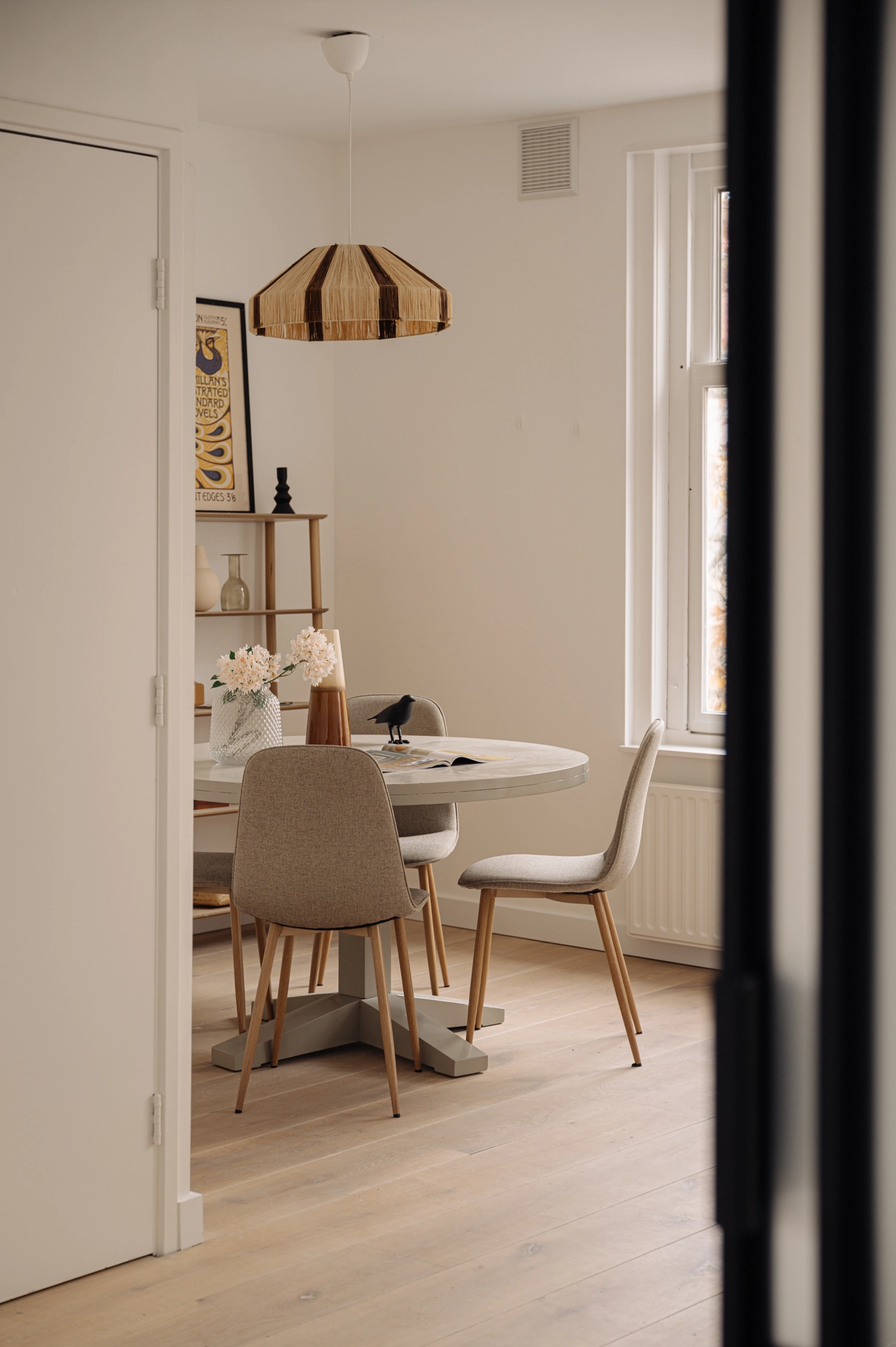
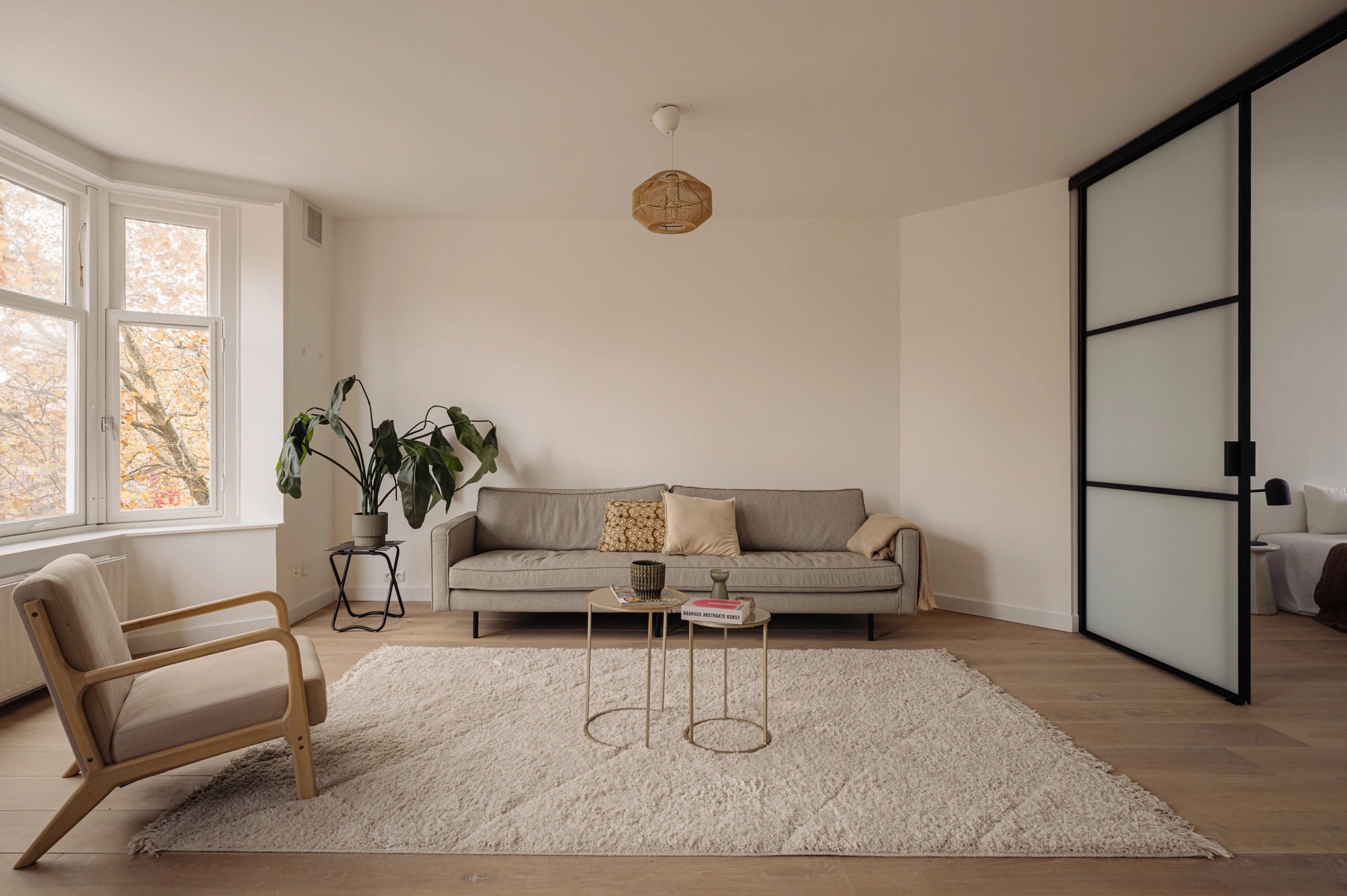
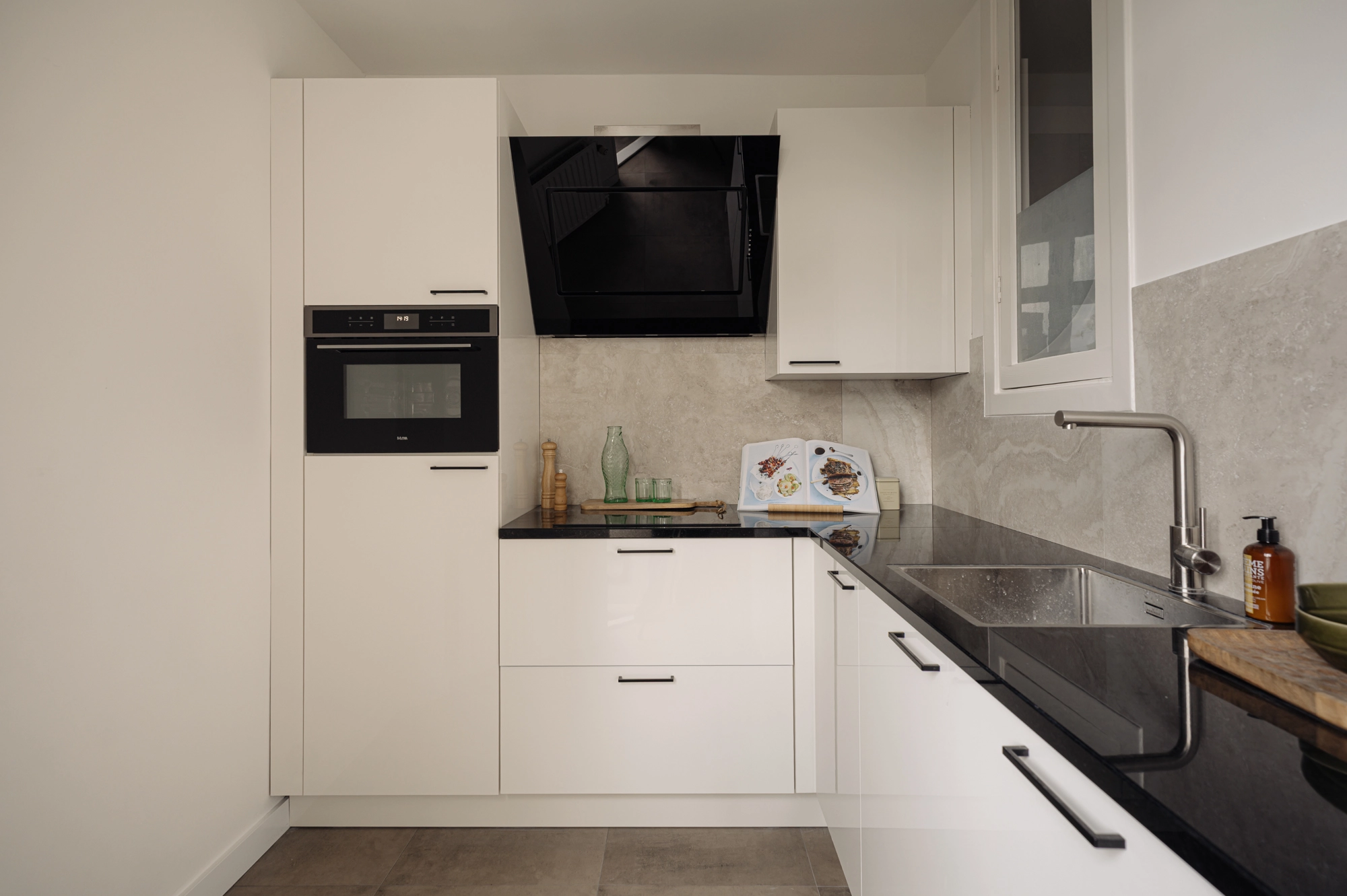
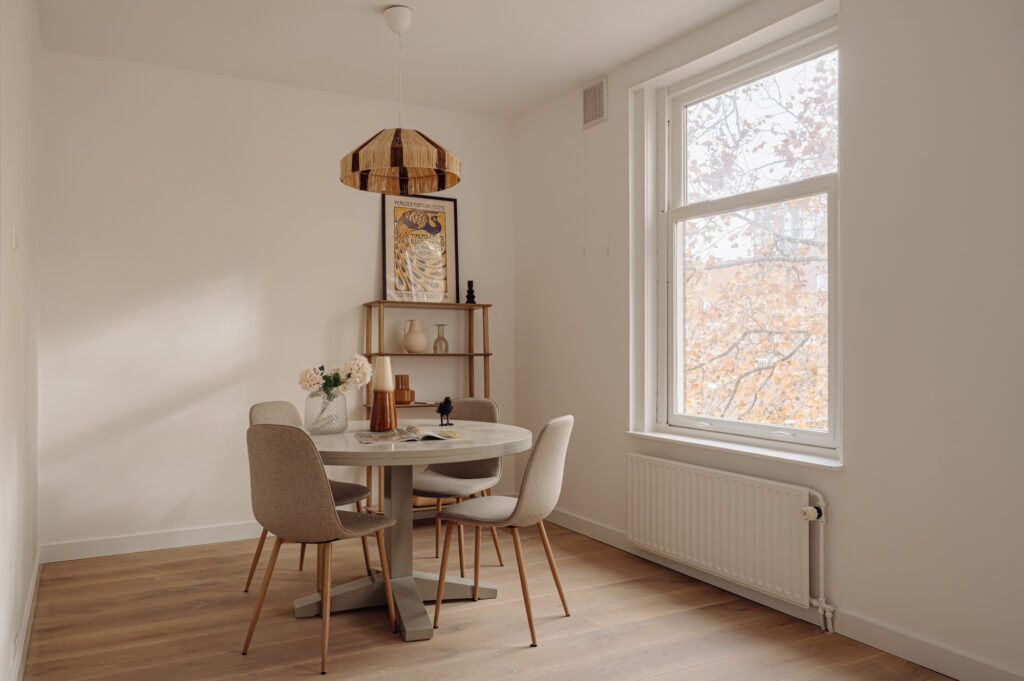
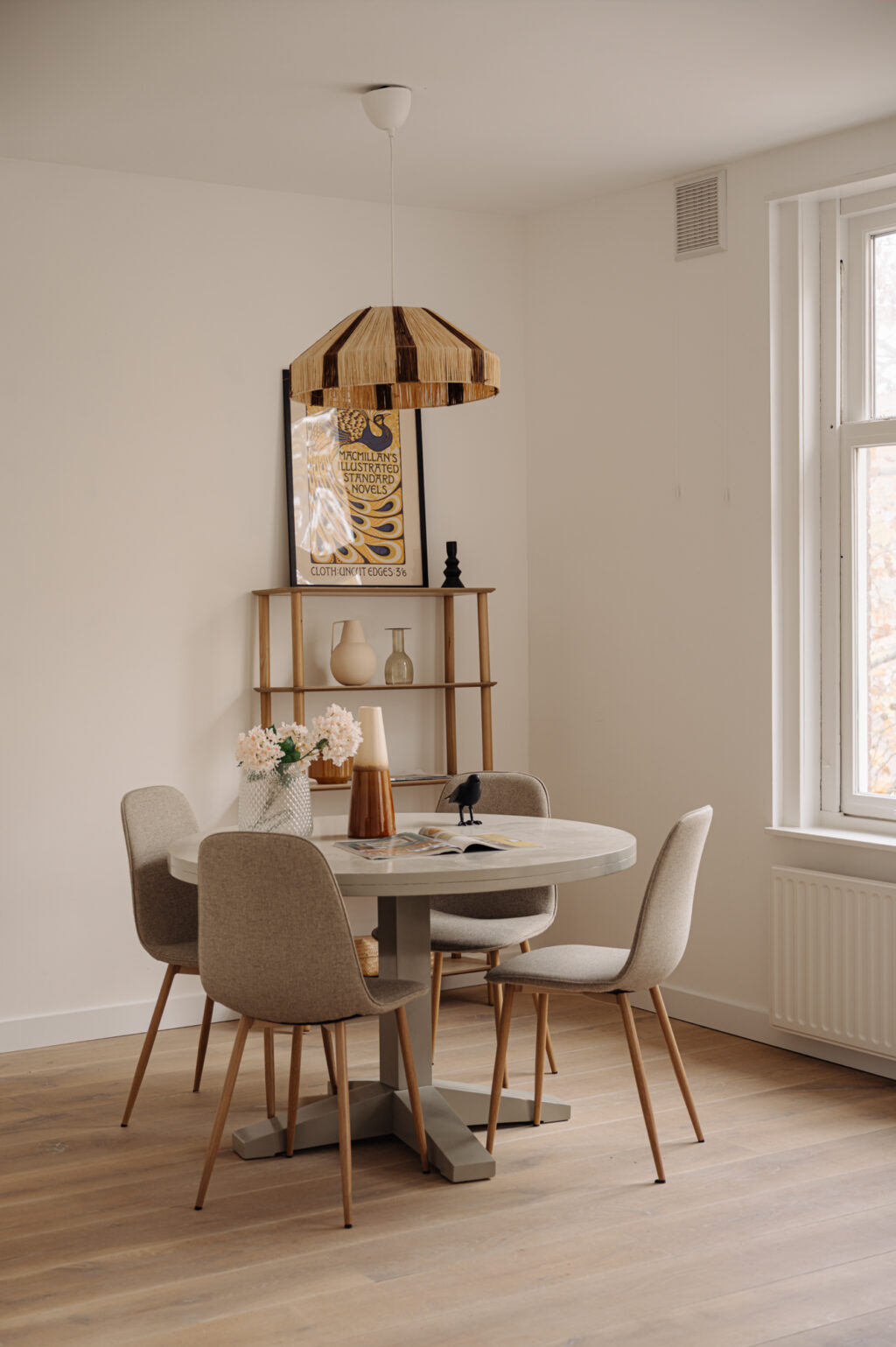
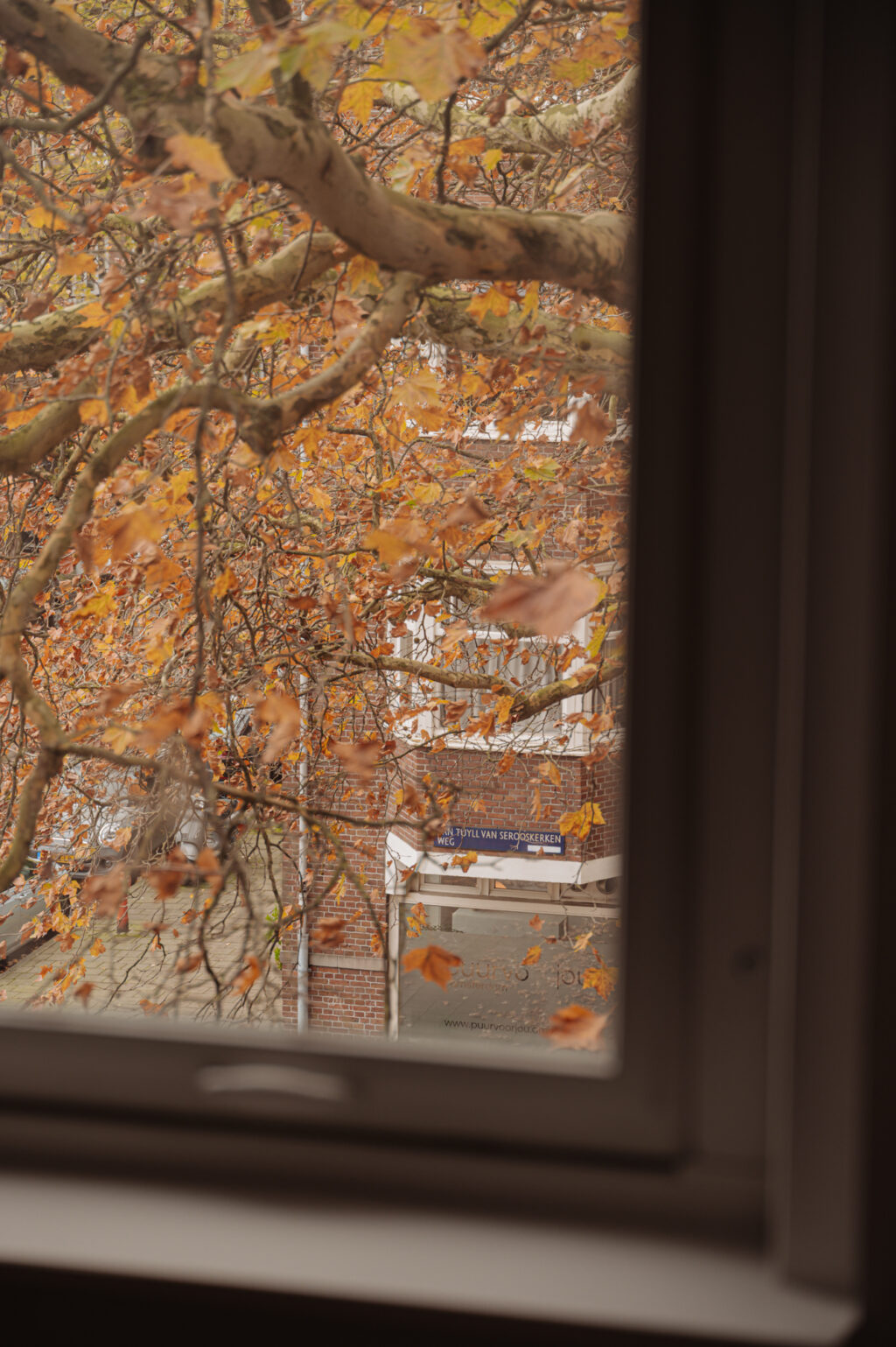
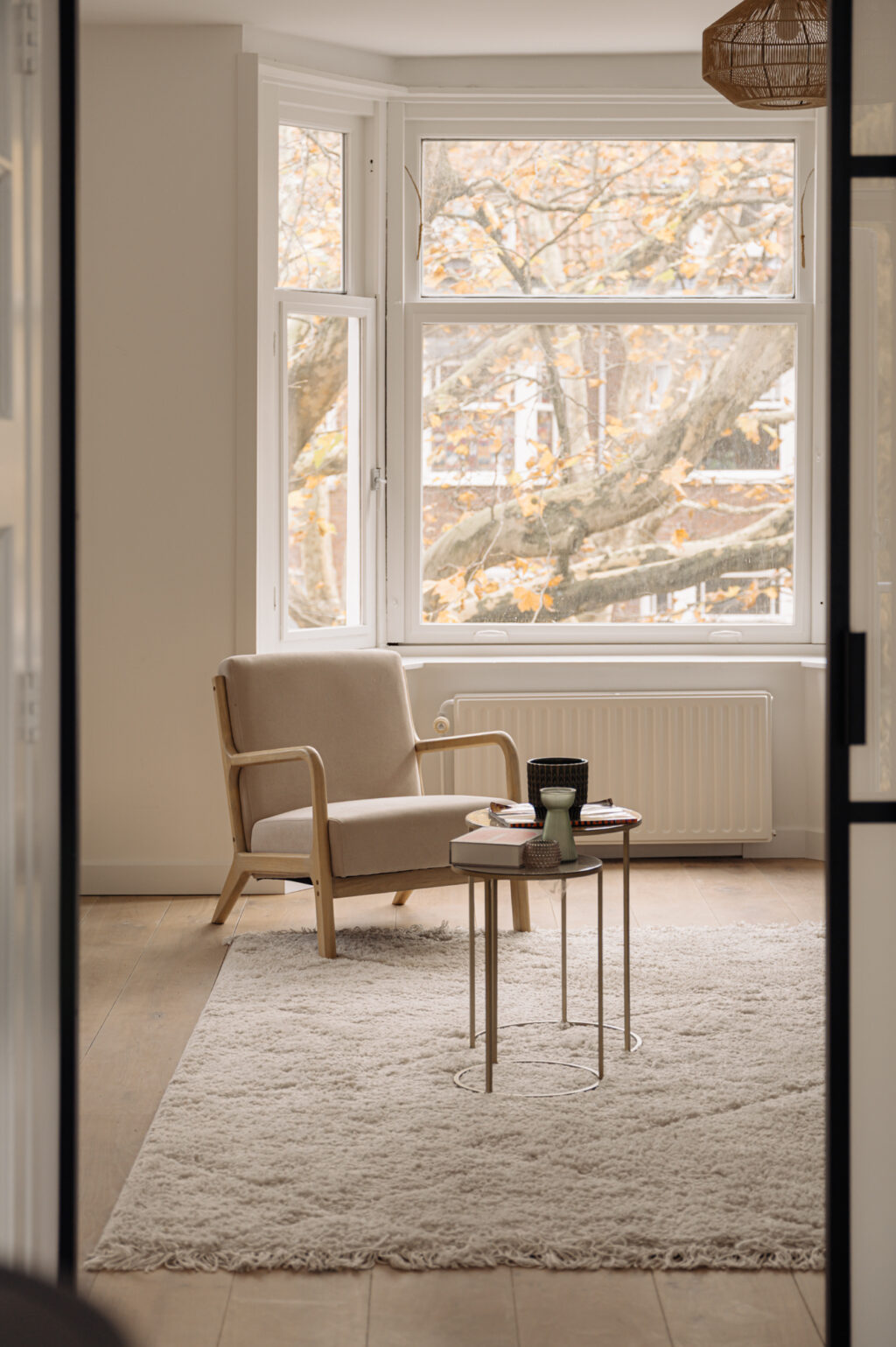
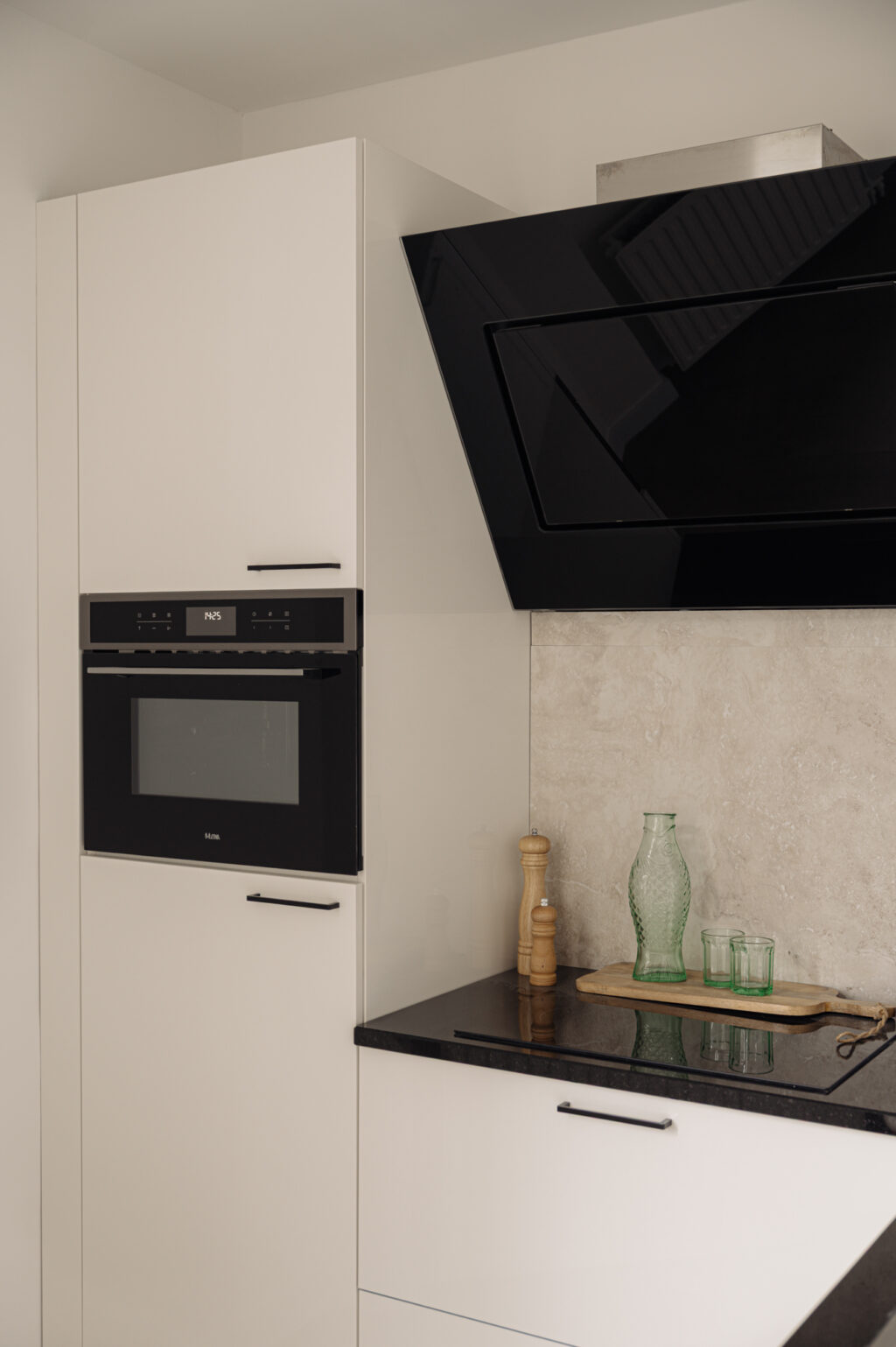
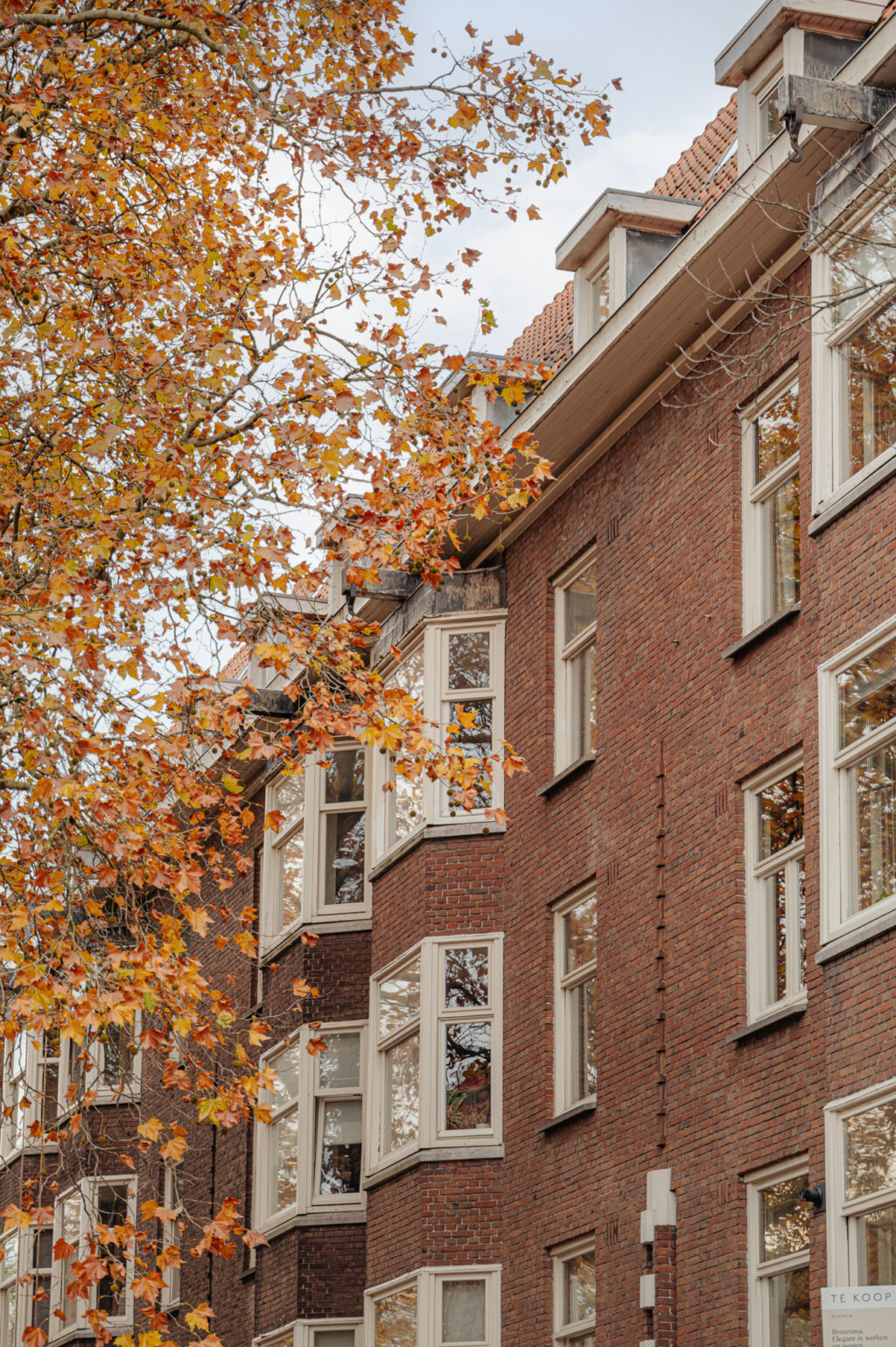
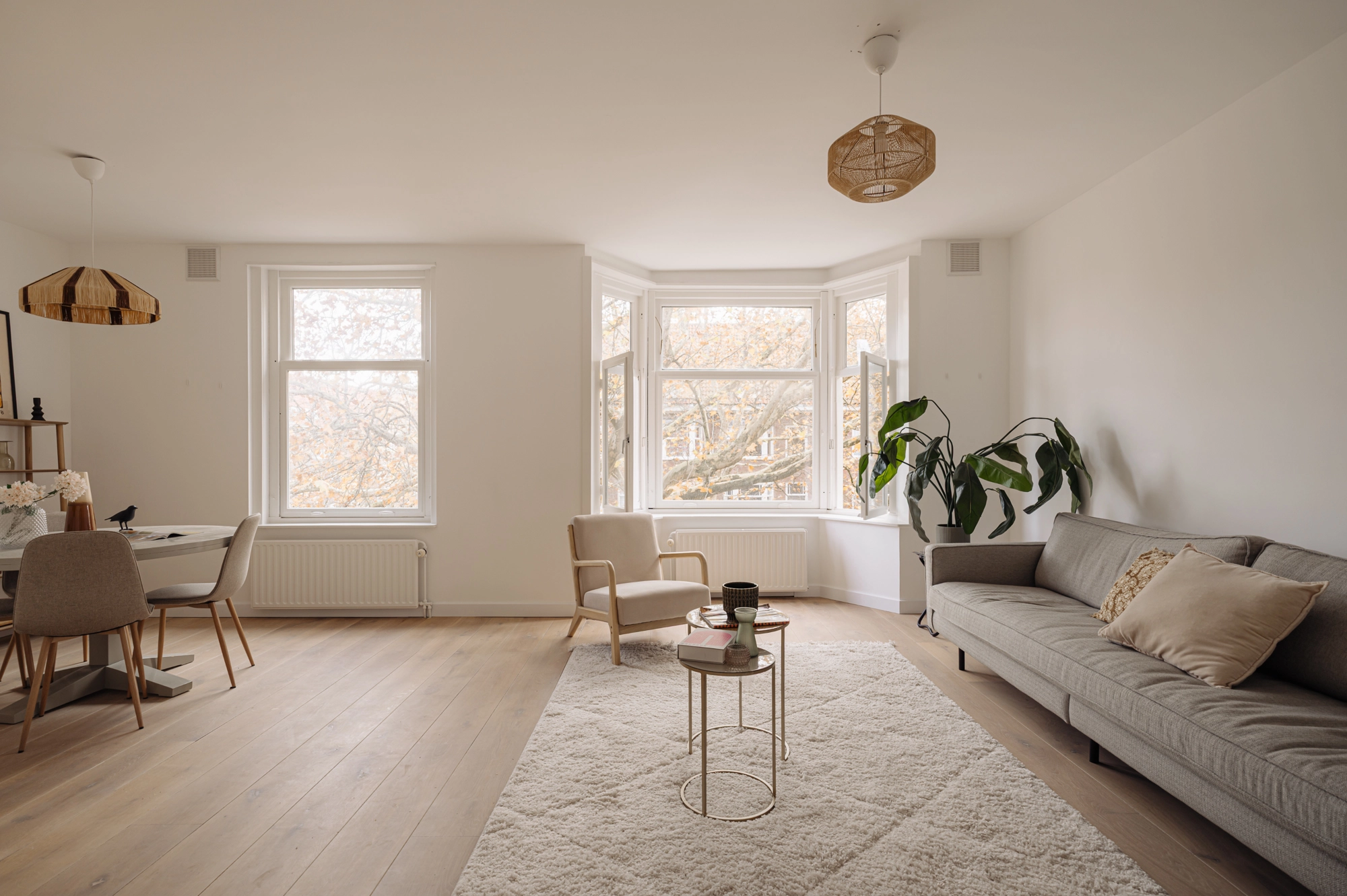
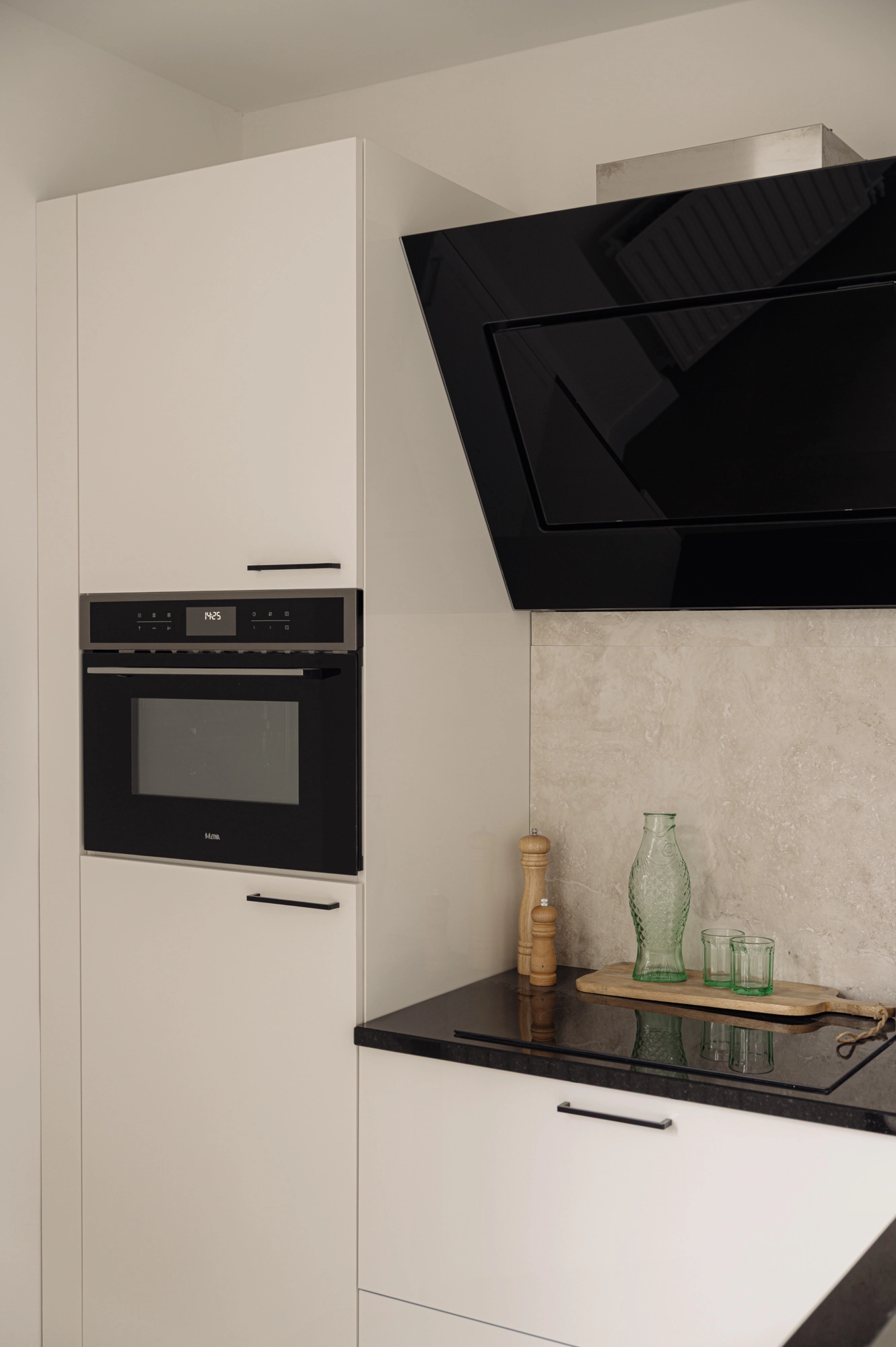
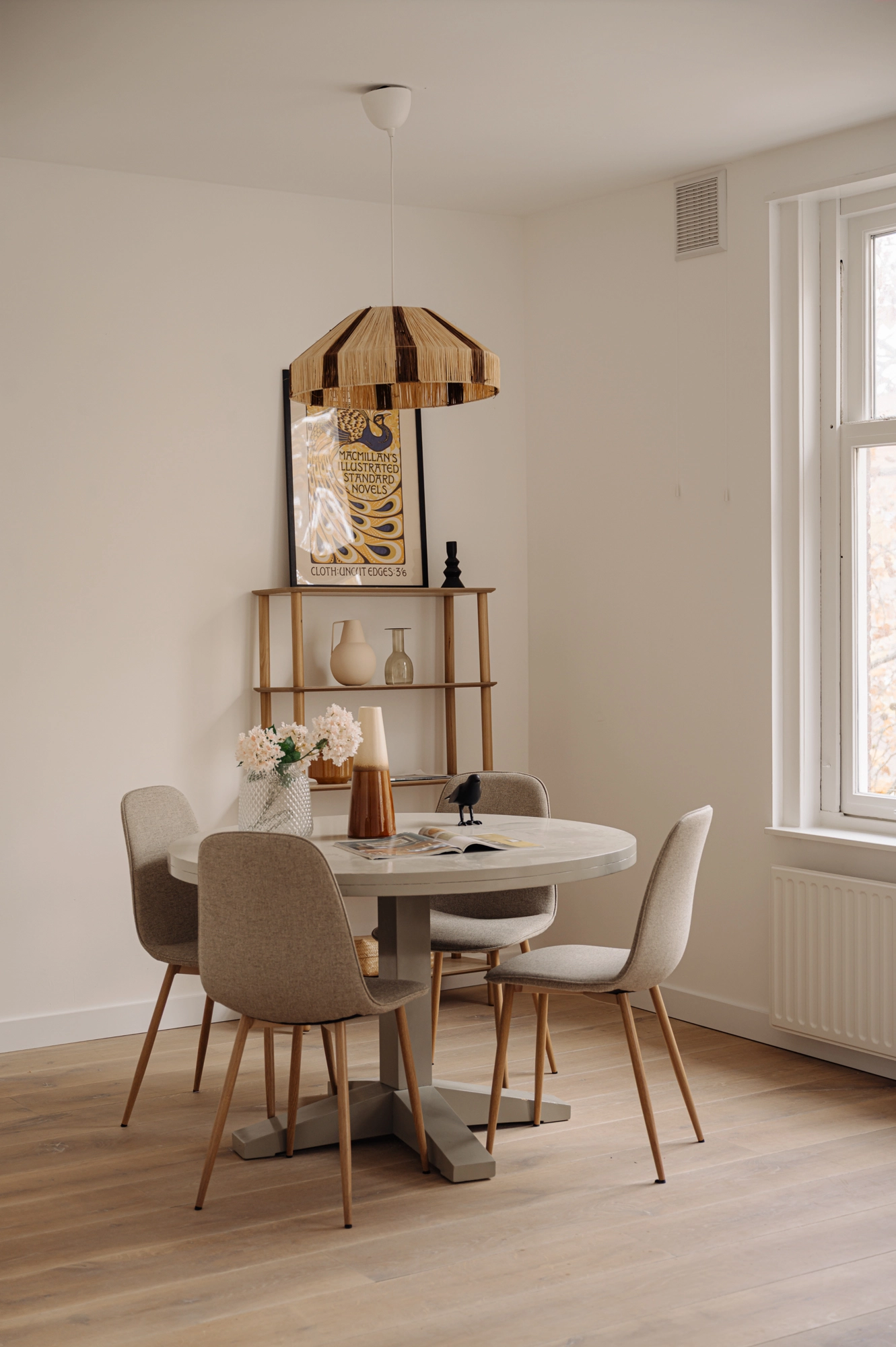
The living room is located at the front of the house and is bathed in light thanks to the wide bay window facing south-southeast. Large windows capture the row of trees across the street in all their glory, a view that changes with the seasons. The space is understated and bright, with soft tones, beautiful flooring, and subtle details. A sliding door made of black steel and frosted glass connects to the bedroom at the rear. When closed, this door provides privacy; when open, it creates a living room with an open, loft-like character. Light flows freely from facade to facade. The sitting area, dining table, and circulation each have their own place, without interrupting the space. The dining area is located in a quiet alcove on the side of the living room. Here, the light falls in diffusely, filtered by the trees. The atmosphere is intimate, but not confined. The kitchen is on the other side of the house, facing northwest and connected to the balcony. The layout is practical and modern: white fronts, a granite worktop, and a soft gray natural stone backsplash. All built-in appliances are beautifully integrated. Behind the panel door is a spacious cupboard with a connection for a top-loading washing machine. Everything is functionally well thought out, without compromising on aesthetics.
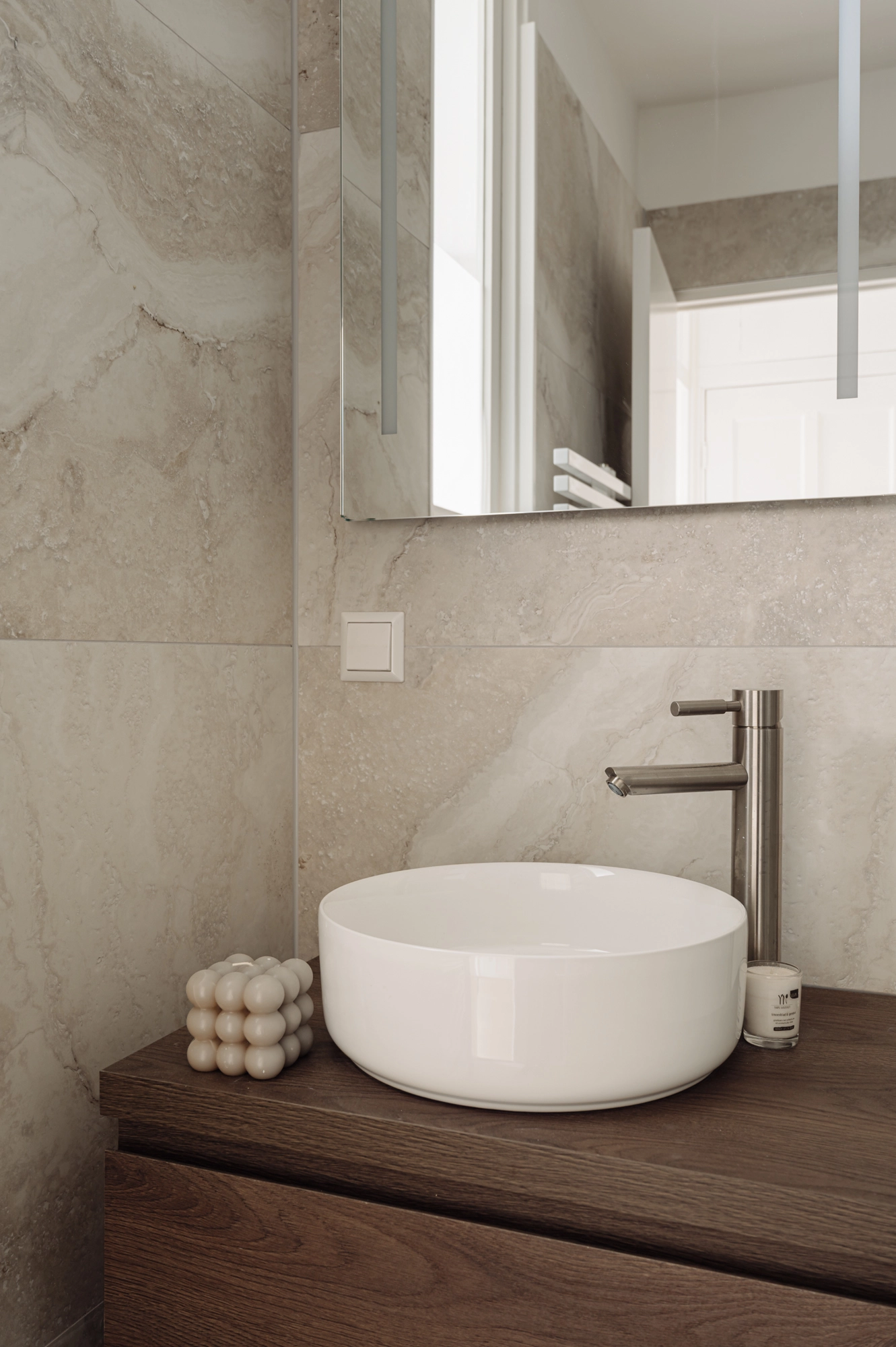
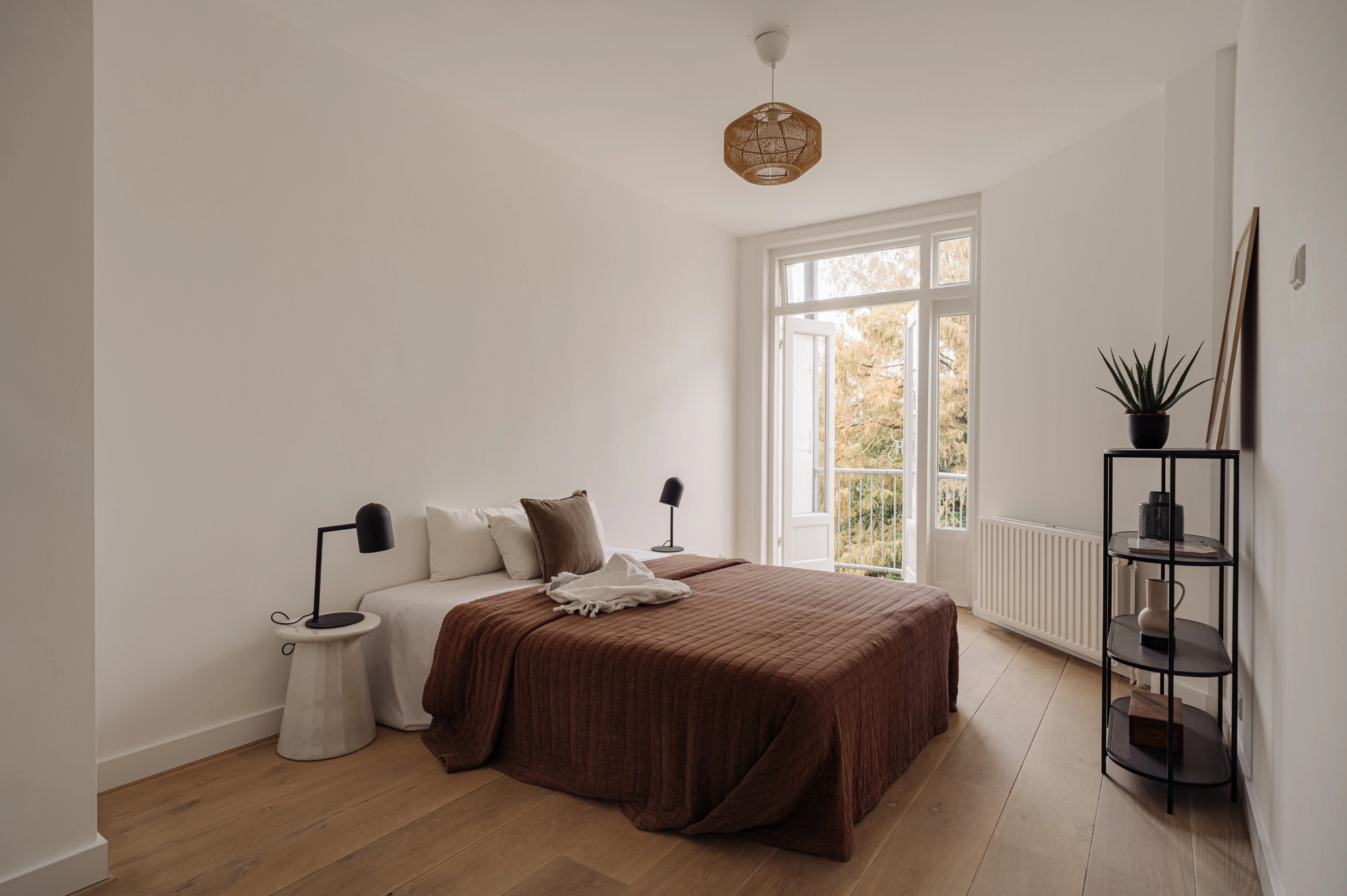
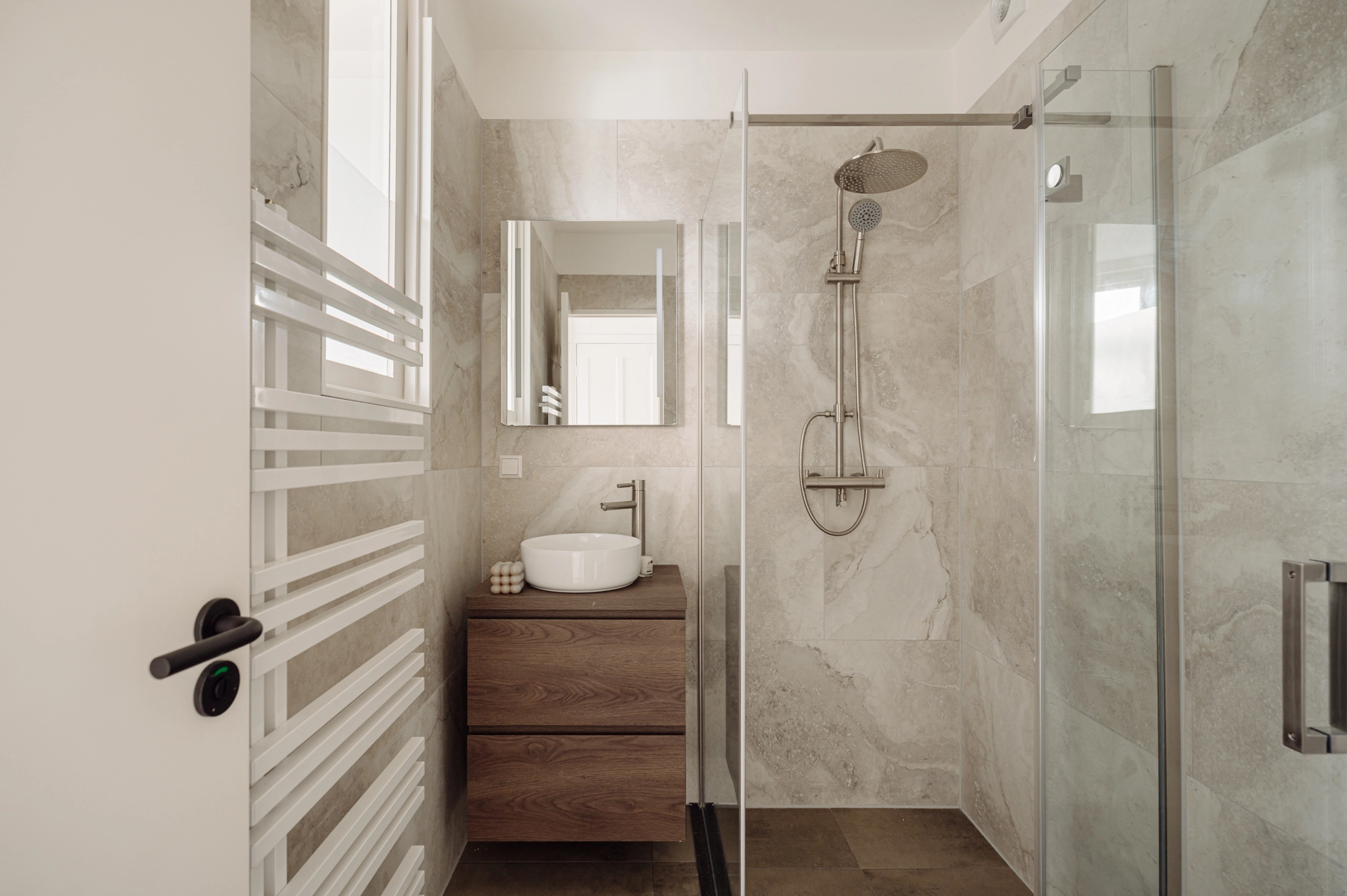
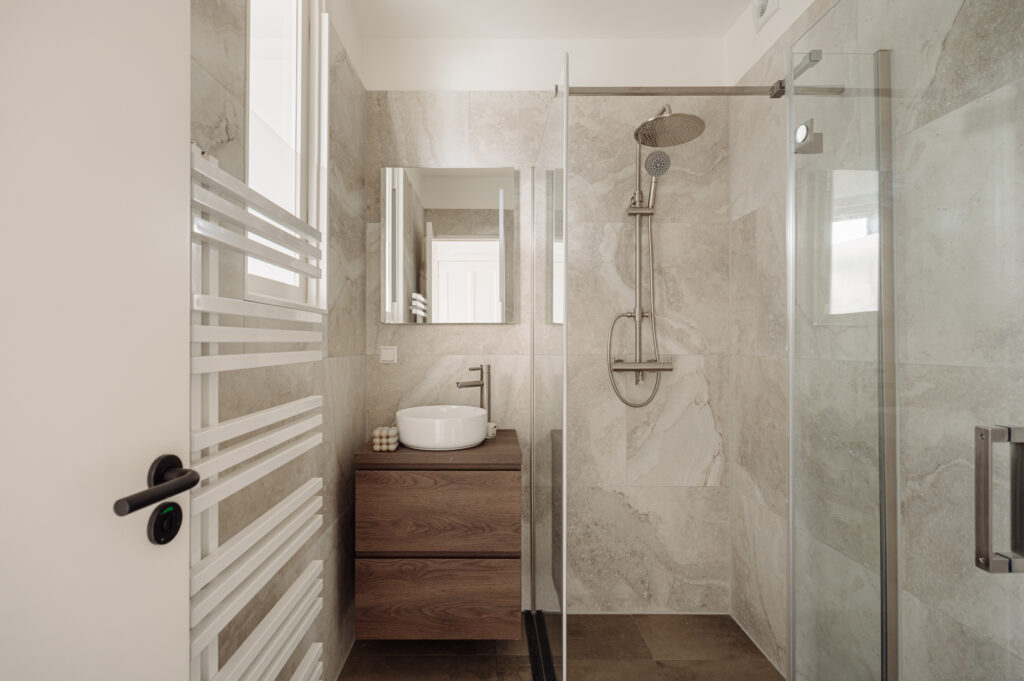
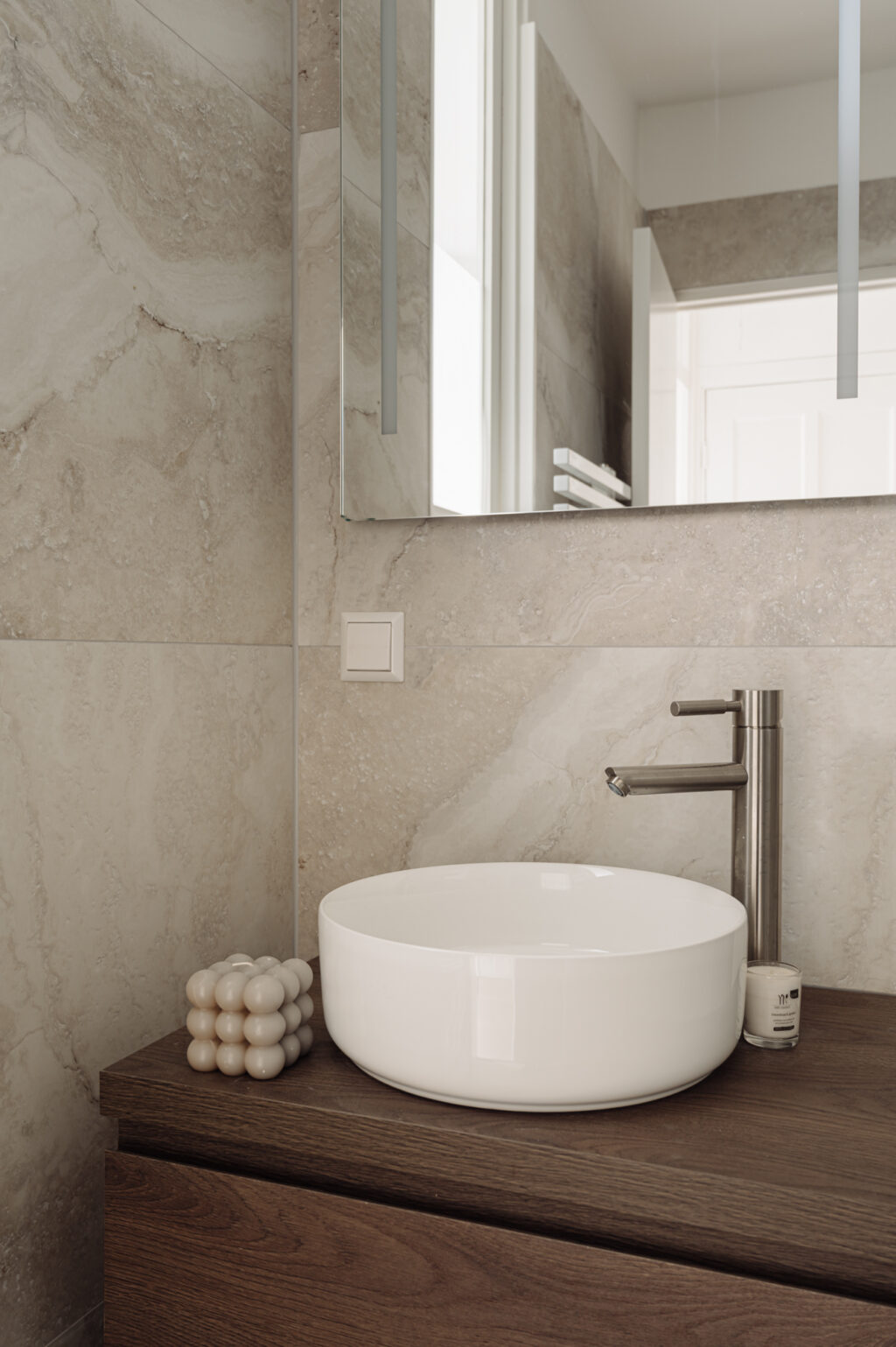
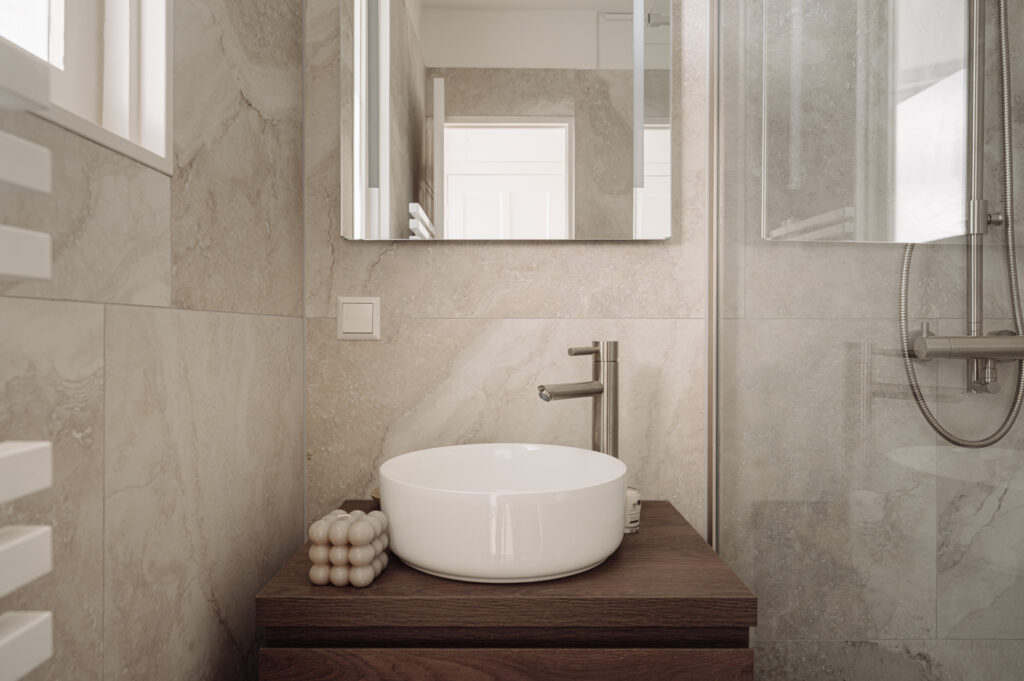
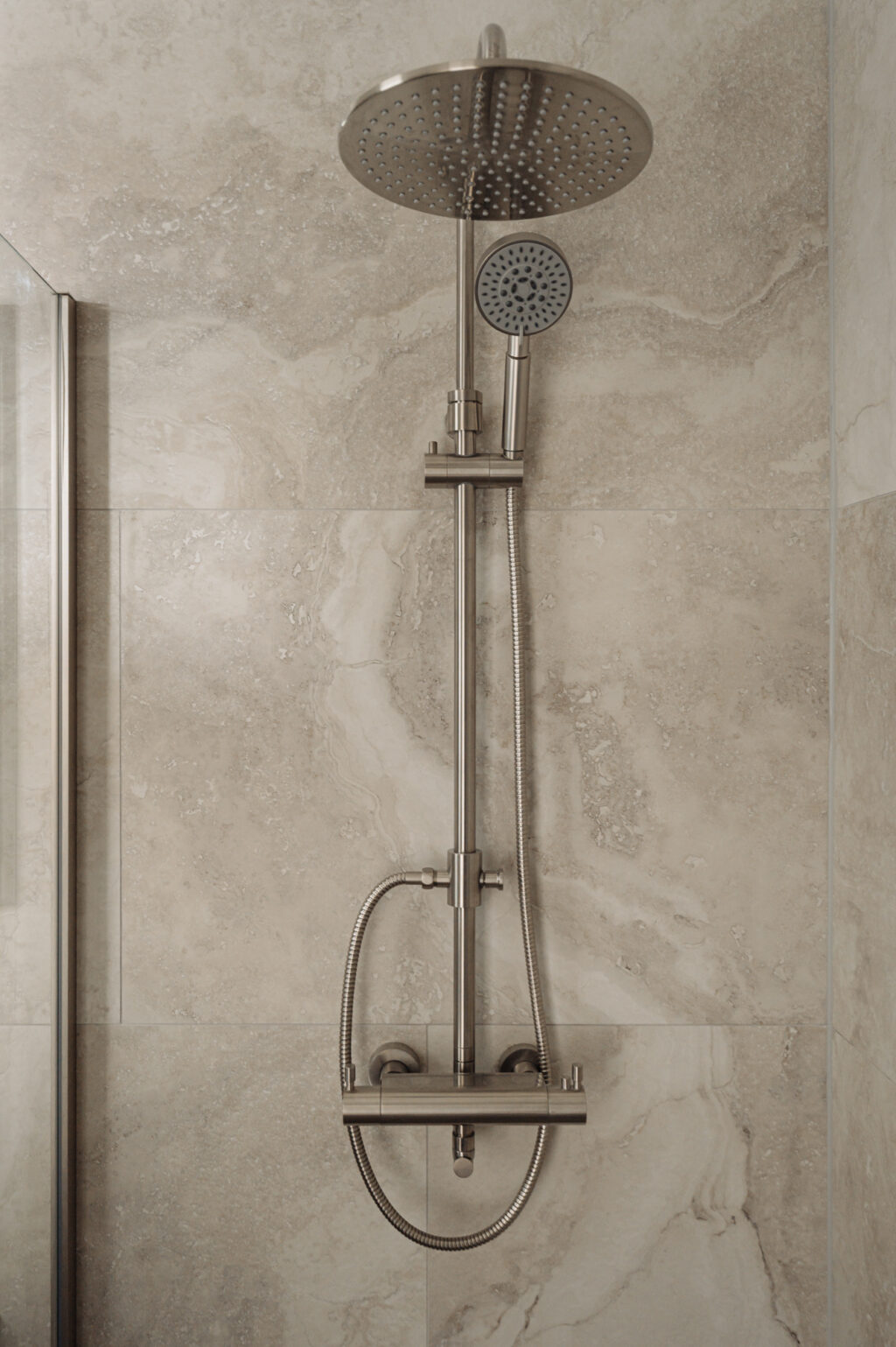
The bedroom is located at the rear and exudes tranquility. The space is spacious, light, and perfectly proportioned. A place to retreat from the day. The bed is centrally located, facing the French doors to the balcony. Behind it are the trees, the sky, and the greenery of the inner gardens. The finish is understated, with soft white tones, warm wooden floors, and minimal decoration. A steel partition with frosted glass slides between the bedroom and living room. An elegant solution that offers privacy without interrupting the light and spaciousness. When open, the home transforms into a whole with a view from front to rear. When closed, it creates a serene sleeping space, separate but connected. The bathroom is sleek and luxurious. The walls are covered with large-format ceramic tiles in a warm limestone shade, continued in the floor and walk-in shower. The custom-made wooden base cabinet supports a round washbasin in matte white, combined with brushed stainless steel sanitary ware. The mirror cabinet and indirect lighting enhance the depth. The rain shower is spacious, with a separate hand shower. Natural daylight enters through a high window. The toilet is separate and finished in the same style.
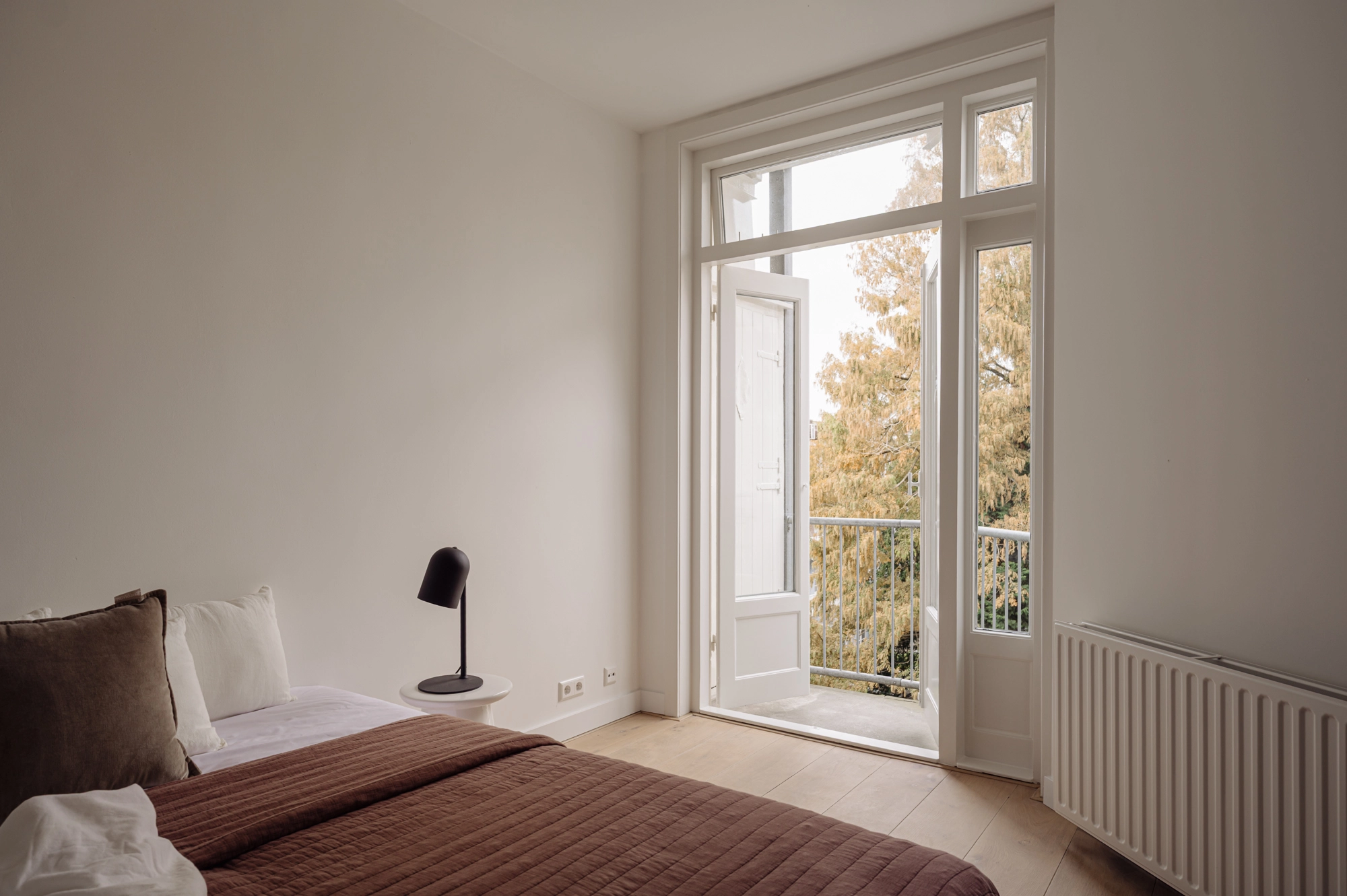
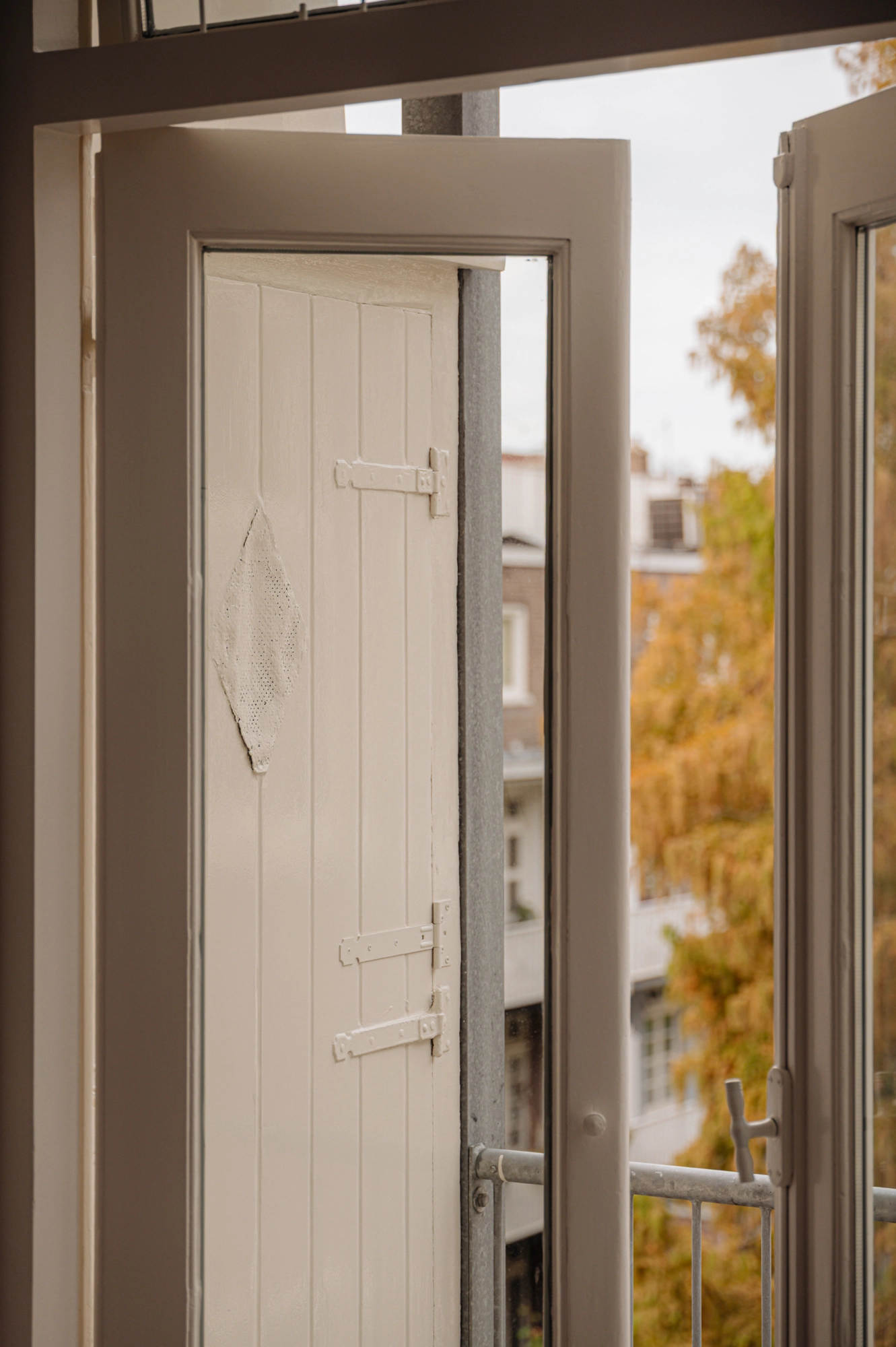
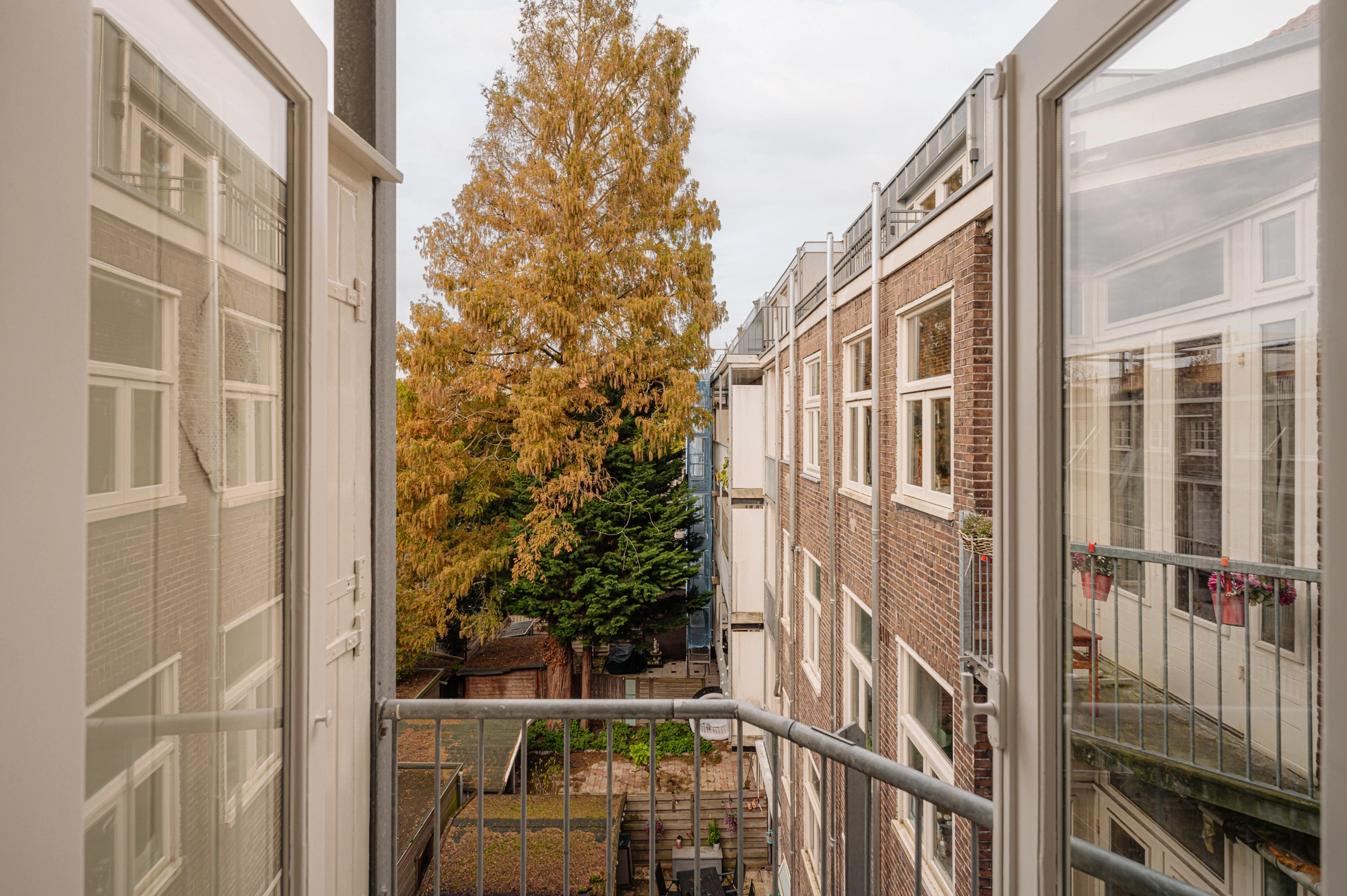
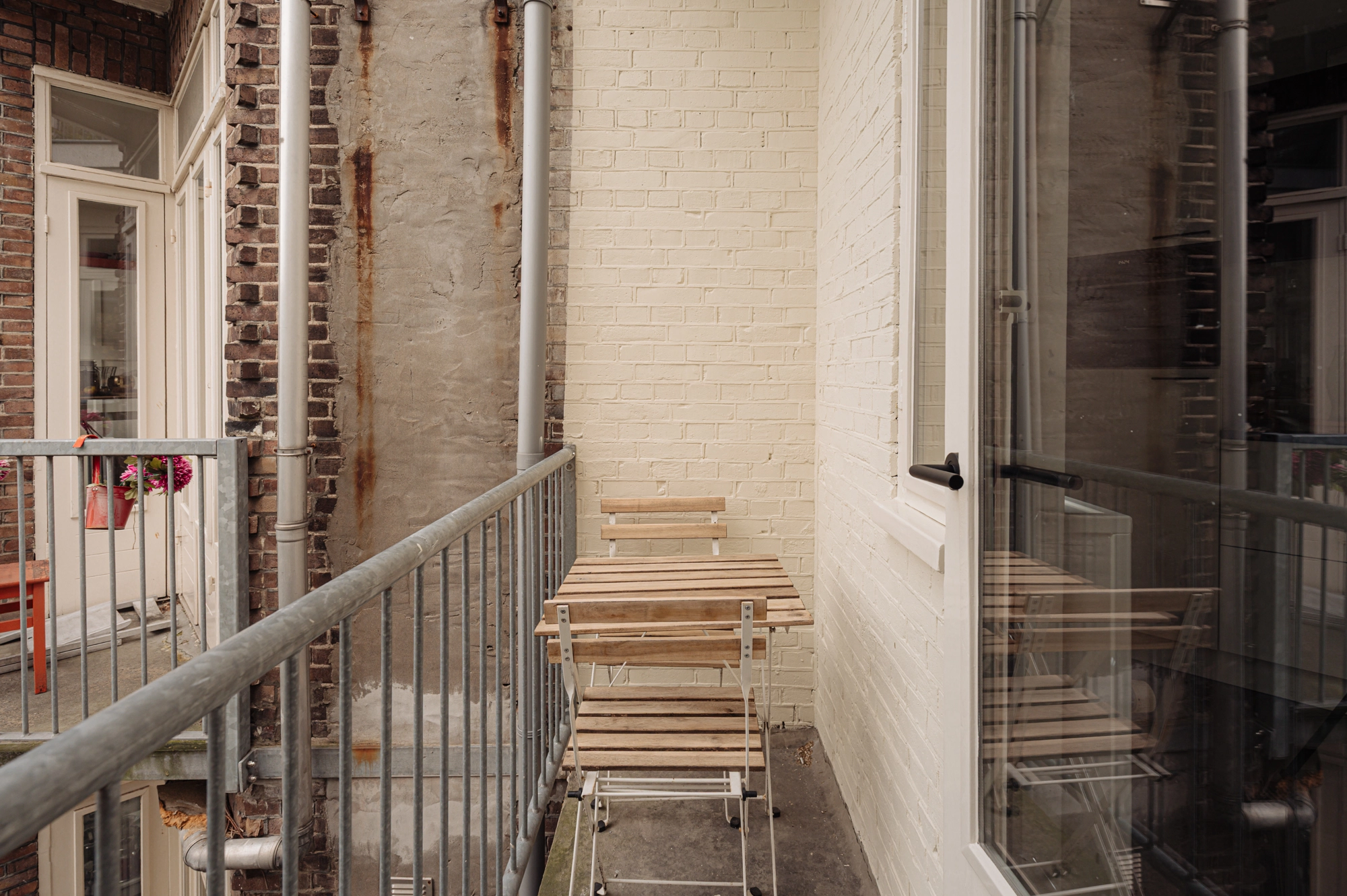
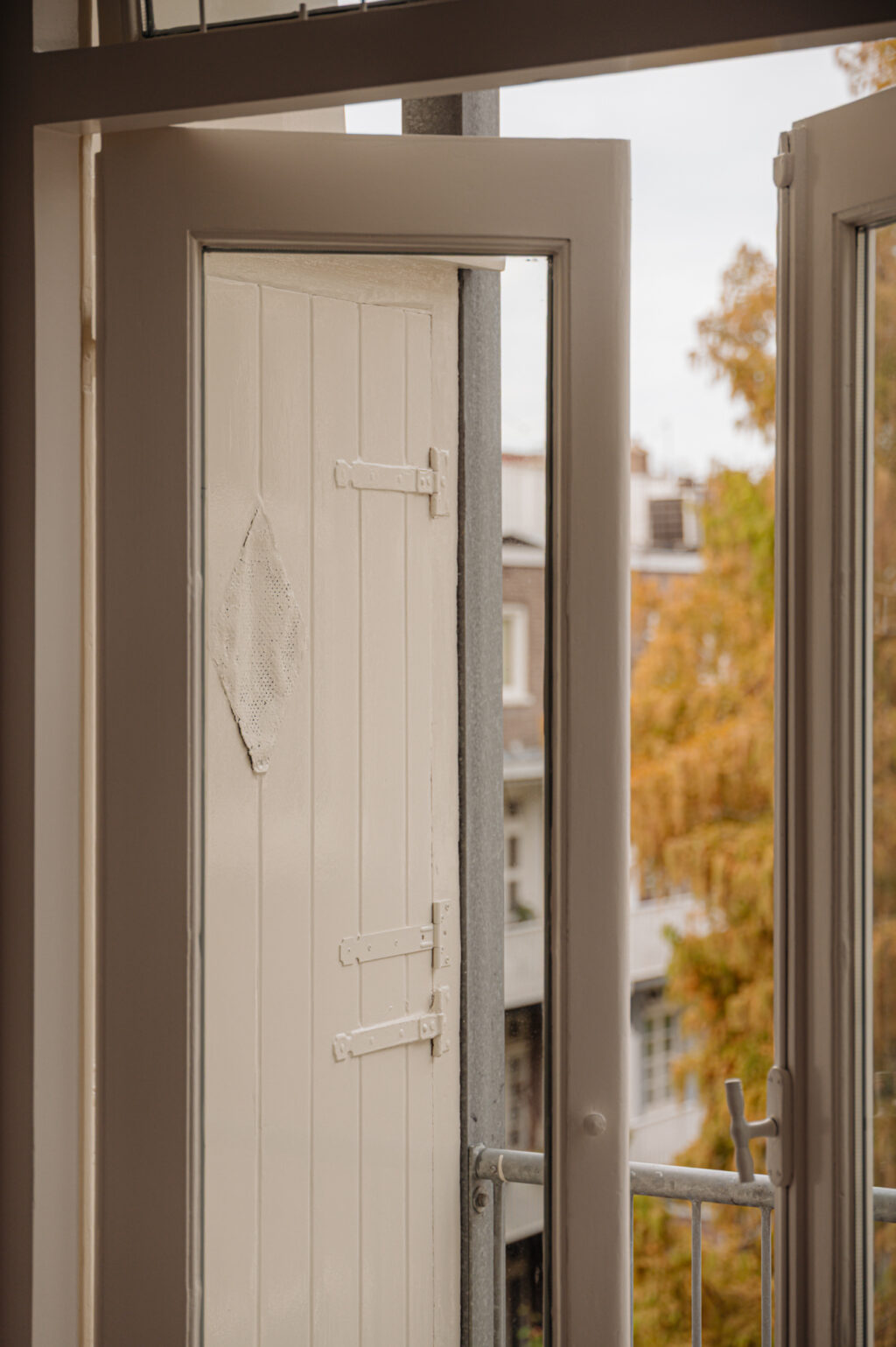
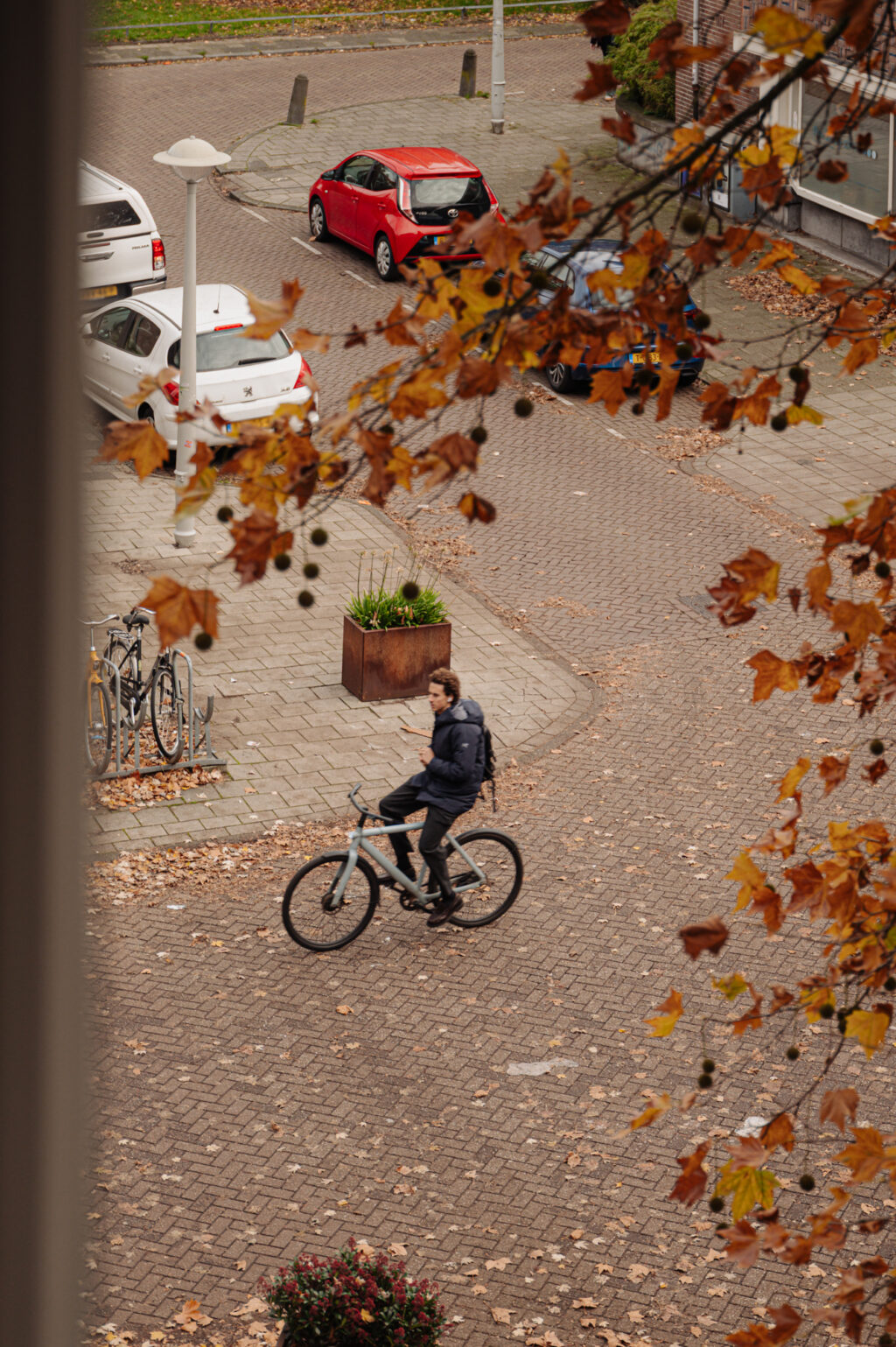
At the rear of the house are two balconies, each accessible via French doors from the kitchen and bedroom. Both outdoor spaces face northwest, providing soft light and warm reflections, especially in the afternoon and evening. The balcony on the bedroom side overlooks the mature greenery of the inner gardens. In summer, the foliage forms a leafy backdrop and in autumn a palette of deep colors. This is the ideal place for a quiet morning or an intimate glass of wine at the end of the day. The balcony off the kitchen is compact and practical, with room for a bistro table or herb rack. The original wooden shutters, white-painted brickwork, and steel balustrades retain the character of the Year of construction connect the inside with the outside. Although both balconies are small individually, together they significantly enhance the quality of life. They provide air, light, and orientation, making this a rare, light-filled upper apartment.
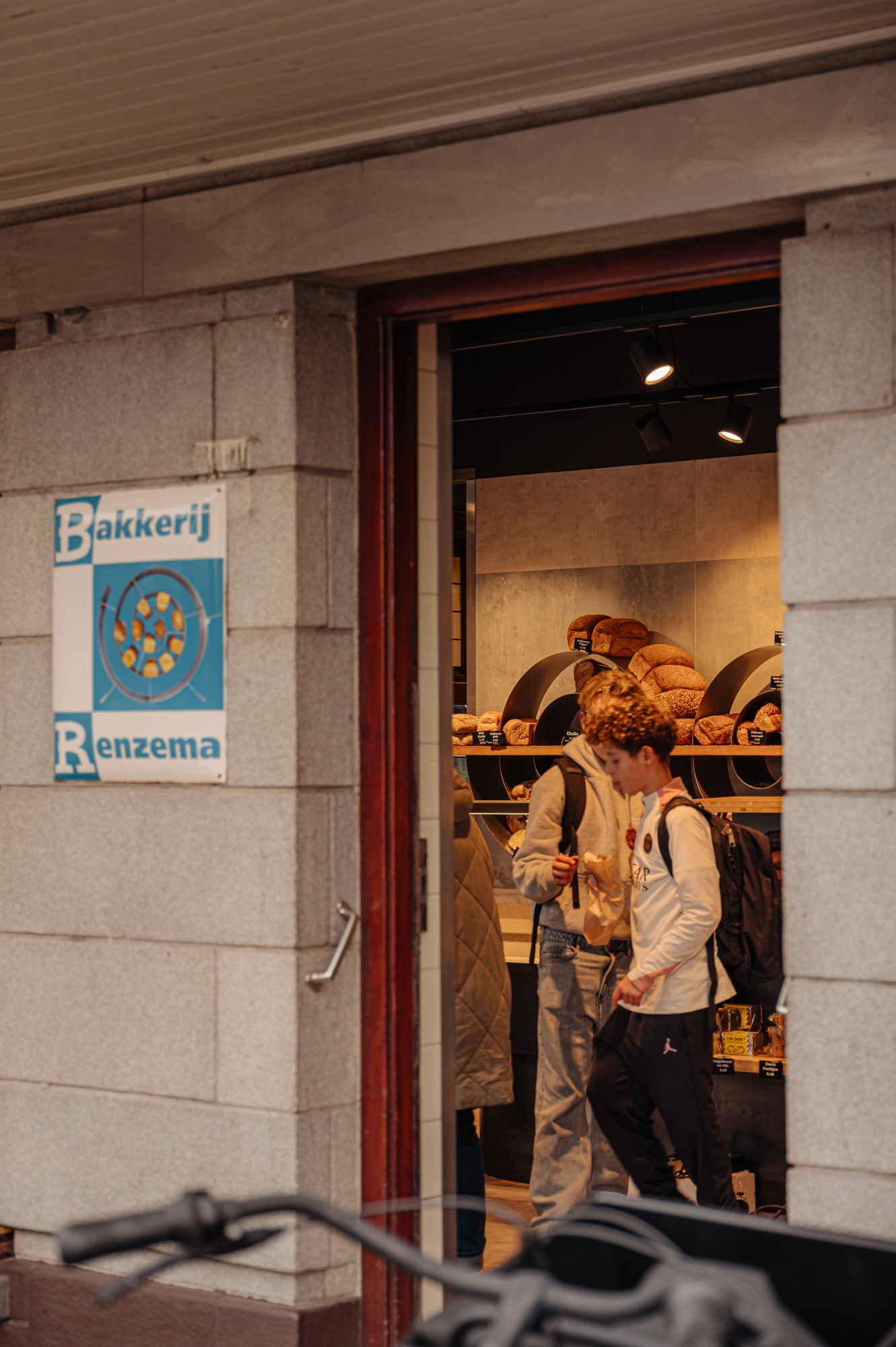
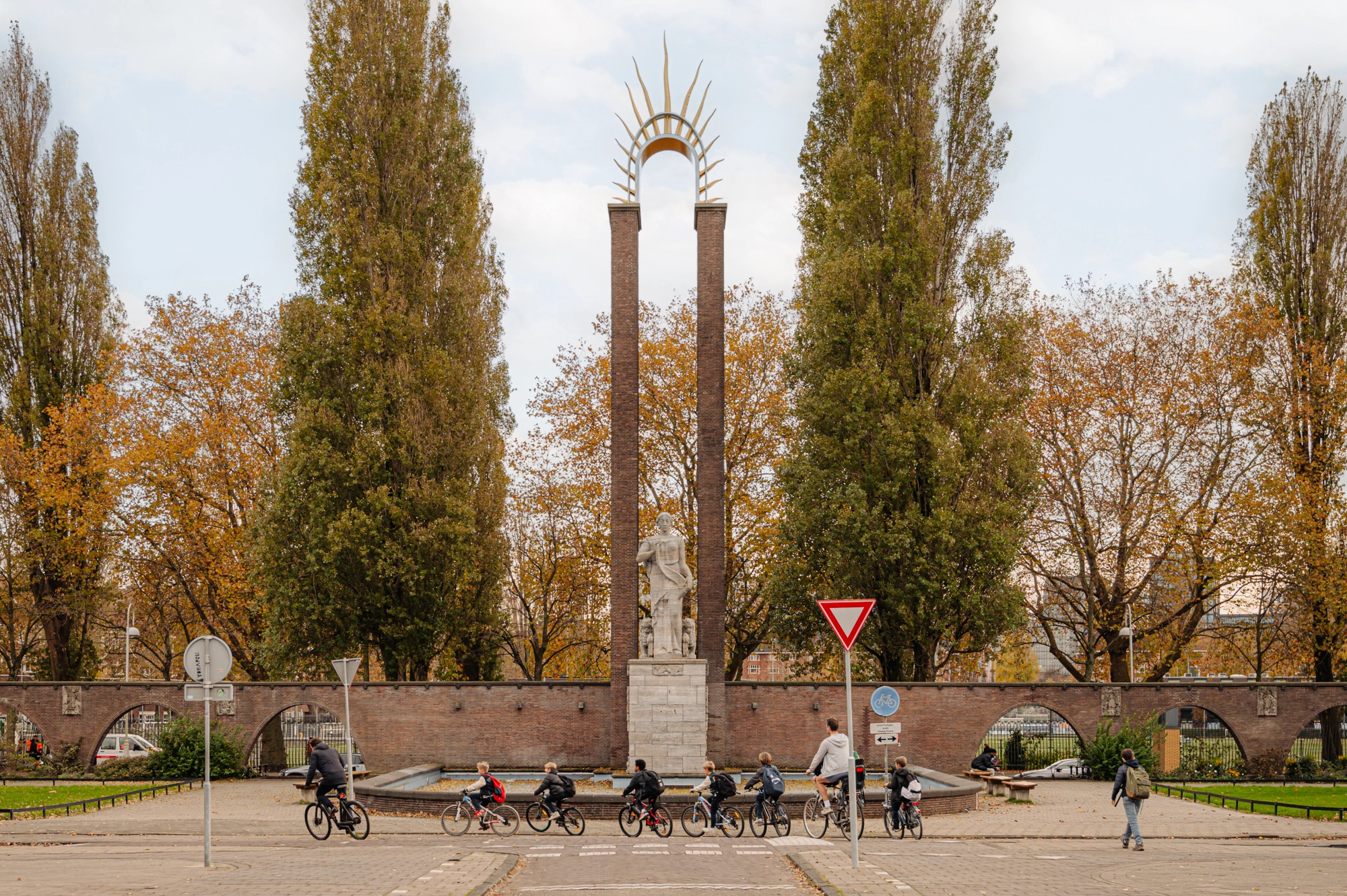
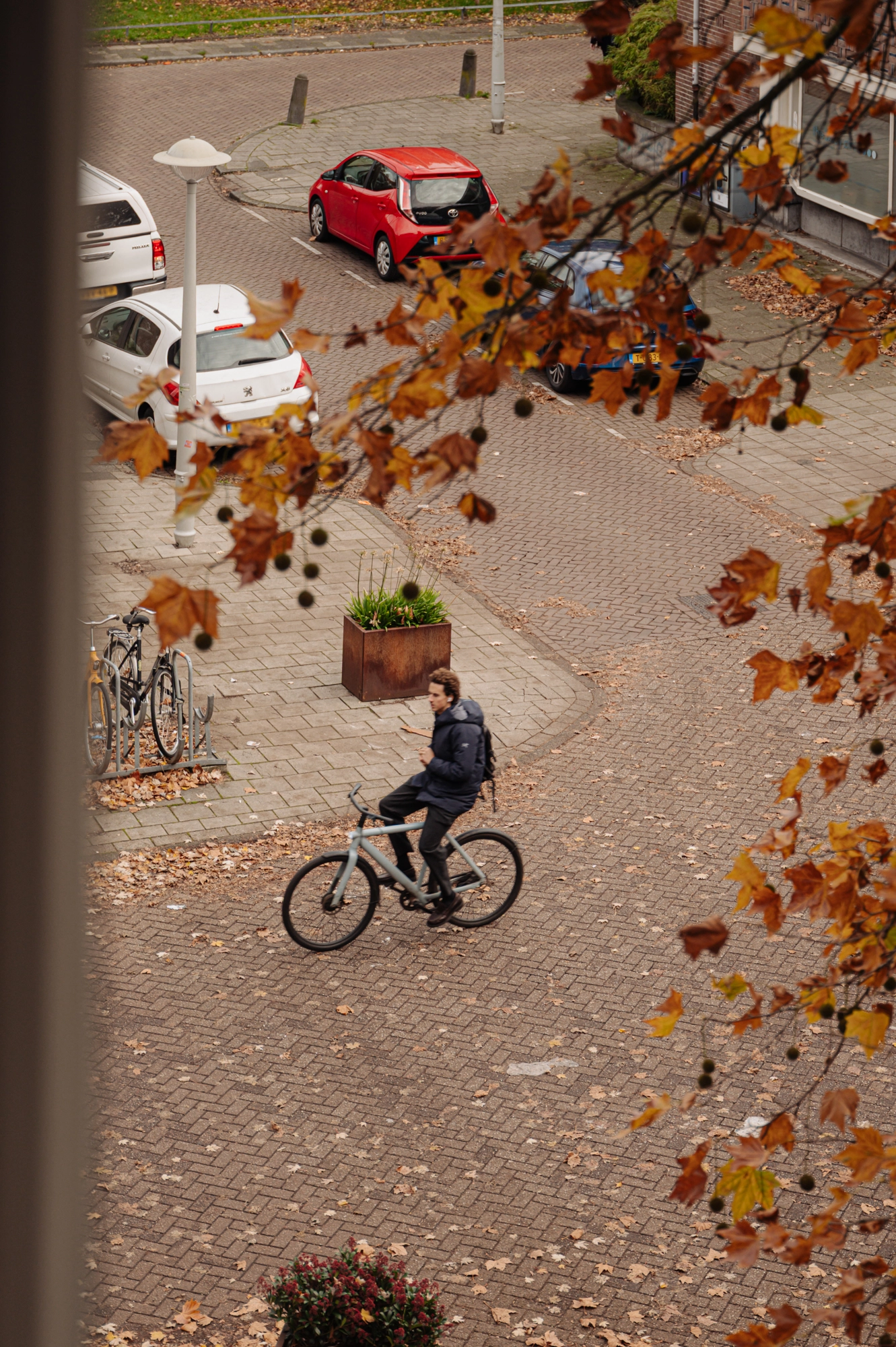
The Stadionbuurt neighborhood, located in Amsterdam Zuid, owes its name to Harry Elte's former National Stadium, not to be confused with Jan Wils' Olympic Stadium. The original stadium stood on the site of the current Jasonstraat and Argonautenstraat until 1929, when it was demolished to make way for housing after the 1928 Olympic Games. The most striking building in the Stadionbuurt is the Olympic Stadium, designed by architect Jan Wils for the 1928 Olympic Games. Along the axis of the Olympic Stadium to Parnassusweg, there are green areas and small parks with playgrounds, which contribute to the diversity and attractiveness of the neighborhood. The renovated Stadionplein has become a vibrant center with various restaurants and a weekly market, making it a hotspot for both residents and visitors. With its mix of buildings and amenities, the Stadionbuurt offers a pleasant living environment in the heart of Amsterdam.
accessibility
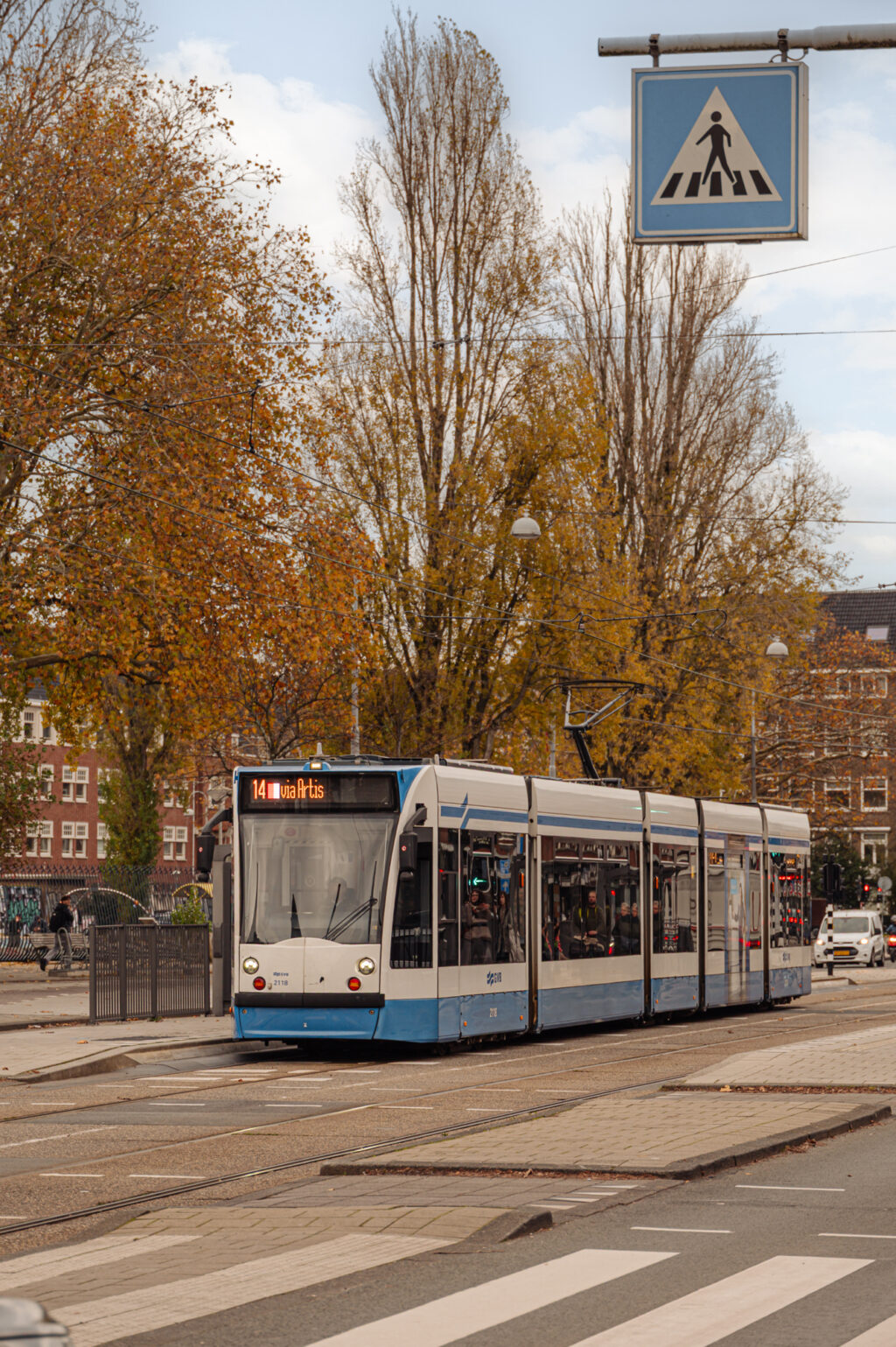
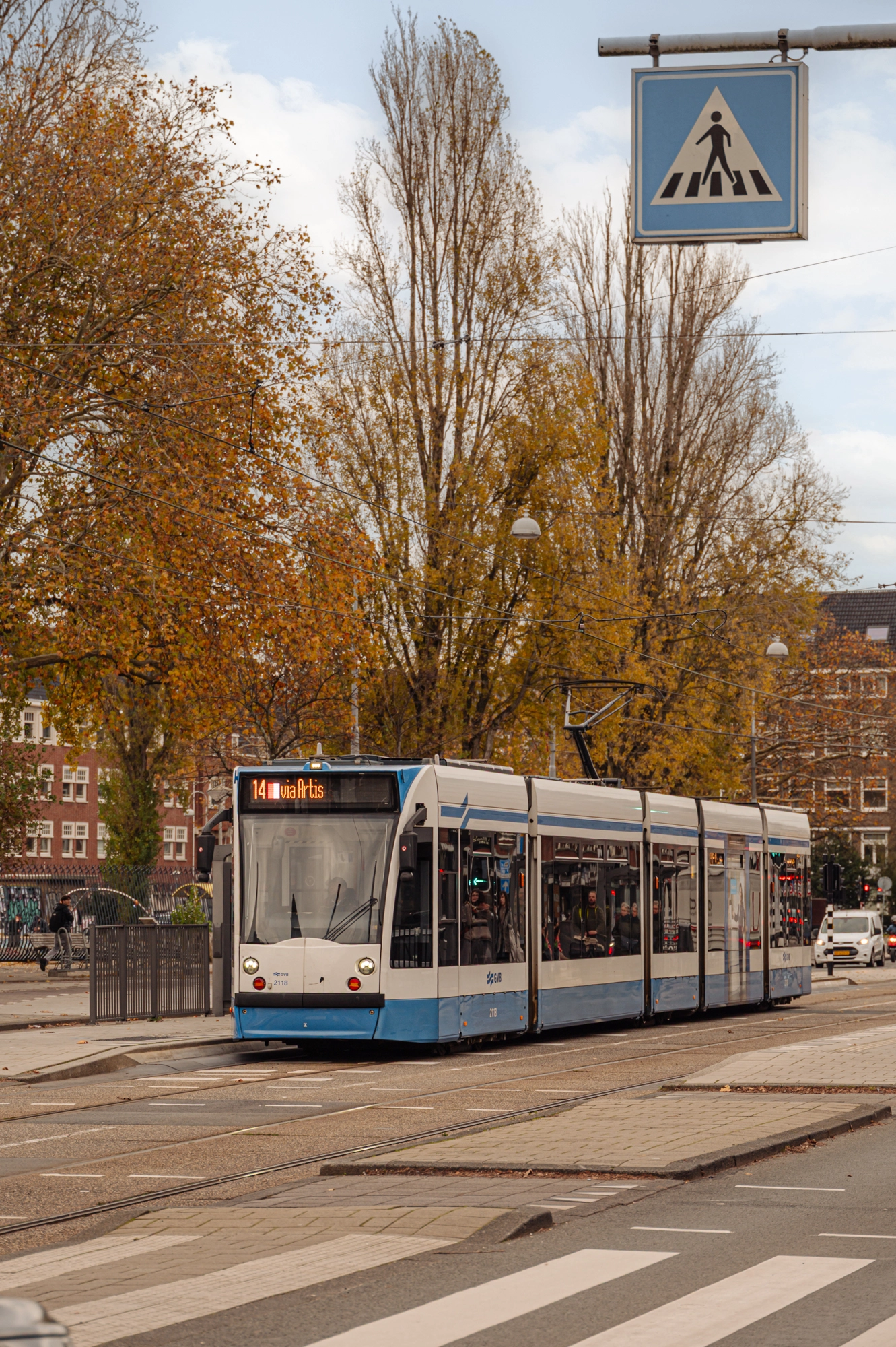
The property is easily accessible. By car, you can reach the A10 ring road within five minutes via exit S108. Rooms tram and bus lines run from Olympiaplein and Rooms , including tram 24 towards the city center and VUmc. Station Zuid is also about a five-minute bike ride away. This is ideal for commuters or international travelers. Regional transport also departs from the Olympisch Stadion stop, with a direct connection to Schiphol Airport.
parking facilities
Parking is available via a permit system on public roads (permit area Zuid 2.2). With a parking permit for Zuid 2.2, you may park in Zuid-1, Zuid-2, and Zuid-8. A parking permit for residents costs €192.81 per 6 months. There is currently no waiting period for this permit area. A second parking permit for residents costs €482.03 per 6 months. (Source: Local authority , January 2026).
1076 LP Amsterdam
Umeno
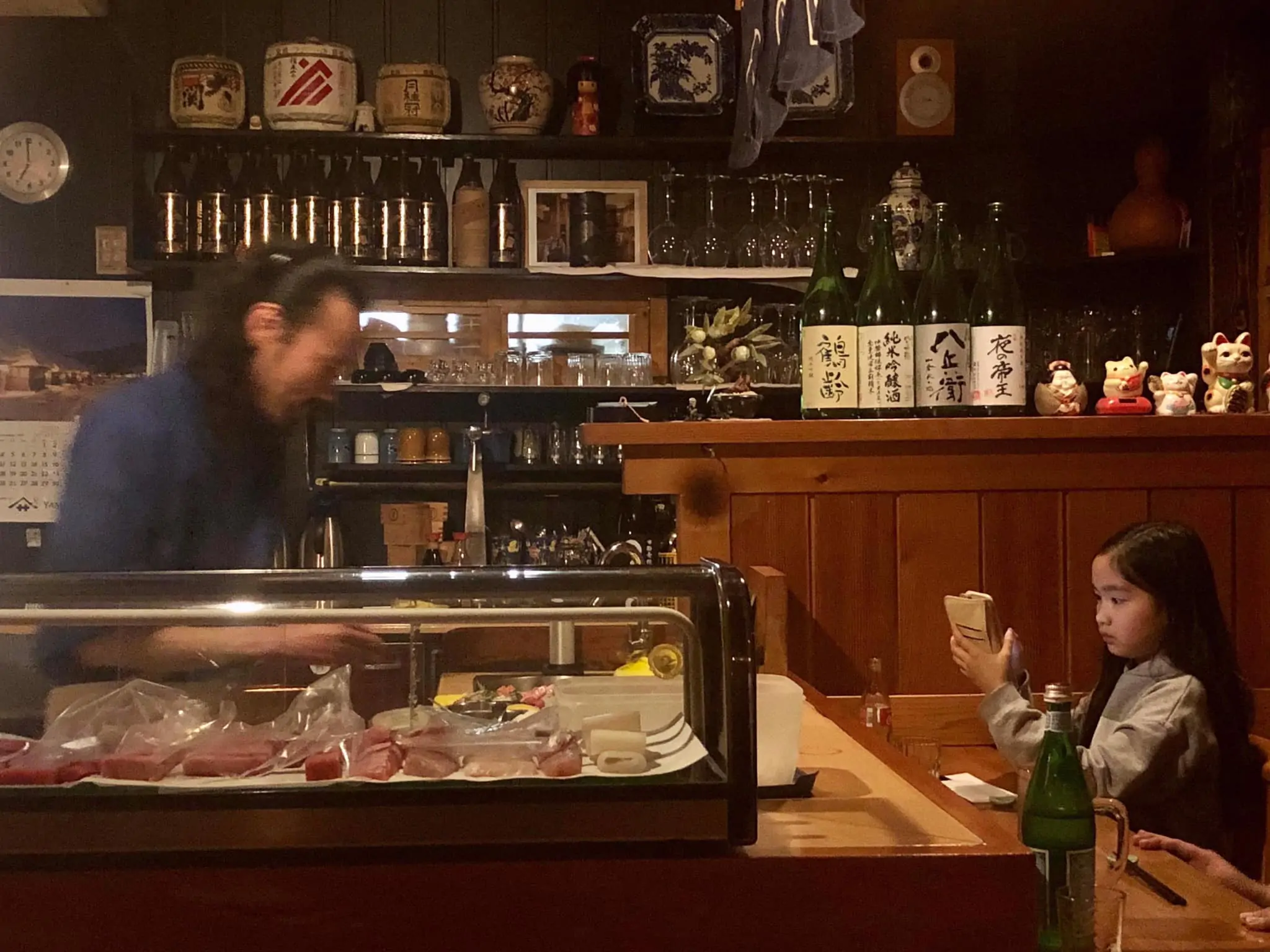
Umeno is one of the oldest Japanese restaurants in Amsterdam and is beloved by its regular local guests. As soon as you step inside, you are greeted by an intimate space with traditional Japanese authenticity, created by the handmade wooden interior, the shamisen and shakuhachi music, and the enormous hospitality of Ayumi and Atsuhito Hosono. The nigiri sushi is highly recommended, as the quality of the fish is excellent.
1077 CV Amsterdam
The Coffee District
Owners Adil Loukane and Rosa Loukane started with a hole-in-the-wall coffee shop in a fashion store in the South. When the store closed its doors, Adil and Rosa seized their opportunity and decided to open their own coffee bar. They now have multiple locations. The coffee is made with a proprietary blend roasted by Lot Sixty One. They also offer sweets such as the now-famous cinnamon buns and banana bread.
1076 NZ Amsterdam
Cucina casalinga
Giovanni Carmelitano is the owner of Cucina Casalinga, an Italian restaurant located at Stadionweg 271 in Amsterdam-Zuid. Born in Rome, with a mother from Puglia, Giovanni brings his Southern Italian roots to life in his restaurant. For more than twenty years, he has been a dedicated interpreter of Italian cuisine, combining traditional flavors with a modern approach. The intimate atmosphere and limited seating provide a personal dining experience reminiscent of dining at an Italian 'nonna's' home.
1076 CK Amsterdam
Vascobelo
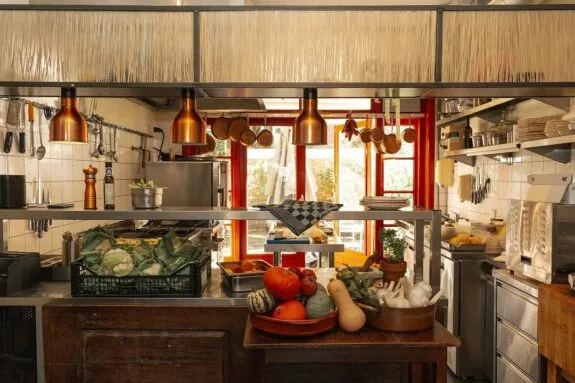
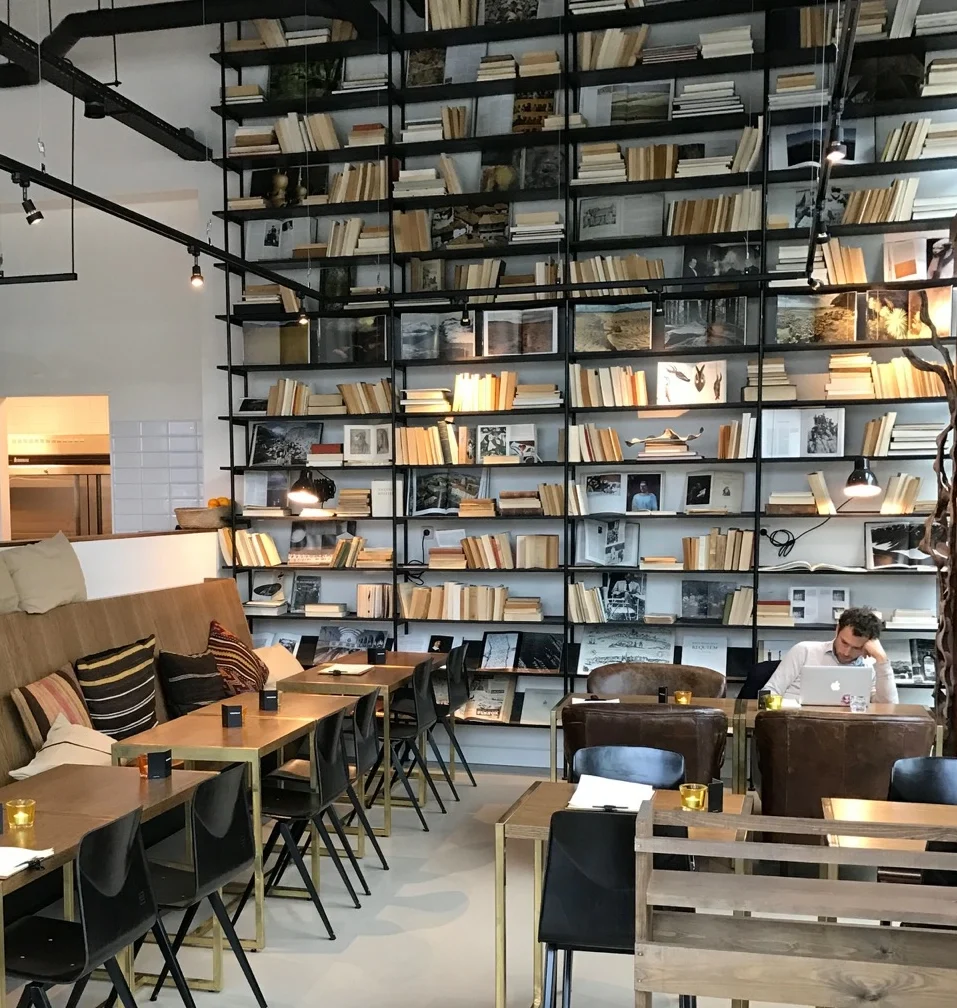
Vascobelo, originally from Antwerp, was intended to be a café where people would come for a unique coffee experience. Nowadays, the Vascobelo Café-Brasseries chain is known for much more than that. The location on Rijnstraat is unique thanks to its cozy interior and open kitchen, making it ideal for intimate gatherings or business meetings.
1076 CM Amsterdam
NENI
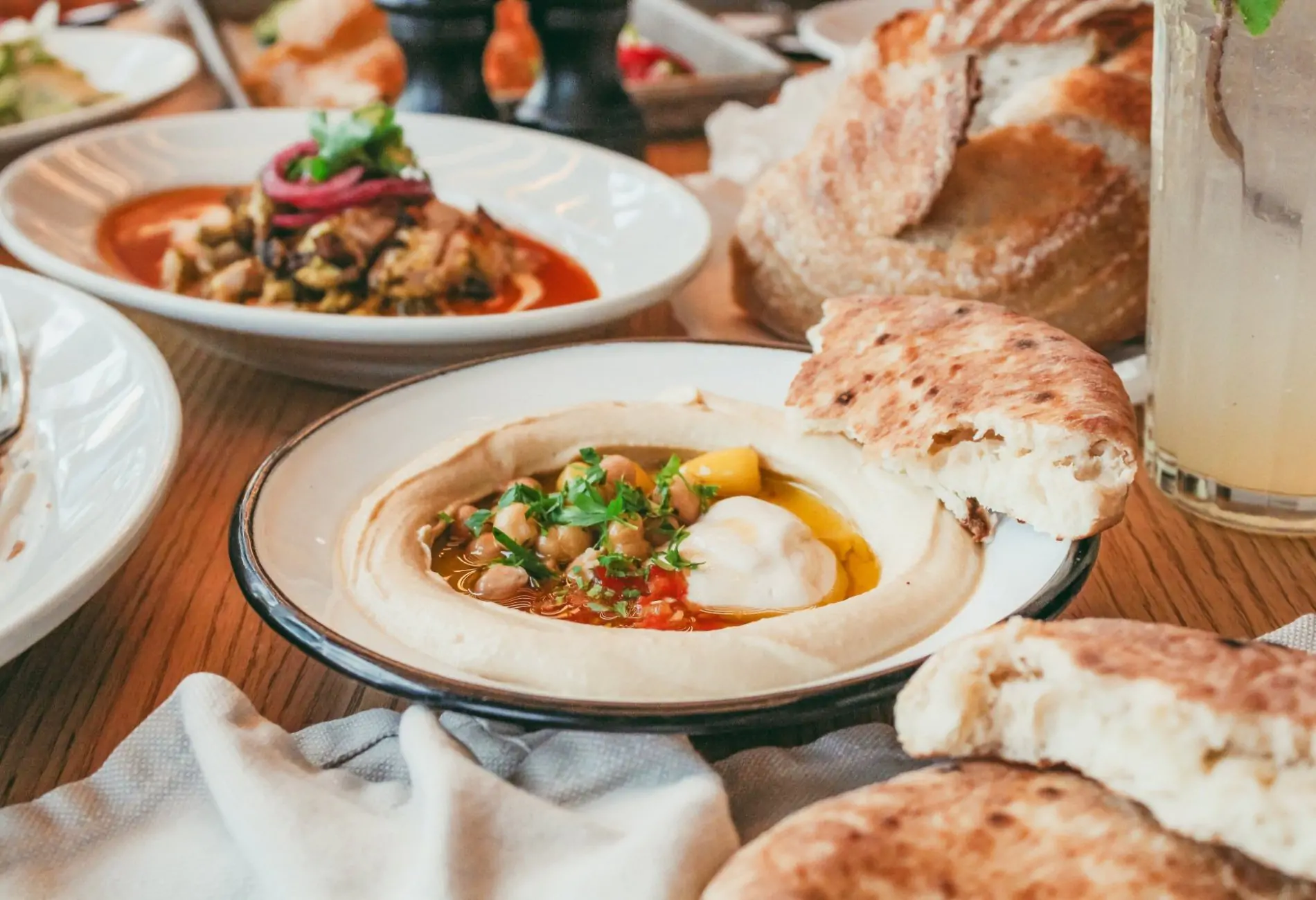
NENI is a Middle Eastern restaurant located on Stadionplein. The name is a composition of the initials of the four sons of Haya Molcho; the driving force behind this business. Haya was born in Tel Aviv and studied psychology there. She always loved to cook and started her first restaurant in 2009. Over the years, the Mocho family has become a well-known family in the culinary world and they also have other NENI locations in Vienna and Berlin, among others. In all their restaurants, family, togetherness and sharing dishes are central. The Middle Eastern dishes are excellent and the freshly prepared hummus is one of the best Amsterdam has to offer.
1076 CM Amsterdam
Restaurant Wils (*)
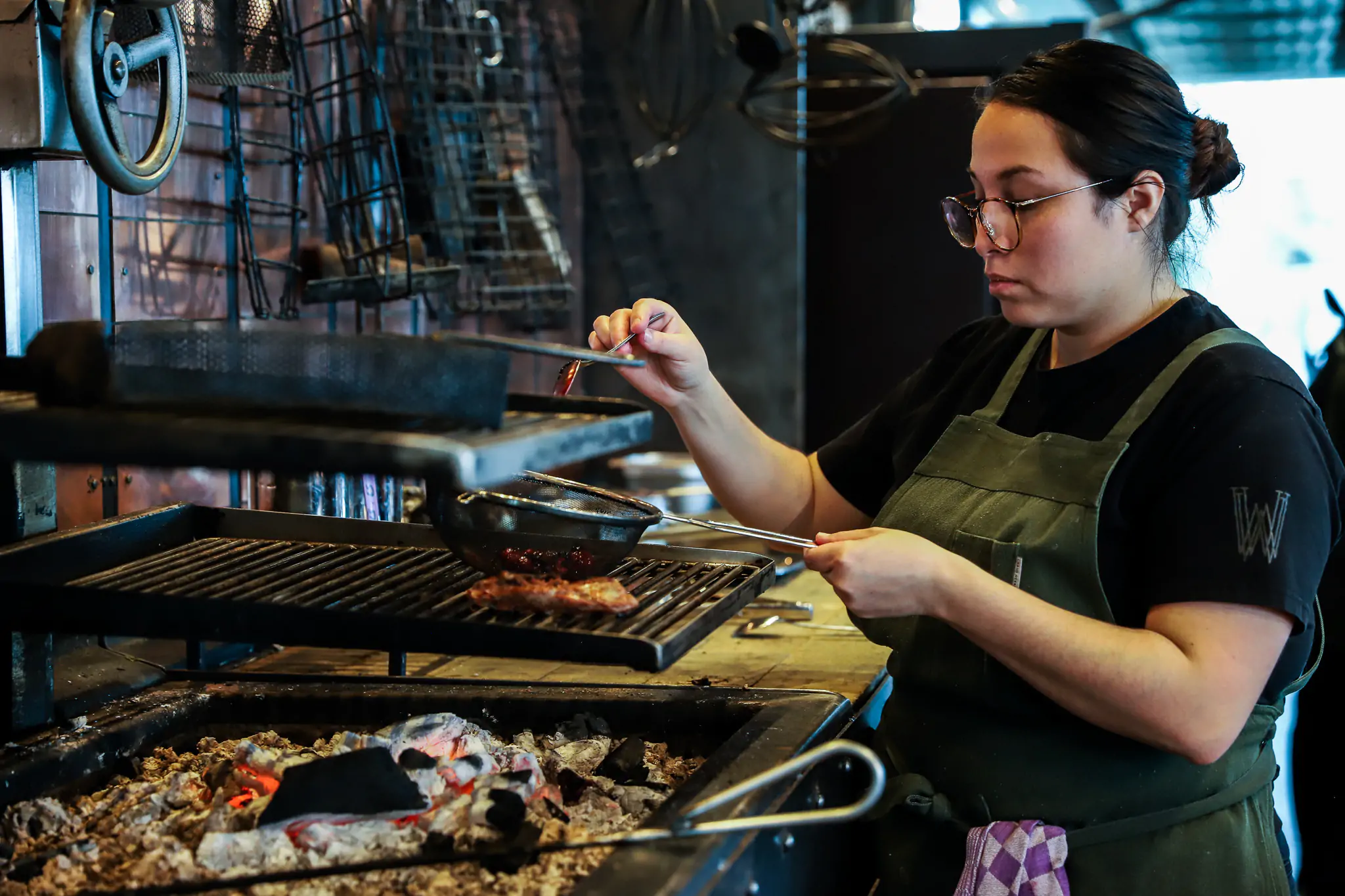
This unique culinary hotspot opened its doors in 2019 thanks to chef Joris Bijdendijk. The restaurant is located next to the Olympic Stadium. Before the opening, Joris gave a sneak preview by cooking on an open fire on the center spot of the stadium in Amsterdam-South. Wils is now fully living up to the high expectations. The 4 to 6 courses are prepared on an open fire and are full of surprising elements.
1076 CM Amsterdam
Wils Bakery & Café
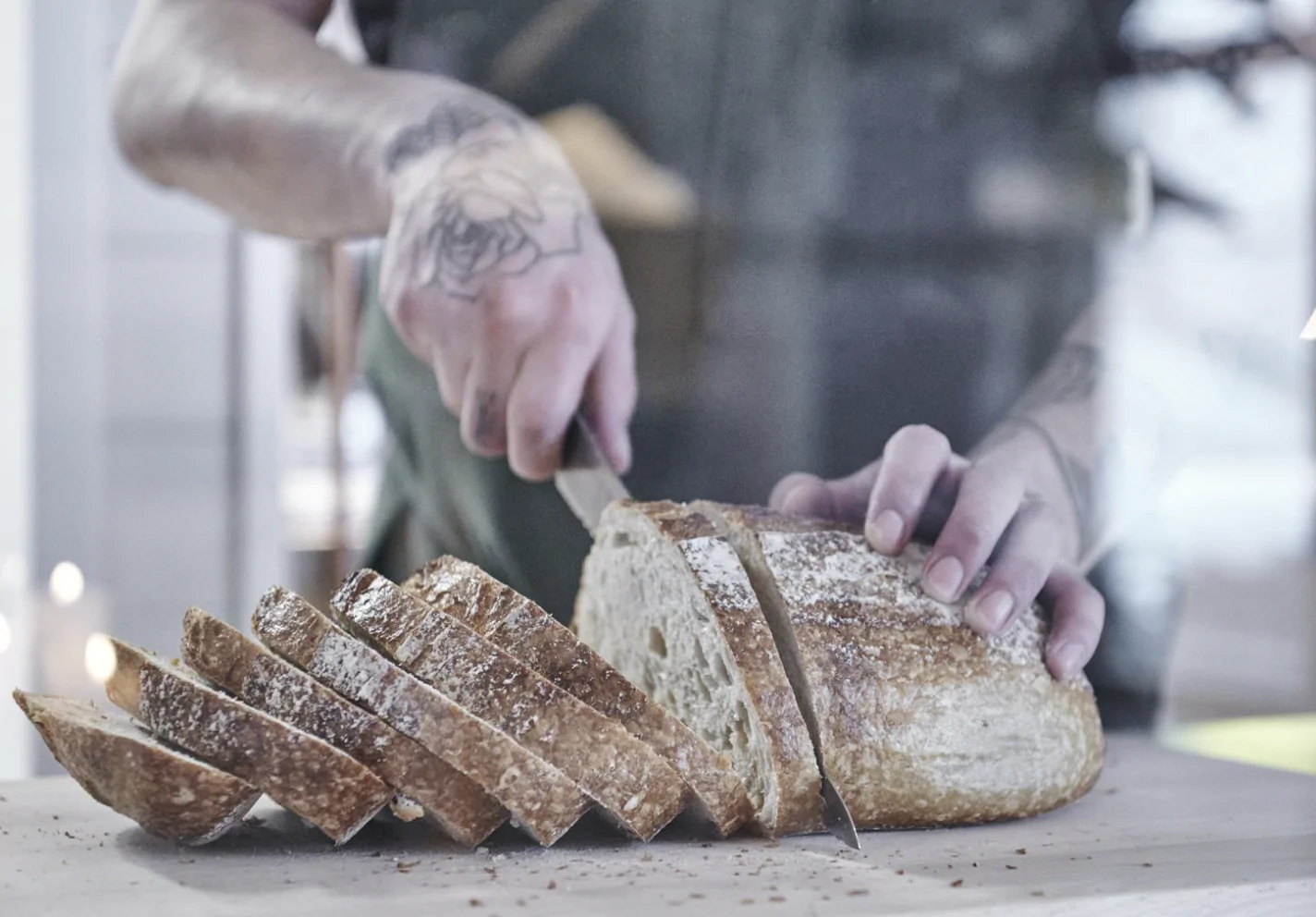
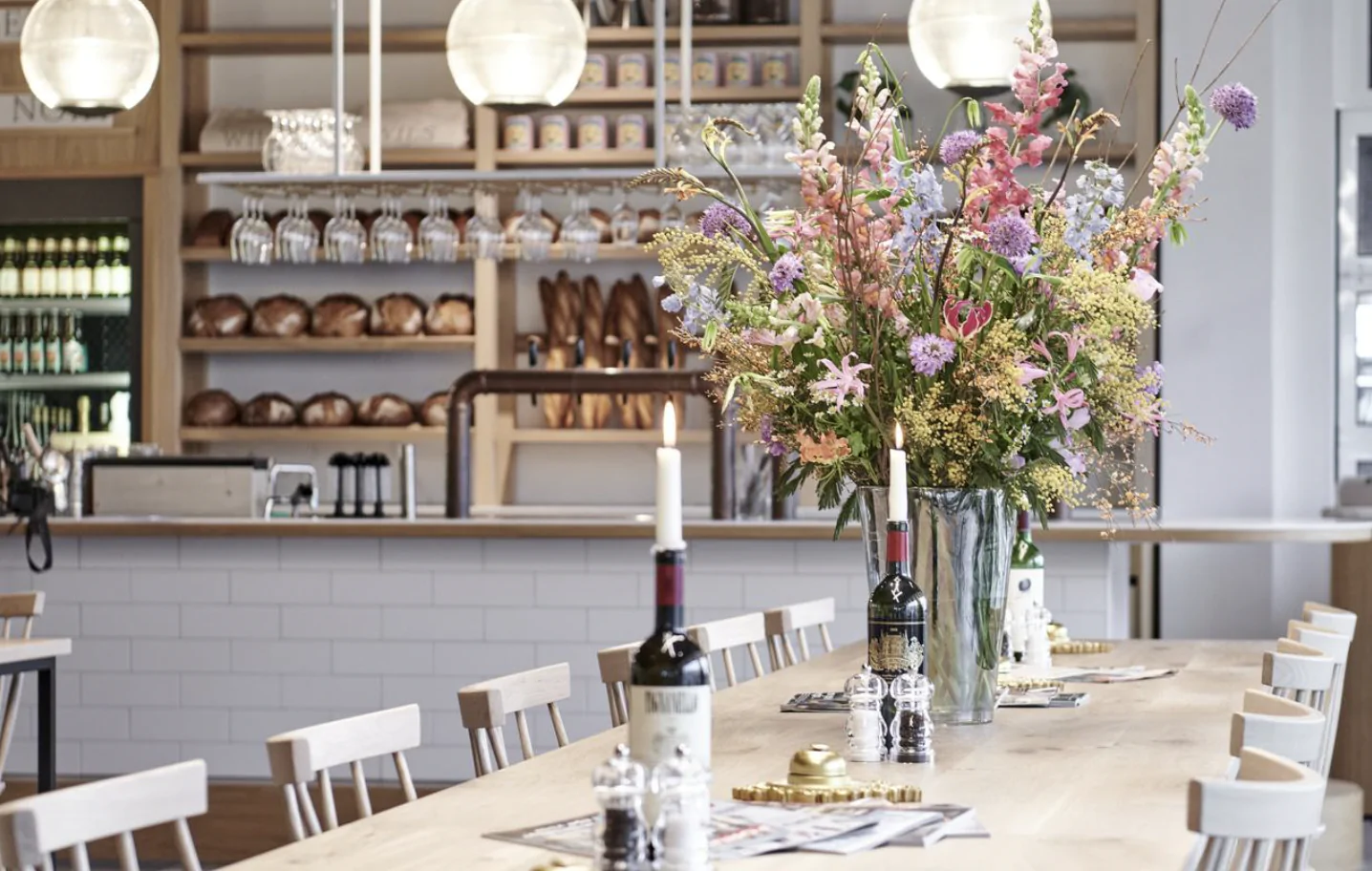
In Amsterdam Zuid you will now find Wils Bakery Café on the ground floor. A mix of bakery and French bistro. Wils is a new venture from chef Joris Bijendijk and the Vermaat Groep (Vermaat owns Rijks and Wils). At Wils Bakery Café they combine the craft of a bakery with the cosiness of a French bistro. On the menu you will find recognizable dishes, prepared with the same craftsmanship as in Michelin star restaurant Wils. Taste the pastries of Tania, the dishes of Rudolf, lunch with the bread of Maxim and have a drink with the wines of Barbora.
1075 PD Amsterdam
LOT61 Coffee Roasters
Born in Sydney, raised in Brooklyn, and now firmly rooted in Amsterdam: LOT61 is anything but an average coffee shop. As an independent coffee roaster, the brand combines international flair with local craftsmanship. Slow coffee brewed with precision and care. The aesthetics are raw yet refined, the atmosphere informal and creative – a place where neighborhood and barista come together. With their B Corp certification, LOT61 also demonstrates that taste and Sustainability can go hand in hand.
1075 XT Amsterdam
Bonnie
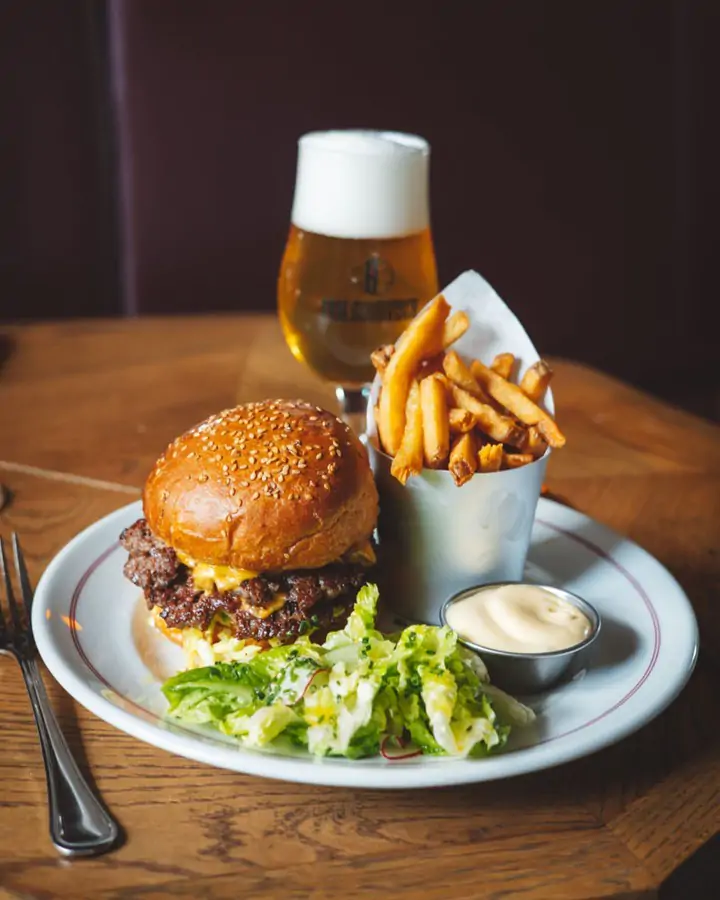
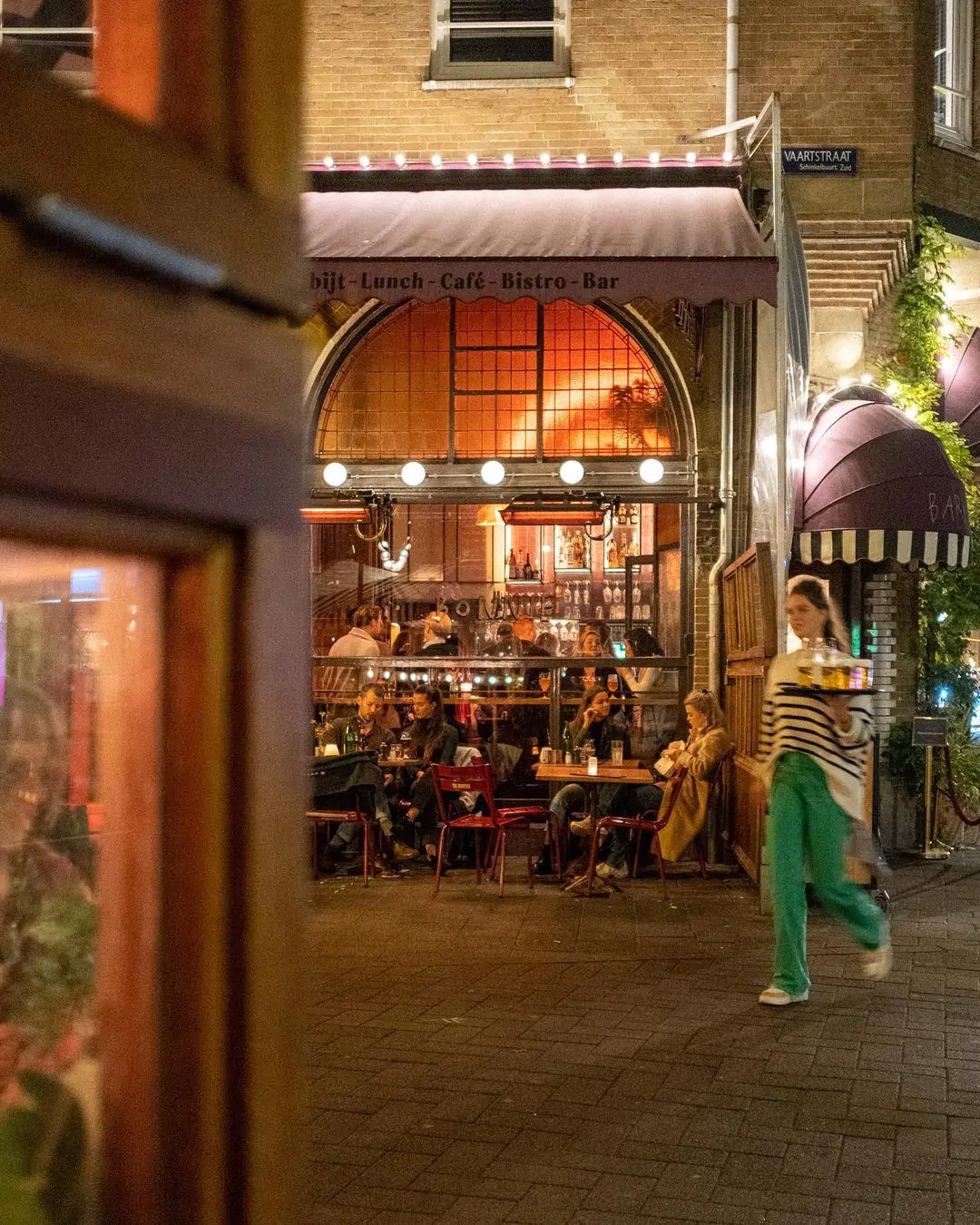
Bonnie, a charming bistro located in Amsterdam-Zuid. At Bonnie, it's all about enjoyment; from tasty meals to carefully selected wines that are a perfect match. Bonnie's double cheeseburger is especially recommended. The ambiance ensures that you quickly feel at ease. A lunch here can easily turn into a cozy drink, making you feel like you don't want to leave at all.
1077 BG Amsterdam
Roberto's Restaurant Amsterdam
Roberto's should not be missing from the top ten Italian restaurants in Amsterdam. The restaurant is located in the Hilton hotel, where the iconic Italian cuisine has been filling the plates for 25 years. The restaurant revolves around pure and simple flavors with dishes such as thinly sliced eggplant, green farfalle pasta with lobster sauce and Lava cake.
1075 EL Amsterdam
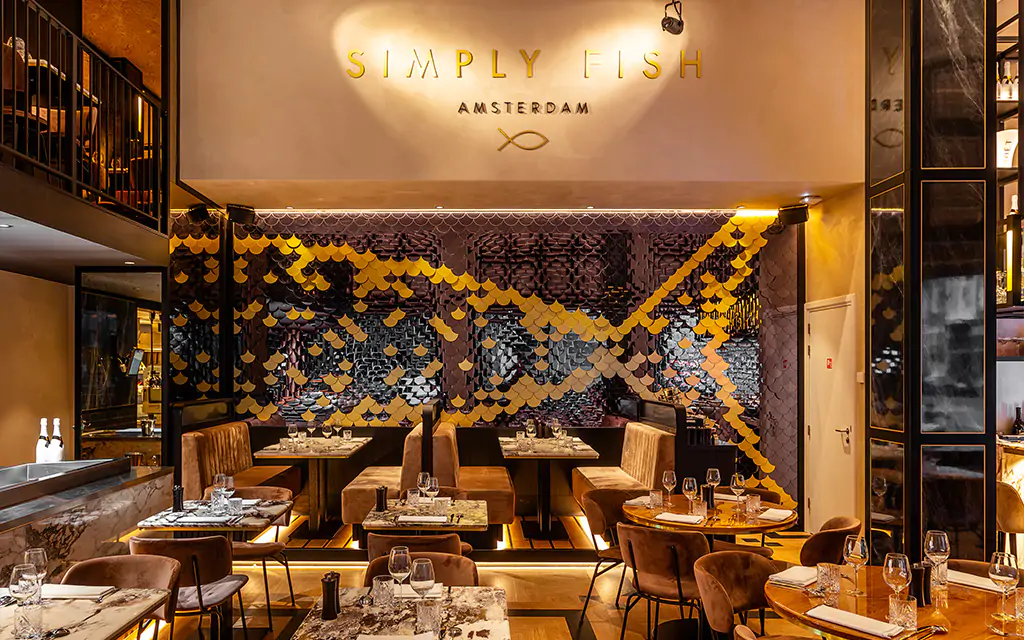
Simply Fish
Simply Fish is located in Oud-Zuid on Koninginneweg. As the name suggests, the restaurant specializes in preparing fish. Jan and Francis Rijk previously owned a similar restaurant in Zeeland, a province well known for its delicious fish and seafood. The menu includes fruit de mer, shrimp croquettes, oysters, and their famous lobster bisque.
1075 BG Amsterdam
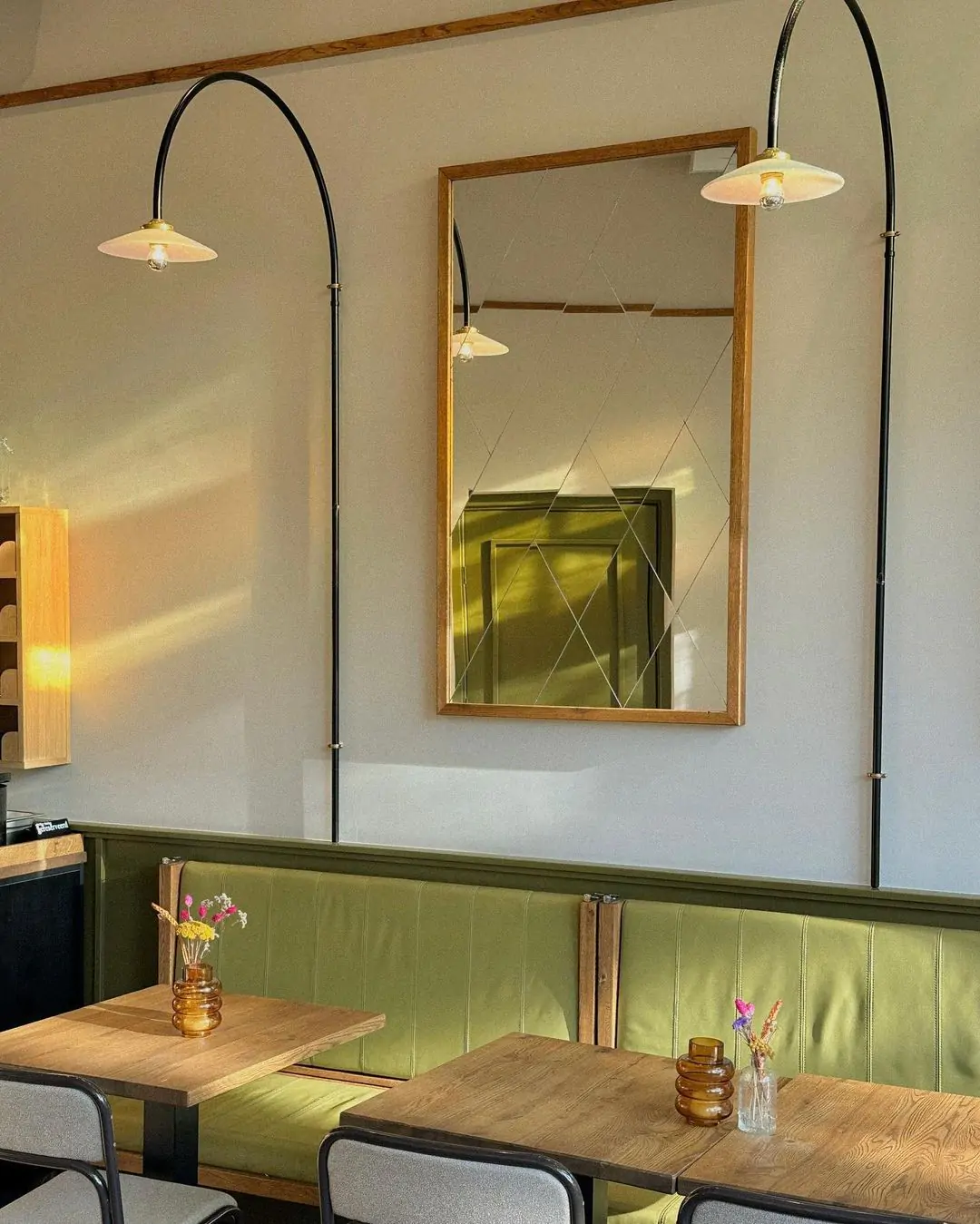
Juliette
In Amsterdam Zuid, you can enjoy breakfast and lunch in the sun at Juliette. The menu is based on fresh ingredients from local suppliers and is compiled daily based on what Available at the market. Think of dishes such as the Porco Rosso: mortadella, stracciatella cheese, Spanish guindilla peppers, and red pesto. For dinner or drinks, visit neighboring Bar Jules. The focus is on Southern European dishes such as pizzettas, pata negra, and roasted octopus.
1077 JK Amsterdam
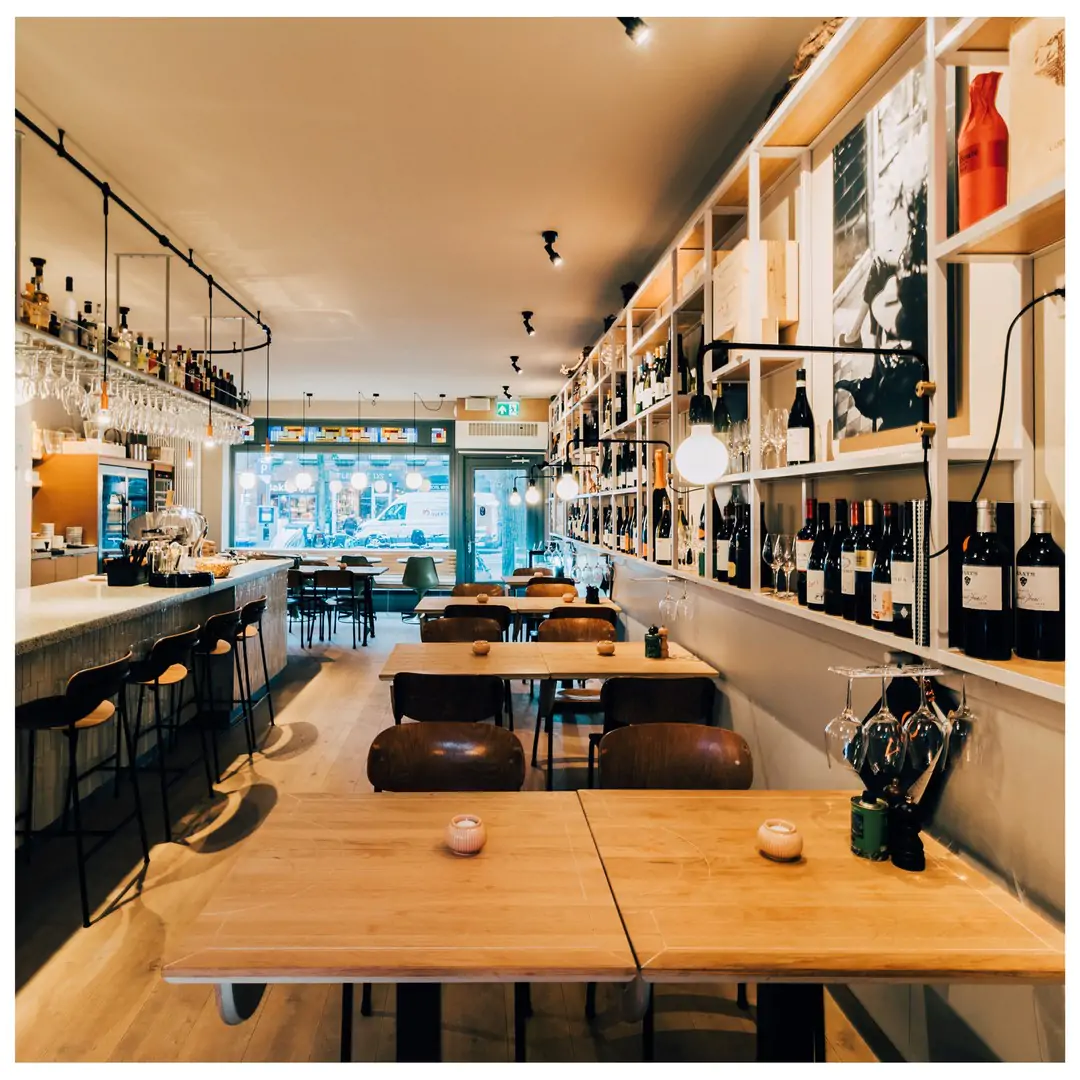
Wine Bar QV
At Winebar QV you can basically spend the whole day as if you were in Italy. You start with an Italian espresso, have lunch with a hot meal and end with a good glass of wine with an Italian aperitivo. It is cozy and stylishly decorated and you can sit on the high stools at the bar, at the lower tables or on the small terrace.
1075 BP Amsterdam
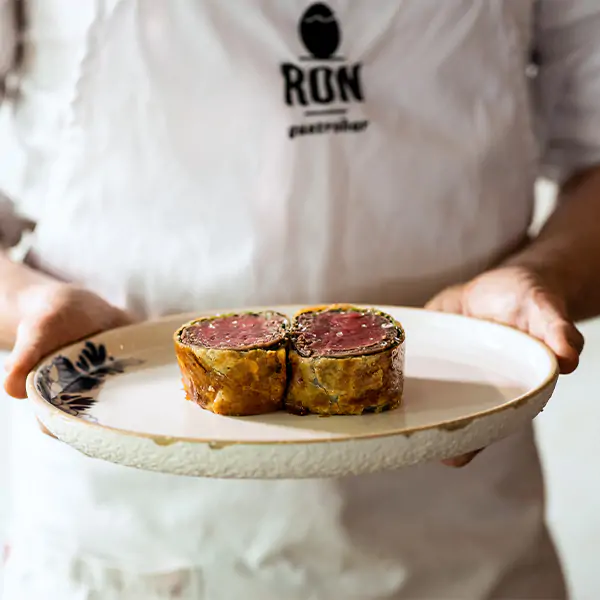
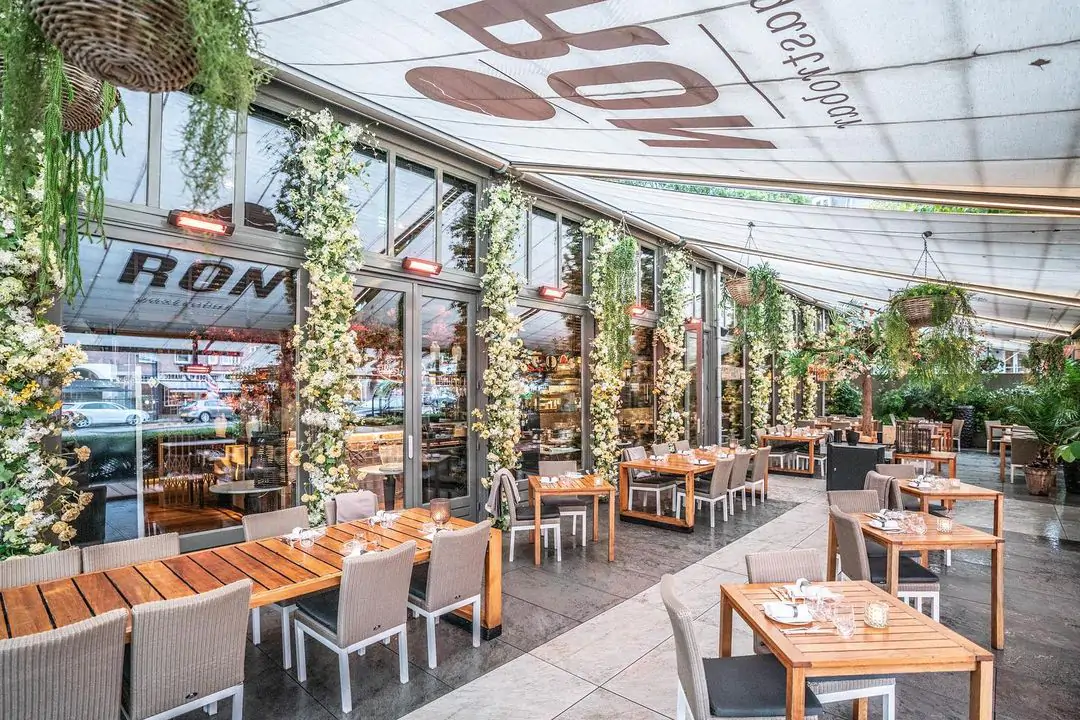
Ron Gastrobar (*)
At Ron Blaauw's first gastrobar in Amsterdam, a low-threshold atmosphere goes hand in hand with a Michelin star. Style and conviviality come together for a tasty experience. From details to amuse-bouches, cocktails, sandwiches on the table, new dishes, delicious wines and attentive service. Everything revolves around the credo: "going out to dinner should be a party". For BBQ lovers there is even a separate section on the menu. Of course, the classics, such as the spareribs "The Original," are not missing; a dish that will always remain.
1076 TB Amsterdam
Zikking & Son Butcher Shop
Butcher shop Zikking & Zoon is located on Marathonweg and is a household name in Amsterdam. Owner Robert Zikking was born and raised in Amsterdam and, together with his wife, started his own business in 1995 with passion and confidence. As he himself says: "It's not a fairy tale, but a delicious reality with a history." The filet americain is made using a recipe from an old Jordanian dam, and the nostalgic Amsterdam beef sausage is a must-try.
1077 CW Amsterdam
Sébastien's Bakery
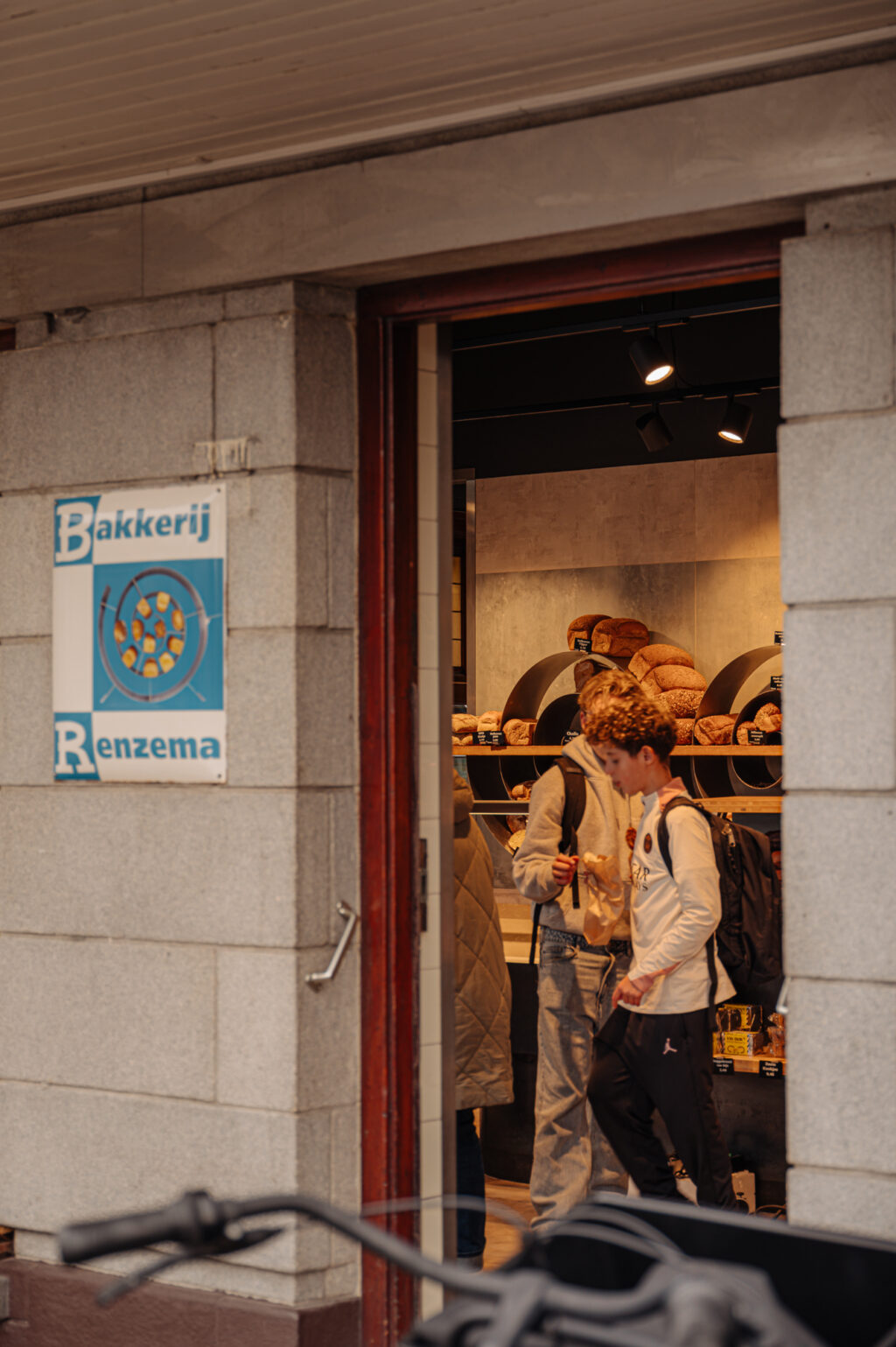
Le Fournil is the brainchild of Susan and Sébastien, who, after years of baking experience in France, came to the Netherlands in 2007 to open an authentic French boulangerie. Its strength lies in its artisanal craftsmanship, sourdough, and conscious choice for small-scale, pure, traditional bread making.
1077 CV Amsterdam
L'Amuse
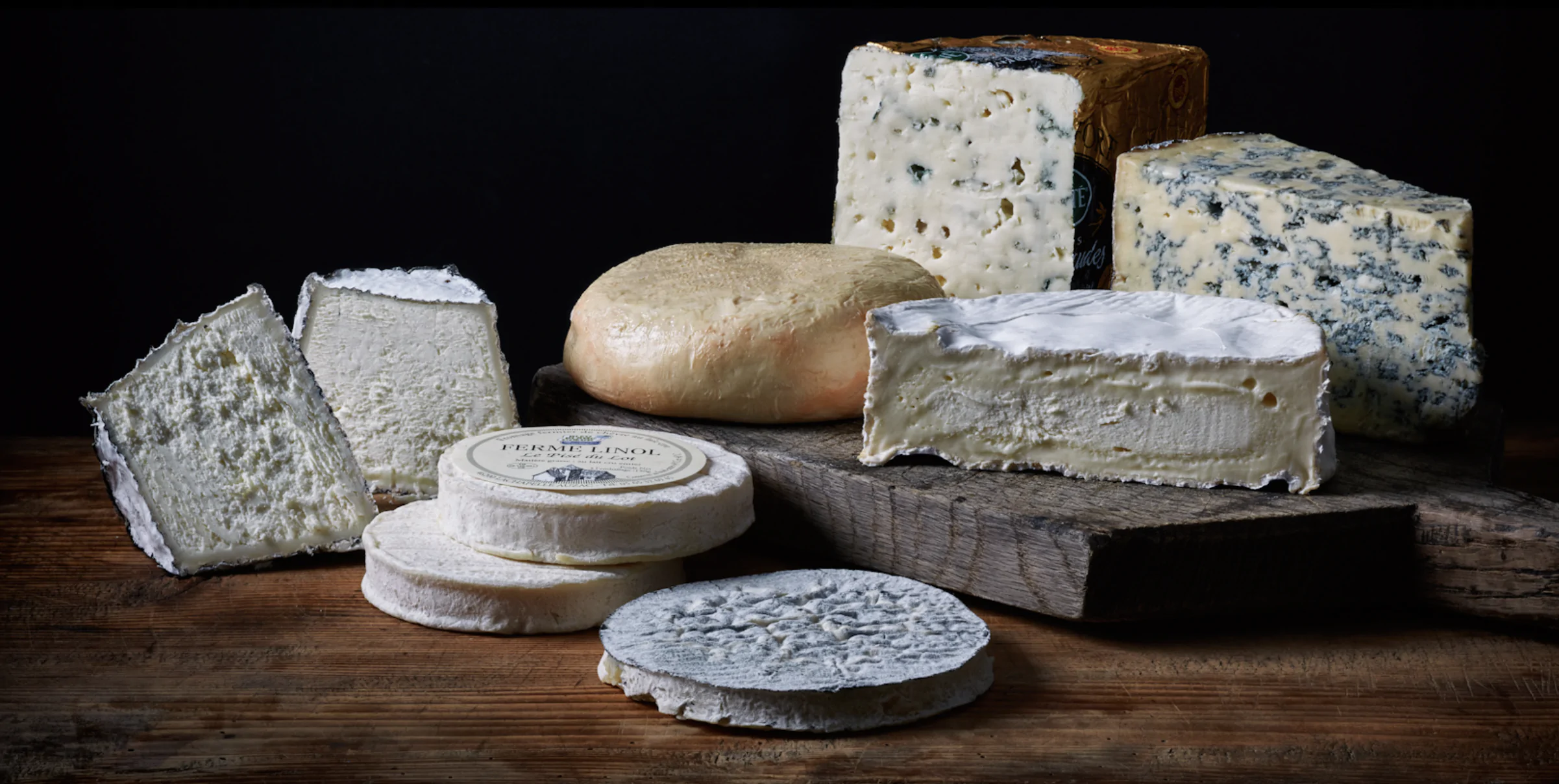
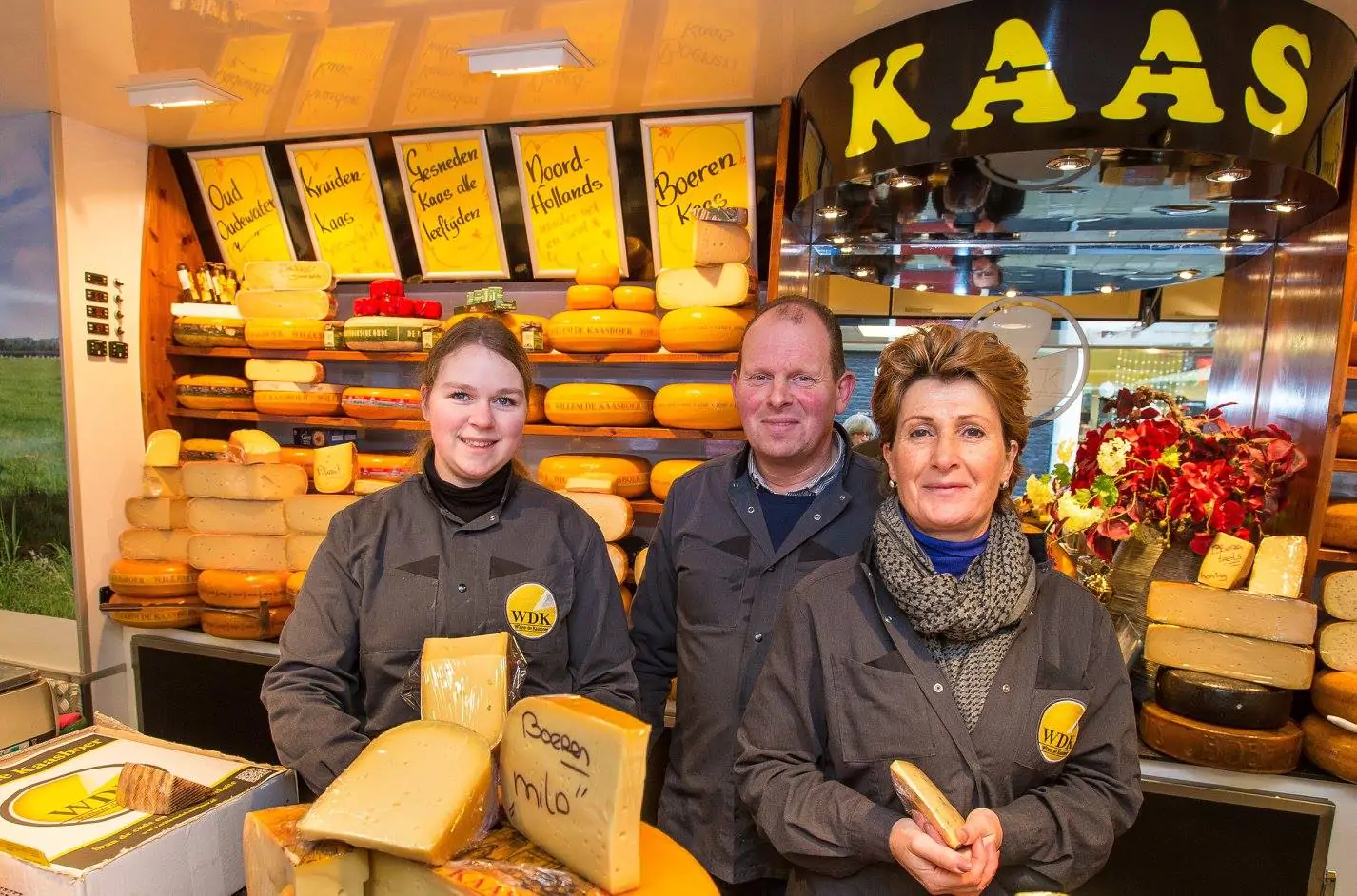
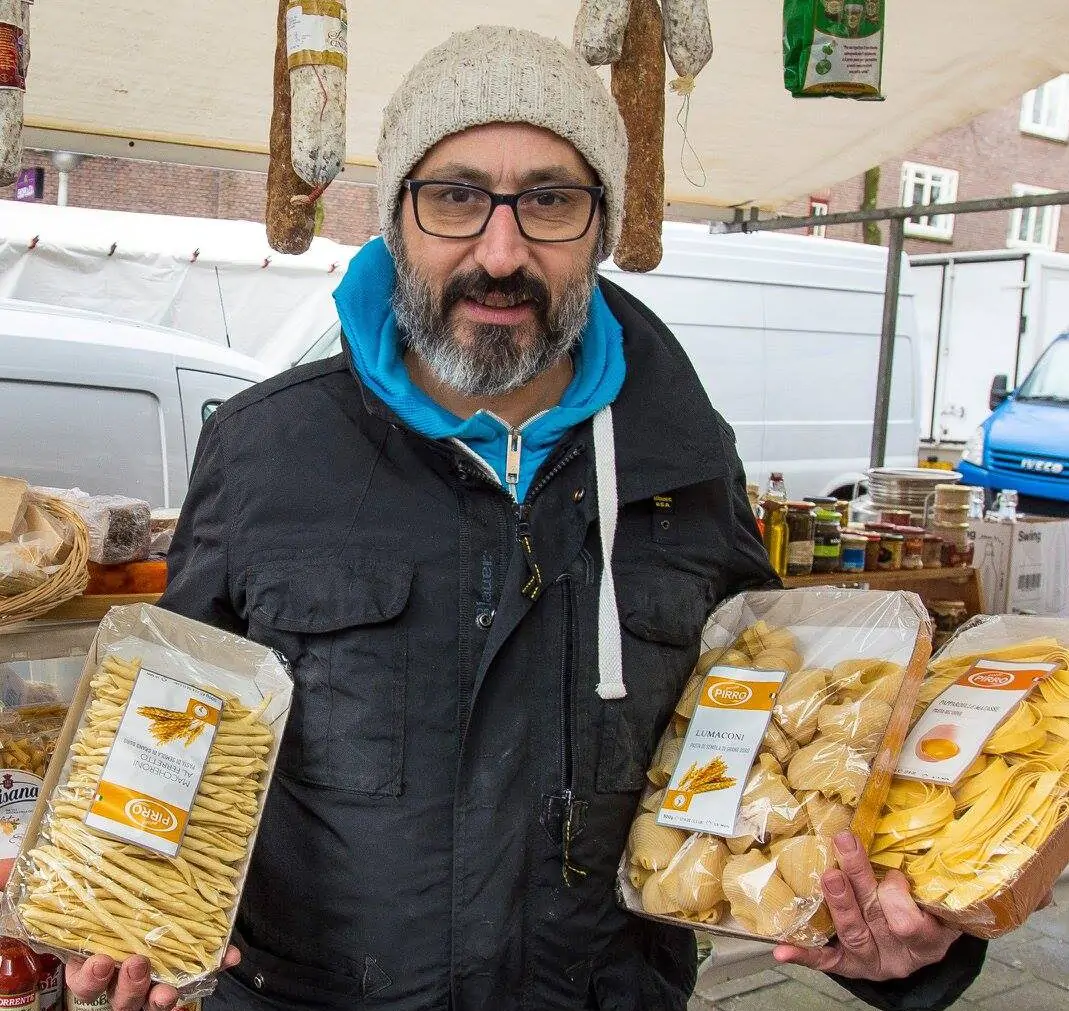
According to some, this is the best cheese shop in the Netherlands. They have an impressively wide range of the most delicious cheeses. Delicious wine, salami, ham, and olive oil are also For Sale here. You will receive excellent service, and the cheese is truly of a different caliber. Highly recommended!
1076 CJ Amsterdam
Stadium Square Market
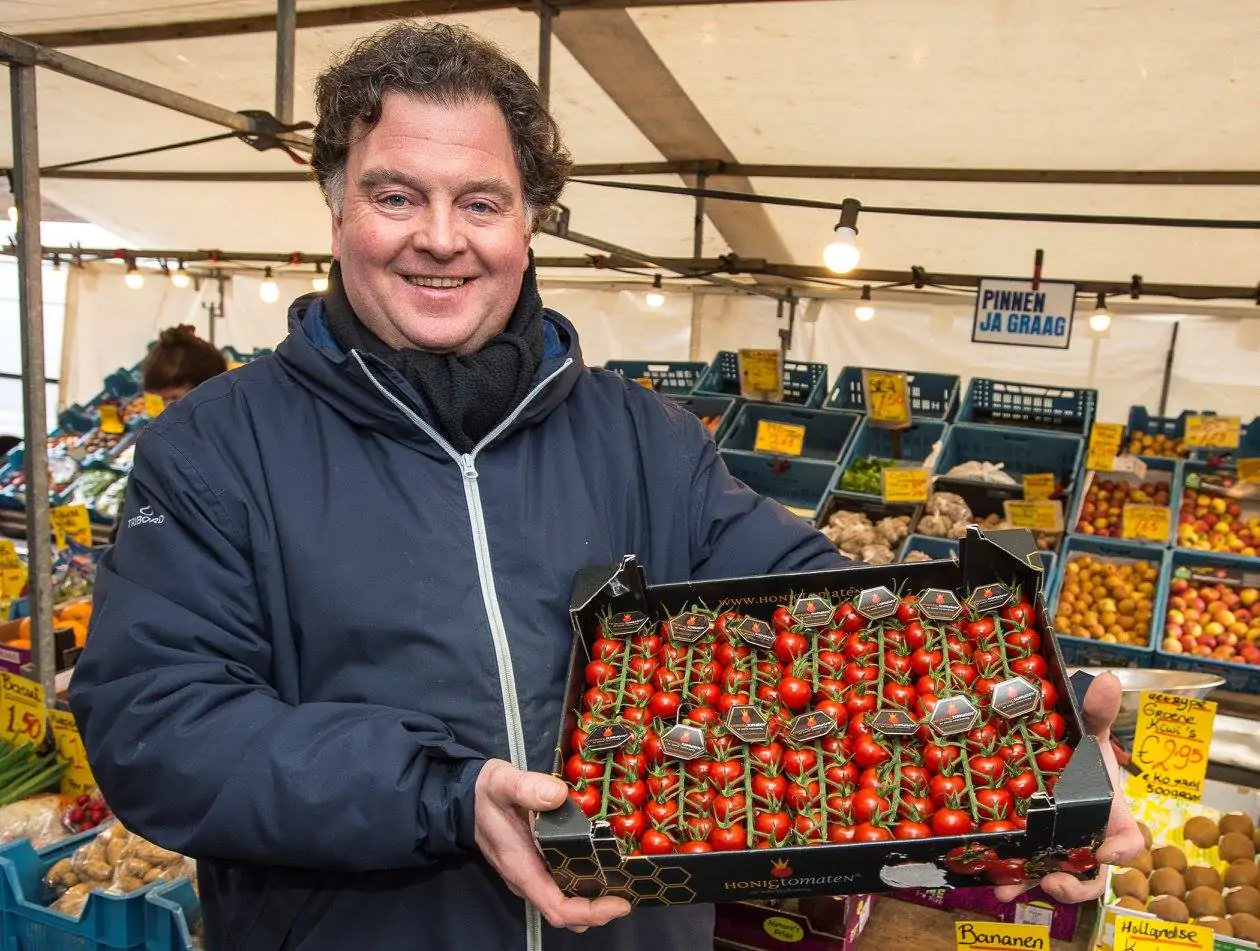
On the beautiful Stadionplein, in the middle of Oud-Zuid, you will find the Stadionplein market every Saturday. They open at 09:00, making it an ideal market for people who want to do their weekly shopping early on Saturday. They also have beautiful flowers for sale here and you will find many different local residents. The atmosphere is always good and the market is open until 17:00.
1075 CV Amsterdam
Amsterdam Winery
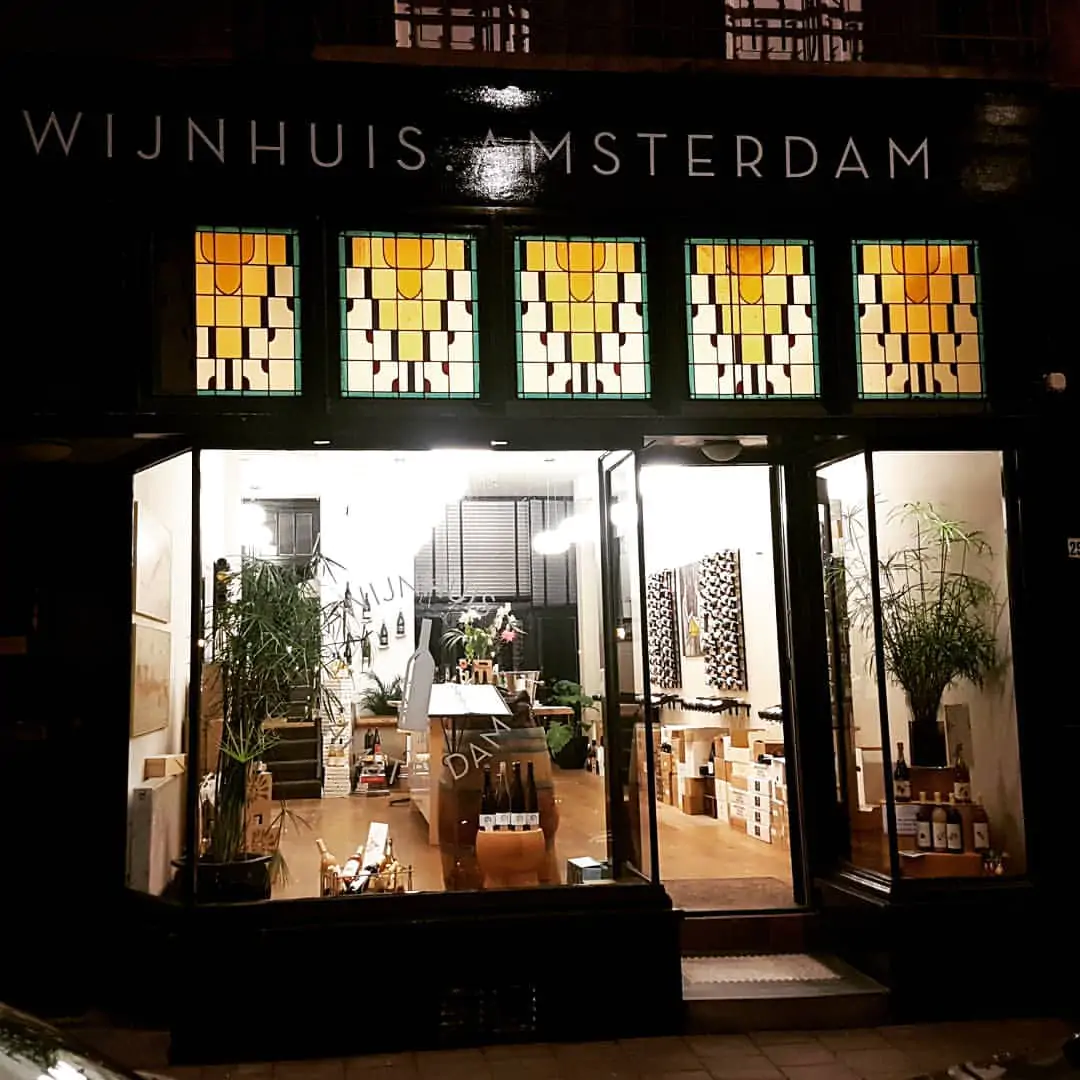
Although they have been professionally tasting and selecting wine at Wijnhuis Amsterdam for more than 25 years, the wine house in Amsterdam is a fairly recent addition to their story. After numerous tasting sessions, they were so enthusiastic about the German wines that they were only too happy to give the wines a platform within the Netherlands. In May 2018, they opened Wijnhuis.Amsterdam, initially with only three of their own imports from Germany. They now represent an impressive range of twenty German winemakers, three from Austria and one from Luxembourg. When selecting the wines, elegance, drinkability, low alcohol percentages and minimal intervention in the production process are important.
1076 AV Amsterdam
Diez Gallery
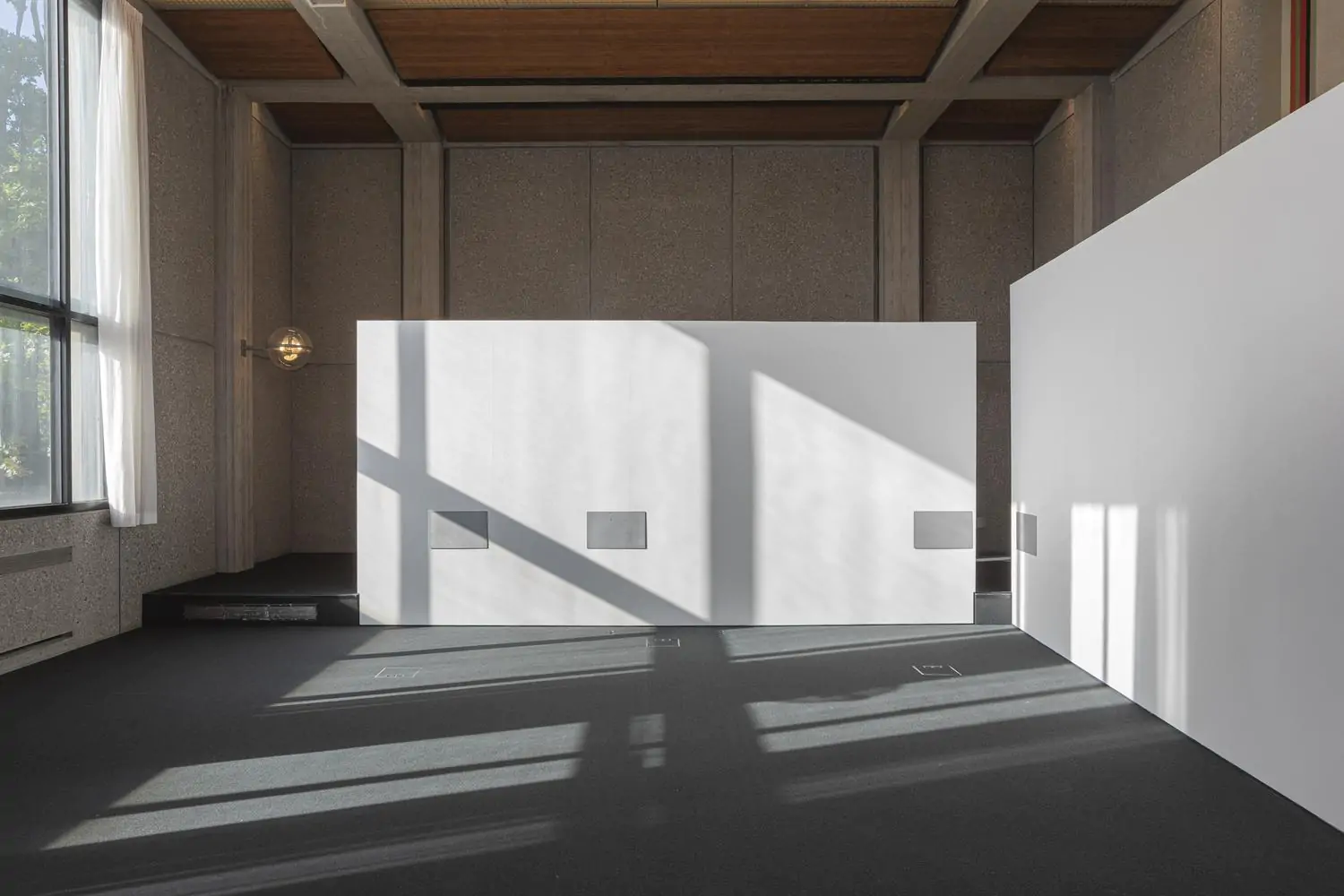
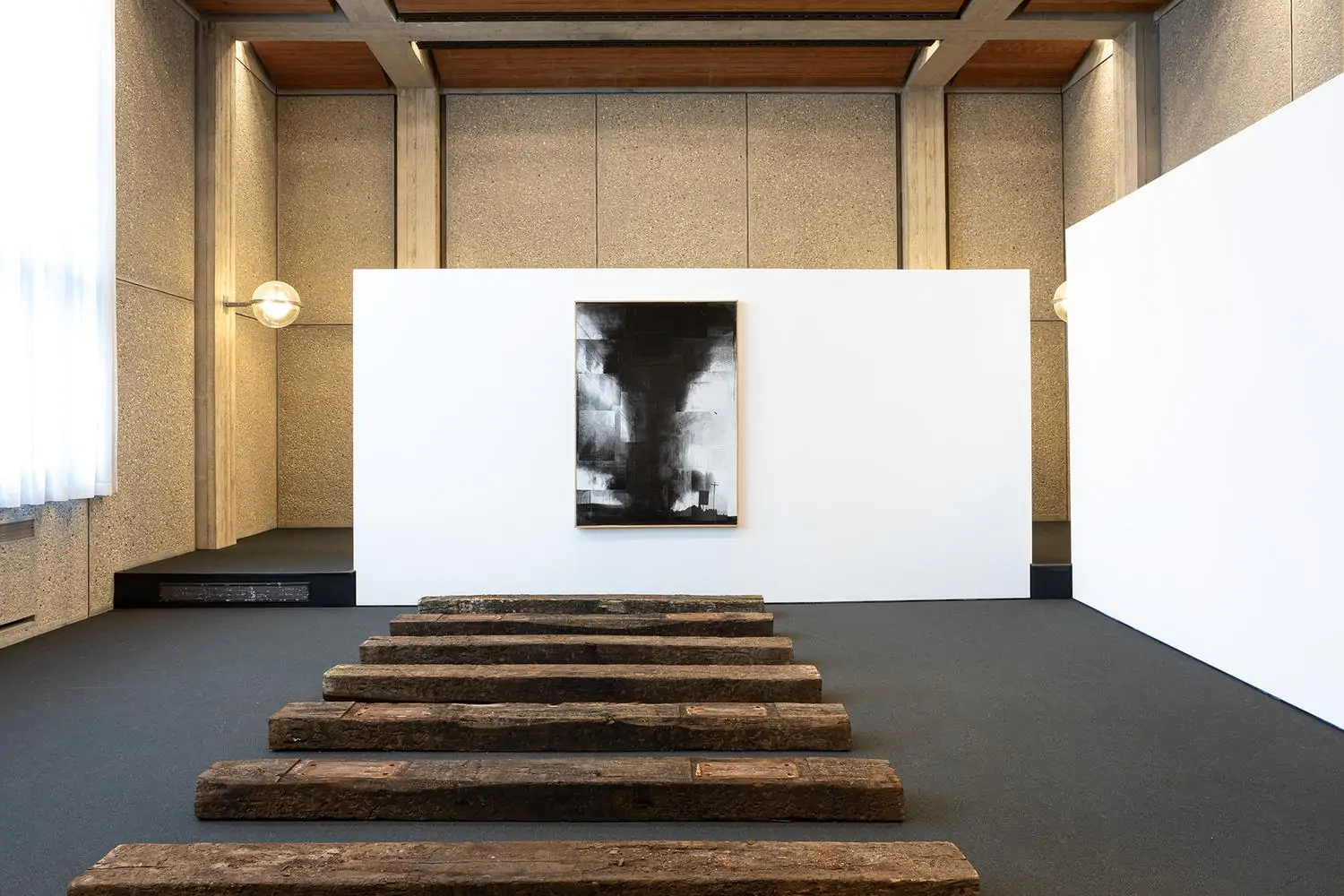
Diez is an Amsterdam art gallery with an international appeal, founded in 2022 by Diego Diez. The exhibitions are curated in collaboration with artists who have an affinity with Diez's interests and will present both international and national talent in Amsterdam. In addition to the exhibition program, Diez strives to be an accessible space for a wide audience with various activities and events such as poetry readings, curated dinners and artist talks.
1077 WX Amsterdam
The Thomas
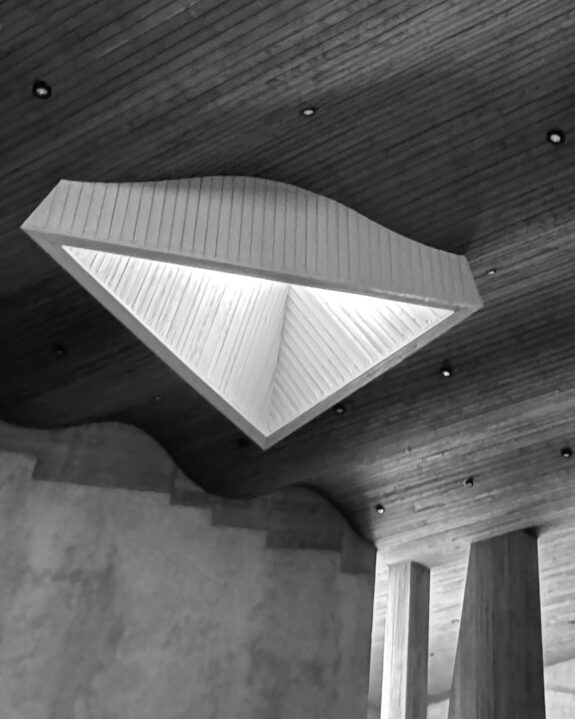
The Thomas is a monumental church on the edge of the Zuidas business district where religion and culture consciously come together. With its own theater, concerts, and debate evenings, it is a place for meeting and deepening one's knowledge, right in the business heart of Amsterdam Zuid. The building is considered an important example of post-war church architecture in the Netherlands and is designed in an expressive, brutalist style.
1081 LH Amsterdam
Cinema The Pulse
Cinema The Pulse is a movie theater located in the basement of The Pulse of Amsterdam in the Zuidas business district, offering a wide range of arthouse, cult, and contemporary films. Its strength lies in the combination of cinema, architecture, and social interaction, serving as an urban film hub where the movie experience and metropolitan context come together.
1075 NC Amsterdam
Perfume Lounge
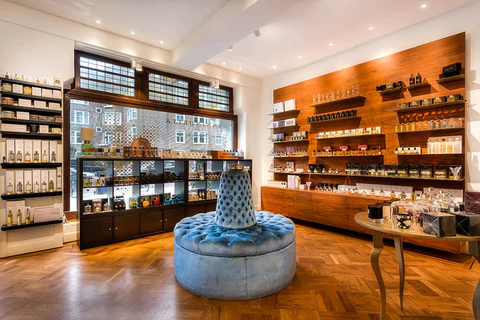
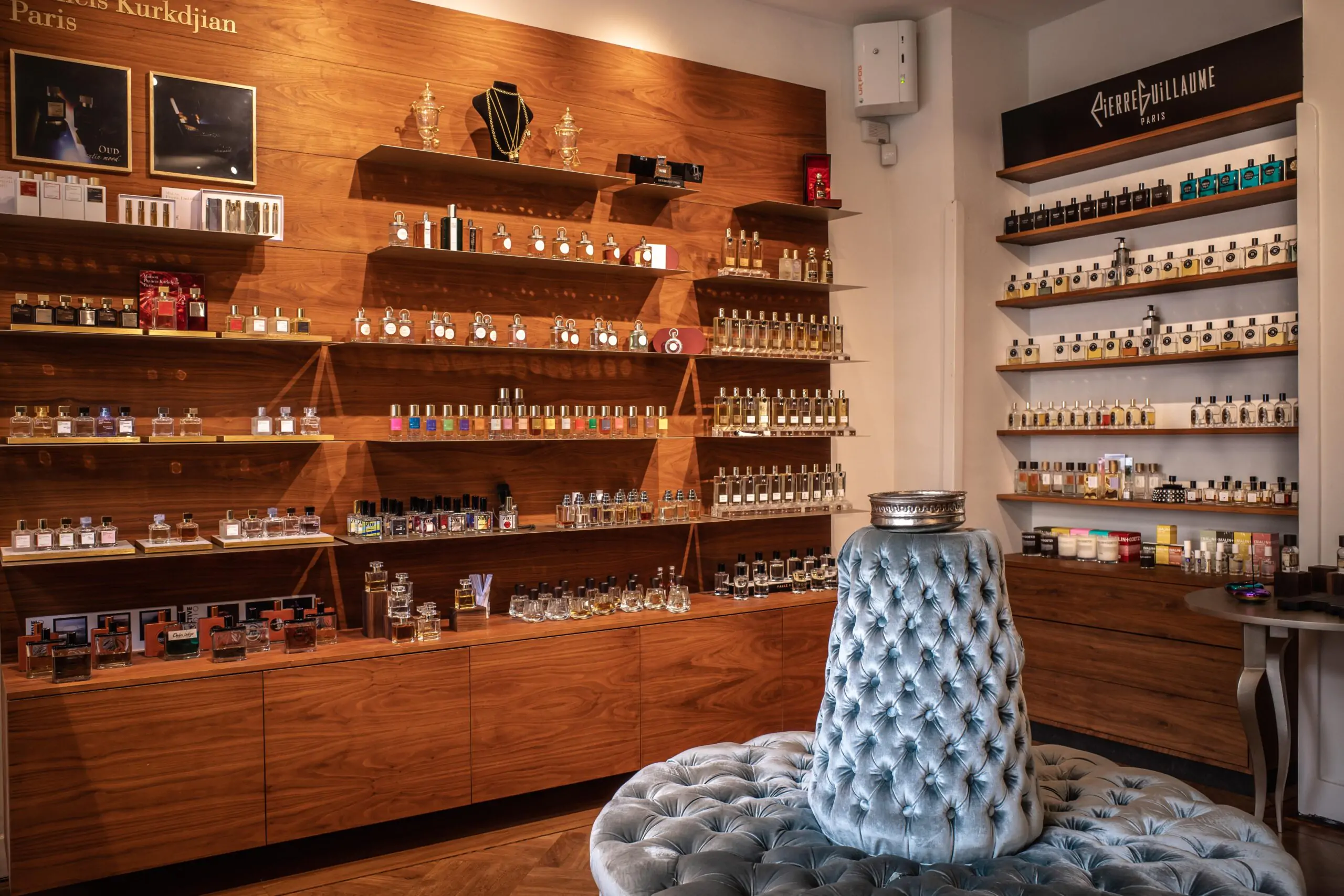
At the 'Perfume lounge', they focus on creating and advising on fragrances for companies and organizations and what scent can add to a brand or organization. In addition, they have a store with an assortment of the most special perfumes in the world, where they also give personal fragrance advice. Advice for on the skin or in the house. According to the experts, scent adds something that is not visible and tangible. You can use scent in different ways in a space. It starts, of course, with the fact that it should not smell negative. There are quite a few spaces where you smell the sewer or sanitary facilities, where there has been a lot of smoking or where the extraction is not good and it smells like food. The most simple way of scent in the house is that it smells clean. Many people associate cleaning or detergent with a clean, tidy and well-kept house. In addition, you can turn on the ambiance. Just like with light and music, you can soften or strengthen the atmosphere. You can make it smell very homely or very modern. Rural or artistic. Or very minimalist or intimate.
1077 MJ Amsterdam
Flower fusion
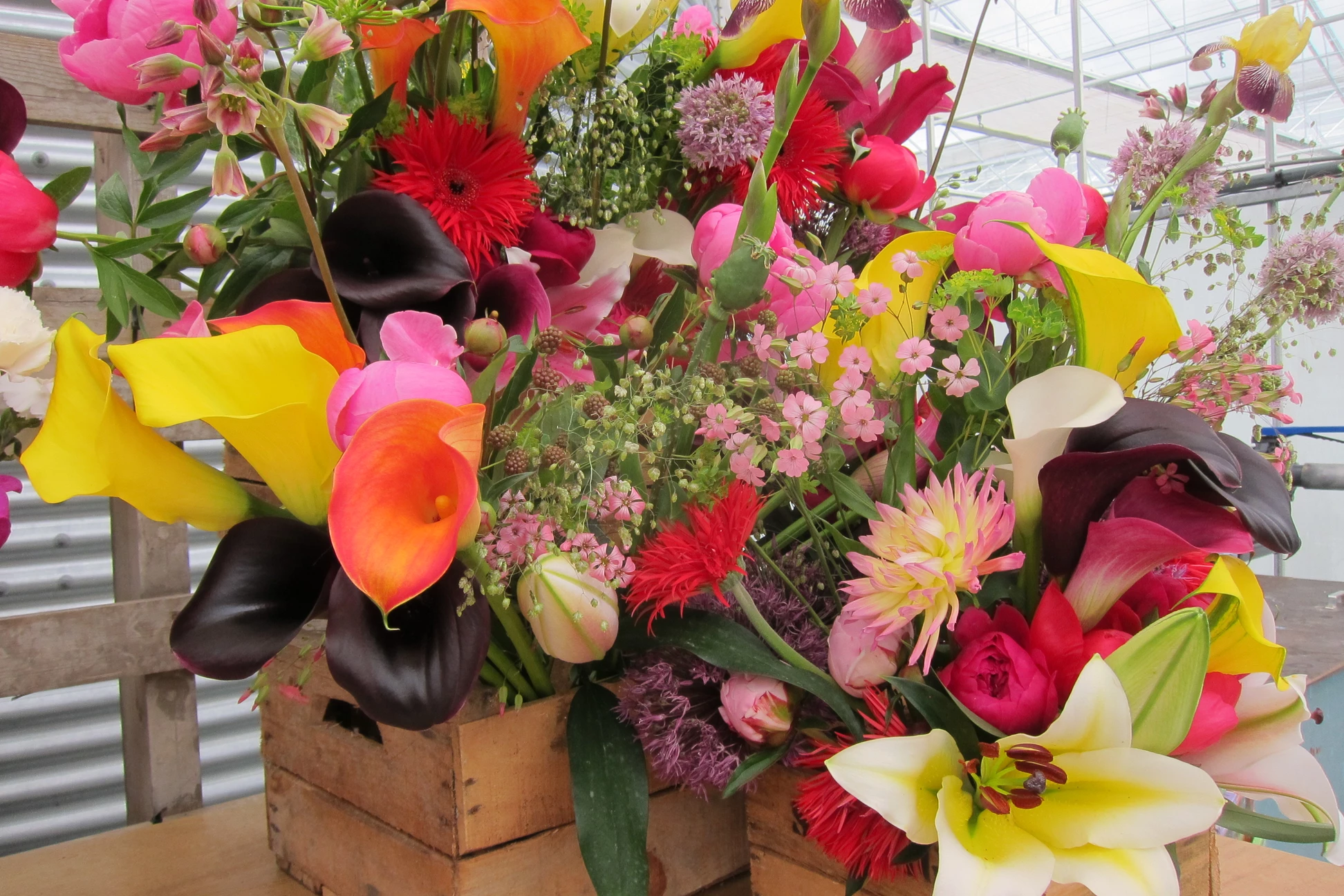
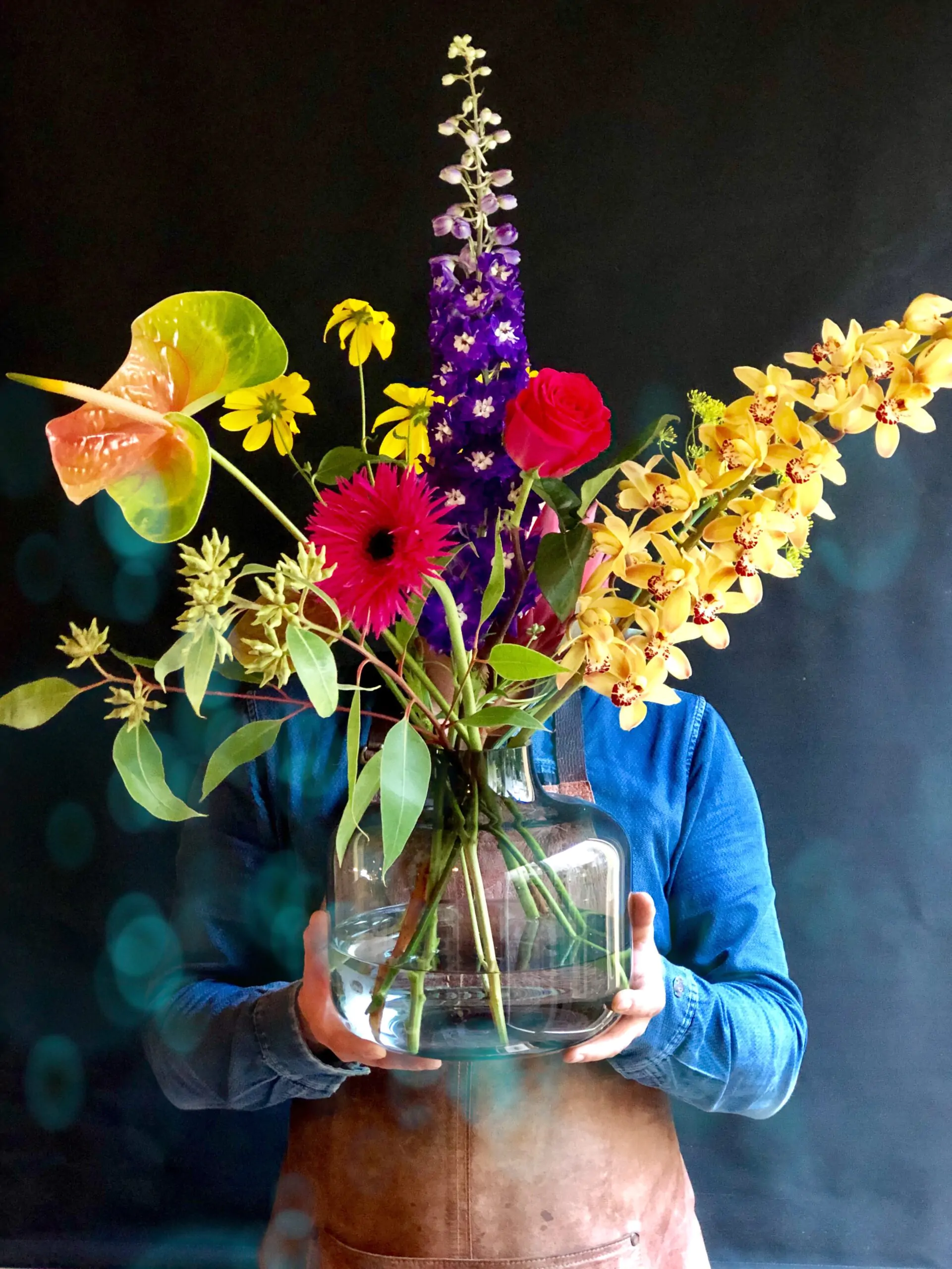
Every Saturday from 9:30 to 17:00 you can find Ilona Bokma from Flowerfusion at the ZuiderMRKT. Unique and beautiful flowers that make you feel like you are standing in the middle of a picking garden. Because Ilona selects different flowers, plants and colors every week that match the season, it is a party every Saturday to visit Flowerfusion.
1075 CW Amsterdam
Teunis Veenema
Teunis Veenema is a gem in the heart of Amsterdam-Zuid. Since 2009, you can visit Koninginneweg for the most beautiful bouquets and plants. Teunis Veenema is not your average flower shop, but a shop that works with you to achieve the best results, whether for private or business purposes. Their website also offers the option of ordering fully personalized bouquets for yourself or others.