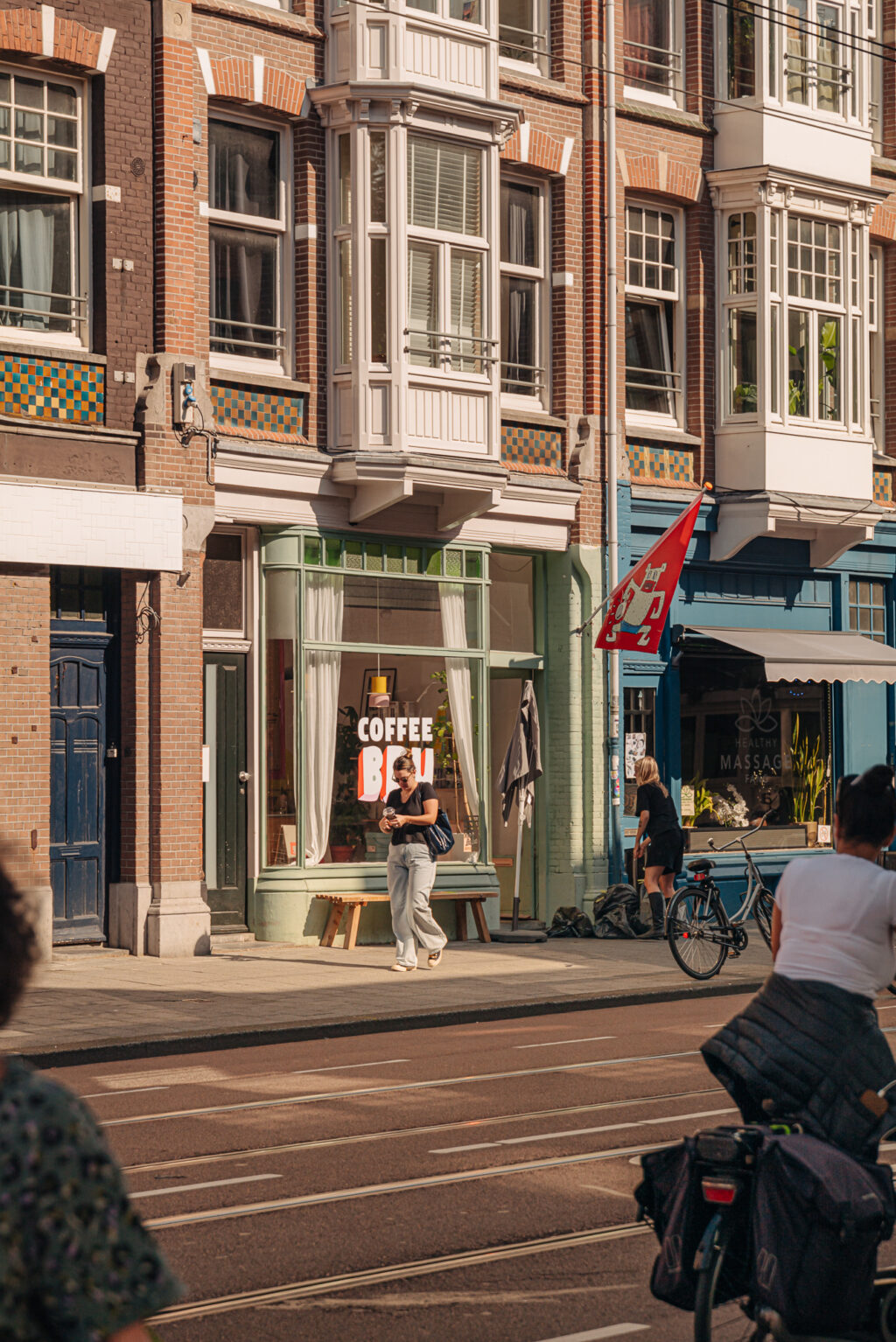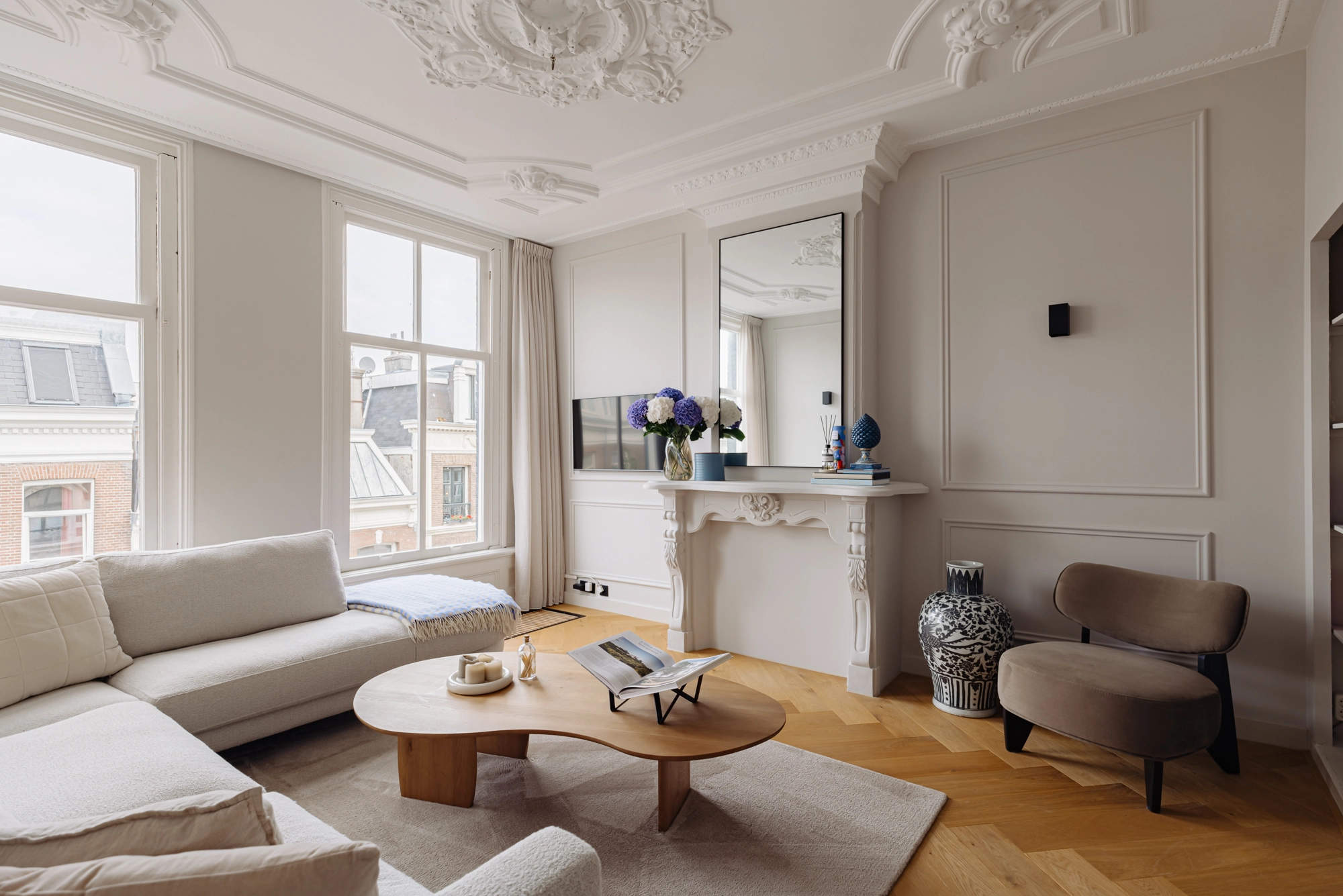
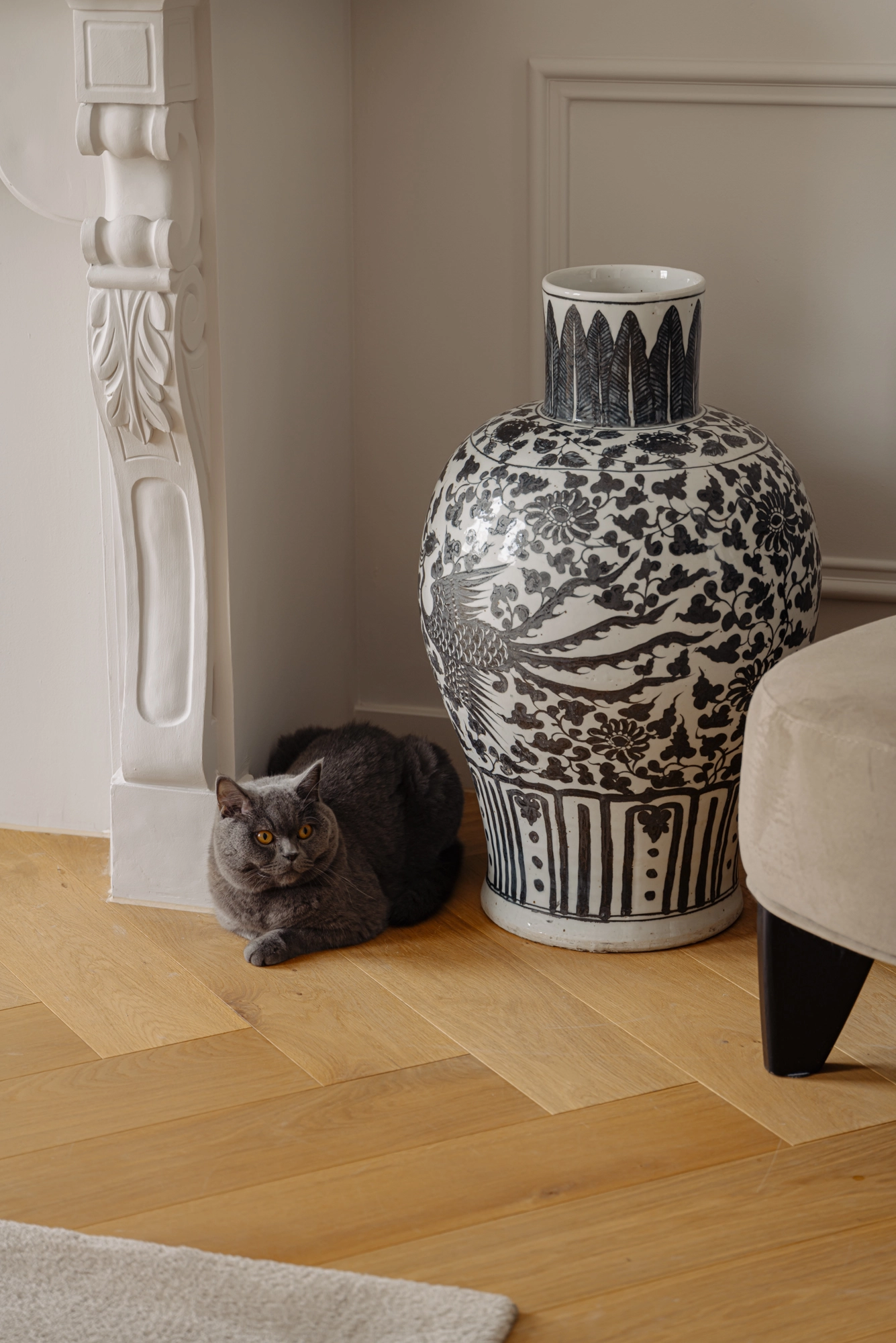
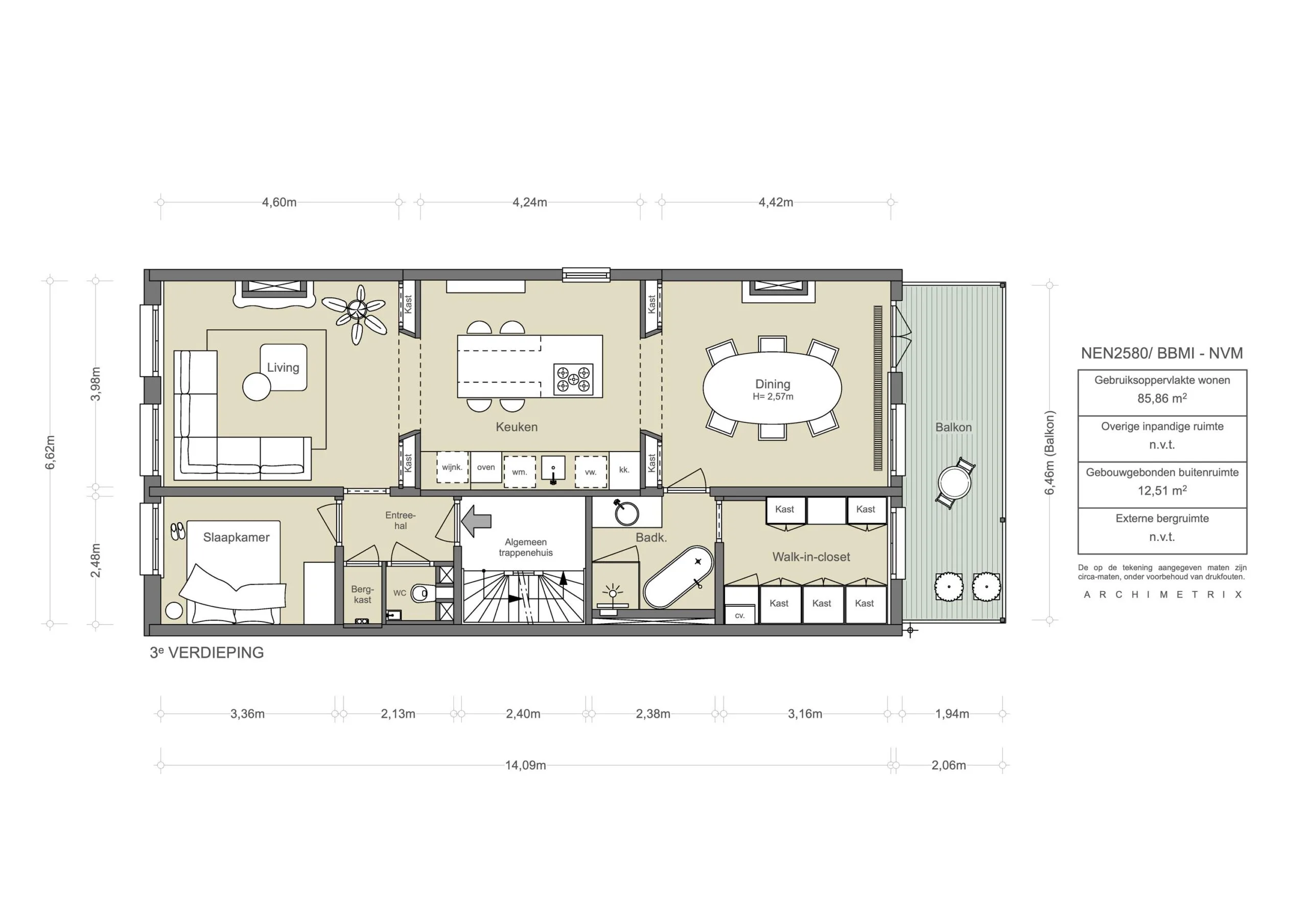
Located on one of the most beautiful streets in De Pijp, a stone's throw from Sarphatipark and the lively Albert Cuyp market, this exceptionally tasteful and high-quality renovated apartment of approximately 86 m² is situated.
Located on the third floor of a characteristic 19th-century building, this property offers a rare combination of historic charm and contemporary living comfort thanks to its renovation in 2023.
Guided tour
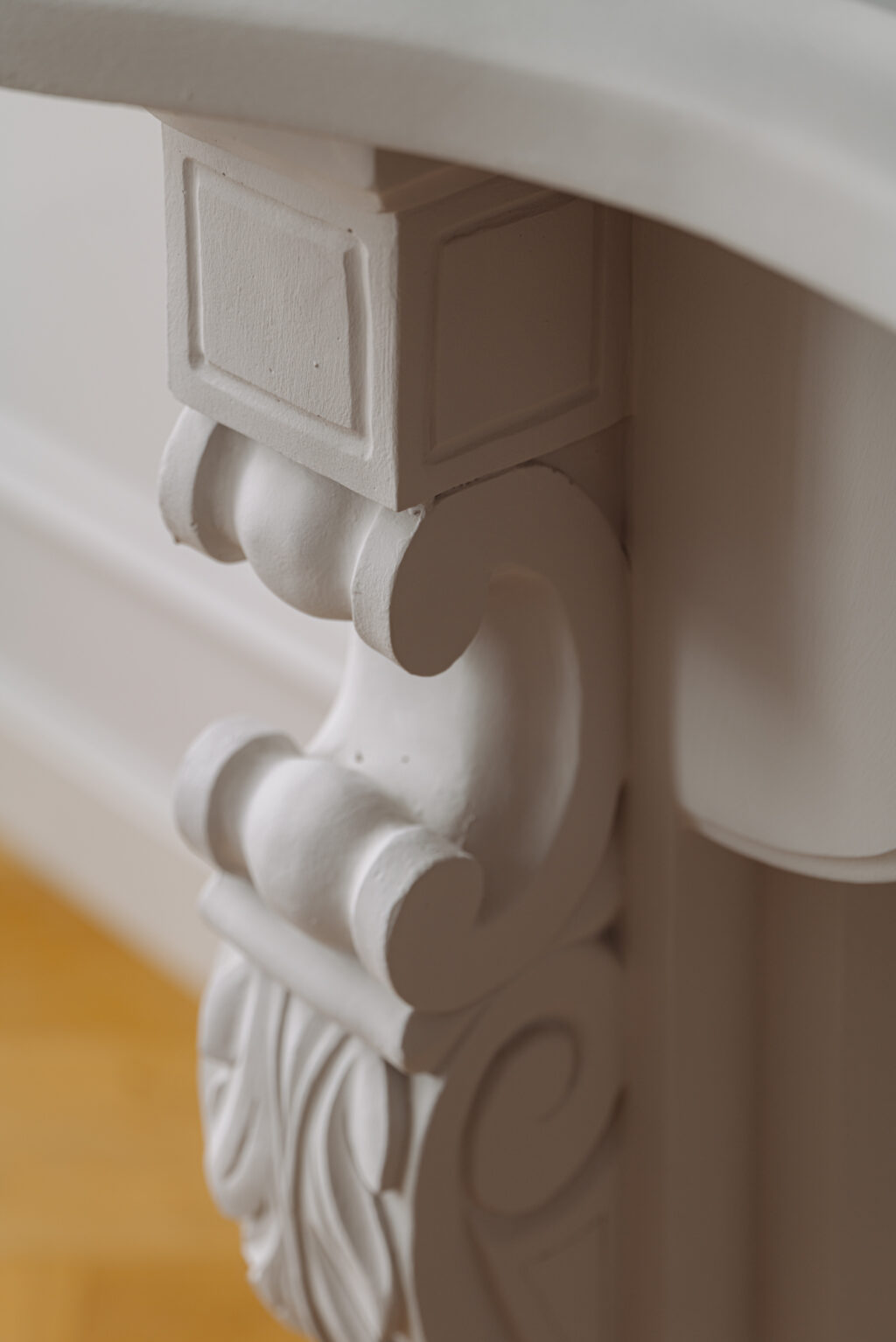
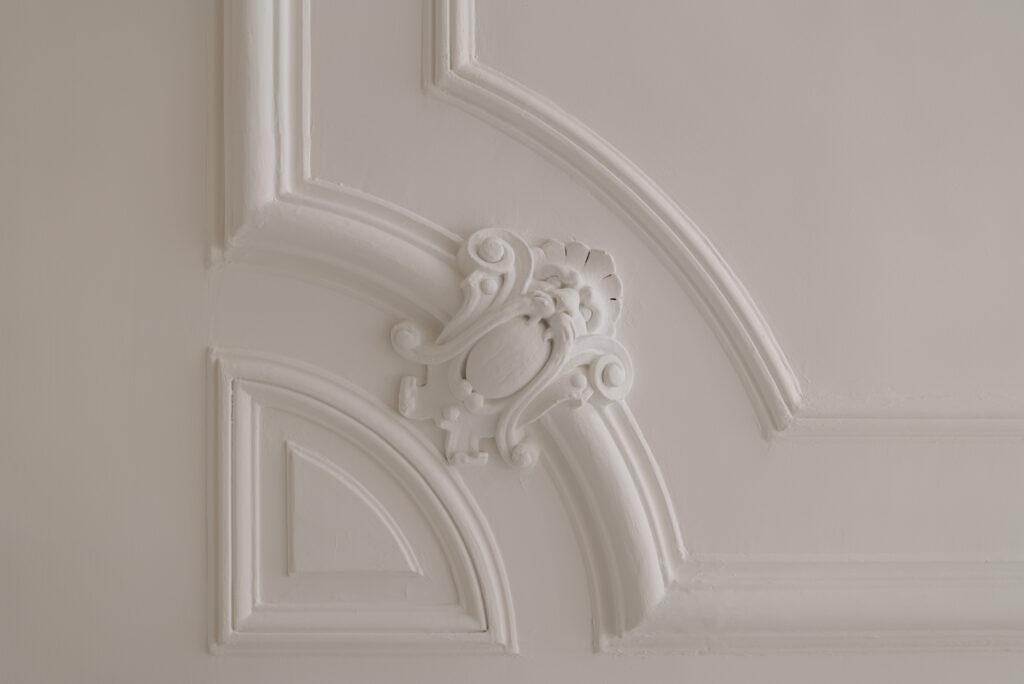
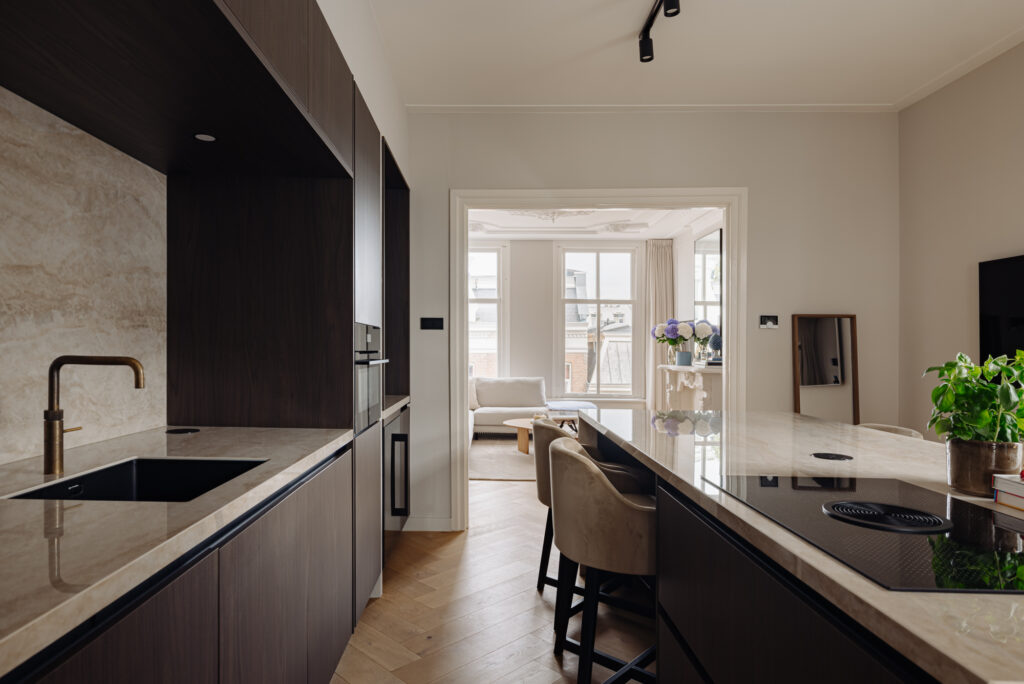
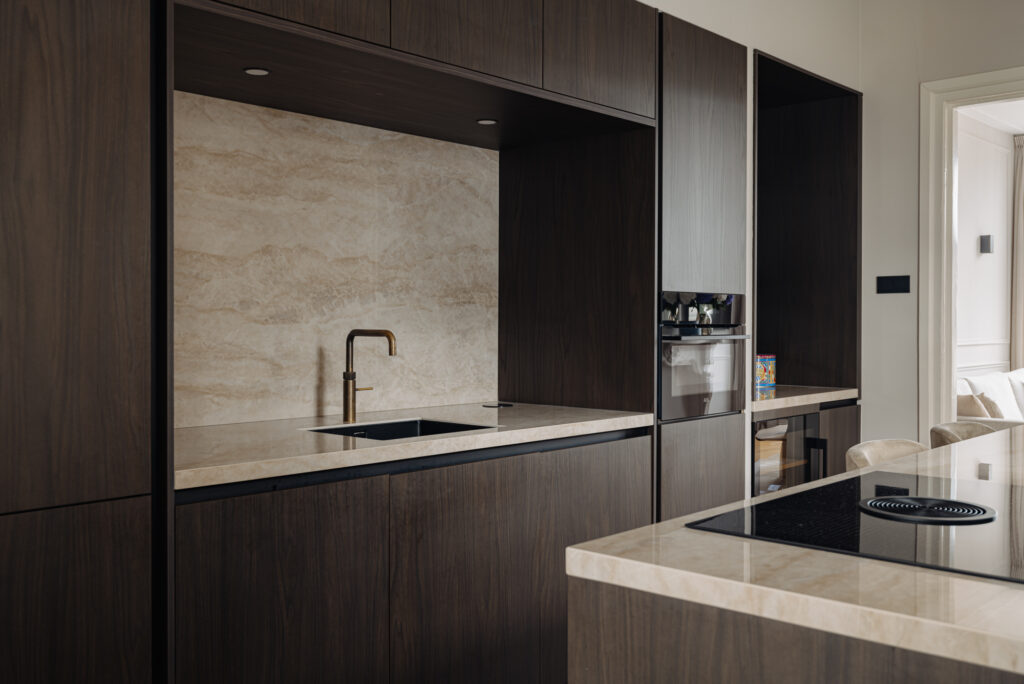
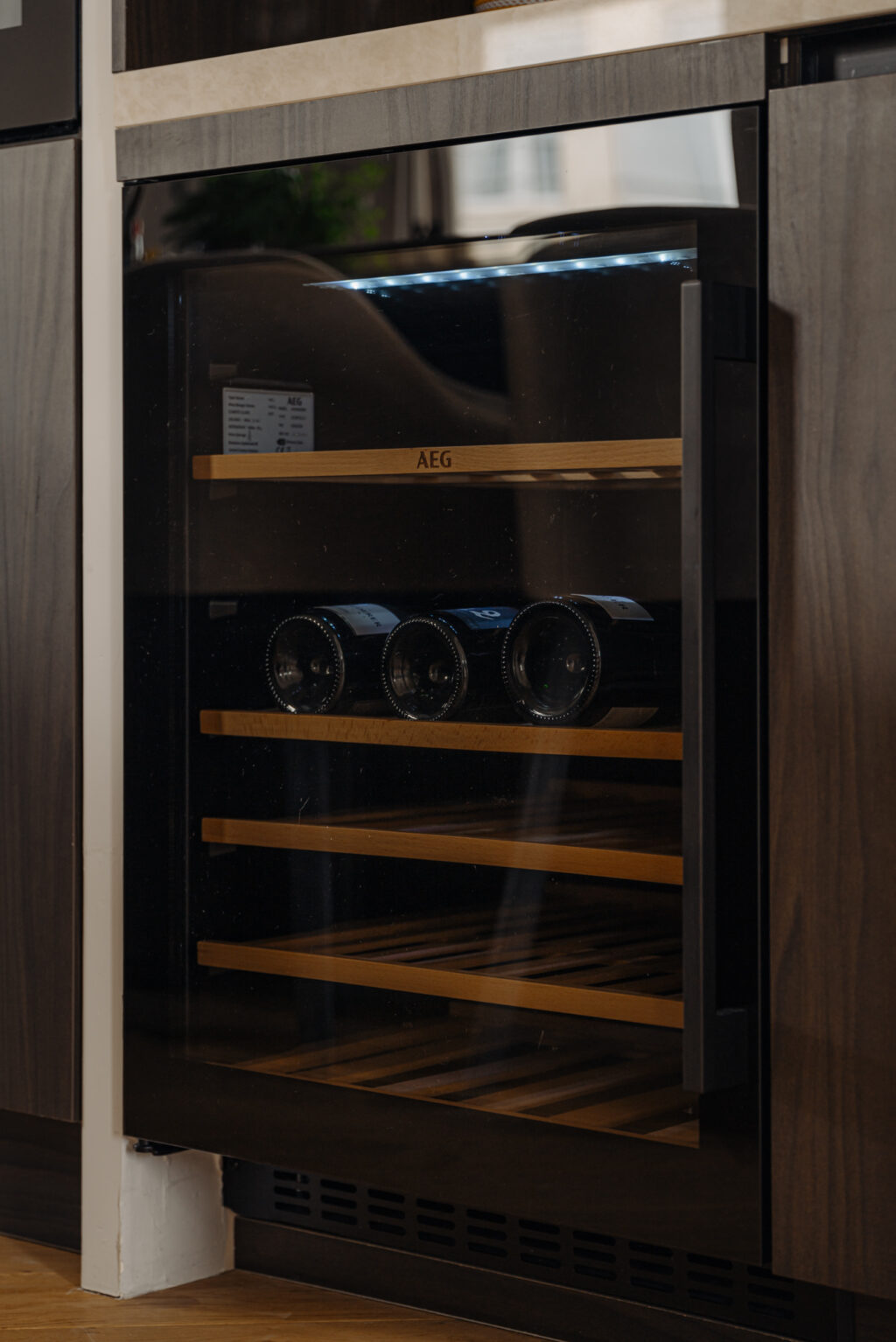
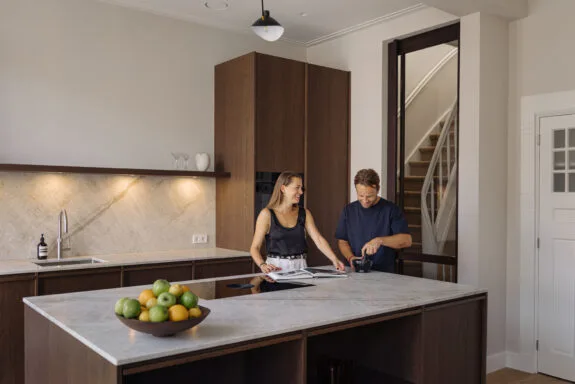
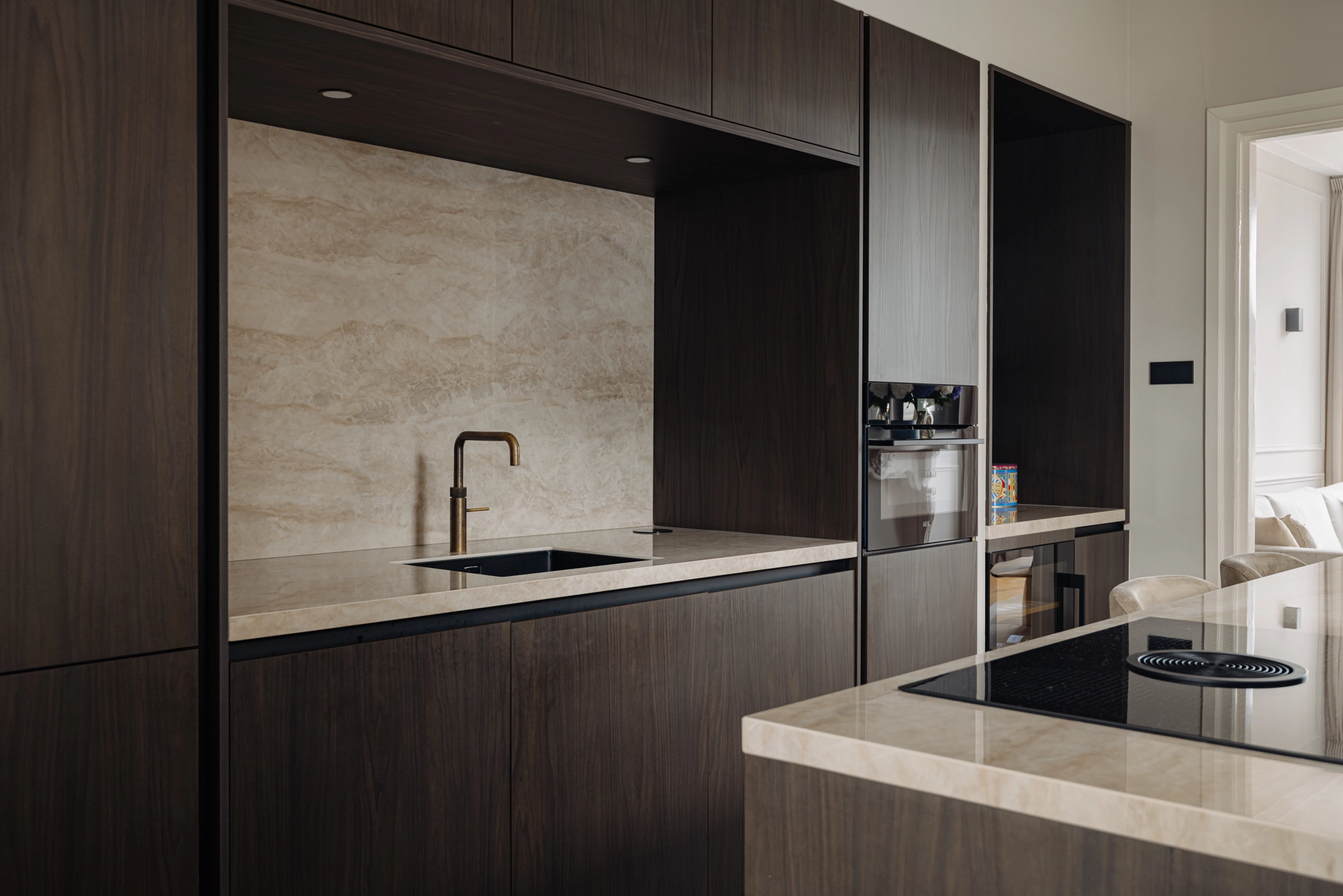
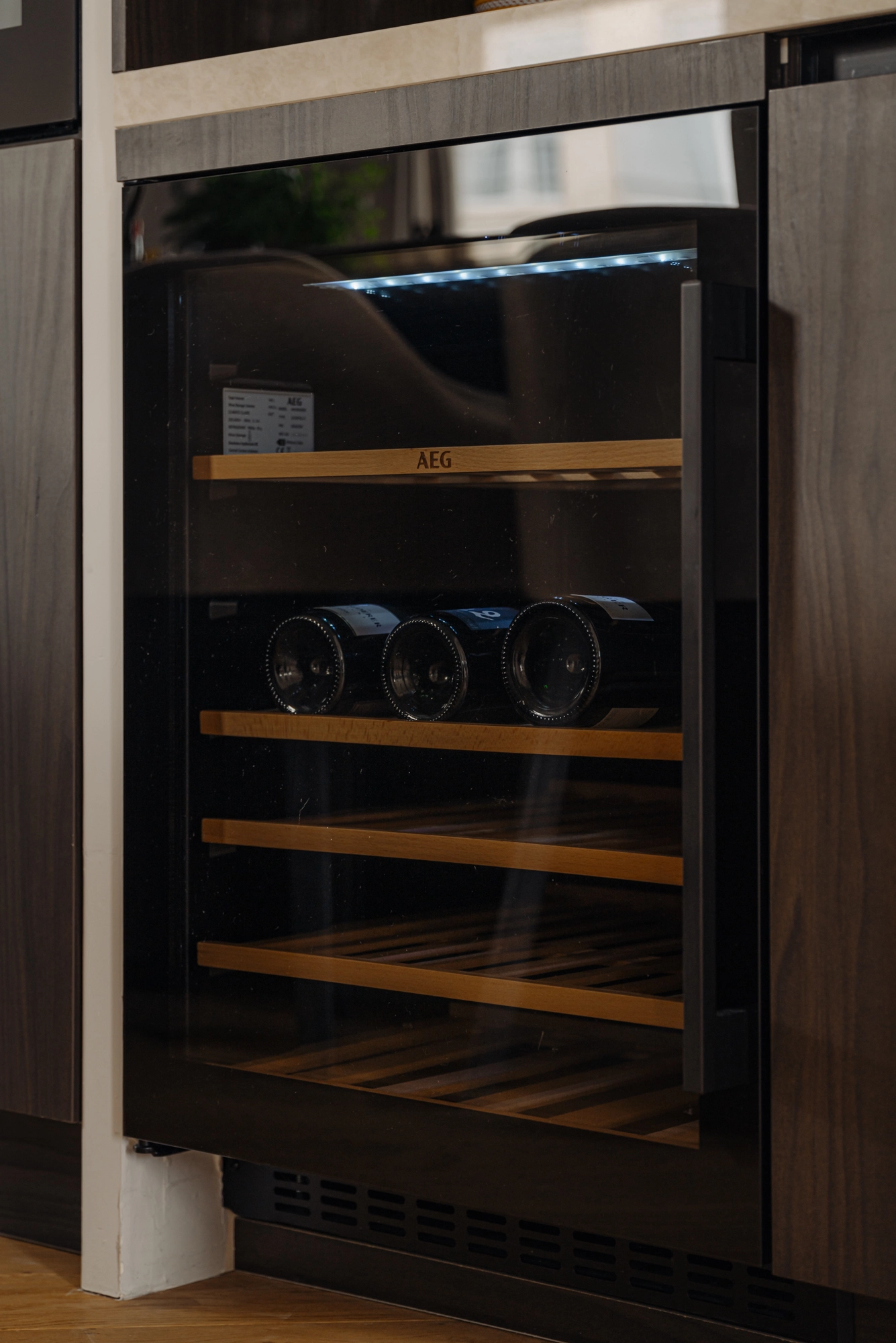
The current owners have added luxury with a contemporary kitchen, custom cabinets, and a designer bathroom, while retaining authentic details such as ornamental ceilings, moldings, and panel doors. The kitchen features dark wood, a polished Dekton worktop, a cooking island with integrated hob, and high-quality built-in appliances such as a wine climate cabinet and Quooker. Carefully chosen custom solutions have also been implemented in the bedrooms dressing room, making the apartment both practical and refined. In short, a unique opportunity for those who want to live in style and comfort in a prime location in Amsterdam.
outdoor space
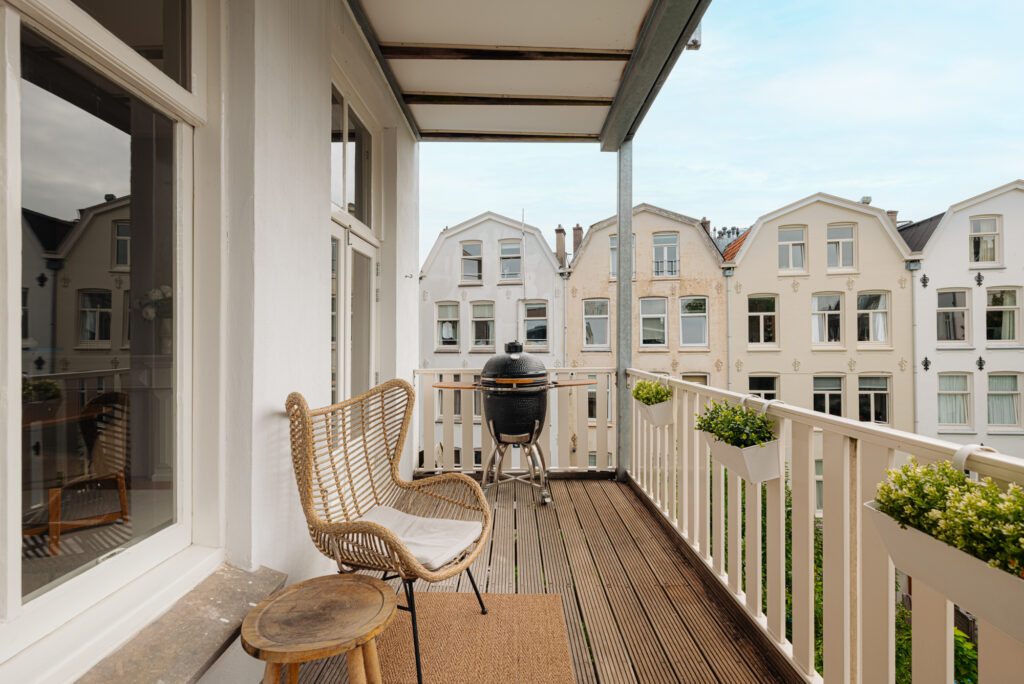
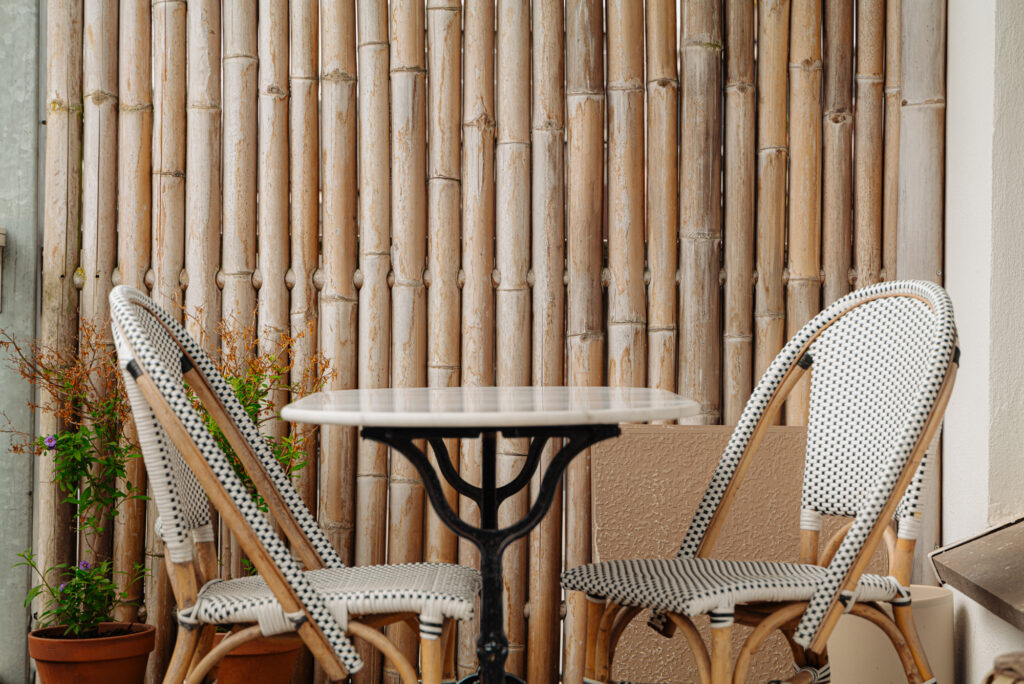
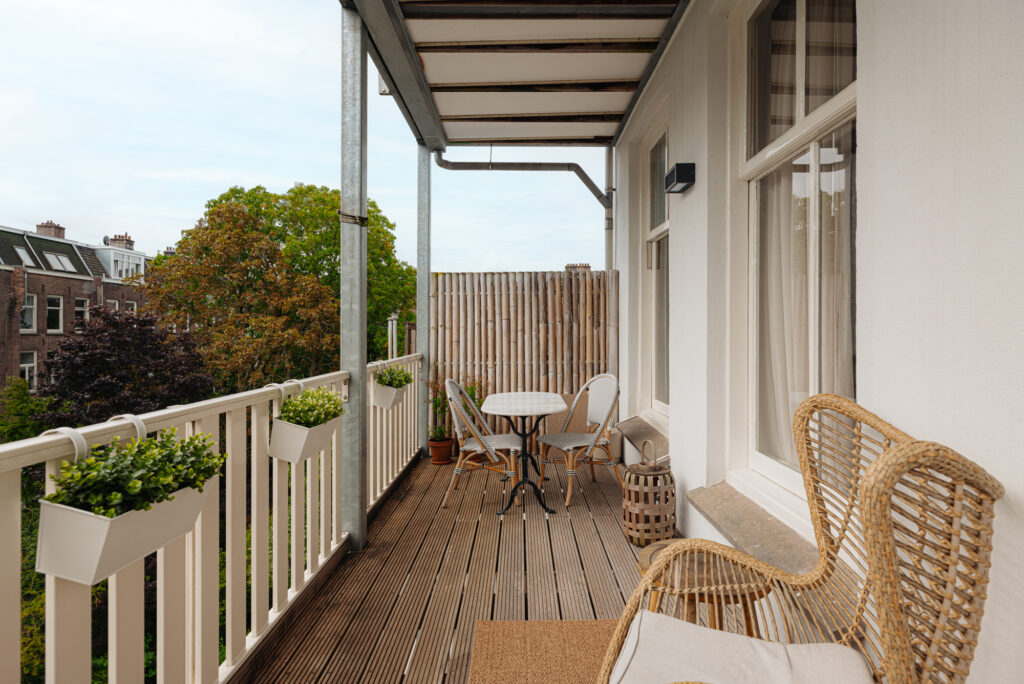
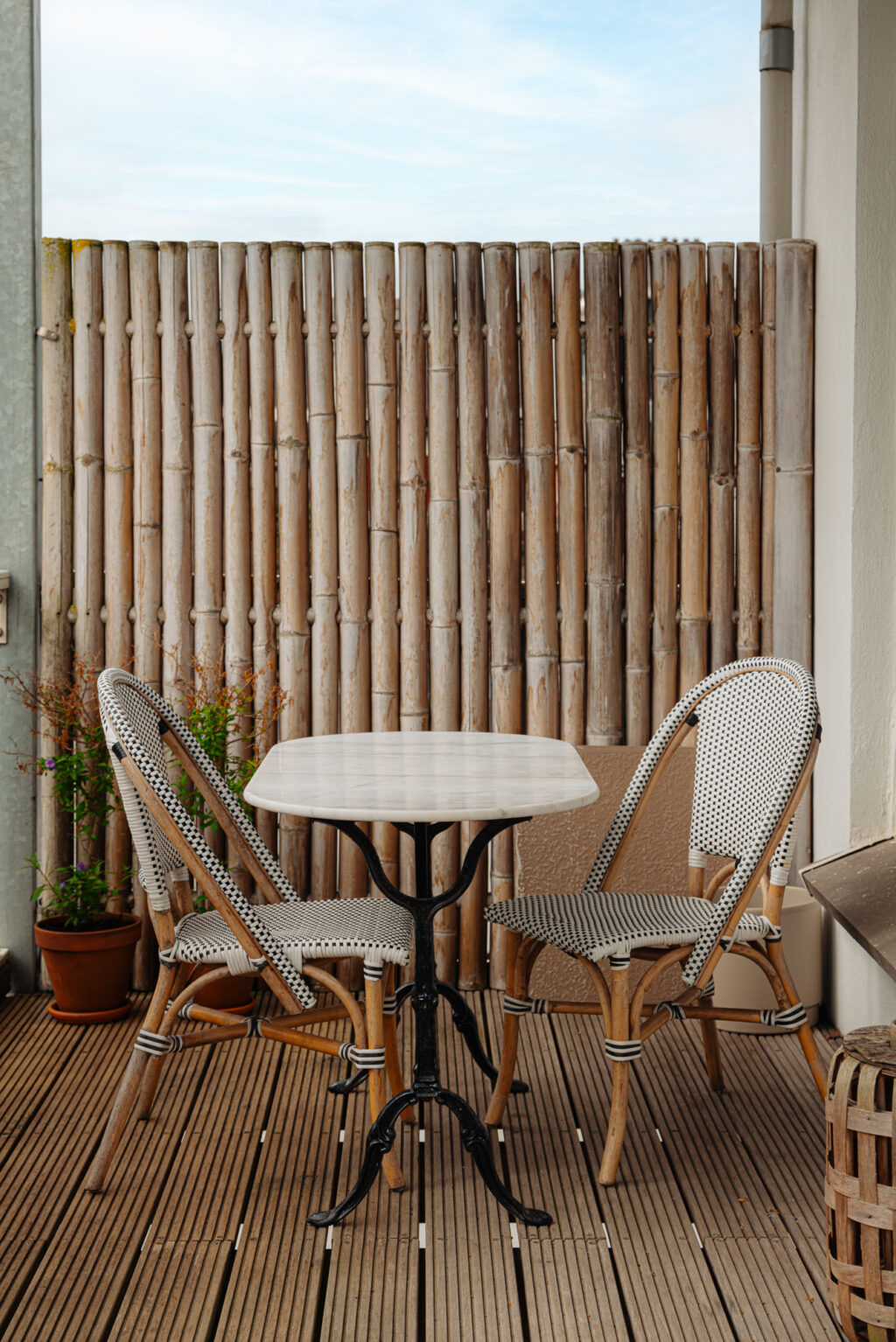
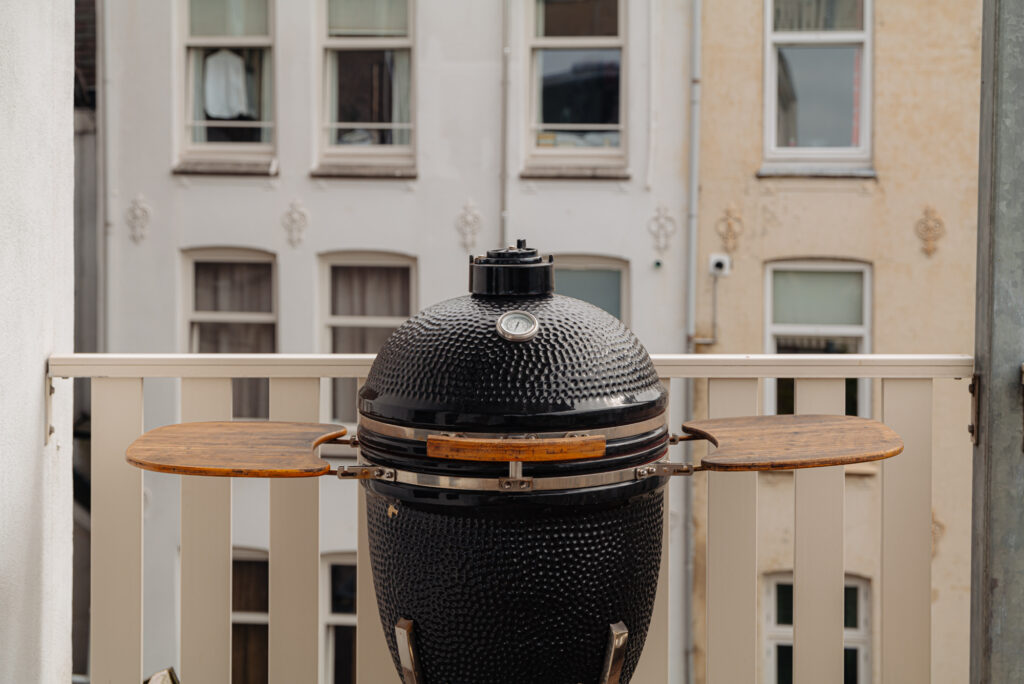
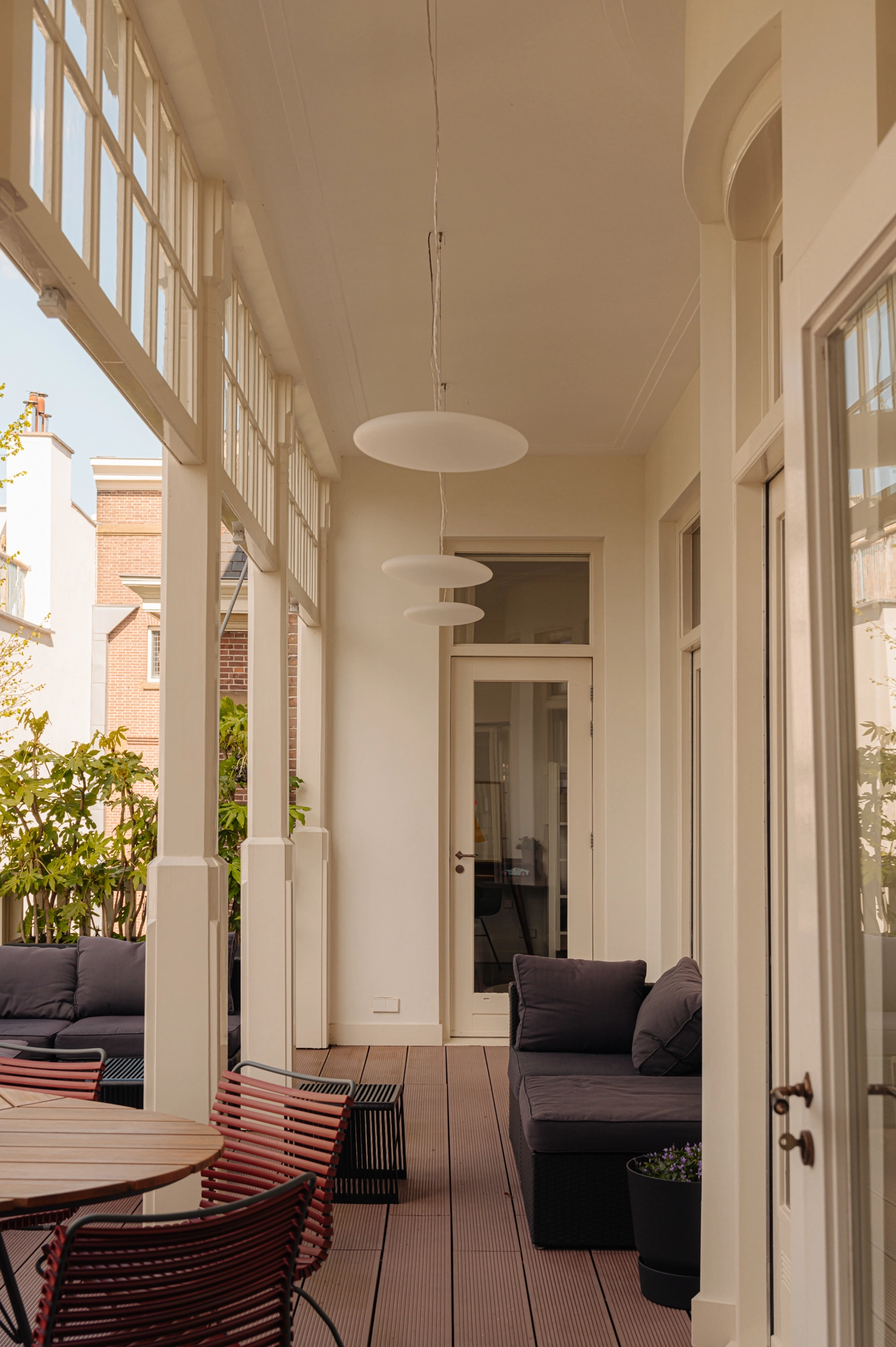
Located at the rear of the building and facing south, this spacious terrace of approximately 13 m² is an extension of the interior, a place to enjoy a morning coffee or after-work drinks with friends.
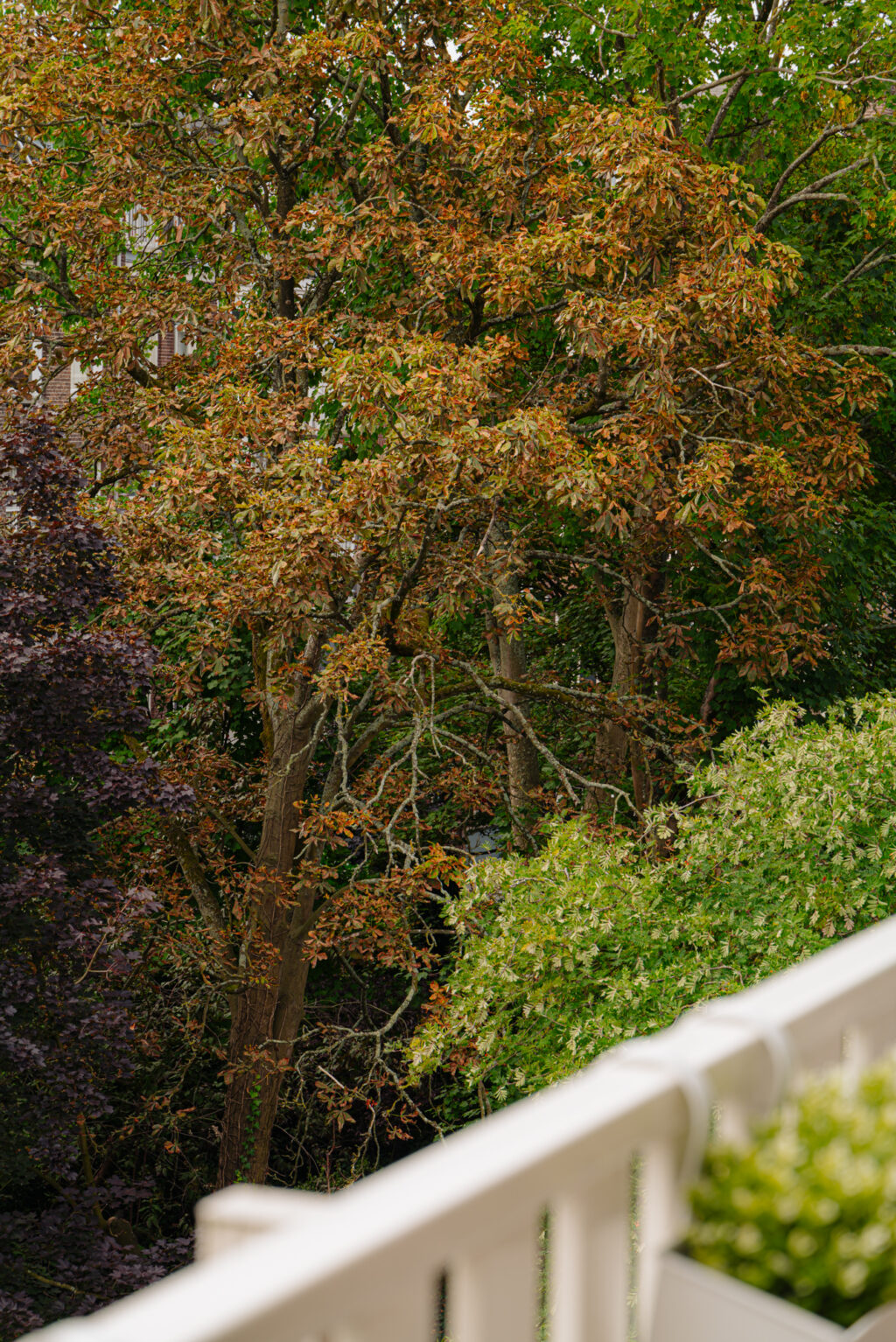
The wooden deck, framed by white balustrades and elegantly overgrown planters, overlooks a lush courtyard garden with mature trees. The outdoor space is so generous that there is room for rattan lounge chairs and a cozy dining area on the other side.
neighborhood guide
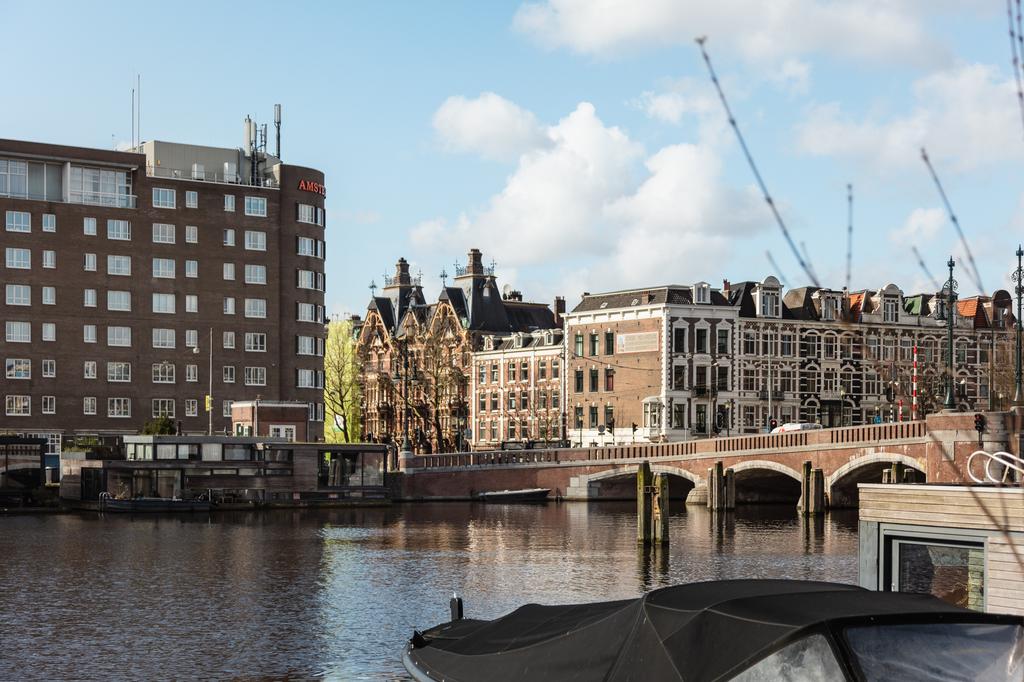
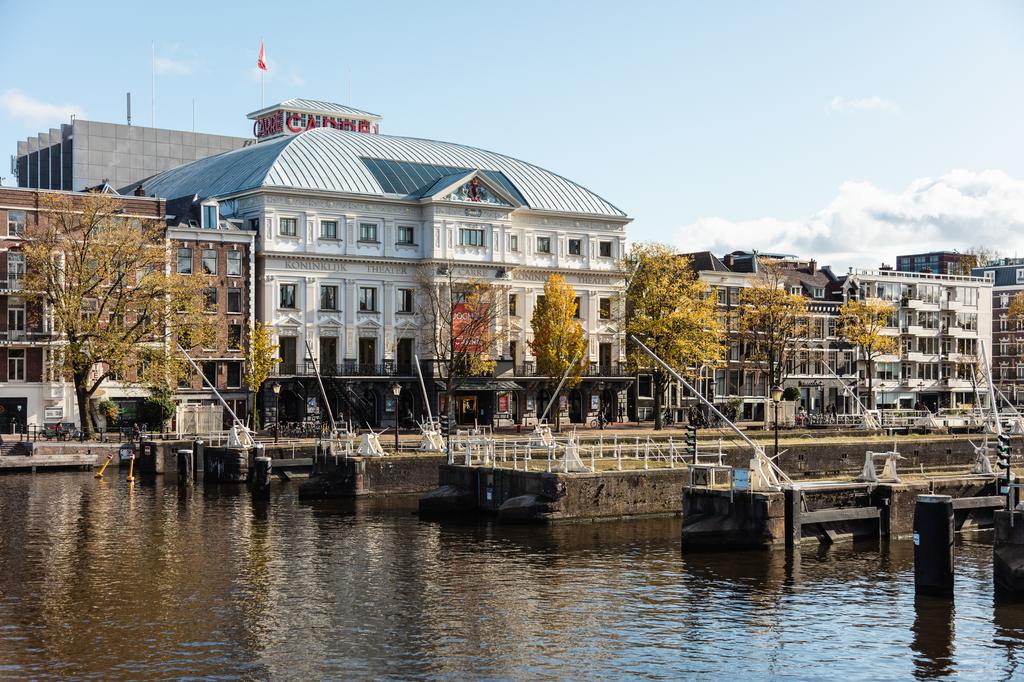
The apartment is located in the Zuid district, in the most sought-after and quiet part of De Pijp. De Pijp was built at the end of the 19th century to provide housing for newcomers who moved to the capital for work. Freddy Heineken's father opened the Heineken brewery here in 1886. The first workers' houses, around Albert Cuypstraat, were built quickly and cheaply. Later, Berlage added houses in the Amsterdam School style towards the Diamantbuurt. It is said that the neighborhood owes its name to the long, straight streets, which are shaped like a pipe.
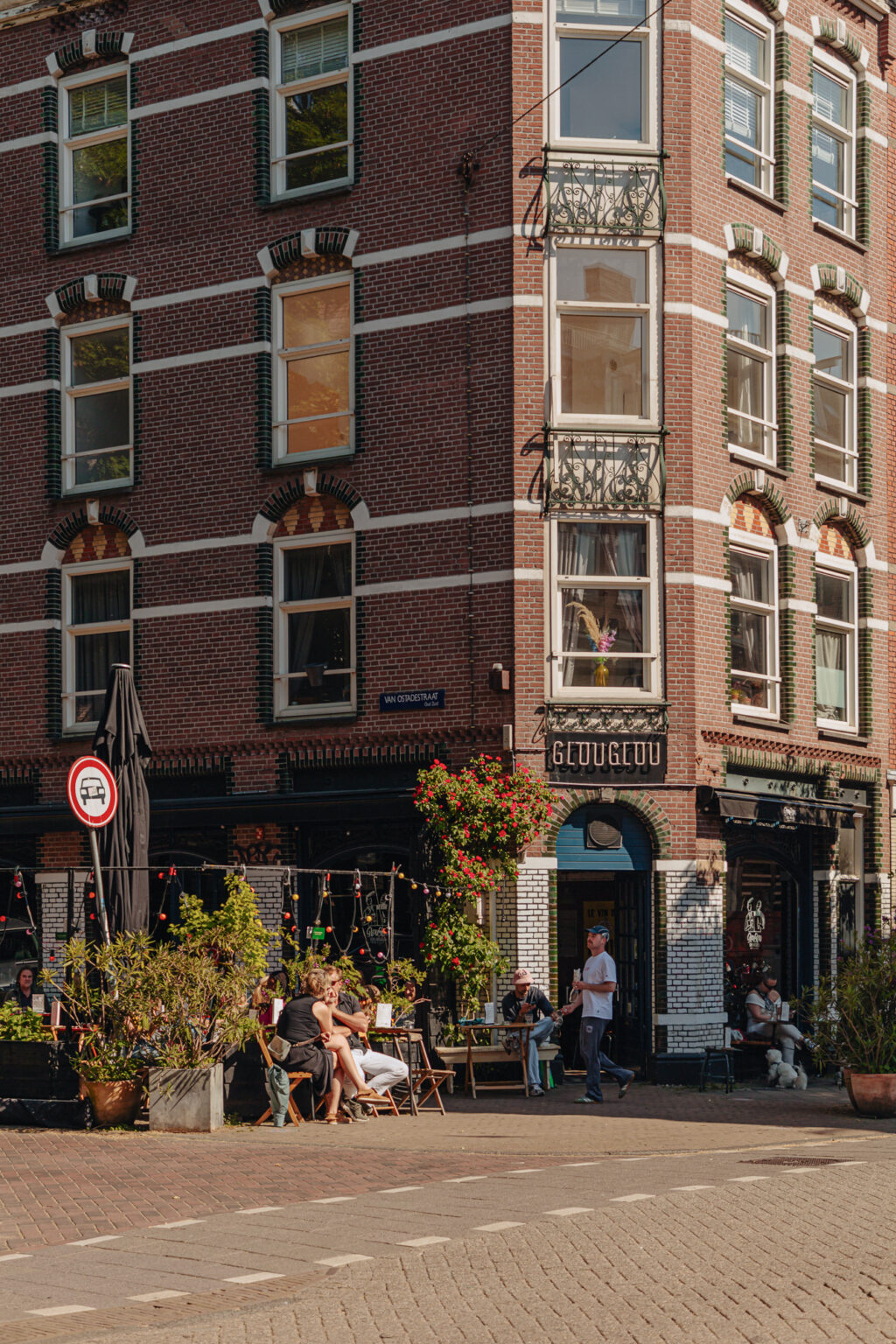
De Pijp is known for its liveliness and cozy restaurants and cafes, all within walking distance.
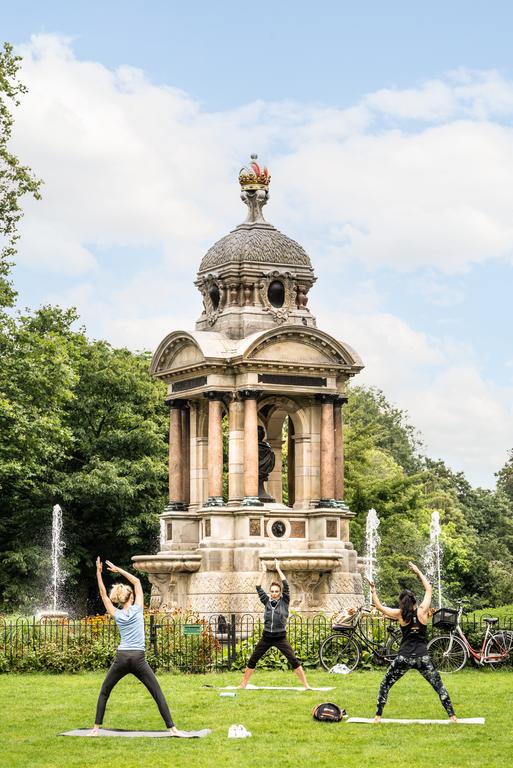
The Albert Cuyp Market and Sarphatipark are key to the dynamic vibe of De Pijp. Artists and writers like Piet Mondriaan, Carel Willink, and Gerard Reve lived and worked here. The lively, diverse population brought many cafés and eateries to the neighborhood. Today, the neighborhood is known as the Latin Quarter of Amsterdam, with many dynamic restaurants such as Samuel's, Badcuyp, the Italian Impero Romano, the French Arle, and Caron. In addition, there are cozy eateries from all corners of the world in the Van Woustraat.
Details:
• Usable living area approx. 86 m²
• South-facing terrace approx. 13 m²
• Located on private land
• Renovated in 2023
• Foundation repaired in 2004
• Service costs VvE €117 per month
• Painting carried out in 2022
• Various roofing work carried out in 2025
• Protected cityscape
City Chic
Located on one of the most beautiful streets in De Pijp, a stone's throw from Sarphatipark and the lively Albert Cuyp market, this exceptionally tasteful and high-quality renovated apartment of approximately 86 m² is located.
Located on the third floor of a characteristic 19th-century building, this property offers a rare combination of historic charm and contemporary living comfort thanks to its renovation in 2024.
The current owners have added luxury with features such as a contemporary kitchen, custom-made cupboards, and a designer bathroom. This has been done while retaining authentic details such as ornamental ceilings, moldings, and panel doors. With a smart layout, plenty of natural light, and a south-facing balcony, this apartment is an oasis of calm in the middle of the city. In short, a unique opportunity for those who want to live in style and comfort in a prime location in Amsterdam. And don't forget: located on freehold land.
Judith de Jong | Real estate agent Broersma Wonen
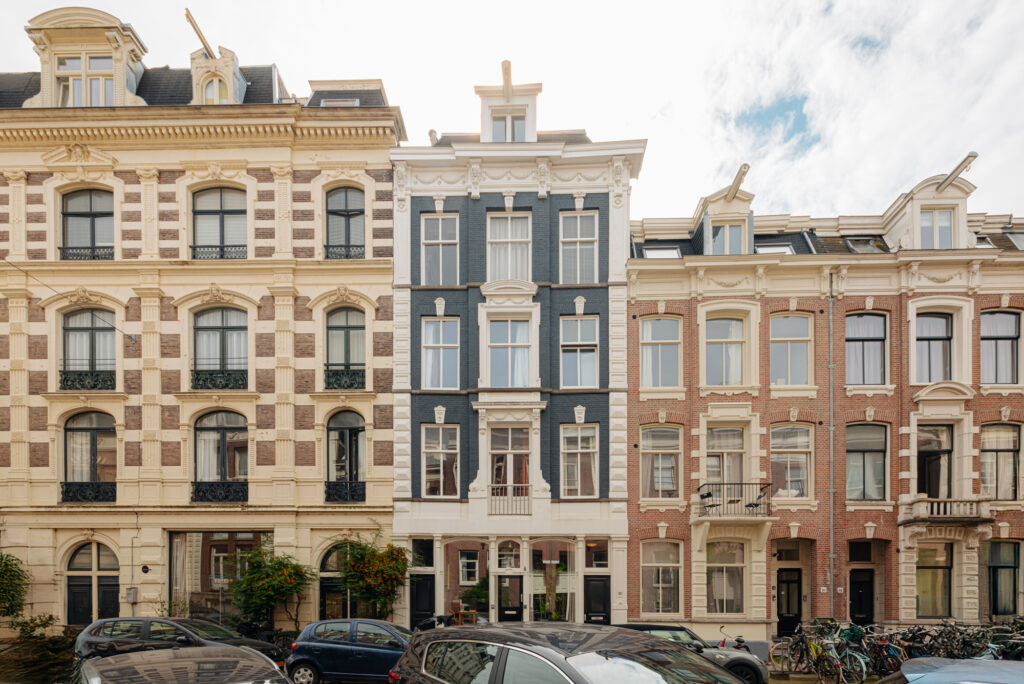
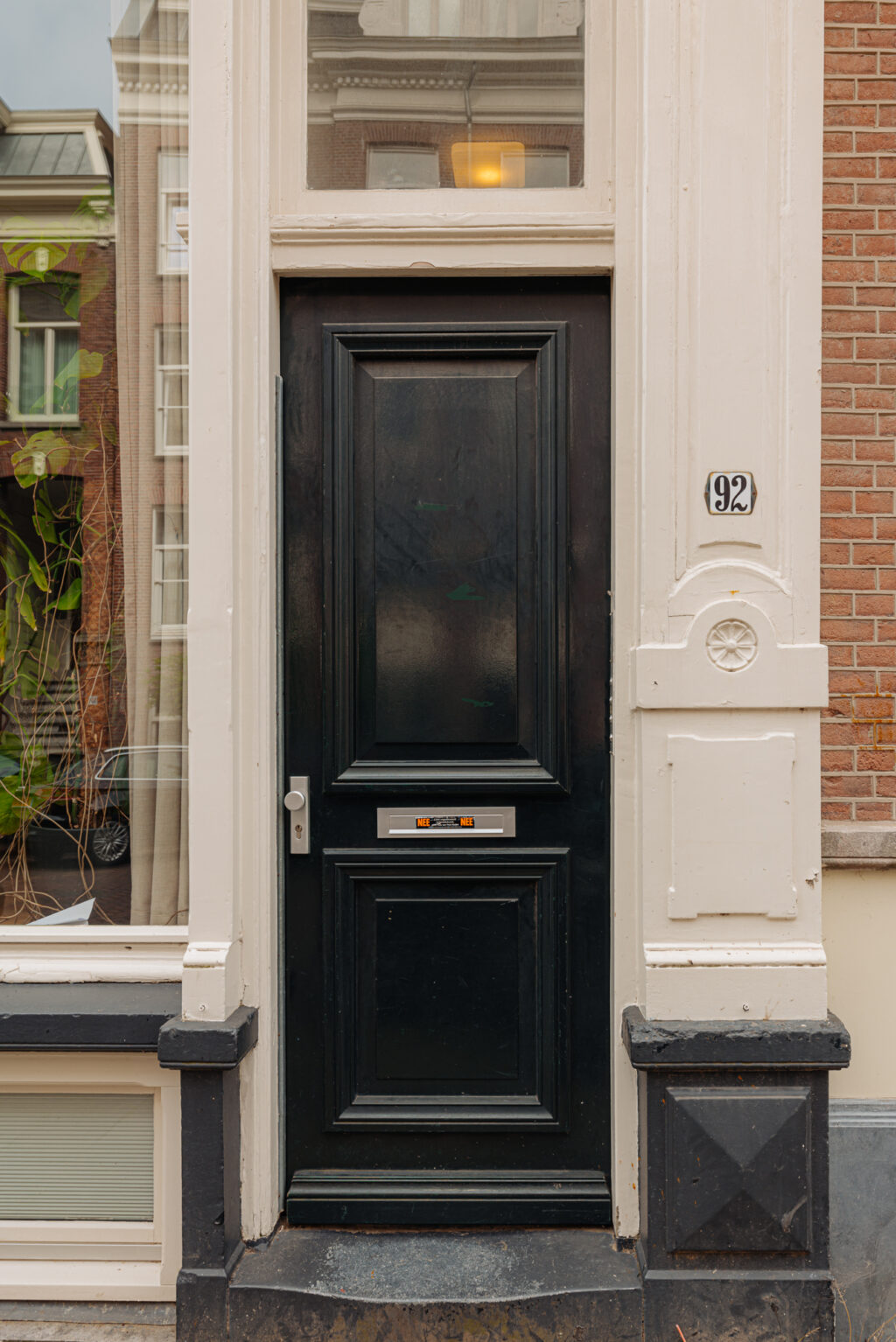
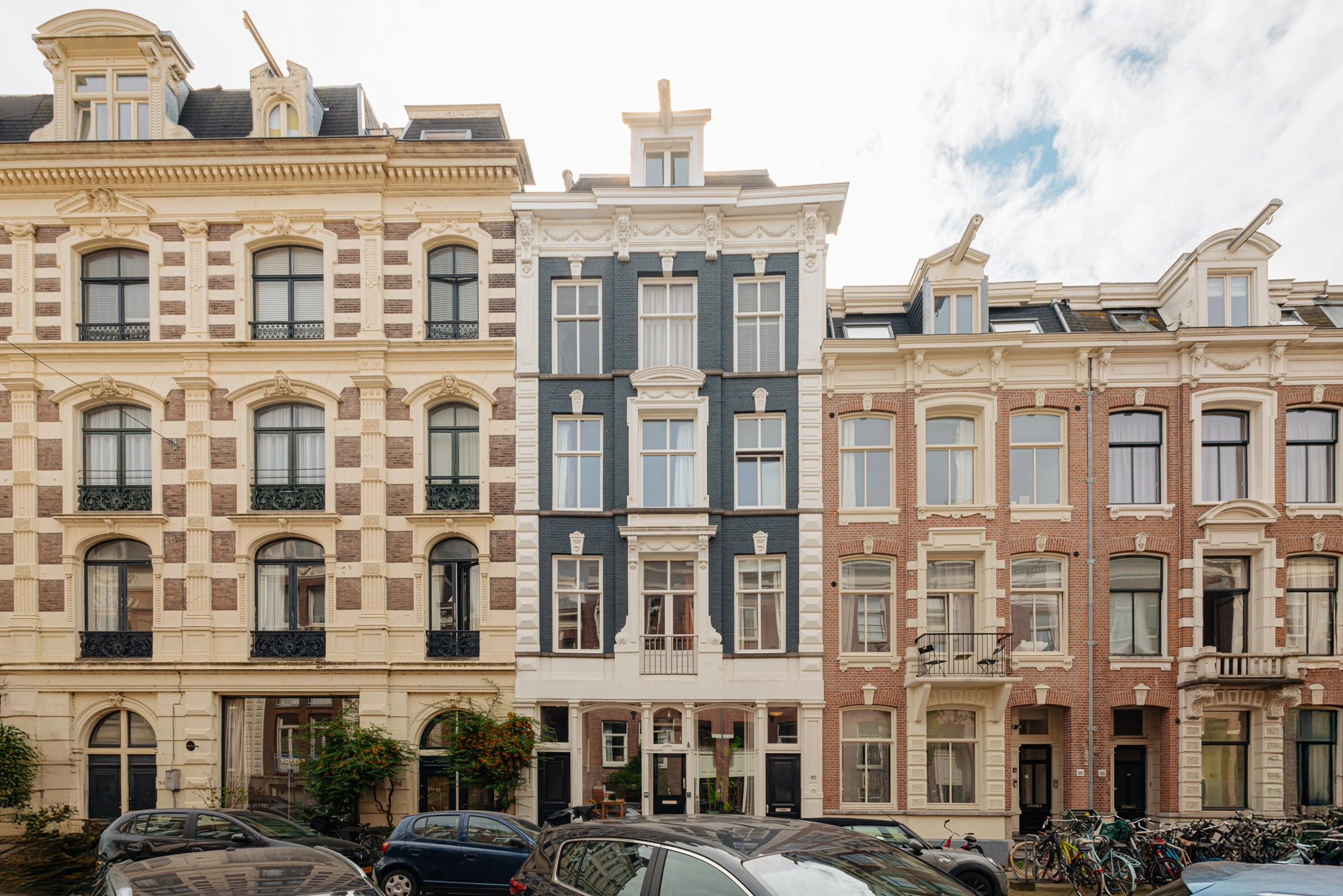
The third-floor apartment is part of a well-maintained building dating from 1880 on Tweede Jan van der Heijdenstraat, in the highly sought-after style characteristic of this period of construction. On one of the most distinctive streets in De Pijp stands a facade that Immediately catches Immediately eye: contrasting blue-gray stucco with white ornamental accents, refined and balanced. Number is an example of late 19th-century Amsterdam architecture, rich in detail but understated in appearance. Inside, this design language is continued in subtle ornamentation, classic profiles, and carefully restored moldings. The foundation was repaired in 2004.
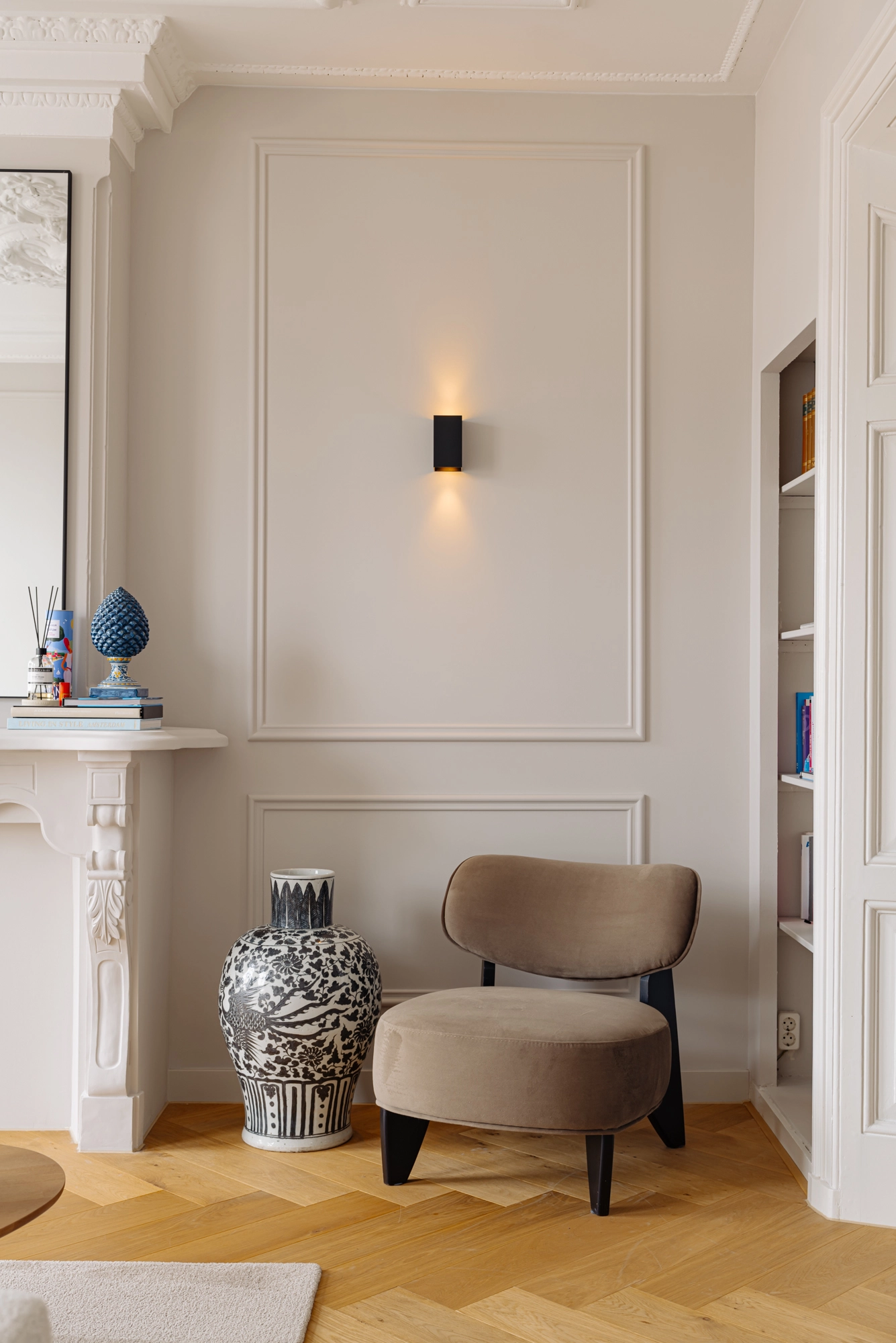
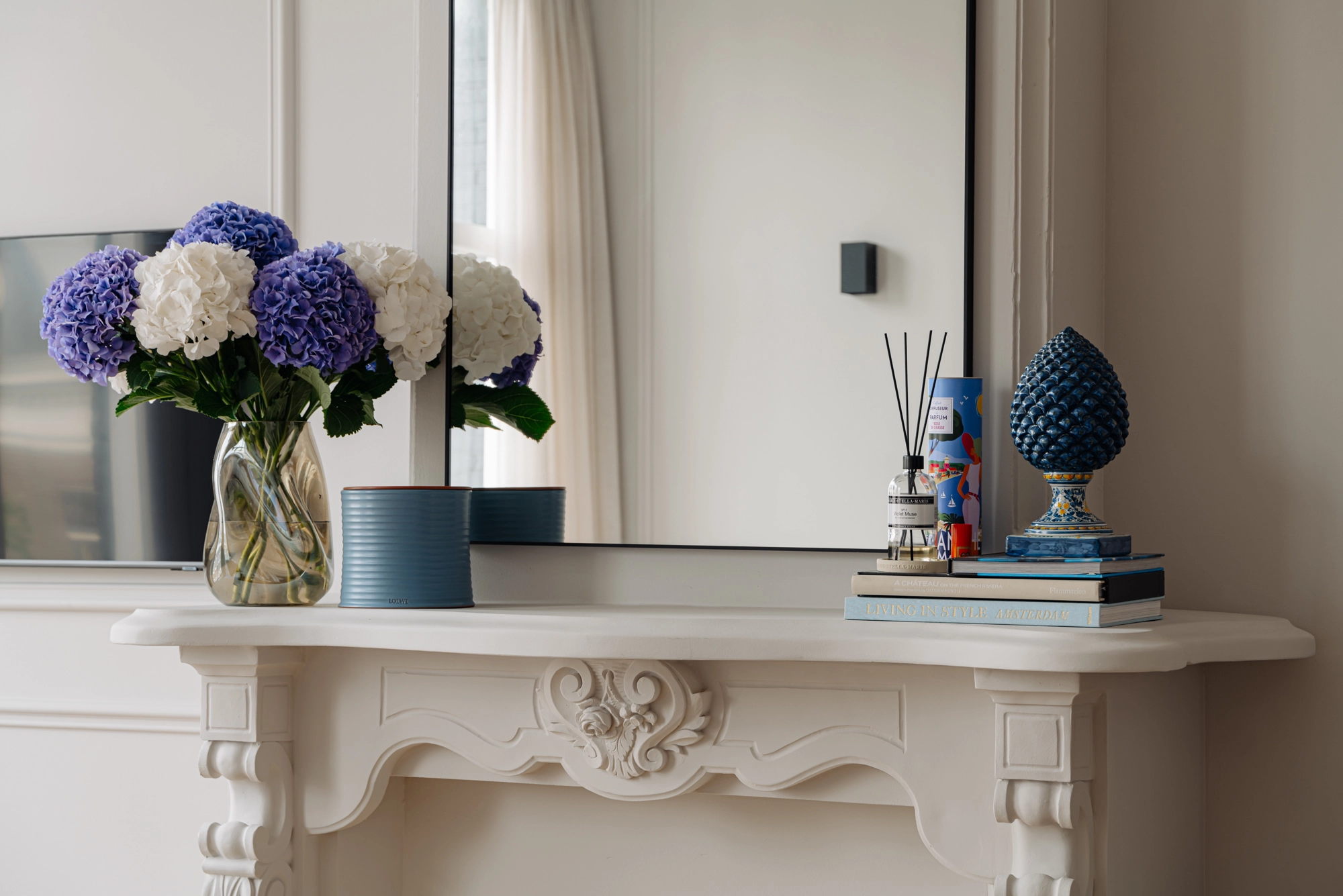
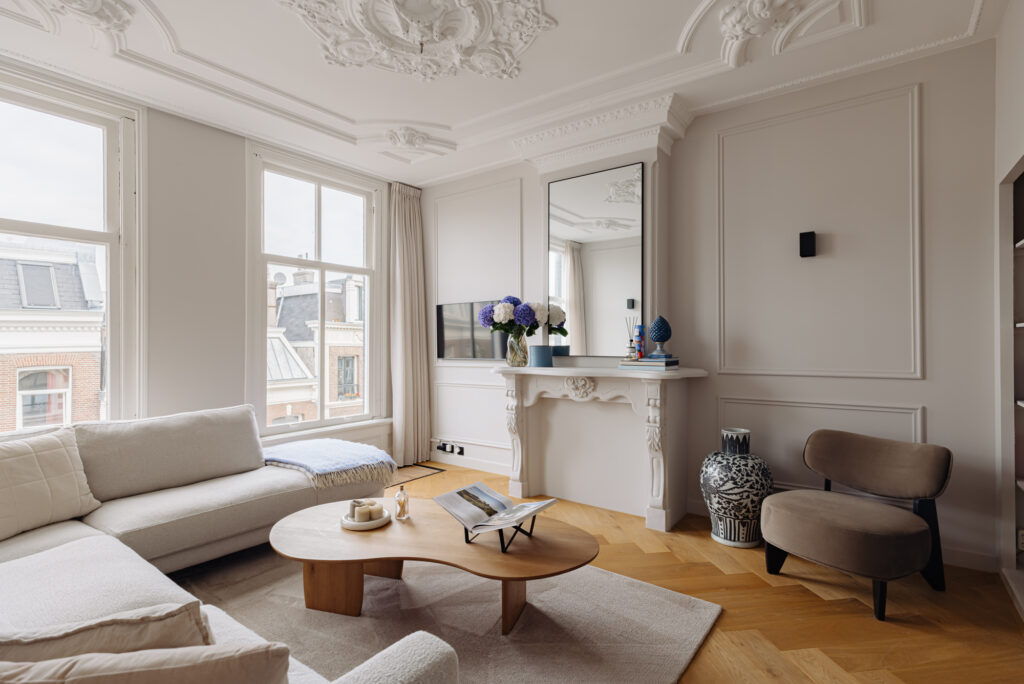
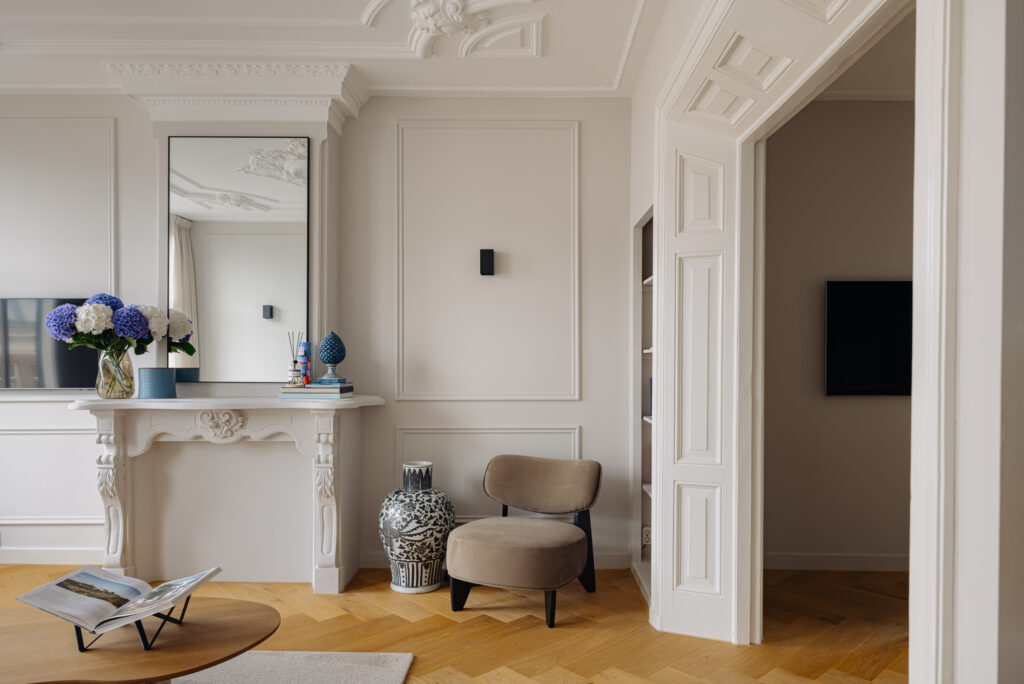
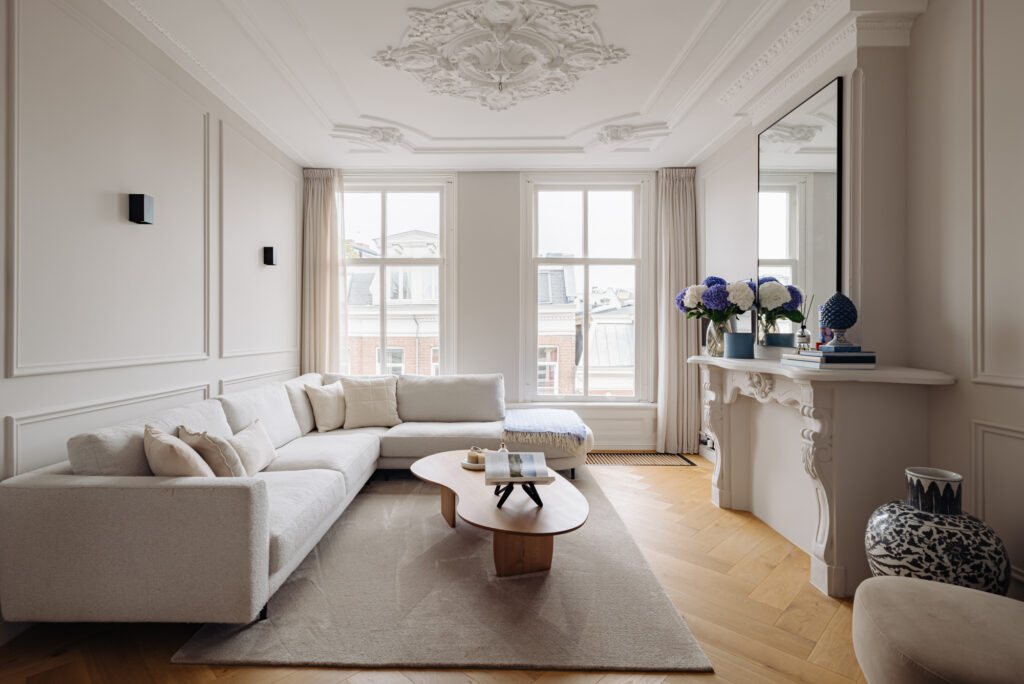
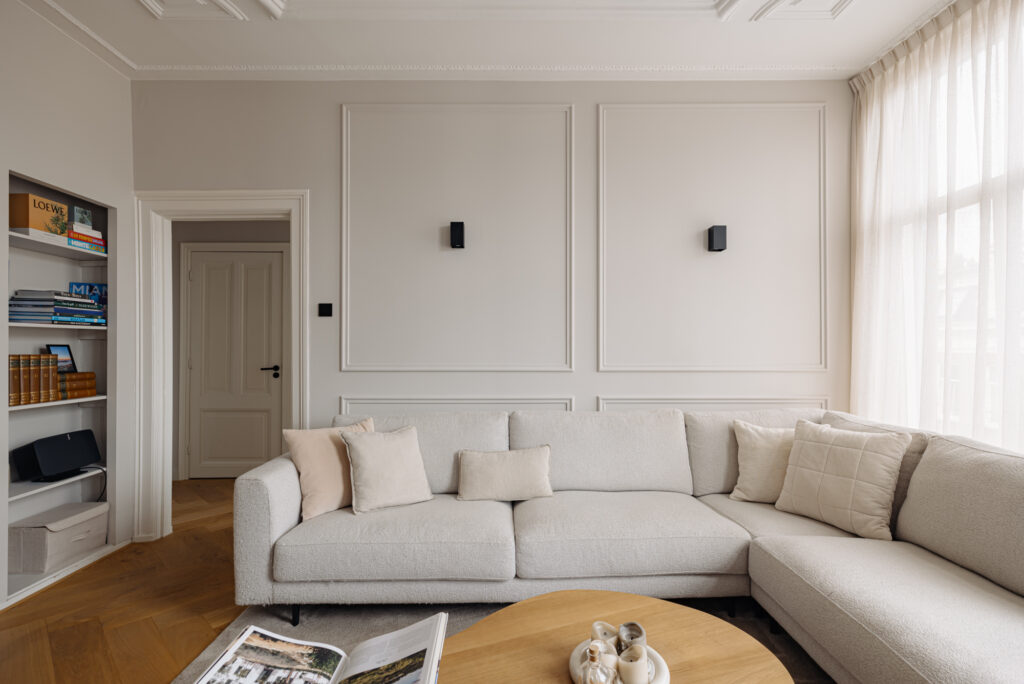
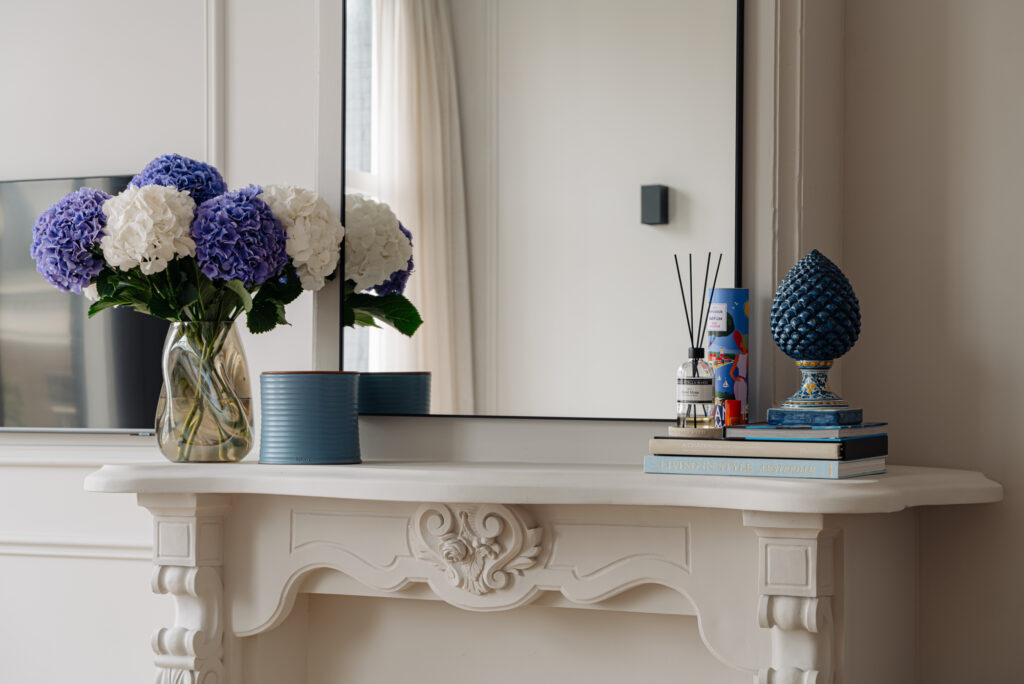
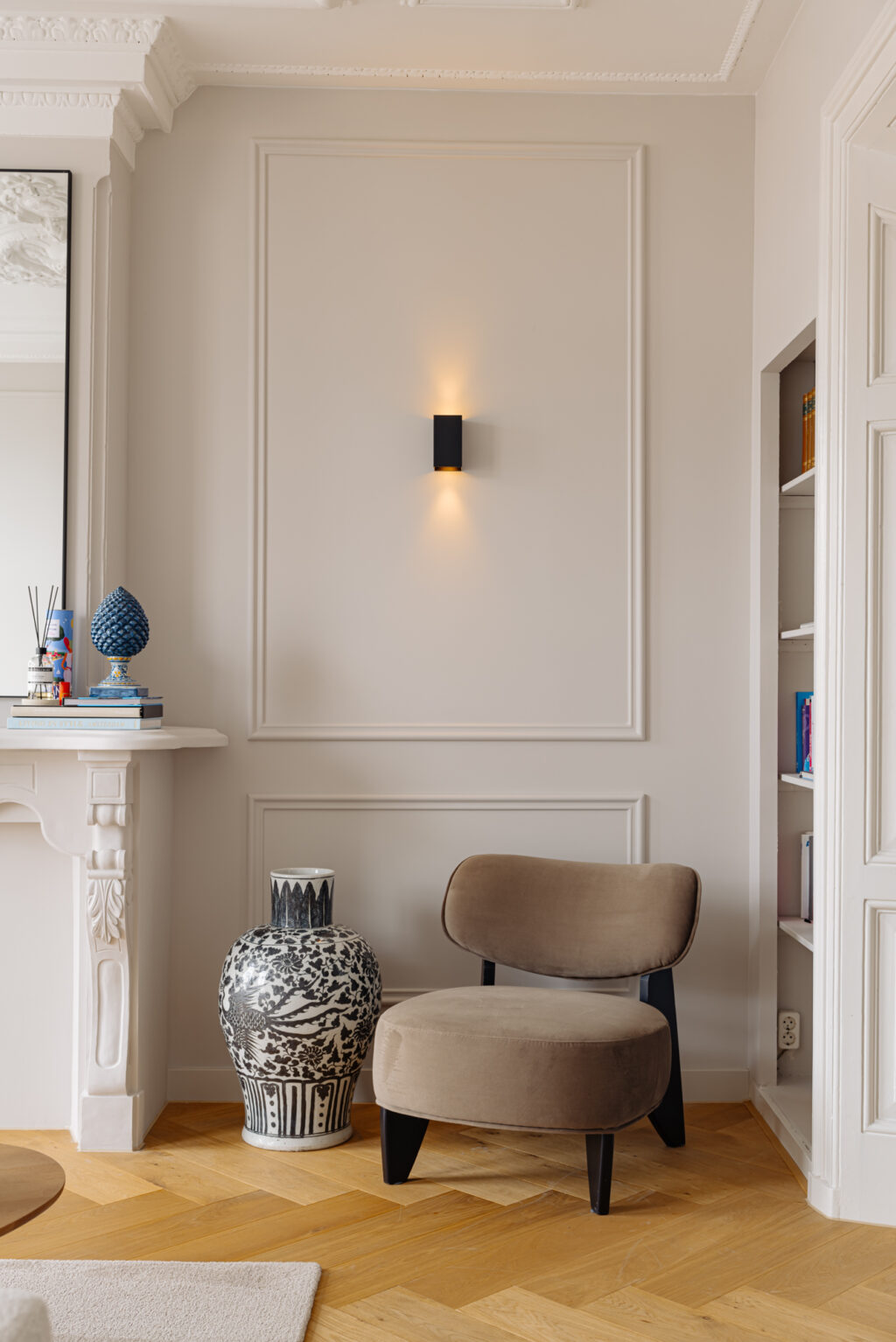
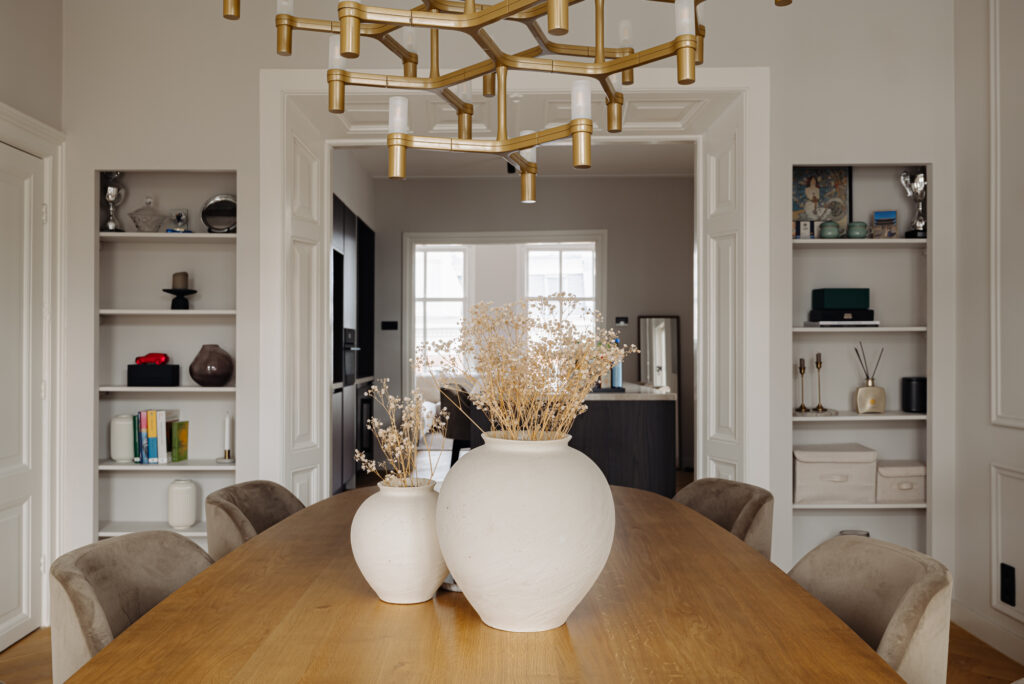
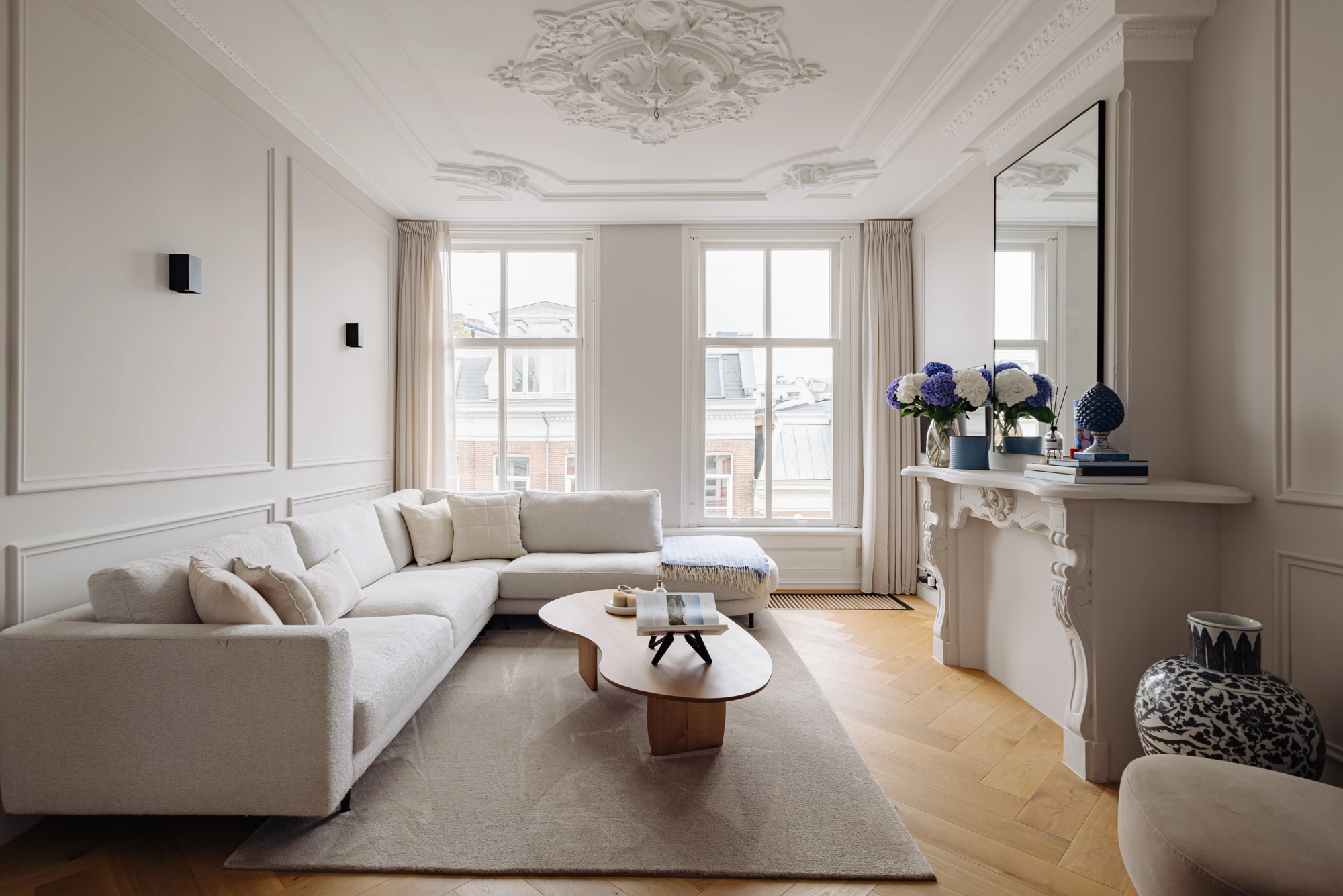
The living room Immediately catches Immediately eye with its high ceilings and rich ornamentation. It is spacious, with the seating area at the front. The seating area is generously proportioned and accentuated with classic moldings, a subtle wall light, and a mirror above a decorative fireplace. Every detail has been carefully chosen and contributes to the peaceful atmosphere. The built-in bookcase in the side wall emphasizes the refined dimensions and is also practical.
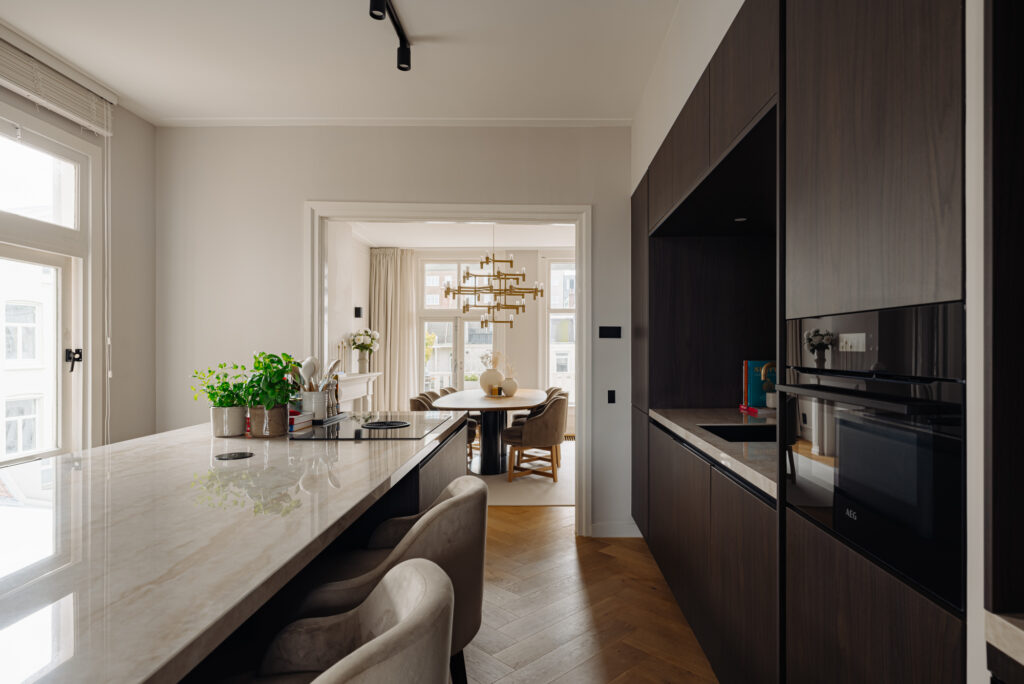
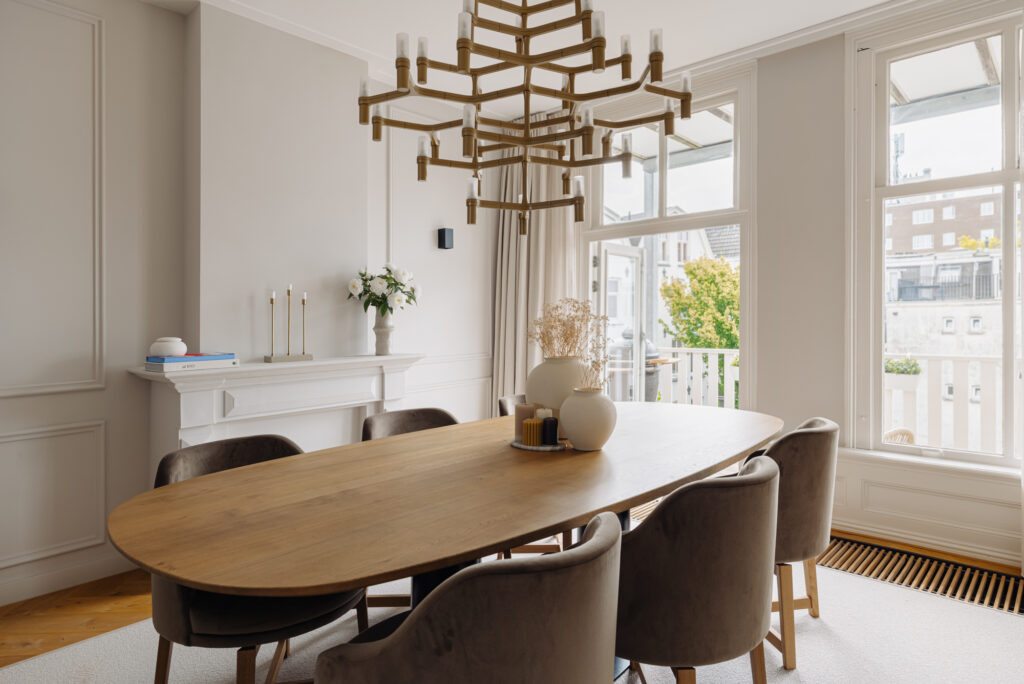
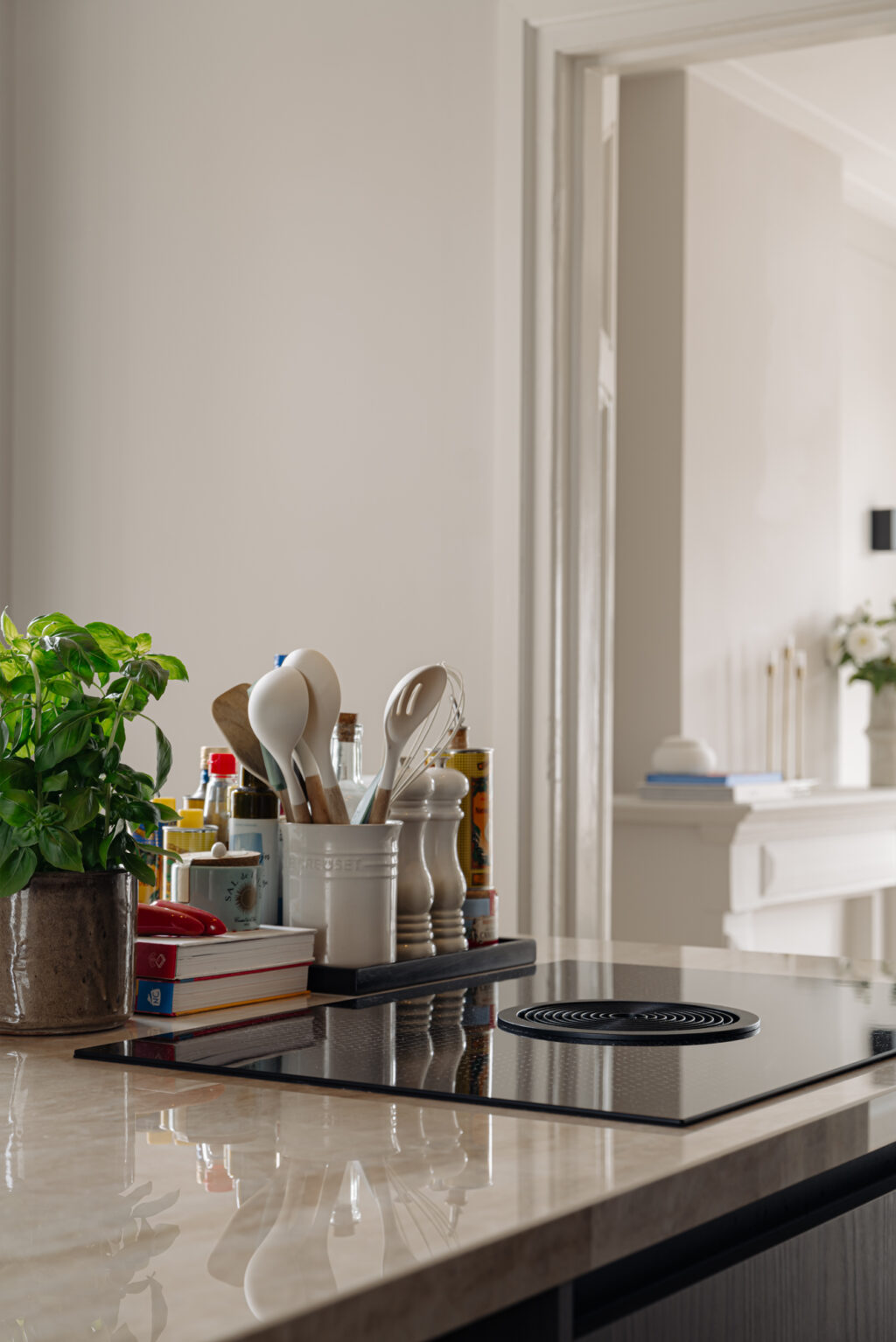
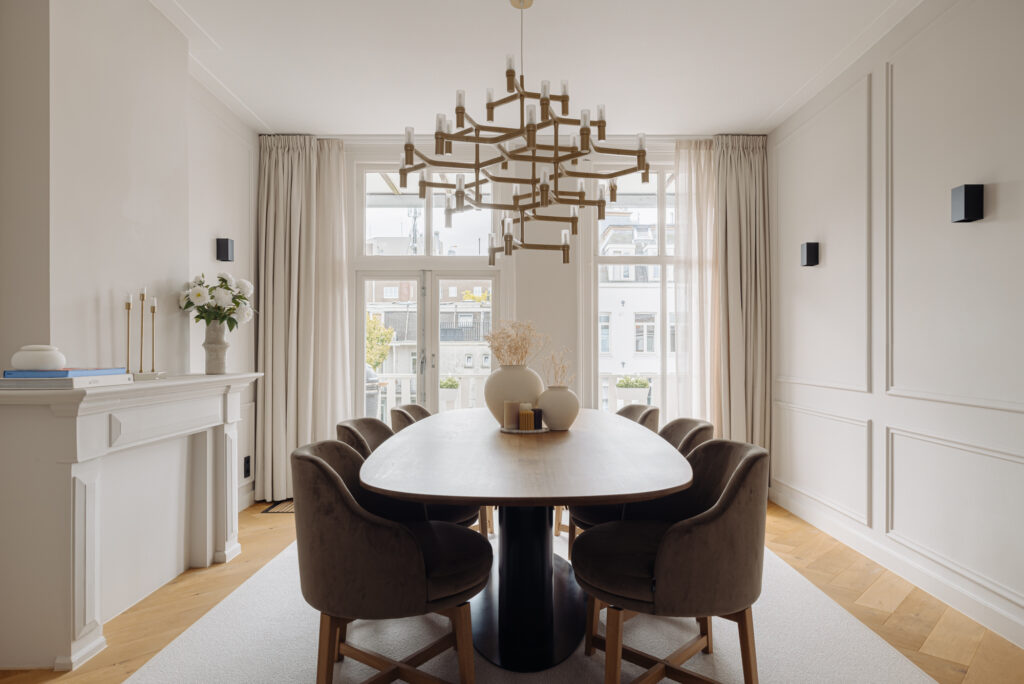
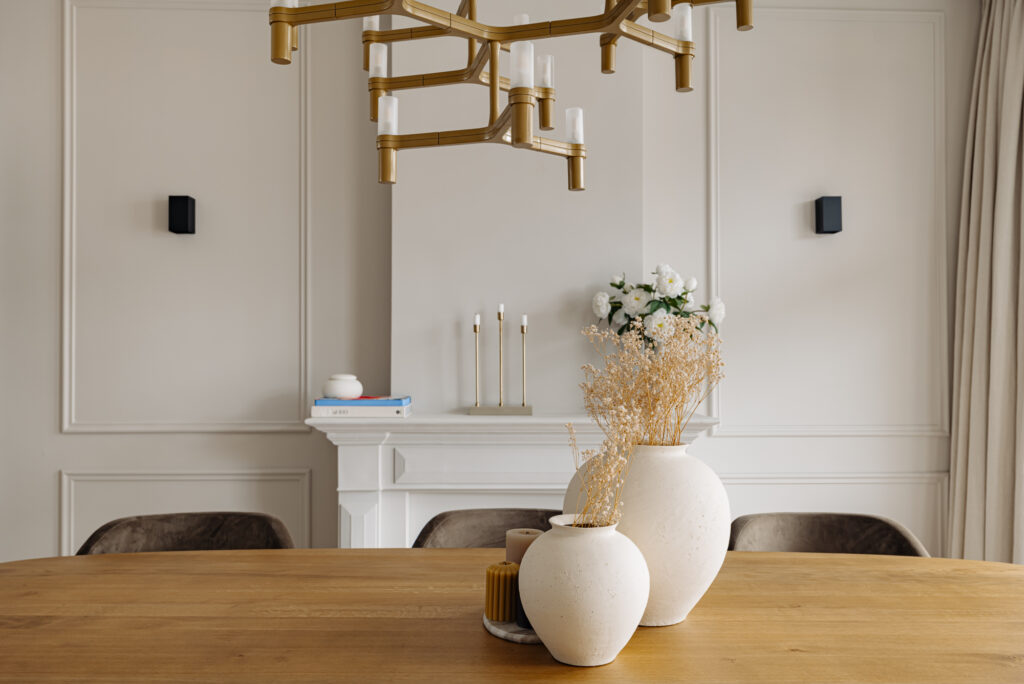
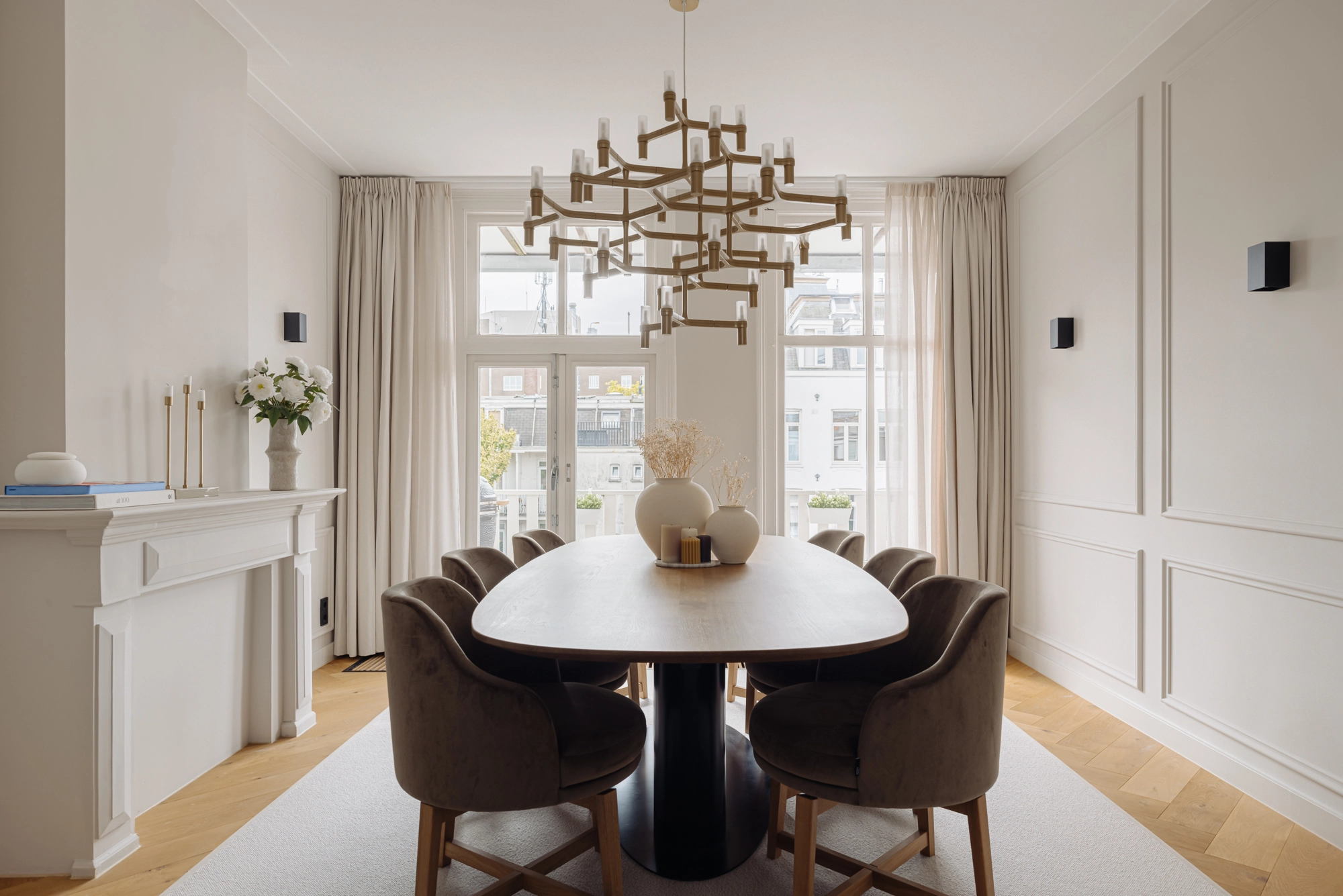
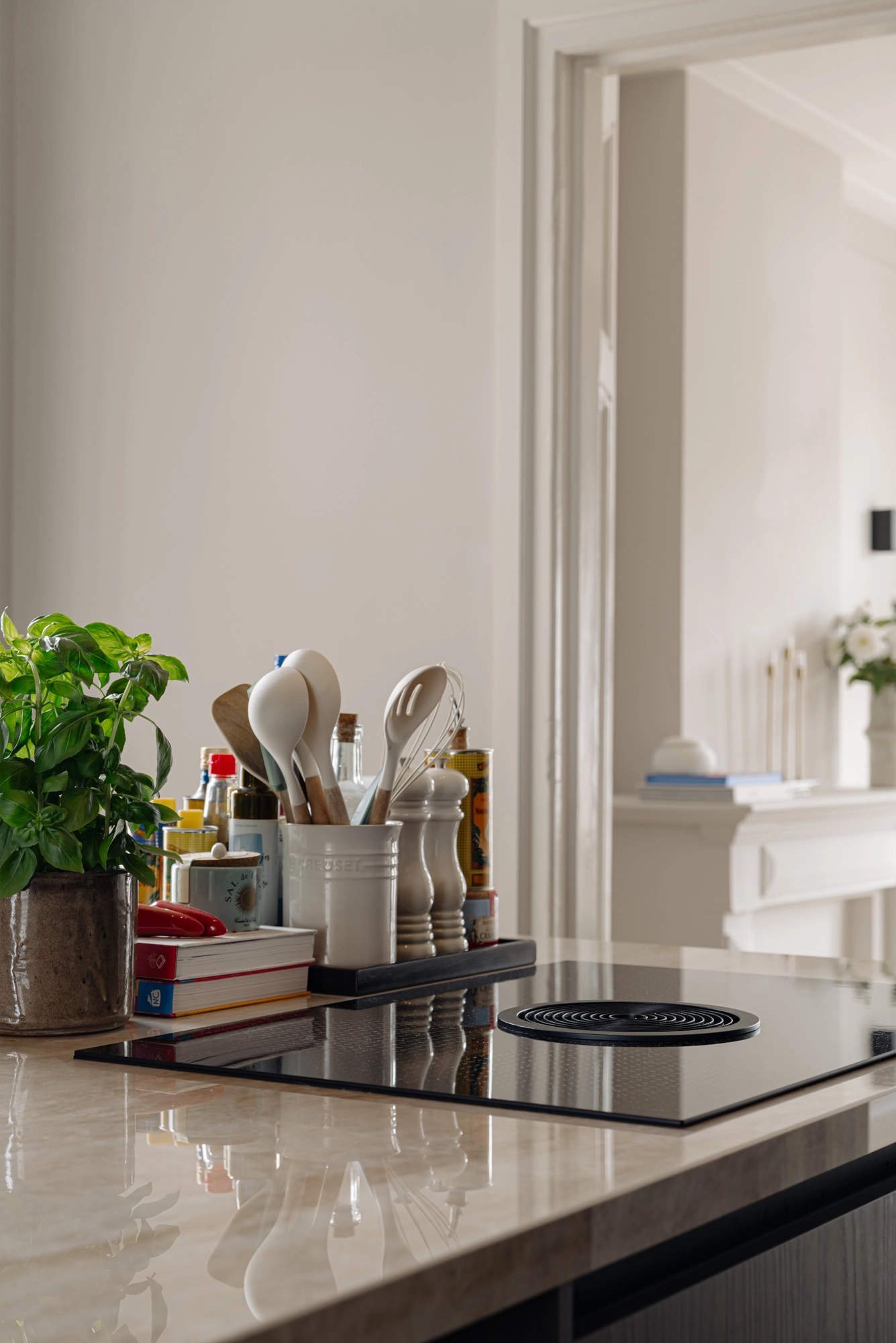
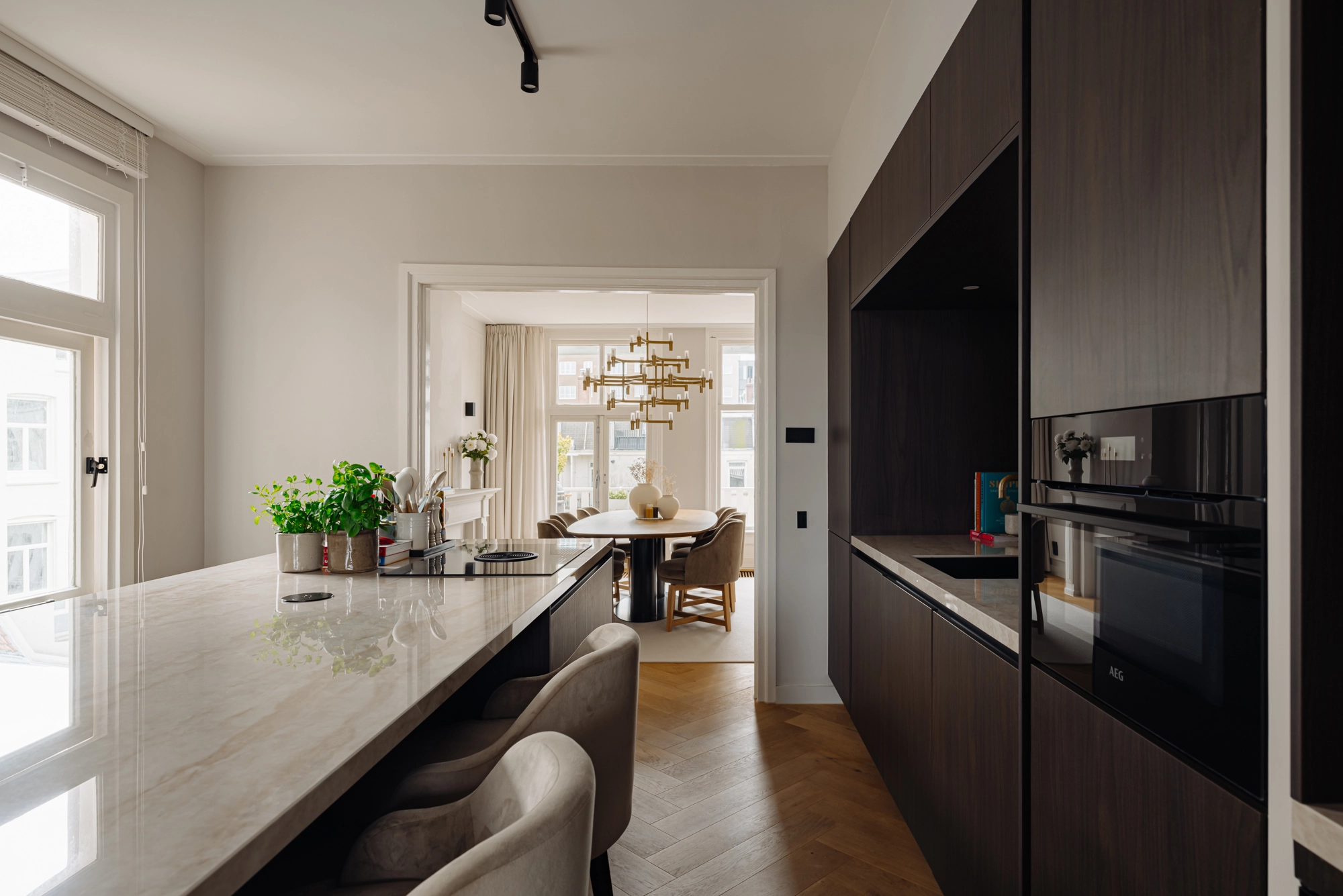
The contemporary kitchen forms the spatial anchor point of the apartment. Dark wood and a polished Dekton worktop give the whole a warm appearance. The cooking island with integrated Bora hob invites people to gather. The back wall is equipped with high-quality built-in appliances: an oven-microwave combination, a wine climate cabinet, a fridge-freezer combination, a dishwasher, and a Quooker. From the kitchen, there are sightlines to both the living room and the dining room. The latter is bathed in light from the balcony, with a large oval tabletop as its centerpiece. The balance between sleek and classic, between high-quality and homely, comes into its own here. There is smart lighting, integrated via Philips Hue. The entire apartment has beautiful wooden parquet flooring.
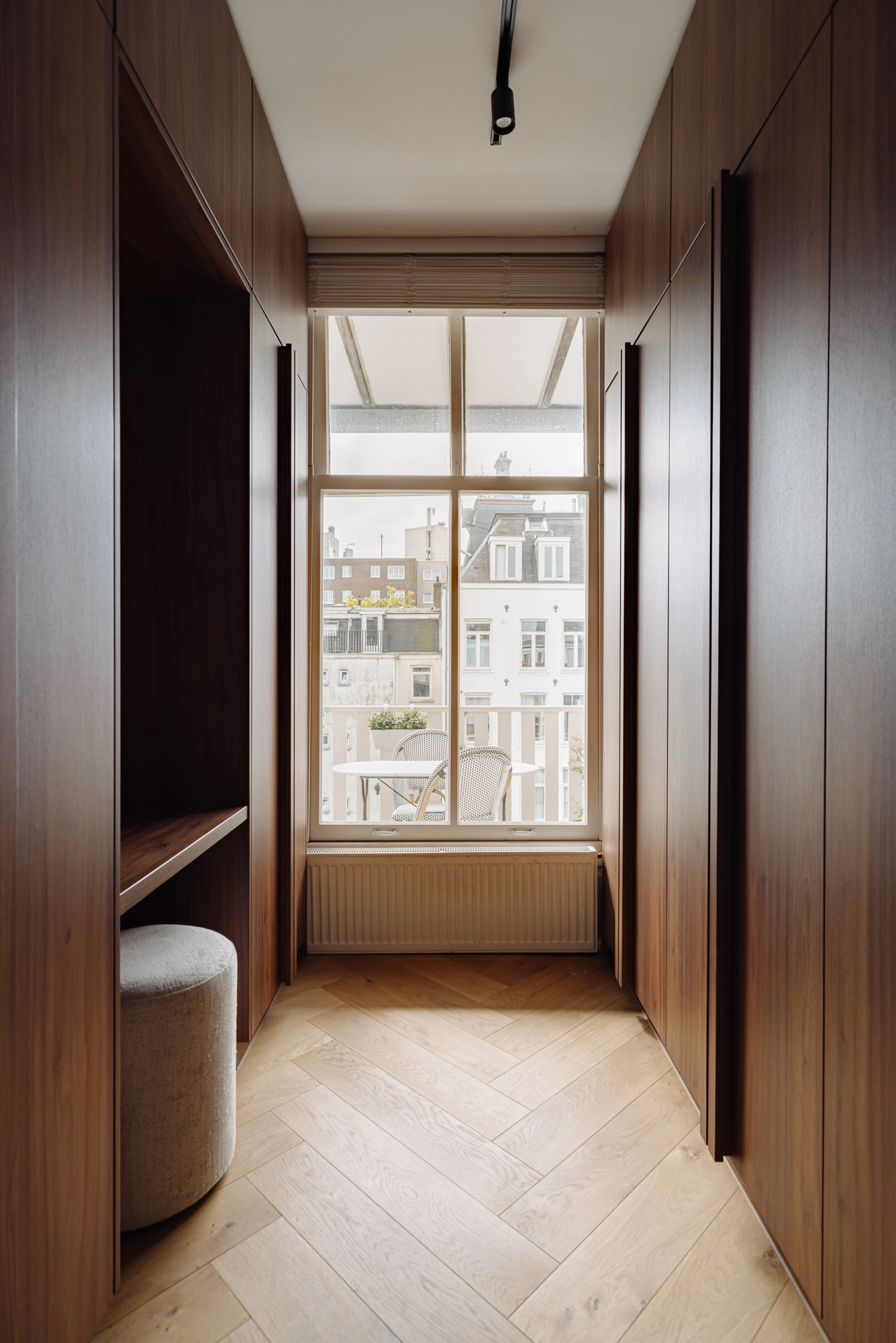
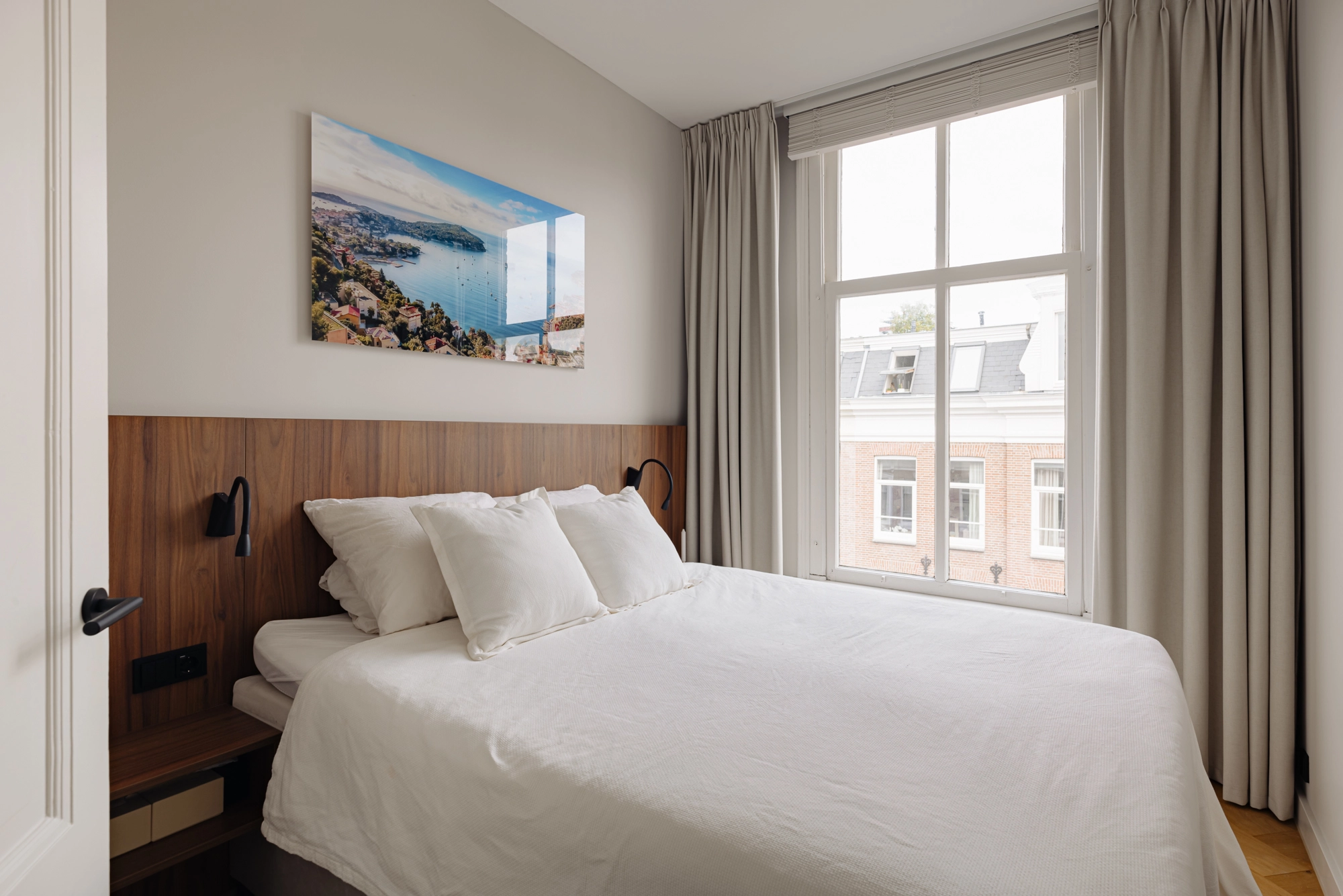
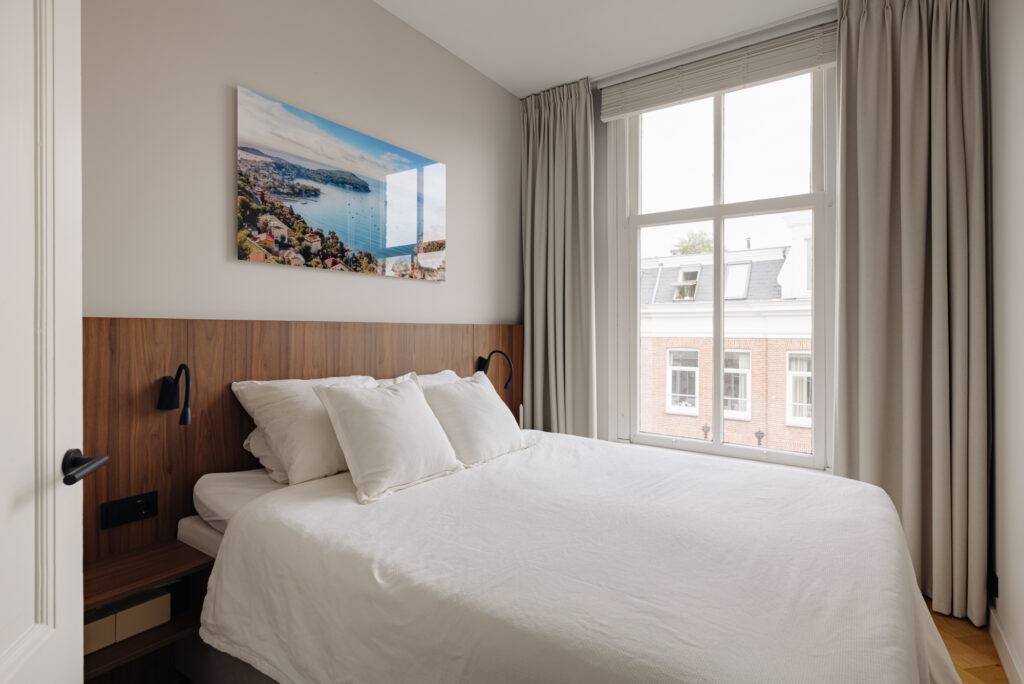
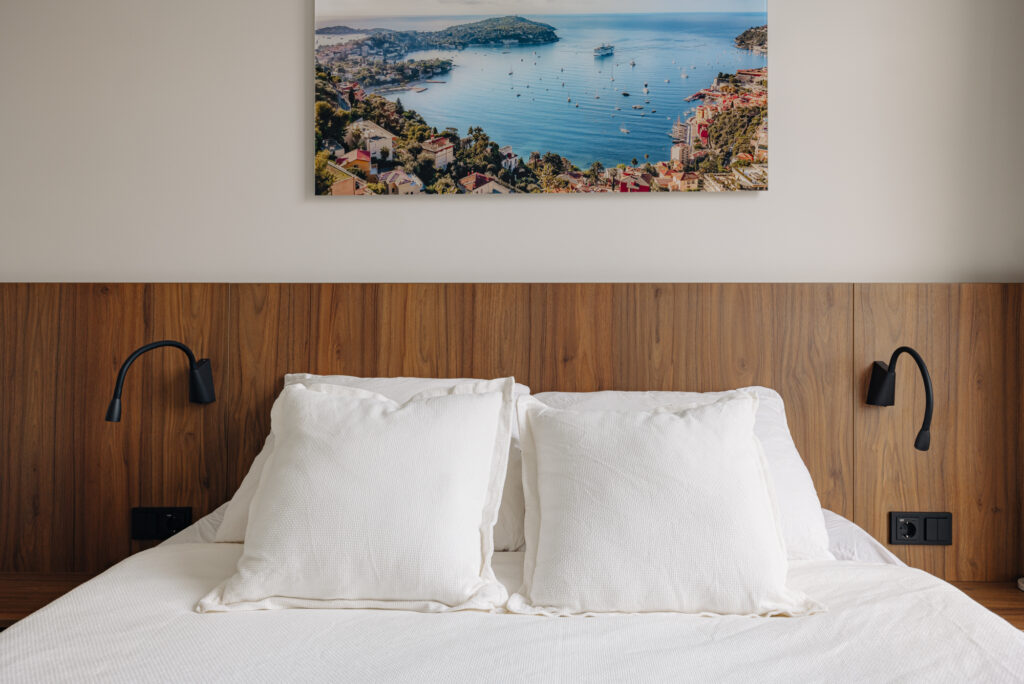
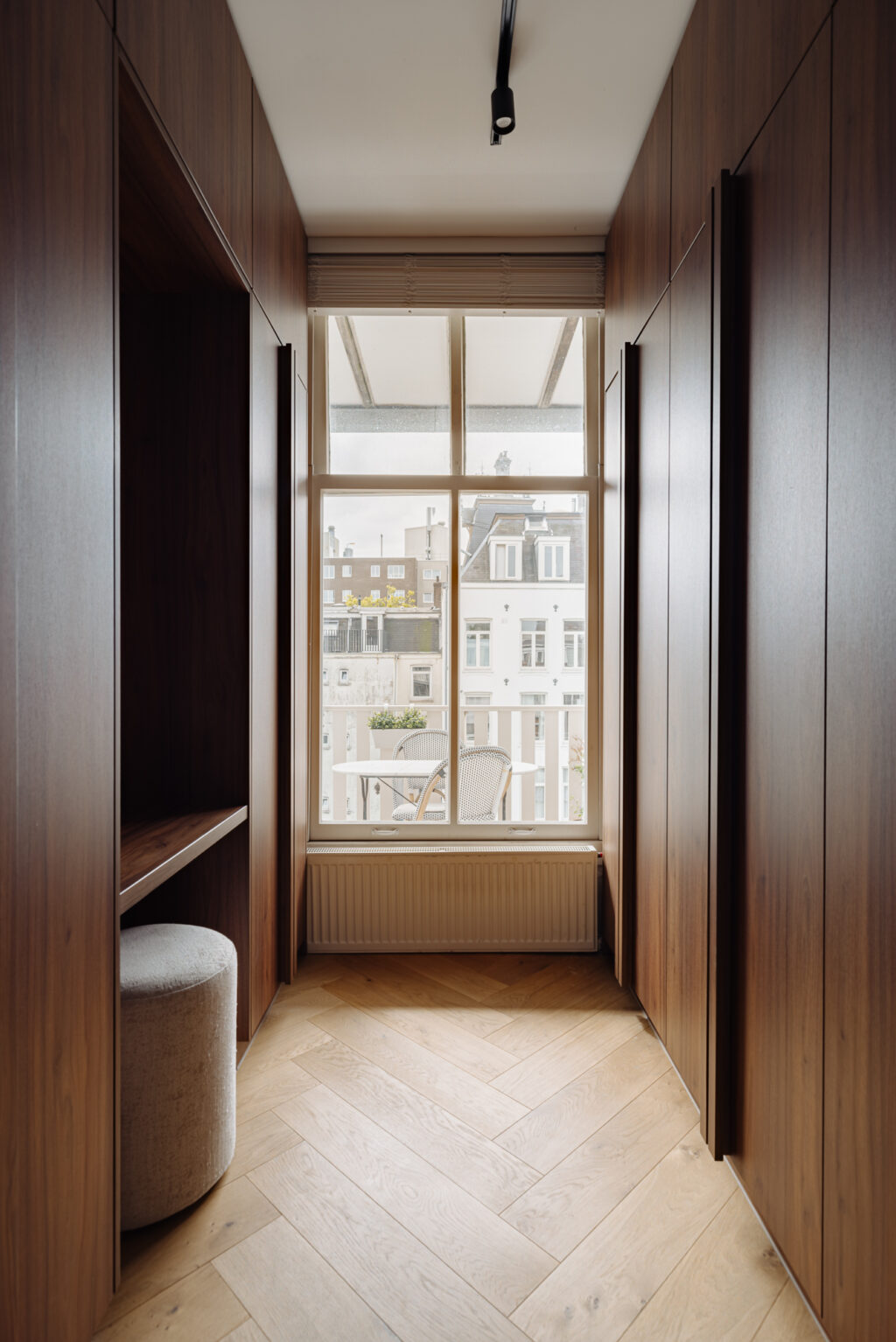
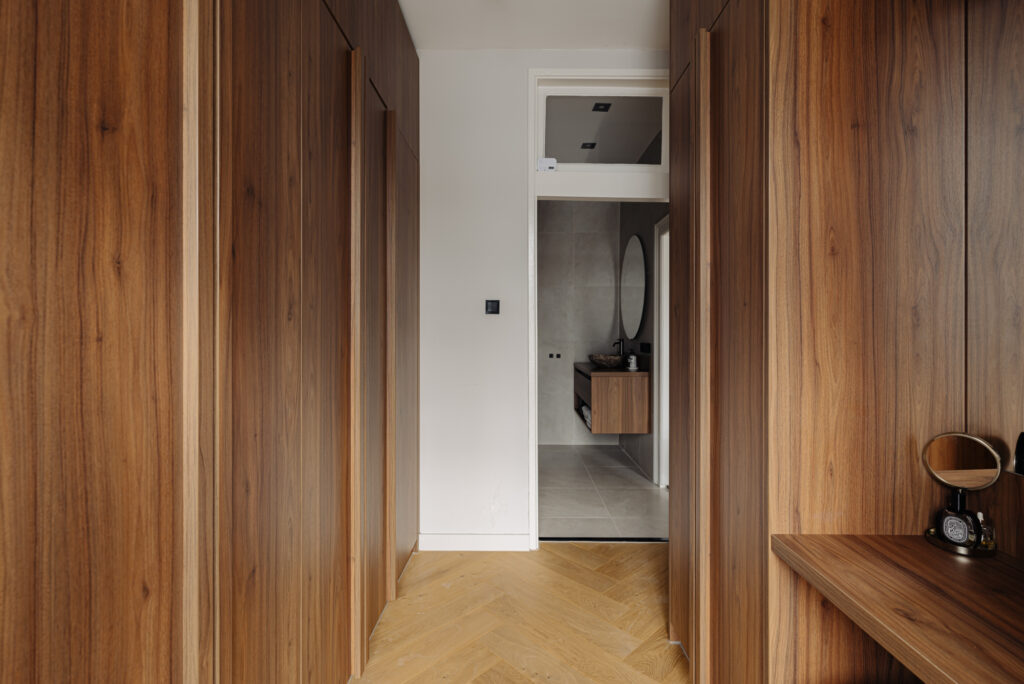
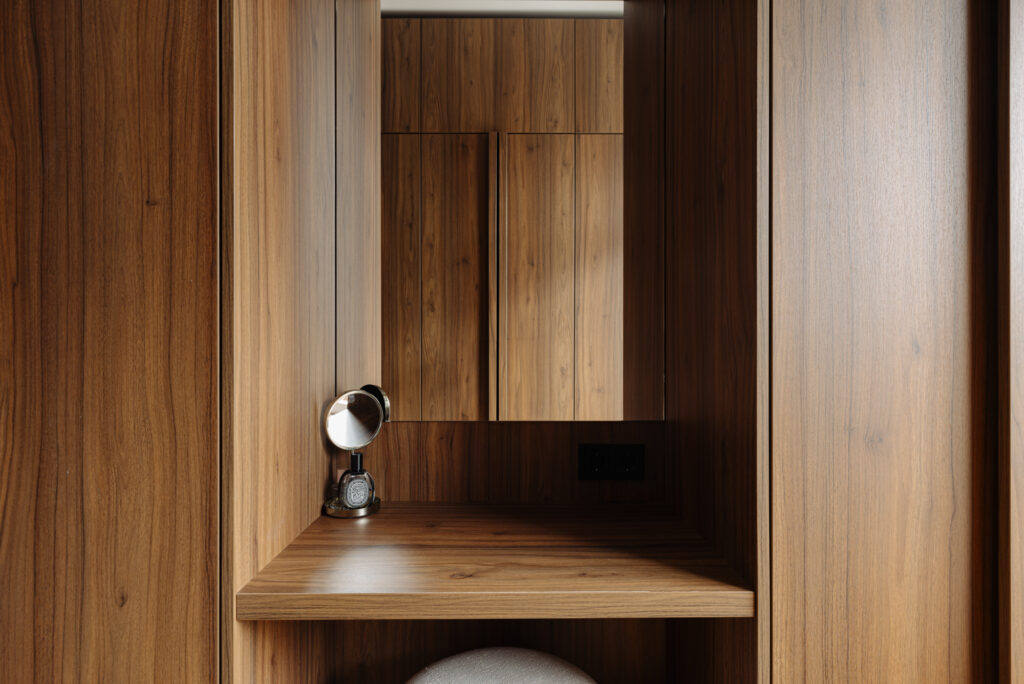
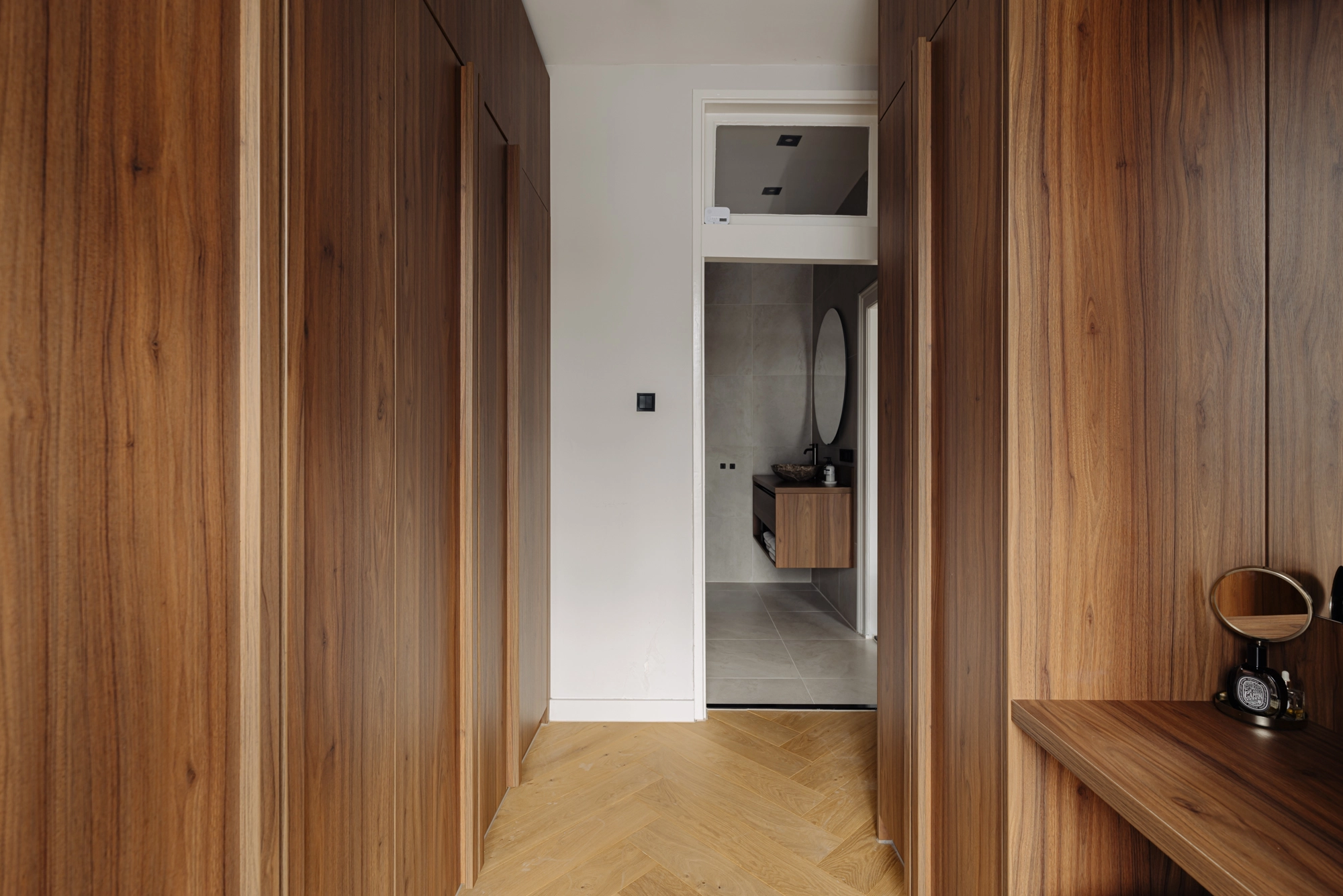
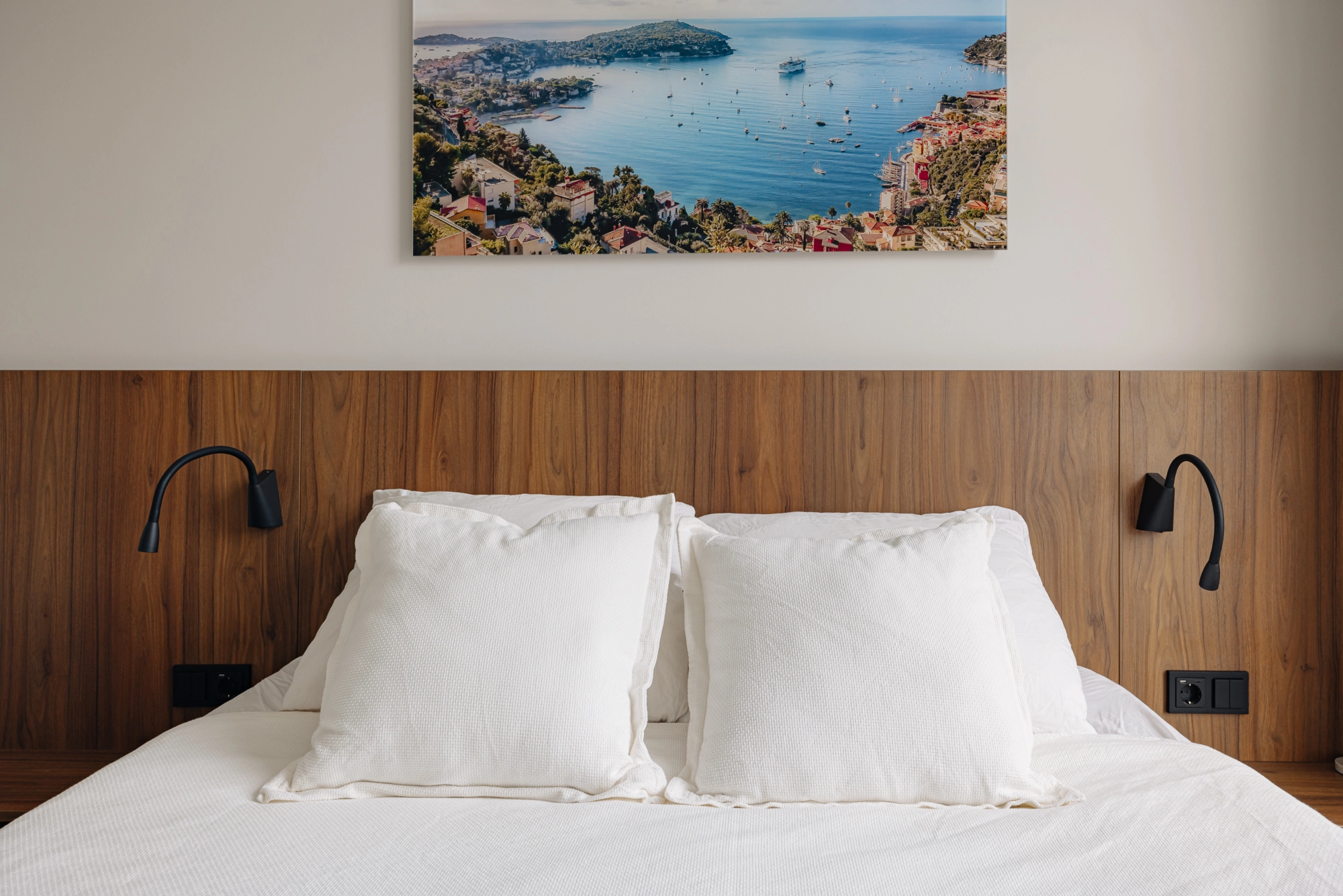
The master bedroom features understated luxury: a custom-made walnut headboard with integrated night lights and power outlets. The second bedroom has been designed as a walk-in closet with fully customized cabinets, creating a space that feels like a boutique dressing room. The floor here flows seamlessly into a herringbone pattern, while floor-to-ceiling wardrobes are integrated all around in the same warm wood as in the bedroom.
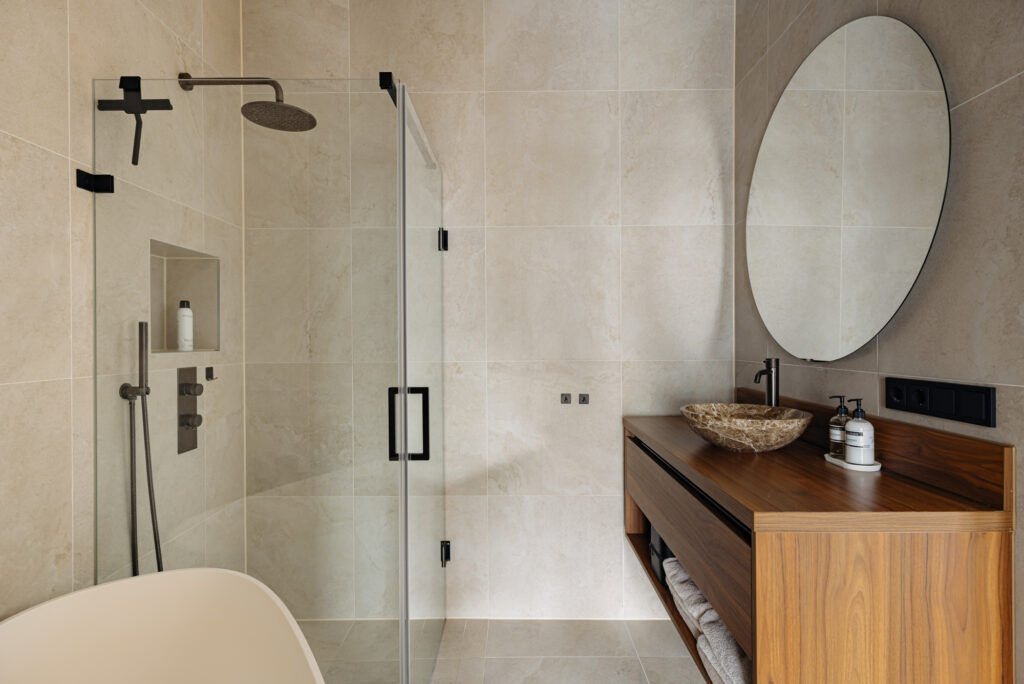
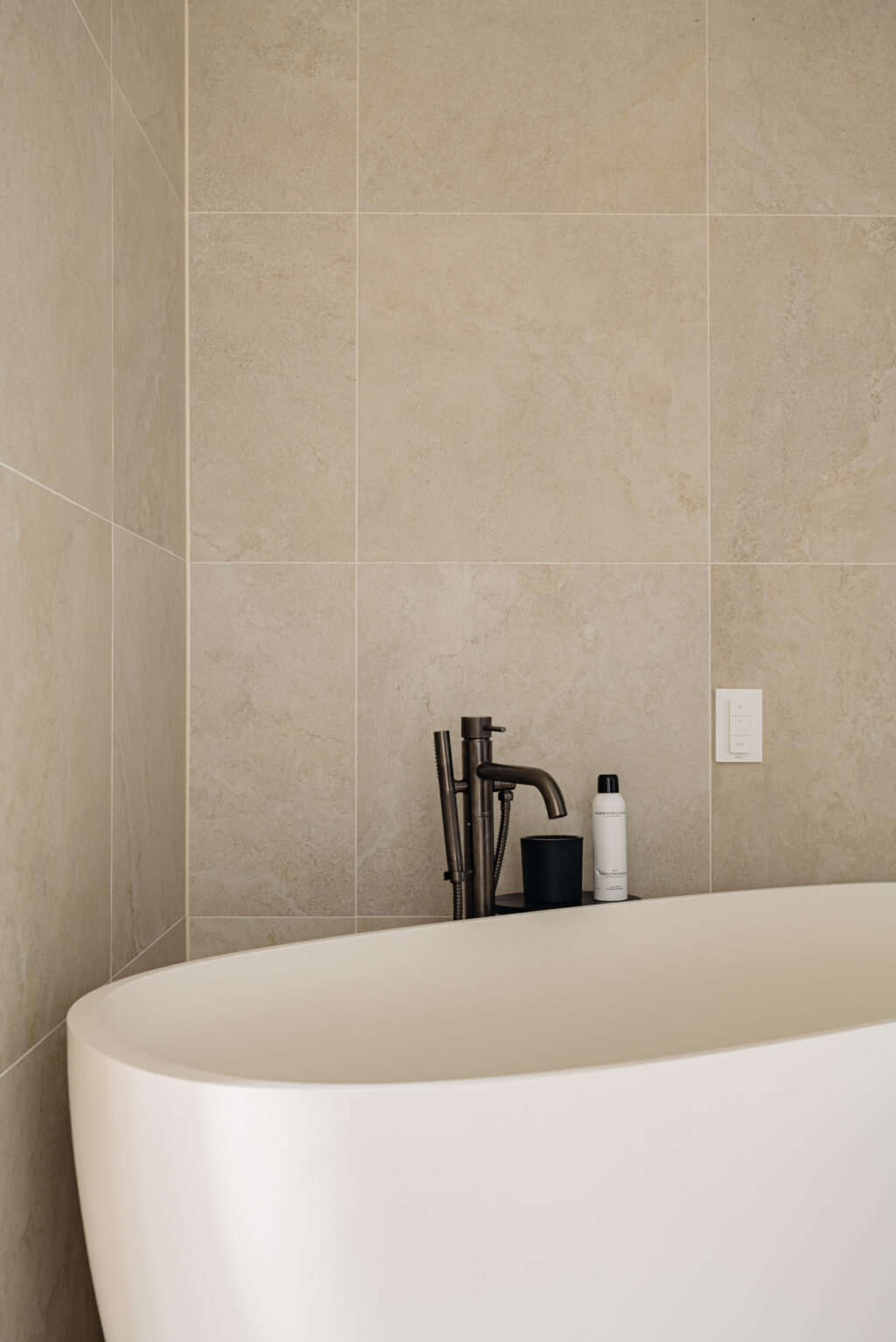
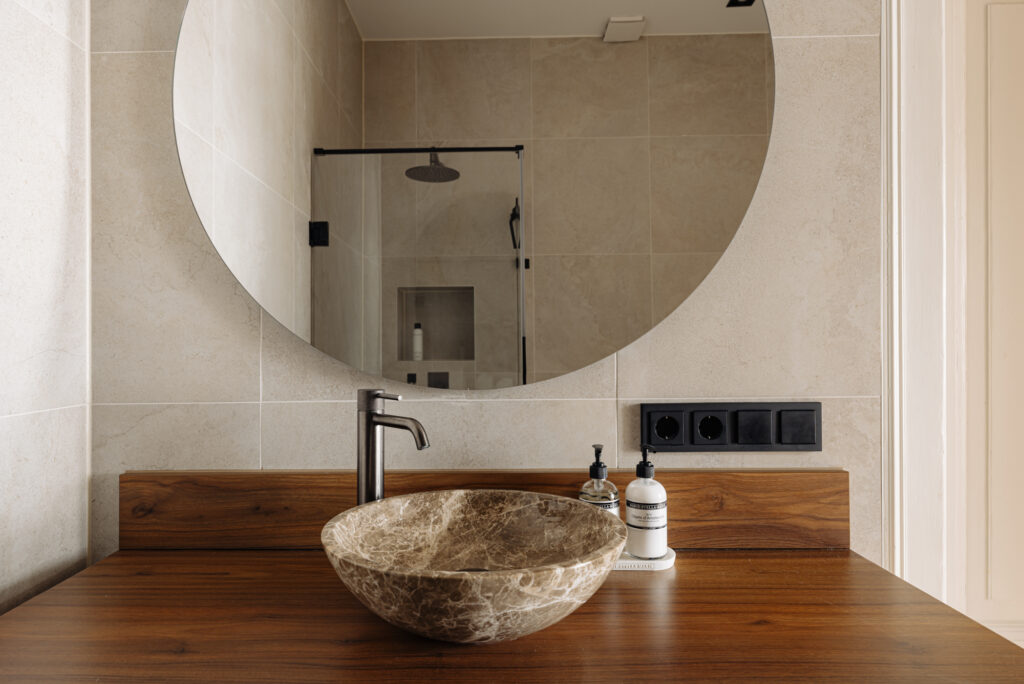
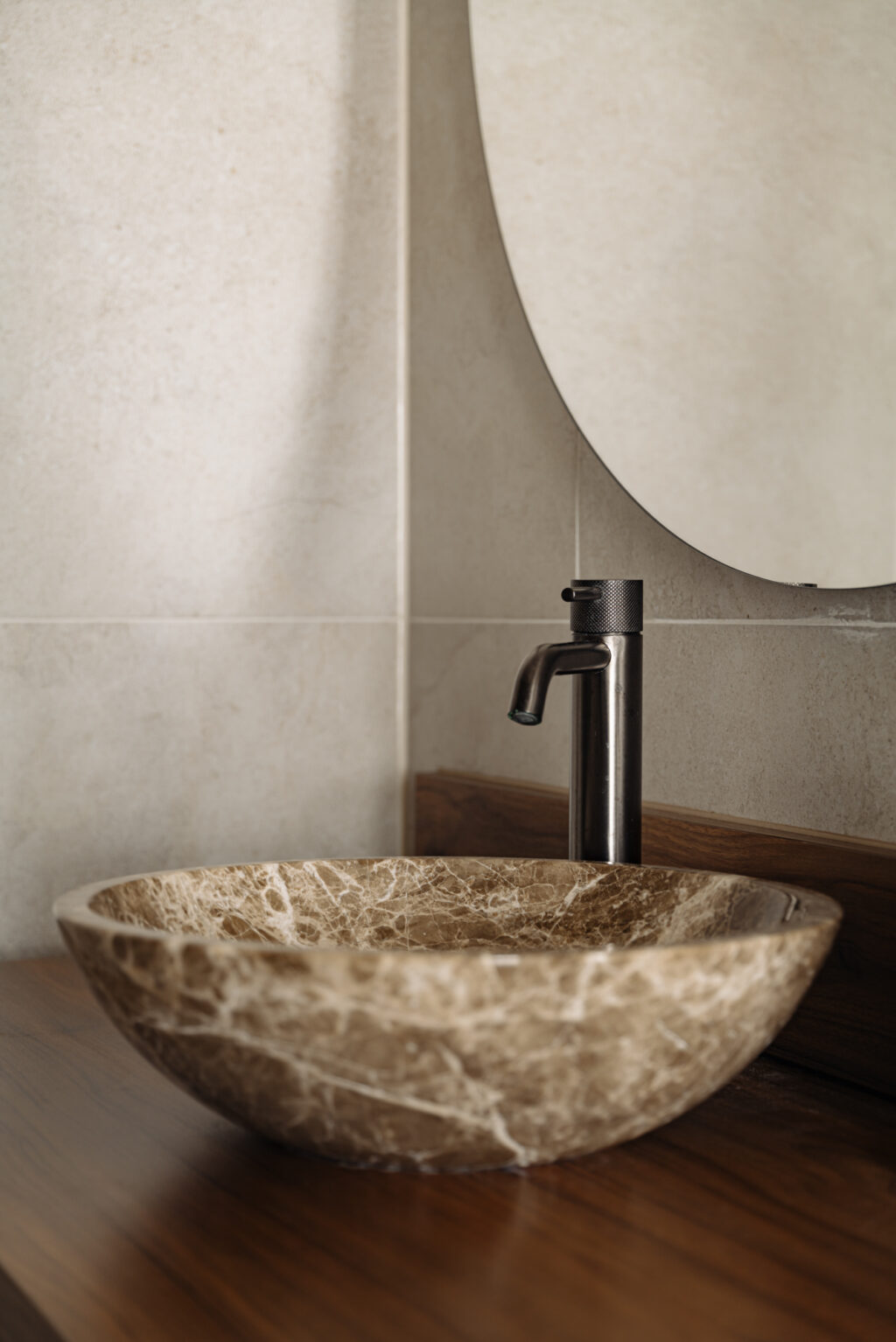
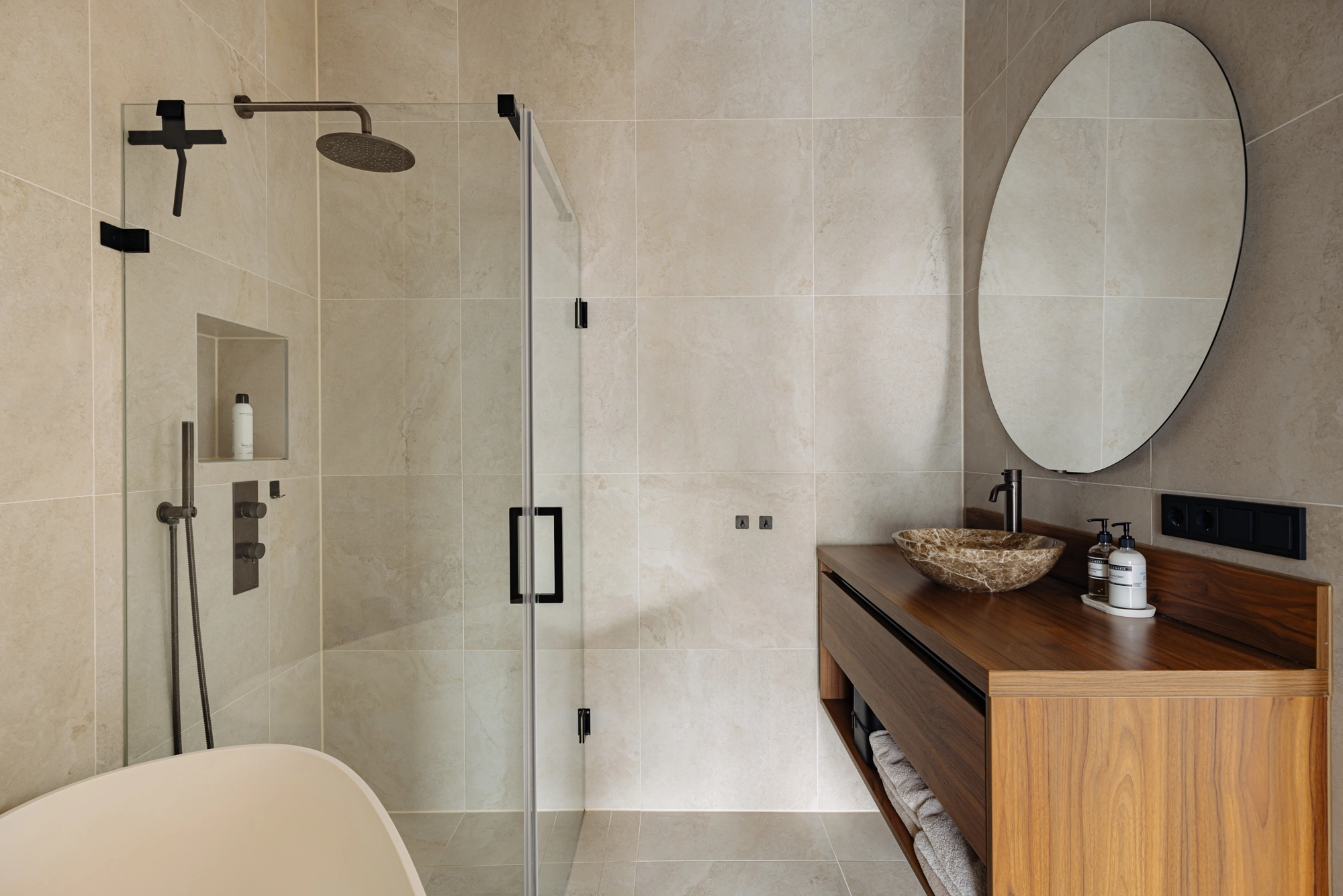
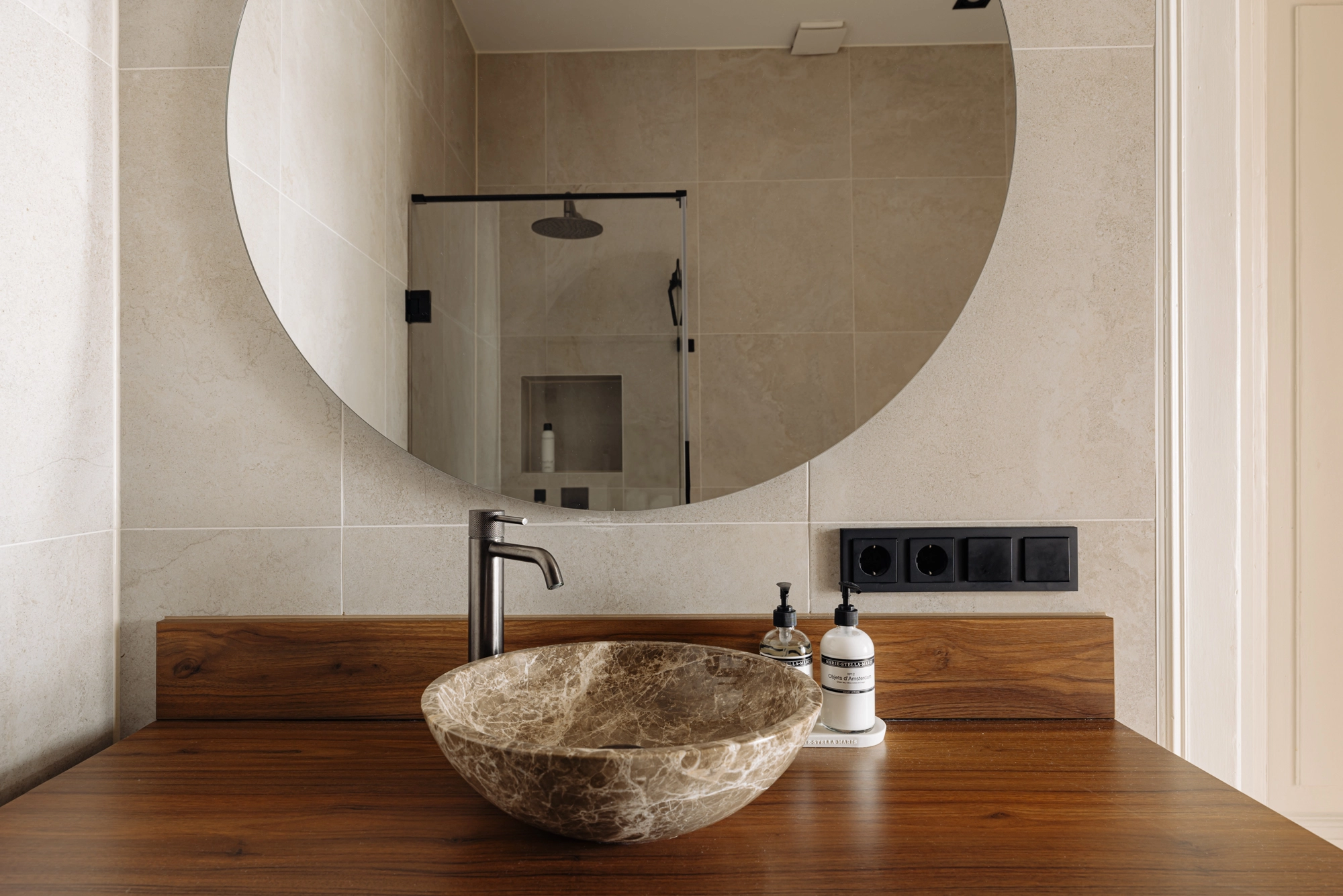
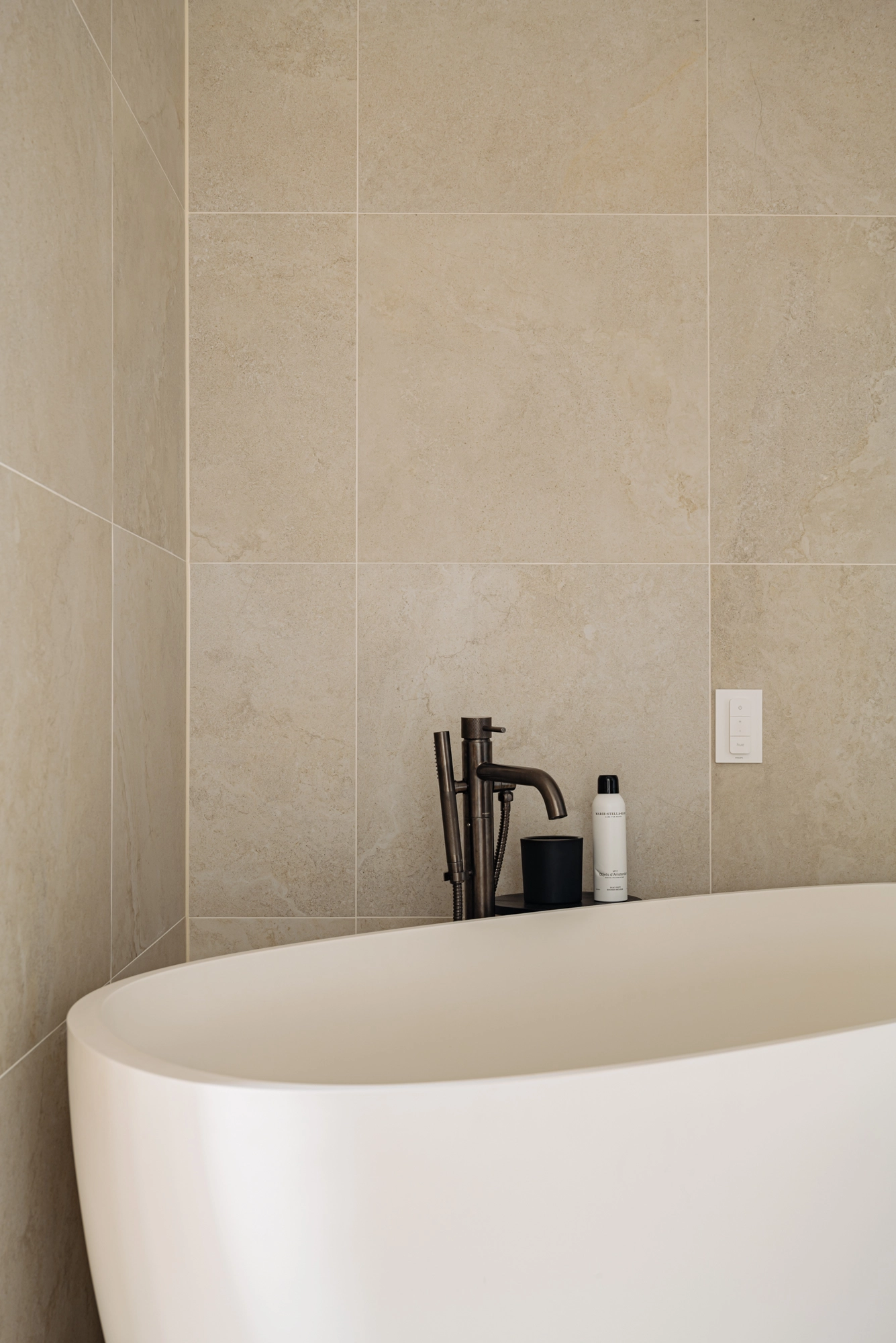
The bathroom is finished in warm natural stone tones, with large-format wall and floor tiles that give the space a sense of calm and unity. A freestanding bath, black taps, a spacious walk-in shower, and a natural stone washbasin on a walnut cabinet make this a true wellness space. The details, such as the niche in the shower, the black sockets, and the round mirror, have been carefully chosen and consistently implemented.
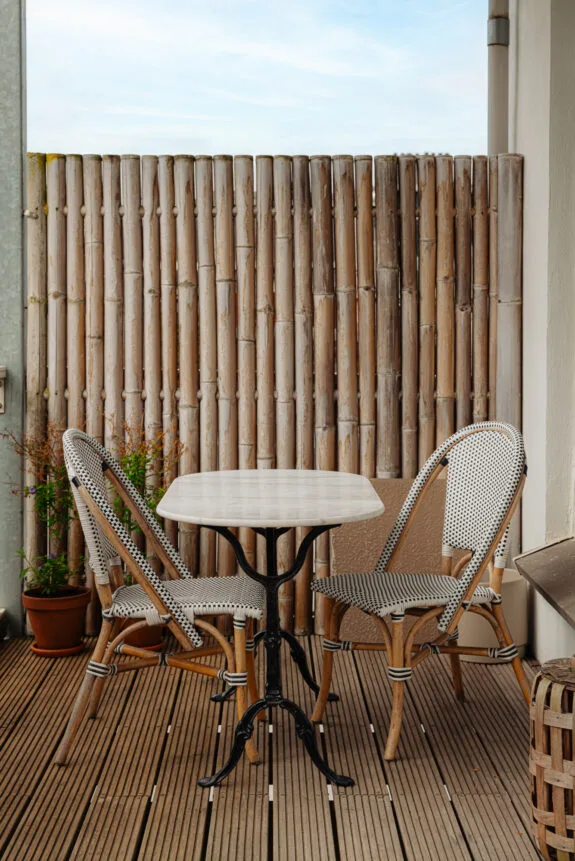
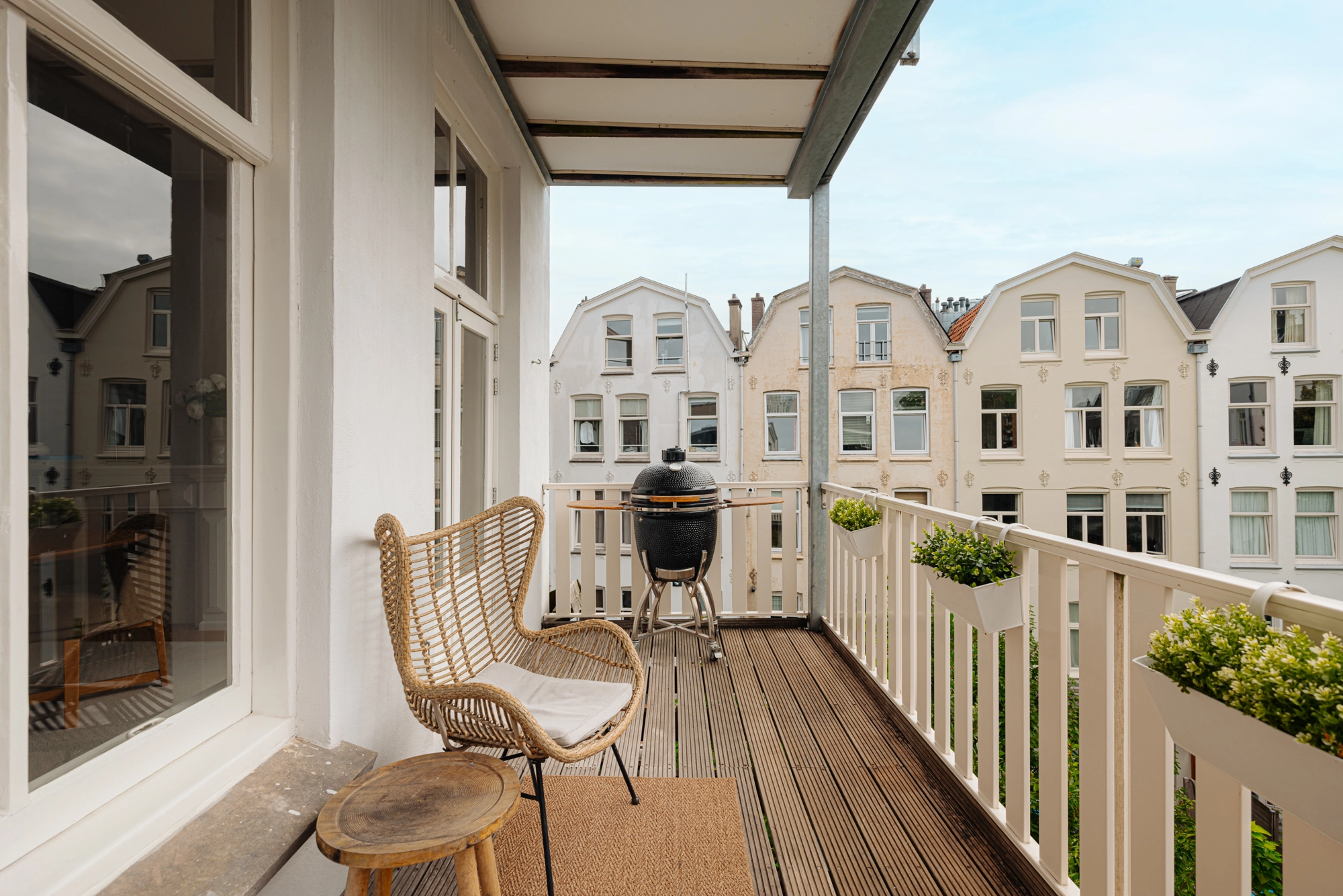
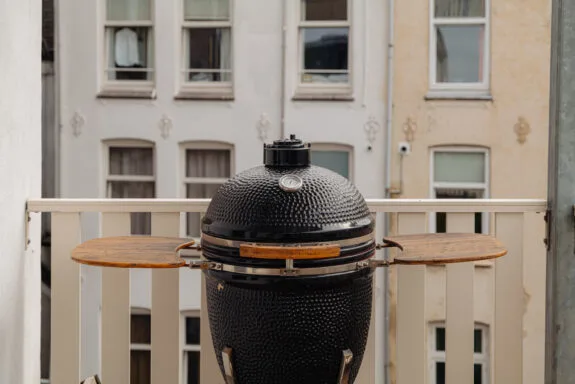
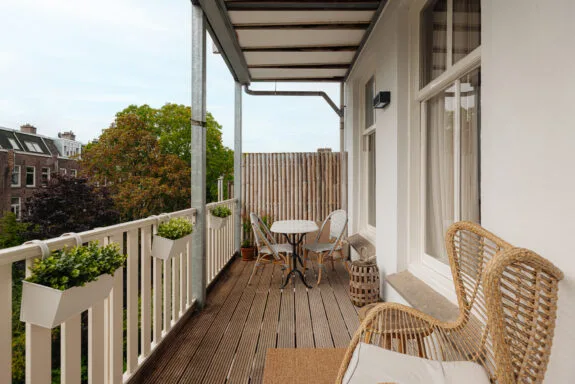
Located at the rear of the building and facing south, this spacious terrace of approximately 13 m² is an extension of the interior, a place to enjoy a morning coffee or after-work drinks with friends.
The wooden deck terrace, framed by white balustrades and elegantly overgrown planters, overlooks a lush courtyard garden with mature trees. The outdoor space is so generous that there is room for rattan lounge chairs and a cozy dining area on the other side.
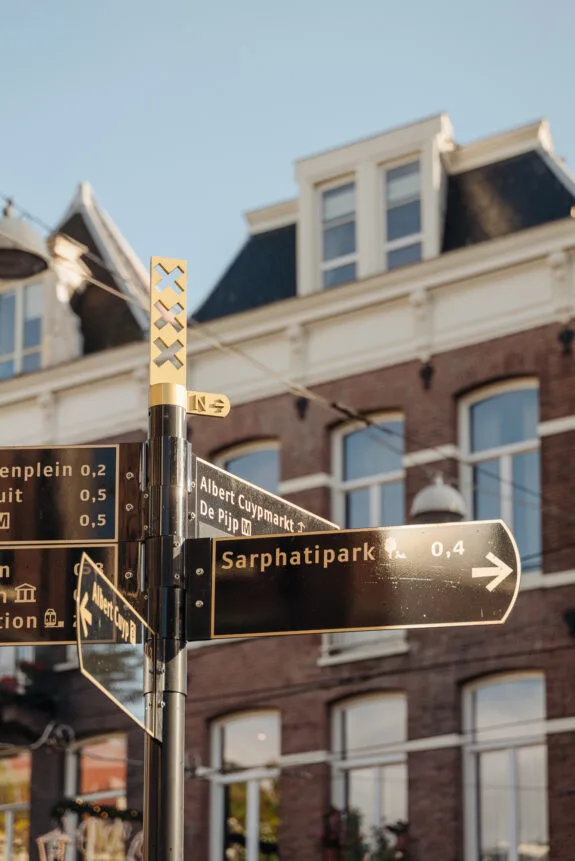
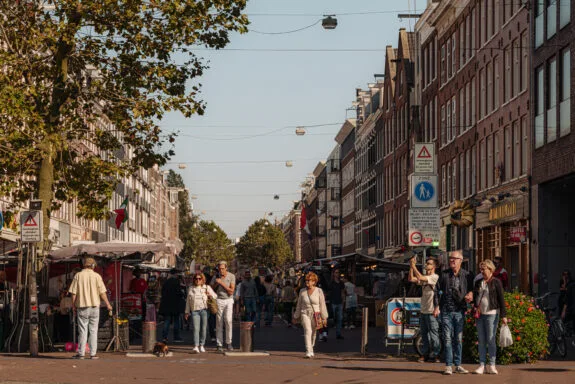
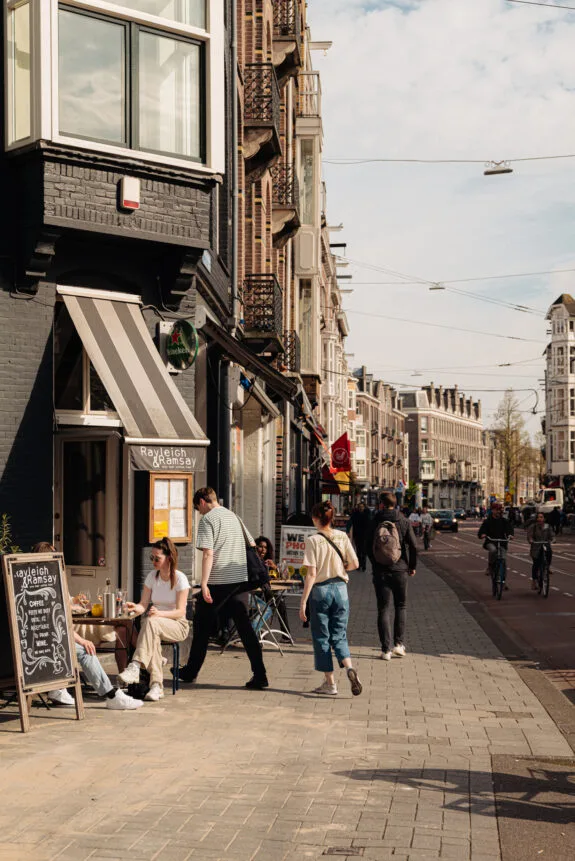
The apartment is located in the Zuid district, in the most sought-after and quiet part of De Pijp. De Pijp was built at the end ofthe 19th century to provide housing for newcomers who moved to the capital for work. Freddy Heineken's father opened the Heineken brewery here in 1886. The first workers' houses, around Albert Cuypstraat, were built quickly and cheaply. Later, Berlage added houses in the Amsterdam School style towards the Diamantbuurt. It is said that the neighborhood owes its name to the long, straight streets, which are shaped like a pipe. De Pijp is known for its liveliness and cozy restaurants and cafés, all within walking distance.
The Albert Cuyp Market and Sarphatipark are key to the dynamic vibe of De Pijp. Artists and writers like Piet Mondriaan, Carel Willink, and Gerard Reve lived and worked here. The lively, diverse population brought many cafes and eateries to the neighborhood. Today, the neighborhood is known as the Latin Quarter of Amsterdam, with many dynamic restaurants such as Brut de Mer for champagne and oysters, the Italian Impero Romano, and the French Arle of Caron. In addition, there are cozy eateries from all corners of the world in the Van Woustraat for a quick bite.
accessibility
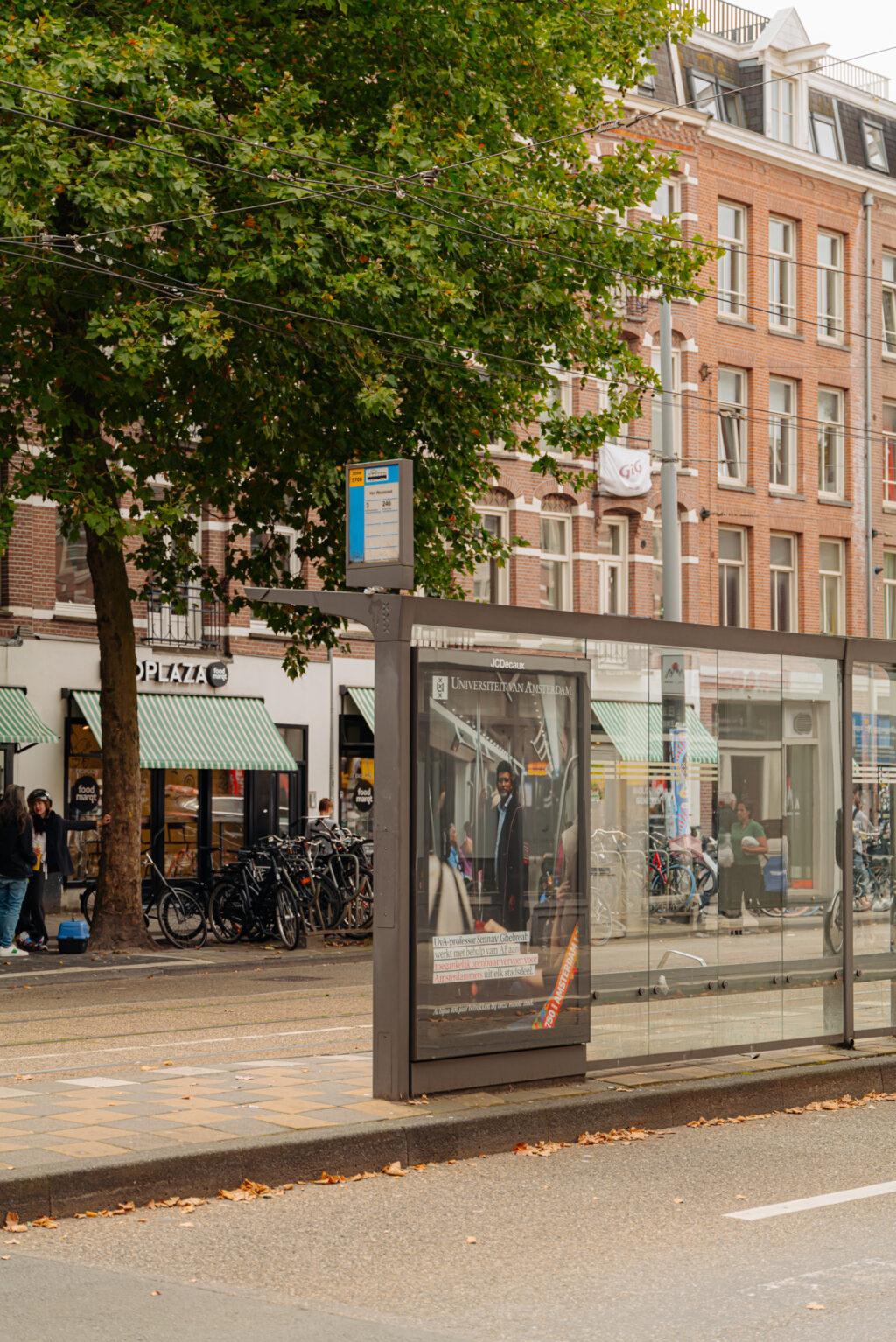
Athree-minute bike ridetakes you to the De Pijp stop on the North/South line and the train (Amstel station), tram 4 (van Woustraat) or tram 3 (Ceintuurbaan) and bus (line 246). By car, there is a good connection to the Amstel junction towards the A2 and A10 motorways. The property is located in the Oude Pijp, a centrally located part of Amsterdam near Sarpahtipark, Van Woustraat, Albert Cuyp market, and Utrechtsestraat, among others.
Parking
Parking is possible via a permit system on public roads (permit area Zuid 3.1). With a parking permit for this area, you can park in both Zuid-3 and Zuid-4. A parking permit for residents costs €192.45 per 6 months in 2025. Currently, there is an estimated waiting time of 5 months for a parking permit. A second permit per address is not possible in this area.
(Source: Local authority , September 2025)
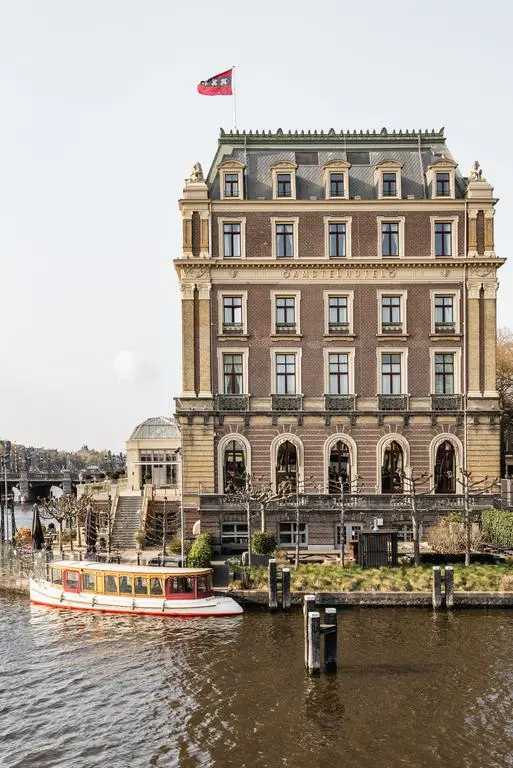
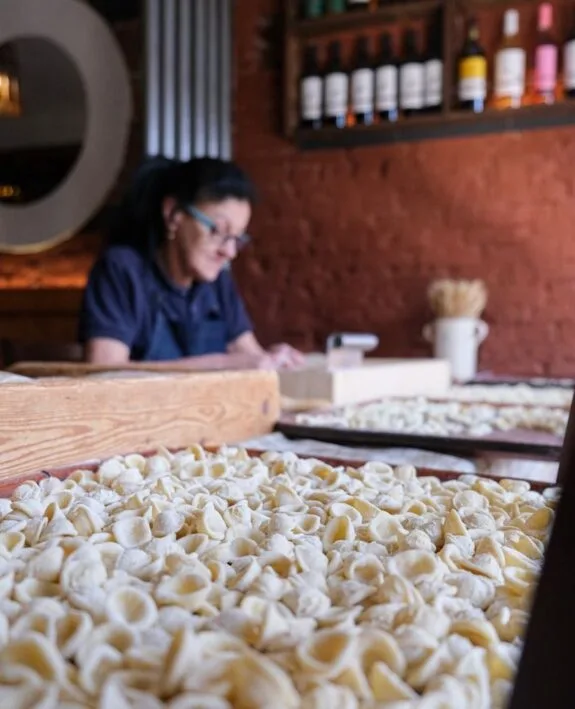
1074 CW Amsterdam
Casa Nostra
The cuisine of Puglia in the Pijp area of Amsterdam. Originally from Taranto and raised in a family where everything revolves around food, the owners initially only cooked for friends in Amsterdam. After everyone joked that they should open a restaurant, they finally took the plunge 10 years ago. The menu features authentic dishes such as handmade orecchiette, capocollo from Martina Franca, and a fine selection of Pugliese wines.
1074 BP Amsterdam
L'Angoletto
At L’Angoletto it seems as if time has stood still. The restaurant has no website, reservations are not possible and payment by card is not accepted either, but the food is delicious! The chef is known for being proud of his food and he attaches great importance to traditions, so don't dare to ask for cheese with your pasta with fish. This is all worth it because you can eat the best Italian food in the Pijp here.
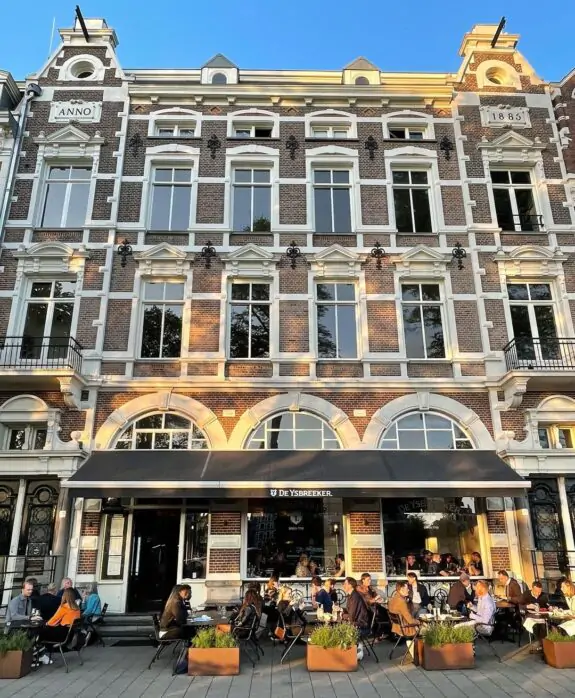
1091 EC Amsterdam
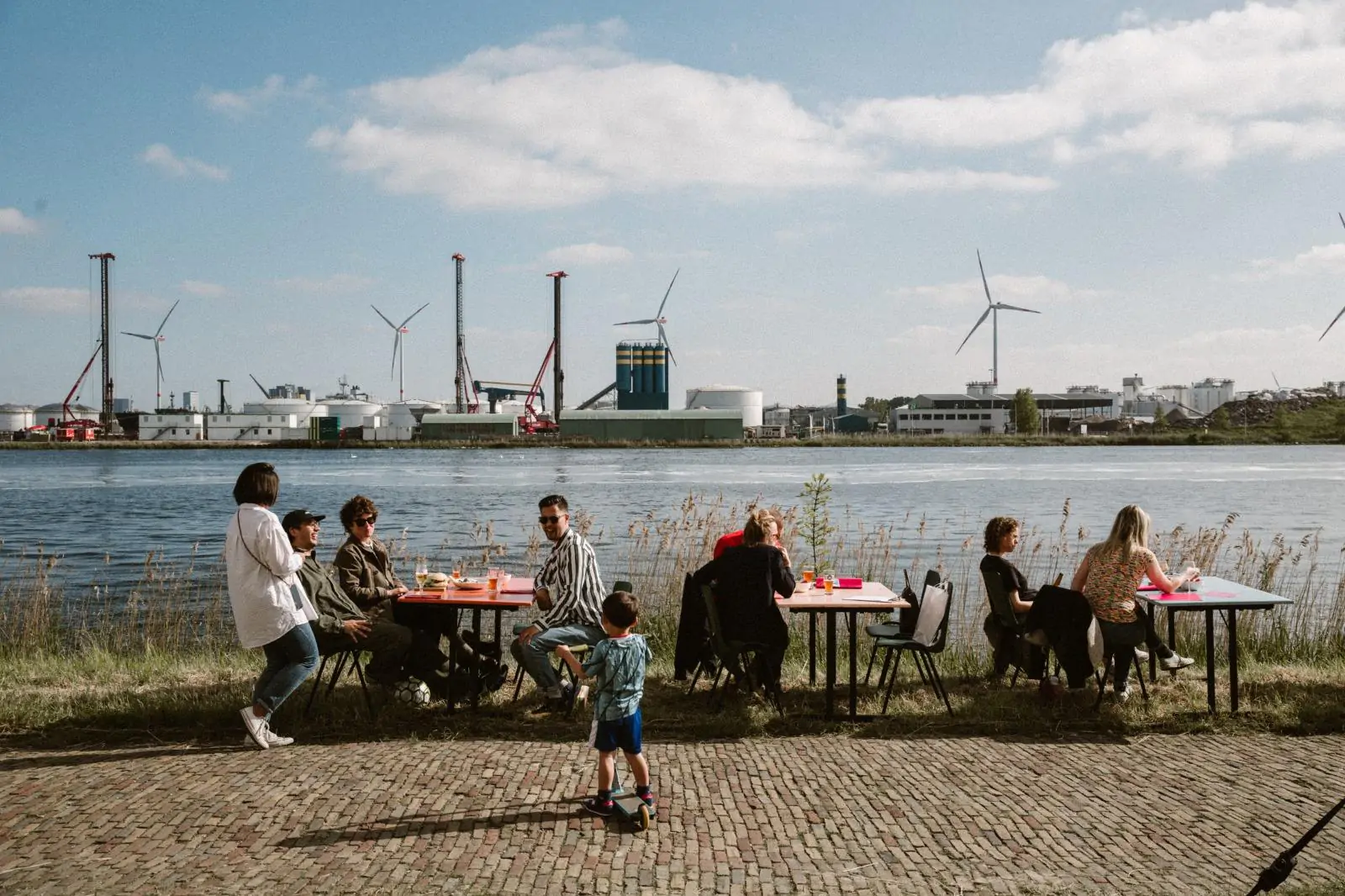
De Ysbreeker
Lively and welcoming, Ysbreeker is the meeting place for all of Amsterdam. This location invites you to spend the whole day, with its characteristic assets such as the fresh cuisine, the atmospheric terrace on the Amstel and the impressive monumental space steeped in an eventful history since 1702. Named after the historic icebreaker that lay in front of the door, this place has a rich history of inns and taverns. Chef Goran Lukovic and his dedicated team bring an environmentally conscious approach to refined country cuisine, with dishes such as Scottish Balmoral deer and smoked Norwegian salmon marinated in Red Bull. The Ysbreeker carefully selects responsible, honest and daily fresh products. And you can tell by everything.
1074 AB Amsterdam
Roopram Roti
Roopram Roti originated in Suriname and was exported to the Netherlands due to high demand for roti on the Dutch market, partly from holidaymakers from Paramaribo. To meet this demand, J. Roopram decided to export frozen roti to the Netherlands. Unfortunately, this was stopped at the last minute due to restrictions on the export of chicken and chicken parts from Suriname. In Location J. Roopram opened his first restaurant at Mathenesserplein 89 in Rotterdam in July 2002. This was followed by a second branch in Amsterdam, called Roopram Roti Eetcafé. Since then, two additional branches have been opened, one in The Hague and one at Van Woustraat 37 in Amsterdam.
1073 LN Amsterdam
Yen dining bar
The founder of Yen Dining Bar grew up with Vietnamese flavors and the social dining culture of quán nhậu, which forms the basis of his vision for this business. Here, he brings together classic Vietnamese dishes such as pho, bun bo hue, and banh mi with modern interpretations and shared dining. The kitchen emphasizes fresh ingredients and herbs, with fresh salads and savory noodles that capture the essence of Vietnam. Yen aims to be a place where friends gather for good food and drinks, with a warm, relaxed energy. The ambiance is atmospheric and intimate with a slight industrial touch, perfect for dinners with company or pre-dinner drinks.
1074 AB Amsterdam
Café Biljart van Wou
Café Biljart van Wou is a typical neighborhood café that becomes quiet when the locals are on vacation.
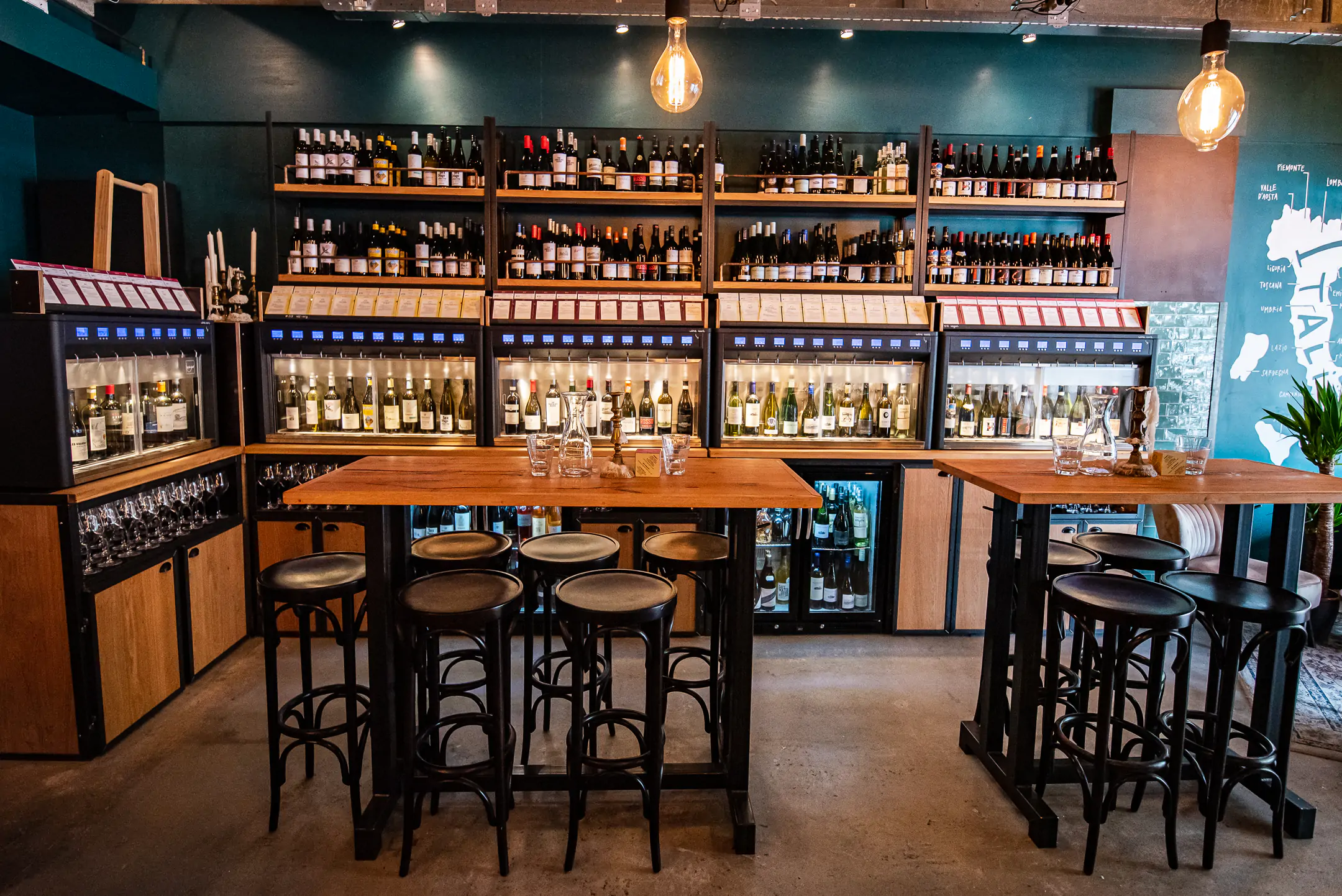
1074 AG Amsterdam
Rayleigh & Ramsay
Rayleigh & Ramsay is described as a candy store for adults. They consider the term "wine bar" too intimidating, but the focus is definitely on wine, with more than 100 wines available by the glass. What makes it unique is that you can order wine by the sip, half glass, or full glass. This allows you to taste everything you want and discover which wine you like best. In addition to wines, the menu also includes good coffee, cocktails, draft beer, and delicious food.
1073 LM Amsterdam
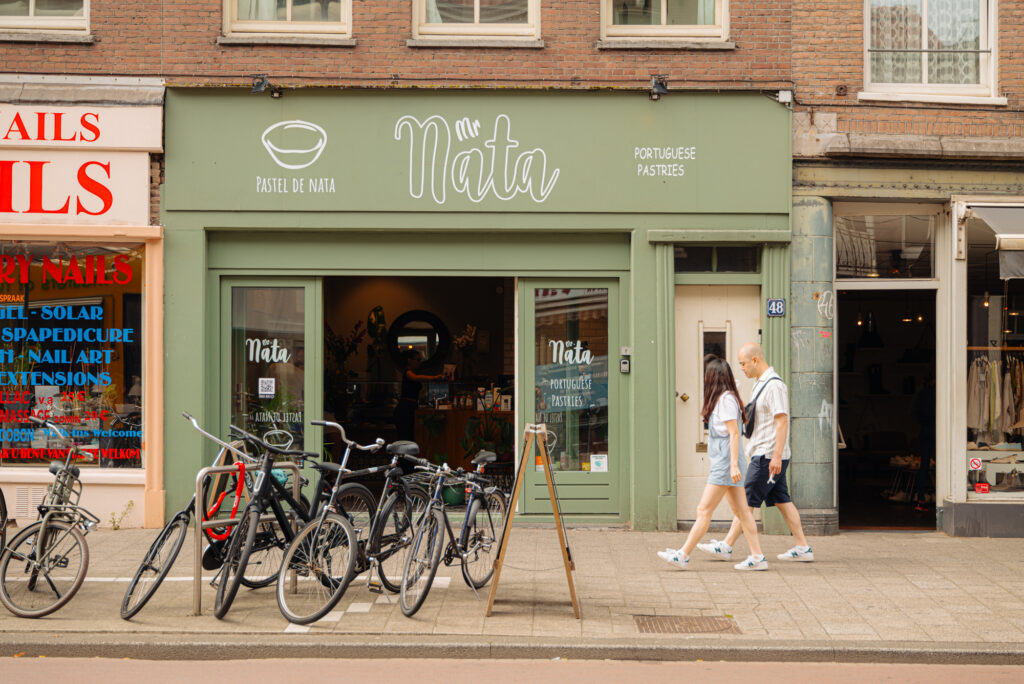
Mister Nata
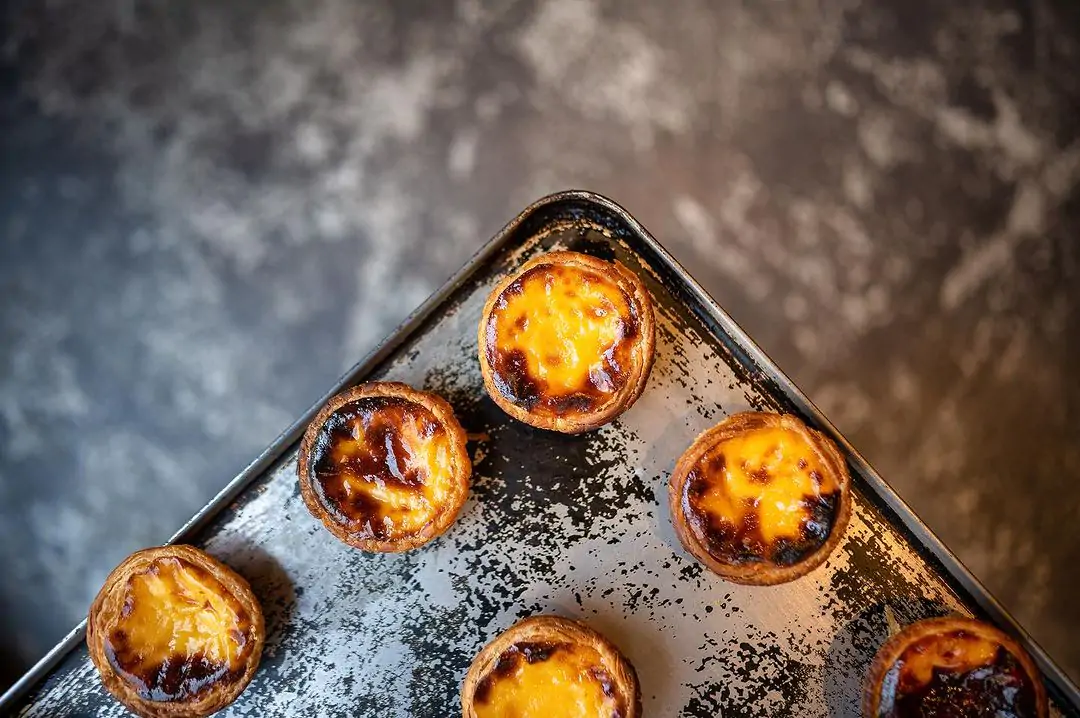
At Mister Nata you have come to the right place for the most delicious pastries in Amsterdam, where you can enjoy delicious pastel de nata, perfectly combined with beautiful Single Estate Coffee, prepared with a La Marzocco espresso machine. Portugal is known for its delicious sweets. Candy, pastries and desserts are all part of traditional Portuguese cuisine. Amidst all these delicacies, the pastel de nata is the absolute celebrity.
1074 AA Amsterdam
Tjin's
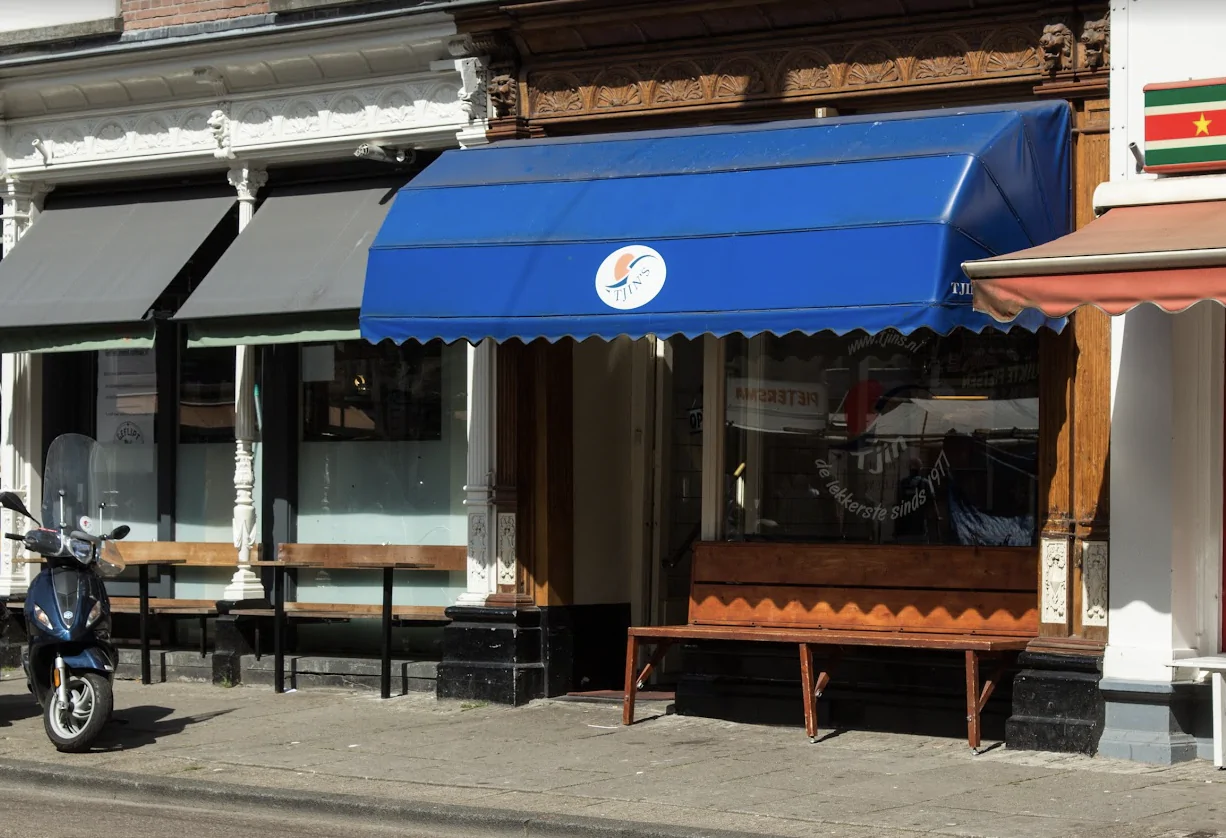
Groups of people often gather in front of this small sandwich shop for a quick snack. Tjin has been making Surinamese sandwiches and snacks based on family recipes for over 40 years. Founder Chong started out in West as a record store, but the sandwiches he prepared in the back became increasingly popular, such as the cod sandwich or the curry chicken sandwich.

1073 LL Amsterdam
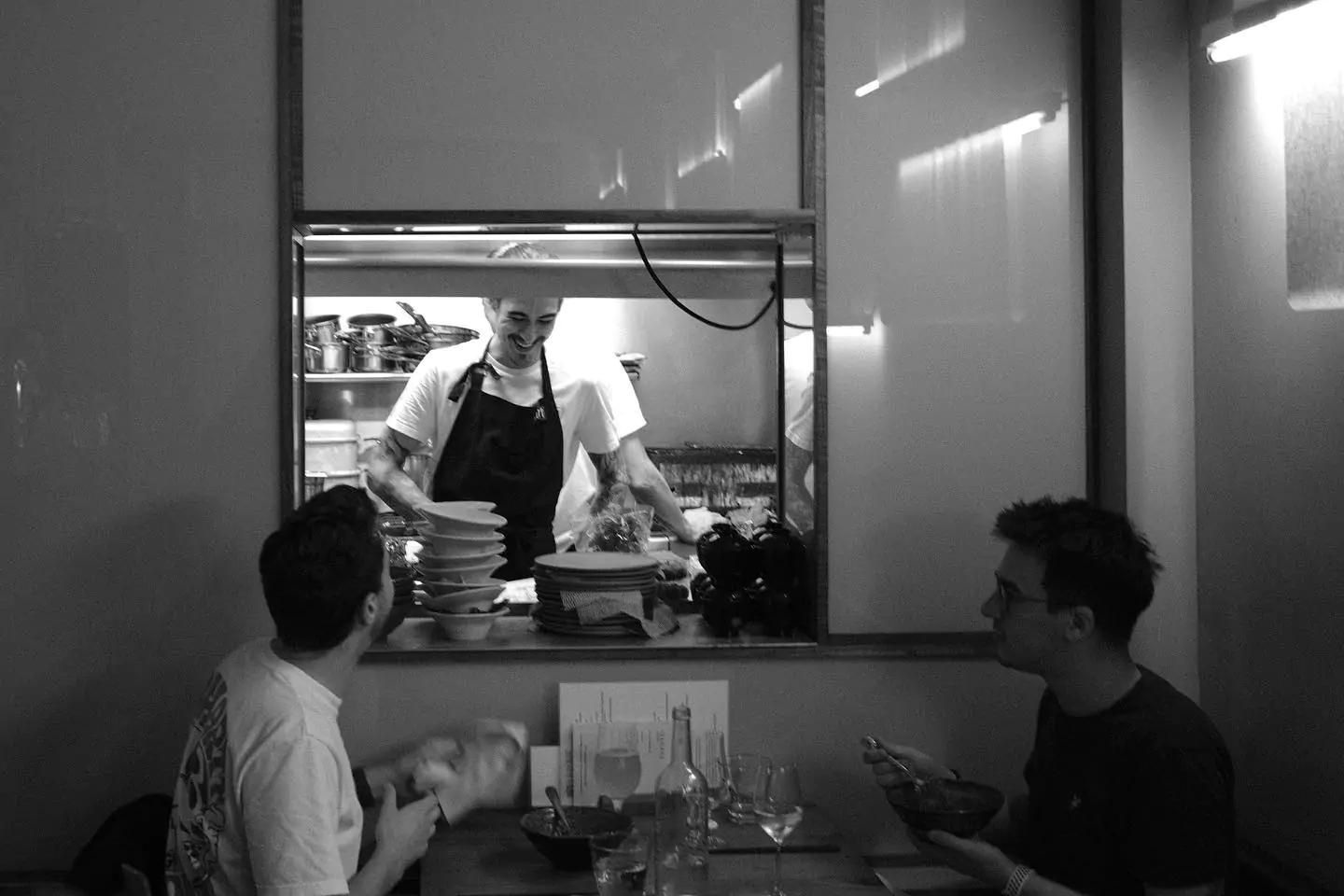
Broodje Popov
1073 CJ Amsterdam
101 Gowrie
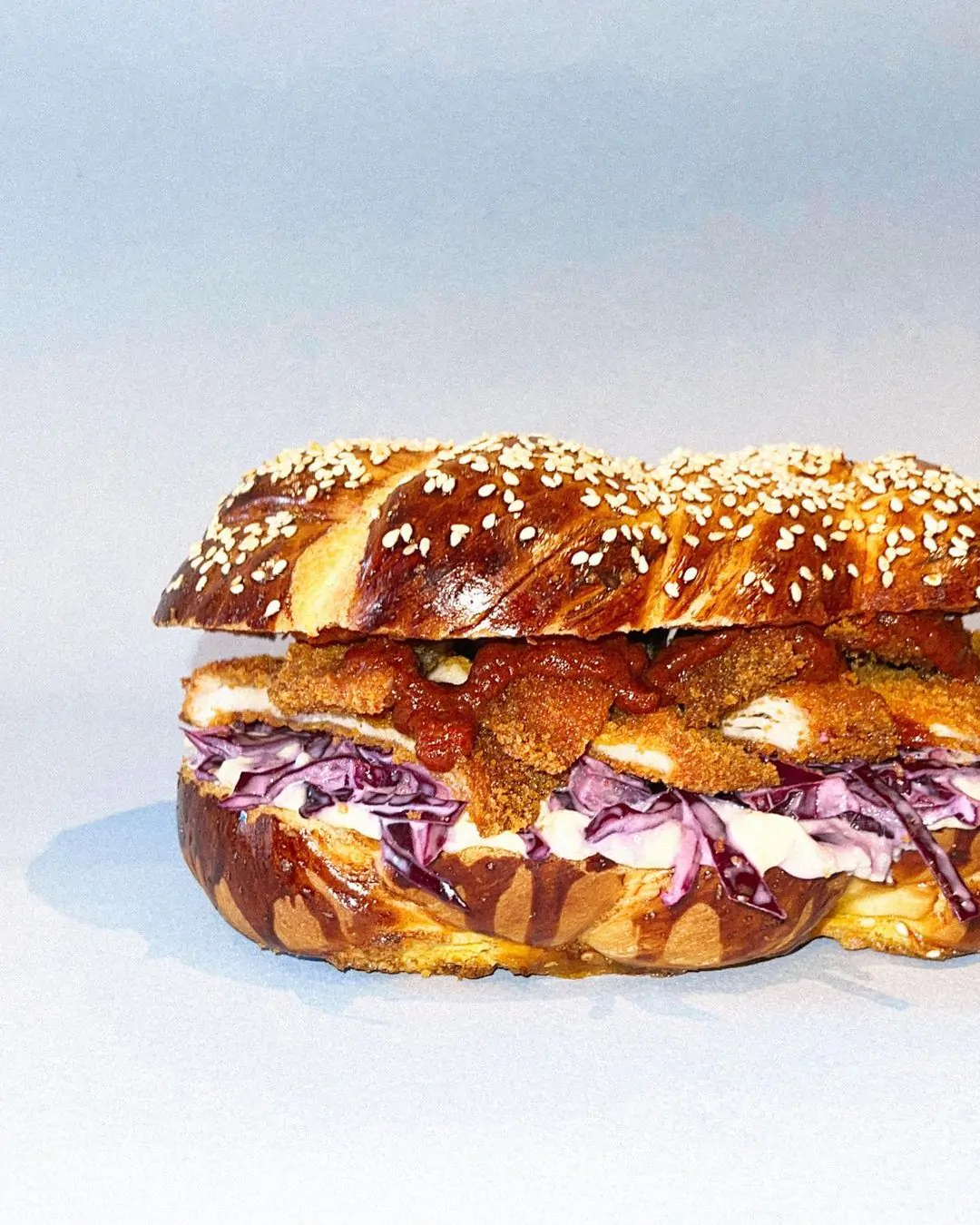
According to the young Australian chef Alex Haupt, with Japanese and German roots, he cooks 'Gaijin cuisine.' 'A celebration of cultural diversity through Japanese traditions, techniques, and love for the ingredient with a respectful disregard for the rules of regular convention.' Gowrie serves a set menu with surprising dishes. Think gyoza filled with pigeon, Japanese bread (shokupan) with miso and nori, and a congee of North Sea crab. Reservations are necessary.
1073 BR Amsterdam
La Biss Kosher Streetfood
La Biss is not just an ordinary sandwich shop; apart from the fact that the sandwiches are of course kosher, they are made with care and precision using the best and freshest ingredients. A specialty is the homemade challah bread, baked fresh daily and a unique addition to the sandwiches. Also, the baguettes and other fresh breads are not to be missed.
1074 AV Amsterdam
Saravana Bhavan
If you want to eat really good Indian food and experience the atmosphere of a real Indian restaurant, you should go to Saravana Bhavan, located on the corner of the busy Stadhouderskade and Van Wou Street. It is part of the largest vegetarian Indian chain in the world. They serve countless delicious (mostly vegetarian) curries and other specialties from India. It is often packed with a mixed crowd. Indian families, couples, tourists, locals, Saravana Bhavaan is a place where you can eat well.
1073 TZ Amsterdam
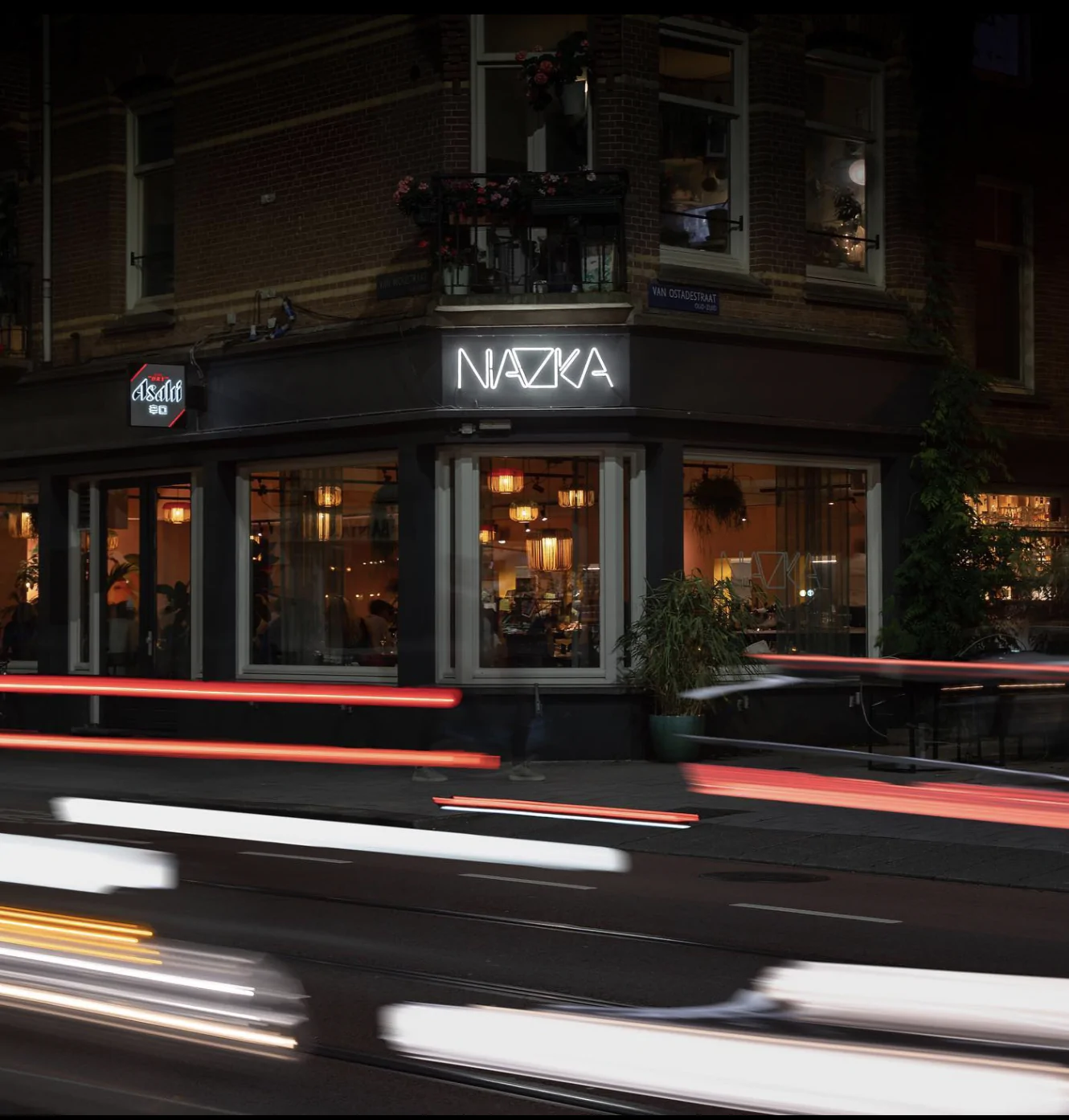
NAZKA
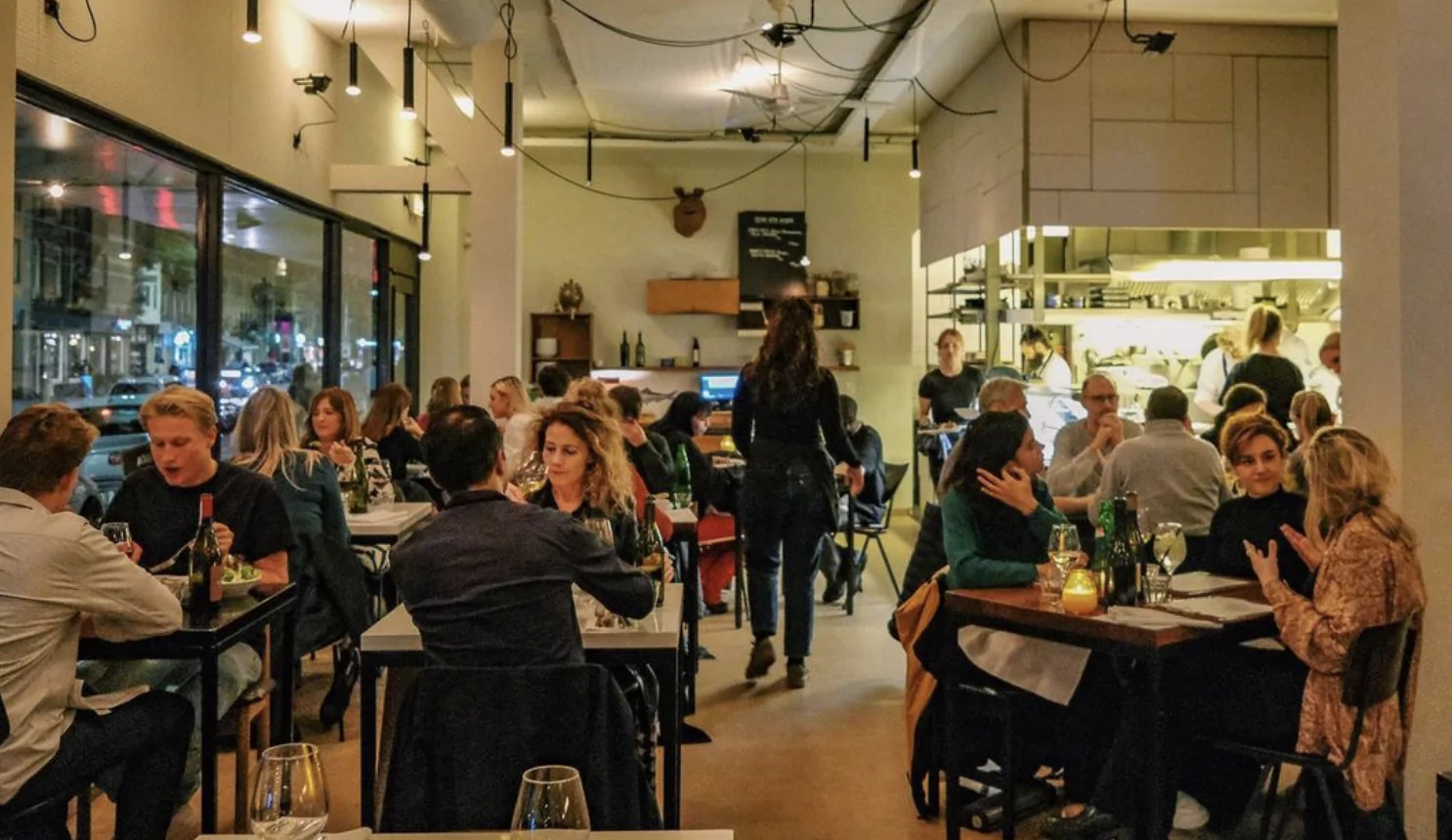
In the Van Ostadestraat you will find the colorful restaurant Nazka. Besides the fact that the interior looks fantastic, the food is also spectacular. The kitchen shows both Peruvian classics and innovative dishes, which build on the heritage of Peru. Nazka has a beautiful interior, fantastic service, clever food and the sommelier is a genius, but most importantly: everything is delicious.
1074 AH Amsterdam
Firma Pekelhaaring
Firma Pekelhaaring is a beloved Italian restaurant located at Van Woustraat 127-129 in Amsterdam. The restaurant is known for its relaxed atmosphere and authentic dishes, influenced by Italian cuisine, but with room for its own variations and local influences. The owner of Firma Pekelhaaring is Matthias van der Nagel. Under his leadership, the restaurant has gained recognition, including a mention in the MICHELIN Guide with a Bib Gourmand for its good value for money. The menu features dishes such as Arancini, tagliatelle with duck stew, or cod with salted baccala and black salsify.
1073 CJ Amsterdam
Mont Blanc Restaurant
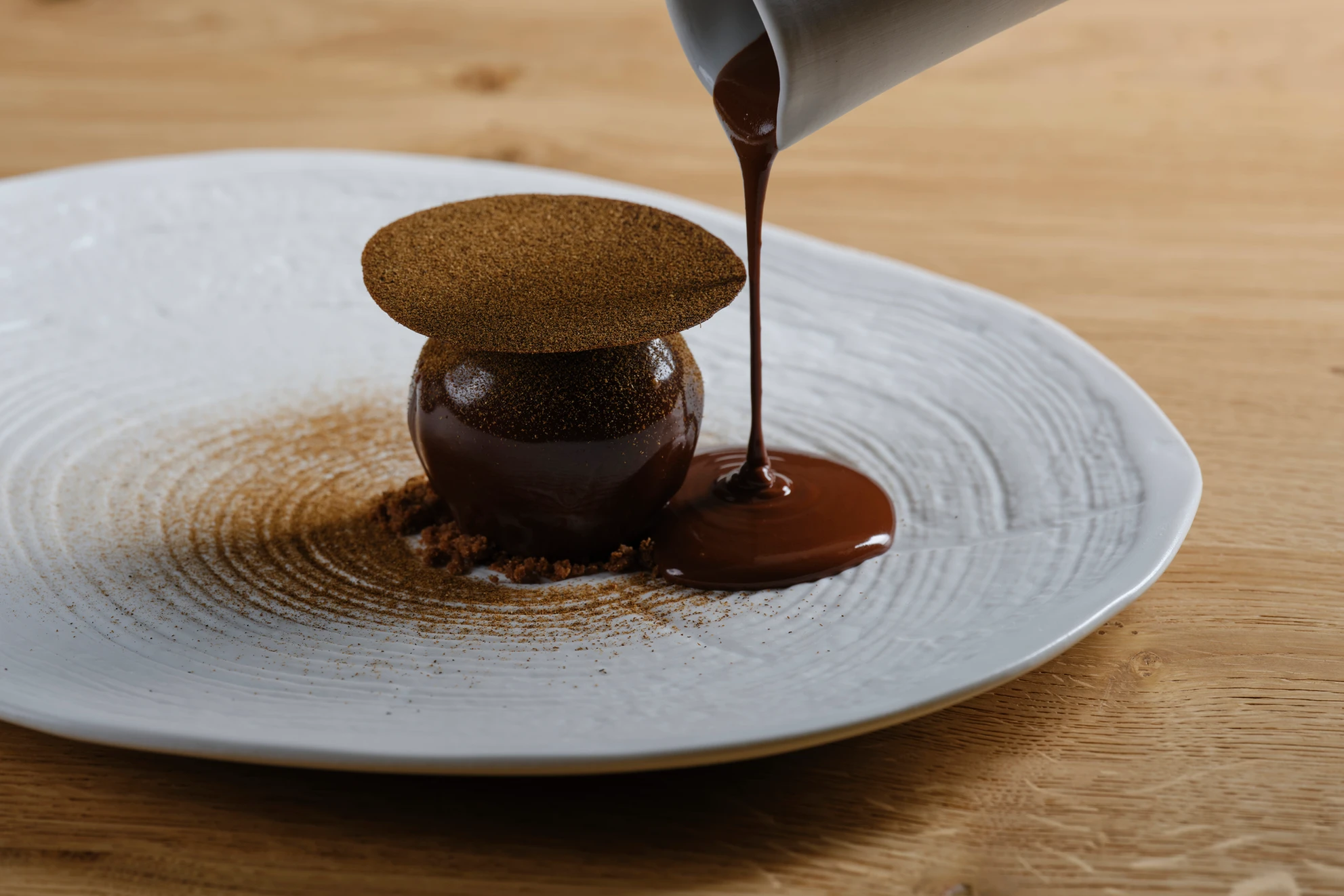
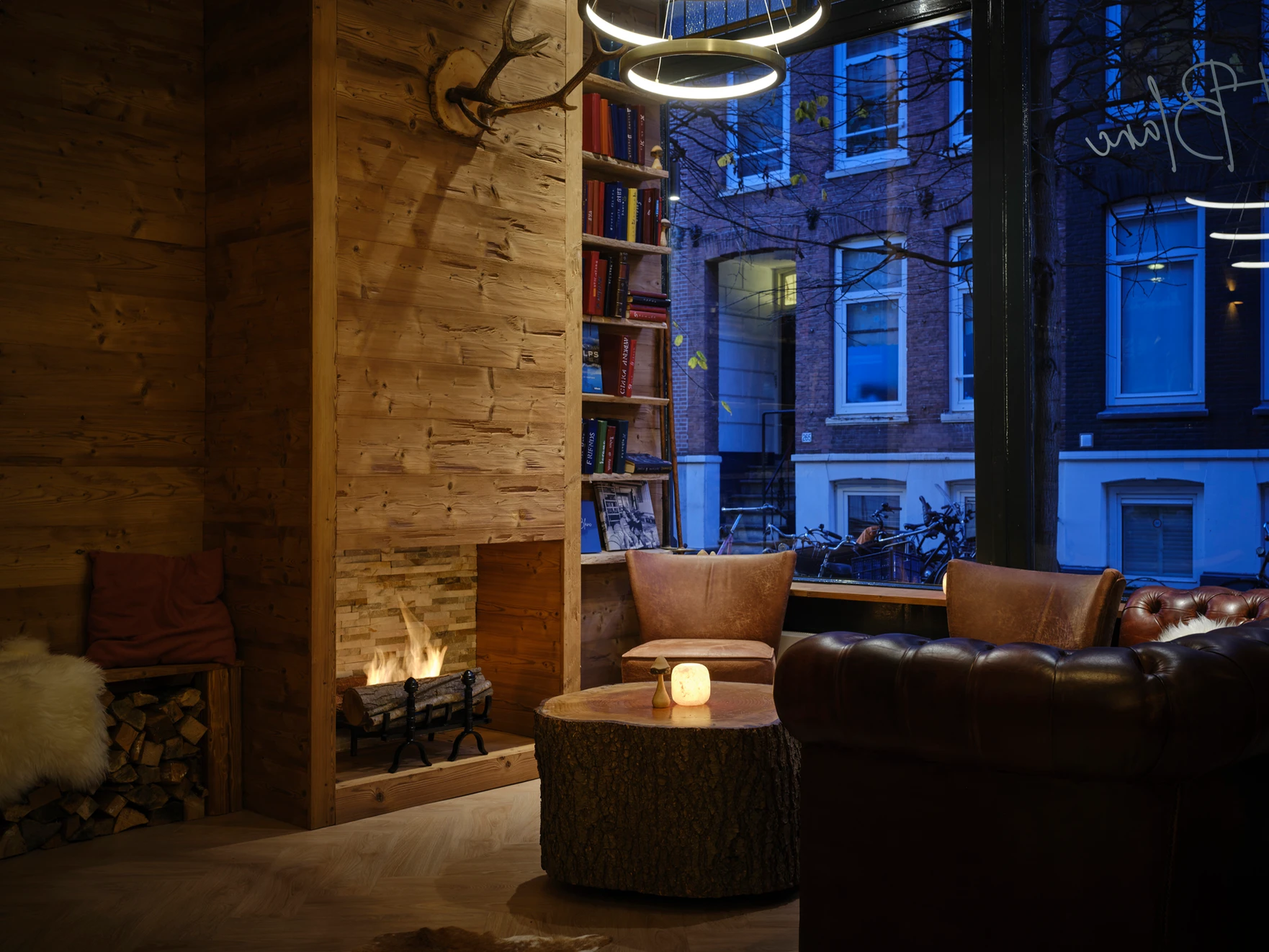
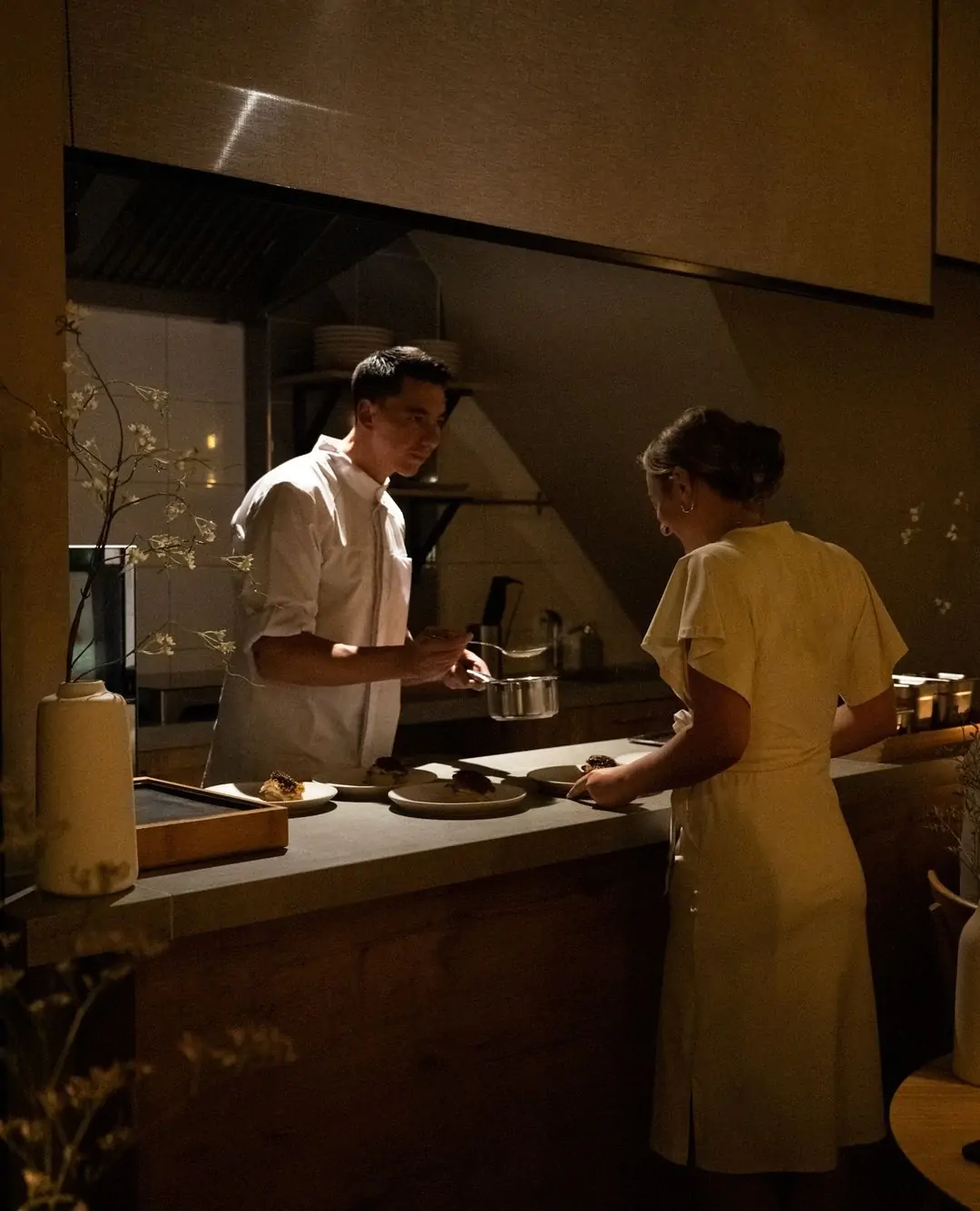
Chef Thibault and his wife Dieuwertje Gordijn have been successfully running Bistrot des Alpes for years. In October 2021, they opened a new restaurant at Govert Flinckstraat 308. Here you can embark on a culinary journey around Mont Blanc. Chef Thibault takes you along the mountain lakes, through the mountains and finally to the top of Mont Blanc with his signature dessert. A fine-dining experience in a warm atmosphere.
1073 BR Amsterdam
Ranchi
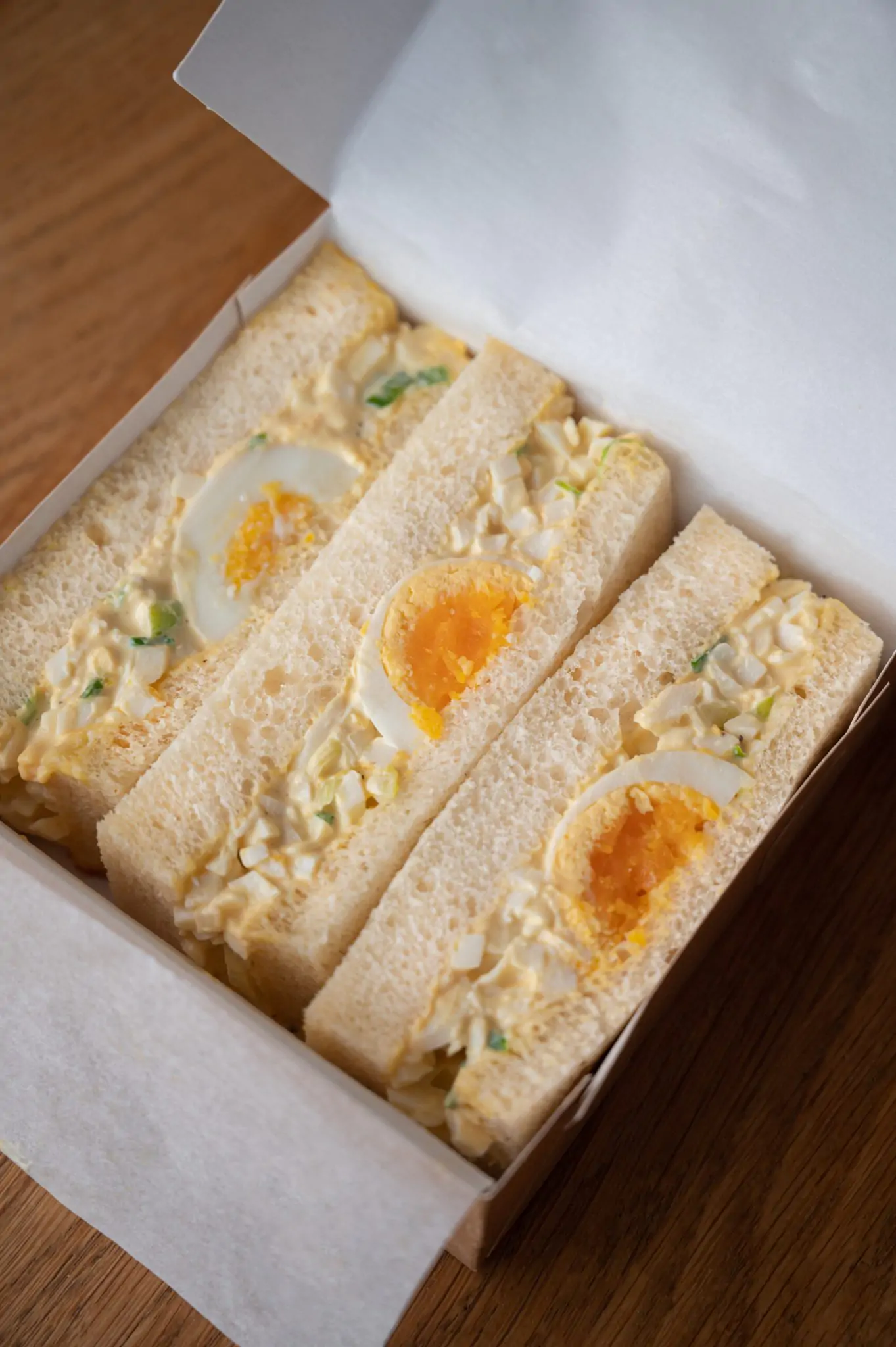
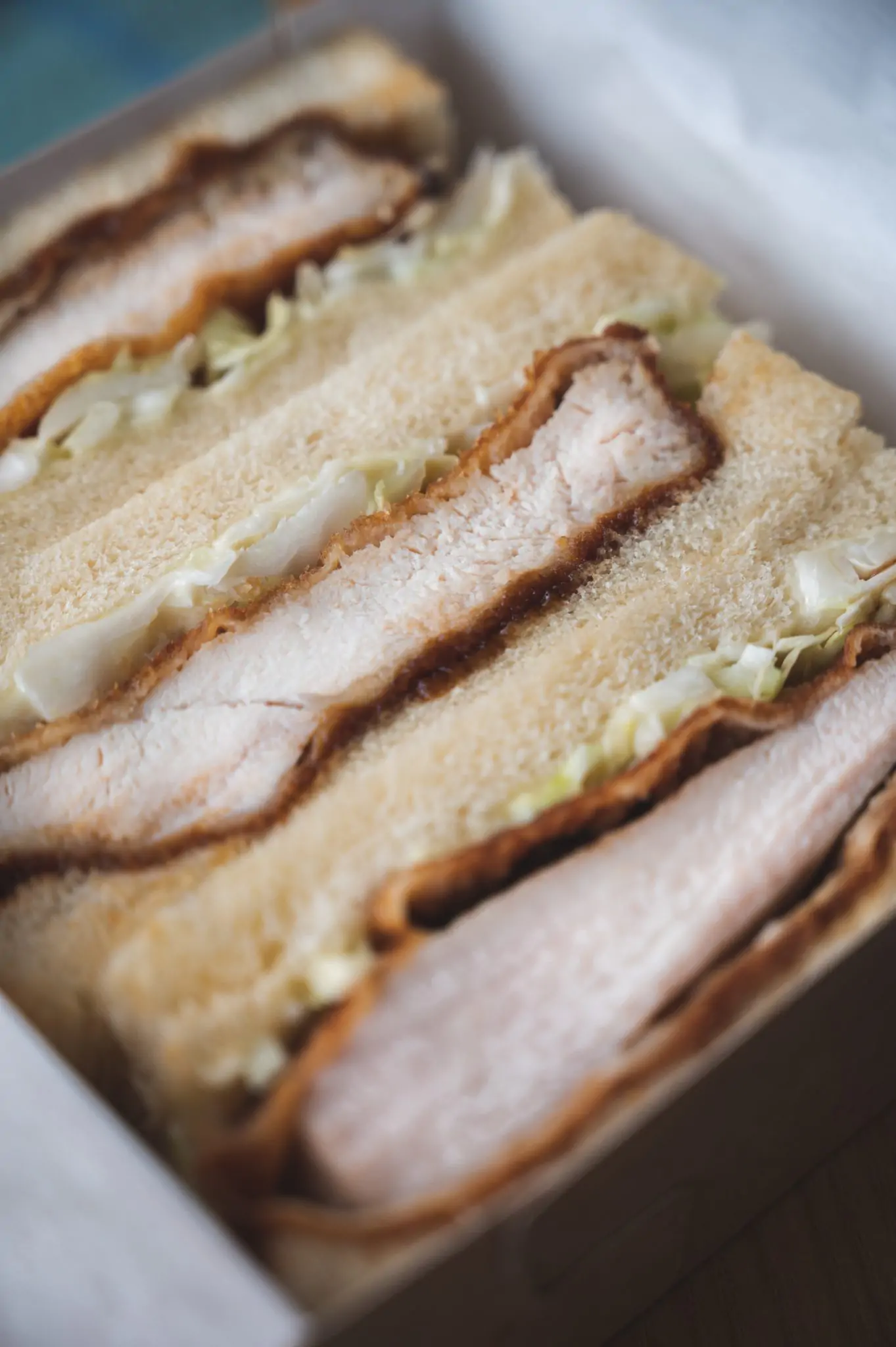
Ranchi is a Japanese sandwich shop run by Sebastiaan and Christiaan Roosink. A Japanese-style sandwich is also called a sando. Choices include a chicken sando (with crispy chicken) or the famous tamago sando with egg salad. They also offer a sandwich with tsukune (a type of meatloaf) made from yakitori-style minced chicken. Delicious with sesame, spring onion, ginger, garlic, and tare sauce.
1073 BP Amsterdam
Osakaball
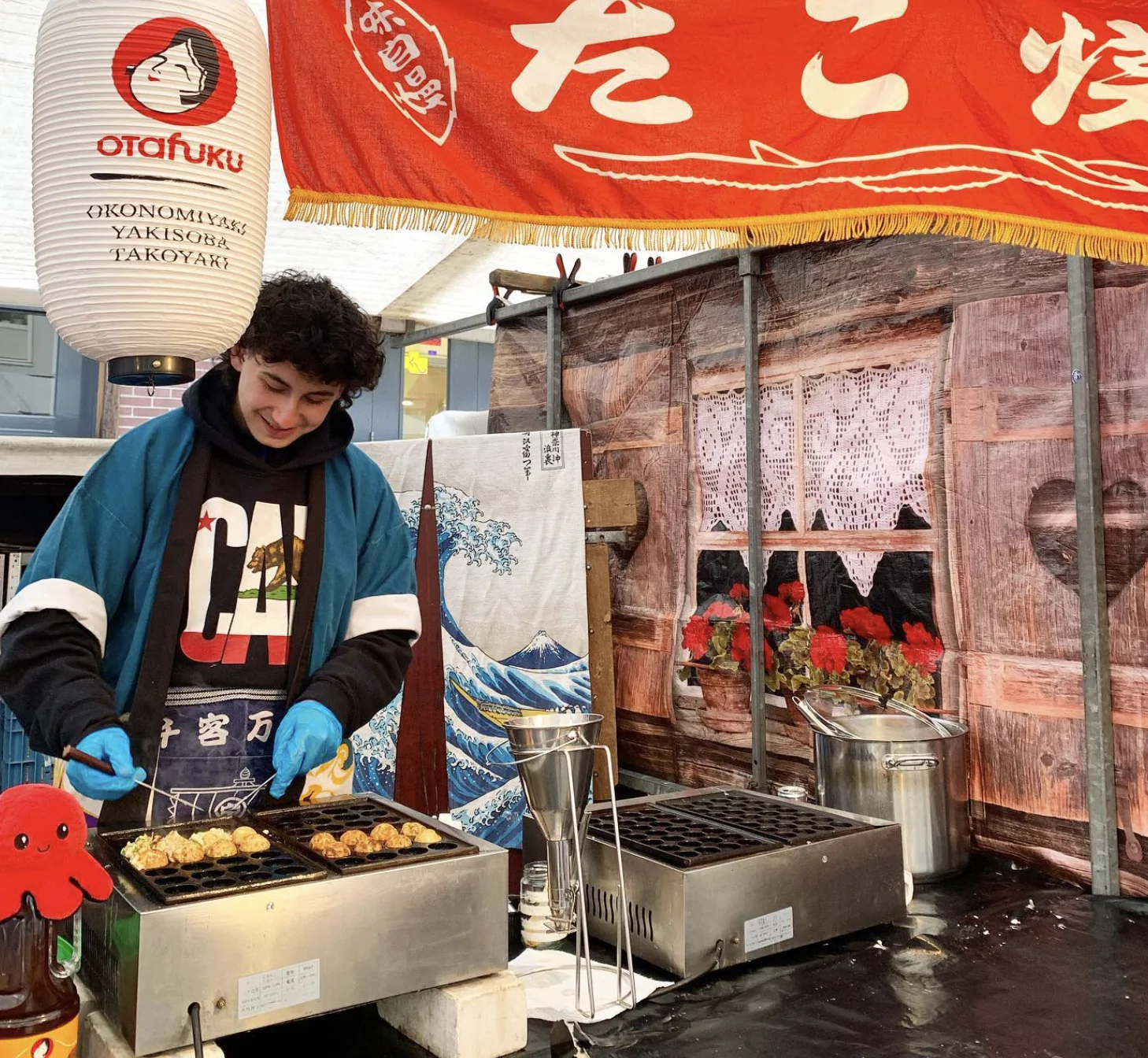
The Osaka street food stall is at the Ten Katemarkt on Mondays and at the Albert Cuypmarkt from Tuesday to Saturday. The stall has built up a loyal customer base throughout the year with its authentic Japanese dishes. From ramen to okonomiyaki, noodles, and curry. Stroll through the market on an empty stomach and follow the smell of delicious food.
1073 VK Amsterdam
Restaurant Yes
The charming restaurant Ja, is located in the former premises of Jan de Wit's Le Restaurant on the corner of Sarphatipark. Chef Julius Busscher, formerly employed at Jacobsz and Staets, offers surprising dishes. His partner Amy Delorme is dedicated to the service and selection of wines. At Ja, everything from bread to limoncello is prepared traditionally. The restaurant presents a fixed 4-course menu, which can be expanded with oysters and cheese if desired. The intimate ambiance and culinary creativity make Ja a unique culinary destination in Amsterdam.
1073 BX Amsterdam
Arles
Numa Muller, the chef from Arles, creates a new 3, 4 and 5 course menu every month. His neo-bistro dishes are simple yet surprising due to the special combinations of French cuisine with influences from abroad. The entirely French wine list is an interesting combination of traditional producers with both emerging vins naturels.
In 2022, the restaurant was awarded a Bib-Gourmand by Michelin for the fifth year in a row.
1073 CL Amsterdam
BRIO
Located in Amsterdam's lively De Pijp neighborhood, Restaurant BRIO offers a contemporary interpretation of Italian cuisine. Founded by the owners of Little Collins, the restaurant combines classic Italian flavors with modern influences. Guests can enjoy a menu centered around fresh pasta and seasonal dishes, served in an atmospheric and welcoming setting.
1074 BC Amsterdam
Nicemakers
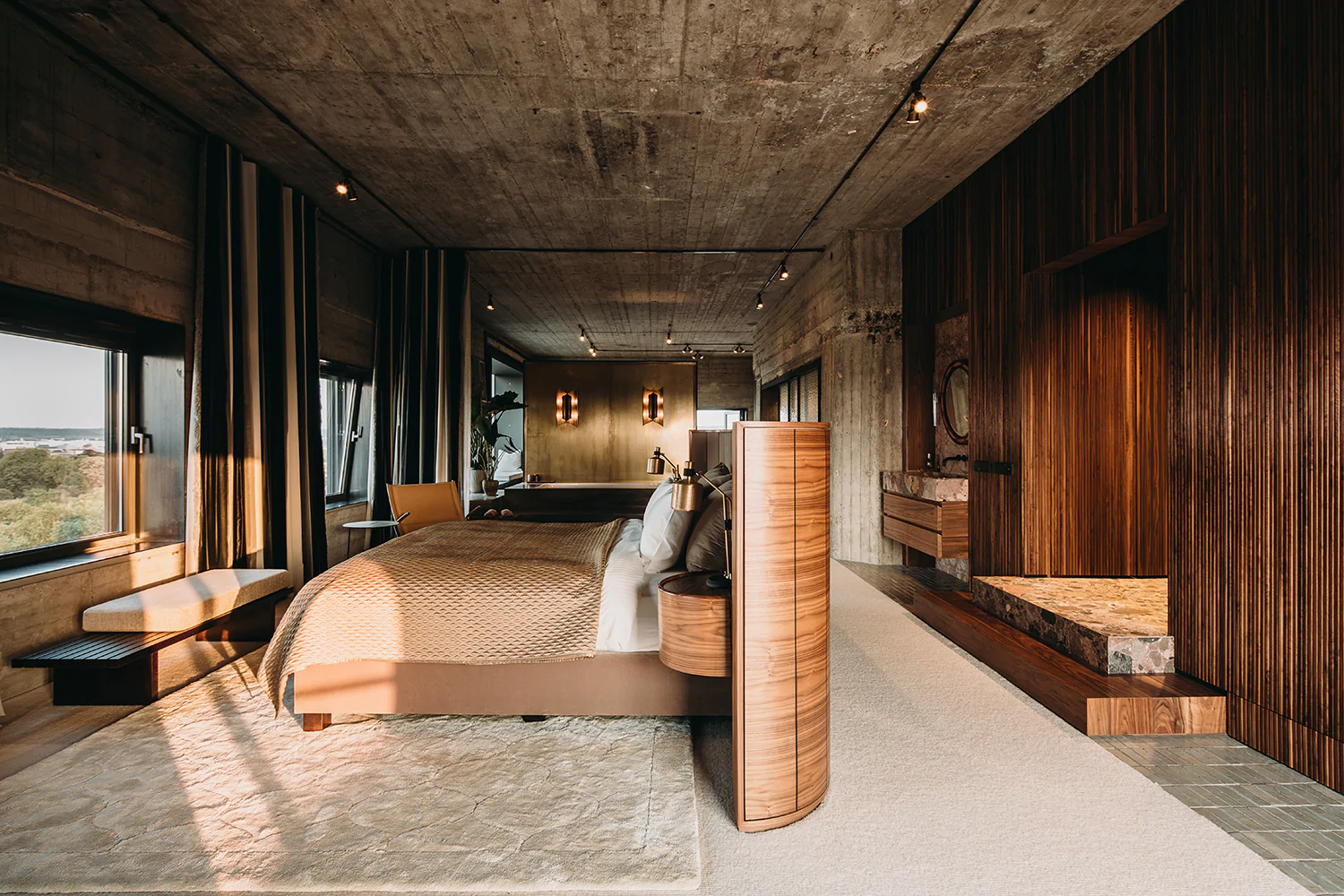
Interior designers Joyce and Dax Roll are partners in life and in design, together they are known as 'Nicemakers'. Personal, lively, functional, rich, inspiring, elegant, thorough and decorative; the 'Nice' in 'Nicemakers' is as light and natural as it is impressive and all-encompassing. The interior for the salad bar SLA was the first Project that put them on the map, after which many impressive Projects followed, including an amazing penthouse in Maastricht, which gave them a role in the Netflix program 'Amazing Interiors'.
1091 GT Amsterdam
Dough Studio
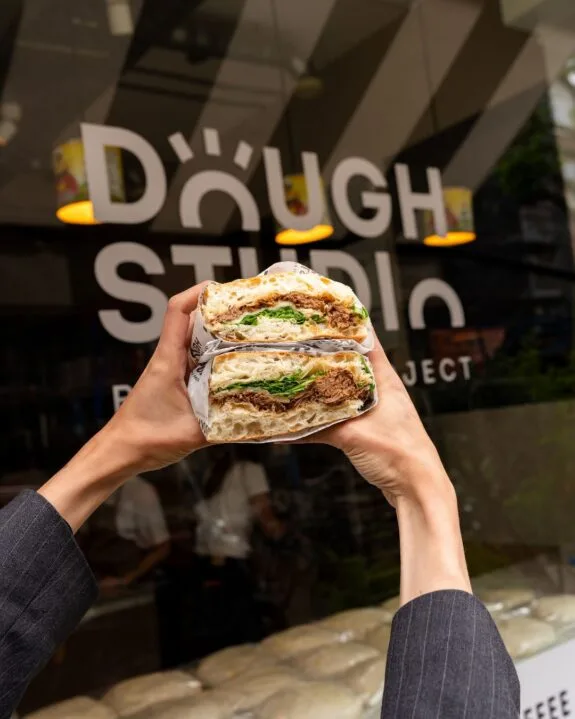
Dough Studio is the project Bas and Idske, who started baking pizzas in their Rear garden Amsterdam East in 2019 and discovered their love for good dough there. After opening two Pizza Projects in Oud-West and Zuid, they felt the need for a place to further deepen their craft. At Dough Studio, everything revolves around fermentation and time, with dough given the space to develop fully. Here, they expand their craft beyond pizza, with schiacciata sandwiches, seasonal baked goods, and coffee from a local roaster.
1074 AG Amsterdam
De Pijp City Market
At Stadsmarkt de Pijp, the products are collected daily. This means that all kinds of products come directly from the farmer, market gardener, butcher, fishmonger and baker in the middle of the Pijp. The focus at Stadsmarkt de Pijp is on Sustainability and a fair price is paid to the suppliers. The working professionals are always ready to recommend something or let you taste something. Craftsmanship is also central; it is a market where you can eat well and enjoy yourself.
1073 BH Amsterdam
C&C Asian Market
At the end or beginning of the Albert Cuyp lies the C&C Asian Supermarket. The store is well-known to anyone who suddenly needs special ingredients while cooking. Besides fresh products, the store has a gigantic assortment of all kinds of Asian must-haves when it comes to indispensable ingredients. From delicious peanut sauce for summer rolls to incredible amounts of frozen dumplings to heat up yourself in bamboo baskets. The soy sauce flies over the counter in large bottles and at affordable prices, and you can also find some nice decorations here. The fun doesn't stop there, because there is also a small corner in the supermarket where fresh food is prepared. Here, after your big shopping trip, you can enjoy fresh summer rolls or a banh mi (Vietnamese baguette), among other things.