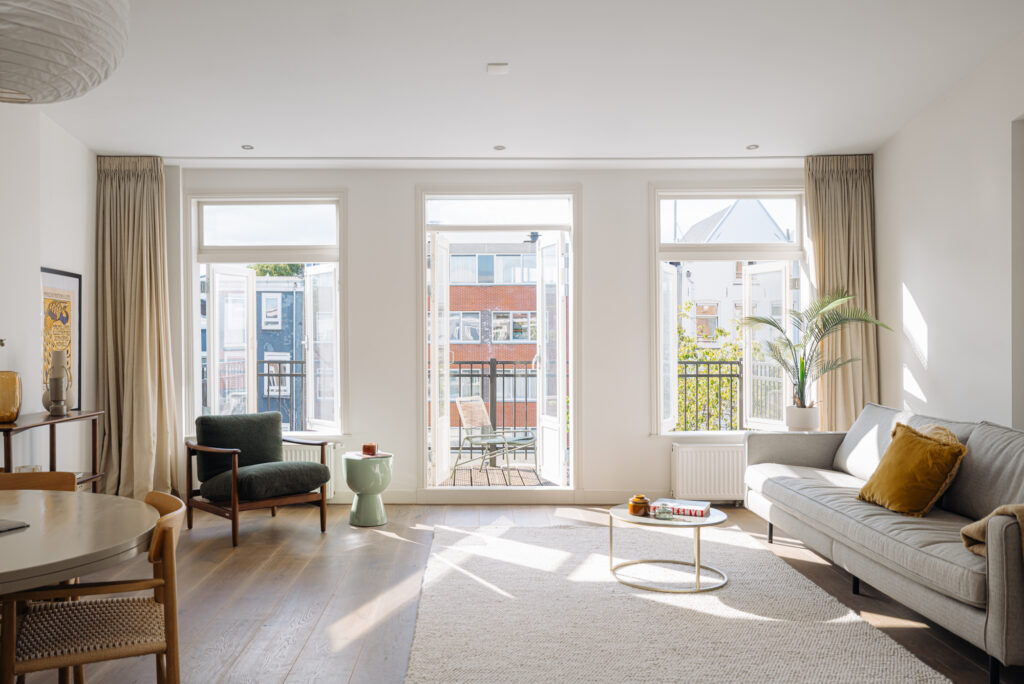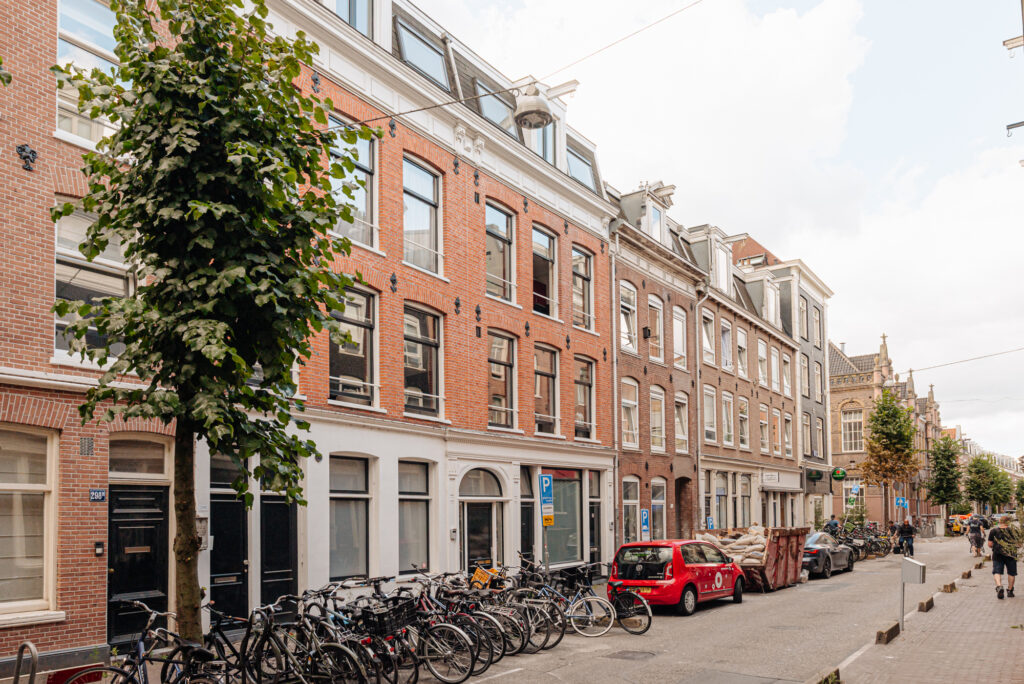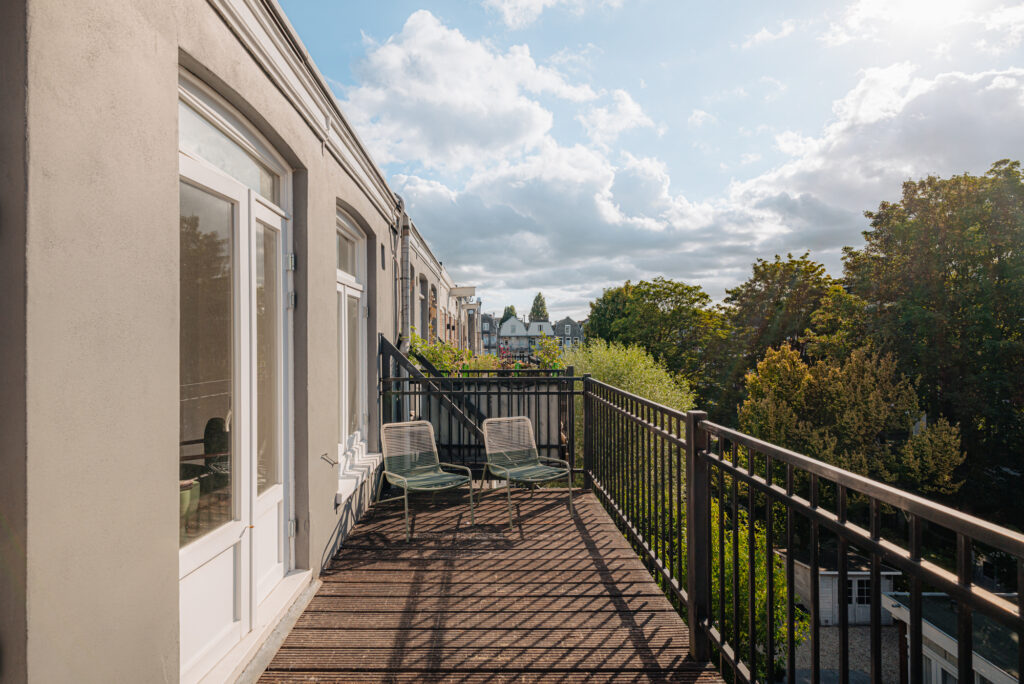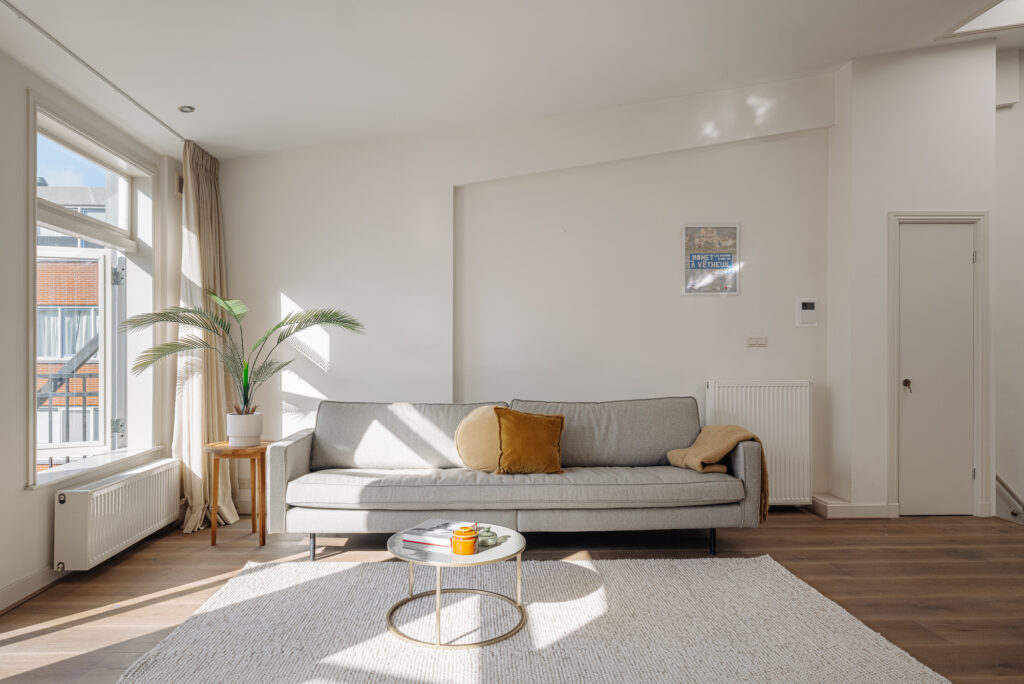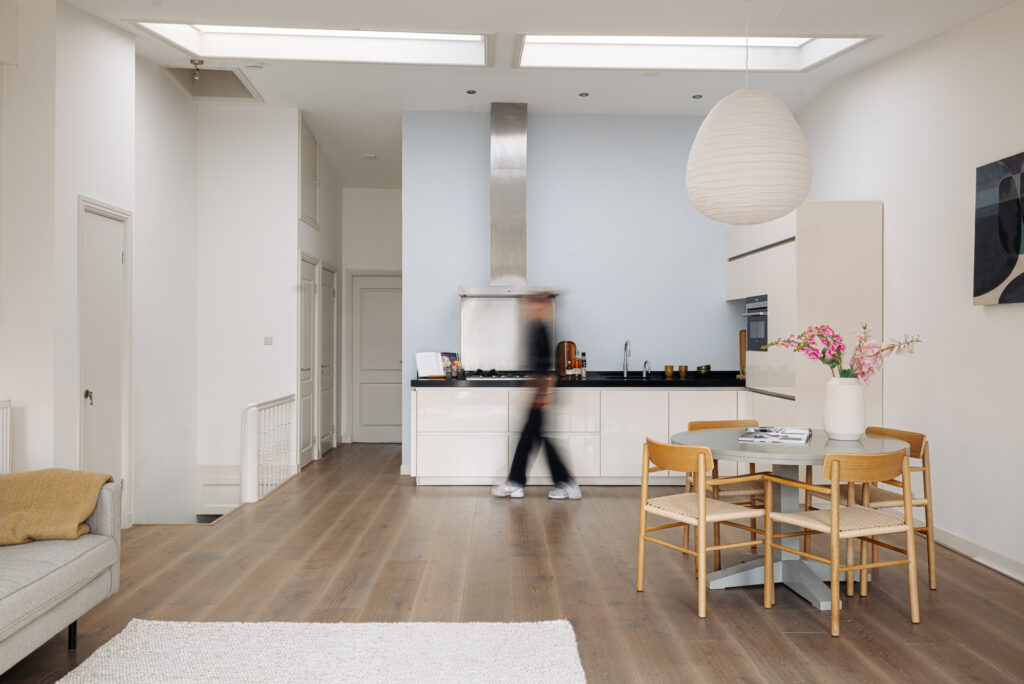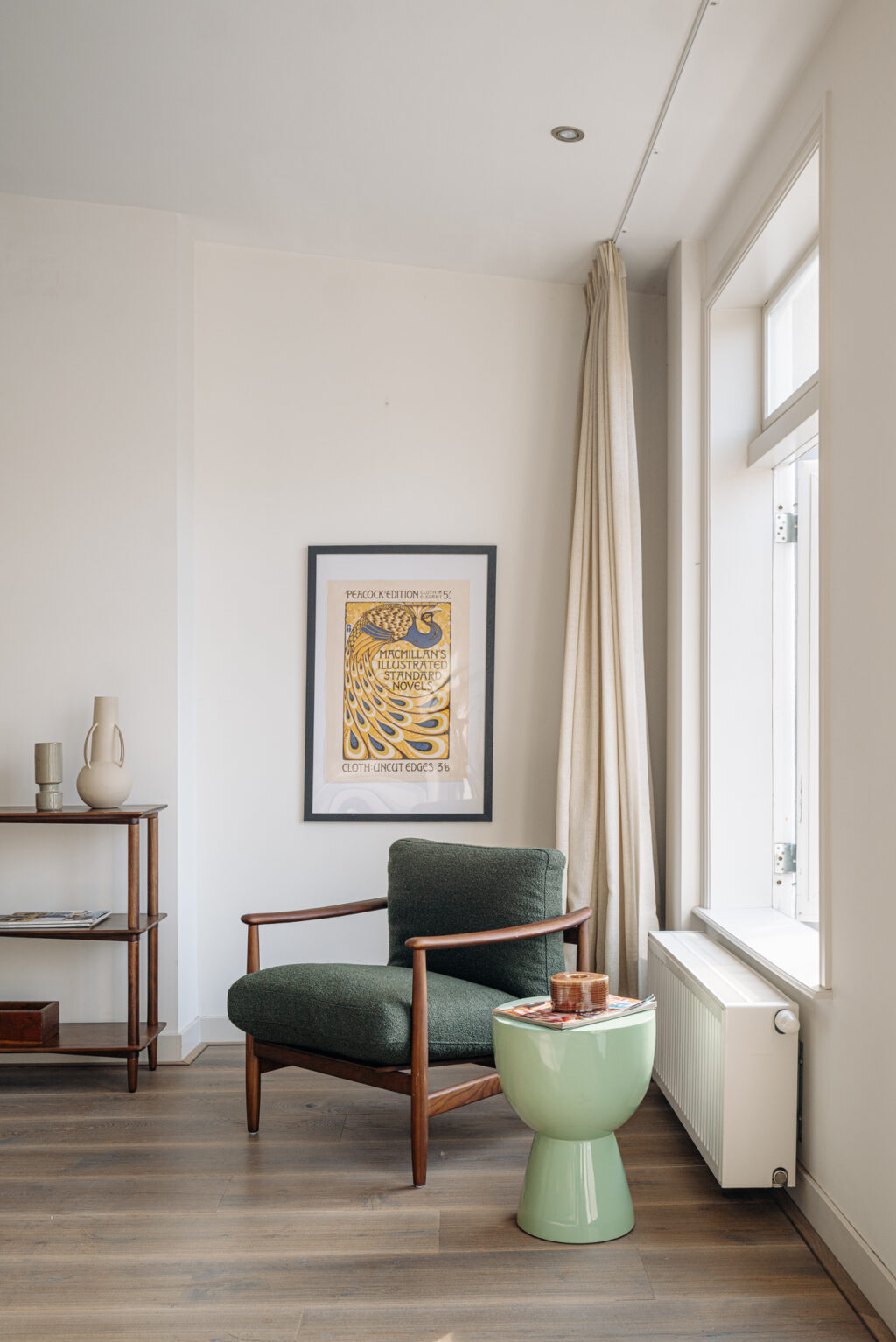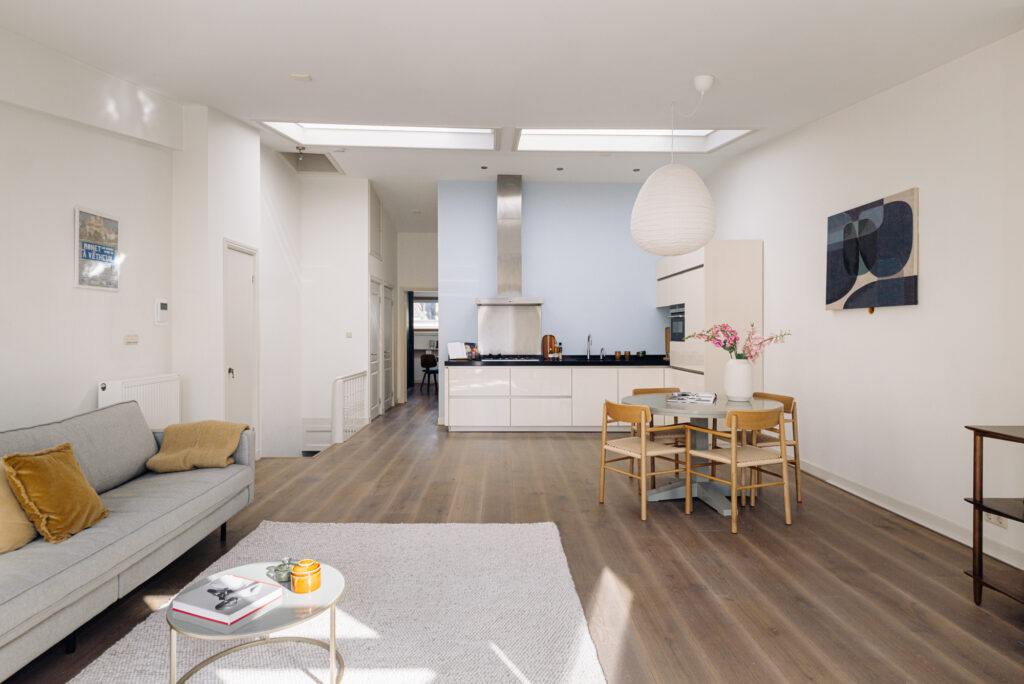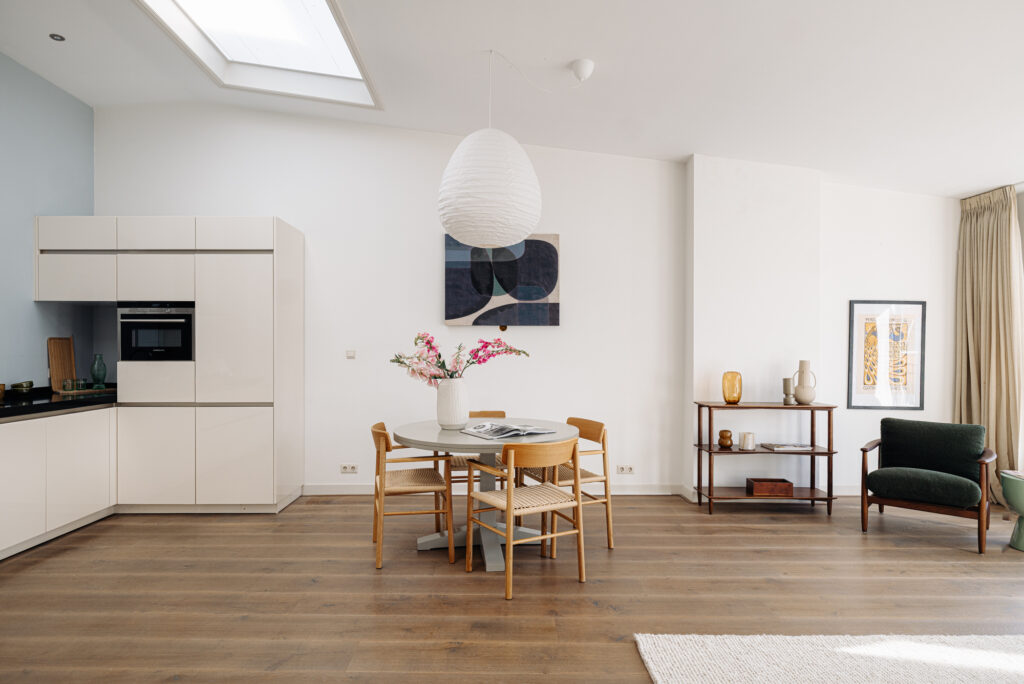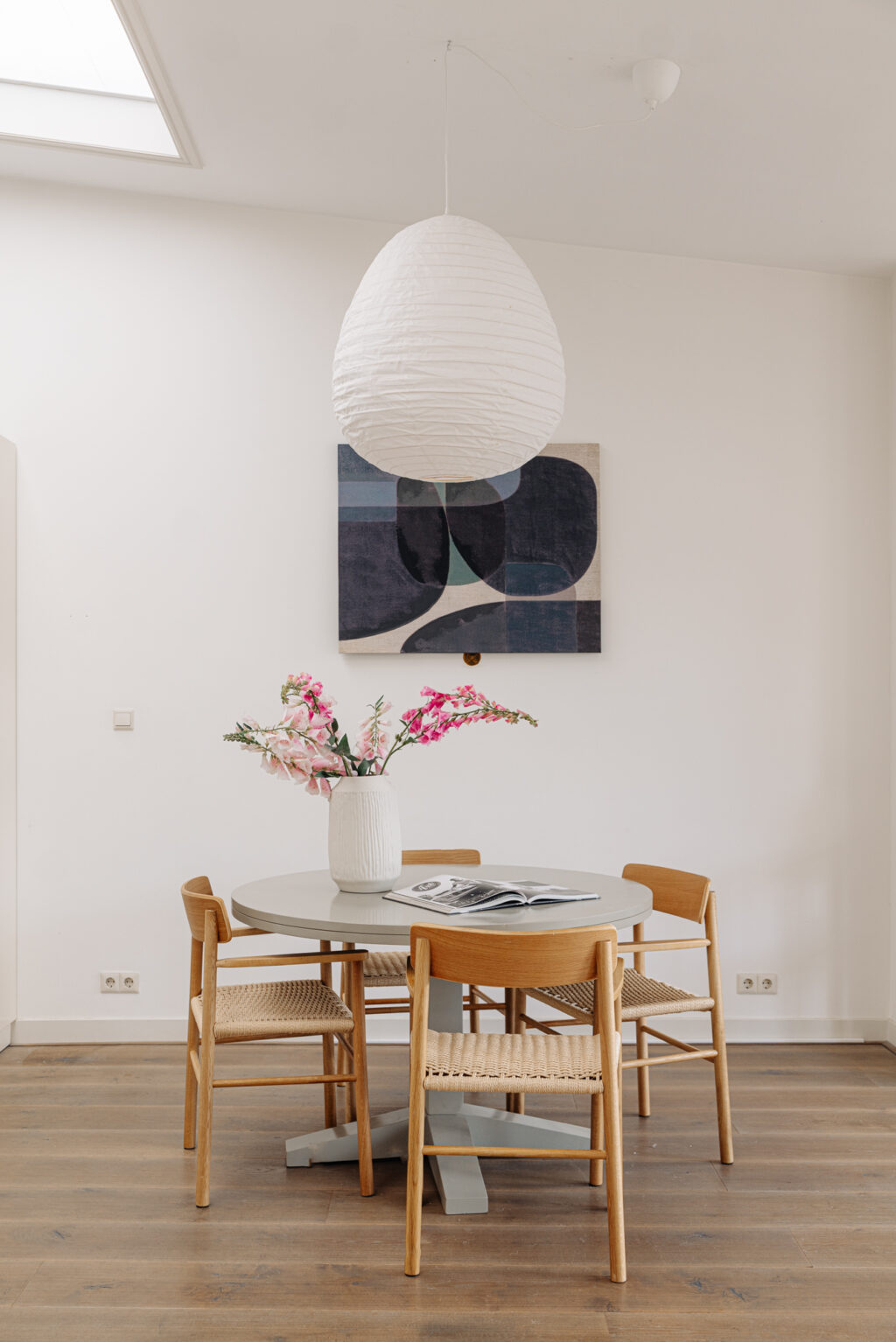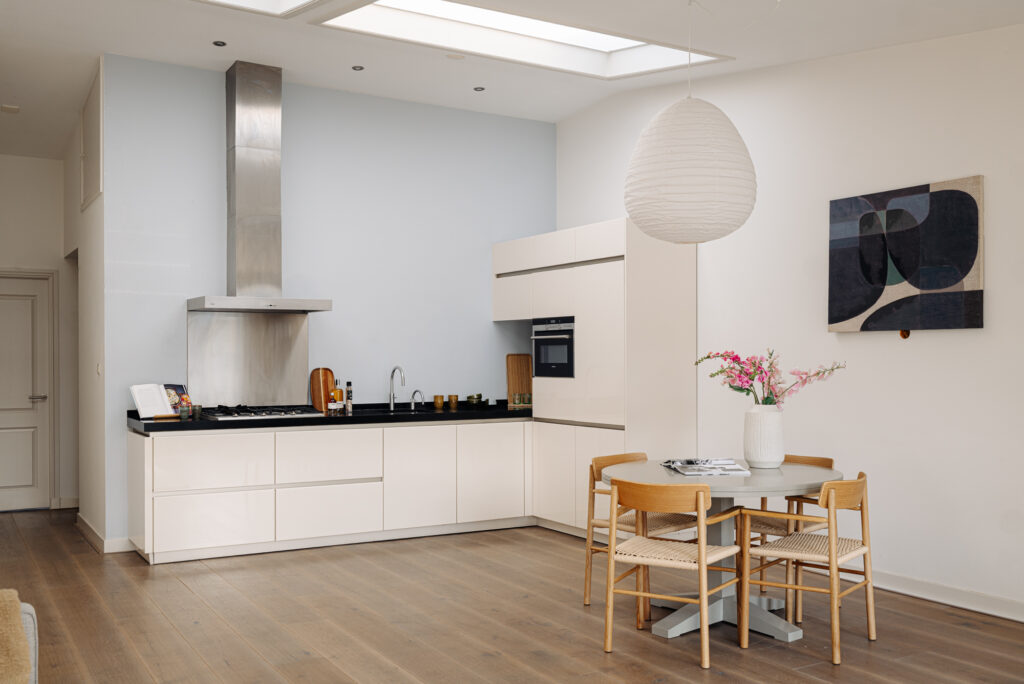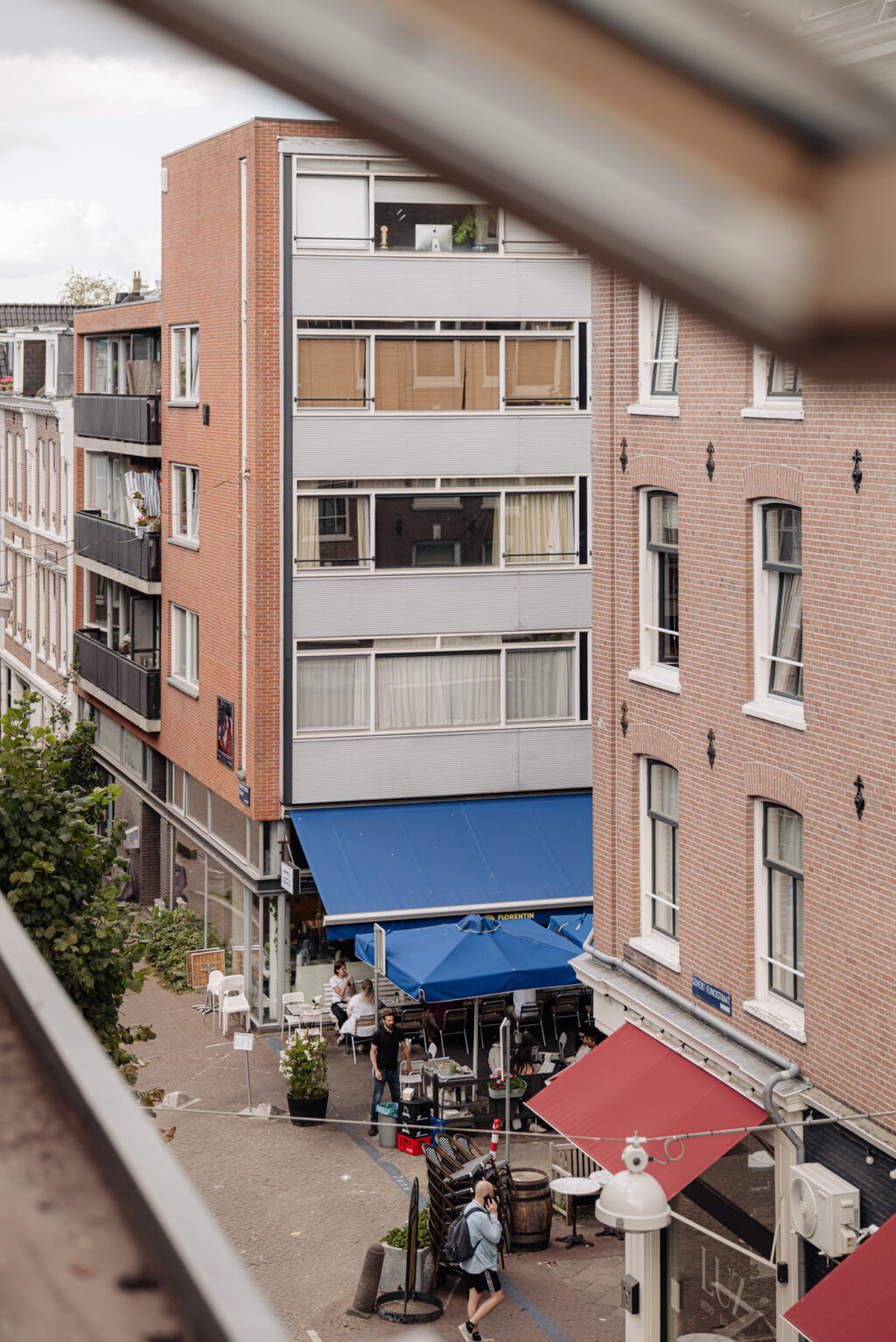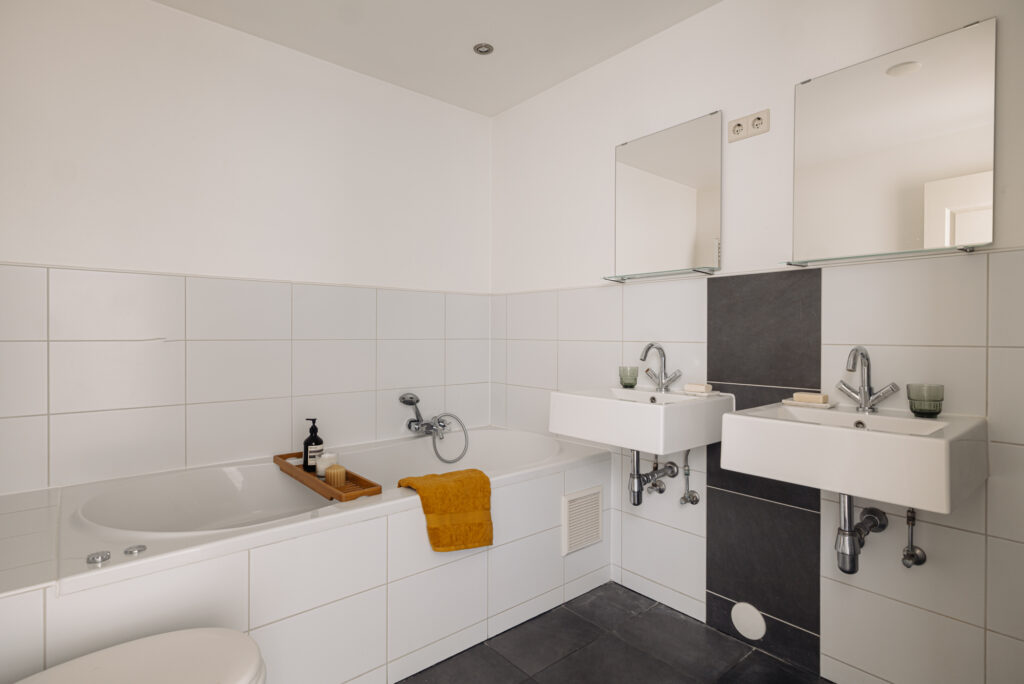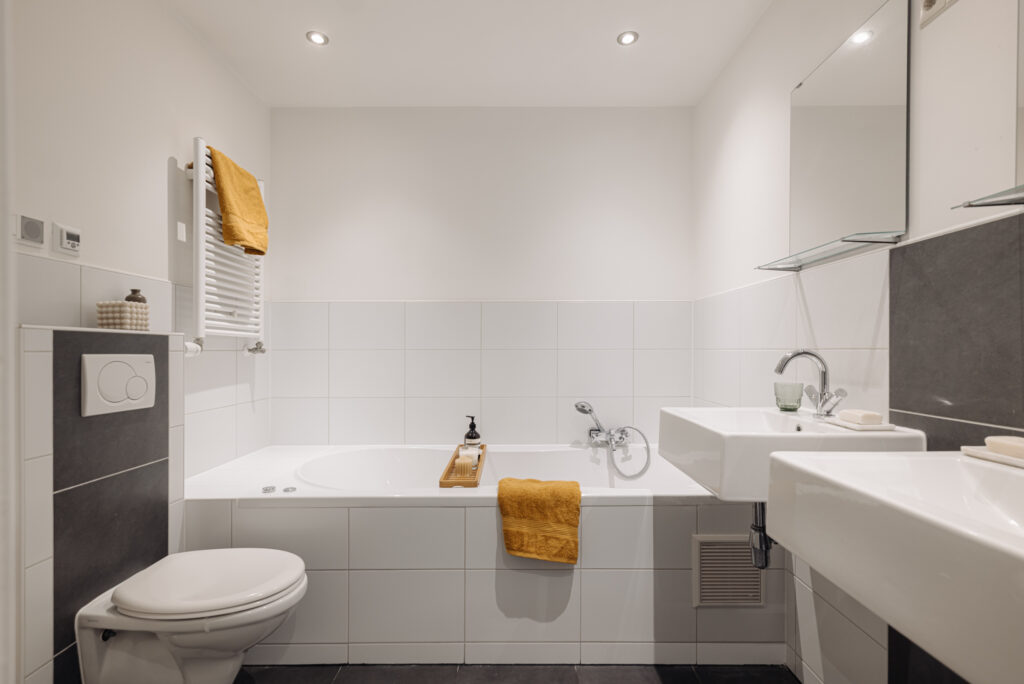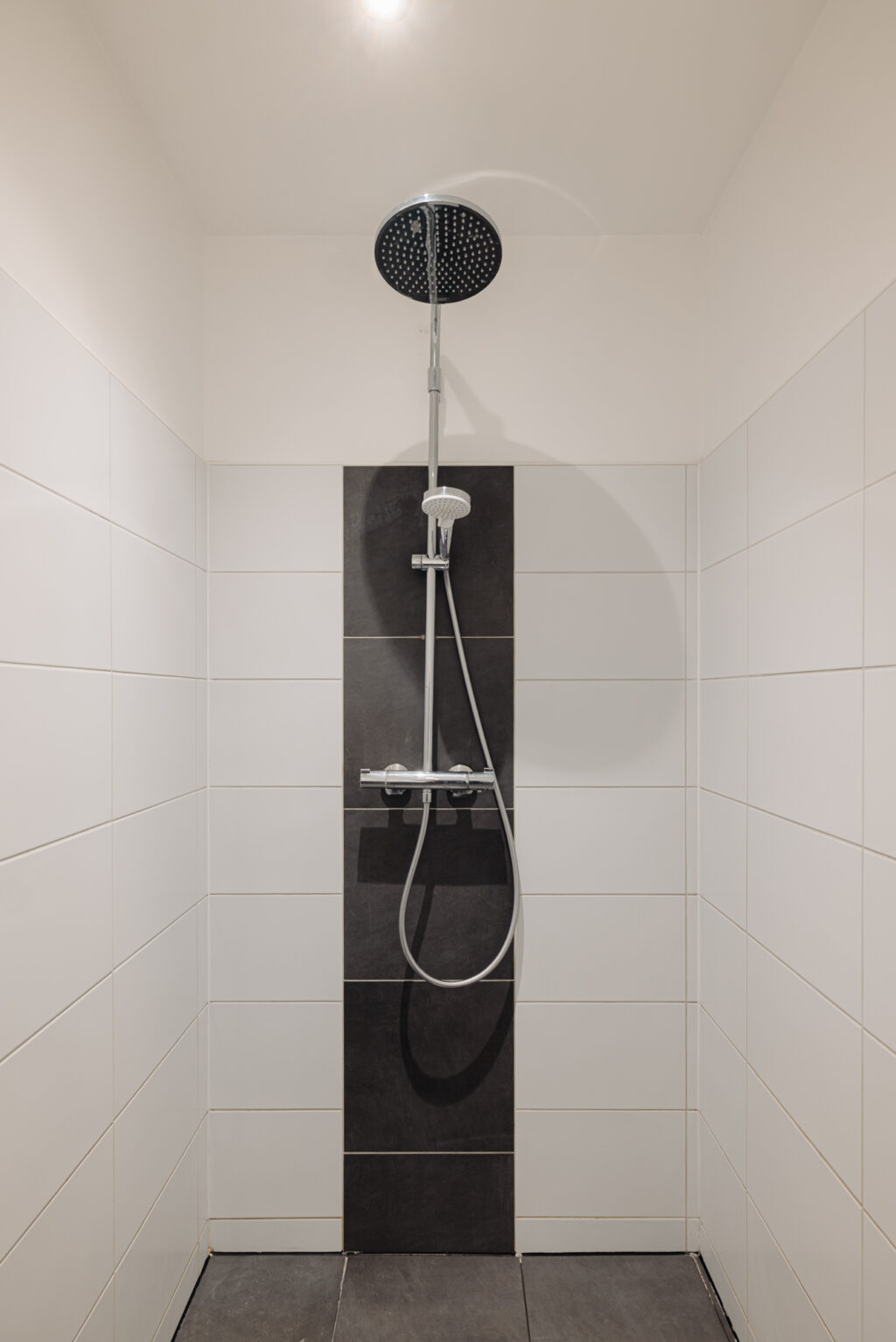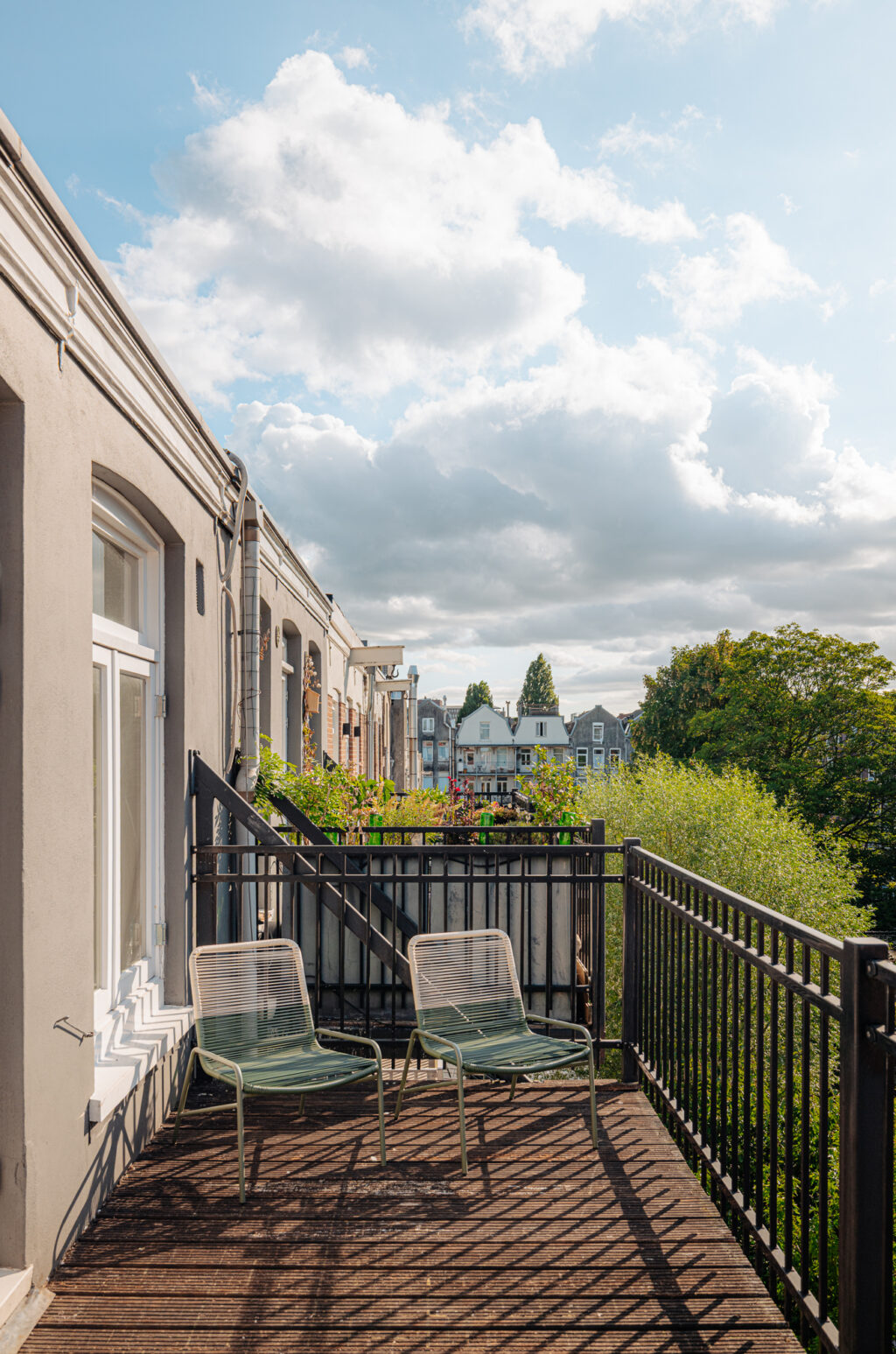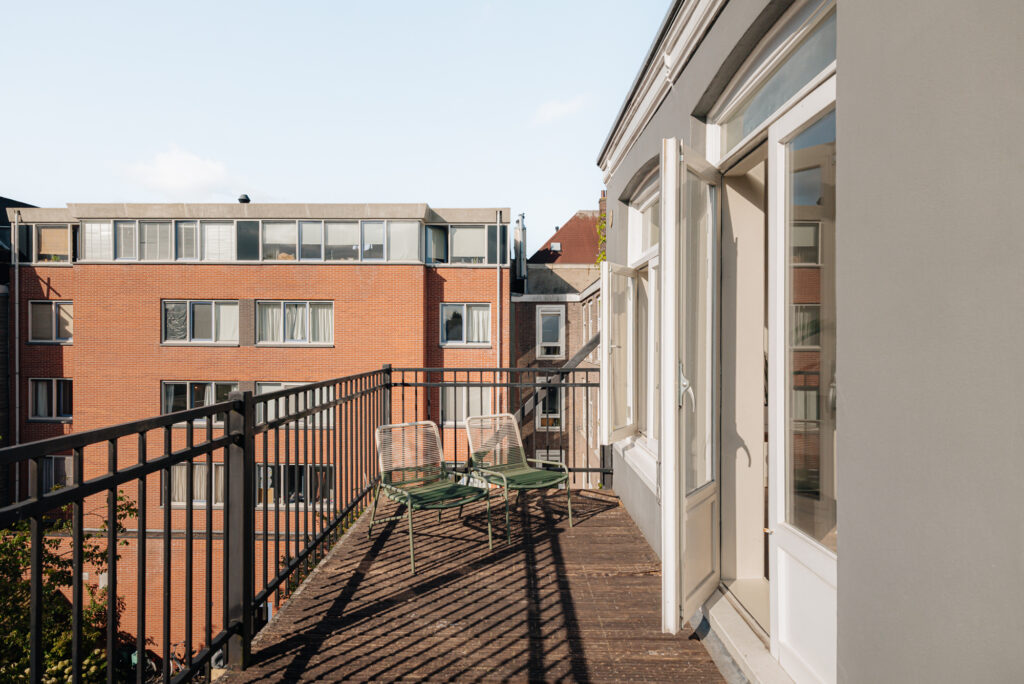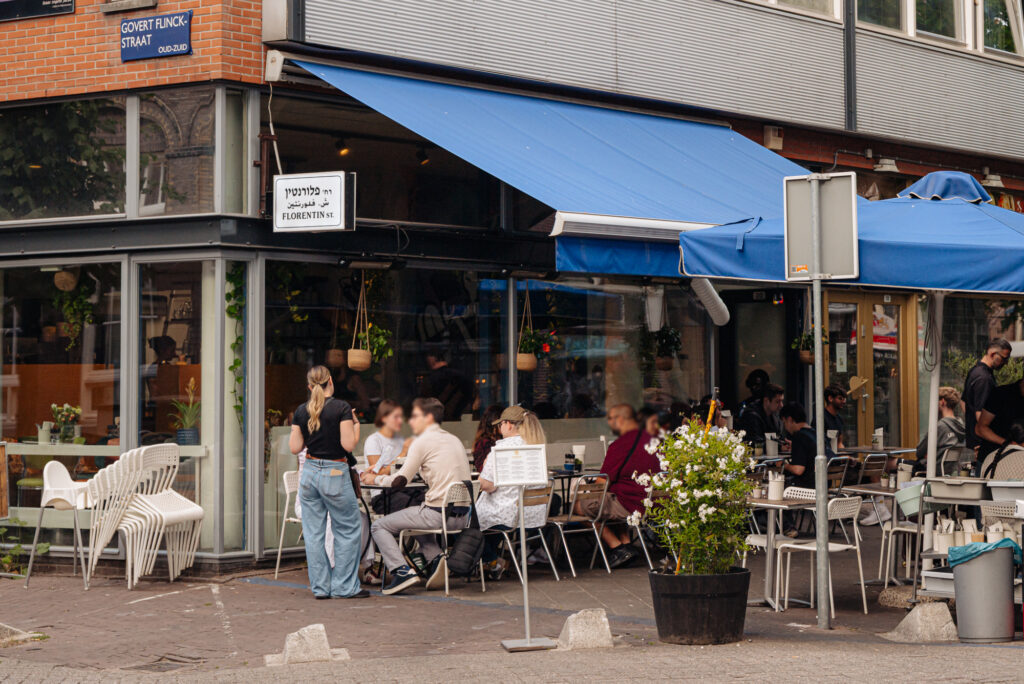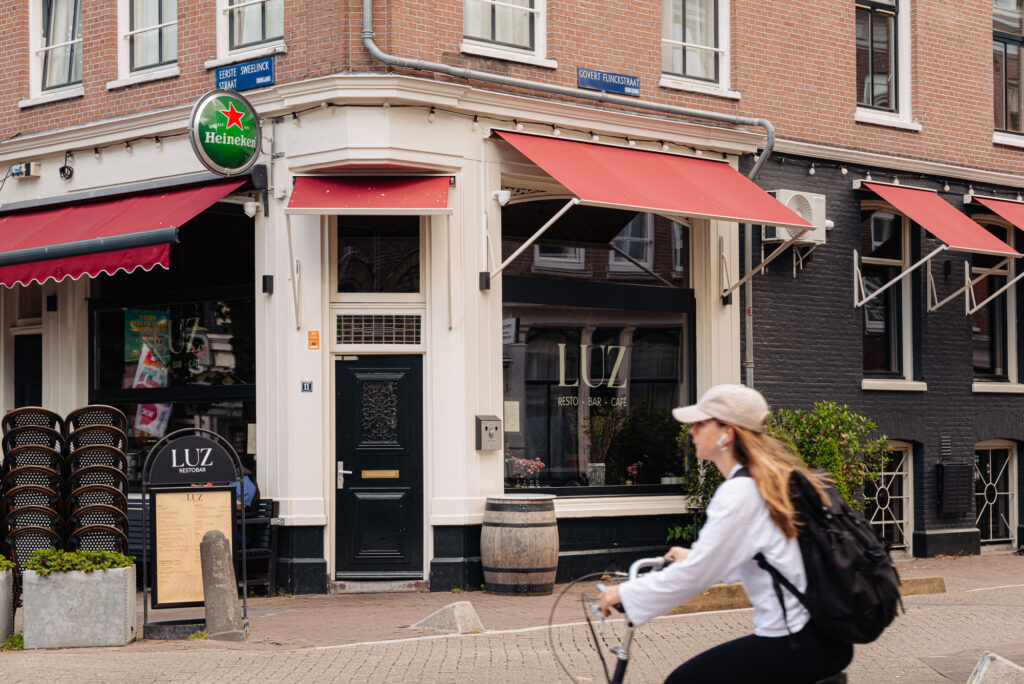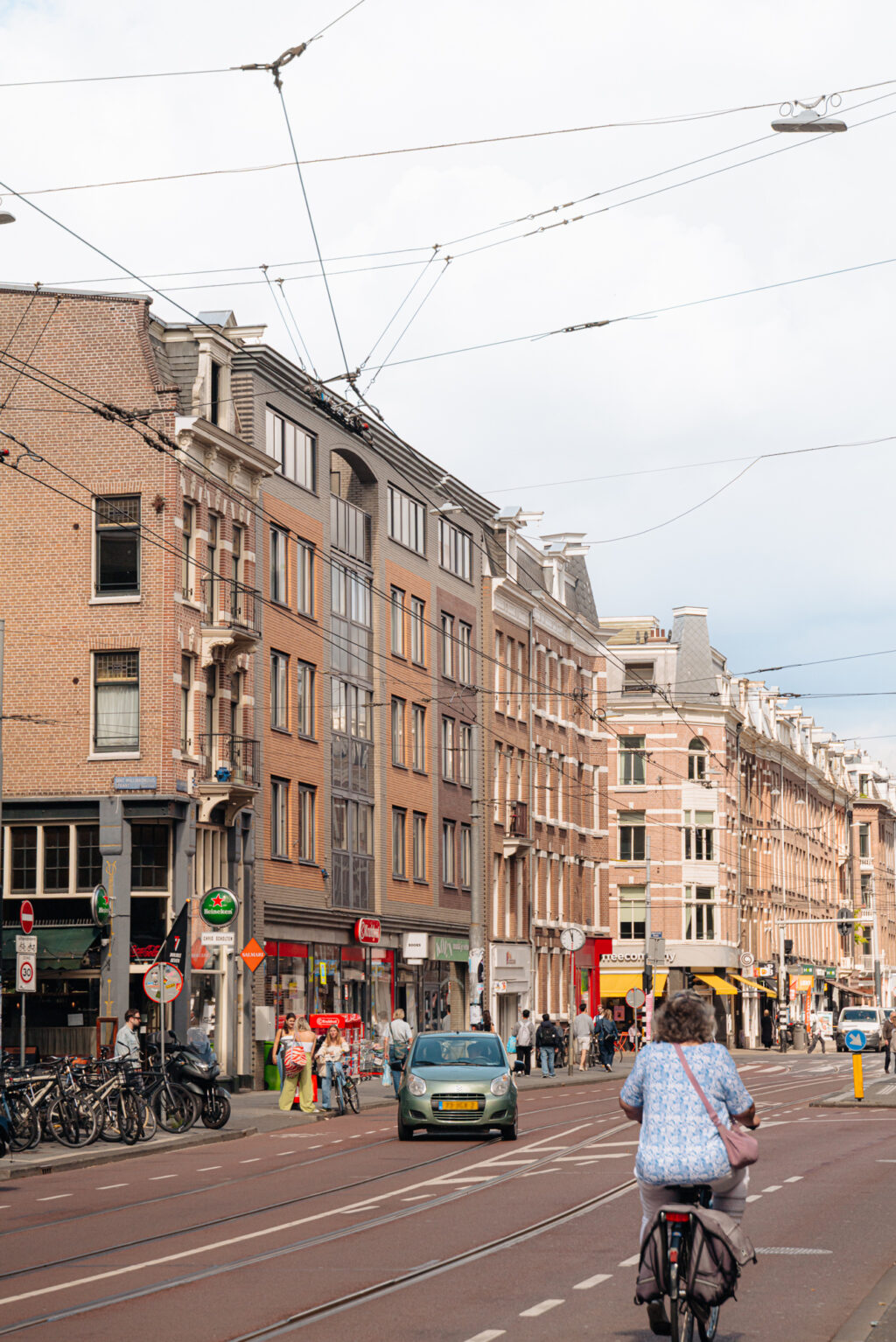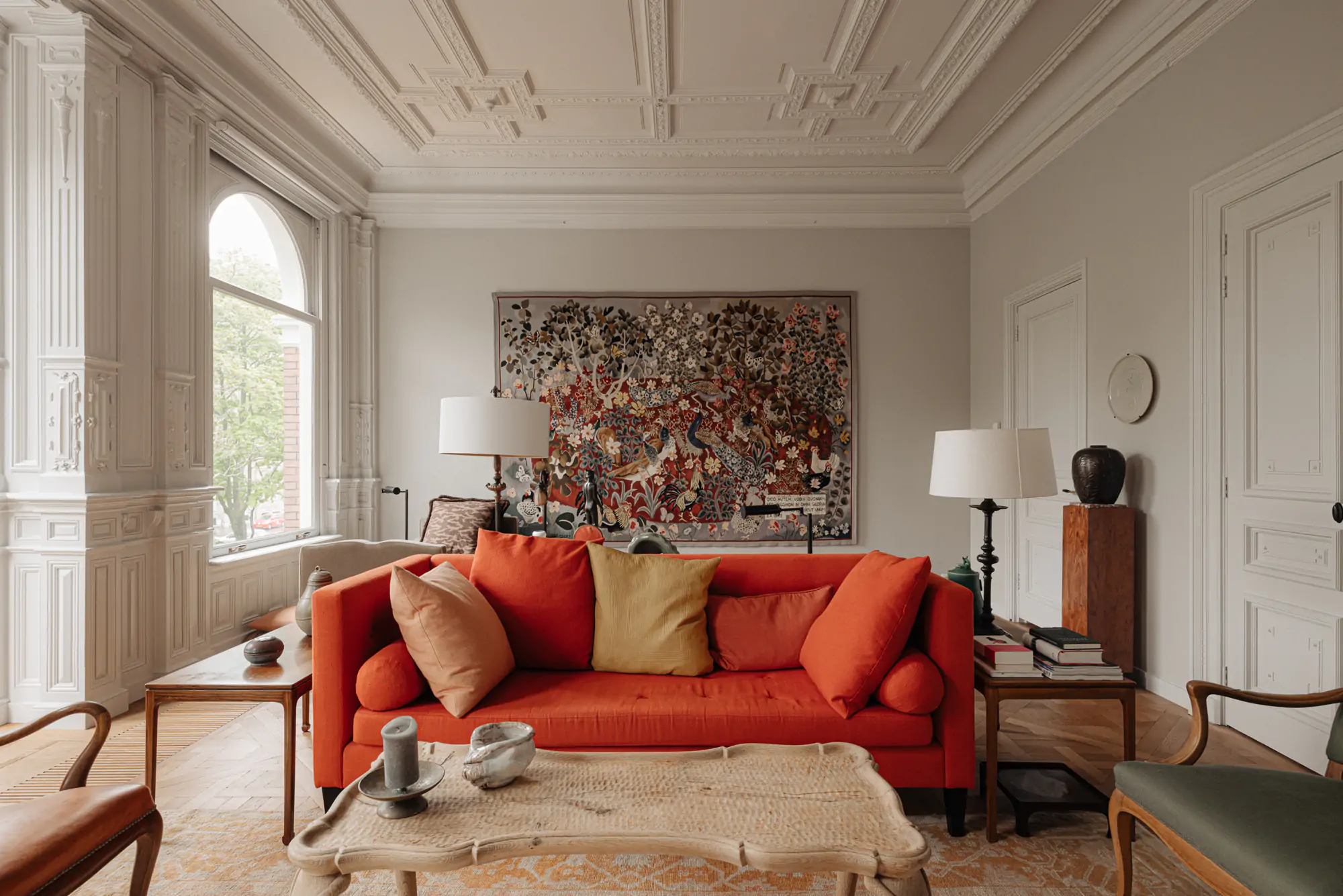
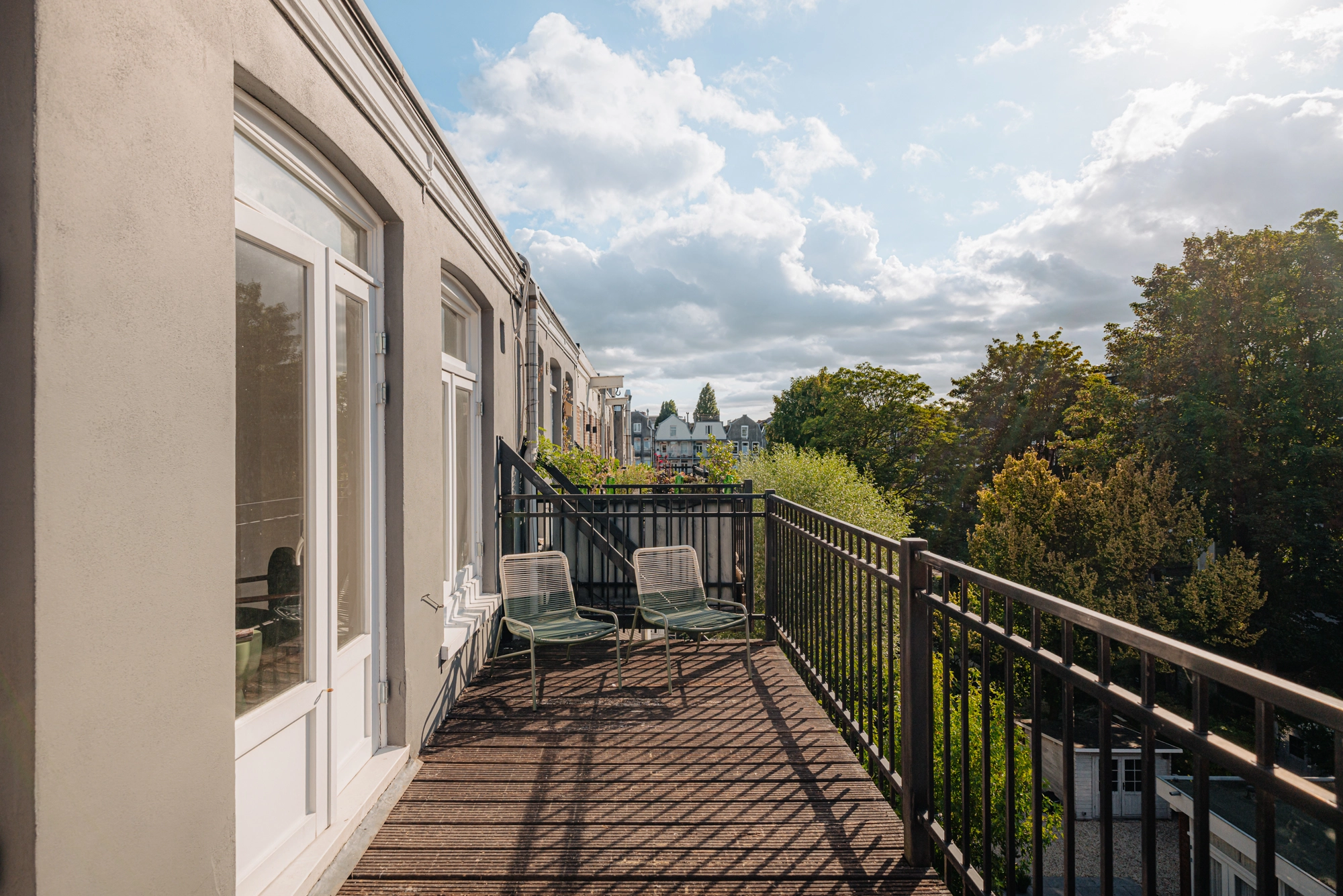
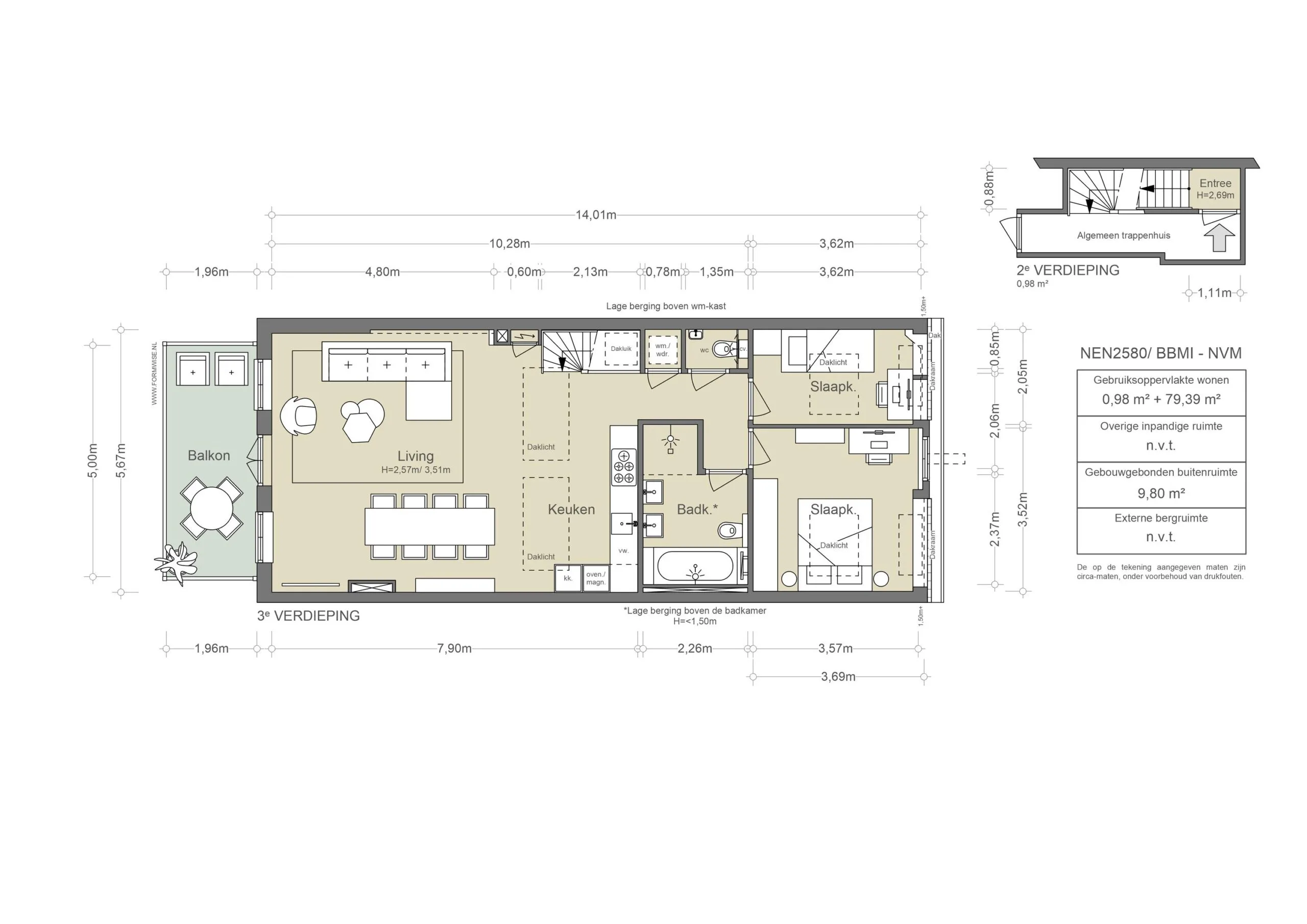
The apartment is located on the third floor of a renovated building on Govert Flinckstraat. At the rear, the living room and open kitchen feature large windows, French doors to the terrace, and two skylights above the worktop. The bathroom lies centrally within the apartment and is fitted with a bathtub, walk-in shower, double washbasin, toilet, and additional storage above. There is also a separate toilet and a utility room with laundry facilities. At the front are two bedrooms, one suitable as the main bedroom and the other as a study or guest room. The terrace of over ten square metres is south-facing and offers space for a dining table with chairs or a lounge set. The layout is efficient, the maintenance well-kept, and the location central, with amenities all within walking distance.
Tour
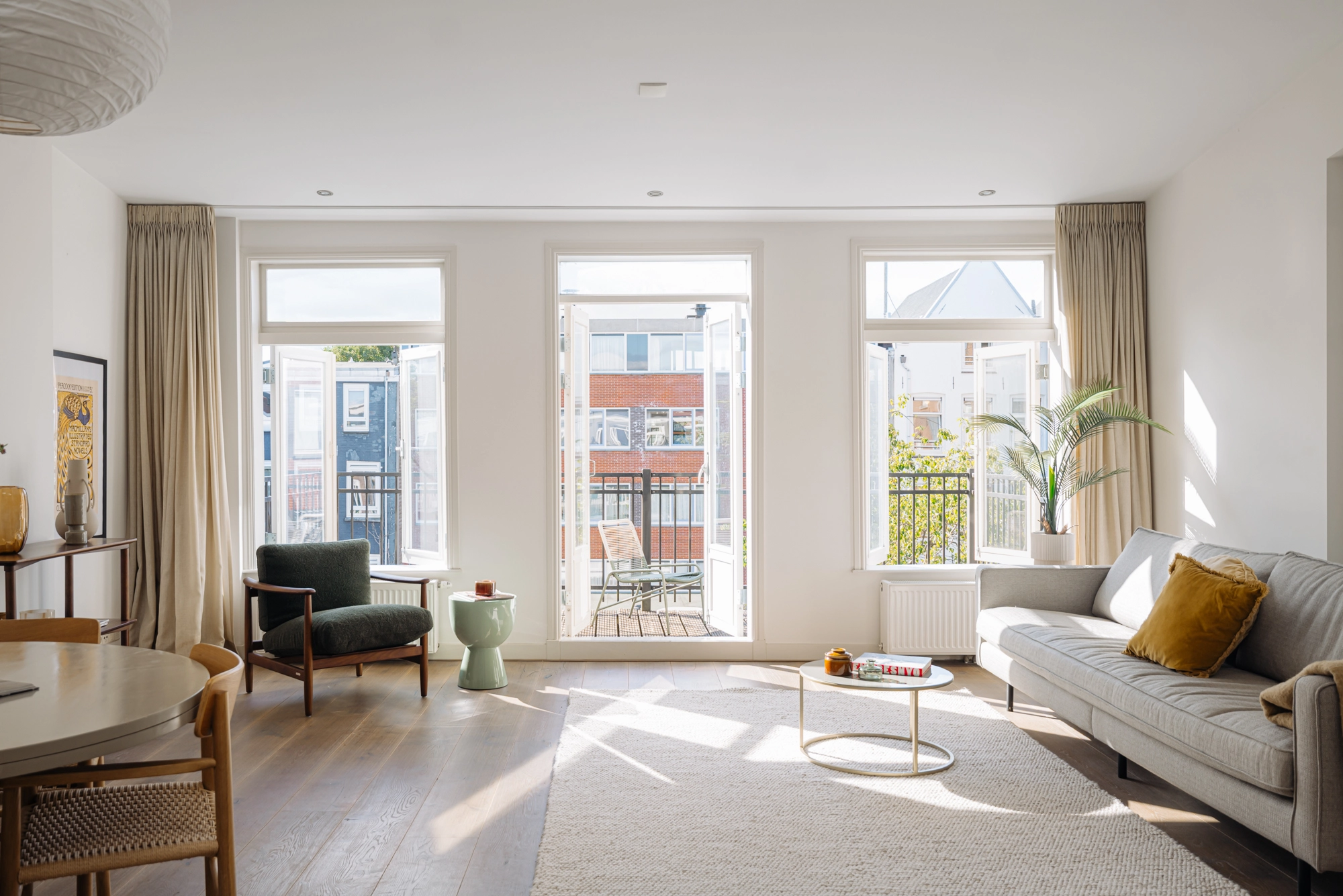
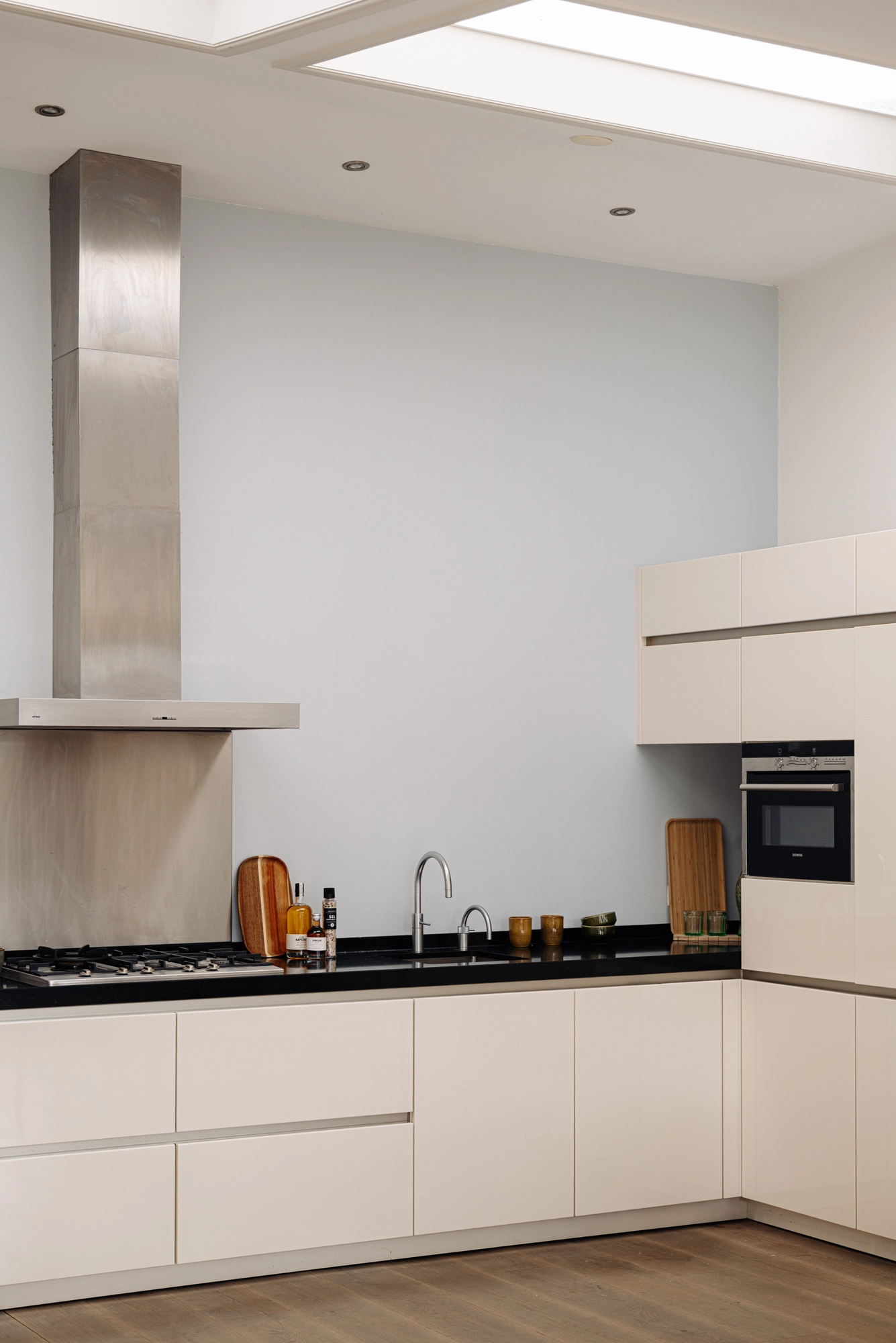
The apartment is situated on the third floor of a renovated building on Govert Flinckstraat, located on freehold land. Access is via the communal staircase, with a private front door on the second floor leading to an internal staircase up to the third floor. At the rear lies the living room, a wide space with large windows and double doors opening to the terrace. The living room adjoins the open kitchen, where two skylights draw daylight deep into the heart of the apartment.
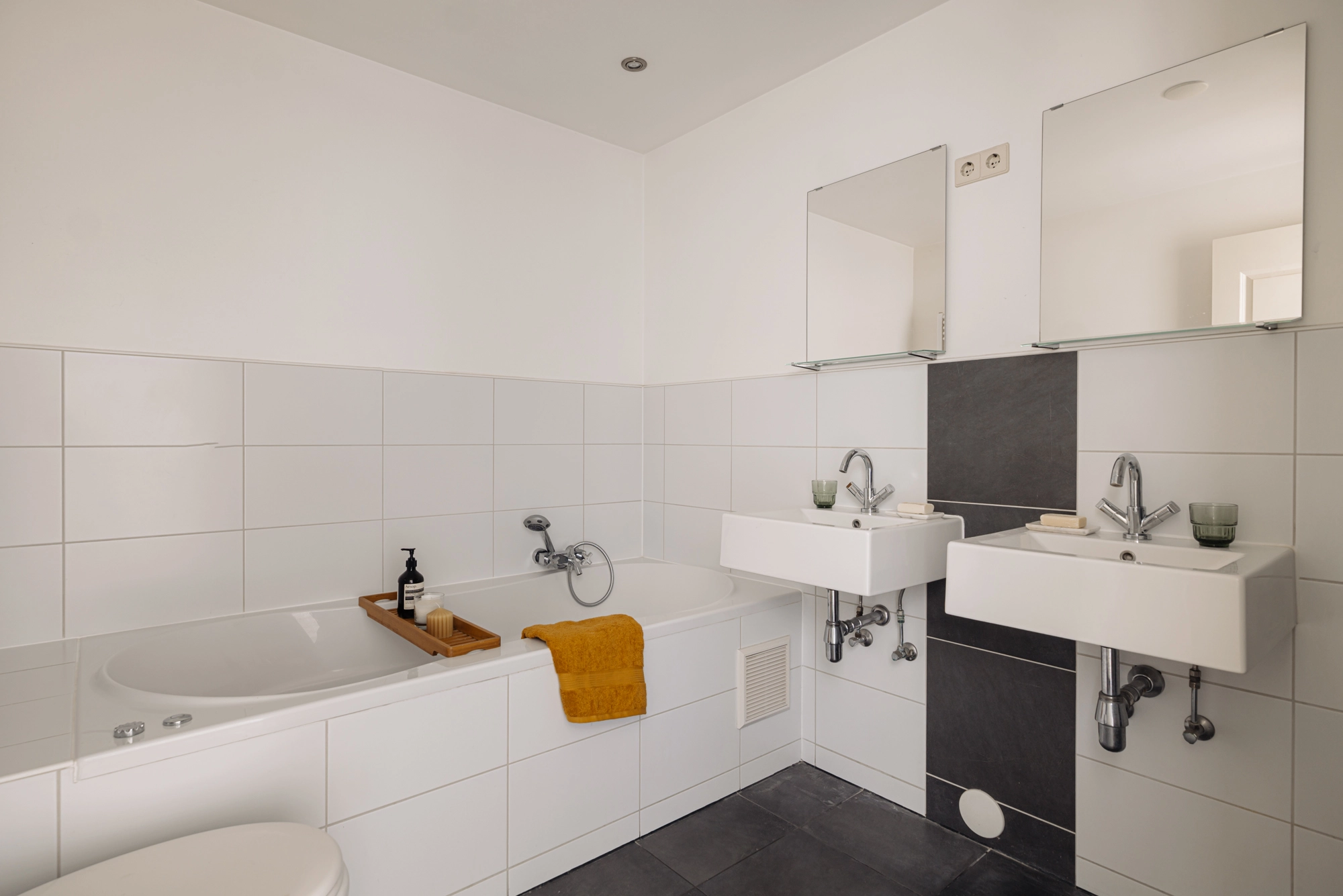
Returning to the hallway, the bathroom is centrally positioned and equipped with a bathtub, walk-in shower, and double washbasin. In addition, there is a separate toilet and an internal storage room with space for a washing machine and dryer. Above these three rooms, extra storage has been created across the full width, ideal for items not needed daily—out of sight, yet within easy reach.
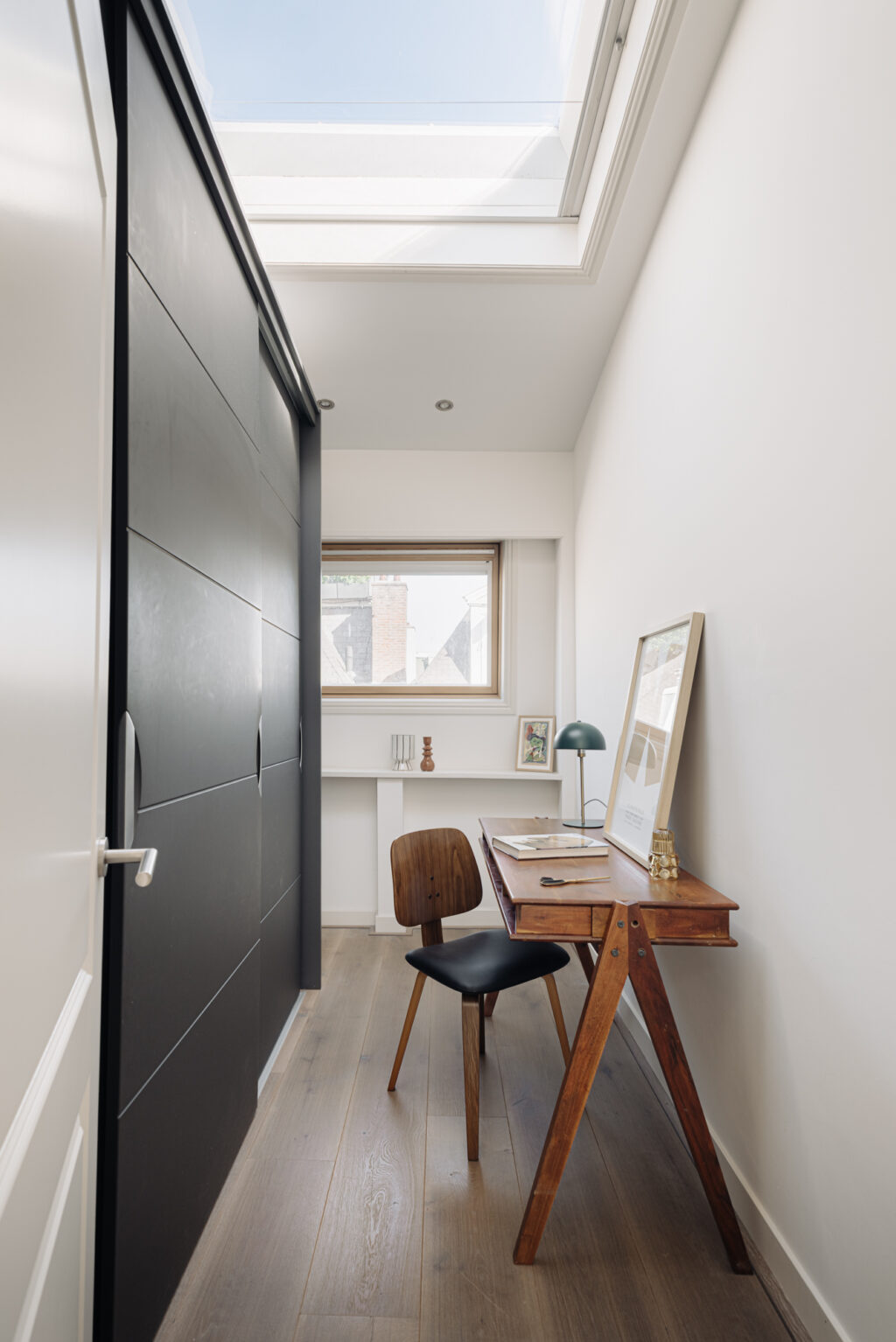
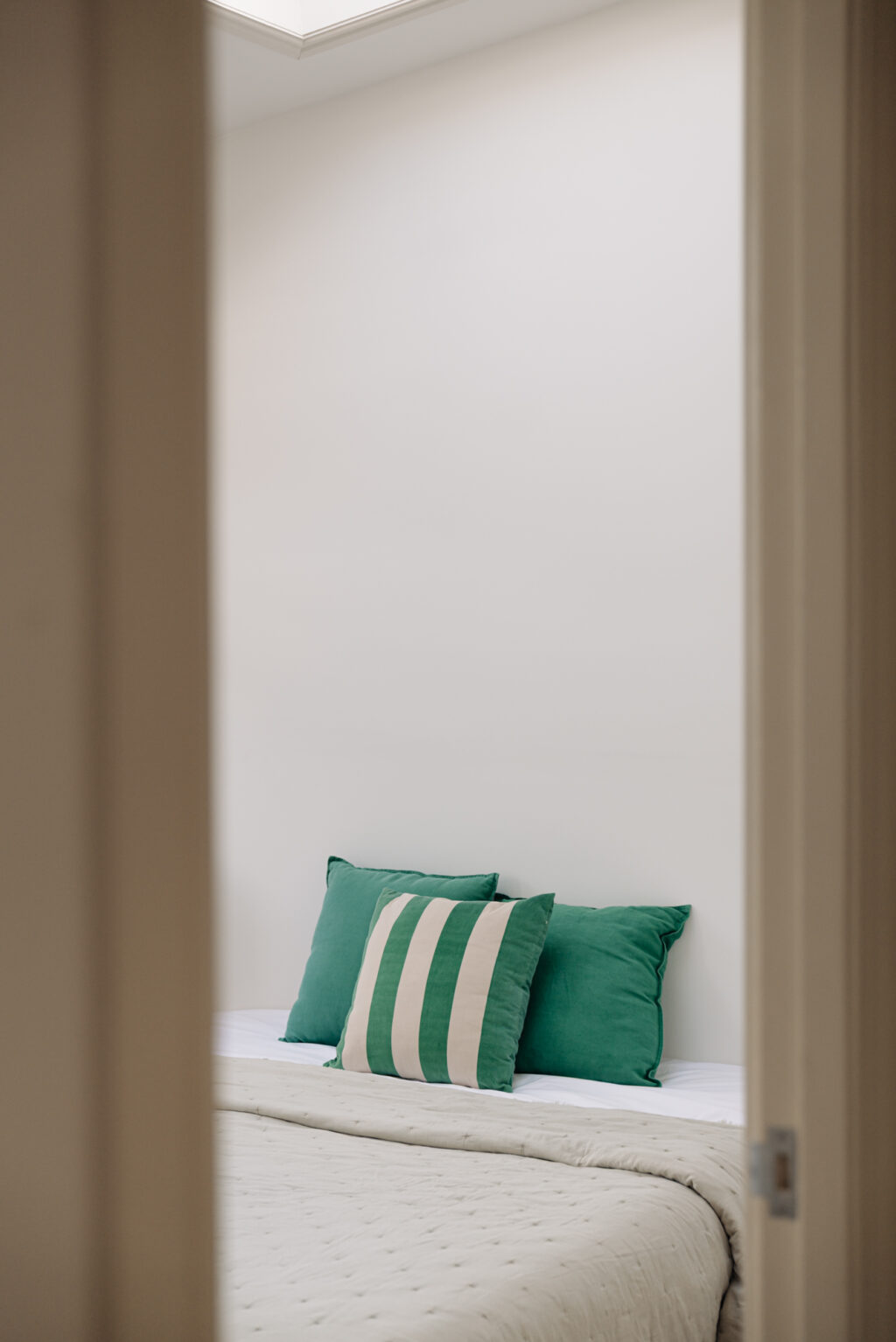
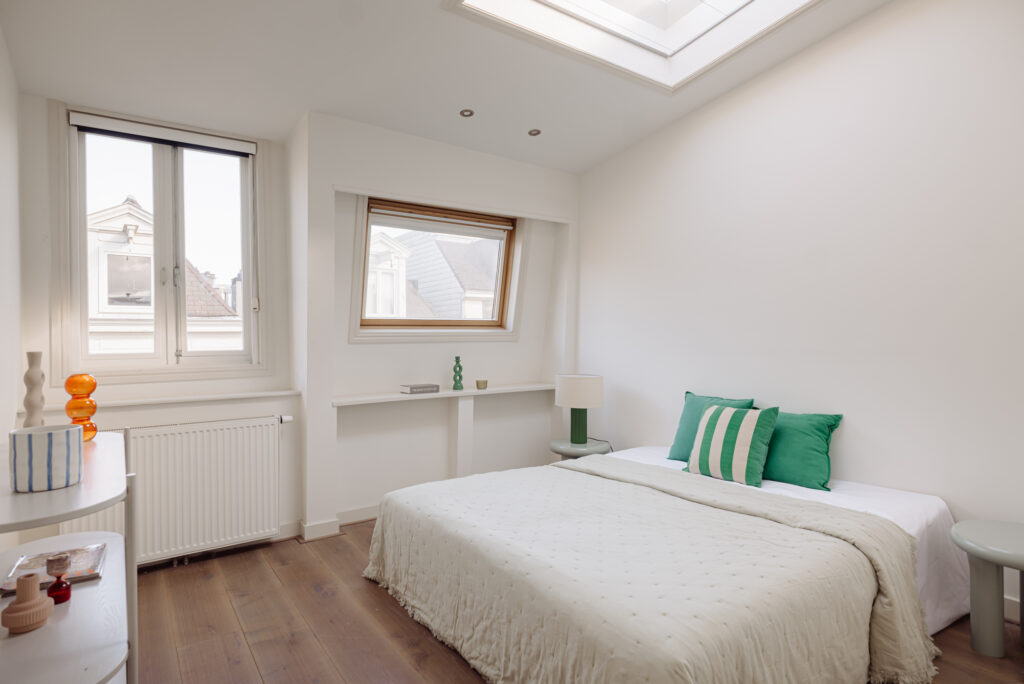
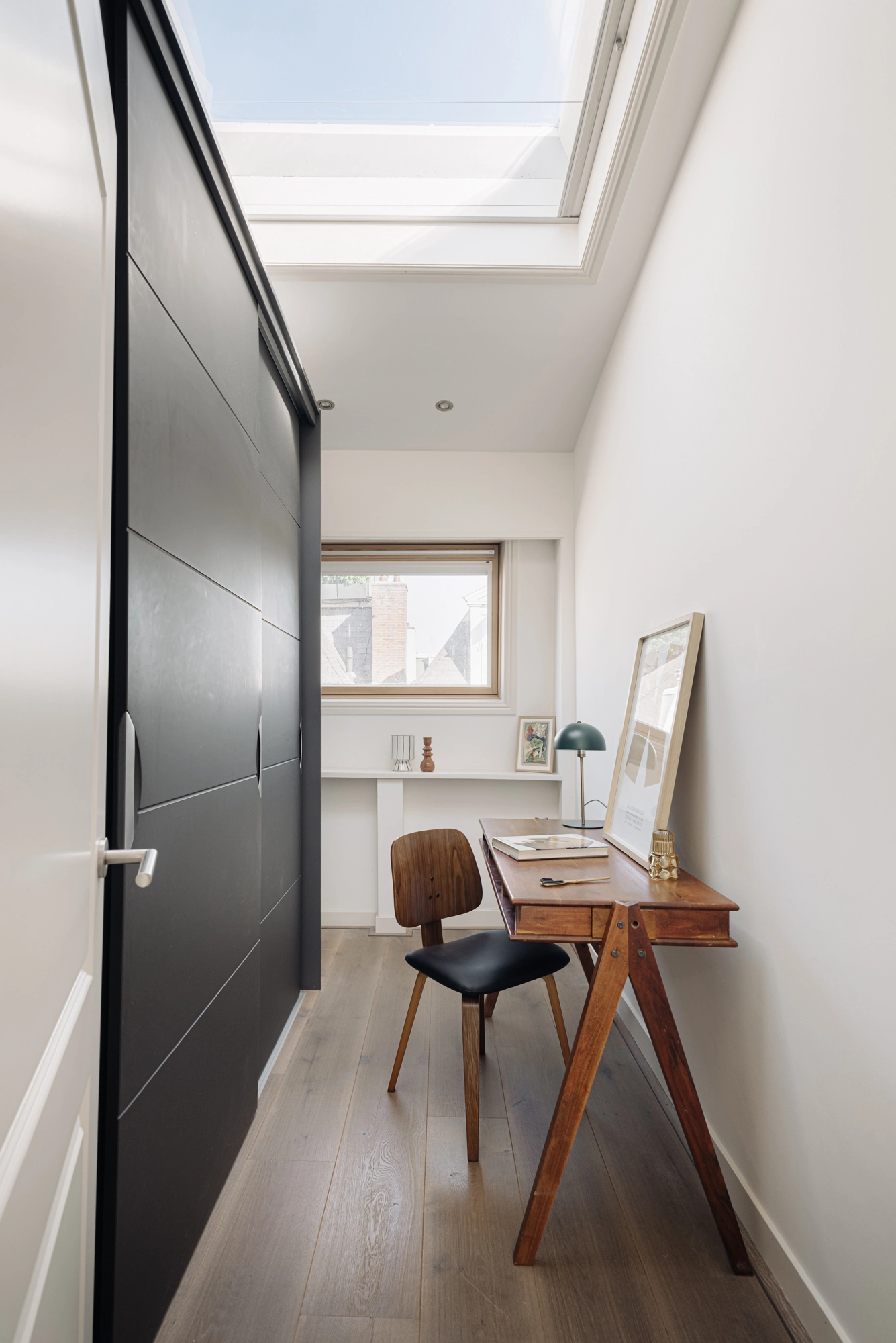
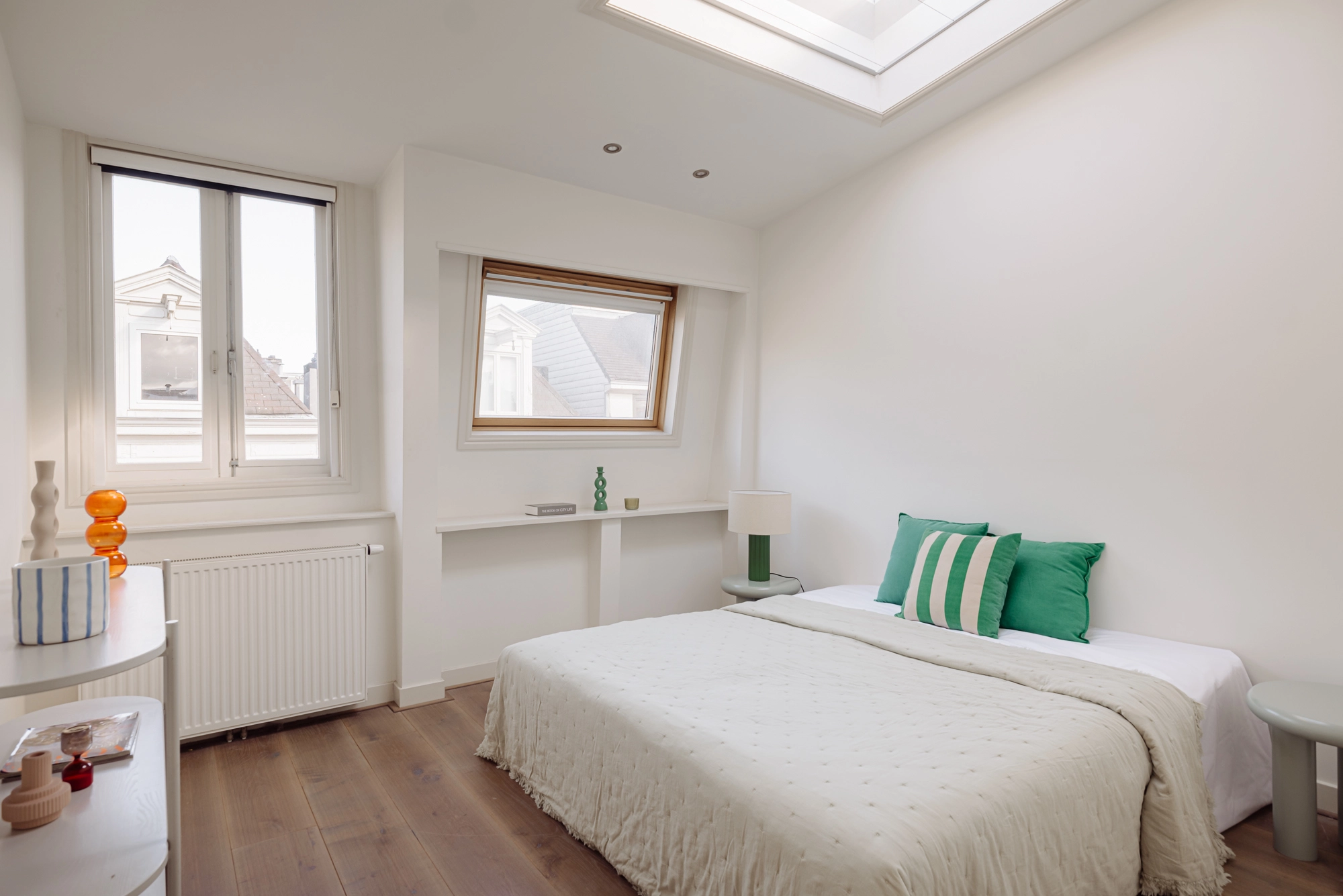
At the front are two bedrooms. The main room accommodates a double bed and wardrobe, while the second is suitable as a study or guest bedroom. Both receive natural light through the front façade and roof windows.
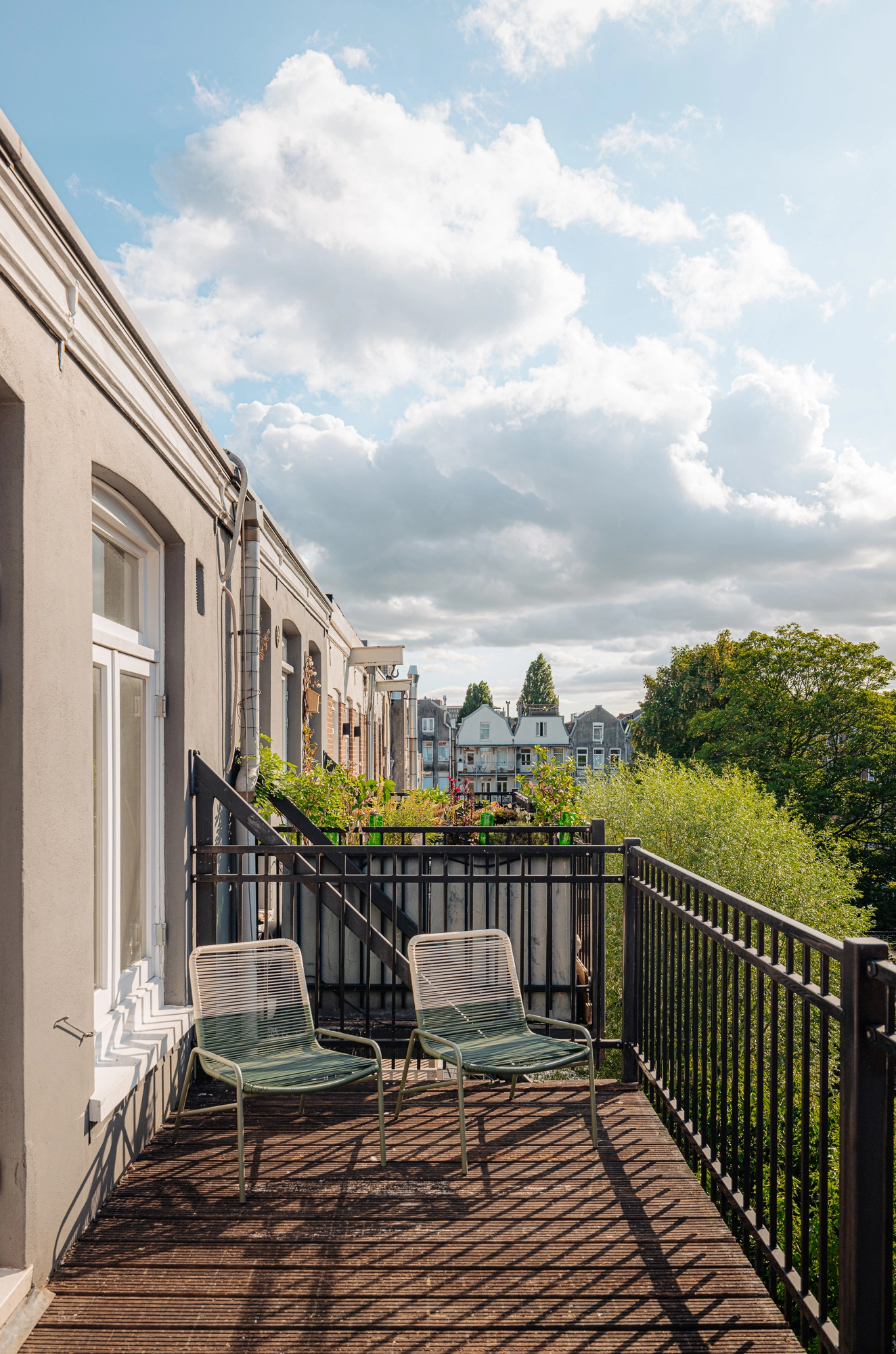
The terrace at the rear is oriented to the south, providing ample space for a dining table with chairs and/or a lounge set. The apartment is efficiently laid out and well maintained, with all functions logically organised and practical in use. Its location in De Pijp offers direct access to public transport, shops, restaurants, and Sarphatipark.
Neighbourhood
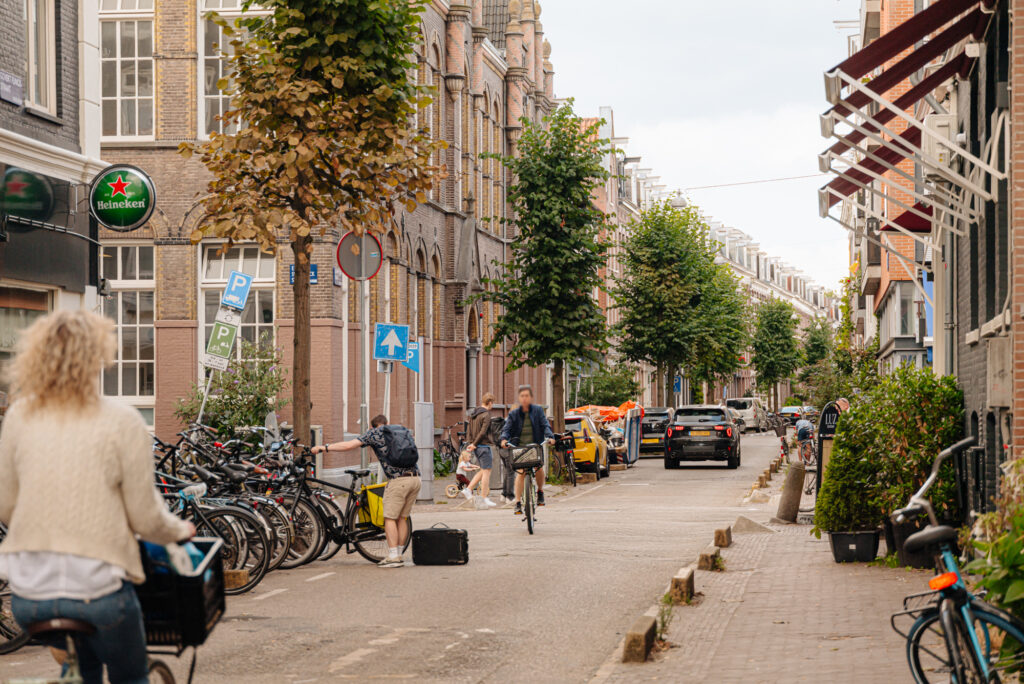
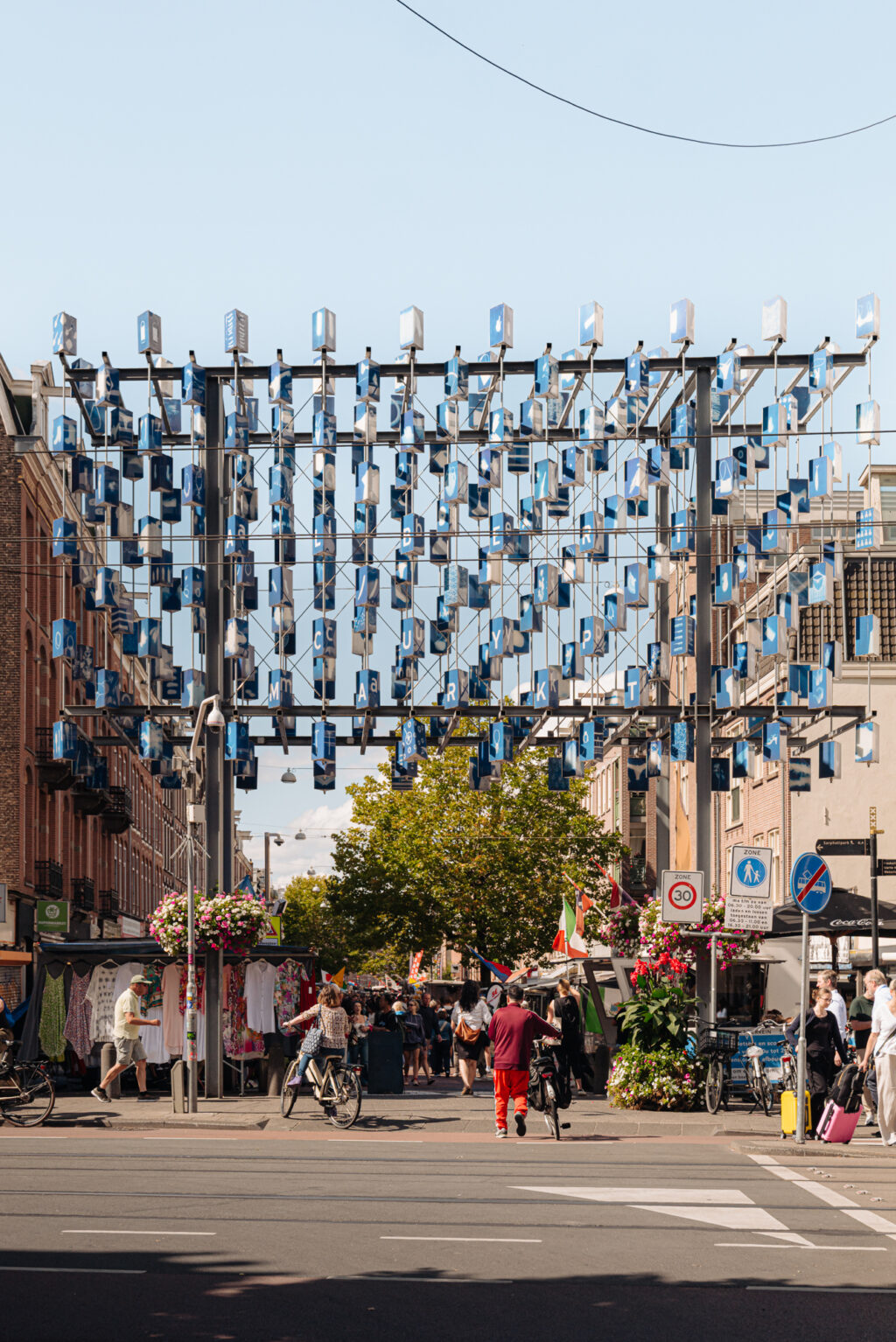
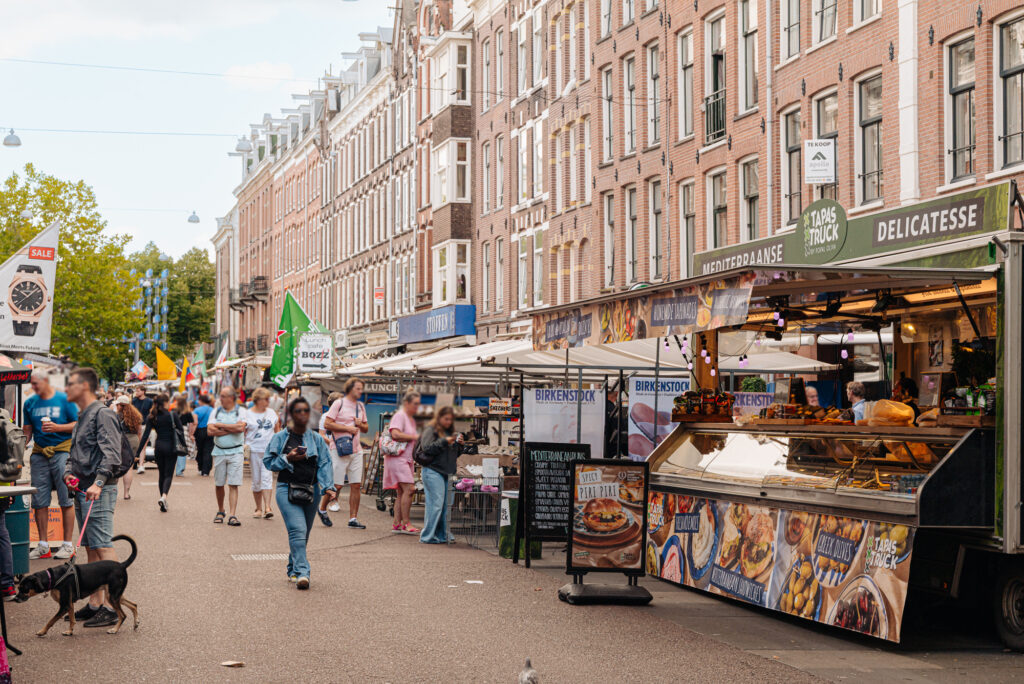
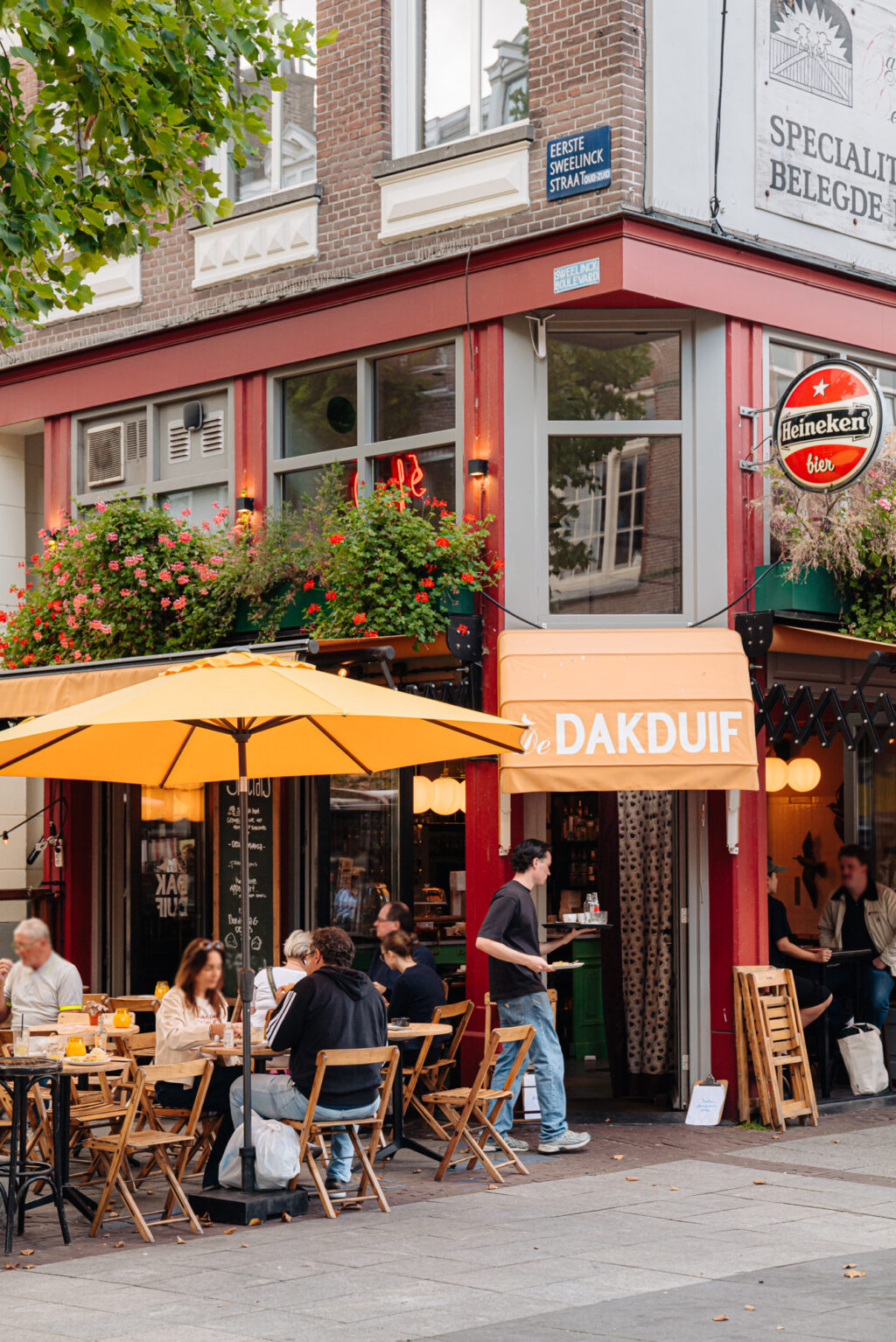
The apartment is situated in Amsterdam South, in the most desirable and tranquil part of De Pijp. The neighbourhood was developed in the late nineteenth century to provide housing for newcomers who moved to the capital for work. In 1886, Freddy Heineken’s father opened the Heineken Brewery here. The first workers’ dwellings, around Albert Cuypstraat, were built quickly and inexpensively. Later, towards the Diamantbuurt, Berlage added housing in the Amsterdam School style. It is said that the neighbourhood owes its name to the long, straight streets, shaped like a pipe. De Pijp is known for its vibrancy and lively hospitality venues, all within walking distance. The Albert Cuyp Market and Sarphatipark are defining landmarks of the district. Artists and writers such as Piet Mondrian, Carel Willink, and Gerard Reve once lived and worked here. Its lively and mixed community fostered a great variety of cafés and eateries. Today, De Pijp is considered the Quartier Latin of Amsterdam, still full of energy and home to numerous restaurants, including Samuel’s, Badcuyp, Italian dining at Impero Romano, and French cuisine at Arles or Caron. Along Van Woustraat, one finds a wide selection of eateries from around the world.
Details
•Residential floor area approx. 80 m²
•Roof terrace of approx. 10 m², oriented to the northwest
•Freehold land
•Energy label A
•Service costs VvE €141 per month
•Foundation renewed in 2011, including renovation of the entire building
•Municipal protected cityscape
Disclaimer
This information has been compiled with due care. However, no liability is accepted for any incompleteness, inaccuracy, or consequences thereof. All stated dimensions and surfaces are indicative only.
The measurement instruction is based on NEN2580, intended to apply a more uniform method of measurement to provide an indication of the usable surface area. The measurement instruction does not completely rule out variations in outcome due to differences in interpretation, rounding, or limitations when performing the measureme
Bovenlicht in de Pijp
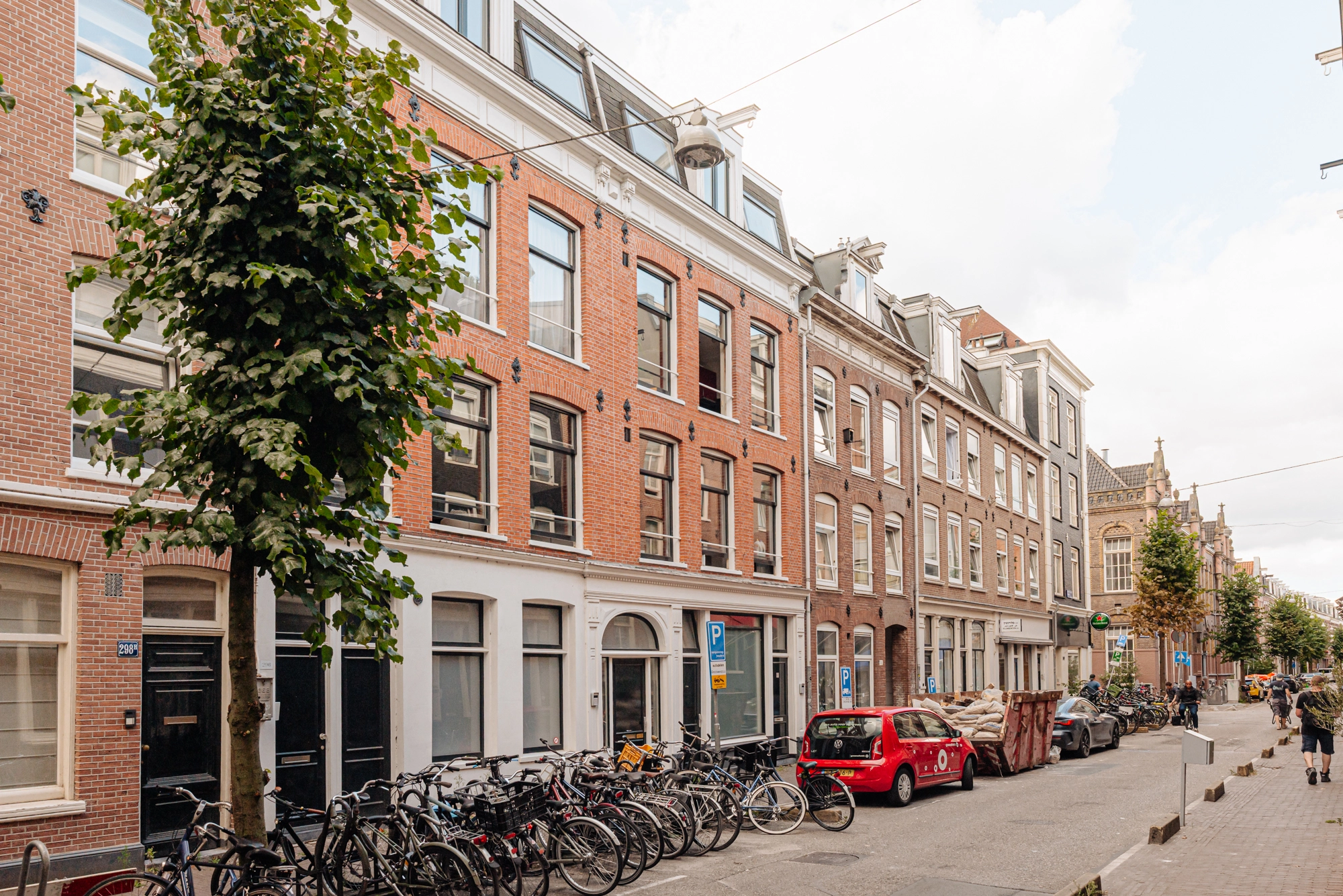
Govert Flinckstraat 294-3 is situated on the third floor of a building in the heart of De Pijp. The location offers immediate access to amenities such as boutiques, restaurants, the Albert Cuyp Market, and Sarphatipark. Despite its central position, the apartment enjoys a sense of tranquillity, elevated above the urban rhythm. The building was renovated in 2011 and equipped with a new foundation. The layout is both efficient and logical, with a focus on space and natural light. The apartment presents a clear floor plan, well-organised rooms, and a carefully maintained finish. It reflects the essence of urban living with comfort and clarity. In short, a bright and inviting home with a thoughtful design and a generous living, perfectly attuned to a metropolitan lifestyle.
Design vison
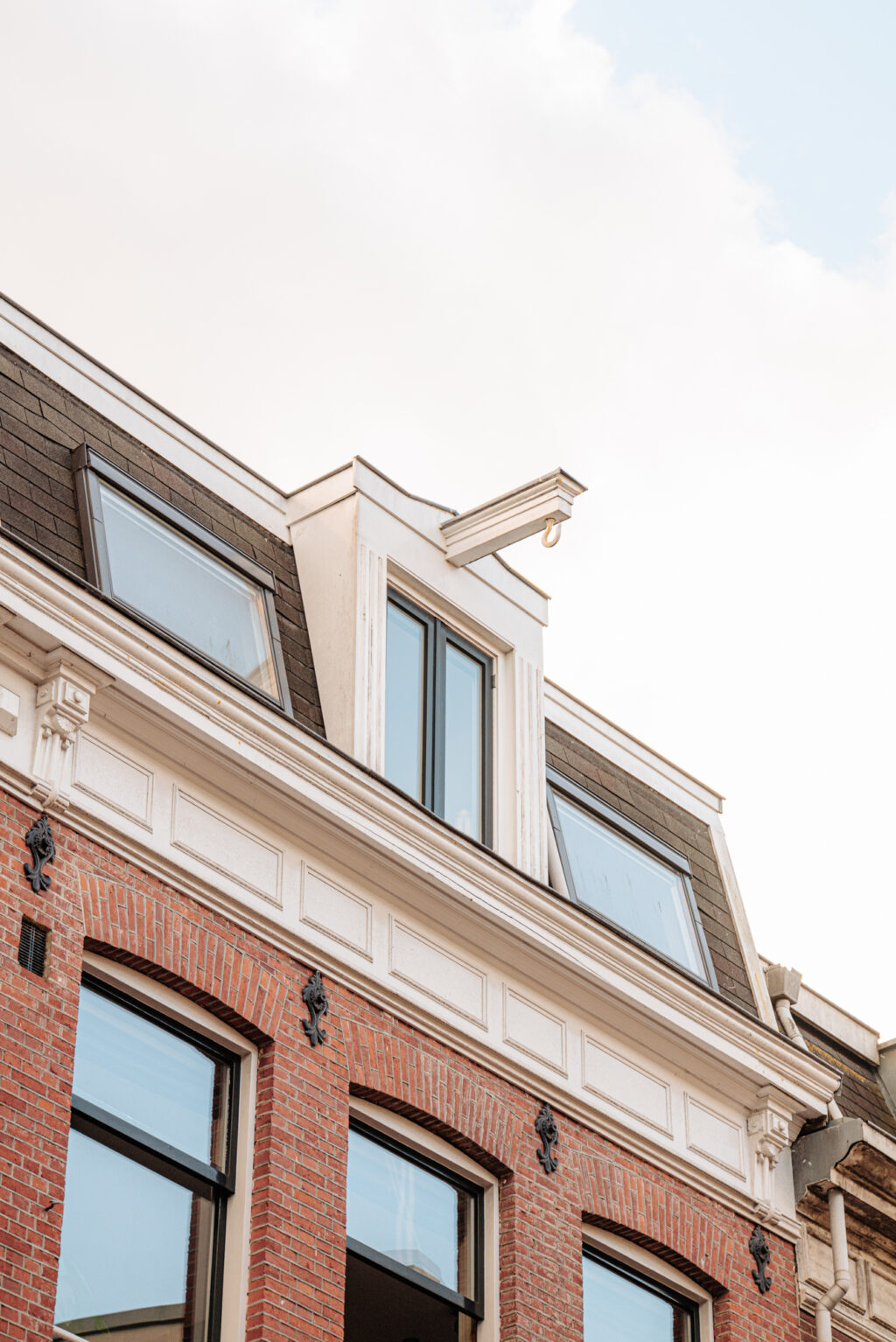
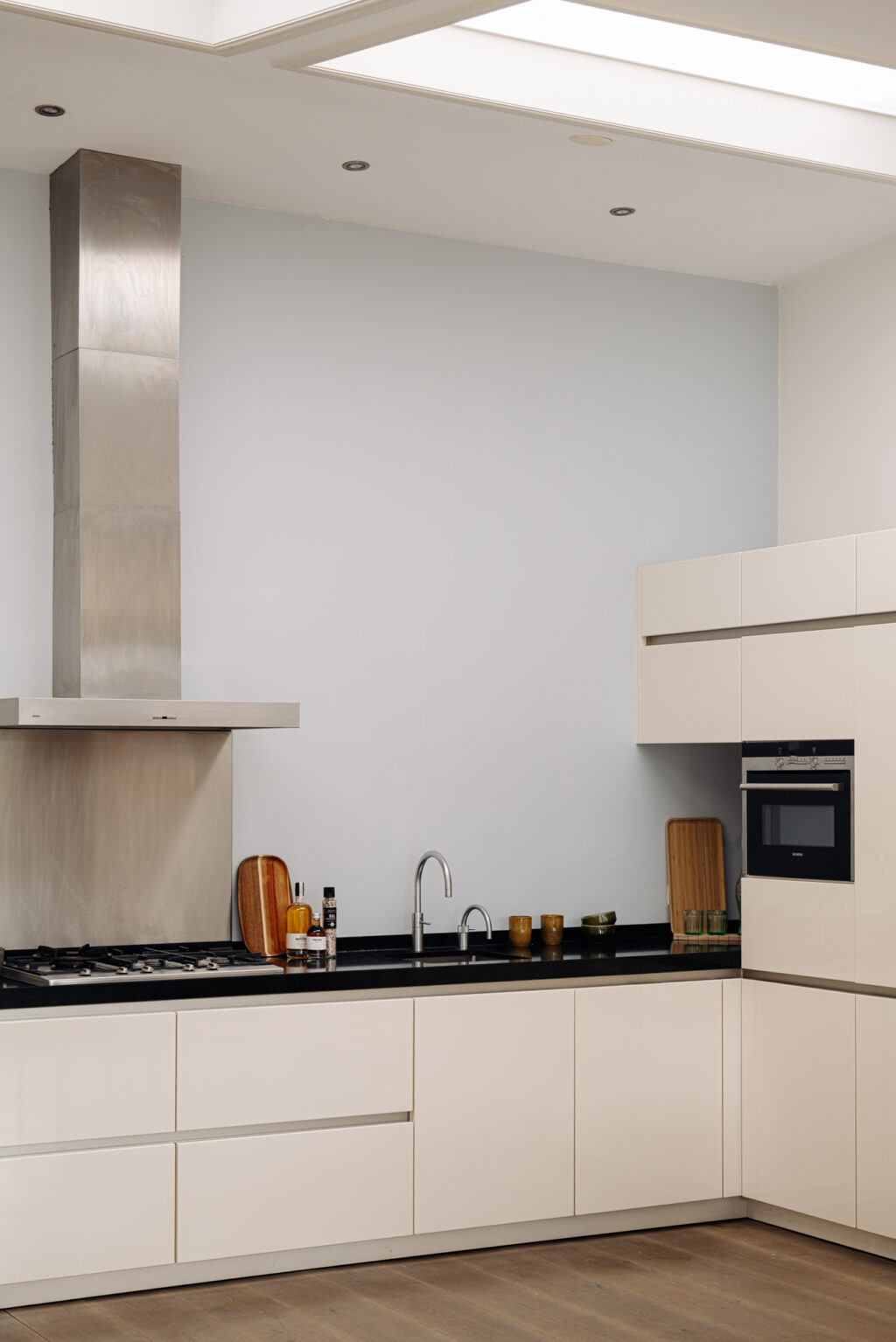
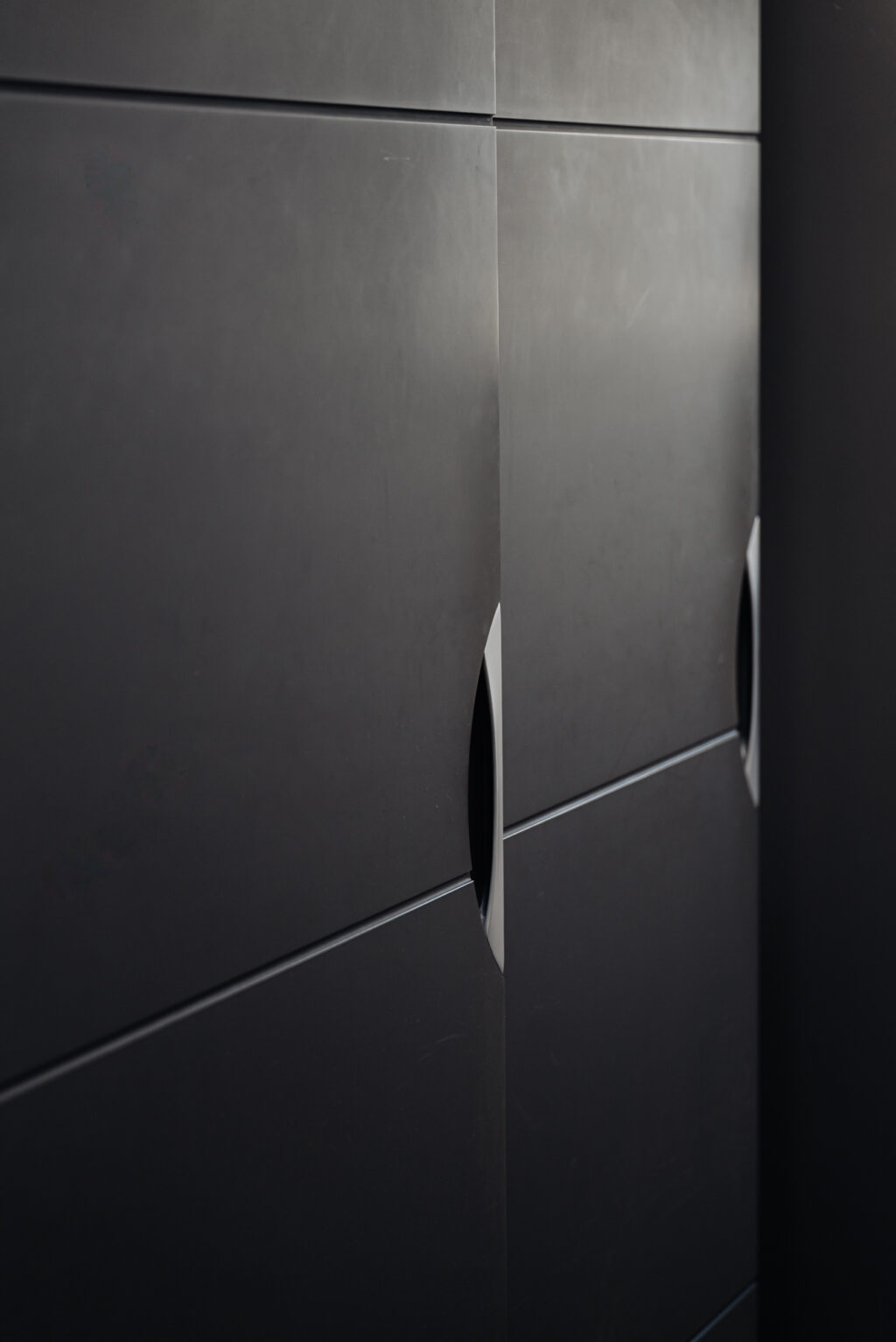
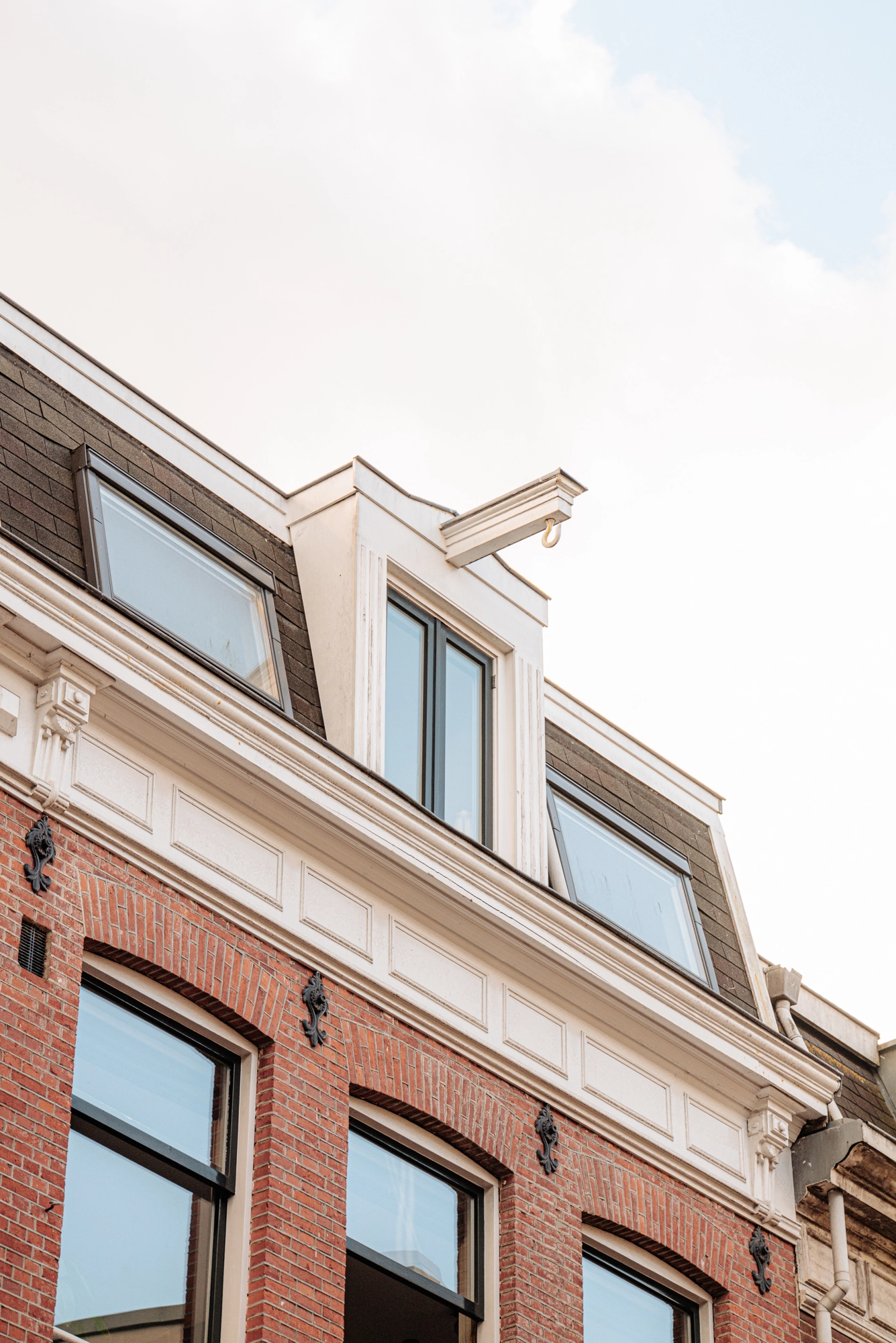
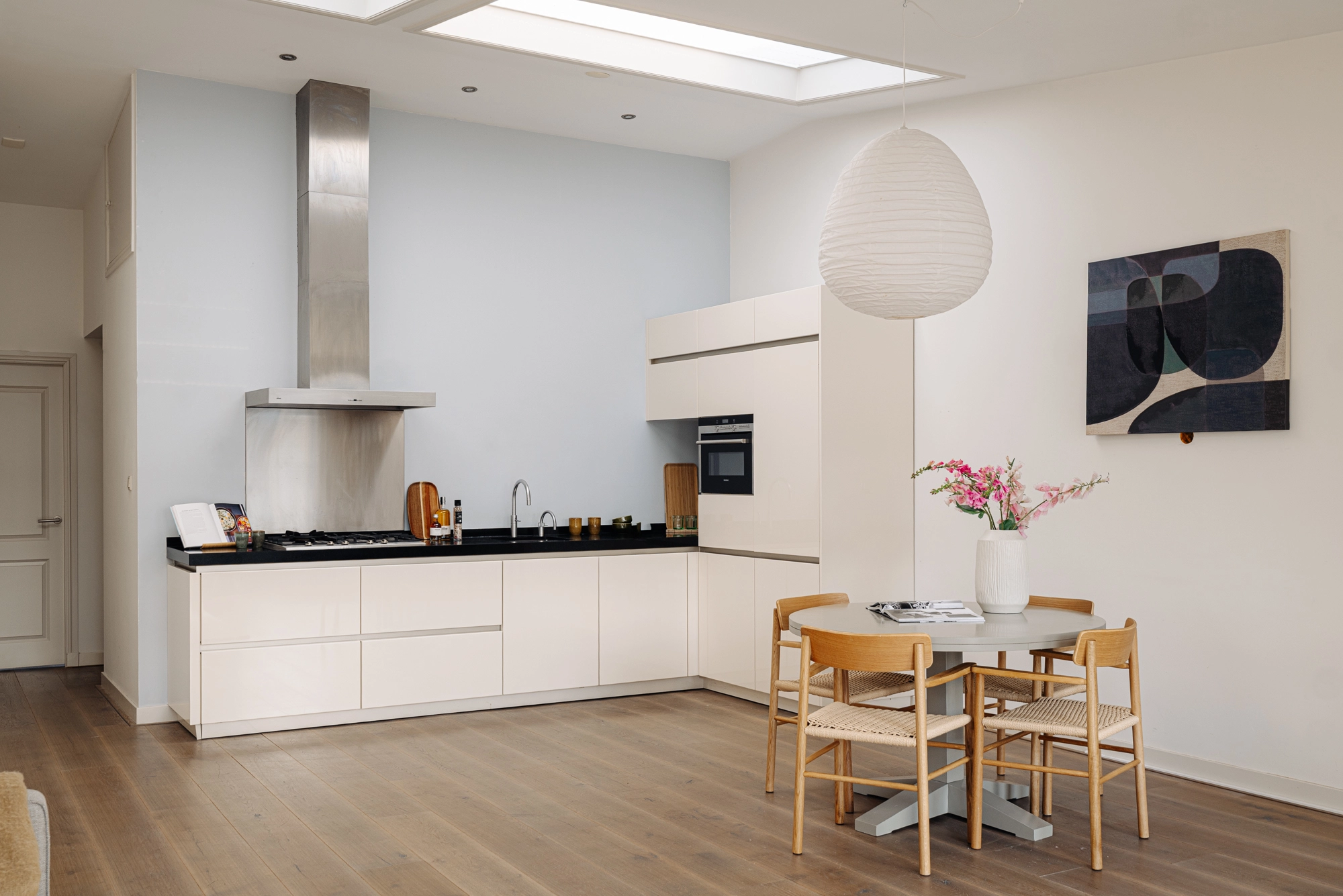
This upper-floor residence on Govert Flinckstraat, set on freehold land, underwent a complete renovation in 2011, including the foundation. The layout is simple and well-structured: living at the rear, sleeping at the front. The living area spans the full width of the building and connects directly to the terrace. Large windows and French doors provide abundant daylight and create a seamless transition to the outdoors. At the heart of the apartment, above the kitchen, several skylights draw natural light deep into the interior. High ceilings contribute to a generous sense of openness. The material palette is understated and modern, with flooring in natural wood. The kitchen is sleek in design, with handleless cabinetry and a dark worktop, all executed in a calm, neutral tone. The bedrooms are functional and light, with daylight entering through the front façade and roof lights. The building originally had a mixed function, with a printshop on the ground floor and residences above. In 2011, it was redeveloped into a small-scale residential building, preserving the historic façade and structural framework. The upper-floor residence was reconfigured and adapted to contemporary living requirements. The façade belongs to a continuous row of early twentieth-century buildings. Govert Flinckstraat is characteristic of De Pijp: dynamic, defined by a blend of residences and former workspaces. Its original purpose—living, working, and producing within a single address—remains legible in the urban fabric.
Living and cooking
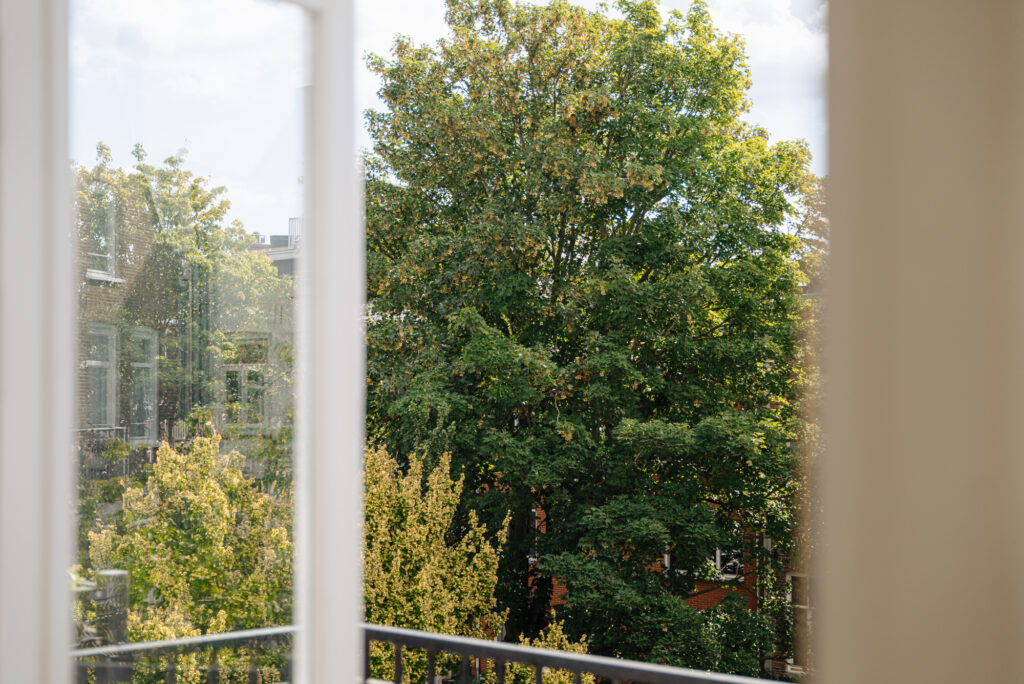
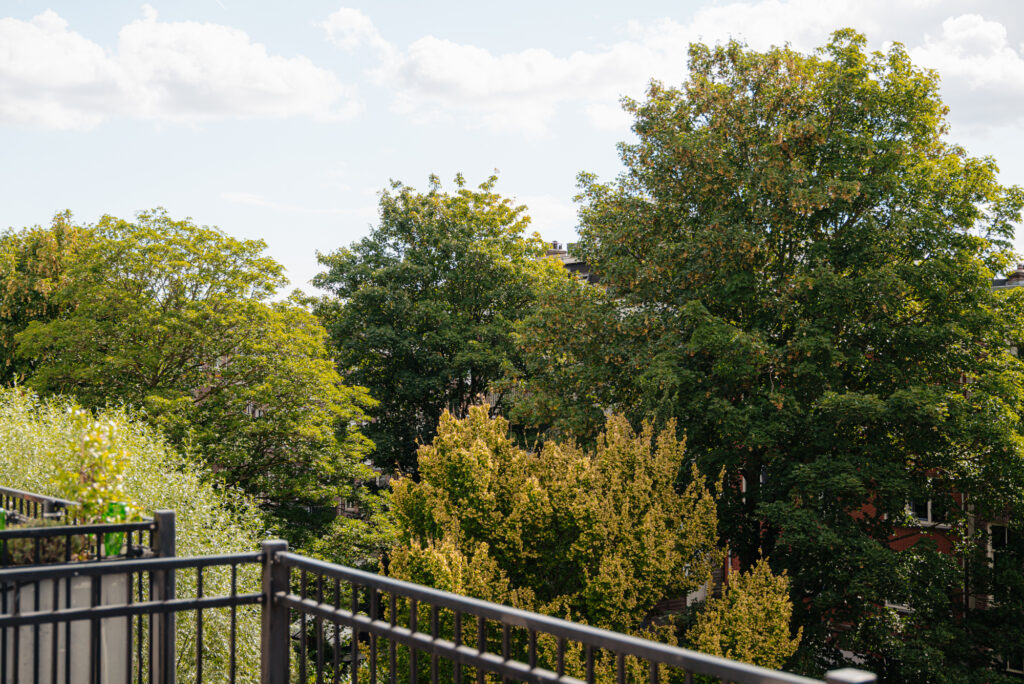
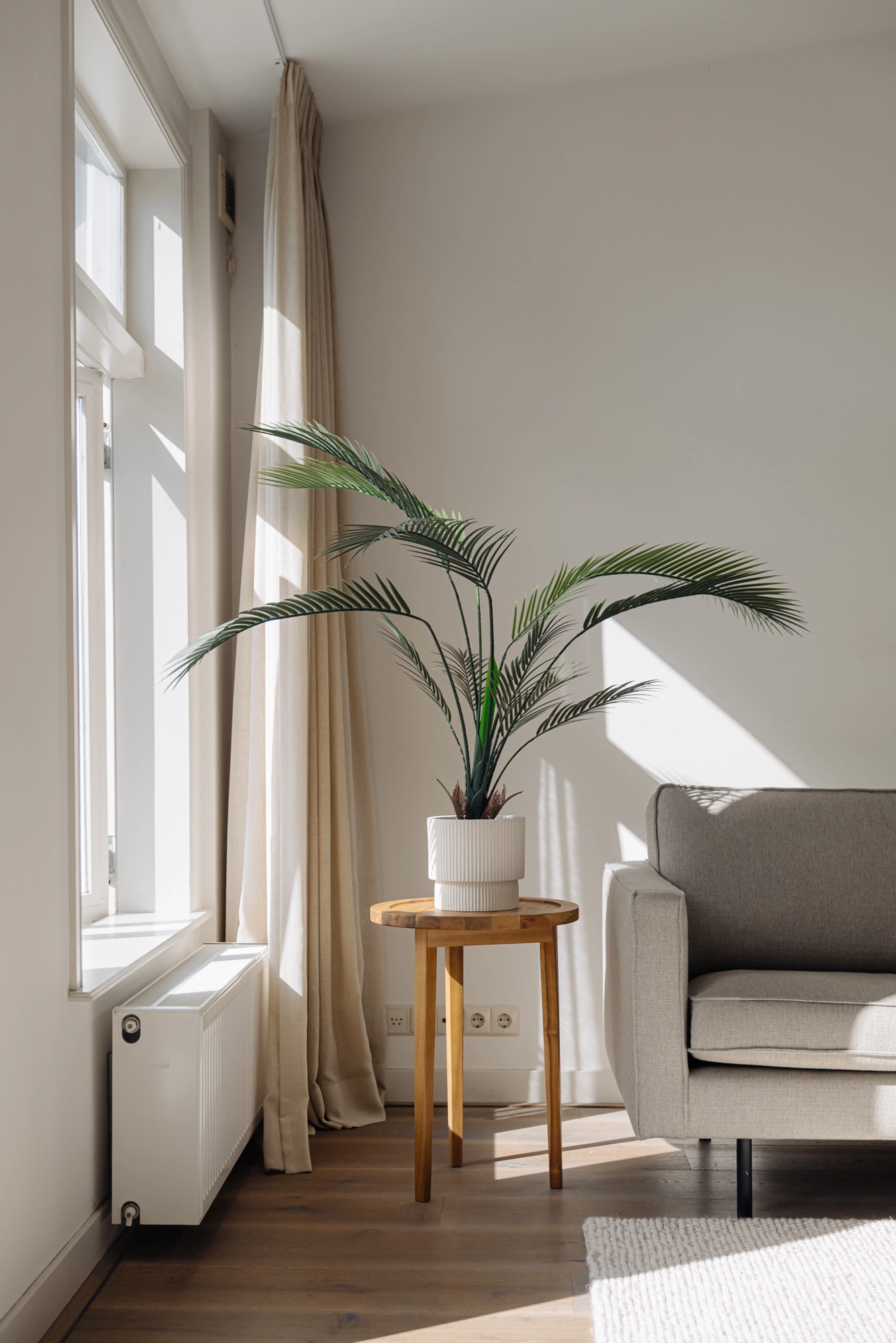
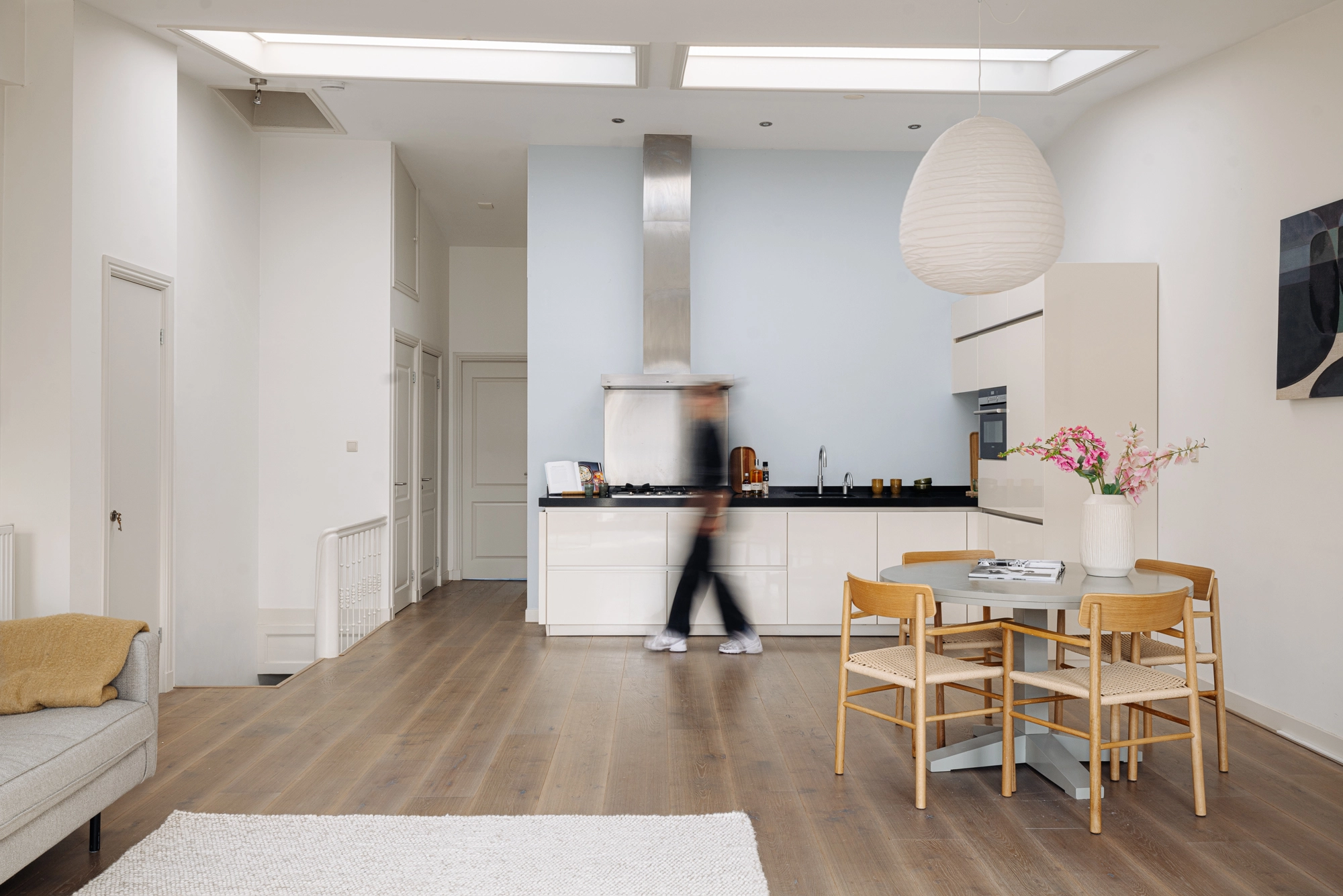
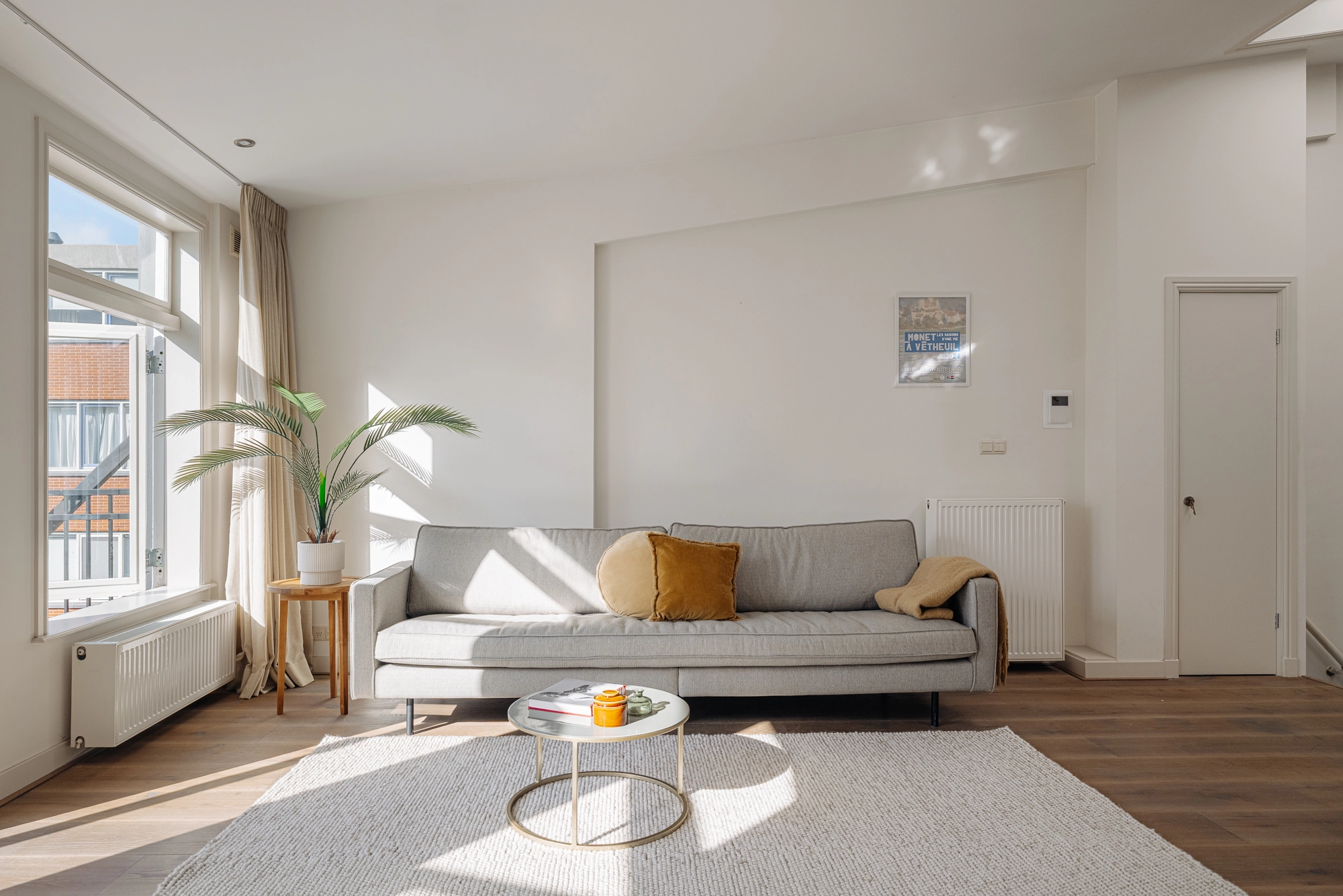
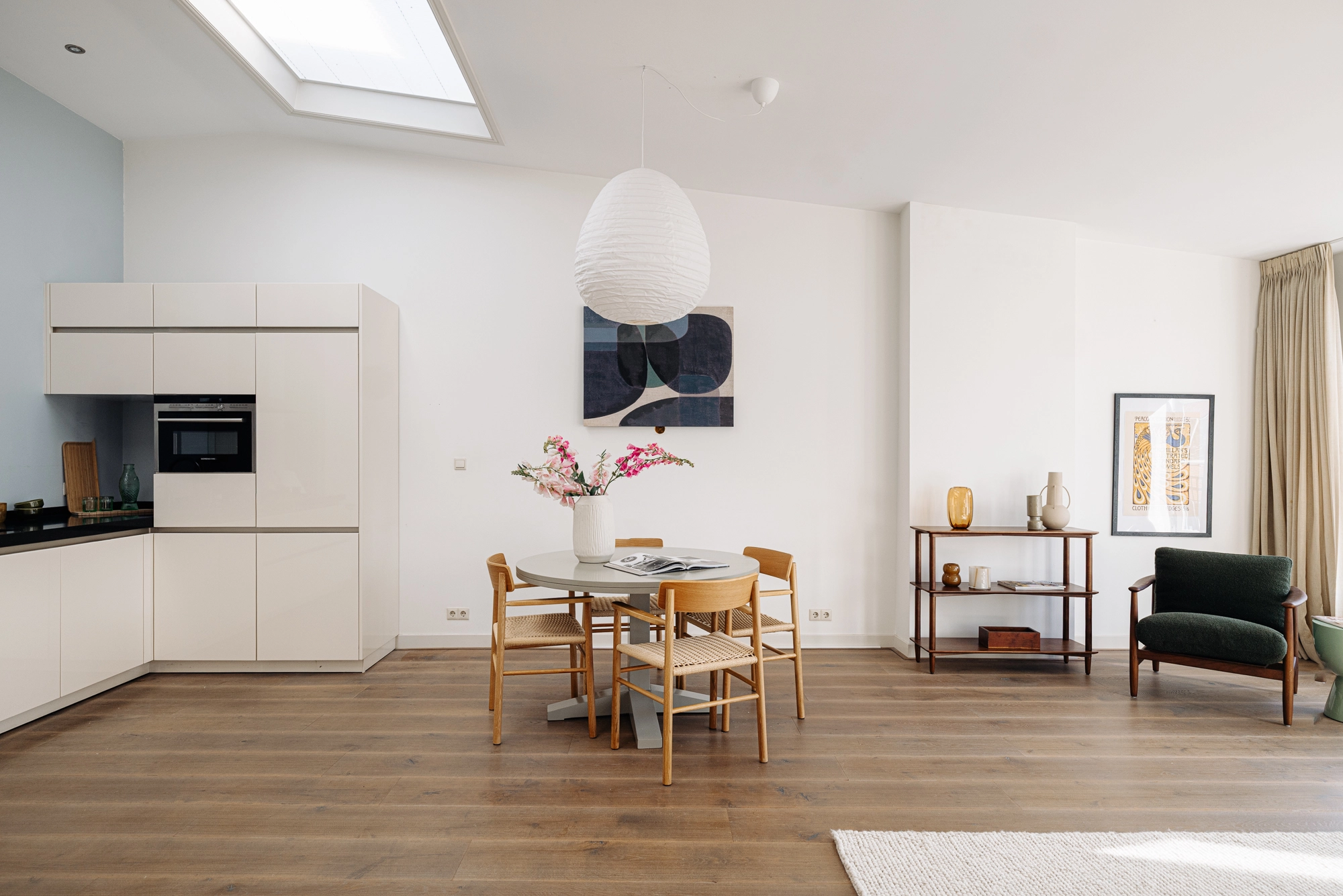
The living and kitchen areas form one continuous open space at the rear of the residence. This area is light-filled and generously proportioned. Three tall windows and double doors open onto the terrace, allowing daylight to flow deep into the interior. The transition between inside and outside feels natural, with the terrace becoming an extension of the home. The living accommodates a generous seating area and a dining table, with ample space between the functions thanks to the width of the building. The flooring runs seamlessly throughout, enhancing the sense of cohesion. Adjacent to the kitchen lies the access to the bedrooms, bathroom, and guest toilet. Living takes place here at the rear of the building, overlooking the green inner courtyards. The kitchen is positioned along the inner wall and finished in a light palette. The layout is spacious, with ample work surface and integrated appliances. Above the kitchen, two skylights bring in additional daylight. The finish is calm, refined, and modern.
Sleeping and bathing
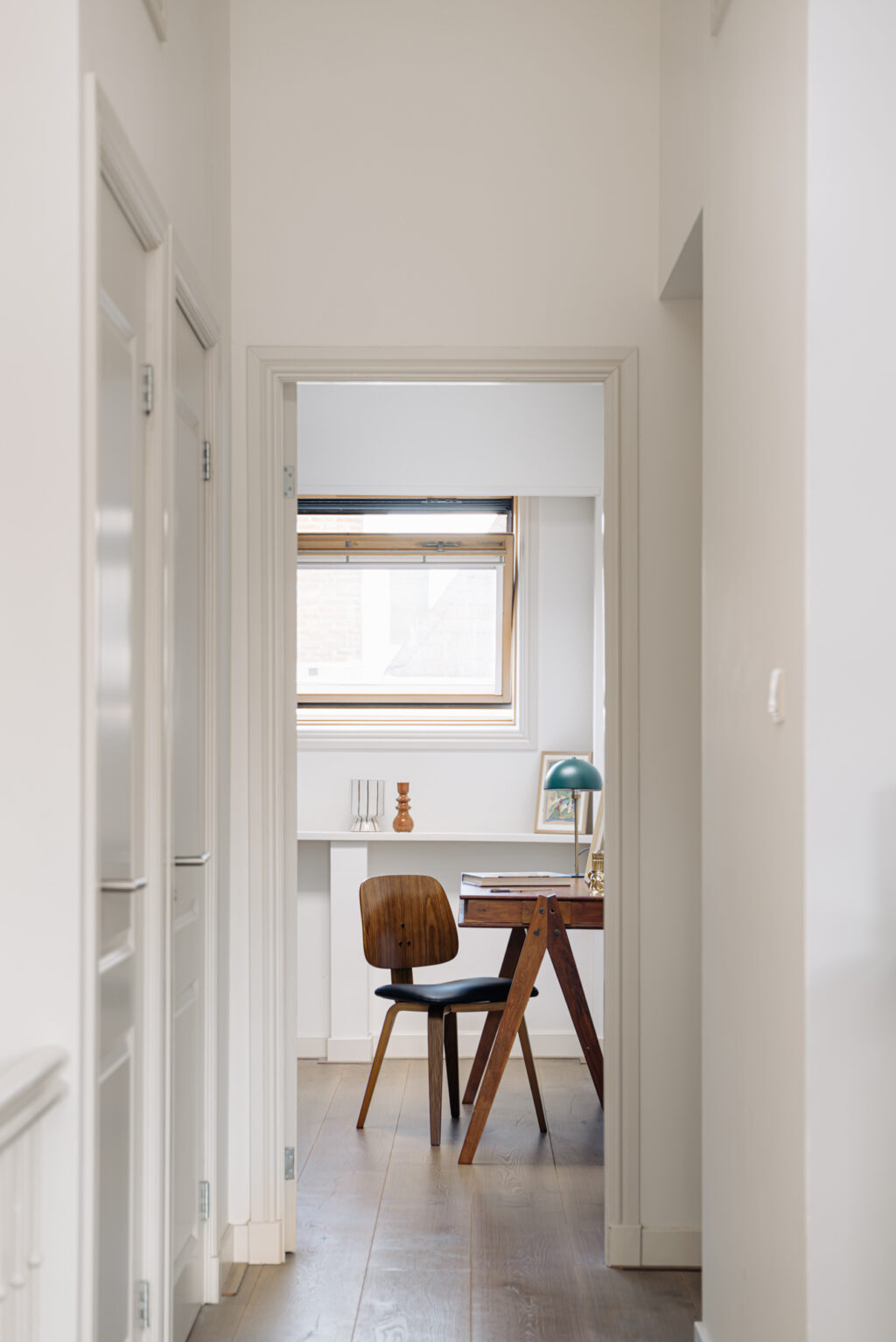
At the front of the residence are two bedrooms. In 2019, one large bedroom was divided into two separate spaces. The primary bedroom accommodates a double bed and a built-in wardrobe. The second room is more compact and suitable as a guest room or study, currently arranged as a dressing room with workspace. Both rooms receive natural light through the front façade and roof windows. Between the living area and the bedrooms lies the bathroom, fitted with a bathtub, walk-in shower, double washbasin, and toilet. The layout is practical and the finish neutral. Next to the bathroom is a separate guest toilet and an internal storage room with connections for a washing machine and dryer. Above the bathroom, toilet, and utility space, an additional level provides storage across the full width of the apartment—ideal for items not used on a daily basis yet conveniently within reach. Out of sight, yet easily accessible.
The terrace
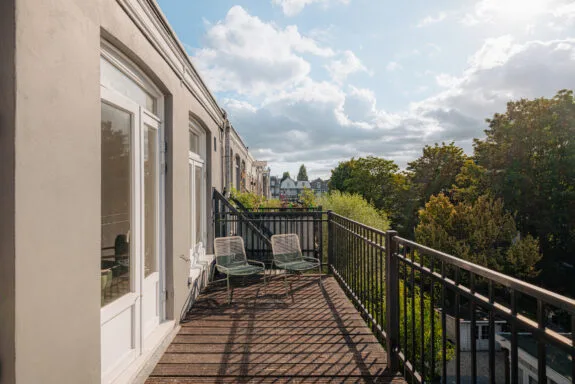
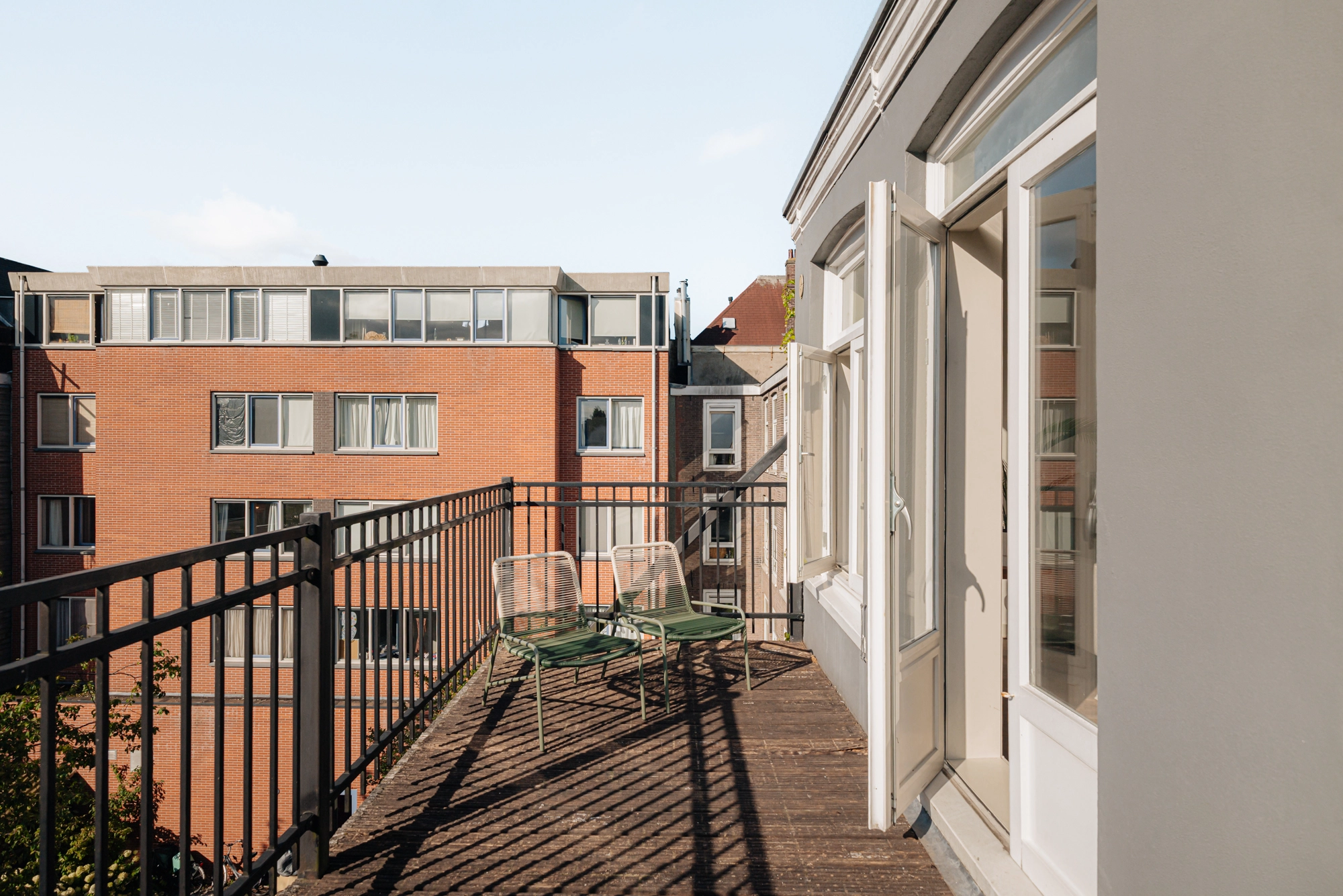
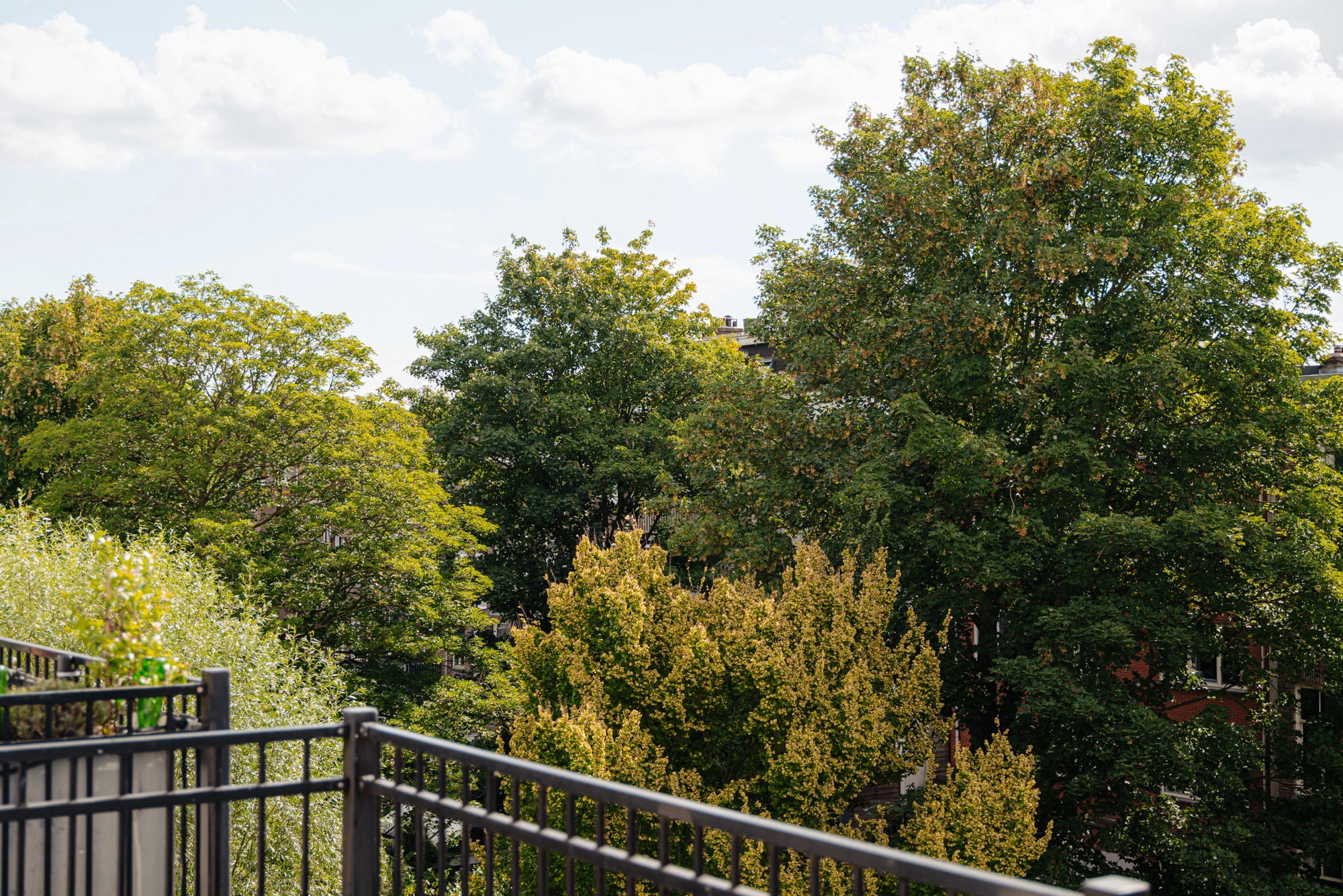
At the rear of the residence lies a terrace of over ten square metres, directly connected to the living room. Through the French doors, the flooring continues seamlessly from inside to outside. With its westerly orientation, the terrace enjoys sunlight from early afternoon until evening. Its generous width offers ample space for a dining table with chairs and/or a lounge set. Situated on the top residential floor, the terrace combines shelter with openness. The surrounding buildings keep noise at a distance, creating a calm outdoor setting in the midst of the city. Thanks to the direct connection with the living room, the terrace becomes a natural extension of daily life in the summer months—whether for a morning coffee or a dinner in the evening sun. Outdoor living here is effortless and inviting.
Neighbourhood
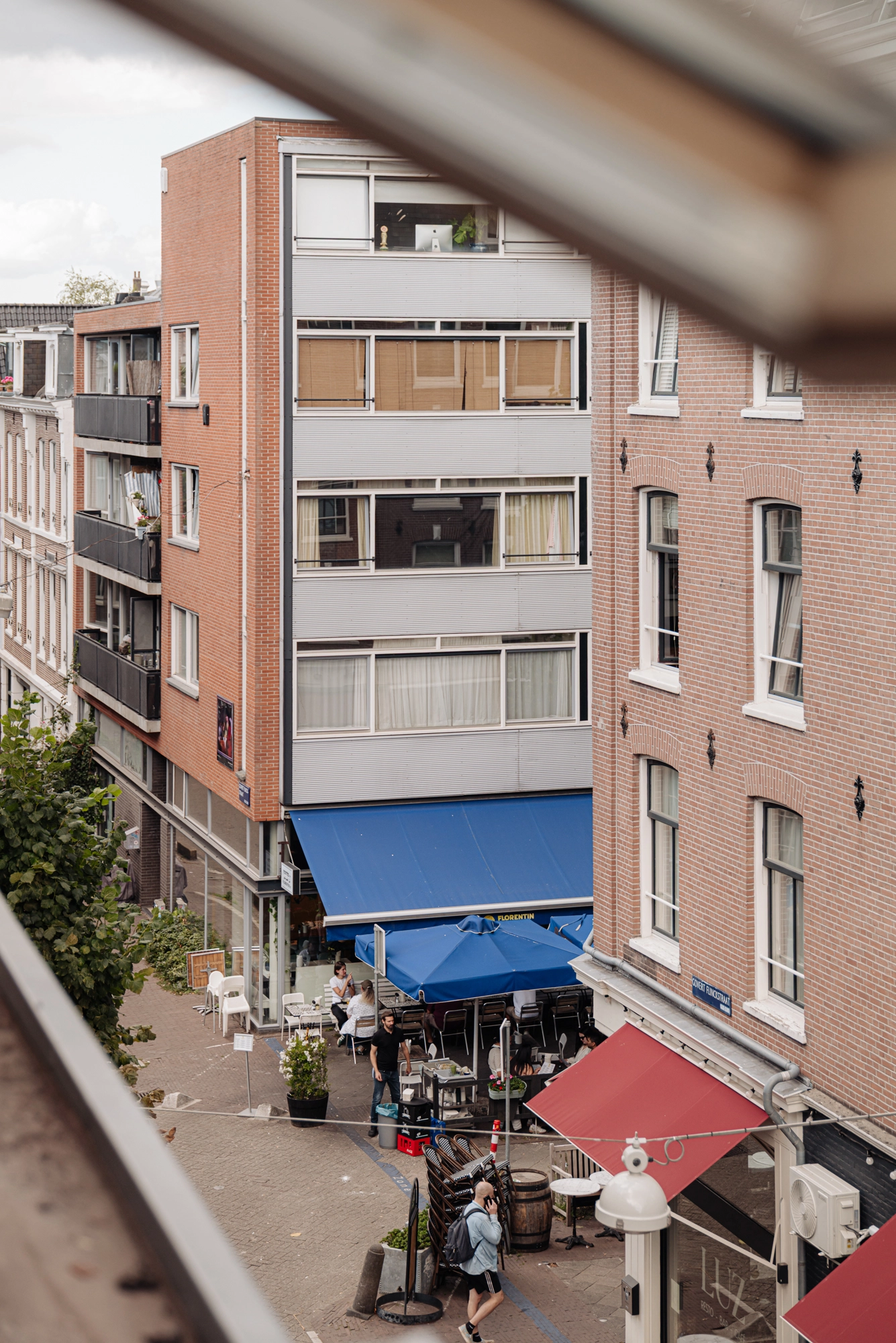
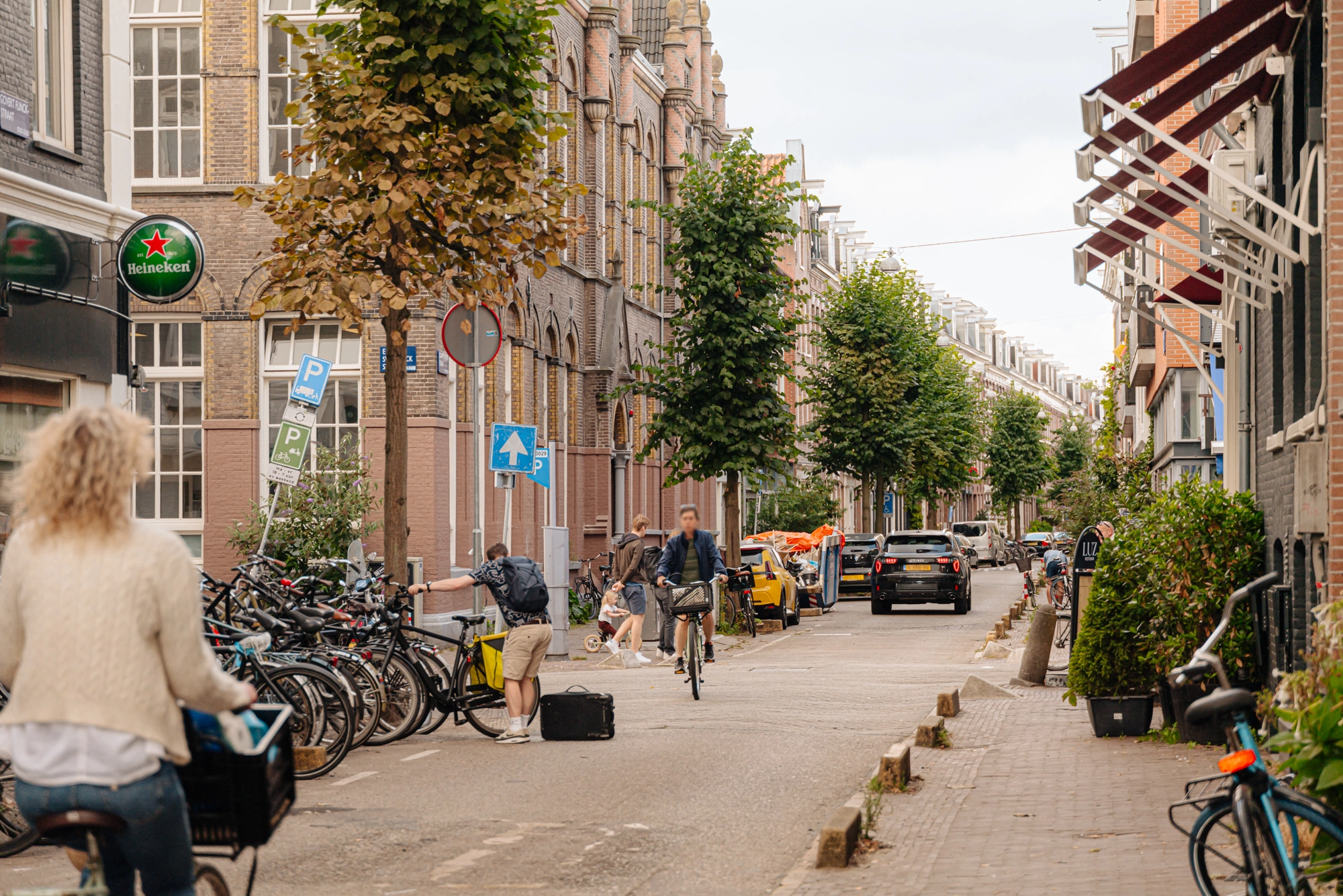
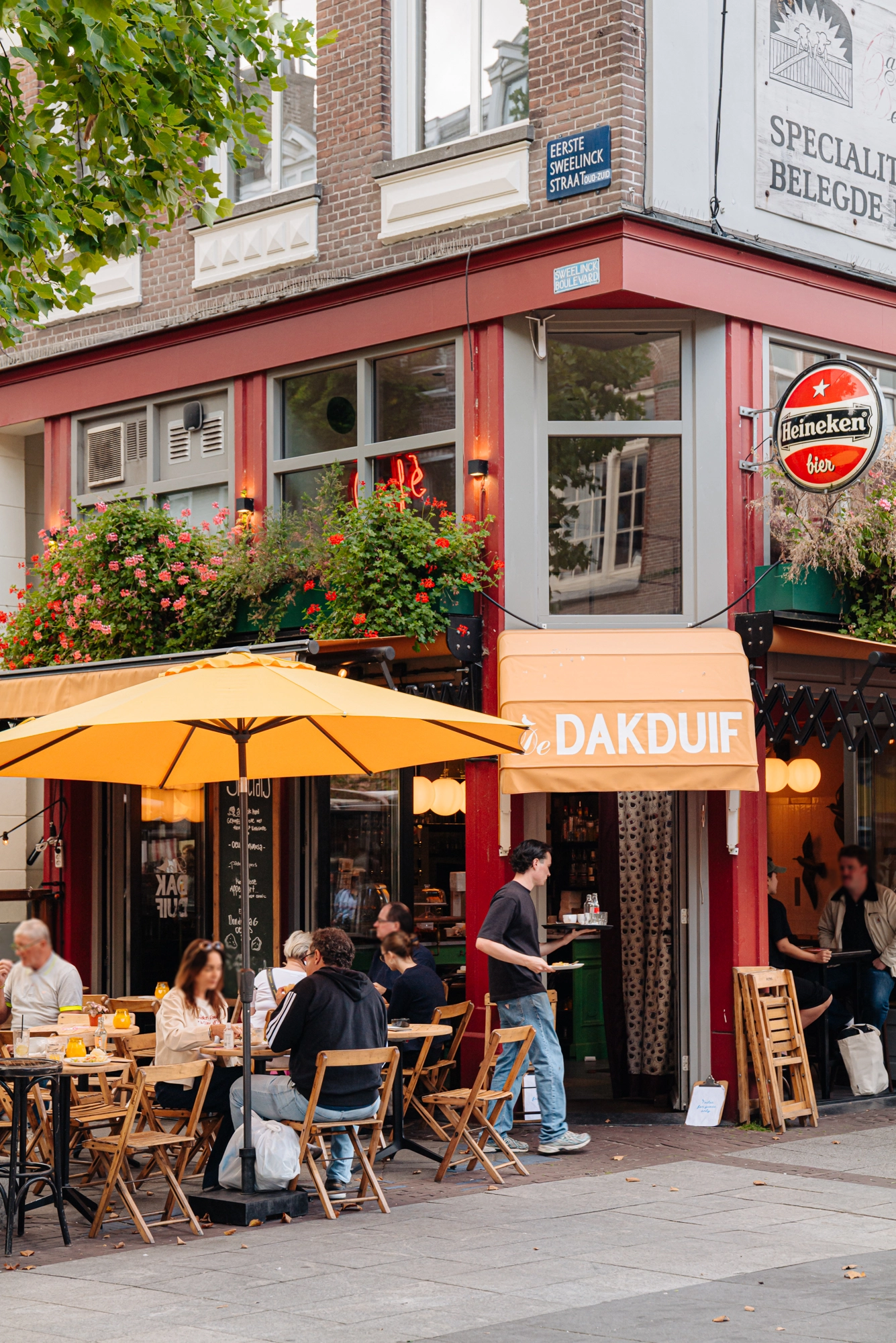
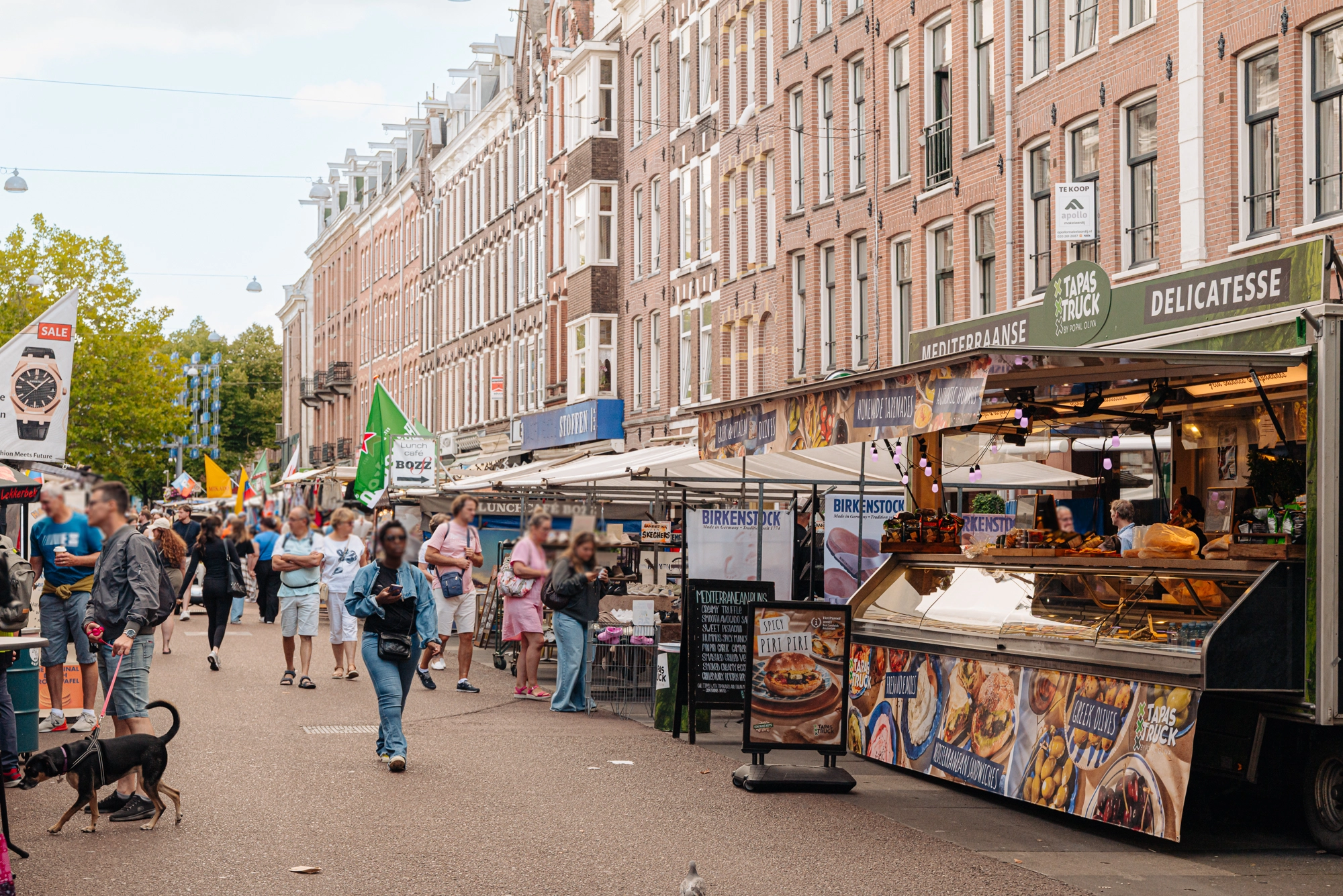
The apartment is located in Amsterdam South, in the most sought-after and tranquil part of De Pijp. The neighbourhood was developed in the late nineteenth century to provide housing for newcomers who moved to the capital in search of work. In 1886, the father of Freddy Heineken opened the Heineken Brewery here. The first workers’ houses around the Albert Cuypstraat were built quickly and inexpensively. Later, in the direction of the Diamantbuurt, Berlage added residential blocks in the Amsterdam School style. It is said that the district owes its name to the long, straight streets that resemble the shape of a pipe. De Pijp is renowned for its vibrancy and lively hospitality venues, all within walking distance. The Albert Cuyp Market and Sarphatipark are defining elements of its atmosphere. Artists and writers such as Piet Mondrian, Carel Willink, and Gerard Reve once lived and worked here. Its diverse community fostered a wealth of cafés and eateries. Today, the neighbourhood is known as the Quartier Latin of Amsterdam, still brimming with dynamism and home to a wide range of restaurants, including Brut de Mer for champagne and oysters, Italian dining at Impero Romano, and French cuisine at Arle or Caron. Along Van Woustraat, one finds a variety of eateries from around the world for a quick and casual bite.
Accessibility
Within three minutes by bicycle lies “De Pijp” station on the North/South metro line. Train connections are available at Amstel Station, while tram 4 (Van Woustraat), tram 3 (Ceintuurbaan), and bus line 246 also serve the area. By car, there is convenient access to the Amstel junction, connecting to the A2 and A10 motorways. The residence is situated in the Oude Pijp, a central part of Amsterdam close to Sarphatipark, Van Woustraat, the Albert Cuyp Market, and within reach of destinations such as Utrechtsestraat.
Parking
Parking is available through a residential permit system on public streets (permit area South 3.1). With this permit, parking is allowed in both South 3 and South 4. As of 2025, a resident’s permit costs €192.45 per six months. The current estimated waiting time for a permit is five months. A second residential parking permit per address is not available in this area.
(Source: City of Amsterdam, September 2025)
1073 BX Amsterdam
Arles
Numa Muller, de chef uit Arles, creëert elke maand een nieuw 3, 4 en 5 gangen menu. Zijn neo-bistro gerechten zijn eenvoudig doch verrassend door de bijzondere combinaties van de Franse keuken met invloeden van buitenaf. De geheel Franse wijnkaart is een interessante combinatie van traditionele producenten met zowel opkomende vins naturels.
In 2022 is het restaurant voor het vijfde jaar op rij door Michelin bekroond met een Bib-Gourmand.
1073 CL Amsterdam
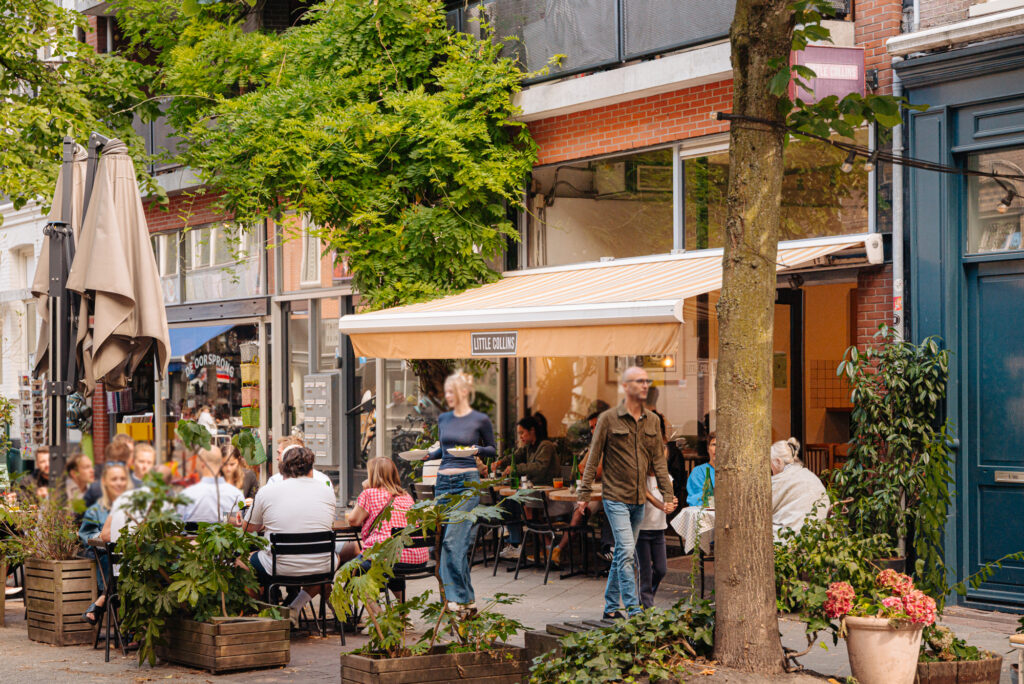
Little Collins
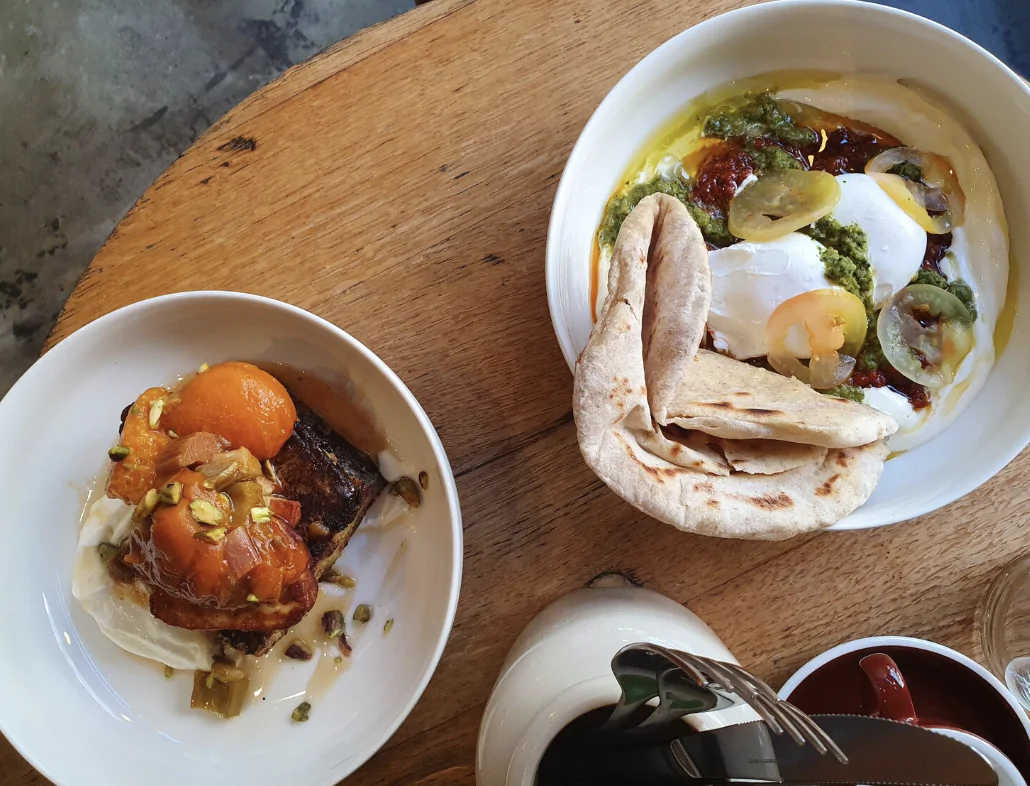
In 2011 openden Stan Kerkhof en zijn Australische vrouw Georgina Patterson het brunchcafé Little Collins in De Pijp. Bij Australisch brunchen moet je denken aan gepocheerde eieren en avocado op toast. Bij de brunch mag ook best wat alcohol gedronken worden, daarom staat ook de bloody mary op de kaart.
1073 CL Amsterdam
BRIO
Restaurant BRIO, gelegen in de levendige wijk De Pijp in Amsterdam, biedt een eigentijdse interpretatie van de Italiaanse keuken. Het restaurant, opgericht door de eigenaren van Little Collins, combineert klassieke Italiaanse smaken met moderne invloeden. Gasten kunnen genieten van een menu dat draait om verse pasta’s en seizoensgebonden gerechten, geserveerd in een sfeervolle en gastvrije setting.
1073 CJ Amsterdam
Restaurant Mont Blanc
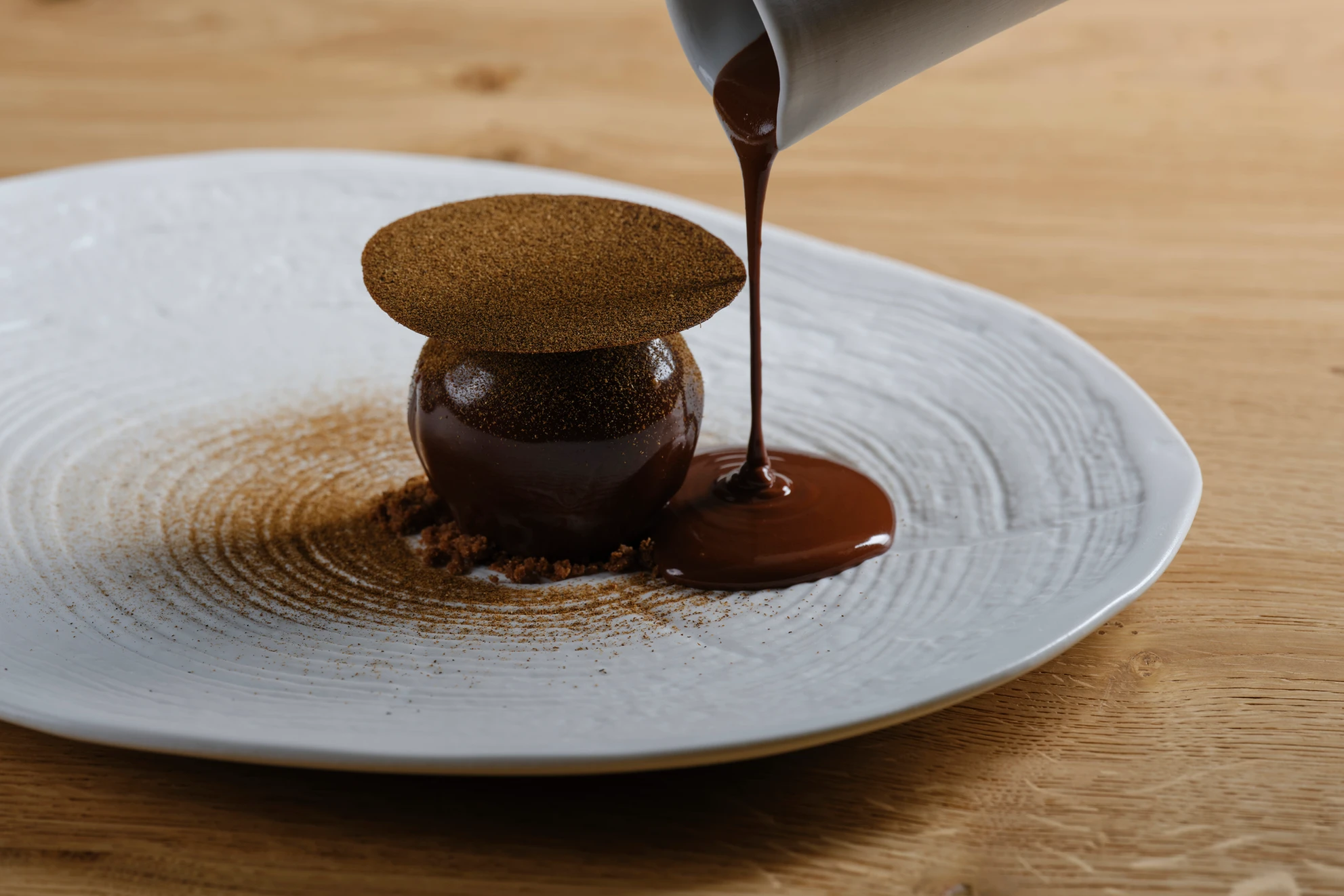
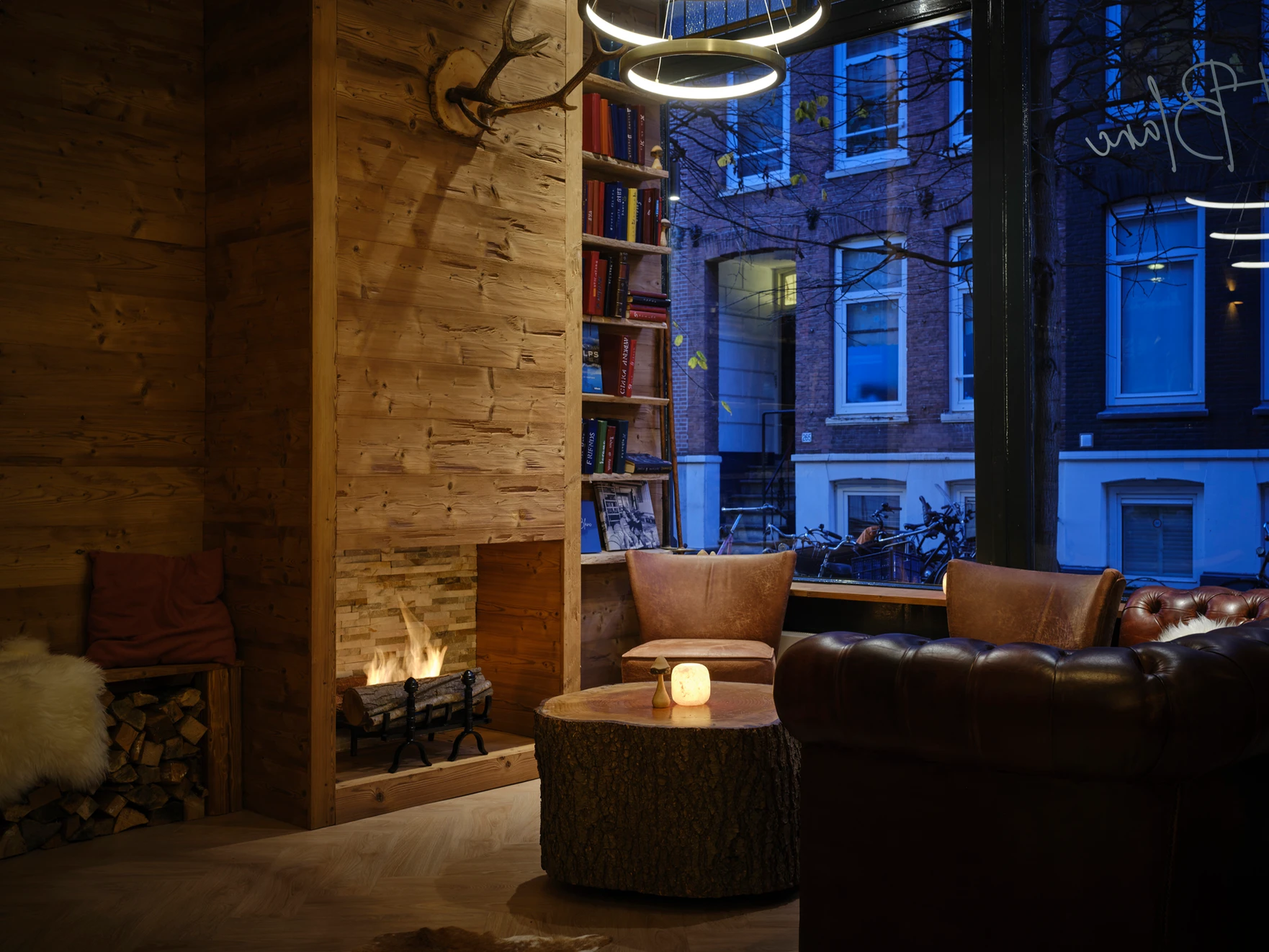
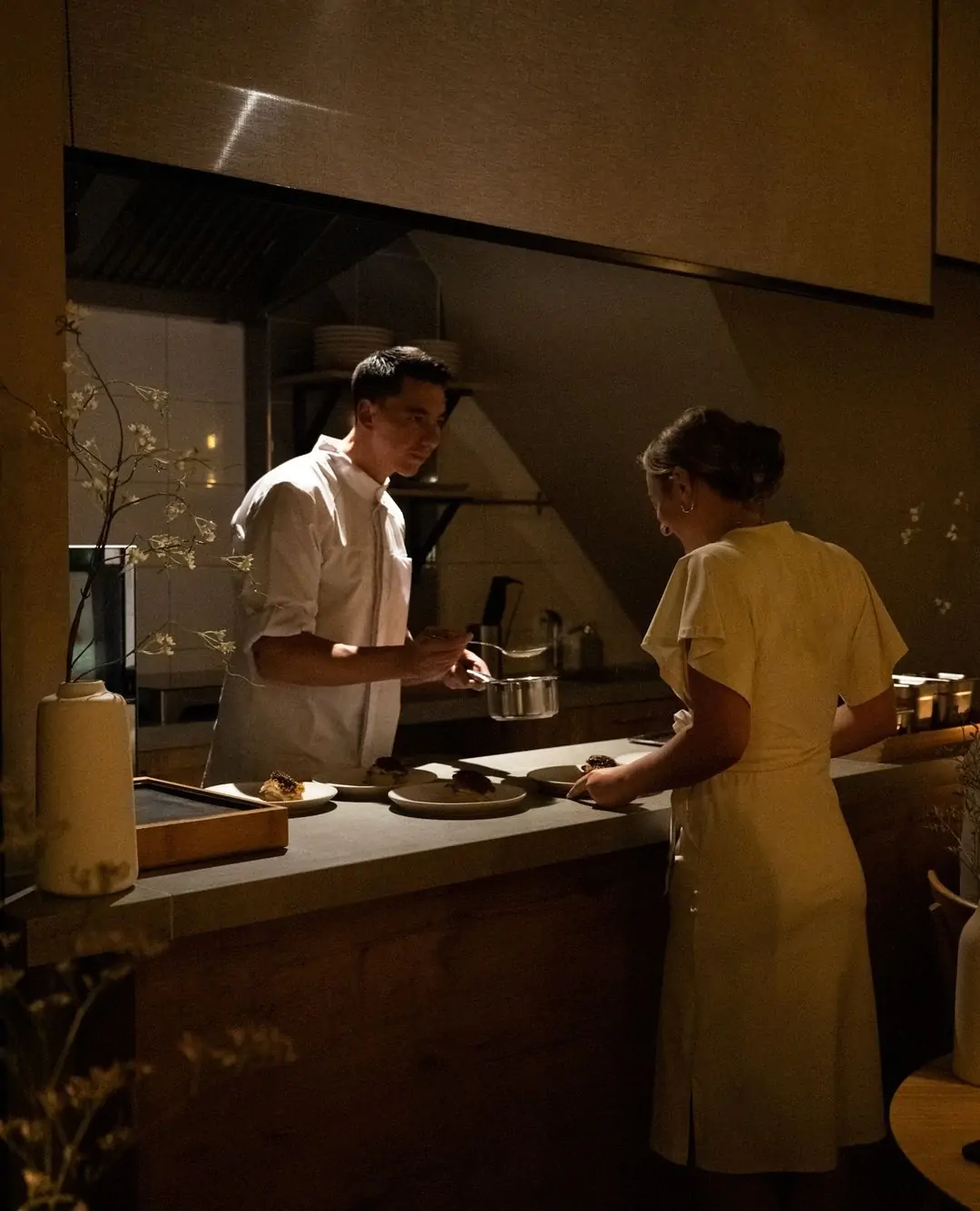
Chef Thibault en zijn vrouw Dieuwertje Gordijn runnen al jaren succesvol Bistrot des Alpes. In oktober 2021 hebben zij op de Govert Flinckstraat 308 een nieuw restautant geopend. Hier kan je op culinaire ontdekkingsreis rondom de Mont Blanc. Chef Thibault neemt je mee langs de bergmeren, door de bergen en tot slot naar de top van de Mont Blanc met zijn signature dessert. Een fine-dining ervaring in een warme sfeer.
1073 VK Amsterdam
Restaurant Ja
Het charmante restaurant Ja, bevindt zich in het voormalige pand van Jan de Wit's Le Restaurant aan de hoek van het Sarphatipark. Chef chef Julius Busscher, voorheen werkzaam bij Jacobsz en Staets, biedt verrassende gerechten. Zijn partner Amy Delorme verzorgt met toewijding de bediening en selectie van wijnen. Bij Ja wordt alles, van het brood tot de limoncello, ambachtelijk bereid. Het restaurant presenteert een vast 4-gangenmenu, dat desgewenst kan worden uitgebreid met oesters en kaas. De intieme ambiance en culinaire creativiteit maken ja tot een unieke culinaire bestemming in Amsterdam.
1073 BP Amsterdam
Osakaball
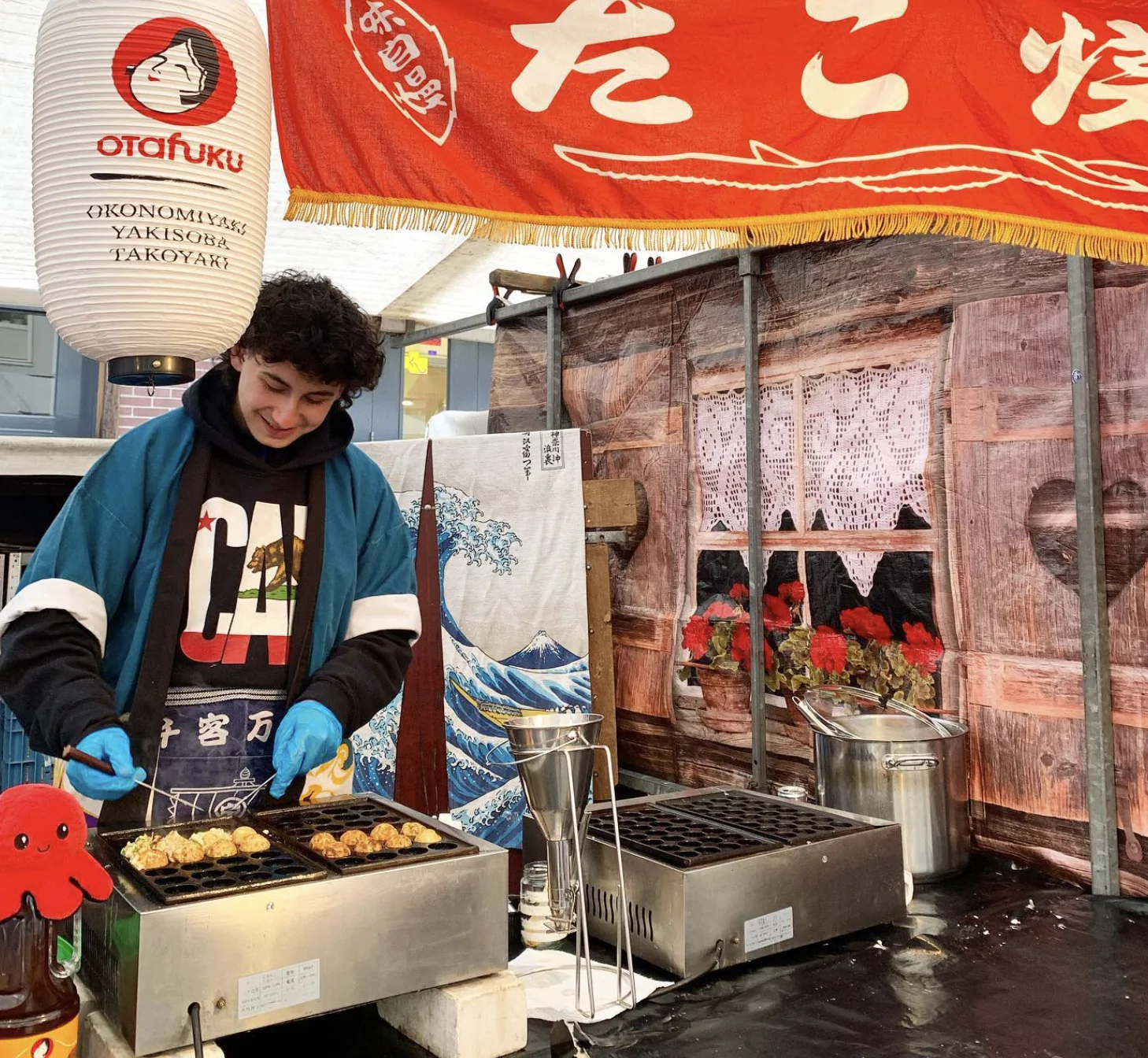
The Osaka streetfood kraam staat op maandag op de Ten Katemarkt en van dinsdag tot en met zaterdag op de Albert Cuypmarkt. The kraam heel gedurende het jaar heel wat trouwe klanten opgebouwd met hun authentieke Japanse dishes. Van ramen tot, okonomiyaki, noodles en curry. Wandel over de markt met een lege maag en volg de geur van lekker eten.
1073 BR Amsterdam
Ranchi
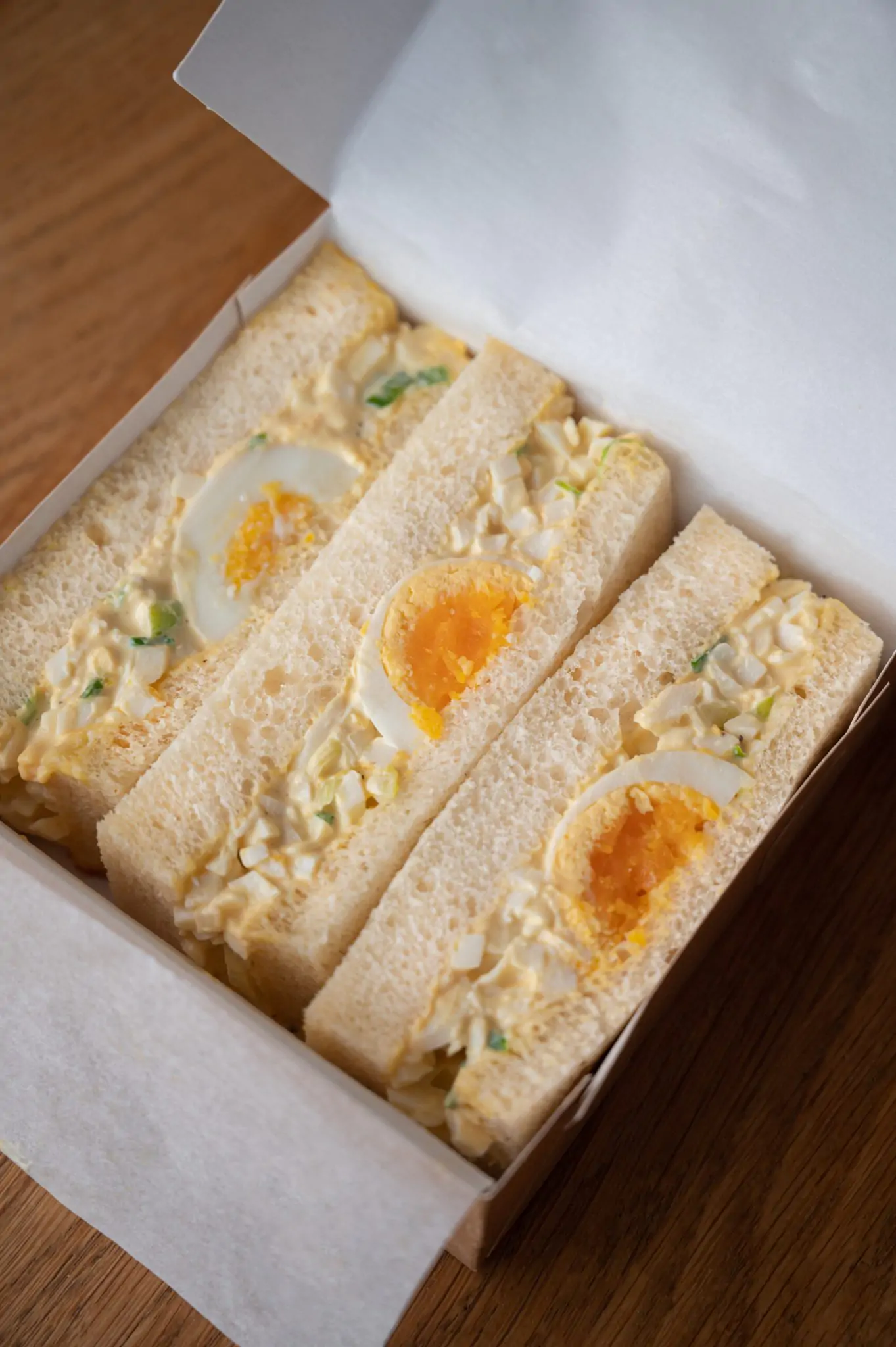
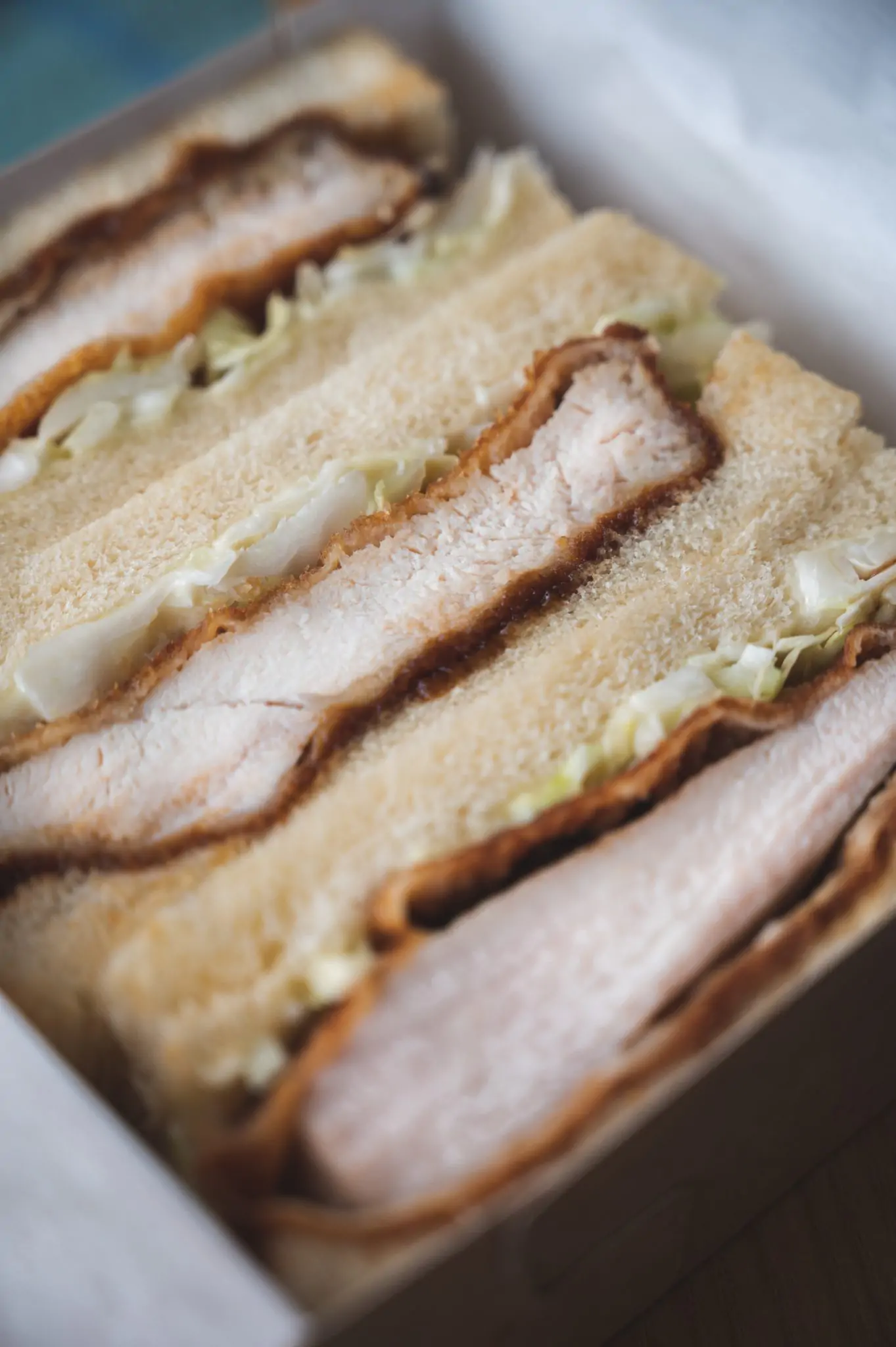
Ranchi is een Japanse broodjeszaak gerund door Sebastiaan en Christiaan Roosink. Een broodje in Japanse stijl wordt ook wel Sando genoemd. Keuzes zijn bijvoorbeeld een chicken sando (met krokante kip) of de beroemde tamago sando met eiersalade. Daarnaast hebben ze een broodje met tsukune (een soort gehaktbrood) gemaakt van kippengehakt in yakitori-stijl. Lekker met sesam, bosui, gember, knoflook en tare-saus.
1073 BN Amsterdam
De Japanner
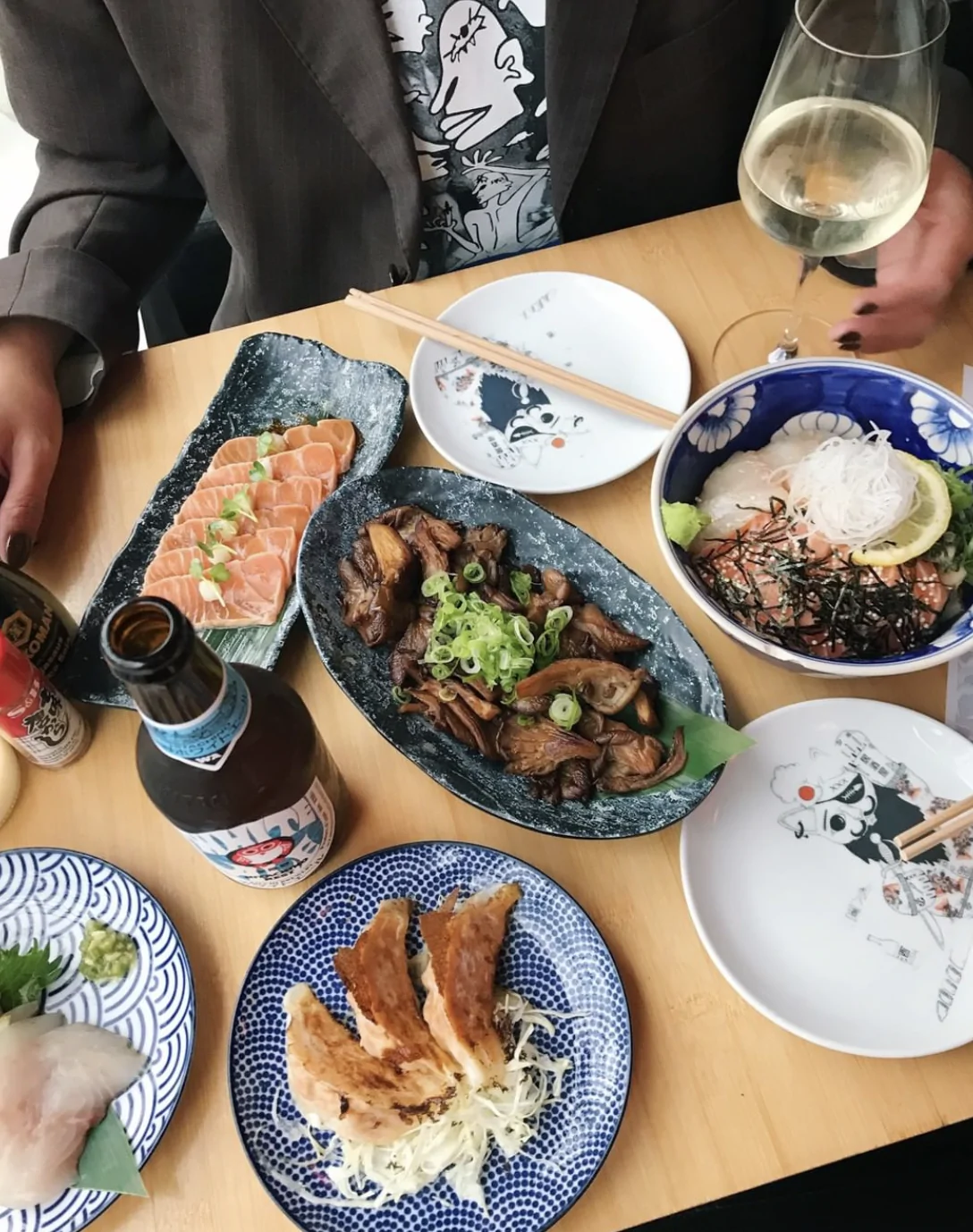
De Japanner is inmiddels een fenomeen geworden in zowel de Pijp als in Oud-West. De vestiging in de Pijp zit op de Albert Cuyp markt, wat het gemakkelijk maakt om binnen te stappen nadat je ergens een biertje hebt gedaan. Het concept is simpel en straight-forward: heerlijk Japans fingerfood wat gepaard gaat met ofwel een cocktail, Japans biertje, saké of een non-alcoholisch alternatief natuurlijk. Het komt dan ook niet als een verassing dat de reviews over de Japanner lovend zijn, waarbij vooral het vriendelijke personeel als de lekkere hapjes worden uitgelicht.
1073 CM Amsterdam
Badcuyp
Een geweldige locatie (een voormalig badhuis jarenlang geliefd als jazzcafé De Badcuyp en voorheen Escobar) gecombineerd met een superjong team. Voormalig chef van Bar du Champagne, Joep Hermans , opende samen met Martin de Nes (ex Rijsel) en Tobias Kuyt (ex Troef) op de hoek van de Albert Cuyp een eigen restaurant waar op open vuur wordt gekookt. Tobias stelde een uitgebreide wijnkaart samen met een concentratie op Frankrijk en Italie.
1073 CK Amsterdam
Warung Swietie
Warung Swietie Lelydorp is een Surinaams restaurant op een steenworp afstand van de Albert Cuyp Markt. Het staat bekend om saotosoep en roti, die beiden voor een hele betaalbare prijs over de toonbank vliegen. Het is één van de kleinste Warungs in Amsterdam en in de zomer heeft het eethuis zelfs een klein terras. Voor een snelle hap zoals een broodje Pom met zuur kun je hier prima terecht!
1073 CJ Amsterdam
101 Gowrie
De jonge Australische chef Alex Haupt met Japanse en Duitse roots kookt naar eigen zeggen 'Gaijin cuisine'. 'Een viering van culturele diversiteit door middel van Japanse tradities, technieken en liefde voor het ingrediënt met een respectvolle minachting voor de regels van reguliere conventie.' Gowrie serveert een vast menu met verrassende gerechtjes. Denk aan gyoza gevuld met duif, japans brood (shokupan) met miso en nori en een congee van noord zee krab. Reserveren is noodzakelijk.

1073 LL Amsterdam
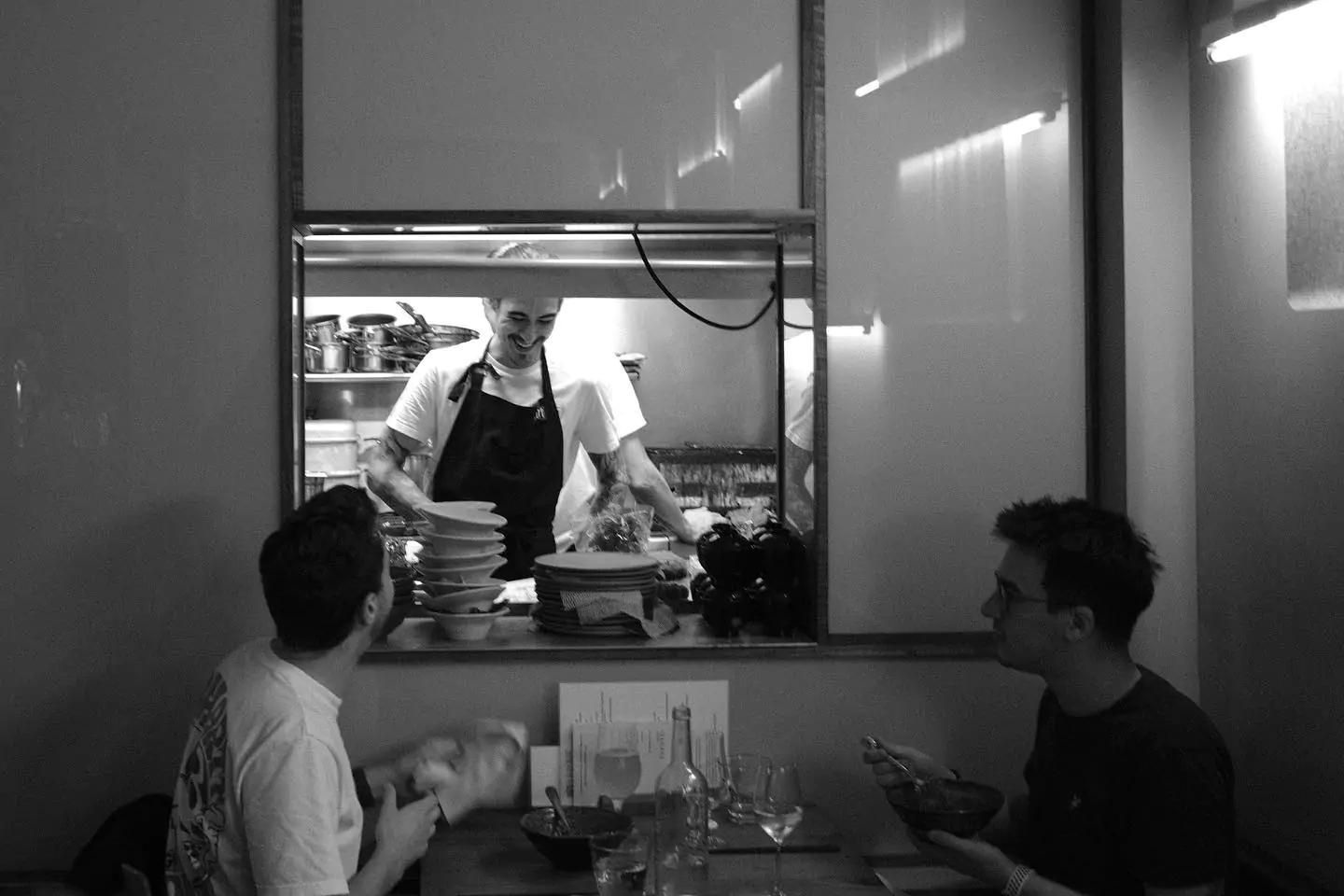
Broodje Popov
1073 LM Amsterdam
Mister Nata
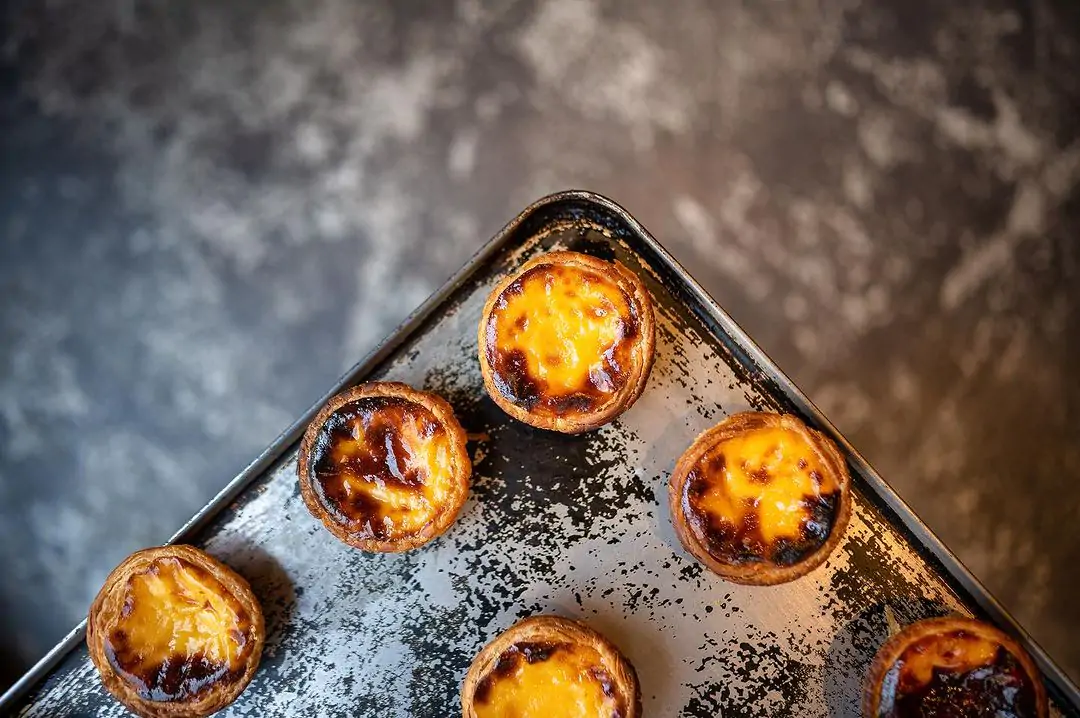
Bij Mister Nata ben je aan het juiste adres voor het lekkerste gebak van Amsterdam, waar je kunt genieten van heerlijke pastel de nata, perfect gecombineerd met prachtige Single Estate Coffee, bereid met een La Marzocco-espressomachine. Portugal staat bekend om zijn verrukkelijke zoetigheden. Snoep, gebak en desserts maken allemaal deel uit van de traditionele Portugese keuken. Te midden van al deze heerlijkheden is de pastel de nata de absolute beroemdheid.
1073 BR Amsterdam
La Biss Kosher Streetfood
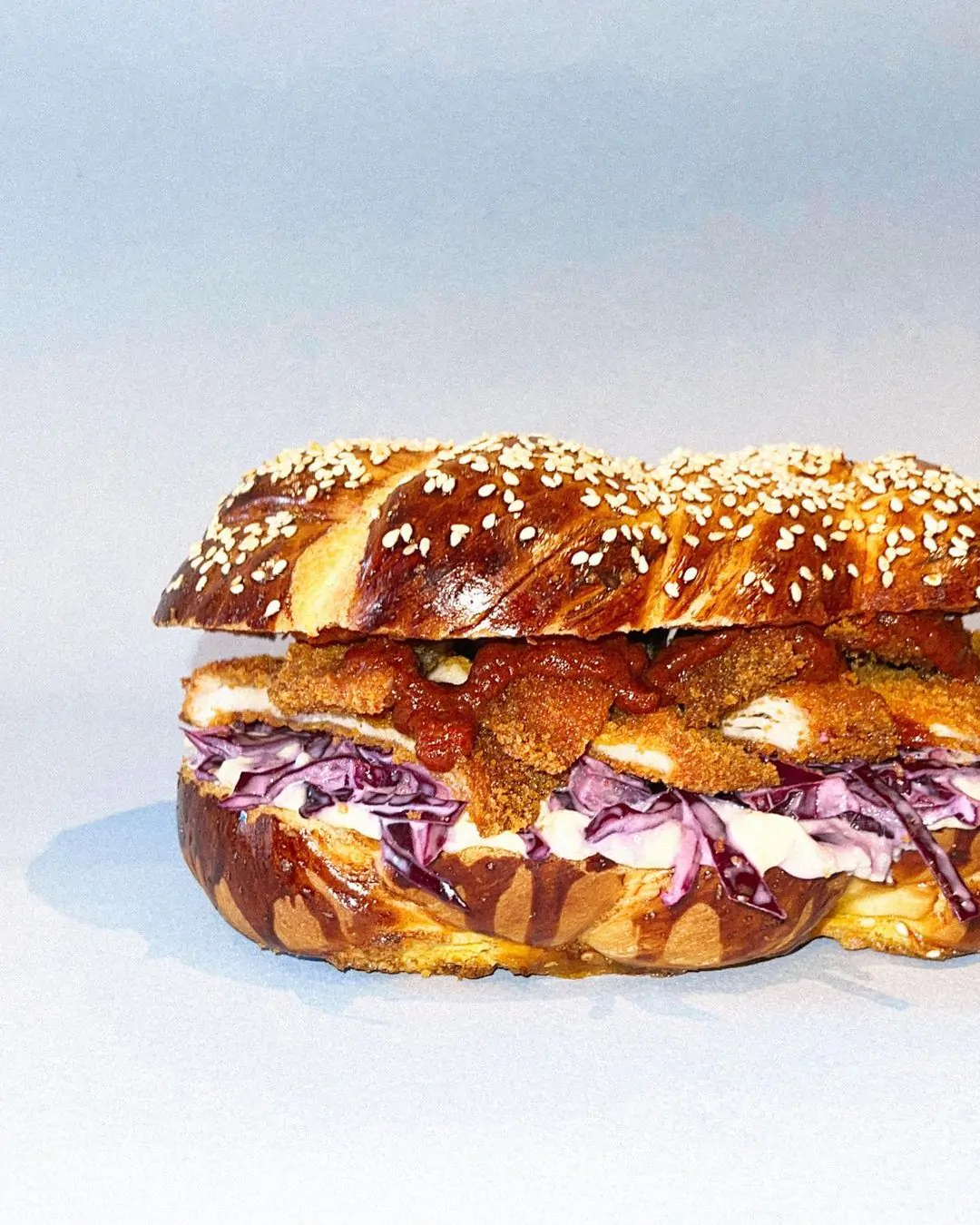
La Biss is geen gewone sandwichbar; los van het feit dat de sandwiches uiteraard kosher zijn worden ze met zorg en precisie gemaakt met de beste en meest verse ingrediënten. Een specialiteit is de huisgemaakte challah brood, dagelijks vers gebakken en een unieke toevoeging aan de sandwiches. Ook de baguettes en andere verse broden zijn niet te missen.
1074 AB Amsterdam
Roopram Roti
Roopram Roti komt oorspronkelijk uit Suriname en werd geëxporteerd naar Nederland vanwege de grote vraag naar roti op de Nederlandse markt, onder andere door vakantiegangers uit Paramaribo. Om aan deze vraag te voldoen, besloot J. Roopram diepvries roti naar Nederland te exporteren. Helaas werd dit op het laatste moment tegengehouden vanwege de beperkingen op de uitvoer van kip en kipdelen uit Suriname. In plaats daarvan opende J. Roopram in juli 2002 zijn eerste restaurant aan het Mathenesserplein 89 te Rotterdam. Dit werd gevolgd door het tweede filiaal in Amsterdam, genaamd Roopram Roti Eetcafé. Sindsdien zijn er twee extra filialen geopend, namelijk in Den Haag en aan de Van Woustraat 37 te Amsterdam.
1074 AB Amsterdam
Café Biljart van Wou
Café Biljart van Wou is een typisch buurtcafé waar het stil wordt als de buurtbewoners op vakantie zijn.
1074 AA Amsterdam
Tjin's
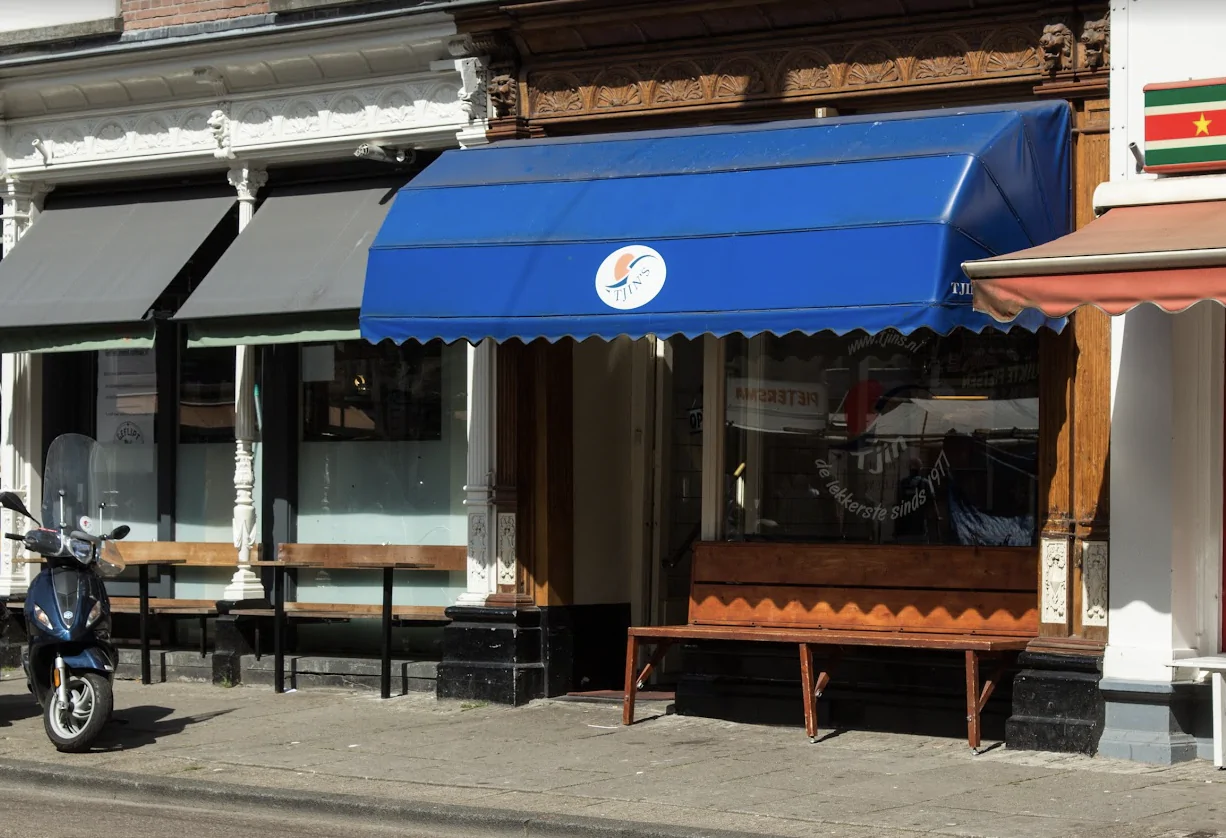
Rond deze kleine broodjeszaak verzamelen zich vaak groepen mensen voor de deur voor een snelle snack. Tjin maakt al meer dan 40 jaar surinaamse broodjes en hapjes op basis van familie recept. Oprichter Chong begon ooit in West als platenzaak, echter werden de broodjes die hij achterin klaargemaakte steeds populairder, zoals het broodje met kabeljauw of de kerrie kip.
1073 BE Amsterdam
Saskia's Huiskamerrestaurant
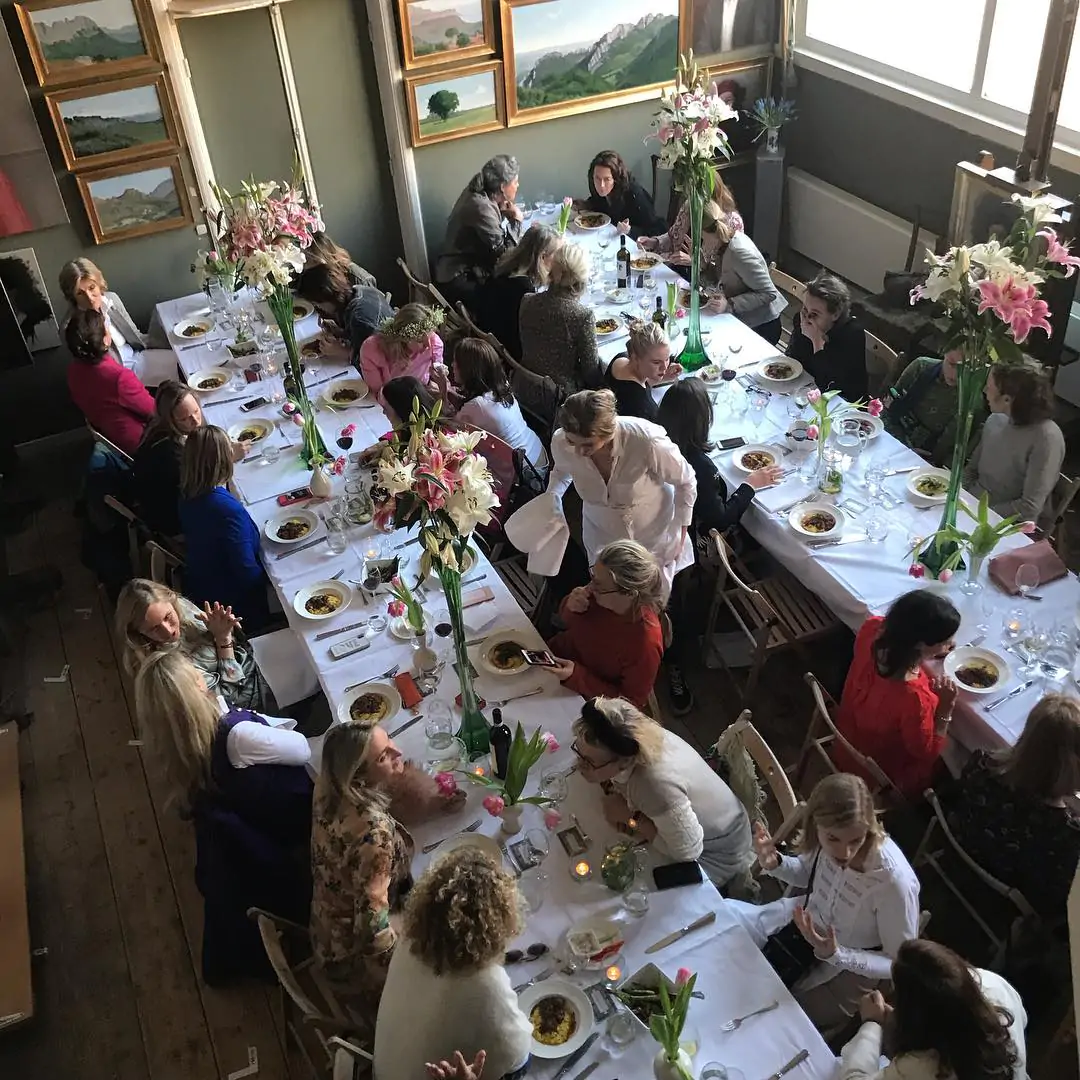
De naam zegt het al: eten bij Saskia's Huiskamerrestaurant is als dineren in de huiskamer. In dit restaurant eet je alleen in kleine gezelschappen tot 10 personen. Een uitstekende manier om een gezellige knusse avond door de brengen met een groep vrienden. Saskia's Huiskamerrestaurant is echt begonnen als restaurant in de huiskamer van eigenaresse Saskia en is later verhuist naar een eigen pand. Het restaurant bestaat nu al 18 jaar maar heeft zijn bijzondere sfeer weten te behouden. Het restaurant bevindt zich aan de Albert Cuypstraat; vlakbij de markt waar Saskia dagelijks inspiratie opdoet voor nieuwe gerechten
1074 AV Amsterdam
Saravana Bhavan
Wie echt goed Indiaas wilt eten, en de sfeer van een echt Indiaas restaurant wilt proeven, moet naar Saravana Bhavan gaan, op het hoekje van de drukke Stadhouderskade en de van Wou straat zit hier dit grote restaurant. Het is een deel van de grootste vegetarische Indiase ketens in de wereld. Ze serveren ontelbaar veel lekkere (veel vegetarische dus) curry's en andere specialiteiten uit India. Het zit er vaak bomvol, met een gemengd publiek. Indiase gezinnen, stelletjes, toeristen, buurtbewoners, Saravana Bhavaan is een plek waar je goed kan eten.
1073 CM Amsterdam
Il Pastificio
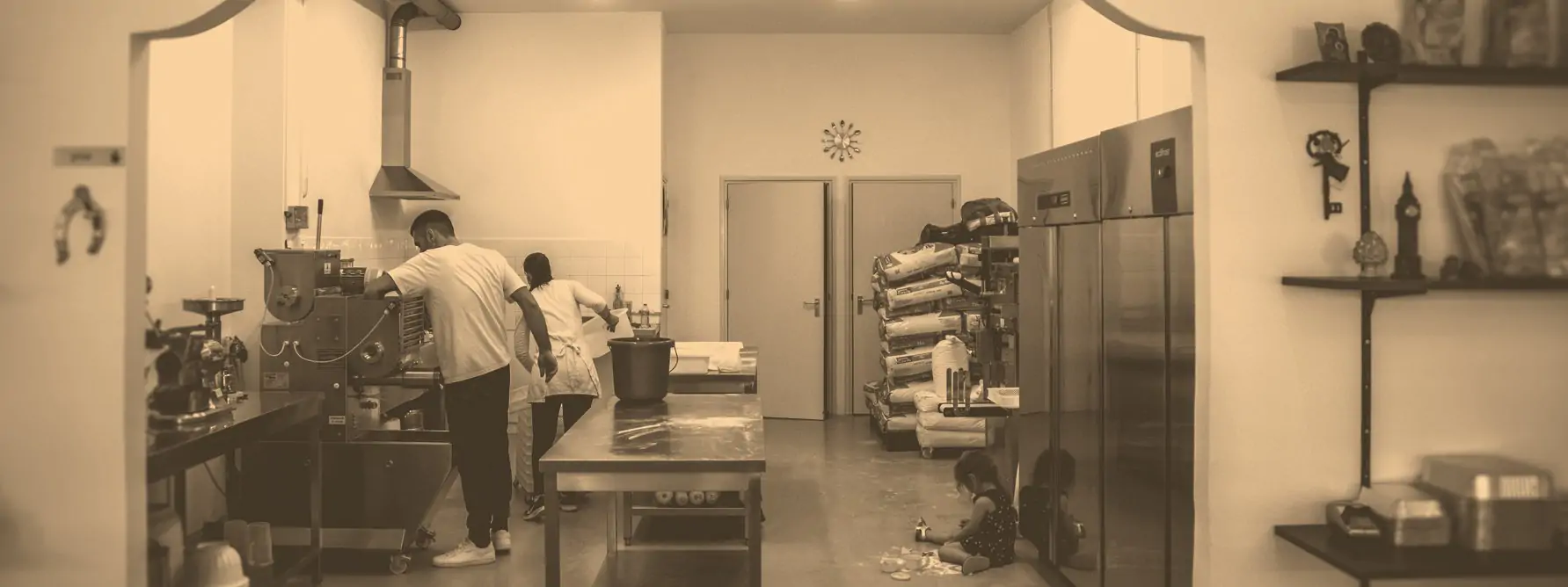
Een pastafabriek; zo noemt Il Pastificio zichzelf. Hier maken ze zelf Italiaanse pasta op authentieke wijze. Elke dag zijn ze bezig met het bereiden van verse producten. Het aanbod is groot: van fusilli tot conchiglie tot rigatoni napoletani. Of je nou indruk wil maken tijdens een etentje; of lekker voor jezelf wil koken; met de producten van Il Pastificio wordt elk pastagerecht een succes.
1073 BH Amsterdam
C&C Asianmarkt
Aan het einde/of het begin van de Albert Cuyp ligt de C&C Asian Supermarket. De winkel is een begrip voor eenieder die tijdens het koken opeens bijzondere ingrediënten nodig heeft. Naast verse producten heeft de winkel een gigantisch assortiment met allerlei Aziatische must-haves wanneer het op onmisbare ingrediënten aankomt. Van heerlijke pindasaus voor bij summer-rolls tot ongelofelijke hoeveelheden ingevroren dumplings om in bamboe mandjes zelf op te warmen. De sojasaus vliegt in grote flessen en betaalbare prijzen over de toonbank en ook voor enkele leuke decoraties kan je hier terecht. De pret kan echter niet op, want er is óók nog een klein hoekje in de supermarkt waar er vers eten wordt klaargemaakt. Hier kun je dus na je grote boodschappen genieten van onder andere verse summer-rolls of een banh mi (Vietnamese baguette).
1073 BM Amsterdam
Rise Bakery
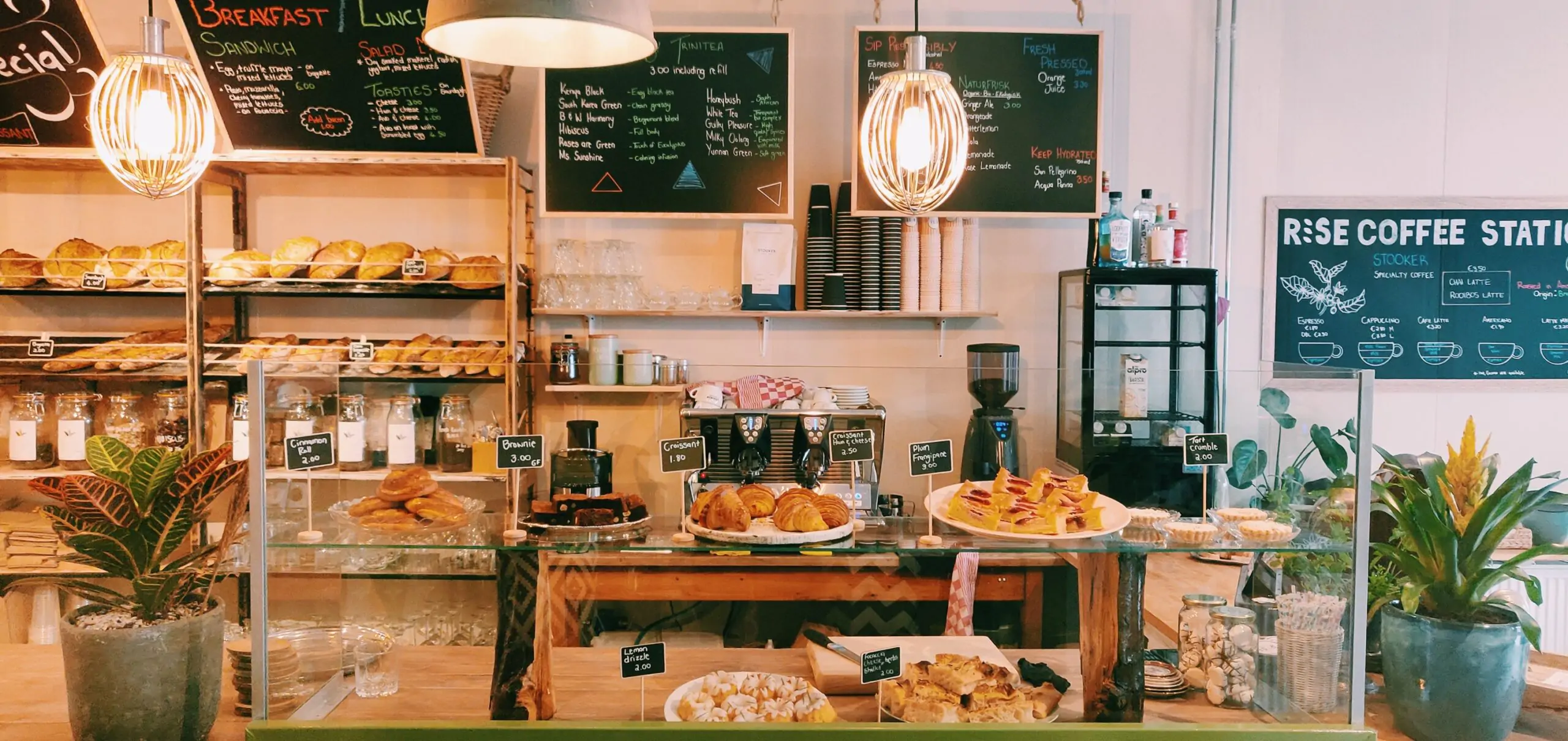
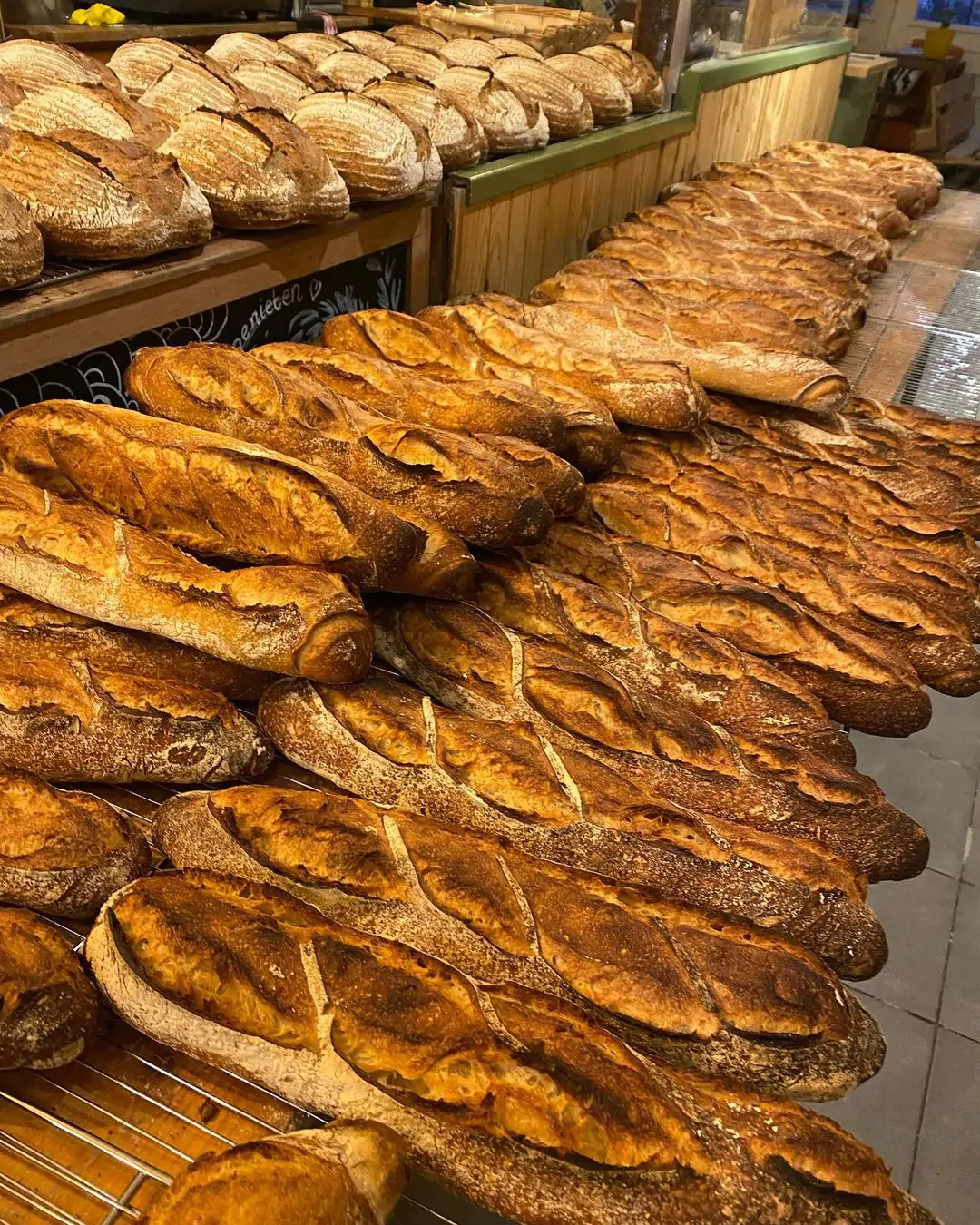
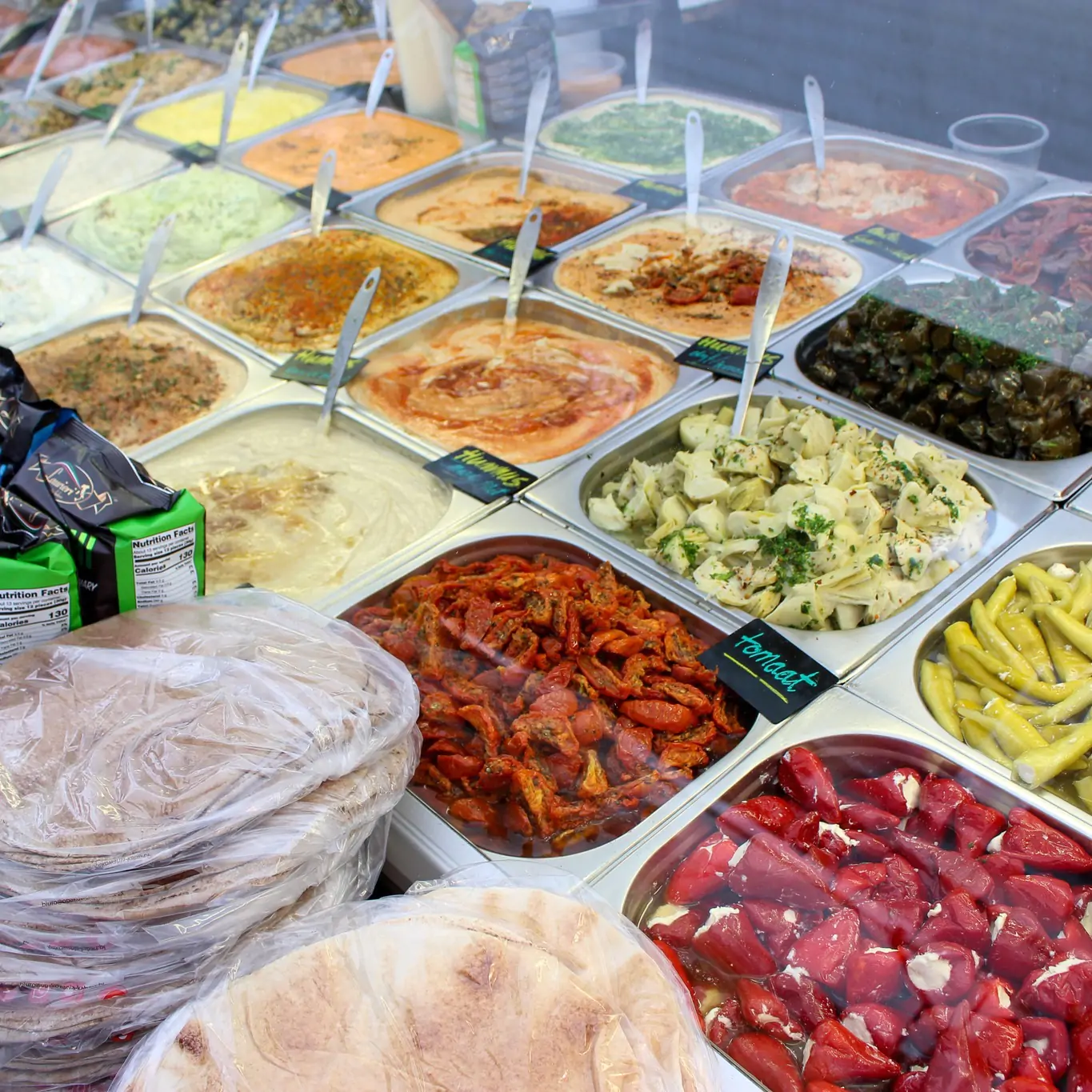
De drie eigenaren van Rise Bakery ontmoetten elkaar in Londen waar ze allemaal in de horeca werkten. Door de maatregelen van de pandemie op de horeca besloten ze gezamenlijk hun droom te volgen en naar Amsterdam te komen om een bakkerij te openen. Alle drie hebben ze een eigen specialiteit en dat resulteert in Franse broden, zuurdesem en taartjes. Gelegen aan de Albert Cuypstraat is dit de perfecte plek om een Deens gebakje of een kaneelbroodje te eten voor of na boodschappen op de markt.
1073 BD Amsterdam
De Albert Cuypmarkt
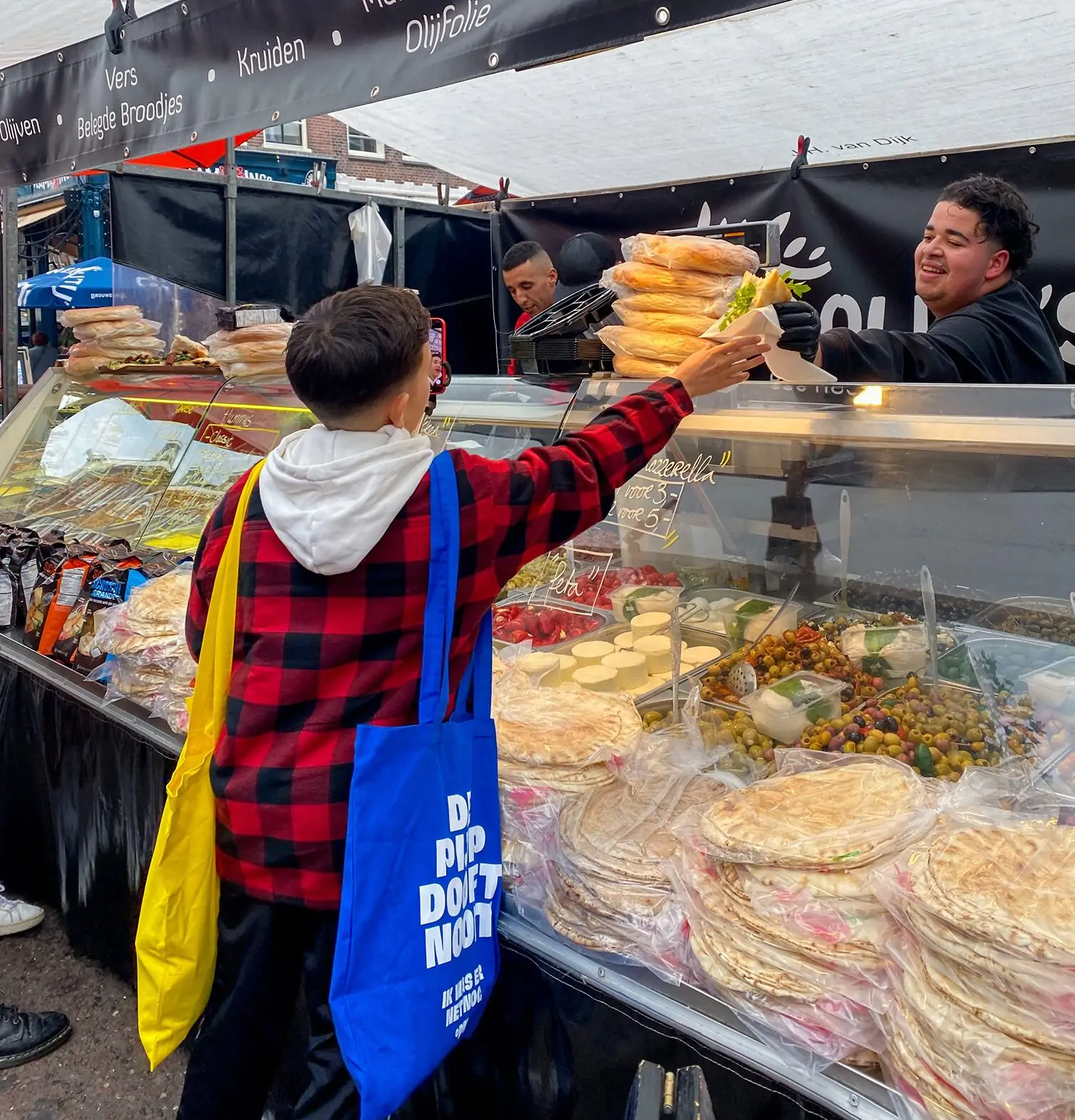
De Albert Cuypmarkt is van maandag t/m zaterdag geopend van 9:00 tot 18:00 en is met 260 kramen de grootste dagmarkt van Europa. Het gemeentebestuur besloot om in 1905 een vrije markt te vestigen dat vandaag de dag de Albert Cuypmarkt is, vernoemd naar een 17e -eeuwse kunstschilder. Je kan hier je dagelijkse boodschappen doen en terecht voor in het speciaal verse vis, delicatessen en verschillende soorten stoffen. De markt is natuurlijk bekend onder de Amsterdammers, maar ook toeristen weten de markt te vinden om bijvoorbeeld de typische Hollandse lekkernijen als haring en stroopwafel te proeven en opzoek te gaan naar souvenirs. Het is ook een leuke markt om gewoon even af te lopen voor de gezelligheid.
1073 BT Amsterdam
Epicerie de Pijp
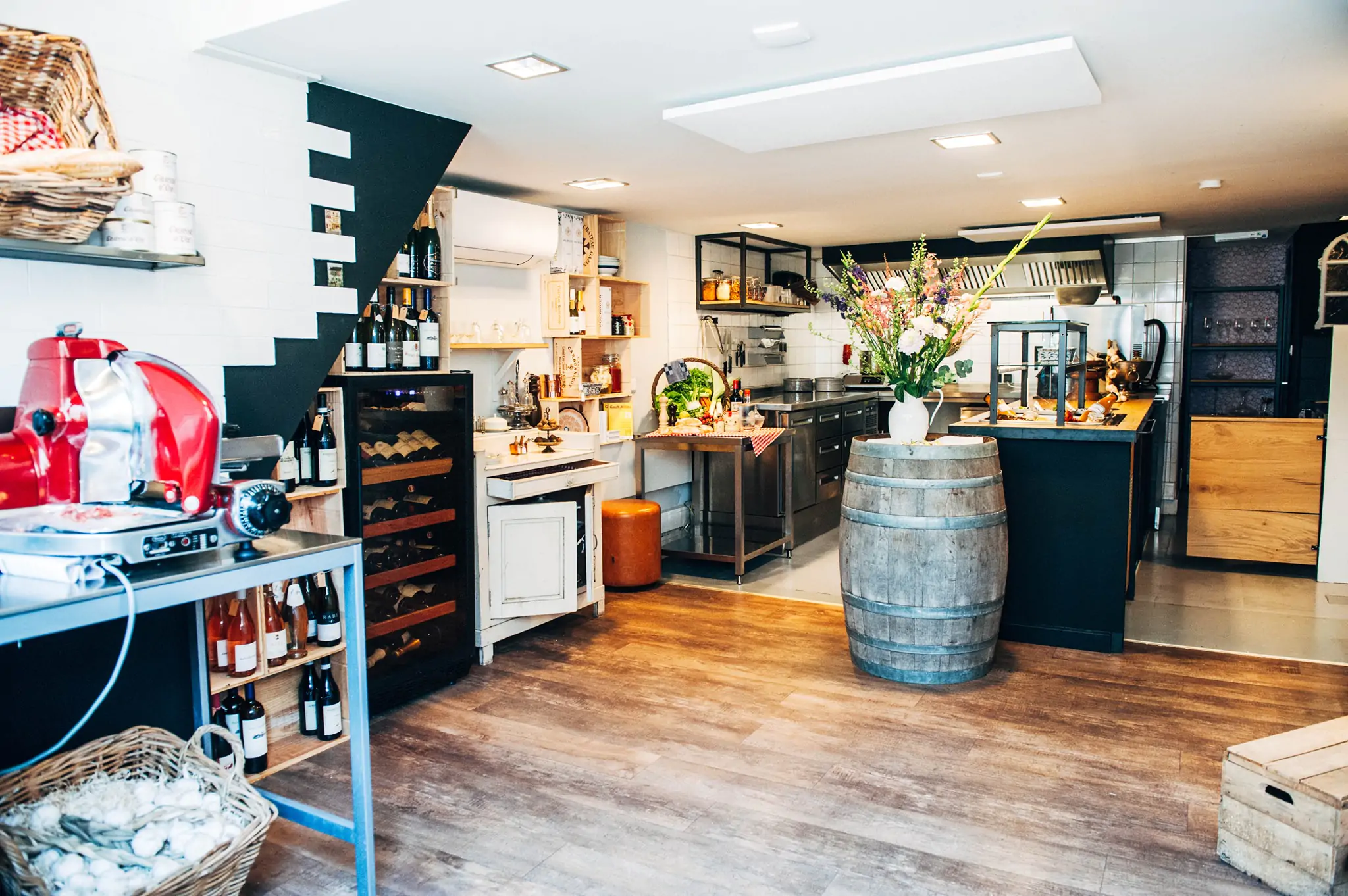
Een beetje Frankrijk in Amsterdam. Vanwege het gemis van franse delicatessen, als eigenaresse Merabi naar Frankrijk ging kwam ze terug met tassen vol boodschappen, is deze zaak om de hoek van de Albert Cuyp markt geopend.
Alle producten zijn door de eigenaren zelf uitgezocht en geïmporteerd. Versproducten zoals Le Mi-chèvre Soignon, een kaas gemaakt van geit en koelmelk, maar ook galettes Saint Jacques, crêpes gevuld met coquilles in roomboter-peterseliesaus.
1073 CM Amsterdam
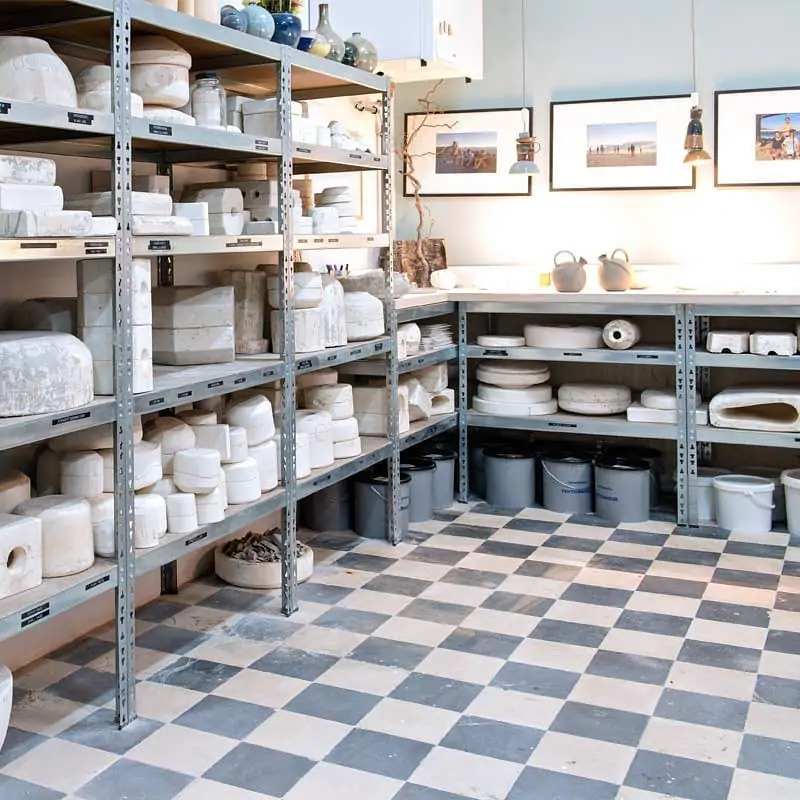
Mud in May
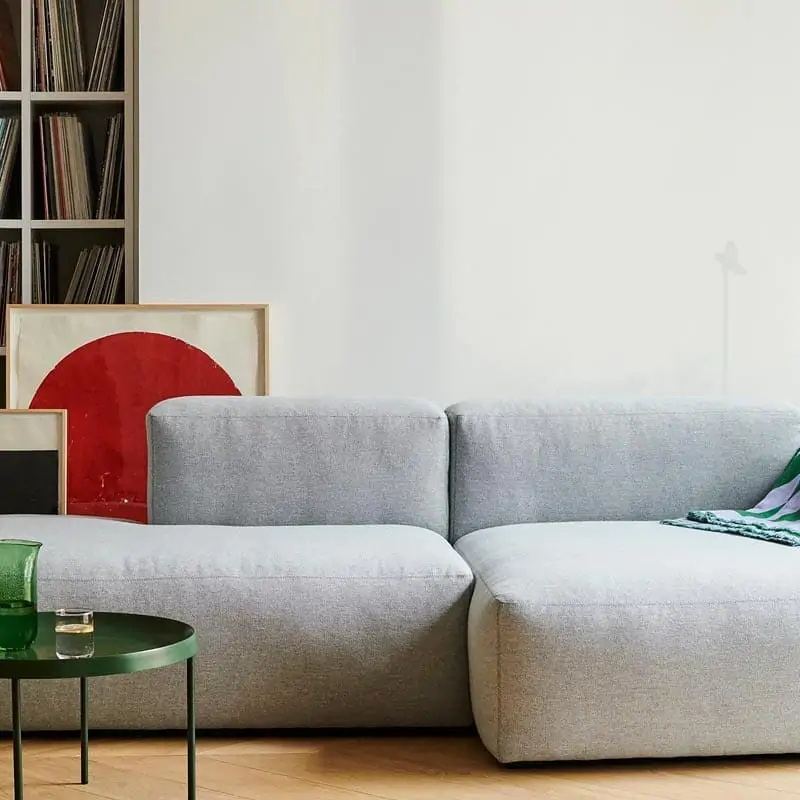
Mud in May is een interieur- en cadeauwinkel in het hartje van de Pijp. Je vindt hier items van zowel bekende designers als minder bekende designers en daardoor ontstaat er een speels mix. Voor ieder budget is hier wel iets te scoren. Mud in may verkoopt allerlei soorten producten; stoelen, vazen, lampen, tafels en zelfs kleding. Ook hebben ze een leuke blog waar ze artikelen waar ze in gesprek gaan met designers over de nieuwste interieurtrends.