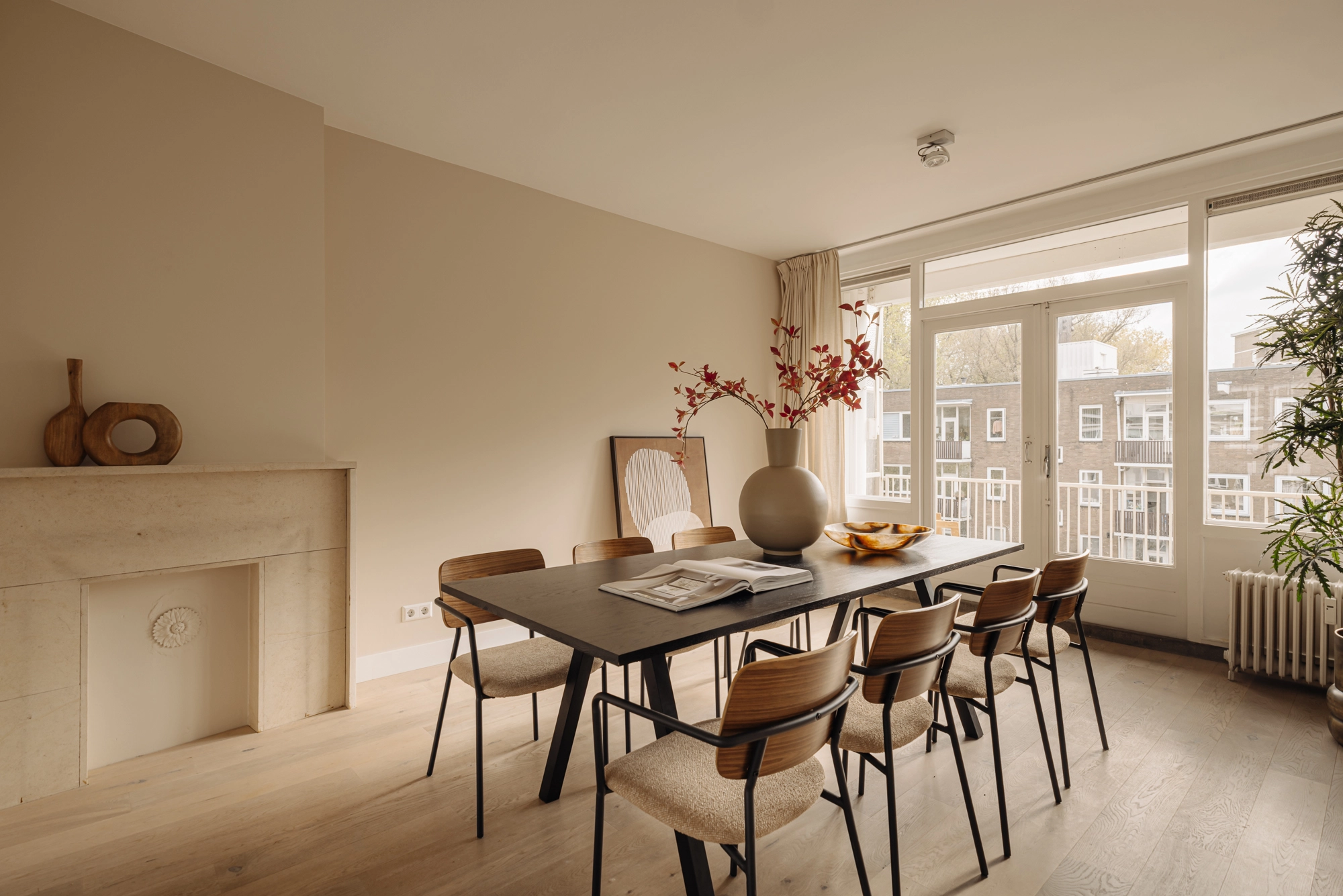
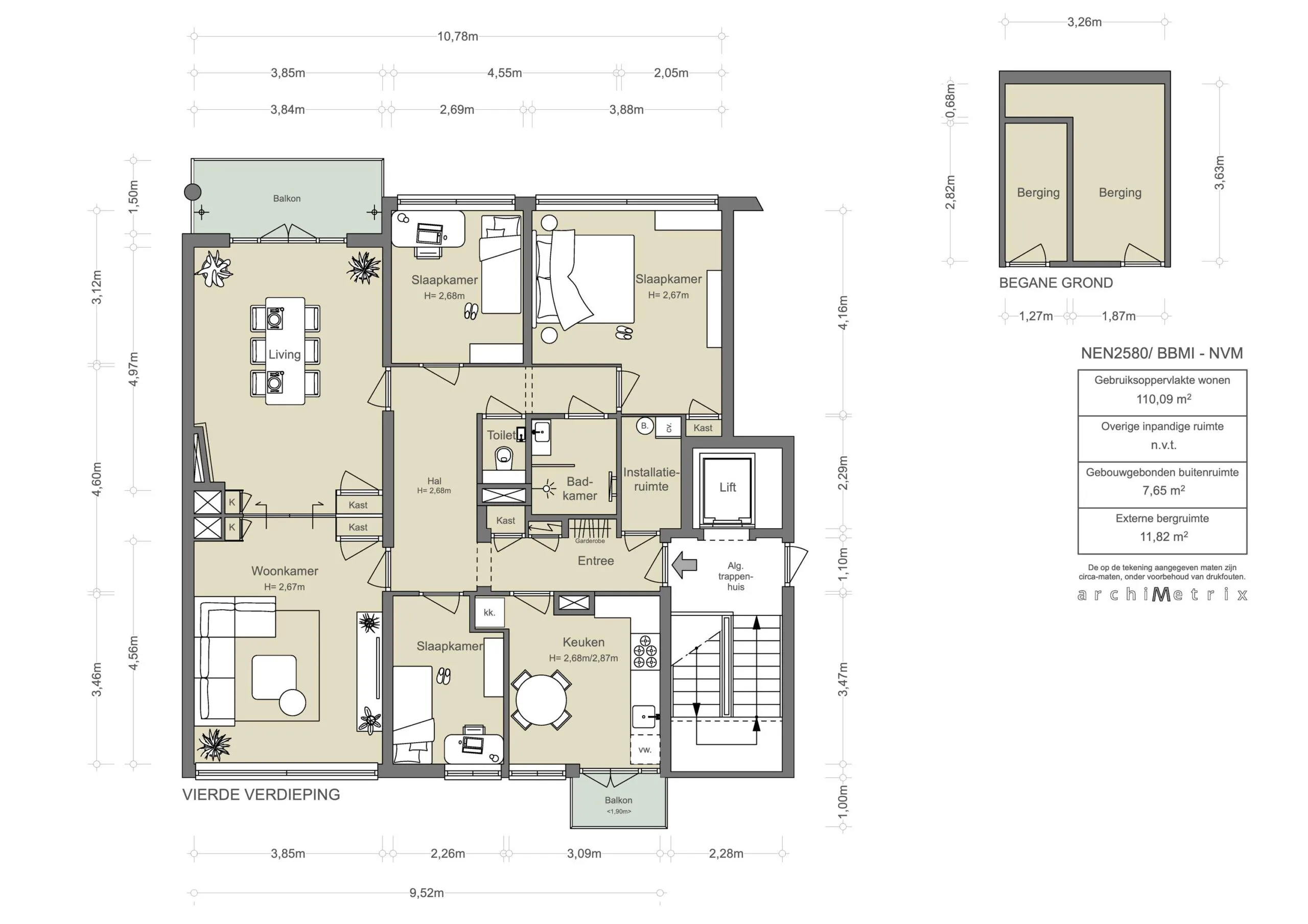
Upper-floor apartment of approximately 110 m², located in the Beethoven neighbourhood.
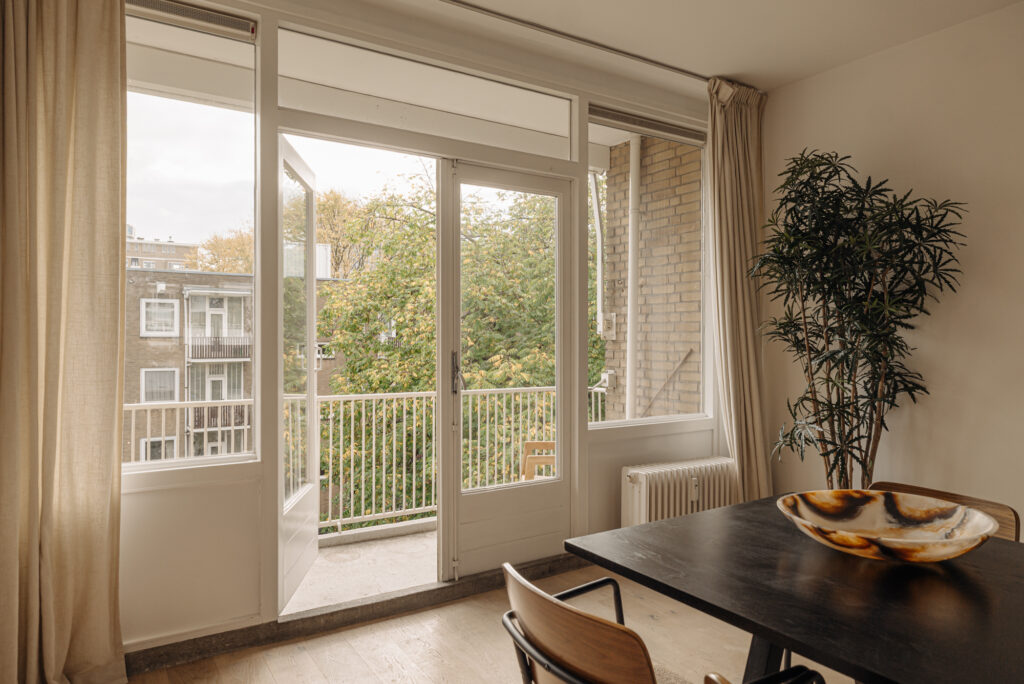
The apartment features a spacious en suite living and dining room with double sliding doors in authentic condition and an adjoining south-facing balcony. The kitchen, in good condition, also has access to a balcony, located on the north side. In addition, there are three bedrooms and a bathroom. The building is equipped with a lift, and on the ground floor the apartment includes two storage rooms.
Tour
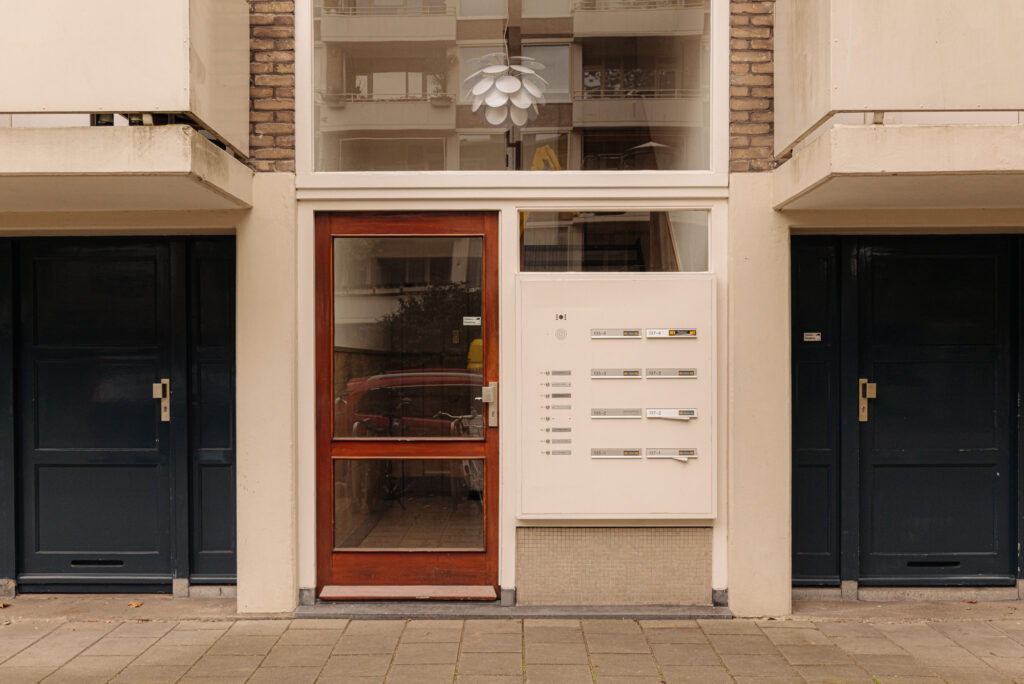
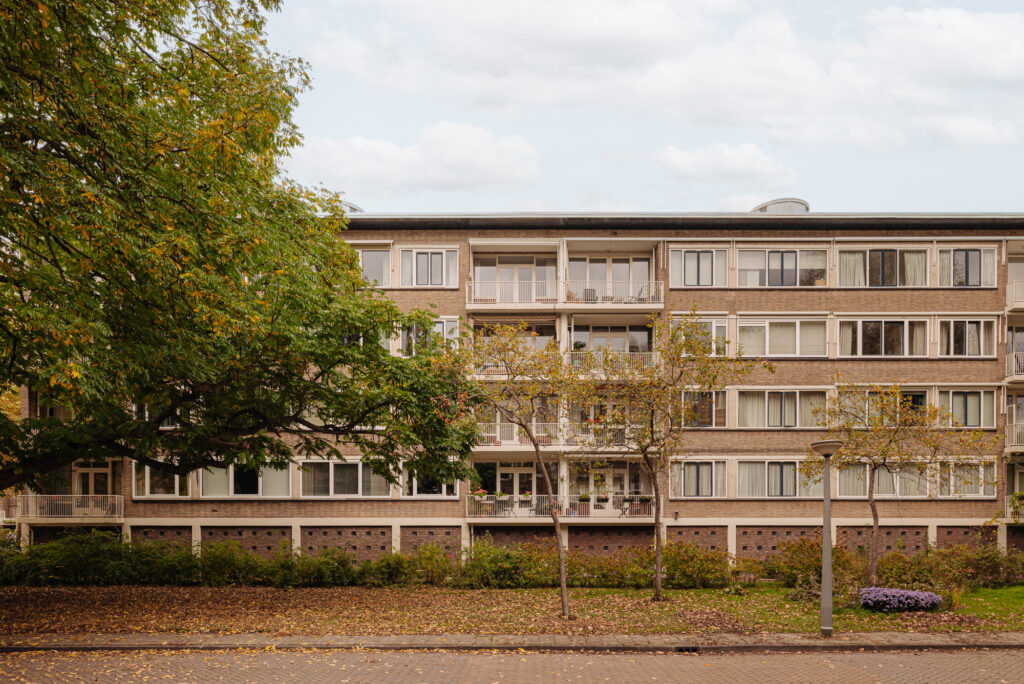
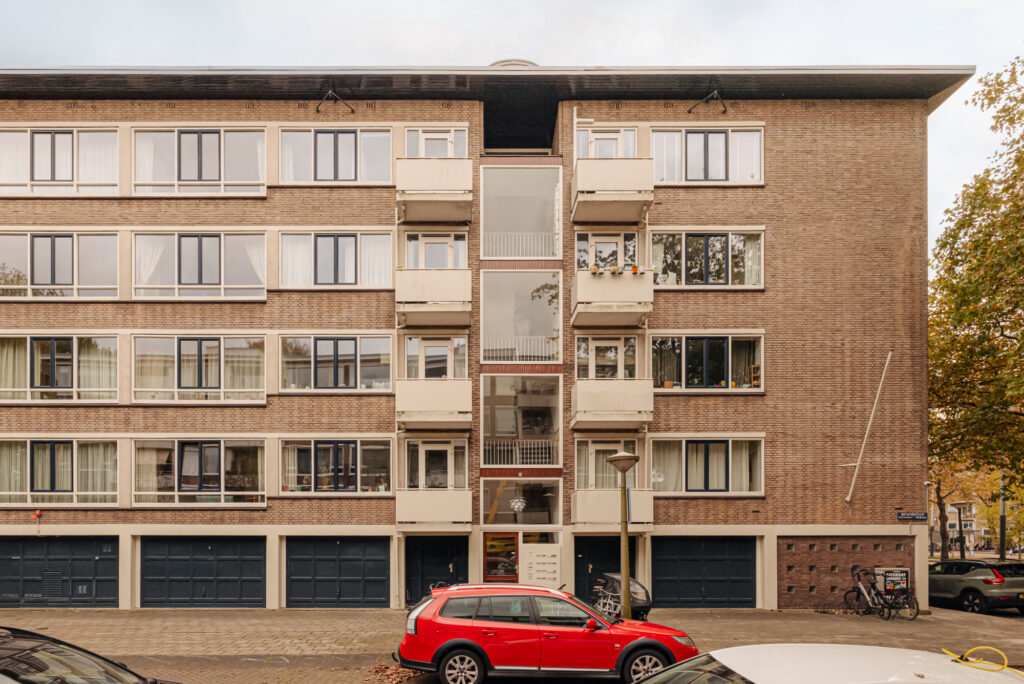
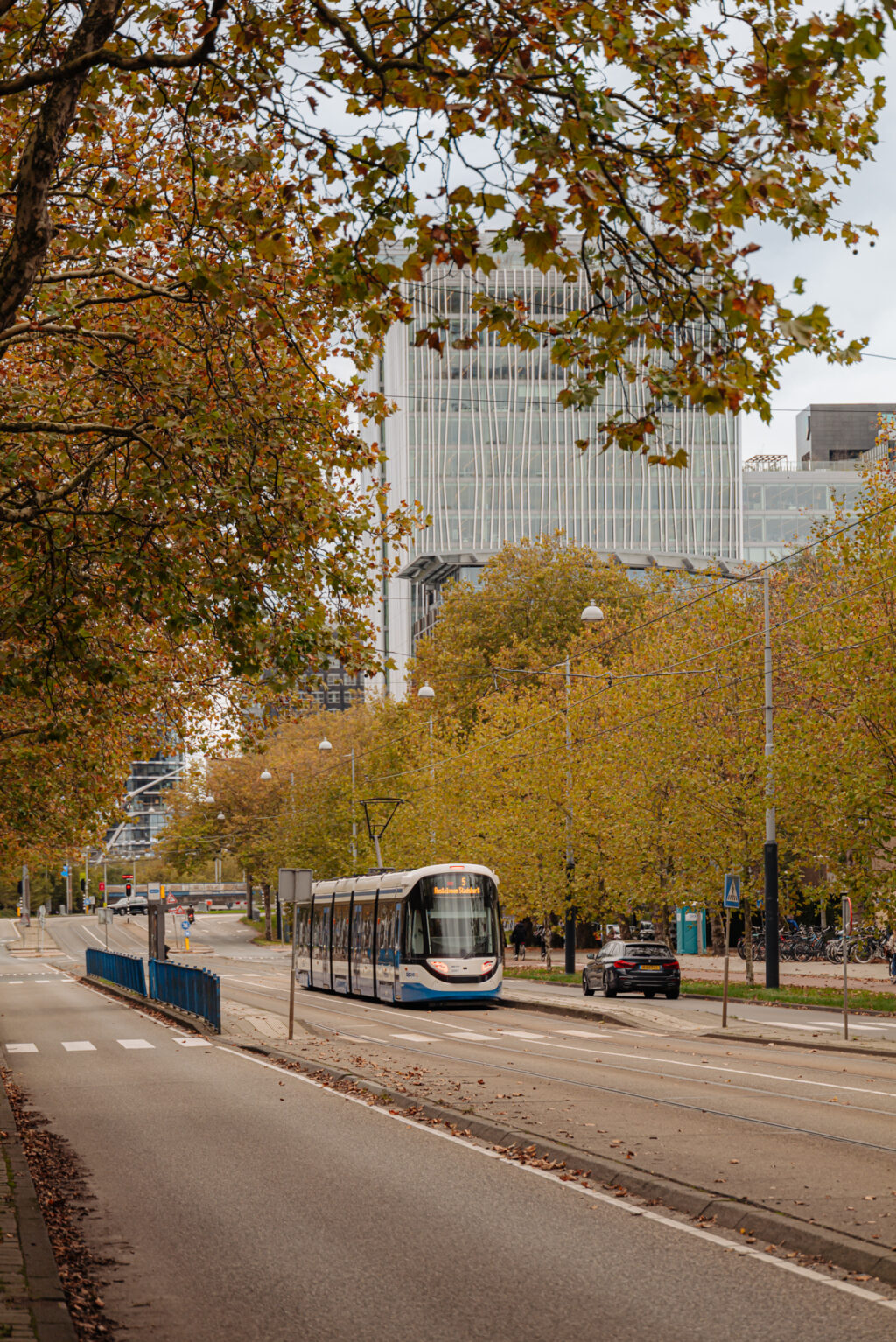
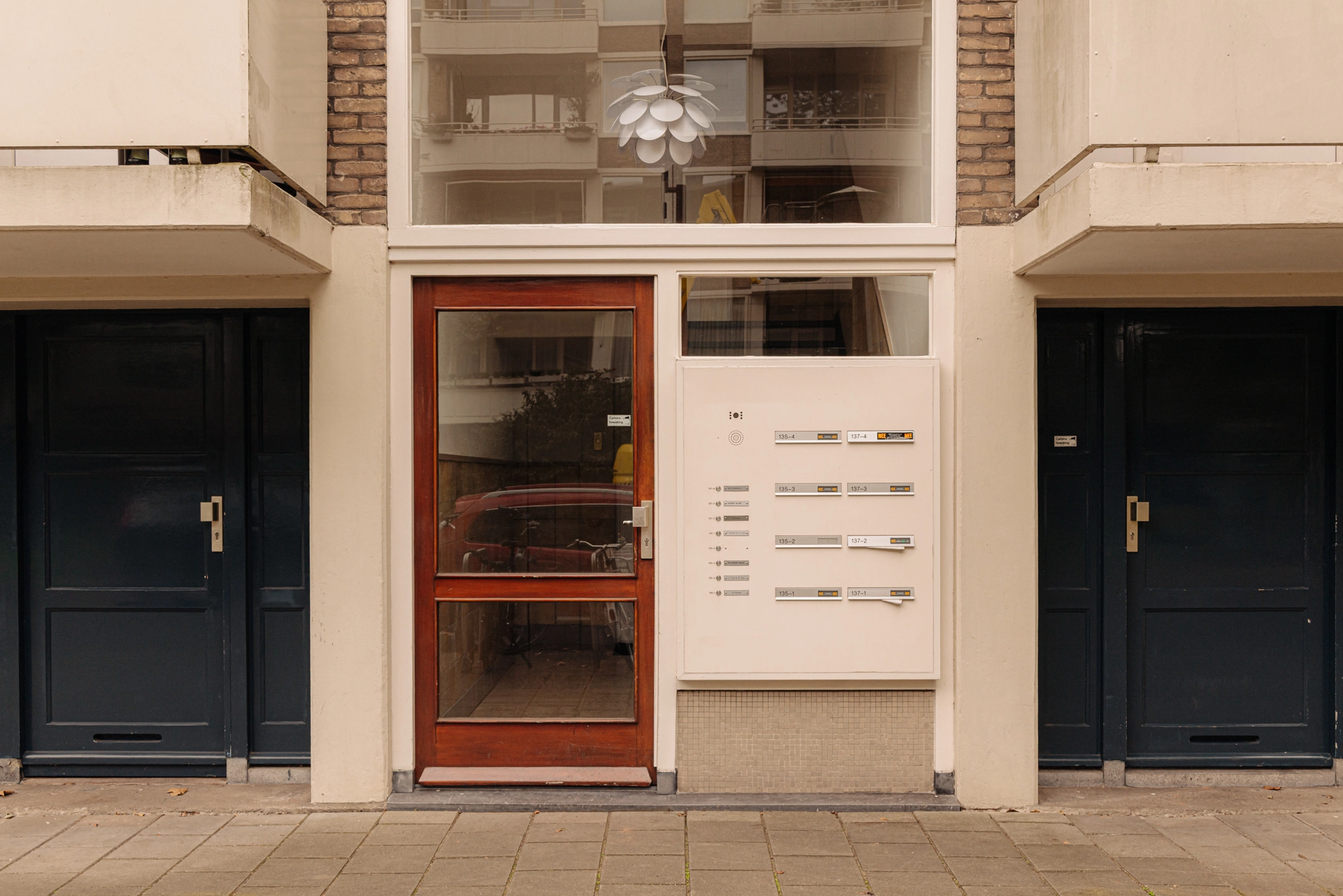
We begin at street level on the broad Beethovenstraat. The avenue is calm at this time of day, sunlight filtering through the trees, and the façades of the 1950s residences display their rhythmic order. Number 135 is part of a well-maintained complex with a lift. The entrance is bright and functional, leading to the fourth floor.
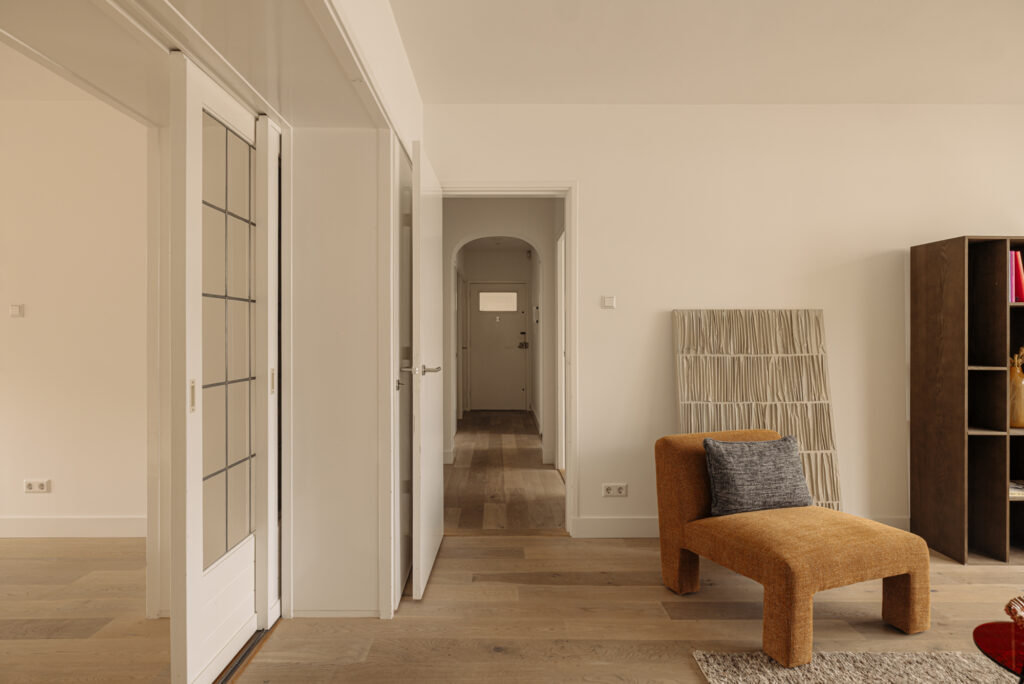
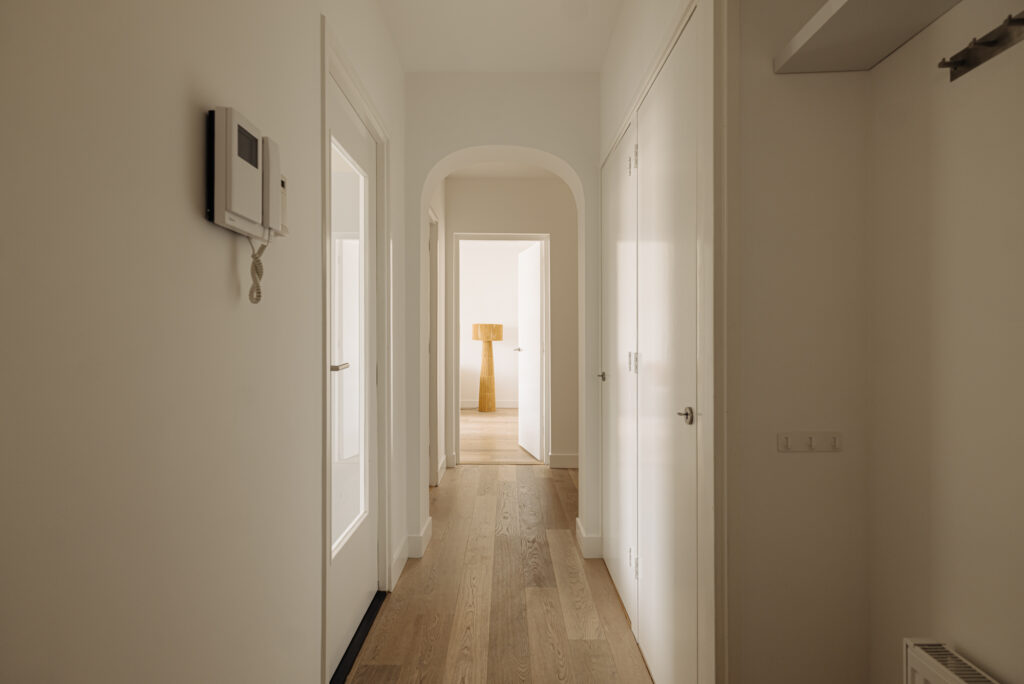
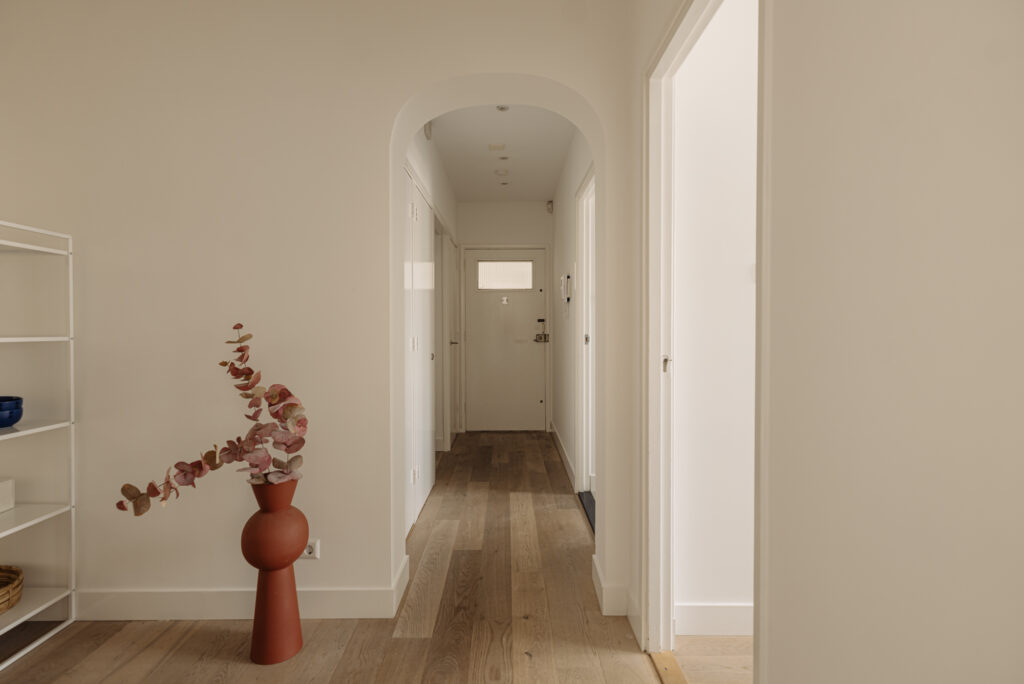
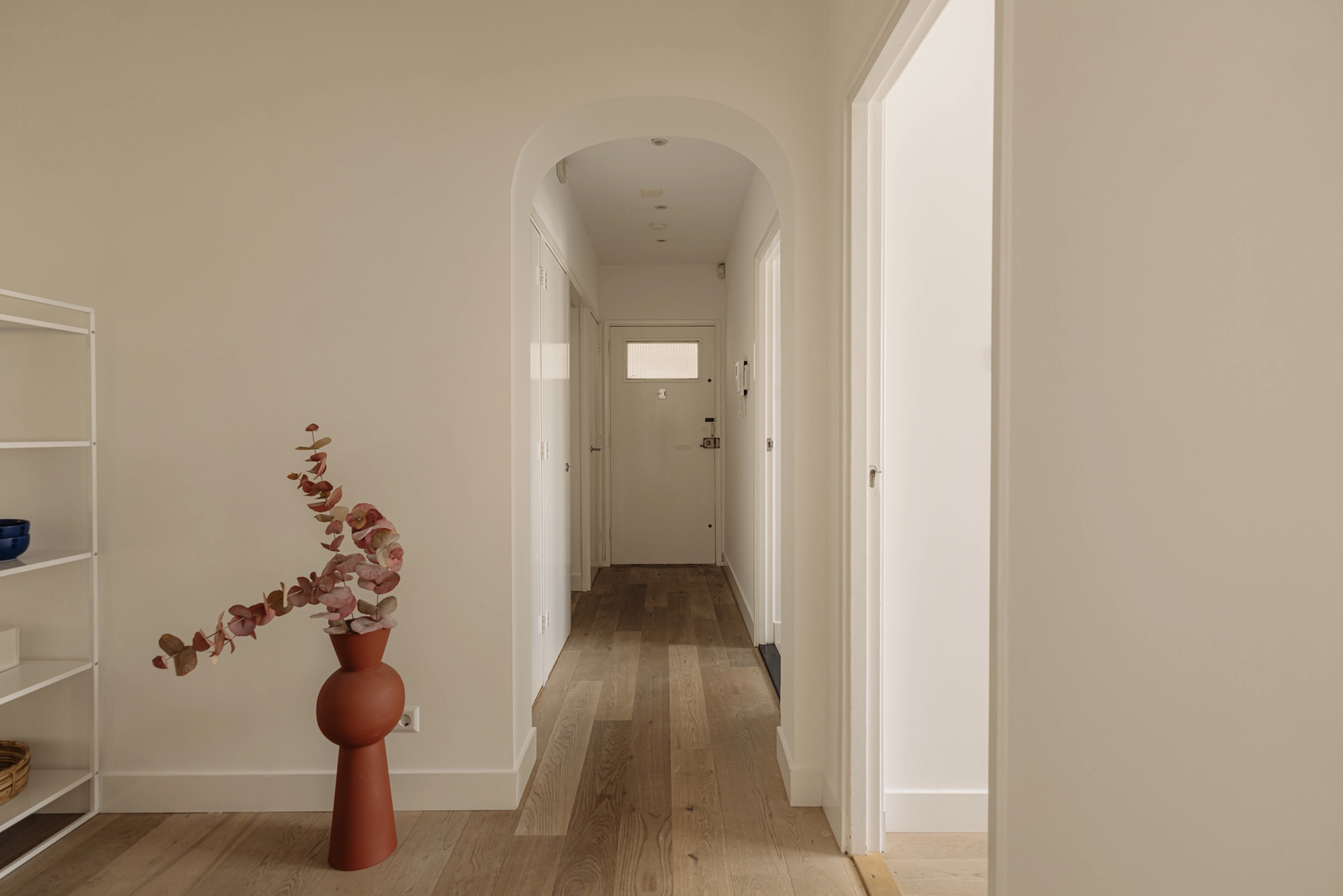
Once upstairs, we open the front door to a central hallway that naturally connects the spaces of the apartment. To the left is the kitchen, to the right the bedrooms, and straight ahead the living areas. The apartment has a bright character — not only because of the sunlight but also due to its clean finishes and calm spatial lines.
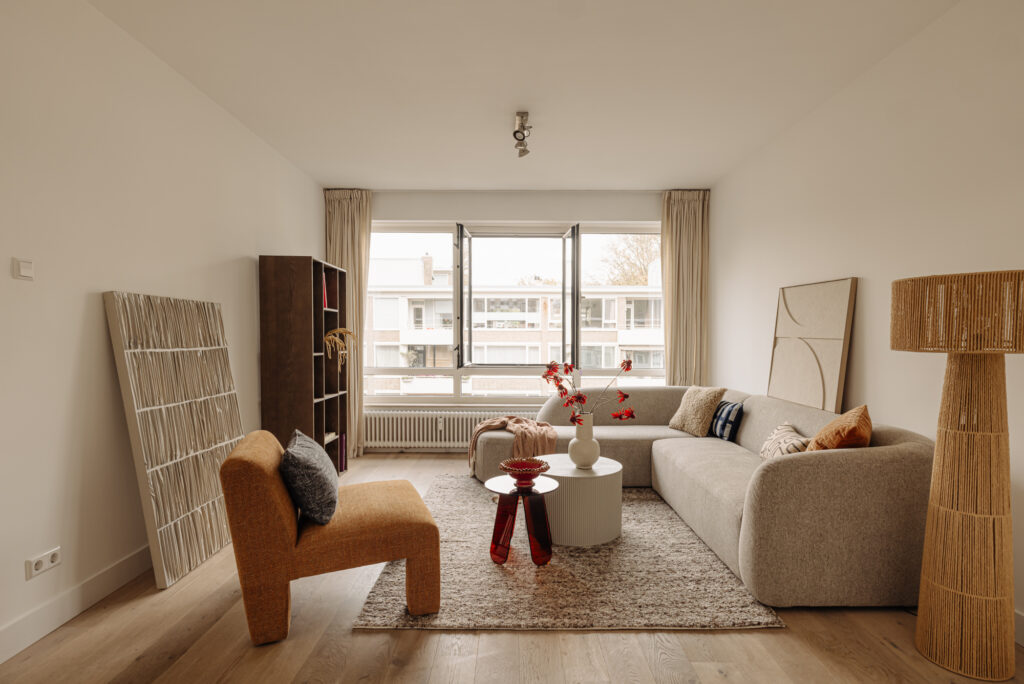
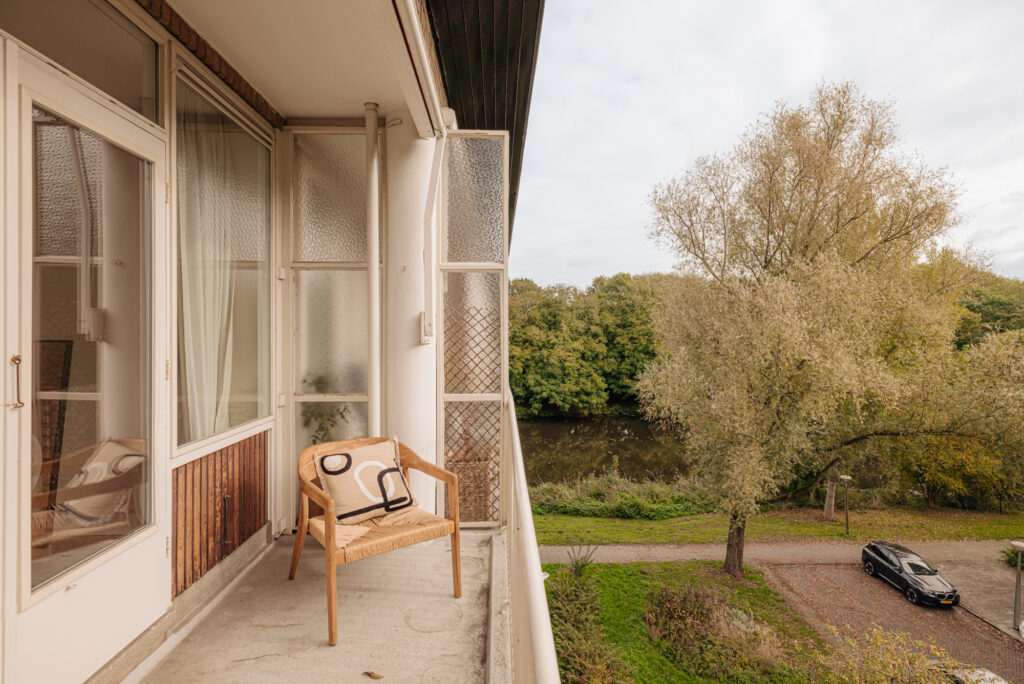
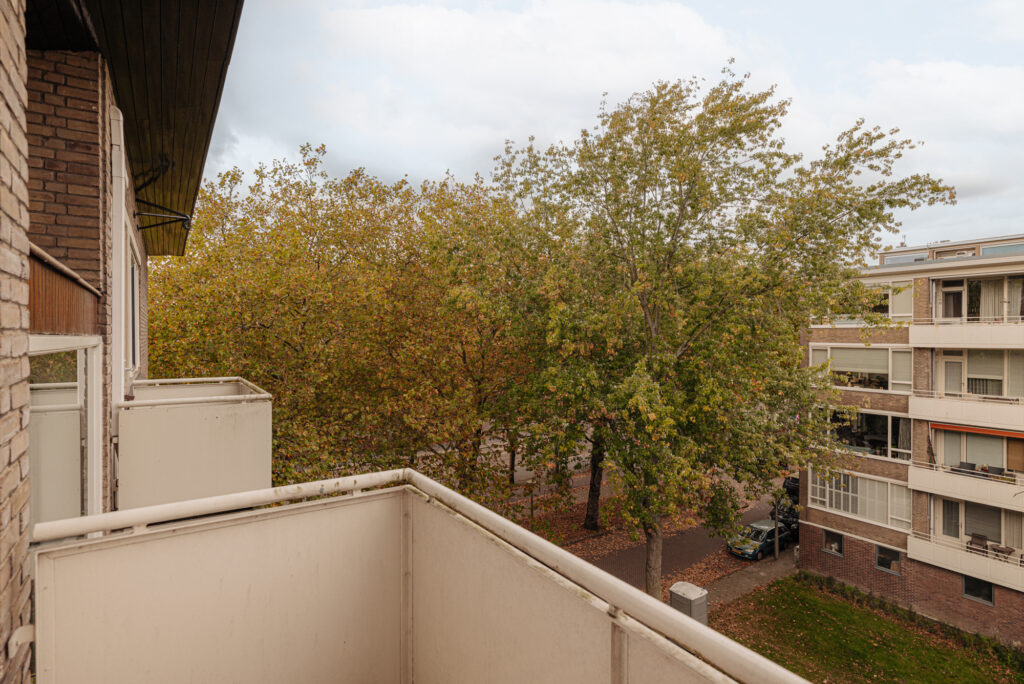
We first move towards the living room at the front. The view is immediately pleasant: green, open, with a sense of privacy. The room is rectangular and spacious, with large windows that allow plenty of natural light. The floor is finished in warm wood tones, and along the façade is the first balcony. South-facing — a sunny spot from morning until late afternoon, perfect for coffee or a quiet pause.
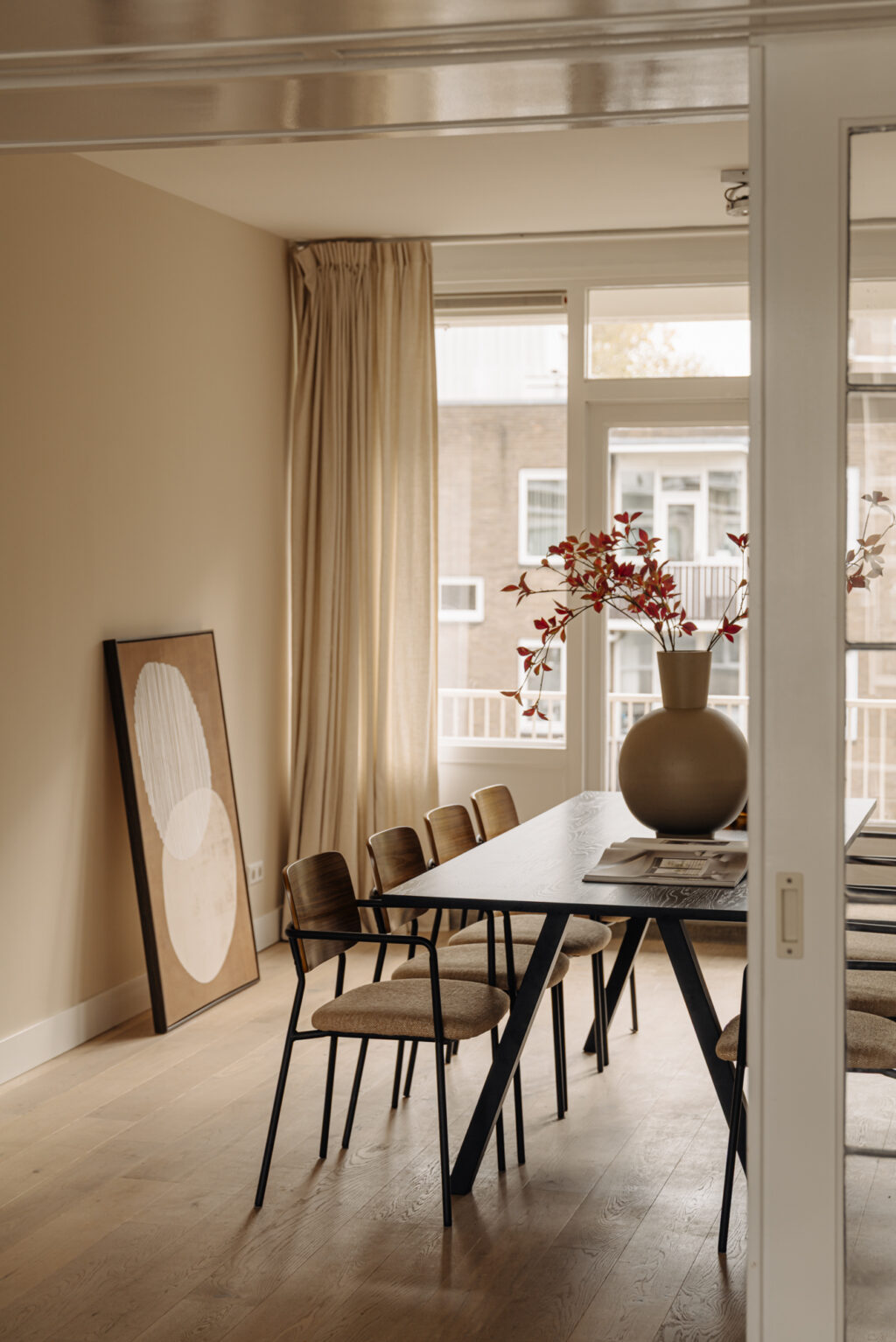
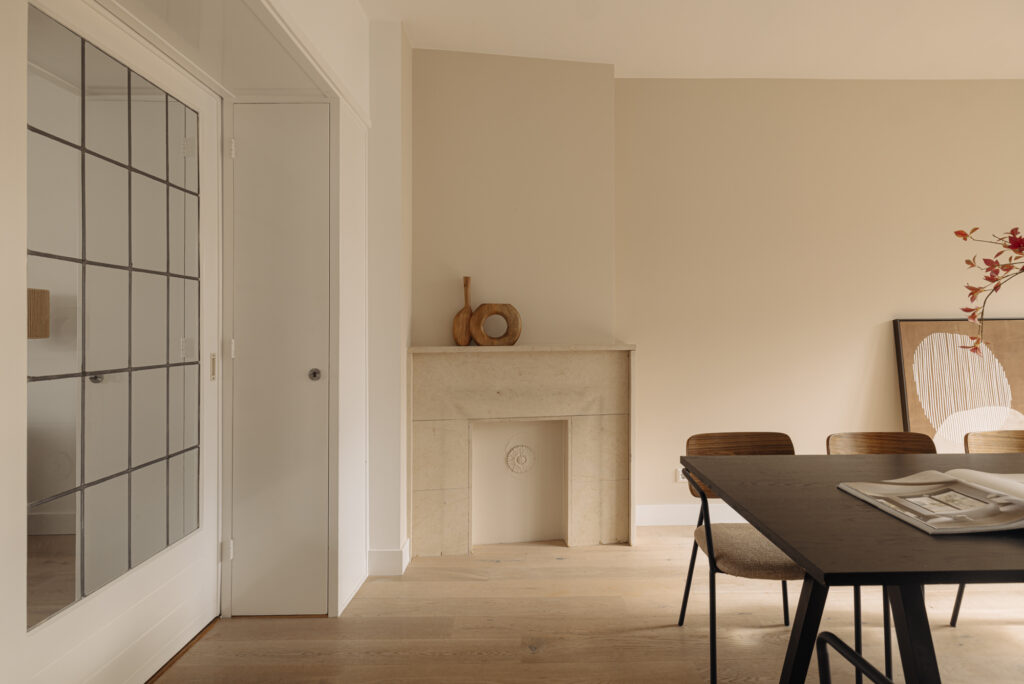
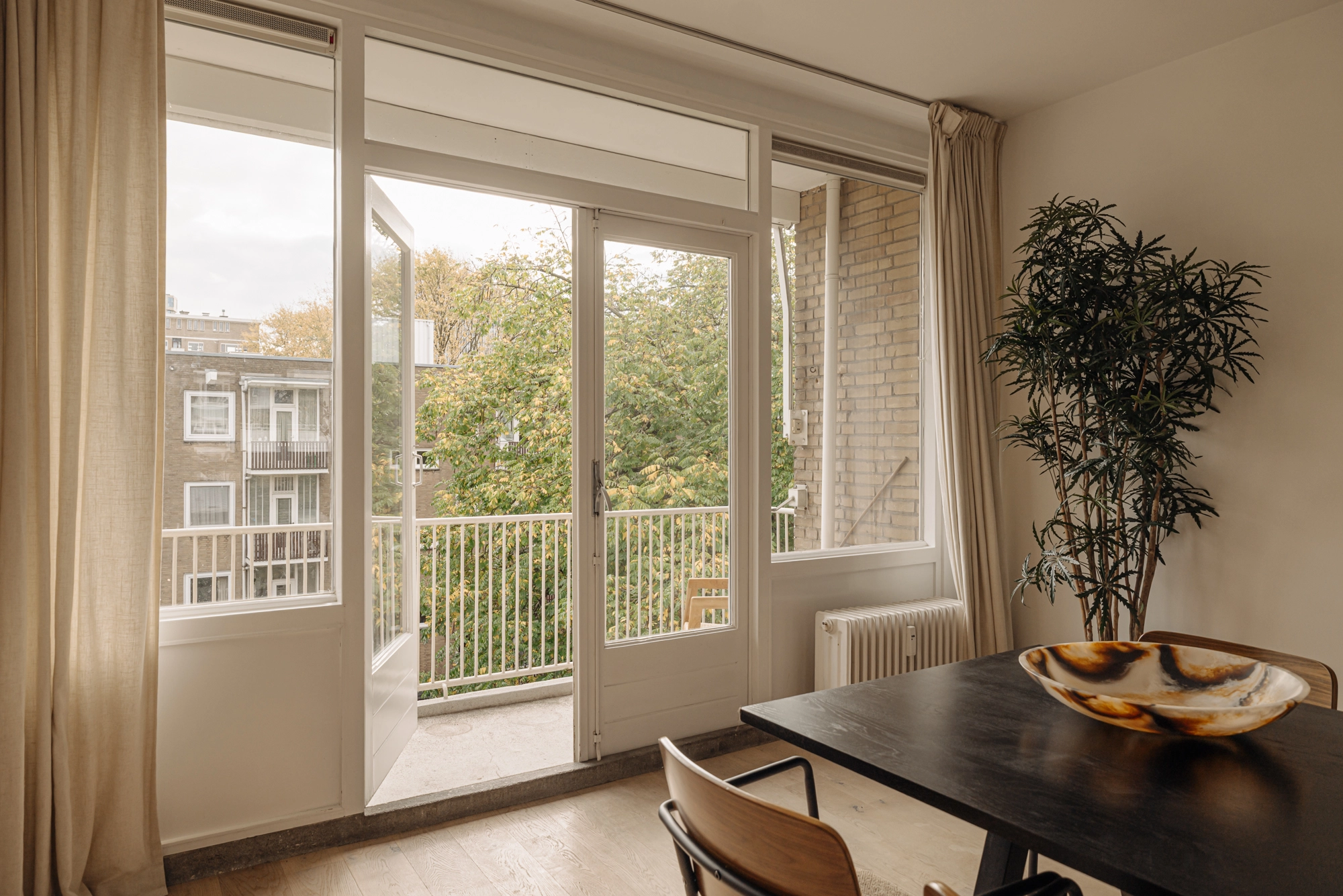
Back inside, we open the sliding doors to the dining room. The stained-glass panels subtly reflect the building’s era. When open, the two rooms merge into one long, through-living space filled with light from front to back. The transition between the rooms feels fluid yet defined. At the rear, tall windows overlook the second balcony and the greenery beyond. The atmosphere is calm; the view, serene.
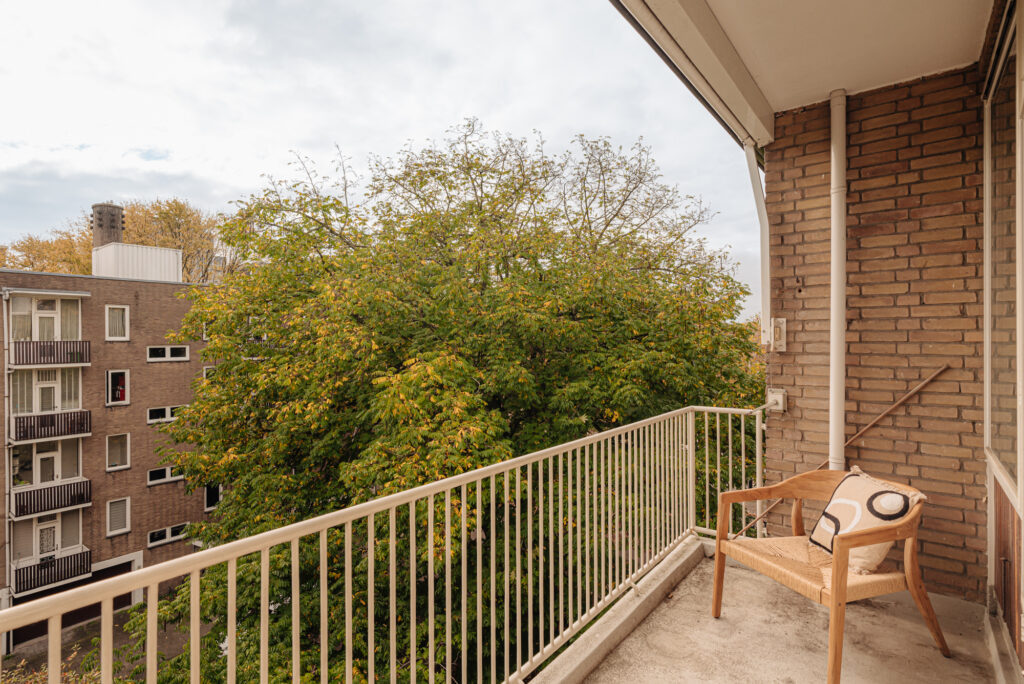
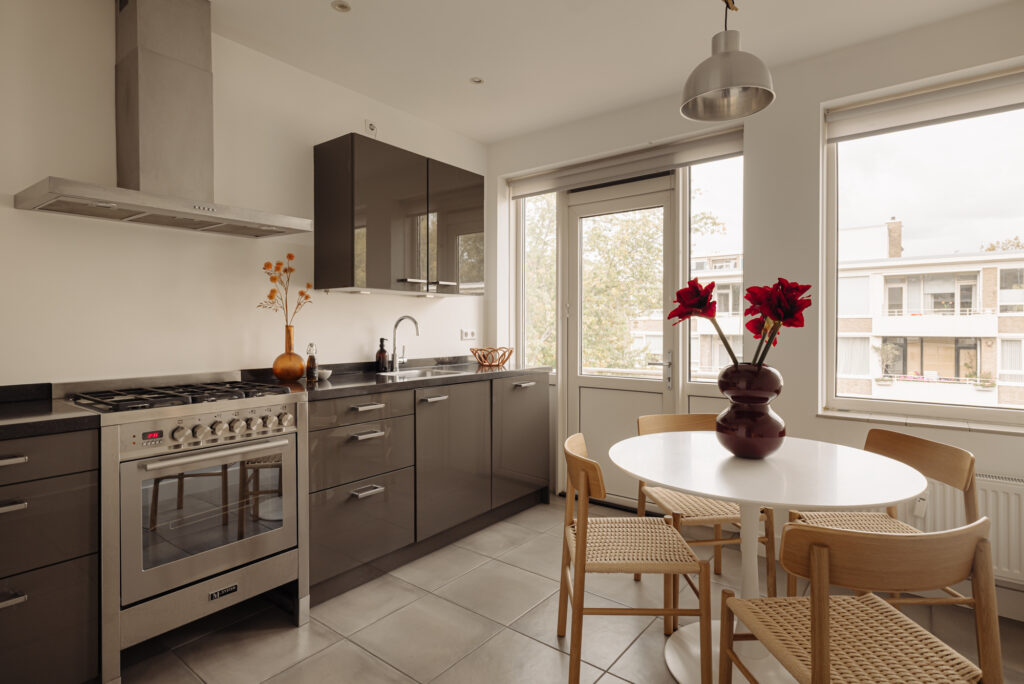
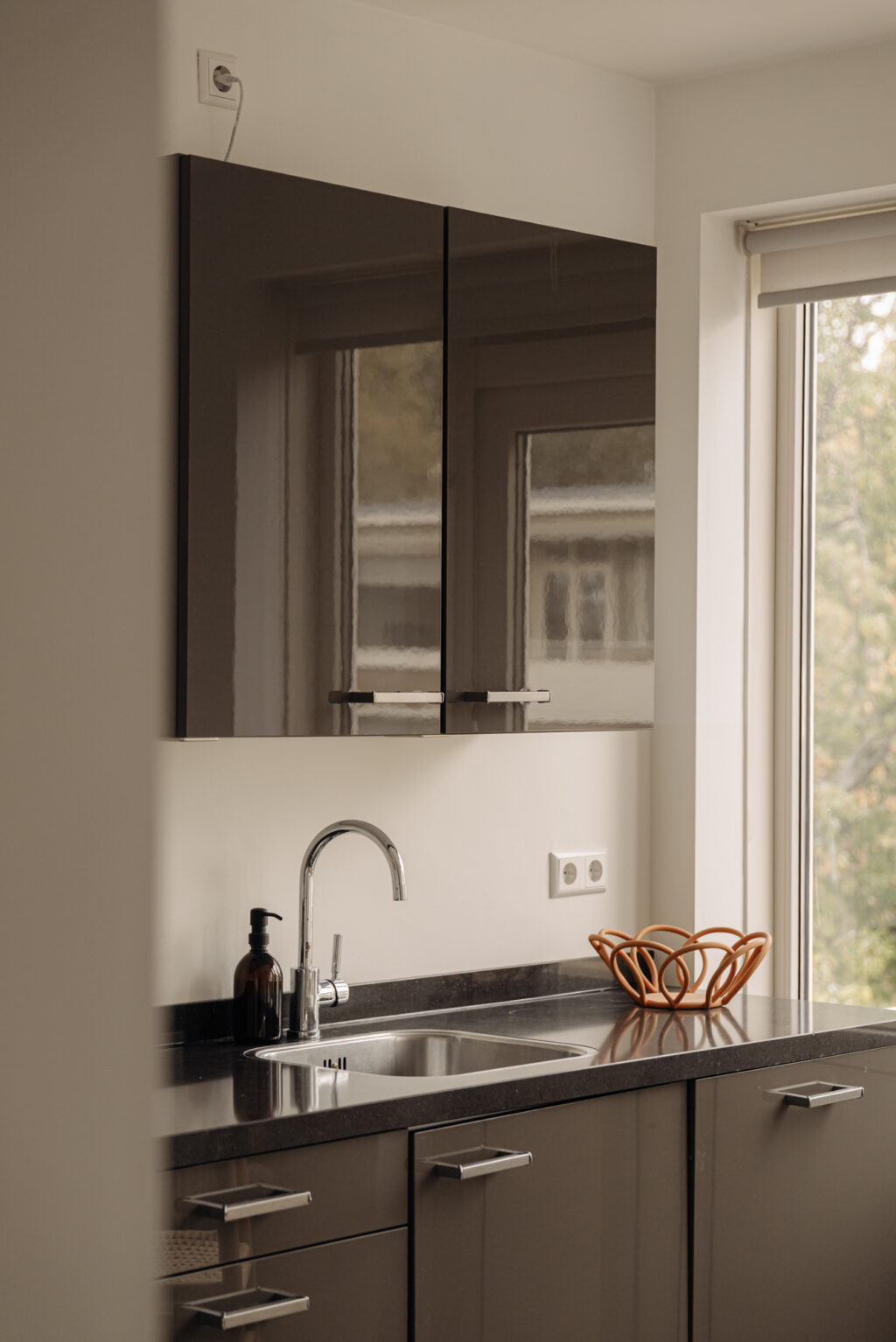
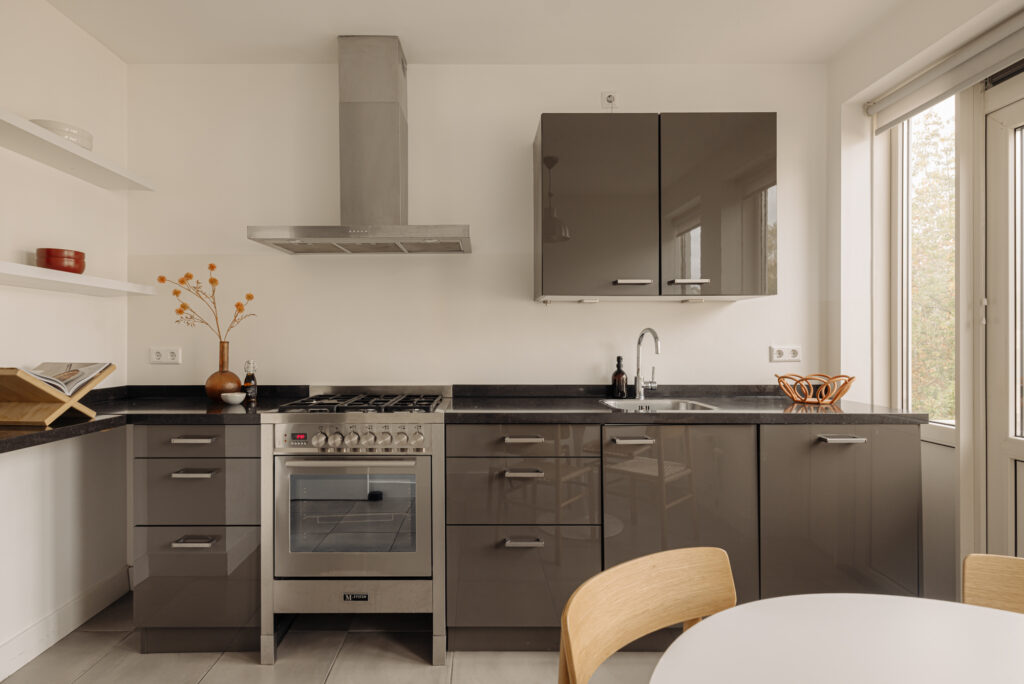
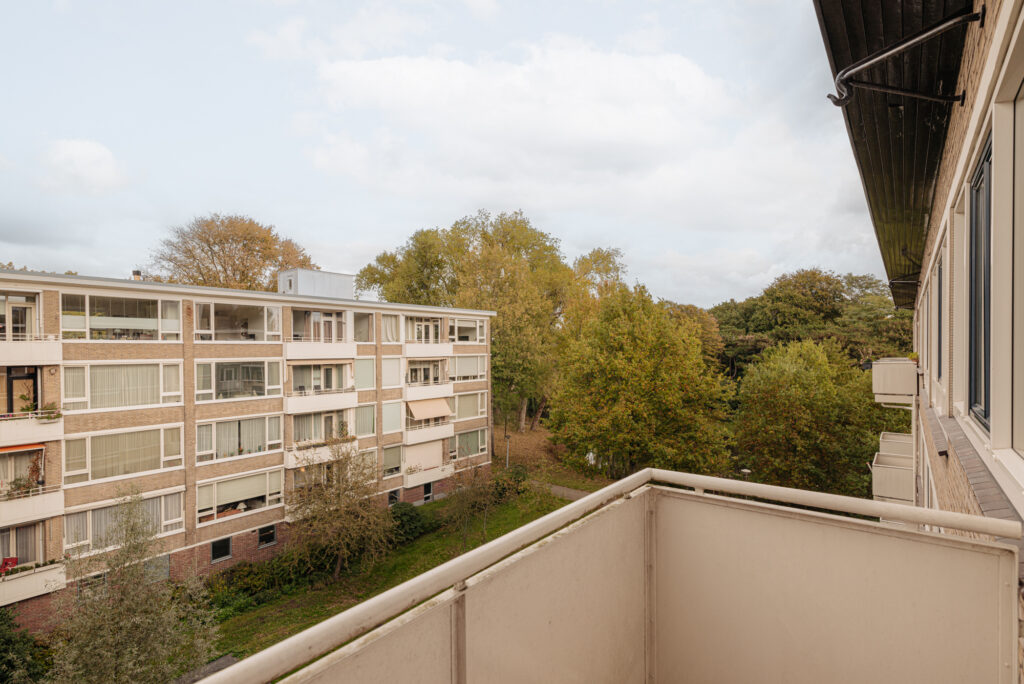
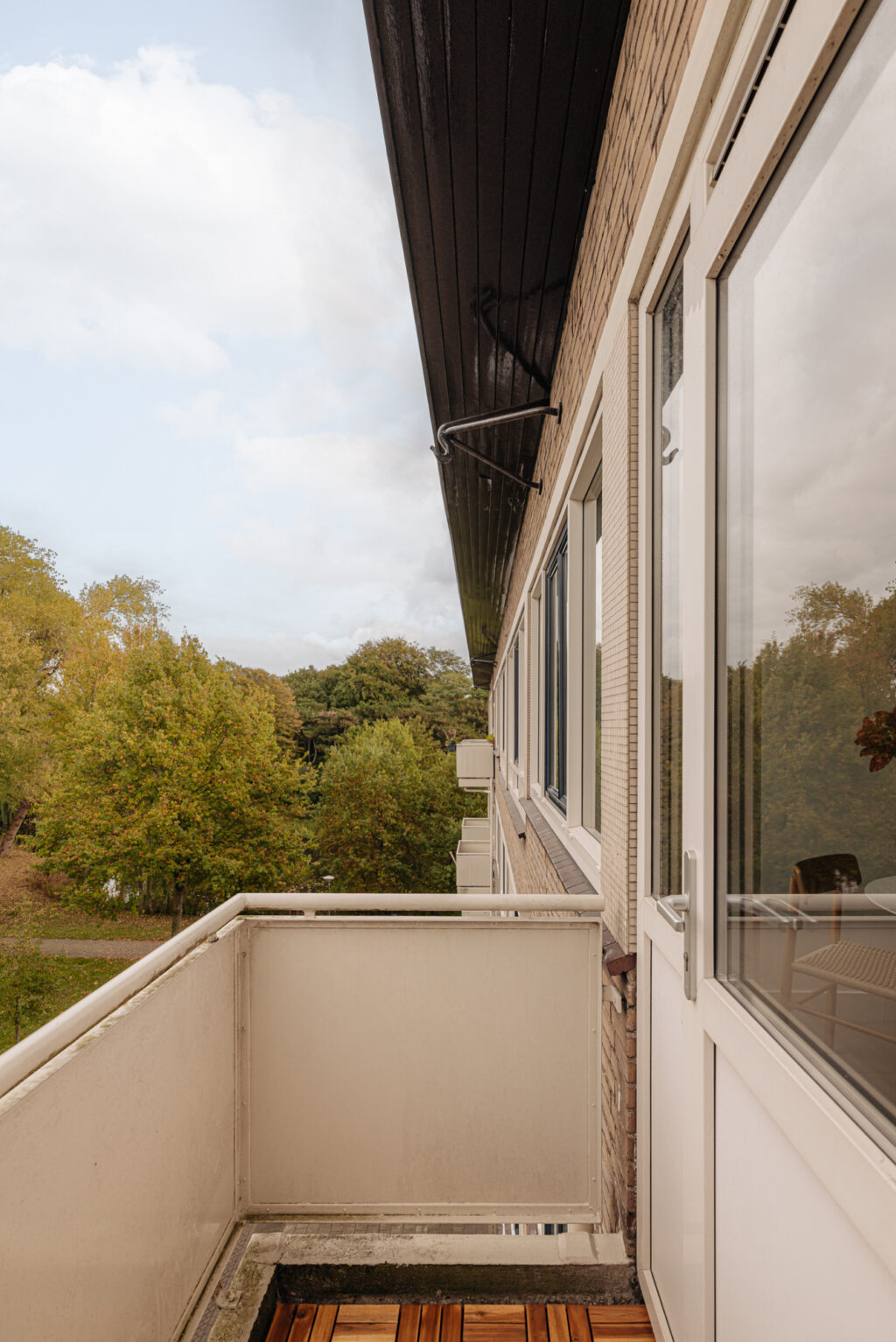
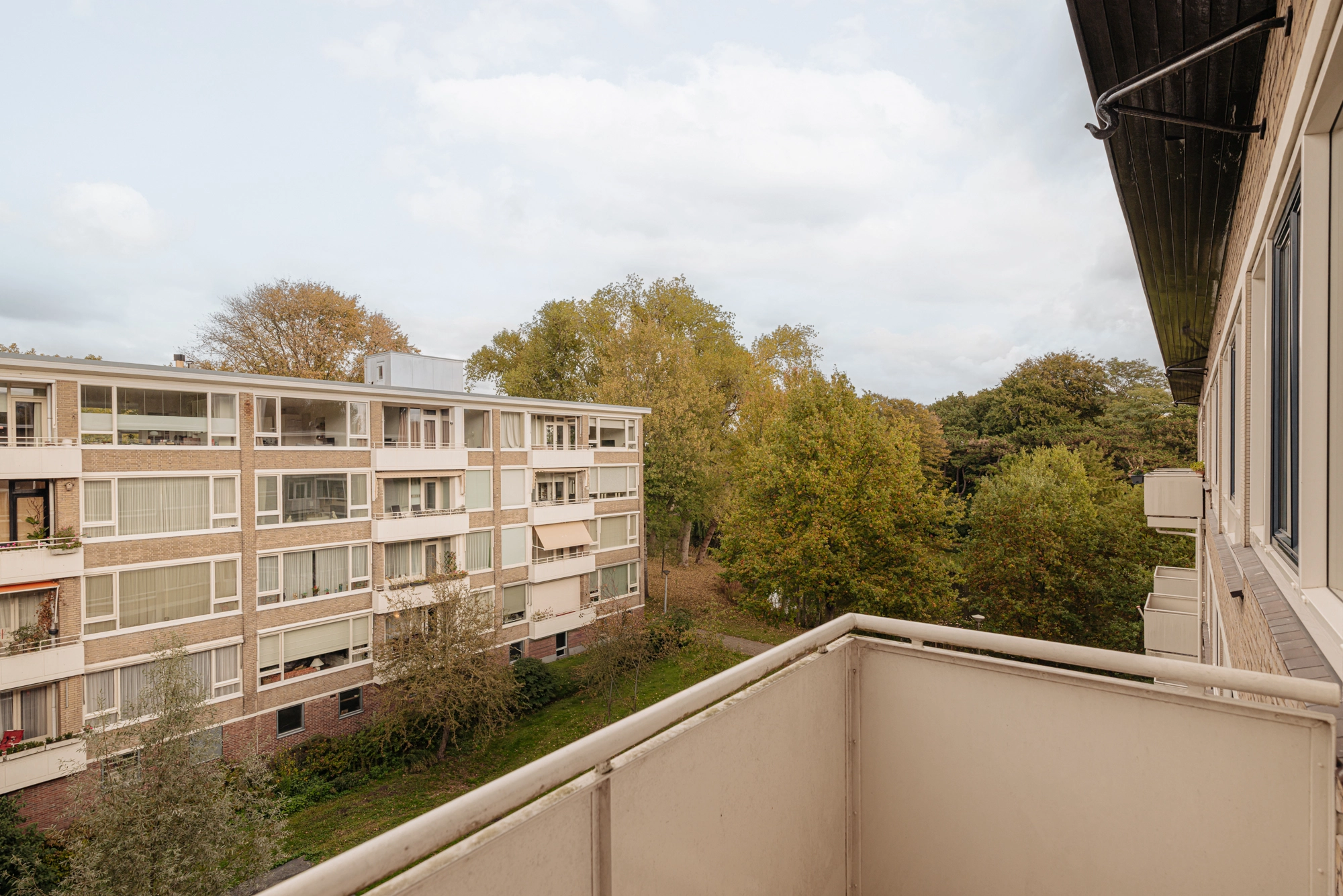
From the hallway, we continue to the kitchen. A practical corner layout finished in grey tones with a dark worktop, spacious enough for a breakfast table and with direct access to the north-facing balcony. The atmosphere here is cooler and more tranquil — an ideal spot during warmer months. The balcony overlooks the inner gardens, an unexpectedly green retreat in the heart of Zuid.
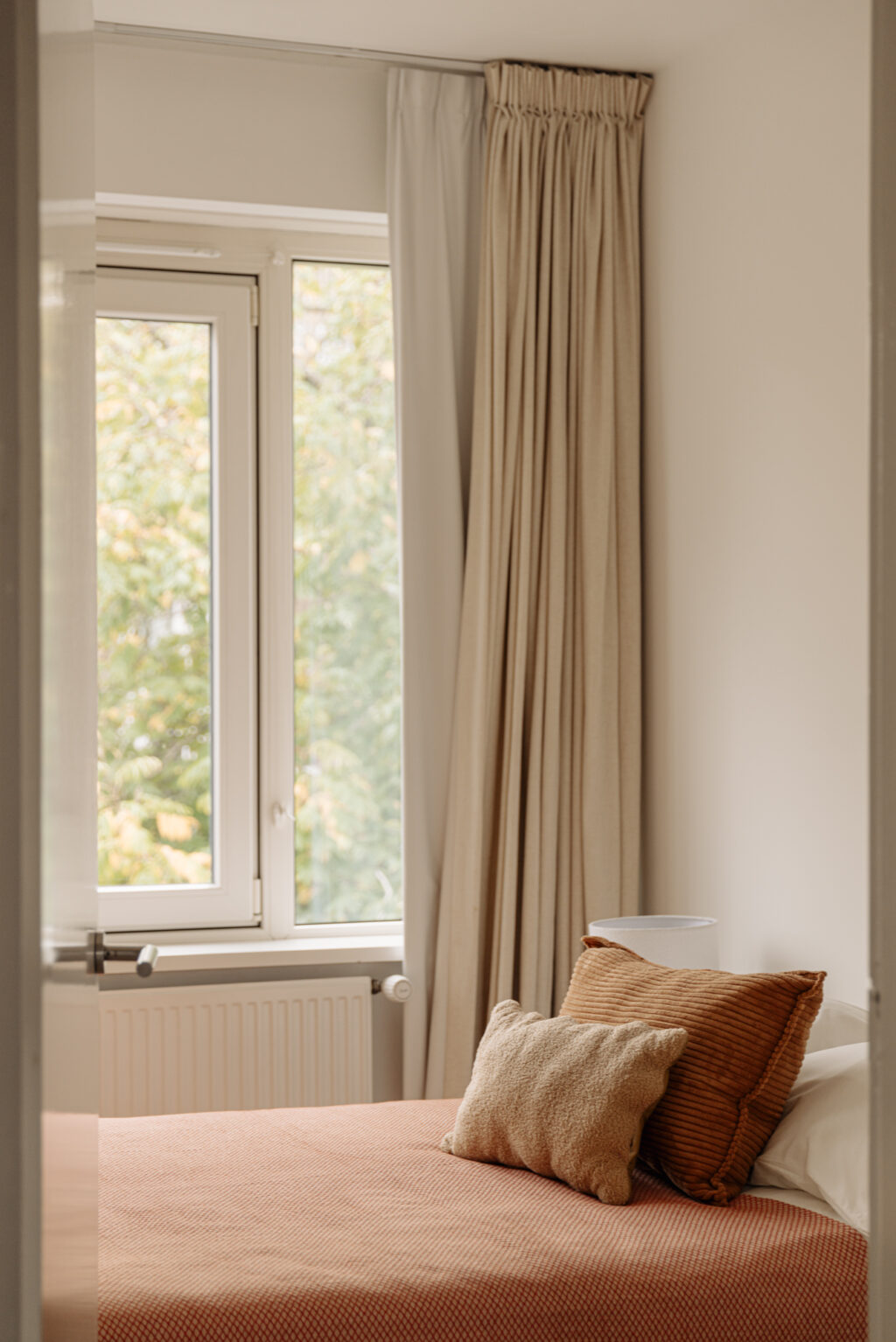
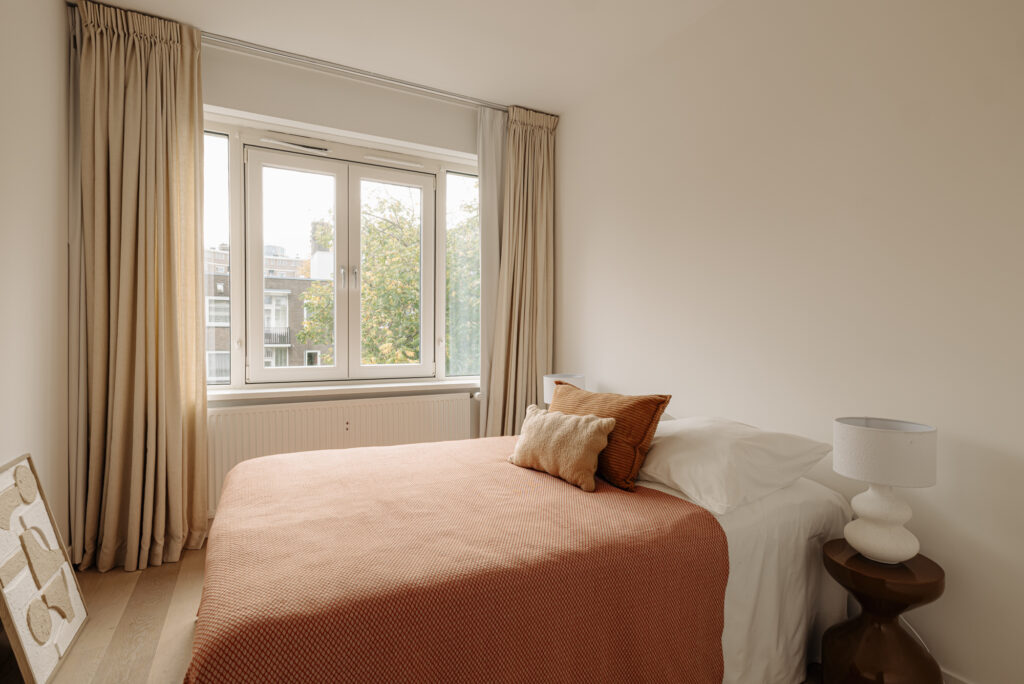
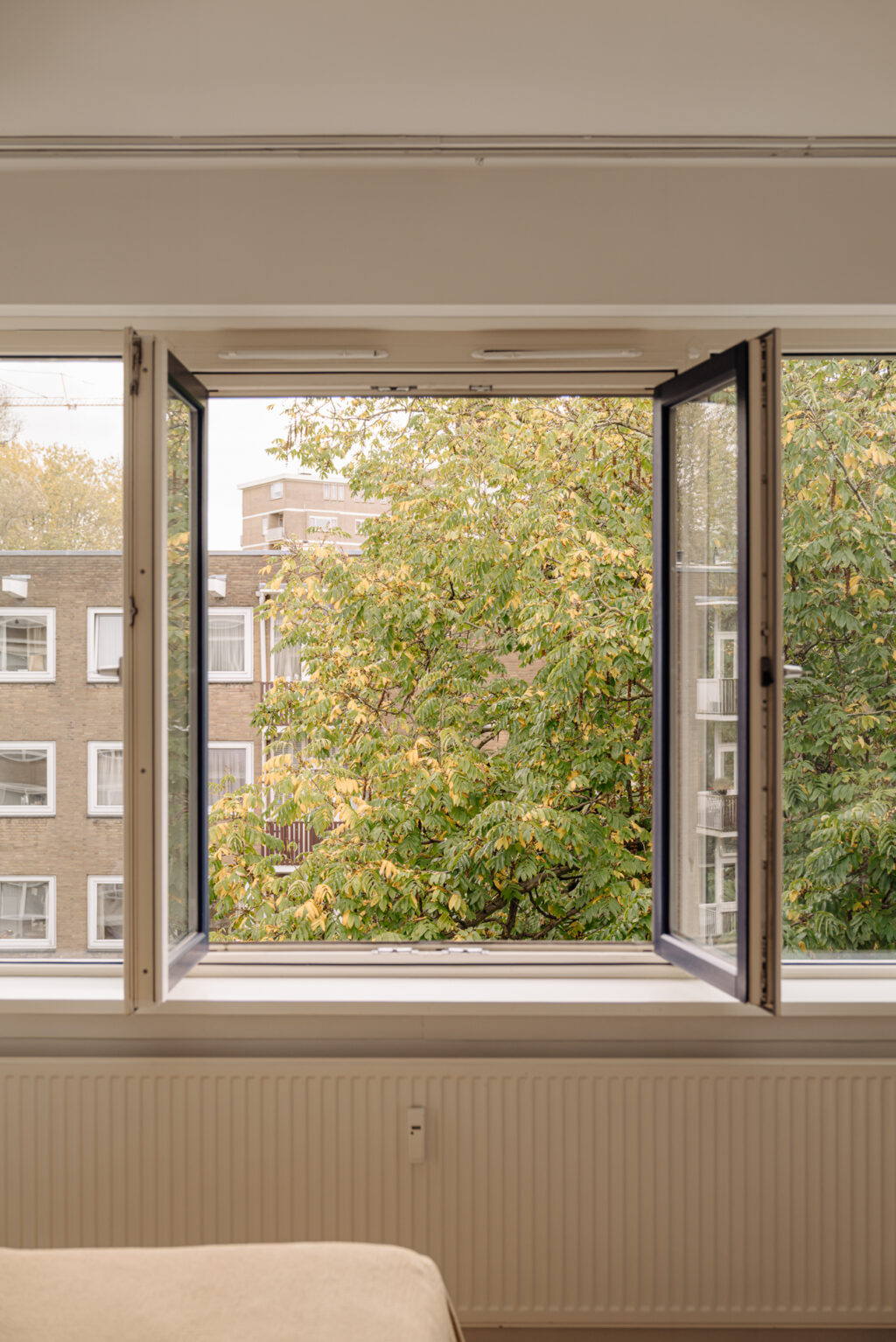
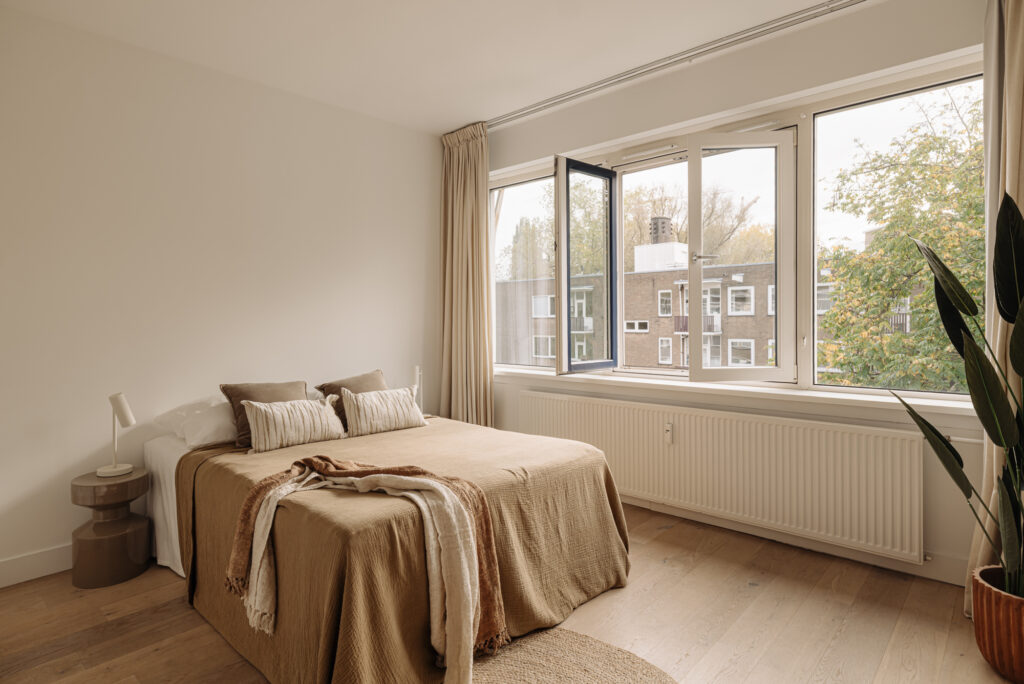
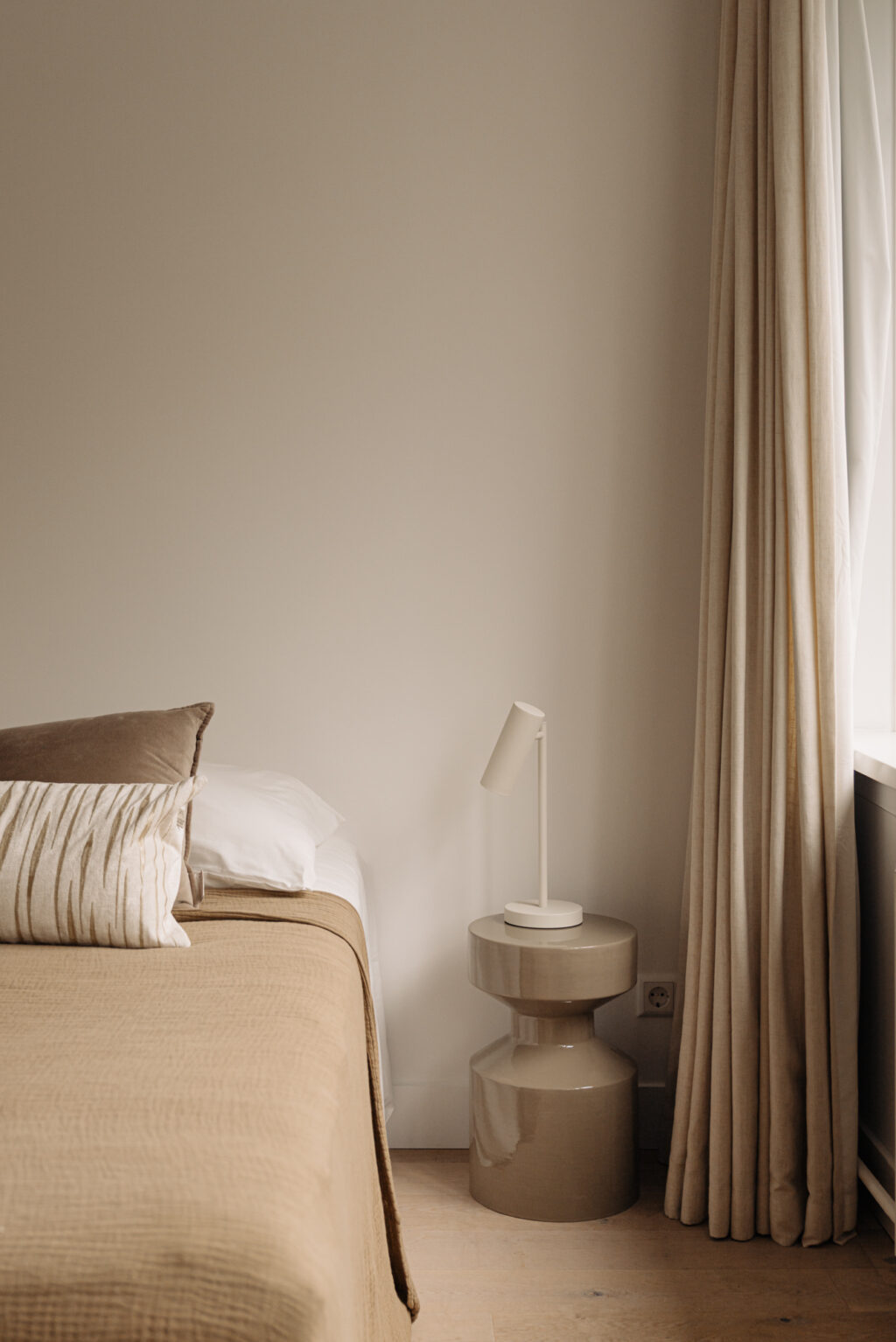
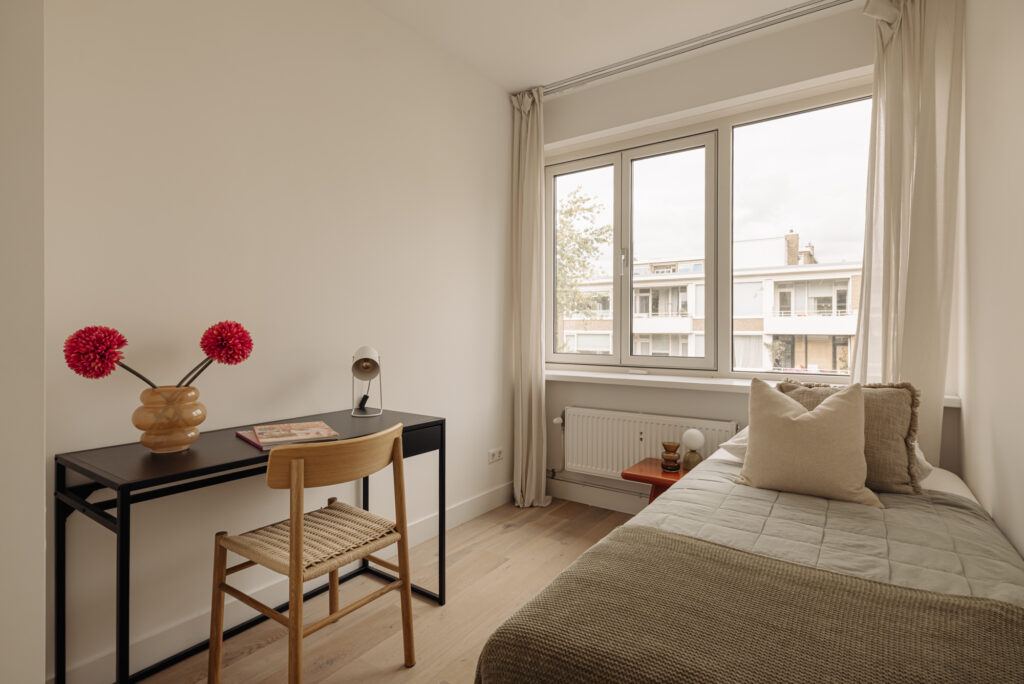
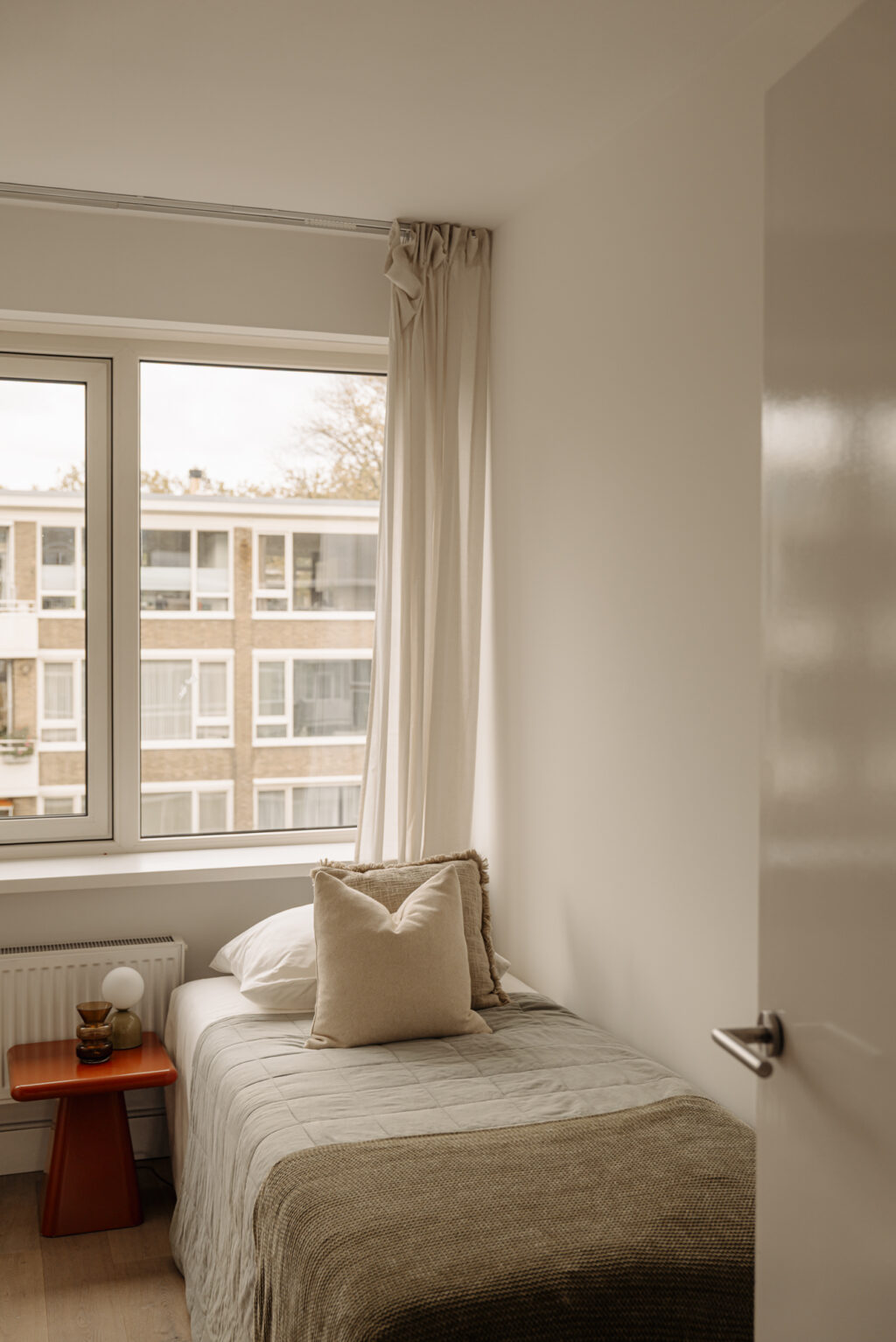
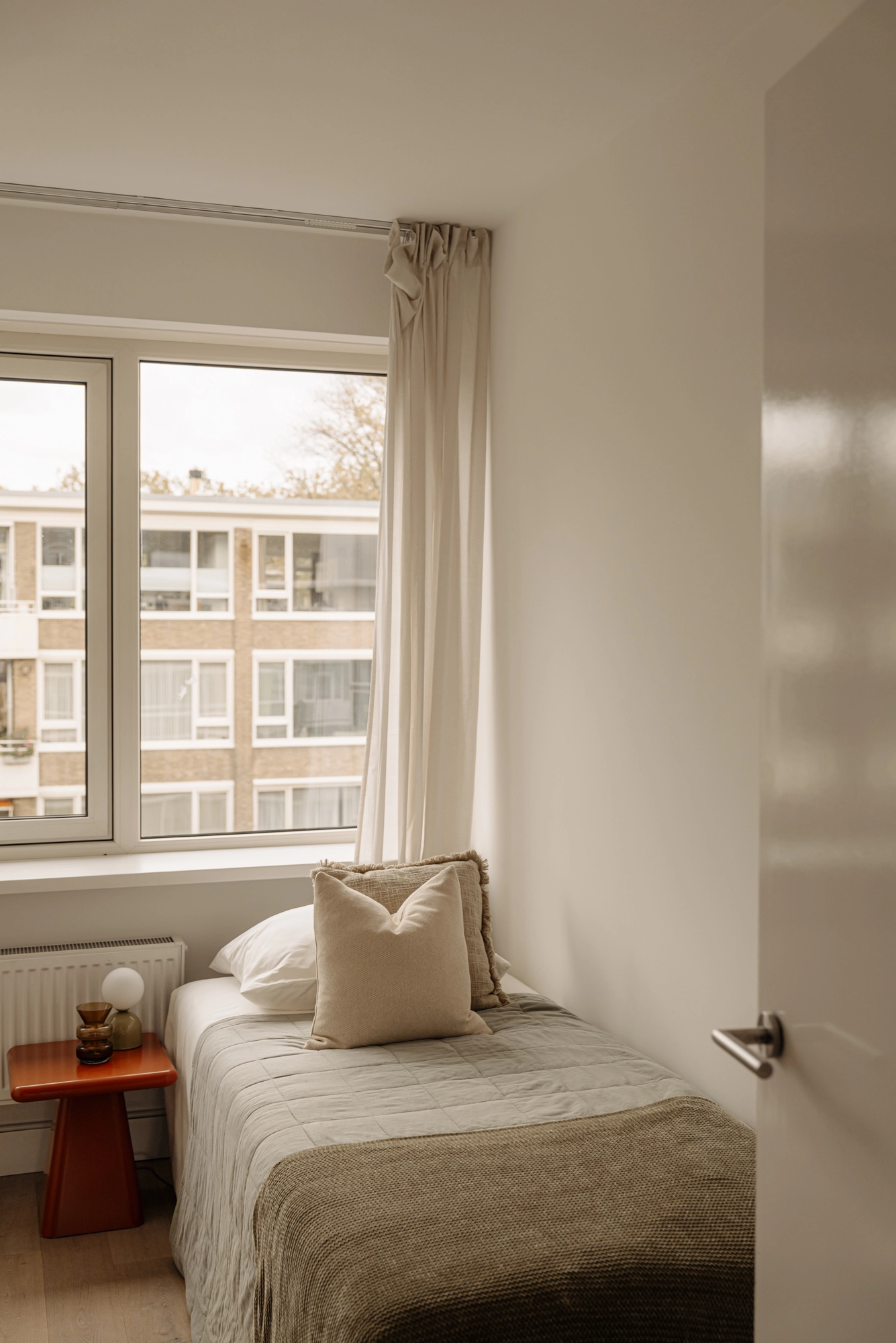
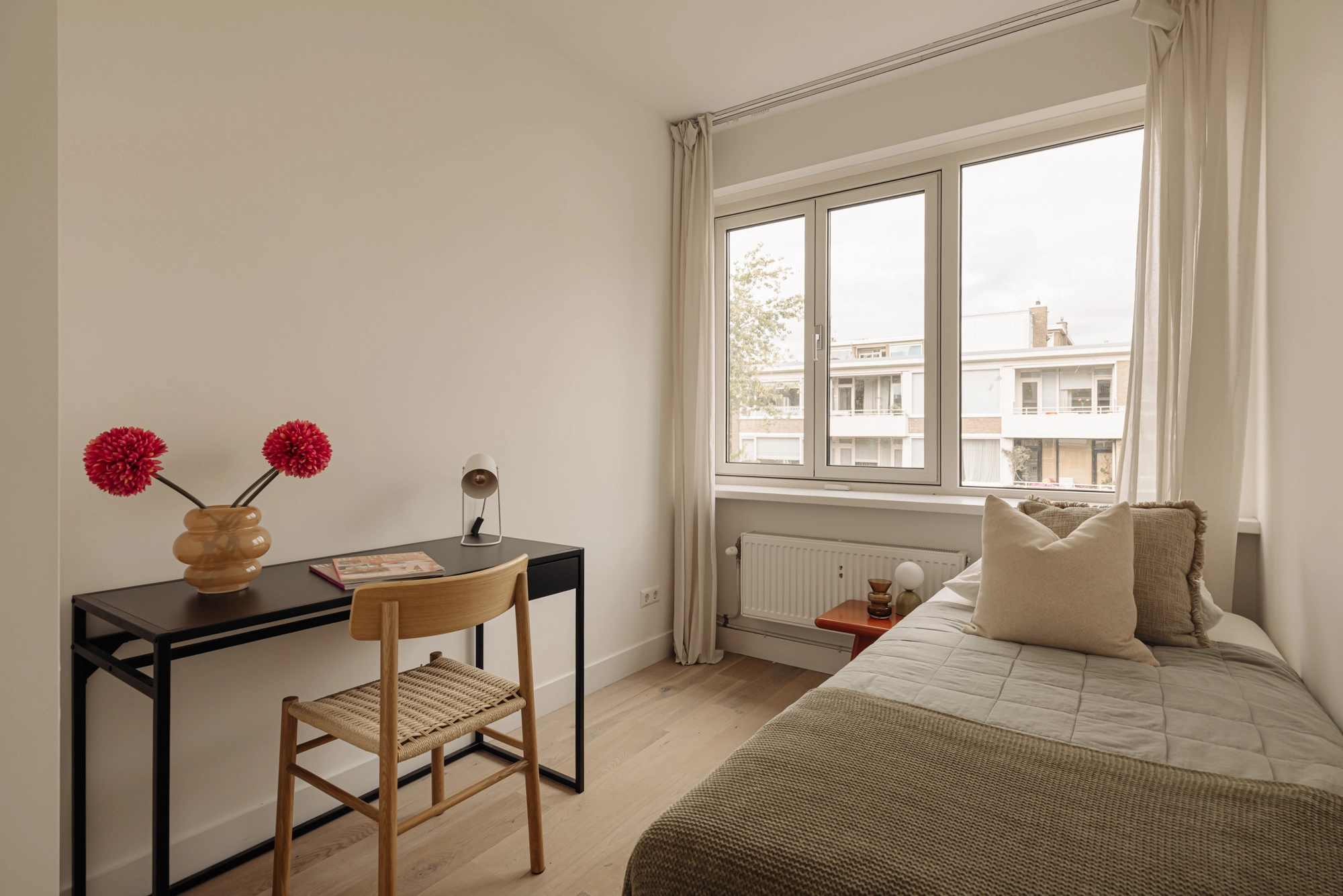
Further along the hallway are three bedrooms. The primary bedroom is generous, overlooking the same courtyard gardens — a quiet, restful space with large windows allowing soft daylight without direct sun. The second bedroom, similar in size, is ideal as a guest room, workspace, or child’s room. The third room is more compact and located to the side — a quiet place to work or study.
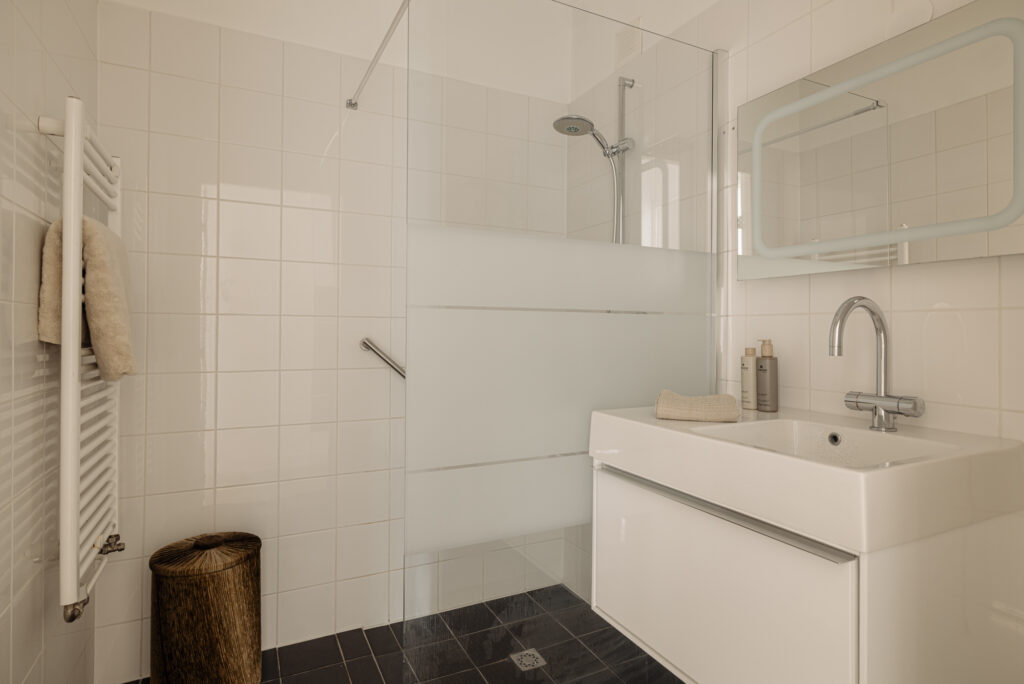
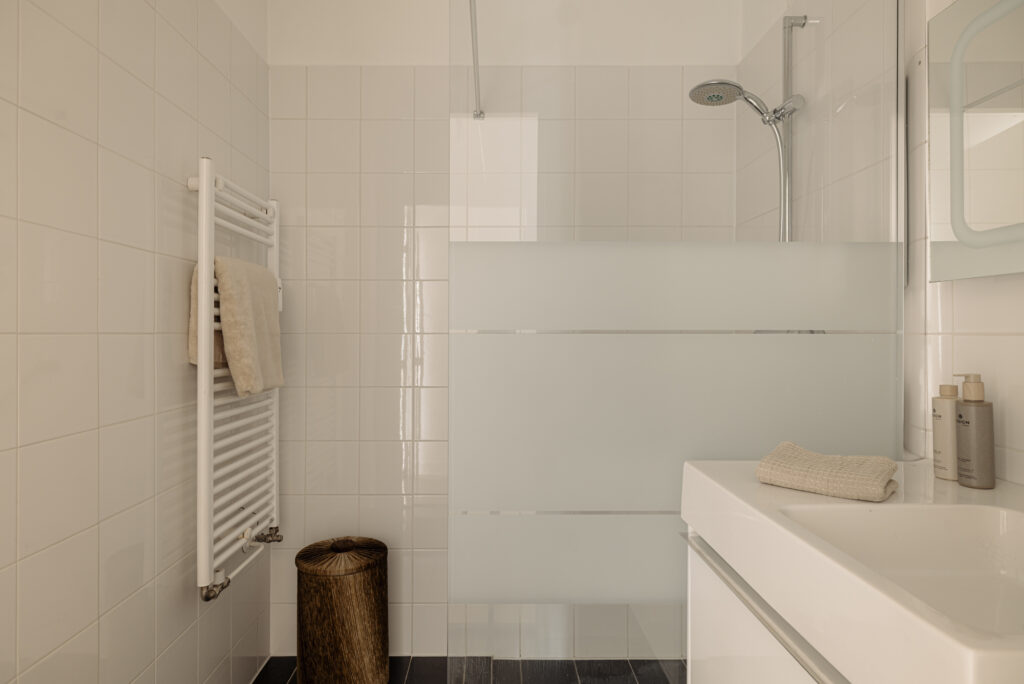
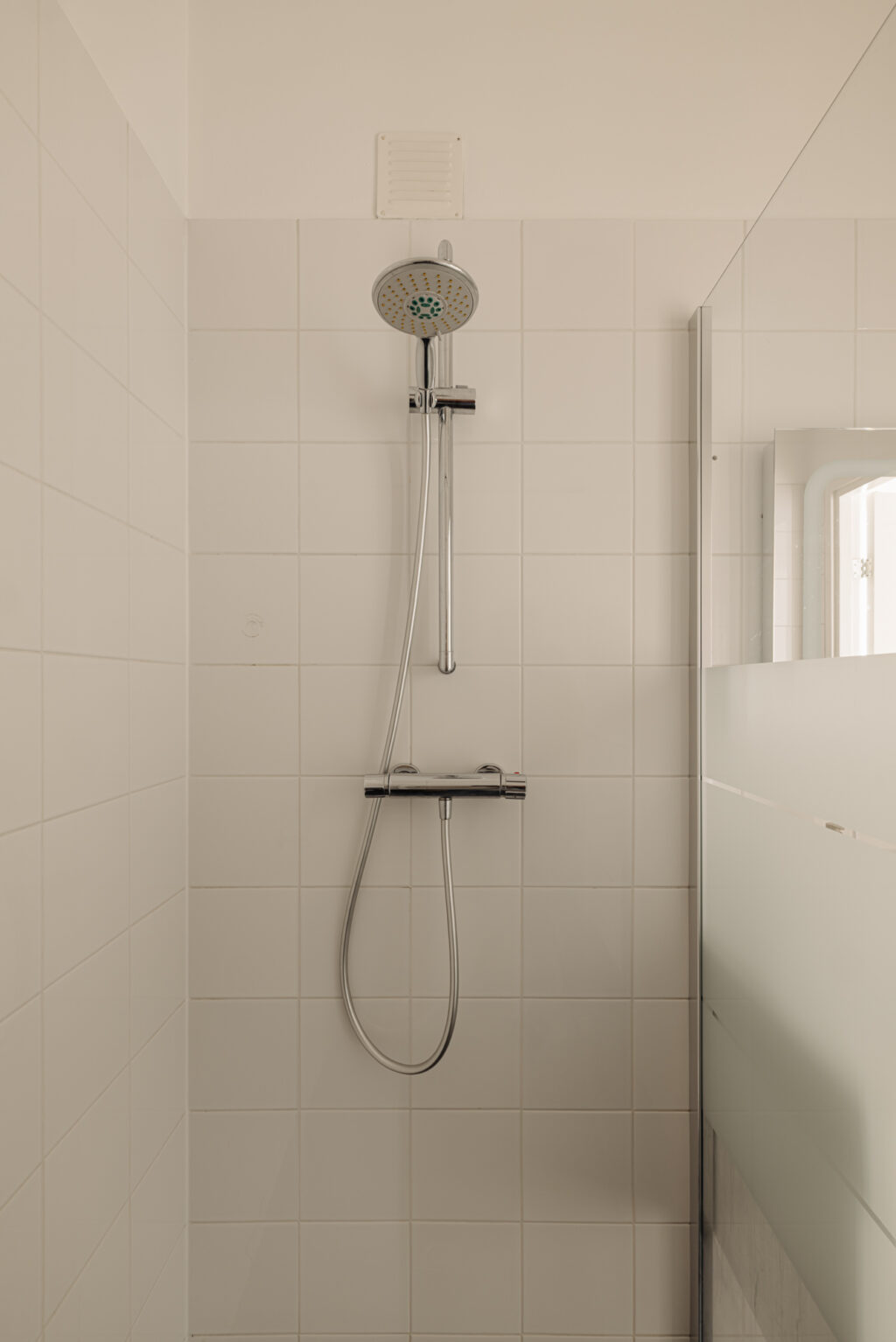
The bathroom is well maintained and functional, featuring a walk-in shower, modern washbasin, and a neutral, timeless finish. The separate toilet, located in the hallway, follows the same style.
Throughout the tour, the logical layout of the apartment stands out. Everything is where it should be. The routing is clear, and the spaces connect naturally. Built-in cupboards are neatly integrated throughout, maintaining a sense of order and openness. Though the apartment is not exceptionally large, it feels generous — thanks to the abundance of light, the dual orientation, and the calm detailing.
We end where we began: on the balcony at the front. The sun has lowered, and the street below is quiet. Here, on the fourth floor, you live with a view over the city yet in the tranquillity of a residential setting. Beethovenlicht lives up to its name — a home where daylight, layout, and location come together in harmony.
Neighbourhood
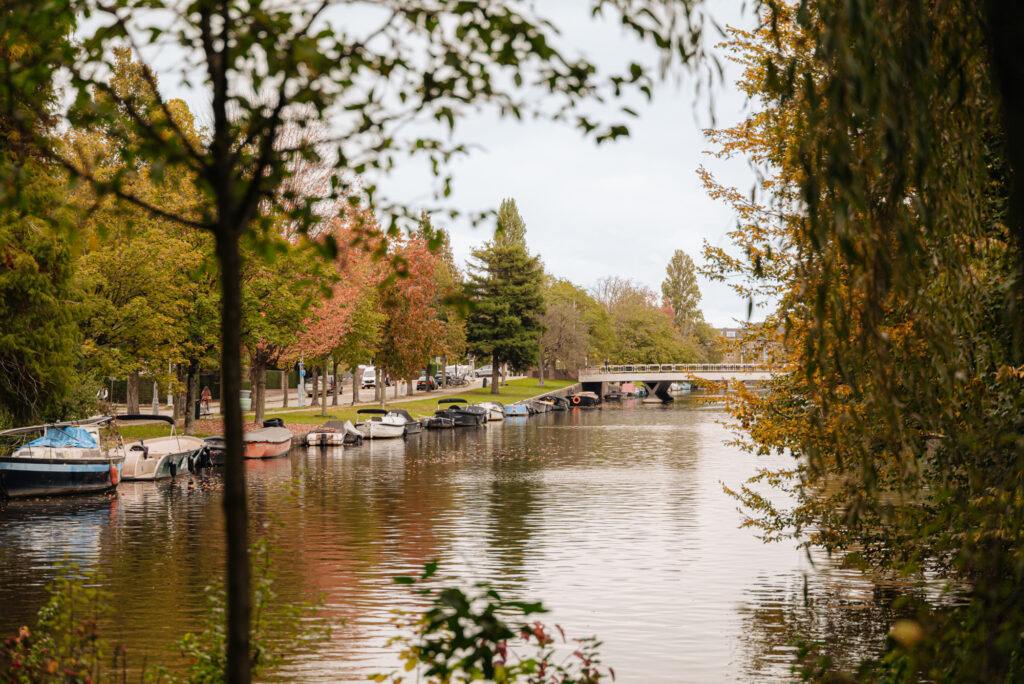
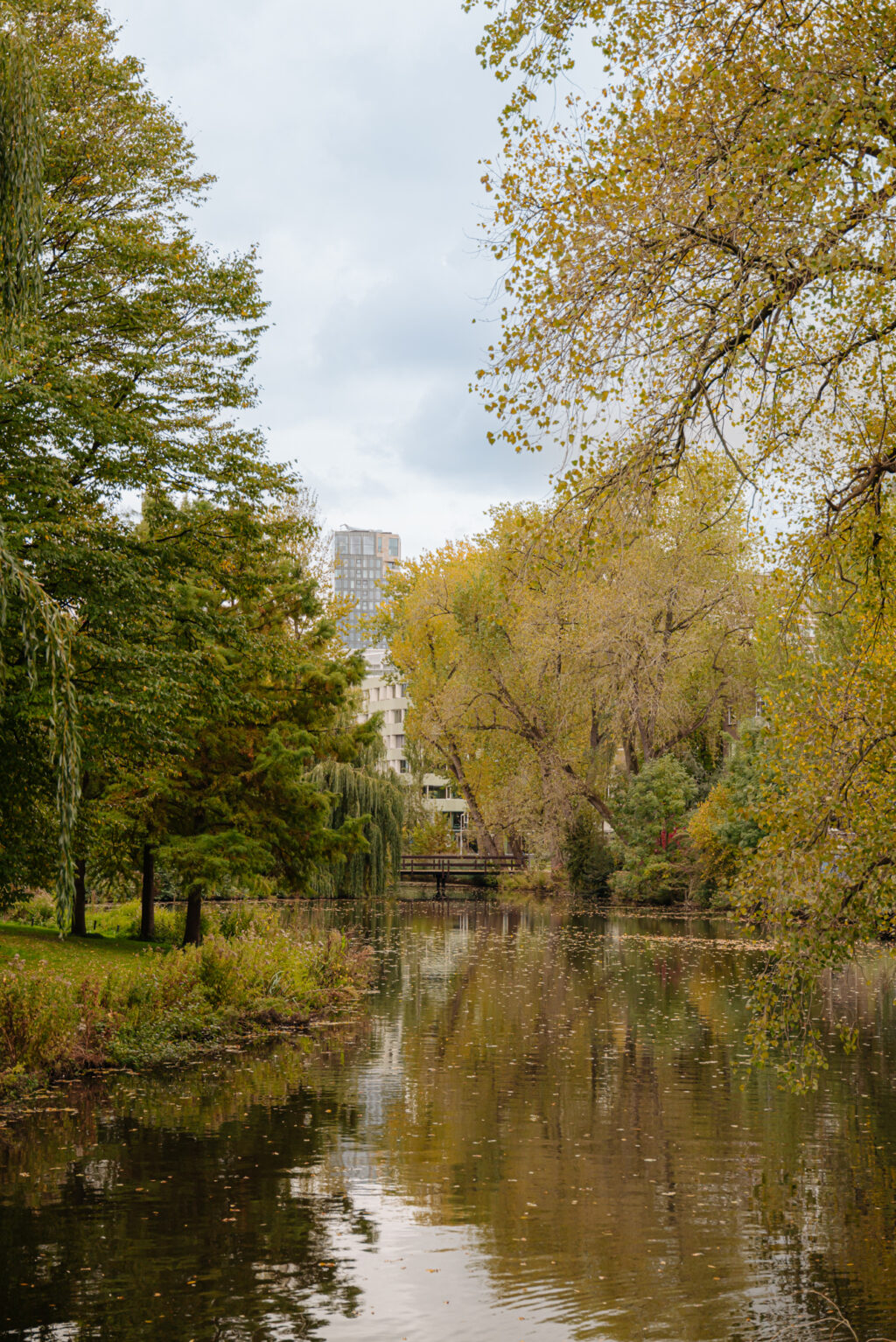
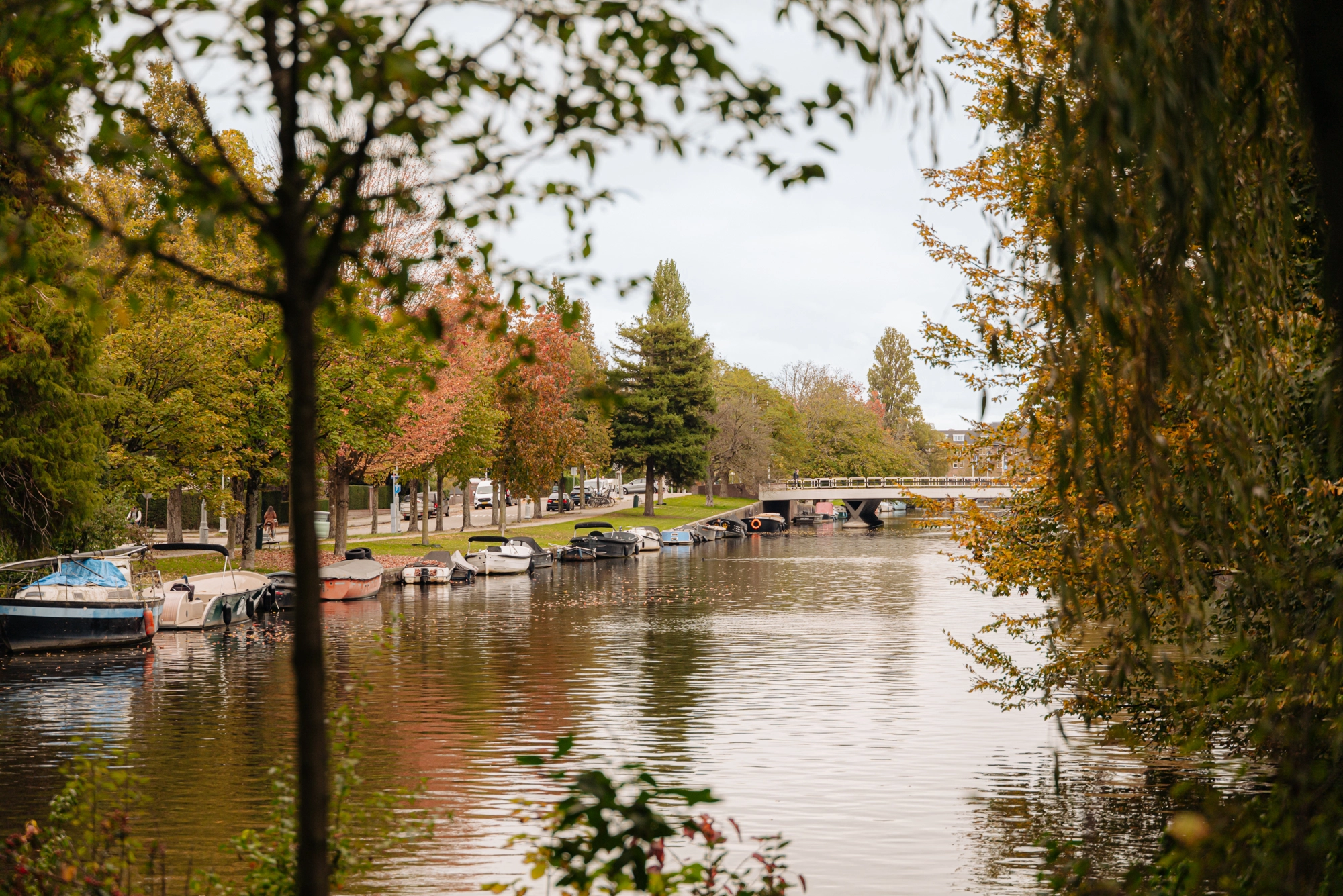
Residents of the Beethoven neighbourhood still enjoy the urban vision that architect Berlage left here in the last century. From villas to townhouses, this 1930s area — almost entirely surrounded by water — is characterised by spacious homes in the Amsterdam School style. The decorative façades and bridge sculptures by Hildo Krop, awarded the honorary title City Sculptor of Amsterdam, lend the area a distinguished charm.
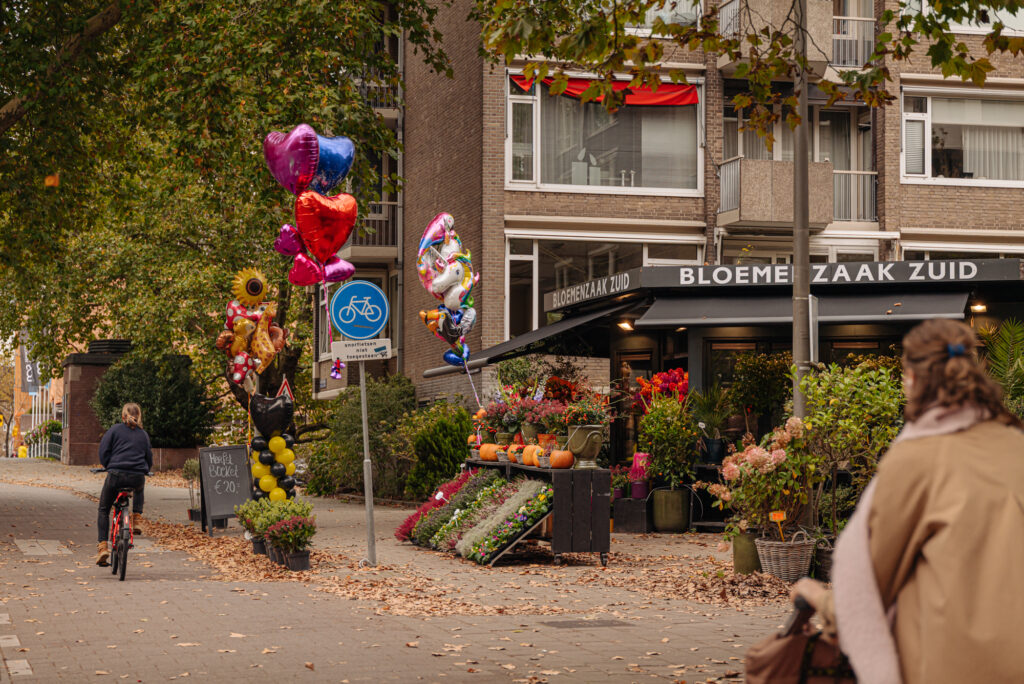
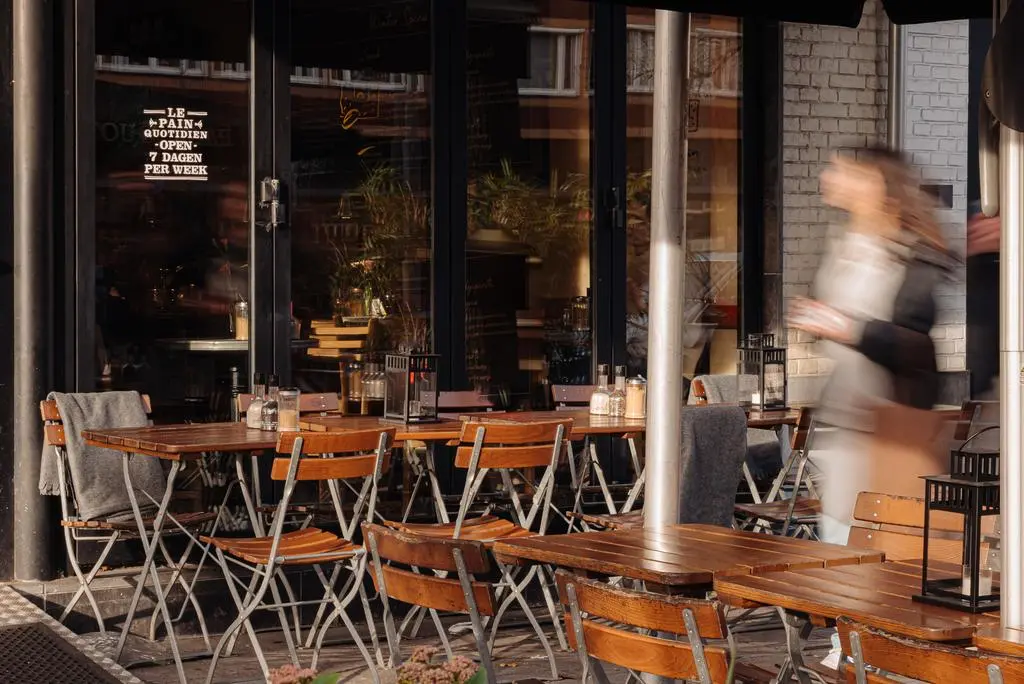
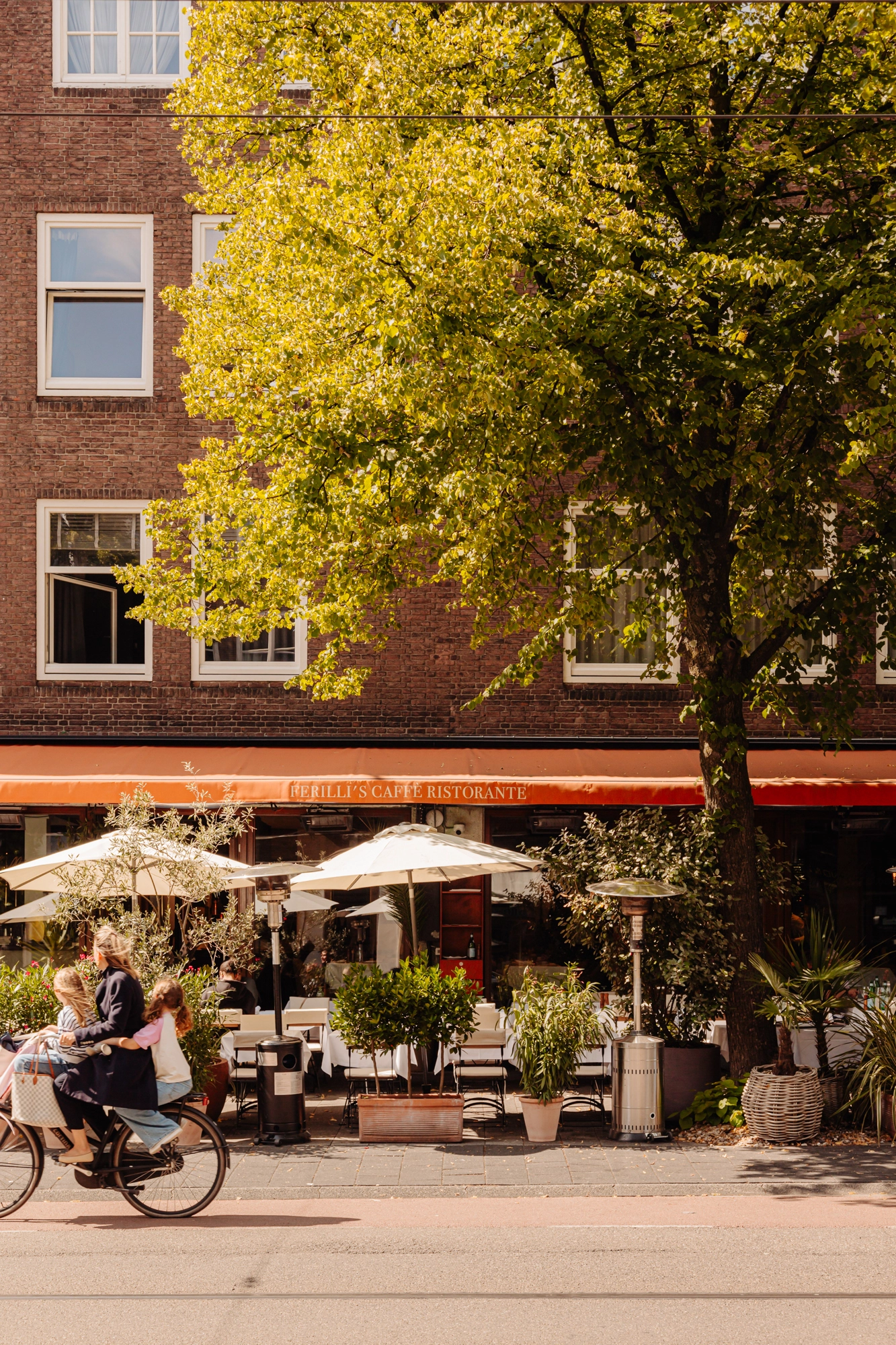
Along Beethovenstraat, cafés and restaurants such as Van der Veen and Ferilli’s give the neighbourhood a young and dynamic feel. On Olympiaplein you’ll find bakery Le Fournil and cheese boutique Fromagerie L’Amuse. The wide avenues and greenery of the Beatrixpark, with its modern sculptures and mature trees, create a sense of space — ideal for both relaxation and exercise. The area is known for its excellent primary and secondary schools and its convenient location near the A10 ring road and Amsterdam Zuid Station.
Details
• Living area approximately 110 m²
• Two balconies, facing north and south, totalling approximately 8 m²
• Two storage rooms on the ground floor of approximately 12 m²
• Heating costs €257 per month
• Service costs (VvE) €383.70 per month
• Energy label C
• Leasehold land owned by the Municipality of Amsterdam. Current term: 13 August 2021 – 15 August 2030, AB 1955; ground rent €191.94 per year
• Leasehold has been converted to AB2016 with perpetual leasehold; the ground rent has been fixed
Beethovenlicht
Beethovenstraat 135-4 is a bright, spacious, and well-laid-out apartment on the fourth floor of a well-maintained complex with a lift. What makes this residence truly special is the combination of tranquillity and accessibility: located on a leafy avenue in Amsterdam-Zuid, with all amenities and connections within easy reach.
The double outdoor spaces — both at the front and the rear — ensure natural light throughout the day and enhance the open, through-living quality of the apartment. The layout is efficient, the finish is refined, and the overall atmosphere is calm and pleasant.
An apartment defined by quality, comfort, and potential. We call it Beethovenlicht, a fitting name for a home where space and daylight take centre stage.
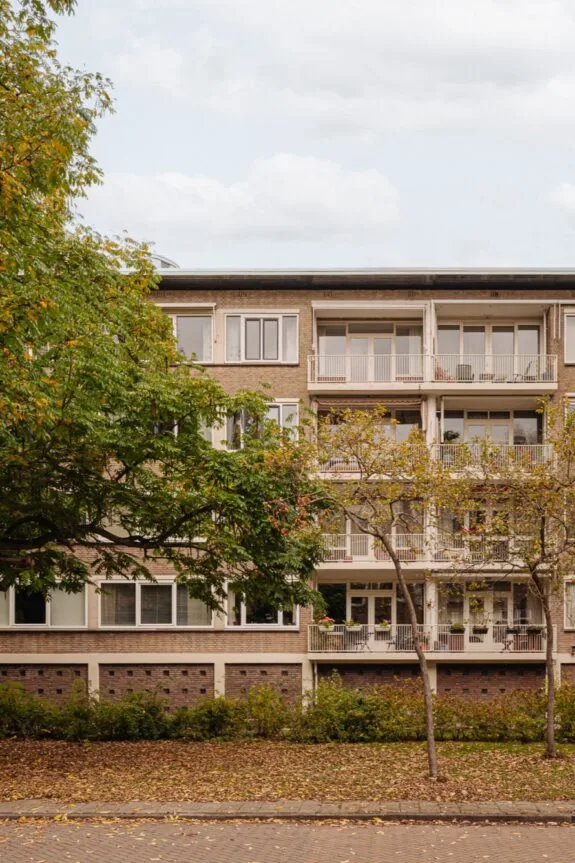
Beethovenstraat 135-4 is part of an apartment complex built in 1956, designed by architect P. Zanstra, one of the leading figures of post-war modernism in Amsterdam. The architecture is clear, understated, and functional, with a strong emphasis on light, air, and rhythm.
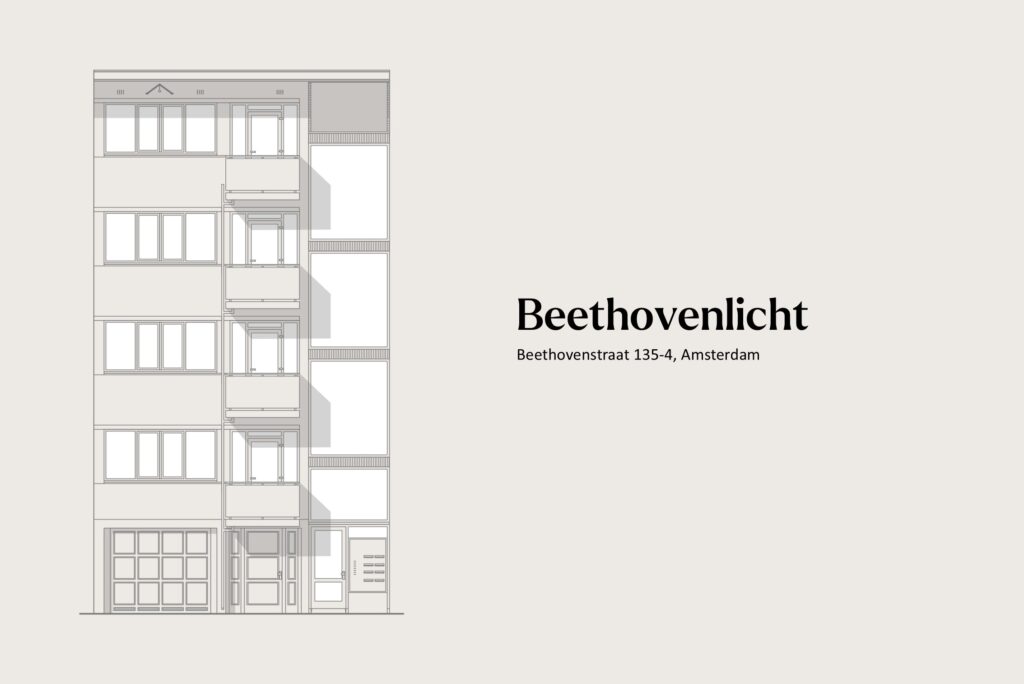
The façade is composed of warm-toned brick with natural stone detailing around the window frames. Large rectangular windows define the building’s sleek appearance, interspersed with modest balcony volumes and a central glass stairwell. The structure is symmetrical and rhythmic, typical of the reconstruction architecture of the 1950s, where affordability and repetition went hand in hand with a pursuit of spatial quality.
A defining feature of this type of building is the generous distance between the blocks, allowing for optimal sightlines and natural light. At the front, the apartment overlooks a quiet street, while the rear faces a green courtyard garden. The open glass-fronted stairwell visually connects the entrance to the street and provides a bright ascent to the upper floors, either by stairs or by lift.
In addition, the building offers a spacious internal storage area on the ground floor, providing extra convenience and practical storage options.
Inside, the layout is efficient and well-proportioned. The rooms are organised around a central hallway, with the living areas at the front and the bedrooms at the quieter rear. This logical flow, combined with large windows and the through-living character, makes the apartment surprisingly bright and open.
The architectural style exudes understated elegance, where material expression, simplicity, and functionality come together in a timeless whole. No excess, just thoughtful architecture on a human scale.
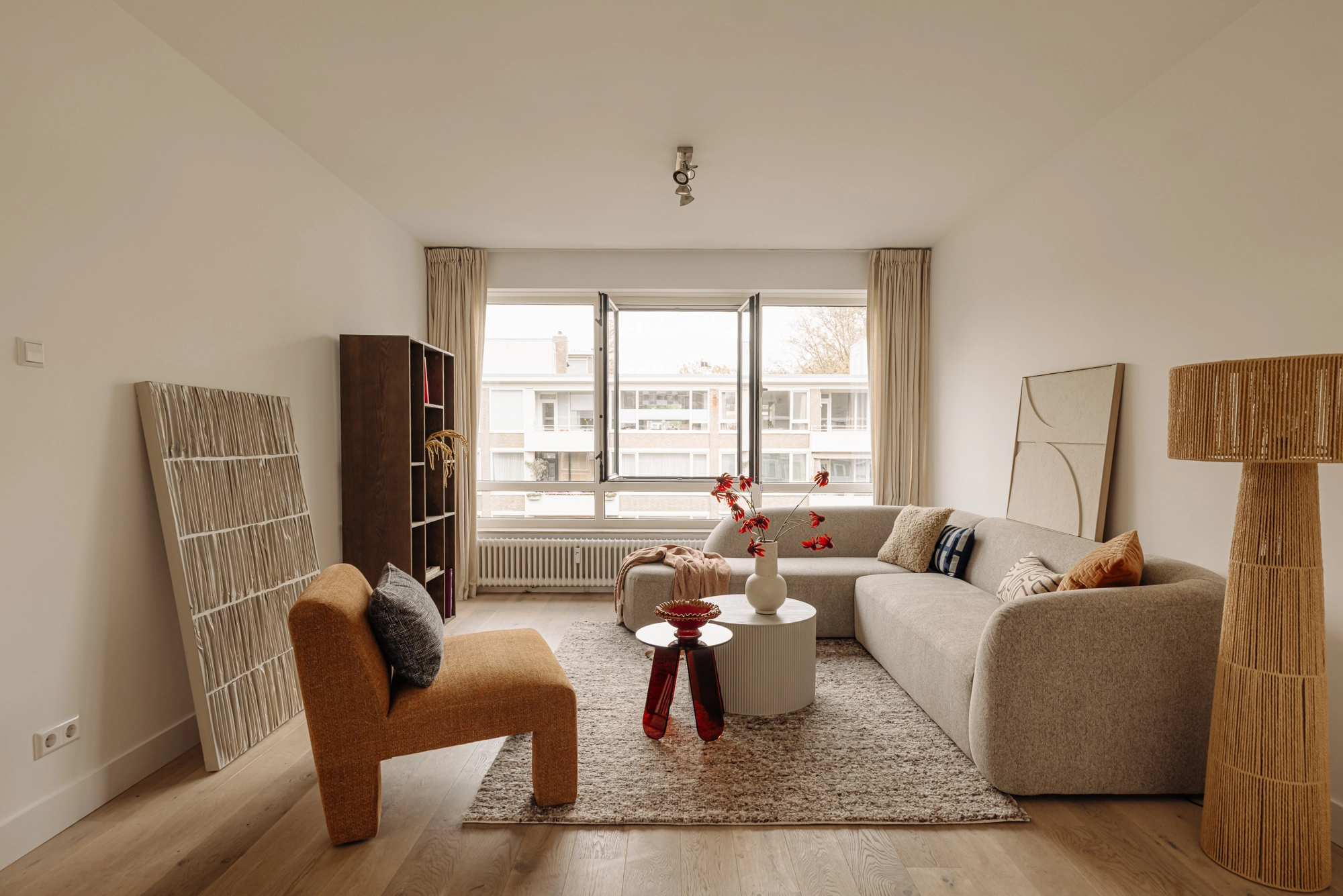
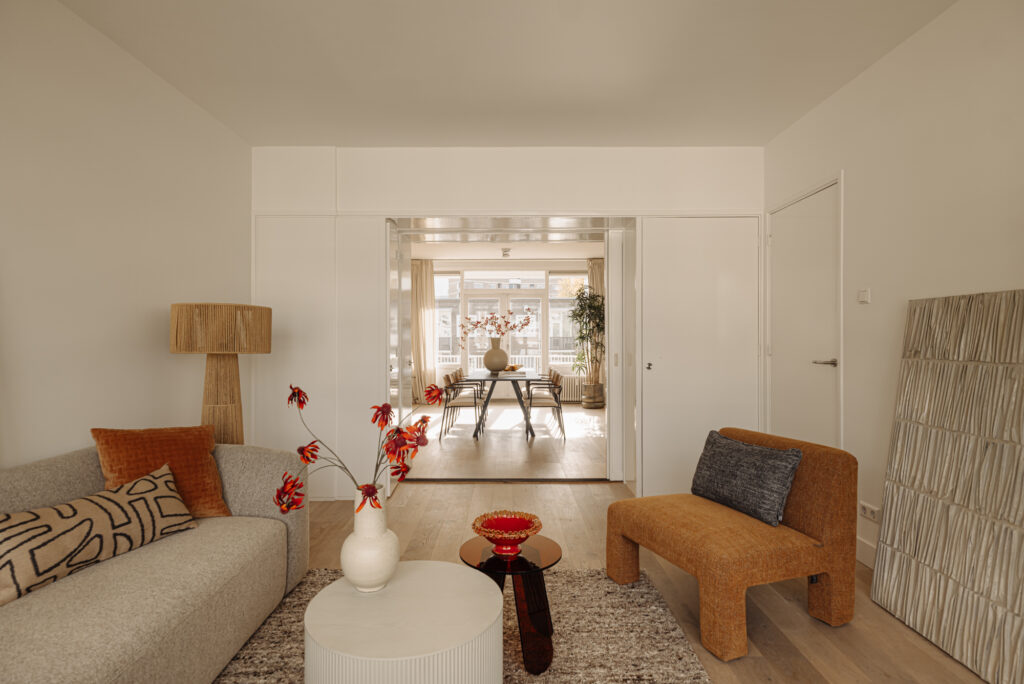
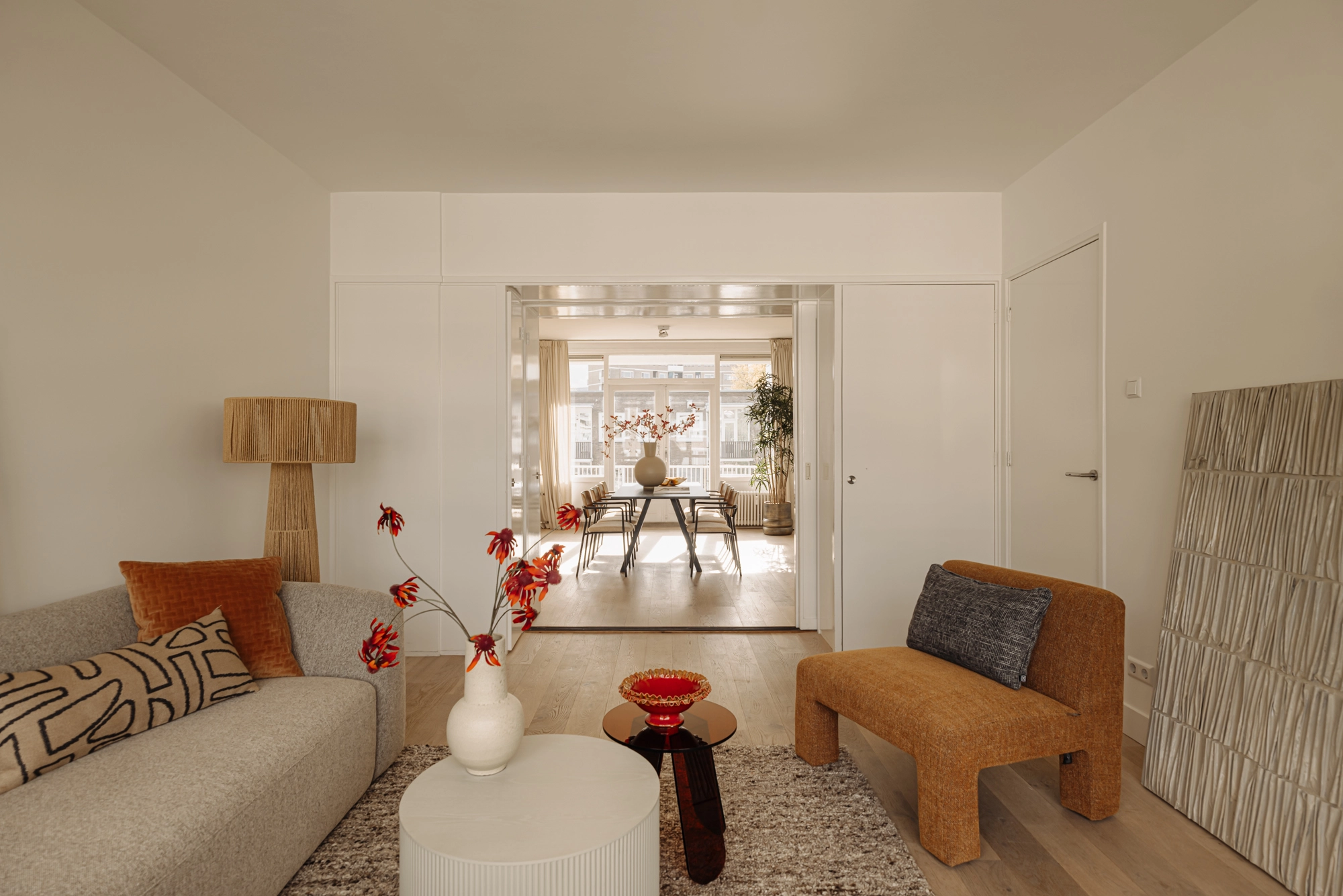
The living room extends along the front of the apartment, with a wide window overlooking the leafy Beethovenstraat. Light enters evenly throughout the space, enhanced by the calm wall colours and the warm wooden floor. The atmosphere is clear, understated, and comfortable. Everything here is oriented towards tranquillity and space: the arrangement of the furniture, the soft curves of the sofa, and the neutral palette with subtle accents of colour.
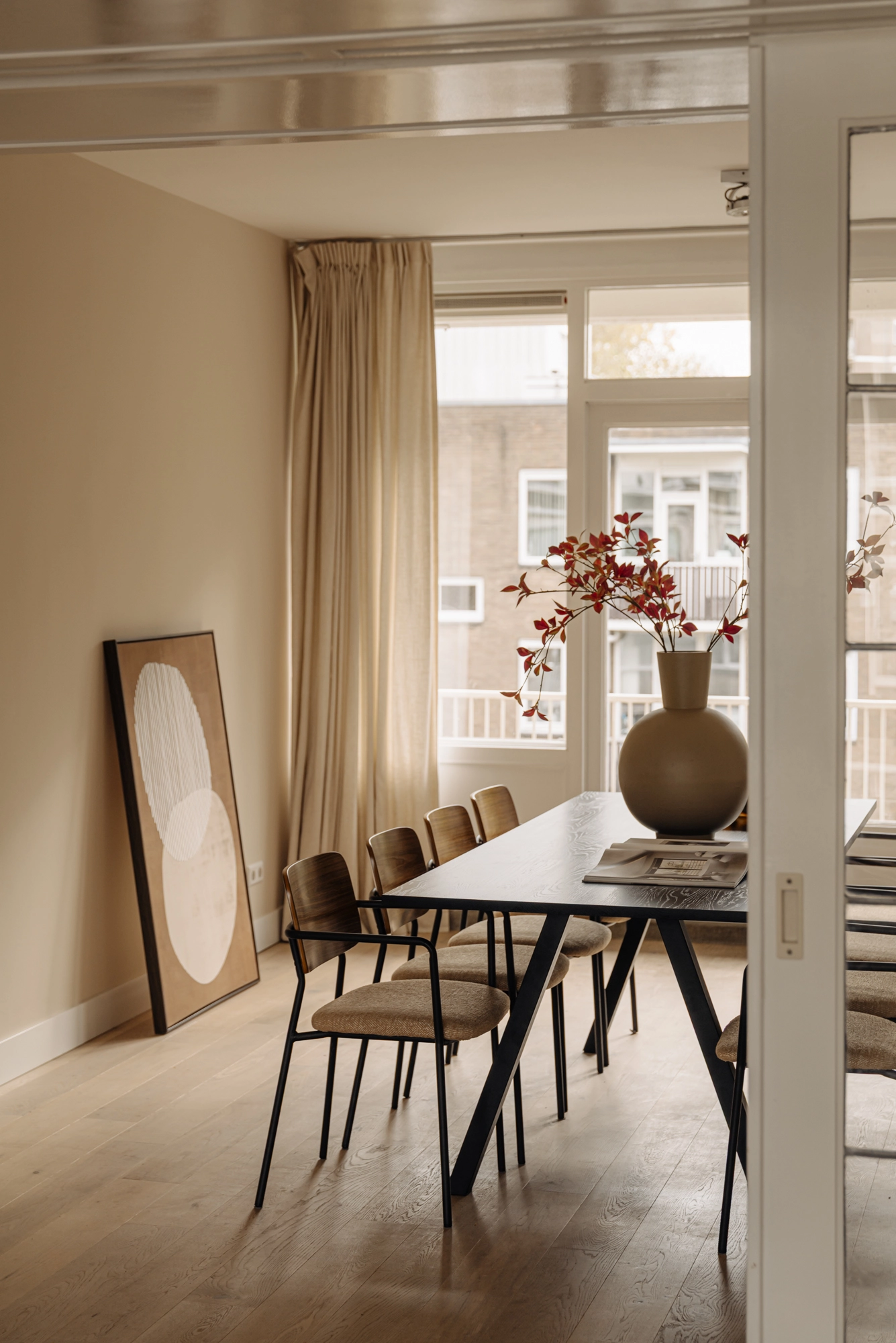
The double sliding doors, still in their authentic state, connect the living room with the dining room at the rear, a classic through-living layout typical of this architectural period. The transition between the rooms is visually strong yet fluid. When closed, both rooms can be used independently; when open, they form one elongated living space, filled with light from front to back.
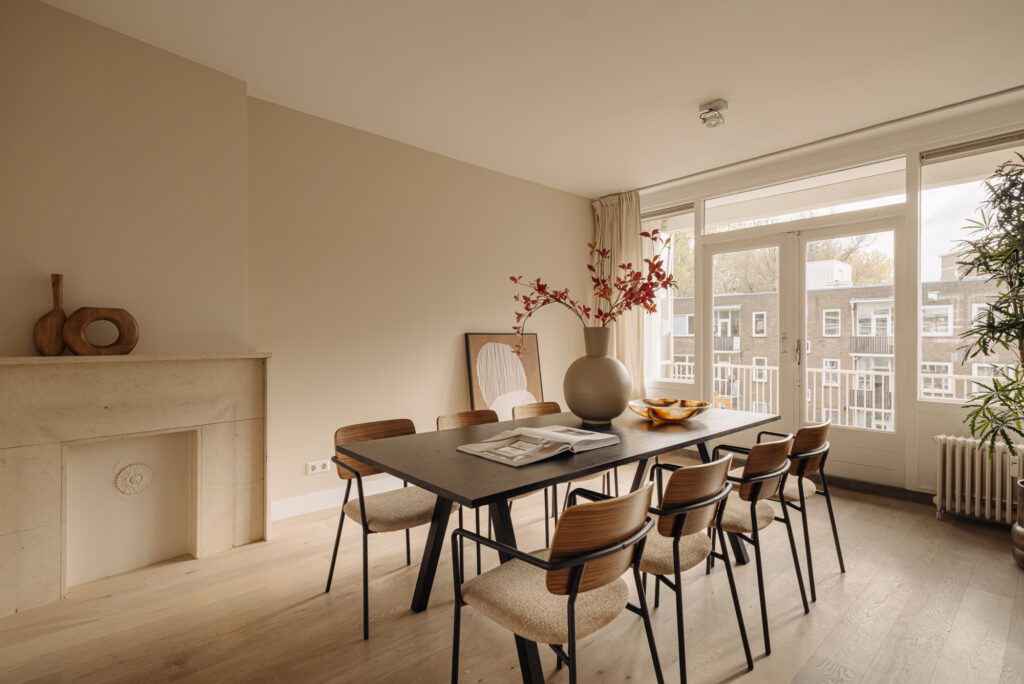
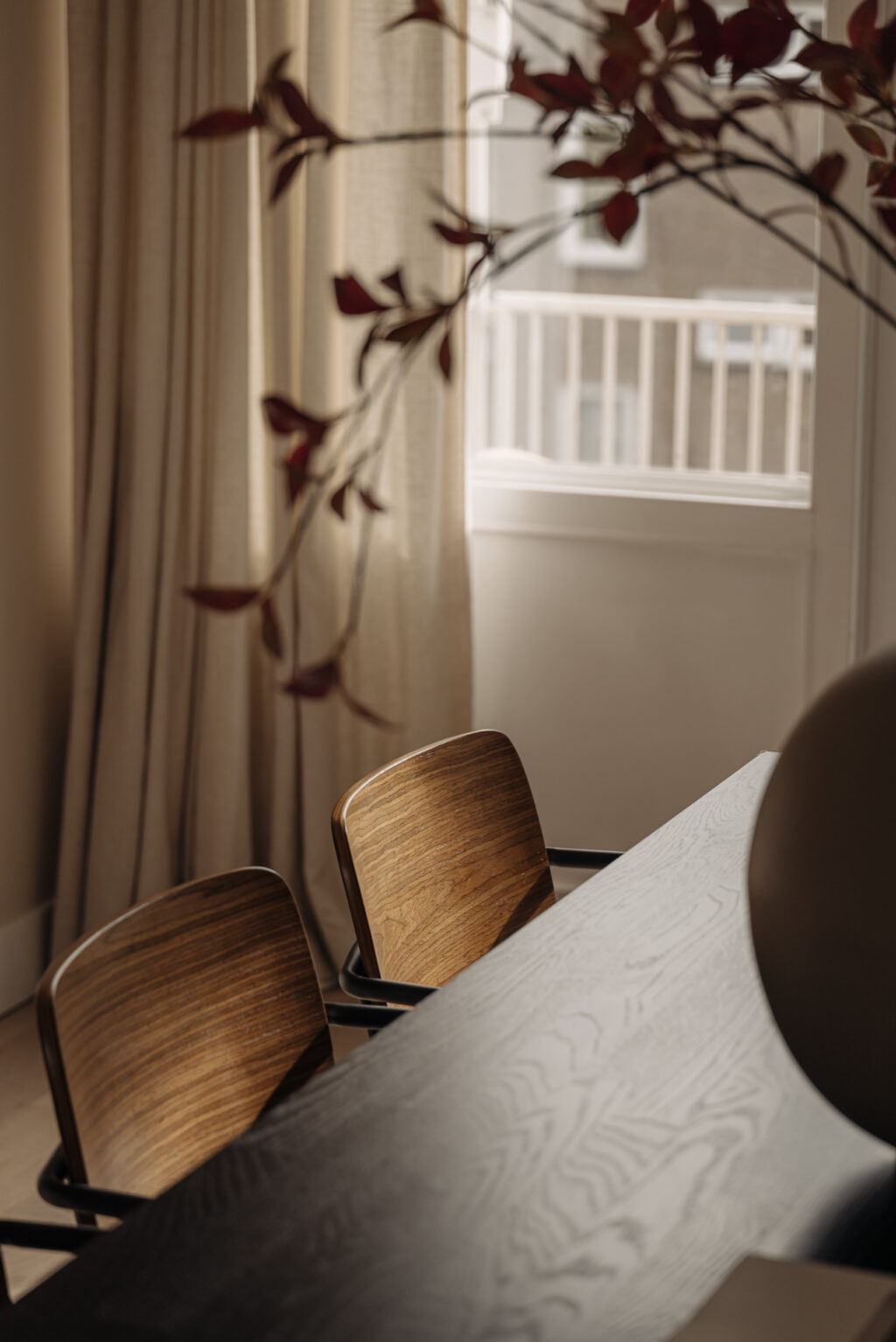
The dining room is illuminated by tall glass panels that open onto the rear balcony. The combination of the green view, the broad windowsill, and the small brick fireplace creates a pleasant, relaxed character. The space is equally suited for a long evening at the table or a productive morning in the sun.
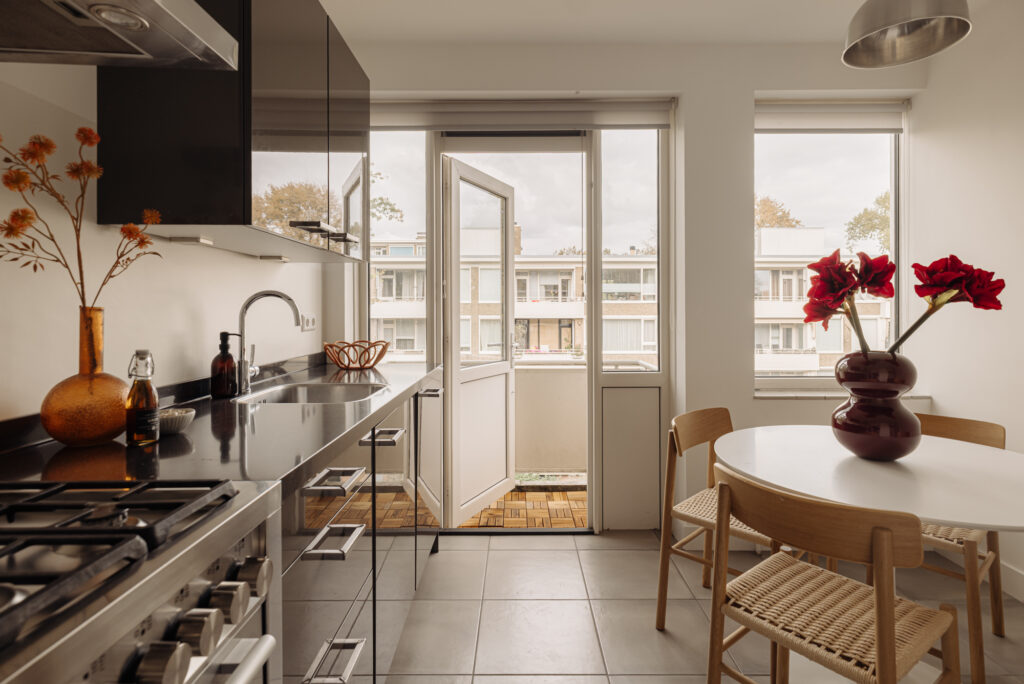
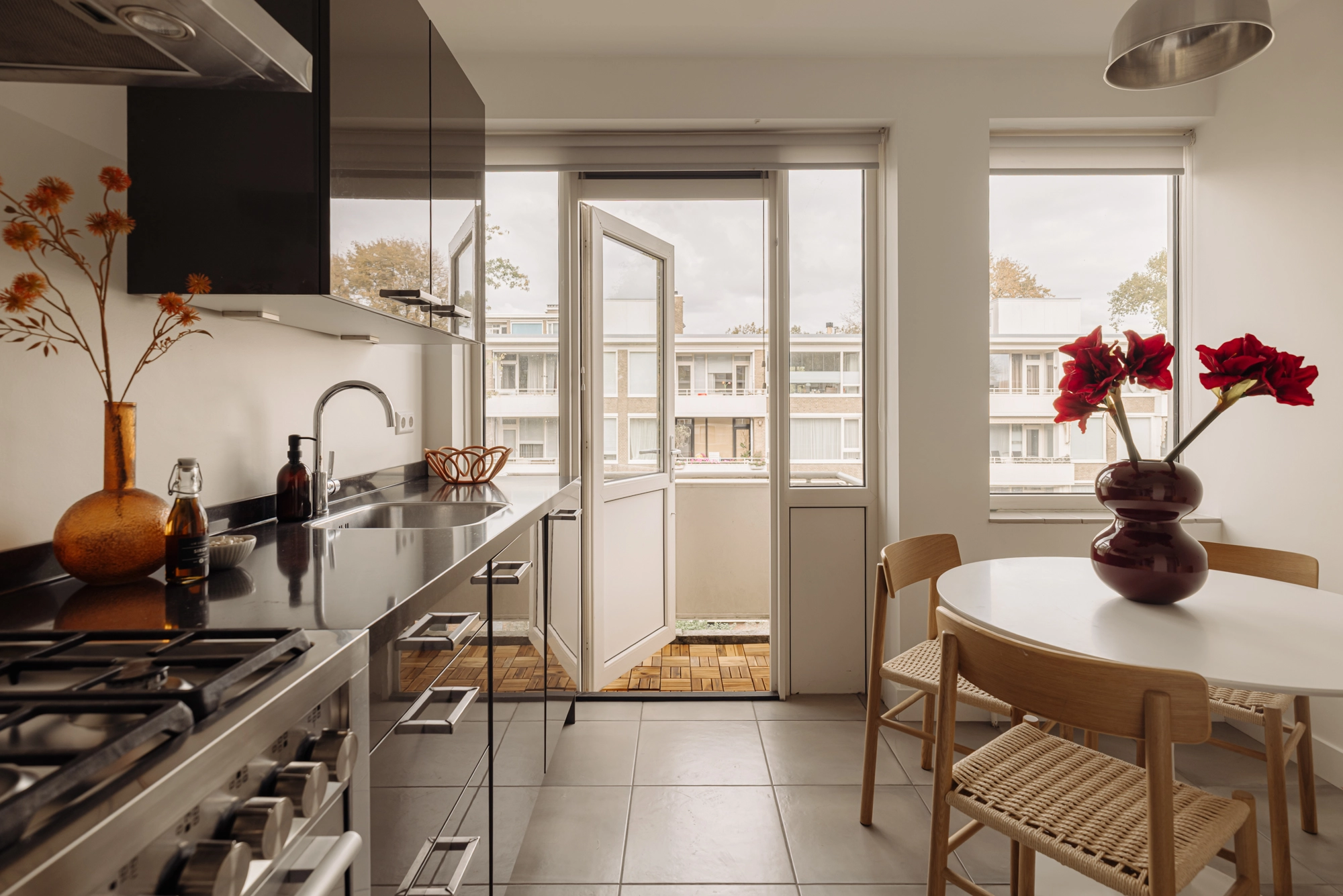
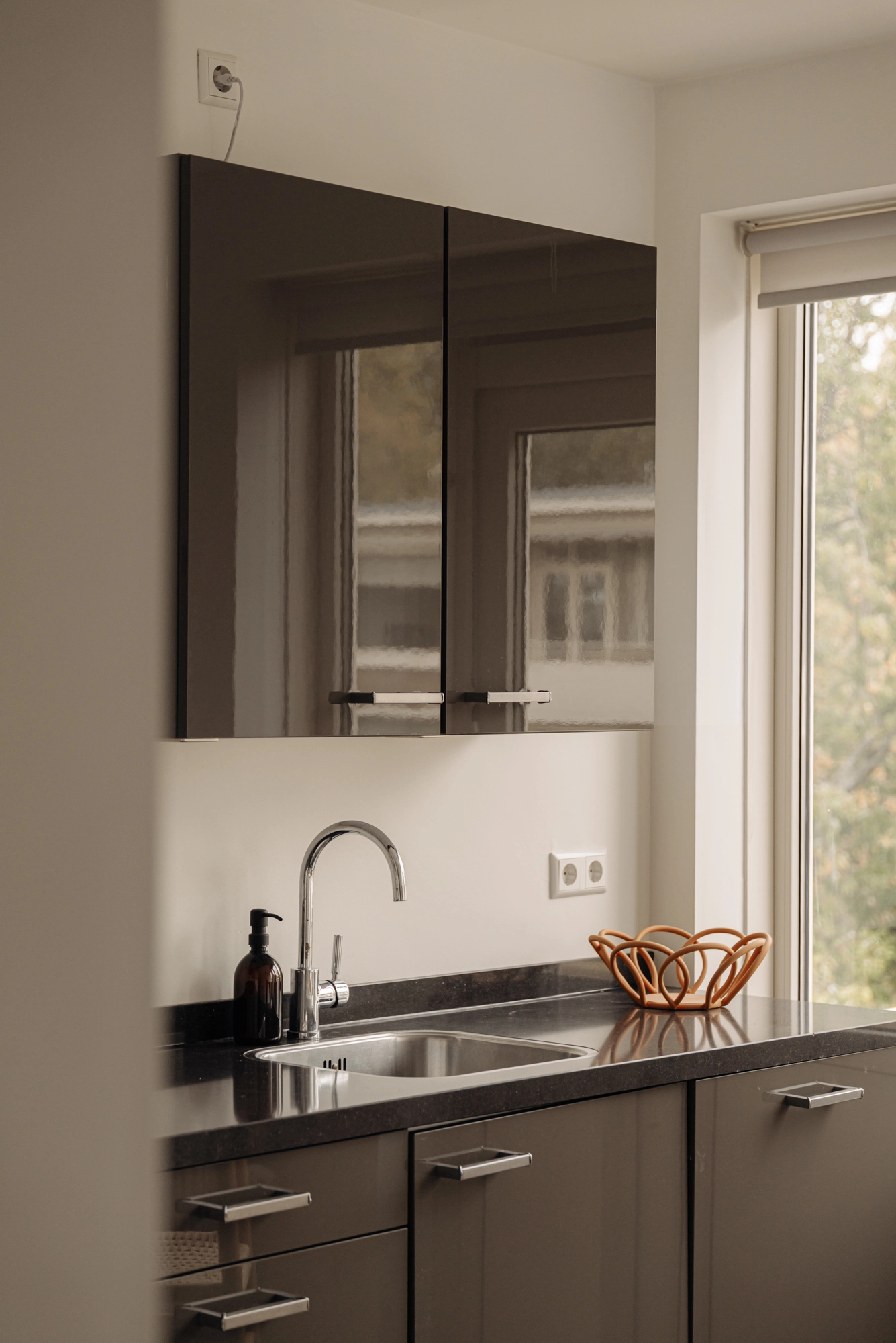
The kitchen, accessible via the central hallway, is located at the rear of the apartment. It is a separate space with an L-shaped layout along two walls. The finish is clean and contemporary, featuring high-gloss cabinetry in taupe grey and a dark composite worktop. Large windows and a door to the balcony make it a bright and inviting area, spacious enough for a breakfast table by the window.
Whether for a quick espresso, an elaborate dinner, or a quiet moment overlooking the courtyard gardens, this living floor exudes functionality and balance. The layout is logical, the transitions are seamless, and the atmosphere is understated yet inviting.
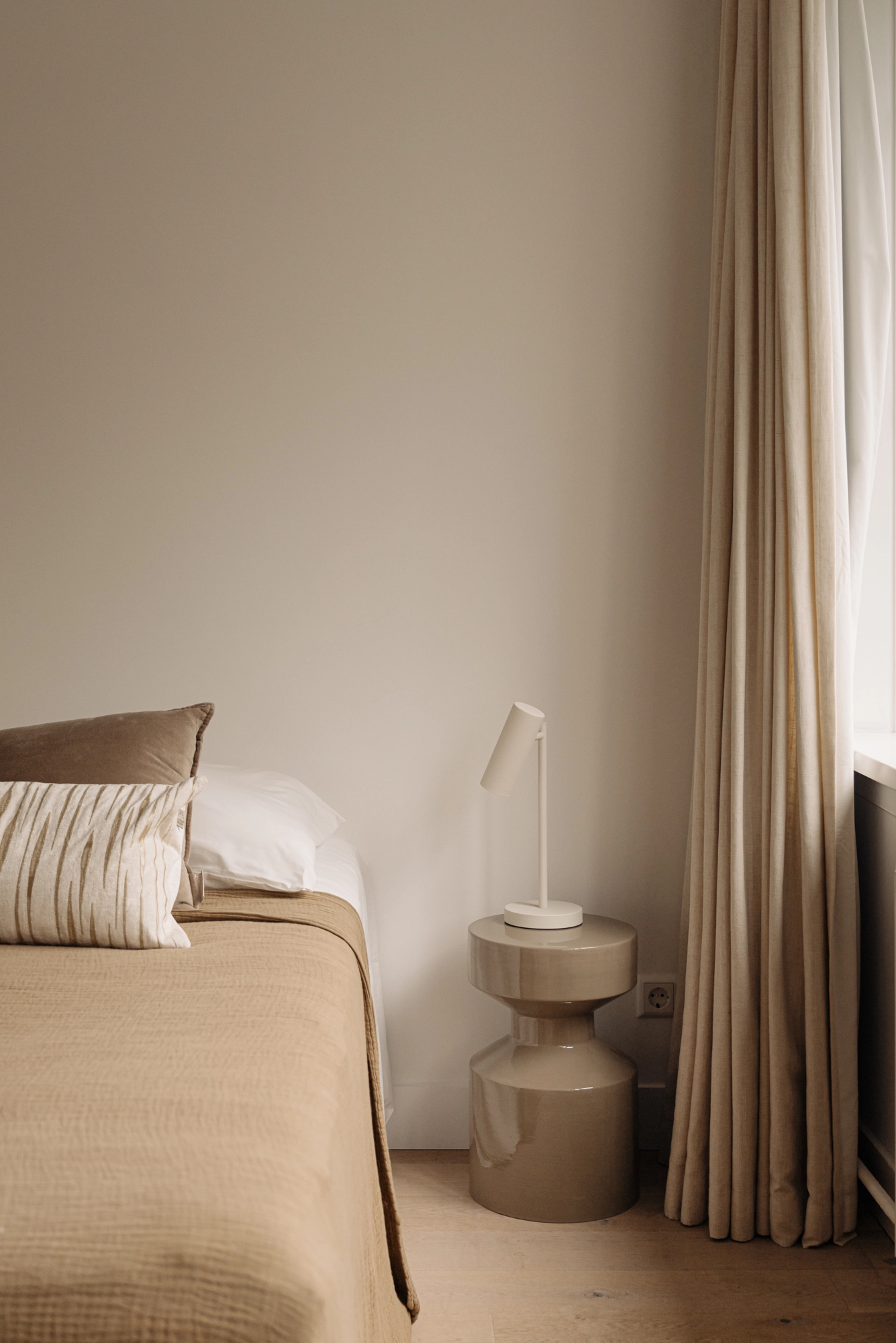
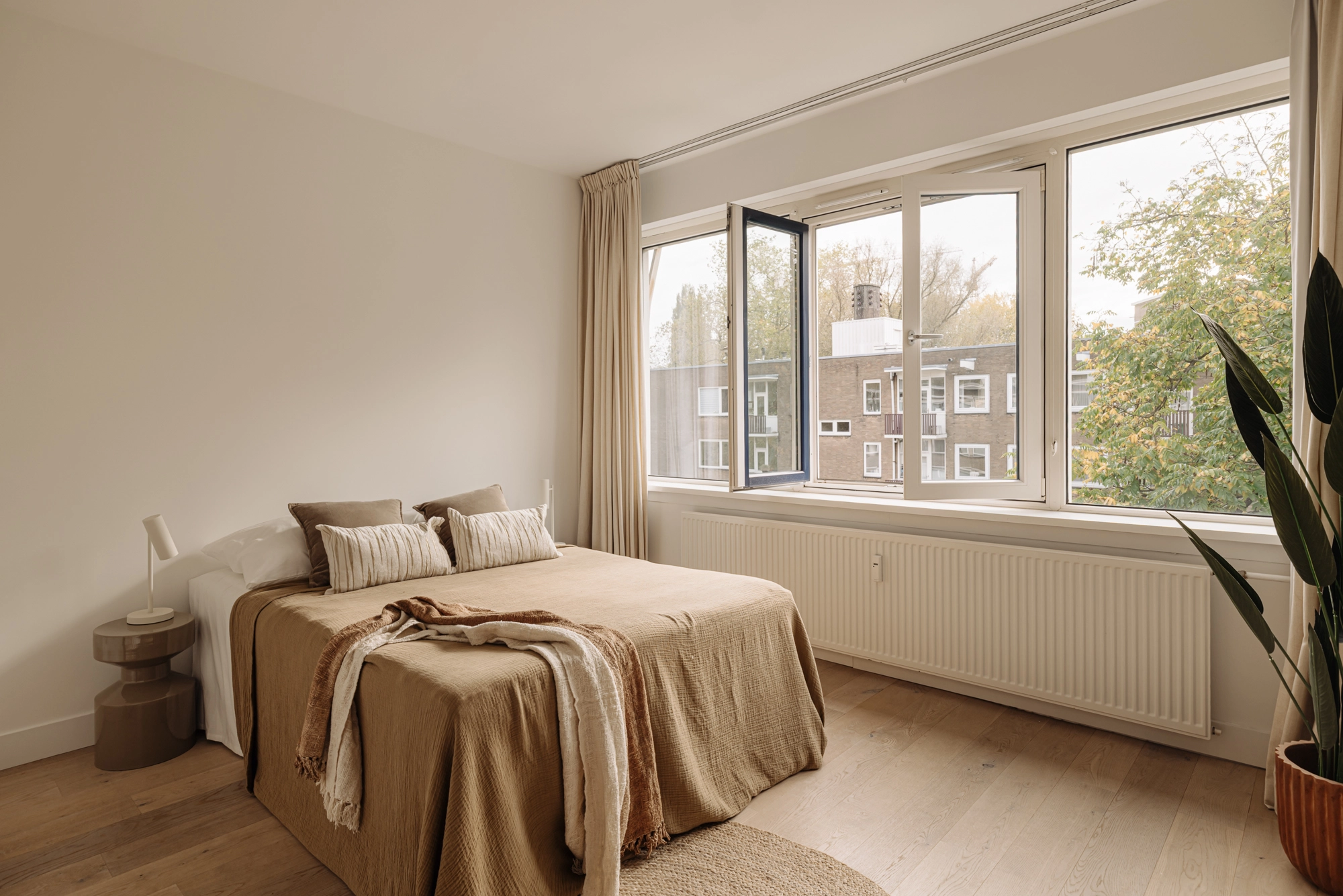
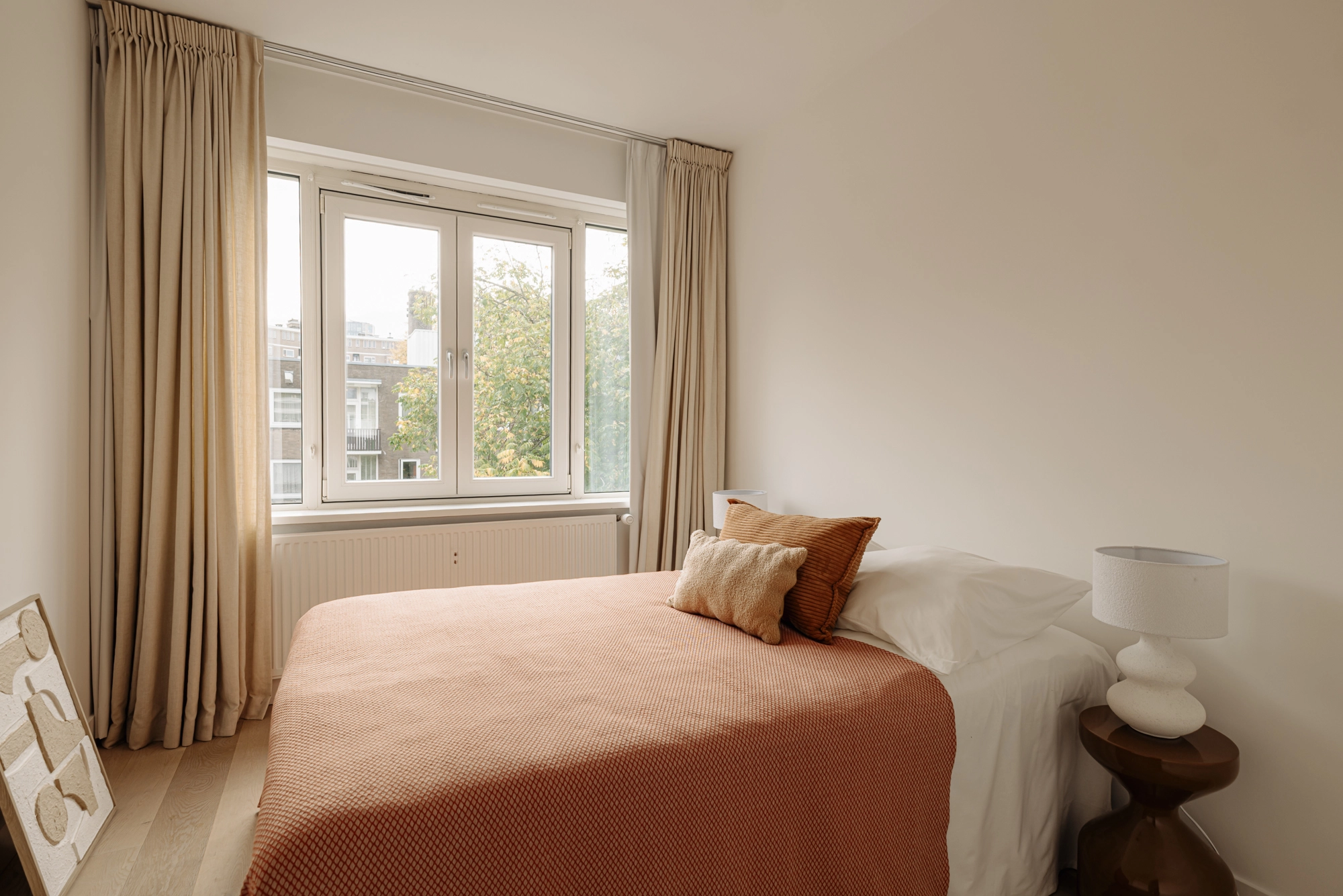
The apartment offers three bedrooms, each characterised by tranquillity, comfort, and light. The primary bedroom is generously sized and overlooks the green courtyard, creating a serene ambiance. Large windows allow abundant daylight and enhance the sense of space. The second bedroom is also spacious, ideal as a guest room, workspace, or child’s room. The third bedroom, slightly smaller, serves perfectly as a home office or additional room and benefits from the same quiet rear location.
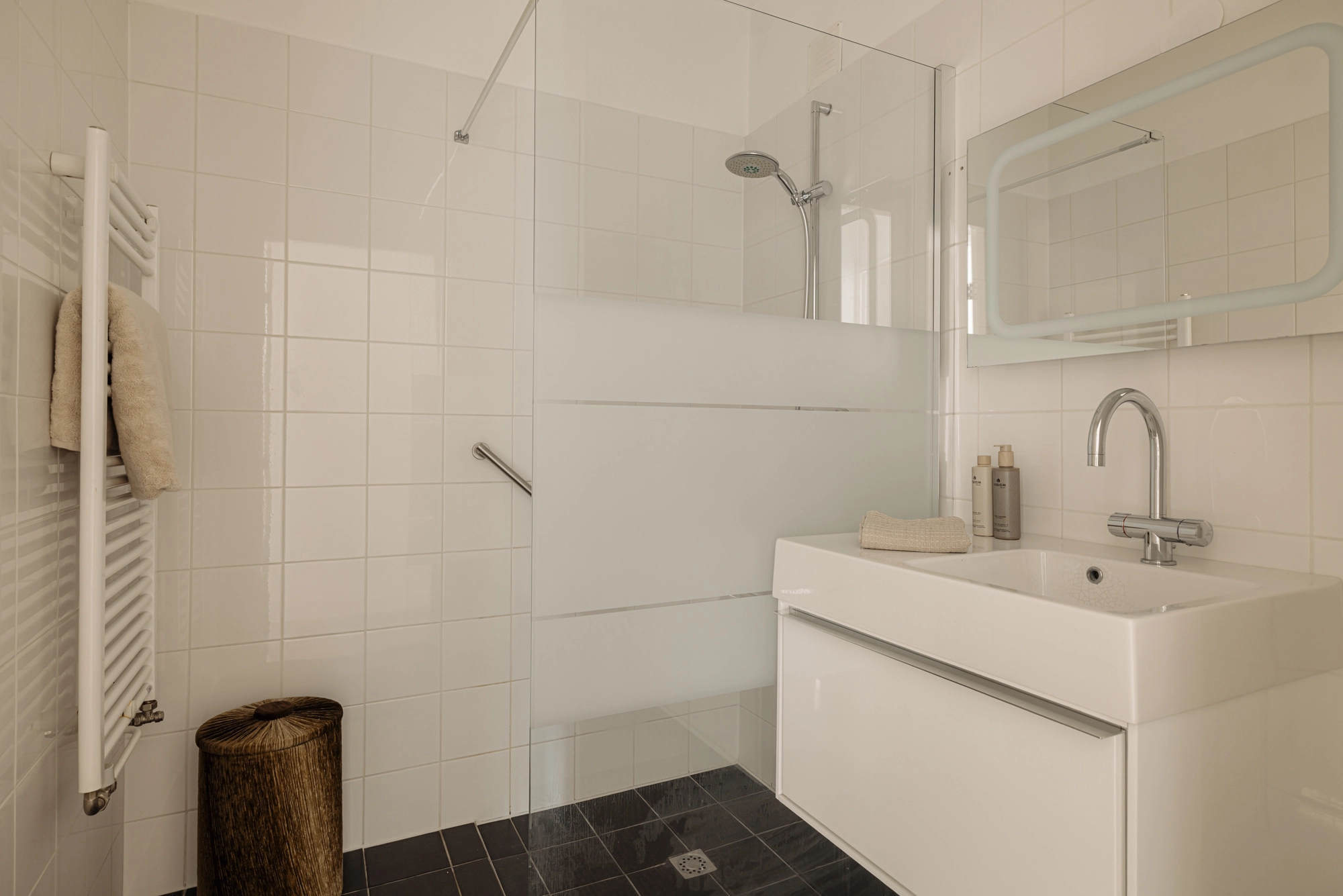
The bathroom is modern and functional, featuring a walk-in shower with a frosted glass partition for privacy, a sleek washbasin cabinet, and a mirror with integrated lighting. The room is fitted with underfloor heating and finished in neutral, timeless tones. The separate toilet with a small basin follows the same design, creating a harmonious and cohesive look throughout the sanitary spaces. In short, a comfortable and practical interpretation of modern living focused on calm and care.
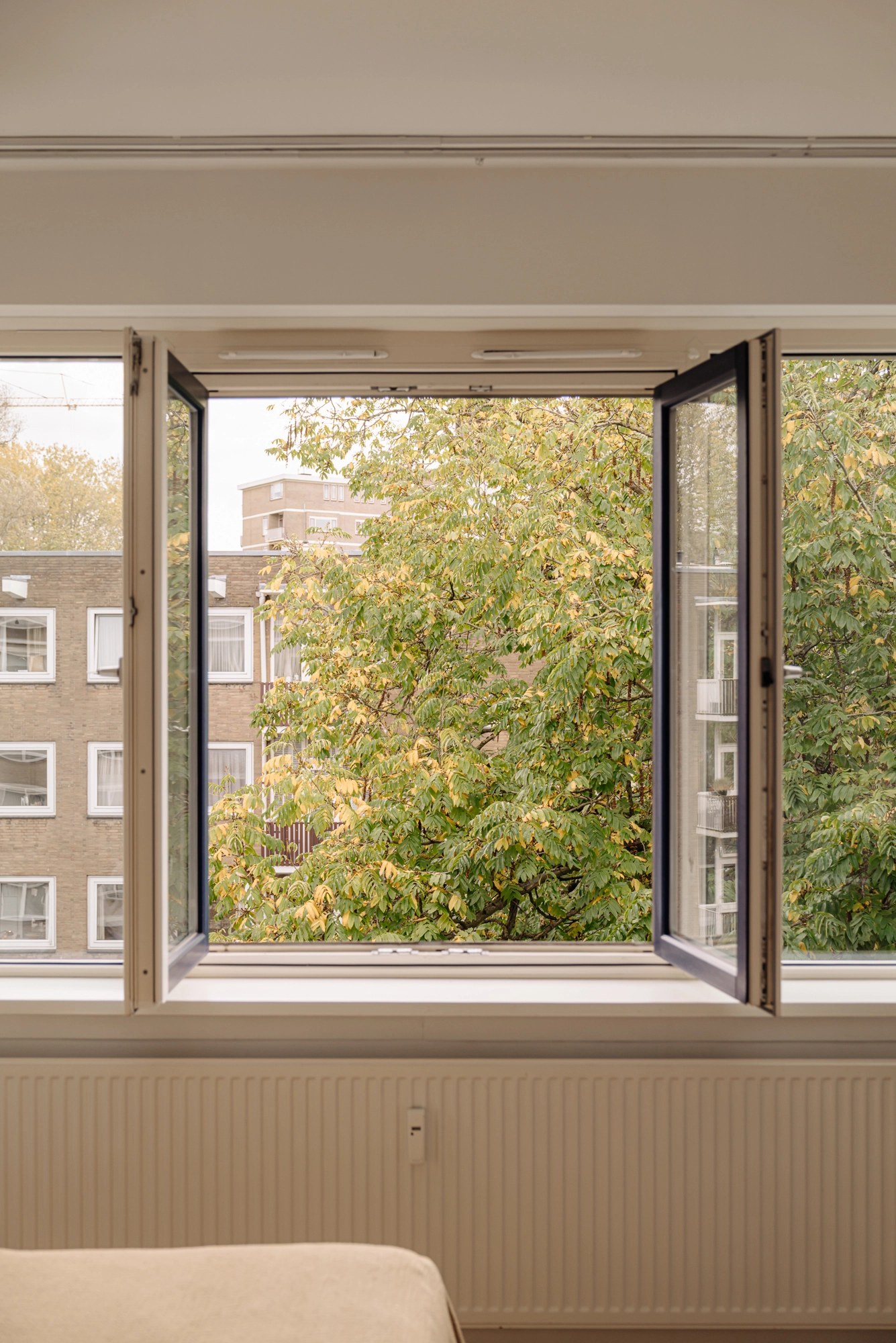
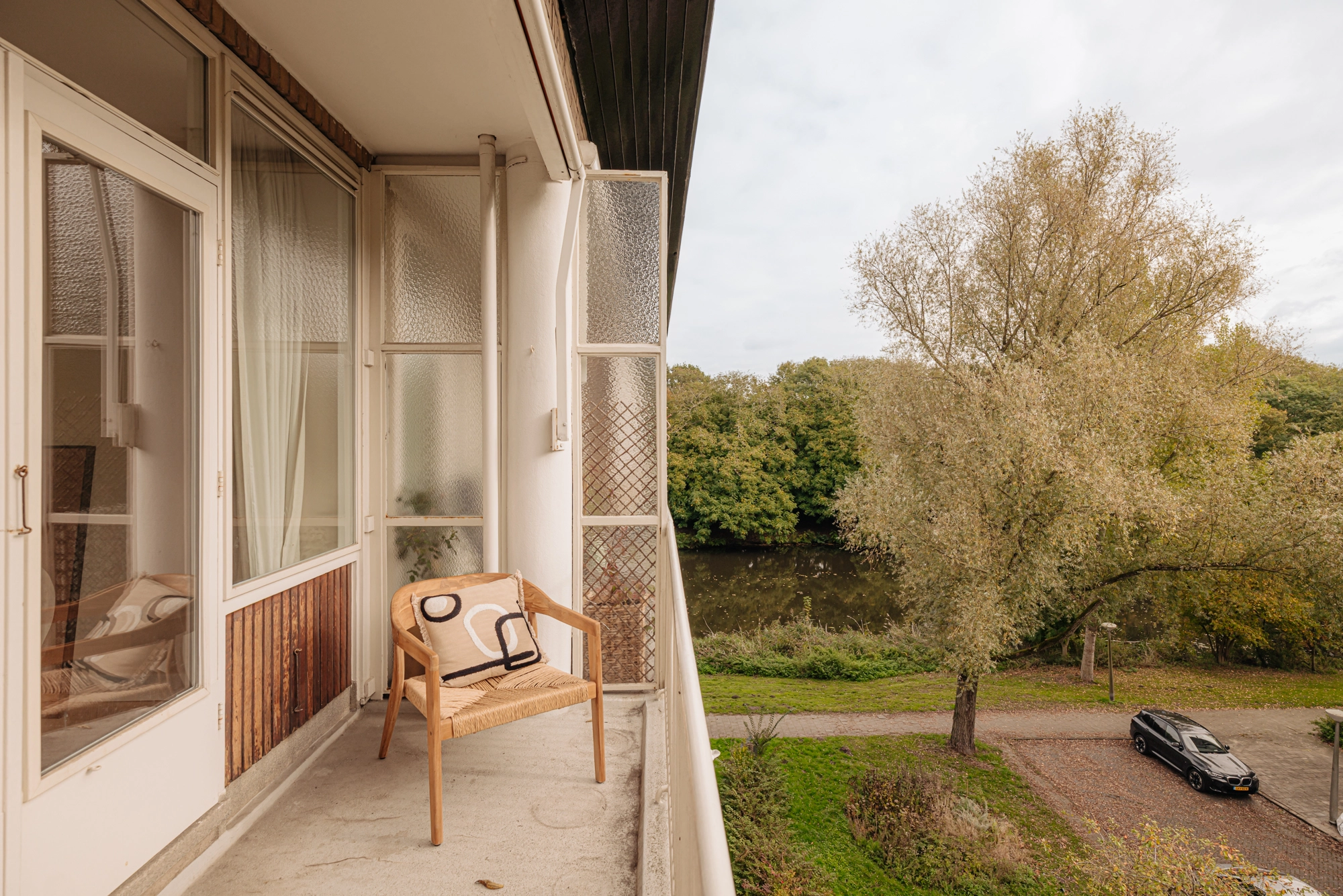
On both sides of the apartment, two balconies invite moments of stillness. At the front, adjoining the living room, the south-facing balcony enjoys sunlight from late morning until afternoon, an ideal spot for coffee, a newspaper, or a quiet pause. The view of mature trees along the broad avenue enhances the sense of openness and calm.
At the rear, adjoining the kitchen, the north-facing balcony offers a more sheltered, cooler retreat, especially pleasant on warmer days. From here, there’s a view over the inner gardens and surrounding greenery. Thanks to the fourth-floor position, both balconies provide a comfortable degree of privacy and light. Indoors and outdoors flow naturally into one another, creating a seamless connection with the surroundings.
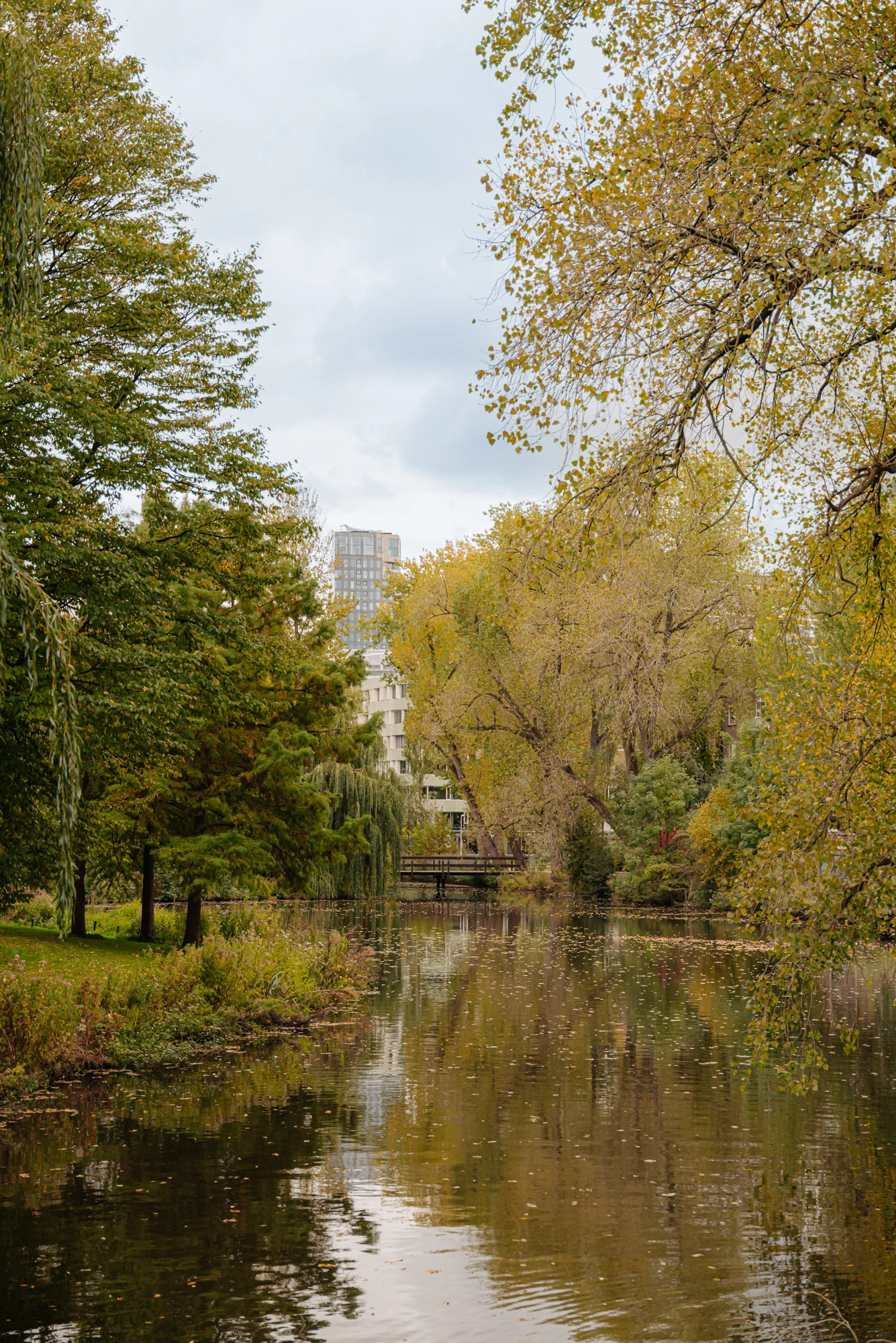
Residents of the Beethoven neighbourhood still enjoy the urban planning legacy that architect Berlage left on the district in the previous century. From villas to townhouses, this 1930s neighbourhood, almost entirely surrounded by water, is characterised by its spacious homes built in the Amsterdam School style. The façade ornaments and bridge sculptures by Hildo Krop, who was awarded the honorary title of City Sculptor of Amsterdam, also lend the area a distinctive cachet.
Along the Beethovenstraat, cafés and restaurants such as Van der Veen and Ferilli’s give the neighbourhood a young and dynamic character. On Olympiaplein you’ll find the bakery Le Fournil and the renowned cheese shop Fromagerie L’Amuse. The wide avenues and greenery of the Beatrixpark, with its modern sculptures and mature trees, create a sense of openness, an ideal setting for both recreation and relaxation. The area is known for its excellent primary and secondary schools, as well as its convenient location in relation to the A10 ring road and Amsterdam Zuid Station.
Accessibility
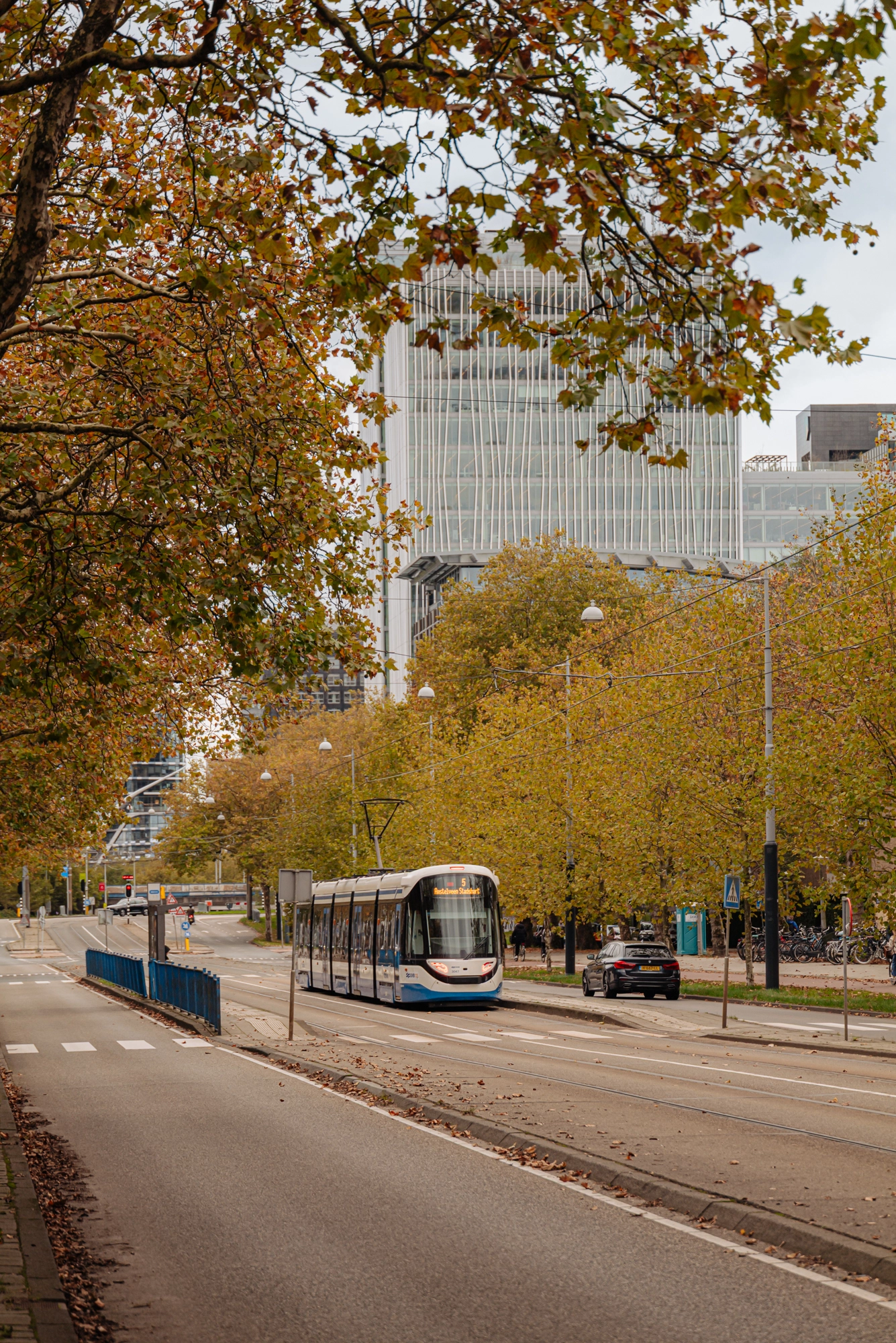
Beethovenstraat is one of those rare avenues where elegant living naturally coincides with accessibility. Within minutes on foot, one reaches the Zuidas, Station Zuid, or the Beatrixpark. By bike, the city centre is just ten minutes away, while nearby neighbourhoods, Oud-Zuid, De Pijp, and Rivierenbuurt, are all easily accessible.
Tram and bus stops are around the corner, with direct connections to Museumplein, Central Station, and Amstelveen. Station Zuid also provides access to the North/South metro line, train connections to Schiphol, and international routes.
For those travelling by car, the A10 ring road is only a few minutes away. Parking is generally convenient in the street, and residential permits are available. Here, one lives in tranquillity, with the city at one’s feet.
Parking
Parking is available through a permit system on public roads (permit area Zuid 5). With a parking permit for Zuid 5, you are allowed to park within this zone.
A residential parking permit costs €192.81 for six months. Currently, the waiting time for this permit area is approximately six months. A second parking permit in this area costs €482.03 for six months.
(Source: Municipality of Amsterdam, October 2025)
1077 HN Amsterdam
Slagerij Hergo
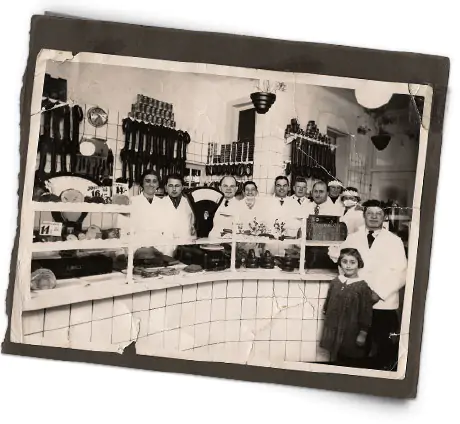
Slagerij Hergo is de vleesspecialist in Amsterdam. Al in 1930 begon de heer Cantor, een Duitse worstmaker, samen met zijn vrouw die uit een Amsterdamse slagersfamilie kwam, zijn slagerij met typische Duitse worstspecialiteiten. Met het motto ‘De slager met ’n koksmuts’ is Hergo uitgegroeid naar vier verschillende locaties en is zo tegenwoordig niet meer weg te denken uit het straatbeeld van Amsterdam. Met jachtworst, hausmacher, ossenworst, pekelvlees maar ook met een broodje filet americain onderscheidt Hergo zich als slagerij in het topsegment.
1077 CV Amsterdam
L'Amuse
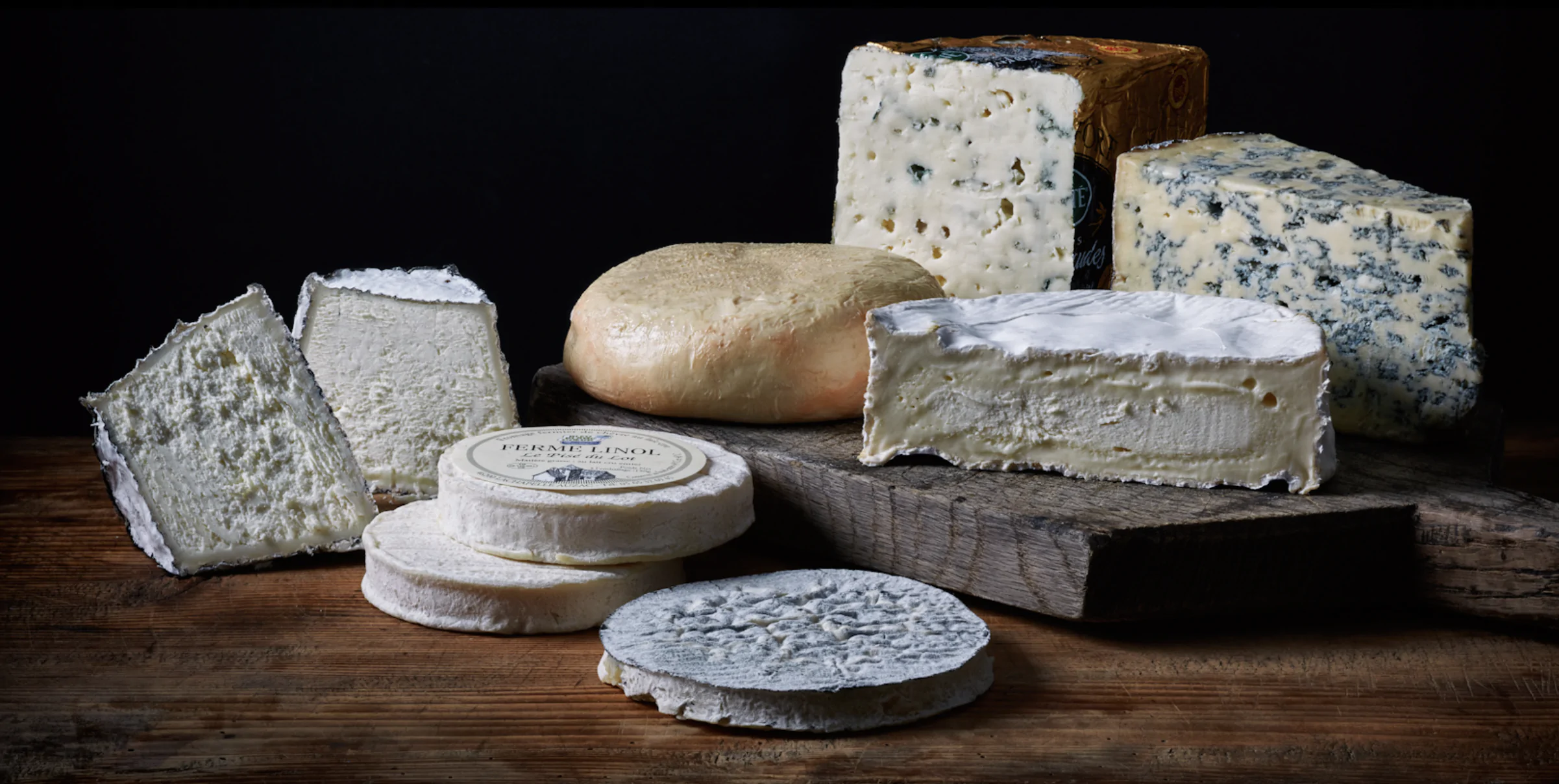
Volgens sommigen is dit de beste kaaswinkel van Nederland. Ze hebben een indrukwekkend breed assortiment van de lekkerste kazen. Ook heerlijke wijn, salami, ham en olijfolie is hier te koop. Je wordt uitstekend geholpen en de kaas is echt van een ander niveau. Aanrader!
1078 GR Amsterdam
Sab’s Deli
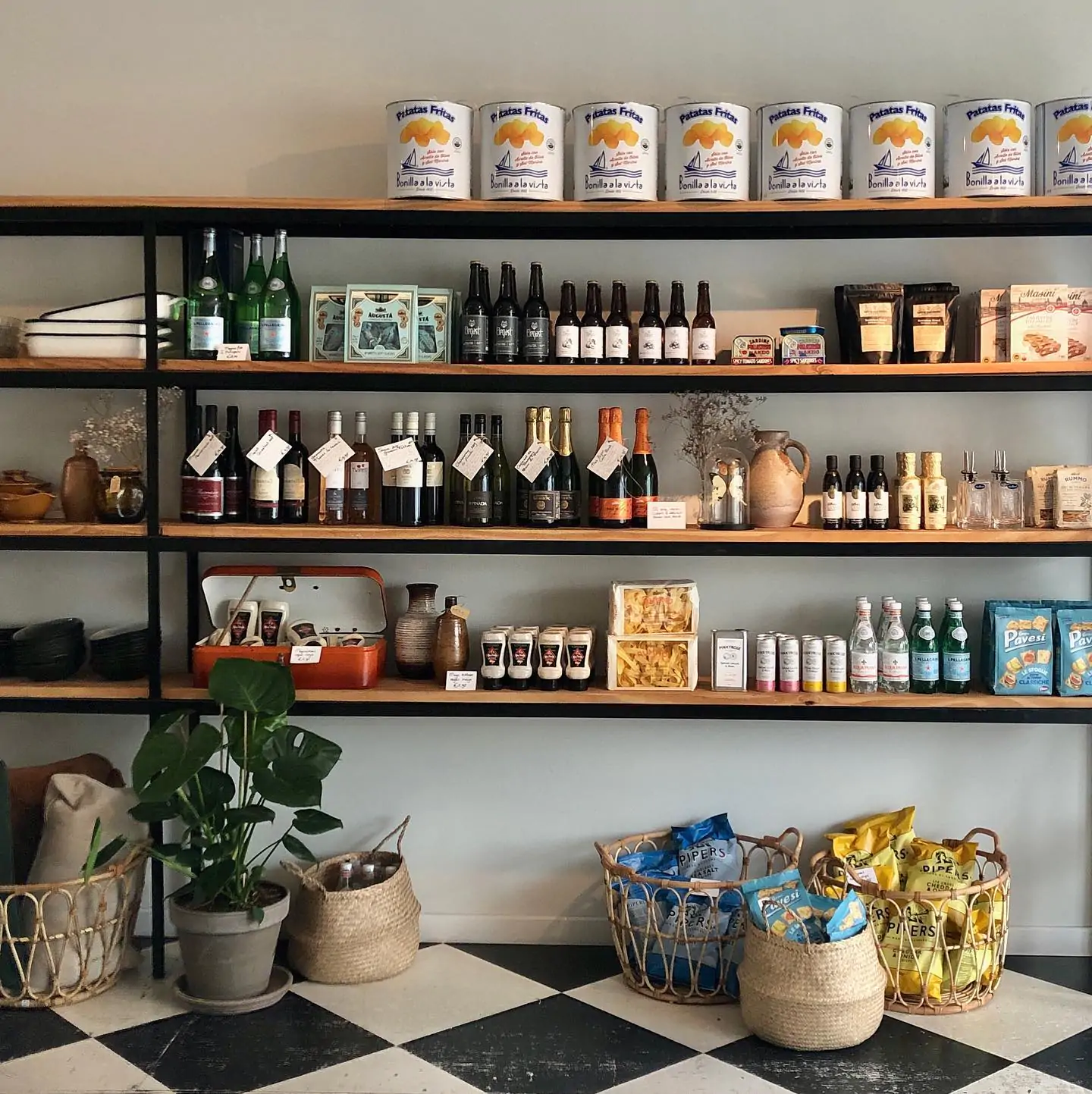
Bij Sab’s Deli ligt de focus op echt lekker, maar net wat specialer dan normaal, en uiteraard waar mogelijk duurzame en lokale producten. Al deze dingen samen vormen het merk ‘Sab’s. Ze verzorgen ook complete caterings van thuisdiners tot heerlijke borrelhapjes. Gelegen vlak naast de drukke RAI in Amsterdam Zuid, kan je ook altijd als je net de trein uitstapt even binnenlopen en kijken wat de pot schaft. Het zal niet tegenvallen!
1078 GH Amsterdam
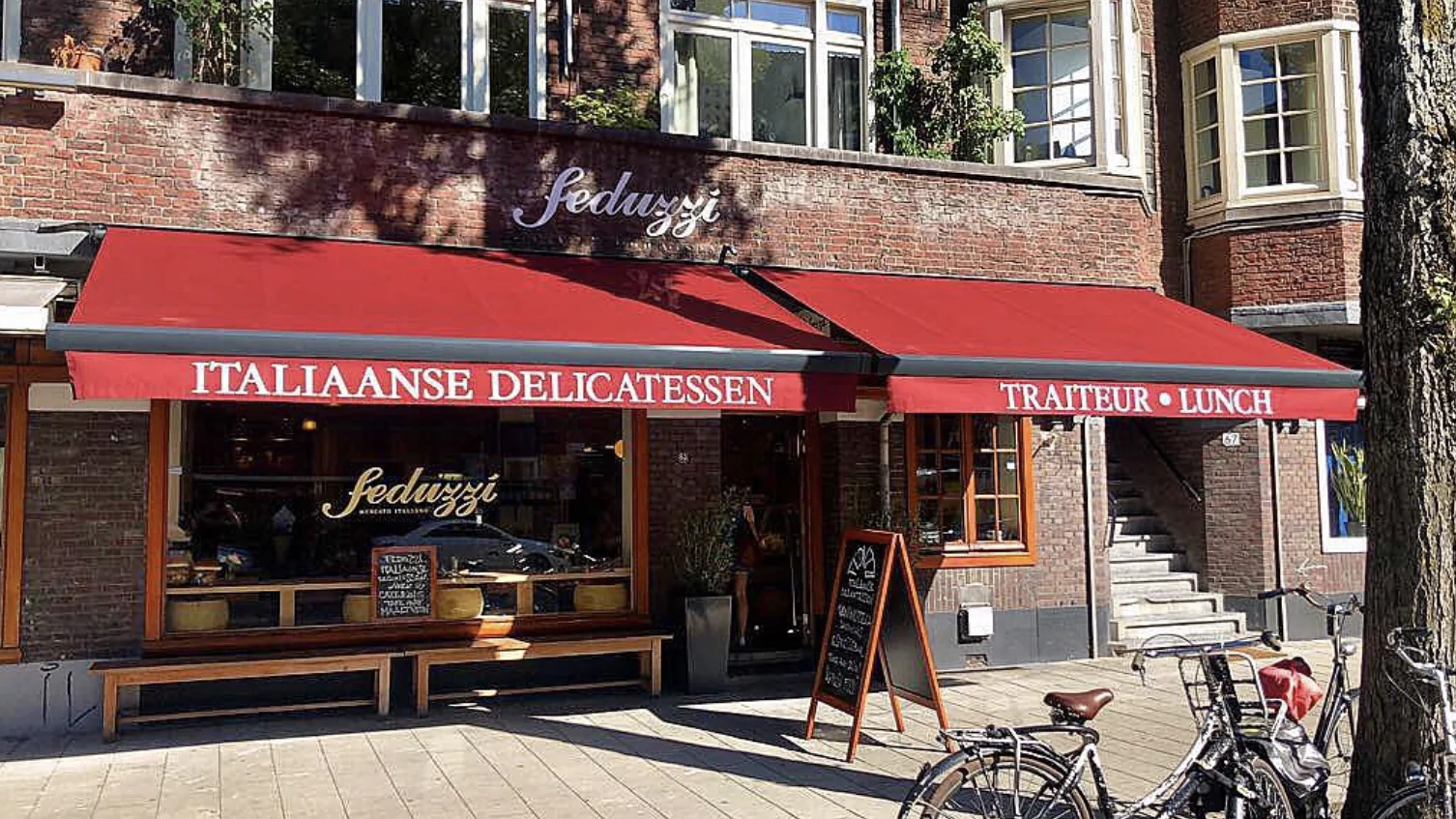
Feduzzi
Feduzzi is opgezet in 1981 door de Italiaanse familie Feduzzi en was daarmee de allereerste Italiaanse delicatessenwinkel in Nederland. In 2001 werd het bedrijf overgenomen door Pjotr Meuwissen, die het liet uitgroeien tot een van de beste Italiaanse traitteurs in de stad. Je kunt bij Feduzzi terecht voor traditionele Italiaanse producten, zoals pasta's en wijnen en olijfolies, maar je kunt hier ook allerlei lekkere panini's halen; belegd met mozzarella, tonijnsalade of een van de andere heerlijke affetati, zoals beenham of coppa di parma.
1076 TB Amsterdam
Slagerij Zikking & Zoon
Slagerij Zikking & Zoon zit aan de Marathonweg en is een begrip in Amsterdam. Eigenaar Robert Zikking is een geboren en getogen Amsterdammer die samen met zijn vrouw in 1995 gepassioneerd en vol zelfvertrouwen een eigen zaak begon. Zoals hij zelf zegt: ‘Het is geen sprookje, maar een (h)eerlijke werkelijkheid die een geschiedenis heeft.’ De filet americain is gemaakt met het recept van een oude Jordaanse dam en niet te ontbreken is de nostalgische Amsterdamse ossenworst.
1077 JK Amsterdam
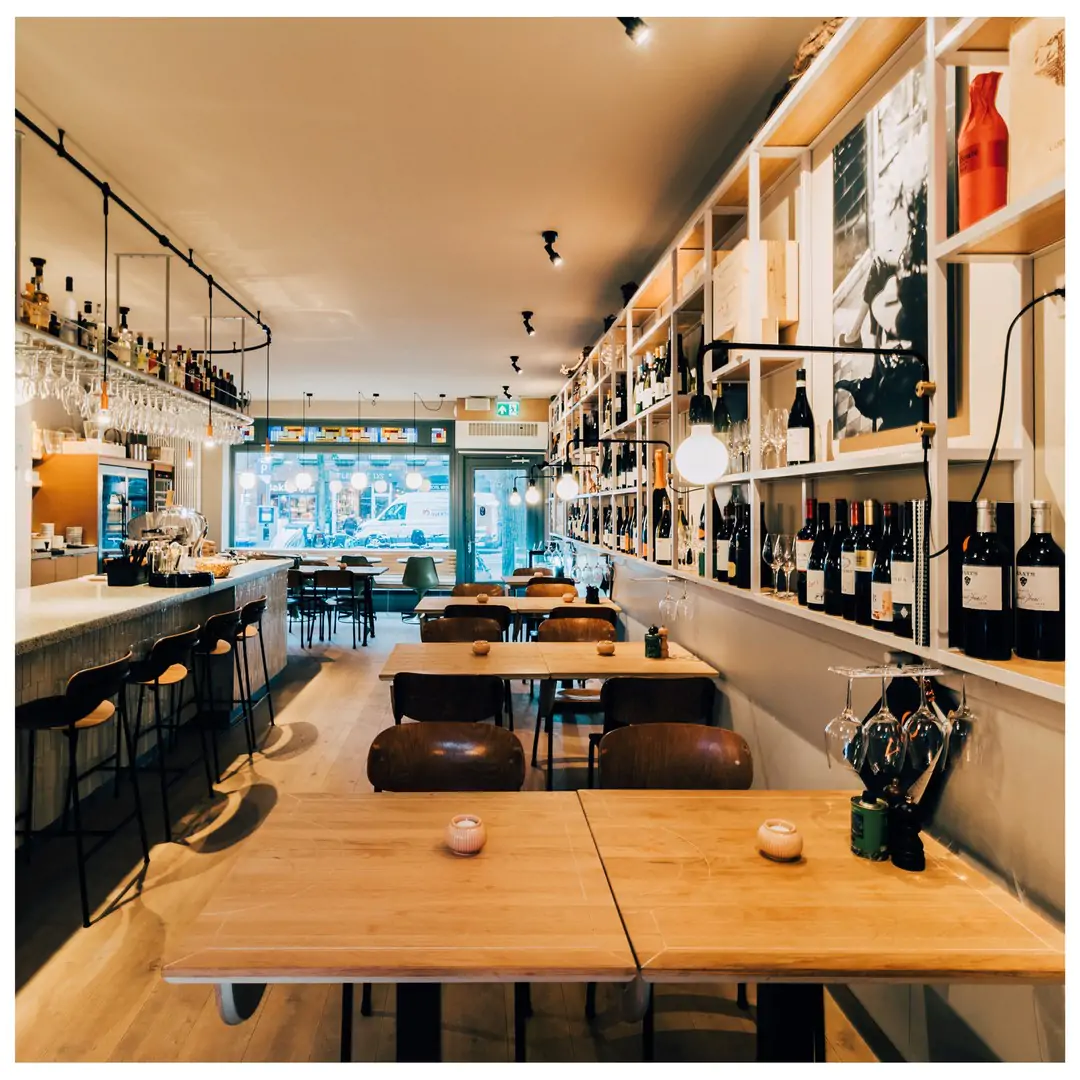
Winebar QV
Bij Winebar QV kan je in principe de hele dag doorbrengen alsof je in Italië bent. Je begint met een Italiaanse espresso, luncht met een warme maaltijd en sluit af met een goed glas wijn met bijbehorend een Italiaanse aperitivo. Het is er gezellig en stijlvol ingericht en je kan aan de hoge krukken aan de bar zitten, aan de lagere tafeltjes of op het kleine terras.
1077 HM Amsterdam
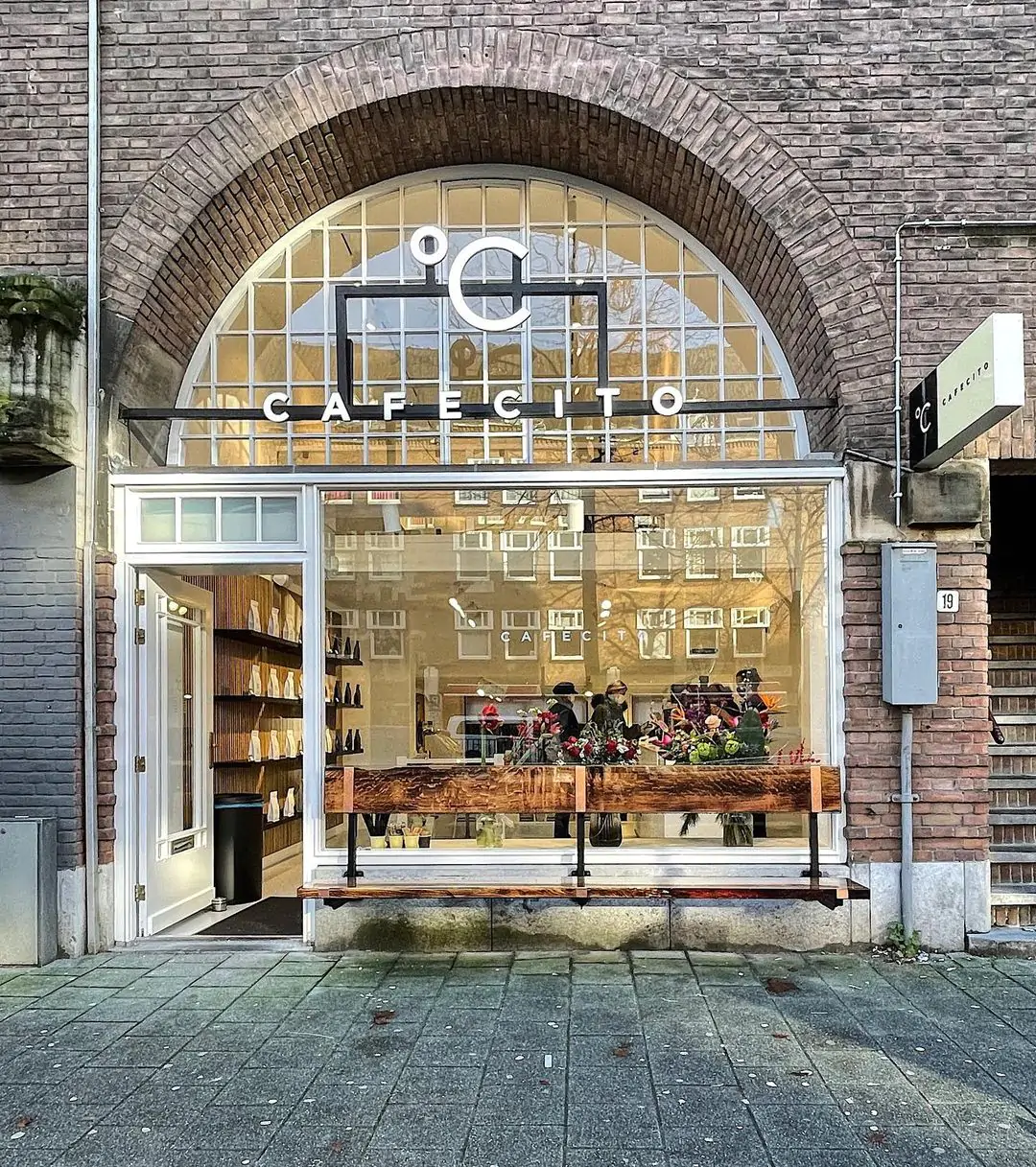
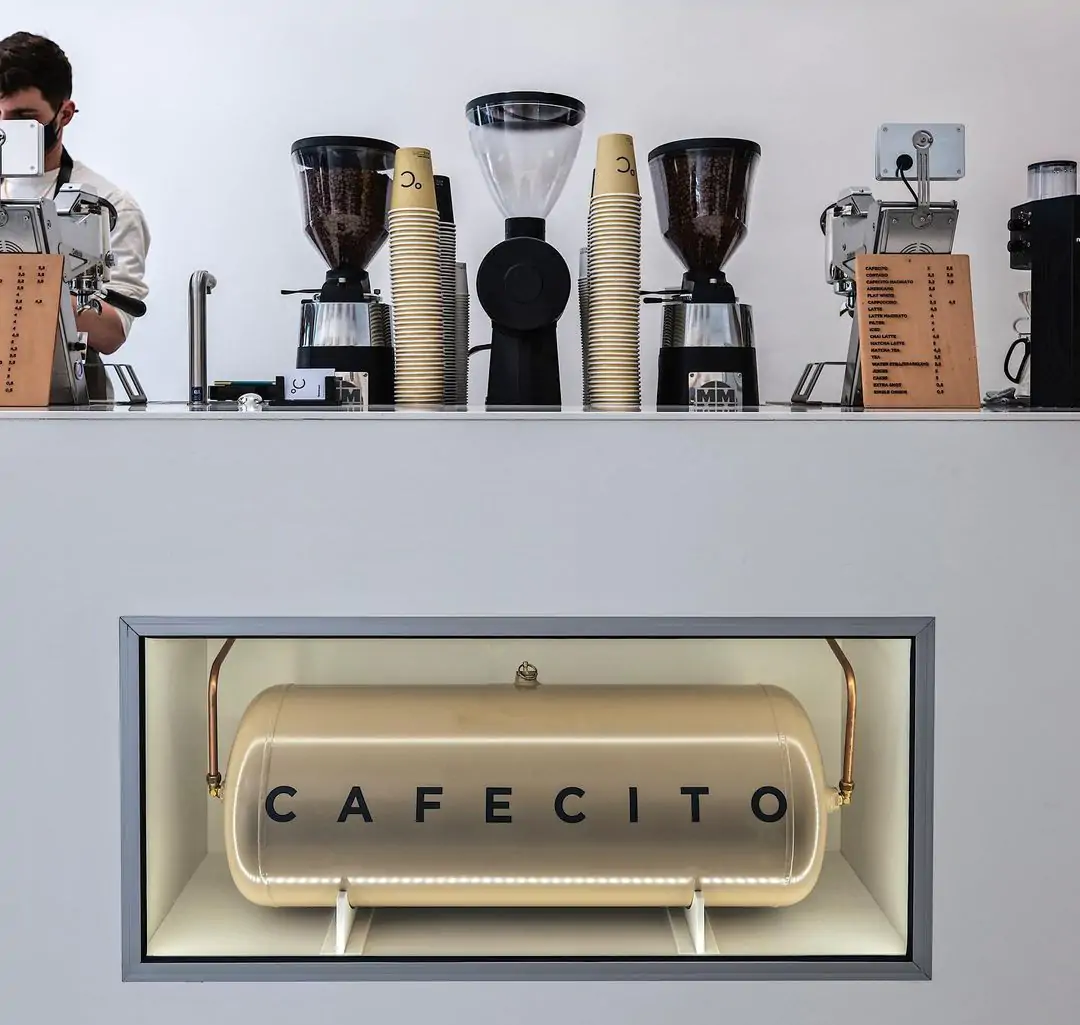
Cafecito
Cafecito, een minimalistische koffiezaak, biedt hoogwaardige koffie uit stralend witte machines. Het is een onderdeel van de Cafecito-franchise, een Amsterdamse koffiebranderij die besloot koffiezaken te openen om hun eigen afzet te stimuleren toen de verkoop aan horecagelegenheden tijdens de pandemie stagneerde. Cafecito heeft al drie vestigingen in Amsterdam en één in Rotterdam. Cafecito is een tot de essentie teruggebrachte zaak. Je drinkt er topkoffie uit witte machines.
1077 JJ Amsterdam
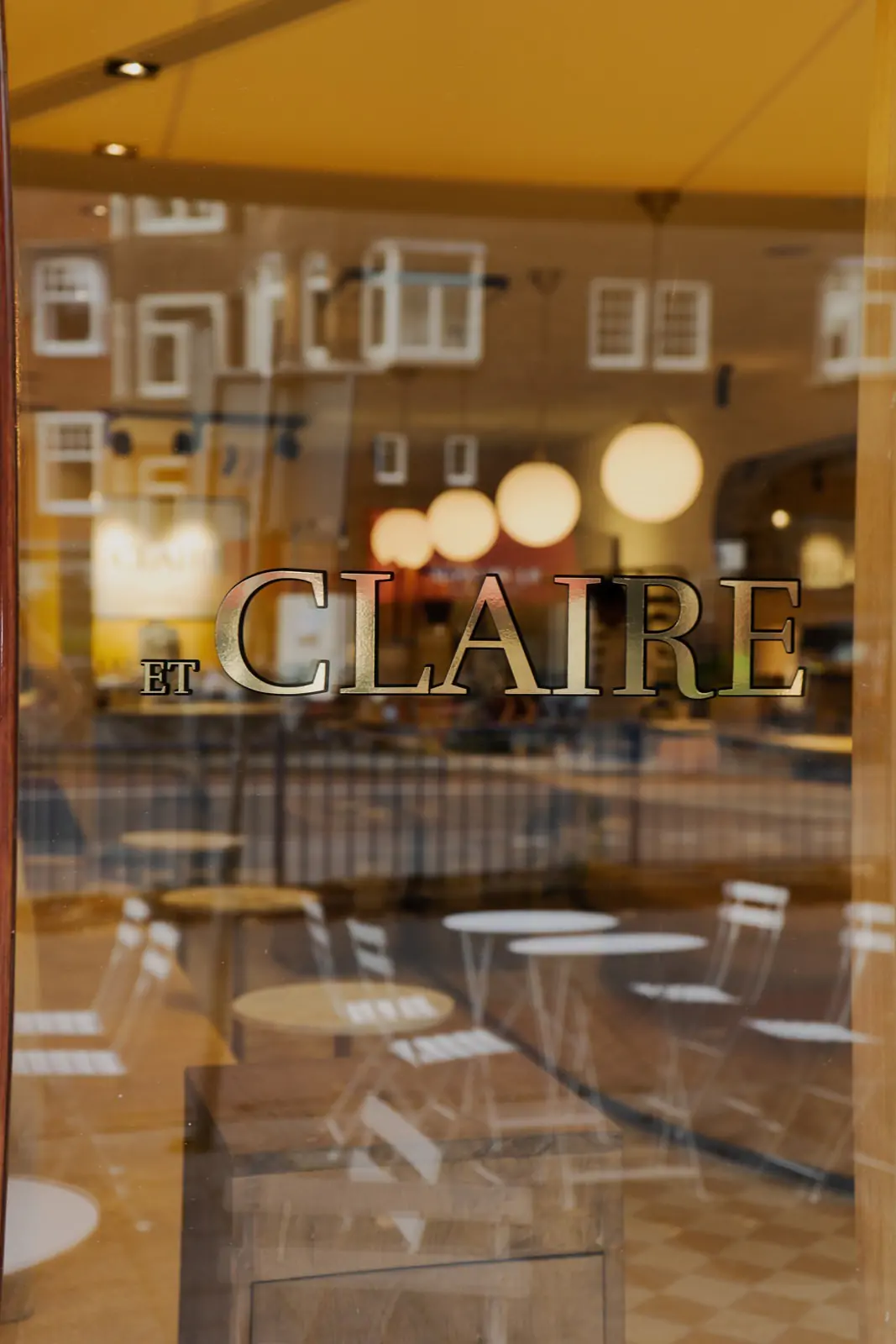
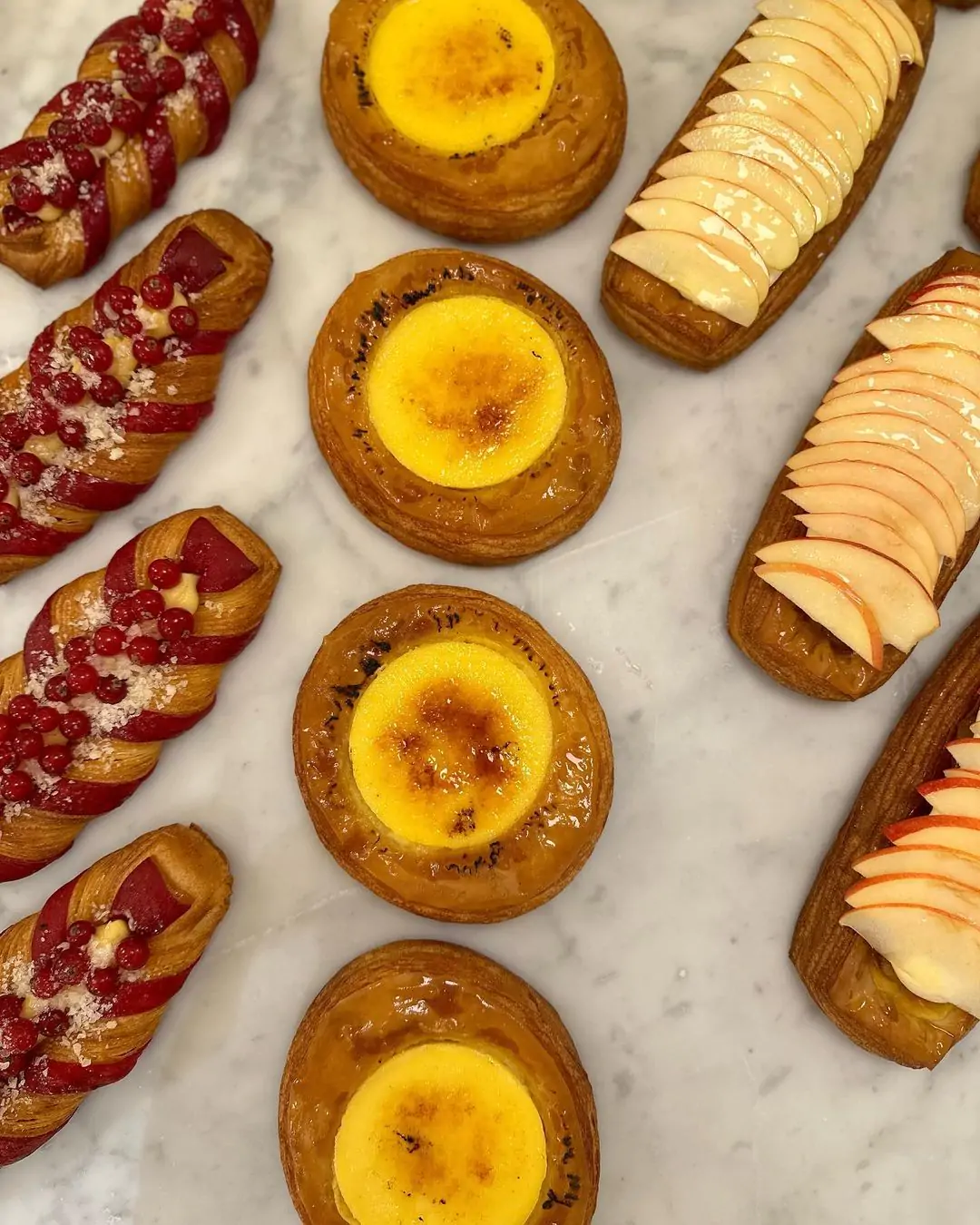
Et Claire
Op de Beethoven straat bevindt zich Et Claire. Et Claire is ontstaan uit een voorliefde voor de beste viennoiserie, koffie, (ijs)thee in combinatie met eindeloze zoete en hartige mogelijkheden. Het motto bij et Claire is ''ne vous contentez pas de moins'', wat betekent dat je niet genoegen moet nemen met minder.
1076 BJ Amsterdam
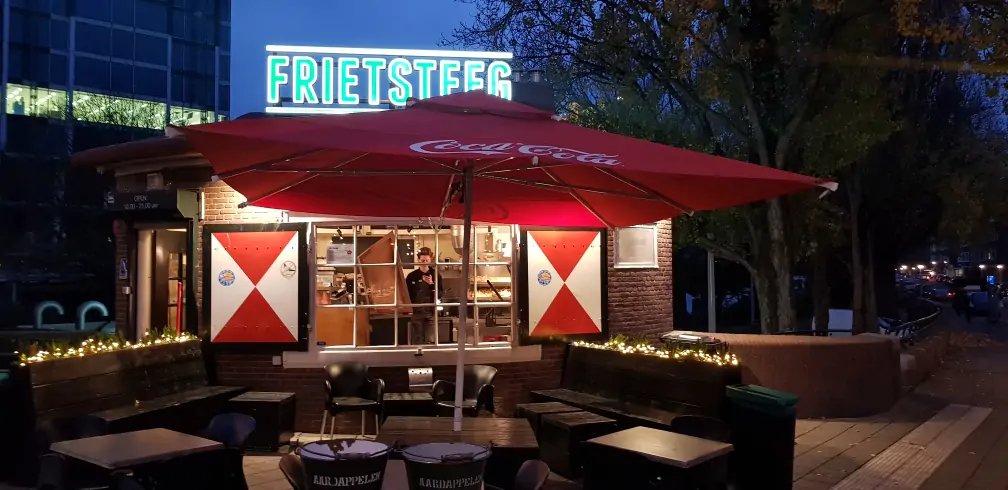
De Frietsteeg
De Frietsteeg is een snackbar aan de gracht in de Stadionbuurt. Ze serveren hier heerlijke krokante frietjes en vele andere snacks. De frieten worden met de hand gesneden en je hebt keus uit meer dan 20 sauzen. Ook bijzonder: de Frietsteeg is gevestigd in een historisch huisje en er is een groot zonnig terras aan het water
1083 HK Amsterdam
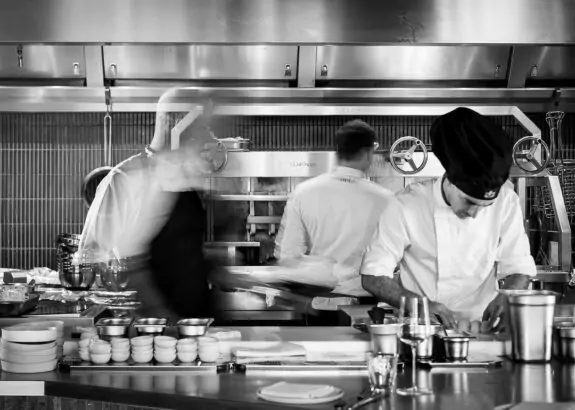
Nela
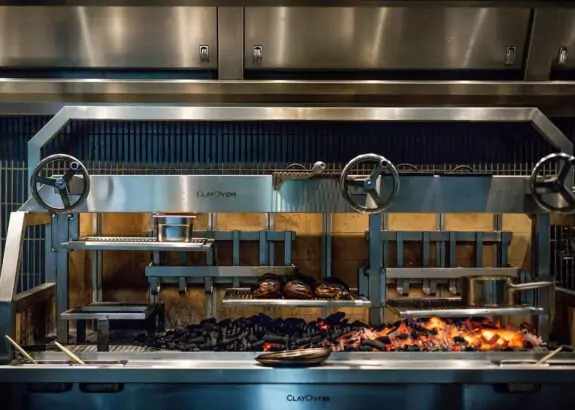
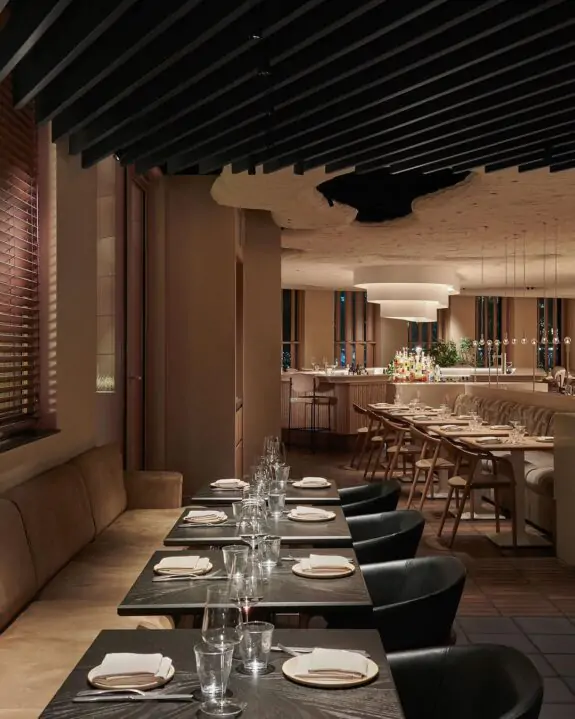
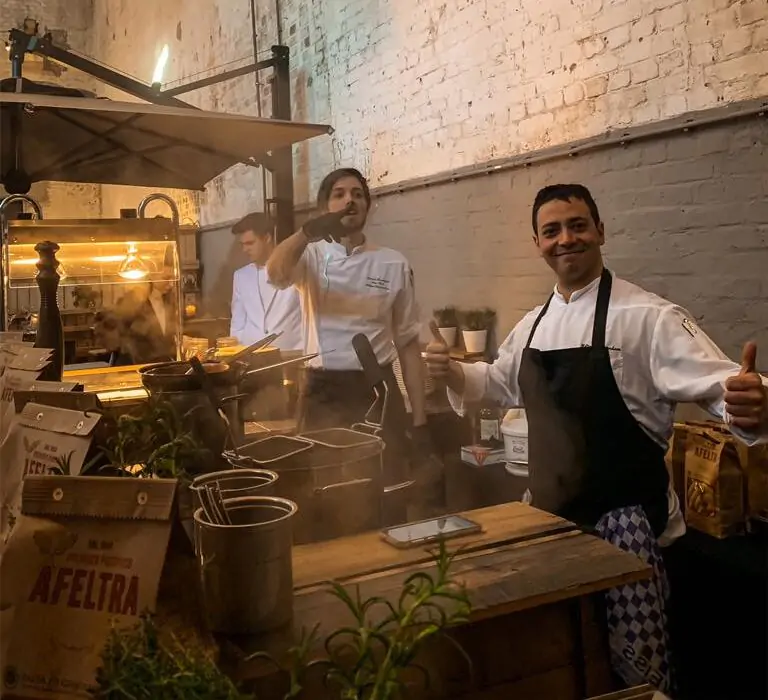
Bij Nela vieren ze de samensmelting van live vuur koken met hoogwaardige en zorgvuldig geselecteerde ingrediënten. Ze halen en selecteren seizoensgebonden producten van gespecialiseerde partners. Het open vuur is het perfecte gereedschap voor de chefkoks om warmte en temperatuur te gebruiken om ongelooflijke texturen en smaken te creëren. Nela is bedacht door toonaangevende chefs Hari Shetty en Ori Geller, die twee decennia ervaring hebben op het internationale podium. Na jarenlang te hebben gewerkt voor toprestaurants zoals Nobu (Londen), Yaffo-Tel Aviv, Izakaya, The Duchess en Mr. Porter (Amsterdam), bundelden ze hun krachten met de innovatieve internationale ondernemer Gilad Hayeem (Waverly Group). Samen brachten Hari, Ori en Gilad hun gedeelde visie en creativiteit tot leven door Nela op te richten.
1077 CV Amsterdam
The Coffee District
Eigenaren Adil Loukane en Rosa Loukane begonnen met een hole-in-the-wall coffeeshop in een modewinkel in Zuid. Toen de winkel de deuren sloot, grepen Adil en Rosa hun kans en besloten om hun eigen koffiebar te openen. Inmiddels hebben ze meerdere locaties. De koffie wordt gemaakt met een eigen melange gebrand door Lot Sixty One. Daarnaast worden er zoetigheden aangeboden zoals de inmiddelsal bekende kaneelbroodjes en bananenbrood.
1078 KK Amsterdam
Hakata Senpachi
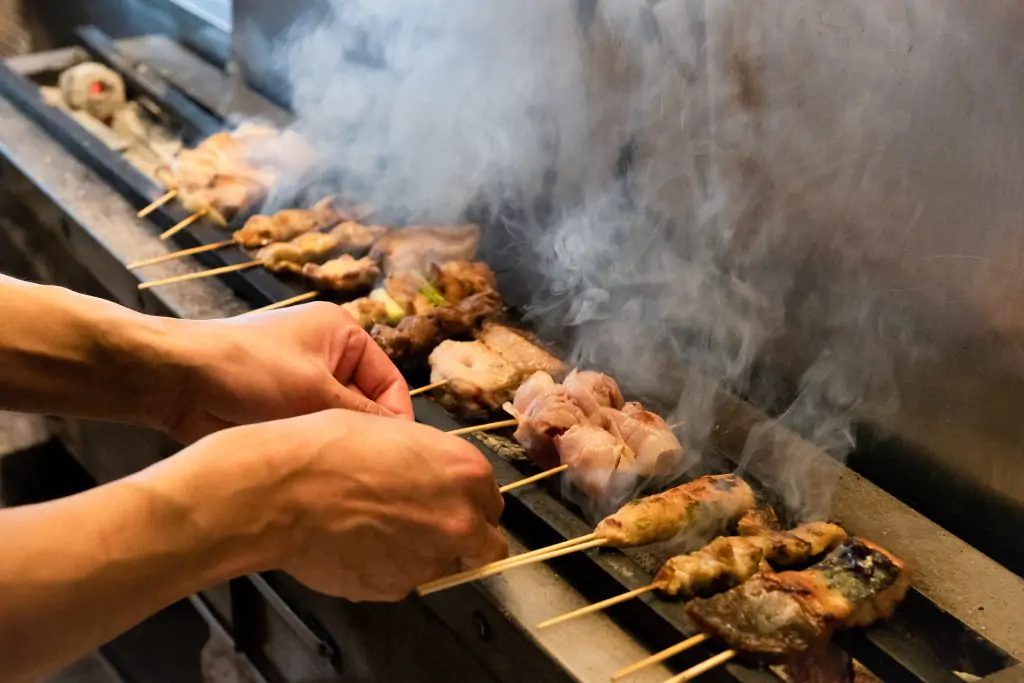
Prachtig Japans eten en de lekkerste saké's; dat is Hakata Senpachi. Dit restaurant aan de Wielingenstraat bestaat al langer dan 20 jaar en heeft in al die jaren altijd haar autentieke japanse sfeer behouden. De manier waarop restaurant is ontworpen doet het lijken op een echt Japans restaurant in de steegjes van Tokyo. Hakanta Senpachi is als Yakitori-ya - gespecialiseerd in het maken van gegrilde kipspiesjes, die in Japans Yakitori worden genoemd. De spiesen worden gegrild via traditionele kookwijzen op de houtskool grill. Deze grill staat overigens in het midden van het restaurant waardoor de ruimte altijd volhangt met de lekkerste aroma's.

1072 GJ Amsterdam
Pisa IJs
Bij deze bescheiden ijswinkel bij Amsterdam RAI ben je aan het goede adres voor heerlijk Italiaans ijs. Sinds 1935 kun je hier terecht voor ambachtelijk ijs in meer dan 60 verschillende (wisselende) smaken per seizoen. Samen met ijswinkel Venetië ietsje verderop zijn deze twee ijswinkels dé plekken om goed schepijs in Amsterdam-Zuid te halen, vandaar ook de lange rijen in de zomer, maar het wachten waard en het gaat snel!
1078 GR Amsterdam
Visaandeschelde
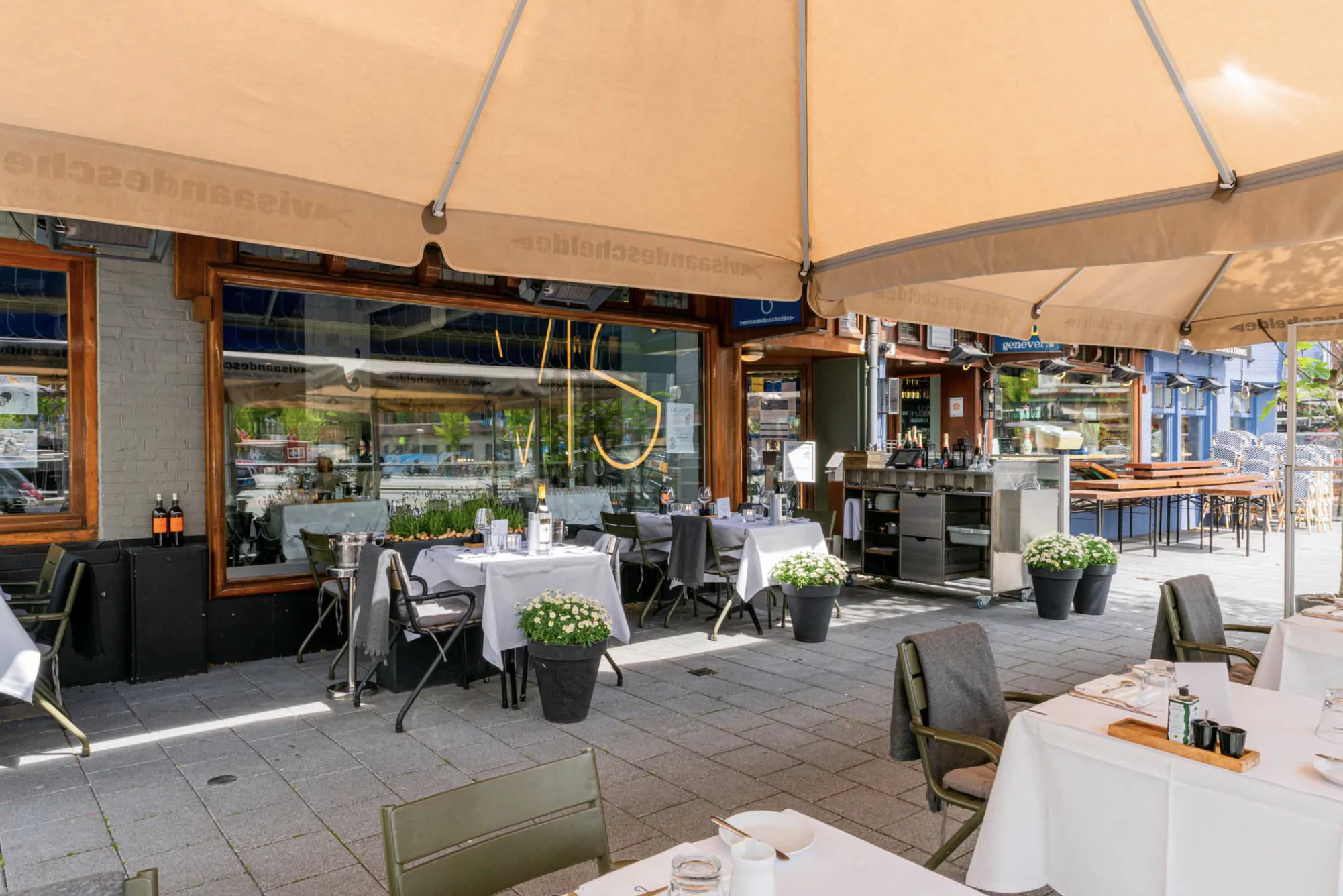
Al meer dan 20 jaar een begrip in Amsterdam Zuid. Zoals ze zelf zeggen is hun culinaire passie het omtoveren van dagverse vis en seizoensproducten tot spannende en heerlijke gerechten. En daarmee is eigenlijk bijna alles al gezegd. Visaandeschelde ziet er chique uit, maar binnen is er geen te kort aan een goede portie Amsterdamse gezelligheid. Ook kan je in de zomer heerlijk op het terras zitten dat uitkijkt op het Scheldeplein.
1076 LP Amsterdam
Umeno
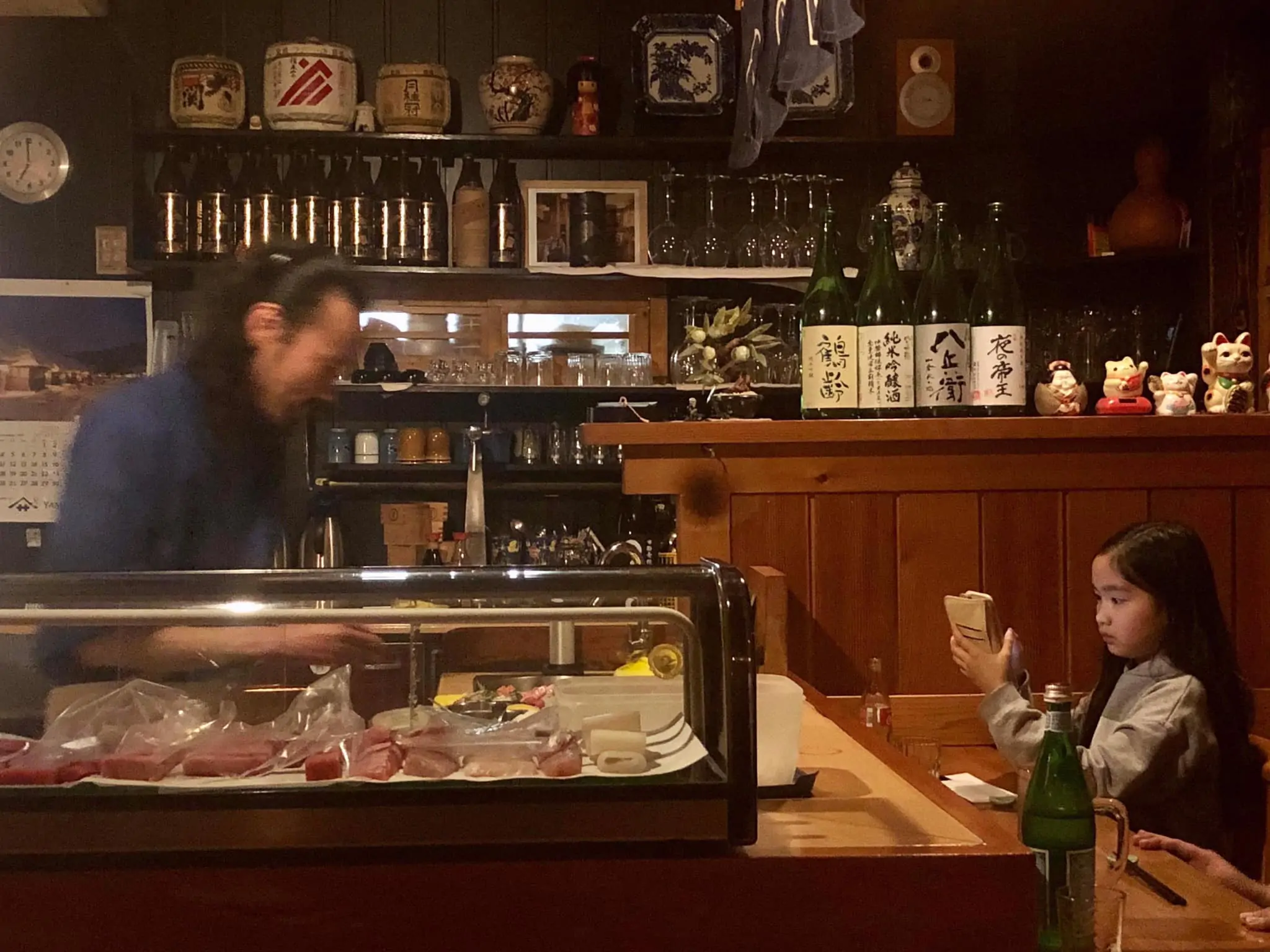
Umeno is een van de oudste Japanse restaurants in Amsterdam dat geliefd is bij haar vaste lokale gasten. Zodra je binnenstapt zie je een intieme ruimte met traditionele Japanse authenticiteit gevormd door het handgemaakte houten interieur, de shamisen en shakuhachi muziek en de enorme gastvrijheid van Ayumi en Atsuhito Hosono. De nigiri sushi is een aanrader, want de kwaliteit van de vis is uitstekend.
1078 GM Amsterdam
Venetië IJS
Bij Venetië hebben ze ambachtelijk Italiaans ijs. Het zijn veelal Italiaanse mensen die de bolletjes scheppen en dat merk je dan ook aan hun charmante accent en hun vriendelijke glimlach. Het ijs is huisgemaakt en ze hebben veel verschillende smaken en heerlijke slagroom. Het interieur is authentiek Italiaans met genoeg zitplekken binnen. In de zomer staan er buiten tafels en stoelen op het terras om even rustig je ijsje op te eten.

1072 AX Amsterdam
KID
Levy Byron, Joshua Styns en Steven Mamahit begonnen tijdens de pandemie. Het concept begon als pop-up en heeft nu een vaste locatie op de Ruysdaelkade. Het menu is inmiddels fors uitgebreid. Yakitori van kip met kaffir lime en chillies. Chickenwings gevuld met een tartaar van garnaal en een saus van shi-take. Geroosterde kool met gefrituurde ui en een hollandaise saus. En natuurlijk de inmiddels beroemde kip-sandwiches in allerlei varianten zoals bijvoorbeeld de Sichuan spiced firied chicken met pickles en knoflookmayonaise geserveerd op een sake kasu bricohe broodje. KID schenkt er cocktails, bier en een kleine selectie wijn bij.
1077 BG Amsterdam
Roberto's Restaurant Amsterdam
In de top tien Italiaanse restaurants van Amsterdam mag Roberto’s niet ontbreken. Het restaurant is gelegen in het Hilton hotel, waar de iconische Italiaanse keuken sinds 25 jaar de borden vult. Het restaurant draait om pure en simpele smaken met gerechten als dungesneden aubergine, groene farfalle pasta met kreeftensaus en Lava cake.
1078 GG Amsterdam
Vinnies
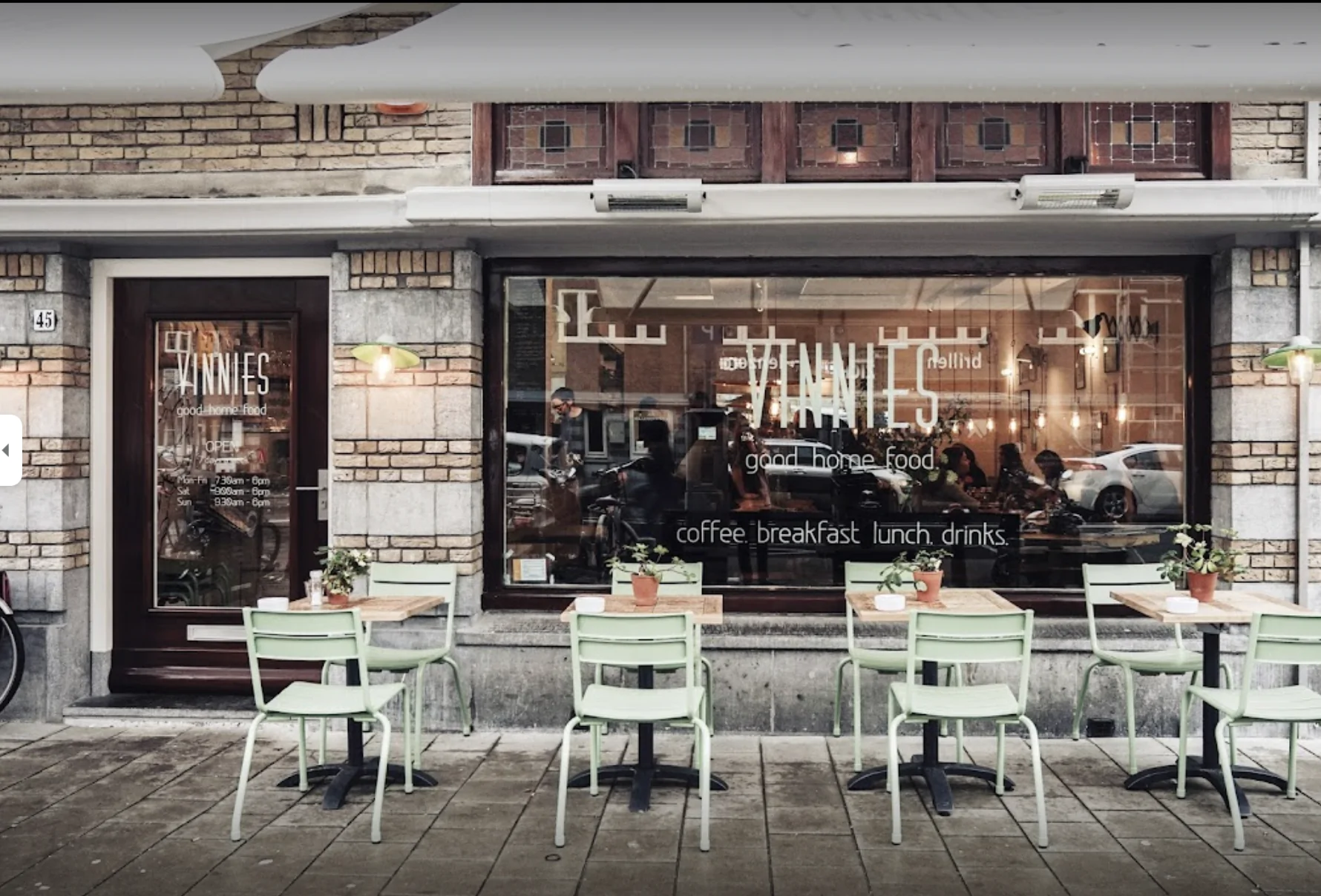
Bij Vinnies draait het om goed en eerlijk eten. Dit restaurant serveert ook all-day ontbijt en lunch. Je kunt bijvoorbeeld kiezen uit lekkere broodjes, gerechten met ei en zelfs Marokkaanse couscous of linzensoep. Als je liever komt voor een drankje ben je bij Vinnies ook op het juiste adres; ze zetten heerlijke koffie en maken ook de mooiste sappen en cocktails voor je klaar. Laat je liever de lunch bezorgen? Geen probleem: Vinnies verzorgt ook catering en heeft een eigen take-away lunchmenu.
1082 LZ Amsterdam
Café Loetje
In 1977 werd café Loetje opgericht als biljartcafé door Ludwig 'Loetje' Klinkhamer, maar het duurde niet lang voor men het biljart inruilde voor de ossenhaasbiefstuk die werd geserveerd. Meer dan veertig jaar later is Loetje een gigantische keten en is het oorspronkelijke 'Café' een begrip in Amsterdam. De smakelijke biefstuk wordt geserveerd met huisgemaakte frietjes en zwemt in verse jus - om je vingers bij af te likken!

1078 GZ Amsterdam
Scandinavian Embassy
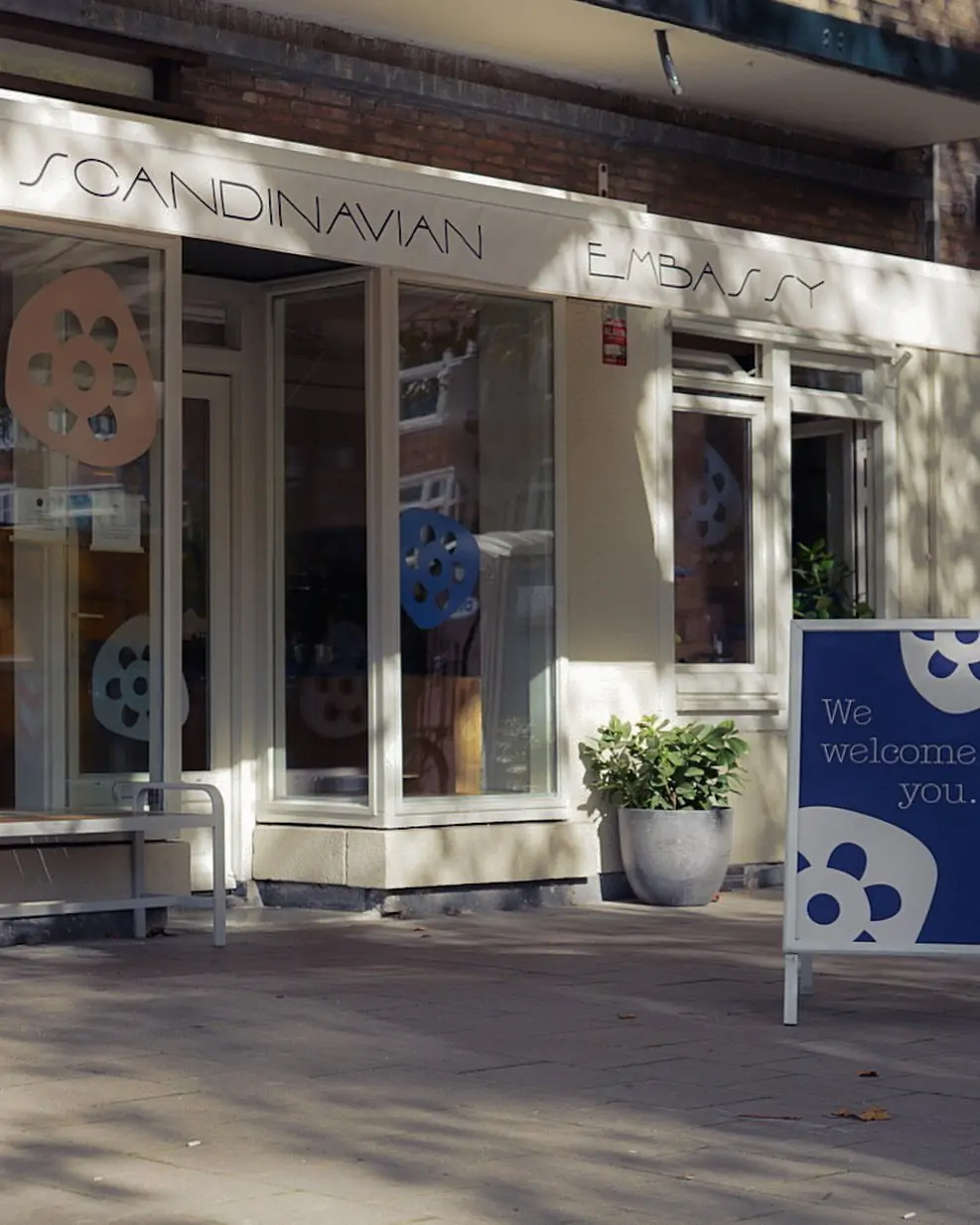
Hier wordt ervaring en interesse in Scandinavisch eten en duurzaamheid geboden. Bij de Embassy traceren ze kleine, niche-leveranciers en gaan mee met de seizoenswisselingen van producten. De keuken biedt menu's voor een betaalbare prijs waarbij de gezonde en milieuvriendelijke wortels van de Scandinavische keuken behouden blijven. Bijzonder is dat ze ook koffie met eten combineren , waardoor, volgens hun zeggen, de algehele culinaire ervaring verbeterd wordt. Dit is hun tweede locatie. De ander locatie is in de Pijp gevestigd.
1072 SL Amsterdam
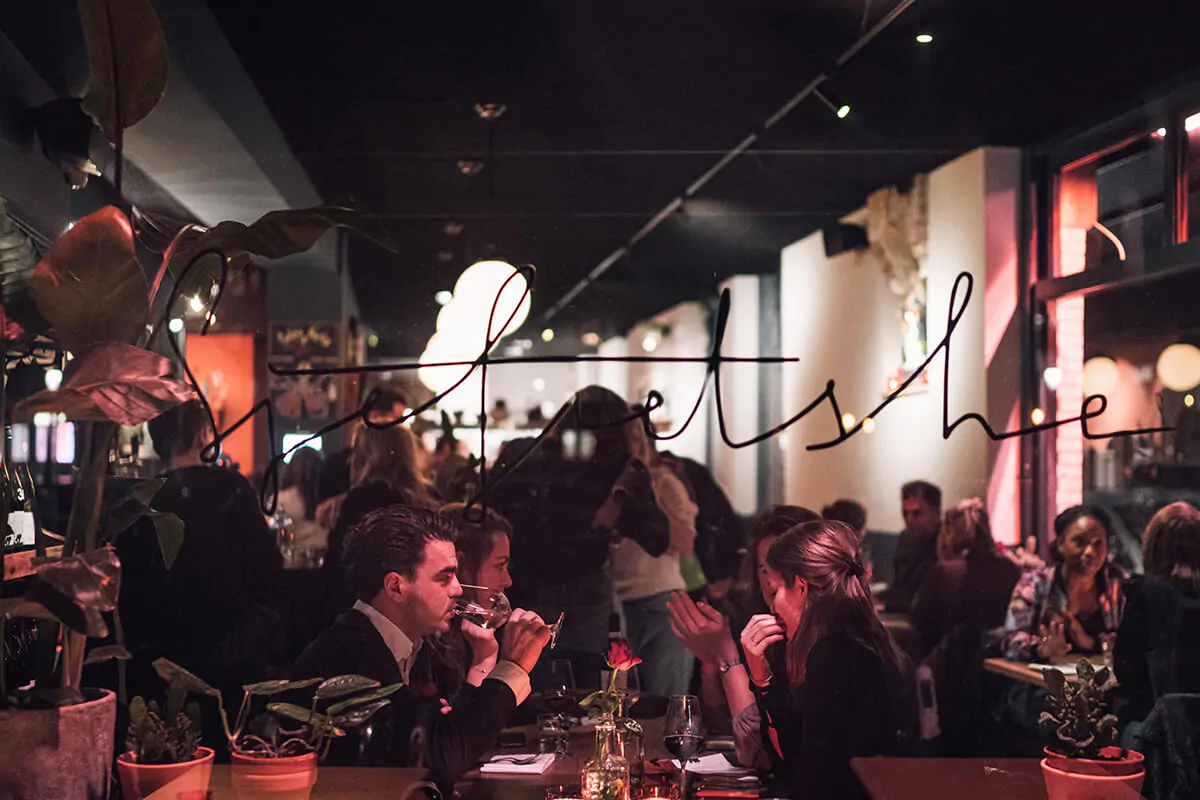
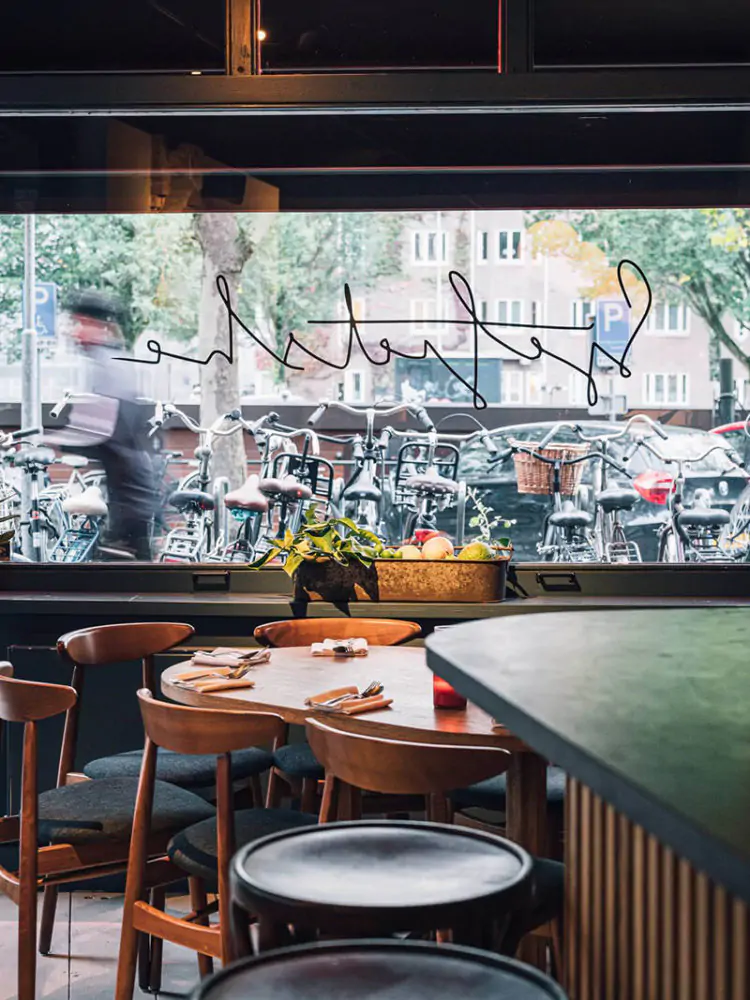
Sjefietshé
Sjefietshe is een cevicheria in het midden van de Pijp, met een mooi terras met genoeg plek. Voor eenieder die niet bekend is met het heerlijke Zuid-Amerikaanse gerecht: het klassieke Peruviaanse voorgerecht bestaat uit rauwe (wit) vis die ‘gegaard’ is in limoensap. Het gerecht wordt geserveerd met chili, koriander, rode ui en een oceaan aan limoen. Een overdonderende smaaksensatie en daarom ook moeilijk om goed te evenaren. Sjefietshe doet een goede poging en maakt met een Amsterdamse flair een goede eigen variant. Naast de ceviches met verschillende soorten vis is er ook de optie om van lekkere bites te genieten, waaronder de Sjefietshe special: de door hun uitgevonden ‘hotdoctopus’. Genoeg redenen om hier dus langs te gaan en voor jezelf te besluiten of de zaak erin slaagt je mee te nemen naar hogere Zuid-Amerikaanse sferen!
1077 MJ Amsterdam
Flower fusion
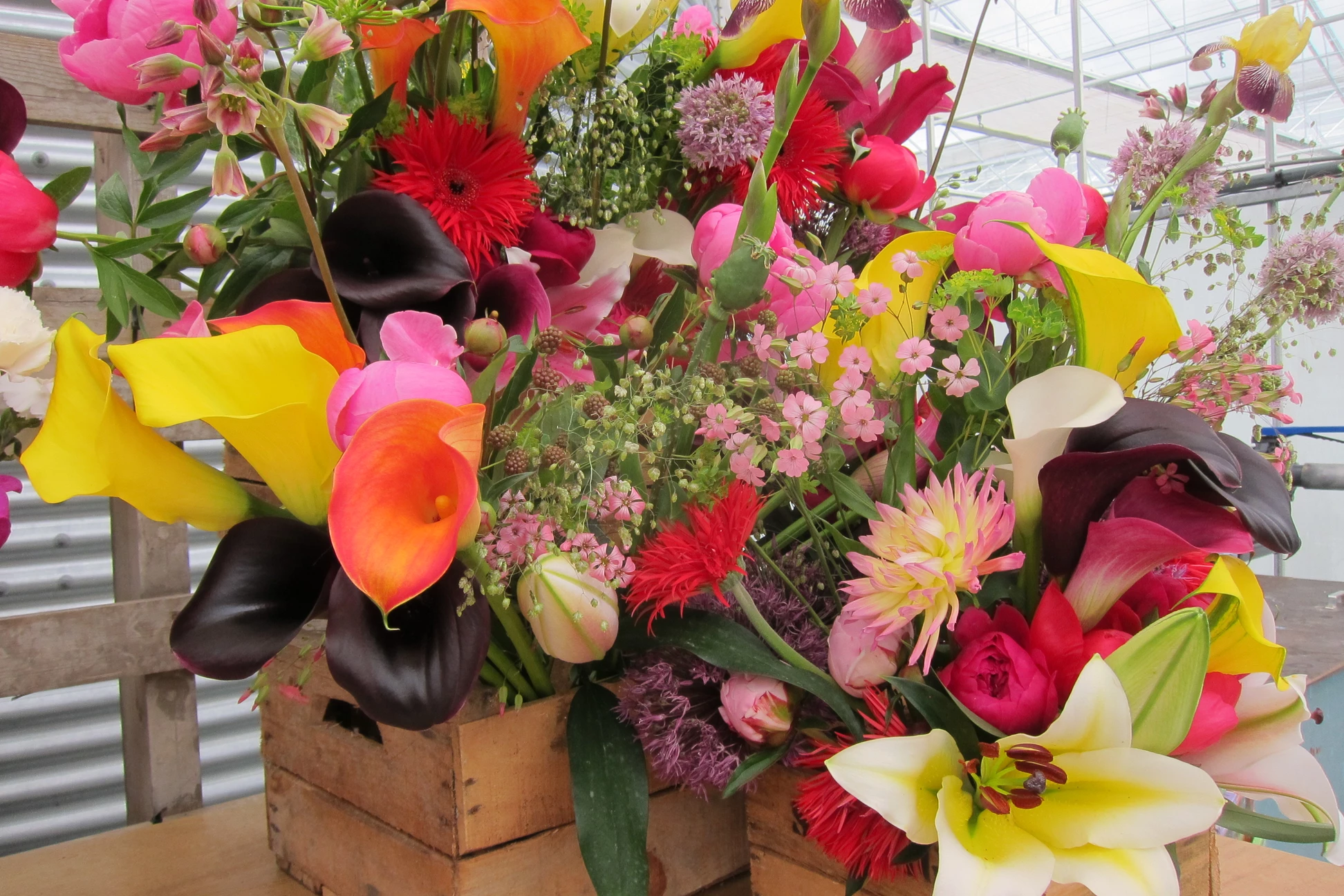
Elke zaterdag van 9:30 tot 17:00 kunt u Ilona Bokma van Flowerfusion vinden op de ZuiderMRKT. Unieke en schitterende bloemen waardoor je het gevoel krijgt middenin een pluktuin te staan. Doordat Ilona iedere week andere bloemen, planten en kleuren uitzoekt die aansluiten bij het seizoen, is het elke zaterdag weer een feestje om langs te gaan bij Flowerfusion.
1076 AV Amsterdam
Diez Gallery
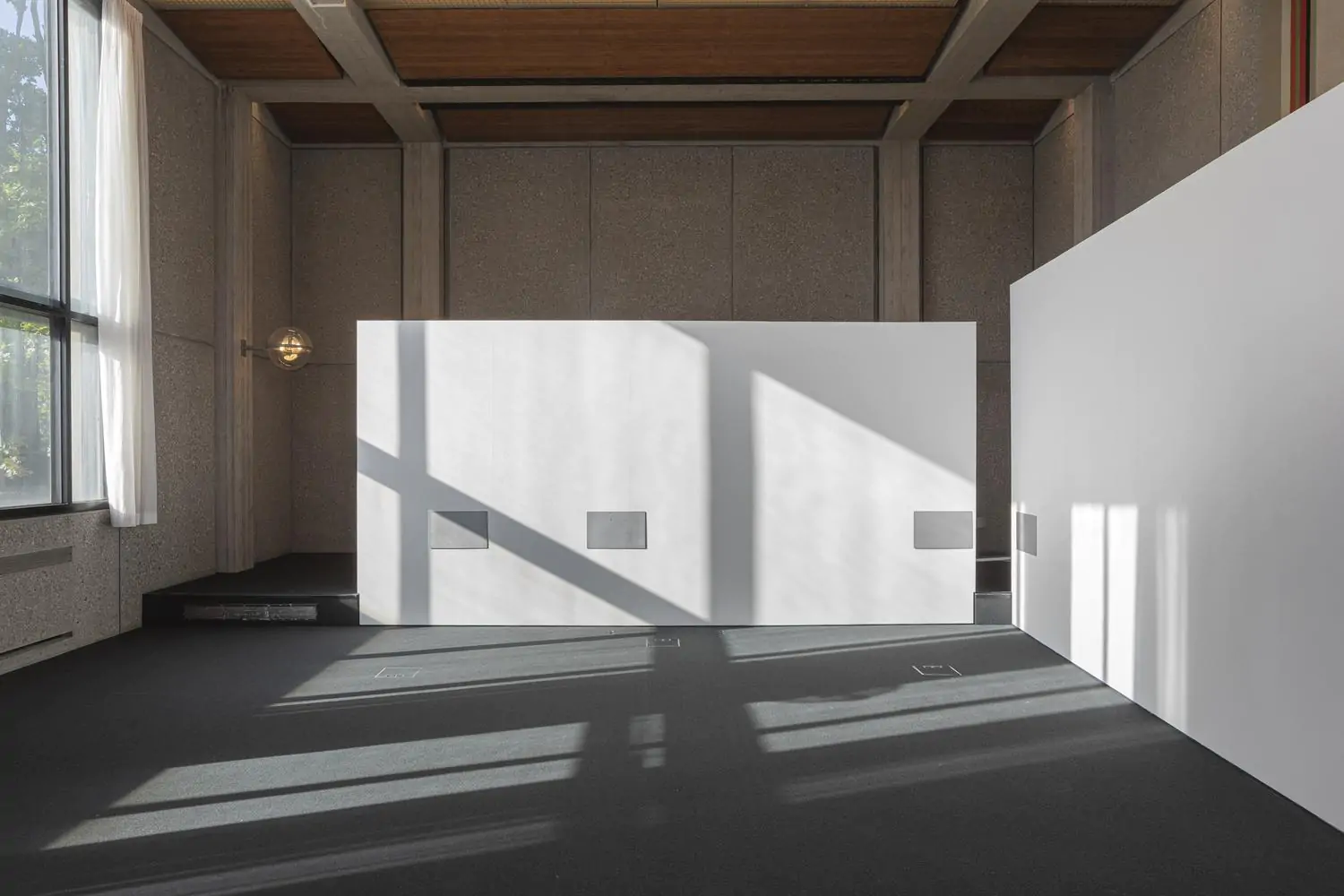
Diez is een Amsterdamse kunstgalerie met een internationale uitstraling, opgericht in 2022 door Diego Diez. De tentoonstellingen worden samengesteld in samenwerking met kunstenaars die affiniteit hebben met Diez's interesses en zullen zowel internationaal als nationaal talent presenteren in Amsterdam. Naast het tentoonstellingsprogramma streeft Diez ernaar een toegankelijke ruimte te zijn voor een breed publiek met diverse activiteiten en evenementen zoals poëzielezingen, samengestelde diners en kunstenaarsgesprekken.