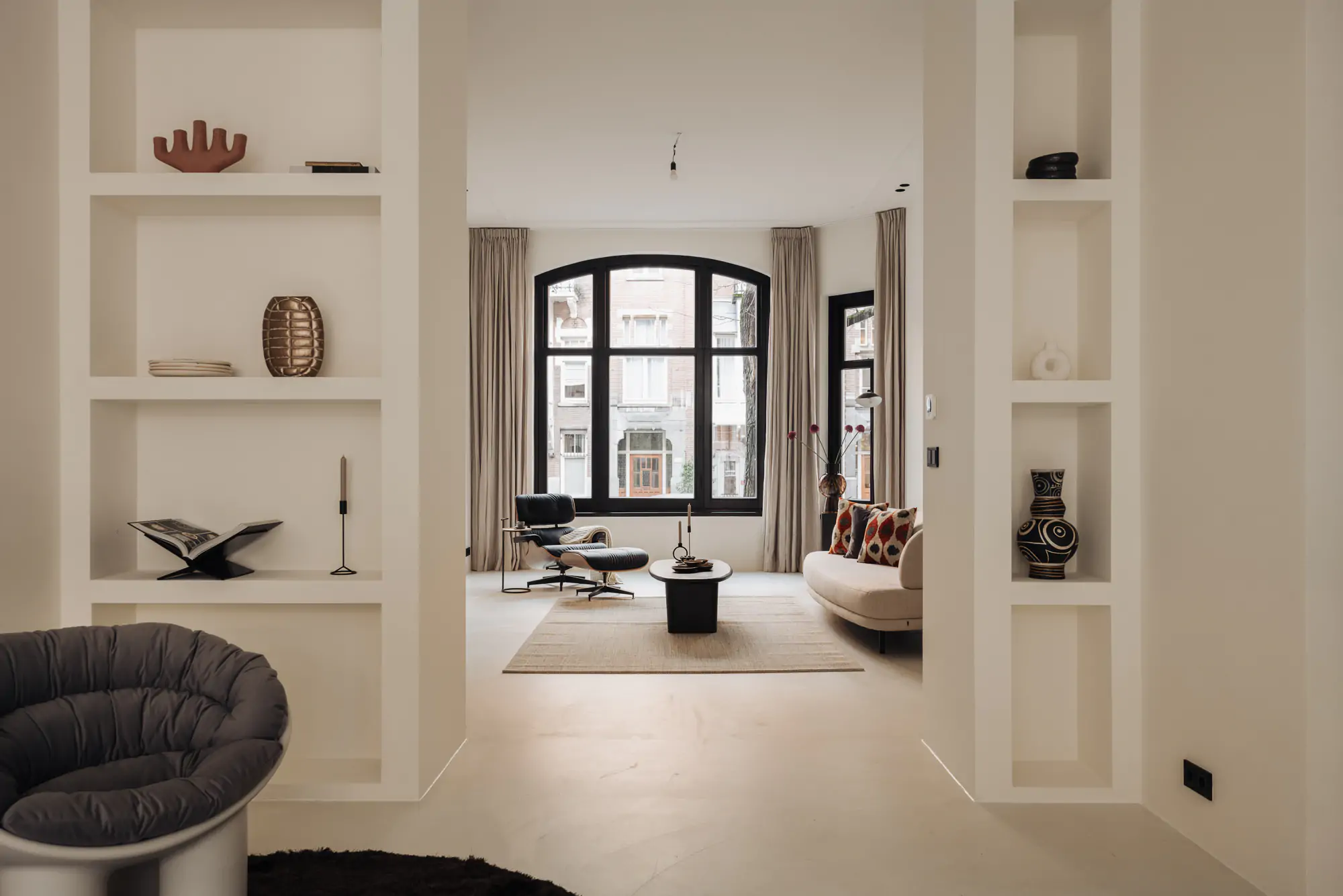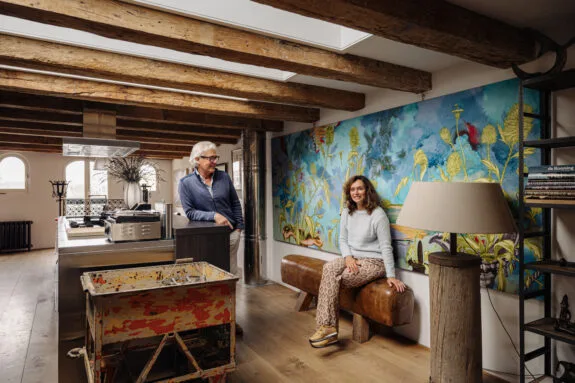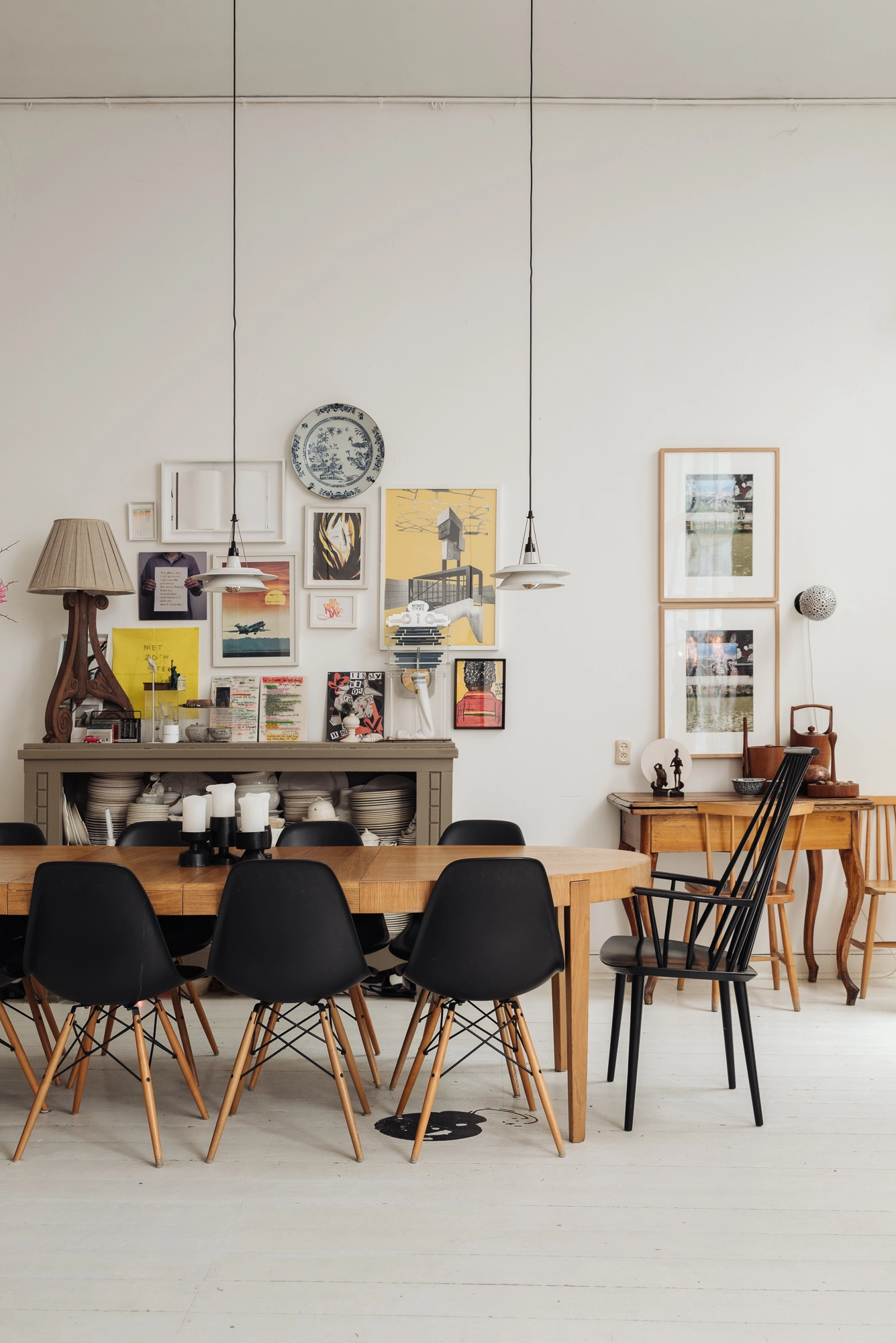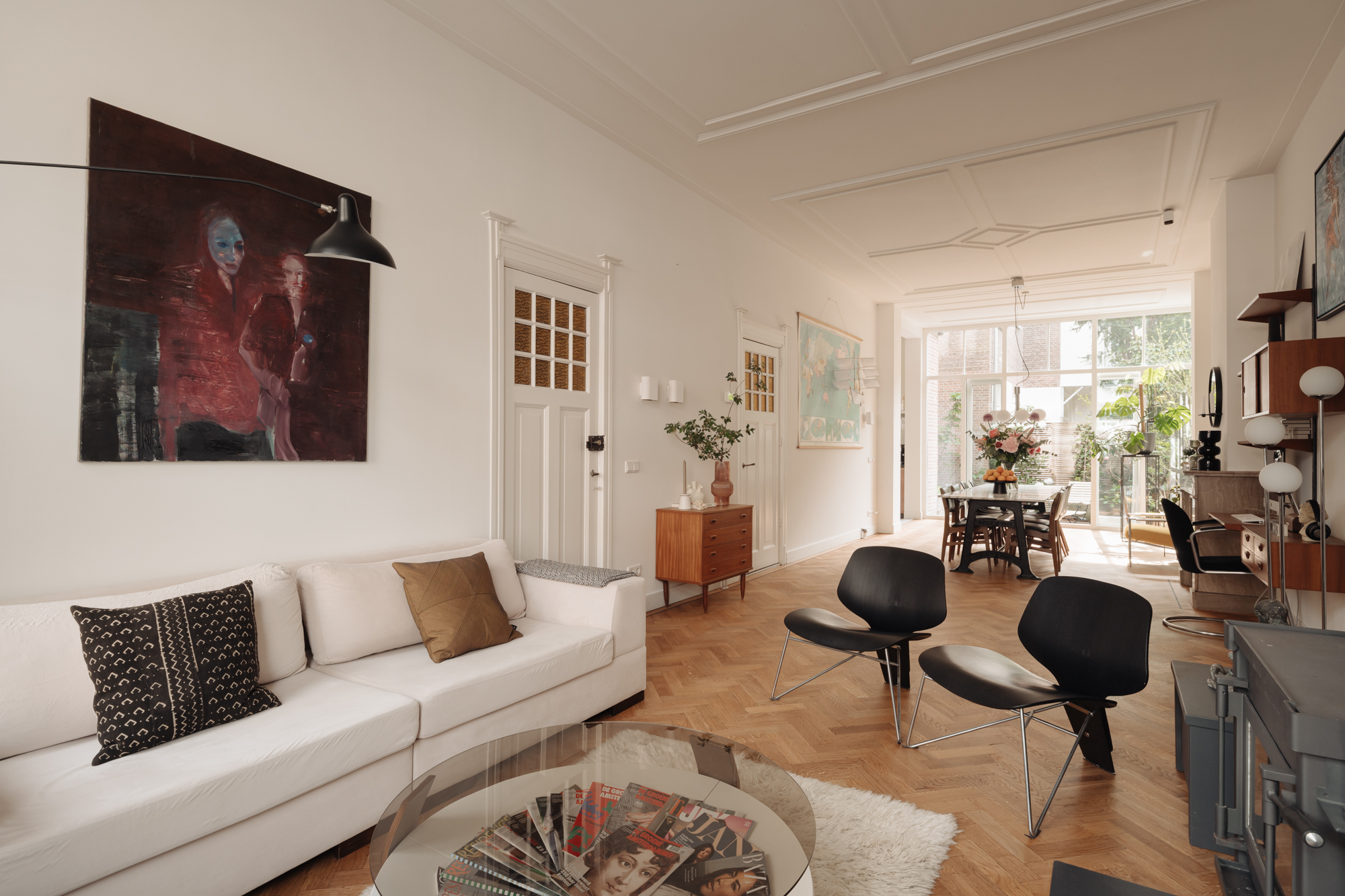
A distinctive entrance leads inside from the wide sidewalk on Admiraal de Ruijterweg. Immediately entering, it becomes clear that this house is more than just a classic Amsterdam ground-floor apartment. The original architecture by G.H. Eldering is still evident throughout: high ceilings, stained-glass details, generous proportions, and a natural elegance that is reflected in every room.
Guided tour
Ultimately, the G.H. Eldering City Villa stands out not only for its architecture or finish, but above all for the cohesion between all its spaces. It is a home where sightlines, light, height, and materials are in constant harmony—right in the heart of Amsterdam, yet with a tranquility that is rare in the city.
The vestibule, with its glazed wall tiles, serves as a stylish entrance to the living area. The long line of sight toward the garden draws natural light deep into the house and Immediately enhances Immediately sense of space. On the main floor, a living space unfolds that strikes a unique balance between grandeur and tranquility. The herringbone floor runs as a single continuous surface from front to back, while ornamental ceilings, fireplaces, and paneled doors evoke the home’s original grandeur.
At the front is the living room, with tall windows and a view of the wide street. Here, the house feels urban and open. Toward the back, the atmosphere gradually changes. The dining area forms the natural focal point of the floor and is directly connected to the kitchen and the garden. Large windows open the space completely to the outdoors, allowing the indoors and outdoors to blend seamlessly for most of the year.
The kitchen features a sleek design with a warm feel, complete with custom cabinetry, dark countertops, and copper-finished cabinet fronts. The space is spacious without feeling impersonal; designed for everyday use as well as for long evenings at the table. From virtually any vantage point, the view of the greenery at the rear remains visible.
Bedroom Floor
On the bedroom floor, the original en-suite layout has been preserved. At the front is a spacious bedroom with tall windows and soft, natural light. The former en-suite partition elegantly connects this room to the back room, which is currently furnished with a compact pantry setup but originally served as a second bedroom. It is precisely this flexible layout that gives the floor its unique character.
The bathroom is centrally located, designed in a calm and refined style with a freestanding tub, a walk-in shower, and natural materials. Thanks to the clear layout and understated finishes, the space feels light and relaxing.
Basement
The basement serves as a fully-fledged additional living level. It features several Rooms lend themselves effortlessly to use as bedrooms, home offices, or guest quarters. Thanks to the custom solutions, the continuous flooring, and the soothing materials, this level feels remarkably comfortable and spacious. Light filters in through the low windows on the garden side, creating an atmosphere of almost hotel-like luxury.
Outdoor Space
The garden itself feels surprisingly sheltered for a home in the heart of the city. Mature plants, wooden elements, and the surrounding facades create a tranquil outdoor space where silence and privacy reign. The terrace offers plenty of room for long dinners, while the view back toward the house highlights its architecture once again.
Neighborhood Guide
This two-story townhouse is located in the lively and beloved Bos en Lommer neighborhood, just a short distance from Westerpark and Erasmuspark. From artisanal bakeries, butchers, and upscale delis to the Albert Heijn supermarket, the neighborhood offers a wide variety of shops, bustling eateries, and cozy outdoor cafes. There are plenty of options for recreation and sports, such as Padel NEXT, SportCity, and the tennis courts at Tennis in West. An ideal location for comfortable living in Amsterdam.
Details
• Living area approx. 213 m²
• West-facing garden of approx. 35 m²
• Balcony of approx. 8 m²
• Located on freehold land
• Energy efficiency rating A
• Homeowners’ association fees €75 per month
• High ceilings

G.H. Eldering City Villa
On Admiraal de Ruijterweg, a home unfolds where character, scale, and refinement come together naturally. Spanning multiple floors, the G.H. Eldering City Villa offers a unique combination of monumental spaciousness and contemporary living comfort, carefully crafted through the use of materials, spatial flow, and natural light.
The home’s classic structure has been preserved while being subtly adapted to its current use. Original details, high ceilings, and en-suite layouts give rhythm to the spaces, while large windows and open sightlines create a serene, light-filled living experience. Each floor has its own character, and together they form a home that feels both spacious and understated.
What stands out is the way indoor and outdoor spaces are connected. The sheltered garden, the rear balcony, and the deep sightlines throughout the house create a pleasant balance between urbanity and tranquility.
A home like this is distinguished not by a single element, but rather by the harmony between space, light, and layout. A home with an effortless elegance, right in the heart of Amsterdam.
Ronald van de Bijl | Real Estate Agent Broersma Wonen
Judith de Jong | Real estate agent Broersma Wonen

Admiraal de Ruijterweg 277 H is part of a distinctive ensemble dating from the early twentieth century, designed by architect G.H. Eldering. His signature style is still evident in the façade’s composition: rhythmic brickwork, refined arch details, and a strong emphasis on vertical articulation lend the building a natural elegance. The combination of dark window frames, slender balconies, and carefully laid brick courses creates a facade that looks powerful without becoming heavy.
The architecture bridges the gap between the late Amsterdam School and the more austere rationalism that emerged during this period. Ornamentation is present but applied sparingly. It is precisely in this restraint that quality emerges. The natural stone accents beneath the balconies, the recessed entrance, and the carefully designed wooden front doors give the building a traditional refinement that has been exceptionally well preserved.
Inside, this architectural clarity continues in the layout of the home. The three floors follow a logical and balanced flow, with sightlines consistently extending from the street side to the garden side. The main floor forms an impressive living space with generous ceiling heights and exceptional depth. Large windows at the rear bring daylight deep into the home and enhance the open character of the space.
Striking is the way in which old and new come together here. The historic façade architecture retains its stately character on the street side, while the rear presents itself as more open and lighter toward the garden. The transparent façade creates a direct relationship between living space and the outdoors, causing the home to constantly change throughout the day under the influence of light, shadow, and the seasons.
The ensemble also has a strong urban presence. The rhythm of the facade, the carefully proportioned balconies, and the striking corner location give the building a quiet monumentality within the streetscape of Amsterdam-West. As a result, the home feels connected not only to the city but also to the architectural history of the neighborhood.


The living floor has the classic proportions of an Amsterdam townhouse, yet feels strikingly light and contemporary thanks to the understated finishes and the open connections between the spaces. The herringbone floor runs as a single continuous surface from front to back, emphasizing the floor’s length. Ornate ceilings, tall paneled doors, and natural stone fireplaces add texture and history, while the interior design creates a sense of calm and spaciousness.
On the garden side, the kitchen serves as a natural extension of the living space. The custom kitchen combines sleek white cabinetry with copper fronts and dark countertops, creating a subtle contrast between refinement and functionality. Large windows draw daylight deep into the space and connect the kitchen Immediately the garden. From the kitchen, the connection to the greenery remains ever-present, while the indoors and outdoors flow seamlessly into one another.
The dining area forms the heart of the floor. The generous dimensions Location a long table without the space losing any of its airiness. Its position between the kitchen and living room creates a natural dynamic where gathering, cooking, and relaxing flow into one another. The light constantly changes character throughout the day: soft and filtered at the rear, bright and open on the street side.
At the front lies the living room with tall windows and an unobstructed view of the wide street. The wood-burning stove gives the space a more intimate atmosphere without disrupting the openness. Built-in elements, carefully selected materials, and custom wall units lend the space a personal depth. Despite its generous length, the floor retains an intimate feel, with places to gather and spaces that lend themselves to quiet reflection or focused work.
The interplay between original details, contemporary comfort, and the long sightlines makes this living space exceptionally balanced. A living environment that gradually unfolds in light, material, and experience.


The first floor unfolds as a tranquil, private level where light, views, and original details come together effortlessly. From the landing, a long hallway with herringbone parquet runs past the various rooms, with high ceilings and stained-glass doors subtly emphasizing the home’s character.
At the front is a bedroom with a wide window spanning nearly the entire width of the facade. Daylight floods deep into the space, enhancing the room’s serene atmosphere. The subdued color scheme, dark curtains, and original flooring provide a calm foundation, while the ceiling height lends the room an airy feel.
The former en-suite room serves as the natural division between the front bedroom and the rear bedroom. The classic en-suite openings still elegantly connect both spaces, keeping sightlines intact and preserving the floor’s open character. The rear room is currently used as a compact pantry, but in terms of its original purpose and layout, it functions as a full-fledged bedroom. Thanks to the wide windows and the direct connection to the rear balcony, this space also feels light and pleasantly secluded.
Centrally located on the floor is the bathroom, finished in a bright and understated palette of white, light wood, and soft gray tones. The freestanding bathtub is positioned in front of the windows and captures natural light throughout the day, while the walk-in shower with hexagonal tiling adds a more graphic refinement. The double sink on a wooden countertop brings warmth to the space and complements the calm material palette of the floor as a whole.
The flow between the Rooms, bathroom, and landing is clear and intuitive, allowing each space to function independently while remaining part of a single cohesive whole.
The basement has been designed as a fully-fledged living space where tranquility, functionality, and custom design come together. The floor feels remarkably light and open thanks to the long sightlines, the continuous wooden floor, and the sleekly designed ceilings with exposed beam structures. Built-in cabinetry and subtly concealed features create a serene atmosphere where every square foot has been carefully utilized.
Adjacent to the central hallway is a compact bathroom, finished in a bright palette of light gray walls, white floors, and warm sand-colored tilework in the shower. The alcove-like openings lend the space a graphic precision, while the understated fixtures and soft lighting contribute to the calm atmosphere of the floor. Adjacent to this, practical amenities such as a laundry area and storage space are integrated into custom-built cabinet walls along the hallway.
The bedrooms in the basement each have their own character. At the rear is a spacious room with a wide layout and a built-in workspace spanning the full width of the wall. The low windows bring in diffused daylight and reinforce the intimate, comfortable character of the space. The exposed beams on the ceiling give the room rhythm and depth, while the wooden floor adds warmth to the understated use of materials.
A second room is furnished as a compact bedroom or study, with custom built-in cabinetry and a calm, minimalist finish. Thanks to the clear layout and the continuity of materials, this space also feels like a natural part of the whole.
The lower level thus combines the practical character of a basement with the quality of a full-fledged living space: calm, functional, and carefully crafted down to the last detail.


The outdoor spaces serve as a natural extension of the home, bringing a sense of tranquility to the heart of the city. At the rear lies a sheltered garden, enclosed by mature plants, wooden screens, and the building’s warm brick facades. The combination of greenery, varying elevations, and carefully landscaped borders gives the garden an intimate character where privacy and quiet take center stage.
The terrace is generously proportioned and offers space for a long table in the morning sun as well as a more sheltered corner amidst the greenery. Large glass facades Immediately interior and exterior, Immediately the living space and garden flow seamlessly into one another for most of the year. From the dining room, you look Immediately into Immediately garden, while the greenery simultaneously provides a gentle transition between the home and its surroundings.
On the upper floor at the rear, there is also a balcony with a view over the inner courtyards of the building block. Due to its elevated position, this spot feels open and light, while the surrounding trees provide shelter and privacy. The wide French doors allow daylight to flood deep into the room, making the balcony a natural extension of the rear bedroom.
Together, the garden and the balcony combine two distinct qualities: the intimacy of a sheltered city garden and the airiness of an elevated outdoor space amidst the greenery.


This two-story townhouse is located in the lively and popular Bos en Lommer neighborhood, just a short distance from Westerpark and Erasmuspark. From artisanal bakeries, butchers, and upscale delis to the Albert Heijn supermarket, the neighborhood offers a wide range of shops, bustling eateries, and cozy outdoor seating areas. There are plenty of options for recreation and sports, such as Padel NEXT, SportCity, and the tennis courts at Tennis in West. An ideal location for comfortable living in Amsterdam.
Accessibility
The property is conveniently located near public transportation and major roads. Various tram and bus lines are within walking distance, and Sloterdijk Station is just a few minutes away, offering direct train and metro connections to destinations such as Schiphol and Amsterdam Central Station. The property is also easily accessible by car via the nearby A10 and N200 highways. Plus, you can quickly reach the center of Amsterdam by bike.
Parking
Parking is available on public streets through the permit system (permit zone West-3.1). A parking permit for West-3.1 allows parking in West-3 and on Adolf van Nassaustraat. A resident parking permit costs €186.29 per six months. Currently, there is no waiting period for this permit zone. A second parking permit is not available in this area. (Source: Local authority , June 2026).





1055 DT Amsterdam
Stage Mosaic
Podium Mozaïek is a metropolitan theater with a café-restaurant in Amsterdam West, located in the former Pniëlkerk on Bos en Lommerweg. Podium Mozaïek's program is for young and old and offers theater, music, comedy, spoken word storytelling, dance, and all possible crossovers between them from home and abroad. The Café serves a Mediterranean-inspired menu consisting of various changing seasonal dishes.
1055 RA Amsterdam
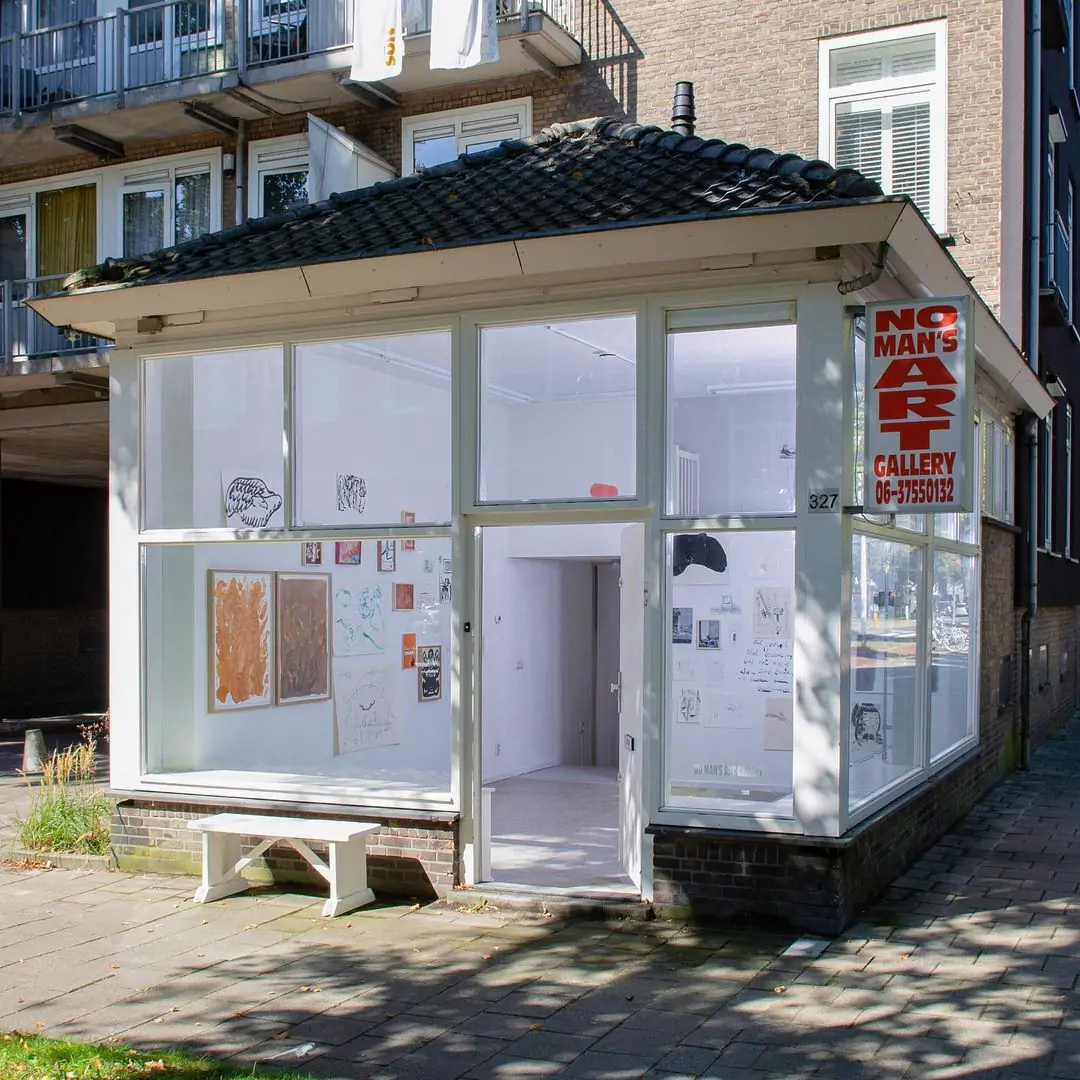
No Man's Art Gallery Kiosk
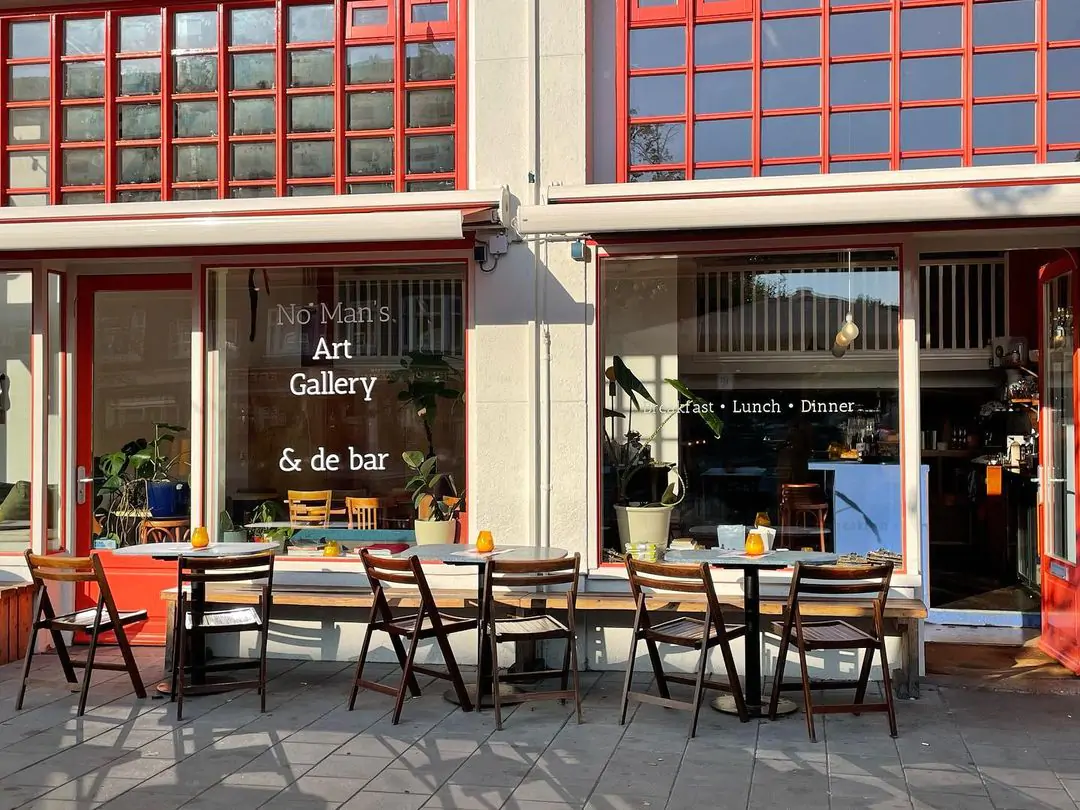
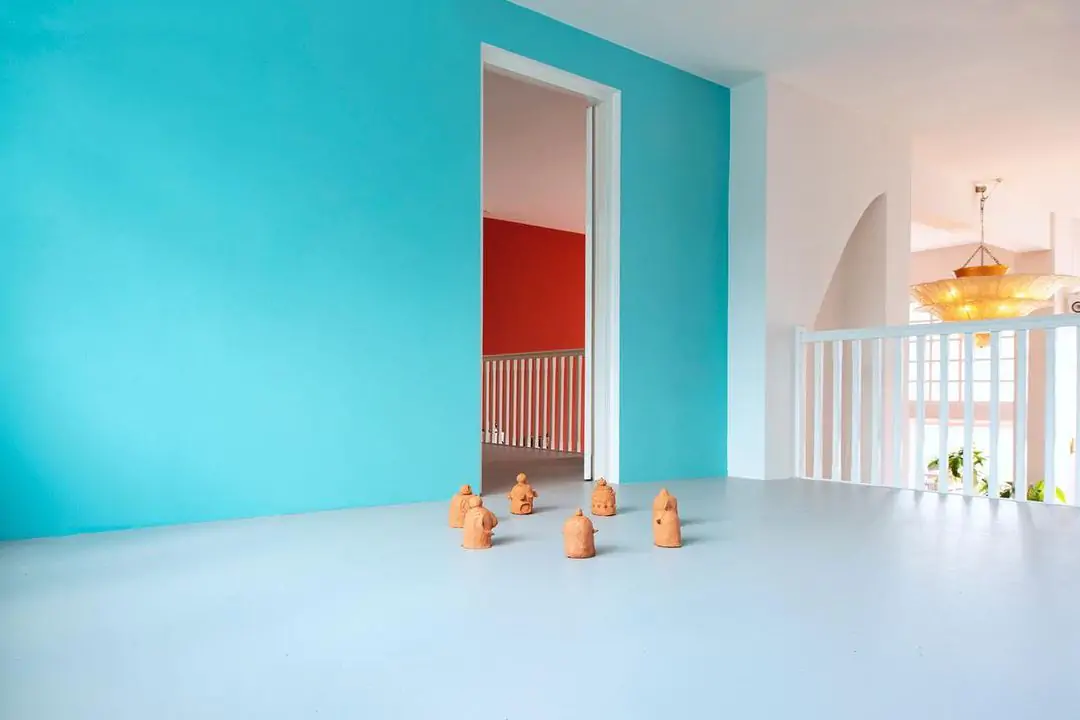
No Man’s Art Gallery began in 2011 as a traveling pop-up gallery providing access to foreign art markets for artists early in their careers. Between 2011 and 2022, various pop-ups were held around the world. In 2018, the gallery opened a permanent space in Bos & Lommer, which also houses a bar/restaurant. The gallery has an international exhibition program with a specific focus on emerging contemporary art. No Man’s Art Gallery KIOSK recently opened in Amsterdam, a space with a project program.
1055 RA Amsterdam
No Man's Art Gallery
No Man’s Art Gallery began as a traveling pop-up gallery with the mission of providing emerging artists with access to foreign art markets. In 2018, NMAG moved into a permanent space in Bos & Lommer, which houses a gallery as well as a bar and restaurant. It is a unique location that lowers the threshold for visiting a gallery with a restaurant that serves food that reflects the art on display.
1055 ED Amsterdam
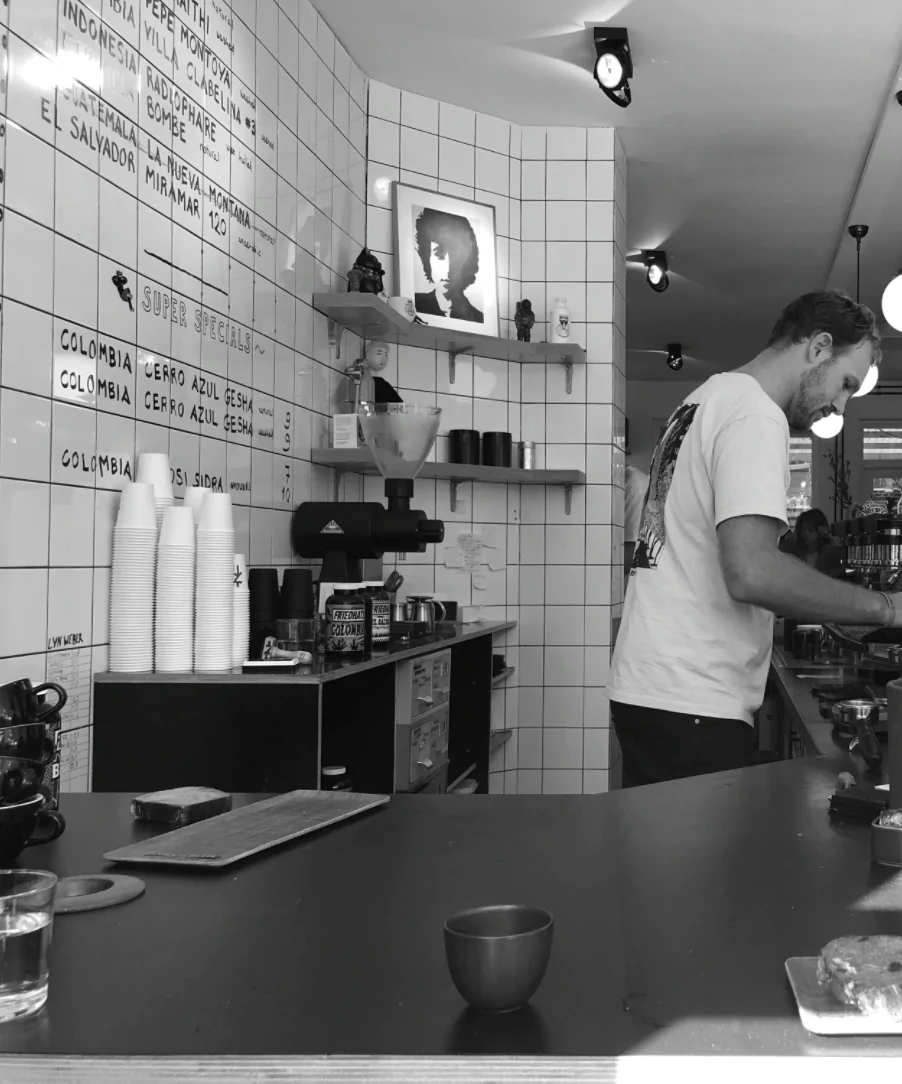
Friedhats FUKU café
FUKU is the very first café of Friedhats; a micro coffee roastery in Amsterdam. The business was set up by friends Lex Wenneker and Dylan Sedgwick. Lex is a multiple barista champion and has been working full-time in the coffee business for eight years, Dylan is from Australia and has worked in London for a long time at all kinds of coffee events. Together they realized their dream with their own roastery and café where they roast and serve the best quality coffee. Sustainability is very important to Friedhats and they are constantly working on improving their products. At café FUKU you can not only enjoy a delicious espresso or cappuccino but also a fresh beer or wine.
1055 RB Amsterdam
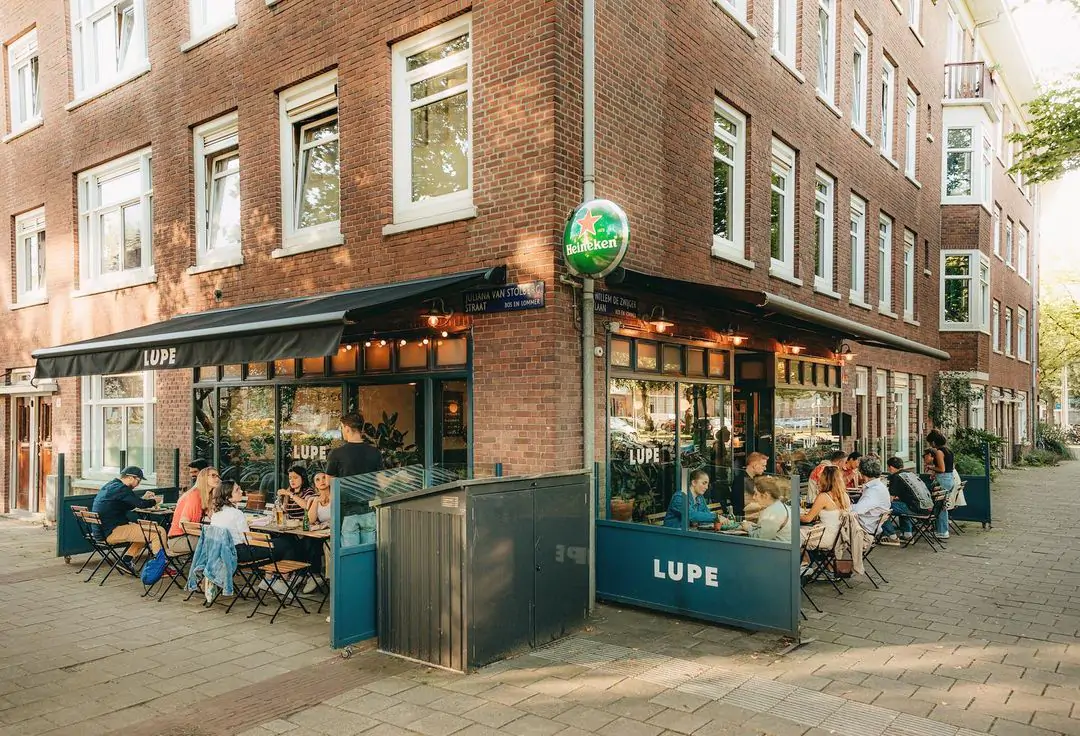
Lupe
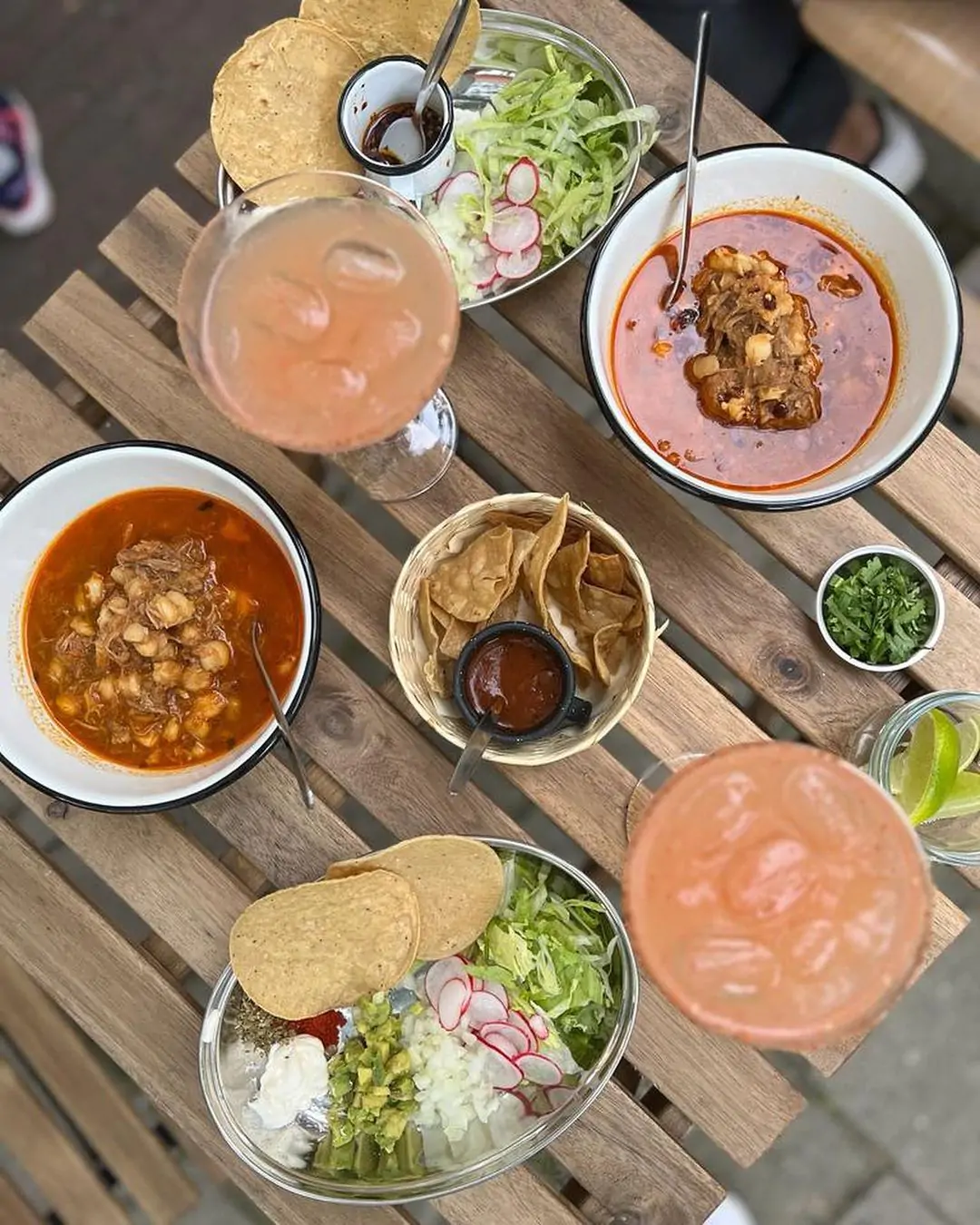
Pedro & Juan Mouneu, two brothers from Mexico City, missed the authentic Mexican flavor in Amsterdam. With Lupe, named after the Mexican patron saint, they bring a Mexican eatery to Amsterdam where authentic dishes and drinks come together. The brothers ran restaurant Los Pilones in the city center for 20 years, mainly catering to tourists. With Lupe, they want to offer a more local and neighborhood-oriented experience. The staff has a Mexican background, and guests can enjoy a menu of delicious snacks to share, such as enchiladas, tortillas with beans and spicy shrimp, and ceviche. The menu changes with the seasons. Lupe also offers weekend brunch dishes such as huevos rancheros and chilaquiles, which the owners say are ideal for soothing a hangover.
1055 EC Amsterdam
No Man's Art Gallery
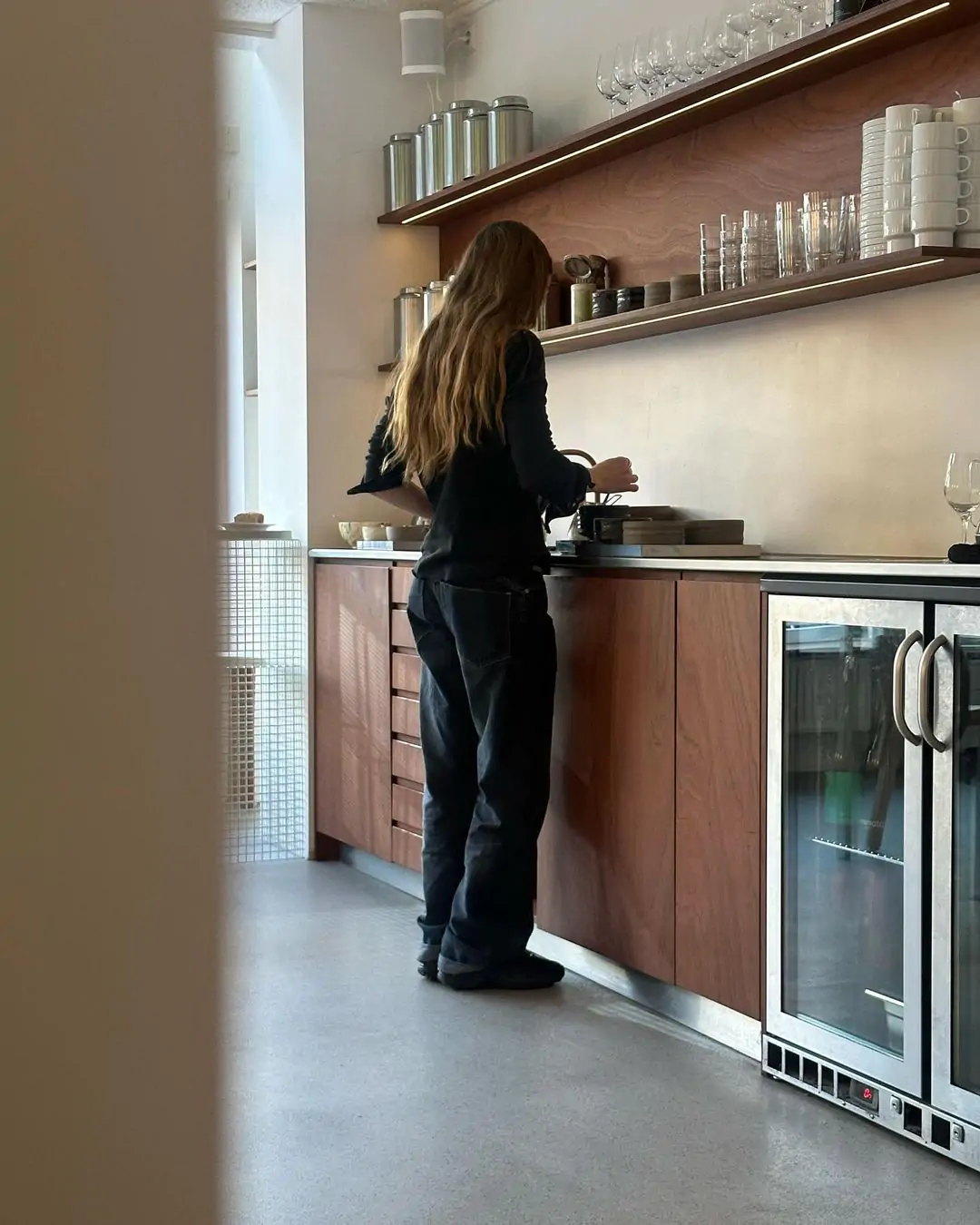
No Man’s Art Gallery began in 2011 as a traveling pop-up gallery providing access to foreign art markets for artists early in their careers. Between 2011 and 2022, various pop-ups were held around the world. In 2018, the gallery opened a permanent space in Bos & Lommer, which also houses a bar/restaurant. The gallery has an international exhibition program with a specific focus on emerging contemporary art. No Man’s Art Gallery KIOSK recently opened in Amsterdam, a space with a project program.
1056 BN Amsterdam
Office
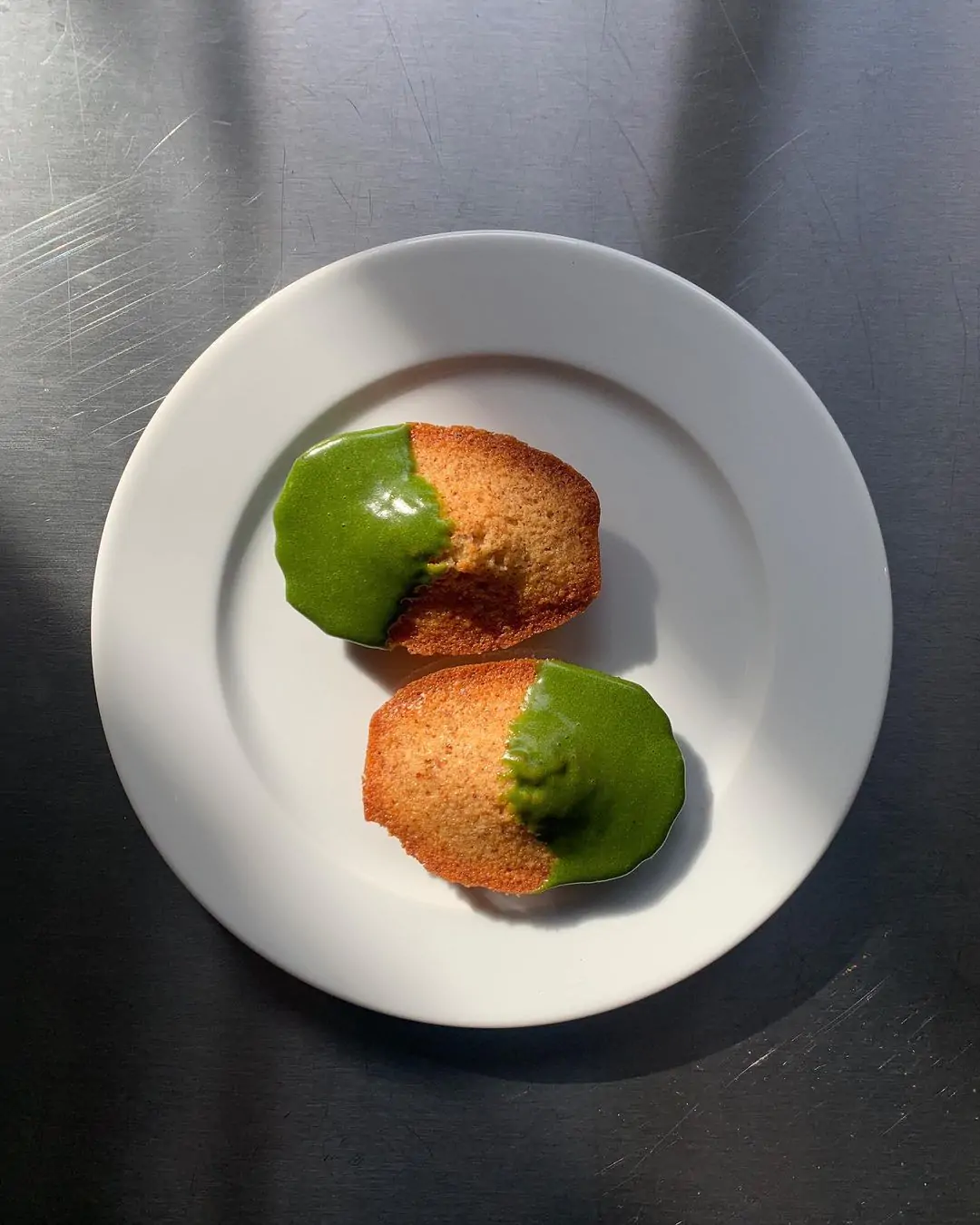
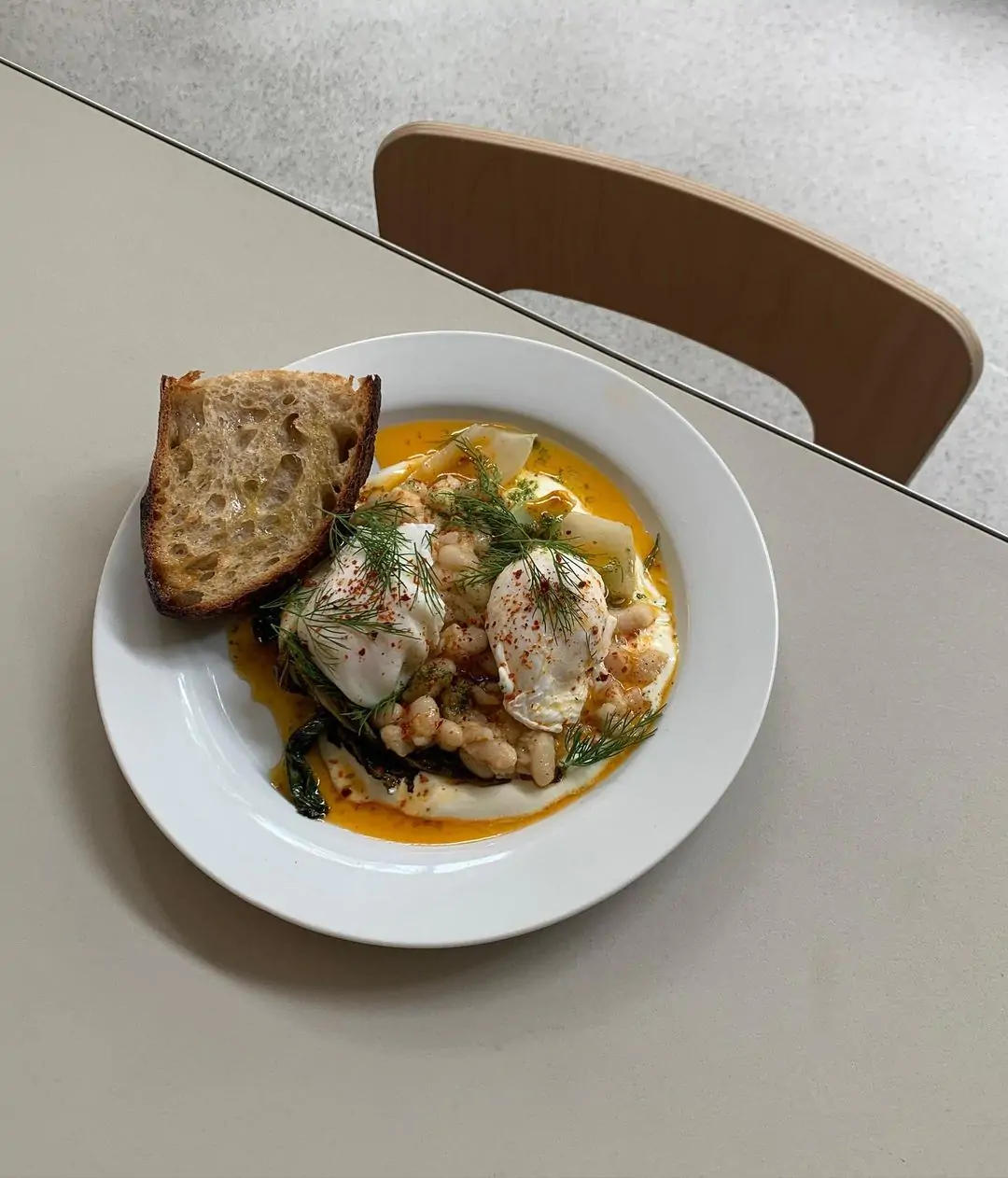
At Oficina, they offer a weekly changing breakfast and lunch menu, with ingredients that match the season. The focus is on finding beautiful products from Amsterdam and the surrounding farms. Oficina is open from Wednesday to Sunday from 10:00 to 17:00. Breakfast is served all day, and lunch service begins at 11:30 a.m.
1056 BW Amsterdam
Daan sandwich
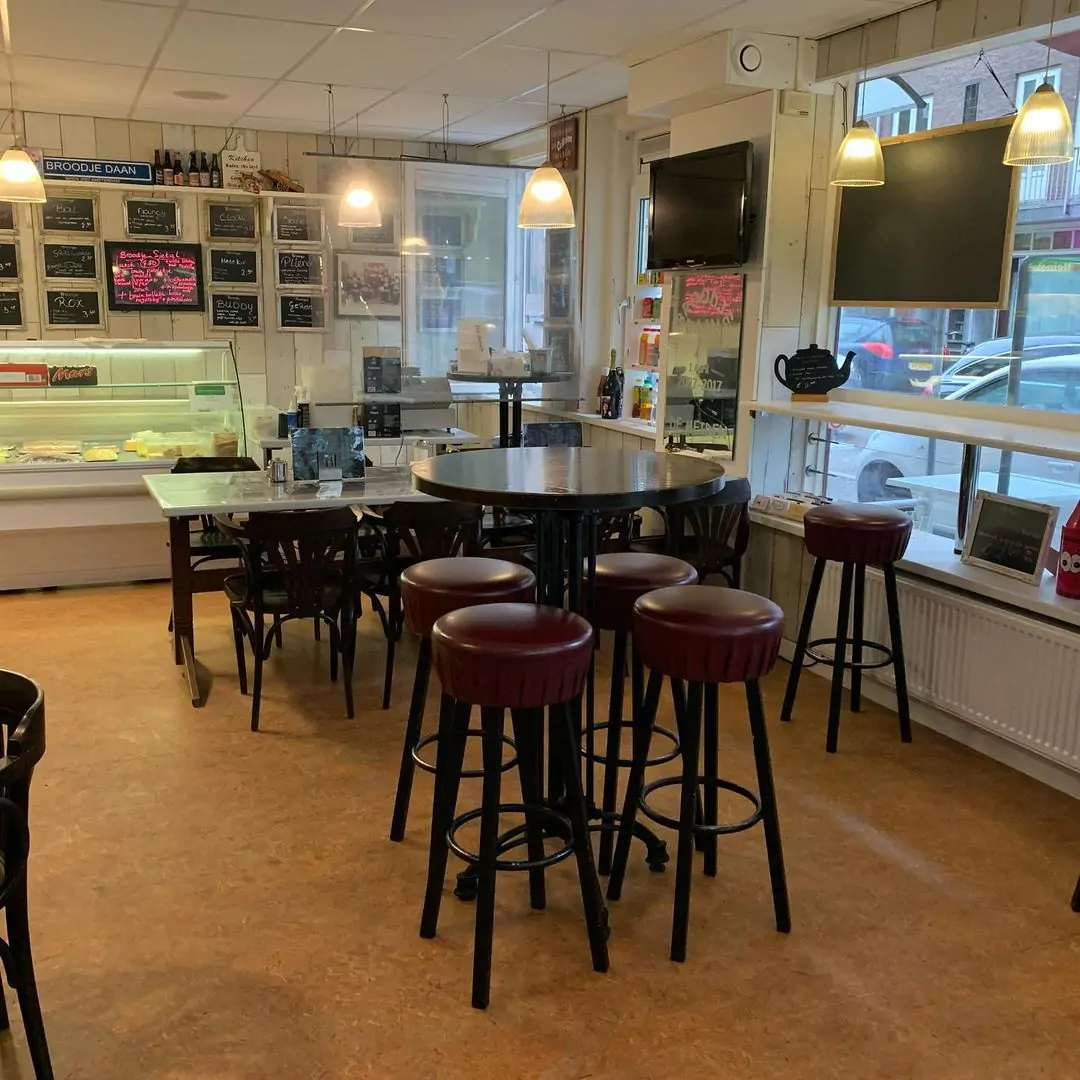
Broodje Daan is a cozy sandwich shop with timeless prices that welcomes a diverse crowd. From 6:00 a.m. to 3:00 p.m. on weekdays, you can enjoy a sandwich and freshly brewed coffee at attractive prices. The sandwiches are named after their creators, such as the Bouwmaat XL Burgers, designed by the men from the hardware store. Even the shop dog Buddy has his own creation. The shop also attracts regular customers, including 'Mrs. Pindakaas', who enjoys her peanut butter sandwich every day. Daan knows his customers through and through, follows their routines, and shares daily moments of laughter.
Terrace music
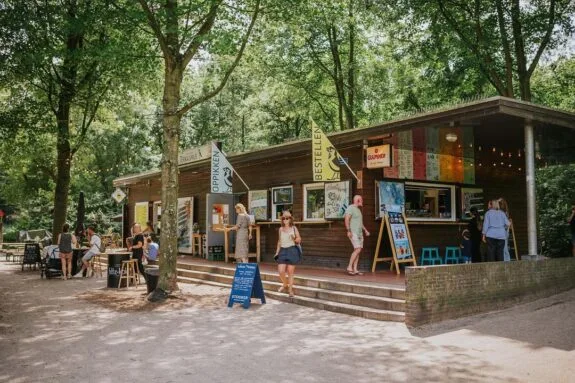
This pleasant, somewhat hidden spot is located in the middle of the green Erasmus Park, where you can escape the city and enjoy breakfast, lunch, and drinks. They work with the best and most enjoyable local suppliers. In addition, various clinics and live music are organized. In the summer, there is the Erasmus Culinary Festival.
1056 DJ Amsterdam
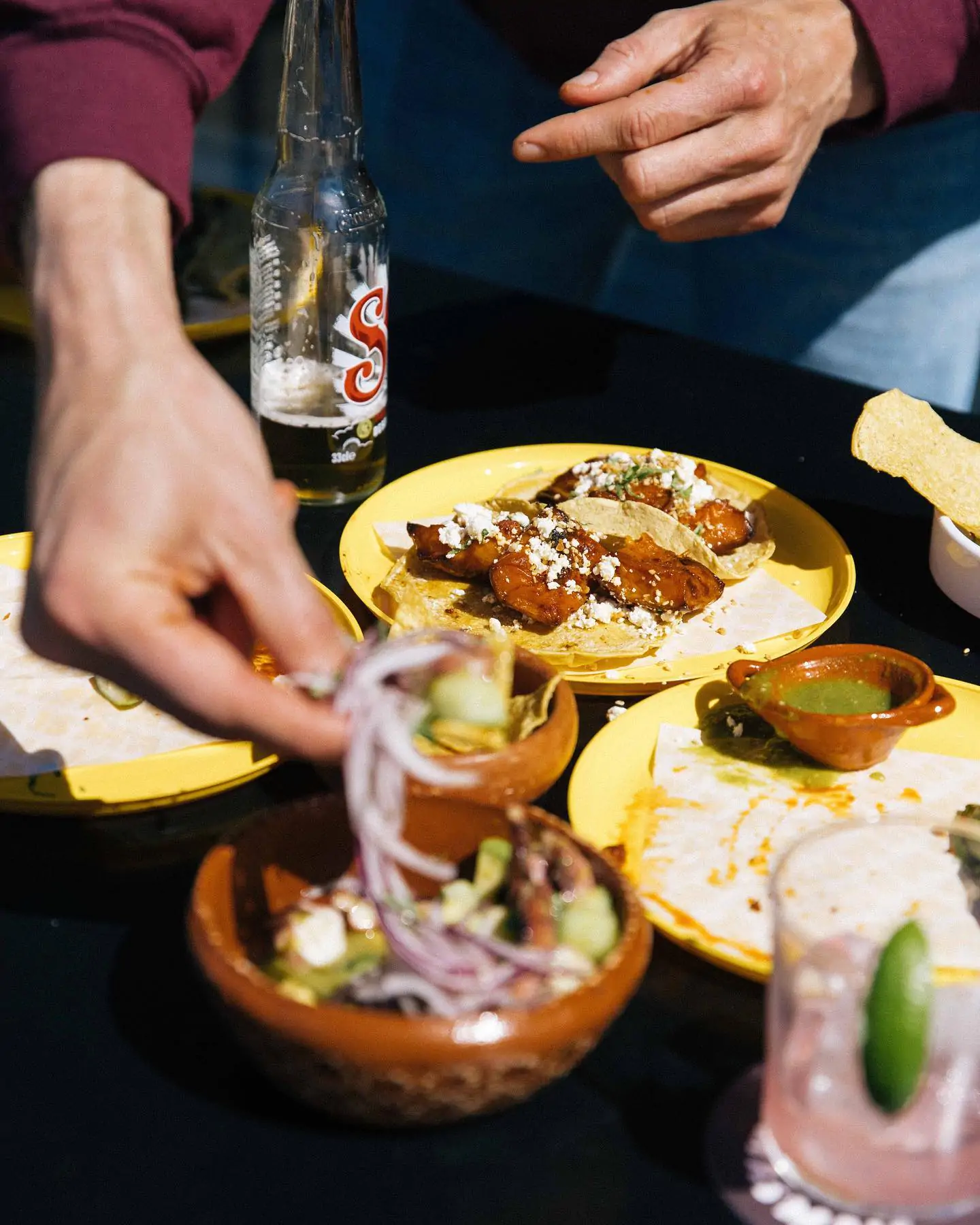
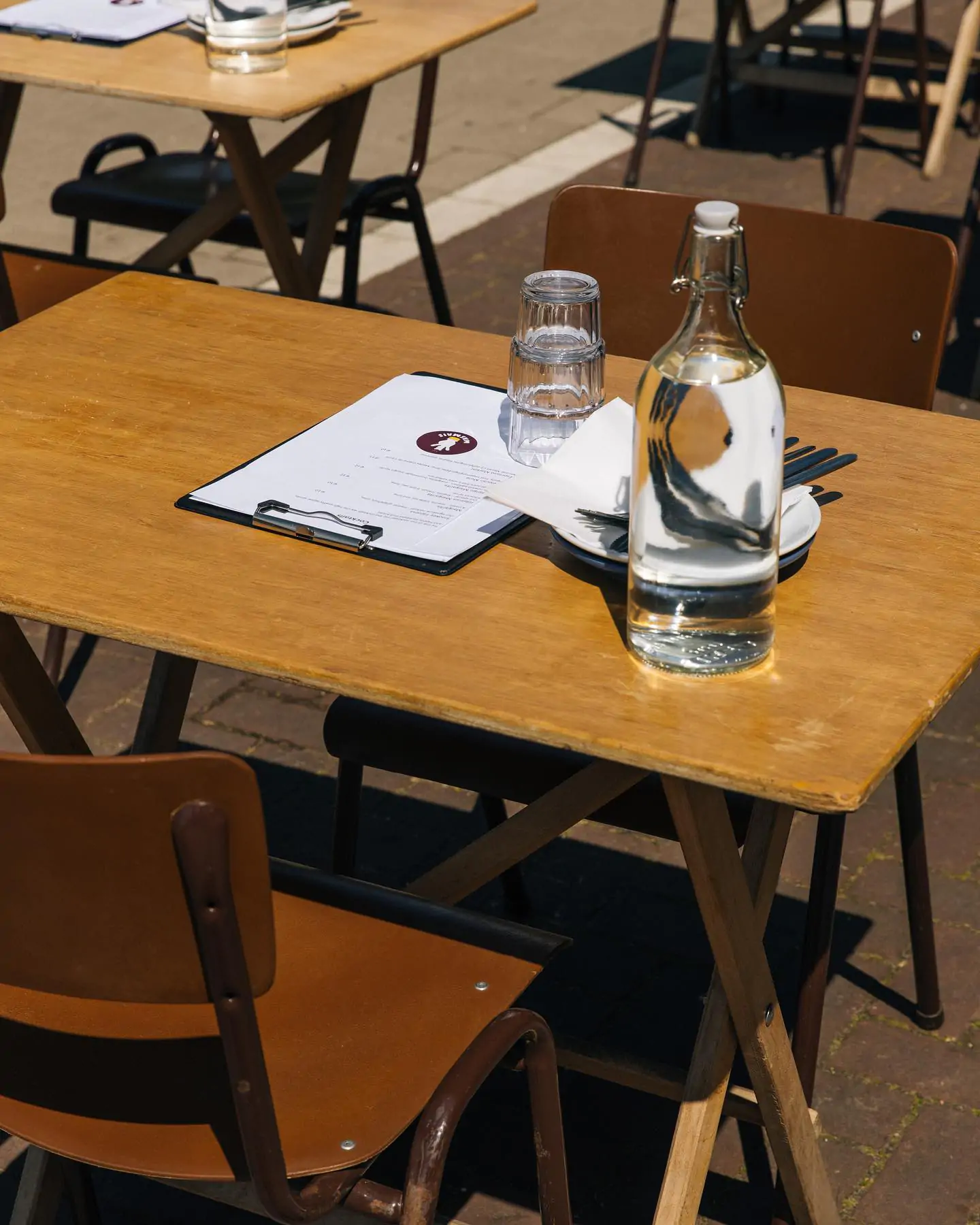
MasMais Taqueria
MasMais started as a barbecue with friends in the park. After a successful pop-up adventure, it was time for a permanent location: a next-generation taqueria and bar in Amsterdam-West! During her visits to Mexico, she learned most of the taco and salsa recipes. She try to stay true to the bold flavors they encountered on the streets and in the markets. That's whyevery taco starts with a warm, soft, freshly pressed corn tortilla.
1057 GX Amsterdam
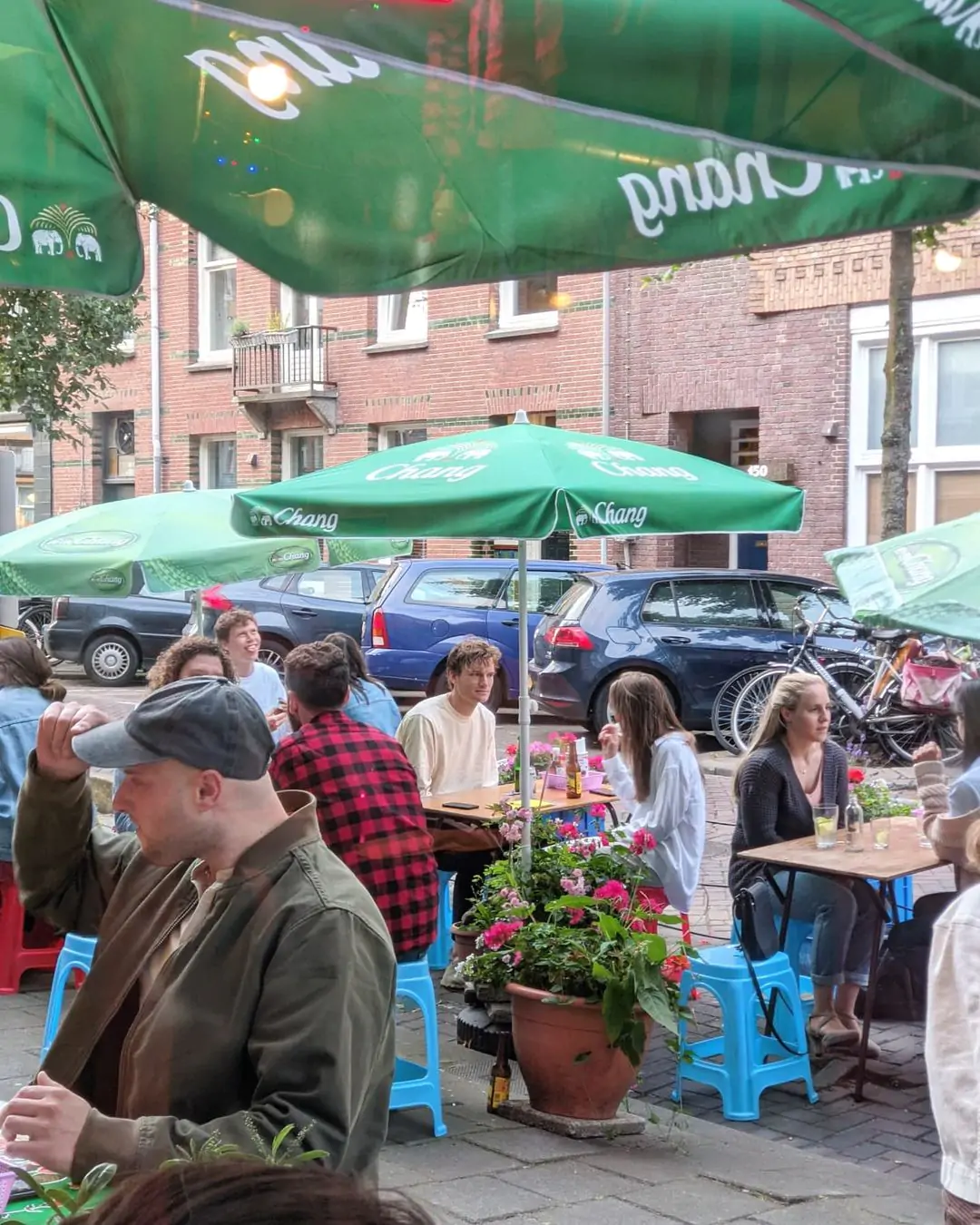
Thai Thai Doll
Thai Thai Poppetje is an authentic Thai street food restaurant that emphasizes freshness. Their limited menu includes classics such as fish cakes, as well as original creations such as red curry rice balls with a creamy filling and a crispy crust. The restaurant also offers vegetarian and vegan options.
1051 PA Amsterdam
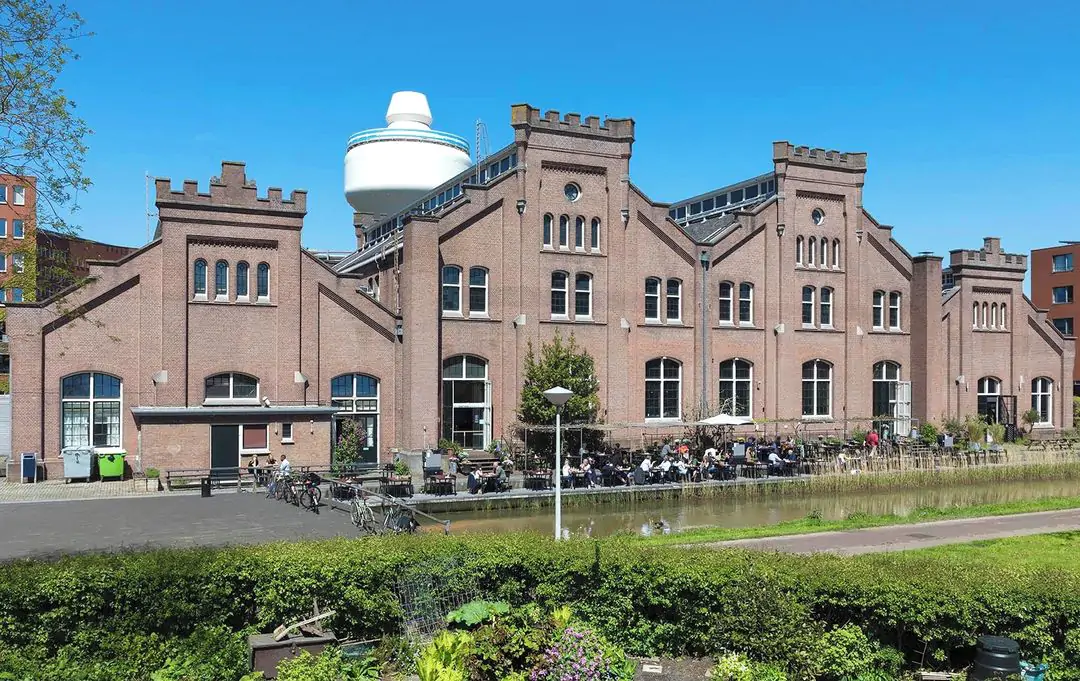
Café Restaurant Amsterdam
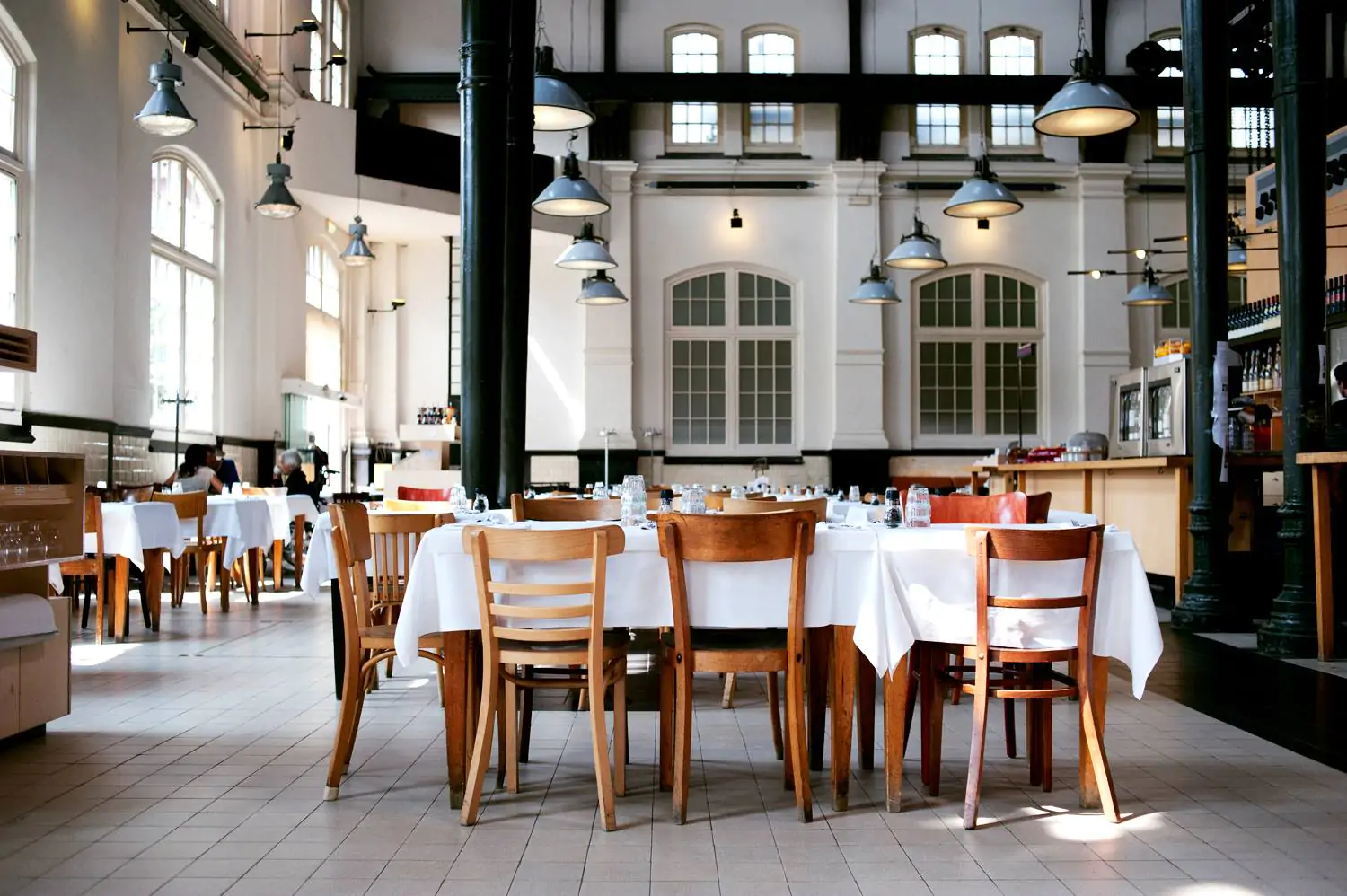
For steak, fruit de mer, or sticky toffee cake, Café Restaurant Amsterdam is always a good choice. This restaurant has been located in the old Machinepomp building on Watertorenplein since 1996. It has since become an integral part of Amsterdam's hospitality scene. The industrial look of the restaurant makes a big impression, but at the same time it has remained cozy. The food is good, and in the summer you can sit on the terrace by the water. It is also a great place for large groups to enjoy a long meal. You can also have a delicious lunch or just a cup of coffee with a newspaper. In any case, it is worth taking a look at this fantastic building.
1057 BS Amsterdam
Bar Baarsh
A fun and cozy bar in De Baarsjes where you can enjoy a bite to eat, a drink, or a pub quiz on Monday evenings. The owners of Visbar Beet took over the business in November 2019 but wanted to preserve the "old" Bar Baarsh. So it's still the same cozy restaurant we're used to. The kitchen is open daily from 10:00 a.m. to 10:00 p.m. for breakfast, lunch, drinks, and dinner. For lunch, you can choose from various dishes such as grilled vegetables with sweet potato chipotle cream or avocado mash with avocado, egg, and tomato. For dinner, choose from BBQ sea bream, glazed rib eye, or the Bar Baarsch burger.
1057 XR Amsterdam
Sham West
Restaurant Sham is the very first Syrian restaurant in Amsterdam. Chefs experienced in Syrian cuisine are in the kitchen every day preparing wonderful Syrian dishes such as Baba Ganoush, Fatoush, and Foul Muqalla. The restaurant has a great atmosphere and regularly features live music. Because the small dishes are meant to be shared with your table companions, a visit to Sham is always a convivial occasion. Good conversation, beautifully presented plates, and delicious fresh ingredients: at Sham, your evening is complete.
1051 HM Amsterdam
Back to Black
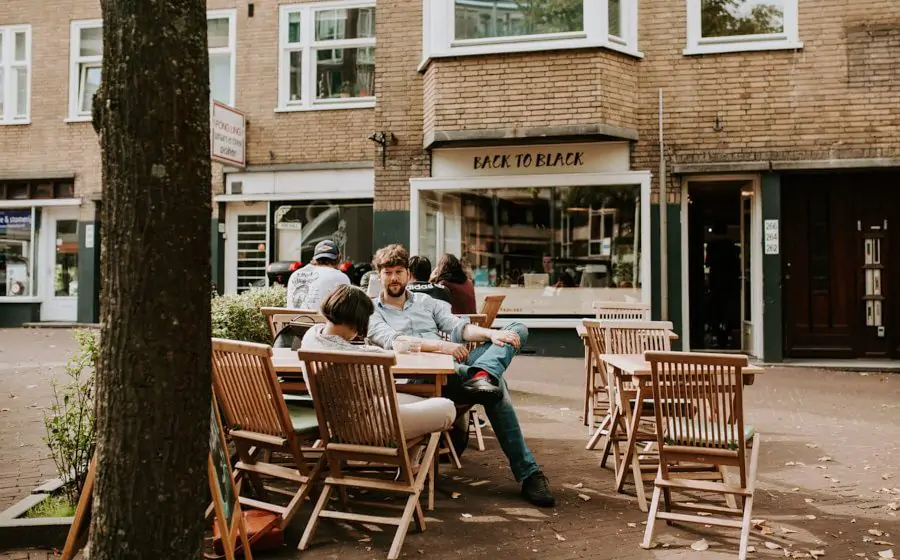
Back to Black is a coffee bar with its own roastery on Weteringstraat. At Back to Black, every step in the coffee production process is carried out with passion and craftsmanship. Driven by their love for coffee, the owners of Back to Black travel the world in search of the best products, which they then sell in their own shop. In addition to coffee, they also serve delicious cookies and cakes, and they also sell their own t-shirts with beautiful designs.
1056 EG Amsterdam
White label coffee
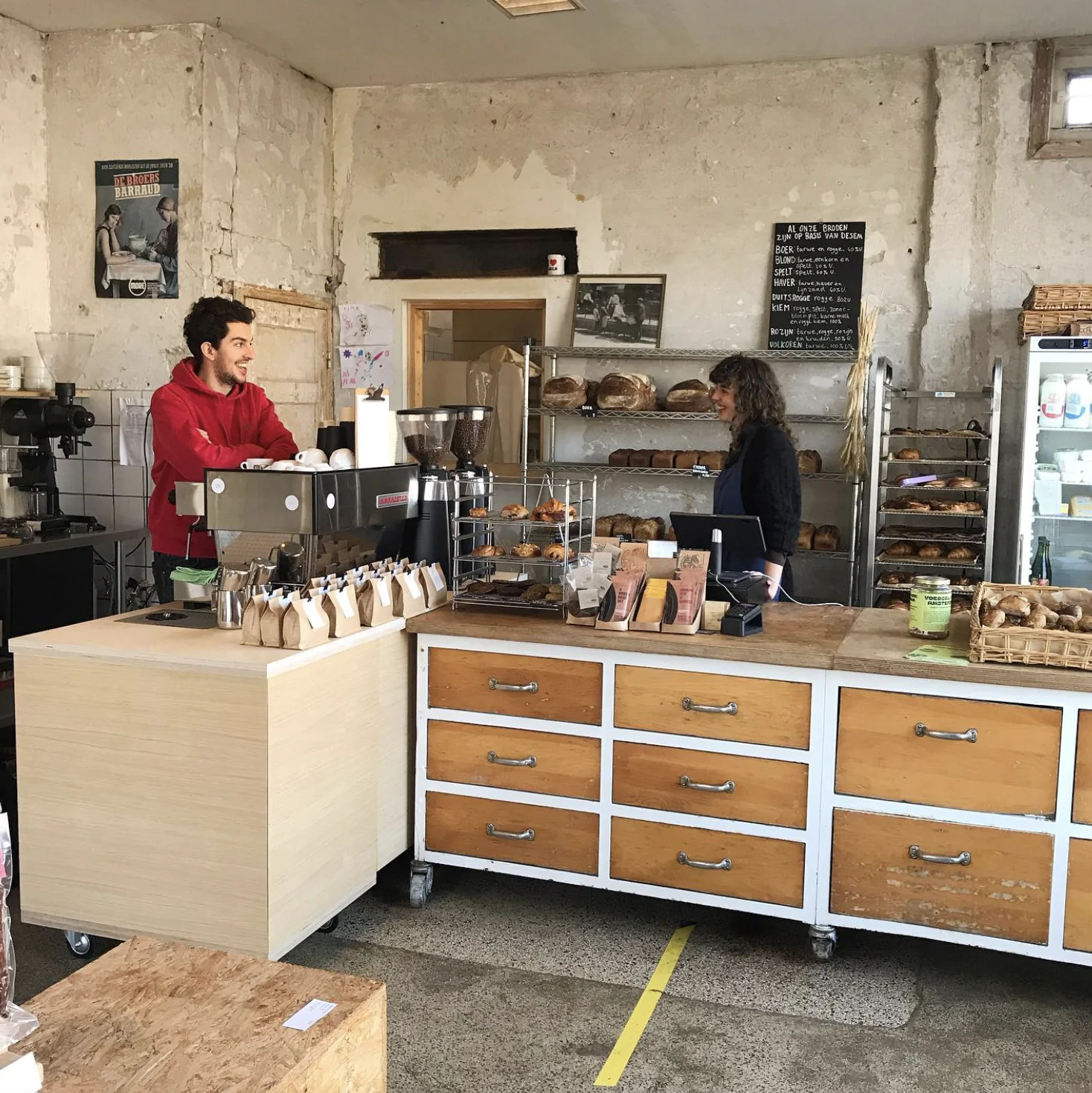
White Label Coffee is a coffee brand with several coffee shops in Amsterdam. They roast their own coffee, placing importance on quality, transparency, and collaboration throughout the entire coffee process. The location in West is a kind of open living room where you can sit back and relax with a cup of coffee. The shop has a minimalist design with vintage interior. They offer coffee from different origins, which the baristas prepare for you with love. You can also order treats to go with your coffee, and there are various vegan milk options.
1051 GZ Amsterdam
The Neighbor
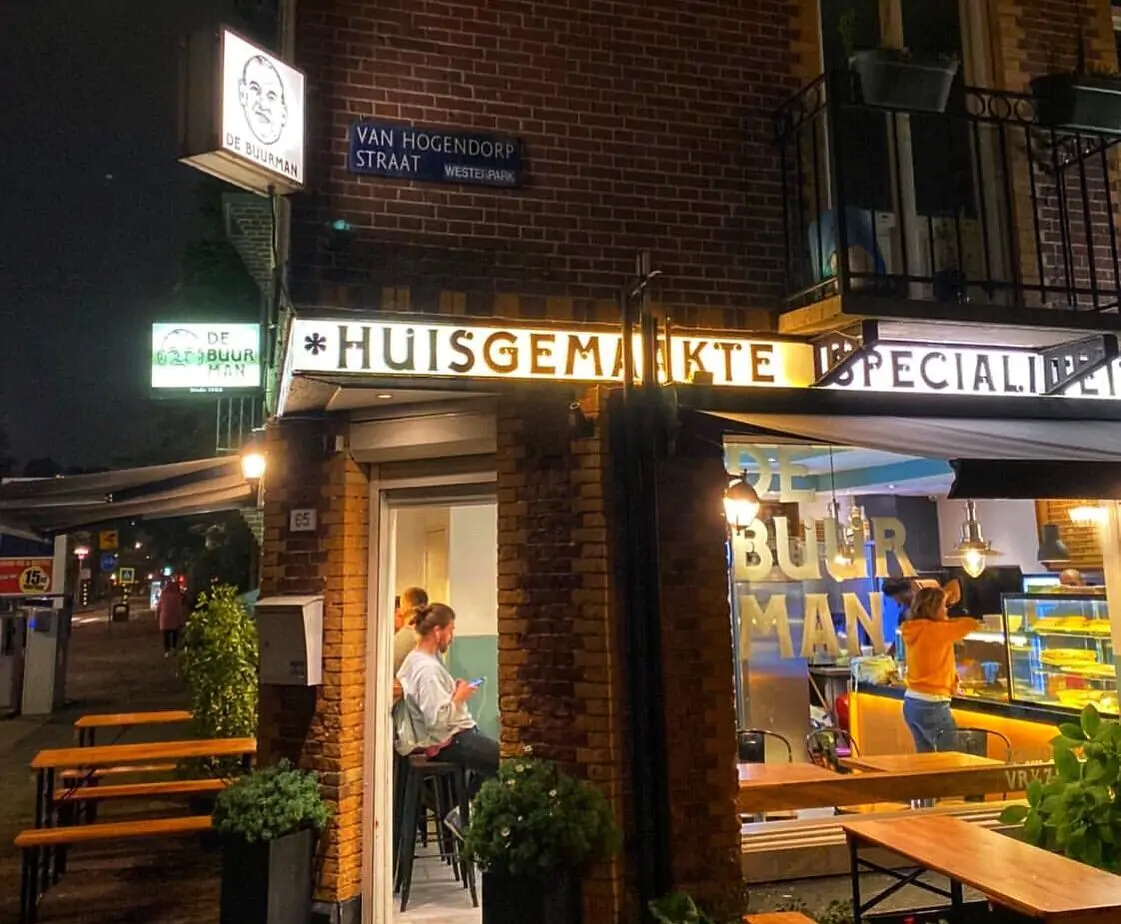
At snack bar De Buurman, you will find delicious snacks with a good story behind them. Owner Yayha Amhed Faruk is passionate about his business every day. Of course, you can get the standard snacks here, such as croquettes and frikandellen, but De Buurman distinguishes itself from other snack bars by also serving delicious dishes from Egypt and the Middle East. One standout is the falafel made from broad beans; perfectly crispy on the outside and soft on the inside.


1055 EC Amsterdam
Flour
Farine is Mitchel Charles' French bakery. He moved from England to Amsterdam just before Brexit and combined his background as a chef and barista here. After years at Coffee & Coconuts, he decided to create his own place, offering French classics that, according to regular customers, taste just like home. Charles sees the business as his personal project, from the bright blue façade to the timeless design, in which he brings together his love of branding and craftsmanship. In the bakery, everything revolves around quality, with butter from France, flour from regenerative agriculture, and coffee from Un.common, carefully selected after visits to several roasters.
1056 CC Amsterdam
Ela! Catering
The perfect place to discover delicious Greek cuisine. Everything here is prepared fresh daily, using as many natural products as possible. They offer sandwiches, salads, full meals, and of course, pita gyros and souvlaki are also on the menu. In addition to these Greek dishes, they also sell delicacies such as delicious organic olive oil and authentic Greek feta cheese.
1055 EN Amsterdam
Al Maghrib Bakery
This Moroccan family bakery has been baking delicious bread and pastries since 2005. With a wide range of products, this place has become a real neighborhood bakery with returning customers. In Moroccan culture, bread is an important part of a hot meal, with white bread mixed with semolina and brown bread made from whole wheat.
1057 ZX Amsterdam
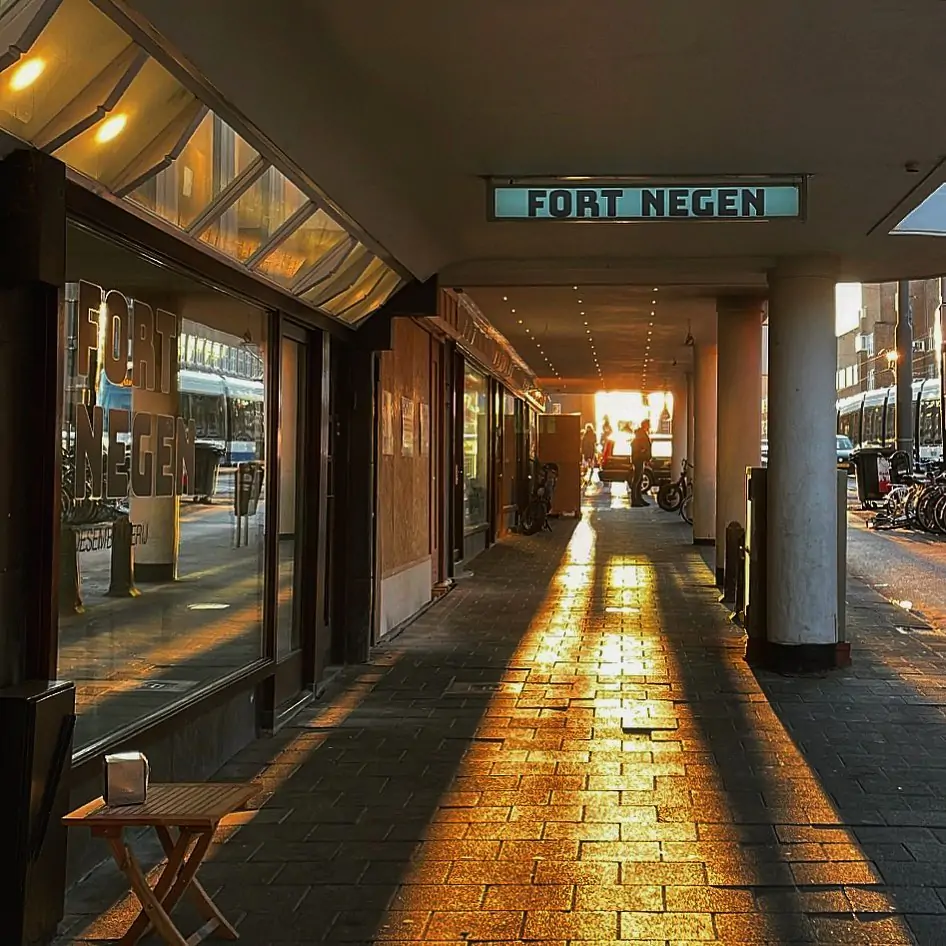
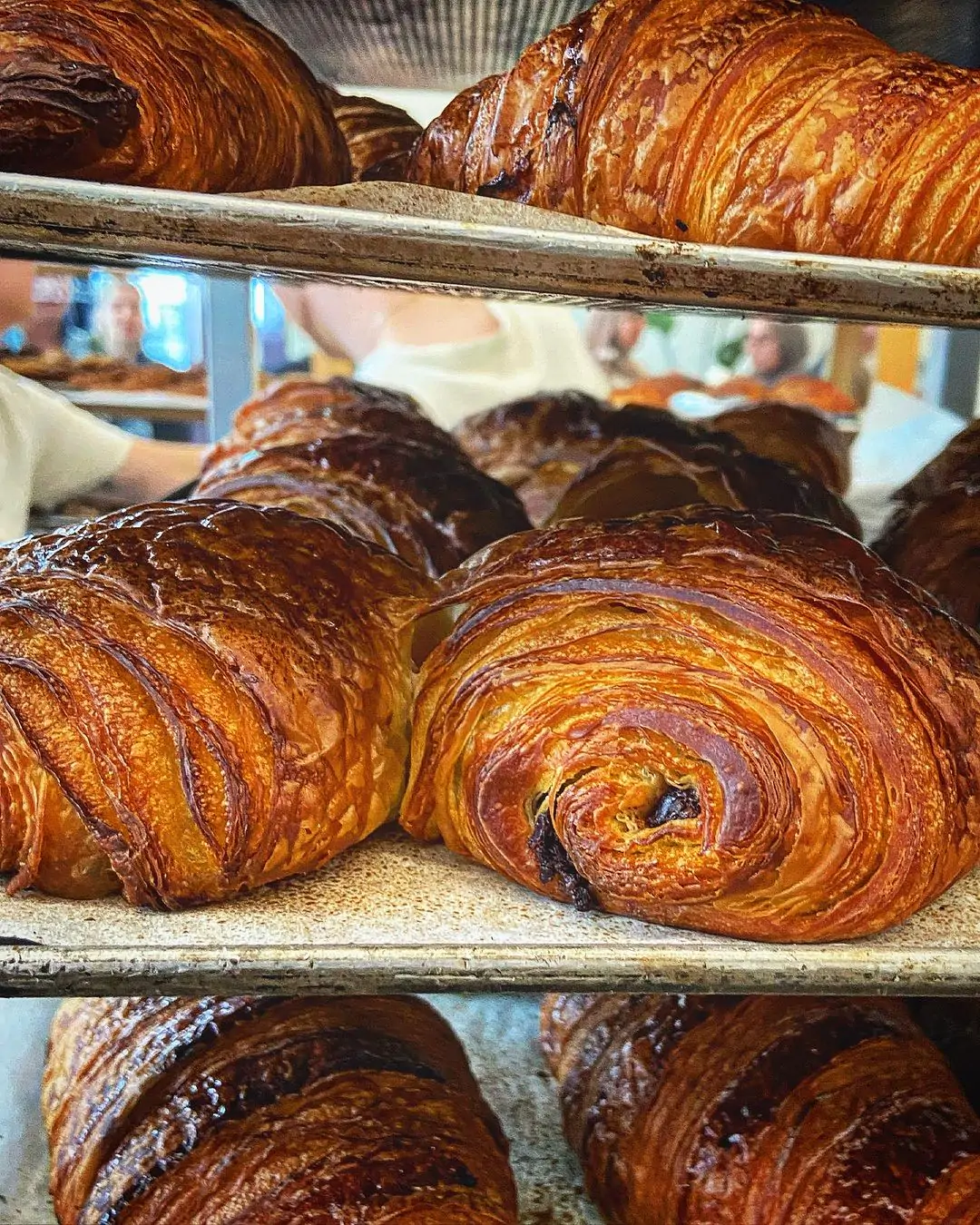
Fort Nine Bakery
At Fort negen in De Baarsjes, you can see how bread is baked. While you eat your freshly baked croissant, you can watch the bakers passionately kneading dough on the flour-covered workbenches in the shop and in front of the display window. The bakers use a traditional method of bread making, with the sourdough bread rising for no less than 26 hours. This ensures a delicious crispy crust and a soft inside. They only use organic products and make everything by hand. Another fun thing is that you can take a workshop on making sourdough bread or croissants.
1057 BT Amsterdam
T's teas
At T's Teas, everything revolves around a love for the underrated tea leaf. If you think tea is just a boring drink, you're sure to change your mind here. All the knowledge about tea leaves and the drinks you can make with them is gathered here in one shop. The aroma alone is worth a visit. If you want to taste the tea first or take a break from all the aromas, you can visit the tea bar, where you can drink all kinds of tea drinks from all over the world.
1057 JV Amsterdam
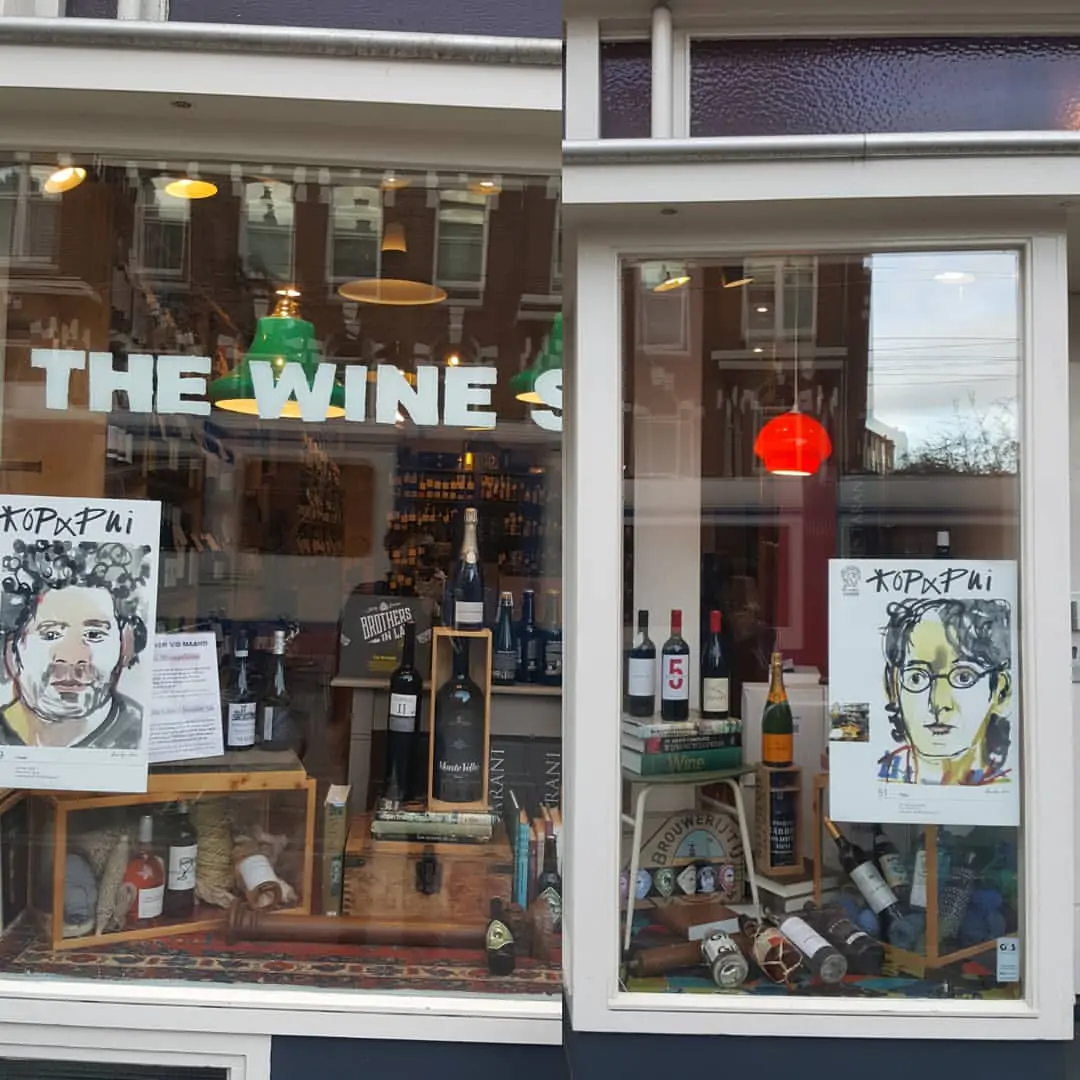
The Wine Spot
The Wine Spot was founded in 2012 by Filipe and Paulo in a small anti-squatting shop on Jan Evertsenstraat in Amsterdam. This temporary location was quickly replaced by a larger, permanent location at Admiraal de Ruijterweg 43. This wine shop offers an extensive range of wines from all over Europe, both natural and classic varieties. Each bottle comes with a handwritten note explaining the wine, its region of origin, and the vinification process. For those who prefer something different, there is also a wide selection of craft beers, port, sherry, and dessert wines.
1056 BN Amsterdam
Ted.Amsterdam
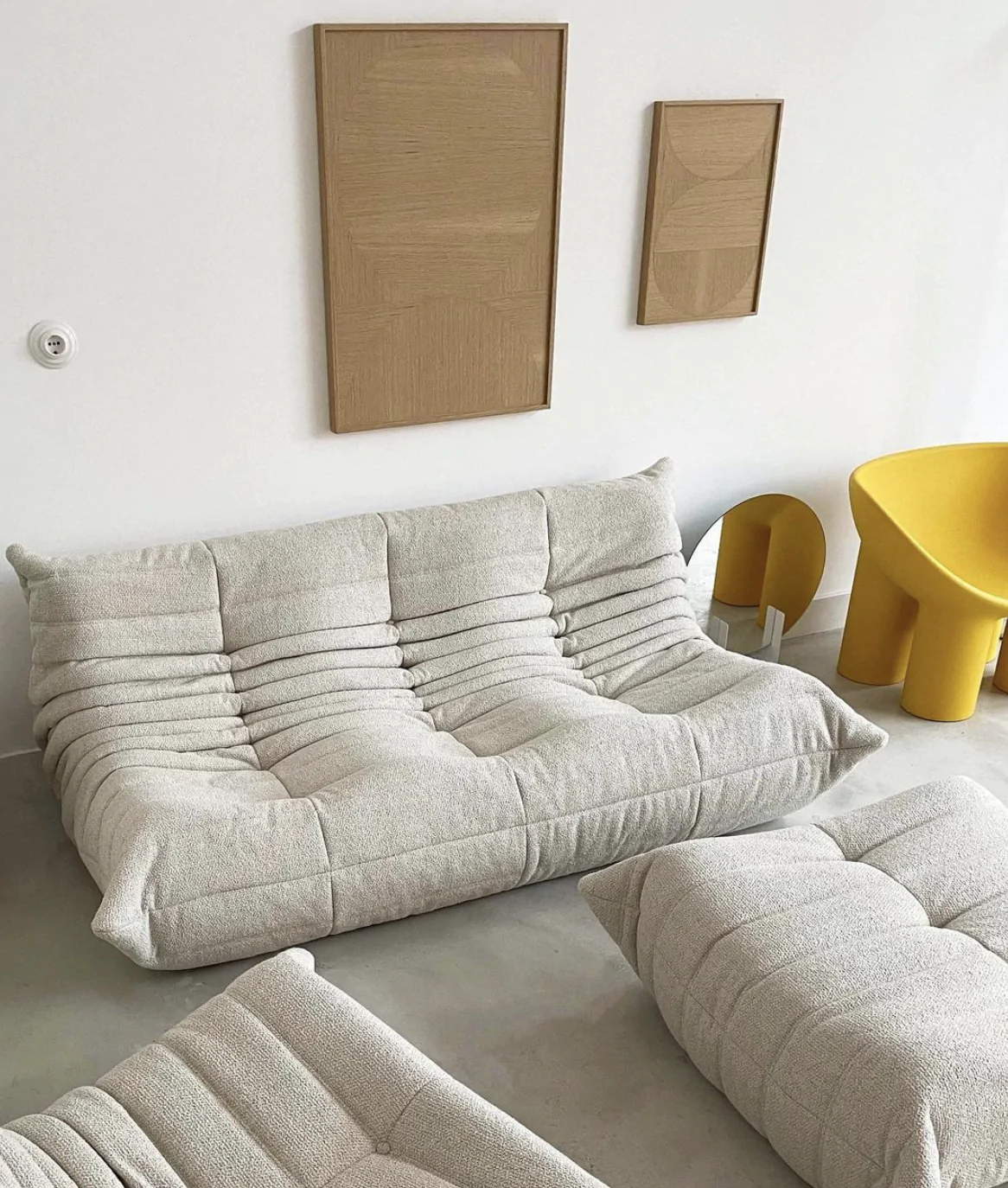
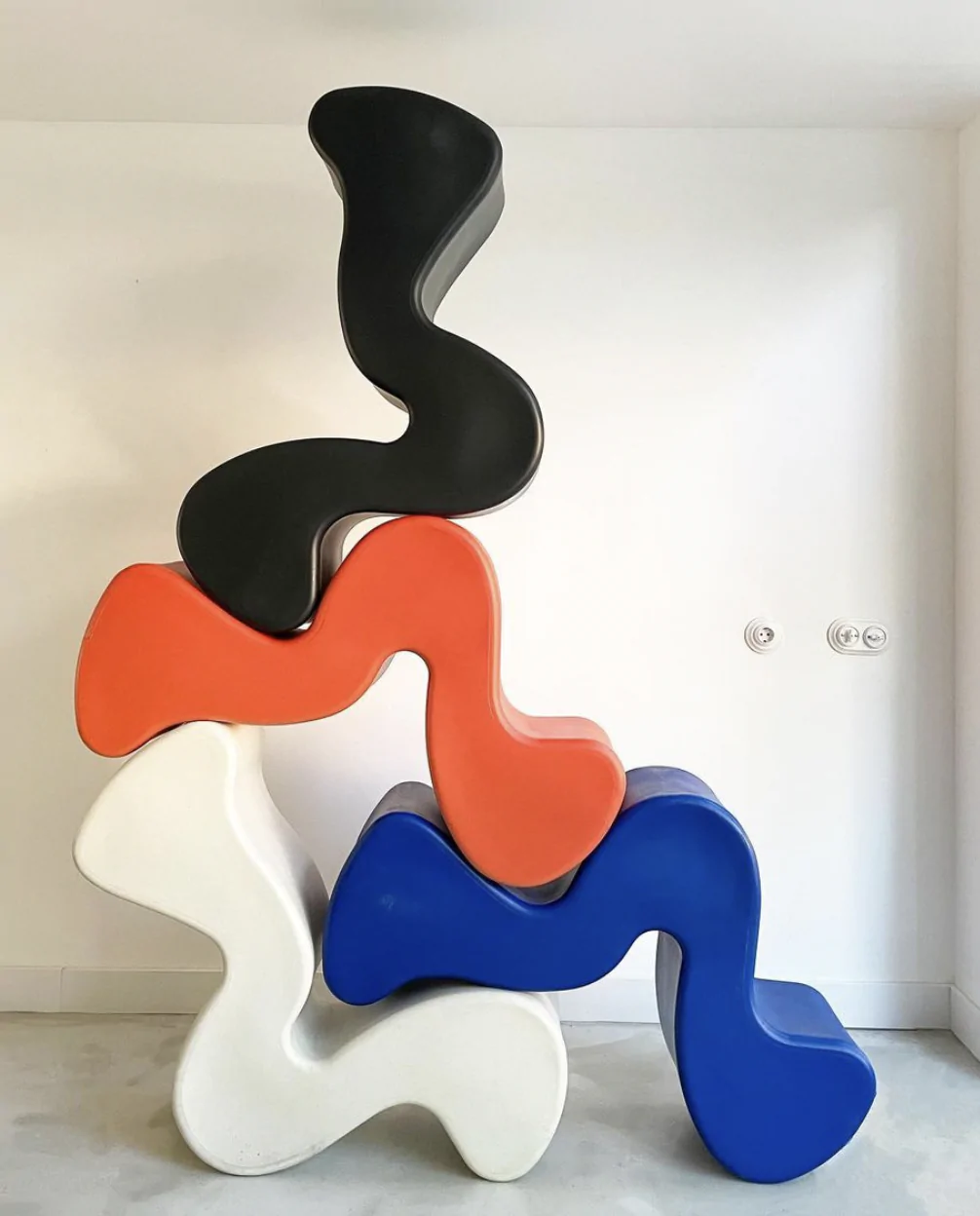
Ted.Amsterdam is a multifunctional creative space located in Amsterdam where interior design, art, and creativity come together. They sell collectible mid-century modern vintage and new furniture, contemporary artworks by local artists, and unique design objects, while also creating a unique space where creativity can flourish. Whether you are looking for a special design for your home or garden or an inspiring space for a project, ted. is the place for you.
1051 CG Amsterdam
RataPlan
Enjoy browsing through all the bargains at RataPlan, with a wide selection of second-hand items. This thrift store covers more than 1,000 square meters and has three floors. It offers furniture, books, clothing, bedding, household appliances, tableware, and a nice collection of second-hand bicycles.