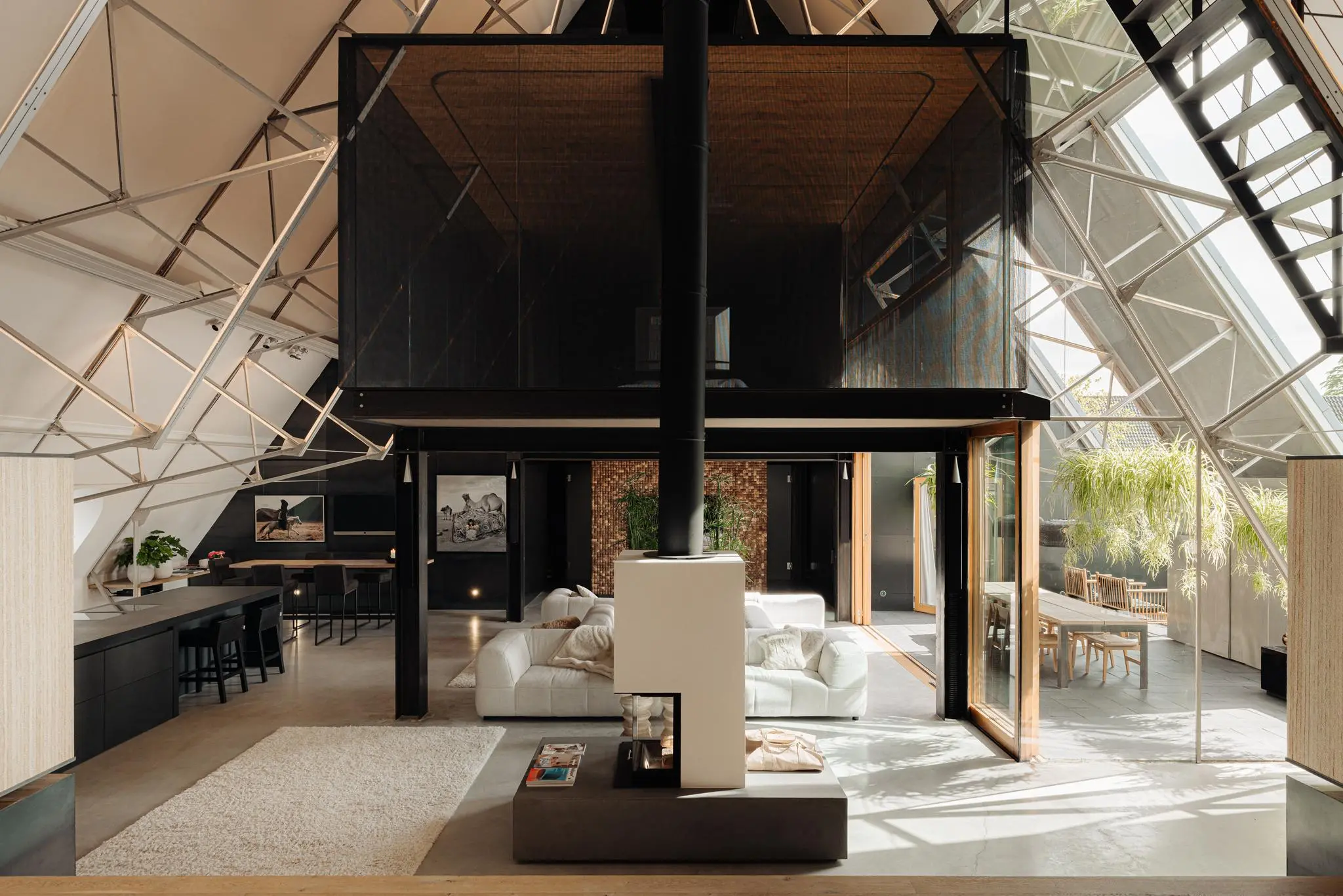
The Amsterdam Loft
Jan Arie Dekker: "When people come in, they always stop first to take in the space because they never expected it to be so spacious. And the second thing is that they never imagined such a large space could feel so cozy and comfortable." I came across the church in 1996 and saw it as a fantastic new office space for myself, which I was looking for at the time. As an added bonus, I was able to build a house there, which I was fortunate enough to work on with architect George Witteveen.
Watch the film
History
The apartment is located in the former church building, designed by architects Beckman and Kooi. The building is part of the Beethovenbuurt, an urban expansion designed by Berlage, and is characteristic of the Amsterdam School style that architects of that time often incorporated into their designs. This church was built as the centerpiece of a square surrounded by family homes.
The shape, use of materials, and details are typical of the Amsterdam School style. The beautiful stained-glass windows at the front and rear were designed by the versatile artist Kees Kuiler. The building was originally built as a Reformed church and is therefore modest in appearance. The church was put into use in 1928, and in the period that followed, the surrounding residences were residences in the same style. It is located on a beautiful and secluded square with trees and a lawn. A special detail is the roof, which rests on the walls without a noticeable gutter. In addition, the unadorned side walls have been reduced to their essence with large, vertical steel window frames. These accentuate the height. The building was actually very modern for its time, with the exception of the entrance, which has some sleek decorations. The church's turret is reminiscent of the turret on Huize Lydia on Roelof Hartplein.
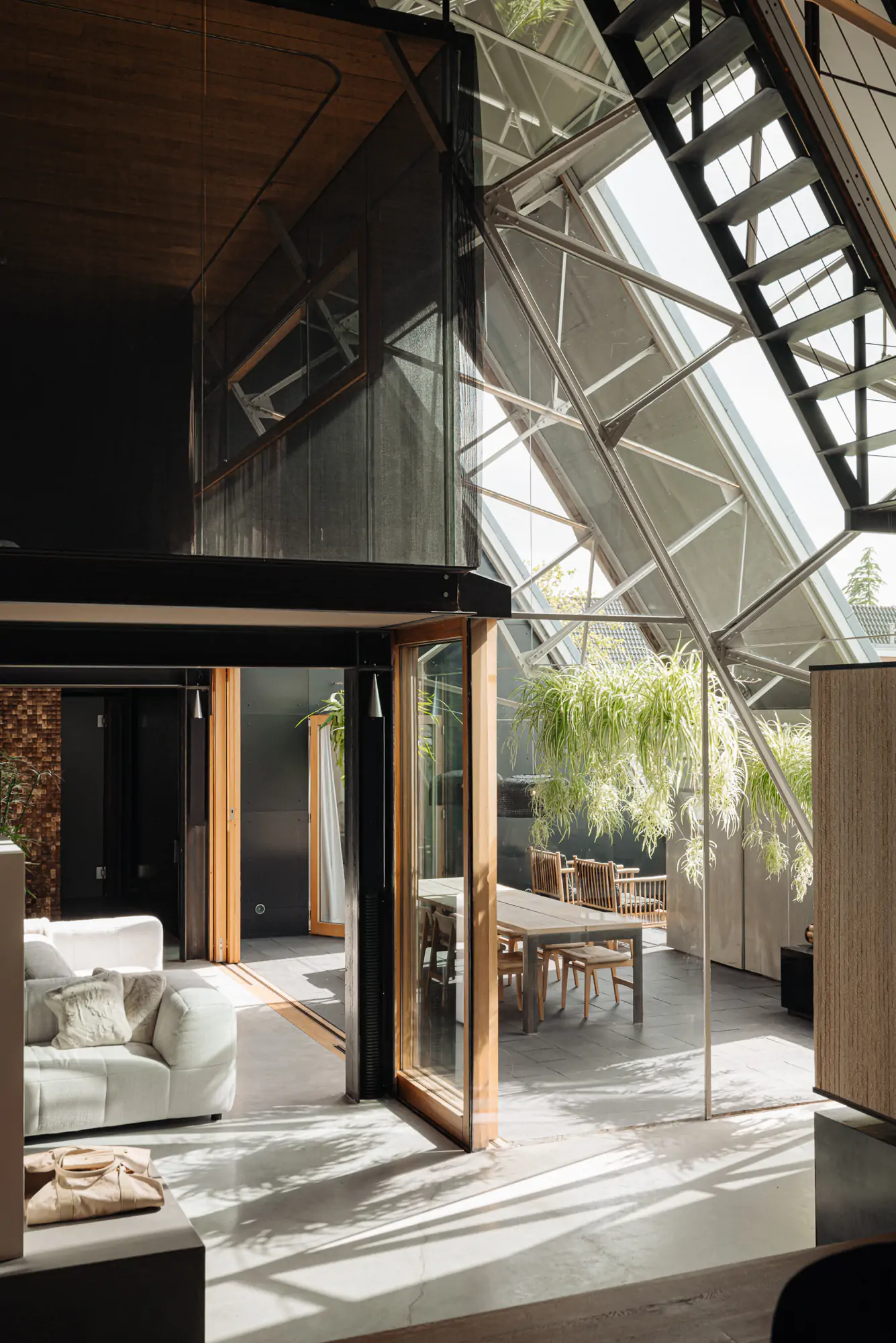

Jan Arie Dekker; "Sjors suggested working with wood, concrete, glass, and steel. I didn't think I'd be sitting comfortably with a glass of red wine surrounded by those materials, but that's exactly what happened. It's a very strange mix of a super warm, cocoon-like atmosphere. Perhaps thanks to, or despite, the fact that generally very hard materials were used."
George Witteveen; ‘The spaces are defined, but not their use.
I thought it was very important to create multiple spaces within that large space, each with its own function, but also somewhat interchangeable. The master bedroom, for example, has the function of a master bedroom, but also serves to divide that very large space. This naturally creates multiple spaces.Finding the right balance between openness and privacy, security and transparency with regard to the space was actually the best part of the assignment.
Jan Arie Dekker: "It gives you a tremendous amount of freedom when you live somewhere for a long time and literally have the space to do things differently. Even if it's only temporary, it's always great fun to experience a new setting and have a new use for something. So George has done that very well."
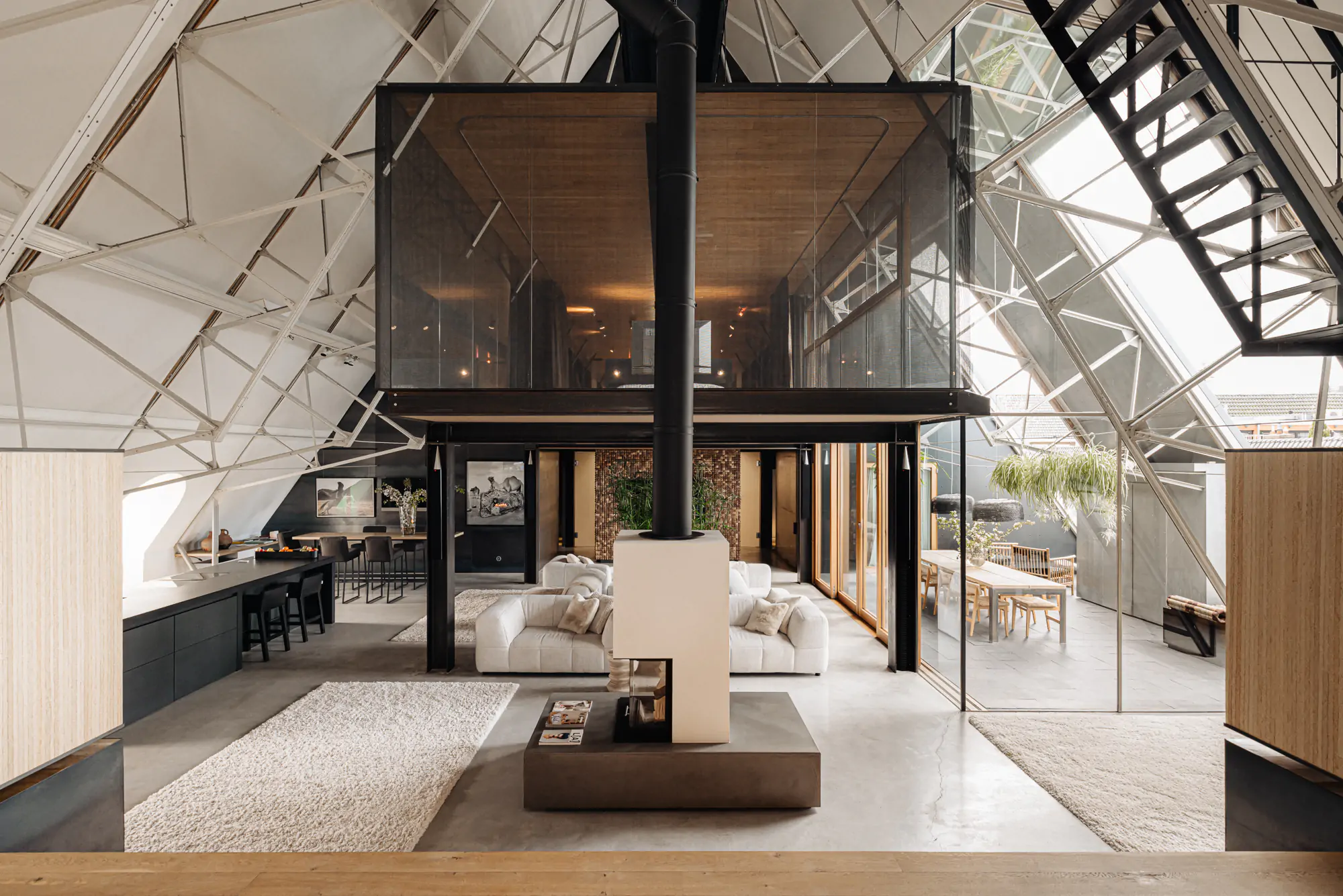
Finding the right balance between openness and privacy, security and transparency in relation to the space was actually the best part of the assignment.
Jan Arie Dekker;
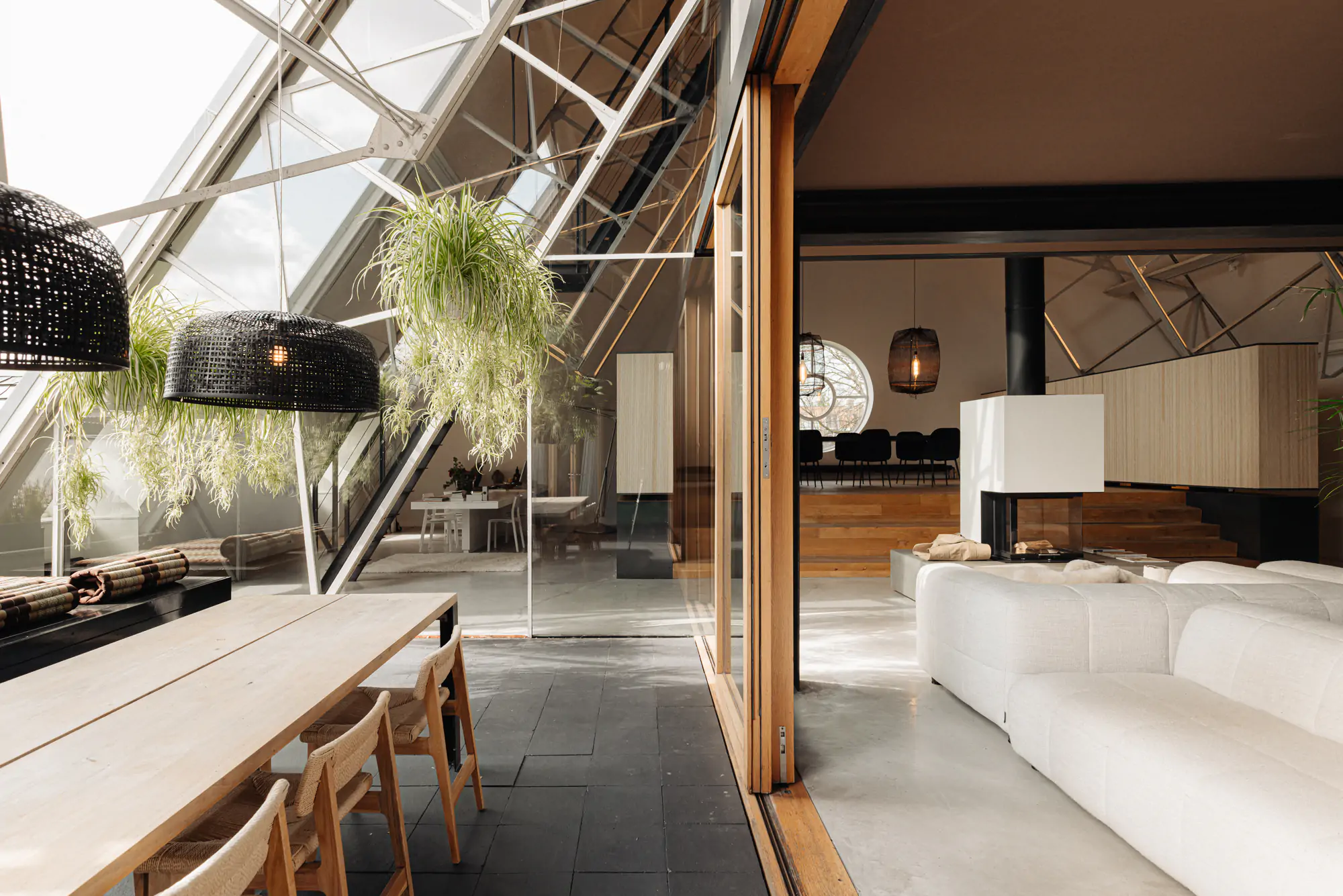
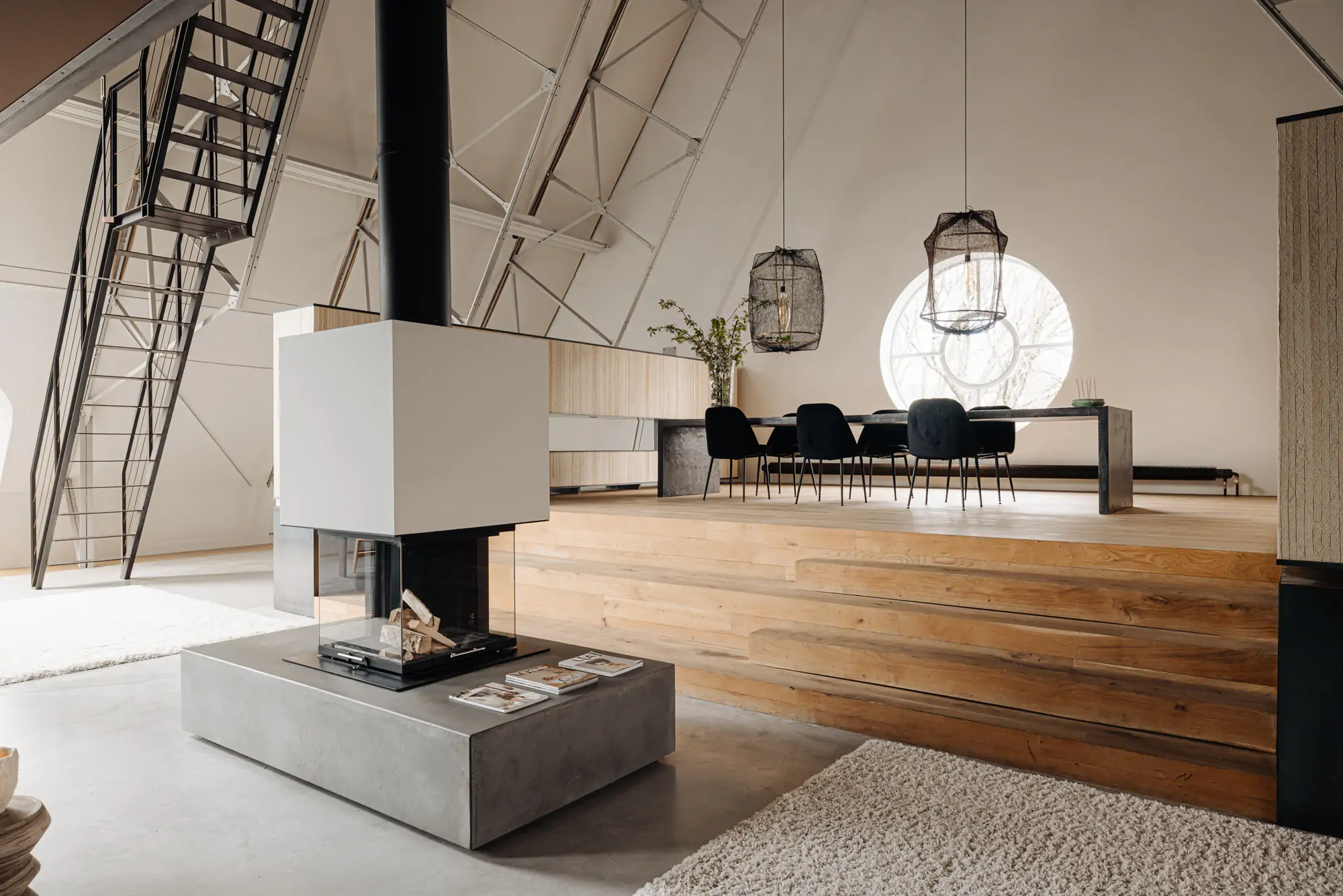
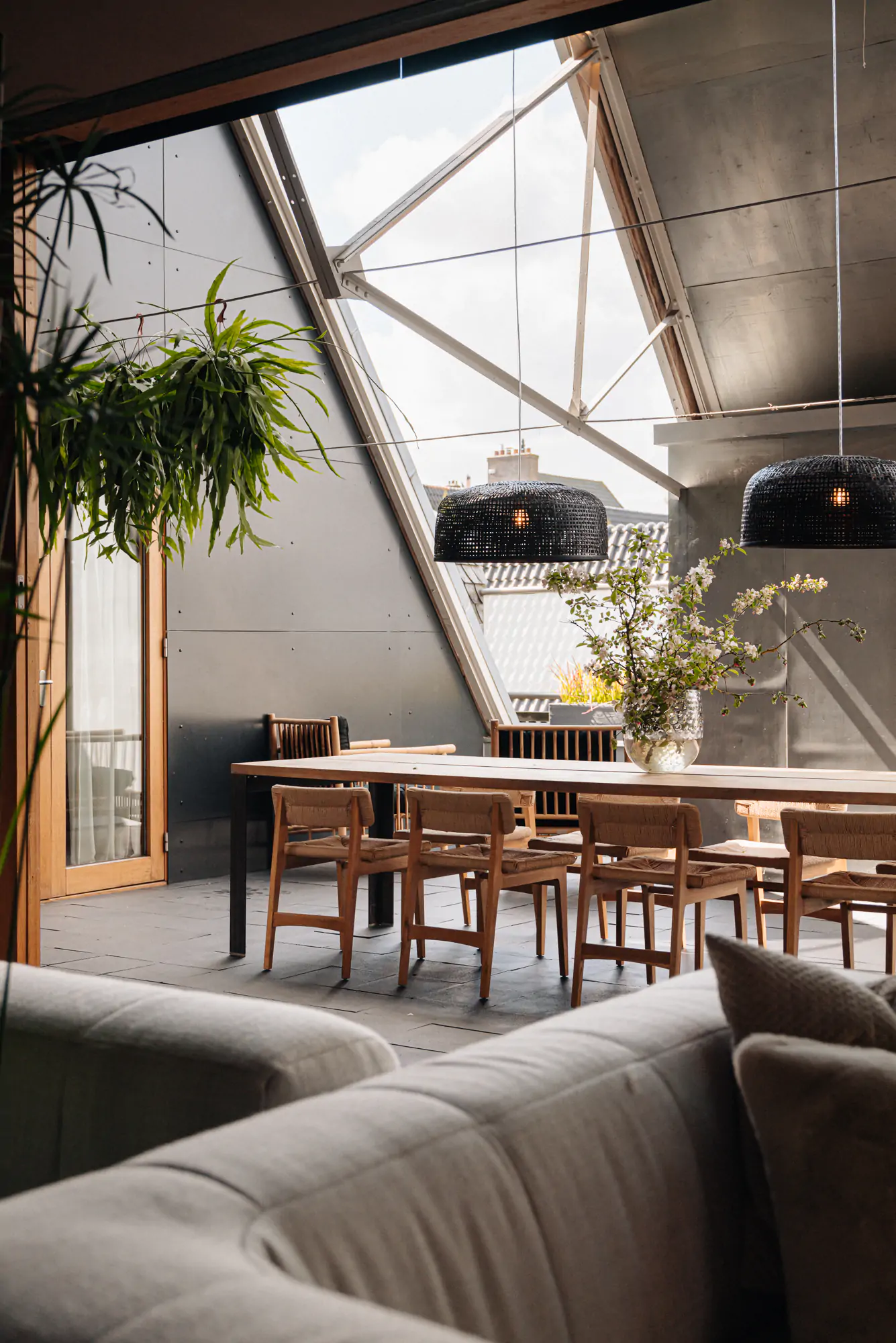
‘Both summer and winter are actually very special seasons when it comes to experiencing the church. I really enjoy the fireplace in winter. In summer, it's really the terrace just to the side of the church that is half open in terms of the roof, where there are deck chairs, tables, and where you can sit and eat. There are sliding doors to the living room, so that the outside is actually brought inside.’
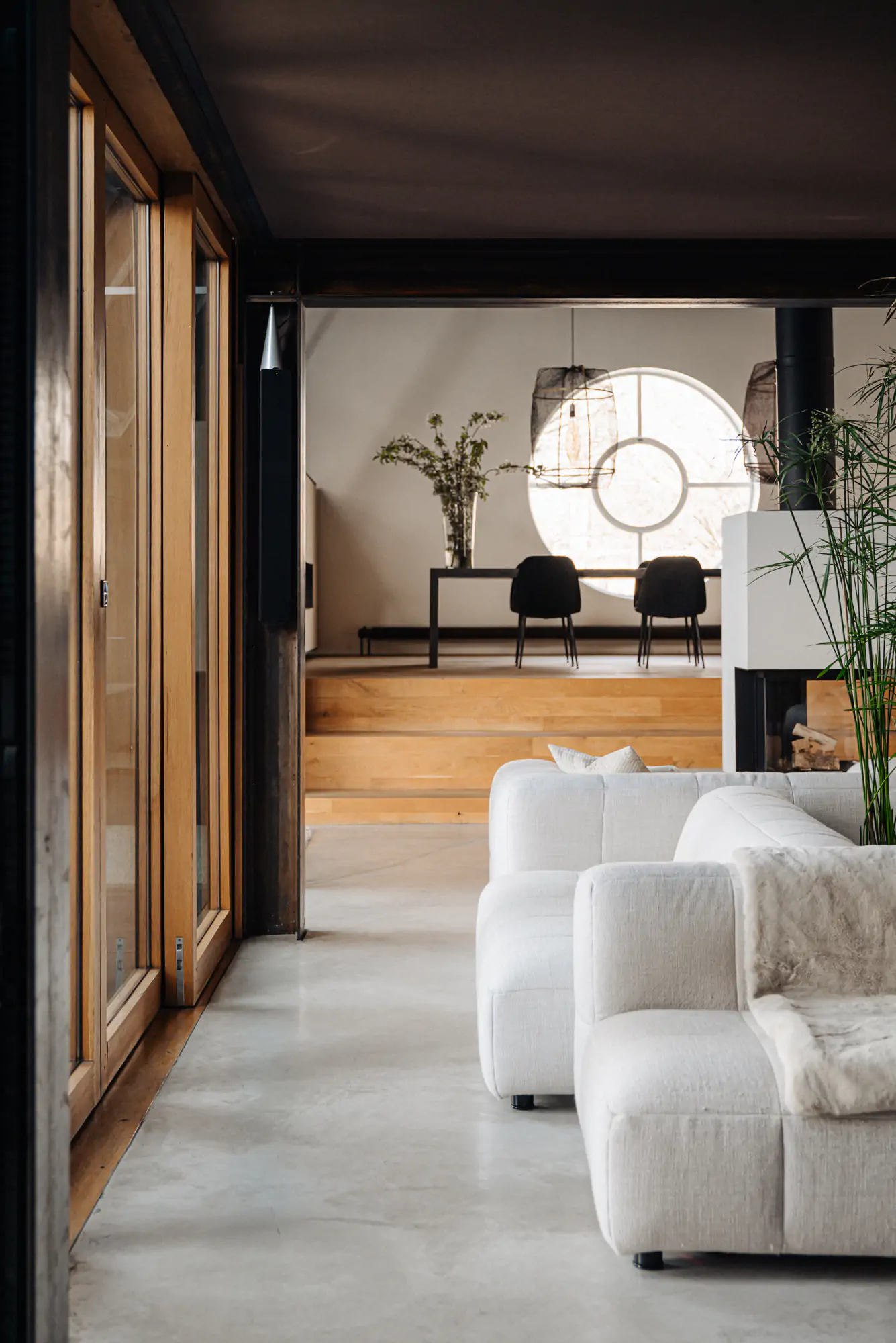
It gives you enormous freedom when you live somewhere for a longer period of time and you literally have the space to do things differently, even if it's only temporary.
Living large
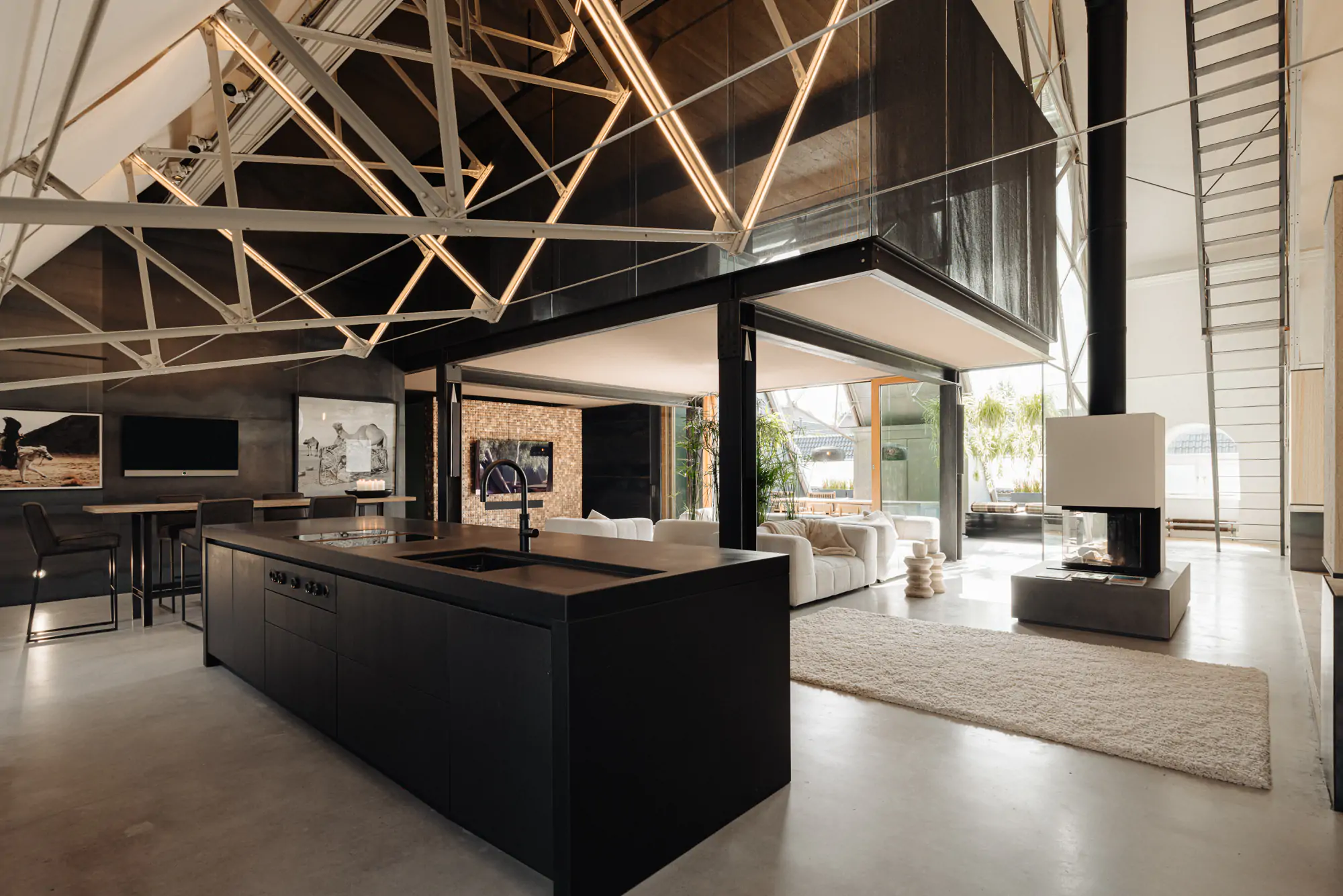
The unique character and height of the church are fully appreciated in the heart of the home—the living room. This space is naturally divided into various attractive and functional areas. The space is grand and intimate at the same time. This is due to the central position of the fireplace, the differences in level, and the outdoor space that is also part of this area. The dining table is placed on a platform. This creates a playful effect and means that the dining area not only offers a magnificent view, but also a beautiful line of sight towards the living room.
Outside
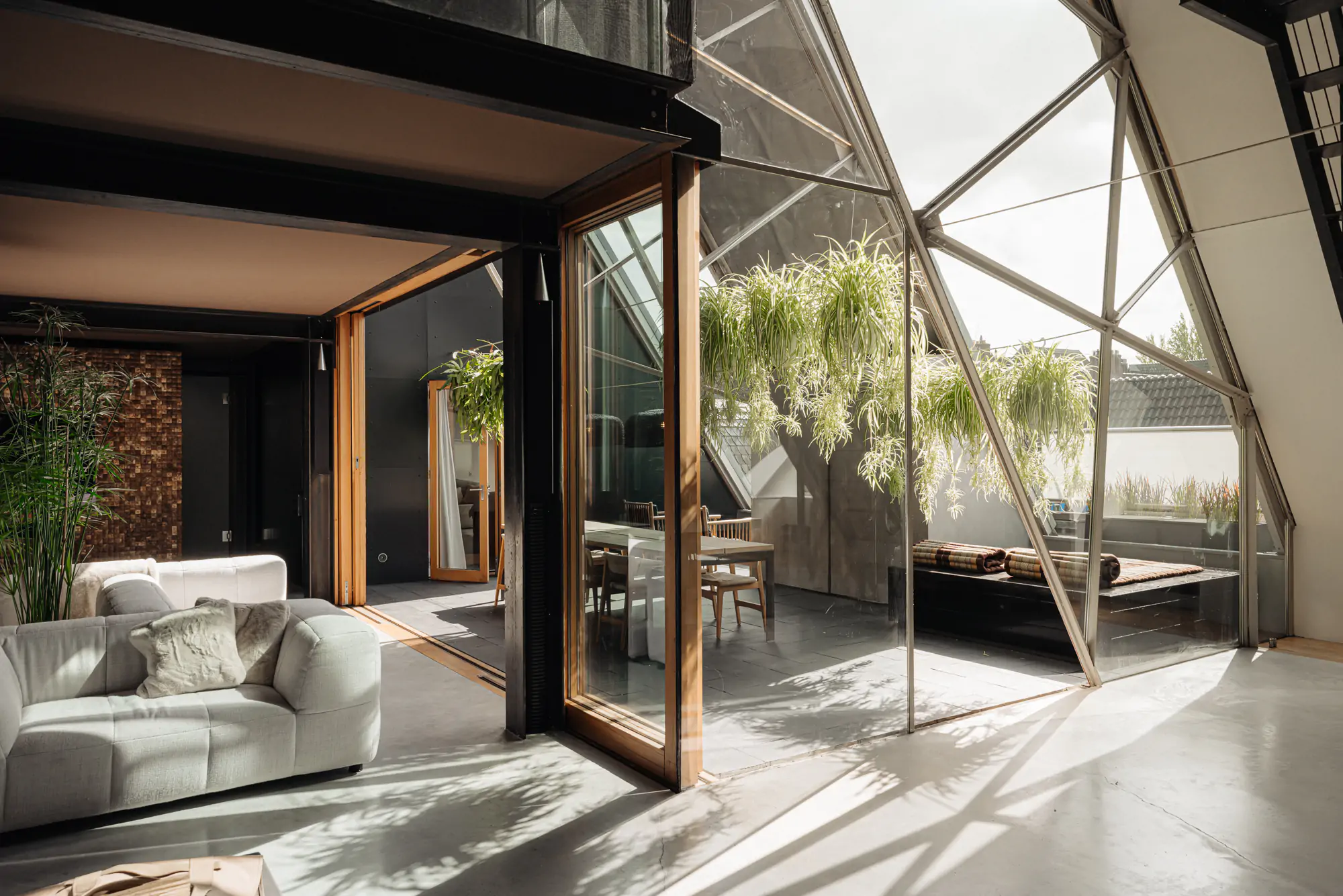
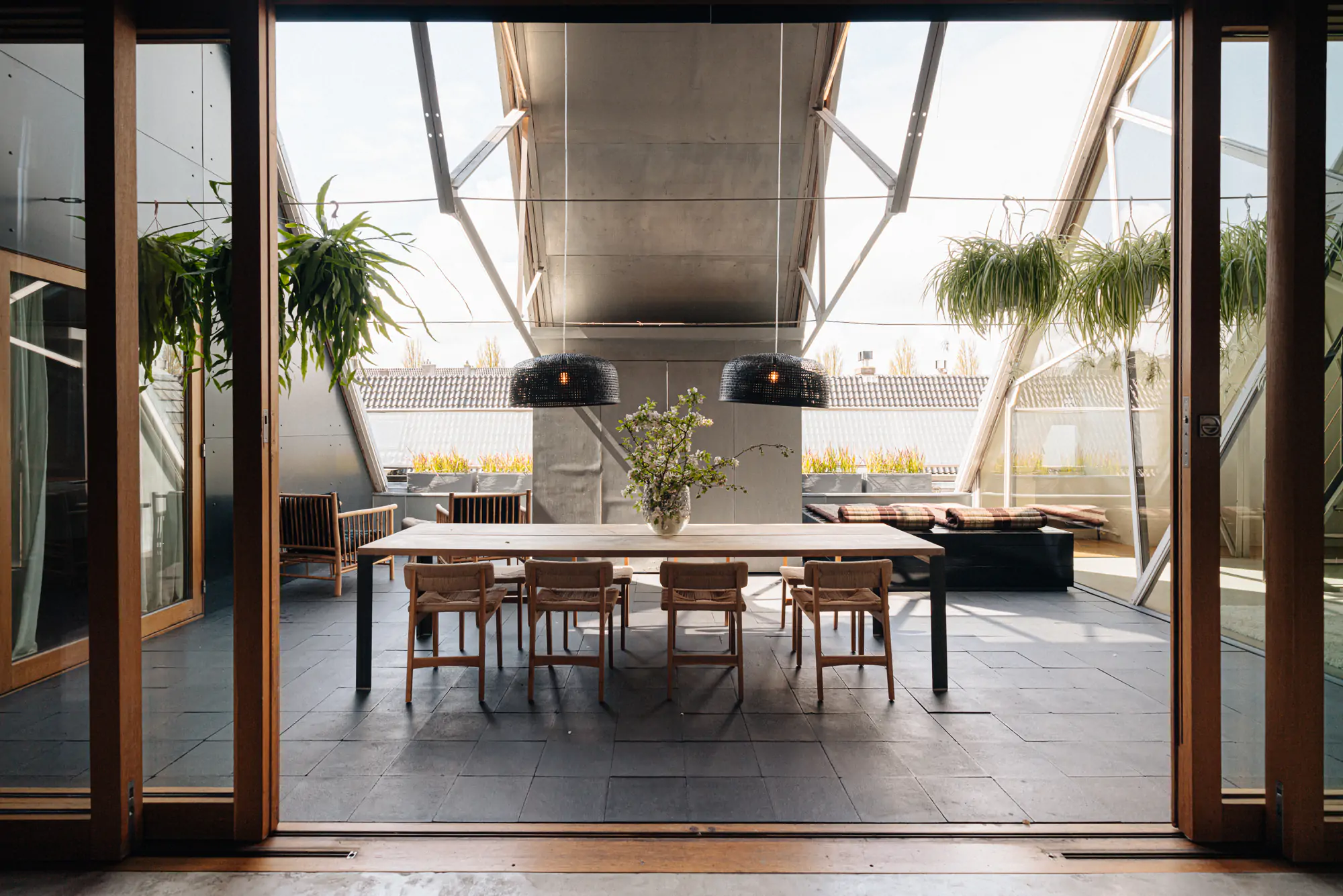
The spacious outdoor area of approx. 37 m² Immediately the living room and is a true extension of the living space. The indoor terrace faces west. Part of the roof can be opened via the electric skylights, suddenly turning the inside into the outside. This beautiful space is both a summer and winter garden. Because the terrace has been created within the roof line, the rafters have been partially preserved, offering the necessary privacy and intimacy. The indoor terrace is truly an indoor-outdoor space.
At first, I couldn't believe we were going to live in a house like that. That feeling was just truly euphoric.