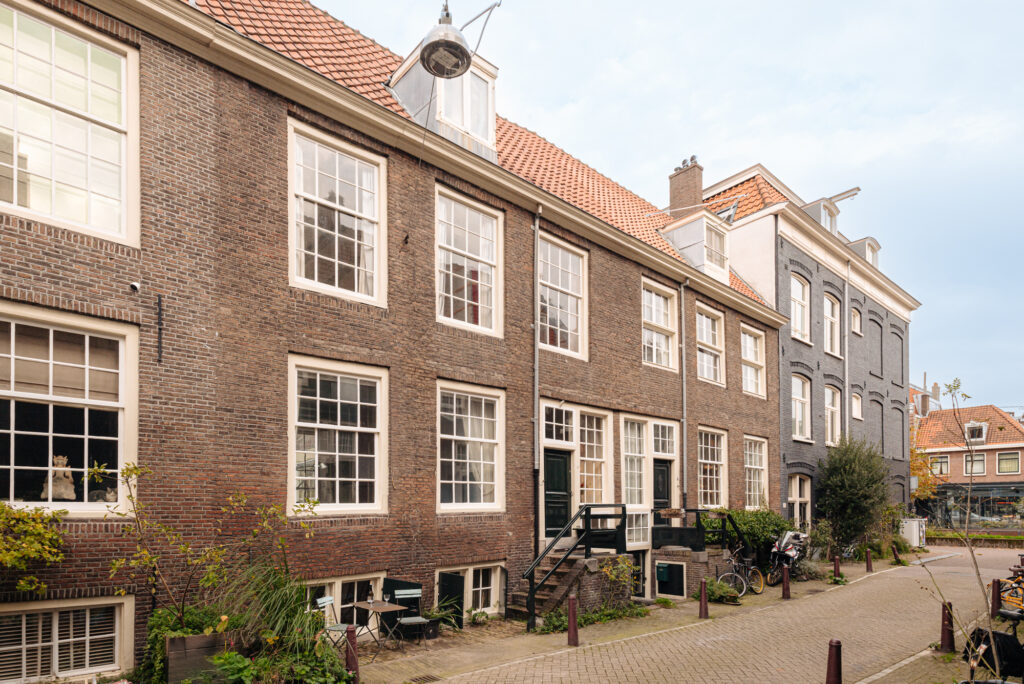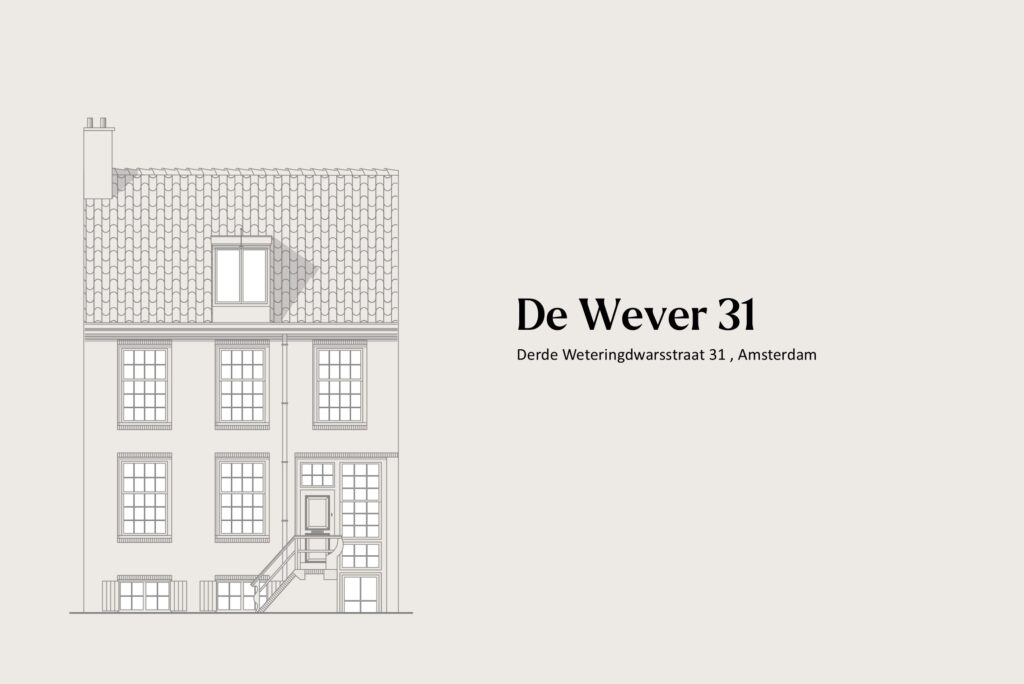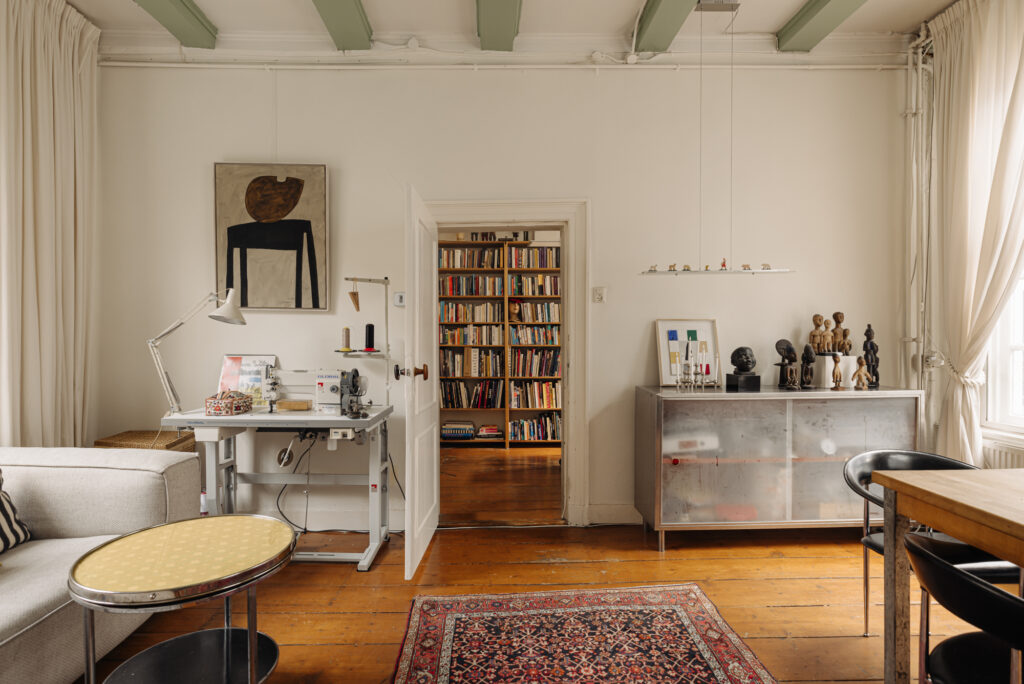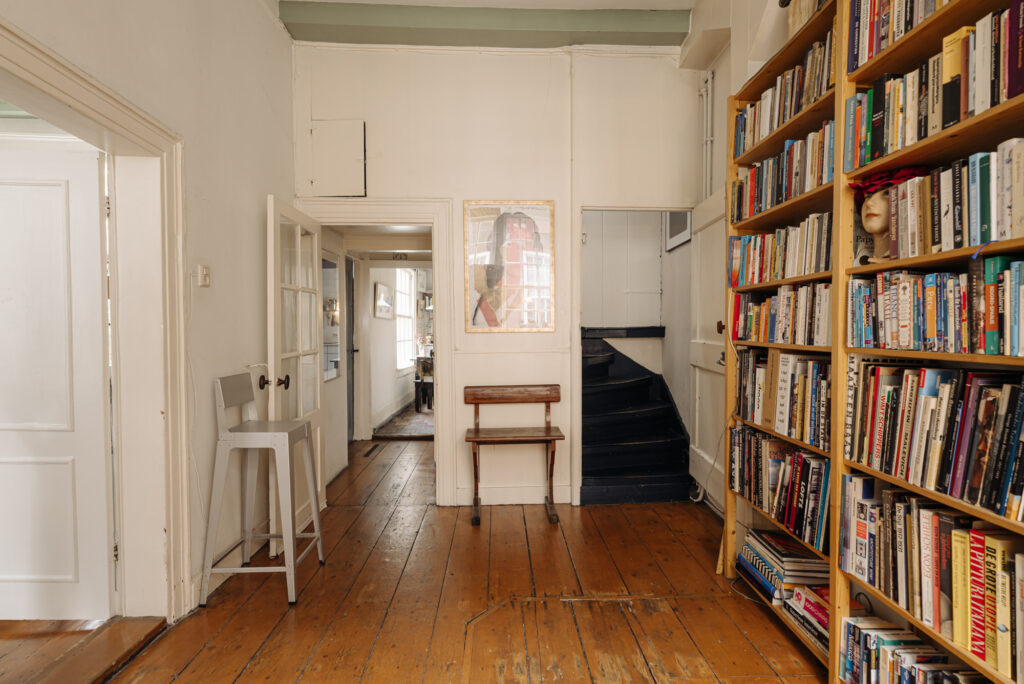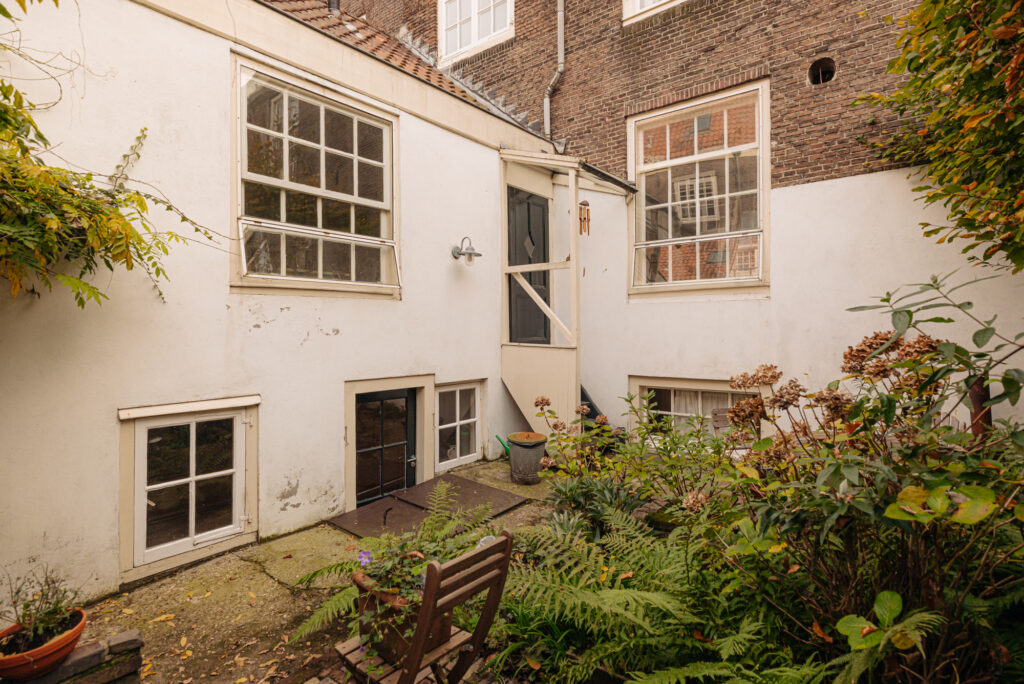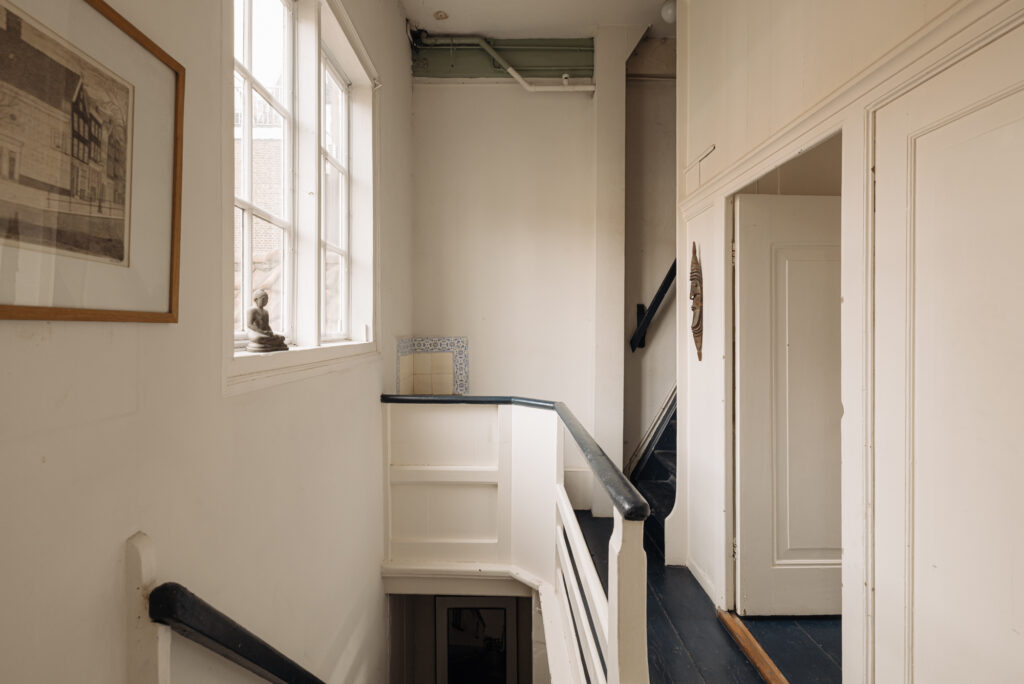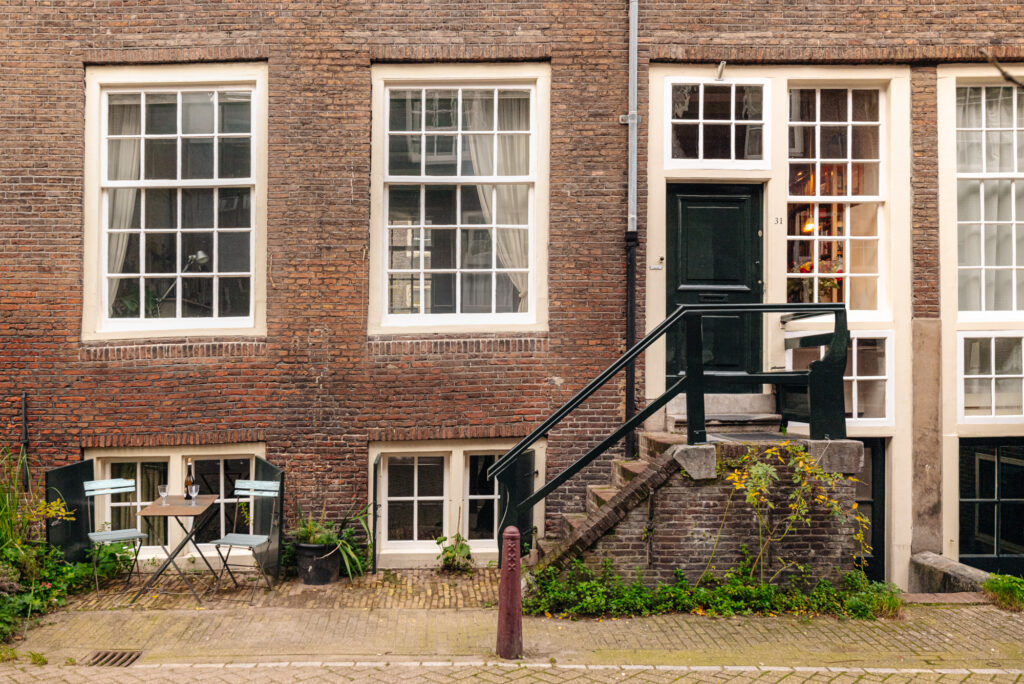
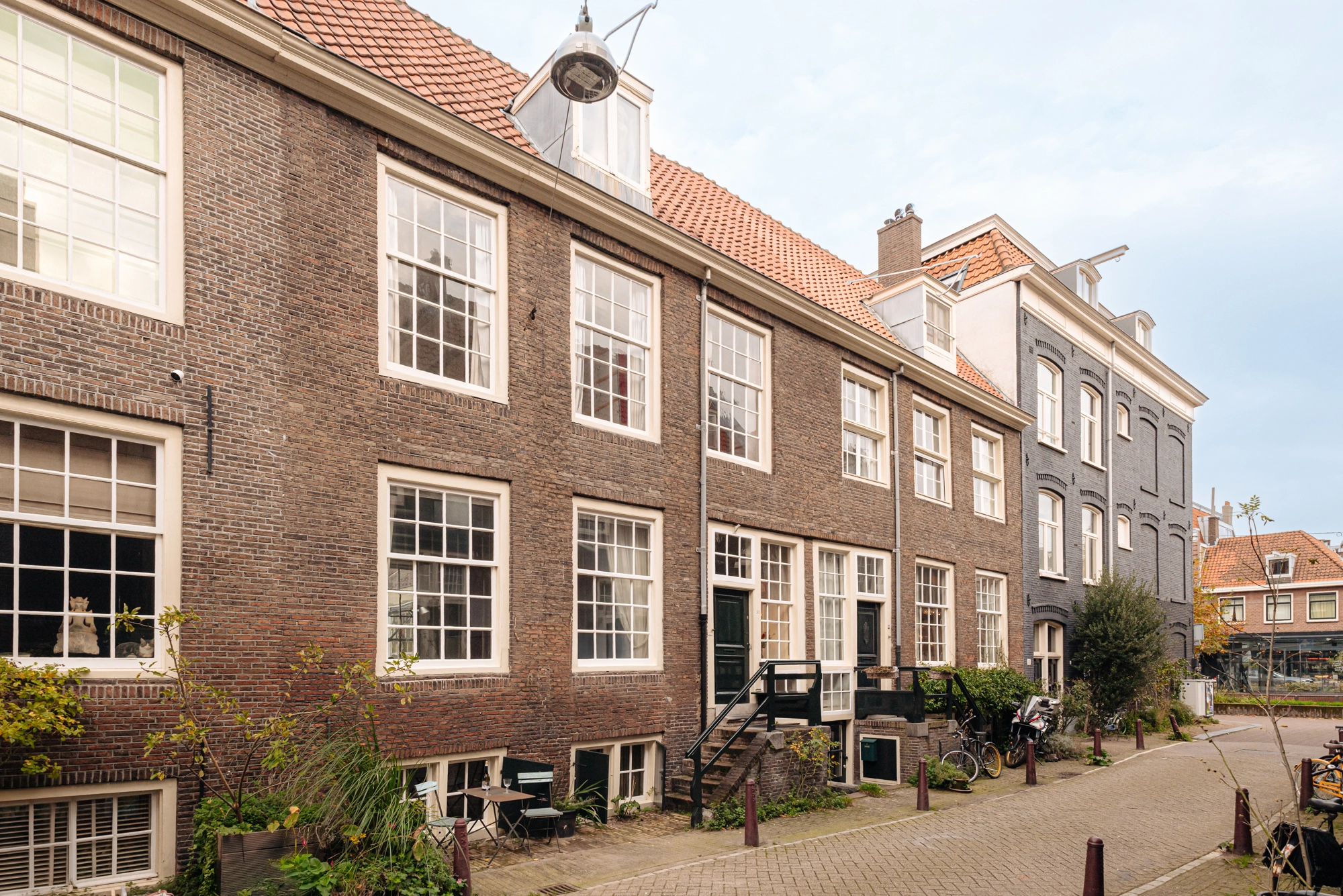
A monumental weaver’s house with a gross floor area of approximately 195 m², dating from around 1670, located at Derde Weteringdwarsstraat 31 (A+B) in the historic city centre. The façade, with its classical cornice and raised entrance staircase, belongs to the Noortse Bos typology designed by Philips Vingboons. Behind the traditional entrance lie four full residential levels, each with its own layout and function. In total, the house offers four bedrooms, three kitchens and three bathrooms. The structure allows for multiple living arrangements, ranging from dual occupancy to full conversion into a single family home. Creating an internal connection between the souterrain and the upper ground floor is an obvious and natural next step. Located on freehold land.
Tour
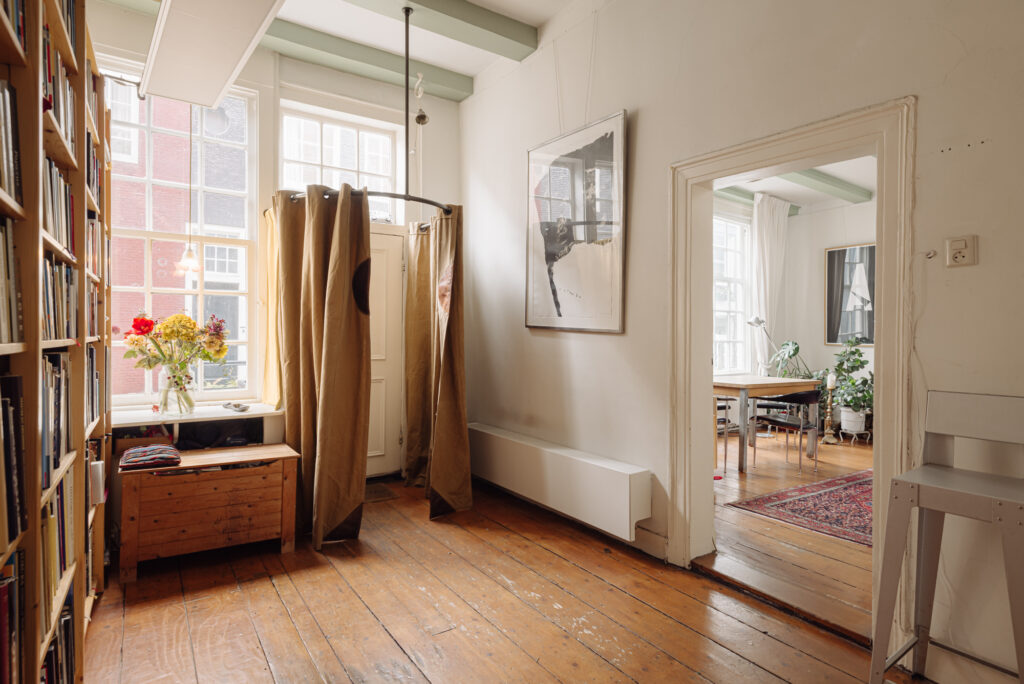
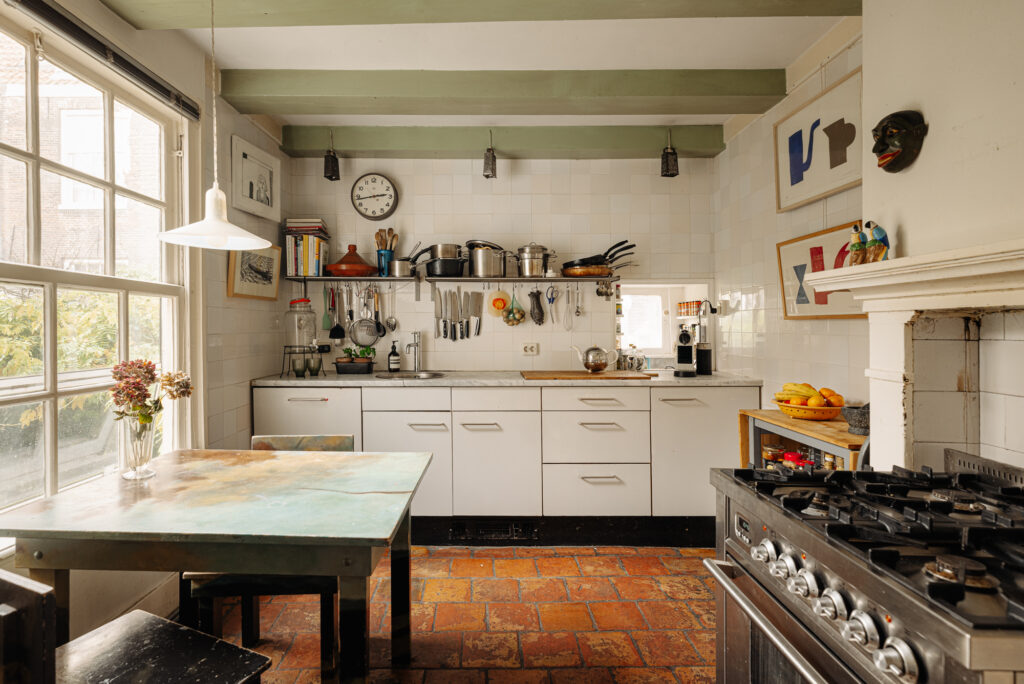
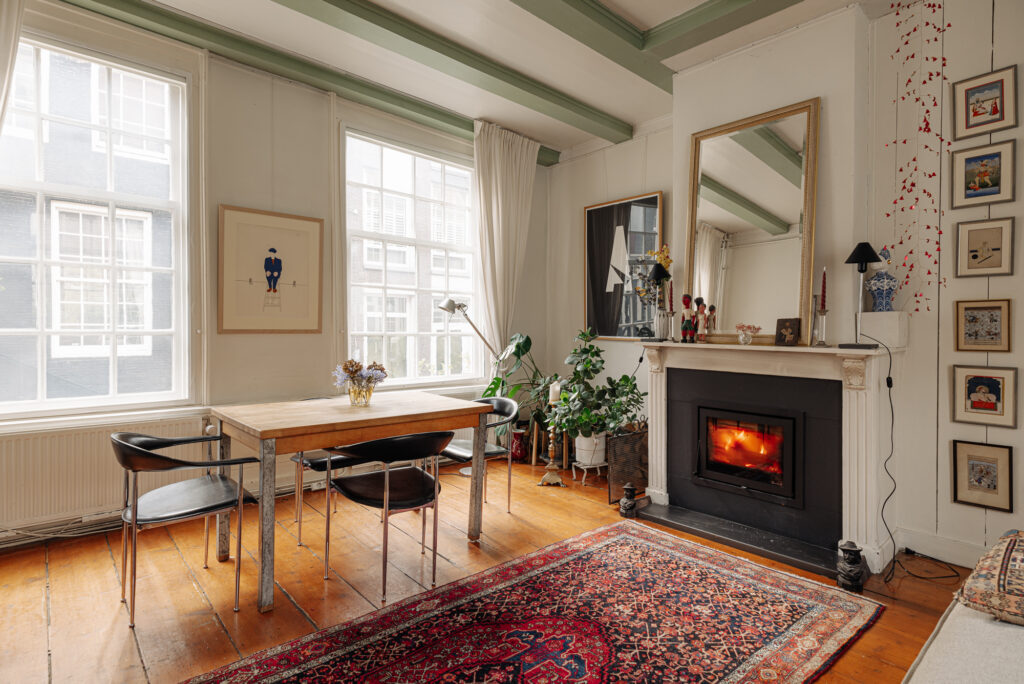
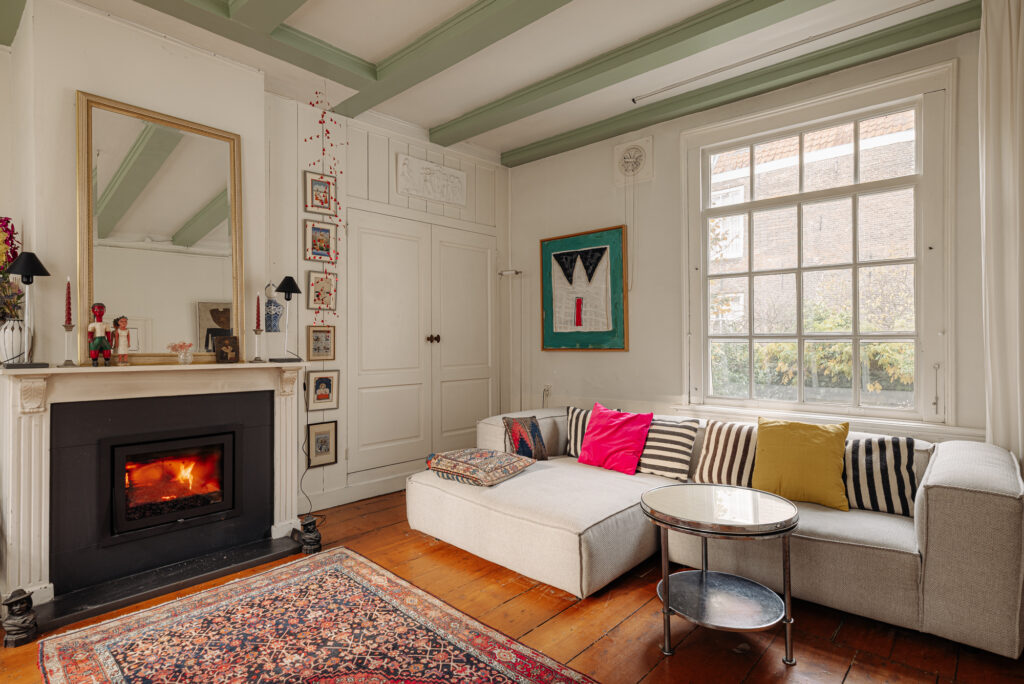
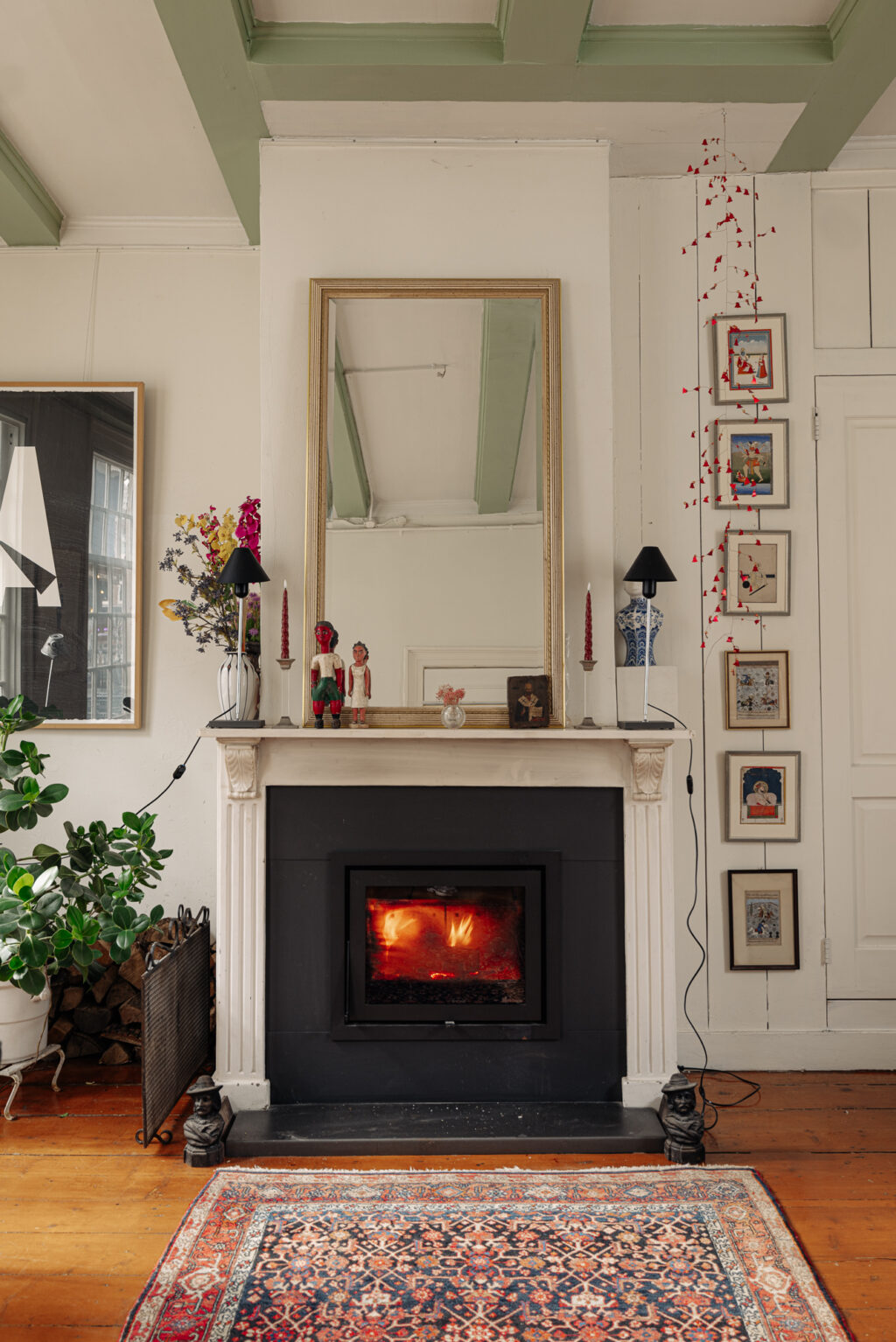
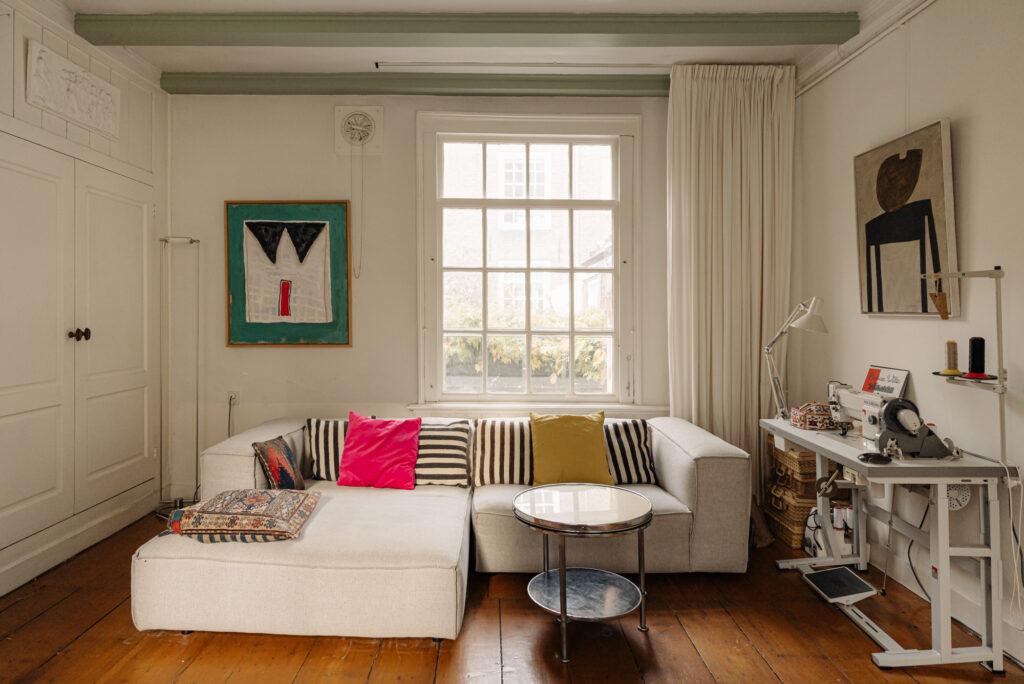
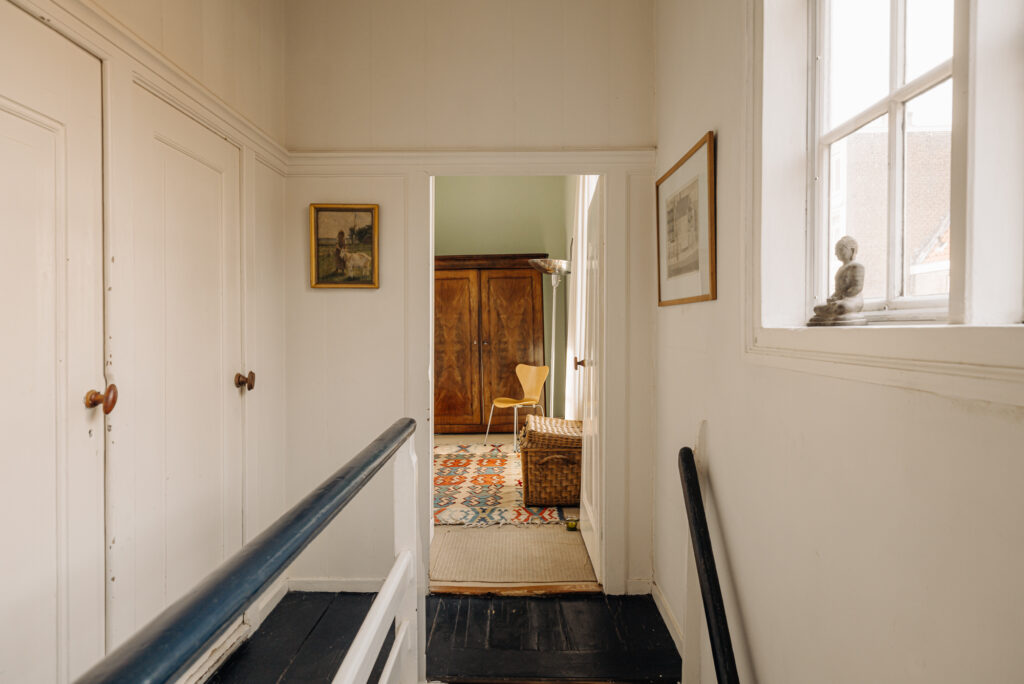
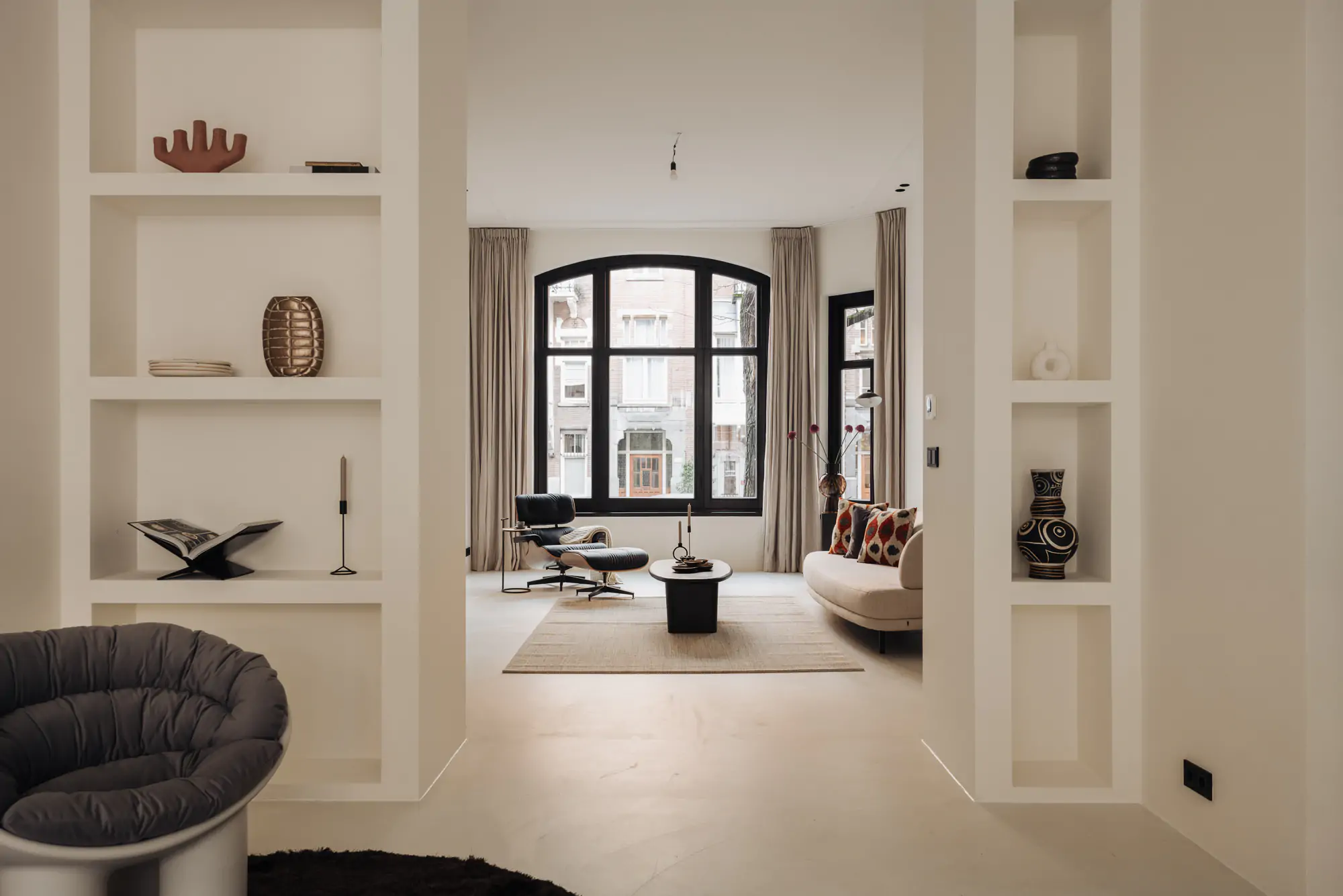
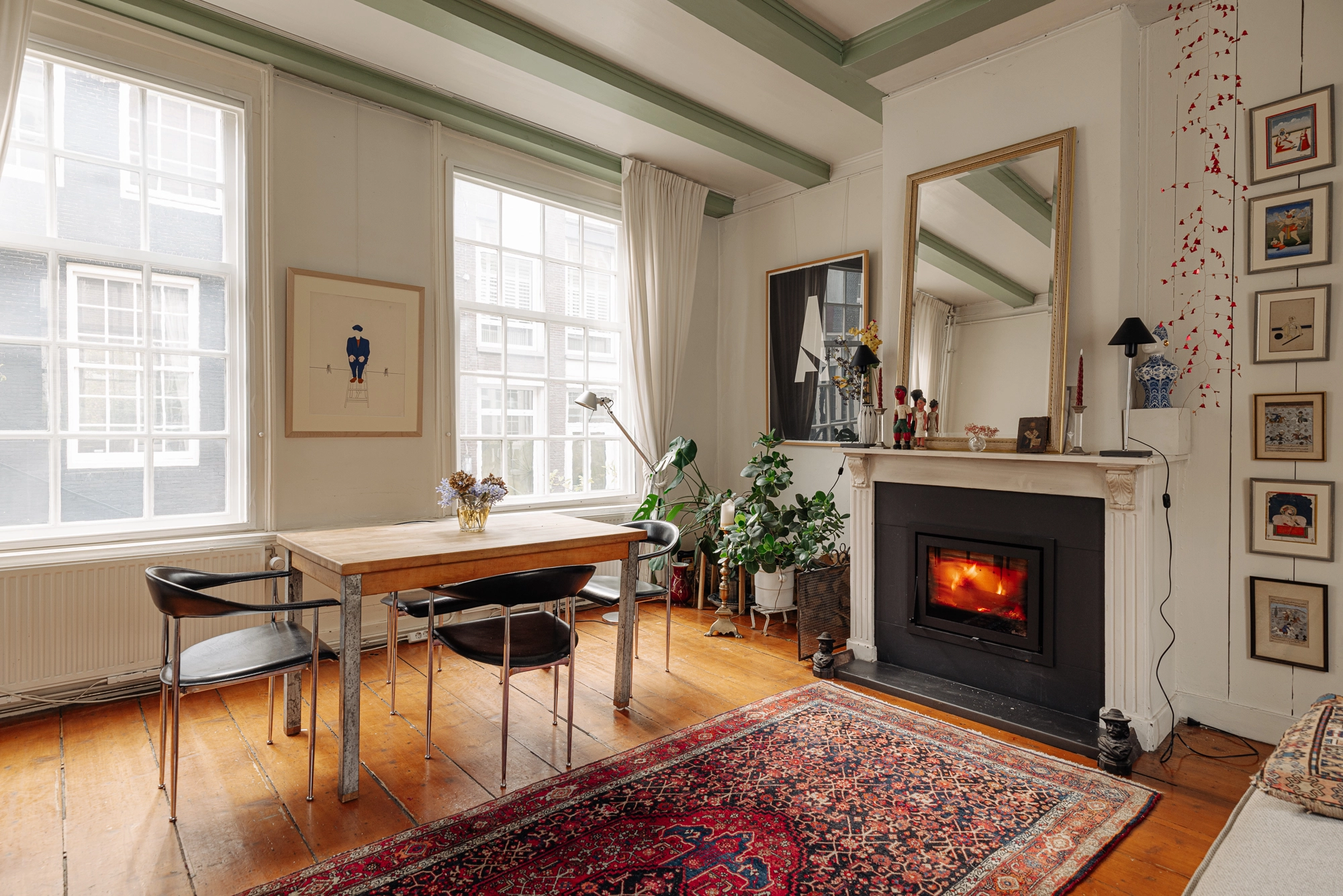
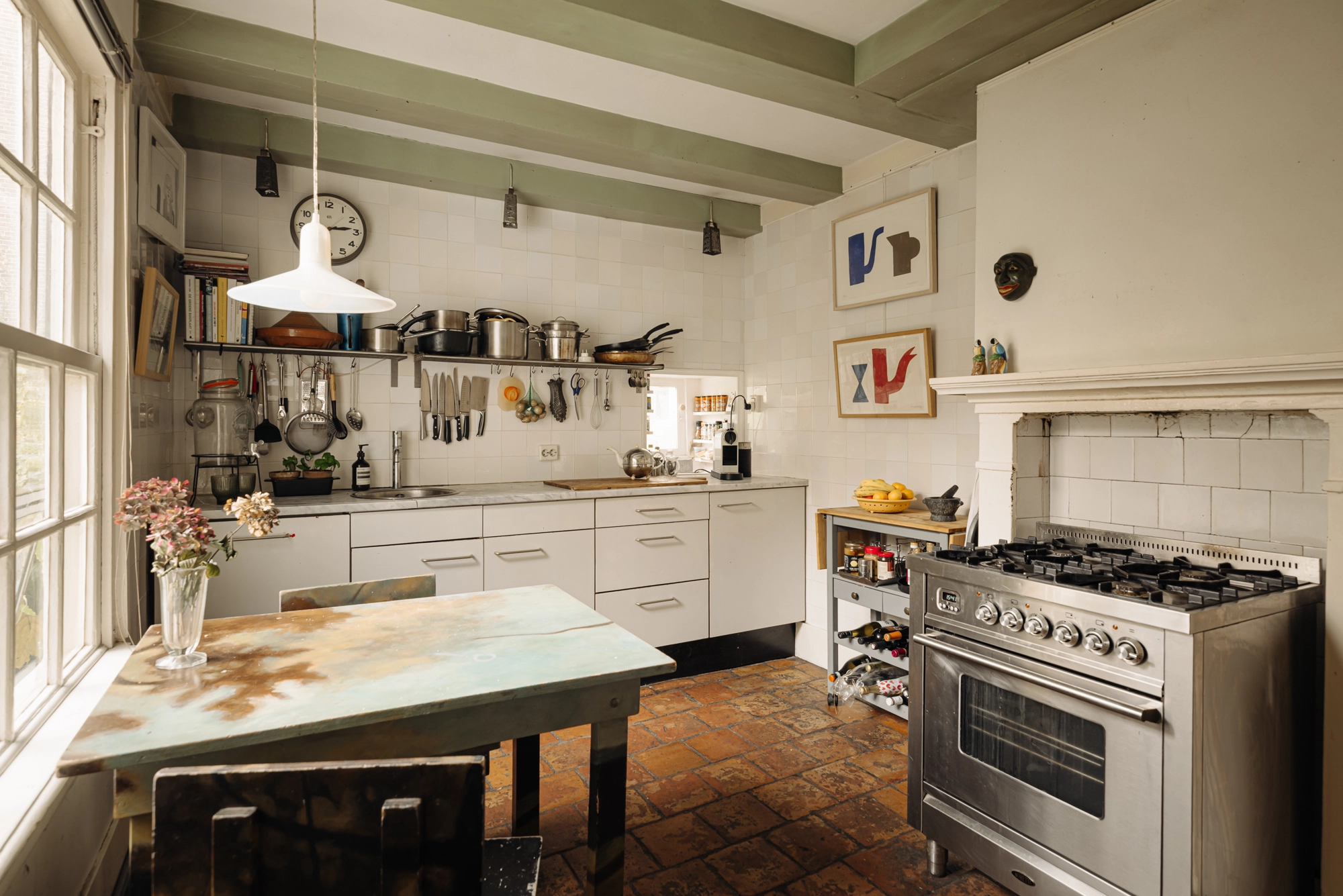
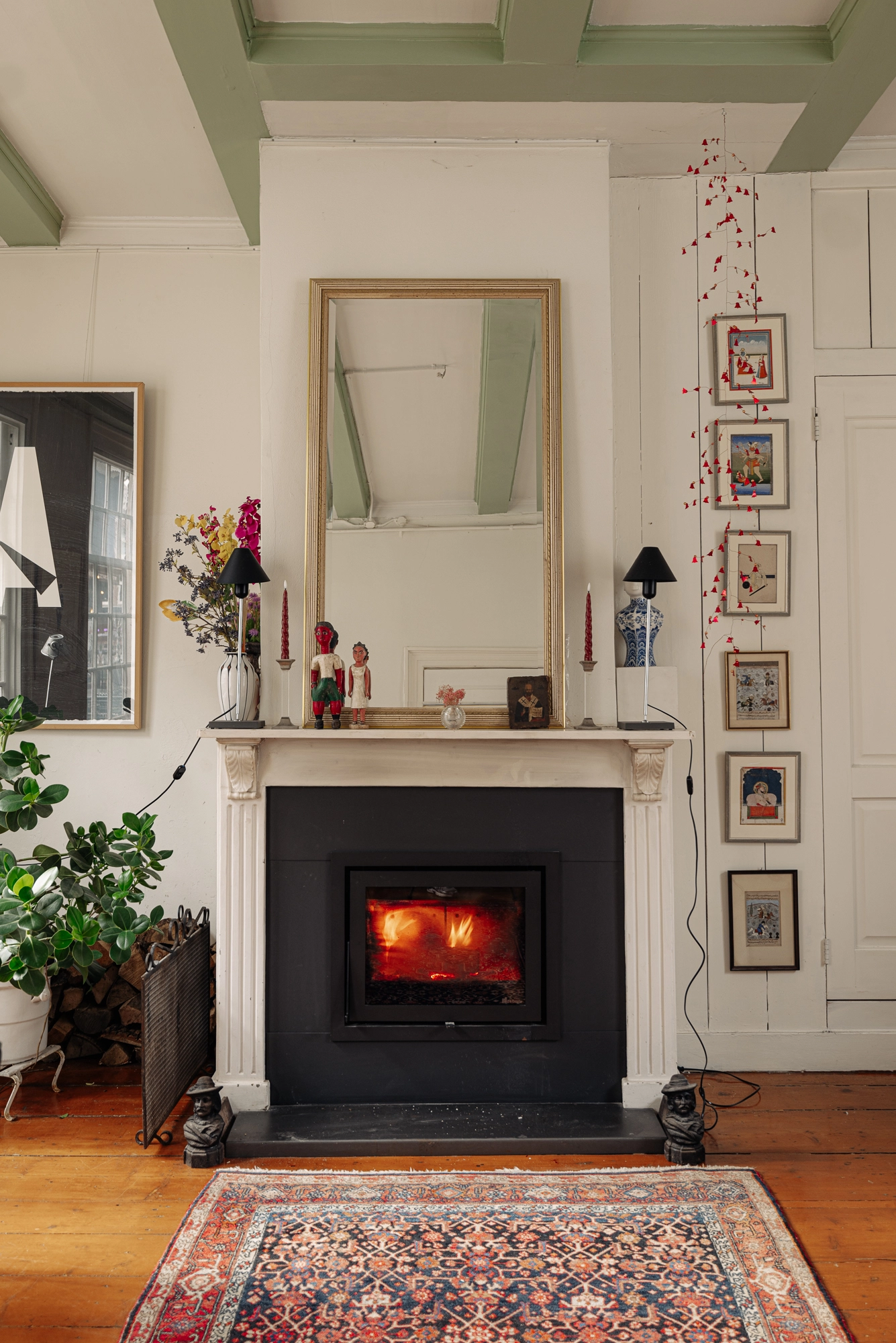
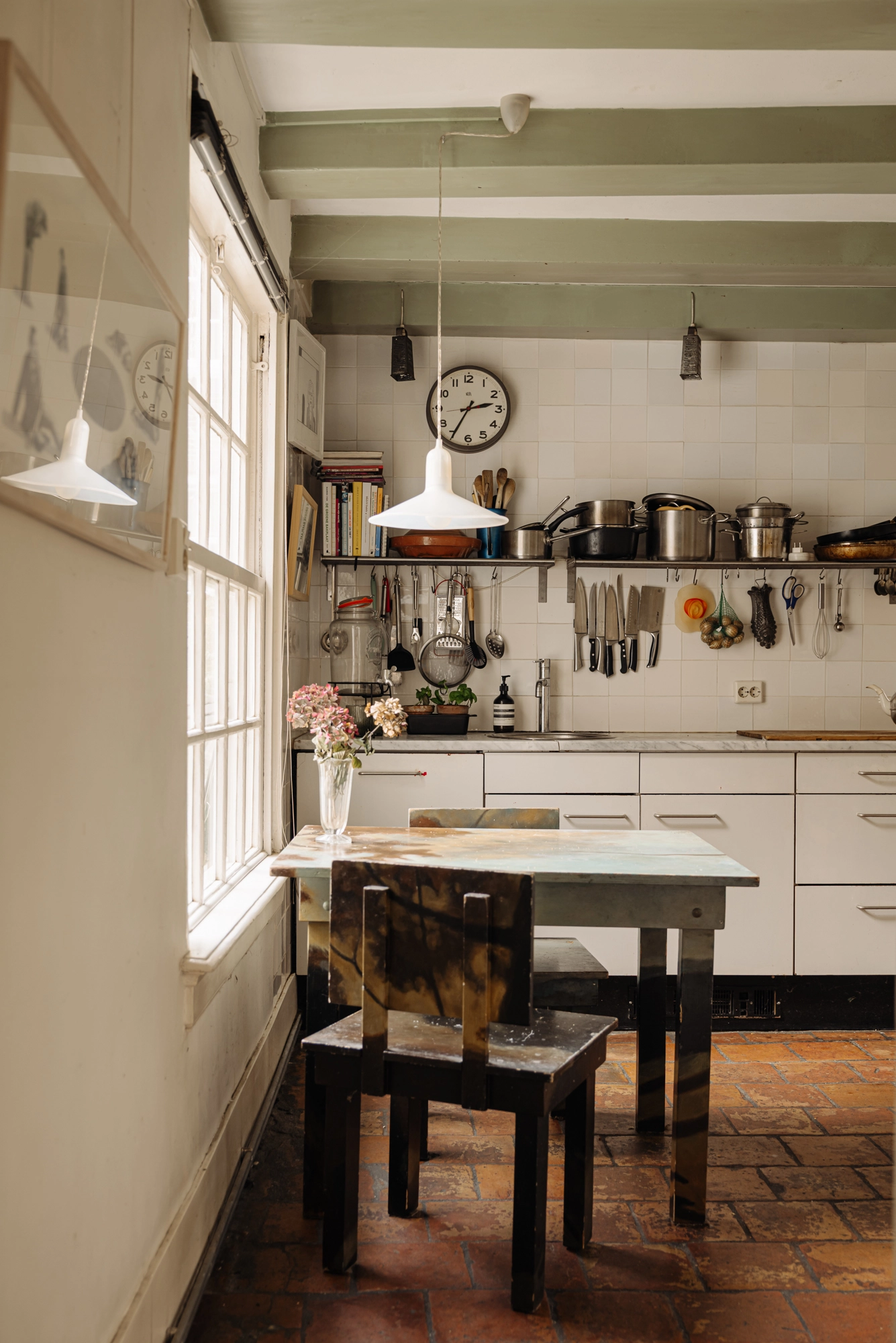
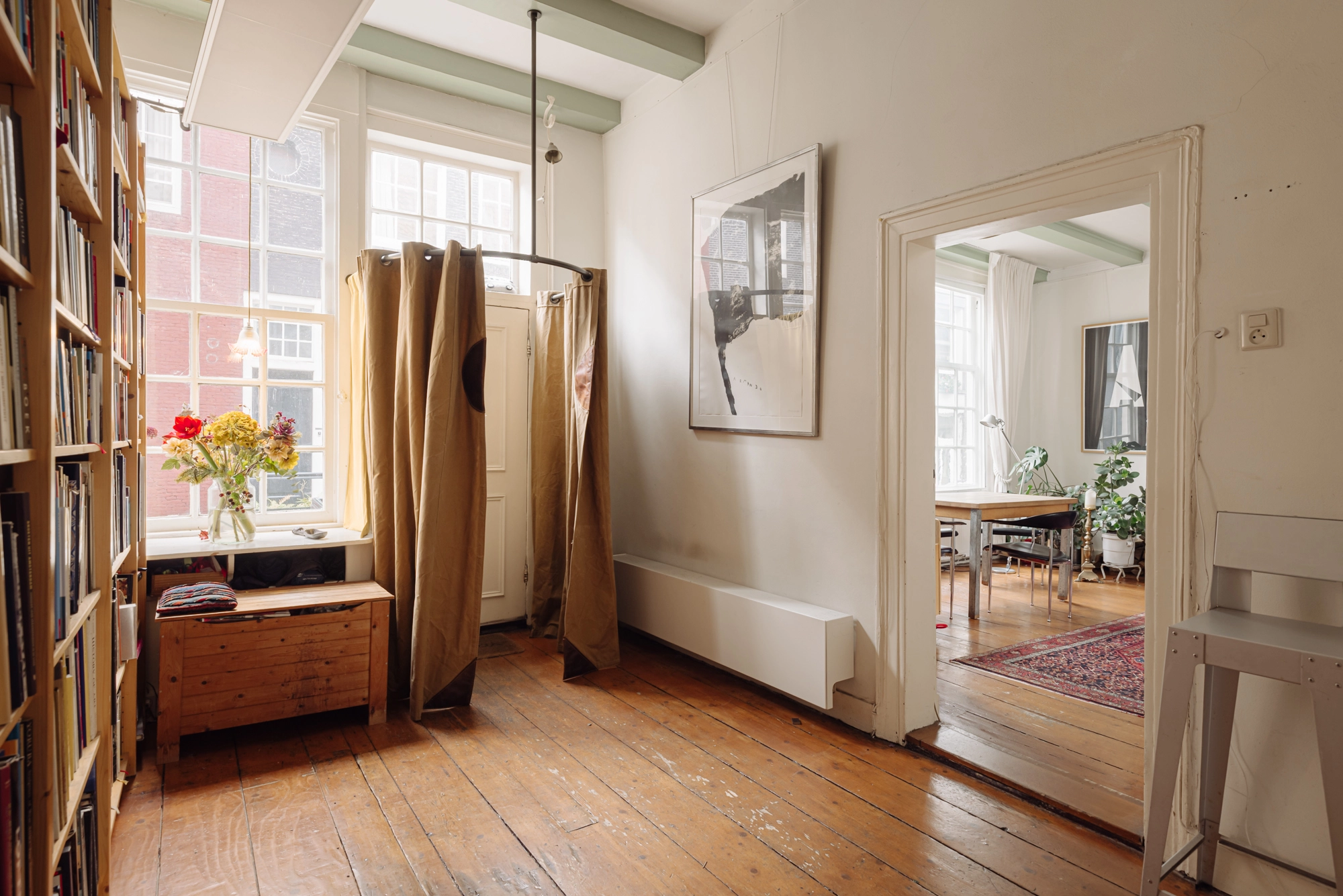
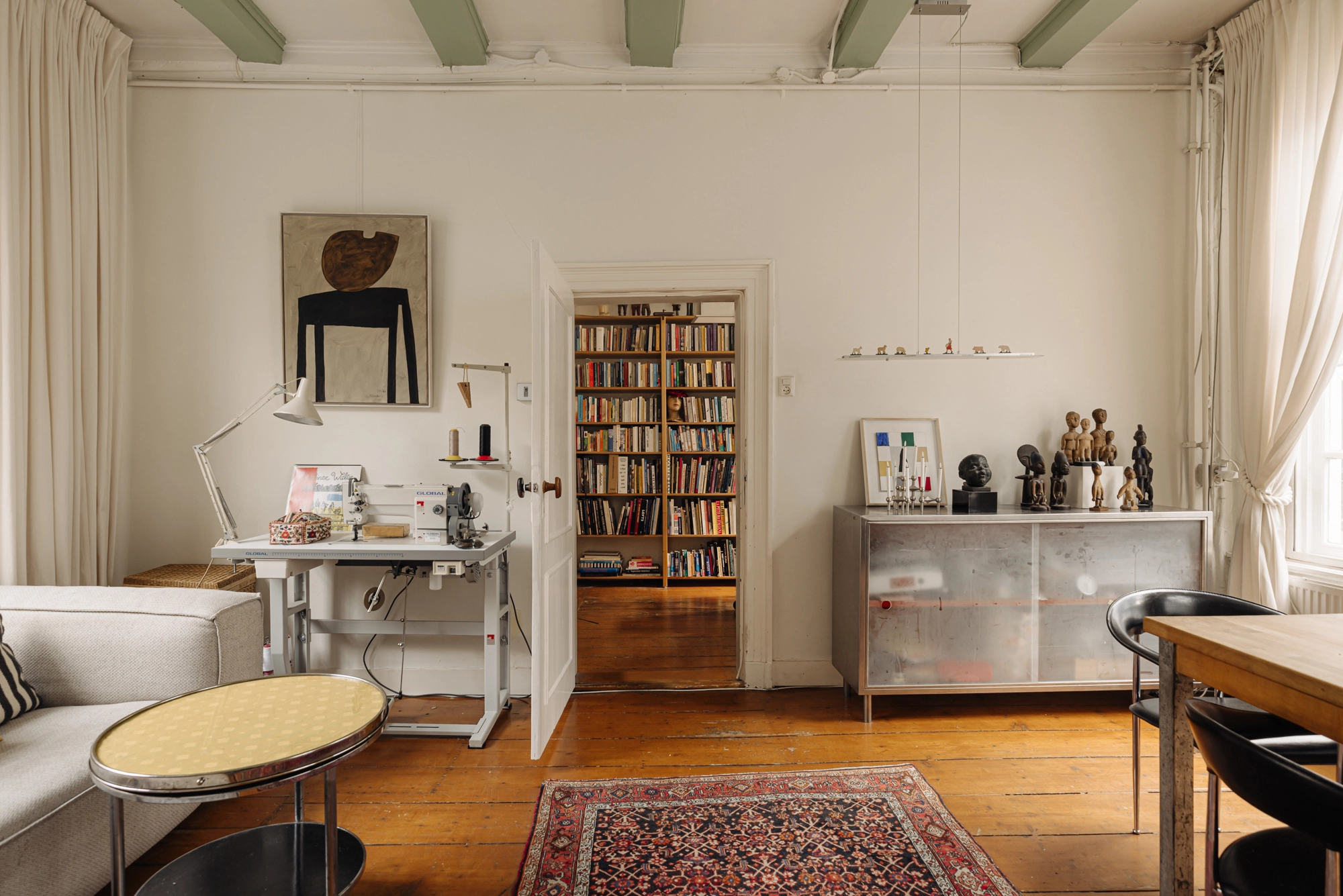
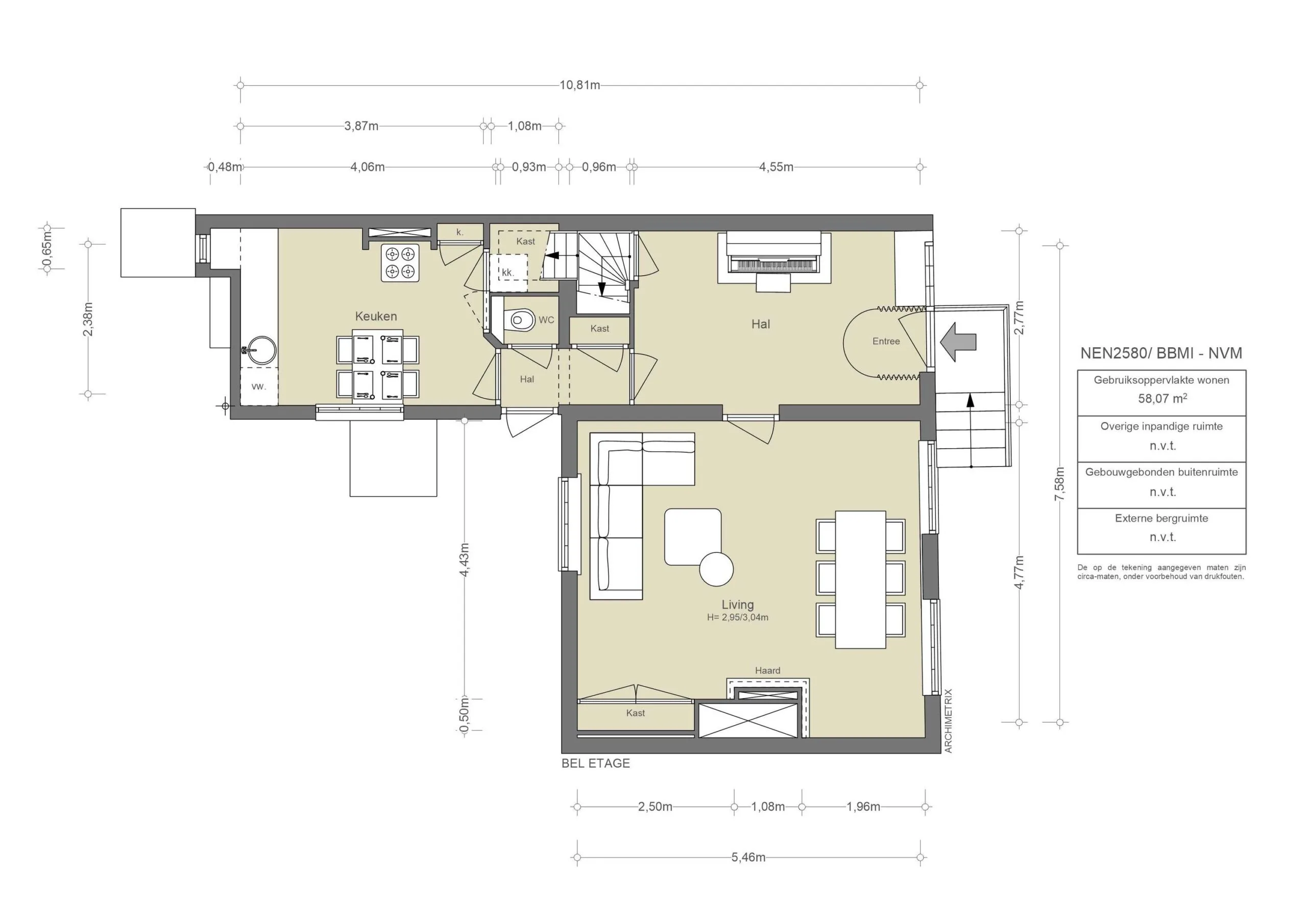
The upper ground floor forms the representative living level, defined by high ceilings, broad windows overlooking the street, and a view of greenery at the rear. The current layout includes a kitchen overlooking the garden and a sitting room facing the street, complemented by a hallway, toilet and storage. Monumental elements such as the fireplace and timber floors have been preserved.
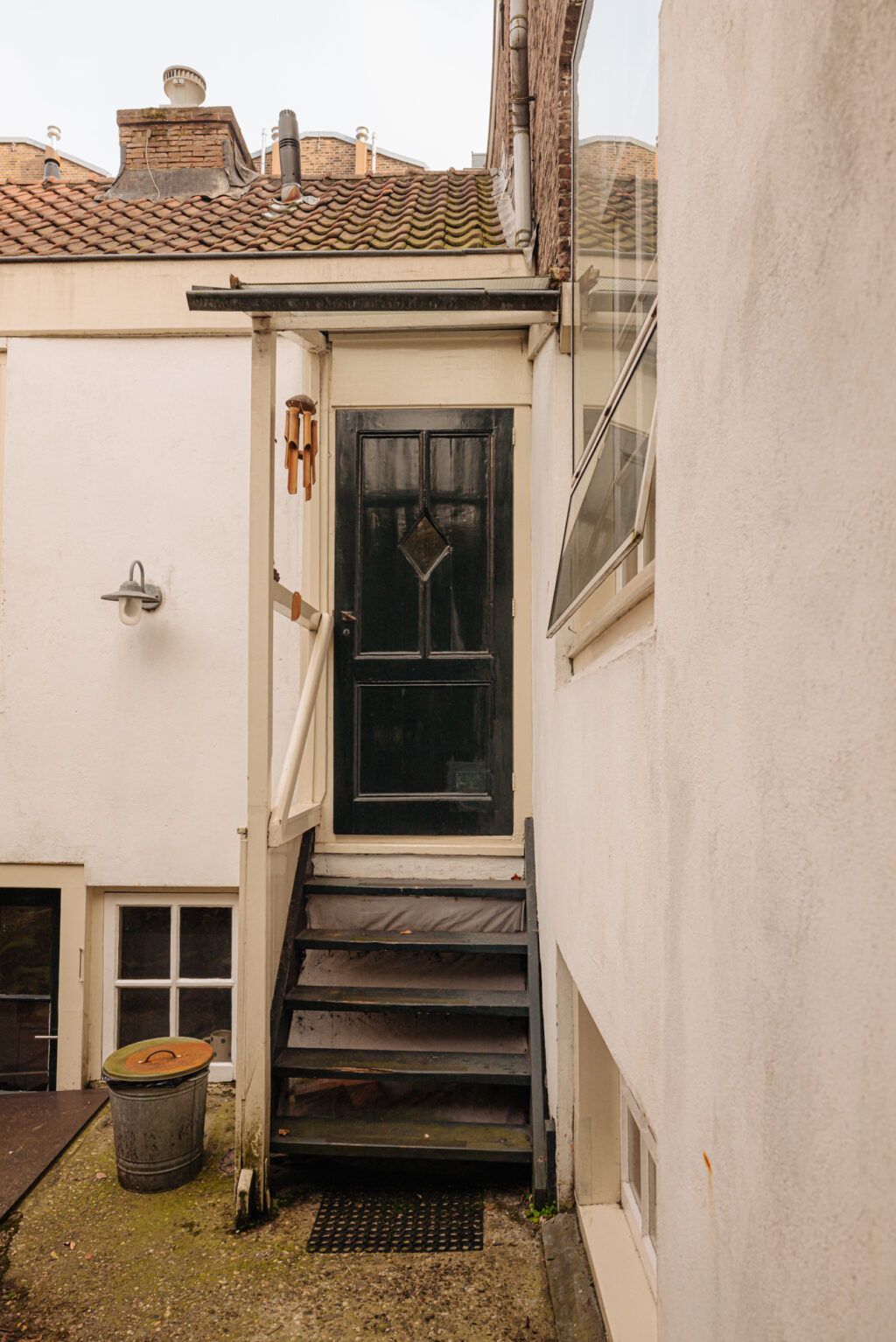
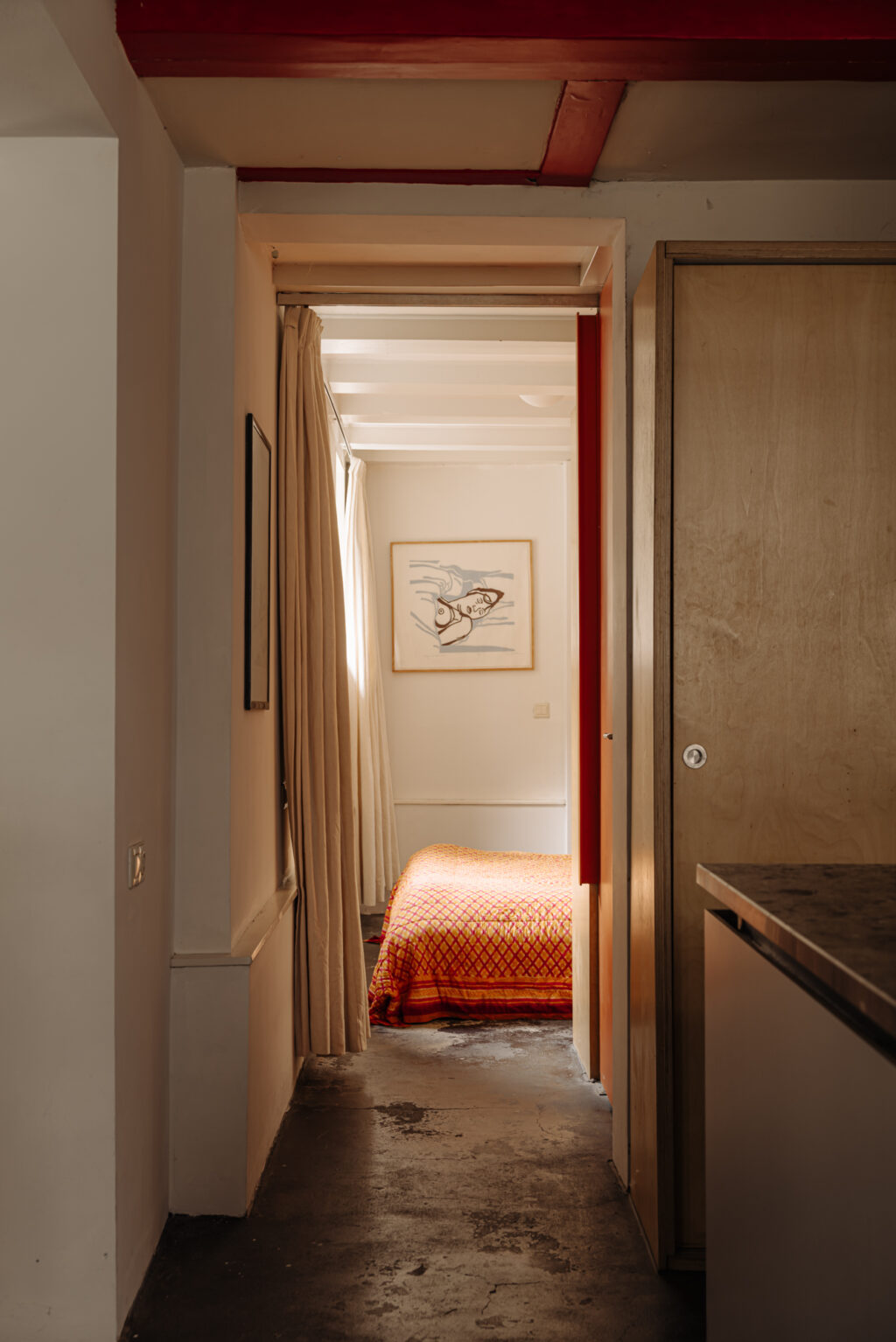
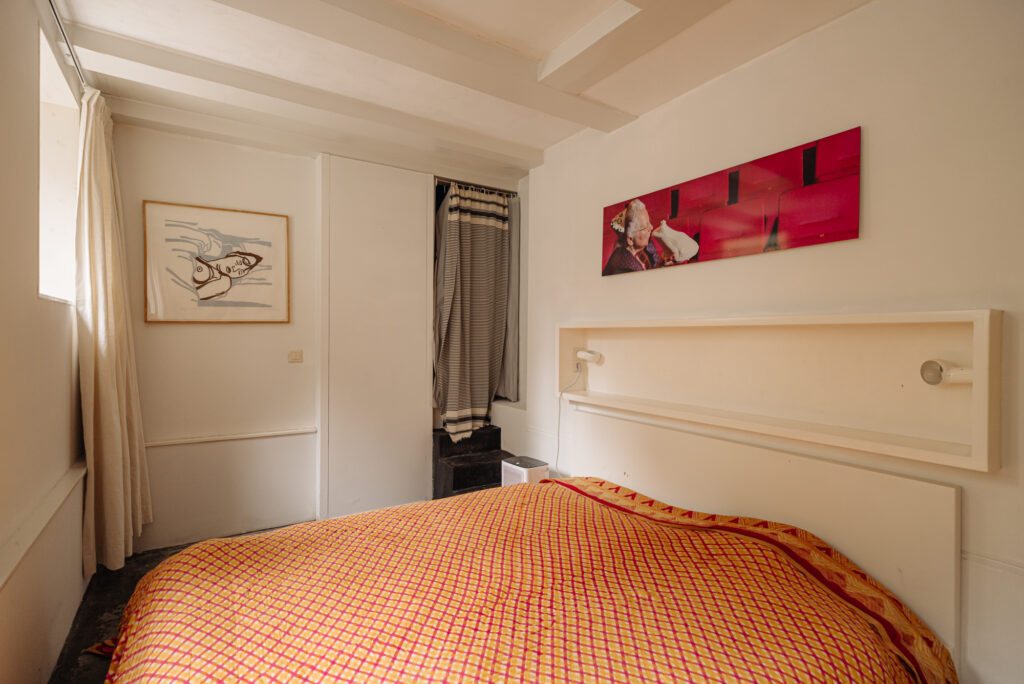
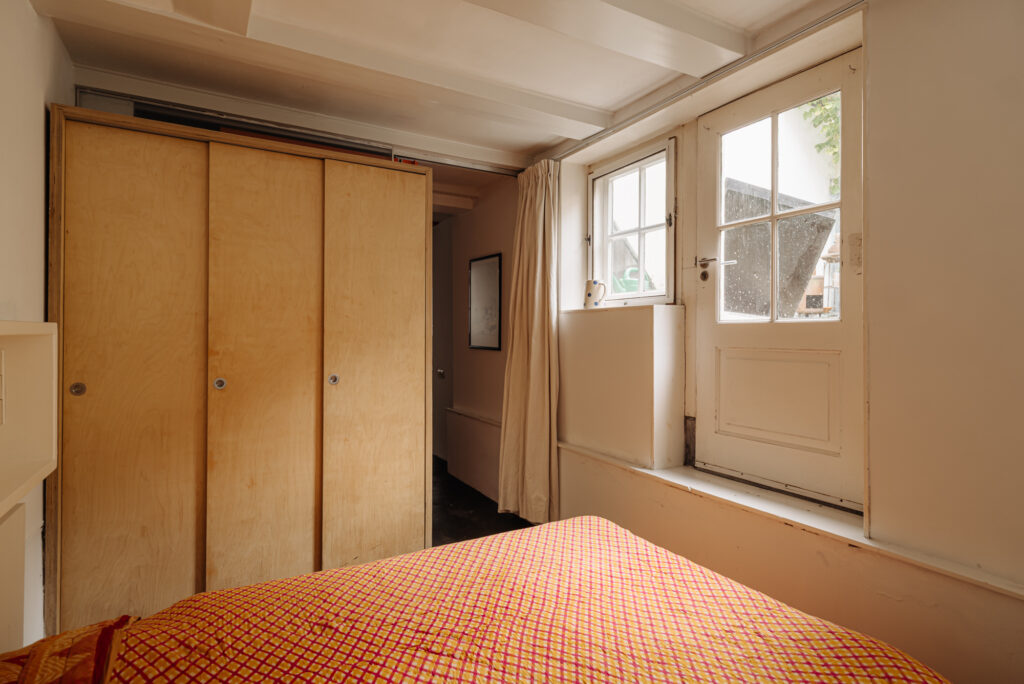
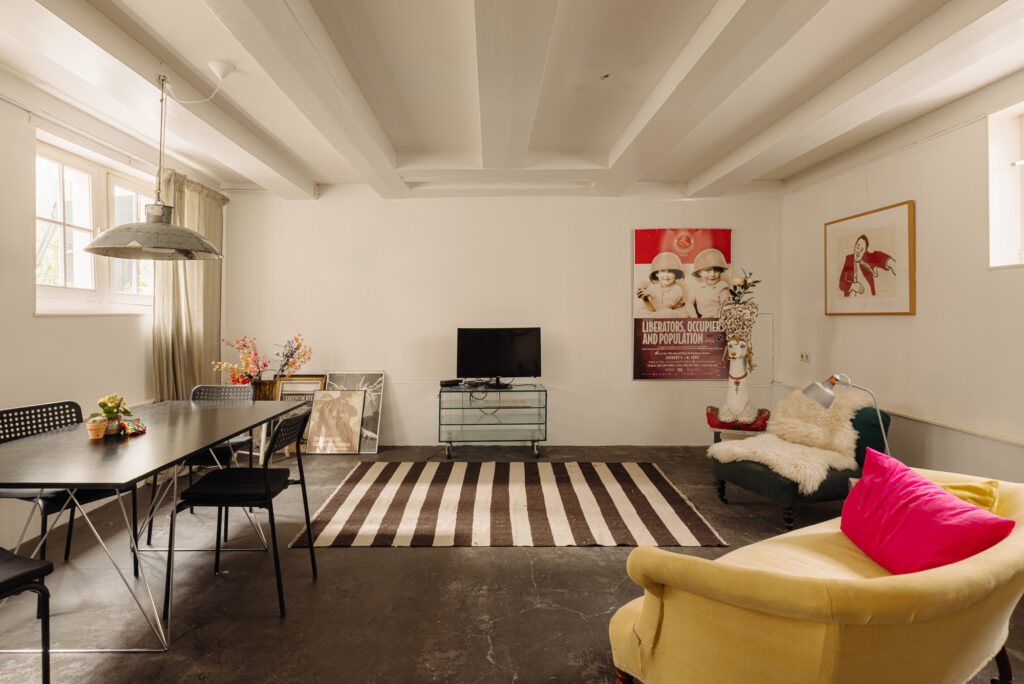
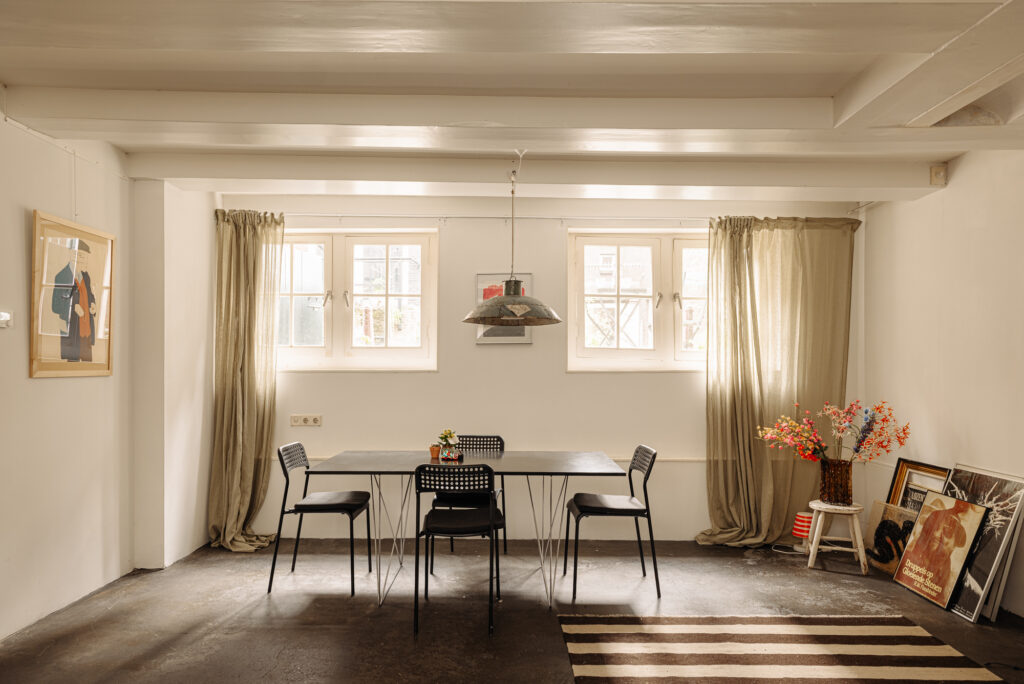
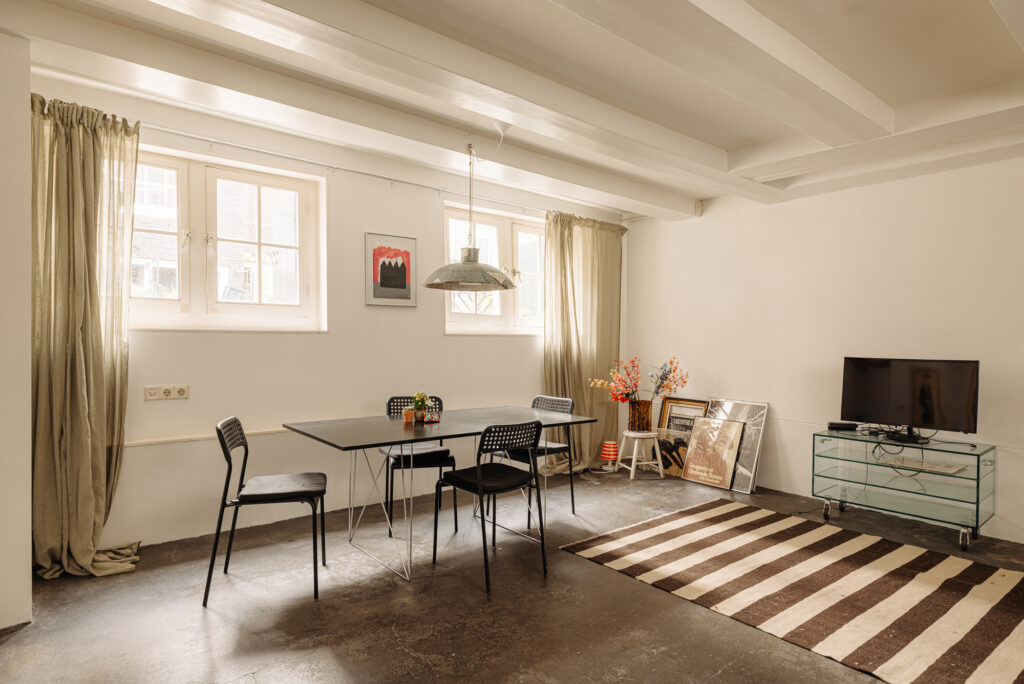
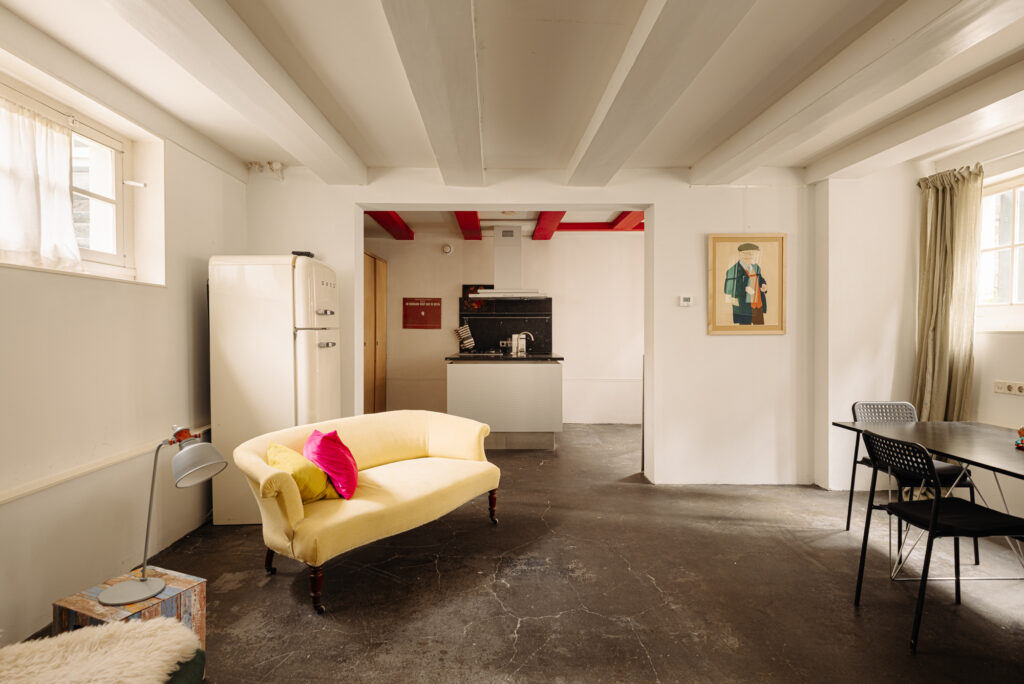
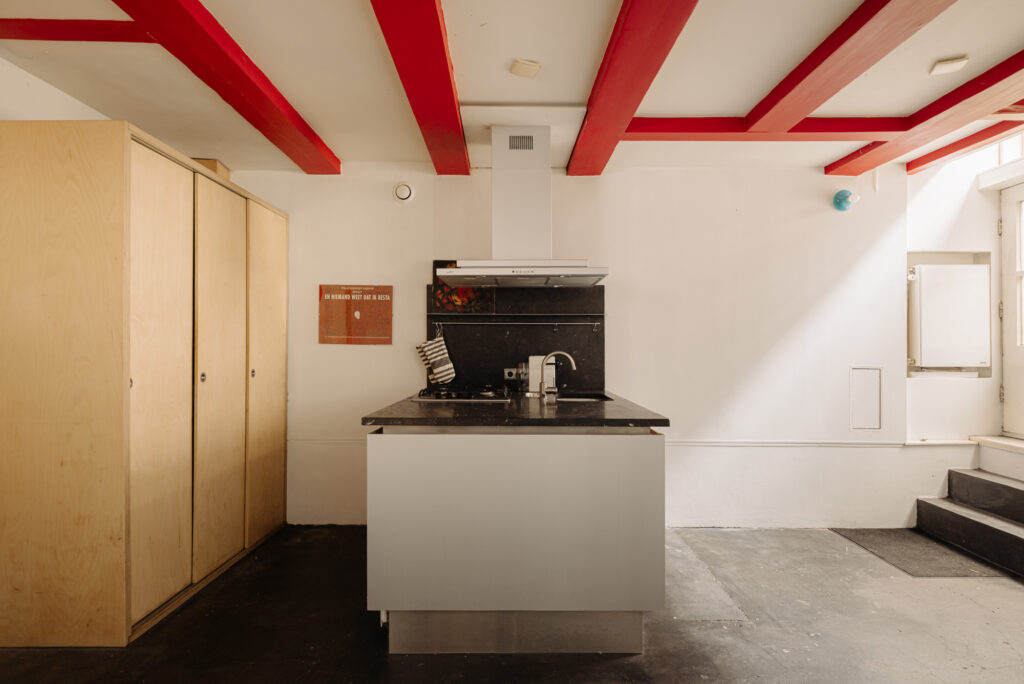
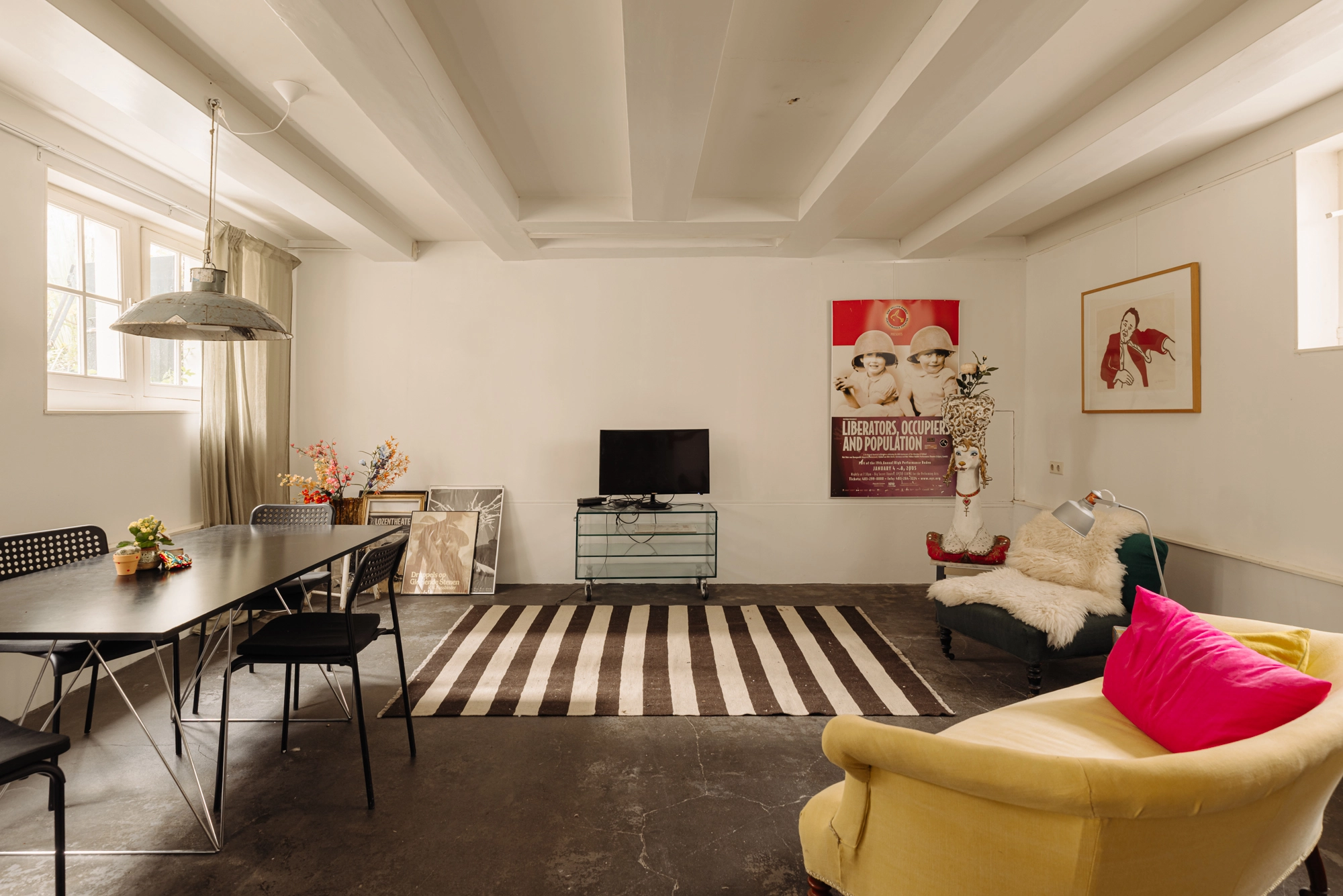
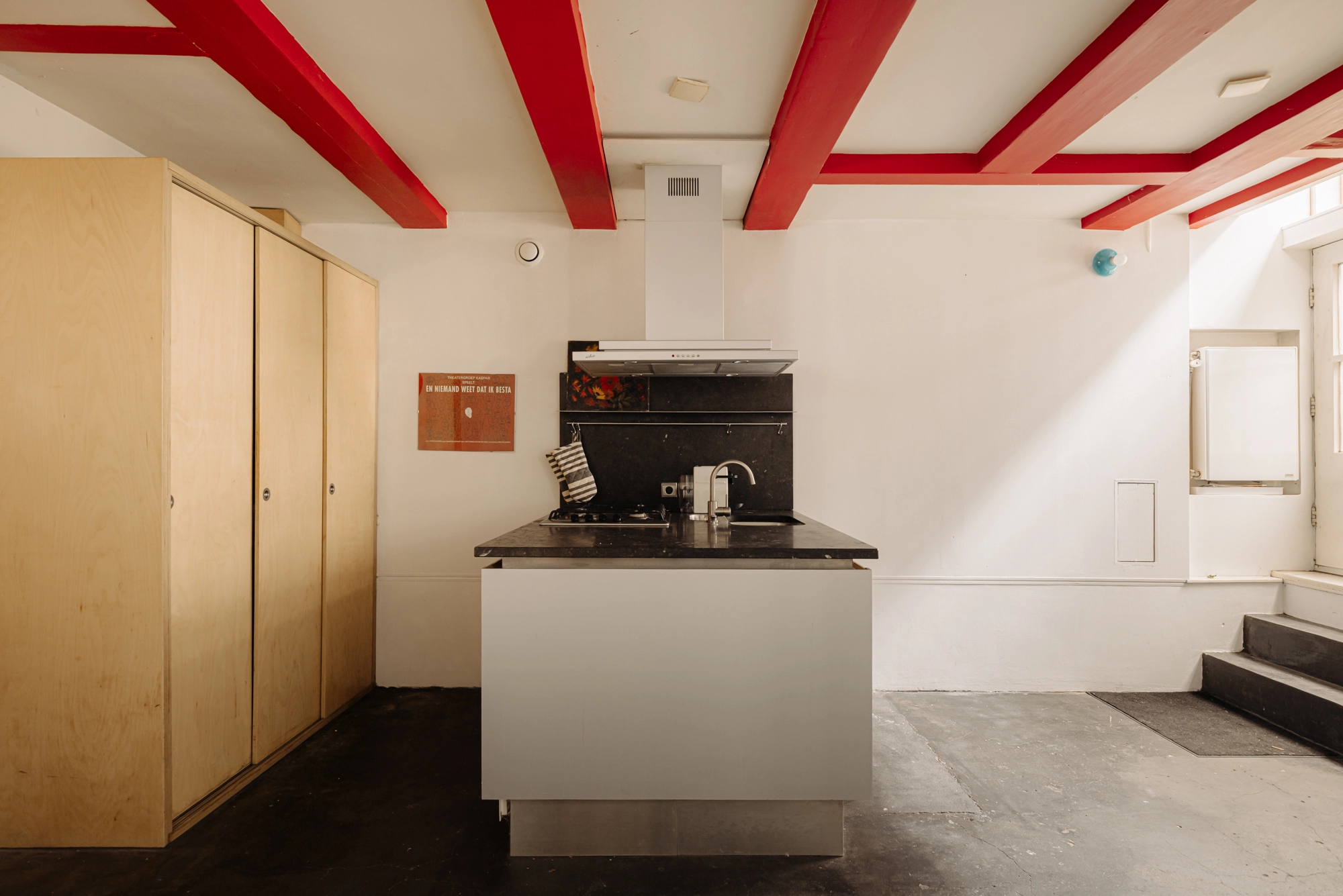
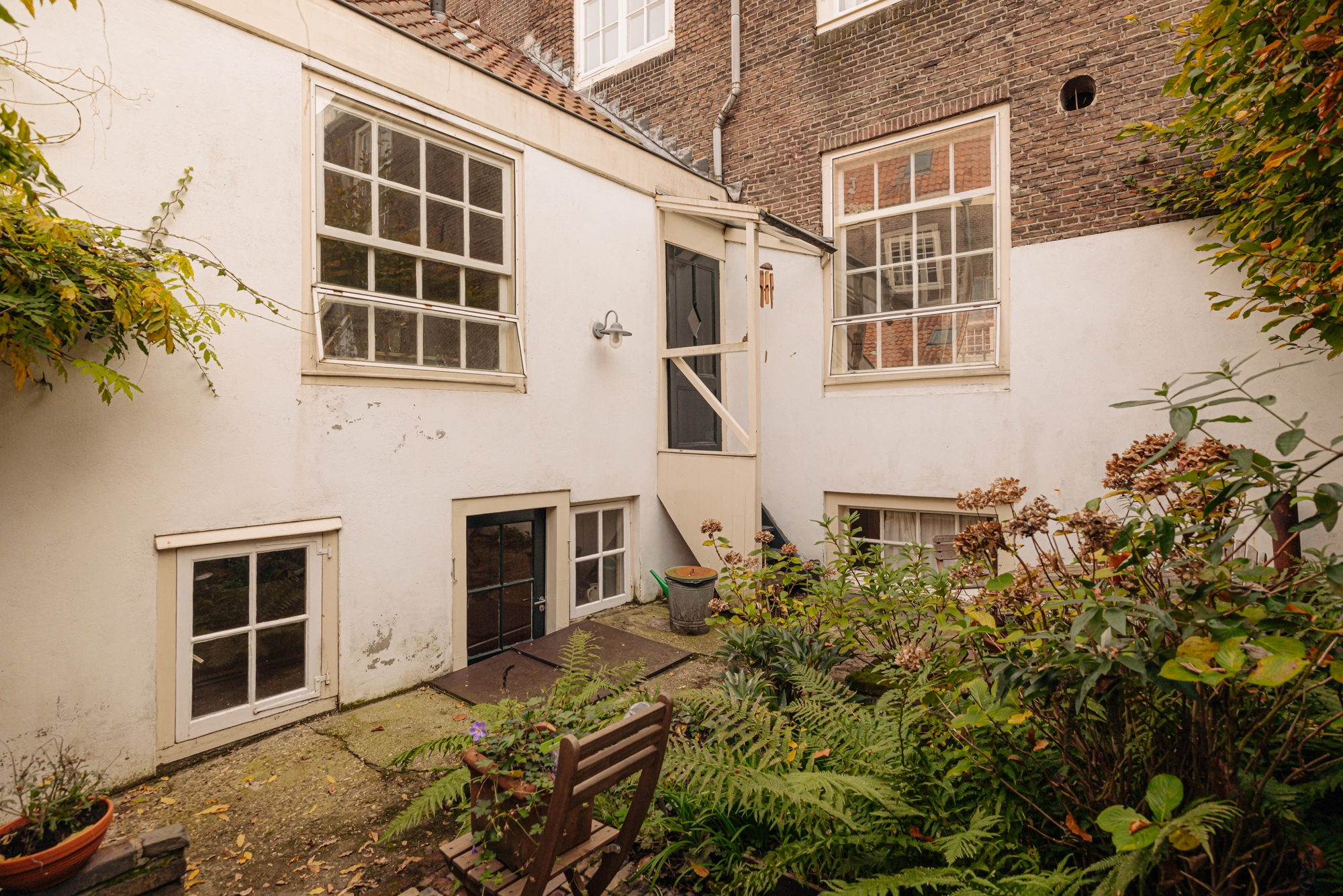
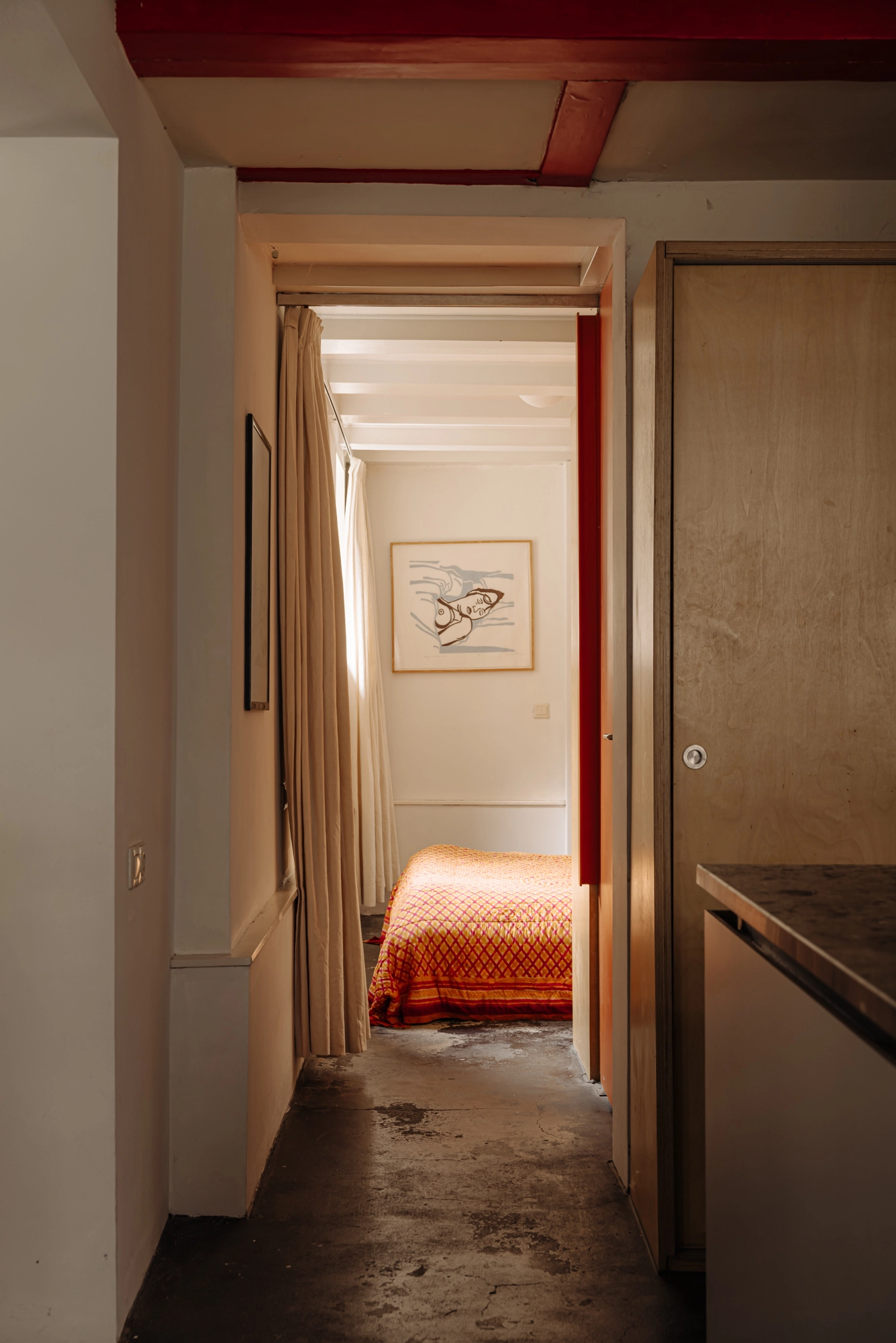
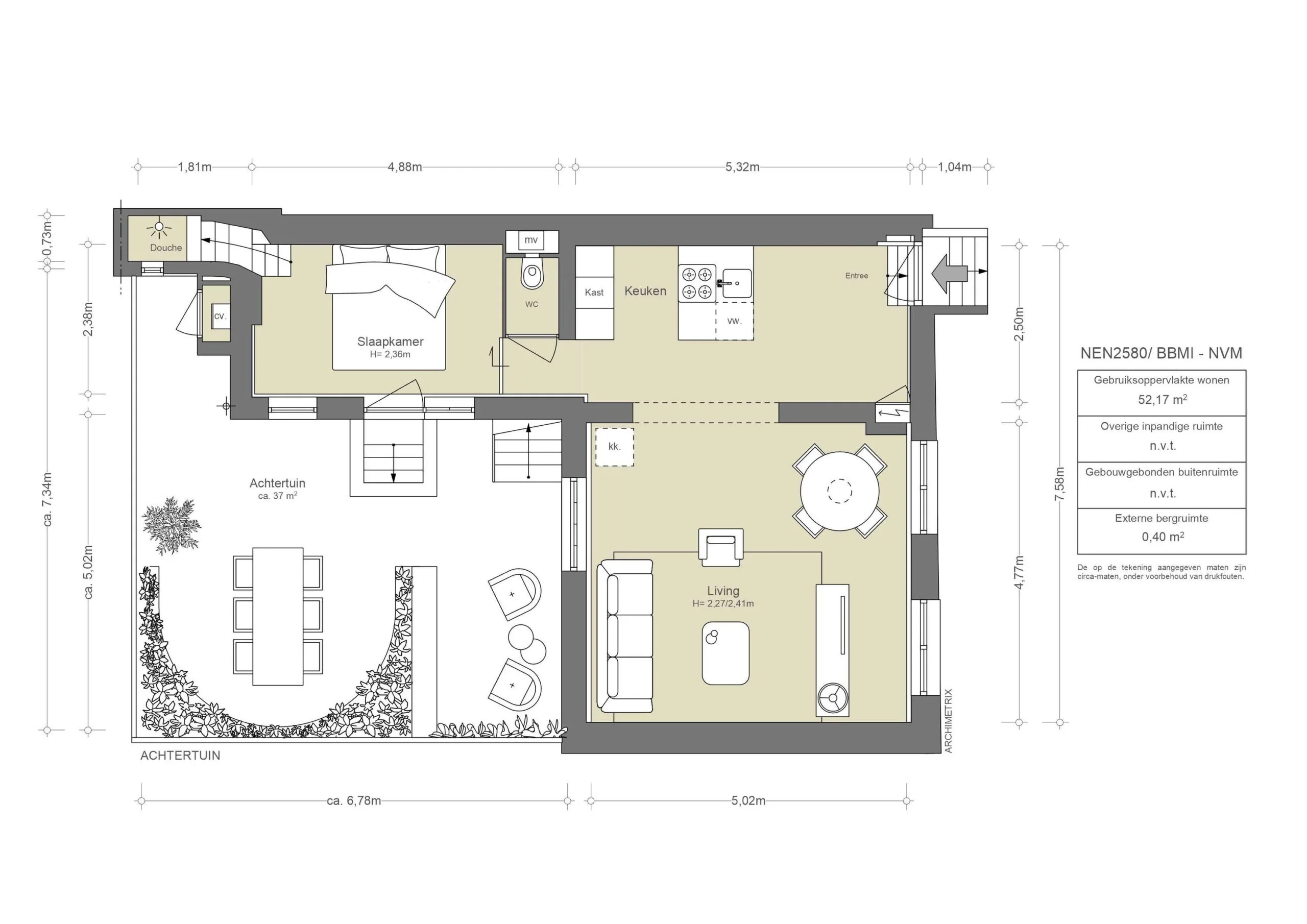
The souterrain is accessible via an internal staircase as well as a private entrance beneath the exterior steps. At the front is a bright living space with an open kitchen; at the rear, a bedroom with French doors opening into the garden. A bathroom with walk-in shower and toilet completes this level. It currently functions as an independent unit but can easily be reconnected to the main house.
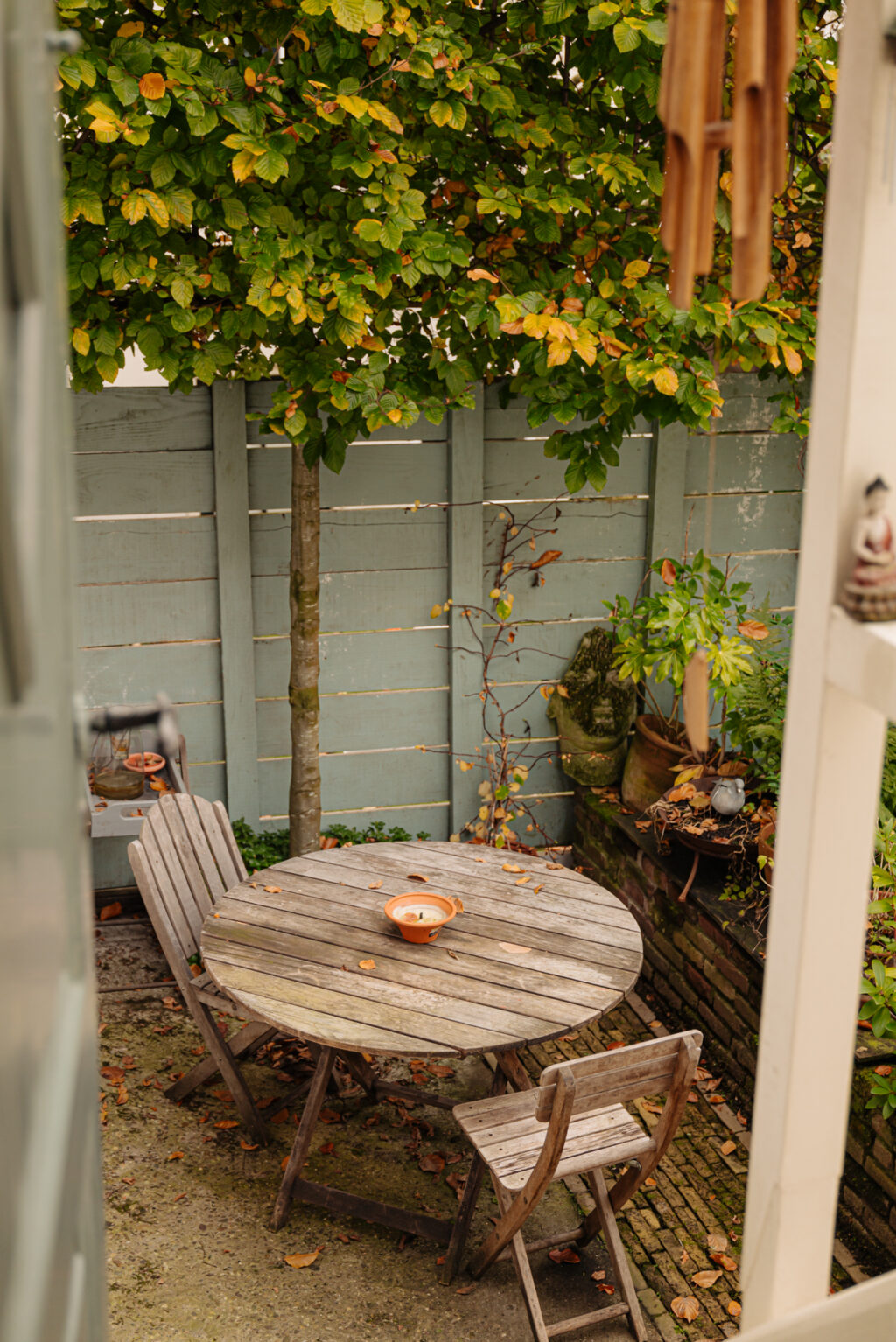
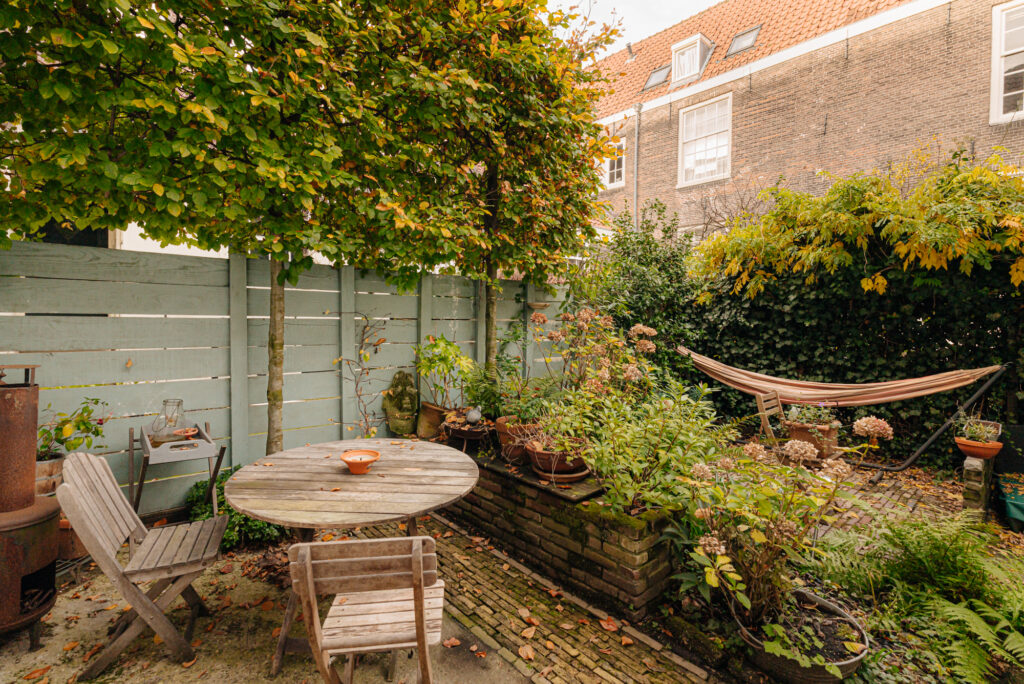
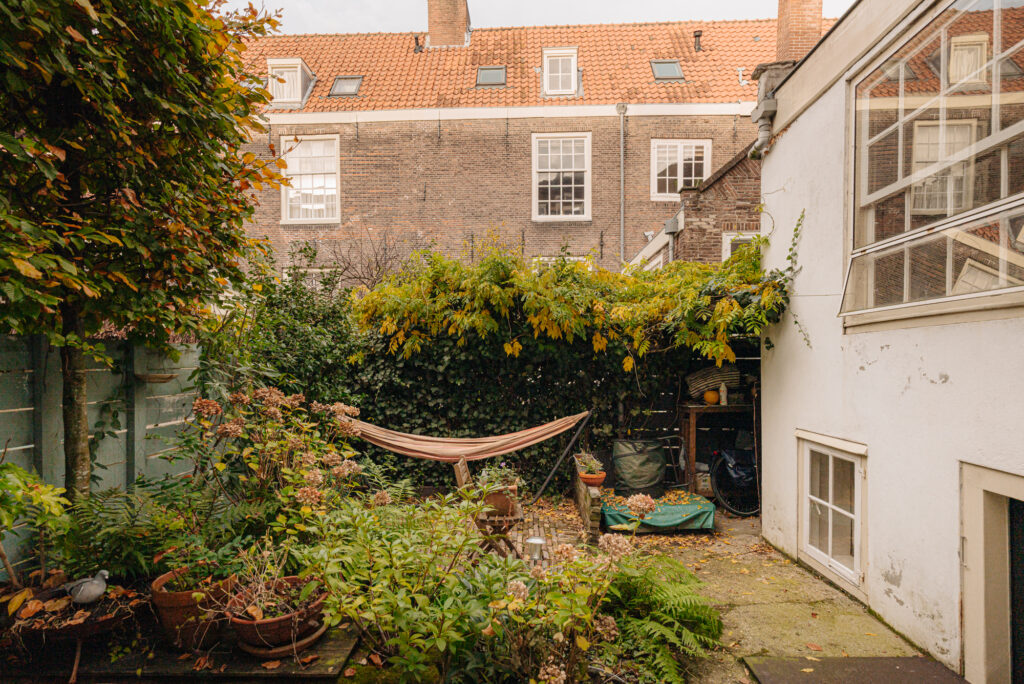
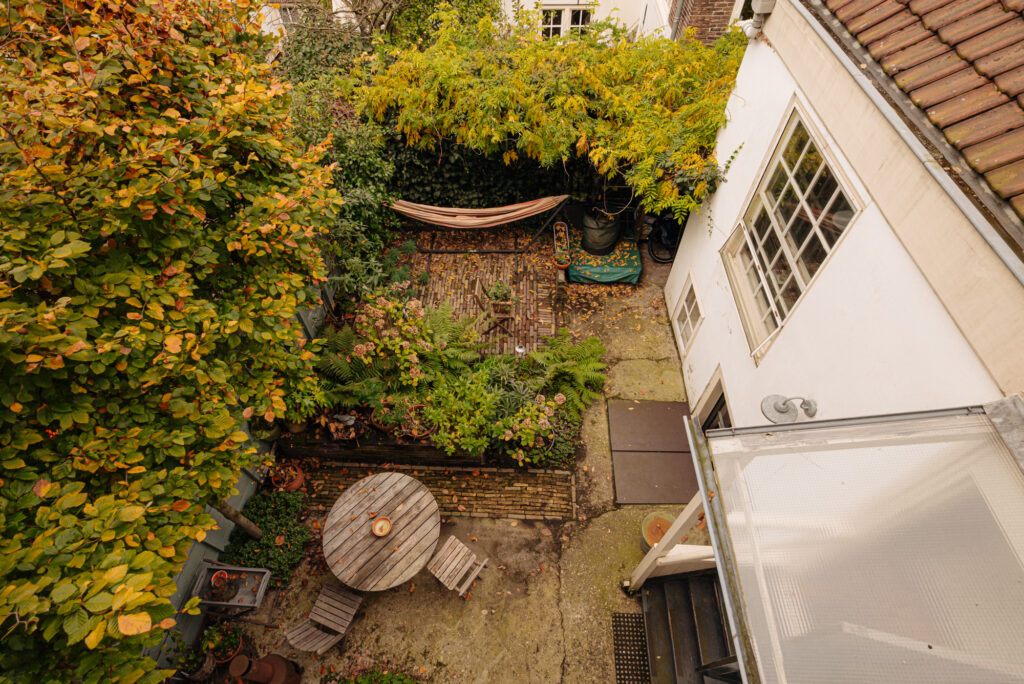
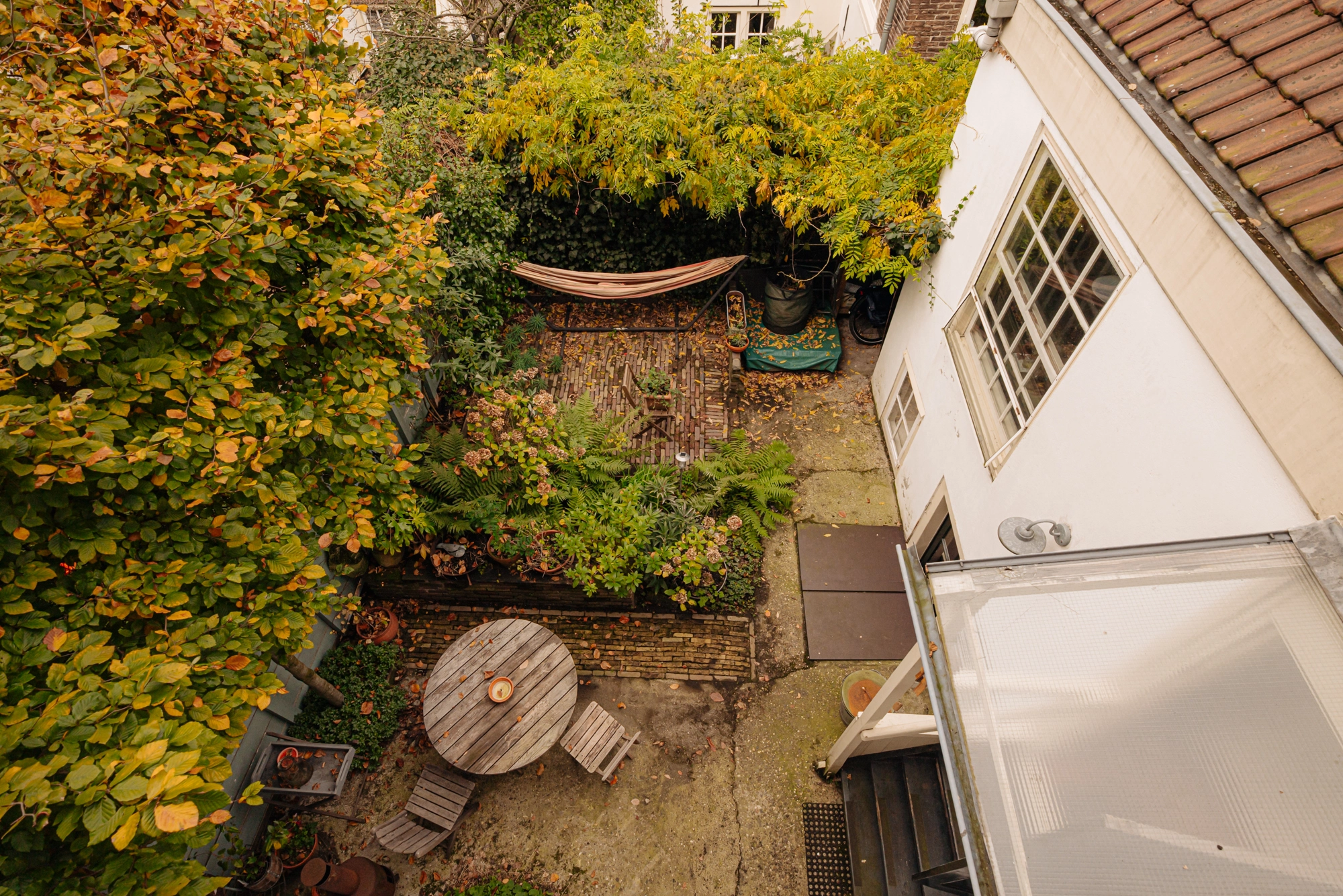
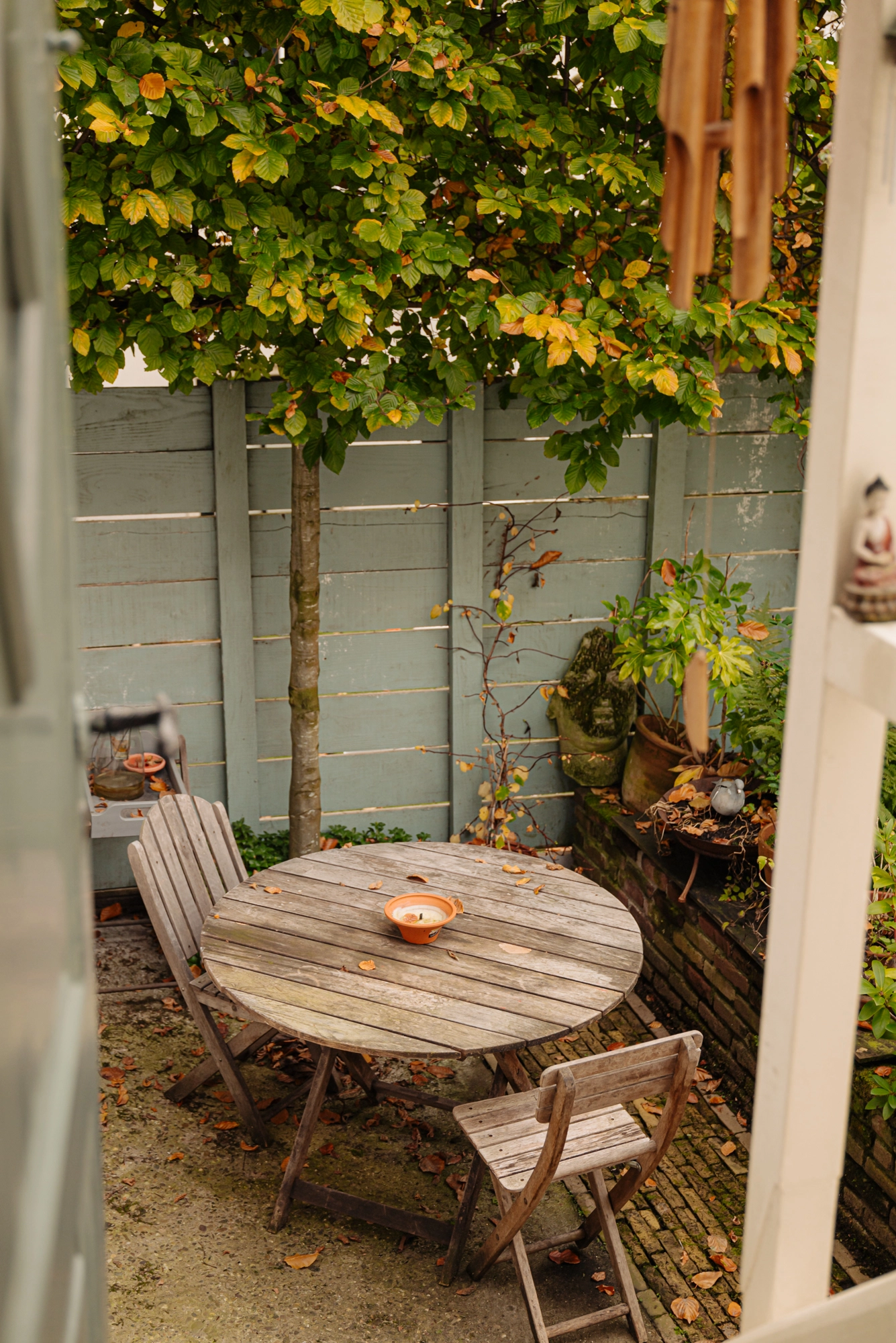
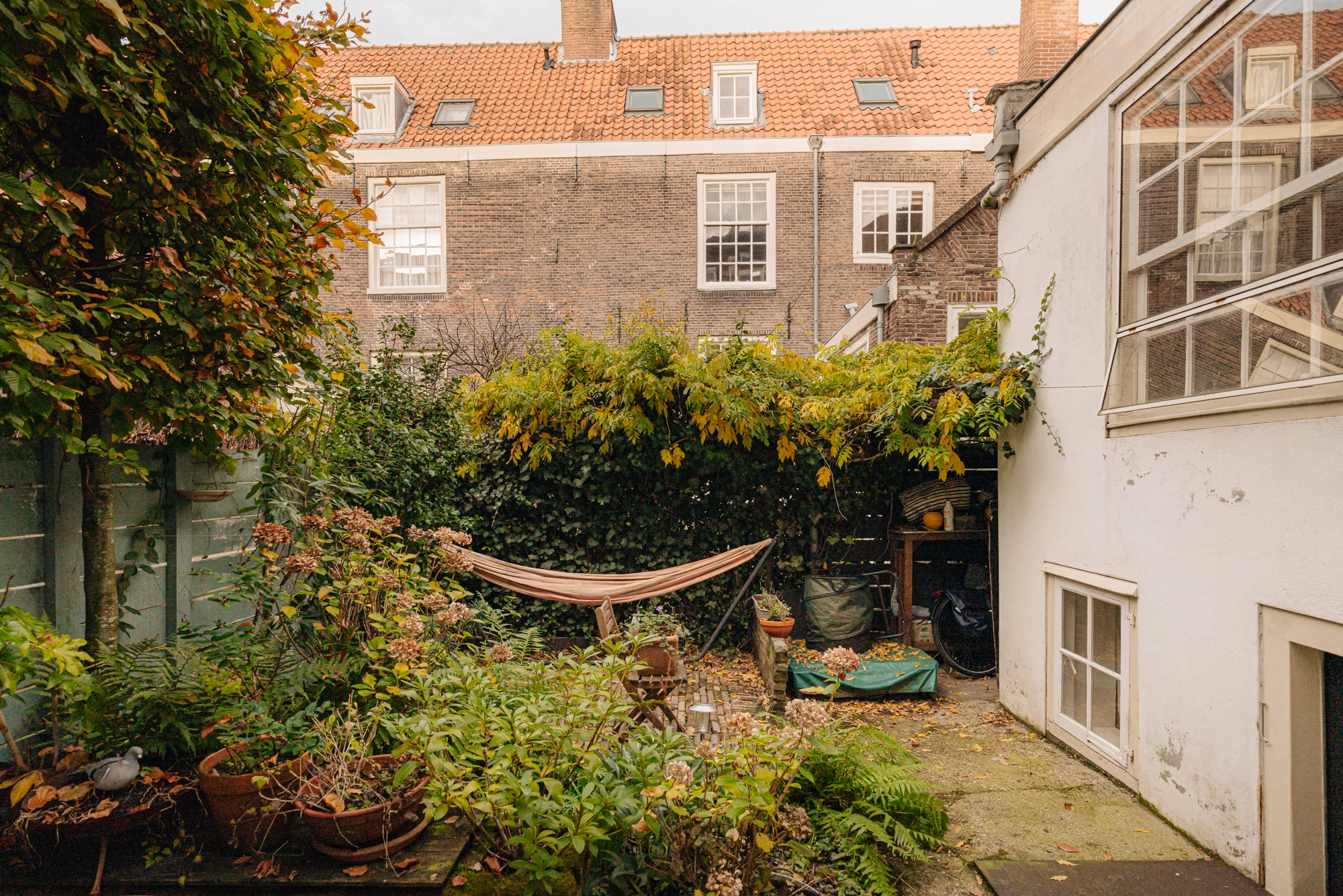
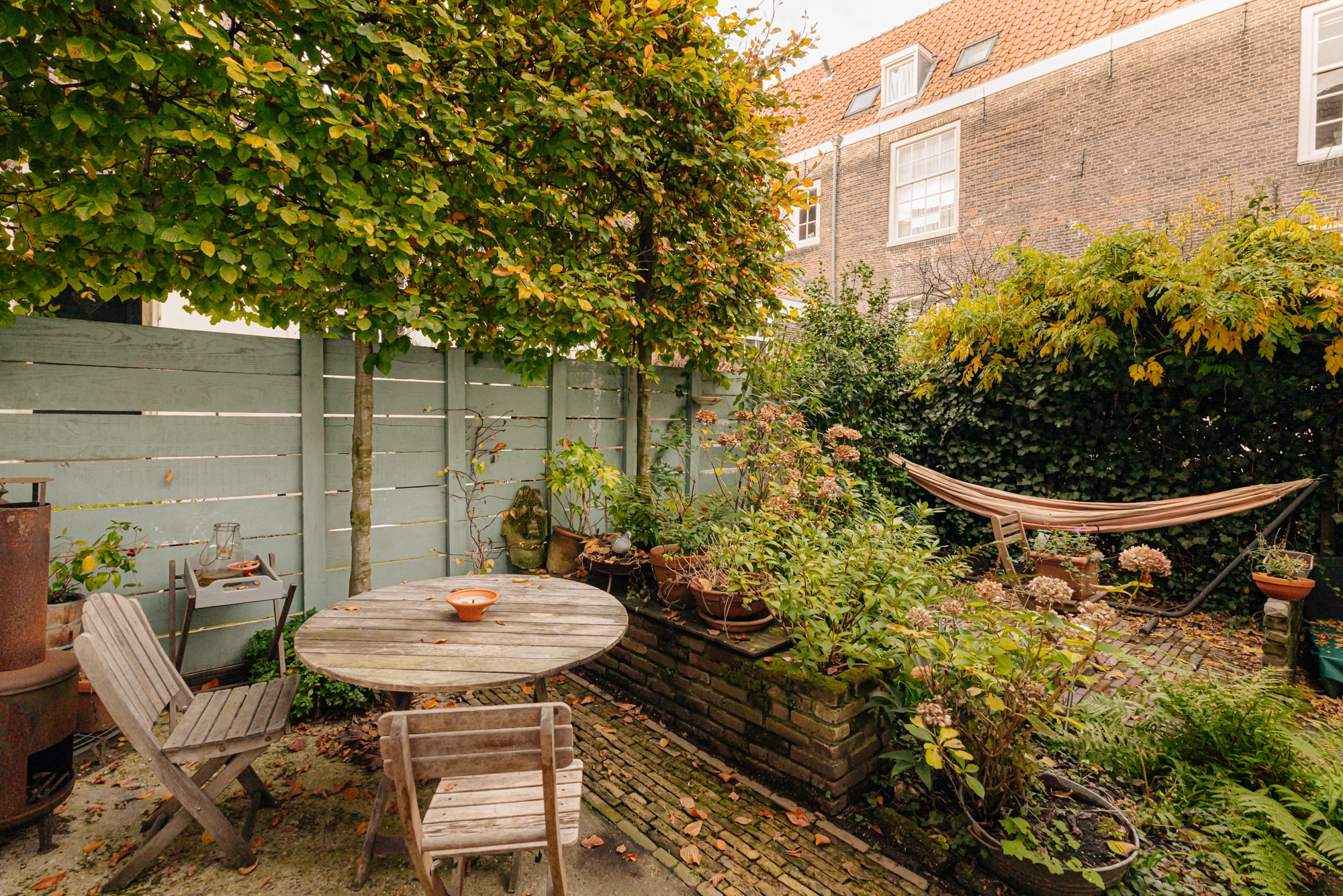
The garden of approximately 37 m² faces north but benefits from generous afternoon and evening sun thanks to the low-rise buildings at the rear. Enclosed by greenery, the outdoor space connects directly to the souterrain.
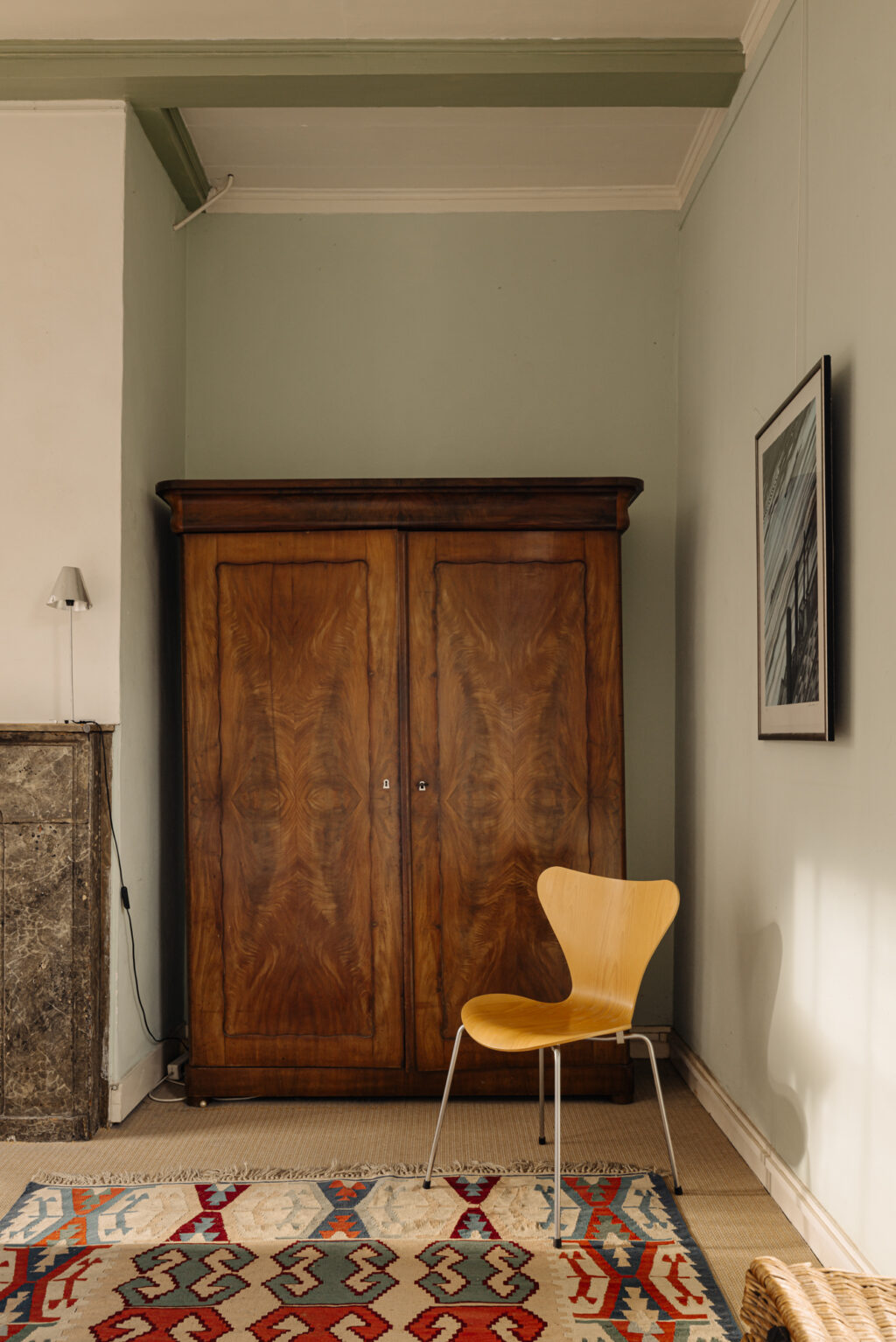
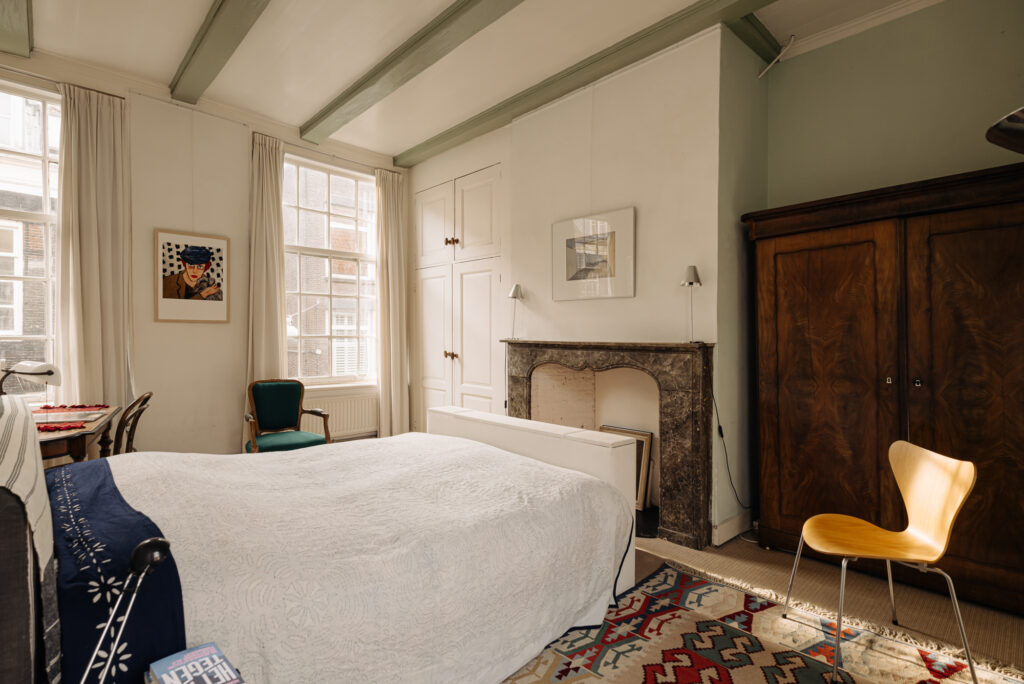
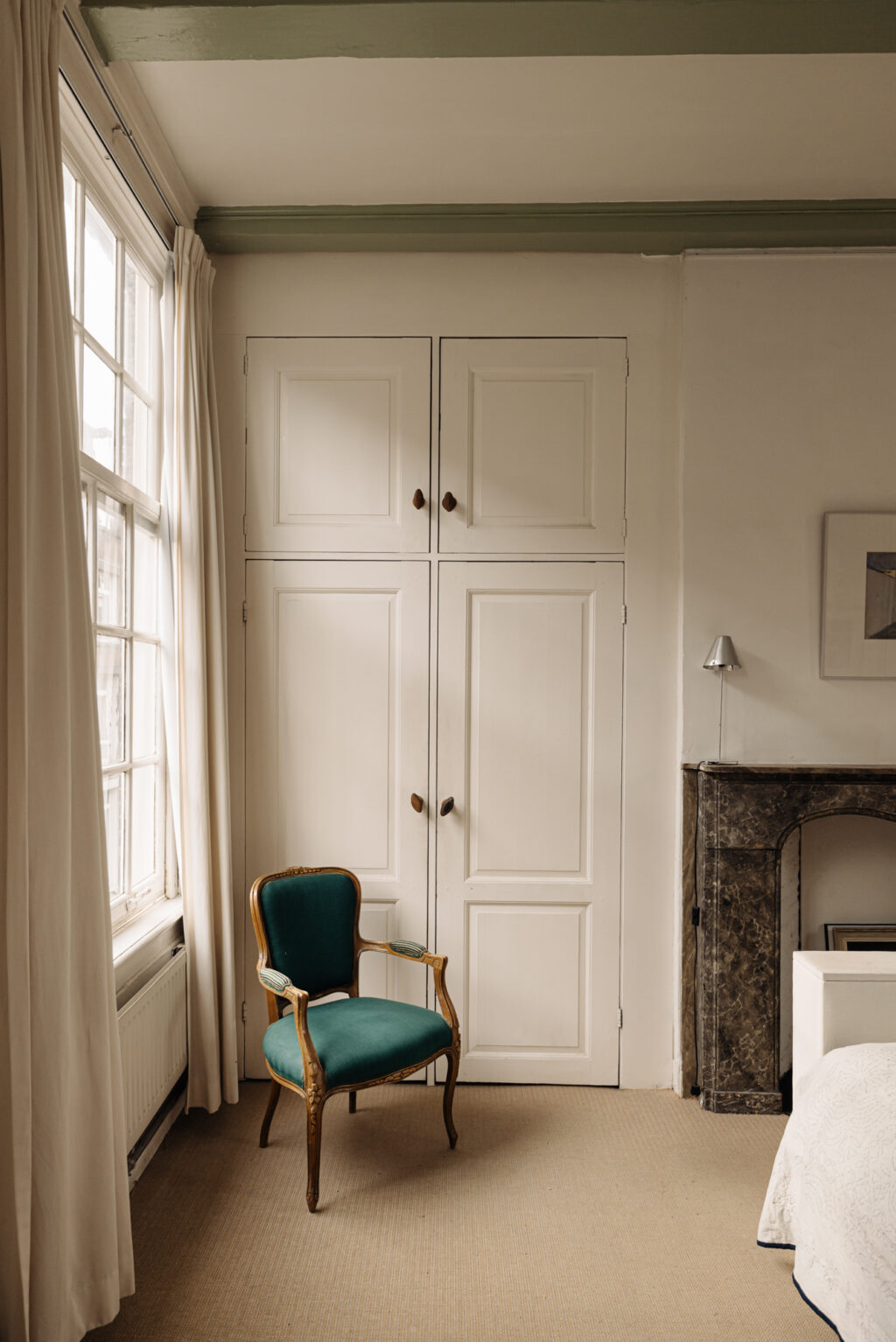
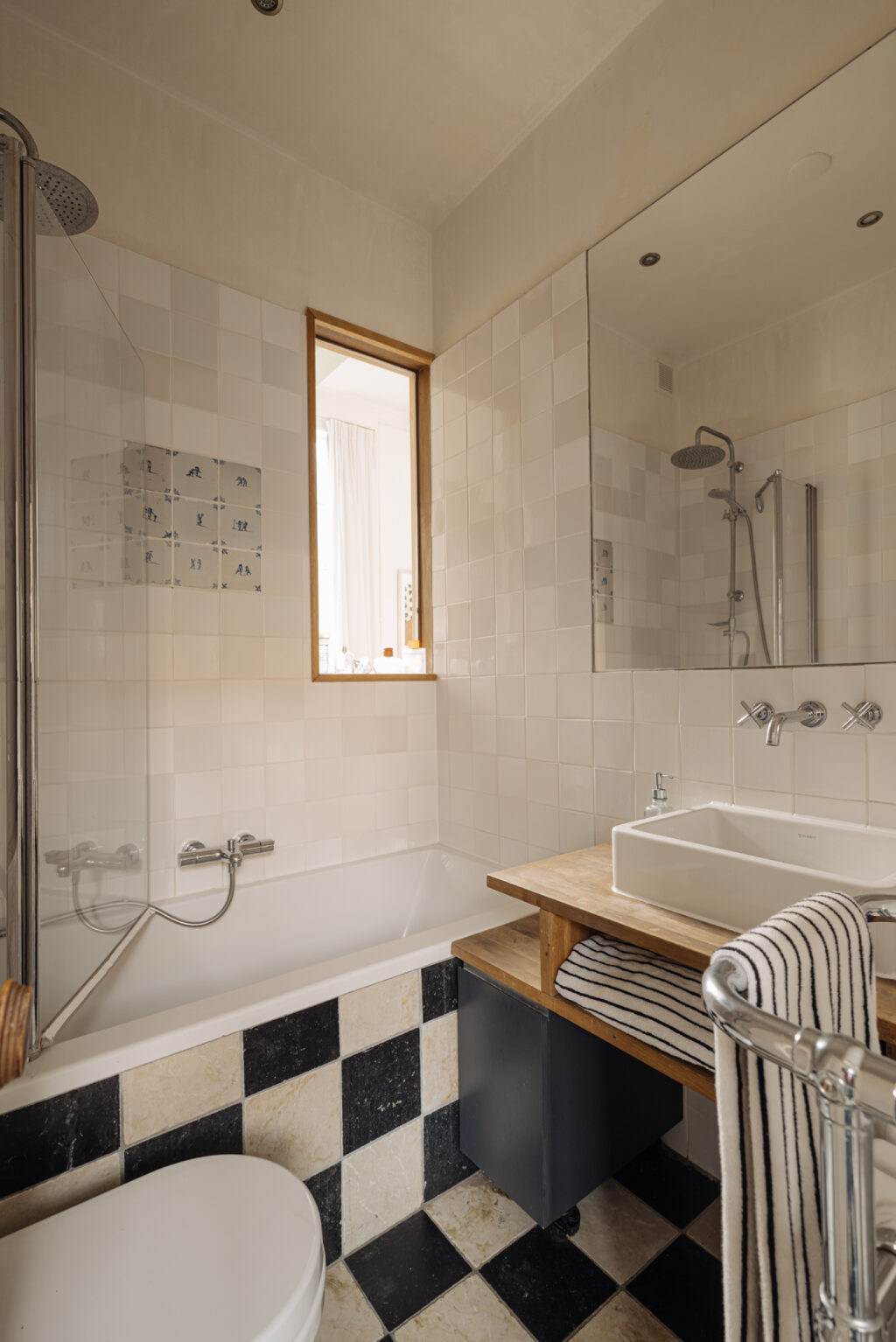
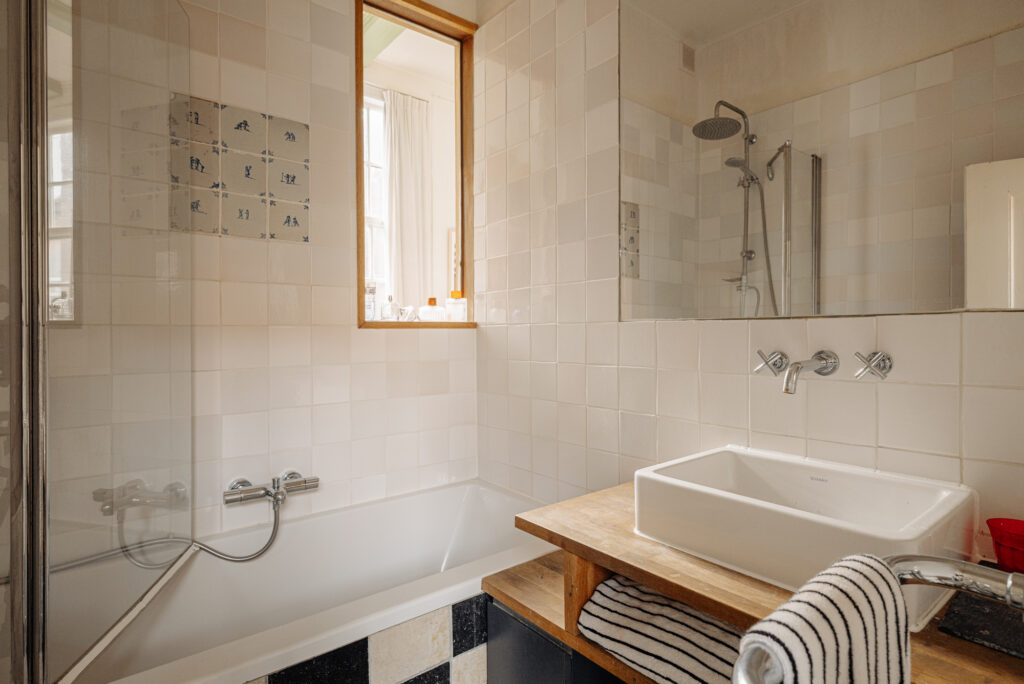
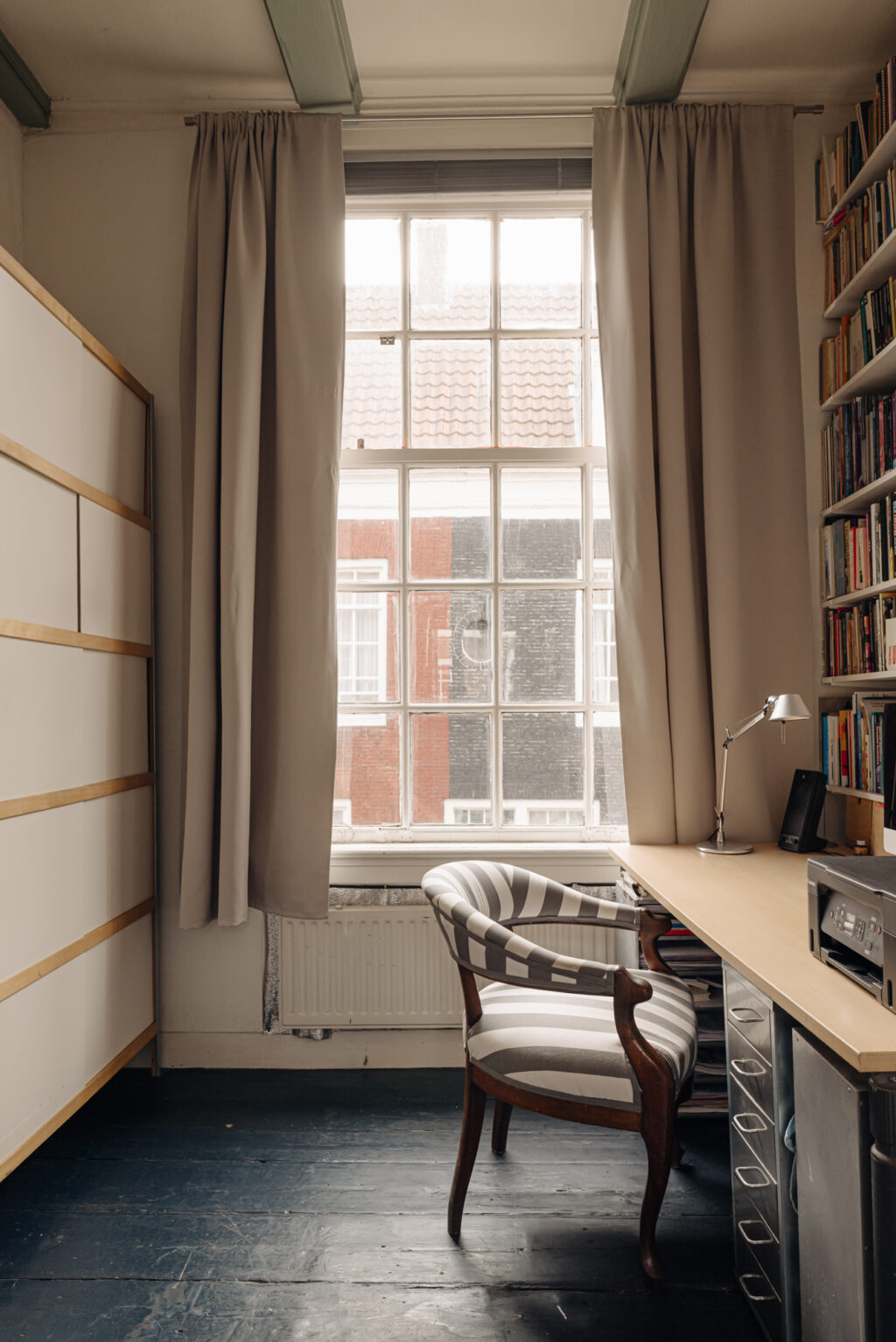
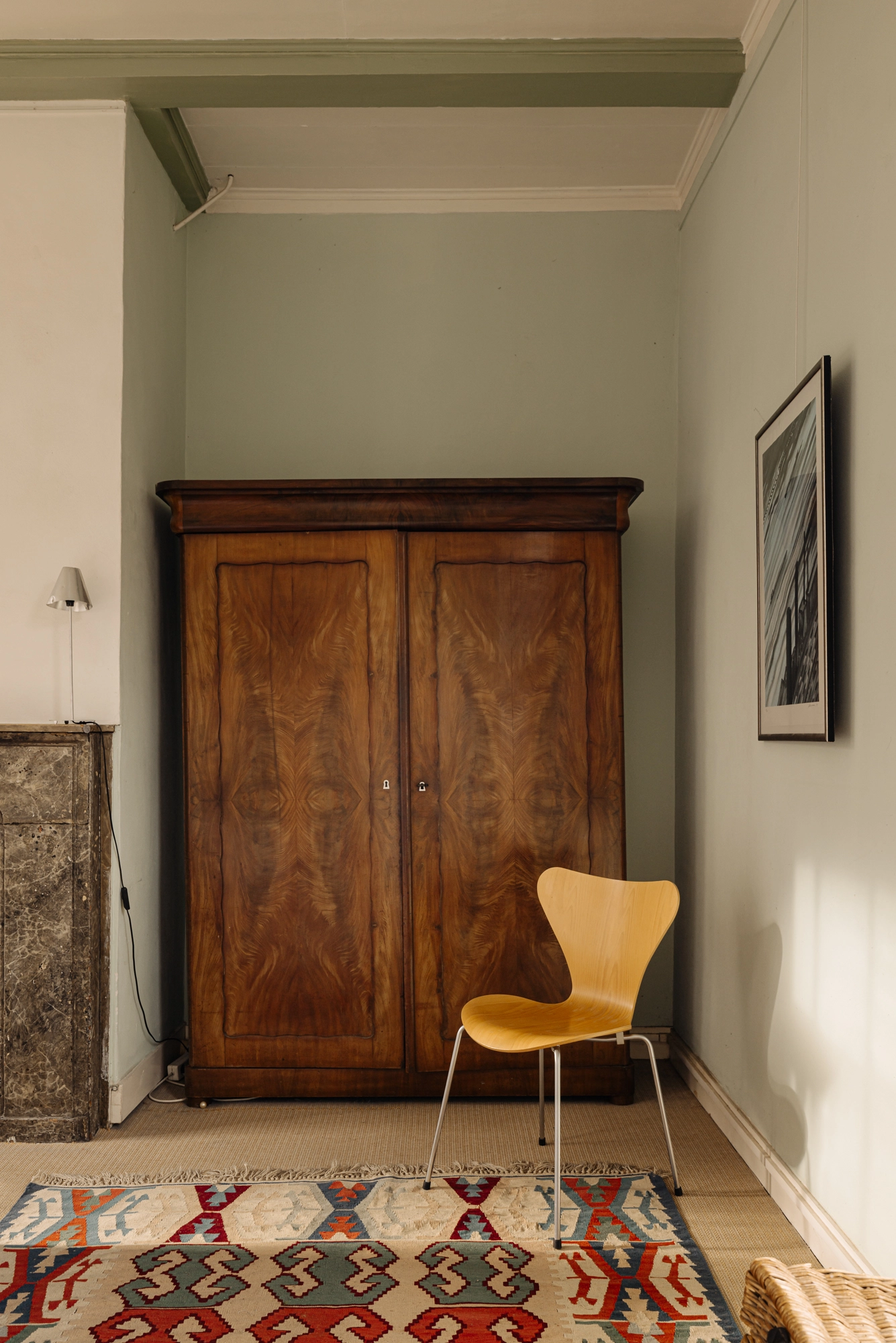
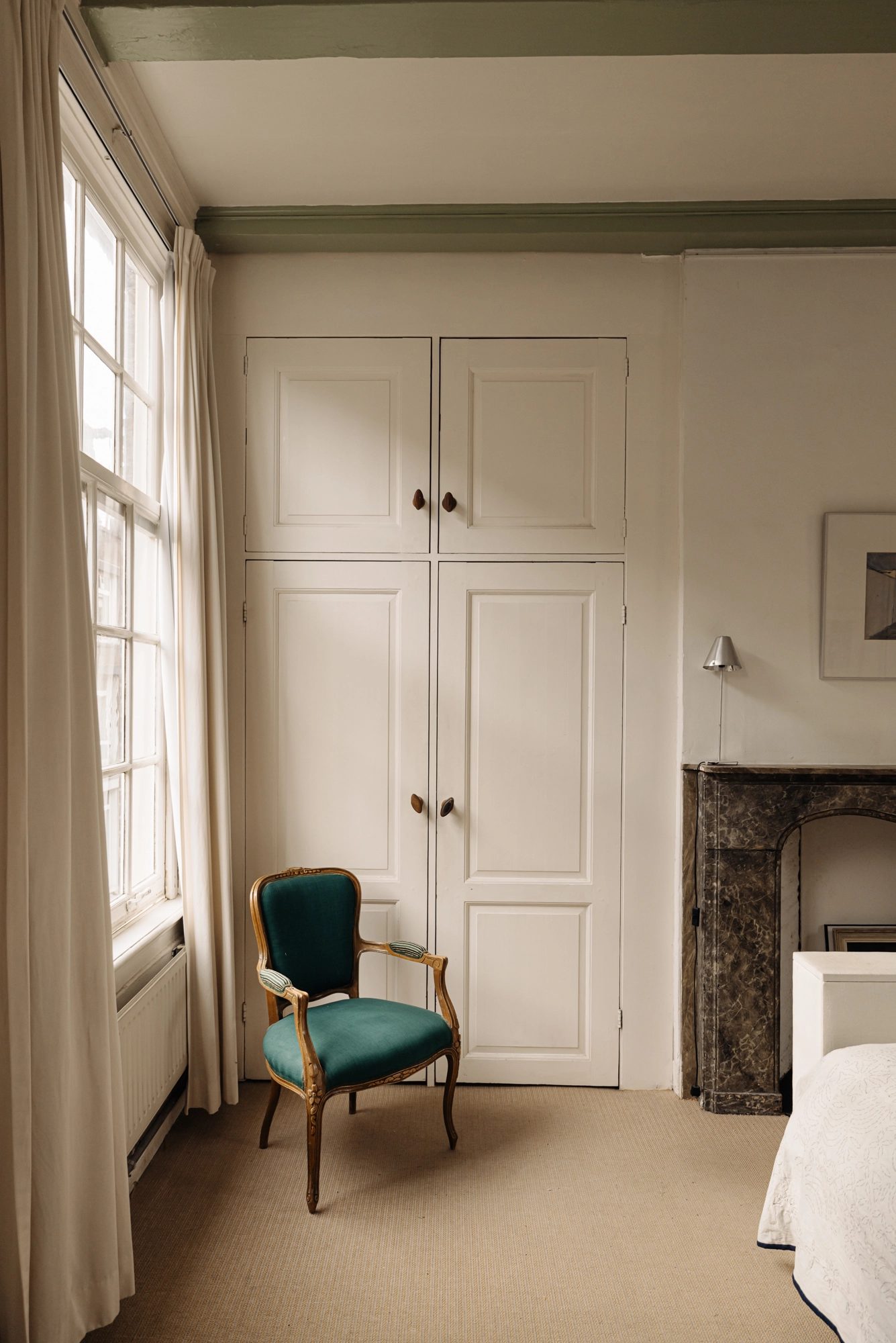
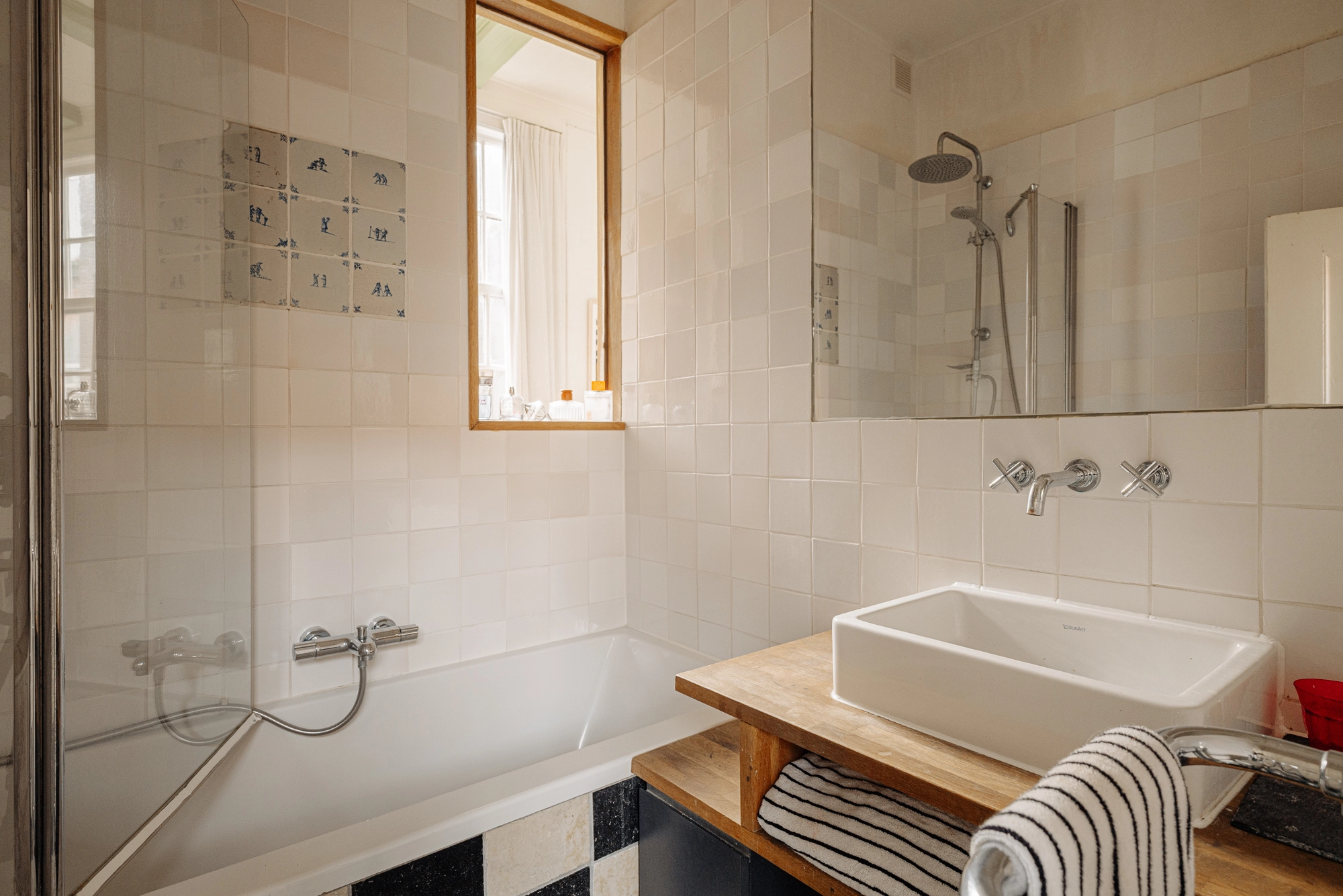
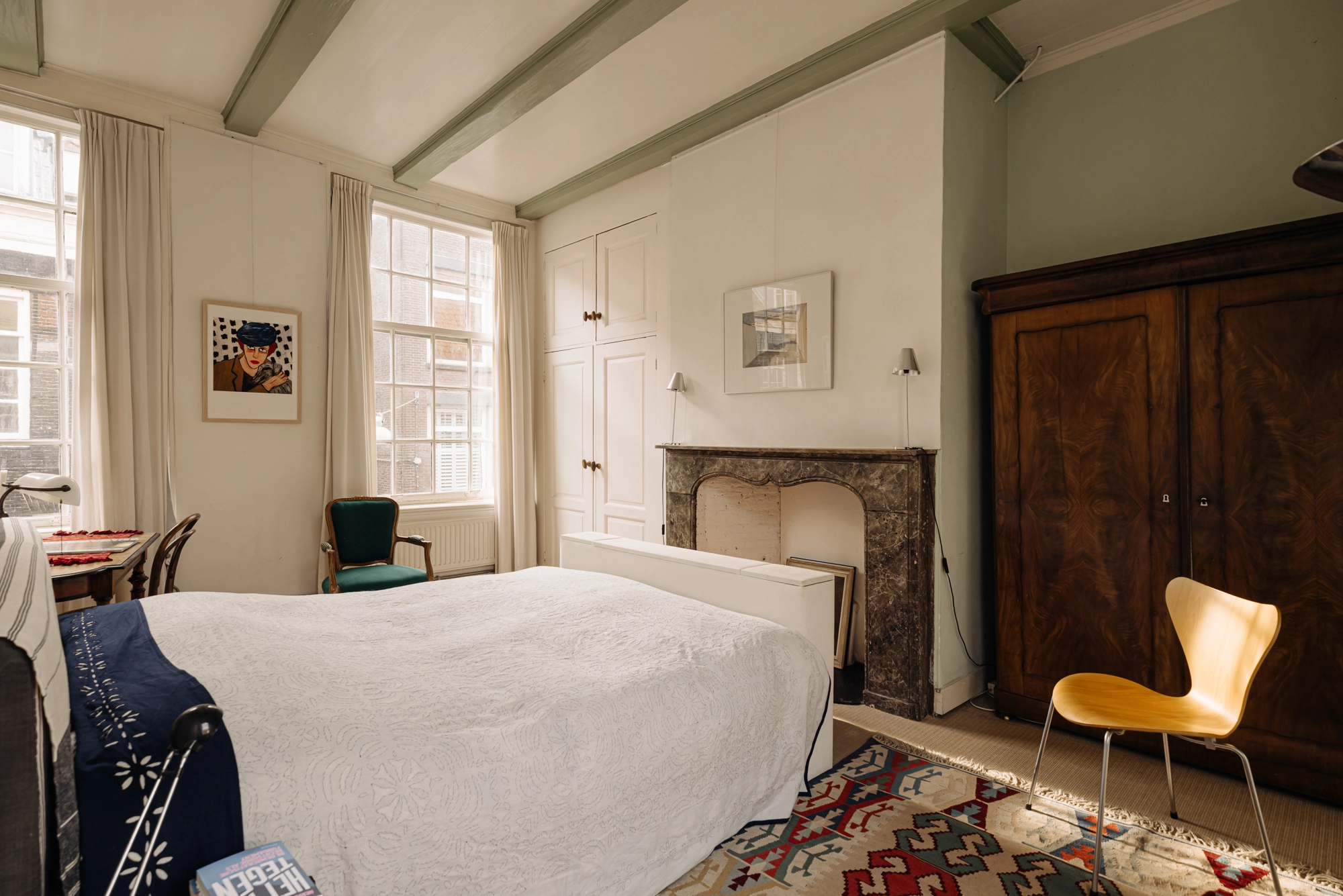
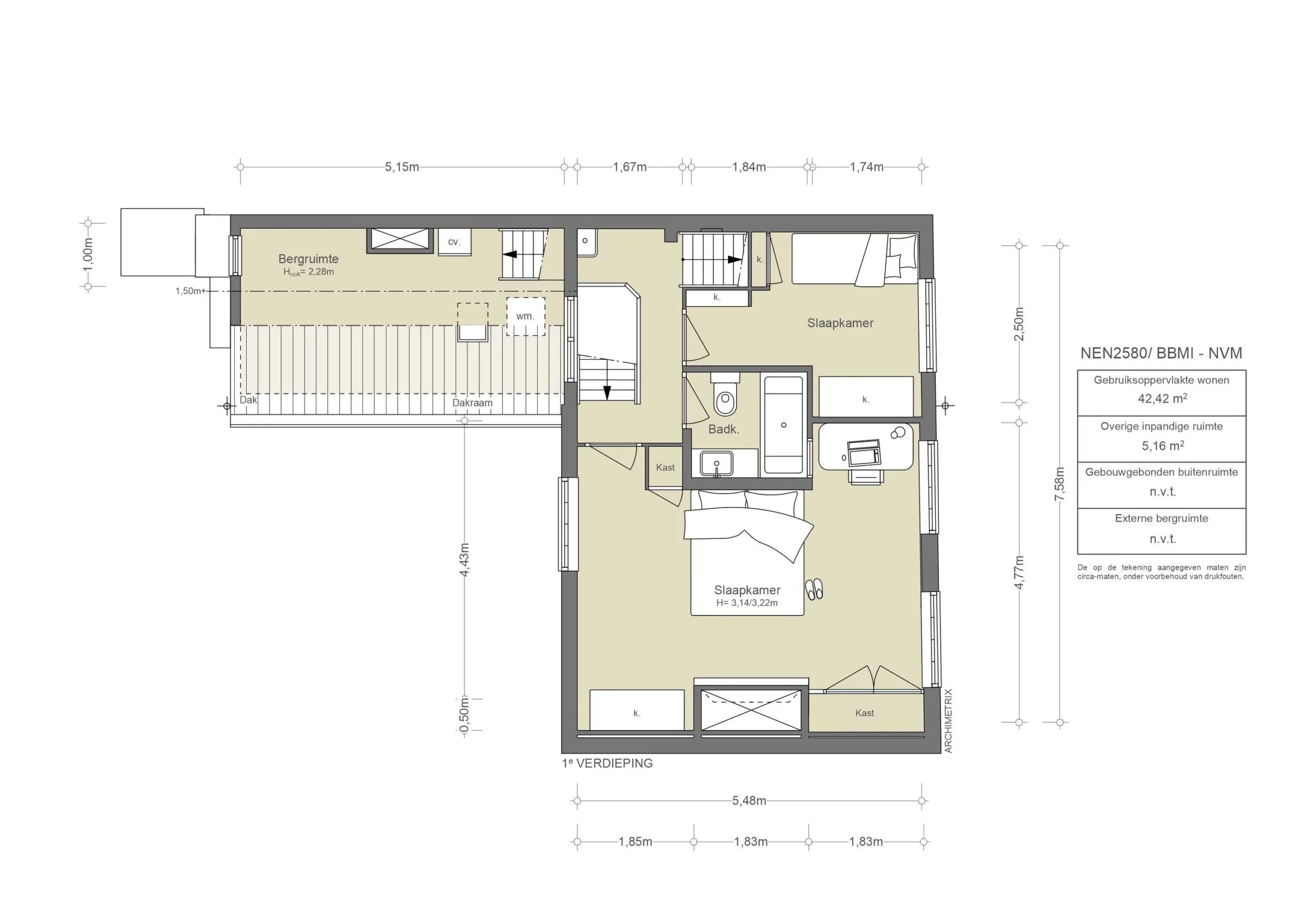
On the first floor are two bedrooms and a bathroom. The room at the front is spacious, with three tall windows, built-in wardrobes and a fireplace. The room at the rear overlooks the inner gardens. The bathroom features black-and-white floor tiles, a bath with shower, toilet and washbasin.
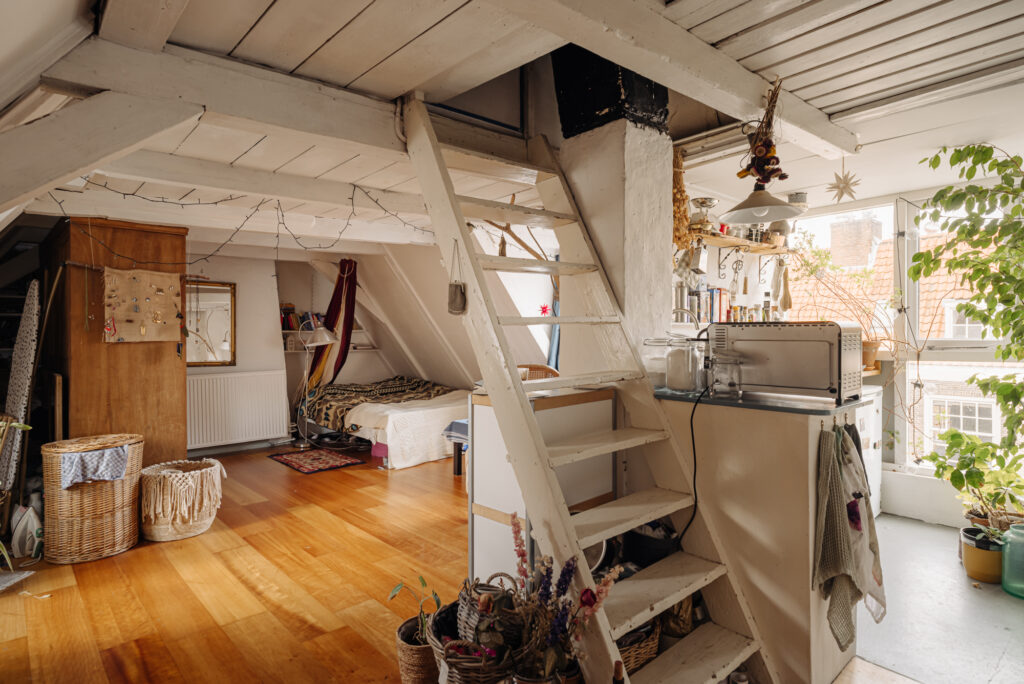
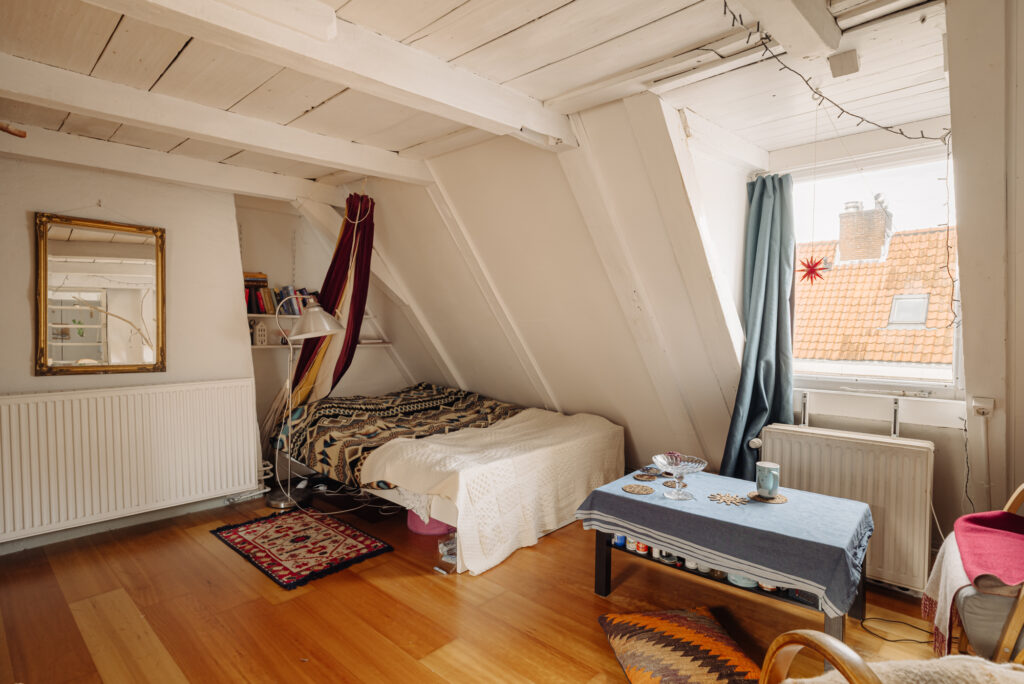
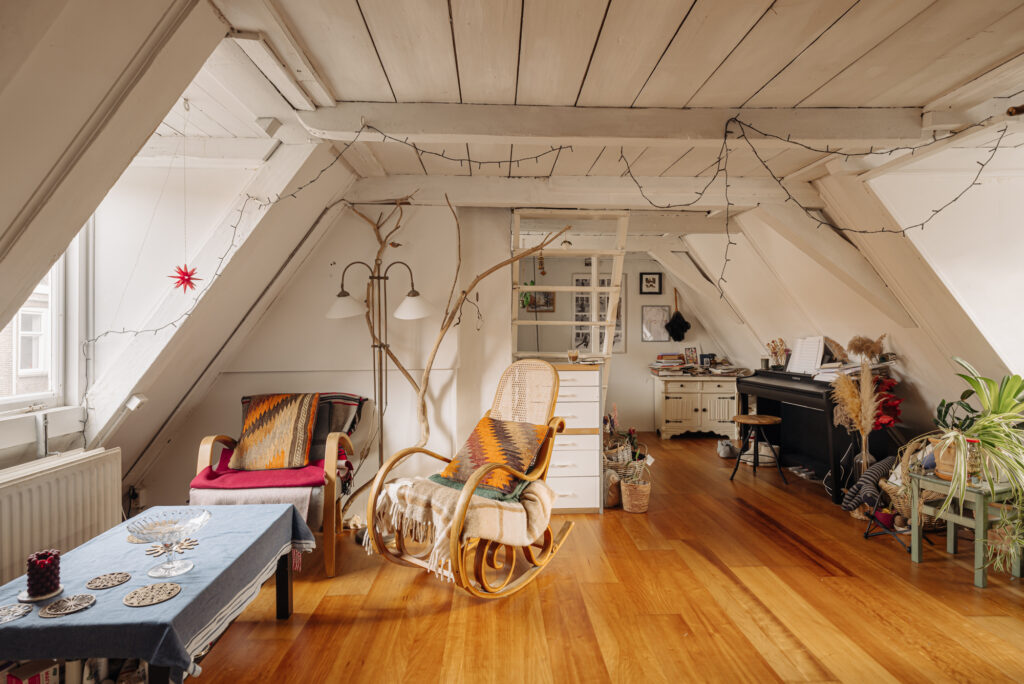
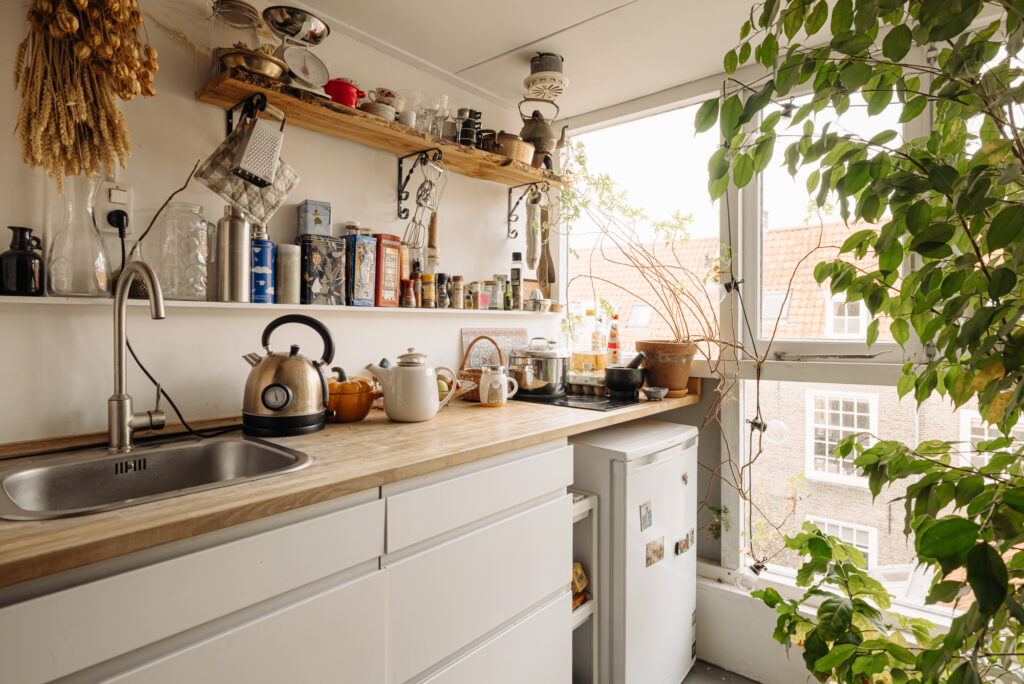
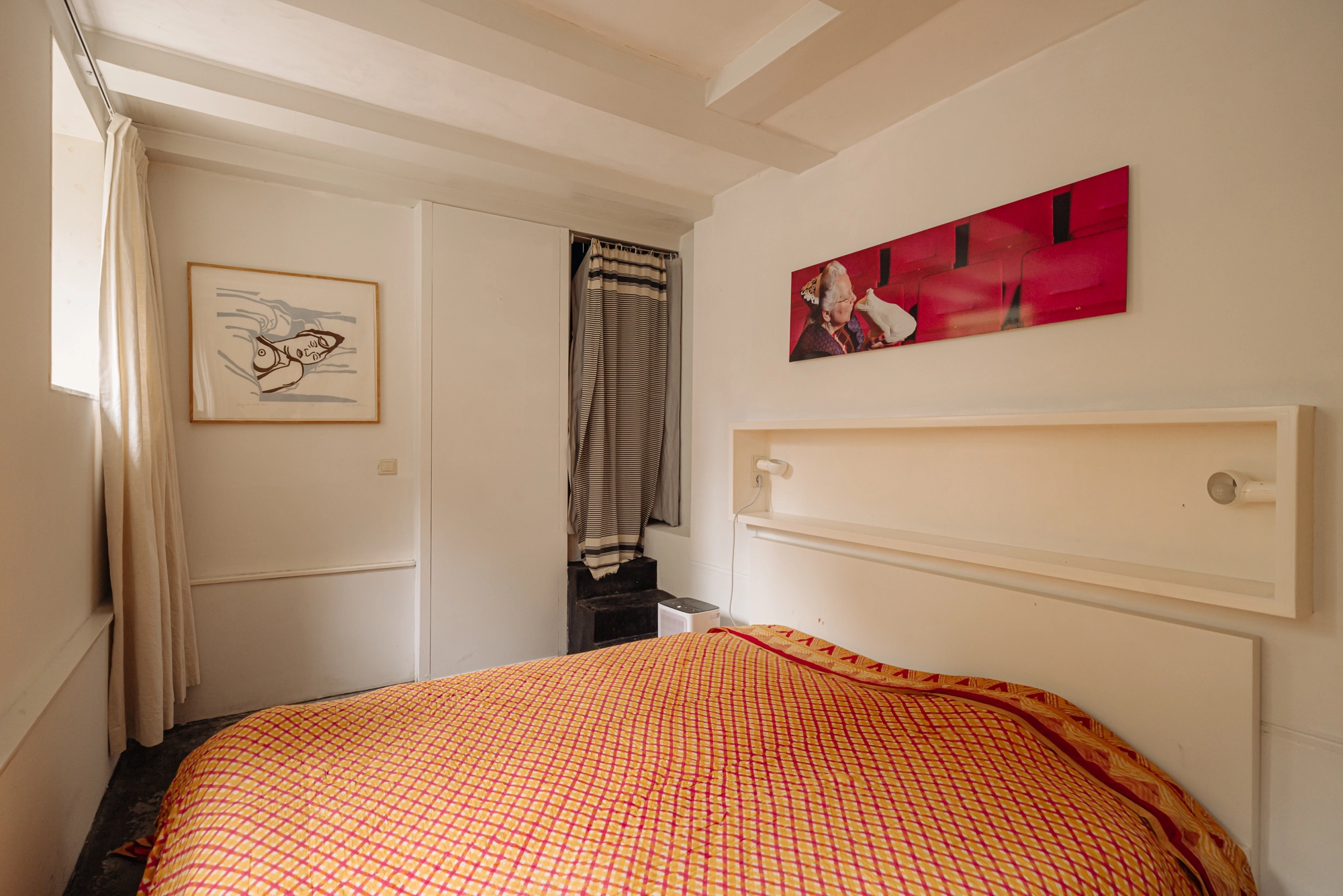
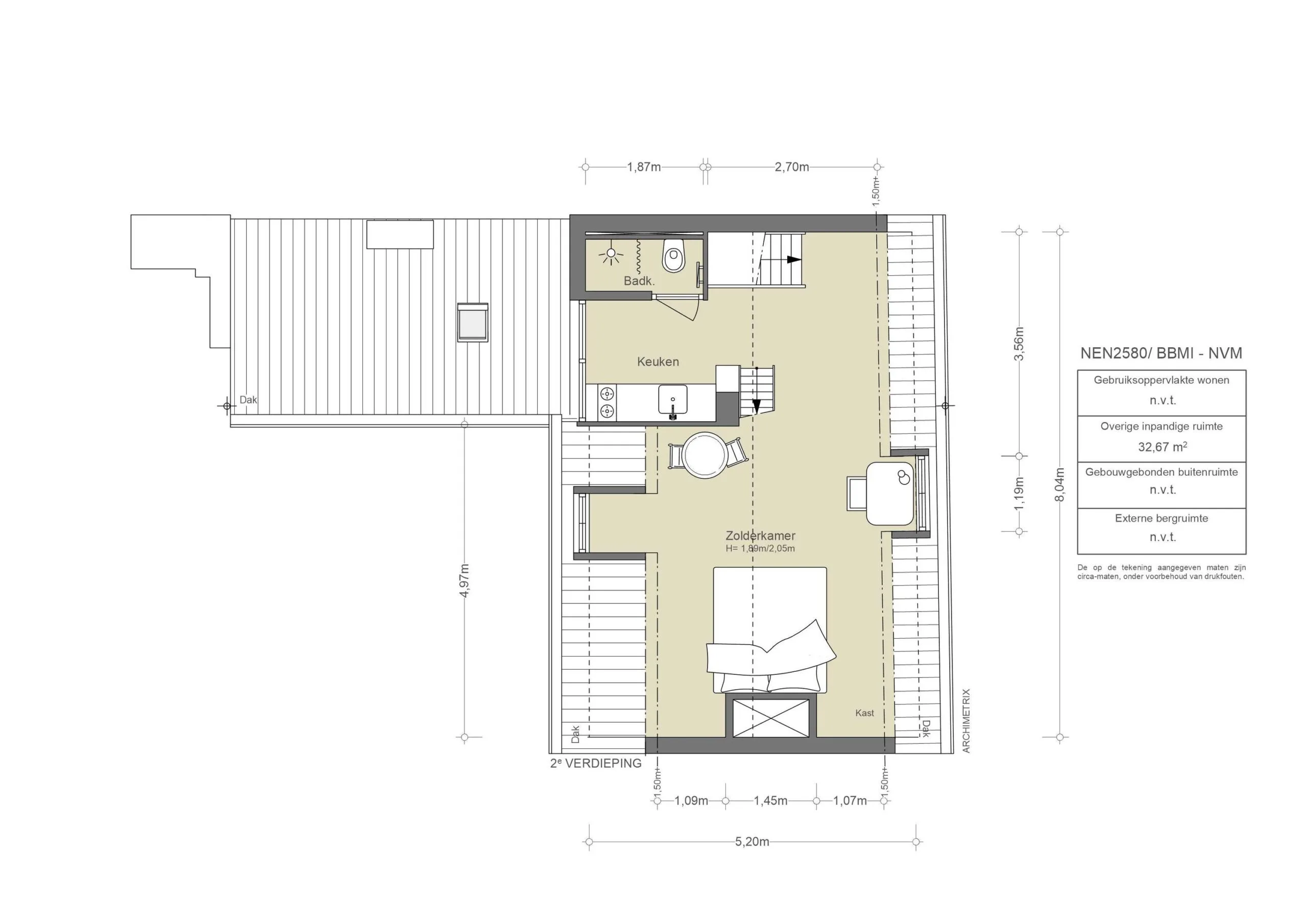
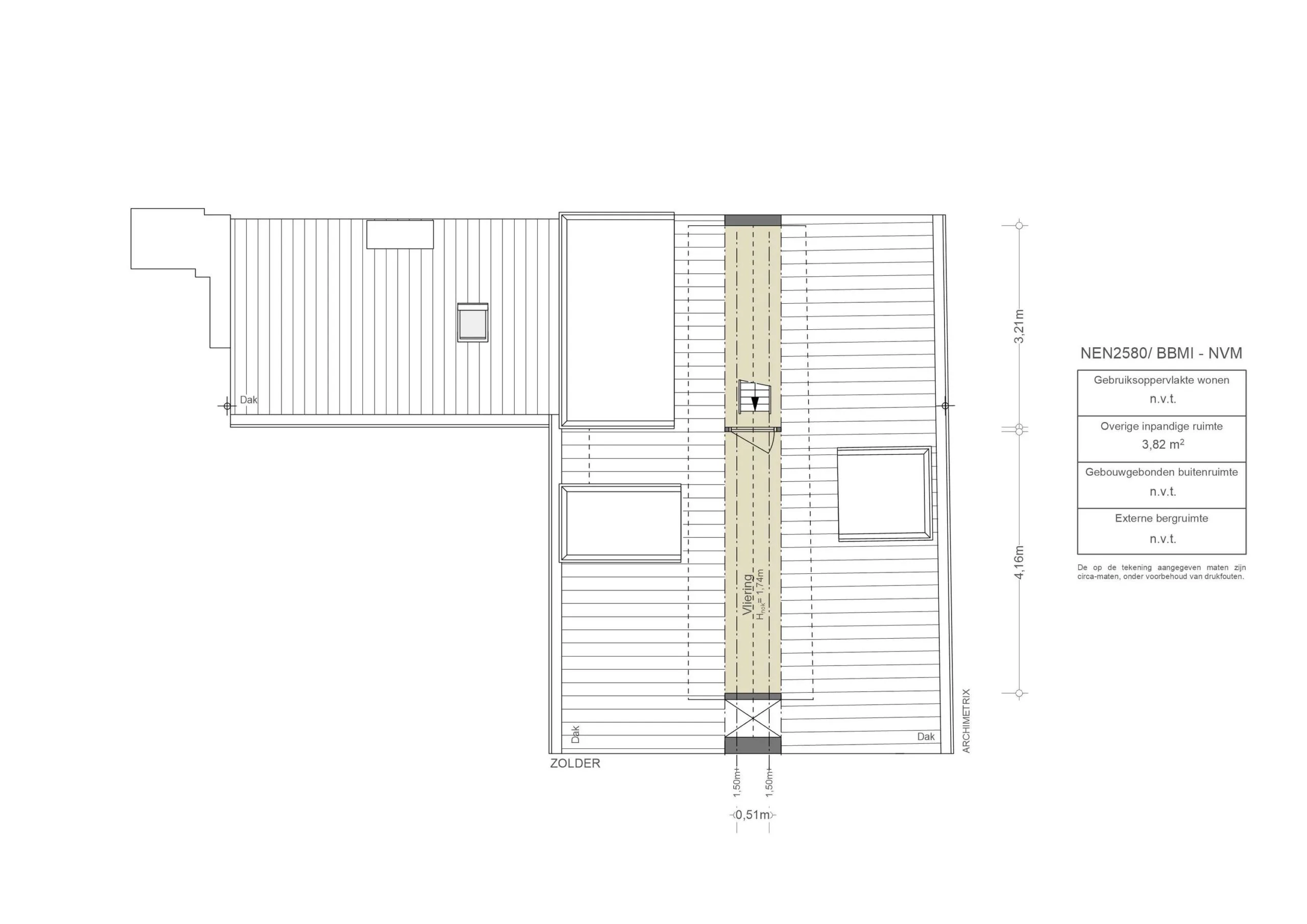
The second floor beneath the roof structure is arranged as an open studio, with a simple kitchen, bathroom and sleeping area. Windows on both sides bring in abundant natural light. The layout lends itself to multiple children’s bedrooms or a combination of working and living. Above this level is an attic for storage.
Derde Weteringdwarsstraat 31 (A+B) is a monumental and highly functional city residence, with a clear architectural structure and ample potential for transformation into a family home.
What the owners are going to miss
“What will be missed most is the neighbourhood and the distinctive atmosphere of this house. It has been lived in for more than forty years. The children were born in the box bed that once formed part of the interior. Throughout every stage of life, the house has offered an abundance of possibilities through its many rooms and functions. Yet above all, the essence that will be missed most is the house itself and its history. It holds not only the family’s own past, but also the presence of earlier generations, still perceptible in every corner.”
Neighbourhood
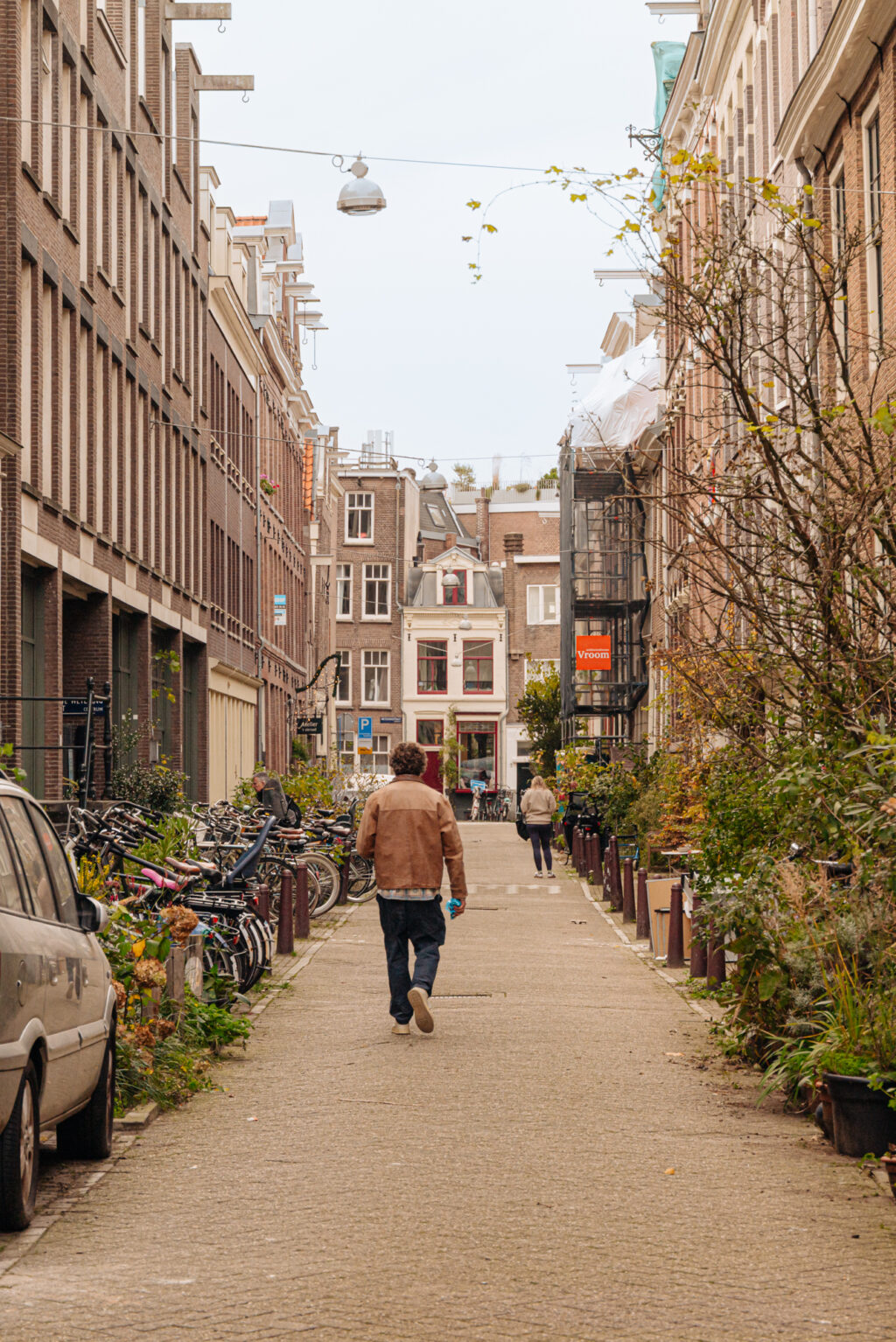
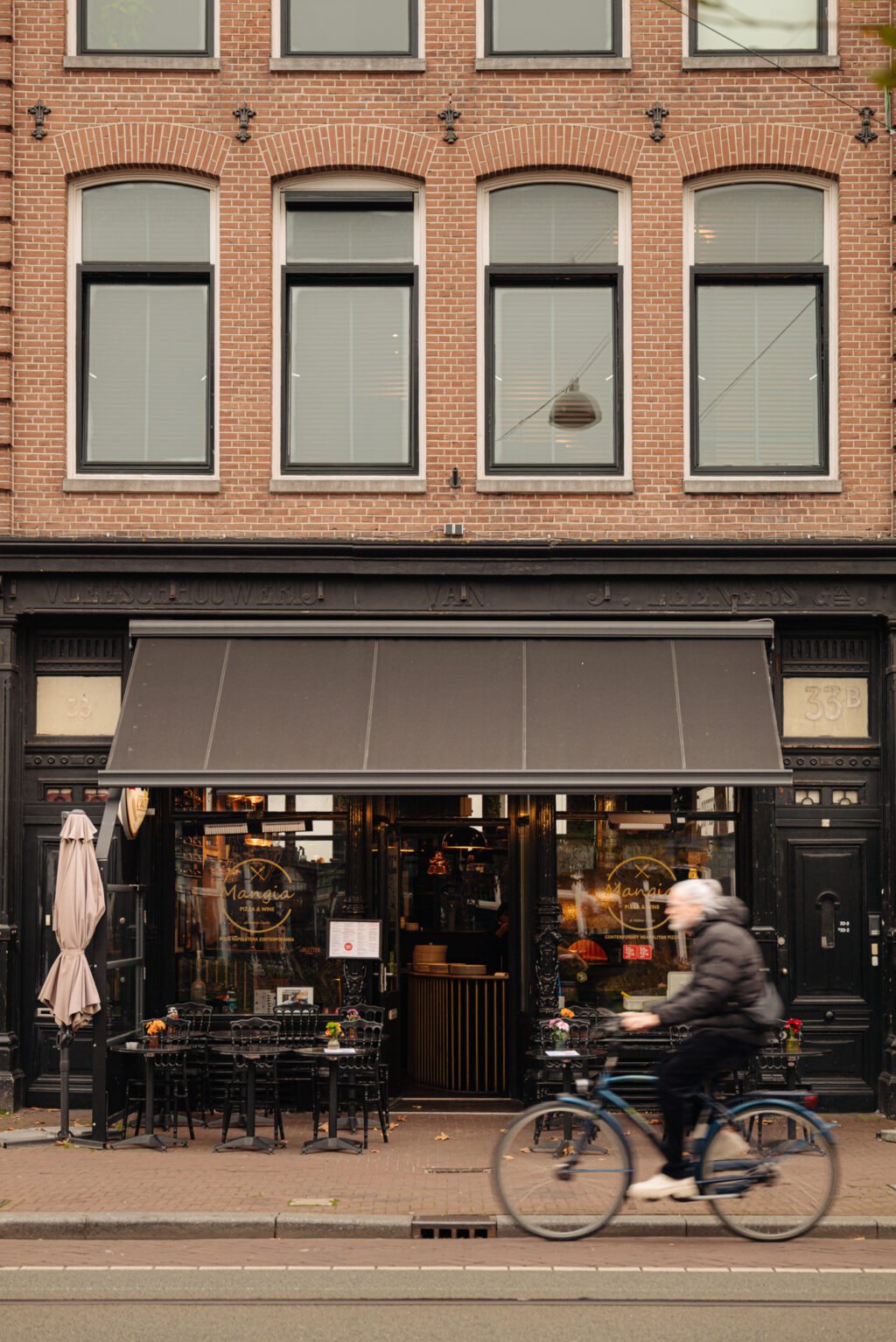
The house is located just off the Vijzelgracht, home to the renowned Royal Confectioner Holtkamp, excellent coffee bars and Bar Do with its inviting terrace. The Amstelveld is within easy walking distance, with its Monday flower market and the well-known terraces of Nieuwe Marcella and Nel. The wingnut trees give this refined square its distinctive charm.
The nearby Utrechtsestraat offers an exceptional selection of delicatessen shops and restaurants, including several Michelin-star establishments and a wide range of wine bars and cafés. Cultural highlights such as the Stopera, Royal Theatre Carré and the H’ART Museum are all close at hand. The lively Albert Cuyp Market is less than ten minutes on foot, making the delicatessens and food shops of De Pijp a natural extension of everyday life.
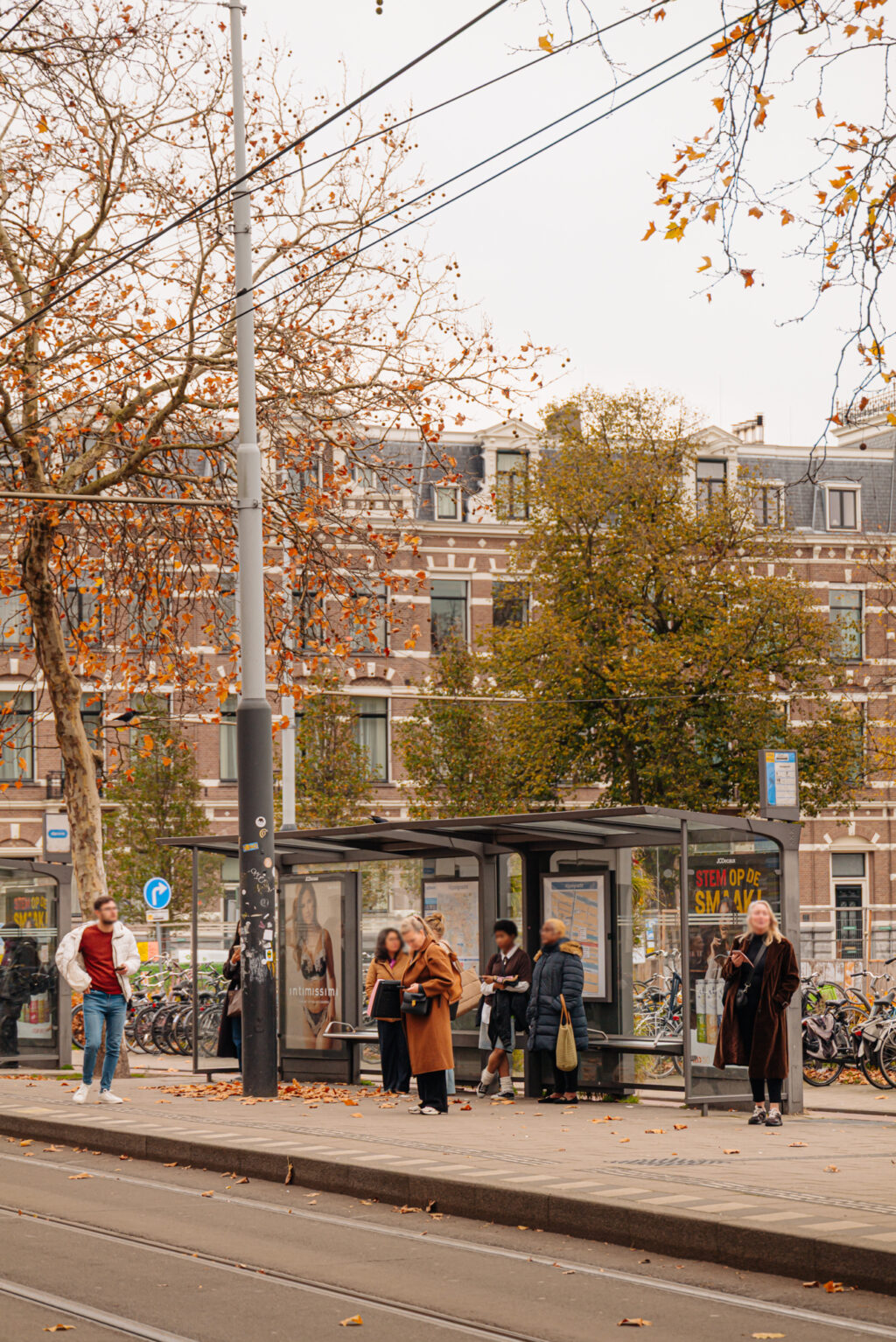
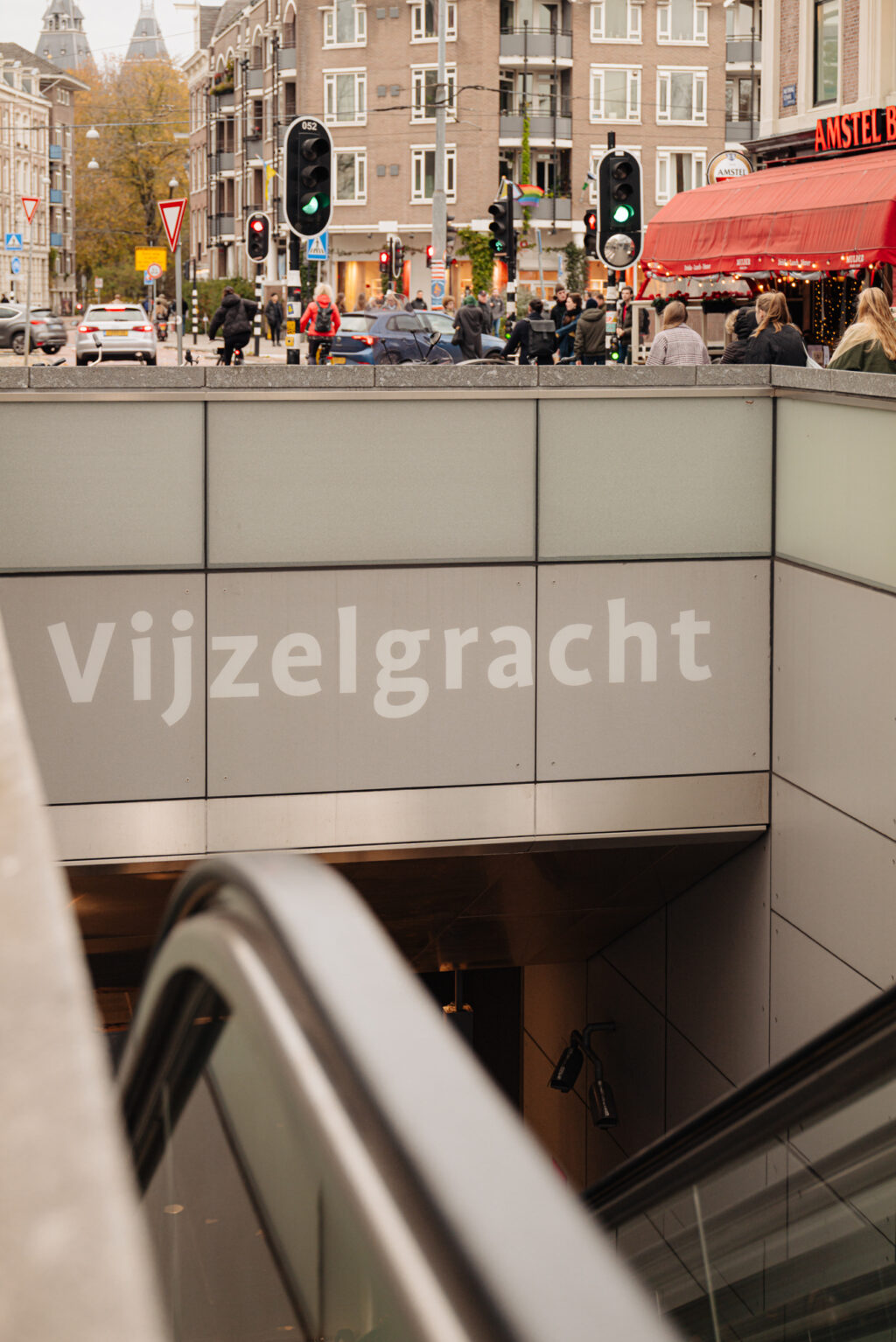
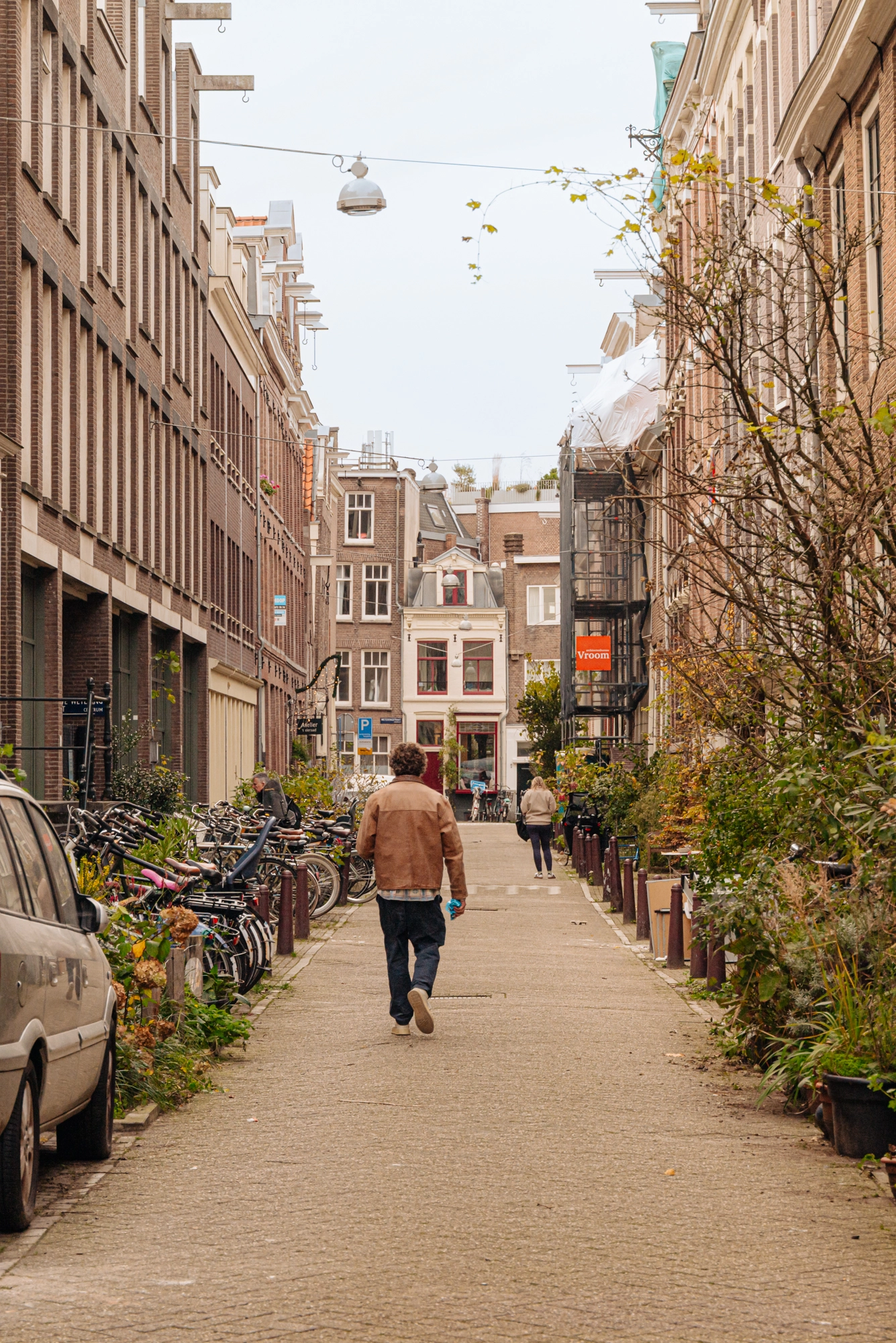
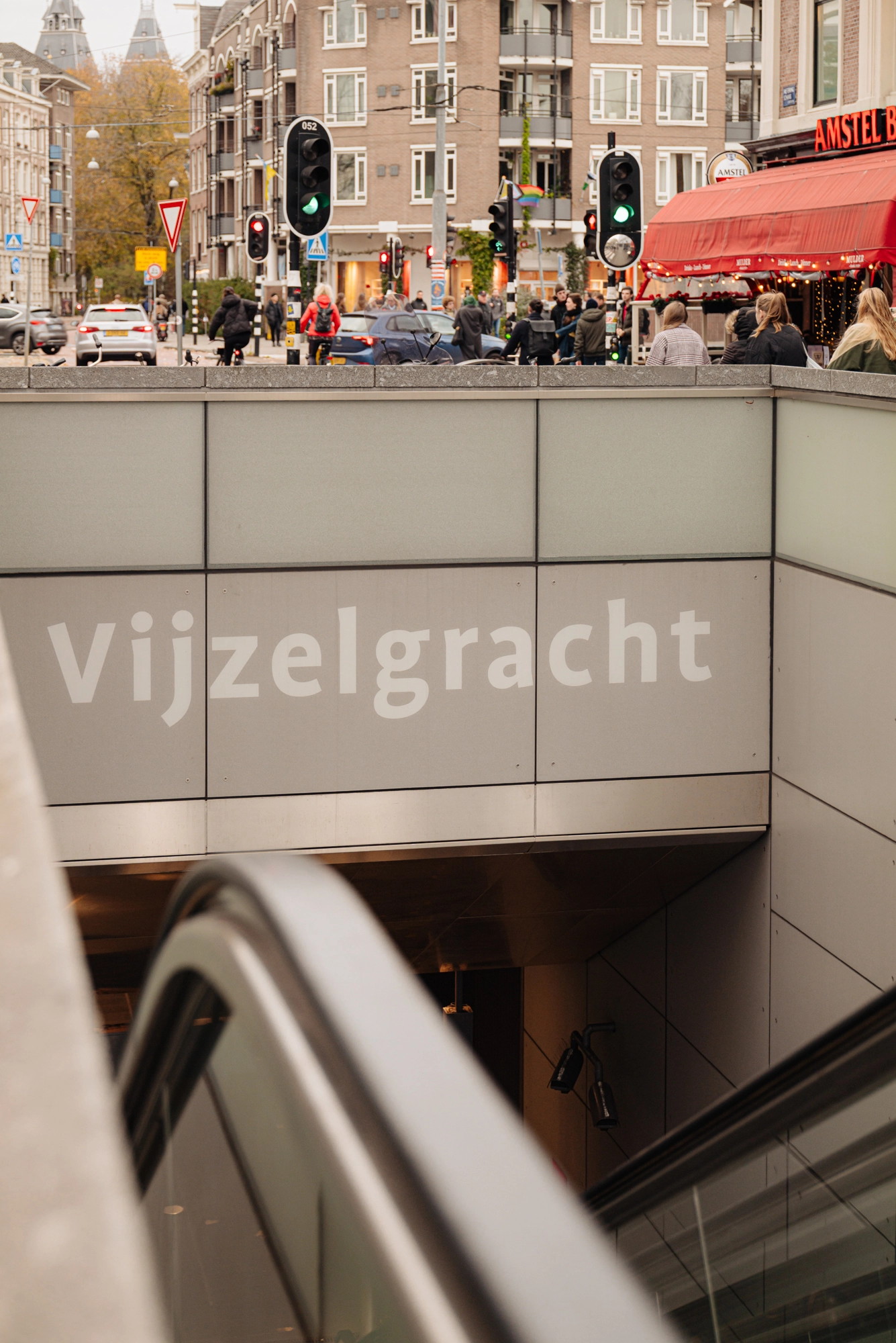
The location offers remarkable tranquillity combined with excellent accessibility. The North–South metro line at Vijzelgracht is a short walk away. An underground parking garage with municipal permits is located in the same street.
Key details
• Approximate living area: 153 m²
• Other internal space: approx. 42 m²
• Gross floor area: approx. 195 m²
• Garden of approx. 37 m² facing north
• Freehold land
• Foundation renewed in 2003
• Four bedrooms and three bathrooms
• Three kitchens
• Original architectural features
• Listed national monument
• Part of the nationally protected cityscape “Amsterdam – Within the Singelgracht”
De Wever 31
Derde Weteringdwarsstraat 31 (A+B) offers a total residential floor area of 153 m². A remarkable monument dating from 1670, originally built for the textile craft and now most often used as a family home. Its quiet and highly central setting places it at one of the most appealing positions in the historic city centre. With its elevated entrance stair, four full residential levels, a sheltered city garden with afternoon sun and a wealth of original details, the house forms an unusually complete whole. The current owners have chosen single-level living; the house has simply become larger than they require. For those seeking generous space, this property presents the opportunity to connect the souterrain with the upper ground floor to create a substantial living level, with bedrooms and workspaces on the floors above.
A characterful house that adapts naturally to its inhabitants, and one that deserves to be prepared for a new era and new residents.
Architecture
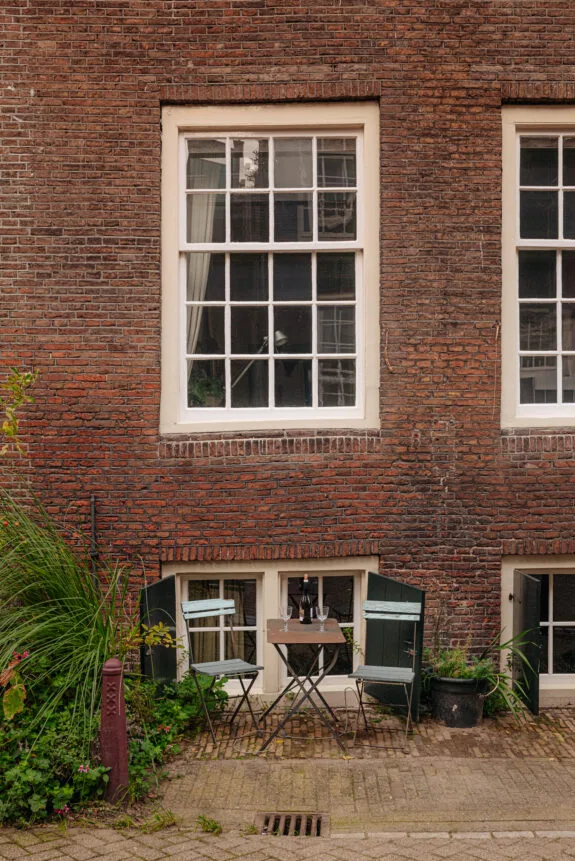
On the quiet side of the Weteringbuurt, where the city still breathes the rhythm of the seventeenth century, stands a house with a story. Derde Weteringdwarsstraat 31 forms part of the ensemble known as the Noortse Bos, a series of weavers’ houses designed by Philips Vingboons around 1670. Not the exuberance of full classicism here, but a measured precision that convinces precisely through its restraint. A front façade shaped like a square frame, its rhythm bringing a sense of calm to the street. Together with number 33, the house forms a compact block originally created for the textile trade: spinners worked in the cellar, weavers on the upper floors. The layout, with its self-contained levels, still breathes that artisanal past. The monumental classical façade has remained largely untouched, with only the window mullions betraying a later intervention. The foundation was restored around the turn of the century, anchoring the building both literally and historically. What makes this house truly remarkable is the almost unaltered state in which it has survived. The structure remains legible, the proportions pure, the design timeless. Not a monument as a backdrop, but a living house with layers that tell stories of craftsmanship, urban evolution and social history.
Wining and dining
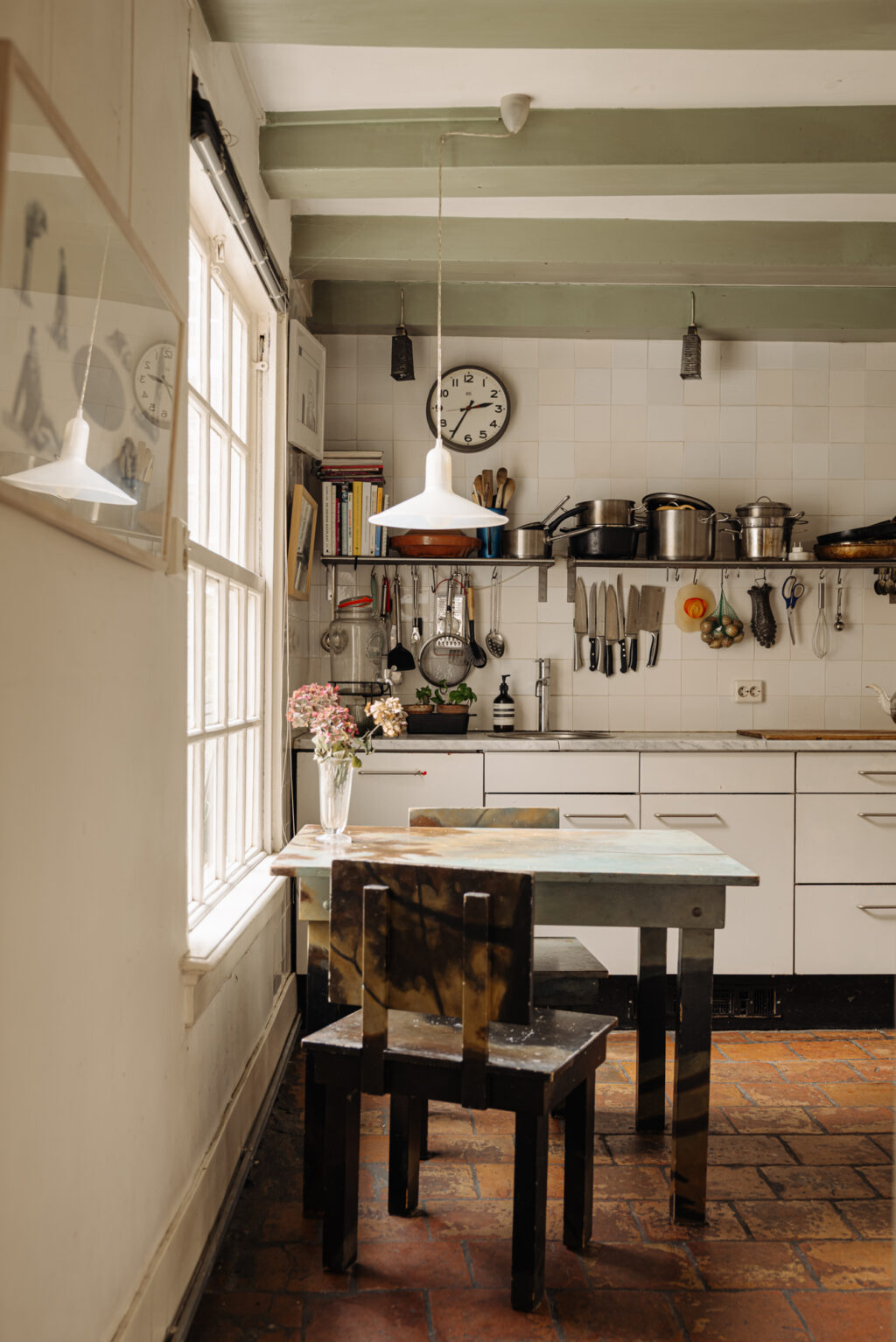
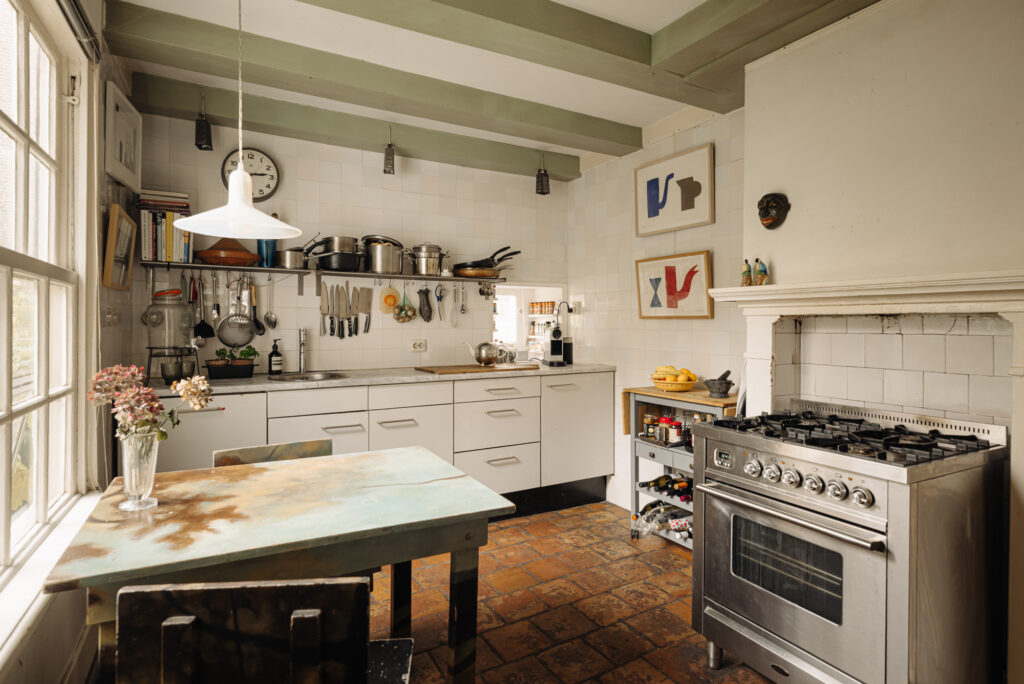
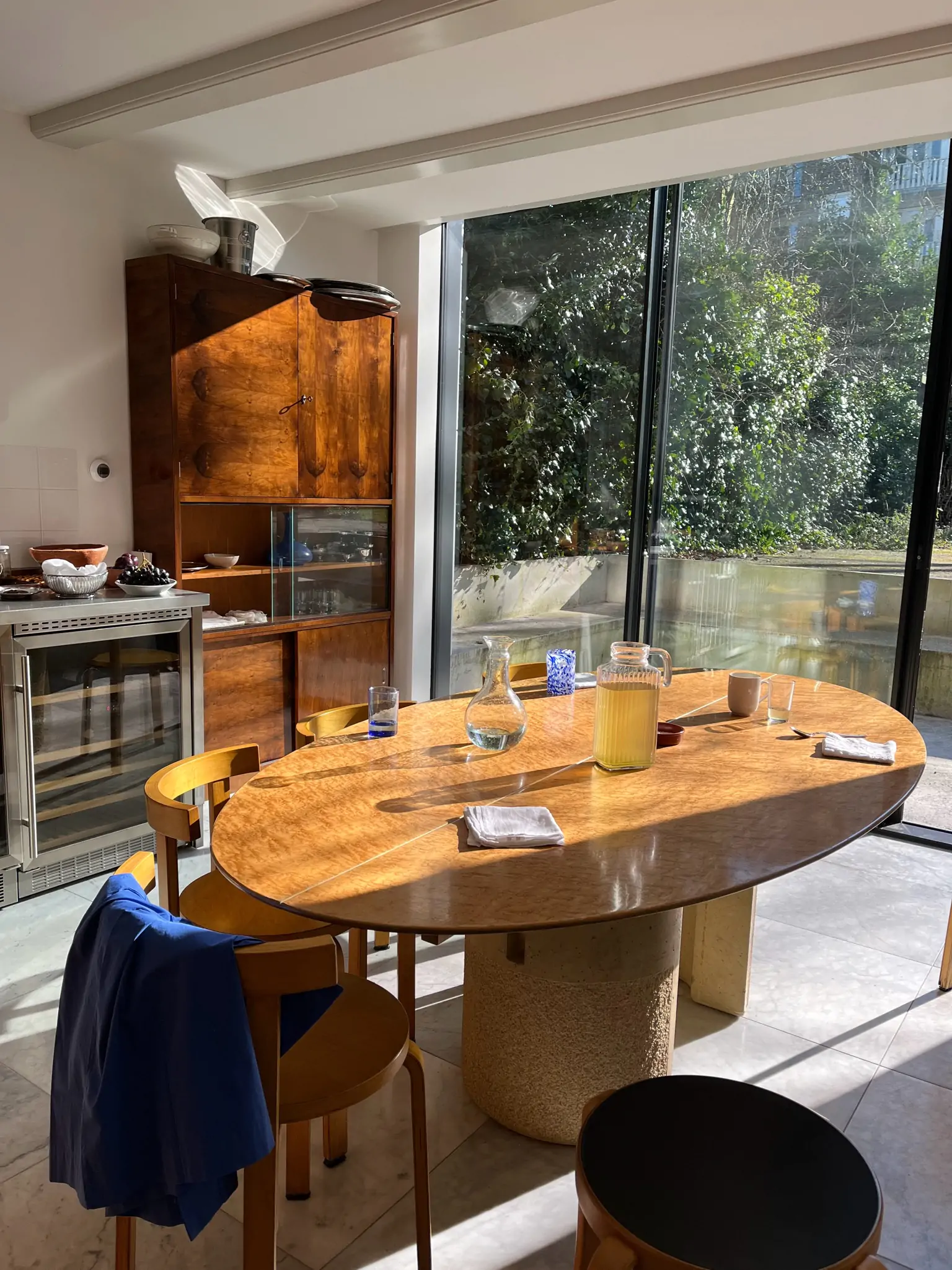
Living at Derde Weteringdwarsstraat 31 is a choice for character. Not stylised uniformity, but a richly layered house with three kitchens, each with its own atmosphere and quality of light. On the upper ground floor, the kitchen forms the heart of the home. Soft, filtered light enters through the windows, giving the space a warm and inviting feel. The wooden beams, painted in a gentle green tone, support the ceiling and emphasise the historic character. The space breathes everyday comfort: open shelving, white tiled walls and a robust range cooker set within a classic niche. At the front lies a high-ceilinged living room with a fireplace and two generous south-facing windows. The original timber floorboards continue into the vestibule, which offers ample space for a substantial wardrobe cabinet. In the souterrain, accessed via the entrance beneath the external staircase, is a fully independent unit with a second kitchen. This area feels more informal, with concrete floors, expressive beams and a freestanding cooking island. A welcoming, social space with direct access to the garden. Above, the attic level houses a third kitchen. Simple in layout yet rich in atmosphere. Large windows open towards the rooftops of the Weteringbuurt, flooding the space with light. Here, past and present blend seamlessly. The property currently offers a flexible layout, though its most likely future is a transformation into a family home.
1017 HM Amsterdam
Patisserie Holtkamp
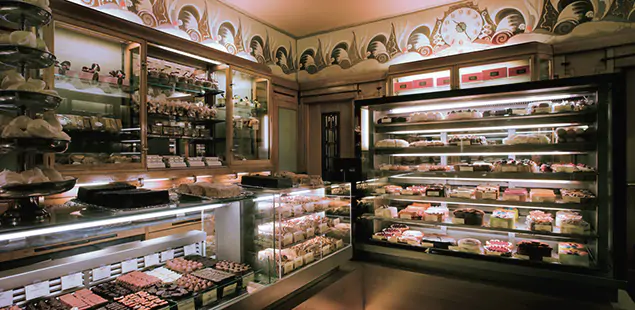
Patisserie Holtkamp is een bekend begrip onder de Amsterdammers. Ooit bekend geworden met de altijd verse tompouce, is Holtkamp tegenwoordig dé plek om de lekkerste (citroen)taarten en garnalenkroketten te halen. De recepten werken al jaren heel goed, want rond de feestdagen staat er altijd een rij. Het kleine winkeltje aan de Vijzelgracht is functioneel, maar vooral mooi authentiek. Het personeel is ontzettend vriendelijk en behulpzaam. Zeker een bezoekje waard.
1017 GE Amsterdam
Casa del gusto
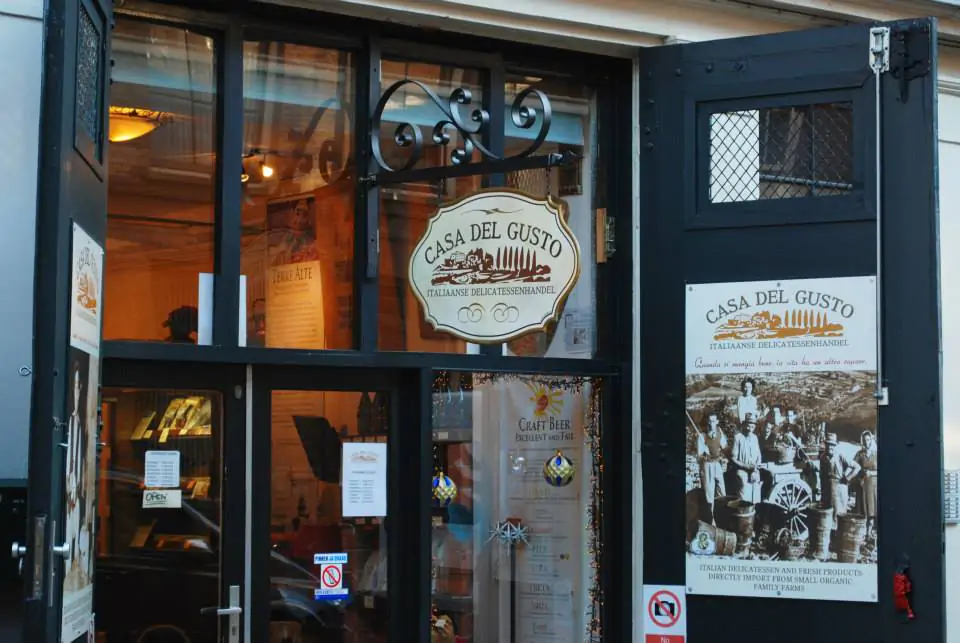
Gianni en Gessica hebben een duidelijke toekomstvisie voor Casa del Gusto. ‘We willen een klein bedrijf blijven dat met kleinschalige boeren samenwerkt: dat is ons concept. ‘Alle boeren met wie wij werken, kennen we persoonlijk. Wij kopen onze Grana Padano – de populairste kaas van Italië – in bij een boer die slechts twee stukken per dag produceert. Dat is bijna niets vergeleken grote industriële producenten die honderden exemplaren per dag leveren. Wat wij heel belangrijk vinden, is dat je door de smaak van onze salami’s, pasta’s en bieren de producenten leert kennen.' Je moet de liefde die de boeren erin hebben gestopt terug kunnen proeven’, legt Gessica uit. Van hazelnootpasta en gnocchi tot bottarge en aloë vera-beautyproducten: de winkel staat vol heerlijke delicatesse en mooie producten. Casa del Gusto is, net zoals de naam suggereert, een smaakhuis voor zijn klanten.
1017 SM Amsterdam
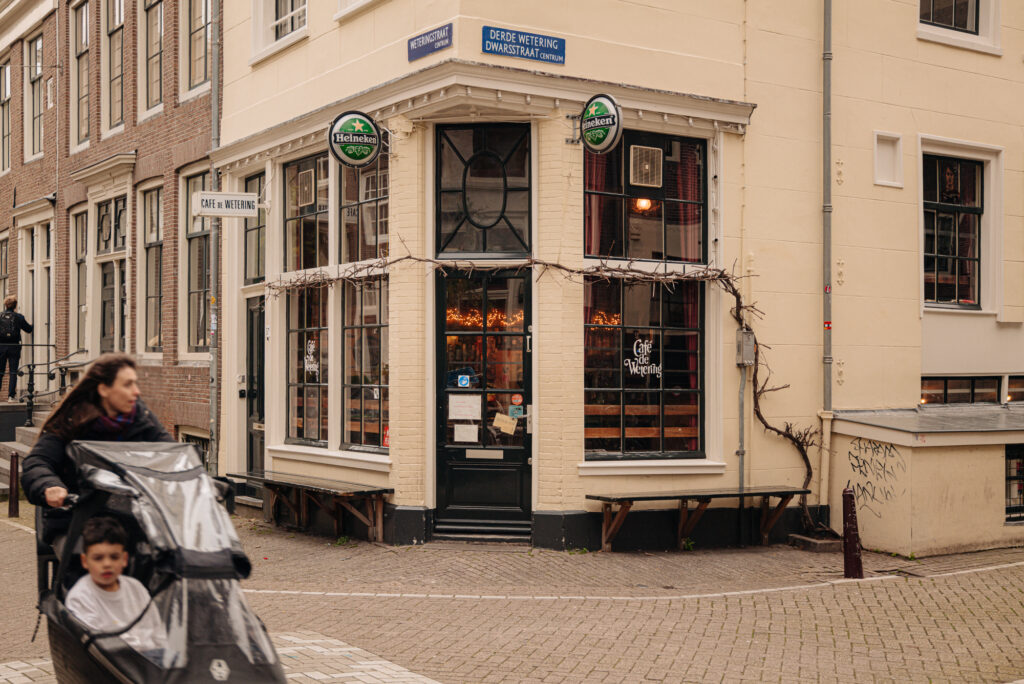
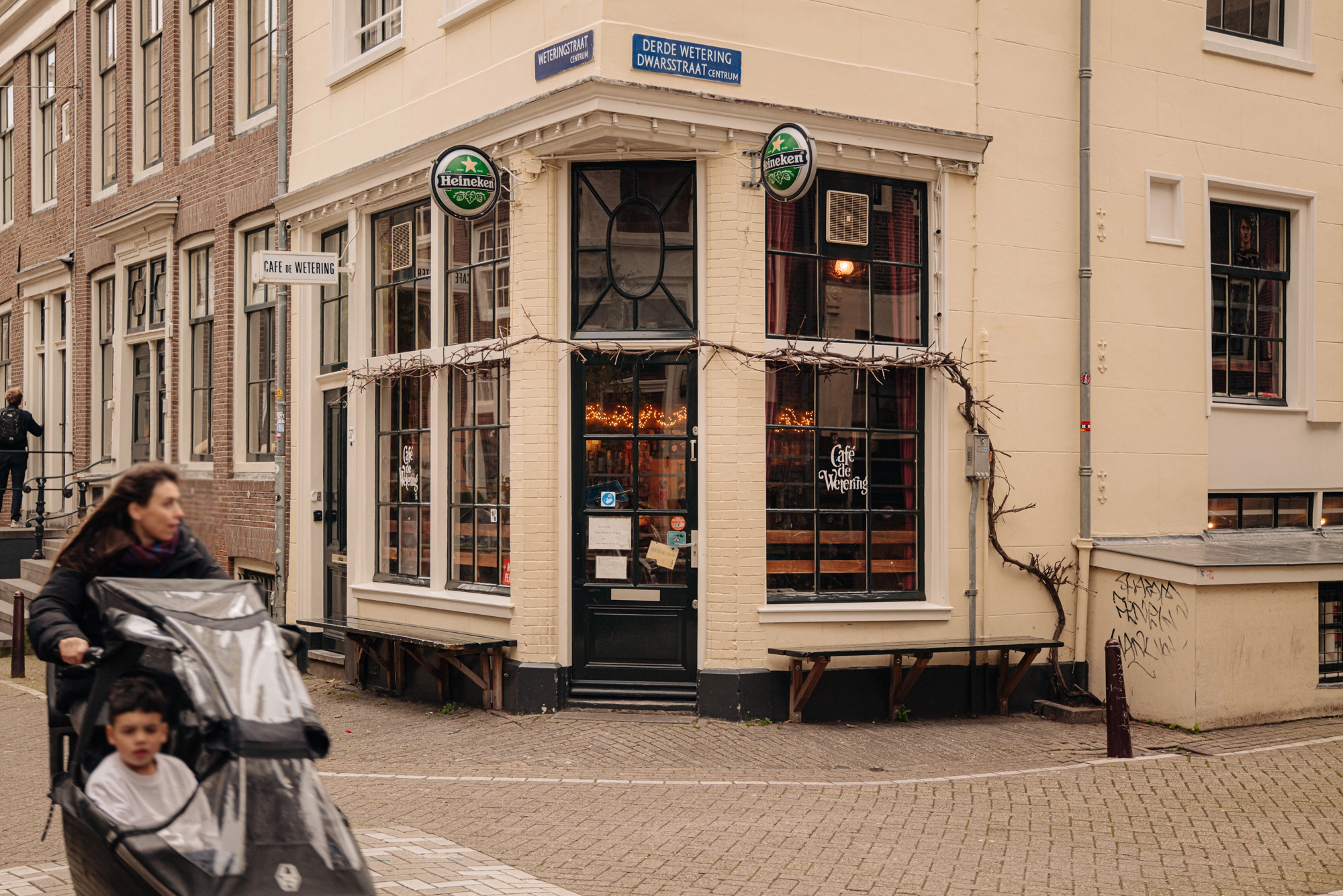
Café de Wetering
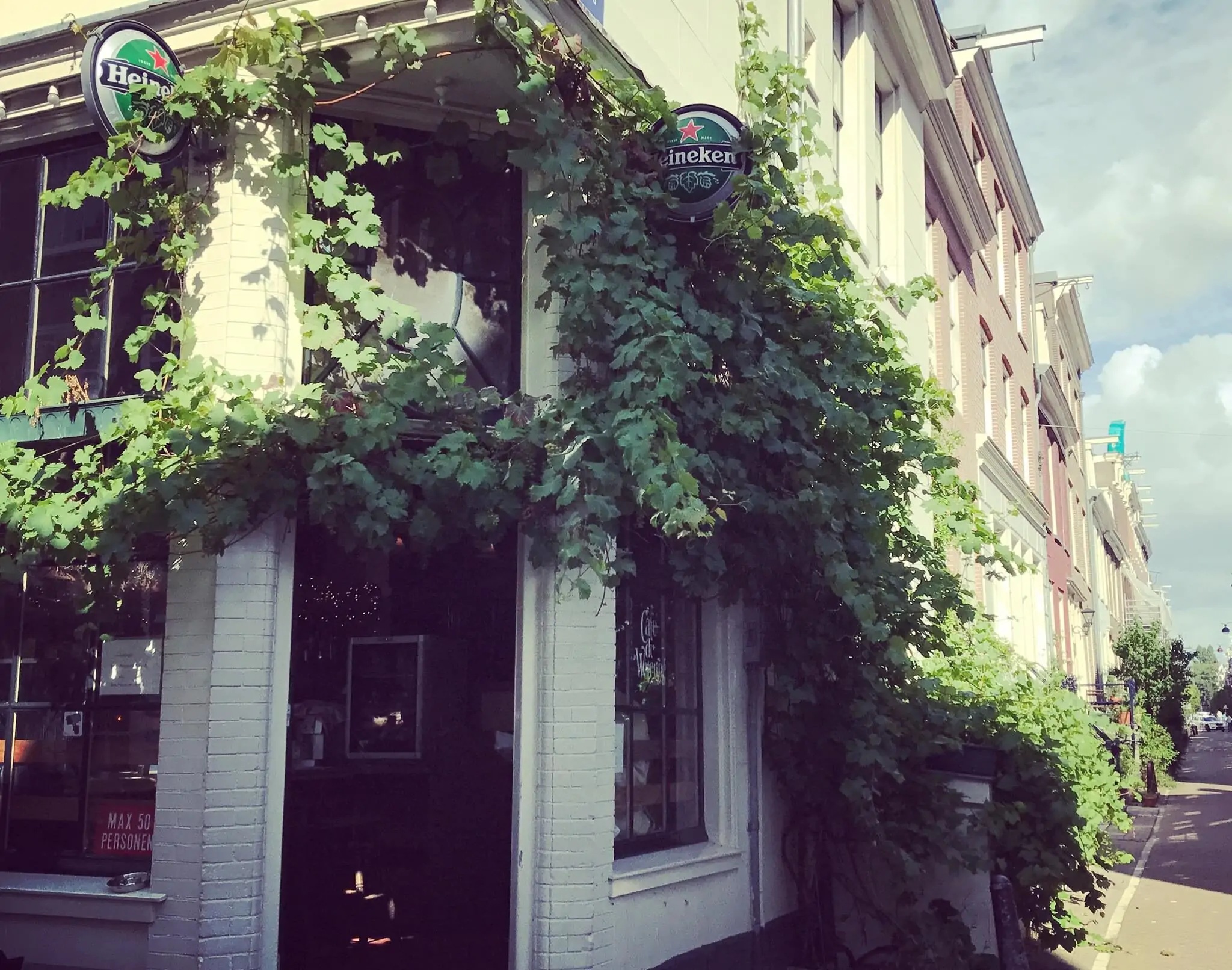
Een bruine kroeg ten voeten uit en niet eenvoudig te vinden als je niet precies weet waar je wezen moet. Het cafe bevind zich in een prachtig 17e eeuws pand. Er is een vide boven de bar waar zich een open haard bevindt. Dit bruincafé is ook bijzonder omdat het een uitstekende wijnkaart heeft, en dat zie je niet vaak in klassieke Amsterdamse kroegen. Uiteraard ook heerlijk bier, borrelnootjes en, niet onbelangrijk, je betaalt hier alleen in cash.
1017 SM Amsterdam
Restaurant Watergang
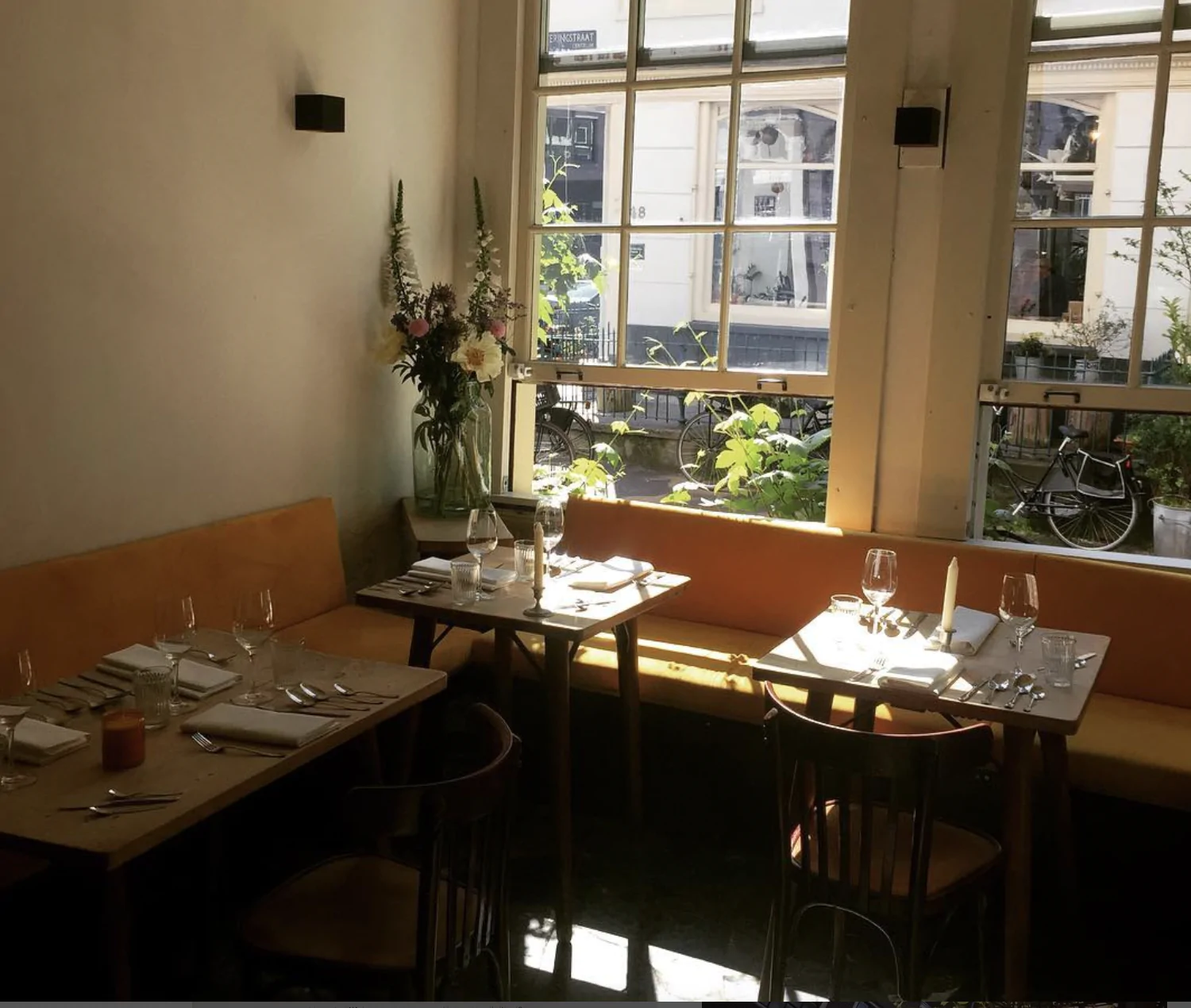
Sinds begin 2019 zit Watergang in een charmant 17 eeuws pandje in de leuke Weteringbuurt wat voorheen decennialang Spaans restaurant La Cacerola huisvestte. Uit het kleine keukentje op twee hoog tovert Chef Tim van Grootheest (voorheen jarenlang patissier bij Bord'Eau) verrassende gerechten. Watergang serveert een verrassingsmenu dat regelmatig wijzigt en laveert tussen Franse en Italiaanse maar ook oosterse smaken.
1017 TR Amsterdam
Sukhothai Thanee
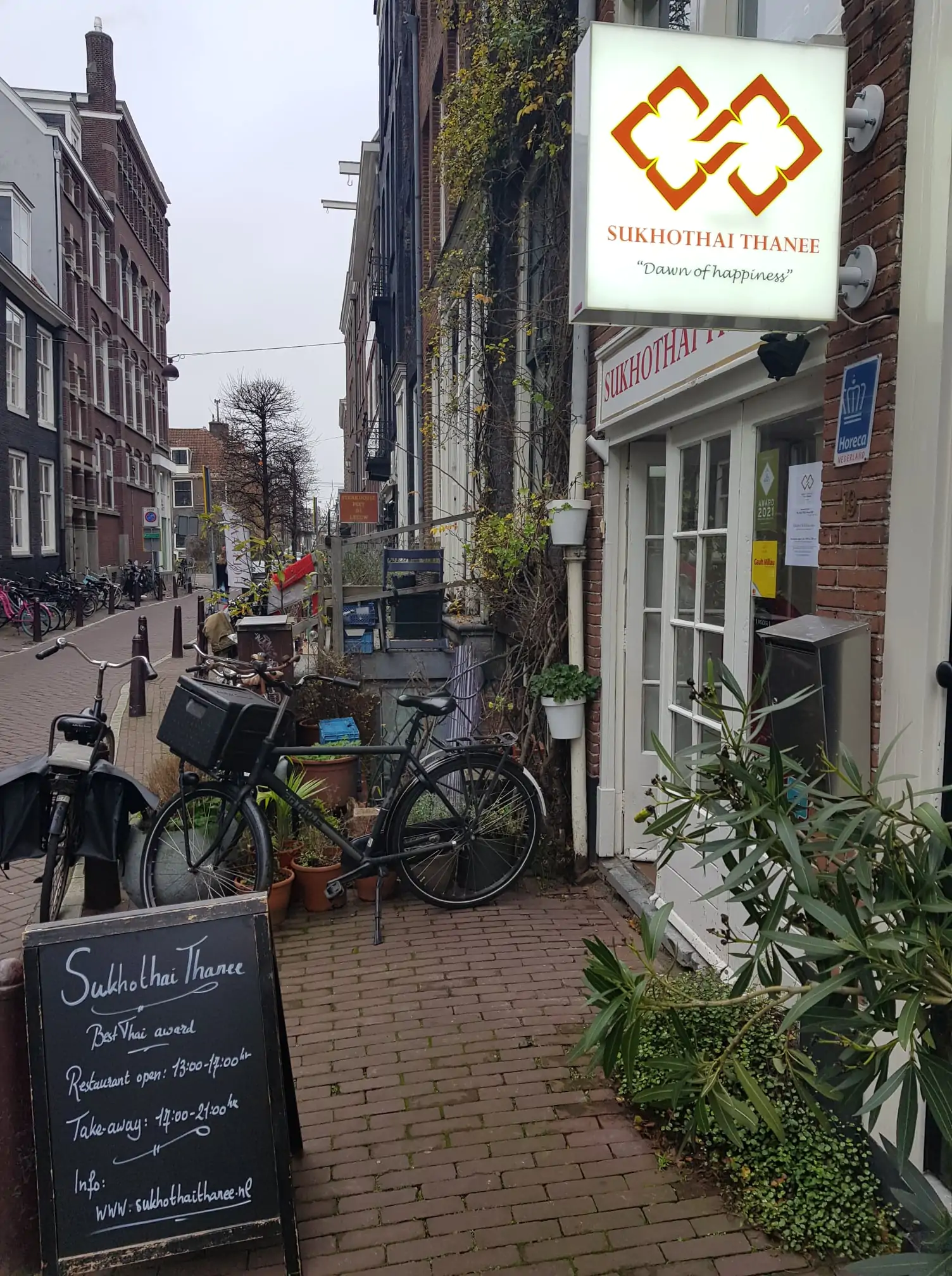
Misschien komt de naam van dit restaurant je bekend voor. Want de eigenaren van dit restaurant bezaten vroeger de succesvolle streetfood stal in Amsterdam, namelijk Sukothai Streetfood Expres. Tegenwoordig zijn ze volop bezig bezig met het runnen van een chique restaurant. Ze koken vanuit de Thaise traditie met eerlijke ingrediënten. Wat je zeker niet mag missen zijn de curry's van van versgemaakte currypasta’s.
1017 SP Amsterdam
Back to Black
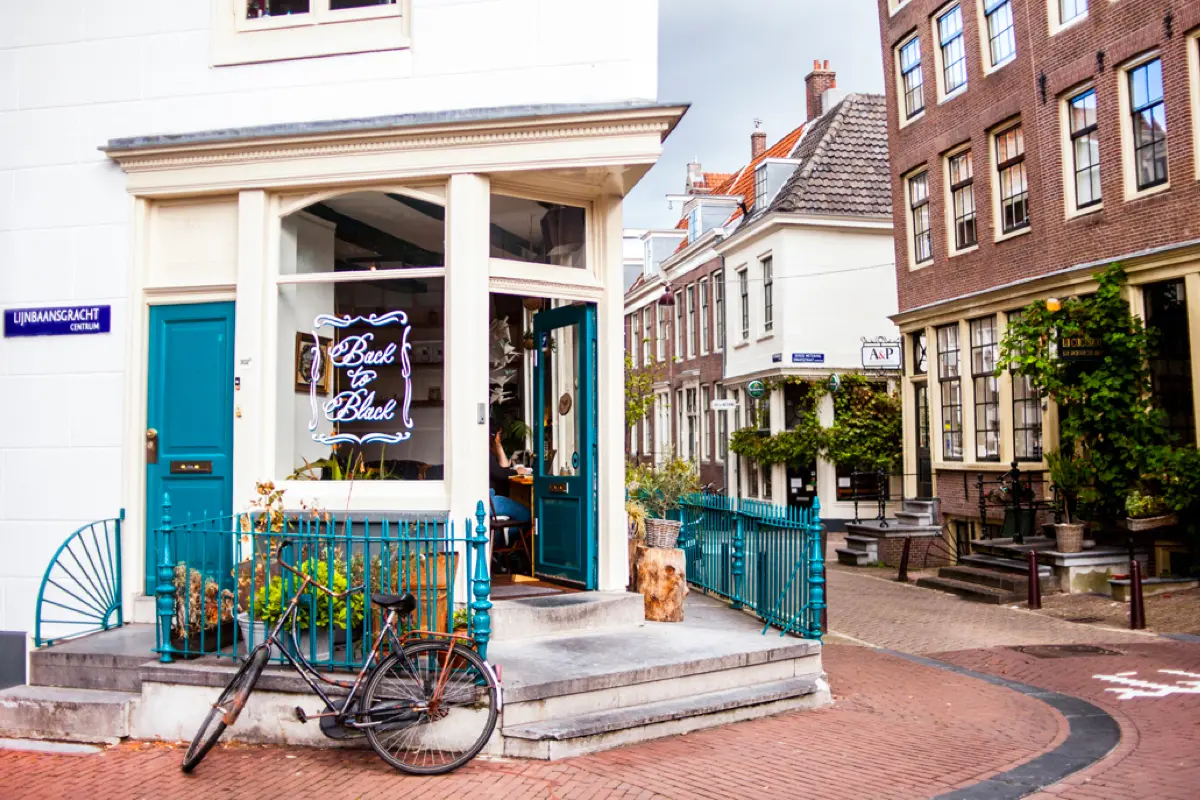
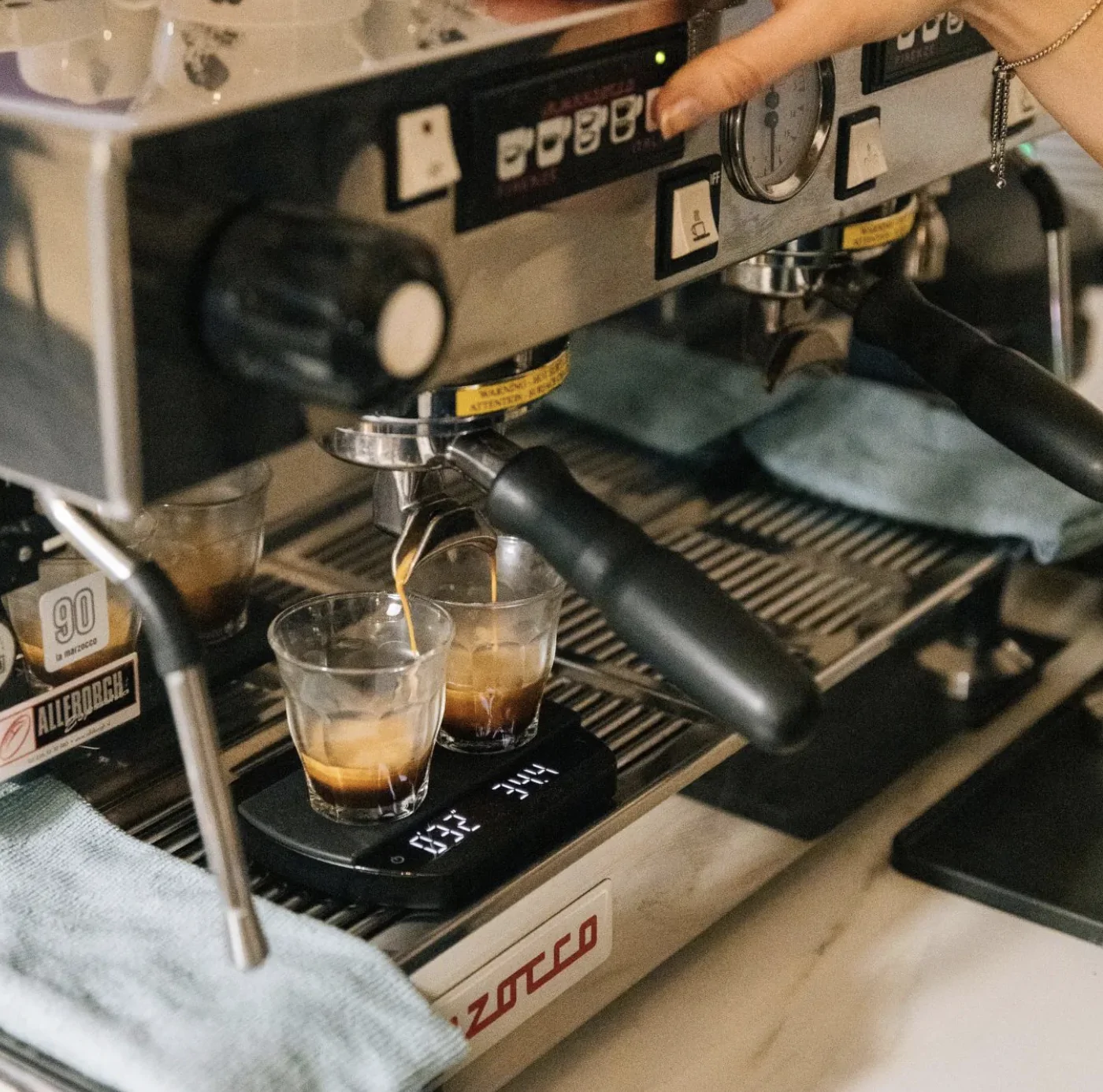
Back to Black is een koffiebar met een eigen branderij aan de Weteringstraat. Bij Back to Black wordt elk stap in het productieproces van koffie met passie en vakmanschap uitgevoerd. Vanuit hun liefde voor koffie reizen de eigenaren van Back to Black de hele wereld af op zoek naar de beste producten. Deze verkopen zij vervolgens in hun eigen zaak. Naast koffie serveren ze ook lekkere koekjes en taartjes én ze verkopen ook eigen t-shirts met mooie designs.
1017 KS Amsterdam
Buffet van Odette
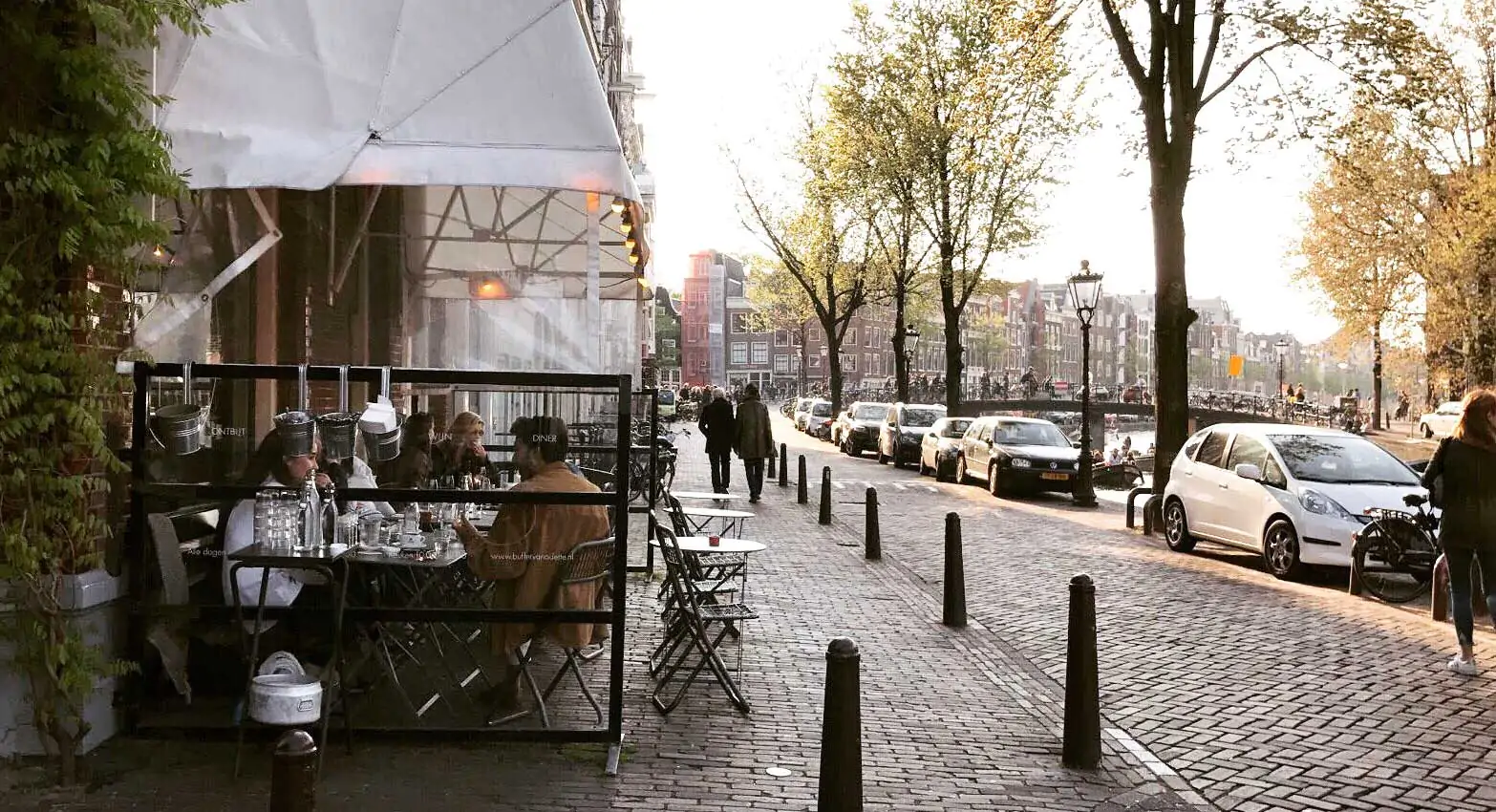
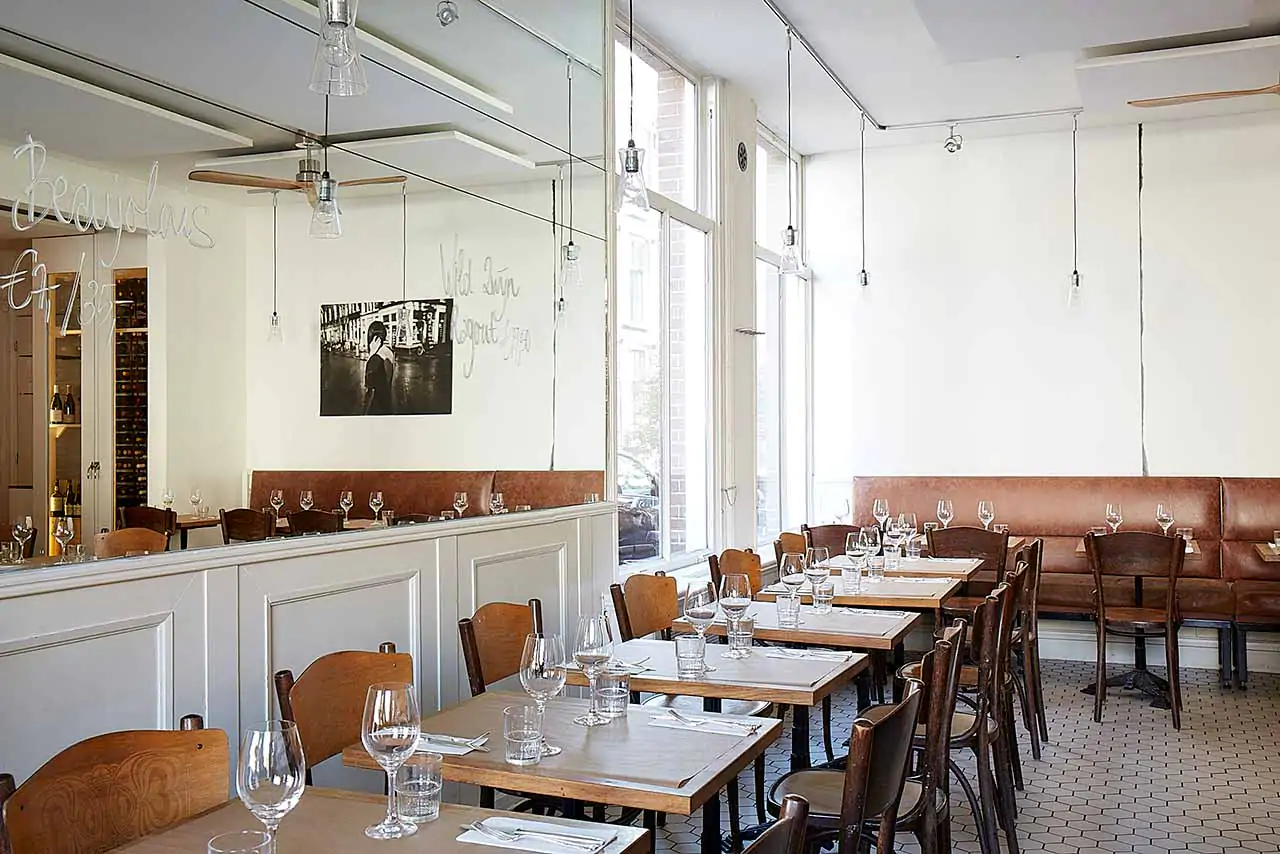
Odette Rigterink begon Buffet van Odette in 1994. Ze laadde pannen vol met zelfgemaakt eten in een krat voorop de fiets en serveerde een dagmenu aan jong en oud Amsterdam bij de crèche Enfant Terrible. Vanaf 2011 is het restaurant gevestigd op Prinsengracht 598, op de hoek van Weteringstraat. Ze serveren hun vaste klassiekers en koken ook met het seizoen mee en hebben een uitgebreide (natuur)wijnkaart. Van maandag tot en met vrijdag serveren ze zowel lunch als diner.

1017 HJ Amsterdam
Tokyo Ramen Takeichi
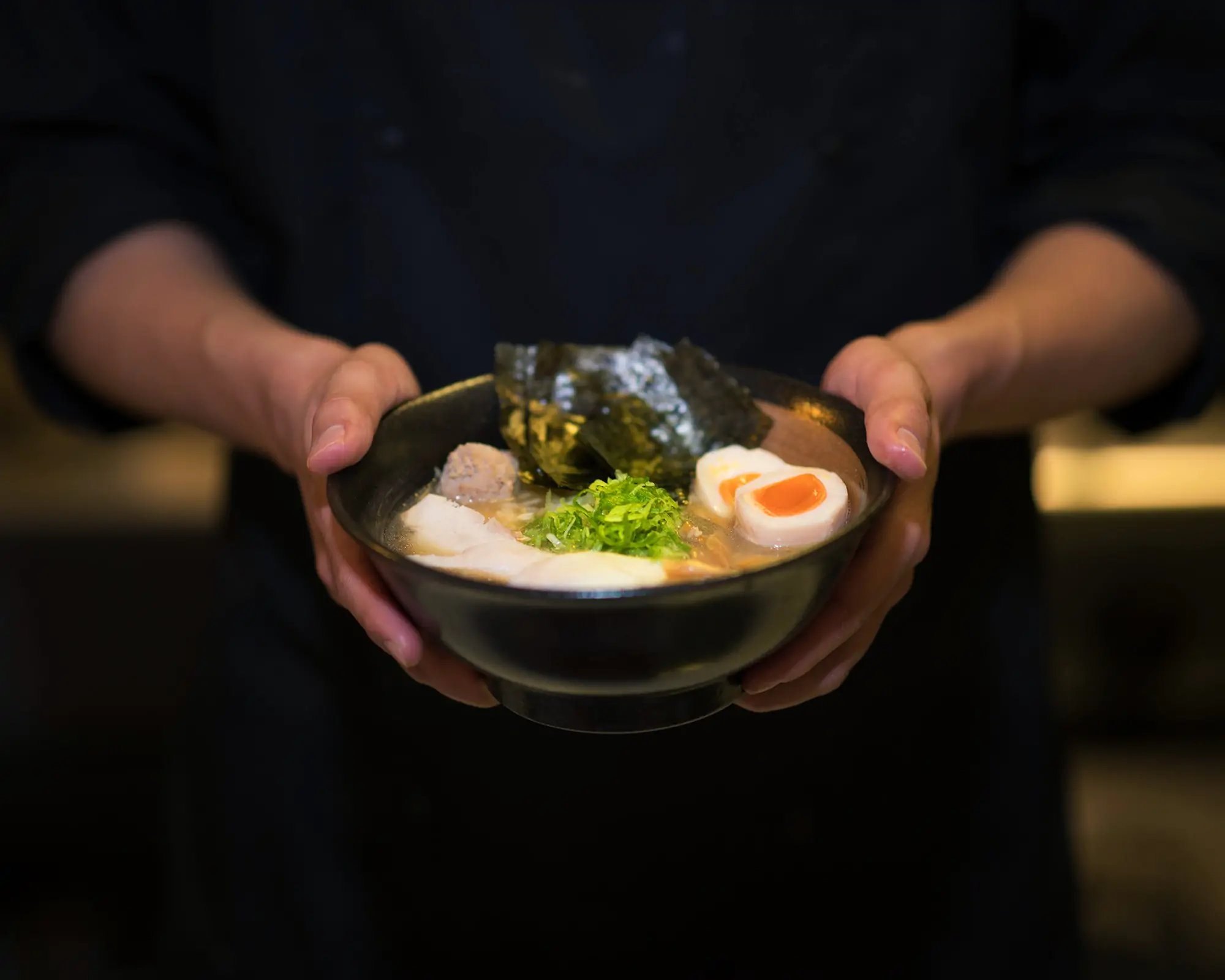
Deze Japanse ramen keten heeft inmiddels al meerdere vestigingen over de hele wereld. In Amsterdam zijn inmiddels al drie vestigingen. Tokyo Ramen Takeichi is bekend om zijn gezonde ramen met kip en groentebouillon. Doordat ze trouw blijven aan de Japanse roots is het een authentieke restaurant. Naast hun specialiteit zijn de side dishes ook heerlijk. De 'karaage' zal je niet teleurstellen.
1017 XE Amsterdam
Sizz
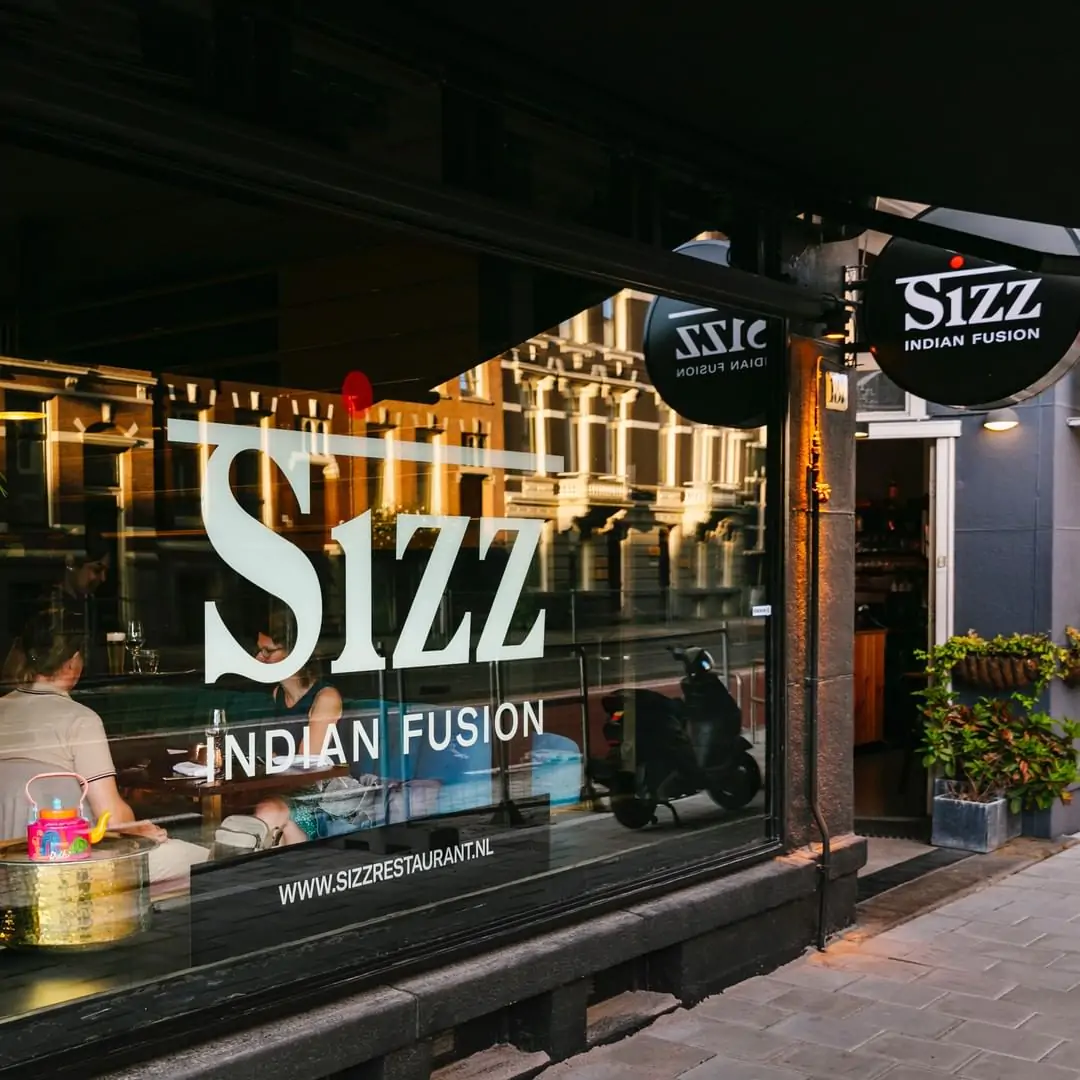
Midden in het centrum bevindt zich het Indiase restaurant Sizz. Het eten is zeer smaakvol en de porties zijn royaal en perfect om te delen. De sfeer is uitnodigend en voelt als een ouderwets familierestaurant met een moderne twist. Als je gaat, mag je hun lamsspiesjes, papadums, boterkip of chocoladetaart niet missen!
1017 KR Amsterdam
Heuvel
Buurtbewoners en galeriehouders uit het Spiegelkwartier komen hier regelmaat op bezoek. Bij Café Heuvel is het bijna elke dag dag rond 17:00 al volop borreluur. 'Als ik sneuvel, dan bij Heuvel!' Het kleine hoekcafé met fijn terras is een van de oudste cafés van de stad.
1017 GR Amsterdam
Tokyo Ramen Takeichi
Deze Japanse ramen keten heeft inmiddels al meerdere vestigingen over de hele wereld. In Amsterdam zijn inmiddels al drie vestigingen. Tokyo Ramen Takeichi is bekend om zijn gezonde ramen met kip en groentebouillon. Doordat ze trouw blijven aan de Japanse roots is het een authentieke restaurant. Naast hun specialiteit zijn de side dishes ook heerlijk. De 'karaage' zal je niet teleurstellen.
1017 XR Amsterdam
An
Gelegen aan de Weteringschans 76 in Amsterdam, is Japans Restaurant An sinds 1989 een begrip voor authentieke, huisgemaakte Japanse gerechten. Het restaurant specialiseert zich in traditionele Japanse maaltijden zoals ze thuis bereid worden, met pure, verse en gezonde ingrediënten. Bij An staat ambacht centraal: bijna alle gerechten worden met de hand gemaakt. Gasten kunnen genieten van diverse Japanse klassiekers, zoals sushi, tempura en teishoku-setmenu’s. Er is daarnaast speciale aandacht voor groentegerechten, wat het restaurant toegankelijk maakt voor vegetarische en veganistische gasten.
1017 EP Amsterdam
Carmen
Winkel, restaurant en guesthouse. Eigenaren Carmen Atiyah de Baets en Joris ter Meulen Swijtink openden na enkele jaren gewerkt en gewoond te hebben in Londen deze geweldige hotspot op de Keizersgracht. Carmen selecteerde een fijne mix van mode, interieur, accessoires van bijzondere ontwerpers. Joris bestiert de keuken waar regelmatig buitenlandse bevriende chefs gehost worden.
1017 RL Amsterdam
Shiraz
Shiraz is niet voor niets als winnaar uit de wijnbar van het jaar wedstrijd gekomen. In het hartje van Amsterdam ligt deze geliefde wijnbar, waar je nieuwe wijnen kan ontdekken of terug kan vallen op je favoriete wijn. Als je het lastig vindt om te kiezen tussen de in totaal 150 wijnen, staat het personeel altijd paraat om je van vakkundig advies te voorzien of om iets te laten proeven. In deze tuin van wijnen kan je genieten van een heerlijk glas wijn met een bijbehorend hapje.
1017 VV Amsterdam
Bouchon du centre
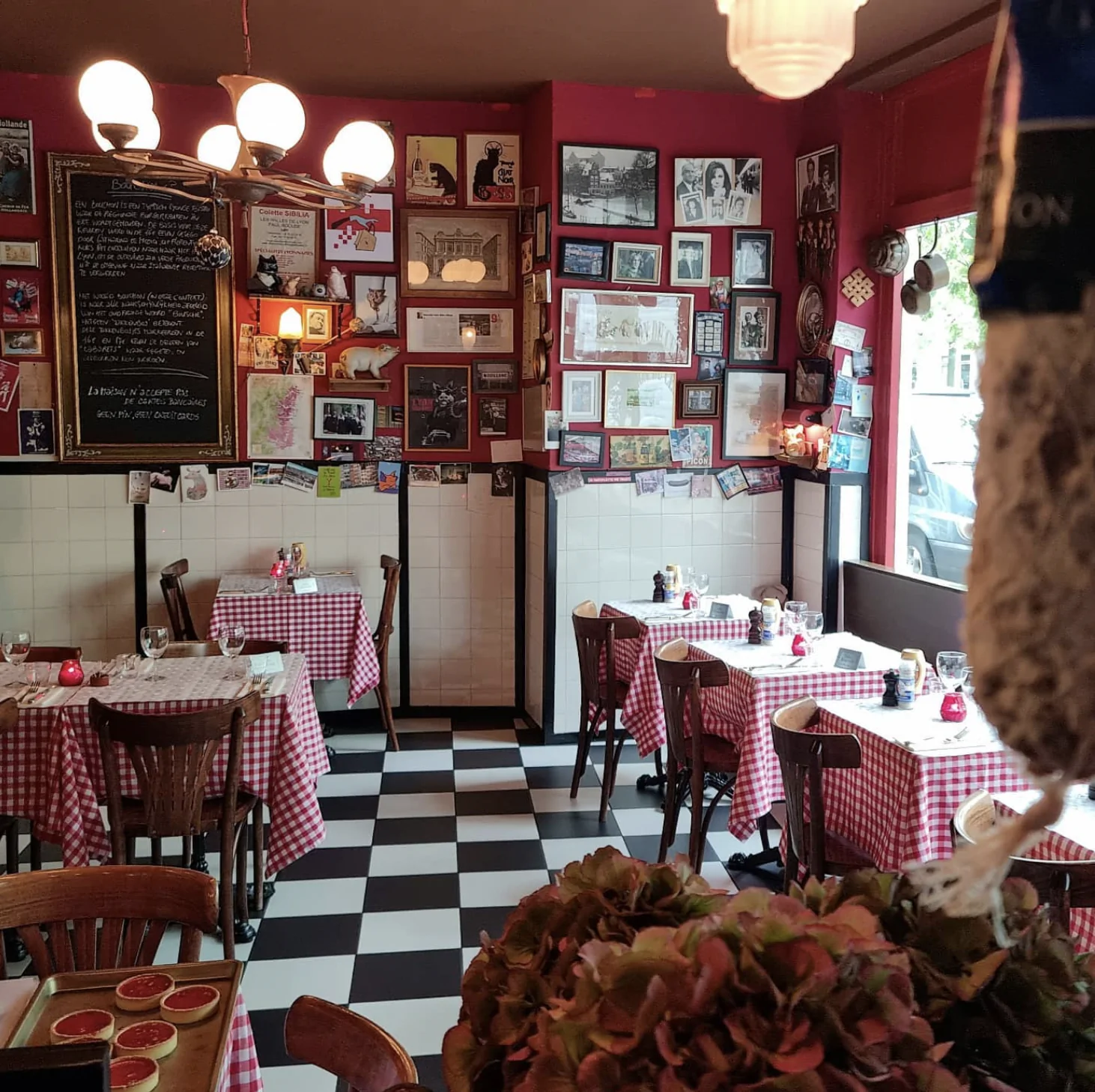
Op de hoek van de Reguliersgracht vind je 40m2 knus Frankrijk, inclusief traditionele bistro sfeer en rood wit-geruite tafelkleden. De bistro wordt gerund door Hanneke Schouten en is geopend van woensdag tot en met zaterdag. Het concept is ontstaan vanuit de ‘bouchon Lyonnais’ waarbij met betaalbare ingrediënten een hoogwaardige maaltijd wordt bereid.
1072 LJ Amsterdam
Kaasbar Amsterdam
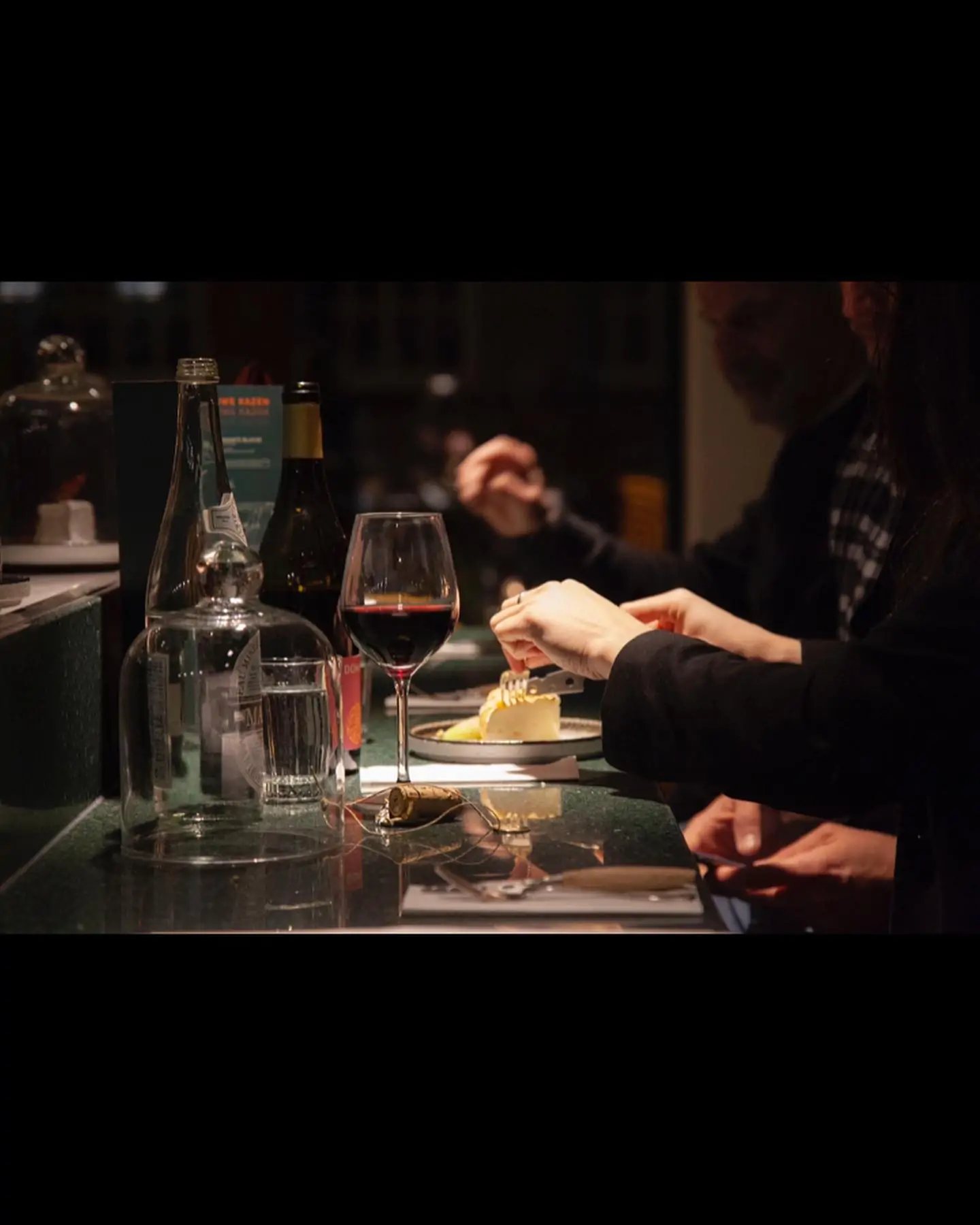
Bij Kaasbar Amsterdam krijg je kaas (joh) vooraf, kaas als hoofdgerecht, kaas on the side én kaas als dessert. Er is zelfs kaasijs! Alle producten die hier verkocht worden zijn uit Nederland. Ook leuk, voor de vegans zijn er ook diverse opties vegan kaas. Aan de bar kan je een lopende band met verschillende kaasjes voorbij zien komen.
1017 WZ Amsterdam
Lumen Travo Gallery
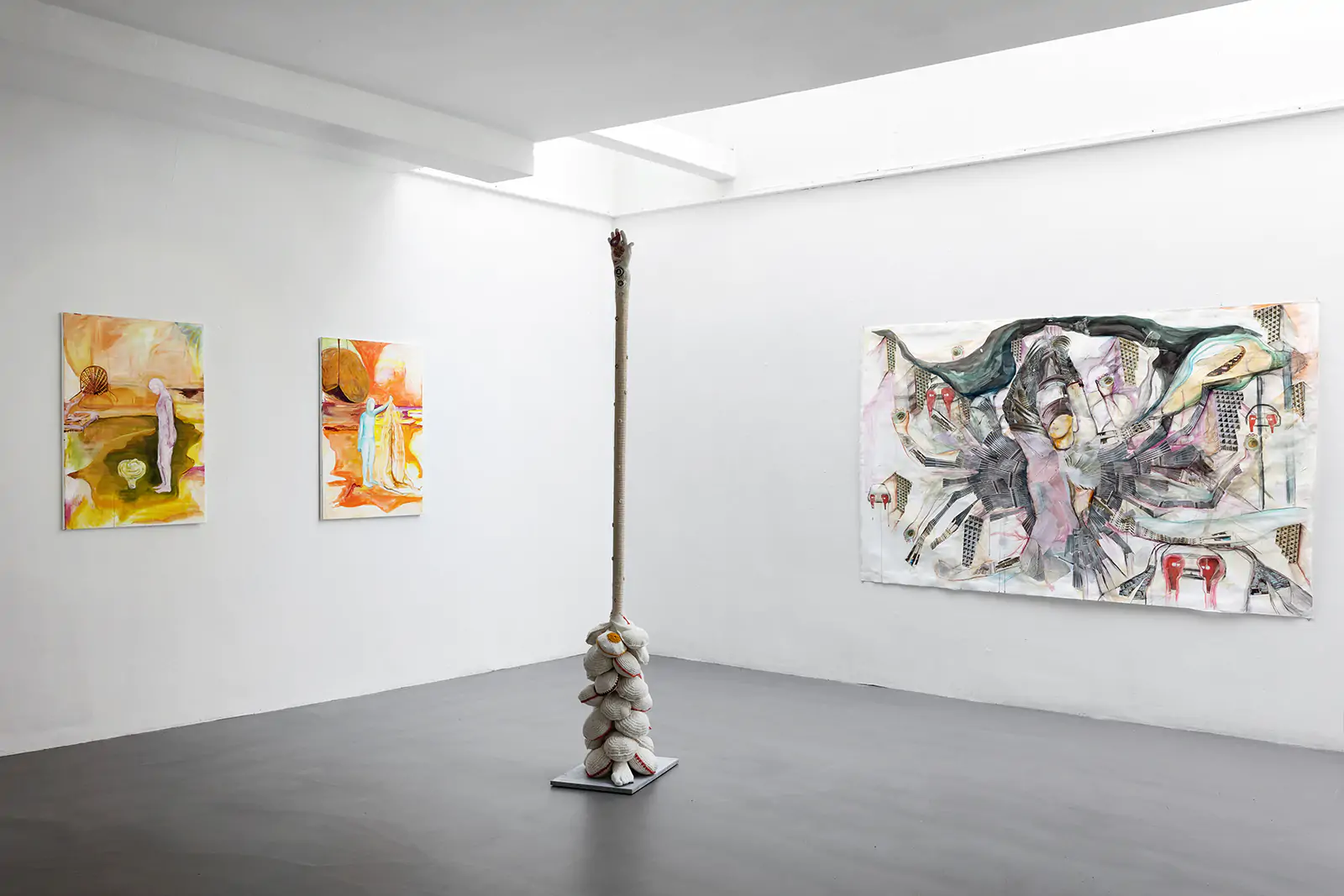
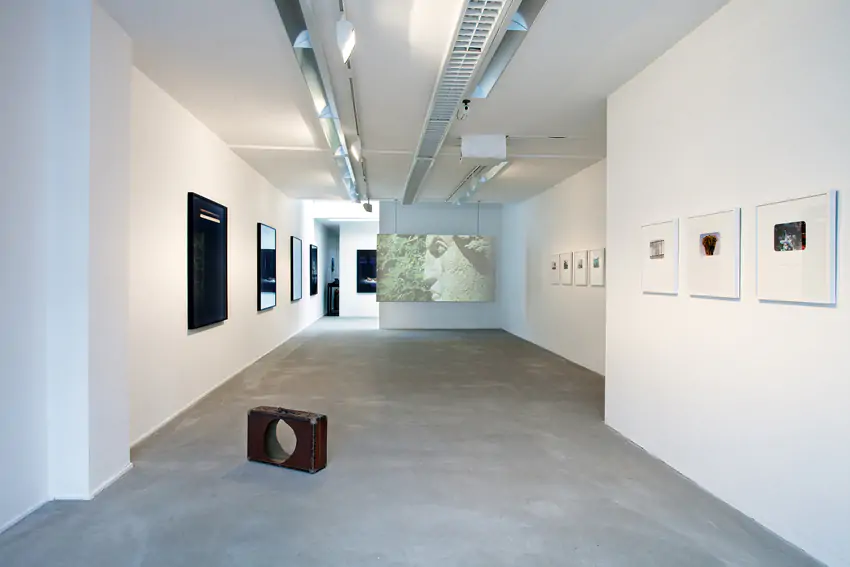
Lumen Travo is opgericht door Marianne van Tilborg in 1985. Het is een hedendaagse kunstgalerie in Amsterdam. Elk jaar organiseert de galerij diverse tentoonstellingen in samenwerking met zowel opkomende als gevestigde kunstenaars. Lumen Travo maakt zich zorgen over actuele thema's zoals identiteit, representatie en postkolonialisme en streeft ernaar de veelheid aan stemmen te laten zien die een rol spelen in onze geglobaliseerde samenleving. Door krachtige en diverse artistieke perspectieven te presenteren, die niet beperkt blijven tot het westerse gezichtspunt, engageert deze galerij zich in een visueel gesprek met open ogen voor de hele wereld.
1017 WZ Amsterdam
Akinci
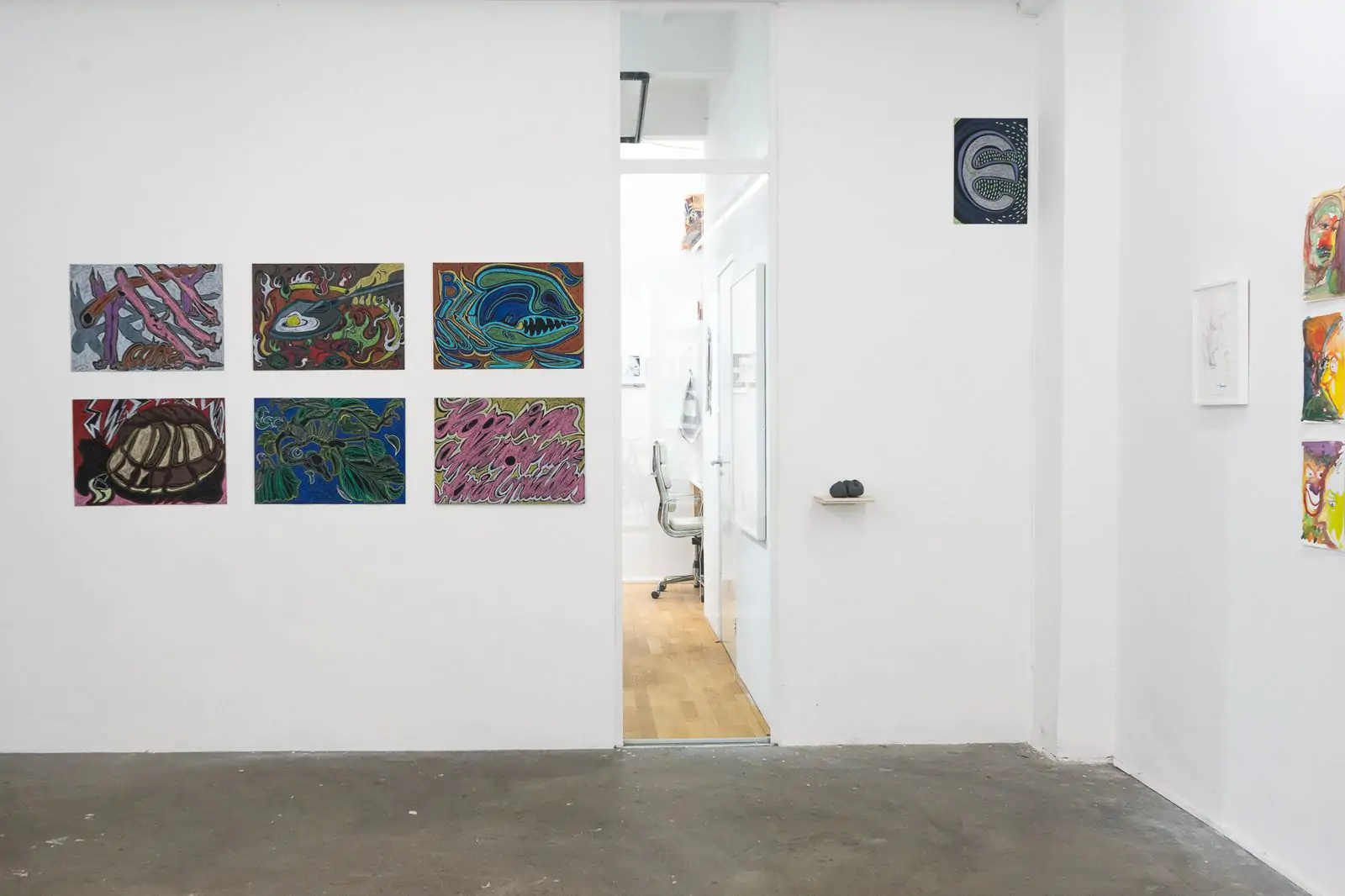
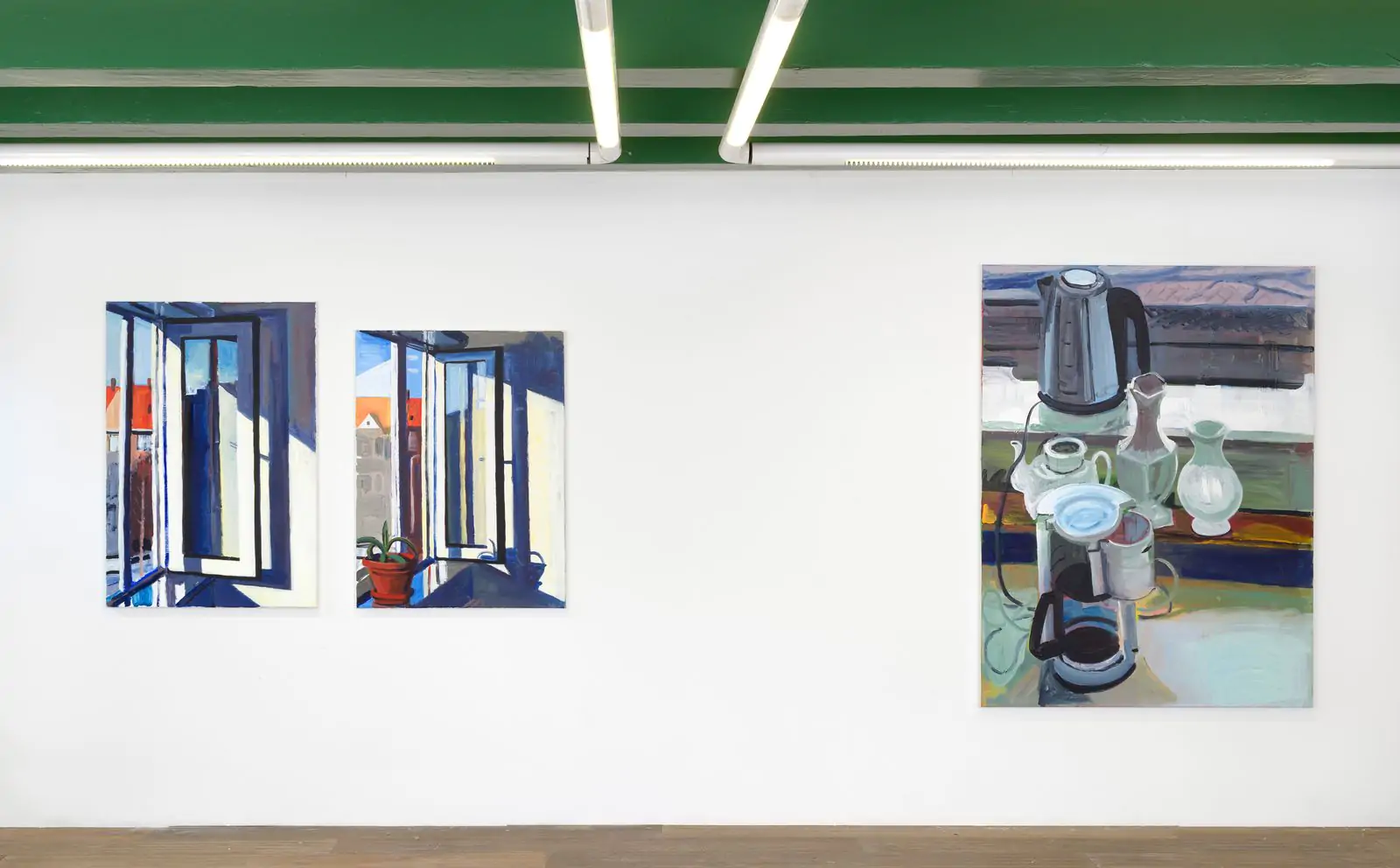
De liefhebber voor hedendaagse kunst zit bij AKINCI zeker goed. AKINCI heeft een grote focus op nieuwe ontwikkelingen in de hedendaagse kunst en is expliciet geëngageerd met kunstenaars die socio-politieke, ecologische en gender vragen in hun werk integreren. Hun programma wordt bepaald door een diversiteit aan media en cross-overs tussen geluid, architectuur, schilderkunst, beeldhouwkunst, film en installatie. Je vindt er werken van o.a. Stephan Balkenhol, Theo Jansen en Edwin Zwakman.
1017 WZ Amsterdam
M.Simons
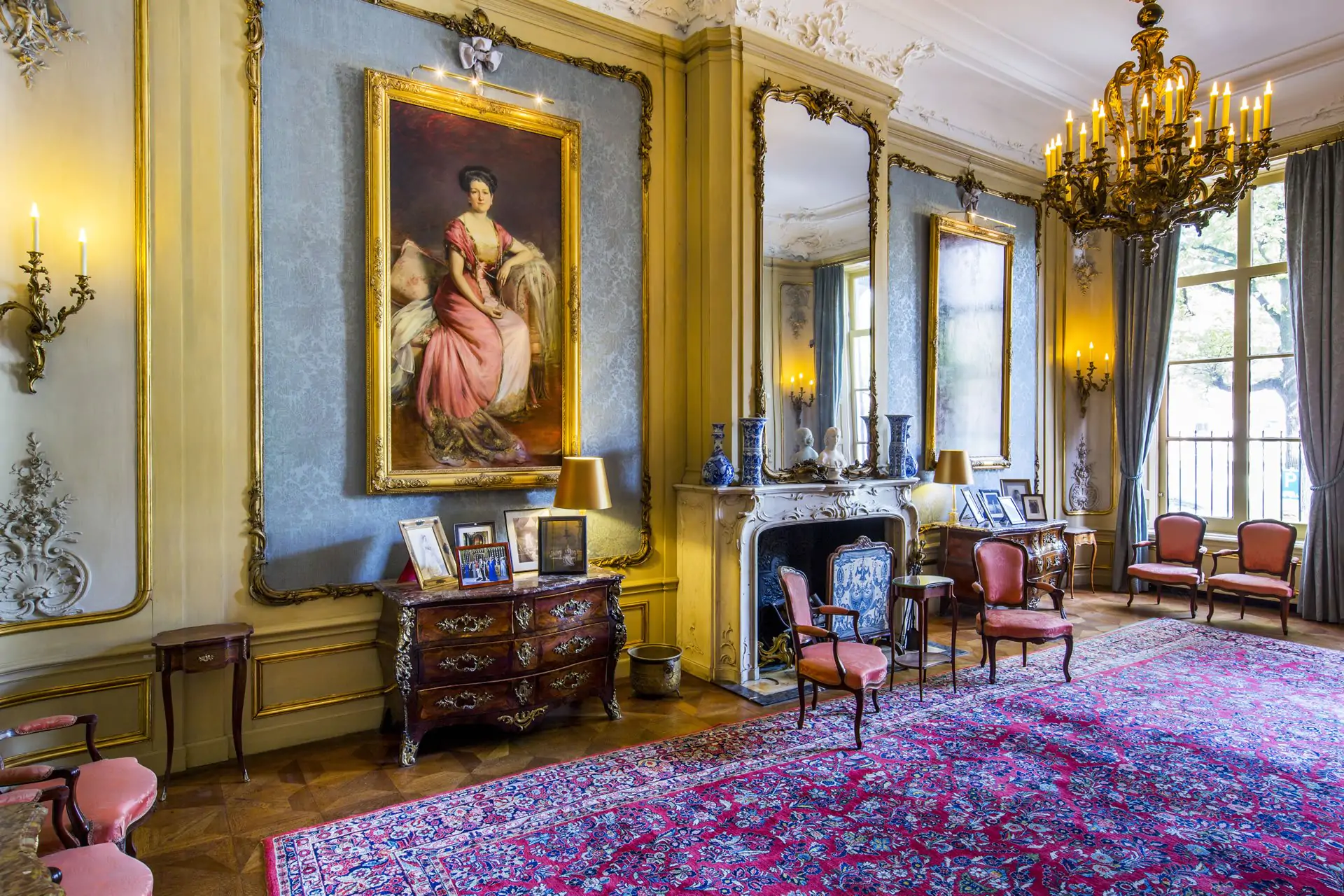
M.simons is opgericht in 2021. Het is een galerie gevestigd in het historische centrum van Amsterdam. Hoewel de galerie voornamelijk gefocust is op schilder-en grafische kunst biedt het ook ruimte voor diverse andere artistieke media, waaronder fotografie en beeldhouwkunst.
1017 ET Amsterdam
Museum van Loon
In een voormalig woonhuis uit 1672 aan de Amsterdamse grachtengordel ligt Museum van Loon. Naast vaste opstelling met (historische) portretten, meubilair, zilverwerk en porselein, worden hier ook tijdelijke tentoonstellingen georganiseerd waarbij een deel van de collectie van het museum, het huis, of de geschiedenis van de familie Van Loon centraal staan. Achter het huis ligt de unieke tuin die is aangelegd in de stijl van de 17e eeuw. Kortom een museum waar je terecht kan voor erfgoed, kunstgeschiedenis én hedendaagse kunst.
1071 XX Amsterdam
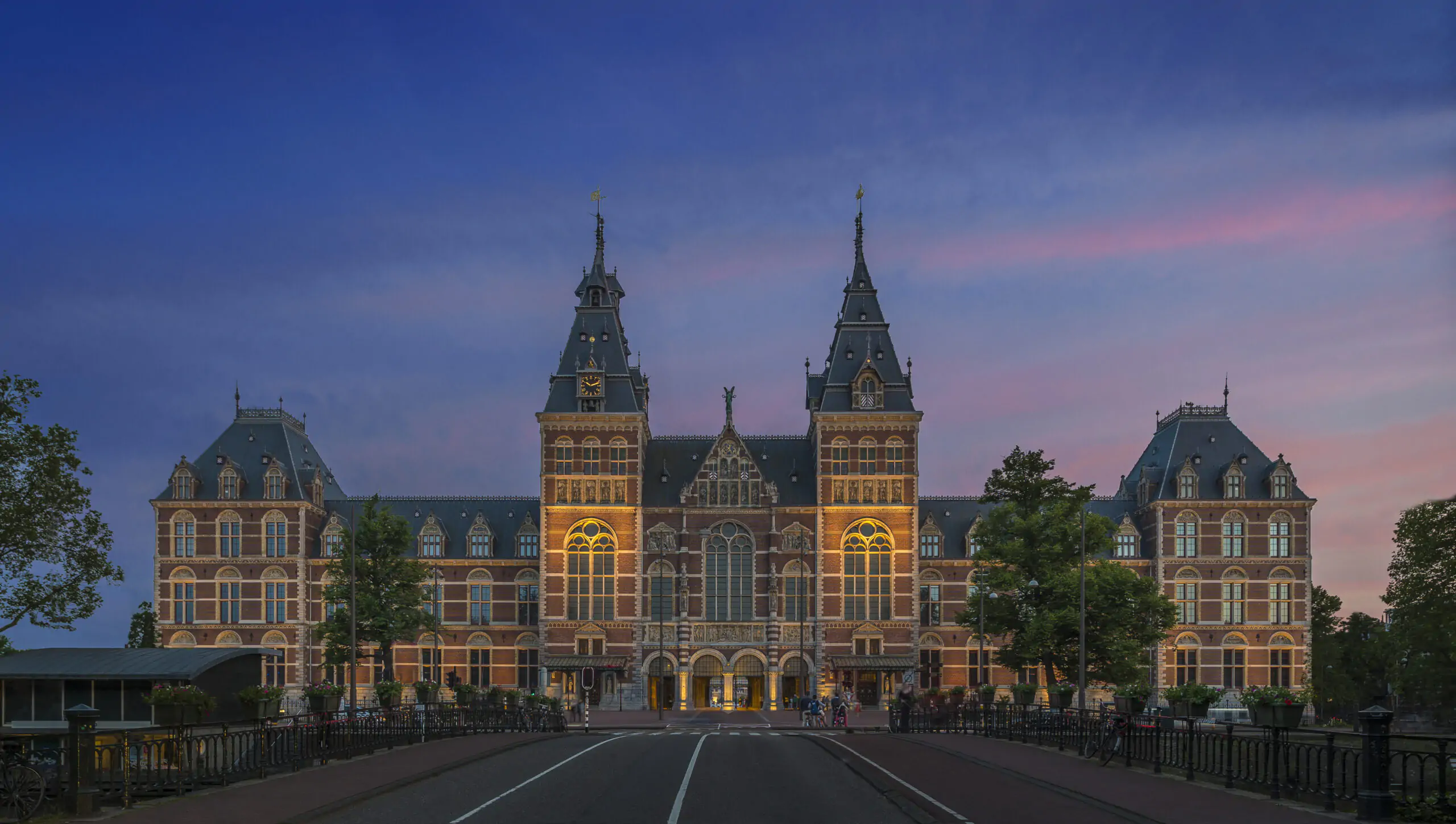
Rijksmuseum
De architect, Pierre Cuypers, had voor het Rijksmuseum een ontwerp in historische stijl gemaakt, een mengeling van gotiek en renaissance en vol van vaderlandse symboliek. Na jarenlang gedoe - velen vonden het te middeleeuws, te katholiek en te weinig écht Nederlands – startte de bouw in 1876. In 1885 werd het officieel geopend. Naast de bestaande collectie kwamen bijna alle oudere schilderijen van de Stad Amsterdam in het Rijksmuseum te hangen, zoals Rembrandts Joodse bruidje die de bankier A. van der Hoop aan de stad had nagelaten. Ook kwam er kunst uit Haarlem, kreeg een deel van het Kabinet van Zeldzaamheden een vaste plek en het prentenkabinet een eigen ruimte. Een waardige collectie, in een schitterend gebouw.
Bij de laatste renovatie (2003-2013) kreeg het gebouw de oorspronkelijke structuur van Cuypers terug. Het gebouw is gemoderniseerd maar is tegelijkertijd van binnen weer meer het gebouw van Cuypers geworden, in al z’n grandeur. Schilderkunst, kunstnijverheid en geschiedenis zijn niet meer in aparte delen van het gebouw te zien. Alles vormt samen één chronologisch verhaal: het verhaal over de Nederlandse kunst en geschiedenis, van de Middeleeuwen tot en met de 20e eeuw.
1017 DS Amsterdam
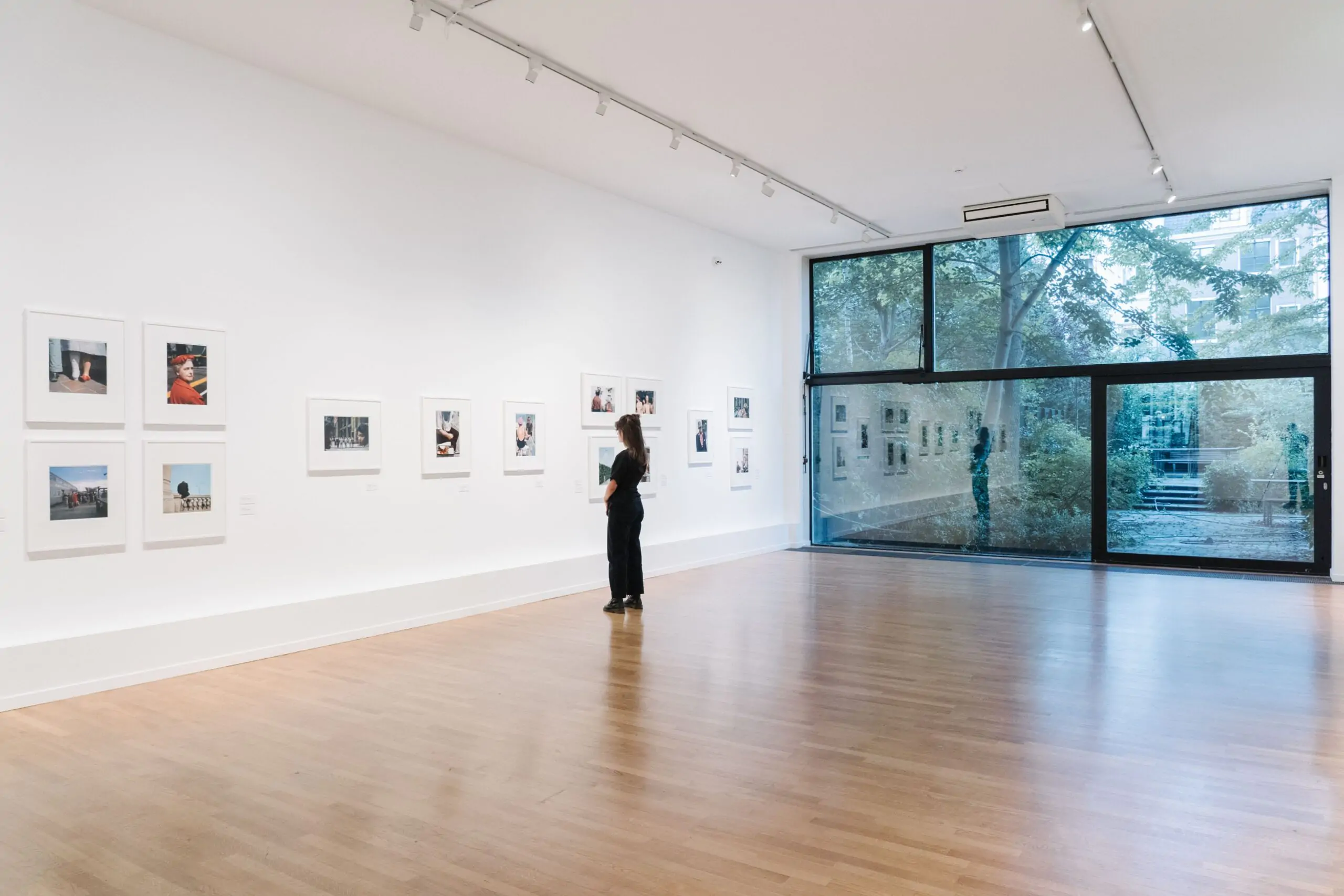
Foam
Foam is een fotografiemuseum die meestal meerdere tentoonstellingen tegelijk presenteert. De exposities wisselen van historische foto’s tot kunstfoto’s en van documentairefotografie tot modefoto’s. Elk jaar wordt er werk vertoond van bekende fotografen; denk aan Helmut Newton en William Klein. Foam stimuleert jong talent en zij hebben dan ook de kans om hun werk tijdelijk tentoon te stellen. De zalen zijn strak en modern vormgegeven en de foto’s zijn met spotjes verlicht, zodat deze goed zichtbaar zijn. Foam kan je elke paar maanden opnieuw bezoeken door hun constant wisselende exposities.
1017 WZ Amsterdam
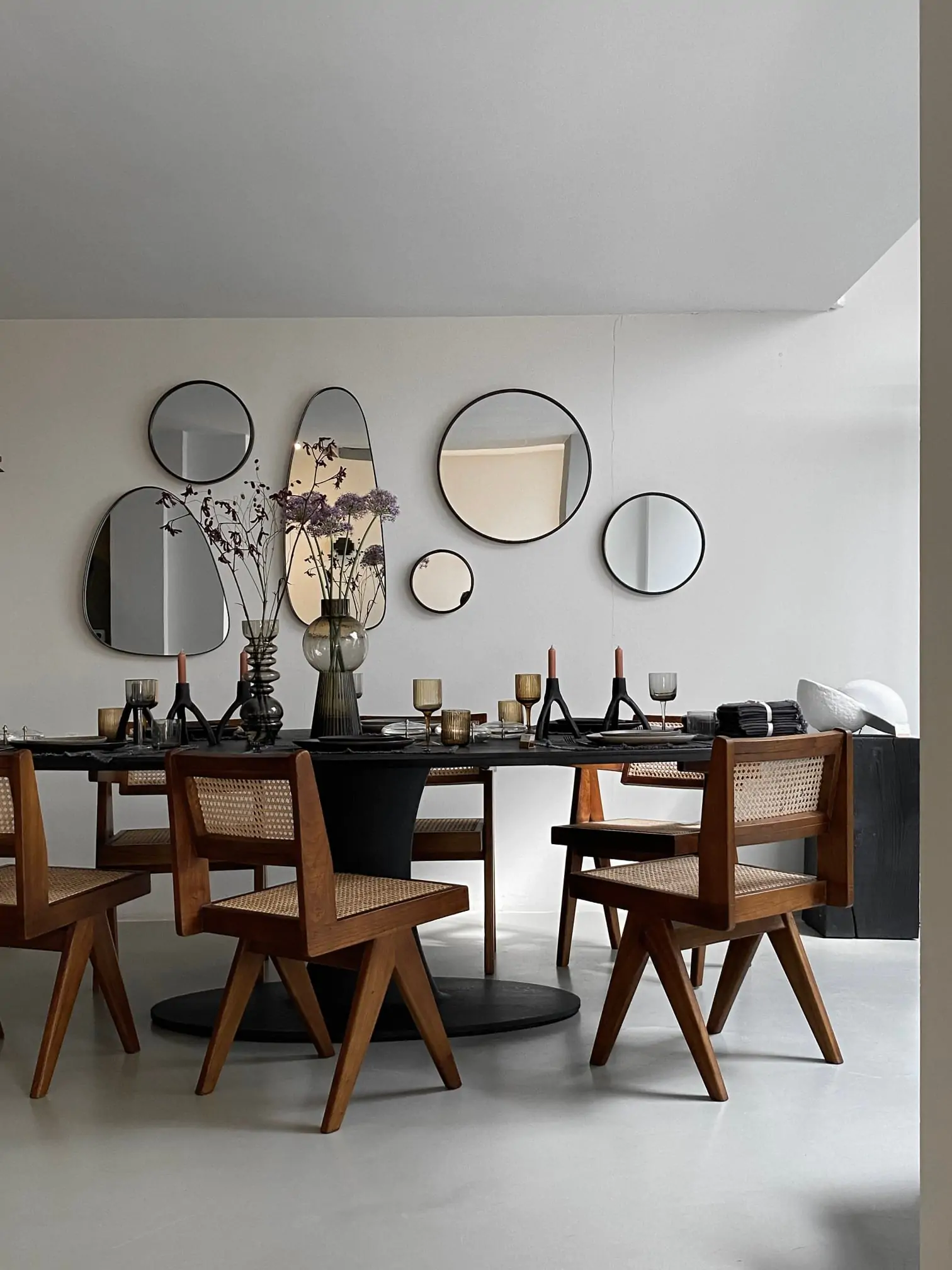
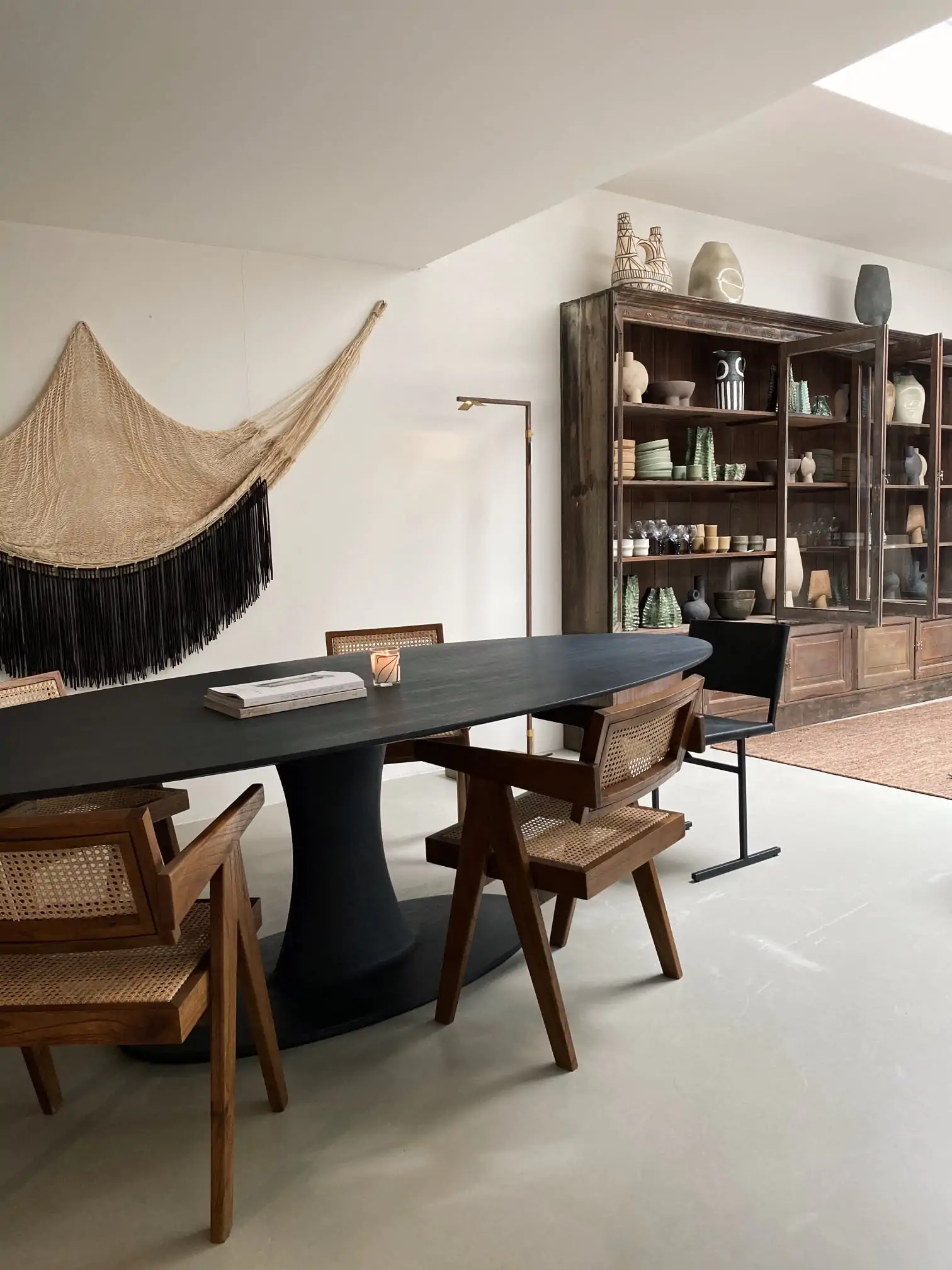
Casa Gitane
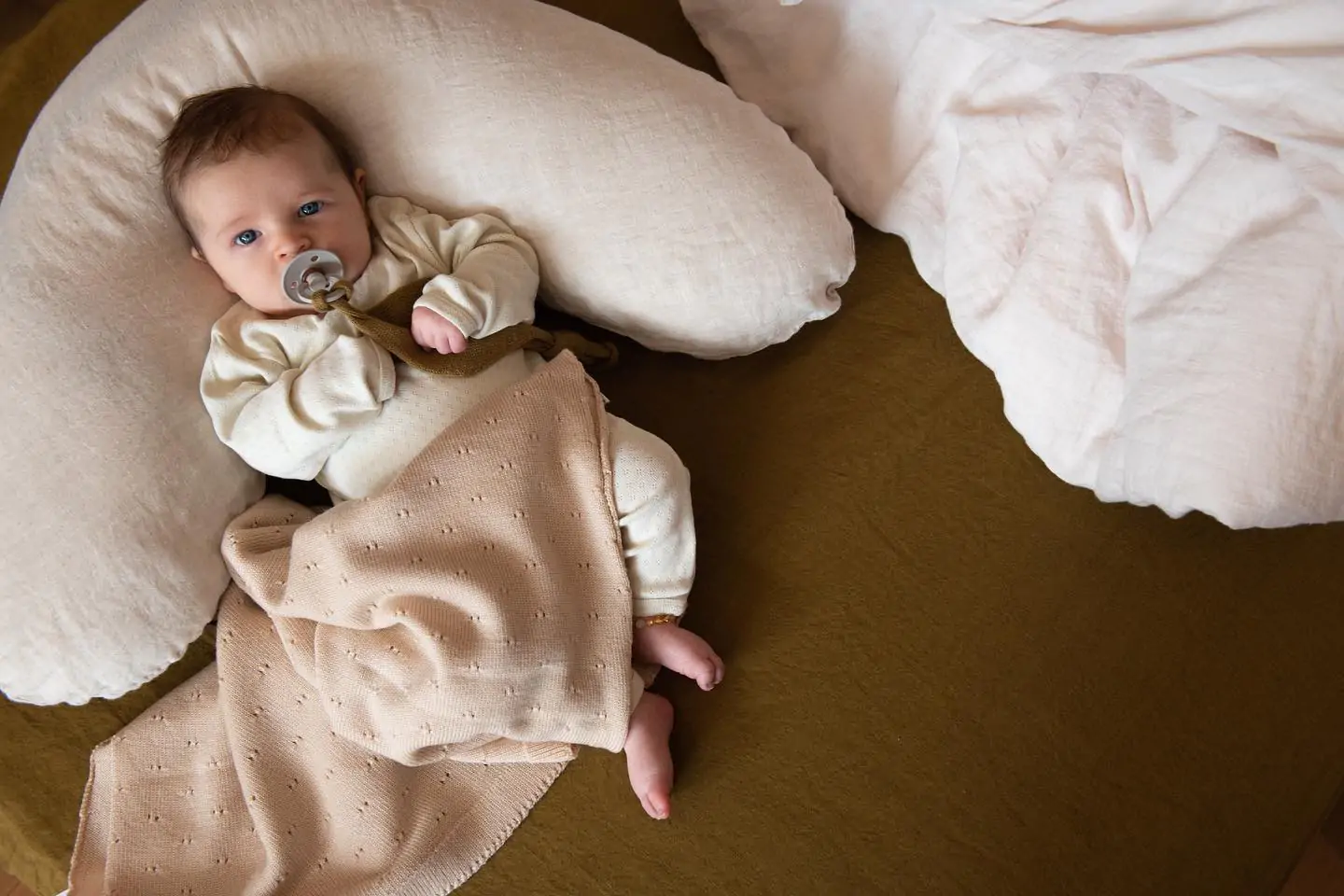
Op de Lijnbaansgracht bevindt zich de prachtige in aardse kleuren gehulde studio van Casa Gitane. Gitane betekent gipsy en zo herbergt Casa Gitane meubels en voorwerpen geïnspireerd op verre oorden, wereldreizen en een nomadische levensstijl. Hun collectie bestaat uit drie belangrijke ingrediënten; unieke vintage stukken, een selectie van bestaande merken en onze eigen ontwerpen. Momenteel voornamelijk webshop en project inrichting.
1017 LV Amsterdam
Archive store
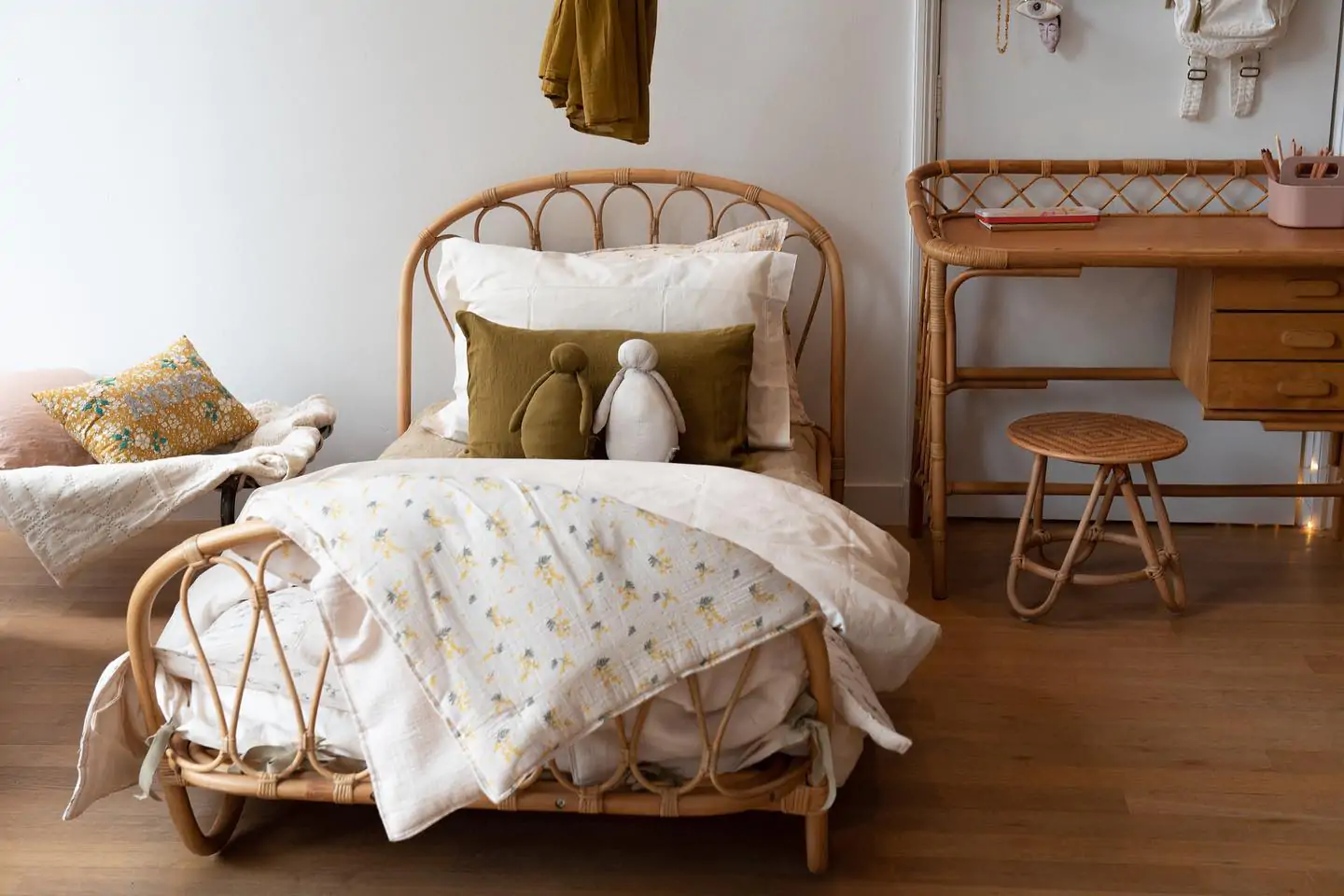
Op het Frederiksplein, op het randje van de Pijp, vind je sinds 2015 de Archive store - te herkennen aan de prachtig versierde thema etalages. De interieurwinkel is bestemd voor een groot publiek: je kunt hier terecht voor baby- en kinderspulletjes tot volwassen hebbedingetjes en meubels. Het is daarmee een winkel om heerlijk in rond te struinen als je op zoek bent naar dingen voor jezelf en een kleine. Met een gigantisch arsenaal aan merken is de keuze daadwerkelijk reuze, wat voor elke generatie wat wils biedt. Naast het verkopen van bestaande merken houdt de Archive store zich ook bezig met hun huismerk - société.
1017 HG Amsterdam
Enter the loft
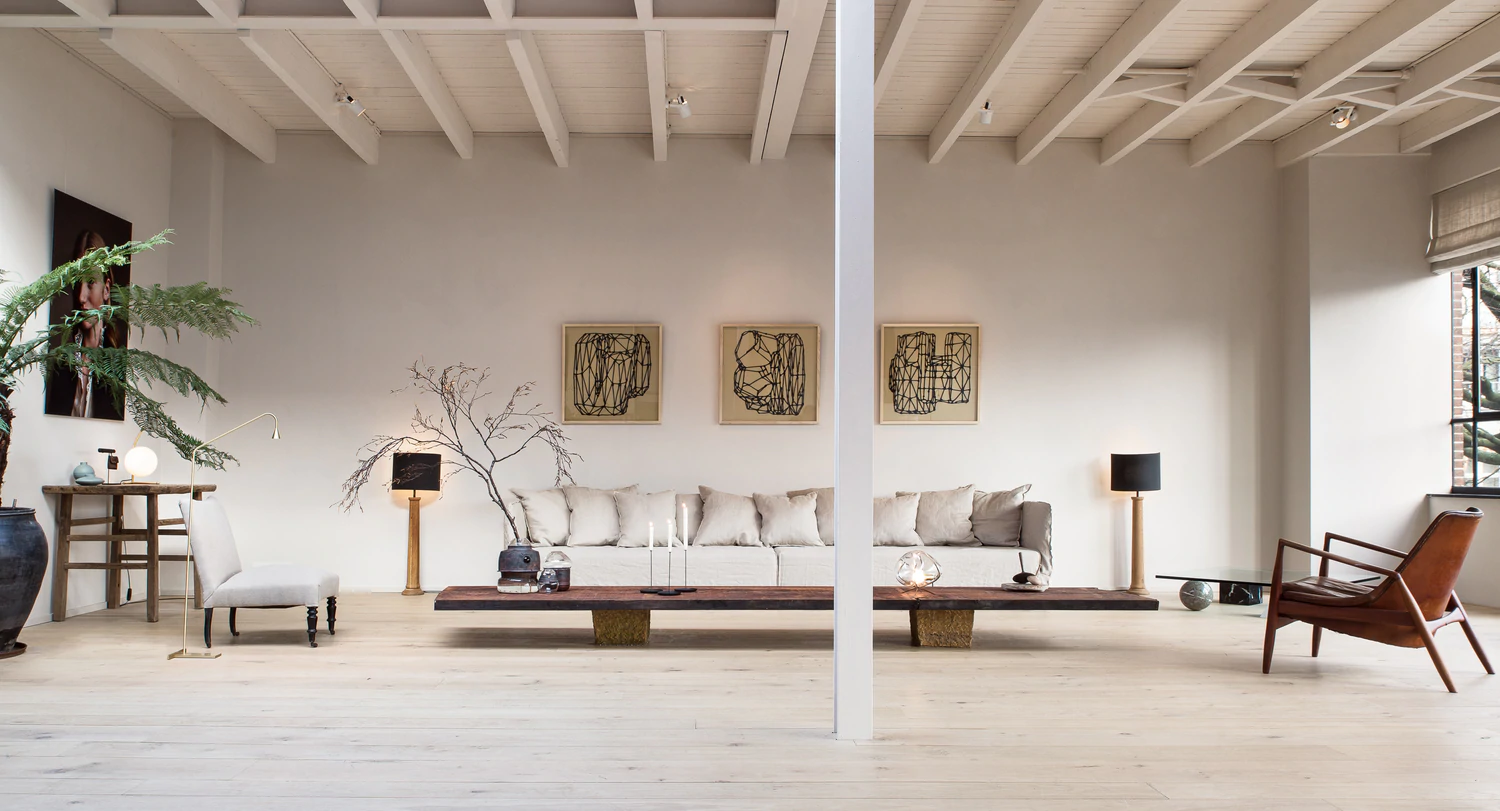
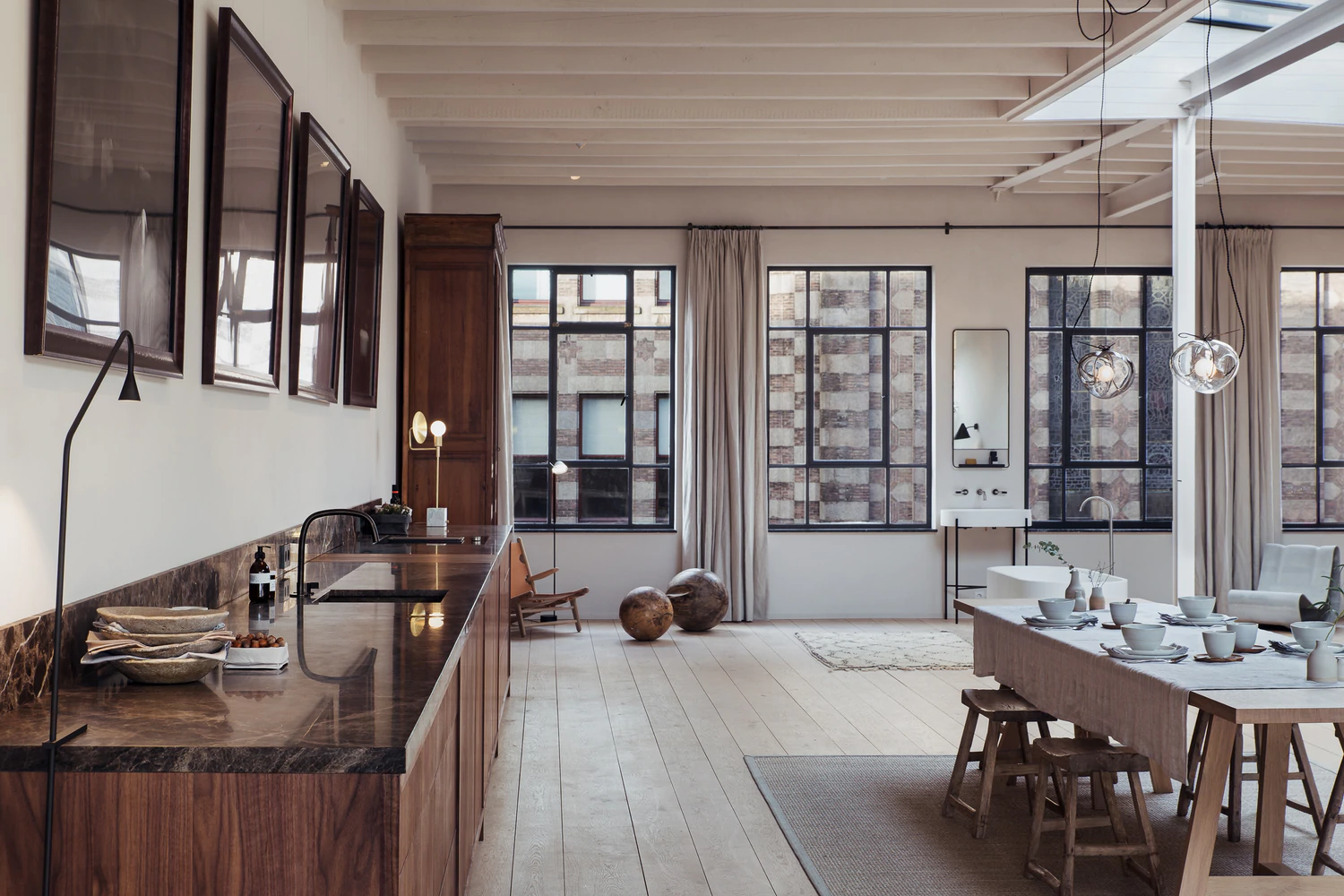
Enter the Loft is een boetiek interieurwinkel en een interieur adviesbureau met een passie; zien hoe ruimtes hun magie op mensen uitoefenen. Ga langs bij hun showroom aan de Vijzelstraat (by appointment only) en voel hoe zij ruimtes tot leven brengen door ze in te richten met hun favoriete interieurvondsten die met liefde en aandacht zijn gemaakt en die bestaan uit natuurlijke materialen – hout, leer, glas, staal, wol en keramiek.