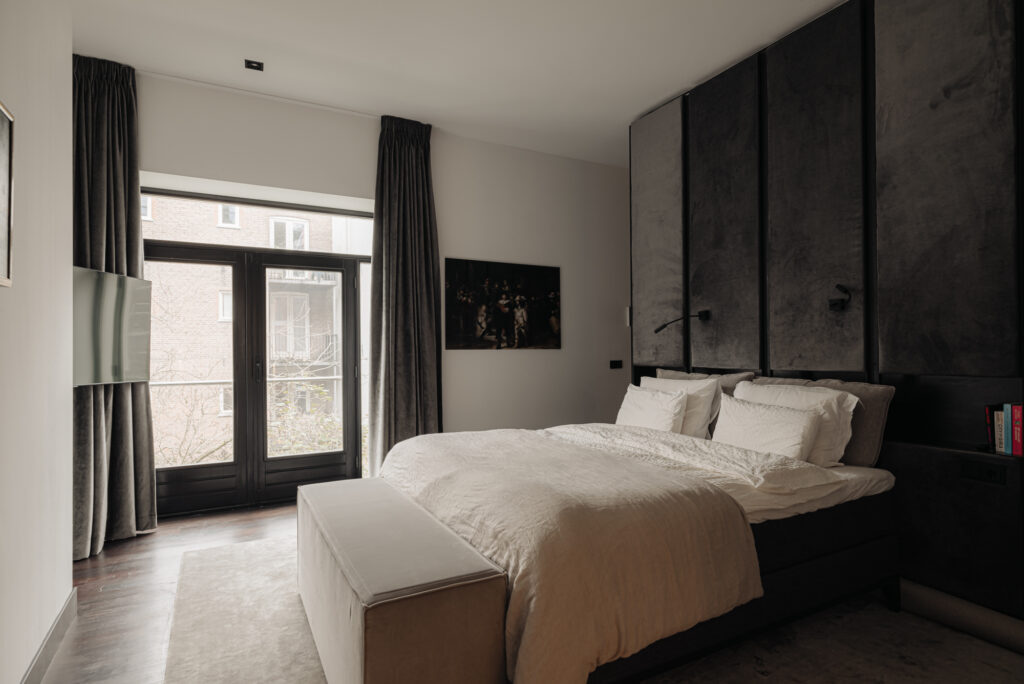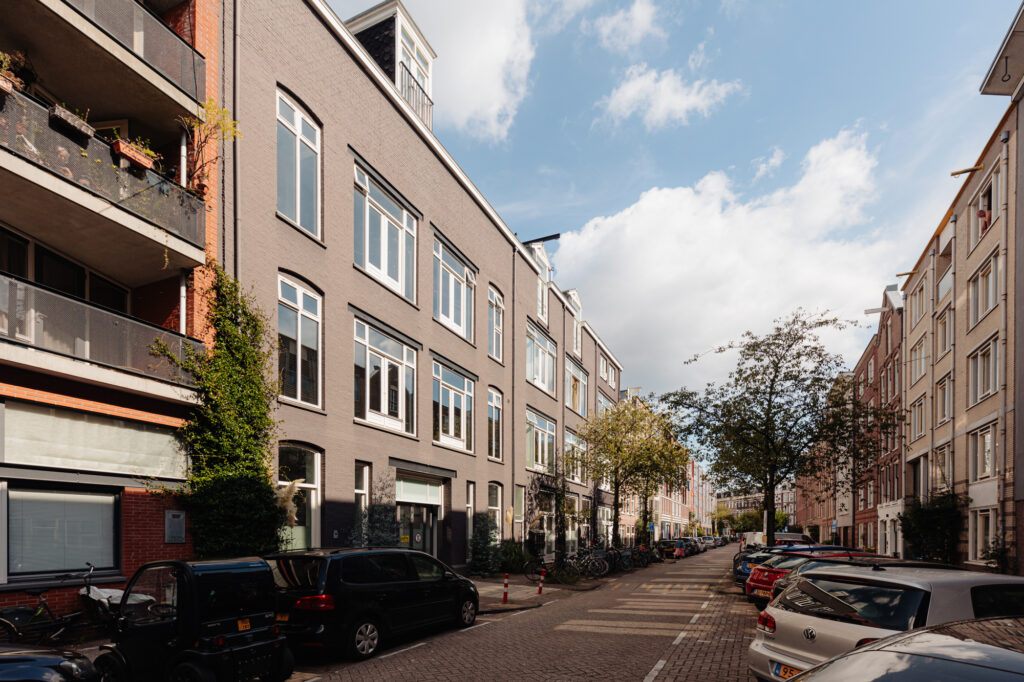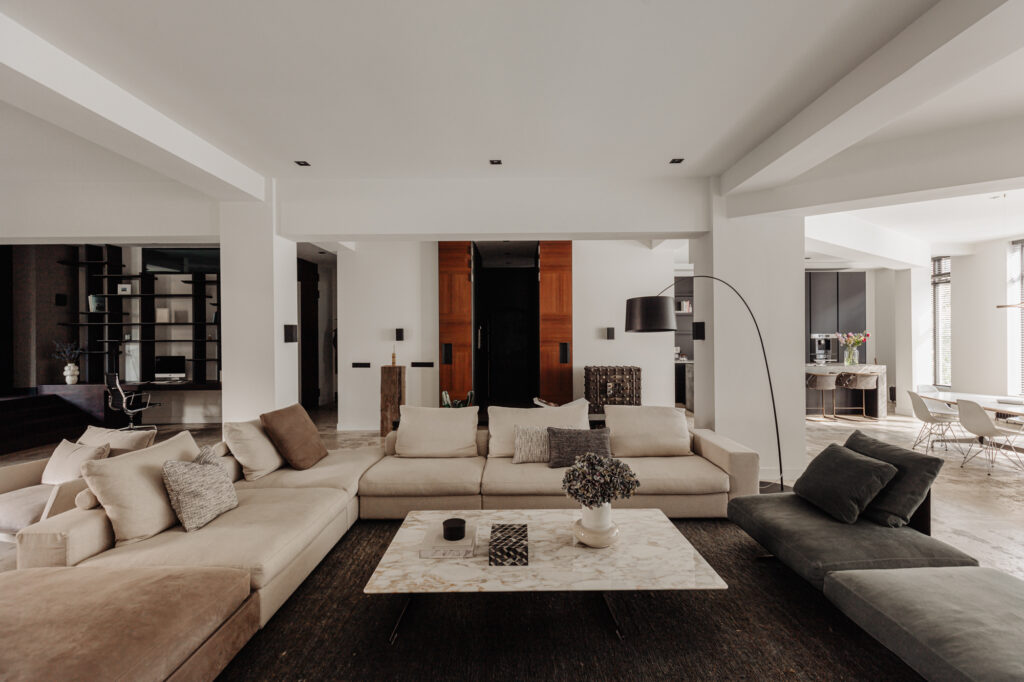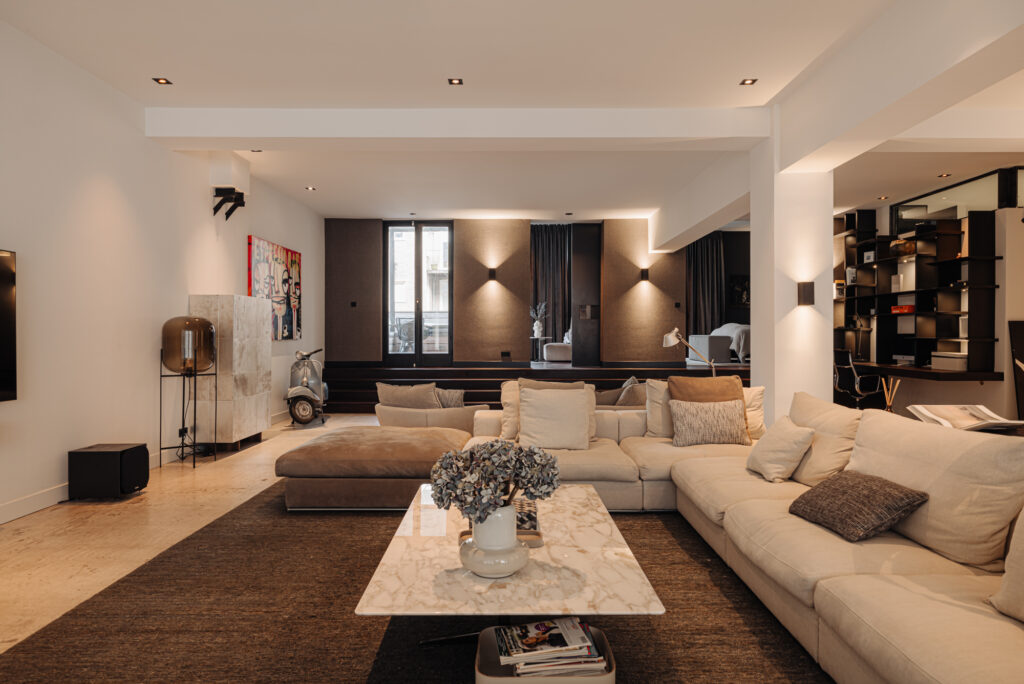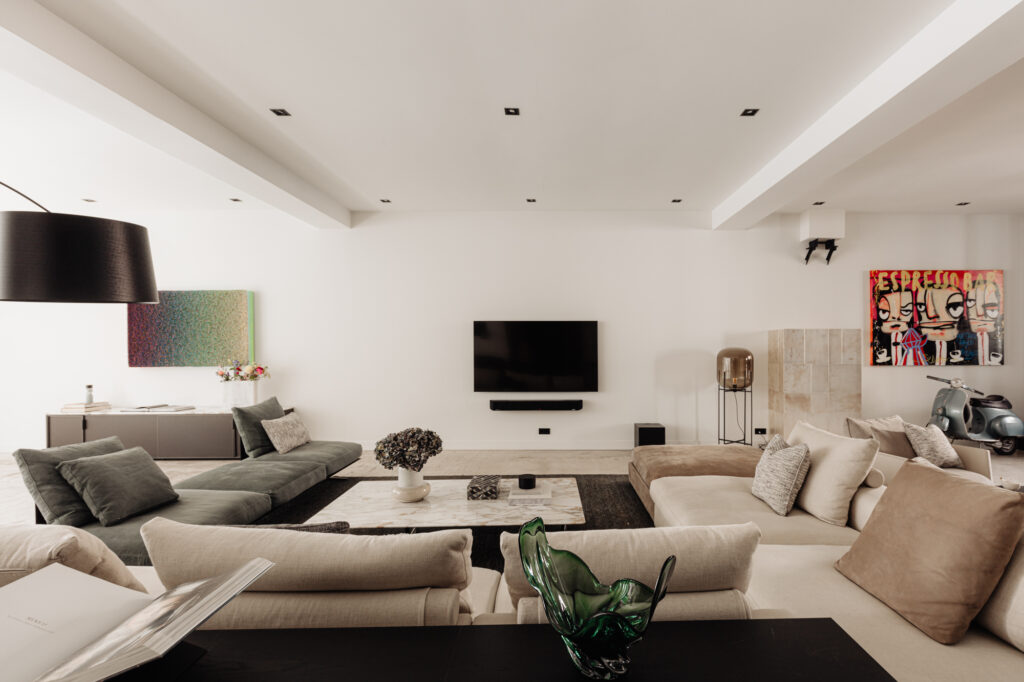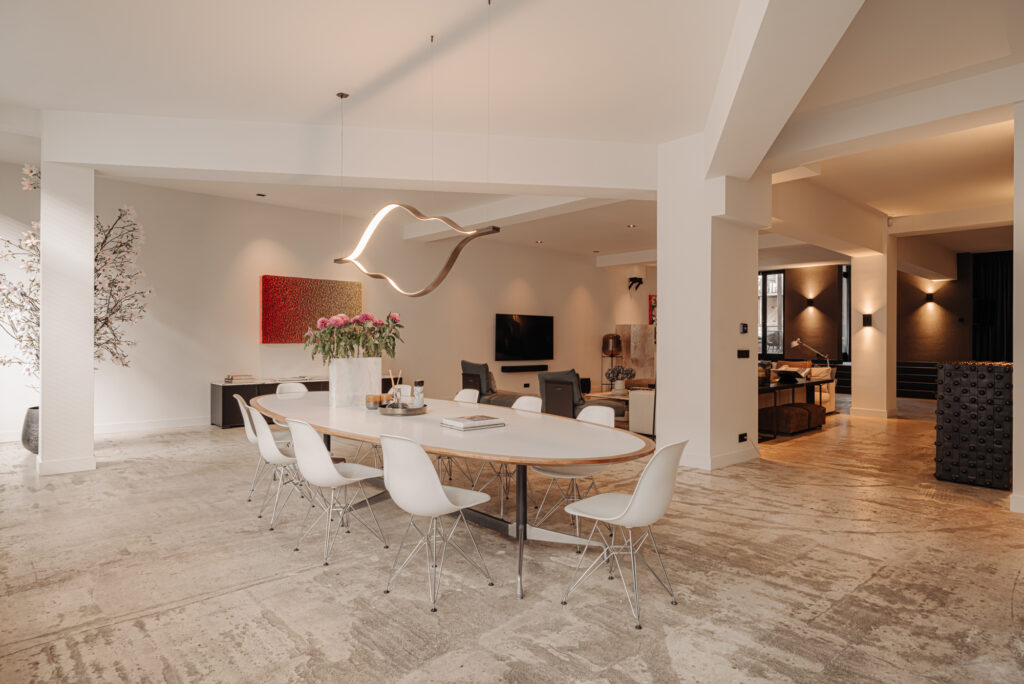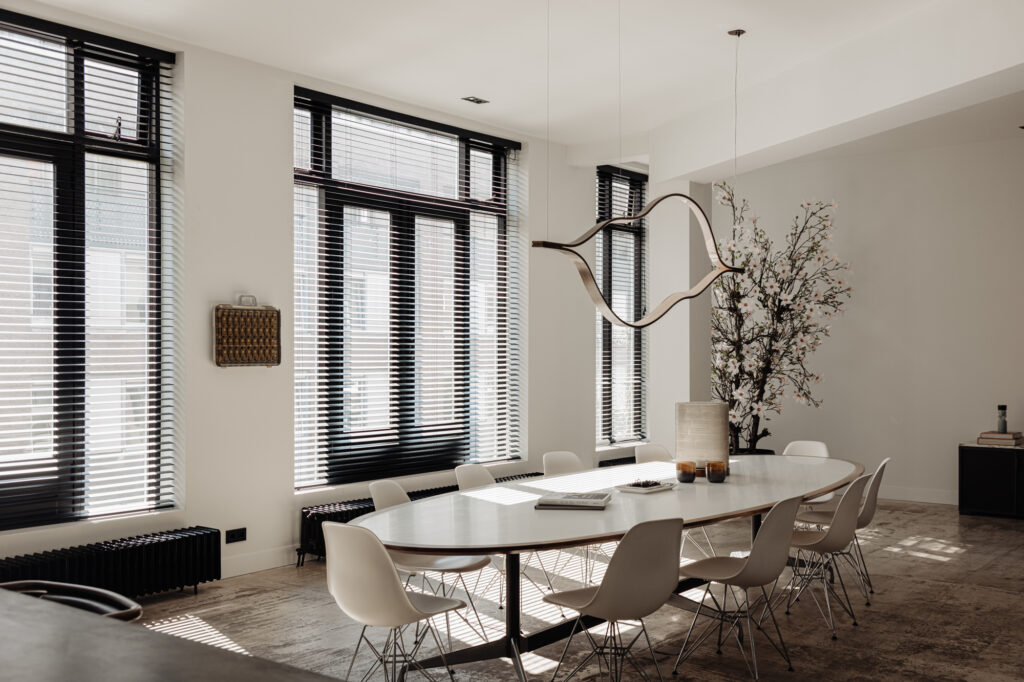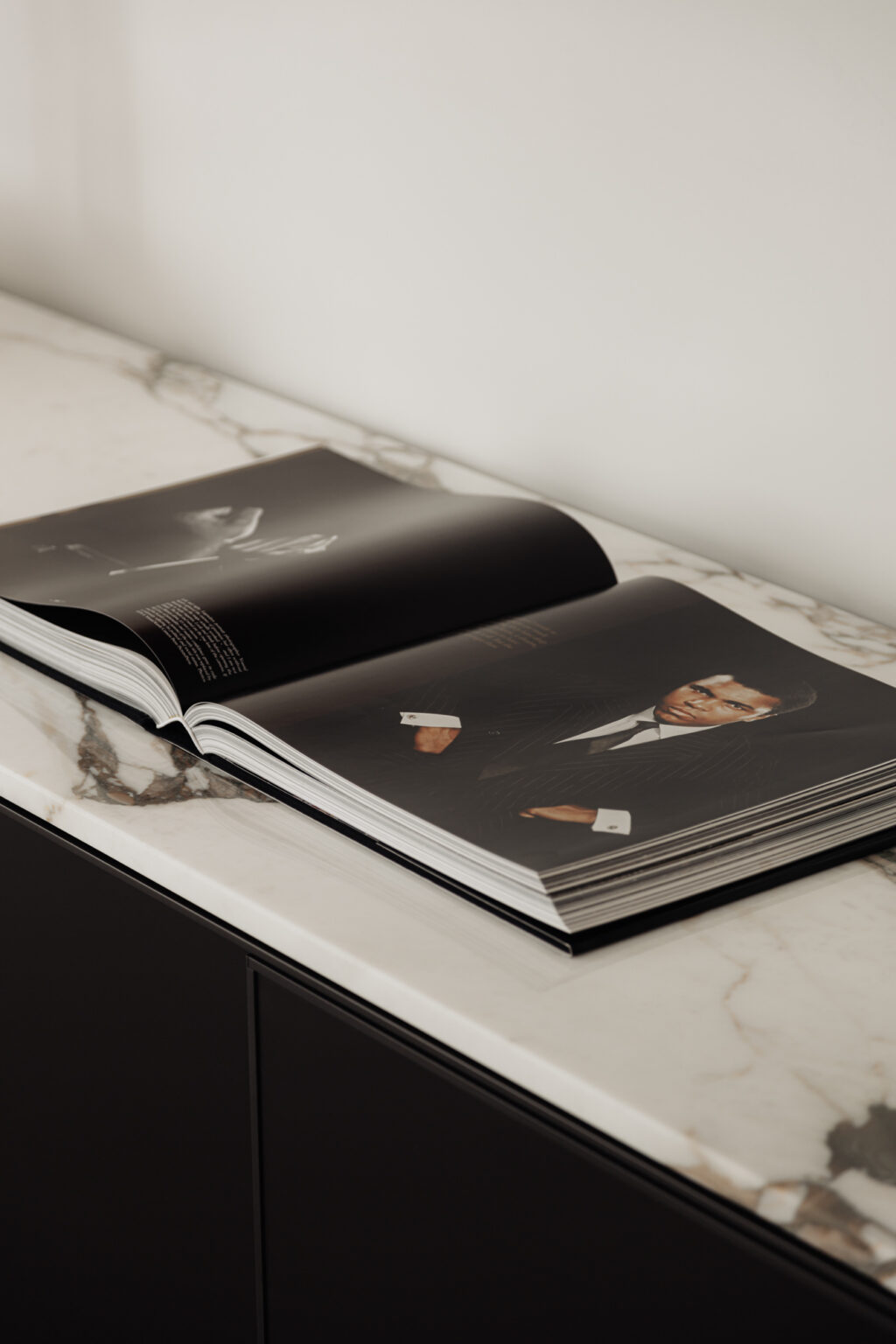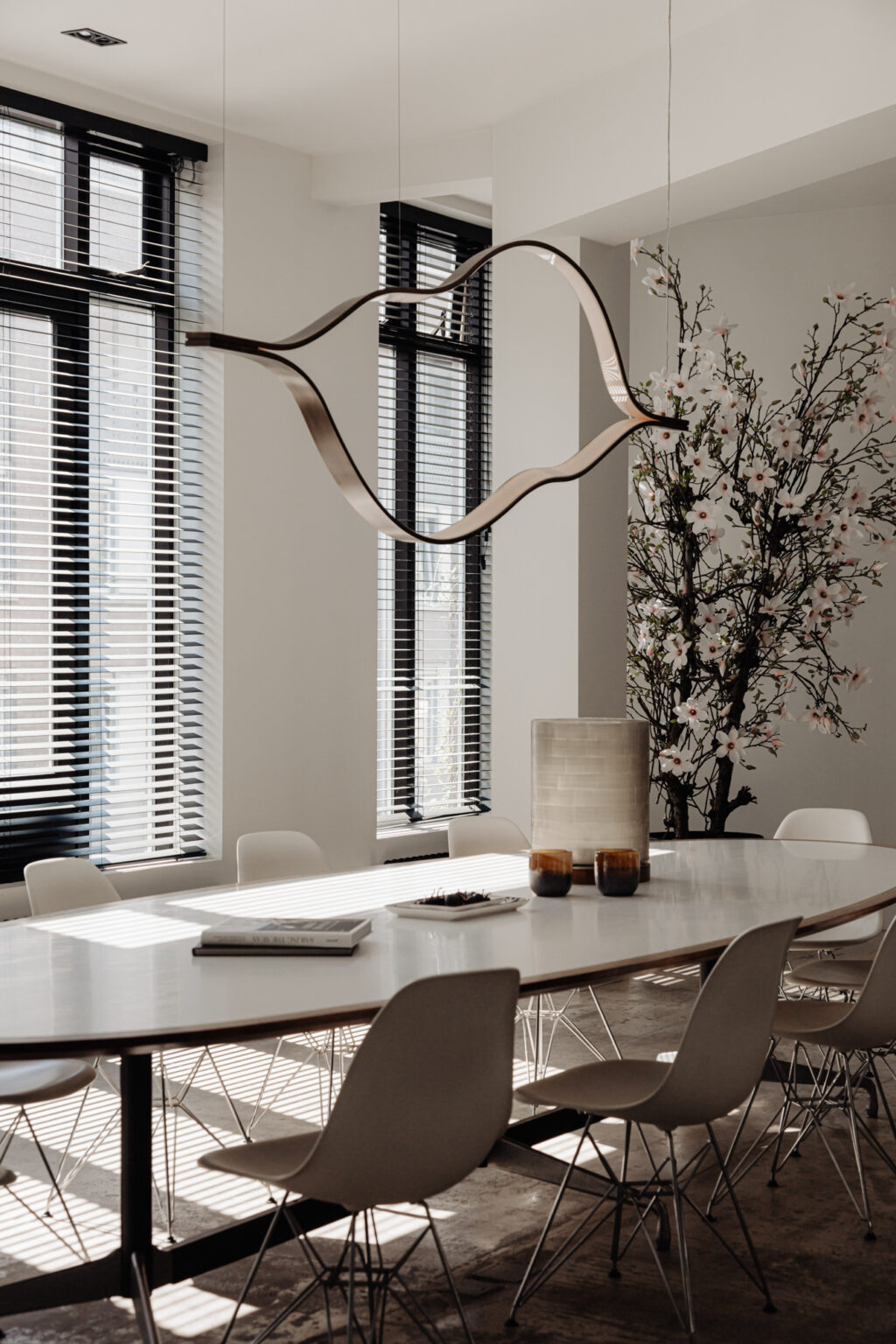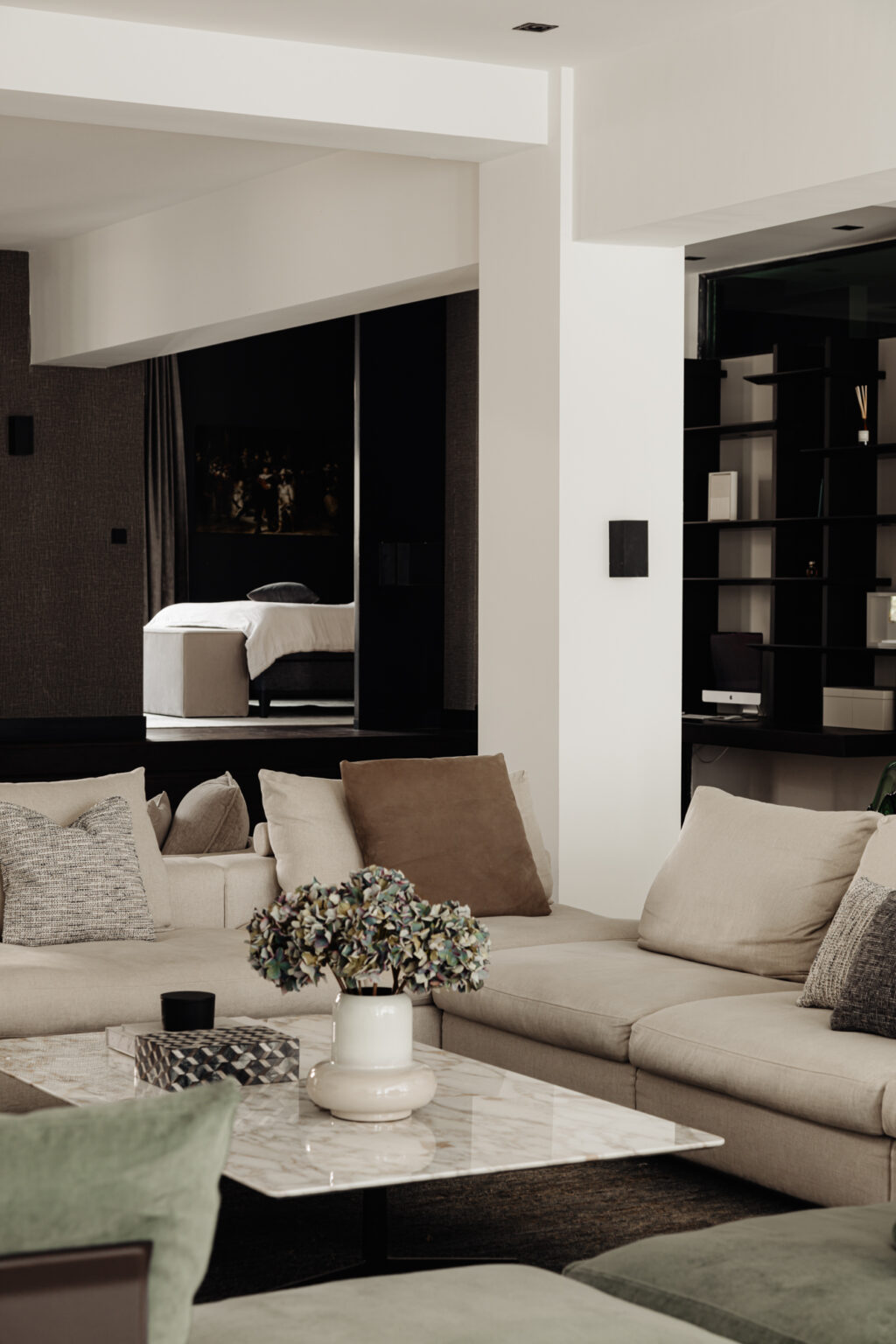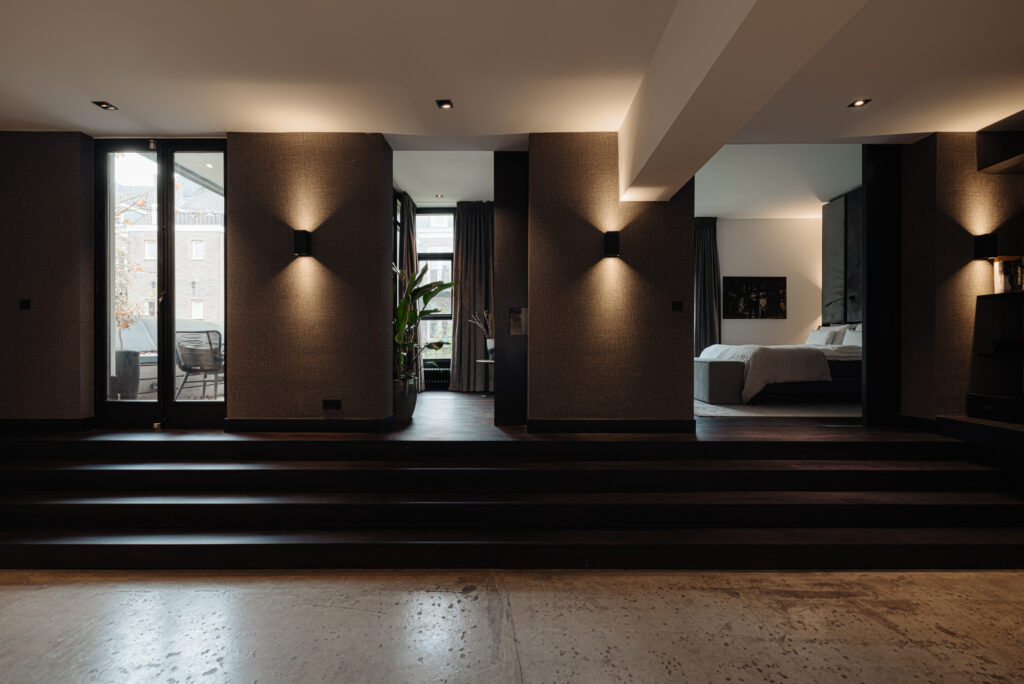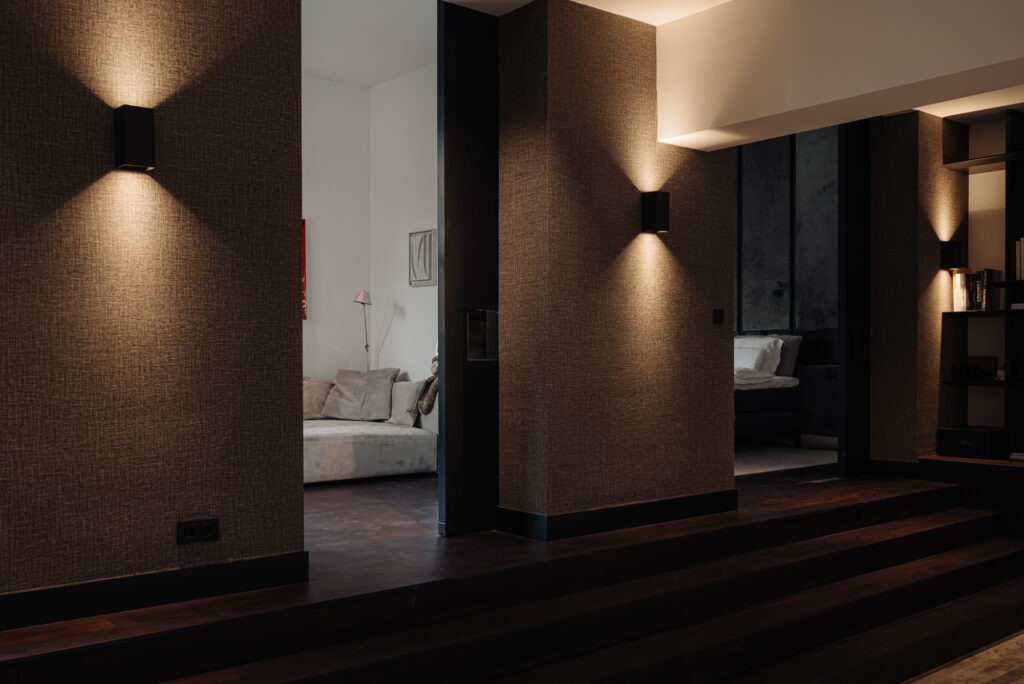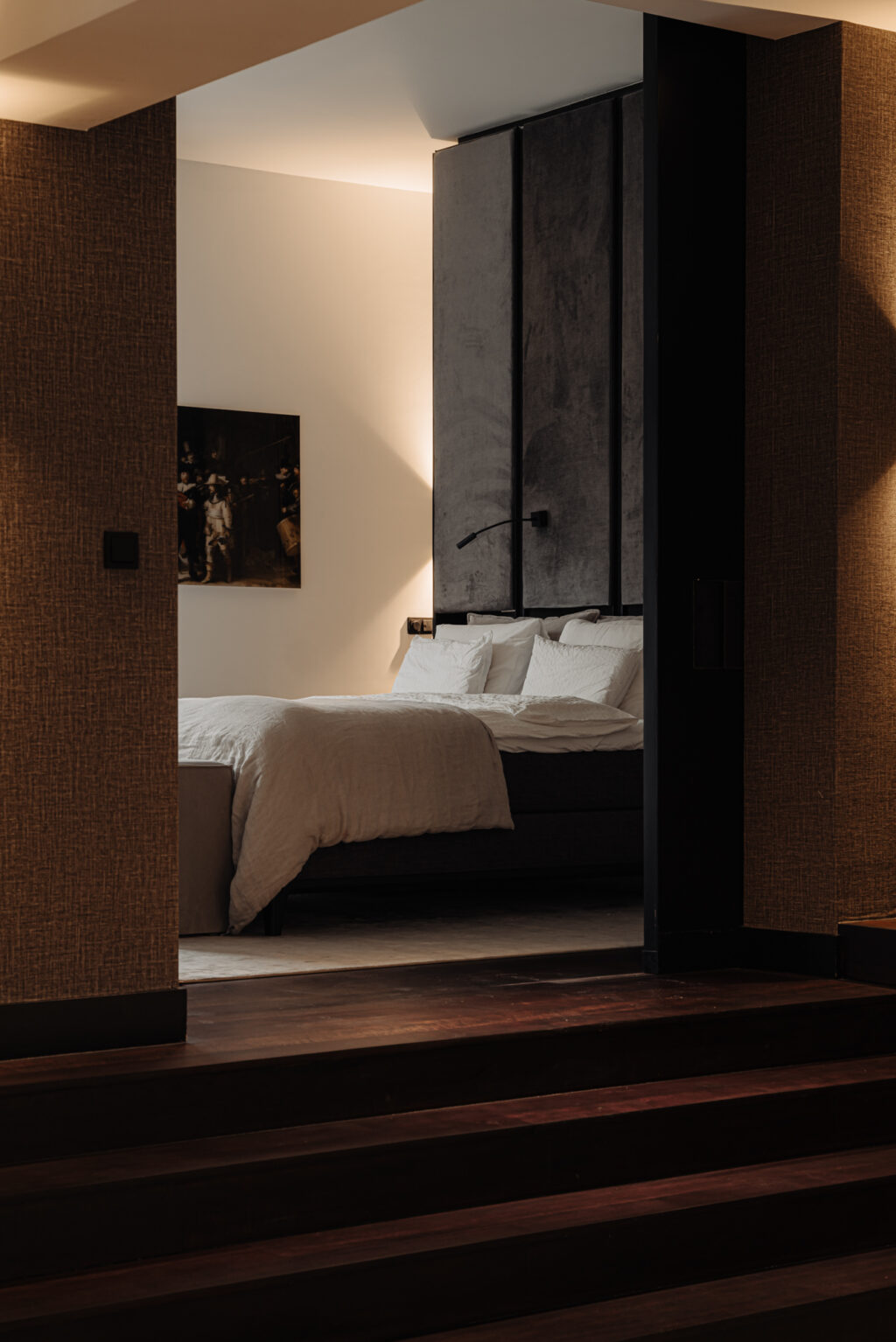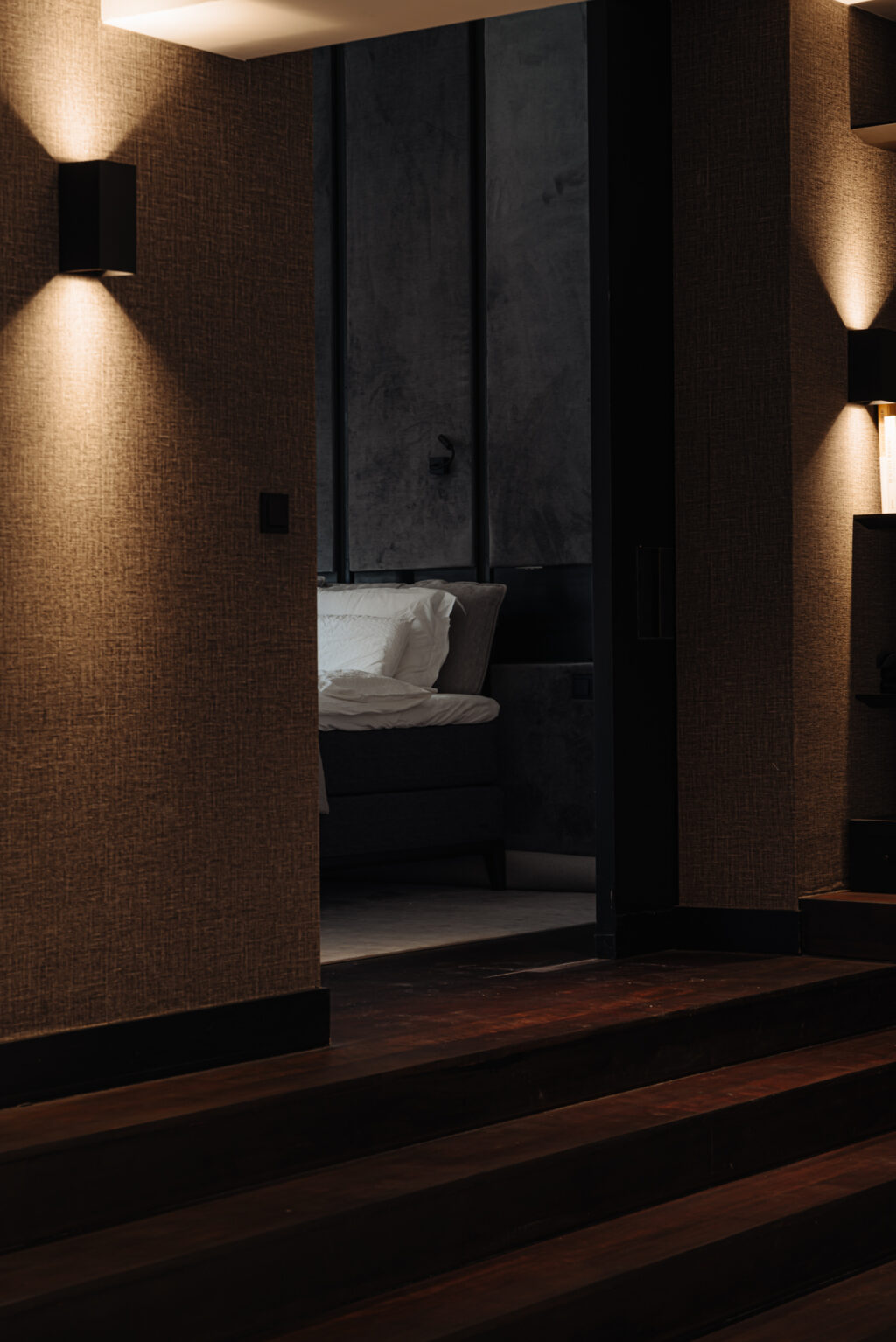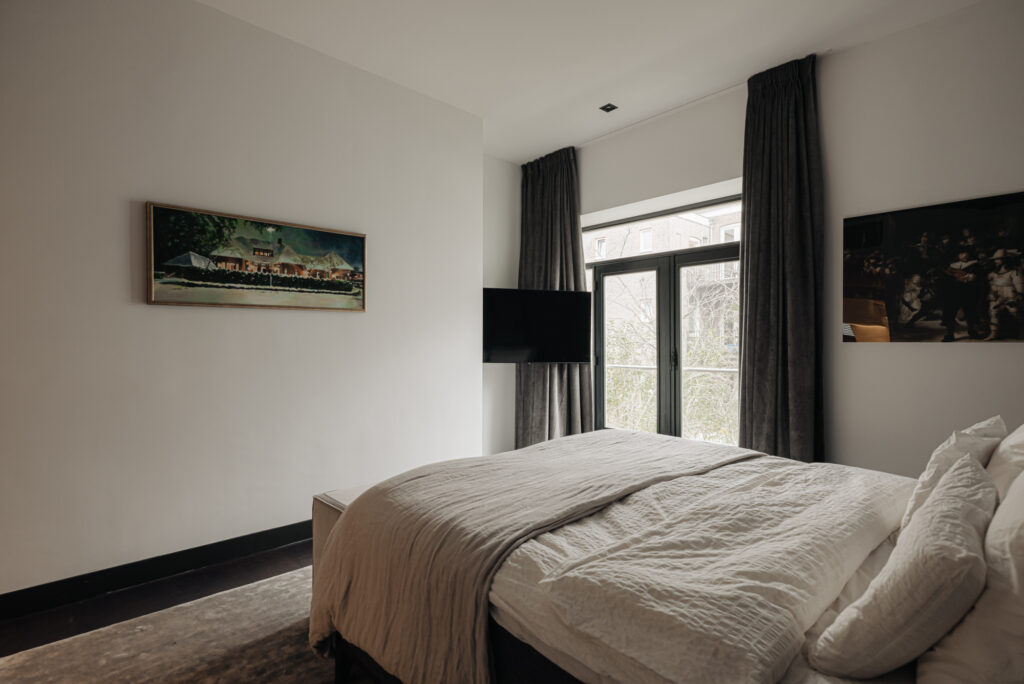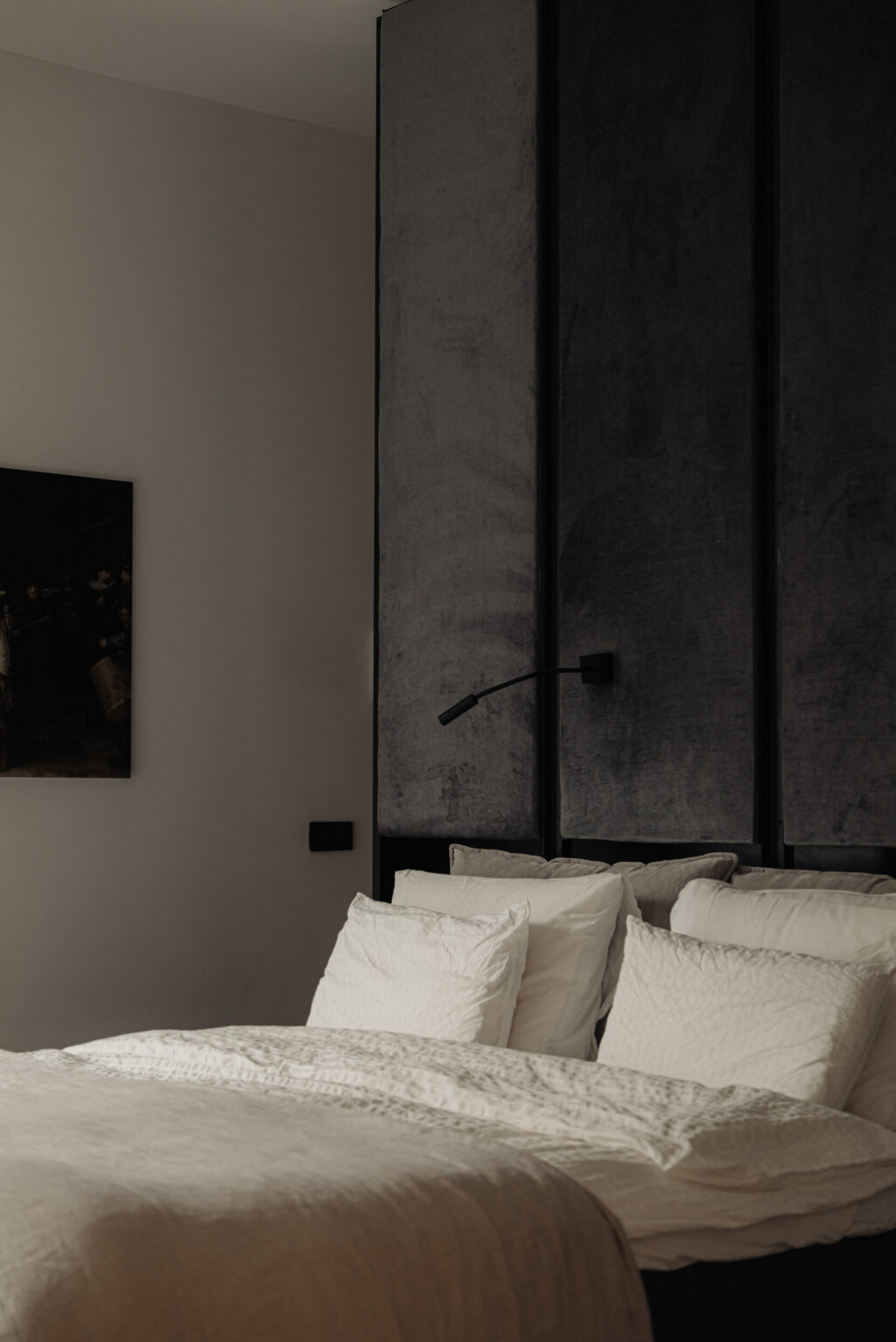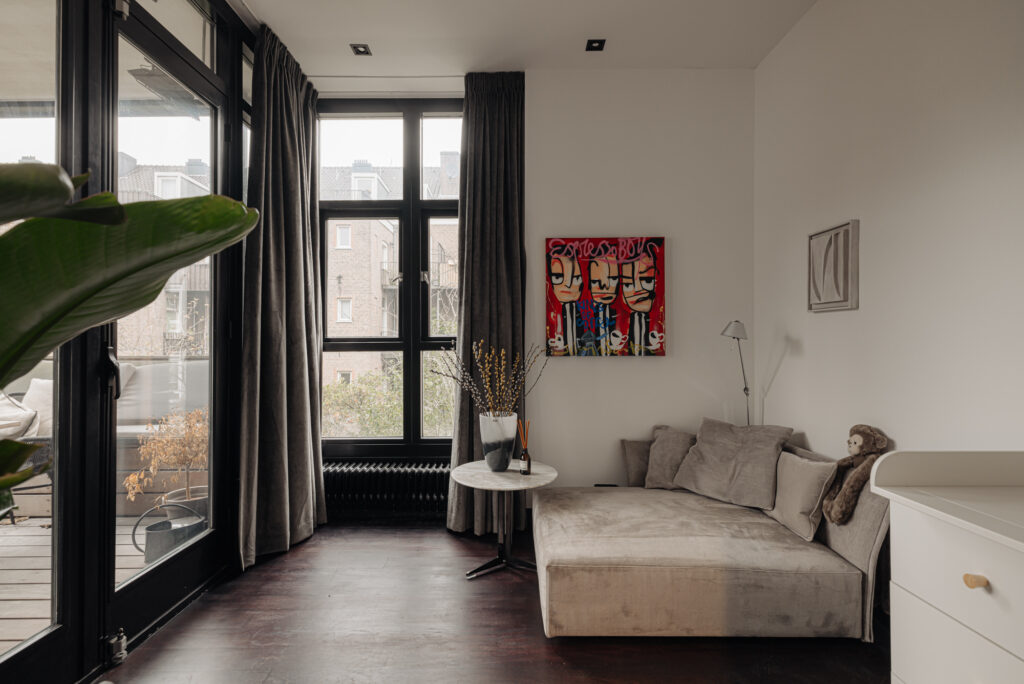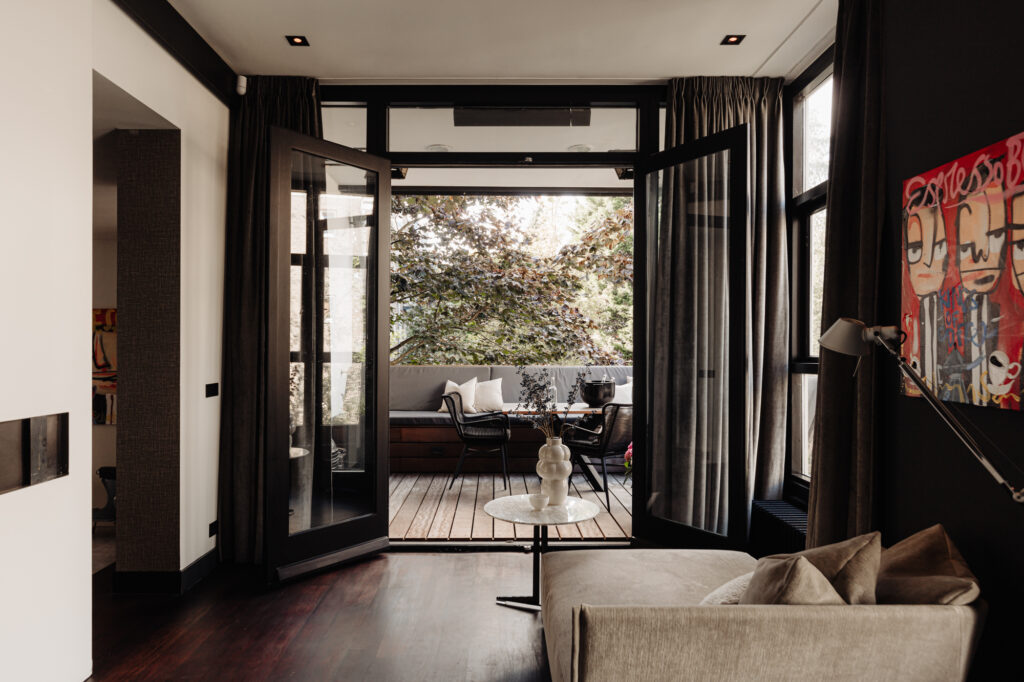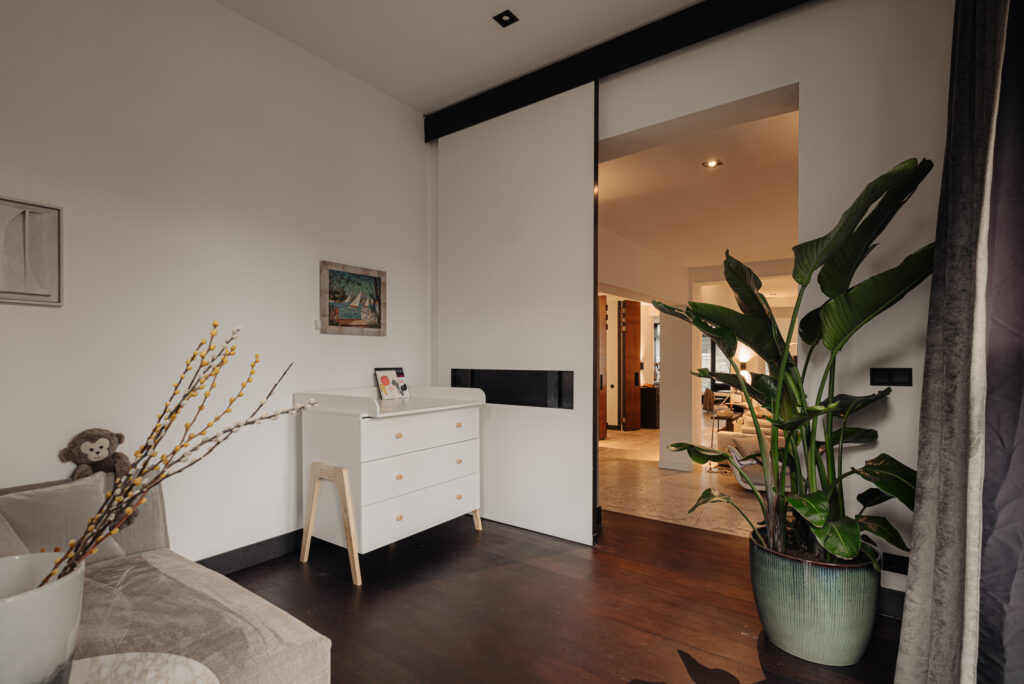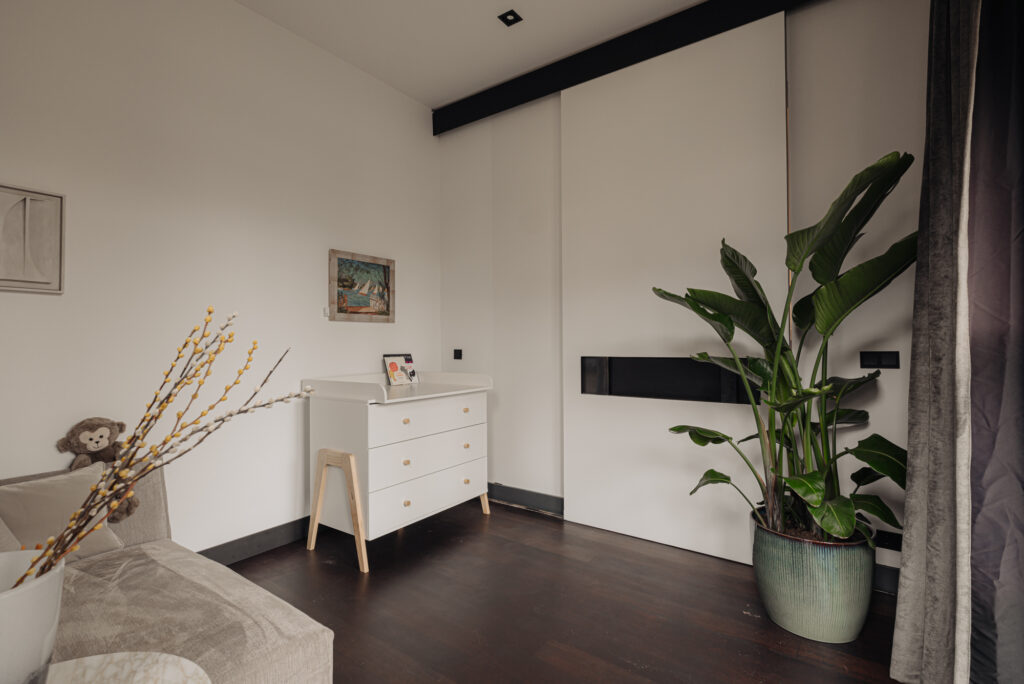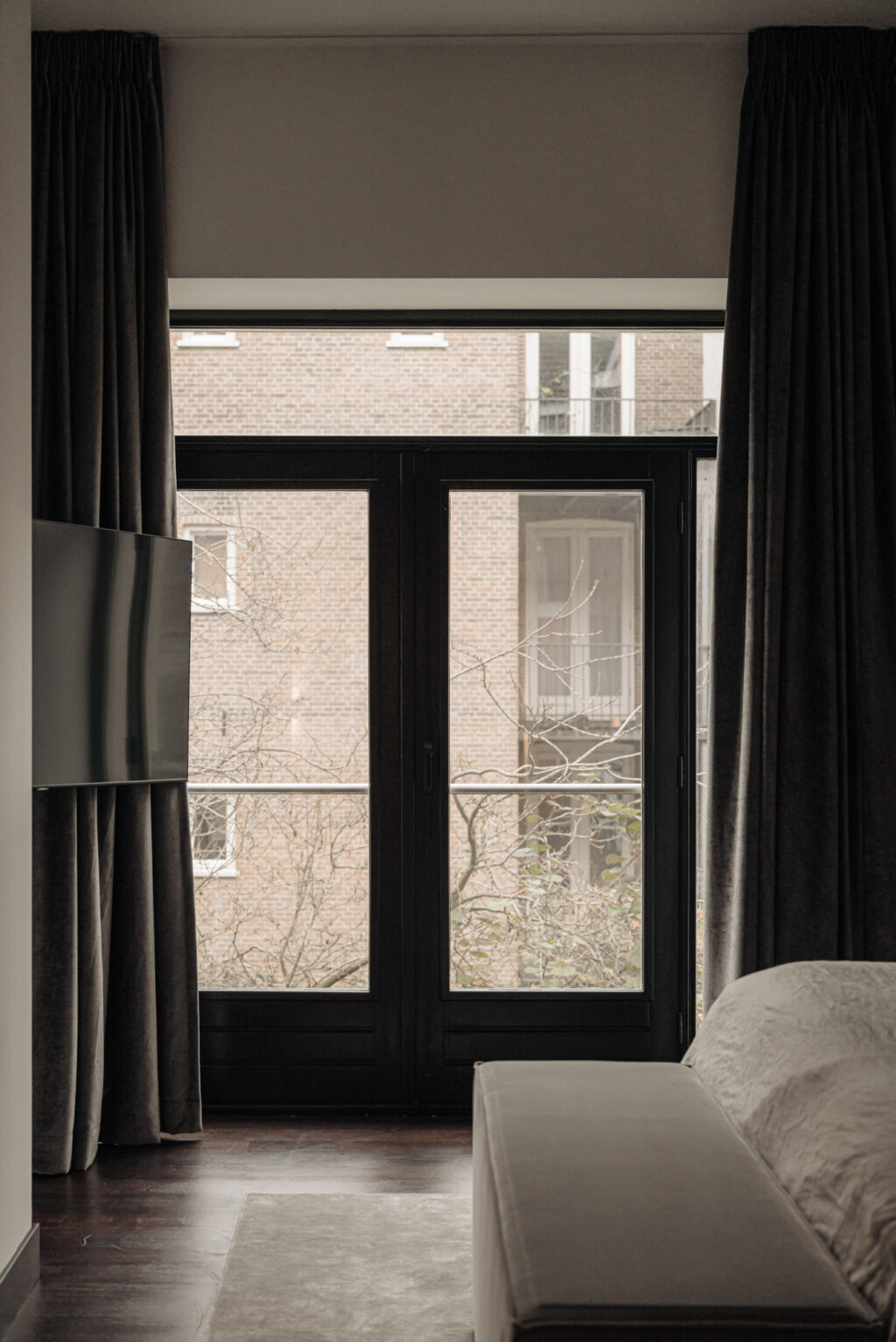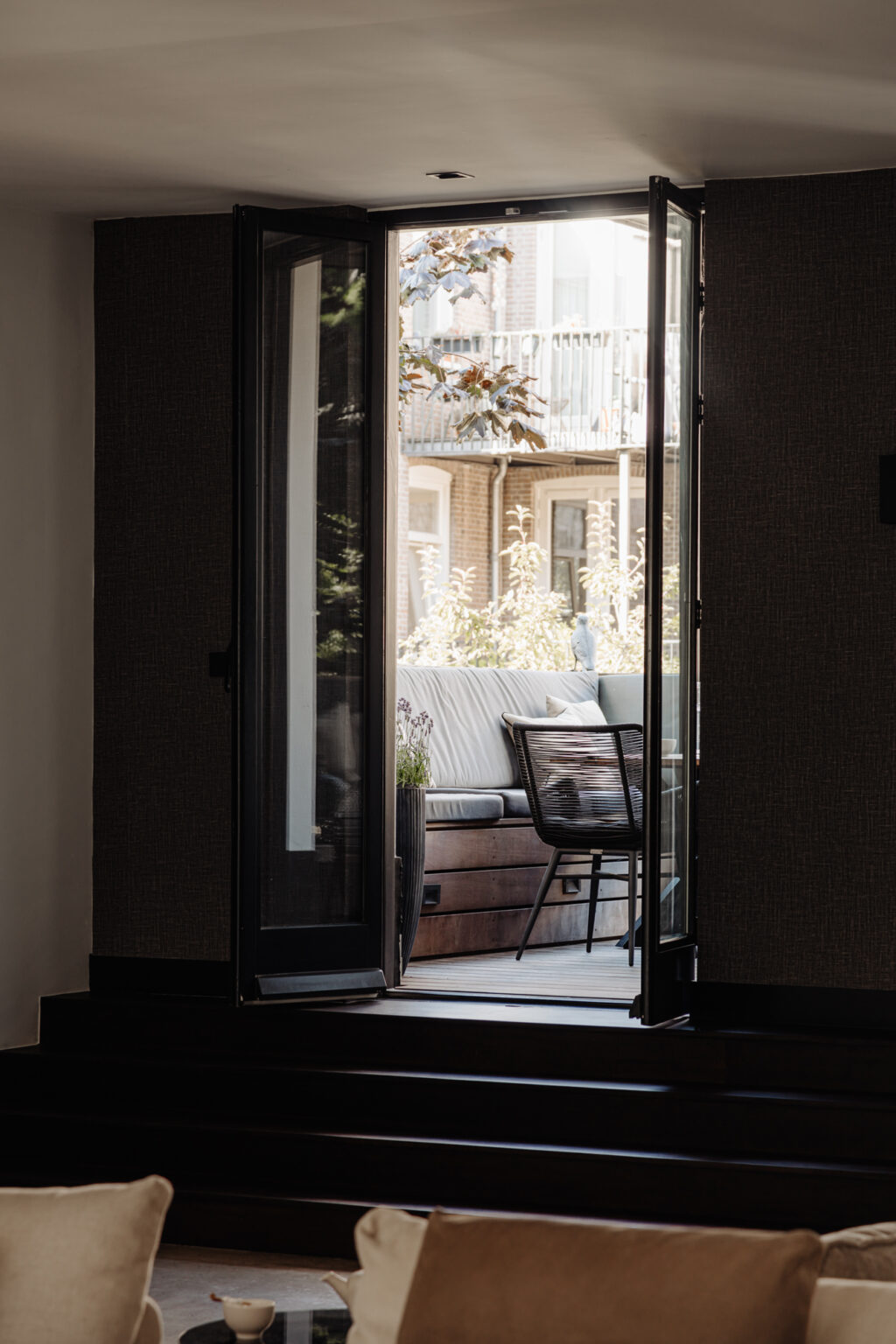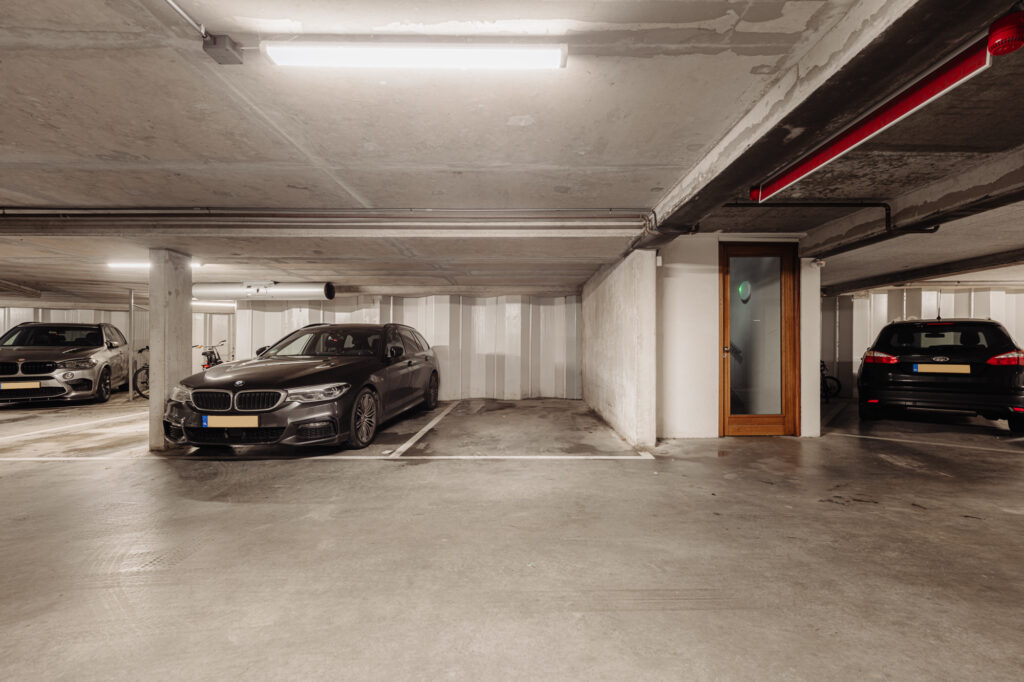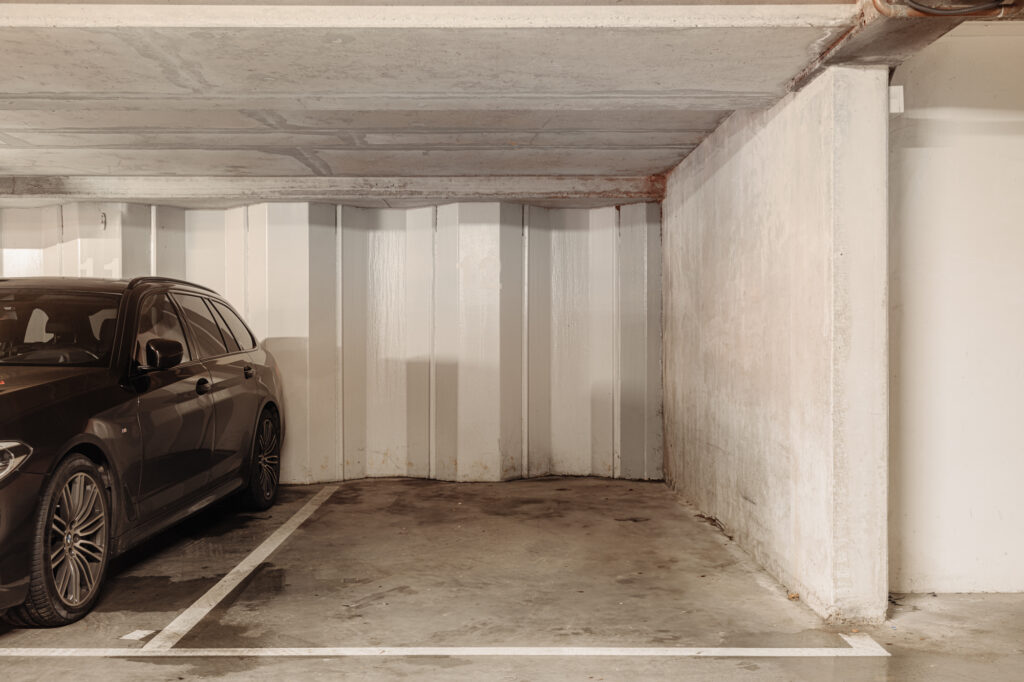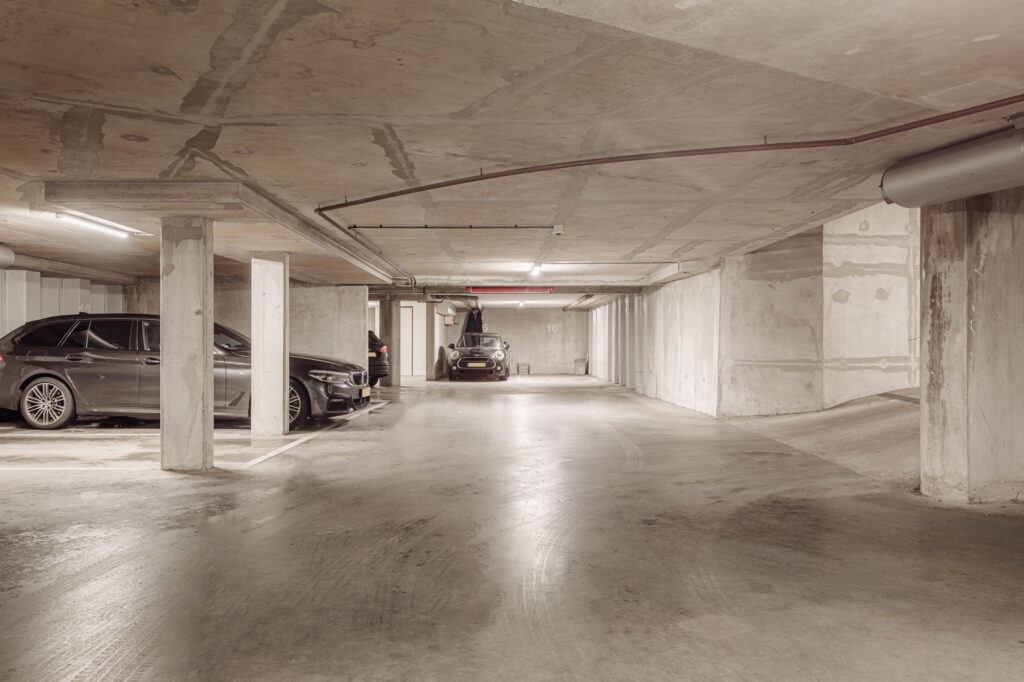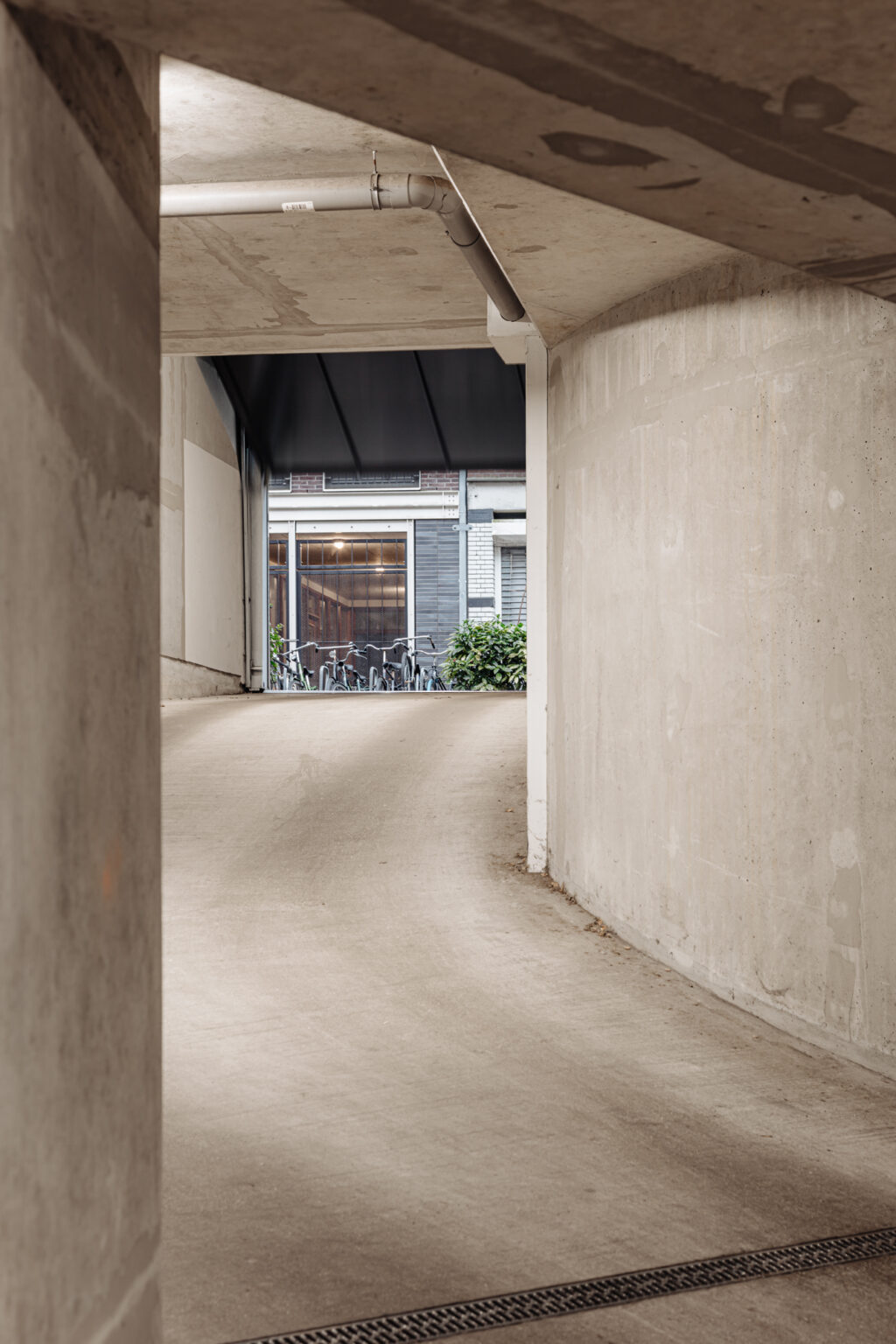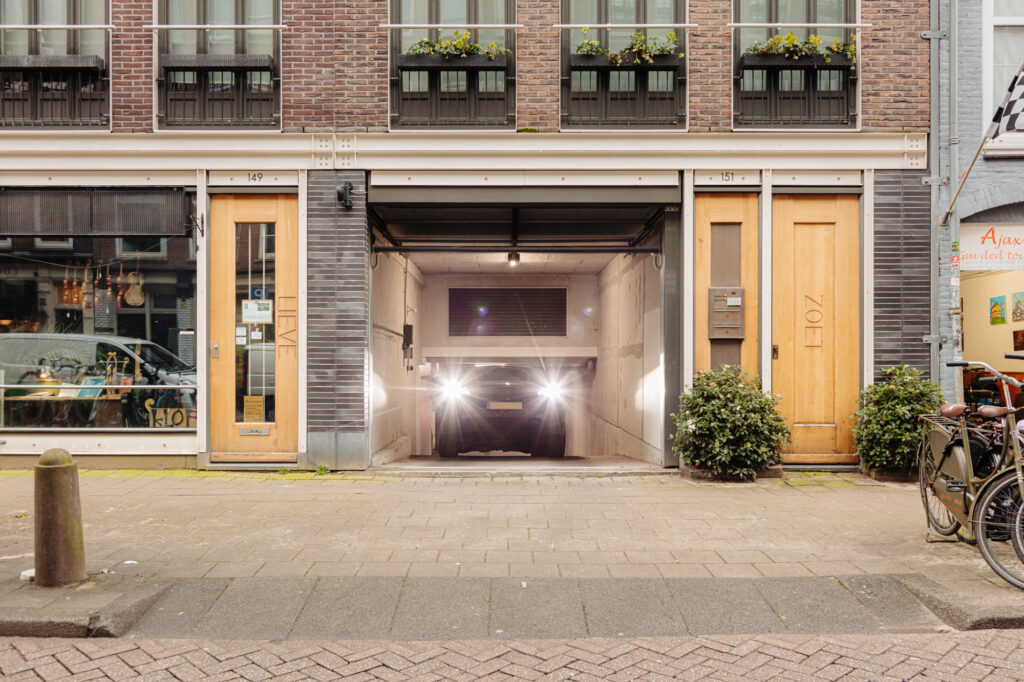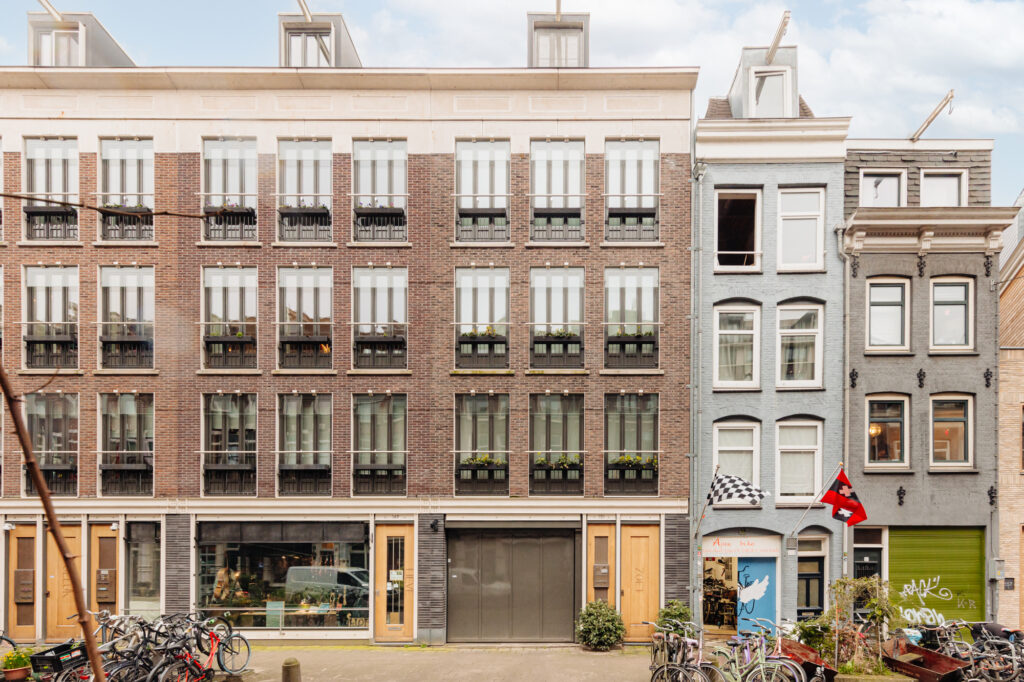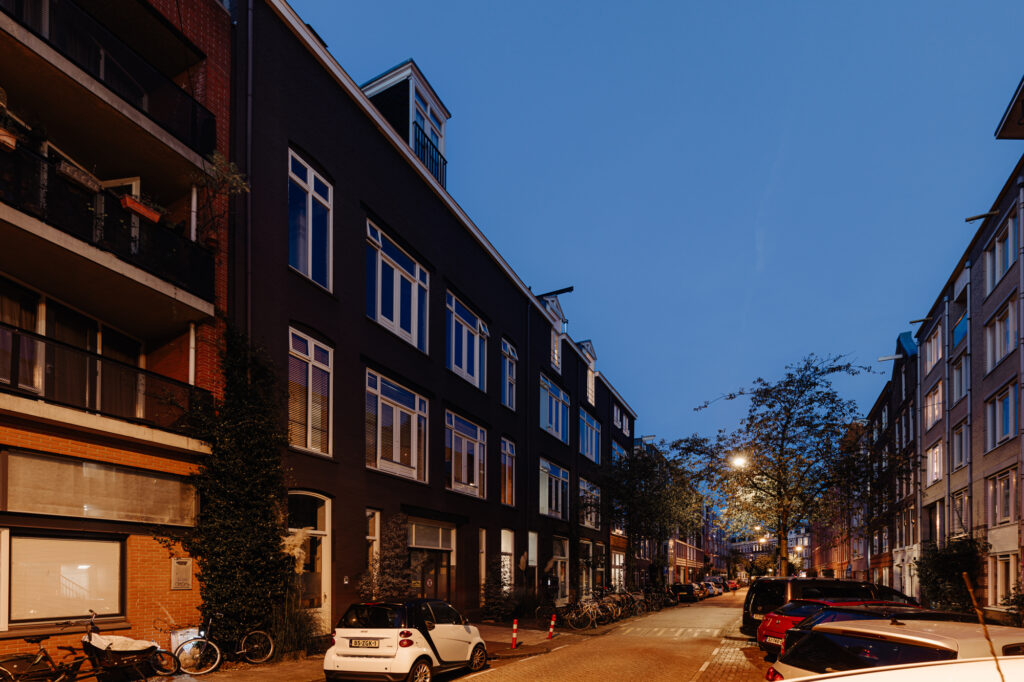
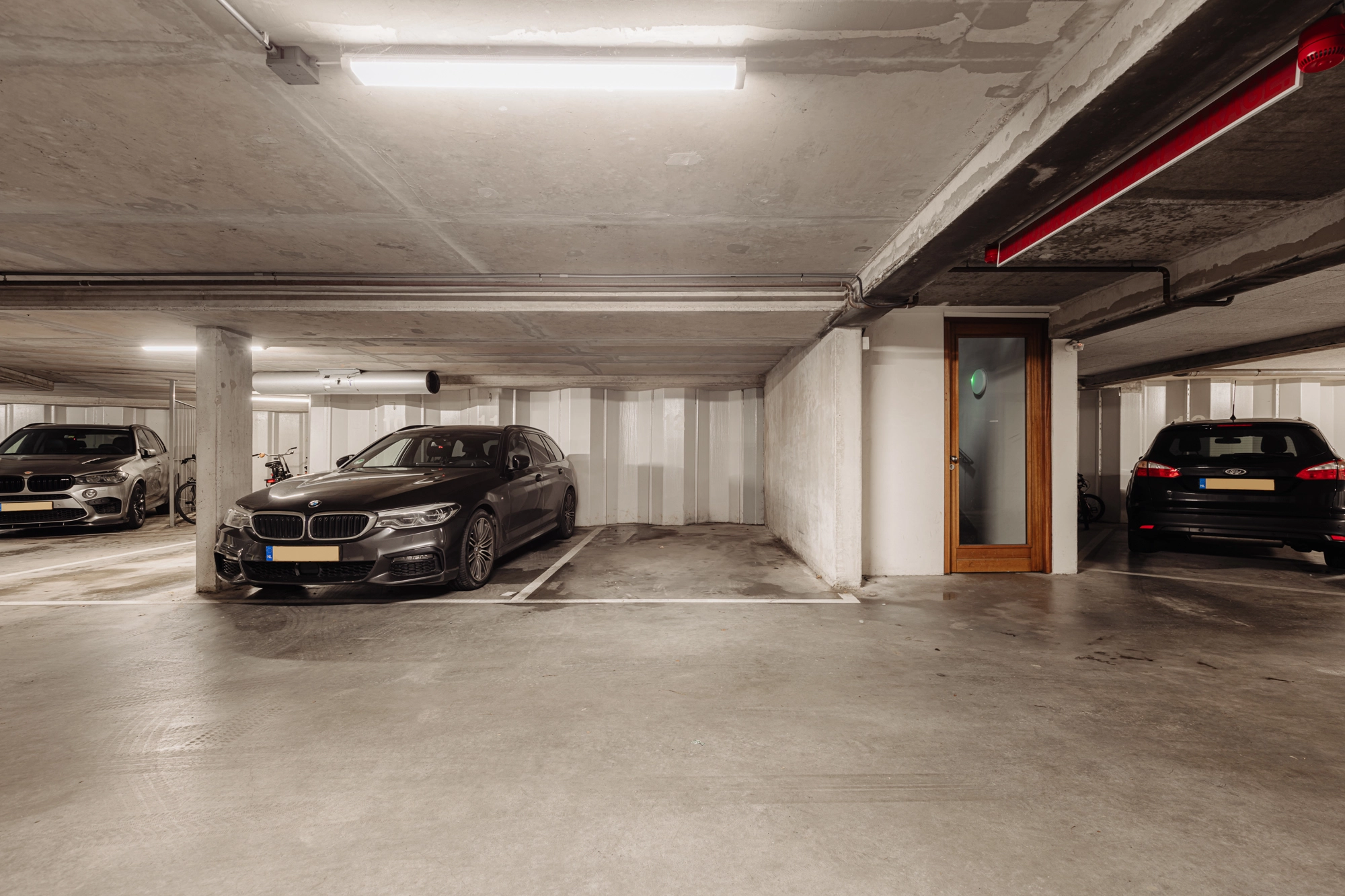
Living in an industrial building dating from 1912. This modern, stylish, and spacious loft on the first floor is part of a robust building. It is located in the heart of the popular Pijp district, in a location that perfectly suits this type residences. This beautiful loft has large windows, high ceilings, and a total Floor area 242 square meters, making it a great "hideaway." The renovation and finish are modern and have been carried out with an eye for detail and materials. The finish offers luxury without being excessive. With a living room of 200 square meters, an open kitchen, two bedrooms, a dressing room, and a complete bathroom, the apartment offers the possibility to easily add a third bedroom. These types residences rare in such a beautiful location. The large French windows invite you to enjoy the sun at the front of the house while drinking coffee, while the terrace at the rear is the perfect place to relax in the afternoon and evening. A unique and rare type of home that also offers the possibility of private parking in a parking garage for only €250, excluding VAT.
Guided tour
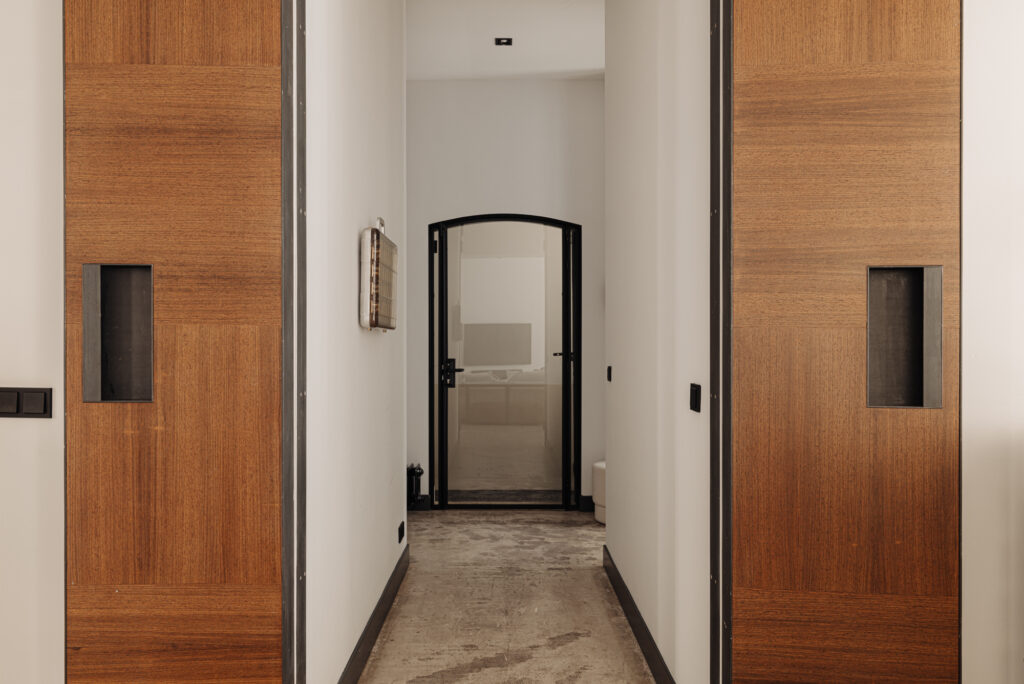
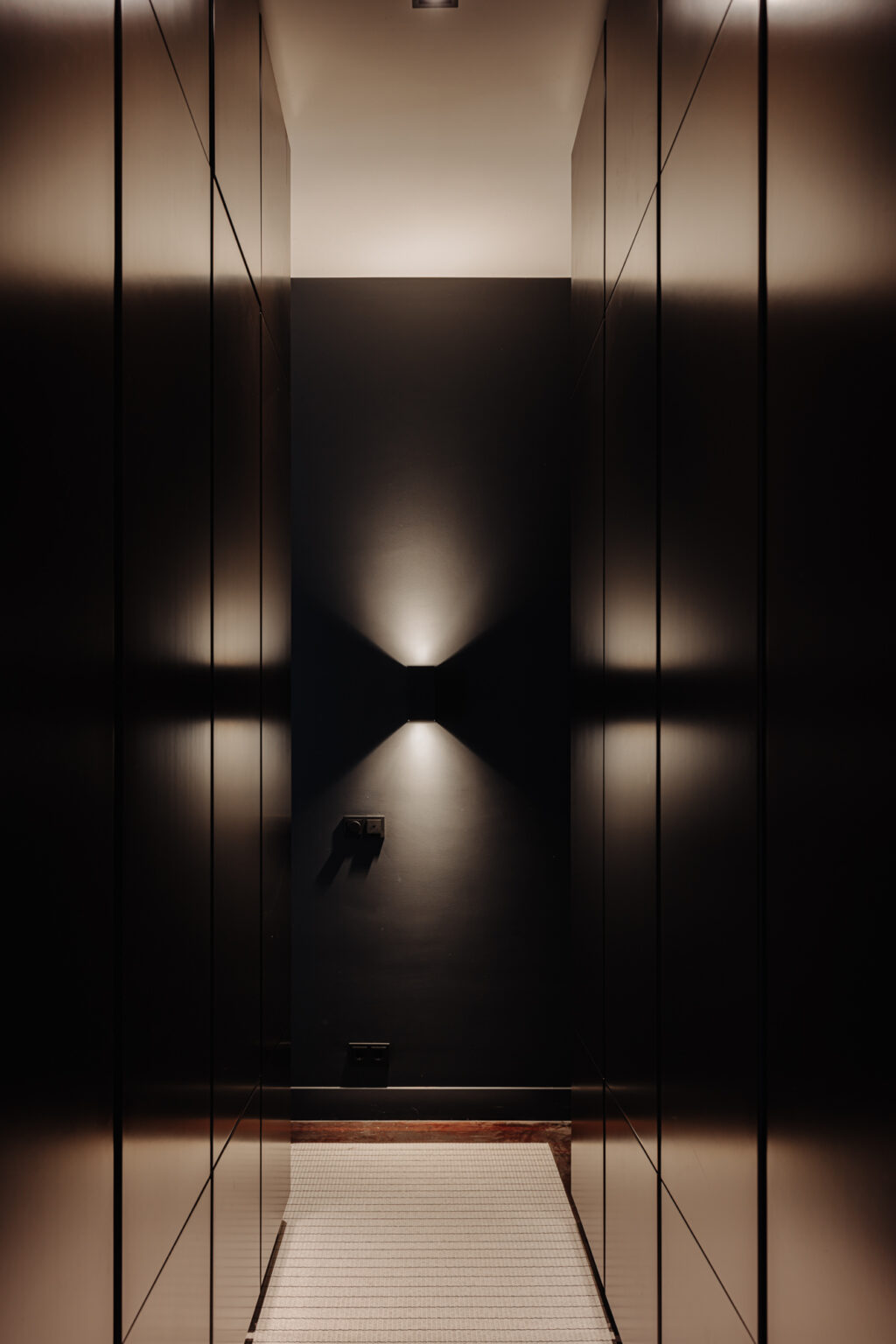
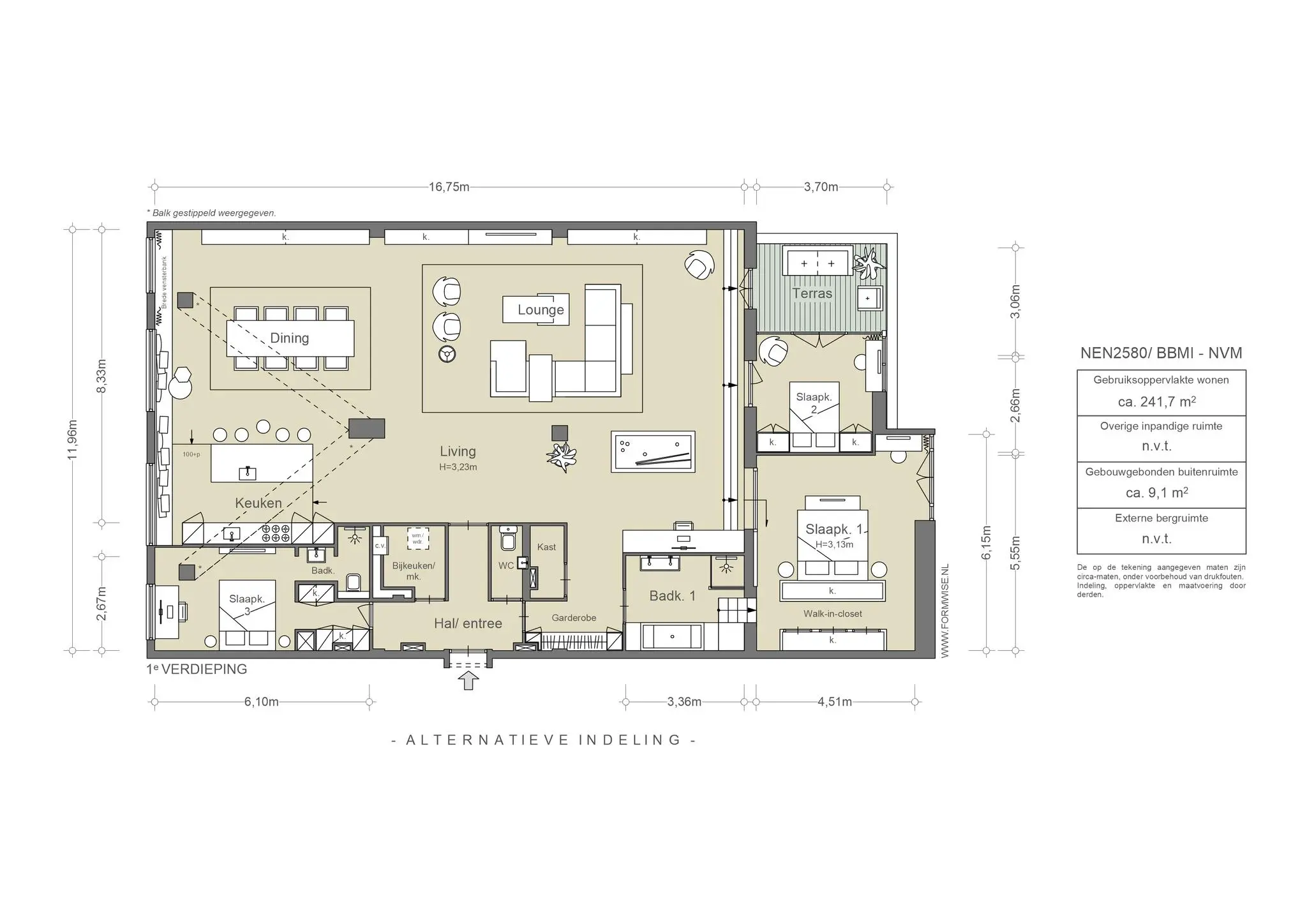
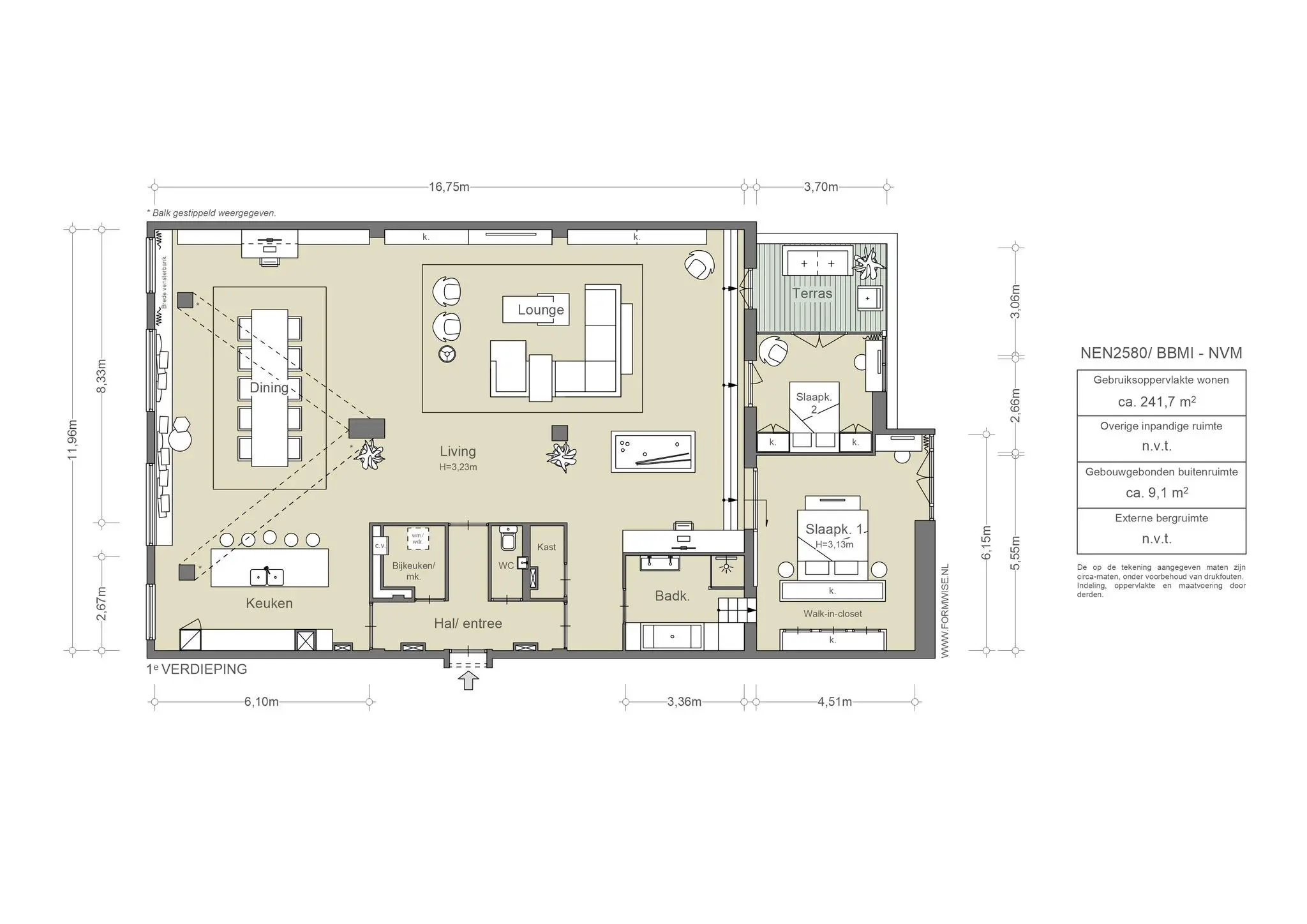
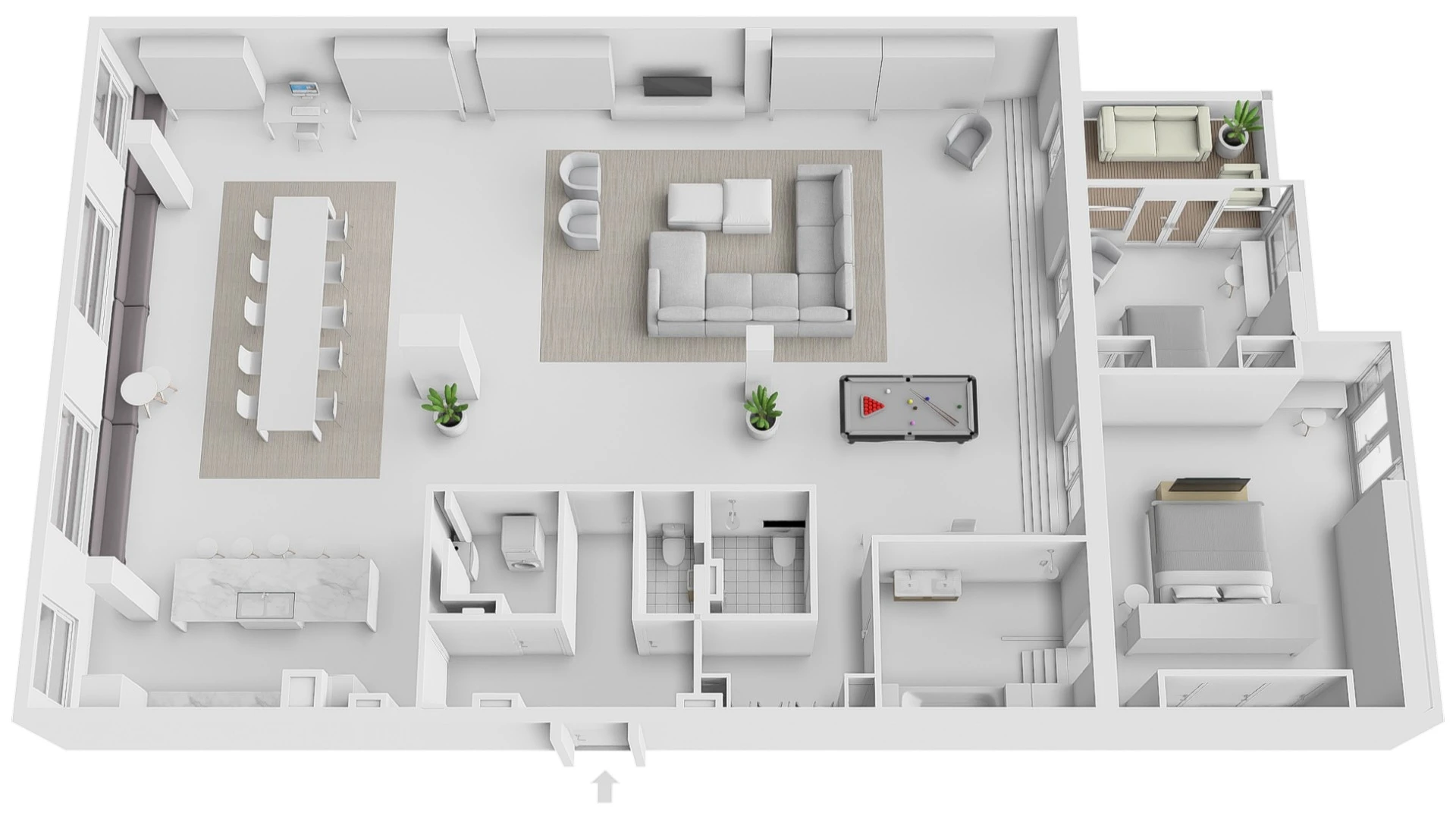
The residence has a private entrance on the first floor, accessible via a bright staircase. The sturdy door leads to a spacious hall with a wardrobe. This hall leads to three corridors that provide access to the living room, kitchen and bathroom. In the hall there is also a guest toilet and a laundry room/storage.
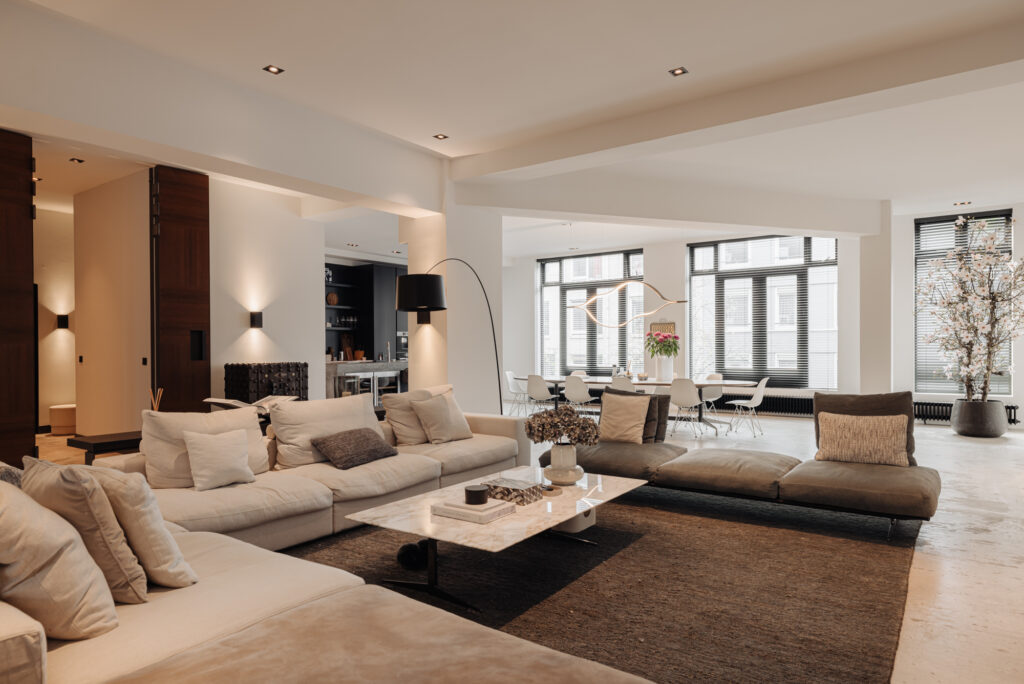
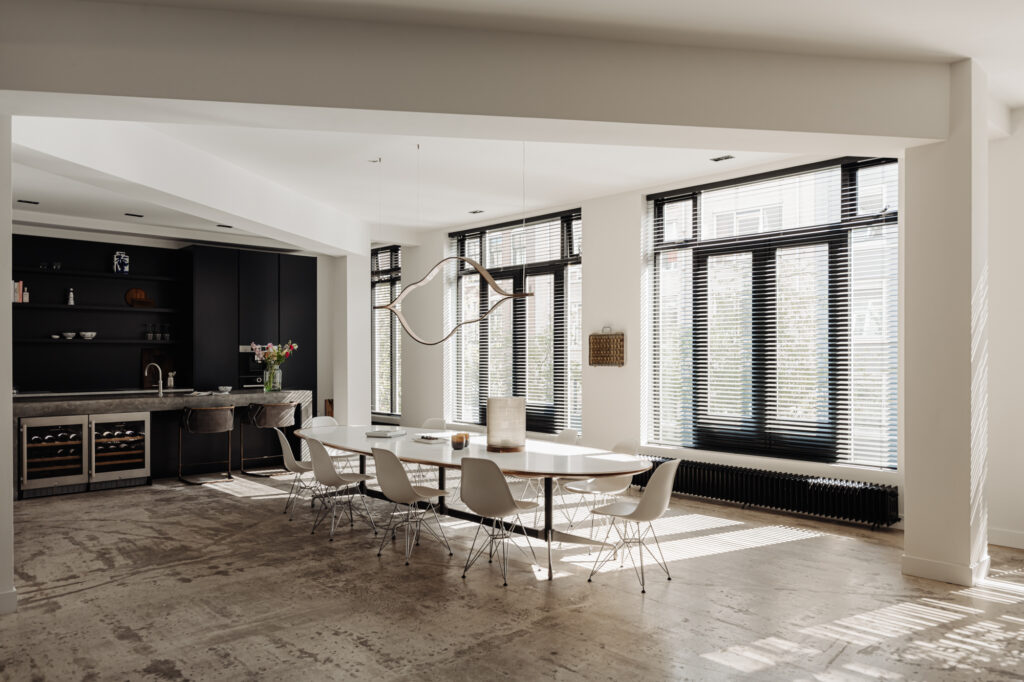
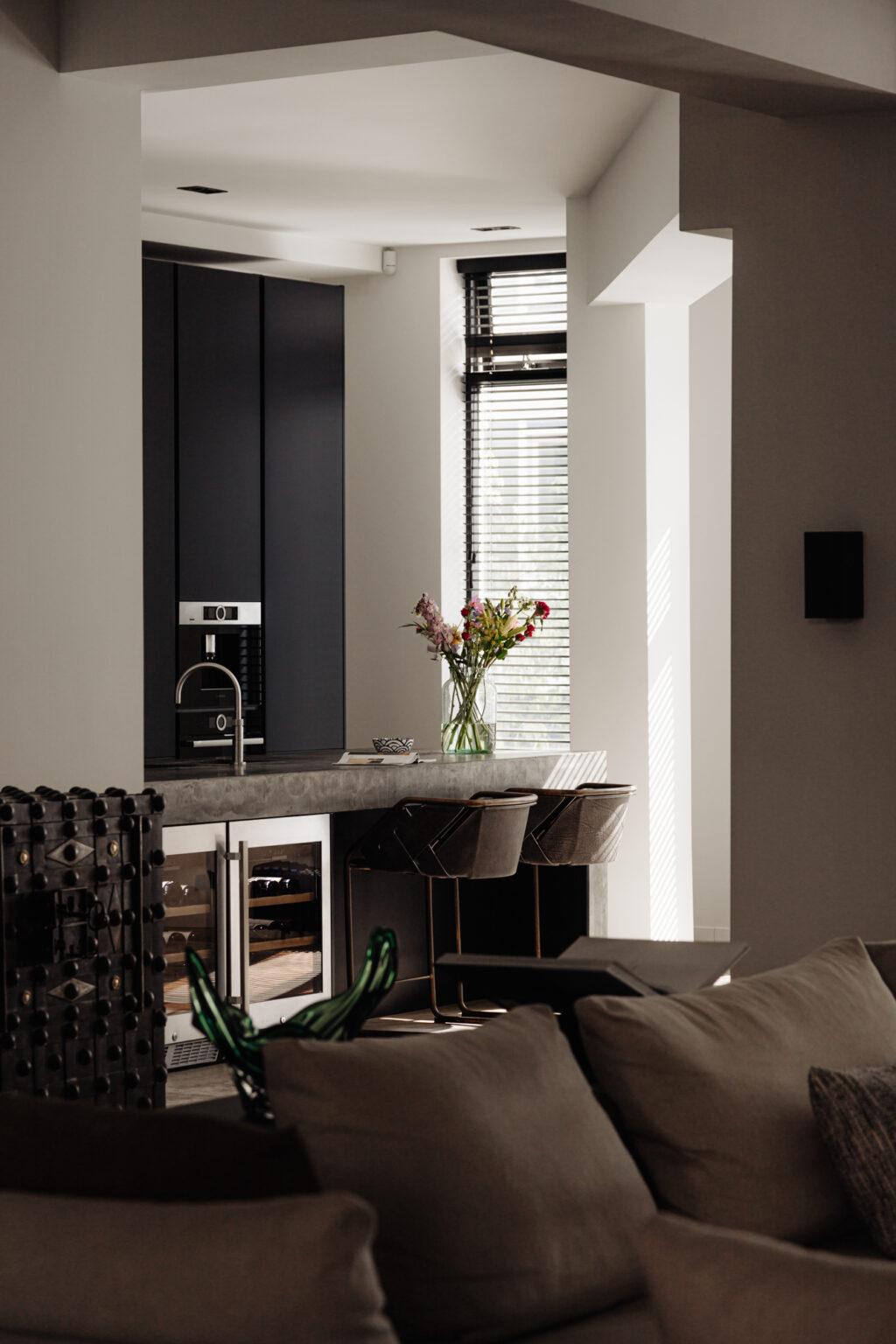
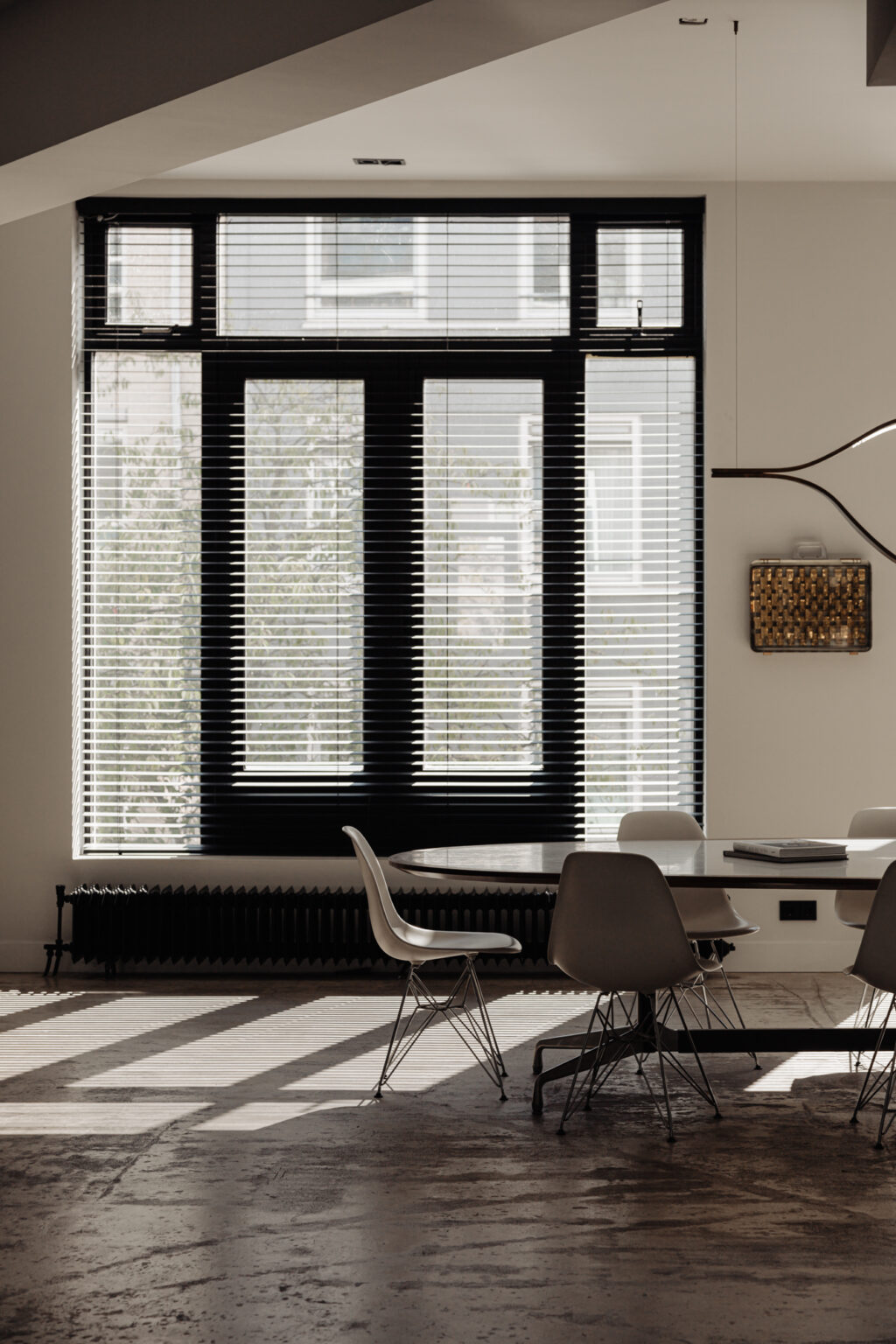
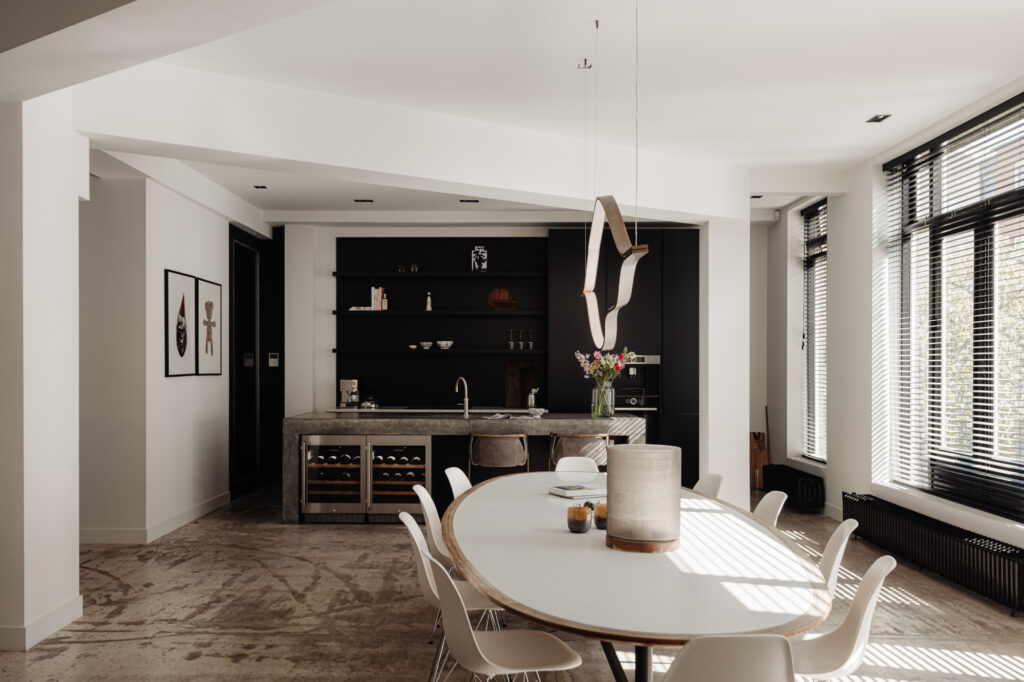
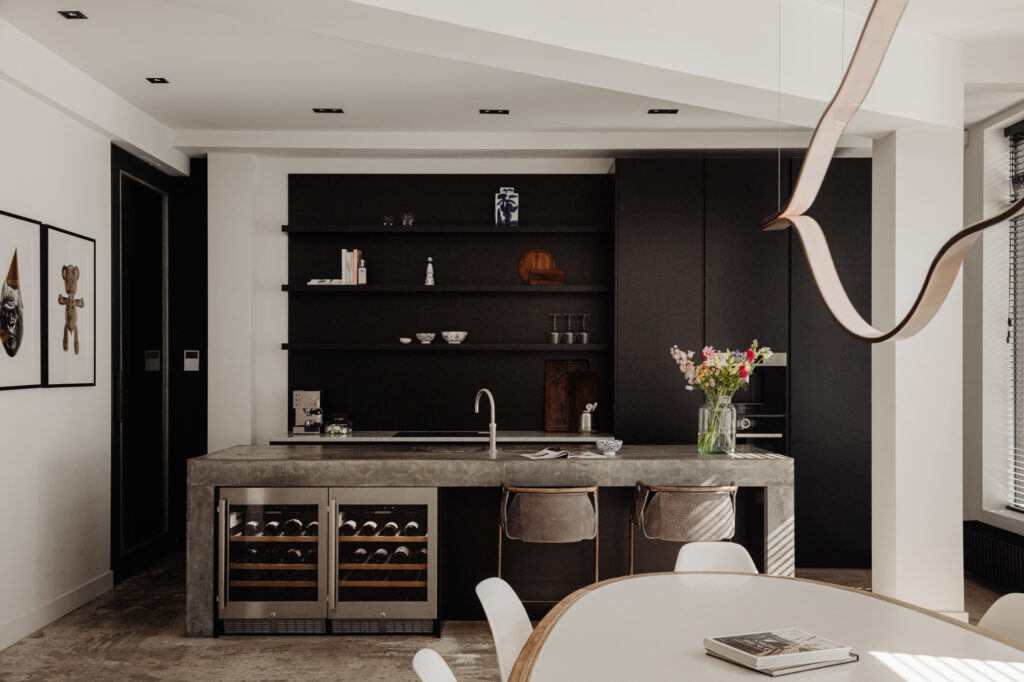
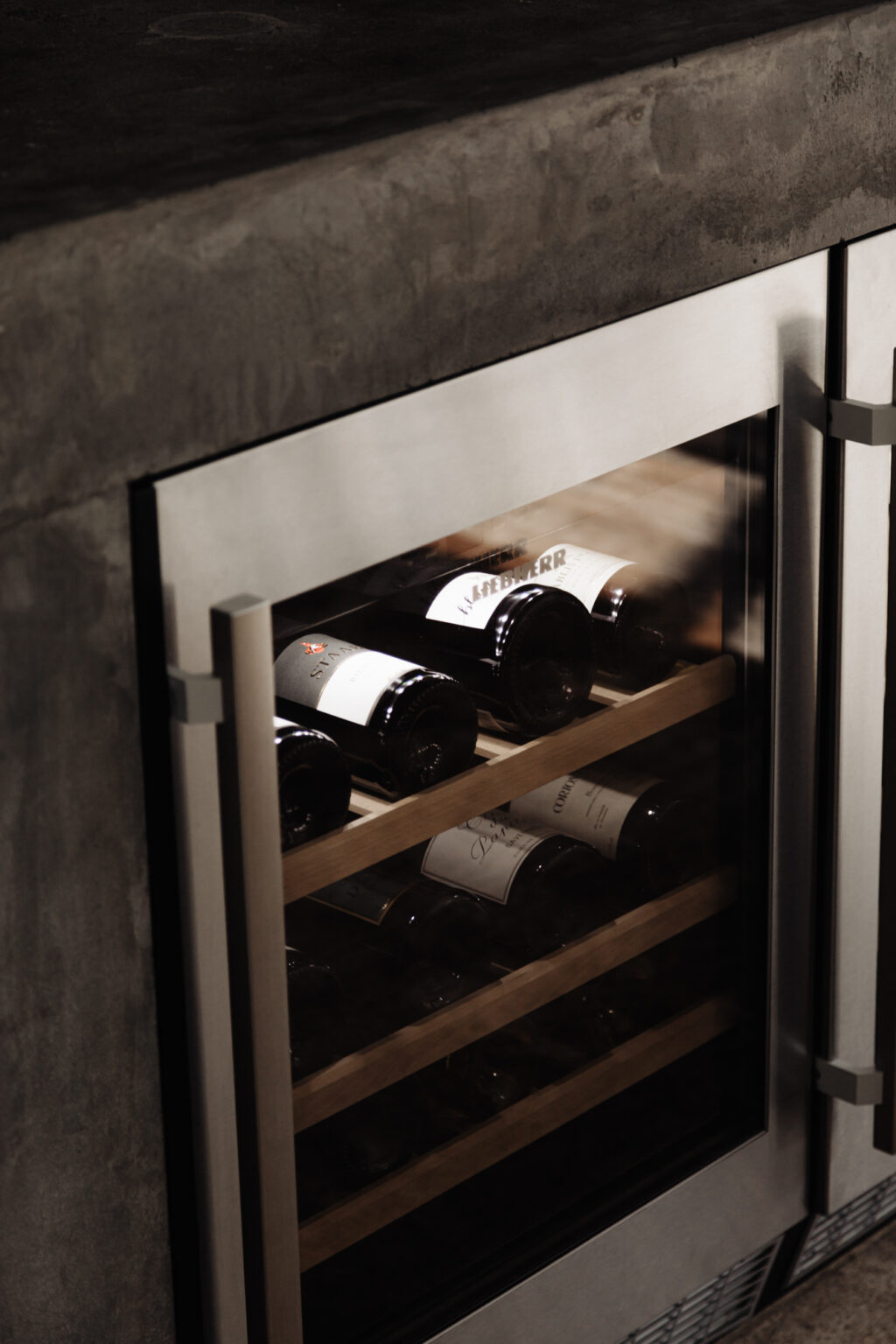
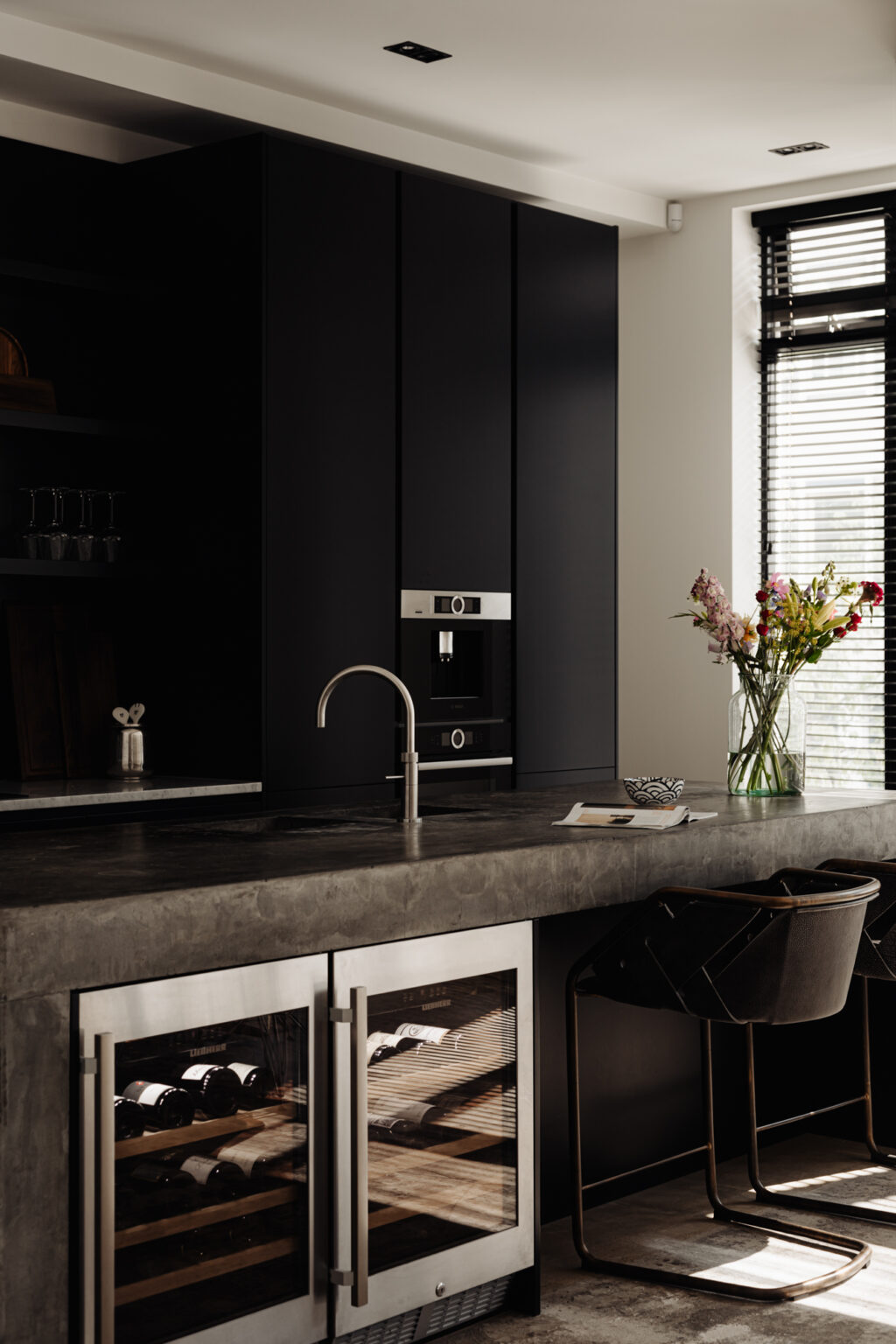
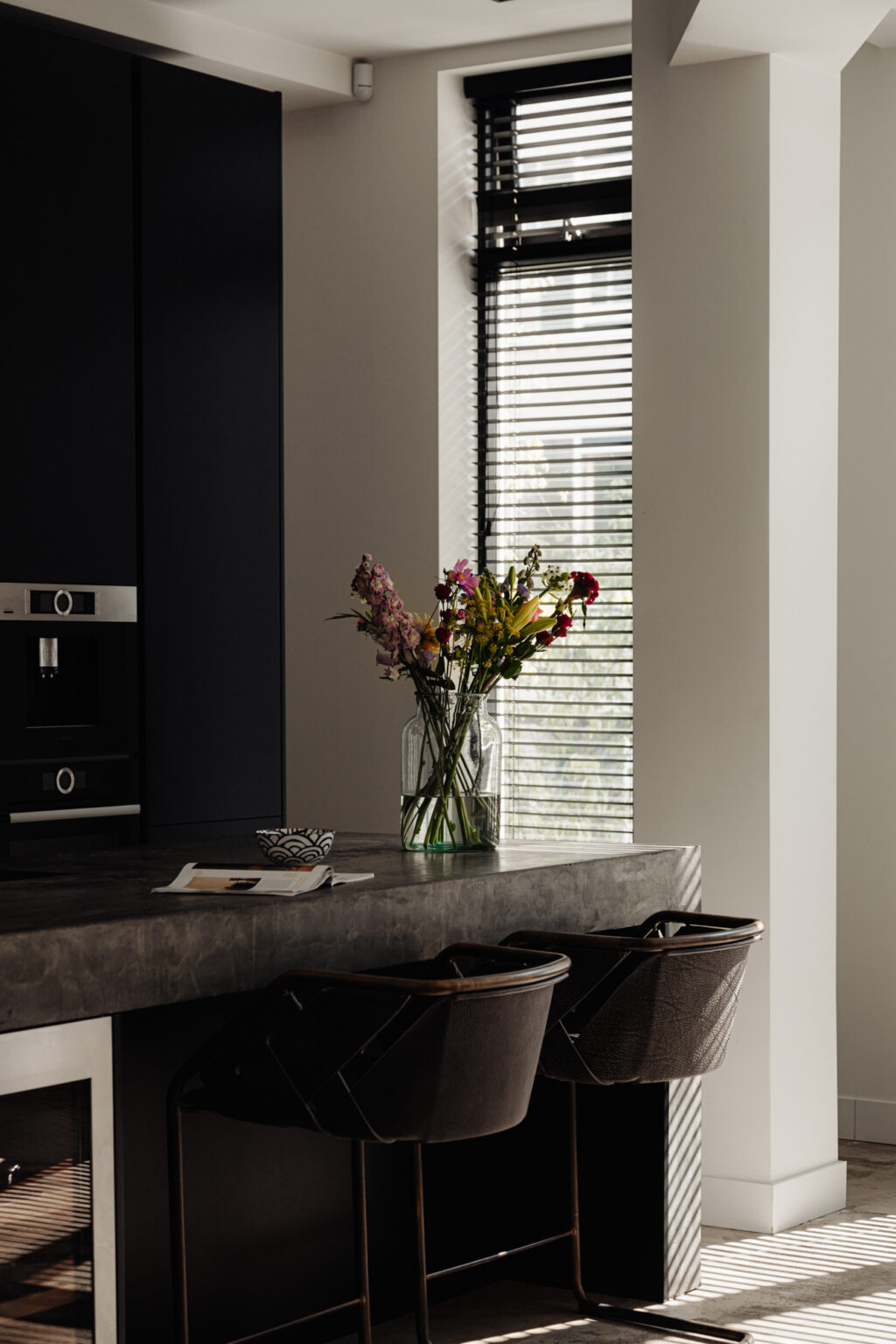
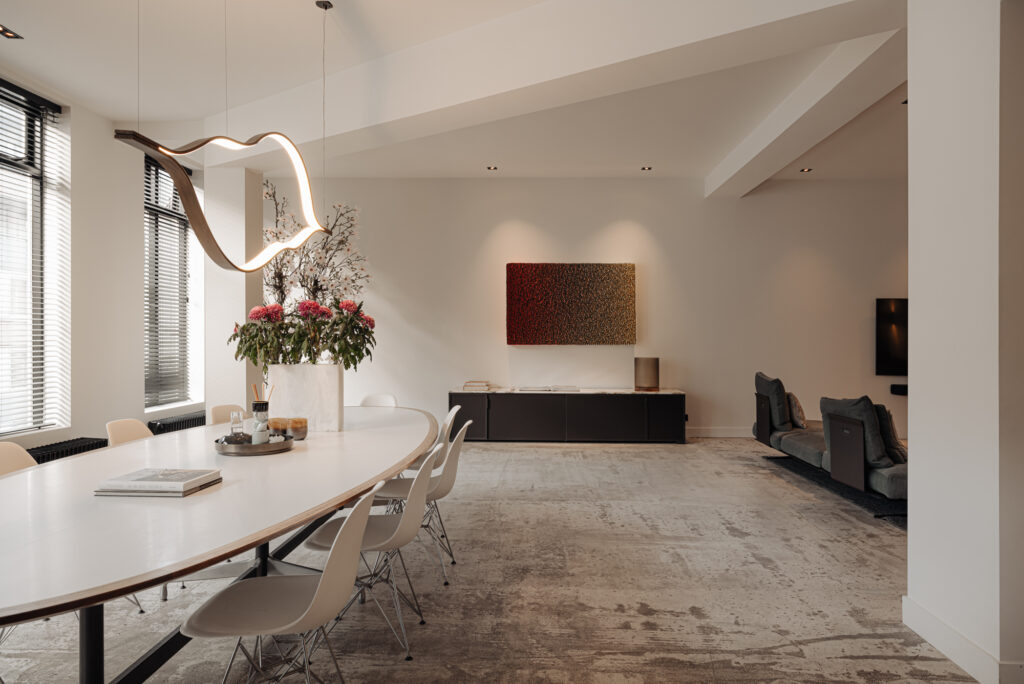
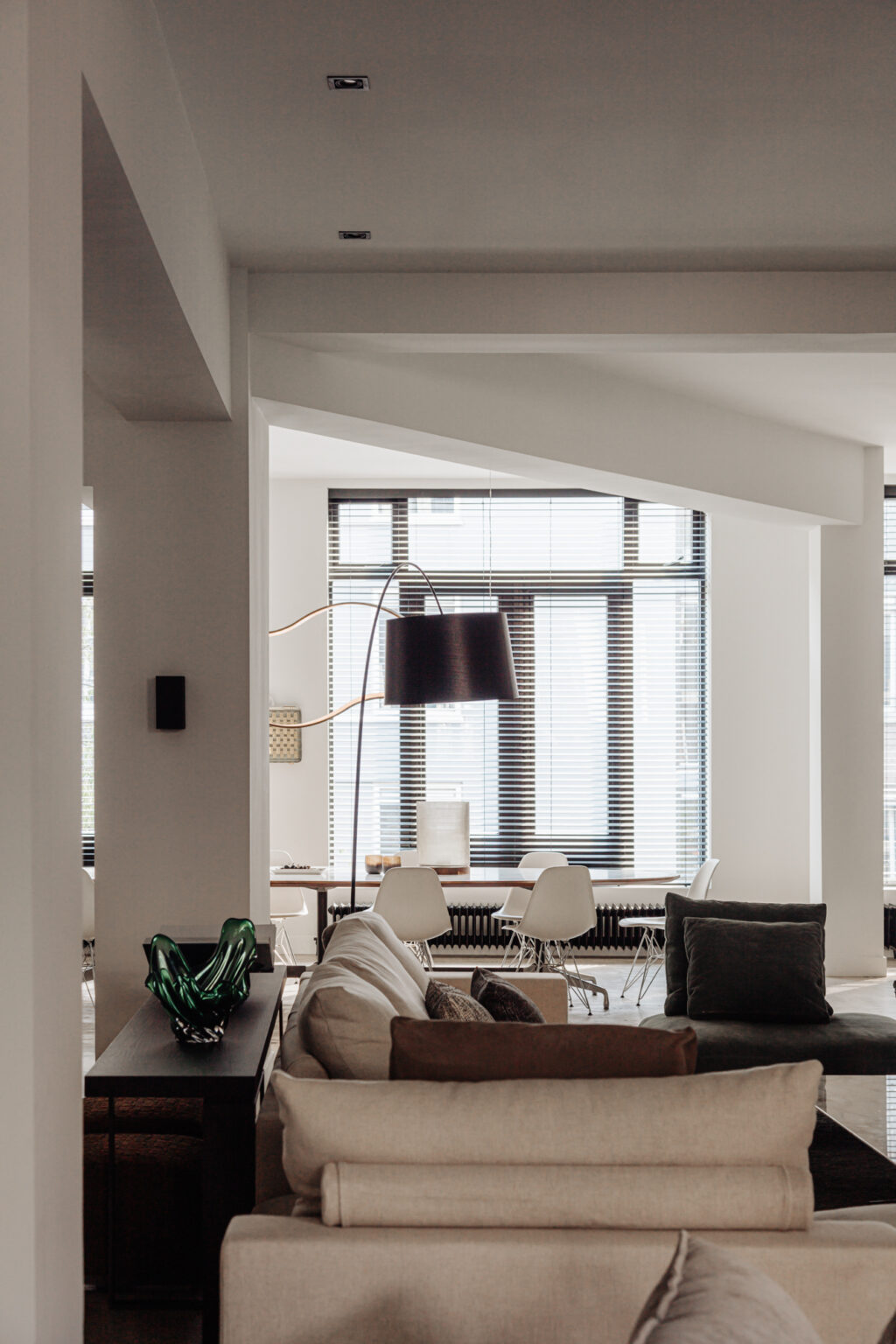
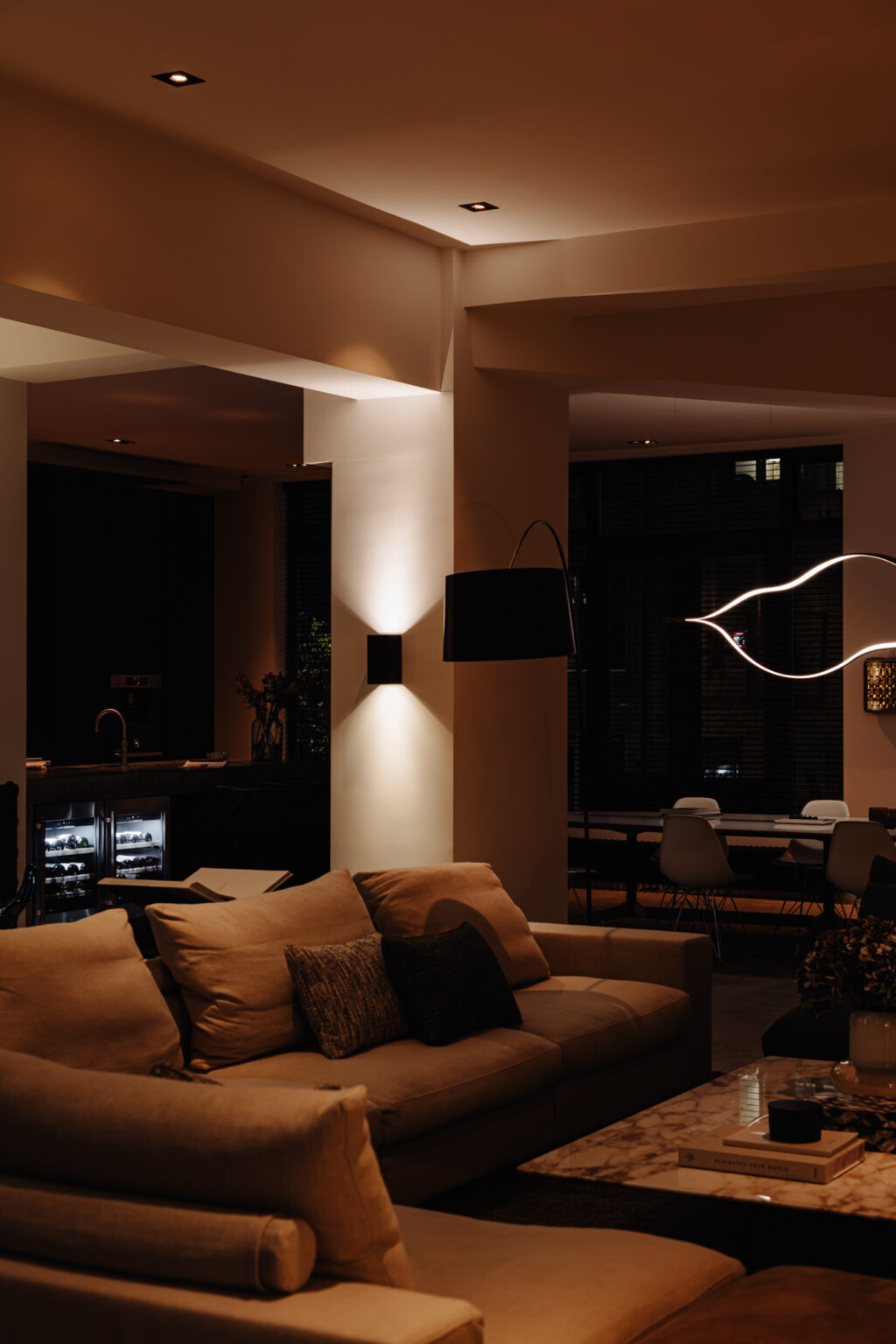
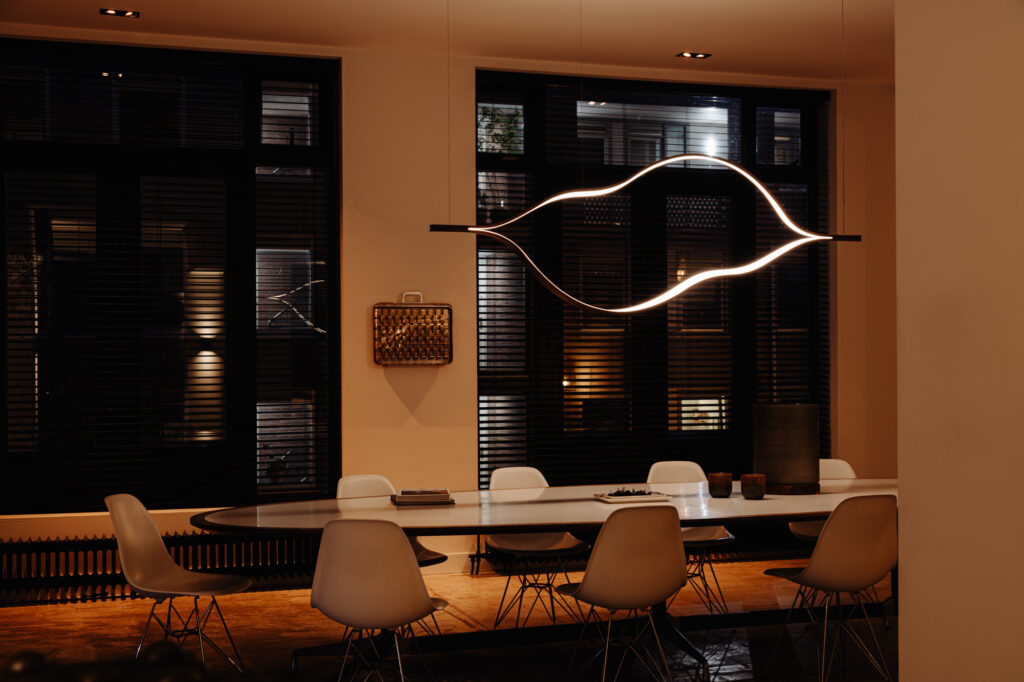
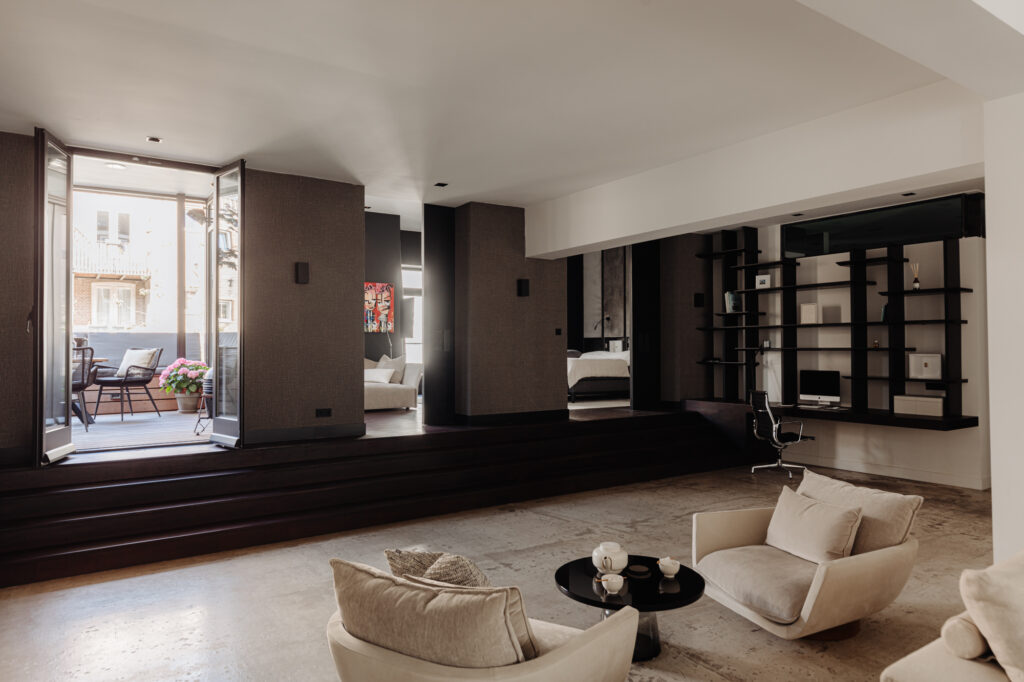
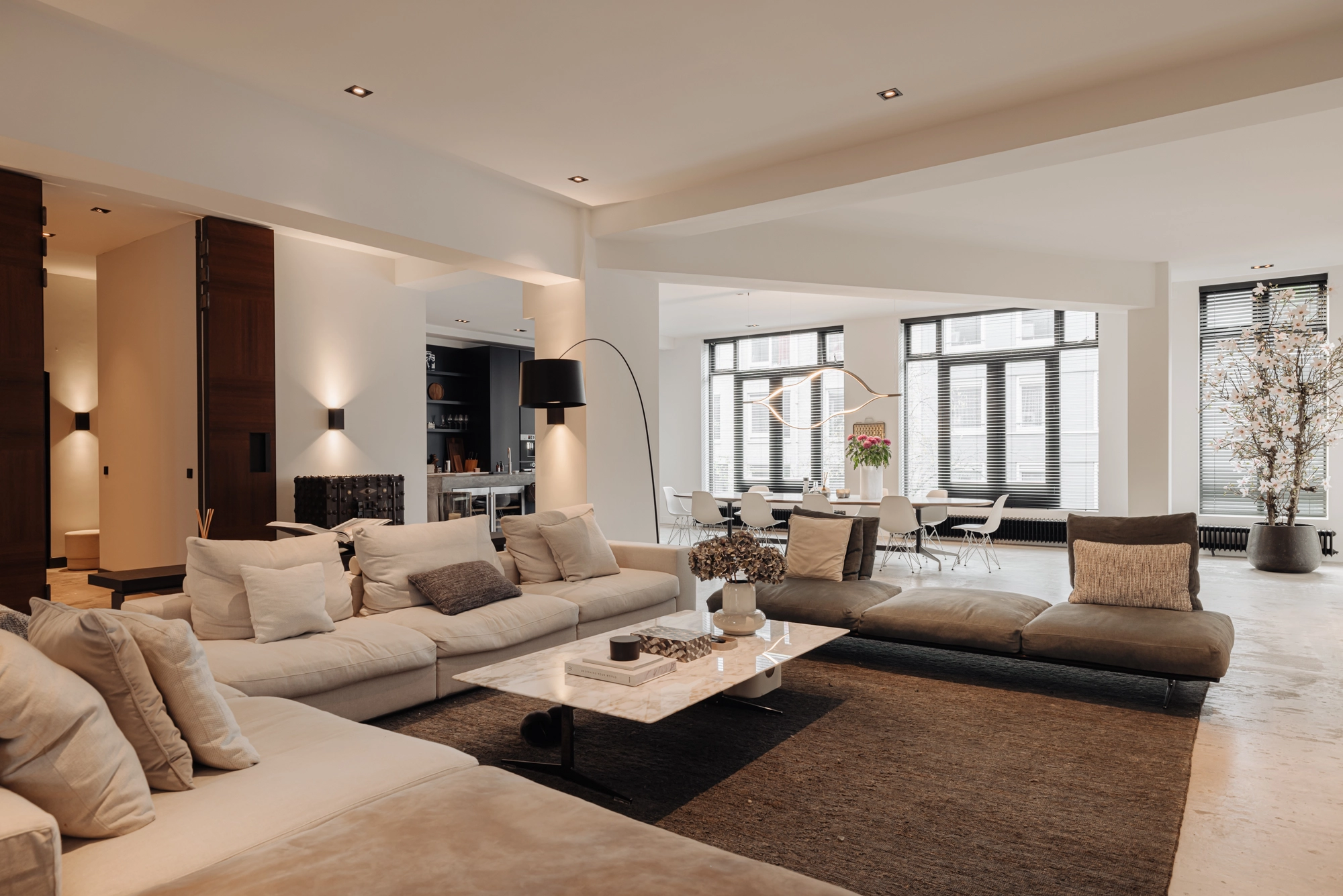
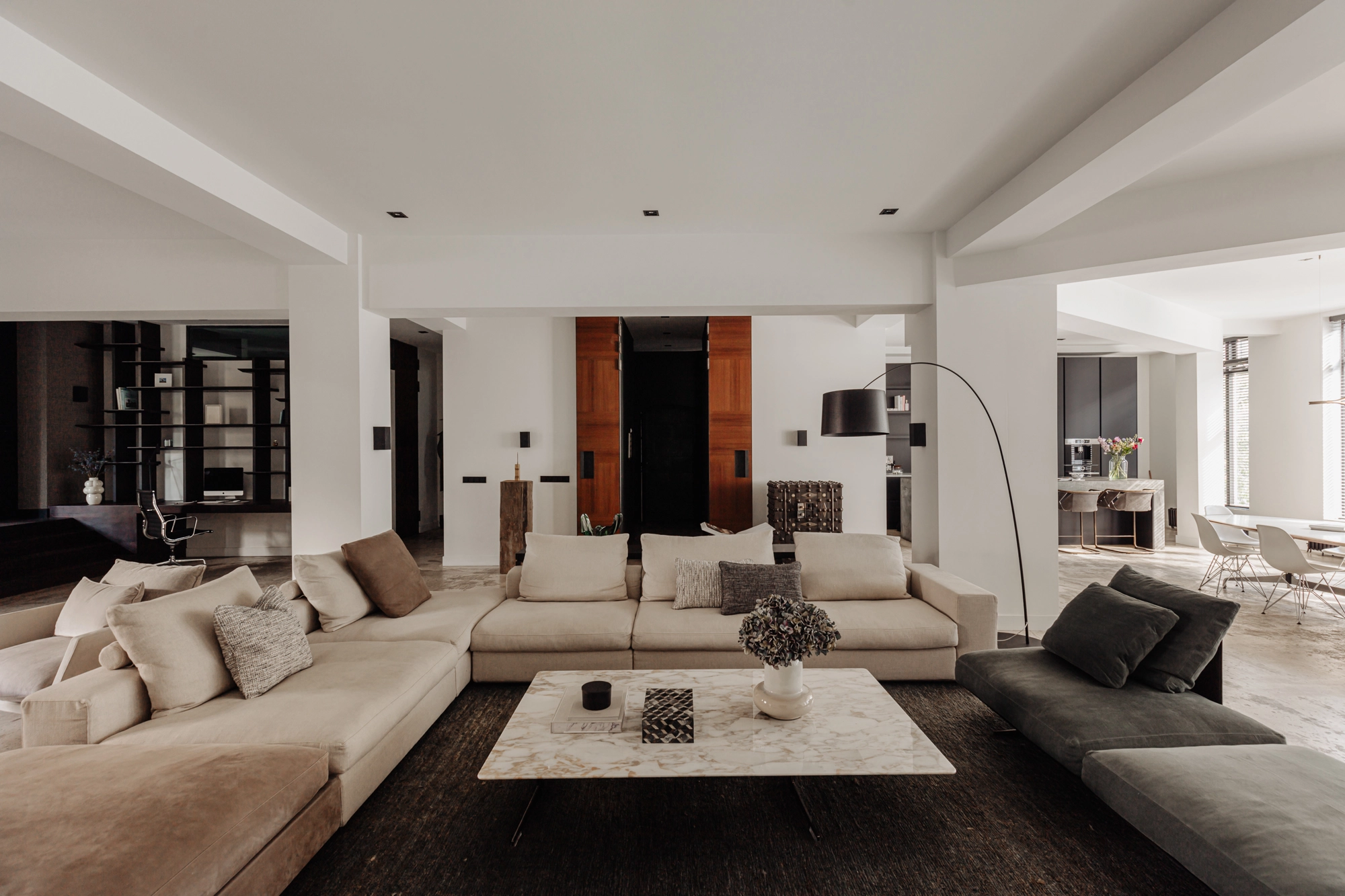
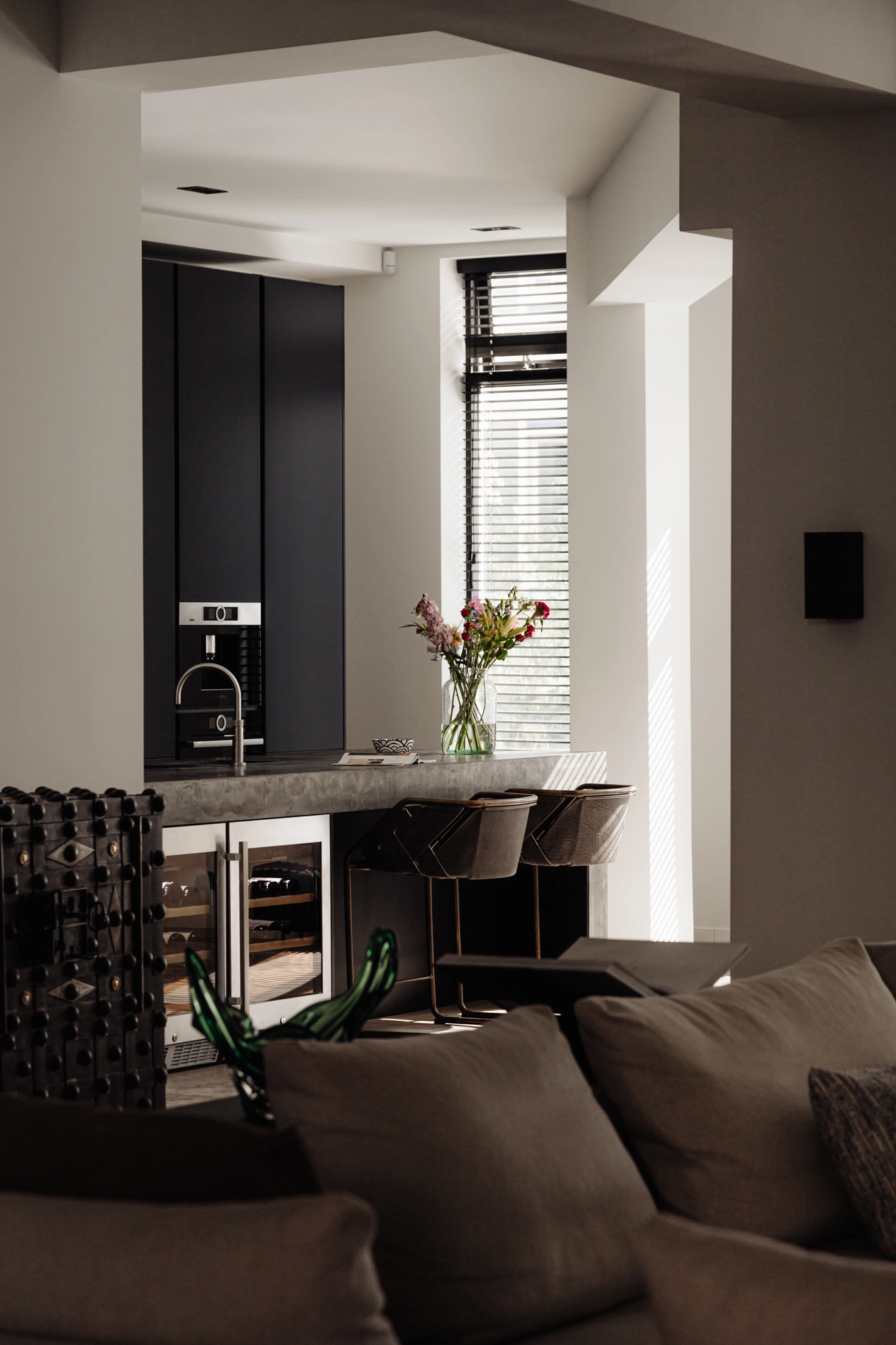
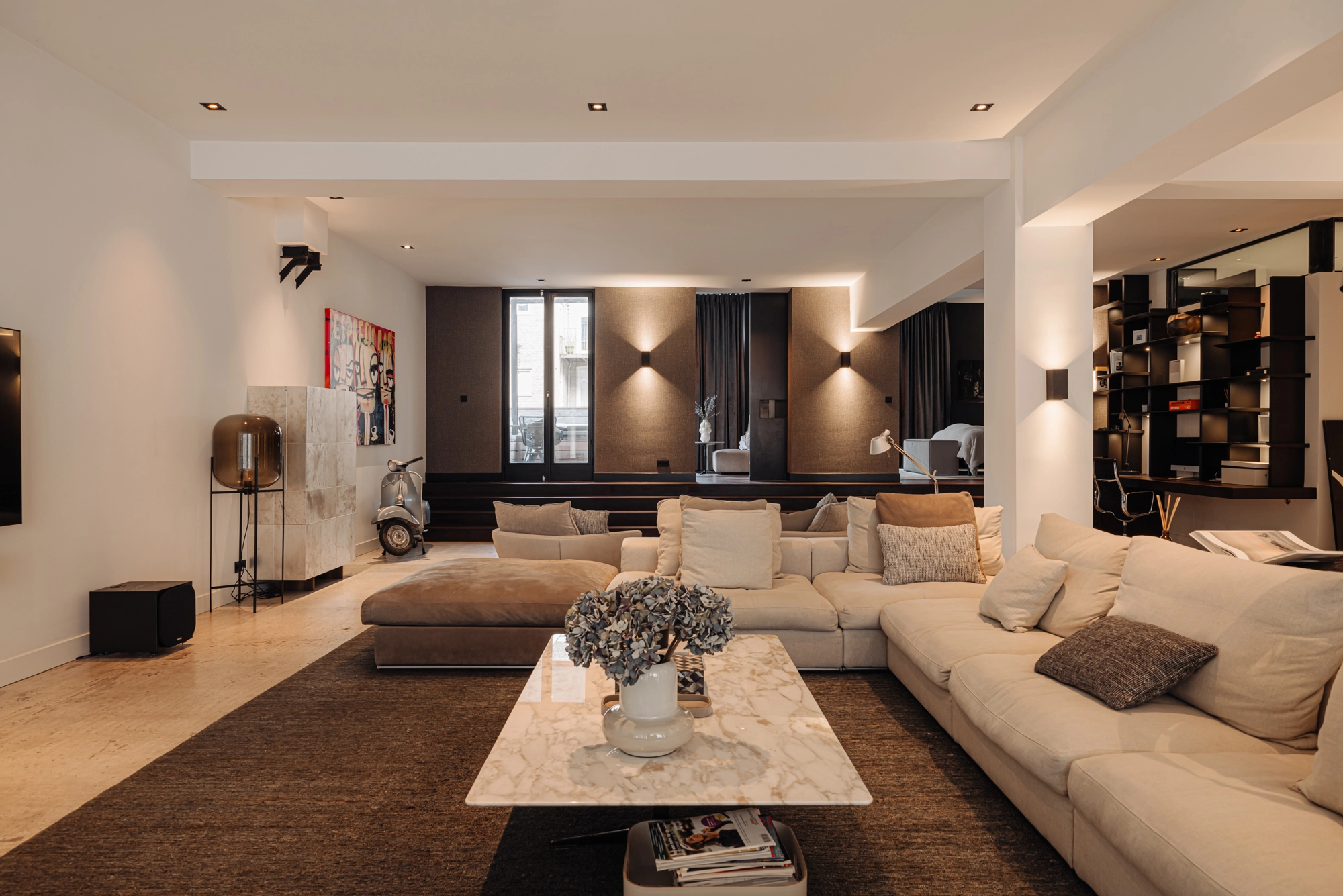
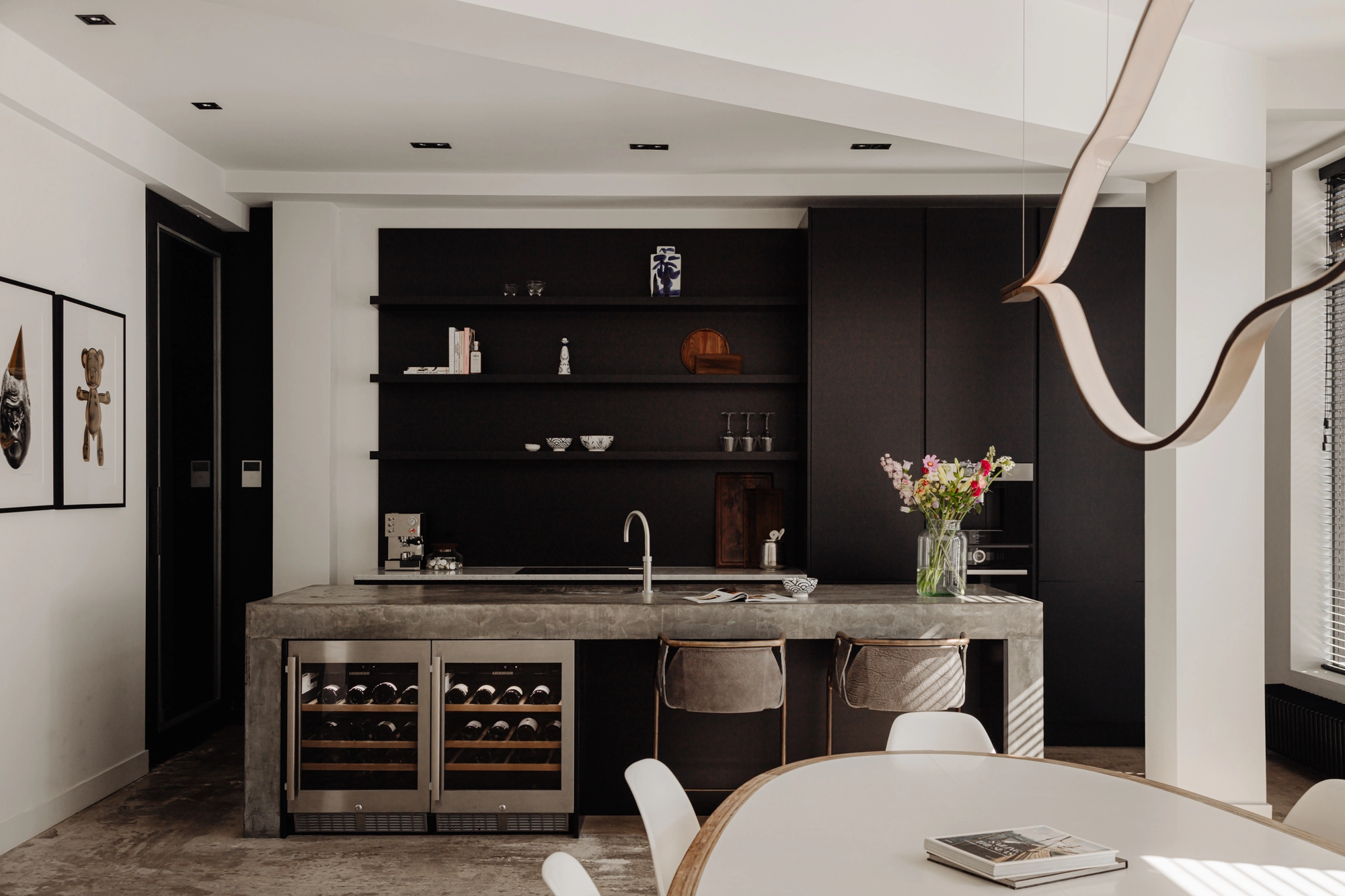
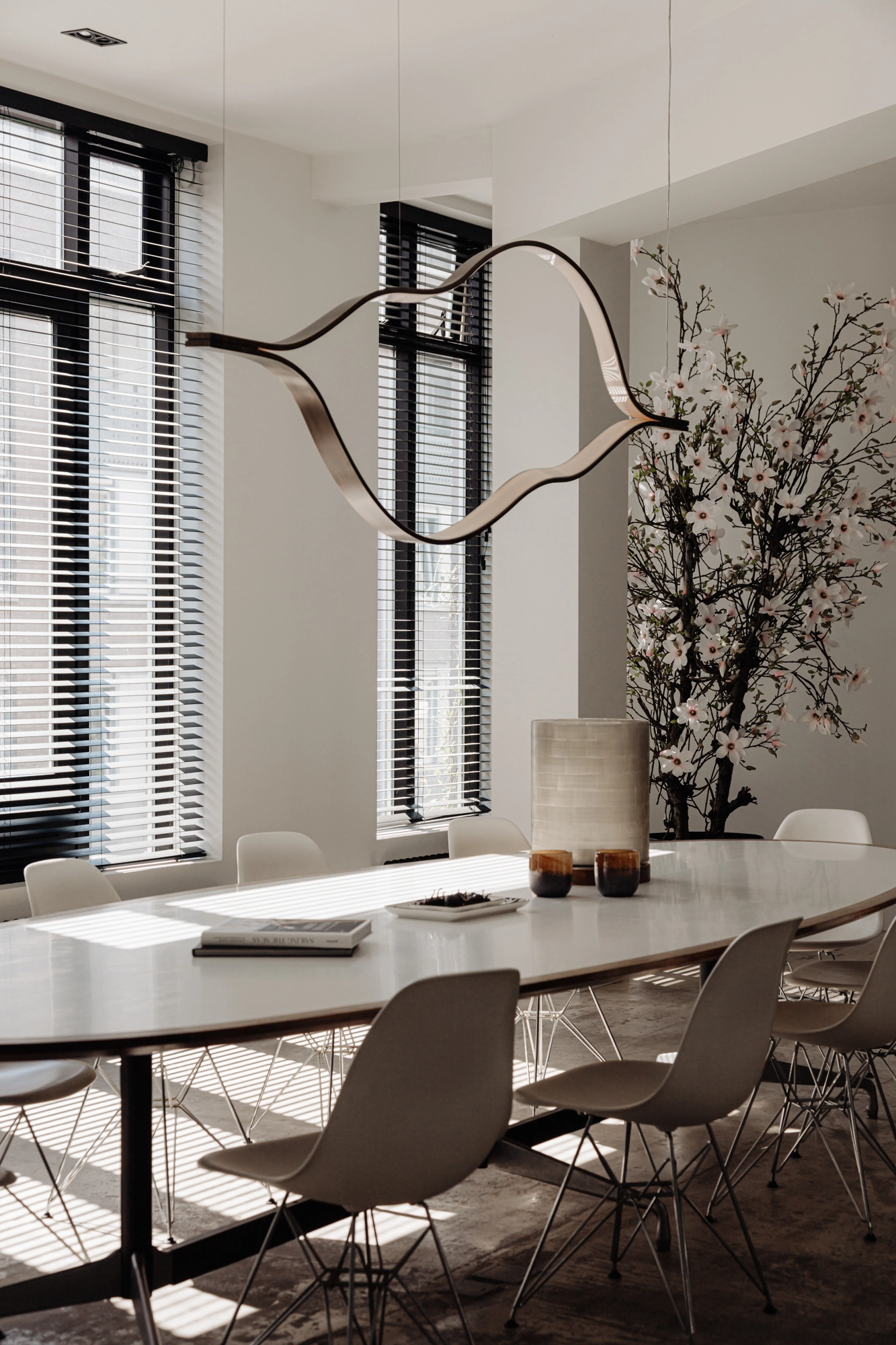
The living room is exceptionally spacious, with a Floor area 200 square meters. On the street and sunny side, this space has large glass windows, allowing plenty of natural light to enter. At the front of the living room is the kitchen, complete with a sturdy cooking island. Cooking here can be a social affair, allowing you to interact with your guests and the space.
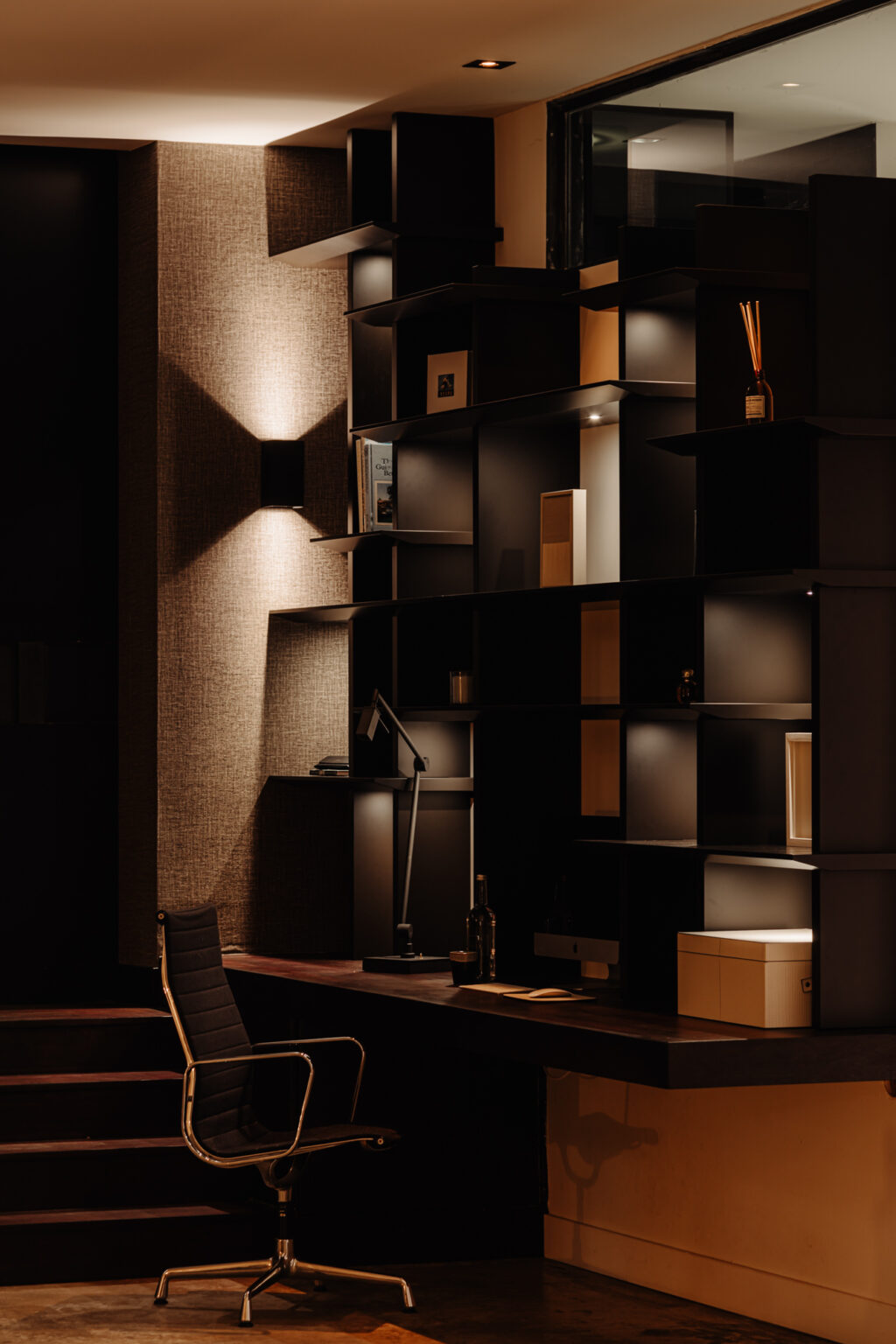
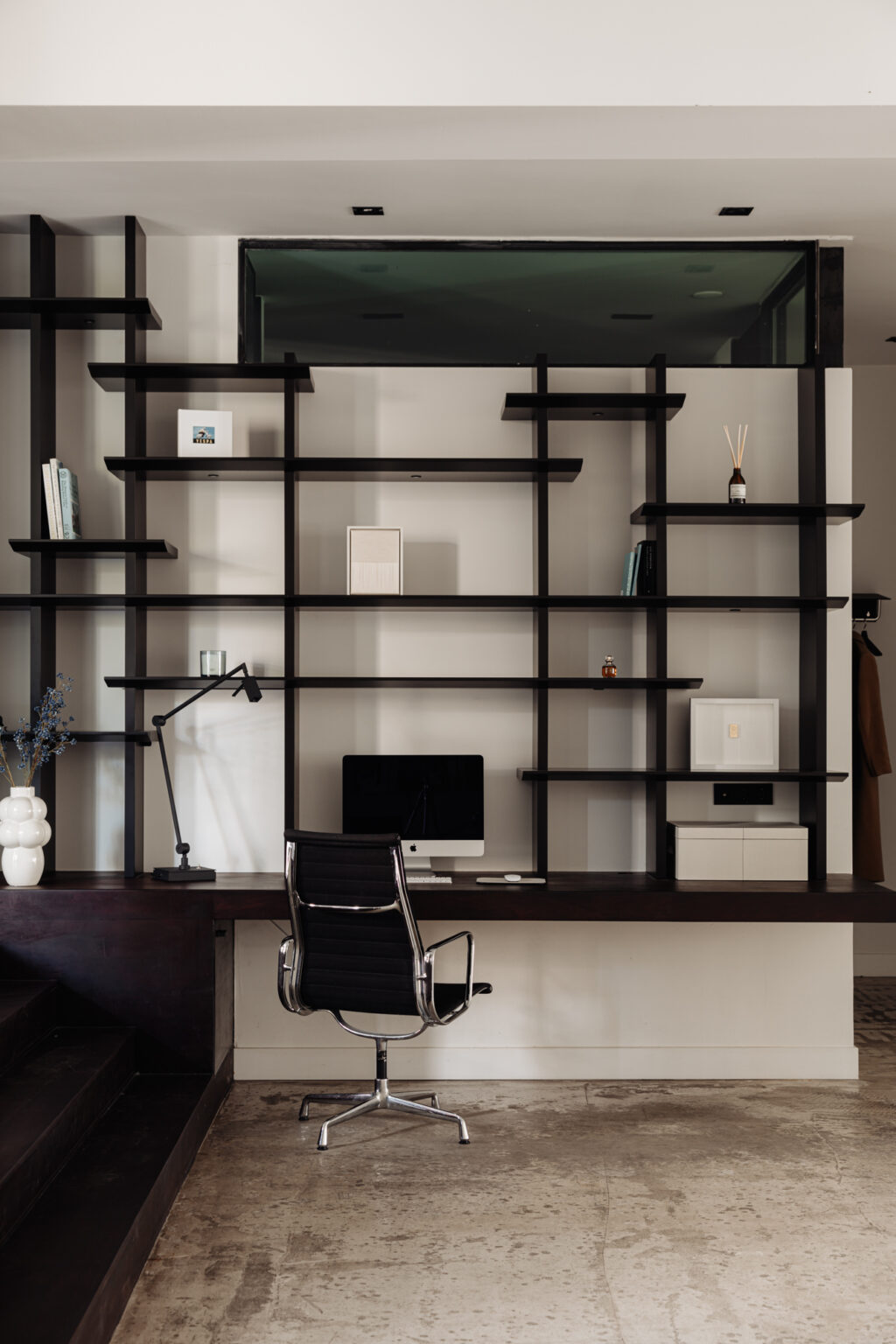
The large size of the living room allows for multiple functions, such as a lounge and workspace. The large walls are ideal for artwork and large paintings. The room flows seamlessly into the bedrooms, separated only by playful elevations.
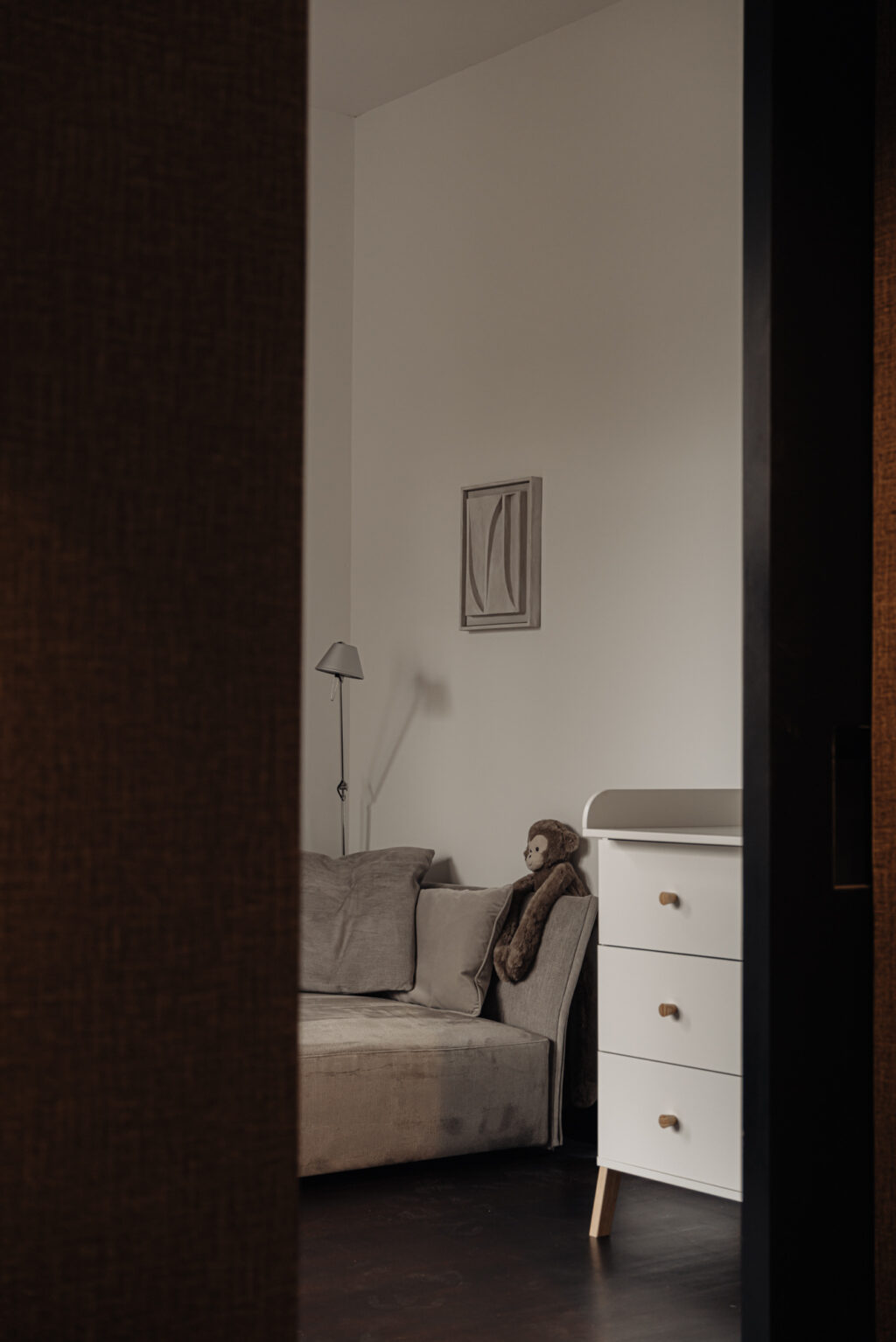
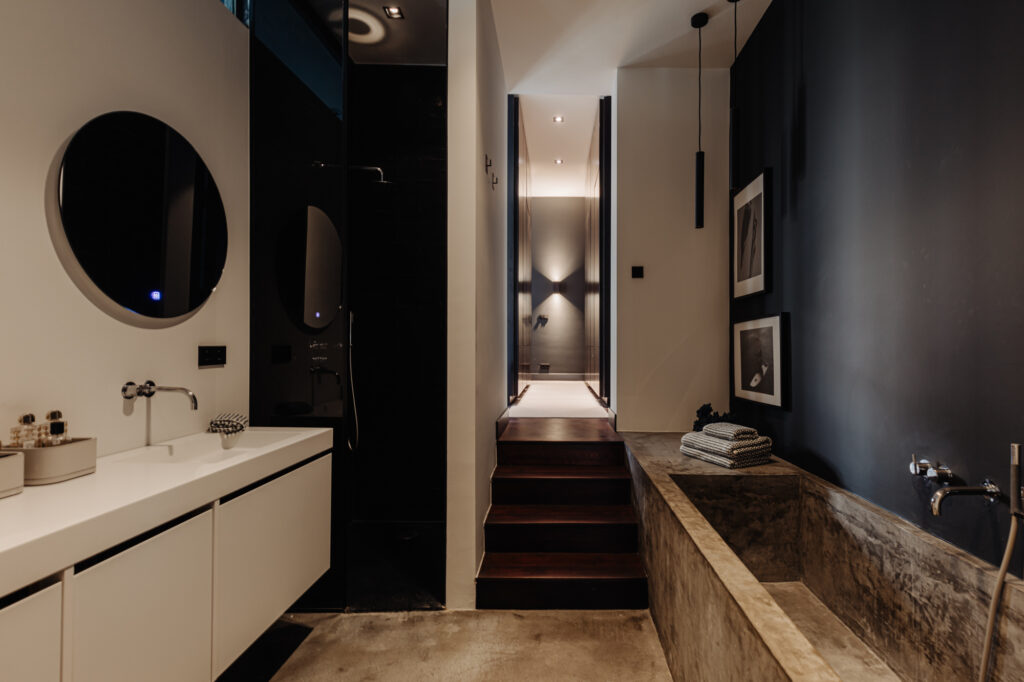
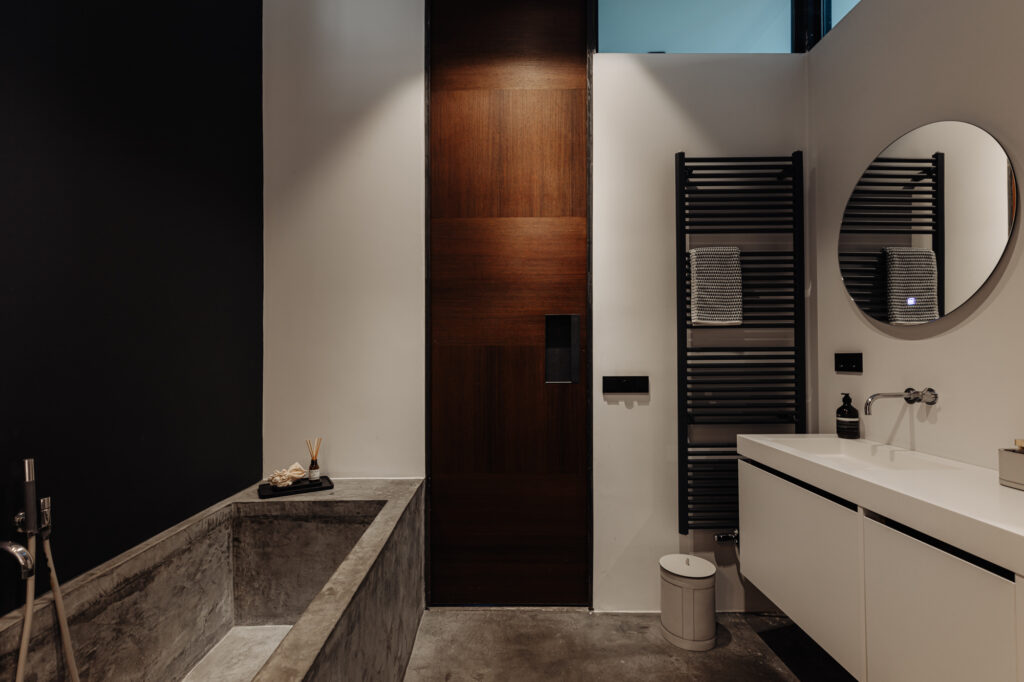
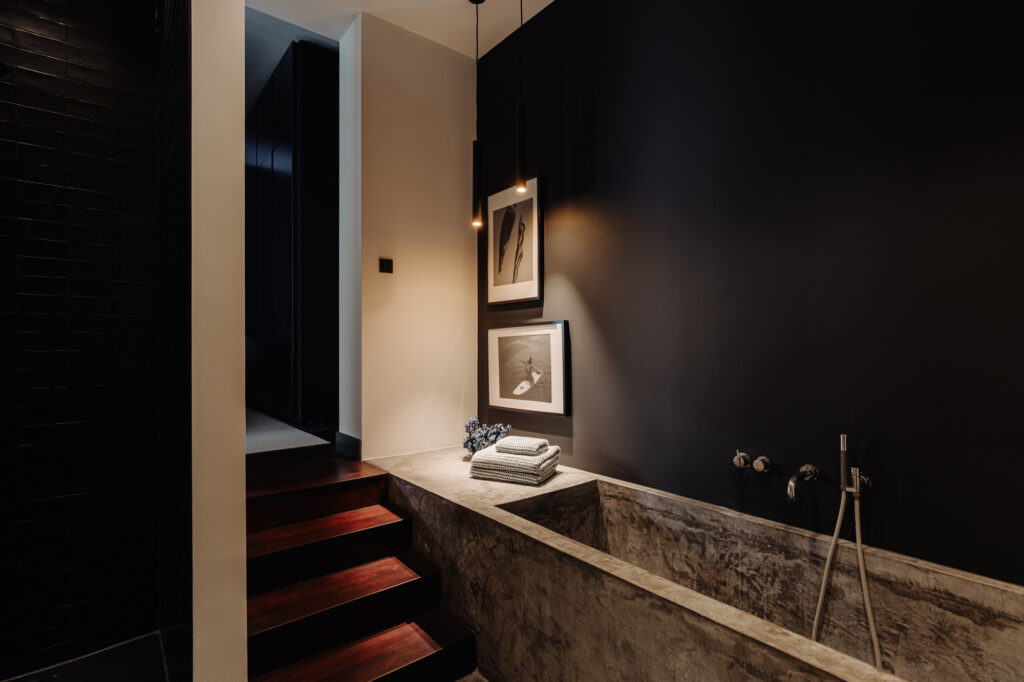
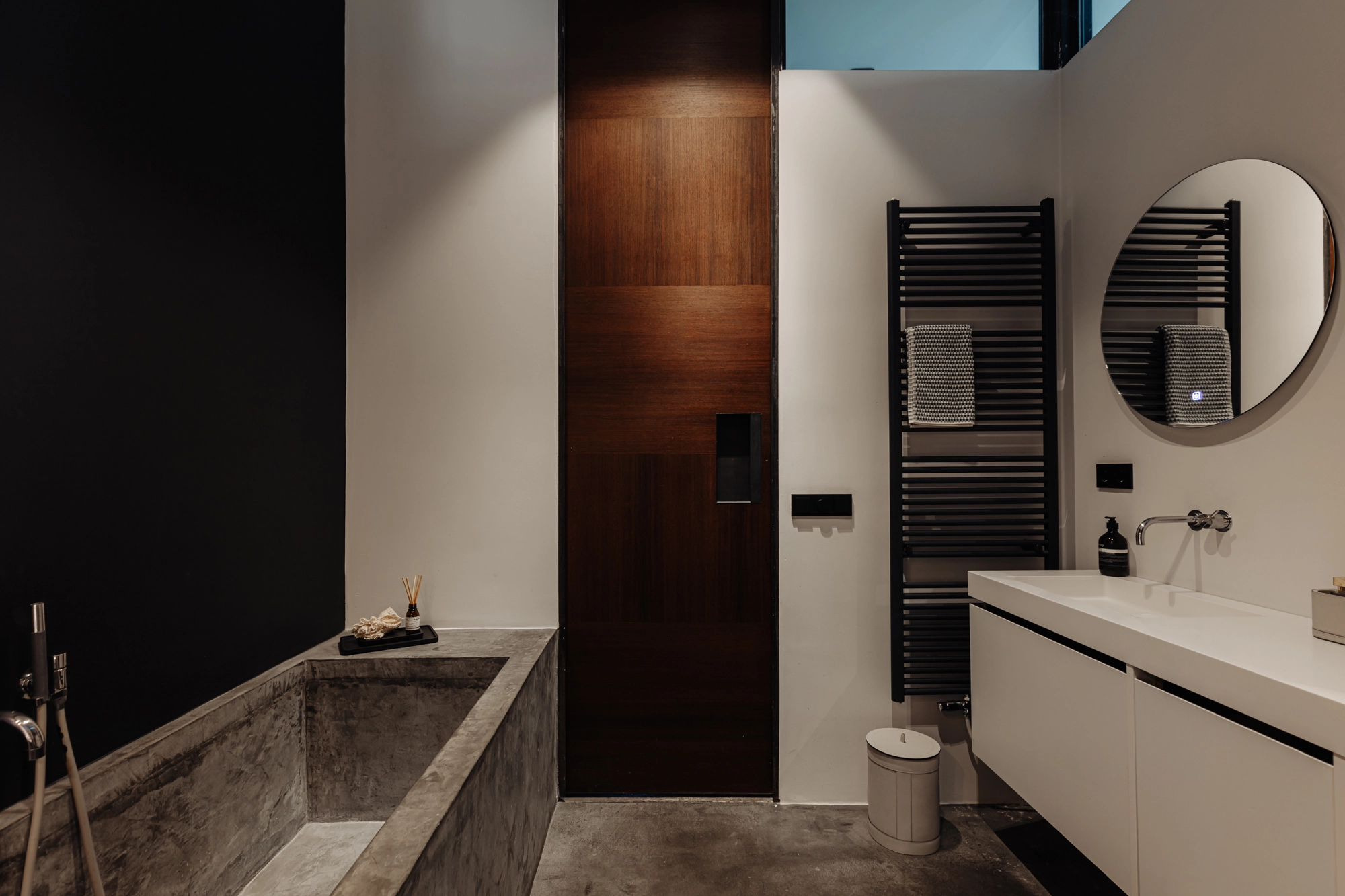
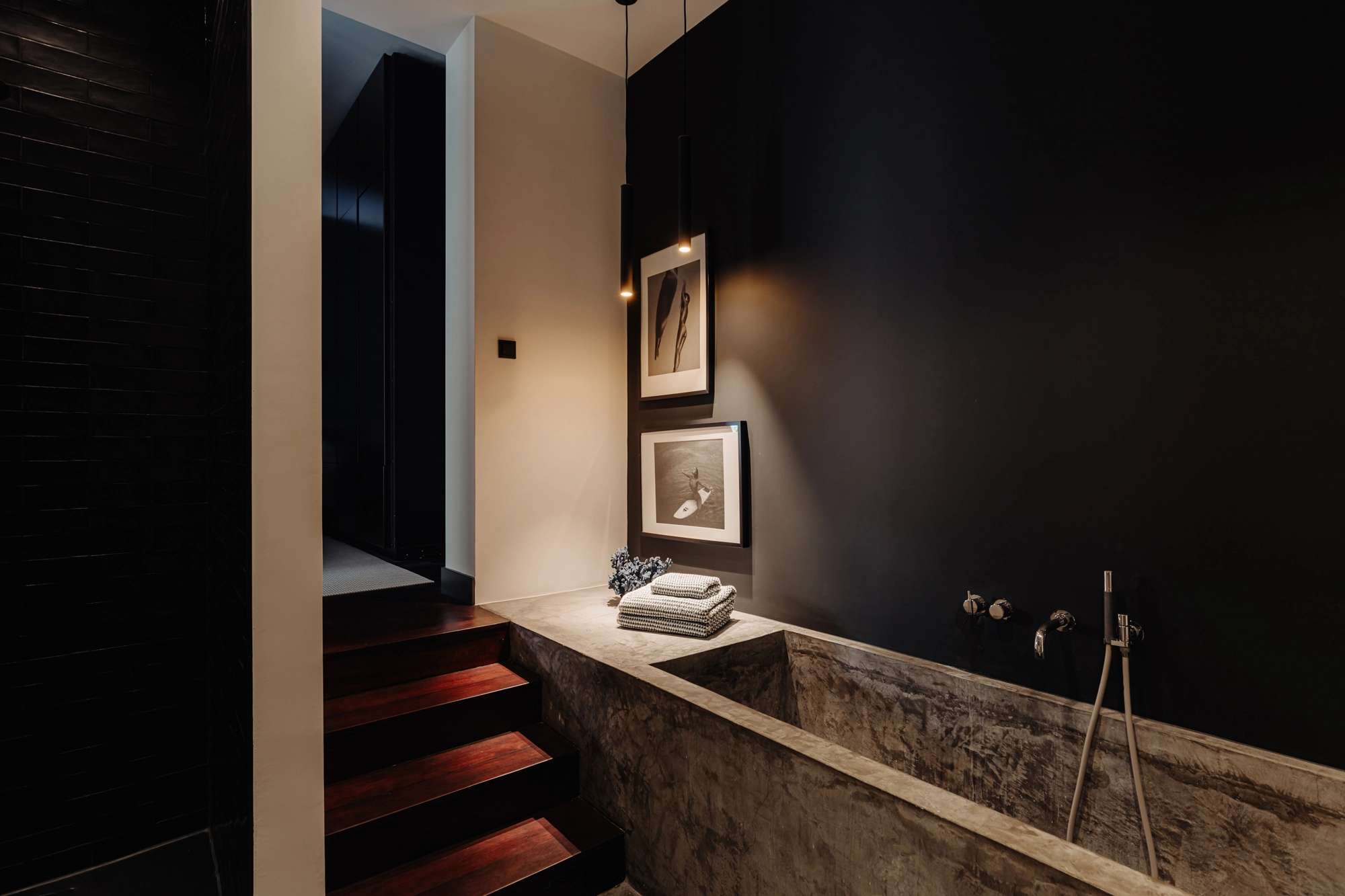
The bedrooms located at the quiet rear of the house and have windows overlooking the inner gardens. One of the bedrooms an bedrooms walk-in closet, perfect for an extensive wardrobe, which connects to the bathroom. The bathroom is beautifully designed using hardwood and concrete and is equipped with a bathtub, shower, and double sink.
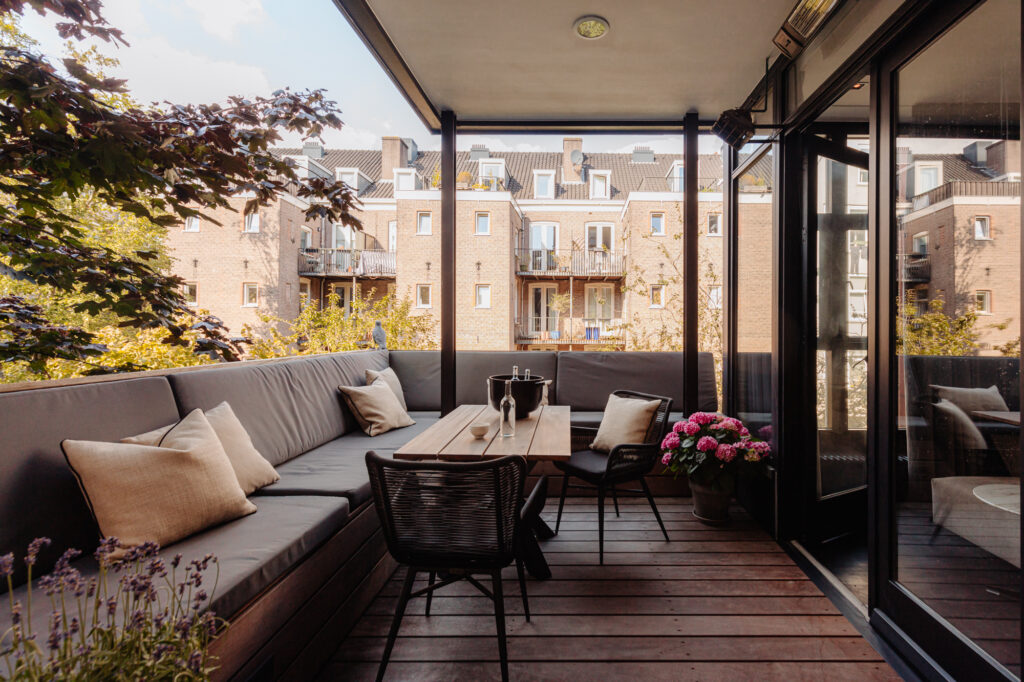
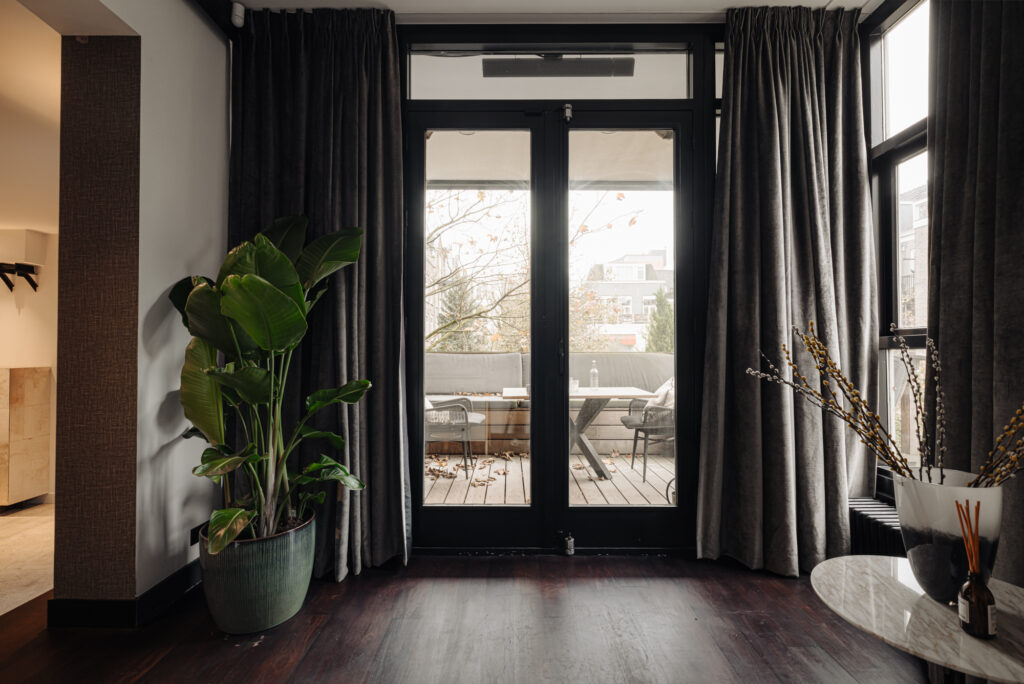
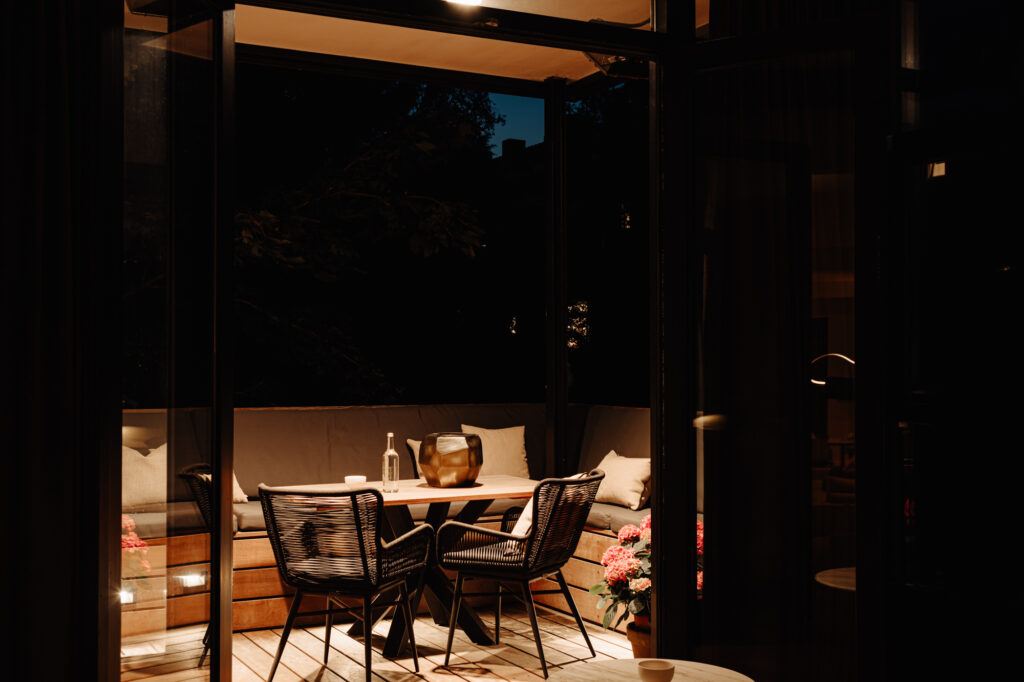
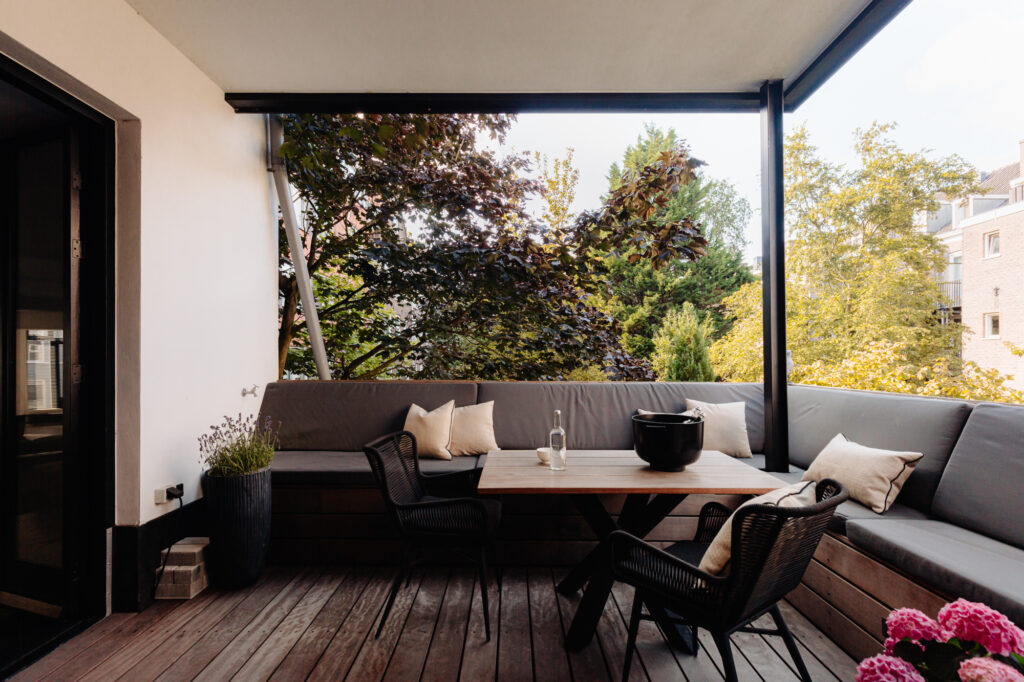
The second bedroom opens onto a Roof terrace. This terrace is partially covered and enjoys sunlight in the afternoon and evening. It feels like the aft deck of a yacht and is ideal for dining and having drinks with friends. The terrace is also accessible from the living room.
Neighborhood guide
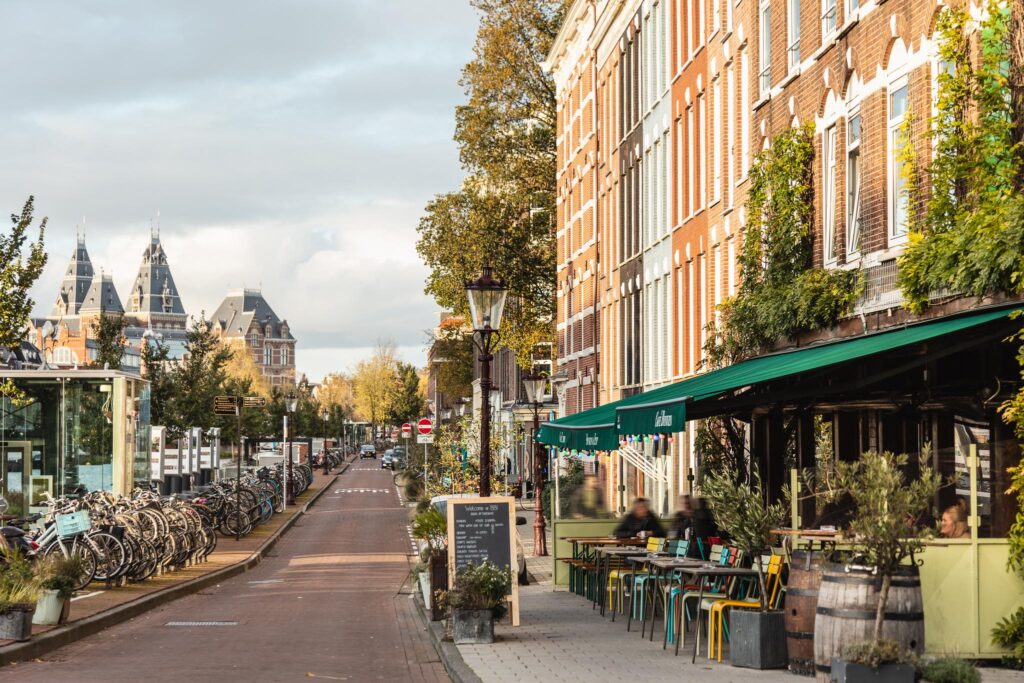
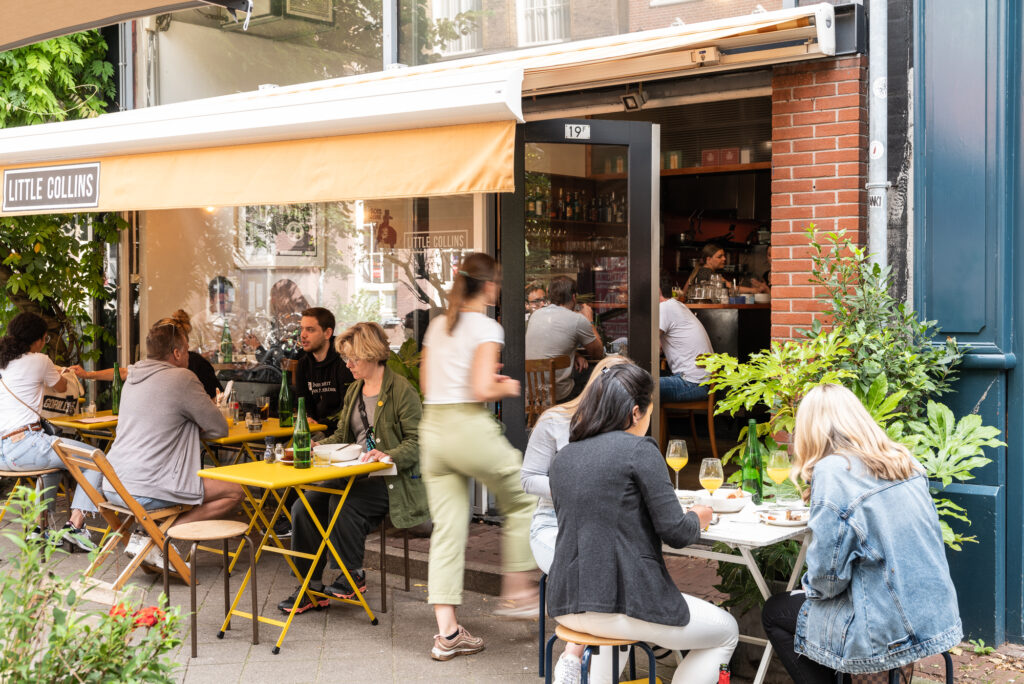
De Pijp was developed in the late 19th century to provide housing for newcomers who had moved to the capital in search of work. Freddy Heineken’s father opened the Heineken Brewery here in 1886. The first workers’ homes, around Albert Cuypstraat, were built quickly and inexpensively. Later, toward the Diamantbuurt, Berlage added houses in the Amsterdam School style. It is said that the neighborhood owes its name to the long, straight streets, which are shaped like a pipe. The Albert Cuyp Market and Sarphati Park define the dynamic character of De Pijp. Artists and writers such as Piet Mondrian, Carel Willink, and Gerard Reve lived and worked here. The lively, diverse population brought many cafés and eateries to the neighborhood. Today, the neighborhood is known as Amsterdam’s Latin Quarter, still bustling with diverse restaurants such as Auberge Jean & Marie, Le Restaurant, the Peruvian NAZKA, and authentic bistros like Petit Caron.
Details
• Living area approx. 242 m²
• Ceiling height of approximately 3.25 meters
• Terrace of nearly 10 m²
• Single-story
• Two bedrooms Third easily created
• Accessible via a gentle staircase
• Located on freehold land
• Municipally protected cityscape
• HOA fees €257 per month
• Option to rent a parking space in the Gerard Doustraat parking garage for €250, excluding VAT. There is also the option to rent a second parking space in the Daniël Stalpertstraat parking garage for €250, excluding VAT.
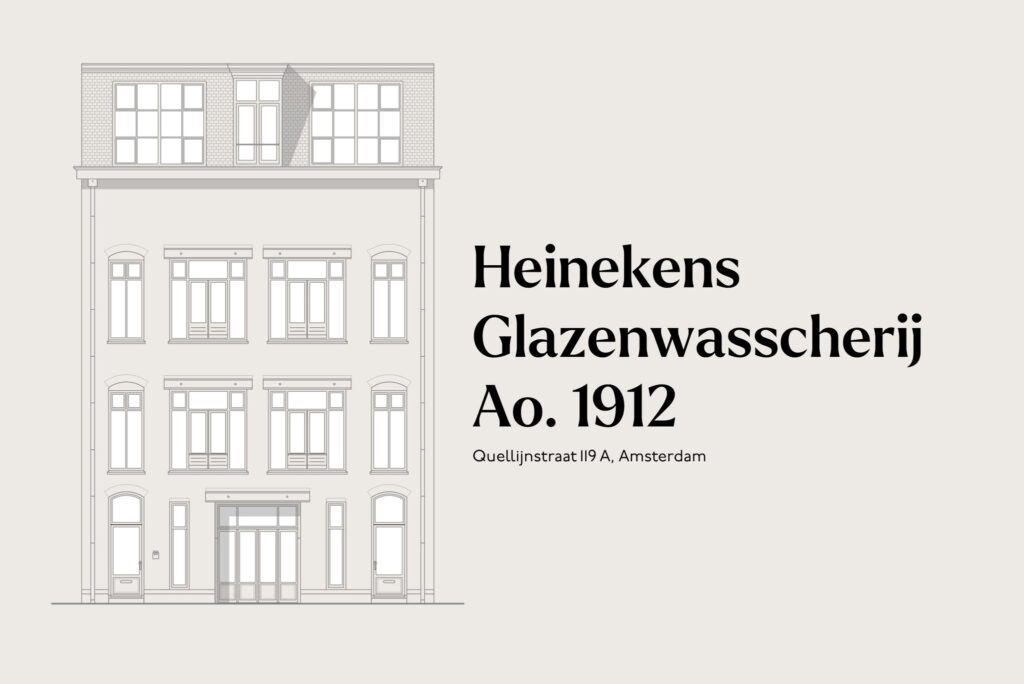
Heineken’s Glazenwasscherij, Est. 1912
Living in a loft has always captured the imagination. It embodies the sense of space and freedom to fill that space in your own way. In a loft, there are no obstructing walls or doors; functions flow seamlessly into each other. Lofts are tough and robust and call for a creative and metropolitan spirit. The Pijp neighborhood fits perfectly with this concept because it is dynamic and young.
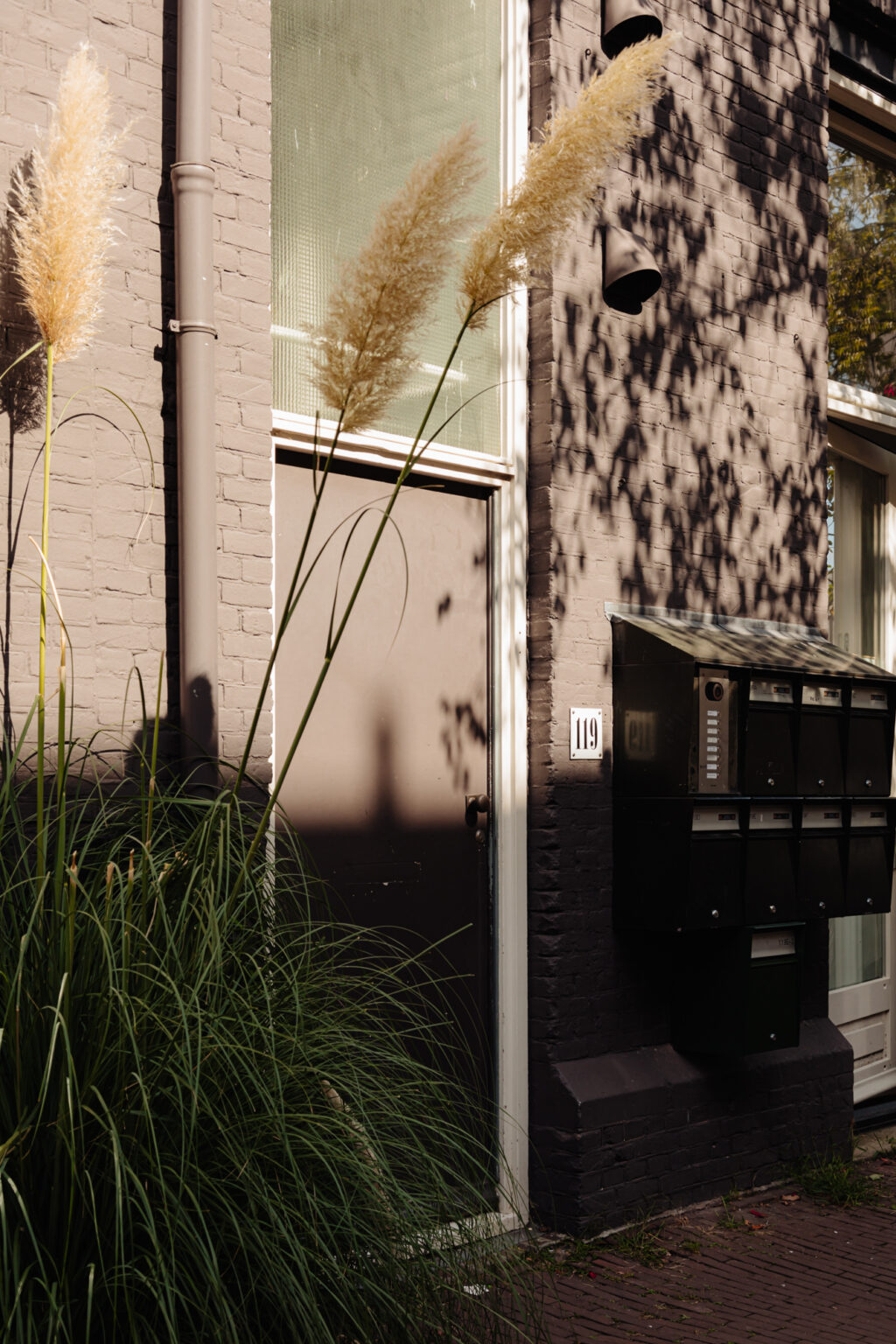
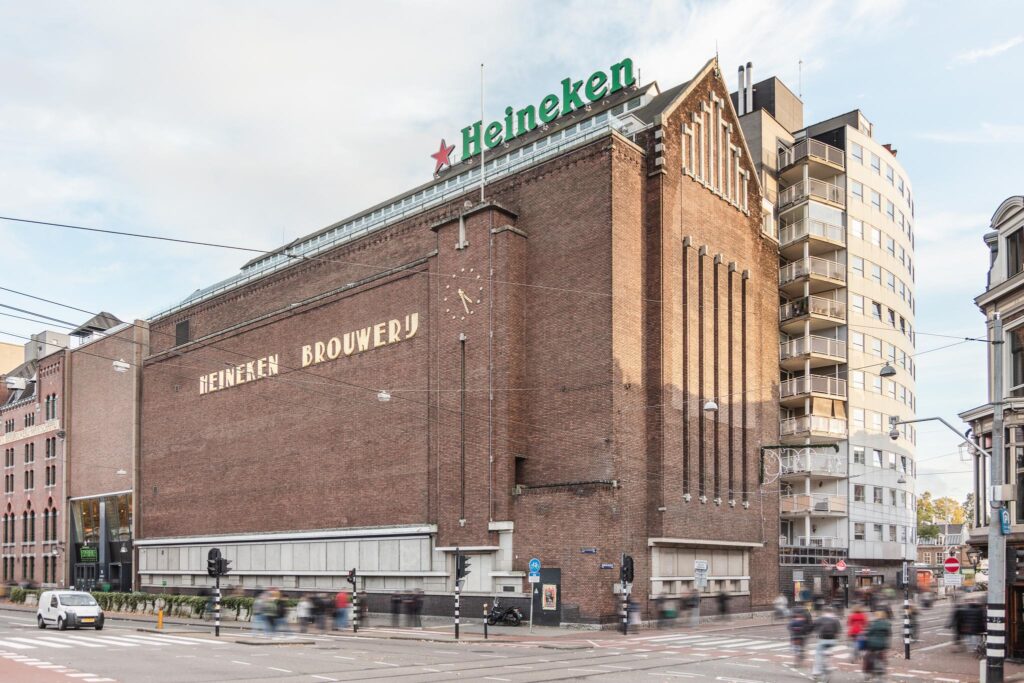
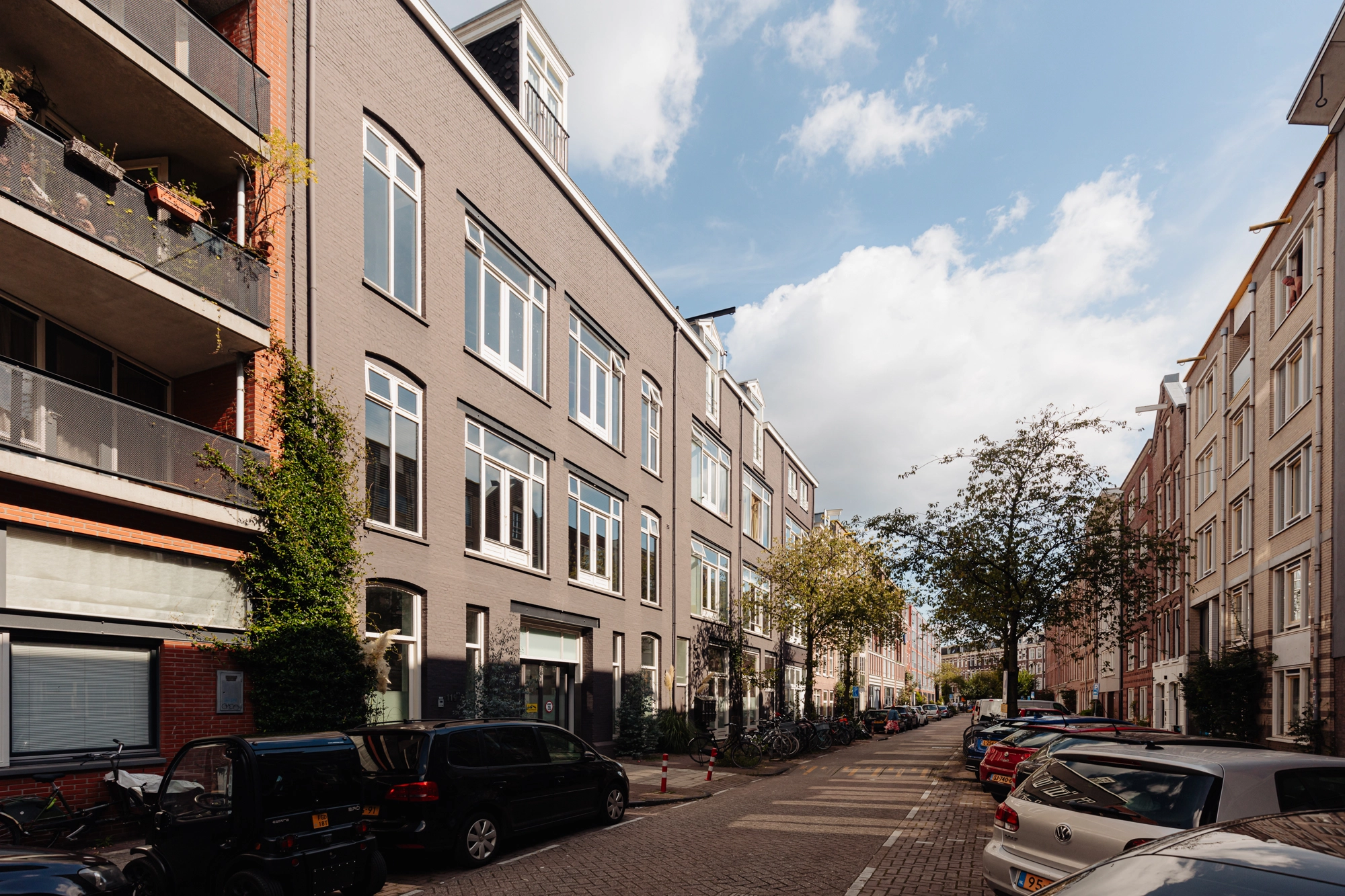
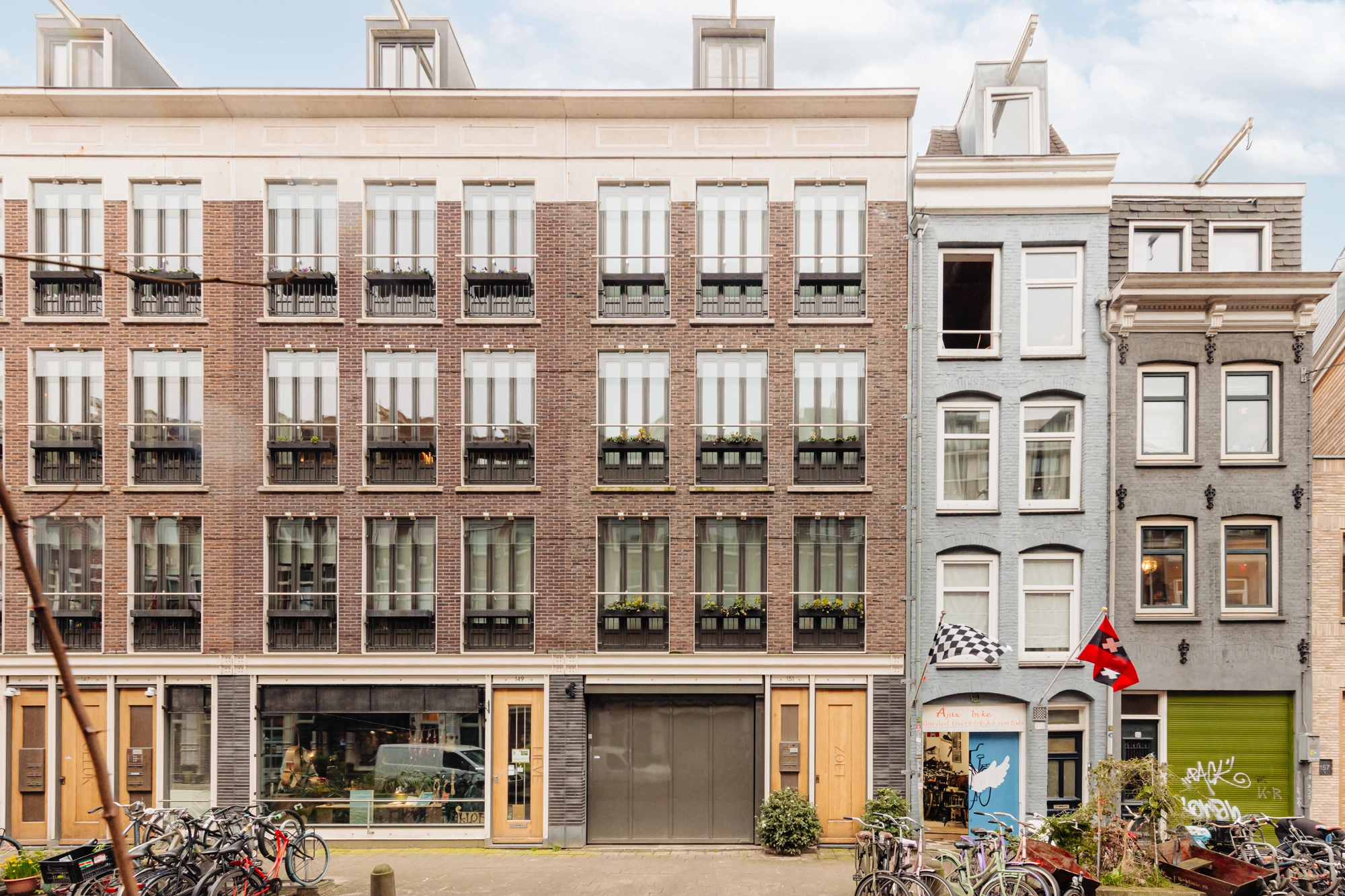
This residence is located in an industrial building at Quellijnstraat 119, a building originally built by Heineken's brother for his plans for Heineken's Glazenwasscherij and later used as a factory for venetian blinds. The property still retains its robust appearance, and this residence has been transformed into a loft in an understated way.
Living here feels like you're in New York, with plenty of space to entertain, whether you're single or a couple. The terrace, half covered and surrounded by greenery, offers a wonderful outdoor space.
What makes this residence truly special is the spaciousness and understated luxury. The finish exudes the refinement of timeless elegance and high-quality materials. The spaciousness is created by what has been left out, and that makes this residence timeless.
De Pijp has a lot to offer, from the Albert Cuyp market to the metro. The chic Zuid district and the city center are within walking distance, and the entire city is easily accessible by bicycle from this central Location. In short, this residence offers a unique opportunity to live metropolitan in De Pijp.
Kees Kemp | Broersma Werken Living
Kees Kemp | Real estate agent Broersma Wonen
Judith de Jong | Real estate agent Broersma Wonen
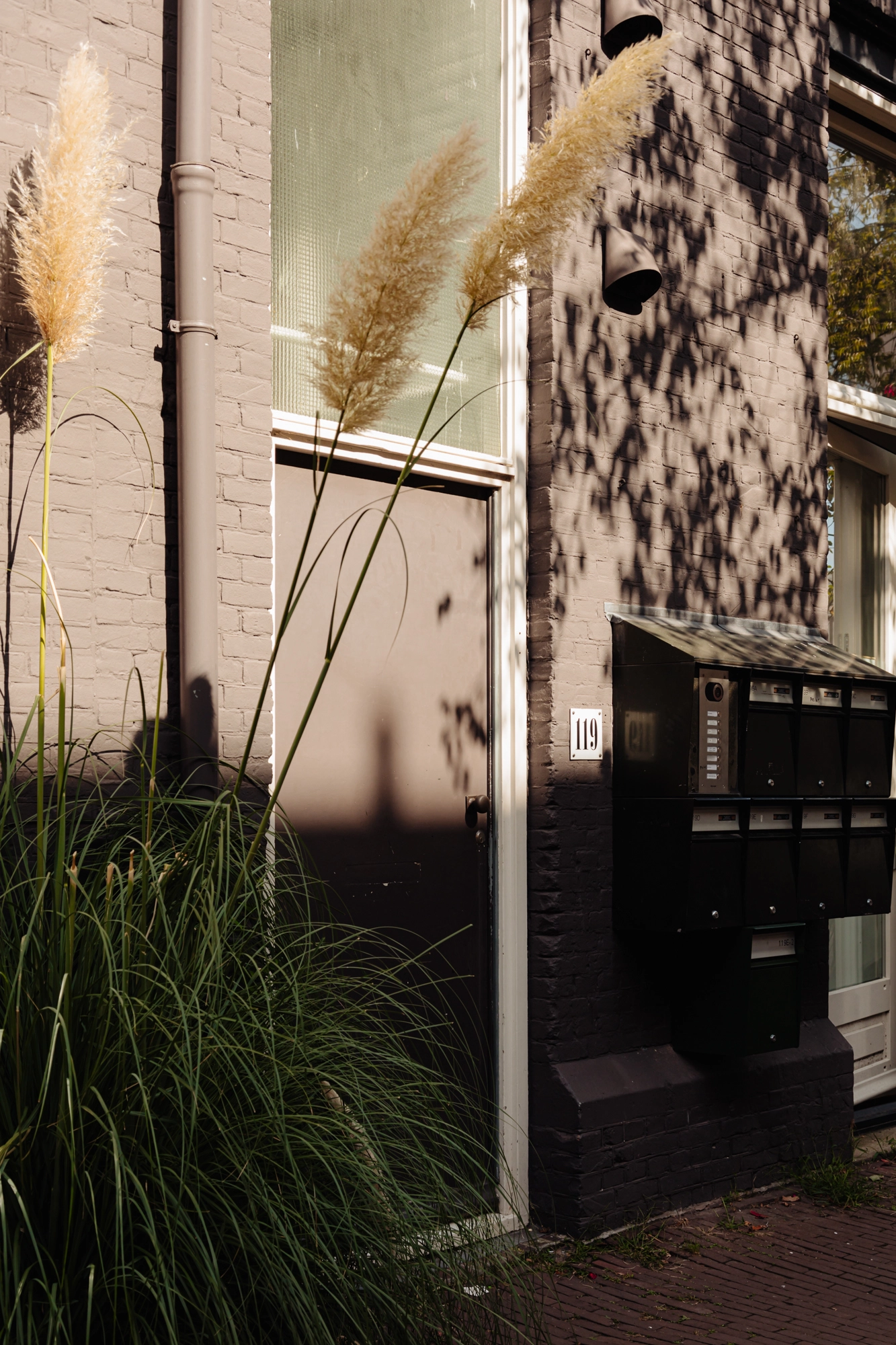
This apartment is located in a semi-industrial building dating from the fin de siècle (the beginning of the 20th century). It was originally built as commercial space for a window cleaning company, and Heineken's cousin had a vision to tackle window cleaning as an industry on a larger scale. In addition, there was a need for space for storage and production of window blinds. The building was constructed in 1920.
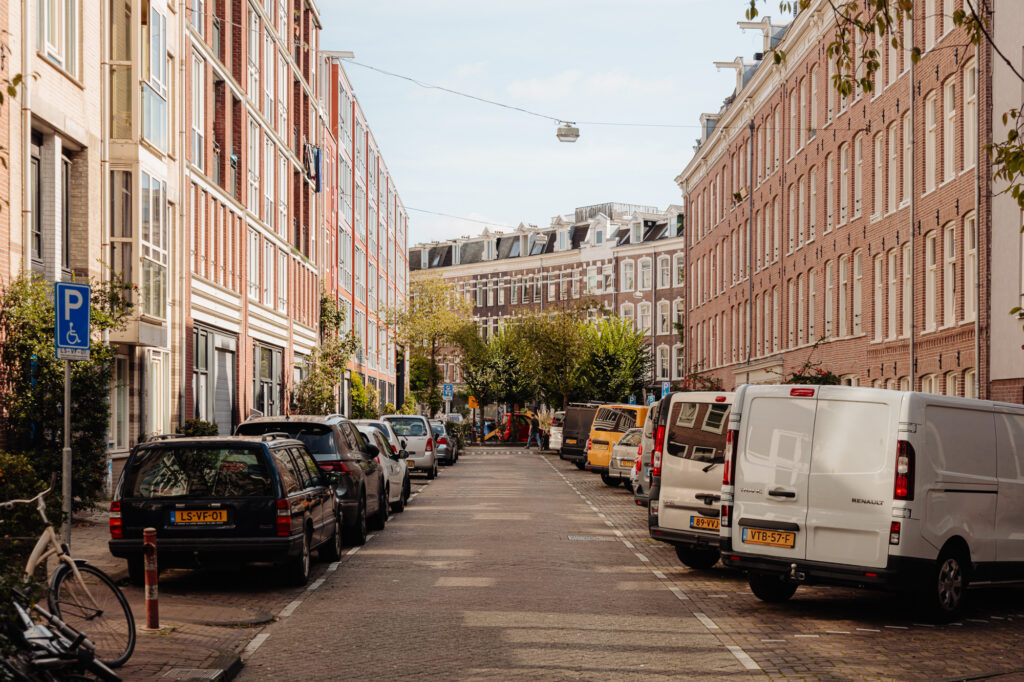
The building is located in the middle of typical blocks of residences are characteristic of the Pijp district in Amsterdam. The ground floor usually houses commercial spaces, while the upper floors residences . The entrance and stairwell still retain their industrial and robust appearance.
This building has a structure with columns that reveal its structural function, contributing to its industrial character. The generous depth and width of the space, which is still open, emphasize the feeling of space. The large windows allow plenty of daylight to enter and enhance the feeling of space.
The entire building has now been converted into residences, and the owners have jointly ensured the maintenance and preservation of the property.
This loft apartment has its own entrance on the first floor via a gentle staircase and stairwell that is exclusively for this property. Upon entering, a sturdy door welcomes visitors into a hall with a cloakroom. The hall splits into three corridors leading to the living room, the open kitchen, and the bathroom. The hall also has a guest toilet and a laundry/storage room.
The living room is exceptionally spacious, with a total Floor area approximately 200 square meters. The living room has large windows on the street side and the sunny side, which emphasize the industrial look. Columns and beams contribute to the industrial character of the space.
At the front of the building, the apartment spans a width of 12 meters. The kitchen is located on the street side and features a sturdy cooking island, making cooking an interactive experience where you can stay in touch with guests and the rest of the space. The layout of the space is so spacious that it can accommodate multiple functions, such as a lounge and workspace. The large walls are ideal for art and large paintings.
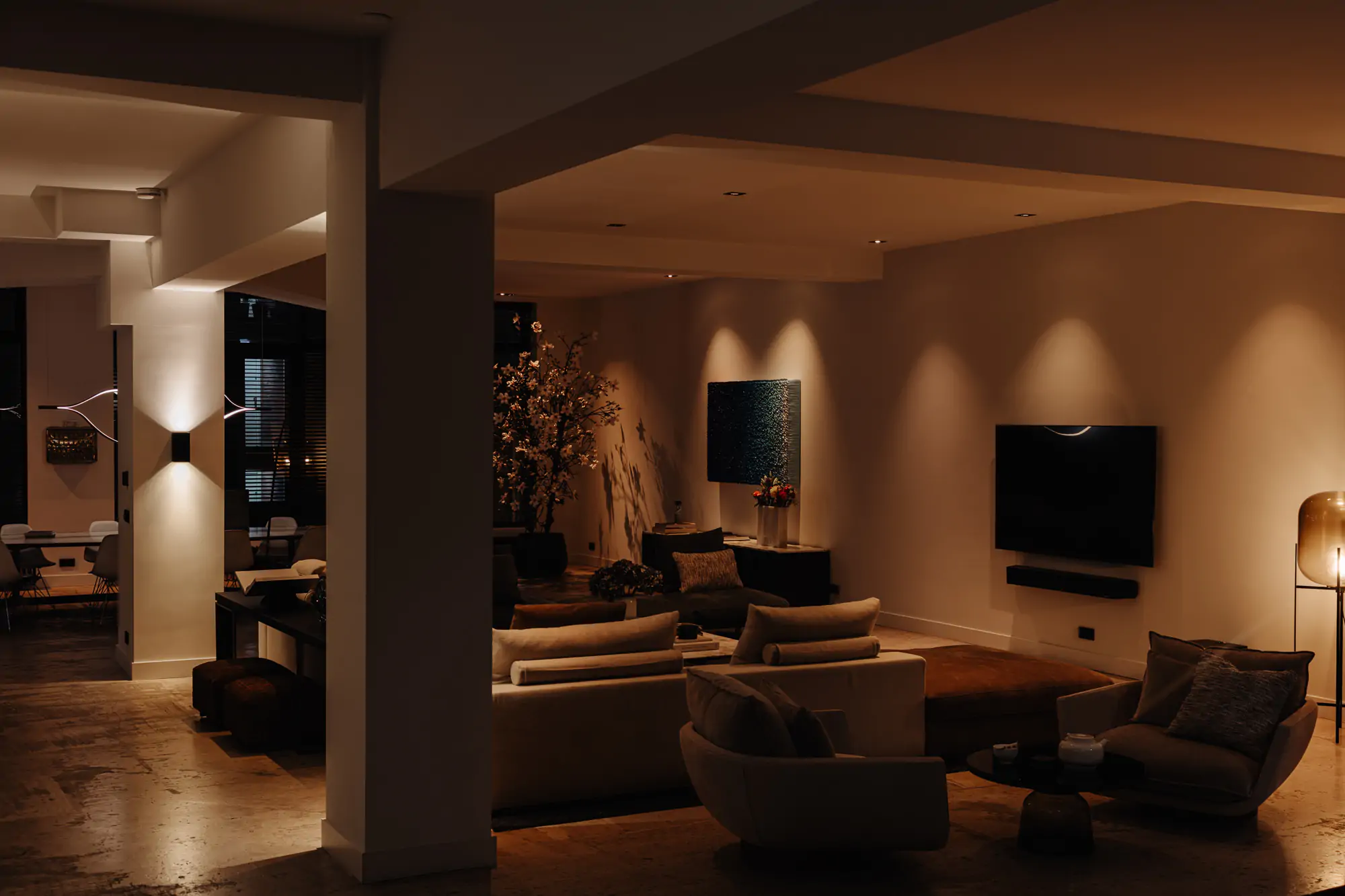
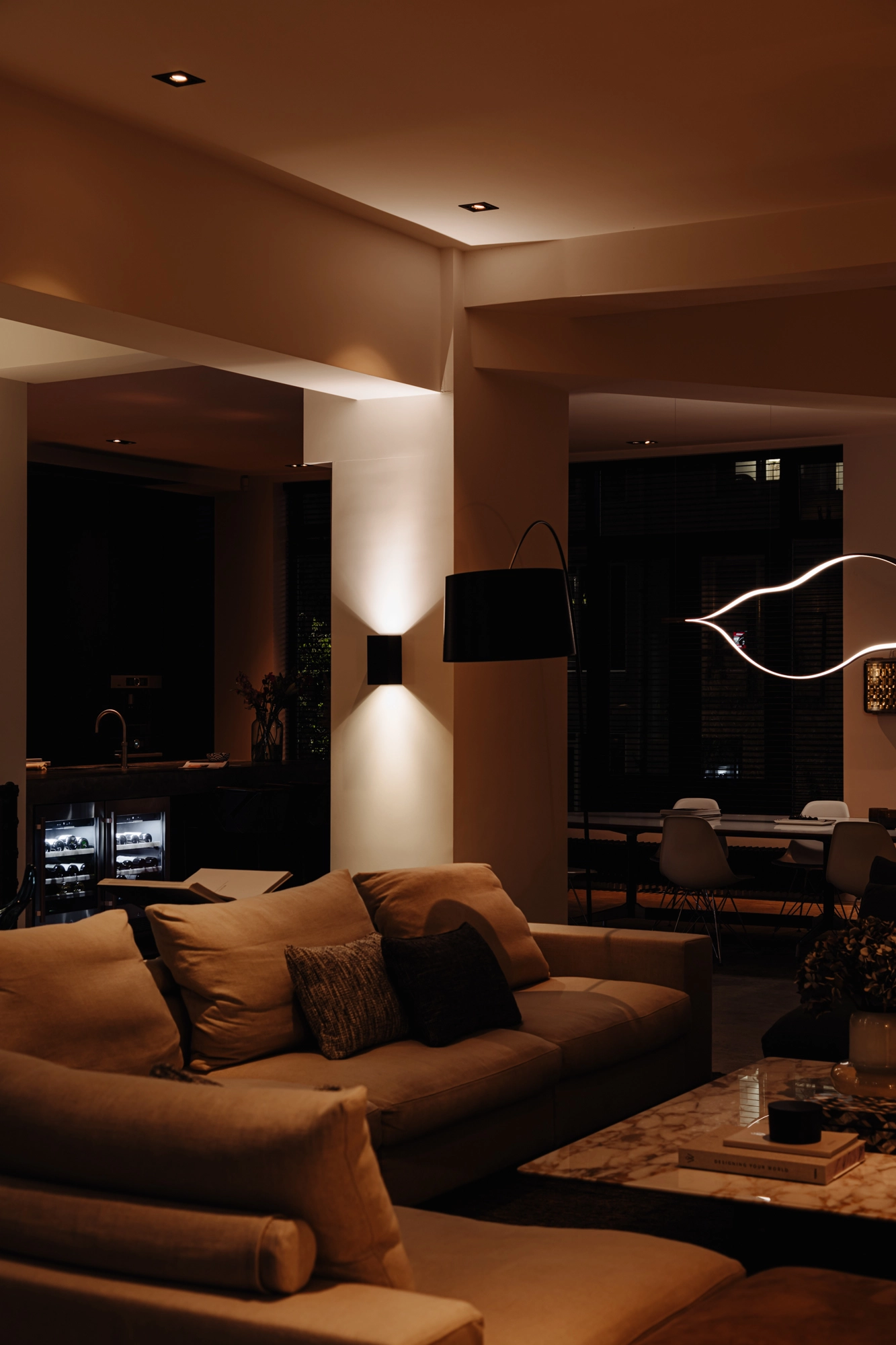
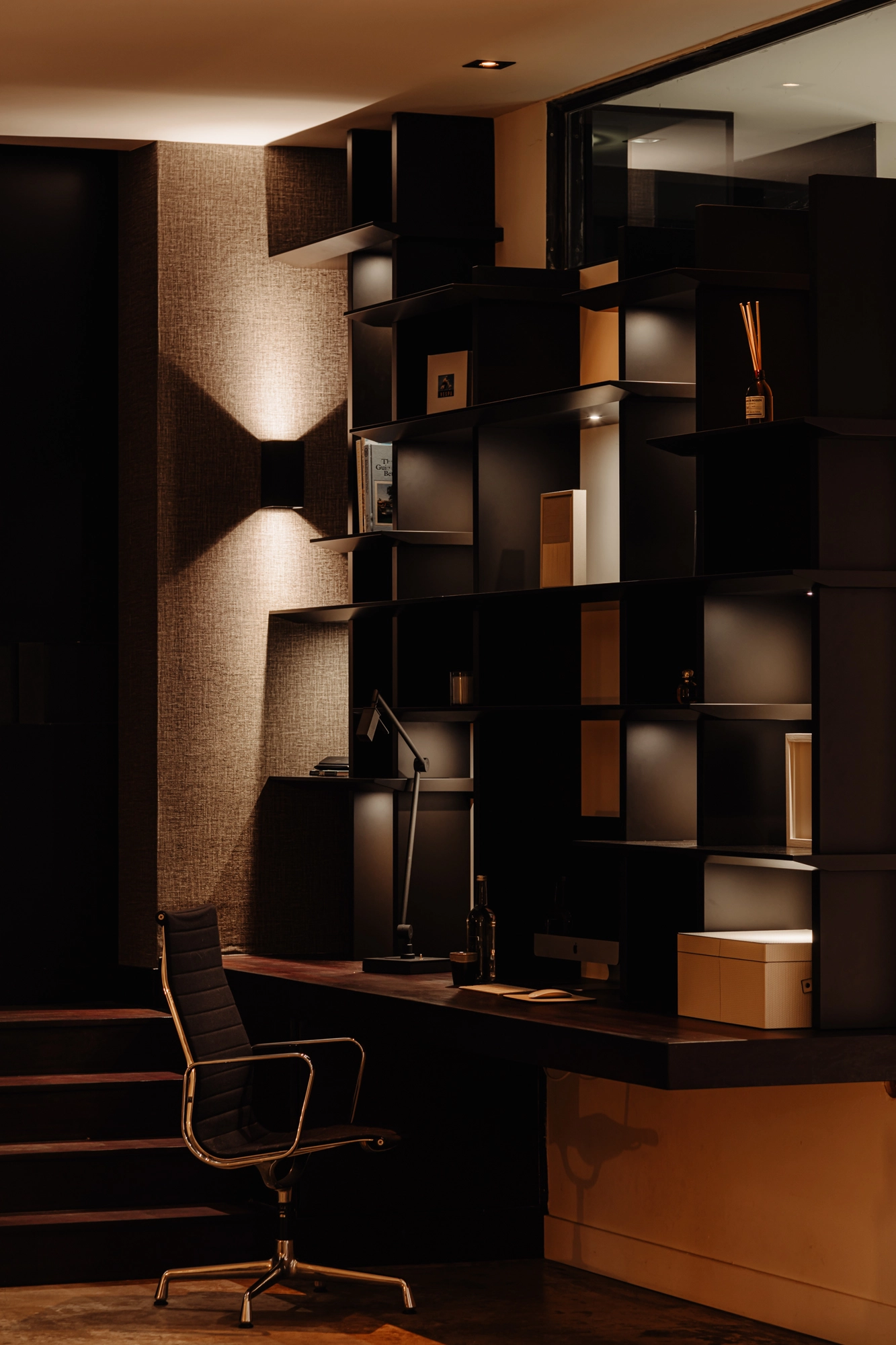
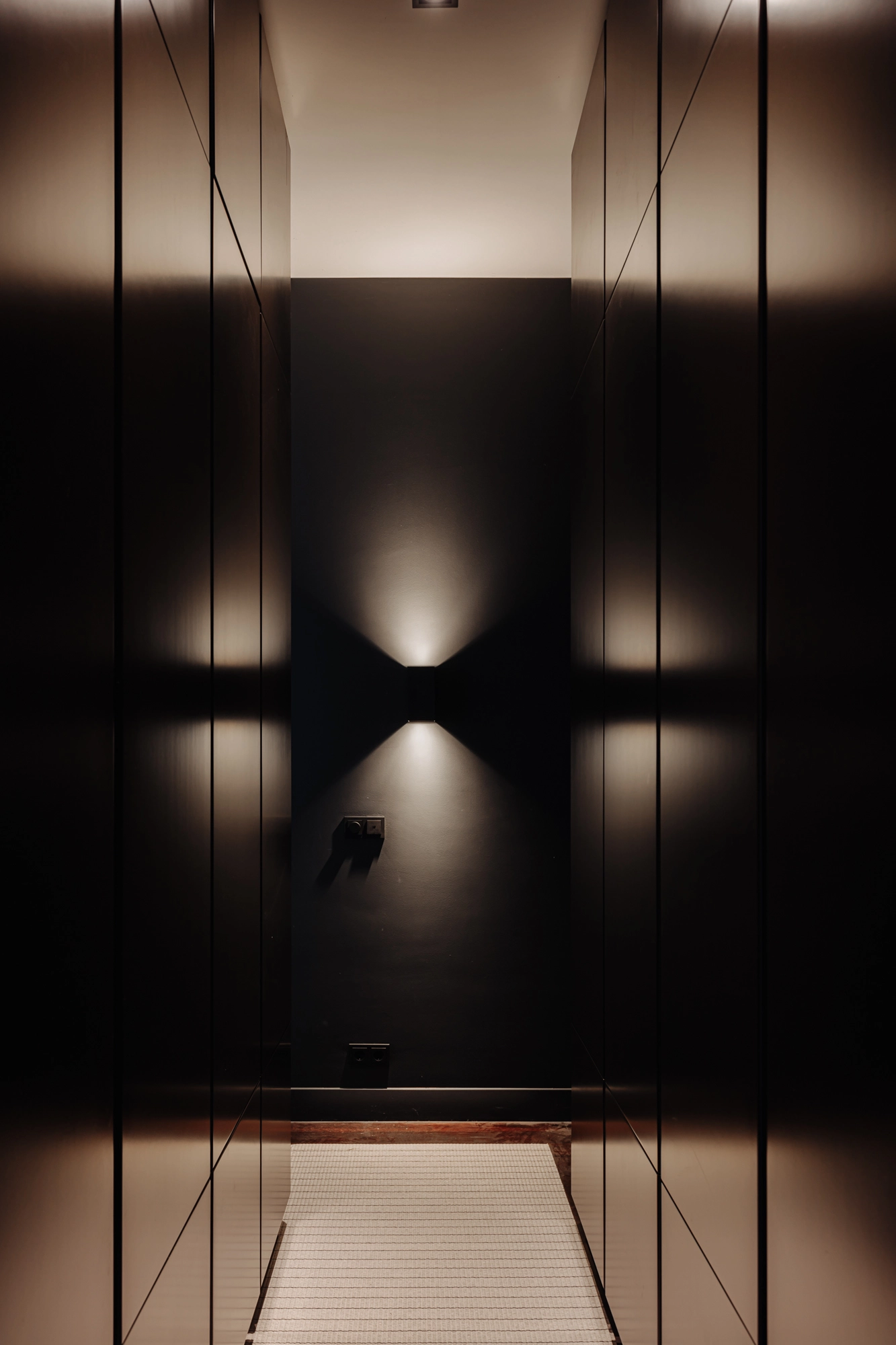
The design of this apartment creates a seamless transition from the living room to the bedroom. The separation between these two spaces is formed solely by a glass wall, creating a playful and open feeling. A staircase and raised floor add an interesting element to the space.
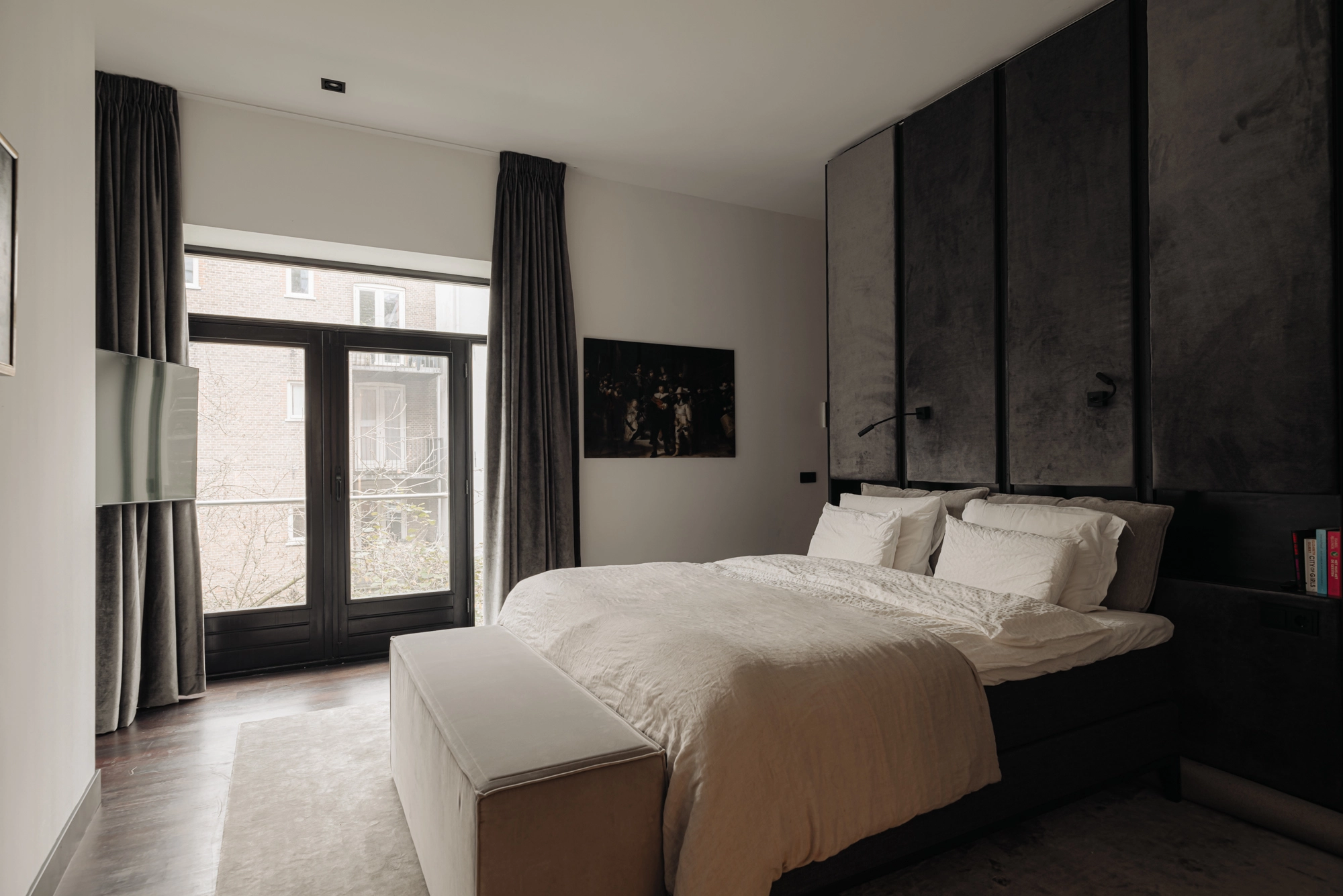
The bedrooms located at the quiet rear of the apartment and feature windows overlooking the inner gardens, allowing natural light to enter.
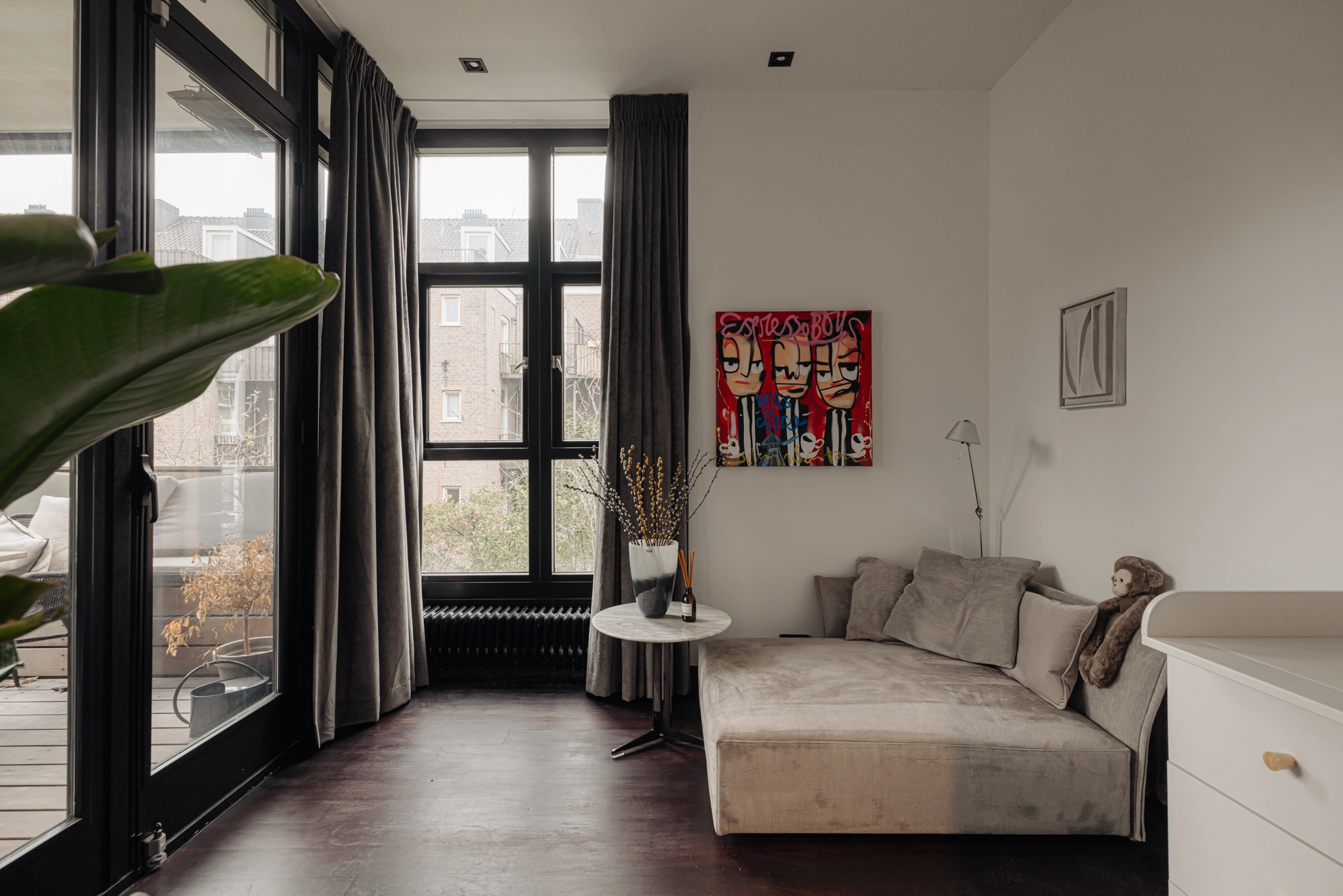
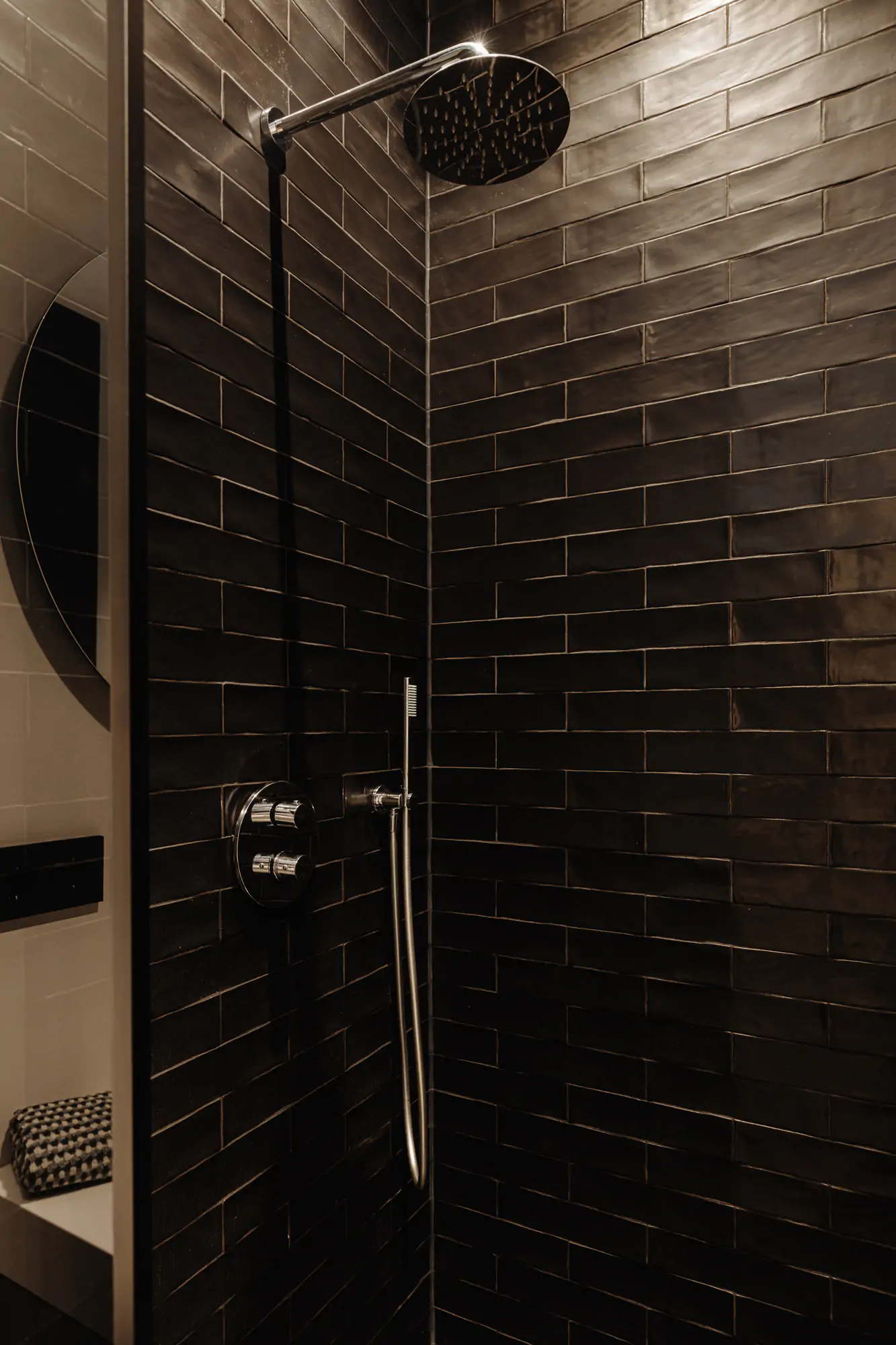
bedrooms to one of the bedrooms a walk-in closet, carefully designed to accommodate a generous wardrobe. This walk-in closet is directly connected to the bathroom, making it easy to get dressed. The bathroom itself is tastefully finished and combines materials such as hardwood and concrete. Equipped with a bathtub, shower, and double sink, the space exudes luxury and comfort. The second bedroom adjoins the terrace, providing a direct connection to the outdoors.
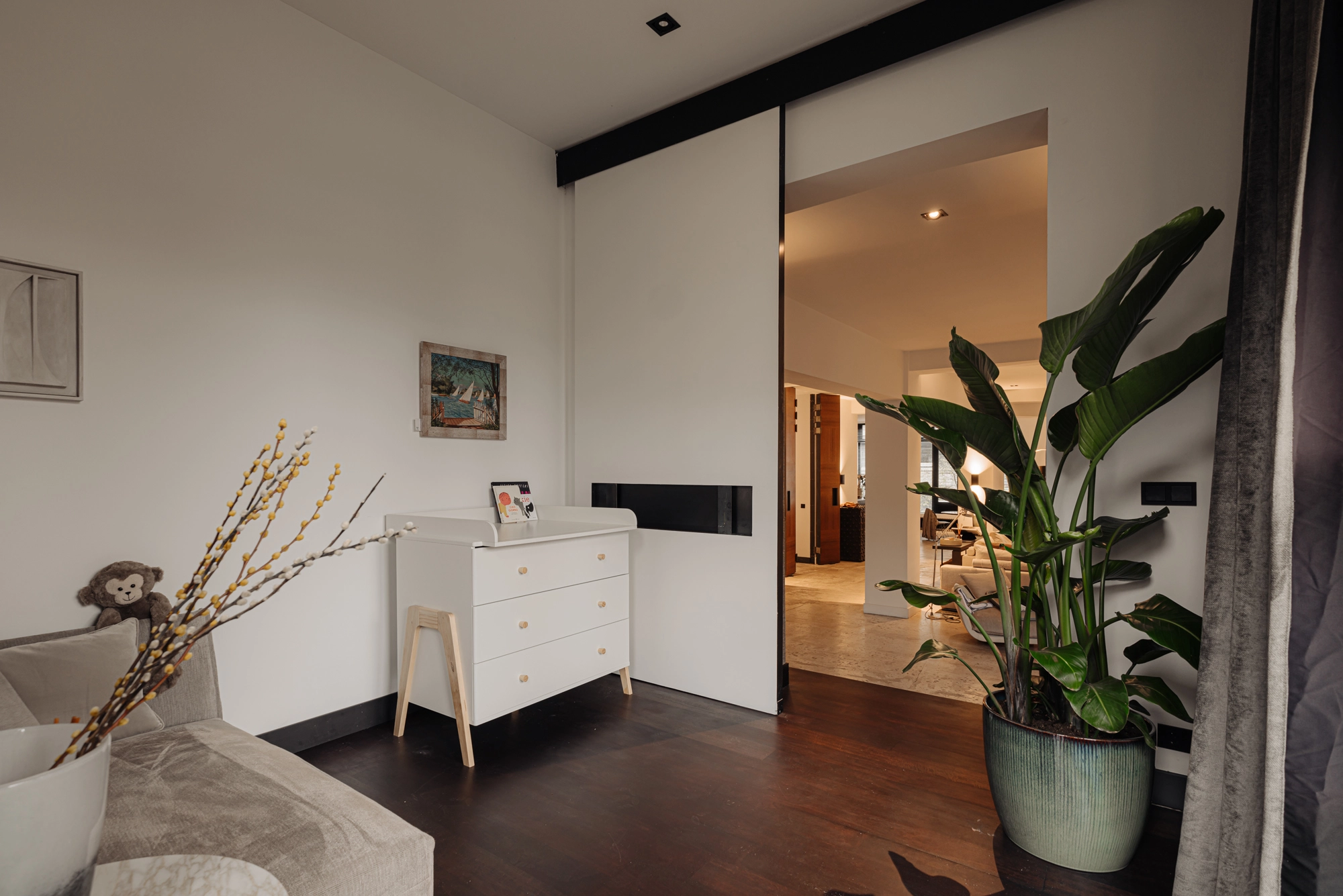
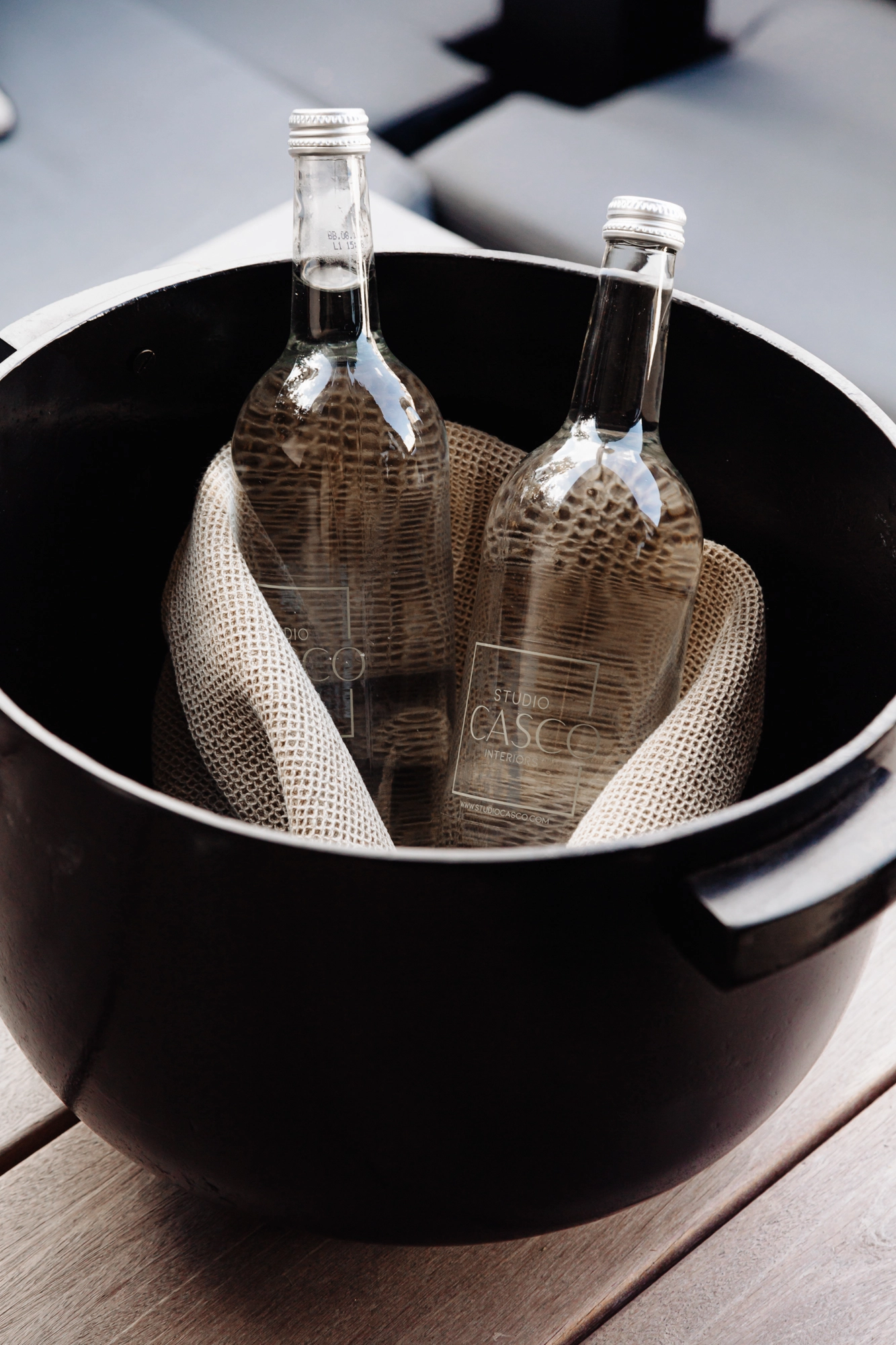
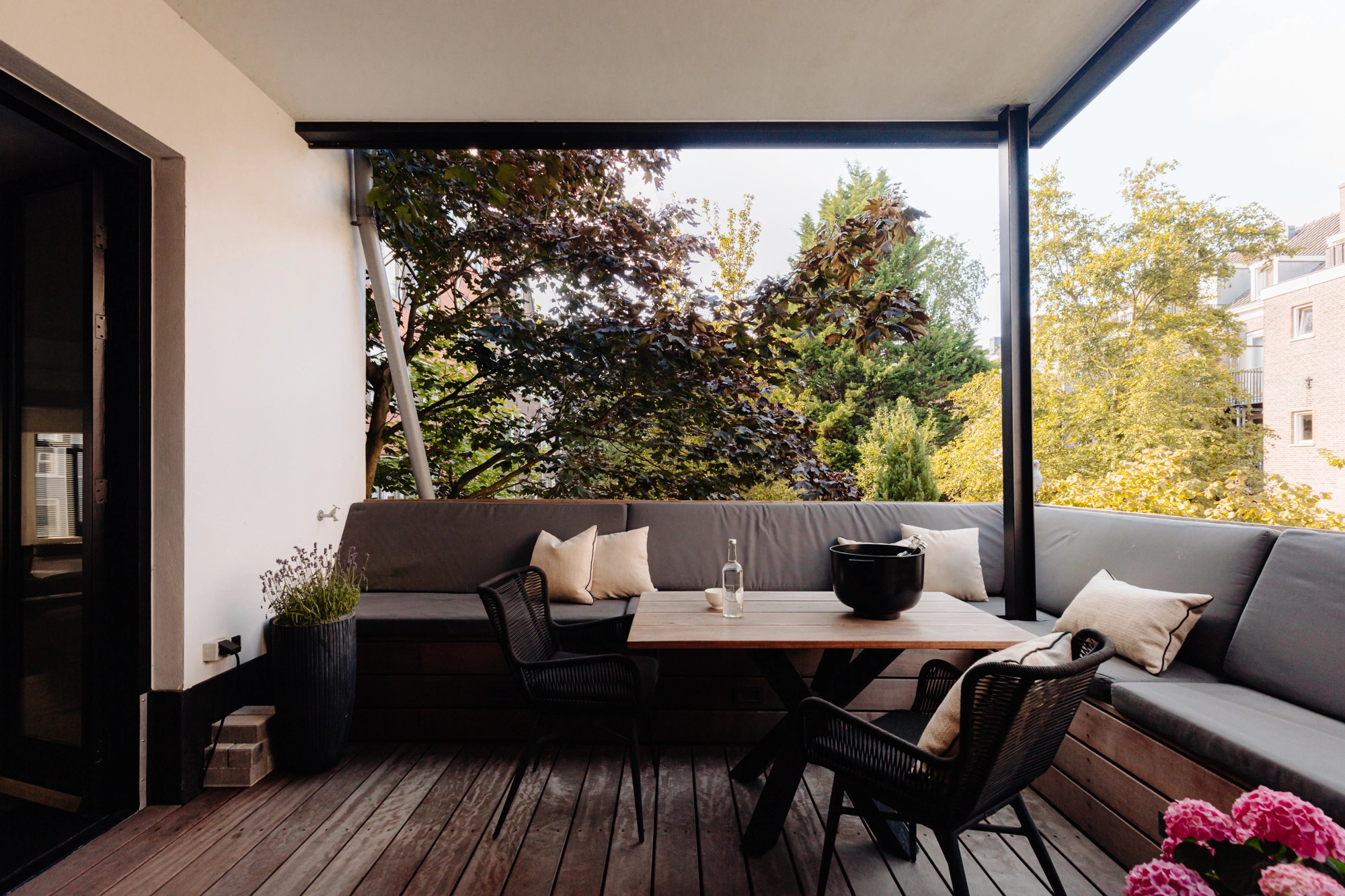
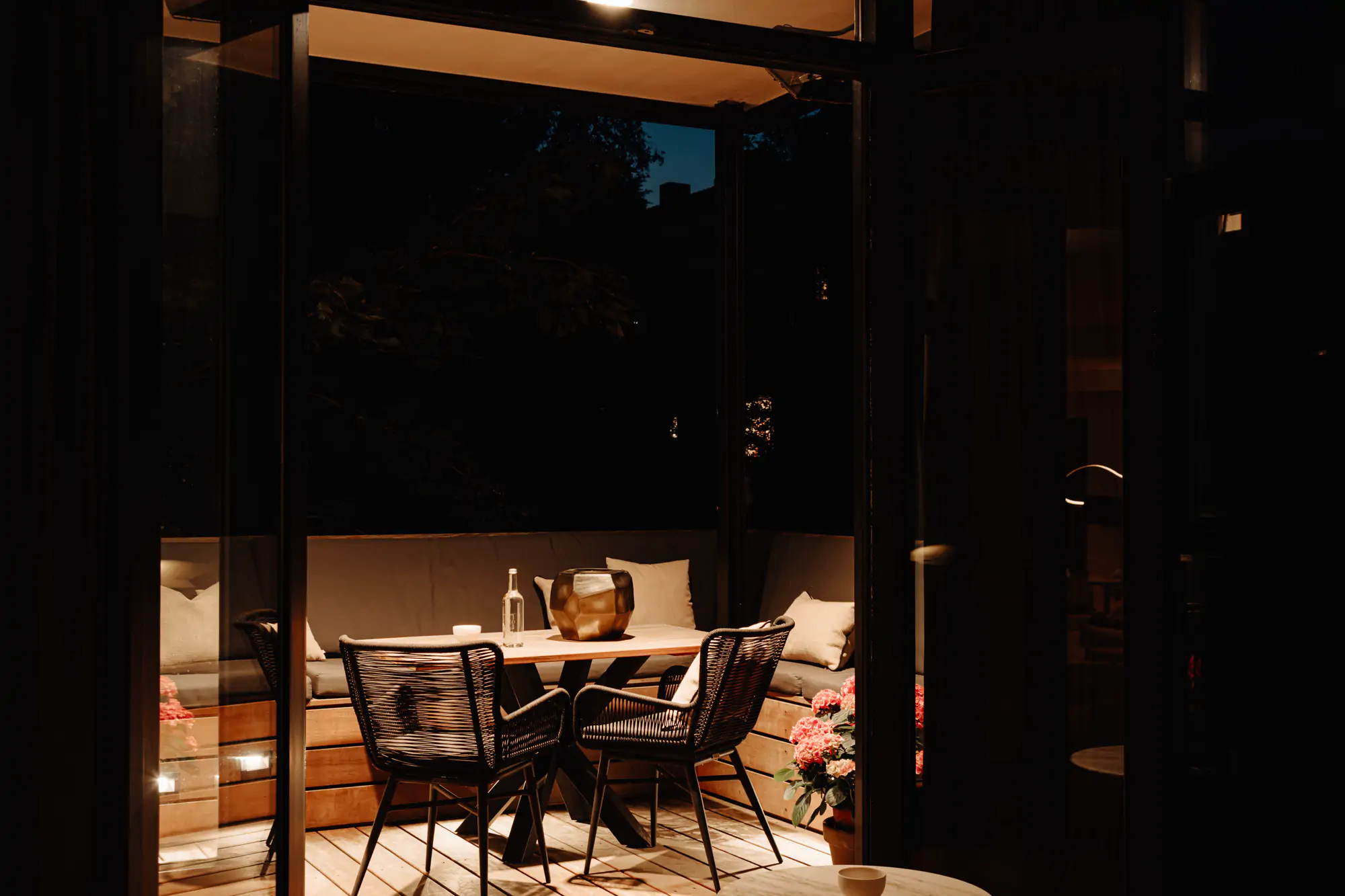
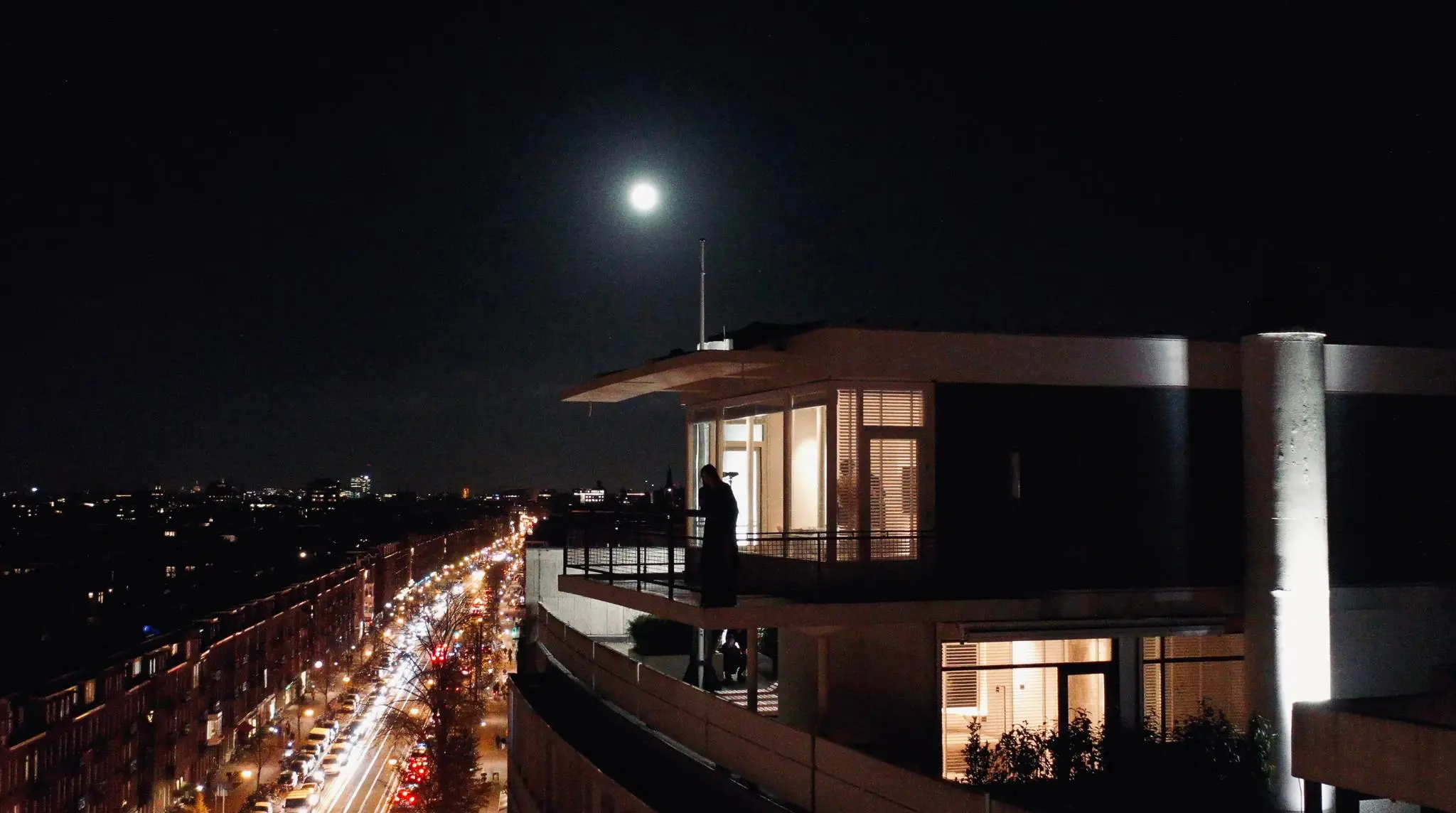
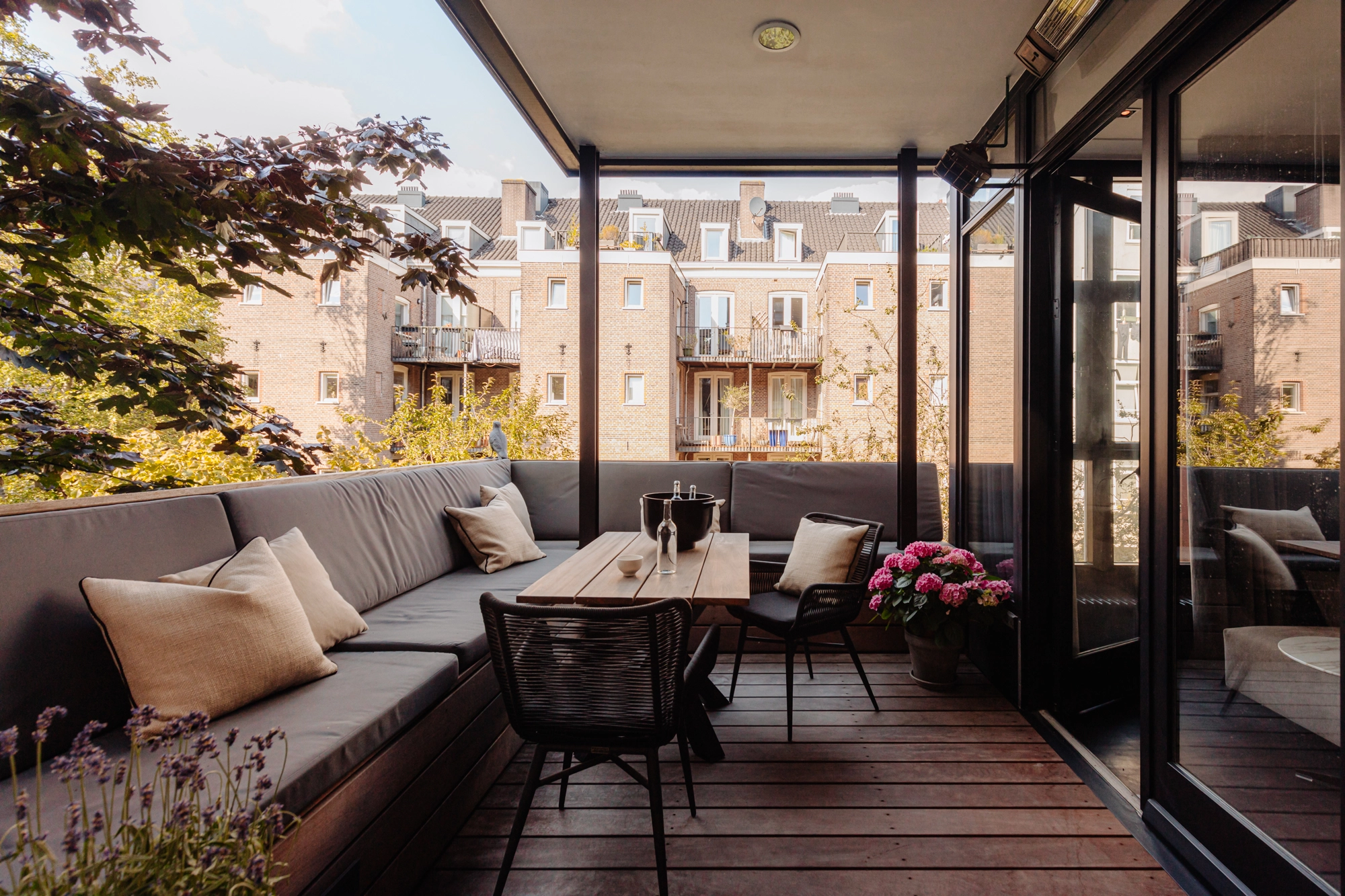
The Roof terrace a striking feature of this apartment and offers a fantastic outdoor space. The terrace is semi-covered and enjoys sunlight in the afternoon and evening, making it an ideal place to relax, eat, and have drinks with friends. It feels like the aft deck of a yacht, adding a unique atmosphere to the home.
The layout of the house is so spacious that it is relatively easy to create a third bedroom, should this be desired. The alternative layout plans offer options for different configurations of the space, so that it can be adapted to the needs of the new residents. These can be found on our website or requested through our office.
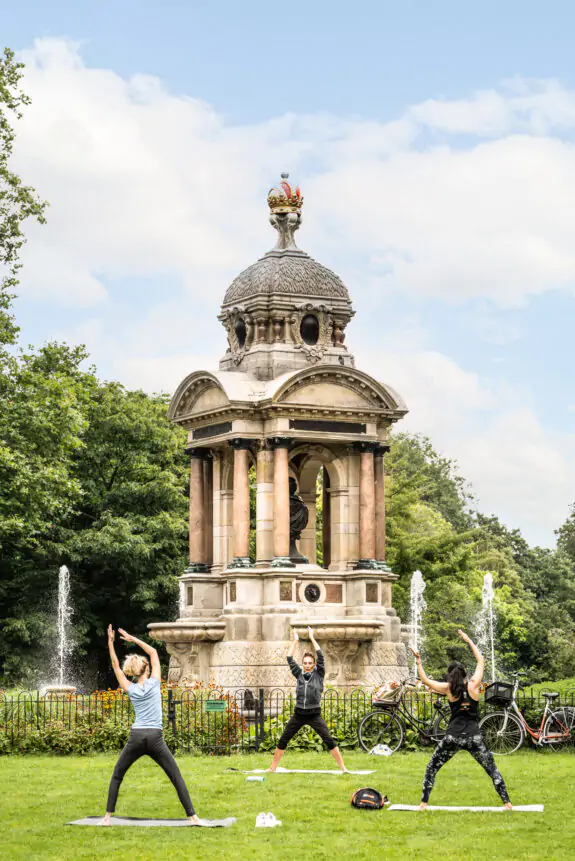
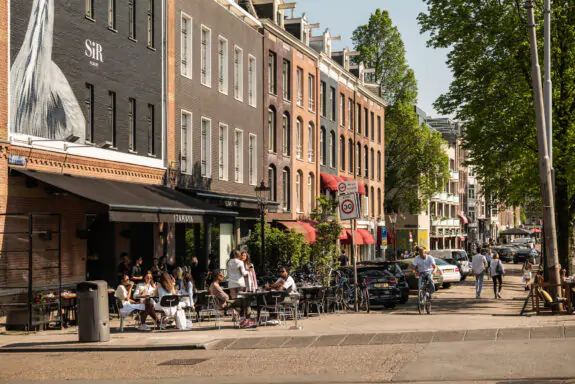
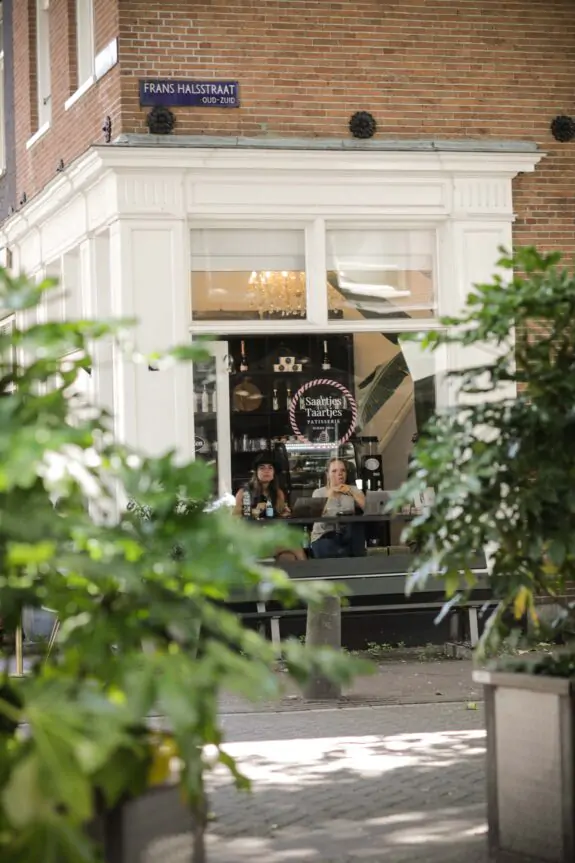
De Pijp was built at the end of the 19th century to provide housing for newcomers who moved to the capital for work. Freddy Heineken's father opened the Heineken brewery here in 1886. The first workers' houses, around the Albert Cuypstraat, were built quickly and cheaply. Later, houses in the Amsterdam School style were added there by Berlage, towards the Diamantbuurt. It is said that the neighborhood owes its name to the long straight streets, which have the shape of a pipe.
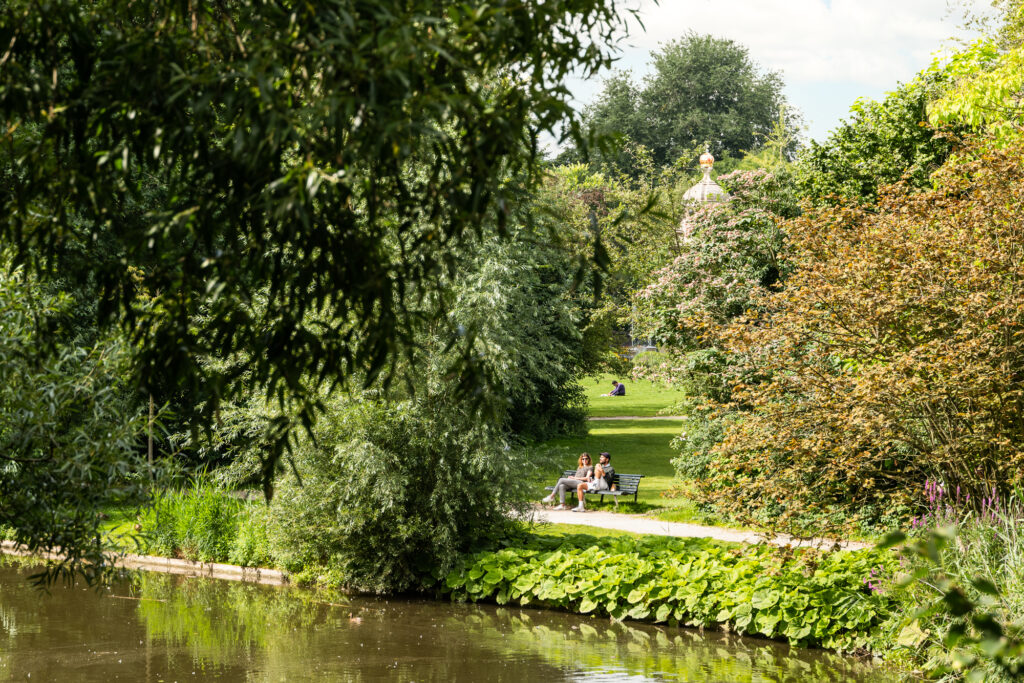
The Albert Cuypmarkt and the Sarphatipark are decisive for the dynamics of De Pijp. Artists and writers such as Piet Mondriaan, Carel Willink and Gerard Reve lived and worked here. The lively, mixed population brought many cafes and eateries to the district. Today the district is known as the Quartier Latin of Amsterdam, with still many dynamic diverse restaurants such as Auberge Jean & Marie, Le Restaurant, the Peruvian NAZKA and authentic bistros such as Petit Caron.
Accessibility
The property is located in the quiet area of Van Woustraat, one of the main access roads. It is also easily accessible via Scheldestraat via exit S109 on the A10 ring road. Public transport stops at Marie Heinekenplein and Van Woustraat.
Parking in
Parking is available via a permit system on public roads (Zuid 3.1 De Pijp Noord). With a parking permit for Zuid 3.1 De Pijp Noord, you may park in Zuid-3 and Zuid-4. A parking permit for residents costs €177.08 per 6 months. Currently, there is a 10-month waiting period for this permit area. A second parking permit is not possible in this area. In addition to public roads, it is also possible to park free of charge with a parking permit in the Heinekenplein garage and the Albert Cuyp garage (Source: Local authority , November 2024).


1073 XA Amsterdam
The Predetarian
The Predetariër was founded by Kaj de Jager, James Snoerwang, and Philip Buys, three friends who quit their office jobs after growing increasingly disillusioned with the bio-industry. Based on their shared love of nature and hunting, they developed the idea of predetarian food: mainly plant-based, with the occasional responsible wild meat. Through their webshop, they sell game that is shot for nature conservation in the Netherlands, Germany, and Poland, and they are now bringing the same principle to their physical store and deli. At For Sale products to take home, but you can also sit down for sandwiches such as venison rendang and goose pastrami, accompanied by sustainable drinks.
1072 NX Amsterdam
Zagora Butcher Shop
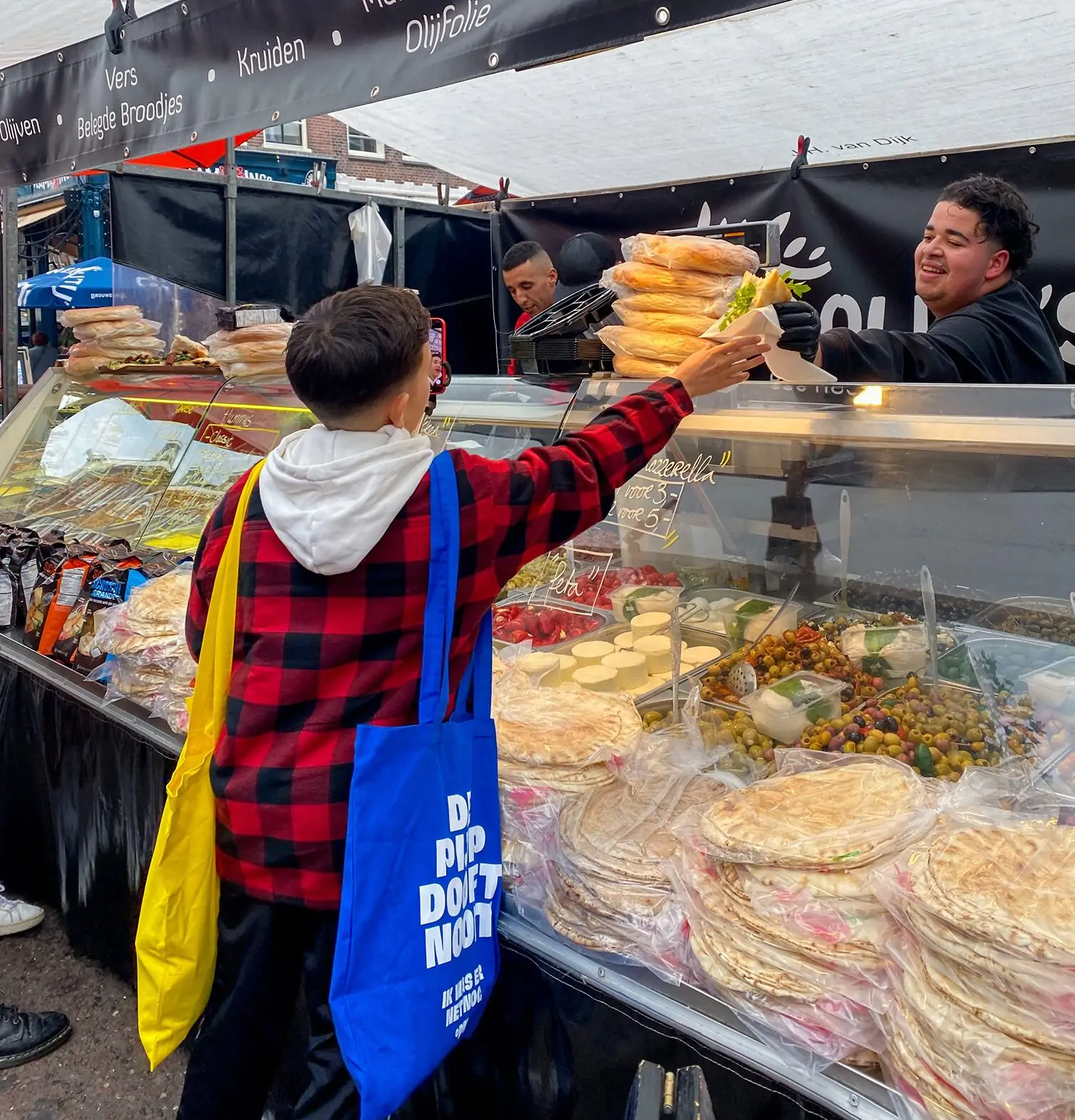
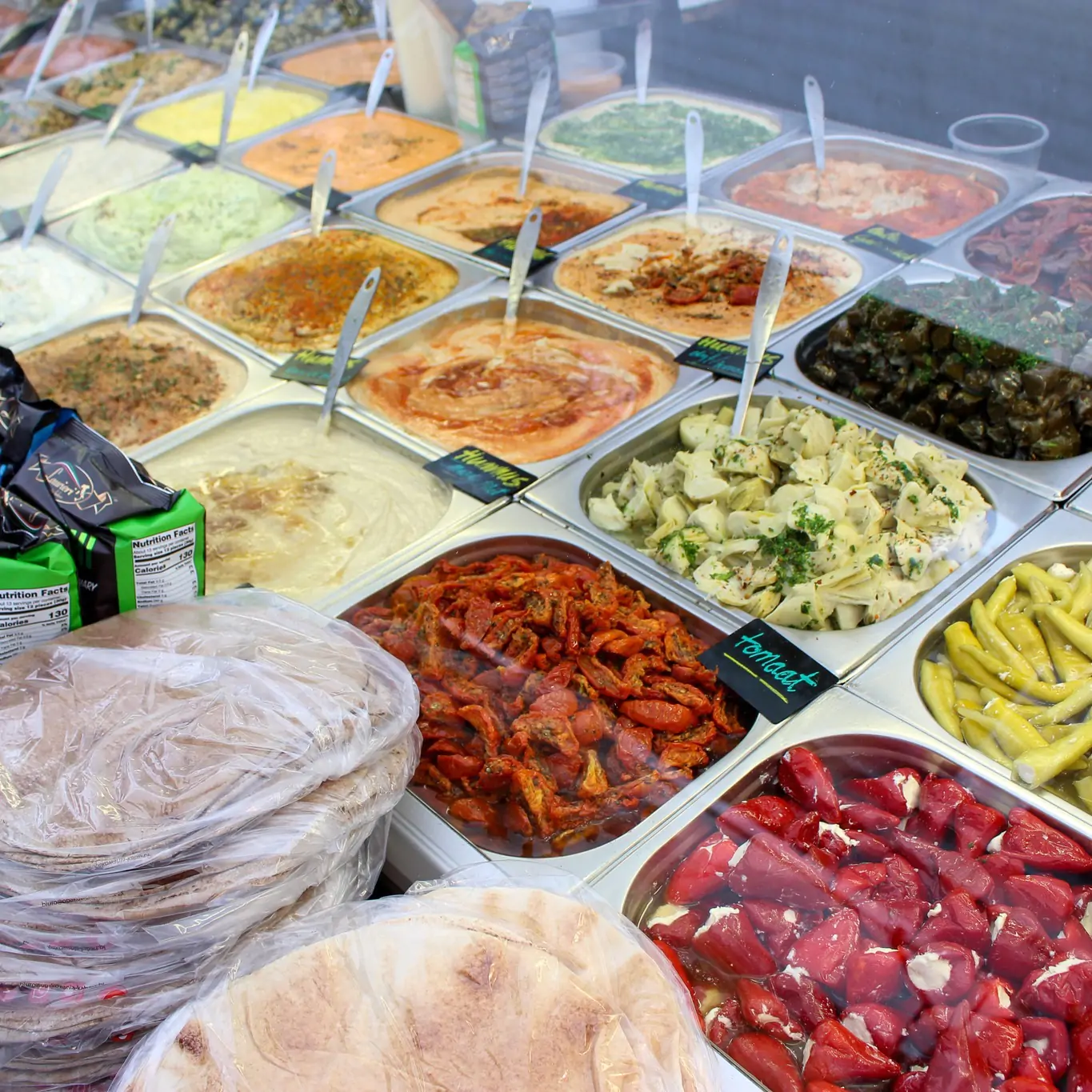
Islamic butcher Zagora is well known to many residents of the Pijp neighborhood. In a side street off the Albert Cuyp Market, you will find this gem of a shop, which is much more than just a butcher. In front of the door are endless boxes and crates of vegetables on display, all equally colorful and fresh. Herbs such as rosemary and thyme For Sale in pots at ridiculously low prices. Unlike the bunches you find in the supermarket, you can keep these alive with water, which means the herbs last much longer. The butcher shop also sells meat, including homemade merquez sausages, shawarma, and hamburgers. The friendly men in the shop are always ready to serve their loyal customers and are happy to make time for you. A must-visit for anyone who likes to do their shopping at the Albert Cuyp market!
1073 BD Amsterdam
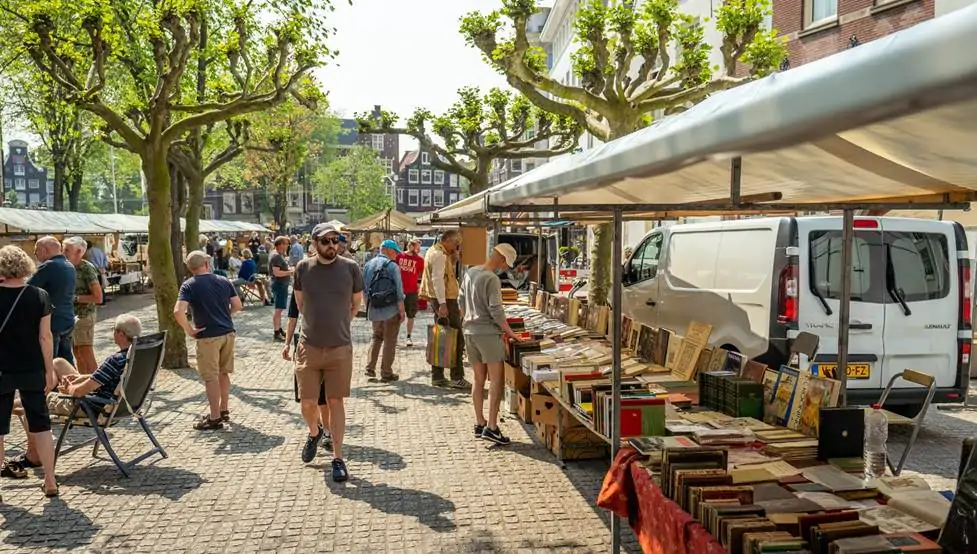
The Albert Cuyp Market
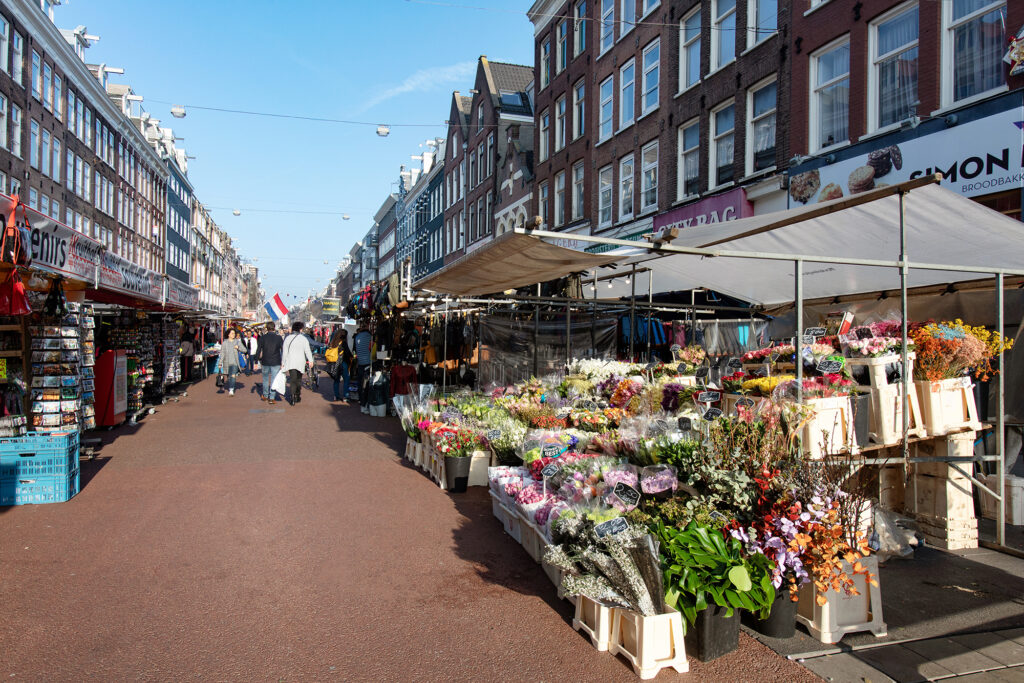
The Albert Cuyp Market is open from Monday to Saturday from 9:00 AM to 6:00 PM and, with 260 stalls, is the largest daily market in Europe. In 1905, the Local authority decided to establish a free market that is now the Albert Cuyp Market, named after a 17th-century painter. You can do your daily shopping here and find especially fresh fish, delicacies and various types of fabrics. The market is of course well-known among Amsterdammers, but tourists also know how to find the market to taste typical Dutch delicacies such as herring and stroopwafel and to look for souvenirs. It is also a nice market to just walk through for fun.
1073 BT Amsterdam
Epicerie de Pijp
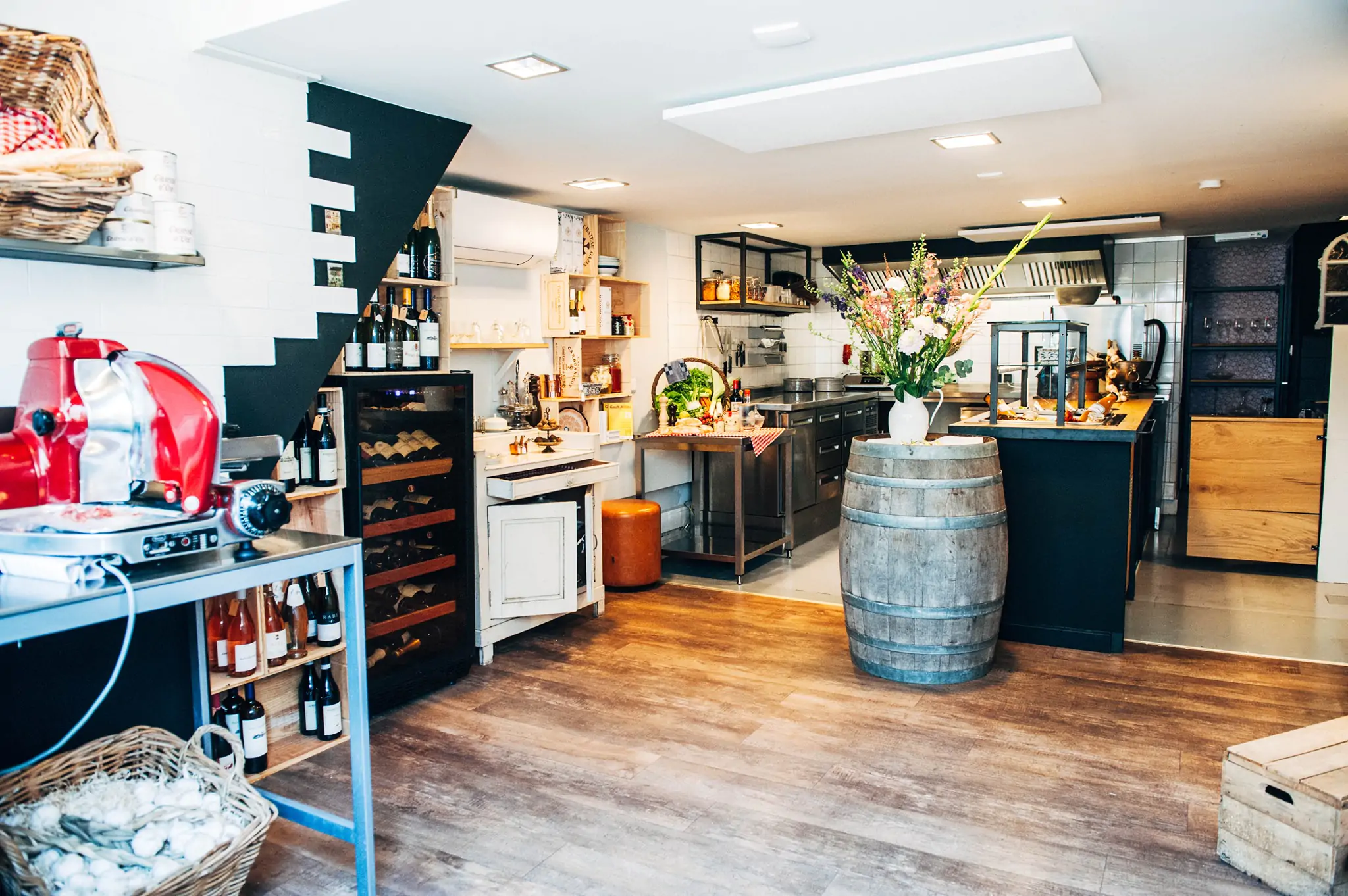
A little bit of France in Amsterdam. Because of the lack of French delicacies, when owner Merabi went to France, she came back with bags full of groceries, this shop was opened around the corner from the Albert Cuyp market.
All products are selected and imported by the owners themselves. Fresh products such as Le Mi-chèvre Soignon, a cheese made from goat and cow's milk, but also galettes Saint Jacques, crêpes filled with scallops in butter-parsley sauce.
1072 CS Amsterdam
Alain Bernard Butchery
Hidden behind the bustling Albert Cuyp market, you will find this top-notch butcher. They have a wide range of beef, pork, lamb, and veal. The merguez sausages are delicious, but actually all the meat here is of high quality. They also have good Breton butter (salted or unsalted). In short, if you are already strolling through the Albert Cuyp, don't forget this place!
1073 BM Amsterdam
Rise Bakery
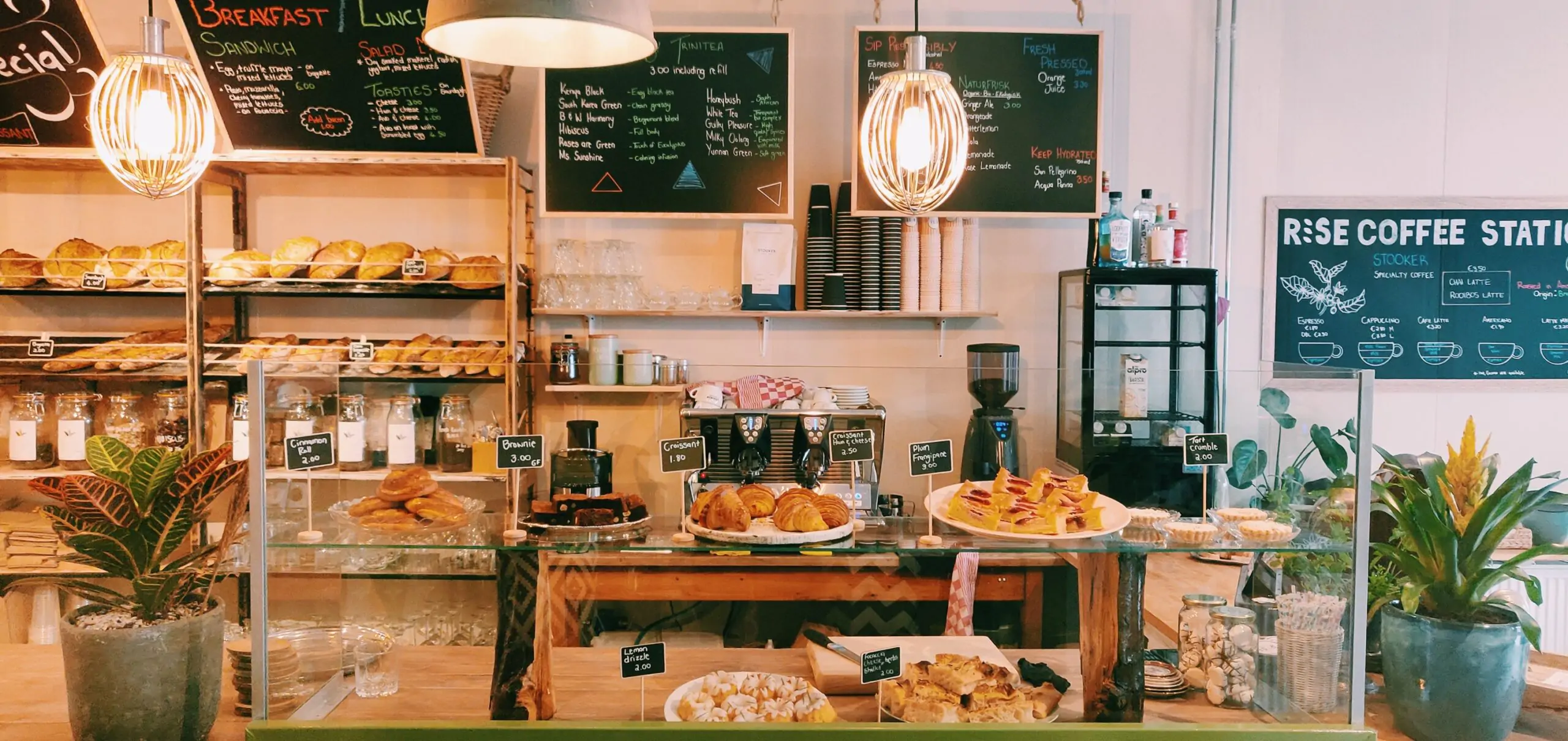
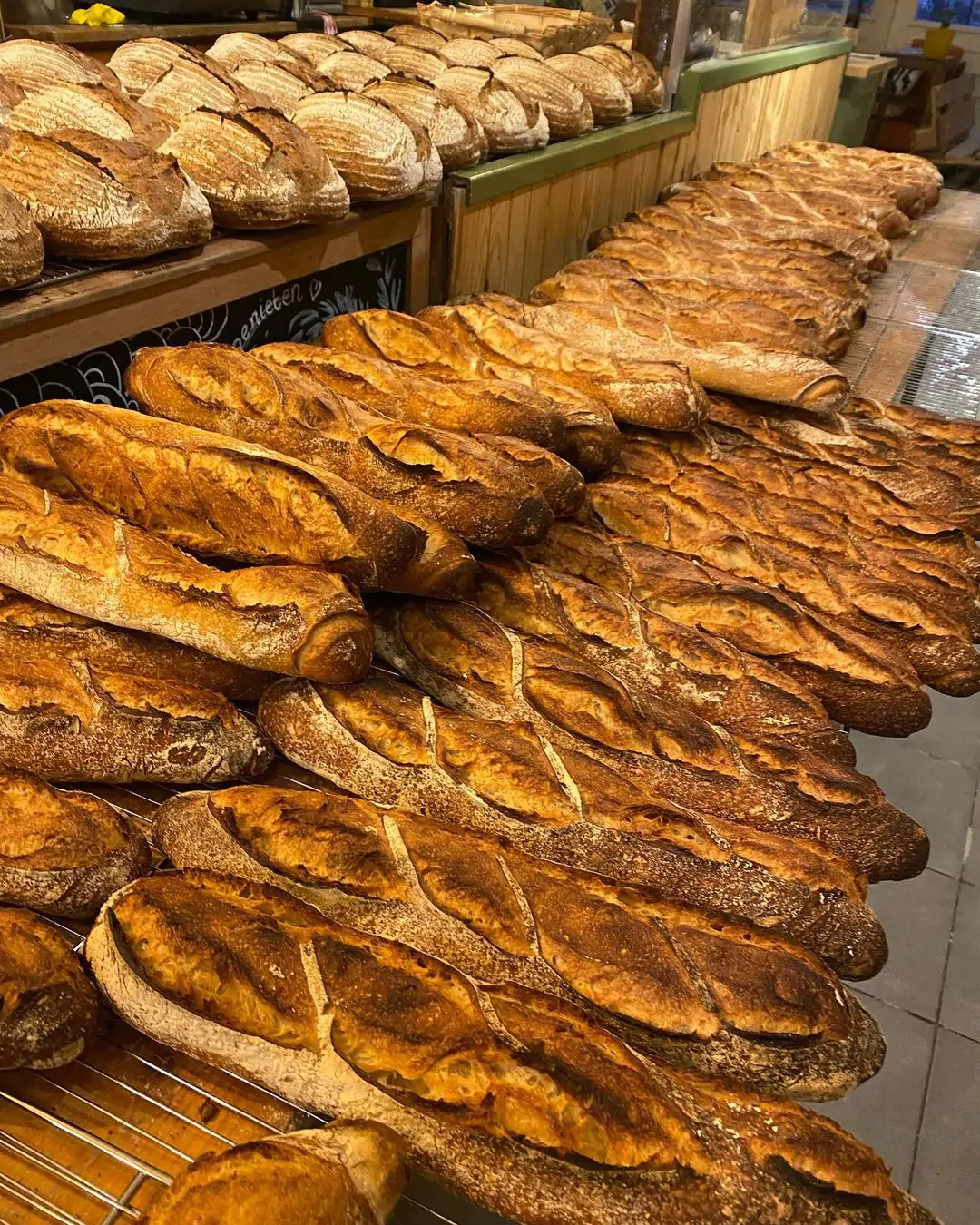
The three owners of Rise Bakery met in London where they all worked in the hospitality industry. Due to the pandemic measures affecting the hospitality industry, they jointly decided to follow their dream and come to Amsterdam to open a bakery. All three have their own specialty, resulting in French breads, sourdough, and pastries. Located on the Albert Cuypstraat, this is the perfect place to eat a Danish pastry or a cinnamon bun before or after shopping at the market.
1072 NZ Amsterdam
Tjin's Store
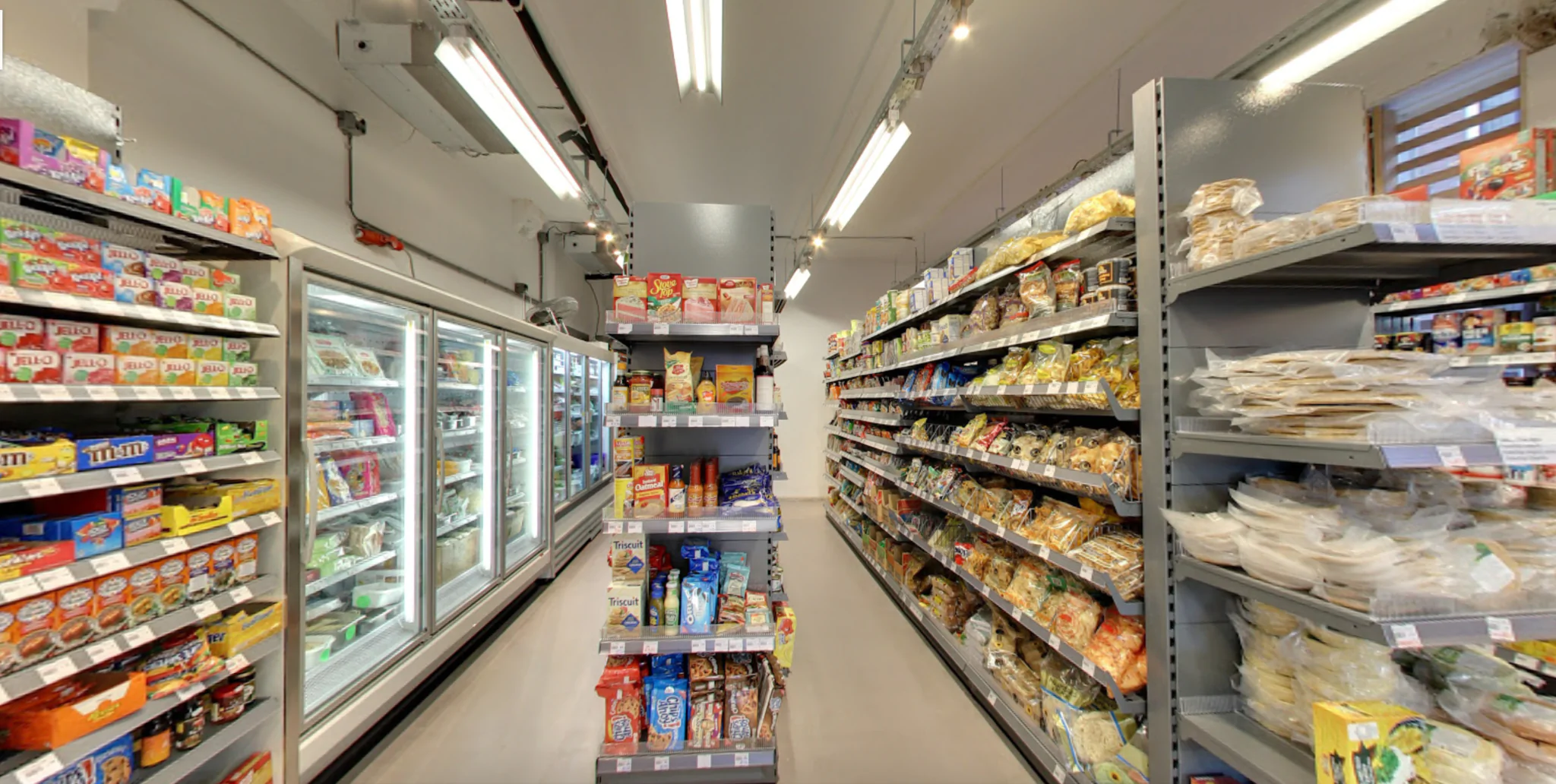
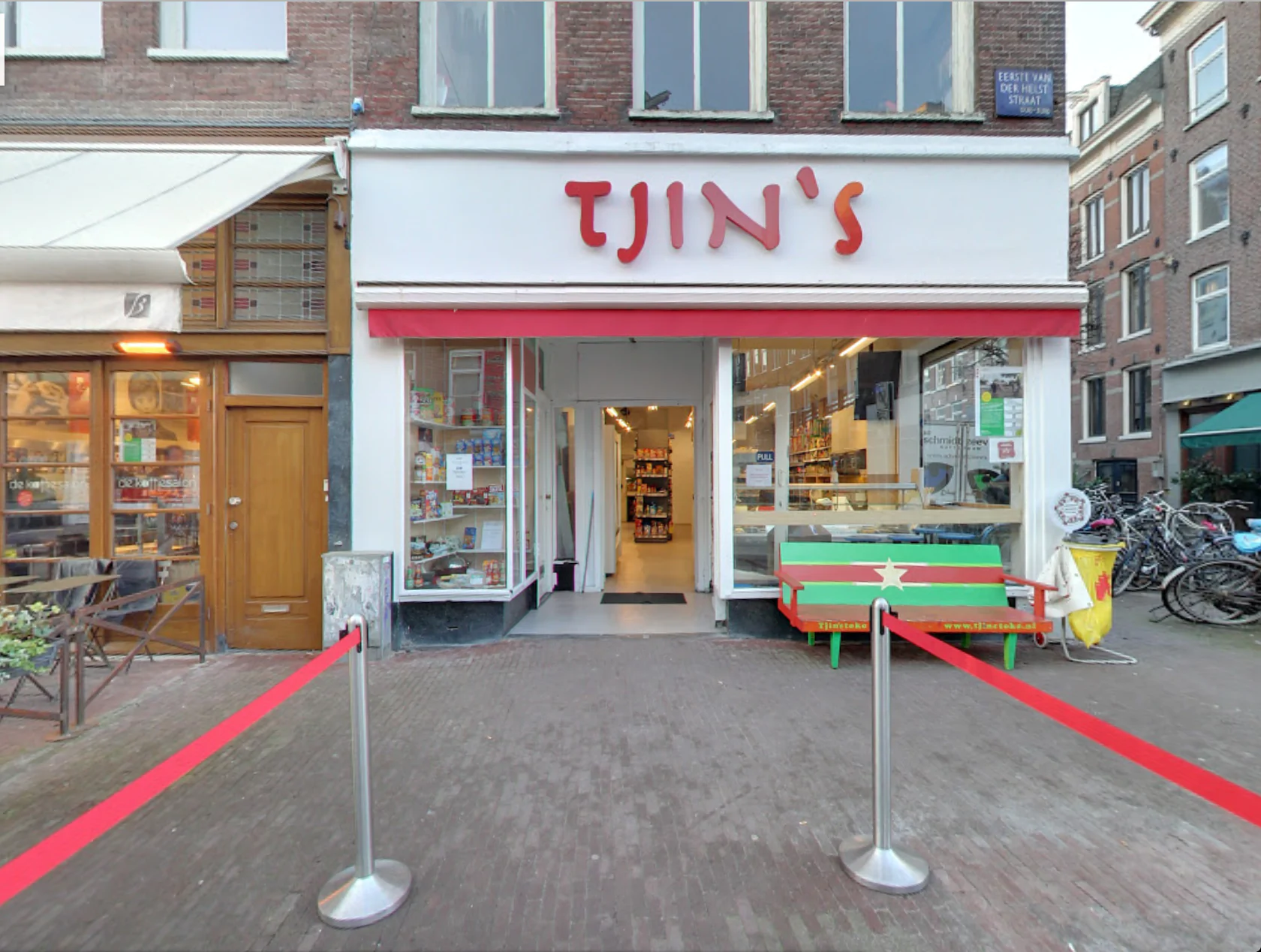
Tjins is now a well-known sandwich shop in Amsterdam. For 40 years, it has been the perfect place to go for a hot chicken or salt cod sandwich. Less well known is the International Foodstore located behind the takeaway display case. Various dried Mexican peppers, authentic Chinese seasonings, fresh Indian products, and a wide range of American snacks. Planning to make authentic foreign dishes? Tjins is the place to be.
1073 AD Amsterdam
Alberto Pozzetto
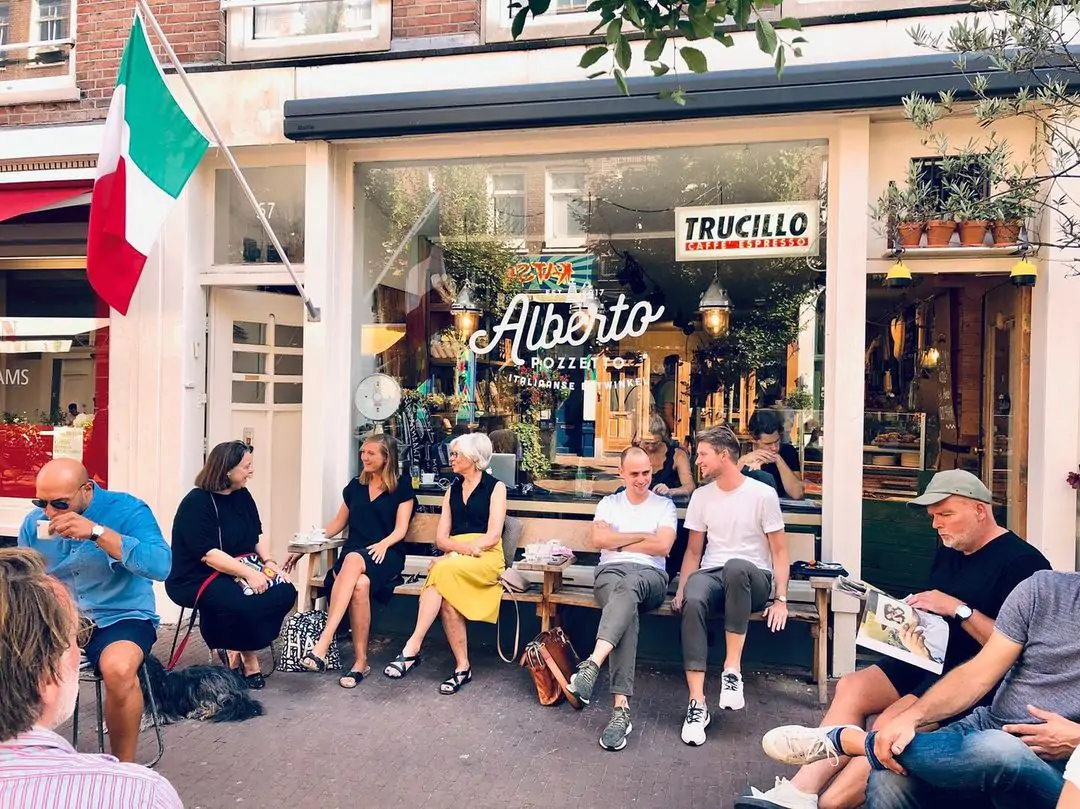
Alberto Pozzetto can be found in one of the most vibrant side streets of the Albert Cuyp market in the Pijp district of Amsterdam. At Alberto Pozzetto you can find all your authentic Italian groceries. Coffee, tea, pastries and especially the delicious sandwiches with fresh meats, vegetables and cheeses are highly recommended. The shop is small but nice, but you can also go inside for a delicious meal. Alberto is also recommended for catering. In short, if you get lost on the Albert Cuyp, Alberto Pozzetto is an inviting alternative.
1072 VV Amsterdam
Pacomer caterer
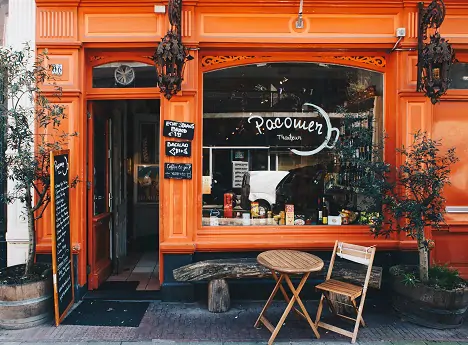
Pacomer caterer is a business in the Pijp, specialized in selling Spanish delicacies. Inside the store is a large table where you can eat delicious homemade paella, sandwiches or tapas. There is also a small terrace outside, where you - if you are lucky - can also take a seat. All dishes can be taken away and are therefore also ideal to enjoy in, for example, the Sarphatipark, while enjoying a glass of rioja, sidra or cava on a picnic blanket. The caterer also does catering, where it is possible to put together your own drinks and/or tapas platters. Don't have enough guests for catering, but would you like to enjoy Spanish snacks with yourself or your friends? Pacomer lovingly delivers a large part of the tapas to your home, from pata negra or tortilla sandwiches to paellas and Spanish cheese and meat platters!
1072 VE Amsterdam
Petit Caron
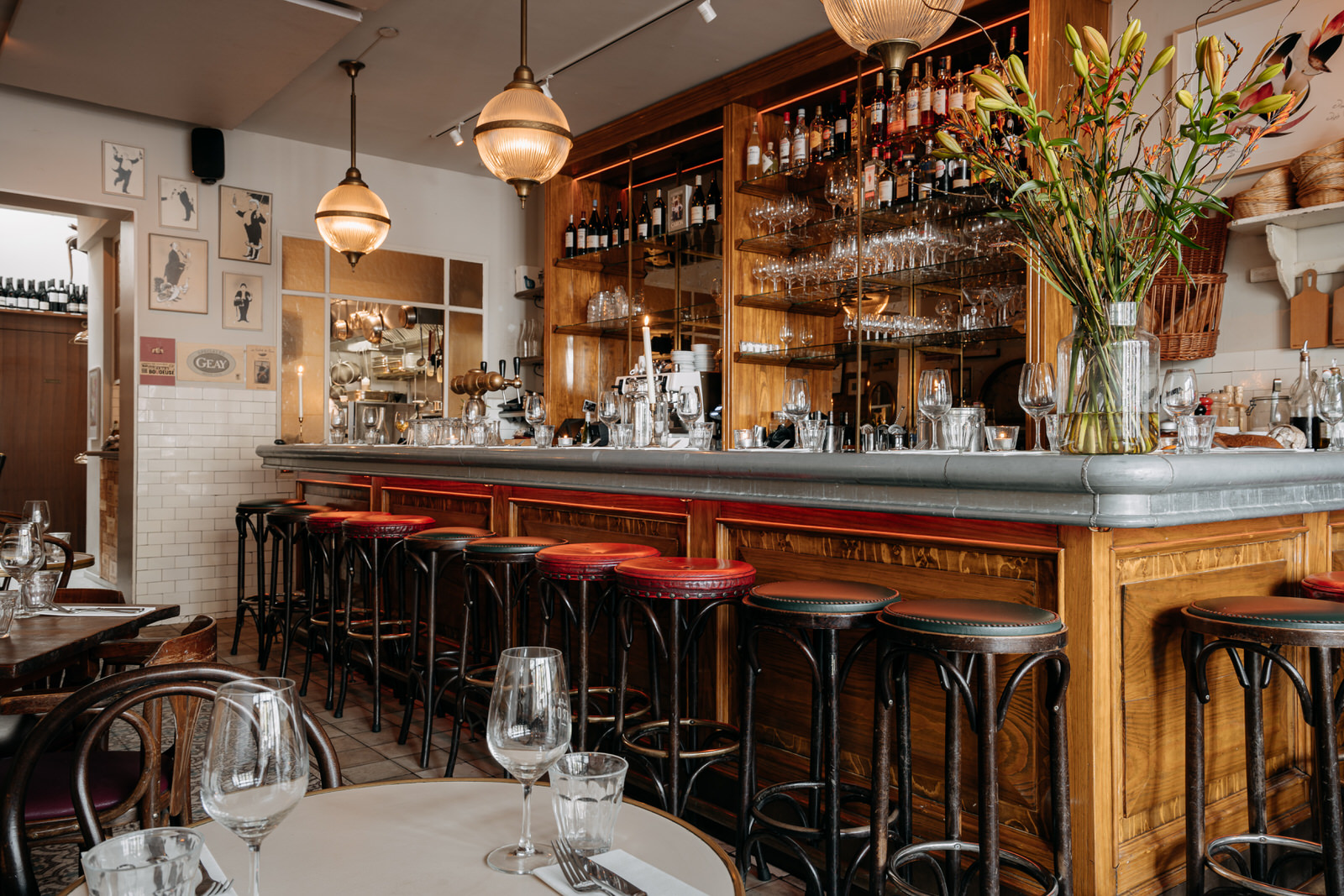
The little brother of Café Caron, founded and managed by Alain Caron and his sons, located on the always busy Gerard Douplein. Reserve a table on the terrace and imagine yourself in the Parisian district of Les Marais. Order Petit's signature dish: Côte de Boeuf, and a nice bottle of Lowel. The wine also comes from the Caron Family and is named after the youngest son of the Caron family. A smooth red wine, preferably drunk slightly chilled, from the Loire, which is ideal for enjoying everything Petit has to offer.
1072 VE Amsterdam
Brut de Mer
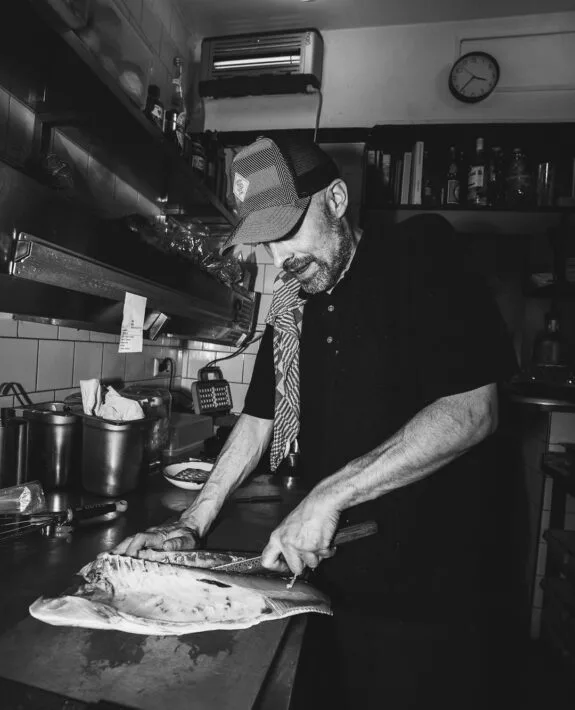
The decor of Brut de Mer is lively and urban, fitting for the dynamic oyster and fish bar in De Pijp. The interior is informal and exudes the atmosphere of a French Riviera bar, where you can enjoy fresh seafood such as oysters and fruits de mer. The space is compact and cozy, giving you the feeling of being in an authentic, bustling fish shop. In good weather, the terrace offers a popular place to eat outside.
1073 BE Amsterdam
Saskia's Living Room Restaurant
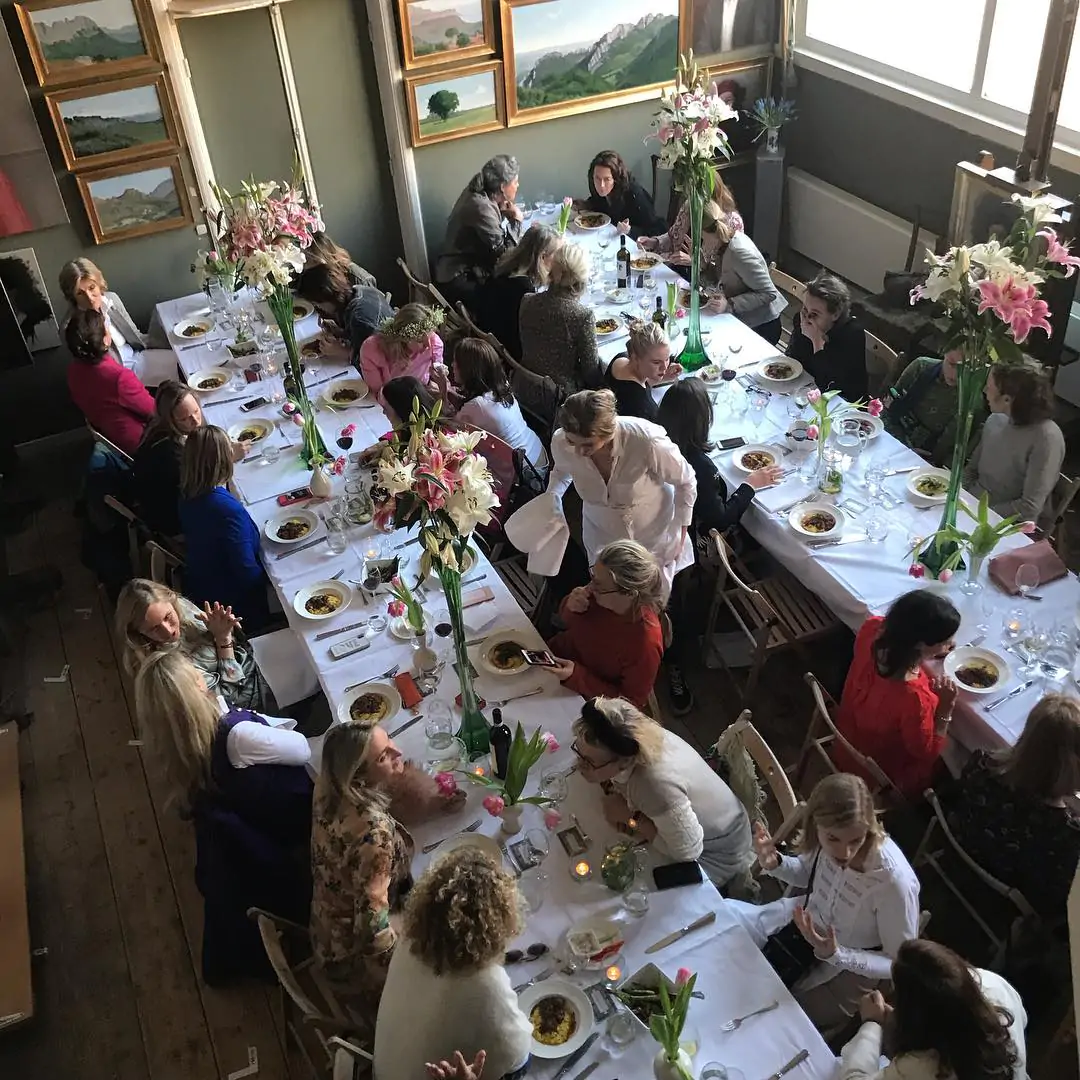
The name says it all: eating at Saskia's Huiskamerrestaurant is like dining in the living room. In this restaurant you only eat in small groups of up to 10 people. An excellent way to spend a cozy evening with a group of friends. Saskia's Huiskamerrestaurant really started as a restaurant in owner Saskia's living room and later moved to its own building. The restaurant has been around for 18 years now but has managed to retain its special atmosphere. The restaurant is located on Albert Cuypstraat; near the market where Saskia gets daily inspiration for new dishes
1072 CS Amsterdam
The Butcher
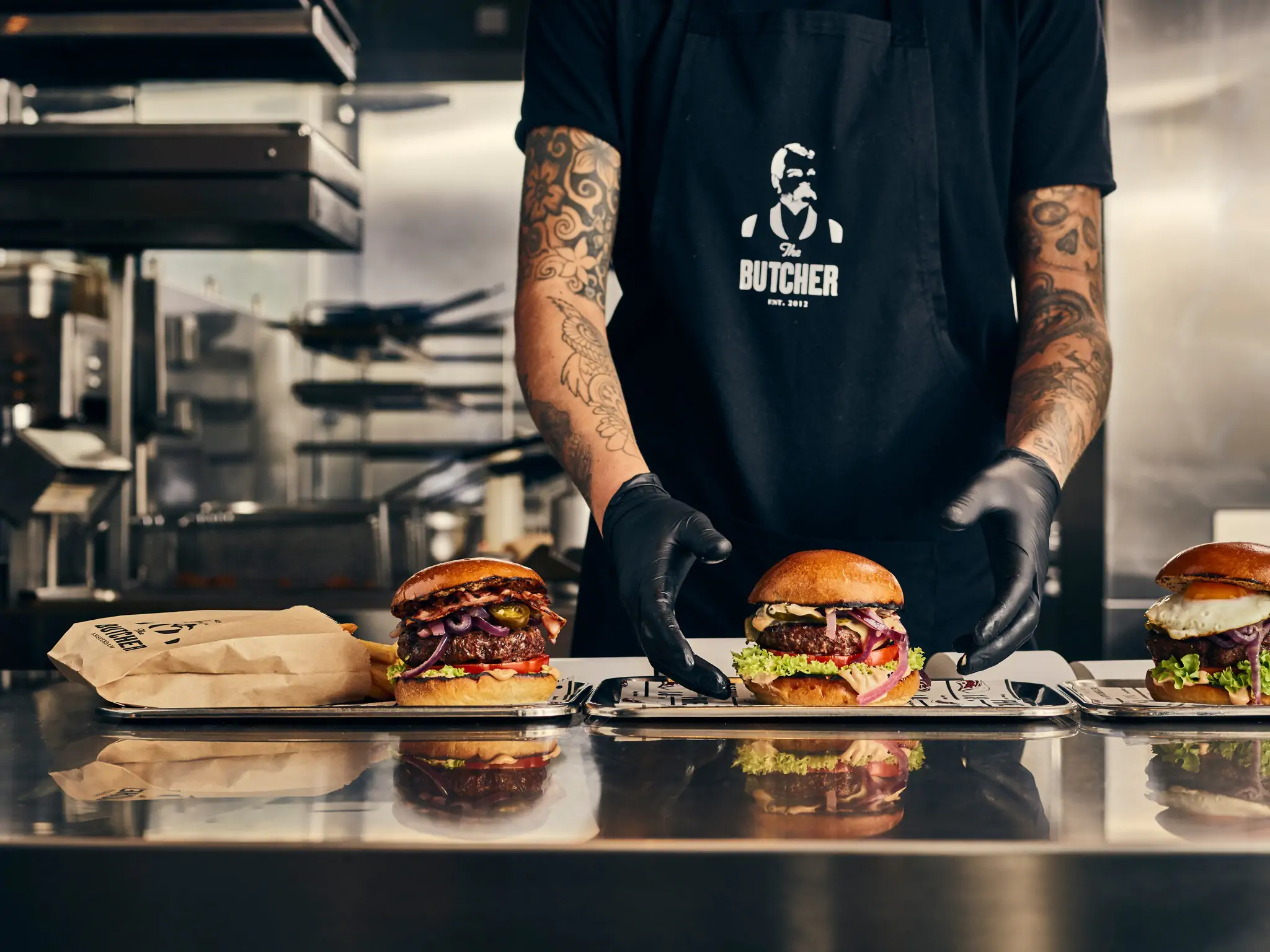
When you say burger, you say Butcher. With multiple locations in Amsterdam, The Butcher has built a veritable burger empire. The first location opened in 2012 in De Pijp and quickly grew into a famous quality fast food chain. The juicy burgers are made with skill and knowledge and, of course, Aberdeen Angus beef. As they say themselves, 'bloody good'.
1073 AD Amsterdam
Mezzave
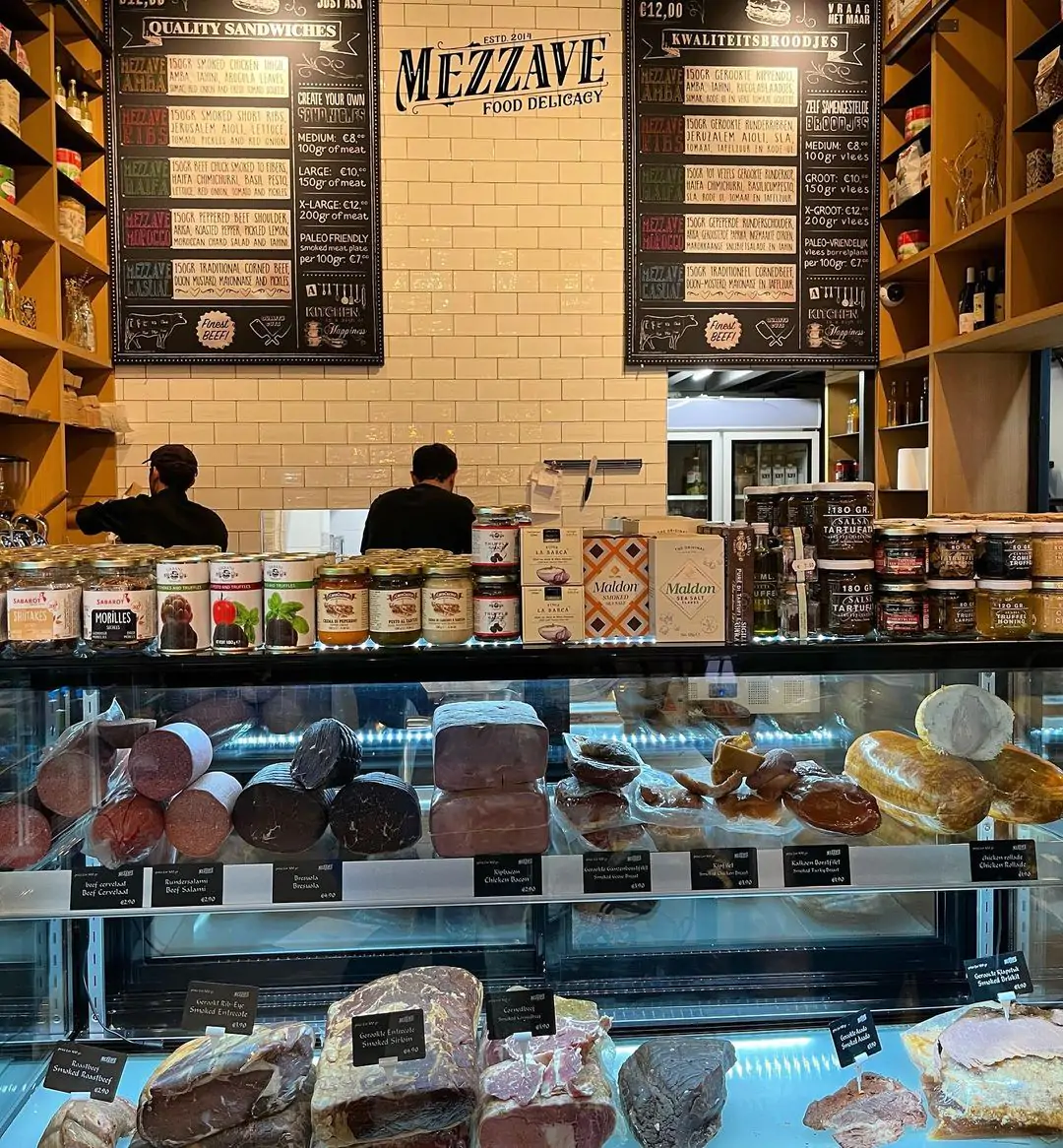
For the ultimate sandwich experience, visit the Israeli delicatessen Mezzave in De Pijp. Best known for their delicious charcuterie, where artisanal handmade sausages and smoked meats take center stage. Inspired by the traditional Italian art of charcuterie.
1073 AD Amsterdam
Marlon's Food Stall
During the coronavirus crisis, Warung Marlon decided to switch to takeout only, officially becoming a Surinamese-Javanese takeout restaurant. The eatery in De Pijp has been open since 1990 and has been putting smiles on the faces of many regular customers for over 20 years. The eatery is known for its soato soup, chicken satay, and, of course, its bakabanas, and the dishes are finished off with a smile from the cheerful staff. From now on, you can order or pick up your food, but it's definitely worth it.
1072 LA Amsterdam
Soju bar
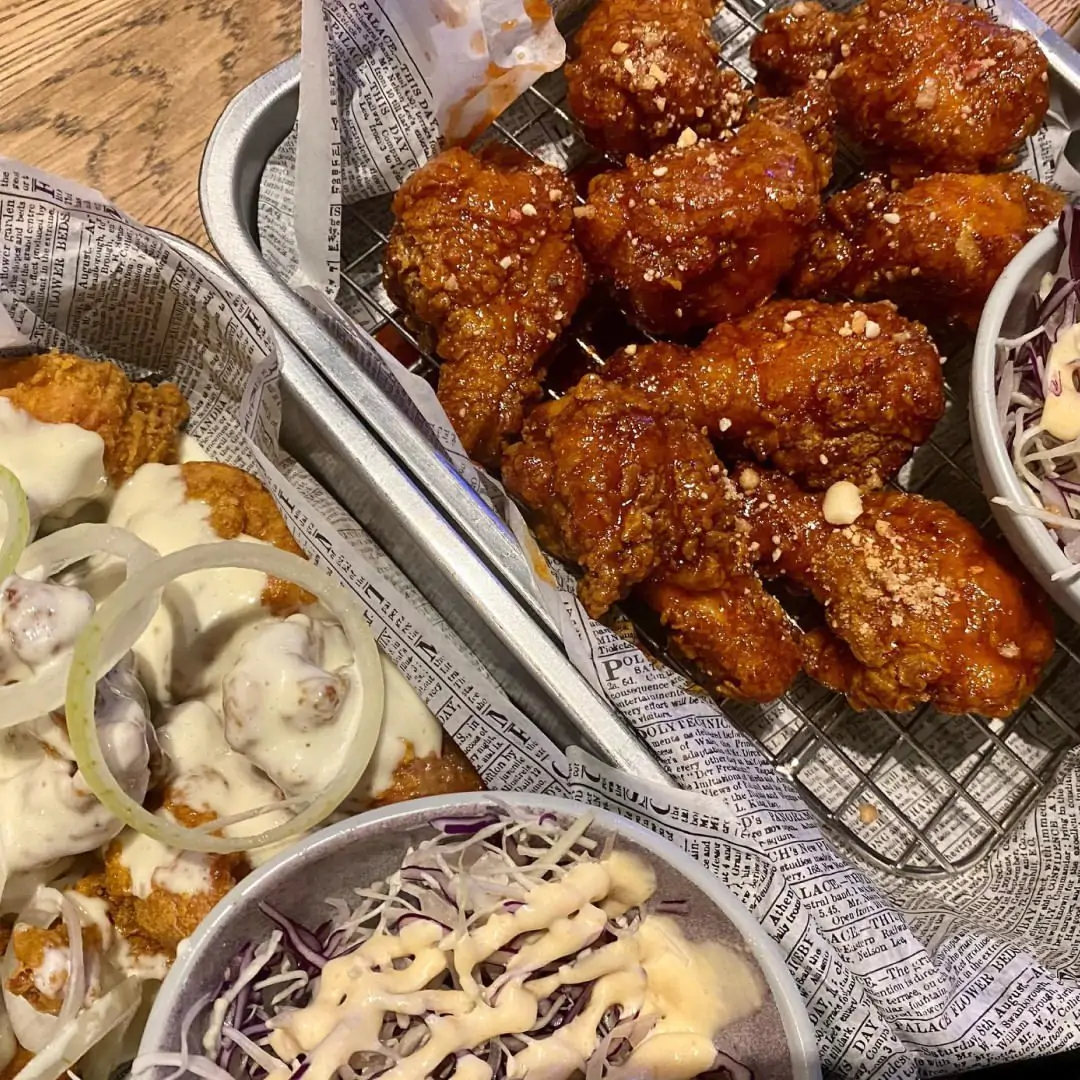
At Soju Bar, you can enjoy delicious, crispy Korean fried chicken. In addition to fried chicken, they also offer other Korean dishes and, of course, the famous soju. At Soju Bar, you can enjoy Korean fried chicken and wash it down with beer and soju, a Korean alcoholic beverage similar to sake in Japan. Soju is usually made from rice and is a distilled drink that is surprisingly tasty. If you really want to start your evening in true Korean style, order a soju bomb, a kind of shot but with soju Location gin.
1072 LJ Amsterdam
Bardak
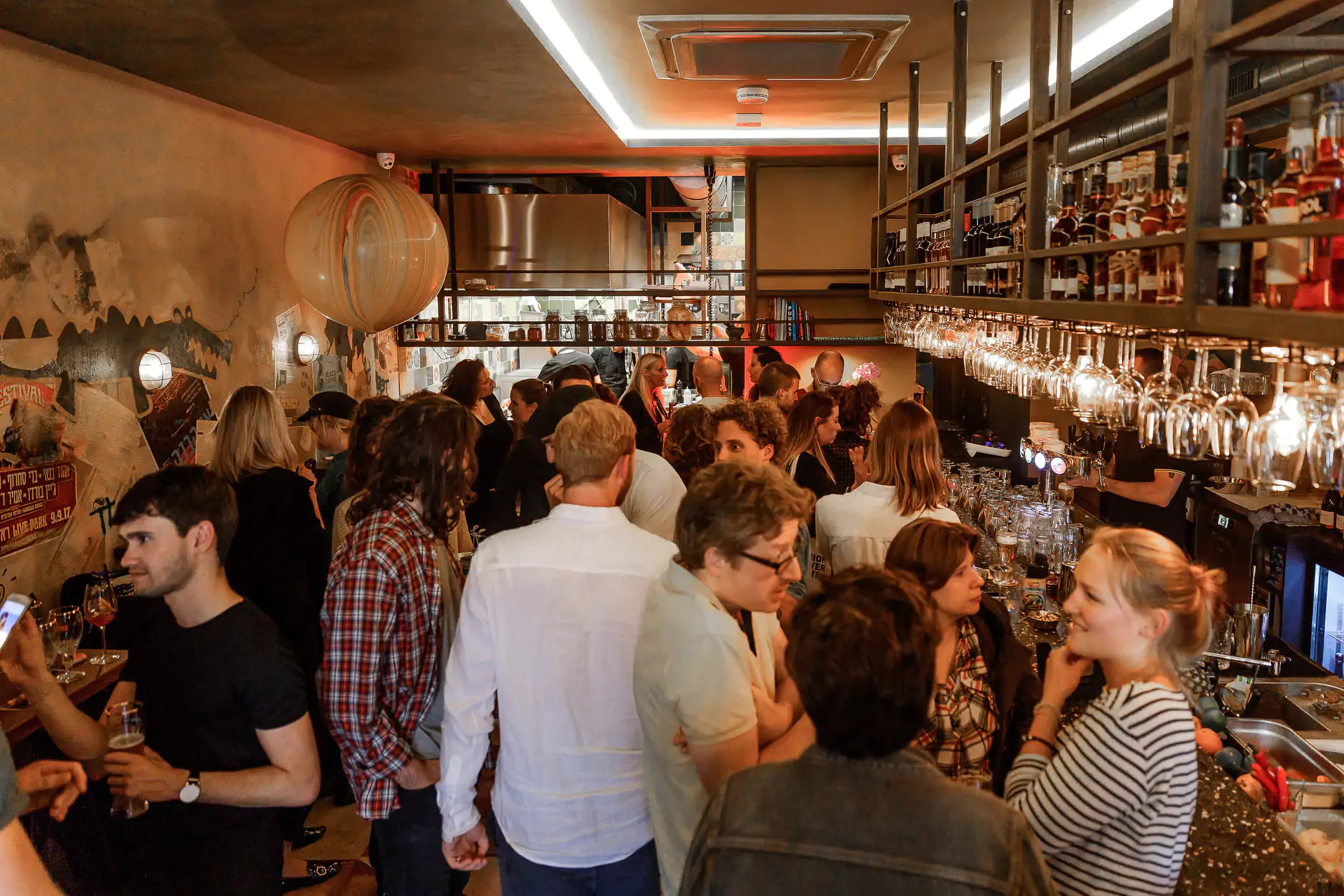
Bardak moves Mediterranean Manhattan to Amsterdam. This restaurant serves the tastiest types of street food from Tel Aviv. In addition to delicious dishes such as fried cauliflower and crunchy falafel, they also make exciting vintage cocktails with names such as Chili Cucumber Margarita and Sweet Bliss. Fresh ingredients are key and the warm summer atmosphere of the Middle East should not be missing. Bardak is a gem where you can enjoy Tel Aviv style.
1072 LJ Amsterdam
Cheese Bar Amsterdam
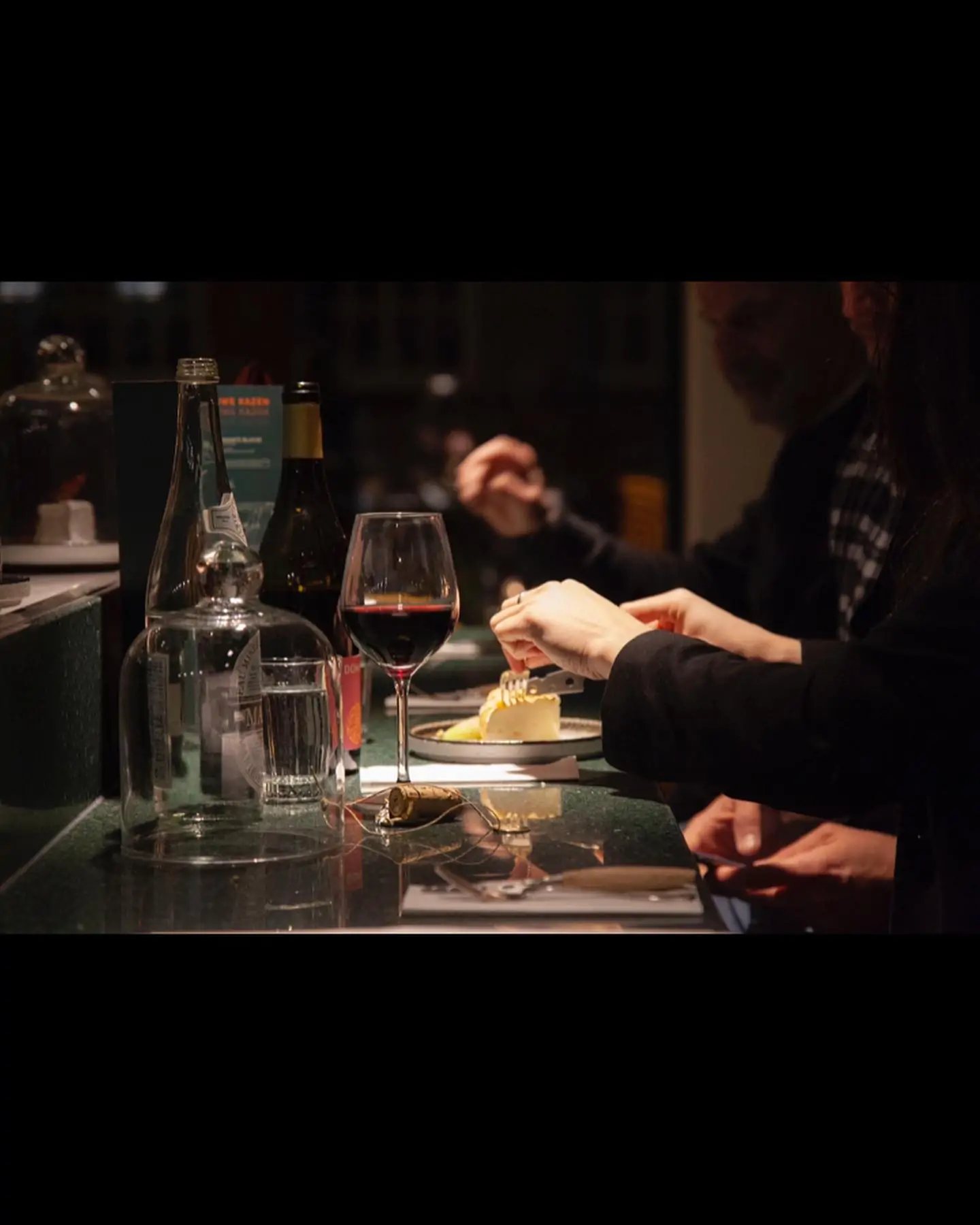
At Kaasbar Amsterdam, you get cheese (duh) as a starter, cheese as a main course, cheese on the side and cheese as dessert. There is even cheese ice cream! All products sold here are from the Netherlands. Also nice, for the vegans there are also several vegan cheese options. At the bar you can see a conveyor belt with different cheeses passing by.
1072 LK Amsterdam
Takumi Ramen Kitchen
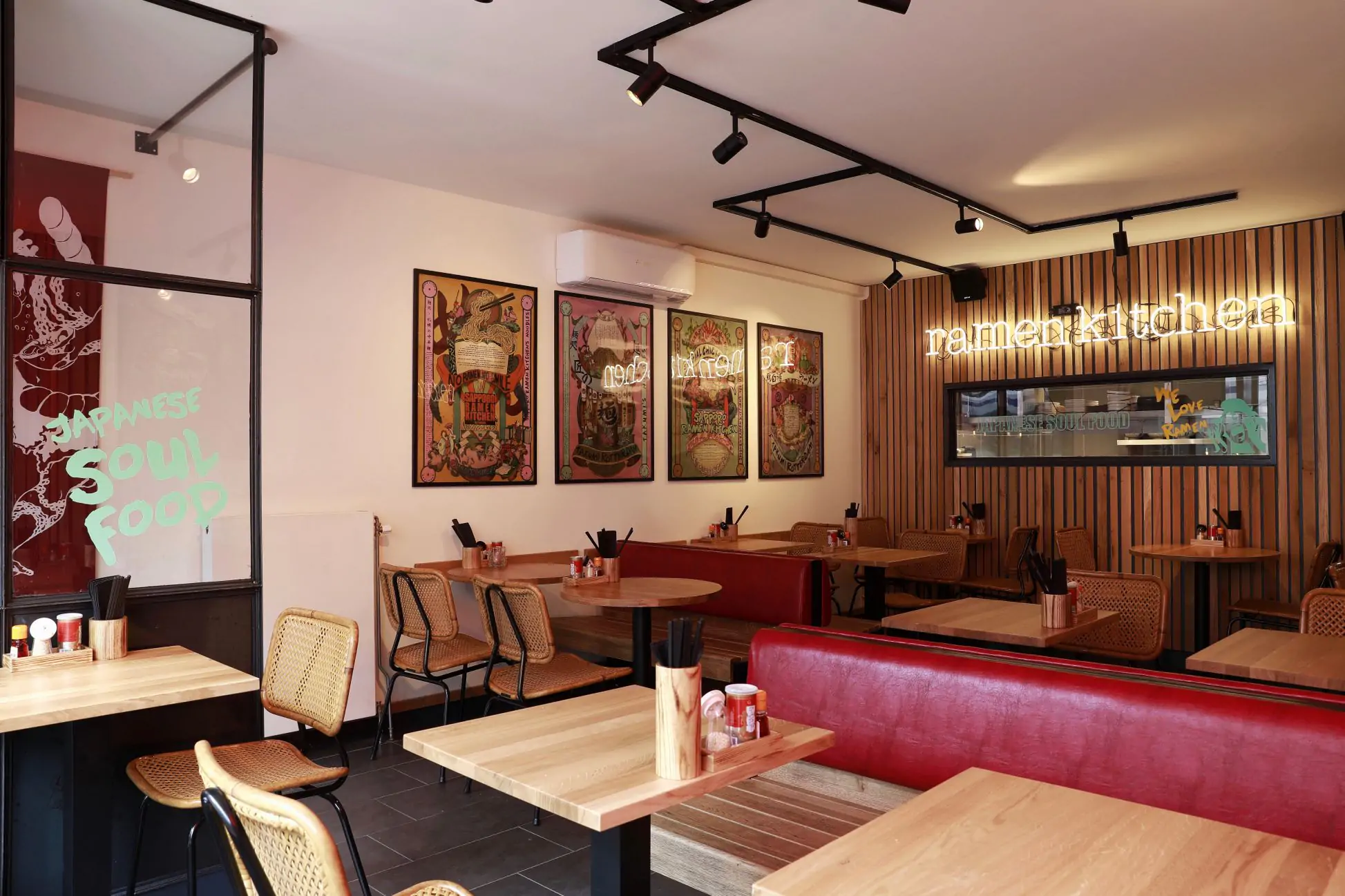
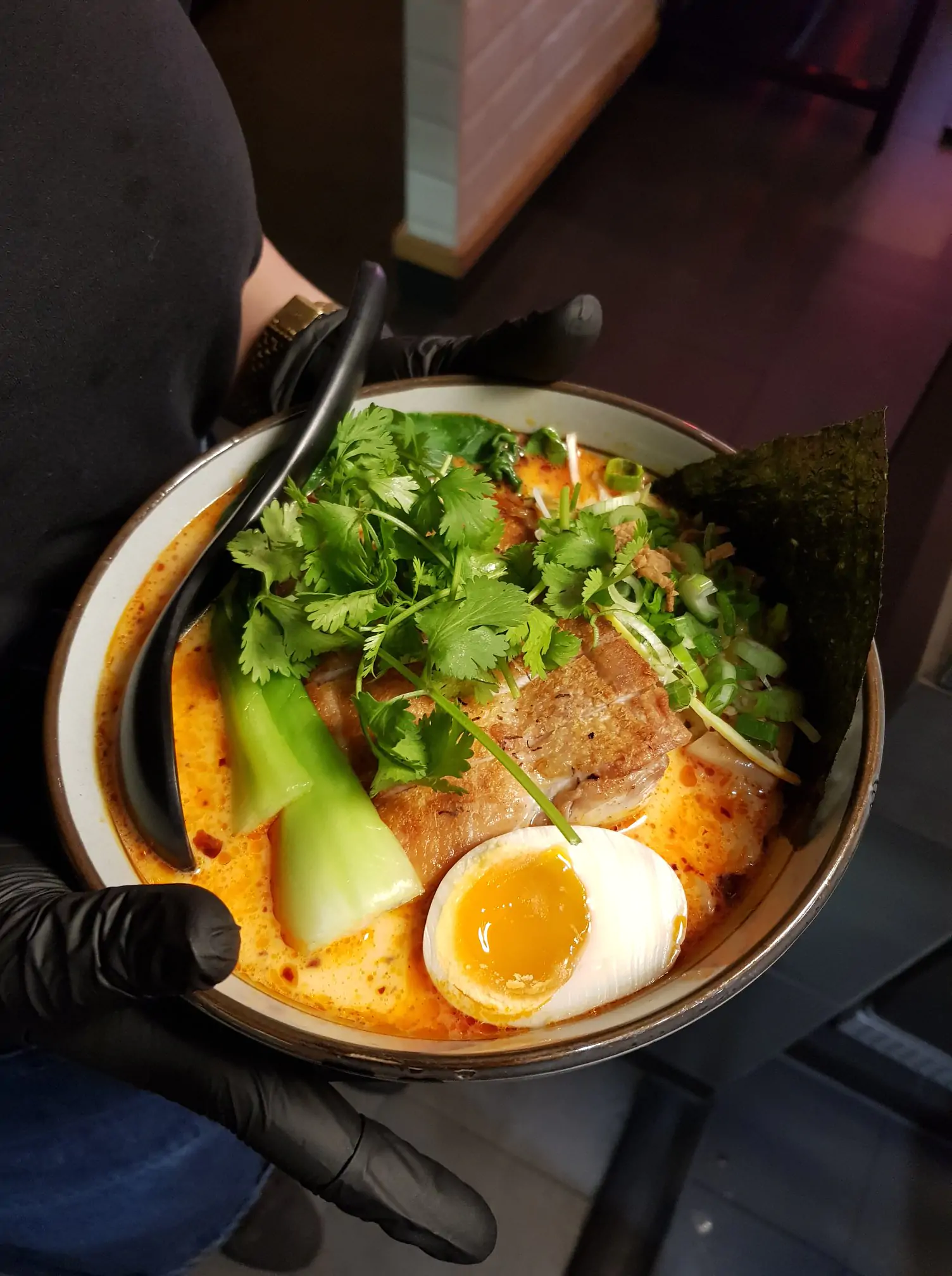
Takumi is the sister restaurant of Umaimon ramen on Leidseplein. The restaurant is intimate with excellent, friendly service. Takumi offers a small but delicious selection. You can choose from shio (salt), shoyu (soy sauce), or miso ramen with a variety of toppings and flavors.
1073 CM Amsterdam
Badcuyp
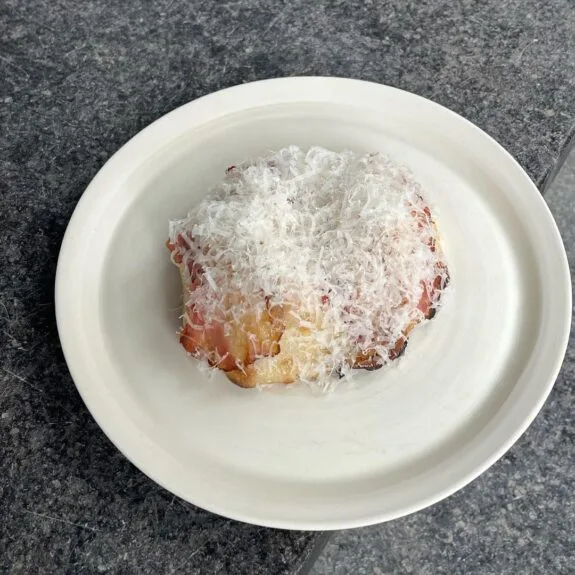
A great location (a former bathhouse loved for years as jazz cafe De Badcuyp and formerly Escobar) combined with a super young team. Former chef of Bar du Champagne, Joep Hermans, opened his own restaurant with Martin de Nes (ex Rijsel) and Tobias Kuyt (ex Troef) on the corner of the Albert Cuyp, where cooking is done on an open fire. Tobias compiled an extensive wine list with a concentration on France and Italy.

1072 NZ Amsterdam
Leonardo's Ravioli Bar
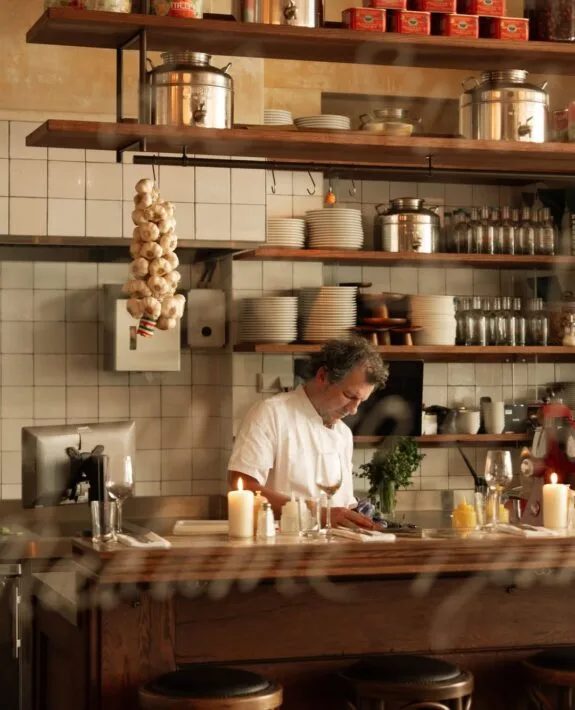
After decades in Toscanini's kitchen, where he is still co-owner and chef, Leonardo Pacenti also opened his own ravioli bar. In De Pijp, he created a place that exudes Italian sprezzatura. A long marble bar with a view of the kitchen. The ravioli are made entirely in-house at Pastahuis Pacenti in IJmuiden, together with partner Mark Wenneker, from durum wheat dough and fillings that change every two months. As Pacenti himself says: delicious food at a reasonable price with a good glass of wine, ideal for a quick bite before the movies or theater, with portions of five ravioli that you can share or keep for yourself.
1073 BN Amsterdam
De Japanner
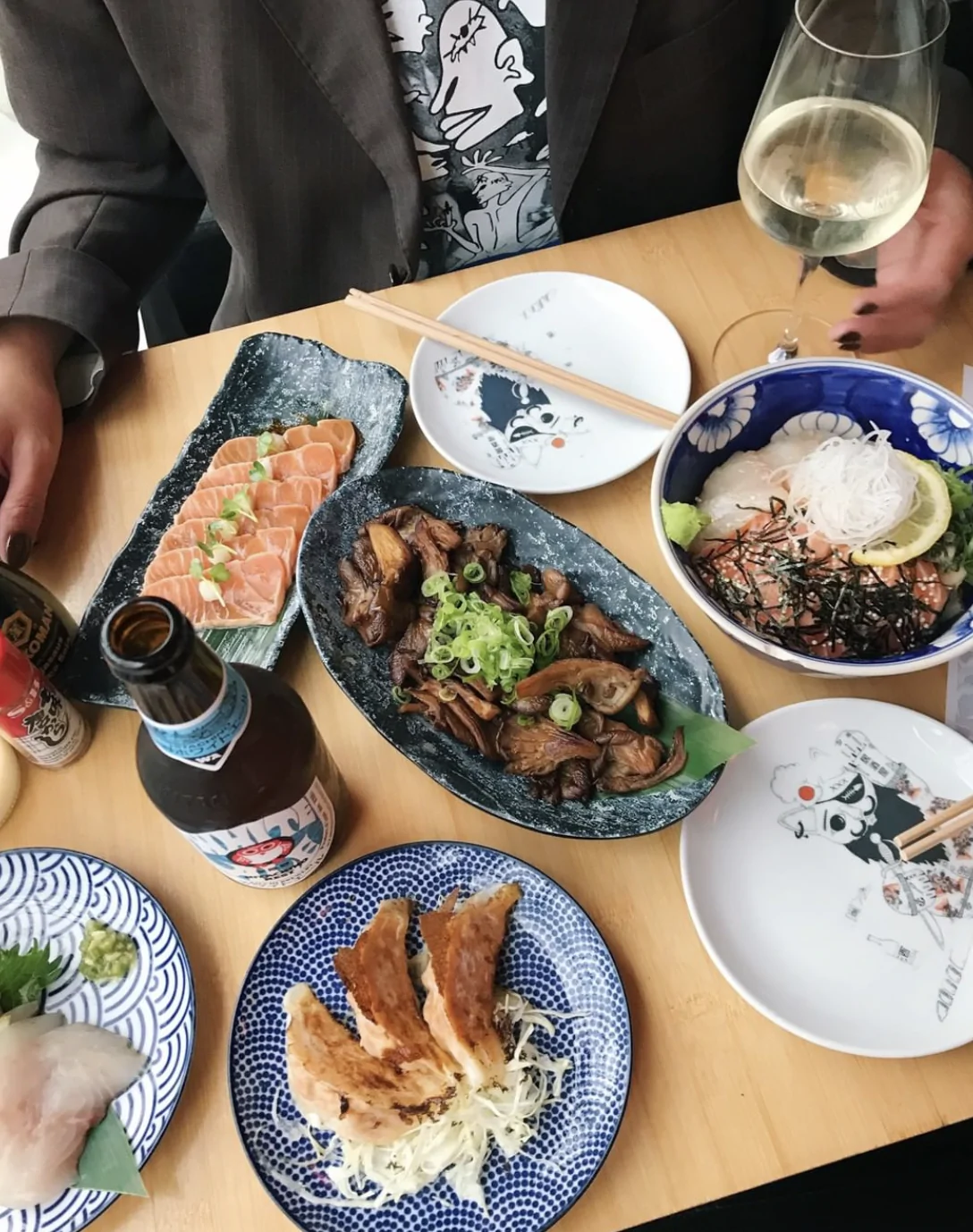
De Japanner has become a phenomenon in both the Pijp and Oud-West neighborhoods. The location in the Pijp is on the Albert Cuyp market, making it easy to step inside after having a drink somewhere. The concept is simple and straight-forward: delicious Japanese finger food paired with either a cocktail, Japanese beer, sake, or a non-alcoholic alternative, of course. It is therefore not surprising that the reviews about De Japanner are raving, with the friendly staff and tasty snacks being particularly highlighted.
1072 CP Amsterdam
Pho 91
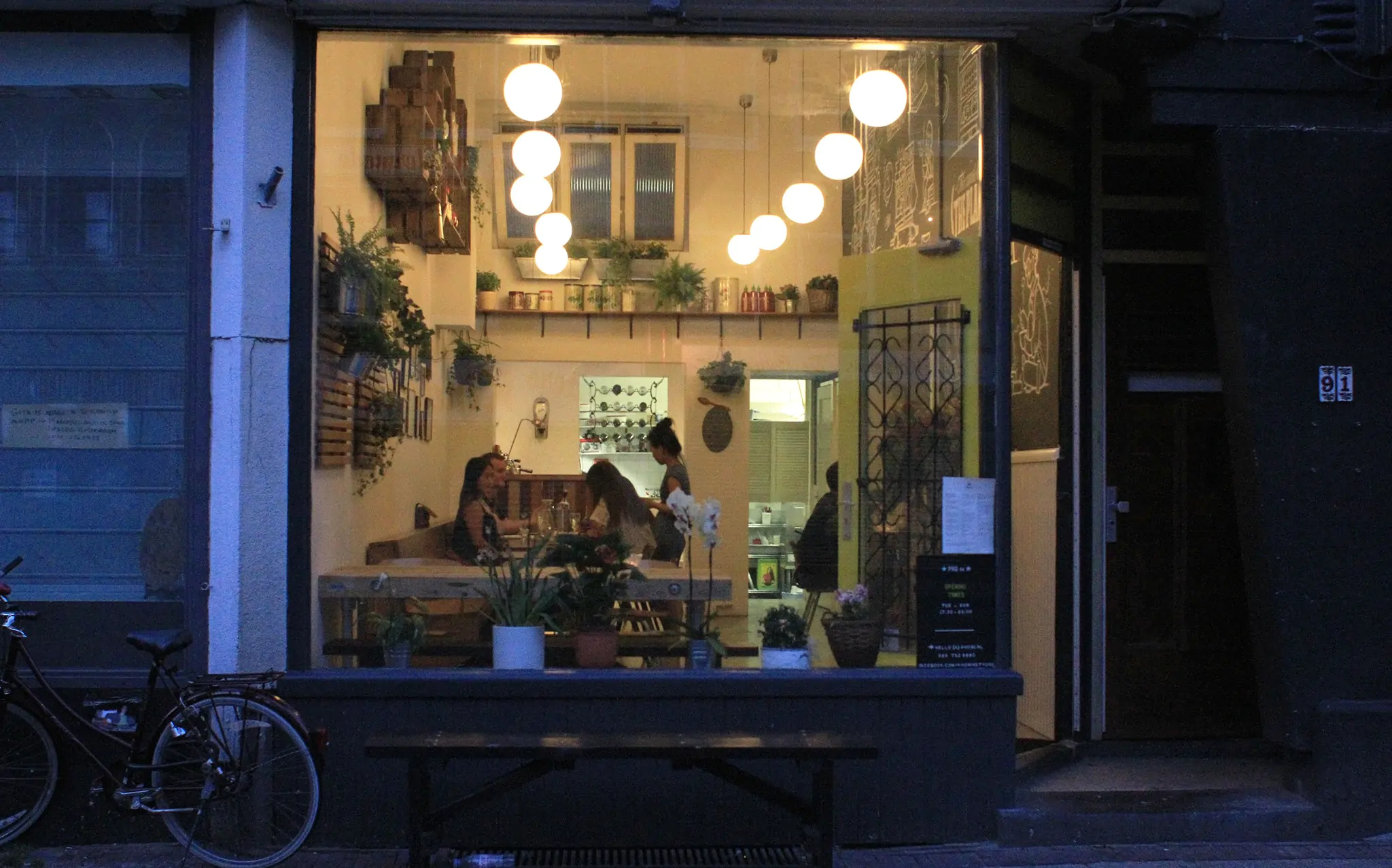
This small restaurant serves traditional Vietnamese pho (noodle soup). The menu is deliberately small and refined to guarantee the daily quality and freshness of the food. Most dishes are gluten, egg, and dairy-free, and there is an extensive selection of exciting choices for meat eaters, vegetarians, and vegans. If you don't feel like soup, try the beef and noodle salad (Bun bo Xao Sa). In other words, there is something for everyone!
1072 LB Amsterdam
Onigiri YA!
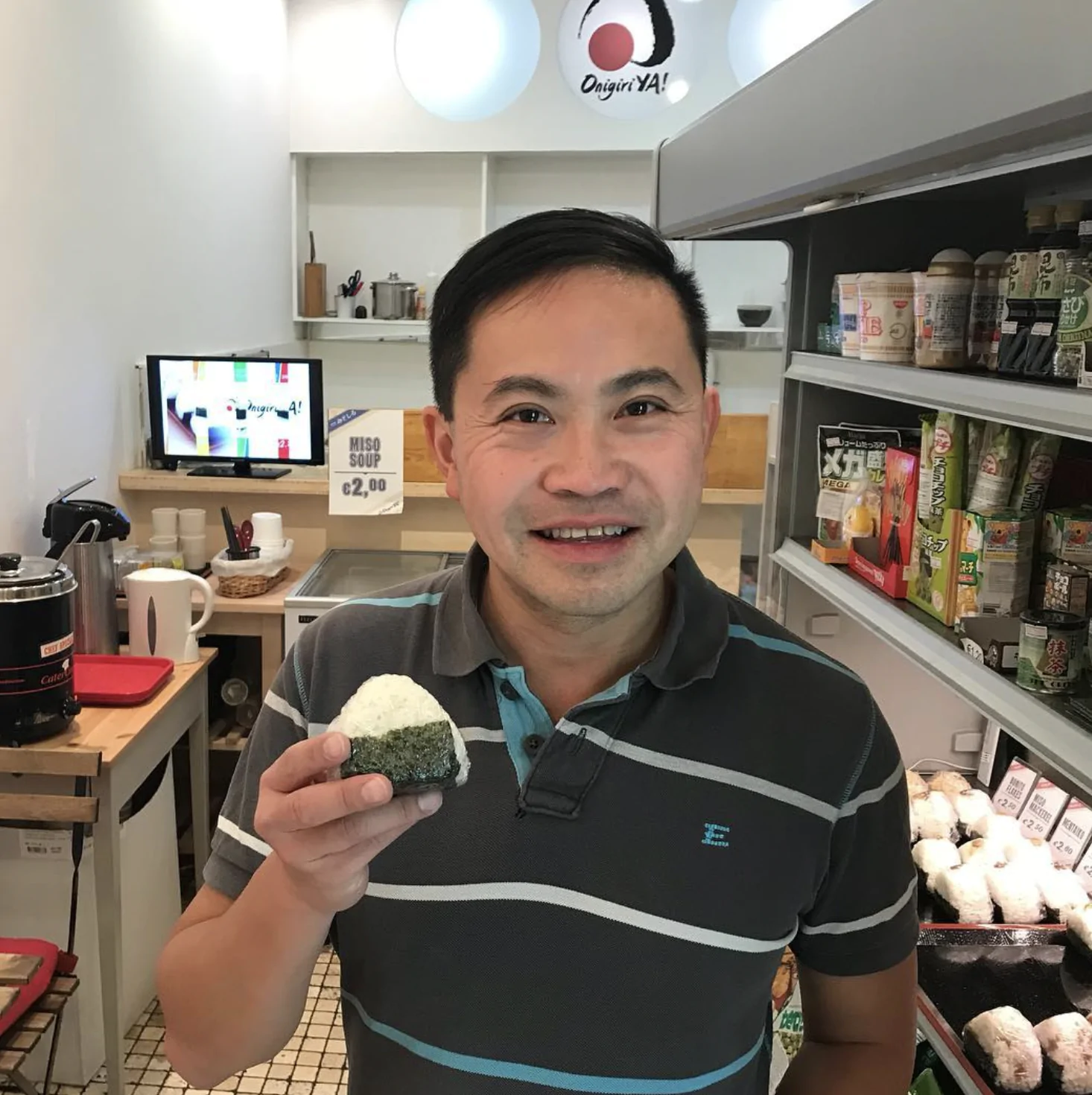
Most people who stroll through De Pijp in search of Japanese cuisine don't get much further than thinking about sushi and bubble tea (even though this originally comes from Taiwan). Onigri Ya specifically states on its door that these items For Sale not For Sale here. Location Onigri Ya is an authentic Japanese restaurant as well as a grocery and delicatessen shop. As expected, onigiri are a specialty: seasoned Japanese rice balls in various shapes, covered with nori and filled with everything from fish to fruit. For anyone who watches anime, Onigri Ya brings the mouthwatering food from the screen to a cute little shop in De Pijp. Simply a must-go.
1073 CK Amsterdam
Swietie's Food Stall
Warung Swietie Lelydorp is a Surinamese restaurant just a stone's throw from the Albert Cuyp Market. It is known for its saoto soup and roti, both of which fly off the counter at very affordable prices. It is one of the smallest warungs in Amsterdam, and in the summer, the eatery even has a small terrace. For a quick bite such as a Pom sandwich with pickles, this is the place to be!