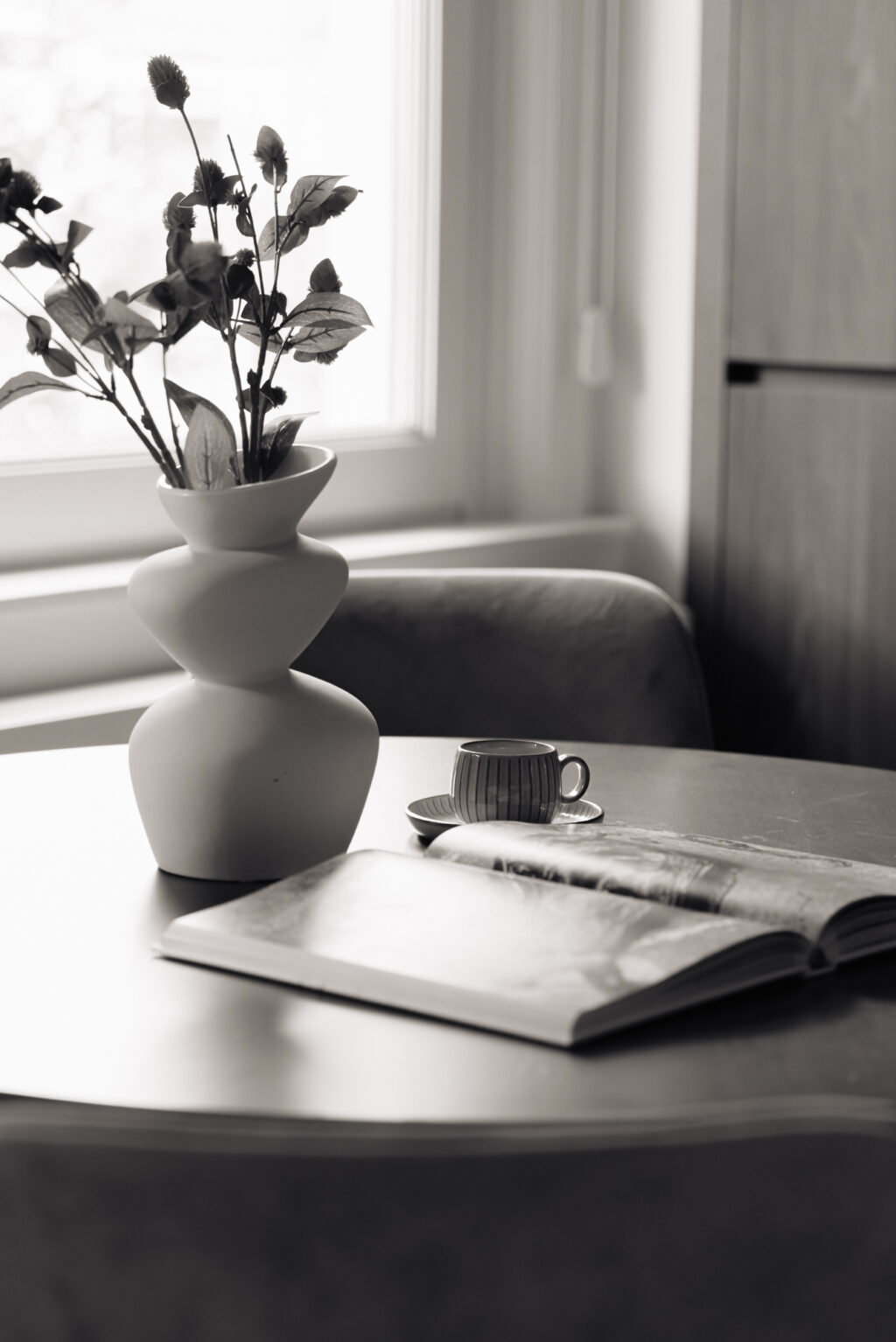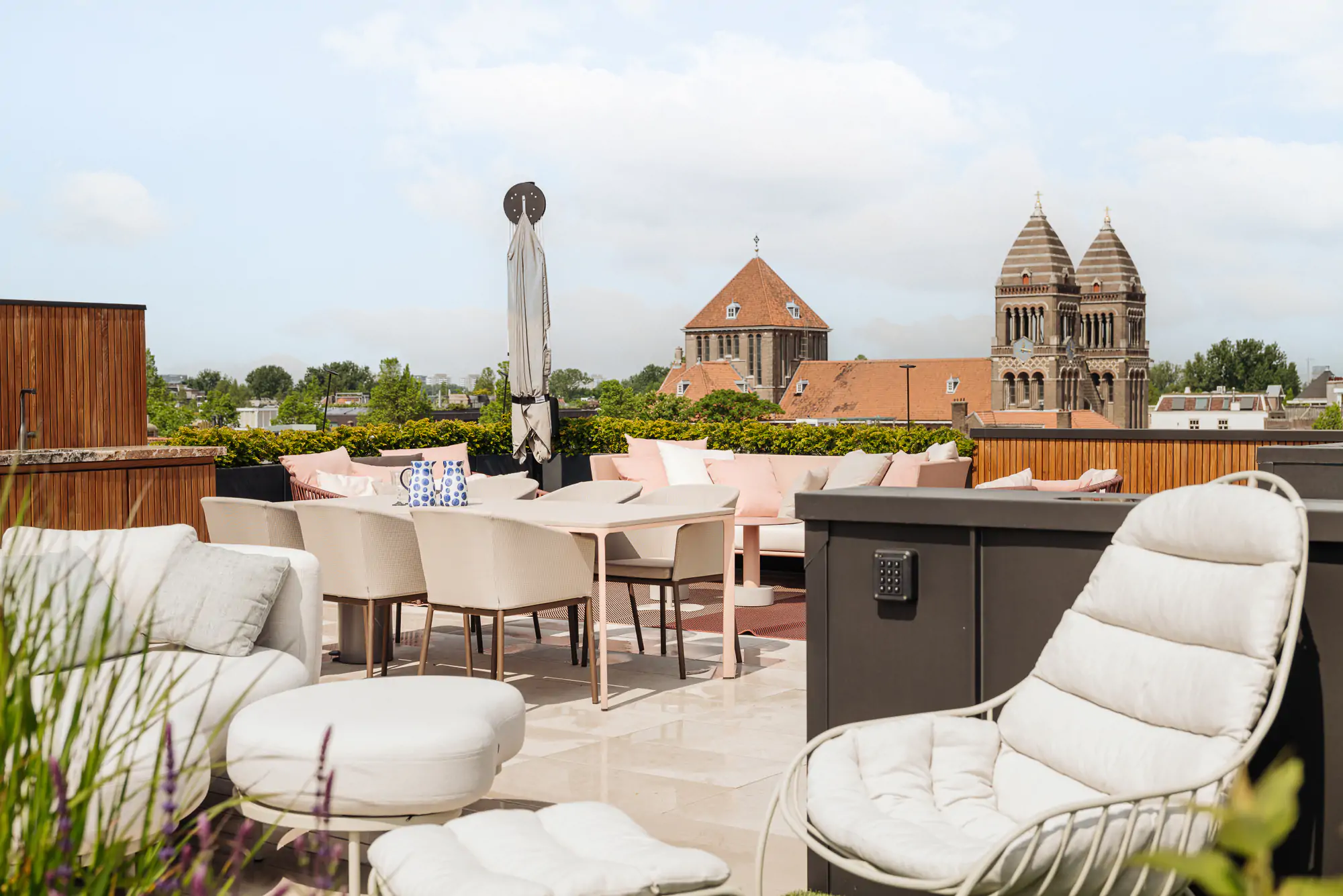
Bright and modernly renovated 4-room apartment of approximately 103 m² with an attic room of approximately 13 m², both accessible via a central staircase or elevator, located in the highly sought-after Beethovenbuurt neighborhood.
Guided tour
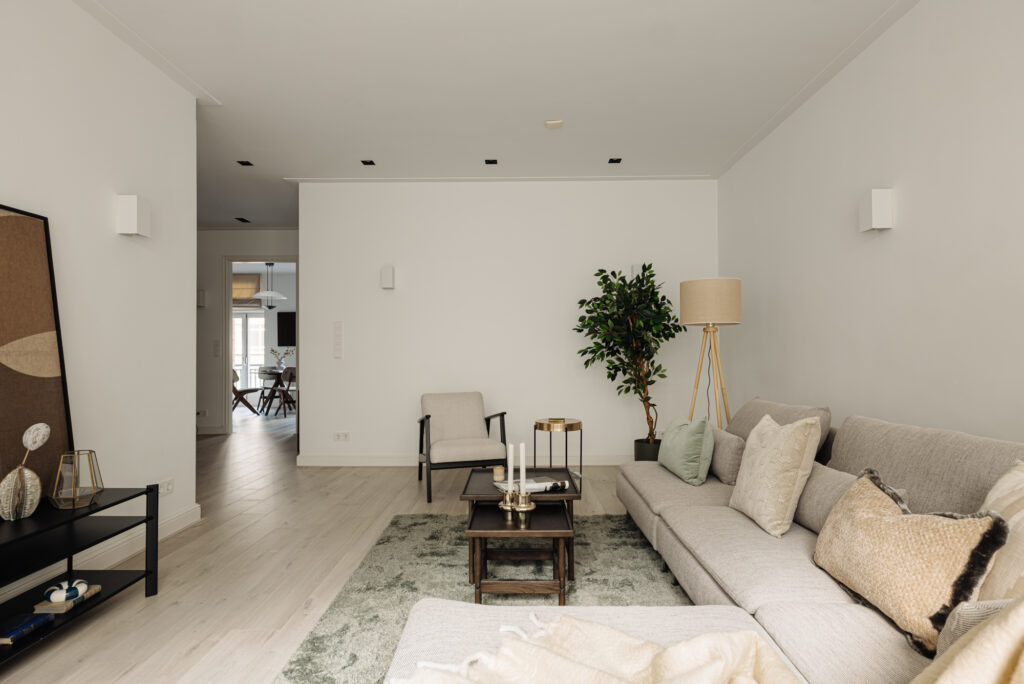
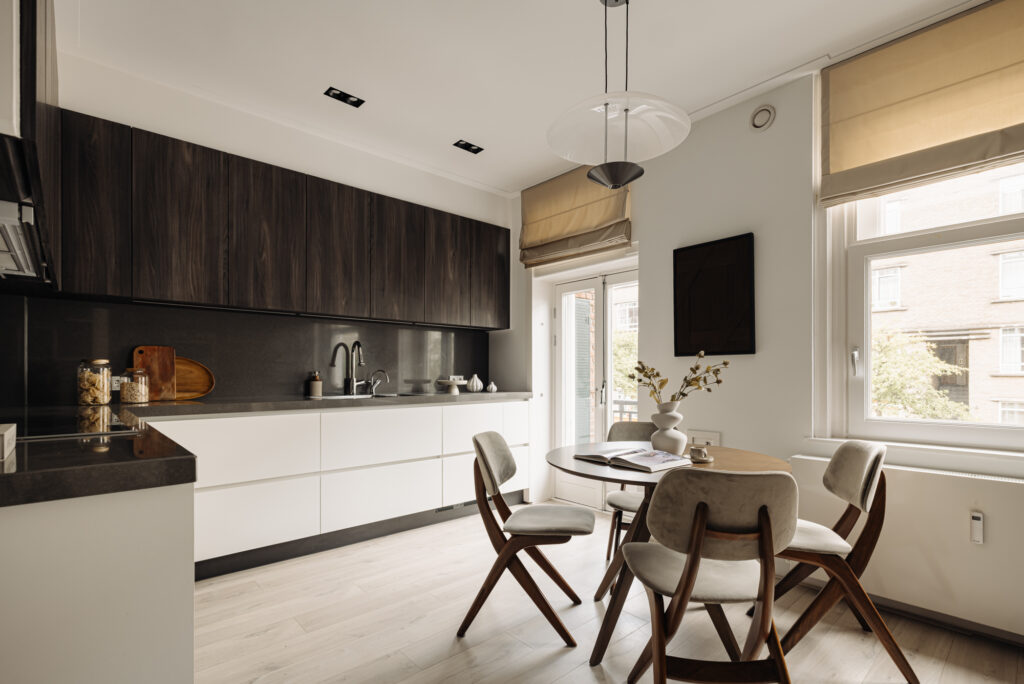
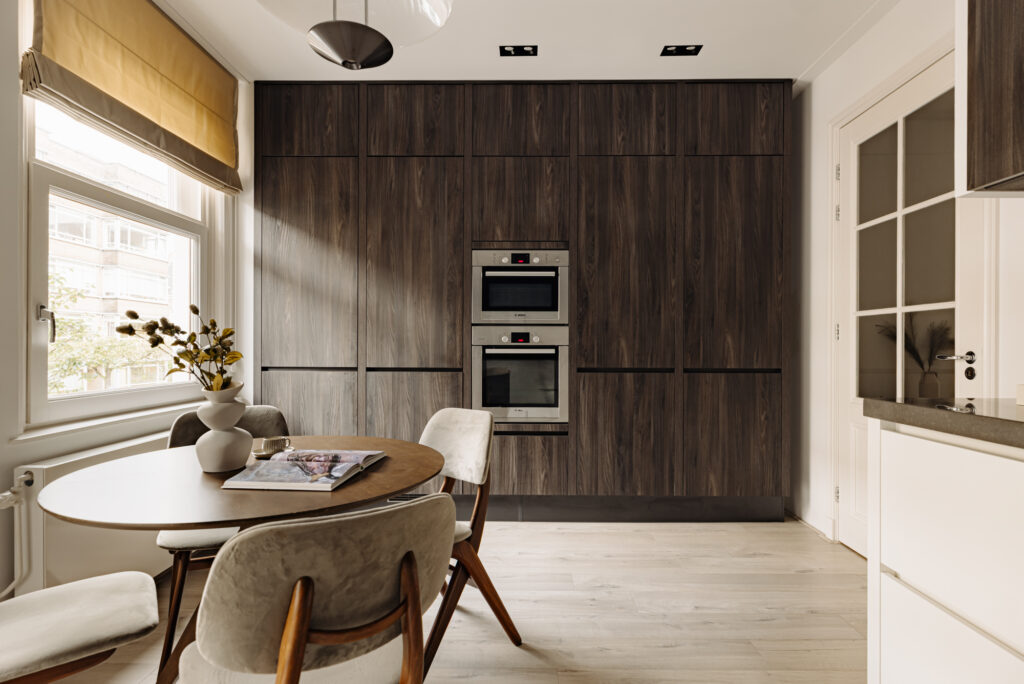
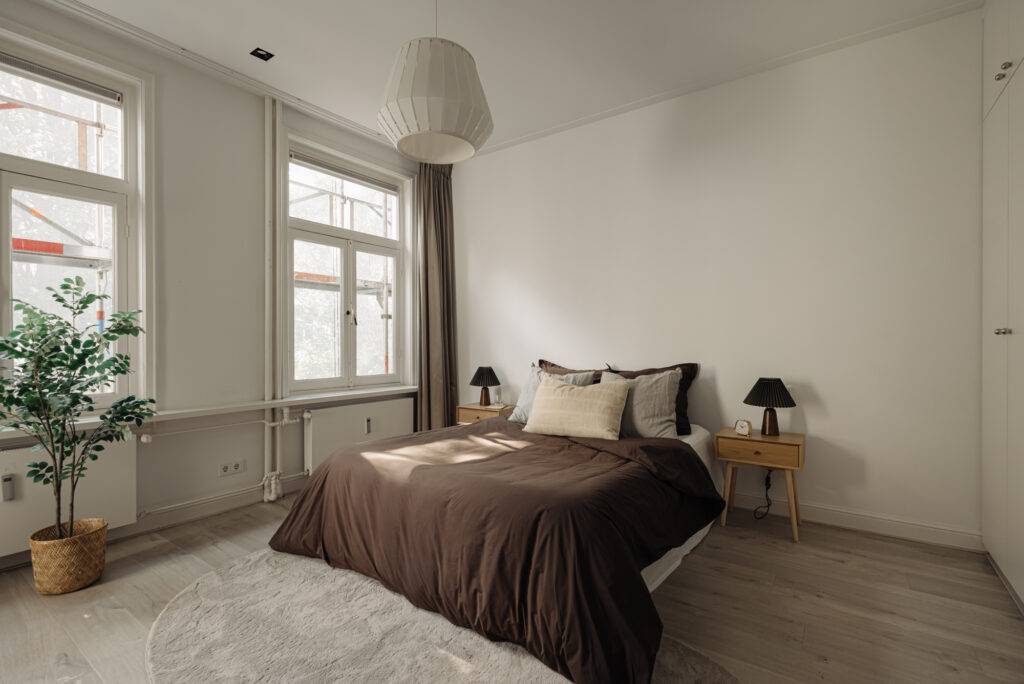
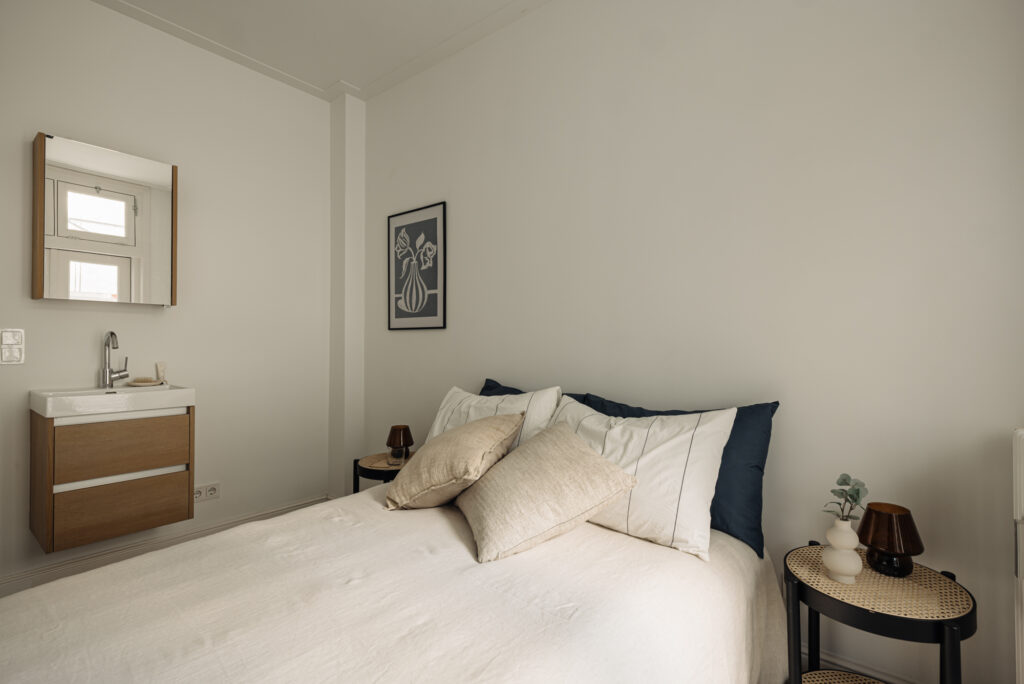
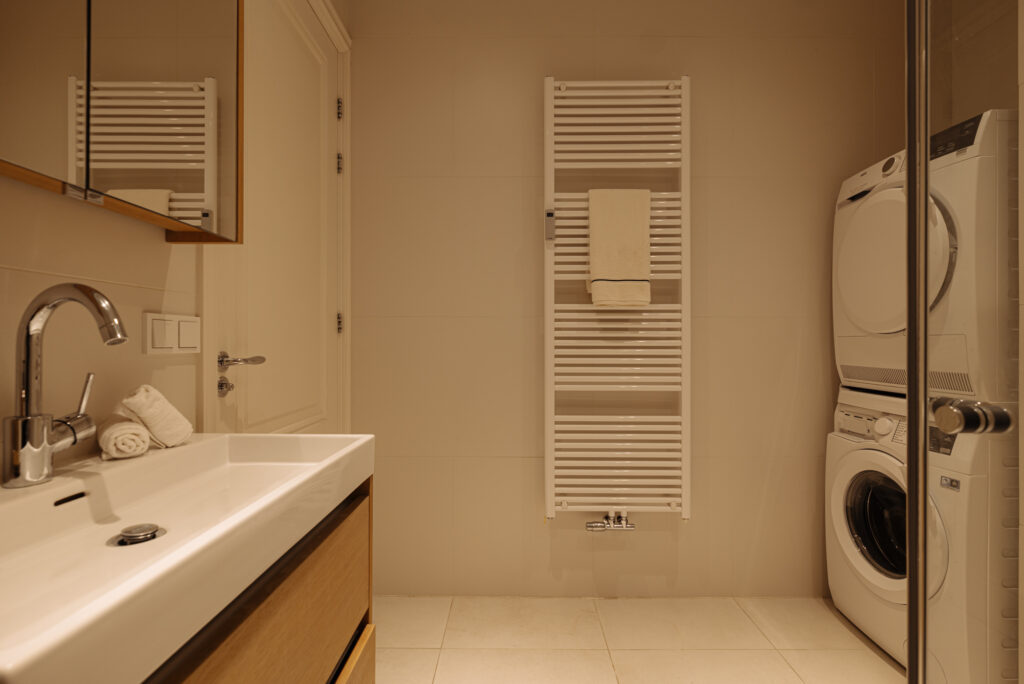
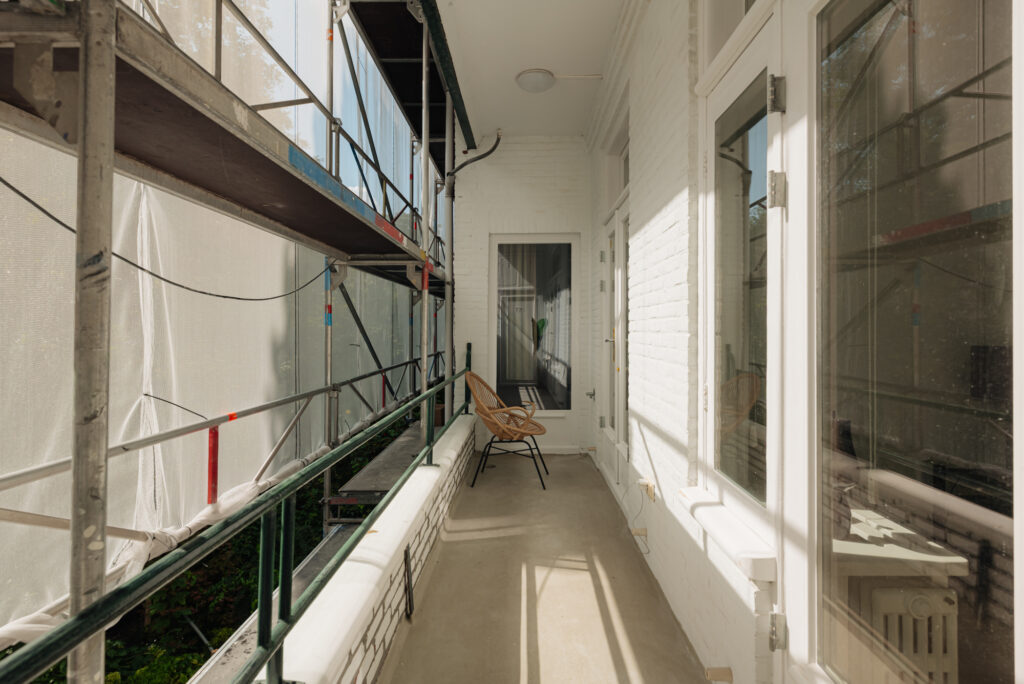
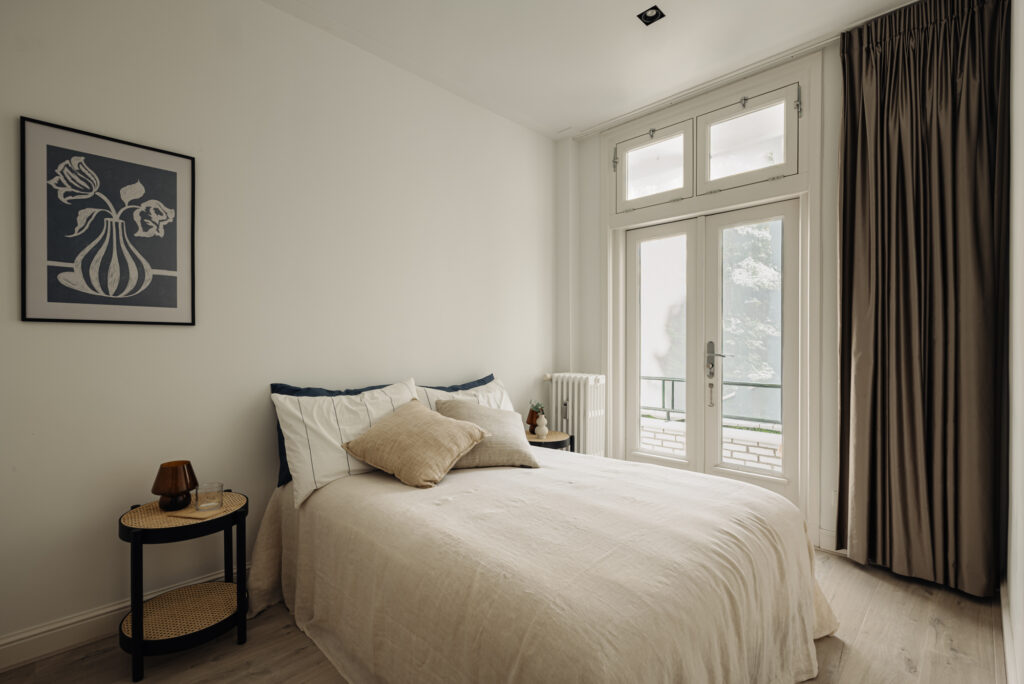
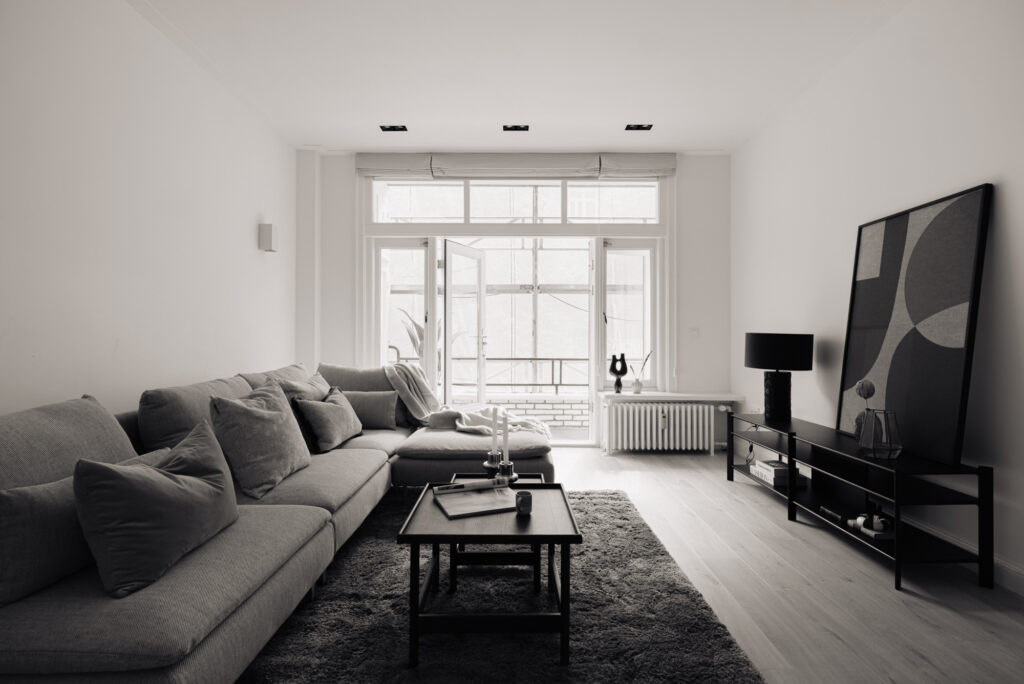
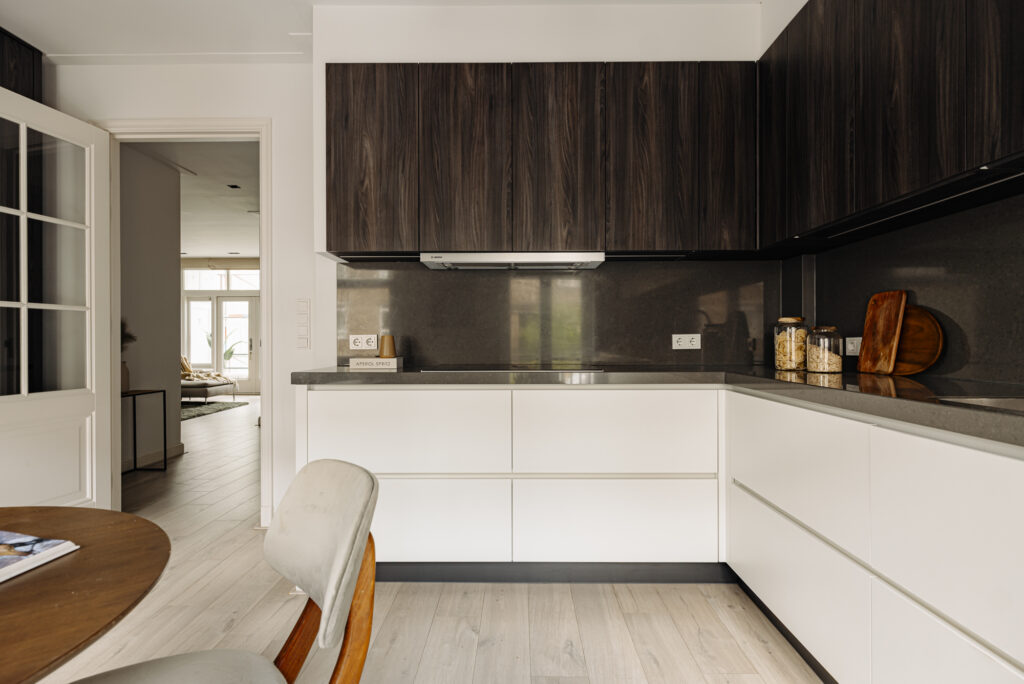
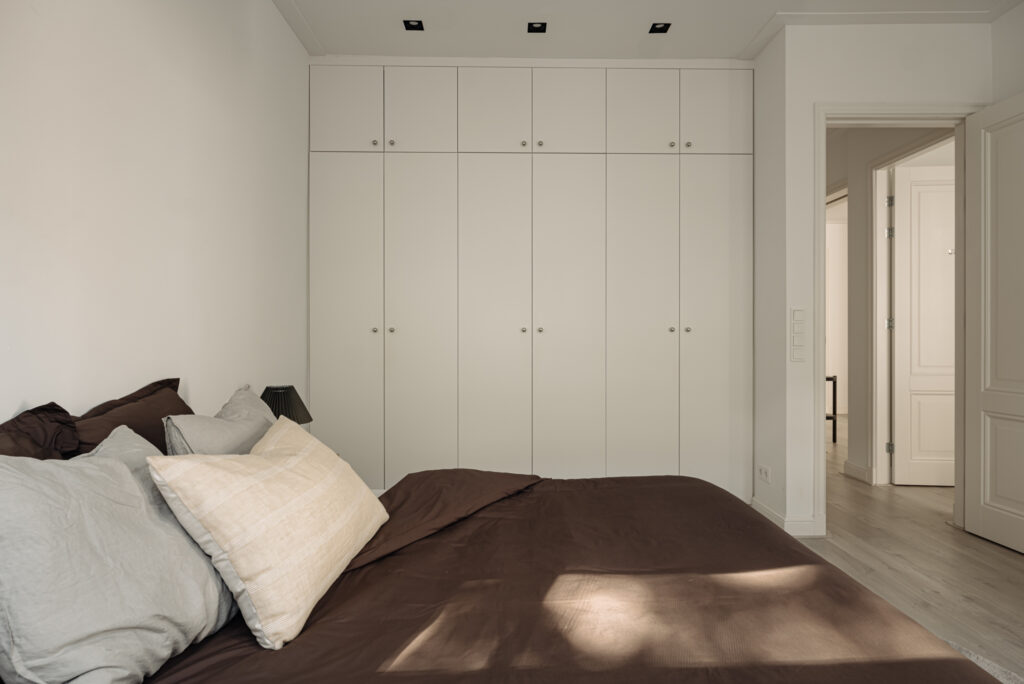
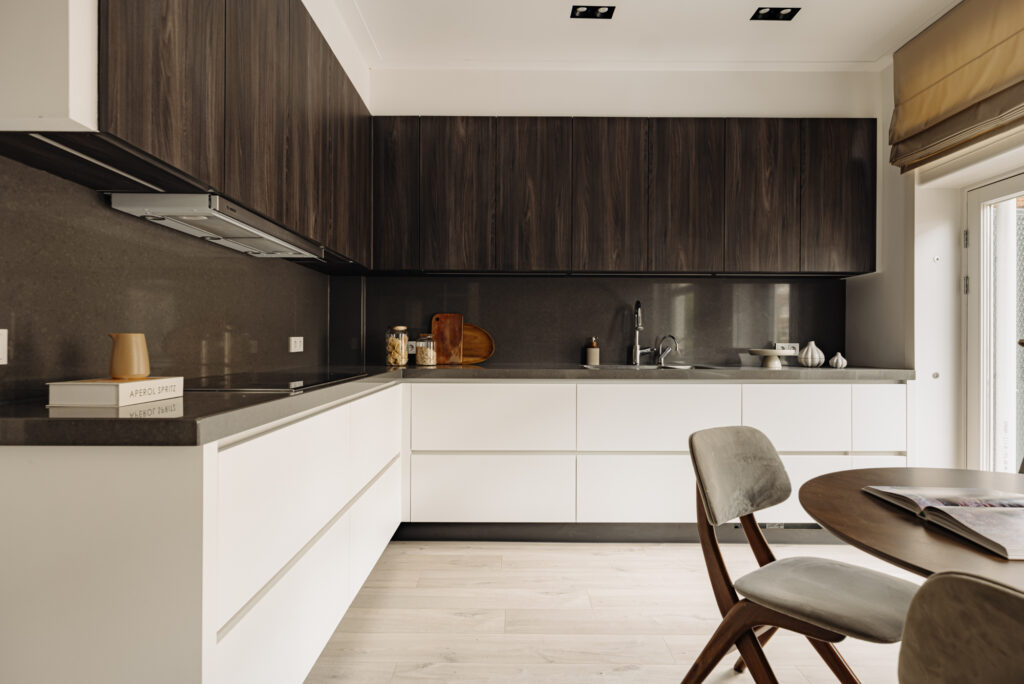
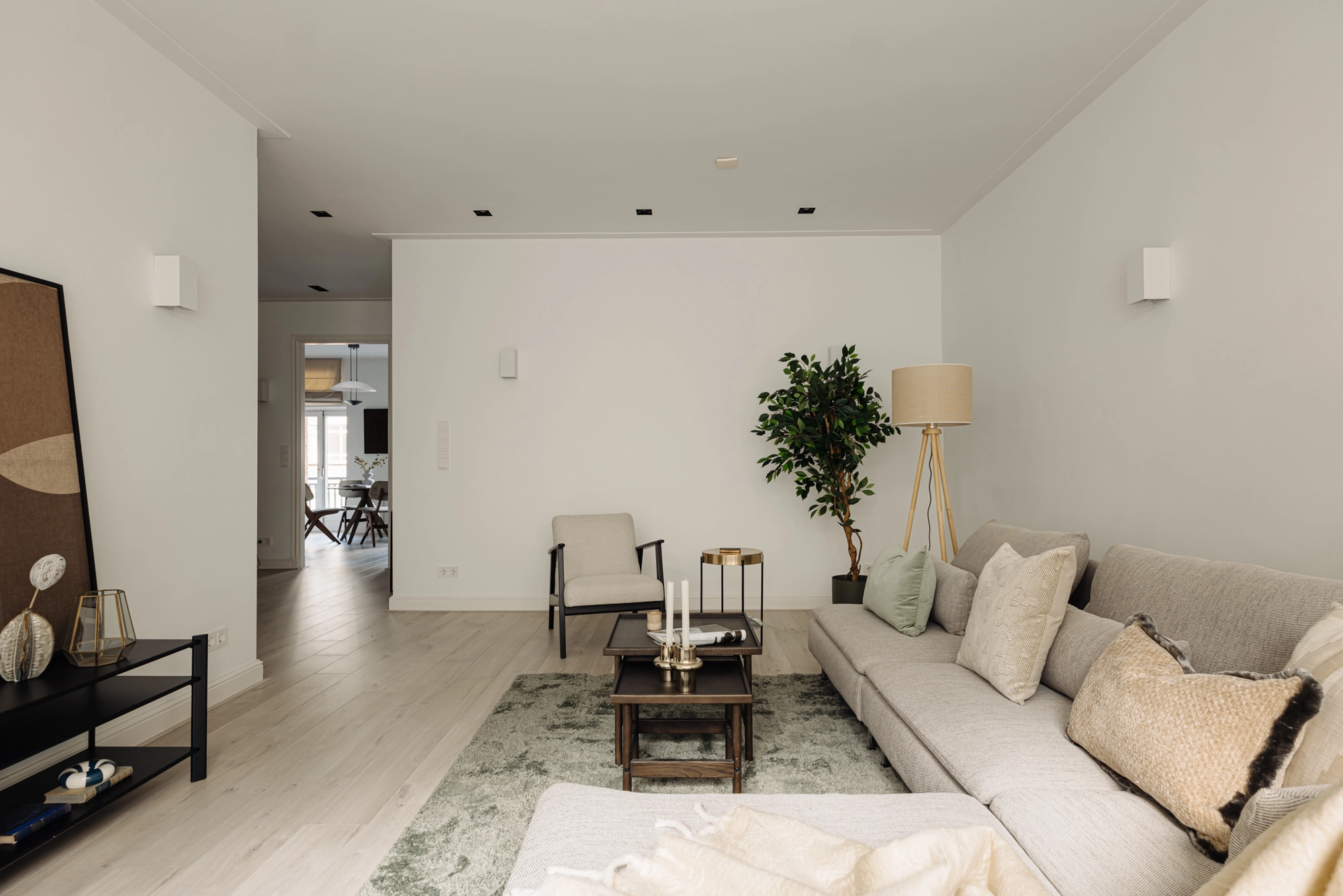
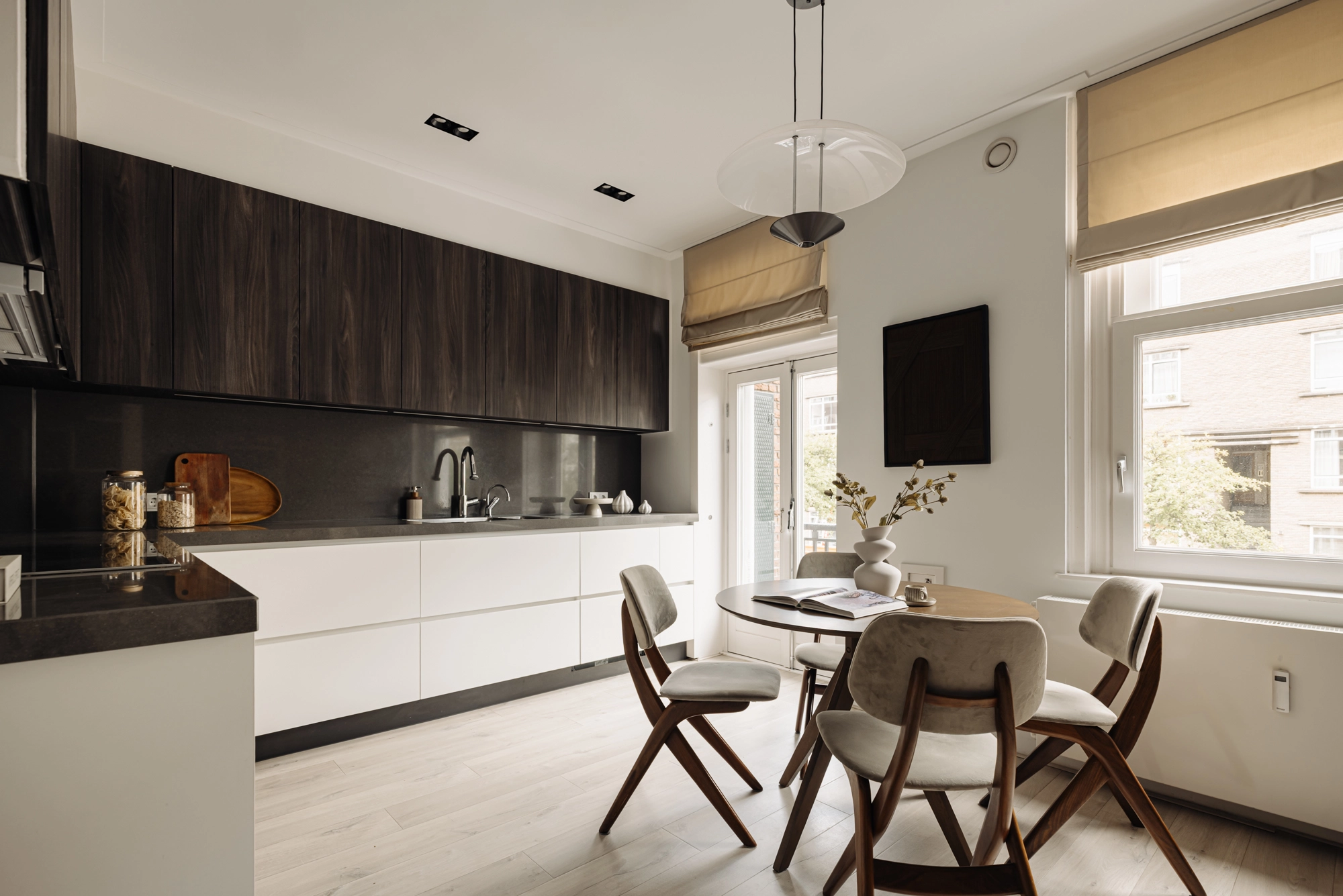
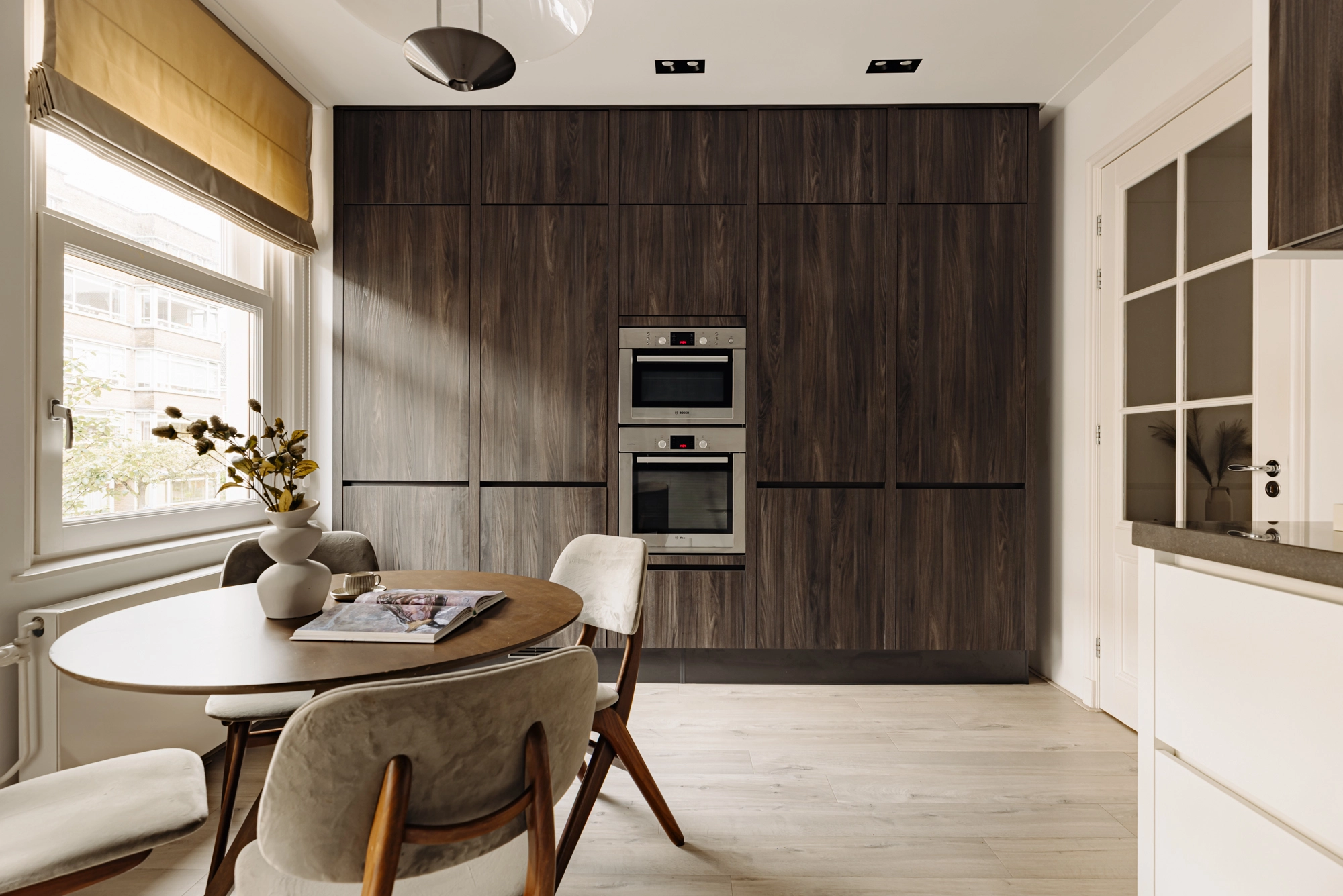
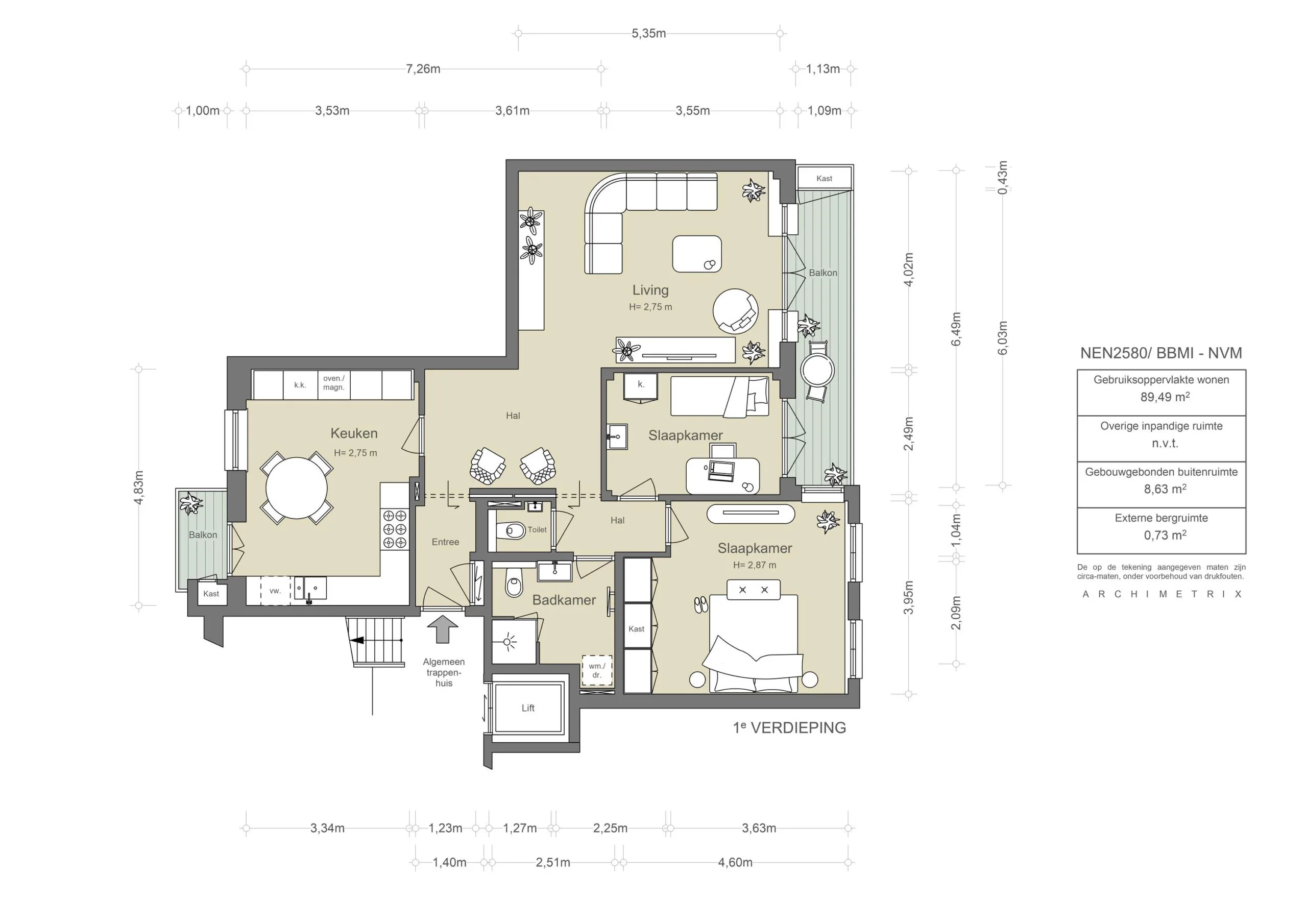
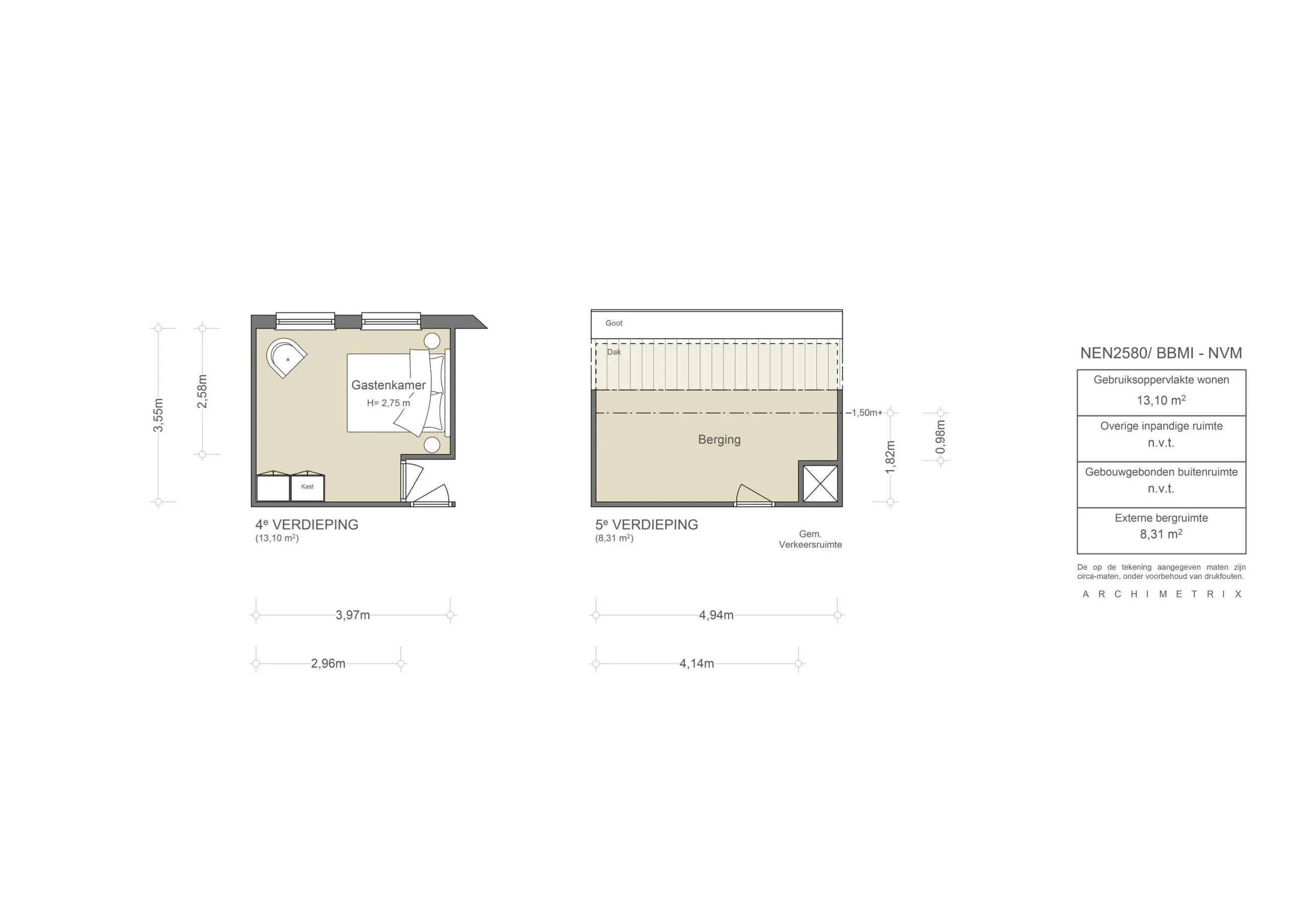
The apartment at Courbetstraat 11-1 exudes tranquility and refinement from the moment you step inside. The bright living room feels serene and spacious, with a long line of sight to the kitchen-diner, creating unity and depth. The finish is subtle and precise, while the kitchen has a powerful character thanks to dark wood, black granite, and white elements, in a balanced and functional layout. The round dining table by the French doors to the balcony lets in plenty of daylight, creating a natural transition between indoors and outdoors. On the fourth floor, there is also a multifunctional attic room of approximately 13 m². The bedrooms just as peaceful and bright. The largest room has ample natural light and a built-in wardrobe that blends seamlessly into the wall. The second bedroom adjoins the balcony and has French doors and its own washbasin. The bathroom is modern and understated, with sand-colored tiles, wooden accents, and a spacious walk-in shower. Everything has been designed with comfort, simplicity, and balance in mind. The outdoor spaces add extra charm to the apartment. At the front is a French balcony overlooking the green street, while the rear offers a deep balcony bathed in afternoon and evening sun. This space feels sheltered and light, with a Mediterranean atmosphere that invites you to enjoy the outdoors as a natural part of the day.
Neighborhood Guide
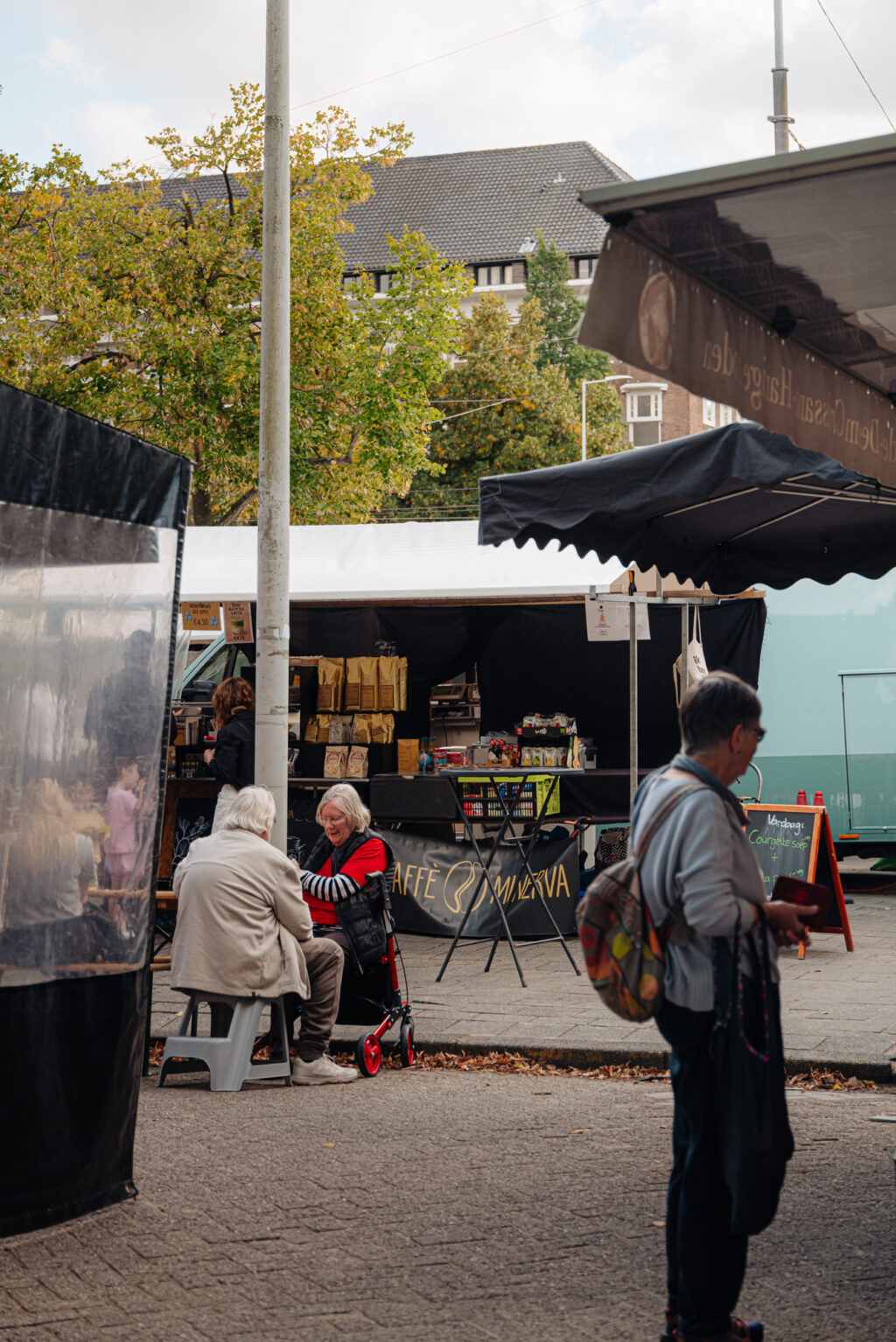
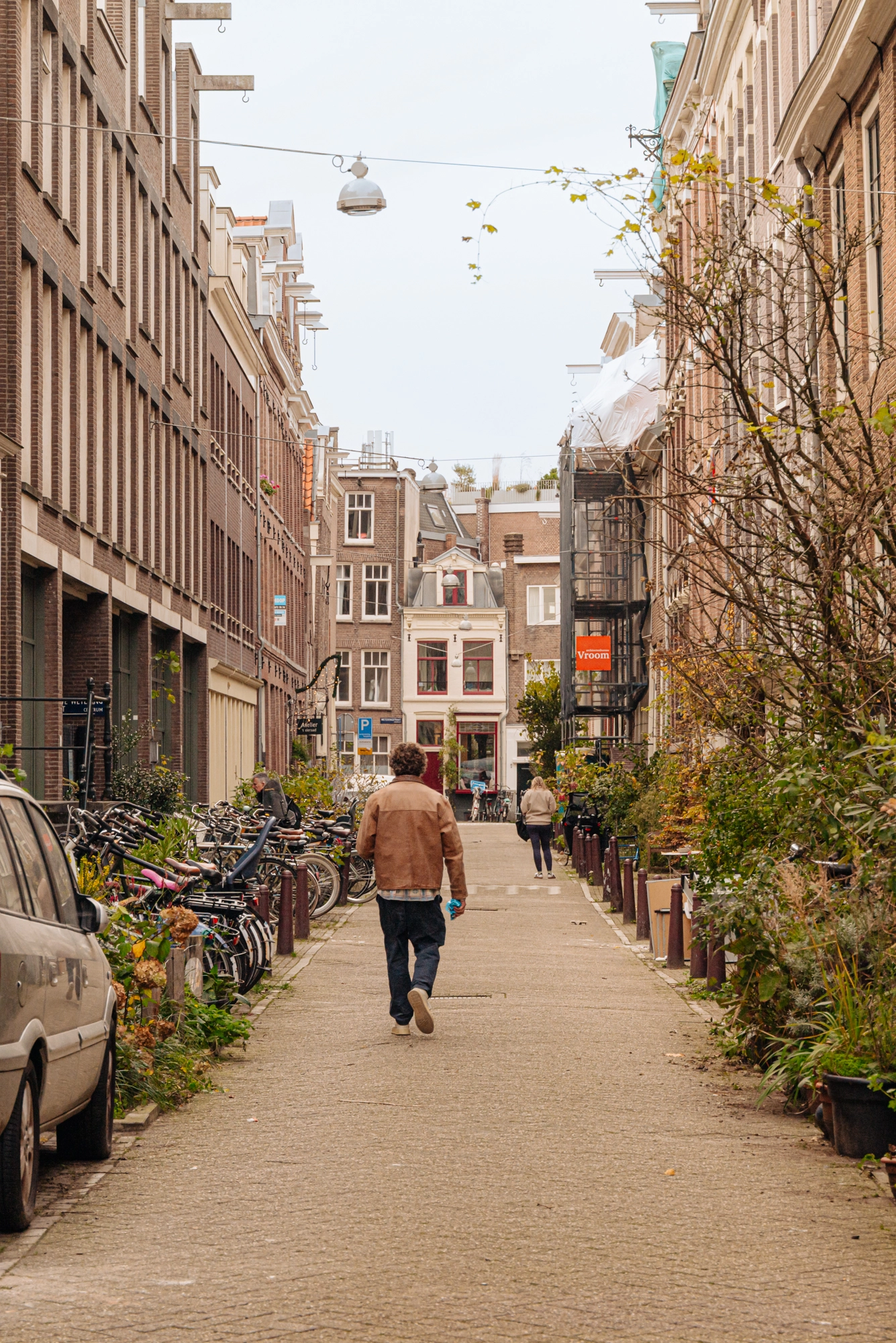
To this day, residents of the Beethovenbuurt continue to enjoy the urban architectural legacy that architect Berlage left on the neighborhood in the last century. His design included avenues, green spaces, and varied architecture. From villas and apartment blocks to townhouses: characteristic of this 1930s neighborhood, which is almost entirely surrounded by water, are the spacious residences the Amsterdam School style. The facade stones and bridge sculptures by Hildo Krop, who was awarded the honorary title of City Sculptor of Amsterdam, also lend the neighborhood its distinctive character. On Beethovenstraat and at the shops on Olympiaplein, the coffee bars, various lunch spots, and restaurants have given the neighborhood a young and dynamic vibe. In addition, this street offers a high-quality selection of shops, ranging from a bakery, fishmonger, butcher, and patisserie to a wine shop. Olympiaplein is home to the bakery Le Fournil, Fromagerie L’Amuse, and, more recently, Coffee District. The Zikking butcher shop is located on Marathonweg, just a five-minute walk away. On Fridays, there is a sophisticated organic market on Minervaplein. The wide avenues and greenery of Beatrixpark, with its modern sculptures and old trees, create a sense of space and are ideal for sports and relaxation. The neighborhood is known for its excellent elementary and secondary schools, as well as its convenient location near the Ring Road and Amsterdam Zuid station.
Details
• Living area of approximately 103 m², consisting of an apartment of approximately 90 m² and an attic room of approximately 13 m²
• Two north-facing balconies and one south-facing balcony
• Storage room on the fifth floor of approximately 9 m²
• Elevator available
• Located on leasehold land owned by Local authority . Annual ground rent of €2,024.79 per year (tax-deductible) – lease term ends 02/15/2056
• Conversion to a perpetual leasehold has already been completed, with the perpetual ground rent fixed.
• Homeowners’ association service fees €482.42 per month
• Heating cost advance payment €90.00 per month
• Energy label D
• Nationally protected cityscape
• Project notary VG Notarissen
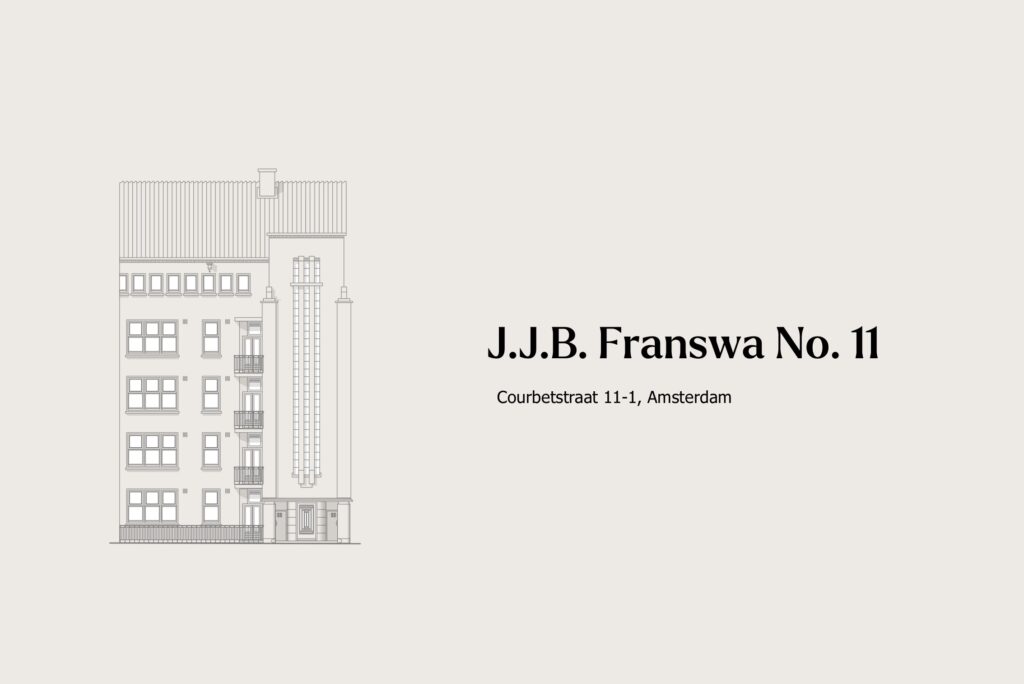
J.J.B. Franswa No. 11
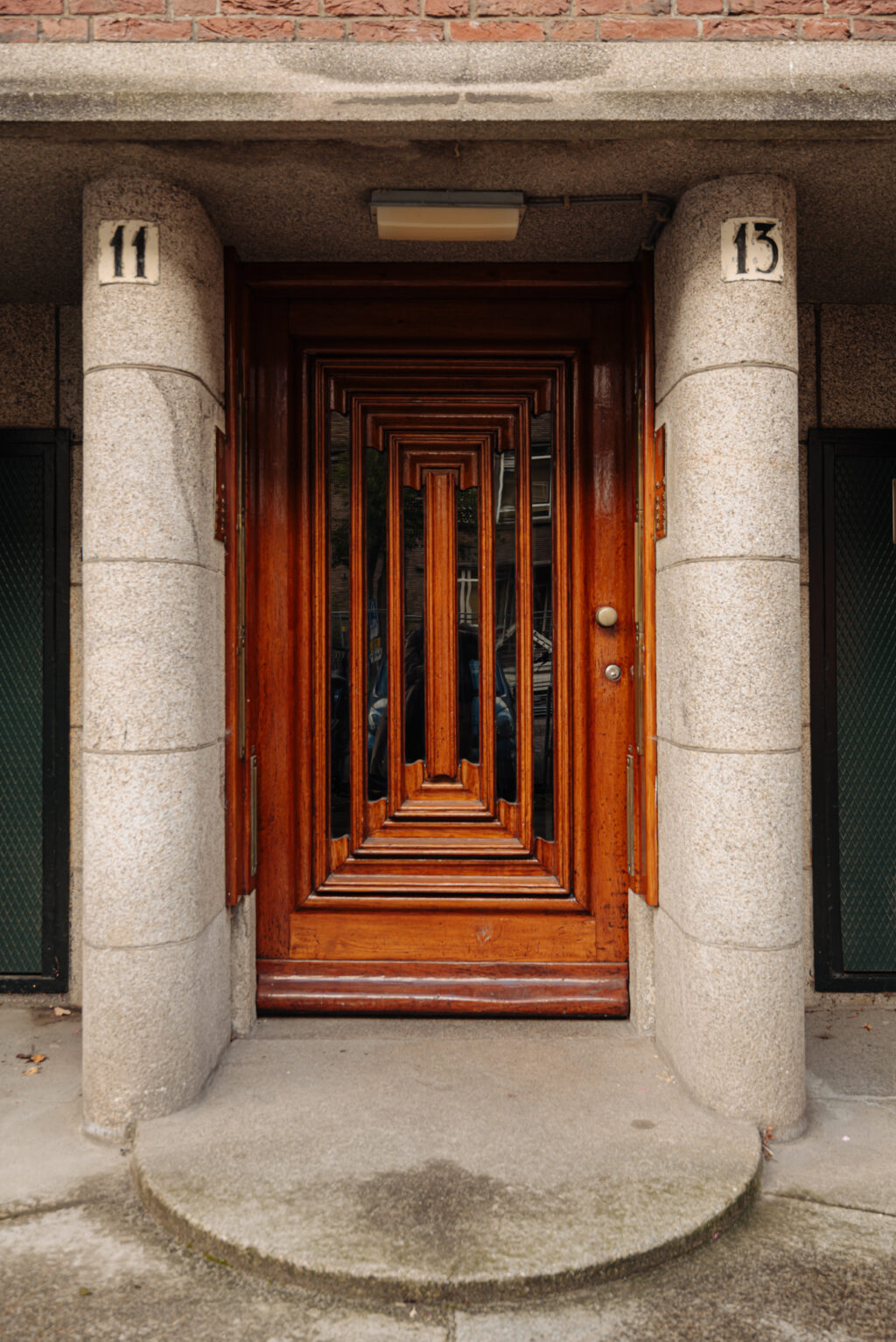
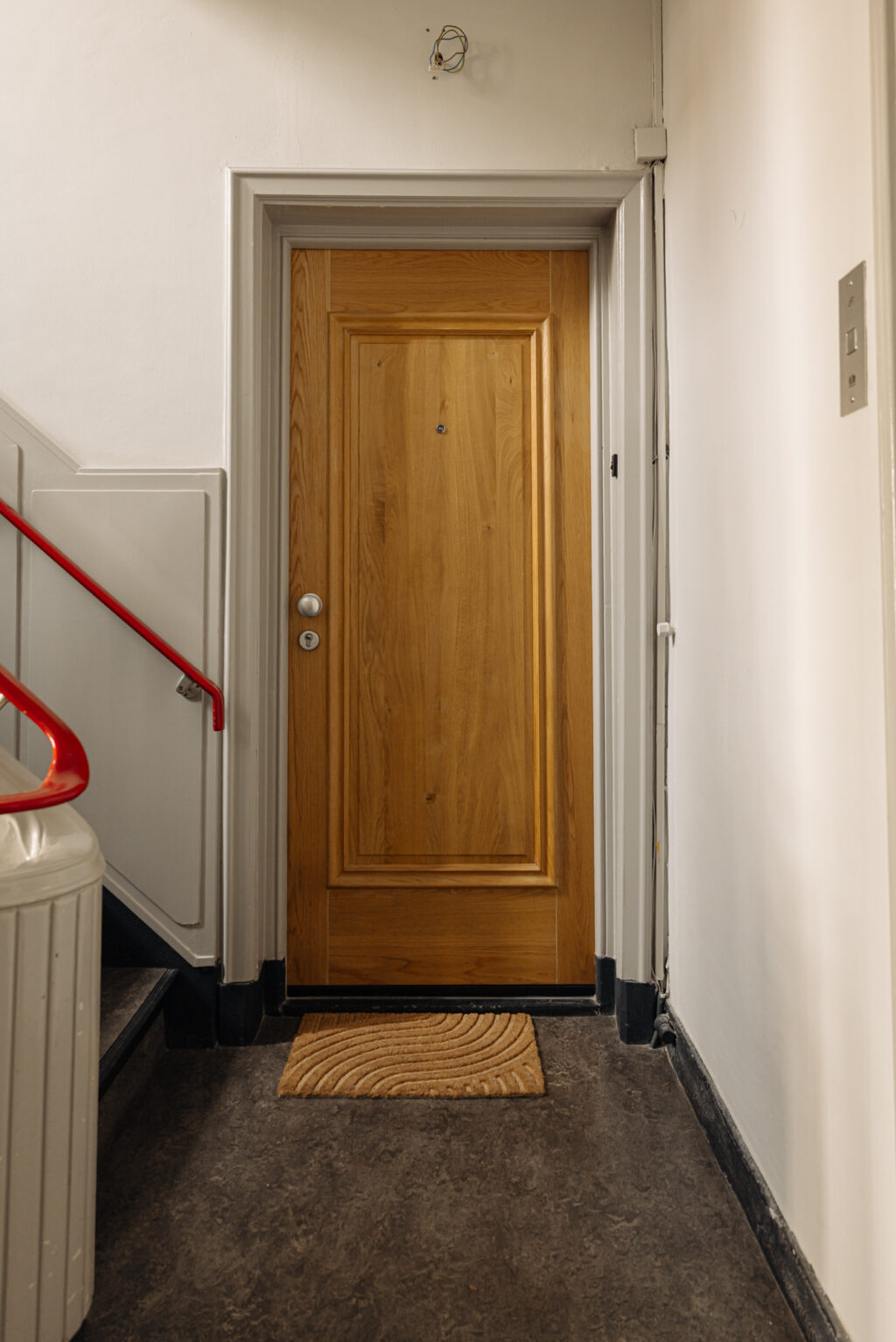
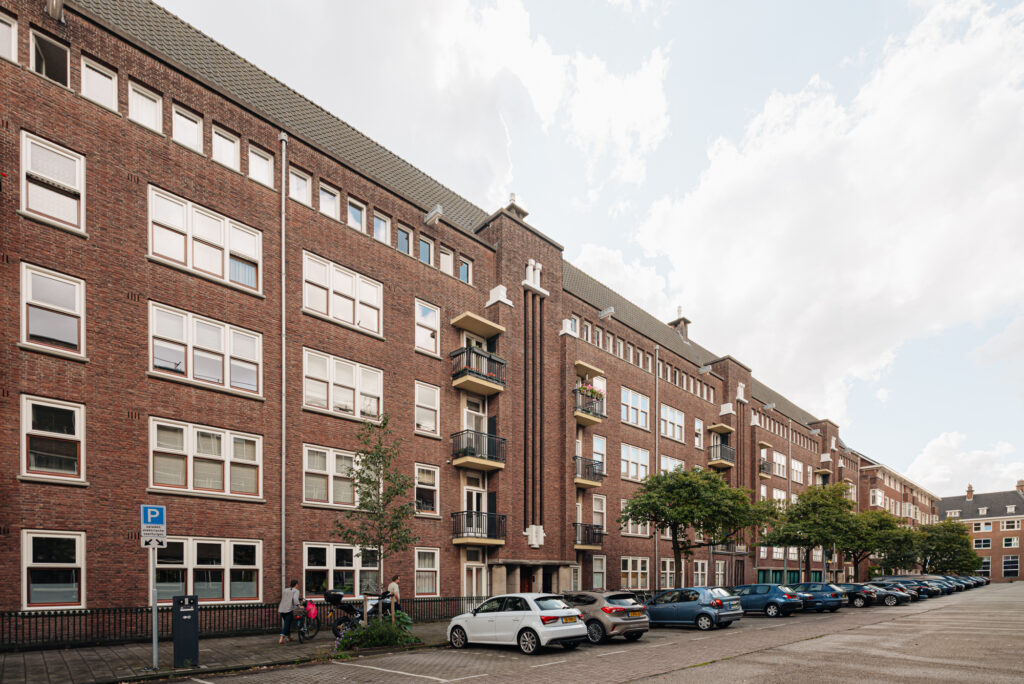
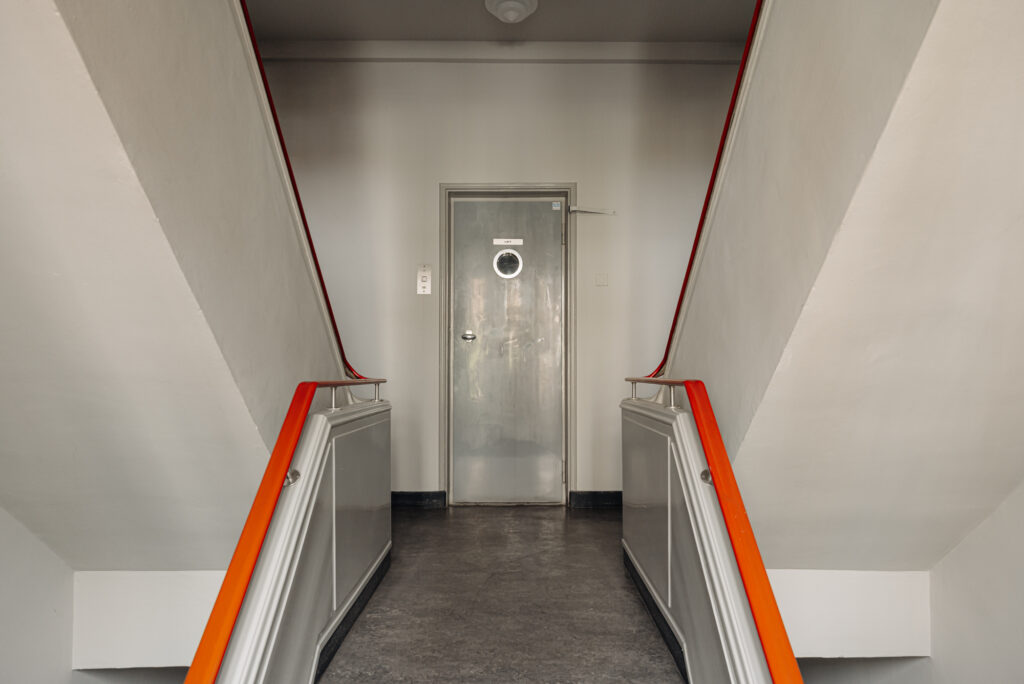
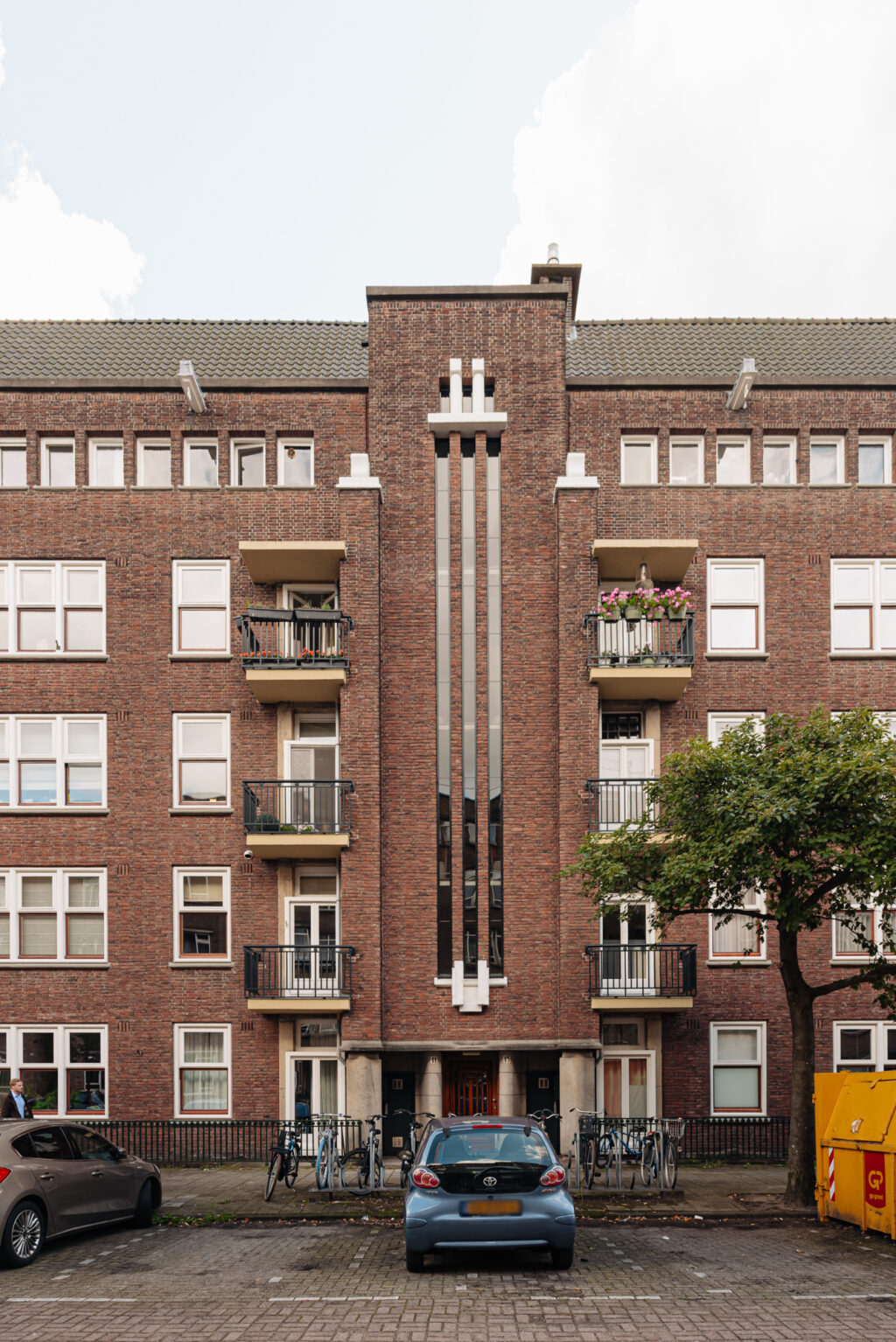
As a real estate agency, we assist with the sale of a wide range of residences Amsterdam. However, there are properties that Immediately , not because of their extravagance, but because of their understated beauty. Courbetstraat 11-1 is a wonderful example of this. As soon as you stand in front of the façade, you can sense that this house was designed with love and vision. And that is indeed the case: it is the work of architect J.J.B. Franswa, a name that immediately conjures up images of the Amsterdam School in its most refined form for connoisseurs. What always appeals to me personally in his designs is the way the vertical lines run along the façade almost like music. Take the entrance, for example: the wooden front door with its repetitive geometry feels almost sculptural. The stairwell, with its slender windows and robust masonry details, tells a story of craftsmanship that we encounter less and less in the city. Inside, this line continues: calm, bright spaces with pleasant light and a layout that feels logical. A home that you don't have to think about, but that you understand immediately. I expect that the buyer of this home will appreciate just that: character without fuss, comfort without compromise. A house with a soul, in a place that is quiet and urban. Are you curious to see if this home could also become your story? Then I warmly invite you to come and take a look. I would be happy to tell you more about the apartment, the neighborhood, and of course about Franswa.
Glenn van der Zanden | Real estate agent Broersma Wonen
Judith de Jong | Real estate agent Broersma Wonen
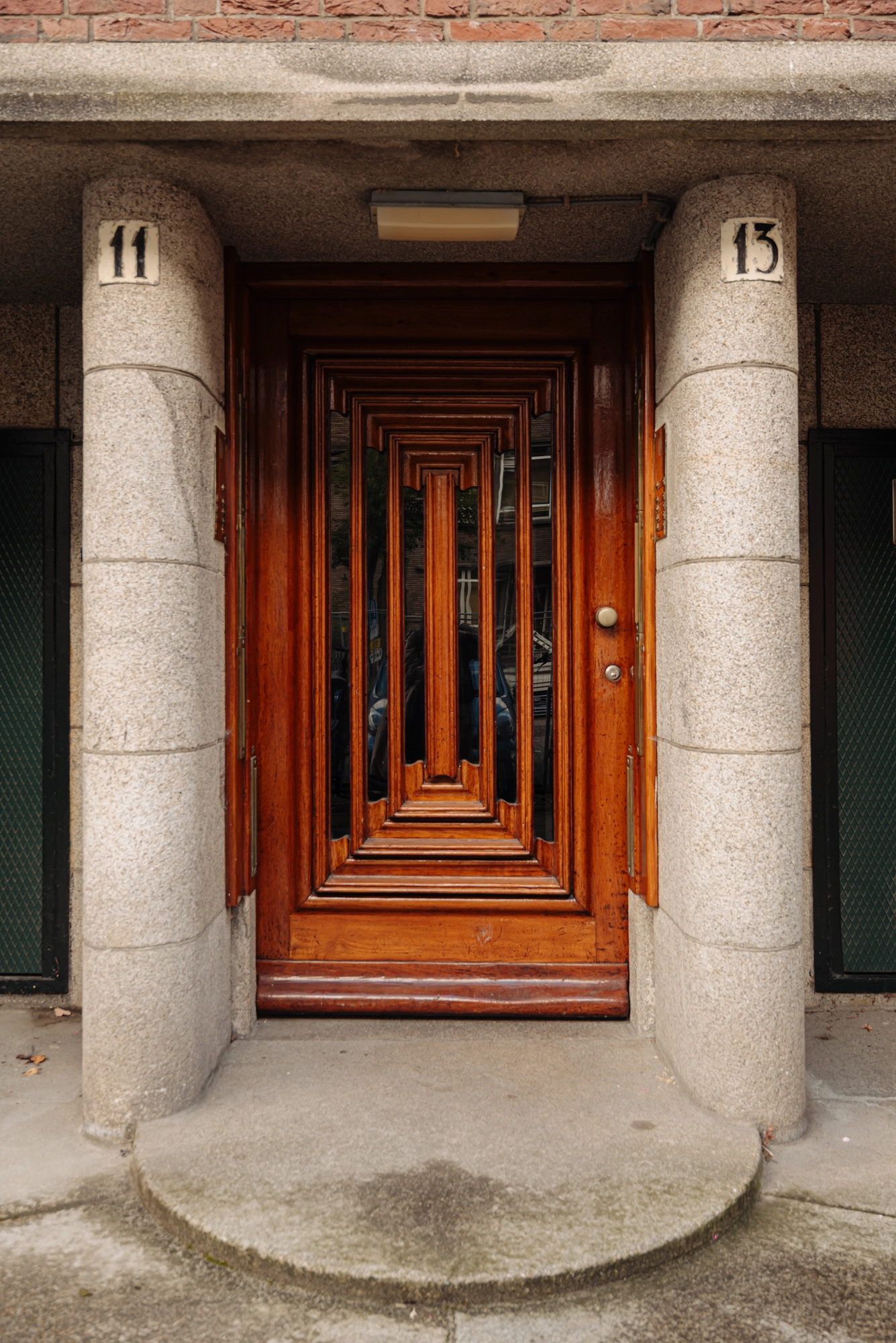
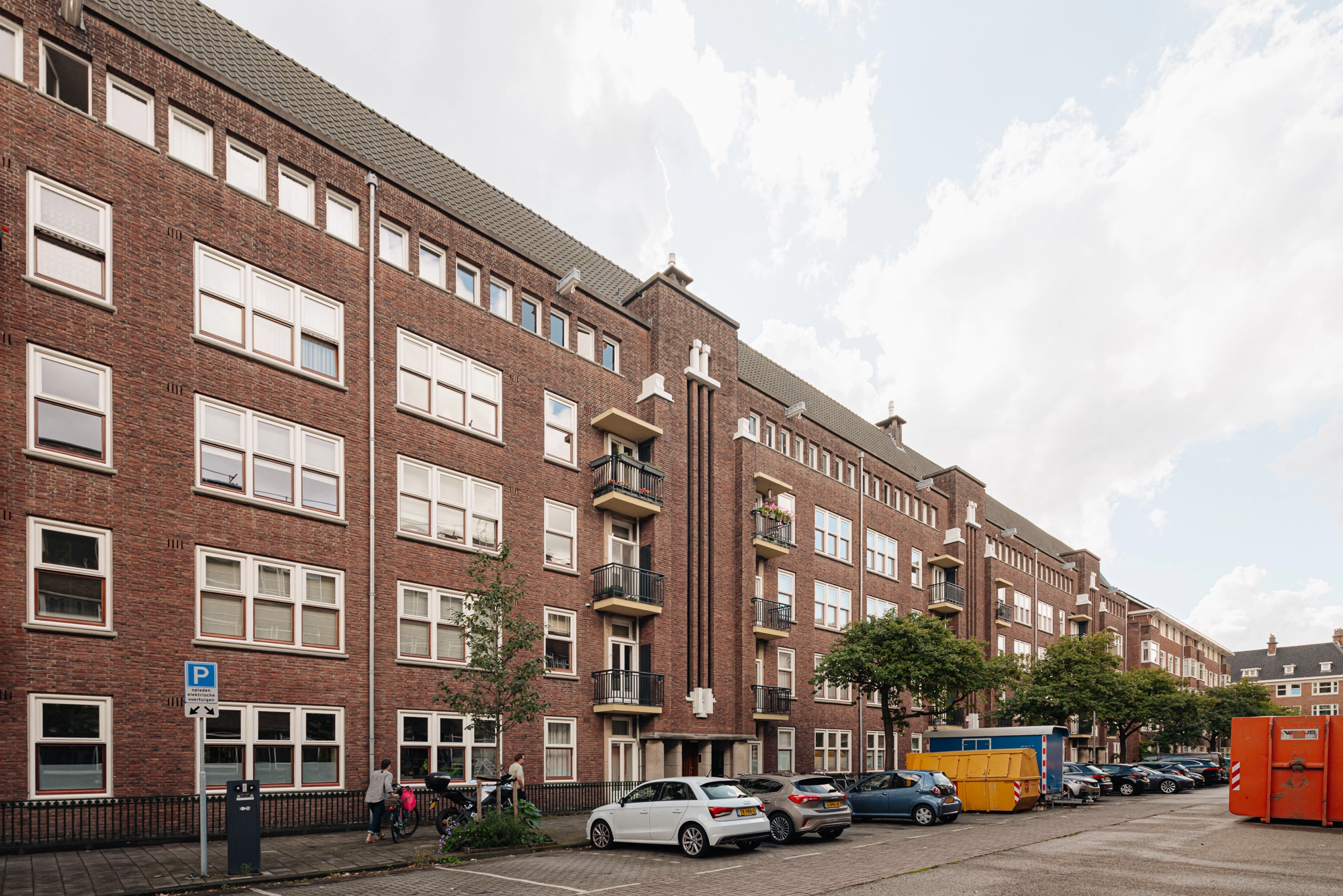
Courbetstraat is shown here in all its glory: a strict rhythm of red brick, vertical accents, and distinctive detailing that unmistakably belongs to the Amsterdam School. Architect J.J.B. Franswa designed the building with an eye for monumentality and craftsmanship. The façade is classically divided into a powerful central axis, flanked by symmetrically placed balconies and masonry ornaments. The entrance is a characteristic highlight within the whole. Two sturdy granite columns frame an imposing wooden door, in which the geometry of the Amsterdam School has been carried through to the smallest detail. The glass strips above and next to the door reinforce the sense of depth and layering. Above the entrance, a vertical pilaster rises, ending in white plaster accents that function as beacons in the façade. The play of repetition and variation is striking: windows, balconies, and brickwork alternate in a carefully composed rhythm. The narrow, elongated windows on the top floor provide a refined finish to the façade. The whole exudes a modest grandeur; a building that nestles convincingly into the streetscape without being loud. This architecture is more than decoration. It tells a story of urban identity, craftsmanship, and the belief in architecture as a shaper of the city.
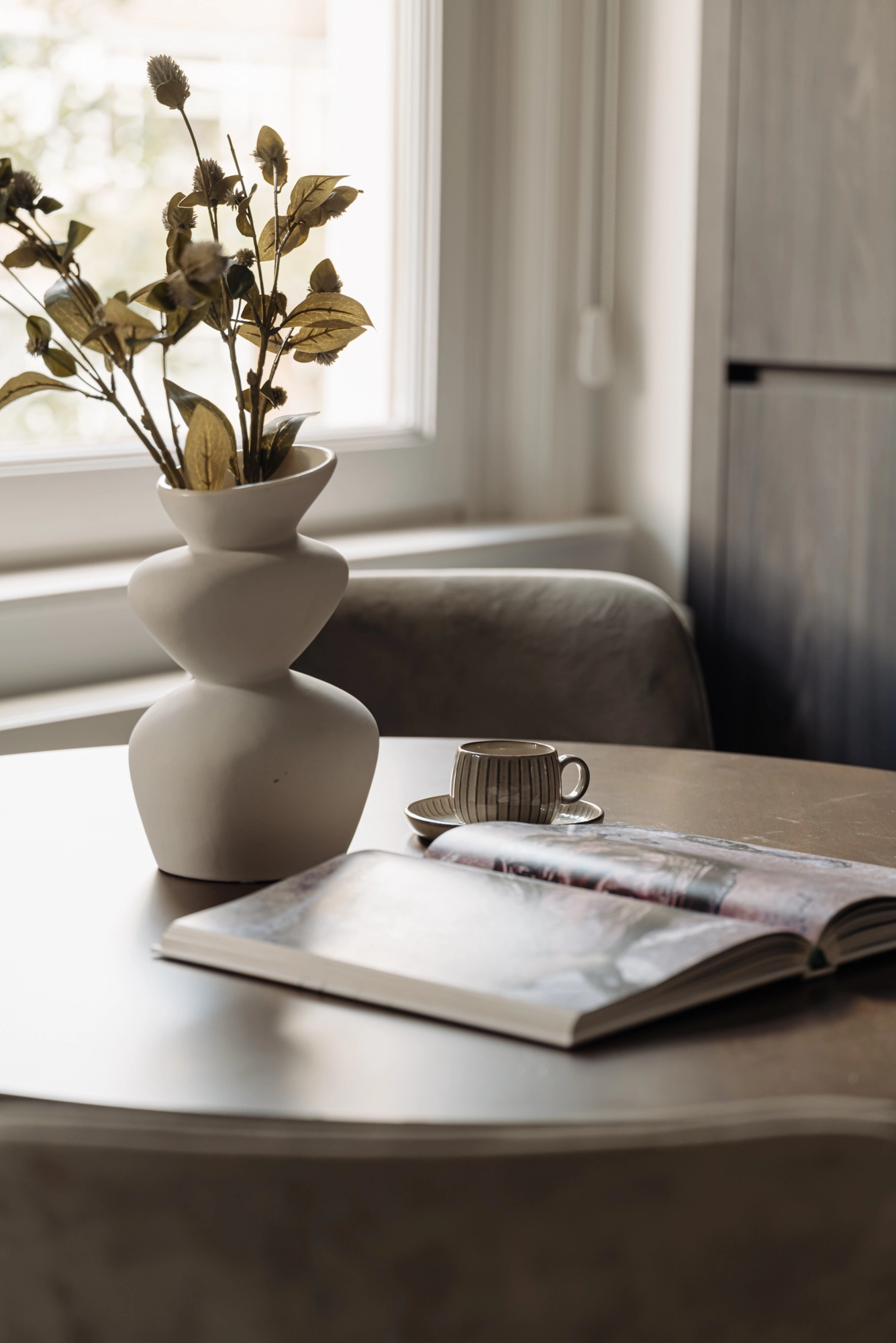
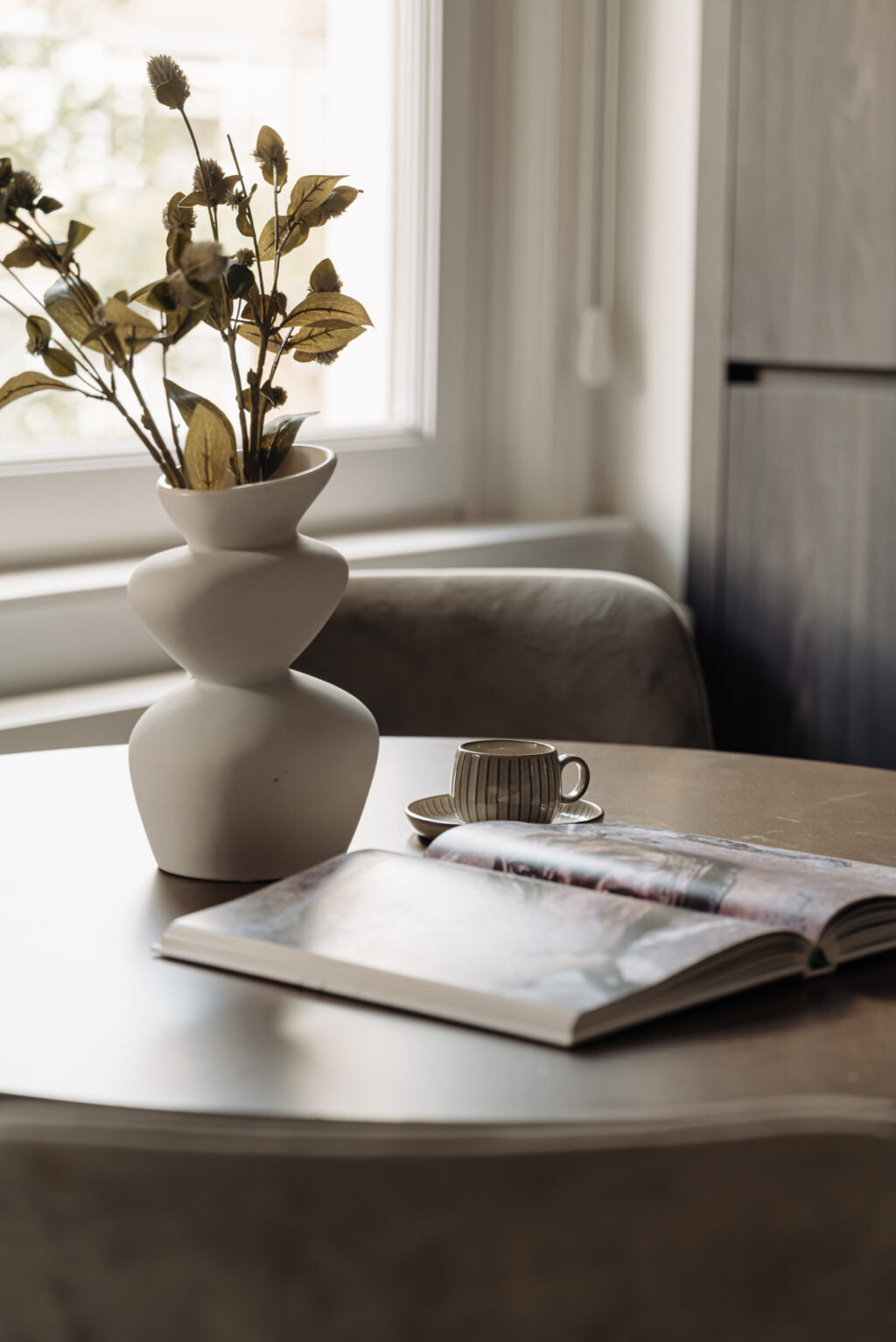
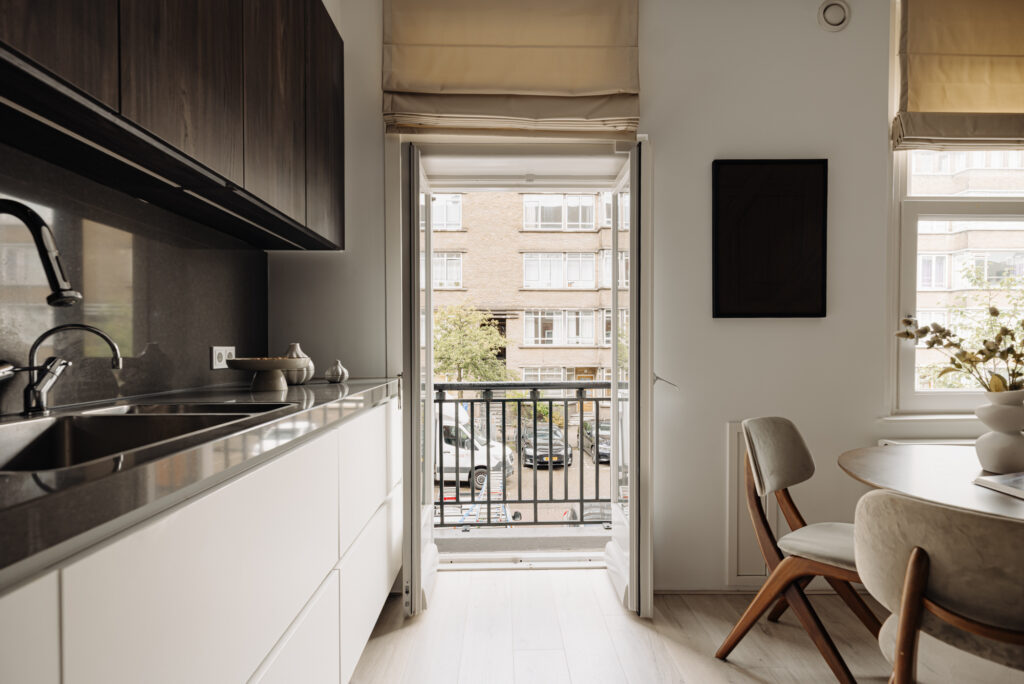
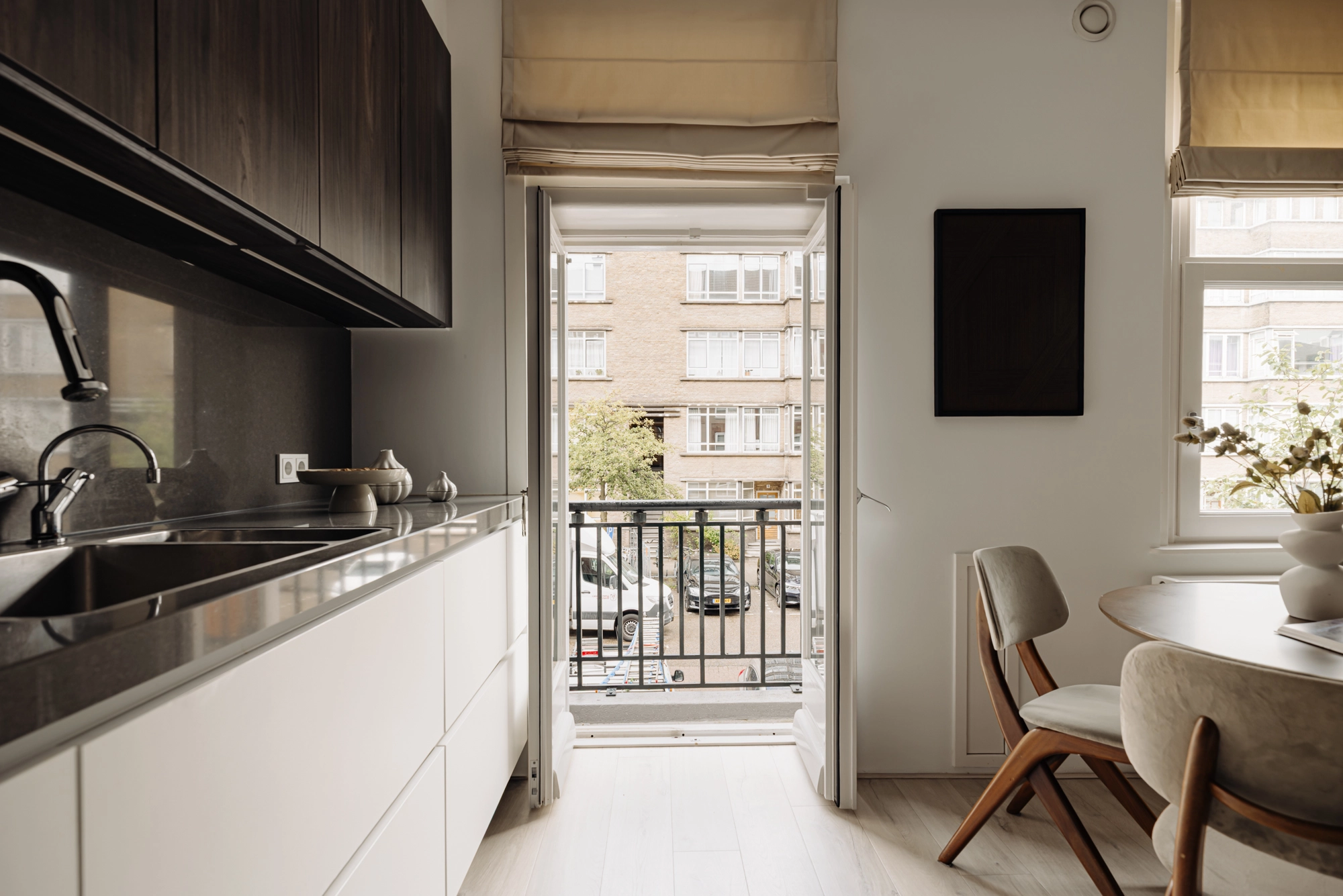
The living space at Courbetstraat 11-1 feels like a modest invitation from the moment you step inside. The living room is light, balanced, and serene: a place where tranquility and space come together effortlessly. The soft palette of walls and floors forms a clear canvas for the architecture, while the long line of sight towards the kitchen-diner creates depth and connection. On the street side, the room opens up to the outside via double doors, which not only let in light but also bring a subtle rhythm to the interior. The refined finish shows that attention to detail has been paid here. No excess, just precision. The kitchen is a fully-fledged space in its own right. Rich in tone, with dark wood veneer up to the ceiling, a black granite worktop, and sleek white base cabinets. The layout is not only functional but also aesthetically balanced. A subtle contrast between materials provides depth and warmth without weighing down the whole. At the round dining table, between two tall windows and French doors to the balcony, the space really comes to life. Here, daylight enters from two sides, and the interior naturally becomes part of the rhythm of the day. A soft transition between inside and outside, between cooking and living. The line of sight from the kitchen to the living room, and vice versa, makes this floor a coherent whole. Each space has its own character, but feels like part of the same story: thoughtful, calm, and balanced. As an extension of the apartment's functionality, the fourth floor, accessible by elevator, also has a lovely attic room of approximately 13 m² that can be used for multiple purposes, such as a work/guest/hobby room.
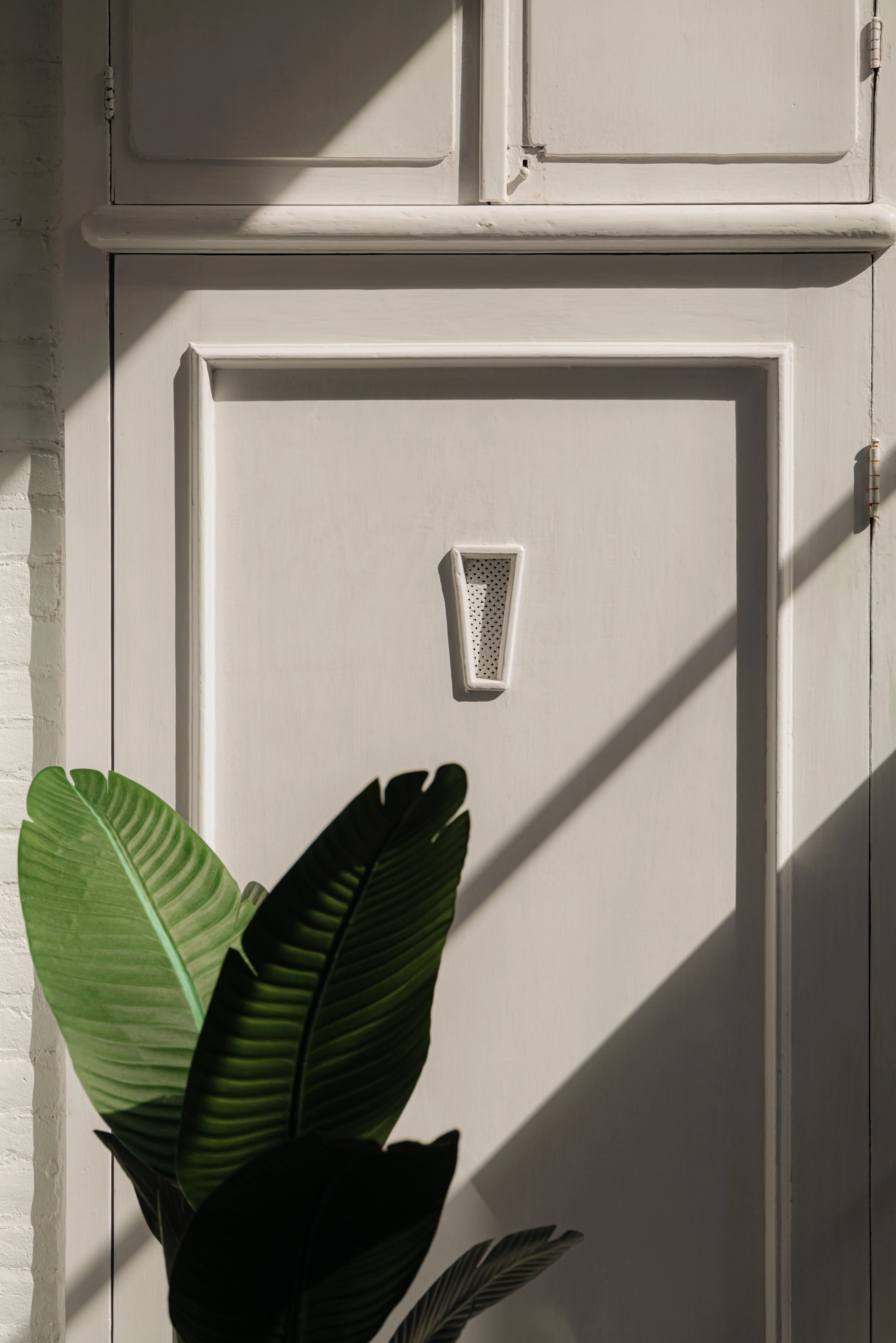
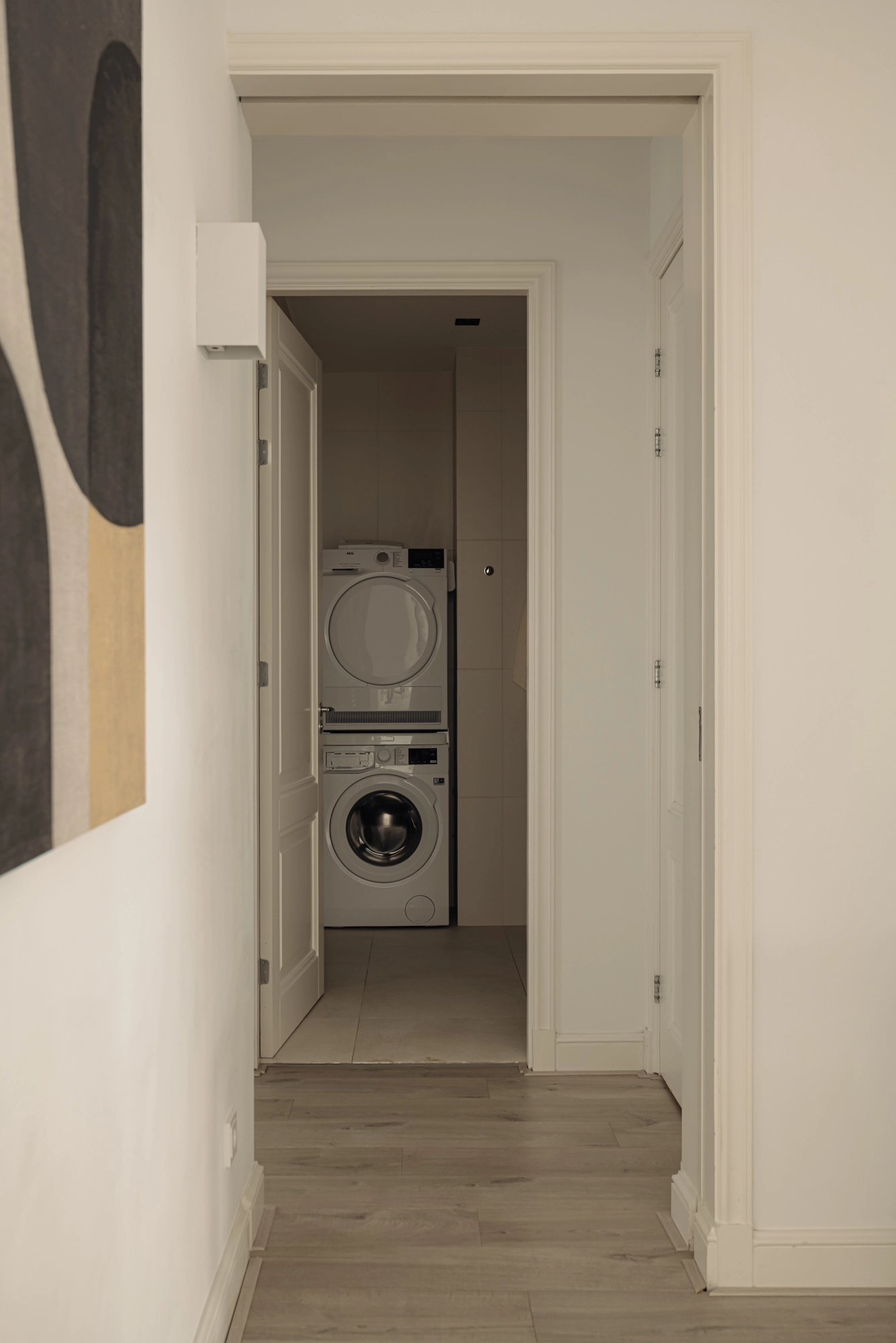
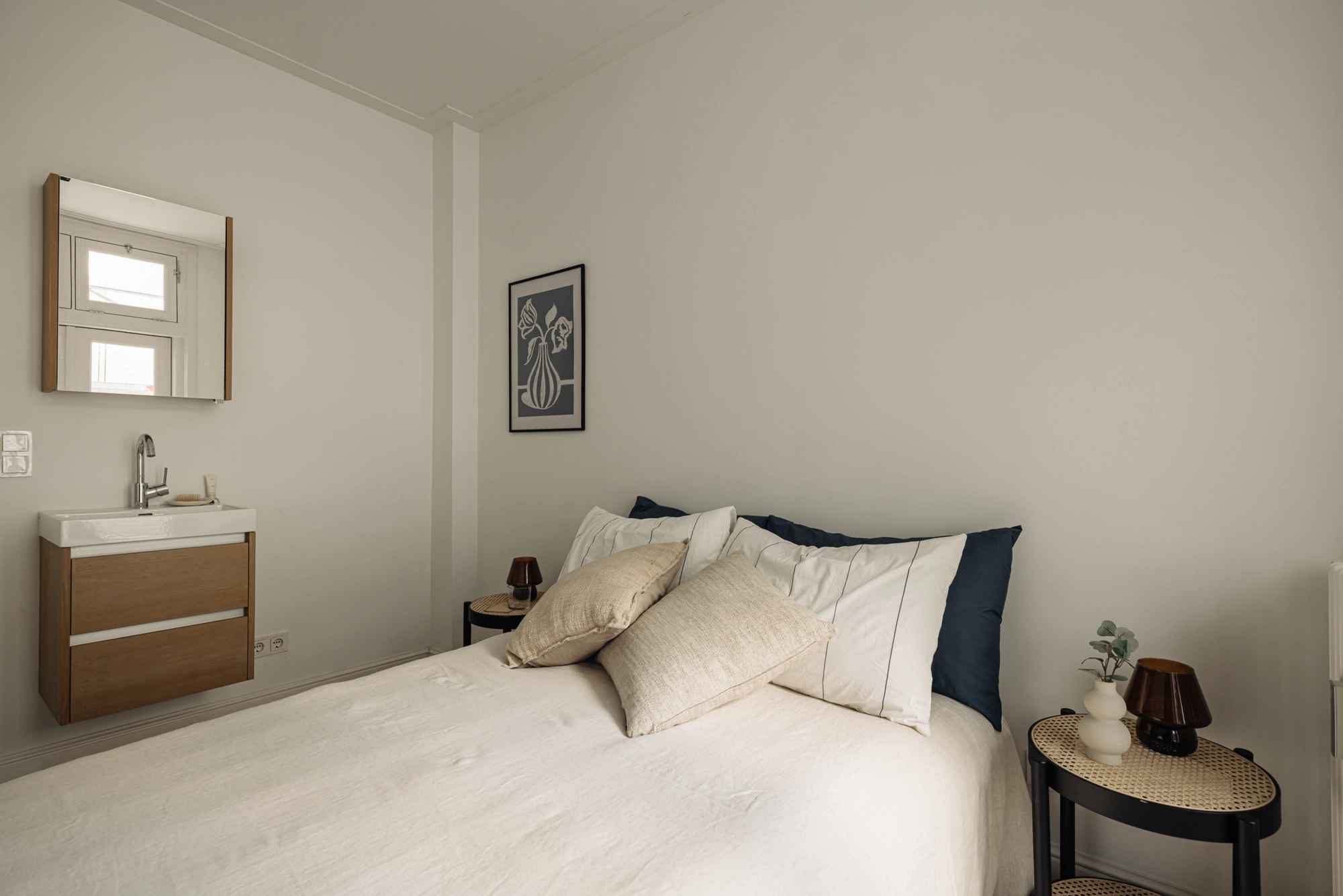
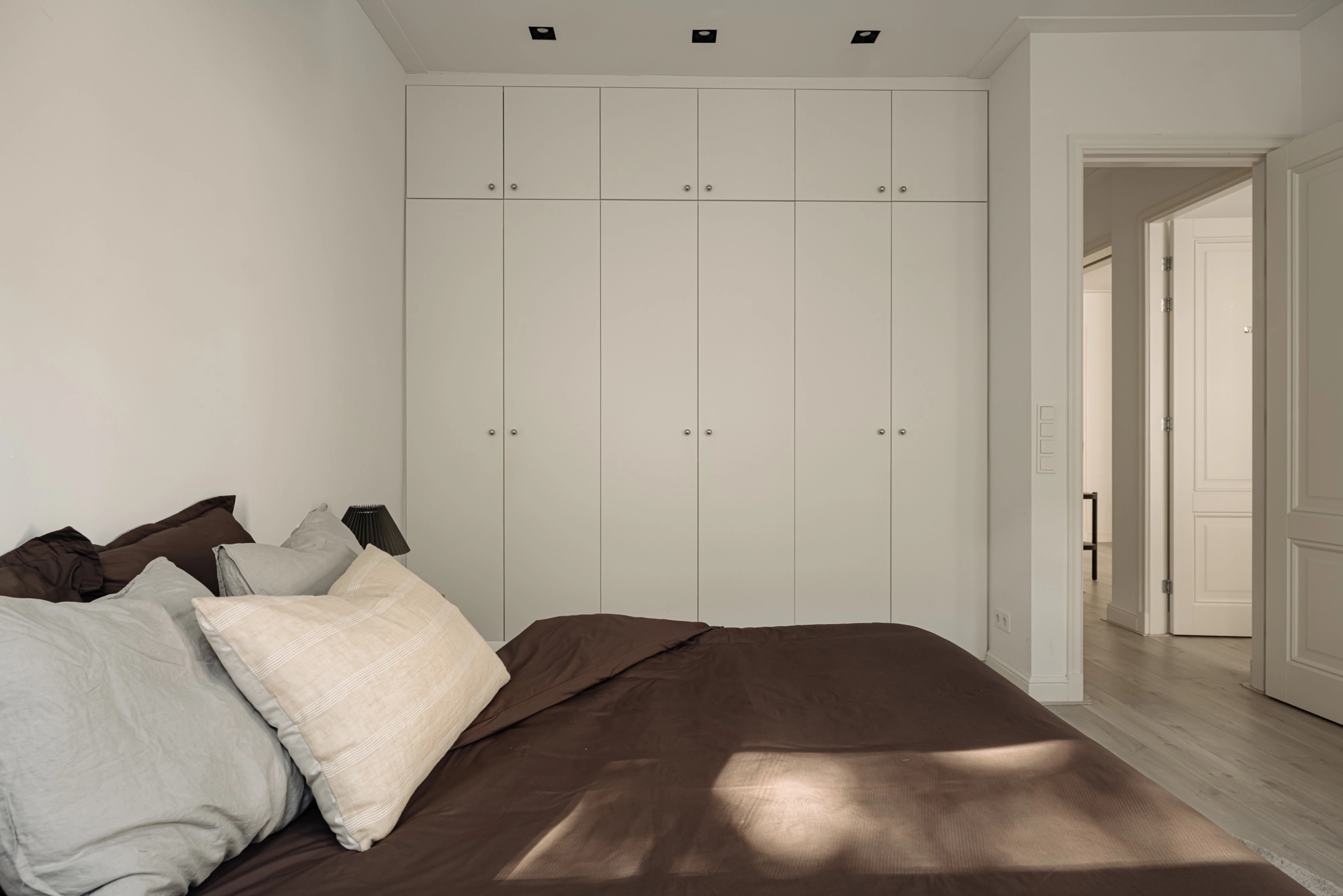
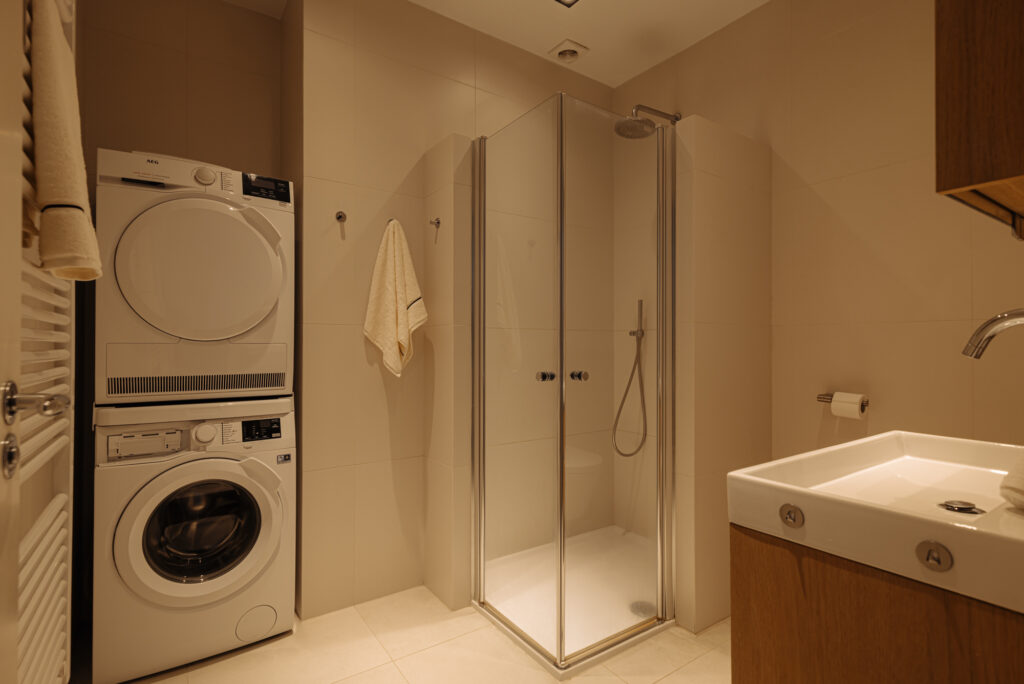
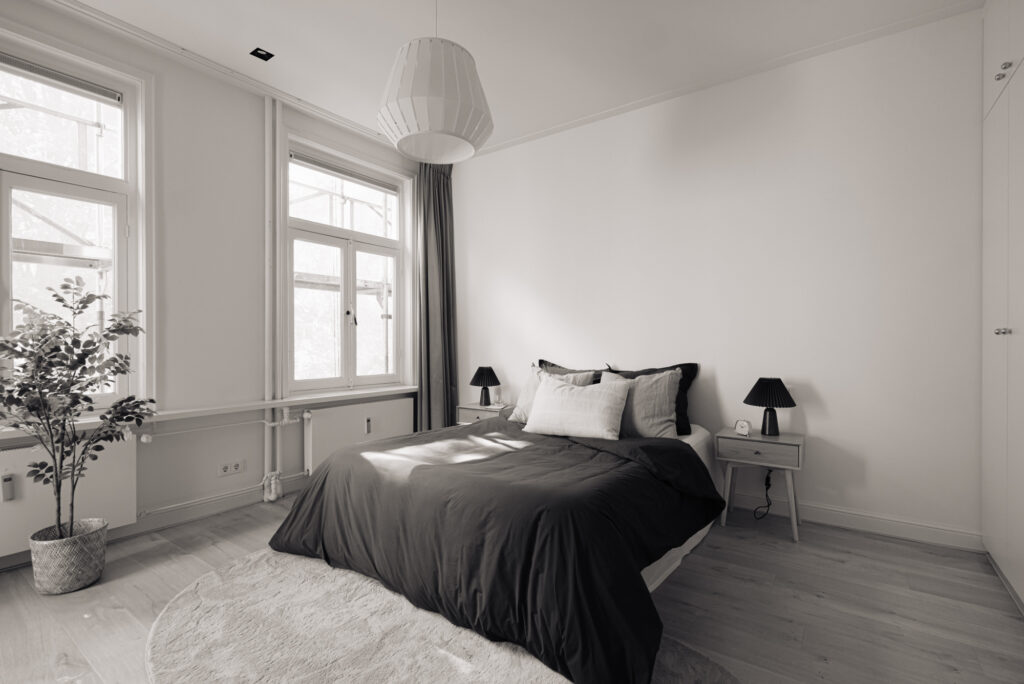
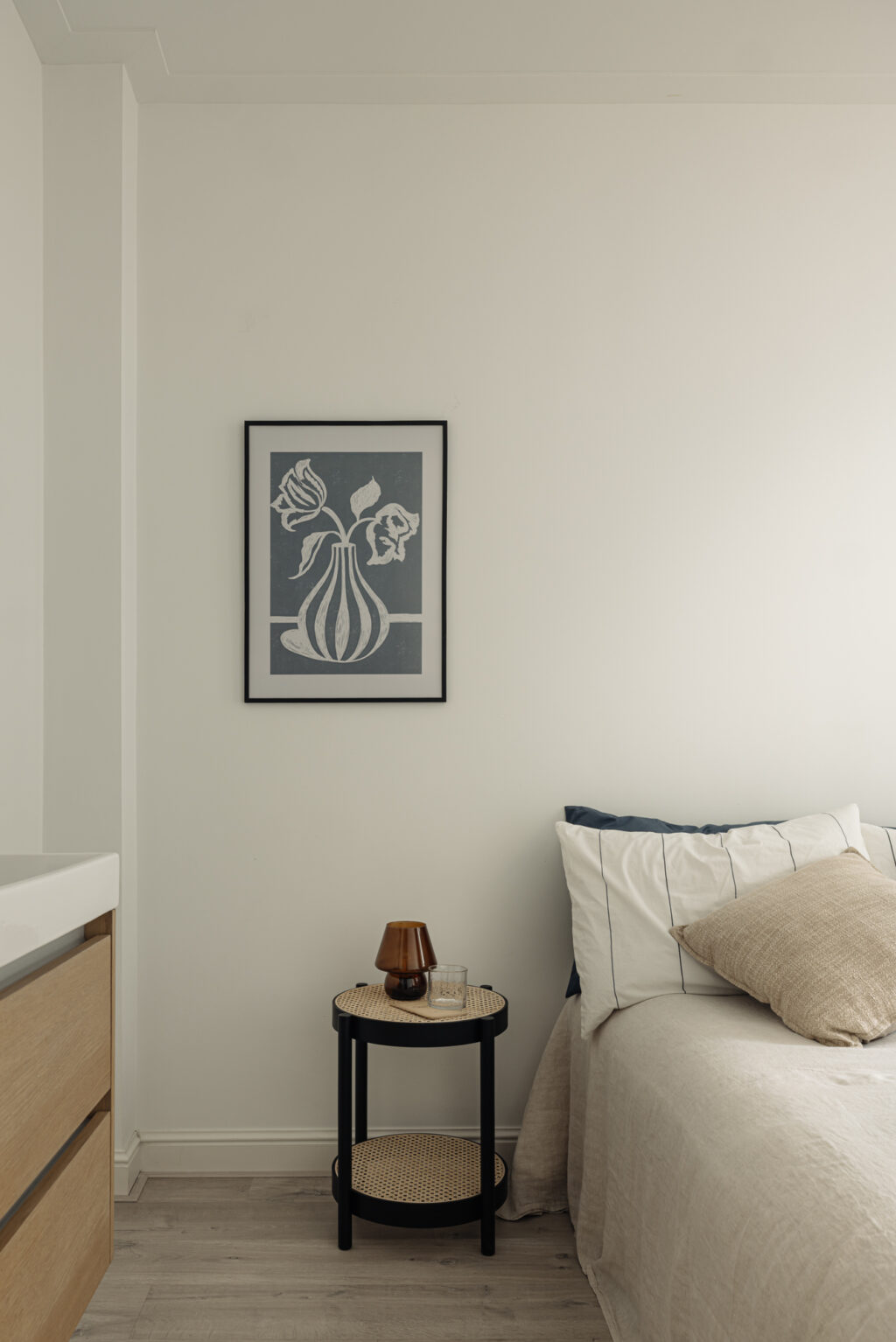
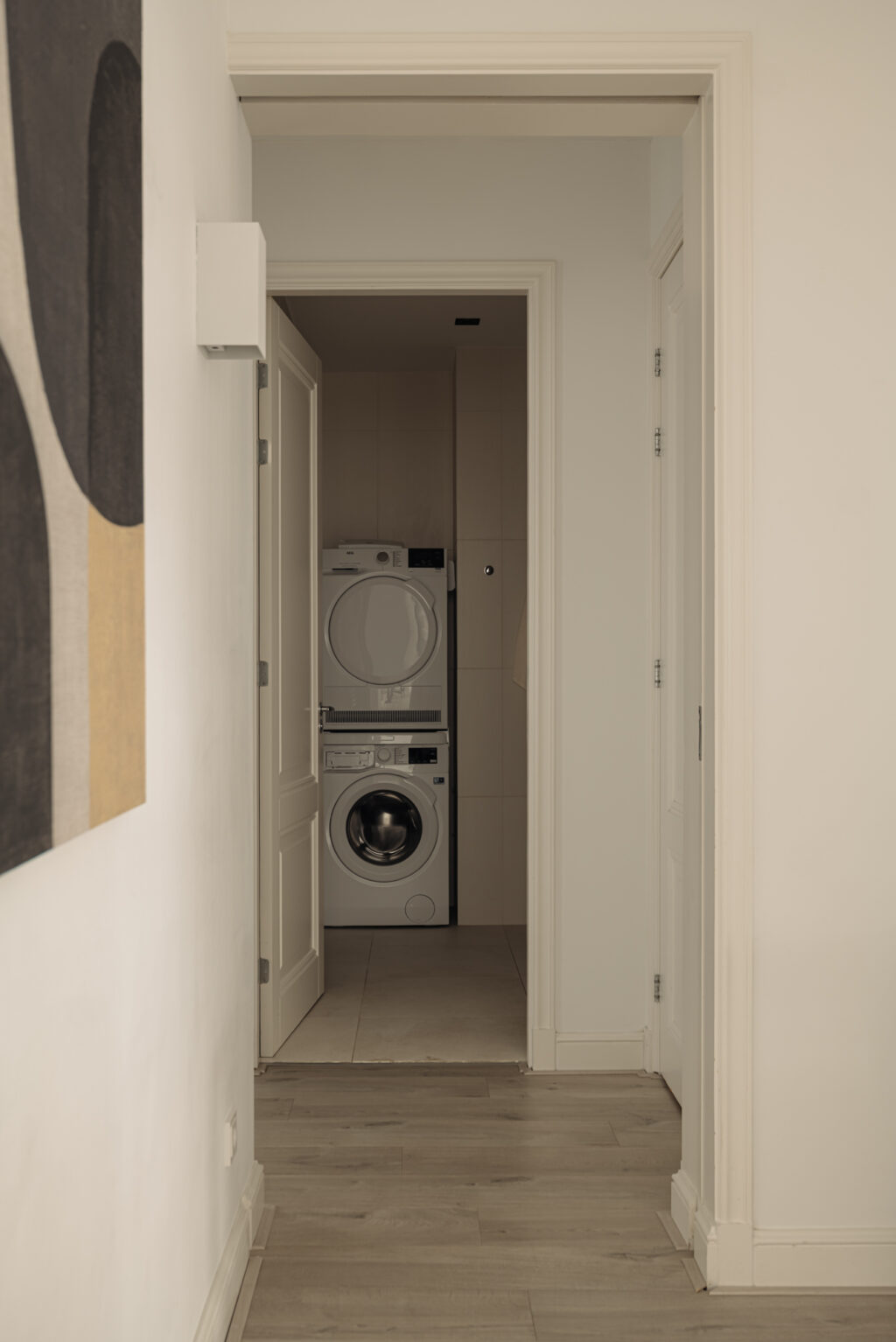
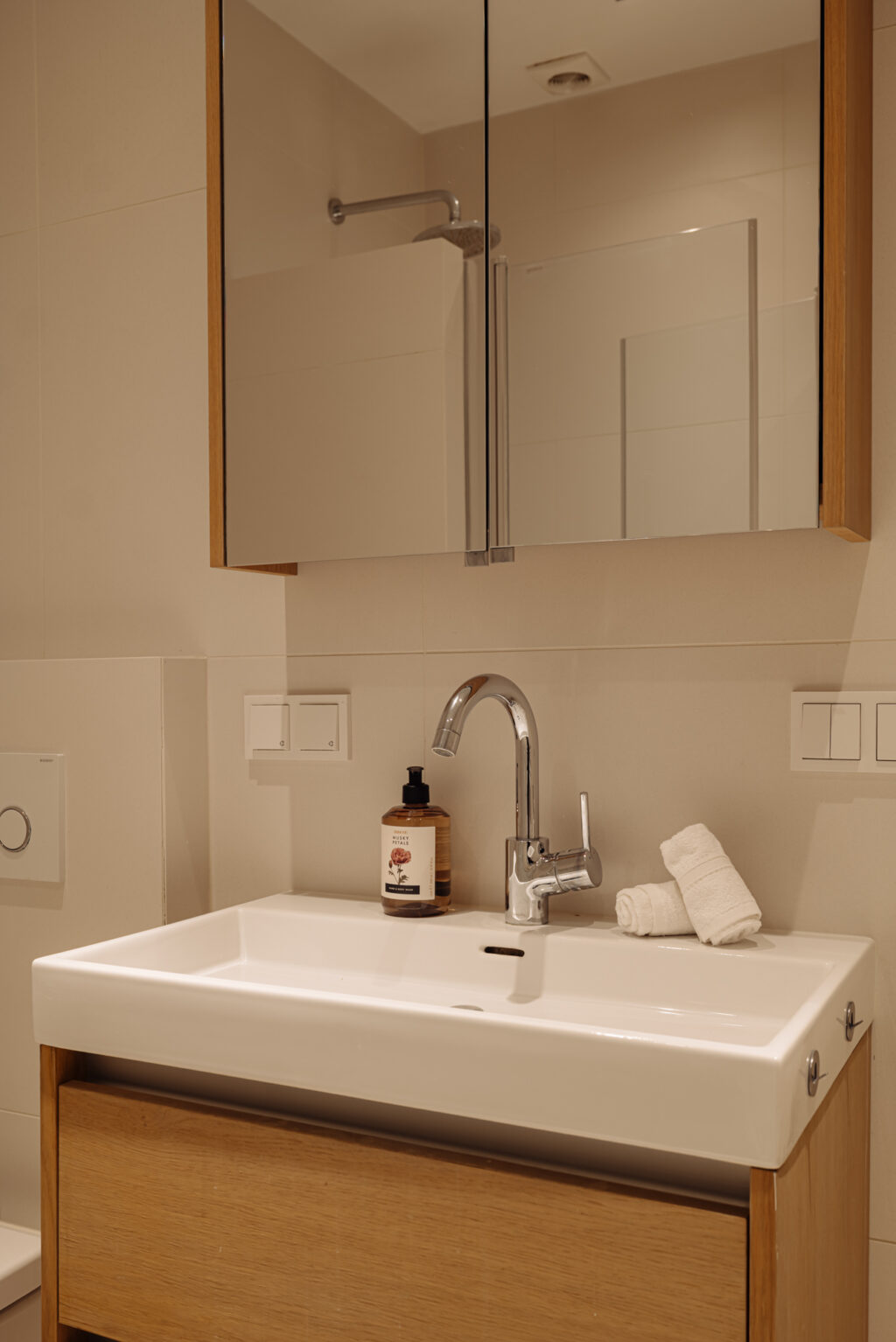
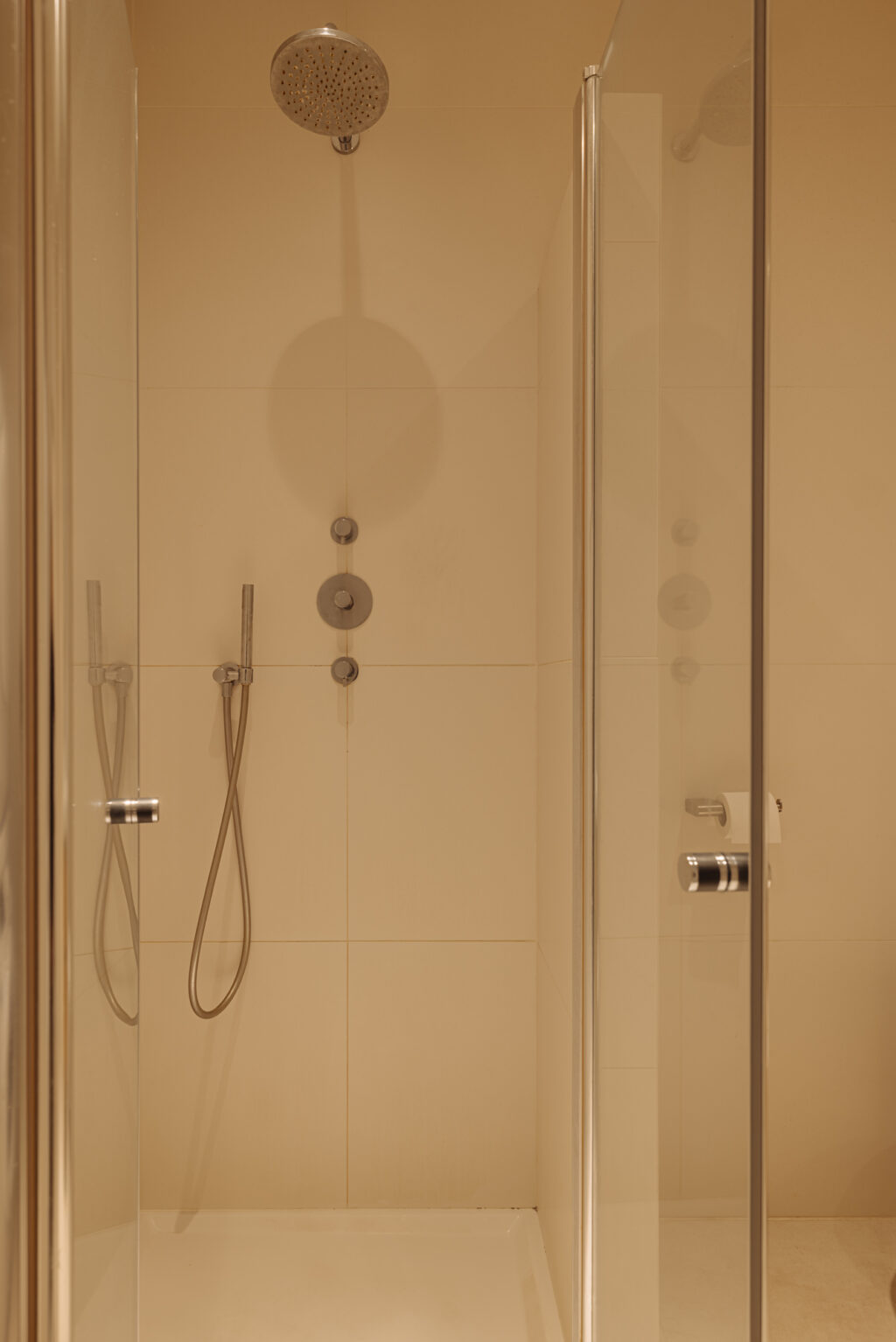
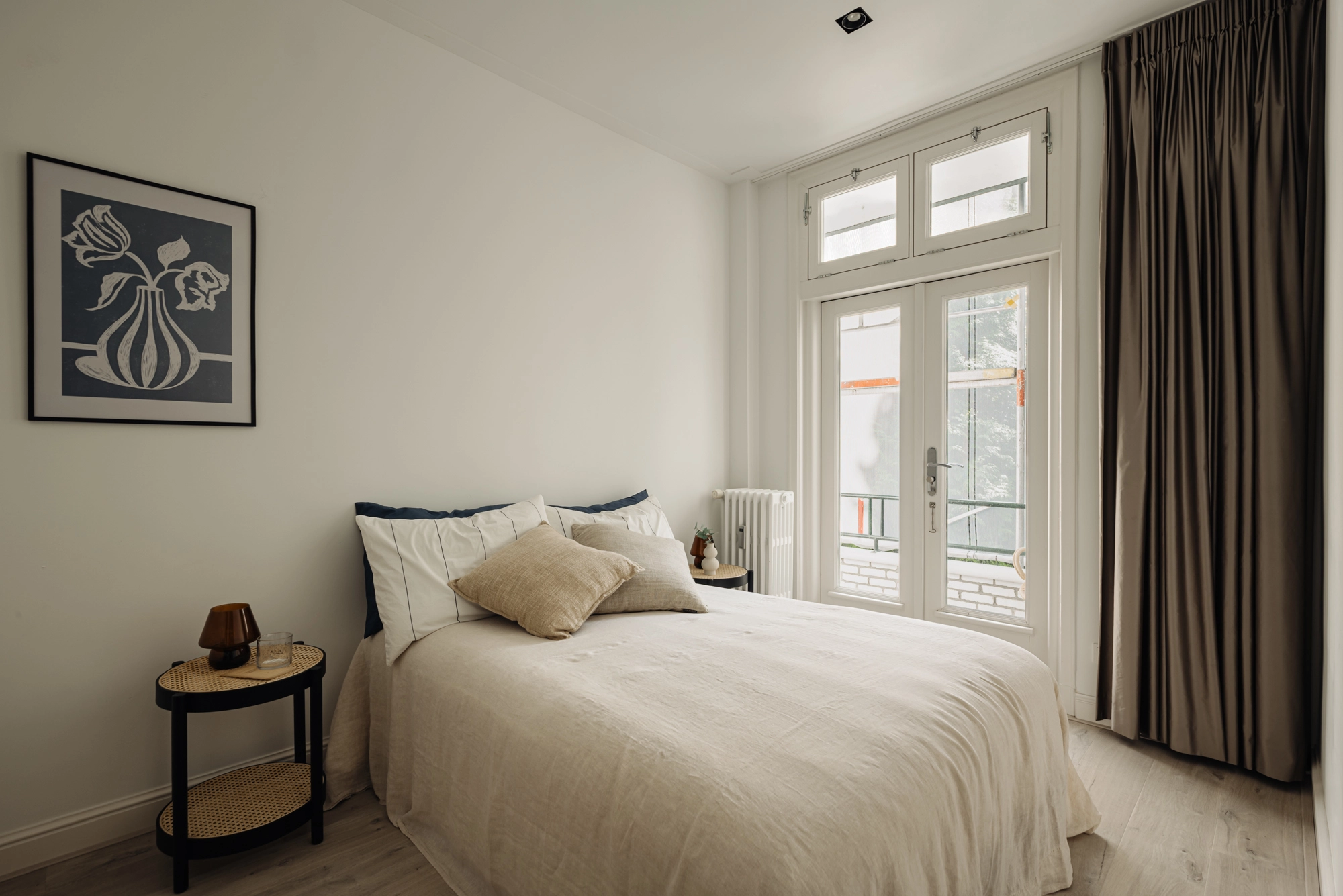
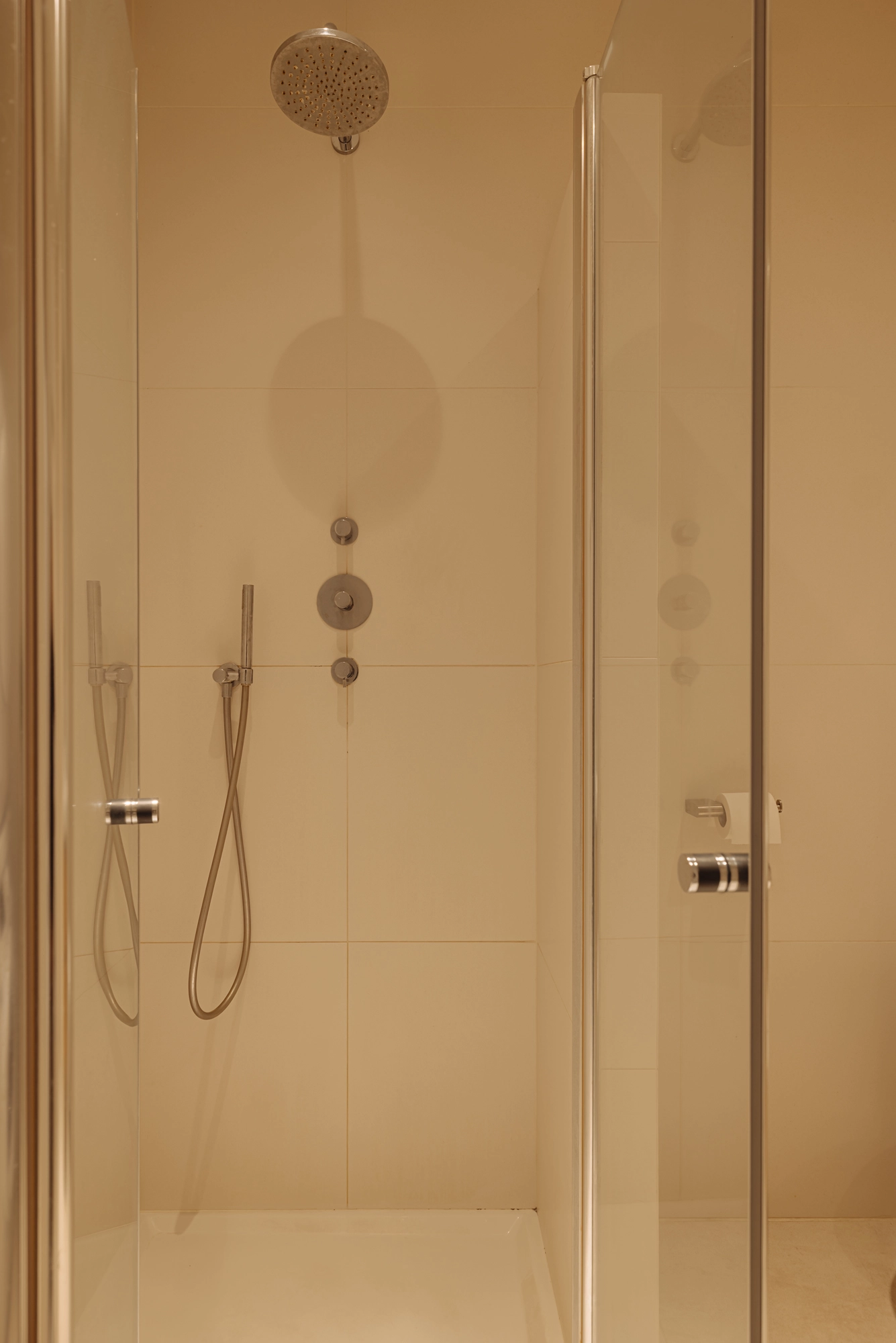
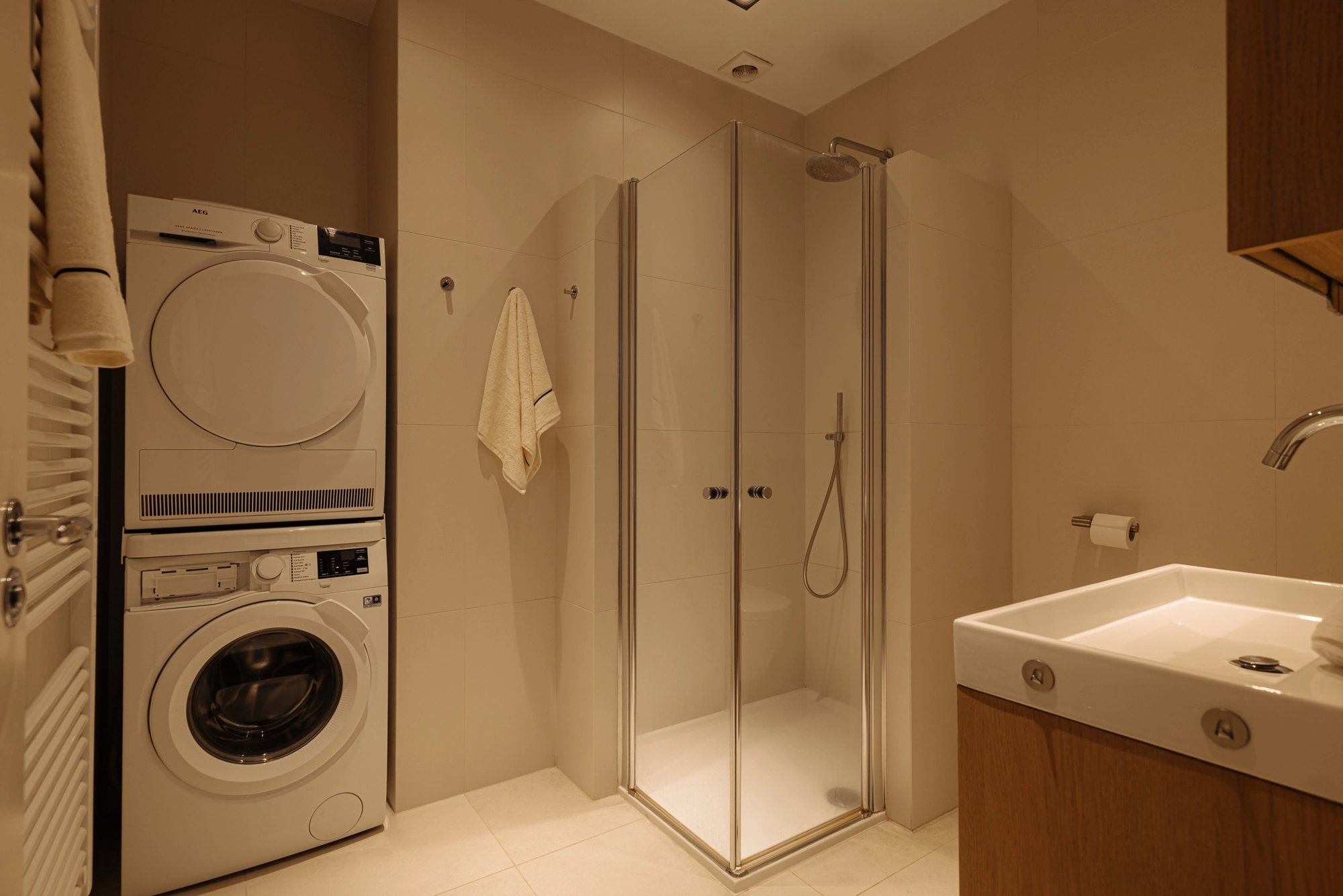
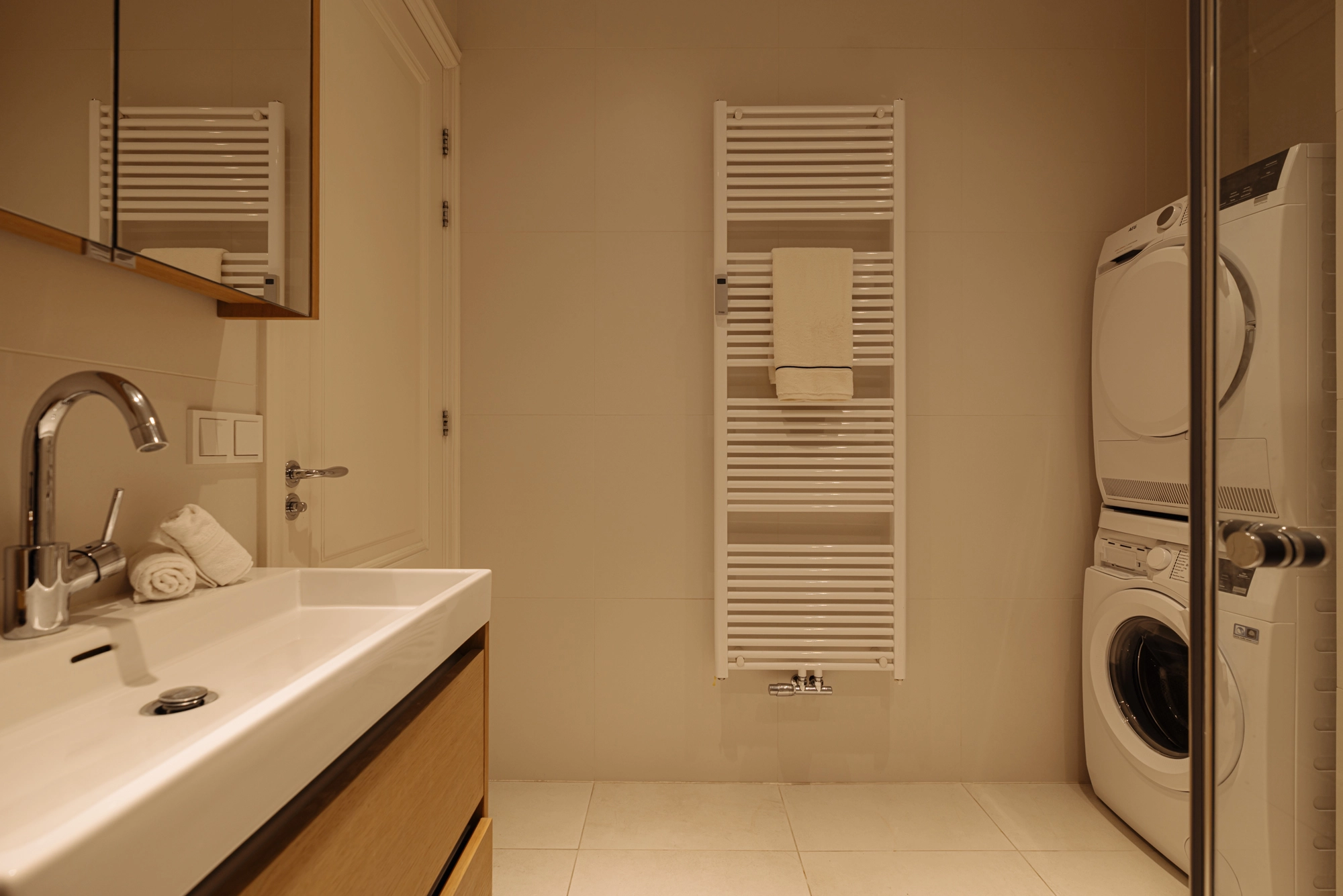
The bedrooms in this apartment exude the same tranquility and brightness as the rest of the interior. Large windows, high ceilings, and a calm finish create a soothing atmosphere in which day and night flow effortlessly into one another. The master bedroom at the rear is characterized by light flooding in across its entire width, combined with a generous, custom-made built-in wardrobe that blends seamlessly into the wall. This creates a tidy whole and enhances the feeling of space. The second bedroom is Immediately the balcony and, thanks to French doors, not only offers daylight but also a direct connection to the outside. The presence of a private sink underscores the practical layout of this space, without compromising on aesthetics. The bathroom is understated, modern, and warm. Large sand-colored wall and floor tiles provide tranquility and unity, while the wooden furniture and chrome accents add contrast and refinement. The walk-in shower with glass walls looks spacious and bright, and the wall radiator and washing machine setup make the whole thing functional and complete. Everything on this floor has been designed with a sense of comfort, simplicity, and tranquility. Sleeping and bathing go hand in hand with silence and softness here.
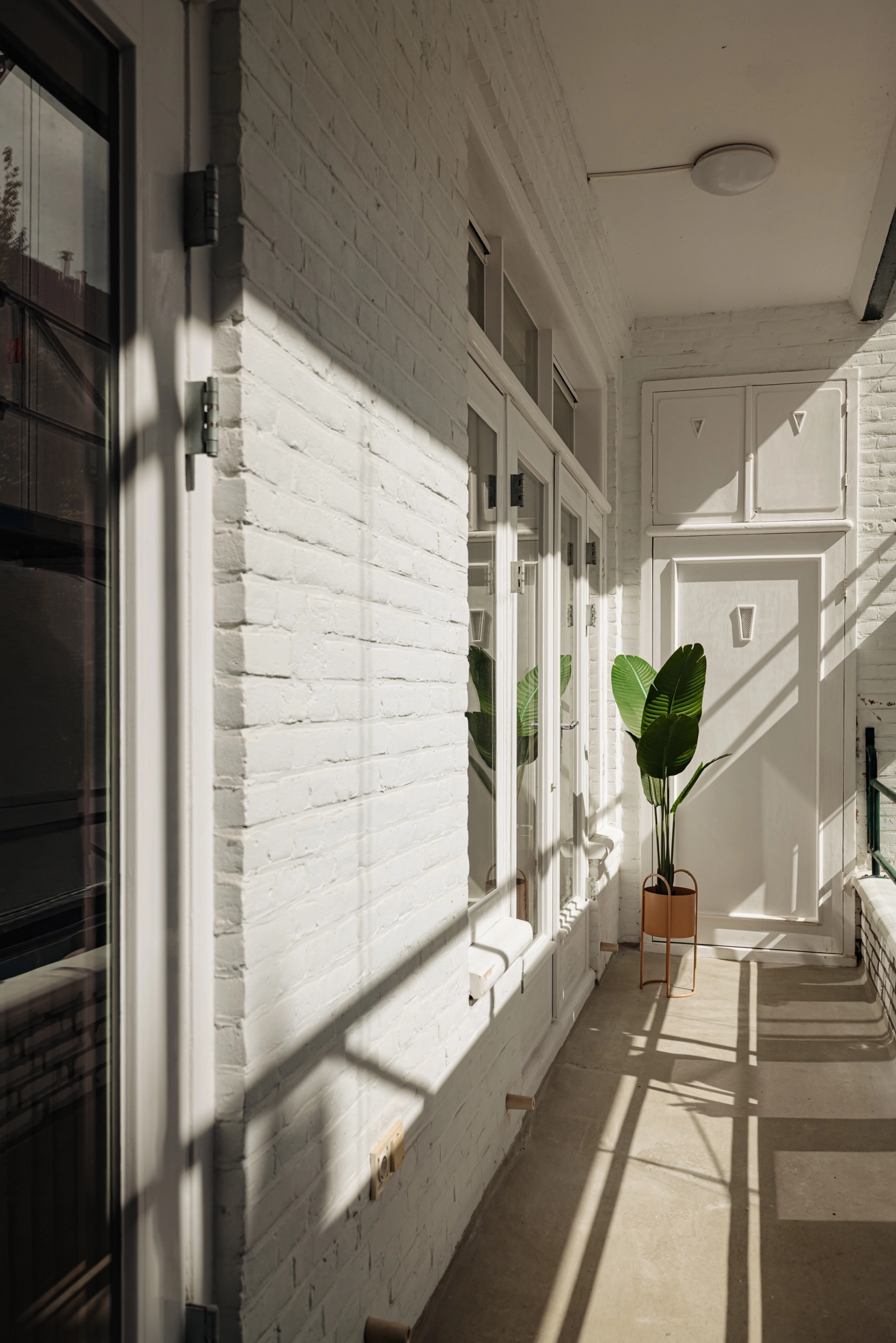
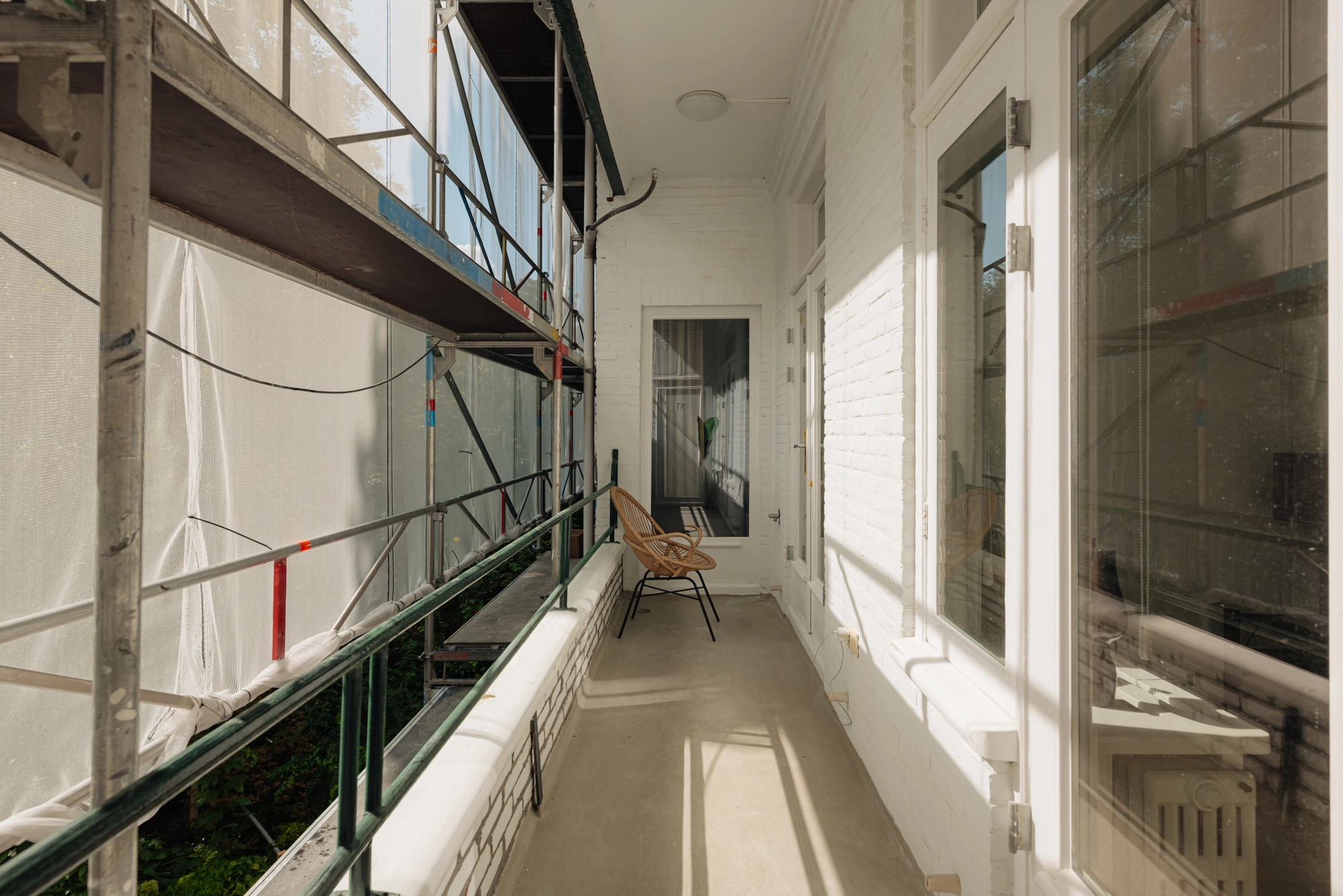

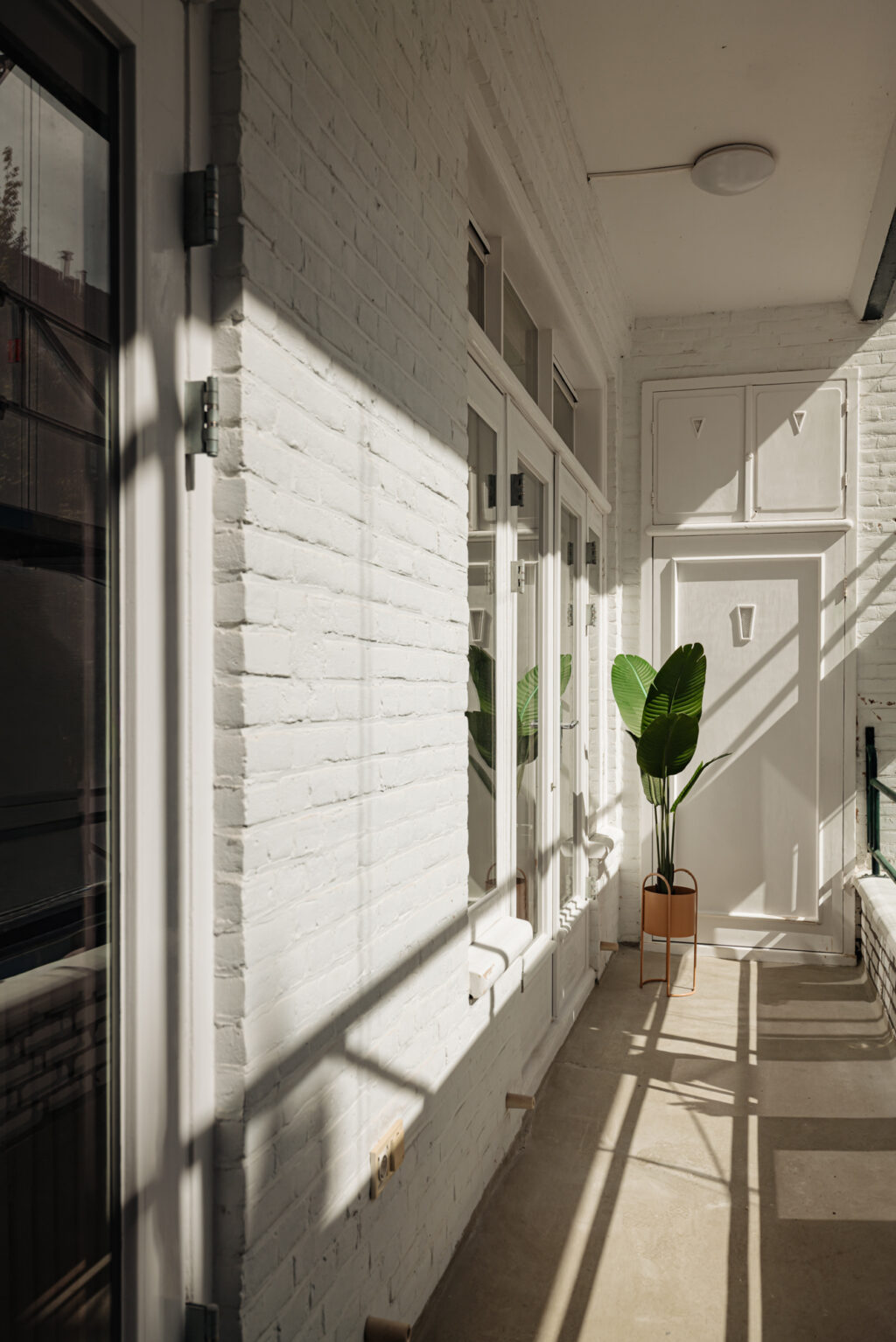
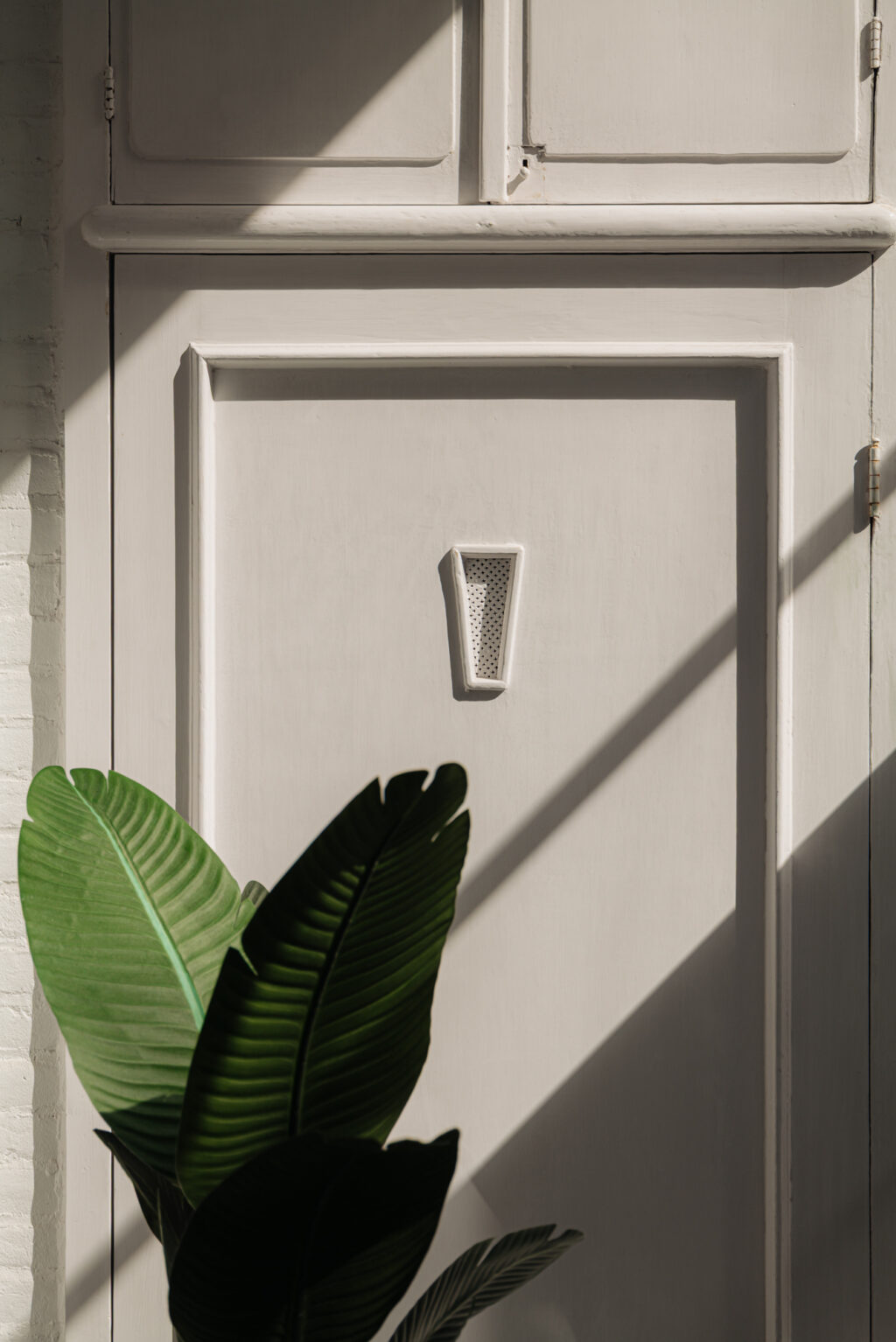
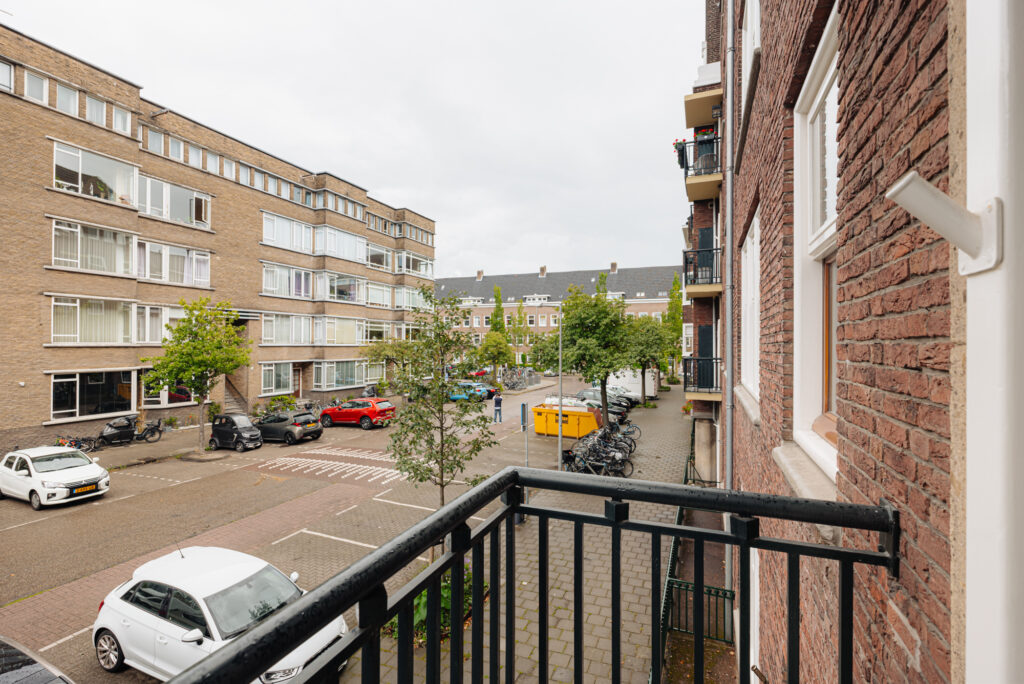
This apartment offers outdoor space with its own character at both the front and rear. On the street side, the kitchen opens onto a charming French balcony, an inviting place to watch life on Courbetstraat. Here you can look out over the quiet, tree-lined street with its characteristic 1930s architecture and gentle urban rhythm. However, the surprising gem is at the rear: a deep balcony across the full width of the house, facing west. Thanks to its location on the inner garden side, it is quiet, sheltered, and remarkably light here. The afternoon and evening sun casts patterns on the white brick wall, giving the space a Mediterranean softness. The overhang and open balustrade create an airy atmosphere, while the balcony retains a distinct enclosed feeling. Whether you opt for morning coffee with a view of the city or a glass of wine in the evening sun, the outdoor space here is not an addition, but an essential part of everyday life.
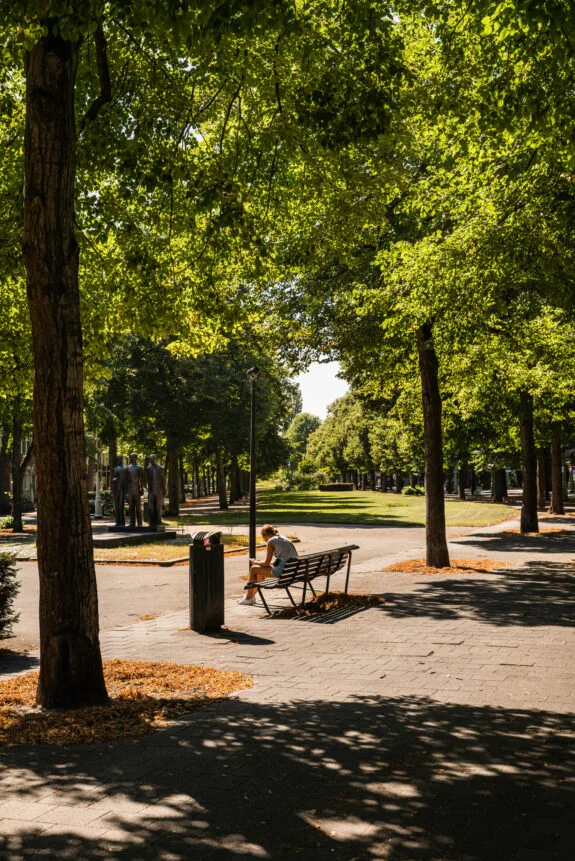
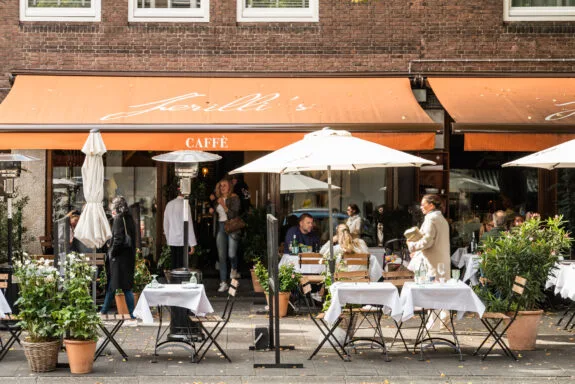
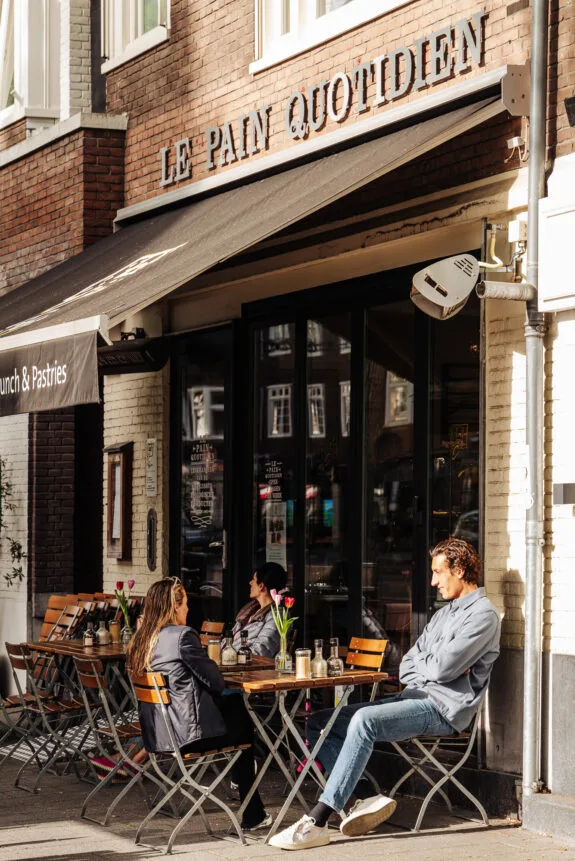
Every day, residents of the Beethovenbuurt neighborhood enjoy the urban design stamp that architect Berlage left on the neighborhood in the last century. His design included avenues, green spaces, and varied buildings. From villas and apartment blocks to mansions, this 1930s neighborhood, which is almost entirely surrounded by water, is characterized by its spacious residences the Amsterdam School style. The facade stones and bridge sculptures by Hildo Krop, who was awarded the honorary title of City Sculptor of Amsterdam, also lend the neighborhood cachet. In Beethovenstraat and the shops on Olympiaplein, the coffee bars and various lunch spots and restaurants now give the neighborhood a young and dynamic character. In addition, this street has a high-quality selection of bakeries, fishmongers, butchers, patisseries, and wine shops. On Olympiaplein, you will find the bakery Le Fournil, Fromagerie L'Amuse, and, more recently, Coffee District. On Marathonweg, the butcher's shop Zikking is located five minutes away. On Fridays, there is a sophisticated organic market on Minervaplein. The wide avenues and greenery of Beatrixpark, with its modern sculptures and old trees, create a feeling of space and are ideal for sports and relaxation. The neighborhood is known for its good primary and secondary schools and its convenient location near the Ring and Amsterdam Zuid station.
Available
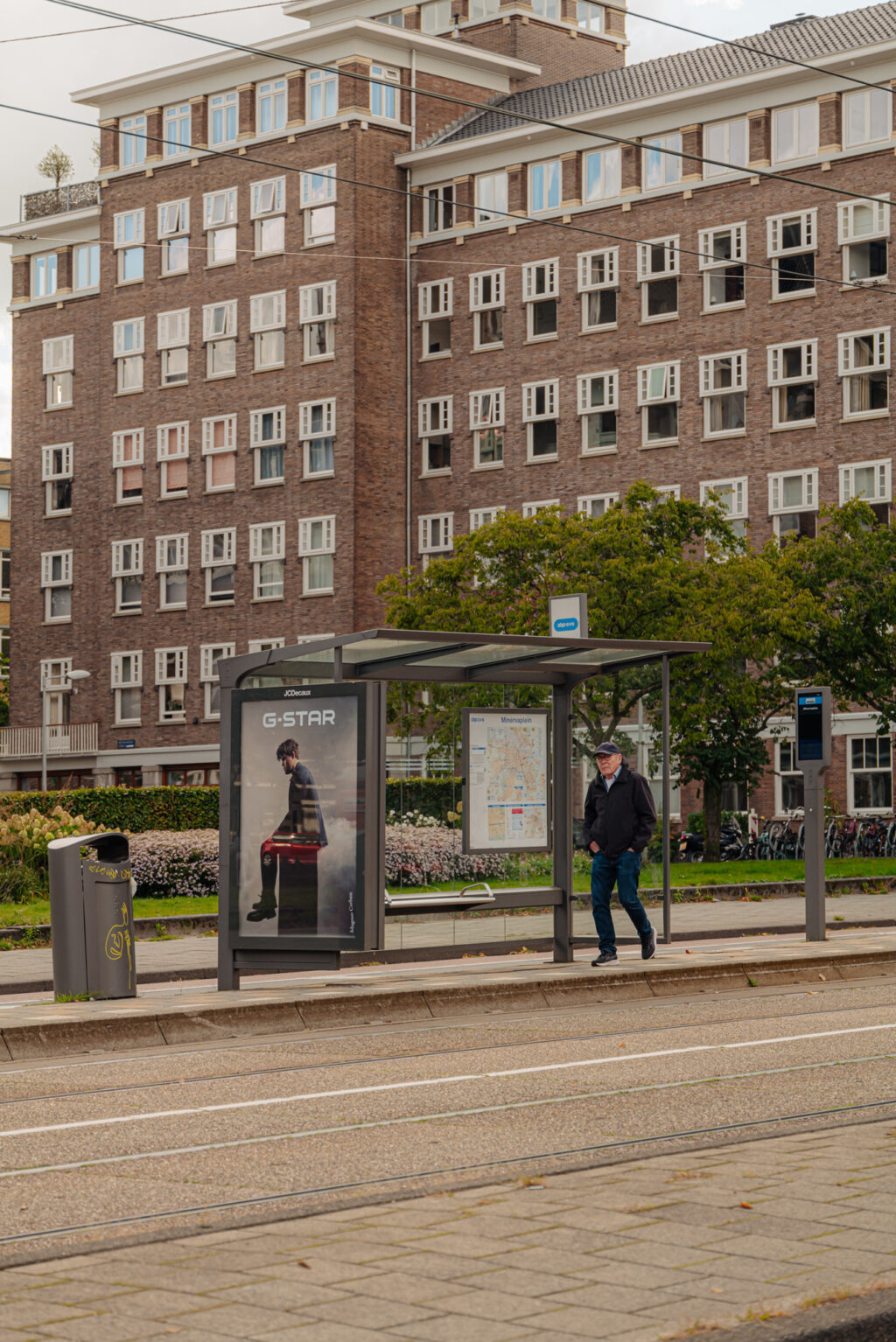
Courbetstraat 11 is easily accessible by bicycle, car, or public transport. The A10 ring road can be reached within 5 minutes by car via exit S108 (Oud-Zuid) or S109 (RAI), providing quick connections to the rest of the city and the region. Within walking distance are stops on Stadionweg, Minervaplein, and Olympiaplein, where various tram and bus Rooms. Trams 5 and 24 take you directly to the VUmc, Museumplein, and Amstelveen, among other destinations. Bus connections offer direct routes to Sloterdijk Station and Zuid Station. Station Zuid is only a 5-minute bike ride away and is an important hub for trains, metros, and regional transport, including a fast direct connection to Schiphol Airport. For those who work in the city or travel a lot, the location is ideal.
Parking in
Parking is possible via a permit system on public roads (permit area Zuid 2.2).
With a parking permit for Zuid 2.2, you can park in Zuid-1, Zuid-2, and Zuid-8. A parking permit for residents costs €192.81 per 6 months. There is currently no waiting list for this permit area. A second parking permit costs €482.03 per 6 months. (Source: Local authority , September 2024).
1077 CV Amsterdam
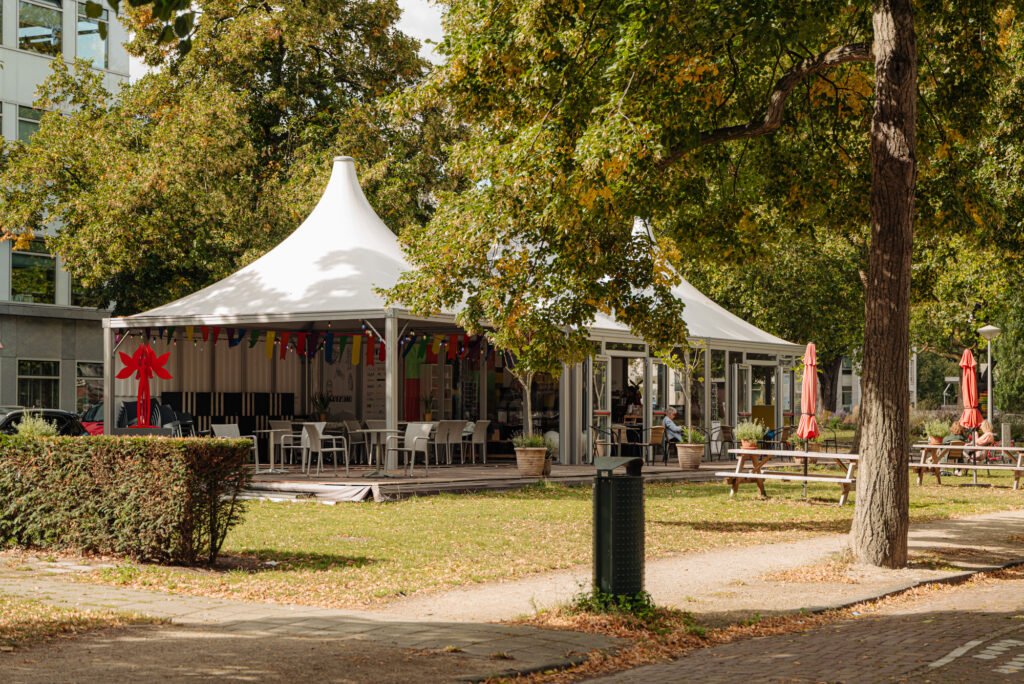
The Coffee District
Owners Adil Loukane and Rosa Loukane started with a hole-in-the-wall coffee shop in a fashion store in the South. When the store closed its doors, Adil and Rosa seized their opportunity and decided to open their own coffee bar. They now have multiple locations. The coffee is made with a proprietary blend roasted by Lot Sixty One. They also offer sweets such as the now-famous cinnamon buns and banana bread.
1076 LP Amsterdam
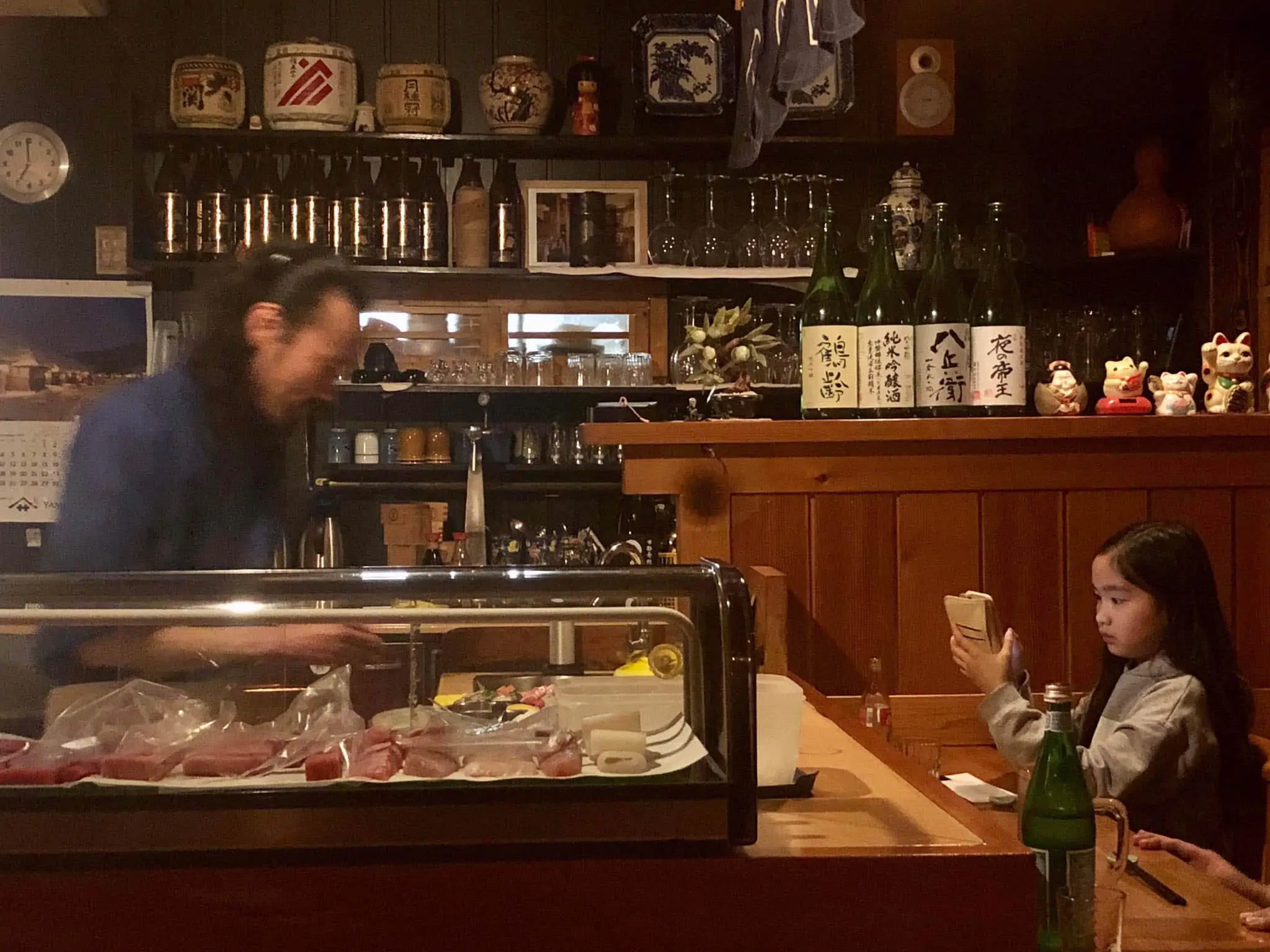
Umeno
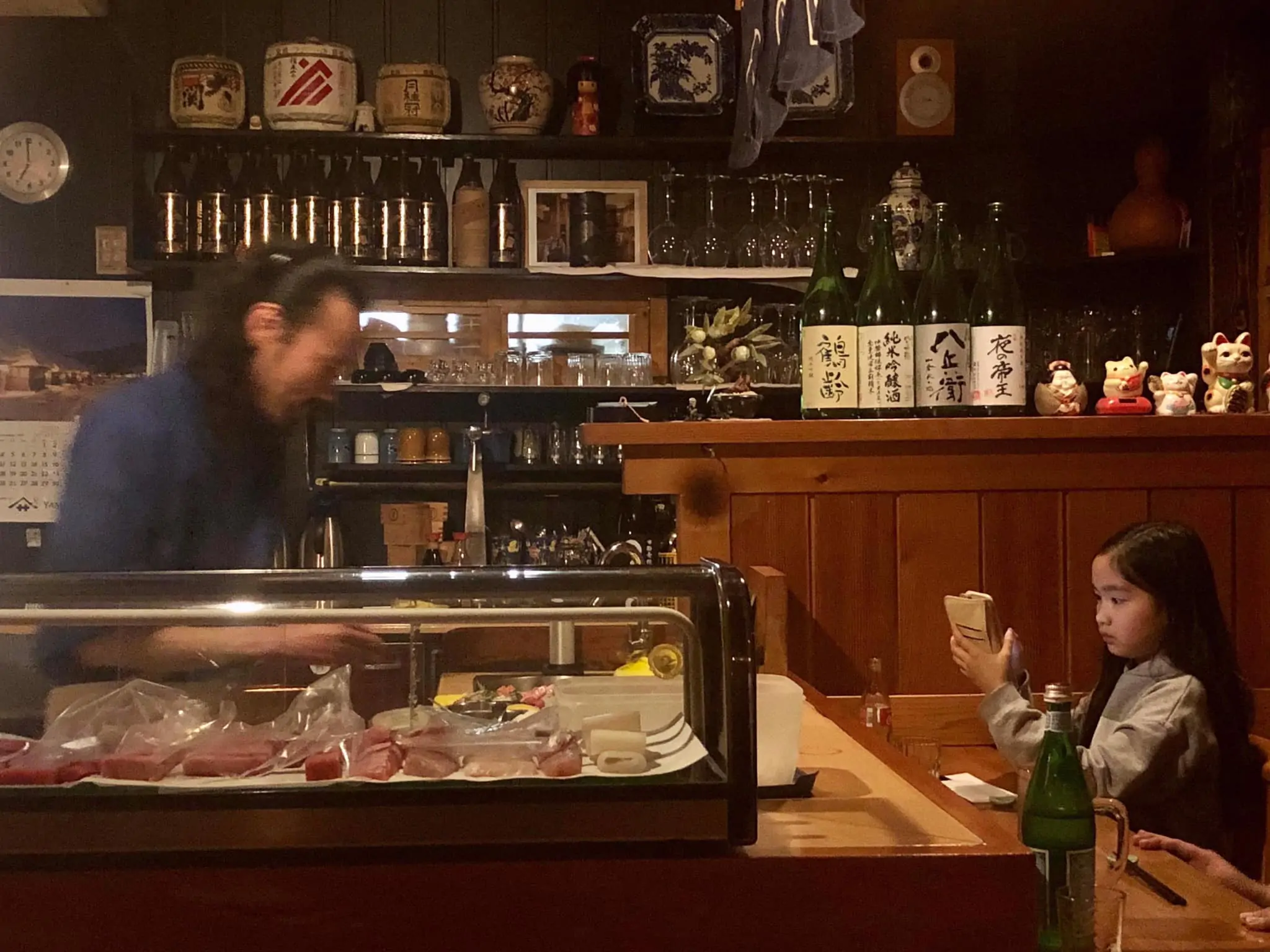
Umeno is one of the oldest Japanese restaurants in Amsterdam and is beloved by its regular local guests. As soon as you step inside, you are greeted by an intimate space with traditional Japanese authenticity, created by the handmade wooden interior, the shamisen and shakuhachi music, and the enormous hospitality of Ayumi and Atsuhito Hosono. The nigiri sushi is highly recommended, as the quality of the fish is excellent.
1077 JK Amsterdam
Wine Bar QV
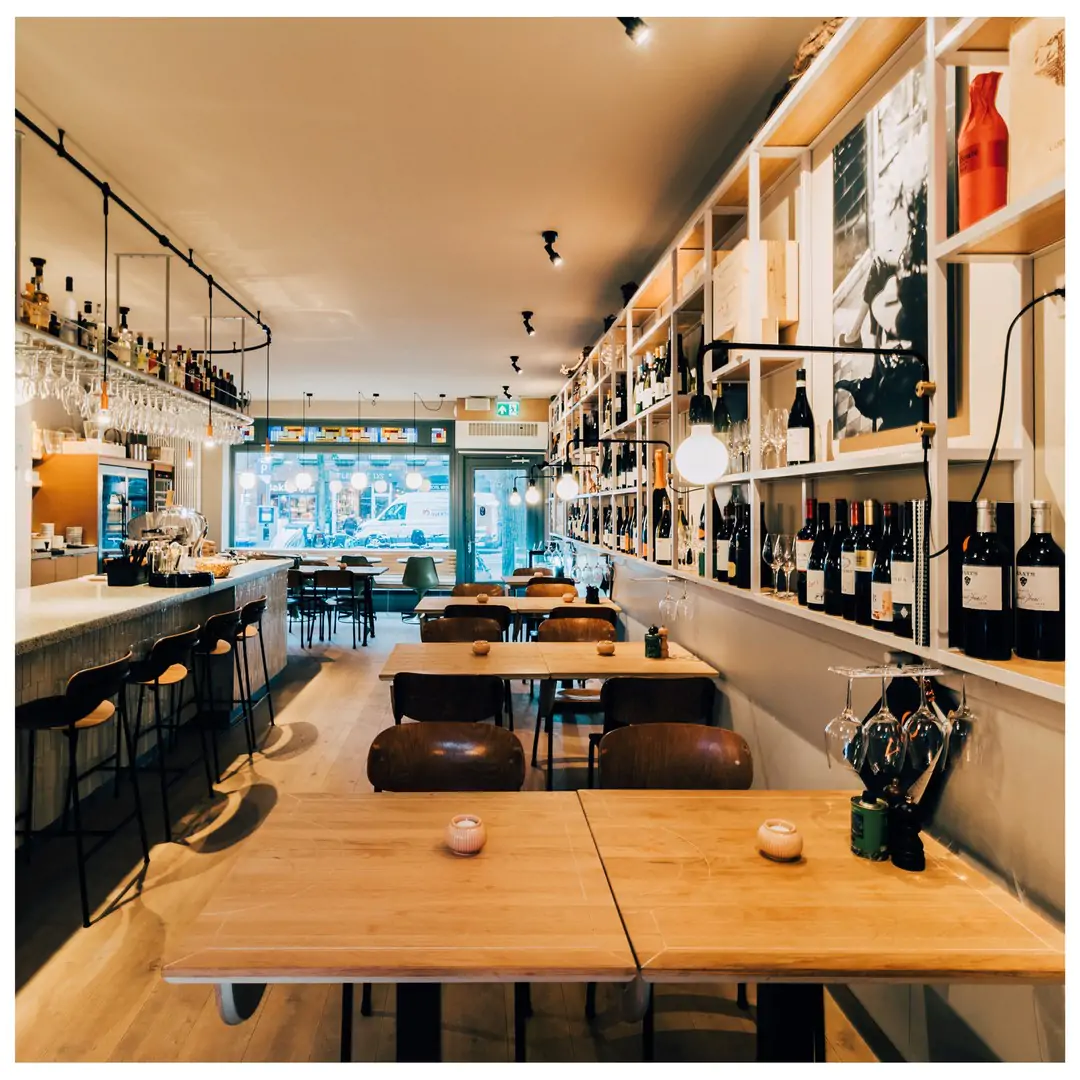
At Winebar QV you can basically spend the whole day as if you were in Italy. You start with an Italian espresso, have lunch with a hot meal and end with a good glass of wine with an Italian aperitivo. It is cozy and stylishly decorated and you can sit on the high stools at the bar, at the lower tables or on the small terrace.
1077 JJ Amsterdam
Et Claire
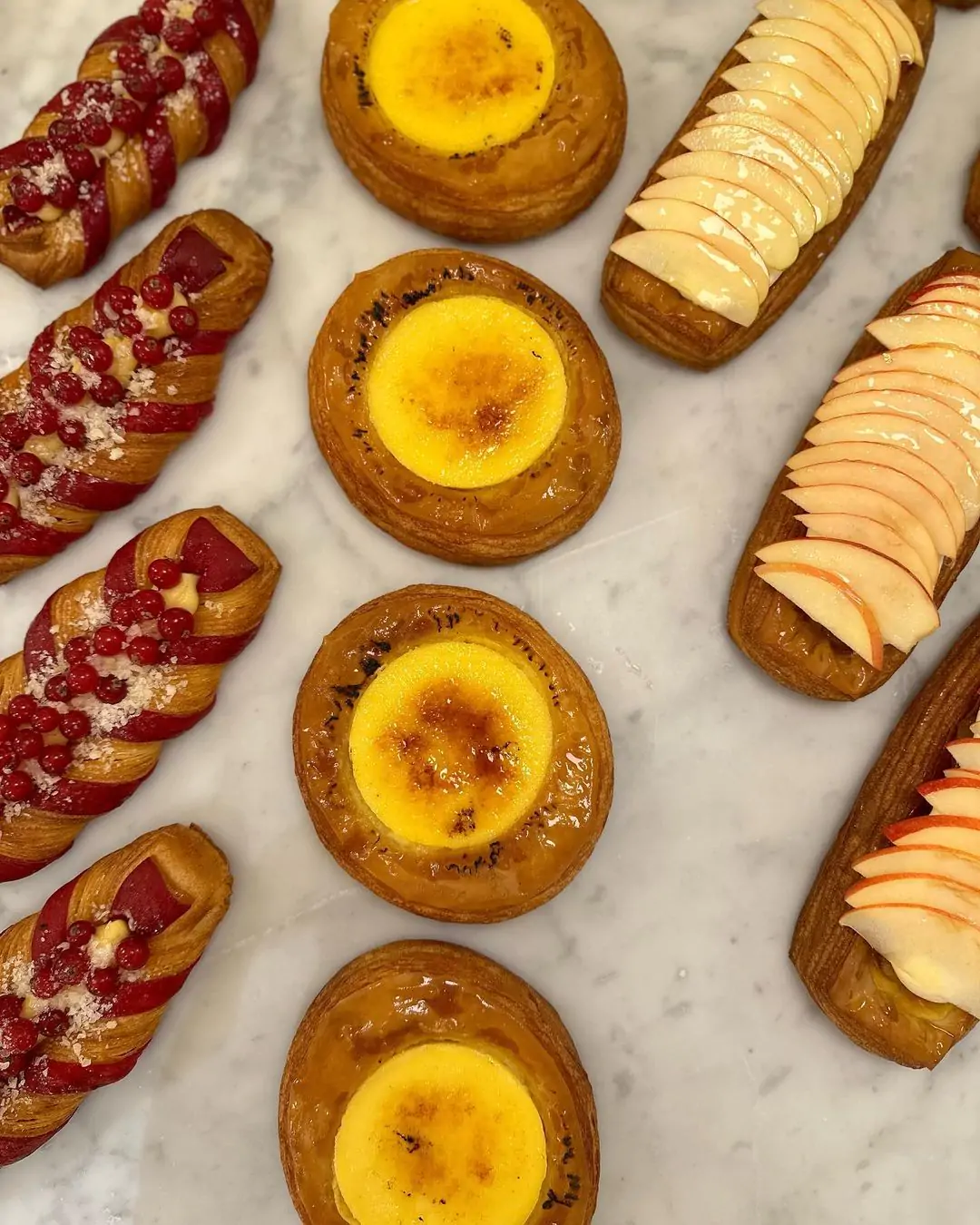
Et Claire is located on Beethoven Street. Et Claire arose from a love for the best viennoiserie, coffee, (ice) tea in combination with endless sweet and savory options. The motto at et Claire is ''ne vous contentez pas de moins'', which means that you should not settle for less.
1077 HM Amsterdam
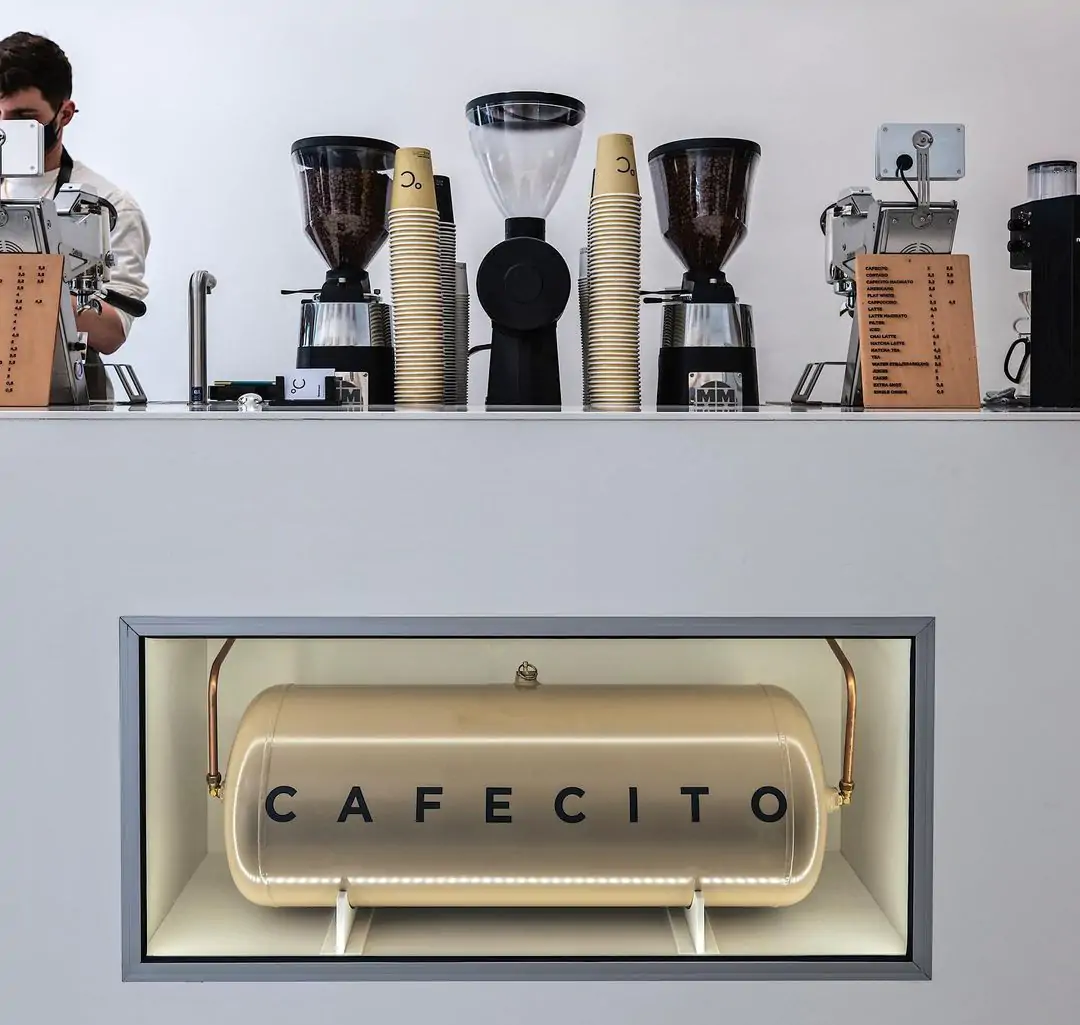
Cafecito
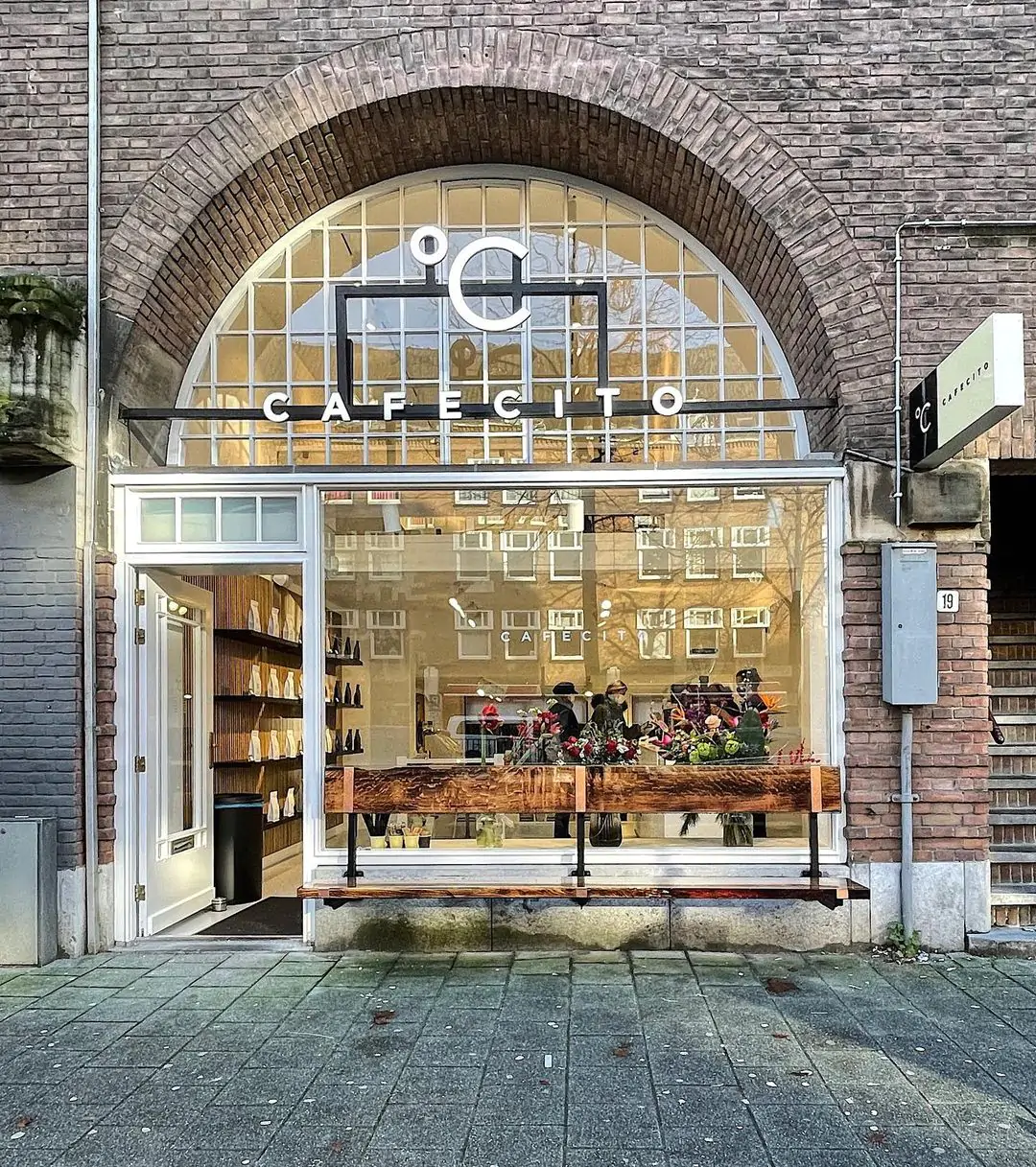
Cafecito, a minimalist coffee shop, offers high-quality coffee from gleaming white machines. It is part of the Cafecito franchise, an Amsterdam-based coffee roastery that decided to open coffee shops to stimulate their own sales when sales to catering establishments stagnated during the pandemic. Cafecito already has three branches in Amsterdam and one in Rotterdam. Cafecito is a business reduced to its essence. You can drink top-quality coffee from white machines there.
1077 BG Amsterdam
Roberto's Restaurant Amsterdam
Roberto's should not be missing from the top ten Italian restaurants in Amsterdam. The restaurant is located in the Hilton hotel, where the iconic Italian cuisine has been filling the plates for 25 years. The restaurant revolves around pure and simple flavors with dishes such as thinly sliced eggplant, green farfalle pasta with lobster sauce and Lava cake.
1076 NZ Amsterdam
Cucina casalinga
Giovanni Carmelitano is the owner of Cucina Casalinga, an Italian restaurant located at Stadionweg 271 in Amsterdam-Zuid. Born in Rome, with a mother from Puglia, Giovanni brings his Southern Italian roots to life in his restaurant. For more than twenty years, he has been a dedicated interpreter of Italian cuisine, combining traditional flavors with a modern approach. The intimate atmosphere and limited seating provide a personal dining experience reminiscent of dining at an Italian 'nonna's' home.
1076 CK Amsterdam
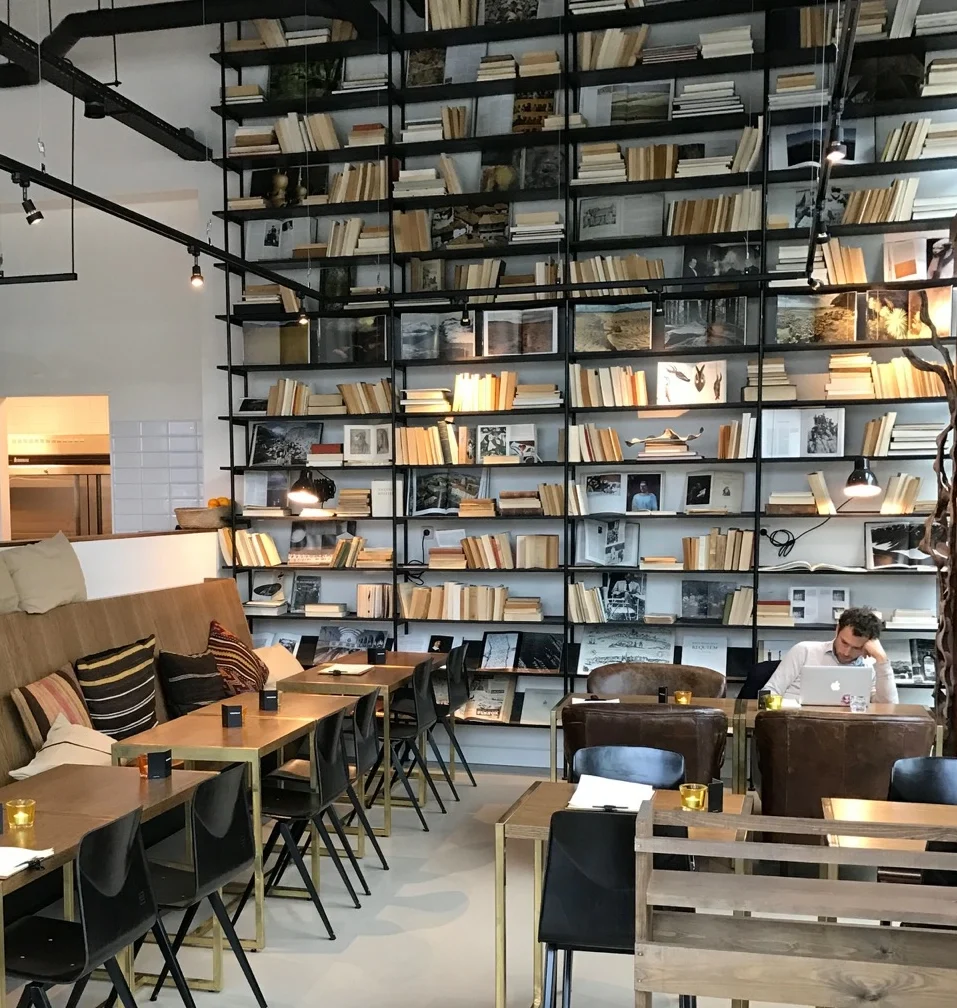
Vascobelo
Vascobelo, originally from Antwerp, was intended to be a café where people would come for a unique coffee experience. Nowadays, the Vascobelo Café-Brasseries chain is known for much more than that. The location on Rijnstraat is unique thanks to its cozy interior and open kitchen, making it ideal for intimate gatherings or business meetings.
1081 LD Amsterdam
Vascobelo Parnassus Road
Vascobelo was founded in Antwerp in 1998, inspired by the family passion of Marc De Roeck, who grew up with his father's freshly roasted coffee. Its strength lies in the combination of Belgian coffee culture, slow-roasted blends, and a recognizable, artisanal signature that focuses on quality and experience.
1083 HK Amsterdam
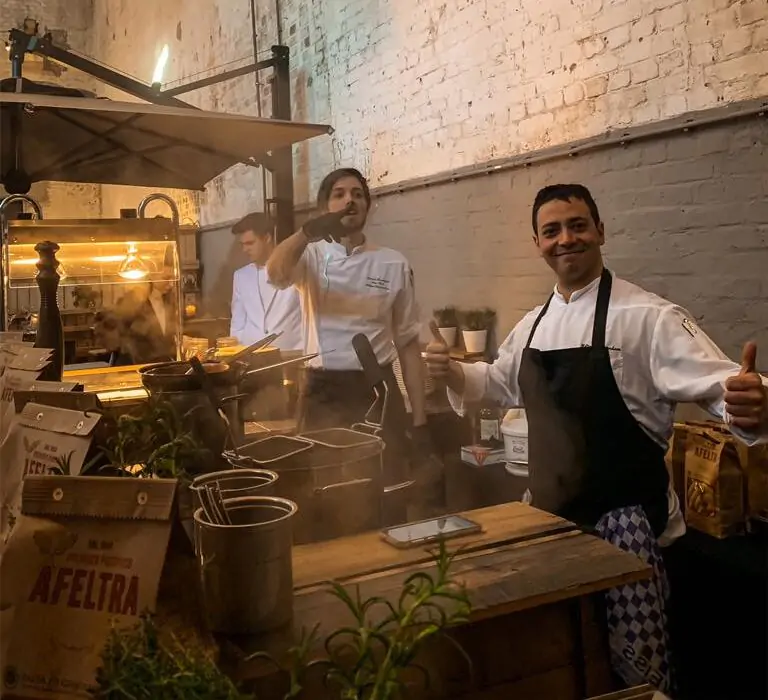
Nela
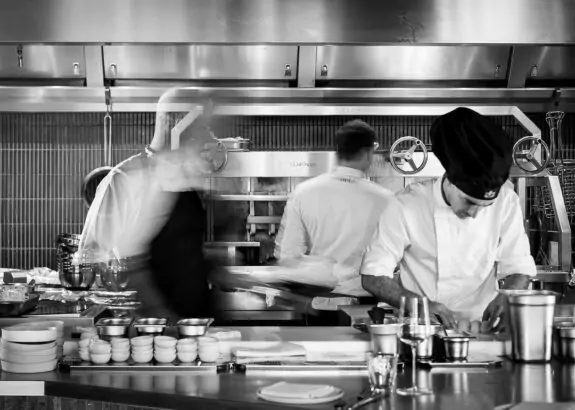
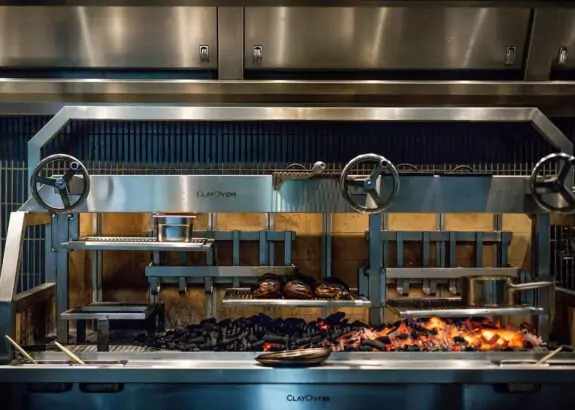
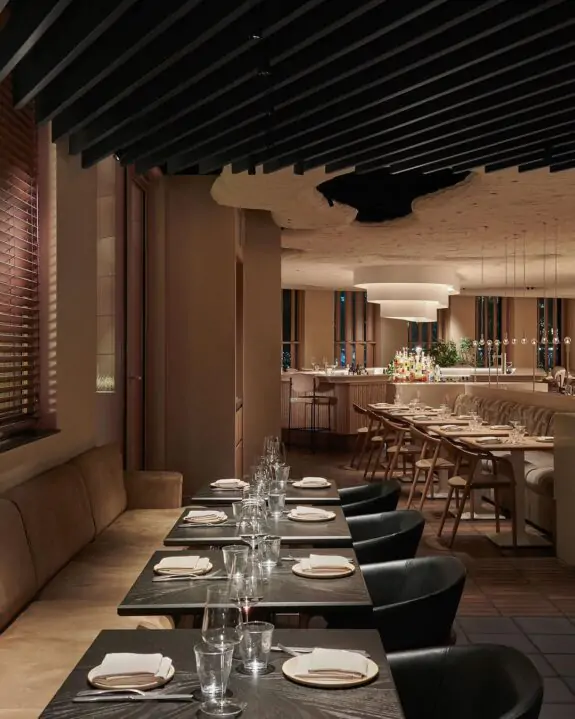
At Nela, they celebrate the fusion of live fire cooking with high-quality and carefully selected ingredients. They source and select seasonal products from specialized partners. The open fire is the perfect tool for the chefs to use heat and temperature to create incredible textures and flavors. Nela was conceived by leading chefs Hari Shetty and Ori Geller, who have two decades of experience on the international stage. After years of working for top restaurants such as Nobu (London), Yaffo-Tel Aviv, Izakaya, The Duchess and Mr. Porter (Amsterdam), they joined forces with the innovative international entrepreneur Gilad Hayeem (Waverly Group). Together, Hari, Ori and Gilad brought their shared vision and creativity to life by establishing Nela.
1076 CM Amsterdam
NENI
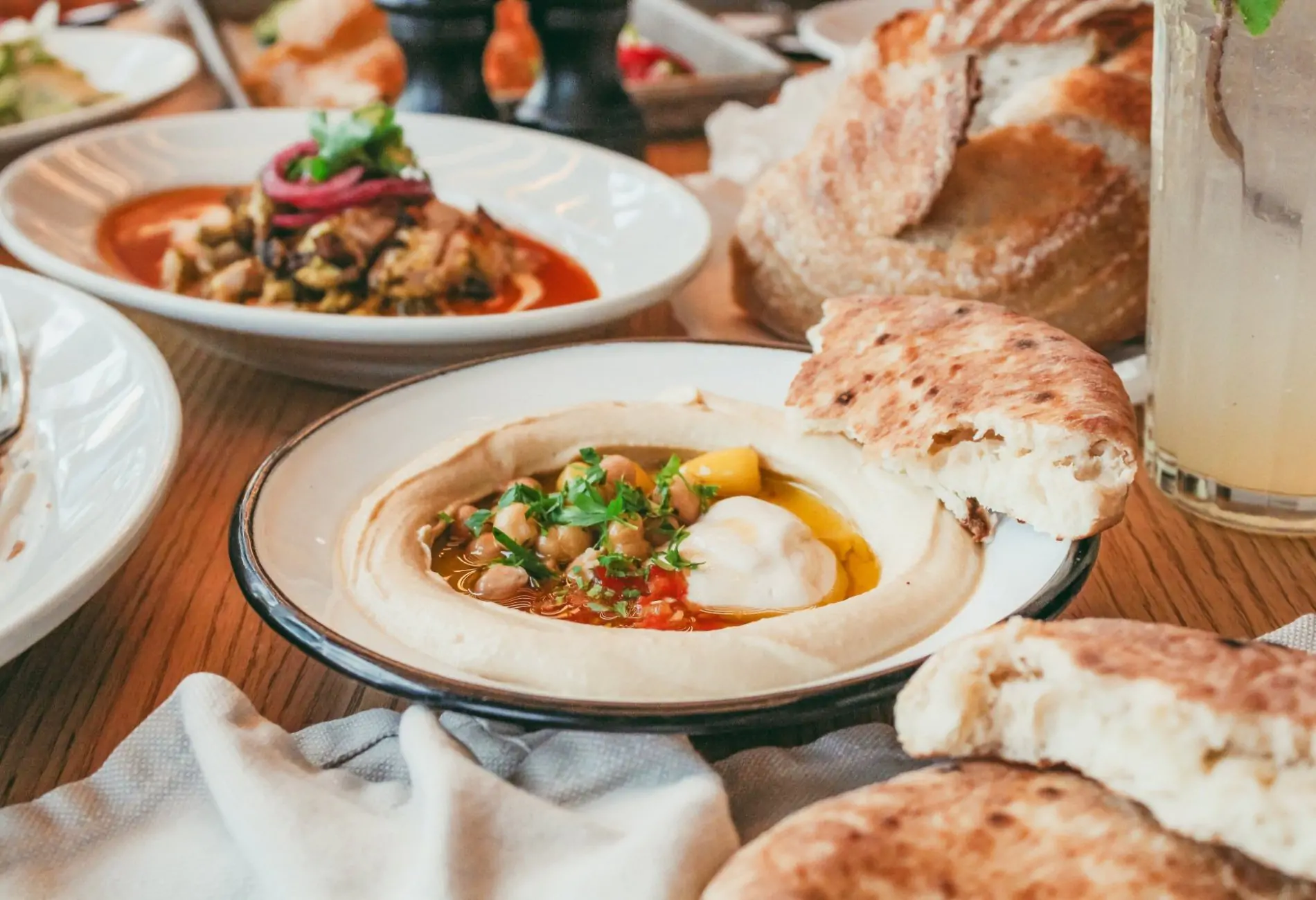
NENI is a Middle Eastern restaurant located on Stadionplein. The name is a composition of the initials of the four sons of Haya Molcho; the driving force behind this business. Haya was born in Tel Aviv and studied psychology there. She always loved to cook and started her first restaurant in 2009. Over the years, the Mocho family has become a well-known family in the culinary world and they also have other NENI locations in Vienna and Berlin, among others. In all their restaurants, family, togetherness and sharing dishes are central. The Middle Eastern dishes are excellent and the freshly prepared hummus is one of the best Amsterdam has to offer.
1075 GD Amsterdam
Castell Zuid
Castell Zuid is the stylish new location of the iconic Amsterdam grill restaurant Castell, located on Valeriusstraat in Oud-Zuid. Where the original in the center is known for its no-nonsense steaks and late dinners, this location brings the same flavors in a refined setting. "Same taste, same vibe, different look" is the motto – and that's right: recognizable and yet completely new.
1076 CM Amsterdam
Wils Bakery & Café
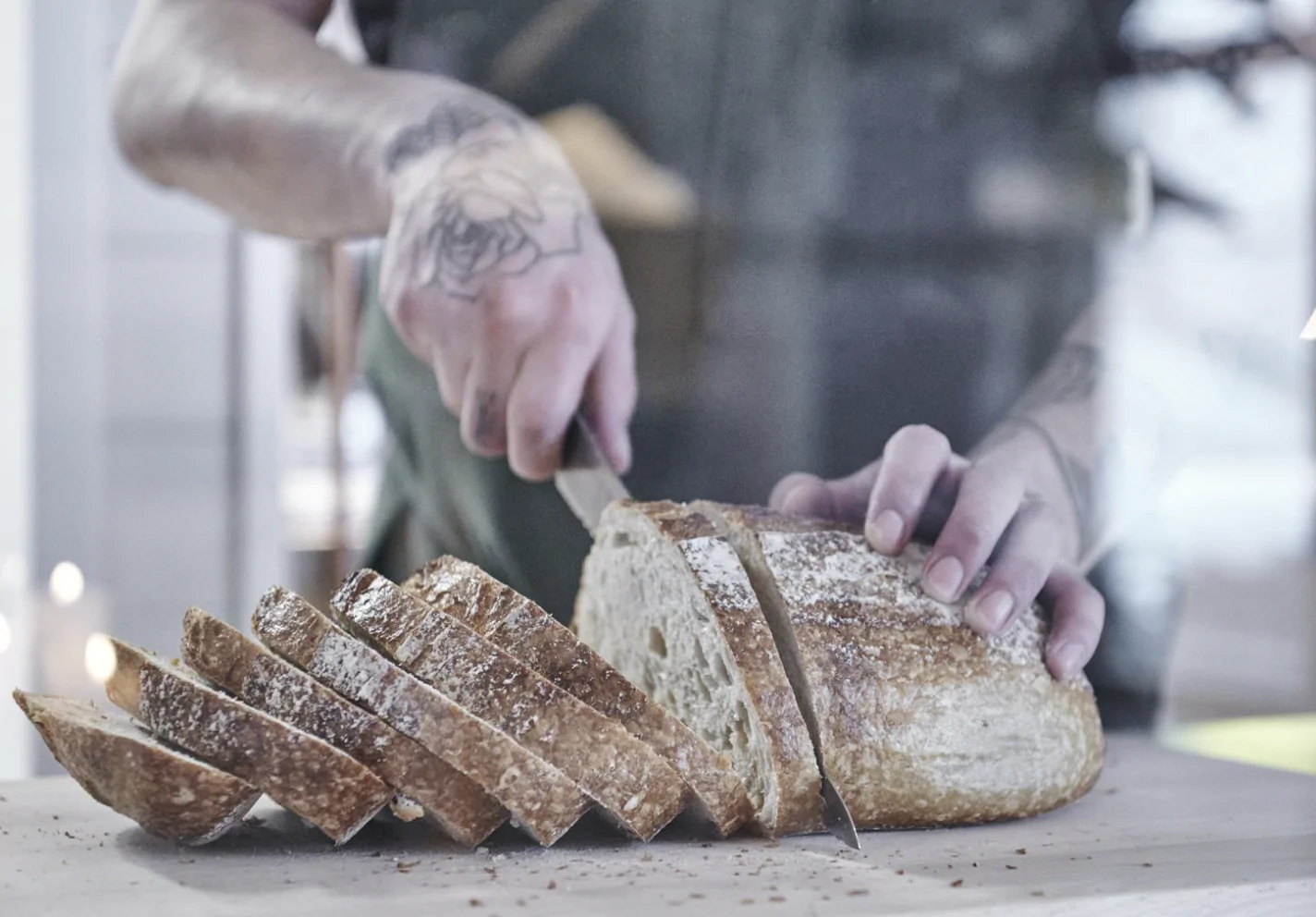
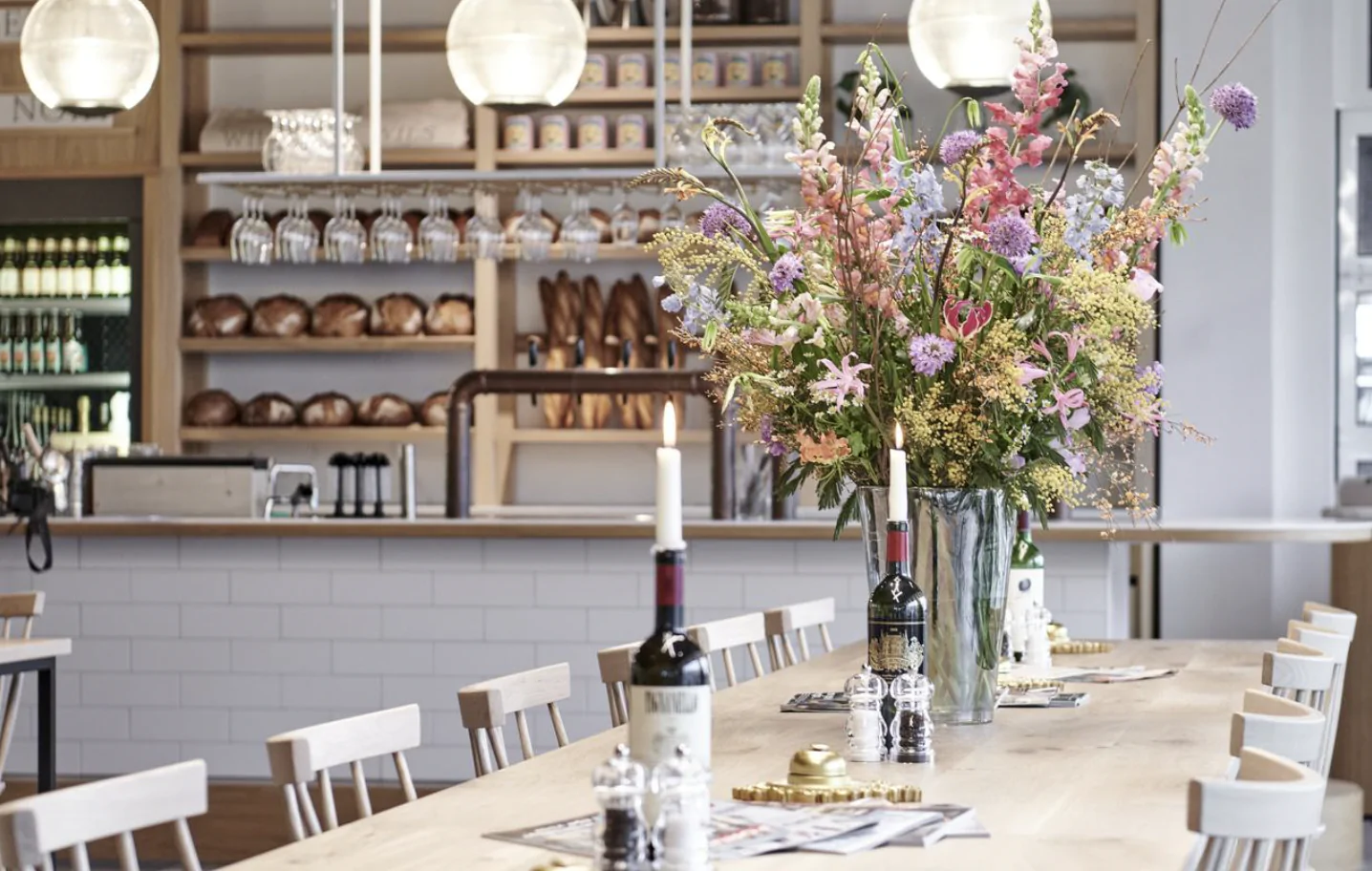
In Amsterdam Zuid you will now find Wils Bakery Café on the ground floor. A mix of bakery and French bistro. Wils is a new venture from chef Joris Bijendijk and the Vermaat Groep (Vermaat owns Rijks and Wils). At Wils Bakery Café they combine the craft of a bakery with the cosiness of a French bistro. On the menu you will find recognizable dishes, prepared with the same craftsmanship as in Michelin star restaurant Wils. Taste the pastries of Tania, the dishes of Rudolf, lunch with the bread of Maxim and have a drink with the wines of Barbora.
1076 CM Amsterdam
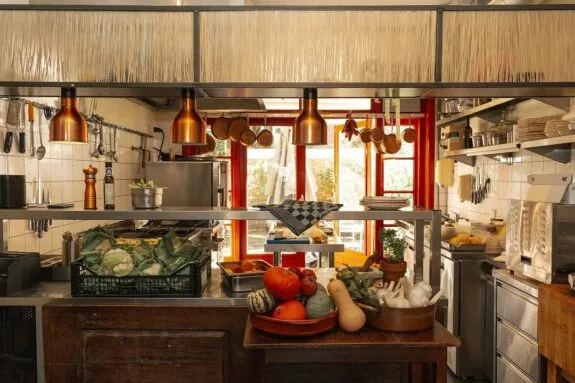
Restaurant Wils (*)
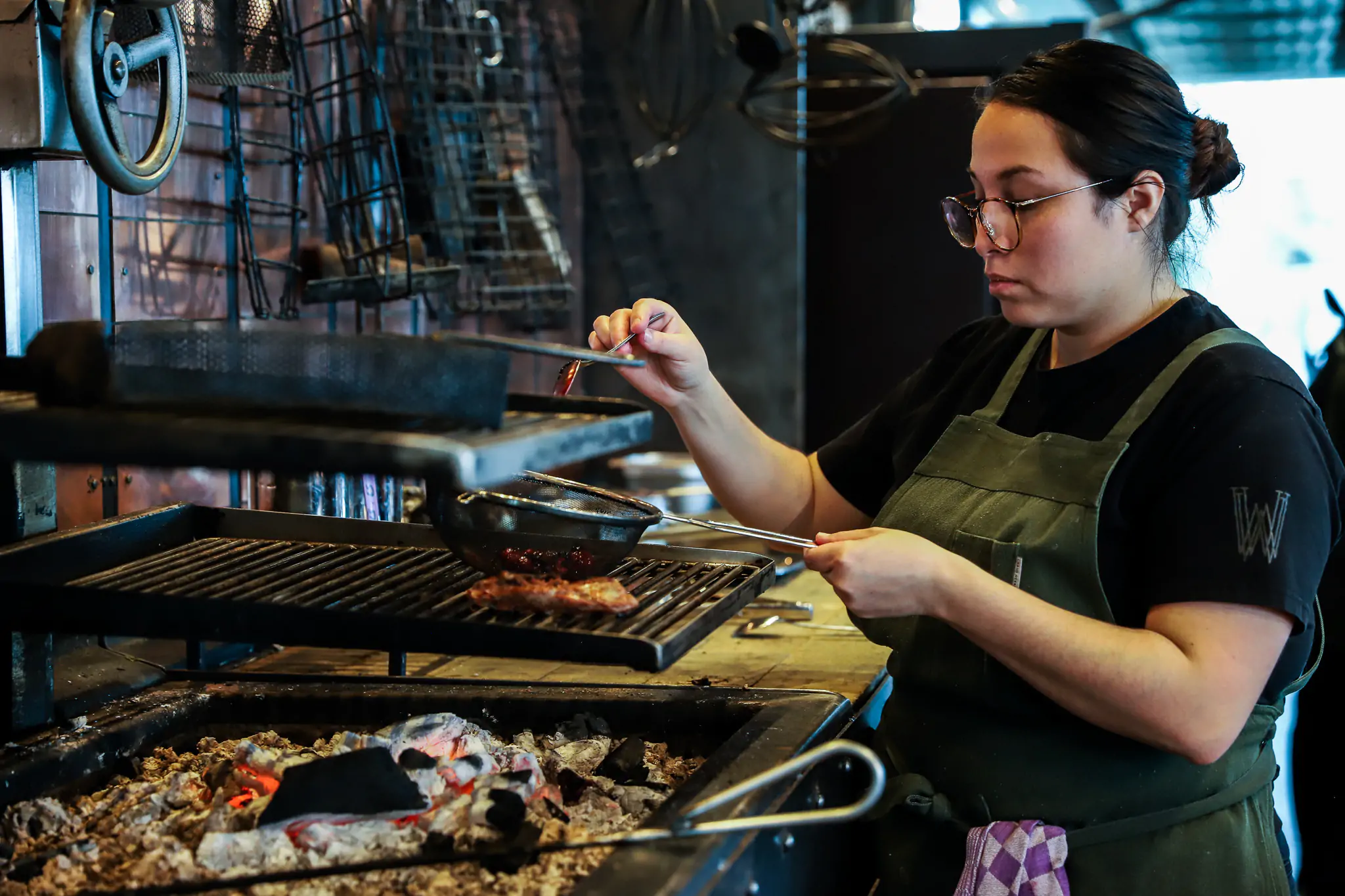
This unique culinary hotspot opened its doors in 2019 thanks to chef Joris Bijdendijk. The restaurant is located next to the Olympic Stadium. Before the opening, Joris gave a sneak preview by cooking on an open fire on the center spot of the stadium in Amsterdam-South. Wils is now fully living up to the high expectations. The 4 to 6 courses are prepared on an open fire and are full of surprising elements.
1075 BG Amsterdam
Juliette
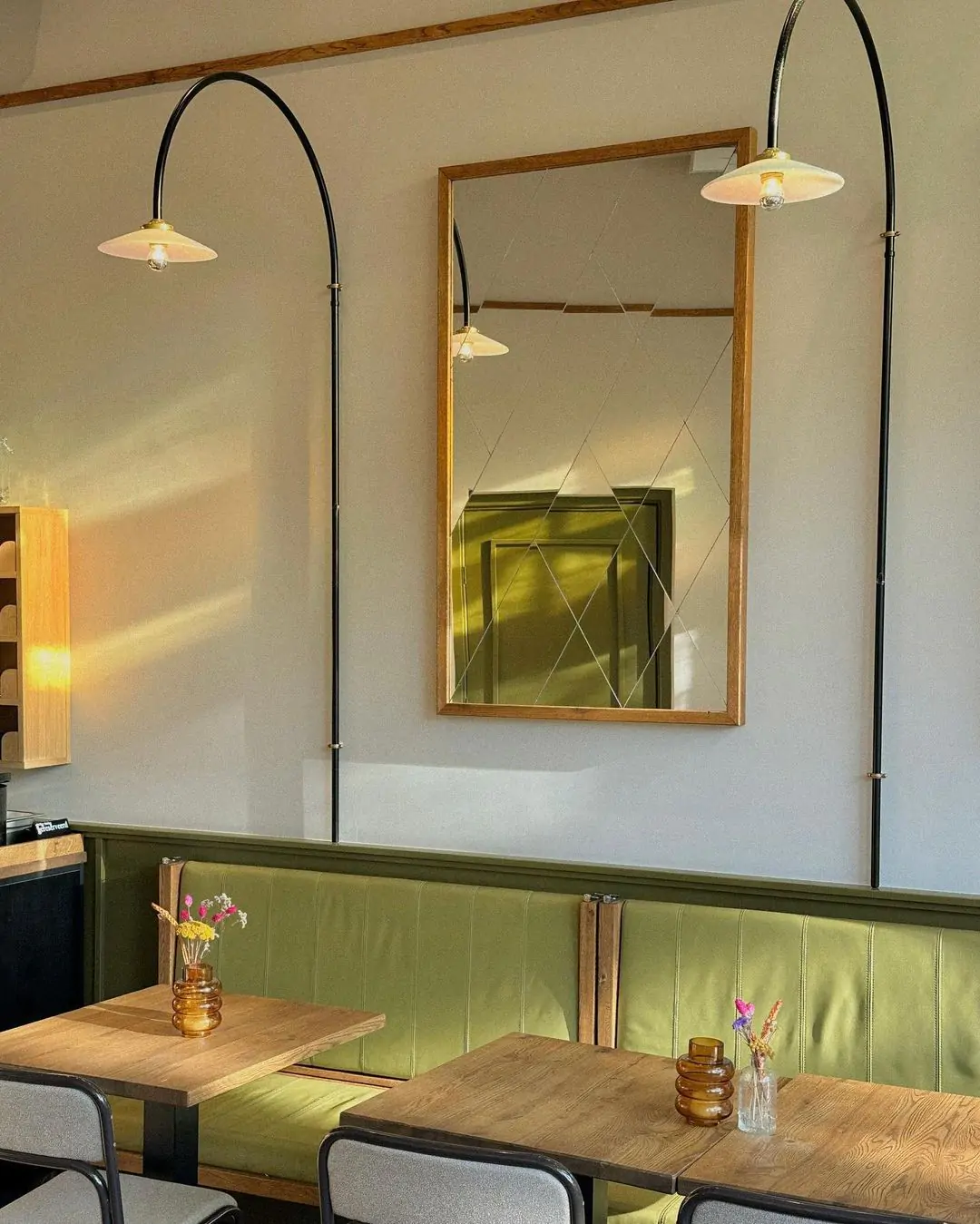
In Amsterdam Zuid, you can enjoy breakfast and lunch in the sun at Juliette. The menu is based on fresh ingredients from local suppliers and is compiled daily based on what Available at the market. Think of dishes such as the Porco Rosso: mortadella, stracciatella cheese, Spanish guindilla peppers, and red pesto. For dinner or drinks, visit neighboring Bar Jules. The focus is on Southern European dishes such as pizzettas, pata negra, and roasted octopus.
1077 CV Amsterdam
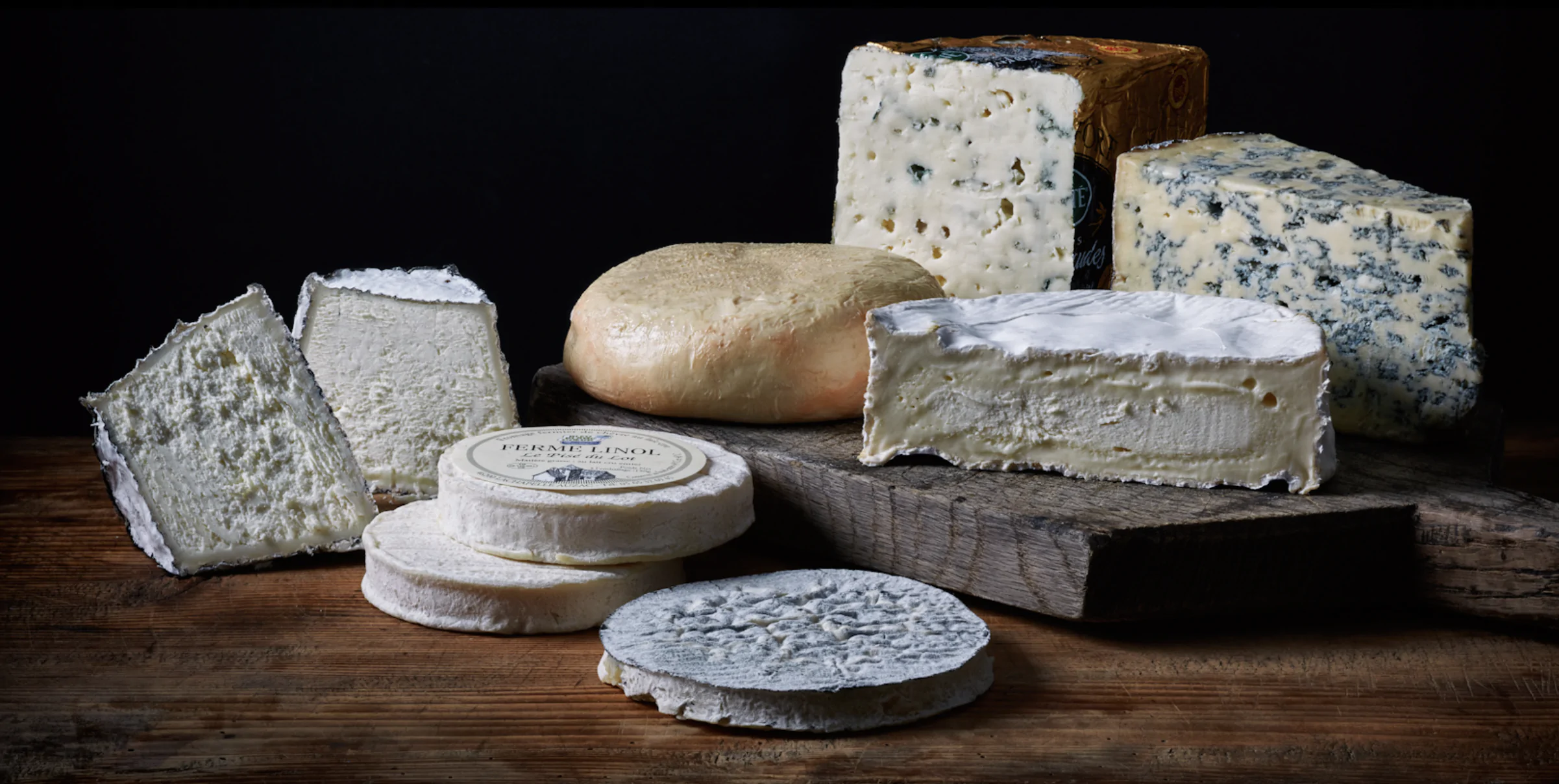
L'Amuse
According to some, this is the best cheese shop in the Netherlands. They have an impressively wide range of the most delicious cheeses. Delicious wine, salami, ham, and olive oil are also For Sale here. You will receive excellent service, and the cheese is truly of a different caliber. Highly recommended!
1077 CW Amsterdam
Sébastien's Bakery
Le Fournil is the brainchild of Susan and Sébastien, who, after years of baking experience in France, came to the Netherlands in 2007 to open an authentic French boulangerie. Its strength lies in its artisanal craftsmanship, sourdough, and conscious choice for small-scale, pure, traditional bread making.
1076 TB Amsterdam
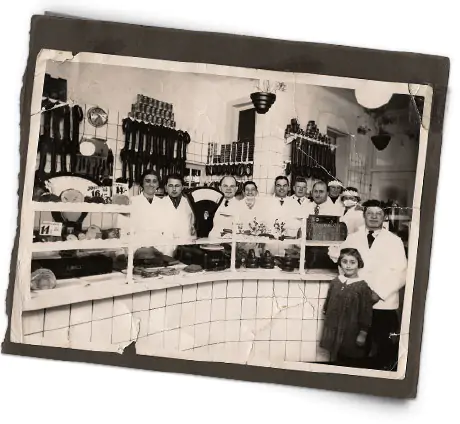
Zikking & Son Butcher Shop
Butcher shop Zikking & Zoon is located on Marathonweg and is a household name in Amsterdam. Owner Robert Zikking was born and raised in Amsterdam and, together with his wife, started his own business in 1995 with passion and confidence. As he himself says: "It's not a fairy tale, but a delicious reality with a history." The filet americain is made using a recipe from an old Jordanian dam, and the nostalgic Amsterdam beef sausage is a must-try.
1077 HN Amsterdam
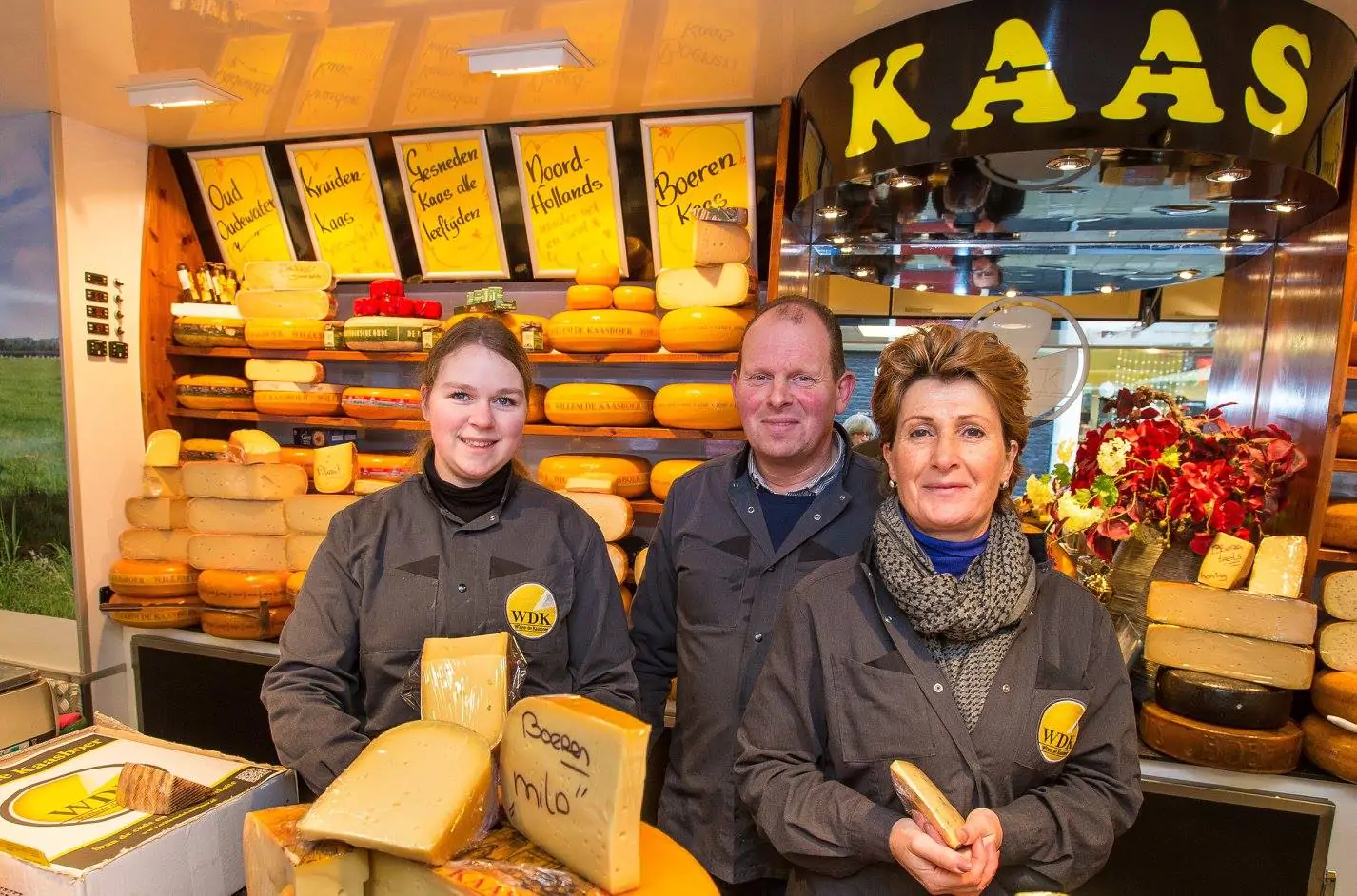
Hergo Butcher Shop
Hergo Butcher's is Amsterdam's meat specialist. Back in 1930, Mr. Cantor, a German sausage maker, and his wife, who came from an Amsterdam butcher's family, started their butcher's shop selling typical German sausage specialties. With the motto "The butcher with a chef's hat," Hergo has grown to four different locations and has become an integral part of Amsterdam's streetscape. With hunting sausage, hausmacher, beef sausage, corned beef, and even a filet americain sandwich, Hergo distinguishes itself as a top-tier butcher shop.
1076 CJ Amsterdam
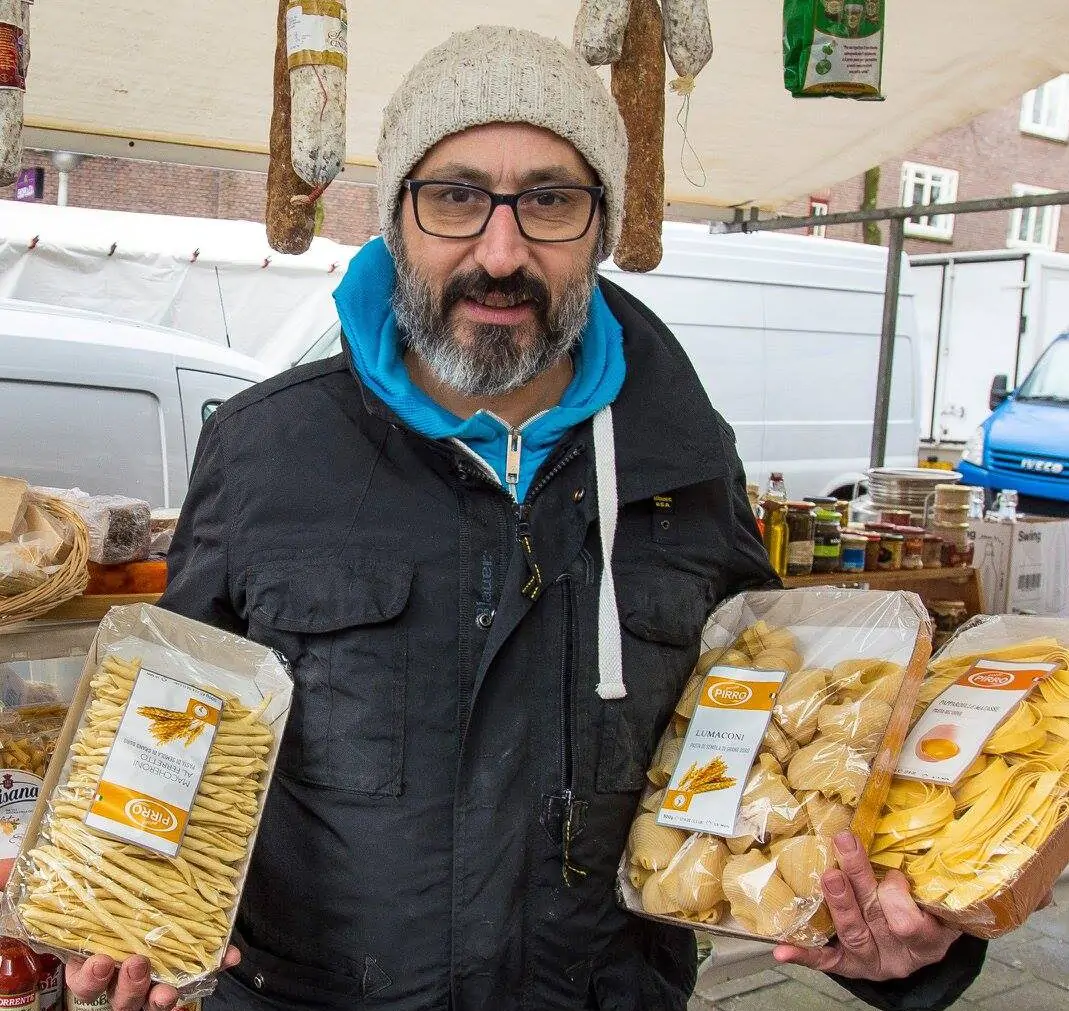
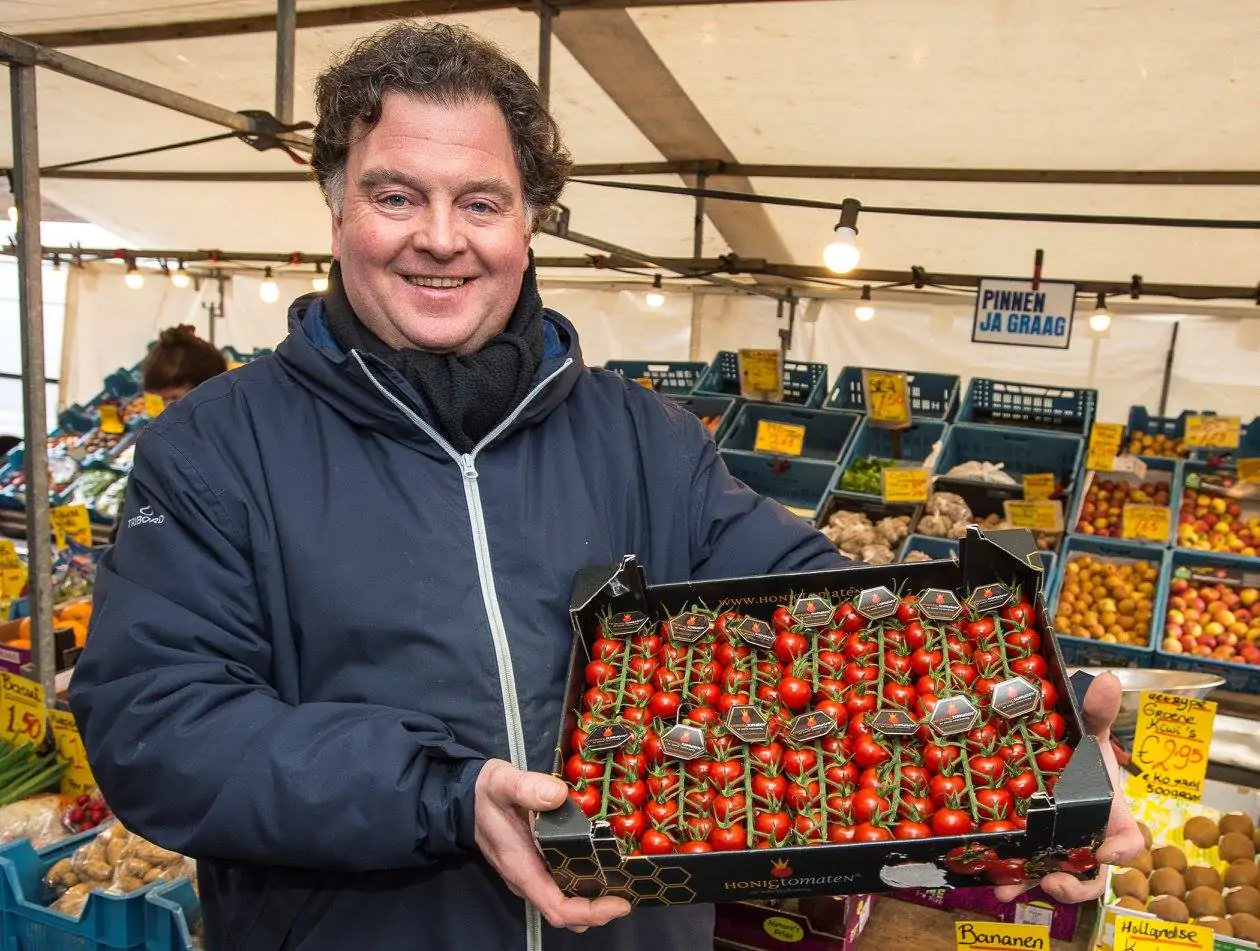
Stadium Square Market
On the beautiful Stadionplein, in the middle of Oud-Zuid, you will find the Stadionplein market every Saturday. They open at 09:00, making it an ideal market for people who want to do their weekly shopping early on Saturday. They also have beautiful flowers for sale here and you will find many different local residents. The atmosphere is always good and the market is open until 17:00.
1077 MJ Amsterdam
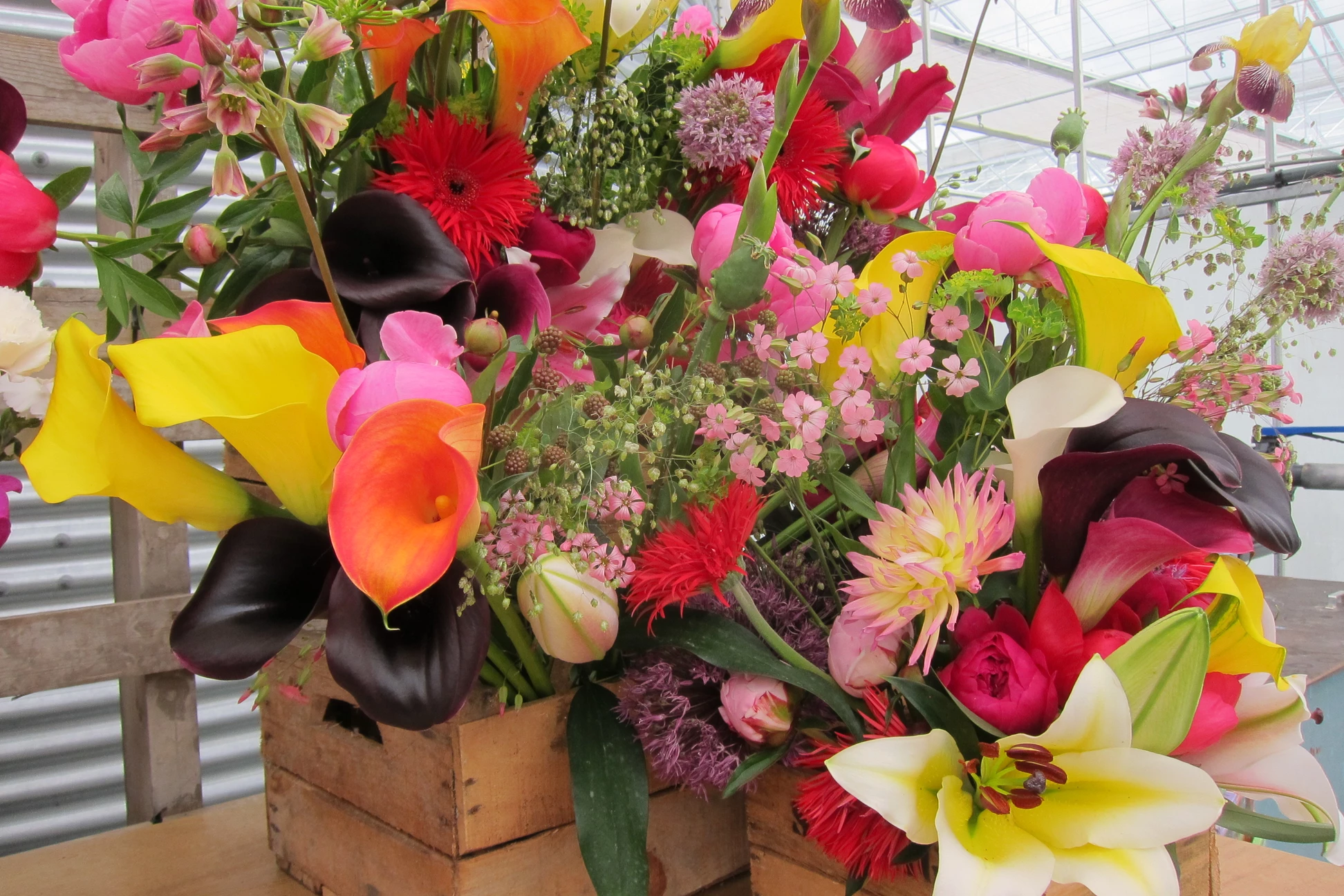
Flower fusion
Every Saturday from 9:30 to 17:00 you can find Ilona Bokma from Flowerfusion at the ZuiderMRKT. Unique and beautiful flowers that make you feel like you are standing in the middle of a picking garden. Because Ilona selects different flowers, plants and colors every week that match the season, it is a party every Saturday to visit Flowerfusion.
1075 NC Amsterdam
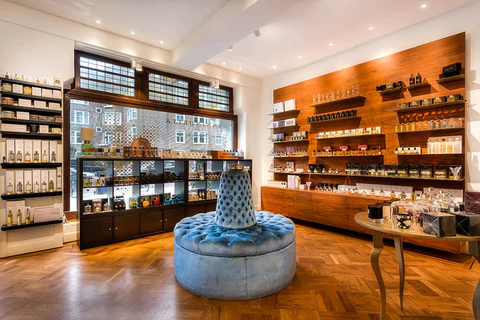
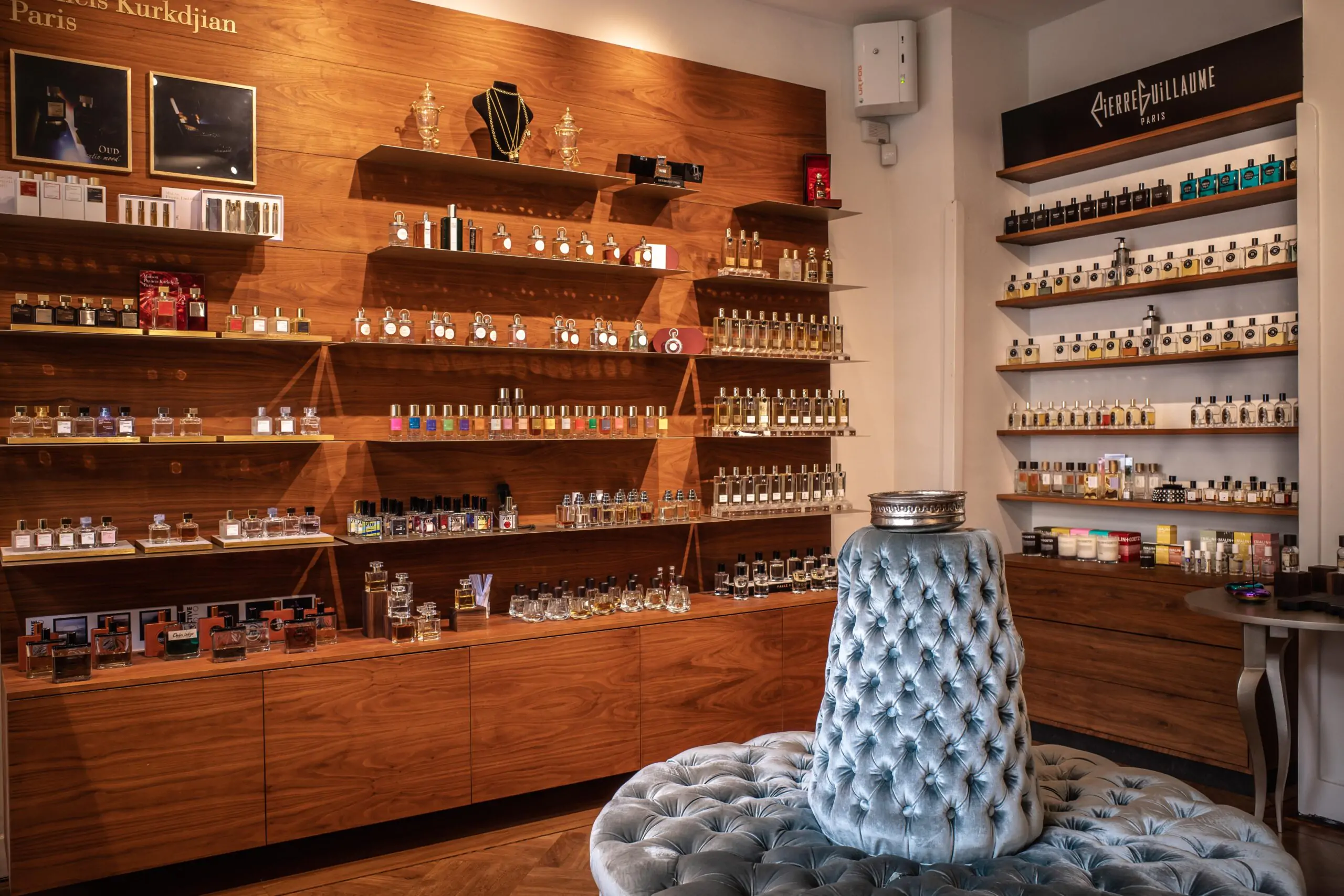
Perfume Lounge
At the 'Perfume lounge', they focus on creating and advising on fragrances for companies and organizations and what scent can add to a brand or organization. In addition, they have a store with an assortment of the most special perfumes in the world, where they also give personal fragrance advice. Advice for on the skin or in the house. According to the experts, scent adds something that is not visible and tangible. You can use scent in different ways in a space. It starts, of course, with the fact that it should not smell negative. There are quite a few spaces where you smell the sewer or sanitary facilities, where there has been a lot of smoking or where the extraction is not good and it smells like food. The most simple way of scent in the house is that it smells clean. Many people associate cleaning or detergent with a clean, tidy and well-kept house. In addition, you can turn on the ambiance. Just like with light and music, you can soften or strengthen the atmosphere. You can make it smell very homely or very modern. Rural or artistic. Or very minimalist or intimate.
1077 WX Amsterdam
The Thomas
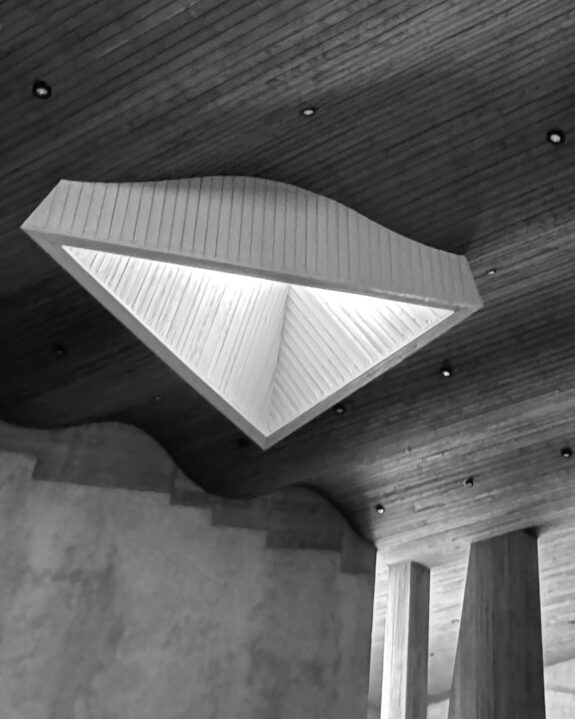
The Thomas is a monumental church on the edge of the Zuidas business district where religion and culture consciously come together. With its own theater, concerts, and debate evenings, it is a place for meeting and deepening one's knowledge, right in the business heart of Amsterdam Zuid. The building is considered an important example of post-war church architecture in the Netherlands and is designed in an expressive, brutalist style.
1076 AV Amsterdam
Diez Gallery
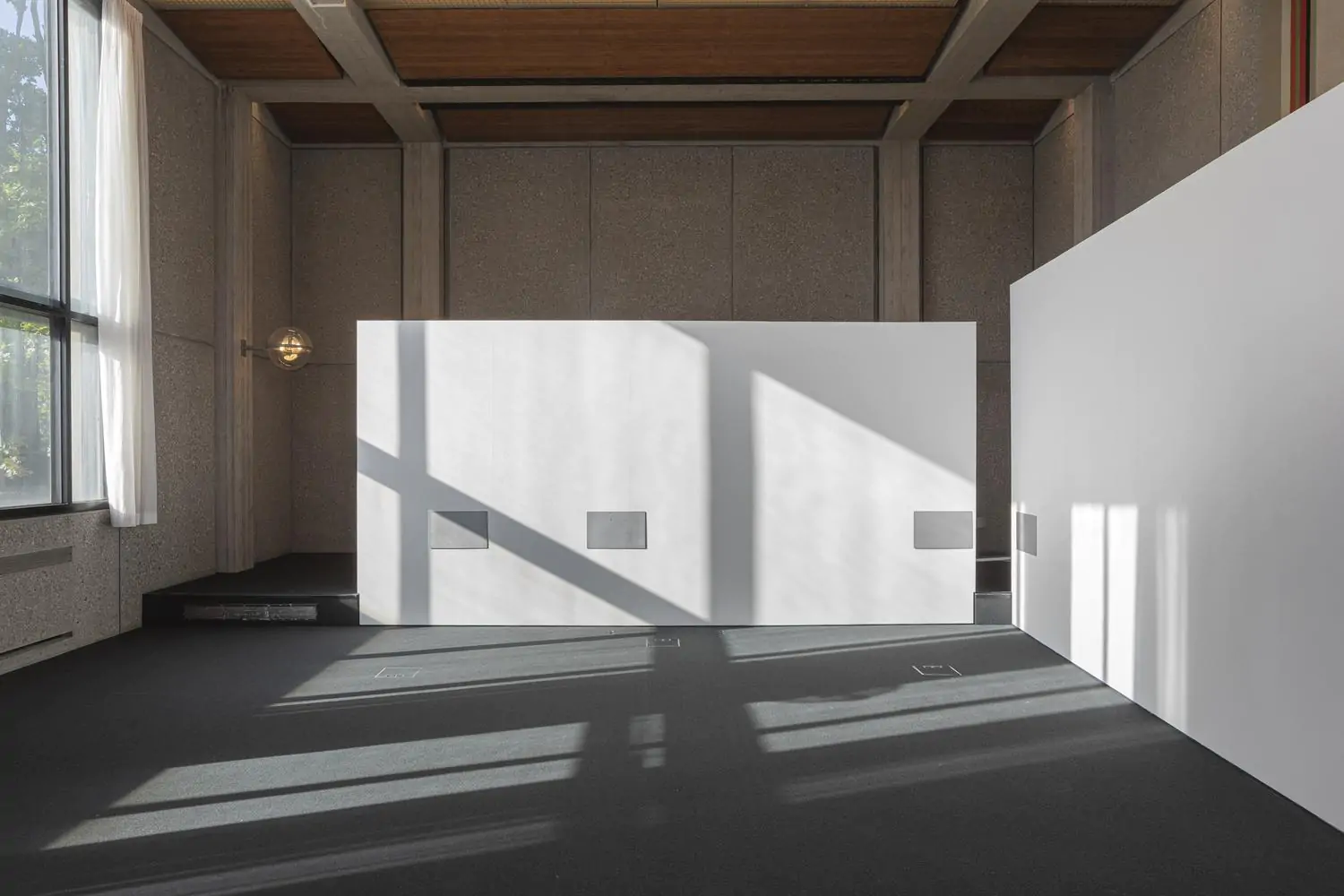
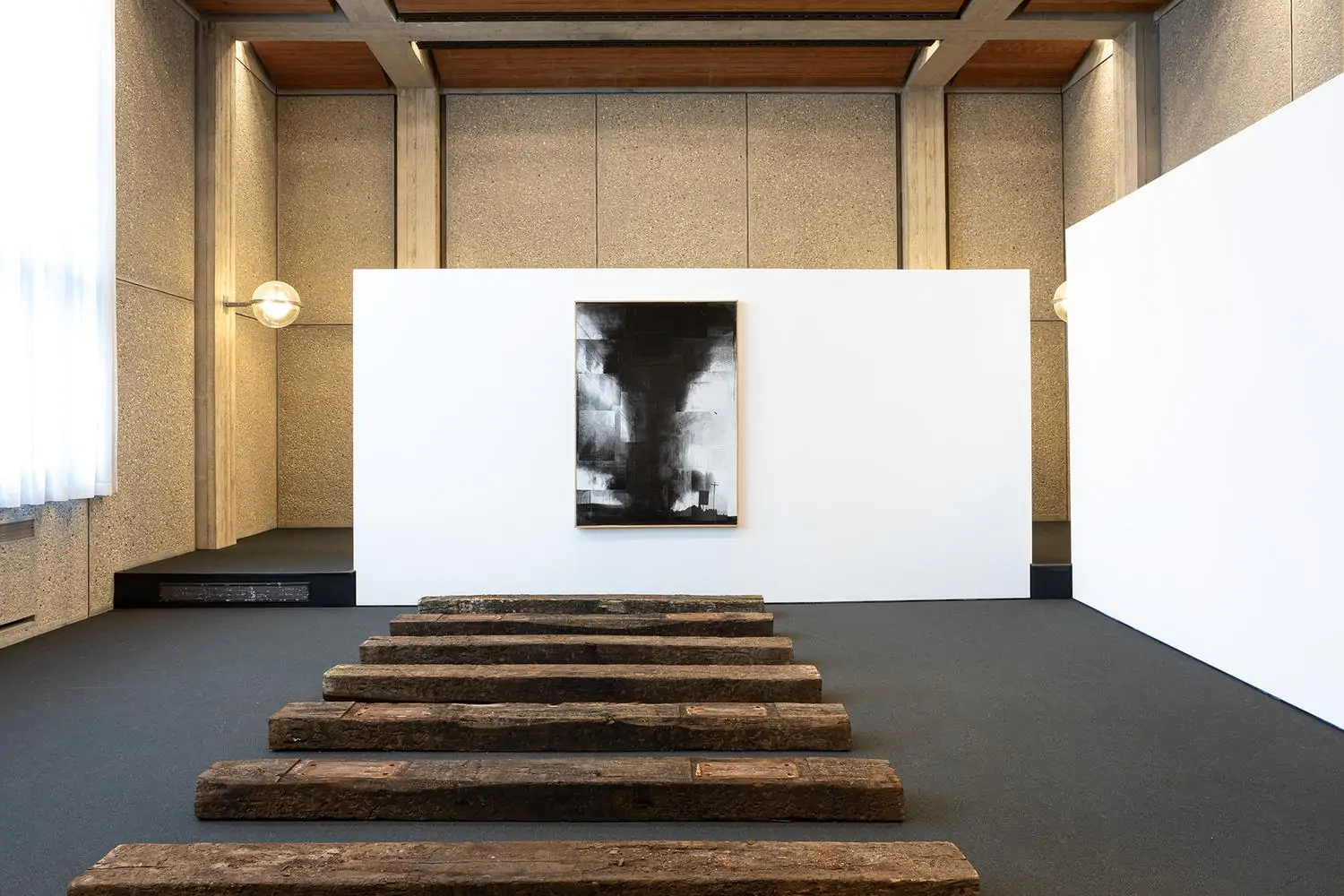
Diez is an Amsterdam art gallery with an international appeal, founded in 2022 by Diego Diez. The exhibitions are curated in collaboration with artists who have an affinity with Diez's interests and will present both international and national talent in Amsterdam. In addition to the exhibition program, Diez strives to be an accessible space for a wide audience with various activities and events such as poetry readings, curated dinners and artist talks.
1081 LH Amsterdam
Cinema The Pulse
Cinema The Pulse is a movie theater located in the basement of The Pulse of Amsterdam in the Zuidas business district, offering a wide range of arthouse, cult, and contemporary films. Its strength lies in the combination of cinema, architecture, and social interaction, serving as an urban film hub where the movie experience and metropolitan context come together.