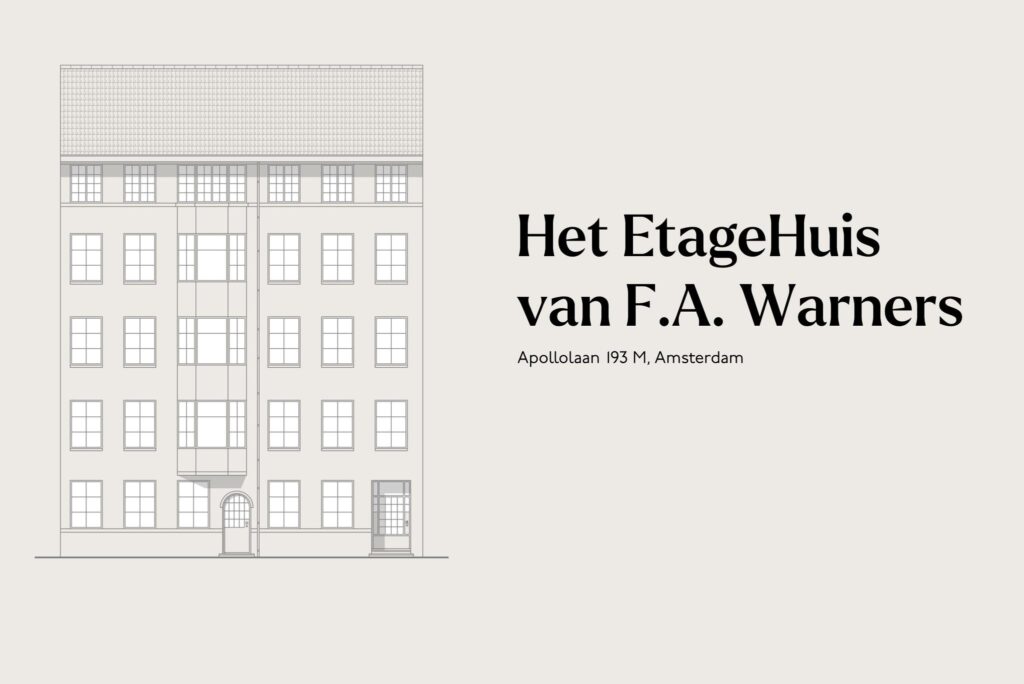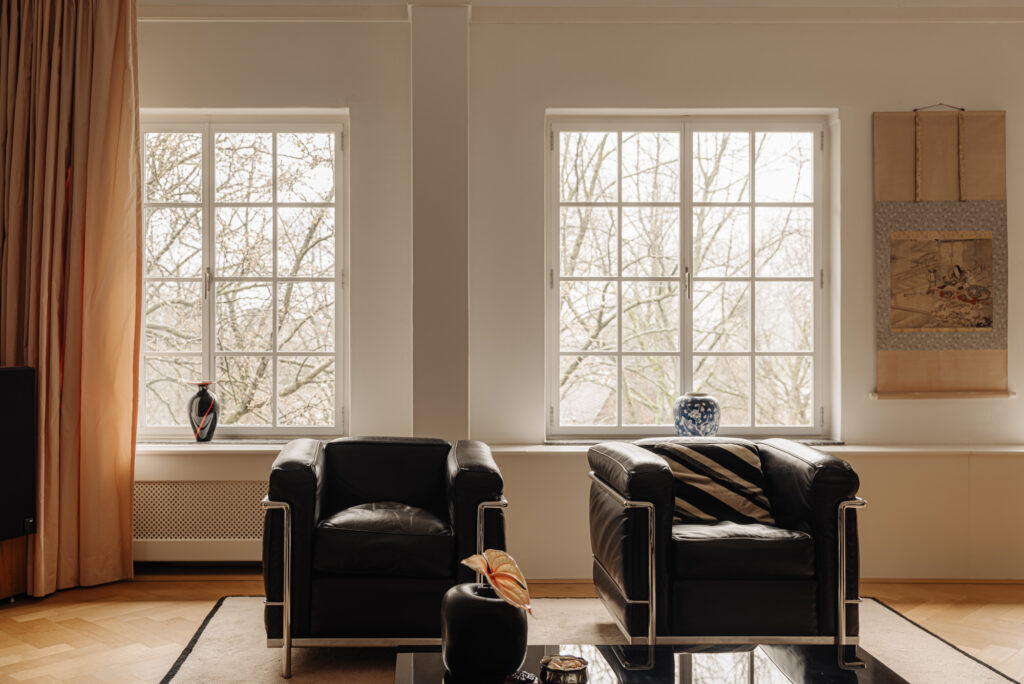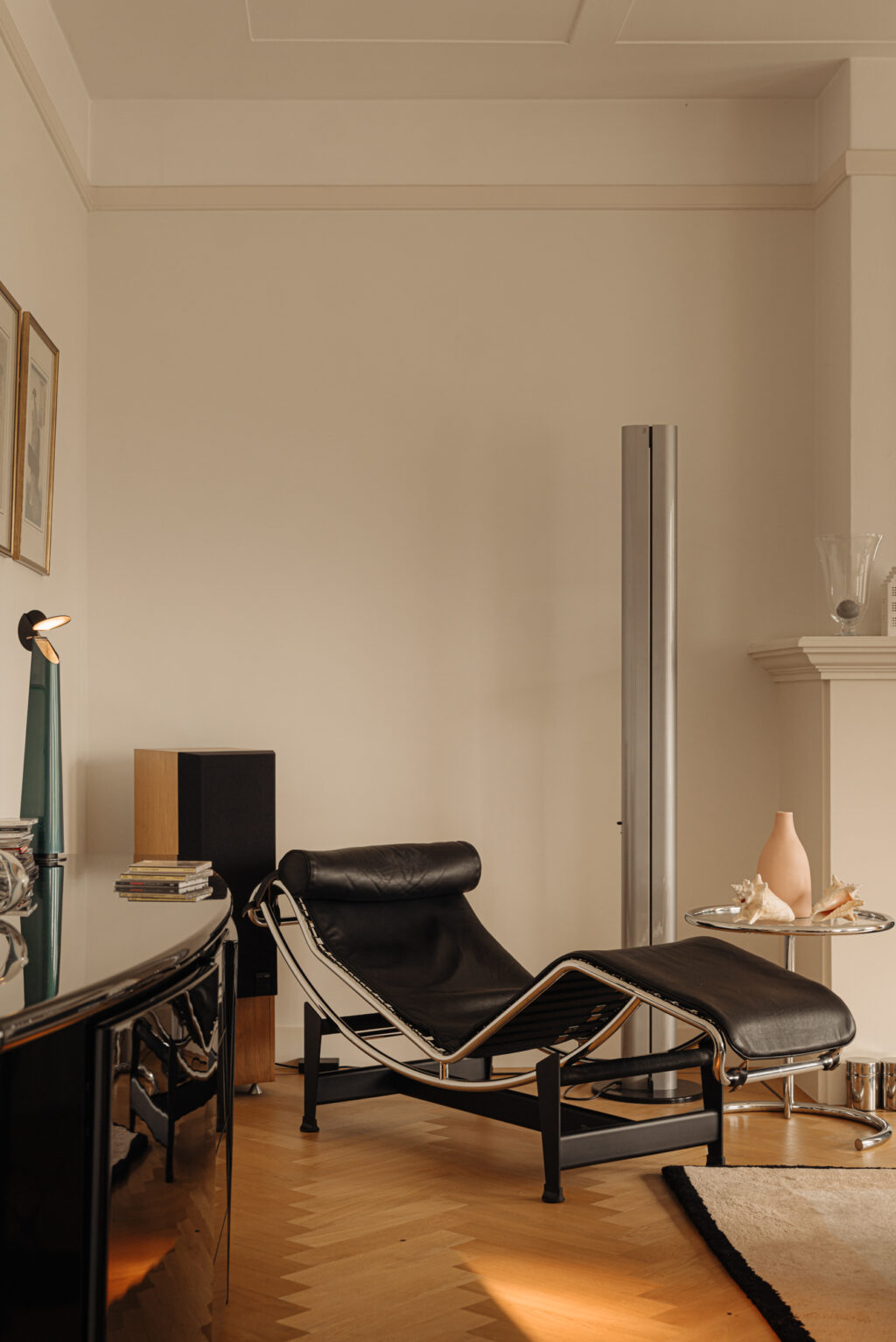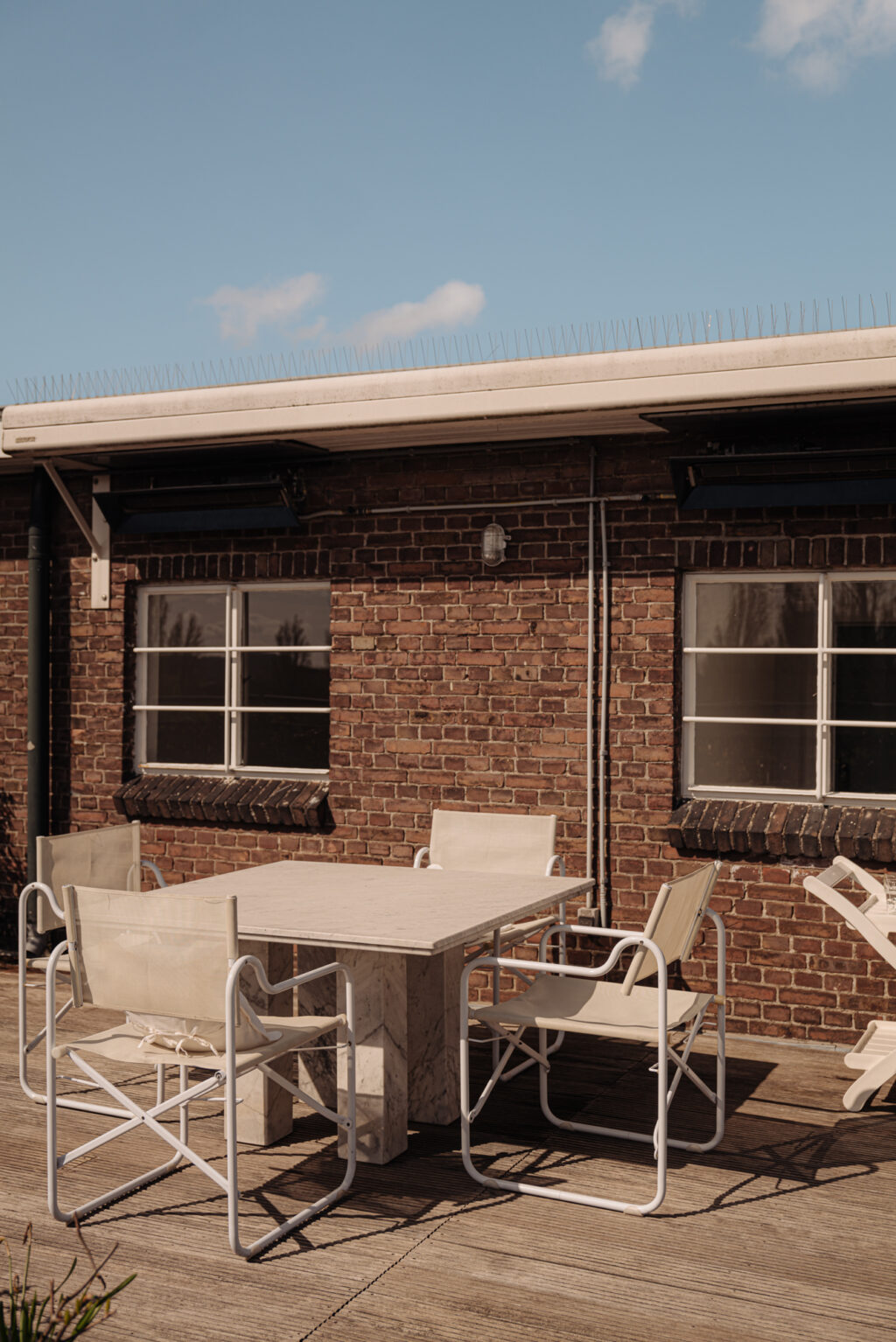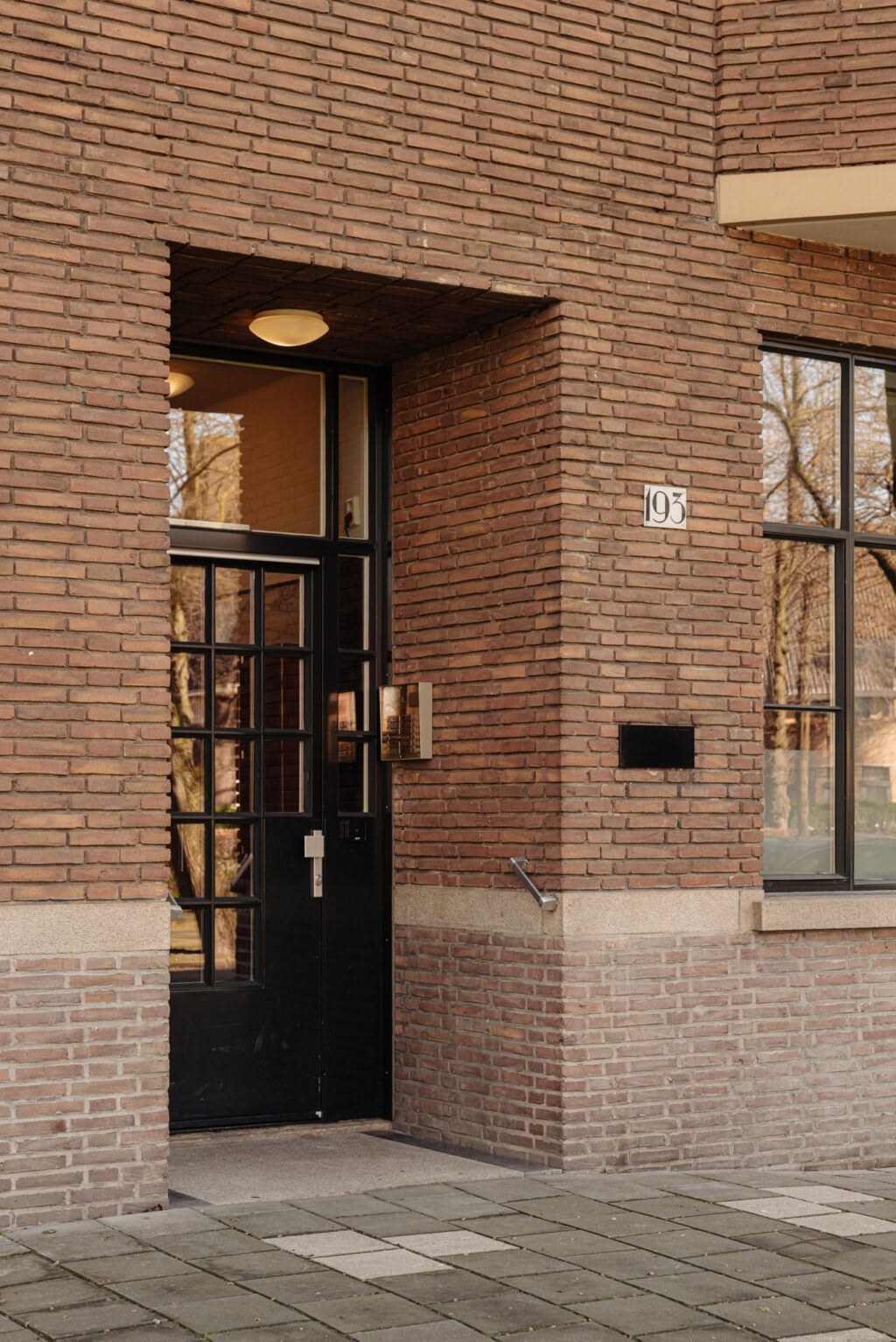
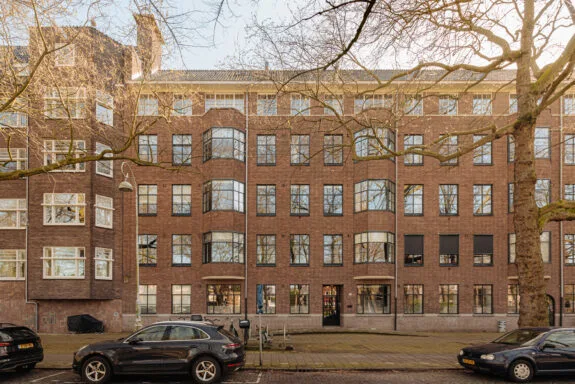
Living on one floor, with an elevator and one of the most beautiful roof terraces in the Beethovenbuurt neighborhood. A particularly well-designed apartment measuring 235 m² with a 60 m² terrace. The building was designed by architect F.A. Warners in 1937 as a new residential concept called 'De EtageHuis'. It is a building in the Amsterdam School style, but with characteristics of the new building style.
Guided tour
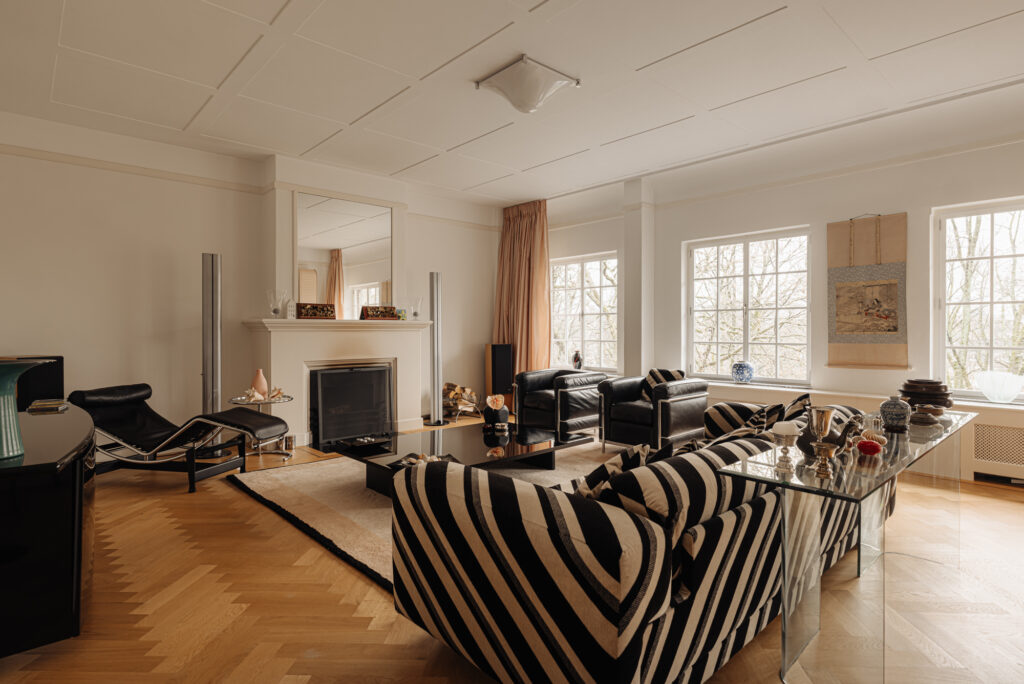
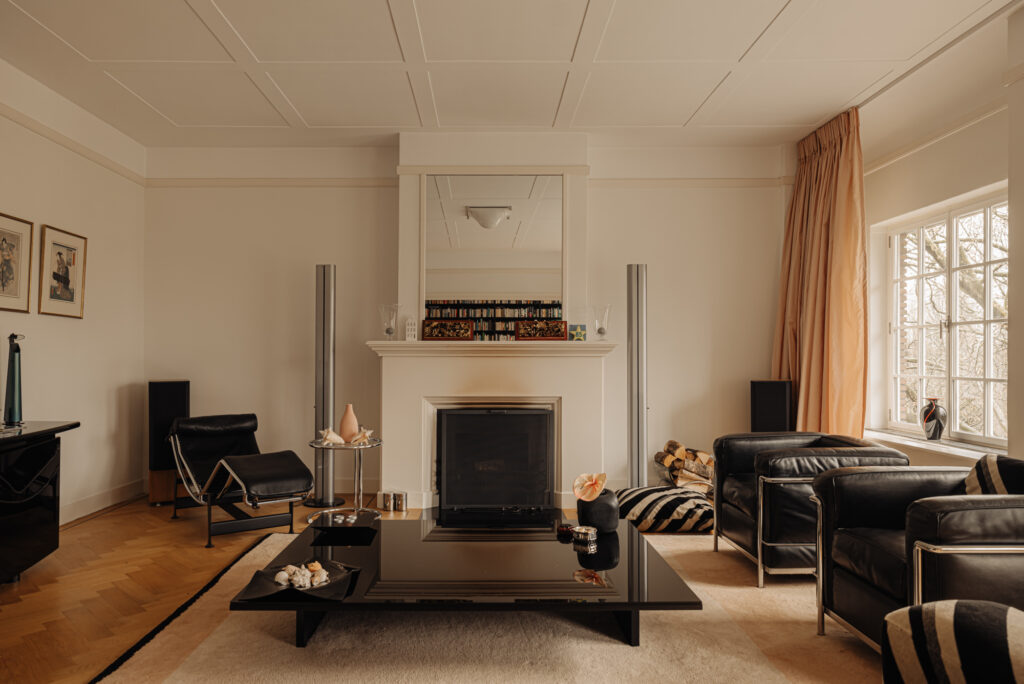
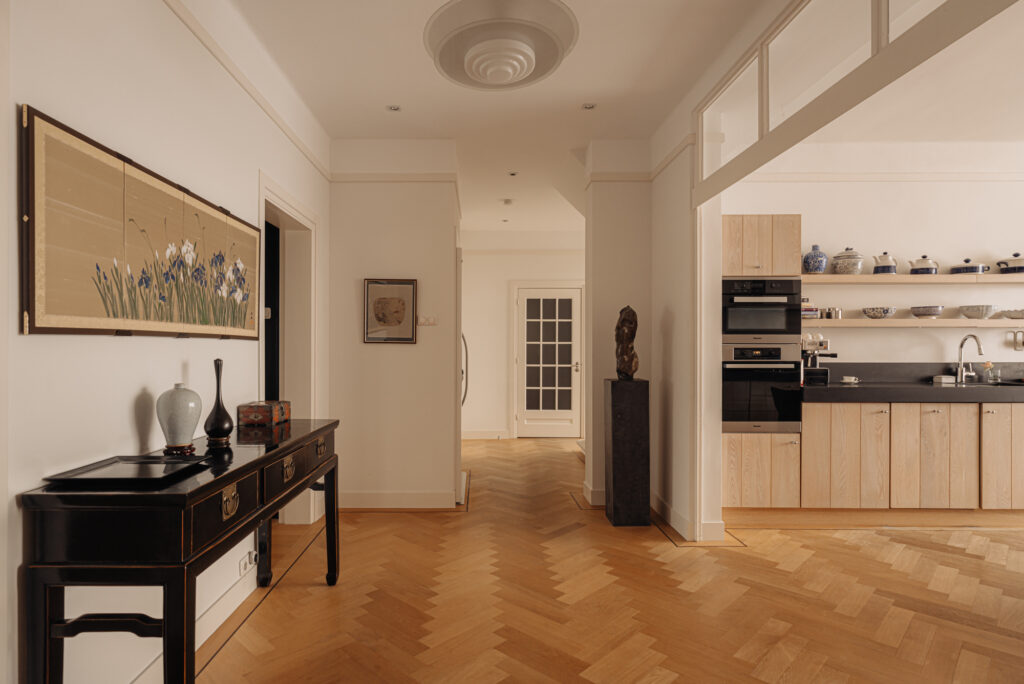
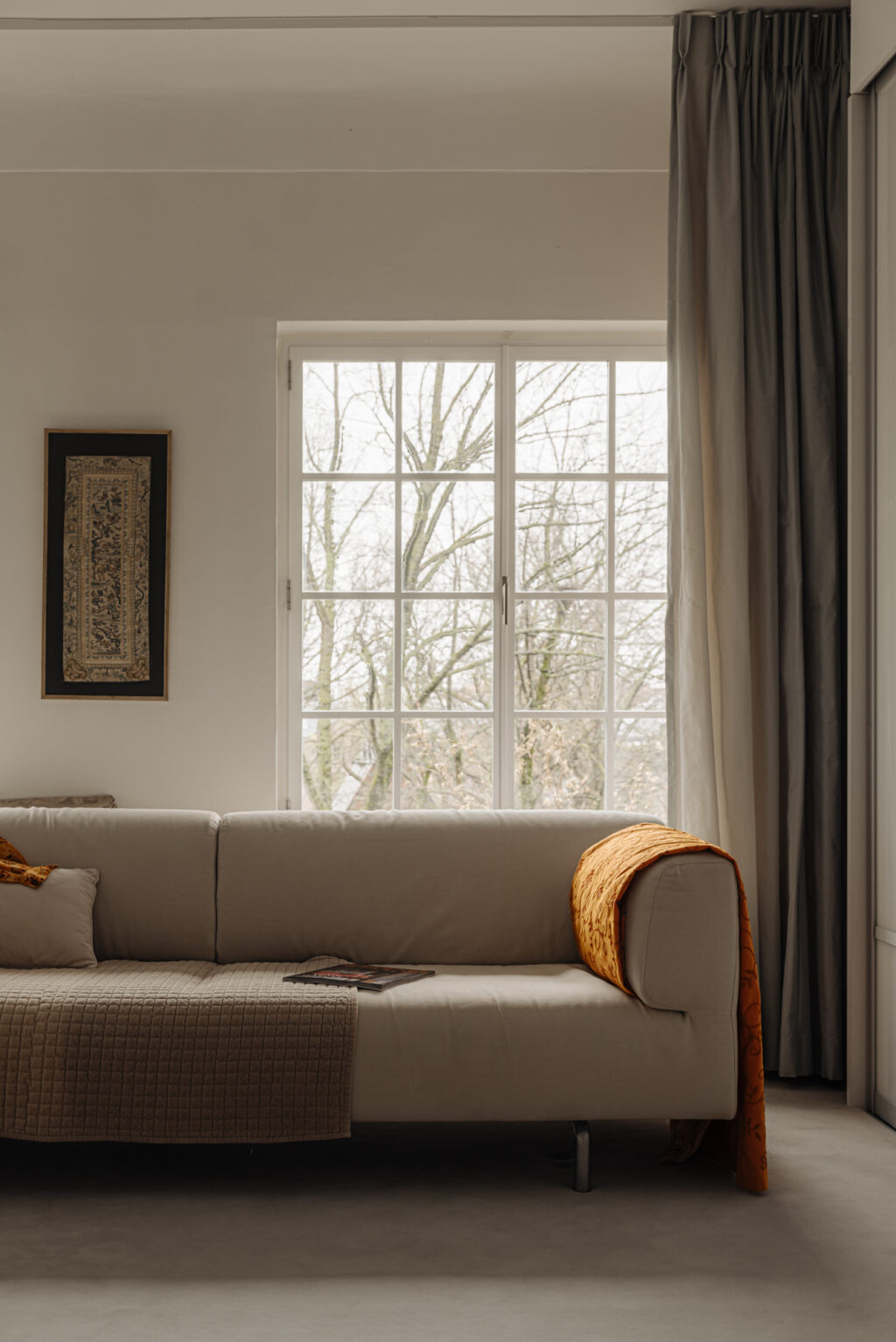
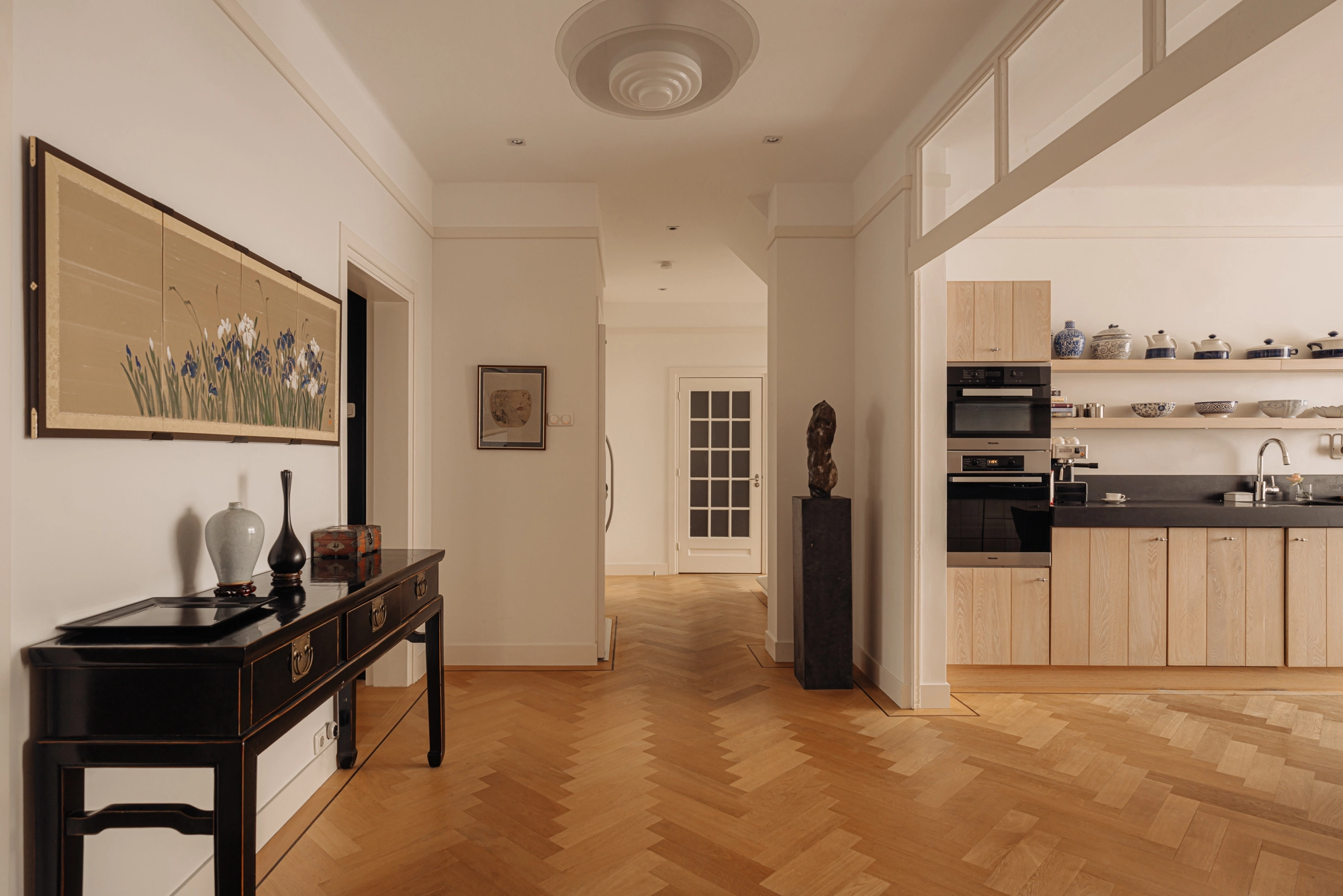
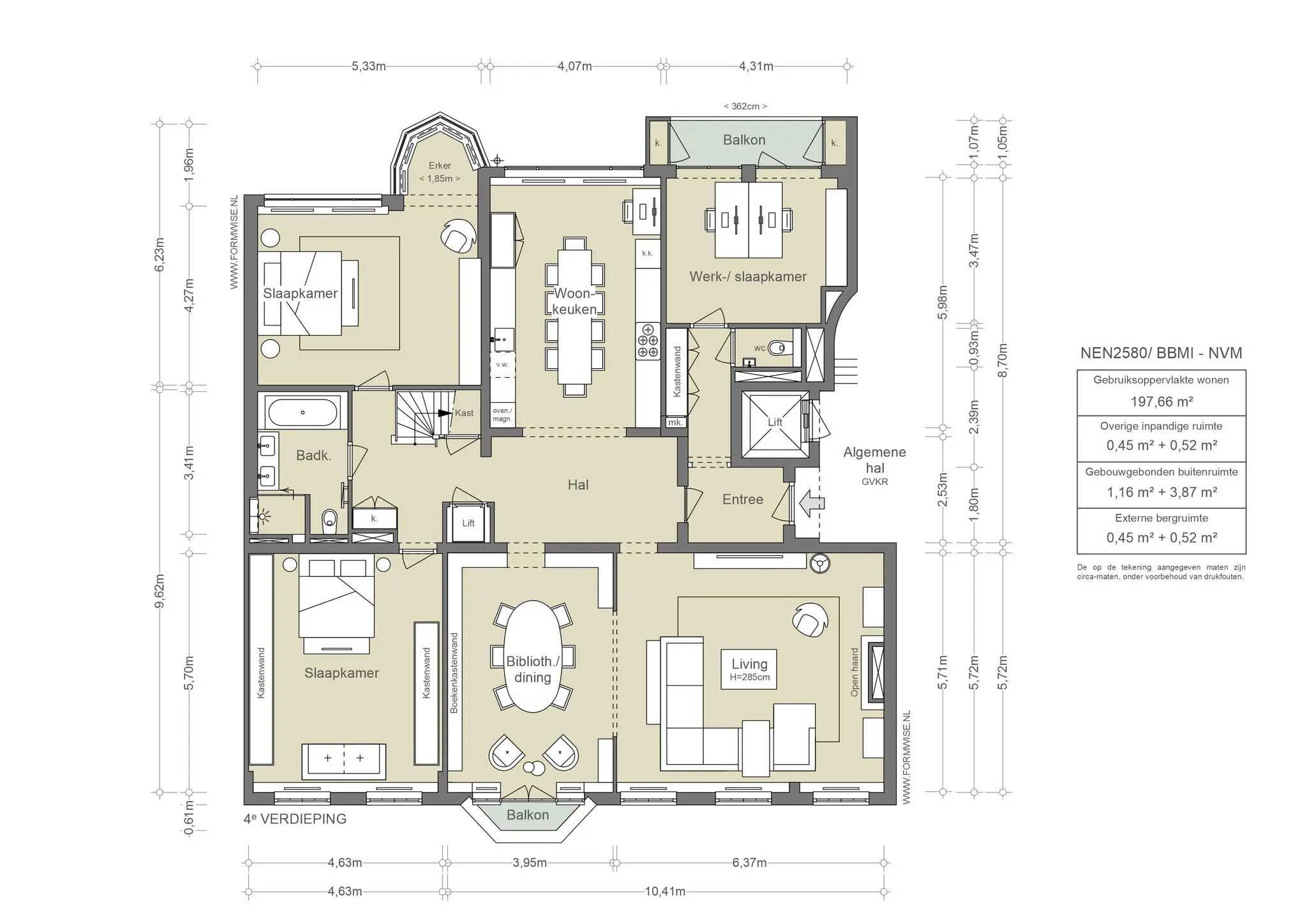
The house has an entrance with a long, wide, and central hallway. First, there is a front porch that gives access to the hall. A spacious and bright kitchen is centrally located on the south side, with French doors to the hall and the front room. The living room consists of a dining area and a spacious sitting area with a fireplace. Beautiful steel windows and French doors with a small balcony offer a view of the trees on Apollolaan.
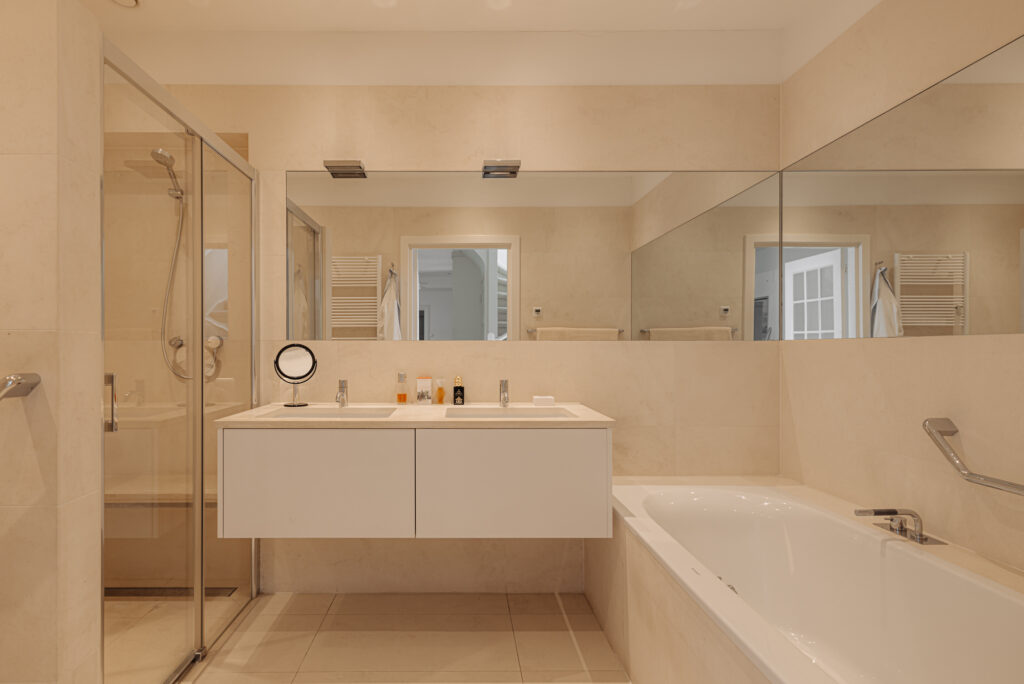
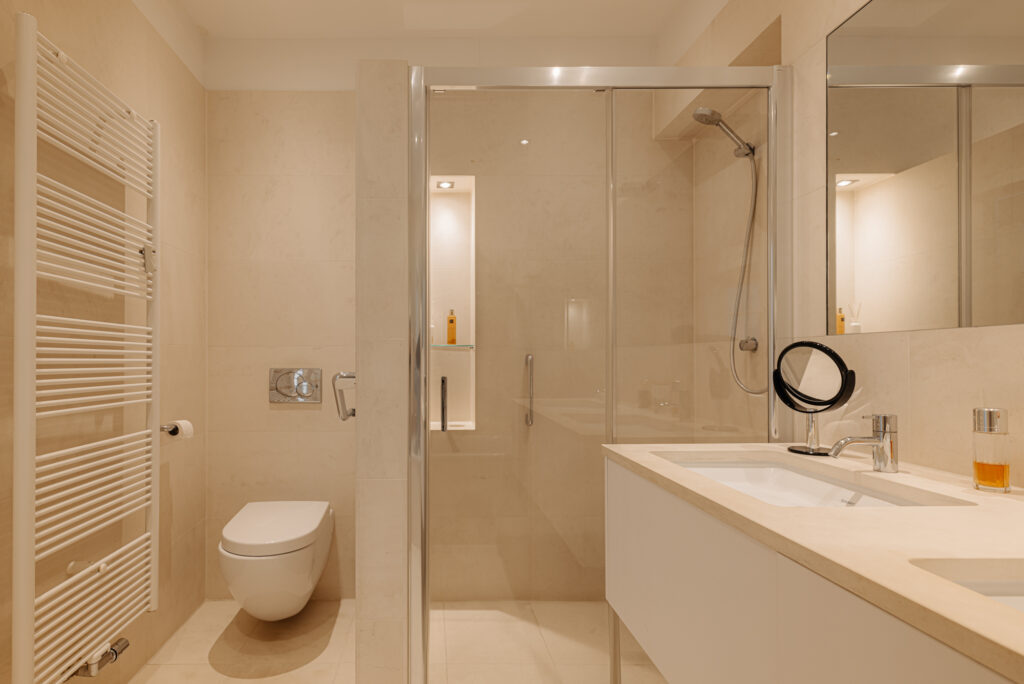
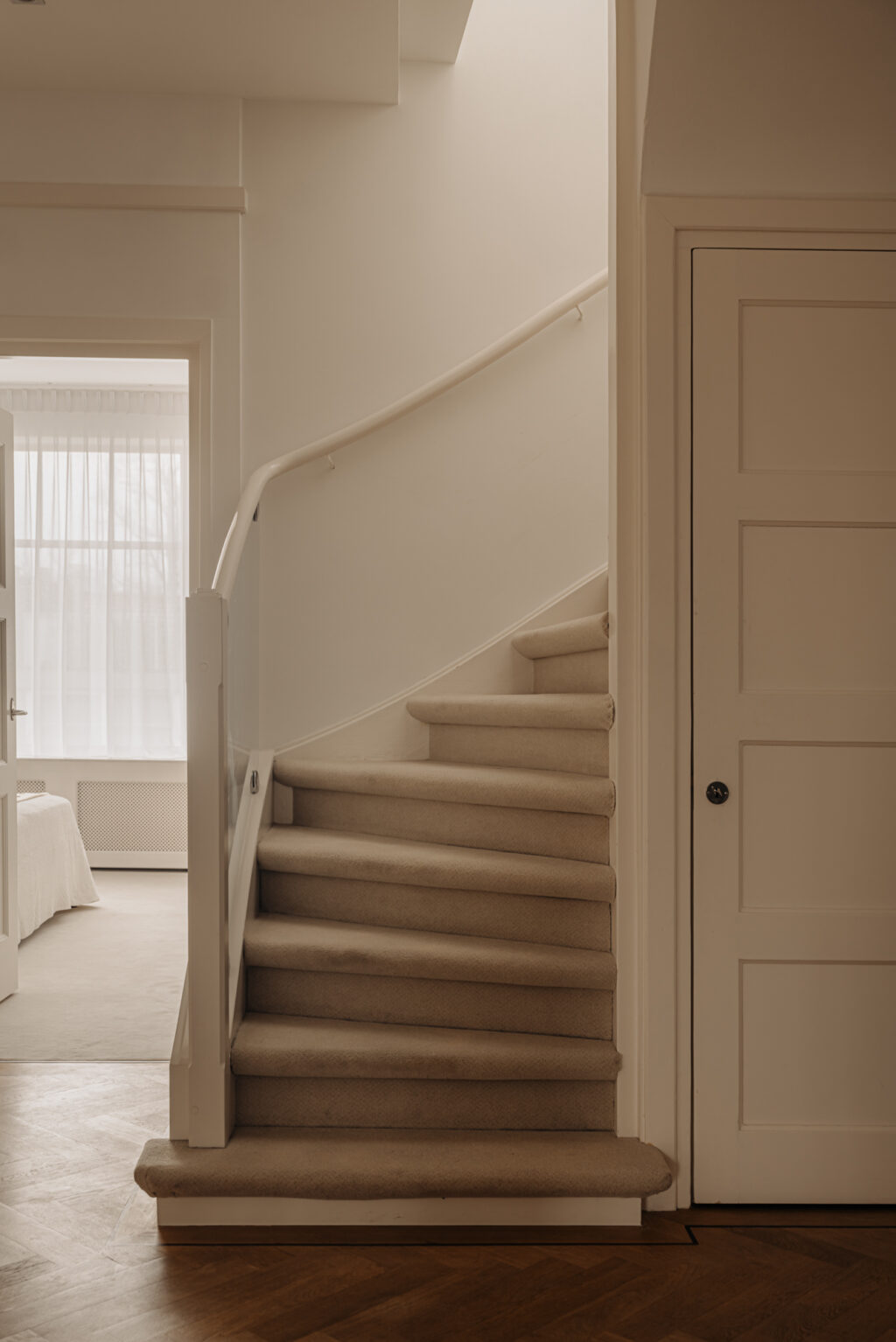
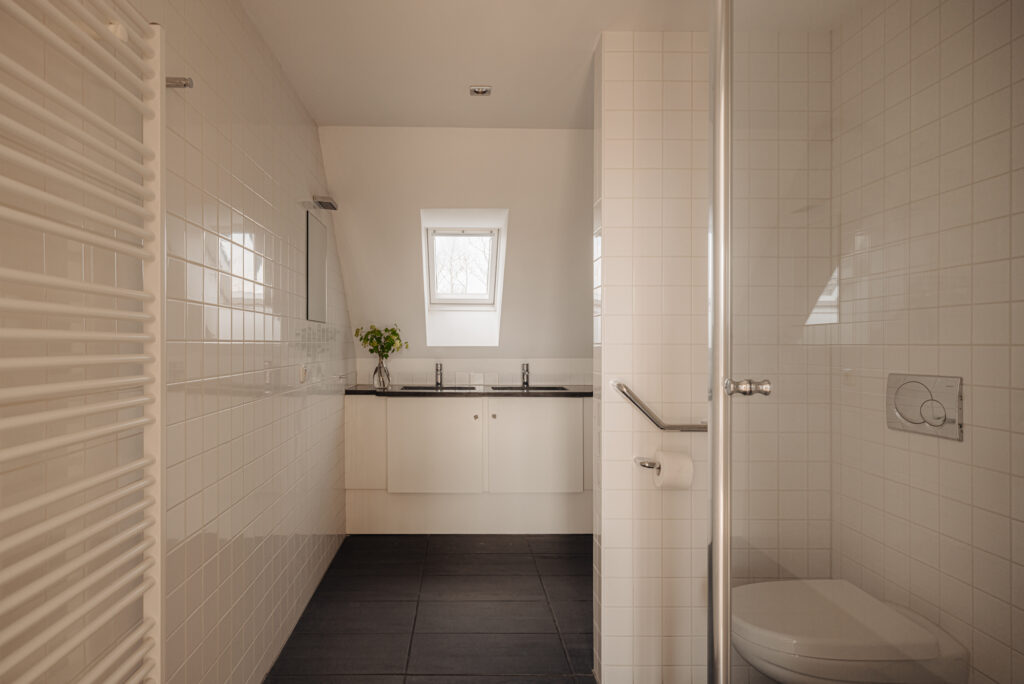
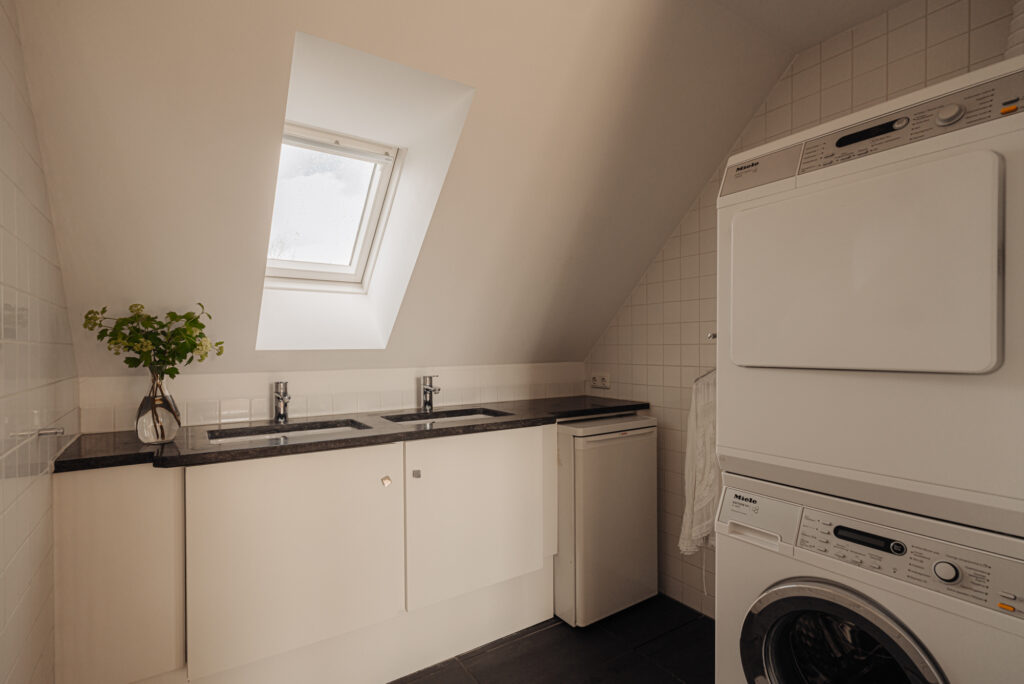
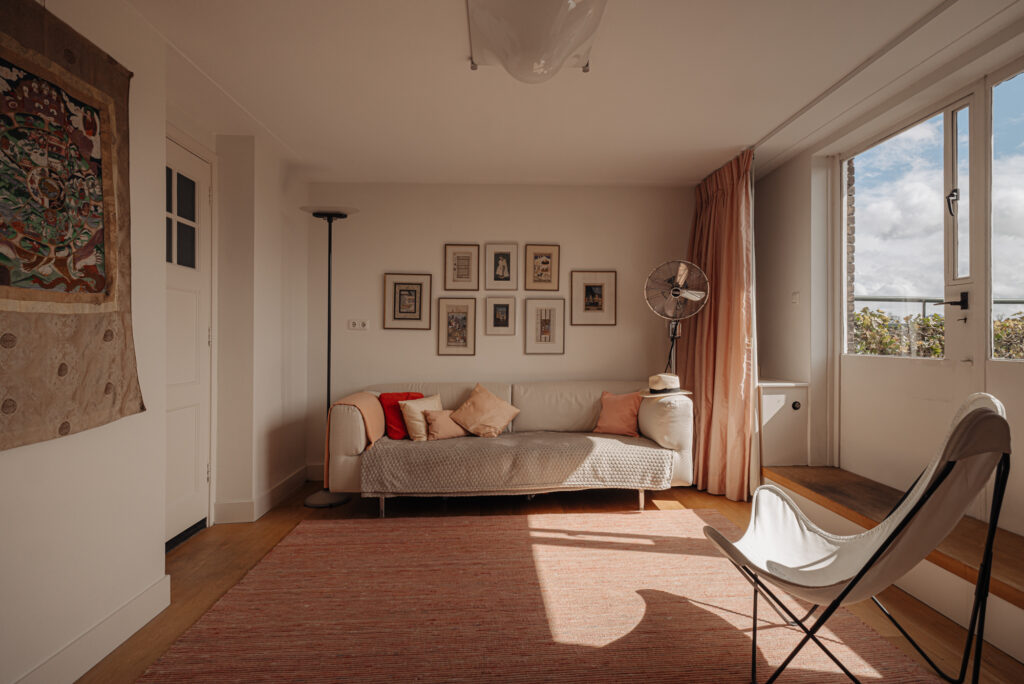
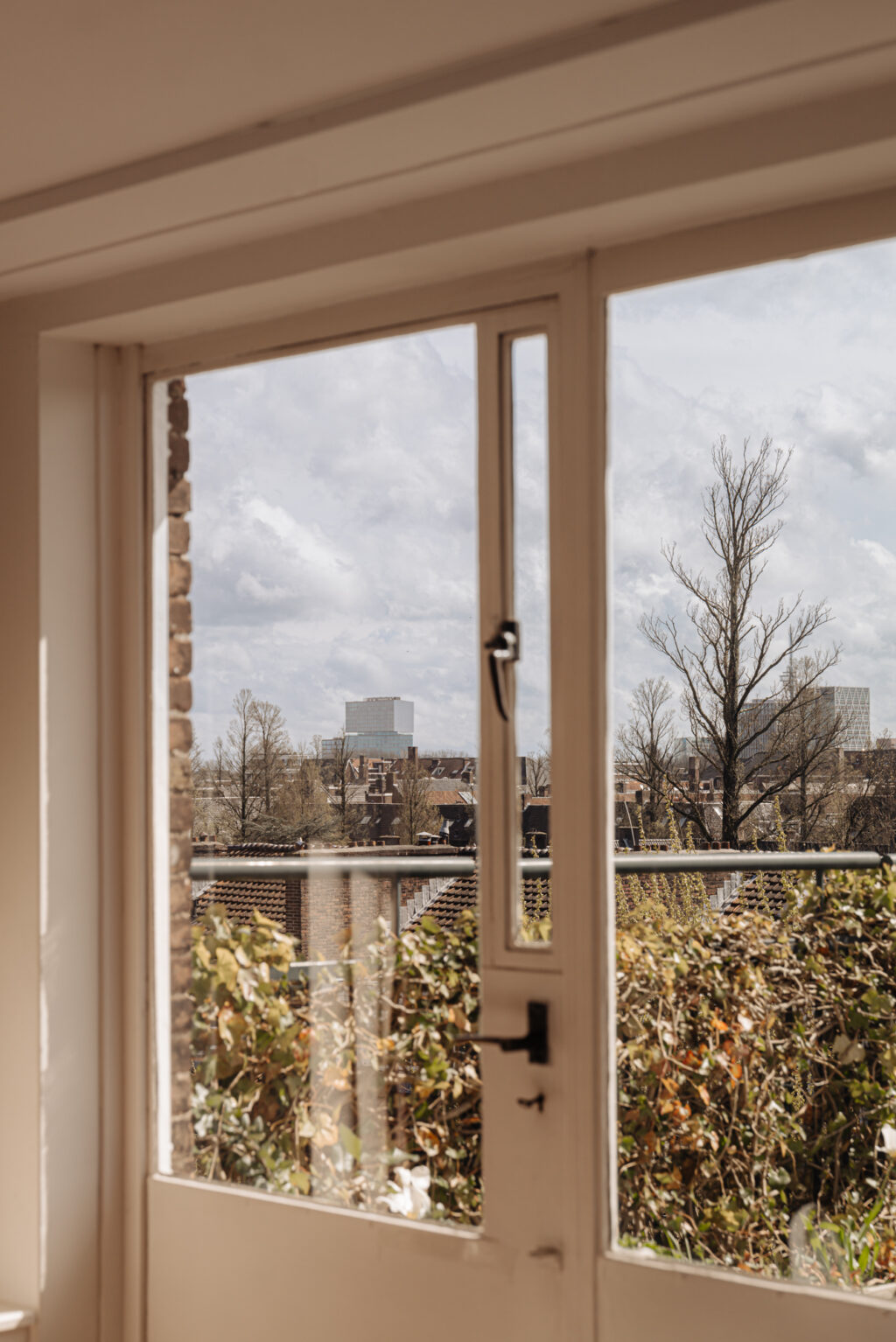
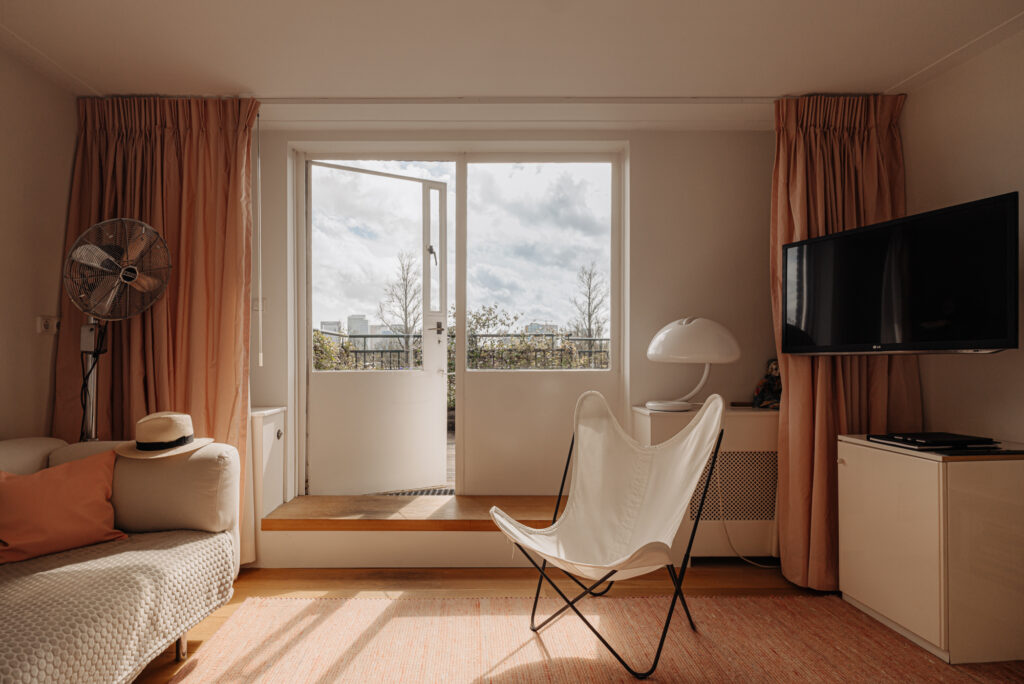
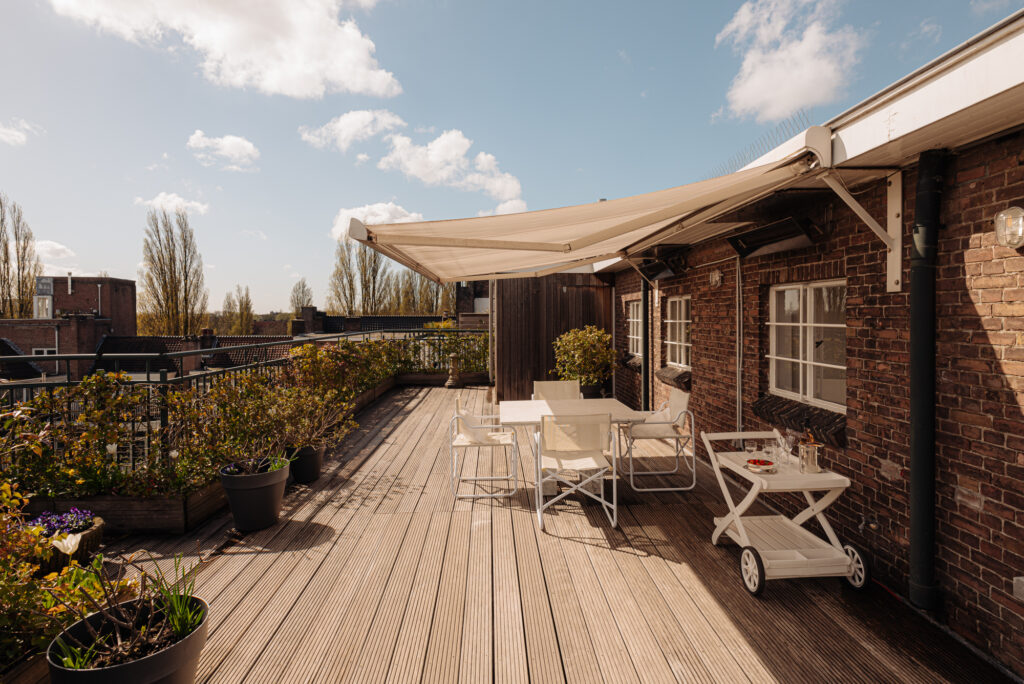
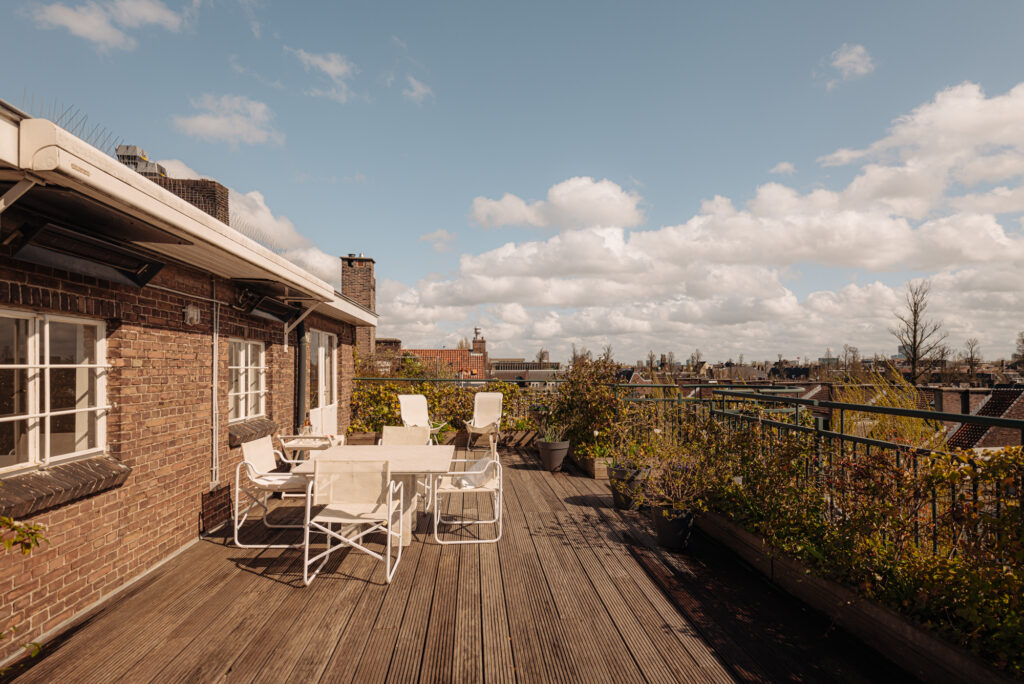
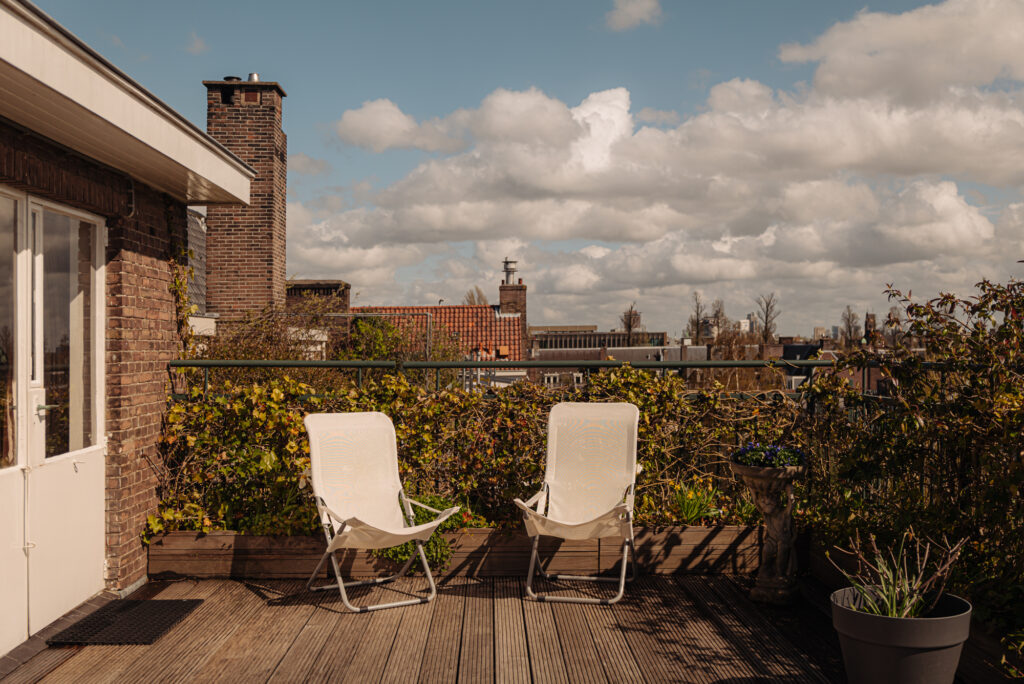
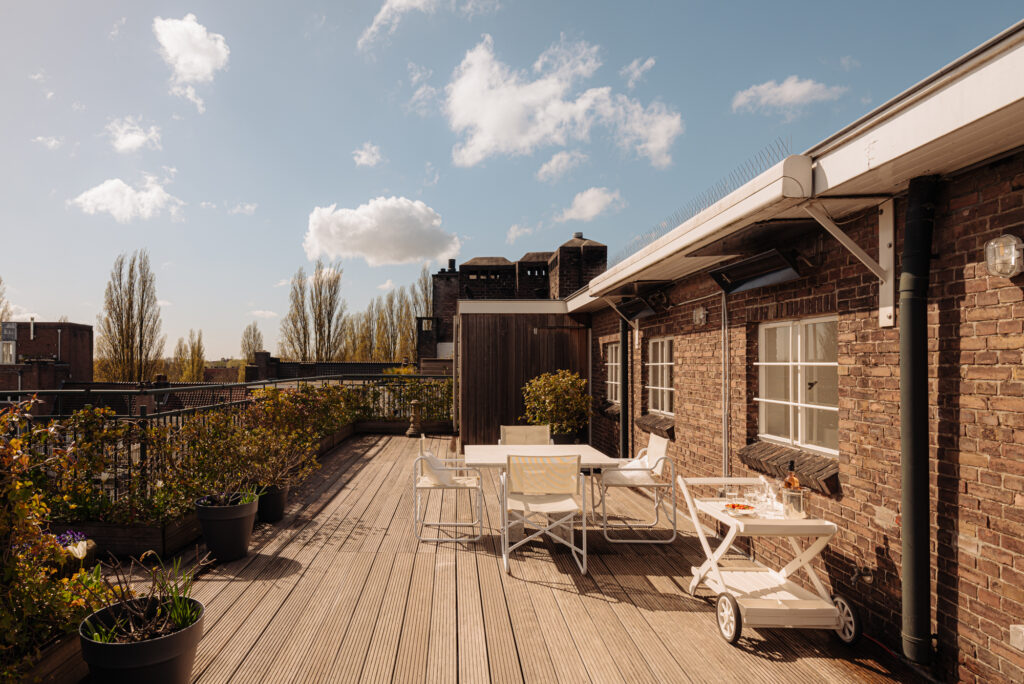
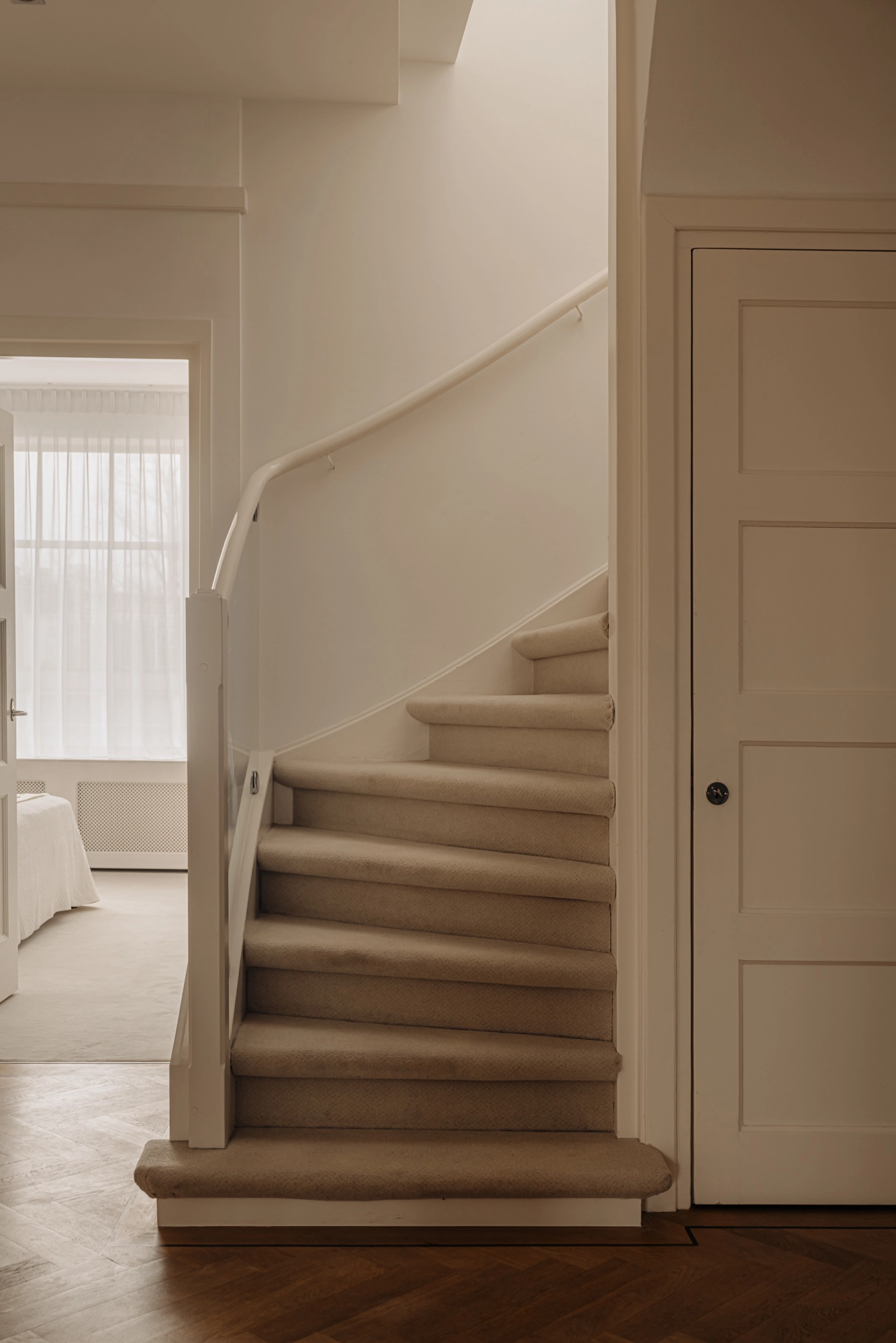
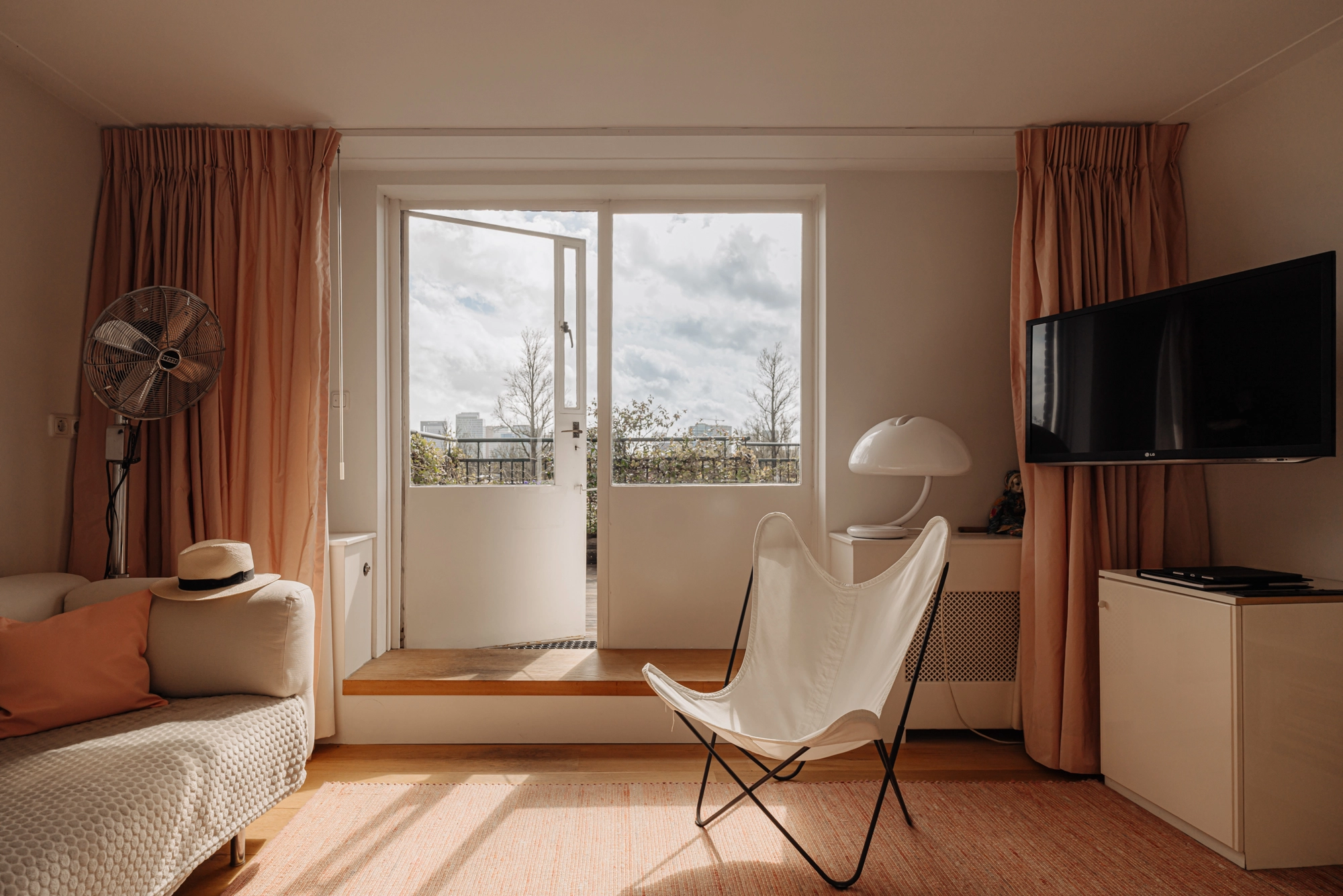
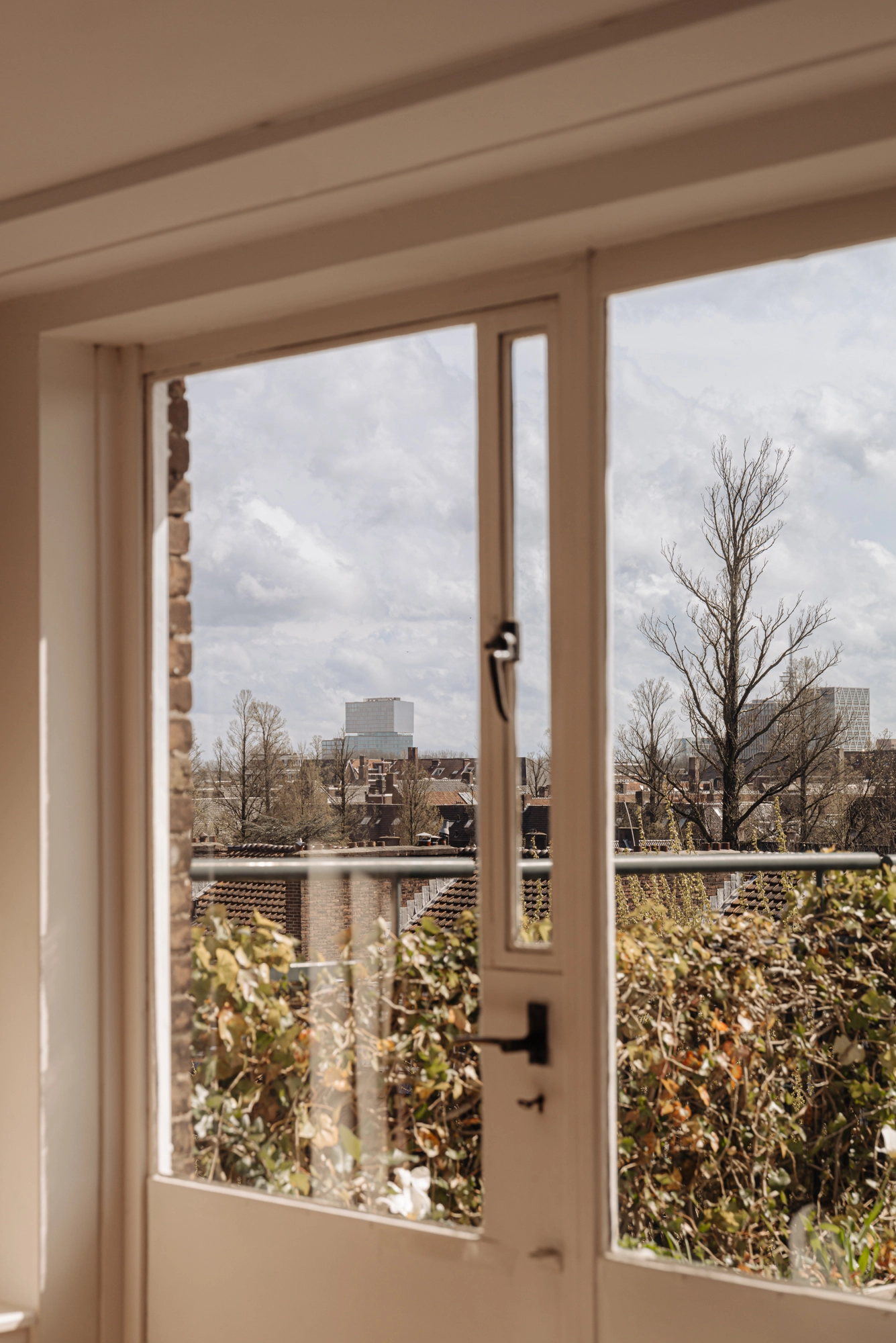
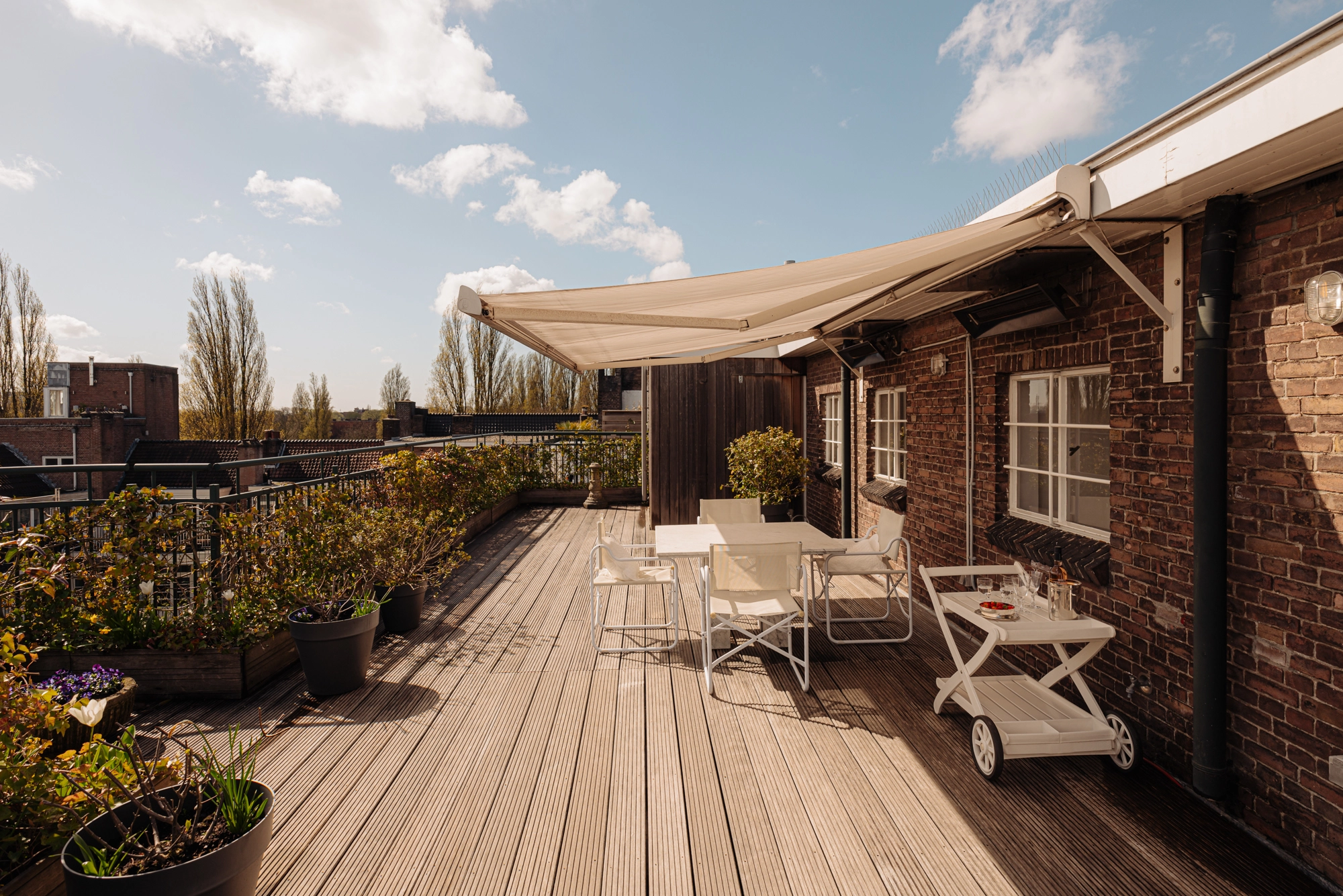
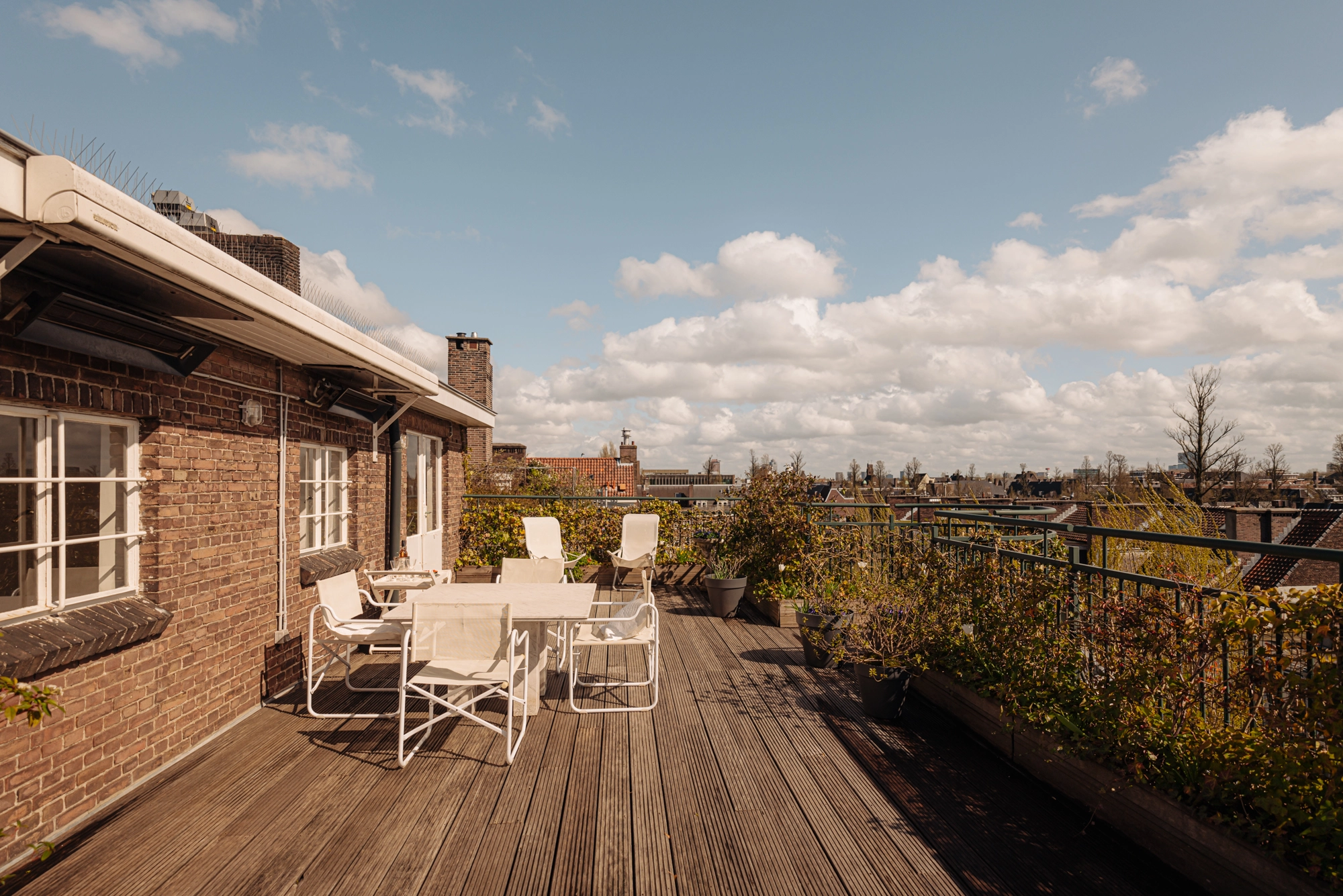
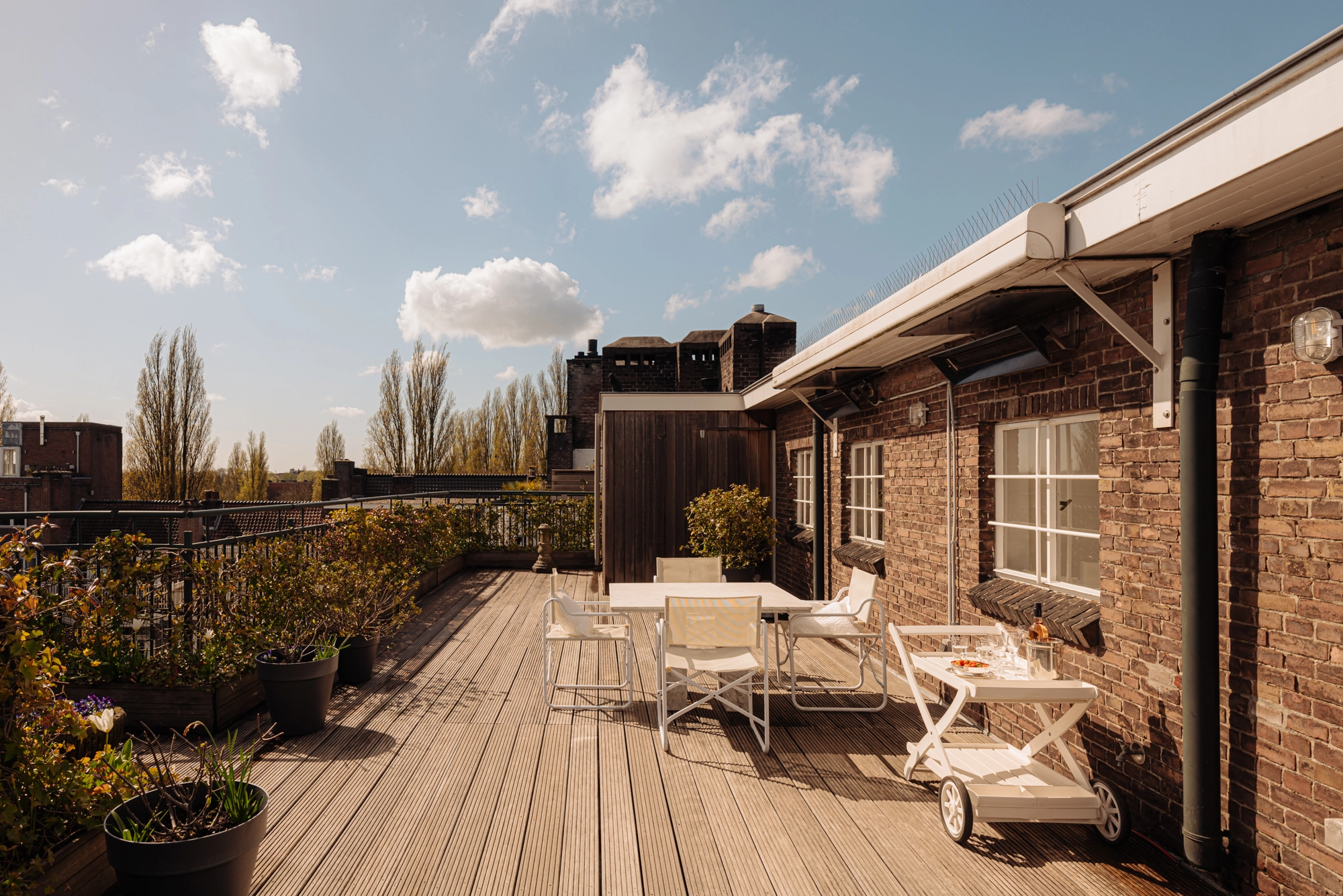
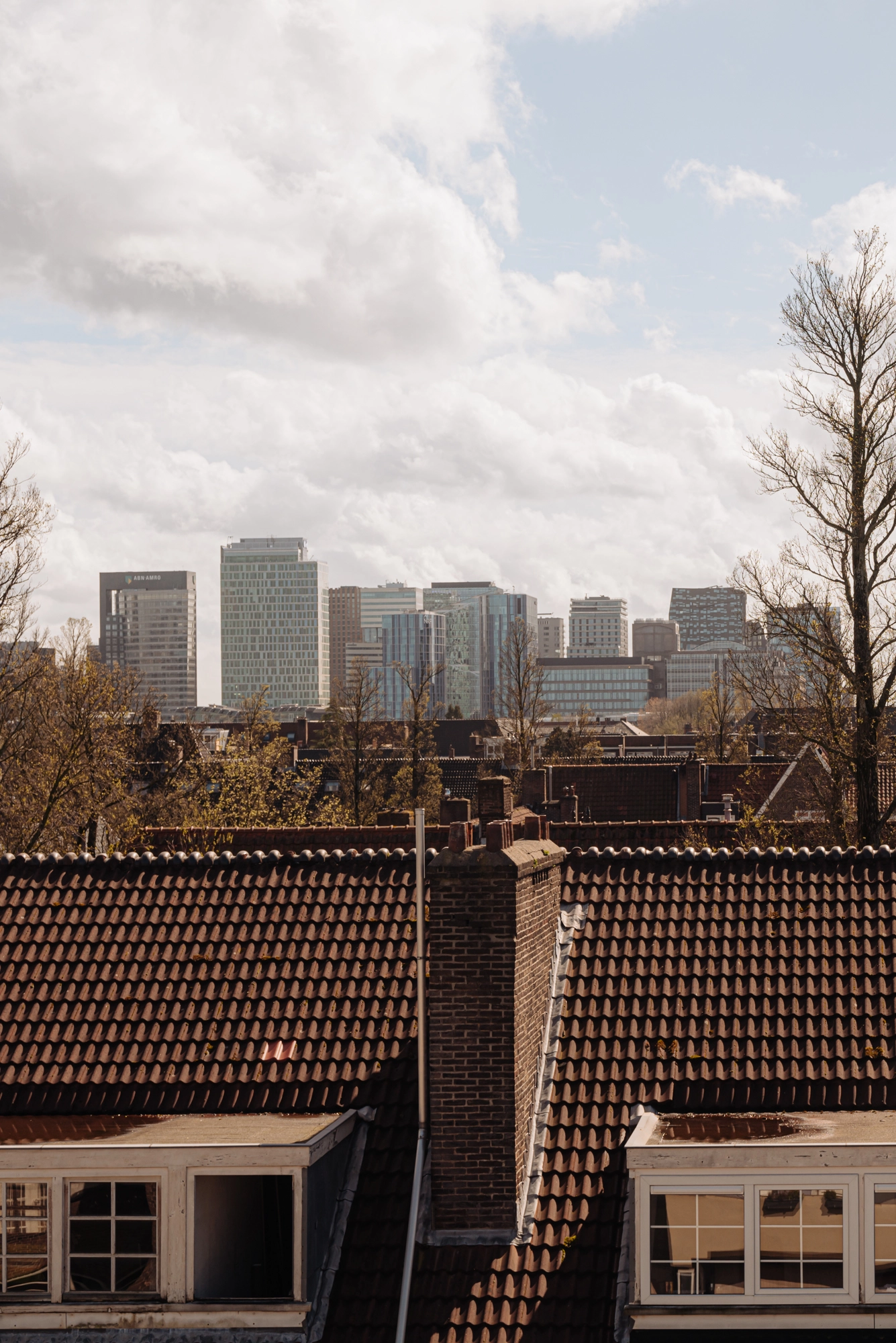
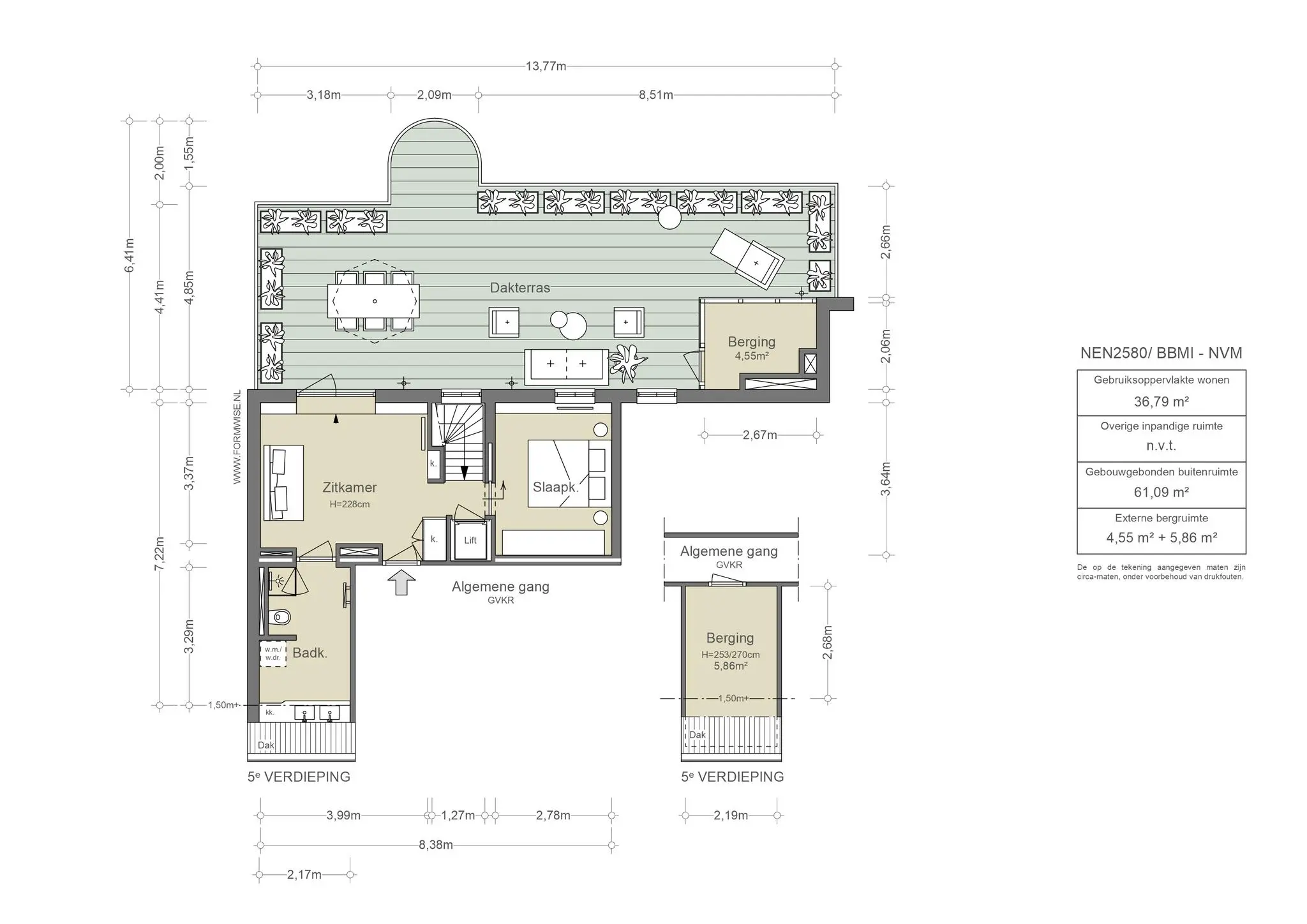
This floor also has three spacious Rooms can be used as bedrooms or studies. A separate bathroom has a bathtub, separate shower, two sinks, and a toilet. From the hall, a staircase and internal elevator lead to a studio with two Rooms a bathroom with laundry room. One of the Rooms French doors opening onto the Roof terrace, which is very sheltered, faces south, and Floor area a Floor area of 61 m2. From the terrace, there is a beautiful, unobstructed view over the Beethovenbuurt neighborhood to the Zuidas.
Neighborhood Guide
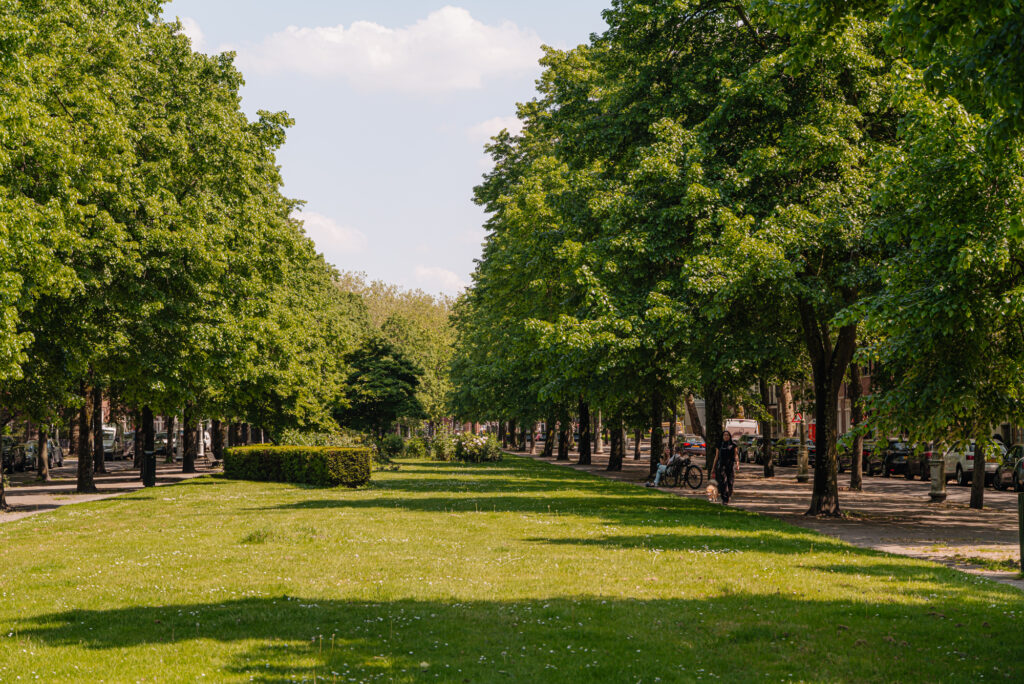
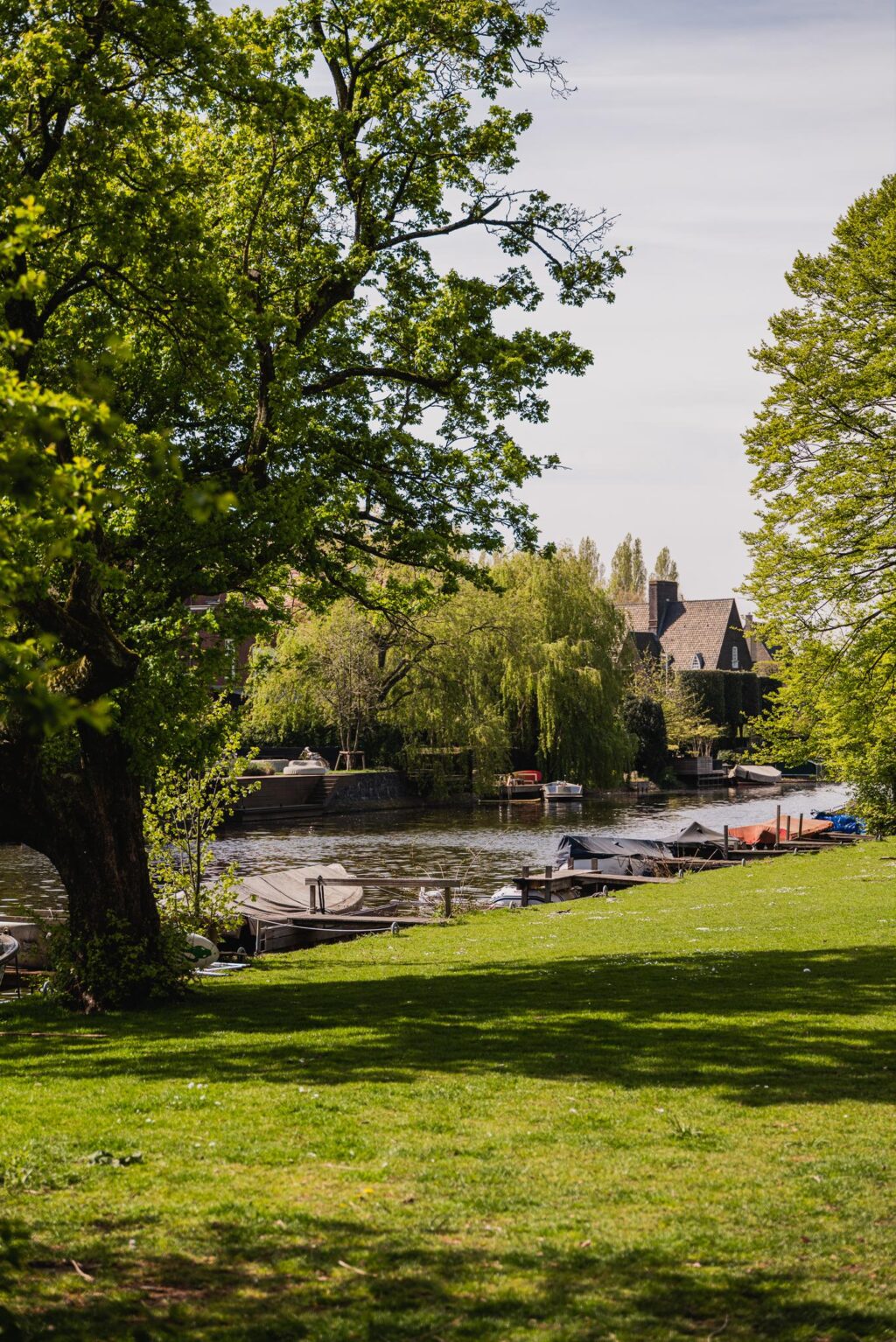
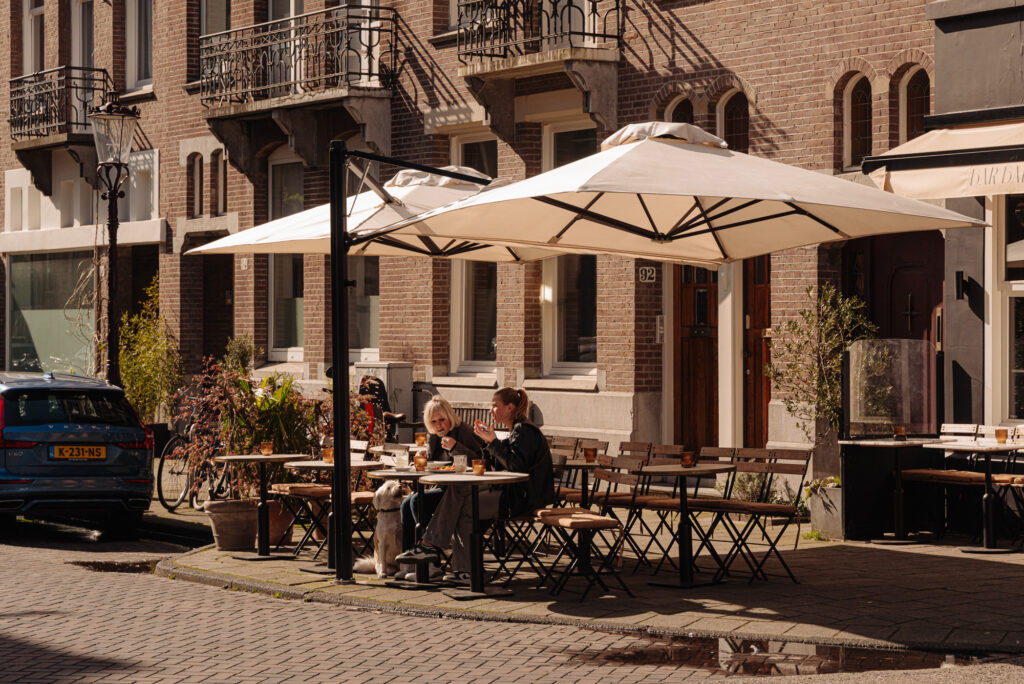
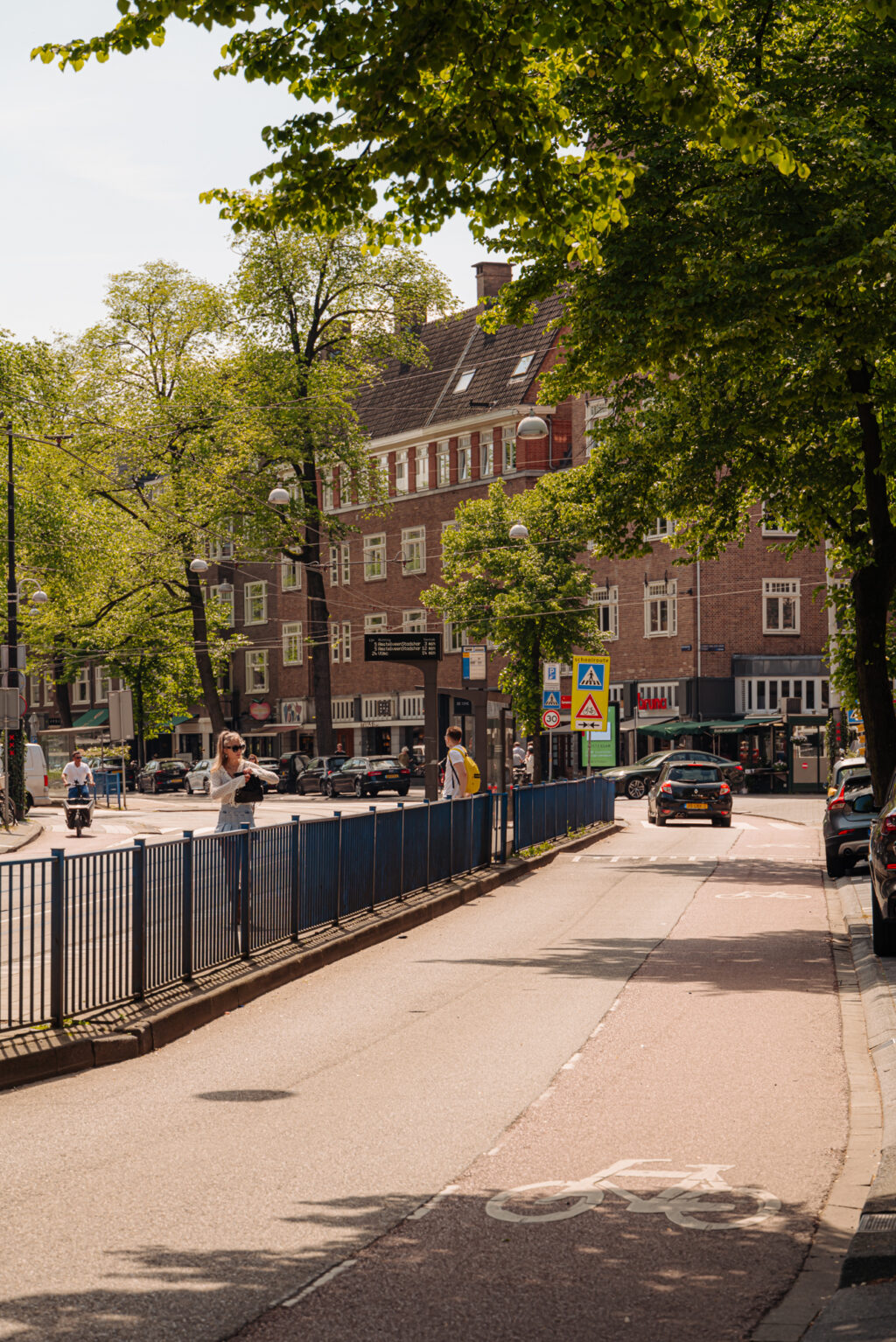
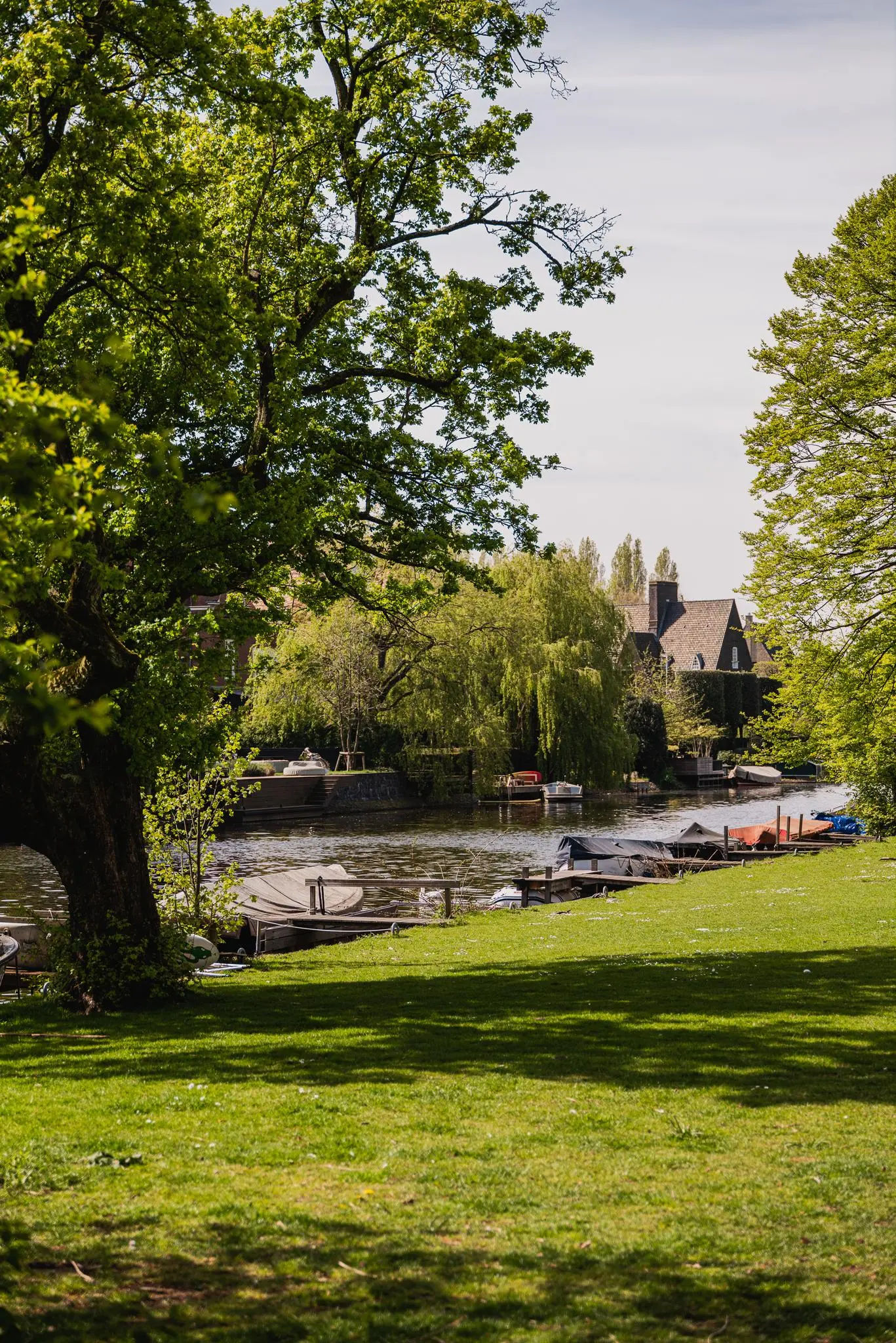
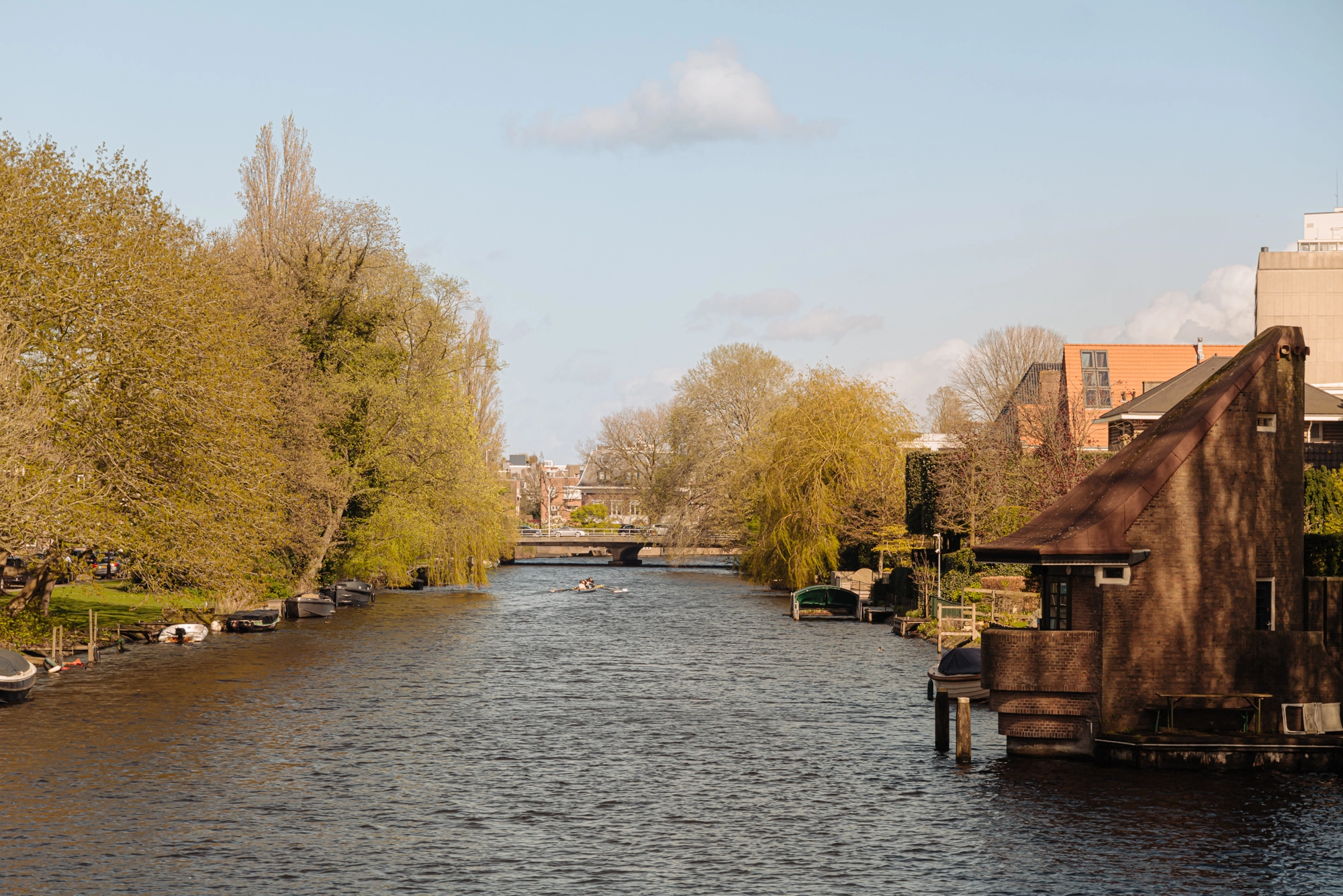
The Apollobuurt neighborhood is part of the Beethovenbuurt neighborhood. It is an important part of Amsterdam from an urban planning perspective, where the urban planning stamp was left by architect Berlage's ideas and designs. Berlage devised a pattern of streets, avenues, and canals where blocks of houses, lots of public green space, and villas alternated with mansions to form a whole. This created the basis for the characteristic features of this 1930s neighborhood, which is almost entirely surrounded by water: the spacious residences were ultimately designed in the Amsterdam School style. The facade stones and bridge sculptures by Hildo Krop, who was awarded the honorary title of City Sculptor of Amsterdam, also lend the neighborhood cachet. The neighborhood was designed as a residential and family area, with facilities for schools and sports. The Beatrixpark completed the neighborhood. In Beethovenstraat, coffee bars and restaurants such as Brasserie Margaux and Ferilli's give the street and the neighborhood a young and dynamic character. On Olympiaplein, you will find the bakery Le Fournil and Fromagerie L'Amuse. Butcher Zikking is located on Marathonweg. The wide avenues and greenery of Beatrixpark, with its modern sculptures and old trees, create a feeling of space and are ideal for sports and relaxation. The neighborhood is known for its good primary and secondary schools and also for its convenient location in relation to the Ring, Amsterdam Zuid station, and the Rai. De Pijp and the city center are within easy reach from here.
Details
• Usable living area approx. 235 m²
• Roof terrace approx. 61 m²
• Two balconies facing north and south, totaling approx. 5 m²
• Located on leasehold land owned by Local authority . Located on leasehold land owned by Local authority . Current lease period until August 31, 2025, AB perpetual leasehold 2000, ground rent payable is €2,615.35 per year until October 31, 2024.
• Application for transfer to perpetual leasehold with AB 2016 was submitted on time
• Energy label
• Architect; The building was designed by Architect Warners
• Service costs for the owners' association €734.99 per month
• Advance heating costs €342.49 per month
• Foundation information; existing foundation with concrete foundation strip.
The EtageHuis by F.A. Warners
In Zuid, there are a number of buildings with spacious apartments designed by Ing. Warners, including a very distinctive building on the corner of Apollolaan and Olympiaplein. I have known this building for years and advised on its purchase at the time. Within the complex, this apartment is one of the best residences. It is located on the top floor and has an extra level with a beautiful sheltered terrace that can be accessed via an internal connection. The spacious and balanced layout gives a feeling of space and luxury; this design is clear and practical. The long hallway at the entrance Immediately makes Immediately good impression. At the rear, the apartment is bathed in light, while at the front, the greenery of Apollolaan provides a leafy view. Living here is a privilege and an investment in a great deal of living pleasure.
Kees Kemp | Real estate agent Broersma Wonen
Daniël de Bont | Makelaar Broersma Wonen
Architecture
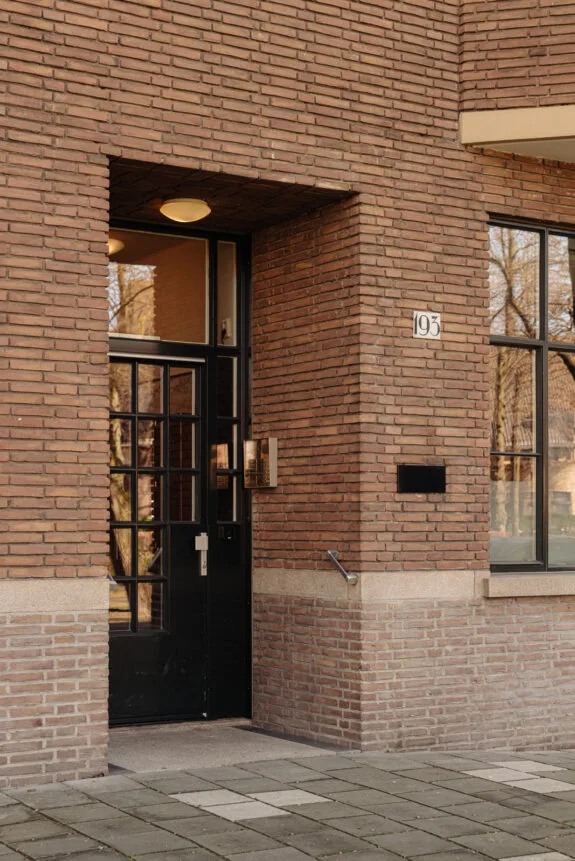
F.A. Warners, son of a contractor, was an innovative and visionary architect. At the beginning of the twentieth century, apartment complexes were already being built in major European cities such as Paris, Vienna, and Berlin. In the Netherlands, people still clung to the traditional type of housing with a basement, bel-étage, and an upper floor. Warners broke with this pattern when he built Huize Loma on De Lairessestraat in Amsterdam Oud-Zuid in 1914. In the residences this complex, all Rooms, including those for the staff, are located on one floor. Warners called this type of dwelling an 'etagehuis' (multi-story house); later, it would be called an apartment building or apartment complex. The construction of etagehuizen was difficult to finance. Almost no one dared to invest money in such project. That is why Warners, together with his father-in-law, the publisher Allert de Lange, and David Voûte, founded the N.V. Amsterdamsche Maatschappij tot Exploitatie van Etagewoningen (A.M.E.E.). Shareholders were sought for a new construction project who would be given the right to live in a home, such as at EtageHuis Schouwenhoek, designed in 1937 as a modern building. It made use of steel, concrete, elevators, and communal facilities. Spacious apartments were also created in this building. Several members of Warners' family lived here from the beginning. It is said that Warners went into hiding during the war on the fifth floor of the building. The building had a sleek appearance for its time, with slender steel frames and masonry that fit in with Modern Building. More functionally, Warners showed that he was moving with the times and perhaps even ahead of them. The building fits in with Berlage's philosophy of urban planning and Plan Berlage, and completes the building unit of Apollolaan and Olympiaplein with an extra-high roof as an accent.
Living and cooking
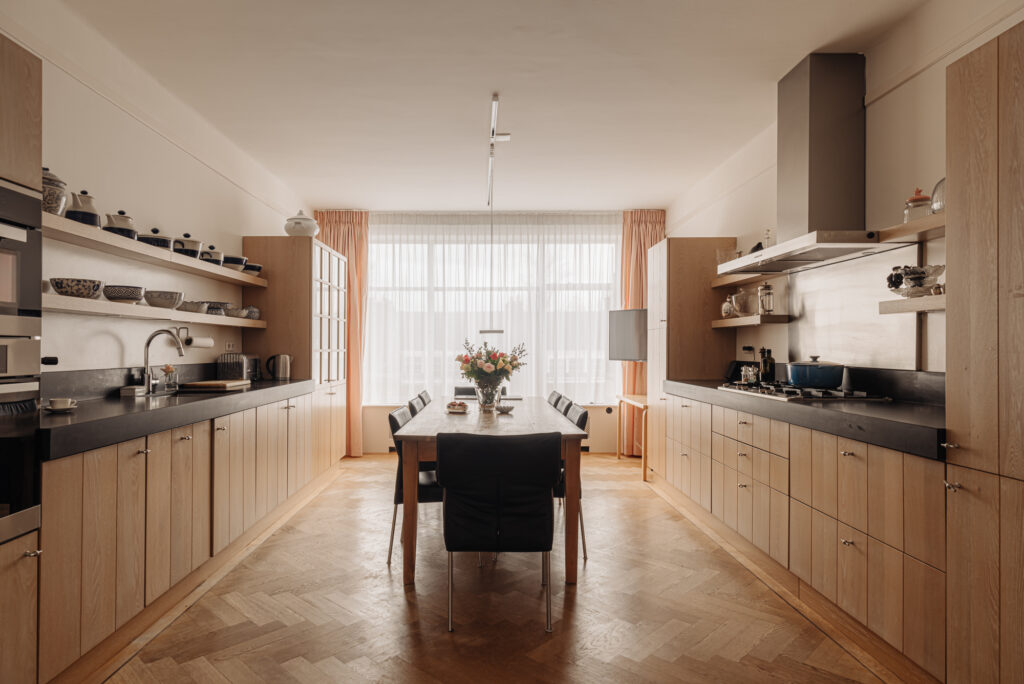
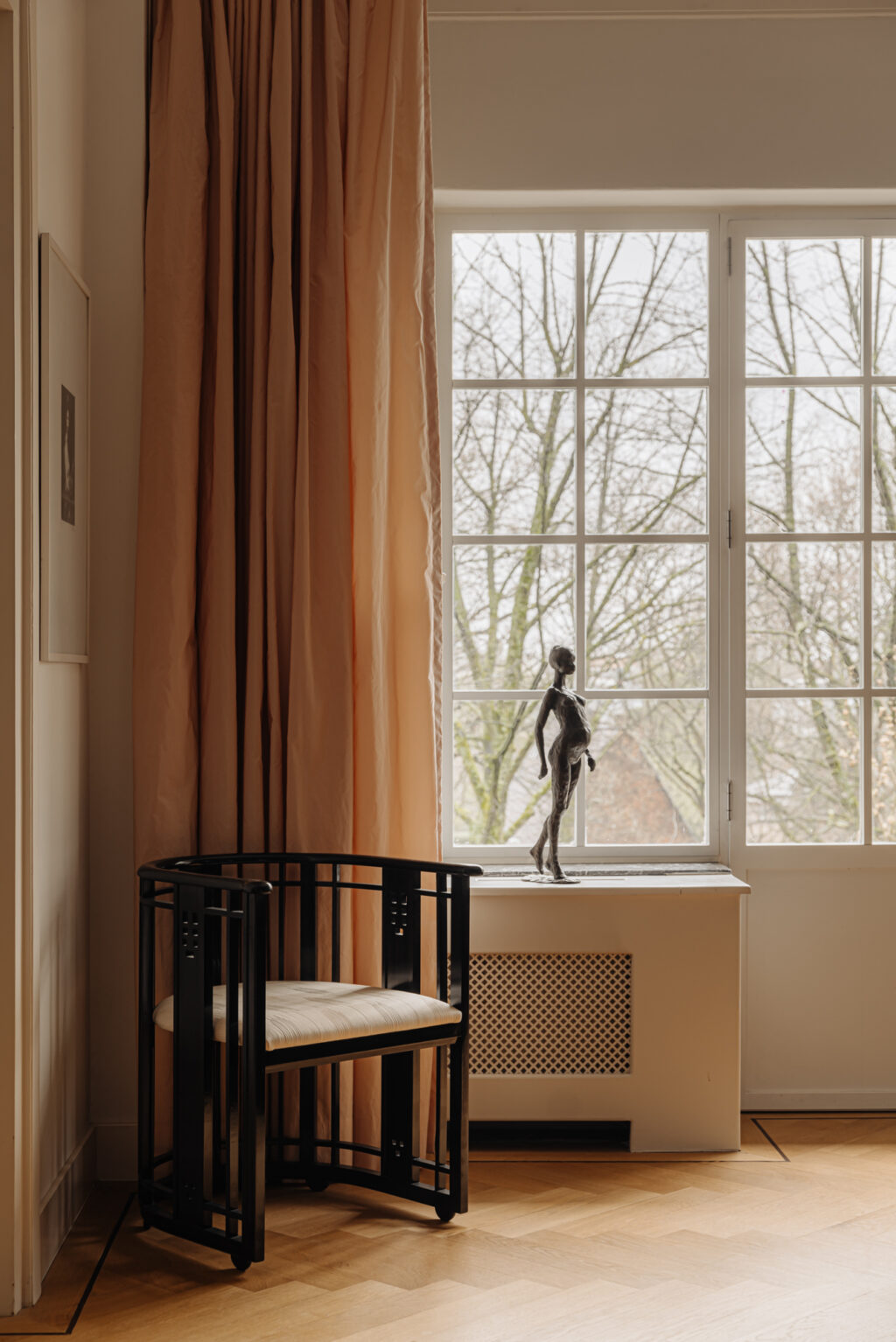
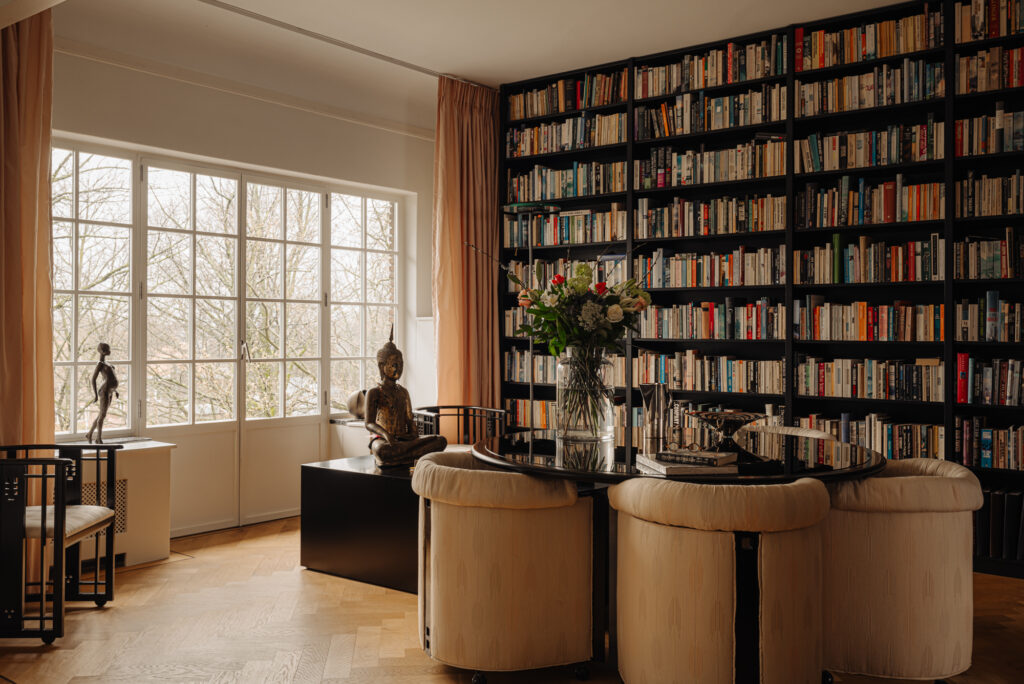
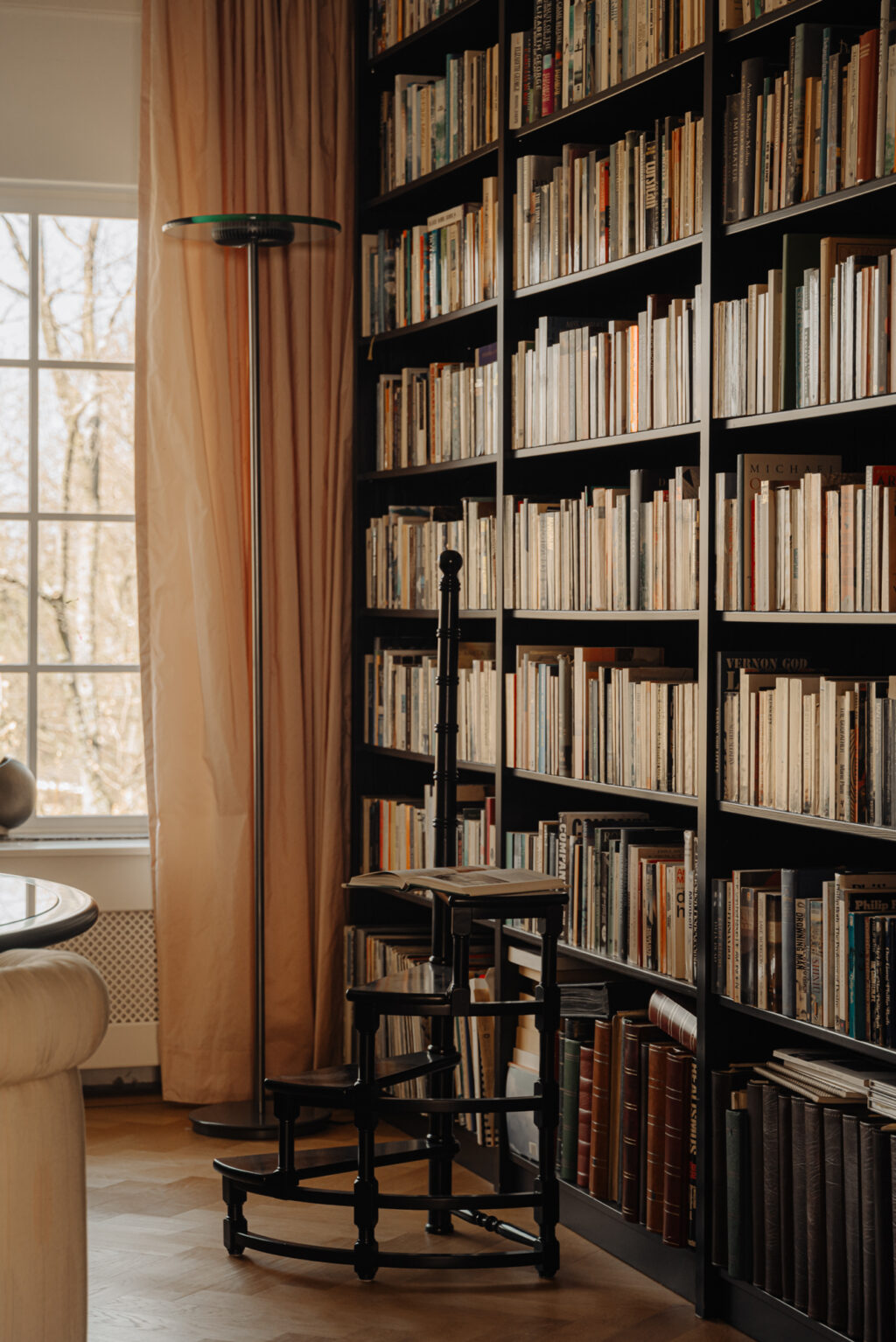
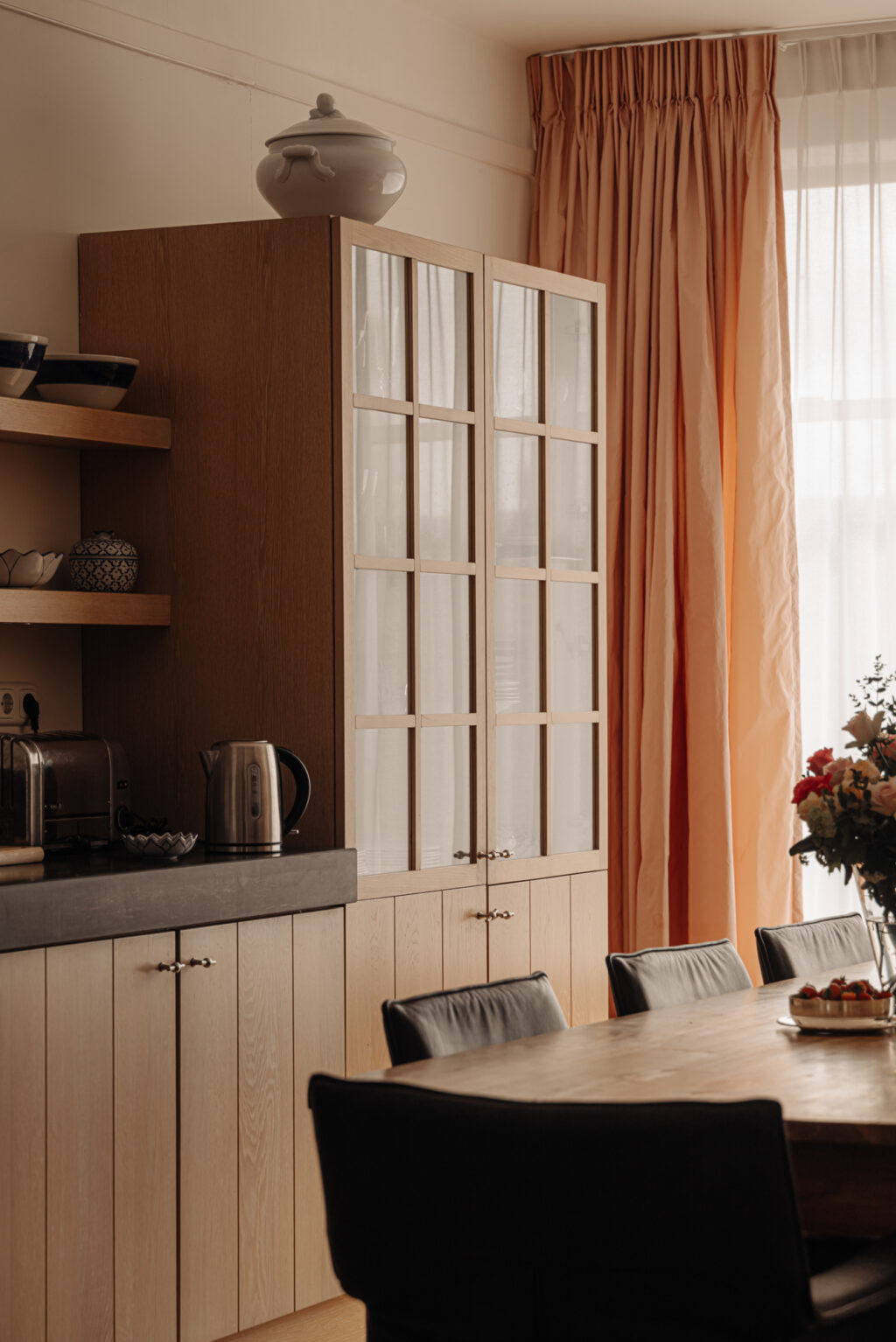
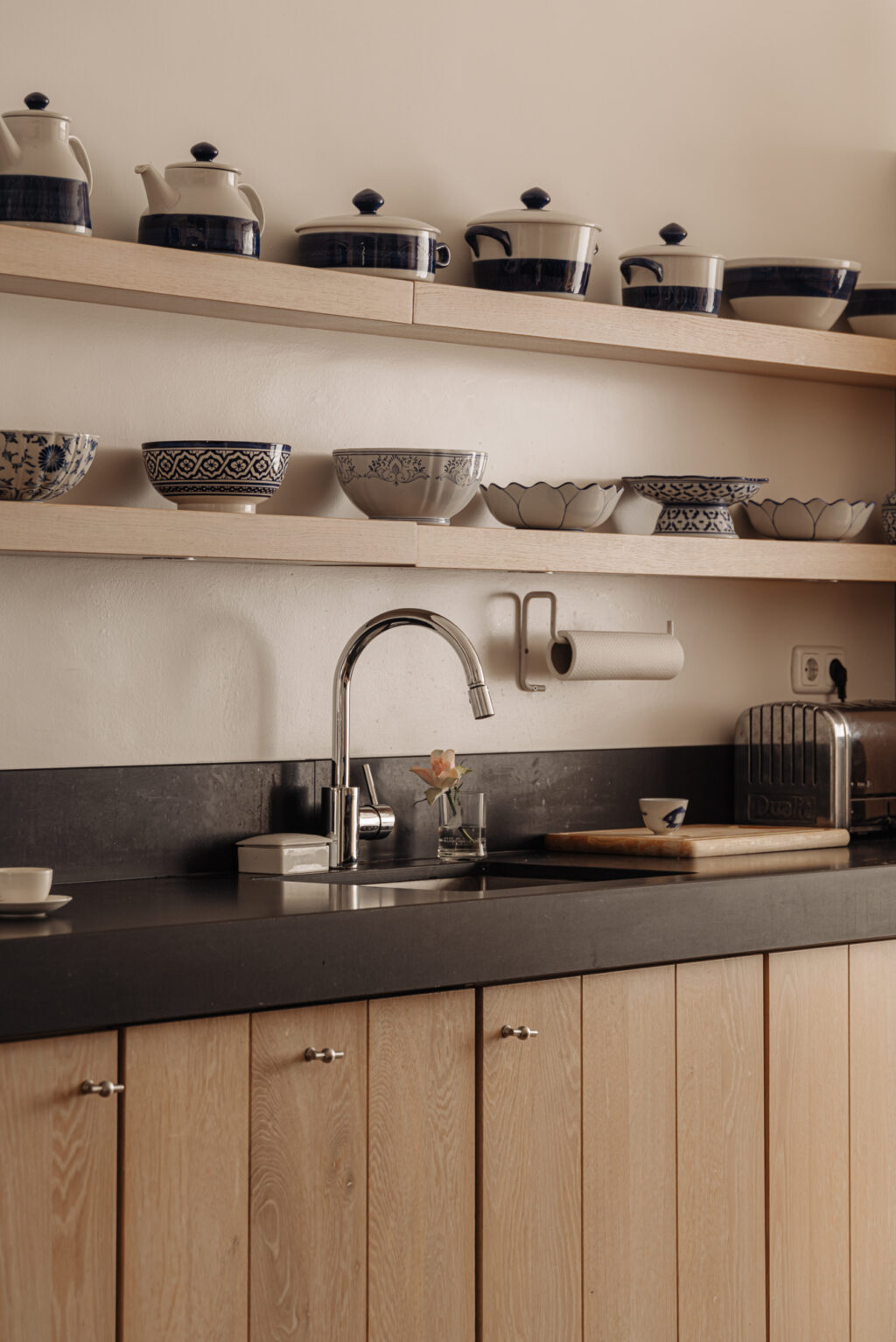
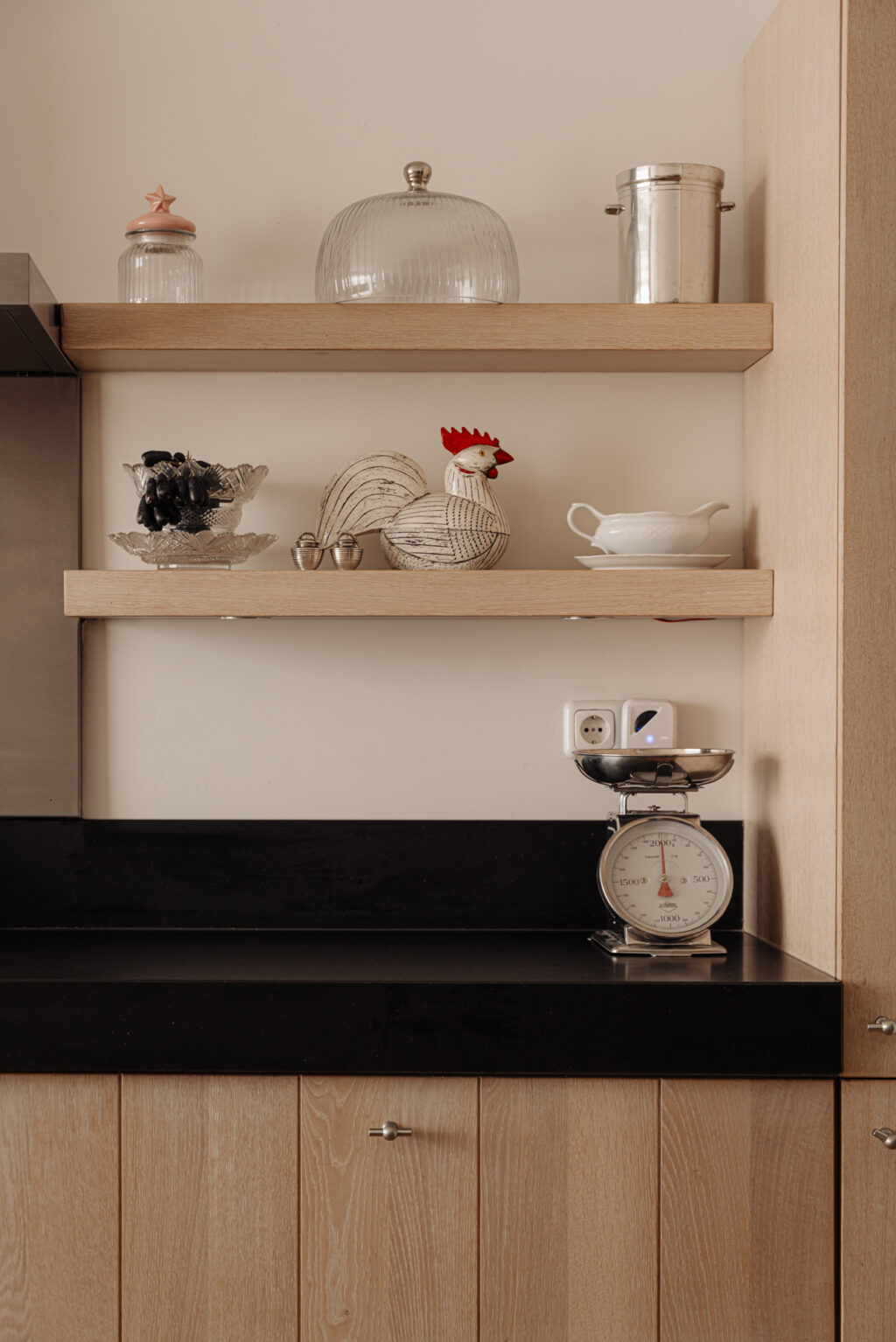
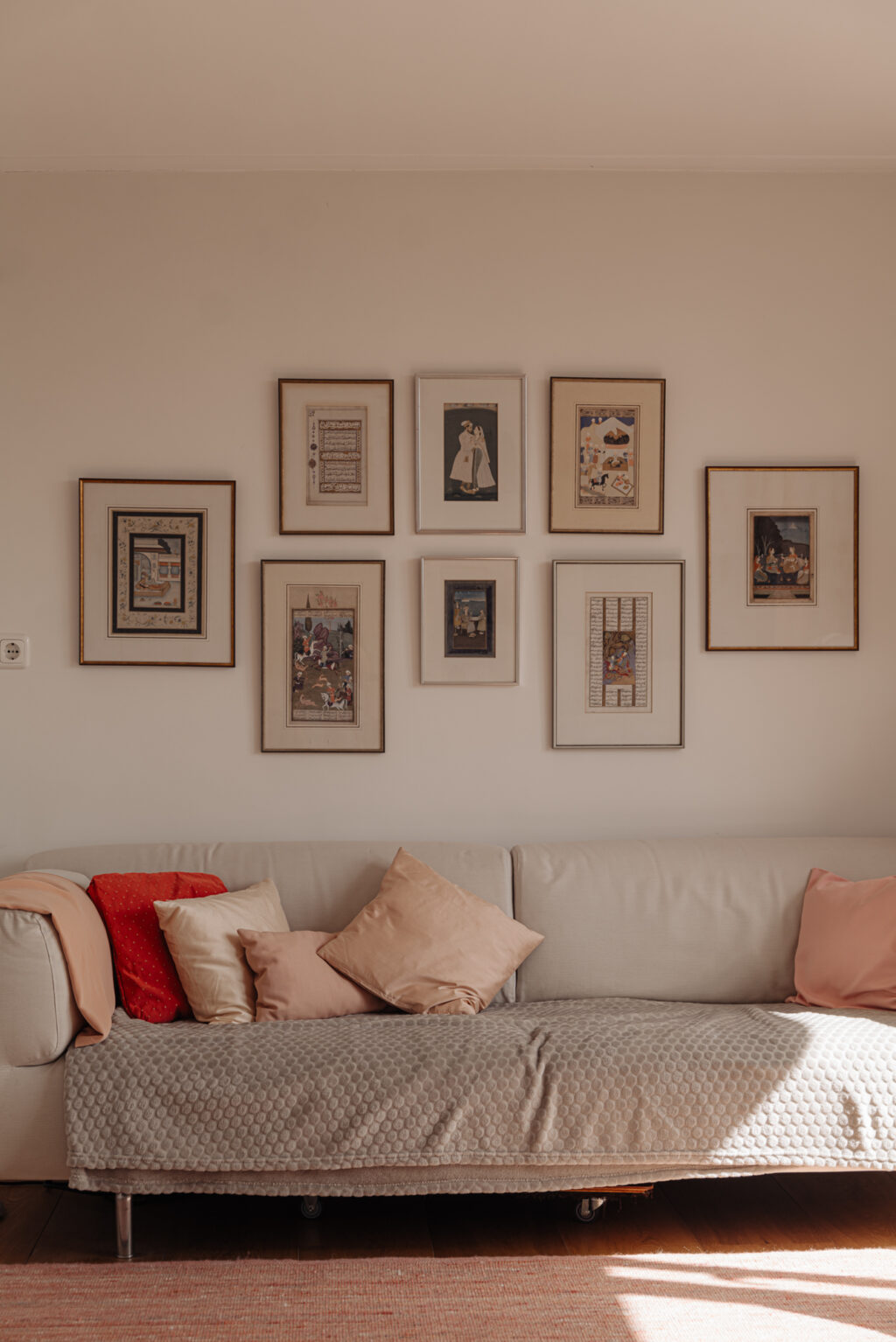
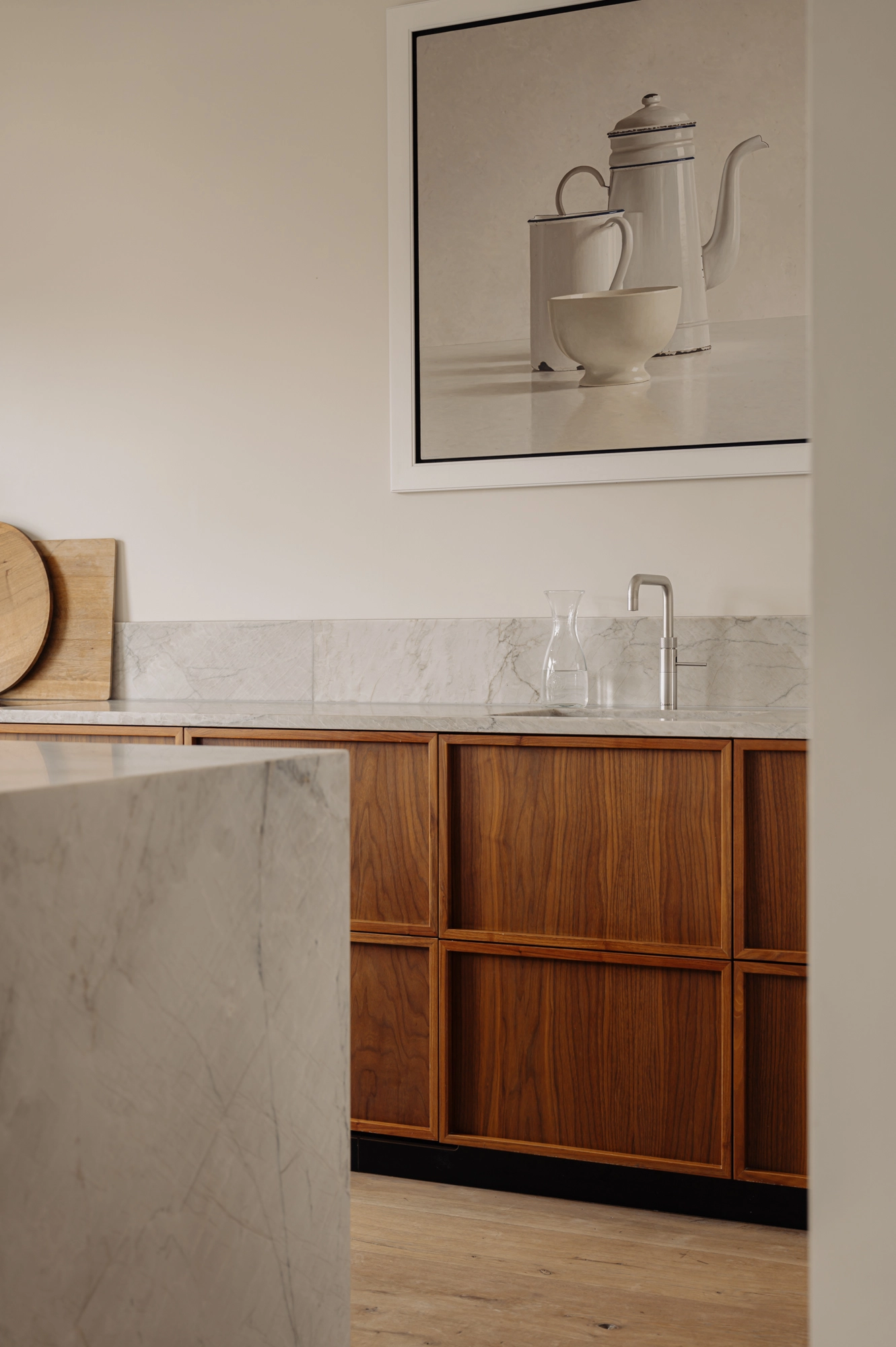
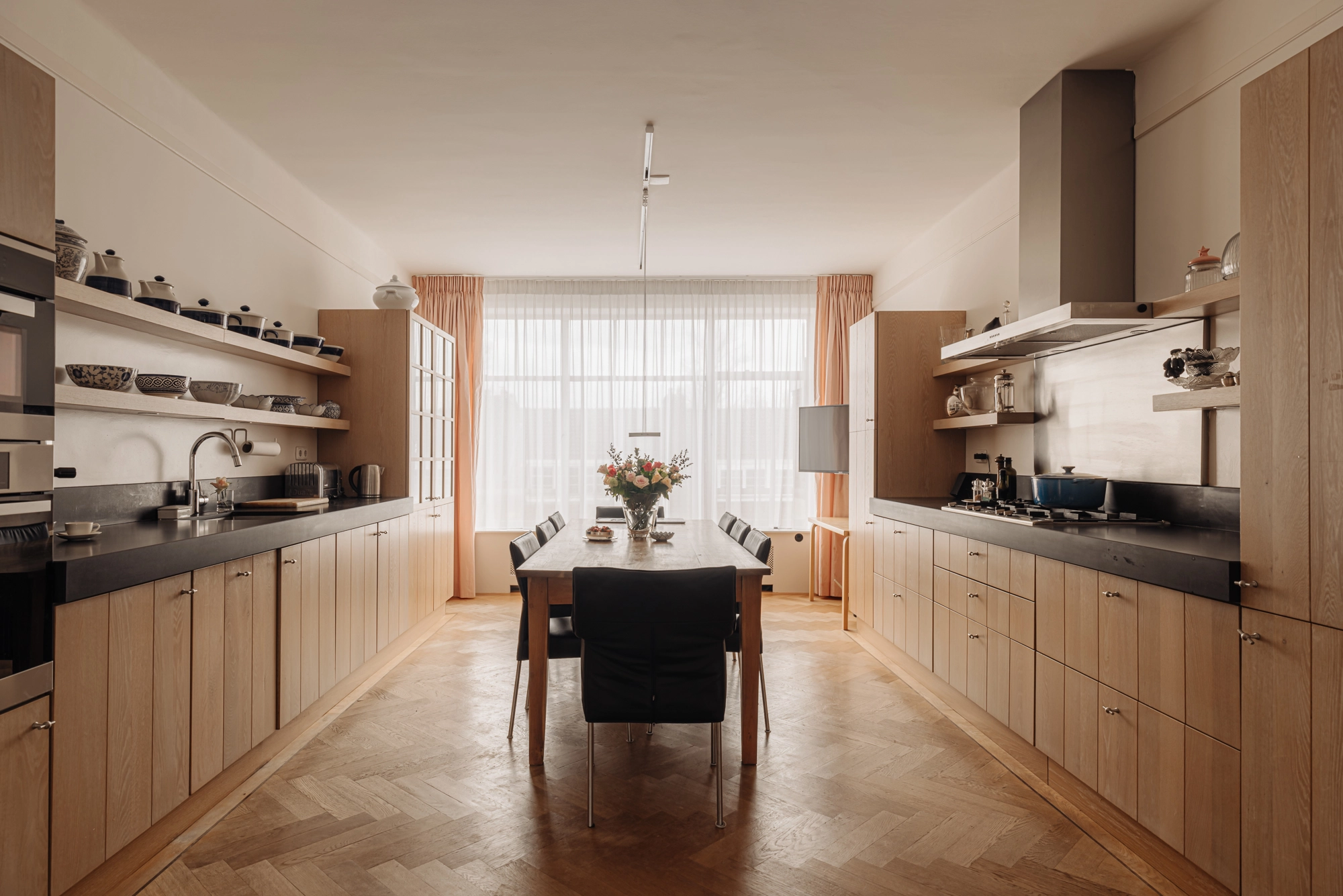
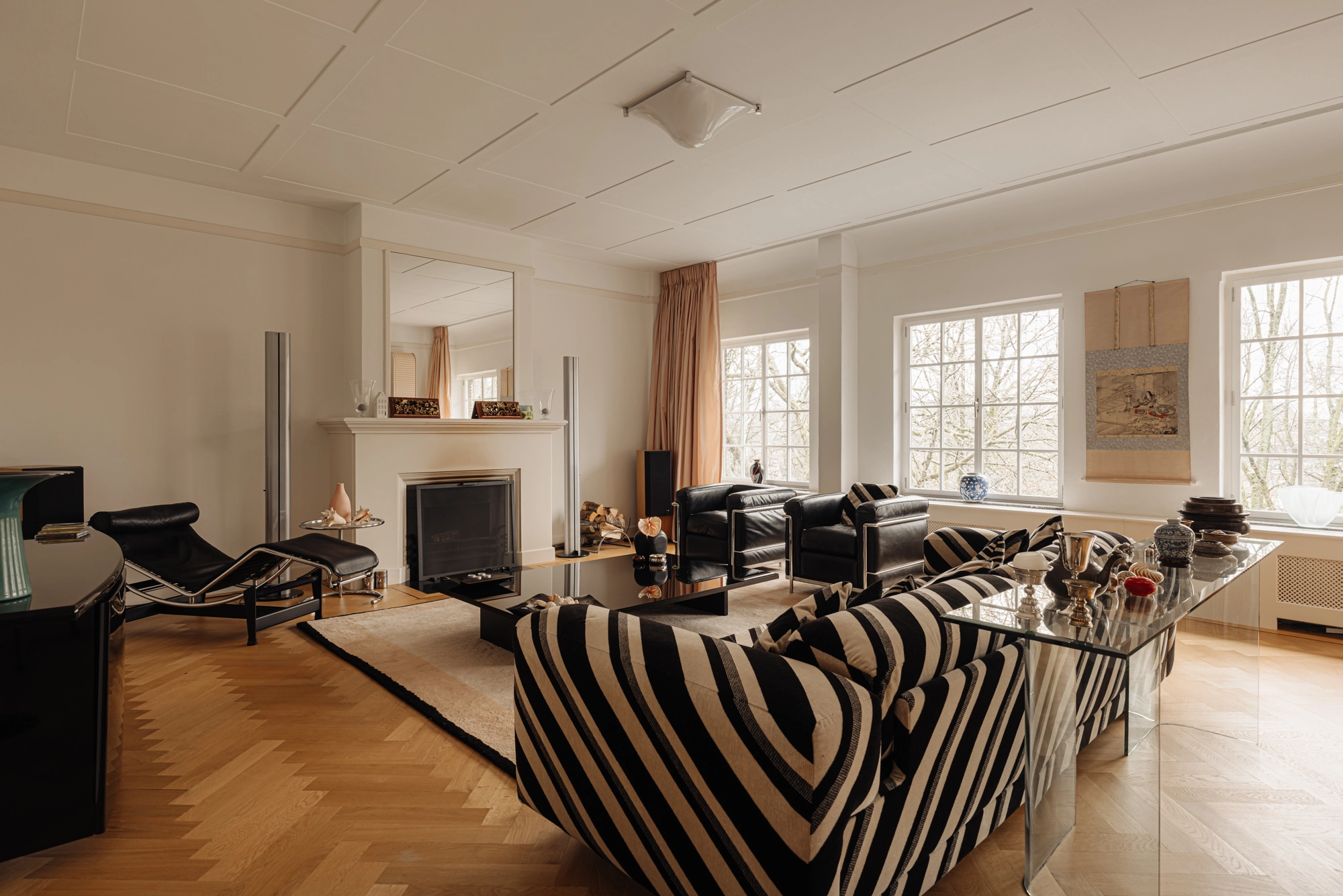
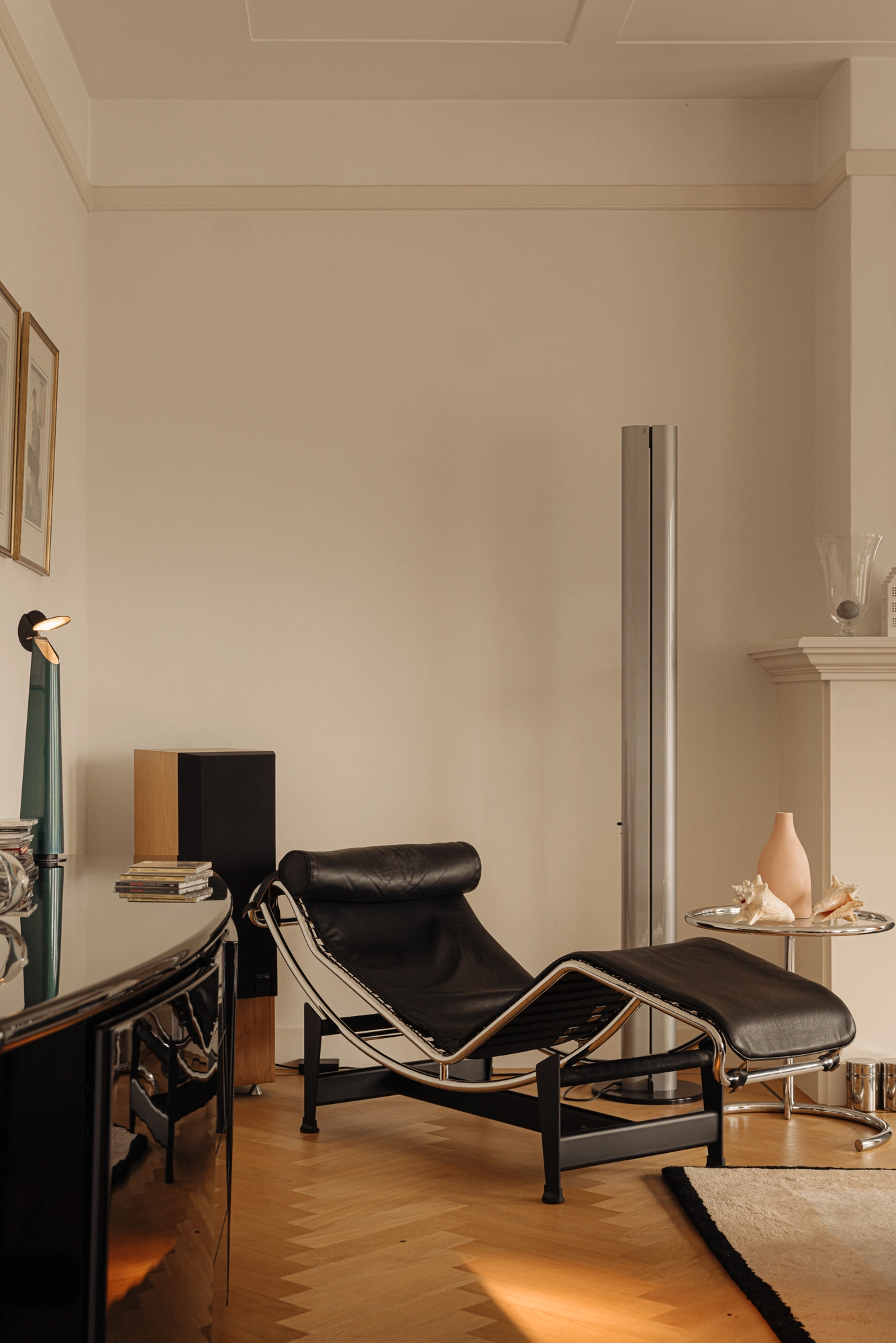
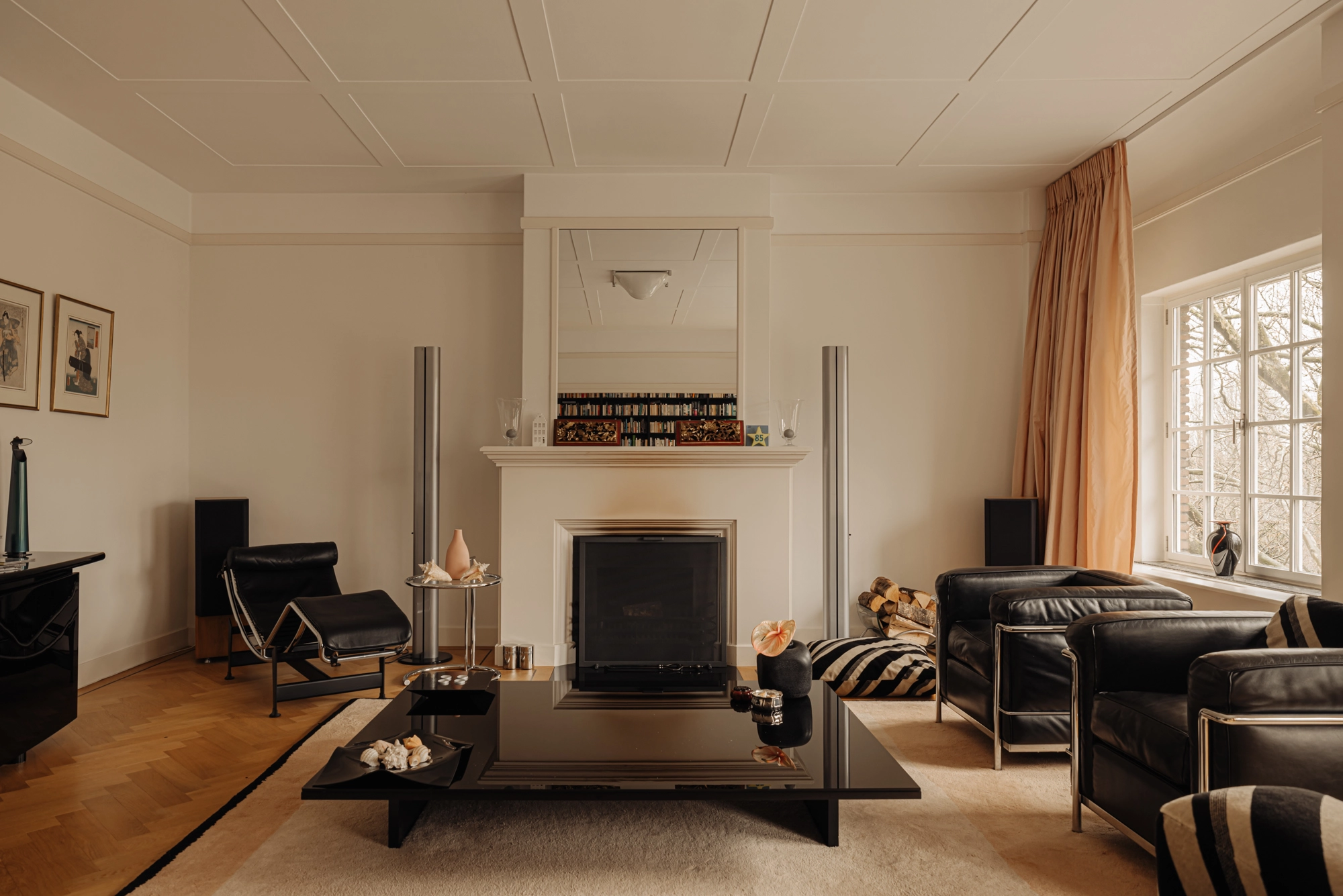
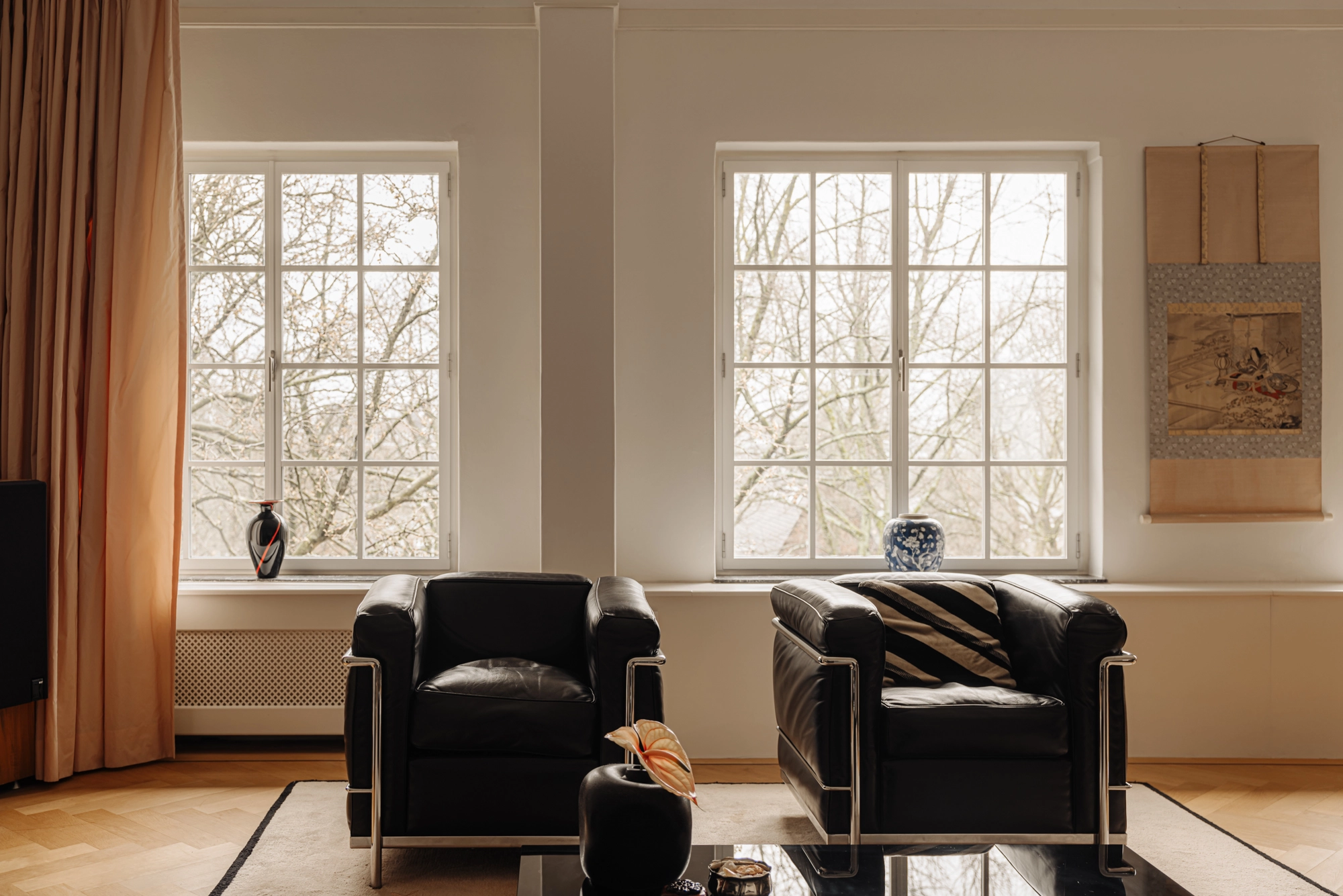
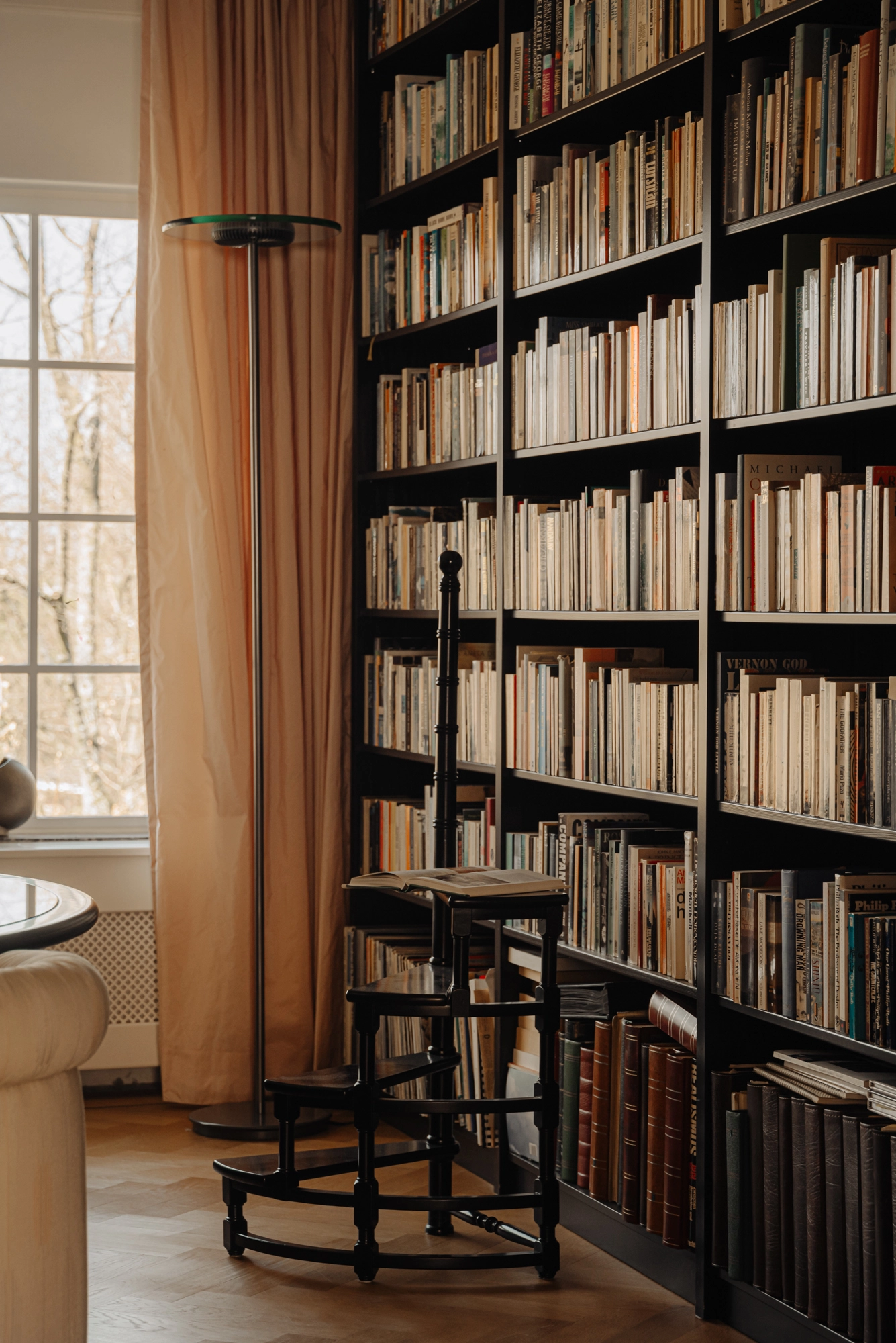
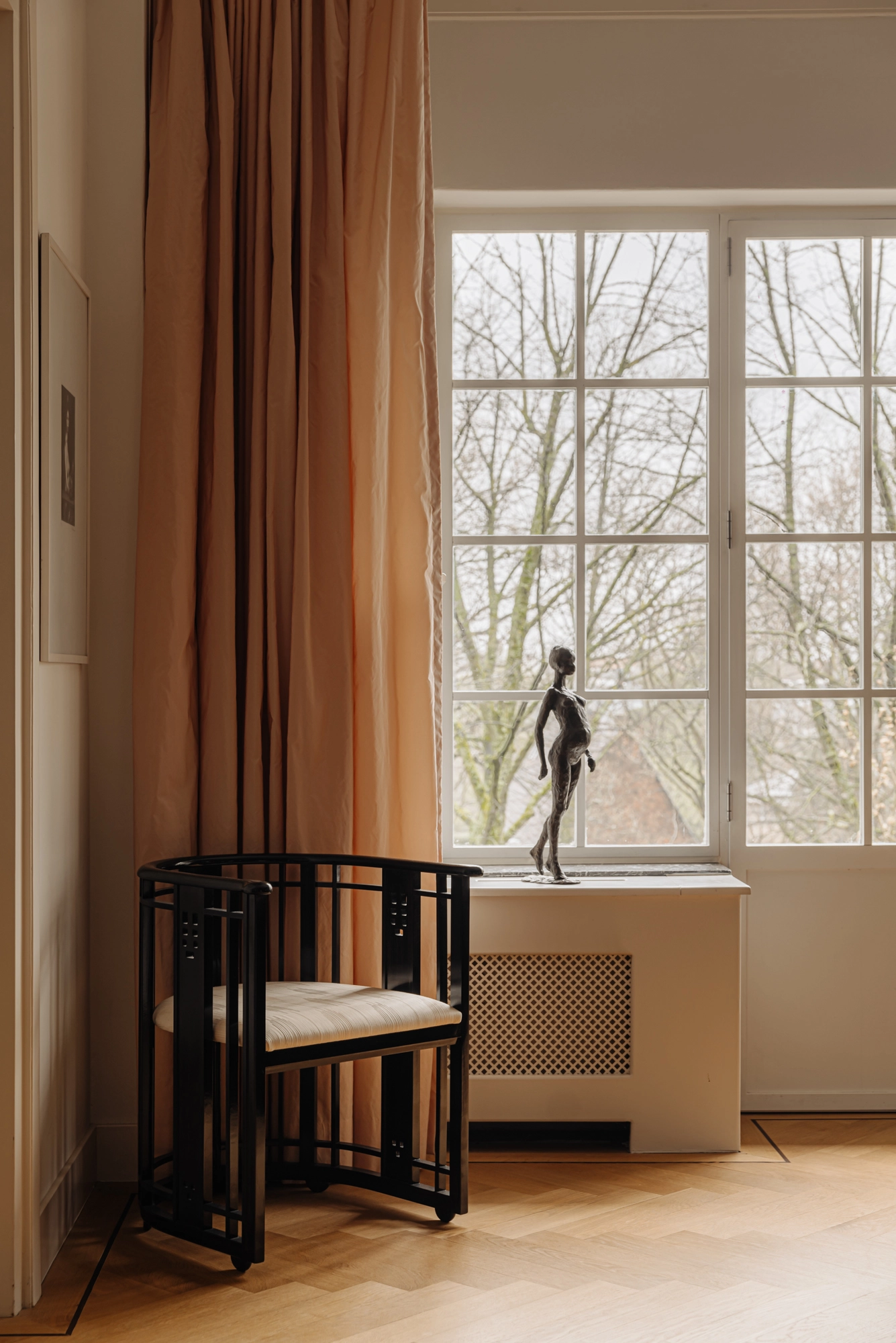
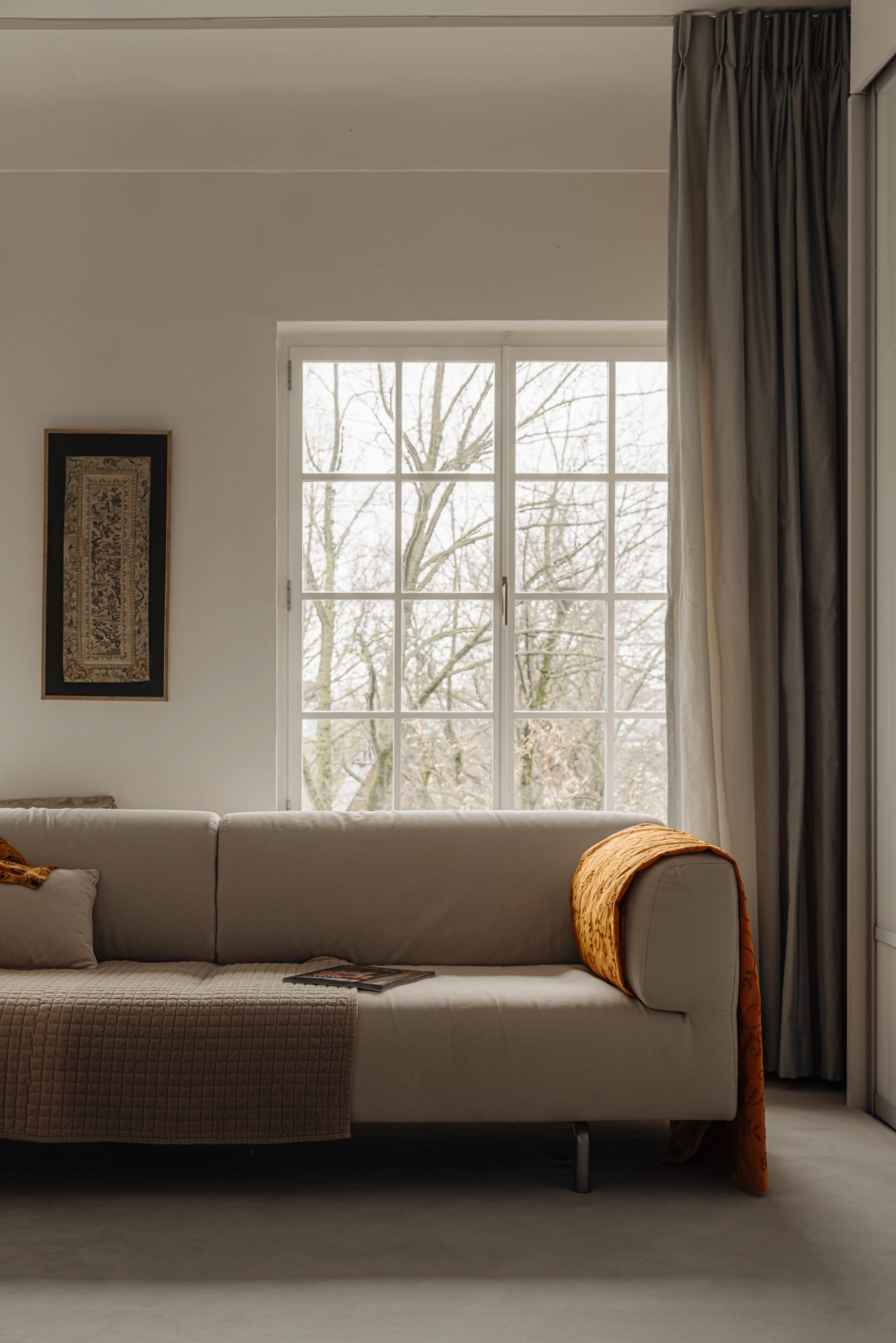
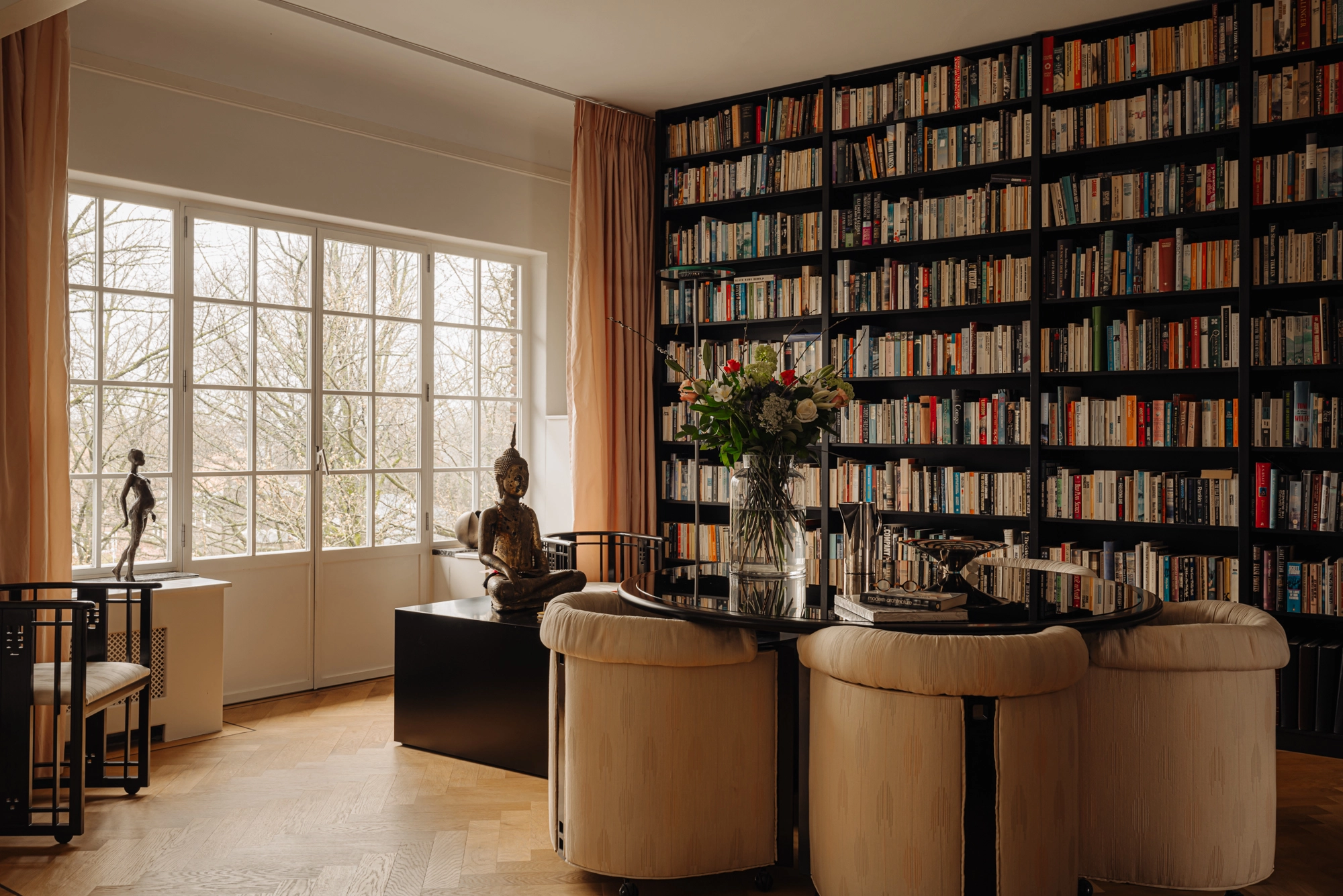
The living space here is extra spacious. First of all, there is a sunny south-facing kitchen. The kitchen has oak fronts and a natural stone countertop, giving it a timeless and robust look. There are countertops and cabinets on both sides of the kitchen. In the middle, there is a cozy kitchen table, with extra space for a corner with a desk. The large south-facing windows ensure that this space is always light. For more formal dinners, there is a separate dining room, which is connected to the wide hallway to the kitchen/living room via French doors. This is a beautiful and spacious room that currently serves as a library. The room has a balcony overlooking the greenery of Apollolaan, visible through windows with slim steel frames. The room connects to an equally spacious lounge, a delightful sitting room with a wood-burning fireplace for atmosphere and warmth. The atmosphere is enhanced by the window frames and, in particular, the natural stone window sills.
Sleeping and bathing
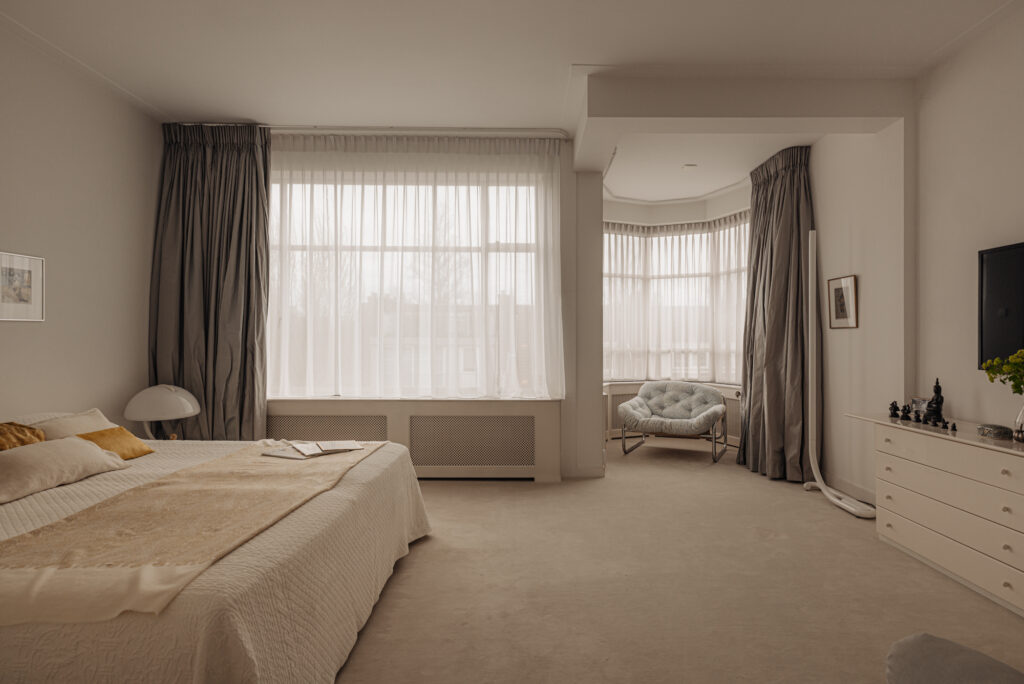
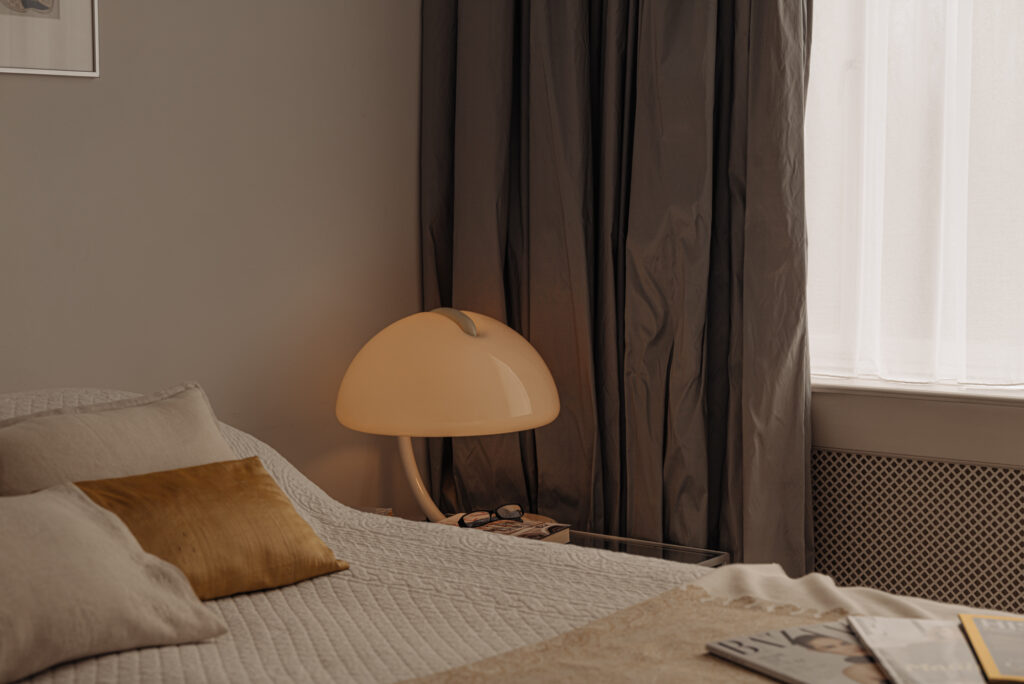
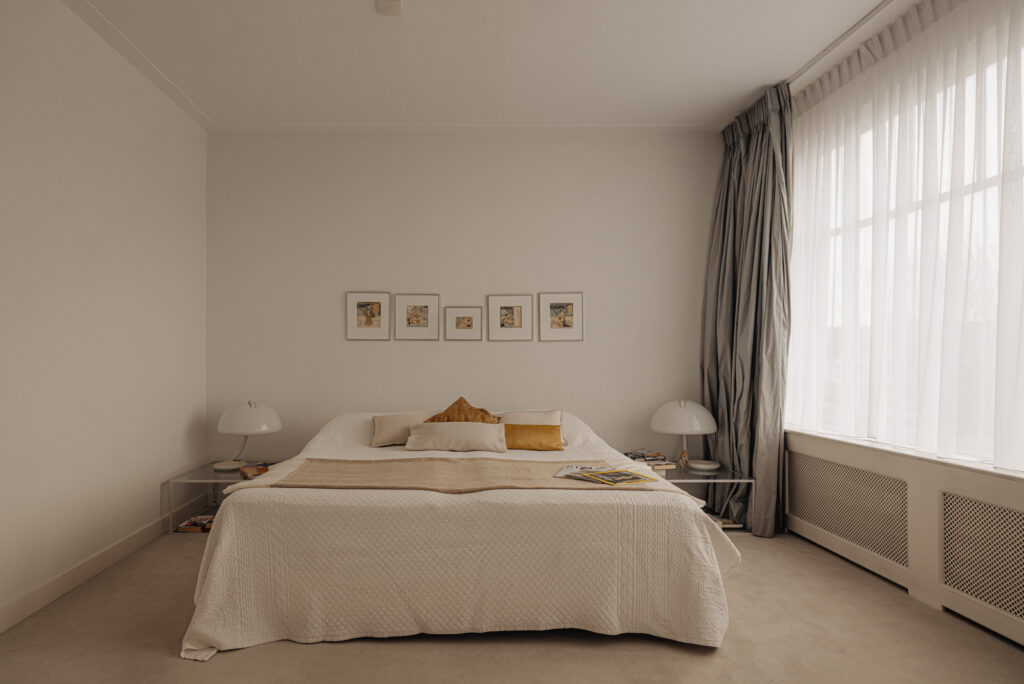
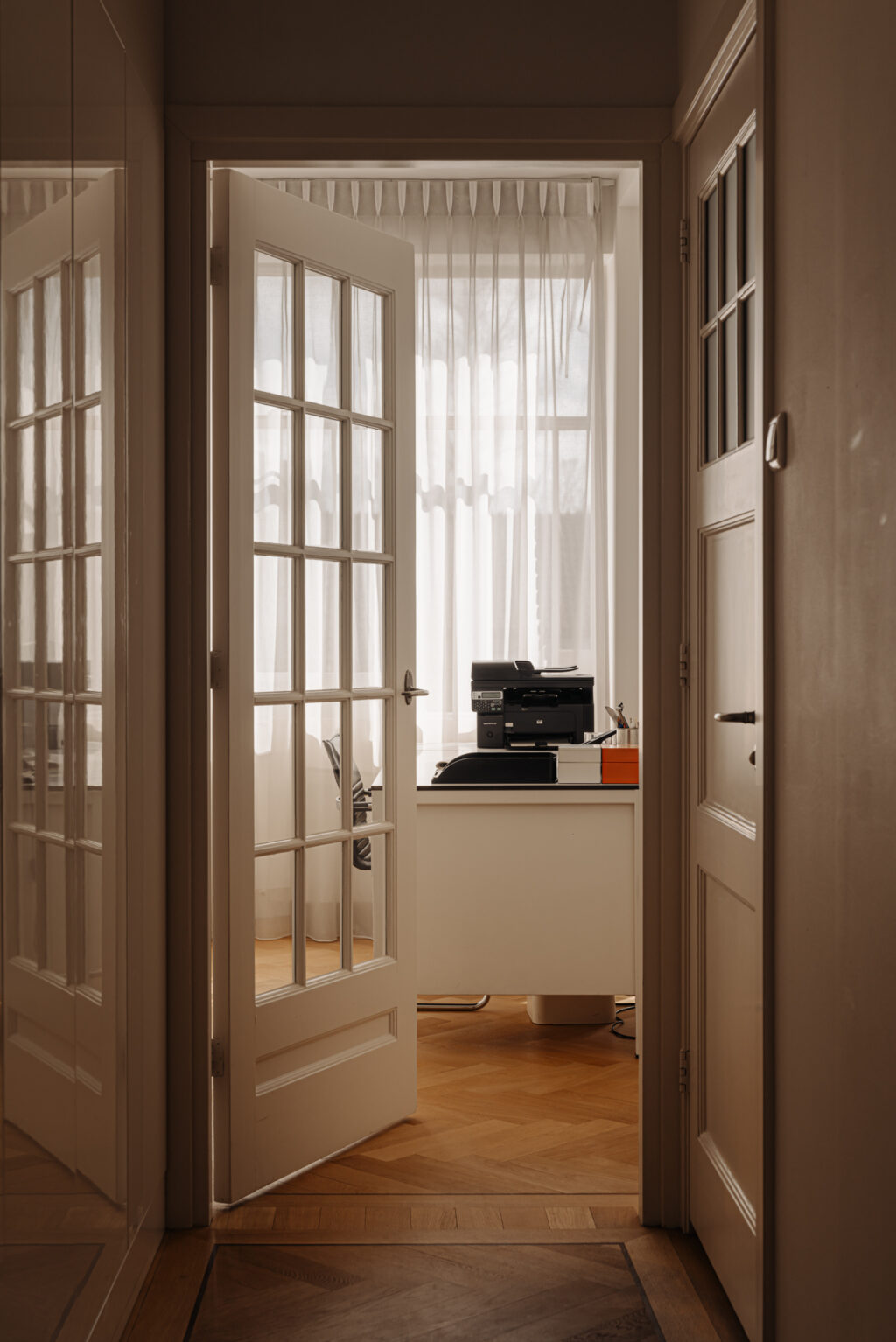
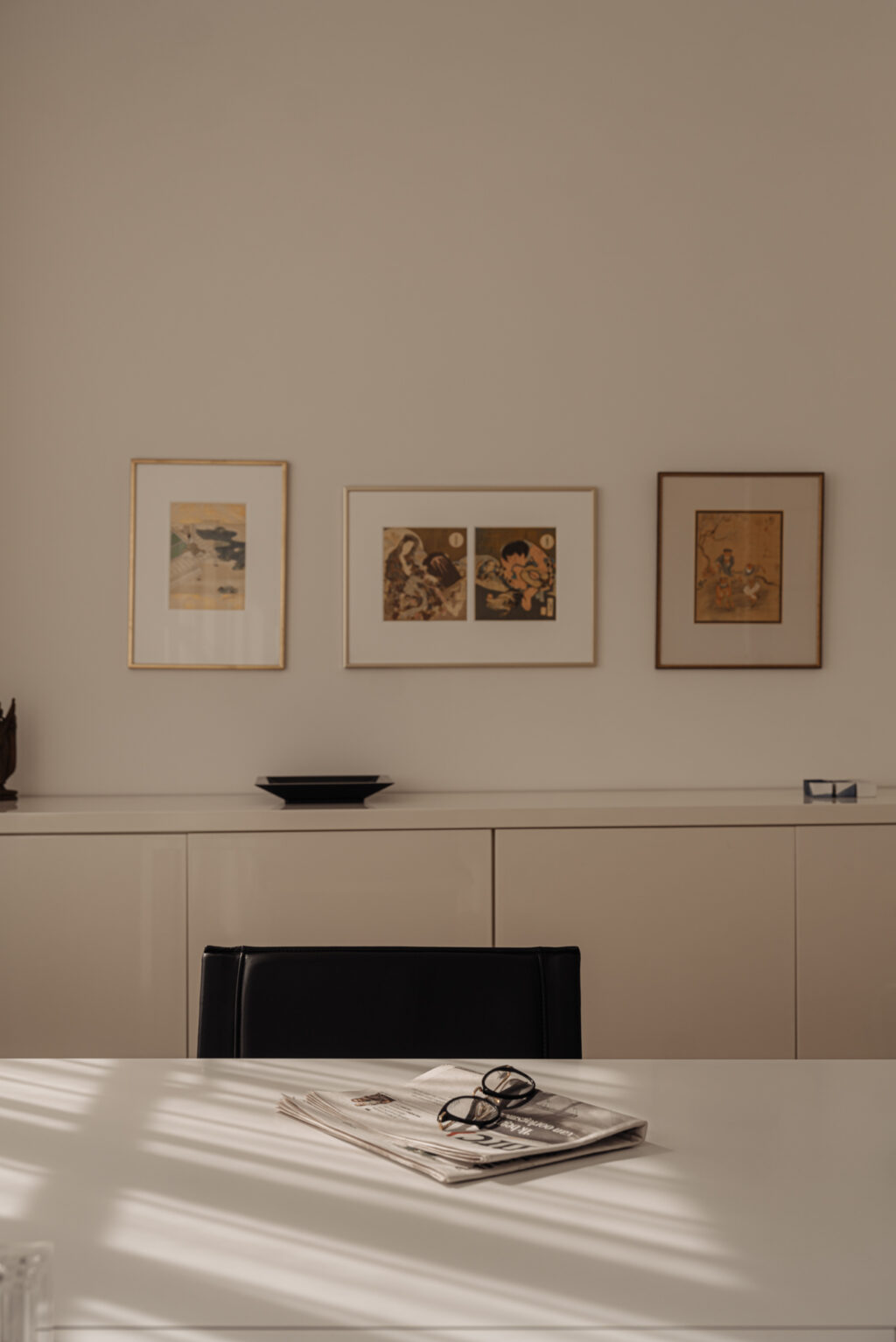
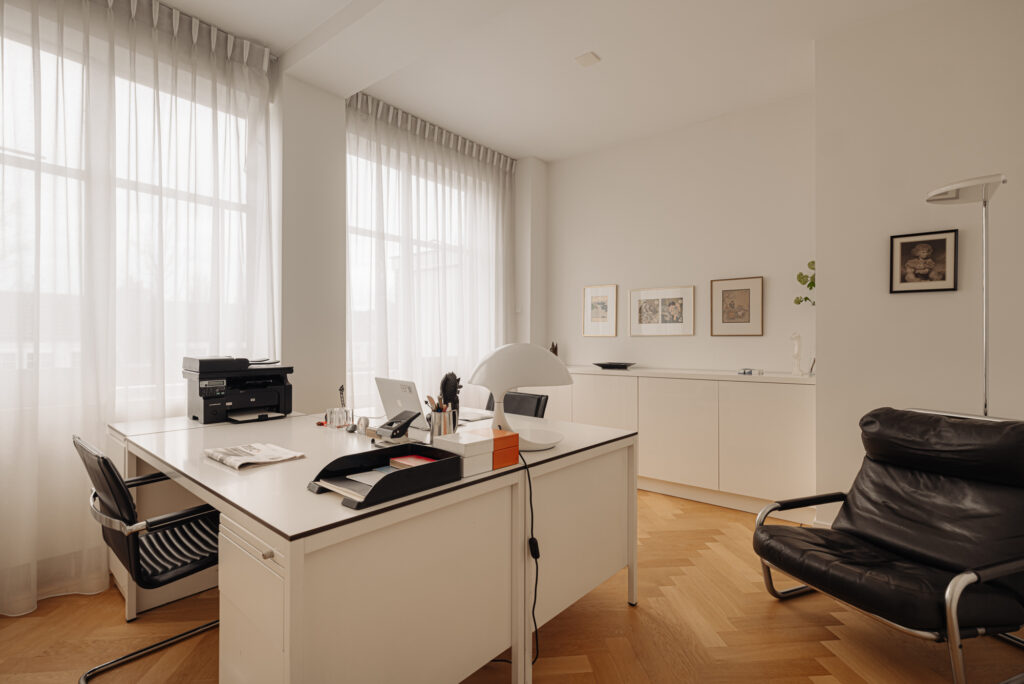
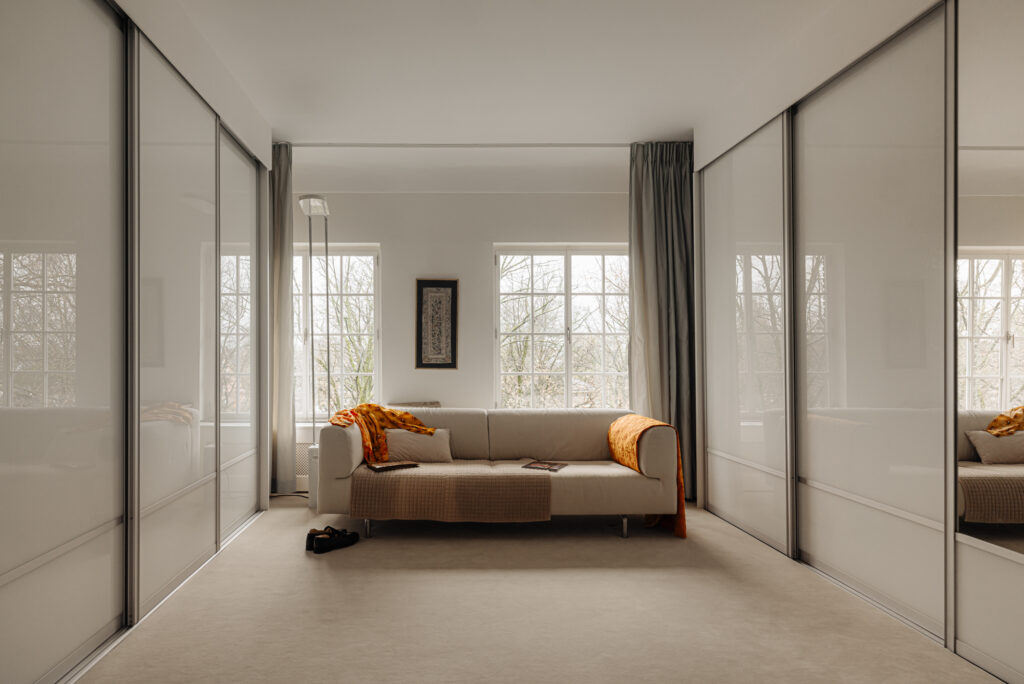
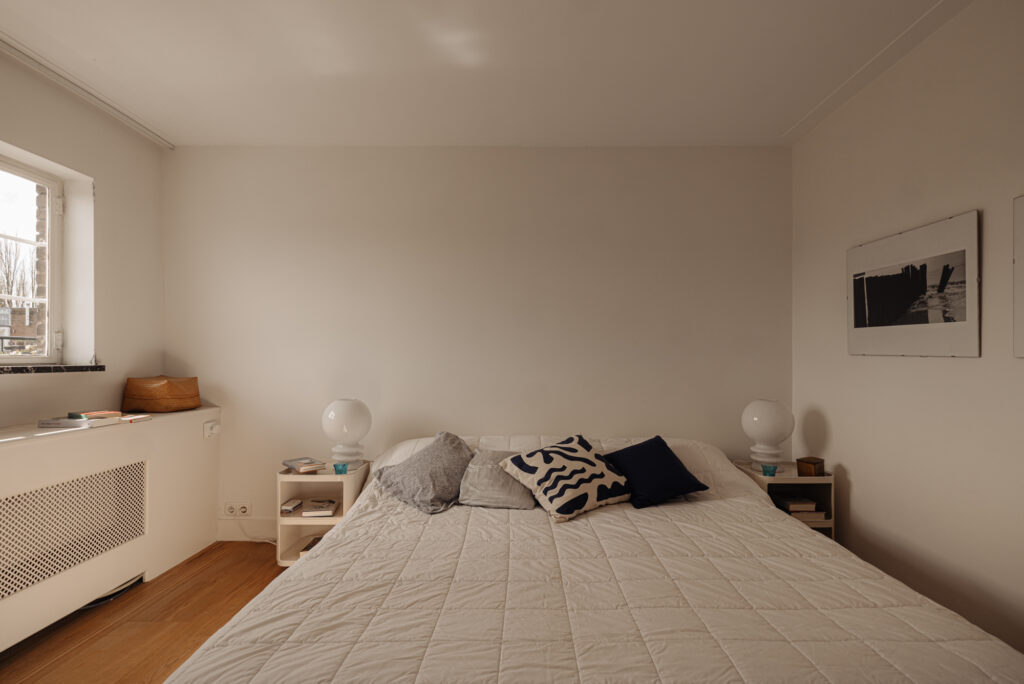
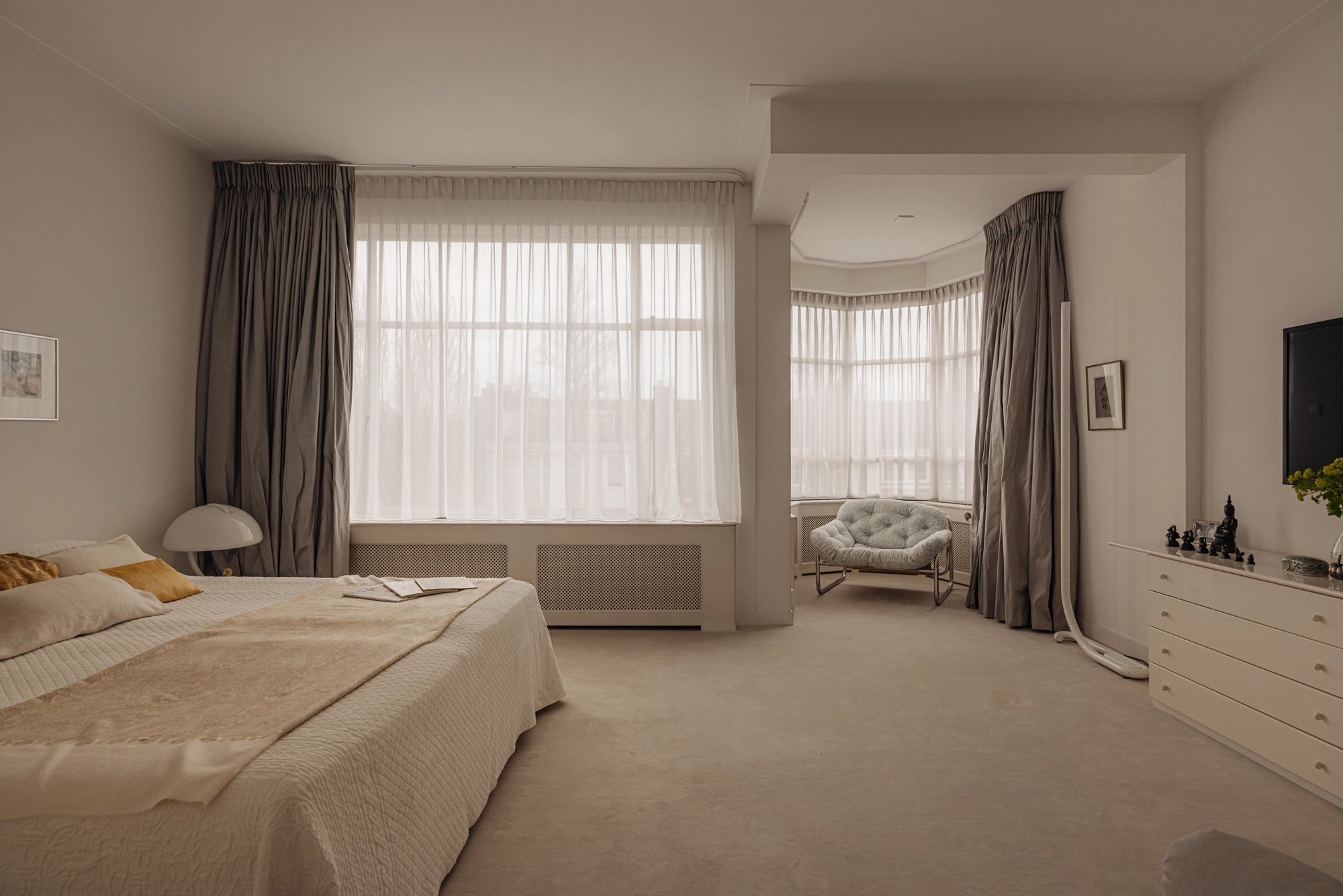
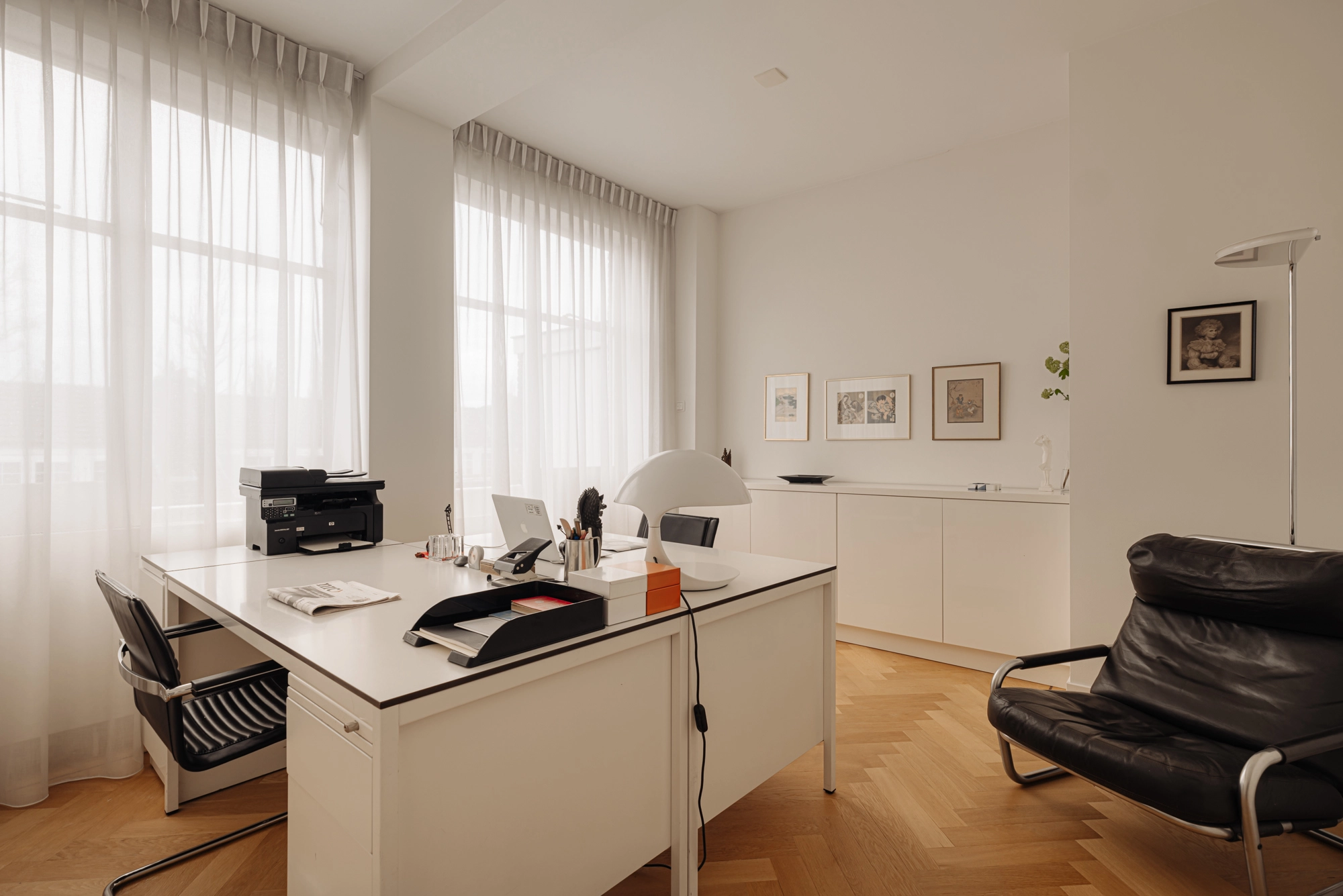
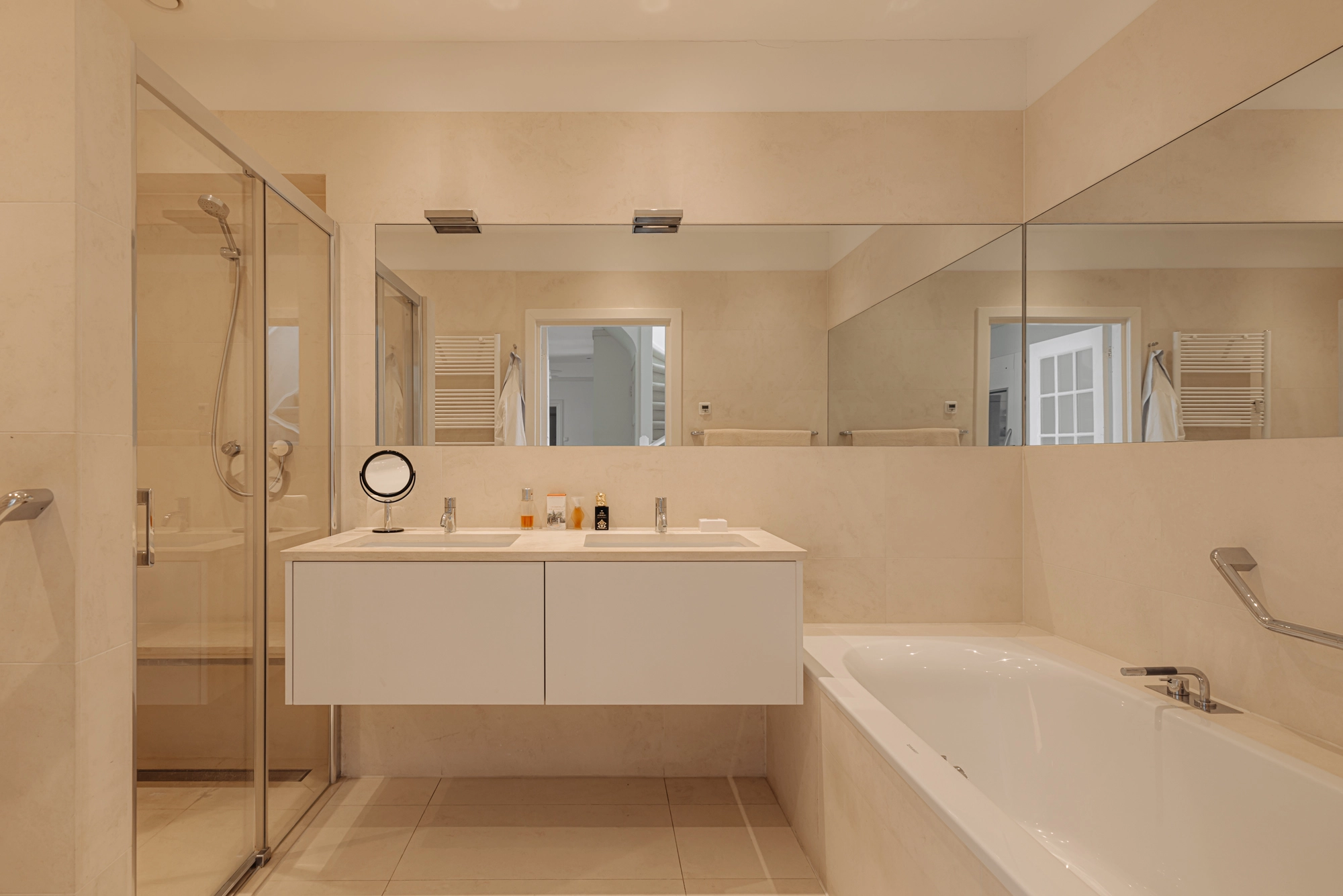
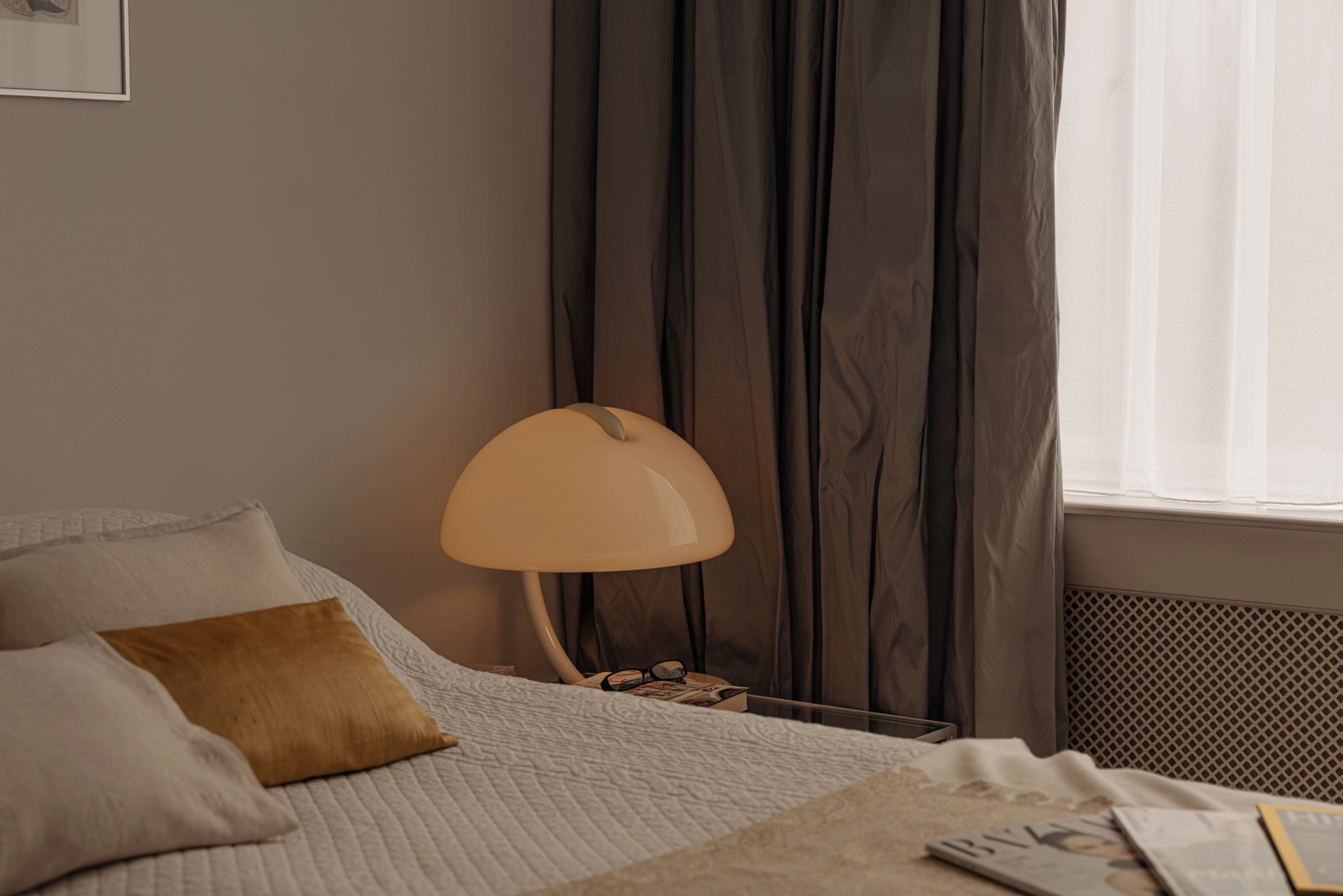
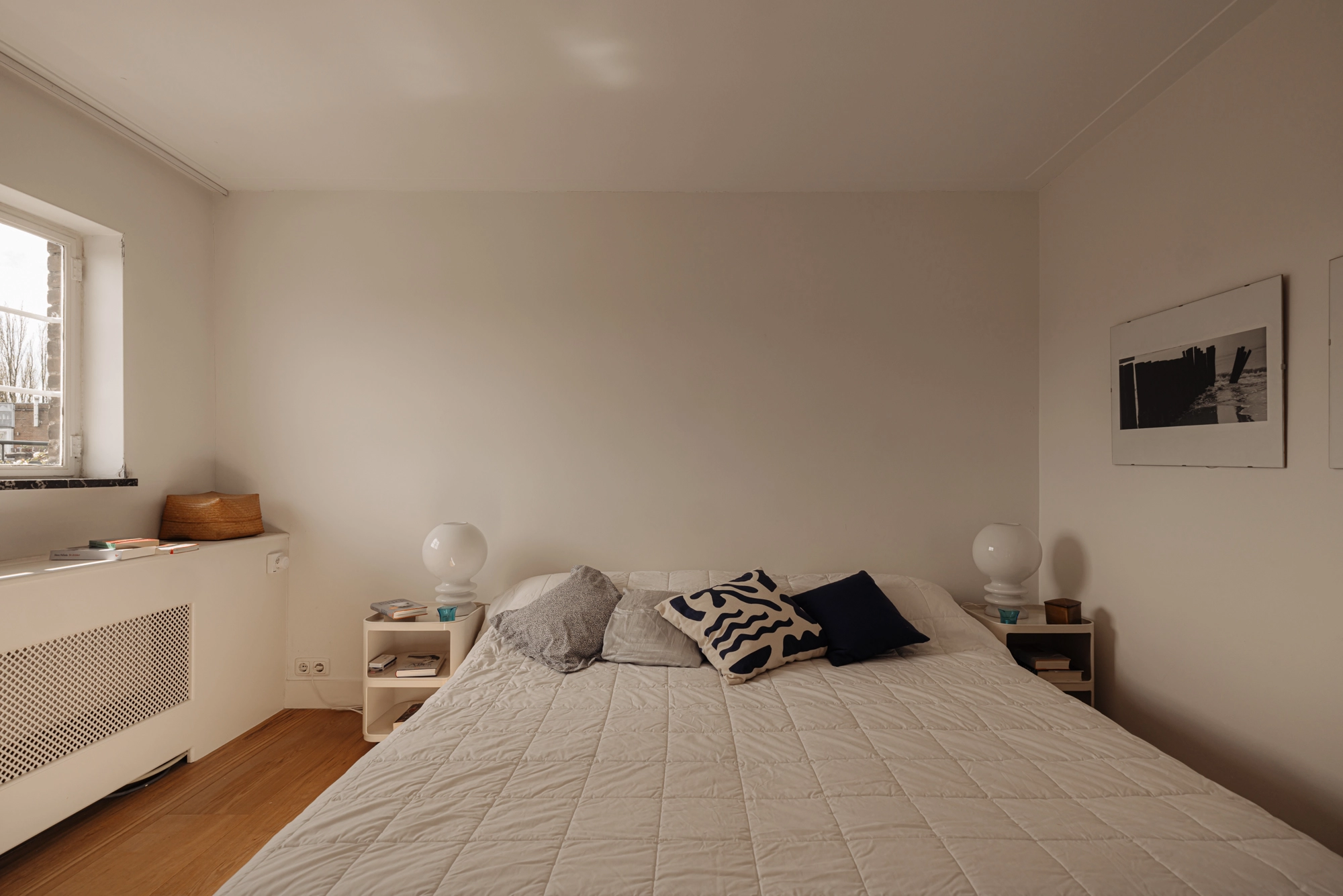
The property has a total of five additional rooms, not all of which bedrooms currently used as bedrooms . A spacious room is located near the entrance and serves as a large study. This room faces south and benefits from plenty of natural light, with a south-facing balcony as an added bonus. The entrance leads to a hallway with plenty of cupboards and the guest toilet. At the end of the hallway are two large Rooms the outside of the apartment, both of which are generously sized. One is on the street side and serves as a dressing room, while the other at the rear is used as a bedroom. With a Floor area approximately 23 m², this room is also spacious. The atmosphere is partly determined by a semicircular bay window. Between Rooms two Rooms a spacious and complete bathroom, equipped with a bathtub, walk-in shower, toilet, and double sink. The upper floor is accessible via both stairs and an elevator from the central hall. A kind of garden room provides access to the Roof terrace. Adjacent to this is a laundry/kitchen area with a pantry and sanitary facilities. As an extra, this floor has a nice bedroom.
Quality outdoor space
Not all Roof terrace equal; a terrace as an outdoor space is only satisfactory if it is easily accessible, south-facing, and has an unobstructed view. This Roof terrace all these criteria and also offers privacy and extra space. It is easily accessible from the terrace room and has an unobstructed view of the Beethovenbuurt neighborhood and the Zuidas skyline. In addition to this fantastic Roof terrace , the apartment also Roof terrace a south-facing balcony and a small balcony on the northwest side.
Neighborhood Guide
The Apollobuurt neighborhood is part of the Beethovenbuurt neighborhood. It is an important part of Amsterdam from an urban planning perspective, where the urban planning stamp was left by architect Berlage's ideas and designs. Berlage devised a pattern of streets, avenues, and canals where blocks of houses, lots of public green space, and villas alternated with mansions to form a whole. This created the basis for the characteristic features of this 1930s neighborhood, which is almost entirely surrounded by water: the spacious residences were ultimately designed in the Amsterdam School style. The facade stones and bridge sculptures by Hildo Krop, who was awarded the honorary title of City Sculptor of Amsterdam, also lend the neighborhood cachet. The neighborhood was designed as a residential and family area, with facilities for schools and sports. The Beatrixpark completed the neighborhood. In Beethovenstraat, coffee bars and restaurants such as Brasserie Margaux and Ferilli's give the street and the neighborhood a young and dynamic character. On Olympiaplein, you will find the bakery Le Fournil and Fromagerie L'Amuse. Butcher Zikking is located on Marathonweg. The wide avenues and greenery of Beatrixpark, with its modern sculptures and old trees, create a feeling of space and are ideal for sports and relaxation. The neighborhood is known for its good primary and secondary schools and also for its convenient location in relation to the Ring, Amsterdam Zuid station, and the Rai. De Pijp and the city center are within easy reach from here.
accessibility
This location is naturally very strategic in relation to all metropolitan amenities and especially schools. It is also a very pleasant location for driving in from outside the city and going to the city center. The Center, De Pijp, and Concertgebouwbuurt are, like the rest of the city, very close by bike. Even public transport in the Zuidas is only a 4-minute bike ride away. You can walk along Cornelis Schuytstraat past the Hilton, and under the Amsterdams Lyceum you can walk or cycle straight into Vondelpark.
Parking facilities
Parking is possible via a permit system on public roads (permit area Zuid 2.2).
With a parking permit for Zuid 2.2, you may park in Zuid-1, Zuid-2, and Zuid-8.
A parking permit for residents costs €186.29 per 6 months. There is currently no waiting list for this permit area.
A second parking permit costs €465.73 per 6 months. (Source: Local authority , August 2024).
What attracted the residents to live here at the time
The previous owners specifically chose this property after searching for years. They couldn't resist the appeal of this property because of the light, the elevator, and the outdoor space. The potential obstacle of the terrace not being accessible internally via stairs was solved by installing an internal elevator. The Roof terrace ultimately Roof terrace to be much more than just an outdoor space. It was used almost all year round. In addition, it was decided in advance that the upstairs studio, which is separately accessible, would be ideal for home care. This ultimately proved to be necessary for many years and made it possible to live here for a long time. The question of whether this neighborhood would become theirs was quickly answered. Olympiaplein, with its French bakery and cheese shop, offers numerous possibilities, and the Concertgebouw neighborhood is also nearby, with many restaurants, music venues, and museums. All of this within walking distance makes living in this special building a wonderful experience.
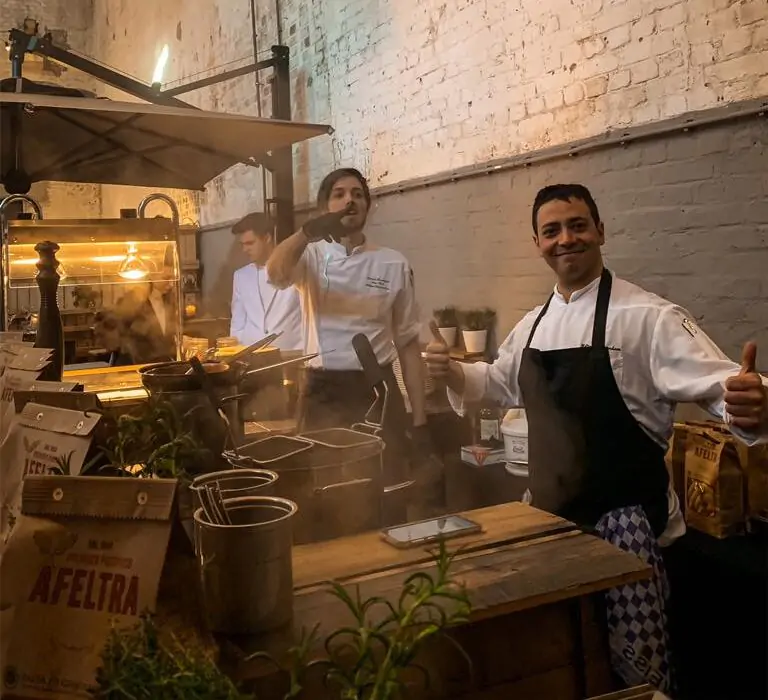
1077 BG Amsterdam
Roberto's Restaurant Amsterdam
Roberto's should not be missing from the top ten Italian restaurants in Amsterdam. The restaurant is located in the Hilton hotel, where the iconic Italian cuisine has been filling the plates for 25 years. The restaurant revolves around pure and simple flavors with dishes such as thinly sliced eggplant, green farfalle pasta with lobster sauce and Lava cake.
1075 GD Amsterdam
Castell Zuid
Castell Zuid is the stylish new location of the iconic Amsterdam grill restaurant Castell, located on Valeriusstraat in Oud-Zuid. Where the original in the center is known for its no-nonsense steaks and late dinners, this location brings the same flavors in a refined setting. "Same taste, same vibe, different look" is the motto – and that's right: recognizable and yet completely new.
1077 CV Amsterdam
The Coffee District
Owners Adil Loukane and Rosa Loukane started with a hole-in-the-wall coffee shop in a fashion store in the South. When the store closed its doors, Adil and Rosa seized their opportunity and decided to open their own coffee bar. They now have multiple locations. The coffee is made with a proprietary blend roasted by Lot Sixty One. They also offer sweets such as the now-famous cinnamon buns and banana bread.
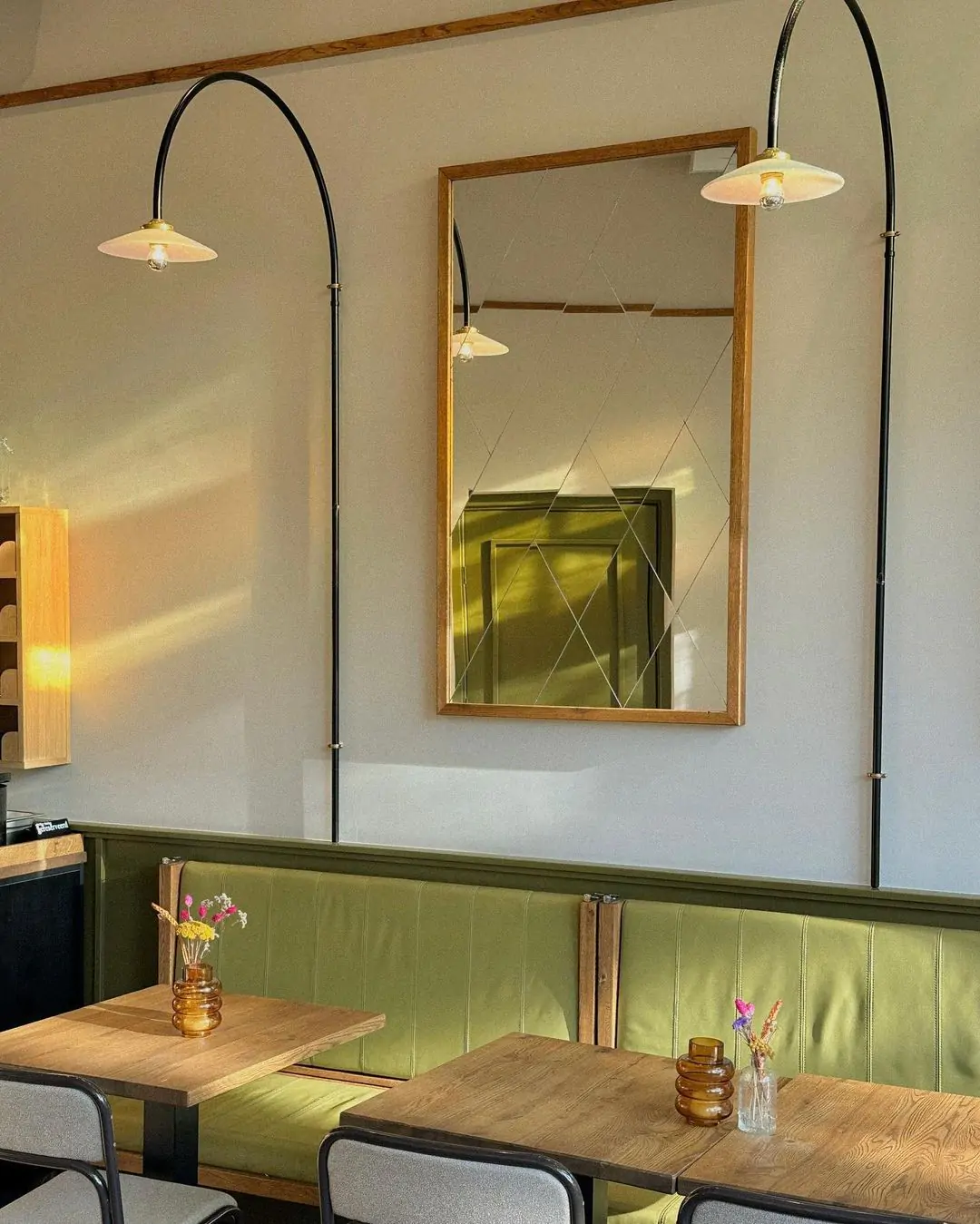
1075 BG Amsterdam
Juliette
In Amsterdam Zuid, you can enjoy breakfast and lunch in the sun at Juliette. The menu is based on fresh ingredients from local suppliers and is compiled daily based on what Available at the market. Think of dishes such as the Porco Rosso: mortadella, stracciatella cheese, Spanish guindilla peppers, and red pesto. For dinner or drinks, visit neighboring Bar Jules. The focus is on Southern European dishes such as pizzettas, pata negra, and roasted octopus.
1071 MG Amsterdam
Carter
Carter is a modern brasserie in Amsterdam-Zuid where international classics are served with flair and finesse. Located on Valeriusstraat, this place feels like an elegant neighborhood café – informal, refined, and always welcoming. The menu features timeless dishes such as steak tartare, burrata, and lobster pasta, accompanied by a solid wine selection.
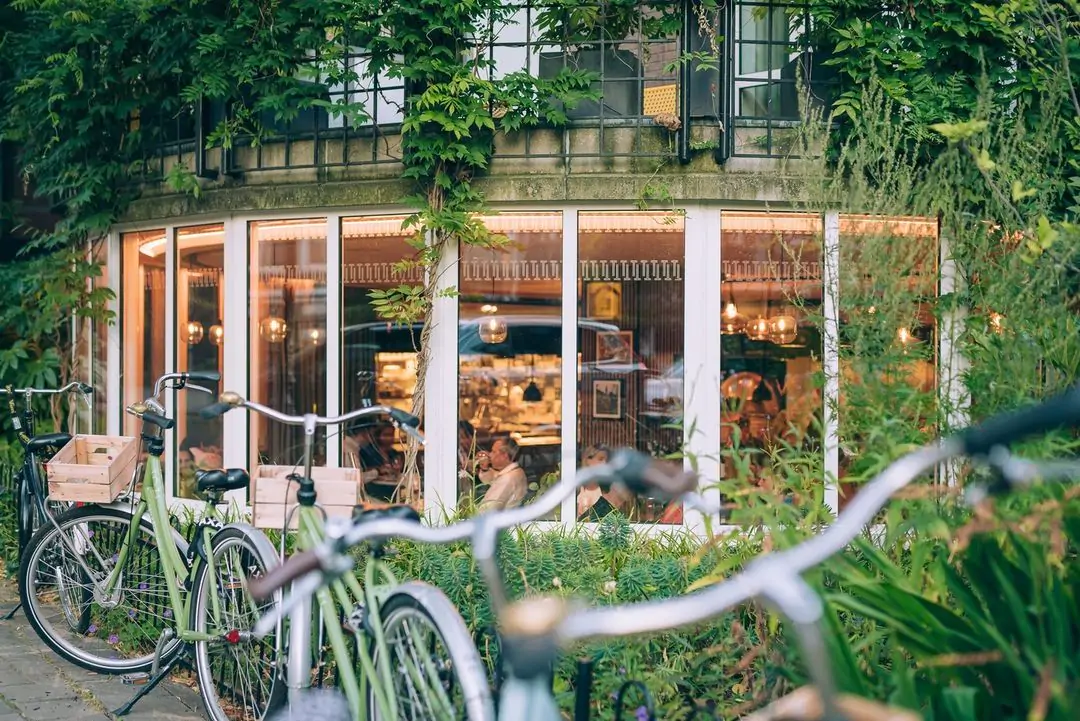
1075 CZ Amsterdam
Tozi
TOZI means "a group of friends" in Venetian dialect, and you feel that Immediately you walk in. It's like stepping into one big family. The menu features a selection of small Venetian-inspired dishes to share, known as cicchetti. There is also an Italian wine list and a cocktail bar serving Italian gins and negronis.
1075 GH Amsterdam
Barolo
Bar Barolo brings the atmosphere of northern Italy to Valeriusstraat, in the heart of elegant Amsterdam-Zuid. The wine list is extensive and carefully curated, with Barolo as the obvious centerpiece. On the menu: homemade pasta, classic antipasti, and unpretentious seasonal dishes. The interior is warm and understated, as is the hospitality—everything here is done with care.
1075 PD Amsterdam
LOT61 Coffee Roasters
Born in Sydney, raised in Brooklyn, and now firmly rooted in Amsterdam: LOT61 is anything but an average coffee shop. As an independent coffee roaster, the brand combines international flair with local craftsmanship. Slow coffee brewed with precision and care. The aesthetics are raw yet refined, the atmosphere informal and creative – a place where neighborhood and barista come together. With their B Corp certification, LOT61 also demonstrates that taste and Sustainability can go hand in hand.
1071 HX Amsterdam
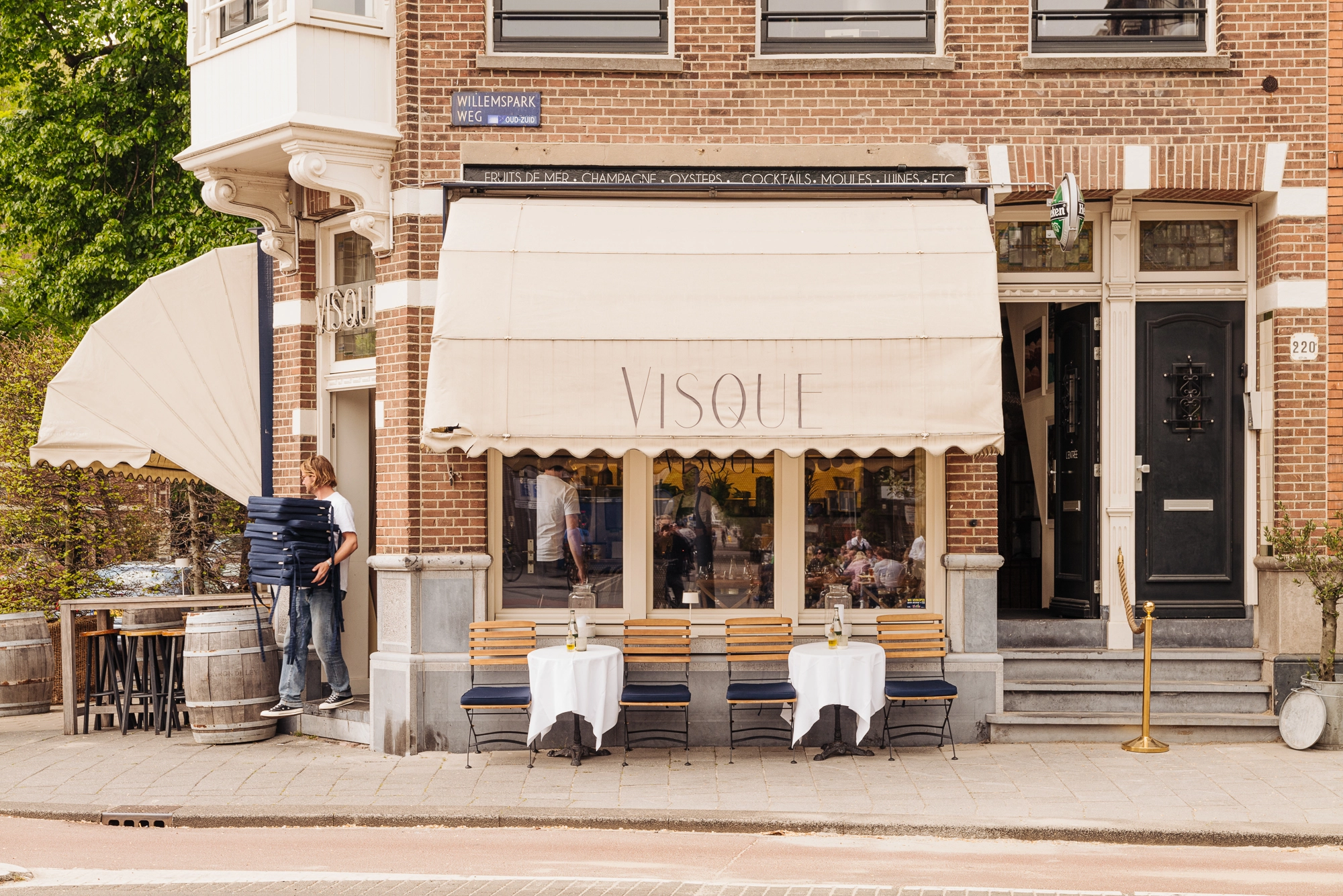
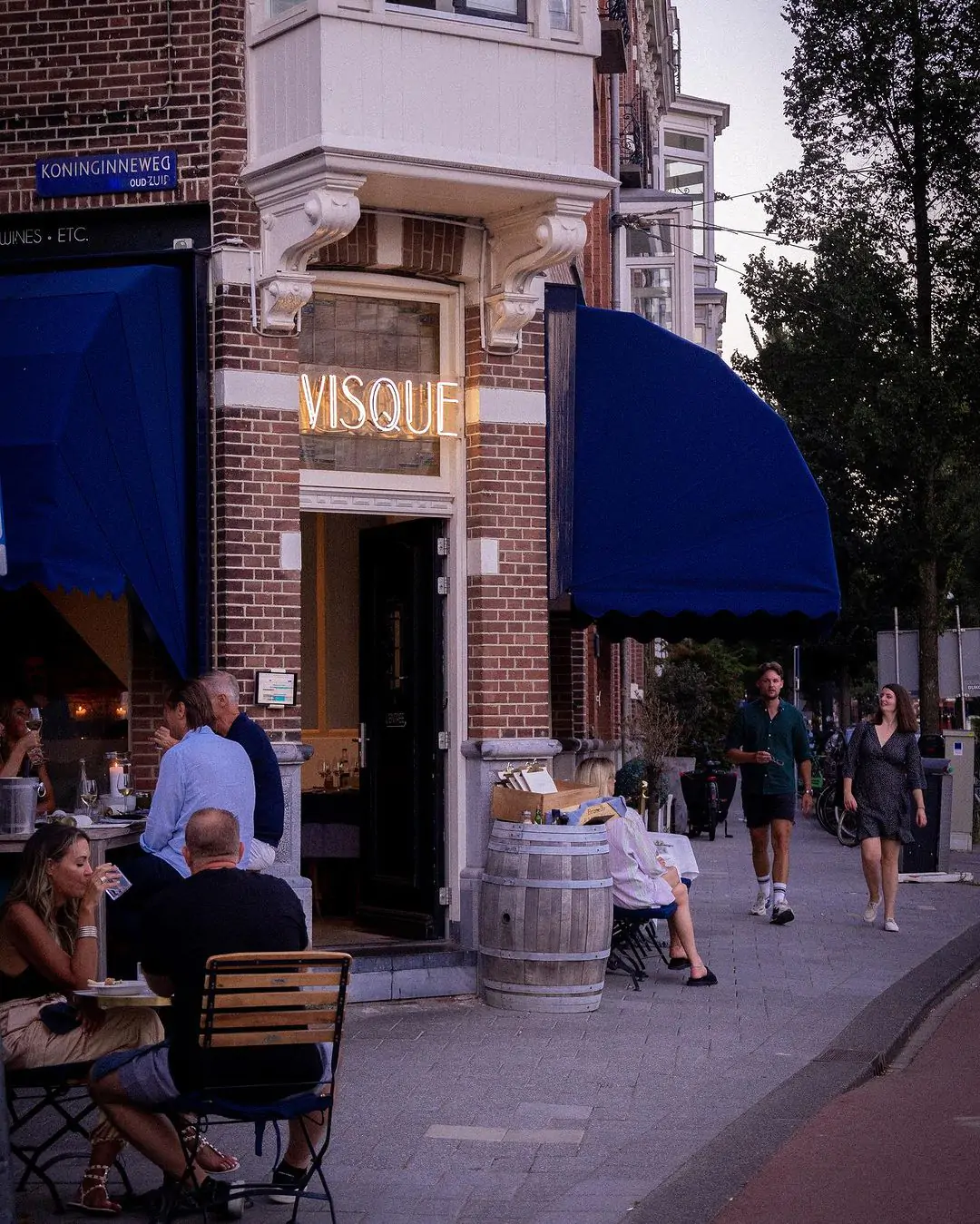
Visque Restaurant
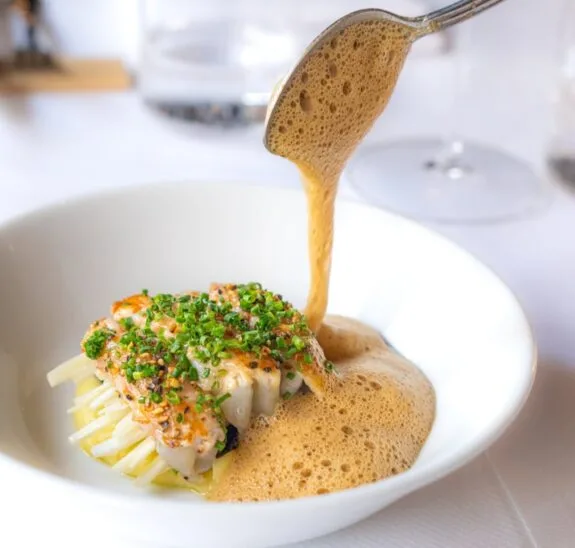
Restaurant Visque is located on the beautiful corner of Amsterdam South, where fish plays the leading role. Our menu is flexible and depends on the daily choice for the freshest and most flavorful products. Chef Menno gives his own twist to simple French dishes, such as scallops, Dutch shrimp, slip sole and our famous Tuna Wellington.
1077 JJ Amsterdam
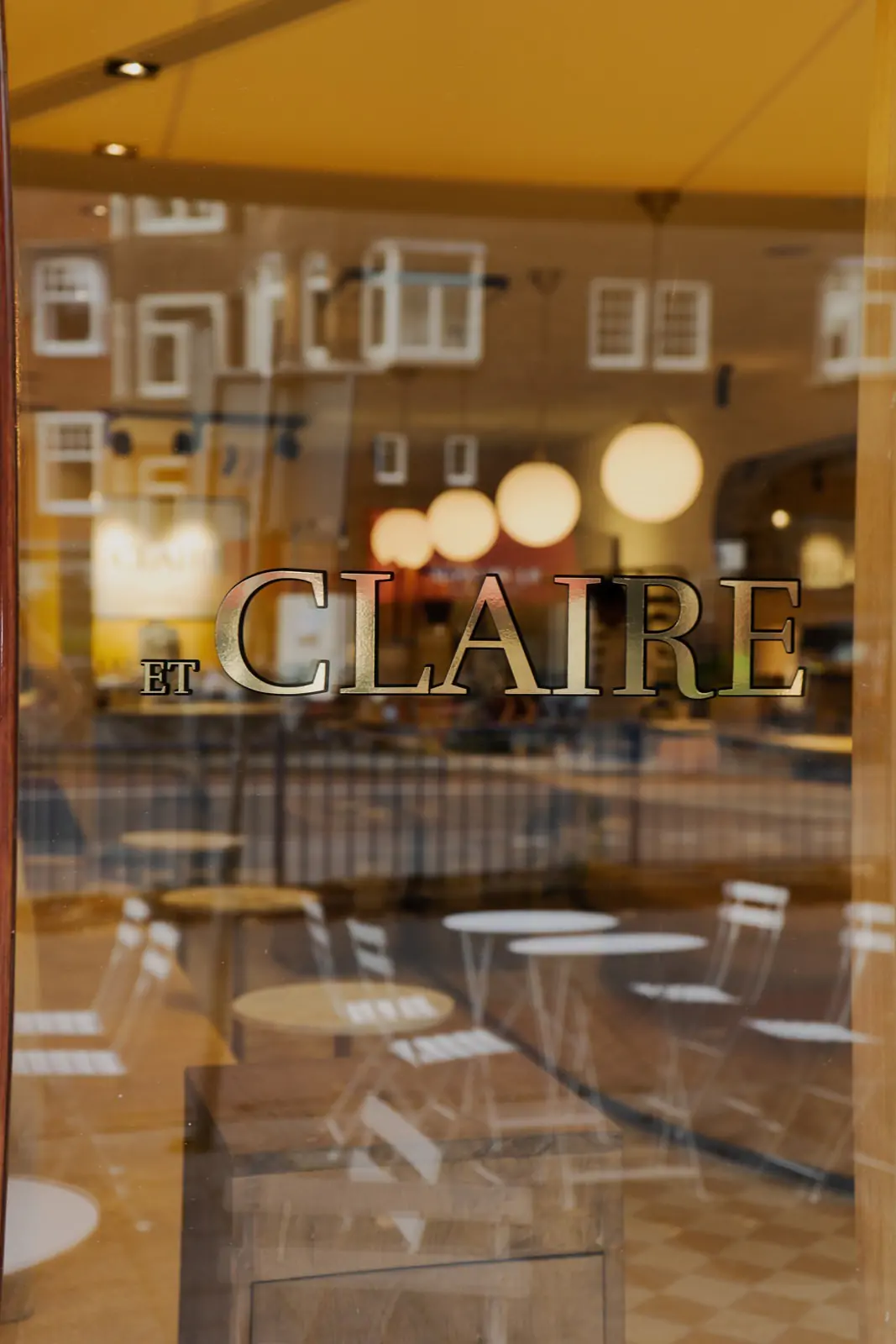
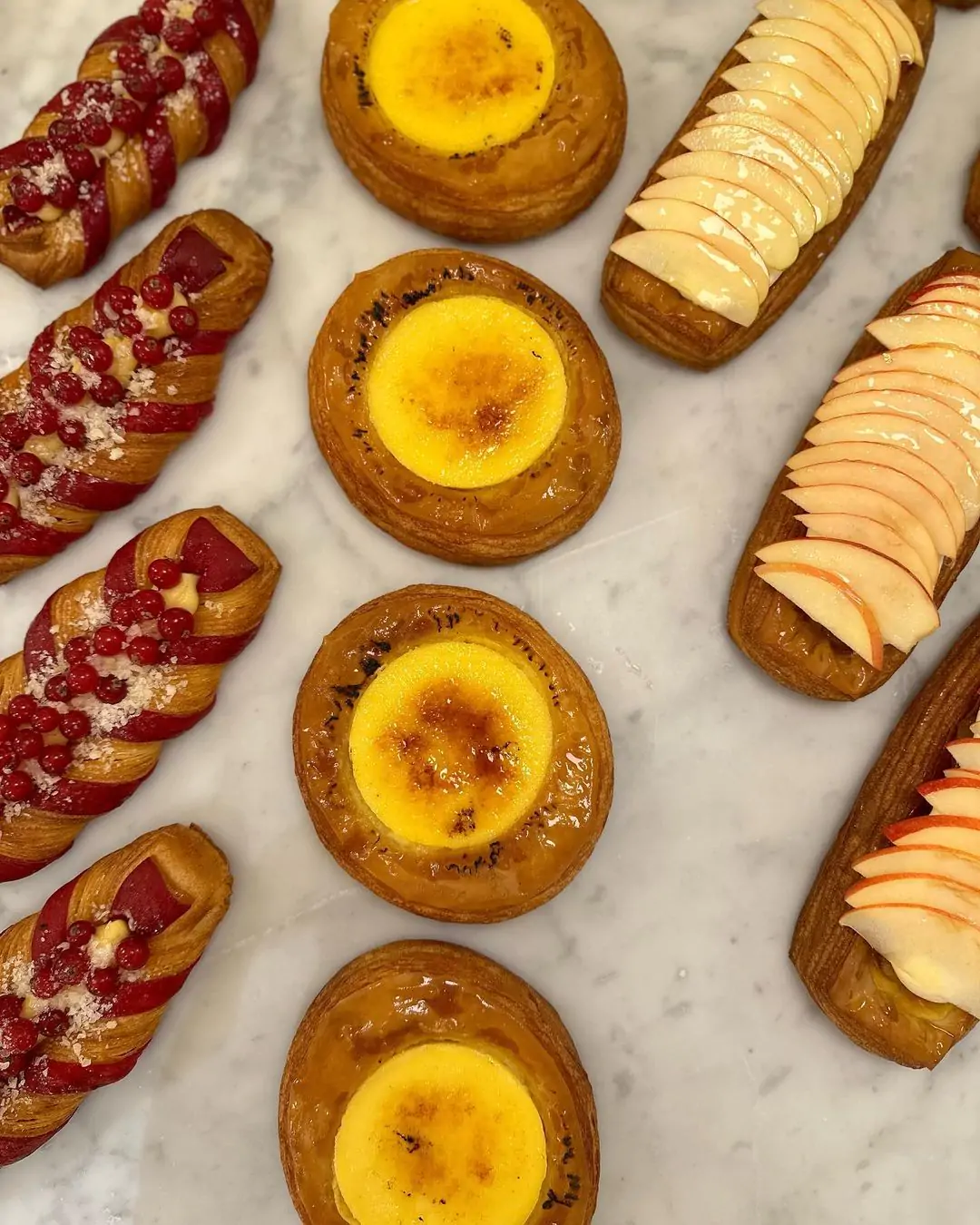
Et Claire
Et Claire is located on Beethoven Street. Et Claire arose from a love for the best viennoiserie, coffee, (ice) tea in combination with endless sweet and savory options. The motto at et Claire is ''ne vous contentez pas de moins'', which means that you should not settle for less.
1071 JH Amsterdam
Brasserie van Dam
Brasserie van Dam is known for its simple but effective formula: a concise menu with high-quality products, reasonable prices, good coffee, a pleasant atmosphere and friendly staff.
1077 JK Amsterdam
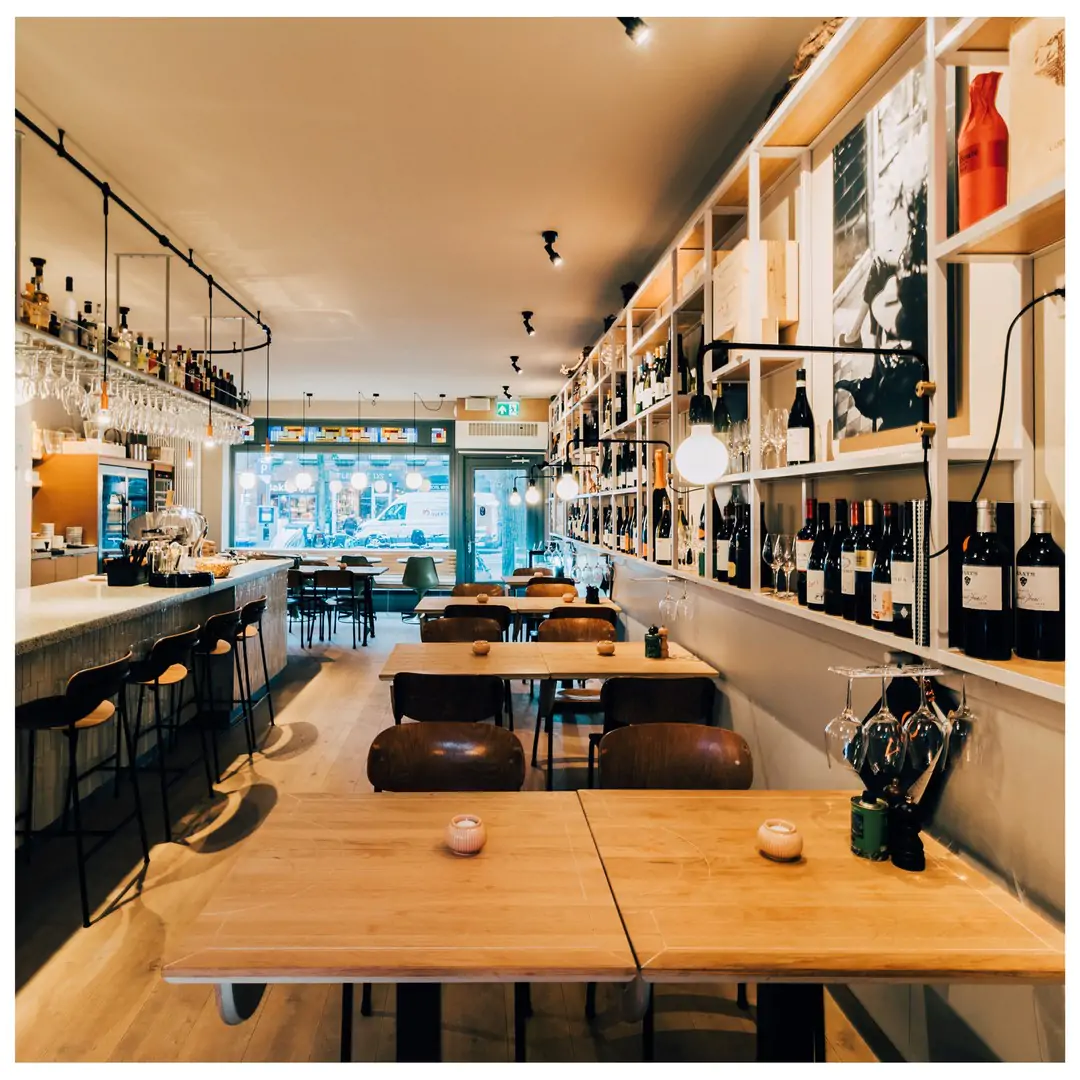
Wine Bar QV
At Winebar QV you can basically spend the whole day as if you were in Italy. You start with an Italian espresso, have lunch with a hot meal and end with a good glass of wine with an Italian aperitivo. It is cozy and stylishly decorated and you can sit on the high stools at the bar, at the lower tables or on the small terrace.
1076 LP Amsterdam
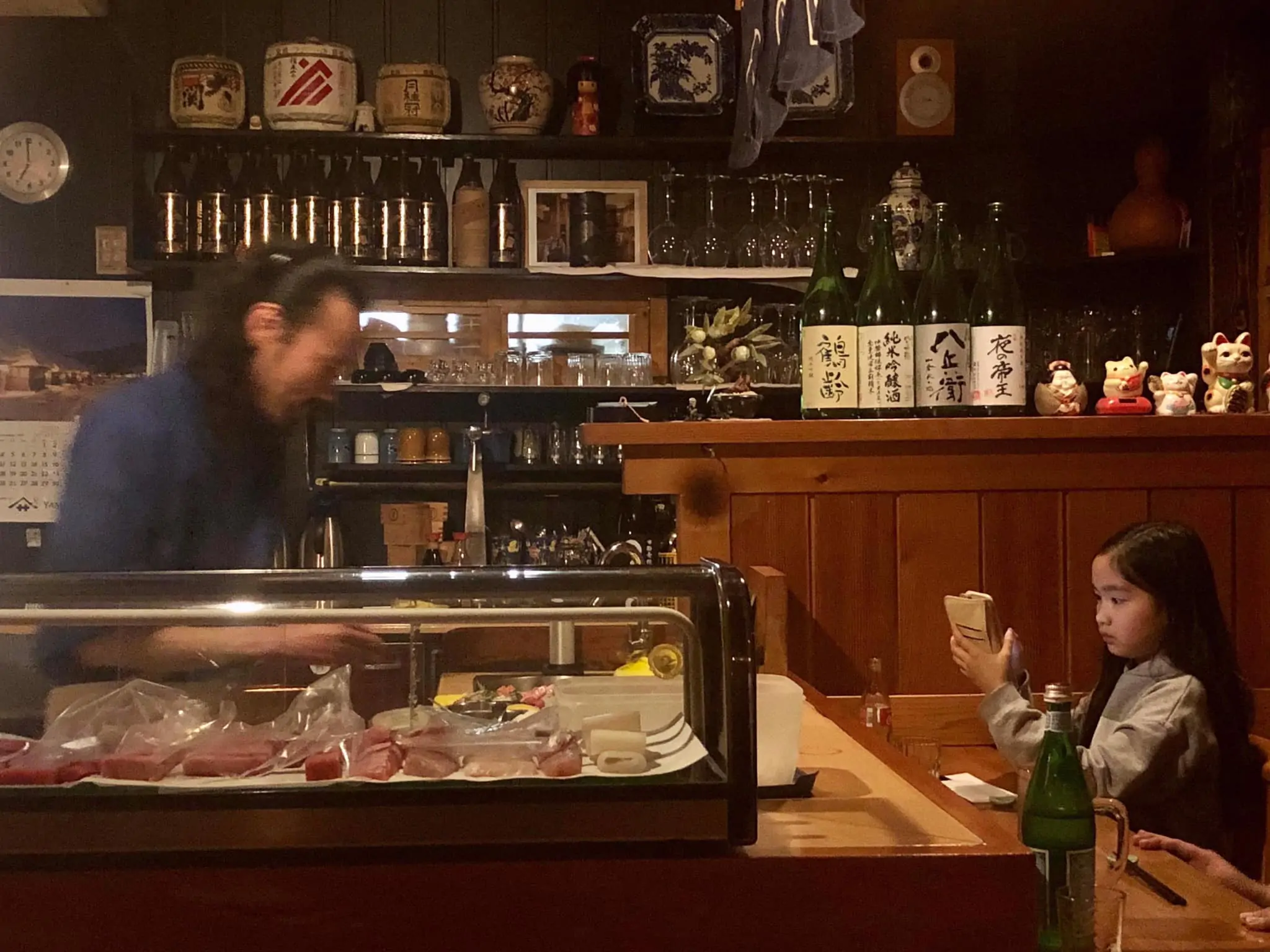
Umeno
Umeno is one of the oldest Japanese restaurants in Amsterdam and is beloved by its regular local guests. As soon as you step inside, you are greeted by an intimate space with traditional Japanese authenticity, created by the handmade wooden interior, the shamisen and shakuhachi music, and the enormous hospitality of Ayumi and Atsuhito Hosono. The nigiri sushi is highly recommended, as the quality of the fish is excellent.
1071 GZ Amsterdam
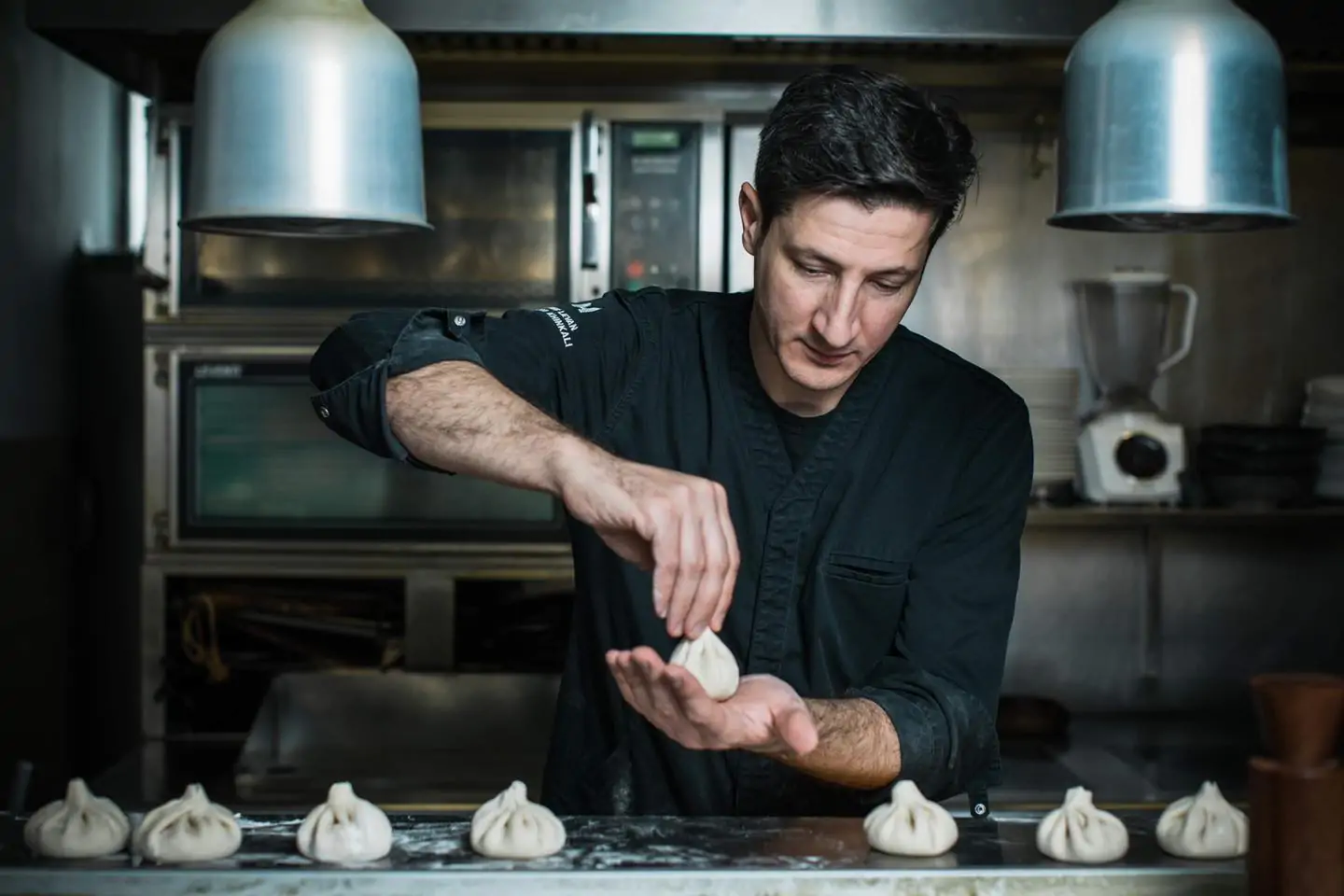
Batoni Khinkali
In the Netherlands, Georgian cuisine is unfortunately underrepresented, despite its rich and fascinating culinary heritage. Fortunately, Batoni Khinkali offers an introduction to this flavorful cuisine. This restaurant, founded by Georgian clarinetist Levan Tskhadadze, combines his love of music with his passion for cooking. Here, guests can enjoy Georgian classics such as khinkali, katschapuri and lobio, as well as a vegan and meat menu, all served with the characteristic Georgian hospitality.
1071 GZ Amsterdam
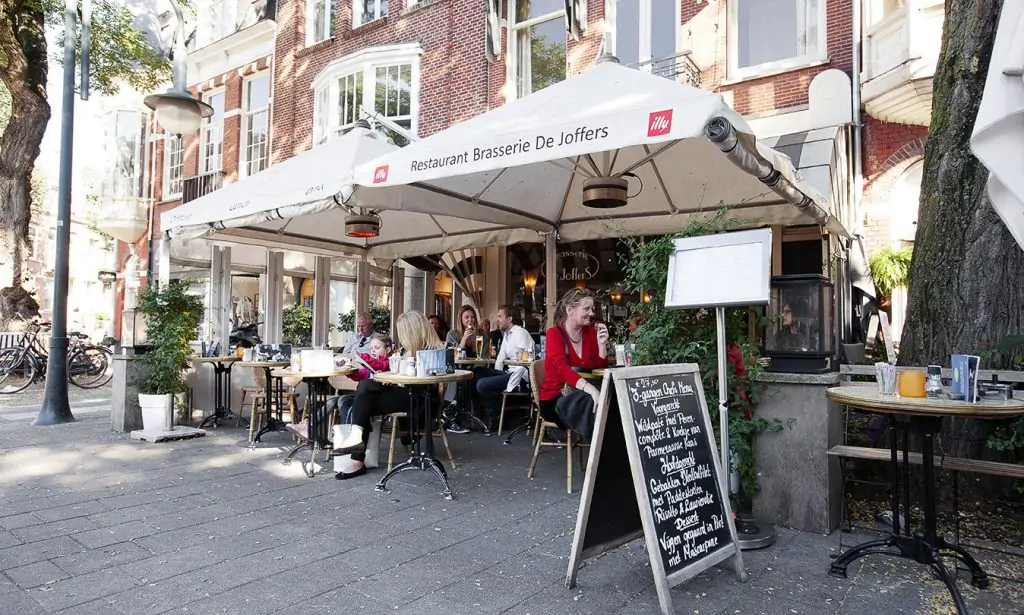
Brasserie de Joffers
With a large terrace in the summer and winter, brasserie Joffers has been a well-known hotspot for 15 years, just a stone's throw from the Vondelpark and the Museum Quarter. If the sun is not shining, there is plenty of space inside - a space decorated with art and mirrored walls, which creates a homely atmosphere. The meeting place for the neighborhood is ideal for breakfast, lunch and dinner or simply for a nice cup of coffee.
1071 NH Amsterdam
Franzen
Chef and owner Jesse Franzen grew up in a catering family in Haarlem. His father worked in the kitchen, his mother worked in the service. His own professional journey began in the kitchen of the two-star restaurant Chapeau, after which he gained experience at places including Aan de Poel, Ron Gastrobar, and Lars Amsterdam. With Franzen, Jesse creates a place that feels like a modern living room for the city. Accessible and warm, but always with a high standard. The menu is classic and recognizable, with a surprising twist here and there.
1075 NC Amsterdam
Perfume Lounge
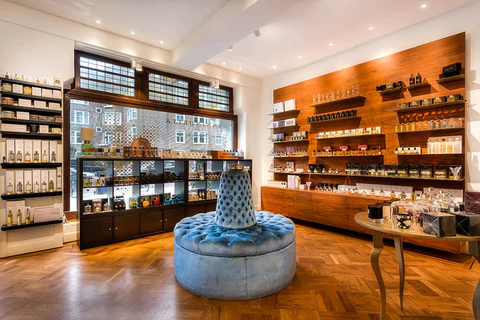
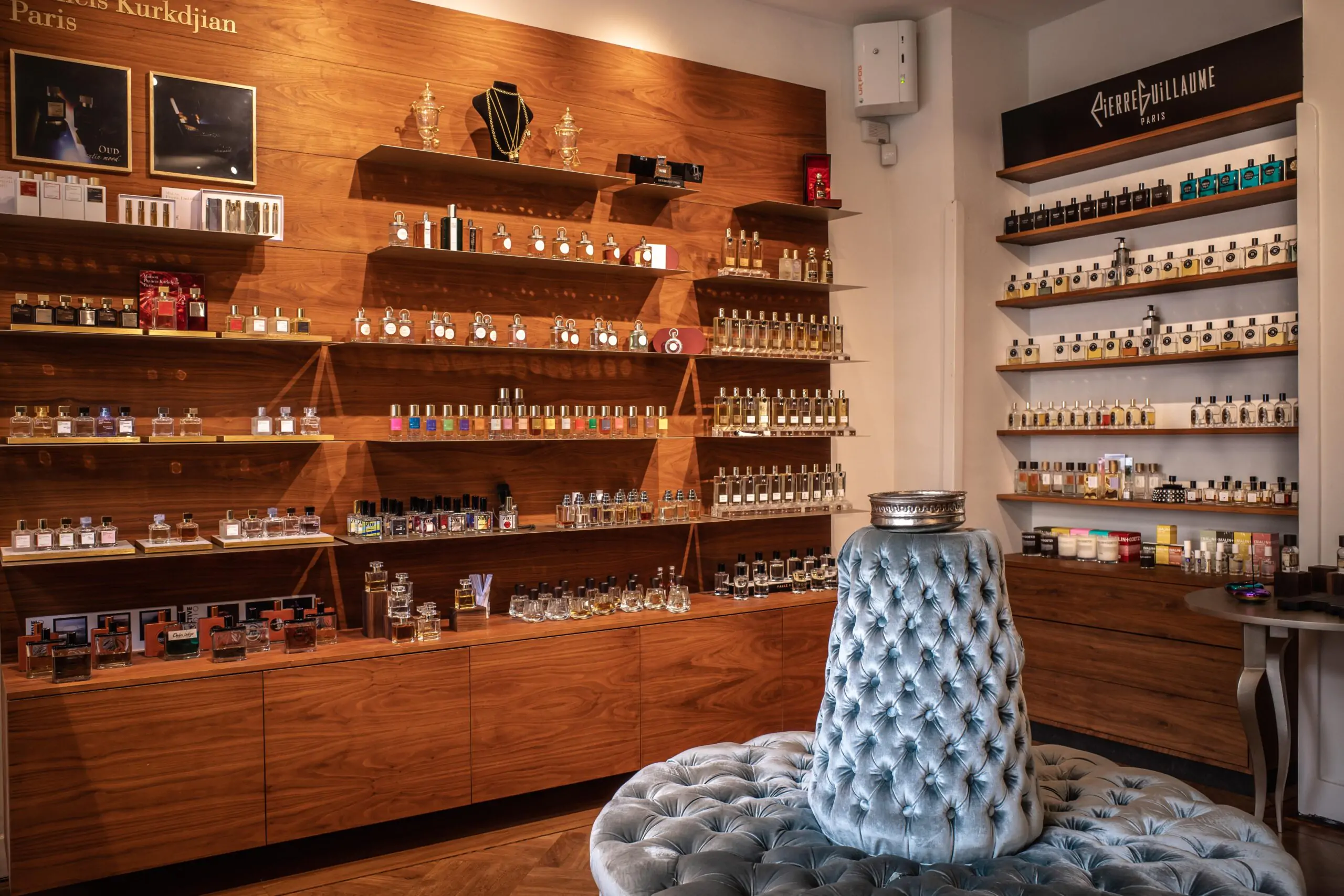
At the 'Perfume lounge', they focus on creating and advising on fragrances for companies and organizations and what scent can add to a brand or organization. In addition, they have a store with an assortment of the most special perfumes in the world, where they also give personal fragrance advice. Advice for on the skin or in the house. According to the experts, scent adds something that is not visible and tangible. You can use scent in different ways in a space. It starts, of course, with the fact that it should not smell negative. There are quite a few spaces where you smell the sewer or sanitary facilities, where there has been a lot of smoking or where the extraction is not good and it smells like food. The most simple way of scent in the house is that it smells clean. Many people associate cleaning or detergent with a clean, tidy and well-kept house. In addition, you can turn on the ambiance. Just like with light and music, you can soften or strengthen the atmosphere. You can make it smell very homely or very modern. Rural or artistic. Or very minimalist or intimate.
1077 MJ Amsterdam
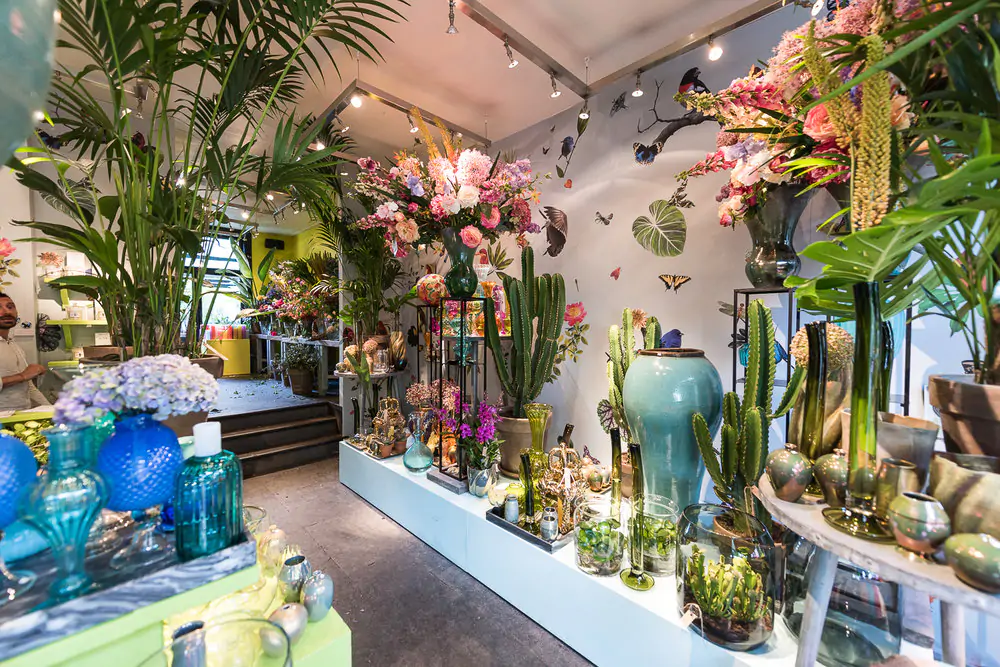
Flower fusion
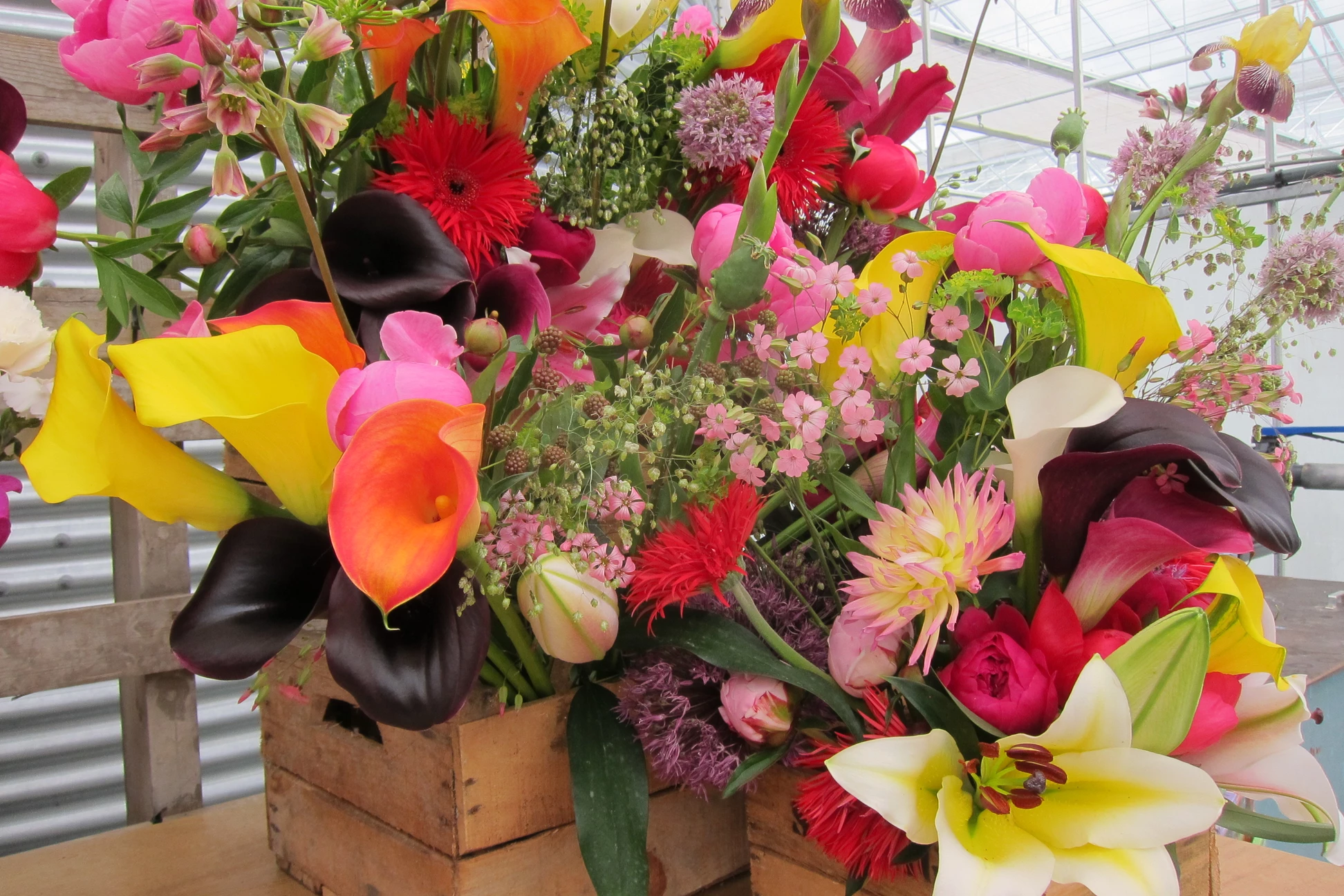
Every Saturday from 9:30 to 17:00 you can find Ilona Bokma from Flowerfusion at the ZuiderMRKT. Unique and beautiful flowers that make you feel like you are standing in the middle of a picking garden. Because Ilona selects different flowers, plants and colors every week that match the season, it is a party every Saturday to visit Flowerfusion.
1071 JC Amsterdam
Menno Kroon
Menno Kroon's exuberant and atmospheric display window showcases such enchanting and special flowers that you simply have to take a look inside. Budding love, delight, the inevitable farewell. Each bouquet from Menno Kroon gives meaning to a special moment. Nothing is too crazy for them at Menno Kroon, and you can go there for the most special and diverse bouquets.
1076 TB Amsterdam
Zikking & Son Butcher Shop
Butcher shop Zikking & Zoon is located on Marathonweg and is a household name in Amsterdam. Owner Robert Zikking was born and raised in Amsterdam and, together with his wife, started his own business in 1995 with passion and confidence. As he himself says: "It's not a fairy tale, but a delicious reality with a history." The filet americain is made using a recipe from an old Jordanian dam, and the nostalgic Amsterdam beef sausage is a must-try.
1077 CW Amsterdam
Sébastien's Bakery
Le Fournil is the brainchild of Susan and Sébastien, who, after years of baking experience in France, came to the Netherlands in 2007 to open an authentic French boulangerie. Its strength lies in its artisanal craftsmanship, sourdough, and conscious choice for small-scale, pure, traditional bread making.
1077 CV Amsterdam
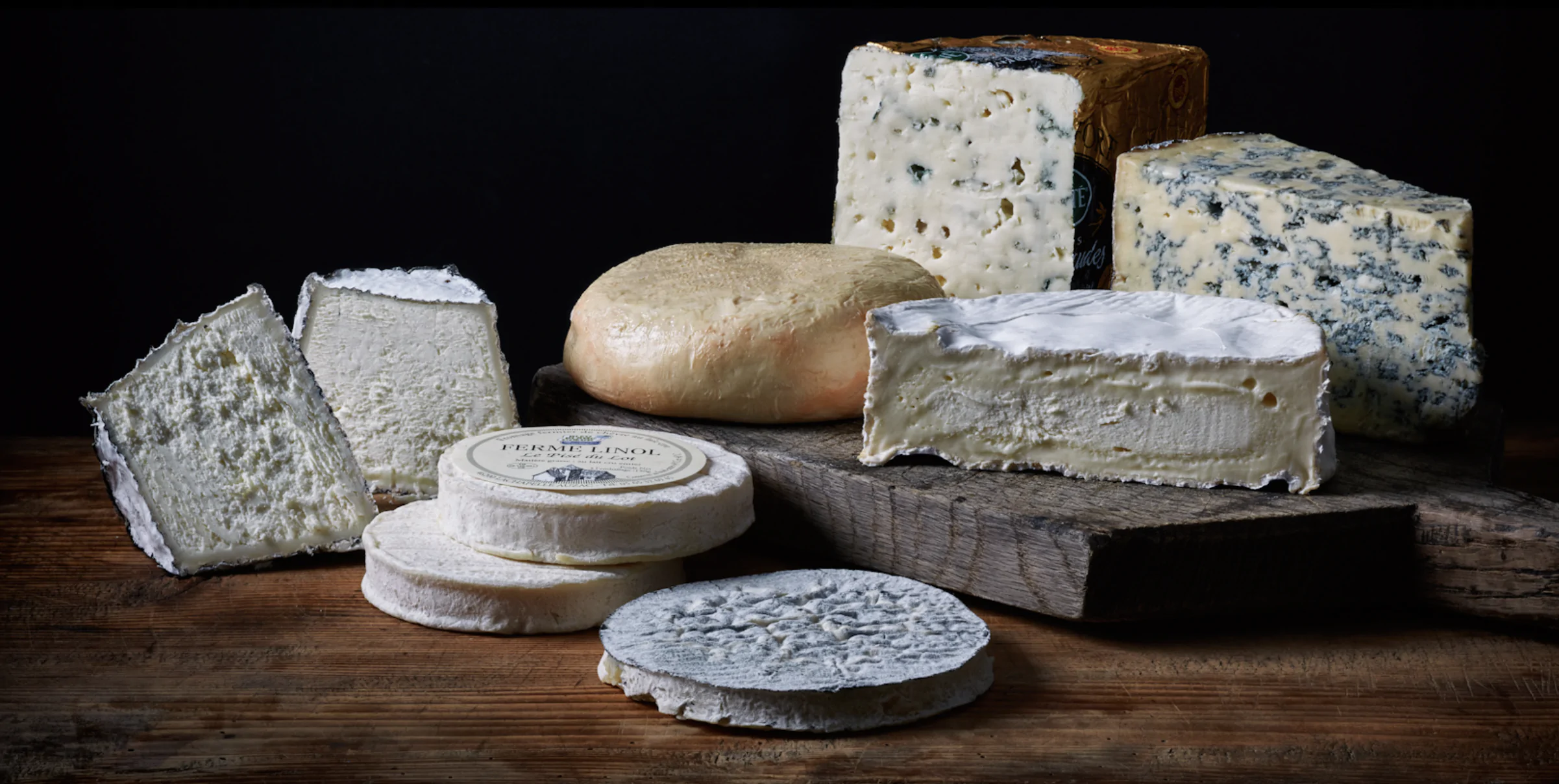
L'Amuse
According to some, this is the best cheese shop in the Netherlands. They have an impressively wide range of the most delicious cheeses. Delicious wine, salami, ham, and olive oil are also For Sale here. You will receive excellent service, and the cheese is truly of a different caliber. Highly recommended!

1066 VH Amsterdam
De Schuyt Butcher Shop
Butcher shop De Schuyt, named after its location on Cornelis Schuytstraat, has the parakeet as its symbol. Just like the parakeet, this distinctive butcher shop has its origins in the 1970s, and both have carved out a place for themselves in Amsterdam. Inspired by the parakeet, owner Evert Blauwendraat started his butcher shop with the idea of giving it a distinctive, personal, and special emblem that everyone could recognize. This family business with a rich history is the place to go for meat and delicacies.
1071 NL Amsterdam
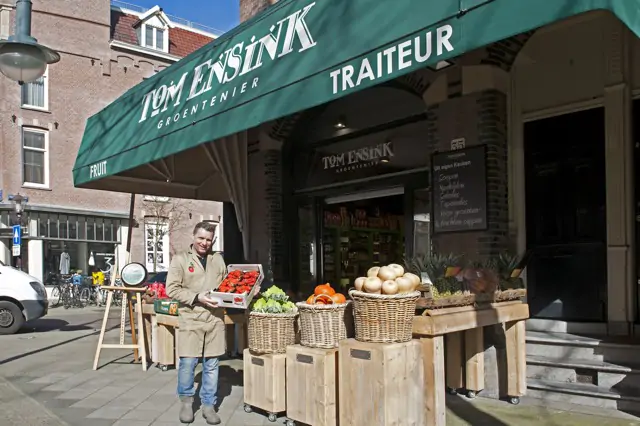
Greengrocer Tom Ensink
Greengrocer Tom Ensink ensures that customers can choose from an exclusive range of honest products. In addition to vegetables, cheeses, fruits, nuts, oils, wines and meals are Sold - carefully selected for the true gourmets in the South. Specific wishes can be fulfilled when ordering products, but also for the fresh meals.
1075 CV Amsterdam
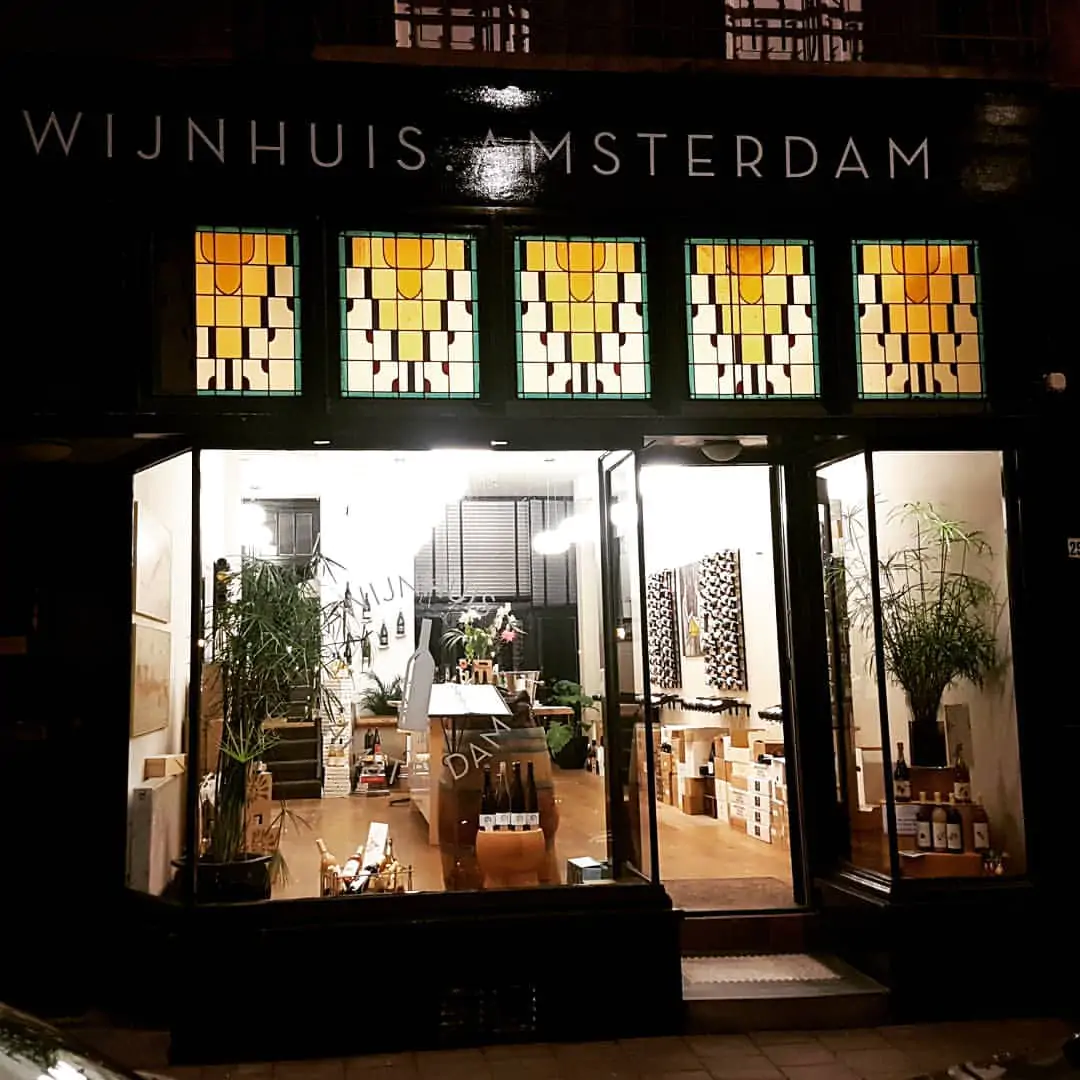
Amsterdam Winery
Although they have been professionally tasting and selecting wine at Wijnhuis Amsterdam for more than 25 years, the wine house in Amsterdam is a fairly recent addition to their story. After numerous tasting sessions, they were so enthusiastic about the German wines that they were only too happy to give the wines a platform within the Netherlands. In May 2018, they opened Wijnhuis.Amsterdam, initially with only three of their own imports from Germany. They now represent an impressive range of twenty German winemakers, three from Austria and one from Luxembourg. When selecting the wines, elegance, drinkability, low alcohol percentages and minimal intervention in the production process are important.