Space as Experience: The Layered Work of Studio Modijefsky

A scenographic approach to space.
Esther Stam’s work is all about experience. As the founder of Studio Modijefsky, she has built a body of work in which interiors do not reveal themselves all at once, but unfold gradually. Not static spaces, but environments you experience as you move through them: layered, carefully constructed, and always connected to their context. That same approach also underpins Ceci, the recent New build project the Zuidas where Studio Modijefsky developed the interior concept for 24 apartments.
This approach stems from Stam’s background in scenography. She views interiors as a sequence of moments in which routing, sightlines, and the use of materials come together to form a narrative. A space must be more than just a place; it must be an experience that unfolds step by step.


© Vertigo, photography by Maarten Willemstein
Amsterdam as a foundation.
Studio Modijefsky has built up a broad portfolio both internationally and nationally, with projects in hospitality, retail, and residential settings. It is in Amsterdam where her work is most tangible and where her approach is most clearly reflected in the city itself. Projects such as Bar Botanique in Oost and Kanarieclub in West formed an important foundation in this regard, both of which opened ten years ago in 2016.
Bar Botanique features a bold palette of green tones, pink, and terracotta combined with natural stone, wood, and brass accents, creating a tropical, almost cinematic atmosphere. The interior of De Kanarie Club combines the industrial character of the former tram depot with playful elements such as tram tracks, graphic signage, and a striking pool bar, creating a layered and versatile interior that offers space for working, dining, and relaxing.


© Canary Club, photography by Maarten Willemstein
Color and materiality as conveyors of atmosphere.
In recent work, this approach has been further developed and refined. At Café Vertigo, located in the Vondelpark Pavilion, Studio Modijefsky demonstrates how it engages with a space that has a distinct history. The interior is structured as a series of spatial scenes, in which perspective, scale, and materials constantly shift and reinforce one another. Materials range from richly colored wall finishes to natural stone and wood, with contrasting textures and color fields used to define different zones and guide movement through the space.
At Van Stapele, the focus is on the baking experience: an open and interactive layout that allows you to follow the entire process, from dough to cookie. Warm materials and a color palette inspired by the previous location and the iconic cookie were chosen, creating a timeless and almost fairy-tale-like interior.
Another recent project Amsterdam that exemplifies this approach is Gitane. Located in a distinctive corner building in West, this restaurant and bar features a multi-level layout with three distinct zones—the ground floor, the bar, and the mezzanine—combined with rich materials such as bold terrazzo and warm color schemes, creating a vibrant and sophisticated interior with a distinct character of its own.


© Gitane, photography by Maarten Willemstein
From public space to residential use.
This approach is also clearly evident in residential projects. In the home on St. Willibrordusstraat in De Pijp, a compact floor plan for two apartments is enhanced by clever design solutions, custom-made furniture, and a carefully curated palette of colors and materials. In the Dijkhuis in Amsterdam Noord, this translates into a more open and light-filled character, where sightlines, natural materials, and subtle detailing come together to create a calm and balanced living environment.


What connects these diverse projects is the way Studio Modijefsky approaches context and use. Every design begins with the site: its history, its function, and the people who use it. From there, an interior emerges in which materials, colors, light, shapes, textures, and volumes come together to create an experience.


Immediately the Rhine stands a beautiful, distinctive house with an ornate facade dating from the early 1920s. The location and the available space offer a unique design opportunity to make the most of this historic building, which is listed as a city monument and serves as a memorable landmark in the area. Studio Modijefsky was involved in the project from start to finish project created various luxury spaces, such as a bar, a wellness area, and a wine cellar.


© Residential Homes, photography by Maarten Willemstein
Ceci: a new addition to the Zuidas.
That same approach underpins Ceci, a recent New build project Gustav Mahlerlaan in Amsterdam’s Zuidas district, developed by Space Encounters and Being. In the Kenniskwartier—an area where living, working, and learning converge within a predominantly business-oriented and highly urban context—the building introduces a new dimension: a living experience that is not only functional but also sensory and multi-layered.
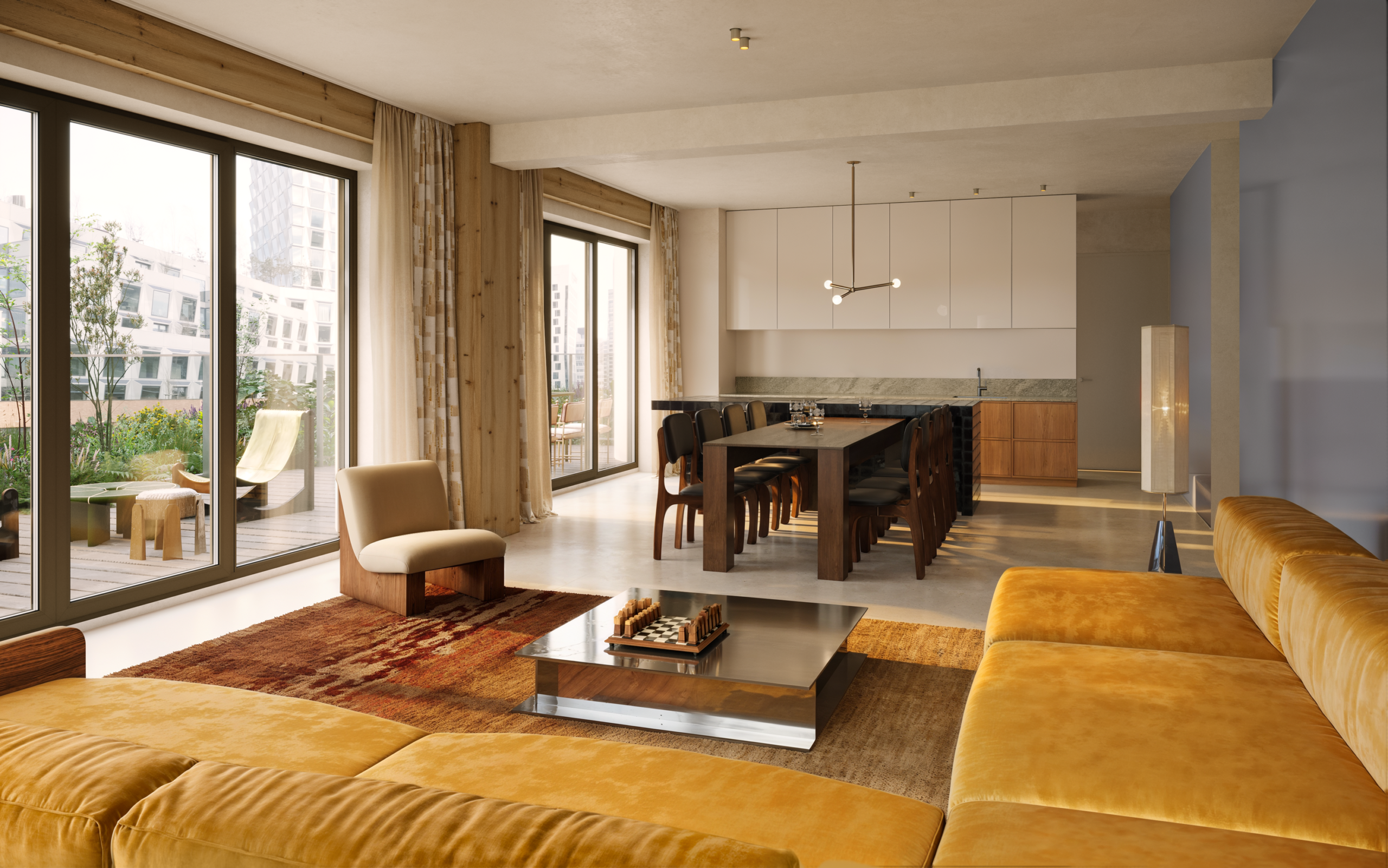
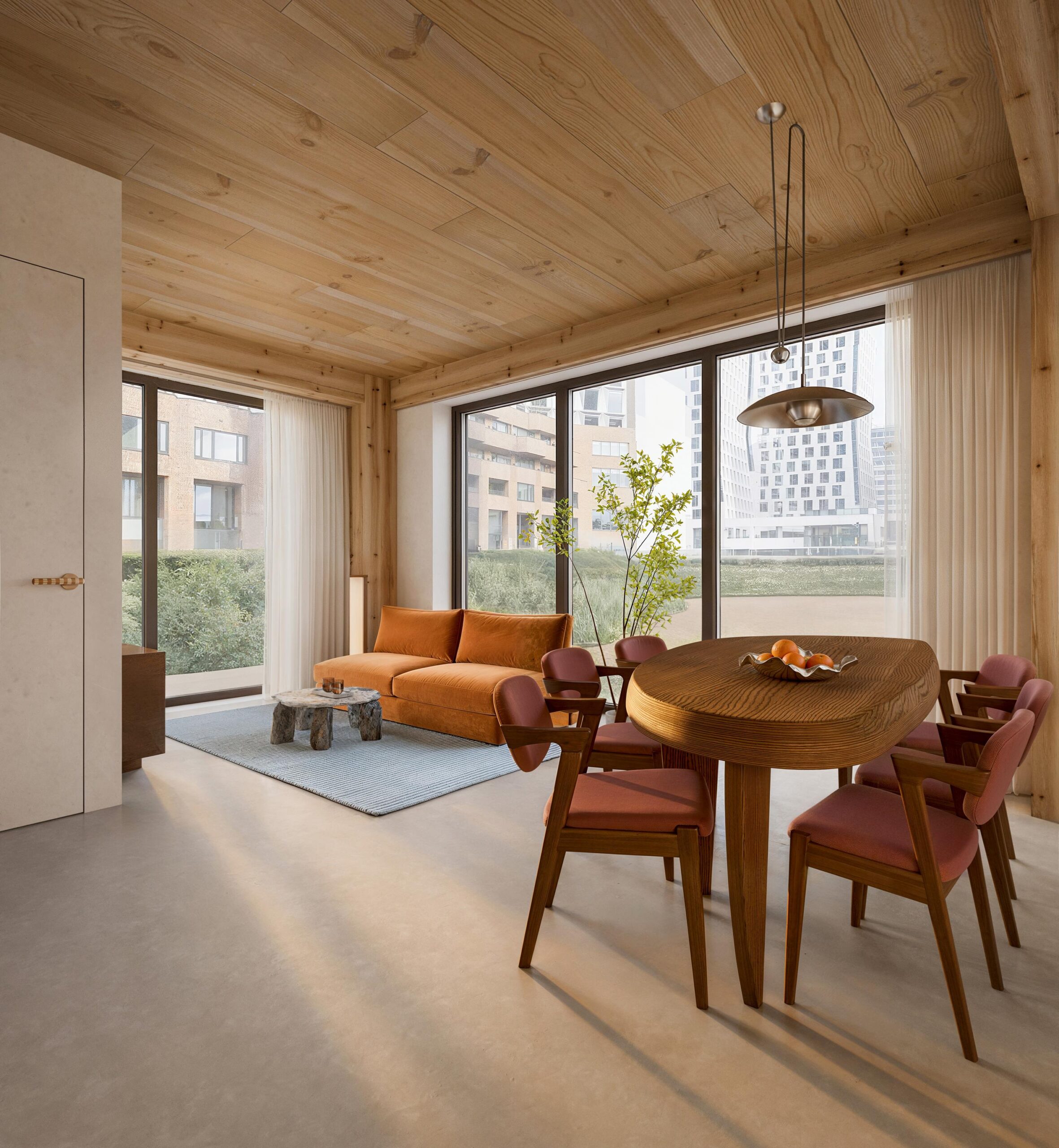
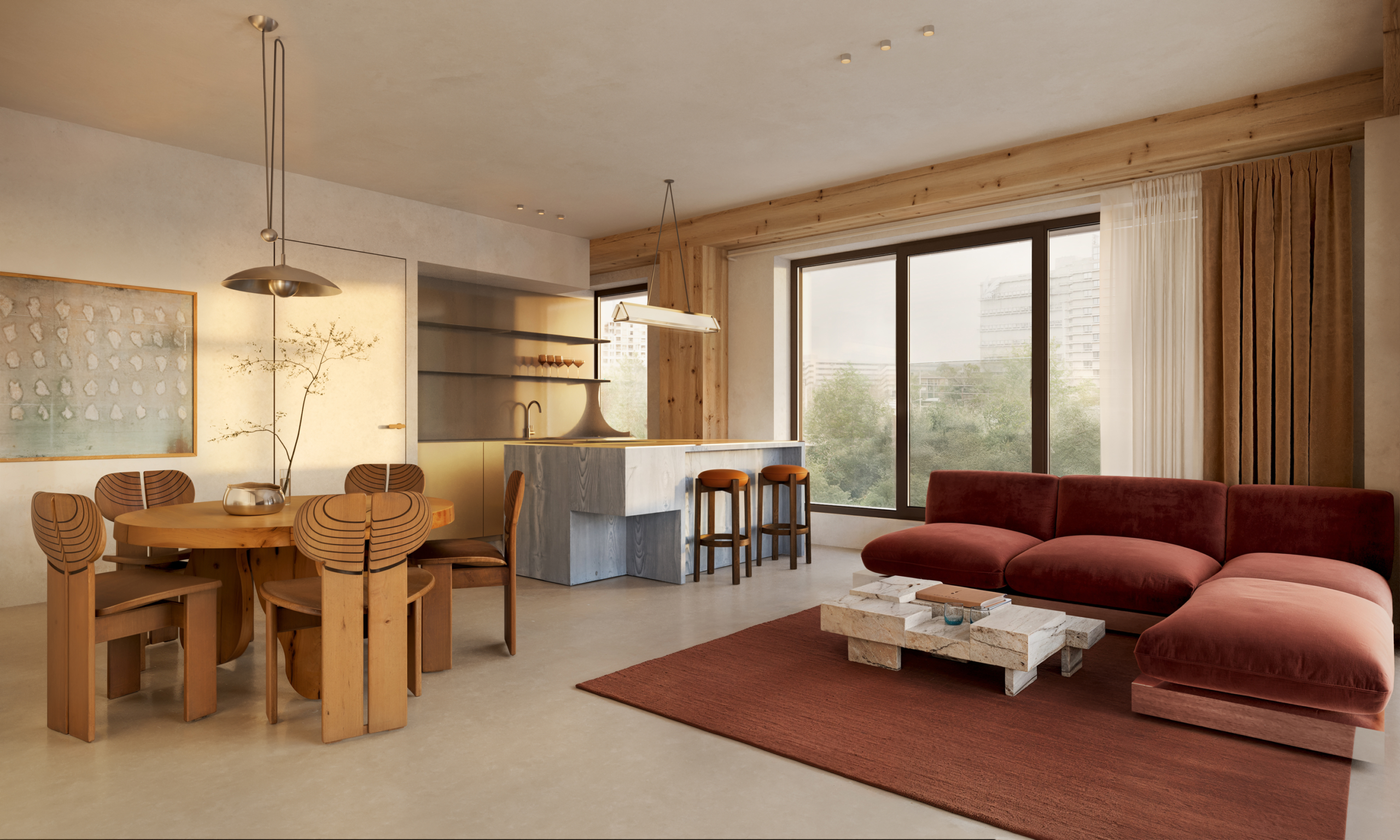
For Ceci, Studio Modijefsky developed the interior design concept for 24 apartments, each with its own layout and spatial configuration. Rather than relying on a uniform solution, the approach was designed to allow for variation and individuality within a cohesive whole.
The apartments vary in size, but share a common principle: no standard floor plans, but spaces designed with flow, views, and functionality in mind. Large, floor-to-ceiling windows create a direct connection to the city and the surrounding landscape. Light plays a central role in this, not only as a functional element, but as a defining factor in the experience of the space.
Studio Modijefsky did not develop a fixed interior design for Ceci, but rather an underlying vision. The color and material library forms an important foundation for this, where form, color, material, and texture come together in a cohesive whole. Combinations of lavender blue and deep red tones, soft yellow with light walnut wood, and glossy dark green alongside warm travertine create a palette that is both bold and balanced.
What stands out is that these choices are not presented as a final design, but as a starting point. The interiors are designed in such a way that they can evolve alongside the residents. For those who wish, Studio Modijefsky can build on this foundation with custom solutions, bringing architecture, interior design, and use even closer together.
Ceci thus demonstrates how the hospitality experience is translated into residential living. Not by residences as stylized hotel rooms, but by applying the same attention to experience, circulation, and atmosphere to the private sphere. The result is a residential building in which each home has its own character, yet a clear sense of cohesion remains within the larger context of the building and its surroundings.
“A space should be more than just a place; it should be an experience that unfolds step by step.”
This is not a house.
Living in Ceci means choosing quality, design, and urban dynamism in balance. With 24 carefully designed apartments ranging from approximately 72 to 213 m², Ceci introduces boutique living to the Zuidas, on the corner of Gustav Mahlerlaan and the green Florence Pricehof. Everything that makes daily life in Amsterdam Zuid so comfortable is close by. Here you live in the heart of the city, with restaurants, culture, and shops within easy reach, while at home you experience space and relaxation.